Happy Thanksgiving!






Purple Milkweed (Asclepias purpurescens) is an excellent garden milkweed that for some strange reason is difficult to find.
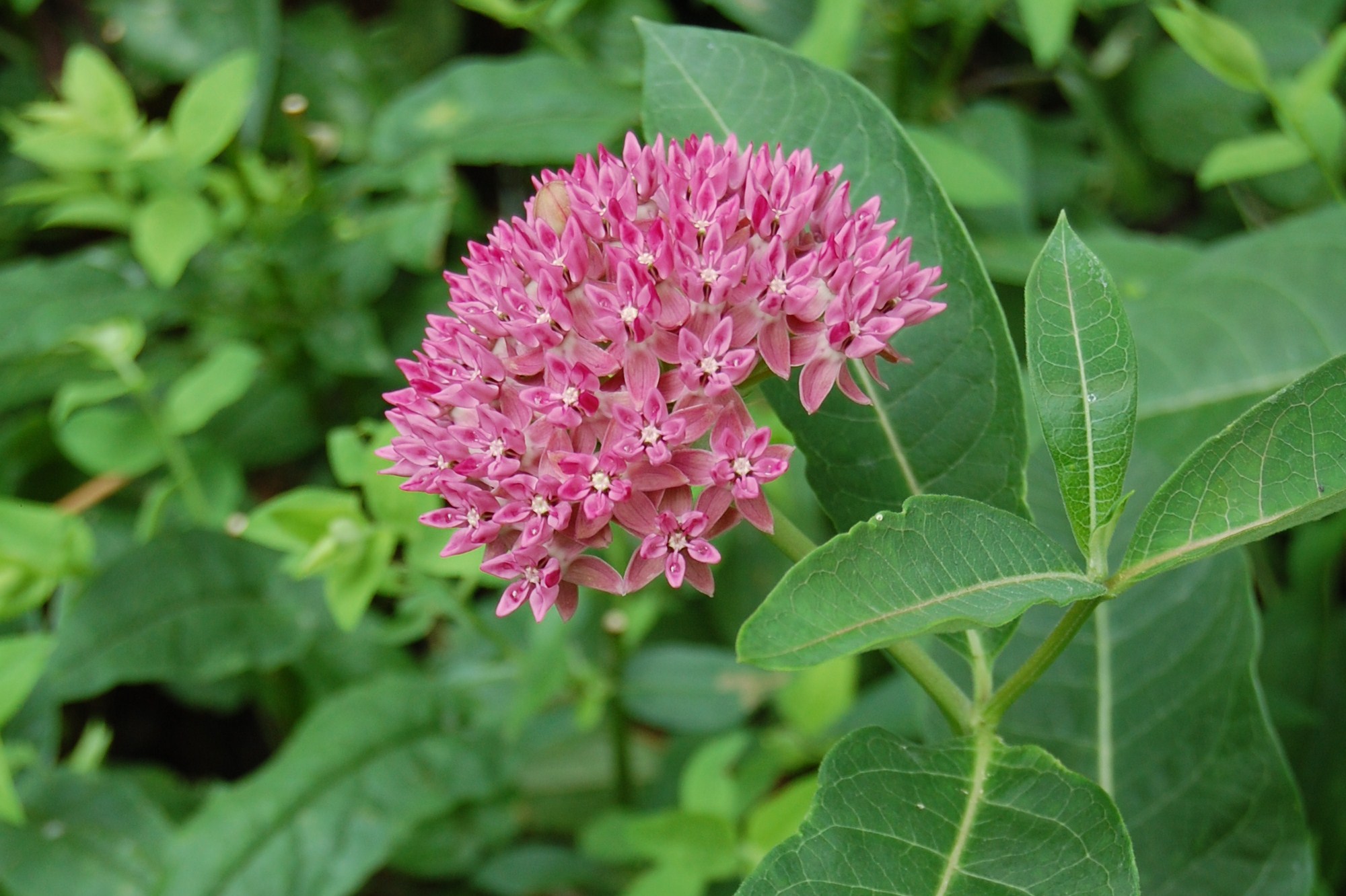
What’s so unique about Purple Milkweed? First of all, it actually prefers part shade. It will grow in full sun, but will then need more moisture. Secondly, it is very polite, spreading only moderately by seed. Both these qualities are unusual for the genus, which has a thuggish reputation.
Actually, you need to be careful not to surround Purple Milkweed with big bushy plants, or it may disappear on you. This plant grows about 3-4′ in the garden.
The flower is much like Common Milkweed (Asclepisa syriaca), but it is a sort of rosy-purple color. Unfortunately, it is not fragrant.
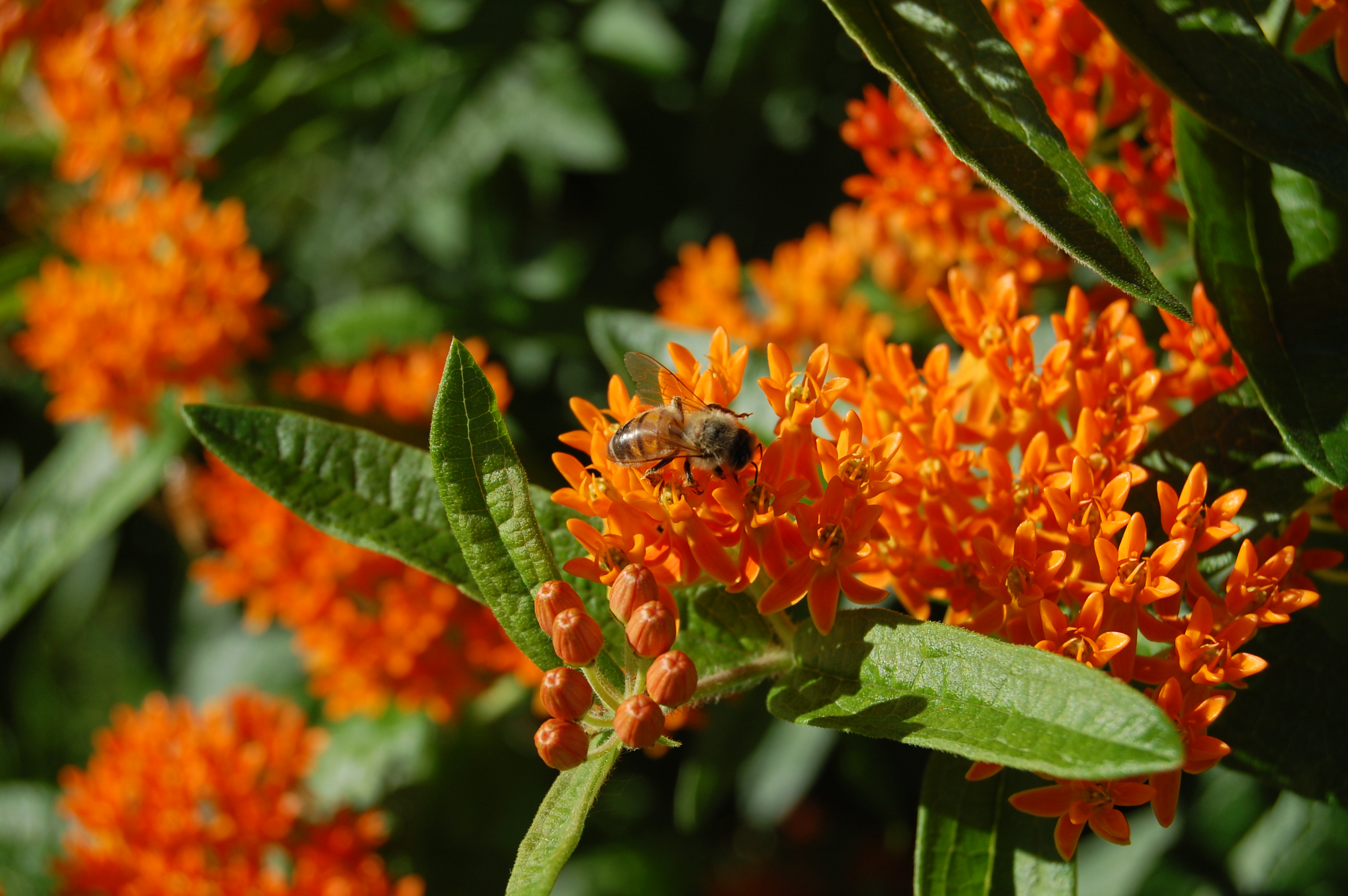
Like other Milkweeds, Purple Milkweed is a host plant for Monarch Butterflies and attracts many pollinators with its blooms.
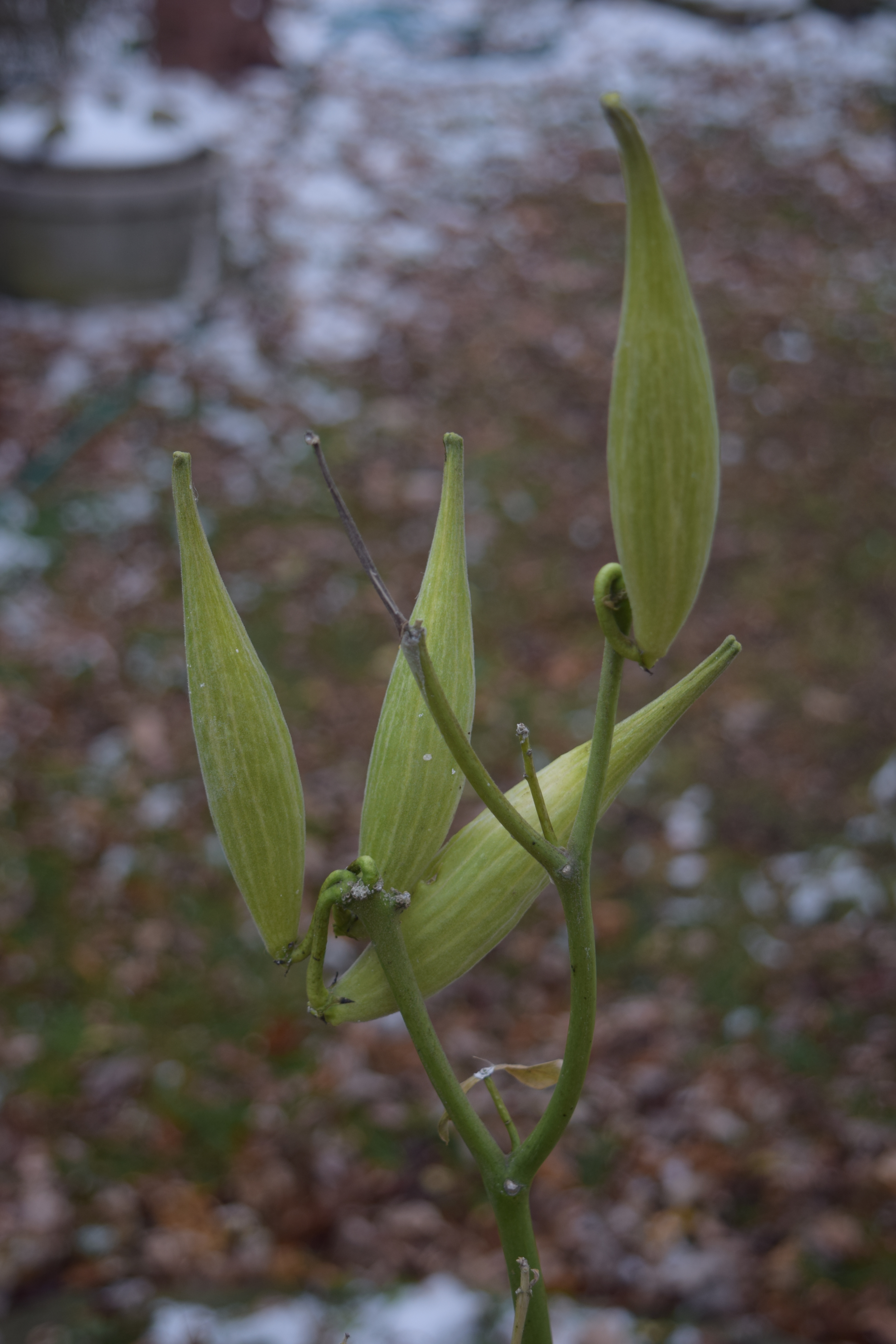
Anyhow, some time ago a couple of people asked me if I would send them seeds. I kept an eye on the pods, which seemed much slower to ripen than those of my other Milkweeds. Finally, on Sunday I noticed that several of the pods had vanished, so I picked the remaining four.
I’m sorry that I didn’t make a note of everyone who has asked for seeds.
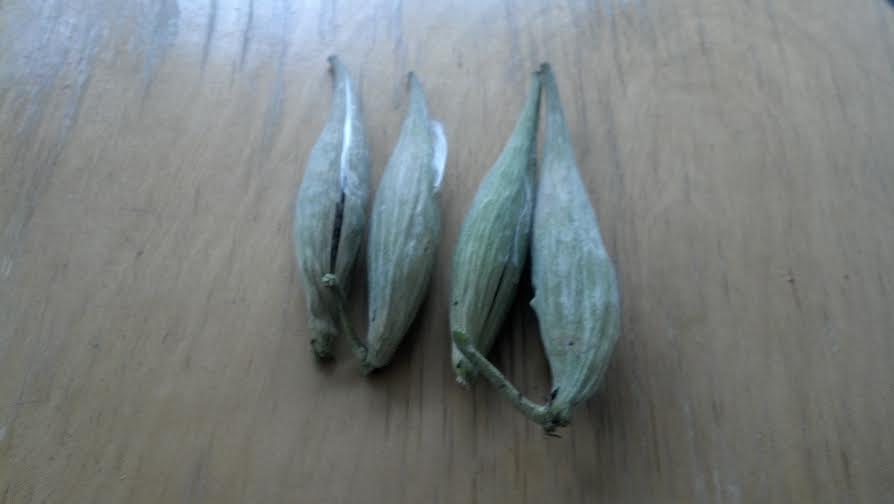
If you would like some seeds, please post a comment, then write to me at the email address listed on my “About” page. As long as supplies last I will send each person about 10 seeds. I’m guessing I have between 150 and 200 seeds.
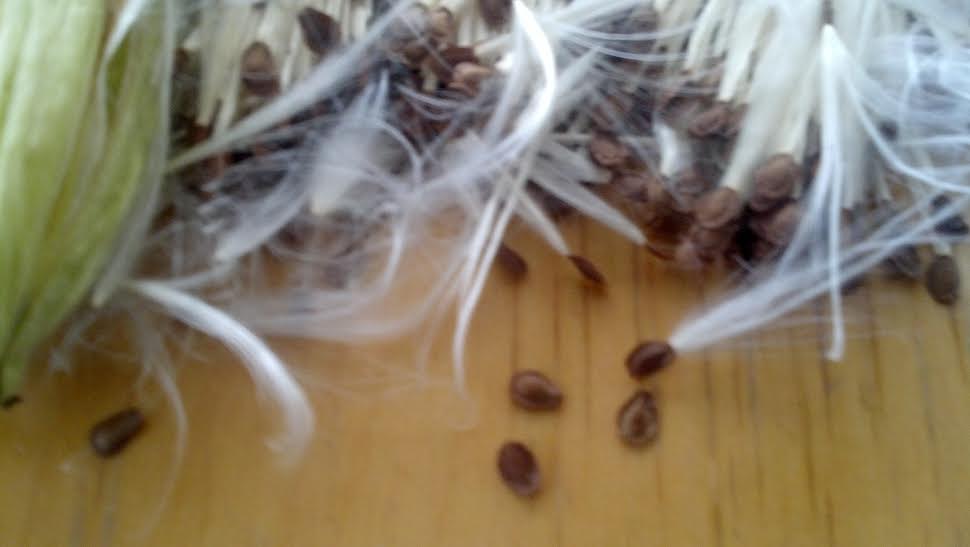
The seeds are supposed to have a good germination rate. They can be sown outside now. If sown inside, they should be first mixed with moist planting media, placed in a plastic bag, and left in the refrigerator for about 30 days. Check on them to make sure they don’t dry out of sprout. Any sprouting seed should be planted right away.
The only places I know of where you can buy Purple Milkweed are Shooting Star Nursery in Kentucky and Prairie Moon Nursery in Minnesota. Prairie Moon sells only seeds, and I believe they are currently out of stock.

Last Sunday we awoke to an inch or so of snow on the ground. Nothing like the avalanche that hit western New York, but a bit startling even so.

It was frigid through most of the week, then warmed up.

The snow left little white hats on the dried flower heads of the ‘Annabelle’ Hydrangeas.

As of today the snow has withdrawn, muttering under it’s breath: “I’ll be back”.

It occurred to me recently that the phrase “there’s a sucker born every minute” could apply to gardening.
After the leaves have fallen is a good time to prune. You can see the structure of the plant and new growth won’t emerge in response to your cuts.
A big part of pruning in my garden is removing suckers as needed. Suckers are new stems that may grow from the base or from underground horizontal stems. Suckers are what will turn a shrub into an impenetrable thicket. Suckers can pop up yards from the base of the mama plant.

You may want a thicket (good for wildlife), but if you don’t it is wise to hunt down suckers and cut them to the ground every year. Though in the case of suckers from the crown in some instances you may want to cut the older stems and let the new suckers grow in.
I have several shrubs that are prolific when it comes to producing suckers. Shrub dogwoods tend to be in this category, such as Grey Dogwood (Cornus racemosa – I have lots of these) and Red Osier Dogwood (Cornus stolonifera). The same is true for some Viburnums, including Highbush Cranberry (Viburnum opulus L. var. americanum Aiton). Oh, and I can’t forget Black Elderberry (Sambucus racemosa).

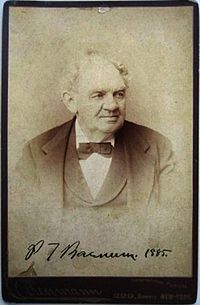
The phrase about suckers being born every minute is usually attributed to the showman P.T. Barnum. but it may have actually been coined by a critic of Barnum’s named David Hannum.

I always thought P.T. Barnum also said “Never give a sucker an even break”, but that was actually W.C. Fields. In fact he made a movie of that name.
Do you ever give suckers an even break in your garden?

There was an interesting article in the New York Times on Monday about Monarch butterflies and milkweed. The takeaway is that planting Tropical Milkweed (Asclepias currasavica) may do more harm than good, according to several researchers.

Milkweeds, of course, are the only plants that are eaten by the caterpillars of Monarch butterflies.Changes in farming practices have led to a huge decrease in the number of native milkweeds. This in turn has been perhaps the chief cause in the decline of the Monarchs. As a result, gardeners have been encouraged to plant more Milkweed – but not all Milkweeds are created equal.

The danger from Tropical Milkweed is two fold. First, the availability of Tropical Milkweed in the fall and winter may disrupt the migration behavior of Monarchs – so that they settle down and breed instead of continuing their journey to Mexico. This is more of an issue in the Southeast than the Midwest.
Second, there is some evidence that Monarchs feeding on Tropical Milkweed are more likely to be infected by a harmful parasites.
There is not unanimous agreement that Tropical Milkweed is a serious problem. Chip Taylor of Monarch Watch believes that the plant is probably not beneficial to Monarchs but is not likely to cause “immense harm”.

I’ve grown Tropical Milkweed (which in Chicago is an annual) in containers and found it rather unsatisfactory. I much prefer perennial native Milkweeds such as Butterflyweed (Asclepias tuberosa) and Swamp Milkweed (Asclepias incarnata).
Butteflyweed prefers well-drained soil, while Swamp Milkweed (not surprisingly) likes moisture. In my opinion they are both much more attractive than Tropical Milkweed.

Even if the evidence against Tropical Milkweed is not conclusive, it just makes sense to stick with the natives.
Do you grow Milkweeds in your garden? Which species do you like best?

Floramagoria, a private Portland garden I discussed in the last post, has a lot of stuff that can make you smile, even giggle. But this garden is not all giggles, no. It is a seriously gorgeous garden.
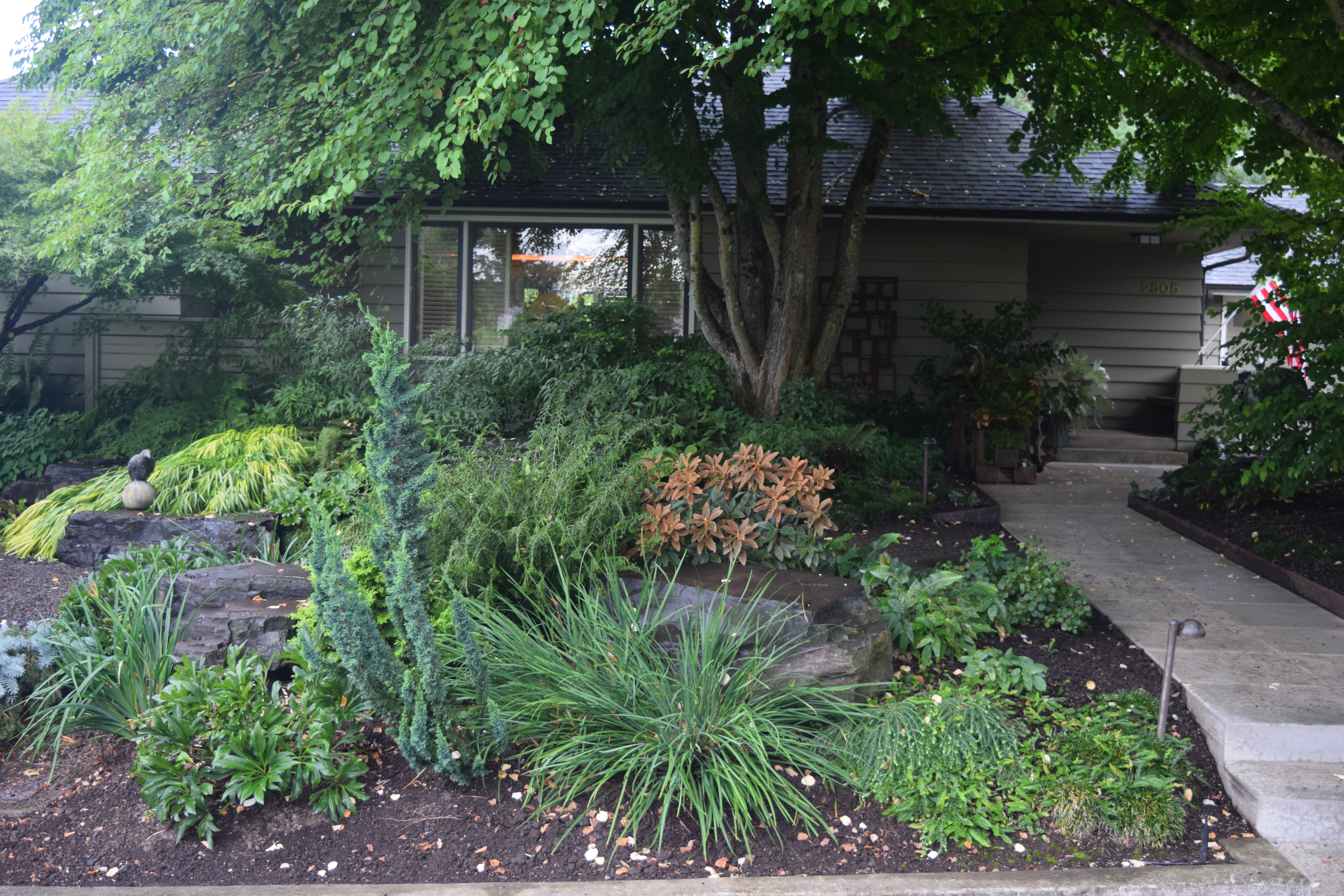
The front garden is quite attractive, in a restrained sort of way. It gives you no clue of what’s out back.
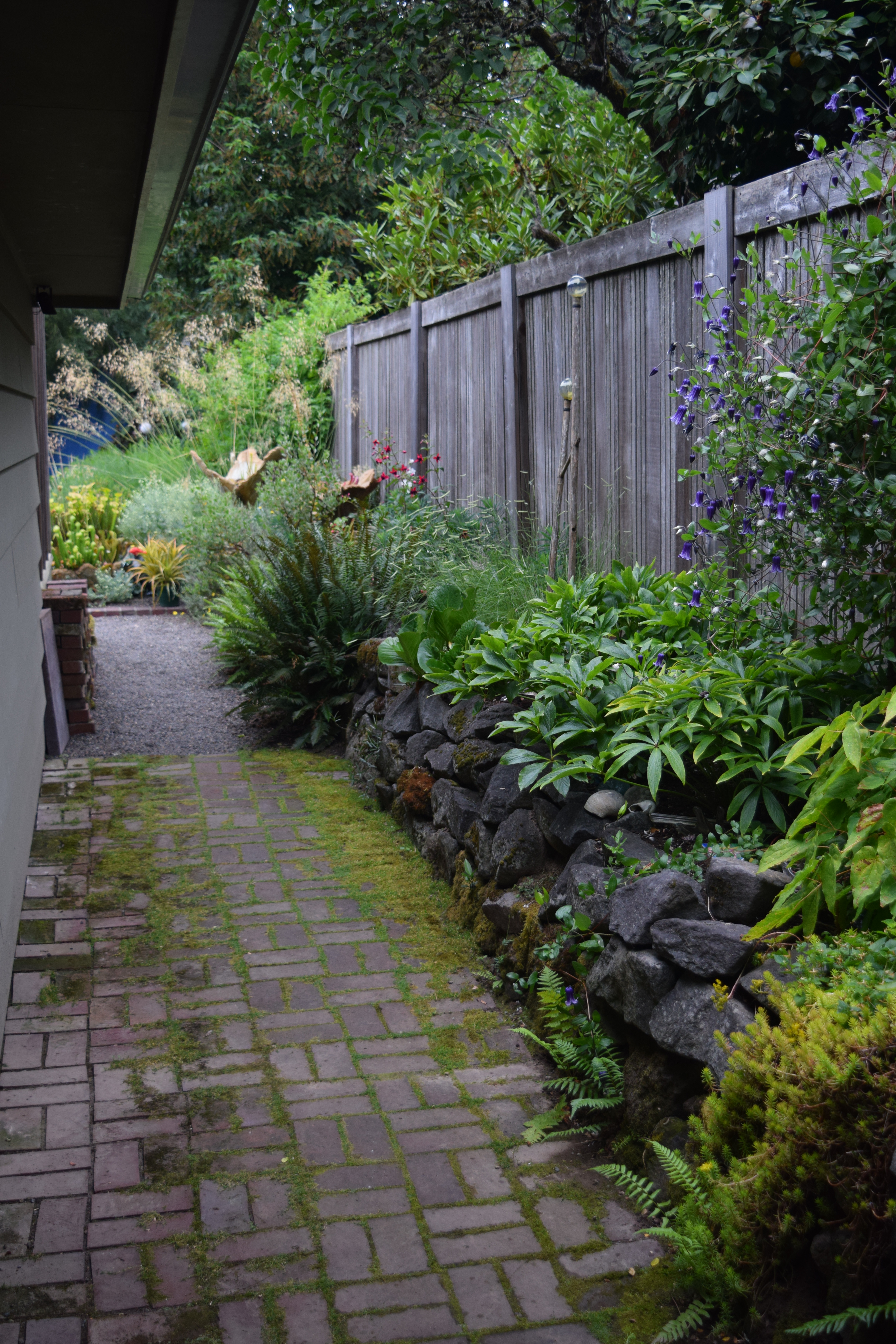
Neither does the shaded path along the side of the house.

But then … once I arrived in the back garden, my first impression was of a botanical fireworks display. I loved the big patch of blue Nigella with orange Kniphofia. You don’t see much Nigella around Chicago. West Coast gardeners tell me it can be a pest, but what a lovely pest. I’m guessing it would be more restrained in the Midwestern climate.

The mix of plants seems part English cottage garden and part Southern California, with a bit of the tropics thrown in for good measure.

Yet all the pieces fit together without seeming like a mishmash. I’m trying to remember what those orange poles were all about.
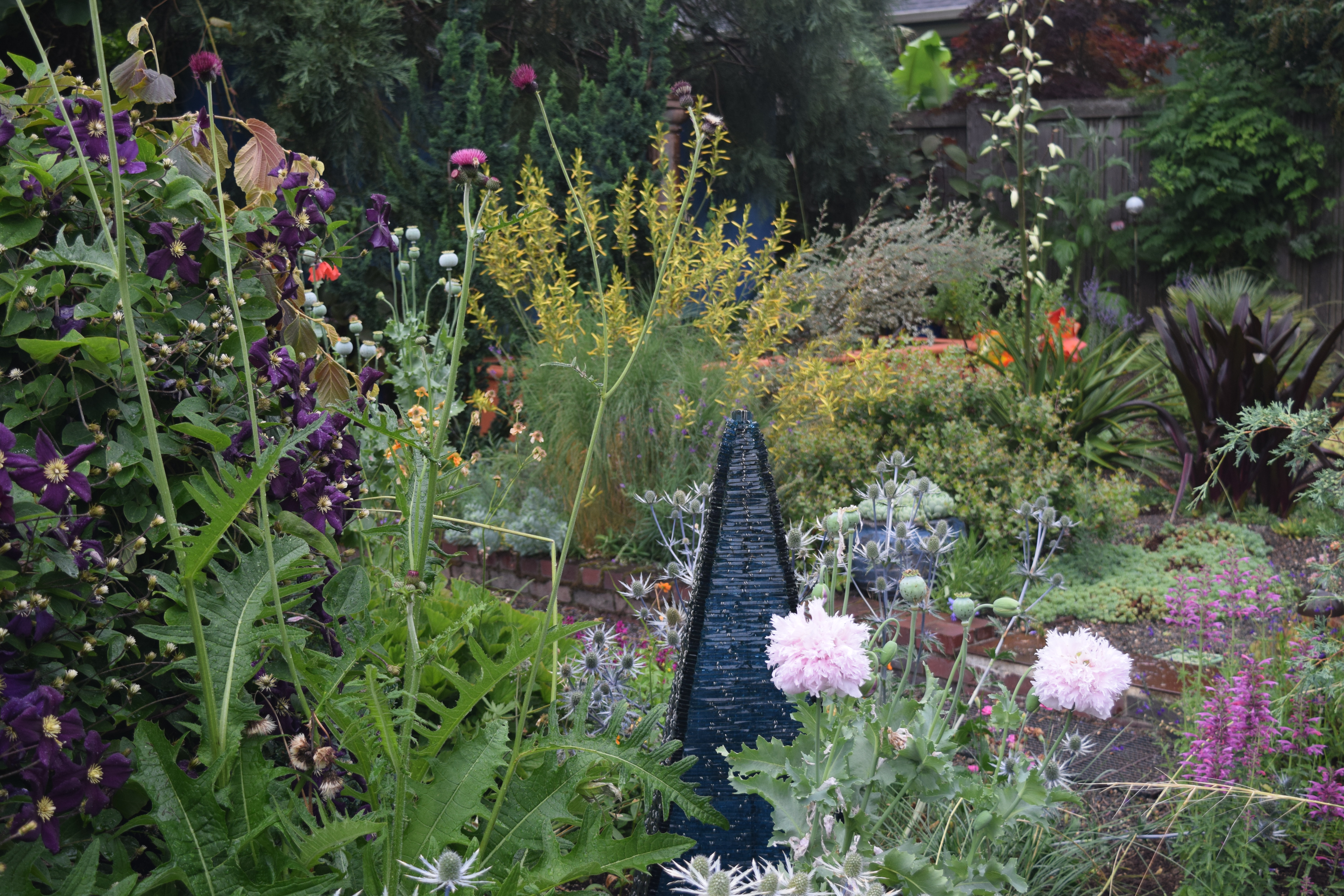
This is a garden in glorious technicolor.
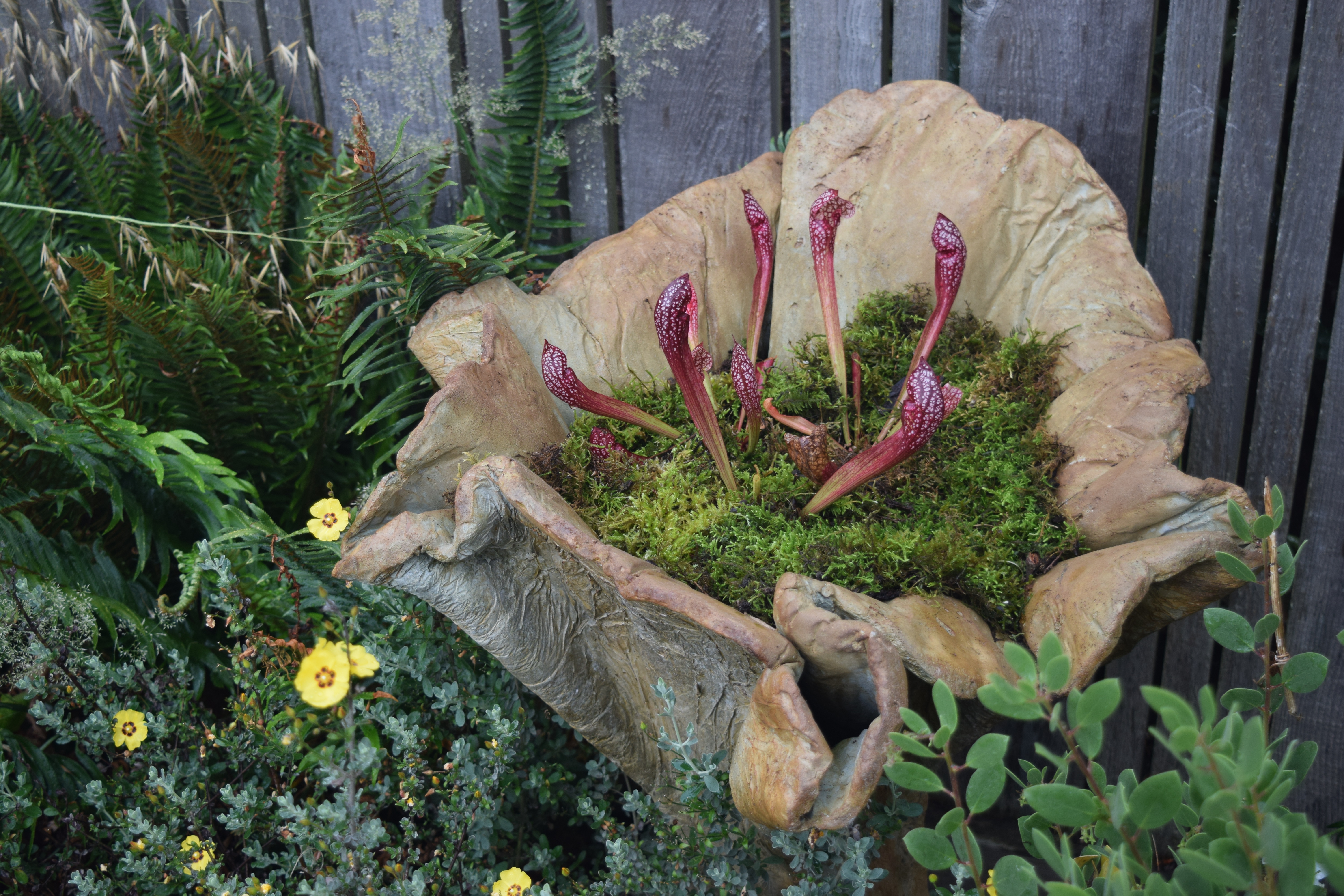
There are also plenty of bog plants, including carnivores, some in containers and some in the beds. They add an element of surprise and, well, strangeness.
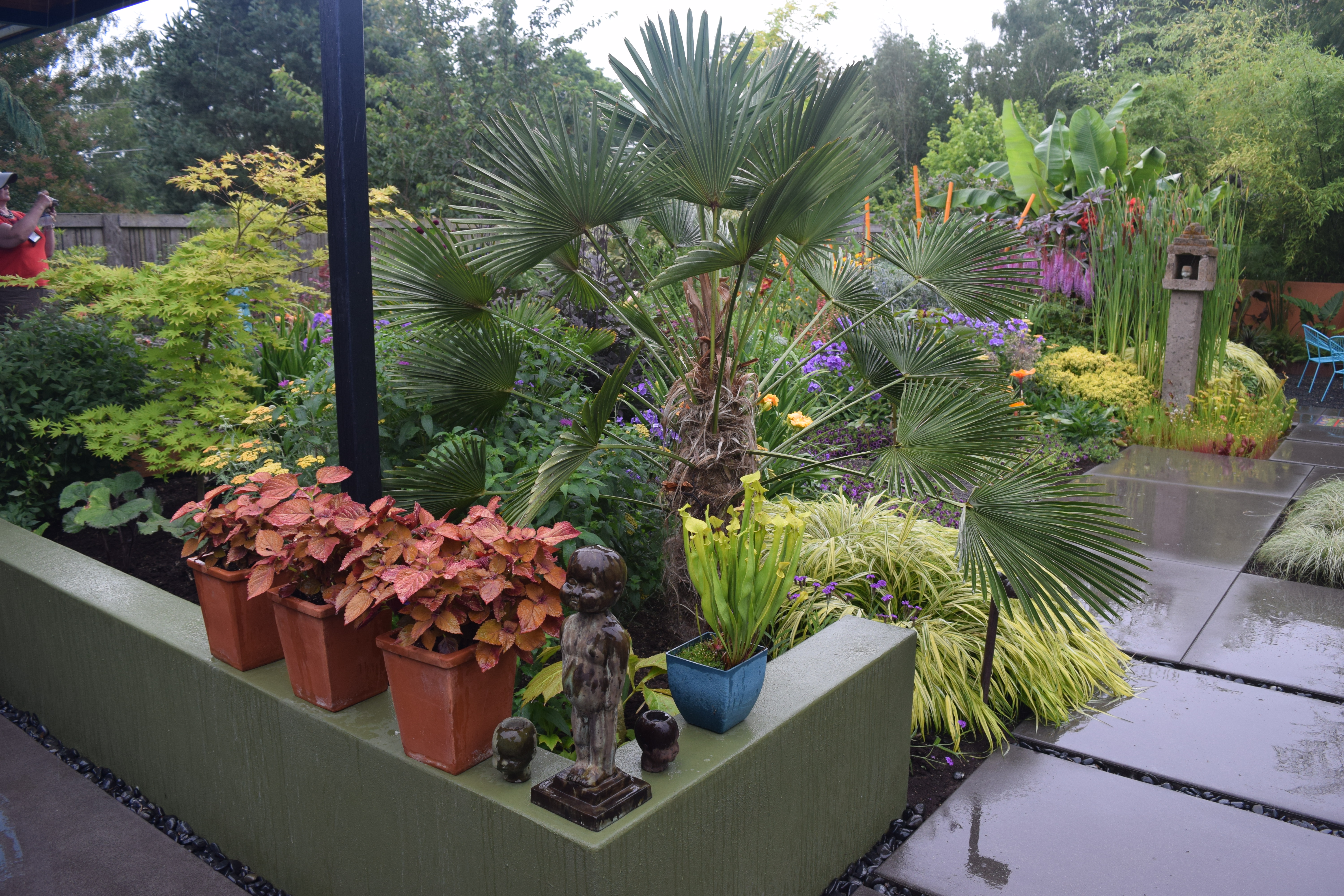
Aside from the variety of plants, another striking quality of this garden is how it is able to combine many distinct spaces and moods. This is done without garden rooms separated by tall hedges as in Sissinghurst.

For starters, there are many spaces conducive to socializing. This includes a covered patio, where our gracious hosts left out homemade chocolate chip cookies and other refreshments.
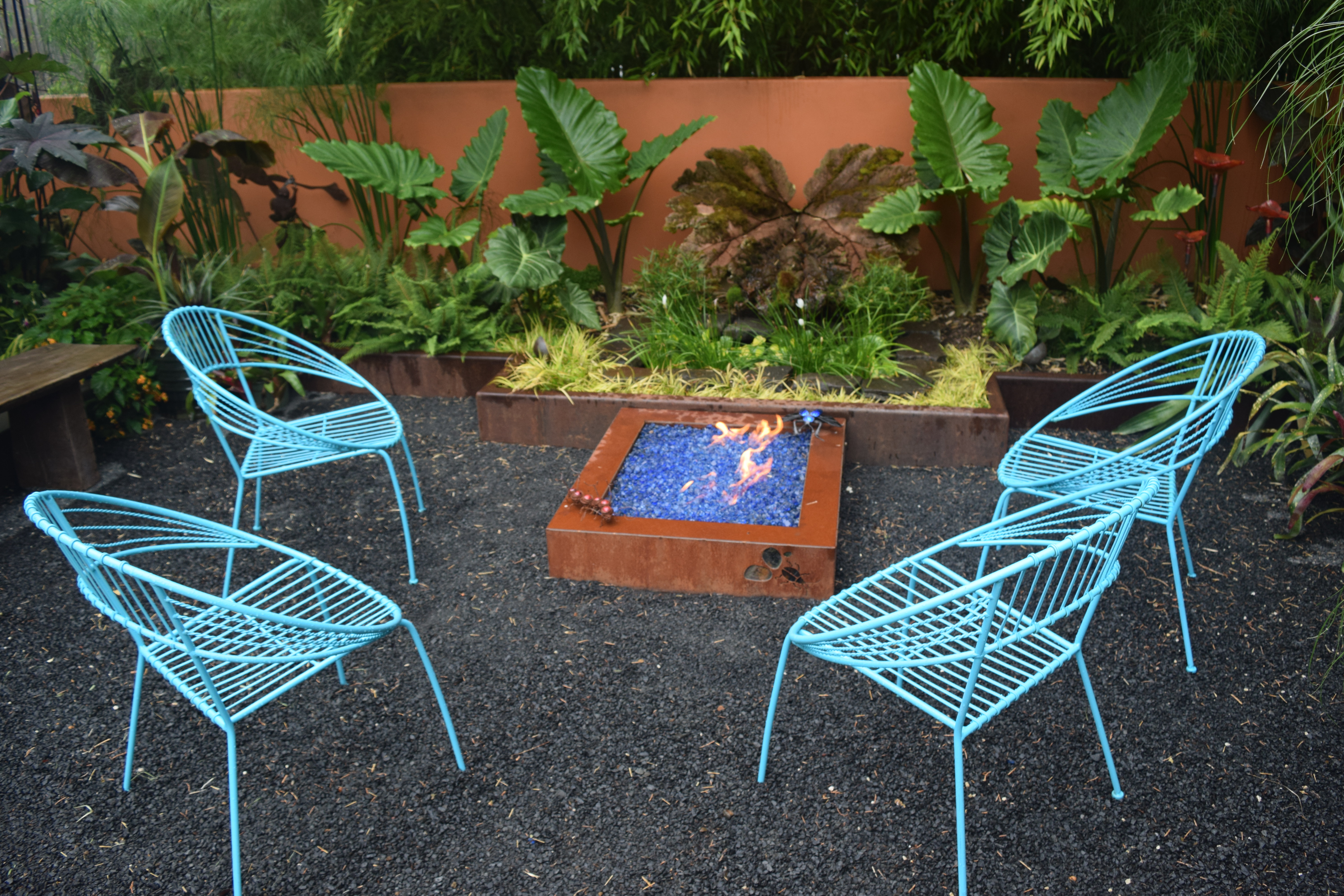
There’s also this fire pit. I like how those big green leaves stand out against the orange wall.
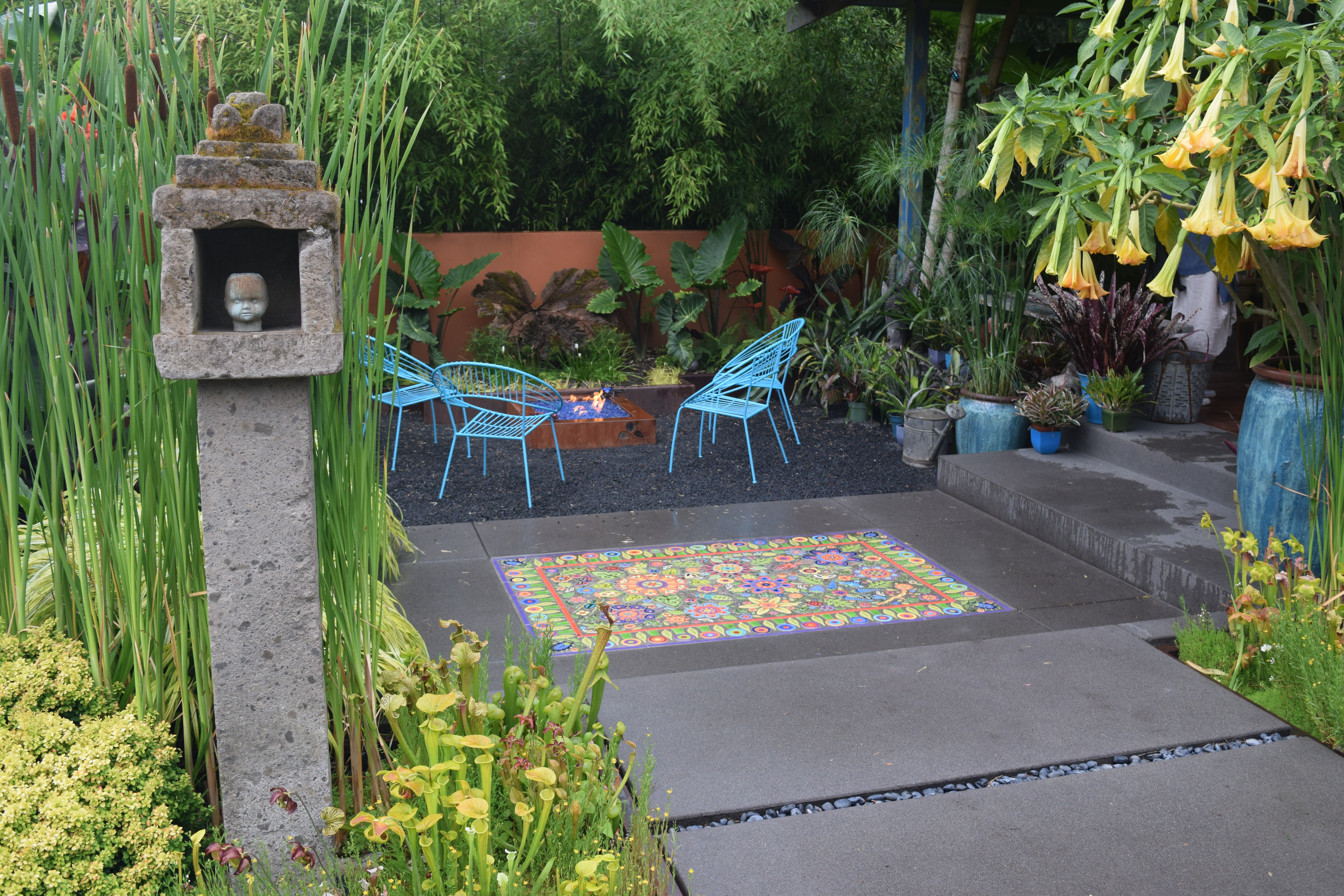
The fire pit provides a destination at one end of the back garden. The cross baby in that pseudo-shrine is just a bit creepy, to tell the truth.
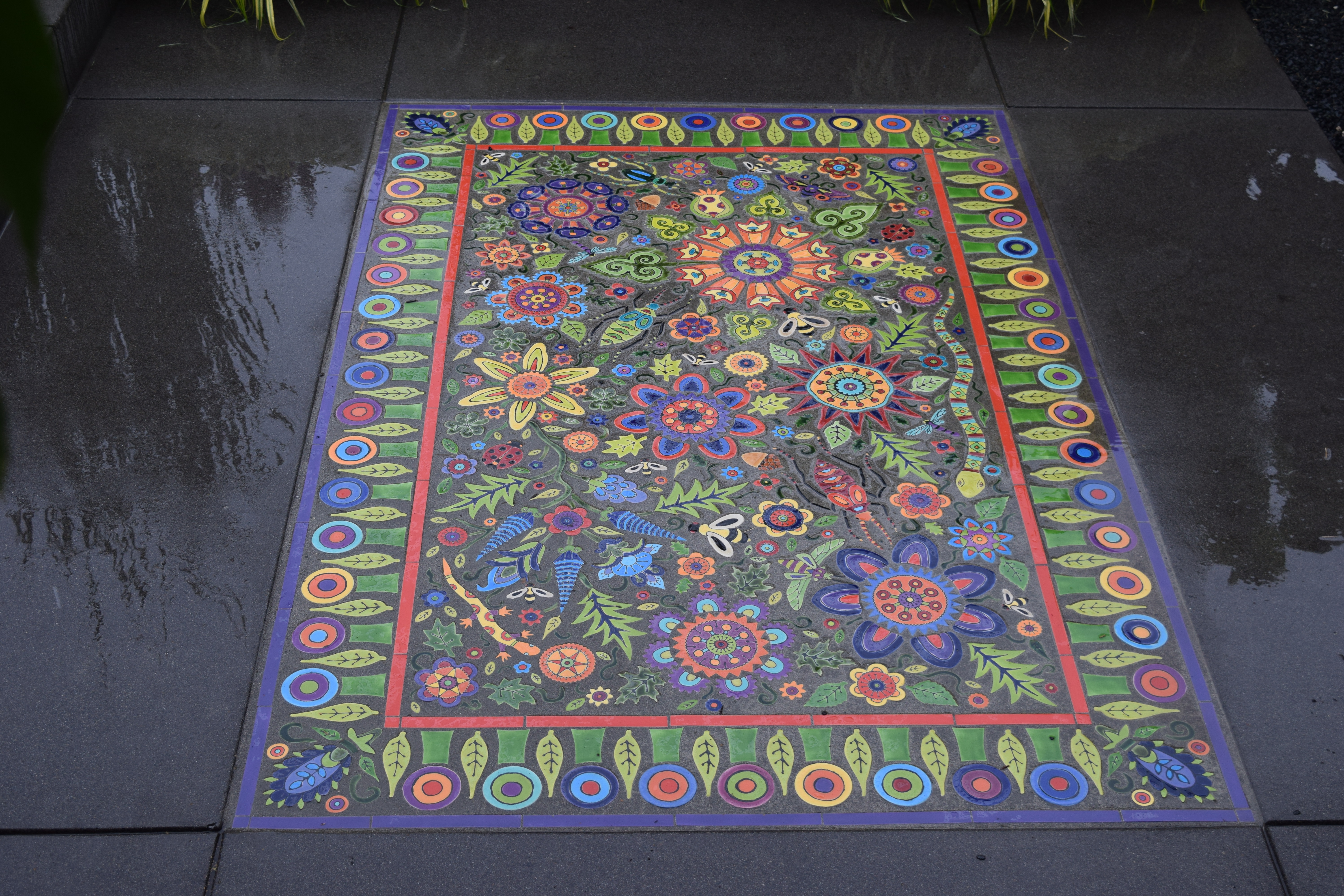
This colorful carpet built into the path provides a sort of welcome mat for the area around the fire pit.
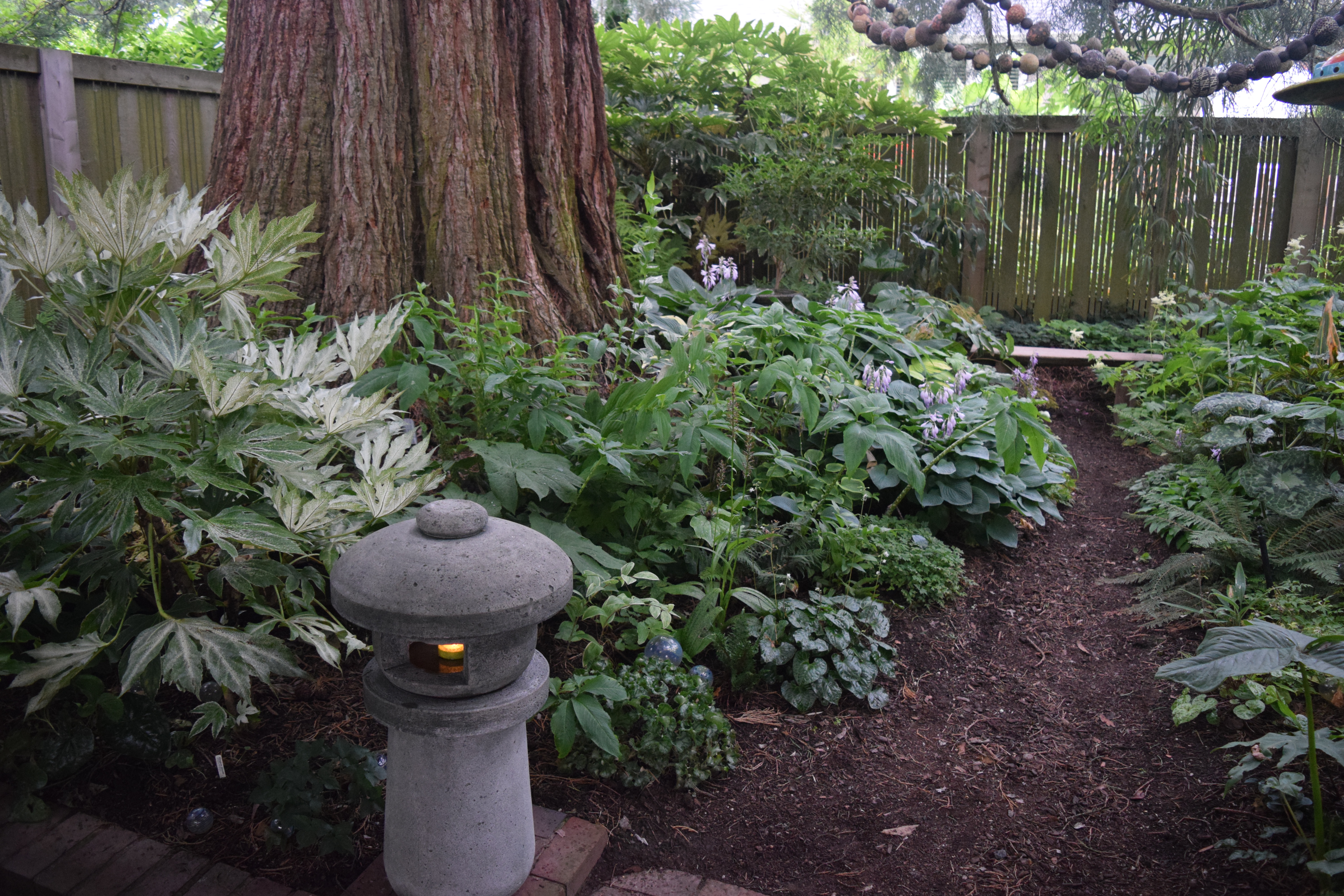
But if you want to get away, there is this shaded bench in a quiet corner.
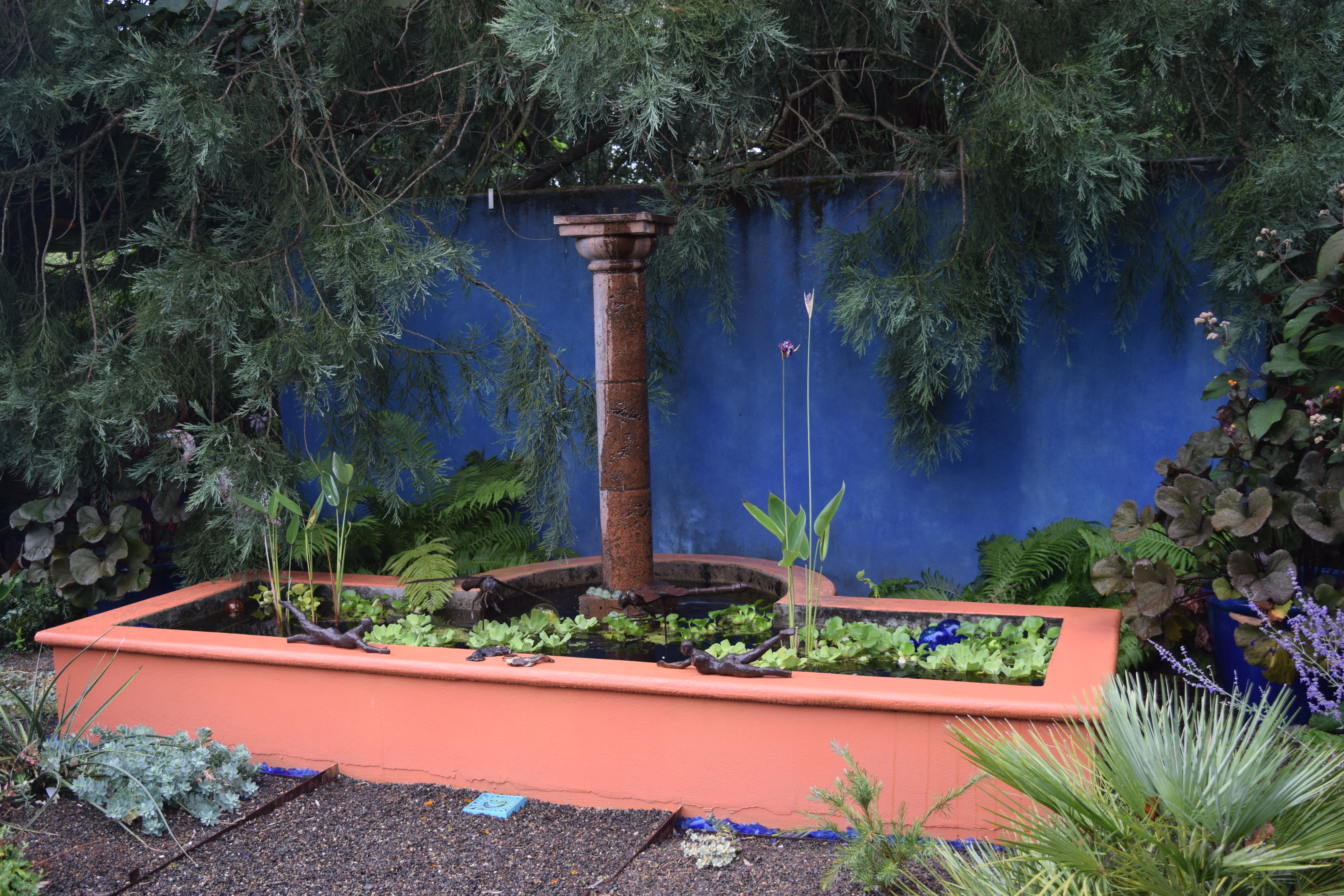
This water feature against a blue wall provides both a focal point and a space to congregate.
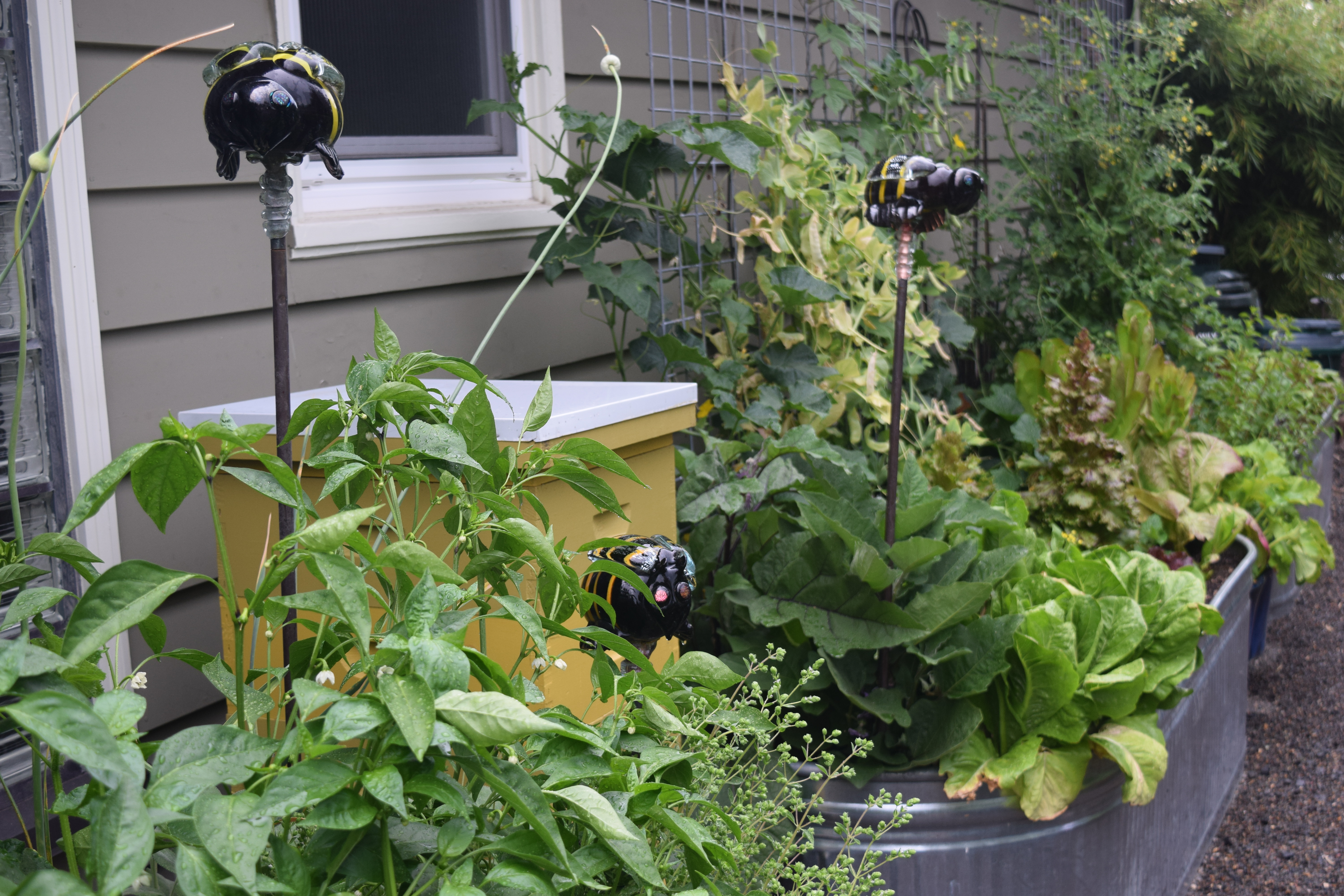
Last but not least, I have to mention the space created on one side of the house for beehives and growing edibles in large stock tanks.
Floramagoria is an uninhibited and joyous garden, fearlessly incorporating many disparate elements into a whole that works amazingly well.

Floramagoria is a remarkable private garden we got to see during the Garden Bloggers Fling in Portland back in July. The garden was striking for its design and combination of beautifully grown plants. But it also contains a highly concentrated and entertaining dose of whimsy.
There is so much in this garden that I’m doing not one, but two posts on it, the first of which will concentrate on the quirky elements.
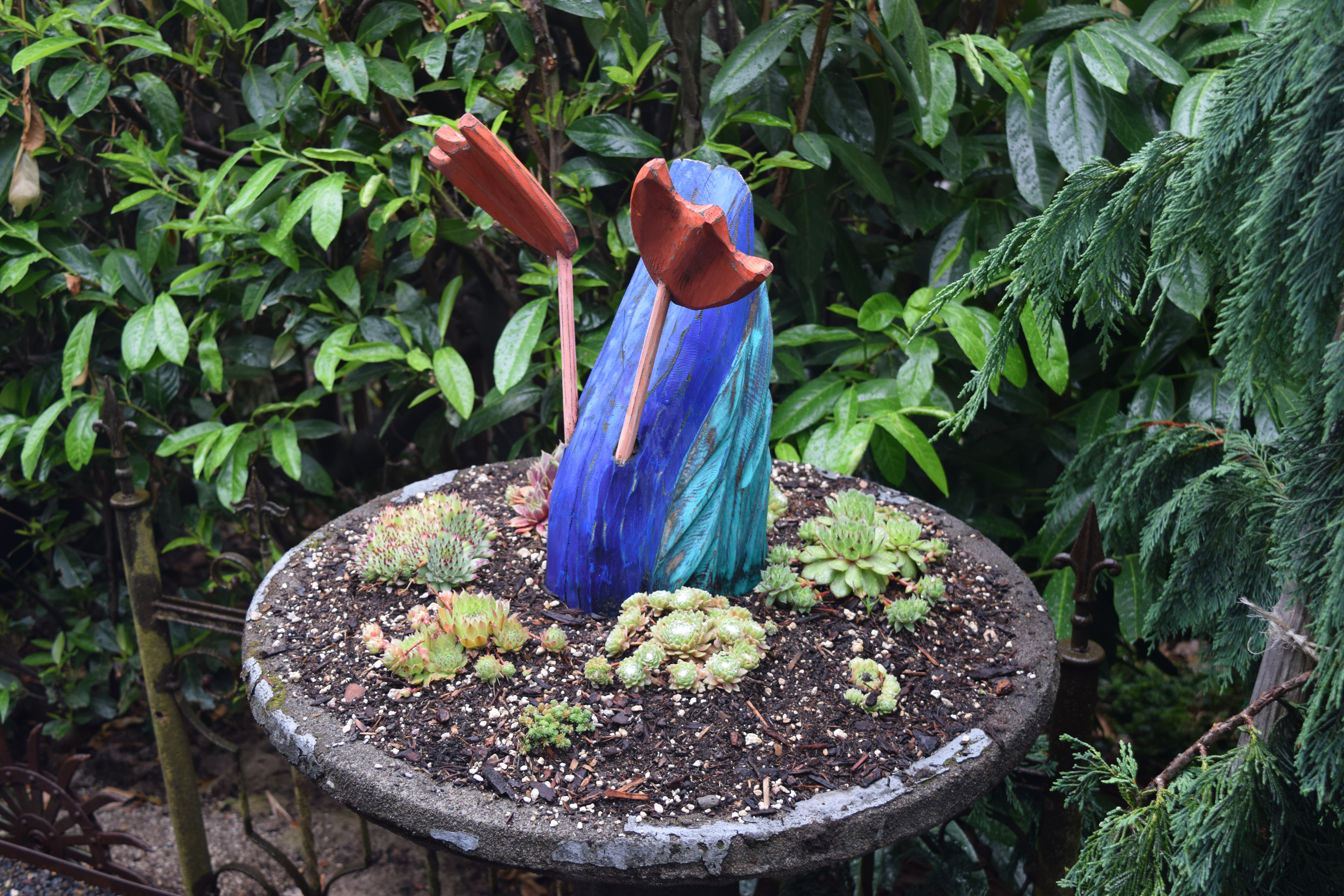 For starters, a duck’s posterior, bottoms up. Presumably the rest of the duck is looking for something to eat under those succulents. I wonder if this would work as a duck decoy.

I think this must be Sparky the mechanical dog.
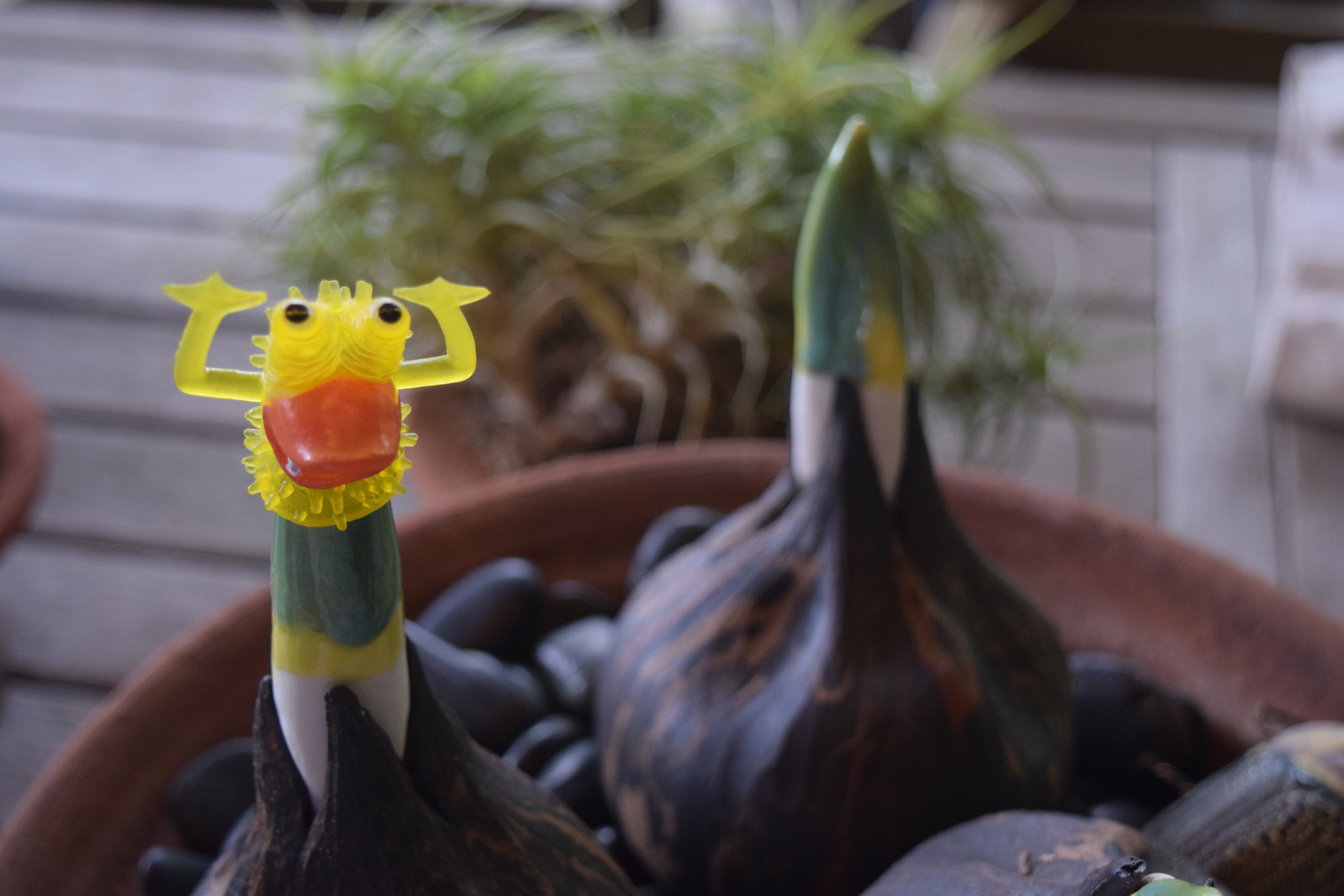
This could be another duck, perched on top of a ceramic bulb. Although it’s a duck with arms and hands instead of wings.
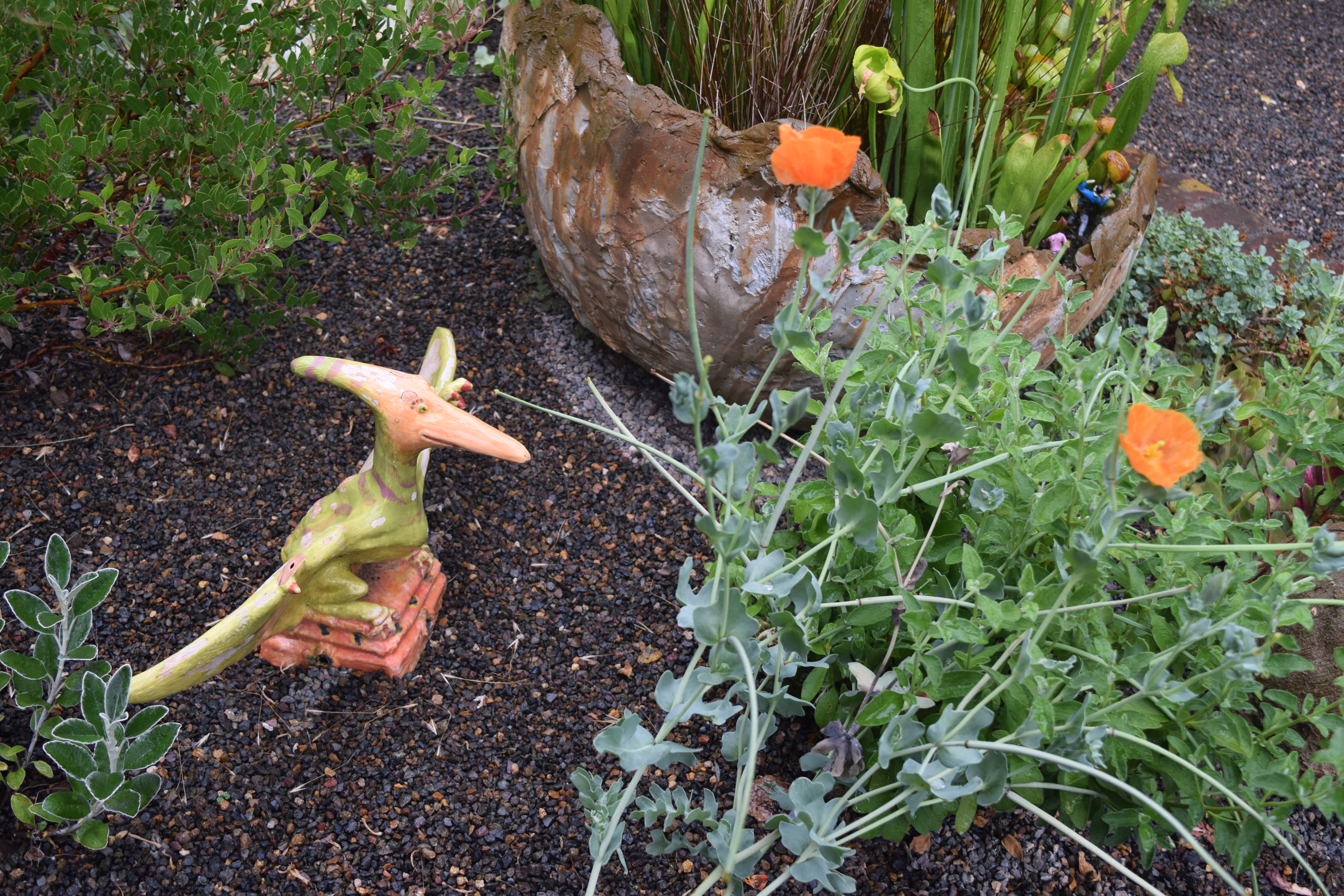
For gardeners with an interest in paleontology, Floramagoria features miniature of pterodactyls.
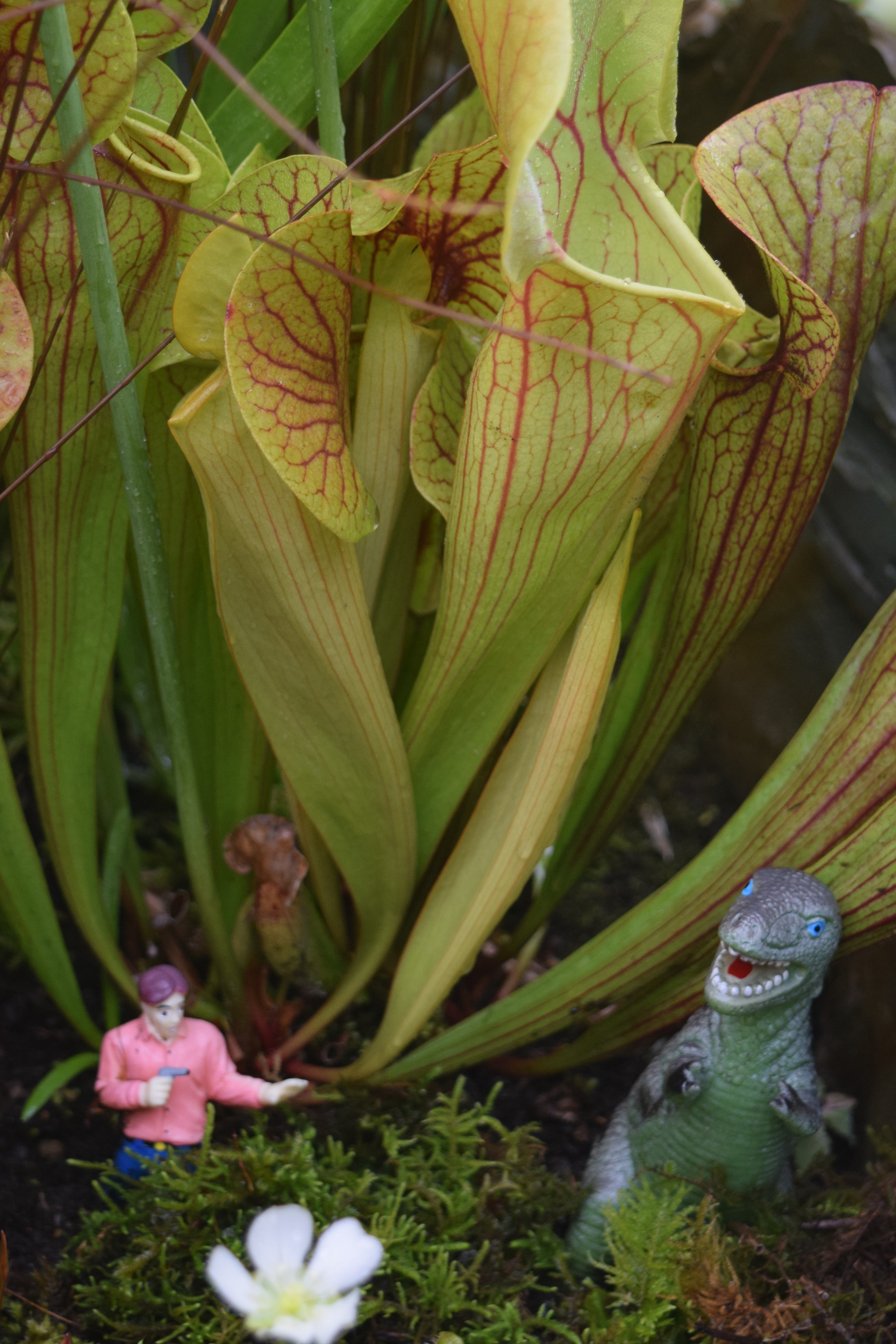
And speaking of prehistory, here is proof that humans did share the earth with dinosaurs. I hope that guy in the pink shirt can fend off T rex with a pistol.

There are also more peaceful critters, like this turtle.
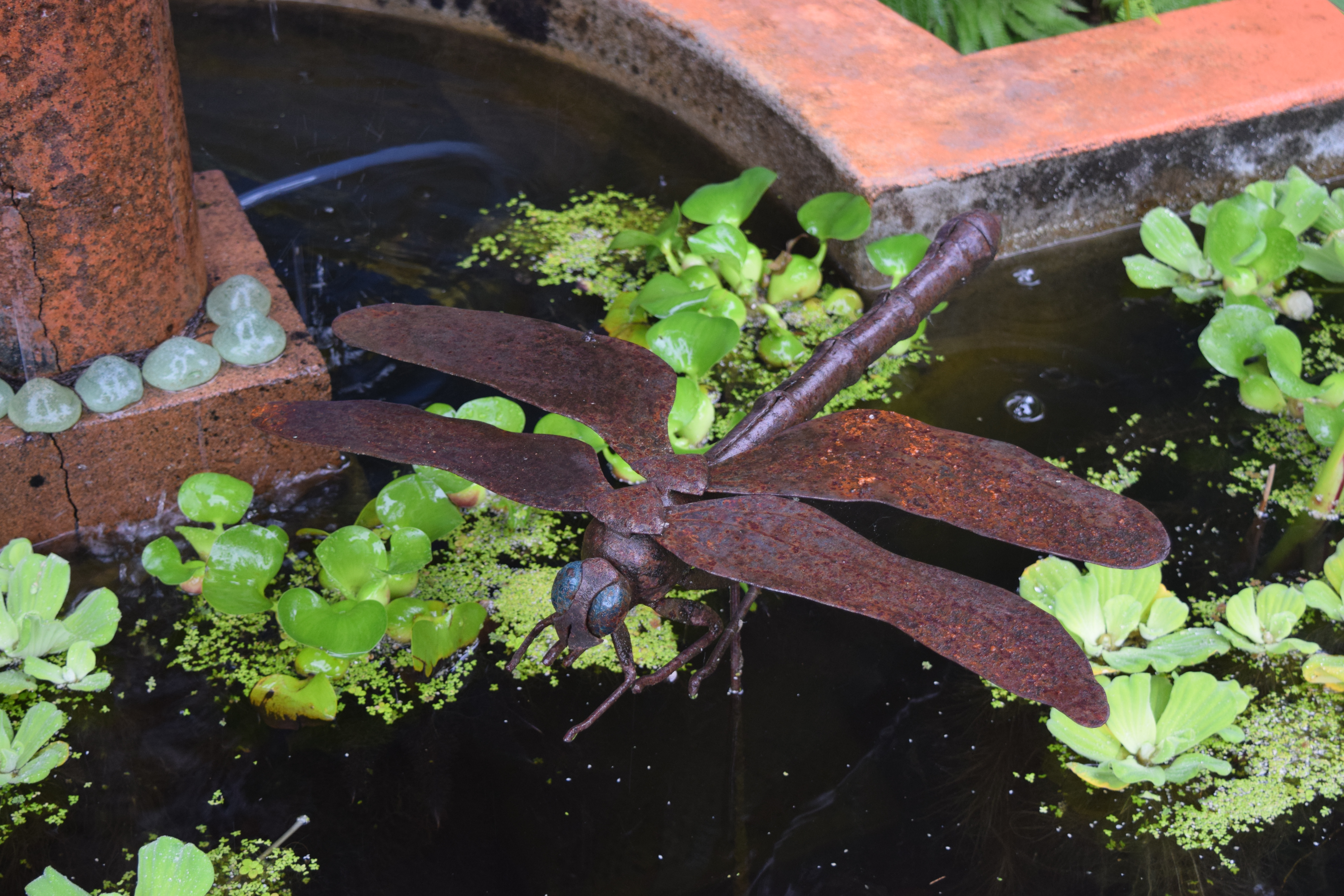
And this dragonfly.
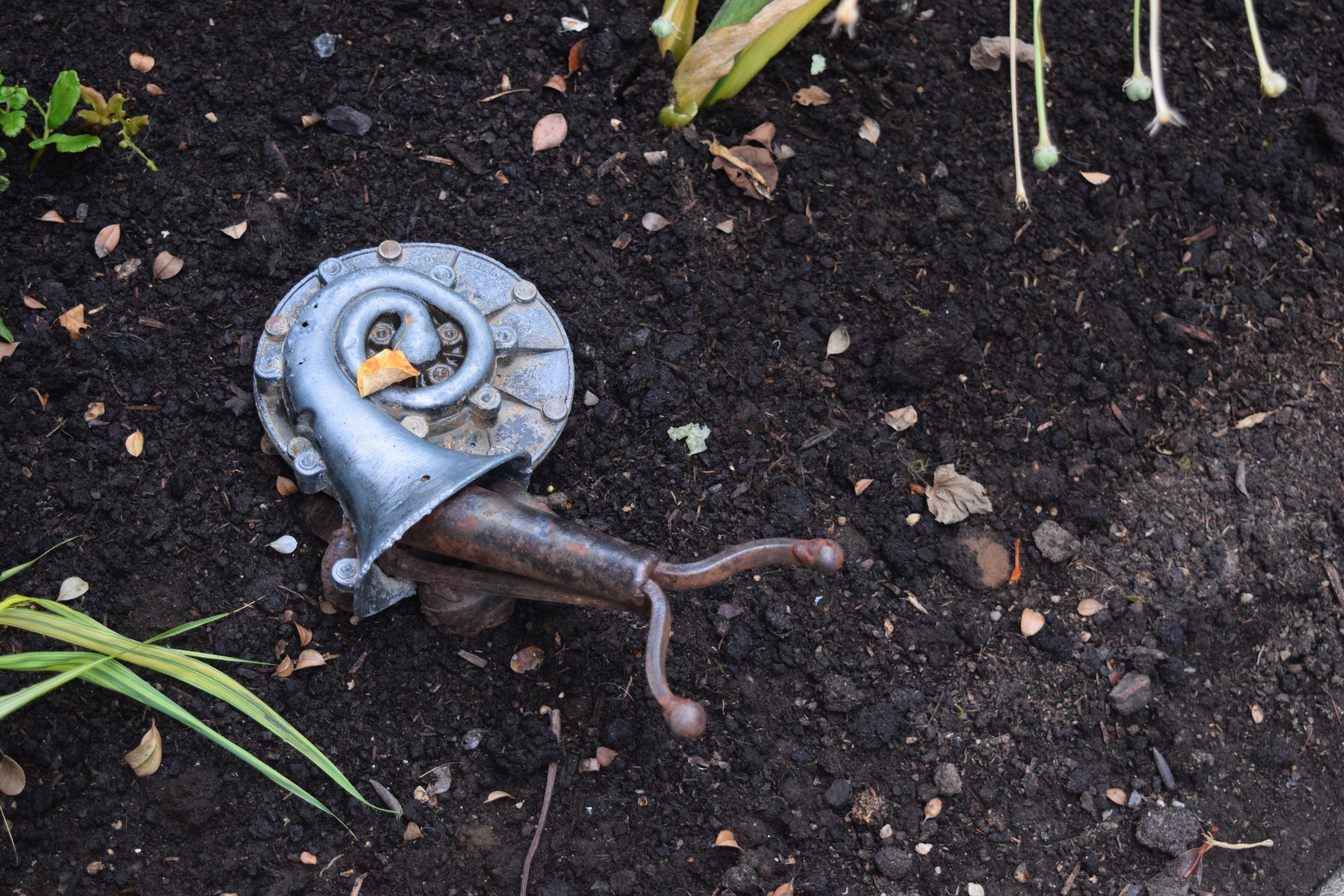
And this mechanical snail.

And I can’t forget the dancing cat.
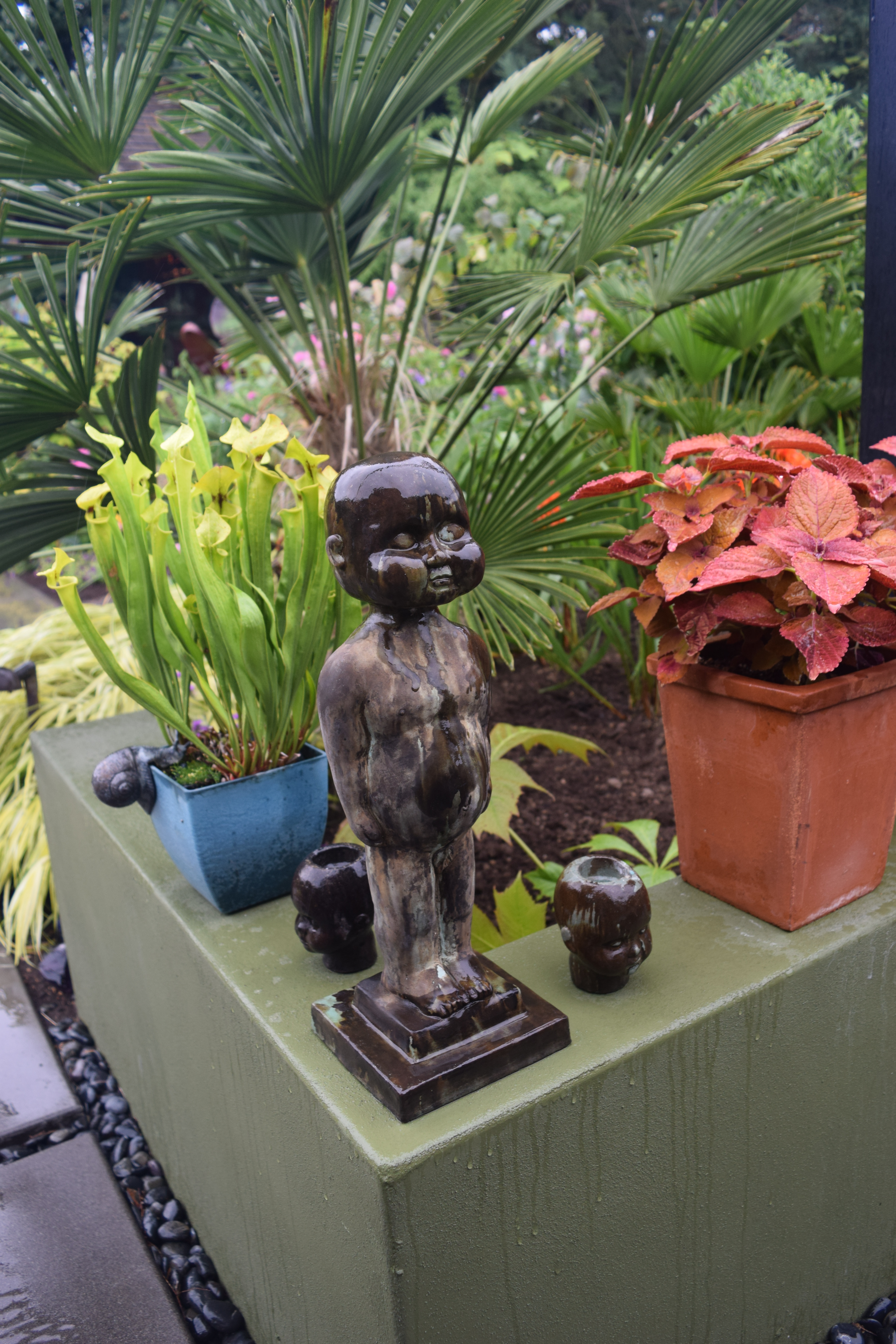
There were several babies, all of whom seemed to be either sad or annoyed.
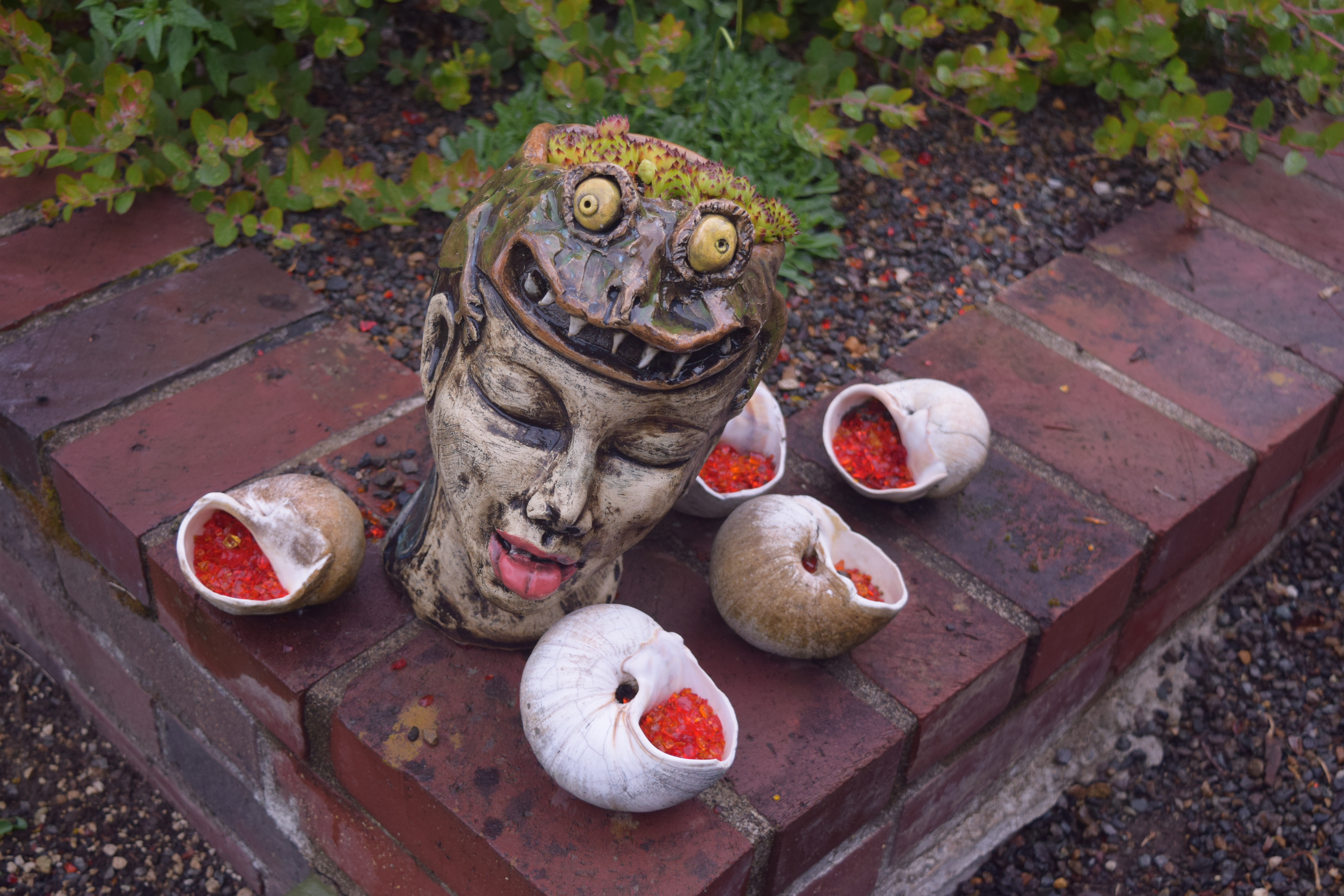
I’m guessing the guy who made this did so on a day when he had a terrible hangover.

Finally, here’s a mannequin displaying a typical gardener’s physique. You can tell he’s a dedicated gardener because he’s got a watering can even though it was raining off and on that day.
Believe me when I tell you that Floramagoria is a beautifully designed and maintained garden. It’s clear, though, that the owners aren’t afraid to have fun.
Next up: Floramagoria Part 2 – a seriously gorgeous garden.

Let me start with a few acknowledgments. First, I know almost nothing about succulent plants. However, this does not prevent me from exercising my rights as an American to have opinions about them.
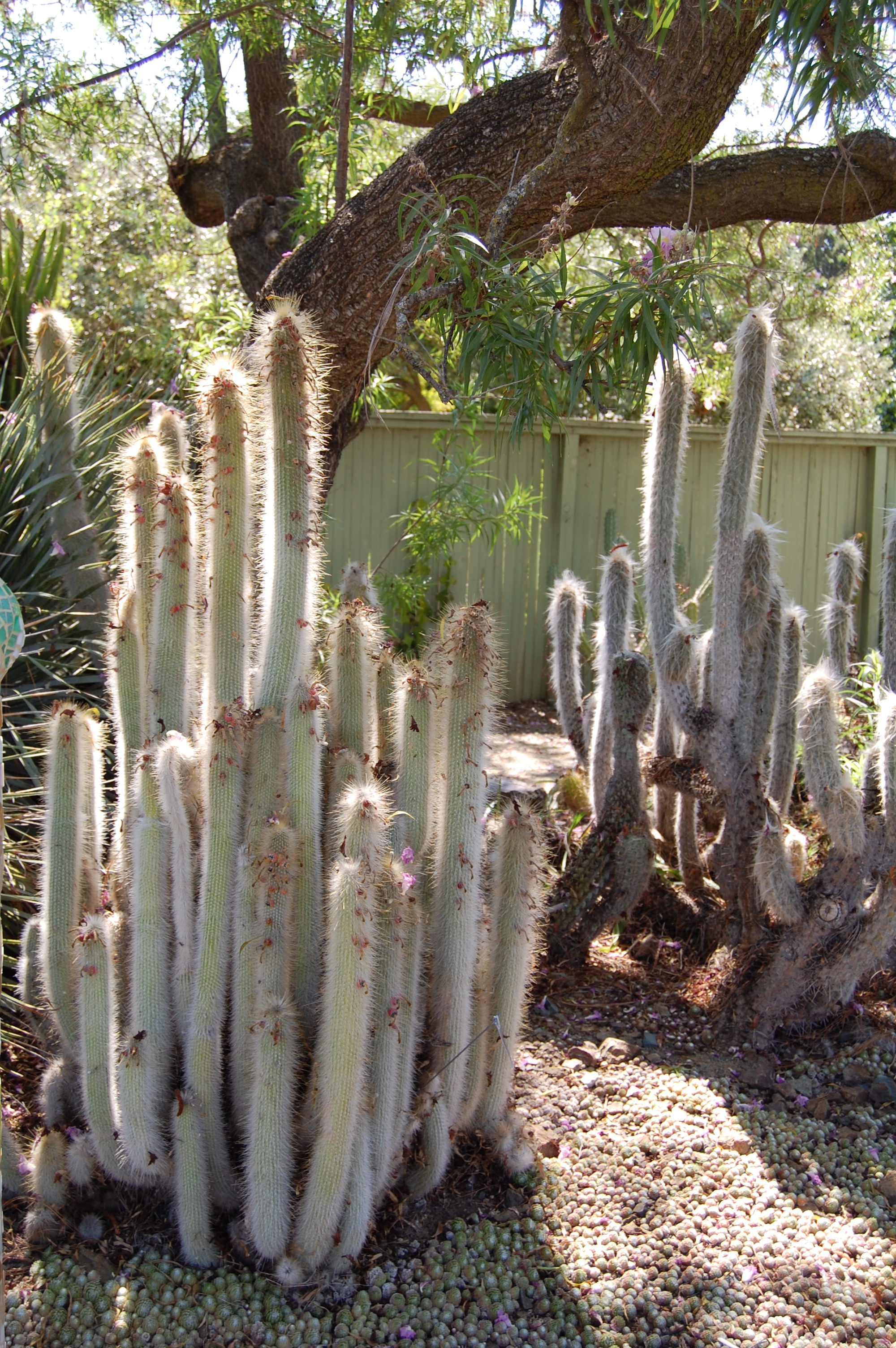
These opinions may not be based on fact. However, I feel that they are true. Therefore, while they may not be accurate, they have (to use the phrase coined by Stephen Colbert) truthiness. And that’s good enough for me.
That said, I don’t grow succulents for the same reason I wouldn’t have a lizard or snake as a pet. Succulents strike me as cold-blooded plants.

I like plants that are more like golden retrievers or maybe a well-behaved cat, Plants that would cuddle up to you as you watch TV on the couch. Plants that are warm and lovable.
It’s hard to put my finger on exactly why I have this reaction, but here are a few possibilities.

Succulents tend to have sharp pointy bits. Of course, roses have thorns and so on. That makes roses more like the cats of the garden, still cuddly but with sharp claws that will strike when there’s been enough petting.
Admittedly, many succulents have nothing pointy going on whatsoever – for example, Sedum spectabilis. However, I prefer to avoid even the non-pointy succulents just to be on the safe side – because you don’t know when they might turn on you. You say guilt by association? I say reasonable prudence.

Succulents have weird leaves. At best, leaves of succulents have a waxy outer coating that makes them seem standoffish, plus they tend to be relatively inflexible. At worst (as with cacti), the leaves are actually spines, or is it the other way round?

Succulents look like sentient beings from another planet. Some of them, anyway. They just do.
If I lived in a hotter, drier climate I would no doubt have a different attitude towards succulents. Their presence would seem more comfortable and familiar, I would probably be grateful for the niche they fill in more arid ecosystems.
Also, there are only a limited number of succulents that will grow here in Chicago. So perhaps the succulents have the last laugh. I may not want to grow them, but most of them wouldn’t want to grow in my garden anyway. Probably best that we each go our separate ways.

The longest rails-to-trails project in the world is right here in Chicago, and is scheduled for completion in June, 2015. To find out more, I took advantage of an opportunity to interview in writing Beth White, the Chicago Region Director of the Trust for Public Land.

Can you give me an overview of The 606’s major features?
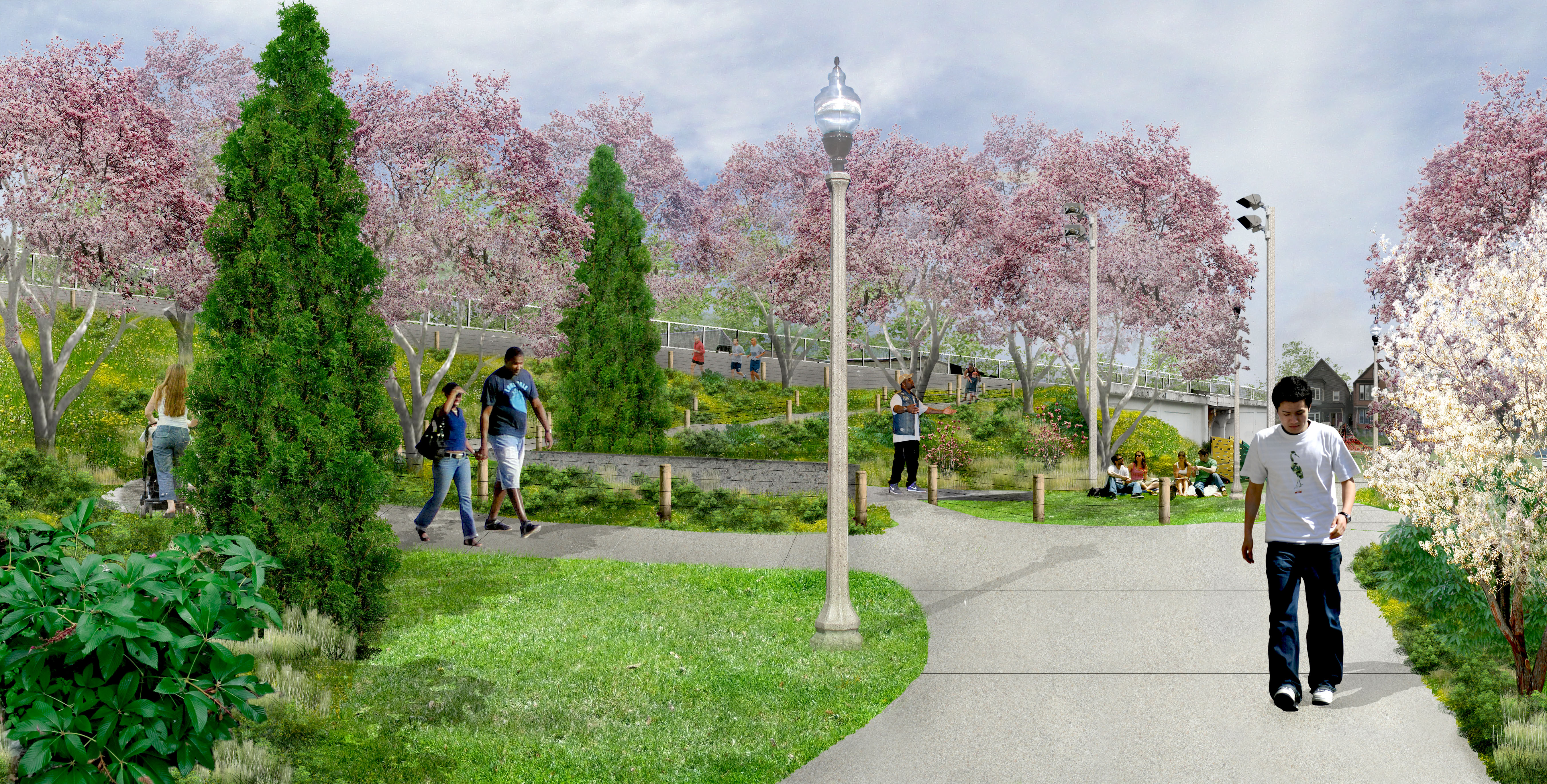
The 606 takes Chicago’s legacy of great parks to new heights. The 606 has the elevated Bloomingdale Trail [currently an unused rail line] as its centerpiece, and it will be connected to six neighborhood parks at ground level. It will also have a wheel-friendly event plaza, an observatory, art installations, and educational programming.
Set above city streets, it’s a new way to explore Chicago on trails for biking, running and strolling … Kids will learn to ride their bikes here, commuters will find a new shortcut to work, and neighbors will make new friends. The 606 will change what it means to go to the park. For more information visit The606.org (http://The606.org).
How will The 606 add to the surrounding neighborhoods?
The 606 will serve as a connector of parks, people, and communities; what once physically separated the neighborhoods of Bucktown, Wicker Park, Logan Square and Humboldt Park now will knit them together and attract visitors from throughout Chicago and beyond.
Locally, The 606 will be an urban oasis for the 80,000 people, including 20,000 children, who live within a ten-minute walk. It is also planned as a citywide resource and a transportation alternative as well as a tourist attraction.
Because The 606 will also serve as a 3-mile long alternative transportation corridor it will bring together families who will be able to teach their kids to ride bikes without having to cross a city street.
How will The 606 be similar to and different from New York City’s High Line?
The 606 will be uniquely Chicago. While it is under construction, many people compare it to New York’s Highline, but these wonderful public spaces are very different.
The Bloomingdale Trail is elevated, but it is nearly 3 miles long – twice as long as The Highline. Along the 606, bike traffic will be allowed (in fact, The 606 intersects with Milwaukee Avenue, the most-traveled Chicago street for cyclists).
The Bloomingdale Trail (avg. 17′ high) is also much lower than the Highline (more than 30′), which means it’ll be more connected to the neighborhoods through which it passes. Folks will be able to interact with people on the ground and in the six parks that will be connected by the trail. This connection to six street-level parks is a huge distinction from the Highline.
Also, The 606 is designed to be a living work of art. The Trust for Public Land brought in a professor at the School of the Art Institute, Frances Whitehead, as a member of the design team alongside the engineers and landscape designers – leading to a park and trail system fully infused with the arts.
Describe the role of The Trust for Public Land in the development of The 606.
Founded in 1972, The Trust for Public Land is the nation’s leading nonprofit working to conserve land for people. The Trust for Public Land is focused on creating parks and preserving land, especially urban space, and oversees civic engagement, fundraising and stewardship of The 606.
The Trust for Public Land is the lead private-sector partner on the project and serves as project manager on behalf of the Chicago Park District (managing design, construction, civic engagement, fundraising, and other elements.)

Tell me about the plantings.
The Bloomingdale Trail will facilitate the study of phenology through plantings along the trail. We are using plants to turn this east-west corridor into an environmental sentinel and climate-monitoring installation, in collaboration with the Chicago Wilderness and the USA National Phenologic Network.
Along the Bloomingdale Trail we’ll be planting 453 temperature-sensitive species to help nature-lovers, garden enthusiasts and citizen scientists explore the impact of the lake effect on Chicago’s blooming periods. Similar studies have been done on the cherry blossom season in Washington DC. The three species are a mix of native and other sentinel species:
Phenologists have told us that they believe this installation will demonstrate a 5-day difference in the blooming period from east to west end because of Lake Michigan’s effect on our growing season. And, over the years, scientists will also be able to track the effects of climate change on bloom times.
This idea came from The 606 lead artist Frances Whitehead, and we expect citizen scientists and students from the 20 nearby schools (within a ten-minute walk of the trail) to participate in the monitoring activities. .

What criteria have been used for the selection of plants? Can you tell me if particular plants have already been identified for extensive use?
The sentinel species will be planted with the most regularity, but we have a great mix of trees, shrubs, perennials, and bulbs. Plants were chosen for a variety of qualities including native status, attractor for native wildlife, stormwater retention, and, of course, beauty.
Who is designing the plantings? Have they done comparable projects elsewhere?
Michael Van Valkenburgh and Associates is the landscape architecture firm on the project and they are working on several high profile projects nationwide, including downtown Chicago at Maggie Daley Park. You can see several of their projects by visiting their web site: http://mvvainc.com/.
Can you explain why the name “The 606” was chosen?
The project is named for the 606 zip code prefix all Chicagoans share, reflecting the park and trail system’s role as a community connector. The 606 name also evokes a connection to the site’s transportation history, a play on the tradition of using numbers to name rail lines, highways, bus and train routes and other transportation corridors.

We visited the Portland Japanese Garden as part of the 2014 Garden Bloggers Fling. I wouldn’t put Japanese gardens at the top of my list of favorite gardening styles. However, I’m very glad I was able to spend some time in this tranquil place.
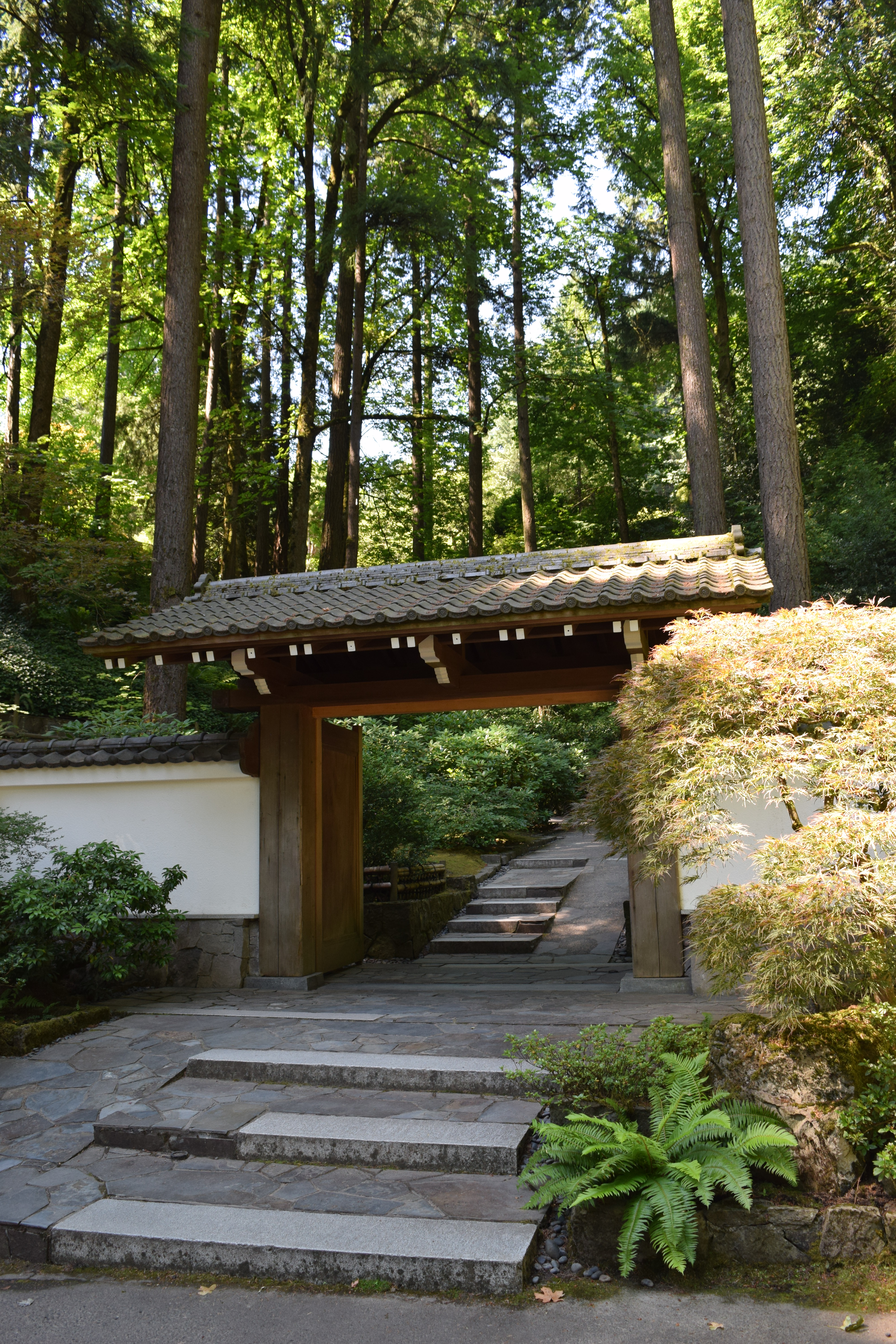
The Portland Japanese Garden is actually five different gardens on 5.5 acres surrounded by protected woods. While the gardens are traditional, trees native to the Pacific Northwest are also included so as to blend in with the natural surroundings. This creates a larger sense of scale than is generally found in this type of garden.
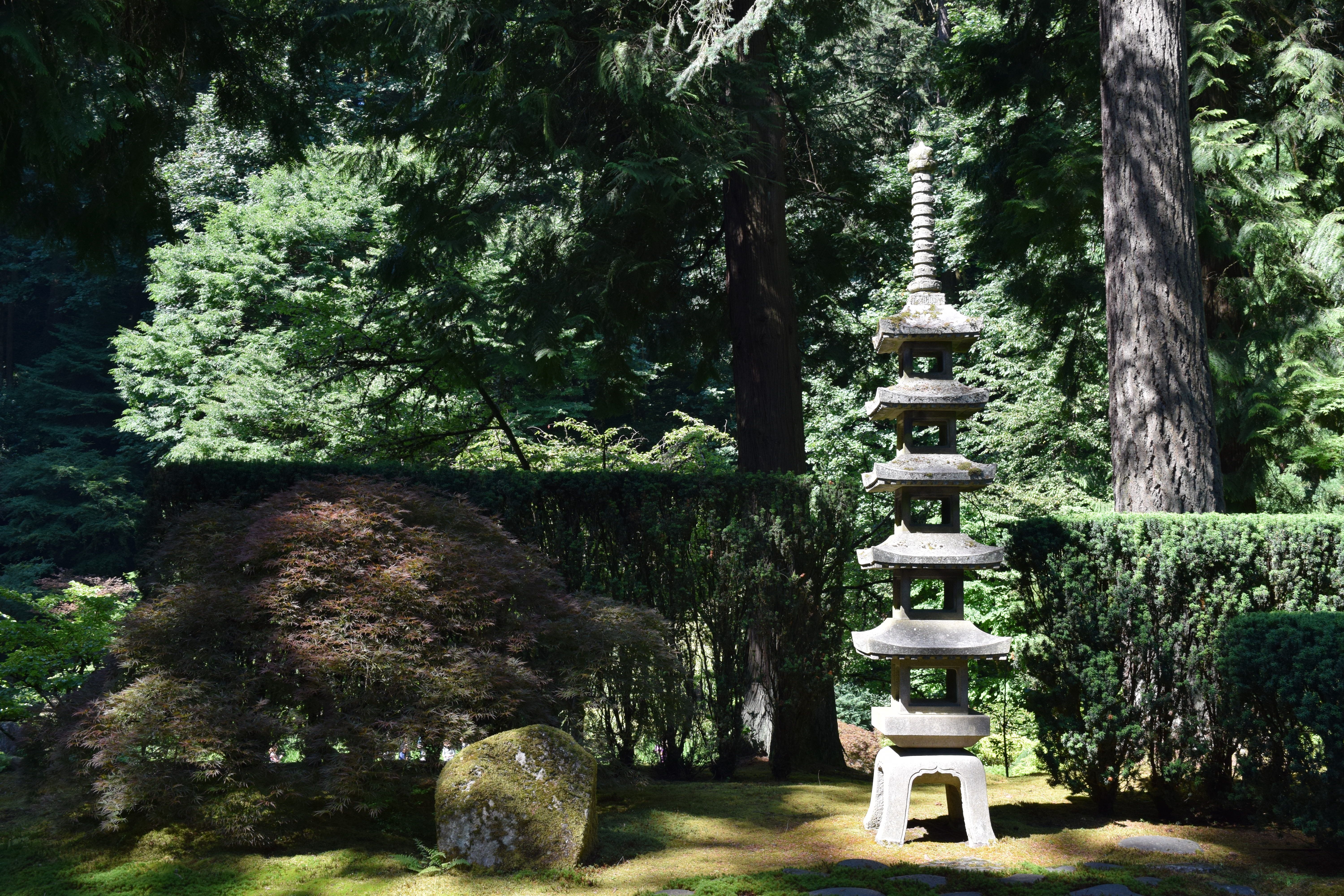
The five gardens are the Flat Garden, the Strolling Pond Garden, the Natural Garden, and the Tea Garden. Throughout, stone and water matter just as much as the plants.
The Strolling Pond and Natural Gardens were the ones I found most enchanting
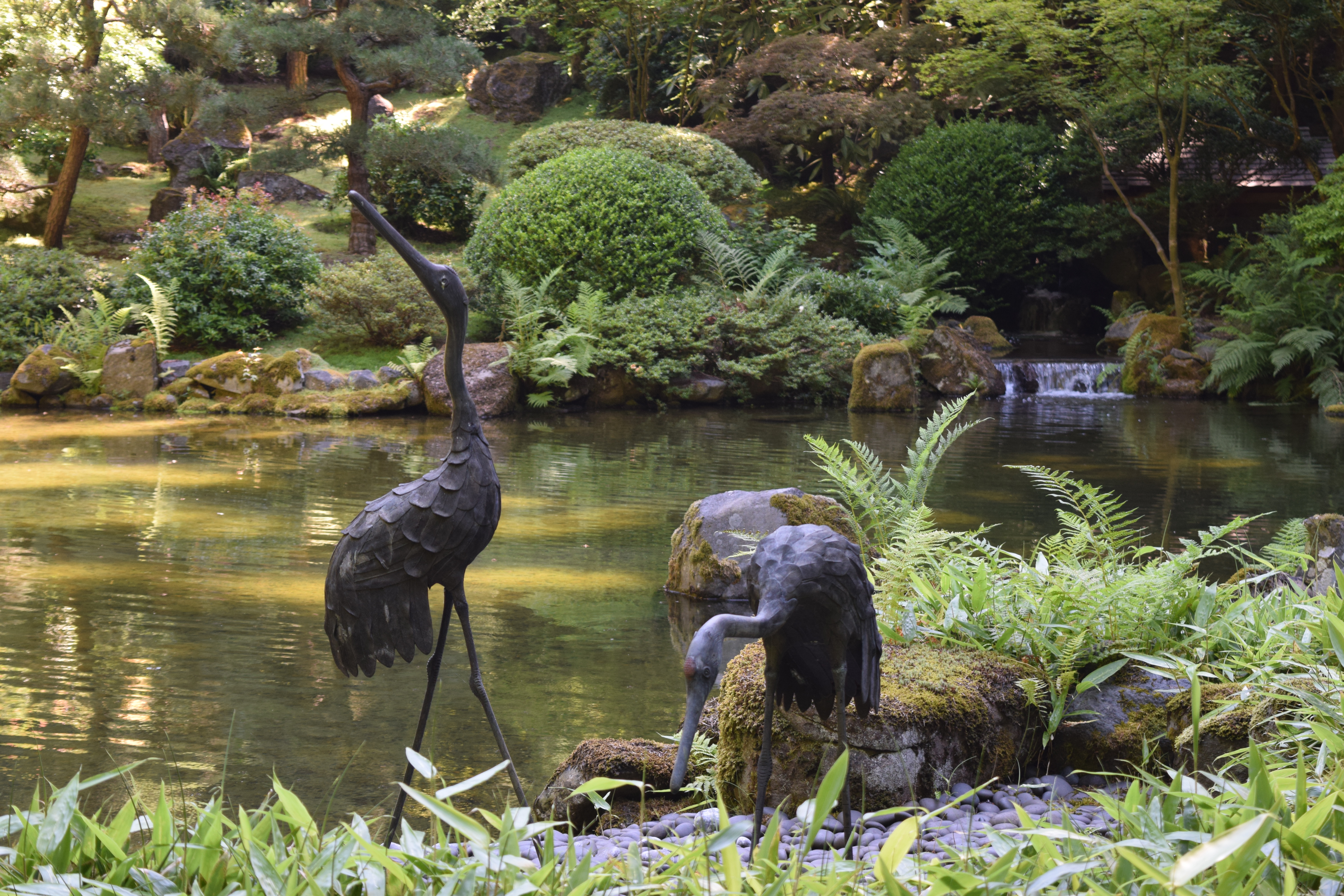
The Strolling Pond Garden actually has two ponds. The upper pond is shaded, smaller, and the more peaceful of the two.
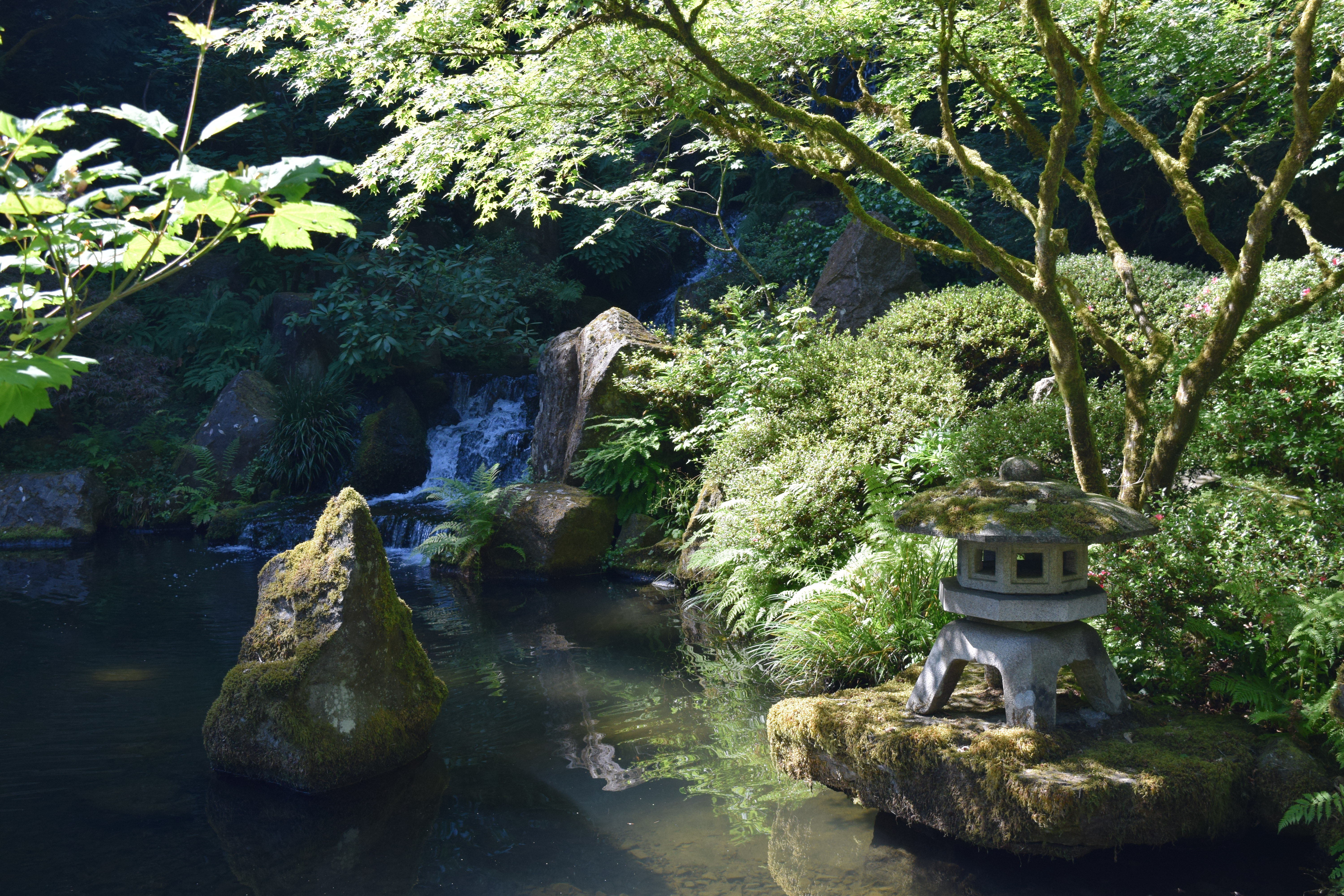
The lower pond is in more sun, at the base of a waterfall.
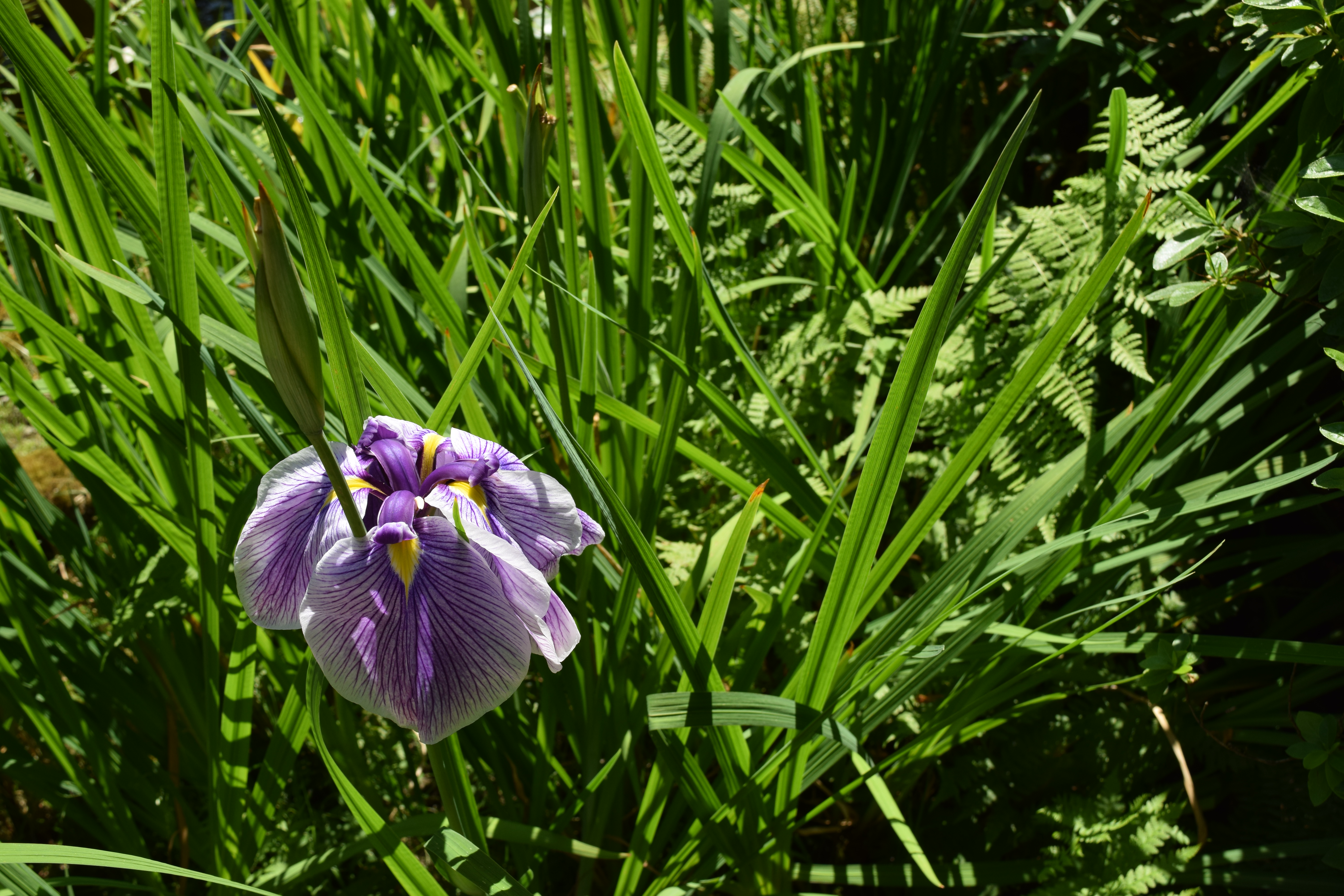
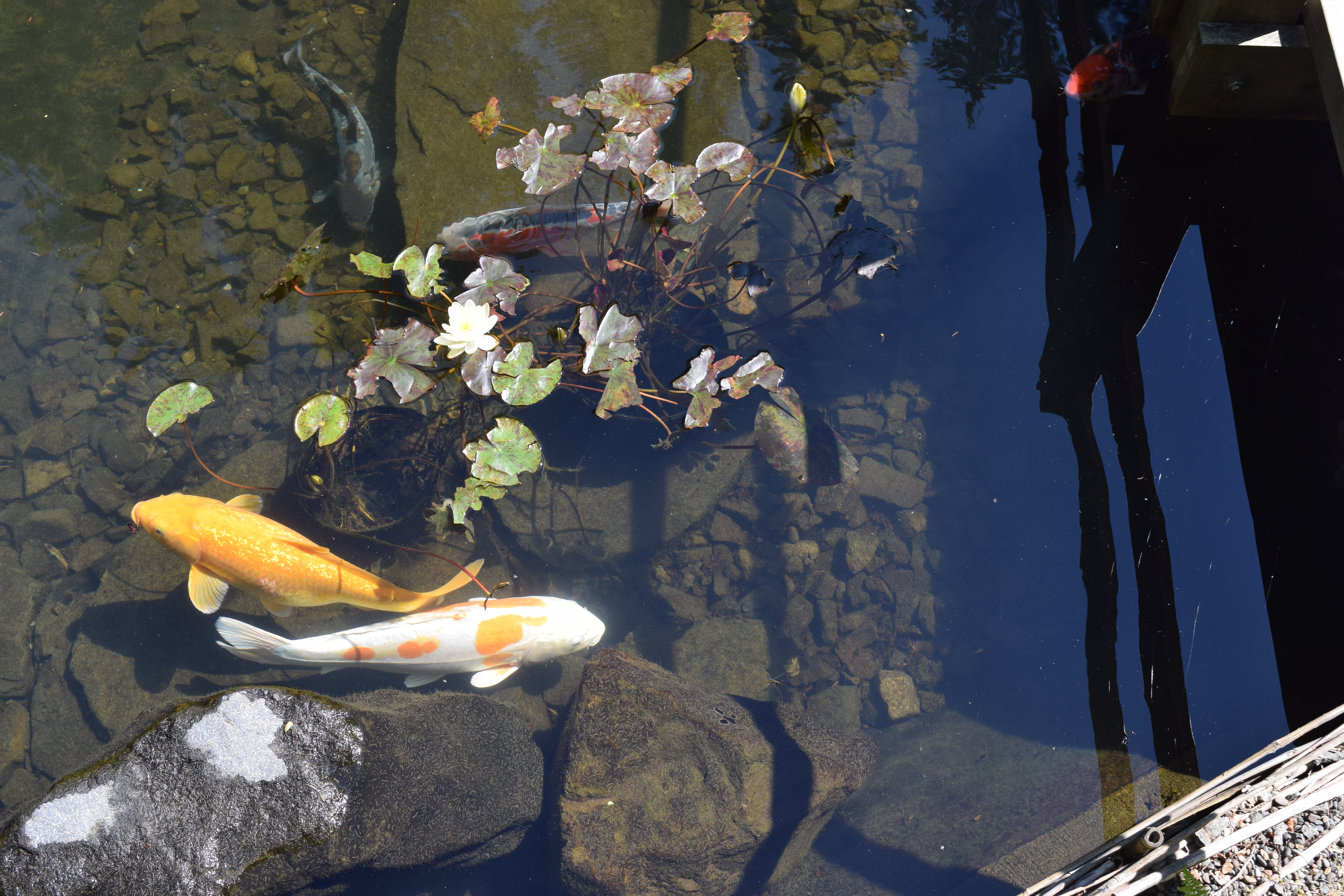
In summer there is not a great deal of color, though there are a few irises blooming – and koi.
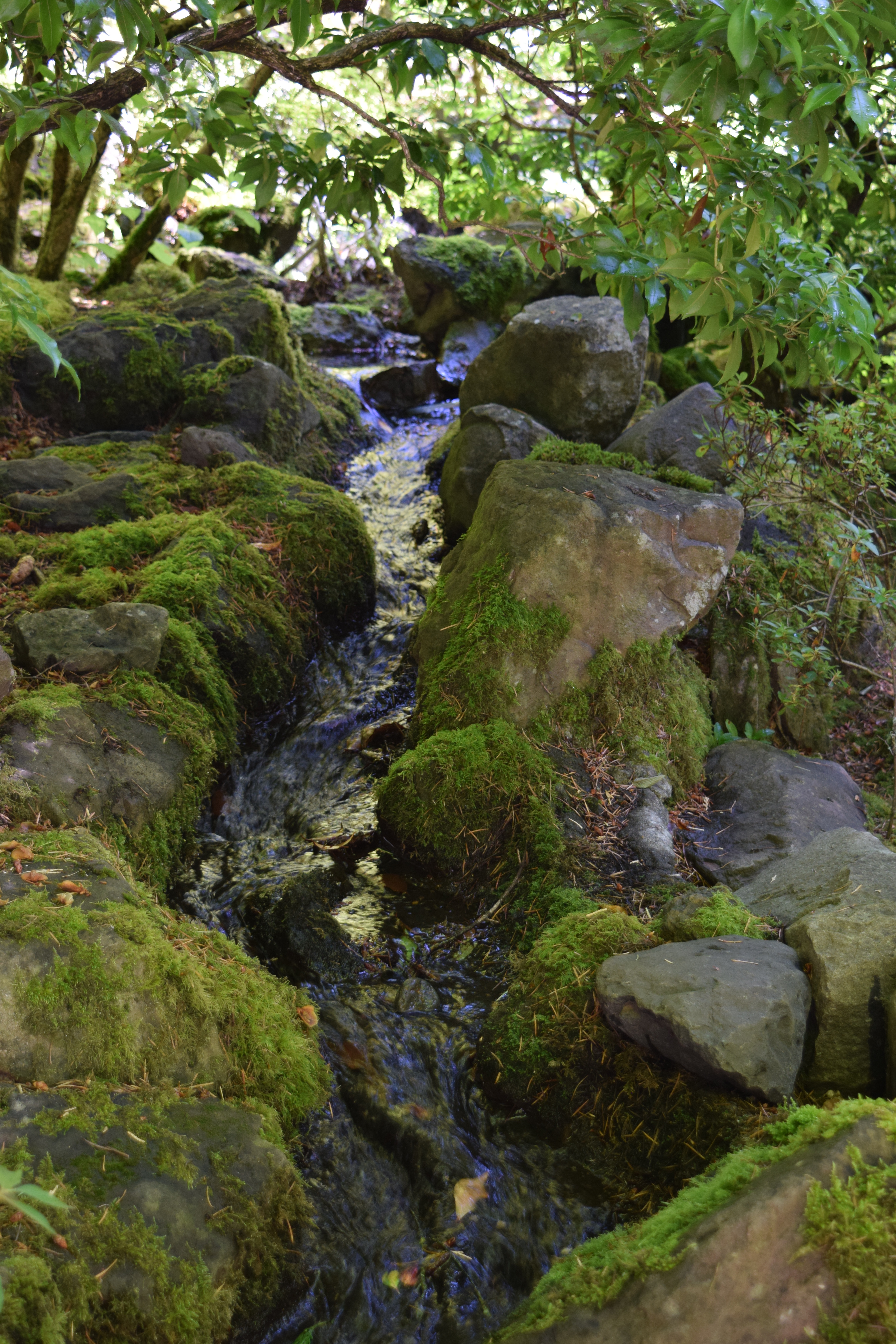
The Natural Garden has a primeval feel, a sense of quiet that makes the problems of the world seem unreal. At least for a brief time.
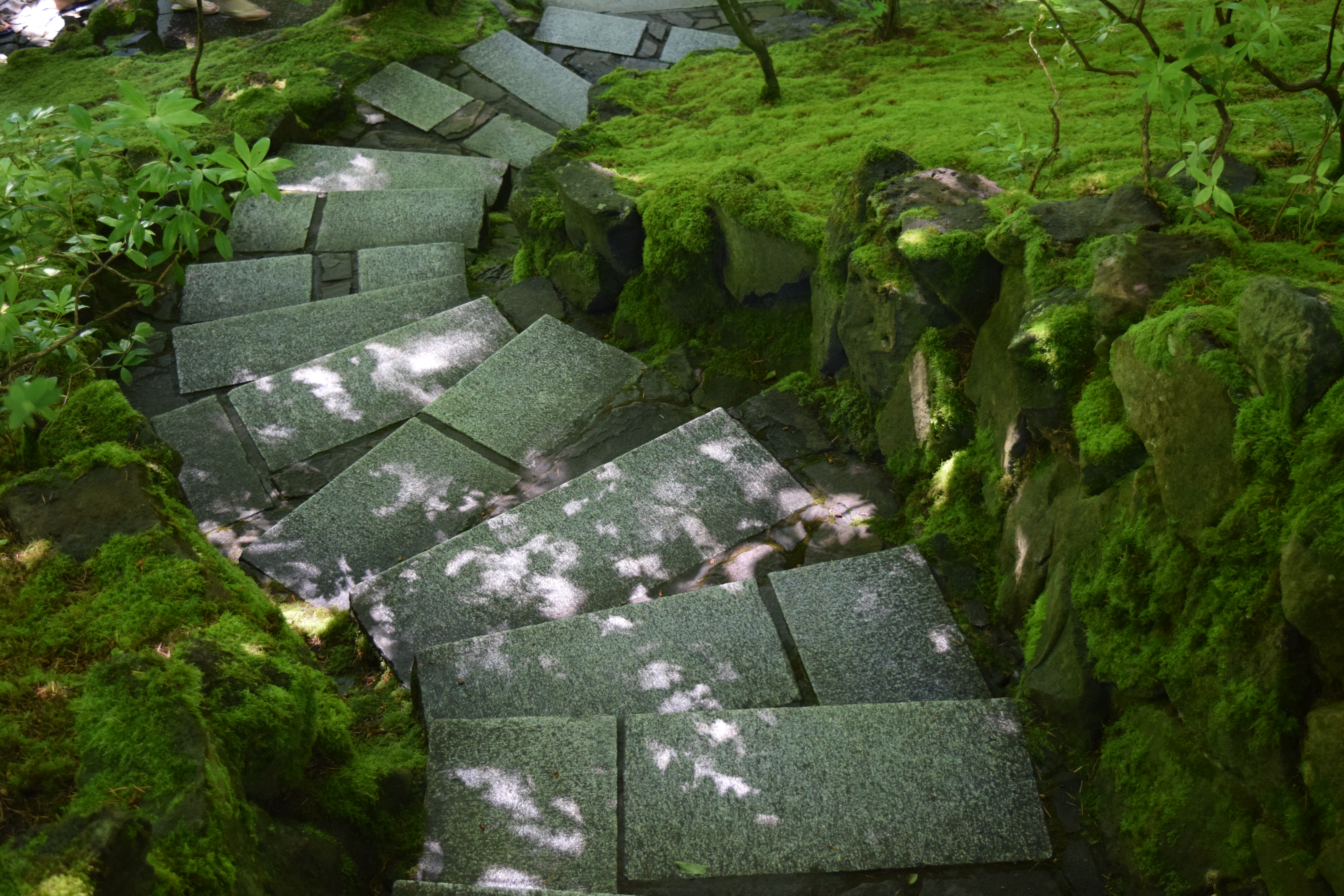
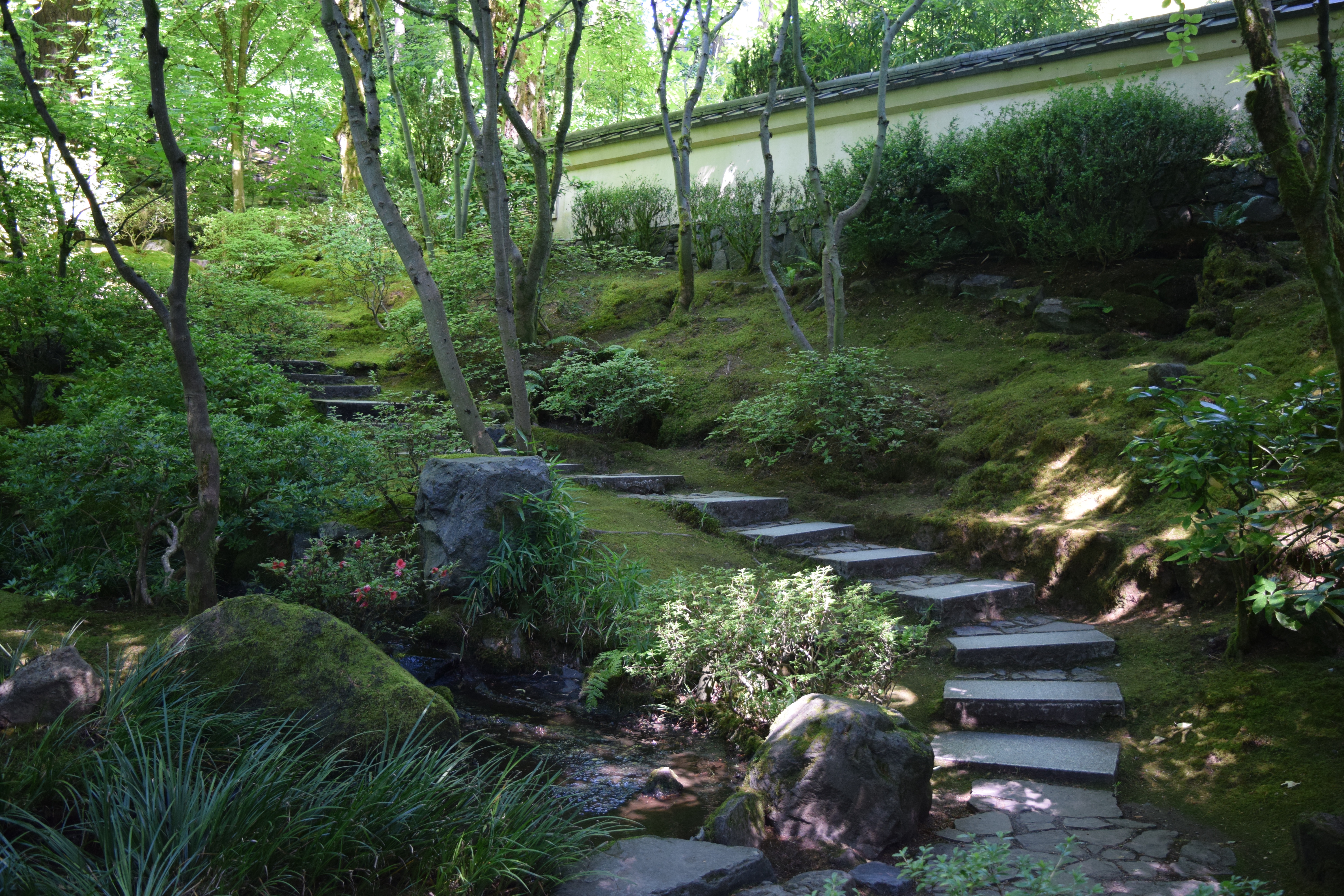
I loved these stone steps, there was something hypnotic about them. All the moss creates a blurry, dreamy feeling.
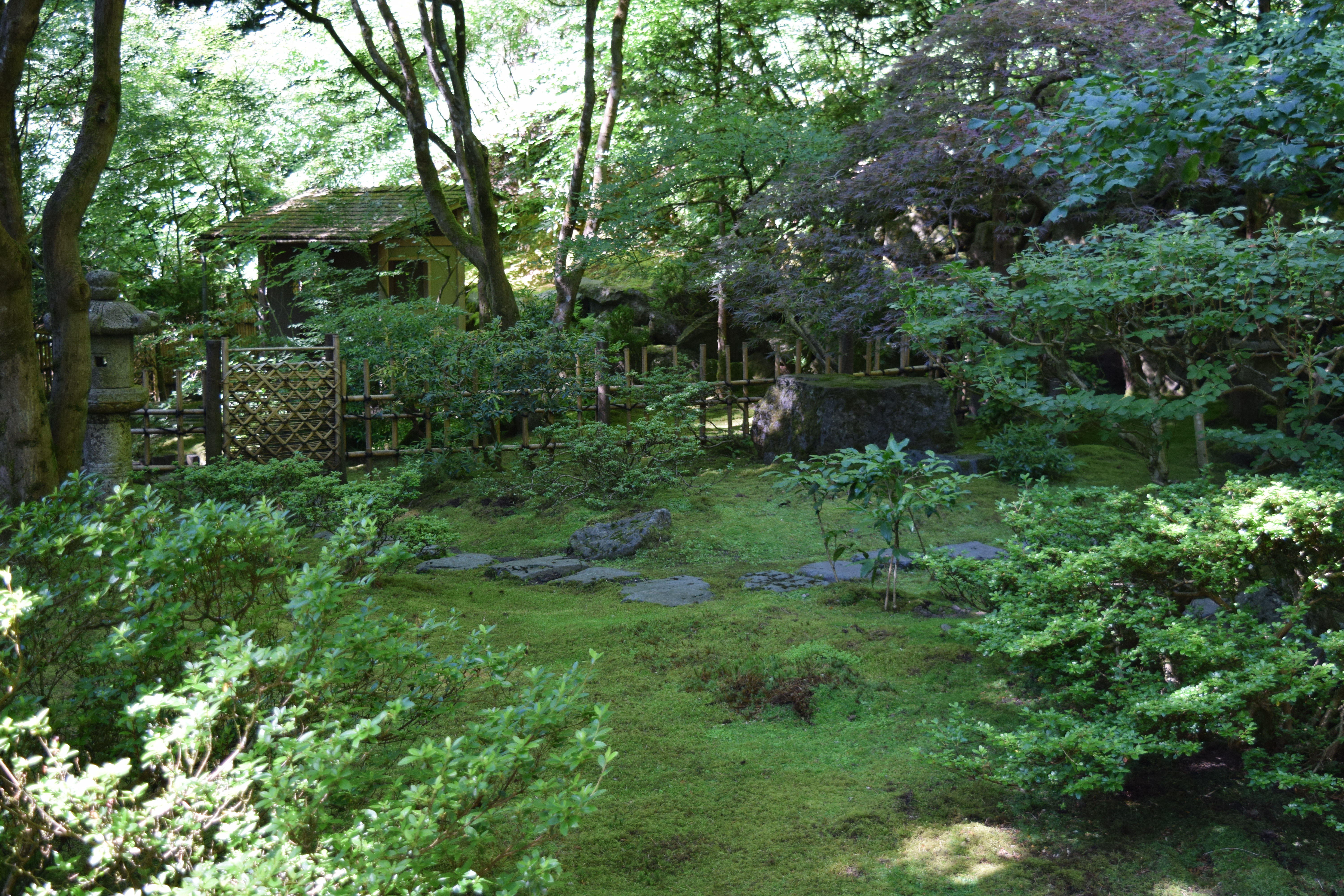
Just can’t have too much moss in a garden like this.
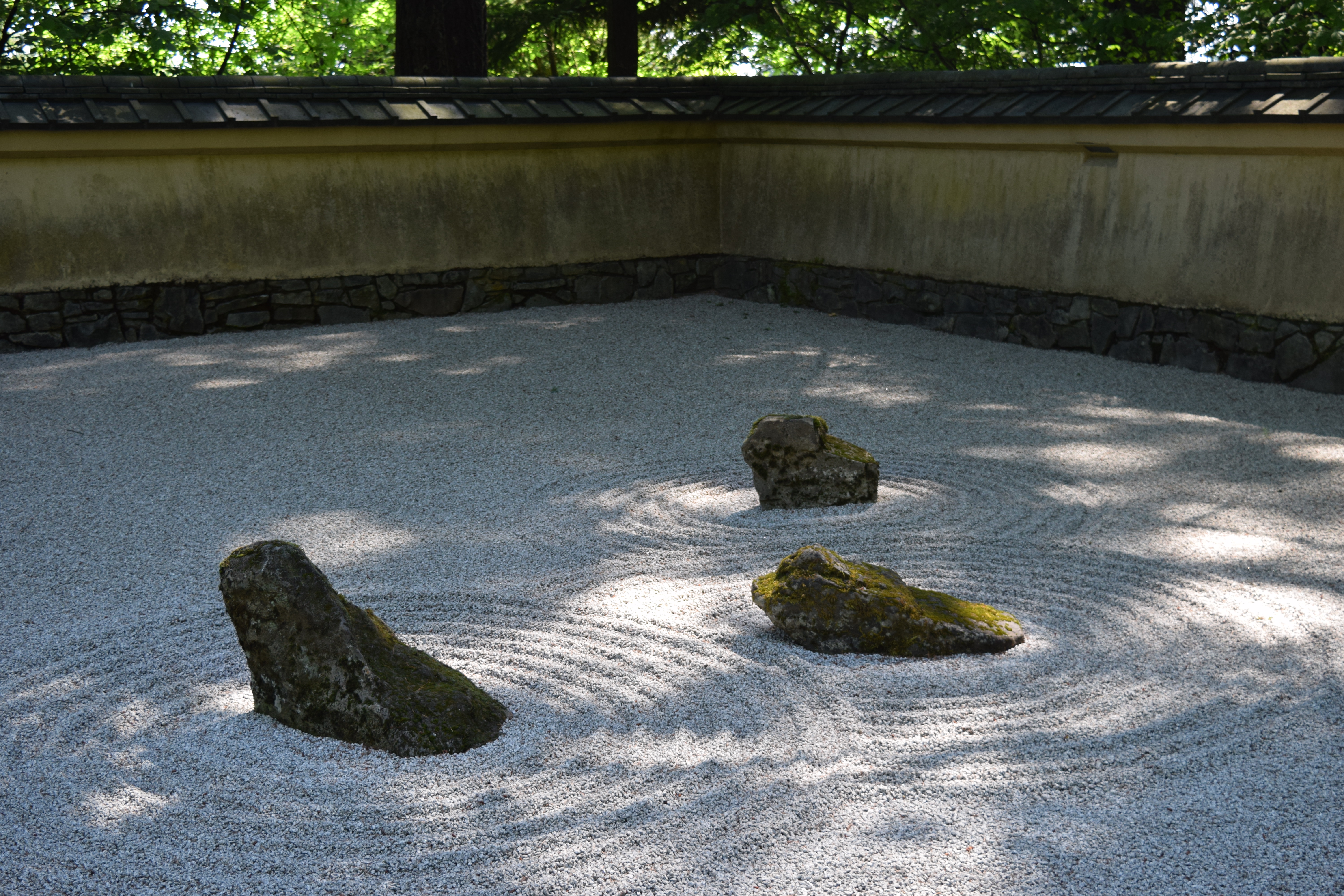
This was in the Sand and Stone Garden. I may be exposing myself as a yahoo, but I’ve got to say this sort of thing leaves me cold. All I can think is, “OK, nice gravel. What’s next?”
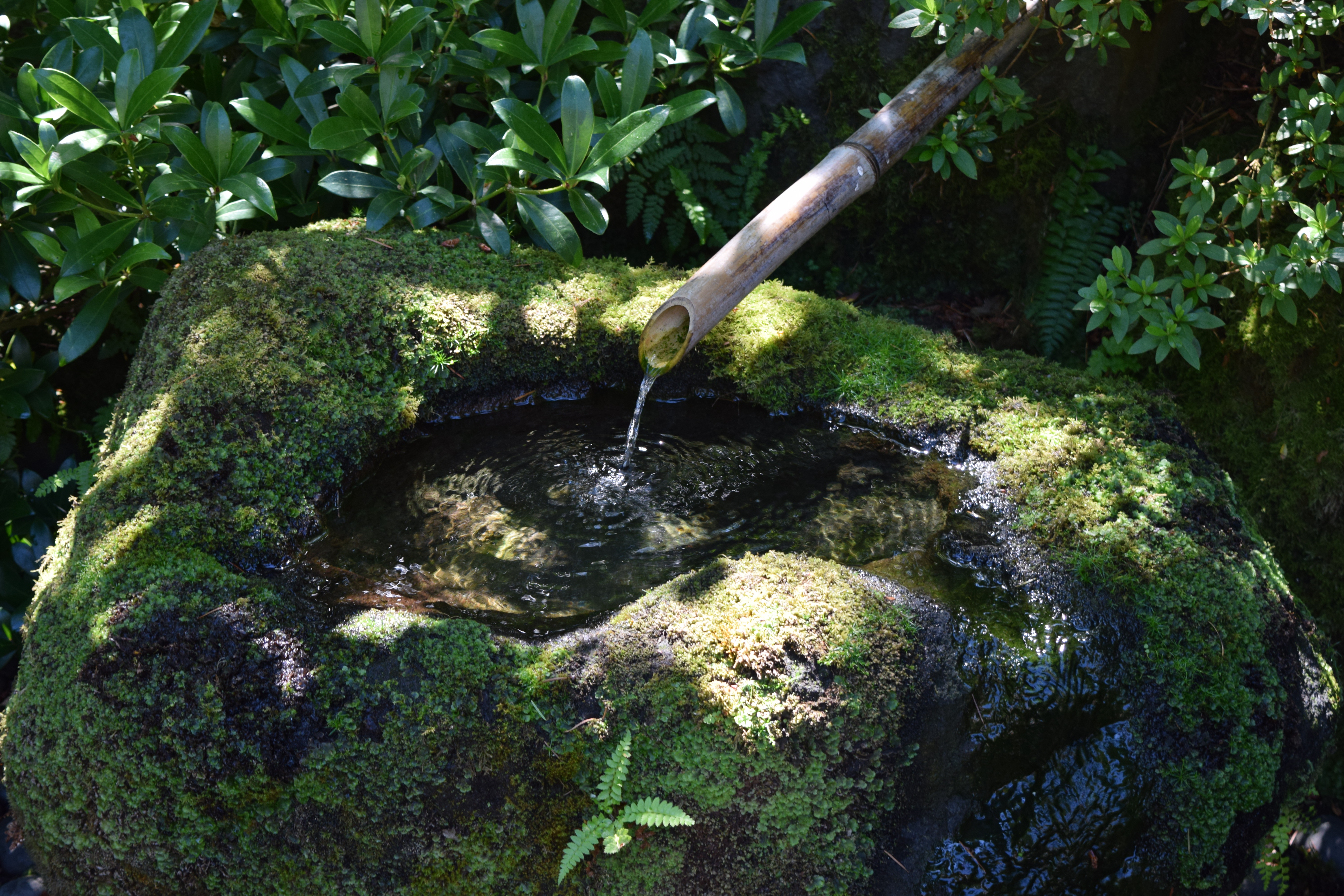
This is more like it. I forget where this fountain was exactly, but it’s very cool.
Do you enjoy traditional Japanese gardens?



 gardeninacity