Last Plant Standing: Fall vs. Spring Garden Clean Up

One way to classify gardeners is based on whether they remove dead plant material in fall or spring. Mostly I’m a spring cleaner.

Birds and bugs are my primary reason. The other day I watched goldfinches feeding on the seed heads of yellow coneflower (Ratibida pinnata), one of the late season sights I love. These and other seed heads are basically free bird feeders. And the tiny seeds left on the ground will attract sparrows and buntings in spring.

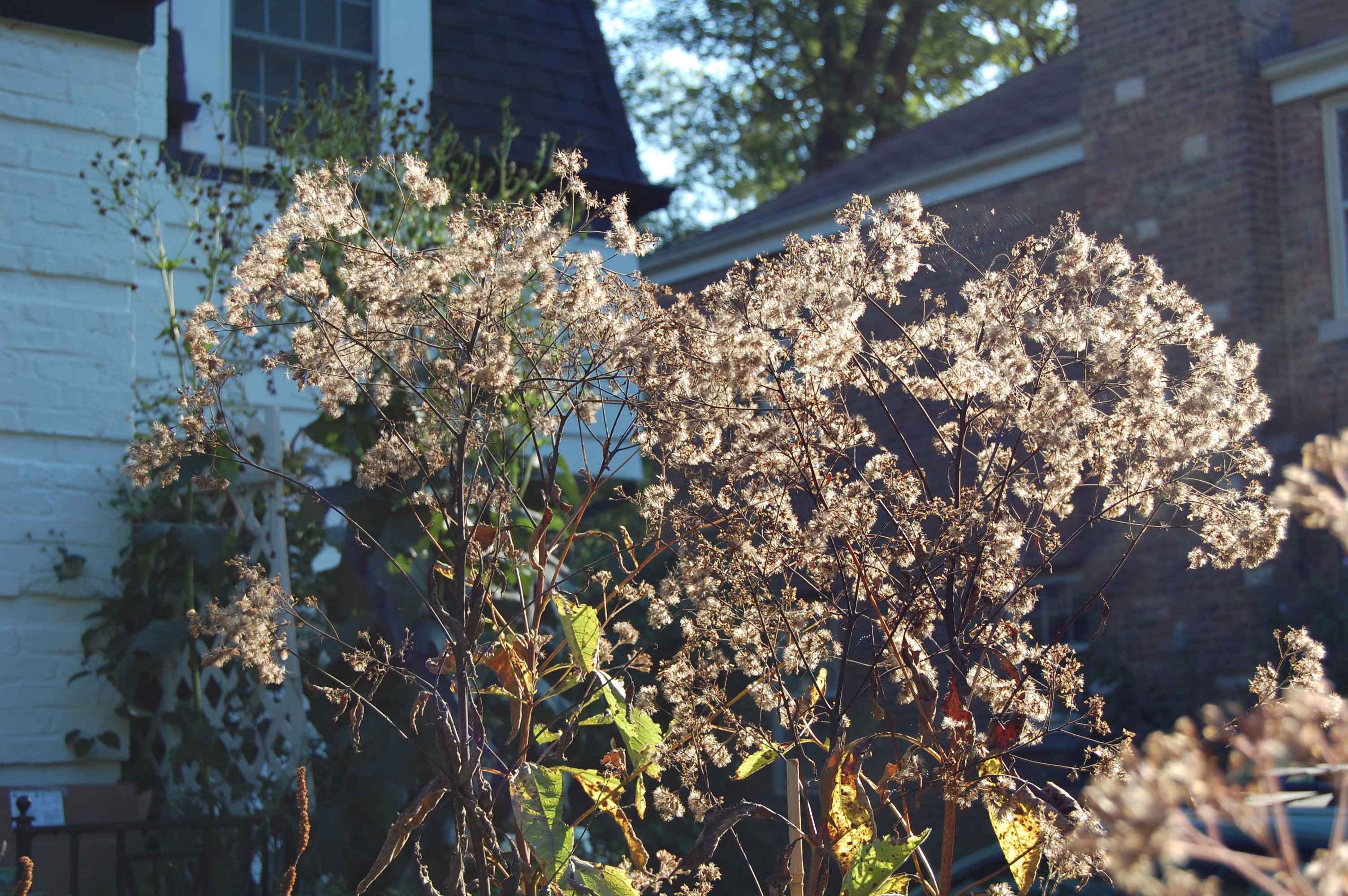
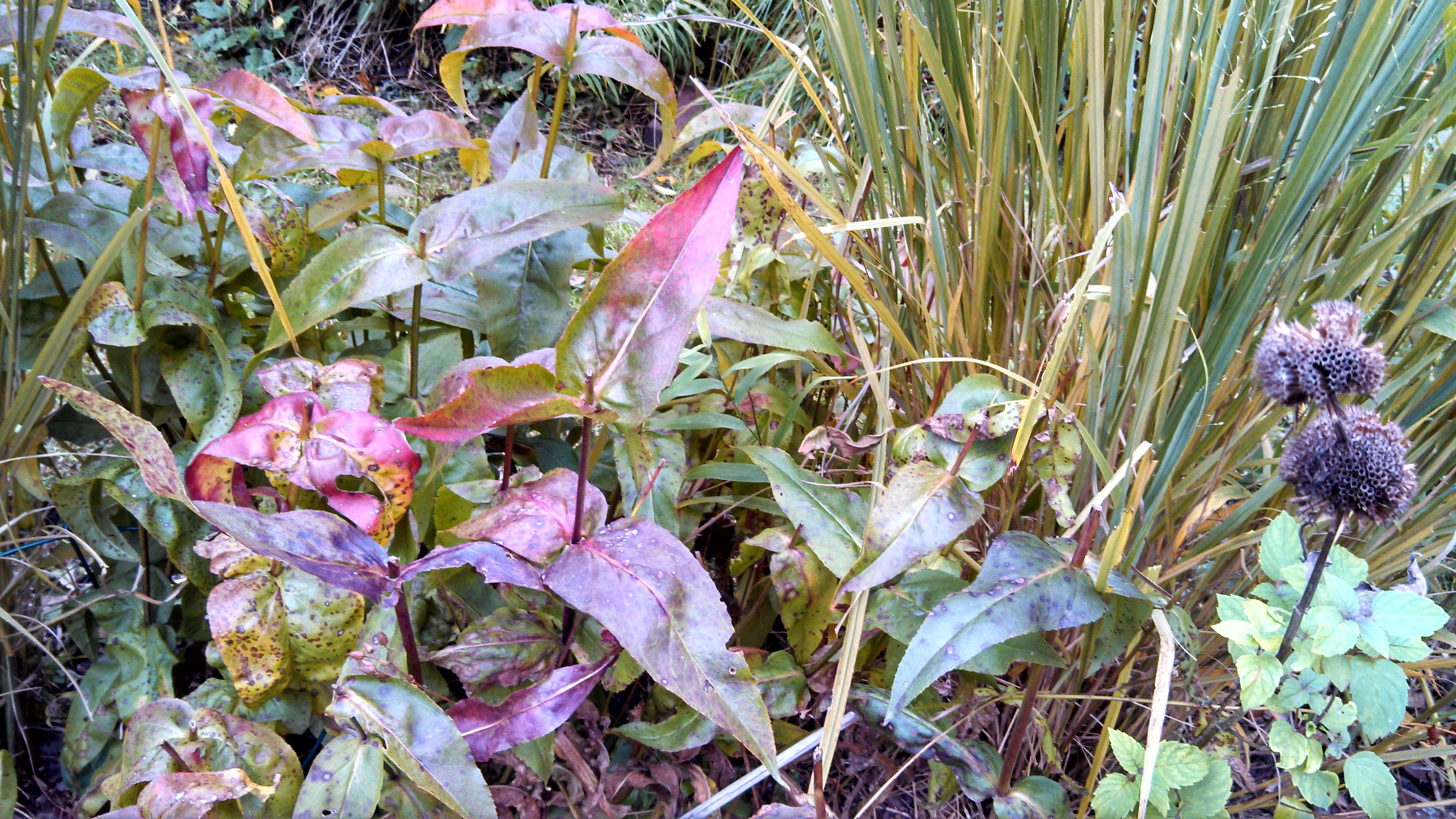
Joe Pye Weed
Sweet Joe Pye Weed seed heads in fall.

Plus, there are all kinds of eggs and hibernating critters in the stems and under the leaf litter. Let them be and you are more likely to have a diverse and healthy population of insects. This is a positive thing as it reduces the chance any one insect species will become a serious problem.

Some people  are very enthusiastic about the winter interest perennials can provide. Personally, I can’t really swoon over beds full of dead stalks and seed heads the way I would over blooming flowers. They do have their modest appeal, though. But winter interest is a minor factor in my clean up decisions.

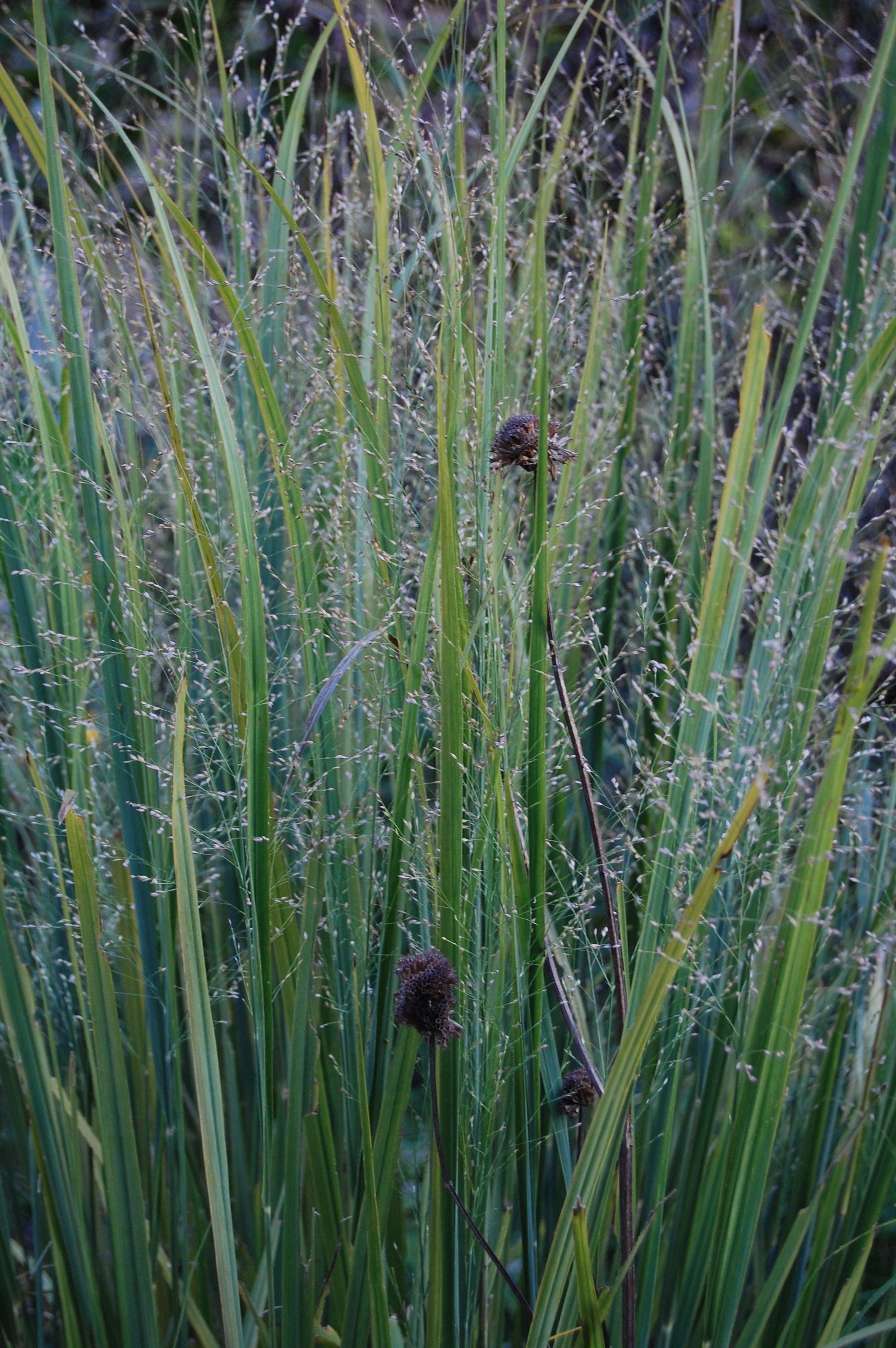
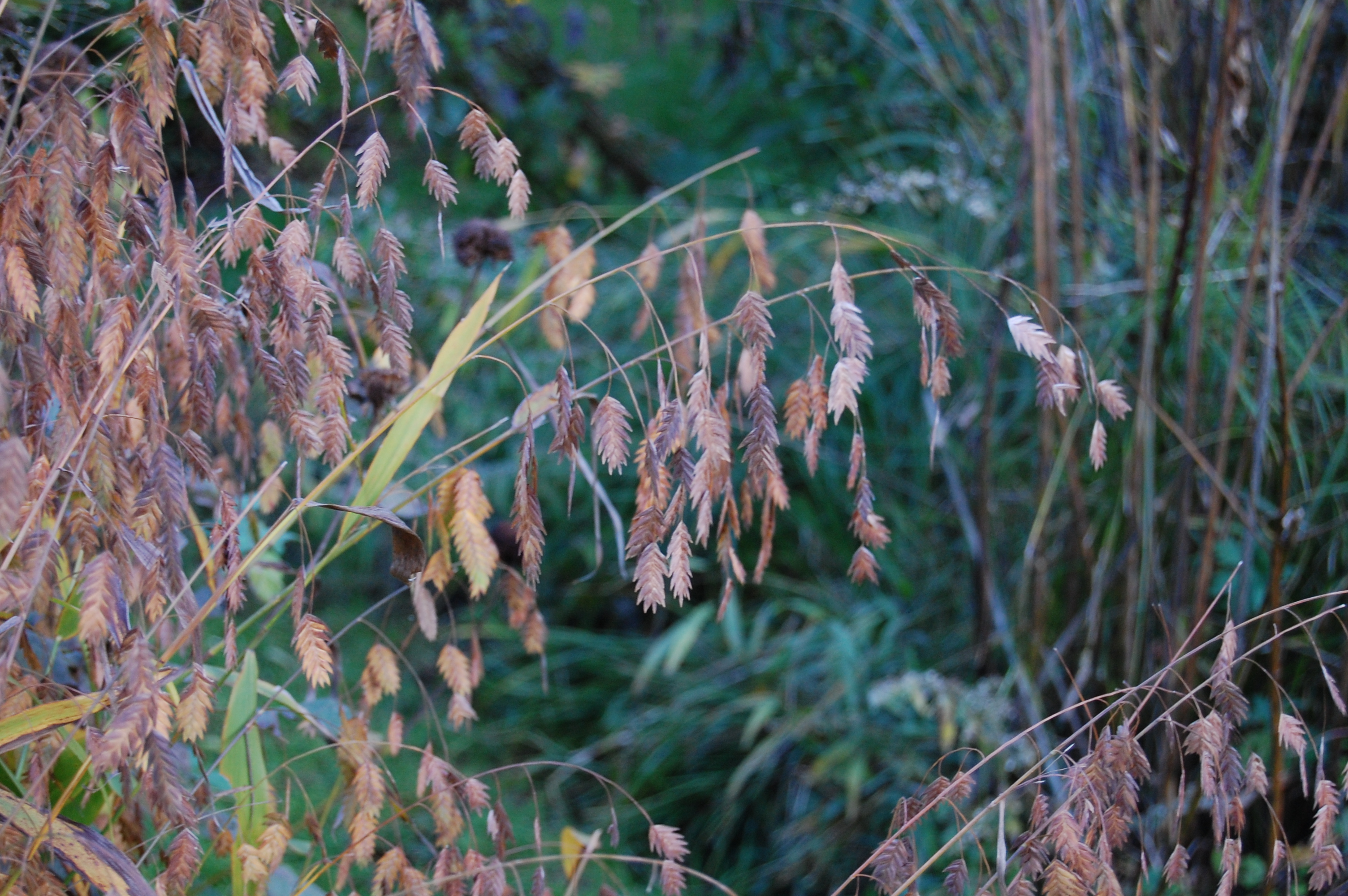
Except for grasses, that is. Grasses do look good in winter.

Virginia Wild Rye
Virginia Wild Rye

I don’t leave everything up in the garden. Tomato vines are pulled up, as leaving them probably means more diseases next year. Also, my peony foliage is suffering from serious downy mildew by August or September, and it is  removed as well.

There are some disadvantages to delaying clean up until spring. If you grow plants with a tendency to self-sow, as I do, you may be driven to distraction with the zillions of seedlings popping up the next spring. This is an inconvenience  I’ve chosen to live with, especially since it ensures lots of new plants should I want them.

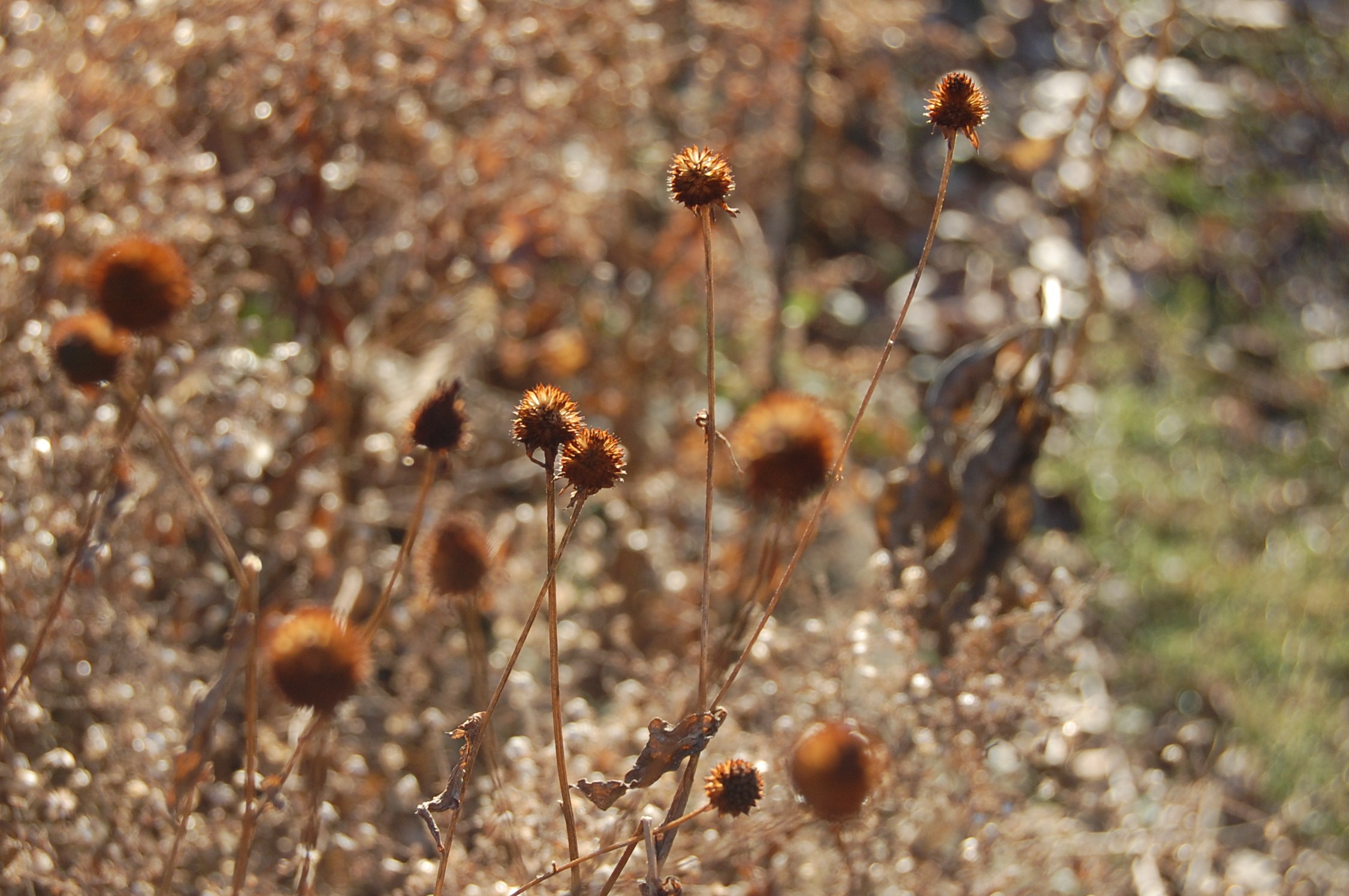
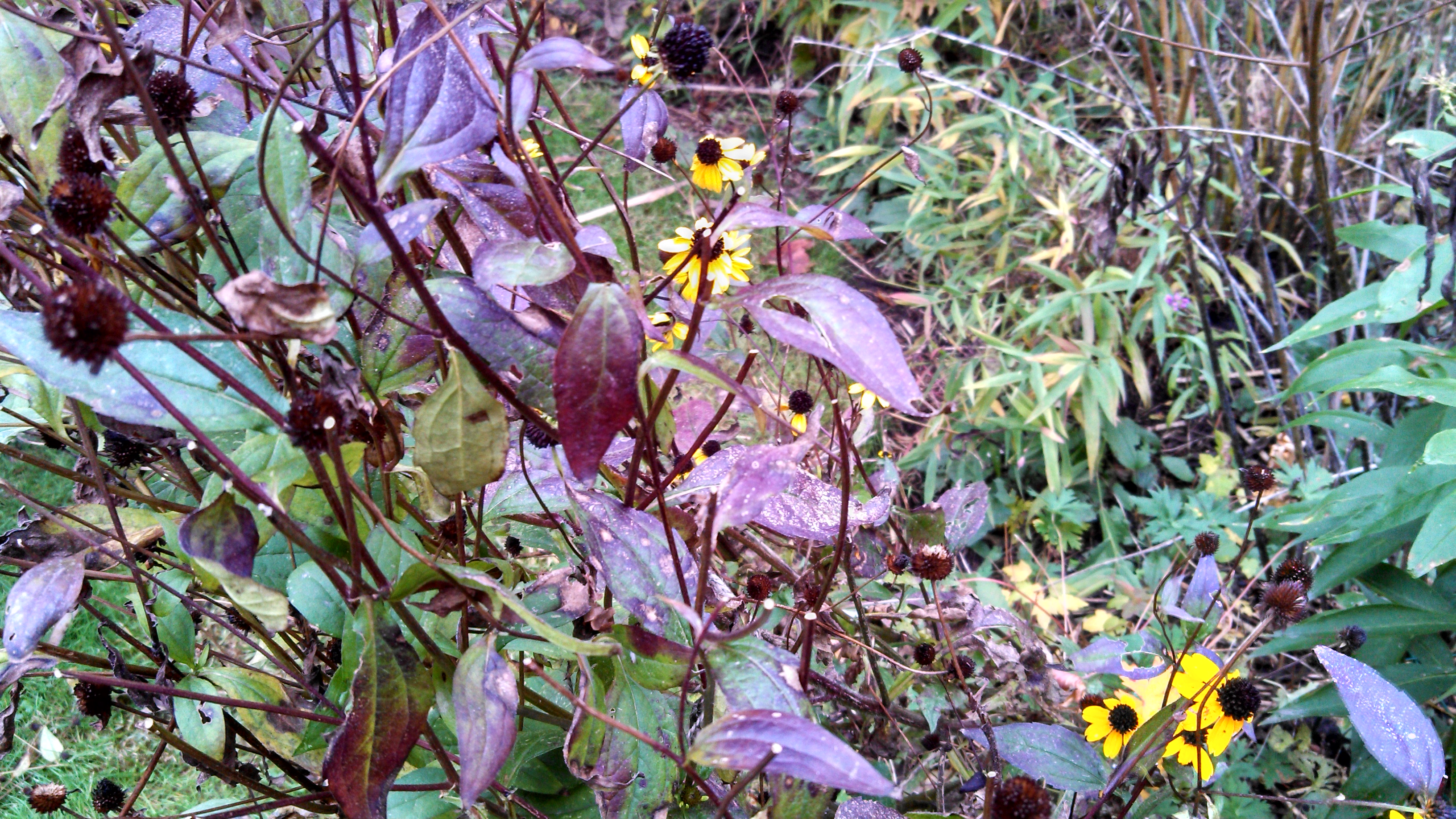
Rudbeckia seed heads

Of course, some people think leaving the plants up looks messy. When they lived at home my kids would complain about the “giant brown stalky things” all over the garden. They were particularly unenthused about the really big plants like Joe Pye Weed and Cup Plant.

However, I say that messy is in the eye of the beholder. A flower bed should not be empty and barren, even in winter. As for my kids, I advised them it is never too early to start saving up for their own houses.

So what kind of gardener are you: a fall cleaner or a spring cleaner?

Confessions of a Leaf Thief

Some people think that the proper way to tidy up the yard for fall is to rake or blow every single leaf into giant brown bags from Home Depot, said bags to be taken away by the city. This makes me insane.

I mean, what a waste. Good soil needs organic matter. Leaves turn into – yes! – organic matter. So why would you throw out all your leaves as if they were garbage and then buy extra bags of compost, peat moss, and fertilizer?

In my garden, leaves that land in the beds and borders are allowed to stay there. The rest are divided three ways: some go on the compost piles, some are spread under shrubs and trees, and some are left in an out-of-the-way pile over winter, to be used as mulch the following year. (Full disclosure: I also do buy some mulch, composted manure and mushroom compost – but I buy less because I use my leaves.)

It used to be I wasn’t satisfied with only my own leaves. I was on a one man mission to ensure that our neighborhood leaves should not fall in vain. I started by asking my immediate neighbors if I could have their leaves, and they were gracious enough to agree.

Even so, every time I saw bags of leaves piled up in the alley or on the street I was reminded of the inadequacy of my efforts. So I turned to stealing.

Leaf Bags
Such a shame.

I would get up early in the morning and sneak down the alley, grab leaf bags and drag them back to the house. Or if I drove past leaves left on the curb, I would pull over, check if the coast were clear, and throw them into the trunk. Then I’d speed away as if I were Pretty Boy Floyd after a bank robbery.

Eventually I tired of this life of crime. For one thing, there’s really only a finite number of leaves I can use in my modest suburban lot, especially after my garden started filling in. Second, whole leaves make a good mulch in woodsy areas at the back, but can be problematic in flower beds.

You have to be careful that young plants aren’t smothered, especially by the bigger leaves. Also, robins and other birds love to hunt for bugs among the leaves, which is great, but in a flower bed that can mean half your leaves end up on the grass.

It’s generally recommended that you shred leaves before using them as mulch. This is not an option for me, however, as I am unwilling to buy either a shredder or a power lawnmower (I have a reel mower).

Anyhow, I gradually lost my drive to Save The Leaves. Now I’m back to using only the leaves that fall on my own yard. Still, when I see bags of leaves piled up like trash, I feel a faint stirring.

Have you ever been a leaf thief? What do you do with your leaves?

Chasing Rainbows in Amboise

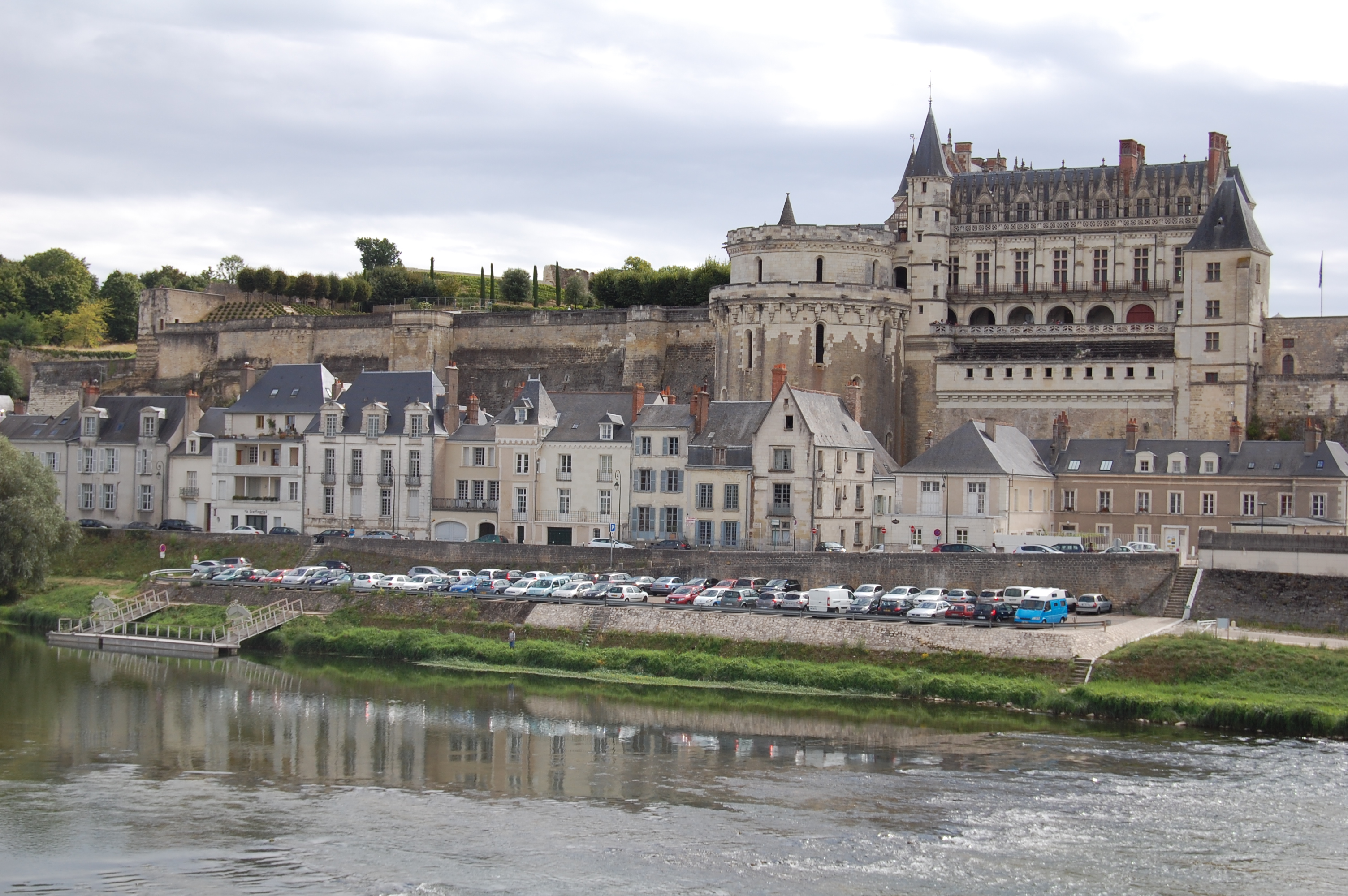
Amboise is a small market town on the Loire. It is also the site of the Chateau d’Amboise, which was the royal residence in the 15th and 16th Centuries. Judy and I spent an entire day in early September exploring Amboise by foot, but left much unseen. In fact we never even made it inside the Chateau, but seeing it just from the outside provided quite an eyeful.

Amboise, Loire River
A scene from the Loire River on the way to Amboise.

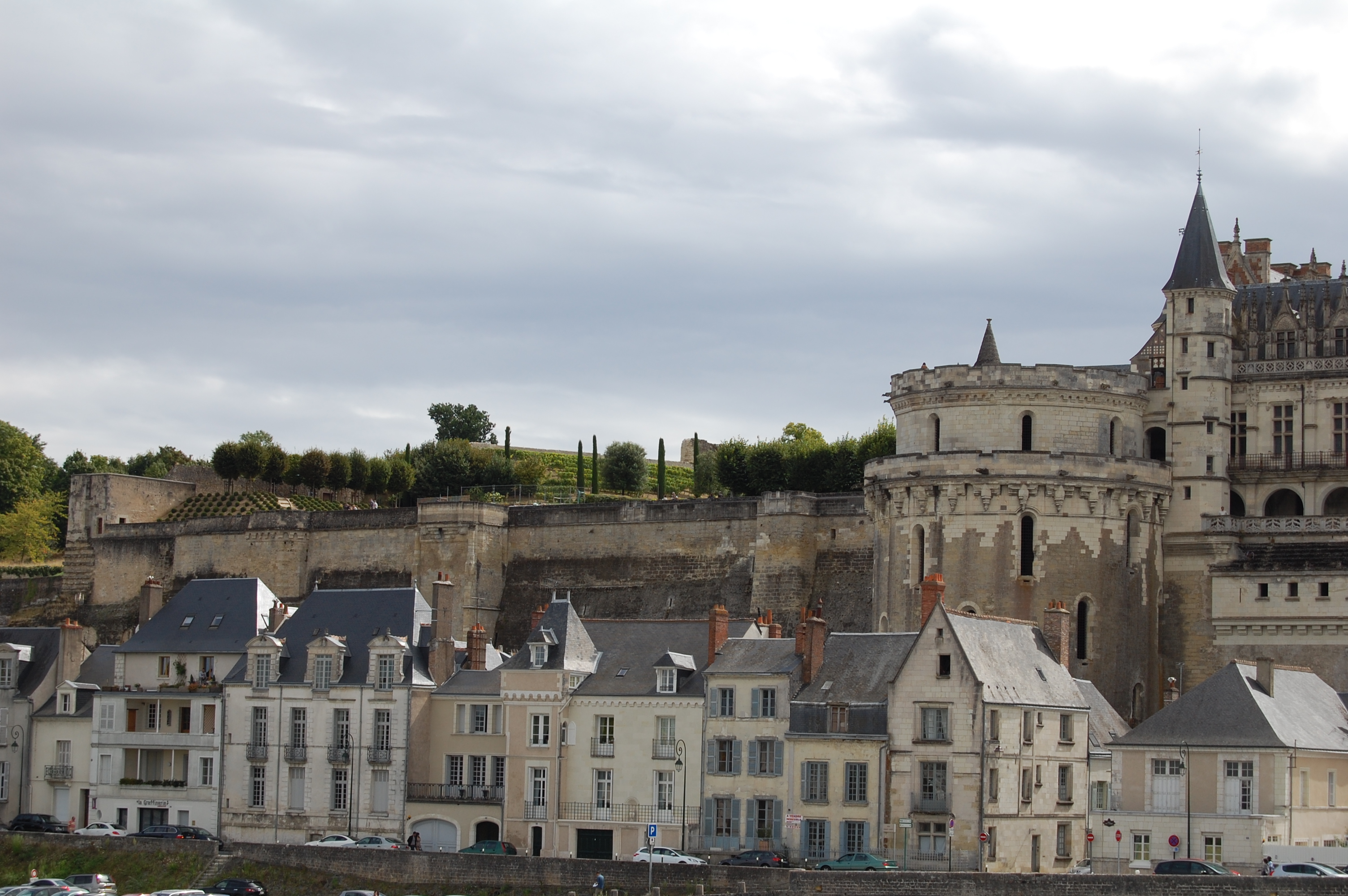
The Chateau visually dominates the town, which grew up in its shadow. The castle went into decline after the construction of Versailles, and was eventually turned into a prison.

Amboise, Chateau D'Amboise
Chateau d’Amboise
Amboise
A closer look at the battlements. I admit it, I love castles.
Amboise, Chateau D'Amboise
Looking up from the base of the castle.

Amboise is clearly a popular vacation spot. It has many restaurants and other businesses catering to tourists, French and foreign. When we were there it had a relaxed, holiday atmosphere that reminded me of resort towns in western Michigan – but with a castle and medieval streets.

Amboise clock tower
A clock tower straddles the street.

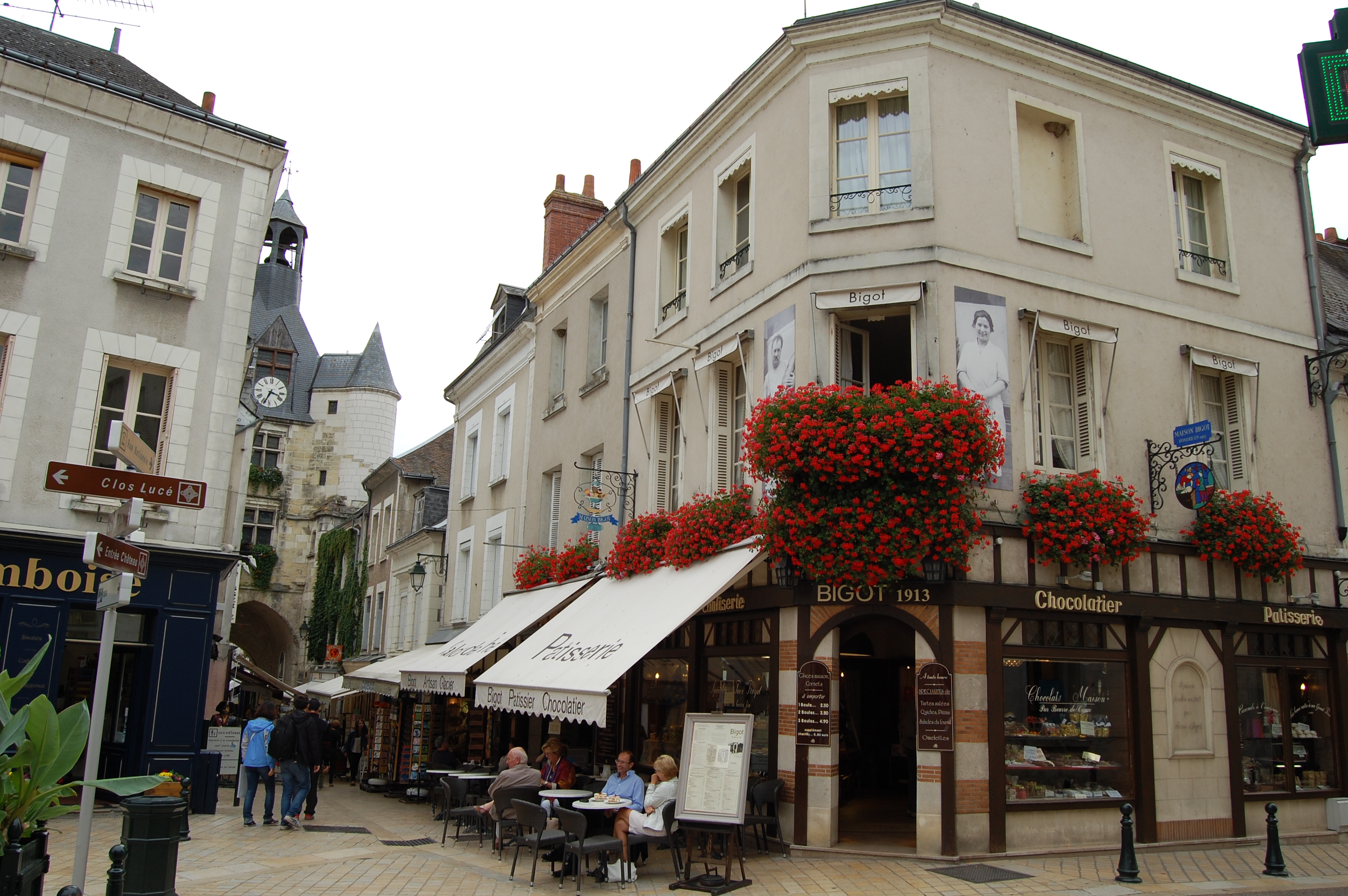
Bigot is a sweet shop attracting many tourists, all of whom leave very happy. We might have stopped there for a snack, I can’t remember.

Bigot Amboise

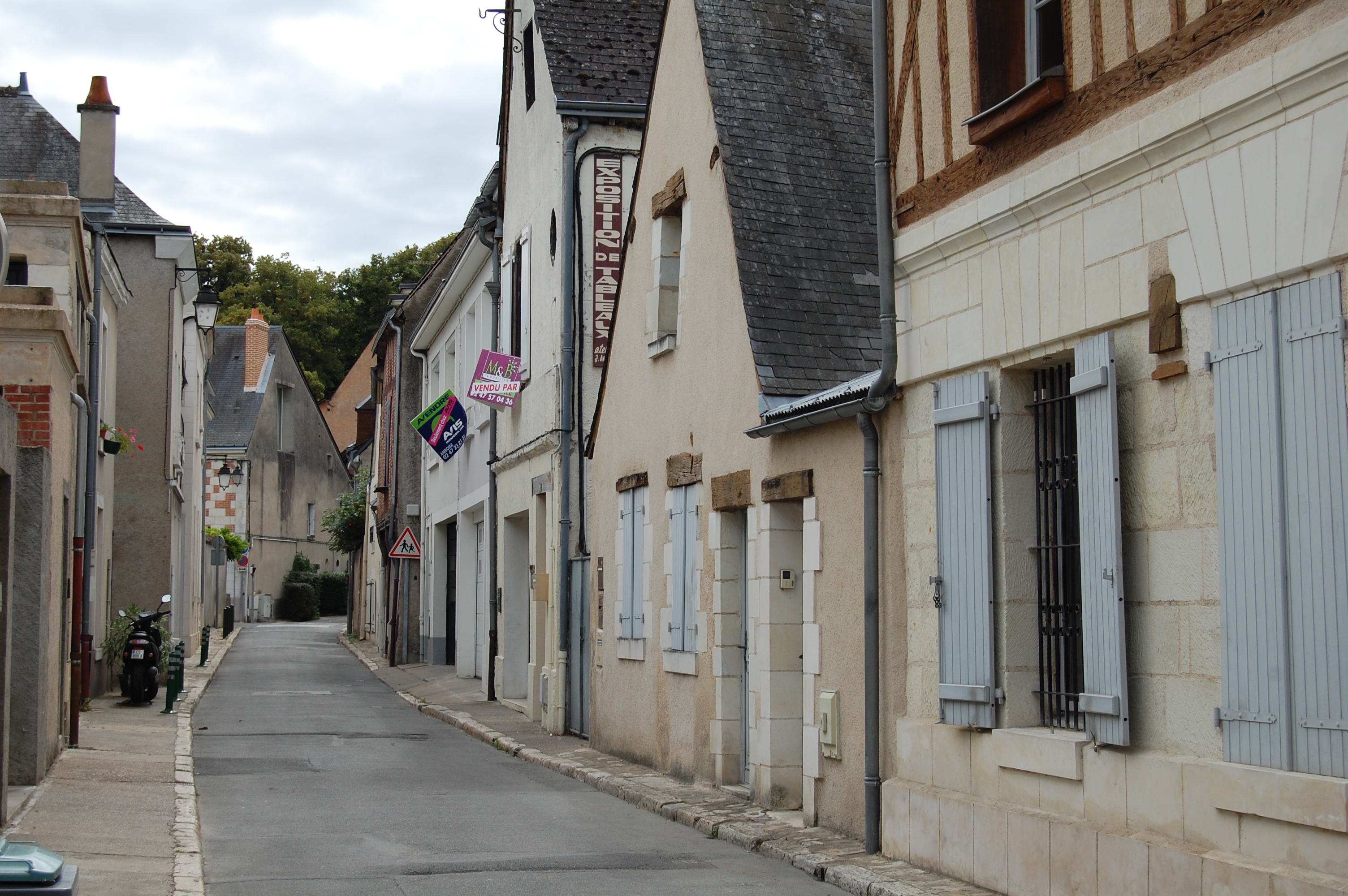
For people who like narrow lanes, Amboise is a good place to visit. In this area they are lined with shops whose owners are absolutely merciless in their techniques. A shopkeeper invited us in to his store to try a local wine – honestly, he didn’t even care if we bought anything, we just had to have a taste. We left with two bottles, feeling  a little dazed. But it was good wine.

Amboise
A narrow street in Amboise.
Amboise
An even narrower street.

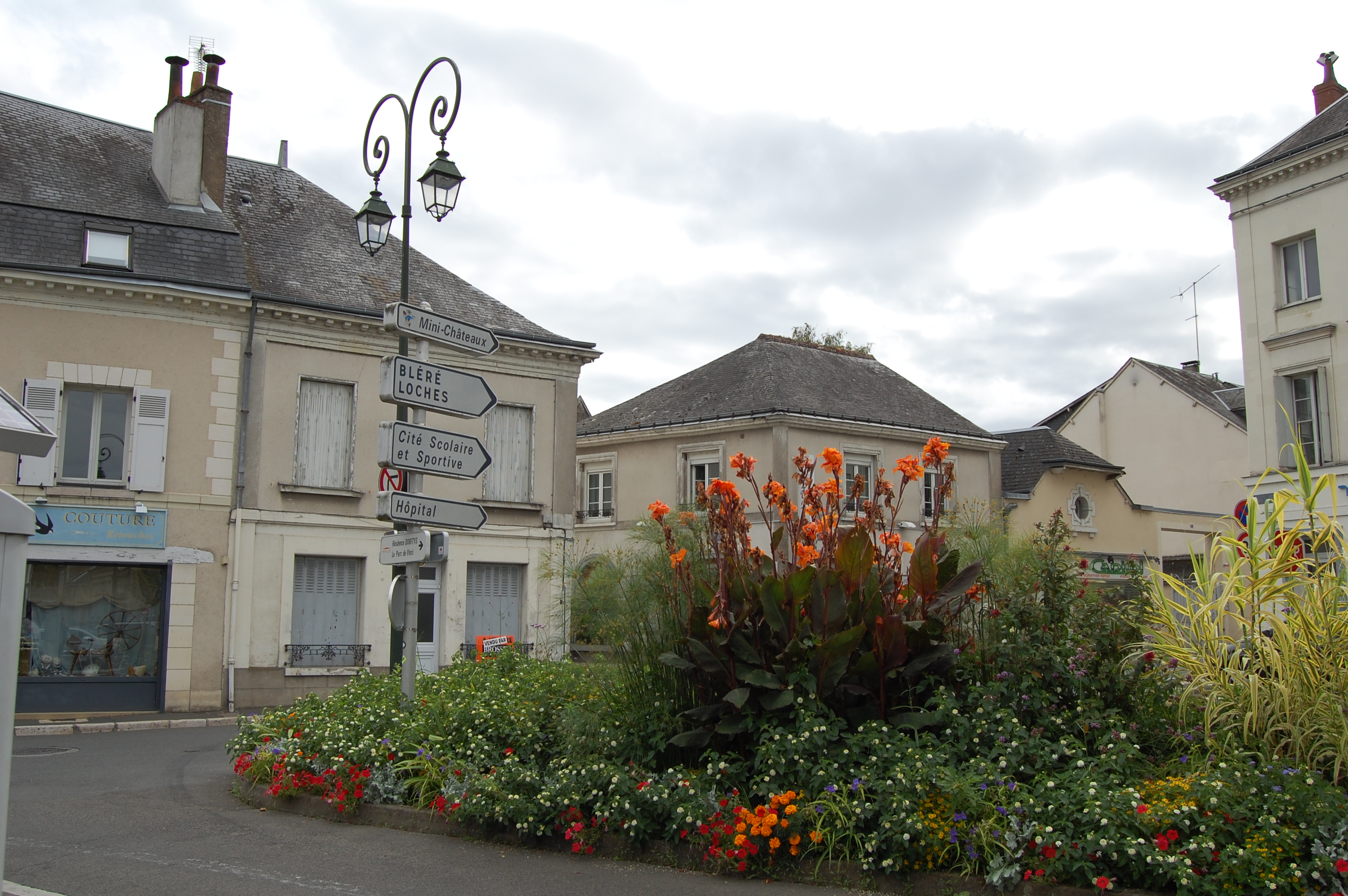
Amboise is full of flowers – Canna, Salvia, Rudbeckia, etc.

Amboise

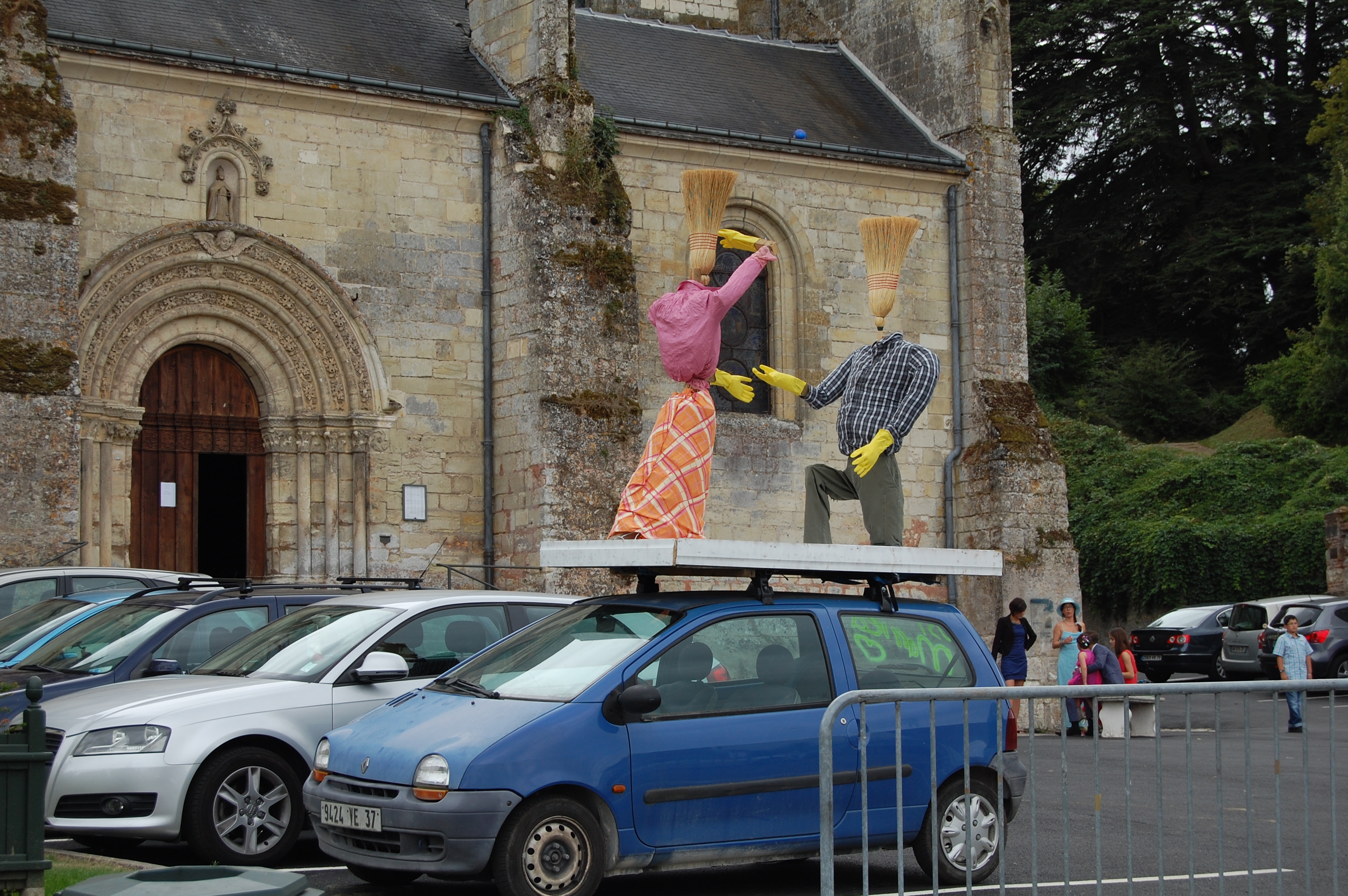
We walked through the old city and climbed up a hill to St. Denis, a church more than 900 years old. Look at the landscaping – pretty nice. A wedding was about to take place when we got there. A car in the parking lot was decorated with brooms seemingly dressed up as the happy couple.

St. Denis, Amboise
St. Denis Church
Amboise
Not sure what this signifies.

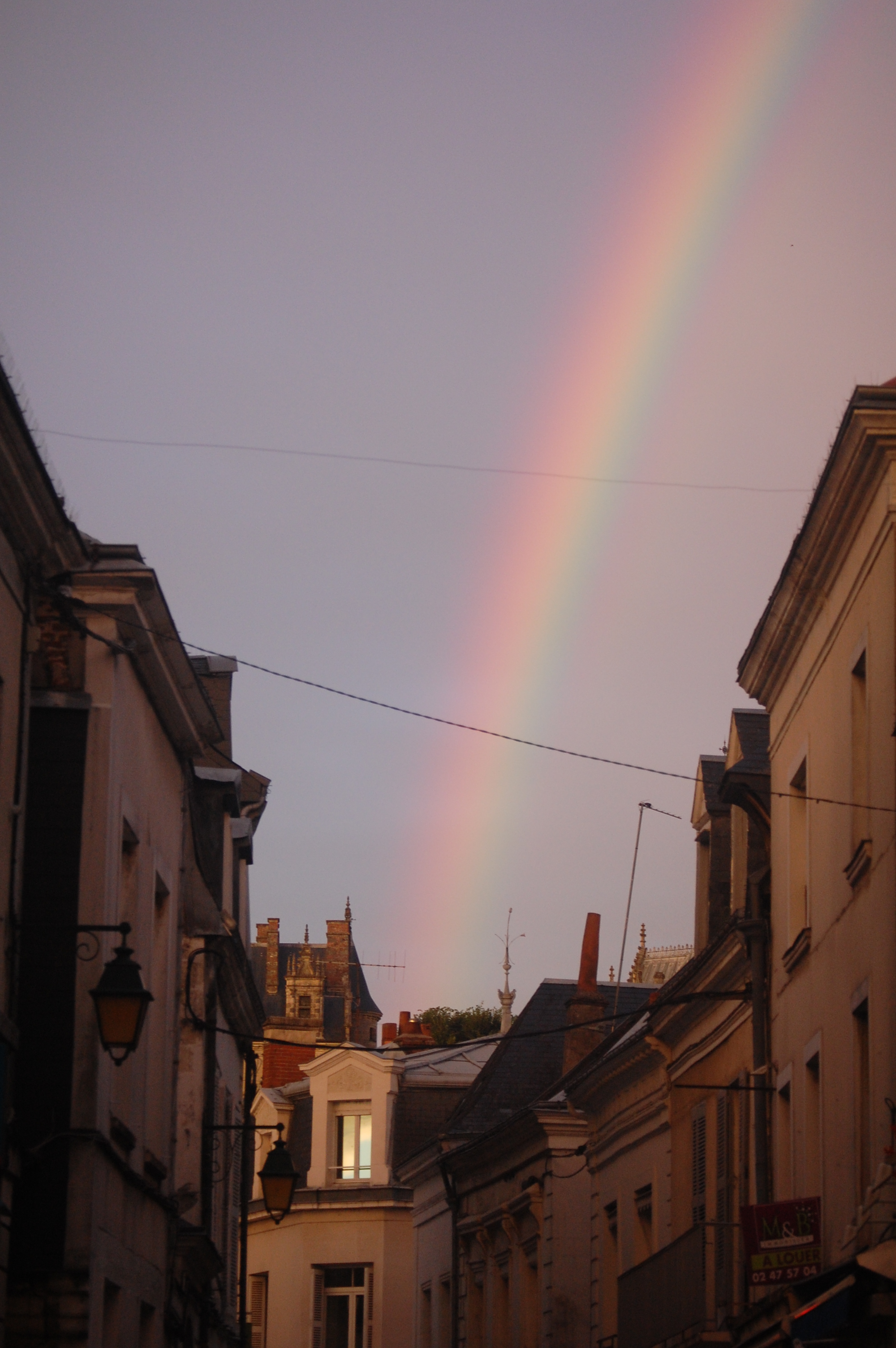
Dusk was falling as we walked back toward the castle and our car. There had been a bit of rain, but now a rainbow appeared that was certainly the brightest and clearest either of us had ever seen. The end of the rainbow seemed to be just down the street.

Amboise

It was a fitting end to our day in Amboise.

Chateau de Nazelles: Our Home Was Our Castle

In order to ignore the fact that it is dang cold out, I’d say it’s time for some more reminiscences from our September trip to France. After Chartres we spent several days in the Loire Valley. We stayed at a bed and breakfast called Chateau de Nazelles, a castle built in 1518, and less than two miles from the town of Amboise.

Chateau de Nazelles, Loire Valley, Amboise
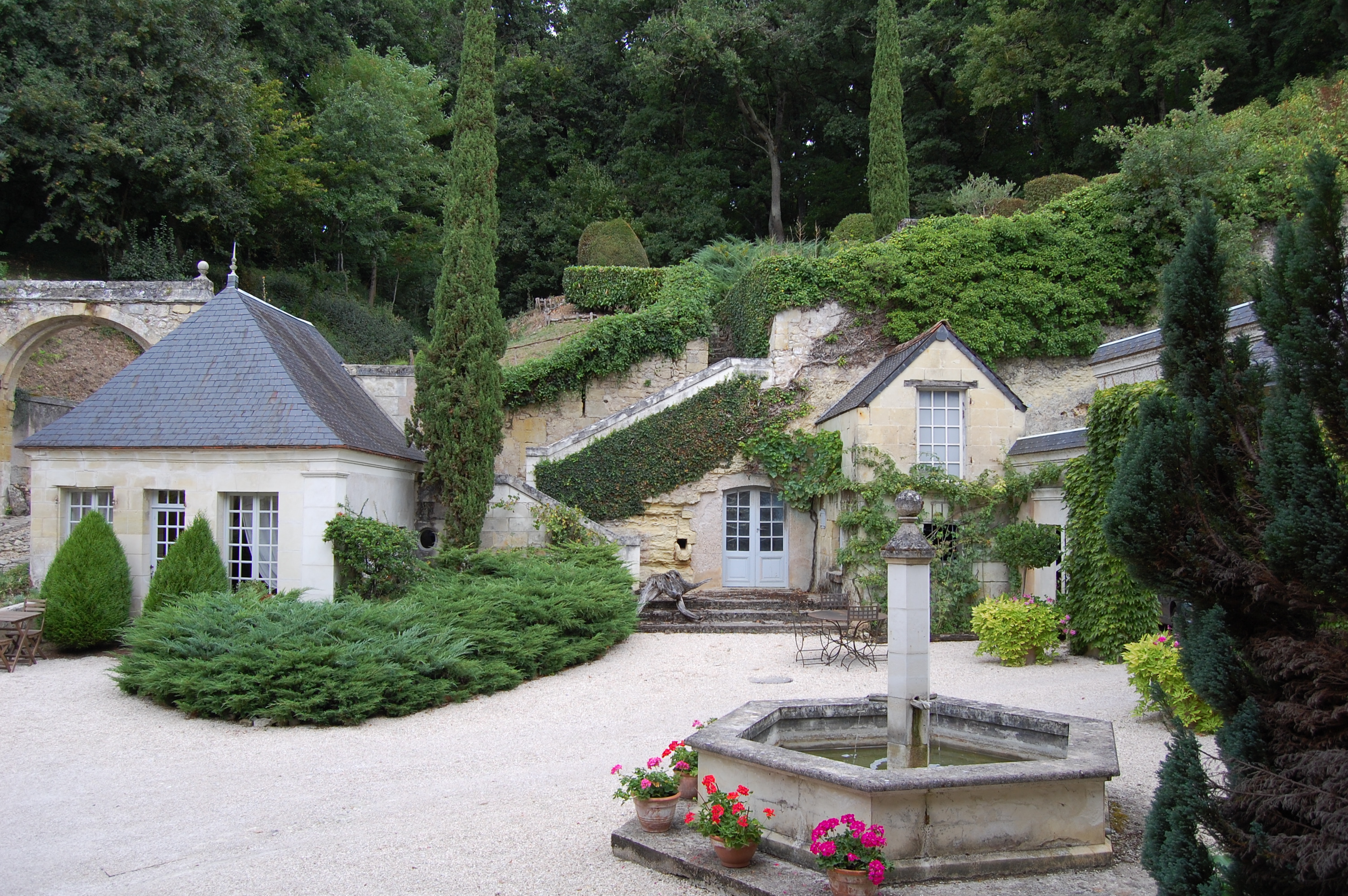
The courtyard at Chateau de Nazelles

Aside from being a nice place to stay, we found Chateau de Nazelles (an officially designated historic monument) to be a worthwhile destination in itself. The owners, Olivier and Veronique Fructus, told us that restoring the sprawling Chateau has been a work in progress for the last thirty years.

Chateau de Nazelles, Loire Valley, Amboise
Entrance to the courtyard from the road.

Chateau de Nazelles is built near the top of a hill overlooking the valley. I suppose this was to make the castle easier to defend, but today the location makes for some really nice views.

Chateau de Nazelles, Loire Valley, Nazelles
View of the Chateau and the valley beyond from the upper garden.
Chateau de Nazelles, Loire Valley, Amboise
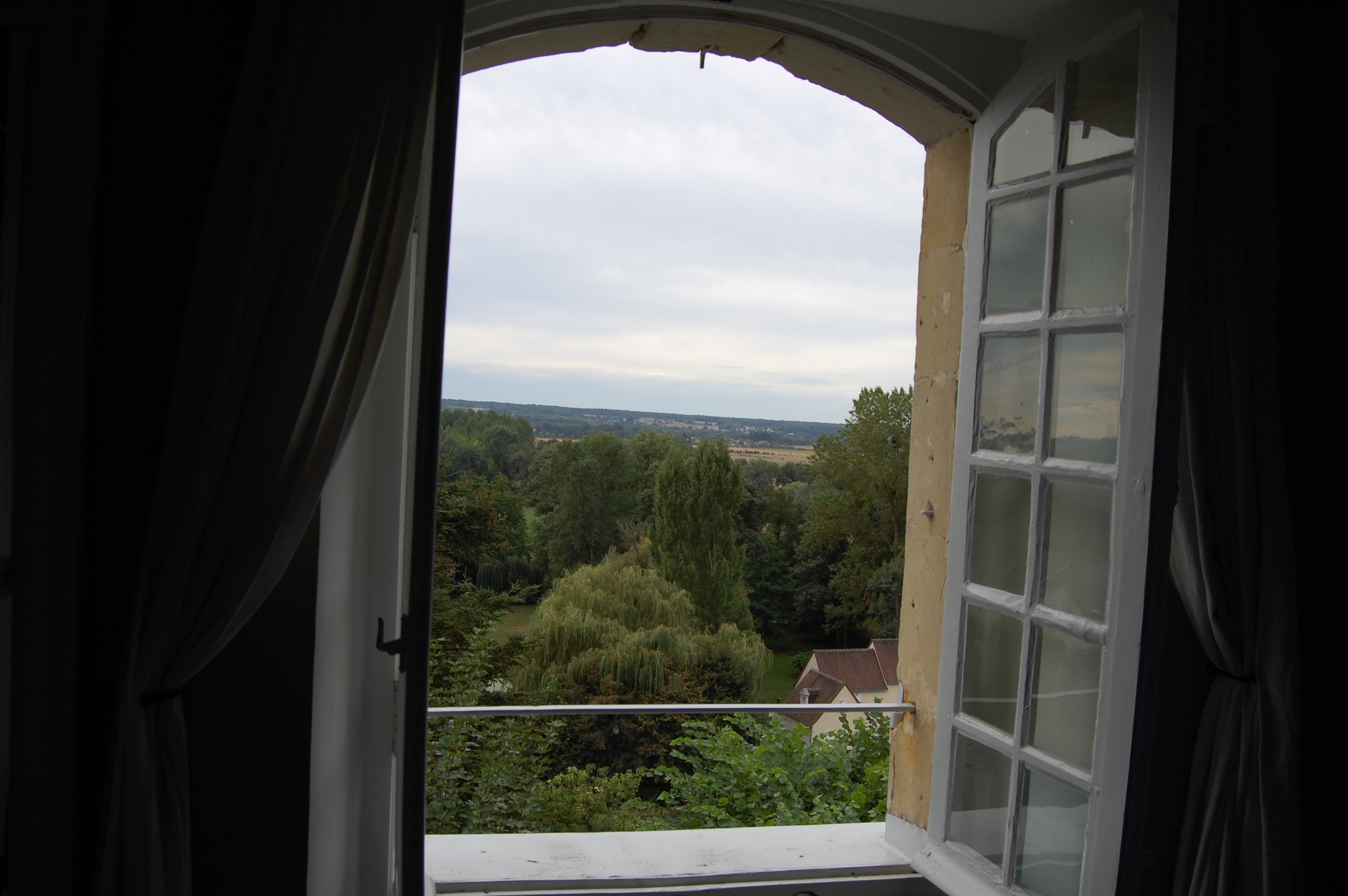
View from our room.

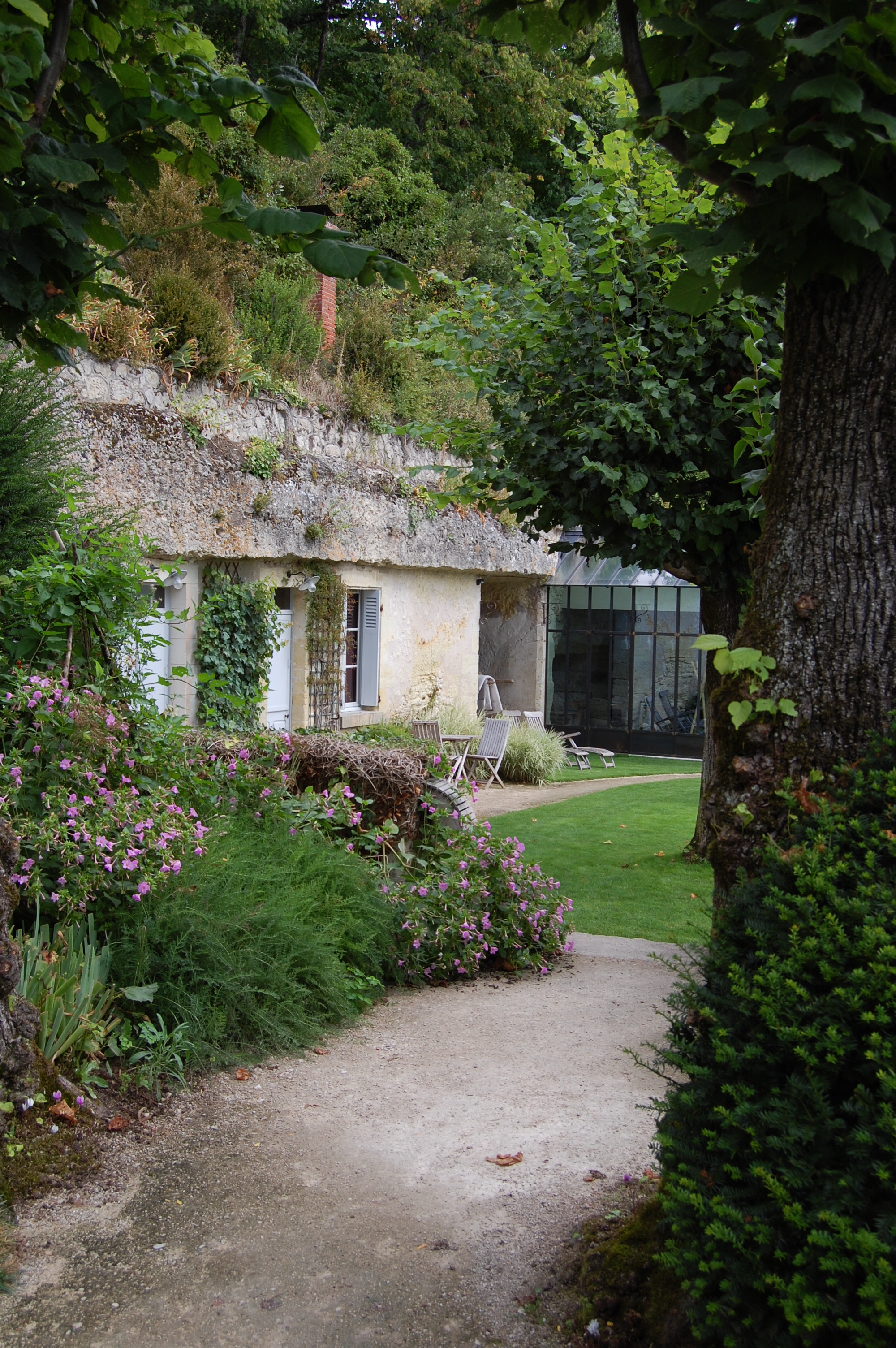
There are also extensive gardens, filled with hedges, flowers, and comfortable nooks. The Fructus family grow fresh flowers for the Chateau from their own cutting garden.

Chateau de Nazelles, Loire Valley, Amboise

Chateau de Nazelles, Loire Valley, Amboise

Chateau de Nazellse, Loire Valley, Amboise
Penstemon and Obedient Plant at the garden of Chateau de Nazelles.

2013-09-07 05.41.44

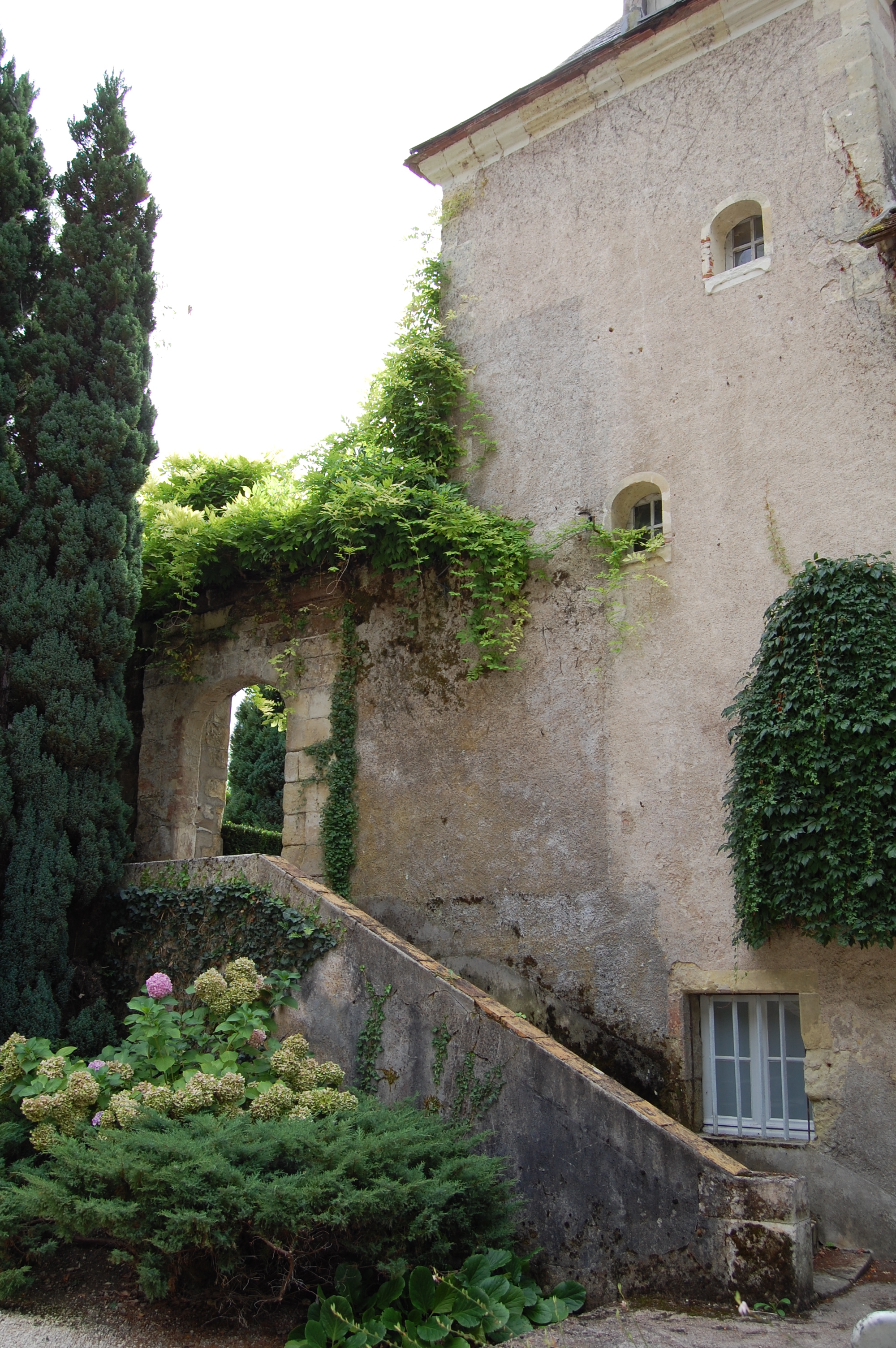
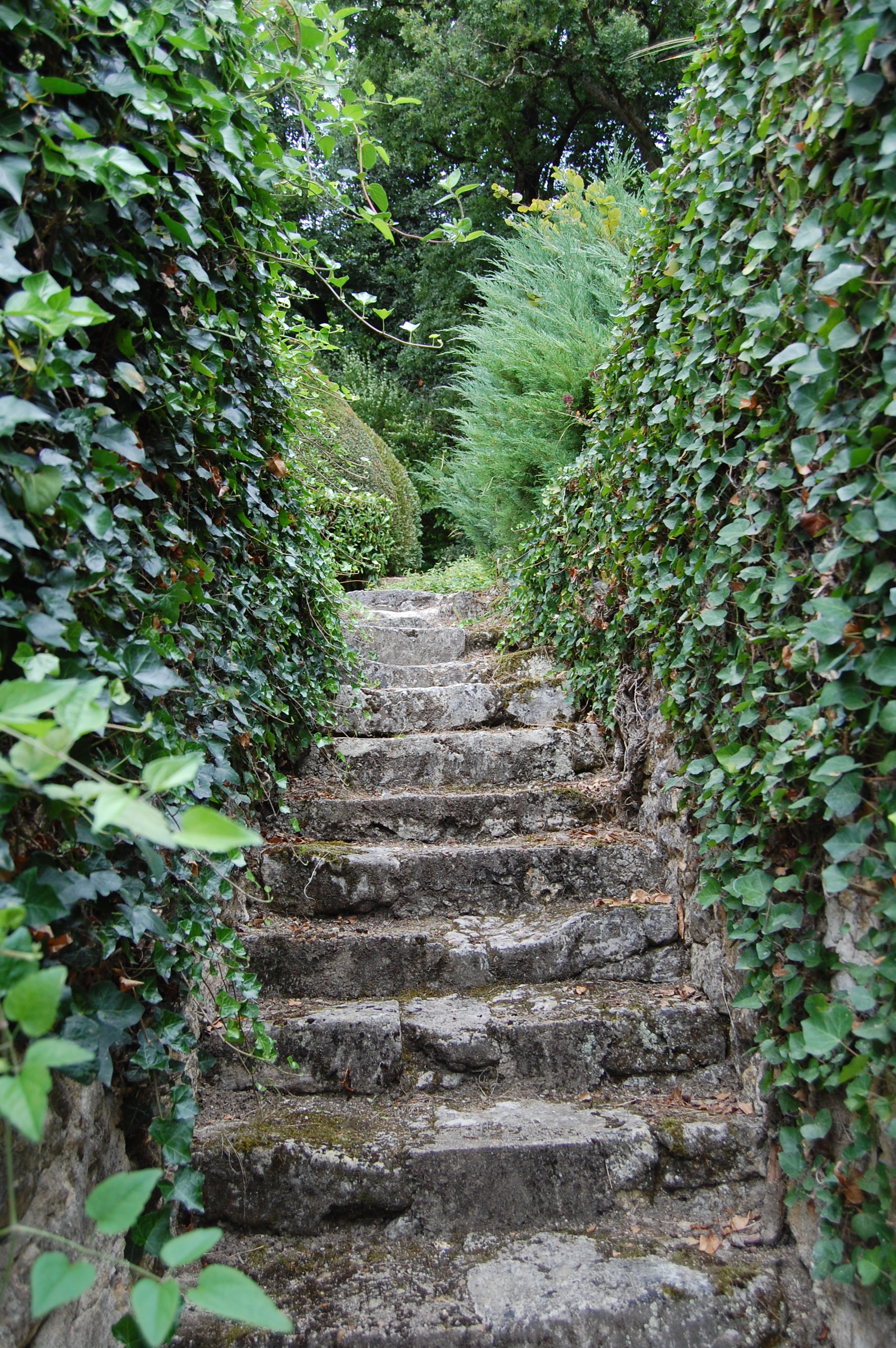
You can easily spend a couple of hours exploring the grounds, which are filled with mysterious stairways and archways. The walls are covered with many vines, including Wisteria, Trumpet Creeper, and Boston Ivy.

Chateau de Nazelles, Loire Valley, Amboise

Chateau de Nazellse, Loire Valley, Amboise

Here is the entrance to the breakfast room. They provide a delicious breakfast, featuring local bread, cheese, fruit, and yogurt. At breakfast the owners make an effort to talk to you about your plans and offer helpful suggestions. Chateau de Nazelles is very well situated to be a base for exploring the Loire.

Chateau de Nazelles, Loire Valley, Amboise
Entrance to the breakfast room.


For the few days we stayed there, Judy and I could honestly say that our home was our castle.

November Snow

Well, that was fast. If I remember correctly, in the last several posts I’ve written about our mild autumn, how the seasons seem to be lingering, etc. But that was then, and this is now.

Spicebush, November Snow
Spicebush stems outlined in snow outside our back porch

I had today off due to the holiday. It had been raining gently pretty much all day, which is a good thing as you don’t want the plants to head into winter with dry soil. Then in the mid-afternoon the rain turned to snow.

This seemed like a good time to head to the Wild Birds Unlimited store to stock up on plain suet as well as nyjer and sunflower seed. The snow snarled traffic so it was a couple of hours before I returned.

At that point, the snow had stopped but had left everything covered with a thin blanket of white. The temperature is below freezing and is supposed to stay that way for the next day or two so the snow will be with us for a bit.

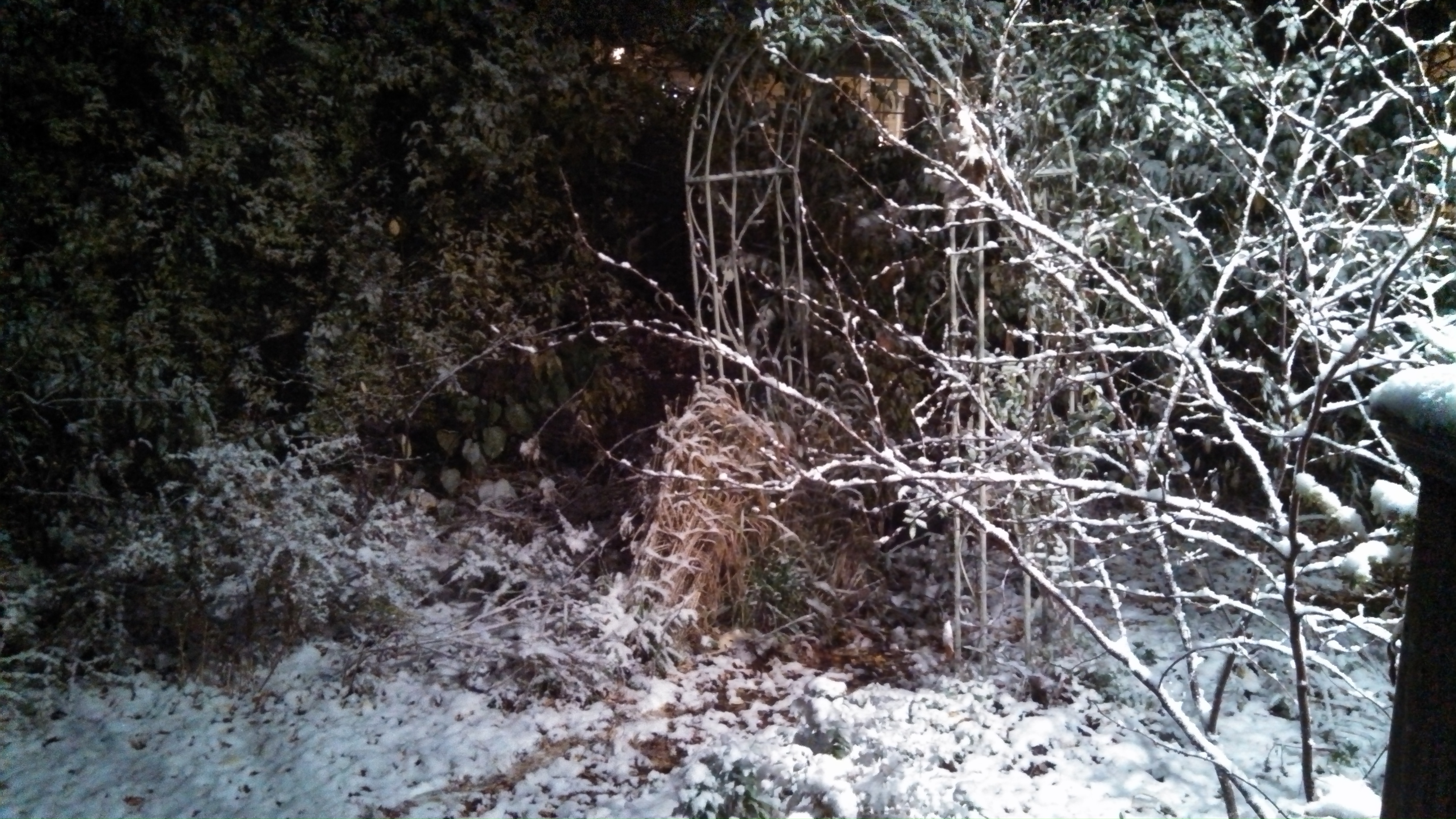
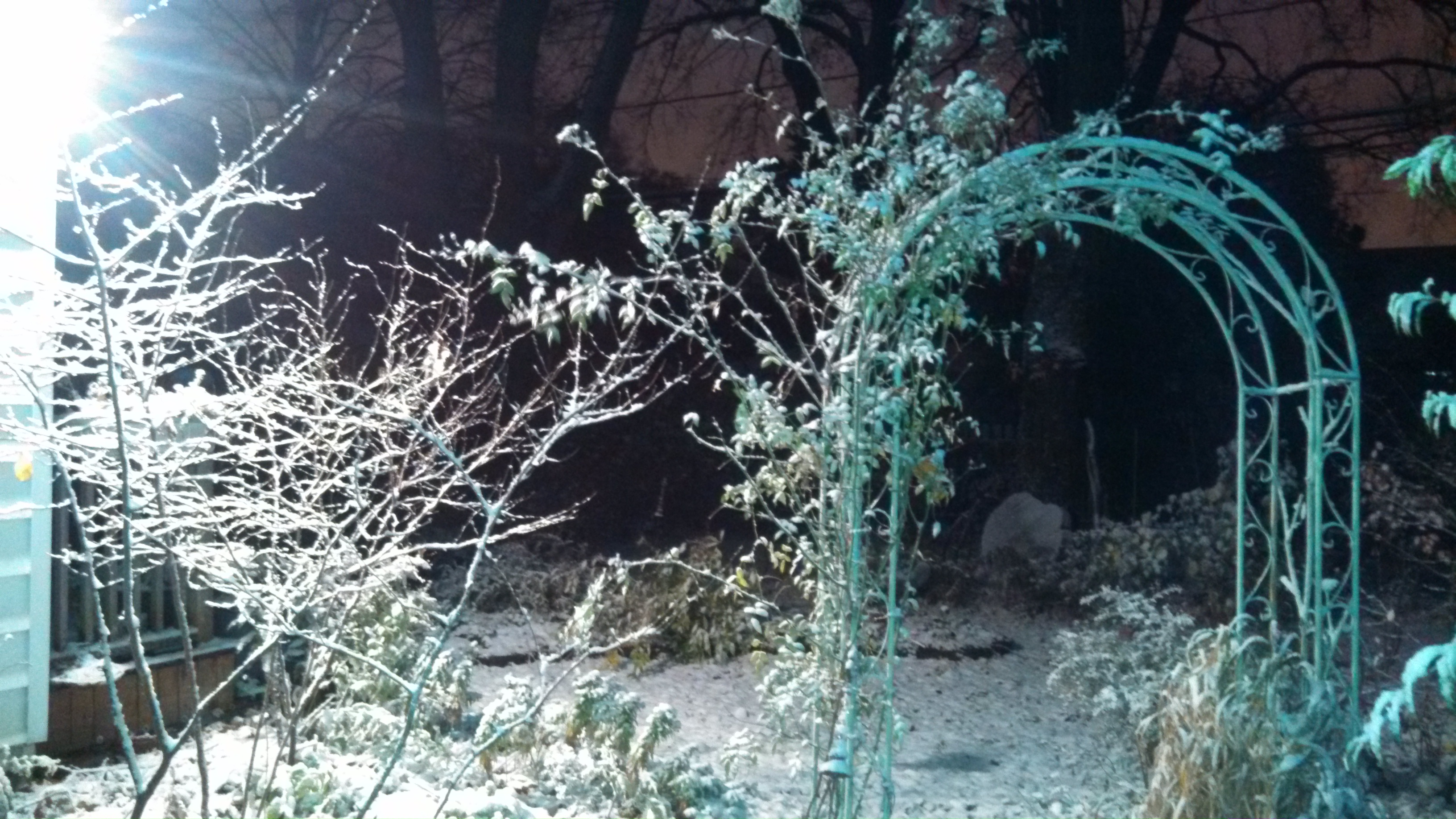
Unfortunately, Judy is gone on a weeklong business trip so she is not here to take pictures. By the time she returns the snow is likely to be gone. I took these pictures with my phone.

November snow
The arbor leading into the back garden. We have one of those outside lights set off by motion detectors. The leaves on ‘Darlow’s Enigma’ and many other plants are still green.

When I got home it was dark. Don’t you hate these short days? Even so, I decided I had to perform two emergency tasks which I had been putting off.

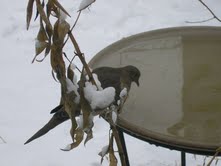
Mourning Dove Heated Bird Bath
Mourning Dove at the heated bird bath during last year’s winter

First, I set up the heated bird bath, which I refer to as the Bird Jacuzzi. Now the birds won’t have to eat snow for hydration when they get up in the morning.

Also, we have a small concrete fountain. I’m always worried that it will develop cracks over winter. So I removed the pump, turned the base upside down, and covered it with a tarp secured with bricks.

Next week is supposed to be much warmer, so today winter just left a calling card. It is not settling in just yet. Even so, the change feels awfully abrupt.

Do you feel winter drawing near where you live?

First Frost

Well, maybe not the very first. But it was the first that was really noticeable around here. The nights have been abnormally mild so far this autumn, so there hasn’t been much in the way of frosty morns.

Catmint 'Kit Kat'
Frost on the ‘Kit Kat’ Catmint (Nepeta x faassenii)

Judy took these pictures with her phone before leaving for work Friday morning. This week we finally had some cold with a bit of a bite. It’s not that I want bitterly cold weather, but as a Chicagoan I find it disorienting to have such a mild November.

Wild Geranium
Frost on Wild Geranium (Geranium maculatum)

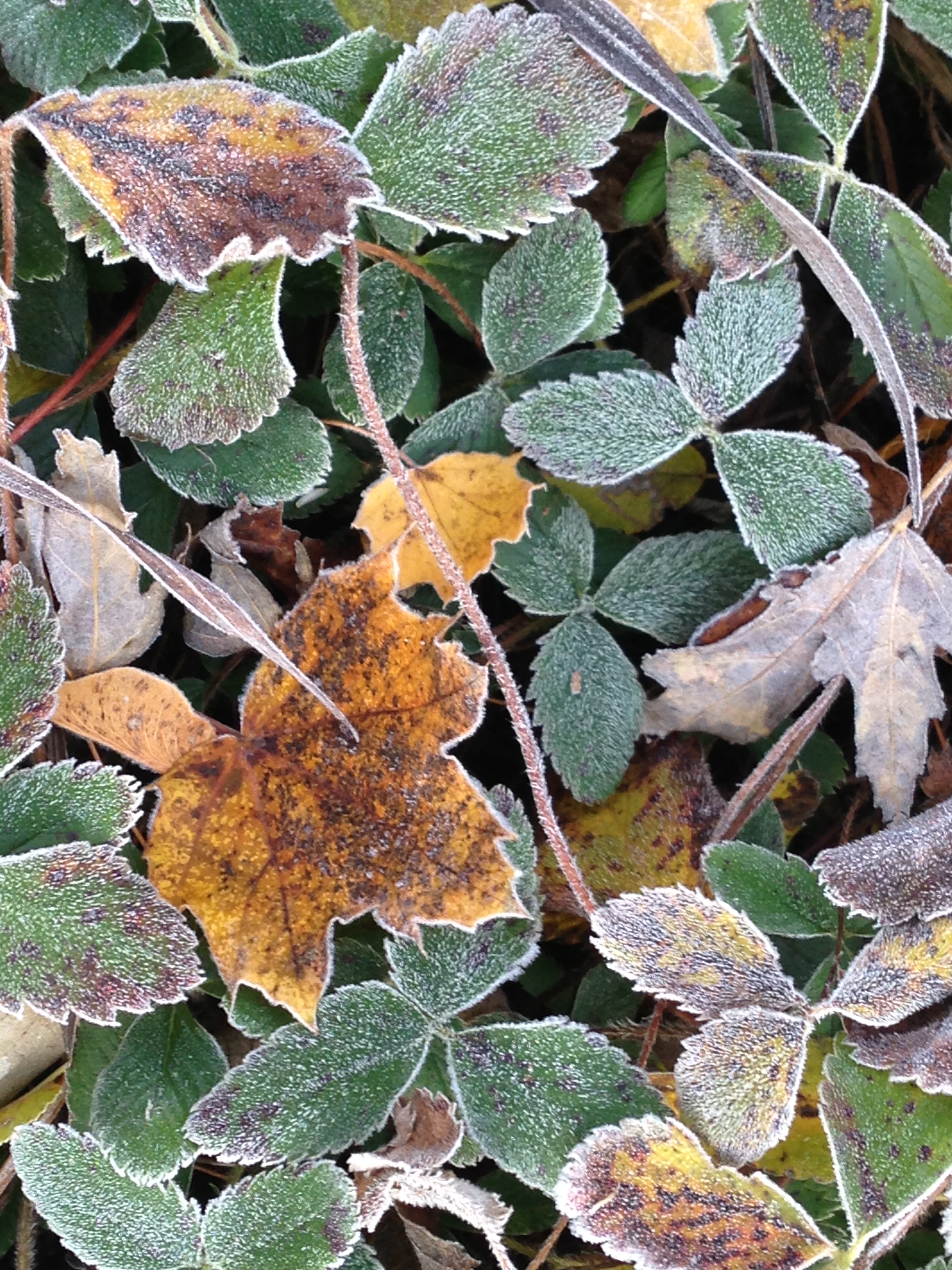
Morning frosts don’t exactly make me happy, but at this time of year they give me a feeling of reassurance and normality. Anyhow, here’s some wild strawberry (Fragaria virginiana).

Wild strawberry

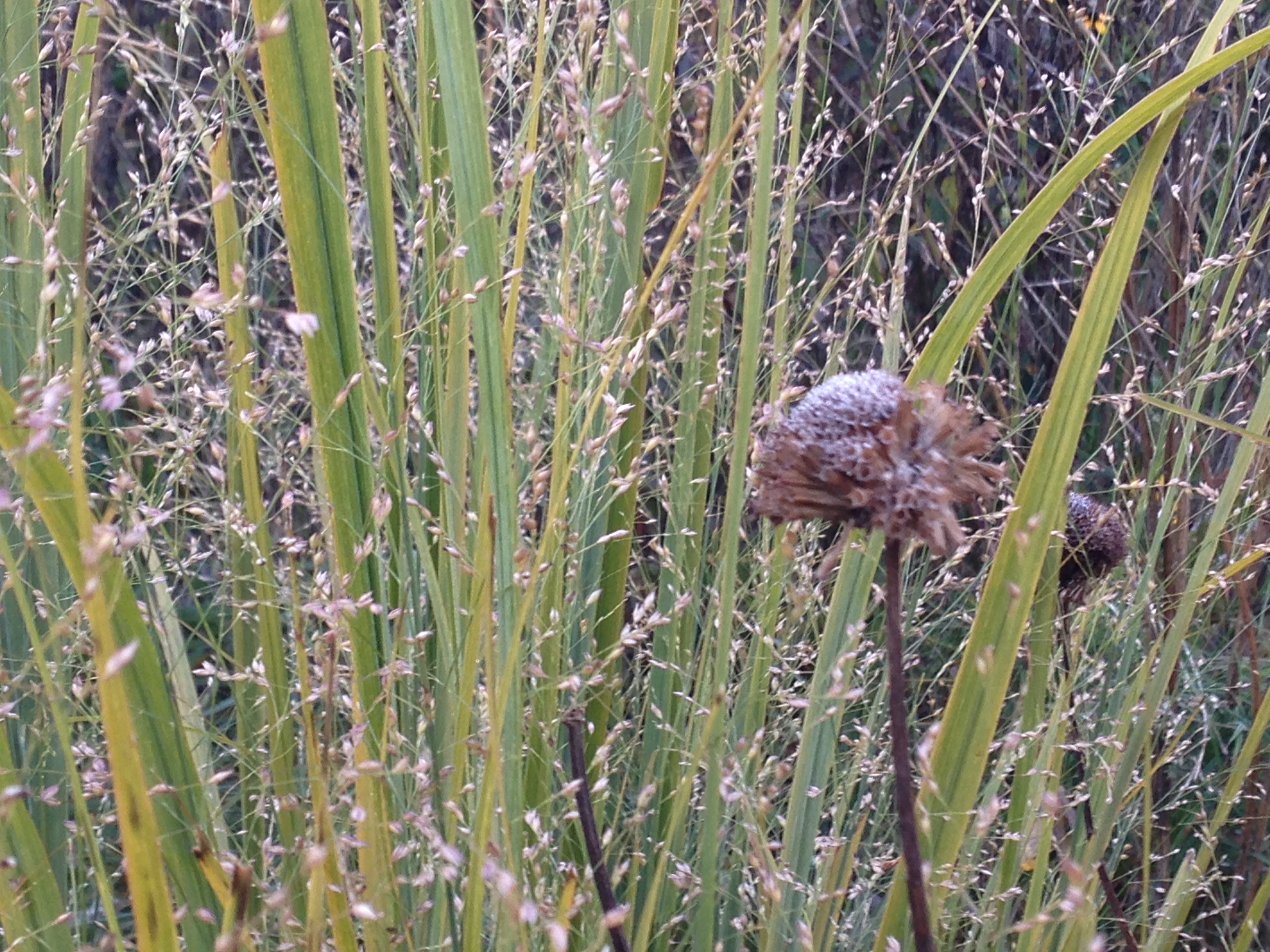
A touch of frost on a Bee Balm (Monarda didyma) seedhead, with the ever photogenic ‘Northwind’ switchgrass in the background (Panicum virgatum).

Monarda didyma, Switchgrass 'Northwind'

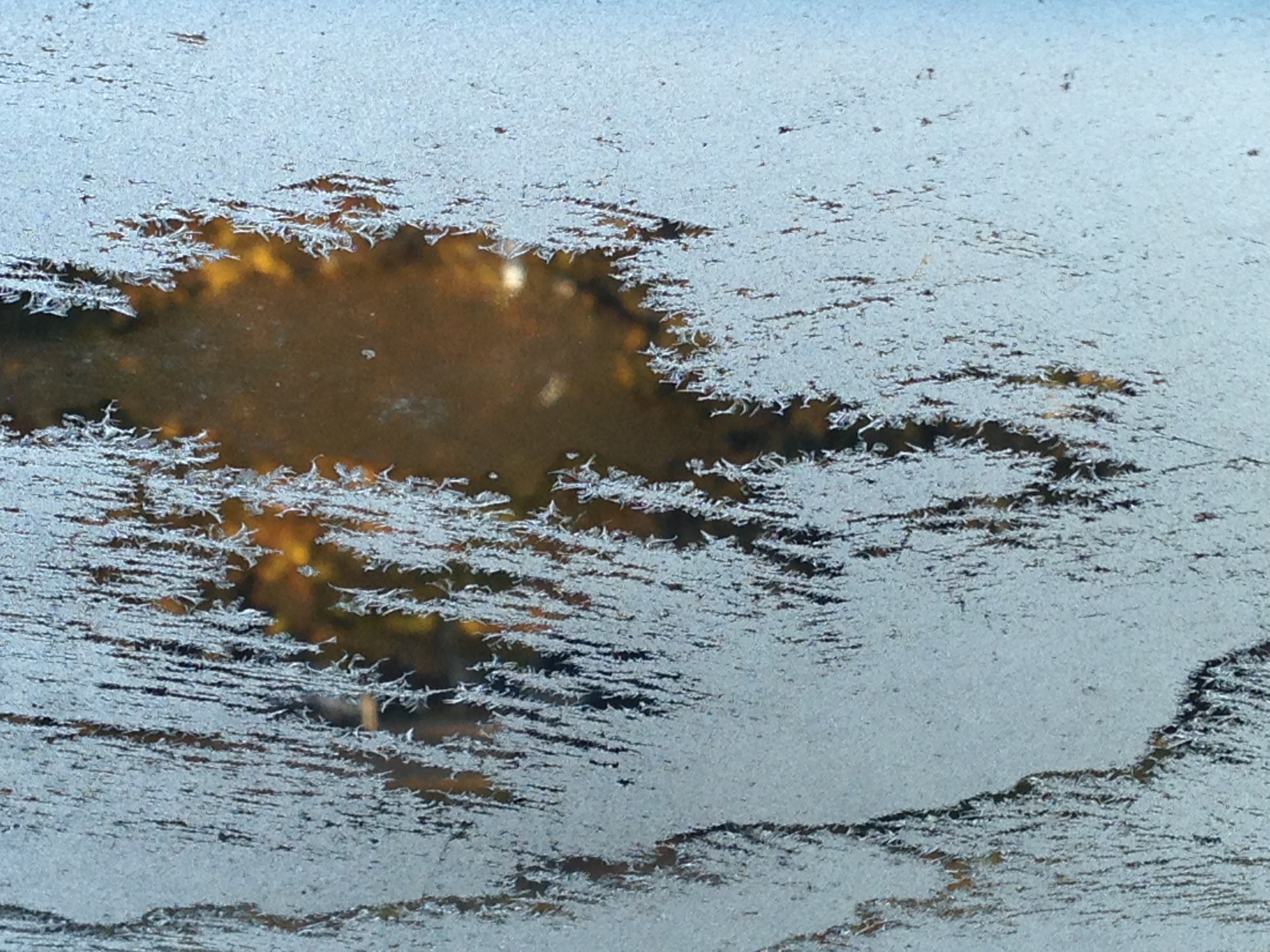
Oh, and frost on the windshield. Now, I must confess that one of the things I hate most in winter is scraping snow and ice off of my car windshield in the morning. For some reason this bothers me more than shoveling  the driveway. Go figure.

frost on windshield

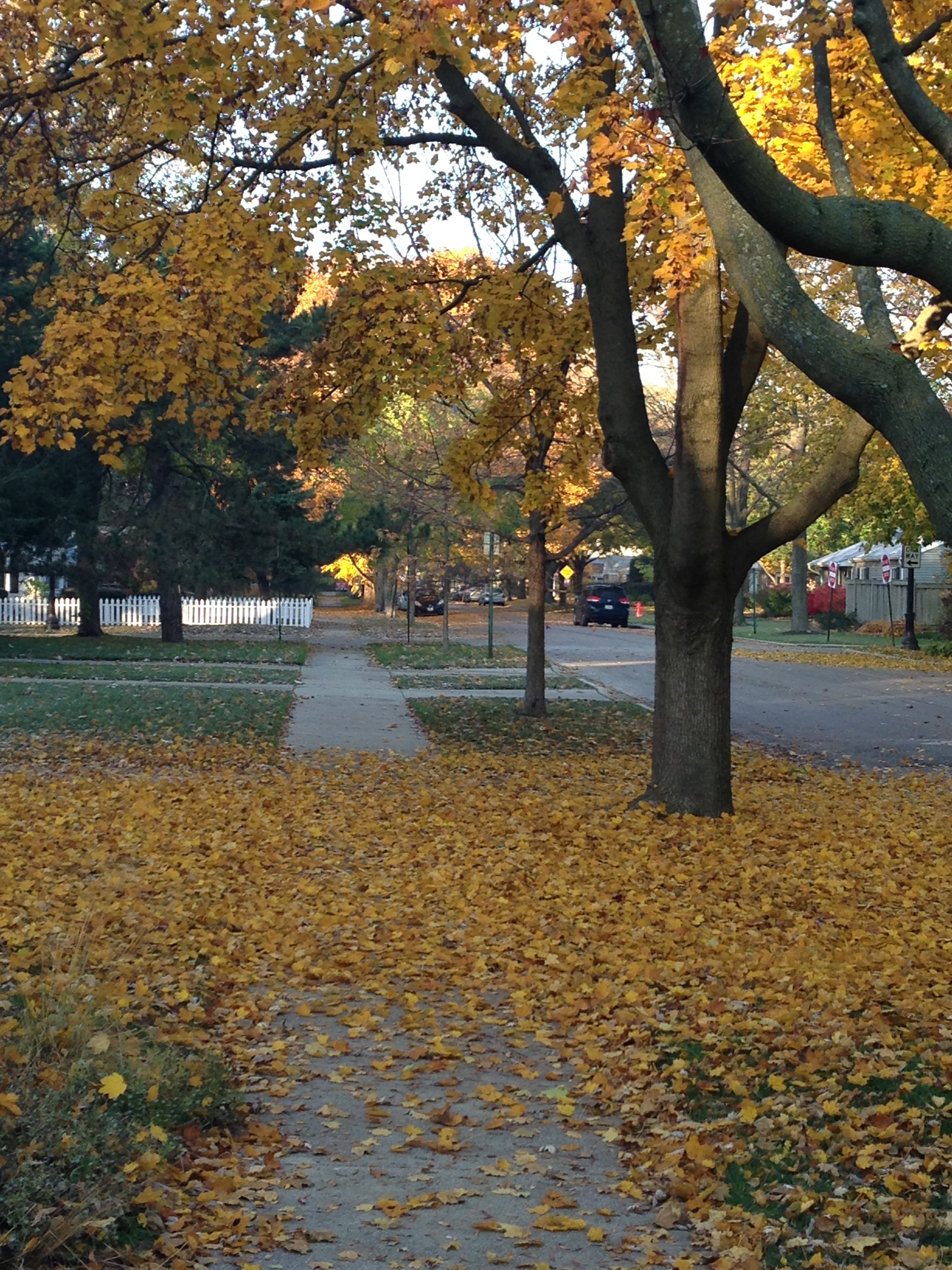
Here’s a view of our street. Many leaves have fallen, but I prefer to wait until more of the branches are bare before starting my leaf raking.

leaves on the sidewalk

Have you experienced many frosts yet?

Perennials for Fall Color

We usually think of fall color in terms of trees and shrubs. But there are many herbaceous plants that also offer good color in autumn. Here are a few in my garden right now.

Starry Solomon's Plume
Starry Solomon’s Plume

Starry Solomon’s Plume (Smilacina stellata) has long-lasting golden yellow foliage. Deep red berries add contrast, though most of the berries are eaten by grouse and other birds. This is a plant that adapts well to part shade and dry, sandy soil.

Penstemon 'Husker Red'
Penstemon ‘Husker Red’

Penstemon digitalis ‘Husker Red’ has dark red foliage. I do need to find a better way to deadhead these plants, though, they are looking rather decapitated.

Asiatic Lilies
Asiatic Lilies

My Asiatic Lilies have yellow foliage – though they also have the decapitated look.

Brown Eyed Susan
Brown Eyed Susan

Brown Eyed Susan (Rudbeckia triloba) foliage turns red and maroon. which combine nicely with the round seedheads and the last of the small yellow flowers.

Many hardy geraniums also have good fall color – though this year mine have been unwilling to surrender their chlorophyll to date. I have seen Prairie Baby’s Breath (Euphorbia corollata) with wonderful foliage, sadly I have none in my own garden.

And while we are on the subject of fall color, I have to insert a few pictures of grasses.


Northwind Switchgrass
‘Northwind’ Switchgrass

My ‘Northwind’ Switchgrass (Panicum virgatum)  is still mostly green, but increasingly it is green striped with a golden tan. And the clouds of “flowers” are really enchanting.

Northern Sea Oats
Northern Sea Oats


northern sea oats

The dangling seeds of Northern Sea Oats (Chasmanthium latifolium) are golden brown and fully ripe. Soon they will shatter and fall to earth, there to give rise to seedlings that can be a real pain in the ass. But they are beautiful anyway. The leaves have turned a nice yellow.

2013-11-03 17.49.25

‘Carousel’ Little Bluestem (Schizachyrium scoparium) has now turned almost completely red. It shows up nicely against the still-flowering Calamint (Calamintha nepetoides). I like this new plant so much that I am going to give it two companions in the spring – it seems wrong just to have the one plant all by itself. I’ll have to find new homes for the Pennisetums currently in those spots.

What is your favorite flowering perennial for fall foliage color?

November Roses Not Ready To Call It Quits

November is not thought of as a time for roses in Chicago, but a couple of our roses refuse to take the hint from the cooling weather.

shrub rose 'cassie'
Shrub rose ‘Cassie’ refuses to let the calendar tell her when to stop blooming.

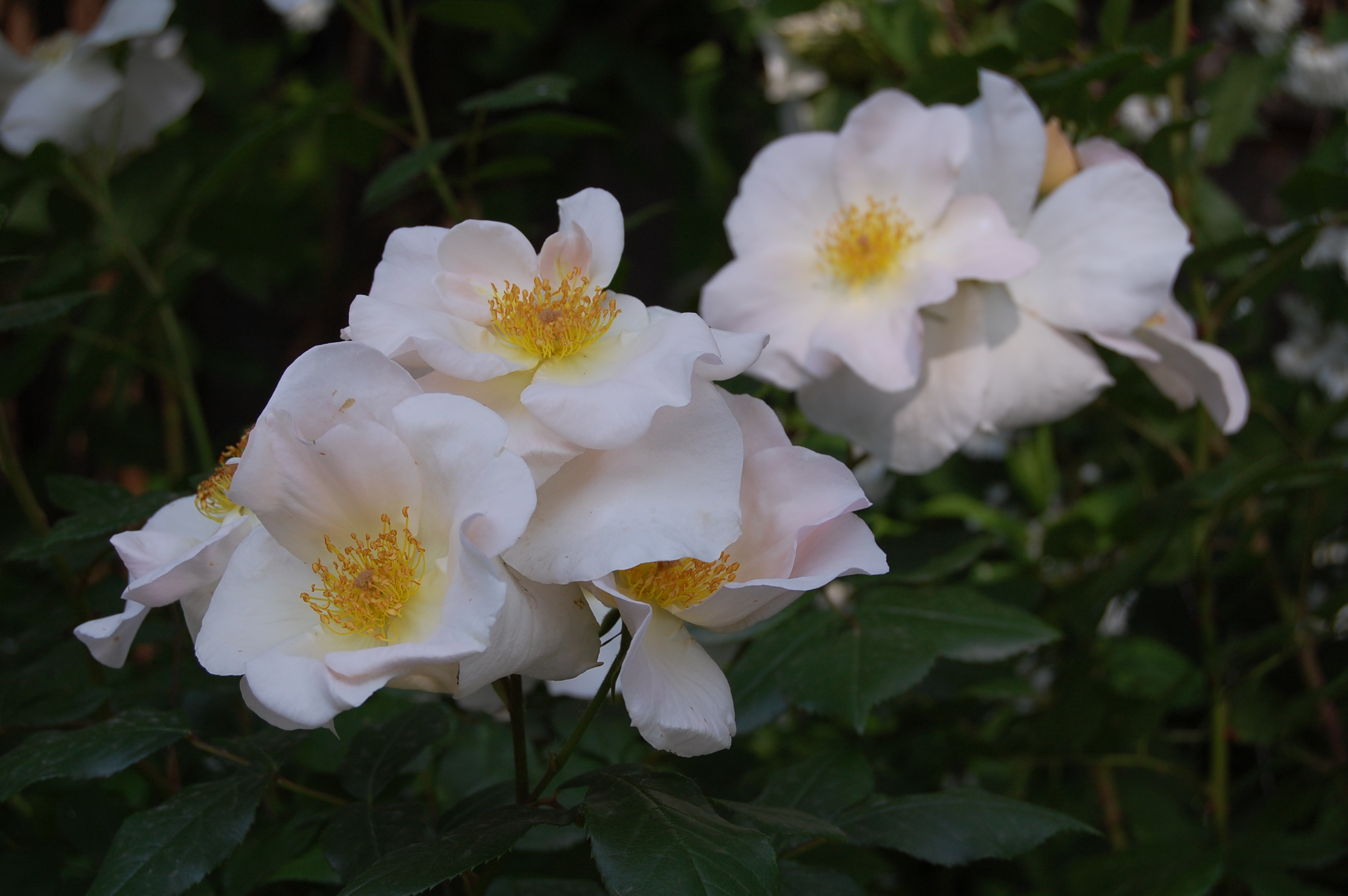
Most notably, ‘Cassie’ continues to pump out clusters of little white semi-double flowers. No doubt this is a product of the odd autumn weather, but I find it cheering even so. Nobody’s going to tell ‘Cassie’ when to stop blooming.

shrub rose cassie
‘Cassie’ just doesn’t want to give up – new buds preparing to bloom.

And ‘Cassie’ isn’t even conceding that these are her final blooms of the year. Look and you will find new buds in varying stages of maturity.

shrub rose 'strike it rich'
The last flower bud from ‘Strike It Rich’.

‘Strike It Rich’, my new shrub rose, is also unready to retire for the season. Even though her leaves are dropping, she still has one bud racing with the frost to see if it can burst into bloom.

'Darlow's Enigma' rose hips
‘Darlow’s Enigma’ rose hips.

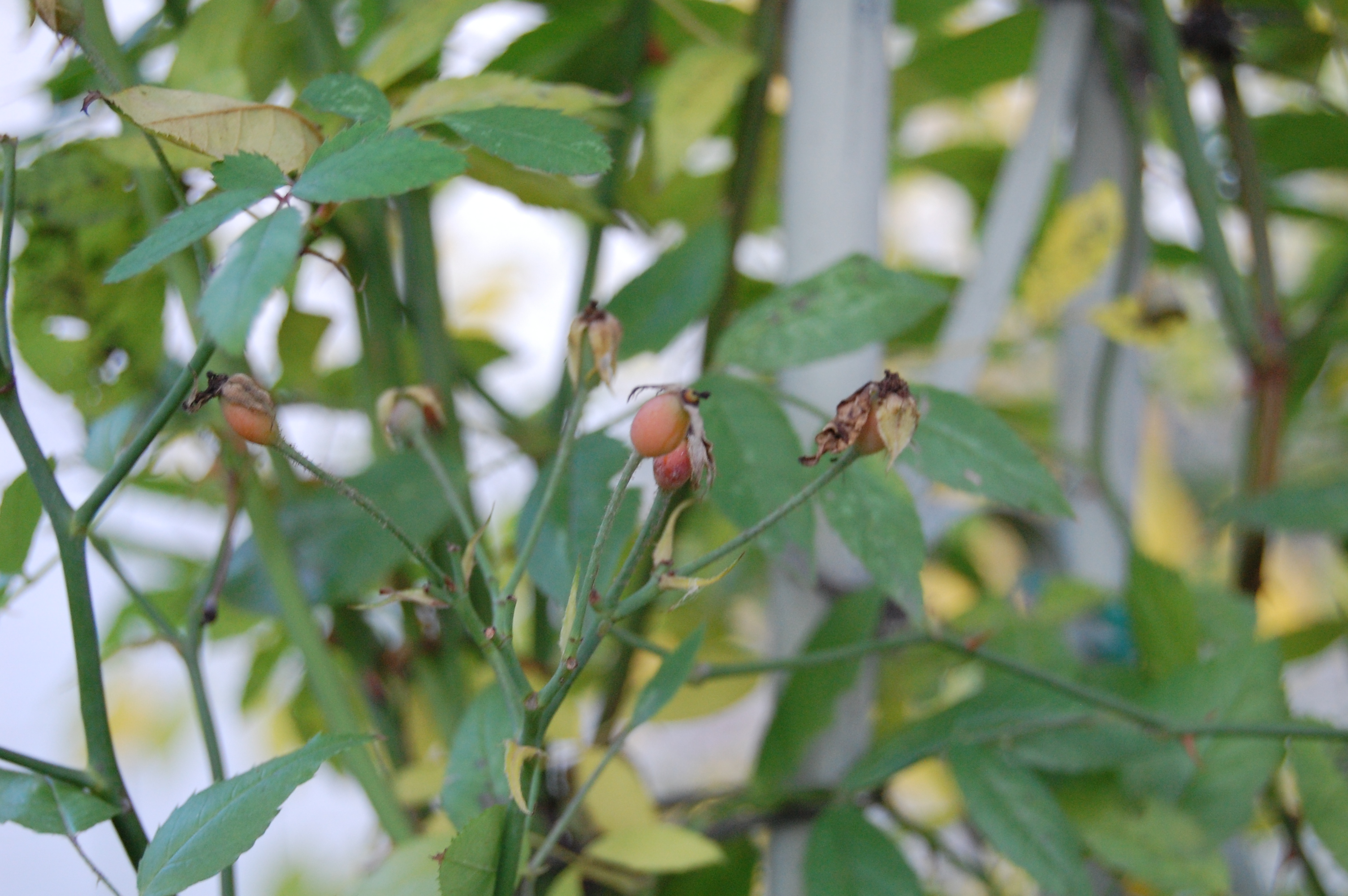
There is one area in which my roses have been rather disappointing: rose hips. ‘Cassie’ and ‘Darlow’s Enigma’ have a scattering or tiny red hips, though most are still green. Not sure if they will last long enough to ripen. I wonder if I was wrong to keep cutting back the faded flowers in order to encourage continued blooming. Both of these roses bloom exuberantly in early summer, then produce flowers at a steady pace through the season.

Rosa 'Sally Holmes'
‘Sally Holmes’ back in June. This is a great shrub rose with lovely cream flowers.

‘Sally Hoimes’ produced its last flush of blooms in September. But her hips have little color at this point. And I was surprised that my wild Prairie Rose, (Rosa setegira), doesn’t seem to have any hips at all.

Are your roses providing you with blooms and colorful hips, or have they quietly slid into dormancy?

Fall Color Settling In Slowly

It’s been a warm fall. The days have been a bit warmer than normal. More important, the nights have not been nearly as cold, generally about 10 to 20 degrees (F) warmer than average.

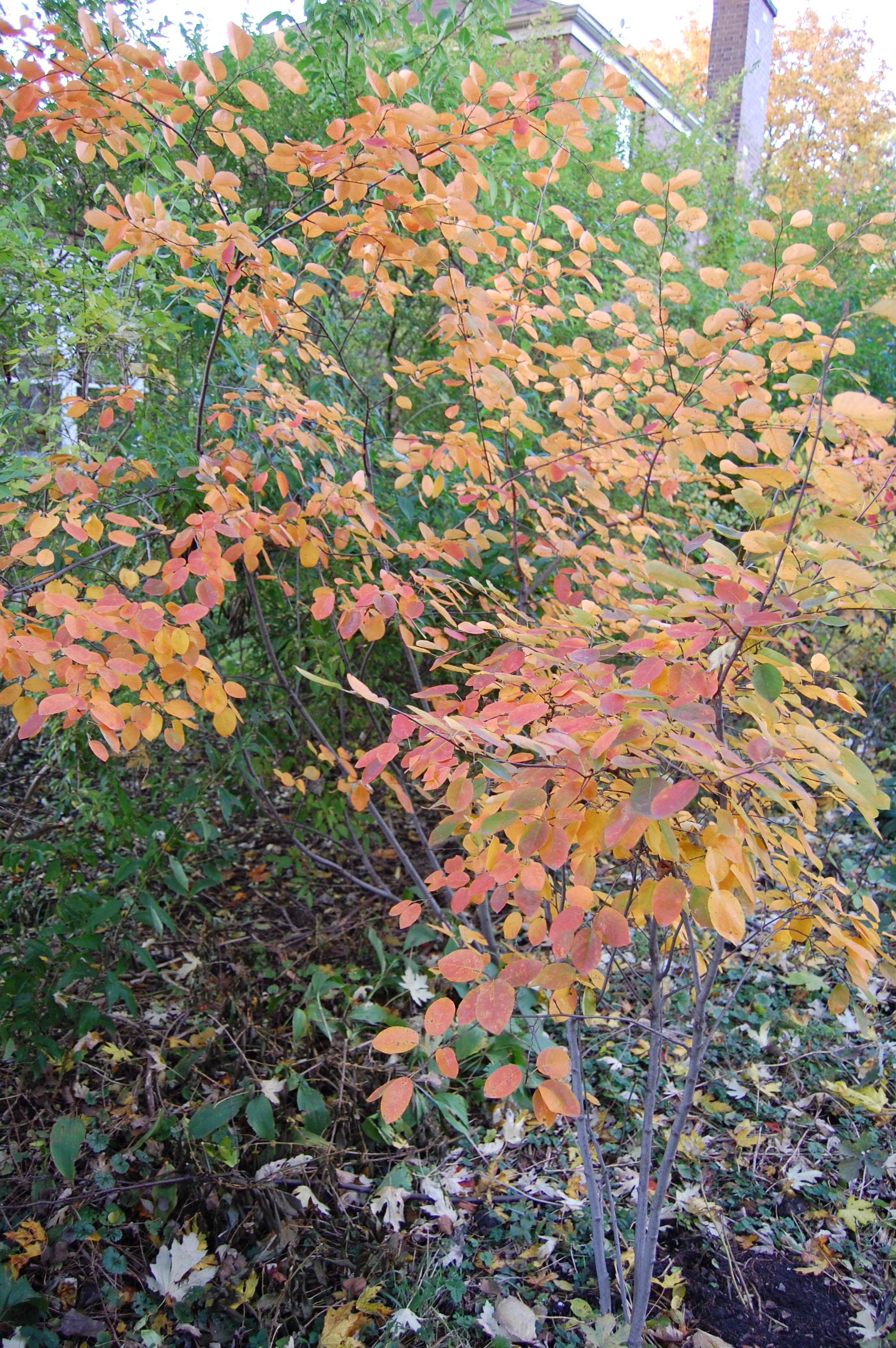
Serviceberry 'Autumn Brilliance'
Serviceberry ‘Autumn Brilliance’

Weather is only one factor affecting fall color, I believe the shortening days are a bigger one. But I’ve got to think that this warm fall is one reason why it seems that more leaves are staying green late into the season.

So here it is the first weekend of November, and we are finally getting a decent amount of foliage color in our garden. Even so, some of the fall color stars still seem to be behind schedule.

Serviceberry autumn brilliance
Serviceberry ‘Autumn Brilliance’

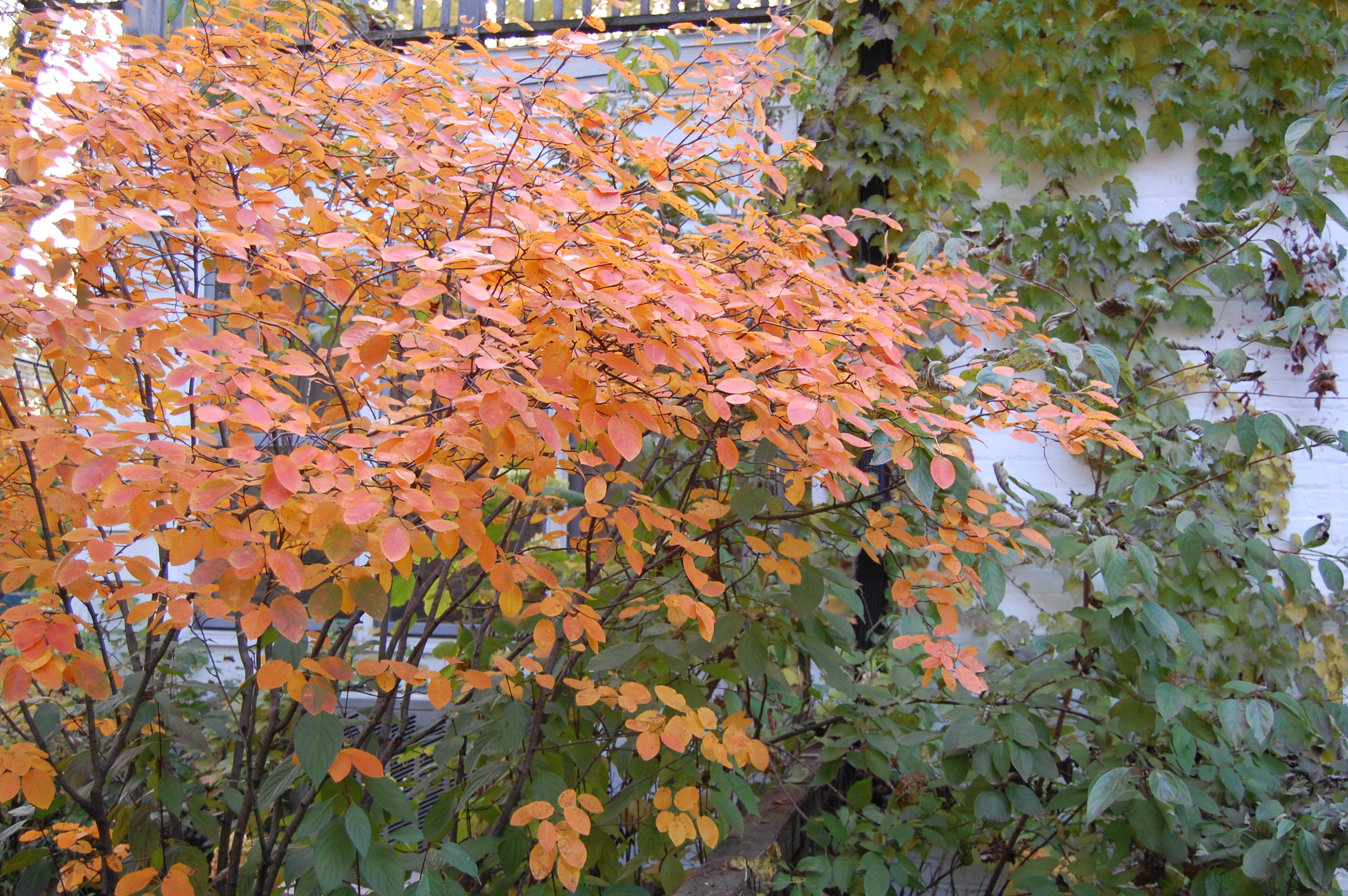
As usual, Serviceberry ‘Autumn Brilliance’ (Amelanchier x grandiflora) is a seasonal star. The  little oval leaves seem to glow like red and orange jewels. I have six of these shrubs and sometimes I think I would fill the whole back garden with them if allowed.

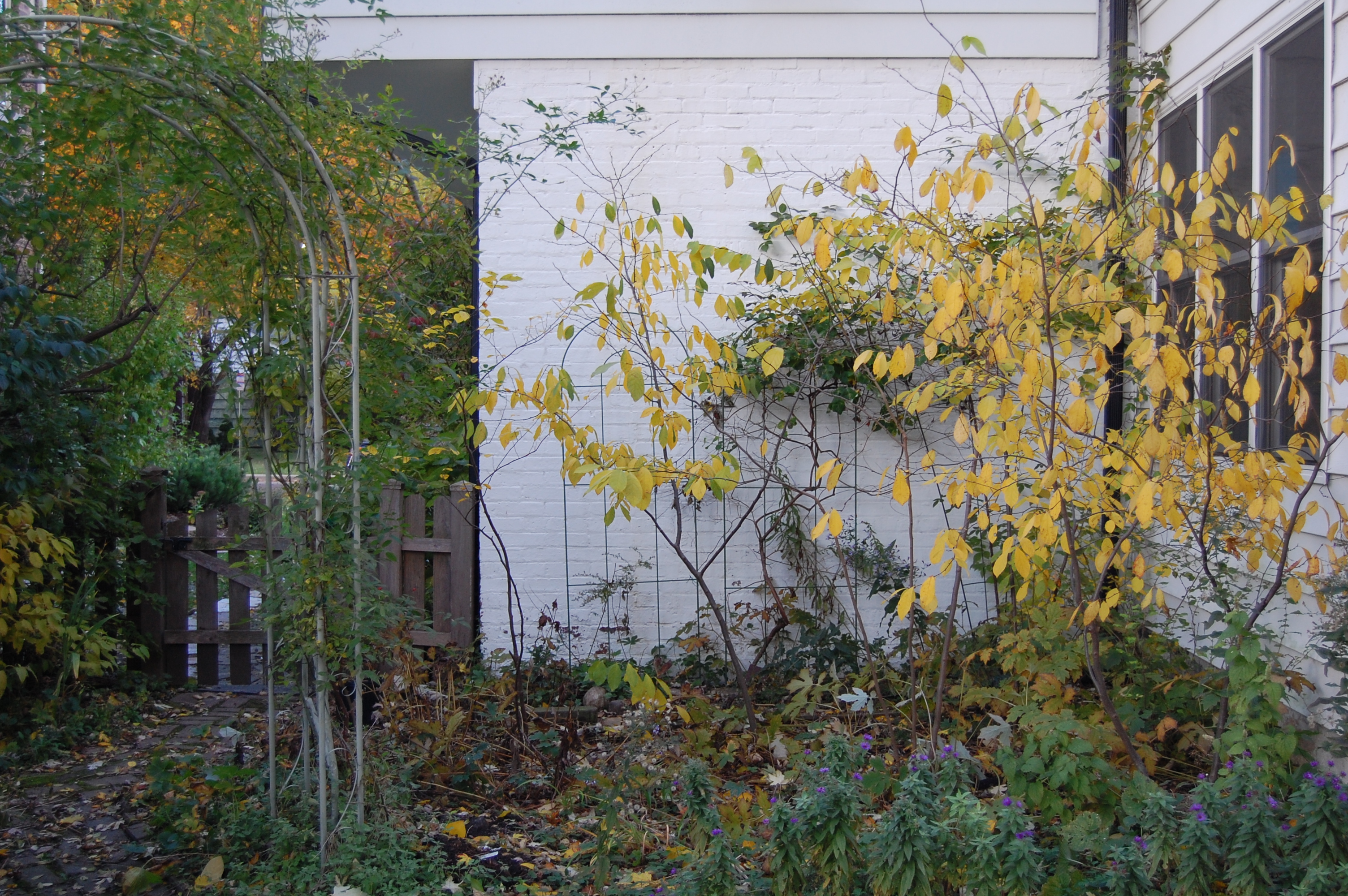
Spicebush fall color

The Spicebush (Lindera benzoin) leaves are falling, but are first turning a nice golden yellow. Spicebush blooms in early spring with tiny yellow flowers. The number of buds I can see now indicates a good display next April.

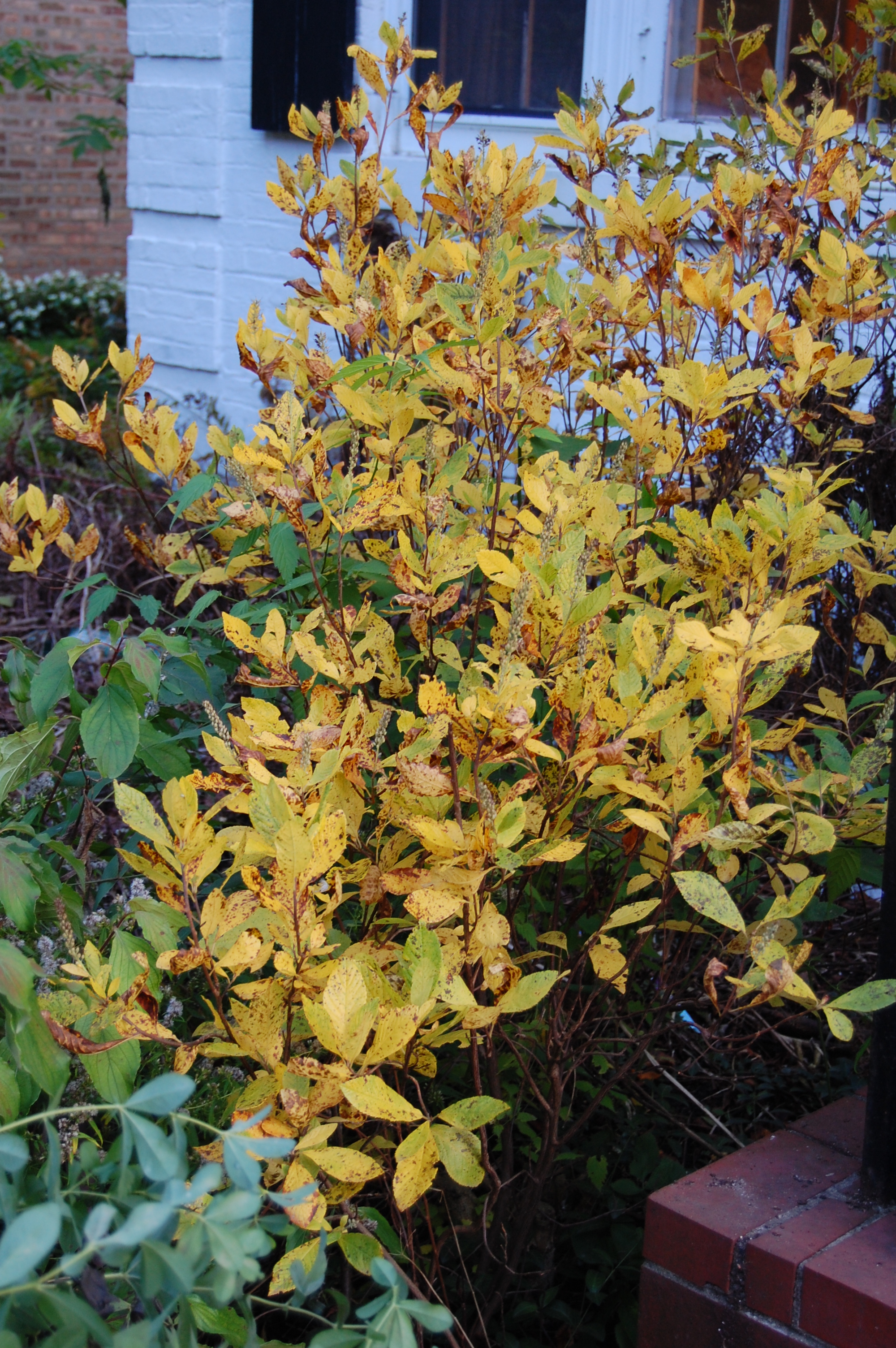
Summersweet fall color

Summersweet (Clethra alnifolia) and Wild Black Currant (Ribes americanum) also have nice yellow autumn foliage. Wild Black Currant is one of my favorite native small shrubs.

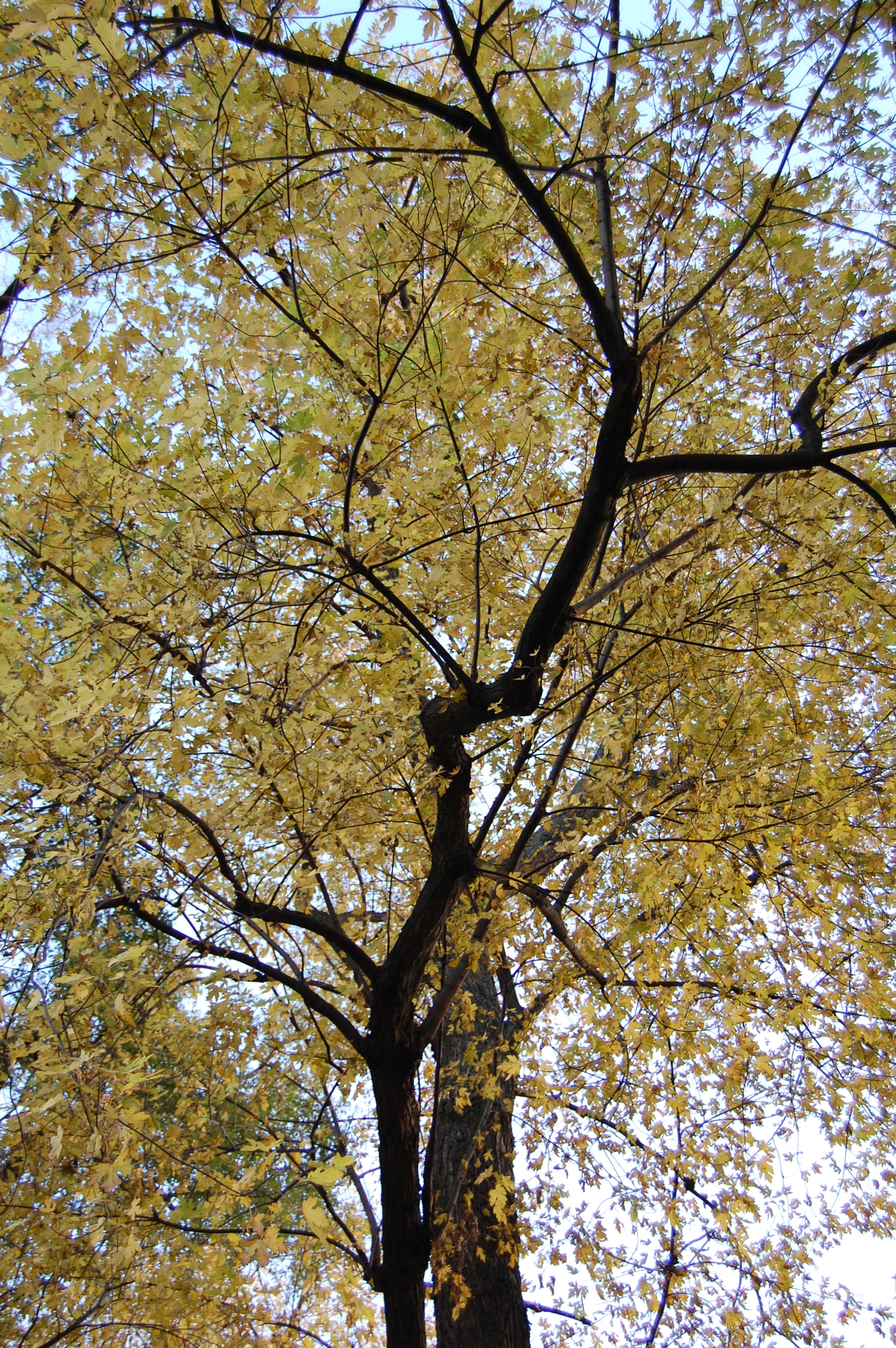
Silver Maple
Silver Maple

In the middle of our back garden is a big old Silver Maple (Acer saccharinum). This tree’s greedy roots can be a real pain. However, it gives a pleasant dappled shade and the fall leaves are attractive.

Flowering Dogwood
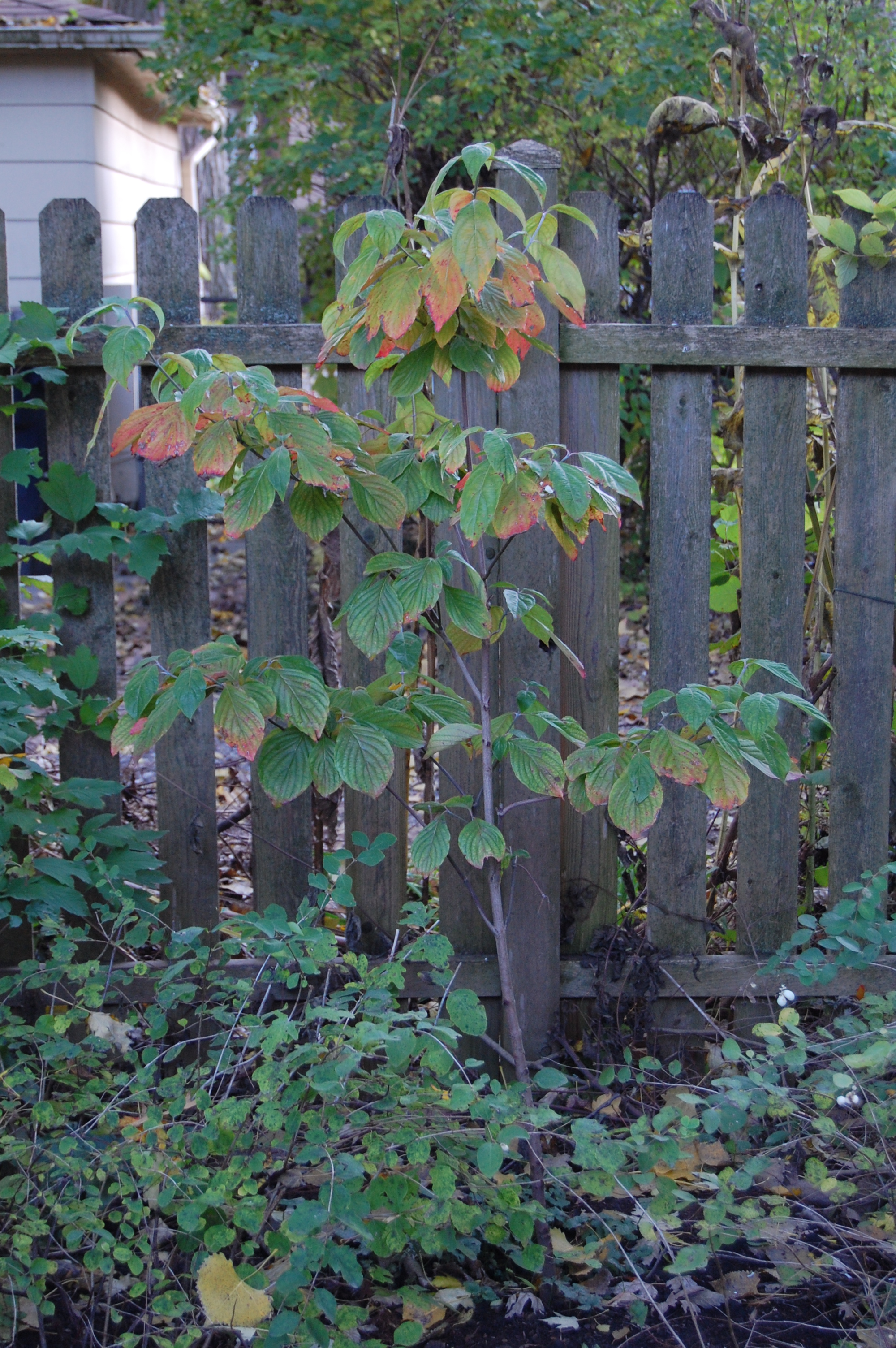
My Flowering Dogwood, which I still consider to be a toddler

Among the plants that seem behind schedule for fall color are my new Flowering Dogwood (Cornus florida), just now finishing its second season in the back garden.

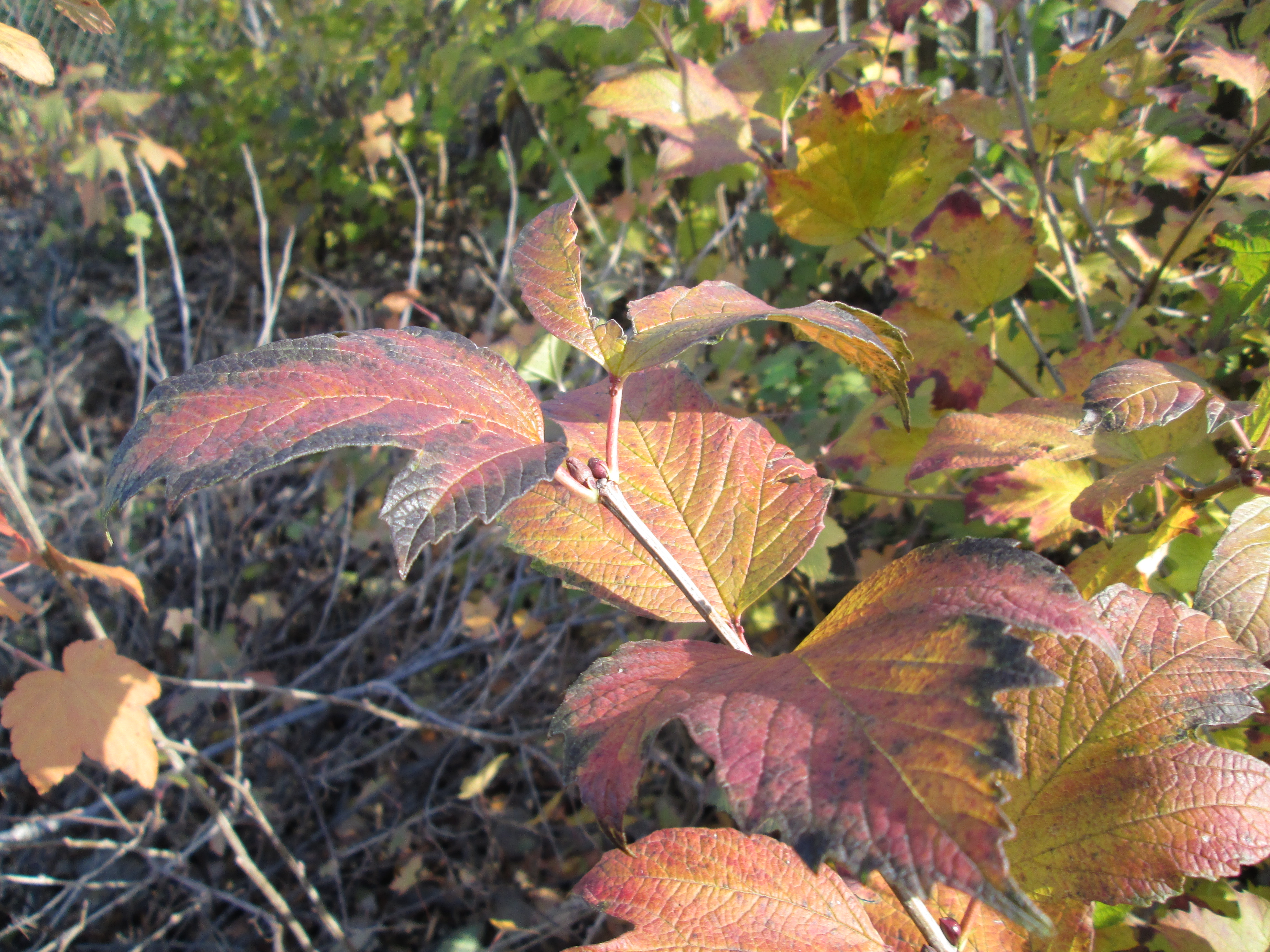
Cranberrybush Viburnum, Viburnum trilobum
Cranberrybush Viburnum fall color

Cranberrybush Viburnum (Viburnum trilobum) is also tardy. This shrub normally has deep red and maroon leaves in fall. It is just now starting to show color. I also have Blackhaw Viburnum (Viburnum prunifolium), and it is not showing any color at all (except for green).

How has your autumn color been coming along this year?

Kill the Buckthorn, Save the Frogs

The new issue of Chicagoland Gardening magazine has an article that provides more evidence that European Buckthorn (Rhamnus cathartica) is an evil plant, at least in those areas where it is invasive.

Western Chorus Frog
Western Chorus Frog. Cute little guy, isn’t he? Photo from herpnet.net

Most objections to European buckthorn are based on its impact on native plants. In much of North America, this shrubby small tree is a menace. It generates innumerable seedlings, and forms thickets that can squeeze out every other plant.

In the Chicago area alone, there are 26 million stems of buckthorn, and buckthorn removal is a constant challenge for those who seek to protect and restore natural areas.

Now it turns out that European buckthorn is a menace to frogs as well as to native plants. Buckthorn contains a chemical called emodin. Researchers from Northern Illinois University and Chicago’s Lincoln Park Zoo found emodin in ephemeral breeding pools in suburban Chicago woodlands. More buckthorn meant more emodin in the water and soil.

die buckthorn scum
A T-Shirt available from Wild Ones, an organization of native plant enthusiasts. Photo: wildones.org.

The researchers tested the effects of emodin on the tadpoles of western chorus frogs. The results: emodin caused deformities and death.

The authors of the study, which will be published in The Journal of Herpatology, hypothesize that emodin has the same impact on the tadpoles of other American frogs. Western chorus frogs are just one of several amphibian species that have low hatching rates in woods infested with European buckthorn. These species reproduce at the time of year when the concentration of emodin is highest.

Amphibians in general are facing an alarming decline. According to the conservation group Amphibian Ark, 30% of the world’s amphibian species are threatened with extinction.

european buckthorn
European Buckthorn leaves and berries. Photo from UWGB.edu.

I like to garden with plants native to the midwest region of North America, but I am no purist. However, when it comes to European buckthorn I have a zero tolerance policy. It’s hard to believe that these trees were once sold in nurseries. Unfortunately, it took years for people to realize the environmental impact.
After we moved into our current house I personally took down two buckthorns growing in the back garden, and I regularly pull up buckthorn seedlings.

So if you have amphibians on your property, you have another good reason to get rid of buckthorn. Do you have European buckthorn in your garden, and have you tried to remove it?