When Birds Collide

There was  a disturbing article about birds crashing into windows (or window strikes) in the Winter 2014 issue of Living Bird, the publication of the Cornell Lab of Ornithology.

Apparently the typical American home passively kills 1-3 birds per year through window strikes, likely more if there are bird feeders around. This may not sound like much, but it accounts for an estimated 44% of window strike deaths. (Estimates of bird deaths from window strikes range from 365 million to 1 billion in the US alone.) Almost all of the remainder come from low-rise buildings.

I would feel very sad if one of these rose breasted grosbeaks had a fatal window collision.
I would feel very sad if one of these rose breasted grosbeaks had a fatal window collision. This picture was taken last May.

While you would think that those tall glass skyscrapers would be a significant hazard for birds, in fact they account for only about 1% of deaths from window strikes.

Window strikes are an occasional problem with our back porch, the only part of our house with larger windows not subdivided into panes. In the ten years we have lived here, I have found two dead birds that seemed to have been victims of window strikes. However, it’s possible that there are more victims I never see.

Occasionally we hear a loud “thump!” while sitting on the porch, then realize that a bird had flown into the window. Generally they are stunned, but recover and fly away.

Recommended steps to reduce bird deaths from window strikes include:

  • Keep feeders within one foot of your windows. This prevents birds from building up speed before a crash. In our garden I don’t think this would be practical, as being close to the windows would convert bird feeders into squirrel feeders.
  • You can deck your windows with string, tape, decals or a special bird tape produced by the American Bird Conservancy.
  • Keep the window screens on or hang fine netting over your windows.
Male Baltimore Oriole
Same for this Baltimore oriole. Picture taken in our garden June, 2013.

The problem with the last two is that we like to take photographs of the birds from inside, so we’ll have to think about this. It is suggested that just putting up materials during the migration seasons could be helpful. Honestly, I’m not sure which if any of these steps we might take. When asked for comment, Judy stated plainly that she would not sacrifice her view of the garden in order to save a couple of birds. She’s very unsentimental, at least when it comes to birds.

Research is ongoing to develop window glass with patterns that can be seen by birds but not people. However, it does not appear that this is a technology that will be effective in the immediate future.

Are you concerned about birds flying into your windows?


Book Review: Latin for Gardeners, by Lorraine Harrison

Latin for Gardeners is a fine book for people who love plants and enjoy language. Perhaps not a book that is essential to your gardening success, but a book that provides a good deal of entertainment and enlightenment.

For instance, isn’t it worth something to know that Alyssum (now Lobularia) was at one time used to treat madness? This explains the name, which comes from a (meaning not or against) and lyssum (meaning madness). So Alyssum basically means “not insane”. Not an association I would have guessed at.

latin for gardeners

Actually, most of Latin for Gardeners is a dictionary of epithets – the second or specific names of plants, not the first or genus name. Not something you would sit down and read from beginning to end. However, it is very handy for looking up plant names you are curious about, or just leafing through searching for linguistic nuggets.

In this way I learned that hircinus means goat-like (as in Hypericum hircinus). Or that myrmicophilus means ant-loving (Aescheynanthus myrmicophilus). When I told Judy this, I was informed that she was in no way myrmicophilus. And don’t you want to know what infundibuliformis means? (Answer: shaped like a funnel.)

Fortunately, the book has much more than an alphabetical list of Latin names. There are sections that discuss the various themes that can be found among these names.

Colors, for instance. There are many variations on “yellow” among plant names. Flaveola and lutea mean yellowish, flavens means yellow, and luridus means pale yellow (the last being the opposite of what an English speaker might expect).

There is also a discussion of epithets based on a plant’s smell. For instance, the epithet of the foul-smelling durian fruit (Durio zybethinus) means smelling like a civet cat. I don’t know what a civet cat smells like, but it can’t be good. I once had durian ice cream at a Thai restaurant, and it made me think of a cross between a peach and a really dirty sock.

On the other hand, you might expect a plant with the epithet melliodorus (Eucalyptus melliodorus) to be foul-smelling, but actually its name means it has the scent of honey.

In addition, there are plant profiles and short biographies of plant explorers who have been memorialized in many genus and species names.

If you enjoy learning the meanings and histories of names, you will find Latin for Gardeners to be a diverting and useful book.

A Strategy to Deter English Sparrows

It’s good to put out feeders with shelled peanuts for the birds, especially in winter. Peanuts attract woodpeckers, nuthatches, and chickadees, and are a good source of calories and protein. That’s why I buy 20 lb. sacks marked “Peanut Rejects”. (Why were they rejected? They look fine to me, so I do wonder. Also, is rejection painful even for peanuts?)

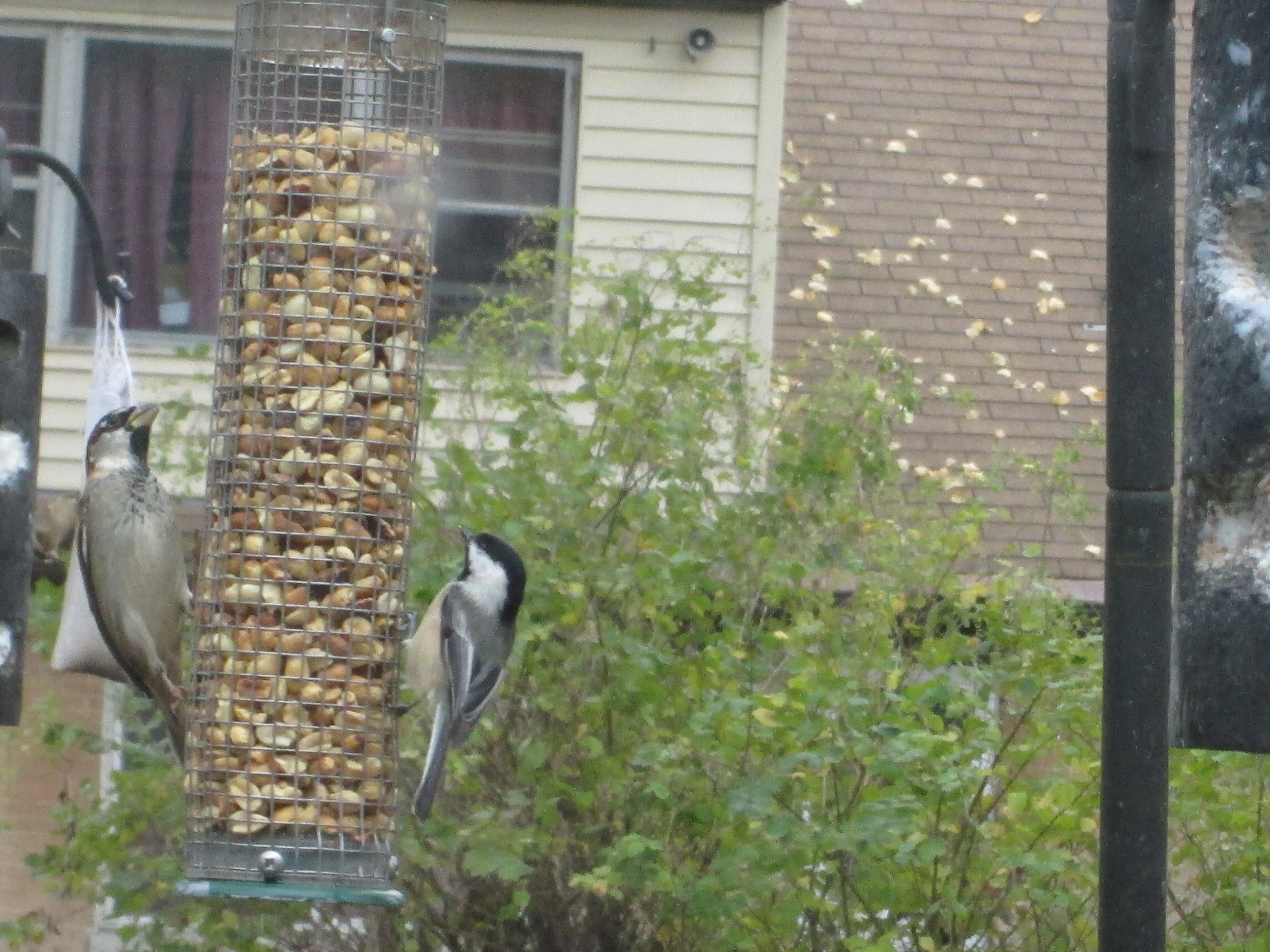
Chickadee (right) and English sparrow (left) at peanut feeder.

The bad thing about putting out shelled peanuts is that they are also loved by less welcome birds: grackles, starlings, and English sparrows. Especially English sparrows. They can sometimes empty a feeder in less than a day. This gets expensive.

I was ready to give up on peanuts, but a friend of mine urged me to try a new strategy: fishing line. More specifically, tape lengths of fishing line to the inside of of the plastic dome used as a squirrel baffle. Depending on the size of the dome, he attaches four to six pieces of line. He said it deters the English sparrows, though not starlings or the more desirable birds who like peanuts.

White breasted nuthatch at the peanut feeder.

So last Sunday I tried it. I put up the peanut feeder with the squirrel baffle on top, and with six pieces of fishing line taped to the inside. The result: a lot of uneaten peanuts. By Wednesday, it looked as if none of the birds were getting at the feeder, so I removed two of the pieces of fishing line.

As of today, it does appear that a few peanuts are being eaten. However, I haven’t actually seen any birds at the feeder, and neither has Judy.

So this strategy may be a little too effective. On the other hand, it may be that it takes the birds time to adjust to the fishing line blowing in the wind around the peanut feeder. I will give it more time, and report back in the near future.

Do you have any strategies for deterring English sparrows?

Common, but Still Precious

There is a general belief that the more commonplace something is, the less we value it. However, this does not necessarily apply in many situations, such as with the birds in our gardens.

Northern Cardinals show up at more bird feeders than any other bird in the East Central United States.

I was reminded of this when I found a list of the top 25 feeder birds in my region of the USA, compiled by Project FeederWatch. The list applies to winter only. Birds were ranked by the percentage of feeders they visited, the size of the group they travelled with, and their general abundance – meaning how many visited feeders and how often they did so.

At first, I was disappointed to learn that the Northern Cardinal is our area’s most common bird in terms the percentage of feeders they visit. They are the second most common in terms of abundance. For a moment, I felt as if this somehow devalued the pleasure I got from watching these birds.


Northern Cardinals, dashing yet dignified
Northern Cardinals, dashing yet dignified.

Many Cardinals can be seen throughout the day in our garden, but after a moment’s thought I realized that does not make them less special. That brilliant red, those pointy crests, the dignified demeanor, are always deeply satisfying to observe. When they appear in greater numbers it only adds to the excitement.

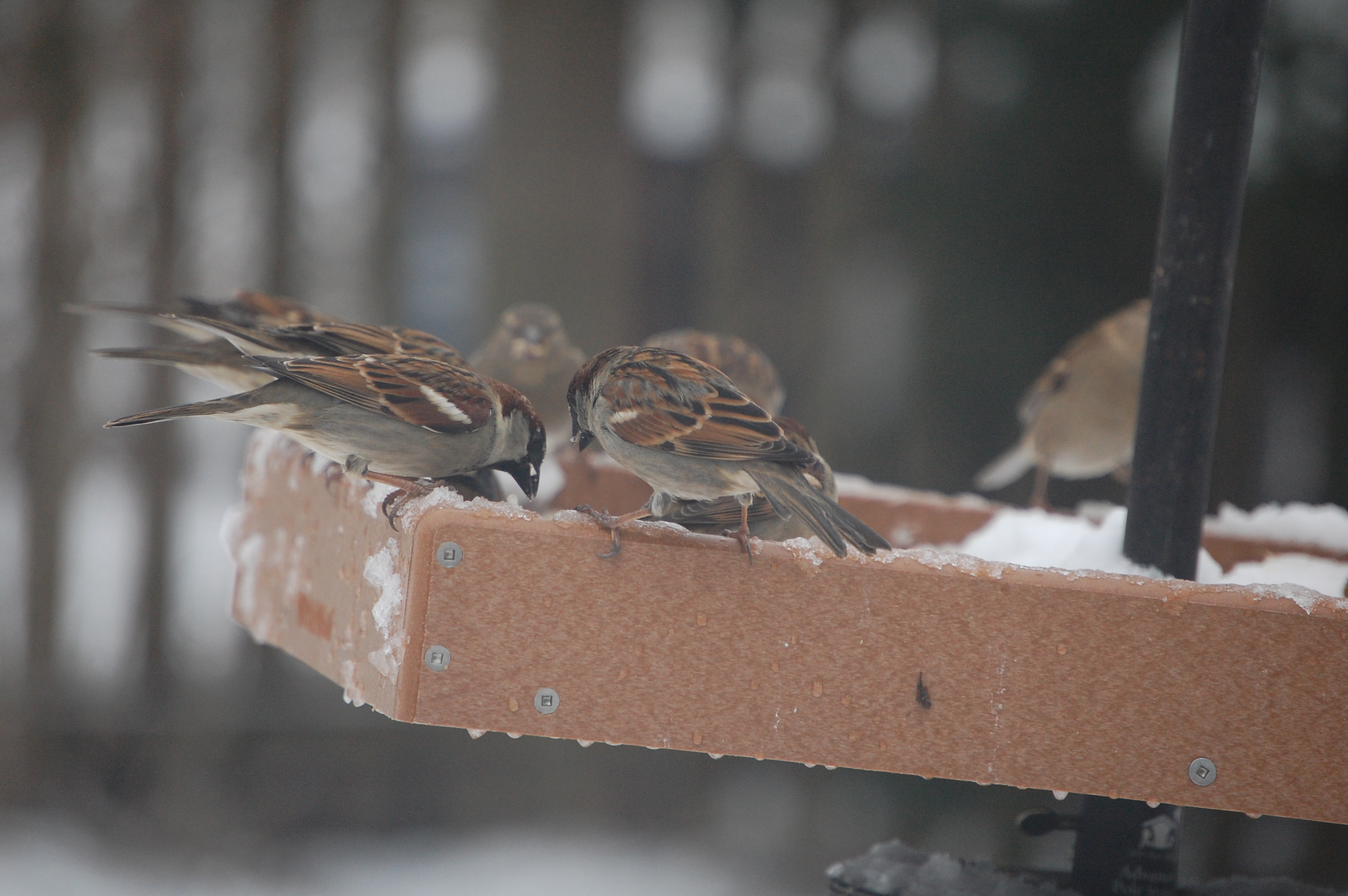
The single most common bird in terms of abundance in our region is the English or House Sparrow. They visit a slightly smaller percentage of bird feeders than the Cardinals, though. I was surprised to learn that English Sparrows are becoming rare in the UK and some other places. Speaking for myself, I would gladly pack up all our English Sparrows and ship them off to some place where they are in short supply.

English Sparrows, gobbling everything off teh platform feeder.
English Sparrows, gobbling everything off the platform feeder.

English Sparrows are tiresome, but not because they are numerous. The real problem is that they are so dull to look at. If they were red like the Cardinals – or green, purple, or blue – would I like them better? Absolutely. This may be shallow on my part, but I’m the one buying the sunflower seed. When it comes to birds, bright colors count for a lot.

Combine their dullness with their voracious appetites, and English Sparrows are pretty much like a house guest who eats everything in the refrigerator while droning on about all the problems they’ve been having with their feet. Actually, that sounds a lot like my Uncle Donald.

I was gratified to see that at least 21 of the top 25 feeder birds have made appearances in my garden, the exceptions being the Tufted Titmouse and the Carolina Wren. Also, I’m not sure if the American Tree Sparrow or Song Sparrow have been around, as I can’t tell them from the generic LBJ (little brown jobbie).

Varied Thrush
A Varied Thrush in our garden last winter. Sadly he did not return this year.

Plus, we’ve had a few birds not on the top 25 list, such as the Northern Flicker and last year’s celebrity, the Varied Thrush. Truly rare birds inspire a special excitement, but something does not need to be rare to give pleasure.

American Robin
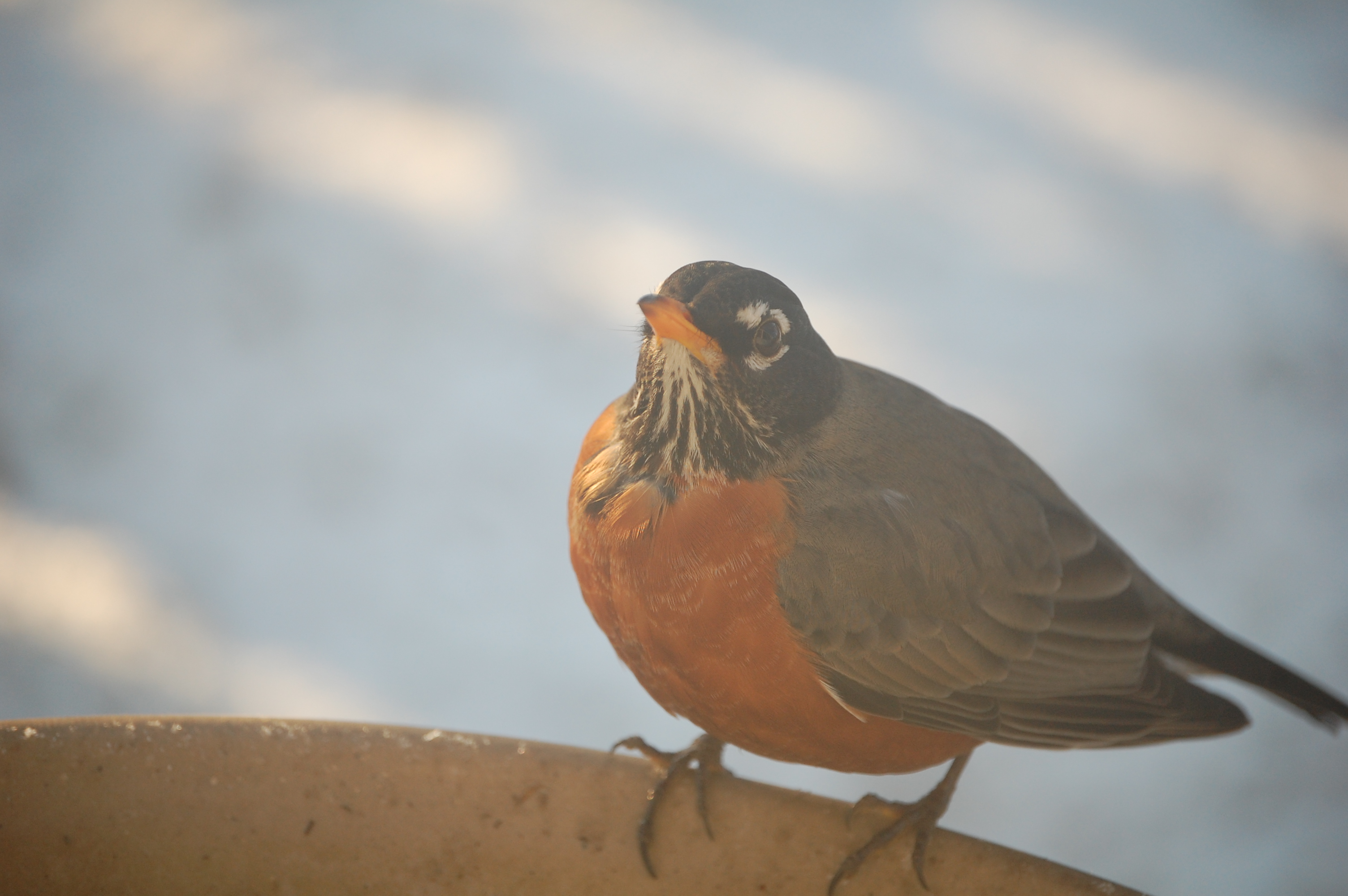
American Robin

Before concluding, I have to make an aside regarding the American Robin. Also one of the top 25, but the list revealed that taxonomists have burdened this cheerful bird with the awful scientific name of: Turdus migratorius. Talk about cruelty to animals! Really, couldn’t they have come up with something better than that?

What about you – does a bird have to be rare to make you happy?

I, Citizen Scientist

We just got another six inches of snow, but let’s not talk about that. Let’s talk about the Great Backyard Bird Count (GBBC), which ends today and which I participated in for the first time.

Cardinals at my platform feeder.

The Great Backyard Bird Count is an exercise in crowd sourcing begun in 1998 by the Cornell Lab of Ornithology, the Audubon Society, and Bird Studies Canada. The basic idea is that on at least one day over a long weekend, volunteers jot down all the birds they see over a set period, which can be as little as 15 minutes.  The location can be a park, a wildlife preserve, or your own yard (which is my preference).

Since I already spend a lot of time watching birds from the back porch, I figured I might as well count them and contribute to something productive.

A Cardinal in the bush is worth ...
A Cardinal in the bush is worth …

Last year, over 100,ooo people from 111 countries reported seeing more than 33 million birds on the GBBC website. The data helps scientists identify at-risk species and changes in migration patterns, among other things.

Judy and I had fun counting birds in the back garden from the comfort of our enclosed porch. We did 15 minutes for each day of the project. There were lots of birds, though of only seven species, which was a little disappointing. We saw many Northern Cardinals, plus Mourning Doves, Goldfinches, House Finches, Juncos, Downy Woodpeckers – and, of course, English Sparrows. A number of our favorites, such as the Chickadees, Nuthatches, Bluejays, and Northern Flickers, did not bother to visit us during our counting periods.

House Finch (wearing red) and English Sparrow.
House Finch (wearing red) and English Sparrows.

I felt quite virtuous while entering my bird reports, like I had done my bit for ornithology. In fact, I was so inspired I signed up for another citizen science project sponsored by the Cornell Lab: Project FeederWatch, which I’ll write about in a later post. Just know that if you regret missing out on the Great Backyard Bird Count, Project FeederWatch lasts until April 4th. Plus, there’s always next year.

Have you ever participated in the Great Backyard Bird Count?


Great Dixter, Part 4 (the Final Chapter)

This will be my last post on Great Dixter. As I’ve already said, it was our favorite English garden. We liked it so much, in fact, that I felt compelled, almost against my will, to enjoy some of the topiary. But only because it was so very silly.

Entrance to the Peacock Garden

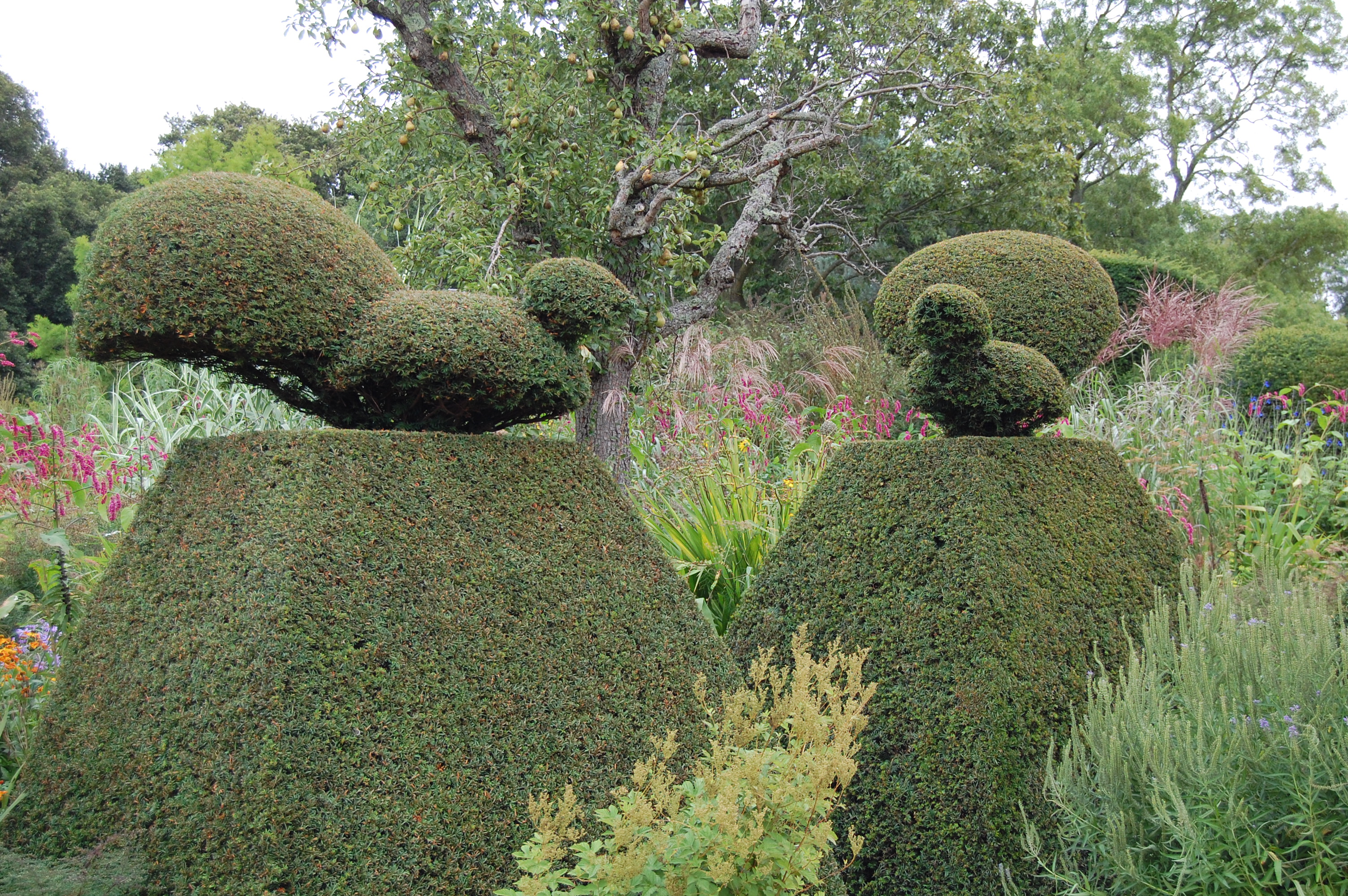
This was in the Peacock Garden. It’s called the Peacock Garden because it is full of topiaries that were originally meant to be blackbirds, pheasants, and other sorts of birds. Eventually, though, they were all referred to as peacocks. Christopher Lloyd’s mother called this part of the garden as the Parliament of Birds.

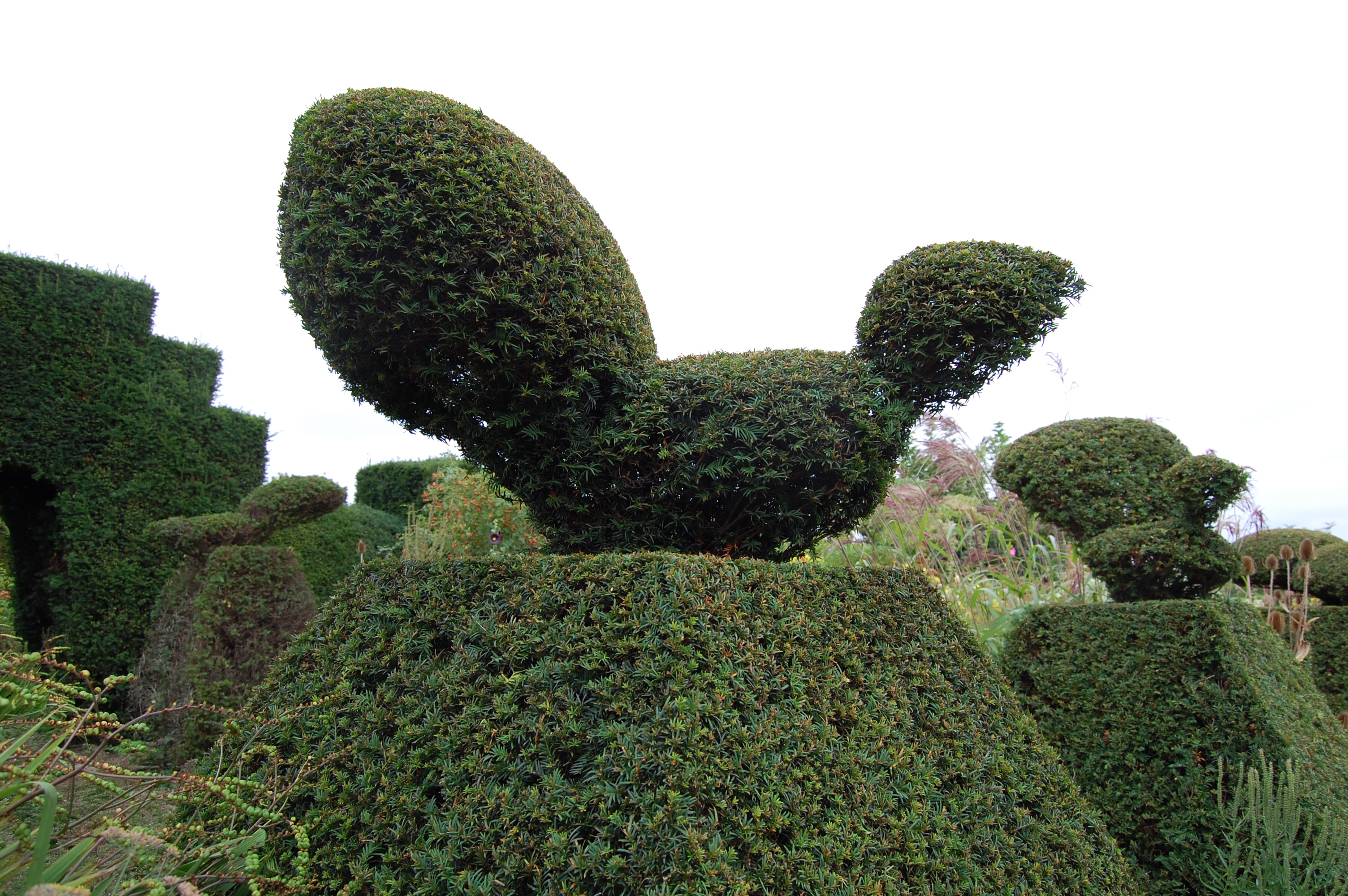
Peacocks or turkeys? Or squirrels? We report, you decide.

When I first saw these topiaries, I had to laugh. At first I thought they looked like turkeys, then squirrels. They certainly look nothing like peacocks.

Here's more of a close up.
Here’s more of a close up.

I don’t know if these topiaries were meant to be humorous or whimsical but that is how they struck me. Not something I would want for my garden in a million years (nor would I recommend anyone spending the time needed to shape the yews in this way), but entertaining nonetheless.

A yew ziggurat.
A yew ziggurat.

I suspect there was also something tongue-in-cheek about this yew hedge shaped like a ziggurat.

2013-09-14 07.49.00 great dixter, peacock garden

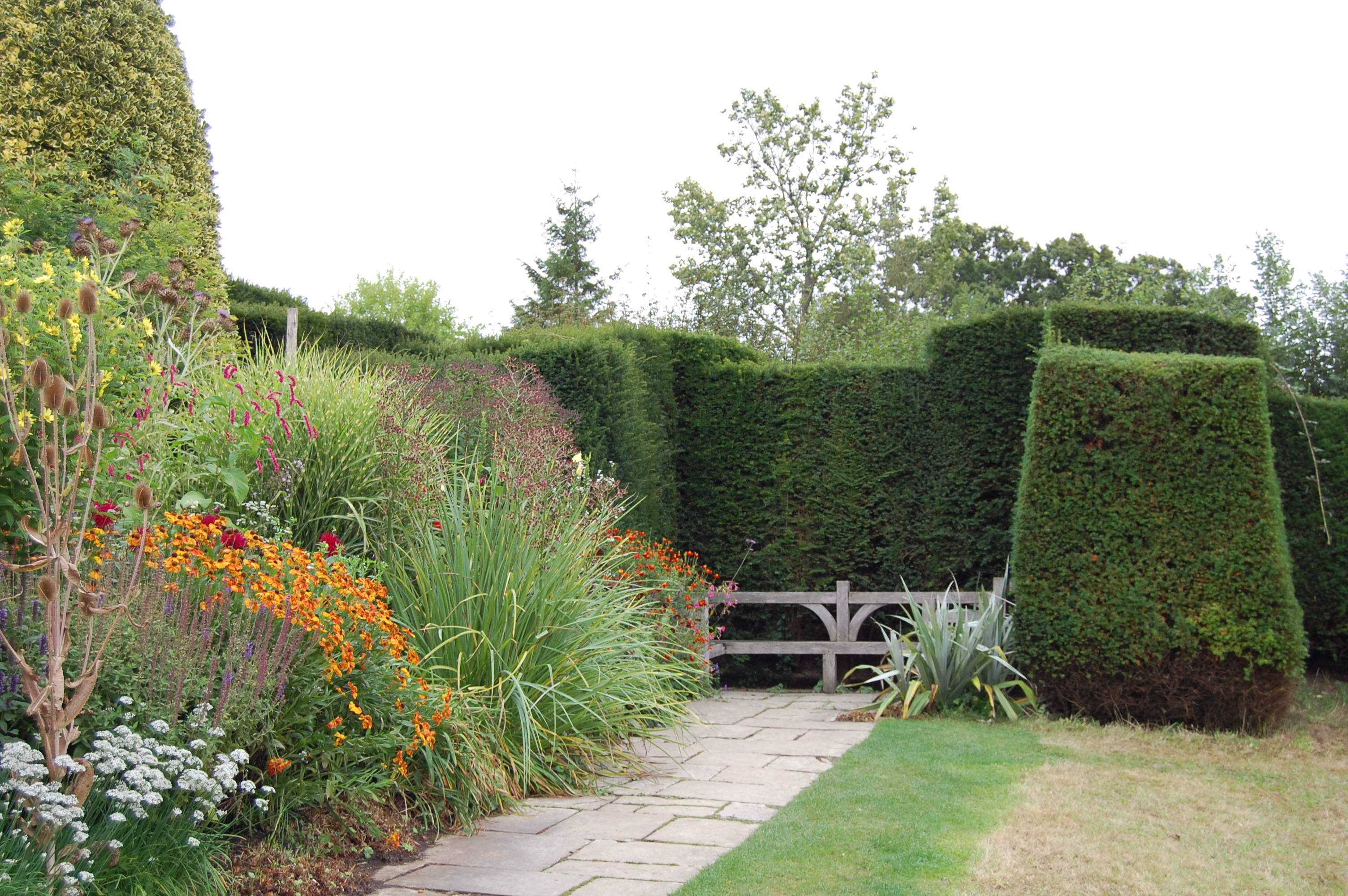
Fortunately, there was more to the Peacock Garden than topiary peacocks/turkeys/squirrels.

Calico Aster is used as a hedge along this path.

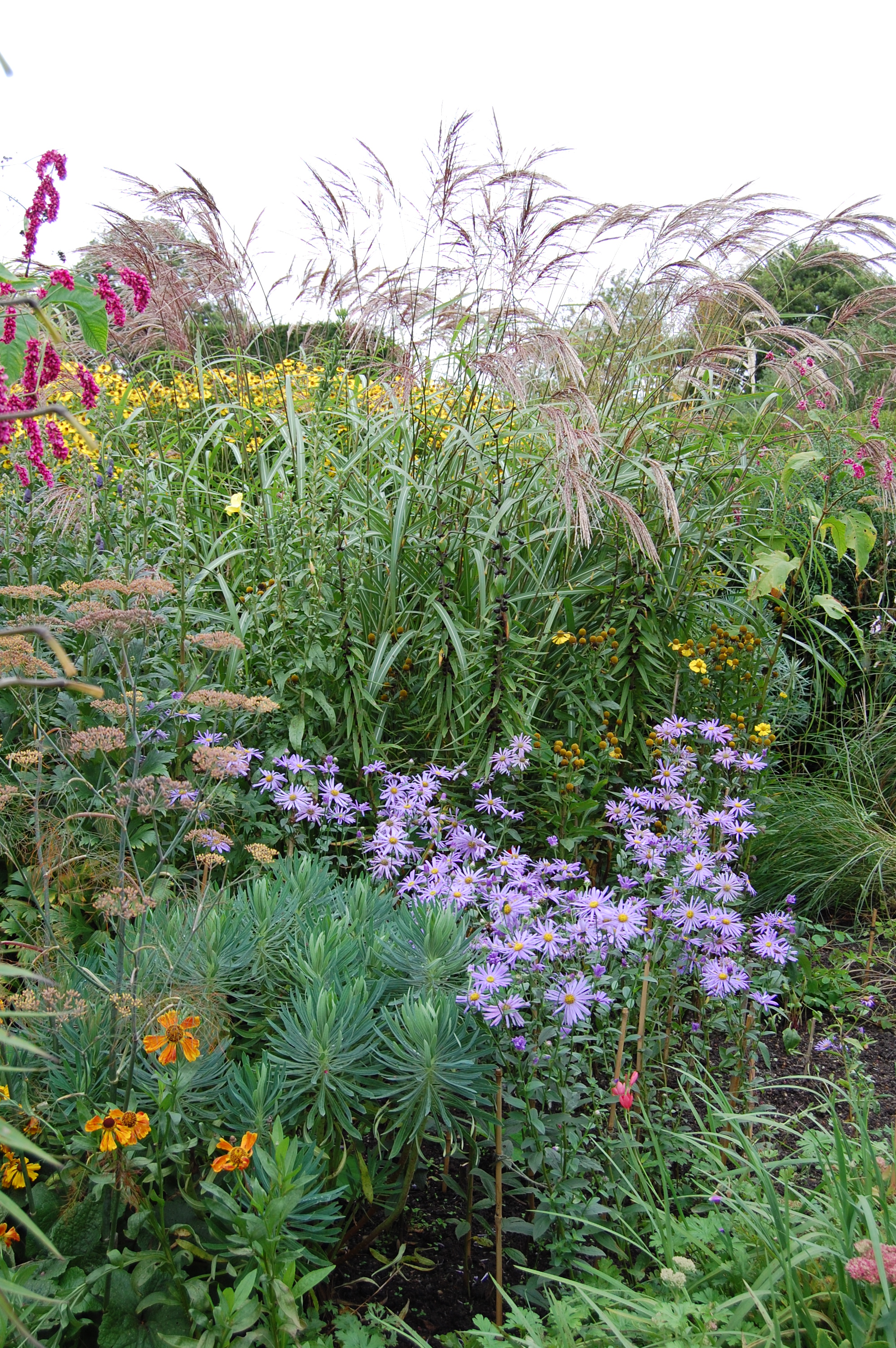
Tall grasses and flowers grew luxuriantly around the topiaries. A hedge of calico aster ‘Horizontalis’ (Symphyotrichum lateriflorus) lines one of the stone paths. It was not quite ready to bloom. I’ve found calico aster to grow to shrub size and seed aggressively in fertile soil, so I only plant it in difficult spots. Apparently it is more manageable in England, or maybe it’s just this cultivar.

2013-09-14 07.44.33 great dixter, peacock garden

I think this is a path for the gardeners. A lovely mix of yellow, blue, and pink – with a giant variegated grass in the background to the left.

2013-09-14 07.48.34 great dixter, peacock garden

Crocosmia, asters, teasel, and kiss-me-over-the-garden-gate, which is the tall one with pink flowers in the background. Truly a great name for a plant, isn’t it?

2013-09-14 07.45.52 great dixter, peacock garden

What is this grass – is it Big Bluestem?

2013-09-14 07.50.17 great dixter

Leaving the Peacock Garden, the vista opened up a bit.

2013-09-14 07.53.25 great dixter

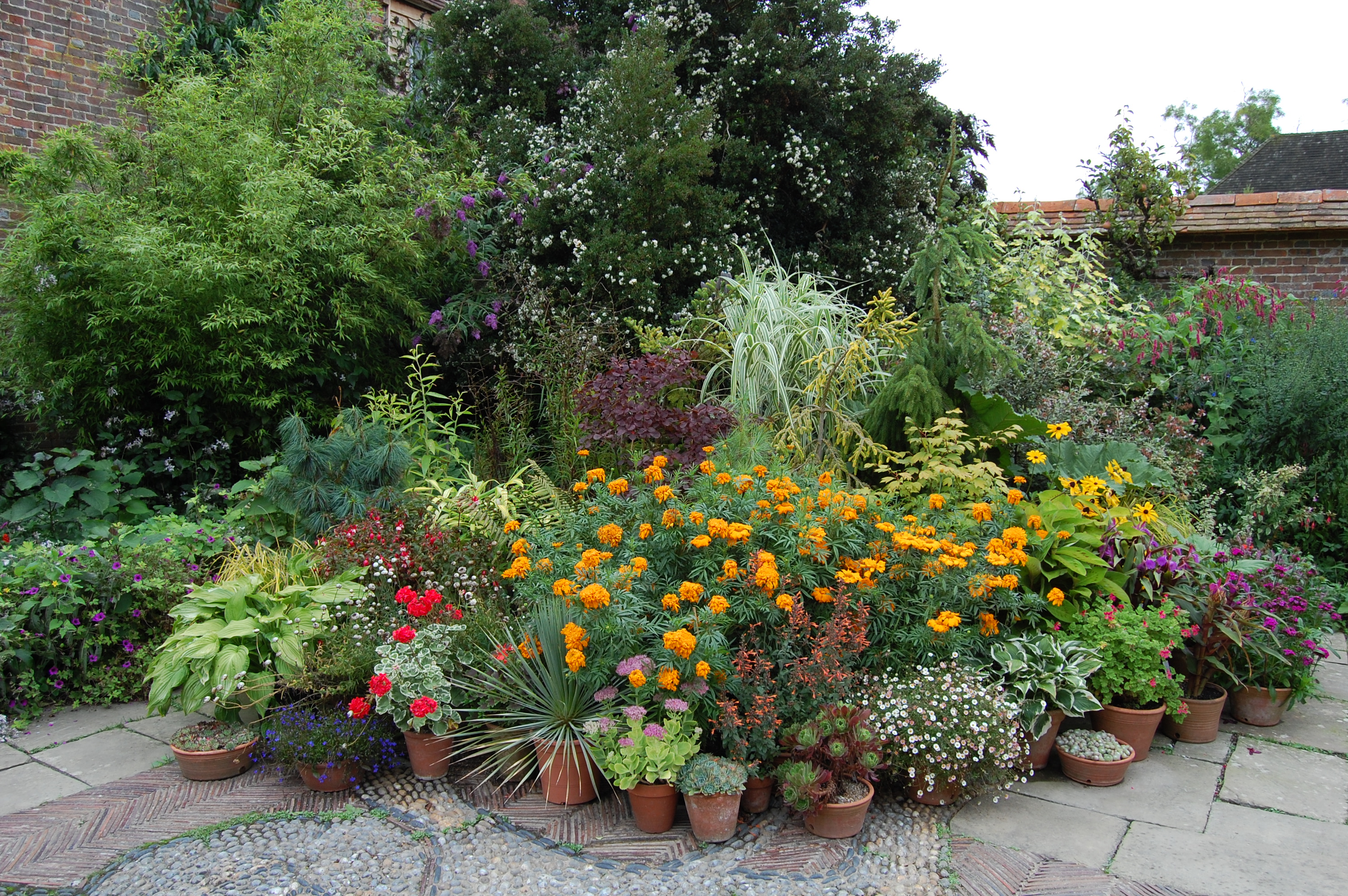
We saw something of the Great Dixter house. Lots of flowering containers congregated around the front door.

2013-09-14 07.51.47 great dixter

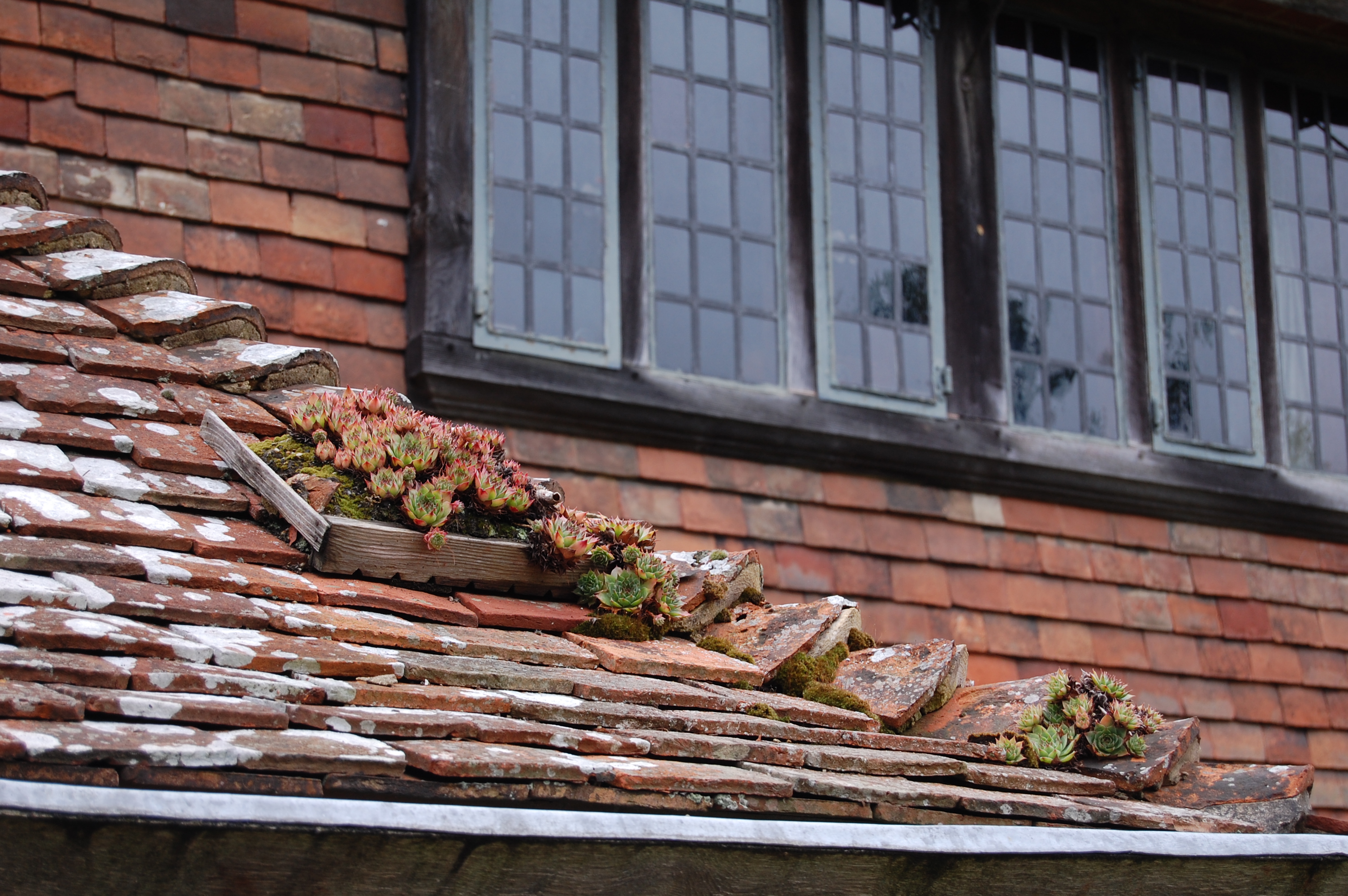
I liked how succulents were grown here and there on the roof.

2013-09-14 07.55.37 Great Dixter

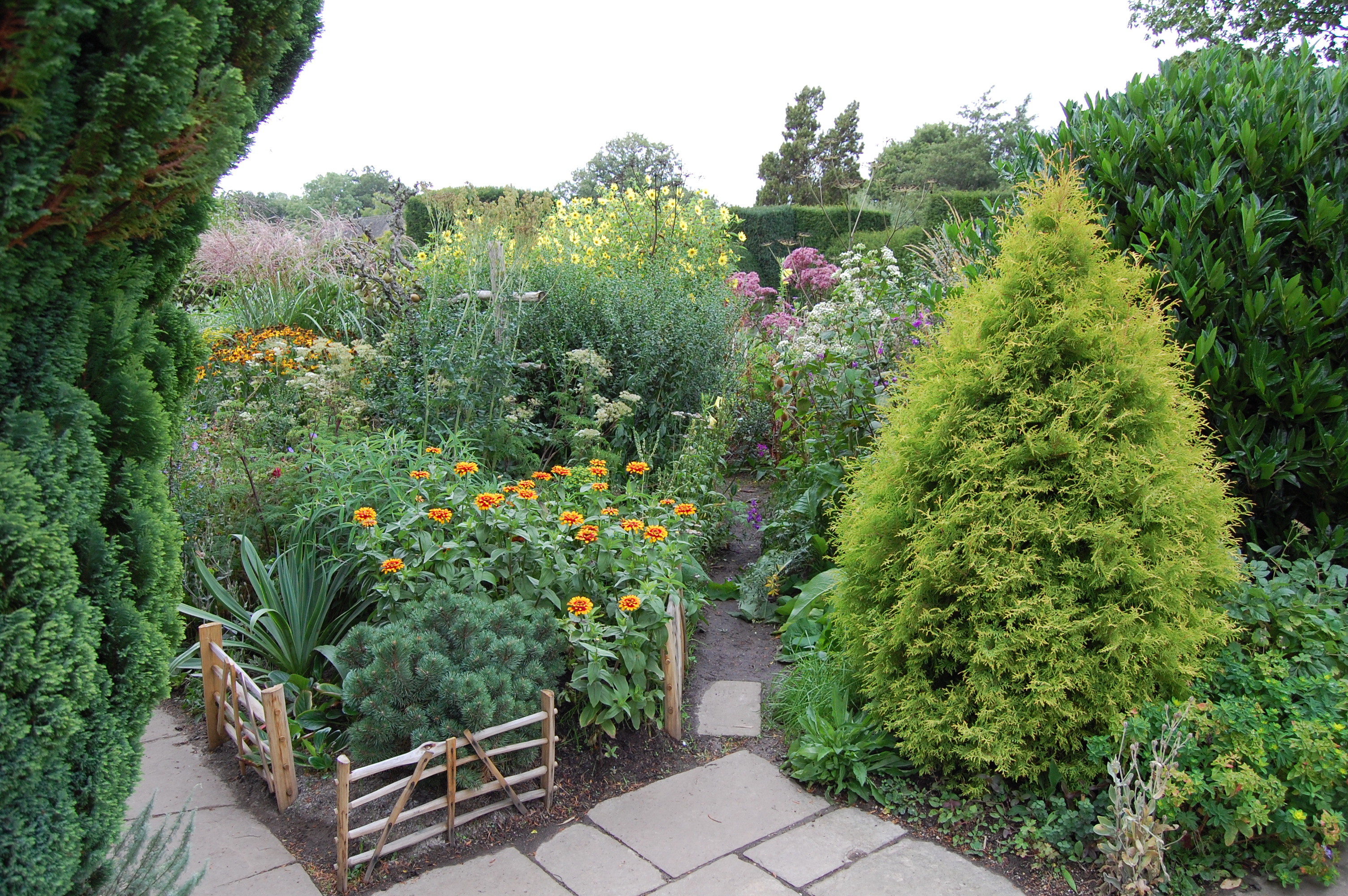
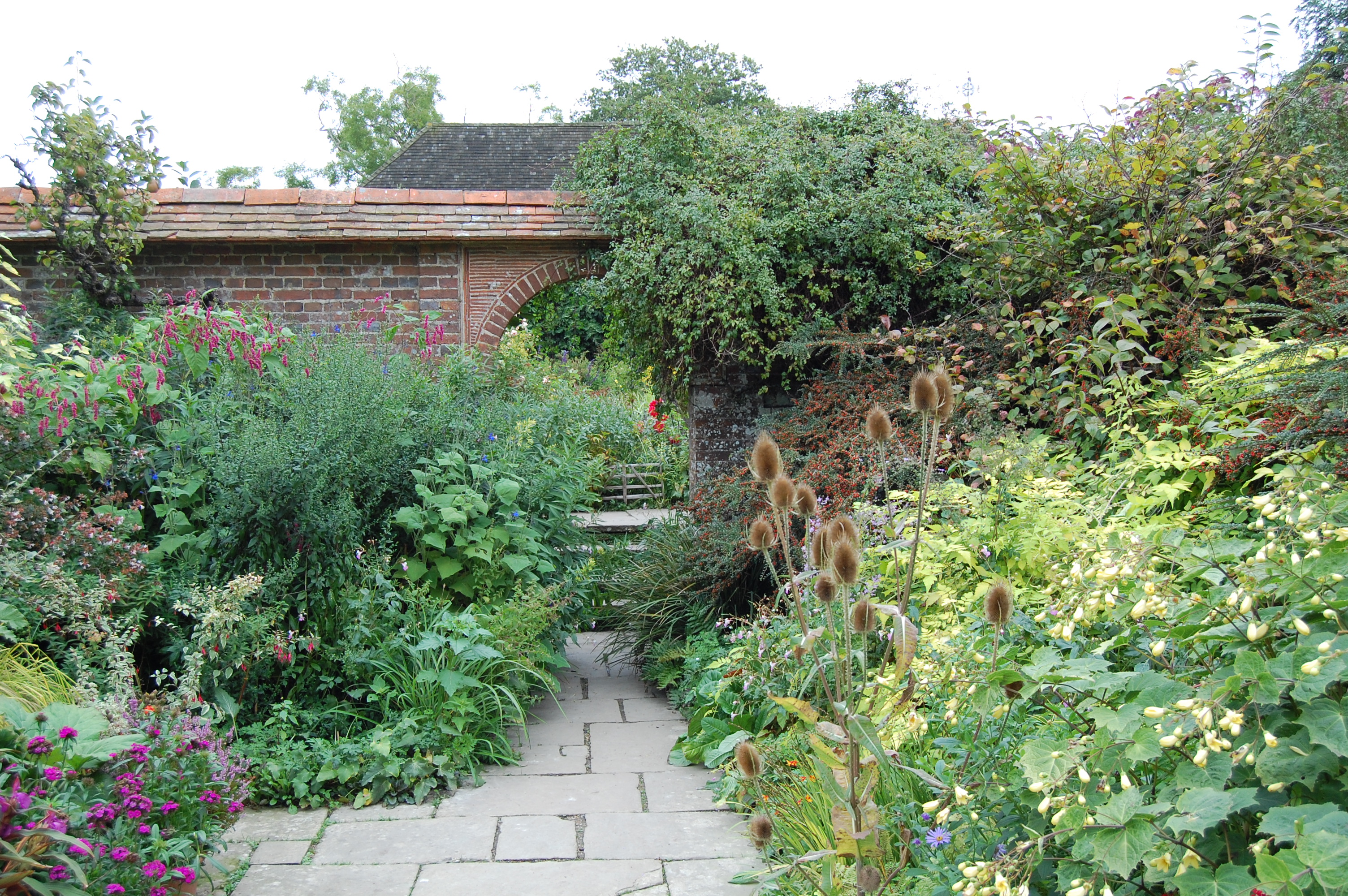
Great Dixter was an inspiring garden. The High and Orchard Gardens were for me the most exciting, fearless and unrestrained. Overall, I left thinking about borders much more mixed than I’ve been used to, and with a greater appreciation of yew and boxwood hedges. Also, I felt encouraged to be more experimental with color combinations.

Anyhow, what do you think – did those topiaries look more like peacocks, squirrels, or turkeys?

Our Favorite English Garden in September, Part 3 (Or, Anarchy in the UK)

After swooning over the Long Border, the next area we walked through was the Orchard Garden and the High Garden. I’m treating them as a single unit for two reasons. First, I’m not completely sure which pictures were taken in which garden. And second, to me both gardens had the same sense of joyful anarchy. It was an anarchy that was exciting but also possessed a rhythm that staved off total chaos

2013-09-14 07.29.02 great dixter yew arch

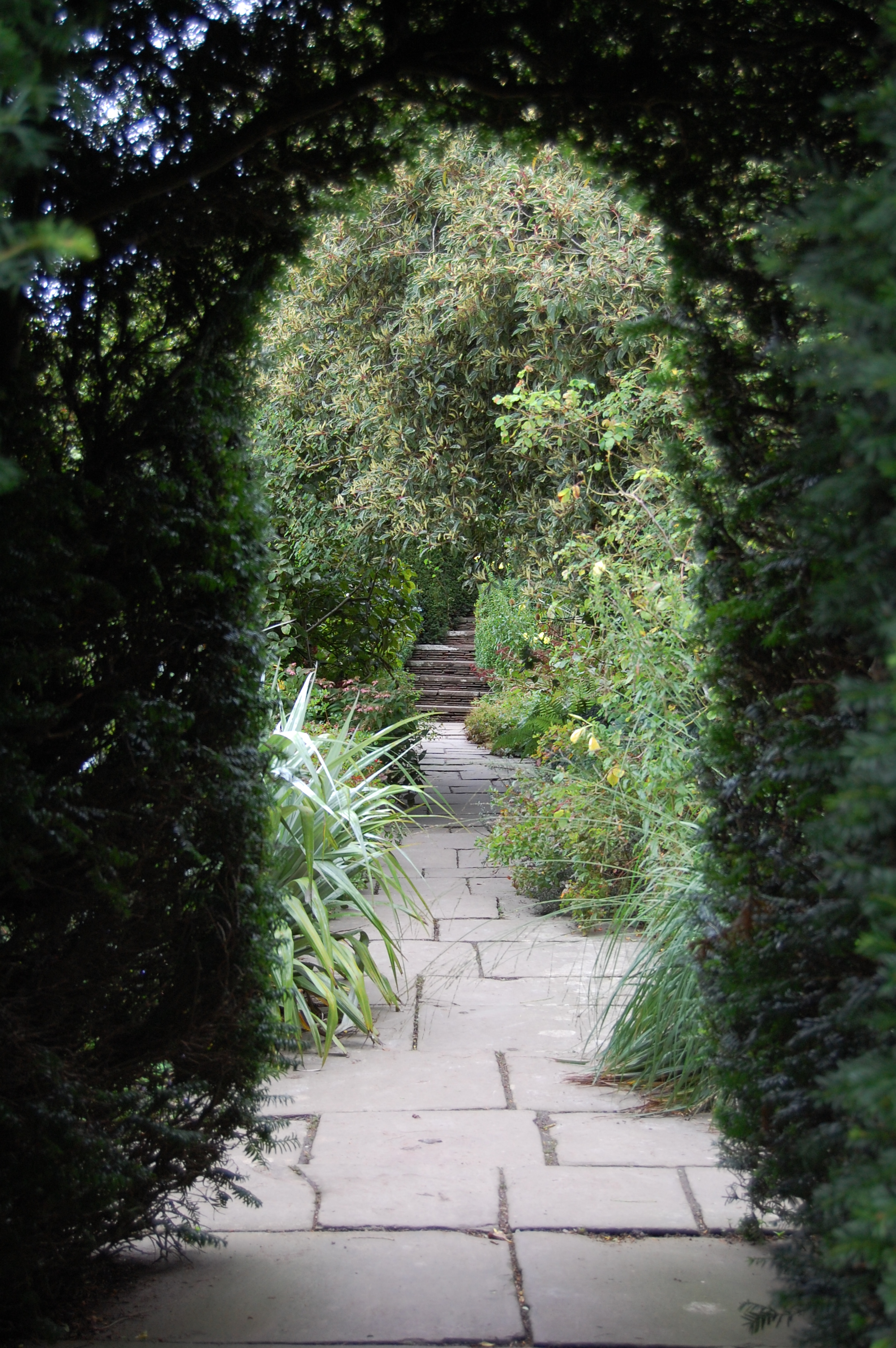
As I’ve said, I’m not fond of yews, but I do like yew archways that provide a transition from one garden room to another. This would be the entrance to the Orchard Garden.

2013-09-14 07.30.47 great dixter goldenrod

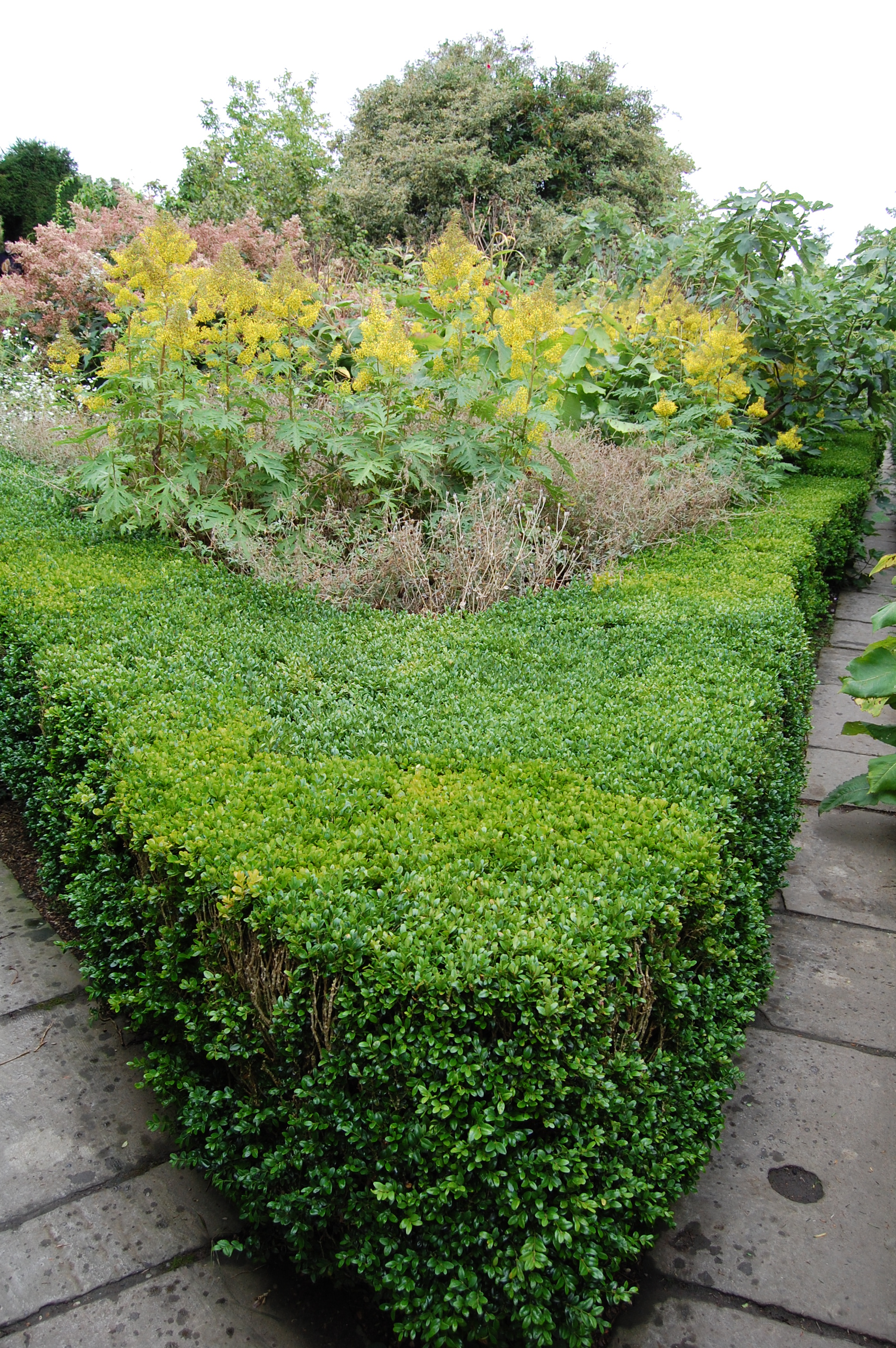
Is this fantastic or what? I like how the boxwood seems to be struggling to hold back the energetic flowers.

2013-09-14 07.31.20 great dixter yew arch

Here’s another yew arch. You can’t have too many of these, in my opinion. If only they didn’t grow so slowly I’d plant a couple of yews where I could prune them into an arch myself.

2013-09-14 07.32.07 great dixter

Here is that joyful anarchy for you. I love how the last blooms of the yellow Oenothera are scattered about. I can’t remember what that plant is behind the yellow Helenium. Anybody know?

2013-09-14 07.33.07 great dixter yew hedge

These are yew hedges with a difference. I like the sloping sides, so much more interesting than tight right angles. The calming and structural presence of the yews was one of the things that prevented this part of Great Dixter’s garden anarchy from spinning out of control.

2013-09-14 07.32.31 great dixter

Not sure what this grass is, but it’s nice, isn’t it?

2013-09-14 07.33.36 great dixter yew arch

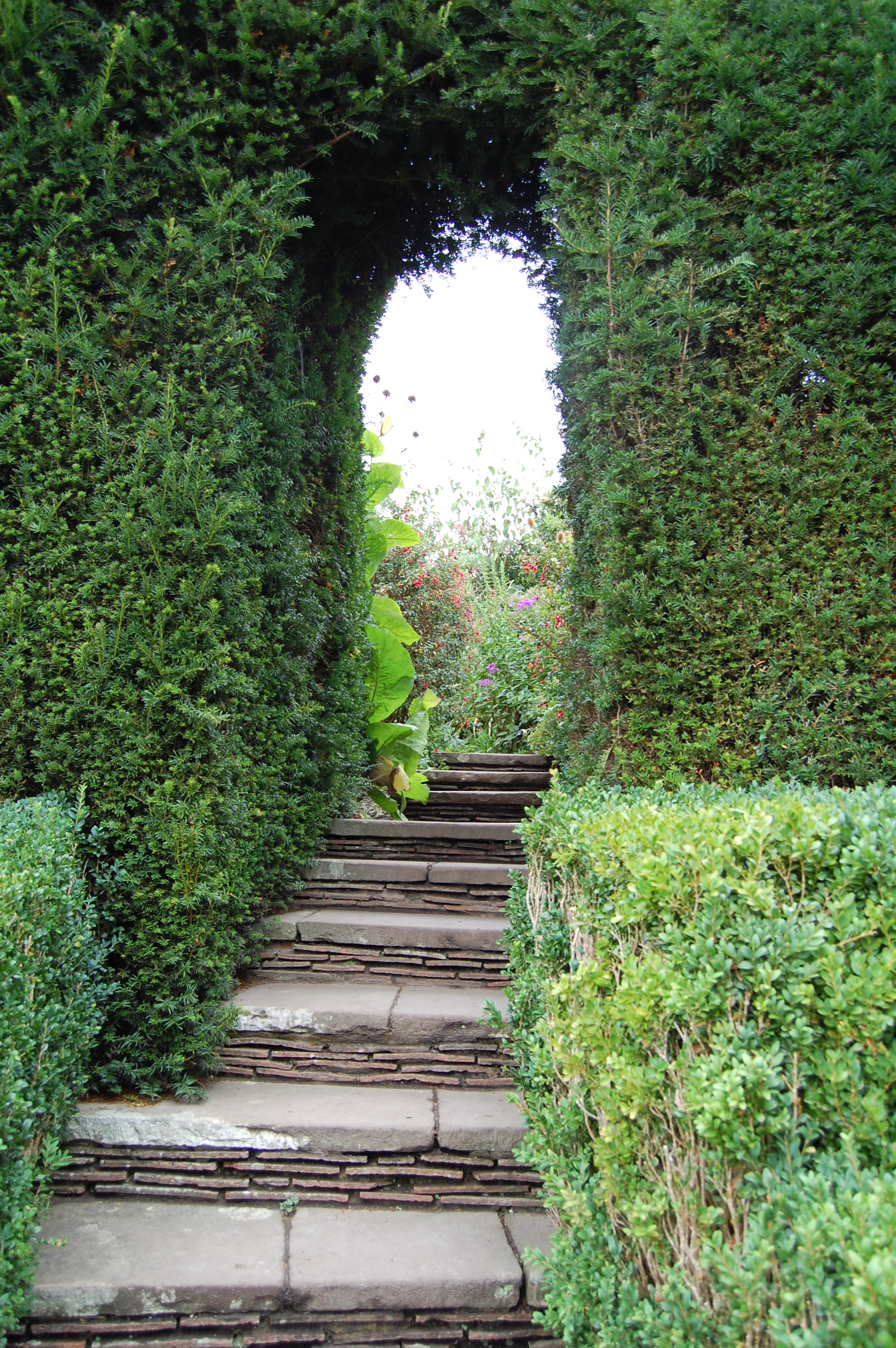
OK, this is the last yew arch, I promise. This one I remember leads into the High Garden. It’s an especially fine one, I think. And the stone steps are beautiful.

2013-09-14 07.34.10 great dixter

Here’s a quote from Christopher Lloyd: “The borders are mixed, not herbaceous. I see no point in segregating plants of different habits or habit. They can all help one another.”

2013-09-14 07.39.36 great dixter

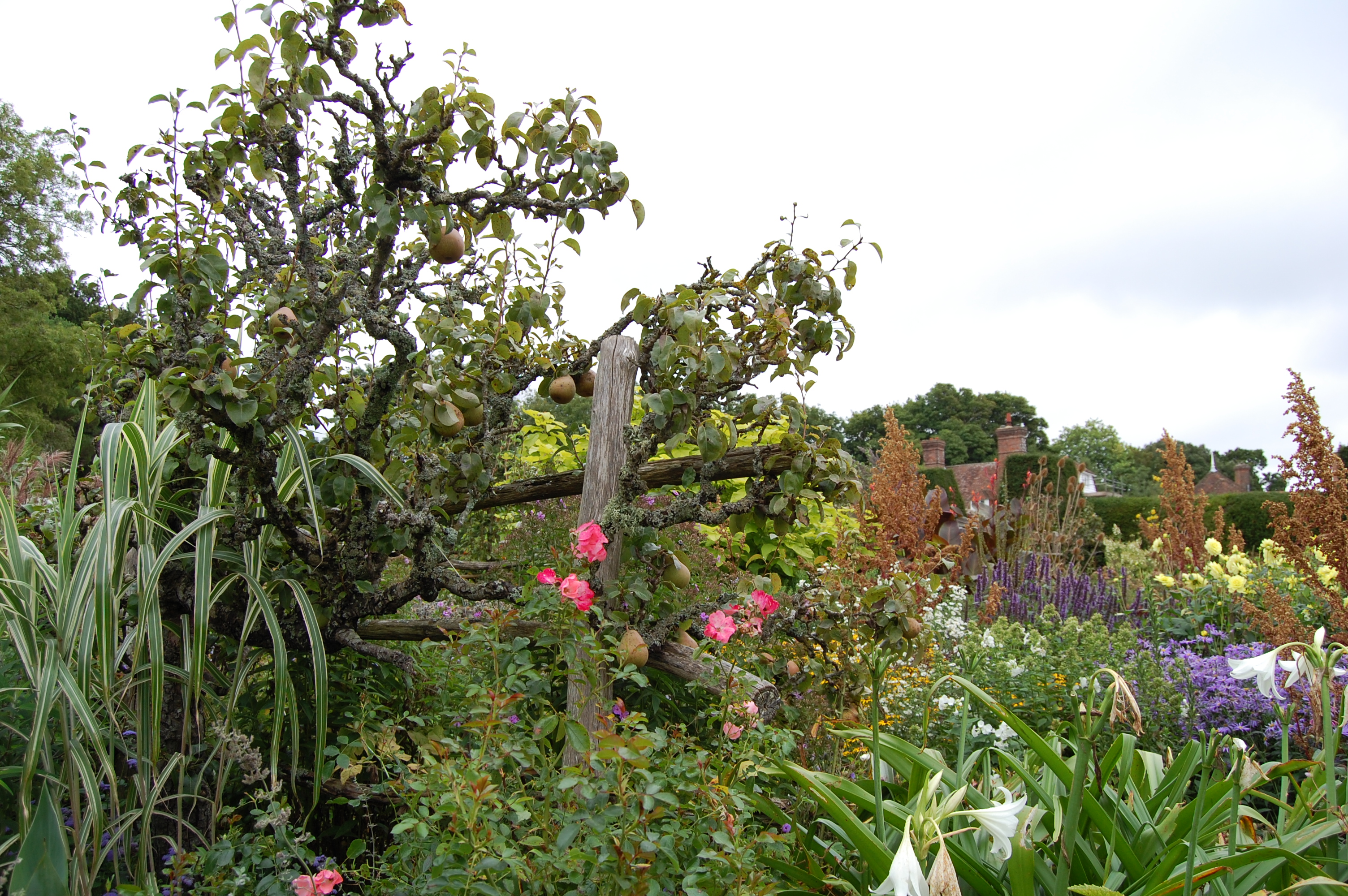
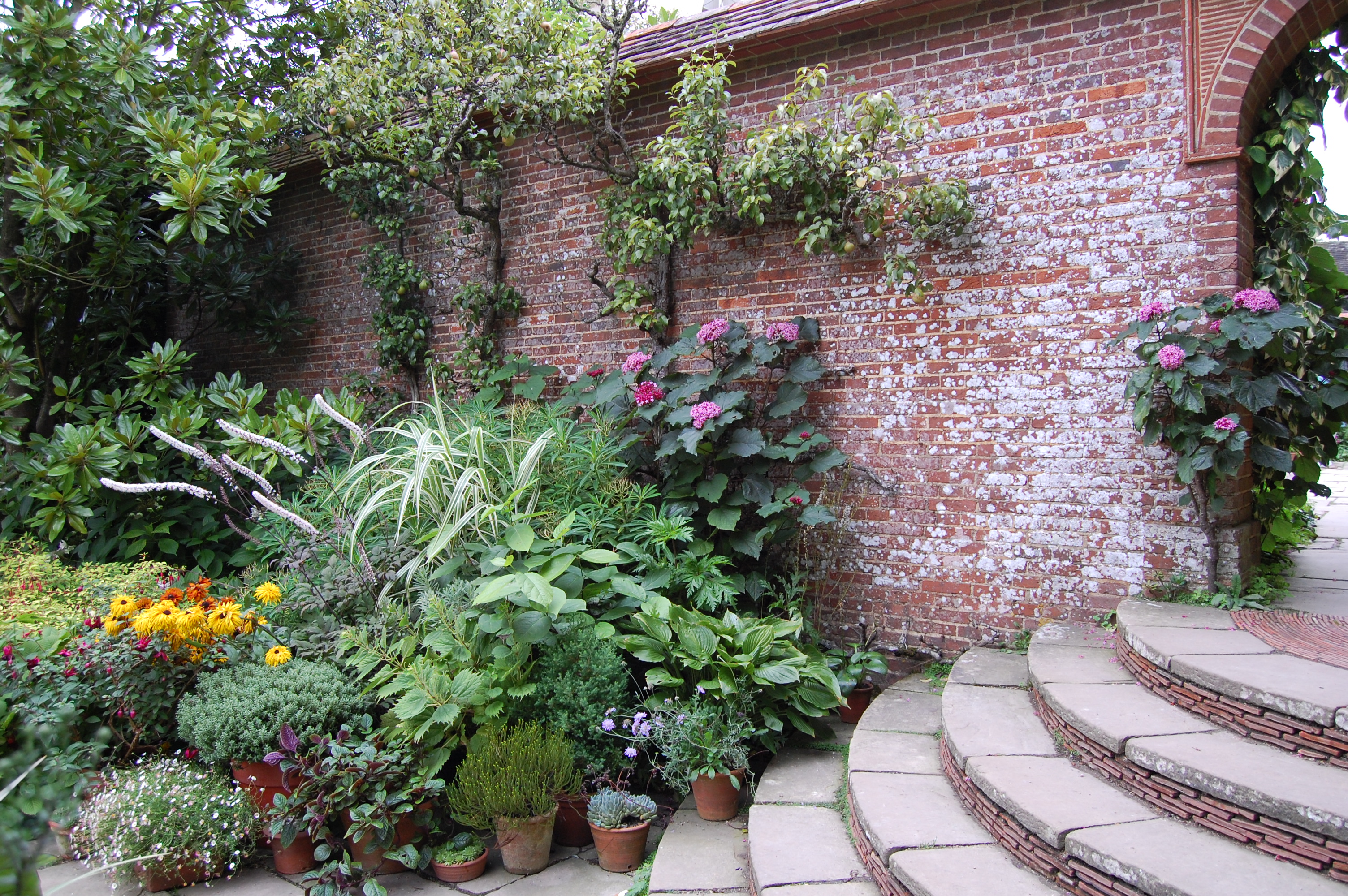
I really love this pear tree, its branches gnarled like the hands of an old man, and covered in lichens.

2013-09-14 07.34.25 great dixter

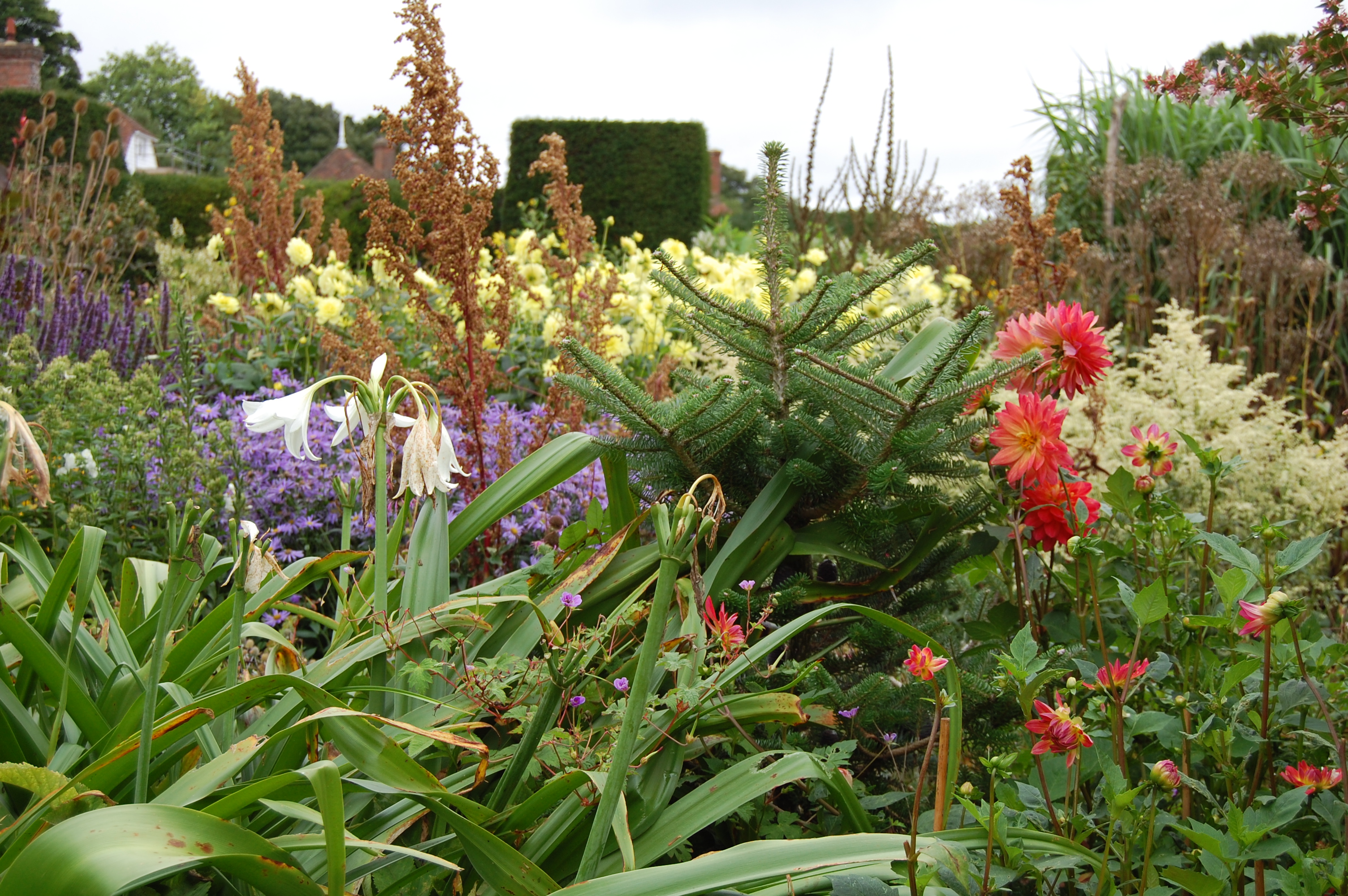
This looks like they decided to plant a Christmas tree in the border.

2013-09-14 07.34.59 great dixter

The Agastache and asters look great with the yellow dahlias. This garden makes me wonder why it is that I don’t grow dahlias.

2013-09-14 07.36.20 great dixter

No shortage of late summer color or height.

2013-09-14 07.43.08 great dixter

Conifers mix happily with annuals and perennials.

2013-09-14 07.38.28 great dixter

From the High Garden you can see the house. The chimneys seem to echo the height of the sunflowers and Joe Pye Weed. What is that truly enormous grass?

This garden made me consider if I too am a garden anarchist. I definitely have those tendencies, though perhaps not to the extent found at Great Dixter (I probably spend too much time staking).

What about you, do you consider yourself a garden anarchist?

Snow and Sun

And now for something completely different: on Saturday it snowed. It was just an inch or two of light, fluffy snow. Then on Sunday we had an odd meteorological phenomenon – I forget what it’s called – in which bright light seemed to emanate from an object high up in the sky. Now I remember what it’s called – sunshine!

2014-02-09 12.19.36 anise hyssop in winter

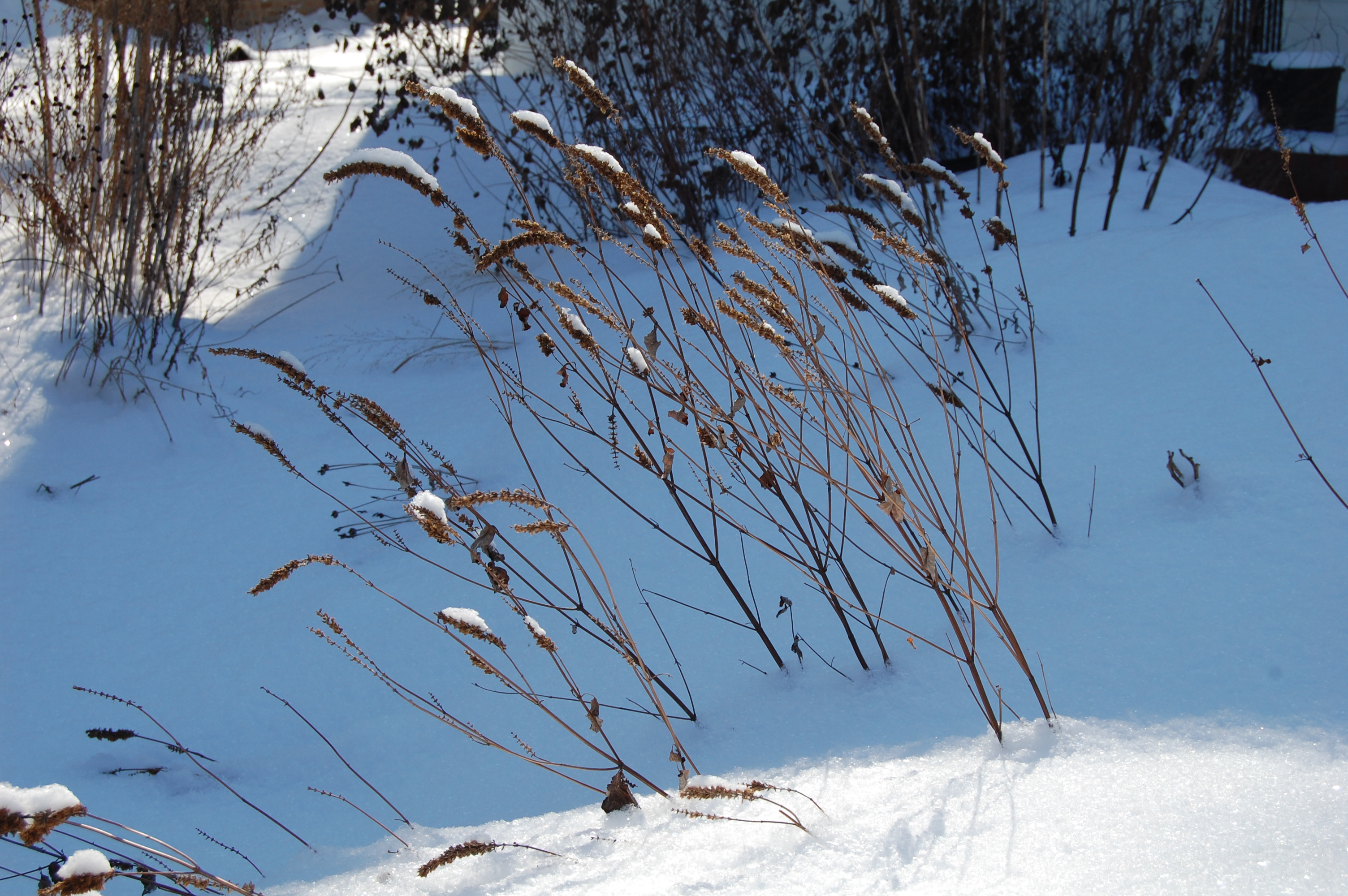
This event inspired Judy to grab her camera and see what things looked like under these unusual conditions. Here’s an anise hyssop (Agastache foeniculum) seed head wearing a thin layer of snow. If you look closely you can just sort of see the individual flakes of snow at the top of the layer.

2014-02-09 12.21.57 sedum in winter

This Sedum spectabile ‘Matronna’ seems to be trying valiantly to keep its head above water. Bits of snow glitter in the light.

2014-02-09 12.22.40 agastache in snow

Here’s some more anise hyssop. This plant can be kind of interesting in a winter landscape.

2014-02-09 12.23.08 snow on maple

I like how the fresh snow seems to be reclining on the dark branches of this (mostly dead) maple tree, as if it were taking a rest.

2014-02-09 12.23.48 icicles

Icicles grow best in full sun, though they will tolerate part shade. This is actually the neighbors’ house.

How is the sun shining where you are?

Our Favorite English Garden in September, Part 2

Time for more distraction from the snow. Here’s another installment about our visit to Great Dixter.

2013-09-14 07.13.36 great dixter brick archway

Leaving the Sunken Garden with its pond, we walked through a stone arch toward the Wall Garden.

A mosaic portrait of one of Christopher Lloyd's dachsunds set into the paving.
A mosaic portrait of one of Christopher Lloyd’s dachshunds set into the paving.

An unexpected feature of the Wall Garden was the mosaic portrait of Christopher Lloyd’s two dachshunds, Dahlia and Canna.

2013-09-14 07.12.13 great dixter blue garden

I like how containers are used to keep taller plants in the beds from having bare knees.

2013-09-14 07.15.45 great dixter blue garden

More container plants in front of a border.

2013-09-14 07.15.20 Great dixter brich arch

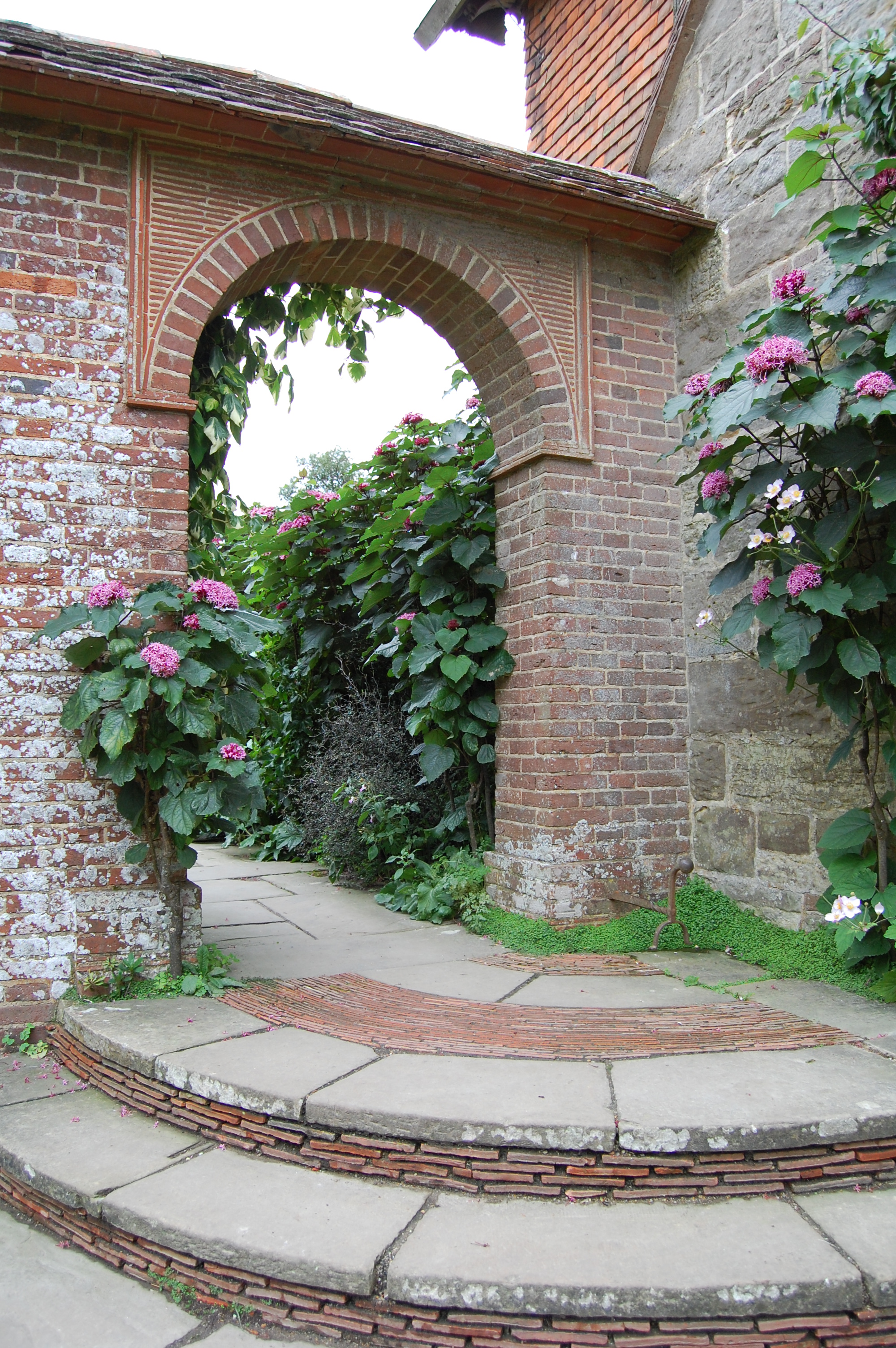
Another archway, festooned with Hydrangeas, leads to the Blue Garden.

2013-09-14 07.16.20 great dixter dahlia

We don’t seem to have many pictures of the Blue Garden. But then again, in looking through these photos I have to admit I’m a little unsure about where the Wall Garden ended and the Blue Garden began.

2013-09-14 07.19.23 great dixter topiary

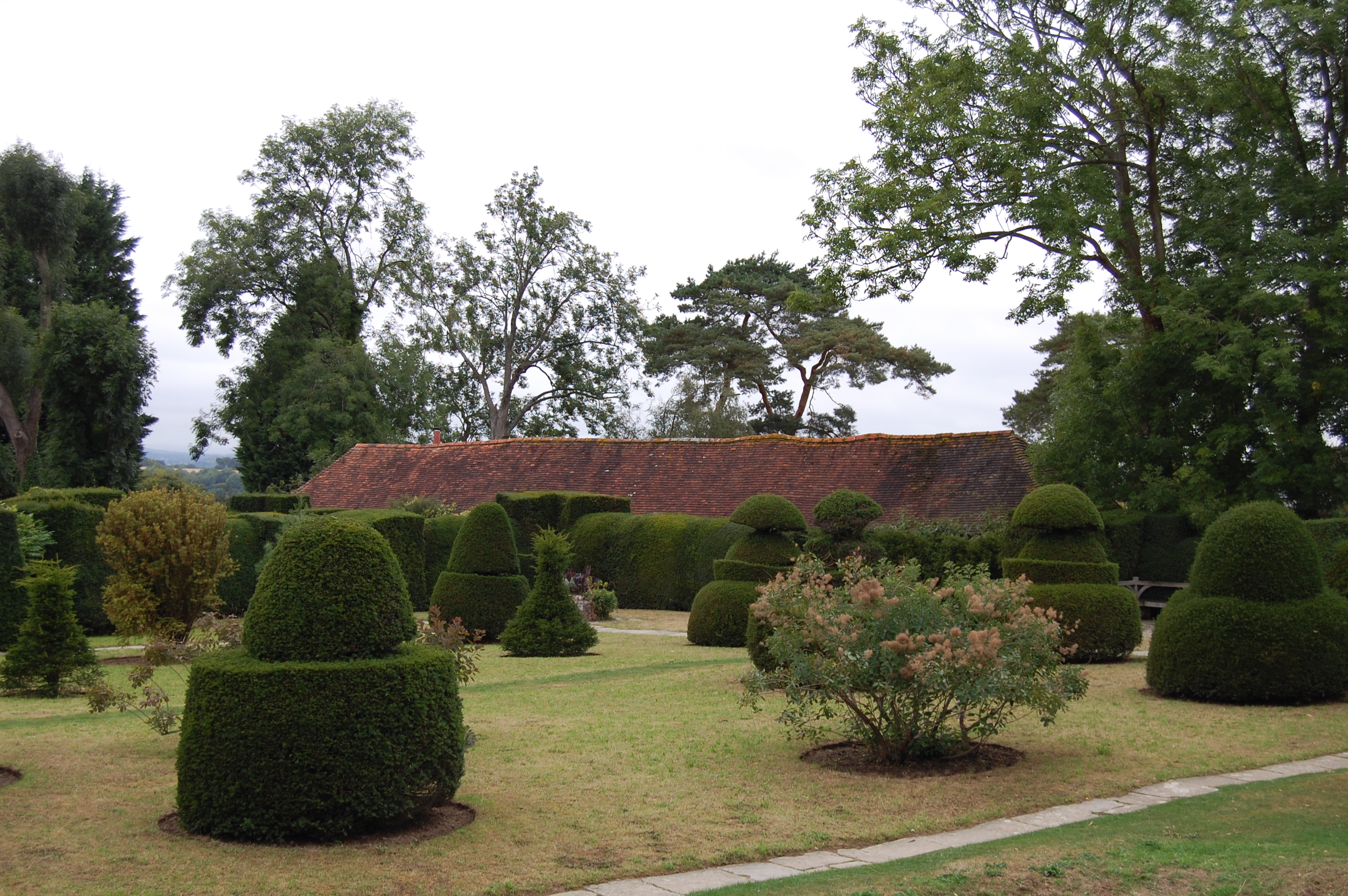
From the Blue Garden, we went to the Topiary Lawn. Now, I generally do not like topiary. To me they seem dull, fussy, and silly. In fact, I had a sneaking suspicion that these topiaries were making fun of other topiaries. However, from what I’ve read, that does not seem to be the case. So on this point I’m afraid Mr. Lloyd and I part ways.

2013-09-14 07.22.20 great dixter long border

However, he and I were in accord once again when we came to his Long Border. Let me quote form Christopher Lloyd regarding this wonderful part of his garden: “It is my belief that no gaps, showing bare earth, should be visible from late May on … The effect should be of a closely woven tapestry.”

2013-09-14 07.23.58 great dixter long border

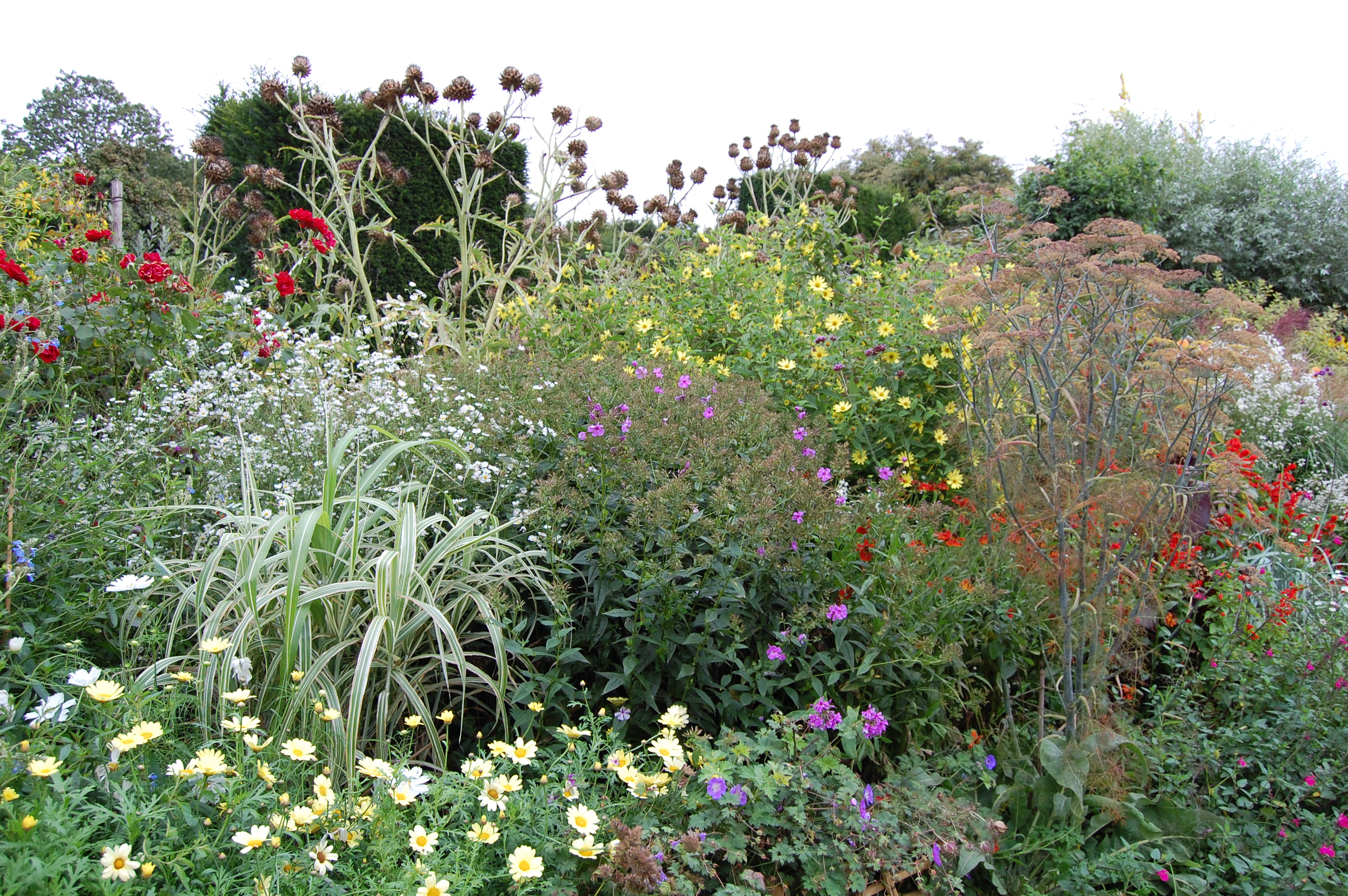
Love the splashes here of blue aster, orange Nasturtium, and yellow Helenium. The bronze fennel, with its open habit, blends well into the front of the border despite its height. And I also like how the plants in front spill out over the limestone pavers.

2013-09-14 07.27.03 great dixter long border

Another Christopher Lloyd quote: “I want the border to look exuberant and uncontrived. Self-sowers, like Verbascums and Verbena bonariensis, help towards this.” He surely succeeded in creating the look he wanted based on that quote. In the photo that’s a Lutyens bench in a nook created at the top of the Long Border.

More on Great Dixter coming soon. Next post: Snow and Sun.

From the Land of the White Witch

After careful analysis, I have concluded that Chicago’s recent weather has been caused by the White Witch. You remember the White Witch, who froze the land of Narnia into a 100 year winter in C.S. Lewis’ The Lion, the Witch, and the Wardrobe.

The view from our driveway, February 8, 2014.

Can you offer a more plausible explanation for the otherworldly 65+ inches of snow we have gotten this season, about twice the average? If you can, I don’t want to hear it.

My car parked behind the Snow Wall.

Wednesday night I got home from a business trip. It was snowing when I drove out of Chicago and it was snowing when I drove back. When I saw our house I noted that our driveway had been blockaded by a three foot wall of ice and snow thrown up by the snow plows.

Walking the ramparts of the Snow Wall.

Actually, our whole block looks like a giant snow fort. Someone could organize the neighborhood kids into a truly epic snowball fight.

View of the front garden.
View of the front garden. Huh, the tuteur really needs straightening.


2014-02-08 13.43.42 front garden in winter.

After we broke through the snow blockade, Judy took her camera around to take pictures of the front garden.

Switchgrass 'Northwind'
Switchgrass ‘Northwind’

I leave most plants up over the winter, and a number of them are obliging by breaking up the monotony of white in an interesting way. Switchgrass ‘Northwind’ (Panicum virgatum)  has stayed vertical in spite of all the ice, snow, rain, and wind.

Northern Sea Oats with Monarda seedheads.

Seedheads of northern sea oats (Chasmanthium latifolium) are always ornamental, and some of the seeds are still hanging on.

2014-02-08 13.40.49 orange coneflower in winter

Even the seedheads of the humble orange coneflower (Rudbeckia fulgida) have a certain appeal in this season.

2014-02-08 13.49.03 ostrich fern in winter

Also, I like the look of the ostrich fern’s (Matteuccia struthiopteris) fertile fronds against the snow.

Our house.
Our house.

Does the White Witch rule in your part of Narnia?