Following our long, cold winter, we seem to be having a cold spring as well. Temperatures lately are mostly in the 40s and 50s (F), well below normal. This means delayed blooming and leafing out, particularly for woody plants. In 2013 we had another cool spring, but many shrubs seem to be running about two weeks behind where they were last year.
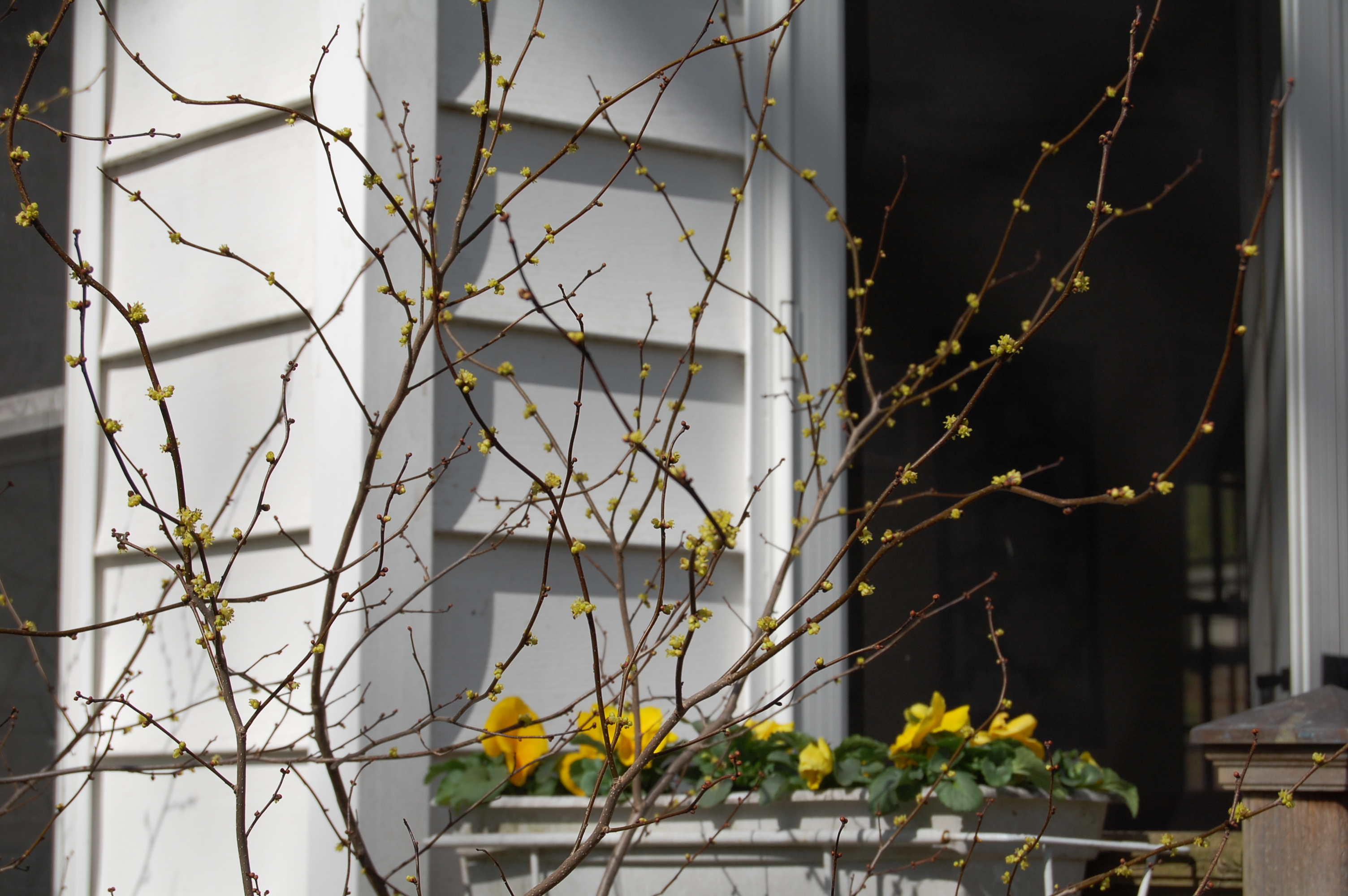
Spicebush blooms on May 4th. The fuzzy flowers are subtle, but I really like them.
For example, my spicebush (Lindera benzoin) just started blooming a couple of days into May. Last year they began blooming by mid-April, and the flowers had all dropped by the end of the month.
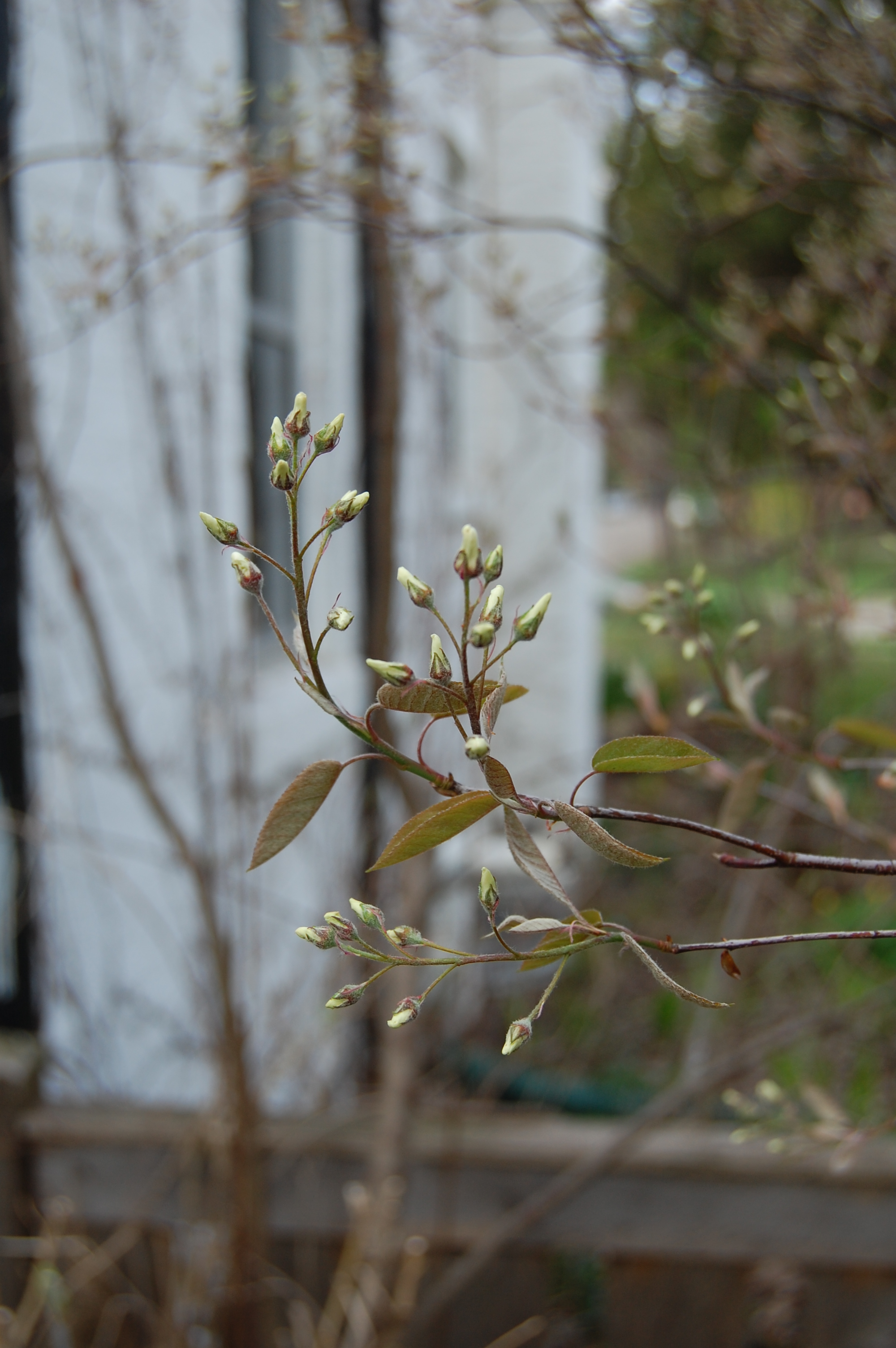
Serviceberry still not blooming in early May.
And my serviceberry (Amelanchier x grandiflora) blooms still haven’t opened. Last year they were in flower by the end of April.
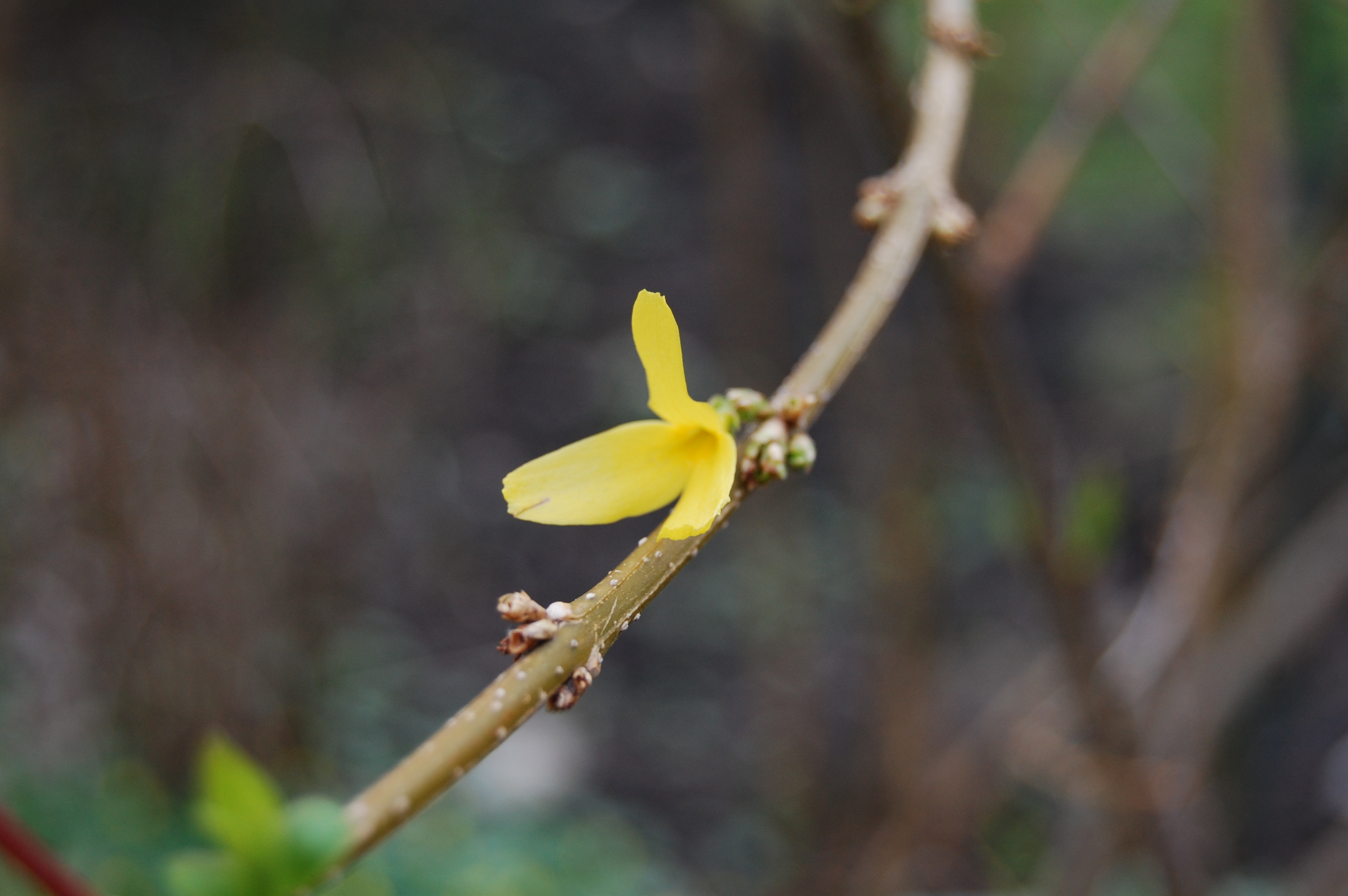
A lonely forsythia bloom.
Plus, it looks like we won’t be getting any forsythia flowers to speak of this spring. No, I didn’t prune them too late. But it looks like the buds had started to open, only to be zapped by a sudden freeze.
A cool spring has its pros and cons. On the one hand, I don’t plan to put any really tender plants or seeds (tomatoes, morning glories, etc.) in the ground before June 1, if then. They will simply rot (or, at best, sulk) in the cold ground. Better to give the soil time to warm up.
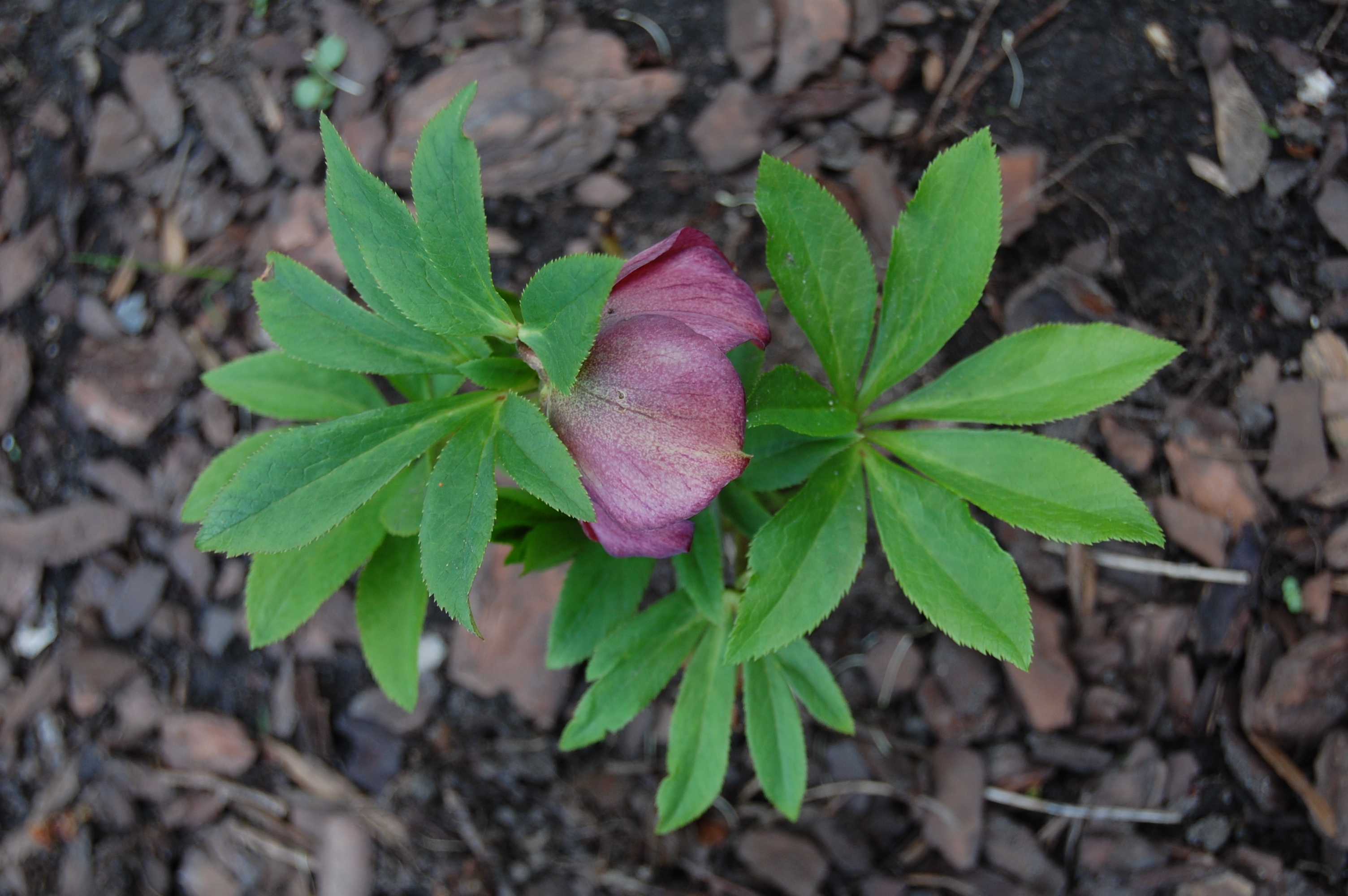
Hellebores in May?
On the other hand, early annuals will probably last far longer into the season. And perennial flowers won’t be so quick fade, either. The cool weather is also good for new transplants.
For myself, I am trying to focus on the positive. I can live with a cool spring as long as winter is truly gone.
All avid gardeners feel compelled to inspect their gardens after any sort of lengthy separation. In fact, the separation may have been only between 8 am and 6 pm of the very same day. So you can imagine how I felt after returning from my prolonged hospital stay.
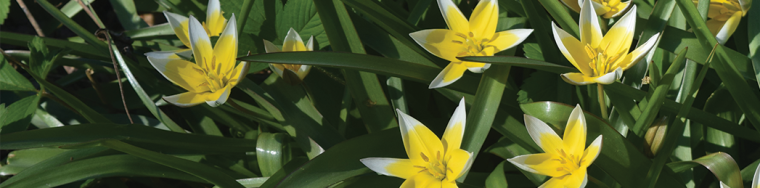
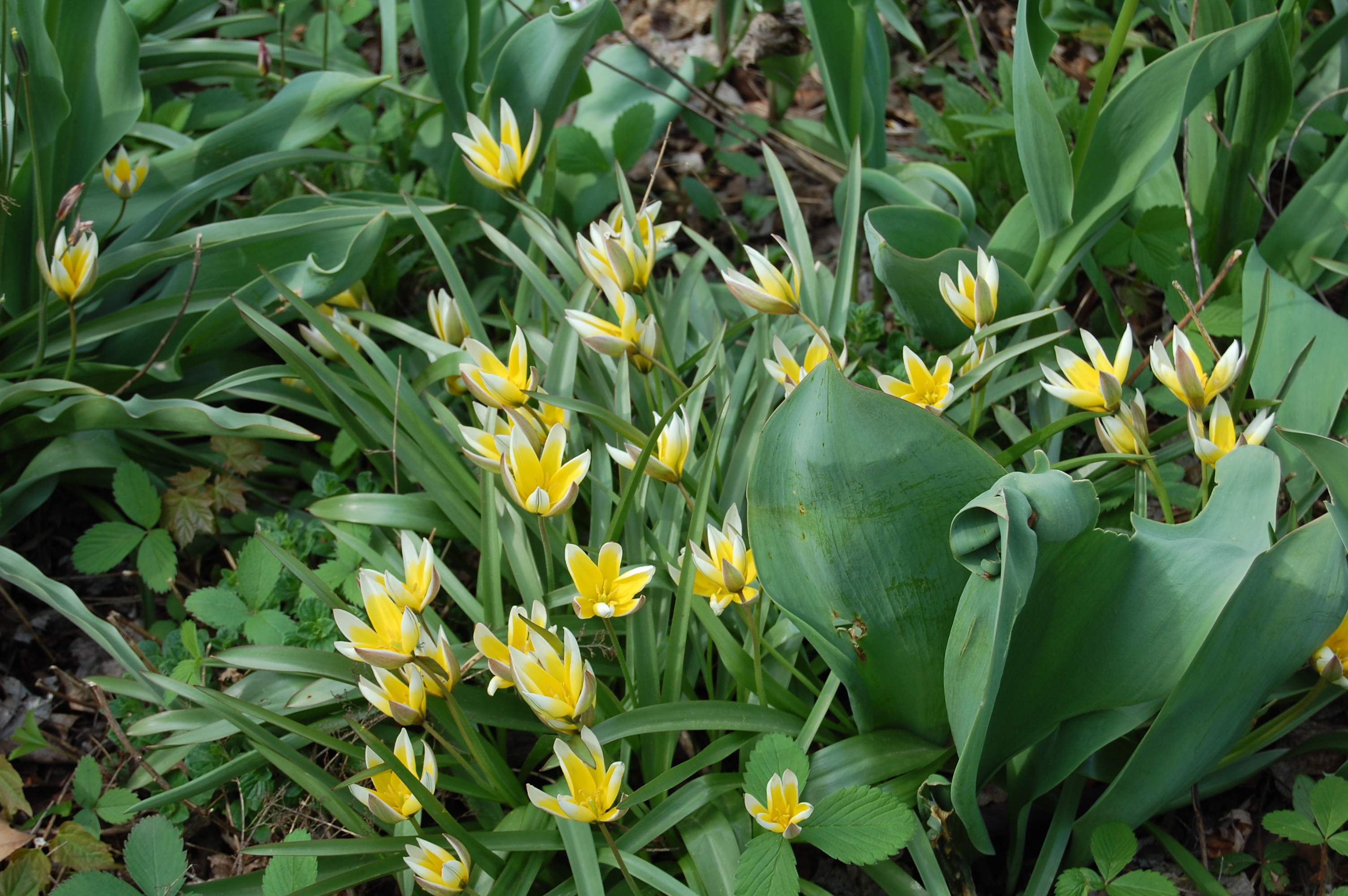
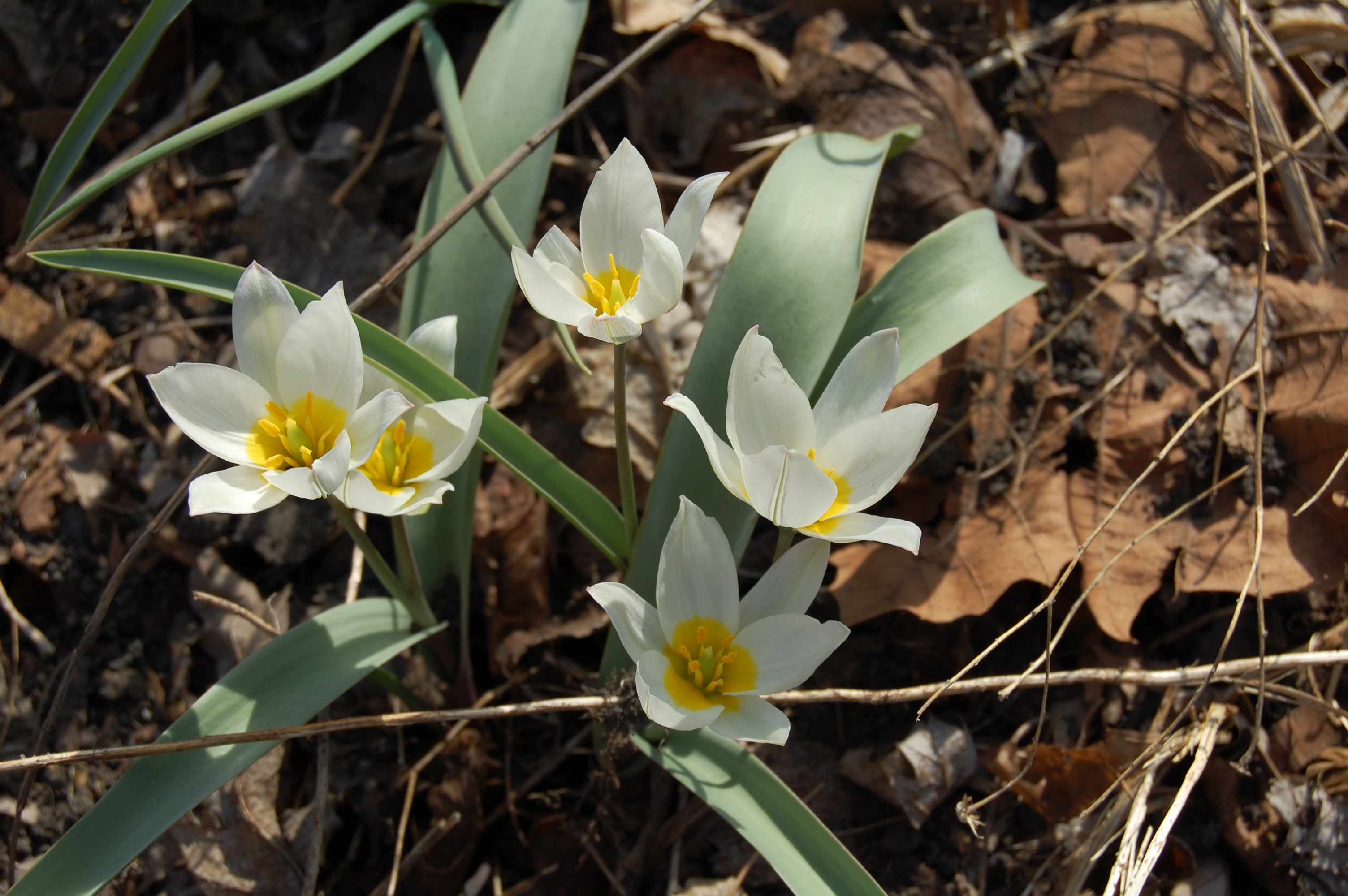
The early species tulips are past their prime, but the later-season ones, like these Tulipa tarda, are reaching their peak.
The English garden writer Beverly Nichols called his inspections The Tour. For him, The Tour had to be conducted in compliance with ironclad rules, most important of which was that each patch of the garden must be viewed in the correct order.
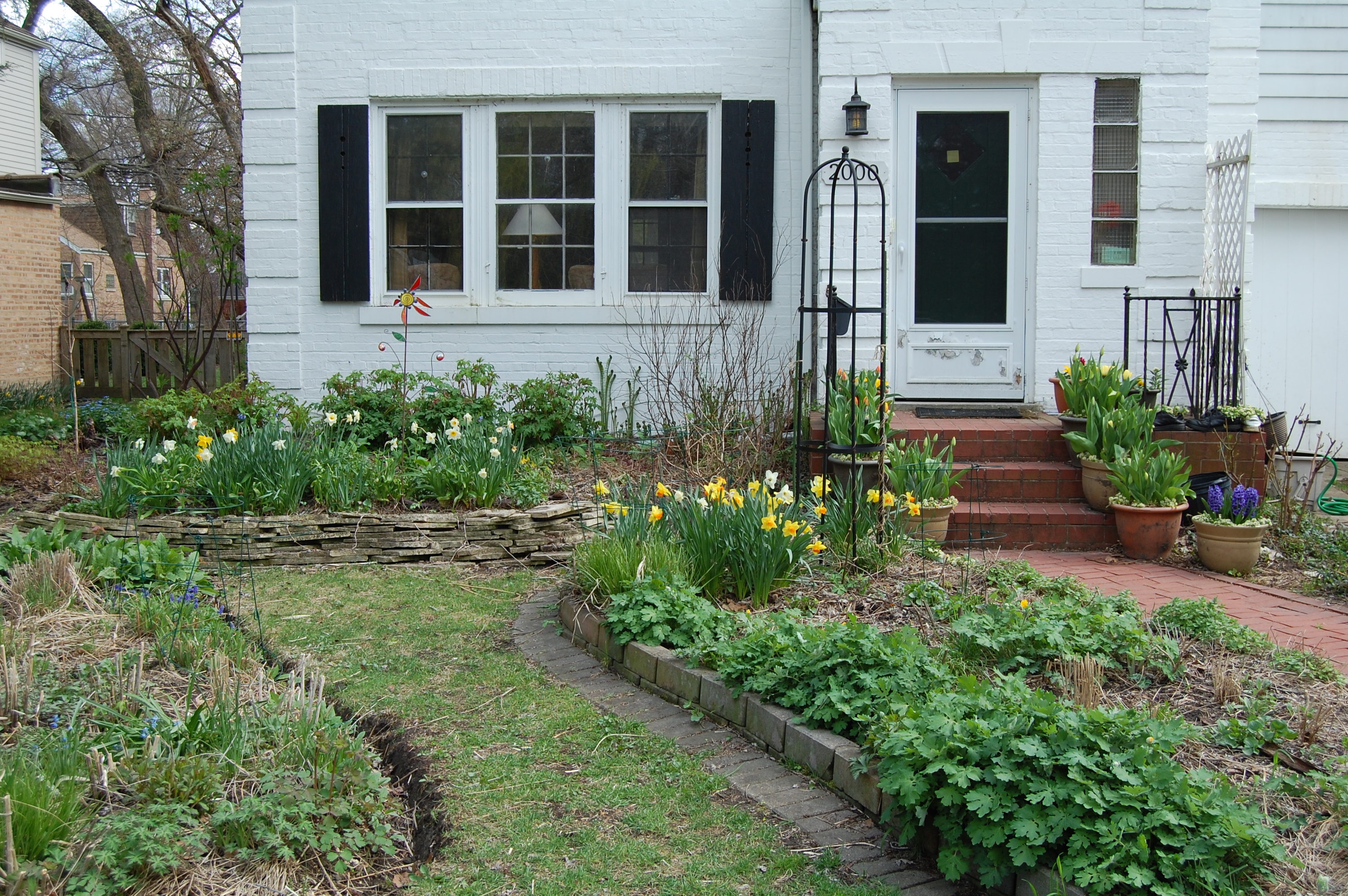
View of the front garden, May 3, 2014.
If this rule is not observed, according to Nichols: “… you will find that you rush wildly around the garden, discover one or two sensational events, and then decide that nothing else has happened.”
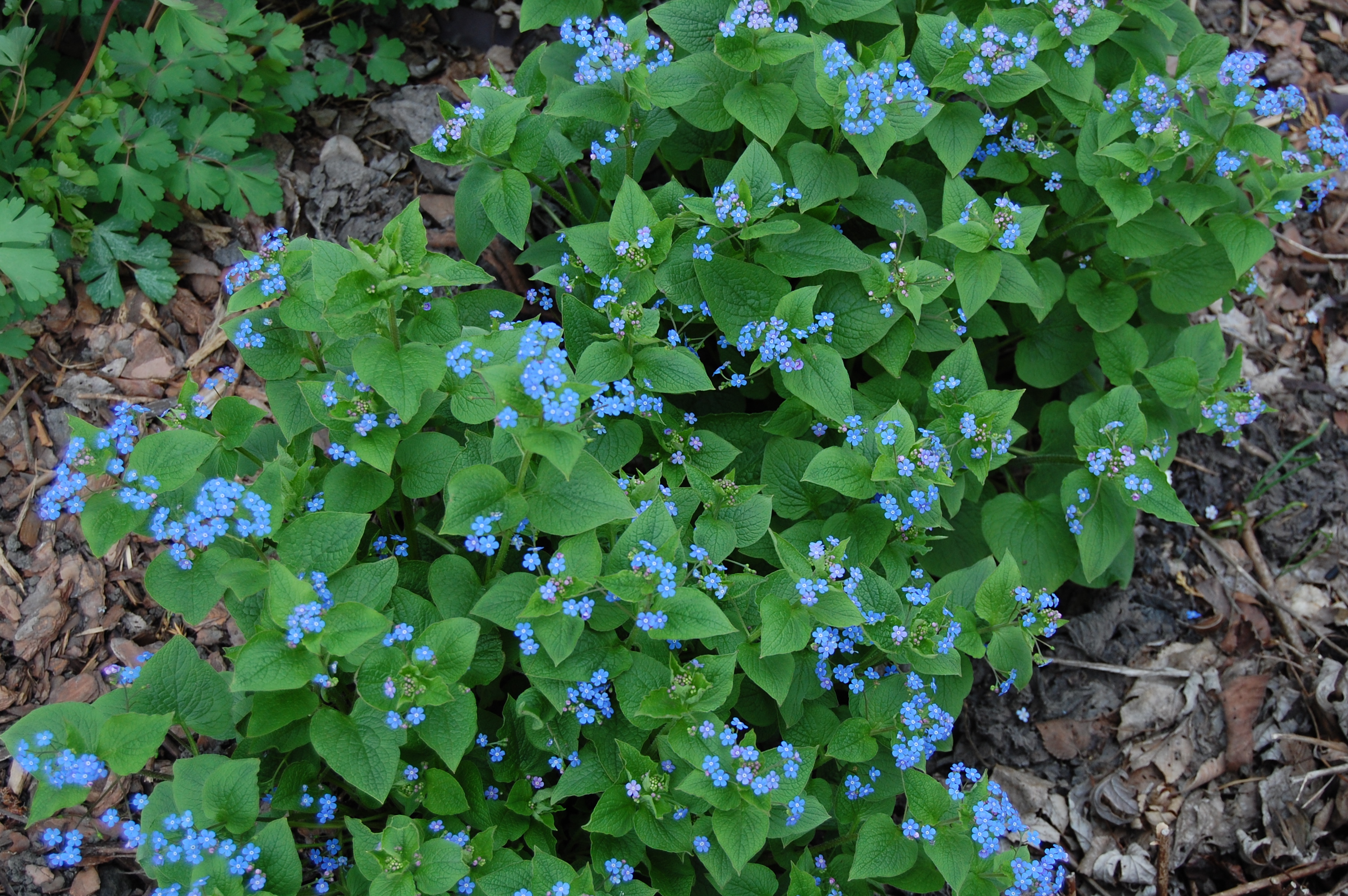
False Forget-Me-Not
For myself the exact sequence of the garden inspection is not so critical. Nichols is correct, though, that a garden inspection is not about highlights, but about an infinite number of details gleaned from gazing intently at every square foot of ground. What matters most to me is that the garden inspection must not be rushed, no matter how much you are irritating members of your immediate family.
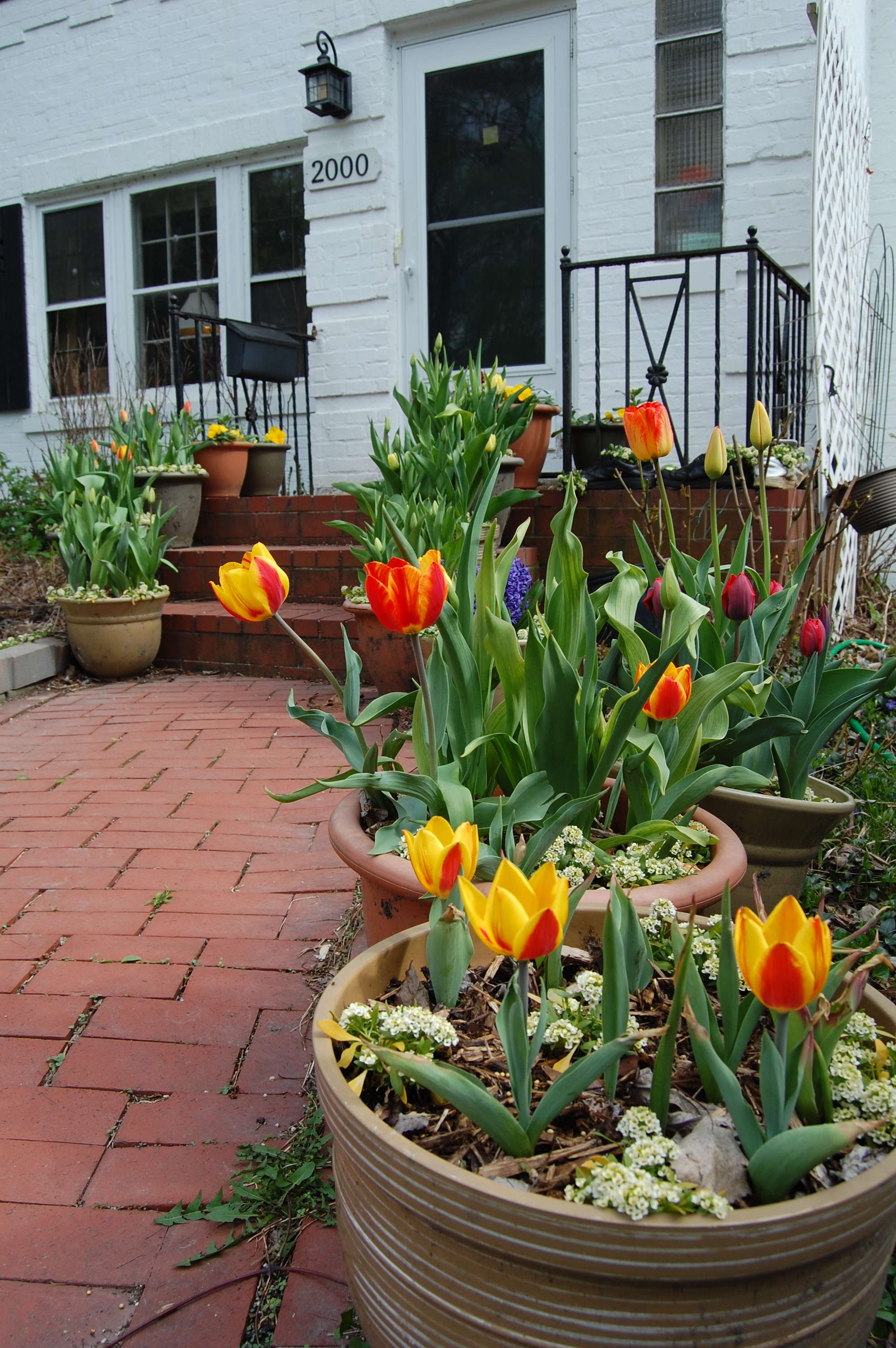
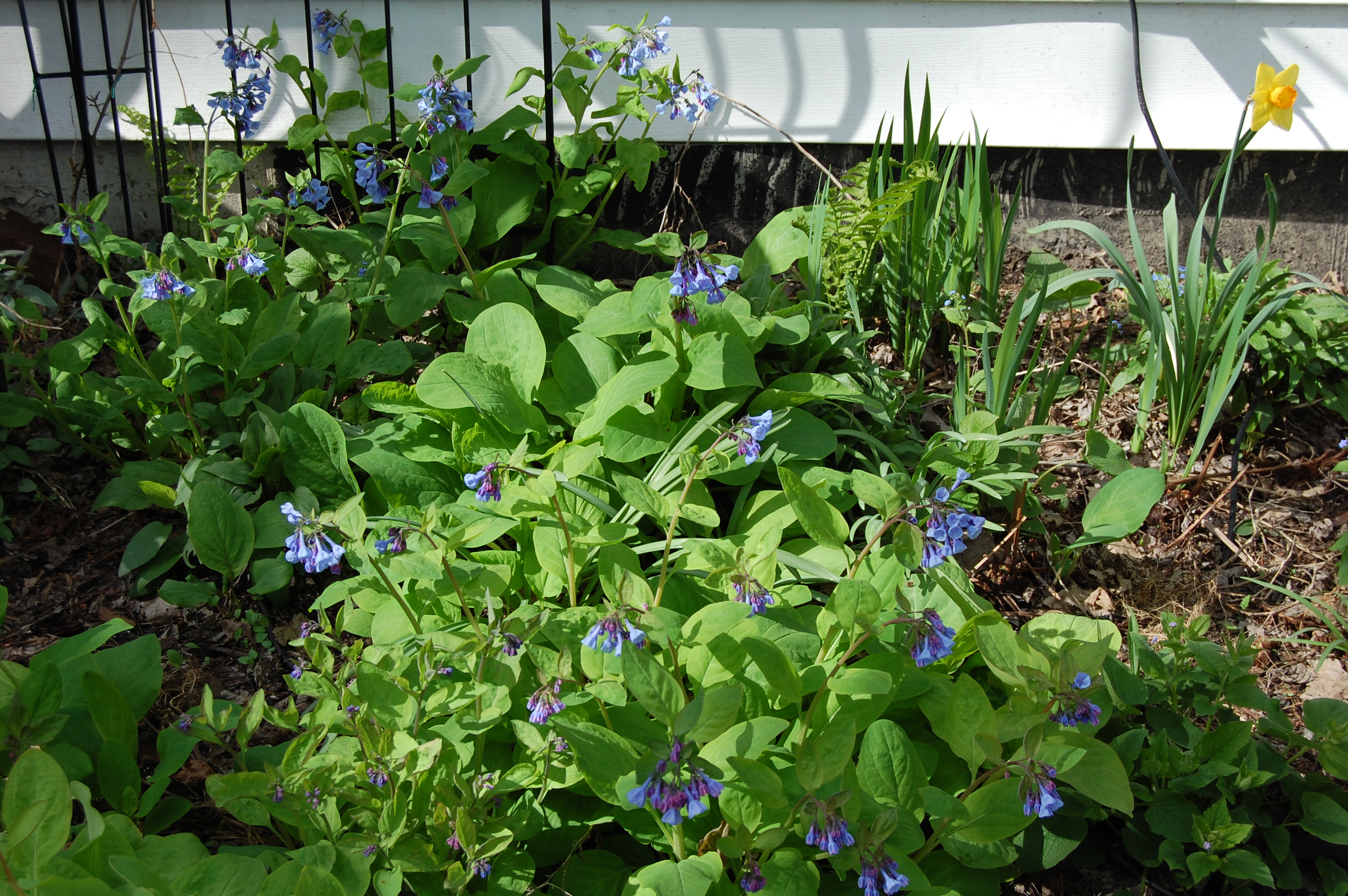
The earliest of the hybrid tulips in containers have begun blooming. The really short red and yellow is ‘Keiserskroon’, the taller is ‘Flair’.Virginia bluebells are blooming in warmer or sheltered spots, such as here behind the back porch.
Also, time is needed during a garden inspection to apply the Stare of Life. The Stare of Life is an intense gaze that warms the soil and hastens processes of cell division and photosynthesis. It can be applied only by gardeners with pure hearts within their own gardens, and scientists are still struggling to understand the phenomenon. I have found it to be most useful in encouraging plants that have not yet broken out of dormancy or whose new growth is frustratingly slow.
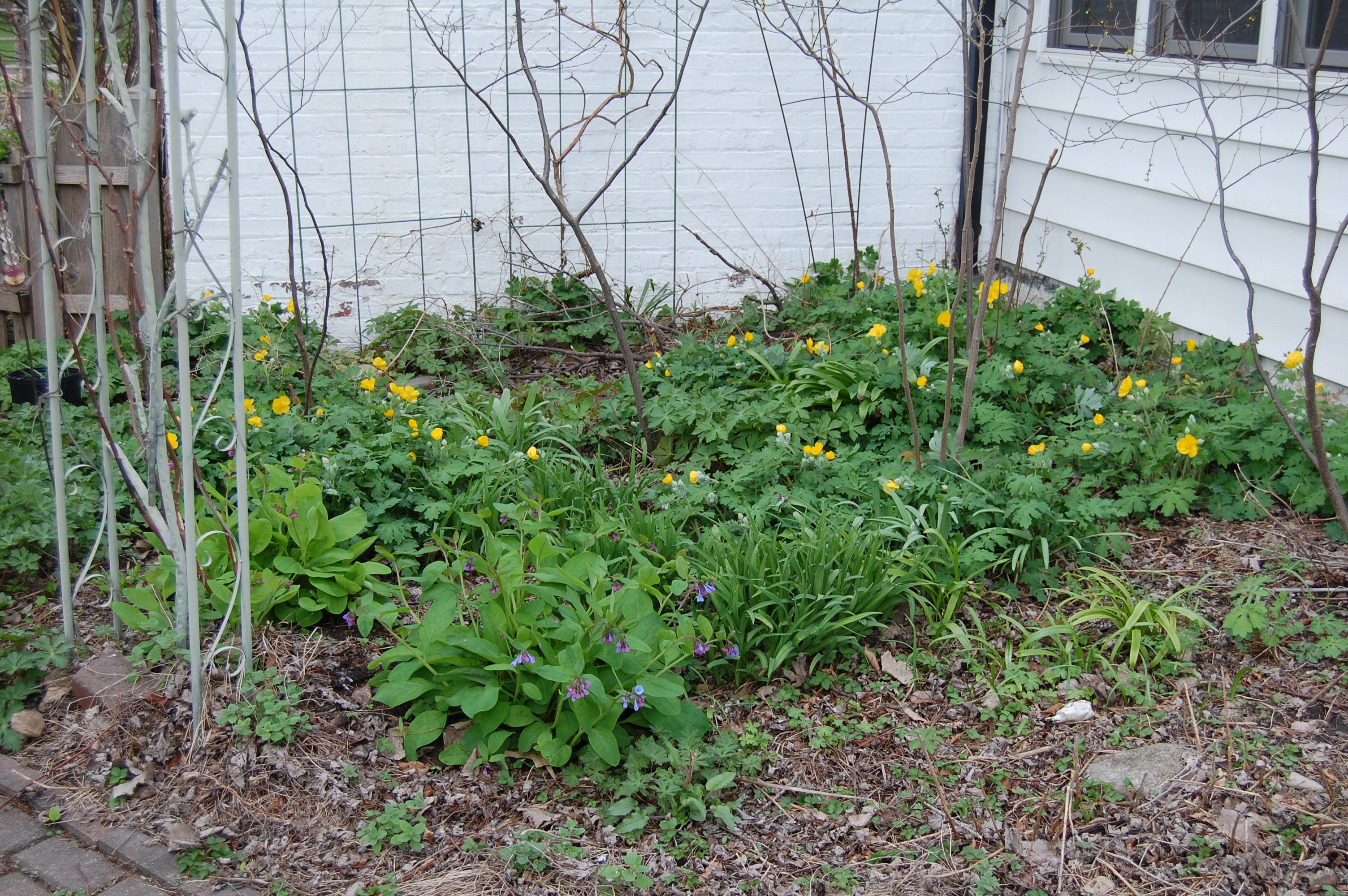
Celandine poppies have begun blooming among the spicebush.
Not infrequently neighbors have found me staring intently for long periods at apparently barren patches of frozen earth. I do not try to explain to them about the Stare of Life.
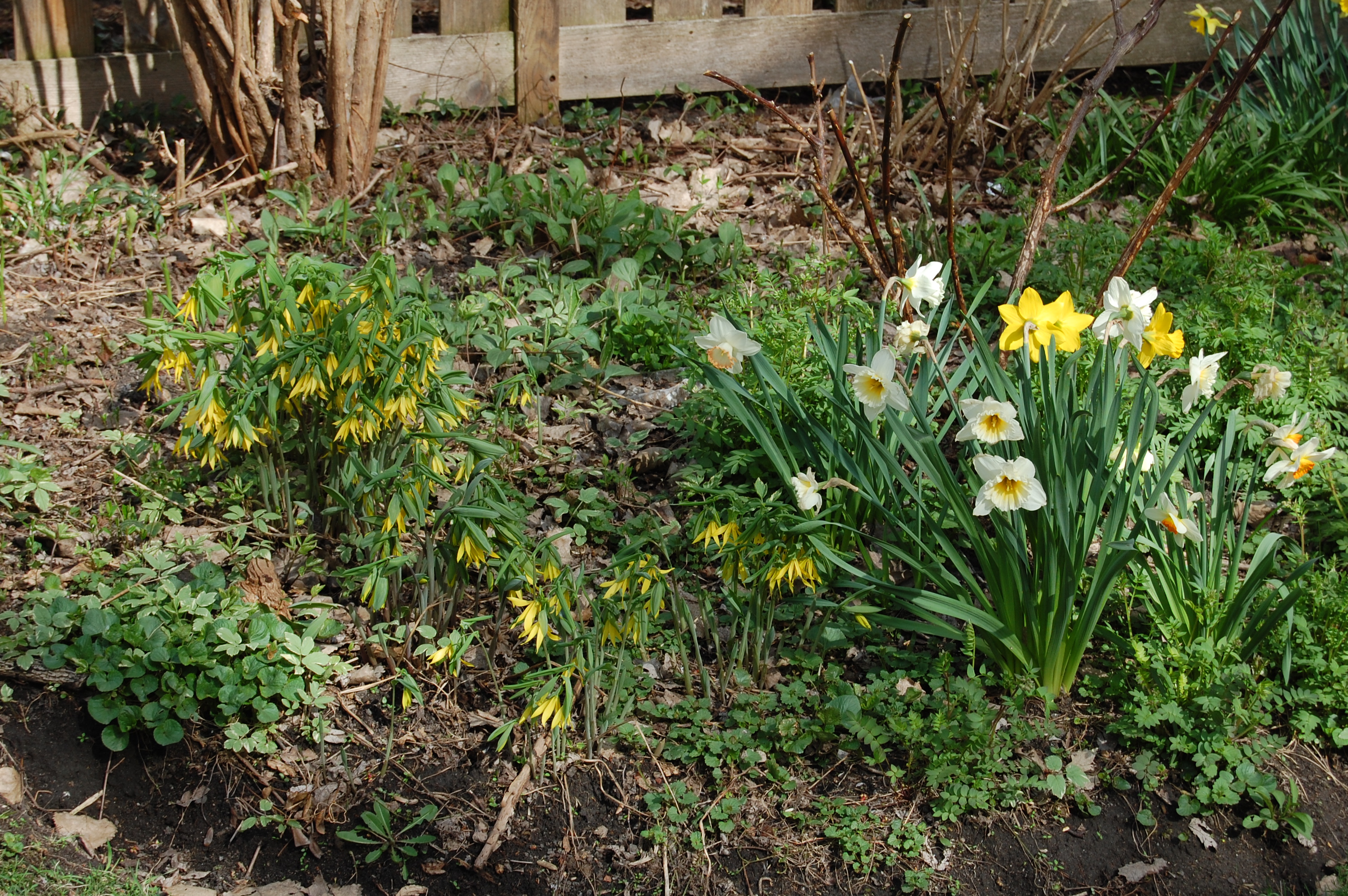
Great merrybells with Narcissi.
On yesterday’s tour, there were signs of the transition to the latter part of the season. Many Narcissi have begun fading, but the merrybells (Uvularia grandiflora) have come into bloom.
Great merrybells – Uvularia grandiflora – is a fine spring wildflower native to North America.
In a shaded spot, the merrybells’ foliage fills in and makes a nice groundcover for the remainder of the season.
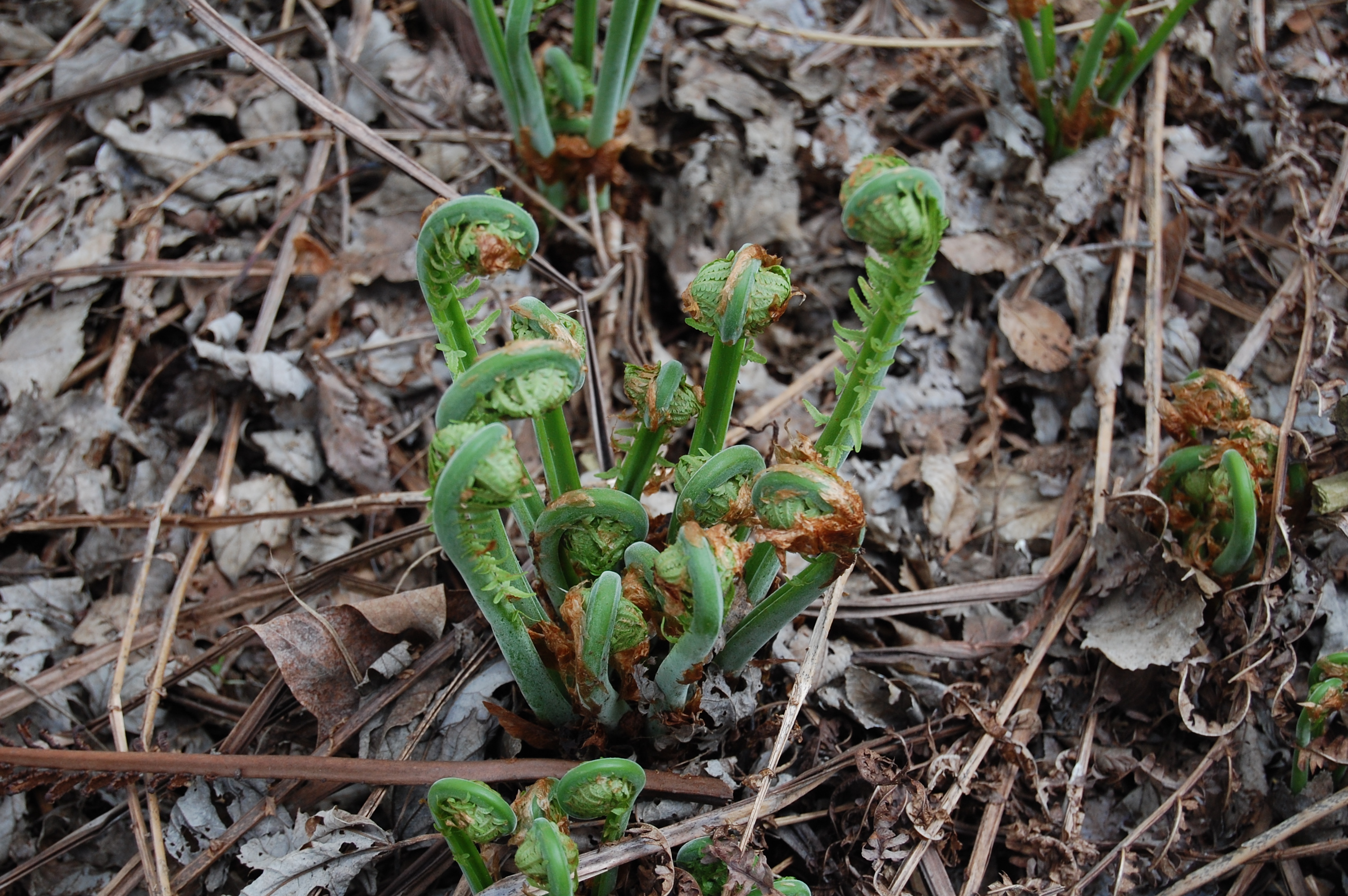
Ostrich fern fiddleheads.
I was also pleased to see that the ostrich ferns (Metteuccia struthiopteris) are now making up for lost time.
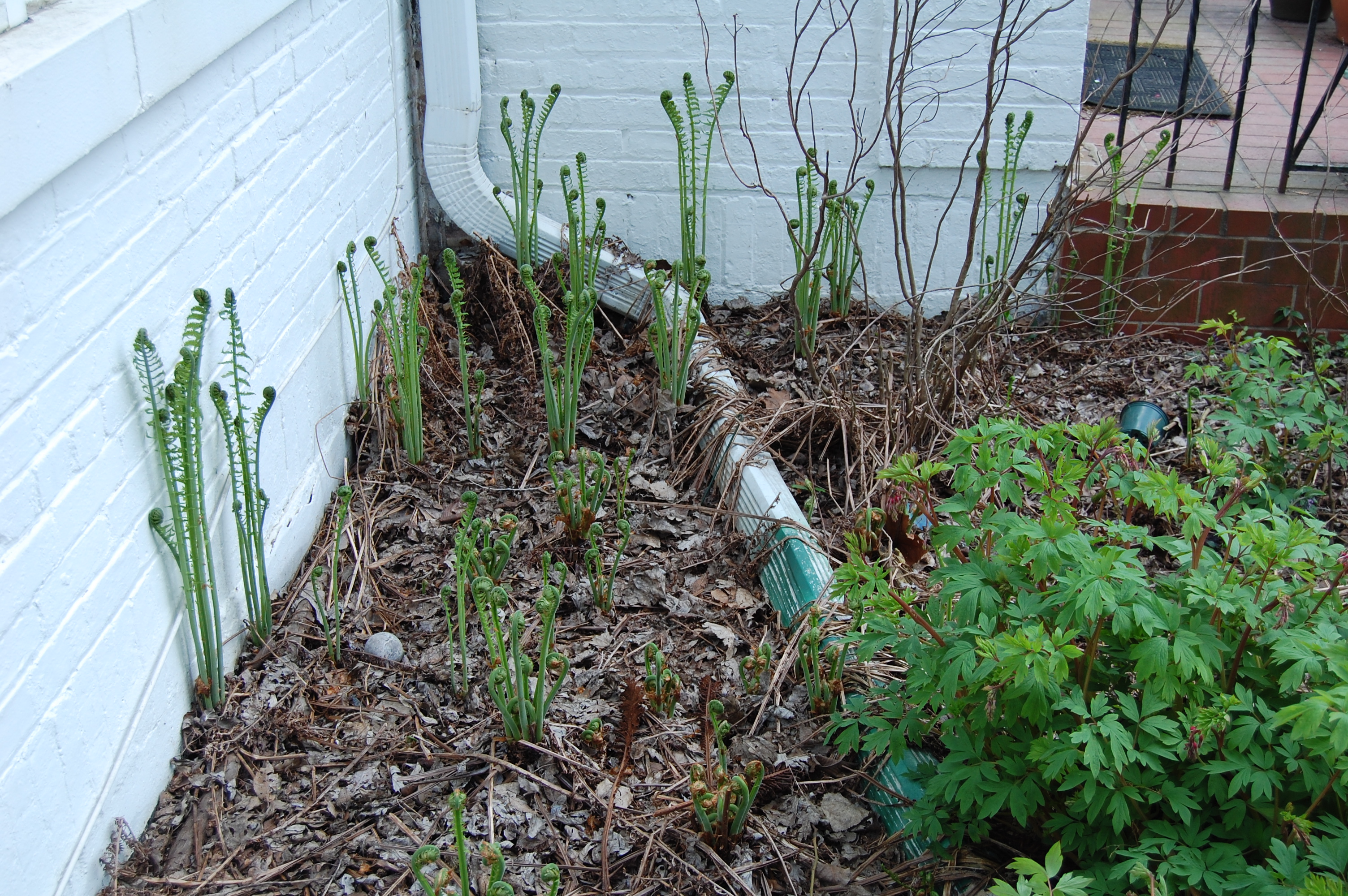
A foundation planting of ostrich ferns along the front of the house.
You can see how they respond to the warmer soil closer to the house. I can tell that soon I will be supplying free ostrich ferns to whoever is willing to take one.
In future posts I will write in more detail about what is happening in different parts of the garden.
Very happy to be back home after an eight day stay at Evanston General Hospital. Not that the staff aren’t exemplary. But I was tired of having apparently random groups of doctors (doctors travel in groups, like fish) come by, knead my abdomen, and ask about my bowel movements. And I was tired of the IVs and the monitors and the taking of blood and vital signs. But maybe I should stop my grousing, because when I went there I was not at all well, and now I am much better (though still tired).
In front of the house I have one container of hyacinths of eight of hybrid tulips. The tulips are just starting to open, and I think they will have a good year.
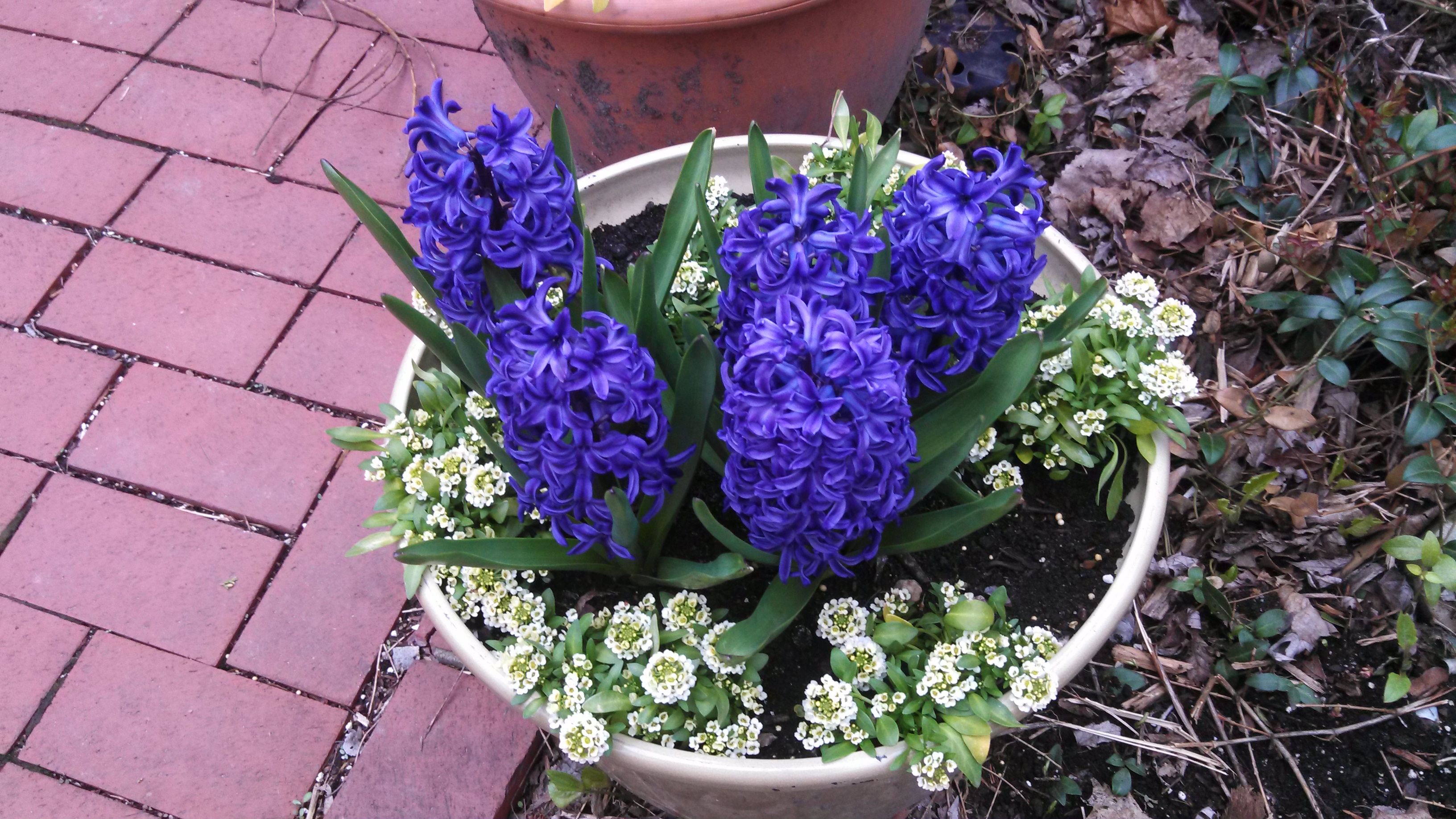
Hyacinth ‘Blue Jacket’ (Hyacinthus orientalis) was there to greet me at the front door. Many people consider Hyacinths commonplace, but this is the first time I have grown any, so I was excited. I grew these in containers buried outside to overwinter. I think it is a very handsome flower. I like the blue-purple trumpets that have a faint white stripe.
I should say that these are my pictures, not Judy’s. I used my camera and it was an overcast day, so they are not the best.
They have only a very modest fragrance, though. I had read that Hyacinths had a sweet fragrance so strong that some people found it unpleasant. I like a powerfully fragrant flower, though, so I was a bit disappointed. I wonder if if the fragrance was below par because it was a chill day with few pollinators to attract? That could be a good question for a future post.
Do you grow hyacinths, and are they always fragrant?
Just letting folks know I should be having my gallbladder removed on Monday or Tuesday. The signs are all good that there won’t be any complications. I made a fairly dramatic entrance to the hospital on Wednesday afternoon. This is the first I’ve looked at my laptop since then. I am looking forward to catching up with all of you in the near futurel
At this time of year the blooms of the spring bulbs tend to get all the glory. But it is also worth paying attention to the tender green growth of later herbaceous plants, as well as the woody plants that are just starting to break bud. This new growth has a freshness and sweetness that isn’t always fully appreciated.
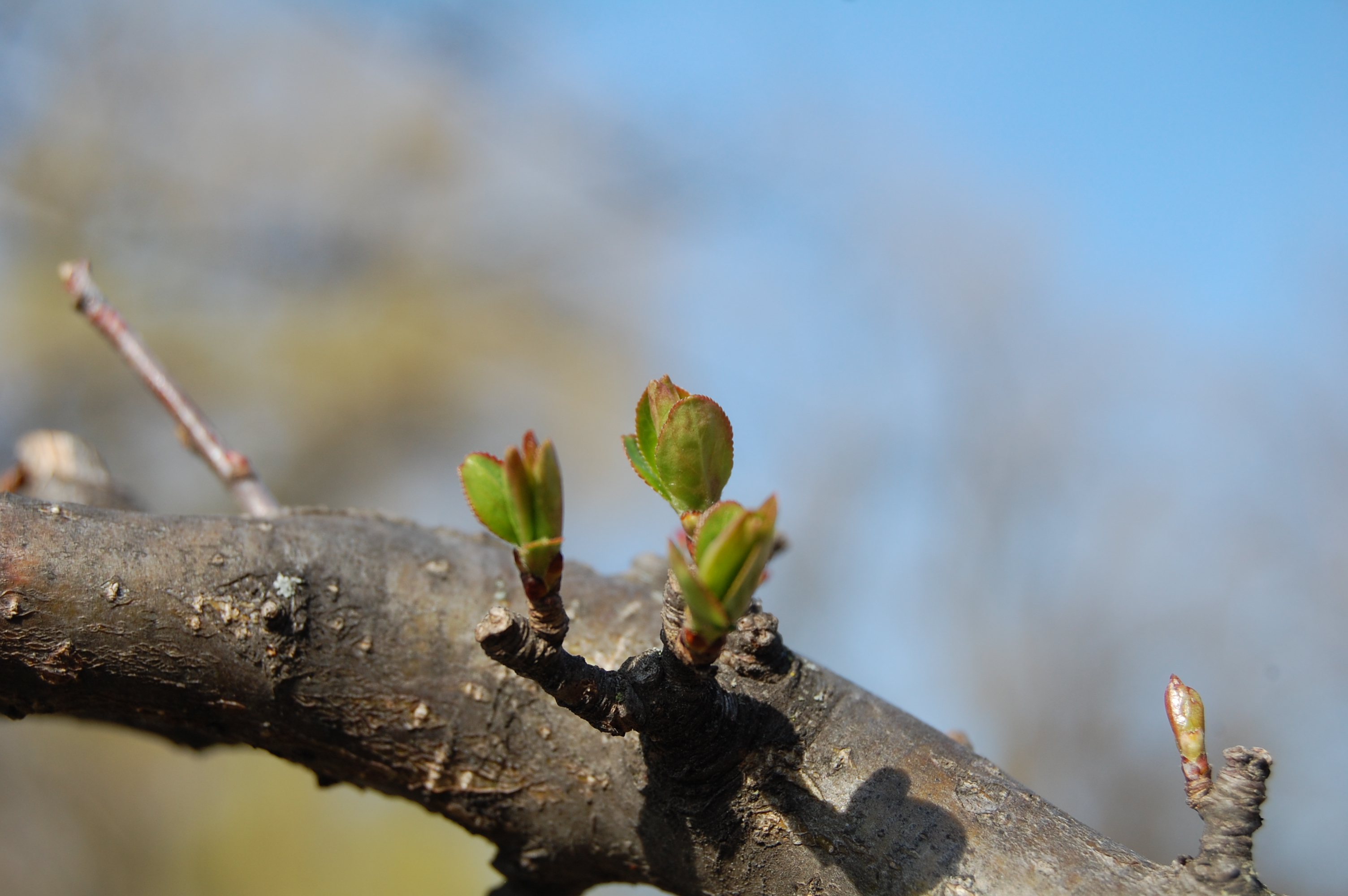
‘Donald Wyman’ breaking bud.
The trees and shrubs are late in leafing out this year. Here is our crabapple ‘Donald Wyman’.
Clove Currant
And clove currant (Ribes odorata). I am eager to see if this year’s flowers live up to their reputation for fragrance. Last year was disappointing.
Common Lilac
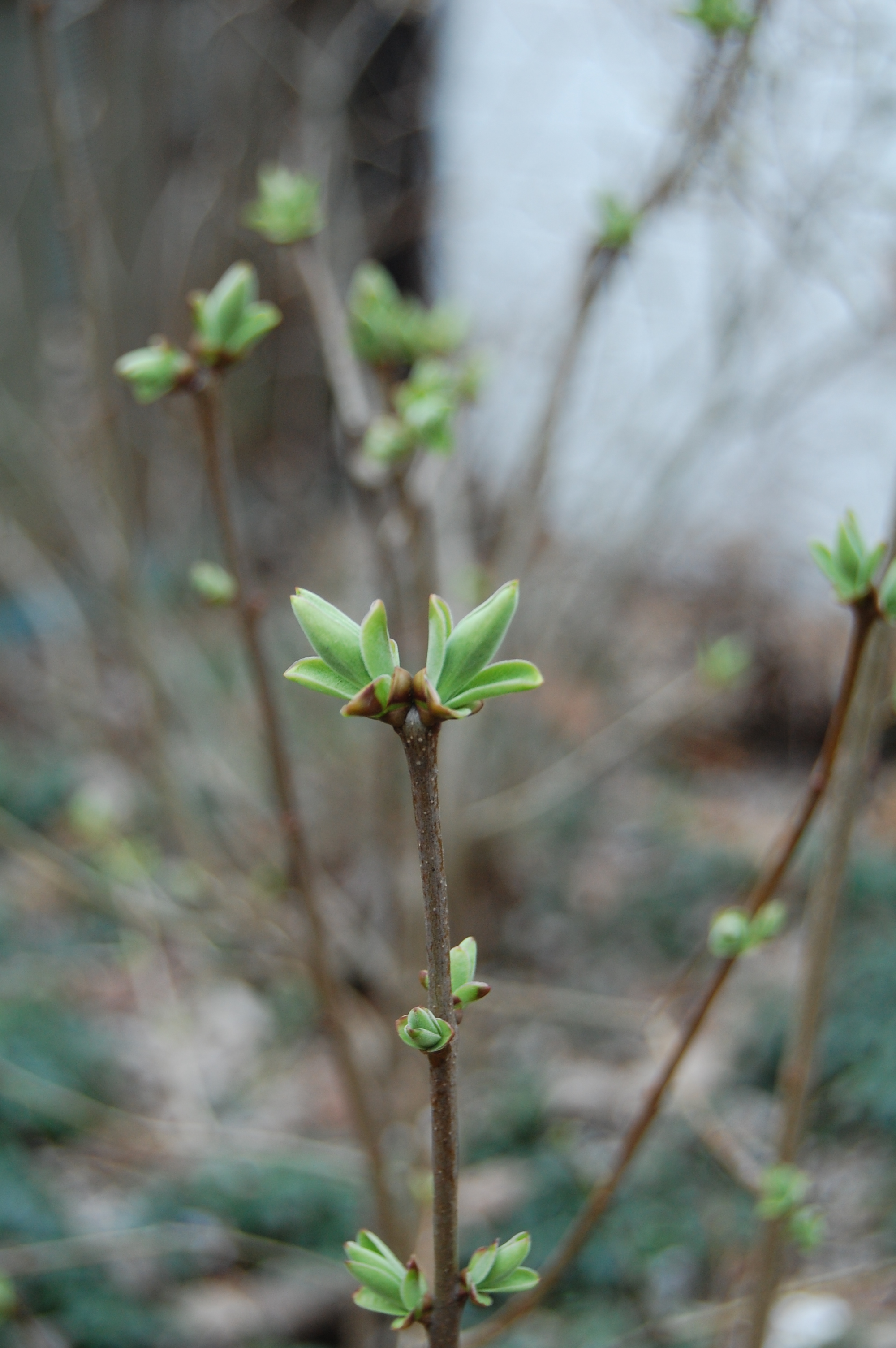
Here are the breaking buds of our common lilac (Syringa vulgaris), though this picture was actually taken on April 12th.
Tulipa praestans ‘Unicum’
Some of the bulbs themselves have interesting foliage, like the variegated leaves of Tulipa praestans ‘Unicum’. This is another picture from the 12th, they are blooming now.
Celandine Poppy
Among the herbaceous plants, I like new foliage of celandine poppies, downy on the undersides (Stylophorum diphyllum). The leaves seem to open like to hands unclasping or a clamshell opening.
Virginia bluebells young foliage.
Virginia bluebell (Mertensia virginica) foliage has a lovely blue green color. These are all over my garden now, and the flower buds are just forming.
Jacob’s Ladder
I am particularly fond of the ferny foliage of Jacob’s ladder (Polemonium reptans). I can imagine miniature people pulling themselves up the stems, leaflet by leaflet.
Bleeding Heart.
New foliage of bleeding heart (Lamprocapnos spectabilis) is almost frothy, and you can see the promise of the pink flowers in the red stems and leaves.
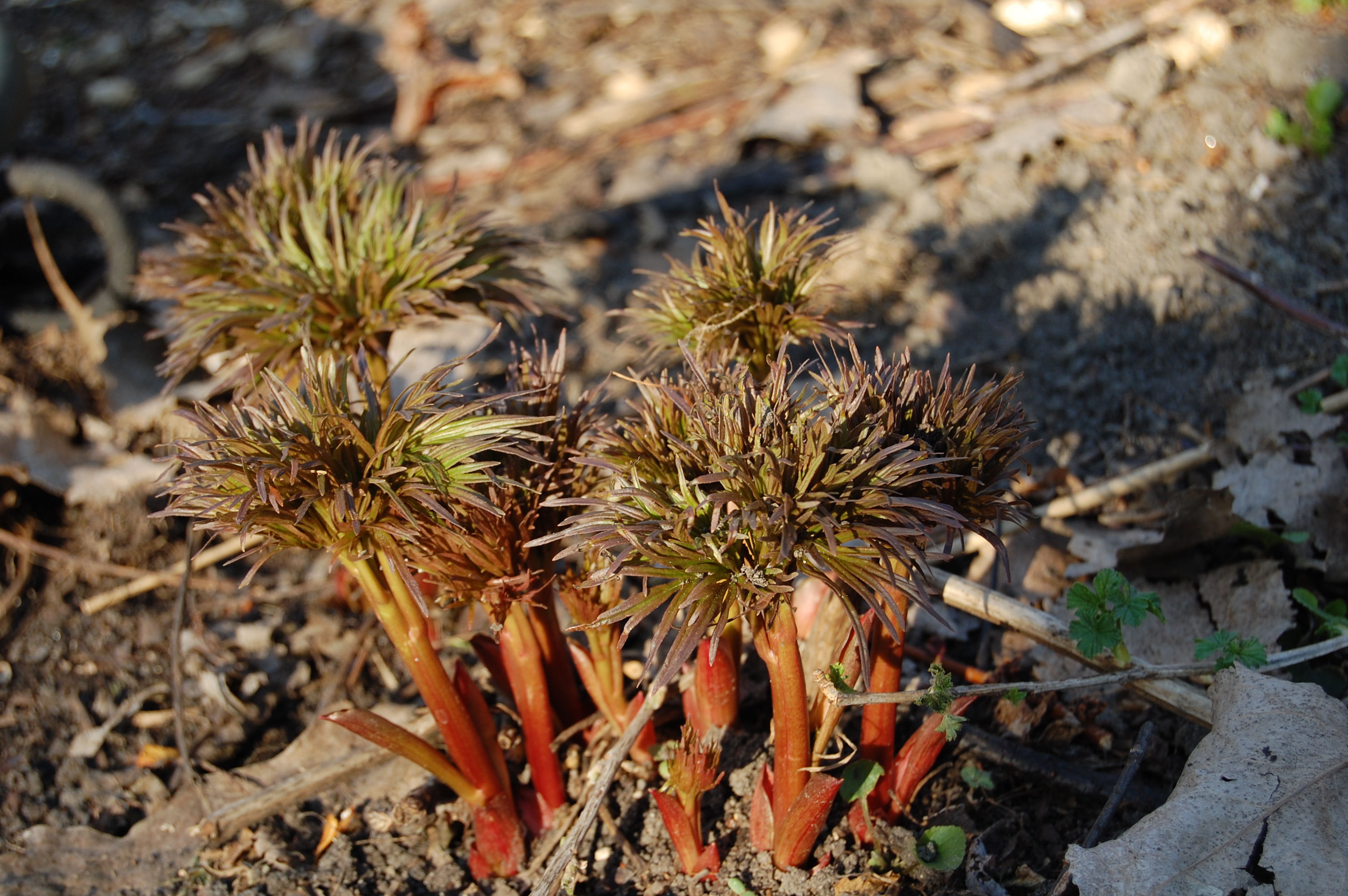
Take me to your leader. New peony foliage.
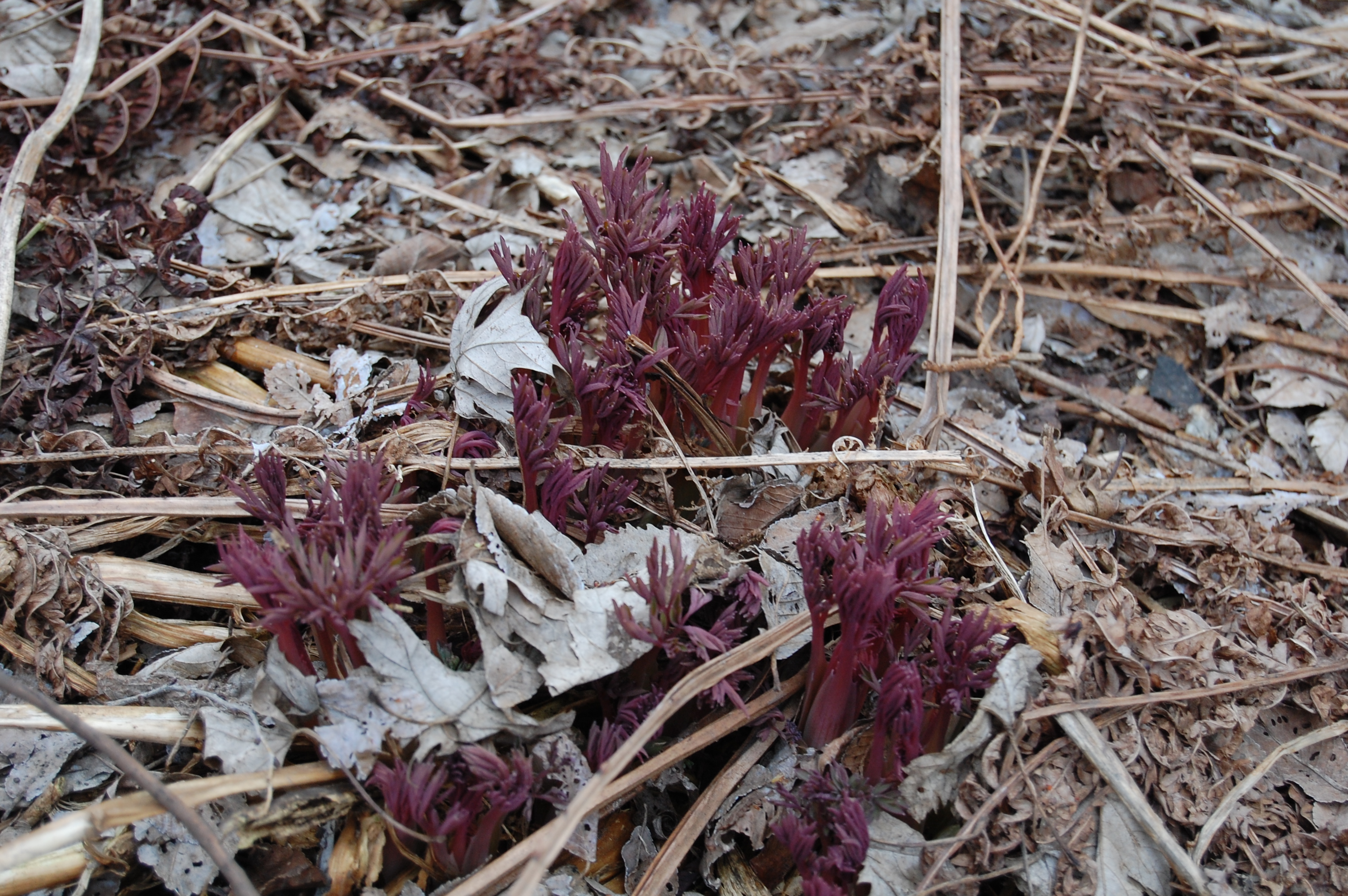
Peonies, on the other hand, look rather extraterrestrial when they first come up. Not sure which one this is.
Garden Blogger Foliage Day (GBFD) is hosted by Christine at My Hesperides Garden. She has an enviable garden in Lazio, Italy, worth checking out for the foliage and much else.
It was a beautiful weekend, and I’m very pleased with myself for all the spring garden chores I accomplished. For starters, cutting back the rest of the stems and stalks, leaving behind enough dead leaves and plant litter to keep the bugs and birds happy.
Southeast corner of the back garden, with Deutzia and ‘Sally Holmes’ rose not yet leafing out. It’s hard to see, but Jacobs ladder and merrybells are coming up. You can also make out the trench border.
What’s more, I edged all the beds and borders. I like using a shallow trench to form a clear demarcation between the lawn and the flowers, though in some beds pavers fill this function. I only need to clear the trenches once a year, then keep the turf grasses and other invaders from sneaking past. The soil cleared from the trenches is like compost, full of decayed leaves and other vegetable matter, and you can use it as such.
Our backyard fountain
Plus, I put away the heated bird bath and got our little fountain started up. And did it without pulling any muscles in my back.
First of the Tulips and Daffodils
Tulipa turkestanica
Species tulips are wild tulips, with blooms smaller than the hybrids, that grow in a swath from Central Asia to the Mediterranean. They are wonderful for many reasons, not least of which is that they tend to bloom weeks earlier than the hybrid tulips. Tulipa turkestanica, with its yellow base and nearly flat cream-colored tepals, is a particular favorite of mine. It seems to be successfully naturalizing in my beds.
Tulipa praestans ‘Unicum’ has vivid red flowers and variegated leaves. It blooms at the same time as T. turkestanica, and they make good companions.
Tulipa biflora
Another early species tulip is Tulipa biflora. Similar to T. turkestanica, but shorter and with delicate, cup-shaped blooms.
‘Little Gem’ daffodils
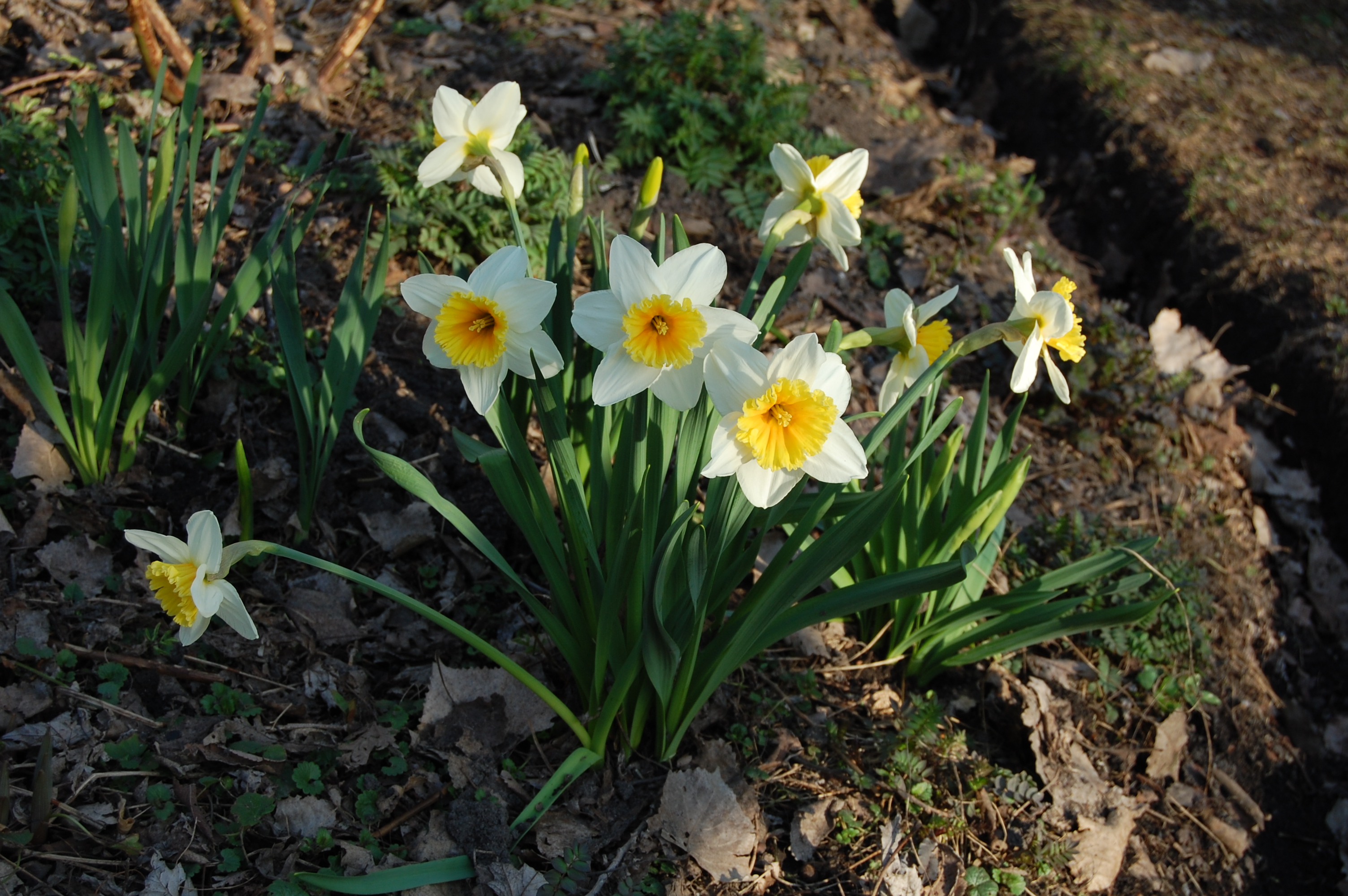
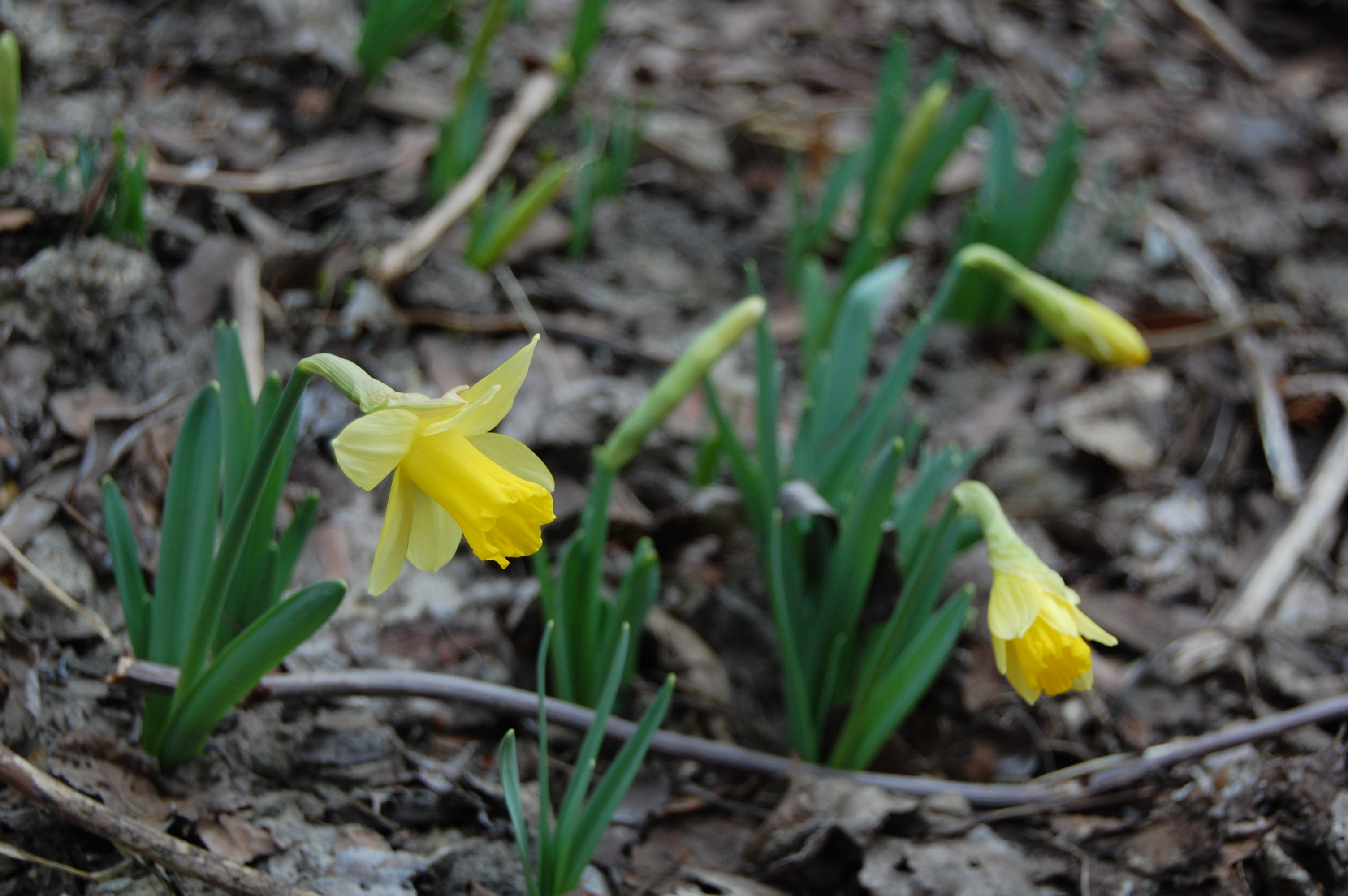
The first of the daffodils are blooming, including ‘Little Gem’. There’s also a number of bi-colored Large-Cup daffodils, but I’ve lost track of the varieties. I’m especially fond of bi-colored daffodils with white perianths and yellow crowns.
Bicolored daffodils, variety unknown.
Containing My Excitement
Hyacinths coming up.
The hybrid tulips planted in containers seem to have come through the winter with flying colors. I am eager to see them in bloom. Given the severity of the winter, it would seem that burying the containers provided better protection than putting them in an unheated garage. In addition to nine containers of hybrid tulips, I planted one of common hyacinths (Hyacinthus orientalis).
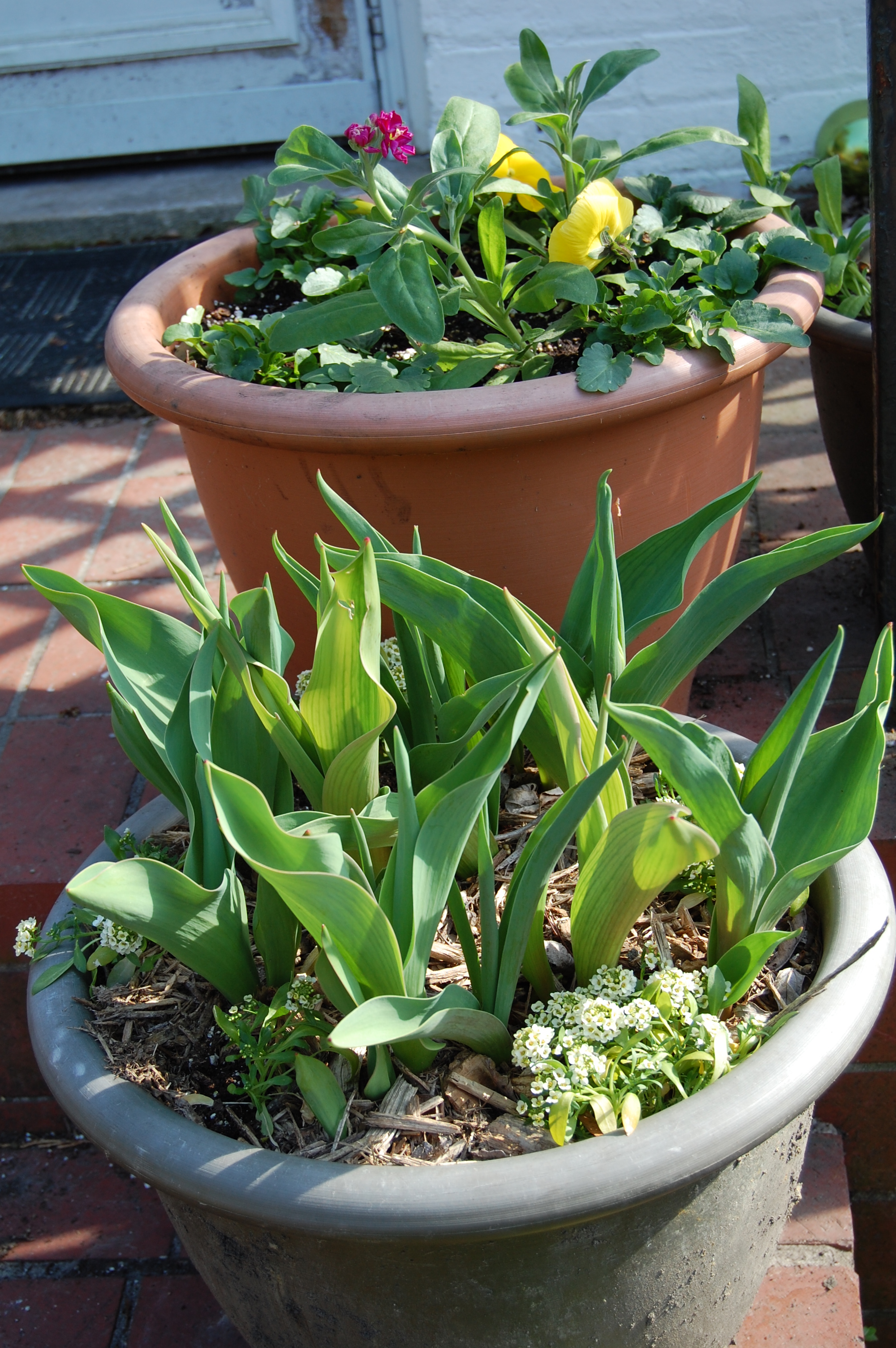
Emerging foliage of container tulips, underplanted with sweet alyssum.
This weekend I bought a flat of lemon-colored sweet alyssum (Lobularia maritima) and used it to underplant the container tulips.
Our old wheelbarrow planted with pansies.
I also filled our unoccupied containers, including our old rusty wheelbarrow, with pansies: blue, yellow, white, and white with a purple face.
My old shoes planted with sweet alyssum.
Finally, I came up with a use for my old shoes. First I should tell you that I hate shopping for shoes (and clothes in general), and I hate throwing them away. I tend to wear my shoes until the sole is worn through and parting ways with the rest of the shoe. I’ve had a few pairs of these old shoes lined up near the front door, but just recently realized that they would make great planters. Ta da! And the extra holes provide openings for more plants.
Did you get some quality time in the garden this weekend?
In April I usually start changing the mix of bird foods that I offer in my back garden feeders. There are a few reasons for this. First off, I want to get ready for the neotropical migrants – orioles, grosbeaks, indigo buntings, etc. – that usually arrive in Chicago right around May 1. If you can snag these birds when they first arrive, they are likely to stick around for a while at least.
Baltimore Oriole
Also, spring tends to bring large numbers of grackles and starlings to the backyard feeders. I have nothing against these birds individually, but in groups they become Hordes of Giant Black Locusts that devour everything in their path. These birds love peanuts above everything else, and so in spring I stop offering peanuts (a good food for winter), both shelled and in the shell.
Here’s what I do offer:
Nutrasaff Safflower Seed. Safflower is popular as a substitute for sunflower because grackles and other bully birds don’t like it. However, safflower hulls can accumulate into a big mess just like sunflower, though safflower is not toxic to plants the way sunflower hulls are. Hulled sunflowers avoid the mess on the ground, but they’re expensive and will be scarfed up with alarming speed by the bully birds.
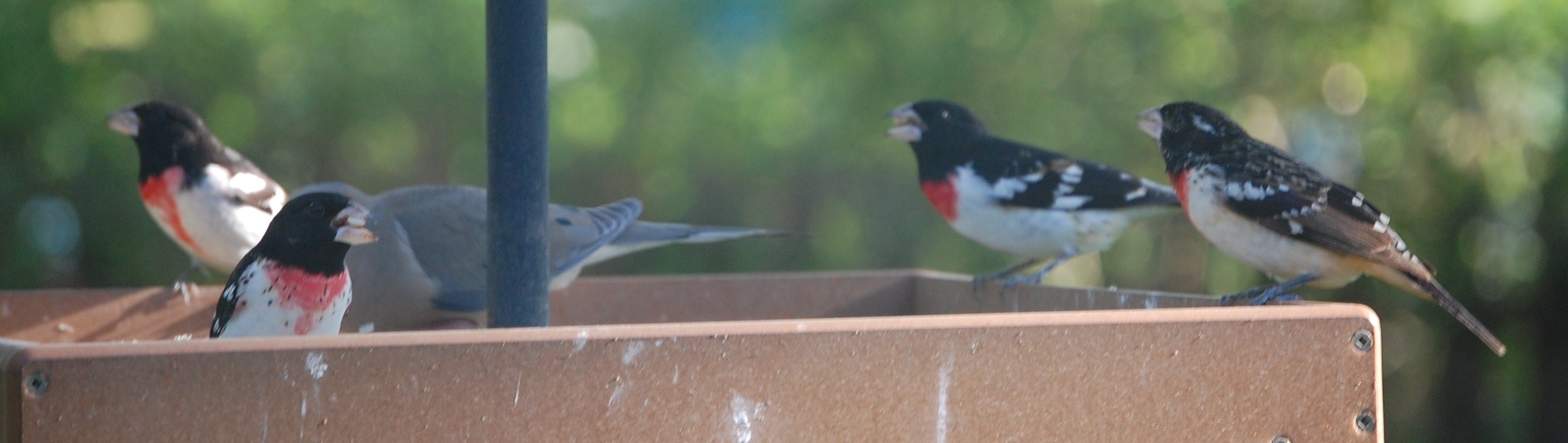
A rose breasted grosbeak party on the platform feeder. That mourning dove in the background feels so out of place.
Nutrasaff is a new hybrid safflower with an extremely thin hull that makes a minimal mess. It also has a higher fat and protein content than regular safflower. I’ve found it to be a good value because, though it is expensive, it lasts longer. While the bully birds give it a peck now and then, they just won’t scarf it down. At the same time, cardinals, goldfinches, house finches, and chickadees seem to like it just as much as sunflower or safflower.
Rose breasted grosbeak.
In terms of migrants, safflower will attract rose breasted grosbeaks. It’s important to offer the seed on a platform feeder of some kind, because grosbeaks eat on the ground and are less likely to perch on tube feeders. The same is true of cardinals, as both are large finches. Grosbeaks seem to hang around for a month or so before moving on to wherever grosbeaks go.
Baltimore Oriole
Grape Jelly. This is what draws the Baltimore orioles. Orioles are more common in the Chicago area than most people realize, but they tend to stay in the tree tops. They will come down to earth, however, for grape jelly. There are oriole feeders you can buy or just put some in a little bowl. Oranges will also attract Baltimore orioles. Once the orioles arrive, we’ve found that they tend to keep visiting the feeders until September.
Nyjer Seed. For the goldfinches.
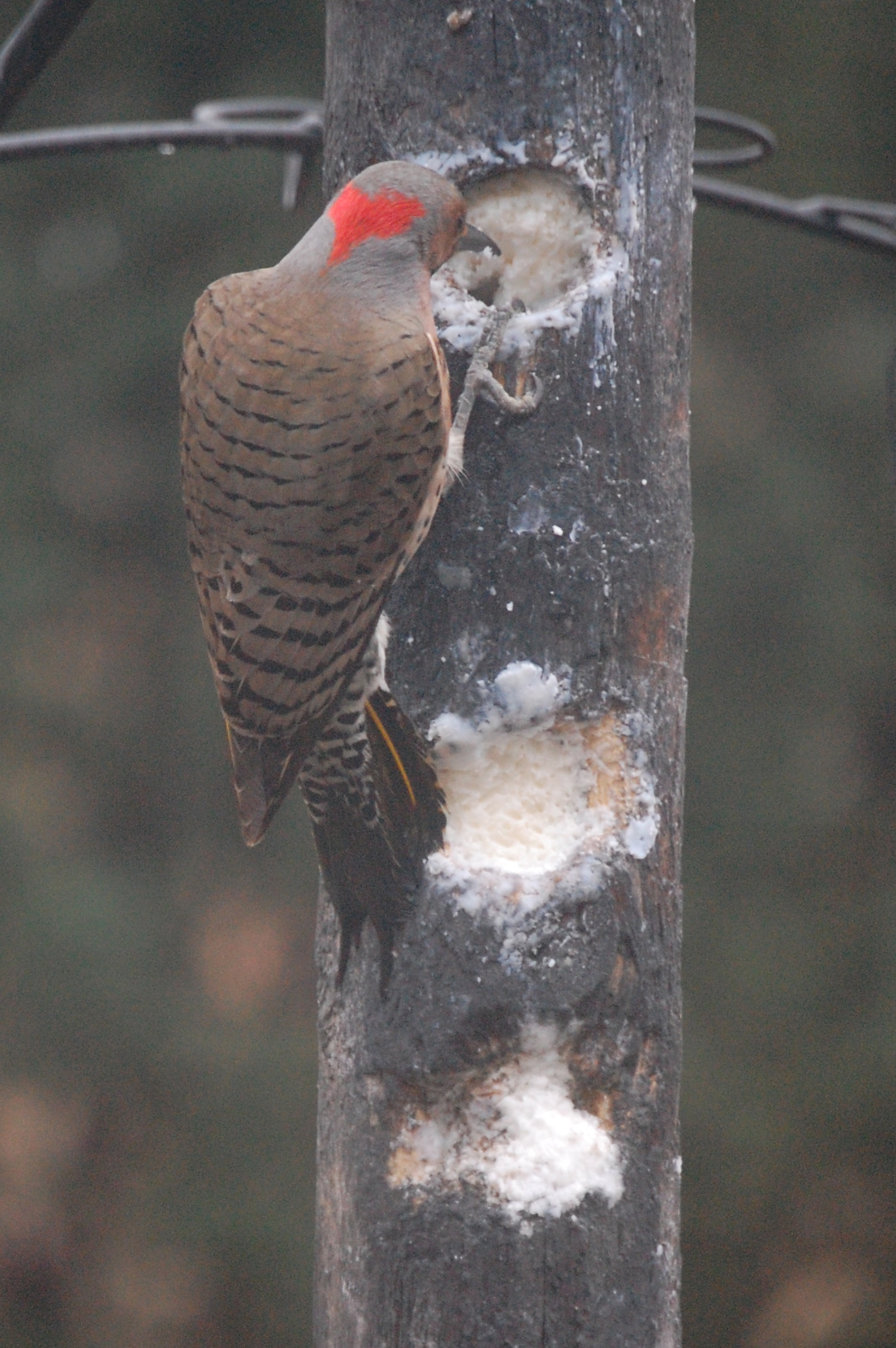
Northern Flicker helps himself to some suet.
Rendered Suet. You can buy cakes of this stuff, which will attract nuthatches and all kinds of woodpeckers. I use the plain suet rather than the kind that is mixed with ground peanuts and other ingredients, which is done to prevent melting. In my shady back garden melting has never been a problem even on hot summer days. Moreover, the peanuts in the suet attract the bully birds and house sparrows, which will eat far more than the woodpeckers.
White Millet. I spread this on the ground in late April and early May to attract indigo buntings. I’ve had limited success, though, as we’ve had only a couple of sightings.
Because of rabbits, I need to replace the three ‘Autumn Brilliance’ serviceberries (Amelanchier x arborea) that stand along the west hedge of our lightly shaded back garden.
All three of these serviceberries have been done in by rabbits. Felonious pruning accounts for the odd shapes.
This past winter was so long and the snow so deep, the rabbits ended up chewing even more of the bark off some of their favorite trees than they normally do. They are especially fond of serviceberries, dogwoods (Cornus), crabapples (Malus), and most fruit trees. I noticed they generally stayed away from the spicebush (Lindera benzoin), fringetree (Chionanthus virginicus), and Viburnums.
When rabbits girdle small trees, chewing the bark around the entire circumference, the tree is a goner. That’s because the vascular tissues are interrupted, blocking the transport of water, nutrients, and sugars between roots and leaves.
On the bright side: when I first planted two of these serviceberries I did a criminally bad job of pruning them, so this is an opportunity to get rid of the embarrassing results. Note: don’t prune your new trees and shrubs by just lopping off the top three feet of the main stems. If you do you will find yourself referring to the unfortunate plant as Igor.
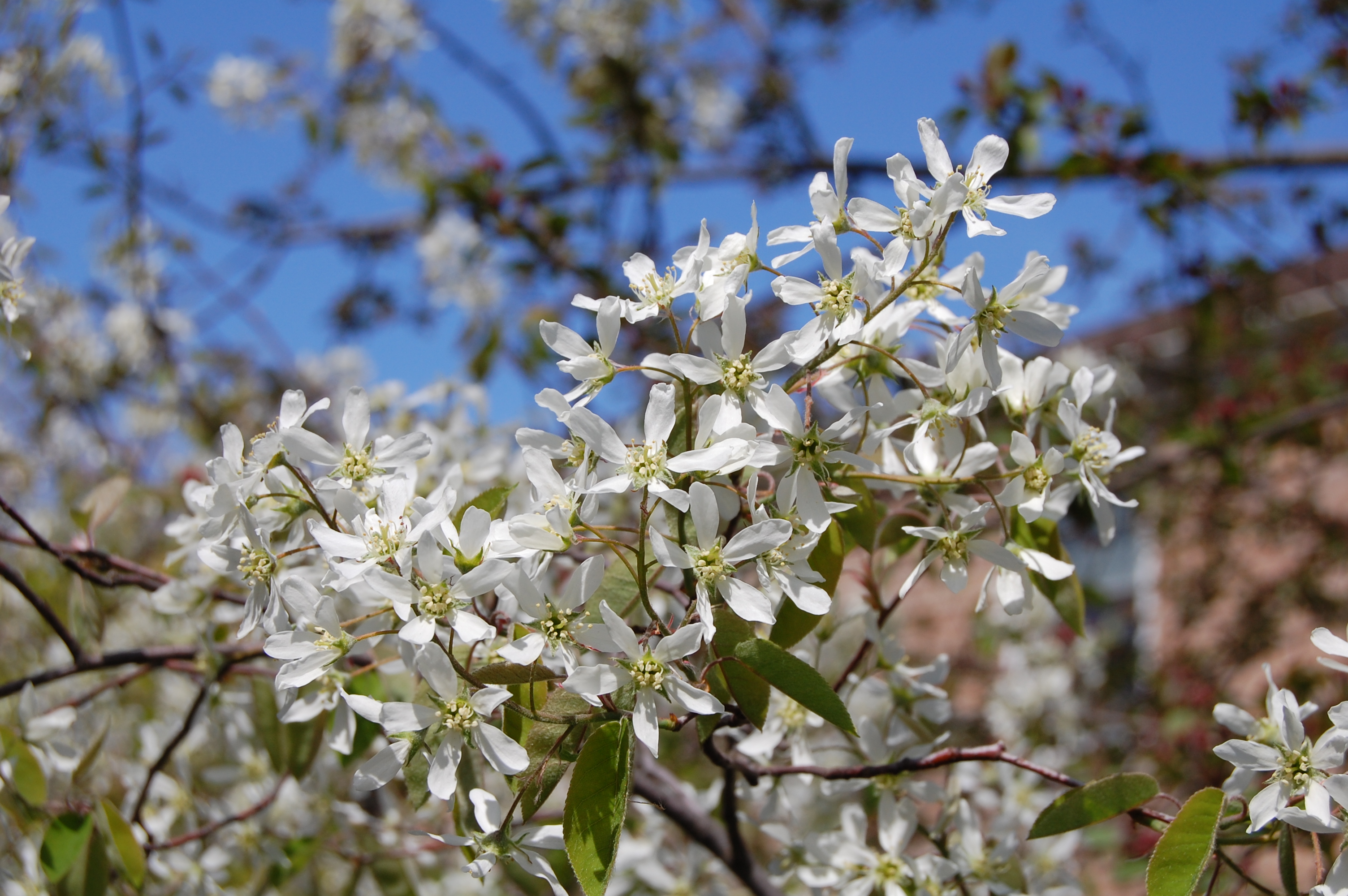
Serviceberry ‘Autumn Brilliance’ flowers
So the question now is: what should I replace the dying serviceberries with? Has to be shade tolerant, less than 20′ tall, and I prefer something with more of an upright shape. Also, wildlife value is important to me. Here are some possibilities.
More Serviceberries! I do love this plant, after all. Beautiful white flowers in early spring, berries for the birds, and gorgeous fall color all make this a fantastic small tree. However, I would have to be very vigilant on the rabbit front. For one thing, I need to find something other than chicken wire to wrap around the base. I really don’t like working with chicken wire, it can give nasty scratches if you don’t wear gloves, which I often don’t.
Wayfaringtree Viburnum (Viburnum lantana). Nice white flowers, multi-colored berries, and decent fall color. Also viburnums seem to be less attractive to rabbits.
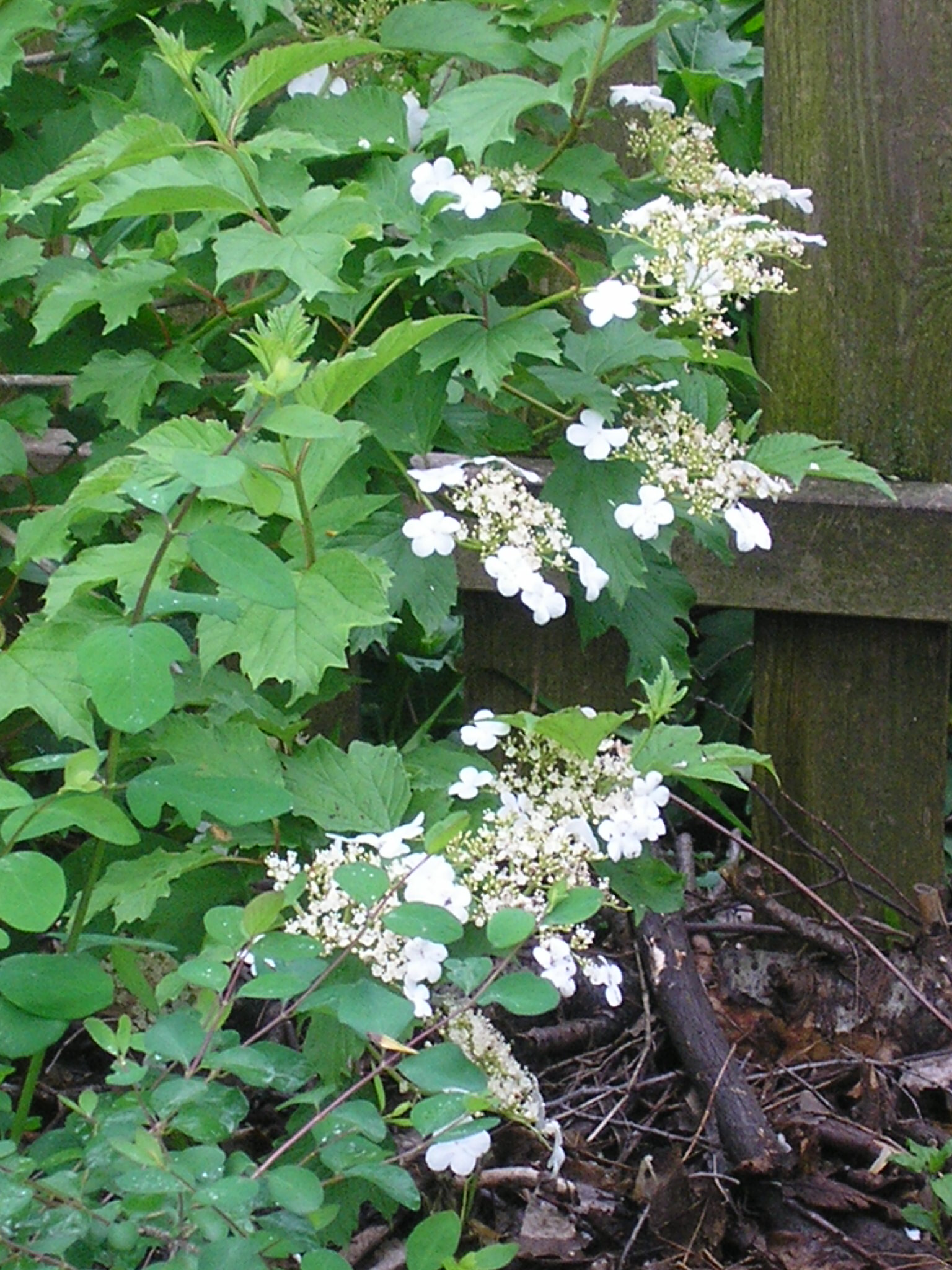
Cranberrybush Viburnum flowers
Cranberrybush Viburnum (Viburnum trilobum). I actually have some of these already along the alley fence. Like the wayfaringtree except with red berries that can be translucent and are supposed to be a favorite of cedar waxwings.
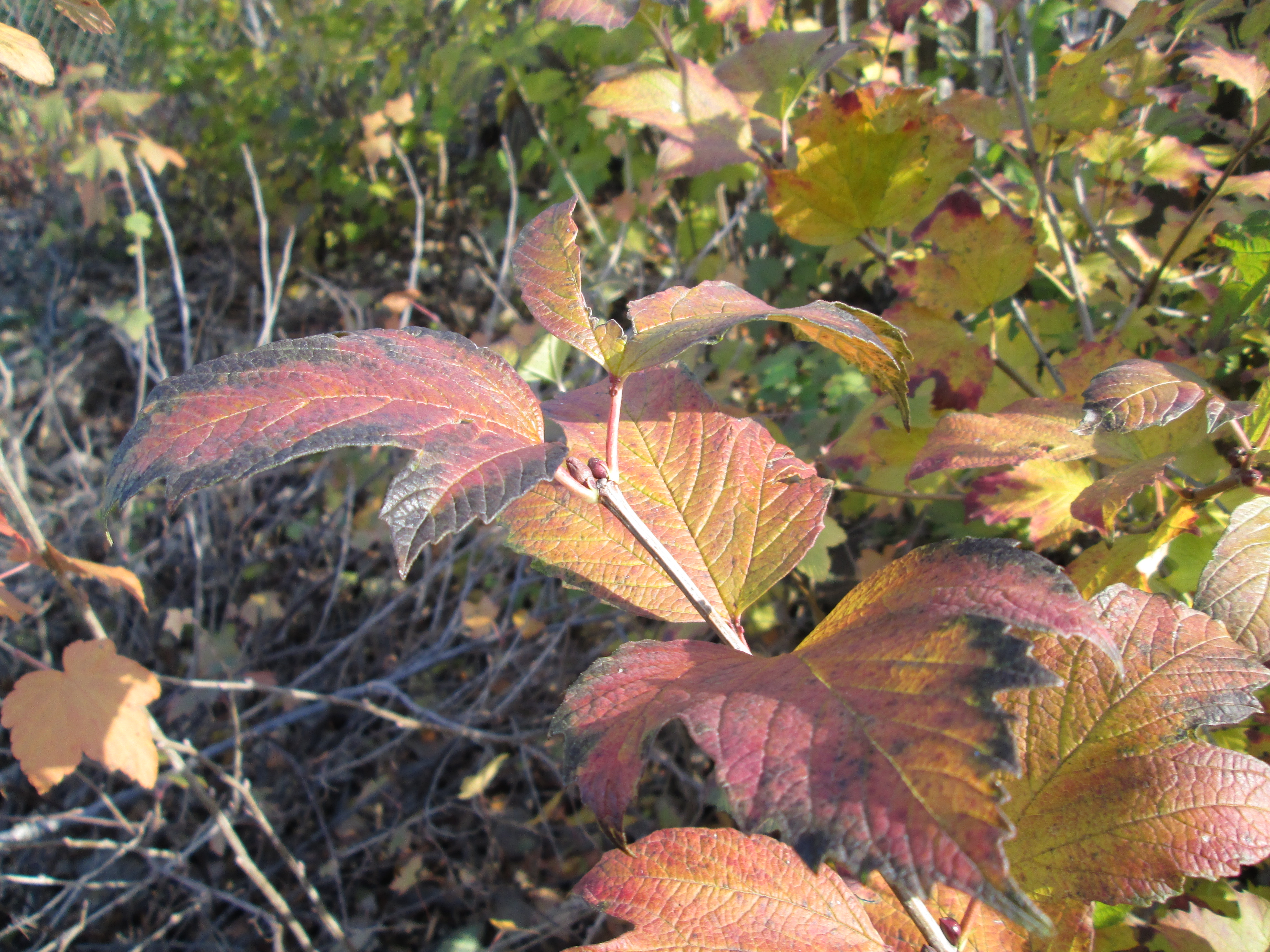
Cranberrybush Viburnum fall color
Chokeberry (Aronia arbutifolia). I have it on good authority that this is another tree considered a tasty treat by rabbits. Another small tree with white flowers in April and good fall color. The glossy red fruits look really nice and last well into winter.
Hybrid Witch Hazel (Hamamelis x intermedia). Maybe ‘Arnold’s Promise’ or ‘Diane’. There are no witch hazels in our garden, and that makes me feel deprived. Another rabbit magnet, though, from what I hear.
At this moment we are at sort of a pause in the garden. The early small bulbs are starting to wrap up, but the larger bulbs have not yet made their appearance.
Common snowdrop with Virginia bluebell leaves emerging in the background.
The snowdrops are almost done.
Dragonfly/wrench with snowdrops. We bought this guy at an art fair from the artist, a welder from Indiana, who was just packing up. We had neither cash nor checkbook He told us to mail him a check, which we did.
Their gleaming tepals are dropping and the grassy leaves are filling out.
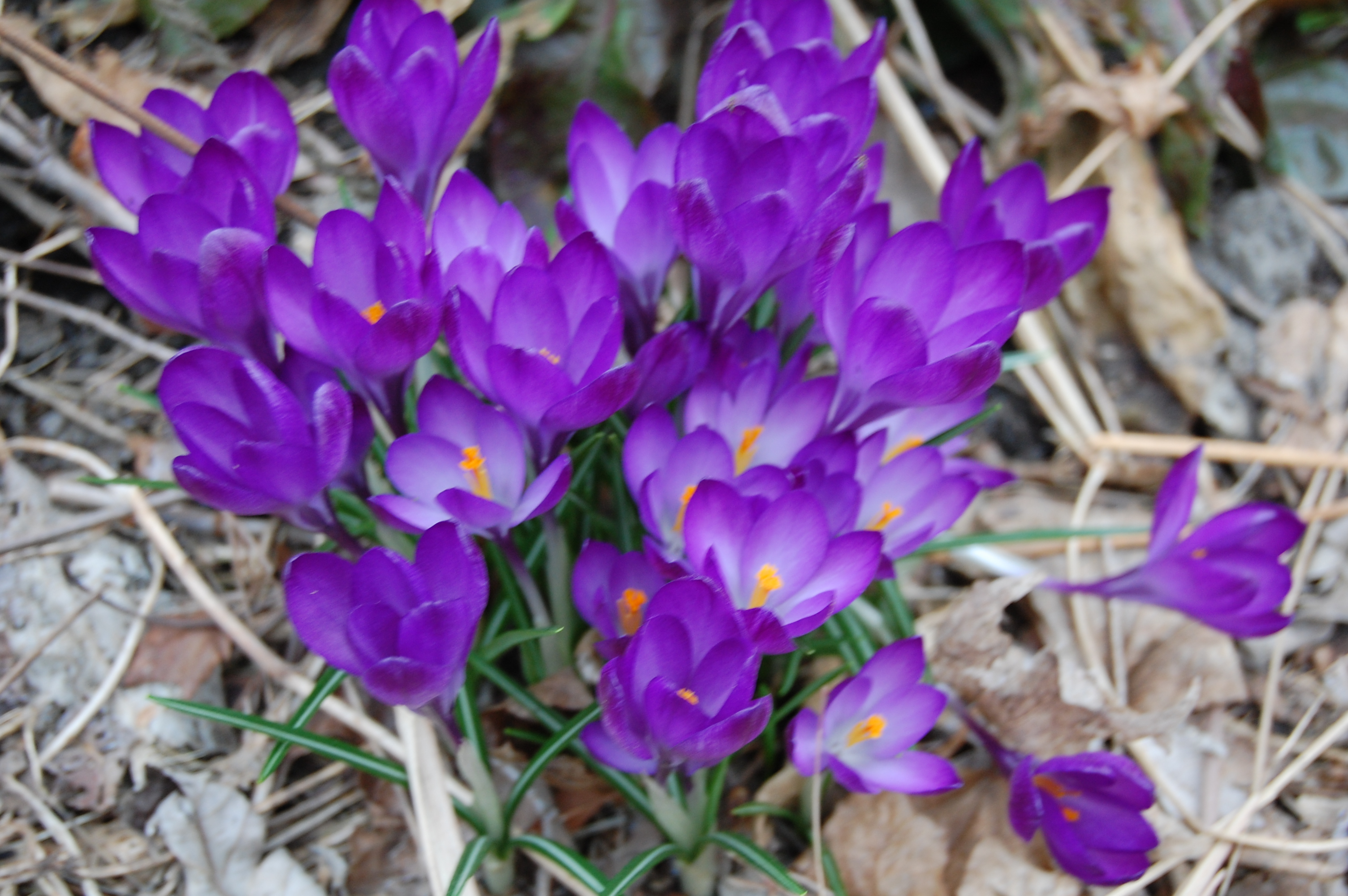
Tommy Crocus.
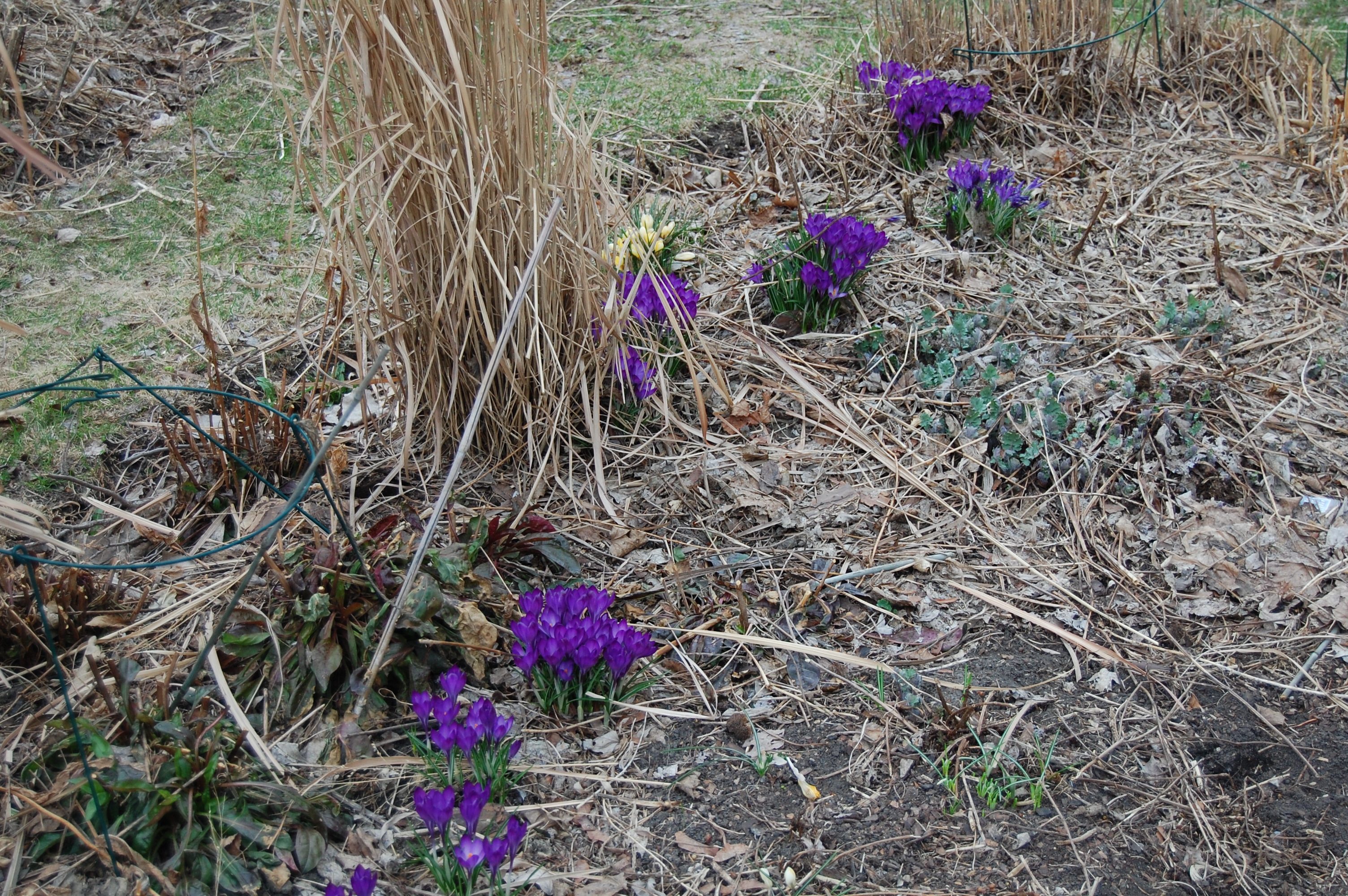
The crocus are just past their peak, fading faster than we expected because of a couple of improbably warm days. The sun was shining, people wore shorts, and the crocus began to whither just a bit.
Crocus clumps scattered along the sidewalk border.
But now, as I write this post, it is snowing. We could have a couple of inches on the ground tomorrow morning. Yup. Welcome to Chicago.
Siberian squill.
The squill (Scilla siberica) are just starting to bloom but have not hit their stride. Squill is an incredibly easy bulb, spreads itself around enthusiastically but doesn’t make trouble. And I love that blue. Also, unlike crocus, the rodents leave them alone. What looks like grass in the background above is actually Siberian squill seedlings. As I said, they spread themselves around with abandon.
Narcissus ‘Little Gem’.
An early Narcissus I planted last fall, ‘Baby Moon’ has its very first flowers. ‘Baby Moon’ is only about 6″ tall. UPDATE: Actually, this is ‘Little Gem’. Annette of Personal Eden pointed out the error. Thanks Annette. ‘Baby Moon’ blo0ms in May. I planted some of those last fall also.
Just a few more days…
You can see the flower buds on most of the other daffodils and a few look like they could pop with just a couple of warm days. Same thing could be said for the forsythia and spicebush (Lindera benzoin).
Young hellebore with flower bud.
Oh, and I planted hellebores (Helleborus niger) for the first time last fall. Most haven’t done much yet, but a few of them have started to send up new leaves and there are a couple with flower buds. I’m excited.
So I have lots more bulbs and other spring flowers to look forward to. Just as soon as the snow melts. Again.
The garden we loved best when we were in England last September was the late Christopher Lloyd’s Great Dixter. And so when we returned home I was determined to read some of his garden books.
I have been drawn to and perplexed by the subject of color in the garden for some time, and so the first of Lloyd’s books that I tackled was Color for Adventurous Gardeners. I’m very glad I did so, for through this book I was able to self-diagnose a mild case of garden color anxiety.
According to Lloyd, “color anxious gardeners” want to follow established rules that can be relied upon to yield results that are tasteful and will not shock the neighbors. Reliance on color harmonies would be an example of this. Lloyd is not against color harmonies, but he believes they are a safe choice and should not be overused.
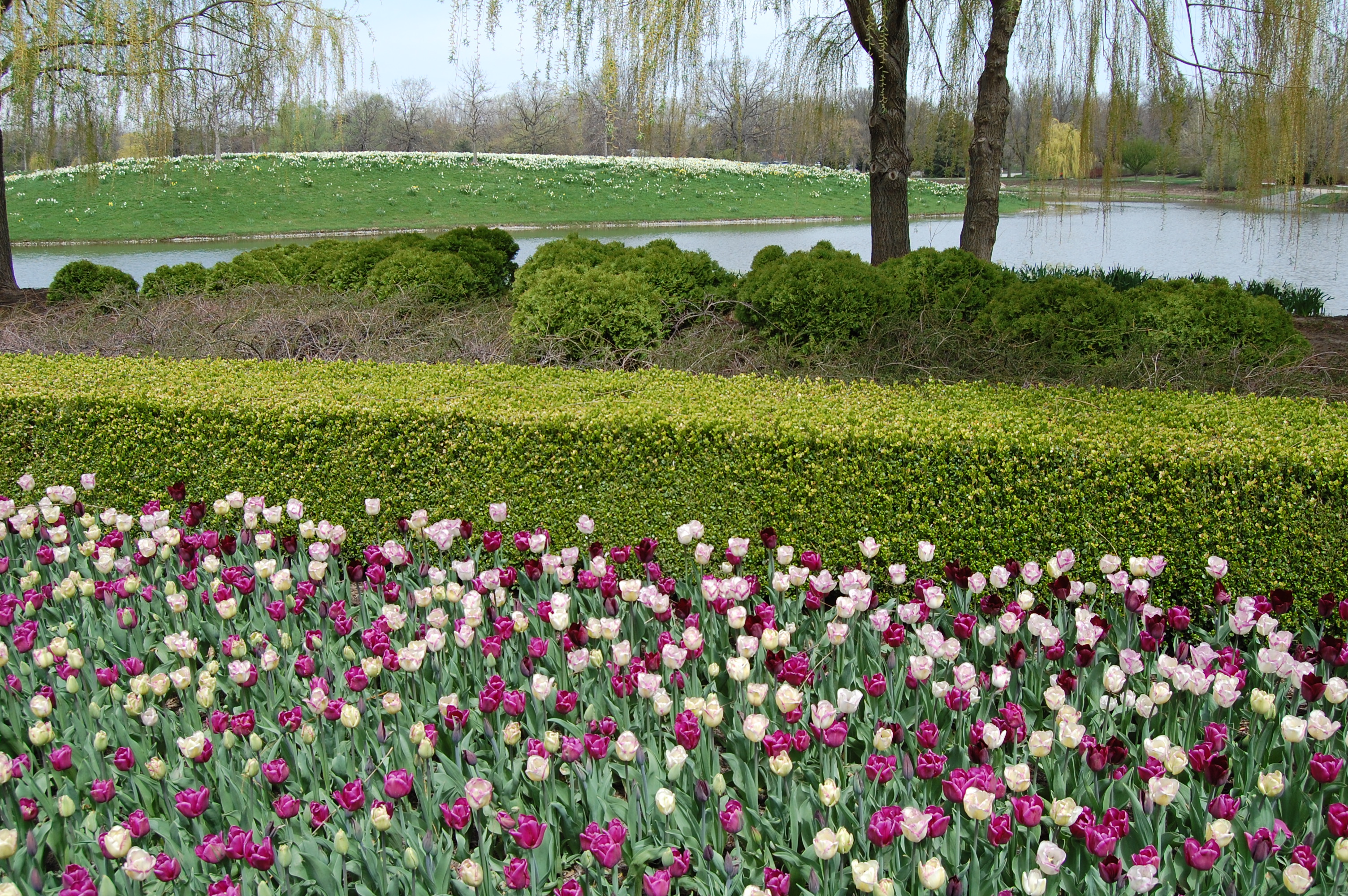
Purple harmony with tulips at the Chicago Botanic Garden.
In my case, I do not limit myself to color harmonies. In fact, I like lots of bright, exciting, and contrasting colors. At the same time, I have this nagging feeling that there are certain rules I should be following in order to achieve a really beautiful garden. What’s more, a confident understanding of these rules eludes me despite reading several books about color in the garden.
Lloyd says don’t worry about the rules: “The limitations imposed by rules are a safe haven, but the adventurous gardener wants to try something different.” And when I read Lloyd’s blunt confession that he didn’t understand the color wheel, I was moved to shout aloud: “Thank you! Thank you, Christopher Lloyd!”
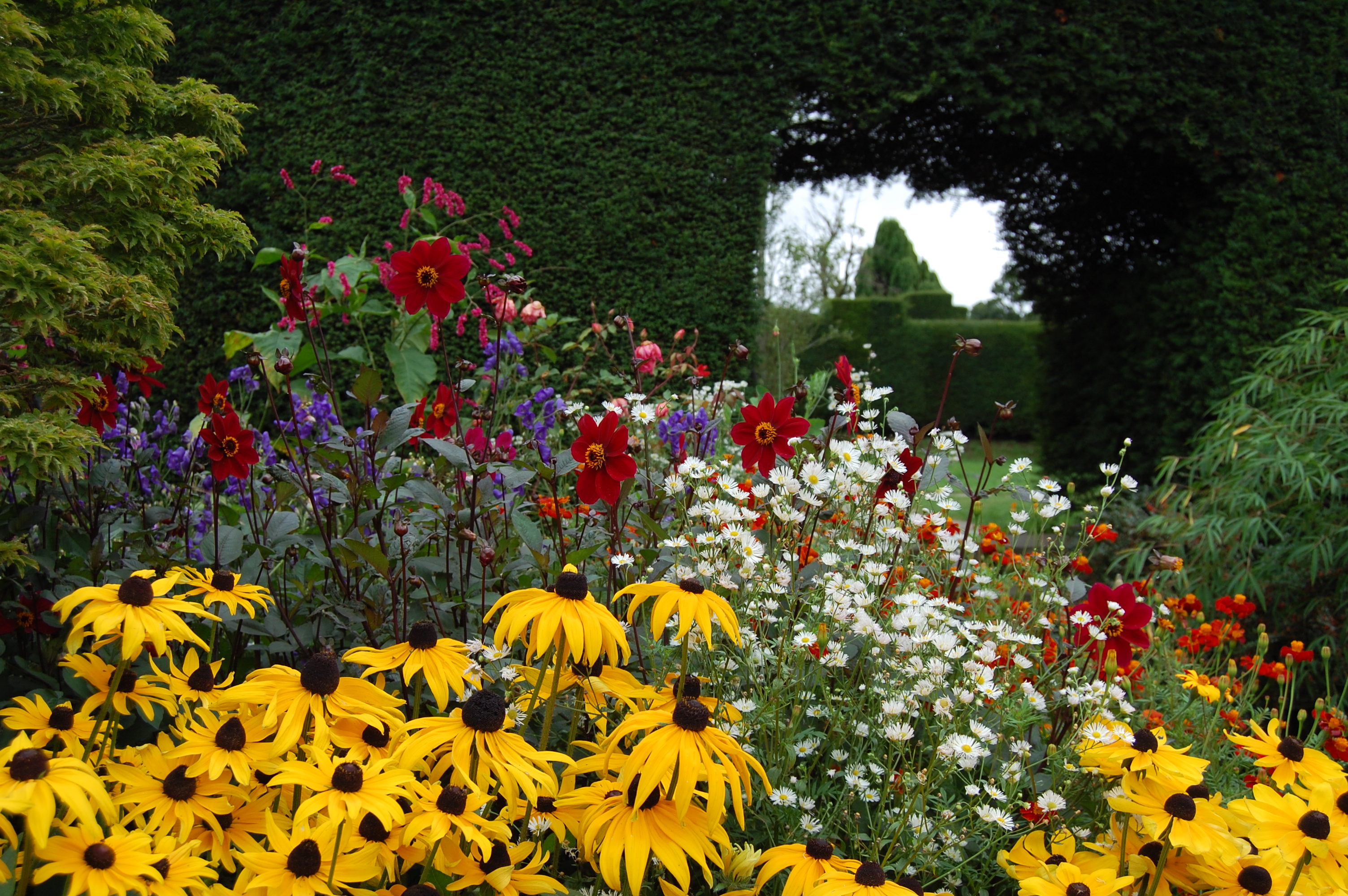
Adventurous color at Great Dixter
The adventurous gardener wants to experiment, which is essential if you want to come up with something that is personal and original. Moreover, says Lloyd: “Given the right circumstances, I believe that every color can be used with every other …”, and so the possibilities for successful color combinations are practically endless.
One reason we shouldn’t worry too much about getting the “right” color scheme is that color is not the primary determinant of a garden’s success. Lloyd argues that the garden’s underlying structure, having the right plants properly cared for, and the complementary shapes and textures of those plants should all be considered before getting to color.
Christopher Lloyd, the gardener. Not Christopher Lloyd, the actor.
The bulk of Color for Adventurous Gardeners consists of chapters devoted to individual colors: red, orange, blue, etc. Lloyd discusses the qualities of each color and experiences he has had with them at Great Dixter and elsewhere. Each chapter concludes with notes on specific plants. These notes are interesting, though their practical value depends on how similar your garden’s conditions are to those in southern England.
I can’t even try to summarize what Lloyd says about each color, but his preference for color contrasts comes through pretty strongly. For example, of orange he says: “Of all colors orange is the one that cries out most for contrast.” And regarding blue: “More than any other color, blue needs contrast near it, to prevent its looking dull.”
The book is illustrated so beautifully with garden photographs that you may be tempted to skip the text altogether and simply gaze at all the lovely beds and borders.
Color for Adventurous Gardeners is an effective treatment for those of of us suffering from garden color anxiety. And even if you don’t, it provides a handy booster shot.



























 gardeninacity