Garden Bloggers’ Bloom Day: July, 2015

Finally! Our wet, cooler weather has delayed some of the excitement of summer in the garden, but as of today things are moving along.

DSC_0960 butterflyweed and daylily

Just yesterday the ‘Eye-yi-yi’ Daylilies (Hemorocallis) in the Driveway Border started bursting into bloom. Here they are with Butterflyweed (Asclepias tuberosa). Too much orange? Have I mentioned I really like orange flowers?

DSC_0752 butterflyweed

Let’s take a closer look at that Butterflyweed. I can never get enough of Butterflyweed.

DSC_0908 daylily

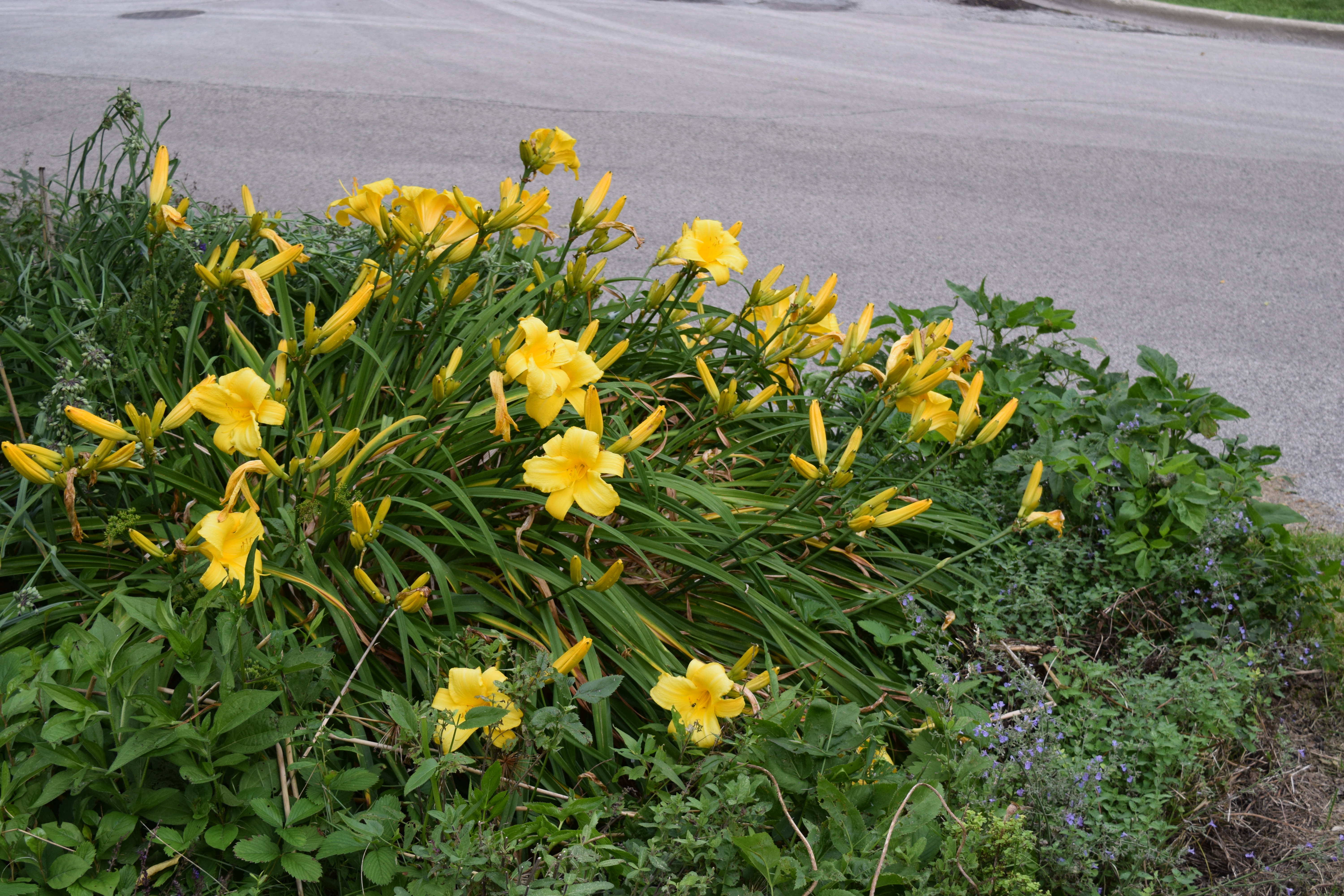
There are some other Daylilies as well. This one was a freebie thrown into an order from Oakes Daylilies. It’s become gigantic. I don’t remember the name, so I call it ‘Mr. Banana’.

DSC_0765 asiatic lilies

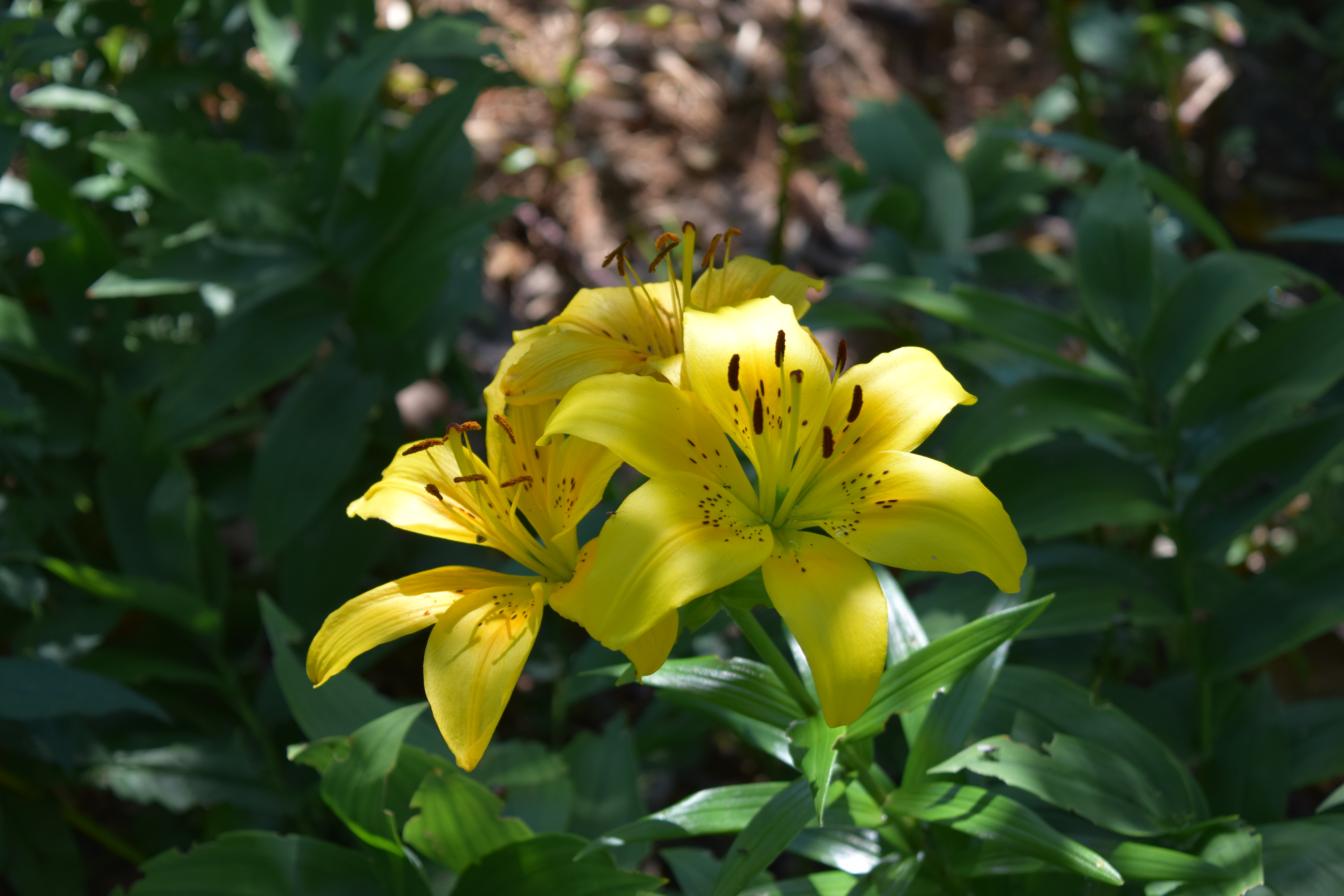
The Asiatic Lilies (Lilium) in the Left Bank Bed are past their peak, but they are still making a contribution. These are all descendents of a naturalizing mix I planted about eight years ago. Most of the remaining blooms are orange, but there are some smaller red and yellow ones as well.

DSC_0744 culver's root

Also in the Driveway Border, the ‘Temptation’ Culver’s Root (Veronicastrum virginicum) is blooming despite the depredations of the four-lined plant bug. The damage on the upper leaves is pretty apparent. Also, I noticed that some of the stems don’t have the secondary flower spikes that you usually see. The Anise Hyssop (Agastache foeniculum) was also ravaged by this pest, but it is just now barely starting to flower.

DSC_0635 Tithonia

I planted three Mexican Sunflower (Tithonia rotundifolia) in the Driveway Border, one near each end and one in the middle. Right now they are showing their first few flowers.

DSC_0745 tithonia and culvers root

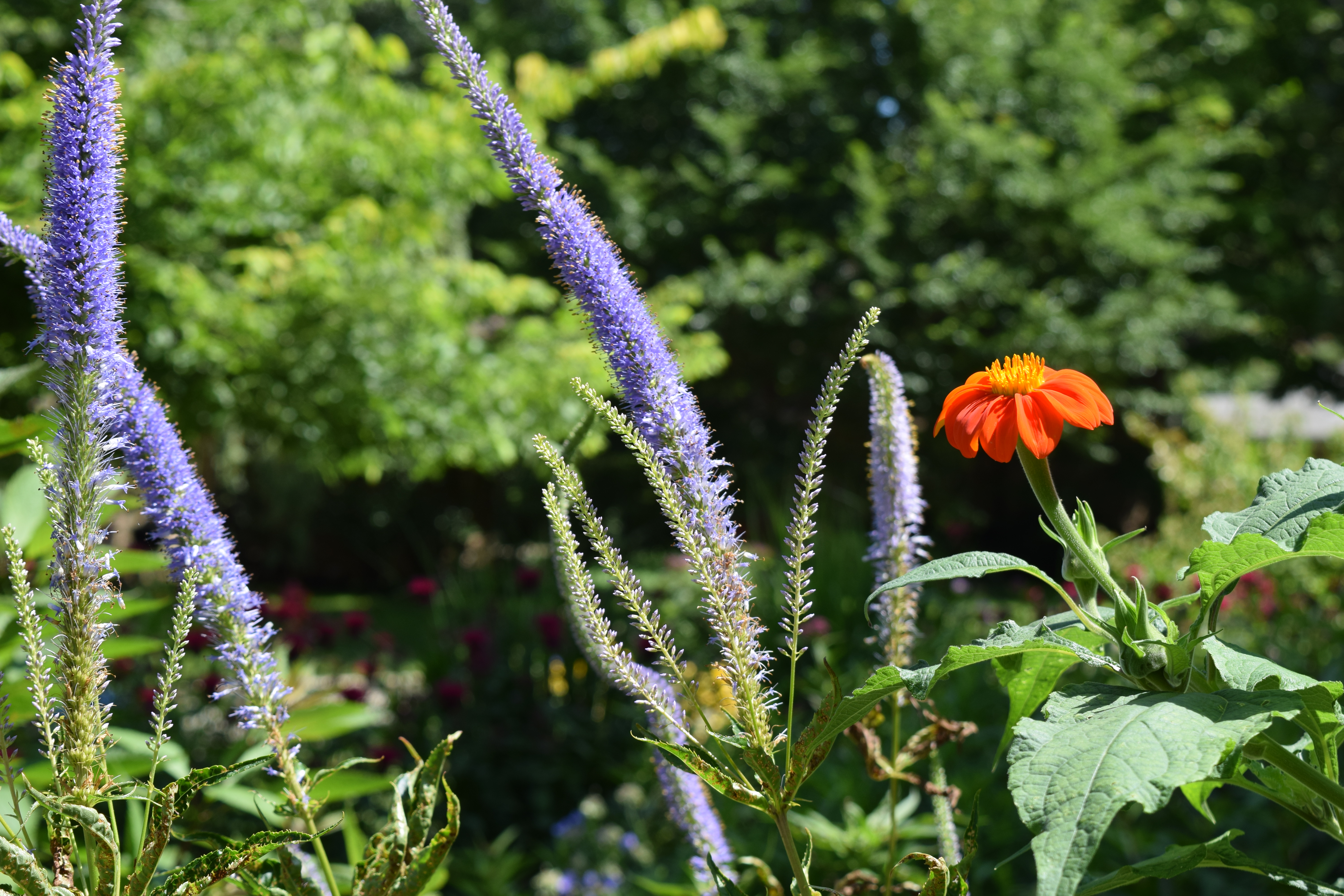
The Mexican Sunflower looks great with the blue spikes of Culver’s Root ‘Temptation’.

DSC_0955 driveway border

Anyhow, here’s a view of the Driveway Border from near the front door.

DSC_0759 allium summer beauty

On the other side of the driveway, in the Left Bank Bed, my ‘Summer Beauty’ Alliums are blooming for the first time. I got these last fall from Rachelle of Talking to Plants. Thanks, Rachelle! Can’t wait to see these spread and fill in.

DSC_0661 helenium shortnsassy

In our new Lampost Bed, there are already some notable bloomers. First off, the dwarf Helenium ‘Short’n’Sassy’ (Helenium autumnale) sent to me by the good folks at Klehm’s Song Sparrow Farm. I couldn’t believe how early this guy started blooming, or how profusely.

DSC_0763 blanket flower gaillardia

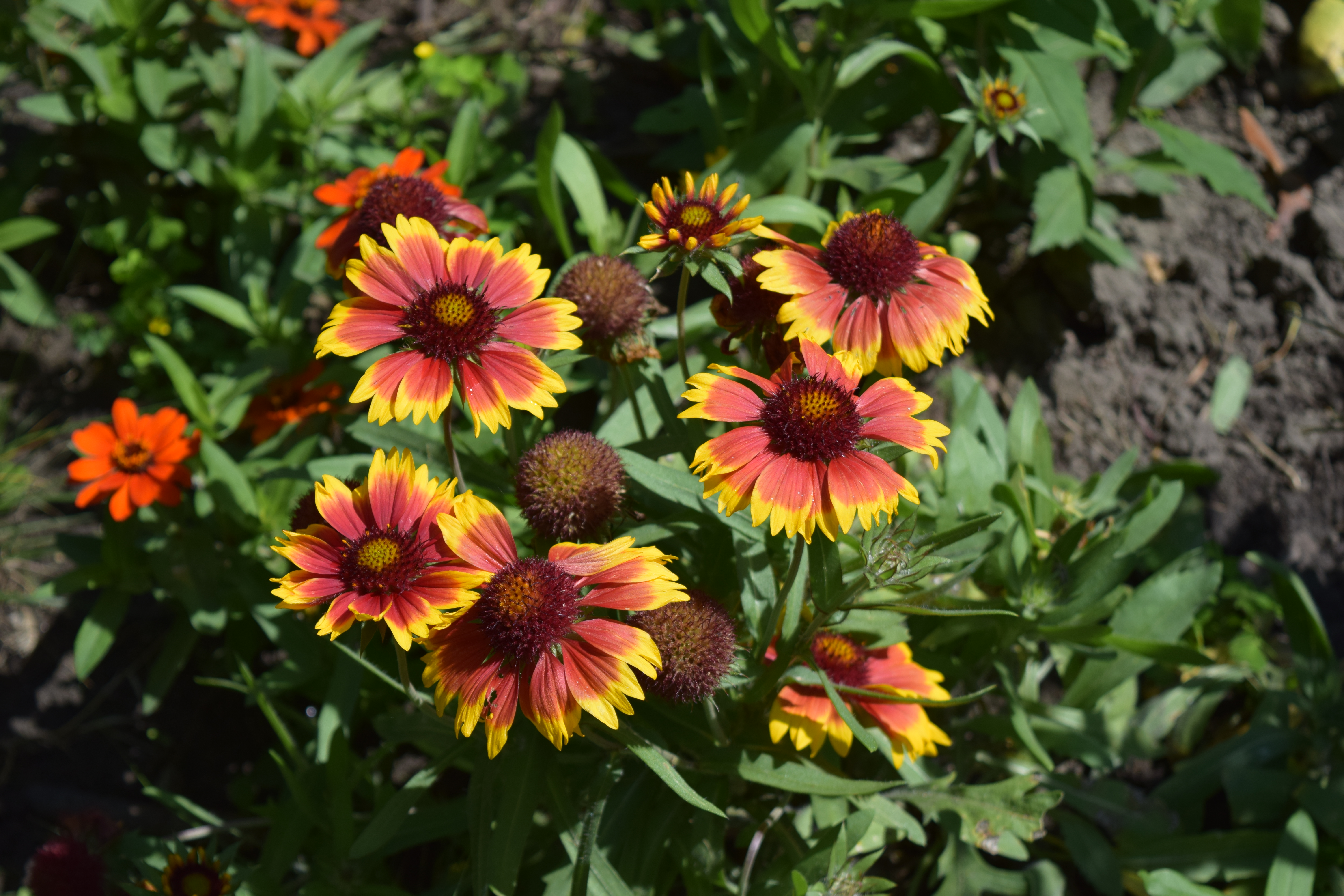
The Blanket Flower ‘Arizona Sun’ (Gaillardia aristata) is this bed is also performing admirably.

DSC_0813 monarda

Now, the big news in the Sidewalk Border is that the ‘Raspberry Wine’ Bee Balm (Monarda didyma), and the Wild Bergamot (Monarda fistulosa) are blooming together. There is a much bigger block of Wild Bergamot in the Driveway Border, but it is not yet ready to pop.

DSC_0902 monarda

Sad to say, downy mildew is already apparent on the Wild Bergamot, though much less so on ‘Raspberry Wine’.

DSC_0821 monarch on swamp milkweed

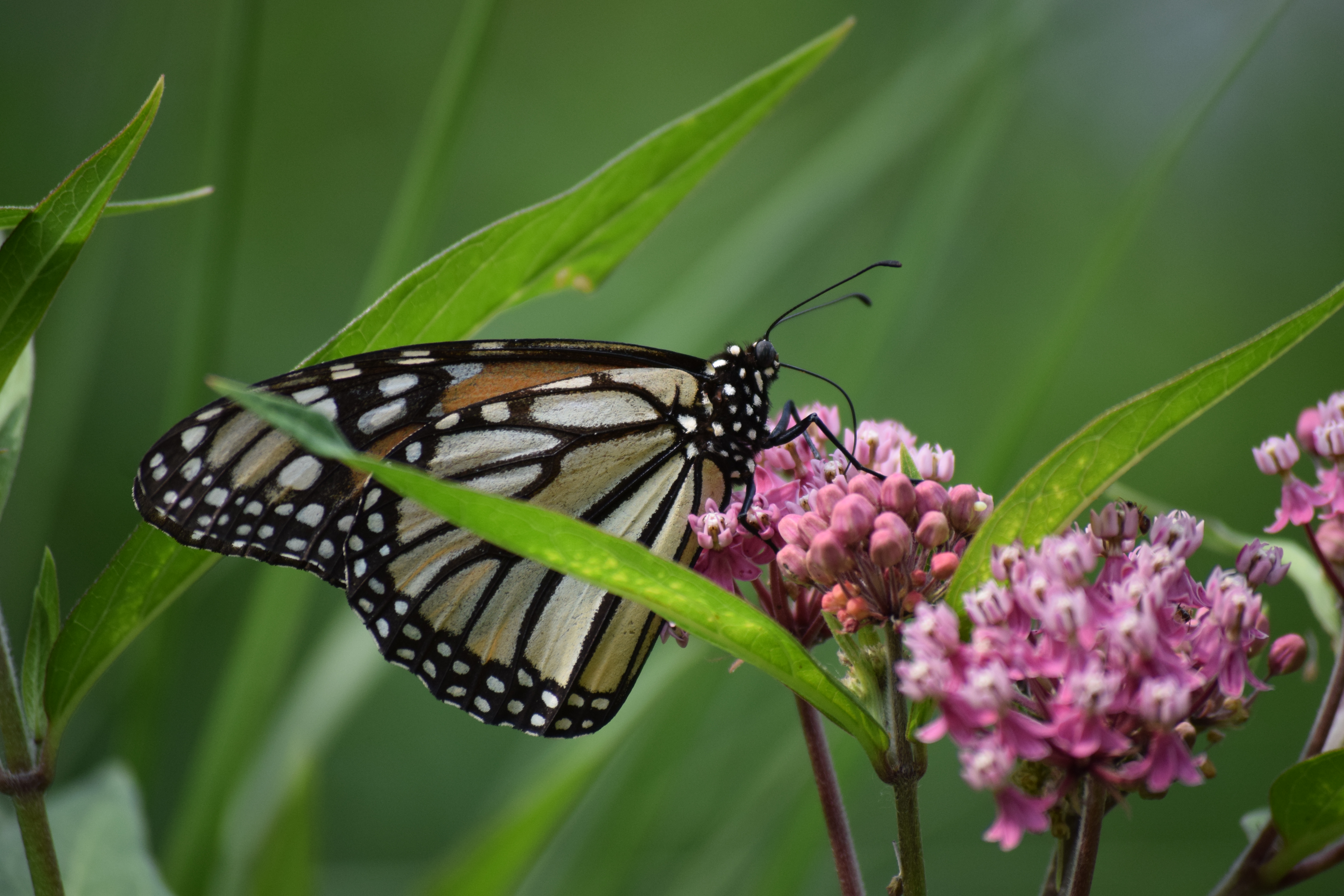
Swamp Milkweed (Asclepias incarnata) is blooming in both the Sidewalk Border and the Front Island Bed. While Judy was taking pictures, our resident Monarch butterfly deigned to let us watch her nectar on the flowers.

DSC_0833  spiderwort

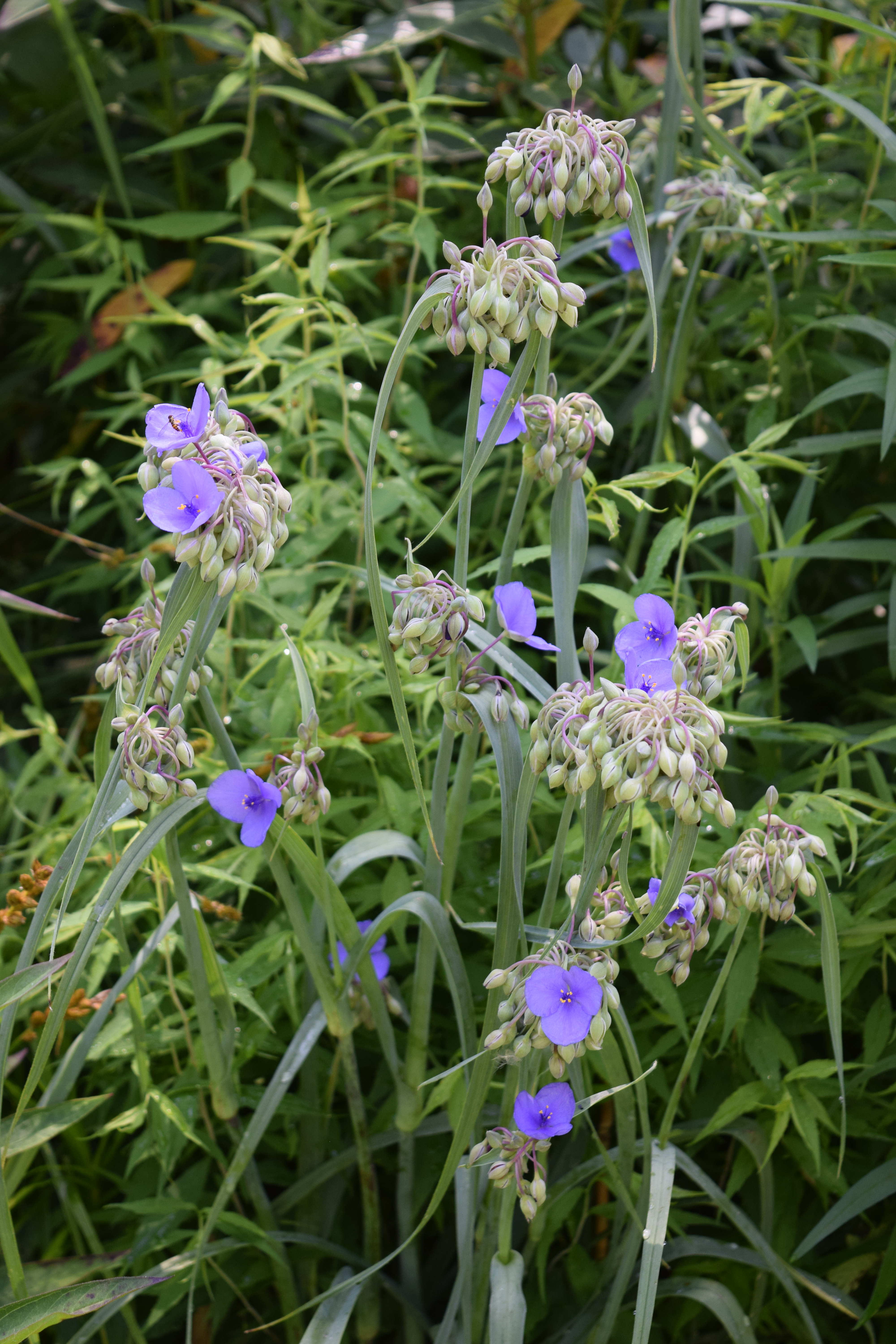
Also in the Front Island Bed, the Ohio Spiderwort (Tradescantia ohiensis) continues to bloom longer into summer than I think is normal. I guess we have the cooler weather to thank.

DSC_0796 clematis

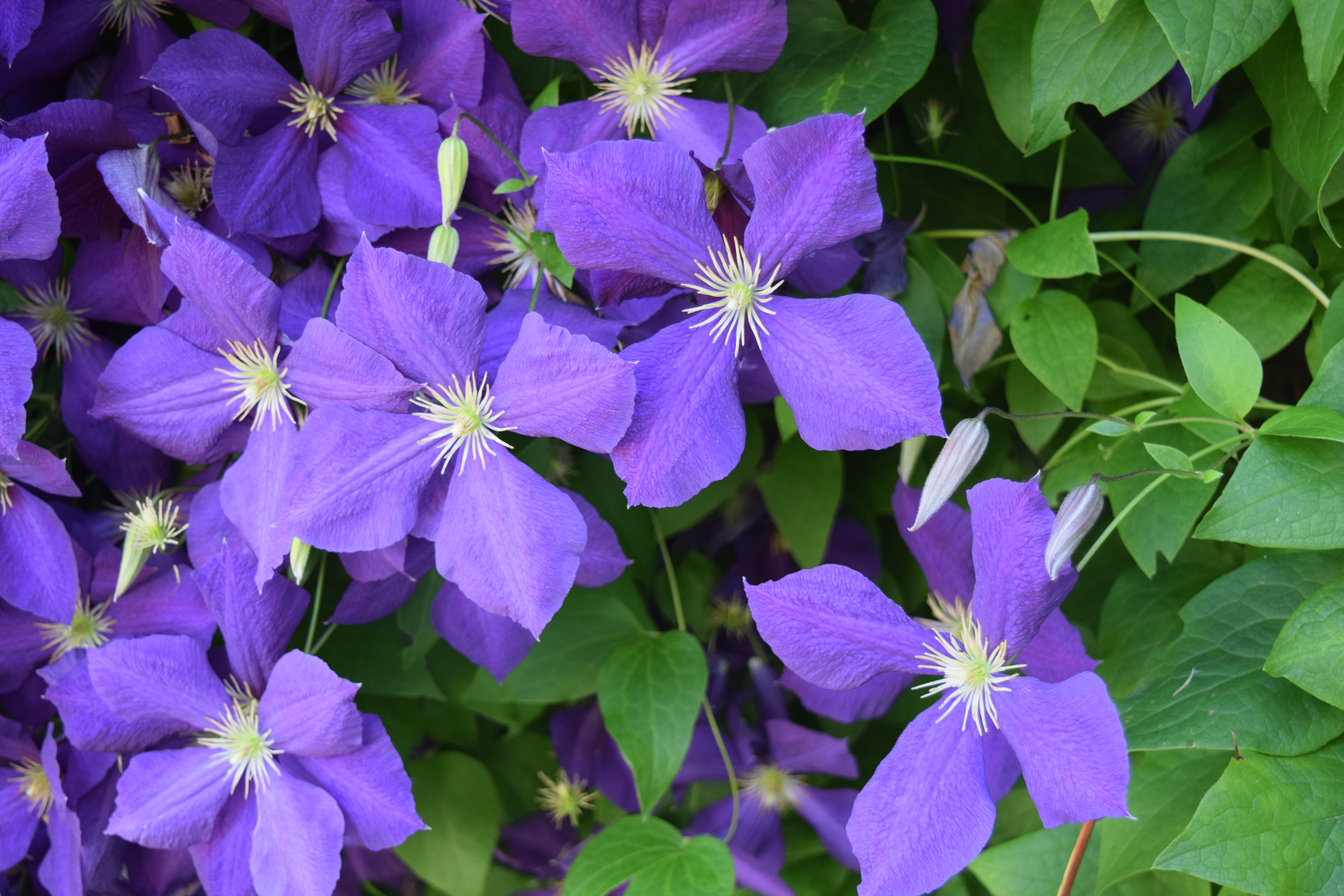
If we head towards the back garden, we will pass the Clematis ‘Jackmanii Superba’, still going strong. I’m not going to be coy about this. This Clematis is superb indeed – also magnificent, stupendous, and fabulous. There, I said it. And there are still lots of buds that have yet to open.

DSC_0801 clematis

In this light it looks more blue than purple.

You know what? It’s getting late, and I haven’t even done the back garden. Though there isn’t nearly as much going on back there as there is in front, But still, I think I’ll do a supplemental Bloom Day post tomorrow.

Garden Bloggers Bloom Day is sponsored by Carol at May Dreams Gardens. Visit her blog to see many more superlative blooms.

Which garden blooms are making you happy today?

A Serene and Verdant Garden on the Toronto Islands

So much is going on I almost forgot to do the last post about our visit to the Toronto Islands, which Judy and I visited as part of the 2015 Garden Bloggers Fling back in June. You can find the earlier posts here and here.

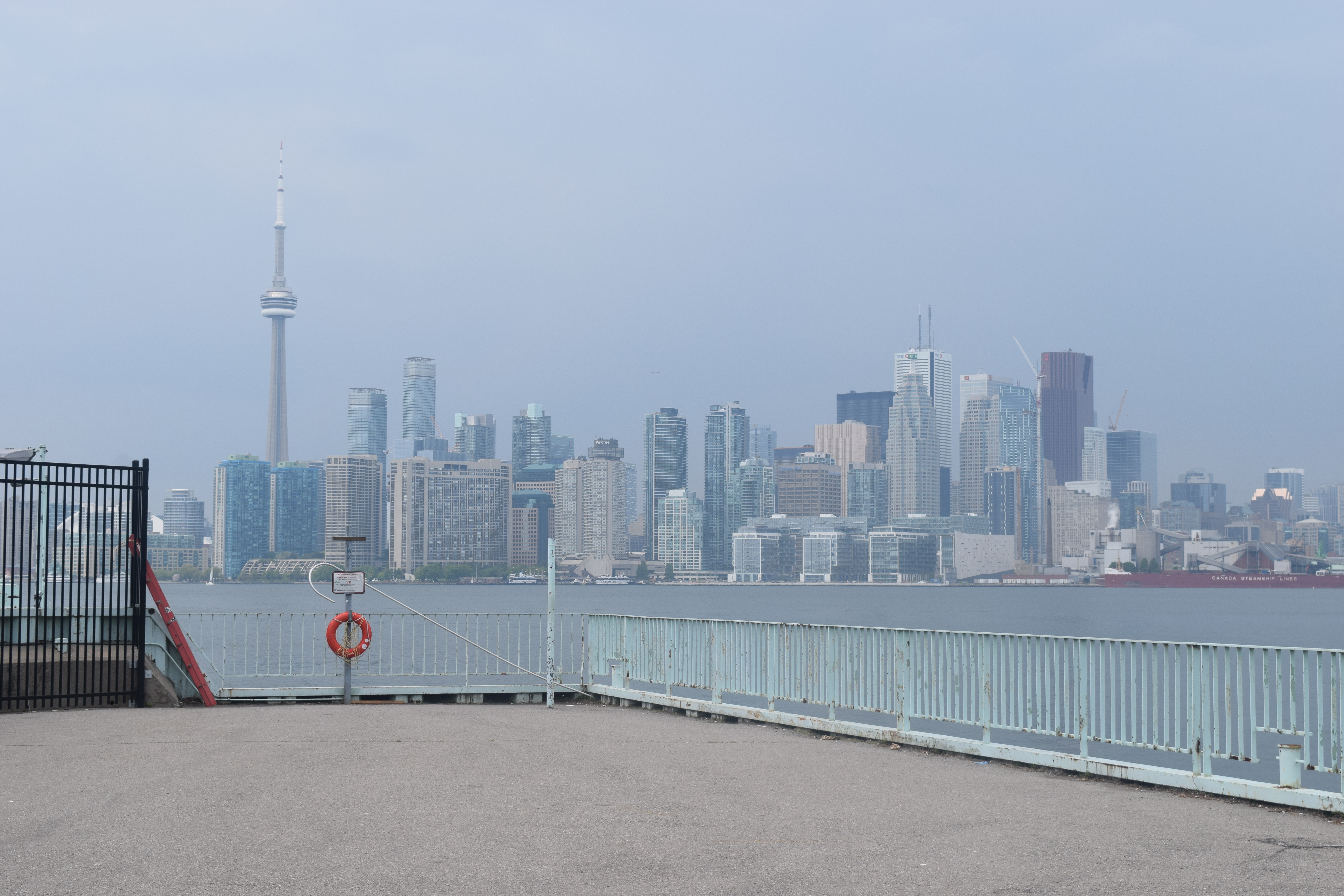
Downtown Toronto seen from Algonquin Island.

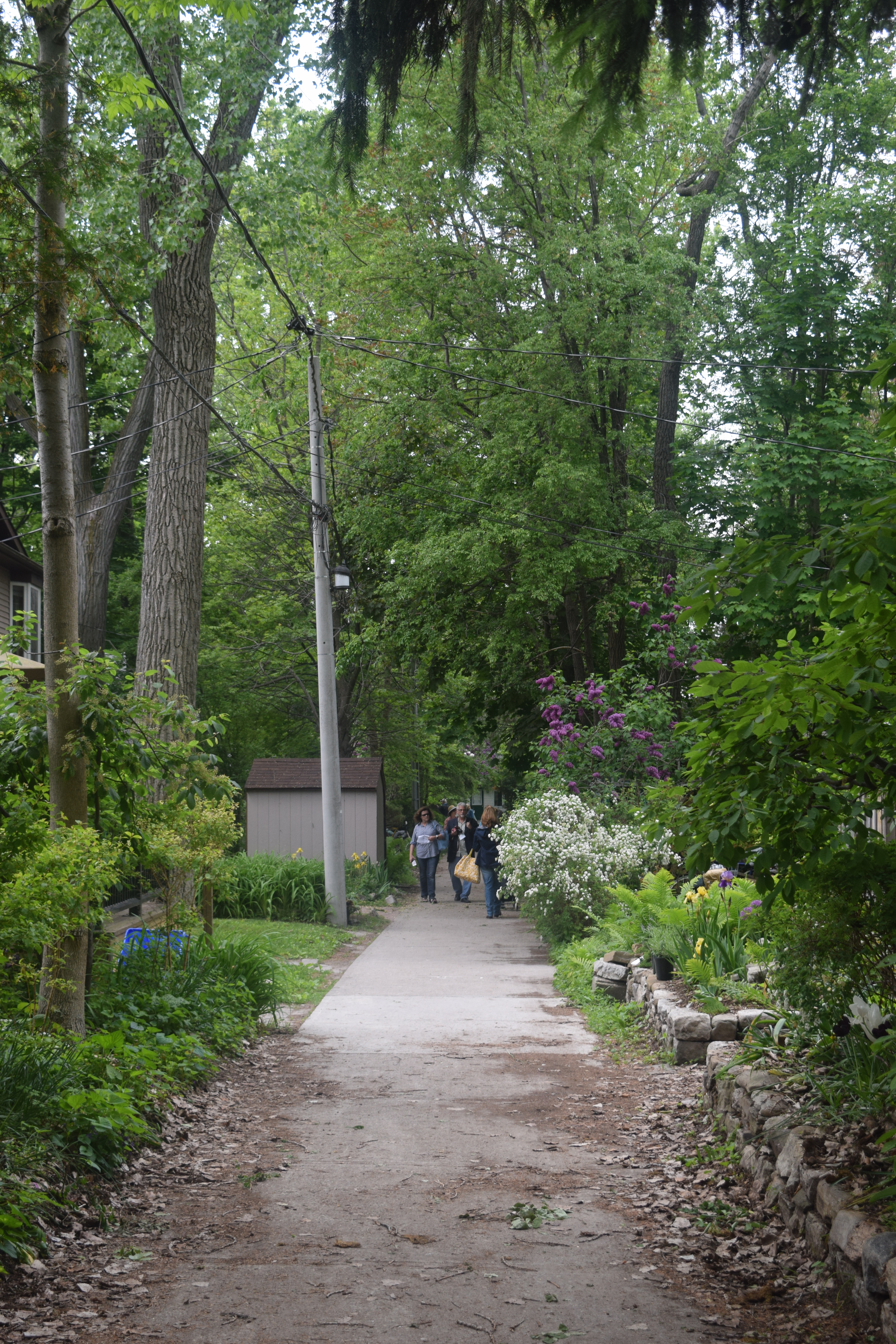
The Toronto Islands are just a few minutes by ferry from the thriving heart of downtown Toronto. In fact, as we wandered the quiet lanes (no cars allowed) we kept running into views of the Toronto skyline.

lkdfjas

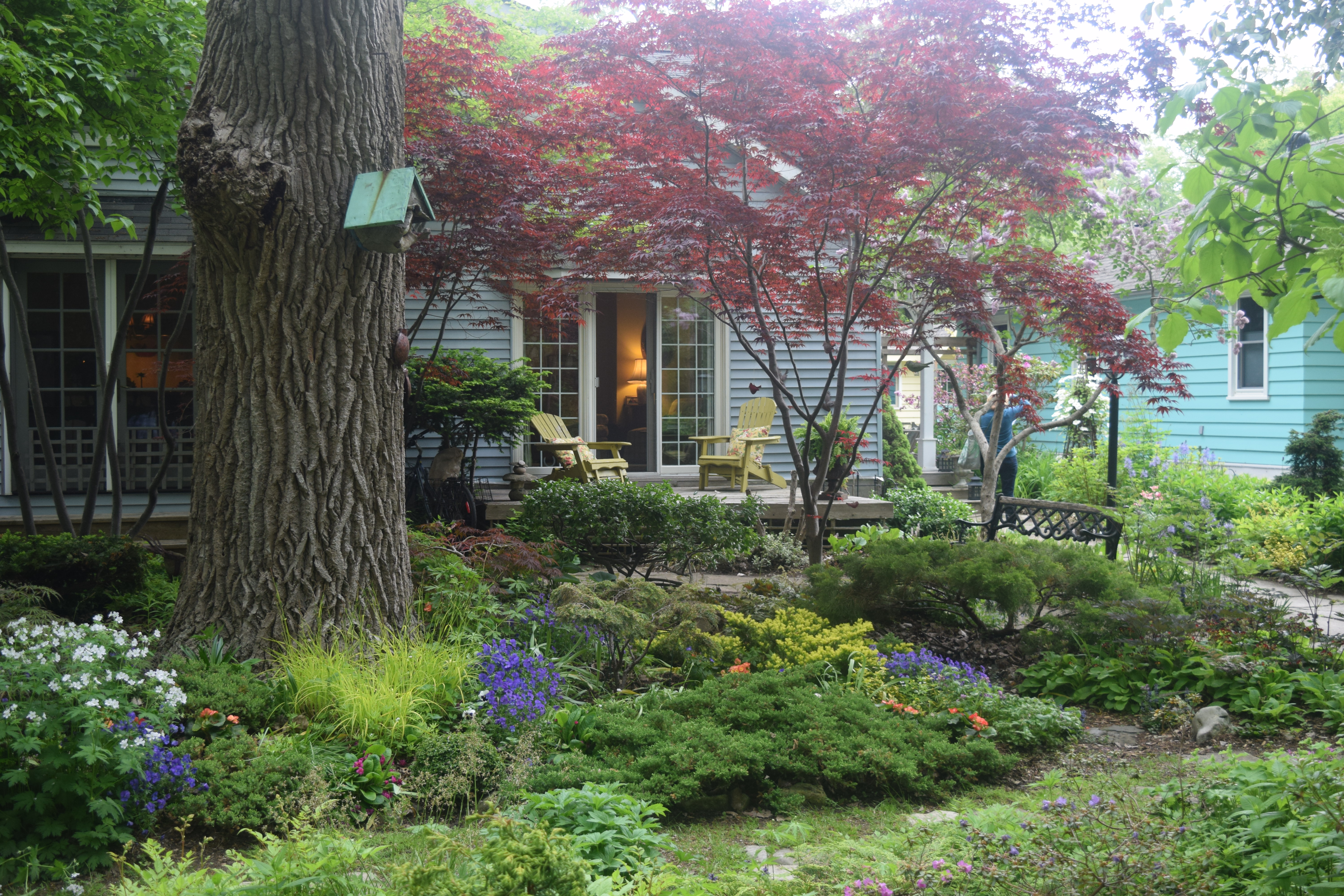
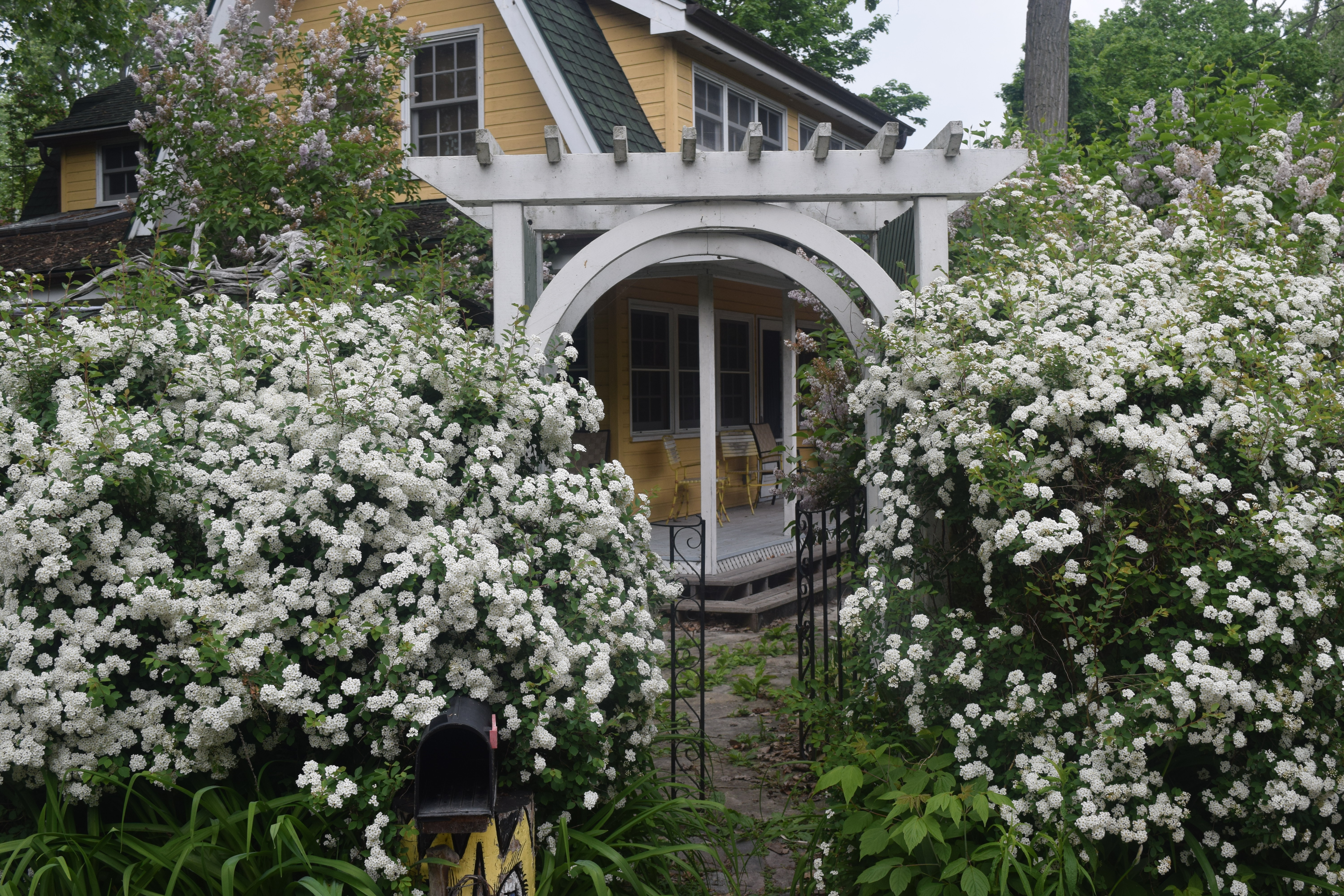
One particular garden left a big impression on both Judy and I. Isn’t this a great front garden? The craggy old trunk of a huge shade tree is underplanted so beautifully with flowers, sedges, and evergreens. And the Japanese Maple softens its domineering neighbor.

l;asdjf;

On the way to the back garden we passed this white clematis. The flowers made me think of angels playing golden harps. Of course I don’t know the name of the variety.

l;asdkf

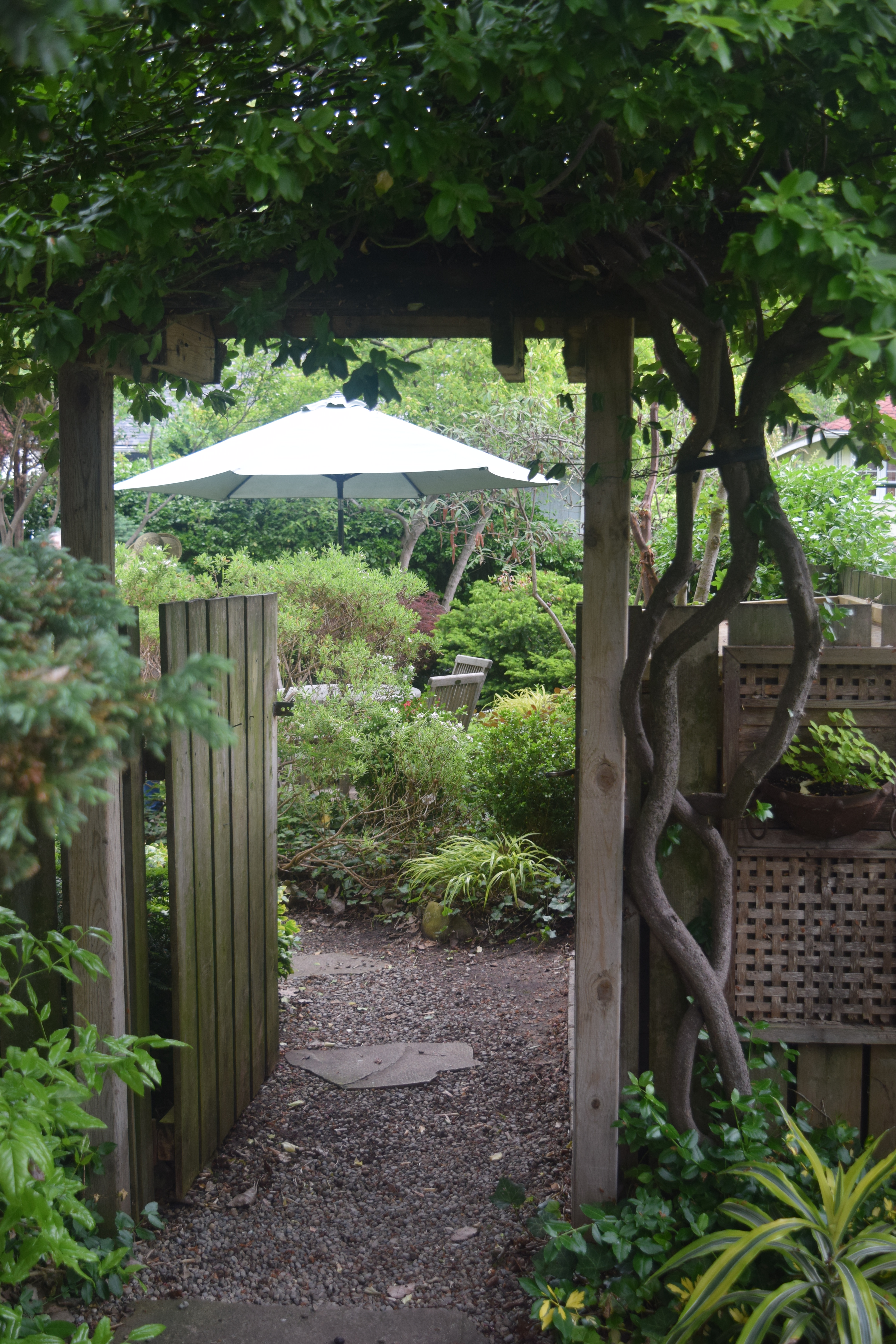
Entrance to the back garden.

2015-06-05 14.49.07

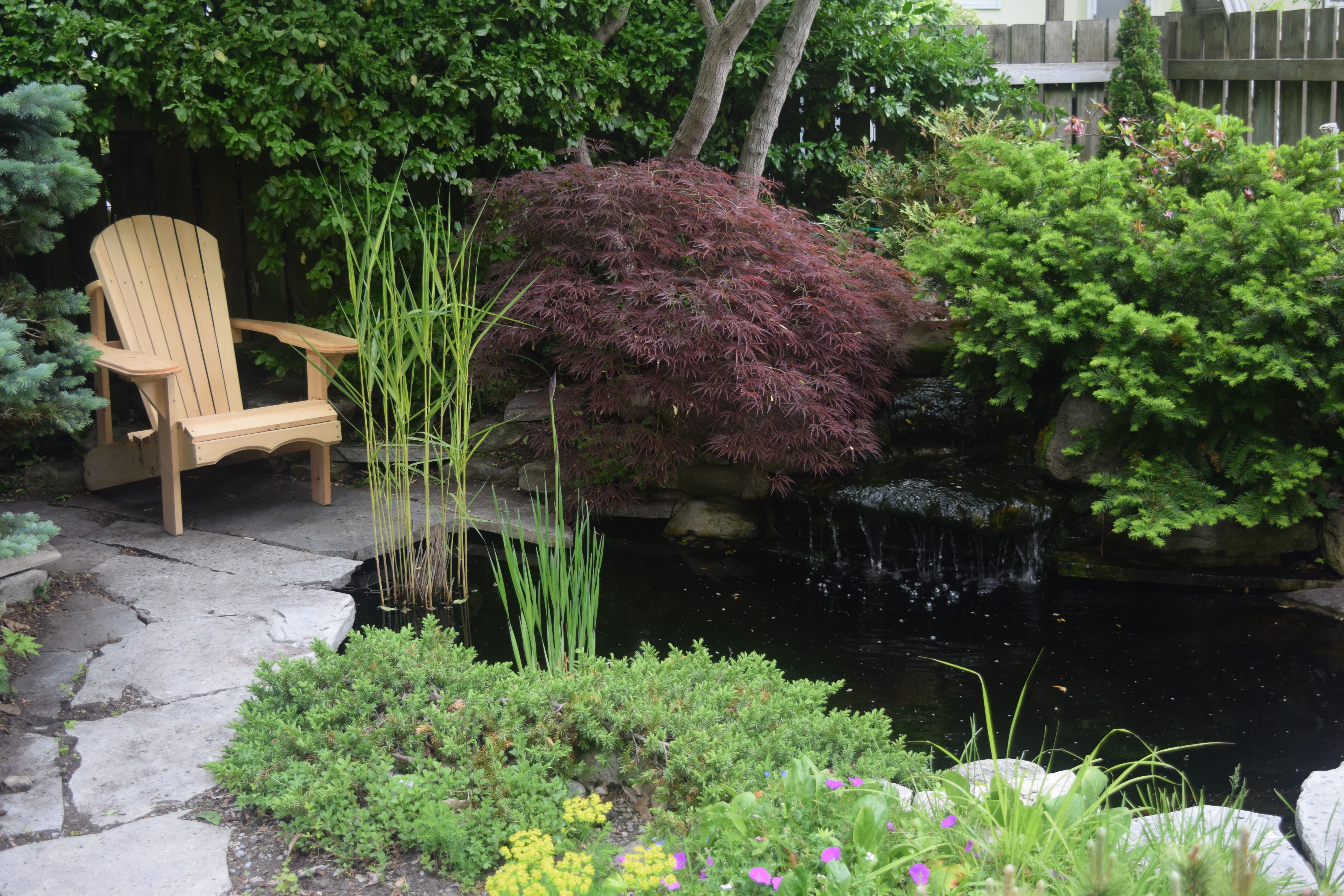
OK, I’ve got to admit that this spot is just about perfect. A private little niche, the stone, the quiet water punctuated by a couple clumps of aquatic plants, the tranquil evergreens with the dwarf Japanese Maple. So much serenity with just a couple of contrasting touches to keep you in the here and now. The place to sit in solitude and figure out the answer to life, the universe, and everything.

a;lsdkfj

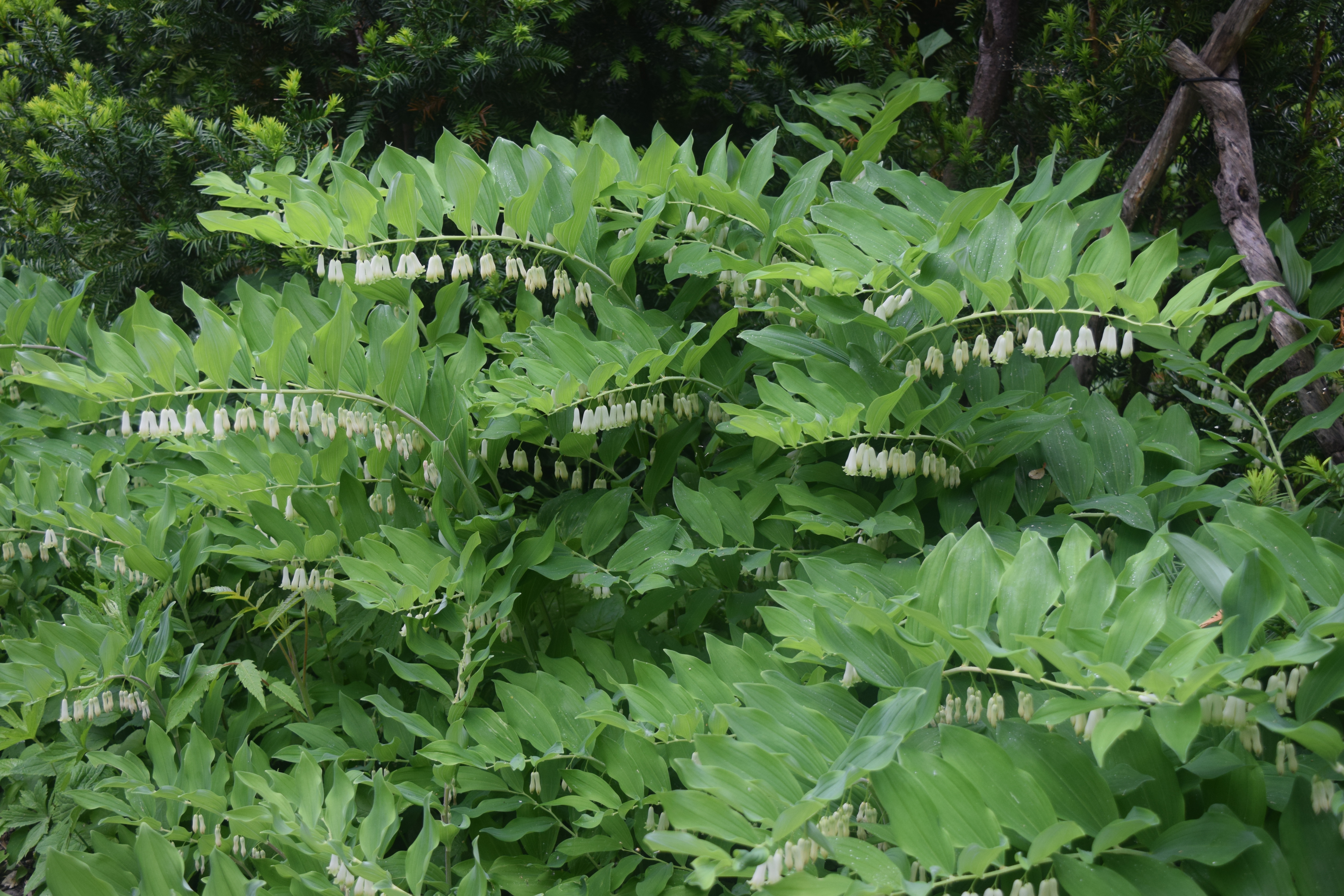
You know who really loves living on the Toronto Islands? Solomon Seal (Polygonatum biflorum), that’s who.

ldsajf

I really like this little  tableau as well, though very different from my own garden, of course.

als;dkjf

And you know who else is really happy? Lady’s Mantle (Alchemilla mollis).

la;sdjfk

Another really nice spot for quiet contemplation, this time for a couple.

lasd;kjf

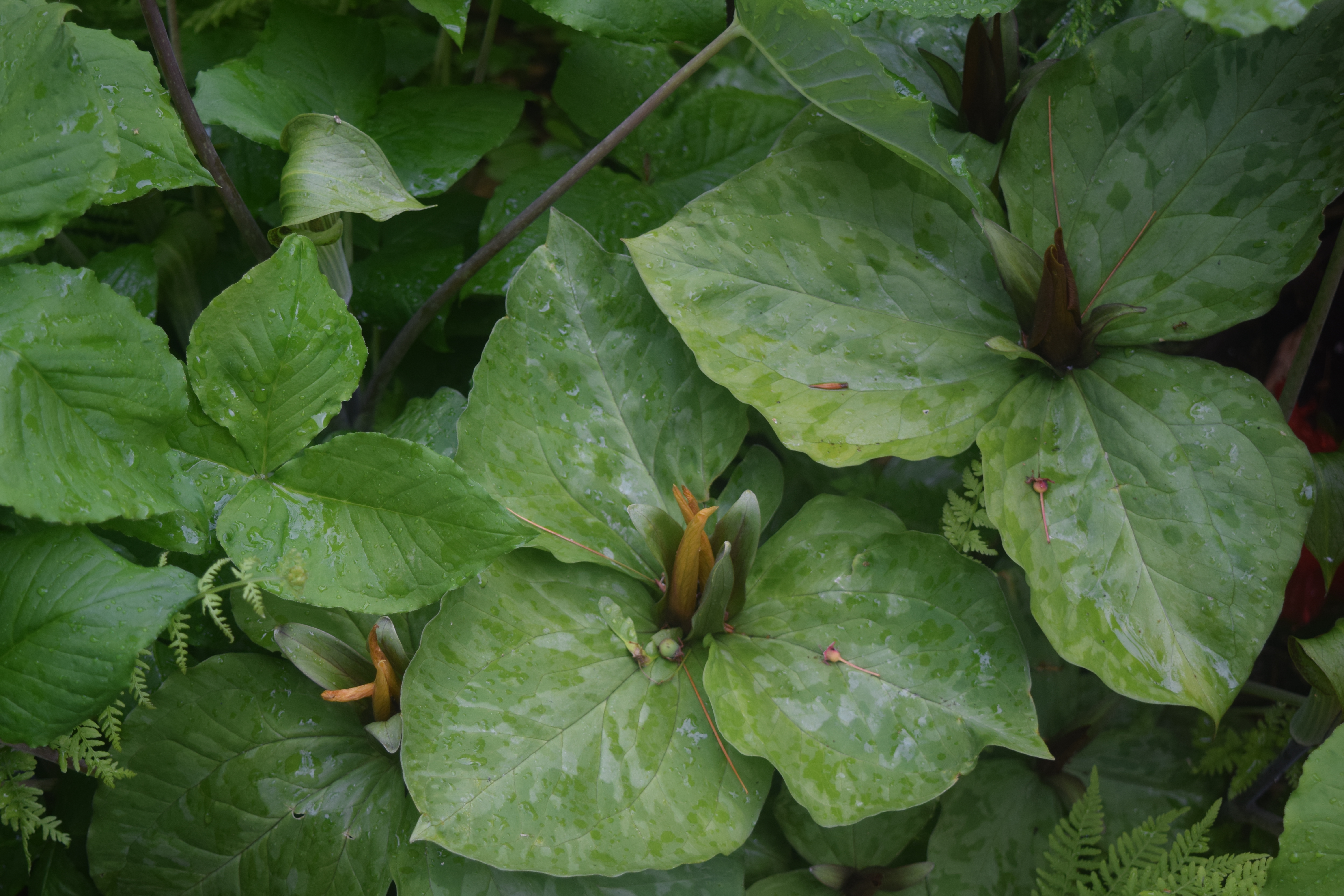
Wish I knew what kind of Trillium these were. Nice mottled foliage.

a;sdlkf

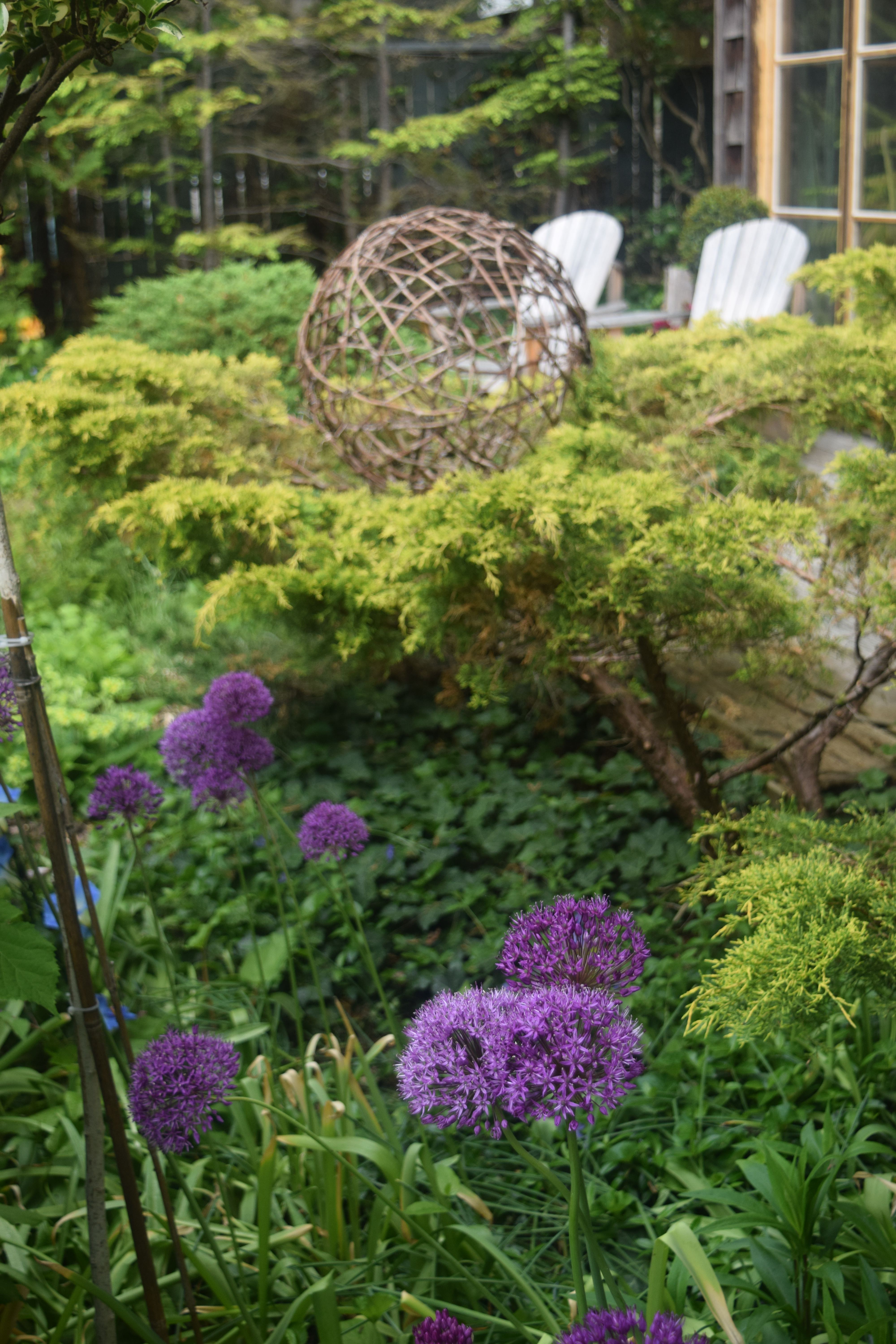
Here’s a combination you don’t see often where I come from: Allium, Baptisia, and Lady’s Mantle.

lasdjfh

Nice globe made from wooden stems in the background. I like how the juniper it rests on suggests a hand or a pillow. And the round Alliums are like little purple globes.

l;adsfk

Sure, the Buddha looks happy. Wouldn’t you be if you spent all your time in this garden?

als;dkfjl

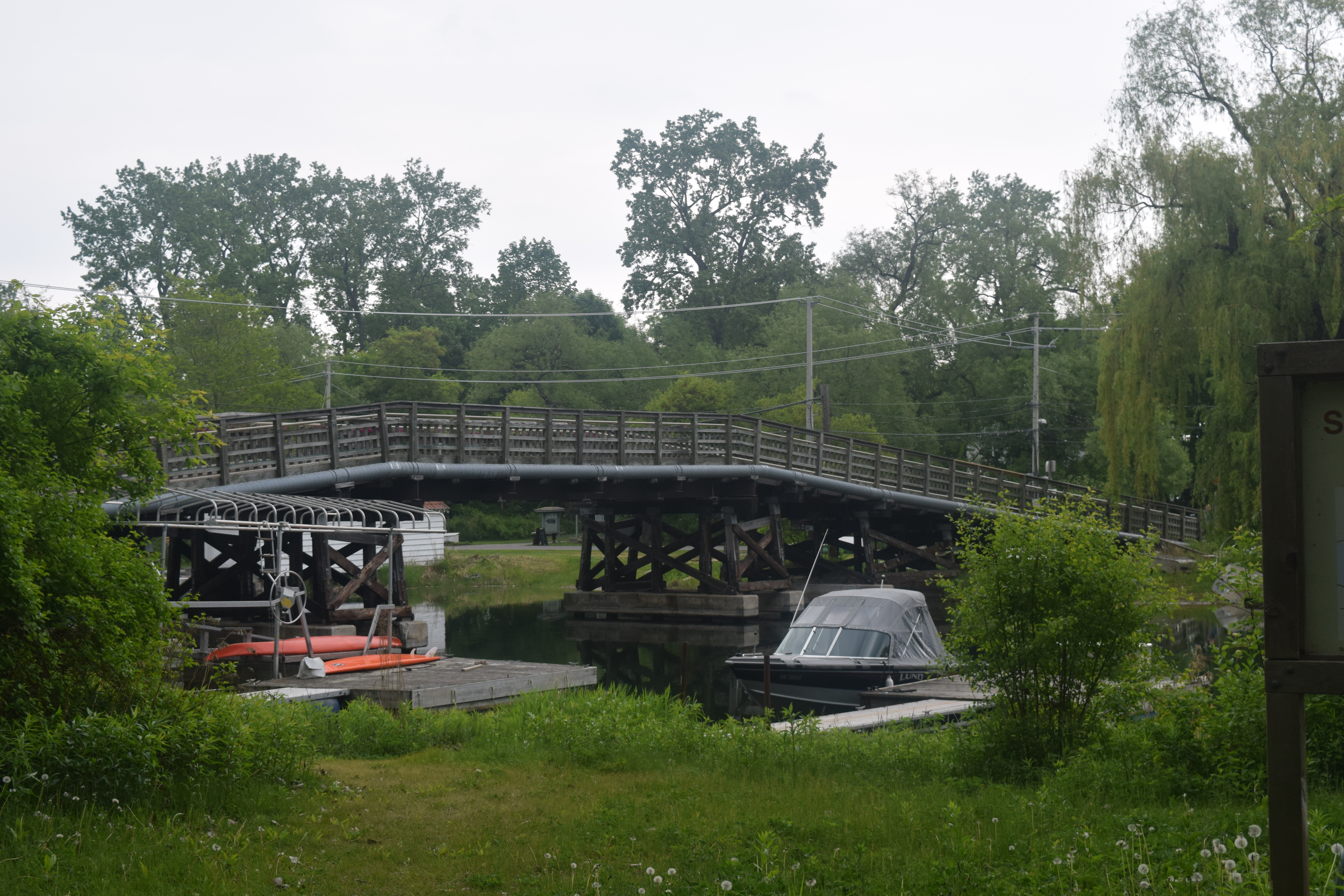
After that garden we had to rouse ourselves to head back to downtown Toronto. Over the little bridge from Algonquin to Ward Island, then down to the ferry dock. The rain, which was nice enough to hold off while the flingers looked at gardens, decided it was time to let loose just as we got to the dock. We then had the pleasure of getting soaked by a brief but very intense thunderstorm.

Fortunately, the next and last stop of the day was our hotel, where we could dry off.

I’m going to keep the rest of my material on Toronto gardens in reserve until the return of cold weather in these parts. In the meantime, what would you say was the most tranquil garden you have ever visited?

Don’t Give Up On Monarch Butterflies

For about a week there’s been a single Monarch Butterfly flying around our garden, and paying particular attention to the Swamp Milkweed (Asclepias incarnata). After I got a fuzzy picture with my phone, Judy sat outside on the front steps waiting for the Monarch to appear so she could get these photos with her Nikon and telephoto lens.

A Monarch butterfly unfurls its proboscis so it can start feeding.
A Monarch butterfly unfurls its proboscis so it can start feeding on Swamp Milkweed.

I’d like to think that this Monarch was testing out the Milkweed for laying eggs. (Can anyone tell from these photos if this is a male or female?). The front garden has big patches of Swamp Milkweed and Butterflyweed (Asclepias tuberosa), but I have never seen a single Monarch caterpillar. As you probably already know, Monarch caterpillars eat only Milkweed plants.

Slurping up the nectar.

It’s always exciting when the Monarchs make their appearance in the garden. Even so, it bothers me to see this single butterfly on its own. It reminds me how common they used to be as recently as the 1990s. Since then we have lost more than 90% of the Monarch population.

Butterflyweed
Butterflyweed

Conservationists have petitioned the U.S. Fish and Wildlife Service to add Monarchs to the Endangered Species List, but the lengthy review process means there will be no decision until 2016. In the meantime, individual gardeners, especially in the Midwest, can help by planting Milkweed in their gardens. There are several species that are extremely ornamental and much less aggressive than the Common Milkweed (Asclepias syriaca).

2015-07-06 10.12.31

Since I already have lots of Milkweed, I’ve decided that this year I am going to badger at least five friends or neighbors into accepting young Milkweed plants for planting this fall. I’ll show up with a shovel and plant them myself. In secret, if I have to.

I’ll also continue to give away free Purple Milkweed (Asclepias purpurascens) seeds this autumn for the second year in a row.

It’s a very small thing on its own, but I want to feel like I did something extra so that we can all have a few Monarchs in our gardens in future years. I want that lone Monarch to be a beginning, and not an end.

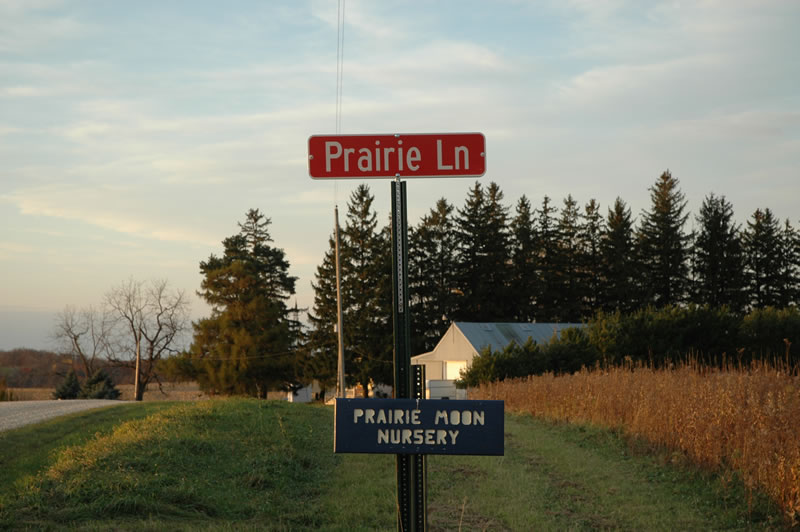
Interview with Bill Carter, President of Prairie Moon Nursery

Based in southeast Minnesota, Prairie Moon Nursery is certainly one of the best known growers of native Midwestern plants and seeds, selling to both the retail and commercial markets. (Full disclosure: I am a frequent and unrestrained customer.)

Bill Carter, the current President of Prairie Moon, was nice enough to respond to written interview questions. Read on for his perspective on the business of native plants.

prairie moon staff
Prairie Moon staff, 2014. Bill Carter is at the far left, in the Superman t-shirt.

Q. Please tell us about the origins of Prairie Moon.

A. Short answer is that Prairie Moon began in 1982. That was the first year there was a profit and taxes were paid. Bare root dormant plants were dug and stored under bales of hay to keep them cool prior to shipping. There was no office and most of the work was done on Alan Wade’s porch.

Prior to that there was production here of Illinois ecotype seed to help supply what was needed by Windrift Nursery, which was the first in that state solely producing native plants and seeds. [Note: Windrift Nursery was opened by Doug and Dot Wade in the 1970s. It is no longer open. Their son Alan was a founder of Prairie Moon.]

Before starting Windrift, Doug and Dot Wade worked at the University of Wisconsin Arboretum in the 1930s. [Note: In Wisconsin the Wades knew and were inspired by Aldo Leopold who wrote A Sand County Almanac.]

Q. How did you end up in your current position at Prairie Moon?

A. I moved to Wiscoy Valley Land Cooperative in 1991 where a number of the co-op members were involved with Prairie Moon. I worked in all aspects of the company and expressed my desire to become an owner when Alan Wade first proposed selling part of the nursery to the employees. At one point there were seven equal owners and now there are four of us. I took the role of President mostly because I was willing to be the spokesperson.

Photo from www.prairiemoon.com.
Photo from http://www.prairiemoon.com.

Q. What is the connection between Prairie Moon and the Wiscoy Valley Land Cooperative?

A. Wiscoy is made up of 12 separate homes and 450 acres of property. We own our homes but jointly own all the property. Alan Wade and a few other members of Wiscoy started Prairie Moon Nursery. PM is a private venture and only ever involved a minority of people who live at Wiscoy. Out of about 25 full time employees only four of us live at Wiscoy.

Q.Do you think that ordinary gardeners can collectively have a meaningful environmental impact through their choice of plants and methods of growing?

A. More and more wildlife is dependent upon ordinary gardeners due to habitat loss. Choosing native plants will ensure that there are caterpillars and other insects available to feed our diminishing bird population. Bees are now being brought into urban areas and even Common Milkweed is a plant that most people would like to have near their homes.

Photo from www.prairiemoon.com.
Photo from http://www.prairiemoon.com.

Q. How does Prairie Moon try to operate in an environmentally responsible manner?

A. I think the biggest thing really is just the promotion of native plants and telling the story of how important it is to have them. We do the basic reuse, reduce, recycling. Our farming practices are low impact and we have been using methods of weed control which do not require herbicide use. We of course do not use any neonicotinoid insecticides.

Q. Have you seen much evidence that the interest in straight species native plants continues to grow? Has it reached a mainstream audience?

A. Prairie Moon is growing despite the fact that we do not sell cultivars.  I think the desire for non-cultivar natives is increasing. Many job specs specify that cultivars cannot be used. Perhaps 100 of the species we offer can now be found in garden centers and general seed catalogs. Sedges are being discovered and some very plain looking plants like Early Figwort are now selling because of their attractiveness to insects.

Q. There has been something of a backlash against native plant advocates. For instance, Prairie Moon’s catalog was quoted disapprovingly as needlessly purist in Alan Armitage’s book about native plants. What’s your reaction?

A. You would think that with the billions being spent on plants each year that some of these folks would be content to let us give accurate information about natives. In the plant world many people make a good income by offering “new” plants. You can’t put a patent on plants unless you manipulate the appearance in some way and make it a cultivar of a native plant.

The industry is always promoting the latest fashon and it is quite profitable. In regards to Alan’s book I think he treated us with respect and I’m sure we were discovered by a few people after reading that. Fortunately there is finally some research being started about the suitability of cultivars. The industry’s response to what they think consumers want can be much different to what the wildlife needs. Let the science sort it out.

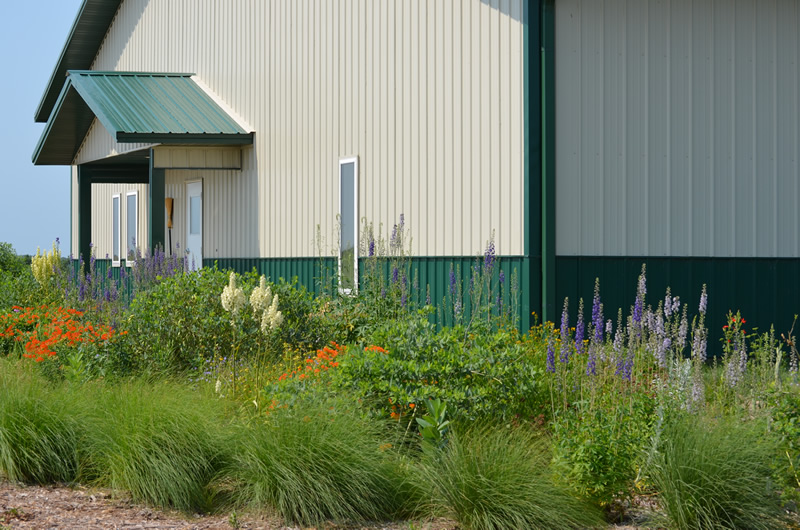
Visitors take a tour of Prairie Moon Nursery. Photo from www.prairiemoon.com.
Visitors take a tour of Prairie Moon Nursery. Photo from http://www.prairiemoon.com.

Q. How strict are you in your definition of “native”? Could a plant whose native range was in the southeast be considered native in the Upper Midwest?

A. On our website each species has information on native range. We let our customers decide on what is best for their area. If someone plants a species not historic to their region then it may not have wildlife value beyond just being a nectar source.

Q. I’m sure many of your customers  (such as myself) mix native and exotic plants. How do you feel about that?

A. Sorry, Jason. We do not allow mixing our plants with exotics. The PM Plant Police will be there soon. 🙂

Note: As of this writing the plant police have not yet arrived. I’m keeping a low profile, though.


My Clematis: What I Call A Quality Problem

Let me start by saying that I am a very modest person. Ask anyone who knows me well. However, at the risk of appearing to be a braggart, I have to say this: my garden has an absolutely honking enormous Clematis jackmanii.

Clematis jackmanii last Sunday.

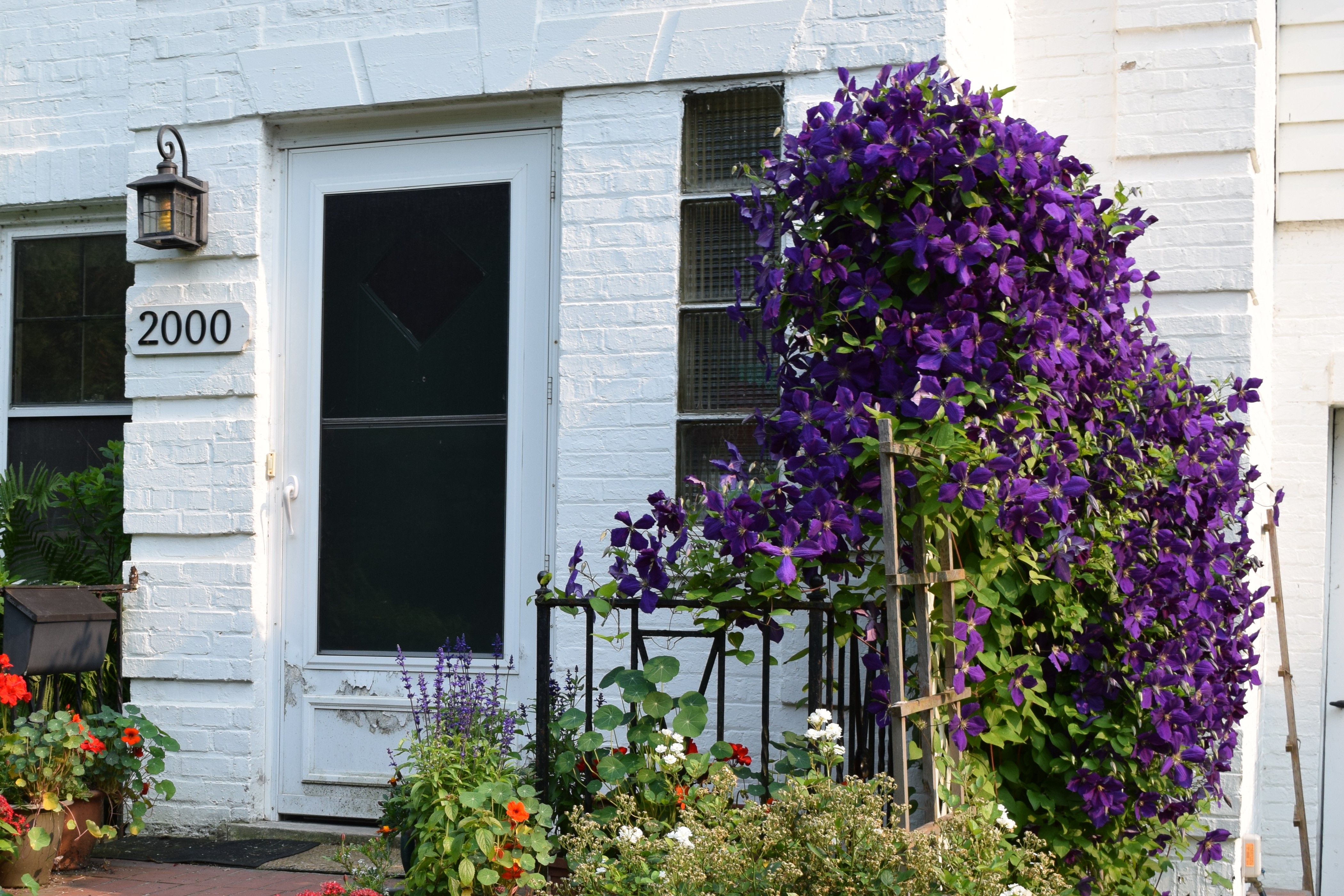
And it’s getting bigger. Above is our Clematis in a photo taken this past Sunday.

Same Clematis on July 8, 2014.

And this is the same Clematis from last year. It’s pretty clear, I think, that there has been significant expansion. (Though it’s a little tricky to see  because the two photos are taken from different angles.)

Actually, there are two Clematis jackmanii. The first and larger vine has spawned an offspring to its left, which is itself starting to become huge.

Back to the present day, summer of 2015.
Back to the present day, summer of 2015. You can see the Clematis is turning the corner and taking over the railing to the front door landing. Oh, and I just left that unpainted wooden trellis against the wall meaning to use it for something else. Next thing I know it has been commandeered by the Clematis King.

So now I have what could be called a quality problem: too much Clematis for the trellising available (not to mention the railing on the front door landing.

Clearly I need to attach more trellising to the west-facing brick wall of our house. But what is the best way to do that? I could trellis upward – maybe attach 10′ or 12′ vertical rebar to the wall with horizontal wires attached. Or tear out the wooden trellis and replace it with a much taller one.

Another possibility would be to trellis out rather than up. You can’t see it in these pictures, but there is more west-facing wall going to the left towards the attached garage.

Thoughts?

Robin Goes a Huntin’

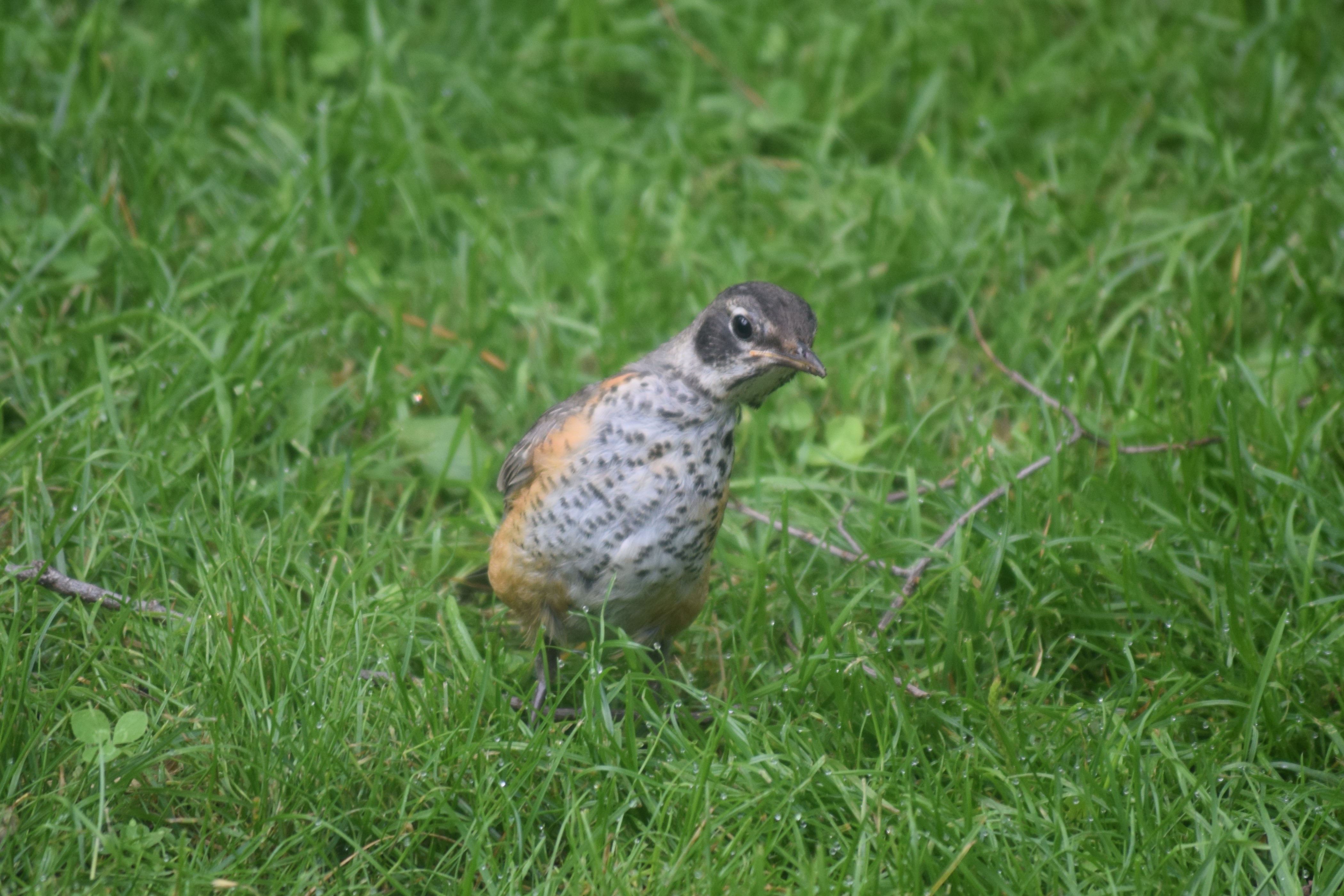
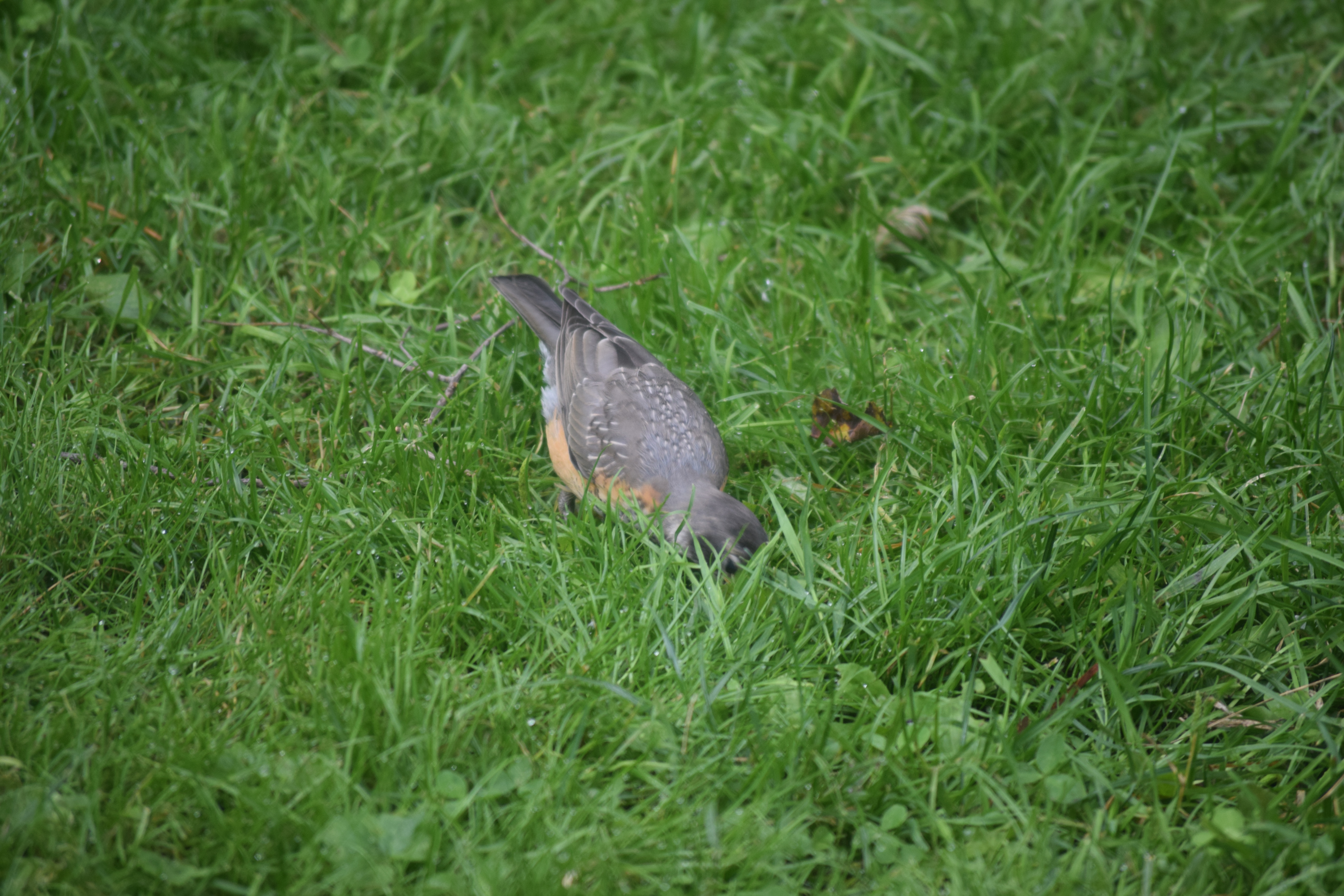
This is the time of year when you see juvenile American Robins about the garden. Juveniles have a spotted breast instead of a red breast. They are cute and fun to watch, especially when they are on the hunt.

Robins like to hunt in leaf litter and lawns, which is another good reason to keep the insecticides and pesticides off your grass.

DSC_0557

“I’m hungry.”

DSC_0558

“How come there’s never anything to eat around here?”

DSC_0560

“Now, that looks like it could be something to eat.”

DSC_0561

“It IS something to eat!”

DSC_0562

“I’m going to sneak up on it very quietly.”

DSC_0564

“Gotcha!”

DSC_0565

“I’m still hungry.”

Hoping all of you had a fine holiday weekend. See you soon.

Algonquin Island Gardens, Part I

Algonquin Island is part of the Toronto Islands, which I wrote about in this post a few days ago. The Toronto Islands are a unique space, the largest urban area in North America without motor vehicles. In that last post we wandered around Ward Island, which has the flavor of a North Woods artist colony.

The bridge to Algonquin Island

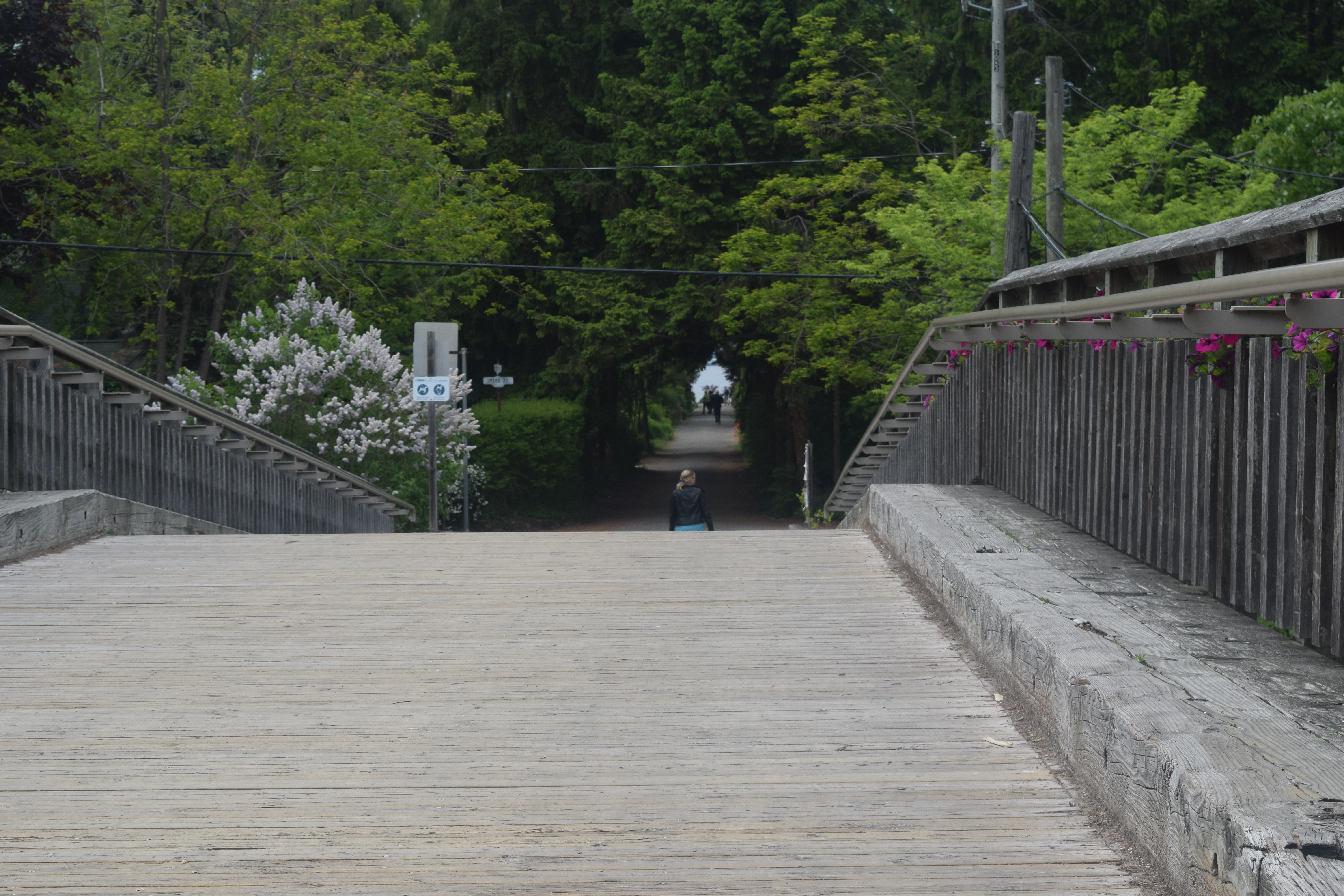
Now let’s pick up where we left off, crossing the foot bridge between Ward and Algonquin Island.

2015-06-05 14.13.08

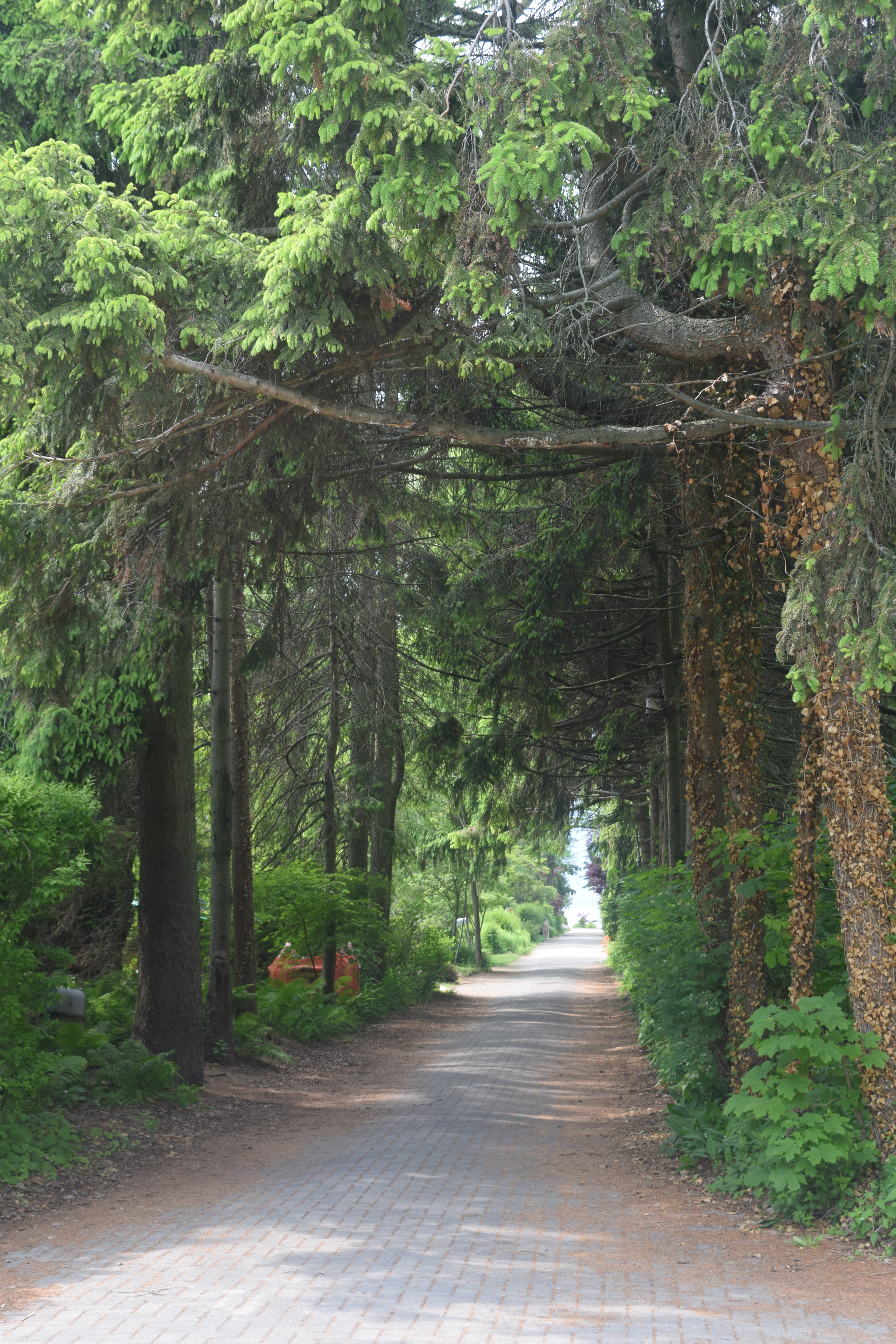
We walked under a canopy formed by tall conifers on either side of a narrow lane.

2015-06-05 14.16.15

The first garden we came to was built around a small pond with paths made of wooden planks. I loved the combination of water with wood, stone, and tall grassy plants.

2015-06-05 14.18.12

The yellow iris were just beginning to bloom.

2015-06-05 14.21.54

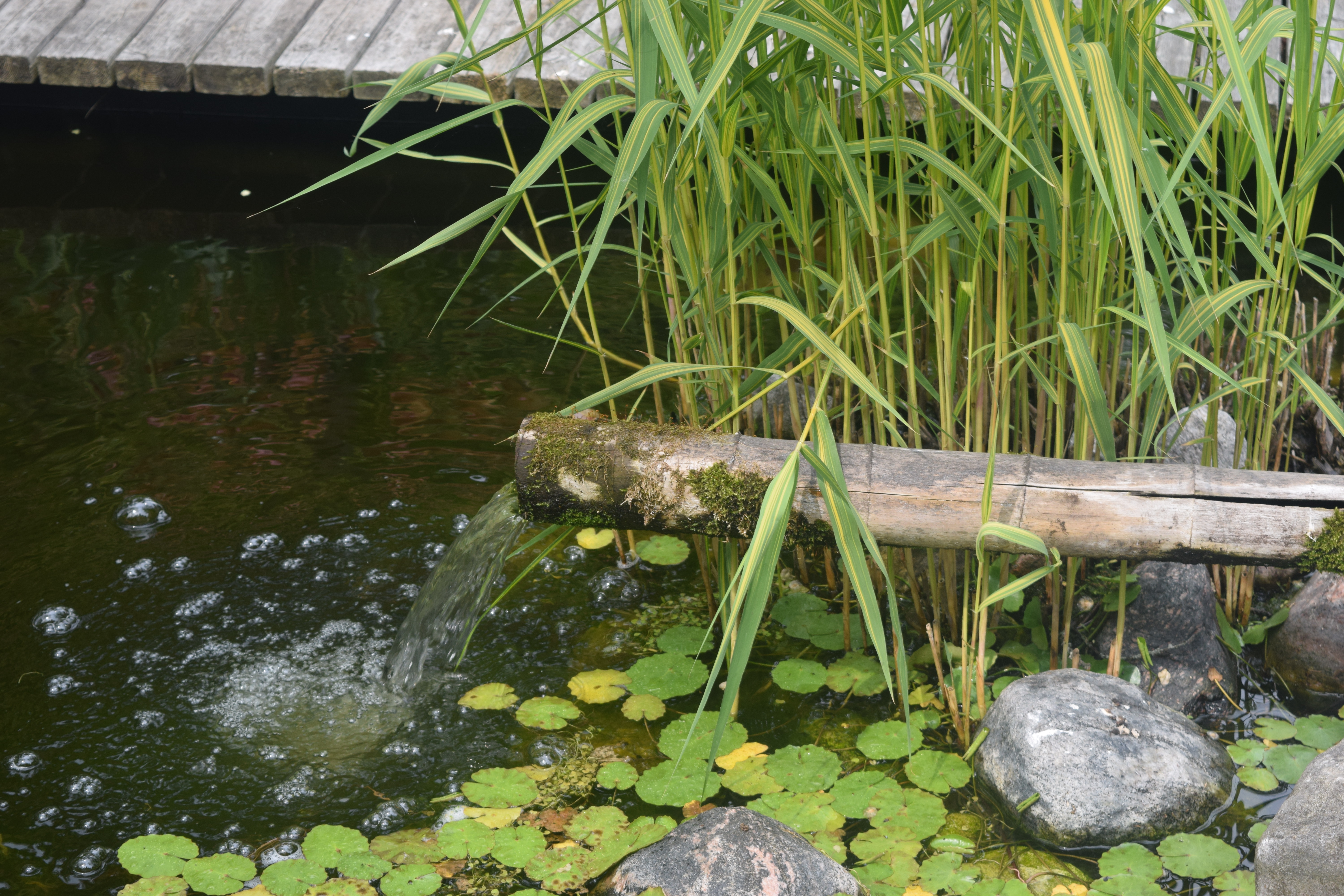
Water flowed into the pond from a hollow bamboo pole, one of several elements suggestive of a Japanese garden.

2015-06-05 14.19.05

I like that table made from the cross section of a tree, but those stumps look more decorative than comfortable.

2015-06-05 14.20.24

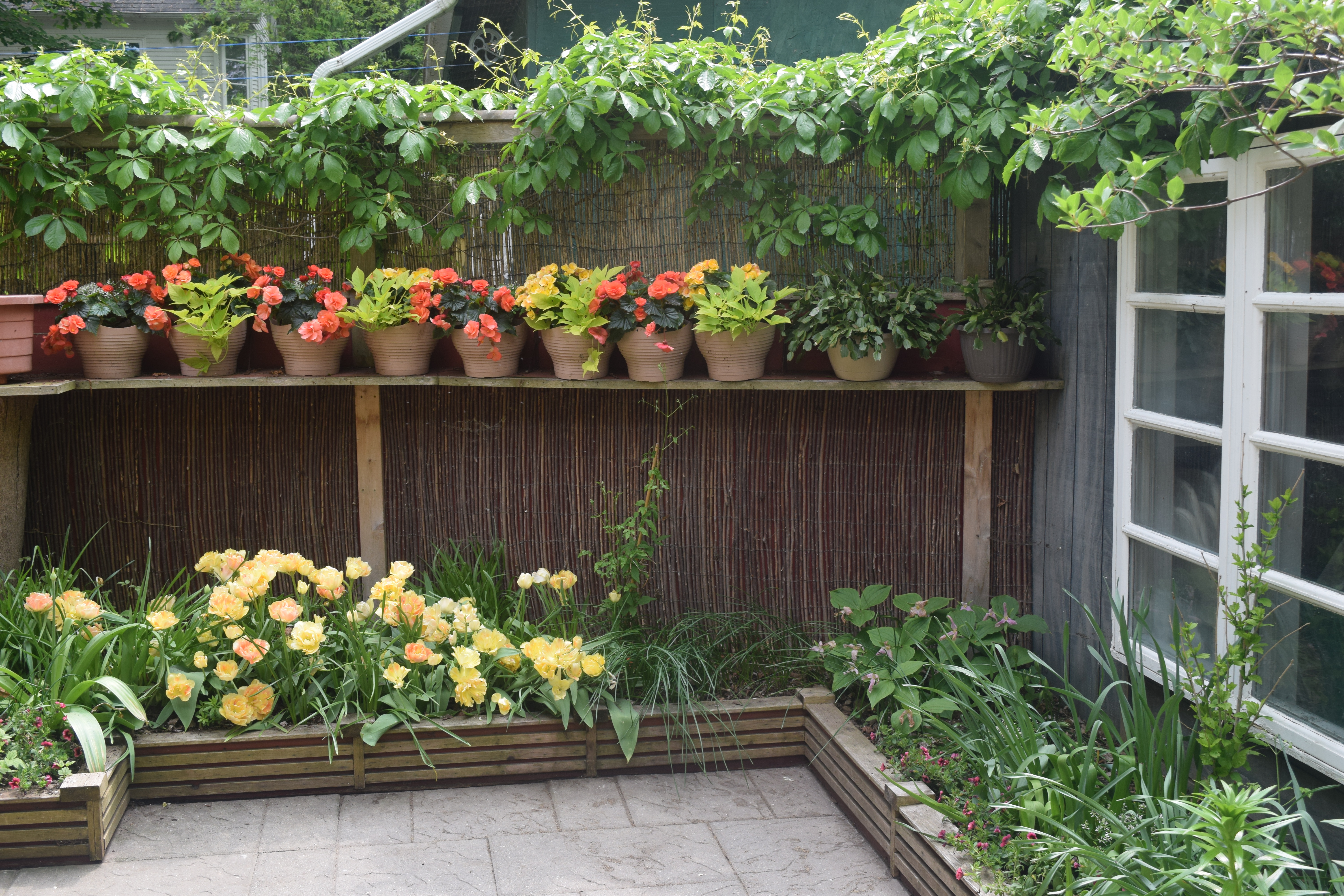
You can never have too  many flower pots. The repetition of the containers on the shelf is very appealing, and somehow they look right with the flowers blooming in the raised bed below.

2015-06-05 14.26.55

We strolled onward to another garden. Algonquin Island is a very green place.

2015-06-05 14.26.12

My parents had some big Rhododendrons in their New York garden and I think of it as an eastern shrub. These are beautiful, and I love the contrast with the Japanese Maple.

2015-06-05 14.29.04

Not really sure, but I think this was not one of the open gardens and Judy took this picture from the lane. The house and its surroundings have a real “cottage in the woods” feel.

2015-06-05 14.29.17

A rusty metal ladder, a birdhouse, and an old pot full of flowers provide company for a venerable tree.

2015-06-05 14.34.44

Some of the gardens on Algonquin Island had more of a suburban feel, or suggested the garden of a gracious summer cottage, as opposed to the more bohemian vibe on Ward Island.

2015-06-05 14.38.47


I don’t think I’ve ever seen so many happy ferns and hostas.

2015-06-05 14.44.40

OK, that’s it for now. Let’s close with a picture of the photographer against the Toronto skyline seen from Algonquin Island.

In another post (coming in the near future), we’ll finish up at Algonquin Island. There’s one more garden in particular that is really worth seeing.

Smooth Hydrangea: It Grows On You

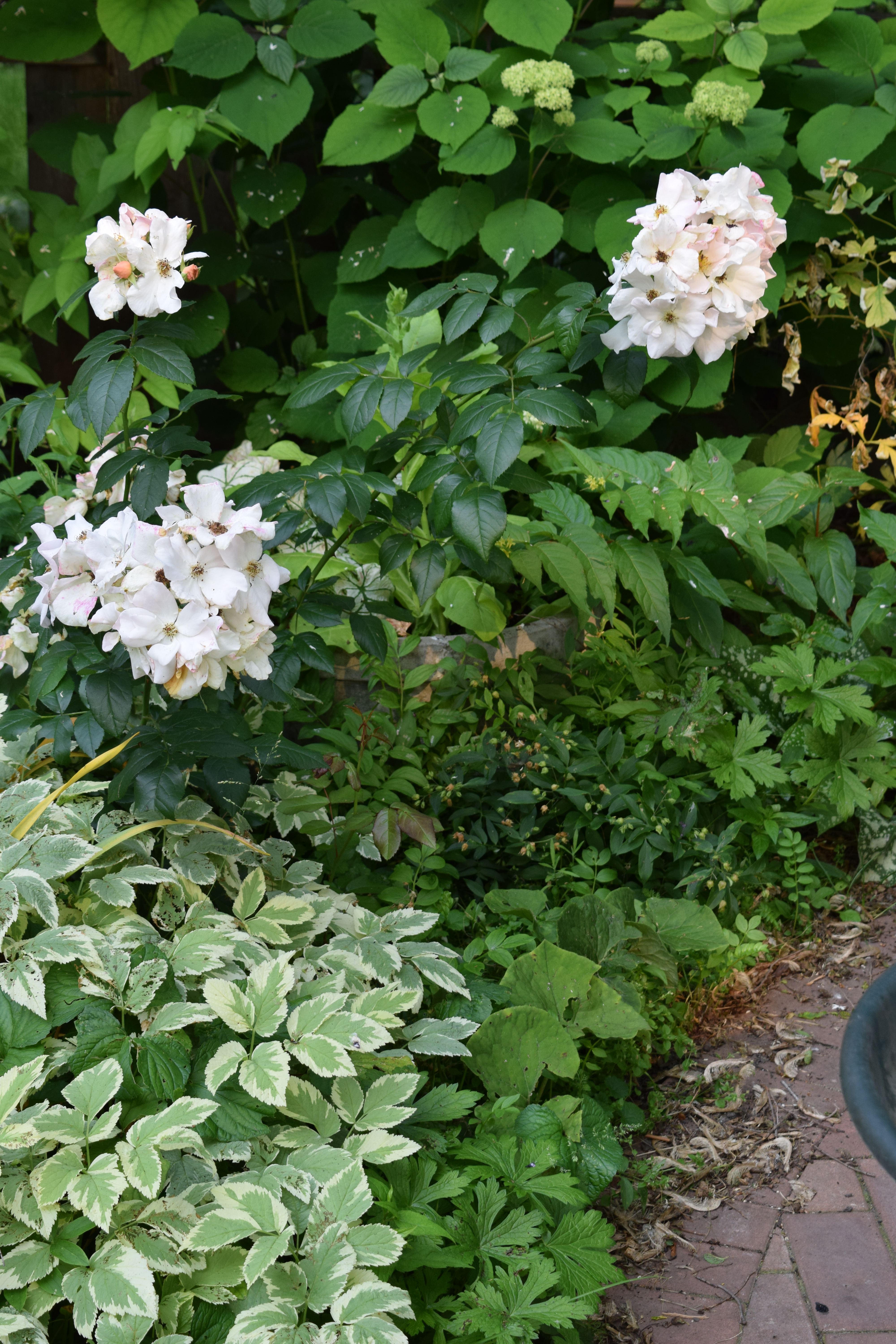
My relationship with Smooth Hydrangea (Hydrangea arborescens) can be likened to an arranged marriage. I didn’t choose this plant, it was there when we moved into our house 13 years ago. At first I found it mildly disappointing. But as we shared good times and bad, my attitude moved to one of quiet affection.

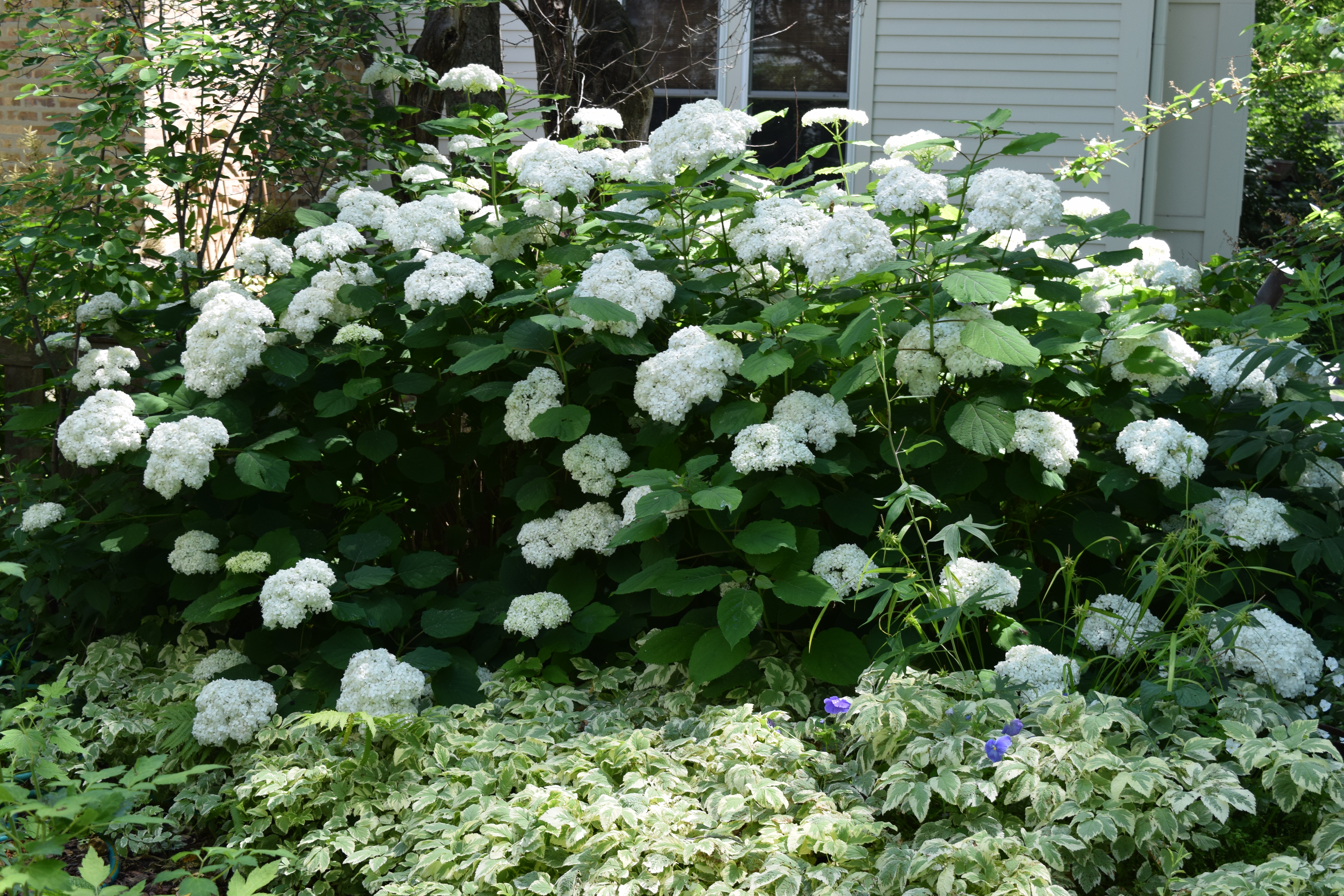
Smooth Hydrangea, underplanted with Bishop's Weed
Smooth Hydrangea, underplanted with Bishop’s Weed

I can’t speak to the Hydrangea’s attitude, we don’t discuss our feelings much.

I have an instinctively standoffish attitude towards Hydrangeas generally, for reasons I can’t really articulate. It may stem simply from the name “Hydrangea” itself, which sounds somehow fussy and Victorian.

However, I have come to appreciate the big, white (never pink or blue) flower clusters, covered with bees in early summer. The rounded, dark green leaves are also nice. These shrubs look good in the back garden underplanted with variegated Bishops Weed (Aegopodium podagraria).

Smooth Hydrangea is happy in light or part shade. Also, turns out it is a pretty tough plant. During the drought of 2005, there were a couple of Hydrangeas I didn’t water at all. They withered away over the summer. I thought they were goners, but they bounced back the following spring.

They will also bounce back from aggressive pruning, though you may lose a year’s flowers.

Similarly, the Smooth Hydrangeas on the west side of the house don’t seem to mind growing in soil that tends to be fairly dry, due to a rain shadow cast by the eaves.

And I should add that Smooth Hydrangea is native to Eastern North America, including southern Illinois.

I used to think that my Smooth Hydrangeas were of the cultivar ‘Annabelle’. However, I now realize they must be some other variety, possibly ‘Grandiflora’. ‘Annabelle’ has huge flower heads, so big that they often flop over in the rain. The flowers on my Smooth Hydrangea are definitely smaller.

I am linking this post to the Wednesday Vignette meme hosted by annamadeit at Flutter and Hum.

Do you have Hydrangeas in your garden? Do you find that you and your Hydrangeas are growing closer together or further apart?

Just Offshore from Downtown Toronto, Verdant Islands with Personality to Spare

Ward Island is part of the Toronto Islands, just a few minutes ferry ride from downtown Toronto, Canada. That short ferry ride transports you between what feels like one world and another.

The ferry to Ward Island in downtown Toronto.

You leave the bustling hub of a city of 2.6 million people. You arrive in a place of small cottages and modest houses, no motor vehicles (the Toronto Islands are the largest urban area in North America without cars), and gardens lovingly tended and often creatively inspired.

View of downtown Toronto from the Ward Island dock.
View of downtown Toronto from the Ward Island dock. It was a hazy, cloudy day.

Actually, Ward Island is not an island. Rather it is the eastern-most chunk of Centre Island, the largest part of this tiny archipelago.

Judy and I got to see the Toronto Islands as part of the brilliantly organized 2015 Garden Bloggers Fling. Once the Flingers got off the ferry and had a group picture taken, we were given maps and a list of the gardens that were open to visitors.

The "streets" of Ward Island were tiny, maybe wide enough for four people to walk abreast.
The “streets” of Ward Island were tiny, maybe wide enough for four people to walk abreast.

After that, we were free to spend the afternoon wandering at will. This post will focus on Ward Island, and in the near future I’ll write something about Algonquin Island, which had a slightly different feel.

To be honest, I can’t remember enough to write about the individual gardens we saw on Ward Island, but I can write about the general impression they made on me.

2015-06-05 13.06.19

The overall feel was certainly informal, often with a Bohemian vibe. These Bridalwreath-type Spirea were popular, and obligingly at peak bloom at the time of our visit.

2015-06-05 13.50.38

Lots of originality could be found in materials and objects used for hardscape, containers, and garden art.

2015-06-05 13.10.23

Why shouldn’t a toilet be repurposed as a planter?

2015-06-05 13.28.59

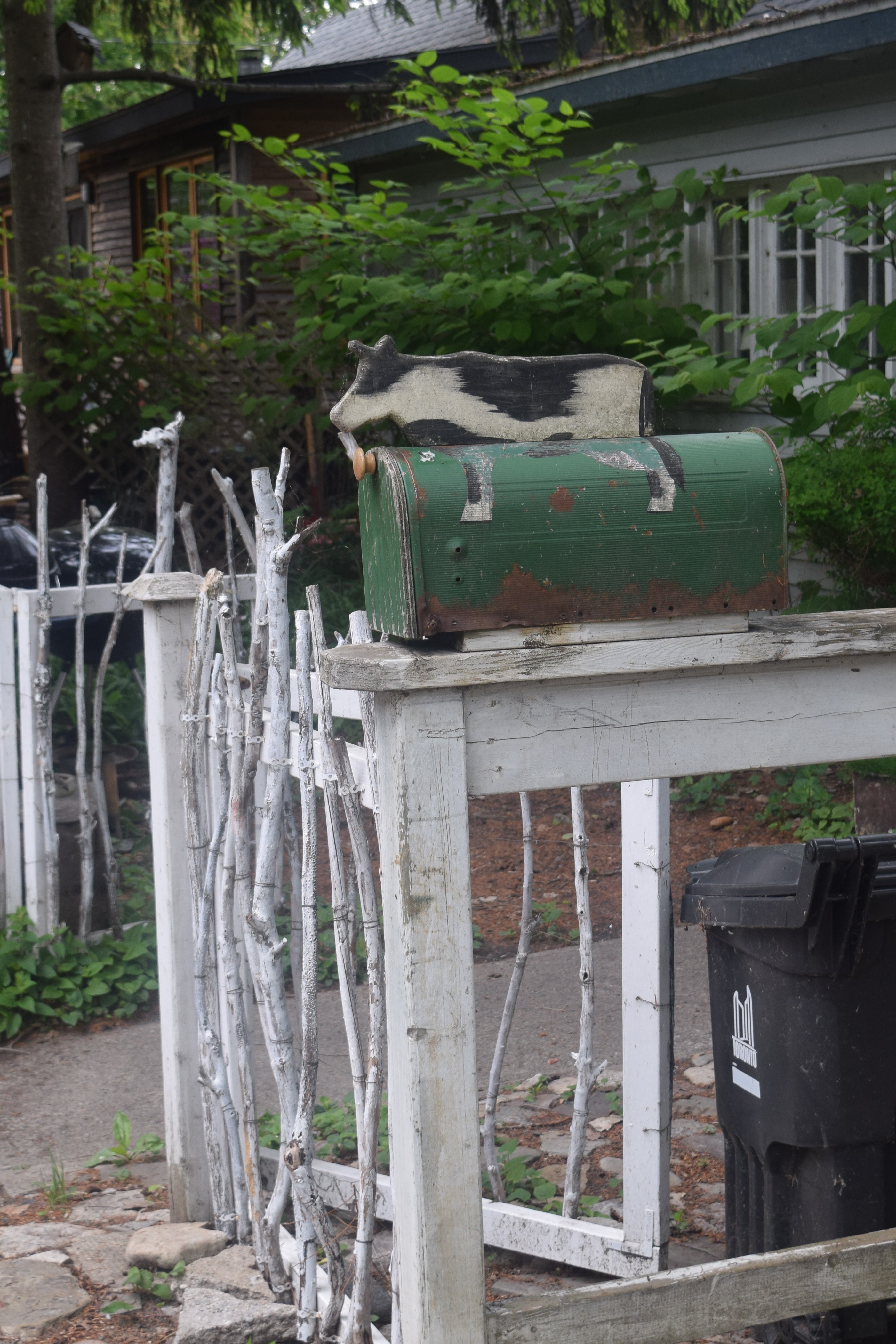
I liked this cow-themed mailbox.

2015-06-05 13.31.58

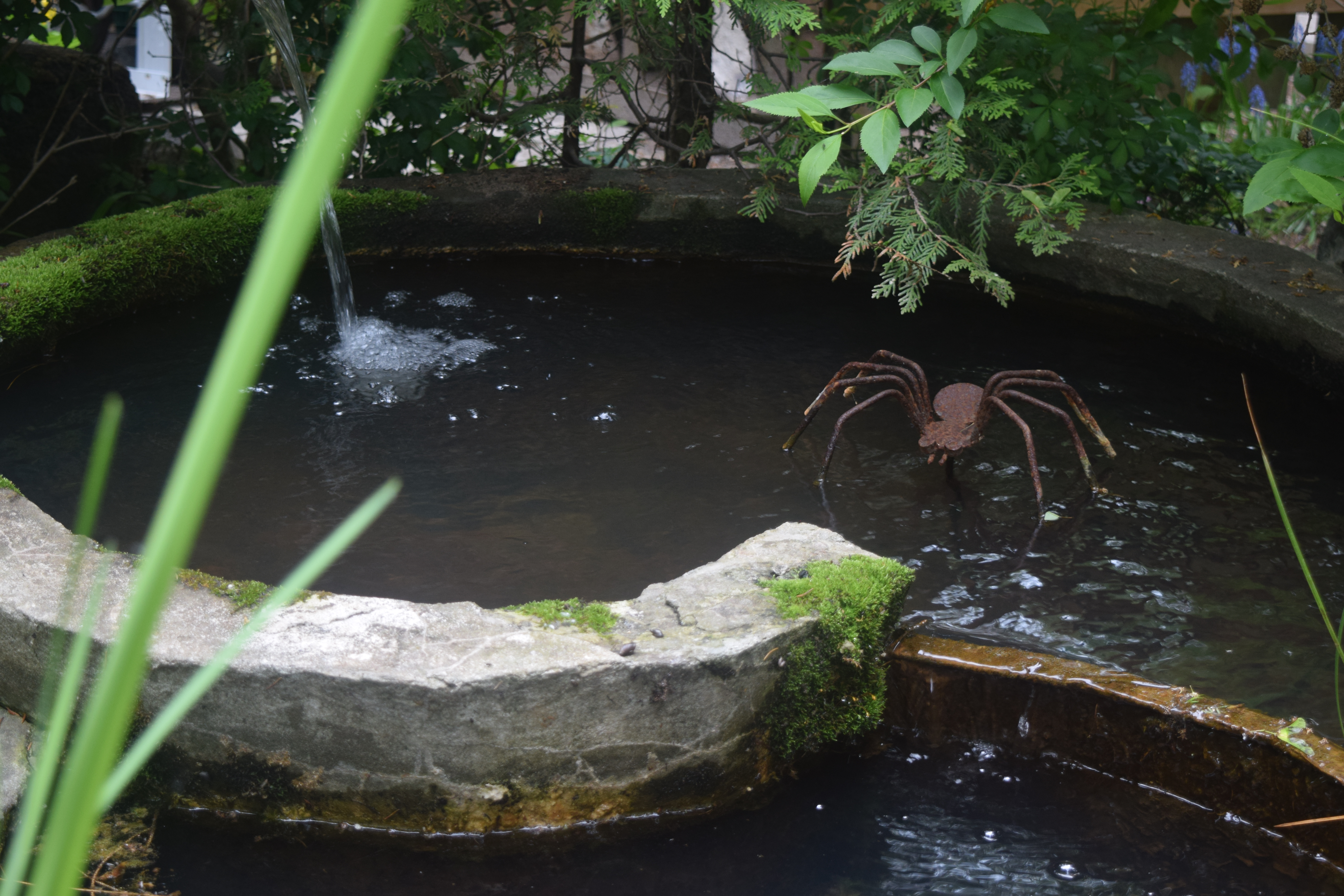
We also saw some wonderful water features. I like this rough-cut stone.
2015-06-05 13.30.44

Watch out for the spider!

Alliums were abundant in the gardens we saw.
Alliums were abundant in many of the gardens we saw.

As for color, it seemed as if all the flowers of spring were blooming simultaneously in June rather than sequentially throughout the season.

Hellebores in June.
Hellebores in June.

Tulips, Alliums, and Irises, Lilacs and Hellebores – all could be seen blooming at once.

Another view of downtown Toronto, this one from an island garden. Note the tulips, al;ks blooming in June.
Another view of downtown Toronto, this one from an island garden. Note the tulips blooming with Iris and Cammasia in June.

Perhaps there were all rushing to catch up from the long winter, knowing there was no time to waste.

2015-06-05 13.55.47

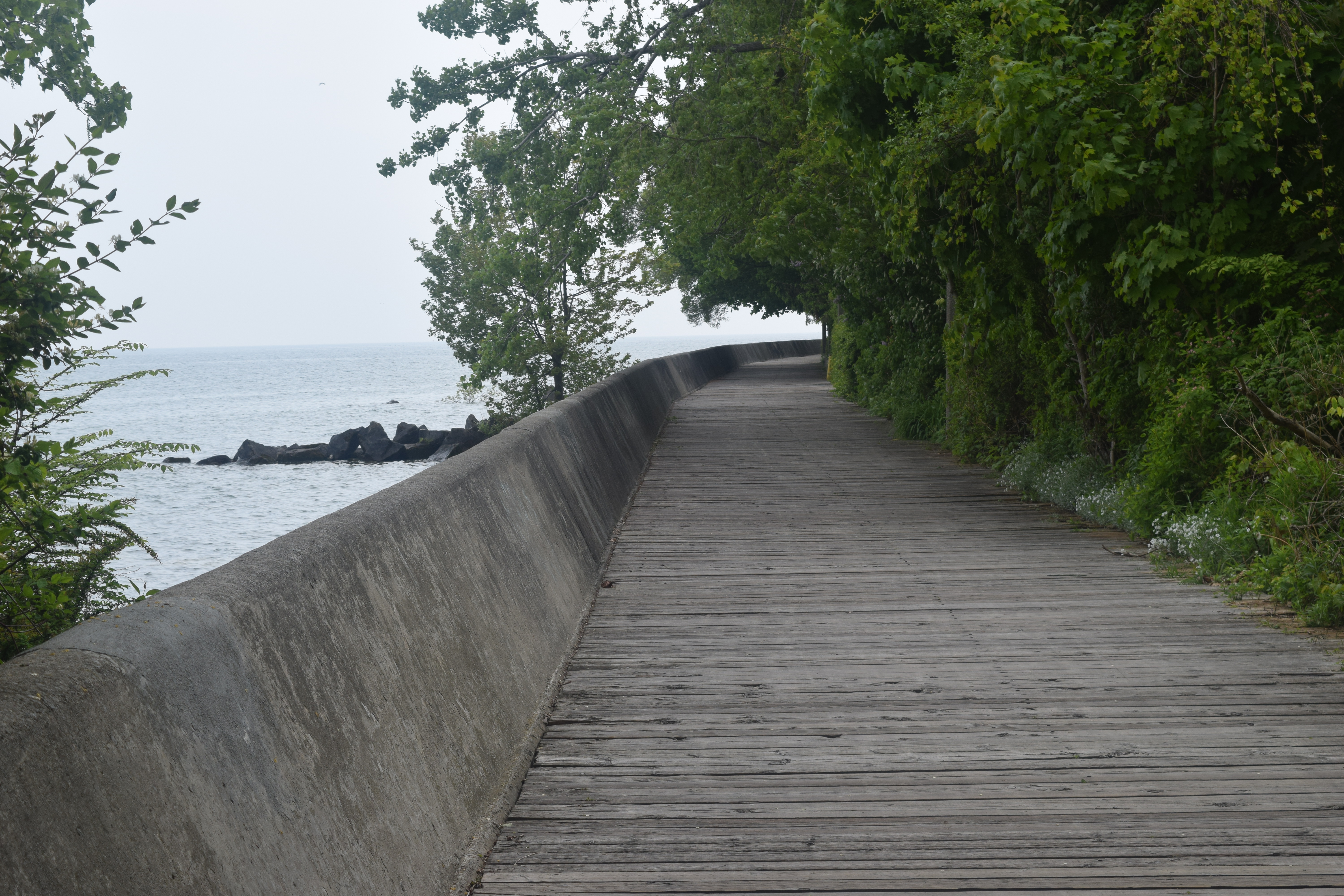
After seeing a number of gardens, Judy and I walked to the bridge leading to nearby Algonquin Island. Our route was a boardwalk along the south side of the island, facing Lake Ontario.

2015-06-05 13.53.29

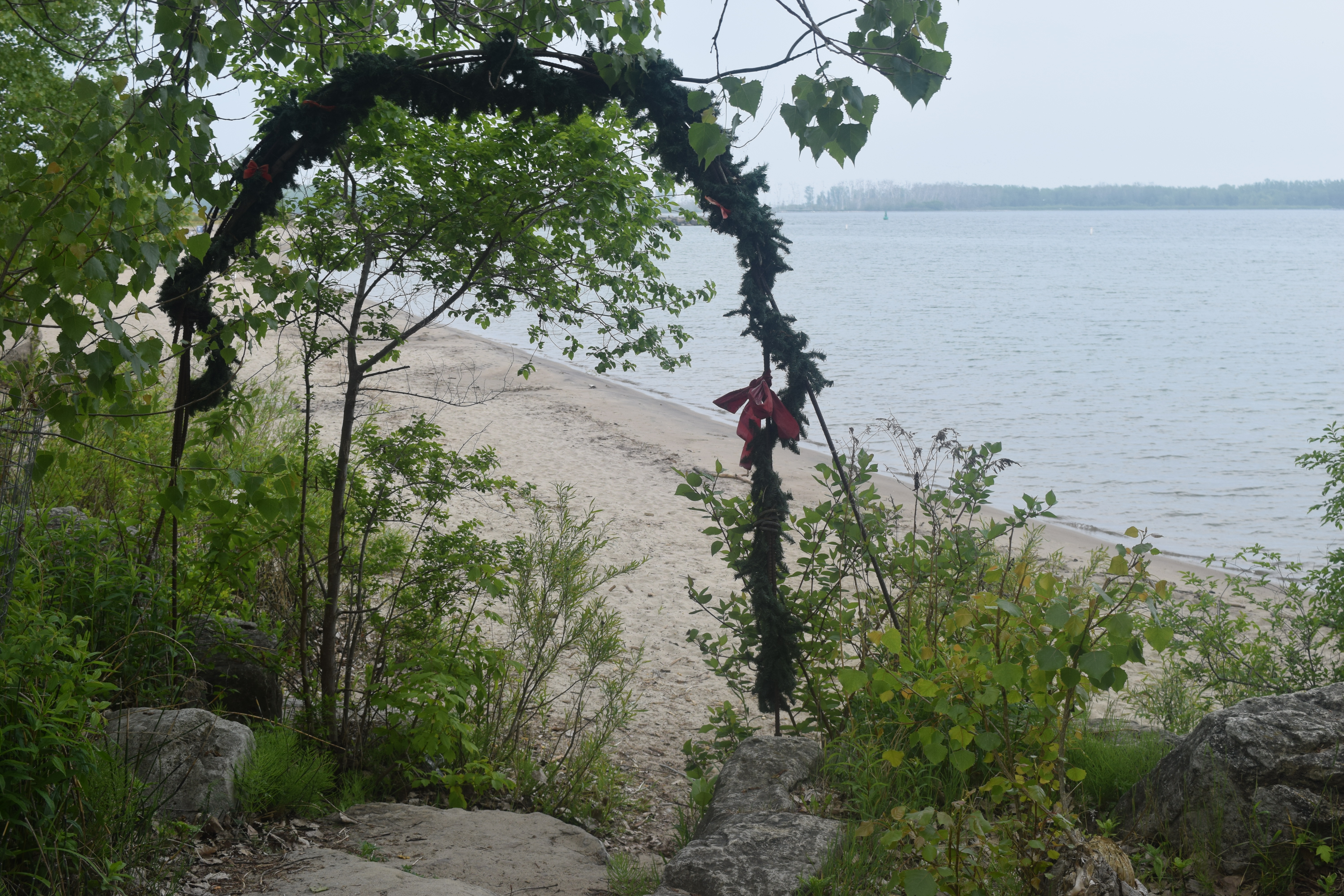
We passed empty beaches.

2015-06-05 13.53.39

We saw quite of a few of these signs during our ramblings. On the opposite end of Center Island there is a small airport servicing propeller planes. There is a push to extend the runways so that jets can also land, but it is running into determined opposition.

Today’s Toronto Islands community actually owes its existence to such civic protest. In the 1950s a plan was devised to empty the islands of people and turn it into a park. A few hundred residents resisted, and a lengthy struggle ensued that did not end until about ten years ago.

We made use of this bench to contemplate the big lake.

The final resolution is that while the land is publicly owned, the residents own their houses and hold a 99 year lease on the land they live on. Development is severely restricted: there is a school, a senior center, three cafes, and a children’s amusement park – but no stores. Supplies must be brought from the mainland. People visit from the mainland to enjoy the Islands, but only on foot.

2015-06-05 14.10.24

Eventually Judy and I came to the Algonquin Island bridge. The narrow channel between the islands was full of boats.

2015-06-05 14.09.47

And the bridge took only a minute or two to cross.

Next: Algonquin Island.

Pondside Gardens of Eden in Toronto

Three private homes in the Swansea neighborhood were the first gardens we saw in Toronto during the Garden Bloggers Fling. Swansea borders on the Humber River, Lake Superior (Correction: Lake Ontario – sheesh, for dumb), and High Park, one of Toronto’s largest and most popular parks.

2015-06-05 09.36.17

The first garden we saw made the biggest impression on me. Once I came round the back of the house, my eyes were drawn through the relatively narrow yard to a path entrance.

The water, the big old trees (some covered with ivy), the weeping willow, and the lush greenery made me think of a north woods Eden, a tranquil forest primeval.

2015-06-05 09.36.46

Where exactly the path leads cannot be seen, but the waters of Grenadier Pond lie in the middle distance (I thought it way too big to be a pond, but that’s a minor point).

2015-06-05 09.29.20

The path descends a steep slope towards the pond. The rough stonework provides a stimulating contrast to the abundant foliage.

2015-06-05 09.29.10

I admired how the steep and rocky slope was beautifully and cunningly planted, in patches and in little gems here and there. Love these Maidenhair Ferns (Adiantum pedatum).

2015-06-05 09.31.13

More ferns.

2015-06-05 09.33.33

These look like some kind of Hardy Geranium, but I’m not sure.

2015-06-05 09.33.58

Double Columbine growing with Irises, sadly not in bloom.

2015-06-05 09.34.31

I don’t usually like double Columbine (or double flowers generally), but in this case I could make an exception.

2015-06-05 09.34.52

As you descend, a Gazebo comes into view. Talk about an ideal place for your morning coffee. The only drawback being the steep slope, which some of us may not be alert enough to navigate early in the morning, especially when carrying a cup of hot liquid. An underground two-way escalator seems like the obvious solution.

2015-06-05 09.51.17

There was also a second garden incorporating the shore of Grenadier Pond. A patio provided a view of the water, another good location for morning coffee or other refreshments. Those are custom-made iron railings.

2015-06-05 09.54.29

Here too you can descend on a stone path to get closer to the water.

2015-06-05 09.54.56

There is an impressively large dry stone retaining wall.

2015-06-05 09.56.50

This garden also featured some interesting metal sculpture. I like how these accompany the Foxgloves growing in the wooden container.

2015-06-05 09.40.44

There was a third garden, this one not on the pond. Its main feature was a more formal boxwood garden. It was very nice, but I just don’t get excited about boxwood. Just a question of personal taste.

2015-06-05 09.47.24

There was, however, a very impressive hedge of white Rugosa roses along the street.

2015-06-05 09.48.06 double file viburnum

And a huge Double-File Viburnum (Viburnum plicatum) in full flower.

I generally like to wait until the gardening season is over before I write posts about the Fling. However, there’s too much good stuff to hold back everything until then. Much more to come.