Tip Toe Through The Siberian Squill

Ladies and gentlemen, we have just enjoyed a glorious spring weekend. Much to write about, but I won’t attempt to cover everything in one post. For right now, I just want to talk about the flowers that, more than any other, define spring in this part of the world. Namely, bulbs.

Daffodils

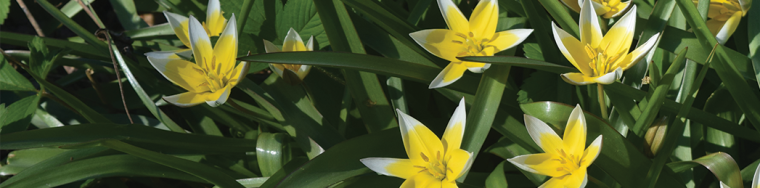
The early species tulips are blooming lustily. Species tulips are a favorite of mine. The flowers are smaller but more interesting with great colors. Their best qualities are that they have smaller bulbs are easier to work into a mixed bed, also they are reliably perennial and will sometimes naturalize. Species tulips are first cousins to the wild tulips that grow from Central Asia to the Mediterranean.

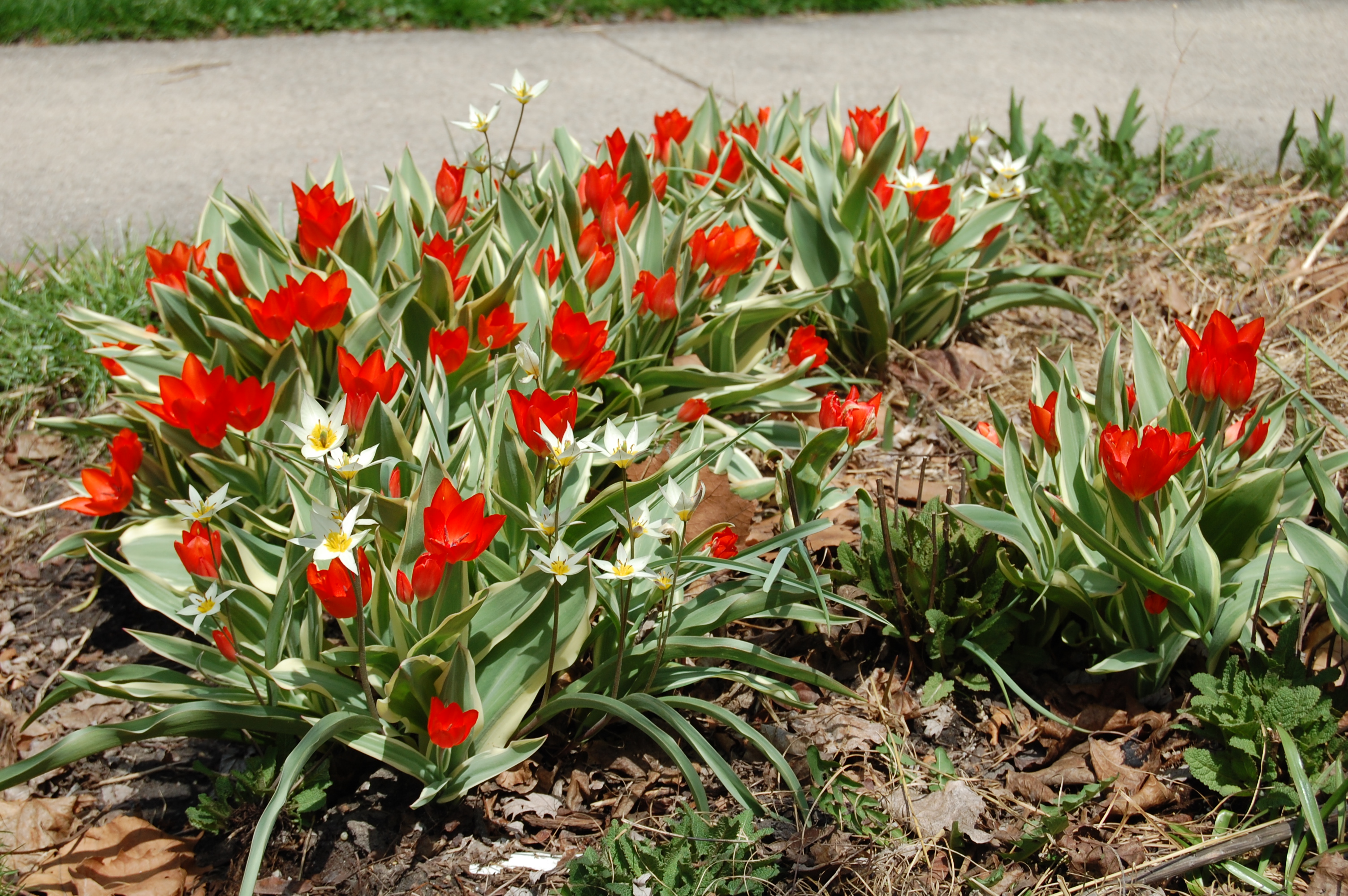
If I say so myself, this combination of Tulipa praestans ‘Unicum’ (red) and Tulipa turkestanica (yellow and white) is very fetching.

Tulipa praestans 'Unica' and Tulipa turkestanica
Tulipa praestans ‘Unica’ and Tulipa turkestanica

The deep red Tulipa linifolia also does well all on its own.

Tulipa linifolia and Tulipa turkestanica
Tulipa linifolia and T. turkestanica

Here’s some more  T. turkestanica. This tulip and ‘Unicum’ are definitely naturalizing in my beds. Not all species tulips will naturalize, of course. I planted some Tulipa clusiana ‘Tubergen’s Gem’, and that particular tulip seems to have disappeared.

Tulipa turkestanica
T, turkestanica

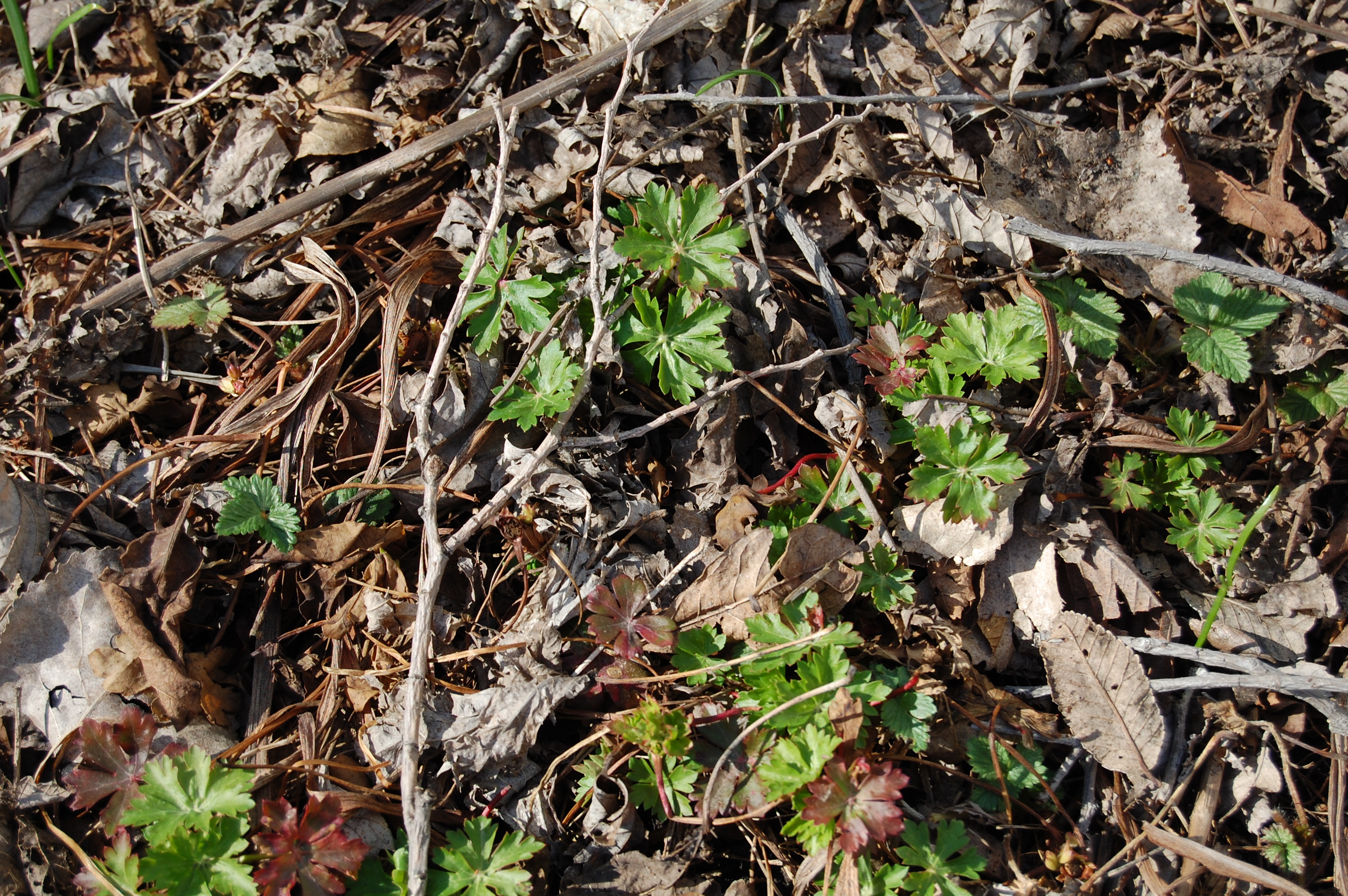
There’s also this little tulip, blooms very early on very short stems, almost ground level. I can’t remember the name, anybody have an ID?
Species tulip
Mystery tulip

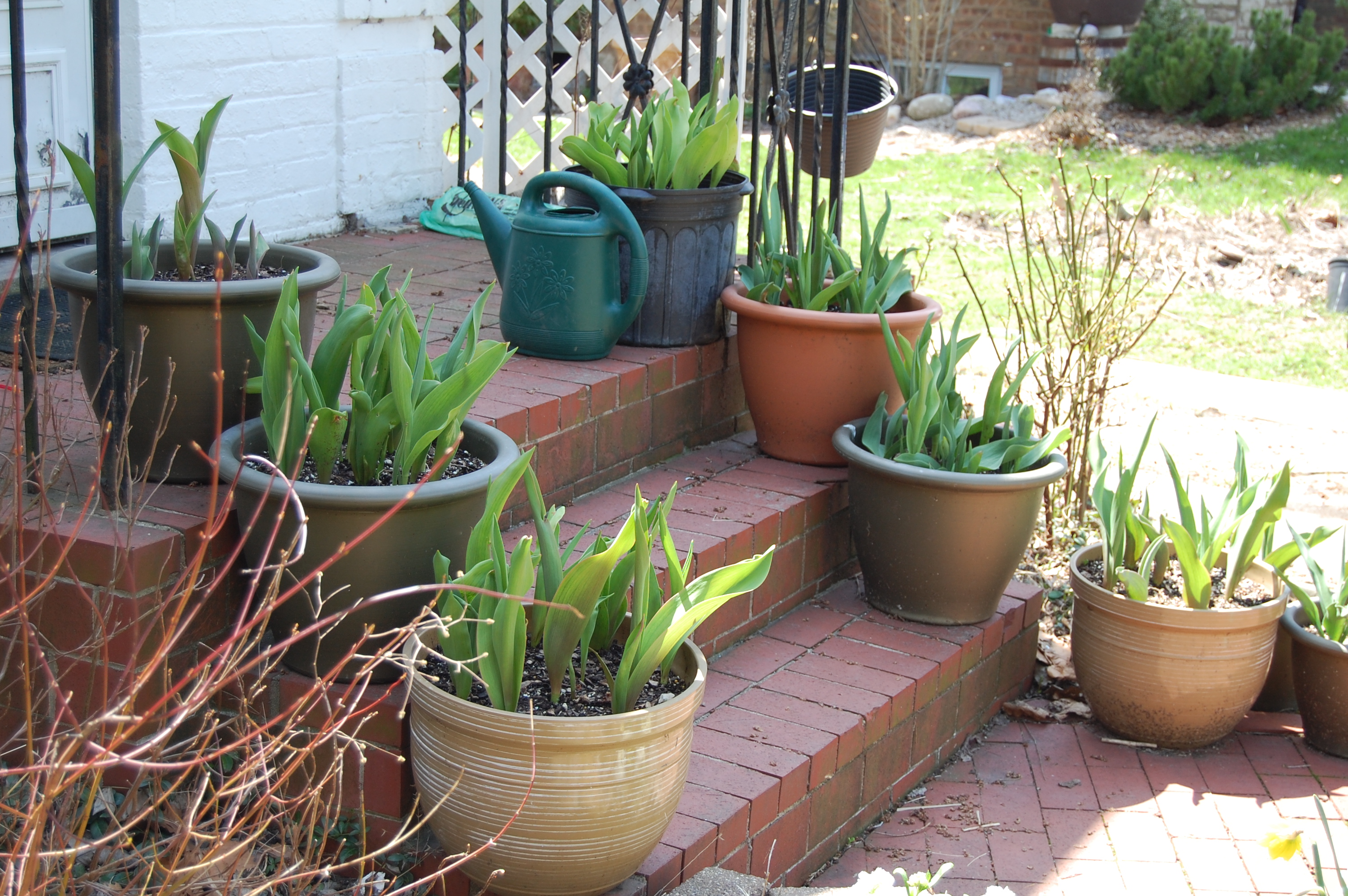
Before I move on from tulips, I should mention the hybrid tulips I’m growing in containers. We’re still at 72 out of 90 tulips now up. Some may not have made it through the winter, or they could just be late varieties – too early to tell. If we did lose a bunch of bulbs, I will make a point of giving the containers more insulation next winter, and also maybe not using the smaller ones.

The daffodils are blooming nicely. Sorry to say I have lost track of the varieties there are in my garden.

yellow daffodils

I like the white and partially white daffodils.

White daffodils

White daffodils
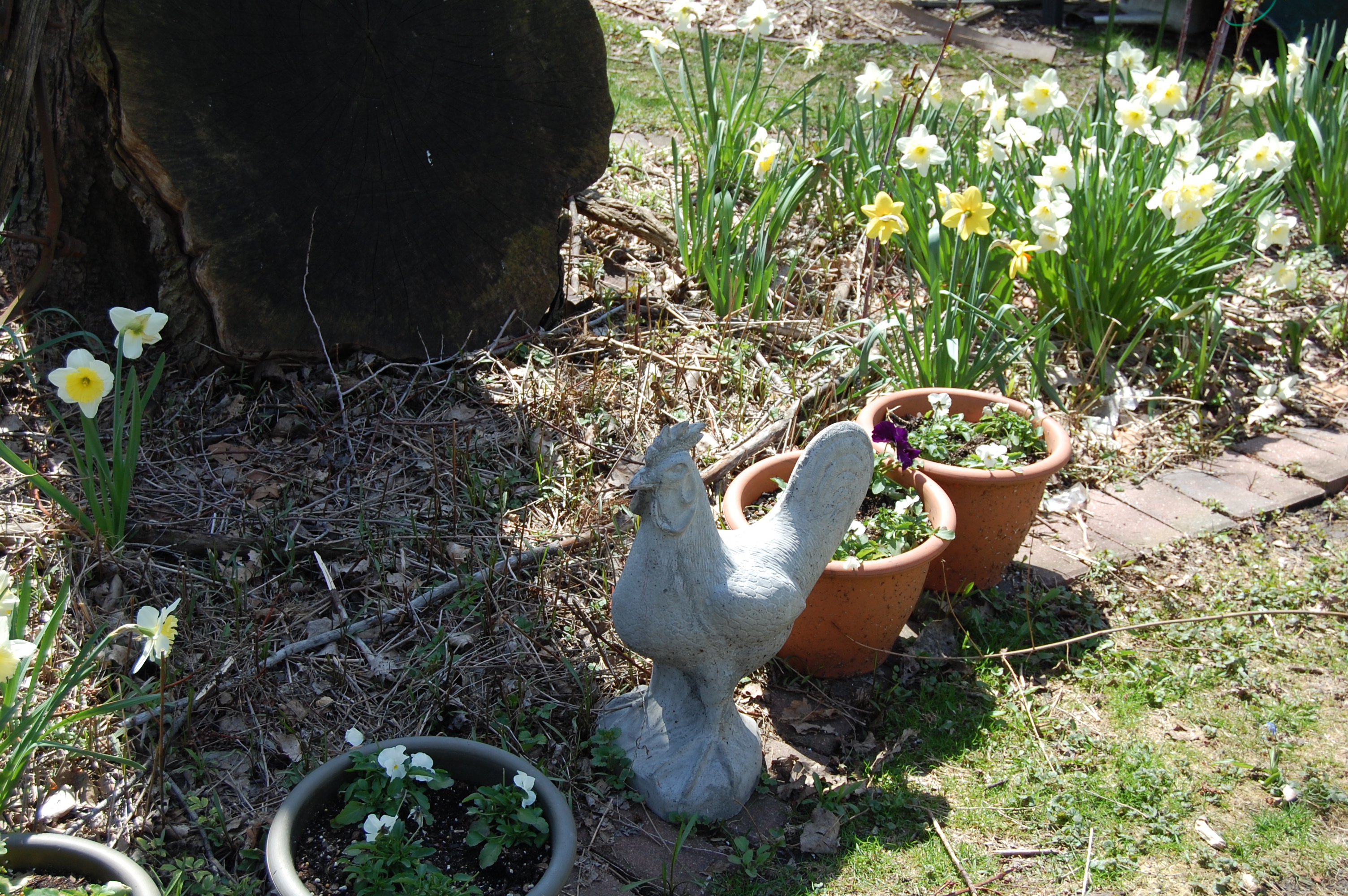
Our concrete chicken likes daffodils.

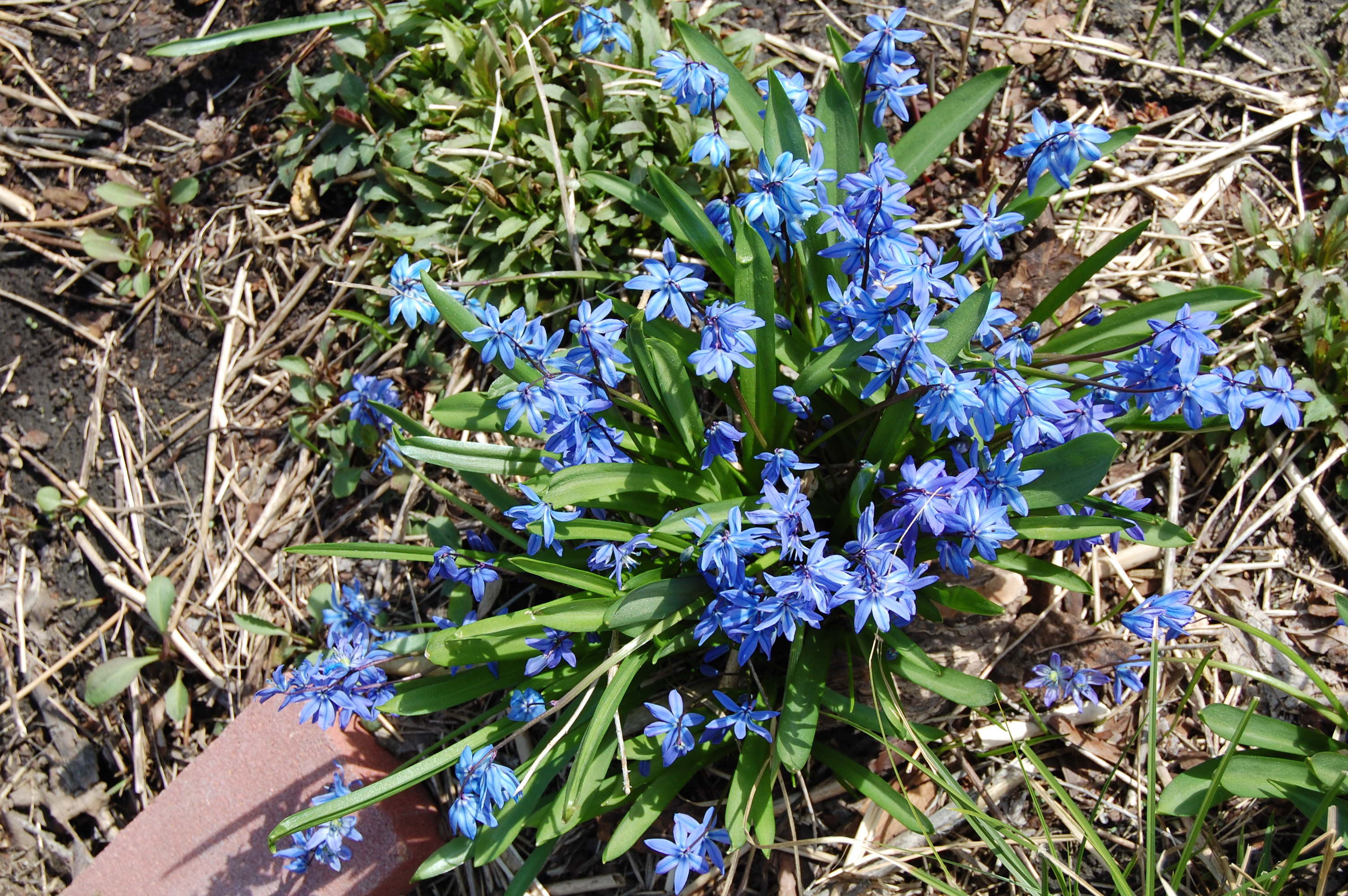
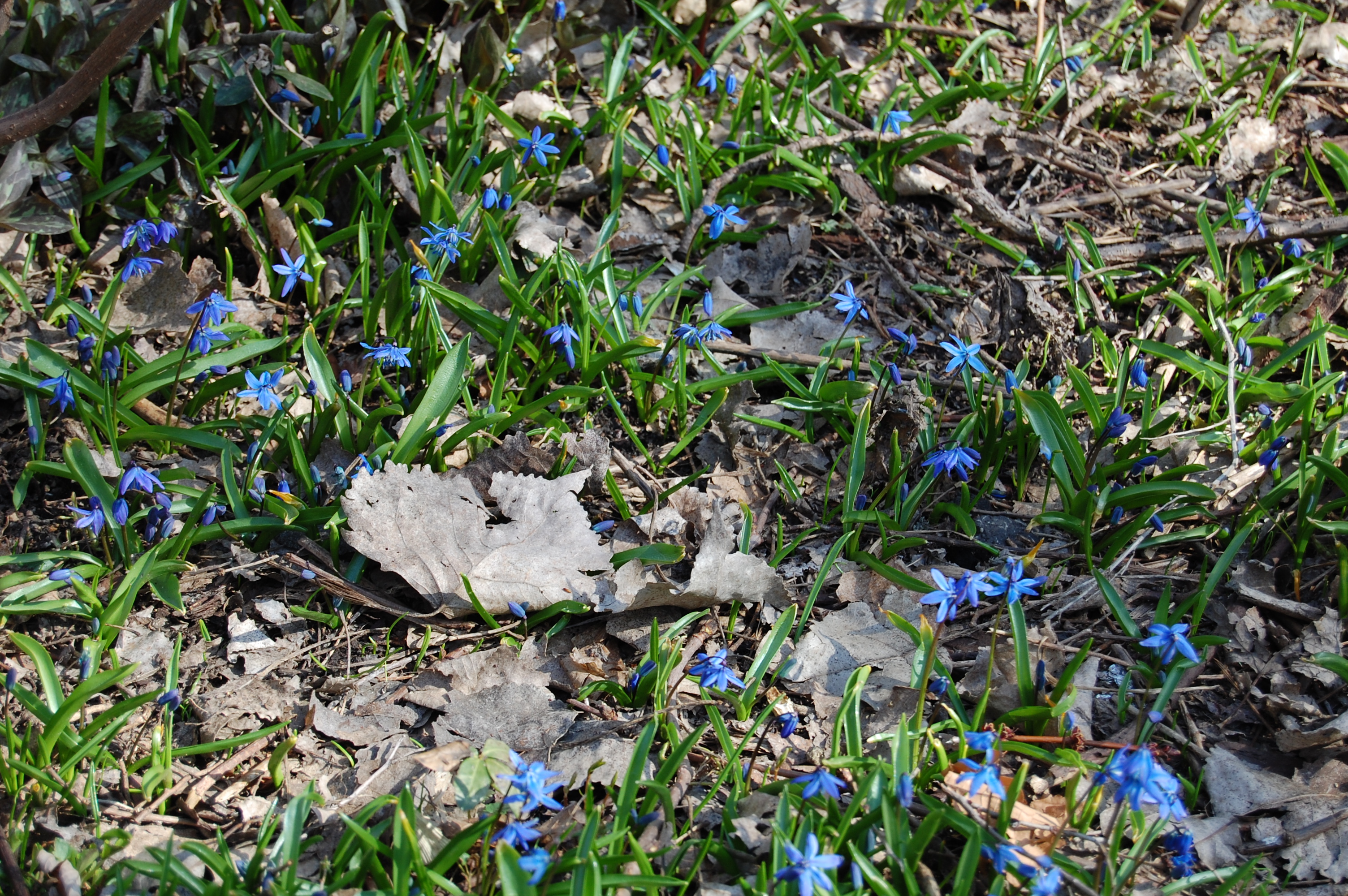
Then there are the squill (Scilla sibirica). They are starting to naturalize in the front yard.

Squill
Squill

In the back garden, they’ve been naturalizing for a while. There is a stretch of Lincoln Park in Chicago where there is just a sea of blue from all the squill, for me one of the highlights of the season.

Squill
Squill in the back garden

As I say, this weekend was so beautiful that everybody on the block felt compelled to go out and work in the garden. Even our neighbors’ dog Daisy wanted to experience the joy of digging in the mud. This picture was taken with Daisy looking up as Judy leaned over the fence we share with these neighbors.

Daisy helping in the garden.
You dirty dog!

Was your weekend as great as ours? I certainly hope so!

Another Plant Delivery, And Taming A Wild Raised Bed

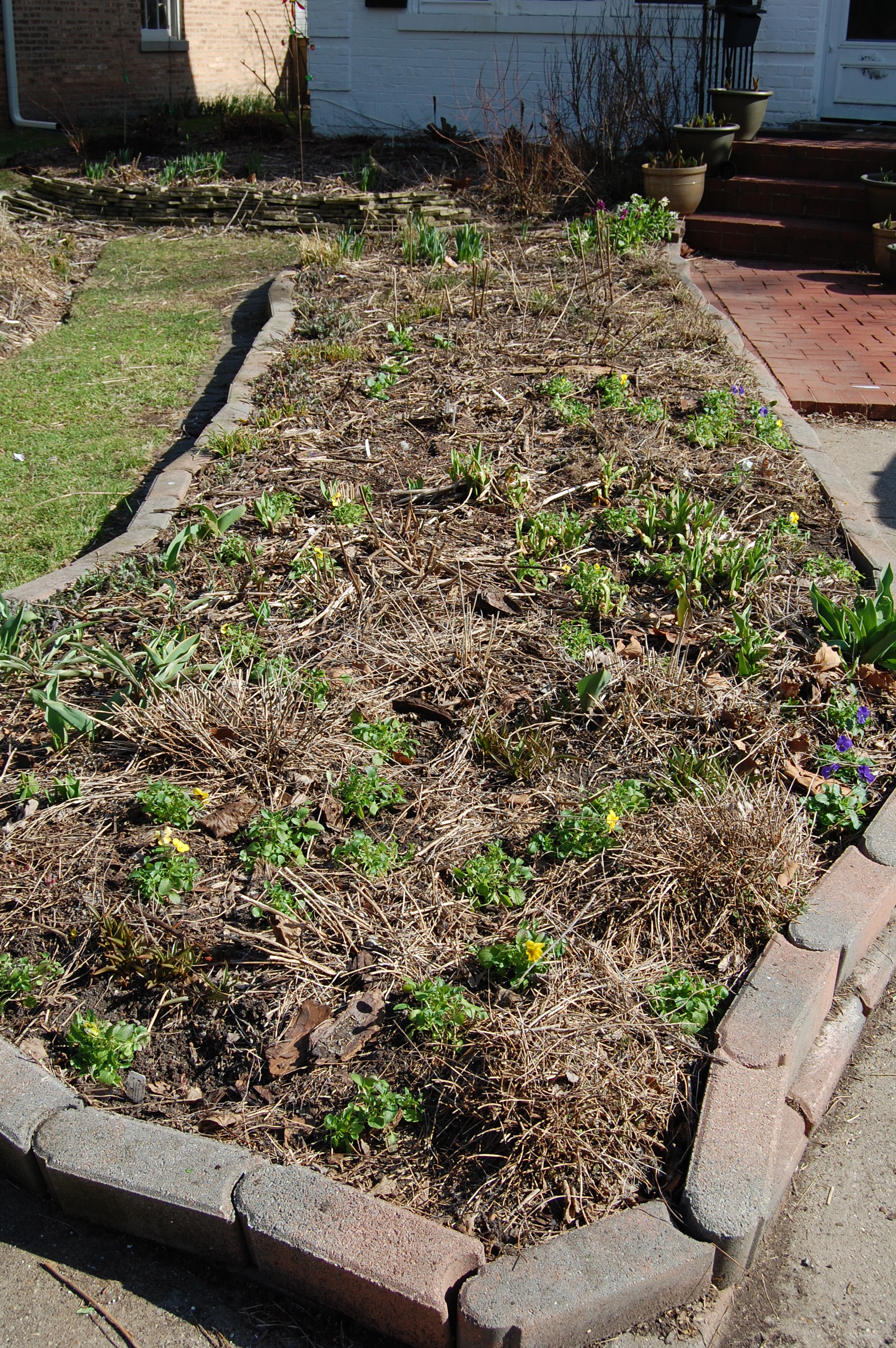
Oh joy, another box of plants have arrived, this time from Bluestone Perennials. With a single exception, all of these are meant for in and around the raised bed at the west end of the parkway. This is an area that gets a lot of sun, and is seldom if ever watered for the simple reason that it is just about the furthest point on my property from the front water spigot.

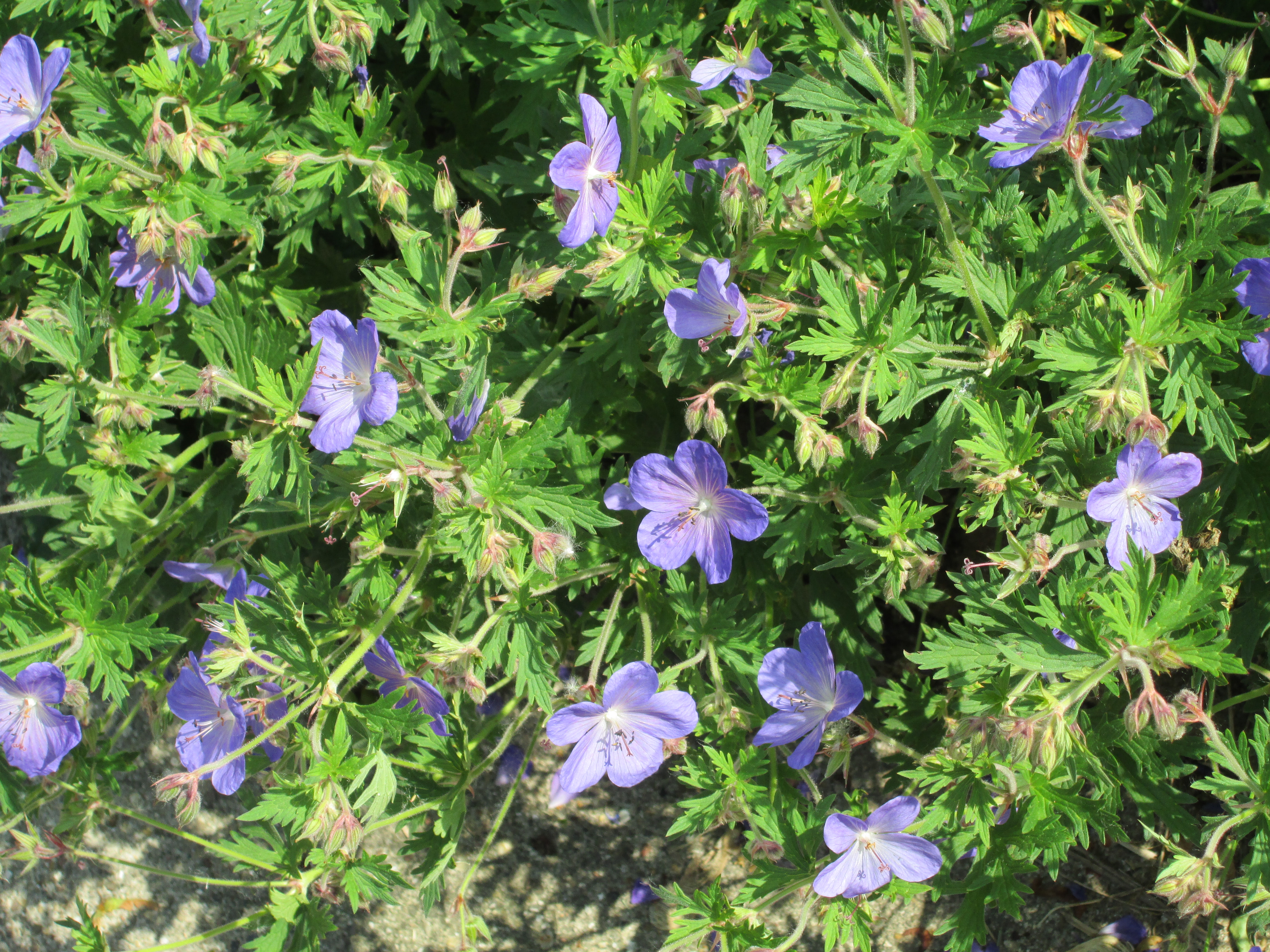
Geranium 'Johnson's Blue'
Geranium ‘Johnson’s Blue’

This bed, in my opinion, has gotten a little too wild. It is full of self-sown asters and golden alexander, not to mention big clumps of wild violets. Don’t misunderstand me, I like all these plants. However, I also feel they are not right for parkway beds in an inner ring suburban neighborhood.

Wild Petunia
Wild Petunia with Wild Strawberry

A parkway garden should be densely planted, colorful and rich with texture (like any garden). But it also needs to be reasonably neat and not too tall. With this in mind, last fall I made over the raised bed at the west end of the parkway. Now it’s the turn of the east bed. Outside of the raised beds, most of the parkway is covered in a mixed ground cover of wild strawberry (Fragaria virginiana), wild petunia (Ruellia humilis), prairie smoke (Geum triflorum), and Nepeta ‘Walker’s Low’.

I’m not getting rid of all the plants in the east raised bed. There are three large and vigorous daylilies (Hemerocallis ‘Star Struck’) and a growing clump of Ohio spiderwort (Tradescantia ohioensis). There are also bulbs, a mix of species and hybrid tulips. Actually, it was in order to plant tulips that I built the raised beds. That’s because at the time I got rid of the grass on the parkway, the soil was so compacted that I would have needed a pneumatic drill to get any bulbs planted.

This bed and its surrounding area has a kind of random, improvised feel. There’s a good reason for this, namely, that I filled it with plants in a totally random, improvised manner.

Ohio Spiderwort
Ohio Spiderwort blooms at the top of grass-like stems.

But all that is going to change. (As I write this, I am wondering – should I transplant that Ohio spiderwort after all?)

Thanks to the new delivery from Bluestone Perennials, I am going to achieve a new look. Here are the plants:

  • Calamint (Calamintha nepetoides).  This is a bushy, drought tolerant plant about 1-2′ tall. In summer it is covered with tiny white flowers much loved by the bees.  This will provide repetition to the calamint at the west end of the parkway.
  • Geranium ‘Johnson’s Blue’. Yeah, I know many new varieties of hardy Geranium are supposed to be better, but this cultivar is an old friend who has performed well for me. Small blue flowers in spring, plus finely cut foliage. There’s already clumps of this cultivar in other front garden beds.
  • Salvia ‘Carradonna’.  A 2′ Salvia with deep purple flowers spikes. Again, a repetition of the west end of the parkway.
  • Sundrops ‘Summer Solstice’ (Oenothera tetragona).  This cultivar has 2′ flower spikes with clear yellow flowers in late spring and early summer.
  • Miniature Hollyhock (Sidalcea malviflora ‘Party Girl’.) This is a bit of an experiment. I LOVE hollyhocks, and I used to grow them. Eventually this became impossible due to devastating rust problems. Sidalcea is supposed to be rust resistant. We’ll see. It grows to only 3′ and has only pink and rose flowers, not actually my favorite colors on a hollyhock.
Parkway Garden
West parkway bed, planting in progress. Oh, those are ‘Globemaster’ Allium in a clump in front of the raised bed. Did I mention that this bed was kind of random?

So there you are. I’ll be posting pictures through the year to show how this bed does or doesn’t come together.

Have you been doing makeovers of beds that have gotten away from you?

Wildflower Wednesday: Golden Alexander, It’s Freakin’ Golden

To paraphrase a former Illinois Governor, “It’s freakin’ golden, and I’m not gonna give it away for nothing.” If only he had been referring to the native wildflower Golden Alexander (Zizia aurea), he would never have gotten into so much trouble with federal prosecutors. And he would have been fully justified in placing a high value on this useful perennial. Golden Alexander is not a dramatic plant, but it does have many virtues: attractive, easy to grow, and extremely adaptable.

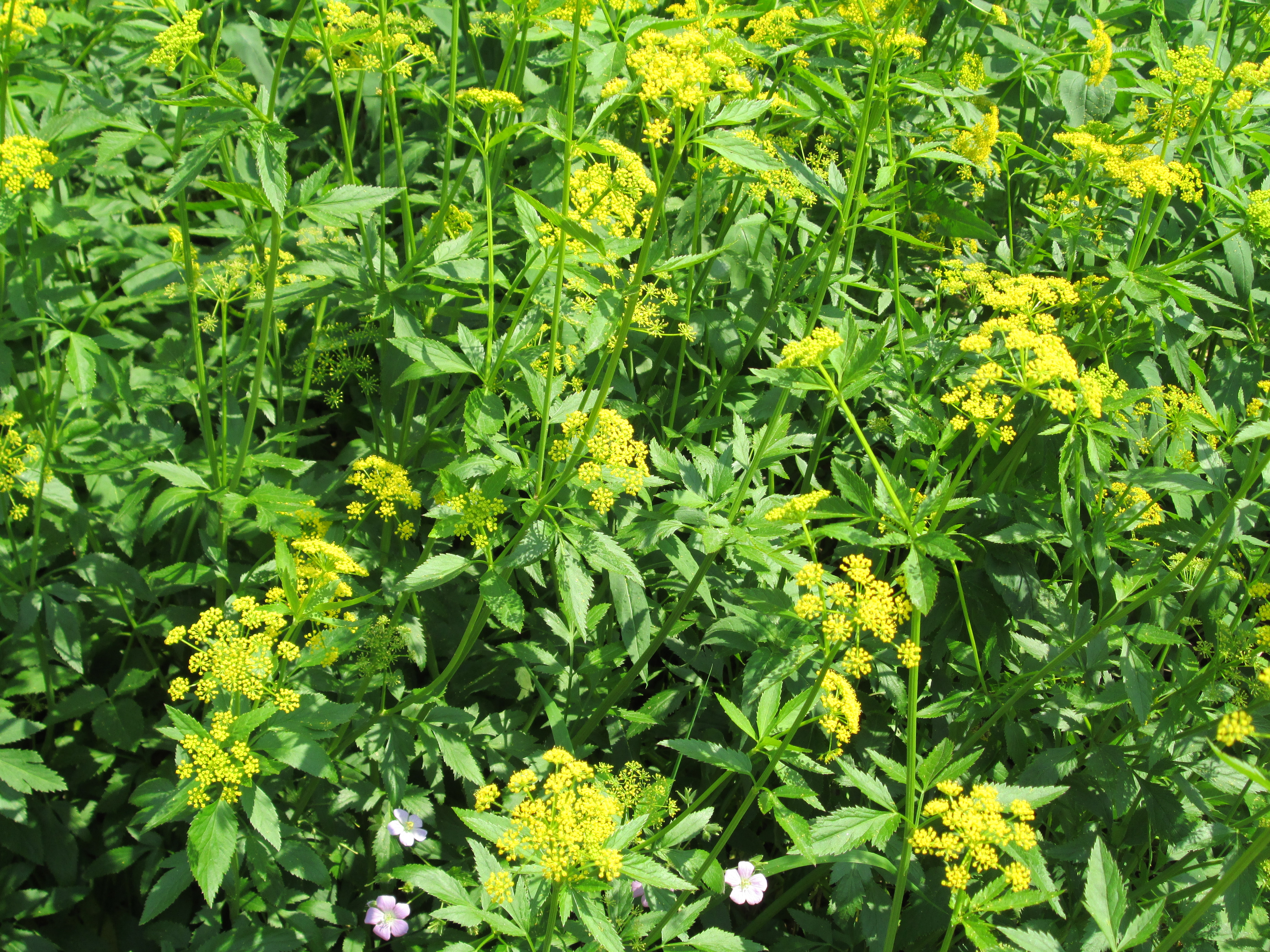
Golden Alexander
Golden Alexander

A member of the carrot family, Golden Alexander has flat umbels made up of tiny yellow flowers.  In a mass, these umbels can have impact, even at a distance. Bloom time is generally late spring and early summer.

The foliage is deep green, lance or oval-shaped.

Golden Alexander
Golden Alexander at the far end of the sidewalk border.

Golden Alexander is native to large areas of eastern and central USA and Canada. It’s natural habitats are moist prairies and open woods. In the garden, I’ve found that it will grow in part shade or sun, moist or slightly dry soils. It requires no special attention. In fact, in rich soils it can grow far larger than its normal height of 1-3′, so that I often find myself cutting it back.

Golden Alexander’s foliage provides a restful green backdrop for summer and fall blooming flowers. The flowers form interesting seed heads during this period. You can cut down the seed heads to avoid self-sowing. On the other hand, Golden Alexander doesn’t get obnoxious about spreading by seed, and the seedlings are easily pulled.

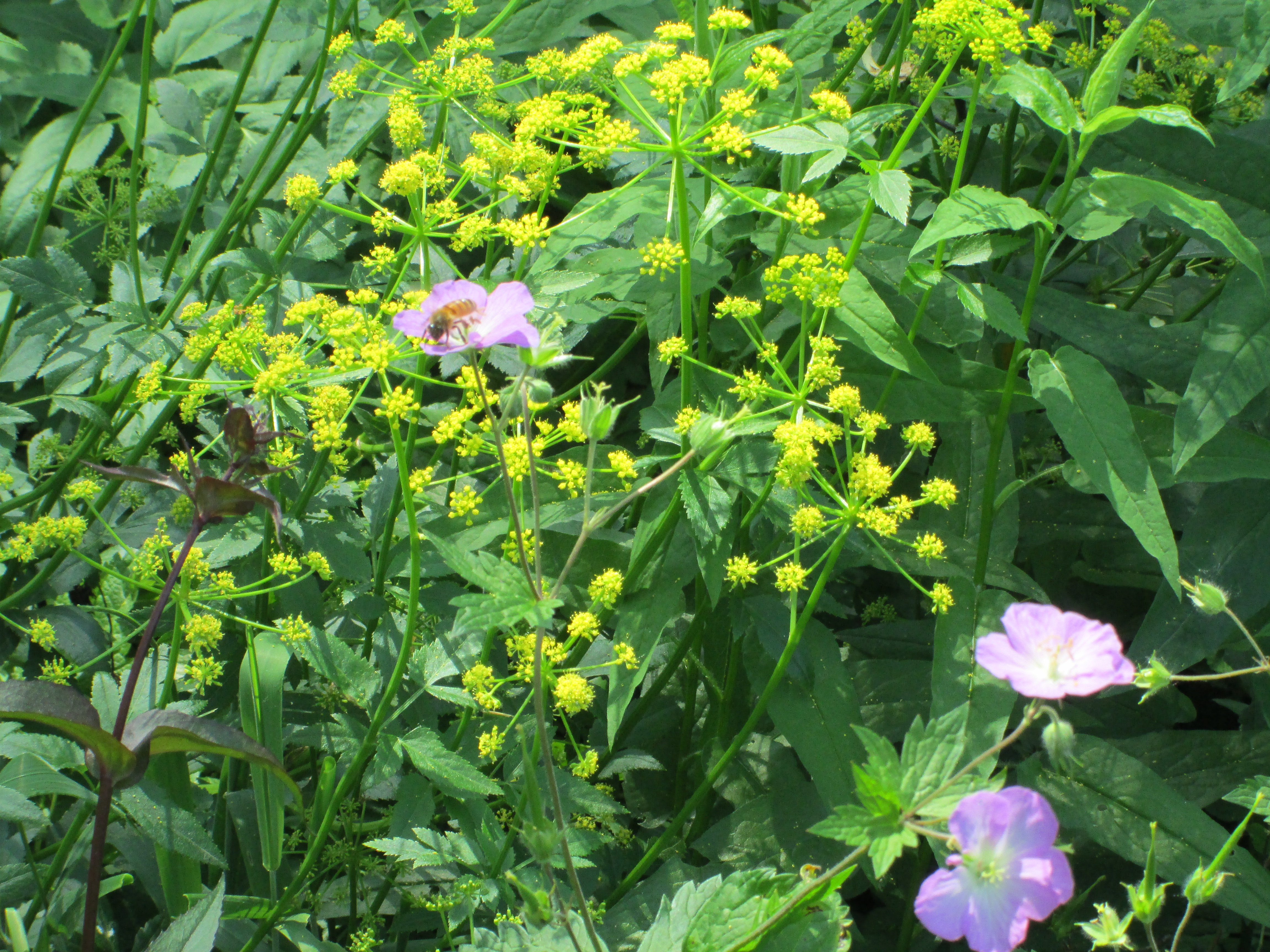
Golden Alexander, Wild Geranium
Golden Alexander with Wild Geranium

In terms of wildlife value, Golden Alexander is a host plant for the Black Swallowtail butterfly, and the flowers are attractive to bees and other pollinators.

Thanks to Gail at Clay and Limestone for hosting Wildflower Wednesday.

More Plants Arrive!

This time of spring is better than Christmas, Hannukah, and all the other holidays rolled into one. Just like during the holiday season, delivery vans periodically pull up to the house. What’s better is: 1) all the boxes are marked “Live Plants – Fragile”; and 2) it’s all for me!!!

Just in time for this past weekend I got the year’s first delivery from Prairie Nursery. All the plants but one were for the raised bed that runs along the driveway. Here’s what arrived:

Yellow Coneflower (Ratibida pinnata). I only have three yellow coneflowers, not nearly enough. The new arrivals will help create more of a drift in the center of the bed. One reason I have to do this is I am digging out the purple coneflowers (Echinacea purpurea), which have become too susceptible to aster yellows infections. I find the Ratibida to be more disease resistant.

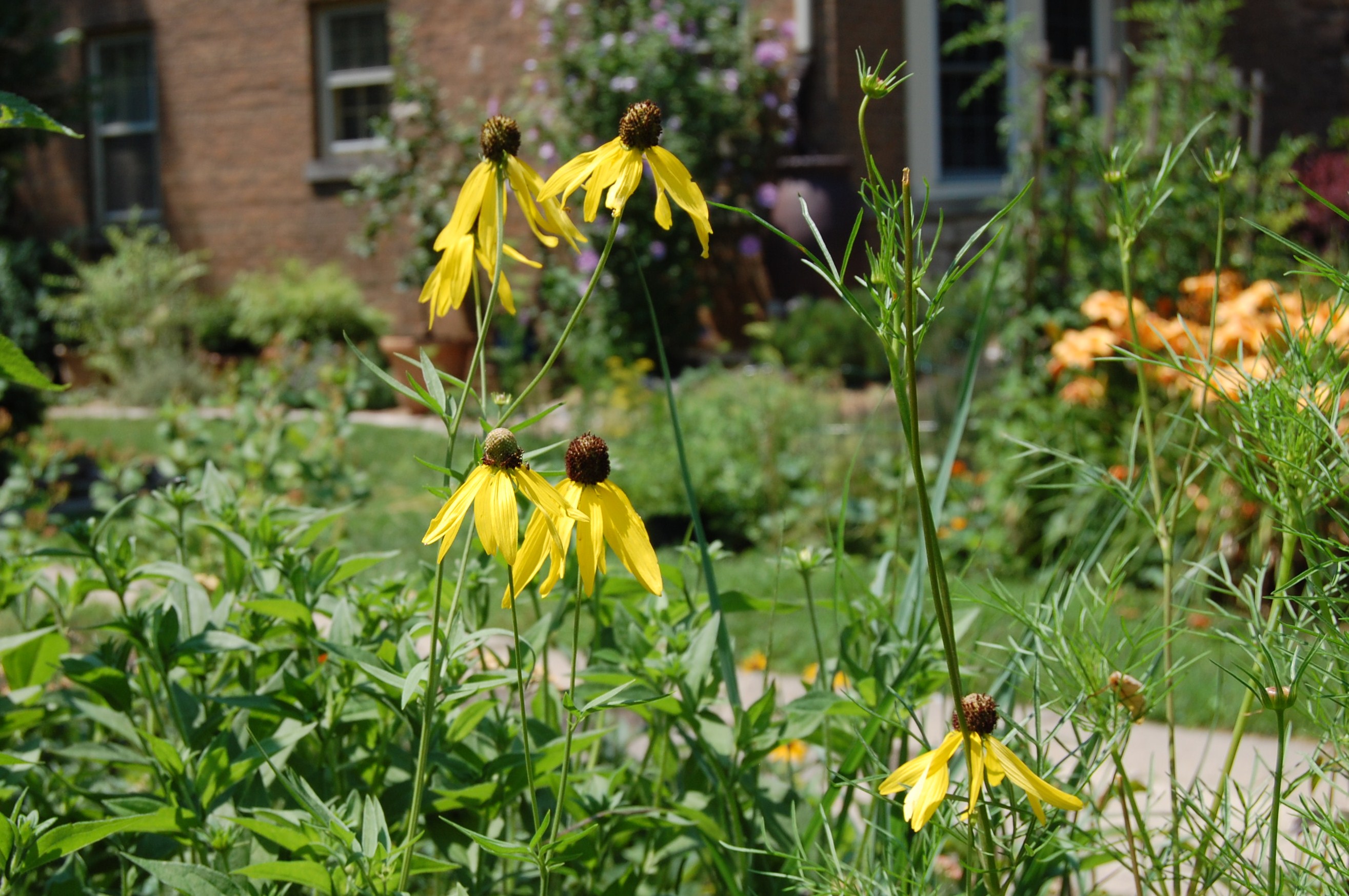
yellow coneflower
A lonely yellow coneflower in our driveway bed. He needs more friends!

Butterflyweed for Clay (Asclepias tuberosa var. Clay). Butterflyweed normally likes a dry, sandy soil, but Prairie Nursery has a variety that is adapted to clay soil. I find that it establishes itself in my garden more successfully than regular butterflyweed.  I already have some butterflyweed growing along the west edge of the driveway bed, where it basks in the afternoon sun. The new plants I’m putting behind the Nepeta, to get that orange/blue complementary colors thing going.

Butterflyweed
See the orange butterflyweed at the bottom of the page? The new butterflyweed will extend along the Nepeta on the west edge of the bed.

Blue Cohosh (Caulophyllum thalictroides). There is no rhyme or reason to my buying this plant. I just saw it and had to have it. Click the link and see if it speaks to you. According to the website, it is treasured for its lacy blue-green foliage and deep blue berries! How could  I not buy it? Anyhow, I only bought one. This is a woodland plant, so I put it in the raised bed I have in the lightly shaded back garden.

While the prior week featured rain of almost Biblical proportions, but Sunday the raised beds were dry enough to do some planting. Fortunately, all of the above plants were destined for raised beds.

More orders are coming – from Prairie Nursery, from Bluestone Perennials, and maybe some others I’ve forgotten about.

Had any good plant deliveries lately?

First Butterfly Of The Season

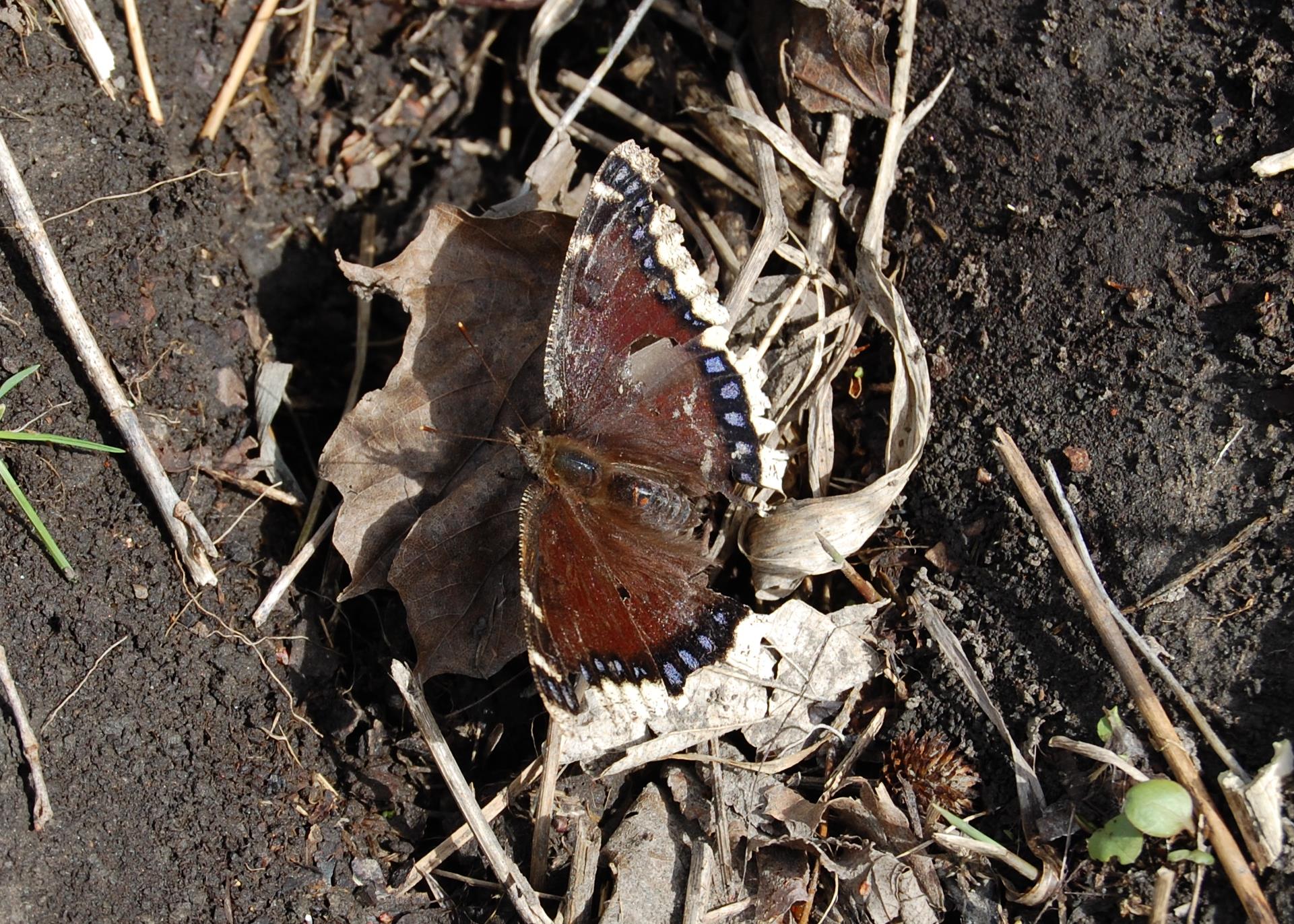
Judy saw this guy sunning himself on some dead leaves in the driveway bed.

Mourning Cloak butterfly
Mourning Cloak butterfly. This guy is pretty well camouflaged, we almost missed him.

Pretty sure it’s a Mourning Cloak. Any butterfly enthusiasts out there care to confirm or contradict this ID? I read a little bit about Mourning Cloaks here. Apparently these butterflies are one of the few that can live through the cold winters of the American midwest. They do this by going into a kind of hibernation called diapause.

Morning Cloaks have a variety of host plants. One of them is the common hackberry (Celtis occidentalis). I have a hackberry growing in my parkway. I’d like to think this Mourning Cloak was eating the leaves of my hackberry when it was in its caterpillar stage.

Grouse About The Rain, And This Is What You Get

So apparently the weather gods took note of my last post complaining about our torrential rains and flooding. The weather gods don’t appreciate malcontents.

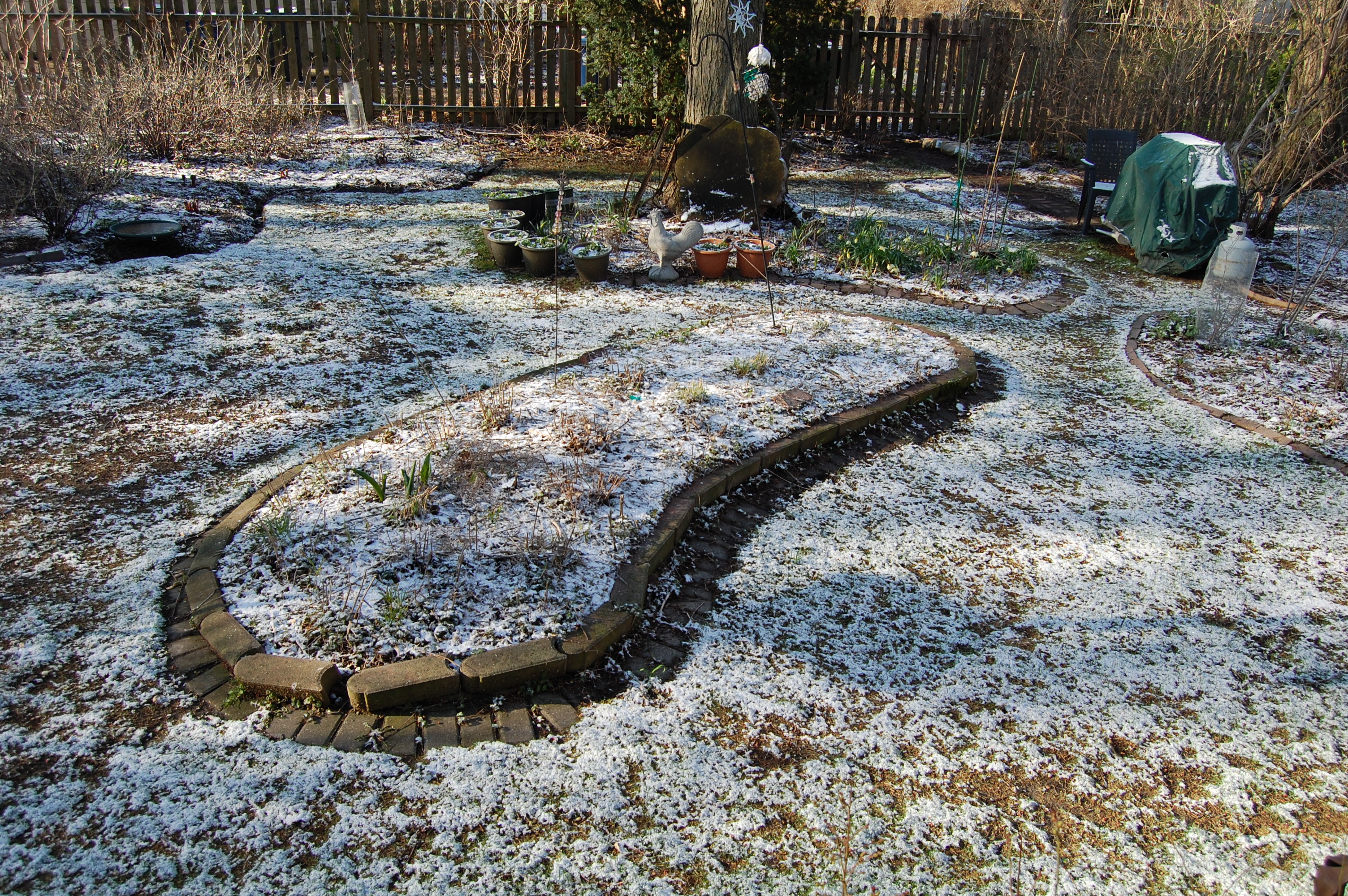
Yesterday I drove home from downstate. Flooded roads and highways turned my usual four hour drive into an eight hour trek.  When I woke up at home the next morning, the ground was covered with a light blanket of snow.

Snow in April
Snow on April 20th.


I had to get up early and go to my gardening class, and the morning cold had a sharp bite. On the plus side, temperatures in the low 30s do tend to keep me awake. The sun did come out in the afternoon, and the snow melted away.

All these abnormally cold days have slowed the advance of spring, but have not stopped it entirely. The spicebush (Lindera benzoin) is finally blooming.

Spicebush
Spicebush by the back porch.

More people should plant spicebush. It blooms before the forsythia, though the blooms are a lot more subtle. And whereas I think of forsythia as having only one season of interest, spicebush has three. In addition to the yellow spring flowers, spicebush has ornamental red berries starting in late summer and nice golden yellow fall color.

Spicebush
Spicebush.

In addition to the spicebush, the very first of the daffodils have begun blooming. I’m afraid I lost track of what variety this is.

daffodils

Many plants not yet in bloom but are making good progress in that direction. The red elderberry (Sambucus racemosa L.) flower buds are already visible. Actually, they look kind of like little green cauliflowers.

Red elderberry
Red elderberry. See the flower buds? This one blooms much earlier than black elderberry (S. canadensis). 

As are the buds on these Virginia Bluebells (Mertensia virginica).

Virginia Bluebells

Other than bulbs, what are your favorite early spring blooms – and which flower buds make you happiest when they appear?


April Showers OK, But This Is Ridiculous

When she emailed me the photo below, Judy asked if this is what they mean by an island bed.

Island Bed
Island in the stream? My back garden. Guess I don’t have to worry about filling the bird bath.

The Chicago area got 5″ of rain last night. Rain continued through the day, and more heavy rain is expected tonight. Streets and basements are flooded – though thankfully our own basement has been OK so far.

It’s hard to complain about too much moisture after last year’s horrendous drought – but come on! Can’t we have a little moderation in the weather department, not just drought and deluge?

I’ve actually been away all week, and will be returning home tomorrow. I’ll be seriously aggravated if the soil is too wet for me to get into the garden this weekend. Working soggy soil is a big no-no, it ruins the soil structure and just walking on wet soil can result in compaction.

backyard flooding
Another view of the back garden. My bird feeders look like a sort of weird buoy or lighthouse.

Plus, I’m expecting a shipment of plants from Bluestone Perennials by Saturday!

The other thing to worry about is that the roots of some plants will start to rot if kept in saturated soil for a long period. Fortunately, a lot of my plants are water lovers – Joe Pye weed  (Eutrochium purpureum), New England aster (Symphyotrichum novae-angliae), swamp milkweed (Asclepias incarnata). Many others are growing in freely-draining raised beds.

Are you being overwhelmed by April showers this year?

Foliage Follow-Up: The Fresh New Leaves of April

Folliage Follow Up is sponsored by Pam at Digging. For this month, I can really only offer the new growth now just starting to come in on many perennials. While not dramatic, the fresh green lifts the spirits, and is certainly beautiful in its own way.

So here is a selection.

Peony
Peony


wild geranium
Wild Geranium


wall iris
Wall Iris


Nepeta
Celandine Poppy


Prairie Smoke
Prairie Smoke


Daylily
Daylily


Do you have fresh green growth pushing up through the soil of your garden? Does it make you happy?

Garden Bloggers’ Bloom Day: I’m Back!

I haven’t done a GBBD post since October. And because we are having such a cold spring (or Sprinter, as Rachelle at Talking to Plants puts it), I don’t have much to show yet. Plenty of stuff getting ready to bloom, not much actually blooming.

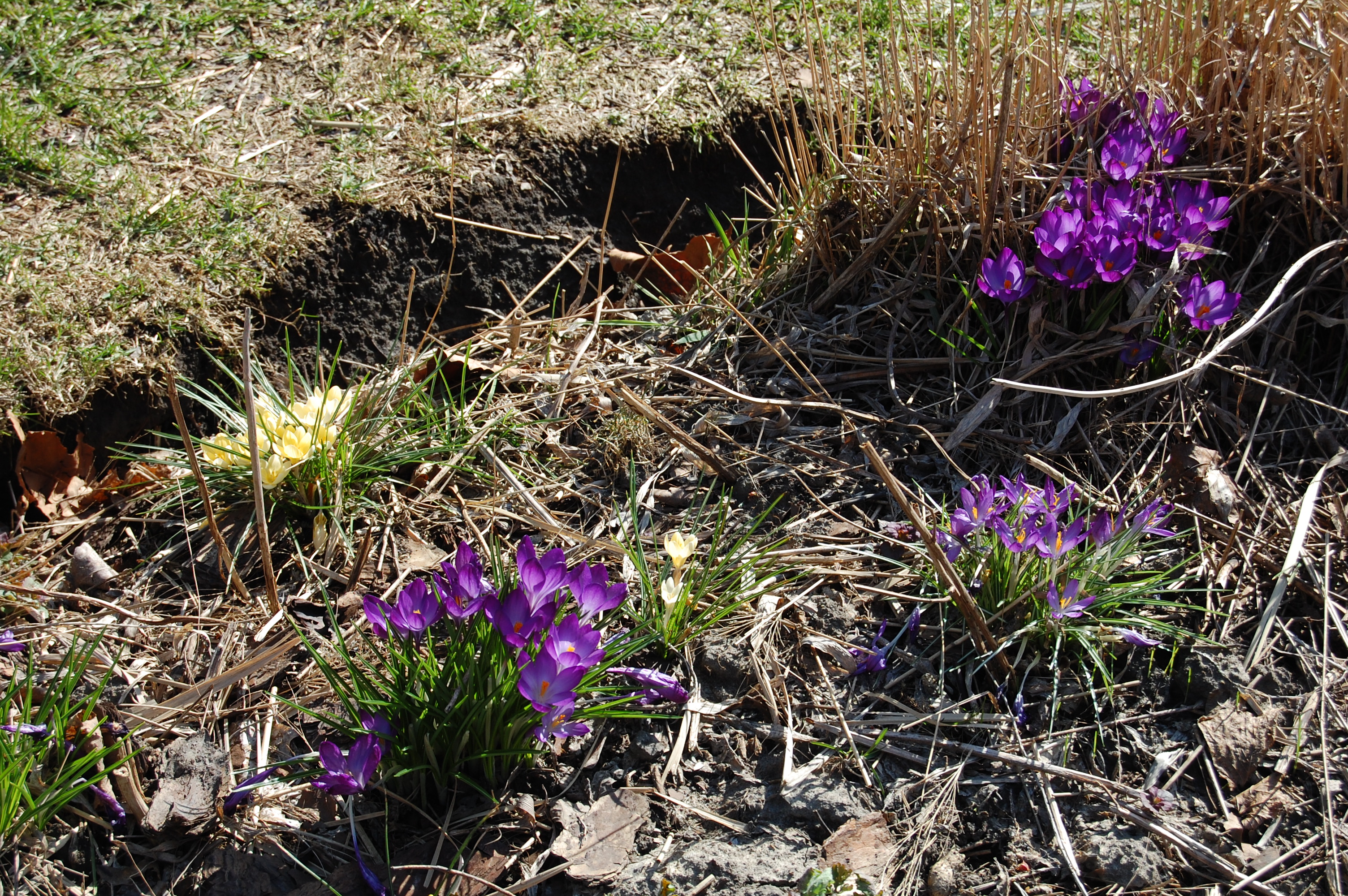
Crocus
Crocus

In terms of bulbs, the snowdrops (Galanthus) are pretty much played out. There are lots of crocus, however.

Crocus
More Crocus

Also the Siberian squill (Scilla sibirica) is just beginning to bloom in both the back and front gardens.

Siberian Squill
Siberian Squill

Normally at this time of year we’d have daffodils and species tulips showing their stuff, but not now. To counteract the shortage of color, I’ve been buying pansies and violas by the flat. I  bought mostly white, with a bit of blue, for the planters and containers in the back garden. This is something I do most years.

Pansies
Newly planted pansies in the stump planter.

Also, for the first time, I’ve bought spring annuals for the driveway border. I planted a patch of stock by the front door, mostly for the fragrance. And at the far end I’ve planted about a flat and a half of violas, mostly yellow but with patches of blue. They should go nicely with the daffodils, celandine poppy, and grape hyacinths when these finally get around to blooming. To really fill this bed, I’d need at least one more flat, but I think I’ll hold off. I don’t have all the locations of all the perennials marked, so I have to cautiously make planting holes by hand. Fortunately, the soil is nice and soft.

Stock flowers
The driveway bed just after I planted stock and violas. Not too much color yet.

In terms of other stuff, we are being tantalized by the promise of future blooms. The container tulips are making nice progress.

Tulips in Containers

And you can see the daffodils are getting ready.

Daffodils
Clump of daffodils

I don’t know about you, but I’m tired of little nibbles of color. I want the main course, and I want seconds!

Has your appetite for color in the garden been satisfied yet?

A Dogwood’s Life

I learned something the other day about native dogwood trees. There are two types you are most likely to find in the Chicago area: flowering dogwood (Cornus florida) and pagoda dogwood (Cornus alternifolia).

Flowering Dogwood, Cornus florida
Flowering Dogwood.
Photo: Missouri Botanic Garden

Flowering dogwoods are not common in Chicago, but you will see one occasionally. They are very hard to find in area nurseries. I had always thought that the reason was anthracnose, a disease that has killed many dogwoods in the eastern half of the country. This is a shame because the flowering dogwood is an extremely beautiful small tree, and the red berries are a very valuable food for birds.

I had been resistant to planting a flowering dogwood because of the potential for disease. Judy, though, has been hankering after one and last year I gave in and ordered a bare root flowering dogwood from ForestFarm. I coddled it last year with lots of extra water and top dressings of compost, and it has just survived its first winter.

Flowering dogwoods have a better chance, of course, with an appropriate site: light shade and moist, slightly acidic soil. The spot I chose has the shade and the moisture, but not acidic soil.

Flowering dogwood, Cornus florida
Flowering dogwood is an understory tree. Photo: Missouri Botanic Garden.


Pagoda dogwood is sometimes mentioned as a good alternative to flowering dogwood. Pagoda dogwood is admired for it’s horizontal branching, but the flowers are ho hum compared to flowering dogwood . Like flowering dogwood, pagoda dogwood is a high value tree for birds. I would say this tree is considerably more common in my area than flowering dogwood.

Last Saturday I was talking to Lynette Rodriguez, the instructor at the class I’ve just started at the Chicago Botanic Garden. Lynette has been a horticulturist at the Garden and now owns a garden design and maintenance firm, A Finer Touch.

Pagoda Dogwood, Cornus alternifolia
Pagoda dogwood.
Photo: http://www.wildflower.org

Lynette said that in the Chicago area, it’s the pagoda dogwood that is more vulnerable to anthracnose. The reason: it likes a cooler climate, and is happier in places like Wisconsin and Minnesota. The more common problem here with flowering dogwood is hardiness. However, hardiness is not as much of an issue in areas closer to Lake Michigan, where the winters are somewhat moderated.

So, my fellow Chicago-area gardeners: think twice before planting a pagoda dogwood! And consider the beautiful flowering dogwood!

Probably more common in Chicago than either C. florida or C. alternifolia is the exotic Chinese Dogwood (C. kousa). Chinese dogwood has flowers similar to the flowering dogwood, but its berries are not attractive to North American birds. There are also a number of hybrids between the native and Chinese dogwoods.

Do you have a dogwood tree in your garden, and if so, what kind?