Summer Annuals For Containers In Sun

So the first weekend home after a long series of business trips came to an end was cold and intensely wet. I pretty much guaranteed this when I invested in a new set of soaker hoses, just as you increase the likelihood of rain when you remember to bring your umbrella. I am looking forward to high levels of precipitation for the rest of the year.

But never fear! There is garden stuff to do even when the ground is saturated with water. (I avoid gardening when the ground is really wet, leads to soil compaction). Specifically, the time had come to pull out the container tulips and replace them with summer annuals. Hurrah!

Summer Flowering Container
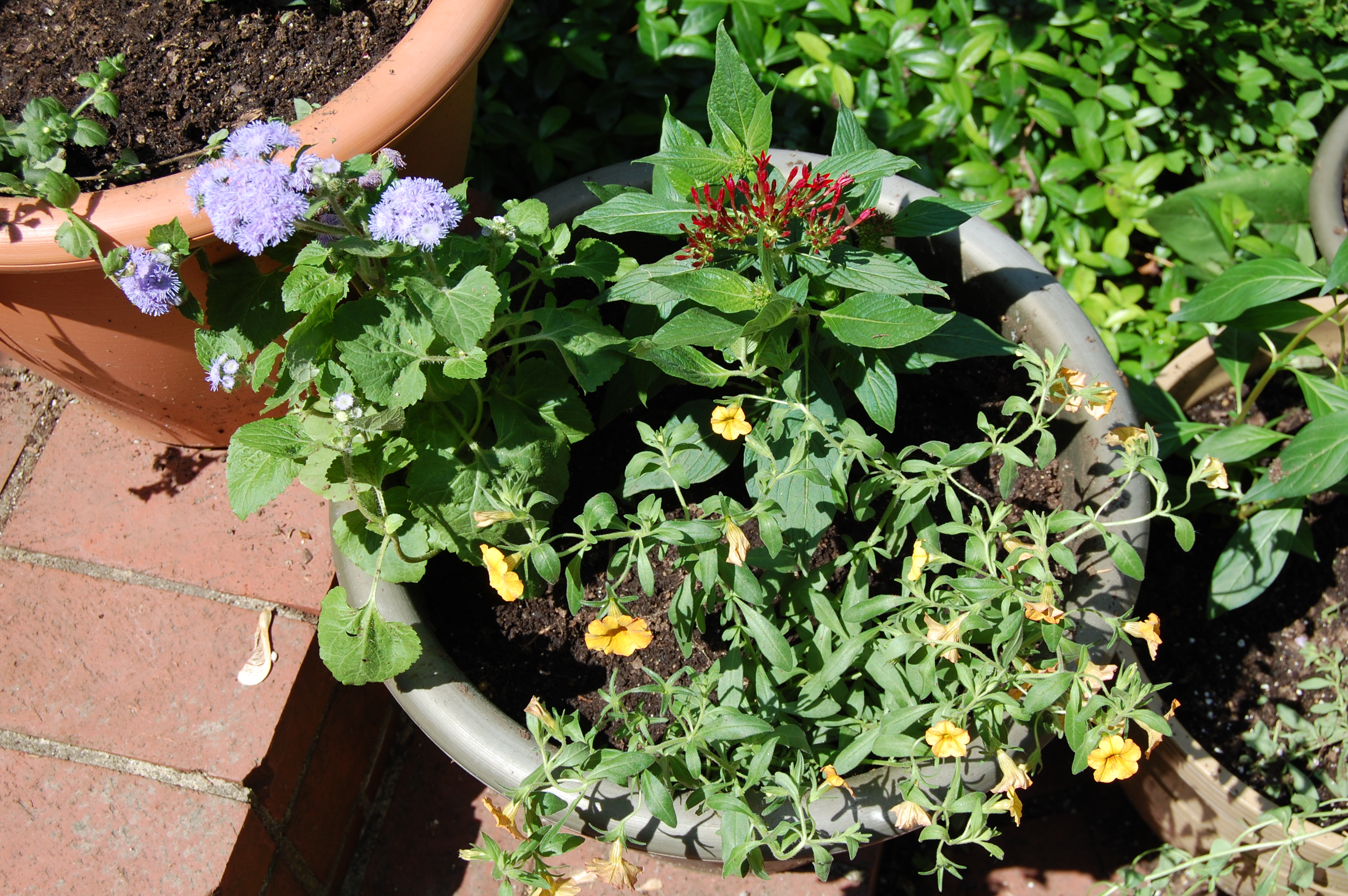
Newly completed summer container: Tall Ageratum, red Pentas, and orange Calibrachoa.

So I drove to two of my favorite local garden centers, Anton’s here in Evanston and Gethsemane in Chicago. Typically these places are mobbed on early June weekends. However, the cold and the intermittent thunderstorms did wonders for reducing the crowds, leading to a relaxed if excessively moist garden shopping experience. Here’s what I got:

Thrillers:

  • Salvia guaranitica ‘Black and Blue’. This Salvia, known as Blue Anise Sage, is hardy to zone 8 but grown as an annual here in zone 5. ‘Black and Blue’ has black stems and gold/green foliage along with the tubular blue flowers. Grows rather upright, about 2-3′. I’ve seen this plant used frequently at the Chicago Botanic Garden, where I am constantly stealing ideas.
  • Cigar Plant (Cuphea ignea): This was the one plant I bought on impulse, but I wanted a tall plant that I hadn’t tried before. Another tropical plant, hardy to zone 9, with tubular flowers that do look like little red cigars or cigarettes. Supposed to be a great hummingbird plant. I’m not sure if I’ve seen this plant in garden centers before. Here’s a picture from the Missouri Botanic Garden.
  • Ageratum ‘High Tide Blue’ (Ageratum houstonianum). This variety grows about 24″ tall.
Cigar Plant
Cigar Plant. This picture is from the Missouri Botanic Garden because mine are not very big now.

Fillers:

  • Pentas ‘Graffiti Red Lace’ and ‘Red Star Cluster’ (Pentas lanceolata). I bought a lot of these. Grew it for the first time last year and love it. A real magnet for hummingbirds. Clusters of star shaped red flowers, about 18″ tall.

Spillers:

  • Million Bells ‘Celebration Sky Blue’ and ‘Crackling Fire’ (Calibrachoa varieties). Flowers sort of like mini-petunias in blue and orange.
  • Bacopa ‘Betty Blue’ (Sutera cordata). This plant is not dramatic, but very reliable. Small light blue flowers on trailing stems.
Summer Flowering Containers
Salvia, Pentas, and Million Bells.

The color scheme I ended up with was basically blue-red-orange, blue-red-blue, or red-red-blue. Looking forward to a lot of hummingbirds on the front porch. Actually, I’ve already seen my first hummingbird of the year, and it was feeding on the columbine, which I’ve never seen before. Sadly, I was not able to get a picture.

Naturally, I’ll post more pictures of these containers as they fill in.

Have you filled your containers with summer annuals yet?

Lilacs: The Power Of Fragrance

Good news: the season of Monday to Friday business travel is over for me, at least for this year.  Free at last! After working late Friday night, I drove home Saturday morning. Once home, the first thing I did was inspect the garden.

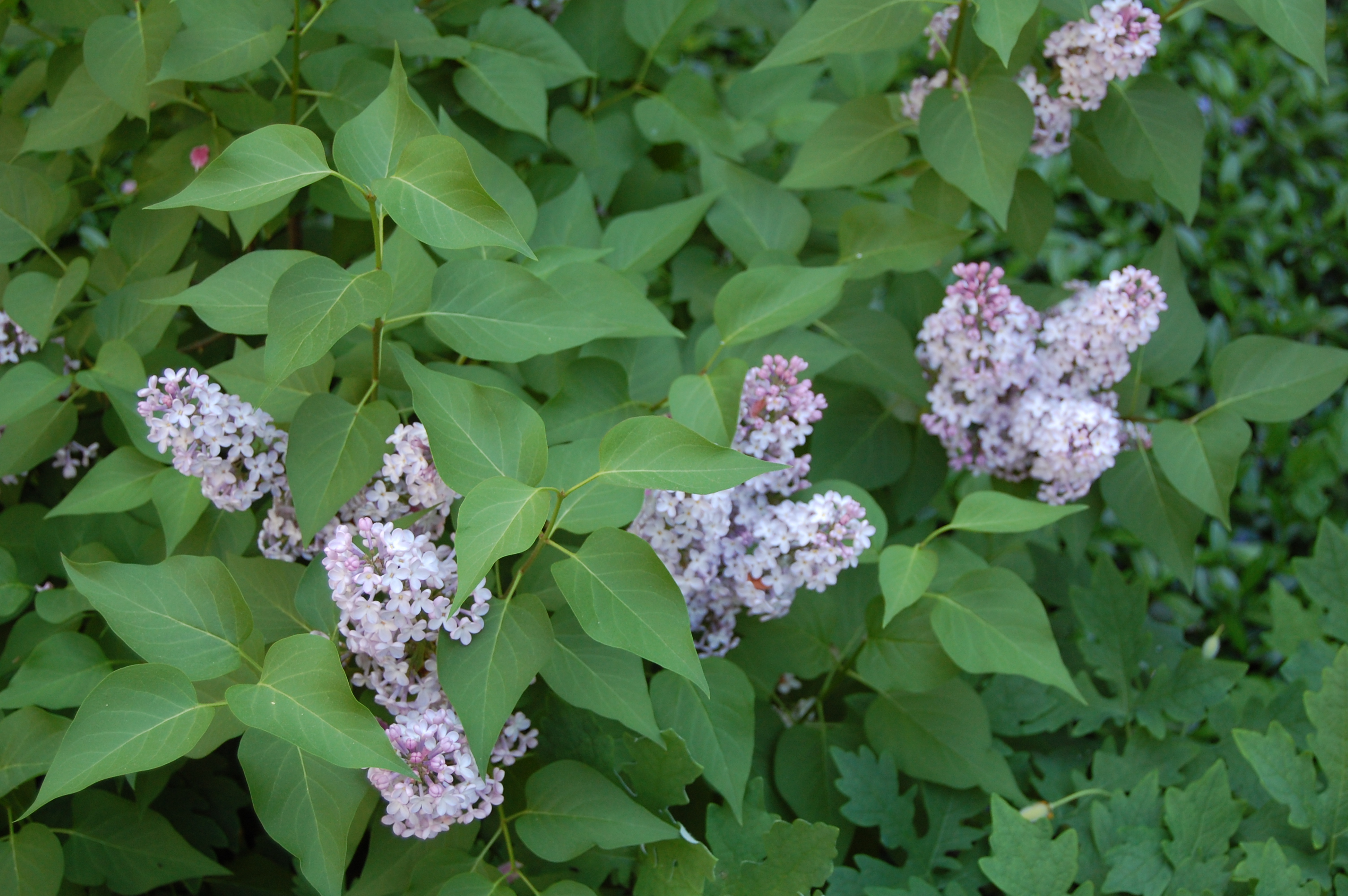
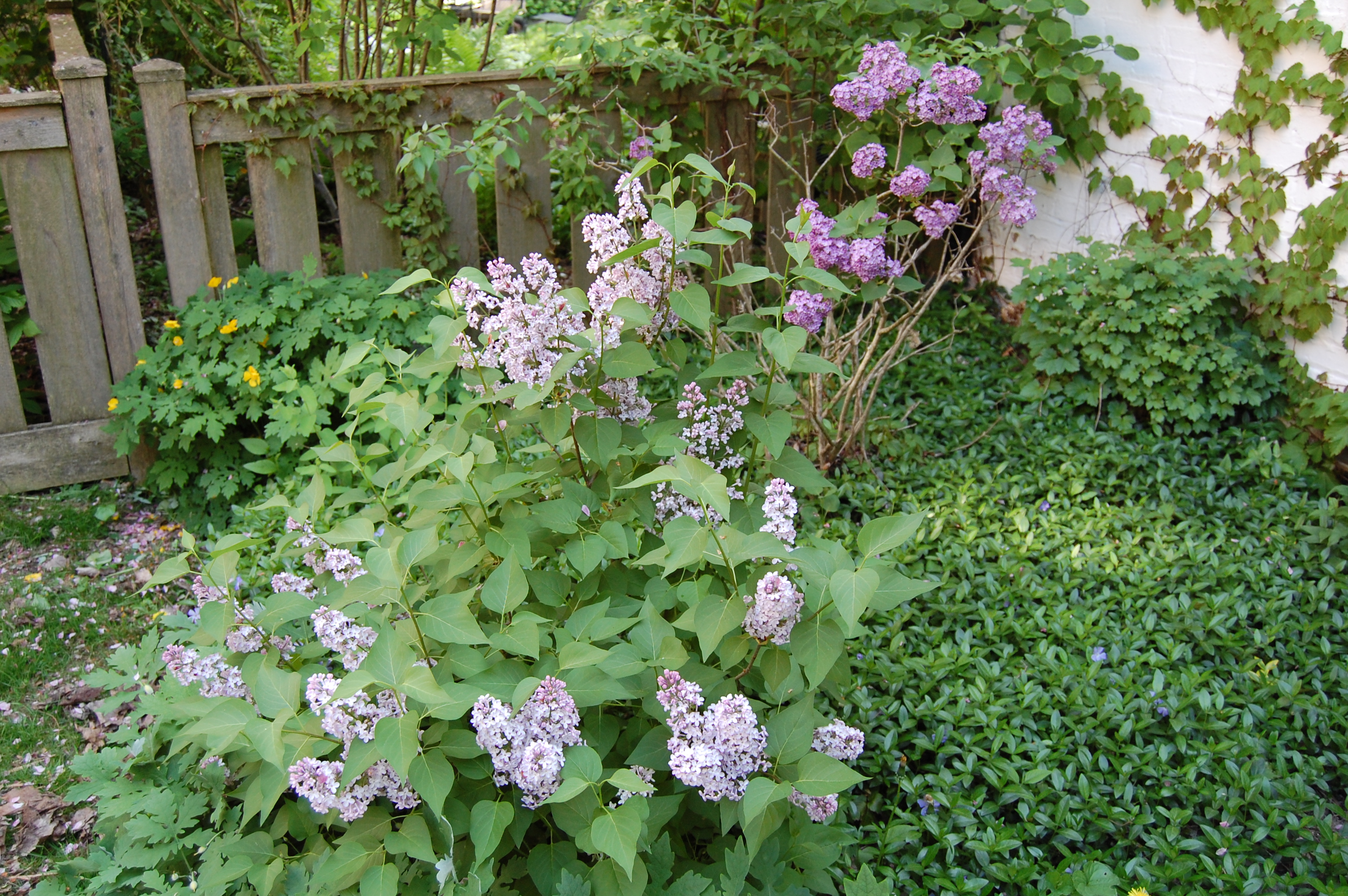
Our common lilac, planted last year. I put this in to make Judy happy, but I love it as much as she does.

Overall, things looked pretty good. One thing I was sorry to see, though, was that the blooms on our new lilac (a plain old common lilac, Syringa vulgaris) were pretty much done. I had planted this young lilac last year, right outside the window on the east side of the house.

I regretted that I had been around for only a small fraction of our lilac’s brief period of bloom.

This got me thinking about lilacs in general. Why do people (including me) love them? They tend to take up a lot of room, they get leggy, and they have little to offer for the 50 weeks or so per year when they are not blooming. What’s more, they are not native to North America and have limited wildlife value.

Eventually this lilac should reach ten feet or so.

These criticisms apply equally to lilacs and forsythia. Yet I think it is far more common for people to scorn forsythia. The difference is obvious: for that brief period, lilacs have an intoxicating fragrance. If forsythia were fragrant, it would not provoke nearly as much grimacing or eye rolling among certain persons.

Fragrance is powerful. It can stir memories and emotions. For me, the smell of lilac is a confirmation that it is indeed springtime, that life is renewing, and that life can be sweet. It brings on a sense of well-being and optimism.

It should also be said that lilacs are fairly low maintenance. Tomorrow I will cut off the flower panicles to prevent seed production, which should result in more bloom next year. That’s about all I have to do. Since it’s only 4′ tall, it doesn’t need much if any pruning.

Do you have lilacs in your garden? What is your favorite fragrant plant?

End of Month View: May 2013

It’s been a very long day so I am just going to post some photos of various parts of the garden at the end of May. These pictures were actually taken on Sunday, but close enough. First, the driveway raised bed.

Nepeta
Tulips and Celandine Poppies are done. Nepeta and random pansies and johnny jump ups are blooming, other plants are preparing for their moment in the spotlight.

The foundation bed at the front of the house.

Ostrich Ferns
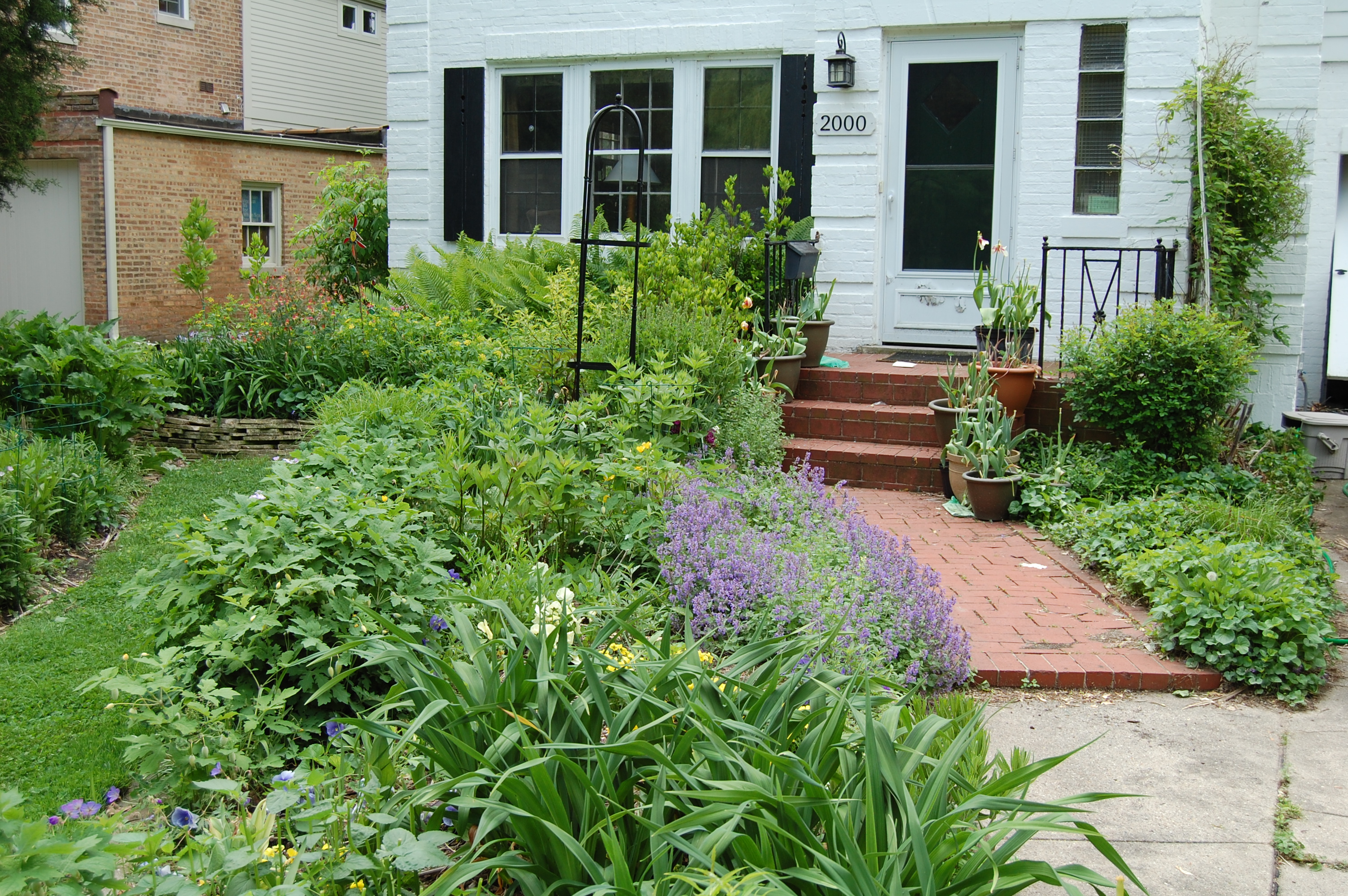
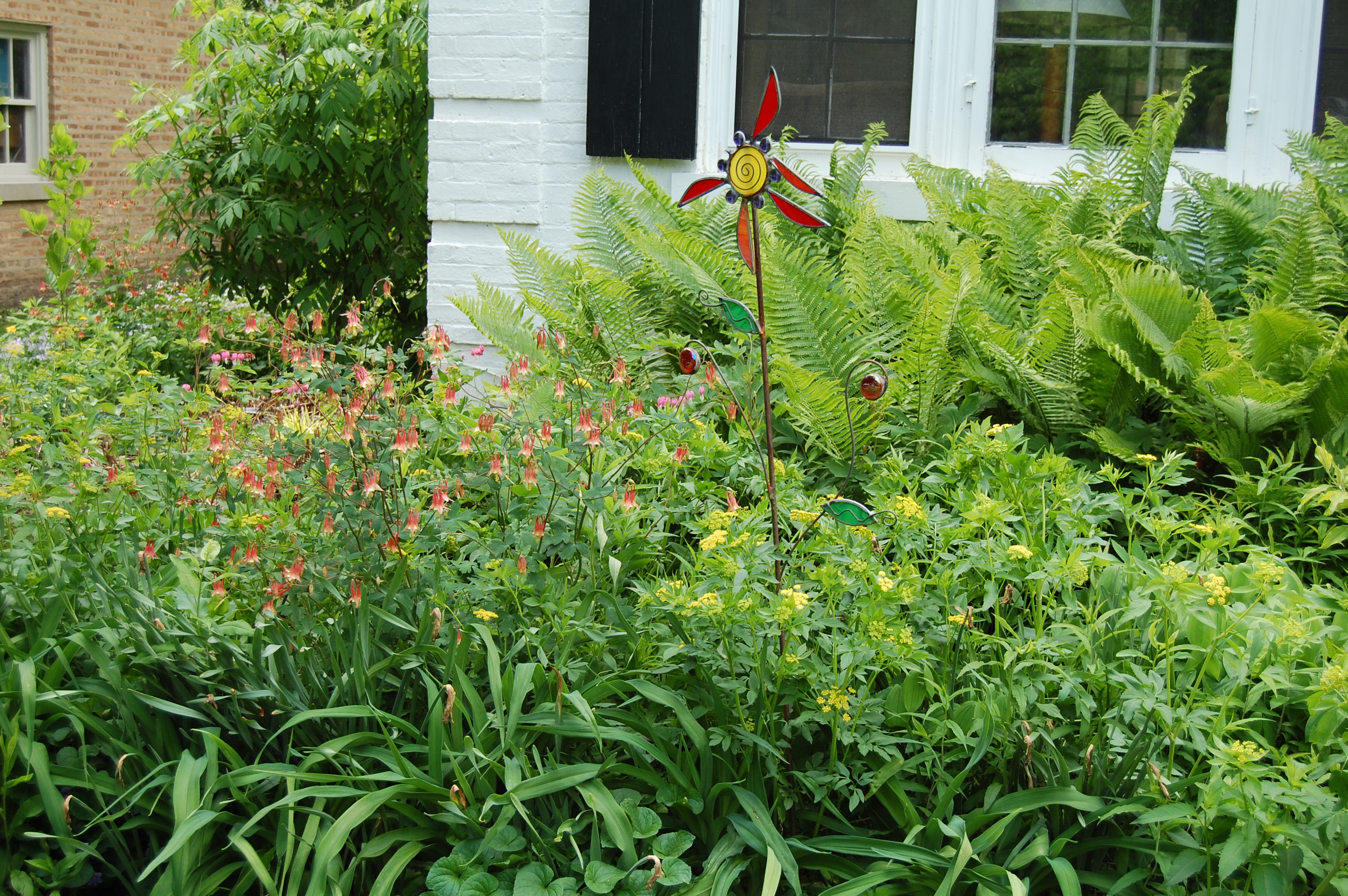
Bleeding Hearts are done flowering, but the foliage is still nice. Columbine and Golden Alexander bloom, and Ostrich Ferns stretch to reach their full height

View from behind the sidewalk bed.

Golden Alexander
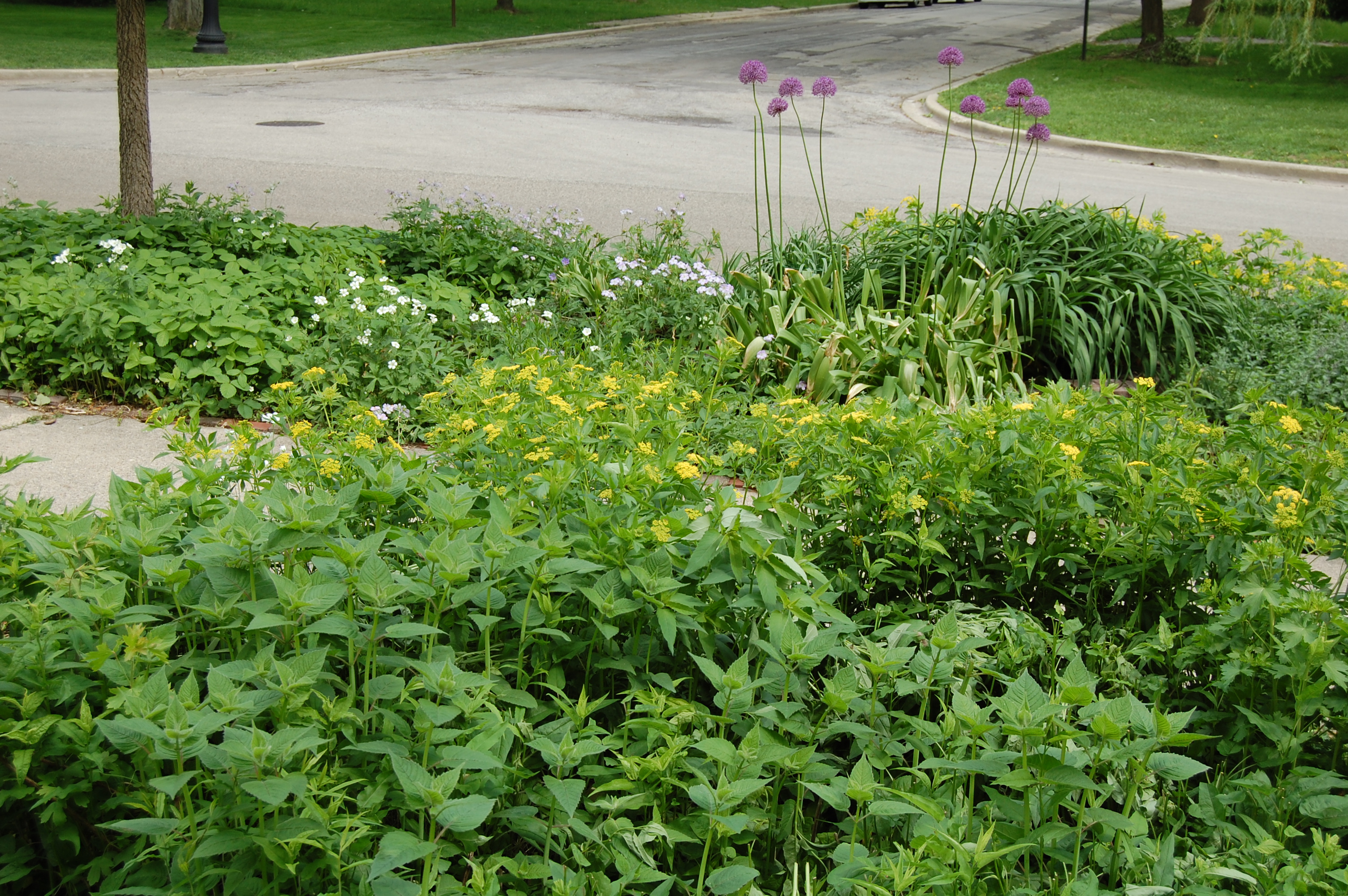
Standing behind the sidewalk bed. There is a drift of Golden Alexander, with Allium on the other side of the sidewalk. White Wild Geranium are also blooming. Wild Bergamot and Bee Balm are getting ready to assert themselves.

View from the street.

Golden Alexander
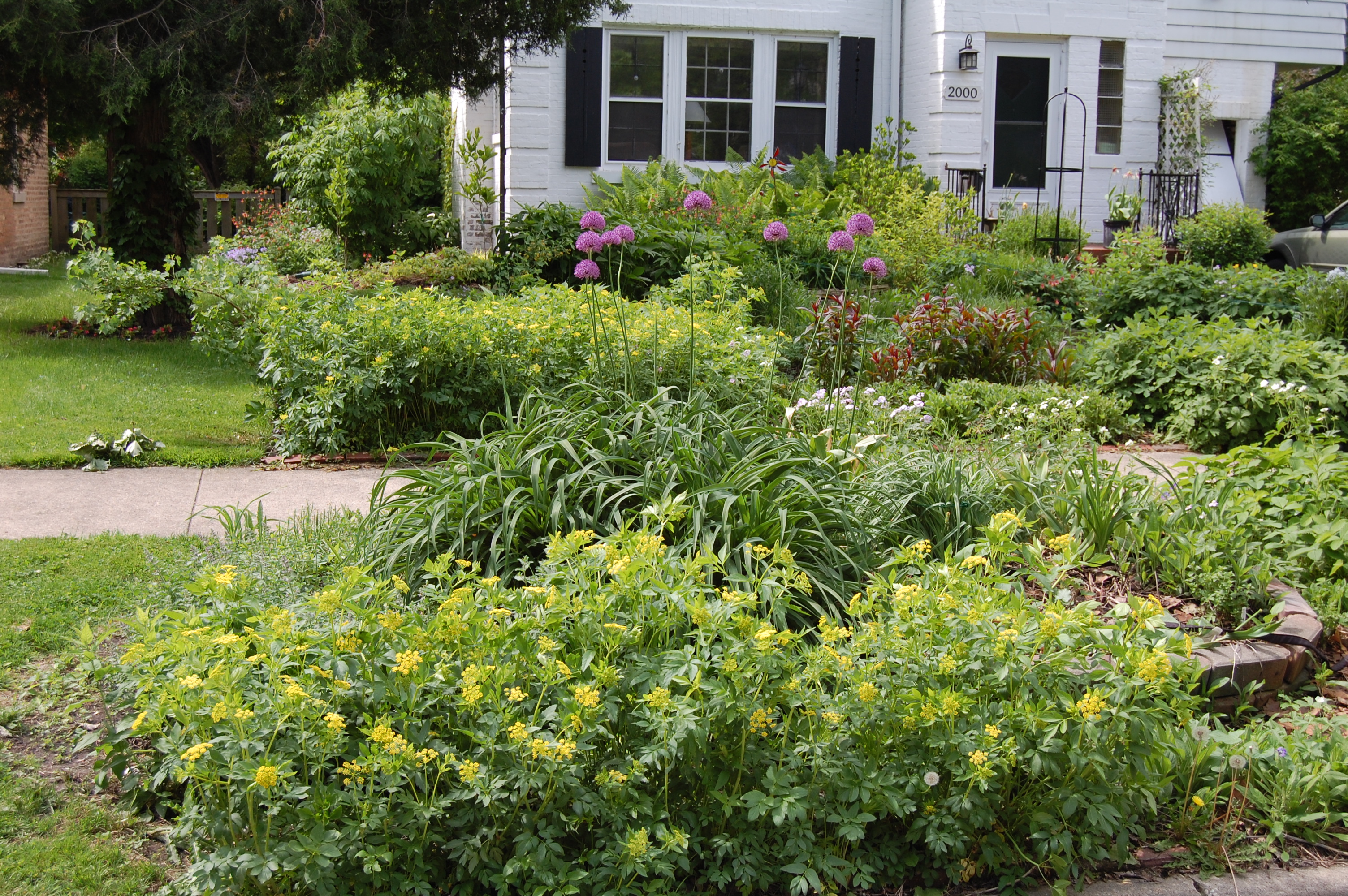
More Golden Alexander blooming along the street in the parkway bed.

The east side bed.

Red Elderberry.
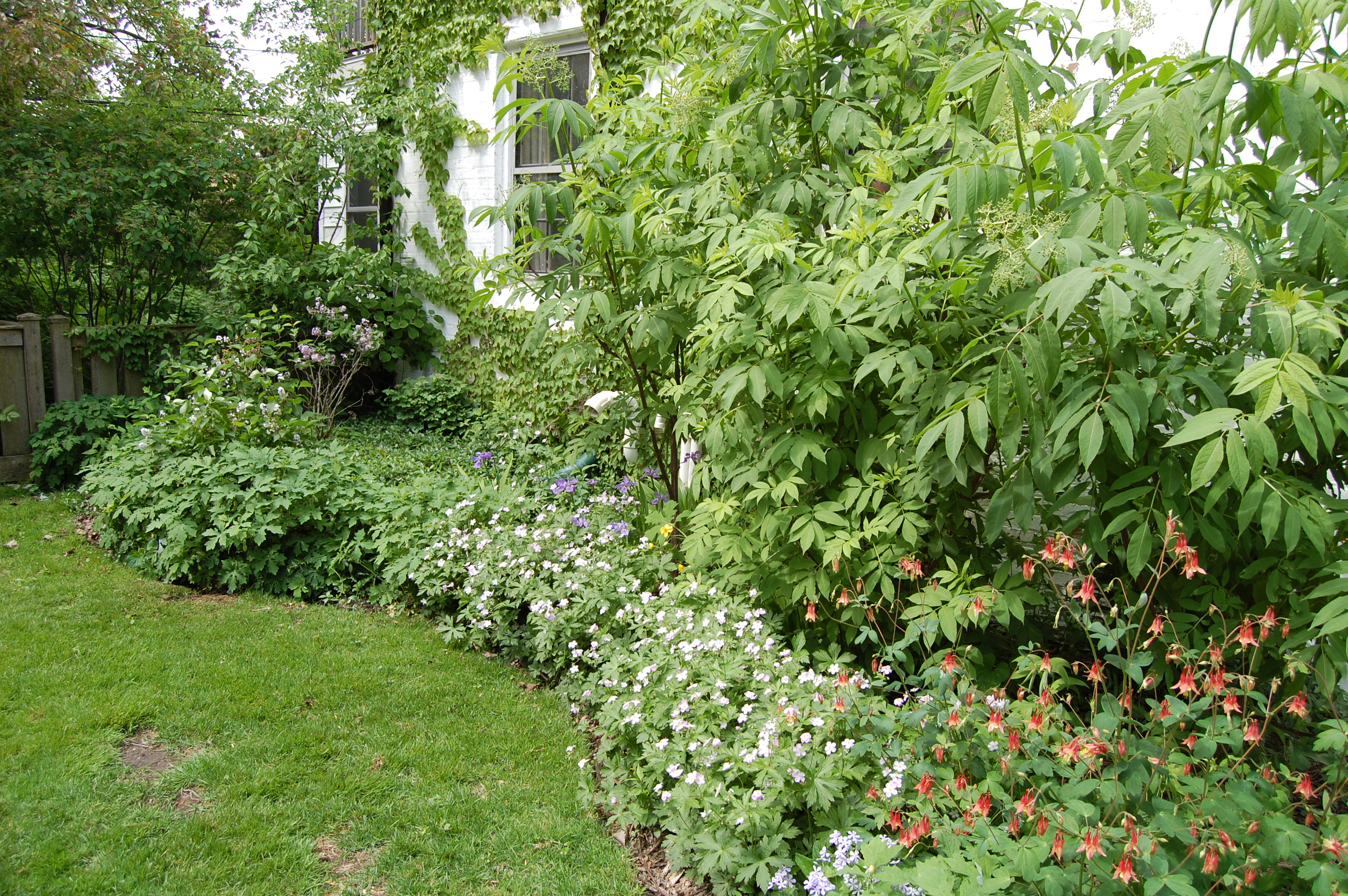
Columbine, Wild Geranium, and Woodland Phlox are in bloom. The Red Elderberry are full of unripe green berries. A young lilac at the far end is also blooming.

The spicebush bed and steps to the back porch.

Spicebush
The Spicebush are underplanted with Wild Geranium and Celandine Poppy. Nepeta ‘Kitkat’ blooms along the edge of the bed. Containers are filled with pansies.

Looking back toward the thicket corner.

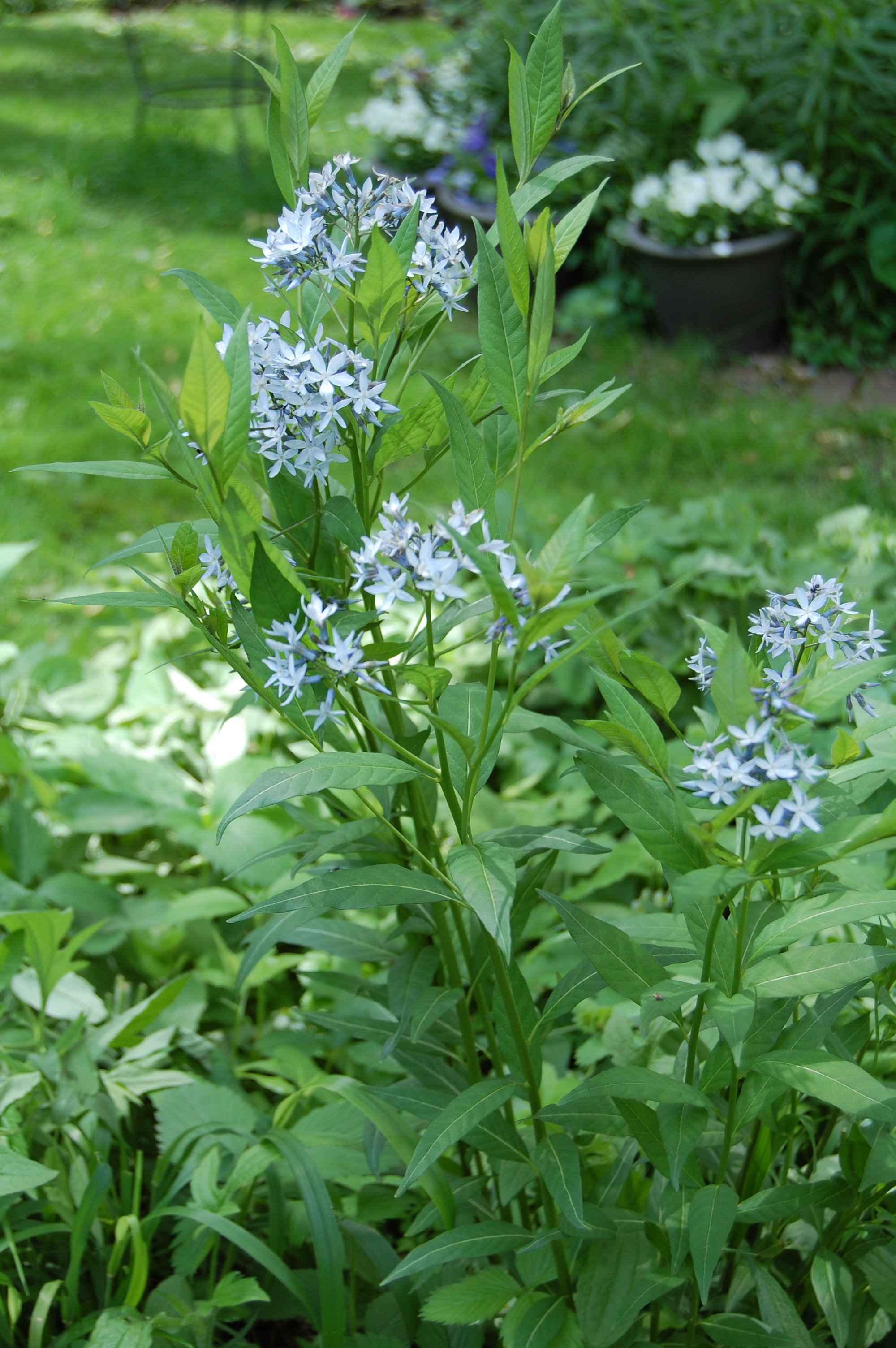
Amsonia
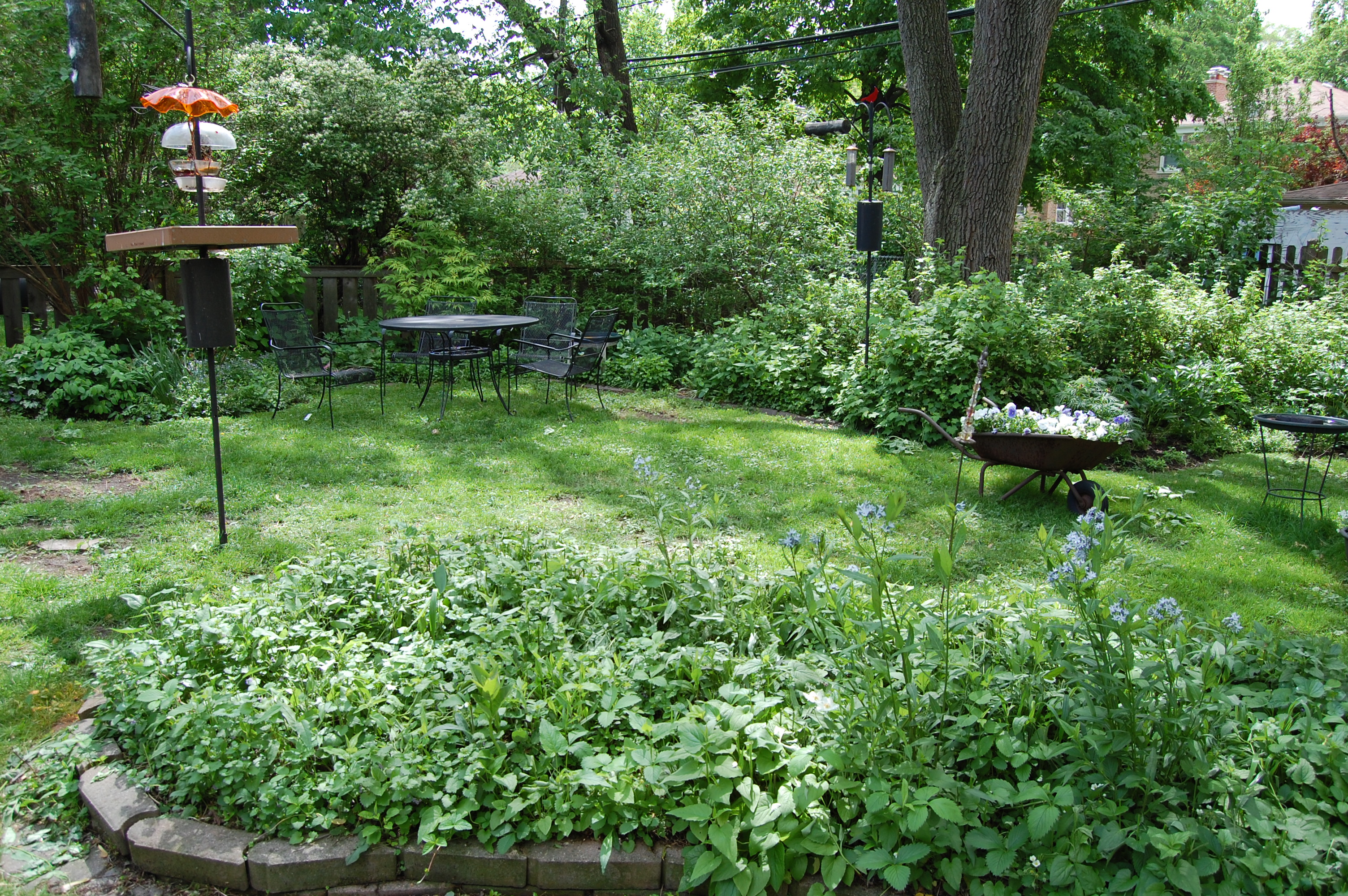
Amsonia blooms in the back raised bed, and the Wild Currant are full of dangling chartreuse flowers.

This isn’t everything, but it includes most of the beds. Thanks to Helen at the Patient Gardener’s Weblog for hosting this meme.

Violets: Love Them Or Hate Them?

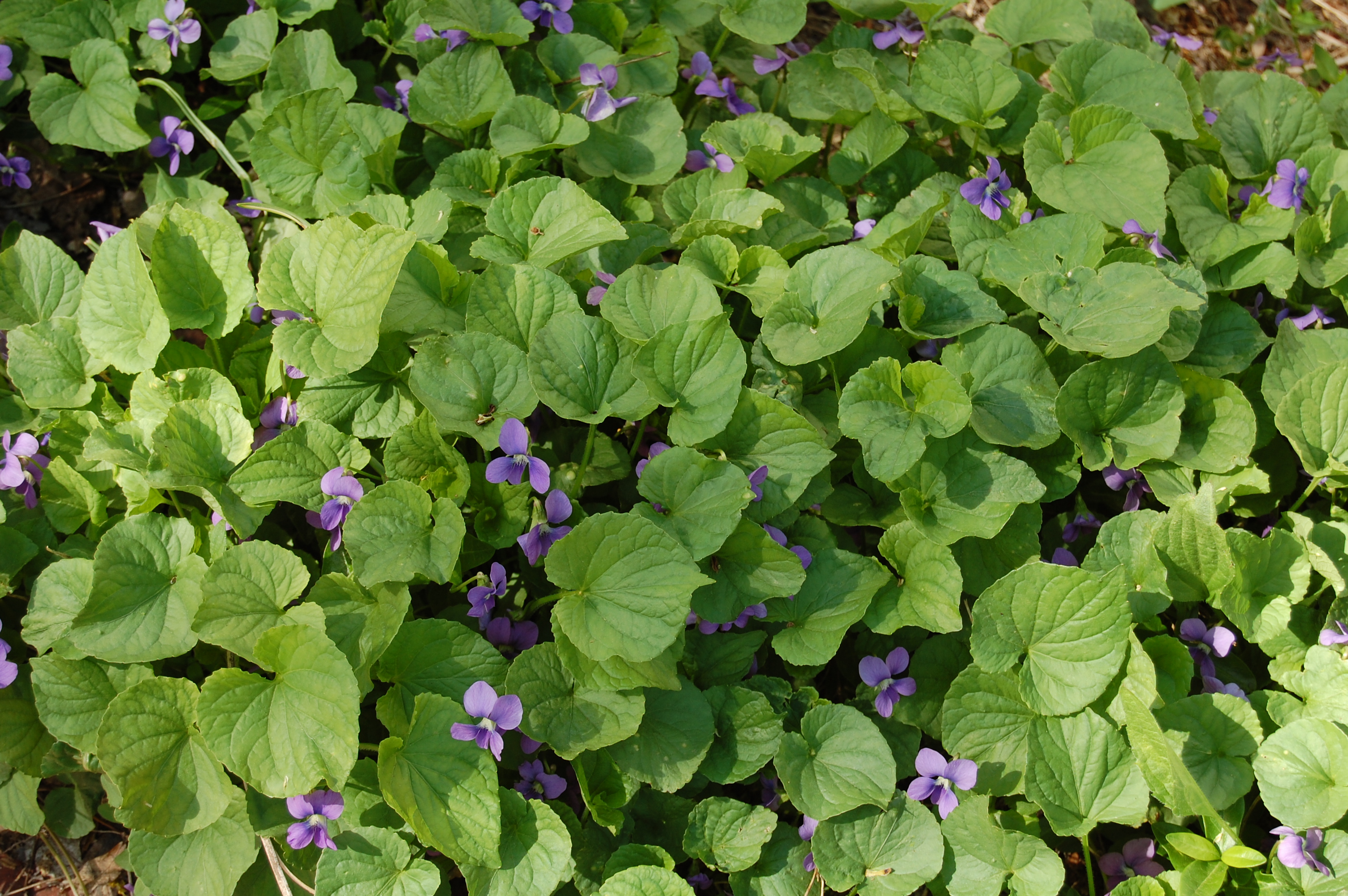
It is the season when the Common Violets (Viola sororia Willd.) are blooming. People have a complicated relationship with wild violets. We see them as charming and petite wildflowers, but also as voracious invasive weeds.

Common Violets

Personally, I think that violets are fine in their place, which is anywhere other than my flower beds. I welcome violets into my lawn, where I would love to see them do battle with the Creeping Charlie (Glechoma hederacea). Despite this, few violets have established themselves there.

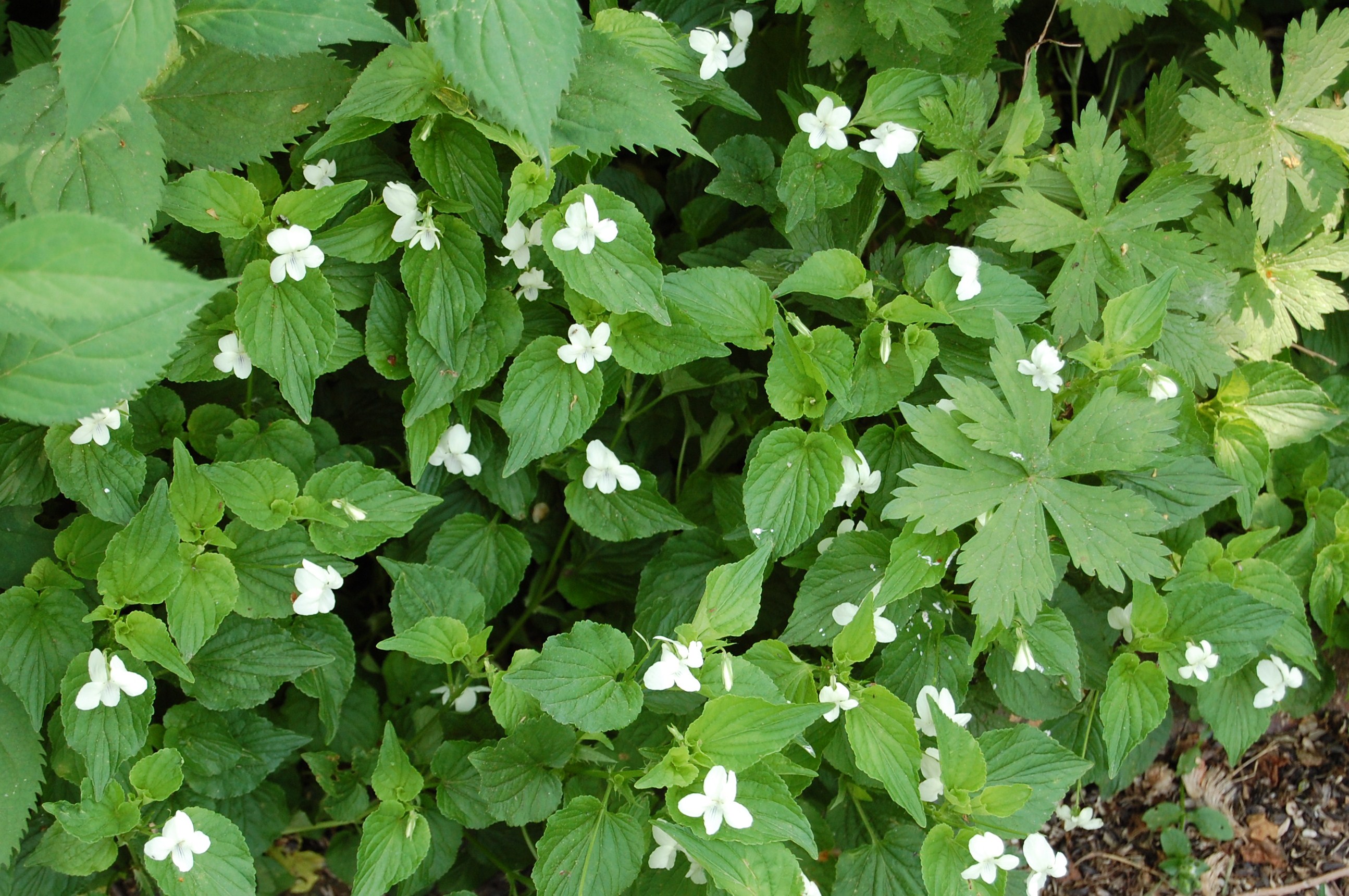
I do allow them to form a nice ground cover in a couple of areas, most notably the very informal Thicket Corner in the southeast part of the back garden. Rather than the Common Violet, here it is the white Canada Violet (Viola canadensis) that grows, and I find the flowers very attractive.

Canada Violet
Canada Violet

Common Violets do have many virtues. They have sweet little blue flowers. They are native to North America, and have significant wildlife value. For example, they are host plants to many species of Fritillary butterflies. What’s more, mourning doves and wild turkeys eat the seeds.

Pansies
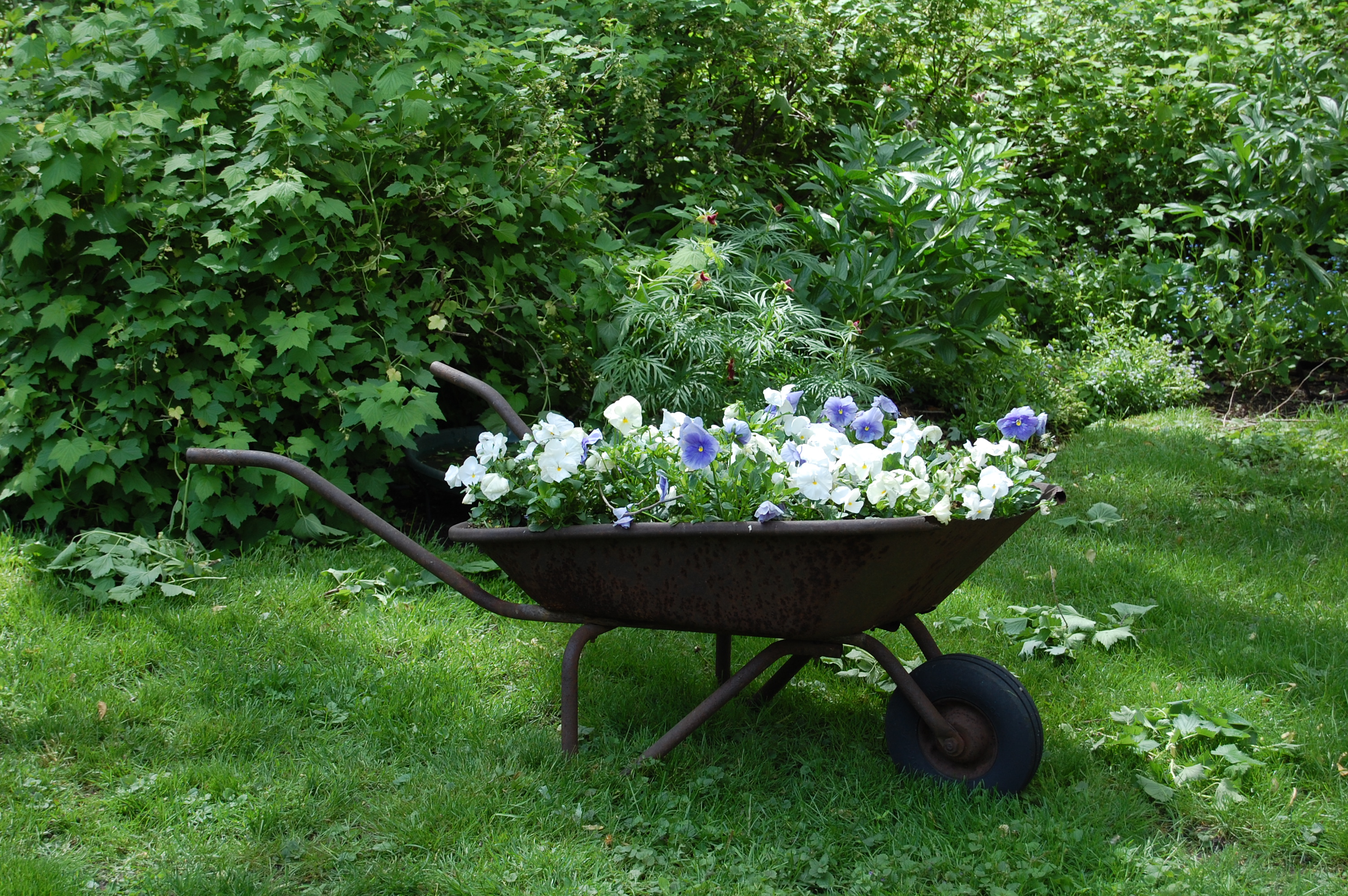
My old wheelbarrow planter, full of pansies.

Virtually no one objects to the Common Violet’s domesticated cousins, Johnny Jump Up (Viola tricolor – is that a great common name or what?) and Pansies (Viola wittrockiana). In spring I love to fill my back garden containers with both, and I leave them there until the summer heat starts wearing them down.

This year I also planted them in my raised Driveway Border, for additional early color and to cover up some of the bare earth. This experiment has been a modest success, though it takes a heck of a lot of Violas to fill in a large bed. I think I’ve decided I actually prefer the smaller but profuse flowers of Viola tricolor to the bigger, sometimes floppy blooms of the Pansies.

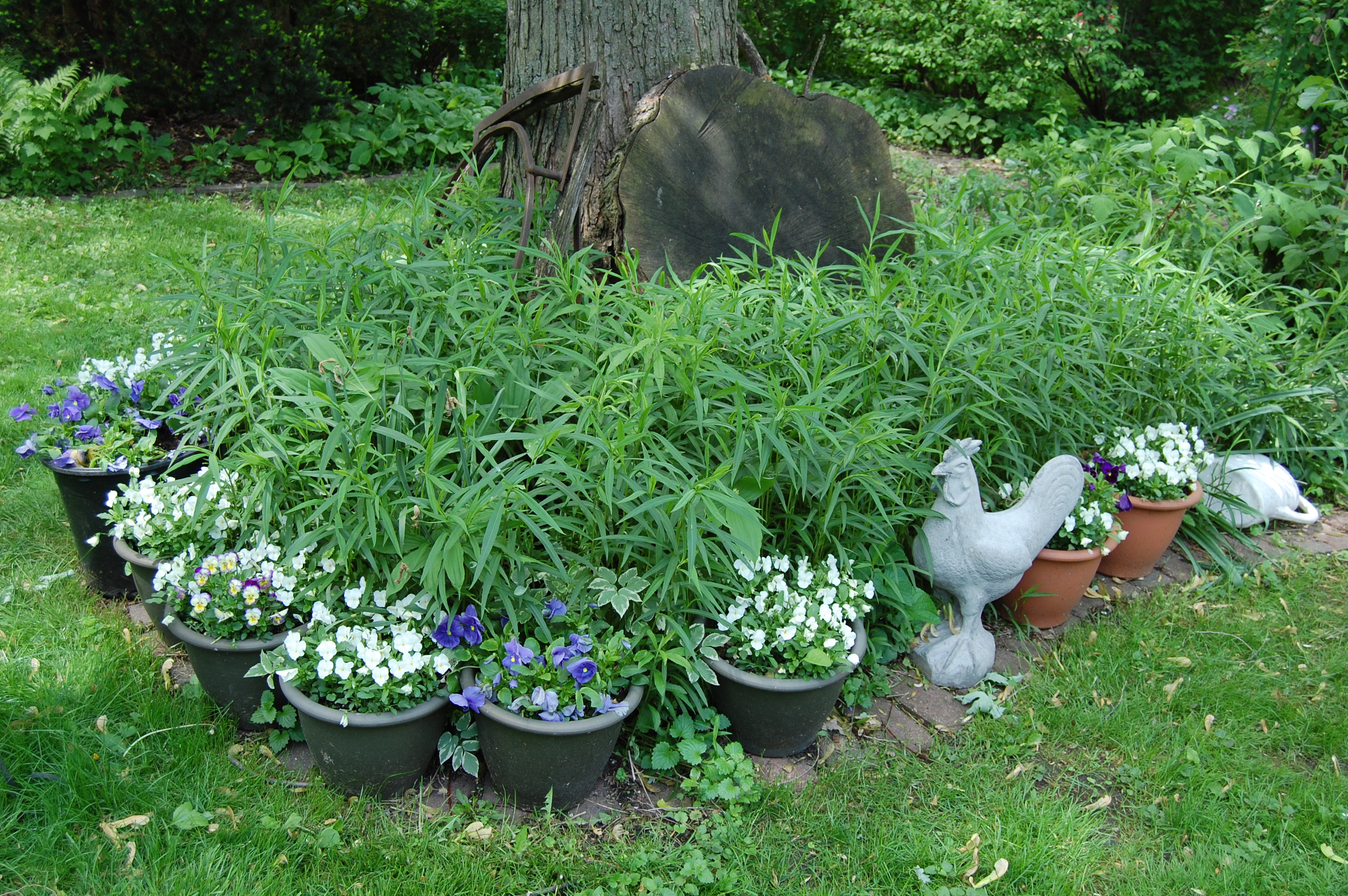
Johnny Jump Up
Johnny Jump Ups in containers in\the back garden, watched closely by our concrete rooster.

Having said all that, I do find Common Violas to be a problem in flower beds (the Canada Violets are better behaved and never intrude where they are not wanted). It’s not the prolific self-sowing (young seedlings are easy to remove), but the rapidly expanding colonies of rhizomes that push back everything in their path. I regularly have to pull hunks of these fleshy roots from my flower beds. This doesn’t bother me especially, but I know that if I neglect this task for very long I will have myself a Violet plantation.

Are you a lover or hater of wild violets?

Weekend Garden Notes: Tuteur, Iris, Allium

Voila, Le Tuteur!

Today is lovely, sunny and cool, which makes up partly for yesterday, which was cloudy and cold. It didn’t rain though, so at the conclusion of this weekend I feel almost caught up with staking, cutting back, weeding, etc. Close enough to caught up, anyhow, to prevent total panic.

Garden Tuteur
The new tuteur. Hmm, it’s leaning a bit, have to fix that. The Ostrich Ferns in the back are coming in nicely.

One accomplishment was putting together the 7′ tuteur I ordered from The Gardener’s Supply Company. It’s been sitting in the garage since February, where it has been reminding me of its presence by tripping me every couple of weeks. Anyhow, it only took about 20 minutes to construct, and I’m quite pleased with it.

My plan is to grow ‘Heavenly Blue’ Morning Glories on the tuteur. We had these the first year of our garden at this house and loved them, but for some reason haven’t grown them since then. It will be the new focal point for the driveway bed.

Roof Iris
Roof Iris

Roof Iris

One of the new perennials I planted last fall was Roof Iris (Iris tectorum). I am not an Iris enthusiast, but this was a plant I learned about in my groundcovers class at the Chicago Botanic Garden. It is a low-growing, low-maintenance Iris that spreads by rhizomes. It does well in sun or shade (though not deep shade). I planted it in my east bed, where I hope it will fill in around the Red Elderberries (Sambucus racemosa).

Well, my roof iris are blooming for their very first spring! The blue and lilac blooms are quite pretty, I think. I also appreciate the sword-like foliage.

Roof Iris, Wild Geranium
Roof Iris with Wild Geranium.

This plant was difficult to find; I ended up ordering it from Plant Delights Nursery. It is supposed to be enjoyed by slugs (not a problem here, but be warned) and avoided by deer. By the way, I had a much better title for this section, which was Raise The Roof (Iris), but Judy objected. Also, the common name comes from the practice in Japan and China of planting this iris in thatch roofs.

Alliums in Bloom

I have two kinds of Alliums, ‘Globemaster’, and ‘Purple Sensation’. Both have been naturalizing. ‘Purple Sensation’ has grown from a clump to a drift about 4′ long, with many immature plants sending up their oniony leaves but not yet blooming.

Allium 'Globemaster'
Allium ‘Globemaster’

‘Purple Sensation’ mixes well with Brunnera (Brunnera macropylla) and is nicely placed in front of a dwarf Black Chokeberry bush (Aronia melanocarpa ‘Iroquois Beauty’), which blooms at the same time.

Allium 'Sensation' in front of Black Chokeberry.
Allium ‘Sensation’ in front of Black Chokeberry.

The flowers on my ‘Globemaster’ are smaller than they used to be, which probably means I should be dividing the bulbs after the foliage fades. About four feet tall, they are a majestic Allium.

What kind of structures (tuteurs, arbors, pergolas, etc.) do you use in your garden, and what do you have growing on them?

Columbine Are Like Candy

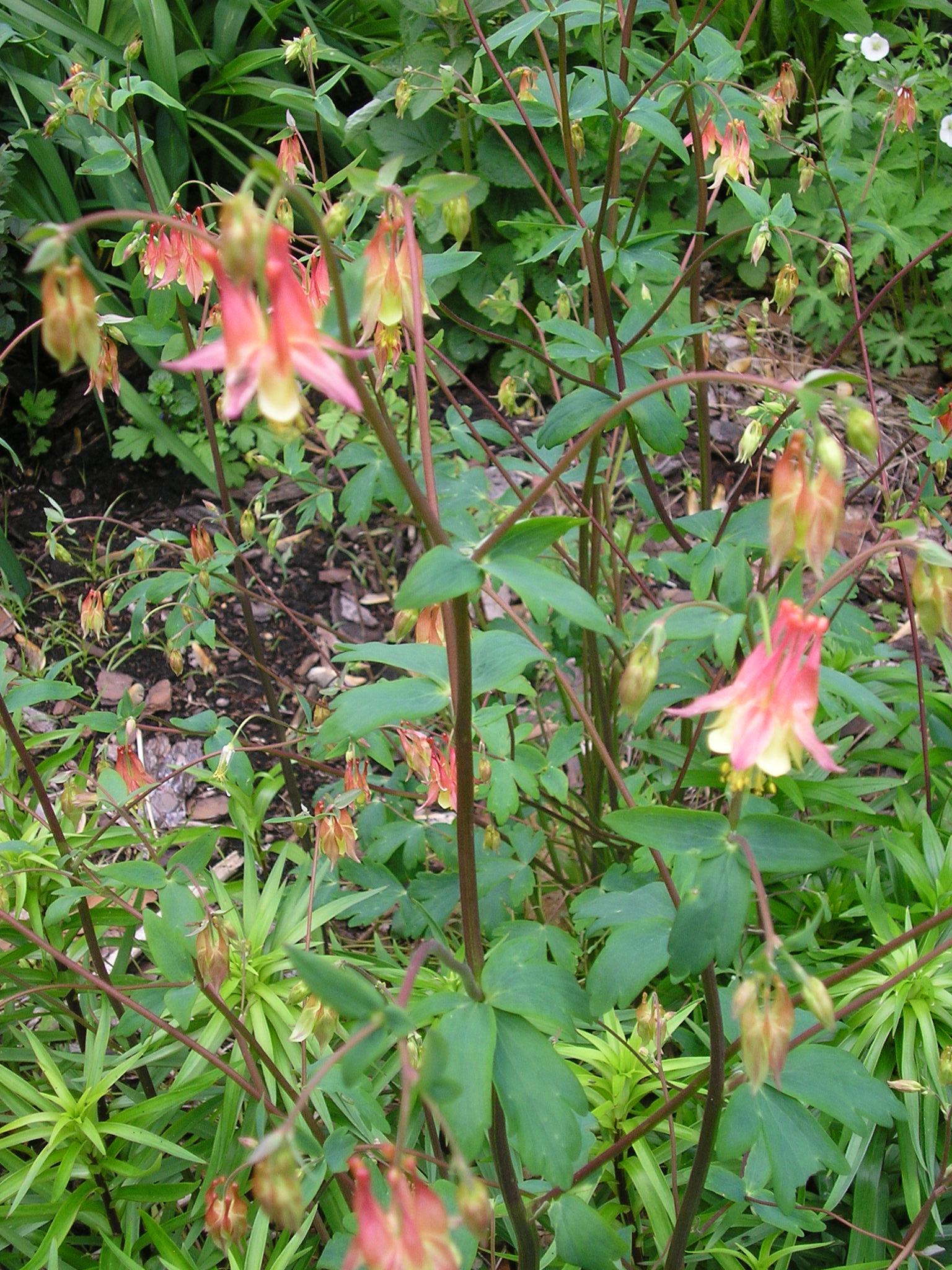
So we all agree that wild columbine (Aquilegia canadensis), also called red columbine, is the most beautiful perennial flower for shade, right? Exactly.

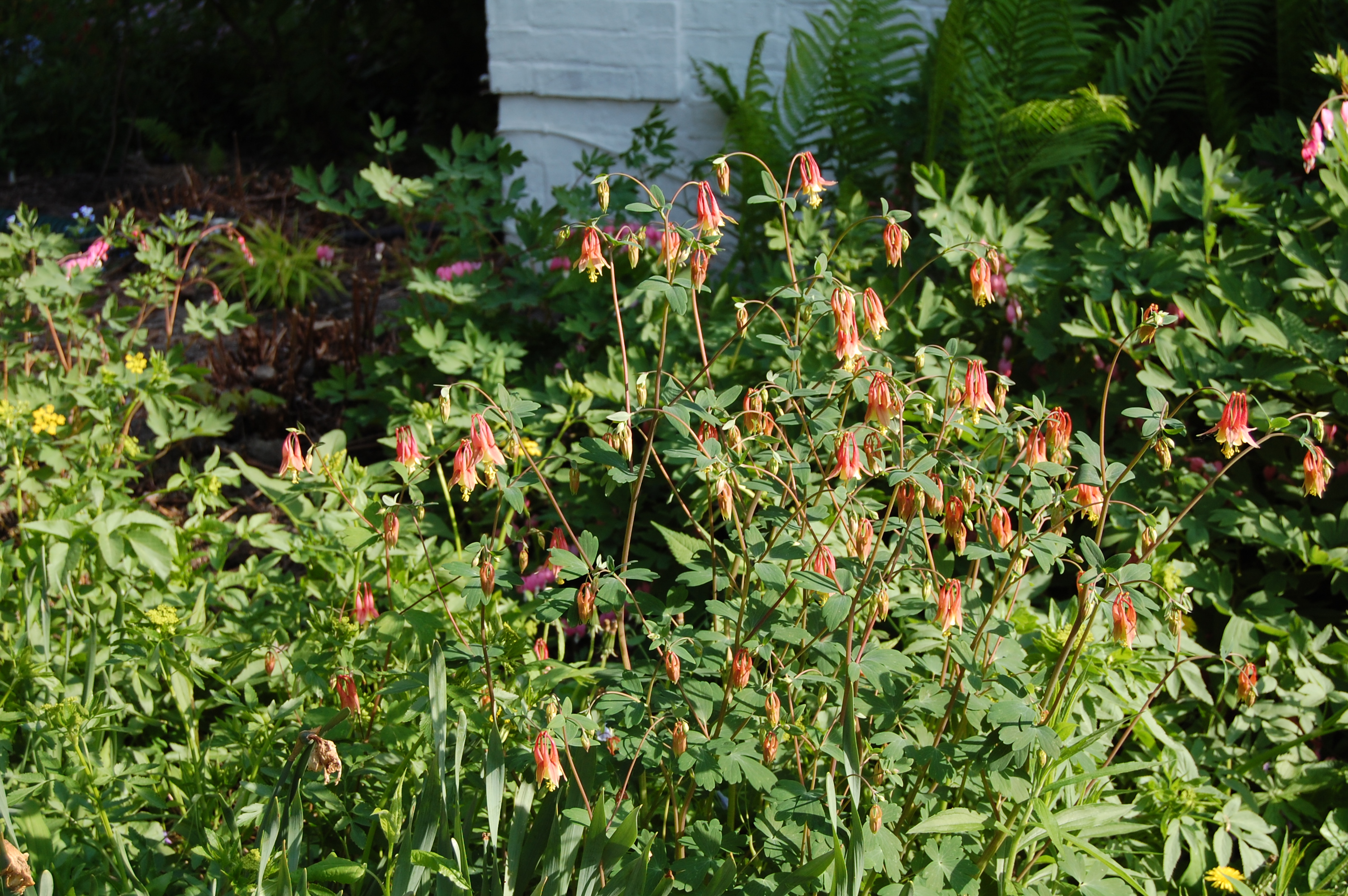
Columbine, Aquilegia canadensis
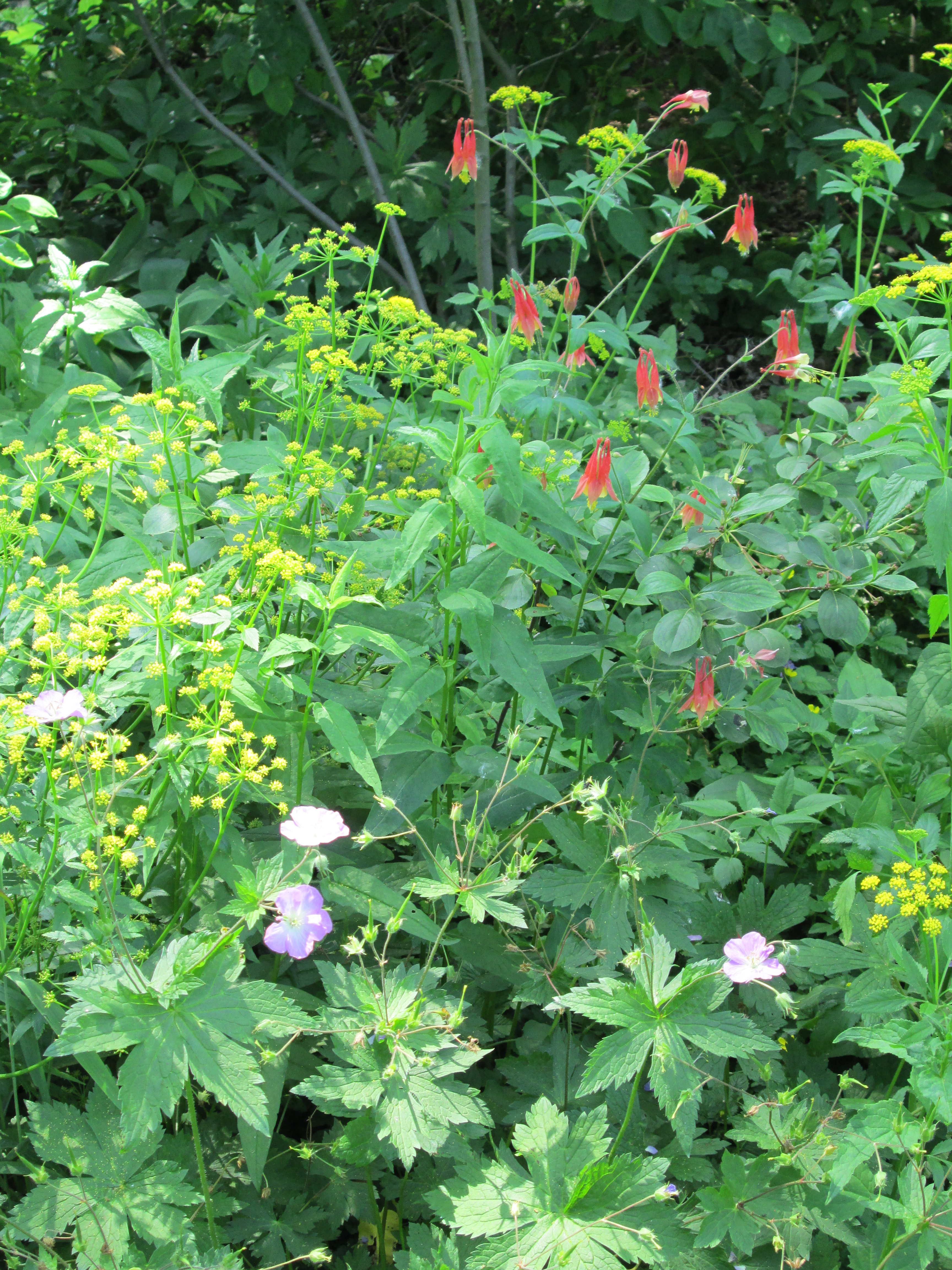
Columbine in the front foundation bed.

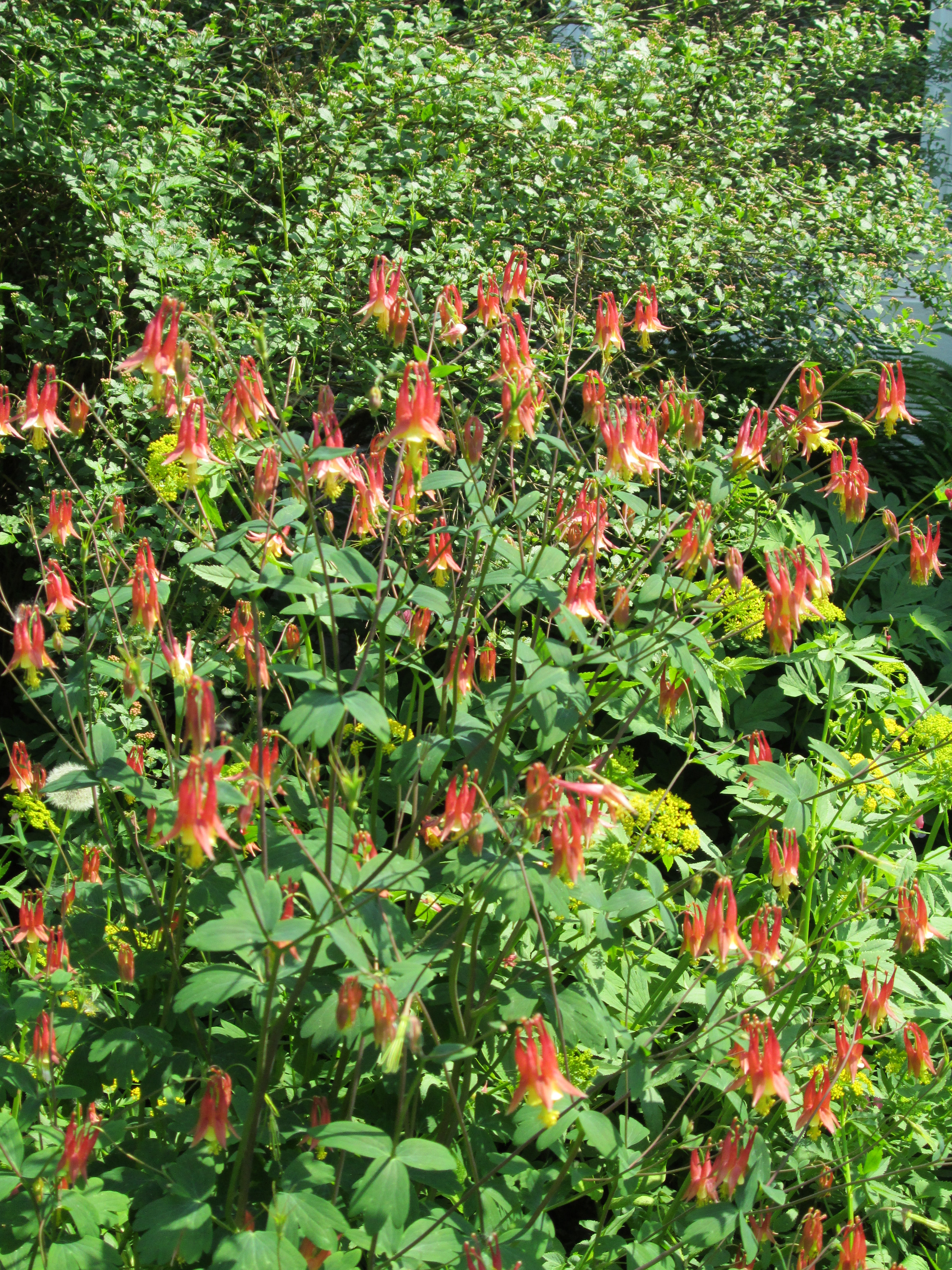
A friend of mine likes to say that columbine are like candy, you can never have enough. Certainly A. canadensis, native to North America east of the Rockies, is a sweet wildflower. The dangling red and yellow blooms put me in mind of colorful chandeliers.

In a moist, partly shady spot wild columbine will grow to substantial plants, in my garden about two feet high and three feet wide. The blue-green foliage is very attractive, and makes a nice groundcover after spring bloom is done if the soil is sufficiently moist.

Columbine, Aquilegia canadensis
A closer look.

A. canadensis is much less common in garden centers than the exotic species and cultivars. That is unfortunate because in addition to being native, A. canadensis is much more resistant to leaf miner, an insect pest that disfigures many columbines.

Columbines are a bit unpredictable, which is part of their charm. Individual plants may not be long lived, but they will self-sow. Once you have columbines, your are likely to continue to have them into the foreseeable future. Even so, seedlings are easy to pull out or transplant.

Columbine, wild geranium, golden alexander
Columbine with wild geranium and golden alexander.

They do tend to pop up in some inconvenient spots. For example, there is one growing between pavers on the path into the back garden. Eventually it will have to come out or be run over by the wheelbarrow. For now, however, I do not have the heart to remove it.

Wild Columbine

Columbine are supposed to be attractive to hummingbirds, but I have never seen hummers feed on this flower in my own garden. The bees do like them.

One problem that occurs with columbine here is that they tend to bloom at the same time that cottonwood trees are dropping their fluff. The fluff gets stuck in and on the flower and at least partially ruins their appearance. This year it has not happened, I’m happy to say, perhaps because the unusual weather has thrown off the cottonwood/columbine synchronicity.

Do you grow columbine in your garden?


Wildflower Wednesday: Starry Solomon’s Plume

Starry Solomon’s Plume is more properly known as Starry False Solomon’s Seal, but the people who write plant catalogues don’t like common names with “false”, it must drive down sales, so they came up with something with a more positive ring. I think they did right, because the other name implies that the plant is trying to pass itself off as Solomon’s Seal, and we really have no reason to suspect it of such duplicity.

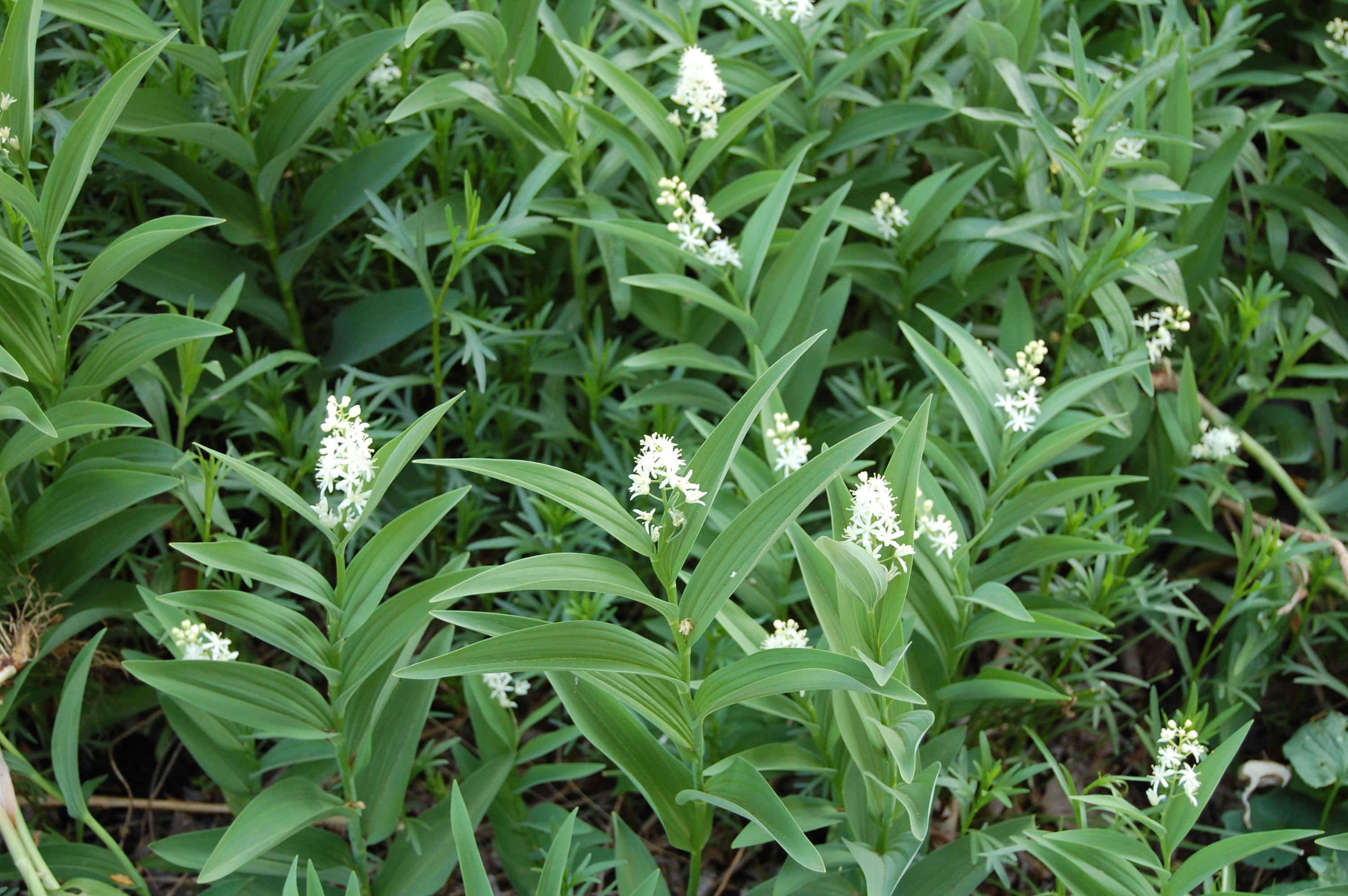
Starry False Solomon's Plume
Starry Solomon’s Plume in the front west bed.

The botanical name is Maianthemum stellatum, but until recently was Smilacina stellata (the taxonomists strike again – grrr.)

Like Solomon’s Seal, Starry Solomon’s Plume has a single stem lined with glossy, lance shaped leaves. In spring, there is a cluster of small, star-shaped white flowers at the end of the roughly one foot stems, followed by interesting striped berries in fall. For me the foliage and berries are the most attractive features. Right now is when the flowering is at its peak.

Starry False Solomon's Seal
False Solomon’s Plume flowers

This is a tough plant that will tolerate dry shade. It spreads by rhizomes, but not so thickly that you could really consider it a groundcover. Taller plants can coexist with Starry Solomon’s Plume, but shorter plants like Prairie Smoke (Geum triflorum) will need the gardener’s protection.

Starry False Solomon's Plume
Starry False Solomon Seal berries

Starry Solomon’s Plume is native to most of the USA and Canada. Grizzly bears and ruffed grouse are said to eat the berries, but I can’t verify this because there are no bears or grouse in my neighborhood, ruffed or otherwise. I like to think that an adventurous robin or two will give the berries a try, or maybe a bluejay, but I don’t know.

Wildflower Wednesday is hosted every month by Gail at Clay and Limestone.

Blossoms Are Fleeting, Love Is Eternal

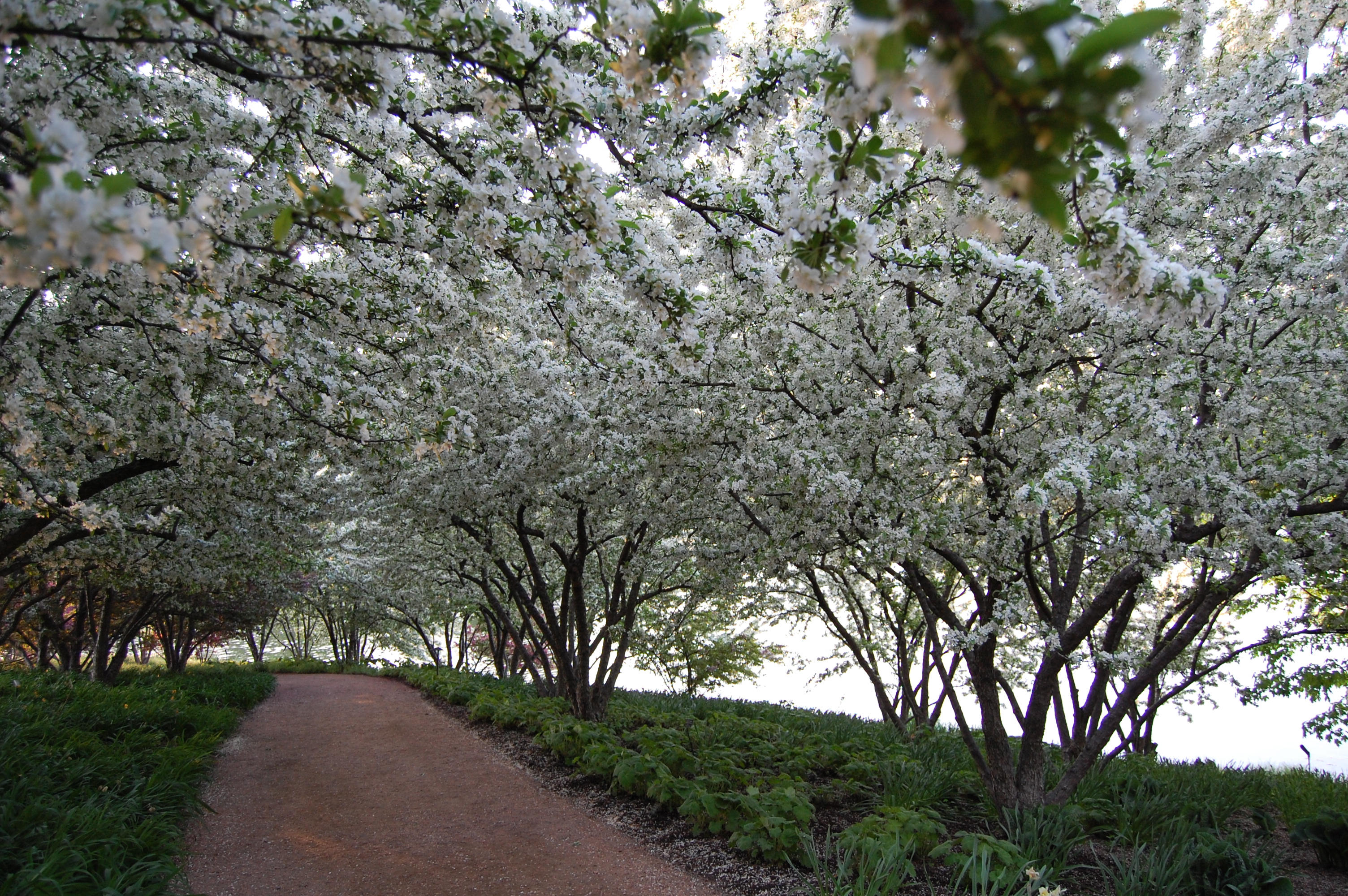
I’ve written before about the glorious display of crabapple blossoms at the Chicago Botanic Garden every spring. But getting to the garden at the right time to see the display is rather challenging. It is at its height for just a few days, a period that can be cut short or eliminated altogether by a late cold snap or hard rain.  The result is that many years we miss it entirely.

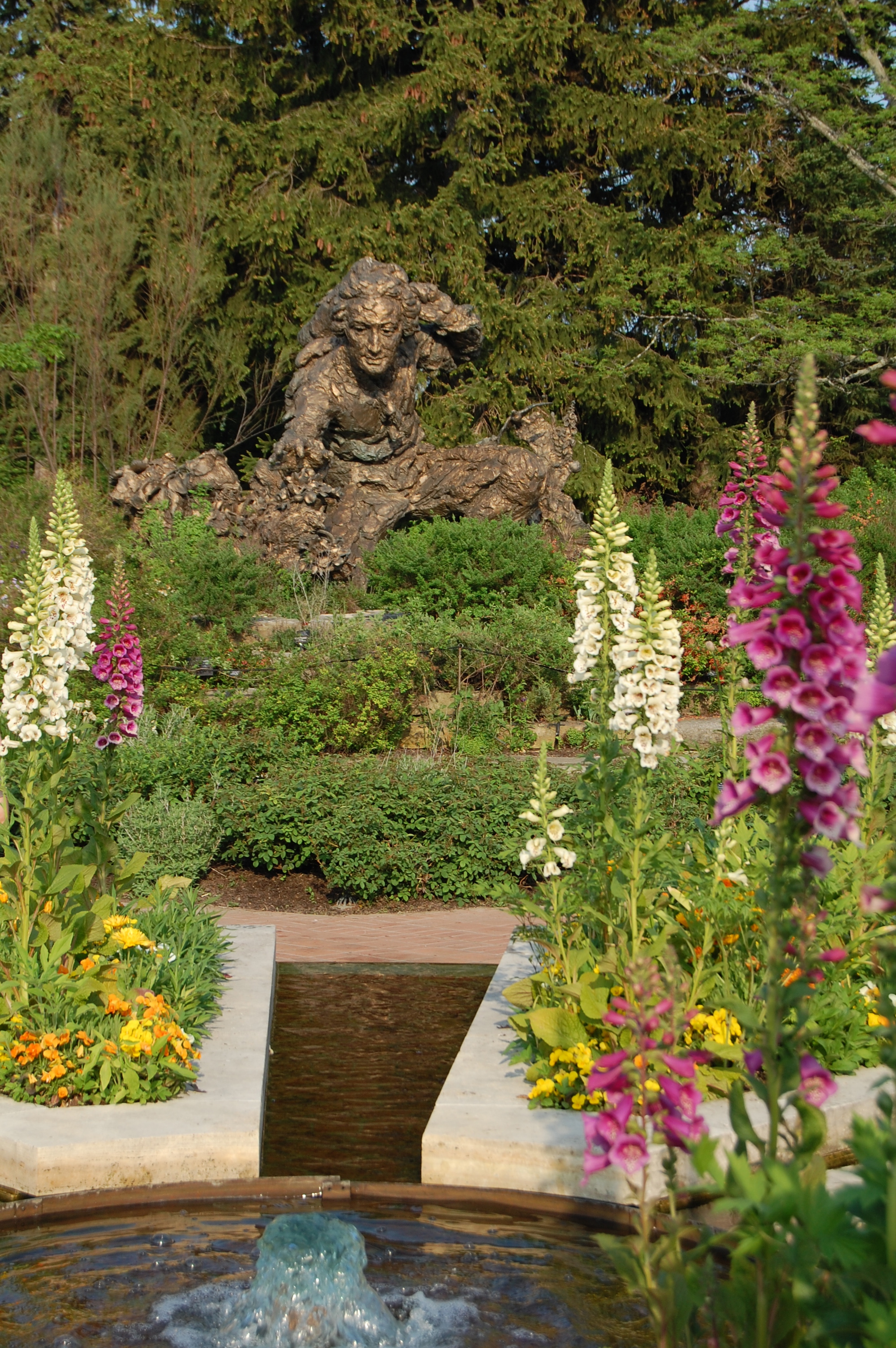
Every trip to the Chicago Botanic Garden should begin with paying homage to the statue of Linnaeus in the Heritage Garden.

Because I was at the CBG on Saturday morning for my class, I happened to know that the crabapples were at their peak this past weekend. So I proposed to Judy that we go to CBG on Sunday. This despite my frantic efforts to keep up with gardening tasks, and the fact that Judy had taken the red eye from California the night before (she also travels a lot for work, but to much better locations).

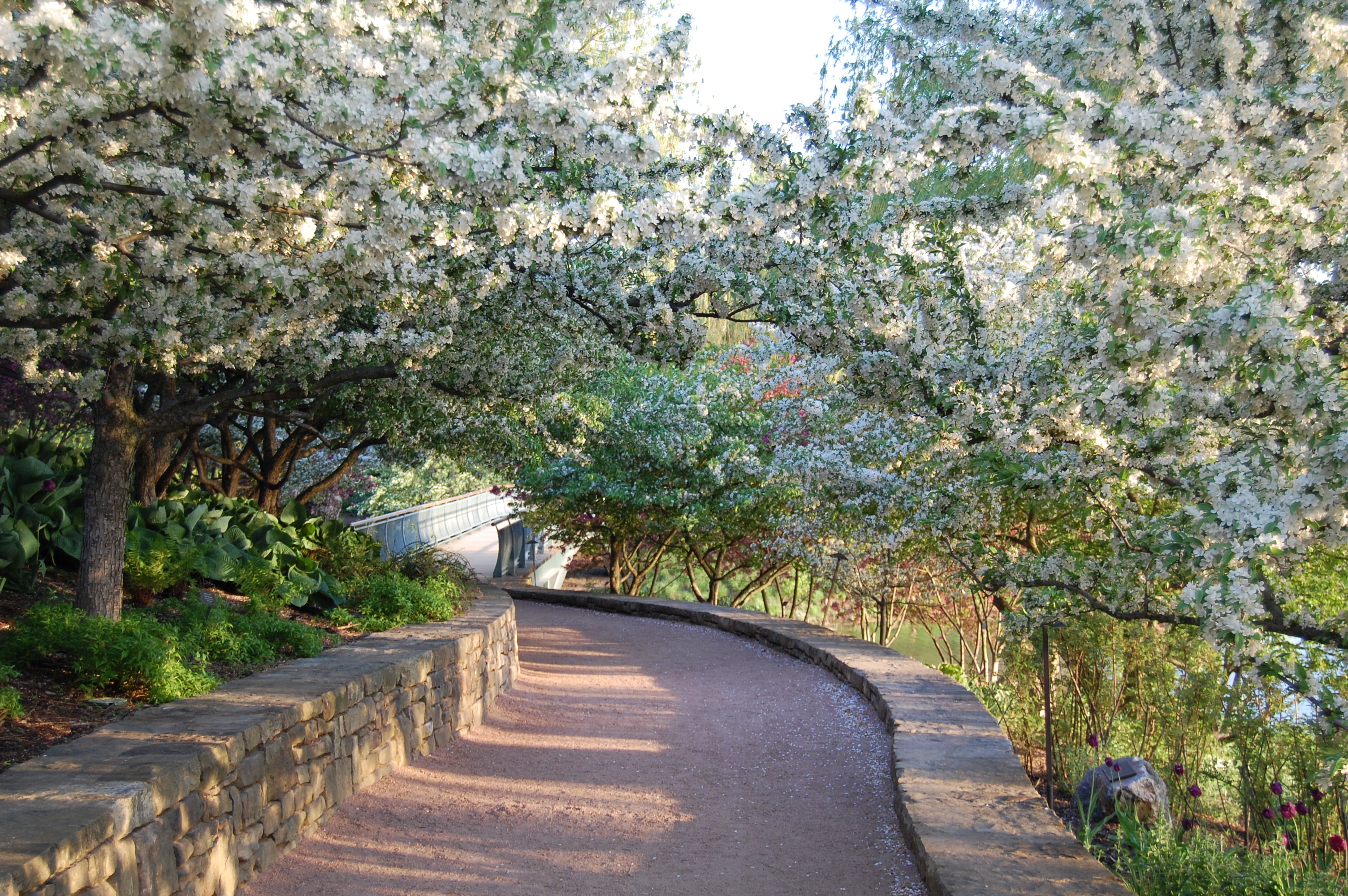
You walk past the English garden to a path that is under a virtual tunnel of crabapple blooms
You walk past the English garden to a path that is under a virtual tunnel of crabapple blooms, leading to the North bridge to Evening Island.

We arrived in the late afternoon Sunday, after the weather had cooled and the crowds had thinned. Out came Judy’s camera and she started taking pictures: click, click, click … then just as we approached the crabapples, the clicking stopped. Judy looked at her camera with dismay: the battery was dead.

A carpet of low-growing blue comfrey carpets the ground under some of the trees.
The ground under some of the trees is carpeted with low-growing blue Comfrey.

Of course I had wanted photos for my blog. But I was an adult about it, and sulked no longer than was absolutely necessary. We resolved to go on and enjoy our walk without the distraction of taking pictures. And we did just that, luxuriating in the beauty that was all around us.

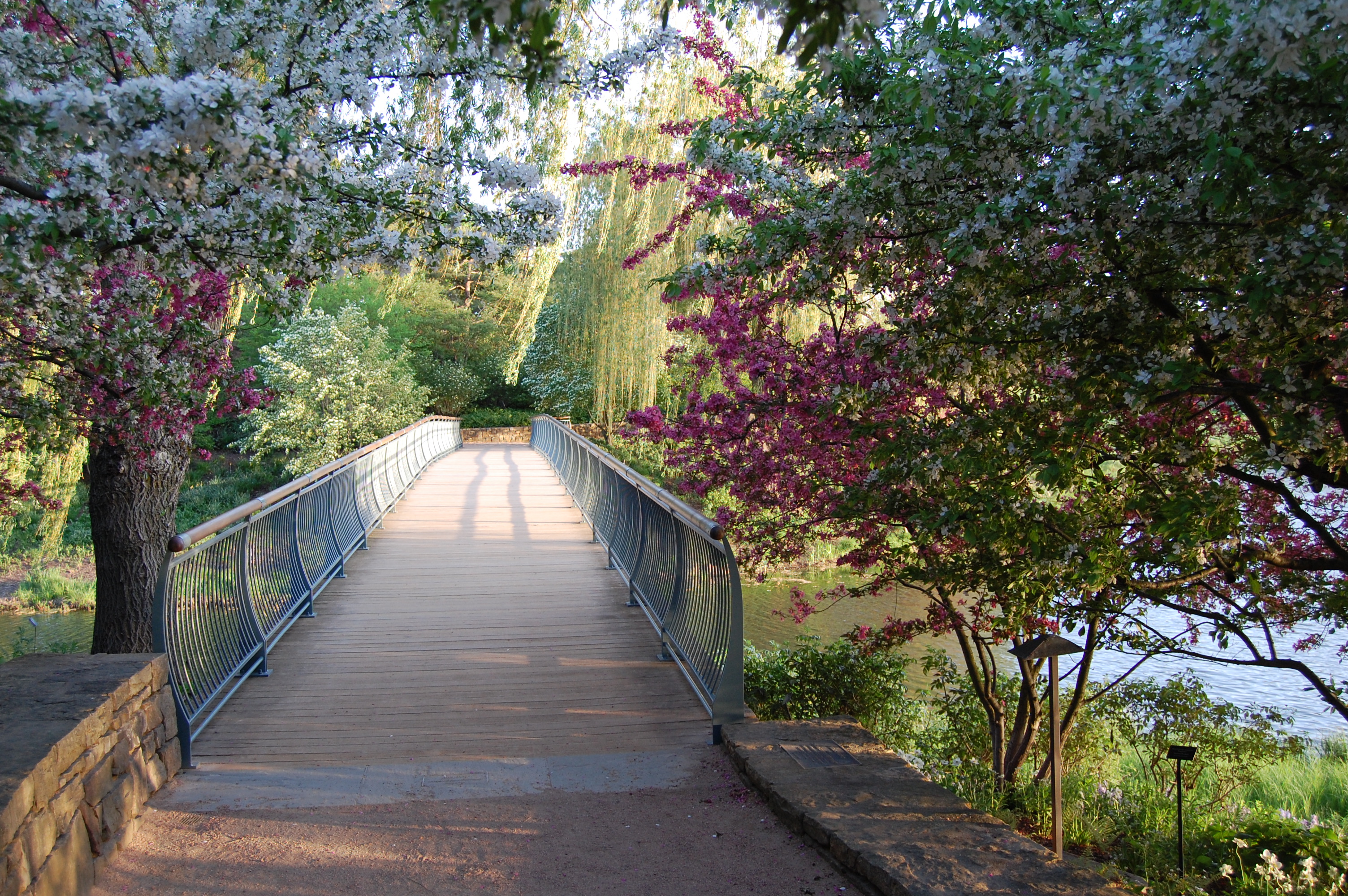
North bridge to Evening Island.
Chicago Botanic Garden, Evening Island
Another view of the bridge.

Monday morning I headed out-of-town. Judy did not have to travel this week. That evening I was on-line and noticed that she was downloading photos. A lot of photos.

Chicago Botanic Garden, Crabapple blossoms
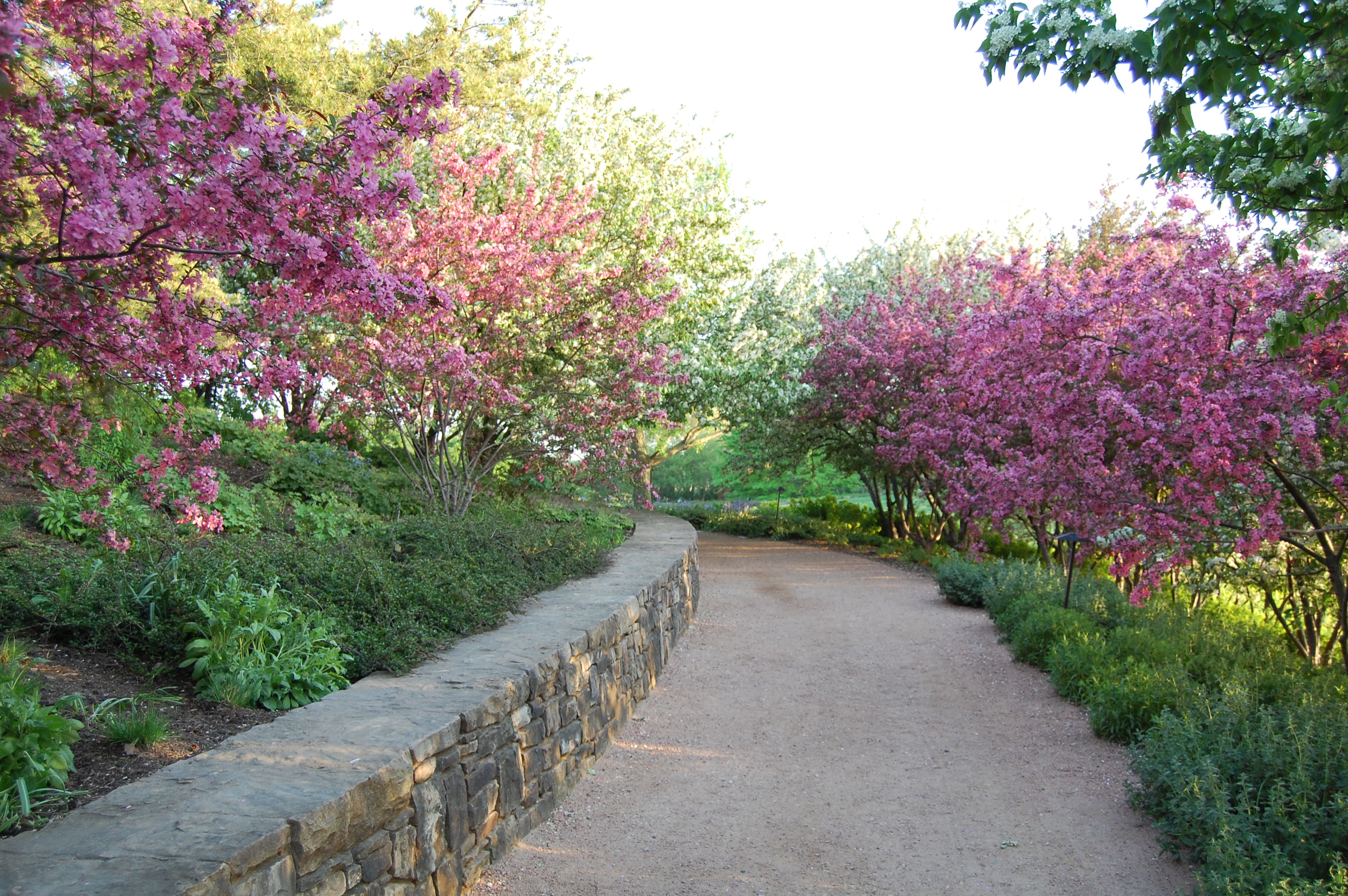
Pink crabapple blossoms on Evening Island.

It turned out that she had run out of her office in downtown Chicago at 5 o’clock. She then drove the 24 miles to CBG through the usual rush hour madness. There she took the pictures she was unable to take the day before. This is something I really would never have asked her to do.

Chicago Botanic Garden, Euphorbia, Evening Island
Euphorbia on Evening Island.
Chicago Botanic Garden, Blue Heron
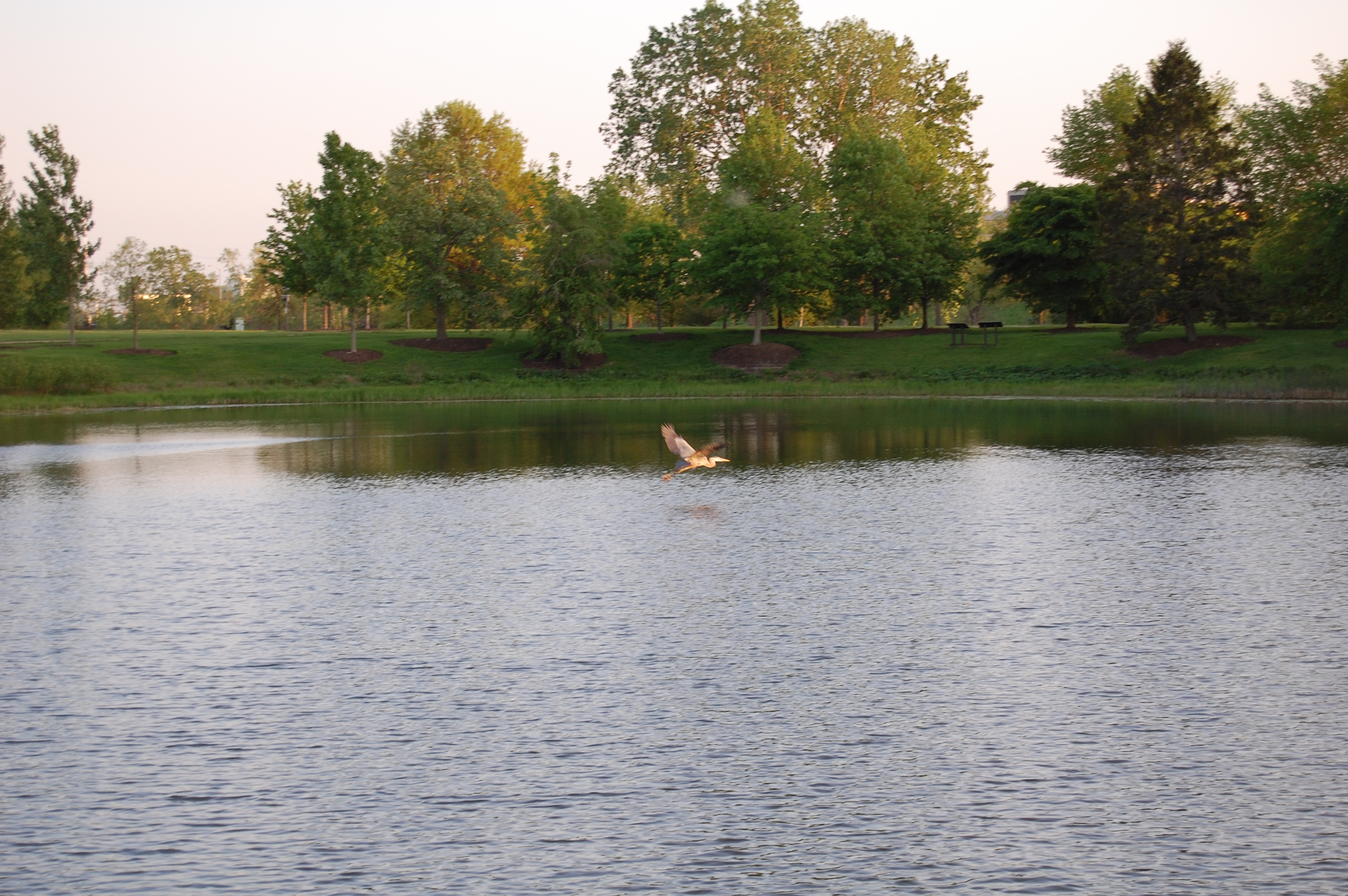
This part of the lagoon is home to a couple of Blue Herons.

Now, is that true love, or what?

Chicago Botanic Garden, Crabapple blossoms, Evening Island
South bridge to Evening Island, the Carillon tower rises above the crabapple blossoms.
Chicago Botanic Garden, crabapple blossom
Another tunnel of Crabapple blossom.

There are two downsides to this, though. The first is that I have to come up with something equivalent that I can do for her. That will be tough. The second is that I could no longer use a really great title I had thought of for the post about crabapples in bloom. Ready? Here it is: “With Malus Towards None”. Get it?

Weeping Redbud, Crabapple in bloom
Weeping Redbud and Crabapple.

Has anyone gone above and beyond the call of duty to indulge your mania for blogging or gardening lately?

May’s Garden Madness

There is the notion that working in the garden brings the gardener a sense of tranquility and calm. Ha! Certainly not in the month of May.

2013-05-19 17.31.27
Front garden. It’s all growing too fast, and I can’t keep up!

Gardening in May is a race against time, against weeds, against the grass, against the weather, against your own plants as they undergo growth spurts like lanky teenagers. And for me it is a very unfair race, because I can only run on Saturday and Sunday, whereas everything else is zipping along 24/7.

The fact is that I cannot get done all the things I feel need to get done in the allotted time.

Sunny days approaching 90 degrees F? OK, I laid out soaker hoses for some plants and watered others by hand. Nevertheless I fear a few of my new plants may have been fried past the point of recovery.

Woodland Phlox, Wild Columbine, and Wild Geranium in the east side bed.

Grass is growing excessively shaggy and creeping into the flower beds? OK, I’ll mow the lawn and trim the bed edging with my weed whacker (after Judy, the weed whacker is the great love of my life).

Weeds staging a hostile takeover throughout the garden? I will roam the flower beds with hoe and dandelion picker in hand. However, this is by definition a task that can never be finished. During this time of year, pulling weeds is like cutting off Hydra heads, they grow back as fast as you pull. At least, that’s how it feels.

Tulip 'World Expression'
Tulip ‘World Expression’. So it turns out Judy had taken pictures before she left. I felt I had to post pictures of the tulips that did them more justice.

Perennials need cutting back? I succeeded in cutting back the New England aster and most of the Salvia (‘May Night’, ‘Blue Hill’), even though the Salvia was not that tall. On the other hand, I didn’t get to the Agastache or the Monarda.

And please don’t even mention staking. I took care of the Phlox paniculata and most of the New England aster, but that’s all. The Penstemon, Monarda, and Heliopsis I did not get to at all.

White Bleeding heart, Merrybells
White Bleeding Heart and Merrybells foliage.

This situation brings on in me and some other gardeners a state of mind I call The Permanent Fret. I am always fretting – if I don’t cut back the Agastache now, will it delay blooming to an unacceptable extent? And what about the Salvia, did I cut them back too early? But if I wait until next week it might be too late!

Of course, a person might ask why, if I get worked up into an irritable frenzy with garden chores, did I dig up so much of the lawn for so many flower beds and borders. To such a person I would say: who asked you?

Wild Geranium, Brunnera, Allium
Back Garden Bed with Wild Geranium, Brunnera, and Allium.

Whew. I’m taking deep breaths now. At times like this I have to remind myself of two of the cardinal rules of gardening: 1) don’t worry too much about making mistakes; and 2) your garden does not have to be perfect.

Have the garden chores of May been driving you to madness?

Last Of The Container Tulips And A New Planting

As I may have mentioned, starting last week and for the remainder of May I have to be out-of-town Monday through Friday. This is what we used to call a major bummer, especially given all that is happening in the garden. Yesterday I arrived home to find that the late season container tulips were blooming. (Sorry, but Judy is also traveling and doesn’t return until Sunday, so these are pictures I took with my cell phone.)

Tulip 'World Expression'
‘World Expression’ (white and red)

We planted three late season tulips: ‘Kingsblood’, ‘La Cortine’, and ‘World Expression’. All of these were winners, but I though ‘World Expression’ was most striking.

Tulip 'La Cortine;
Tulip ‘La Cortine’

Yellow with a red stripe, I thought ‘La Cortine’ was both lovely and exciting.

Tulip 'Kingsblood'
Tulip ‘Kingsblood’

Finally, ‘Kingsblood’ was a good deep red.

We are definitely going to do this tulips in containers thing again. I would not, however, do it again with smaller containers, in which only half the tulips made it through the winter.

Unfortunately, I was not free to spend the weekend gazing at tulips. Saturday morning I started a new class at the Chicago Botanic Garden on annuals and biennials. And there was an incredible amount of catching up to do in the garden. The warm and sunny weather of the previous days had been beautiful but tough on my newly planted perennials, so watering was the most urgent item on the agenda.

This was especially true in the new planting I did on the northeast corner of the house. This is not really a new bed, just an extension of the east and north foundation beds where I had removed the ‘Bridalwreath’ Spirea (Spirea xvanhoutei).

This is one of those weeping shrubs that takes up a lot of space. There were three of them, so I had a lot of space to fill, despite the fact that I just leave the stumps to slowly decompose. (It’s not that I like how they look, but generally the plants hide them, and digging up stumps is a LOT of work. OK, so I’m lazy, so sue me.)

New planting
April 27th: New plants waiting for their new home.

Since I have two newly planted fringe trees (Chionanthus virginicus) in this area, I am filling in with plants that can function as groundcovers. I chose perennials that I already had in other parts of the garden: wild ginger (Asarum canadense), wild columbine (Aquilegia canadensis), woodland phlox (Phlox divaritica) and false forget-me-not (Brunnera macrophylla). There was also an unknown Epimedium that popped up, which I allowed to stay.

My neighbor Audrey provides advice as I plant.
My neighbor Audrey provides advice as I plant in the back garden.

These guys were planted in late April. Until this past week, we were having a cool, moderately wet spring, and the new plants were happy without supplemental watering. This past week, though, we had sun and temperatures around 80 F (27 C). By Friday, many of my new plants were seriously stressed by lack of water.

New planting
New planting

So I went to Home Depot and bought some flat soaker hoses (I prefer the flat ones because they are more flexible), and I have been watering all day.

Are conditions dry where you are? Are you keeping up with your gardening chores.