Our Paperwhite Narcissus is Blooming!

And the timing was excellent. They bloomed just in time for Judy’s return from a week-long trip. She was worried they would already be faded by the time she was back.

Paperwhite Narcissus
Paperwhite Narcissus. Took this with my cell phone this morning.

Of course, she pointed out that I had failed to water the Narcissus as she had requested. They seem to  have survived my neglect just fine, but I apologized anyway.

I am just not an indoor plant person. It may appear that I obsess over every plant in our garden. I can hear these outdoor plants calling out – water me! deadhead me! Indoor plants must speak in a frequency that my ears cannot recognize.

Though it must be said that Paperwhites are very cheering during these dreary days of January. We also have an Amaryllis that just refuses to do much of anything. We planted it at the same time as the Narcissus but it barely shows any growth. I wonder if something is wrong with the bulb.

Are you growing Paperwhites this winter?

London Miscellany

No, I haven’t finished posting about our trip last September. For now, I’d like to share some photos and impressions of the few days we spent in London.

Millenium Bridge
Millennium Bridge

Millenium Bridge

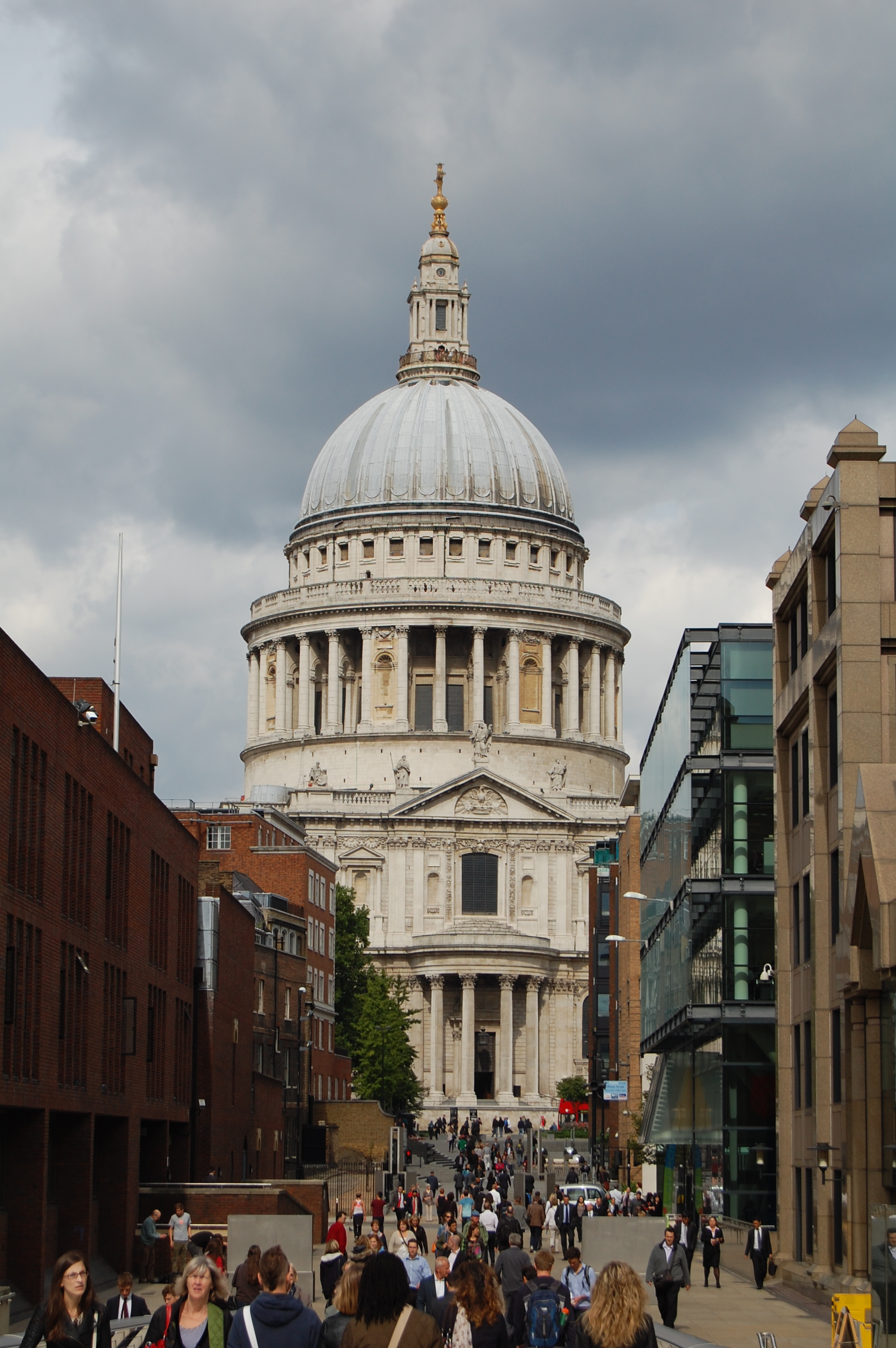
St. Paul's Cathedral
St. Paul’s Cathedral

This is an interesting city for walking. The weather tended to be overcast with occasional rain, but we didn’t let that discourage us. One destination was Millennium Bridge, which stands between St. Paul’s and the Tate Modern. I really liked the sleek, fluid shape of this bridge, and it afforded some excellent views.

Old  Bailey

I was very excited when by luck we found ourselves walking by the Old Bailey, stomping grounds of Horace Rumpole, my favorite fictional barrister.

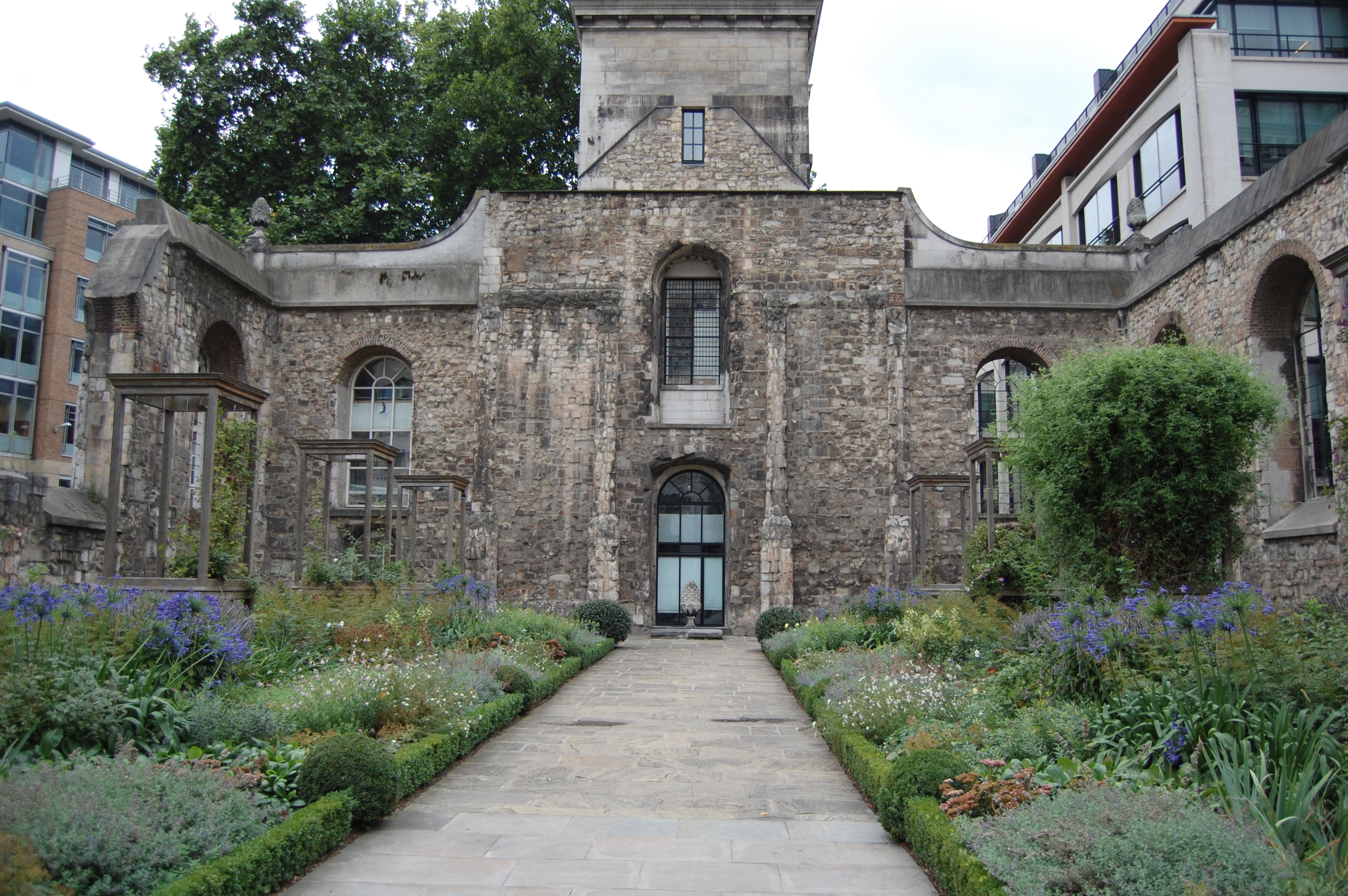
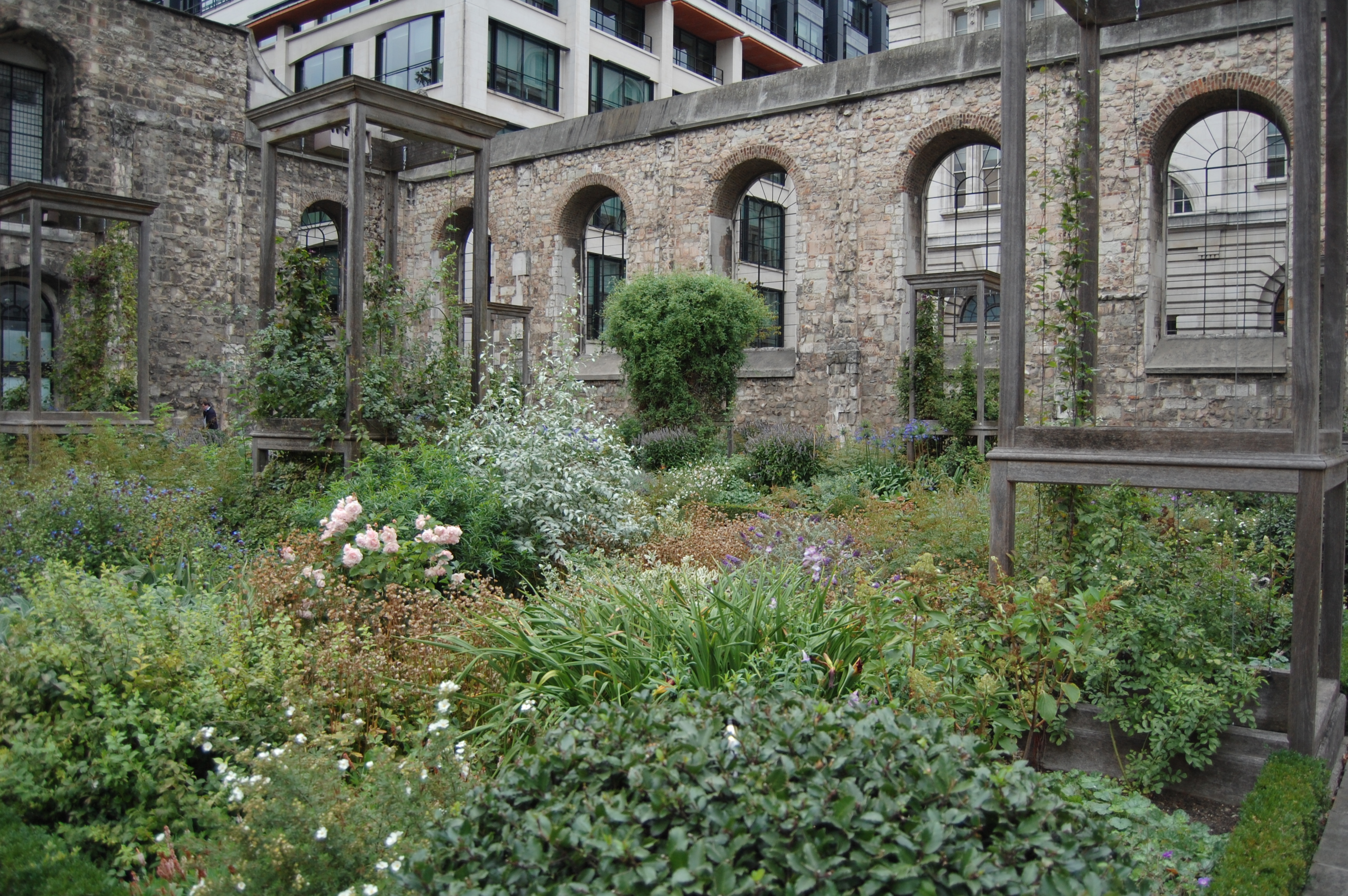
Christchurch Garden
Christchurch Garden

Christchurch Garden

Another unplanned find was the Christchurch Garden, which was created between the walls of a church that had been bombed out during World War II. Creating a garden on the site of such terrible destruction seems like an admirable act of optimism.

2013-09-10 10.53.20

2013-09-10 10.54.50

The garden had tall, rectangular wooden trellises that I wish I could make or acquire for myself. There were many blooms – Roses, Clematis, Salvias, Buddleia, Agastache, Agapanthus, etc. The colors were mostly blue and white, and created a serene atmosphere.

2013-09-10 06.32.26

London is very bustling city with lots of construction going on. Buildings are at times mixed in a hodgepodge of the venerable, the aggressively modern, and the ugly. Sometimes this mix is exciting.

2013-09-15 08.08.17

2013-09-10 07.20.12

At other times, to my mind, somewhat jarring. It also surprised me that parts of the Thames River front have been left undeveloped.

Double Decker bus
When you sit on top in the front, it feels like you’re going to keep going forward, leaving the rest of the bus behind, when the driver steps on the brakes.
Russel Square tube stop
The subway station at Russel Square, near where we were staying.

Getting around London can be intimidating, as it is such a gigantic place. We tried the subway, which is efficient but very expensive. The buses were more reasonable. We sat at the front of the second level, which was fun except that we had the constant sensation that the top of the bus was going to keep moving onto the vehicles in front of us when the rest of the bus stopped.

London Bridge

We also took a ride on the Thames, so we got to see Tower Bridge opening up for the river traffic.

After we left London we visited Judy’s old friend and her husband, who live in a small Sussex village. They drove us around to the gardens at Great Dixter, Sissinghurst, and Wisley, as well as various castles and other sites. I’ll do posts on these in the course of the bleak winter weeks.

A Cool Garden on a Hot Day

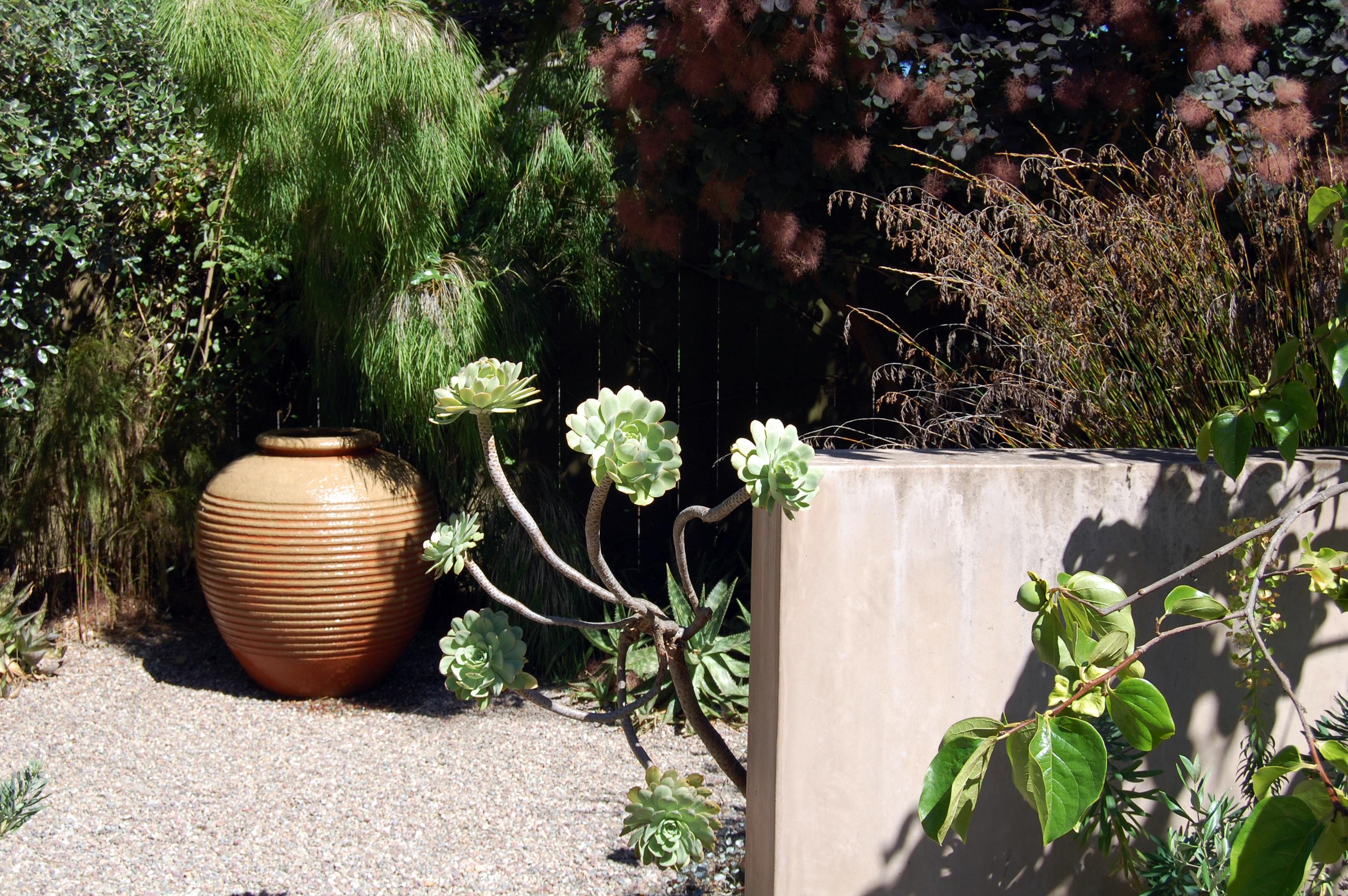
So I found another couple of gardens from the Garden Bloggers Fling in San Francisco that I never did write about. One was the Palo Alto garden of Andrea and Andy Testa-Vought, designed by Bernard Trainor. Though very different from the kind of Midwest gardens I am used to, I admired how this garden created an outdoor living space for people with creative hardscape and a collection of plants native to California and other Mediterranean climates. Though please don’t ask me their names.

We thank you, and our feet thank you.

OK, let me by honest – what I (and I expect many others) appreciated most was the opportunity to take off our shoes and put our hot, suffering feet into the water. We arrived there at the end of a long day of visiting gardens in record heat and under a strong summer sun.

California living. Nice, huh?


2013-06-29 18.37.42

But even without this blessed relief, there was no denying that this was a beautiful garden.

2013-06-29 18.33.45


2013-06-29 18.31.16


2013-06-29 18.31.51

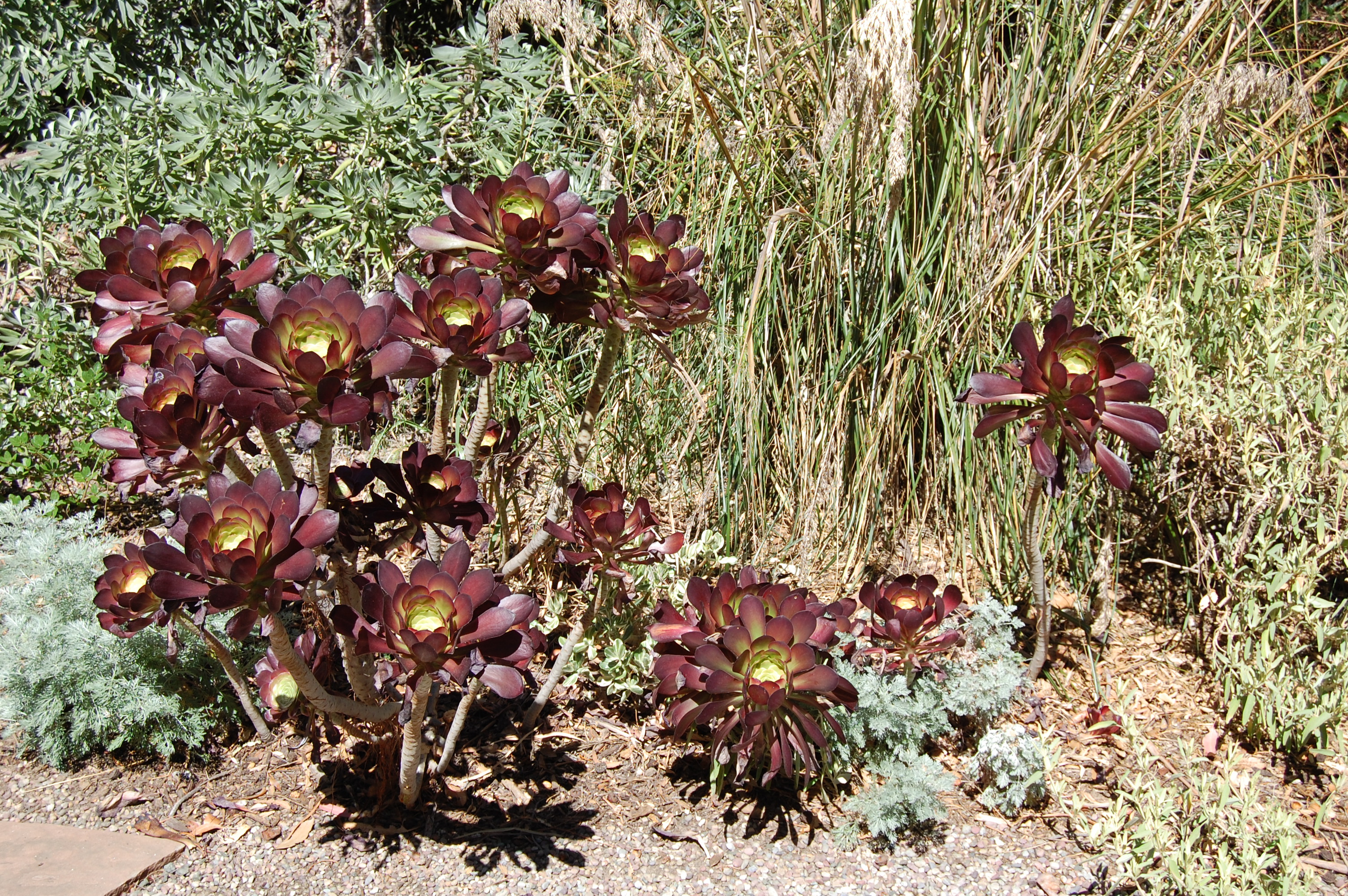
I’m still not a huge fan of succulents, but they obviously are a good fit here, and in this setting I can see the appeal.

testa vought pot and smokebush

Not everything was  a succulent. I liked this Cotinus and the grasses.

testa vought lemon tree

It’s California, so there was citrus.

2013-06-29 19.41.12

There were many spots, some in the open and others hidden away, for sitting and appreciating the outdoors.

2013-06-29 18.34.43

There was a gorgeous tree with blue flowers that reminded me of lilac or butterfly bush. Anybody know what this is?

2013-06-29 19.03.37

If you want to know more about this garden, here’s an article from Pacific Horticulture magazine.

2013-06-29 18.35.55

I should mention that the owners were extremely hospitable (thank God for the water and other cold drinks) and very engaging. Their cat, on the other hand, didn’t seem too excited to see us.


Photography Workshop with Saxon Holt at the San Francisco Botanic Garden

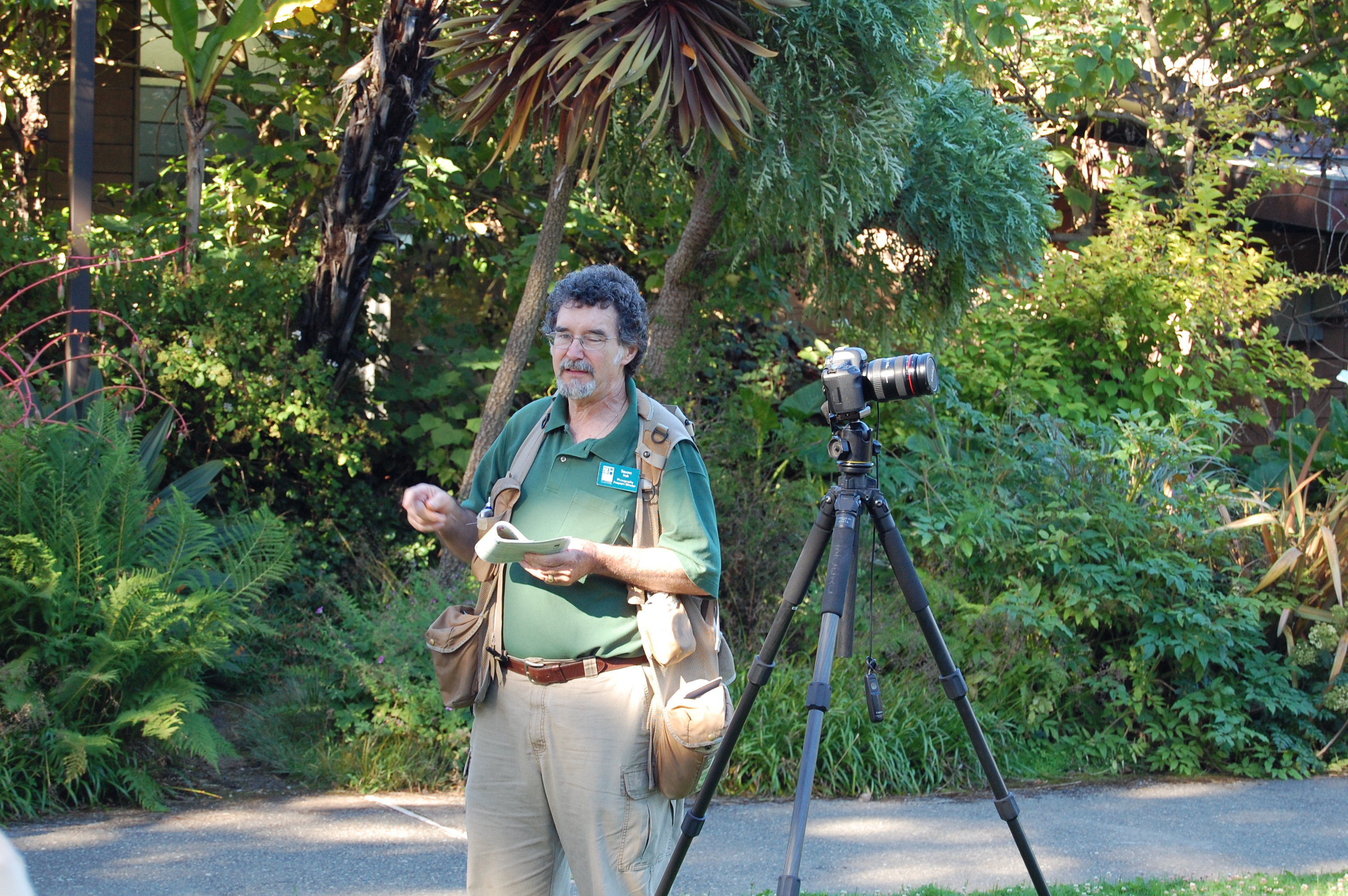
It occurs to me that I never posted about this workshop, which was held at the end of June during the Garden Bloggers’ Fling. I won’t try to convey what Saxon Holt had to say, but Judy found it very helpful. I will say that Saxon was very gracious and entertaining as he shared his expertise.

Saxon Holt
Saxon Holt leading workshop during the Garden Bloggers’ Fling.
framing a view
A practical aid for framing a view.

There was some discussion of trying to see through a frame.

San Francisco Botanic Garden

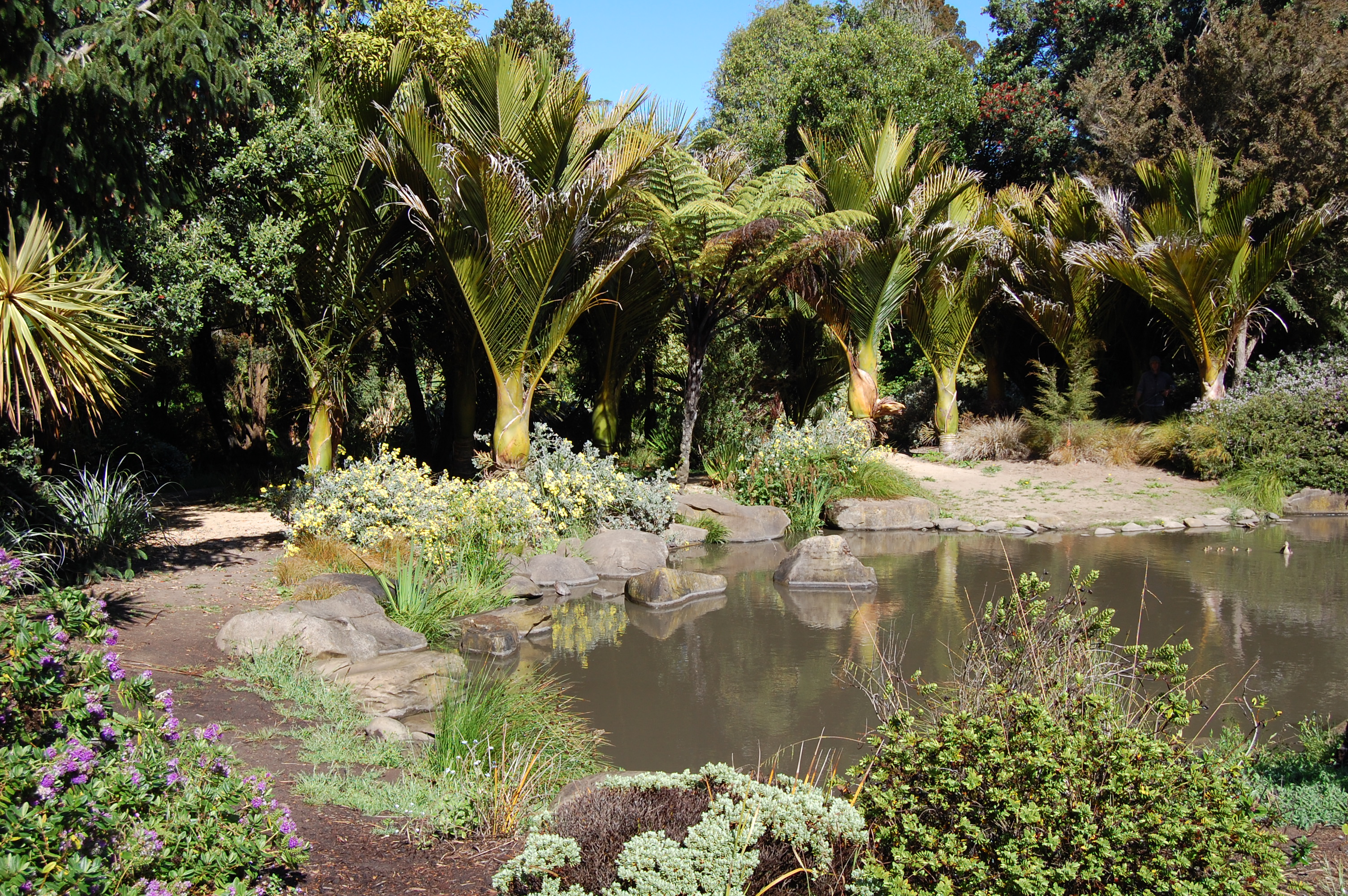
After the workshop, Judy and the other participants went wandering around the San Francisco Botanic Garden to try and apply what they had heard. It was close to noon at this point and the sun was very bright, which was challenging.

san francisco botanic garden

san francisco botanic garden

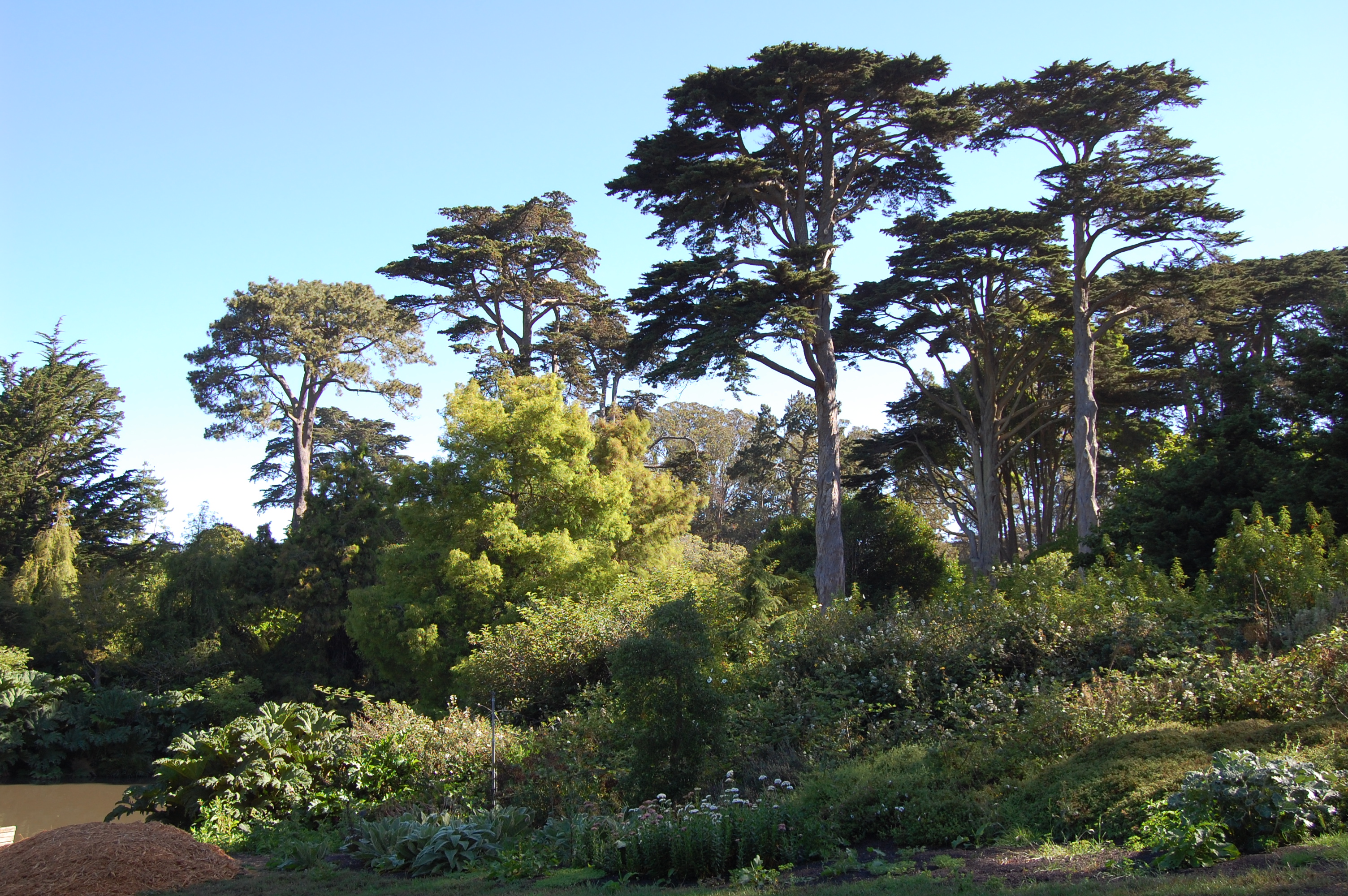
We only saw a small part of the garden. However, we did see some really magnificent trees, though I couldn’t tell you what they were.

Gunnera
Gunnera

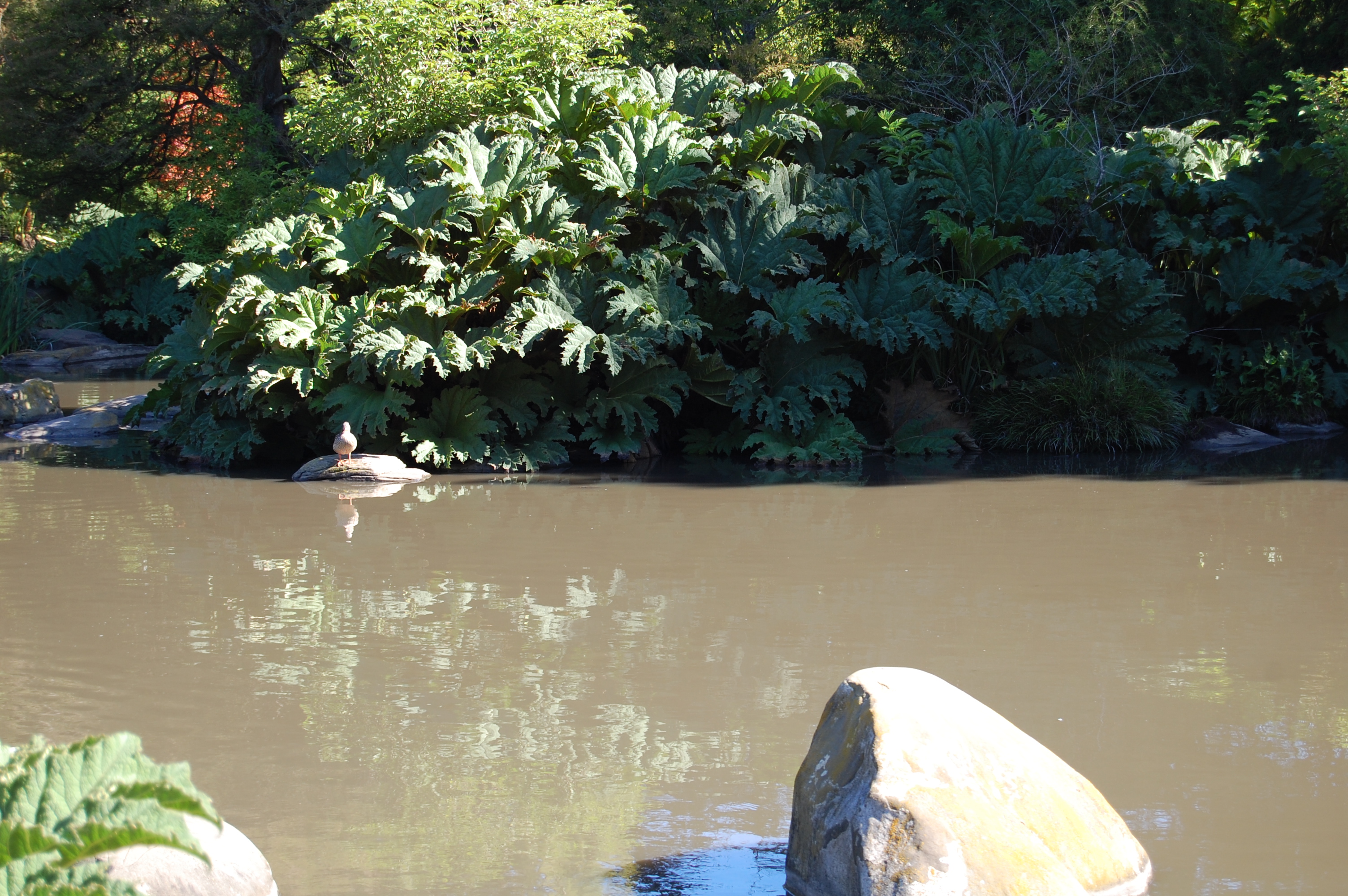
There were a lot of impressive foliage plants, like these Gunnera.

Cycads
Cycads

And these Cycads.

san francisco botanic garden
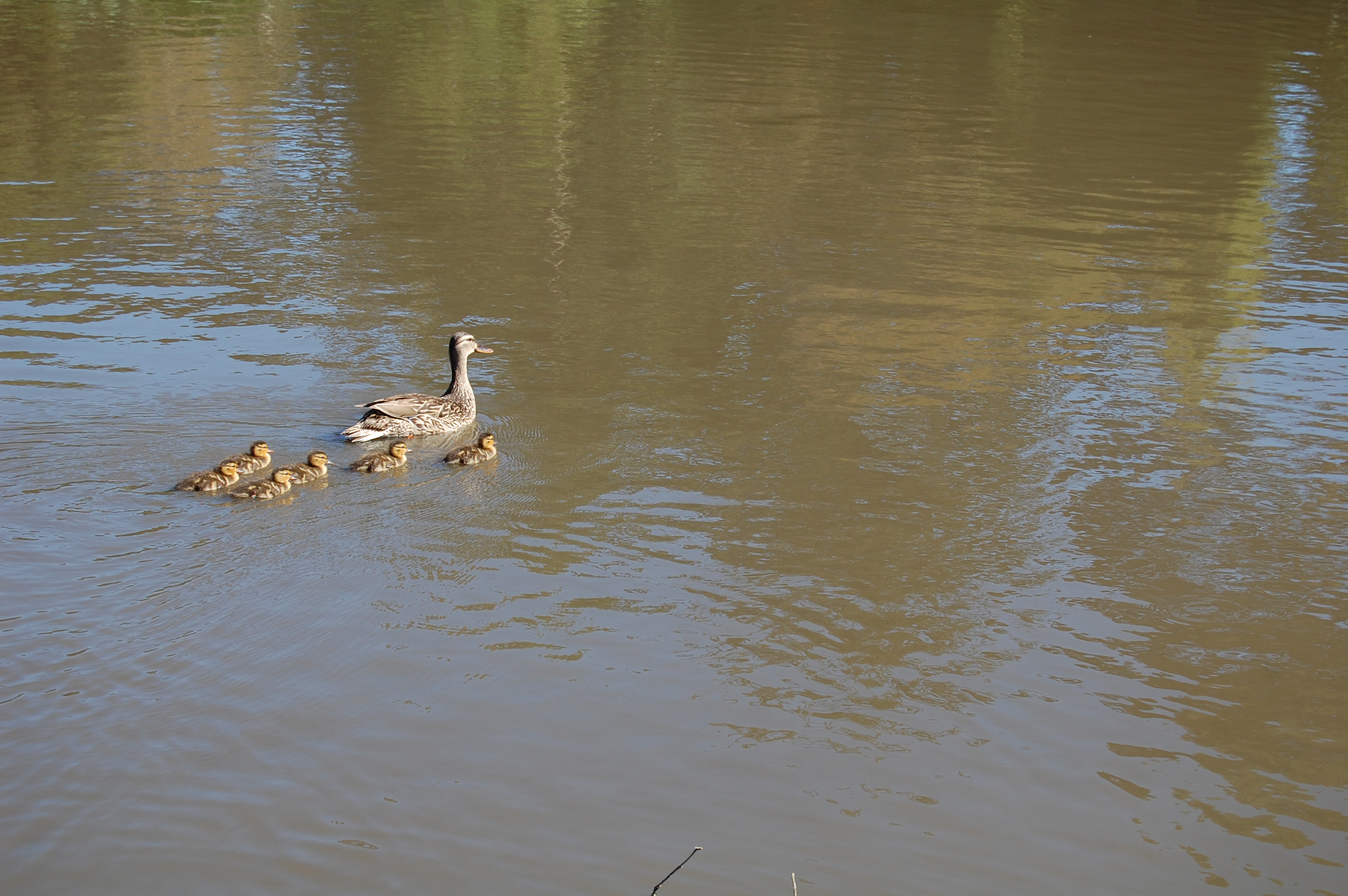
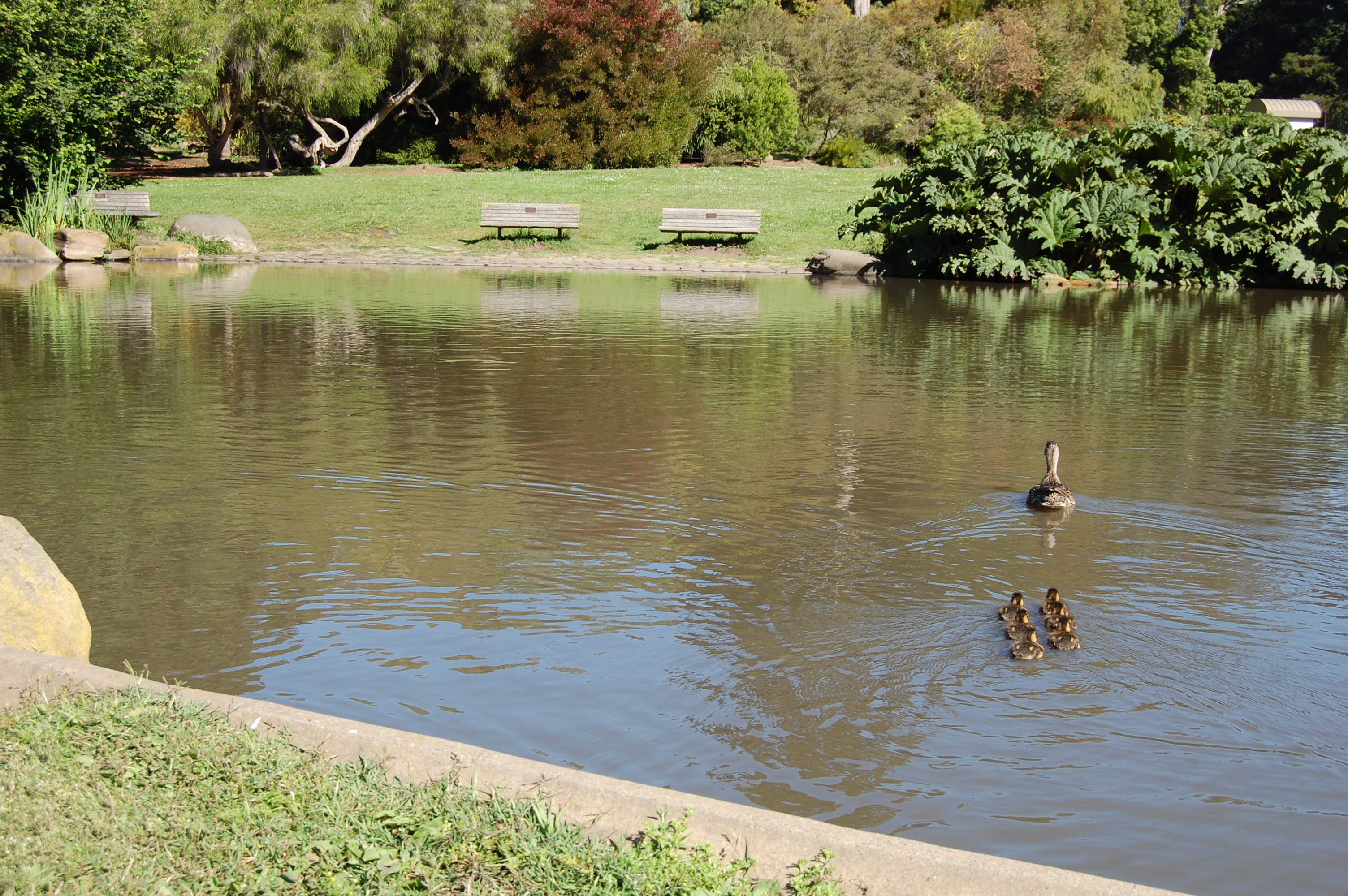
Ducklings try out their land legs while mom looks on.
San Francisco Botanic Garden ducklings
Time to form up.

Ducklings in a row

There were a cute family of ducks in the pond.

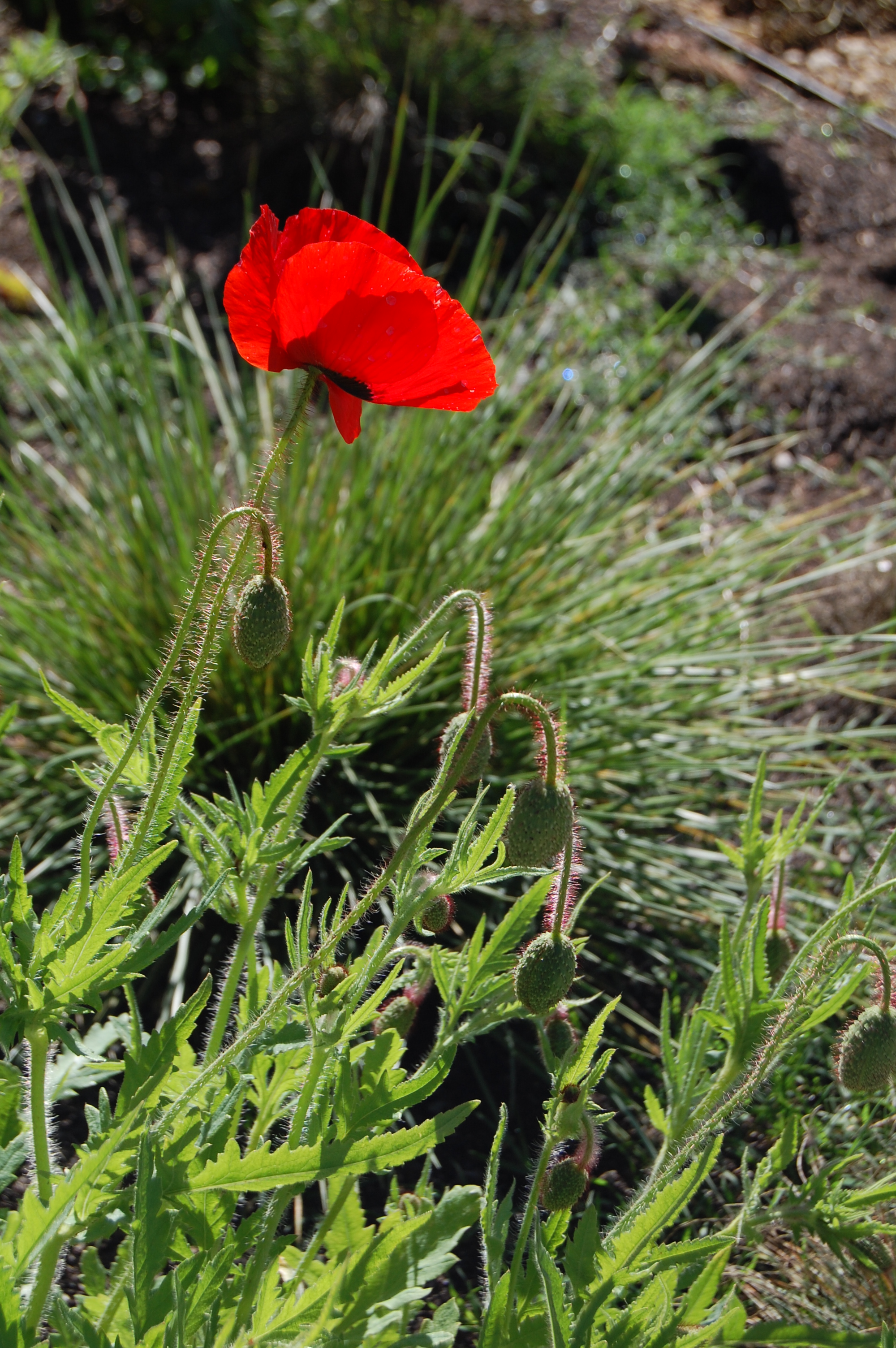
Red Poppies
Red Poppies

red poppy

There was a bed with red poppies that really stood out in the landscape, which tended to be mostly greens and softer colors.

Who is your favorite garden photographer? Have you ever visited the San Francisco Botanic Garden?

Three Very Different Garden Catalogs

The pile of 2014 garden catalogs on my night stand continues to grow. We’ve already talked about Bluestone Perennials and Burpee. Now let’s look at three more catalogs, each engaging in its own way: White Flower Farm, Plant Delights Nursery, and Forest Farm.

wff catalog

White Flower Farm (WFF) is sort of the Williams-Sonoma of garden catalogs. On page two there is the genteel yet ingratiating letter from Amos Pettingill, a fine old-money Yankee name suitable for a company located in Connecticut. I do suspect that Amos’s real name is Stan Ostrowski, and that he speaks with a thick Brooklyn accent. But that’s just a guess.

WFF’s glossy pages are covered with lush, beautiful photographs. They do not have a vast selection, but they do have some very fine plants. I have ordered from WFF only a couple of times, either for varieties they were offering exclusively or when I wanted something larger than is generally available by mail order. In my limited experience, their plants arrive healthy and in excellent condition.

There were a couple of annoying things about the 2014 WFF. For example, now many pages are devoted to listing plants in groupings with no particular logic such as “Bring Back the Classics”, or “Annuals for Every Style”. I like my plants listed alphabetically. If you are going to present plants by group, do it in a way that makes sense – plants for sun or shade, for example.

ffp 2014 catalog

Forest Farm at Pacifica (FFP) is as down home as WFF is upscale. The 240+ pages of this catalog are printed on recycled newsprint. There are some photographs, but I don’t get this catalog for the illustrations. It’s nice, though, that there are pictures of all the staff – an extremely friendly and knowledgeable bunch of people, in my experience.

I go to FFP for its vast selection of affordable woody plants. The plants are smaller, so you have to have a little more patience, though. They carry lots of species that are hard to find at local nurseries. For example, this is where I bought my fringe trees (Chionanthus virginicus).  The catalog has over 140 pages of trees, shrubs, and vines – and the pages are almost all text.

FFP is in Oregon, but they carry lots of natives from eastern North America. Their catalog does a decent job of providing plant information, but much of it has to be decoded. For example, of Silphium integrifolium it says: S/M (Prn) (z4) (ENAm) (ENa). You might be forgiven for thinking this means the plant is involved in some kinky activities, but actually it means Sun/Medium moisture, Perennial, hardy to zone 4, from Eastern North America, Eastern Native (those last two seem kind of redundant).

I have two gripes with FFP. First, one piece of information that is often missing is the mature size of the plant, which seems kind of basic. And two, it is odd that a nursery that seems so concerned with the environment would sell some of the worst invasives around, including Japanese Honeysuckle (Lonicera japonica), Porcelain Vine (Ampelopsis brevipedunculata), and Oriental Bittersweet (Celastrus orbiculatus). Clean up your act, FFP!

pdn 2014 catalog

Finally, the Plant Delights Nursery catalog (price: 10 stamps or a box of chocolates) is in a class of its own. This is a catalog with character.

For one thing, it is probably the best written and most entertaining of garden catalogs. There are photos, but it’s the writing, comprehensive information, and fascinating assortment of unusual plants that make this catalog worthwhile. Although I have to admit the topical cartoon covers usually leave me feeling like I would probably disagree with the point being made if I could figure out what it was.

PDN seems to carry many plants that are really hard to find. For example, this was the only retailer I could locate that sells Japanese Roof Iris (Iris tectorum). Actually, this is the only plant I’ve ever purchased from PDN, so far. Many of this North Carolina nursery’s plants are not hardy in my zone, but they are still fun to read about.

The catalogs are still arriving, and I haven’t even written yet about my favorite sources for native perennials, so expect at least one more post on this topic.

Have you had experiences with these three retailers? What about other most or least favorite catalogs?
Companion Plant for Yellow Coneflower?

Along with perusing garden catalogs, now is the time for obsessing over where to move old plants or add new plants for spring.

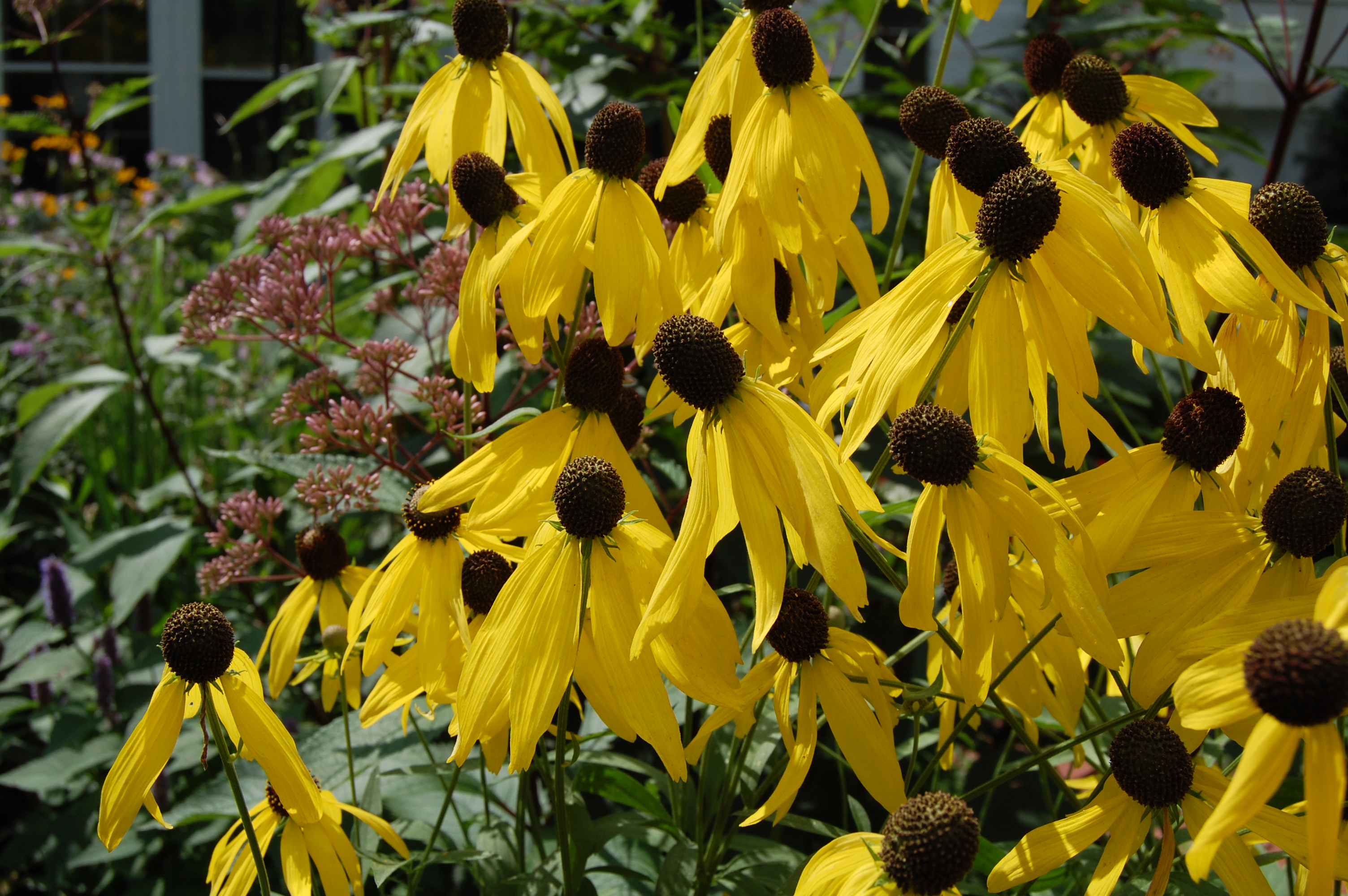
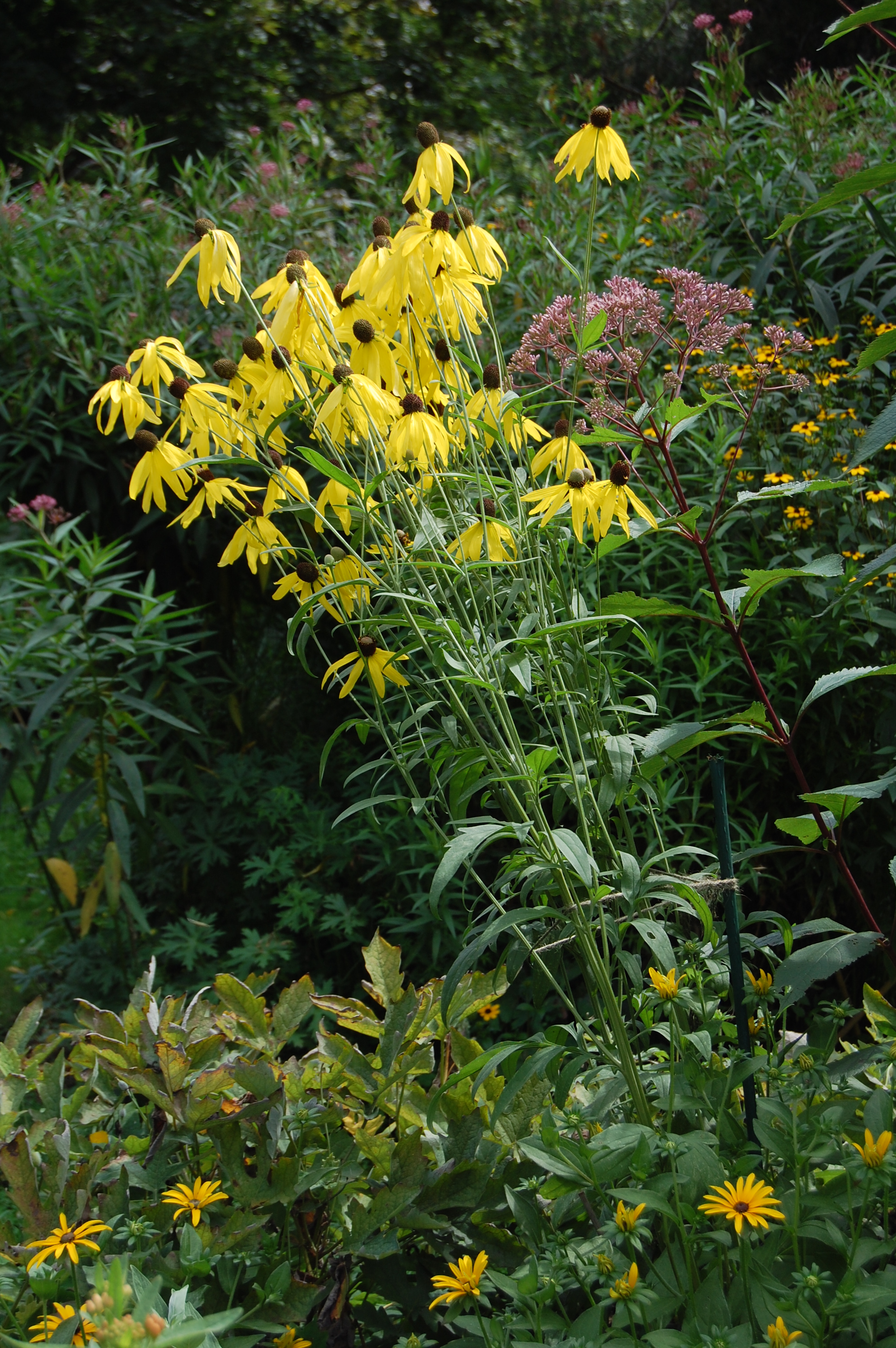
Yellow Coneflower
Yellow Coneflower in our garden last August.

For example, I love my Yellow Coneflowers (Ratibida pinnata), so in the last couple of years I’ve planted a bunch of them. Next year the younger ones should really come into their own, creating a nice drift.

Yellow Coneflower
Yellow Coneflower with Joe Pye Weed. The younger plants are hiding in the undergrowth.

But will need some companions to fill in the space to their west, facing the afternoon sun. I want these companions to have blue flowers timed to contrast with the Yellow Coneflowers’ charmingly droopy yellow daisies (and the cone that looks like a clown’s nose). And they need to have the height and habit that won’t block too much sun. My Yellow Coneflowers tend to grow about 4-5′.

Right now I’m considering 3 potential botanical mates.

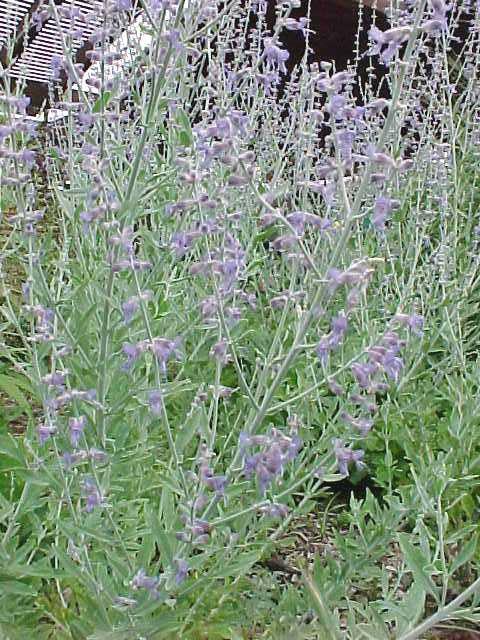
Russian Sage
Russian Sage ‘Little Spire’. Photo from missouribotanicgarden.org

1) Russian Sage ‘Little Spire’ (Perovskia atriplicifolia). In an act of random gardening, I bought one of these last summer and planted it in a really dumb place. No, I won’t tell you where. However, it occurs to me I could transplant it to the sunny side of the Yellow Coneflowers, though I’d have to buy a second plant to fill in the area I have in mind.

‘Little Spire’ is a compact variety that is supposed to start blooming earlier in summer and grow to only about 2′. I also like that it has a nice open habit with a bit of a see-through effect.

Anise Hyssop Golden Jubilee
Anise Hyssop ‘Golden Jubilee’. Photo from bluestoneperennials.com.

2) Anise Hyssop ‘Golden Jubilee’ (Agastache foeniculum). I already have lots of the straight species Anise Hyssop. However, even with cutting back it easily grows to 4′, too tall for my purposes here. However, ‘Golden Jubilee’ is supposed to grow just 1-3′, though it has a more dense bushy habit. The foliage is chartreuse.

Anise Hyssop
Straight species Anise Hyssop (with Yellow Coneflower and Joe Pye Weed in the back).

What appeals to me about this choice is that it I think it will harmonize with the taller straight species, creating a more unified look. Also, the ripe seed heads make a fuzzy spike that should go well with the Ratibida seed heads.

Balloon Flower
Balloon Flower. Photo from missouribotanicgarden.com.

3) Balloon Flower (Platycodon grandiflorus). This would mean adding an entirely new plant to this border, which I’m a little reluctant to do. But I like the idea of the bell-shaped blue flowers contrasting with the droopy yellow ones. It’s got the right height and bloom period.

Time for another poll! What do you think would make the best companion for my Yellow Coneflowers?
Please vote, then explain your thinking in a comment.


Garden Catalog Review: Burpee

As we are in the grip of bitter cold, this is a good time to sit inside and peruse the garden catalogs. To my mind, garden catalogs are a genre of literature like historical fiction or vampires. Or perhaps they are best thought of as fact-based graphic novels. In any case, they are as worthy of review as other forms of literary diversion.

Burpee’s 2014 cataolog was the second one to arrive in my mailbox this year. Burpee is a venerable company, plus it has a name that can elicit giggles from small children. Even so, I haven’t ordered anything from Burpee since the late 20th Century. However, as is often the way with catalogs, my subscription seems to be permanent.

burpee 2014

Overall, the Burpee catalog has a vaguely retro feel to it. The cover features a child’s hands holding a massive shiny red tomato and proclaims: “NEW! ‘Steakhouse Hybrid’ TOMATO. The world’s biggest beefsteak!”

If you enjoy looking at pictures of perfect tomatoes, raspberries, string beans, and sweet corn (and who doesn’t) – then this is the catalog for you. Most of Burpee’s 150 glossy pages are devoted to exactly that.

Burpee’s does carry some heirloom varieties, but they are mostly about the hybrids. For instance, they have 16 hybrid varieties of cucumber, but only two heirlooms.

The catalog offers plants as well as seeds. You can buy a three-pack of tomato plants for $17.95 plus shipping – which personally I would not do for several reasons, starting with price.

'Celebrity' Tomato
My tomatoes will never be as big as the ones in the Burpee catalog.

Actually, Burpee suffers from an “everything for everyone” syndrome. Their target audience may not be into organic gardening, but just in case they have a page of organic seeds. In addition to the core offerings for edible gardens, there are also roses, annuals, perennials, and grasses. However, their selections for the ornamental garden are often disappointing. For example, they have only five varieties of roses. If you’re only going to offer five varieties, then why bother?
I do enjoy the anonymous testimonials. For instance, “Georgia gardener” says of sunflower ‘Solar Flare’: “Amazing, vivid, lustrous colors!” And “New Jersey gardener” states unequivocally of ‘Big Daddy’ tomato: “Now THAT is a tomato!”

The catalog writers express themselves just as enthusiastically. However, I do have a few quibbles with how they present their offerings. For example, other than a symbol for sun or shade, little to no cultural information is provided. Does the plant prefer moist or dry soil, acid or neutral? The reader is left pretty much without a clue.

Also, Burpee lists some plants by common name and others by the botanical name. This is a recipe for confusion. Ornamental plants, at least, should be listed by botanical name first.

So basically, grab yourself a Burpee catalog if you want to daydream about the anticipated glories of next year’s vegetable garden. But if you want a wide selection of ornamentals or heirloom edibles, I’d have some more catalogs as backup. Which, believe me, I do.

Feeding Frenzy

The snow continues. I measured 12″ in the backyard this morning, and a few more inches are expected. Not record snowfall by any means, but it feels like a lot. Once again I had to trudge out to the platform feeder to dump the snow and lay down fresh sunflower seeds.

Cardinal waiting for me to bring out more sunflower seeds.

backyard bird feeder in winter

It’s cold right now, but the bitter cold isn’t expected to arrive until tonight. The predicted low for tomorrow is -13 F.

The woodpeckers have an annoying habit of eating suet only out of the top hole in the feeder, leaving the bottom two relatively untouched. Then Judy and I have an argument about whether I should refill the top hole. My position is that the woodpeckers should not expect me to refill the top hole when the feeder still has plenty of perfectly good suet. I usually lose this argument.

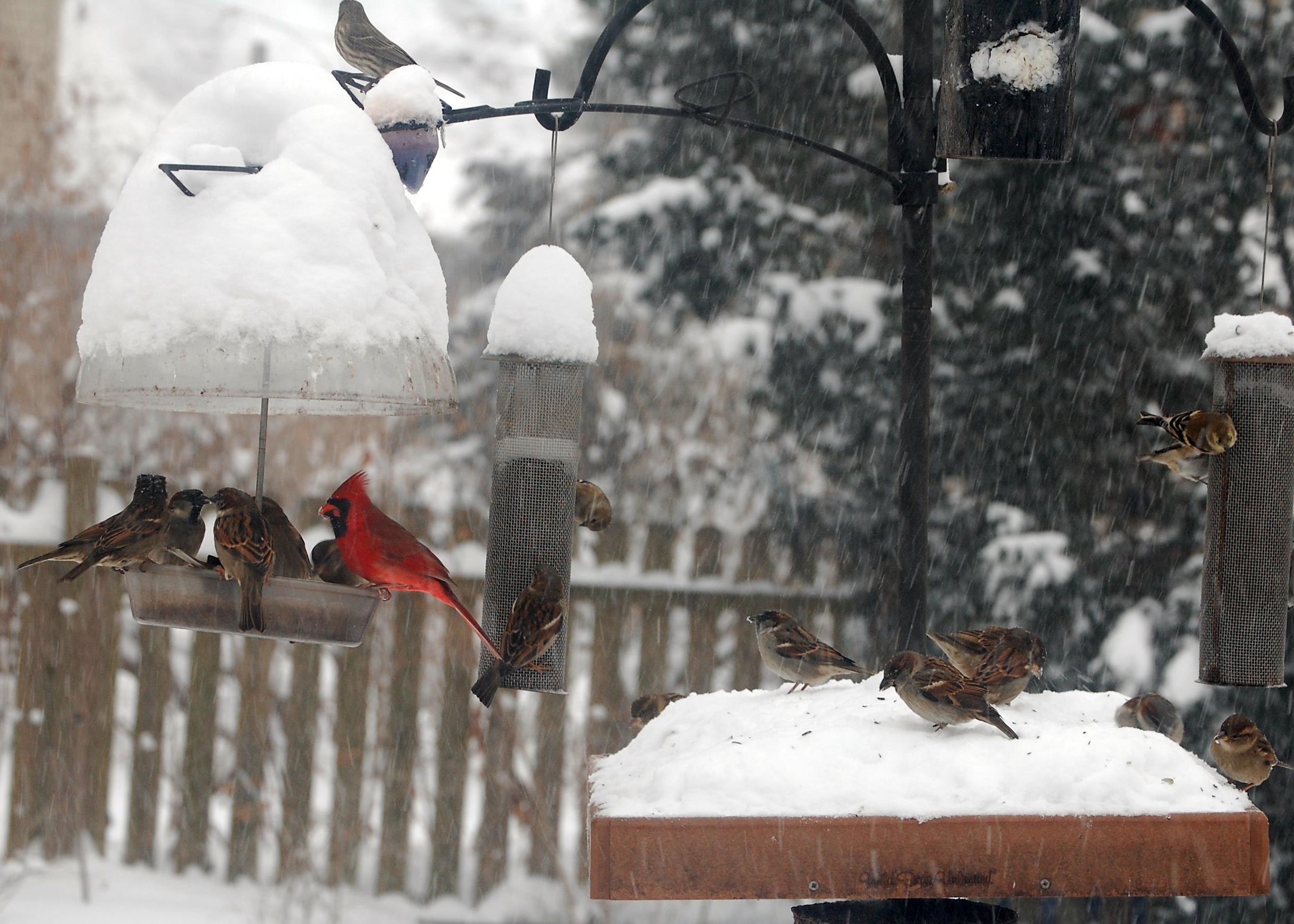
Cardinal, goldfinches, and house sparrows.

You get the feeling the birds know what is coming, and they are gulping down as many calories as they can to fortify themselves against the frigid temperatures.

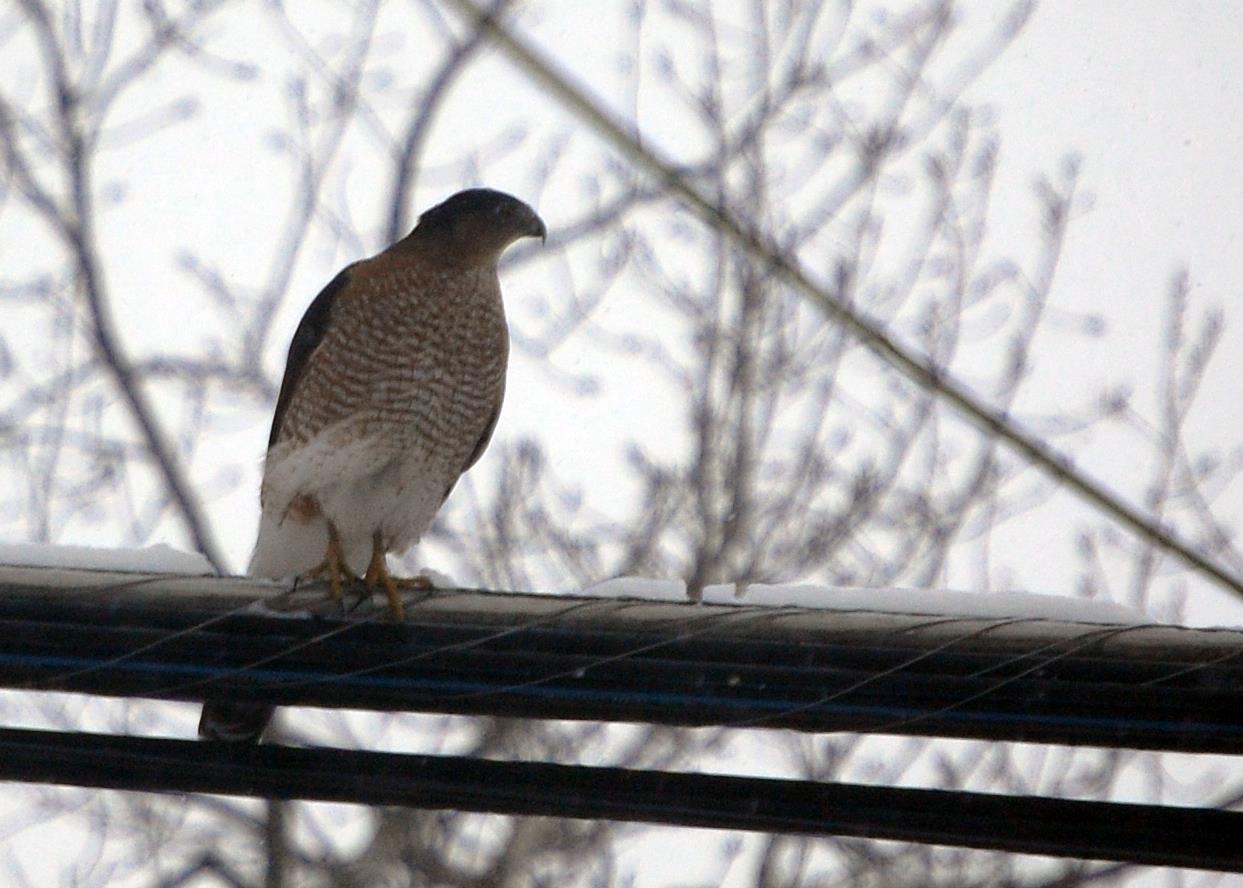
Can anybody tell what kind of hawk this is?
I think this is a red tailed hawk. Can anyone tell for sure?

Red tailed hawk

The hawks are also hungry. (The light was pretty bad, so these pictures are not very sharp.)

Deutzia bush full of cardinals, juncos, etc.

When there is a predator alarm the songbirds fly off to their preferred perching spot. At these times the Deutzia is full of a whole crowd of birds looking as if they were expecting a play or sporting event to get started.

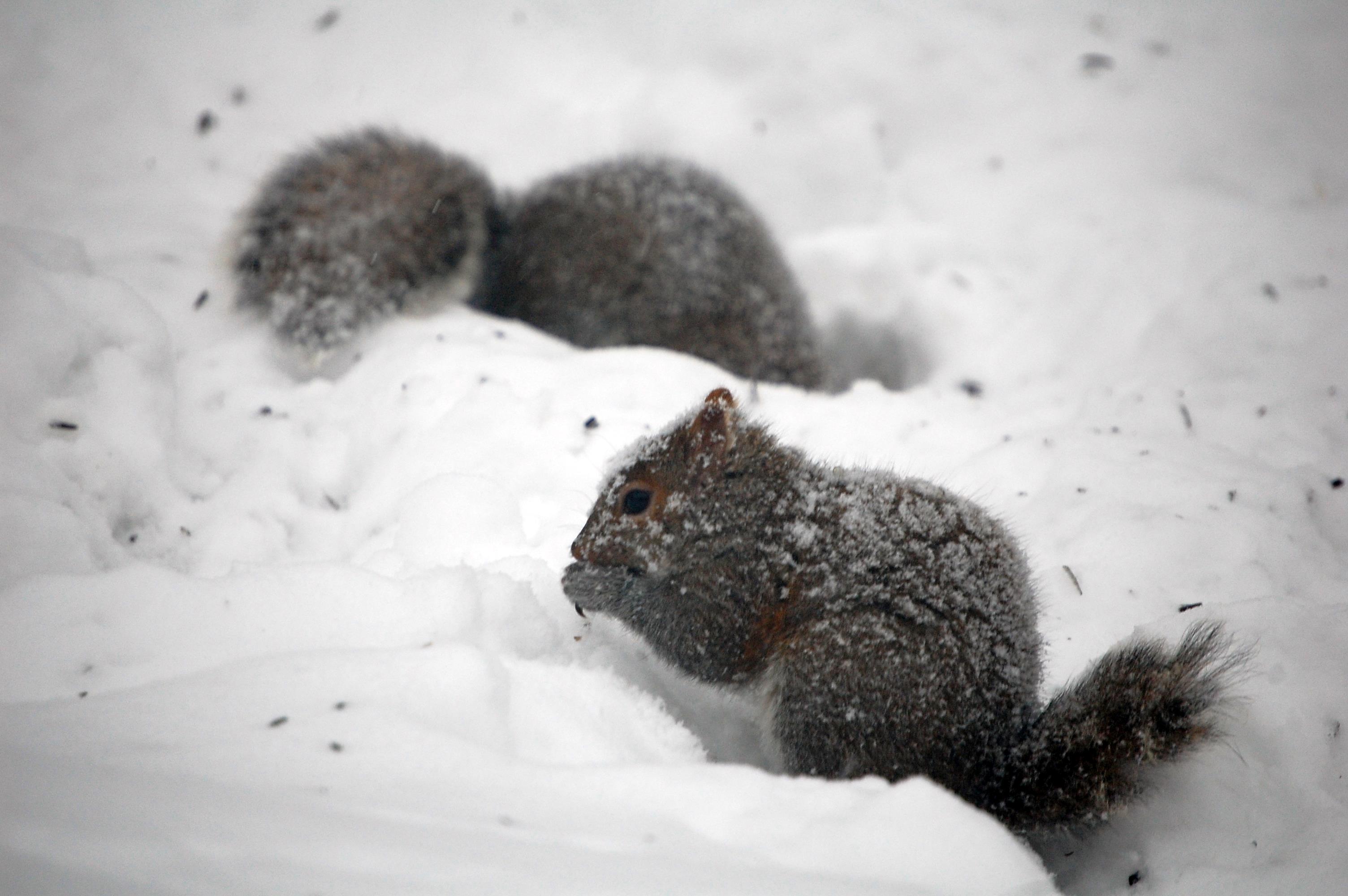
Squirrels in snow
The squirrels we shall always have with us.

I throw a few sunflower seeds and peanuts on the ground for the squirrels. Plus the birds are very messy eaters, and they drop quite a few seeds.

2014-01-05 12.26.57_2

And now I am out of sunflower seeds, so I am making an emergency run for more. Stay warm, everybody.

Front Garden, January 2, 2014

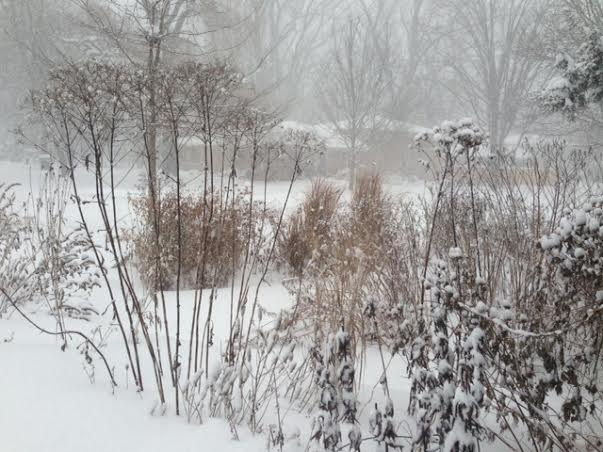
Here’s a bit of winter interest for you. This picture I think is a good argument for not cutting everything down in the fall.  A featureless garden covered with a blanket of snow would be so dull by comparison. The Joe Pye Weed ‘Gateway’ (Eutrochium purpureum subsp. maculatum) does an especially good job of standing out in the snow.

Front garden in the snow.
The front garden, January 2, 2014.

Judy took these this afternoon after taking our younger son to catch his bus back to St. Paul.

Everything looks better with fresh snow, even holiday baubles stuck in dead morning glory vines.

And look – it’s a Christmas miracle – the snow even makes my baubles stuck in dead morning glory vines look good. I think so, anyway.

The snow finally stopped this afternoon, and now we are told to expect the bitter cold to settle in. Ah, well.

What’s your favorite plant (no evergreens) for standing out in the winter landscape?

Busy Day at the Bird Feeder

It’s a grey day, and the snow has been coming down hard since last night. And when it snows, there are lots of hungry customers for the bird feeders in the back garden.

Northern flicker and female cardinal.

Cardinals, goldfinches, house finches, and chickadees crowd around the platform feeder for sunflower seeds, with occasional forays to the peanut feeders. Woodpeckers drop in frequently for a bite or two of suet, or maybe a peanut.

Northern flicker
Northern flicker wonders if the snow will ever stop.

Today’s guest of honor, though, is the northern flicker. Normally a fairly shy bird, he is now quite comfortable feeding right in front of our porch window. Handsome  fellow, isn’t he?

Northern Flicker
Northern flicker swallows a big bite of suet. Yum!

Yesterday I poured a generous serving of sunflowers onto the platform feeder. Today, however, I found that the platform was covered with several inches of snow. So I dumped the snow and the seeds onto the ground, and added more sunflower.  Even so, the snow keeps falling, seemingly determined to cover up everything.

Cardinal
Cardinal, house finch (or is it a purple finch?), and goldfinch in the Deutzia bush. Can you see all three?

Every 15 minutes or so a bird alarm goes off, and everybody scrambles for cover. They particularly like to hang out in a dense nearby Deutzia bush until the coast is clear.

Goldfinch
Goldfinch drinks at the bird jaccuzzi.

The heated bird bath (AKA the bird jaccuzzi) is also busy. It requires less energy to drink water than to eat snow to stay hydrated.

Starlings taking a bath


2014-01-01 15.30.30

A group of starlings decided it was a good day for bathing.

Are the birds hungry in your garden?