After careful analysis, I have concluded that Chicago’s recent weather has been caused by the White Witch. You remember the White Witch, who froze the land of Narnia into a 100 year winter in C.S. Lewis’ The Lion, the Witch, and the Wardrobe.
The view from our driveway, February 8, 2014.
Can you offer a more plausible explanation for the otherworldly 65+ inches of snow we have gotten this season, about twice the average? If you can, I don’t want to hear it.
My car parked behind the Snow Wall.
Wednesday night I got home from a business trip. It was snowing when I drove out of Chicago and it was snowing when I drove back. When I saw our house I noted that our driveway had been blockaded by a three foot wall of ice and snow thrown up by the snow plows.
Walking the ramparts of the Snow Wall.
Actually, our whole block looks like a giant snow fort. Someone could organize the neighborhood kids into a truly epic snowball fight.
View of the front garden. Huh, the tuteur really needs straightening.
After we broke through the snow blockade, Judy took her camera around to take pictures of the front garden.
Switchgrass ‘Northwind’
I leave most plants up over the winter, and a number of them are obliging by breaking up the monotony of white in an interesting way. Switchgrass ‘Northwind’ (Panicum virgatum) has stayed vertical in spite of all the ice, snow, rain, and wind.
Northern Sea Oats with Monarda seedheads.
Seedheads of northern sea oats (Chasmanthium latifolium) are always ornamental, and some of the seeds are still hanging on.
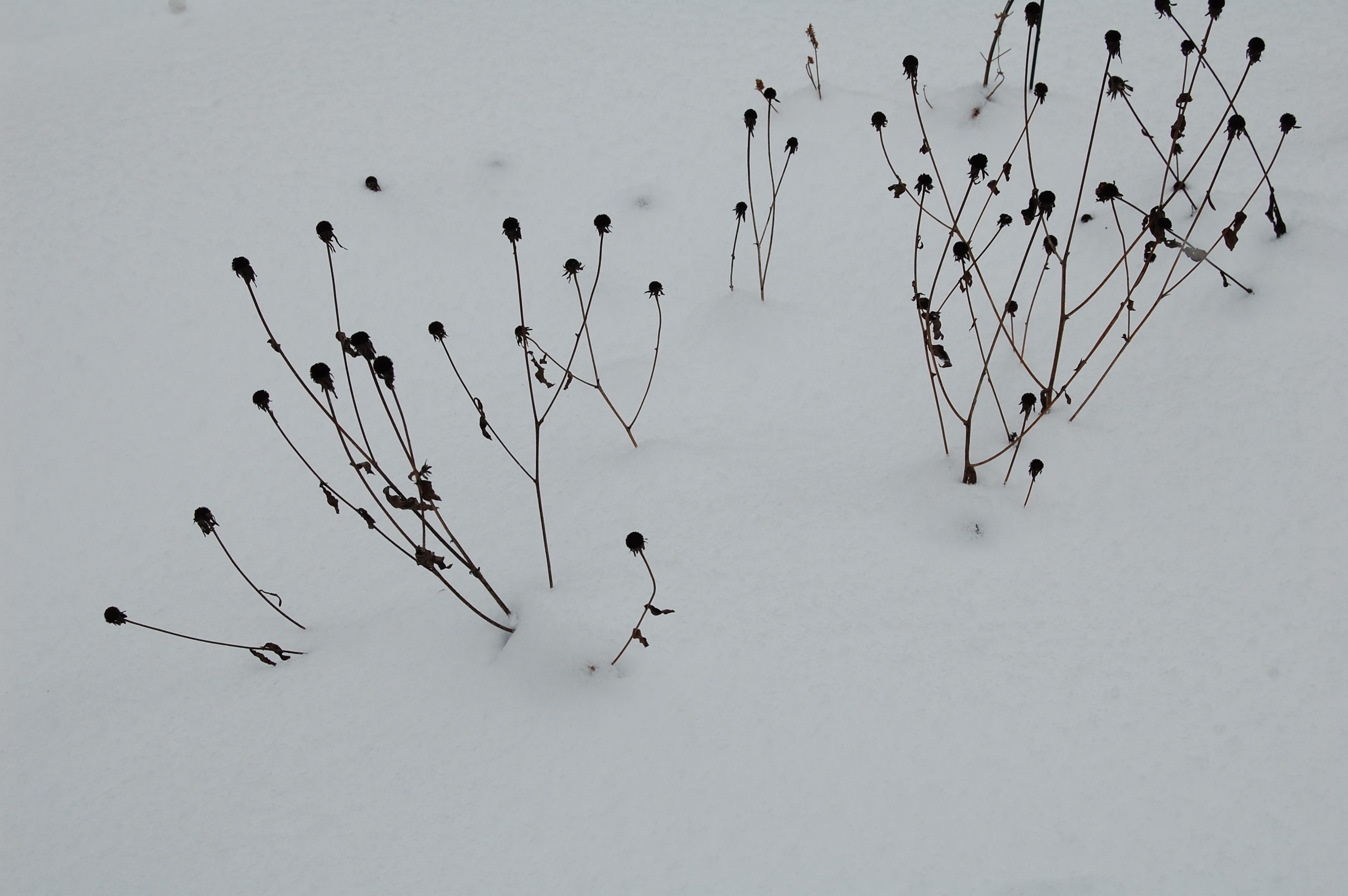
Even the seedheads of the humble orange coneflower (Rudbeckia fulgida) have a certain appeal in this season.
Also, I like the look of the ostrich fern’s (Matteuccia struthiopteris) fertile fronds against the snow.
After nearly two weeks of visiting gardens in France and England, Judy and I were beginning to feel satiated in a way the Germans call Gartensodden. Or if they don’t call it that, they should (possibly I made that word up). And so it was with a certain weariness that we headed off to Great Dixter on our last day in the English countryside.
Christopher Lloyd, the gardener. Not Christopher Lloyd, the actor.
The weariness did not last. This was, without doubt, our favorite English garden. Great Dixter was the home of the late gardener and garden author Christopher Lloyd. I have not read any of his books, because I always felt that English gardeners did not have much to say to gardeners in the American Midwest. Oh, foolish me.
Great Dixter is exciting, joyful, surprising, and playful. Or I thought so, anyway.
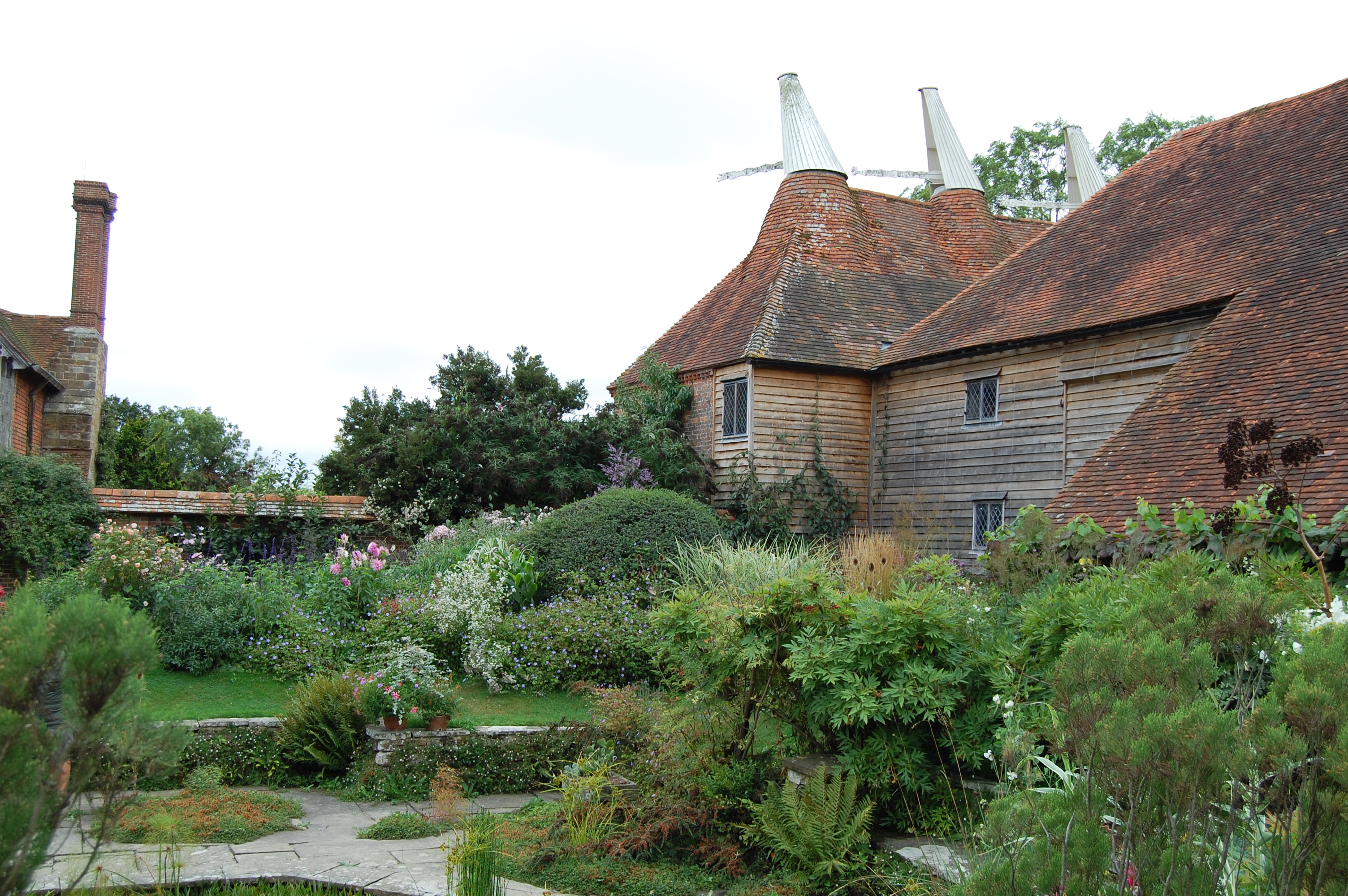
We walked first into the Barn Garden. As at Sissinghurst, yews are used for background and dividing garden areas. But as we shall see, these are not neat, geomtric, anal retentive yews.
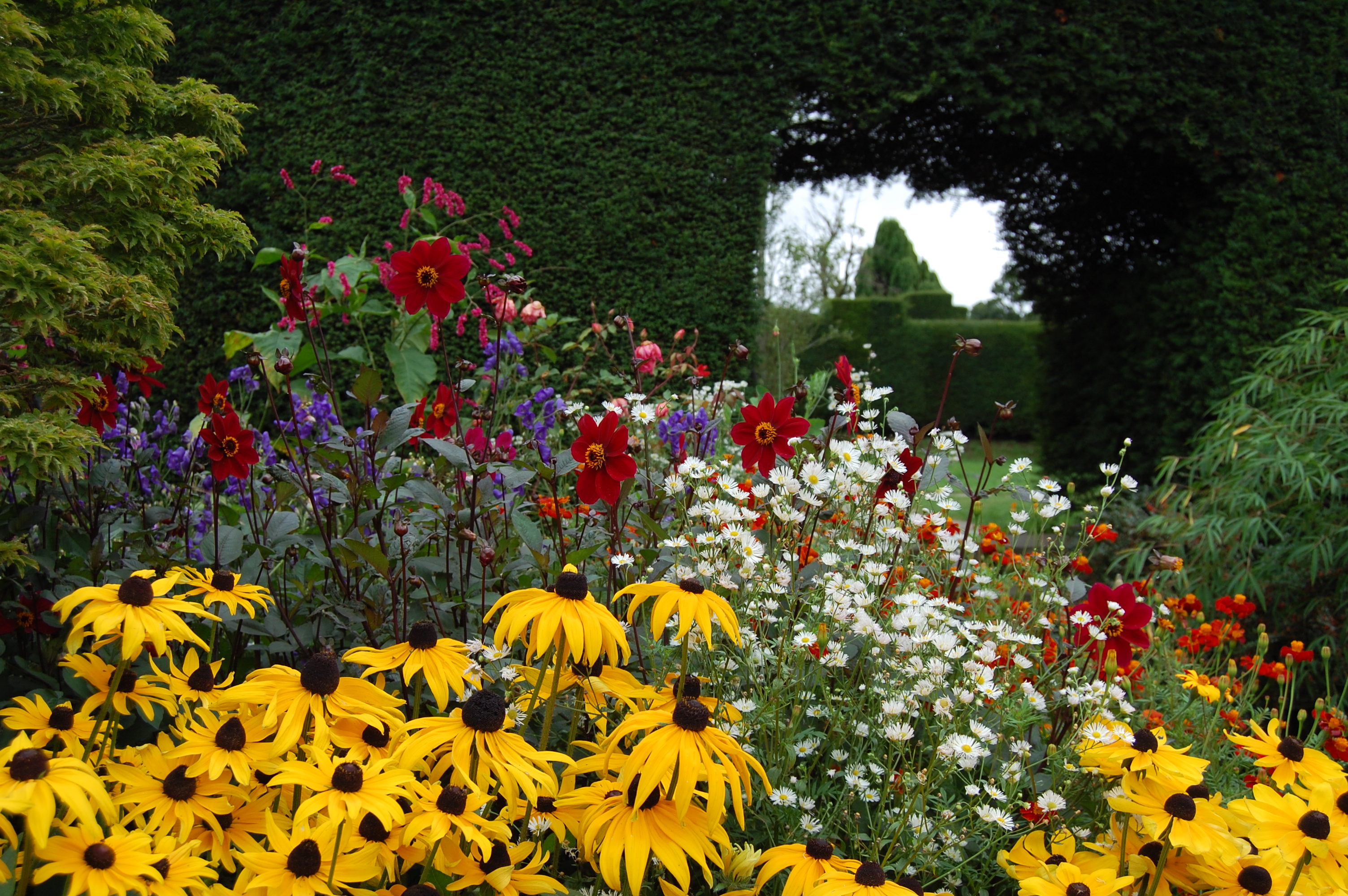
In many places Great Dixter explodes with colors. You feel like these ebullient flowers are going to reach out and give you a big hug. I love this kind of abundant color, so I was enthralled.
Here’s a quote from Christopher Lloyd: “I have no segregated colour schemes. In fact, I take it as a challenge to combine every sort of colour effectively.” A brave man, who fearlessly combines magenta Cosmos with yellow Rudbeckia. Of course, in a large garden it is easier to have lots of different colors in different areas.
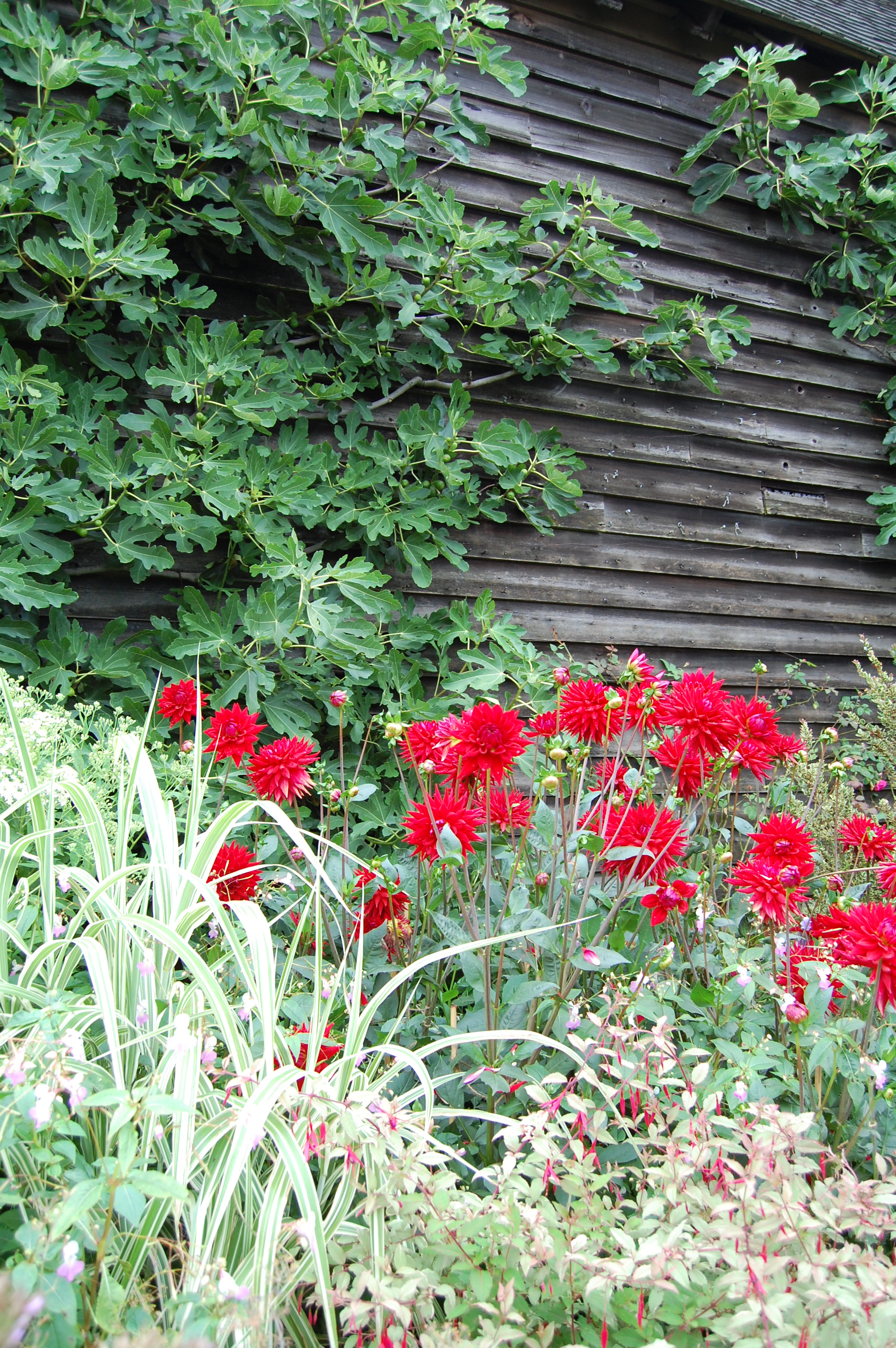
Figs growing up the barn wall.
The Barn Garden adjoins a barn, not surprisingly. Figs grow along the barn wall. I like the shape of the foliage.
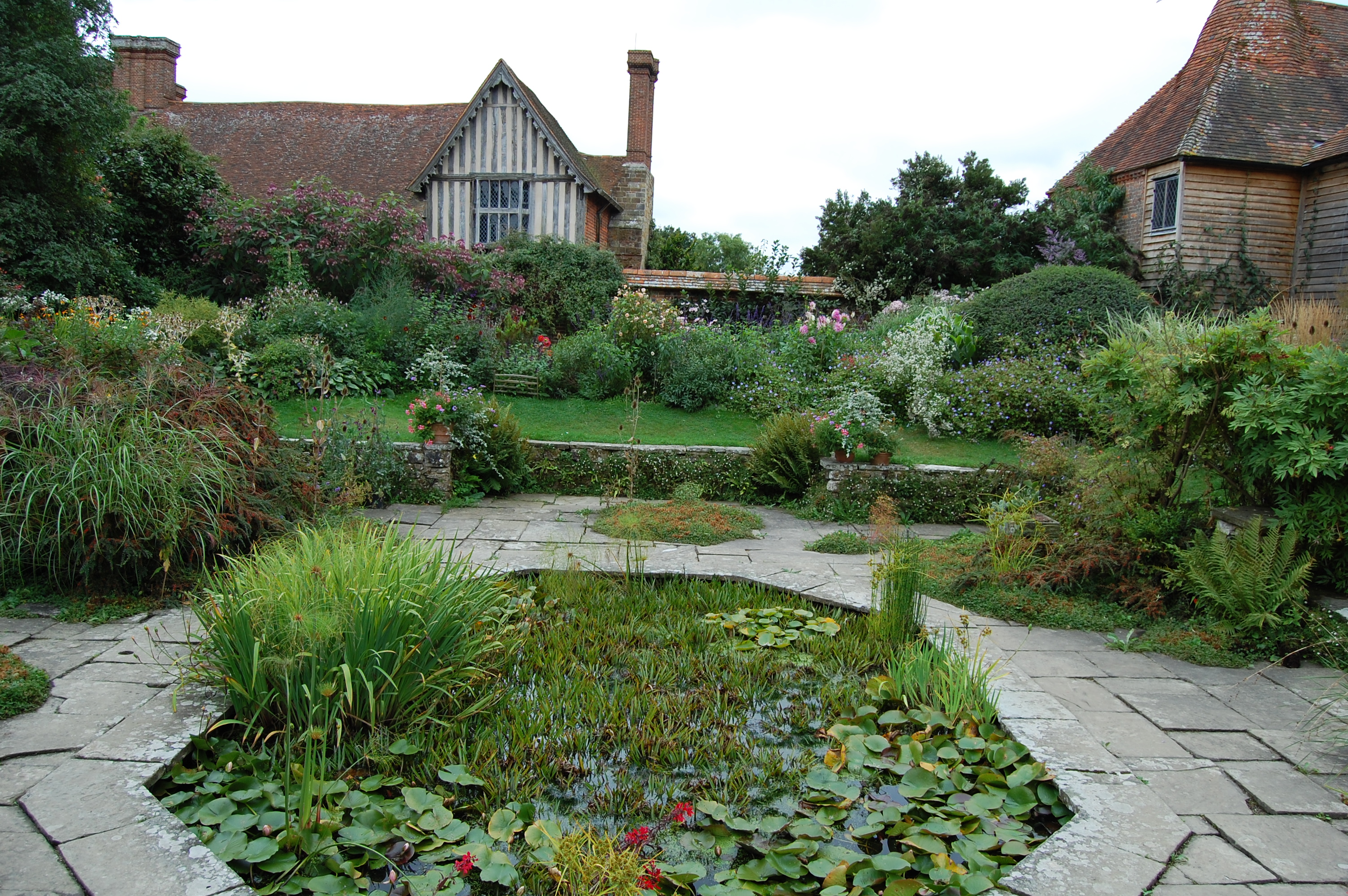
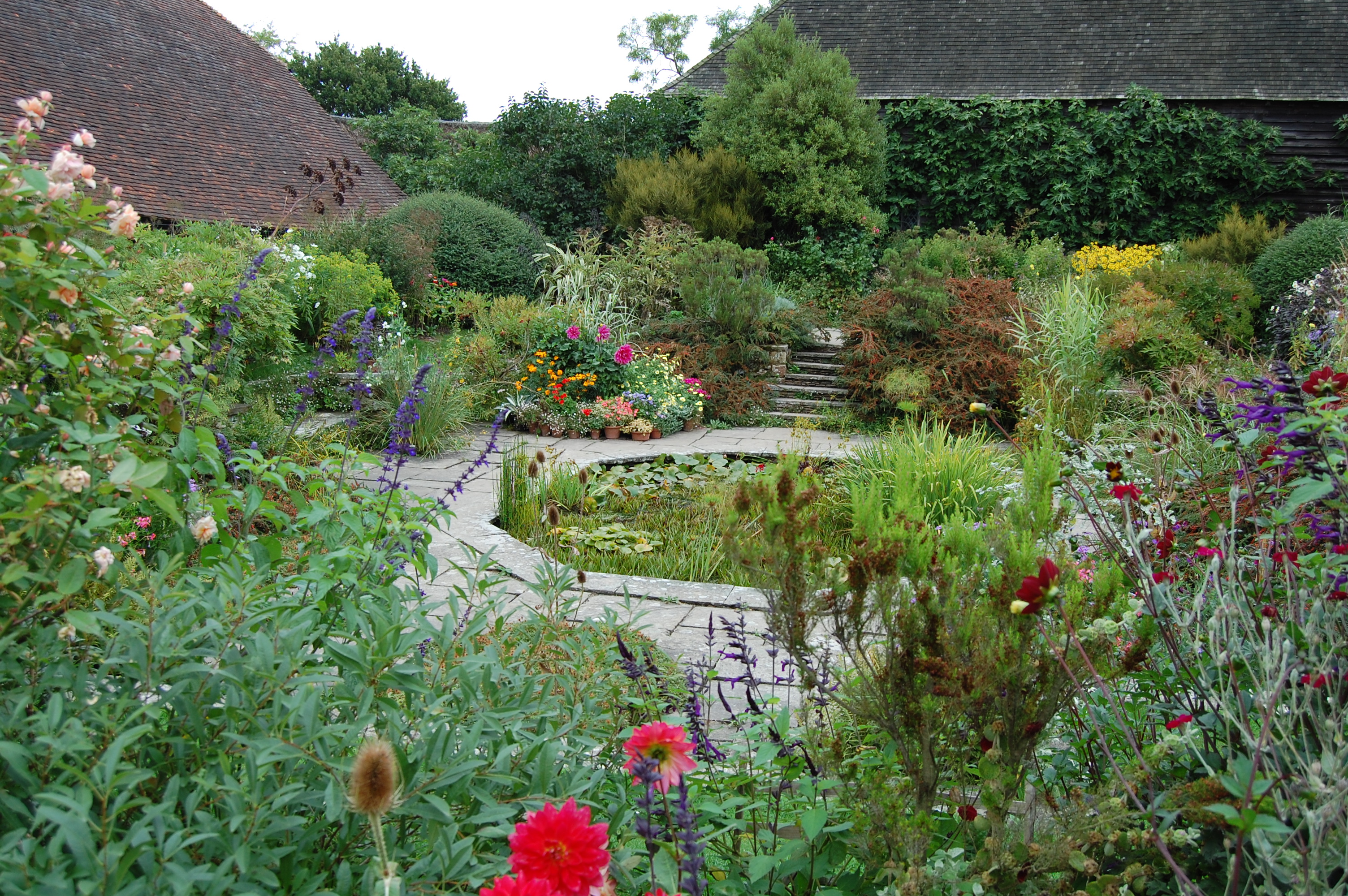
From the Barn Garden, we walked to the Sunken Garden.
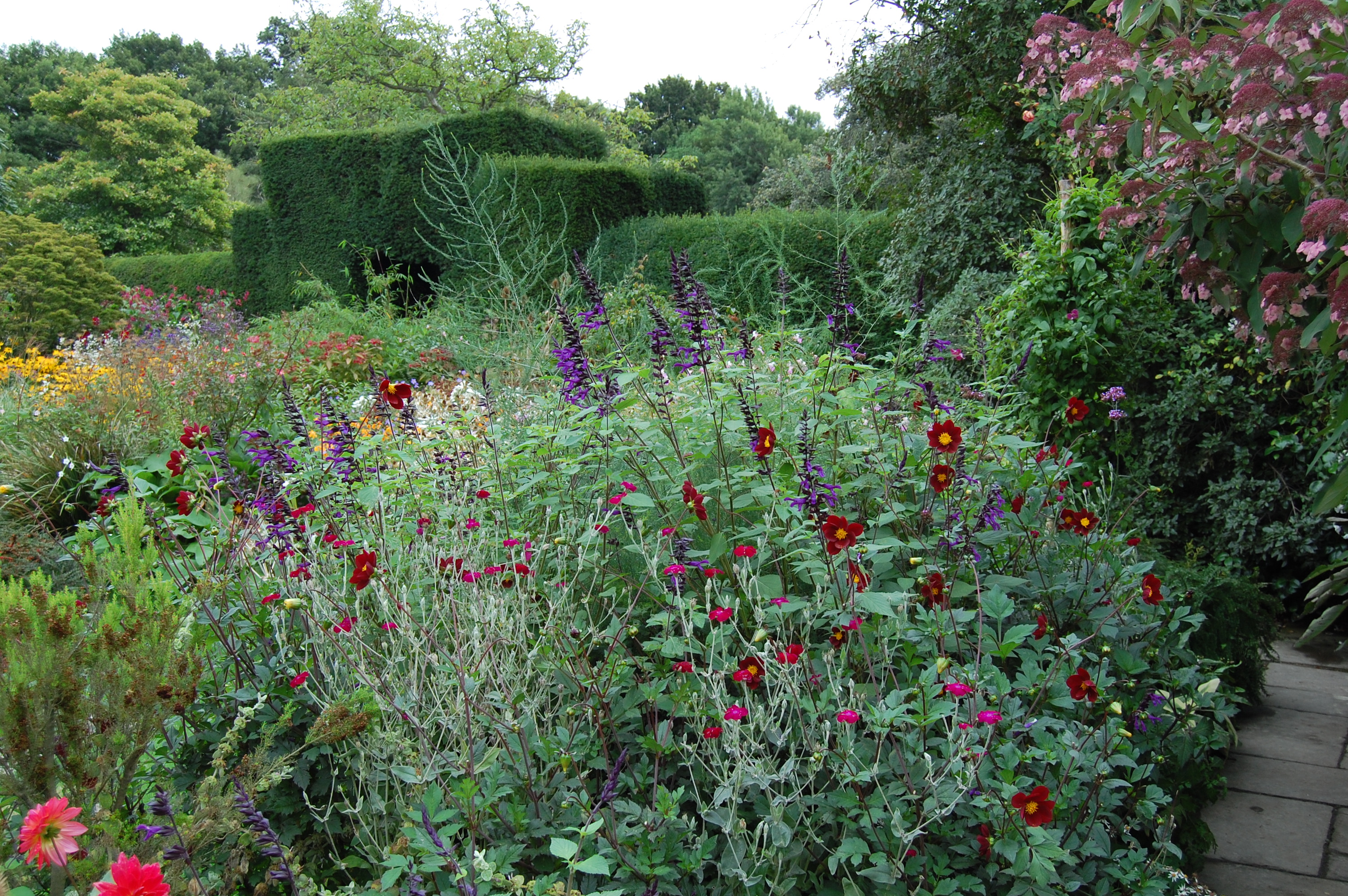
Salvia, Dahlias, and Lychnis. Love this mix of red, pink, and blue.
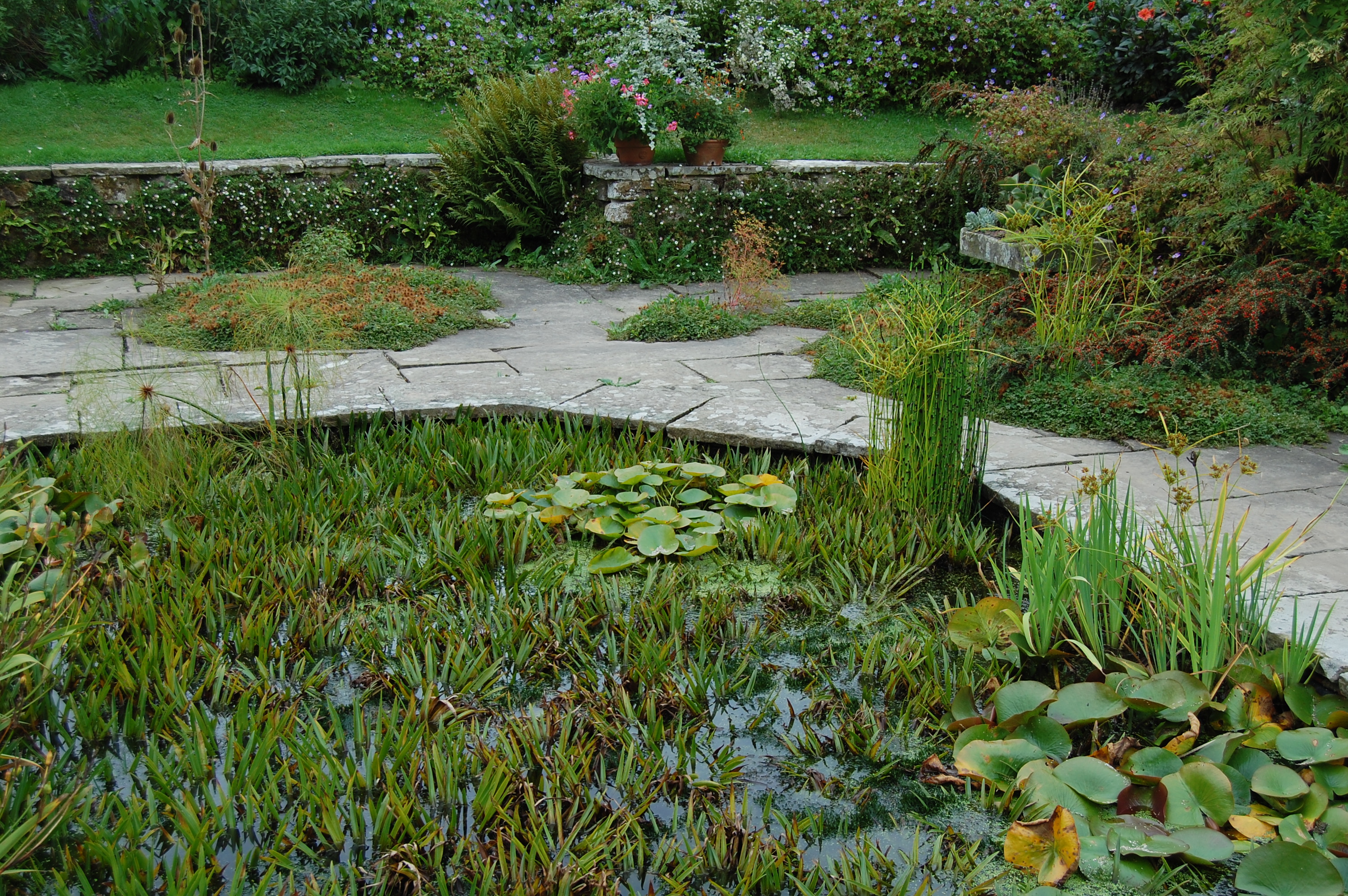
A closer look at the pond. There were no aquatic plants blooming when we visited.
Christopher Lloyd was a free spirited gardener who was happy to let self-sown plants find their own favorite spots. Sandstone was used for the paving.
Another wide view of the Sunk Garden.
Well, I’m going to stop there, as I would not want to cause readers to become Gartensodden. Next: Great Dixter’s Wall Garden and beyond.
I’ve been thinking about Hummingbirds a lot lately. This may seem odd in that the snow along my curb is piled about 4′ high and the temperatures lately have varied between really cold and brutally cold – not exactly Hummingbird weather. But perhaps that is why thoughts of Hummingbirds are such a pleasant diversion.
Plus, now that we are making garden plans it is a good time to consider adding flowers that attract Hummingbirds. In our garden Hummingbirds were a lot more common last year, which is good because it was such a disappointing year for butterflies. Even though we had lots more Hummingbirds, I’m sorry to say that Judy was never able to get a single picture – she just never seemed to have the camera in hand at the right time.
In our region we have only one species, the Ruby-throated Hummingbird, but I am always amazed to watch these birds hover, then fly straight up or down or backwards. They are such tiny creatures, but every fall they migrate from the eastern US to winter homes in Central America.
For pictures of Ruby-throated hummingbirds, click on this link to All About Birds.
In my garden there are four plants that stand out when it comes to attracting Hummingbirds.
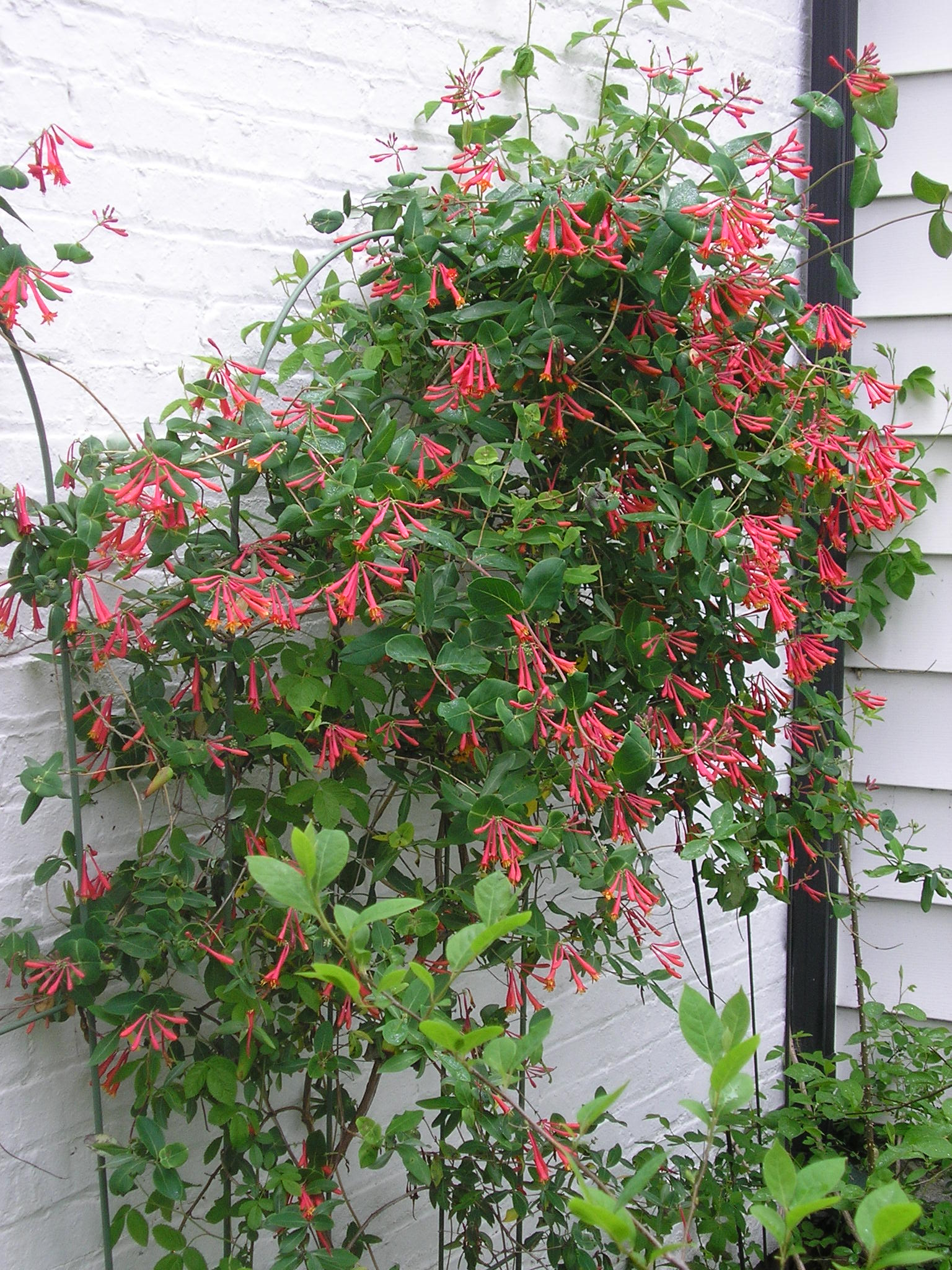
Trumpet honeysuckle growing against brick wall in our back garden.
Trumpet honeysuckle (Lonicera sempervirens). This is a native perennial honeysuckle vine that is not invasive like the Japanese honeysuckle (Lonicera japonica). The flowers of the species are tubular and coral-colored. There are a number of cultivars with yelllow, red, or orange flowers.
Trumpet honeysuckle has a big flush of blooms in late spring, then flowers sporadically throughout the season. It tolerates part shade and is a pretty tough plant in my experience. Unfortunately it is not fragrant, but it does have berries for the birds in fall.
Star flower, with cigar plant in the foreground.
Star flower (Pentas lanceolata). This is an annual with clusters of red, lilac, pink, or white star-shaped flowers (I like the red ones). Hummingbirds made their first appearance in our front garden after I planted these in containers on the front steps. Star Flower is grown as an annual in Chicago, but is hardy in USDA zone 10. In full sun it blooms profusely and over a long season, but in cool weather it will sulk.
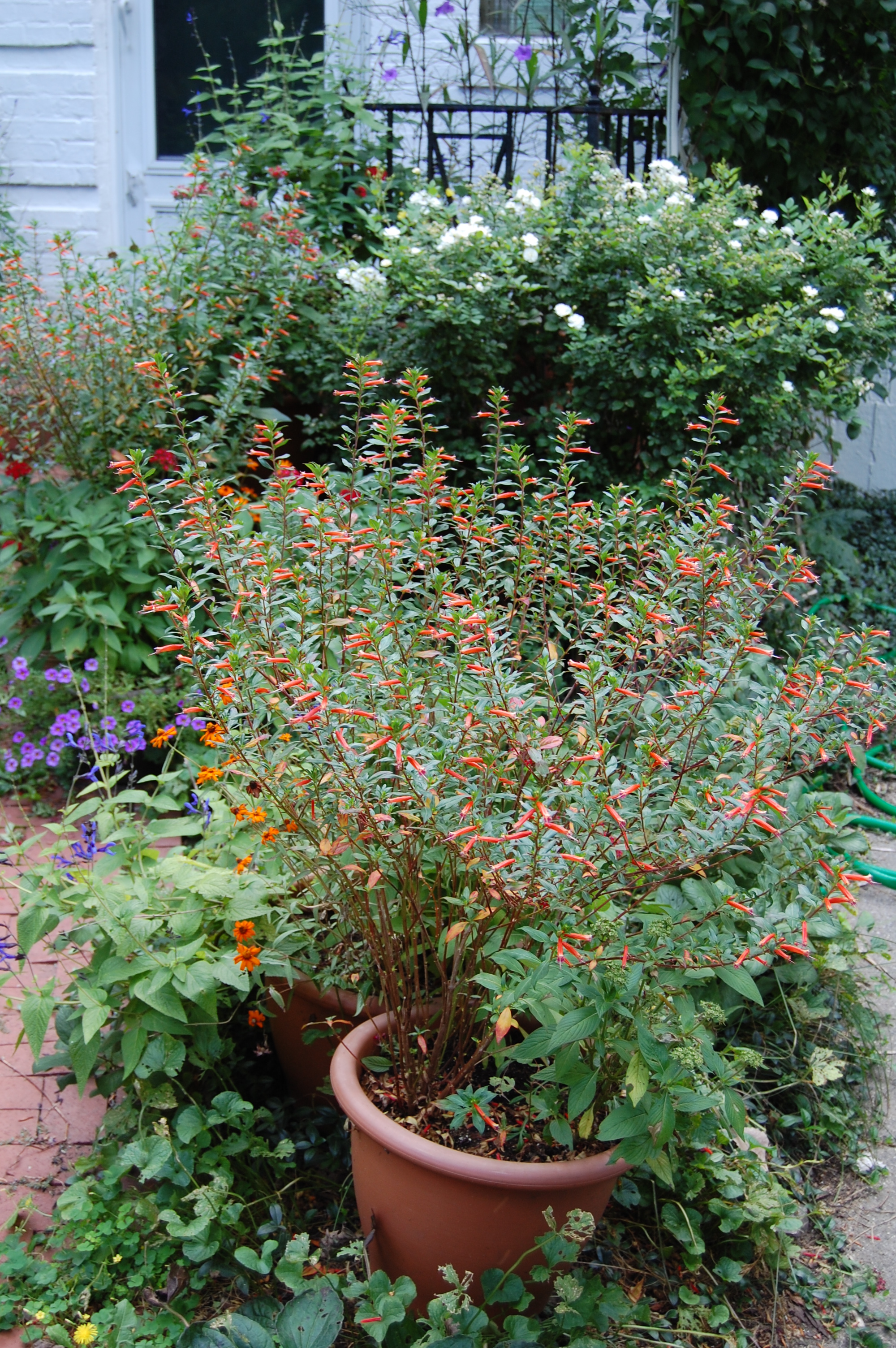
Cigar plant in a container by the front walk.
Cigar plant (Cuphea ignea). Another plant from the tropics grown as an annual. Hummingbirds love this plant, which will get big and bushy over the course of a hot summer – but not so large that it doesn’t make a good container plant. Another common name is firecracker plant, which is a good description of this annual when covered with small, tubular red-orange flowers with yellow tips. Last summer is the first time I saw this plant at our local nurseries, and I will grab more if I see them again next year.
Cardinal flower
Cardinal flower (Lobelia cardinalis). This North American native is a beautiful plant but not easy to grow if you don’t have the right conditions – moist to wet soil with at least part sun. In my experience it is short-lived, even where I planted it near the end of a downspout. However, the uniquely shaped flowers are a dazzling red in late summer. About 3′ tall, it often requires staking.
Do you have hummingbirds in your garden? What are your favorite hummingbird plants?
Planting is one of the most provocative and useful books about garden design that I have ever come across. While it is full of ideas that home gardeners may want to borrow, it is not a how-to book about a specific approach to garden design. Rather, it is a discussion of a general trend, a trend toward landscapes that minimize maintenance while creating a sense of nature in environments dominated by people.
Oudolf and Kighsbury discuss both practical and aesthetic reasons for why this trend exists. On the one hand there is a need in public spaces to reduce maintenance costs (some designs are intended to receive no maintenance beyond only one or two mowings per year). Also, people want open spaces to serve ecological functions, from handling storm water to providing habitat for birds and insects.
Increasingly, gardens that possess qualities we associate with nature appeal to our sense of beauty. This may be a result of the rapid disappearance of the world’s truly wild spaces. I suspect this is the most powerful force behind this movement.
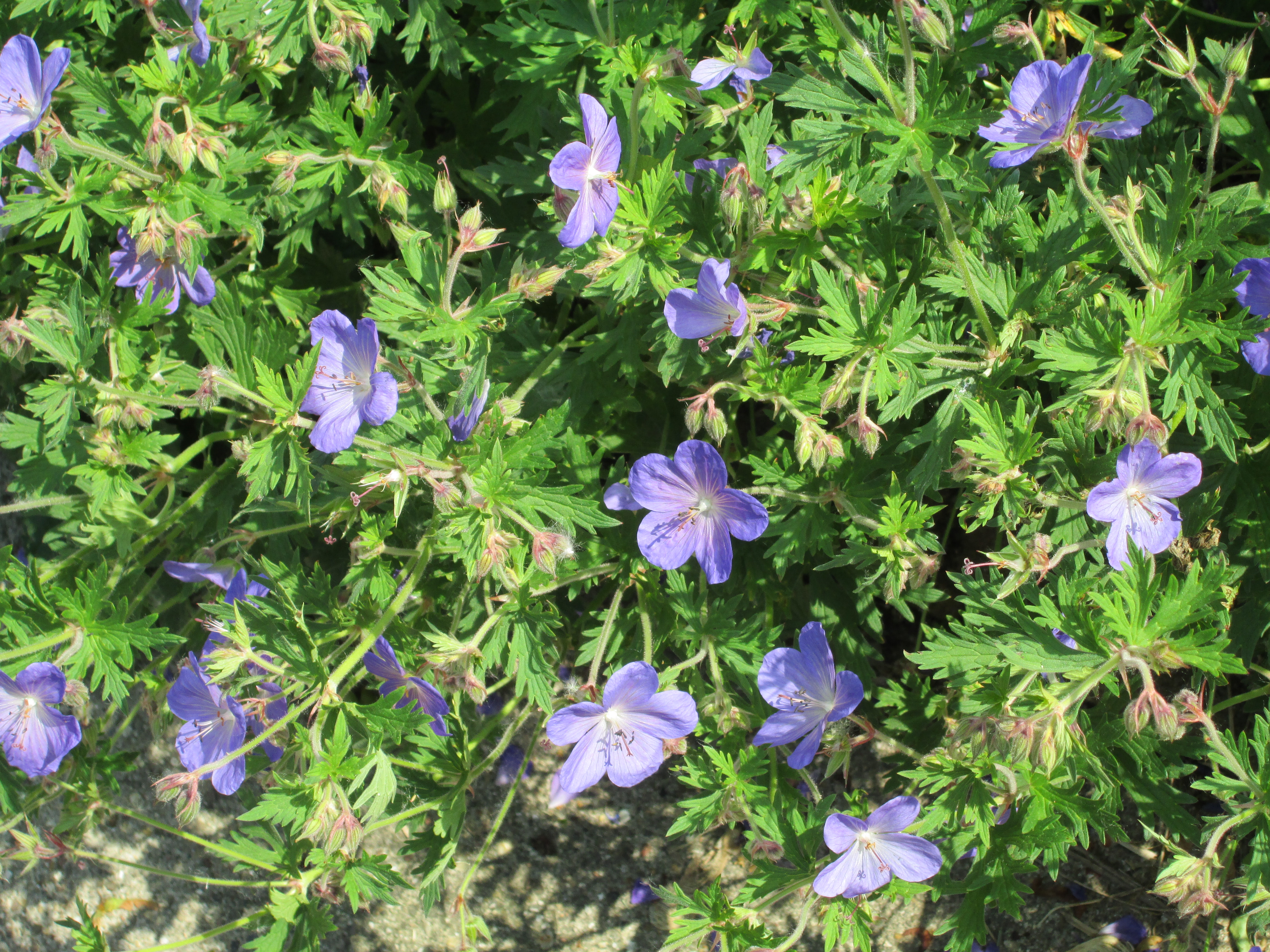
Even more than in the past, Oudolf emphasizes the structural roles of plants. This is clear by the authors’ categories, for purposes of design, of “primary”, “matrix”, and “scatter” plants. Matrix plants are low mounds, such as hardy geranium or Pennsylvania sedge (Carex pennsylvanica), that provide a background or filler function. Primary plants provide the bulk of the visual impact, which may be enhanced with grouping. Scatter plants may be placed at random to provide accents and add to the sense of spontenaiety.
Geranium ‘Johnson’s Blue’, your basic filler plant.
These categories, though useful, are somewhat arbitrary. For instance, the authors identify wild indigo (Baptisia australis) as a scatter plant, but I have seen it massed as a “primary plant”. In any case, the goal is to combine these plants densely so that they interweave themselves into an organic whole that is self-supporting (no stakes) and resistant to weeds.
In another part of the book, the authors talk of matrix plants as “filler” plants, while primary and scatter plants are “structure” plants. Structure plants must provide visual interest (from something other than color) from summer into autumn at least. As in previous books, there is a discussion of how the shapes and architecture of plants creates visual interest. Oudolf and Kingsbury cite a general rule that structure plants should make up 70% of any planting.
You can’t get much more structural than Joe Pye Weed.
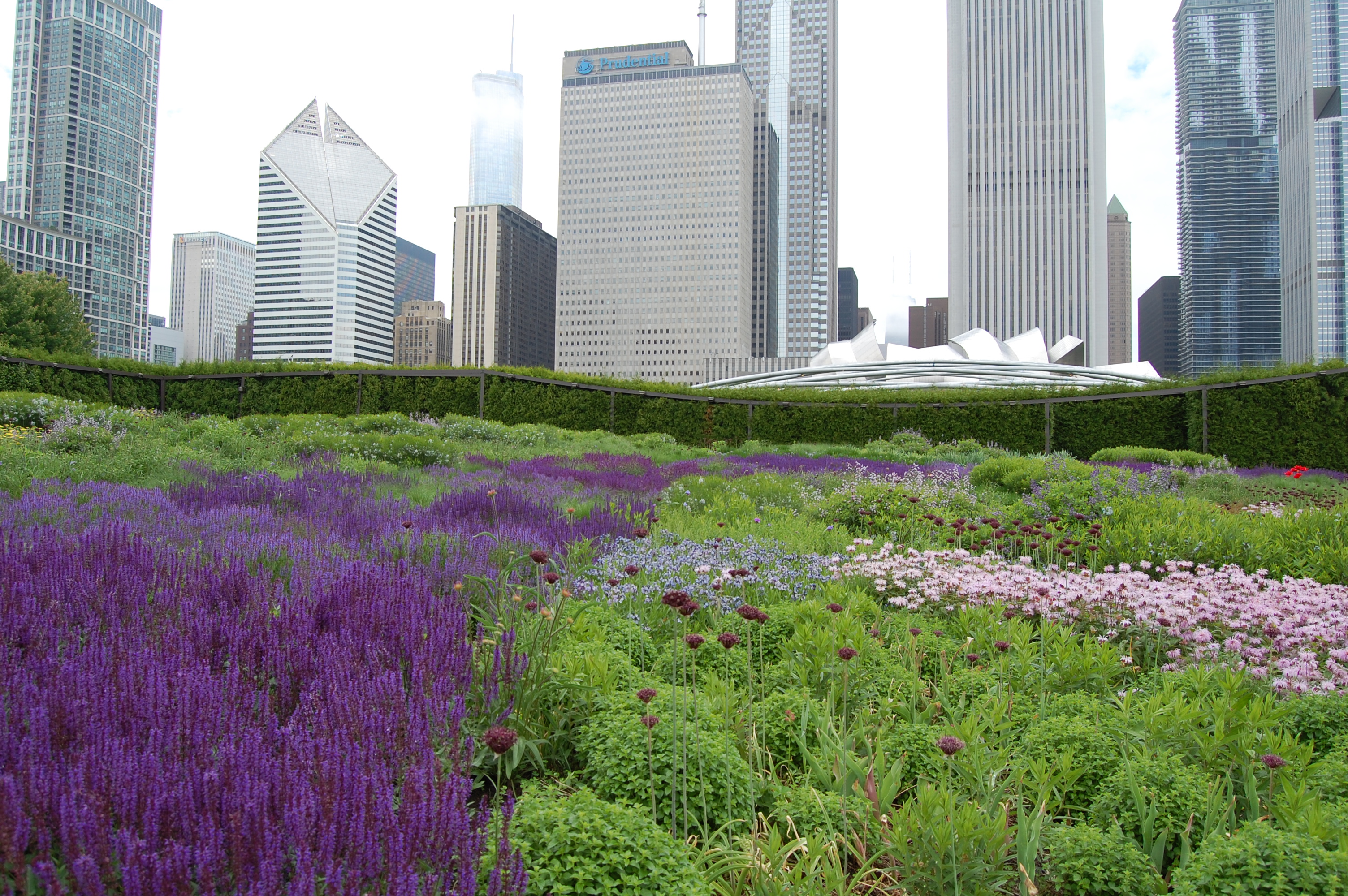
Planting in monocultural drifts or blocks is mildly denigrated in favor of “interplanting”, even to the point of attempting pure randomness through designed seed mixes. On this point I must dissent. I for one will not give up my drifts and blocks, which are essential for visual impact, especially in a smaller garden, and which can look quite natural. Would Piet Oudolf tear up his own River of Salvia in the Lurie garden? Perish the thought.
Talk all you want about the benefits of interplanting, I will not give up the Lurie Garden’s River of Salvia.
Not that I am against spontaneity. The authors suggest that garden designers and gardeners should creatively manage and adapt as plants spread and emerge unexpectedly, rather than try to keep their gardens static. I entirely agree with this, but it is a lesson many amateur home gardeners learned long ago.
Related to this, there is a discussion in Planting that is far too often missing from books on garden design: namely, that a plant’s longevity and tendency to spread must be incorporated into any garden design, especially one that purports to be sustainable. This seems like common sense, but it is too often ignored.
Wild indigo – primary or scatter, it’s a nice plant.
Oudolf and Kingsbury put a high value on native plants, but they are emphatic about combining natives with other plants that fit the needs of the design – structural, ecological, and aesthetic. They point out that people are also part of the garden ecology, and because of this gardens must be beautiful.
Those who want ideas for specific plant combinations will find this book useful, as several pages are devoted to favorite combinations for each of the seasons. And if you simply want to gaze at photos of really gorgeous gardens, you can buy this beautifully illustrated book and simply ignore the text.
But that would be an awful waste. This is perhaps not the right book for a beginning gardener. However, if you are the kind of gardener who likes to think about design, I would suggest that this is a book you will want to read more than once.
After enjoying Sissinghurst’s Cottage Garden, we strolled on to the Nuttery. This is a word I was unfamiliar with, but it means a place where you grow nuts. A comical-sounding word, suggesting all sorts of bad puns.
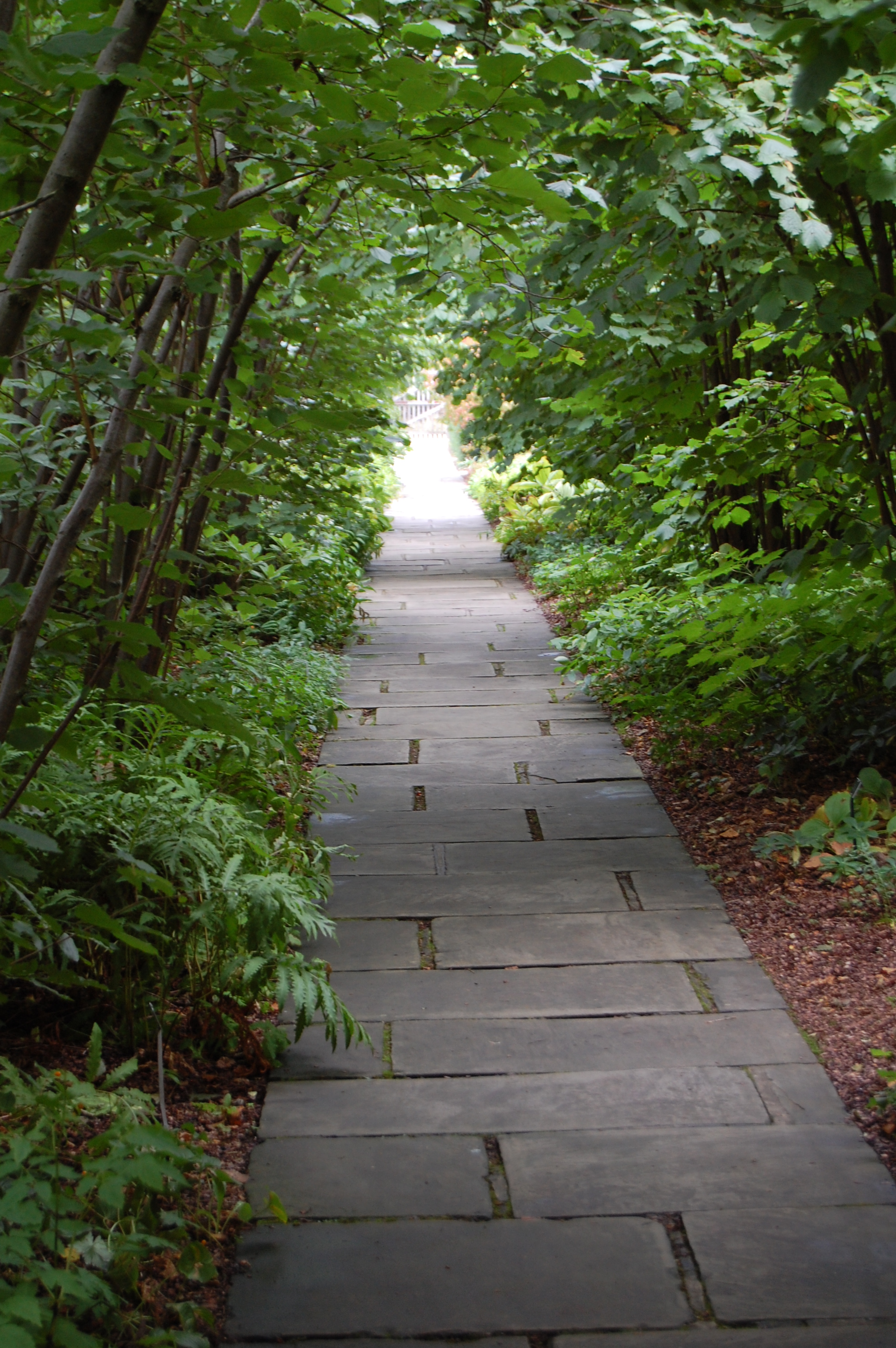
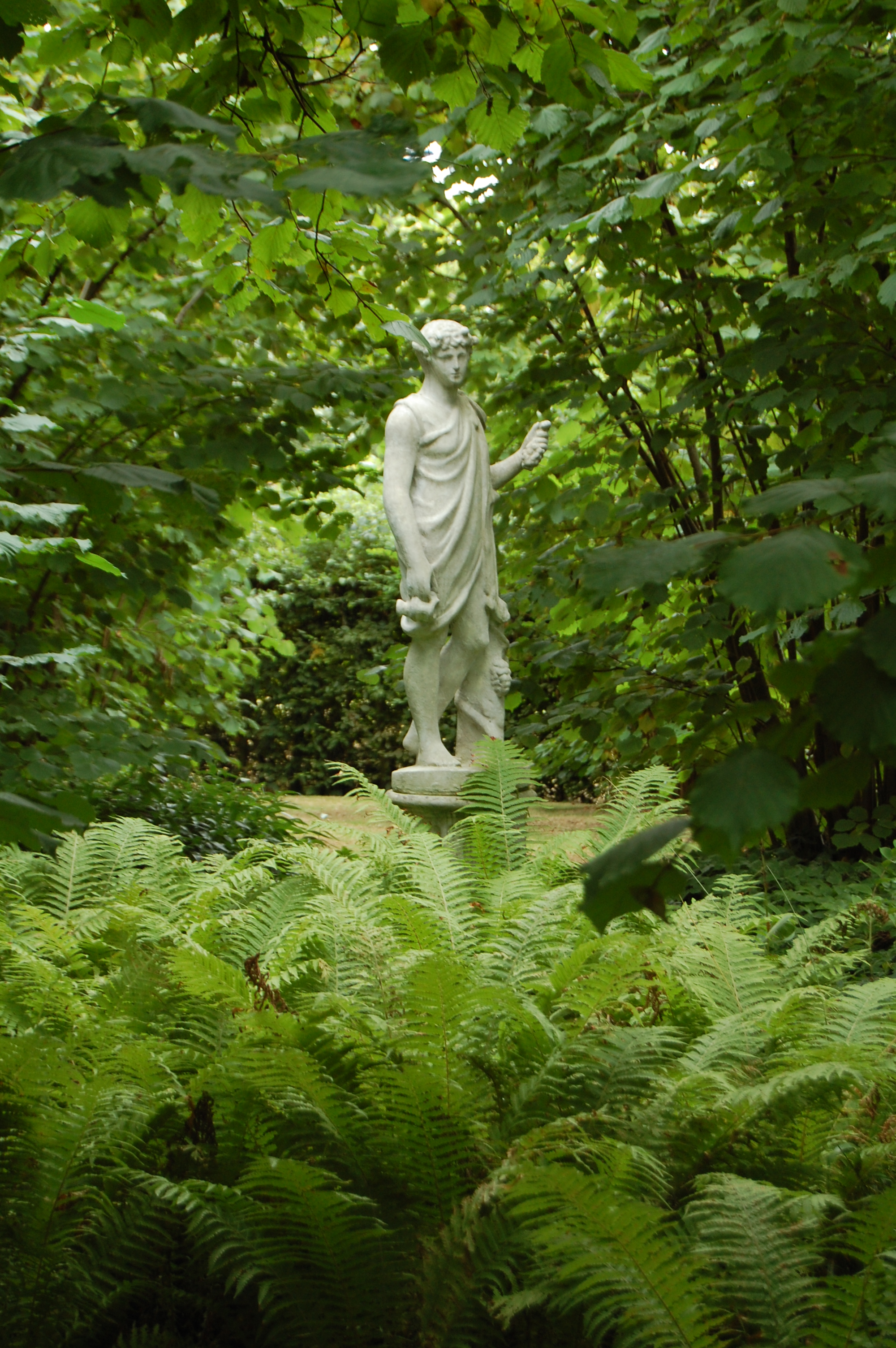
The Nuttery has a shady woodland feel, with its Ostrich Ferns (Matteucia strutheopteris) and rows of tall hazels (Corylus).
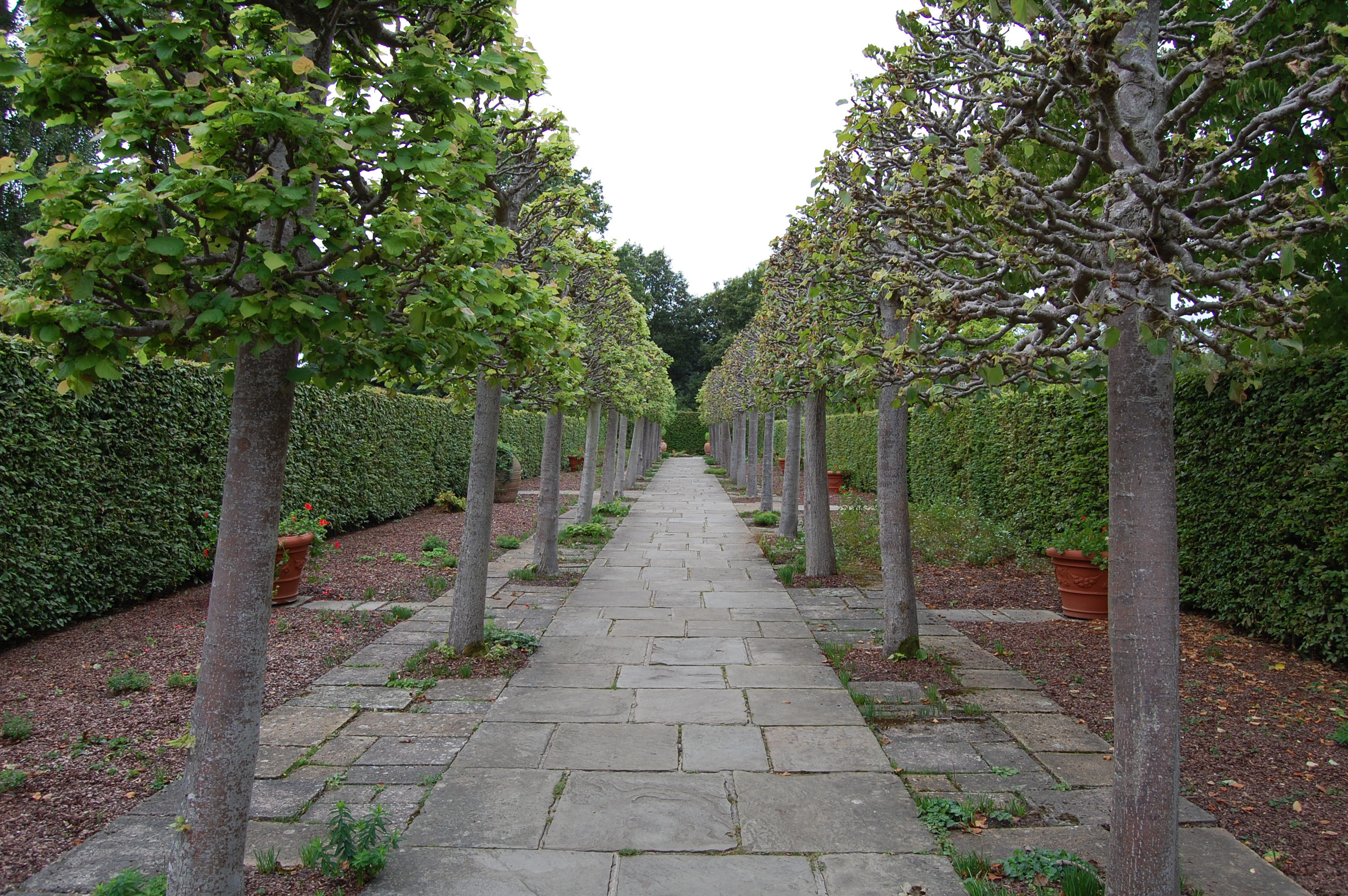
Near the Nuttery is the Lime Walk, which is supposed to be glorious with flowering bulbs in spring. In September it was OK, but not all that exciting.
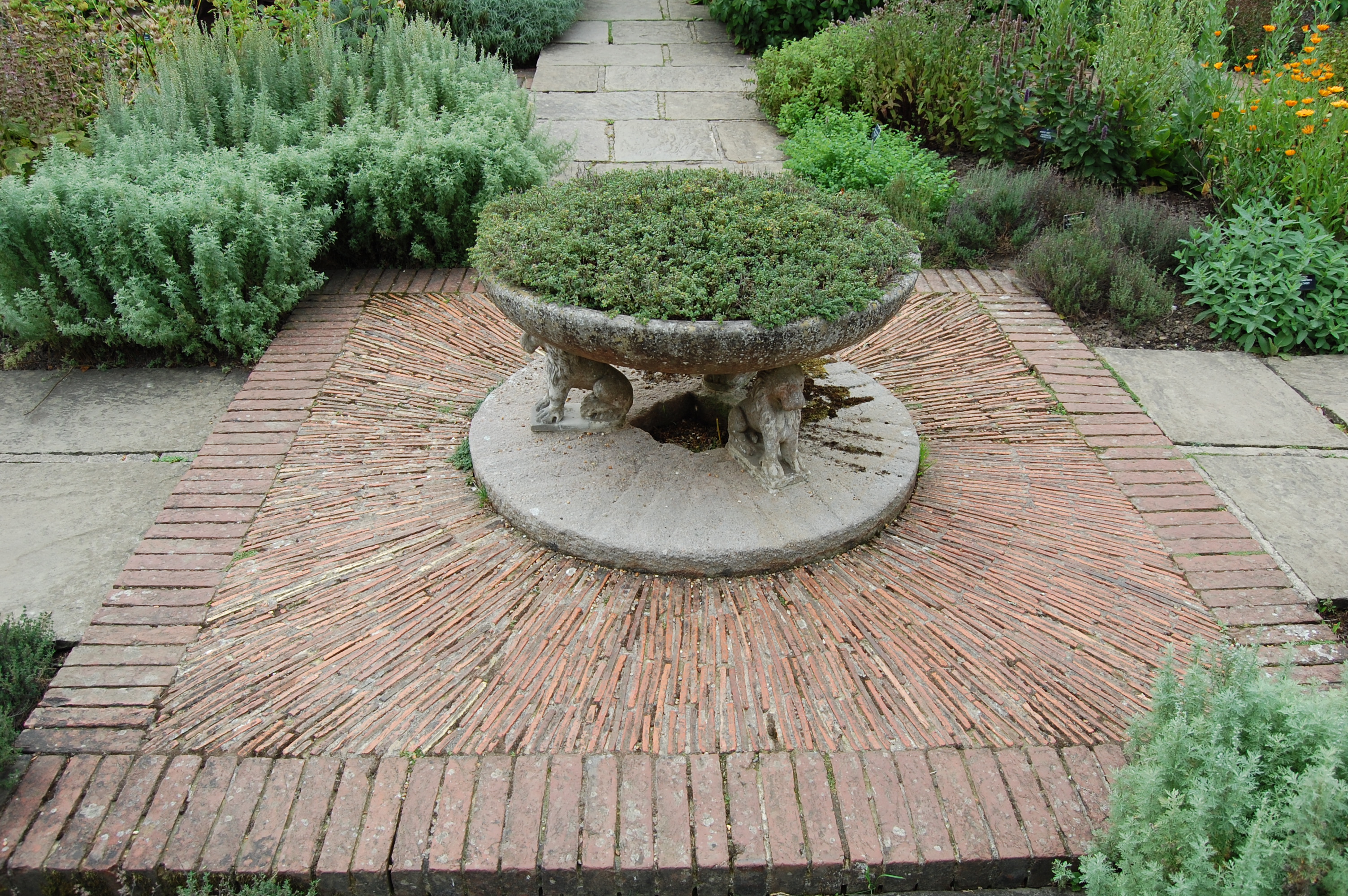
The Nuttery leads to the Herb Garden. I really liked this planter, and the way they created a surface with slivers of brick. UPDATE: Marian St. Clair of Hortitopia informs me that they are actually terra cotta tiles turned sideways. Clever!
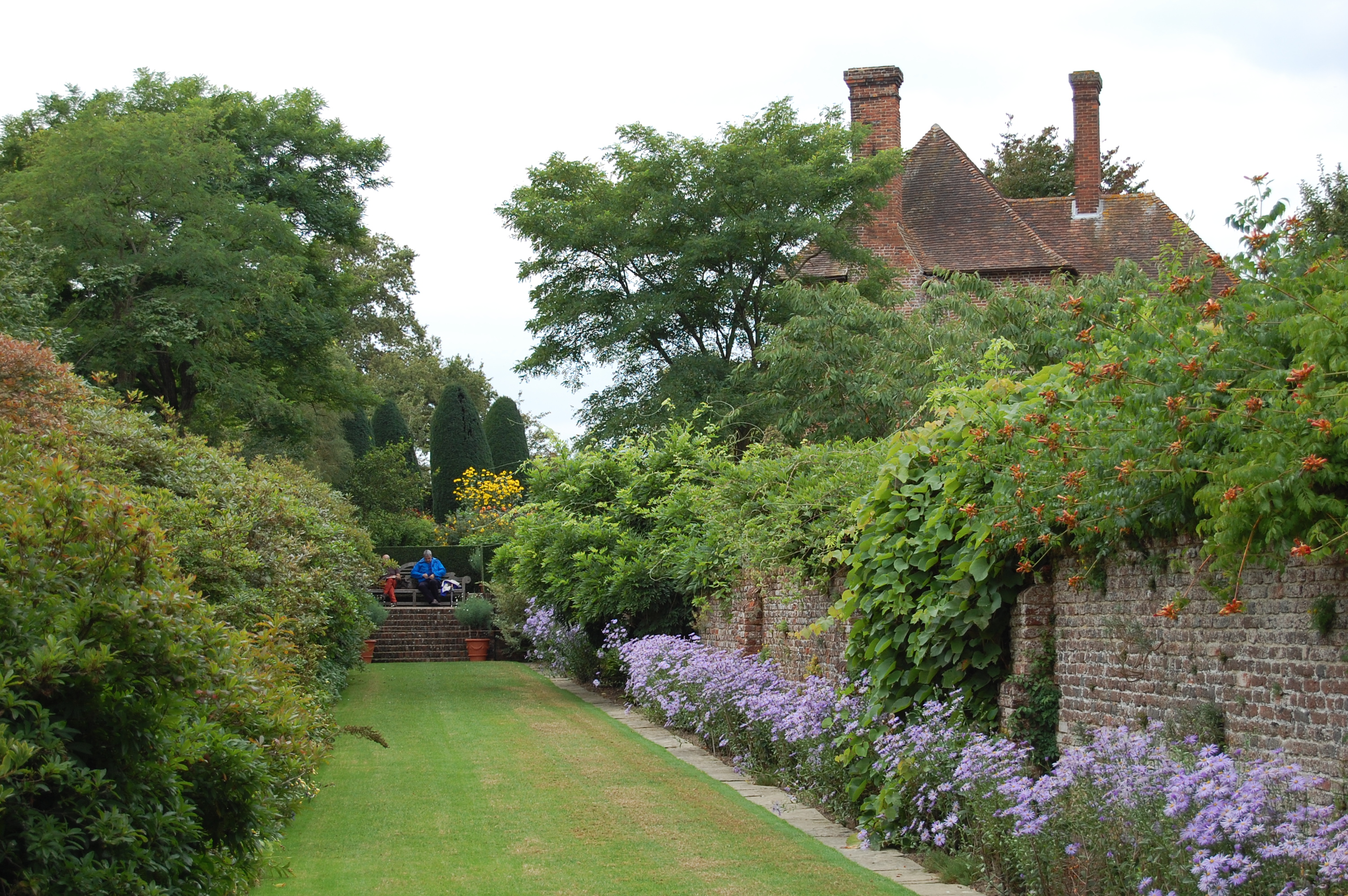
From the Herb Garden to the Moat Walk, where we found Aster frikatrii blooming their little hearts out.
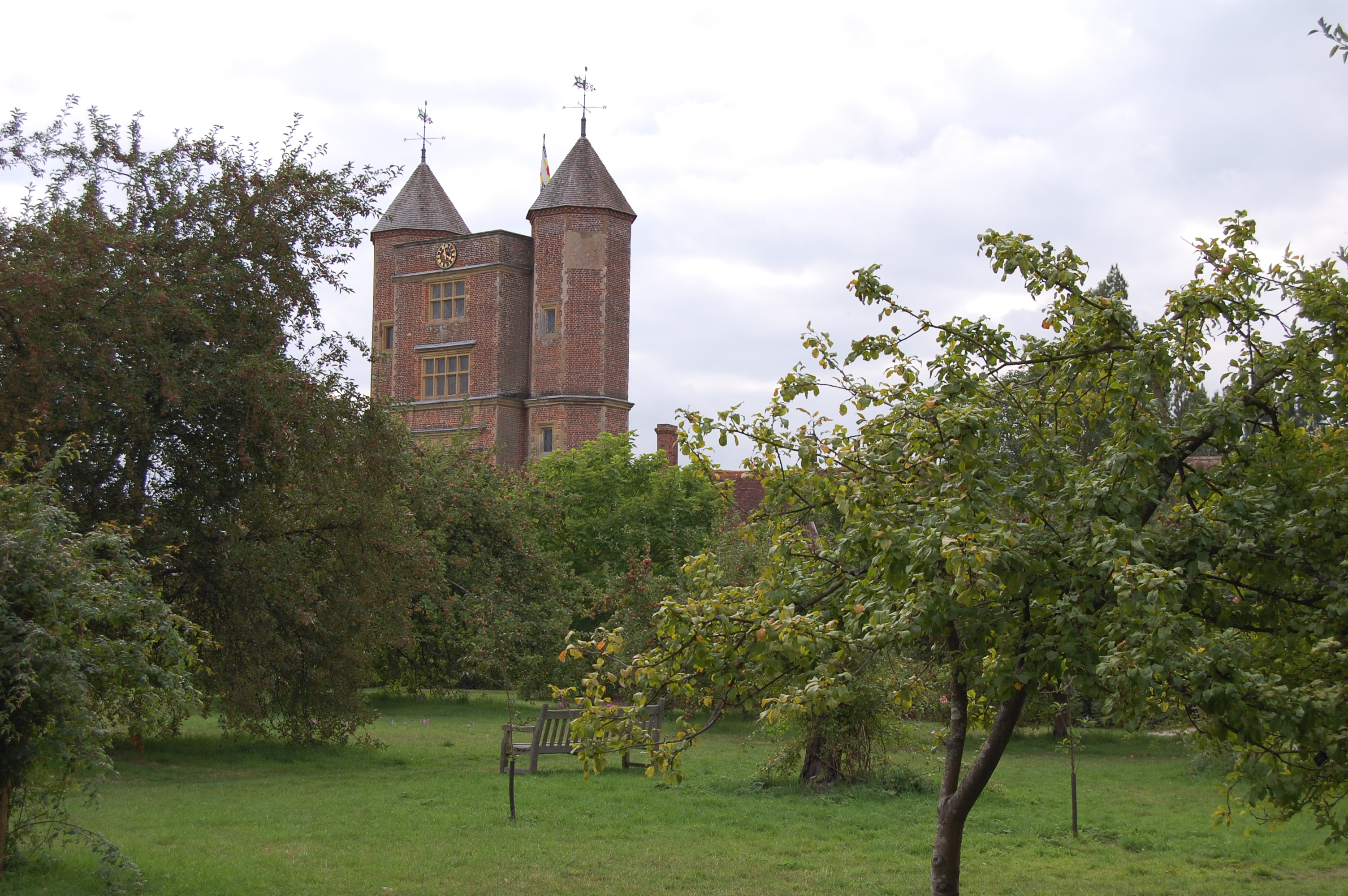
There is an orchard of widely spaced fruit trees, under the gaze of a 16th Century tower.
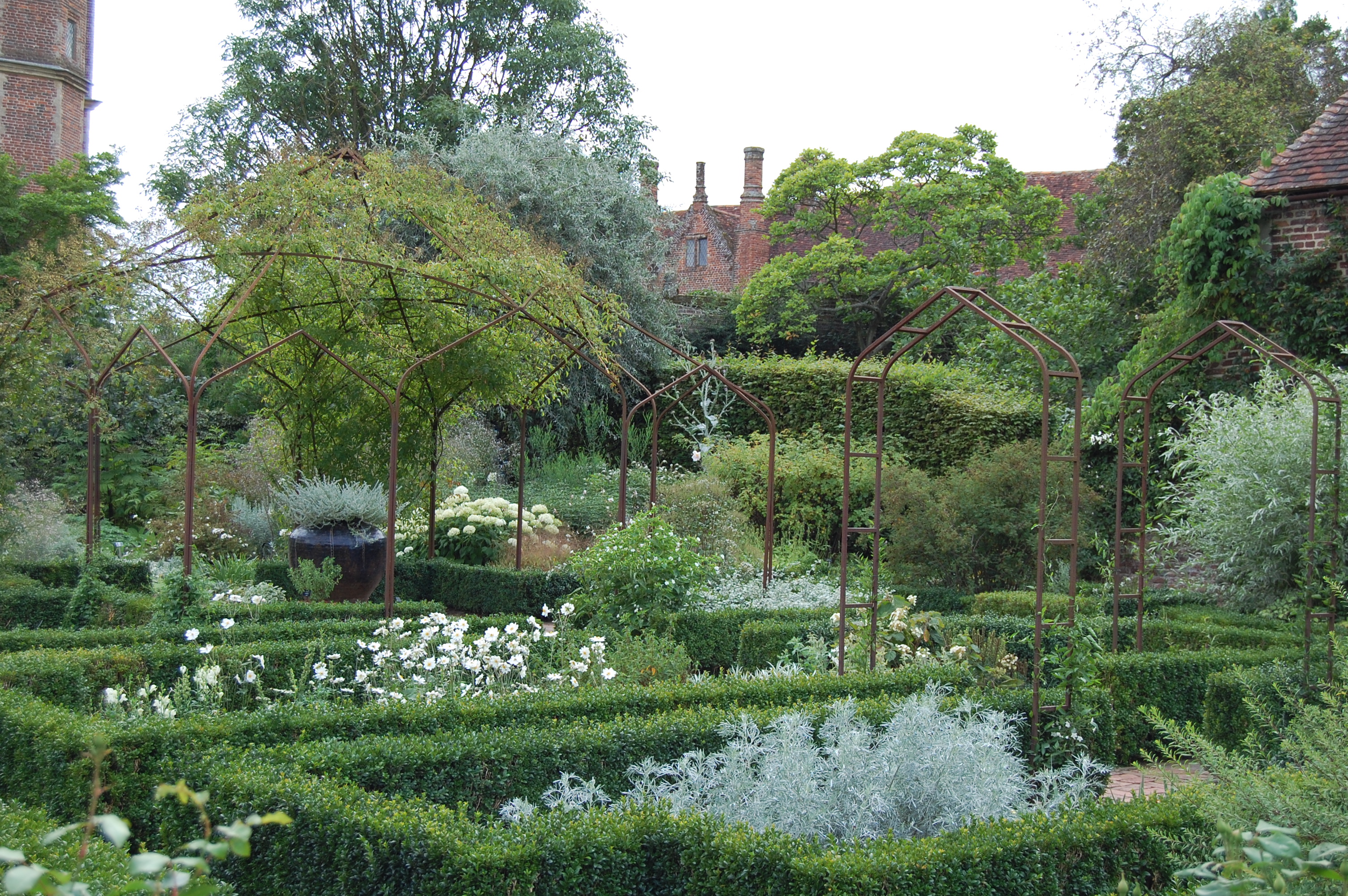
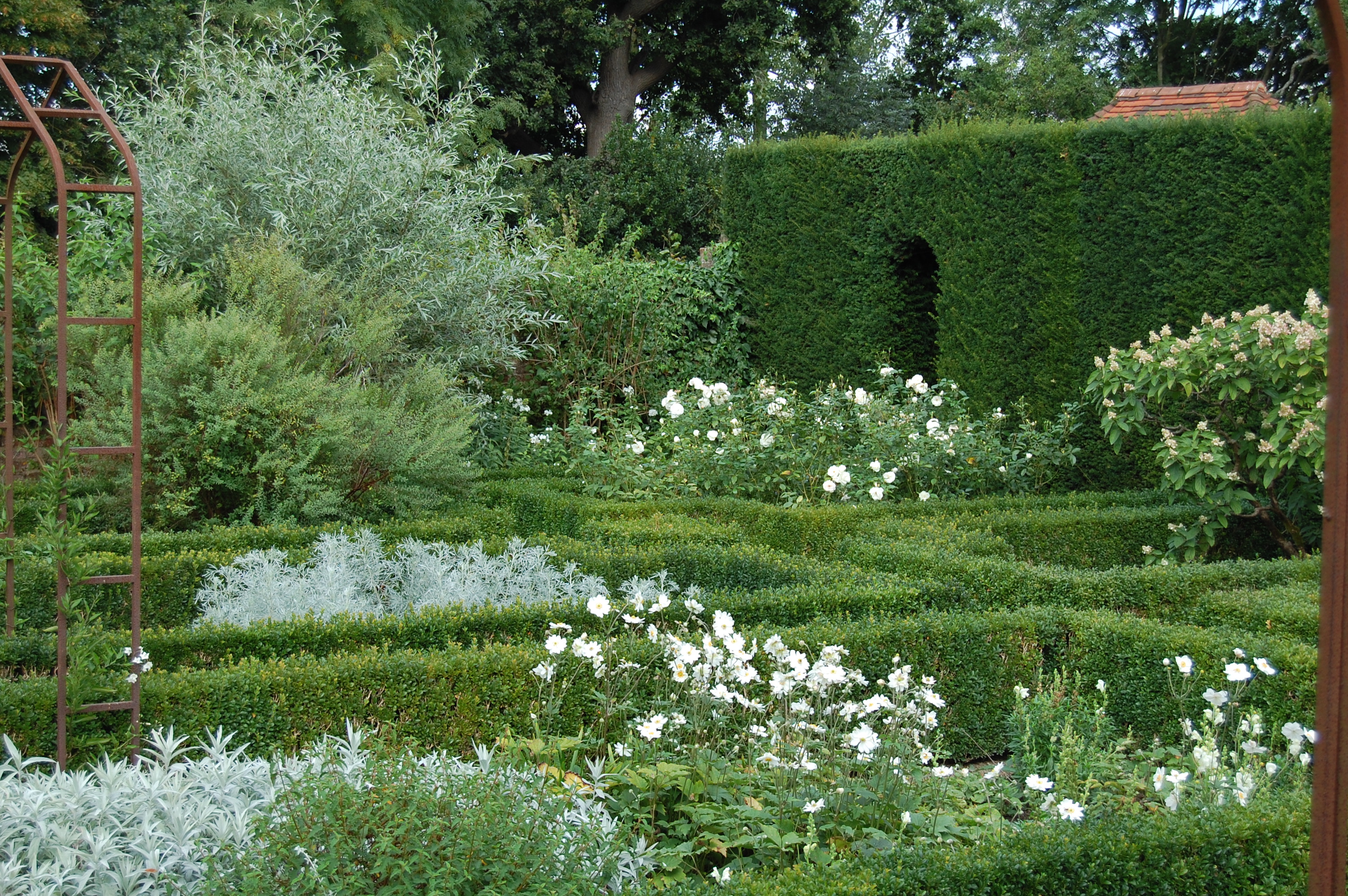
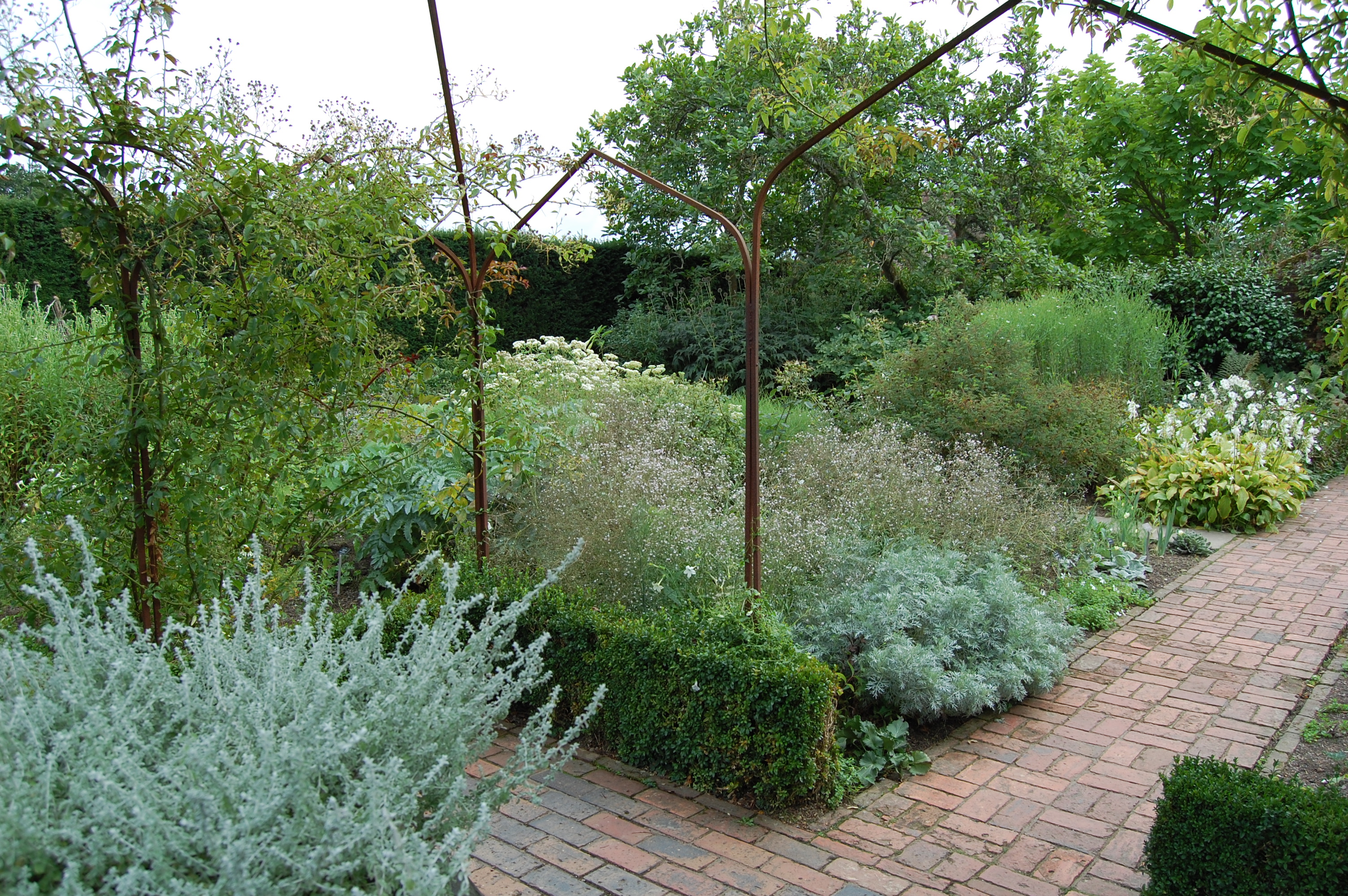
We spent some time in the White Garden, the most famous of Sissinghurst’s garden rooms.
I can’t say I appreciated the White Garden as much as some others have. It’s a little too understated for me. Also I have never been crazy about fussy little boxwood hedges.
A garden of all or mostly white flowers needs a shady spot, in my opinion. In sunny areas white flowers look best mixed in with other colors.
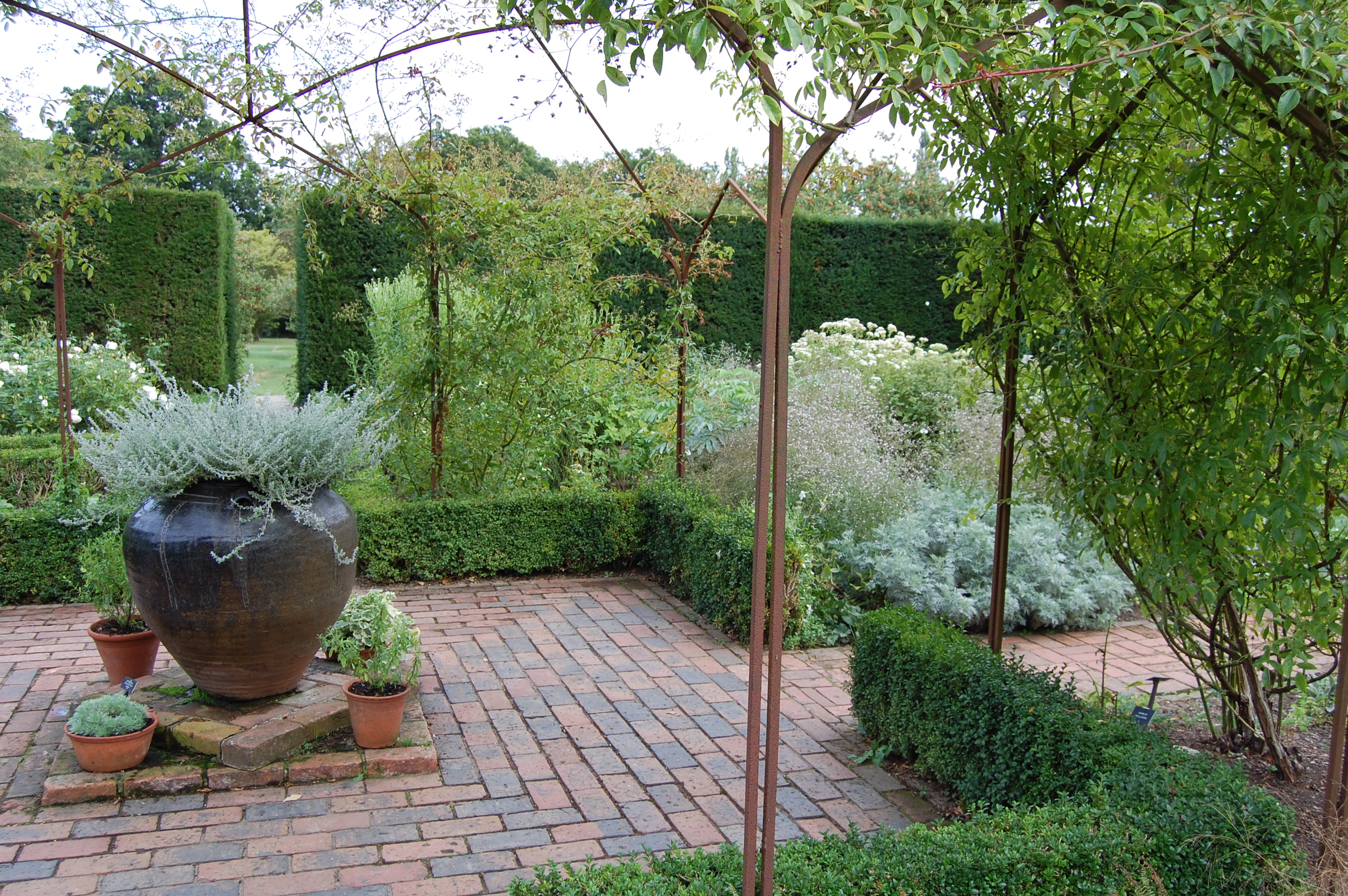
This is a really nice planter, though.
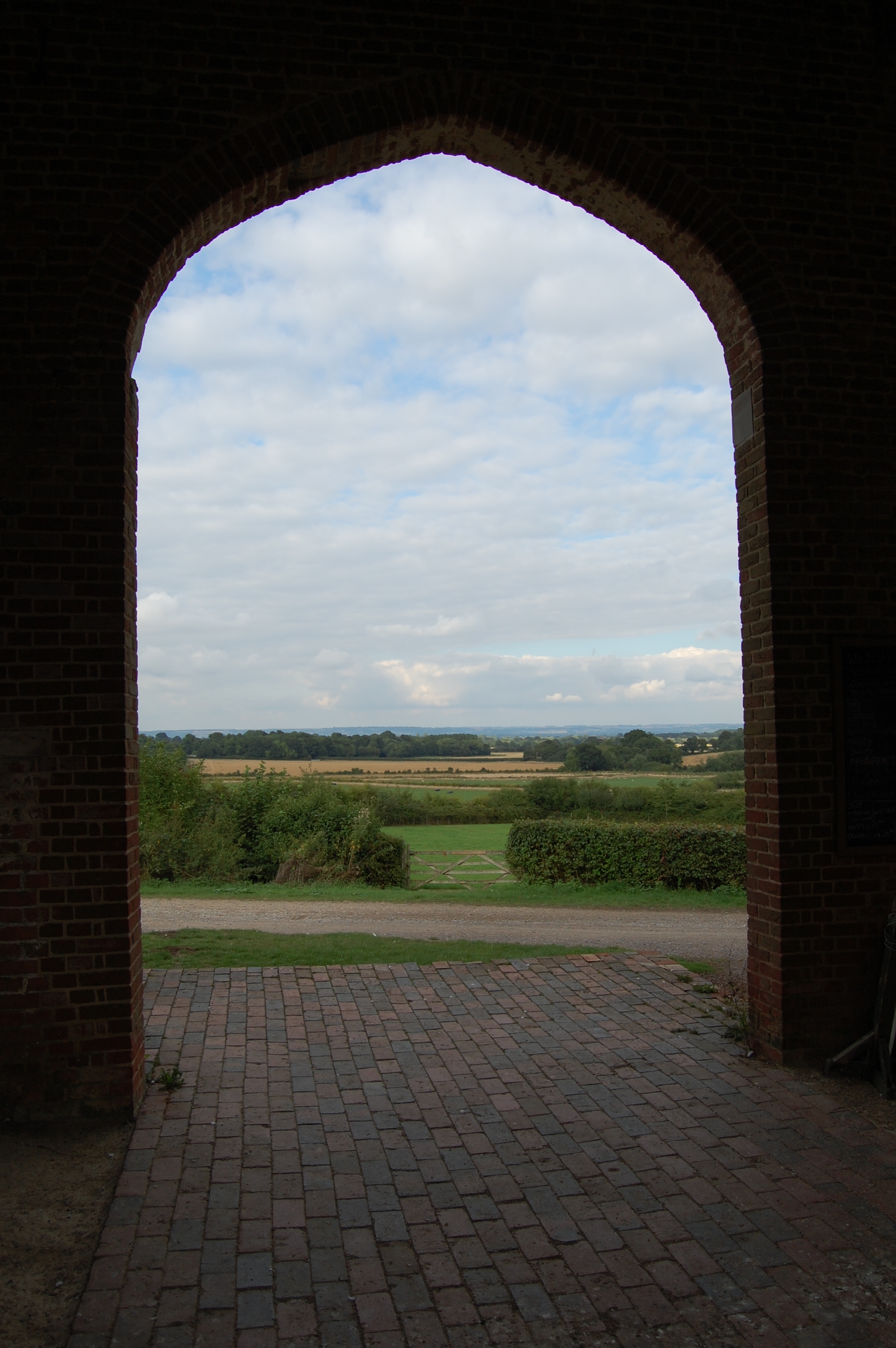
Sissinghurst is in a gorgeous rural area, by the way.
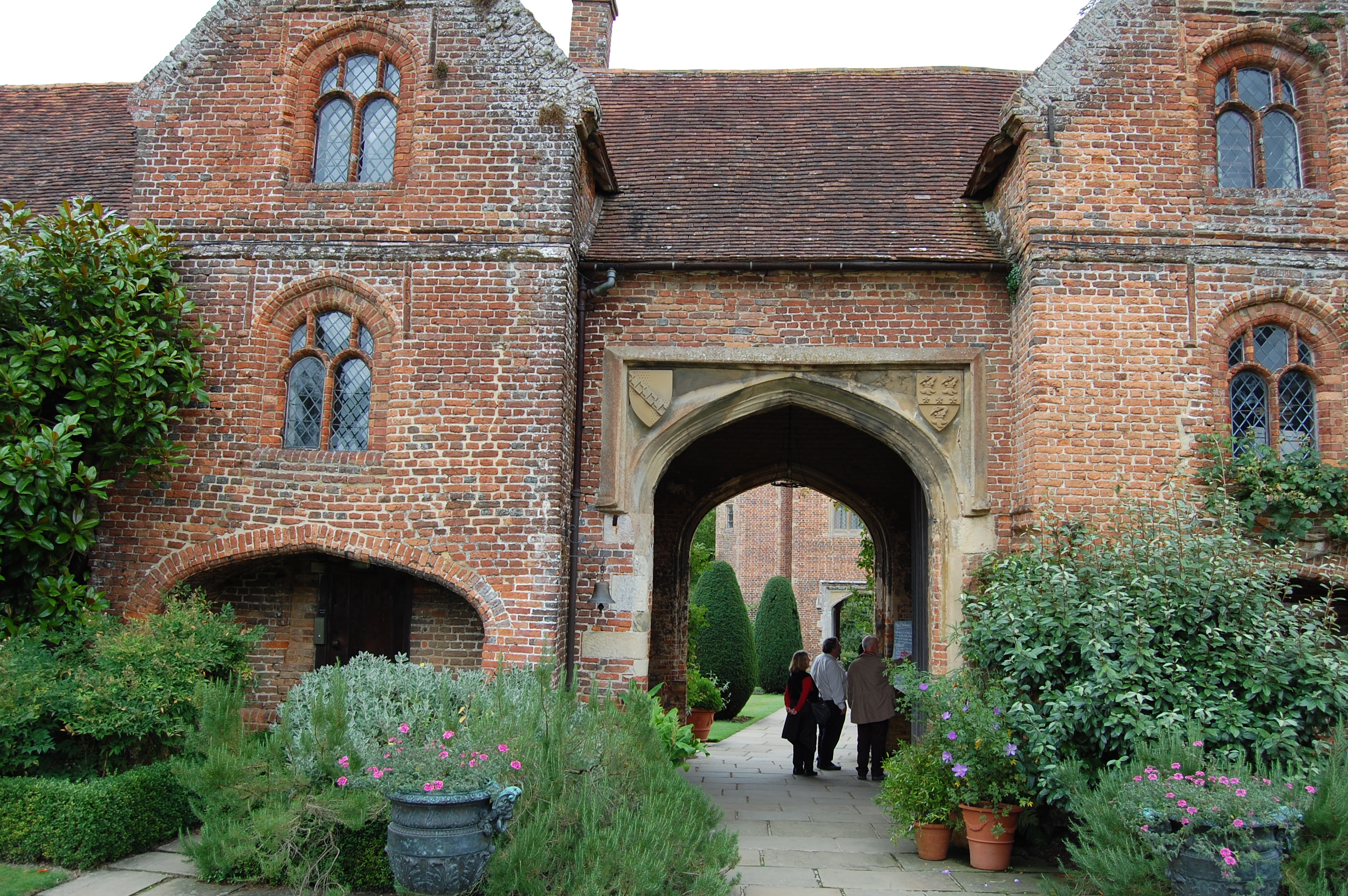
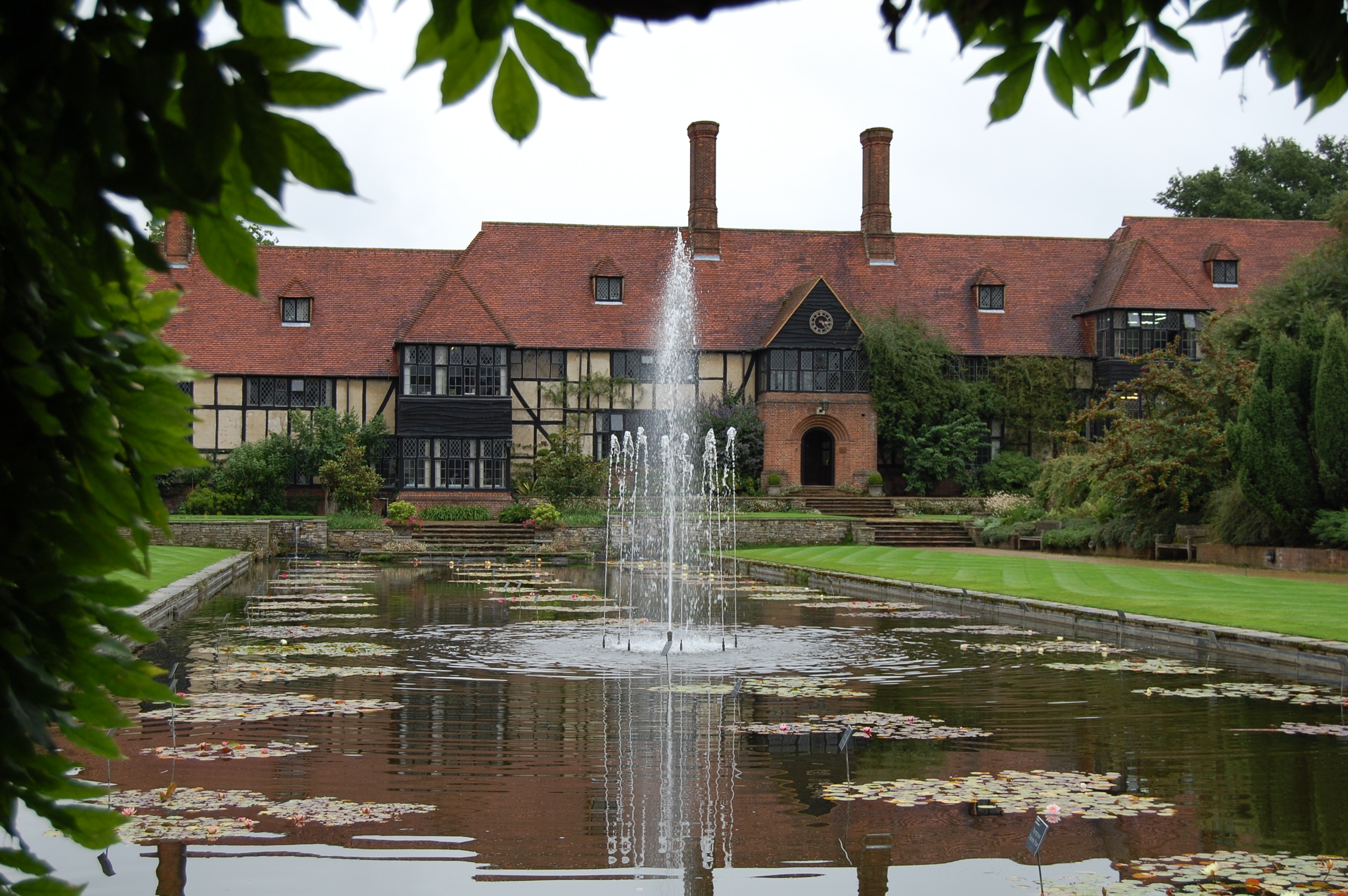
A day after seeing RHS Wisley, John and Pauline drove us to see Sissinghurst, the garden created in the 1930s by Vita Sackville-West. I’m embarrassed to admit that I have never read a single one of Sackville-West’s gardening books (or her novels, poems, or other writings for that matter). This, combined with the thousands of words that have already been written about her garden, makes me a little reluctant to comment on what I saw. However, I will just share with you my own reactions, as ill-informed as they may be.
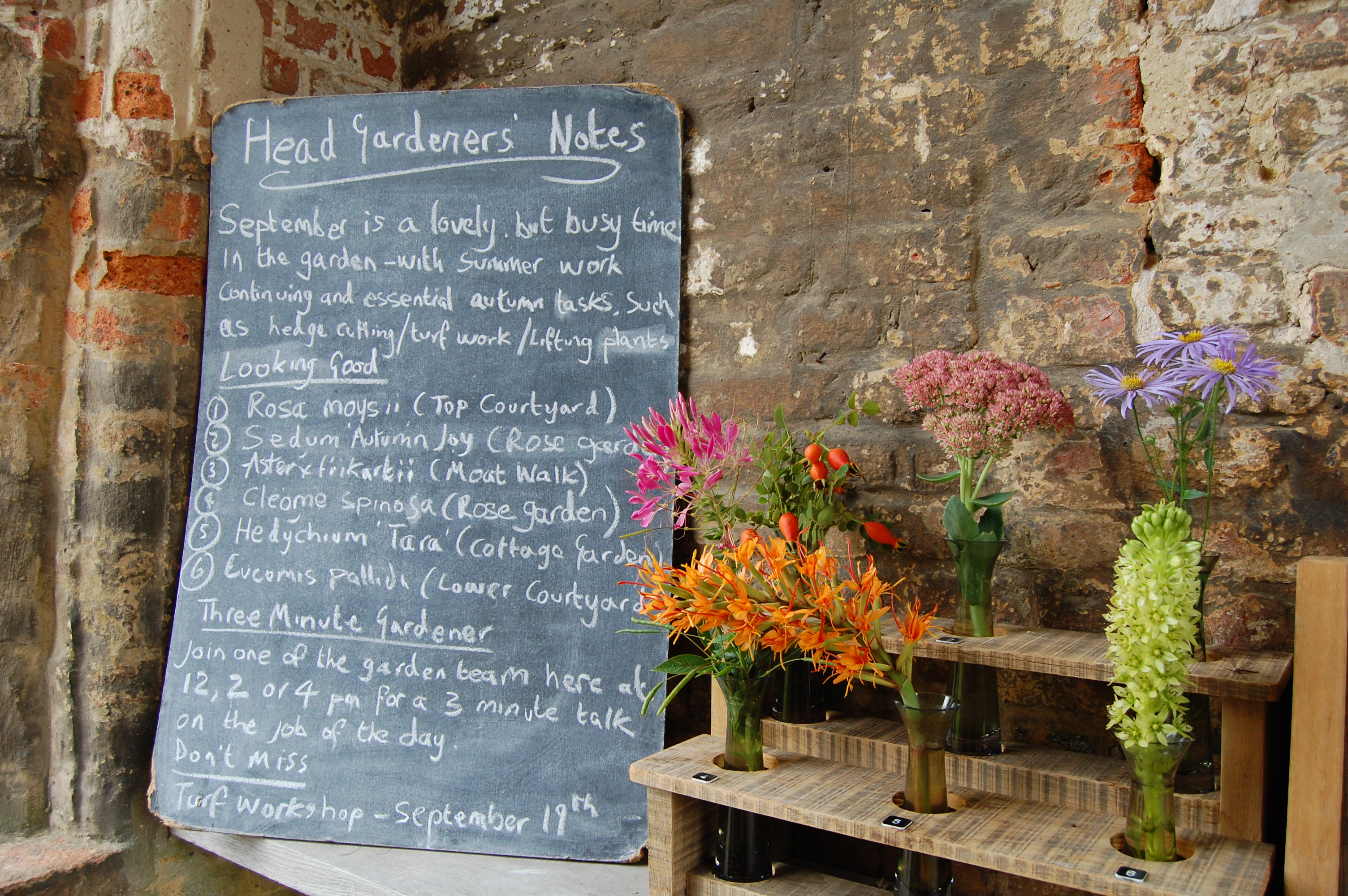
You approach the garden by walking through an arched gateway that passes through the main house. An engaging touch is the “Head Gardener’s Notes”, written daily on a chalkboard located near the outer edge of the arches.
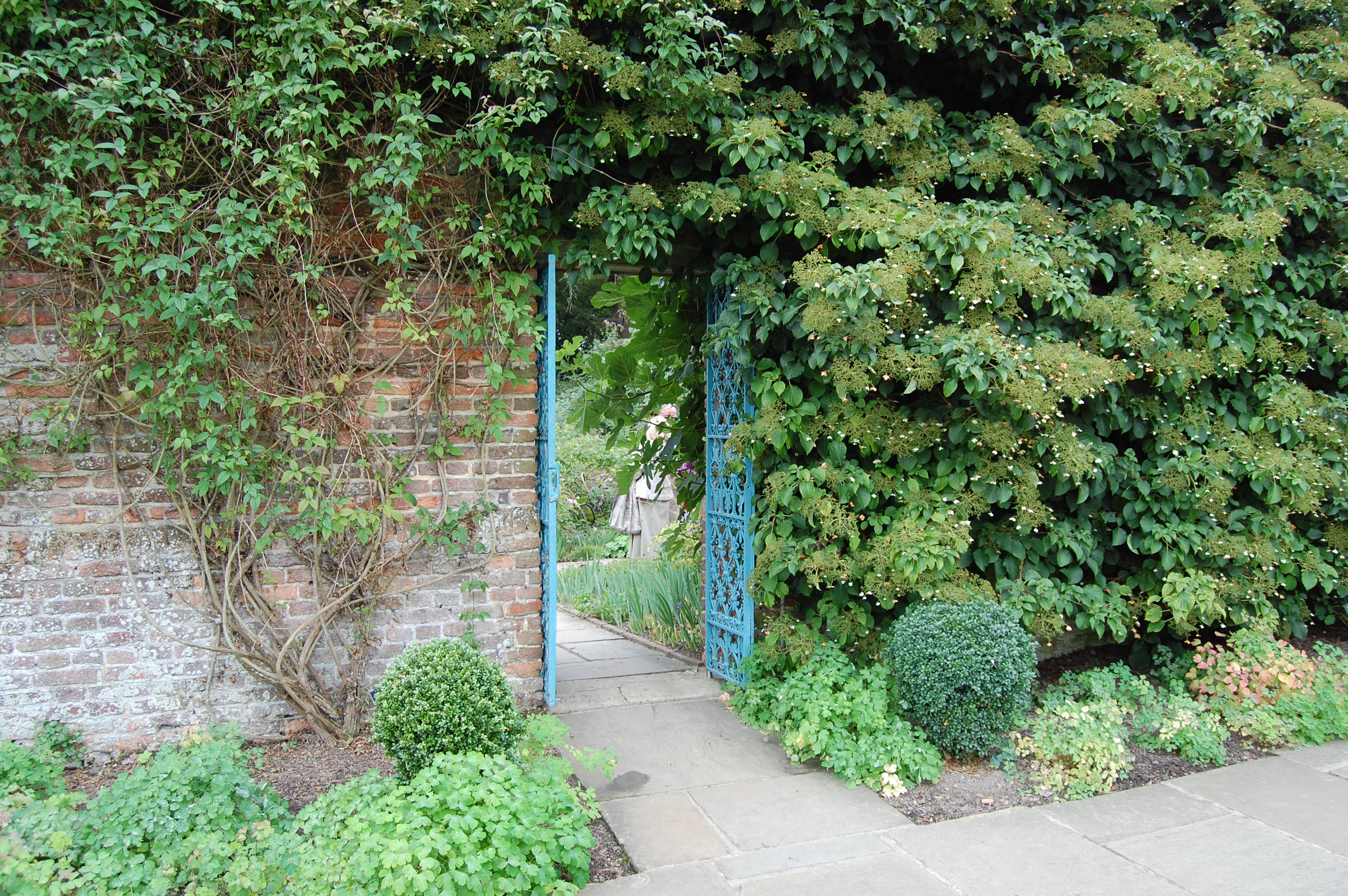
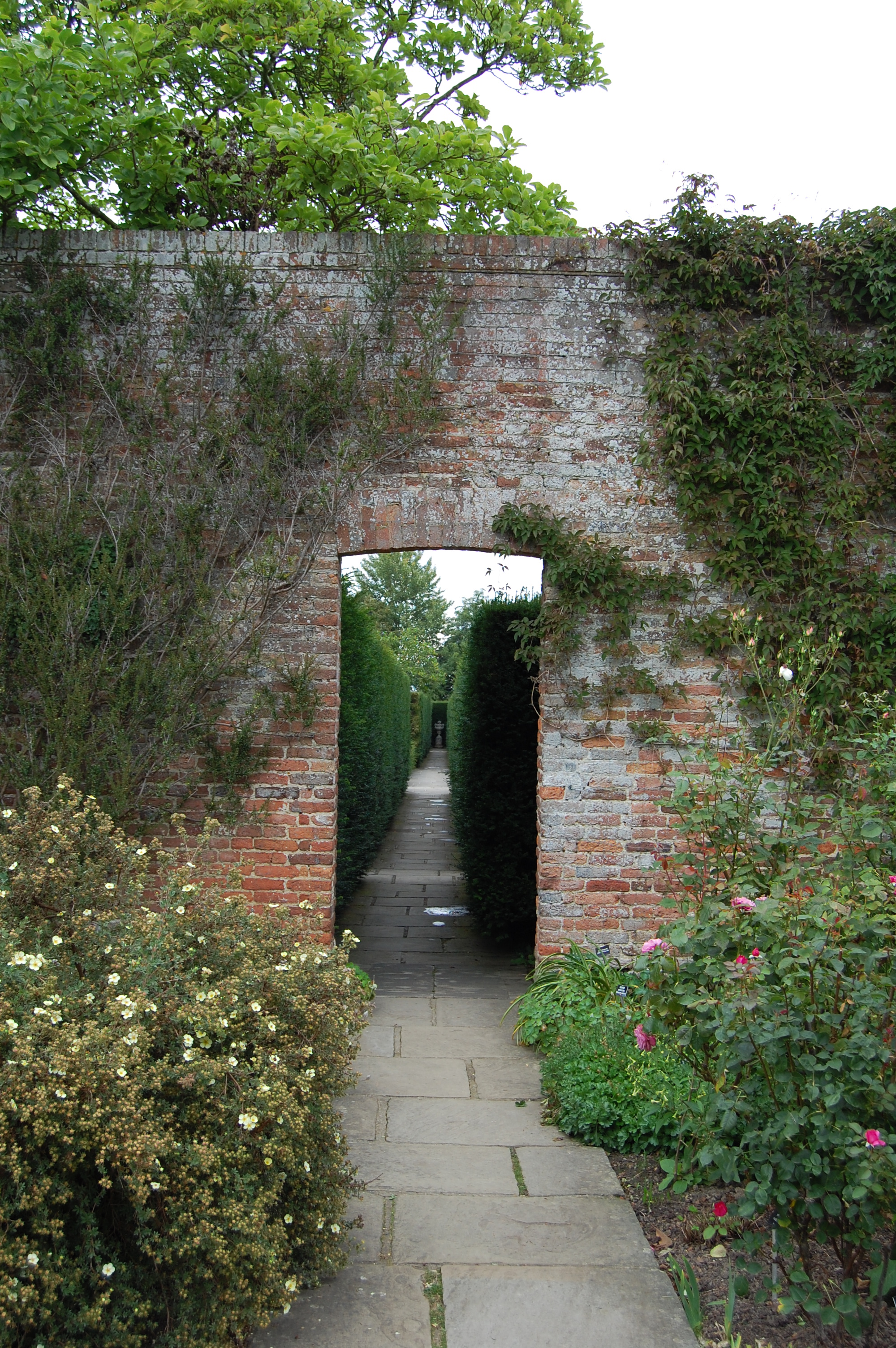
As many gardening books will tell you, Sackville-West promoted the concept of gardening rooms, and this idea is certainly put into practice here. The garden is divided by numerous walls and tall hedges, with gates and gaps tempting visitors with a peek of whatever garden lies beyond.
I knew of Vita Sackville-West as essentially a gardener and garden writer. Turns out that beyond the gardening world she was much better known as a prolific and successful author (mostly novels and poetry). She was also an aristocrat whose very active social life (which included affairs with Virginia Woolf and a bunch of other people) did not get in the way of her very amiable marriage to a prominent British diplomat. Who says gardeners are dull?
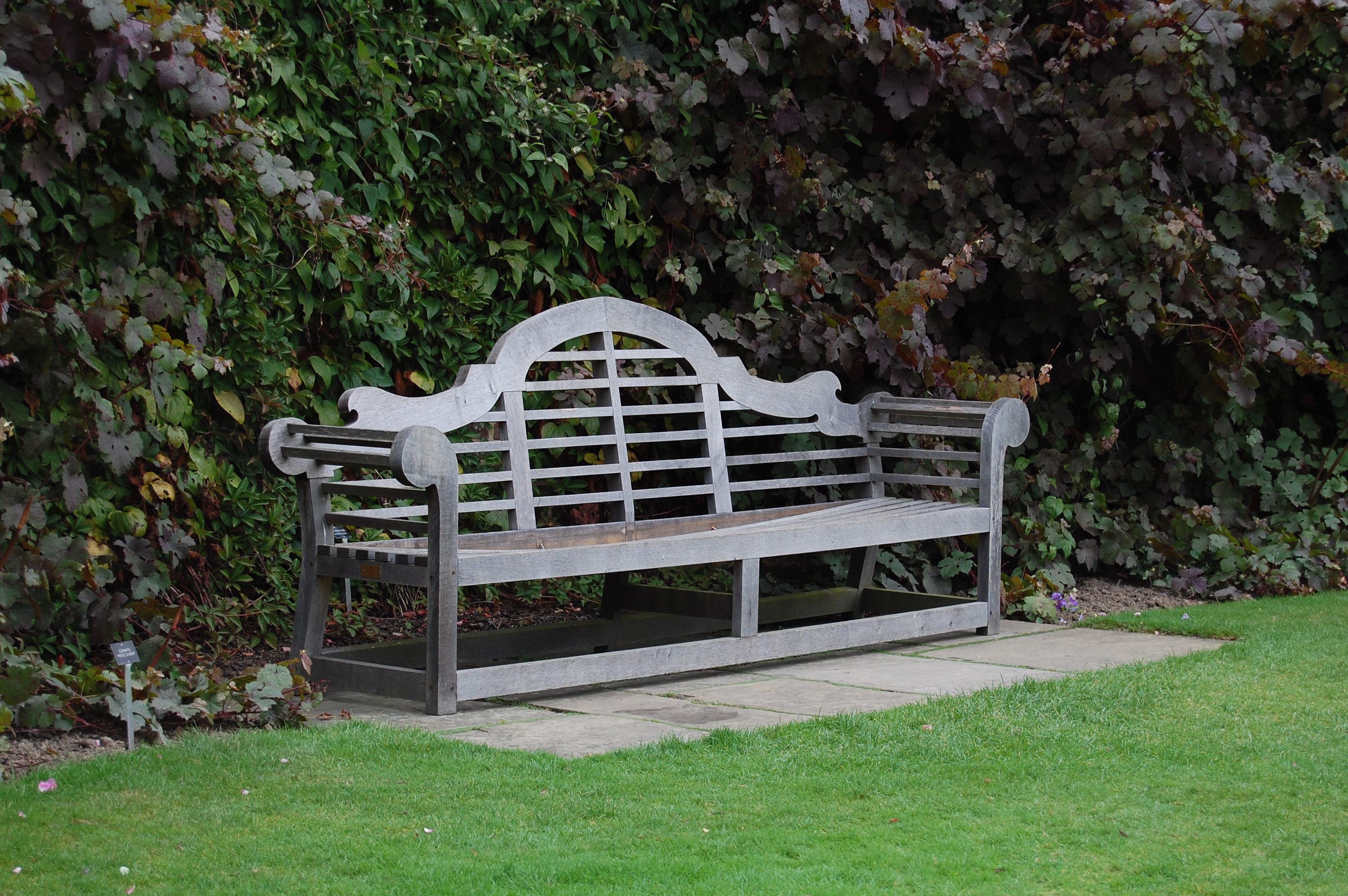
Some of the first benches designed by the British architect Edwin Lutyens were purchased for the garden at Sissinghurst.
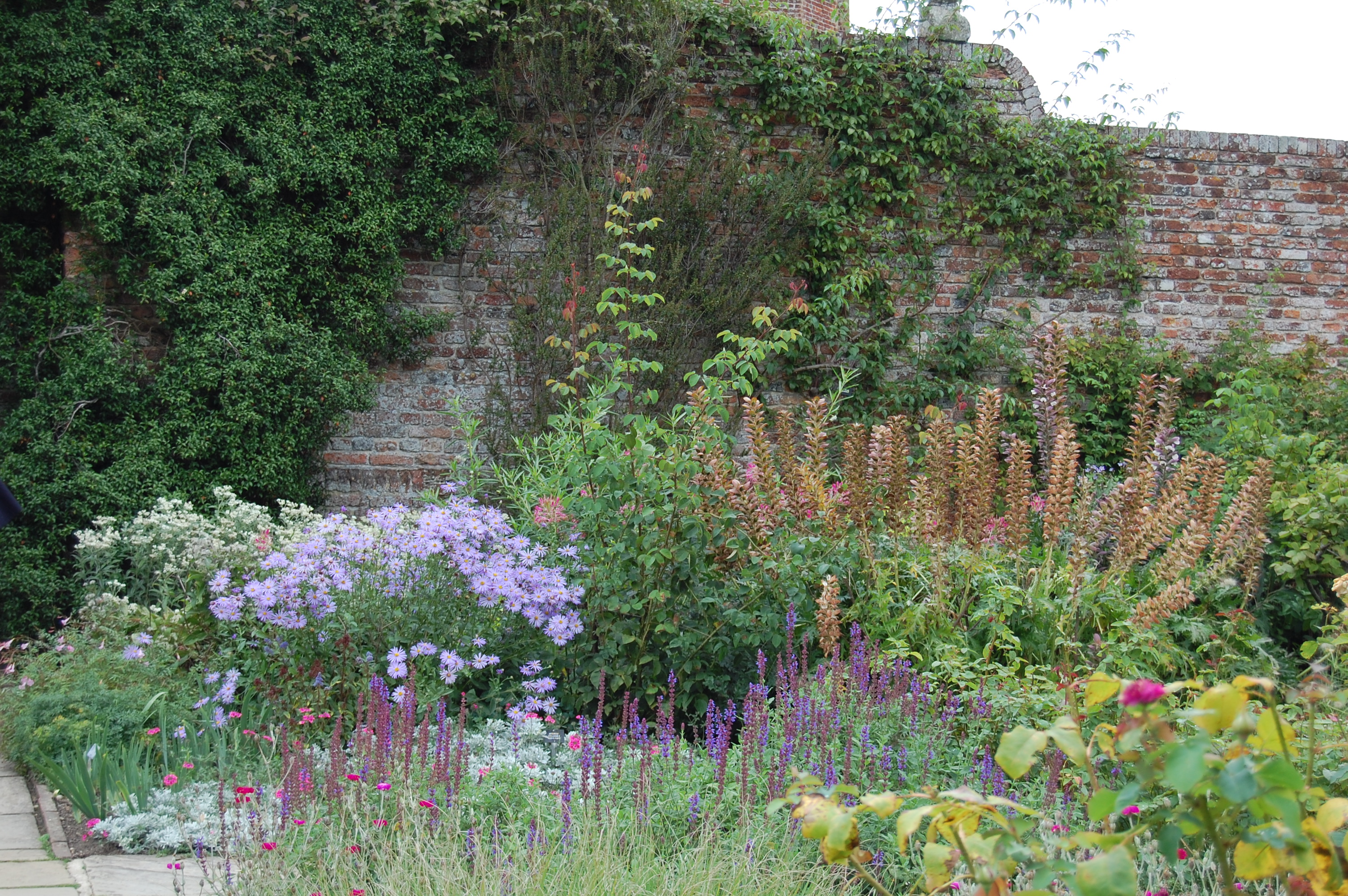
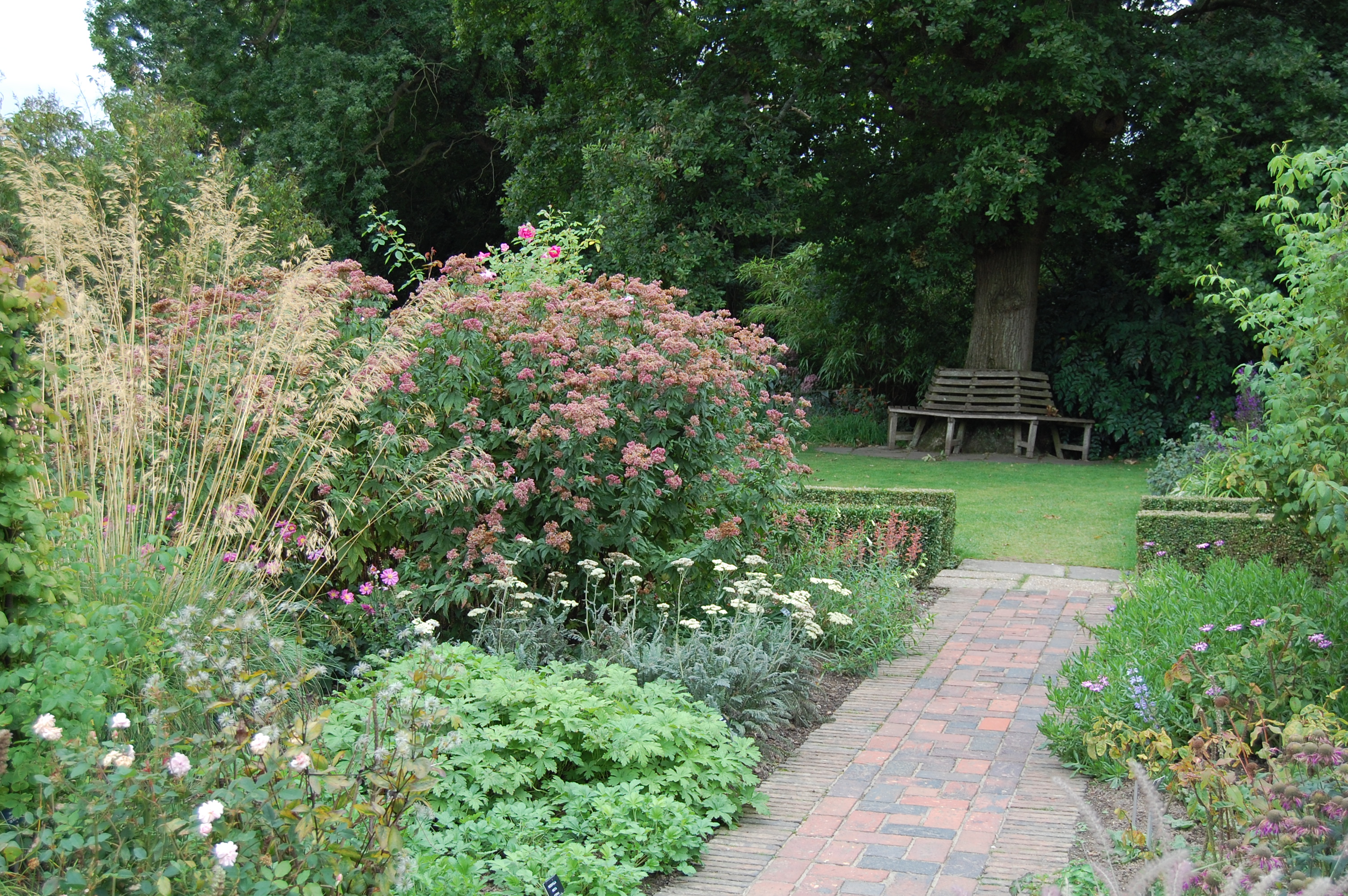
Nice to see Joe Pye Weed at home in such an aristocratic setting.
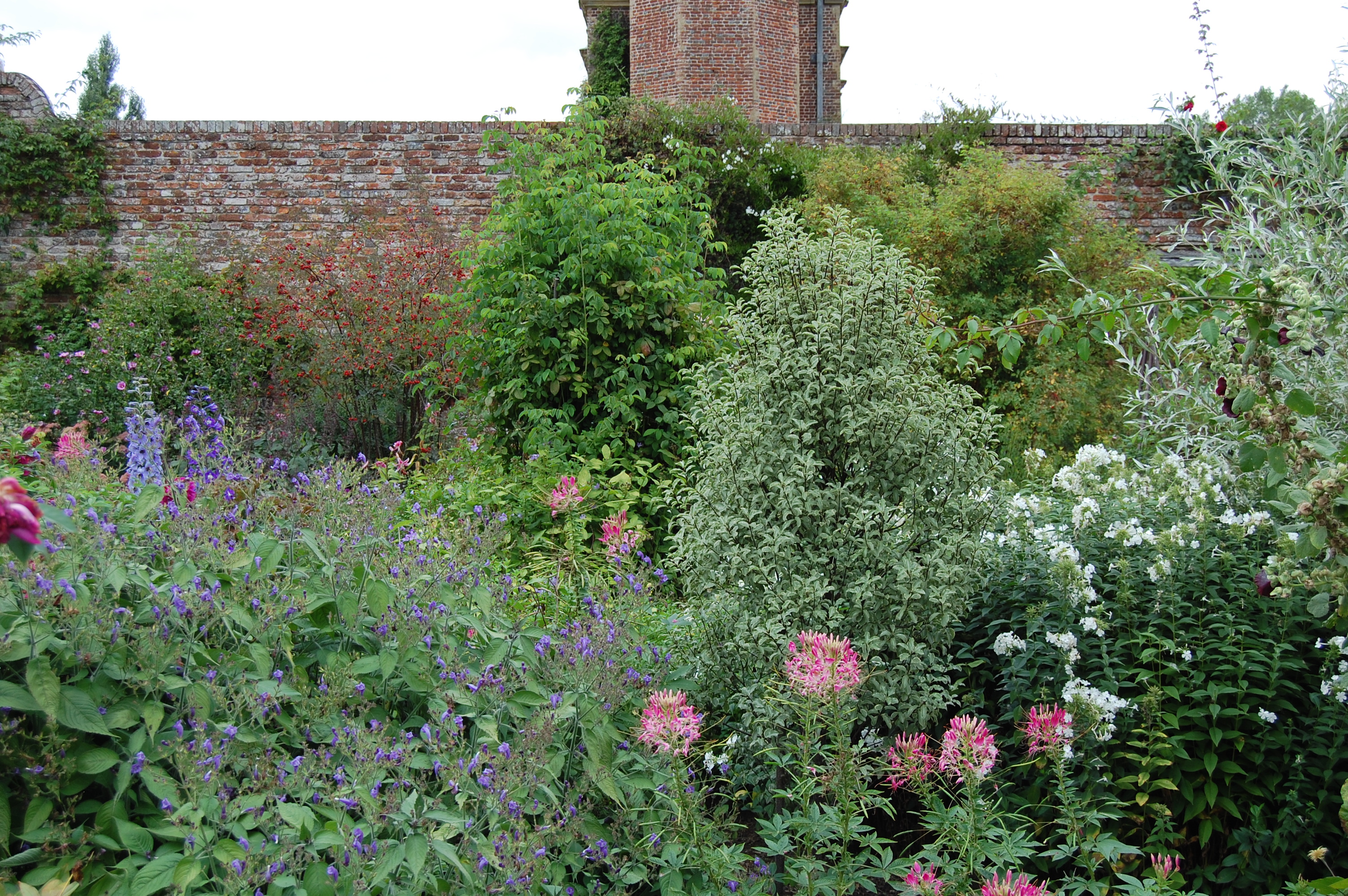
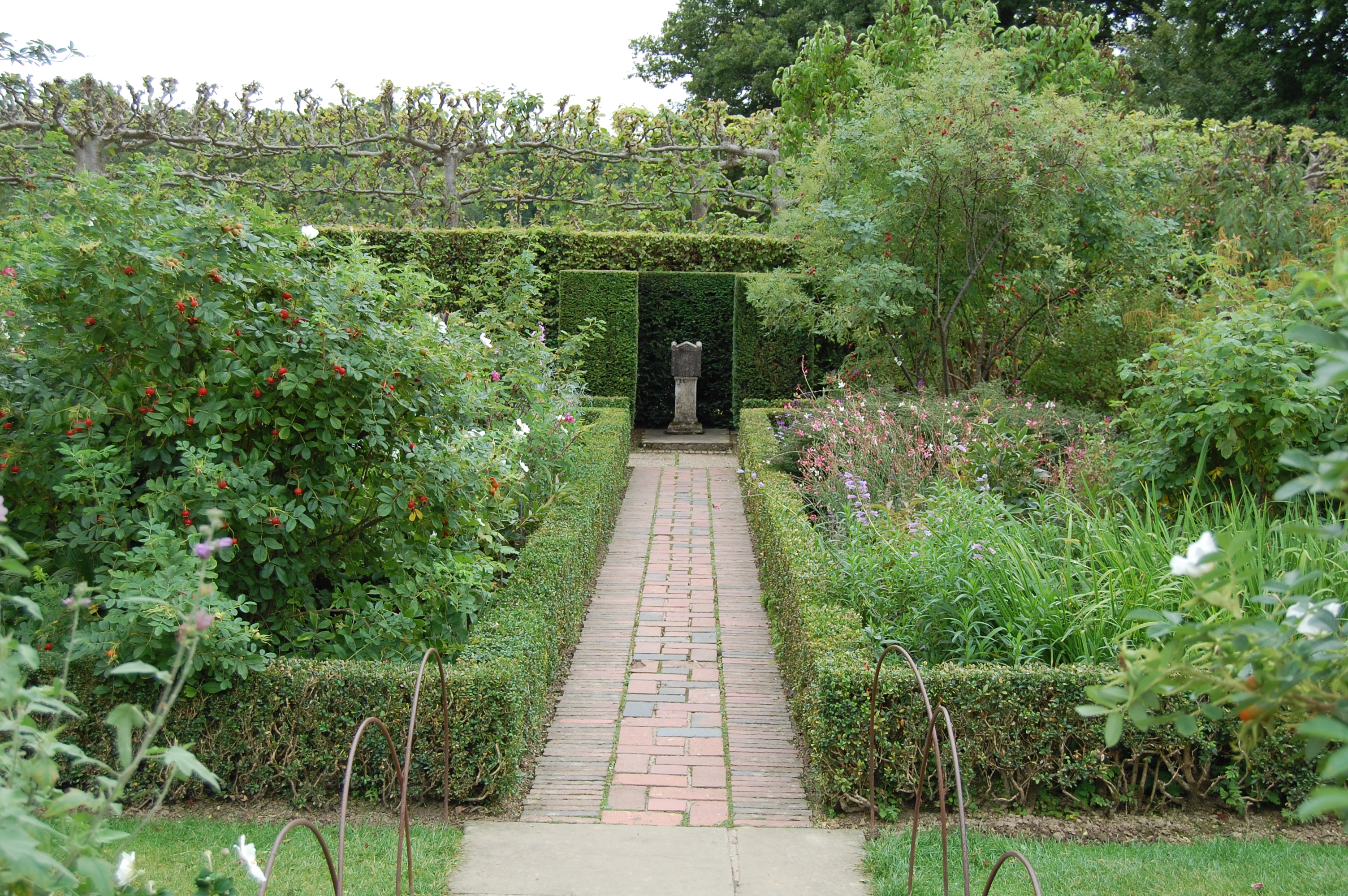
The rose garden has a great deal more than roses. It seemed more like a garden of mixed borders with a generous dollop of roses mixed in.
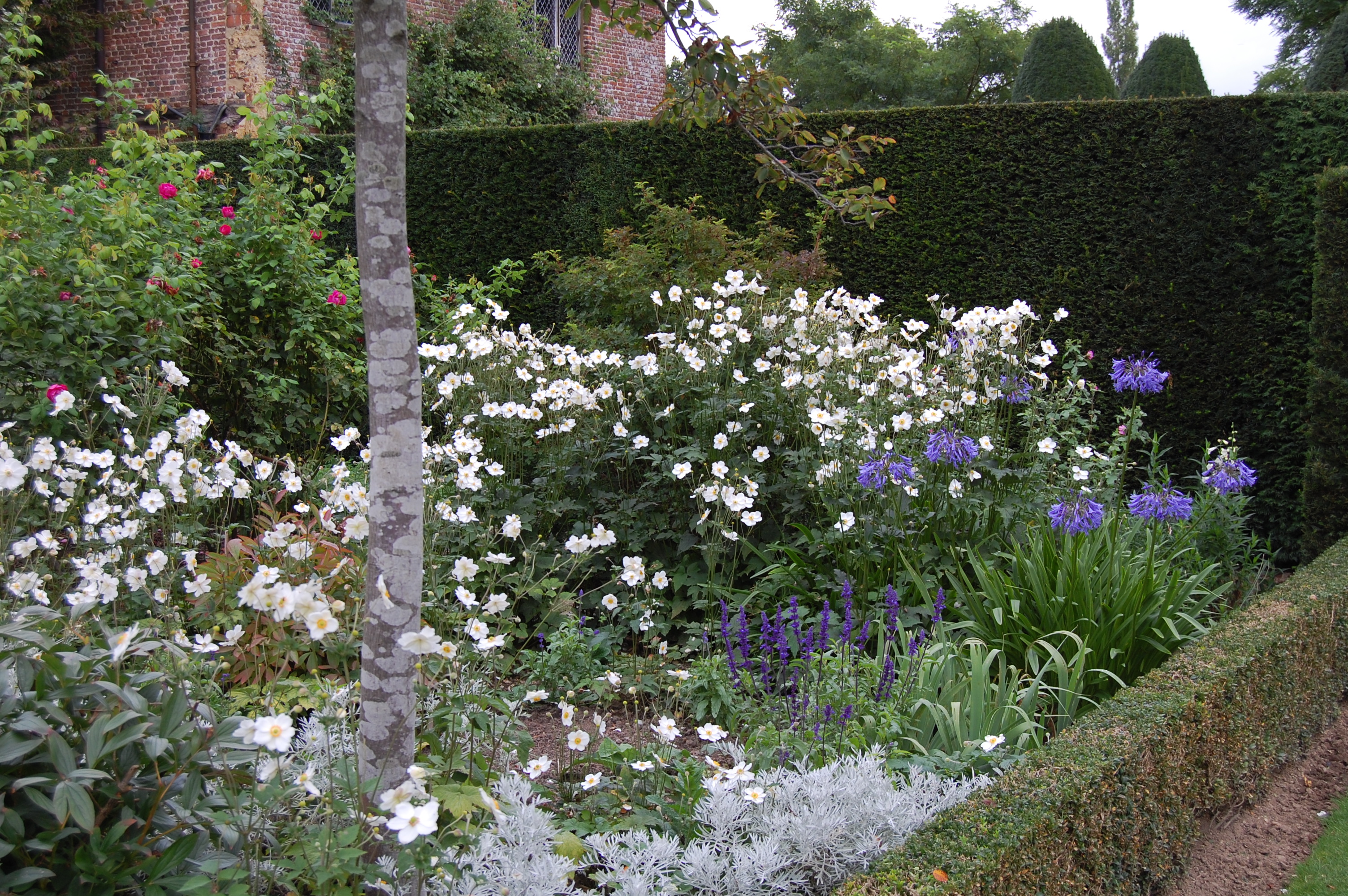
Red roses, white Japanese Anemone, and blue Agapanthus.
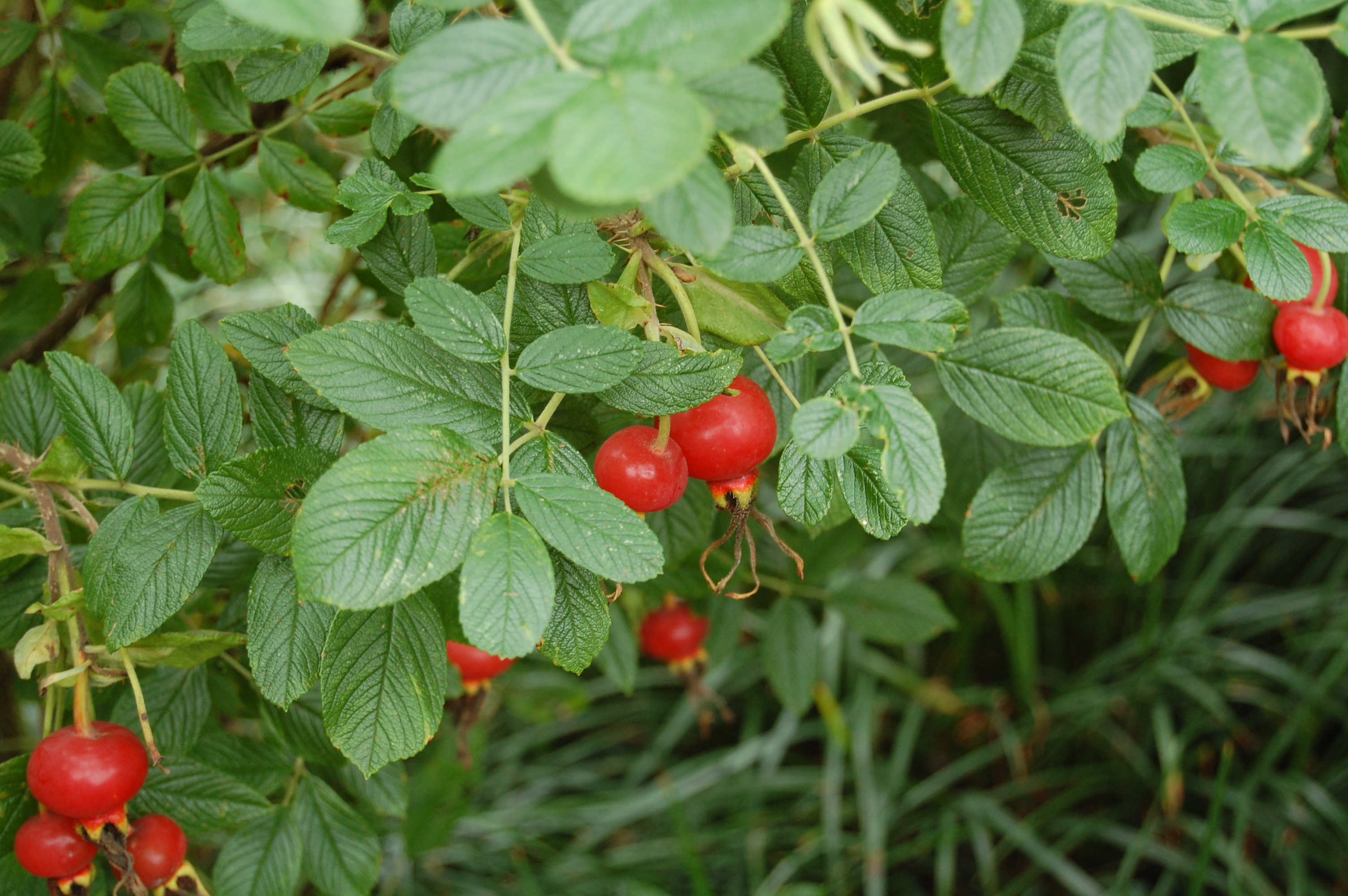
At this point in the season the bountiful Rugosa and other rose hips were as decorative as the roses themselves.
In the “Cottage Garden”. I suspect Vita Sackville-West’s idea of a cottage may differ a bit from many of us. There was lots of this tall Rudbeckia – R. laciniata, I think.
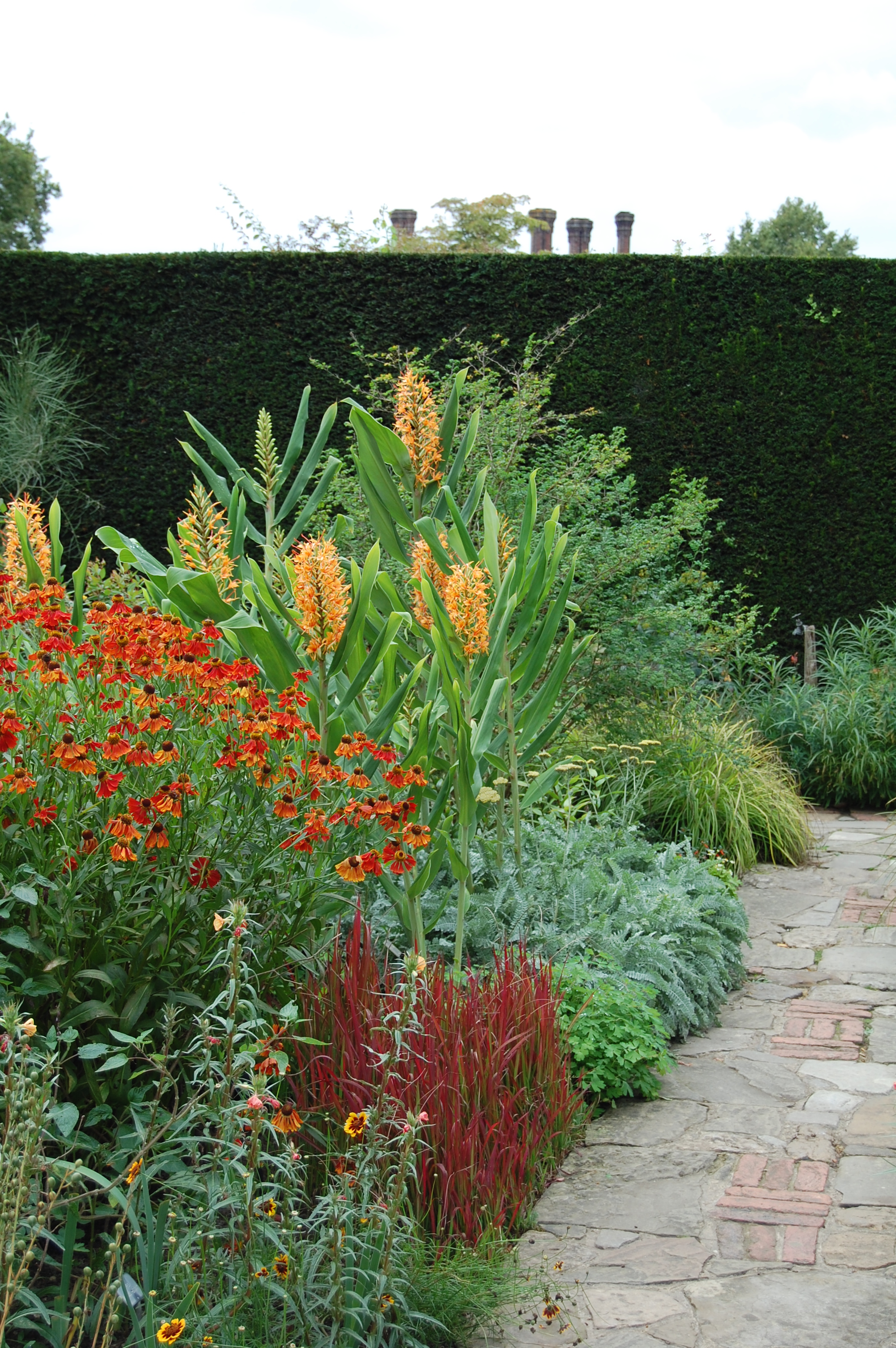
What is that bright orange flower behind the Helenium?
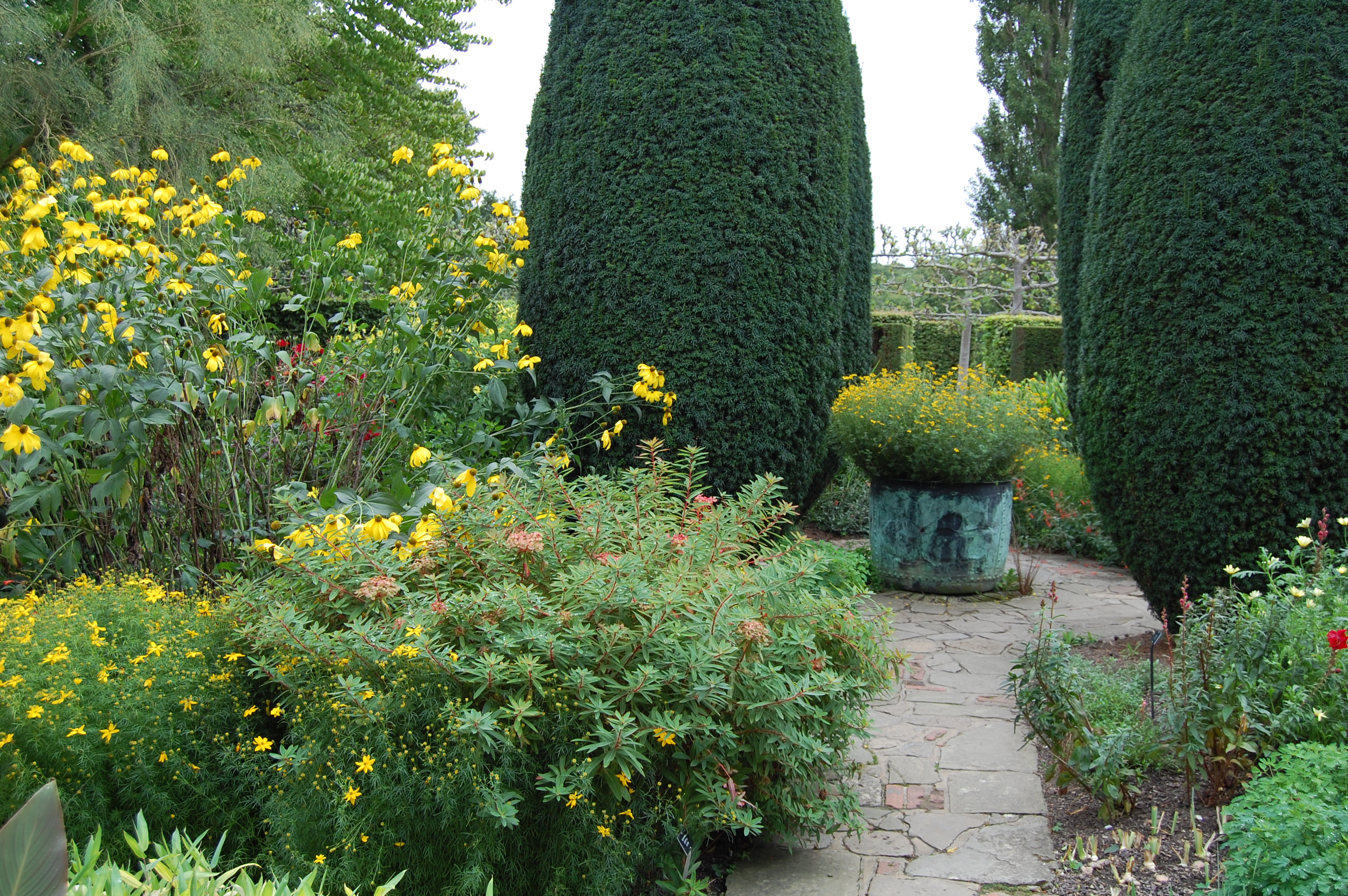
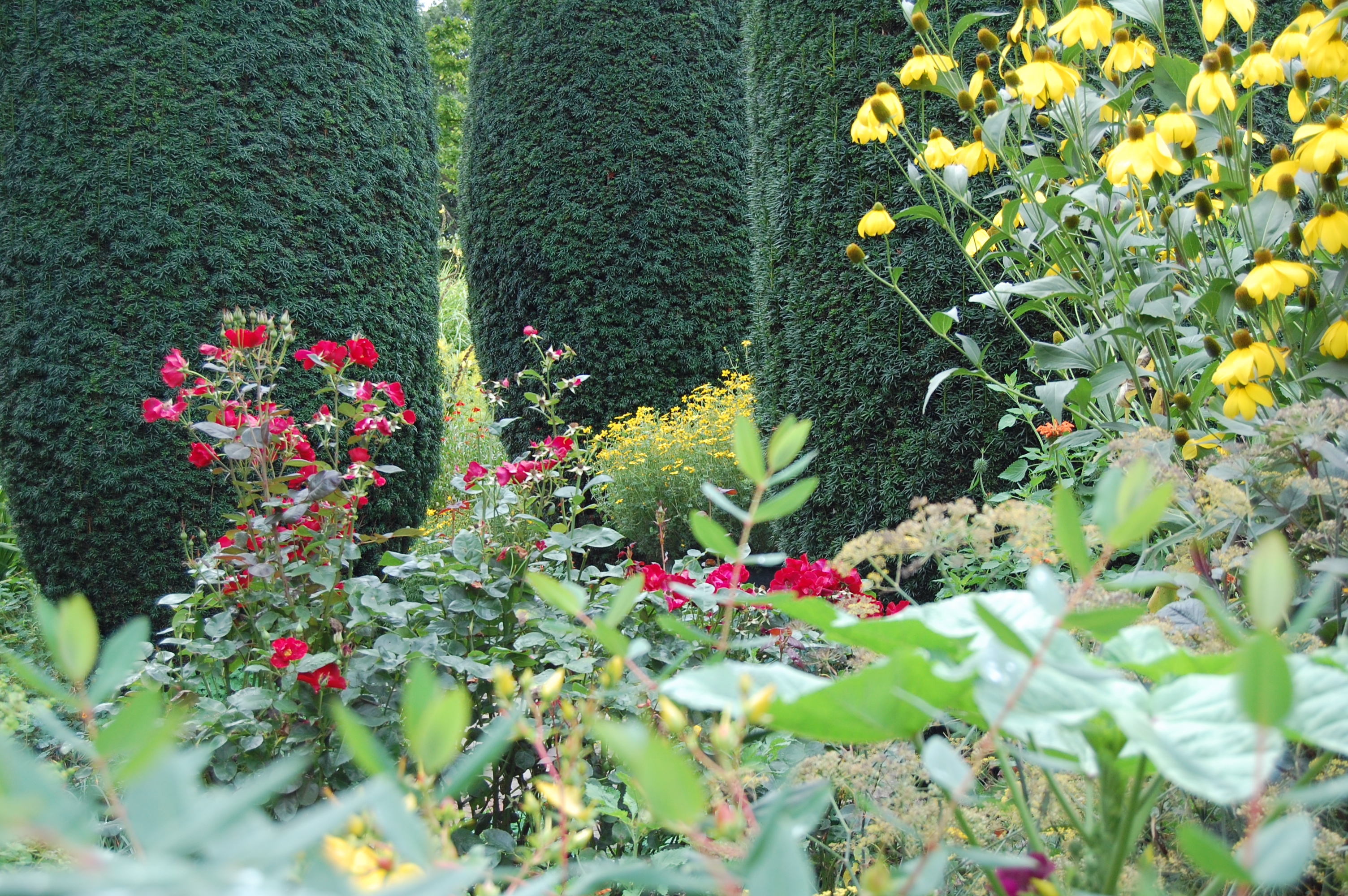
I generally don’t like Yew, but the dark Yew hedges make a nice backdrop for brighter colors, as with these red roses.
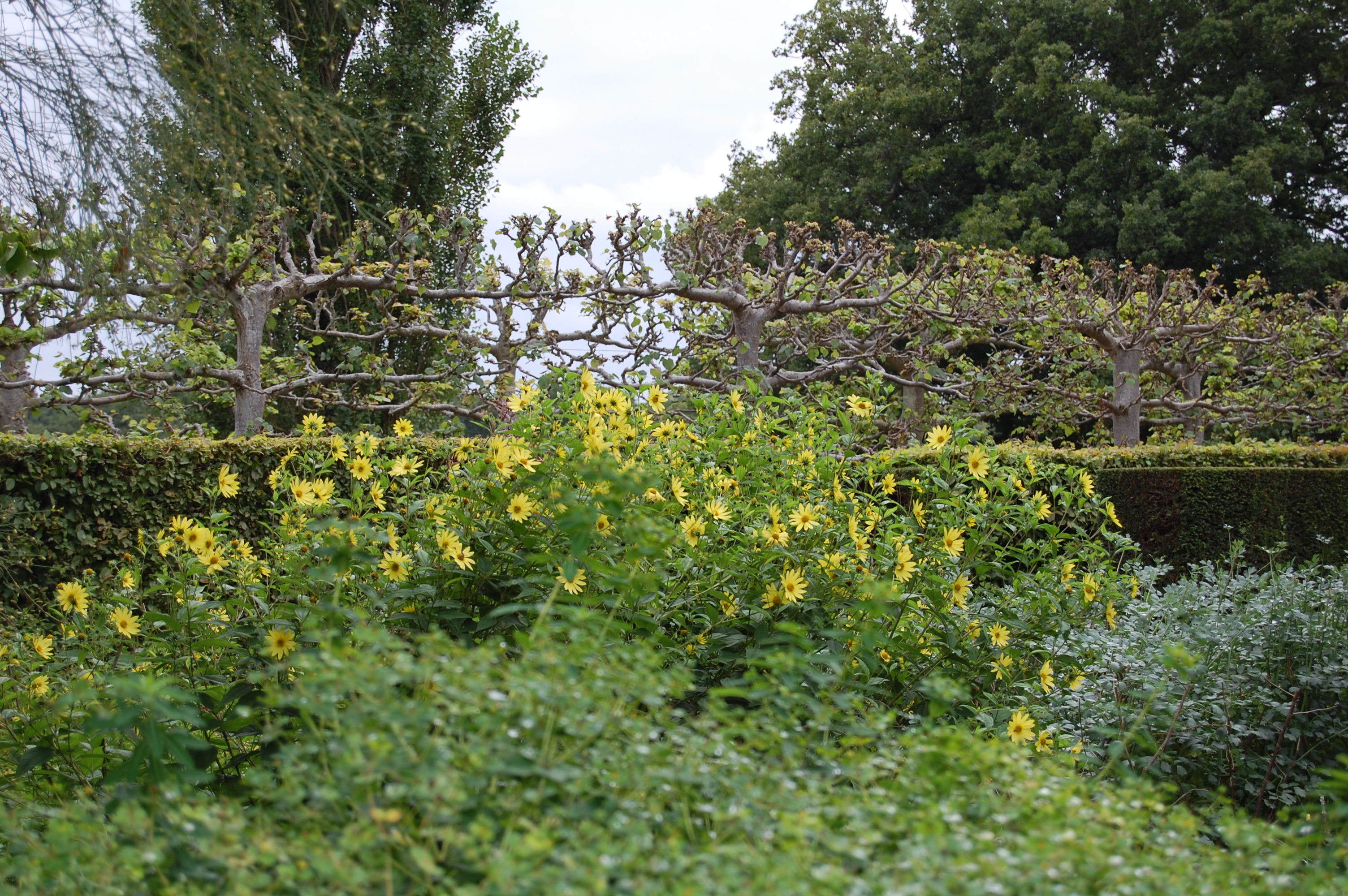
Sunflowers in the Cottage Garden. The tops of the trees of the Lime Walk are visible above the hedge.
My overall impression was of a mix of exuberance and orderliness: great mounds of color and billowing foliage contrast with neatly clipped hedges, straight paths, and rectangular beds. The combination is certainly striking. However, as much as I liked the garden rooms, for myself I would have preferred a more informal means of separation than all those clipped hedges.
That’s it for now. I will try to summarize the remainder of what we saw of this garden in Part 2. Have you read any of Vita Sackville-West’s garden books? Do you think I should? Which one would you recommend?
Oh, frabjous day! Callooh, callay! Sincerest apologies to Lewis Carroll, but I am very happy to have now in my possession the 2014 editions of my favorite catalogs for native plants, Prairie Nursery of Wisconsin and Prairie Moon of Minnesota. I am chortling in my joy.
Prairie Moon has always struck me as the Moosewood Cookbook of garden catalogs, if you can draw an analogy between cookbooks and garden catalogs. Prairie Moon is earnest, benevolent, and determinedly non-flashy in its commitment to “spread the propagation and restoration of native plants.”
What’s great about this catalog is, first of all, the extremely wide selection of native plants – perennials, shrubs, trees, vines, ferns, grasses, sedges, and rushes. For example, there are over 60 species of sedge. Imagine!
In terms of plant descriptions, Prairie Moon has an admirable “just the facts” approach. There are basically no narrative descriptions, only a table which gives you information on sun and moisture preferences, bloom times, etc. Many of Prairie Moon’s plants are of more interest to conservationists than to most gardeners, and the table notes which plants are suitable for a home landscape and are easy to grow. Plants that are rhizomatous or otherwise aggressive are also identified without euphemism.
Of their handful of new plants for 2014, I found the most intriguing to be the Yellow Trout Lily (Erythronium albidum). Beautiful, although the catalog notes that this plant can take many years to flower.
Prairie Moon has a variety of seed mixes, but I usually buy their bare root plants. Buying bare root is very sensible and economical, but can be rather unsatisfying. When that box arrives we want adorable green baby plants, not a plastic bag stuffed with something that looks like dried squid.
Lately Prairie Moon has been making more of an effort to be market savvy. They now offer a number of their more popular garden plants in pots, but only if you order a tray of 38 for $119, an excellent value. There is even a hint of showmanship in the names of their seed mixes, such as the Pretty Darn Quick or Pollinator-Palooza mixes.
Prairie Nursery and its owner Neil Diboll have been pioneers in the use of native plants in home landscapes. They have a good selection of plants, not as extensive as Prairie Moon, but all of their plants are garden-worthy.
The Prairie Nursery catalog is more satisfying to peruse because it has a brief narrative paragraph about each plant. It may be silly, but I really like to have a narrative description along with the basic information and a photo.
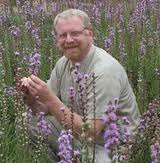
Neil Diboll of Prairie Nursery
Plants in this catalog are helpfully organized by type of site: clay soils, medium soils, moist soils, dry soils, shade and semi-shade.
Prairie Nursery has gradually diversified its offerings since I started ordering from them. They now offer quite a few woody plants in two gallon pots. Also, while almost all the plants are native to the Midwest, some derive from other parts of North America. For example, they have Indian Pink (Spigelia marilandica) which is from eastern North America but can grow well in the Midwest.
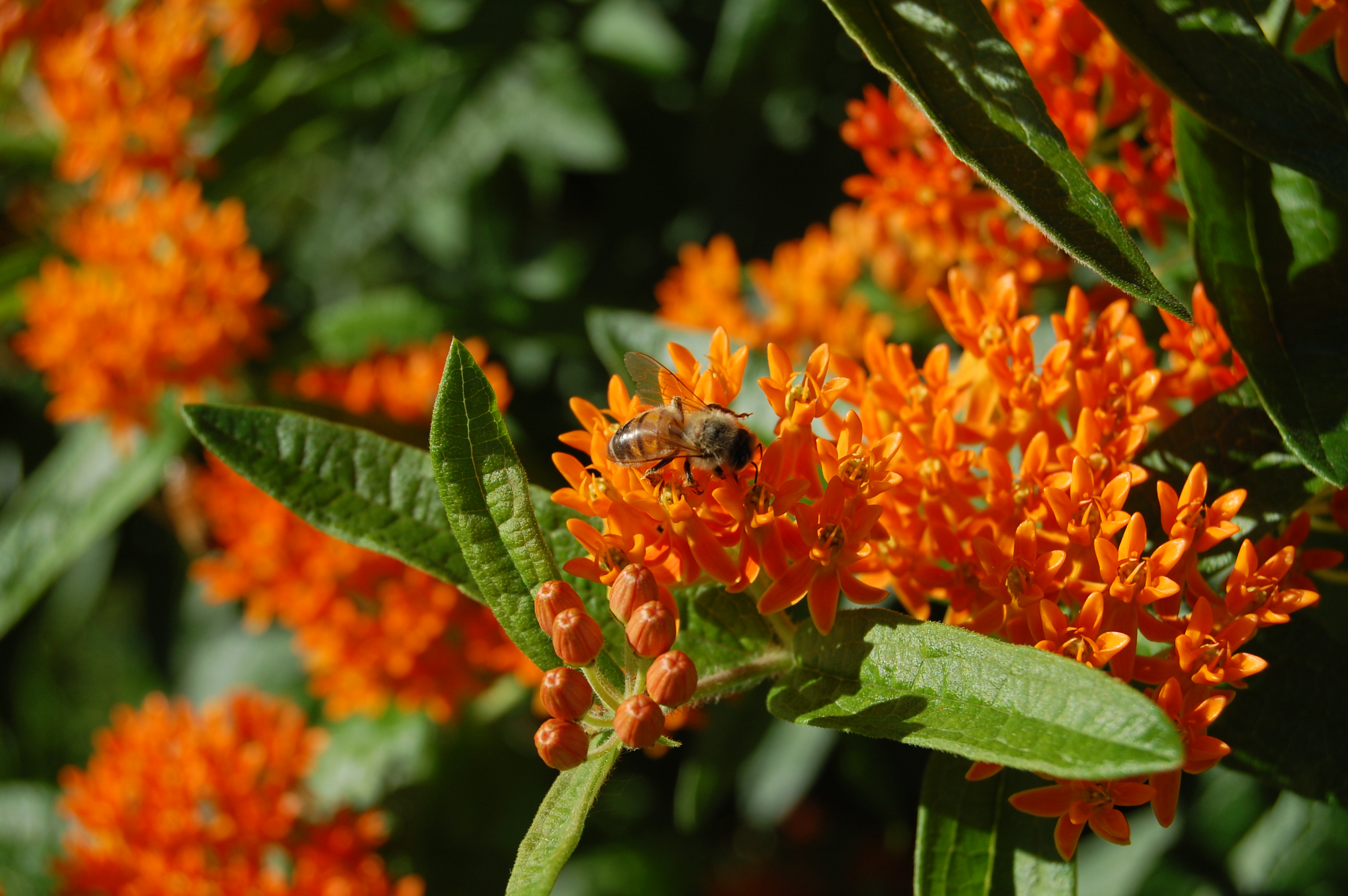
While focused on straight species plants, Prairie Nursery offers a naturally occurring variety of Butterflyweed that grows well in clay soil (Asclepias tuberosa var. clay). While I do not have clay soil, I have found this variety of Butterflyweed to be the best adapted to my rich, loamy soil. Normally Butterflyweed prefers dry soils.
Butterflyweed
The 2014 Prairie Nursery catalogs has quite a few new plants. I was most interested in the naturally pink Coreopsis (Coreopsis rosea) and Bottle Gentian (Gentian andewsii). Though not a new plant, I also really want to find a place for Long Beaked Sedge (Carex sprengelii) in my garden.
Have you ever ordered from either of these catalogs? Where do you like to get your native plants?
Here are some more pictures from RHS Wisley. I have to confess I had trouble remembering which pictures were from which part of the garden. I even printed out a map and tried to trace our route, but still ended up a little confused.
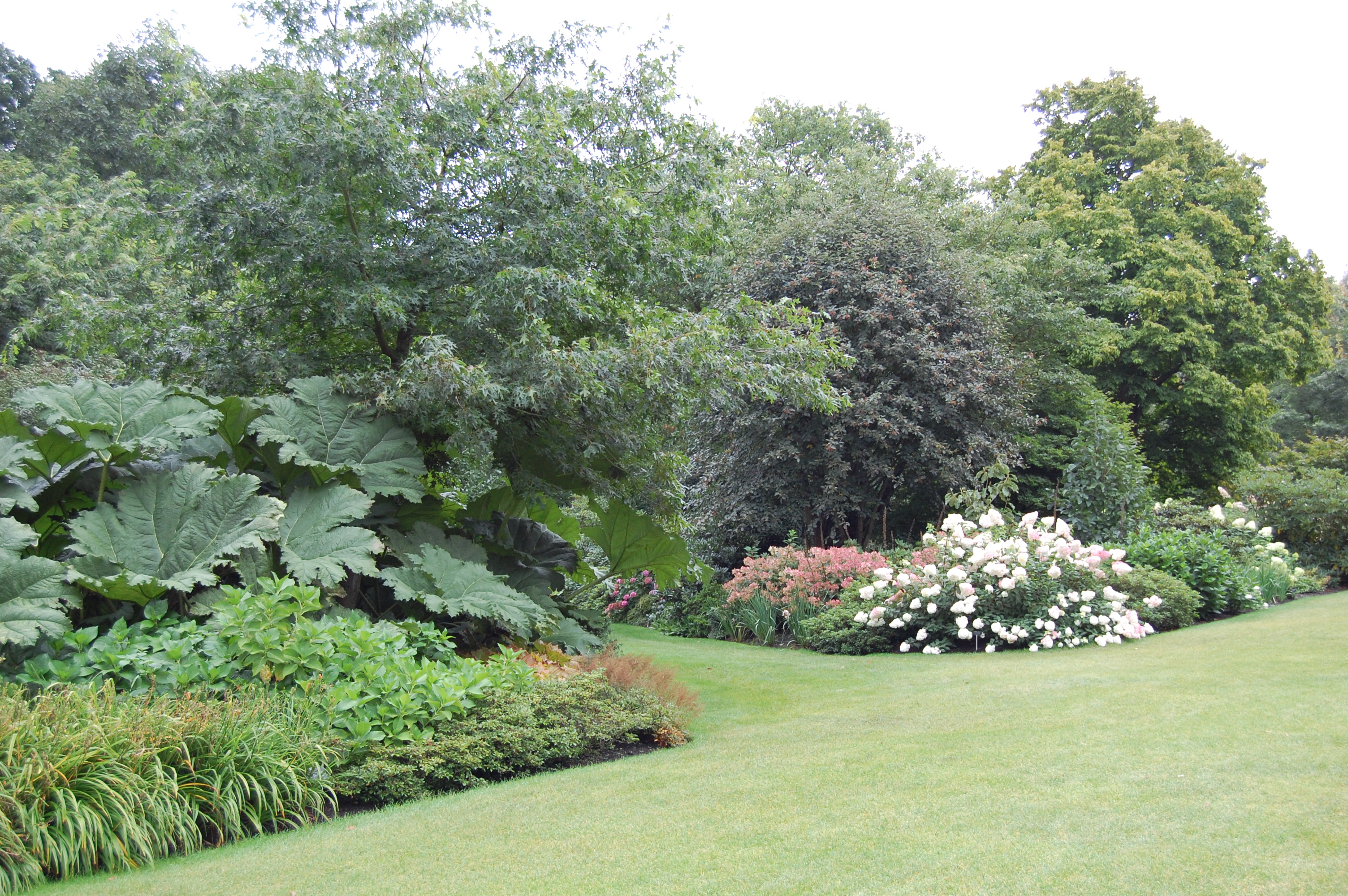
Hydrangeas and mega Gunnera on Battleston Hill.
I do remember that this is from Battleston Hill. At the time we were there, in September, there were many blooming Hydrangeas. There are also some really massive Gunneras. In spring there is supposed to be an awesome display of Rhododendron and Azalea.
Can’t really remember which building this is, sorry. It had a wonderful mass of Agapanthus, though. Makes me wish that I could grow Agapanthus, but it isn’t hardy in Chicago.
Here’s a bed near the entrance, tiny by Wisley standards, but a really nice combination of a grass that looks like Ornamental Millet and – I don’t know what. Amaranthus? Not plants I grow at home.
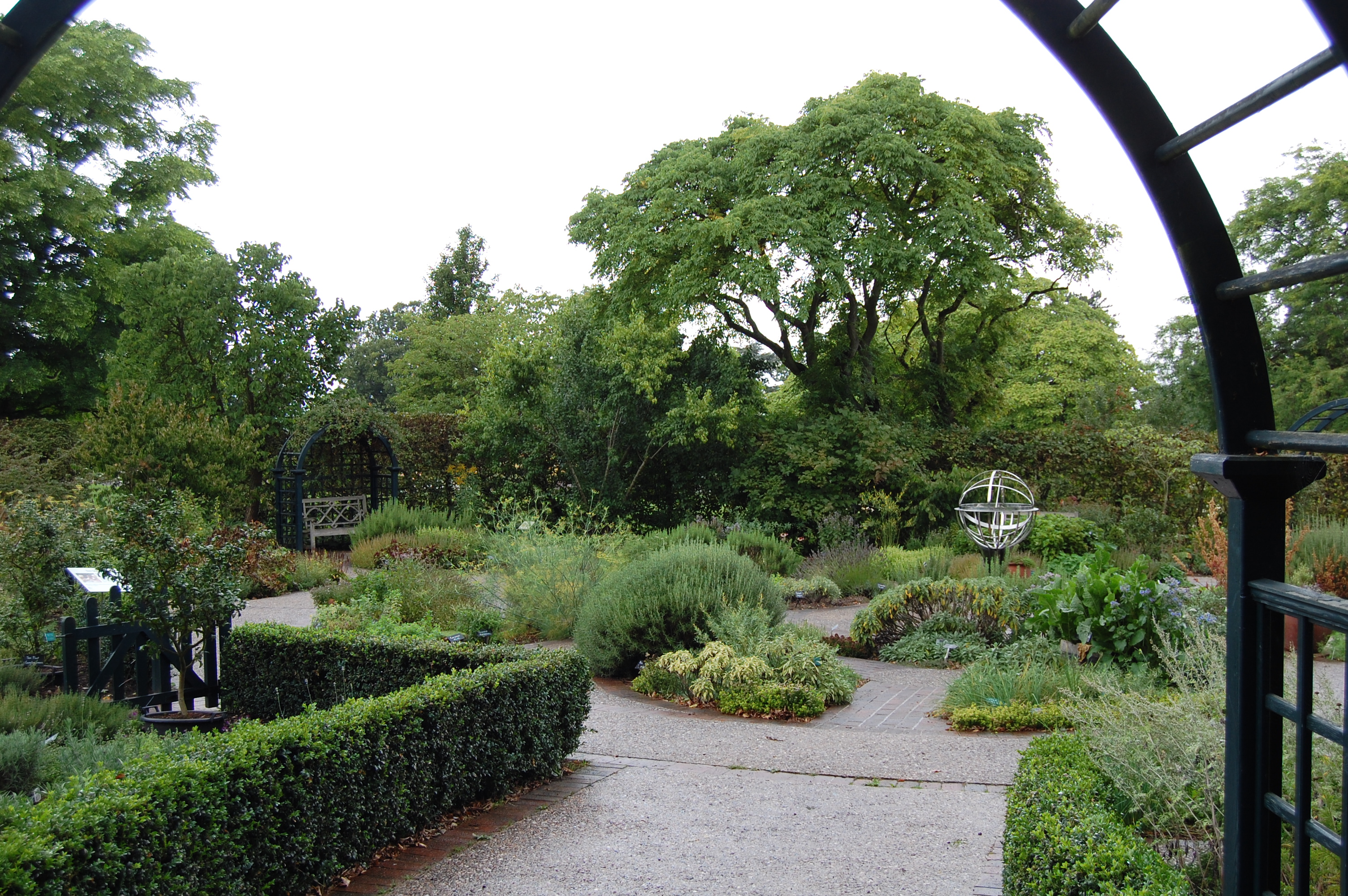
I think this is from the Herb Garden.
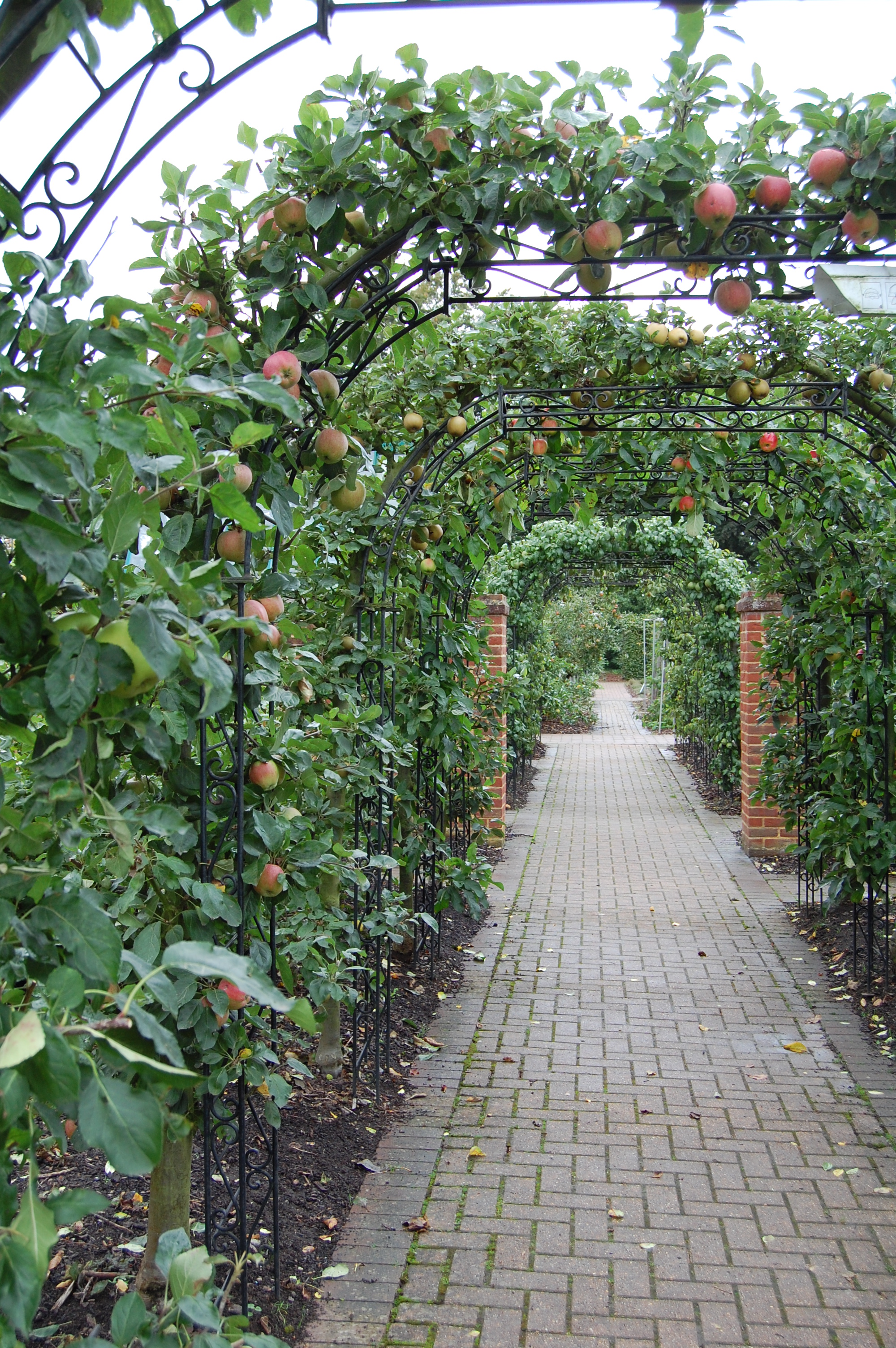
People do the most amazing things with apple trees. At Giverny they are trained to make living fences. Here they are trained up arbors, which I like even better. This is from the Fruit Demonstration Garden.
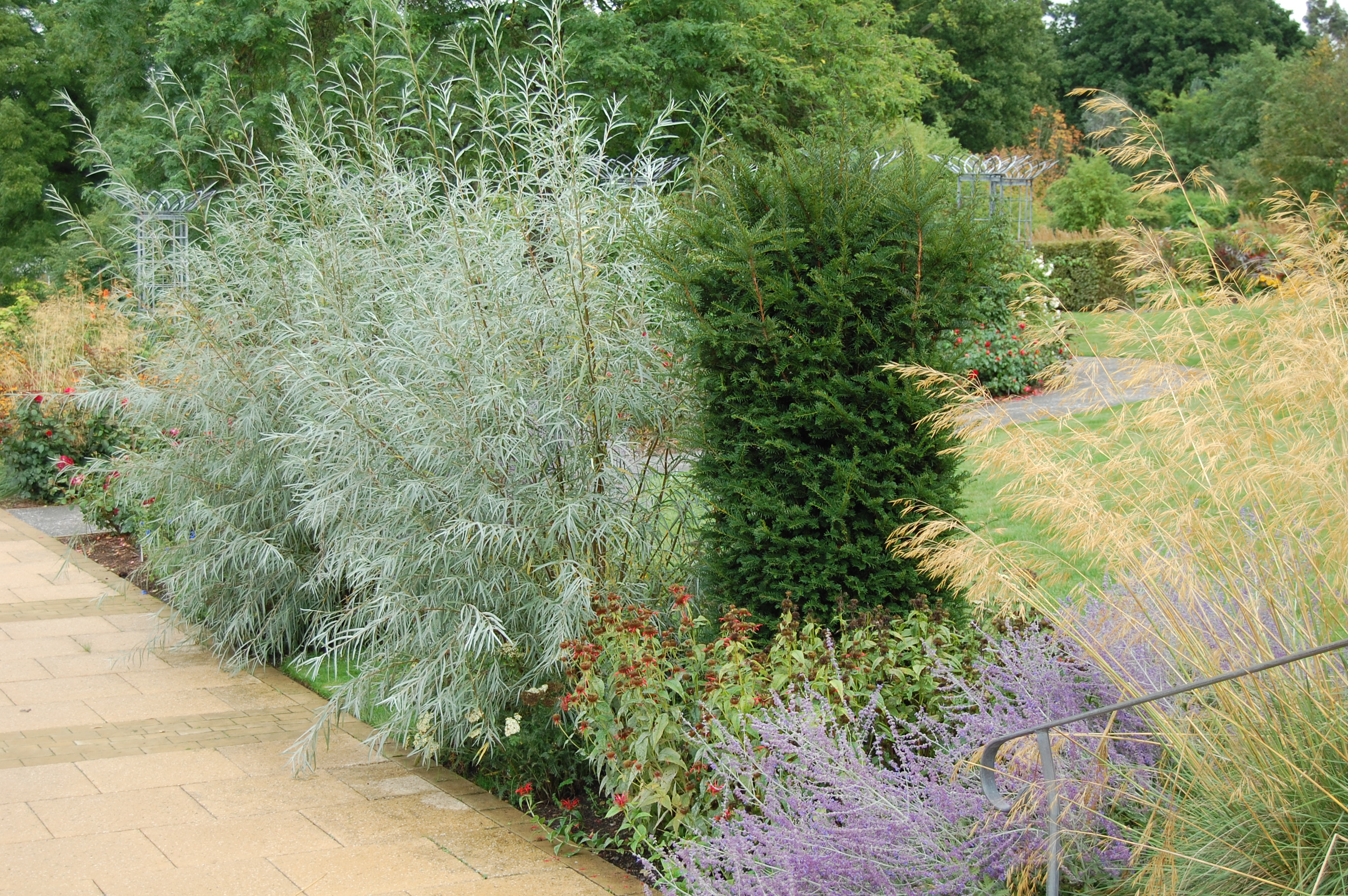
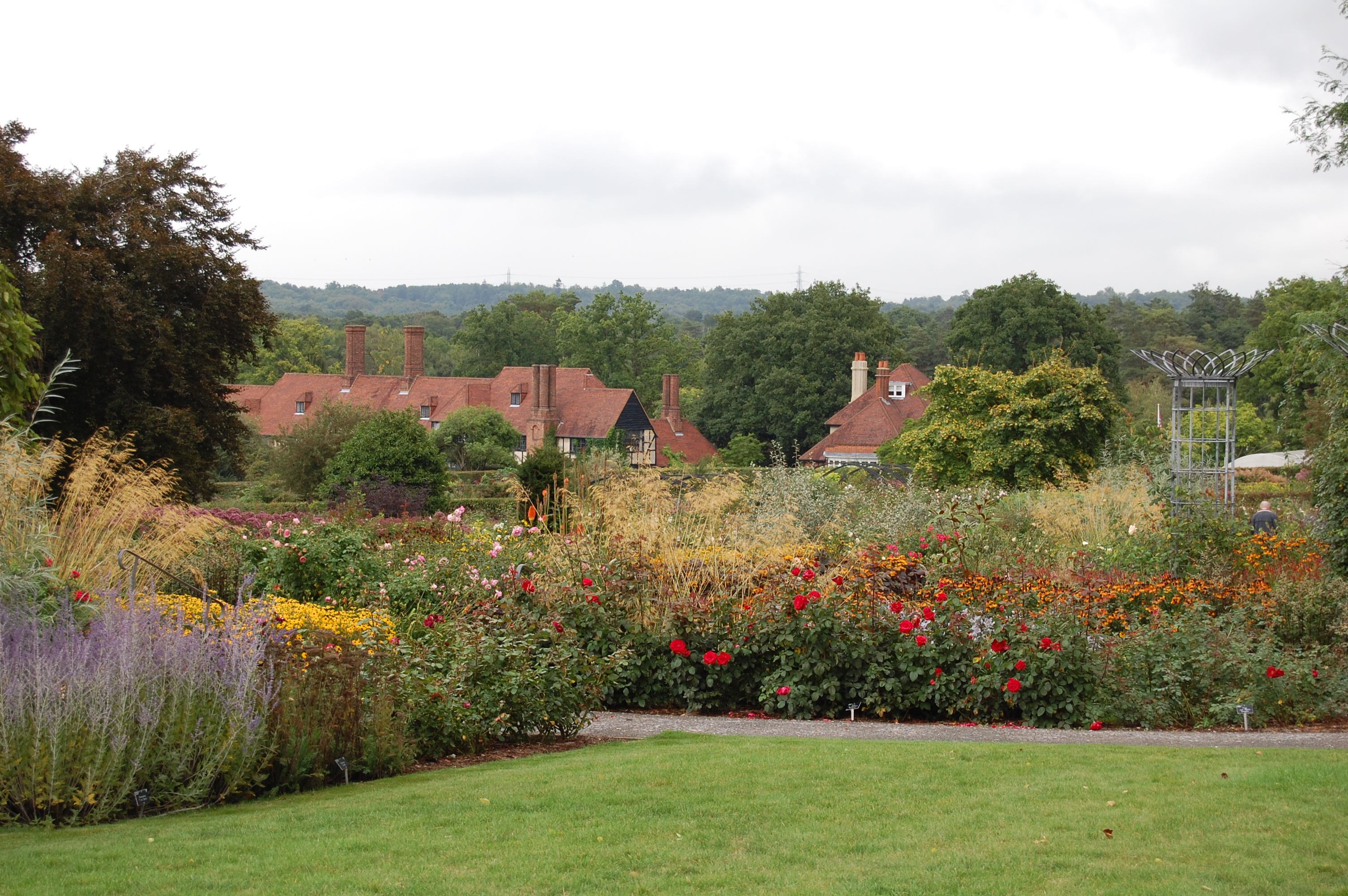
Can’t remember for the life of me which part of Wisley these are from. Nice shrub willows, though, and I love all the red, yellow, and orange in the second picture – with an added splash of blue.
Some of you asked about the Rock Garden. Well, here you are.
This is over near the glasshouse. Loved all the Sedum and grasses here.
This building is the plant laboratory, I believe.
Judy took about 250 pictures here, so I’m leaving a great deal out. What’s more, we never even got to see most of RHS Wisley. Guess we’ll just have to plan another trip to the UK.
Wisley, I’m told, is the flagship garden of the Royal Horticultural Society. There are actually an amalgam of many gardens on its 240 acres.
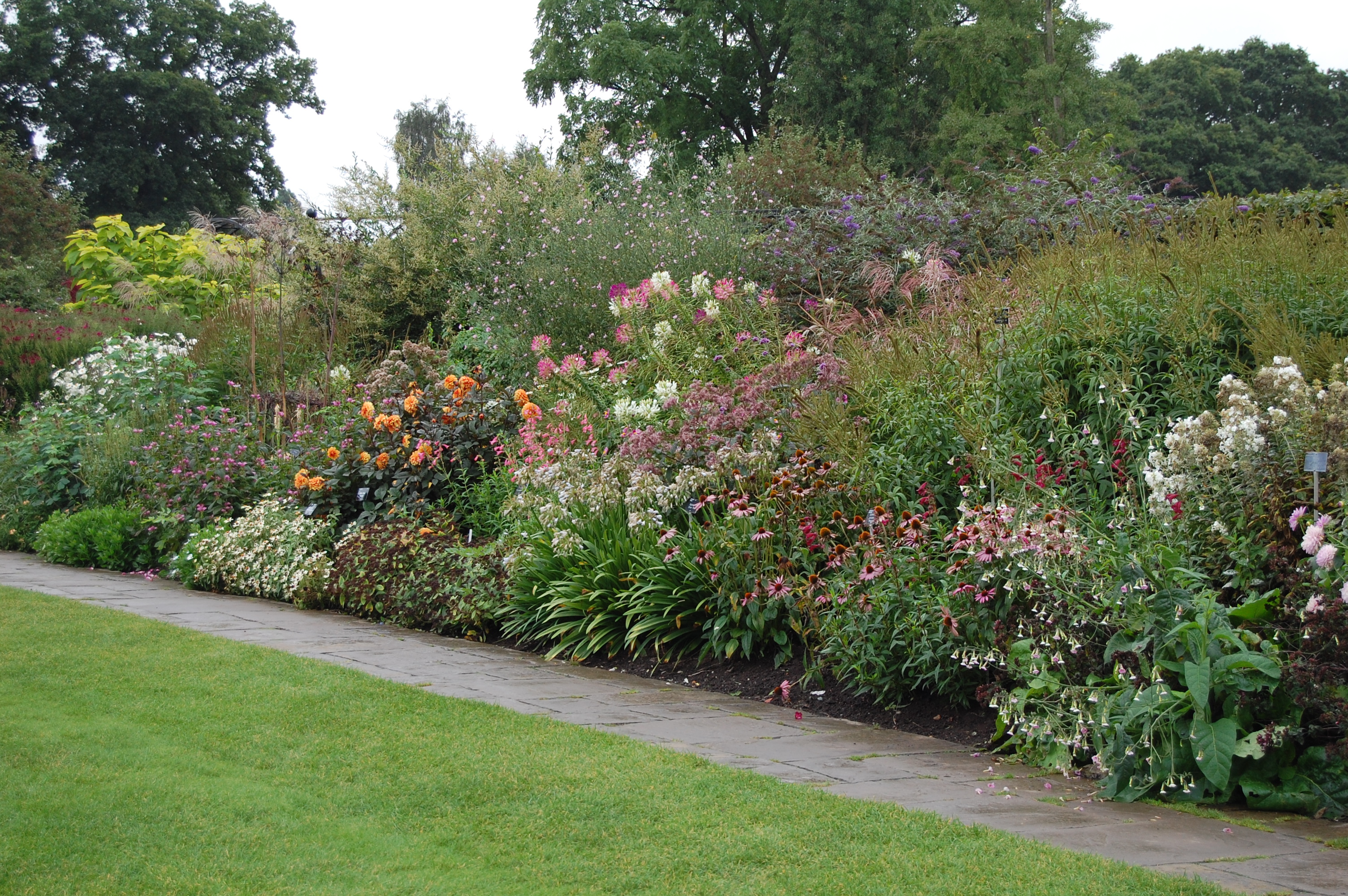
The Mixed Borders at RHS Wisley.
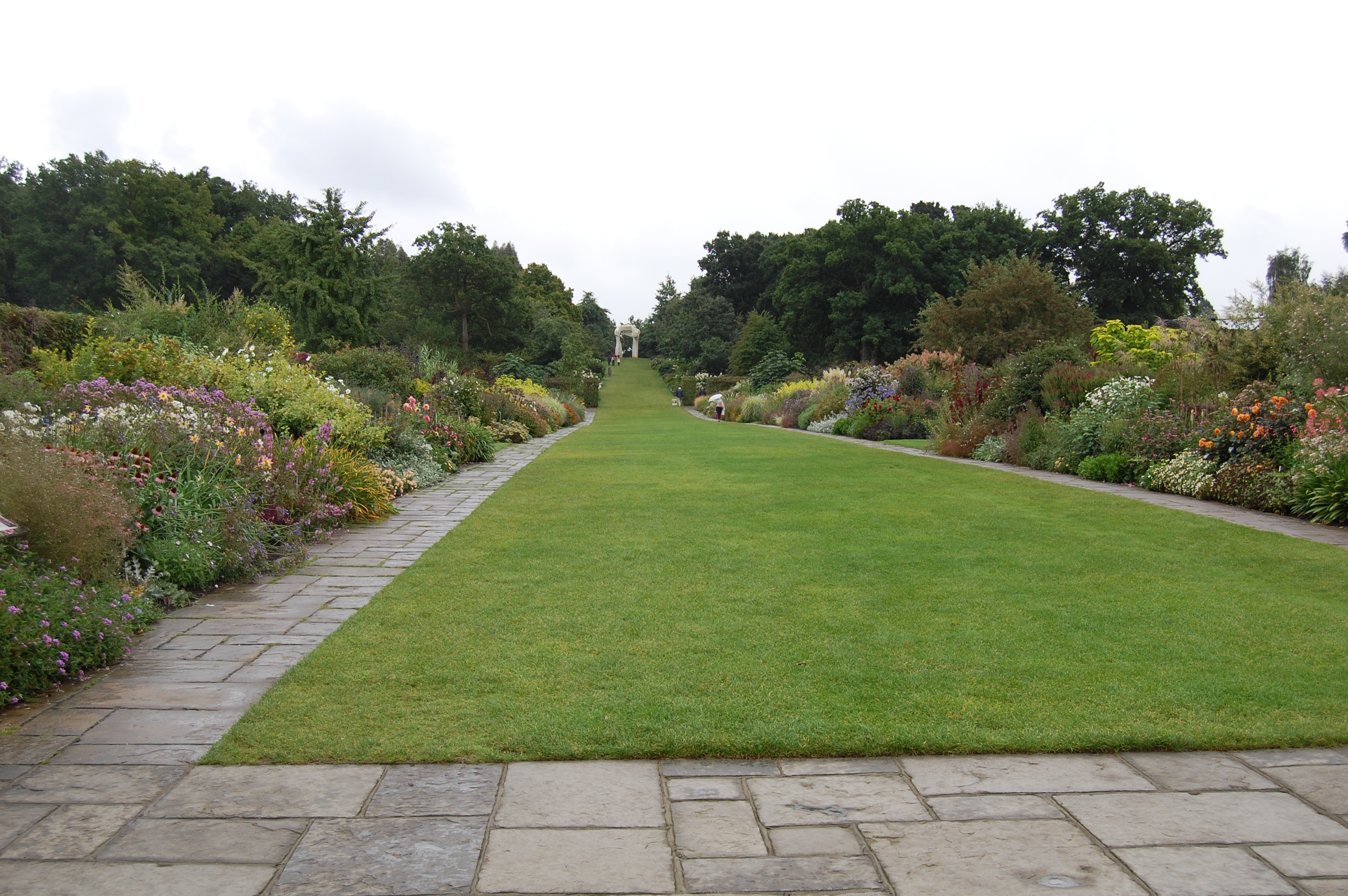
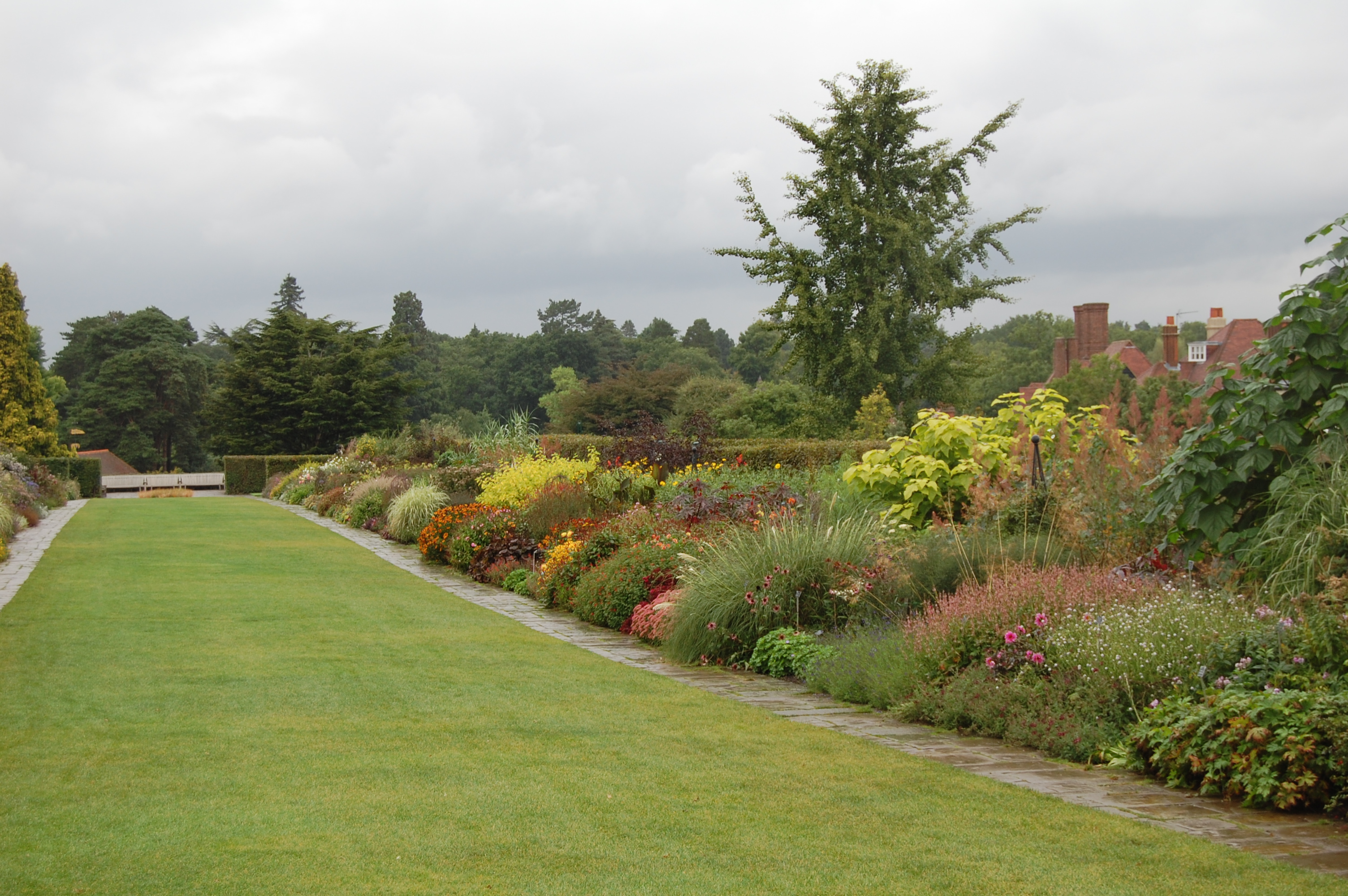
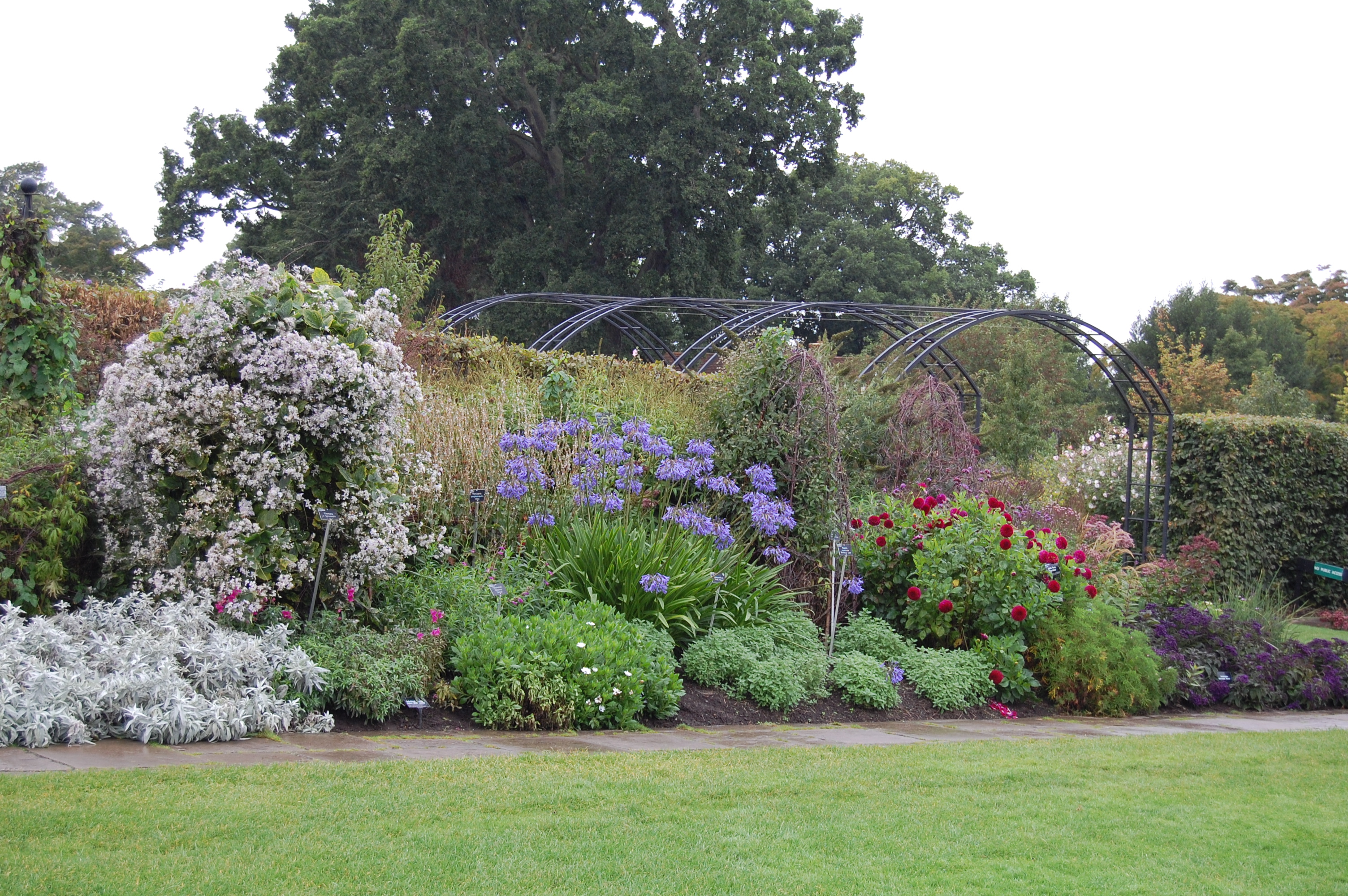
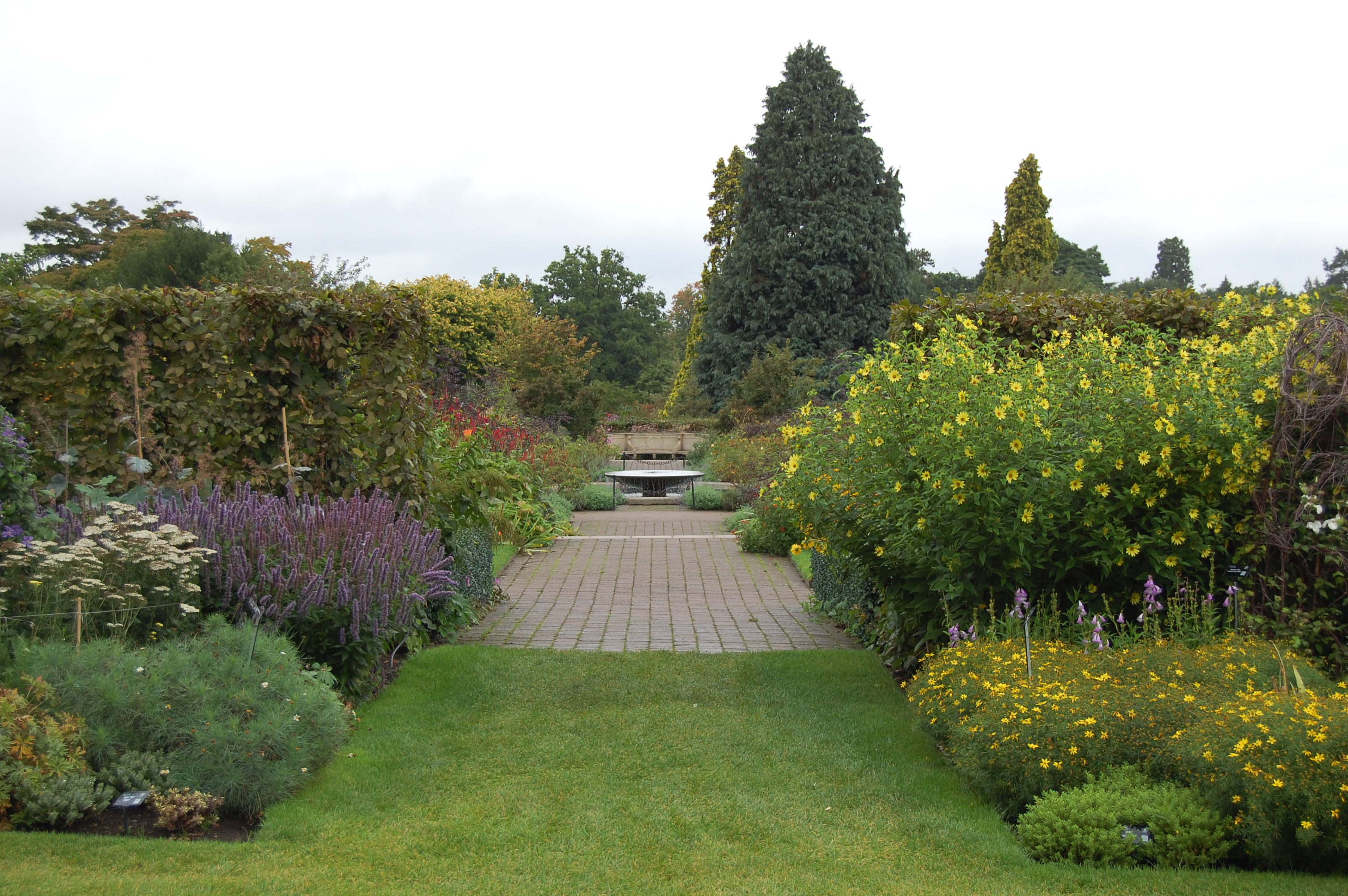
However, I could have spent the entire day swooning over the two ebullient mixed borders that seemed to go on forever, combining shrubs, perennials, grasses, and vines. Sometimes these borders seemed like a multi-colored patchwork of gentle mounds – interrupted occasionally by grasses and shrubs emerging with dramatic height. So many combinations of colors, textures, and shapes create an almost ecstatic sense of immersion.
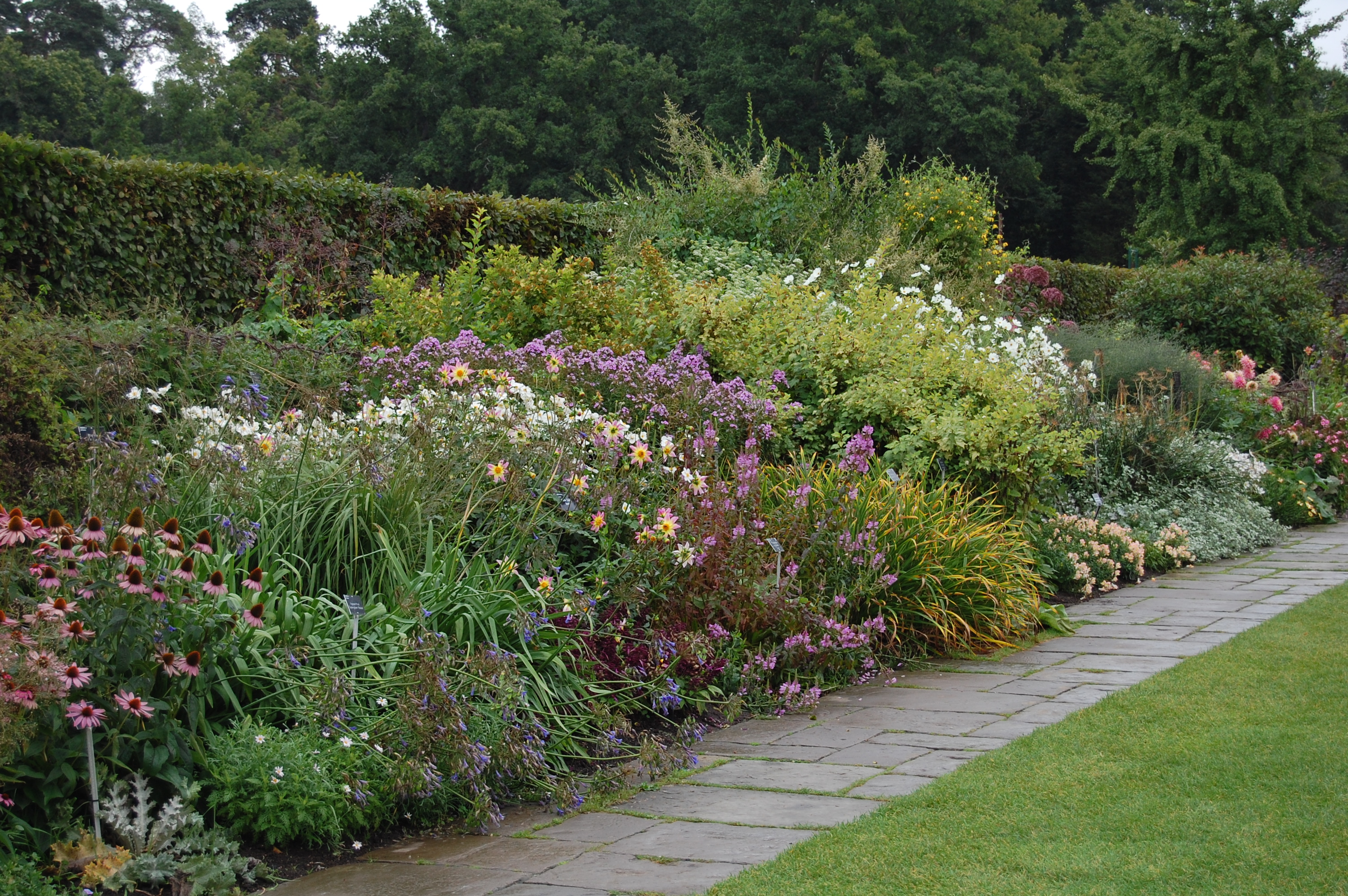
I like the mix of white with pink and purple in this section, along with the contrast of foliage textures.
A clump of orange Dahlias provides a bit of excitement.
I also love the red dahlias next to the blue Agapanthus. Vines added to the imposing verticality of the mixed borders. The white flowers to the left of the Agapanthus is Sweet Autumn Clematis, I think.
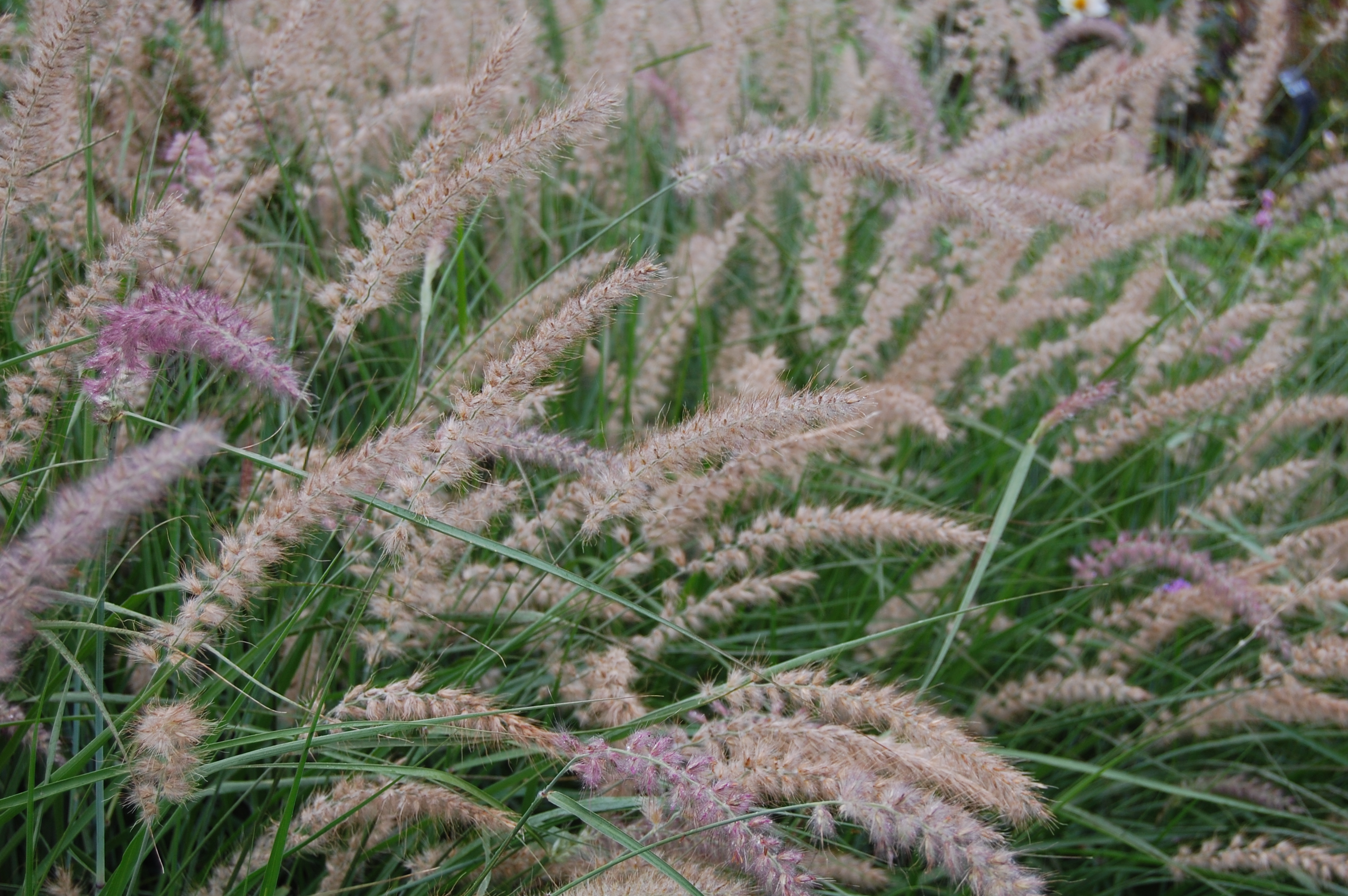
Ornamental grasses were mixed in rather sparingly, I thought, though there were certainly some dramatic specimens and some lovely Pennisetum.
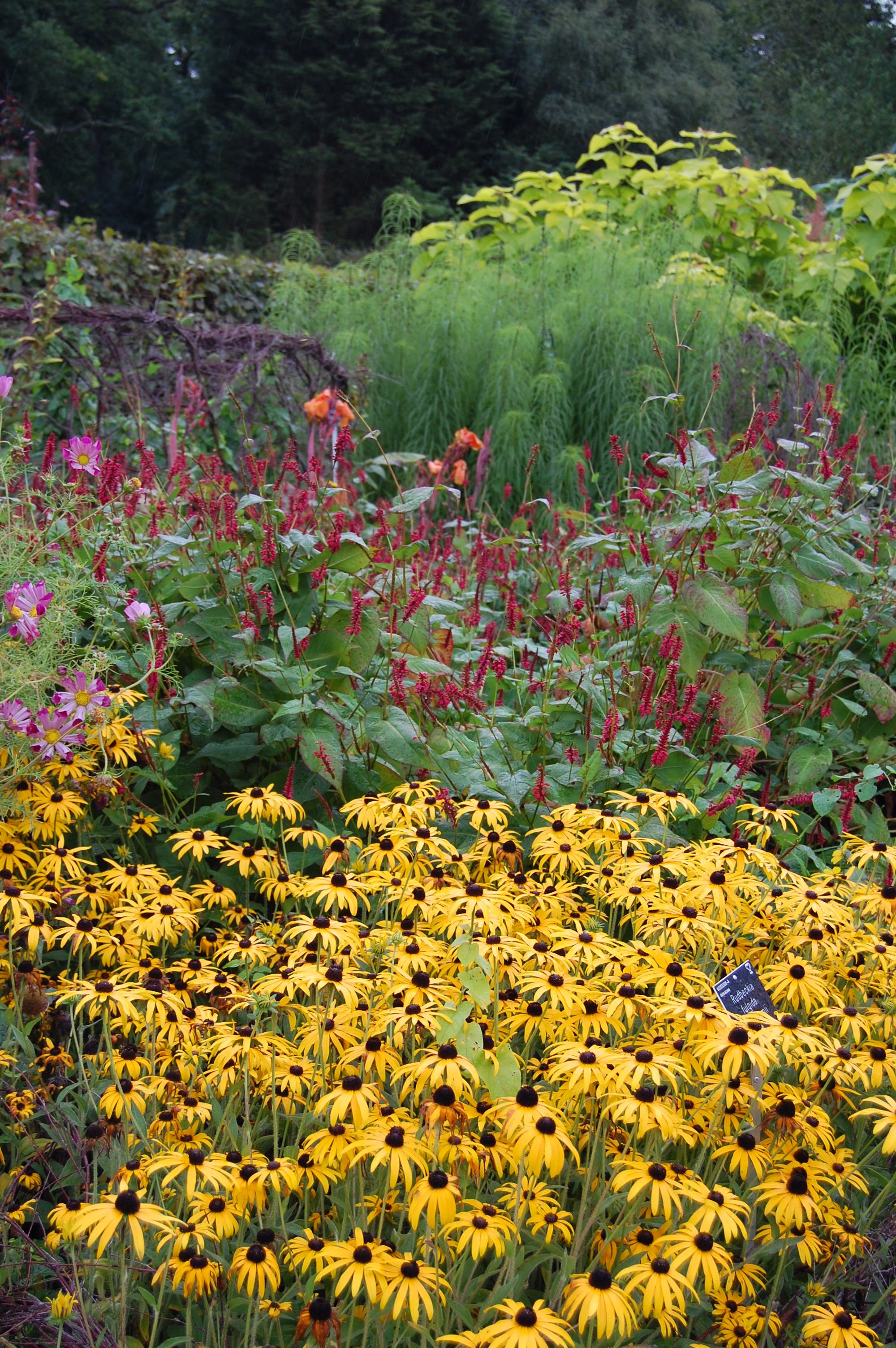
Rudbeckia’s orange daisies combine well with the red spikes of the Persicaria.
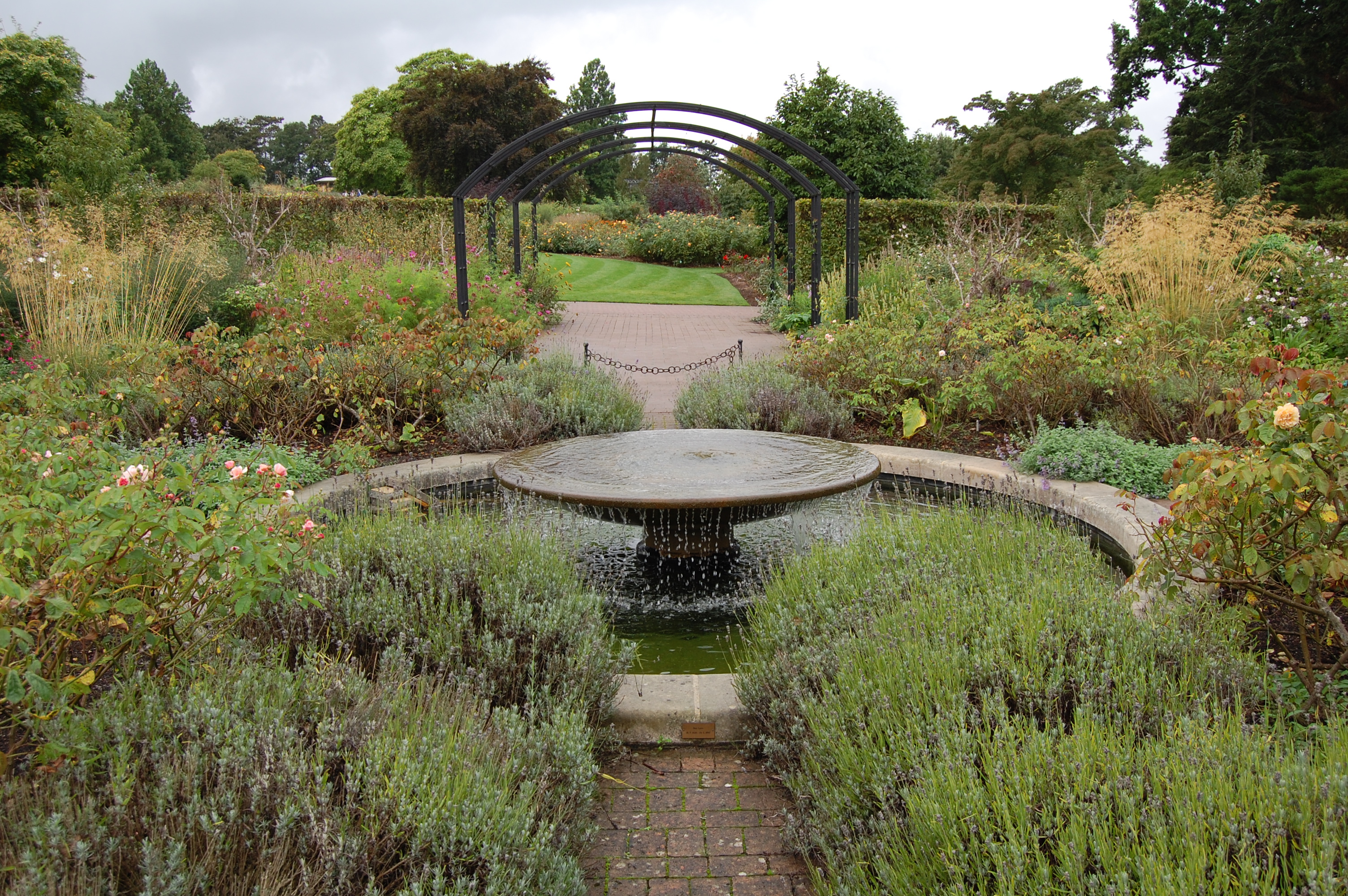
There were other gardens adjoining the long borders. This one had lots of lavender and a fountain.
Loved the Sunflowers with Agastache standing opposite each other.
There was a rose garden, of course.
Helenium – looks like ‘Mardi Gras’
Tramping through all these gardens took a lot of energy, but fortunately John and Pauline kept us well fed. John in particular took delight in cooking full English breakfasts – bacon (which is more like American country ham), sausage, eggs, toast, tomatoes, mushrooms – all on a single plate. It’s fair to say we did justice to these meals.
He also made a point of serving us black pudding one morning, feeling it was an essential part of our English experience. Black pudding is made with pig blood and looks rather menacing, like a glistening black hockey puck. Actually, it is full of oatmeal and has more the consistency of cake. In fact it tastes slightly sweet, with hints of cinnamon and cloves.
I decided I couldn’t do justice to RHS Wisley in a single post, so there will be another post soon on other parts of the garden.
Oh, the wages of indolence. Last year I wrapped my young trees in hardware cloth to protect them from rabbits and voles. This year, however, I got distracted by other things. And then it got so cold.
So I shouldn’t have been surprised when I found much of the bark chewed off the lower trunk of my young Flowering Dogwood (Cornus florida), still just 5′ tall. The trunk was about half way to being completely girdled.
Rabbit damage of a young tree. Photo from Iowa State University (ipm.iastate.edu).
Same story with my two younger ‘Autumn Brilliance’ Serviceberries (Amelanchier x grandiflora).
So even though it is a bit like closing the barn door after the rabbits have escaped, I wrapped hardware cloth around my more vulnerable young trees and shrubs yesterday.
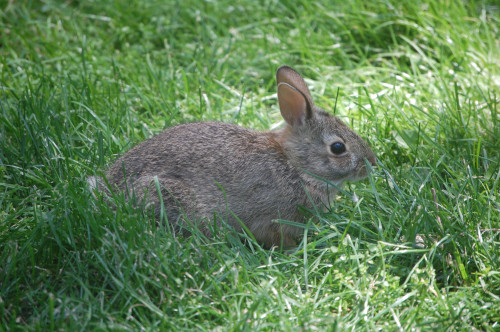
Petey “the Gnasher” Cottontail in our back garden. Don’t let the cuteness fool you.
But now I’m getting paranoid. Should I protect all my trees and shrubs from the marauding rabbits? I’ve always assumed that once a woody plant got to a certain size, the rabbits would leave it alone. But the images I found on Google for rabbit damage to trees seem to contradict that assumption.
Plus, rabbits have been pretty abundant around here the last couple of years. I’m not sure what they do for food in winter other than gnaw on trees. I’ve considered putting out rabbit food to distract them from my plants, but I think that would just attract more rabbits and possibly other rodents even more unwanted.
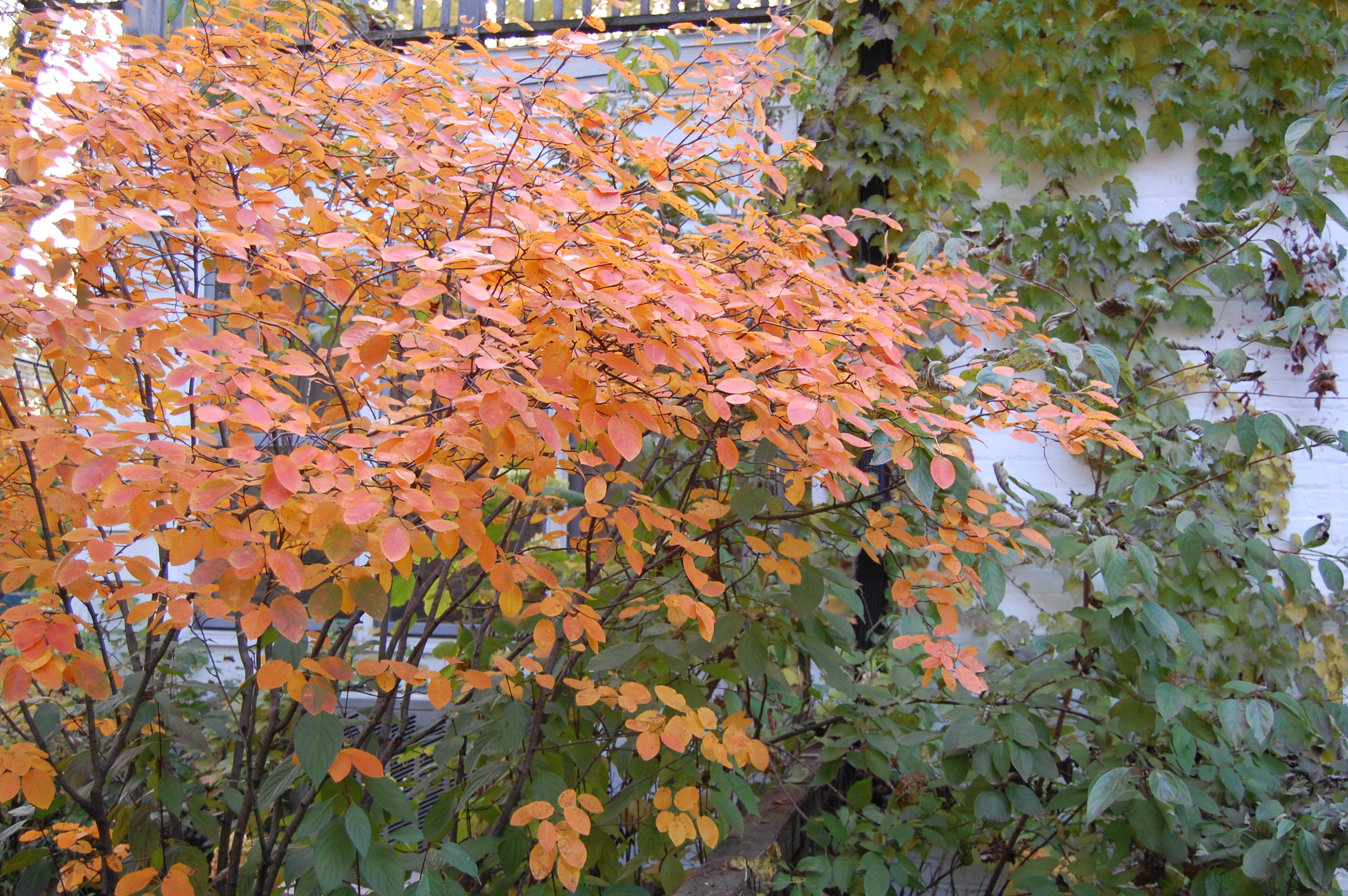
Serviceberries in autumn. 9 out 10 rabbits prefer Serviceberry bark!
Though it does seem that they have a preference for some woody plants over others. They seem to find Serviceberry particularly toothsome (so to speak). On the other hand, they haven’t even nibbled on my Spicebush (Lindera benzoin) or Fringe Tree (Chionanthus virginicus). I’ve considered putting out rabbit food to distract them from my plants, but that would probably just attract more rabbits – and other even less welcome rodents.
I’m guessing that my Flowering Dogwood and Serviceberry will be OK. When I’ve seen bark damage on other young plants that were not completely girdled they’ve generally survived.
Do you protect your small trees and shrubs from winter nibbling?





























 gardeninacity