Green With Ennui

An article in the most recent issue of Fine Gardening, entitled “Designing with green”, opens with this statement: “This ubiquitous color, when used well, can be just as exciting as vibrant flowers.”

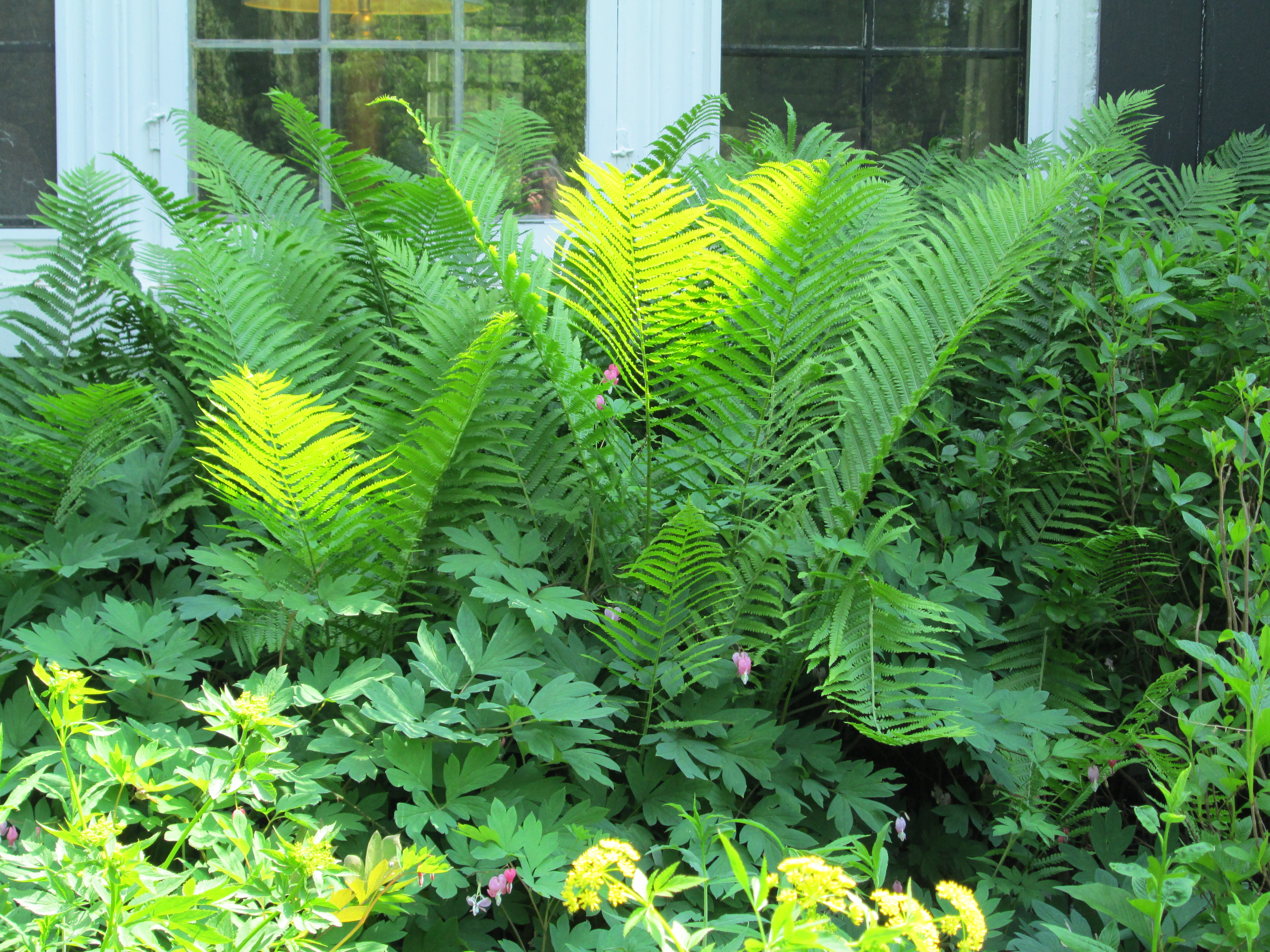
Ostrich fern as a foundation planting in m front garden.
Ostrich fern as a foundation planting in my front garden.

To which the obvious response is: No. No, it can’t.

Don’t get me wrong. I can appreciate green-only plants. I understand that there are intriguing variations in the size, texture, and sheen of leaves. Plus, I get that green can come in a wide variety of shades: light and dark, yellow and blue.

Wild Ginger
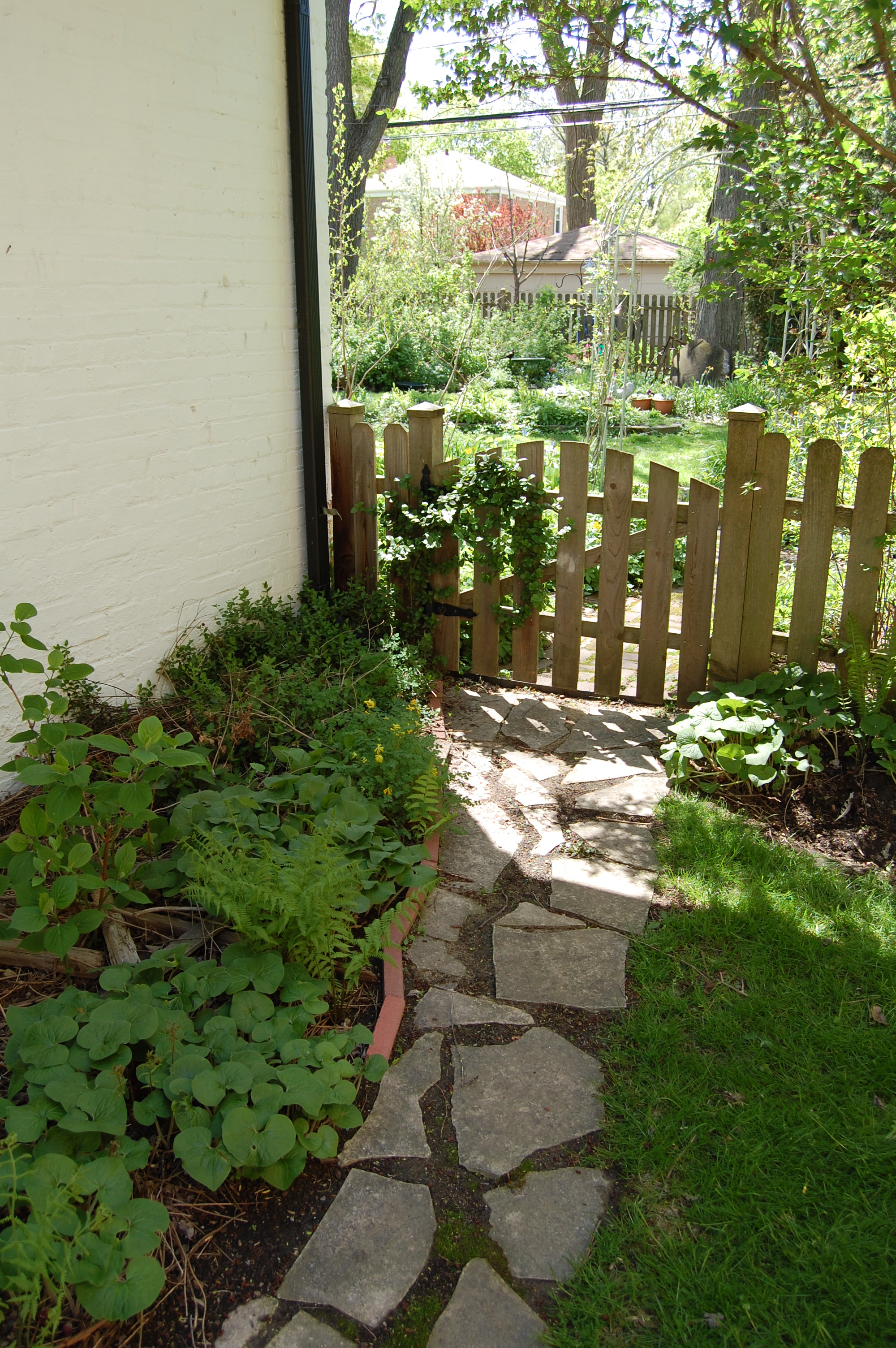
Wild Ginger and lady ferns along the path to the back garden.

Ostrich fern (Metteucia struthiopteris) and wild ginger (Asarum canadense) are probably my two favorite plants grown for no other color, and I have quite a bit of both in my garden.

Ostrich Ferns
Ostrich fern fiddleheads unfurling. Fiddlehead is such a great word.

But I’m sorry. An all-green garden, no matter how varied and artfully designed, cannot be as exciting as a garden full of red, blue, orange, pink, and/or yellow flowers. That’s just how I feel.

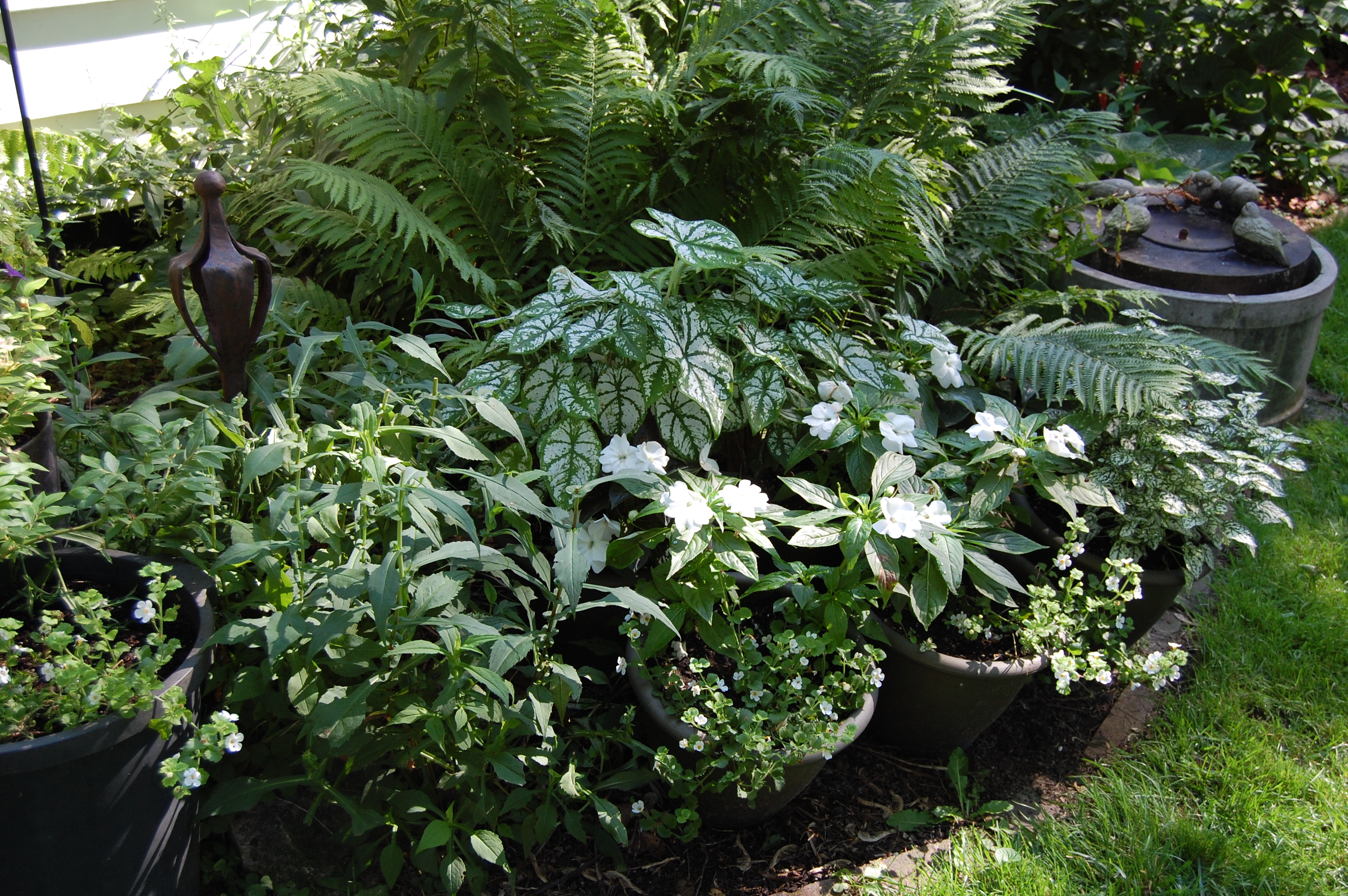
People with shady gardens may feel slighted by this view. They may feel that green is the only option available to them. This is not true, of course. There are perennials (especially spring bloomers) that will flower in shady gardens, and annuals that will bloom all season long in shade. Not to mention all the foliage plants that come in a variety of colors. I am especially fond of white and green caladiums, myself.

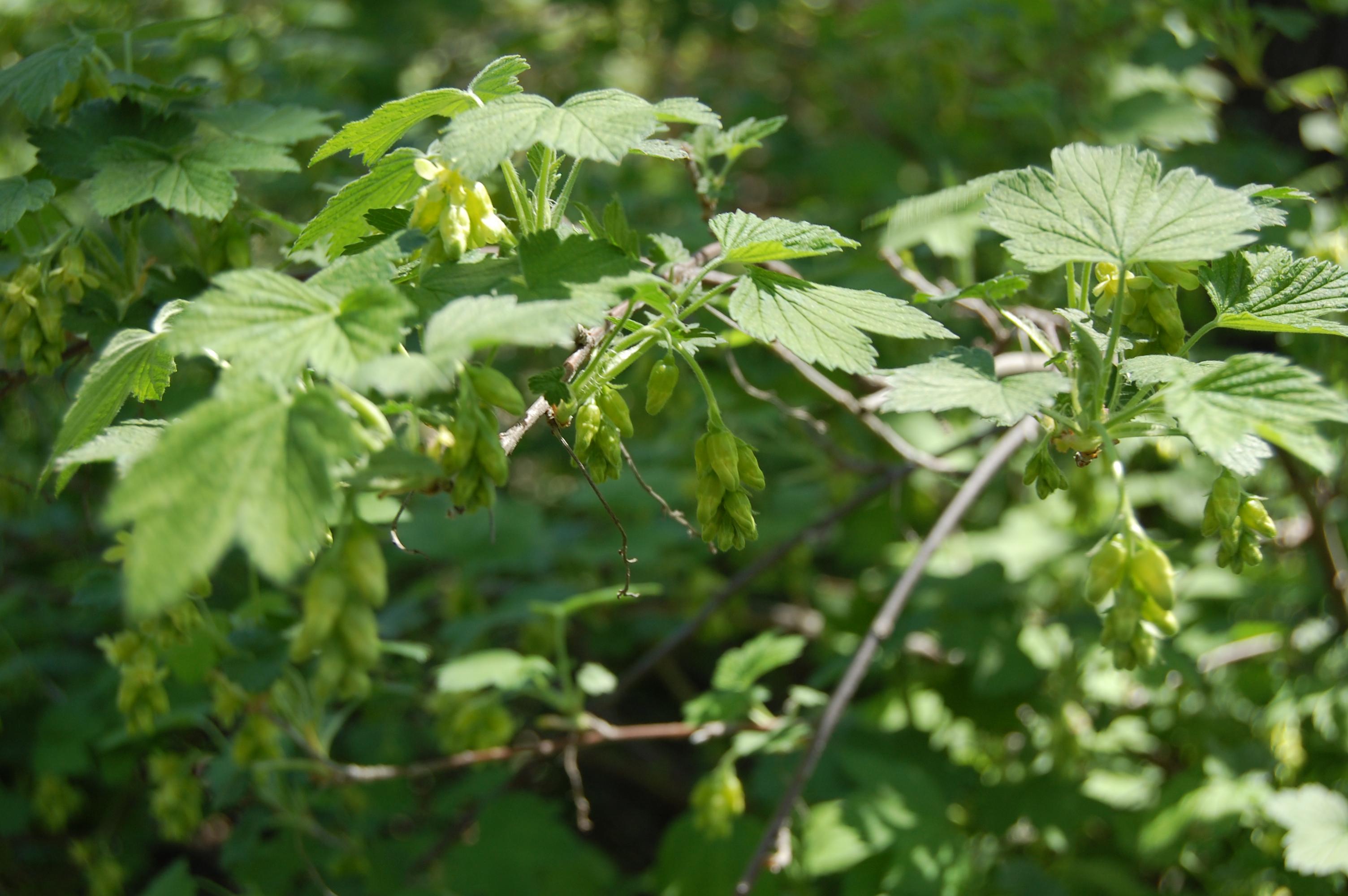
Wild currant with strands of dangling chartreuse flowers.
Wild currant with dangling Chartreuse flowers.

Green is by nature a soothing color, not an exciting one. It links and calms all of the more dazzling colors of the garden. This is an extremely valuable service to provide to the gardener.

Also, who is to say that all gardens should be exciting? An all green garden could be very tranquil, and there’s nothing wrong with that. Colors, like people, should not try to be all things to all gardens.

New Guinea Impatiens
New Guinea Impatiens with Caladium in our shady back garden.

One thing I have to say, though. I have very mixed feelings about green flowers. I do like Chartreuse flowers, such as those of ladies’ mantle (Alchemilla mollis) or wild currant (Ribes americanum). But flowers of green or white suffused with green, such as you find on some tulips or hellebores – to me they look like they are coming down with a case of food poisoning. Blech.

What do you think – do you find green to be an exciting color? And what about green flowers?

Spring is Not Just a Figment of My Imagination

I had begun to wonder if we had entered a new ice age, or perhaps that winter was really the one season of the year. The other seasons can only be enjoyed in the afterlife by the truly righteous.

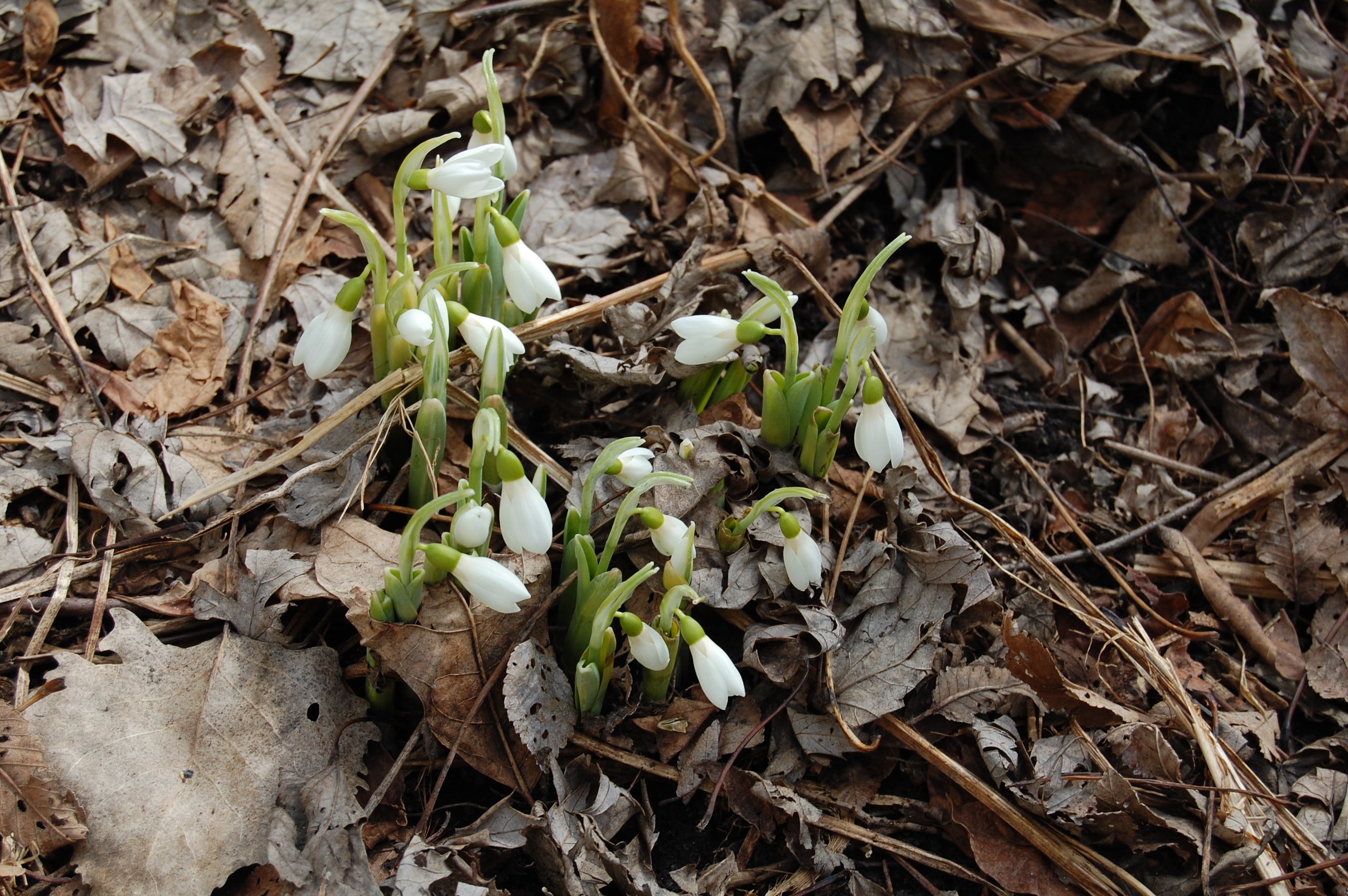
Snowdrops emerge from the frozen ground.

But in the last few days, winter has loosened its grip, and there are hints of another, better way of life. The snow has been melting, the temperatures warming – at least some of the time. And as bare ground is exposed, there is a sign of life – a little clump of snowdrops that emerged out of the frozen ground and into the snow, now visible.

Newly emerged snowdrops.

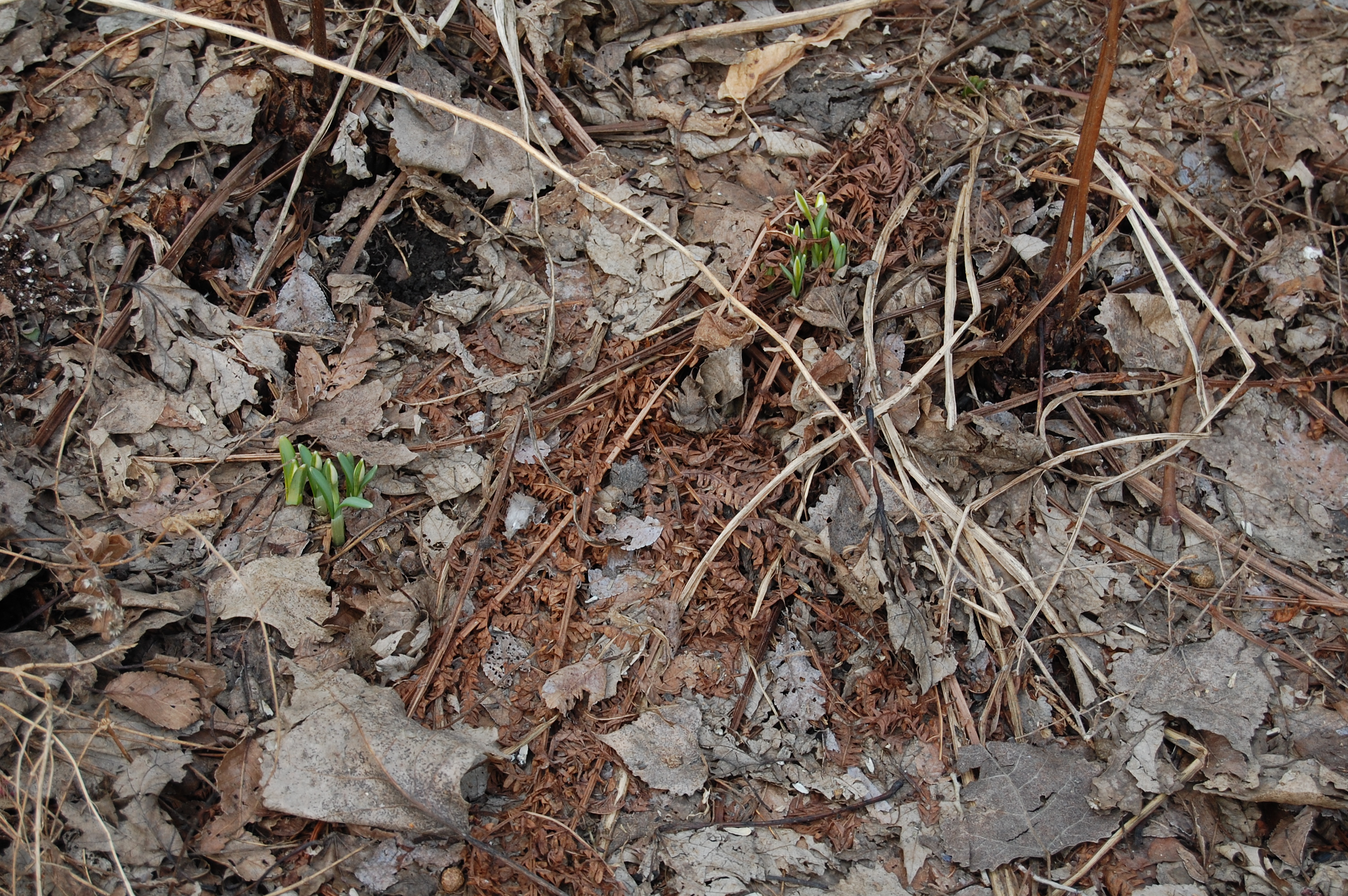
With the snow gone, this particular patch of snowdrops is looking a bit peckish. I’m sure that they’ll look better with a bit of time in the sun, though. There are other snowdrops that have emerged only in the last day or two.

My own private Himalayas.
My own private Himalayas. This is from March 2, it’s better now.

Don’t get me wrong, there is still plenty of the cold white stuff. This is especially true along the sidewalk and driveway where repeated bouts of shovelling have left small mountain ranges of snow right on top of my flower borders.

And while winter is definitely in retreat, it is known to conduct some aggressive rear guard actions.Back on March 1, for example, we got about 6″ of snow after several days of mild weather.

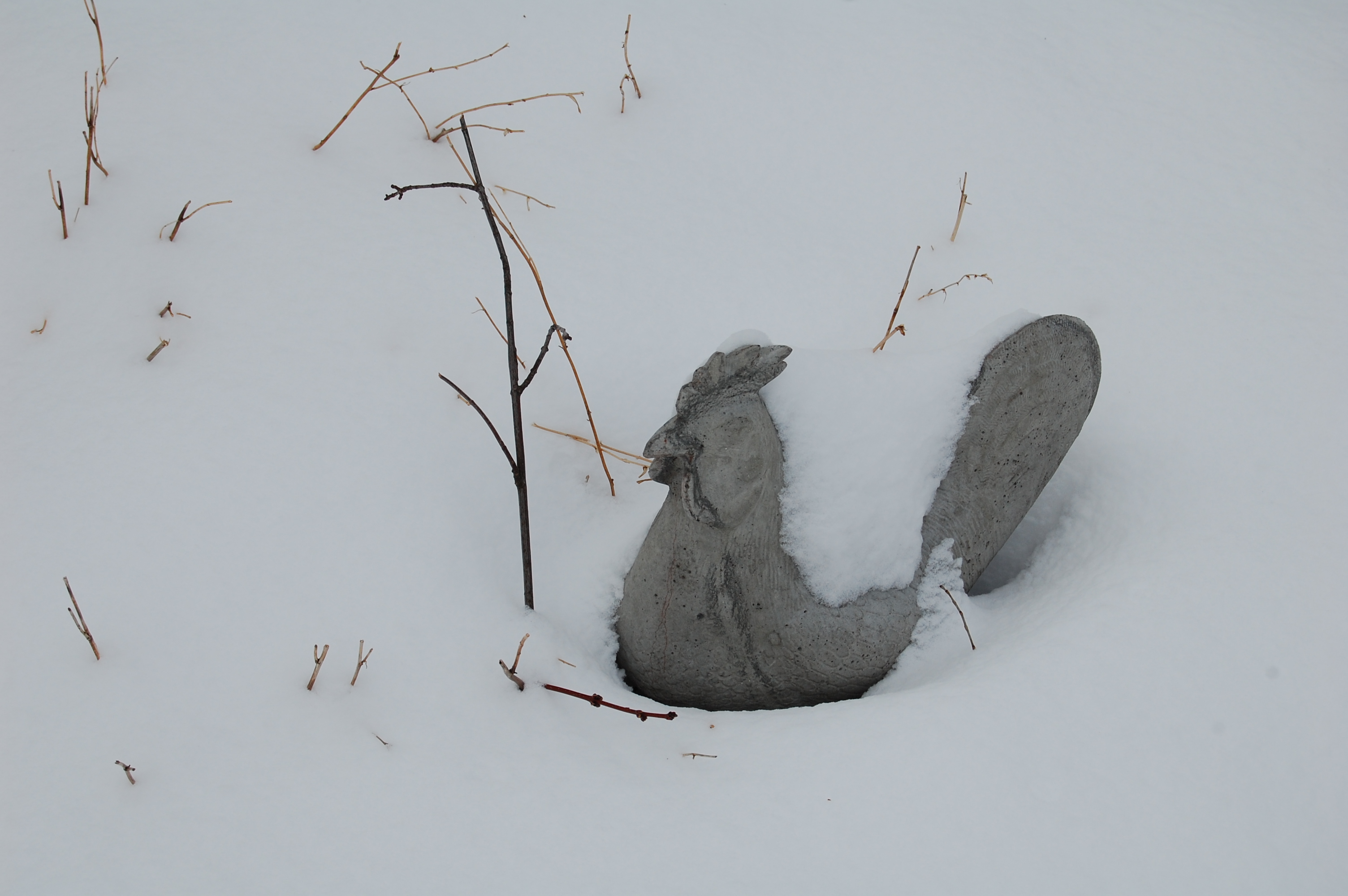
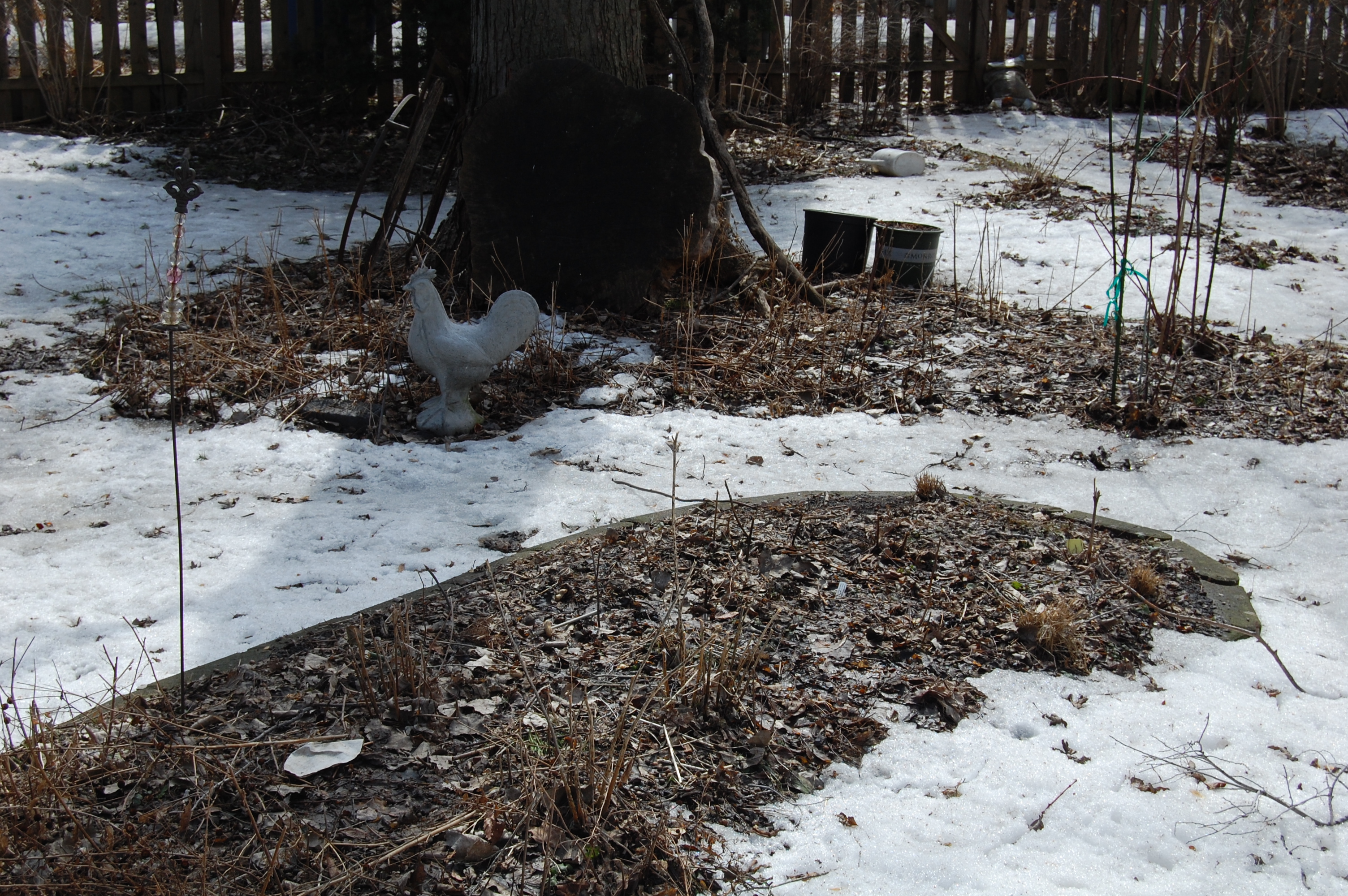
Carl the Concrete Chicken after the March 1 snowstorm.

That last 6″ and more has melted in the past few days. For example, here is Carl the Concrete Chicken (an important piece of Garden Art in our back garden) after the March 1 snowstorm.

Carl today.
Carl today.

And here is Carl earlier today.

Now that the snow is going I can admit it can look good when newly fallen.

Are you able to see bare ground where you are?

Mo’ Better Blue (Flowers)

Recently I wrote about five favorite blue flowers, limiting myself to natives of the American Midwest. The comments that followed revealed that I am far from alone in having a soft spot for blooms of blue. And so I found myself inspired to do another post on the topic, this time not limiting myself to natives.

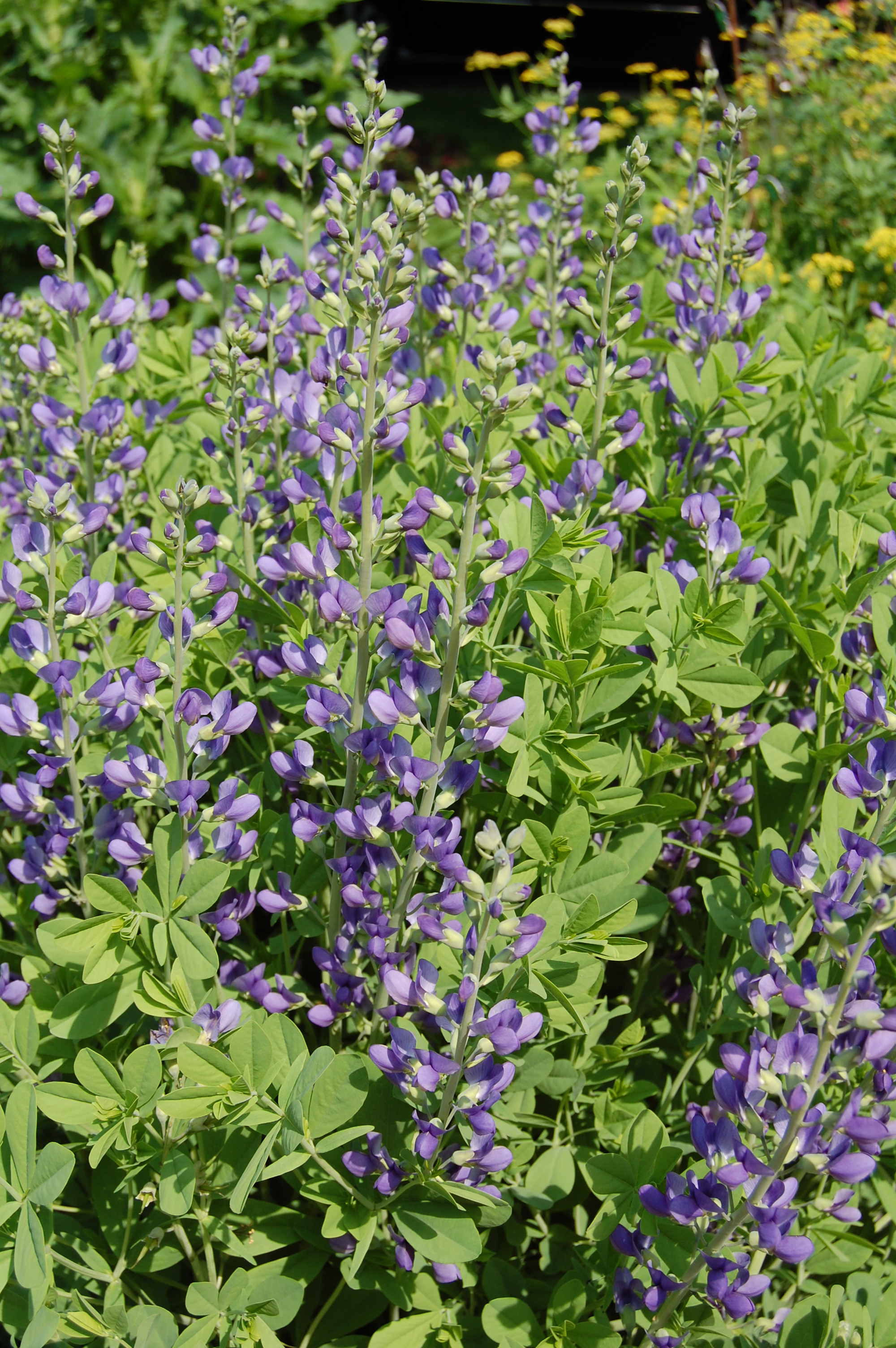
blue false indigo
Wild blue indigo


Blue false indigo is a good pollinator plant.
Wild blue indigo is a good pollinator plant.

Wild blue indigo (Baptisia australis). A plant I really should have included in my first post, as it is  a native of this region, and certainly a favorite of mine. It has tall stalks of lupine-like flowers in late spring and early summer. Christopher Lloyd thought that the blue-green rounded foliage complemented the flowers very nicely (I’ve started reading his garden books, so expect me to become an insufferable name-dropper). This plant’s only faults are that it is slow to establish and hates to be transplanted. It’s very long-lived, though.

Caryopteris Longwood Blue
Bluebeard ‘Longwood Blue’

Bluebeard (Caryopteris x clandonensis ‘Longwood Blue’). I just planted this one last spring and already I love it. Normally a low shrub, north of zone 7 it dies back to the ground over the winter. I am a bit worried about mine given how harsh the weather has been. The late season blooms are beloved by butterflies.

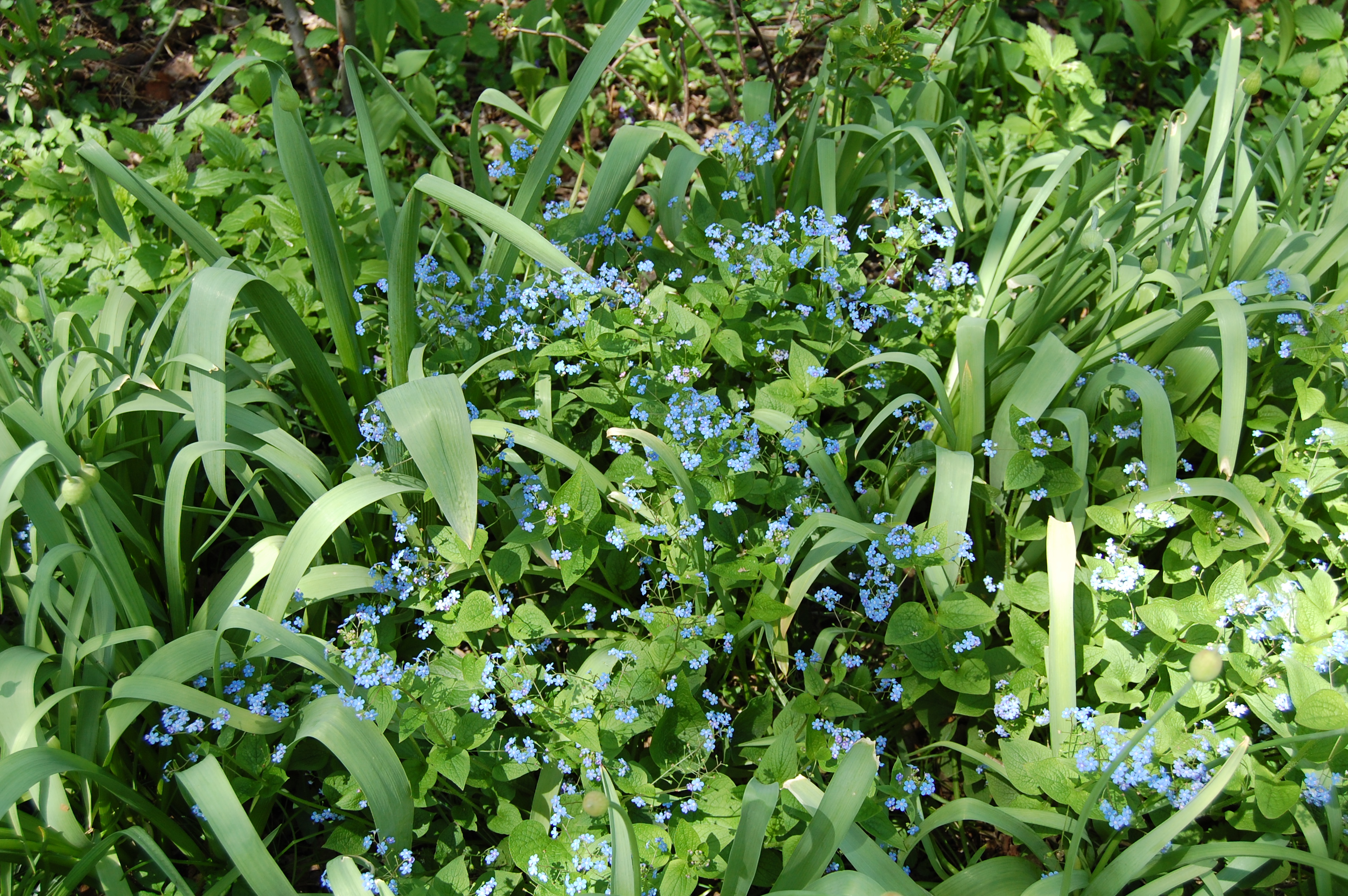
Brunnera
Brunnera flowers poking up through Allium foliage.

False forget-me-not (Brunnera macrophylla). This plant really needs a consultant to come up with a new common name. A false forget-me-not sounds like it really intends to forget. It’s other common name is Siberian bugloss, which is not an improvement. How about Siberian forget-me-not? That’s a bit better. Anyhow, this is a very easy perennial for moist shade. It has  sky blue flowers in spring very much like forget-me-nots (Myosotis sylvatica). I like the texture of the large, heart-shaped leaves, and prefer the straight species to the variegated cultivars.

Grape hyacinth
Grape hyacinth

Grape hyacinth (Muscari armeniacum). A wonderful small bulb that will create big drifts if allowed to. The racemes have clusters of tiny blue bells that really do look like bunches of grapes. Blooms in May in Chicago, and is very undemanding.

'Kit Kat' catmint with yellow violas and celandine poppies.
‘Kit Kat’ catmint with yellow violas and celandine poppies.


Caryopteris, Red Poppy
I wish I could say this was in my garden, but it is actually the Chicago Botanic Garden. Catmint (‘Walker’s Low’, I think) with red poppies.

Catmint (Nepeta x faassenii ‘Kit Kat’). An easy, drought tolerant perennial that likes hot sun. ‘Kit Kat’ is a shorter perennial that for me blooms from mid-spring to early summer. The flowers are small but profuse, and covered with bees. The fine grey-green foliage has a minty smell. I also have the cultivar ‘Walker’s Low’ which is much taller (the name is misleading) and blooms later in the season.

That last picture reminds me that blue looks more blue if there is something red, orange, or yellow nearby to set it off. Blue alone can be a bit dull, it needs some contrast to set it off.

Do you like to contrast blue flowers with brighter colors?

An Unwanted Encore

It seemed as if winter was finally leaving us. The weather turned mild, and the snow was melting at a steady pace. Then a colleague at work sent me this.

snow prediction

Yes, apparently we are expecting up to 16″ of snow by tomorrow night. It’s still well above freezing as I write this, so I’m hoping that much of this precipitation will actually take the form of rain rather than snow.

Recently I compared the tediously slow progress of this year’s spring to Napoleon’s retreat from Moscow. Now I am put in mind of a performer who keeps returning to the stage for extra encores, even as the audience just wants to put on their coats and go home.

This weather does make me wonder about all the early spring bulbs that would normally be up by now, the snowdrops and crocus. Are they still asleep under the snow, or have they emerged from the frozen soil only to find themselves smothered by a snowy blanket?

Then there are the perennials and bulbs I planted last fall. I shudder to think what may have become of them: tulips, lilies, squill, bluebells, hellebores, goatsbeard, etc.

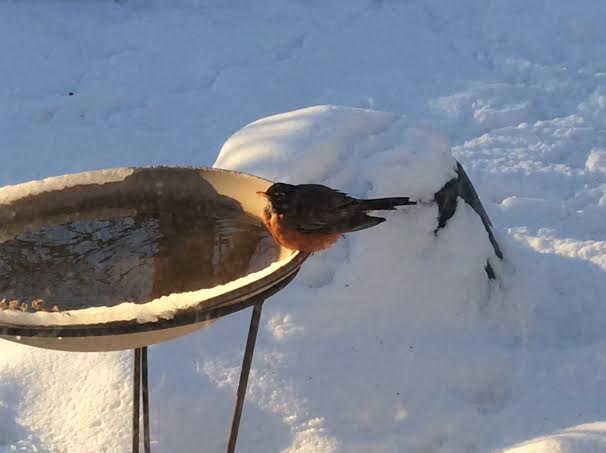
robin in winter

And what of the robins and other birds and critters? Judy took this picture of an American Robin on Sunday morning. To my mind it looks distinctly irritated. Perhaps it is wondering how it’s supposed to hunt worms through all the snow and ice. Actually, some American robins do stay in this area through the winter, but I rarely see them in the garden until the weather warms.

As for rabbits, no doubt they are thinking of chewing the bark off of trees that had seemed unappetizing until now. That’s a thought that will keep me up at night.

Has winter given its final bow in your neighborhood, or does it continue to give unwanted encores?

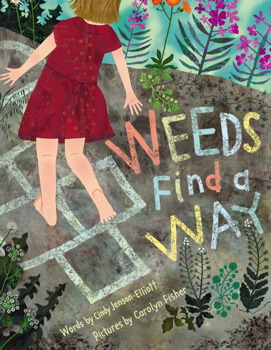
Book Review: Weeds Find A Way

Weeds Find a Way is a different kind of nature book for kids ages 4-8. You might wonder why I am writing a review of a kids’ book, as it has been many years since I’ve had kids in the house.

weeds find a way

Well, for one thing, I was offered a copy. But for another, reading aloud was an important part of the day when my kids were little, up until the time each of them turned around 12, at which point they got distinctly squirmy. And I think I often enjoyed the books we read as much as they did.

Never too early to introduce your child to books. This is Danny at about 8 months.

In terms of books about the natural world, I remember reading aloud about whales, wolves, lizards, bats, and dinosaurs – LOTS of dinosaurs. We had two boys, you see.

What I like about Weeds Find a Way is that it engages children about a part of the natural world they have direct contact with on a daily basis. Namely, weeds. Growing up in an urban or suburban space, few kids are going to see a wolf – but they are almost certain to see, and be intrigued by, a dandelion. Plus you can pick dandelions and other weeds and no one will yell at you.

The text, by Cindy Jensen-Elliot, talks about the adaptations that make weeds what they are. The writing is accessible to the target age group, but engaging and informative. There is also a section that would enable a parent to talk to children about weeds they may have seen together, either on a hike or playing on the lawn.

Reading this book made me go back and look at one of our old photo albums. This is my mother reading to Danny late in 1987.
Reading this book made me go back and look at one of our old photo albums. This is my mother reading to Danny at about one year old (1988).

The illustrations, by Carolyn Fisher, are colorful, energetic, and absorbing.

Single Bloom People, Double Bloom People

Recently I had an exchange with Christina of Creating my own garden of the Hesperides about the possibility of all people being divisible into two types: those who prefer single blooms and those who prefer double blooms.

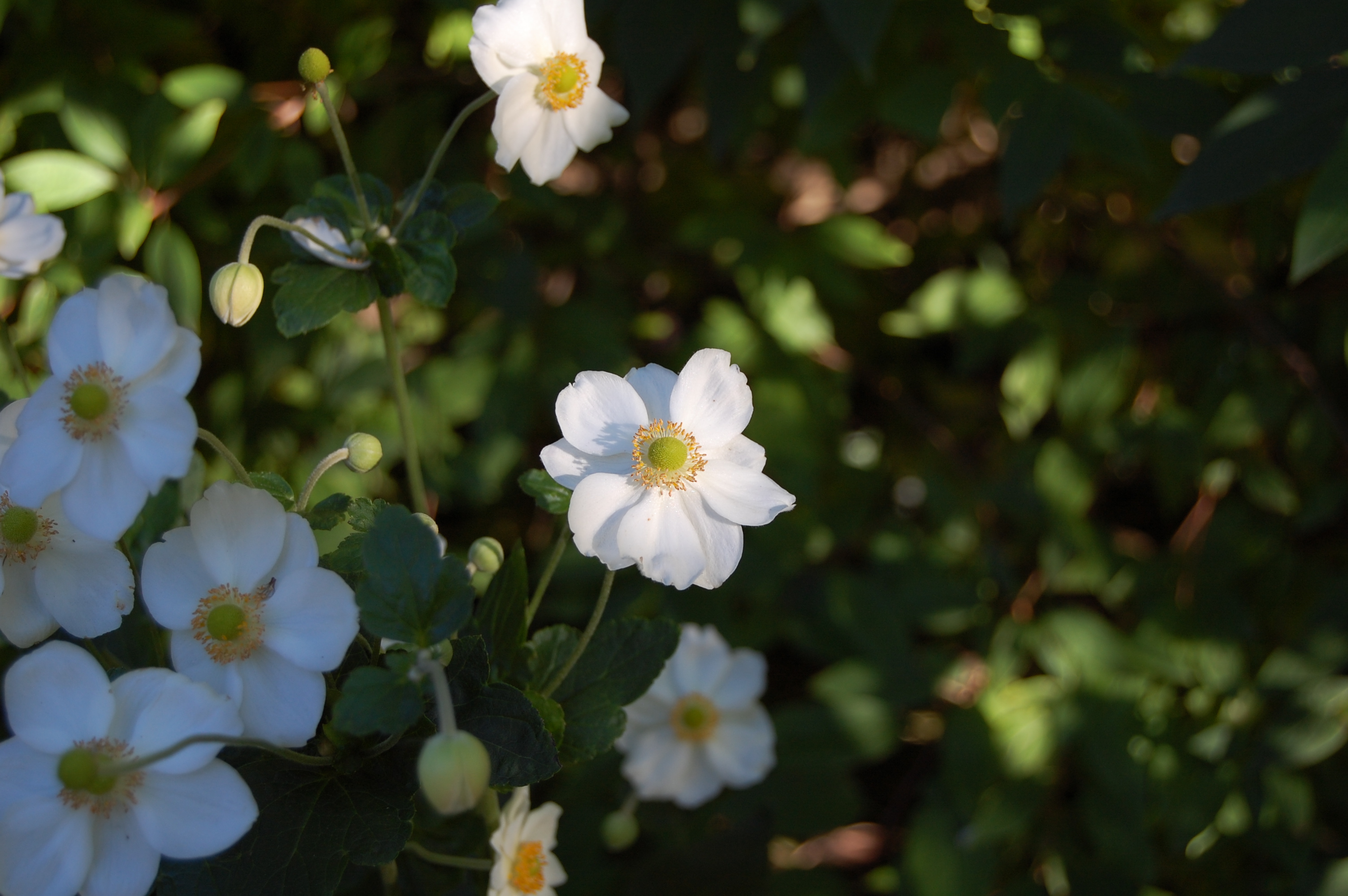
Japanese Anemone 'Honorine Jobert' displays the virtues of the single bloom.
Japanese Anemone ‘Honorine Jobert’ displays the virtues of the single bloom.

Single blooms, we both agreed, were best. For me, single blooms are appealingly simple and unadulterated. Double blooms tend to be excessively … busy, in a way that is distracting. Single blooms are like a slice of apple pie, double blooms are like those foams they serve at avant garde restaurants.

Echinacea 'Pink Poodle'
Echinacea ‘Pink Poodle’ with its double flowered bloom. What an awful thing to do to an innocent plant.

And people who prefer single blooms tend to be wise, honest, and compassionate. I’m not claiming to have all those qualities myself, I am merely laying out the facts.

A new study by Harvard University researchers, which I am fabricating as I write, divides prominent historical and contemporary figures based on their stated preference for single versus double blooms. The study’s findings may surprise you!

People of the Past and Present Who Prefer Single Blooms

the Dalai Lama
the Dalai Lama
Eleanor Roosevelt
Eleanor Roosevelt
Steve Jobs
Steve Jobs

People of the Past and Present Who Prefer Double Blooms

Louis XIV
Louis XIV
Imelda Marcos
Imelda Marcos
Bill Gates
Bill Gates

Where do you stand on the single bloom/double bloom divide? Do you feel lovers of double blooms have been slandered? And no sidestepping the question by claiming to like semi-double best!

The Five Best Native Blue Flowers

CLEOPATRA:          Is it true that when Caesar caught you on that island, you were painted all over blue?

BRITANNUS:         Blue is the color worn by all Britons of good standing. In war, we stain our bodies blue; so that though our enemies may strip us of our clothes and our lives, they cannot strip us of our respectability.

– from Caesar and Cleopatra, by George Bernard Shaw

I may not seek to maintain my respectability by painting my body blue, but I do love blue flowers. Blue is so serene and tranquil in the garden, and makes a satisfying contrast to yellows, pinks, and reds. There are many fine blue flowers from all over the world, but my favorites tend to be from here in the American Midwest.

Speaking of which, here are my five favorite blue flowers from this region.

Anise Hyssop
Straight species Anise Hyssop (with Yellow Coneflower and Joe Pye Weed in the back).

Anise Hyssop (Agastache foeniculum).  An extremely tough and adaptable plant, great for pollinators and goldfinches. It’s only serious fault in my experience is a tendency to flop in fertile soil – it may require a lot of staking and/or cutting back to keep it upright. Also, it self sows like crazy, in case that bothers you. I should point out that most cultivars of this genus (like ‘Blue Fortune’ or ‘Honeybee Blue’) are hybrids of North American and exotic species.

Aromatic Aster with Anise-Scented Goldenrod

Aromatic Aster (Symphyotrichum oblongifolius). This aster tends to stay relatively compact and wants full sun and dry to medium soil. Completely covered with blue daisies in the fall. There are some really nice cultivars, but I only have the straight species.

Harebell, Lanceleaf Coreopsis
Harebell with Lanceleaf Coreopsis

Harebell (Campanula rotundifolia). A native American bellflower that does well on drier, sunny sites. Harebell is low-growing and self-sows moderately. Blooms over a long period in summer.

Virginia Bluebells
Virginia Bluebells

Virginia Bluebells (Mertensia virginica). How can you look at this flower and not fall in love? In Chicago the blue flowers usually appear in May. Spreads by root and seed, so that a few in time will turn into many. And how can that be bad? Only drawback is that it turns raggedy and eventually disappears after blooming, so it needs to be mixed with other plants.

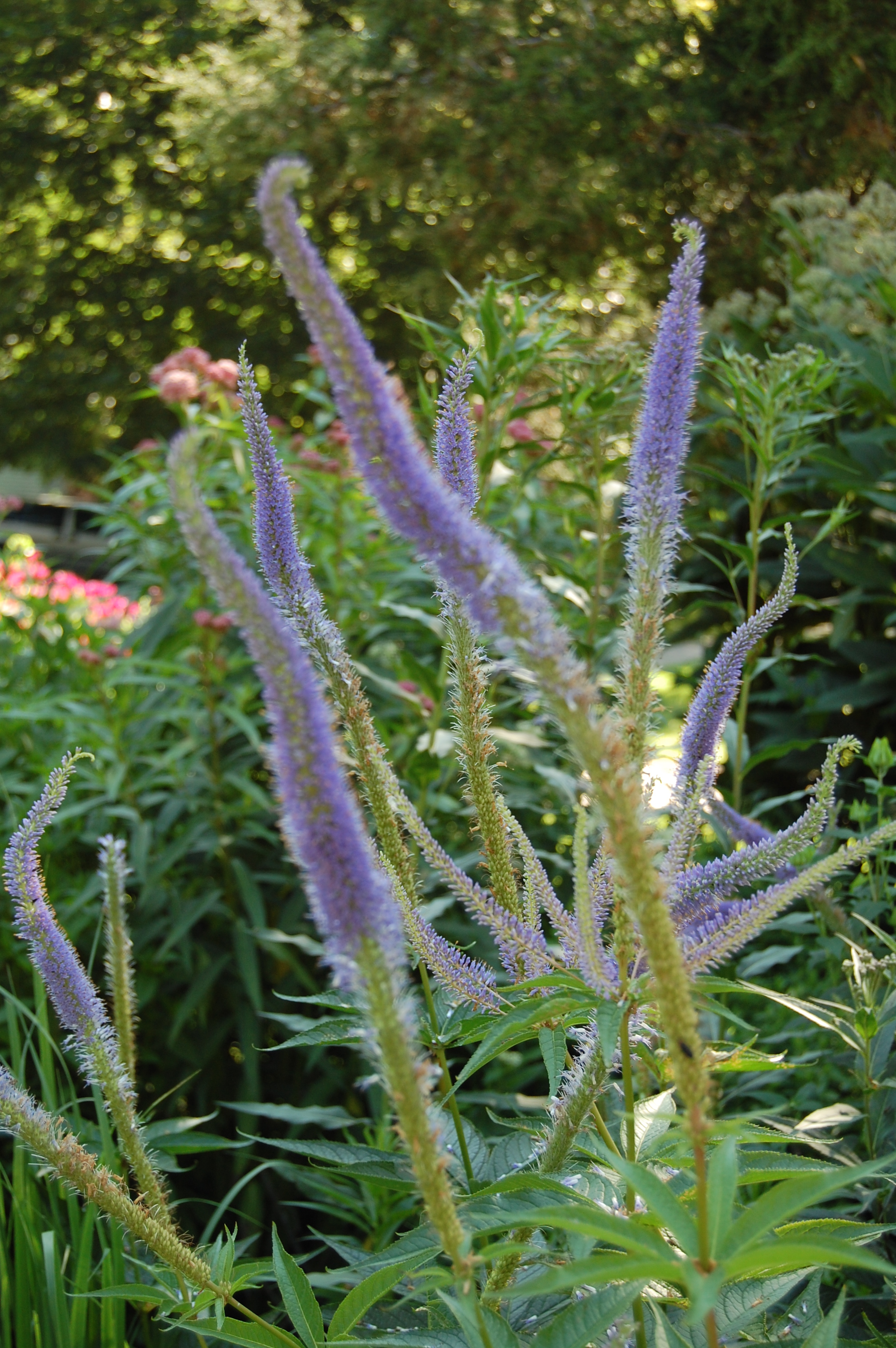
Culver's Root 'Fascination'
Culver’s Root ‘Fascination’

Culver’s Root ‘Fascination’ (Veronicastrum virginicum). Some would say that I’m cheating since, as a cultivar, ‘Fascination’ is not a real native. To these people I say: phooey. Anyhow, this is a really nice plant. Tall (4-5′) and generally needs staking in my garden. Another big favorite for pollinators that blooms in mid-summer.

So those are my top five. Do you have any favorite blue flowers?

Amaryllis Hostage Crisis: the Final Chapter

Well, the Amaryllis made its desperate Leap to Freedom one too many times. Even with the shoelaces, stake, and skewers holding it back, we still found it lying on the table the other morning. Finally Judy rummaged around and found a tall pitcher we have not used in a long time (a wedding present, actually).

amaryllis unbound

That pitcher has made a nice new home for the Amaryllis, a home where it is not subject to being strung up with shoelaces. Of course, we had to remove the stems from the bulb, but so far the Amaryllis seems perfectly content as a cut flower.

Now that the hostage crisis is over, I’ve been looking more closely at the Amaryllis flowers. At the risk of being labeled a chronic complainer (the label would be accurate), I have to say this: I’m not really so crazy about this Amaryllis. I think I’d prefer the kind we usually get, which is a big single bright red one.

If it’s not one thing, its another.

Hand it Over – Or the Amaryllis Gets It

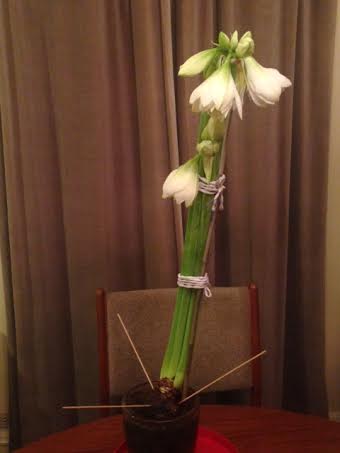
Our Amaryllis is being held hostage. Not really.

amaryllis hostage

It is merely suffering from an unhappy home life. Back in December, Judy and I placed it on a table in the back porch, figuring that’s where it would get the most sun. It sat there – and sat there – for weeks, with no sign of life. Then New Hampshire Garden Solutions pointed out that Amaryllis really need warmth, and our back porch can get pretty cold in the winter.

So we moved it to the table in the dining room. Which come to think of it, is where we usually grow Amaryllis without any problem.

Anyhow, in its new location the Amaryllis sprung to life. However, it had clearly been stunted by being kept in a bad environment. Well, not stunted – elongated. The stems stretched and stretched, and eventually started flopping over. We found an elegant solution by binding the stems together with the first likely object we found, which happened to be shoelaces.

But one pair of shoelaces, surprisingly, was not enough to keep this Amaryllis upright. After flower buds formed, we started finding the Amaryllis lying on the floor or table, as if it had tried to leap to its death. I noticed that the roots looked distinctly stunted.

The solution was obvious: another pair of shoelaces. Plus a small bamboo stake that I brought in from the garage. Plus some wooden skewers that we thought would keep the plant stable should it decide again to just end it all. The skewers might seem a bit harsh, but it was for the Amaryllis’ own good.

Resurrected, our Amaryllis actually started blooming today, although its appearance falls a bit short of natural elegance. But honestly, we are not keeping it hostage.


The Retreat from Moscow

It’s March 1st. March 1st, and 22 degrees F (or -6C). Also, we are expecting another three to five inches of snow.

The retreat from Moscow, 1812

As this year’s winter crawls towards spring, it puts me in mind of Napoleon’s retreat from Moscow. Not that I was there, but I’ve read about it.

The sidewalk in front of our house, February 28th.
The sidewalk in front of our house, February 28th, 2014.

Of course, I’m not worried about surviving the journey. But for several years, early springs seemed to be the irreversible trend, and that makes this long winter harder to take. In fact, the average high temperature for March 1st in Chicago is supposed to be 41 degrees F (6 C).

Crocus blooming on March 4, 2012

There was no snow on the ground at the beginning of March, 2012, for example. Snowdrops and Crocus were blooming.

Our front garden, February 28, 2014

I hate to think how long all our snow and ice will take to melt. Then how long for the soil to thaw and warm. The 2013 spring was also slow in coming. Seeds of tender plants put into the soil in mid-May (usually considered a safe time) would often rot instead of sprout.

And at this point the snow has a different quality. It’s grimy and compacted, and far more tiresome.

Even so, I must keep in mind that eventually we will arrive in la belle France. Spring, I mean. And I suppose I will appreciate it all the more when we get there.

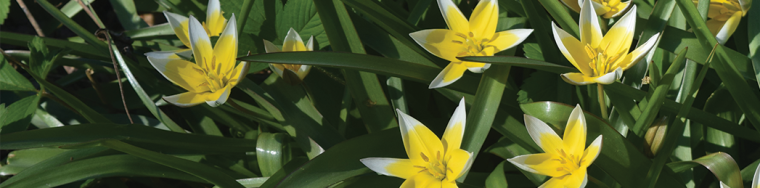
Tulipa praestans 'Unica' and Tulipa turkestanica
Tulipa praestans ‘Unica’ and Tulipa turkestanica

Fortunately, I can always enjoy spring in digital form at any time. And I can come up with lists of plants to buy. What do you do to keep winter from driving you crazy? Or do you even need to?