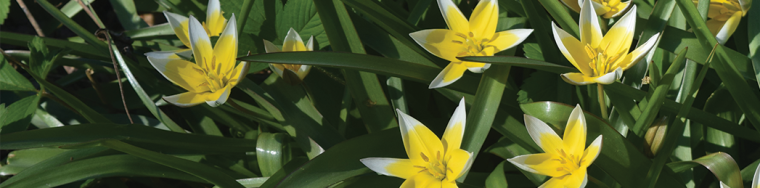
Bees Love Crocus, and so do I

When I was little there was a corner planted with crocus that I would pass on my way to school. In my mind the appearance of those bright yellow, purple, and white blooms marked the true beginning of spring. Since then I have always had a soft spot for crocus. (By the way, I checked and the plural of crocus is either crocus or croci, and croci sounds weird.)

2014-04-06 13.15.42 crocus and honeybees
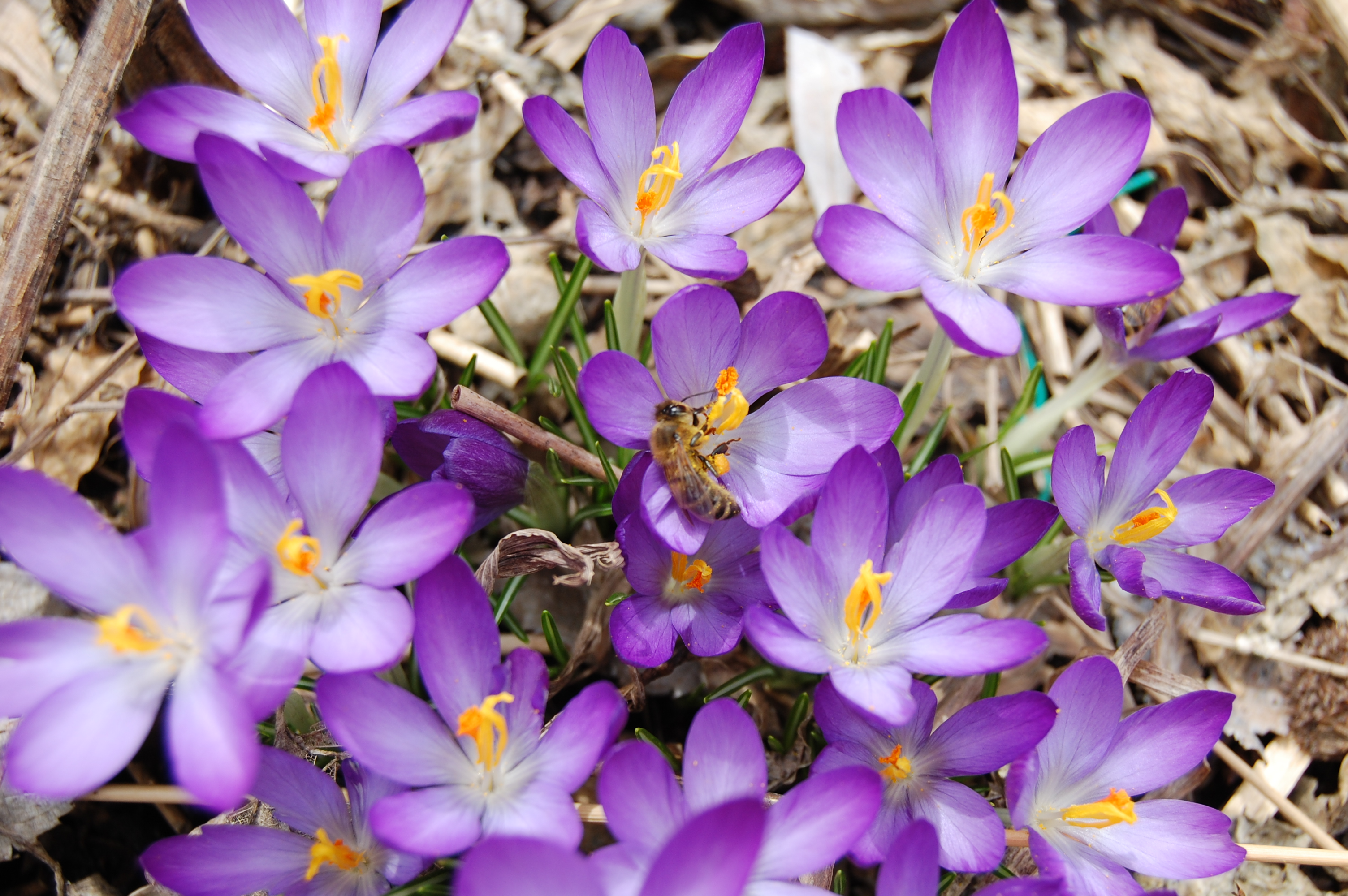
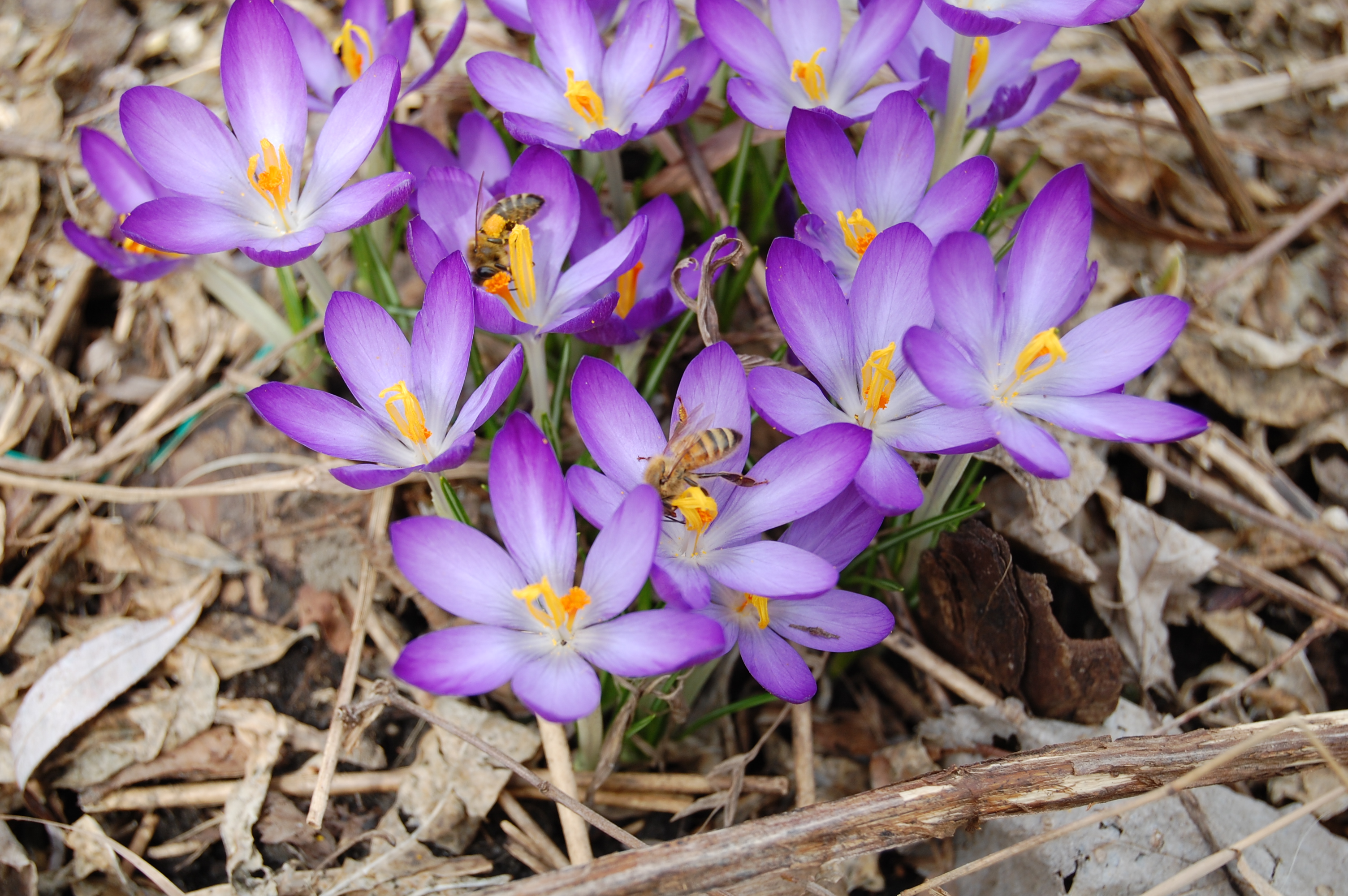
Bees and a clump of tommy crocus. That one in the upper left has been captured in mid-flight.

Crocus have now joined snowdrops as the only blooms in my garden. Not all – just the ones in the warmest spots.  They are covered with bees, who are either very hungry and/or sick of a diet of nothing but snowdrops. Judy spent a bunch of time this morning photographing the bees on the crocus.

Tommy crocus and  bees
Tommy crocus and bees

These are tommy crocus (Crocus tommasinianus). Tommies have the advantage of being less delicious to rodents than other crocus. They have the disadvantage of a more limited color palette, coming pretty much only in purple or lilac.

Tommy crocus and bees

I really like the picture above. See that bee flying near the center of the photo?

2014-04-06 13.18.02 tommy crocus and bees

OK, here’s just one more. This gives a really nice view of the stamen and pistils.

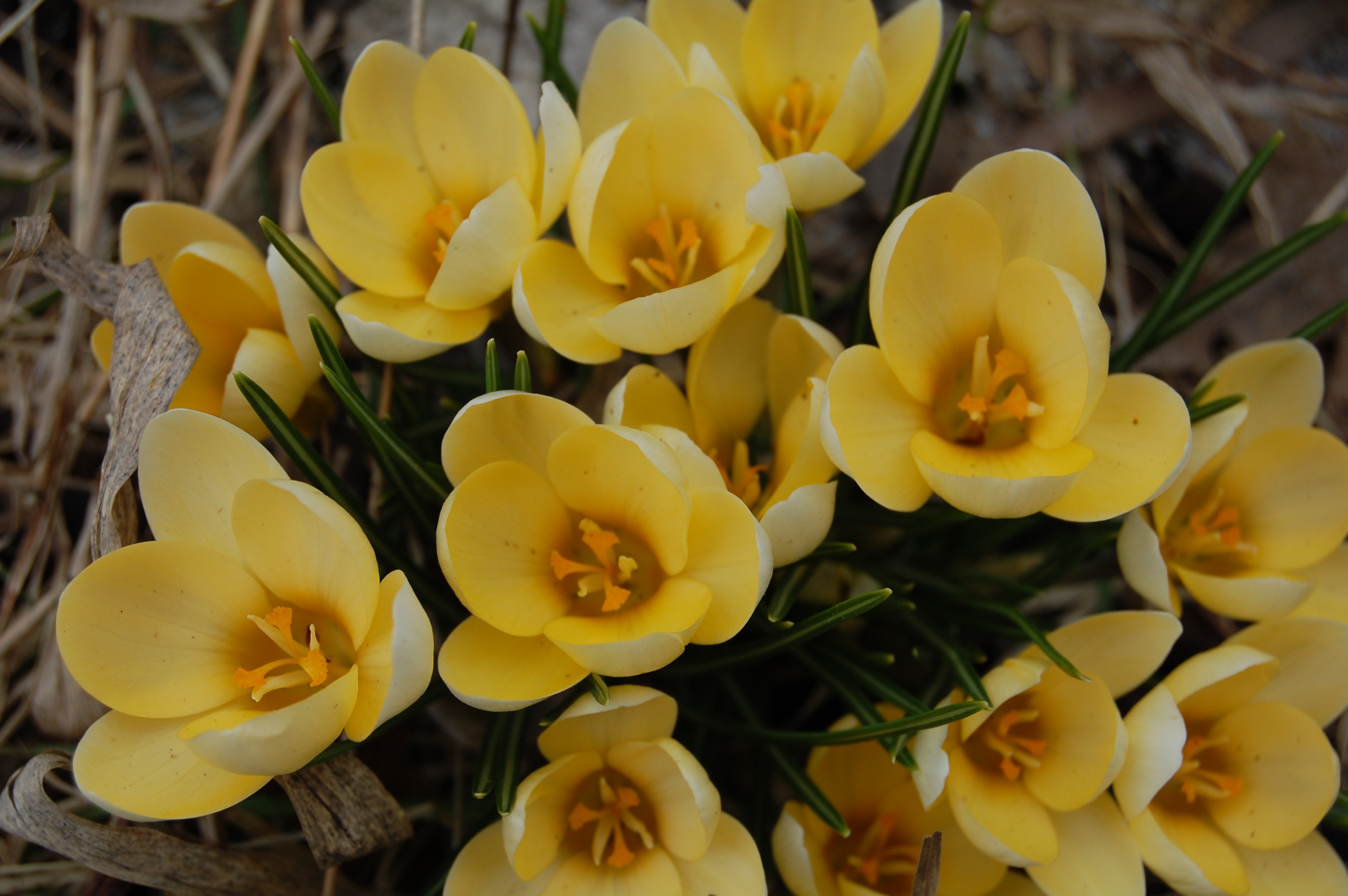
Clump of yellow crocus.

Here’s a clump of yellow spring crocus (Crocus chrysanthus). Unfortunately, crocus (except for the tommies) is like apple pie and ice cream to rabbits and squirrels. In my back garden they almost always get eaten before they bloom. However, I’ve noticed that the spring crocus I plant along the sidewalk remain unmolested. I’m guessing that the rabbits are too nervous to eat so close to the street and sidewalk.

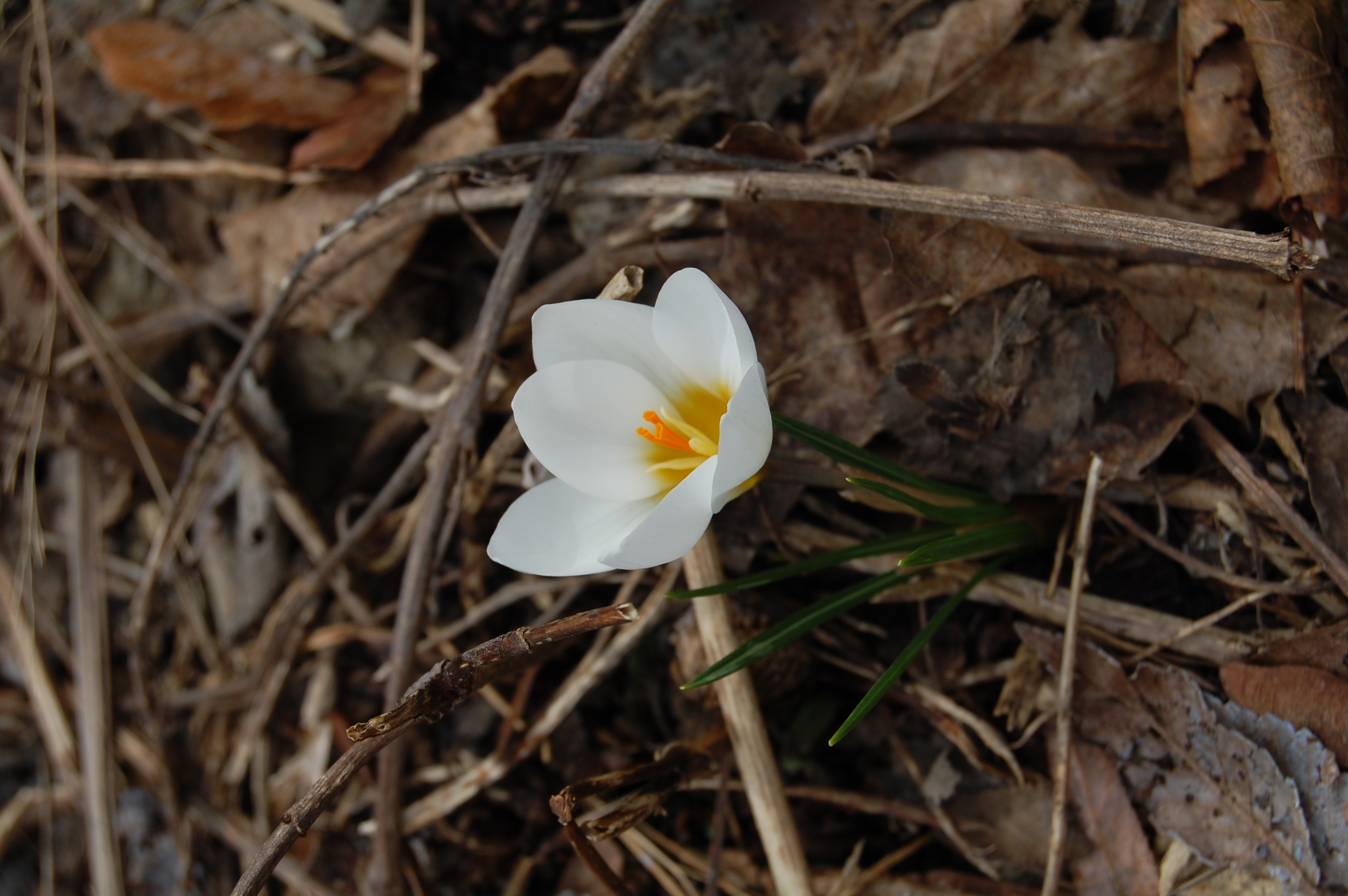
White spring crocus.

Crocus can spread fairly quickly if the rodents don’t get at them. But sometimes squirrels dig up a crocus corm, replant it for later noshing, and then forget about it. That explains this lone white crocus. Give it a few years and it will make a nice clump.

Do you like crocus? Do you grow them in your garden?
Reason to Bee Hopeful?

There is an article in the most recent Science section of the New York Times on efforts to fight the worrisome decline of bees. The focus is on increasing the availability of plants in agricultural areas that provide forage for pollinators.

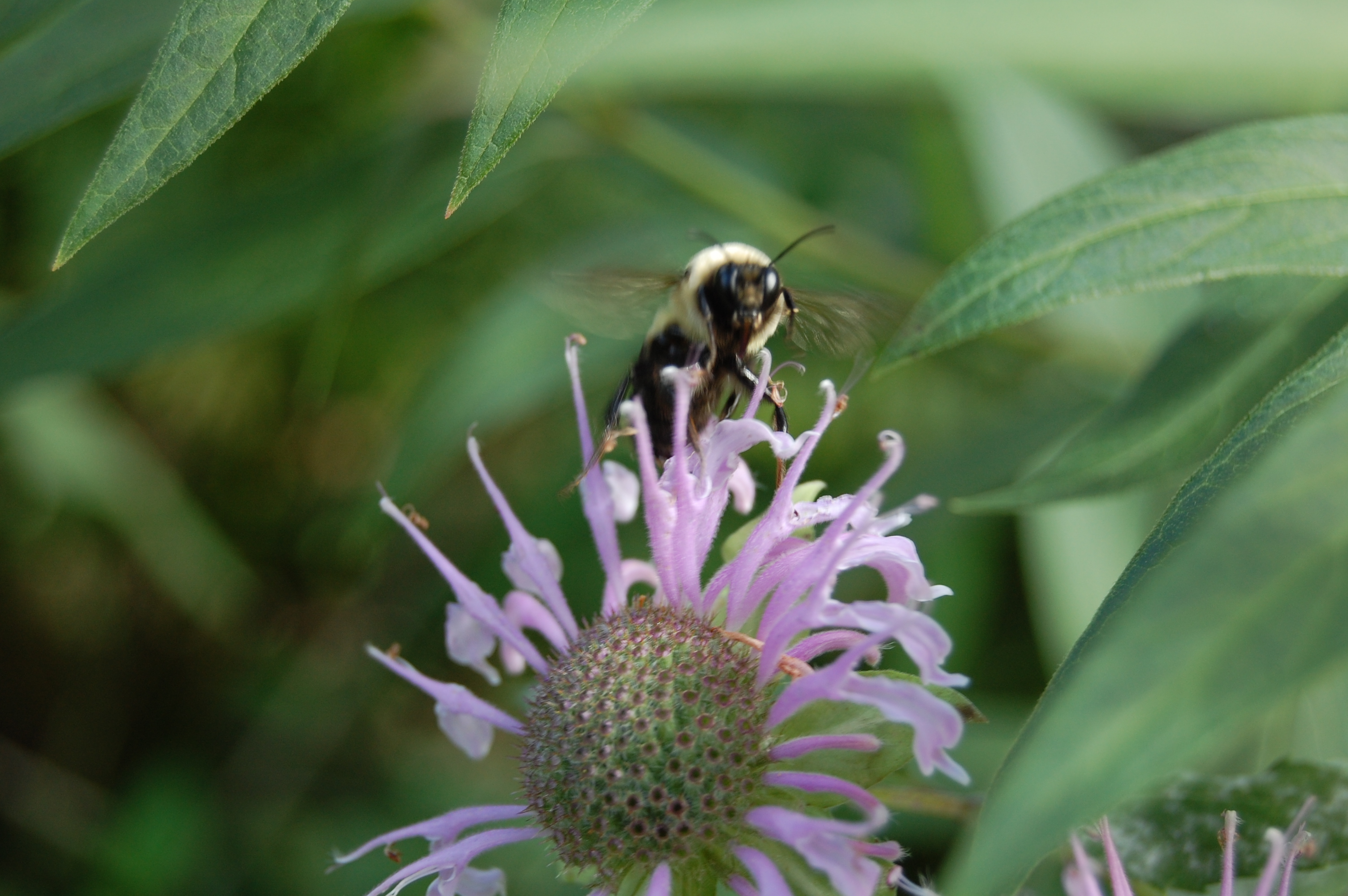
Bumble Bee, Wild Bergamot
Bee foraging on Wild Bergamot

In California, researchers are testing native plants for use in hedgerows or among crops. In the Upper Midwest, there is a modestly funded federal project aimed at promoting alfalfa and other cover crops, as well as leaving more land fallow along fence rows.

The decline of bees is not entirely understood, but it seems that neonicotinoid insecticides are a big part of it. Parasites and disease may also play a role. So why is the focus on expanding food sources for bees? According to Jeffrey Pettis, lead bee researcher at the Agricultural Research Service, better fed bees will be more able to resist threats in the environment: “If they have a good nutritional foundation, they can survive some of the things they are faced with.”

This may be true, but I have to wonder if restricting or banning the use of neonicotinoid pesticides would be more effective. According to a report that reviews all the studies done on this subject, these pesticides are highly toxic to bees and persistent in plants and the environment. There is no direct evidence linking neonicotinoids to Colony Collapse Disorder among bees, but there is some evidence that they make bees more vulnerable to parasites and disease.

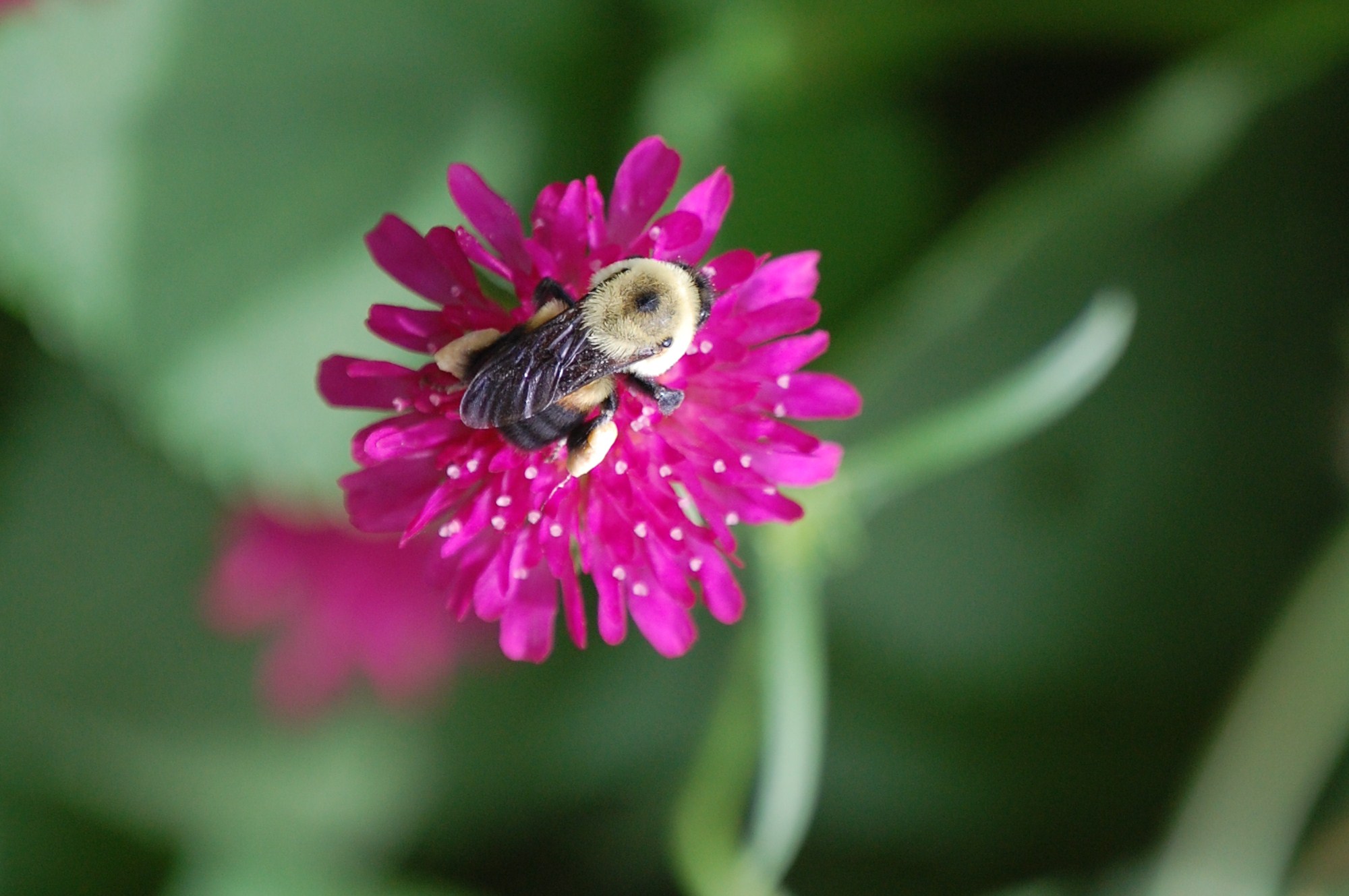
Bumblebee on knautia


Recommended manufacturer application rates for neonicotinoid products sold to homeowners are up to 120 times the approved rates for agriculture – and there is frequently no warning of the risk to bees.

Pesticides for the home garden that include neonicotinoids are marketed under a variety of trademarks, including:

  • Bayer Advanced 3-in-1 Insect, Disease, & Mite Control
  • Bayer Advanced 12 Month Tree & Shrub Insect Control
  • Bayer Advanced 12 Month Tree & Shrub Protect & Feed
  • Bayer Advanced Fruit, Citrus & Vegetable Insect Control
  • Bayer Advanced All-in-One Rose & Flower Care concentrate
  • DIY Tree Care Products Multi-Insect Killer
  • Ferti-lome 2-N-1 Systemic
  • Hi-Yield Systemic Insect Spray
  • Hunter
  • Knockout Ready-To-Use Grub Killer
  • Lesco Bandit
  • Marathon
  • Merit
  • Monterey Once a Year Insect Control II
  • Ortho Bug B Gon Year-Long Tree & Shrub Insect Control
  • Ortho MAX Tree & Shrub Insect Control
  • Surrender Brand GrubZ Out
  • Bayer All-In-One Rose and Flower Care Granules
  • Green Light Grub Control with Arena
  • Flagship
  • Maxide Dual Action Insect Killer
  • Meridien
  • Ortho Flower, Fruit, and Vegetable Insect Killer
  • Ortho Rose and Flower Insect Killer
  • Green Light Insect Control with Safari 2G
  • Safari
  • Transect
  • Zylem 20SG Turf Insecticide

The issue comes down to money, as it so often does. As with other environmental issues, immediate economic benefit tends to trump long-term risk, even if the risks are potentially catastrophic. Fortunately, there are some who are working to overcome such short-sighted thinking.

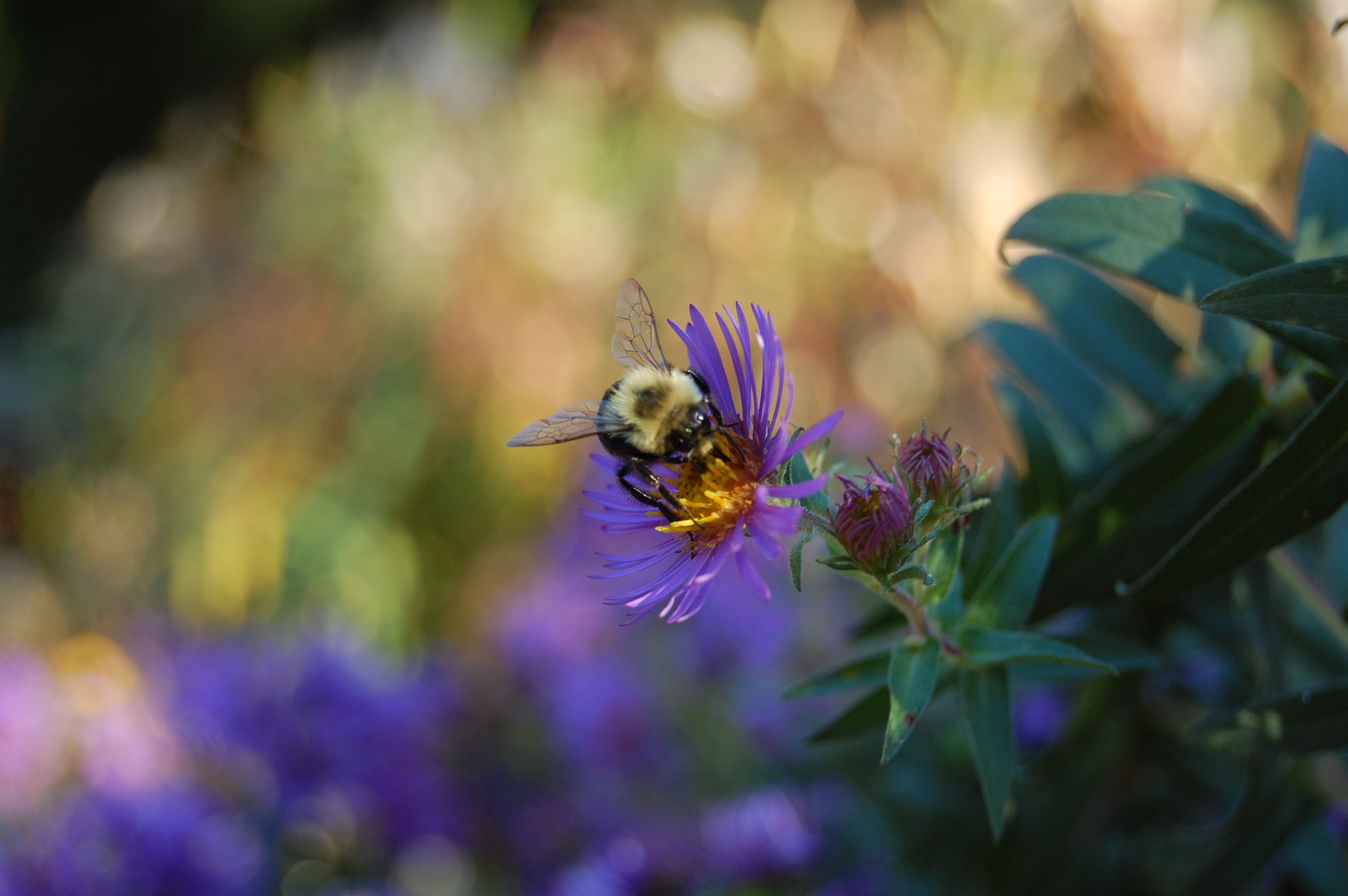
Bumblebee on New England Aster

For instance, some farmers are taking a longer view. The NYT article profiles a California vineyard that plants hedgerows and bee-friendly plants among the vines. The owner expects these techniques to pay for themselves eventually, even if they haven’t yet.

Do you think use of neonicotinoids and other insecticides should be more restricted than it is now?

Another Reason I Don’t Buy Plants at Home Depot

So this past Saturday I headed to my local Home Depot to buy some of those big brown paper yard waste bags. It was a cold day, about 33 degrees, and the ground was still frozen – but warm enough for some spring clean up.

home depot spring

But Home Depot wasn’t going to be distracted by the local weather and soil conditions. Because it was SPRING, which means it’s time to sell plants. And there they were, shelf after shelf of plants of all kinds. Now, I suppose the pansies and other early spring annuals can be excused. People can keep them outside until the ground thawed, or put them in containers.

Inexcusable
Inexcusable

But this was inexcusable: pincushion flower (Scabiosa columbaria) – already in bloom. Now in a normal year pincushion flower in Chicago might bloom in May. In this abnormal year I doubt they will be in flower before June. Where did they ship these in from, Venezuela?

I felt like lodging a complaint with the SPCPG (Society for the Prevention of Cruelty to Plants and Gardeners). What happens when a homeowner hacks a hole out of the frozen earth as a new home for one of these innocent perennials? I really don’t want to think about it.

And they claim on TV to offer expert gardening advice?

Am I the only person driven crazy by this?

Oh, and they didn’t have any brown paper yard waste bags in stock.


Spring is Sprung

This past weekend was the first to really feel like spring. Saturday started cold and cloudy, but improved when the sun came out. And Sunday was even – dare I say it? – nice.

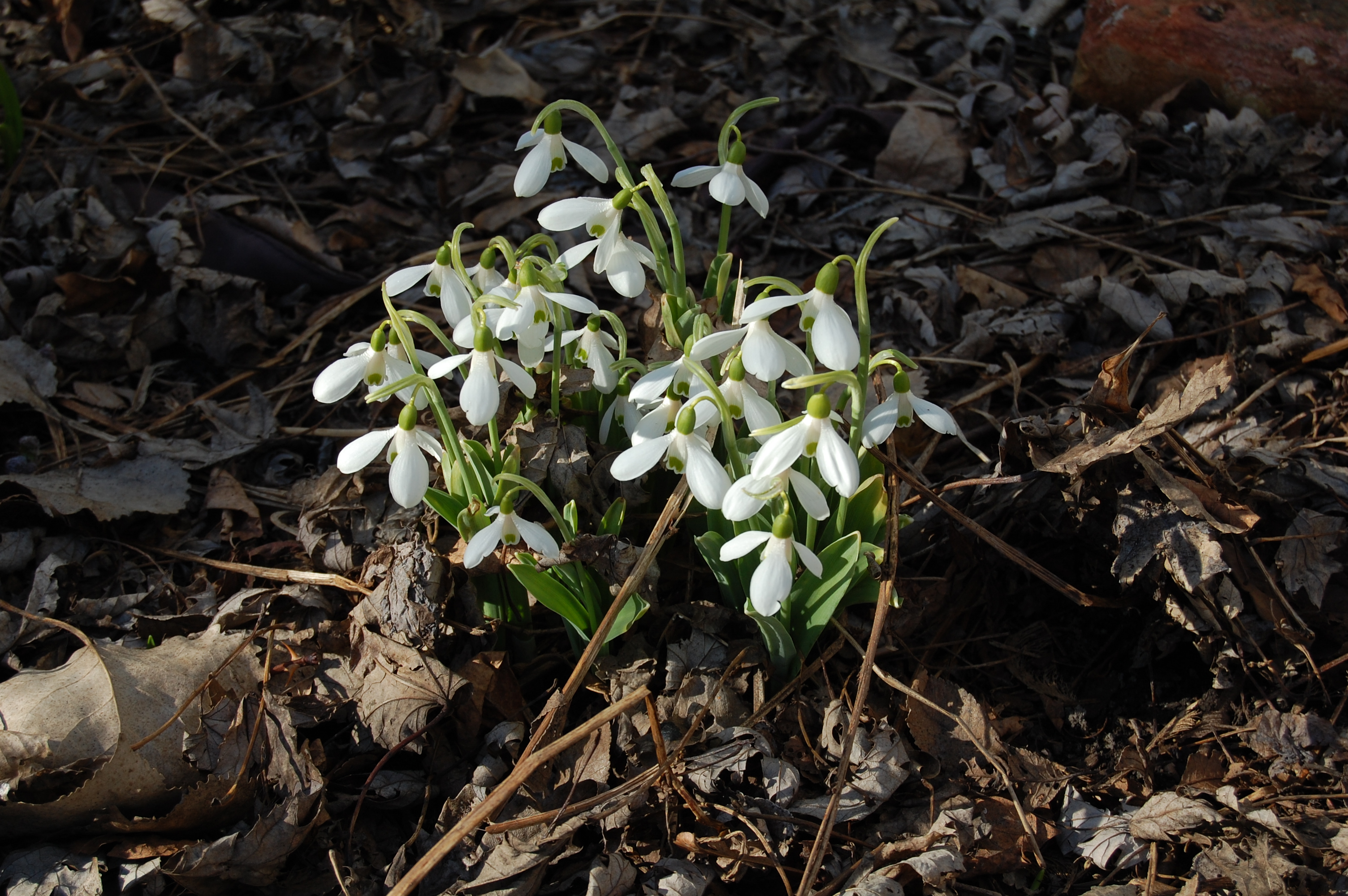
Snowdrops
Snowdrops

The snowdrops (Galanthus nivalis and G. elwesii) are blooming and it was warm enough for them to open up their little white tepals.

2014-03-30 17.43.36 snowdrops

They are forming a nice drift near the old silver maple (Acer saccharum) stump.

Bee with Snowdrops
Bee with snowdrops. If you look closely you can see one of the antennae against the white tepal.

The bees were all over the snowdrop blooms, in fact I have never seen so many bees on the snowdrops. Poor little guys, there is hardly anything else to forage on in this late, cold spring.

Bee climbing inside a snowdrop.

Judy had a hard time getting pictures of the bees because they were mostly up in the flowers themselves.

Daffodils, emerging rather pale.

Other bulbs are also emerging. You can see daffodil leaves poking through the soil, looking a bit jaundiced from being covered with snow until recently.

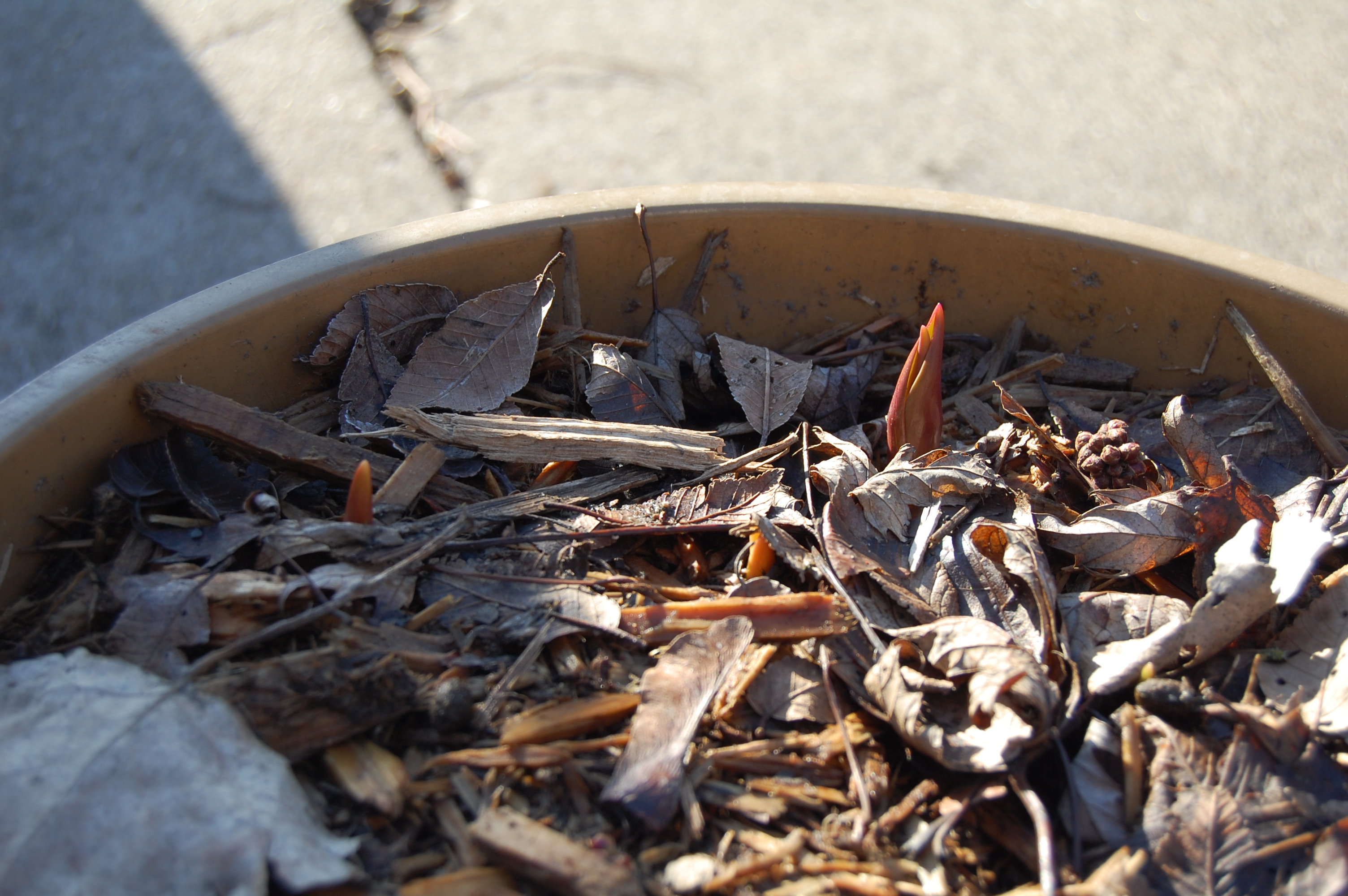
Tulips emerging from a container.

Early tulip foliage is also up, both in my containers and in the beds.

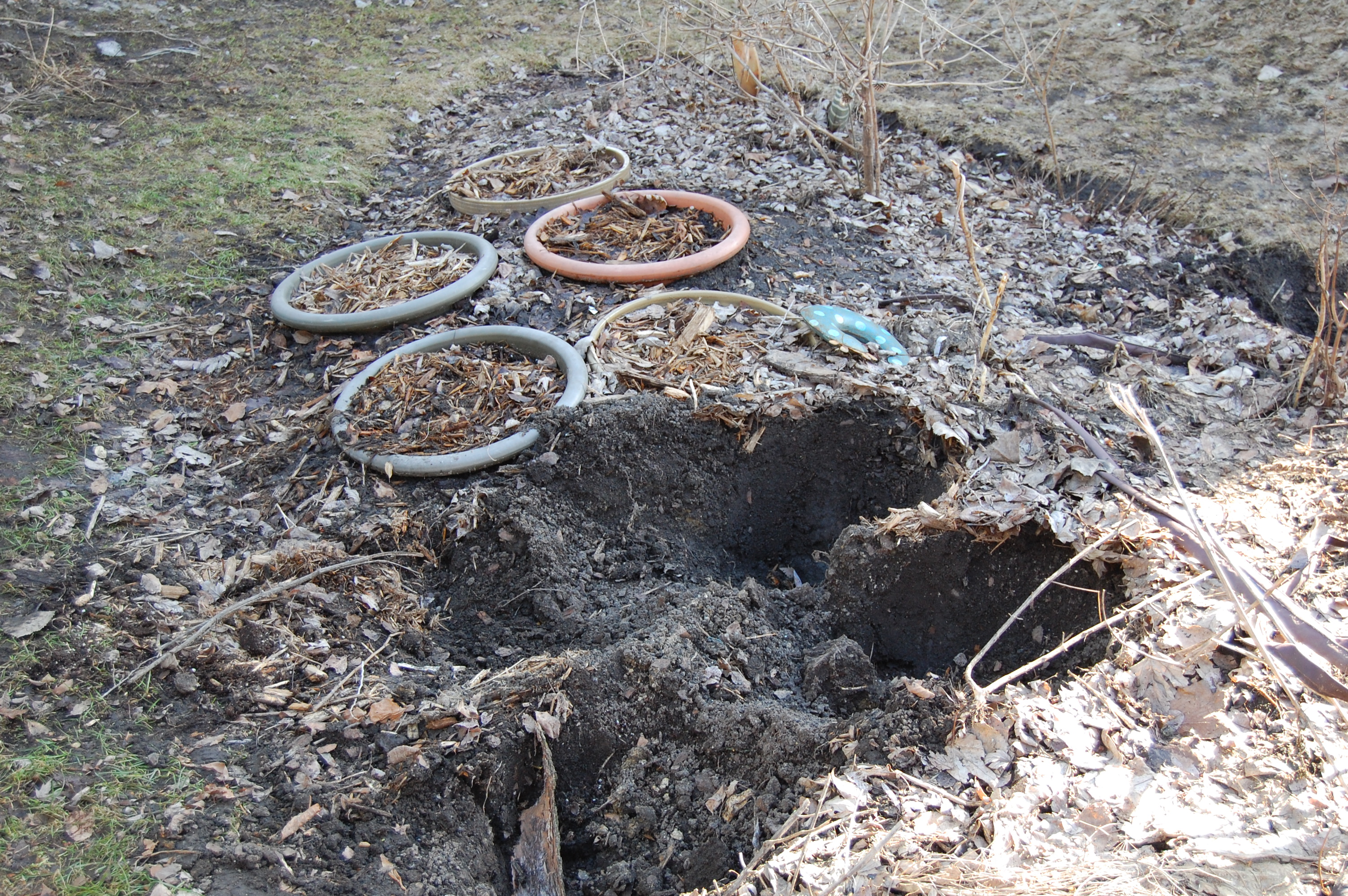
Tulip container excavation.

I actually dug up five of the ten containers planted with tulips (cracking one of the fiberglass ones in the process). I’ll get the rest next weekend.

The driveway border after spring cleaning.

Spring clean up got off to a good start. I had hoped to clear the parkway, driveway border, sidewalk border, and island bed  in the front garden. It all got done except for the island bed, which I wasn’t able to finish.


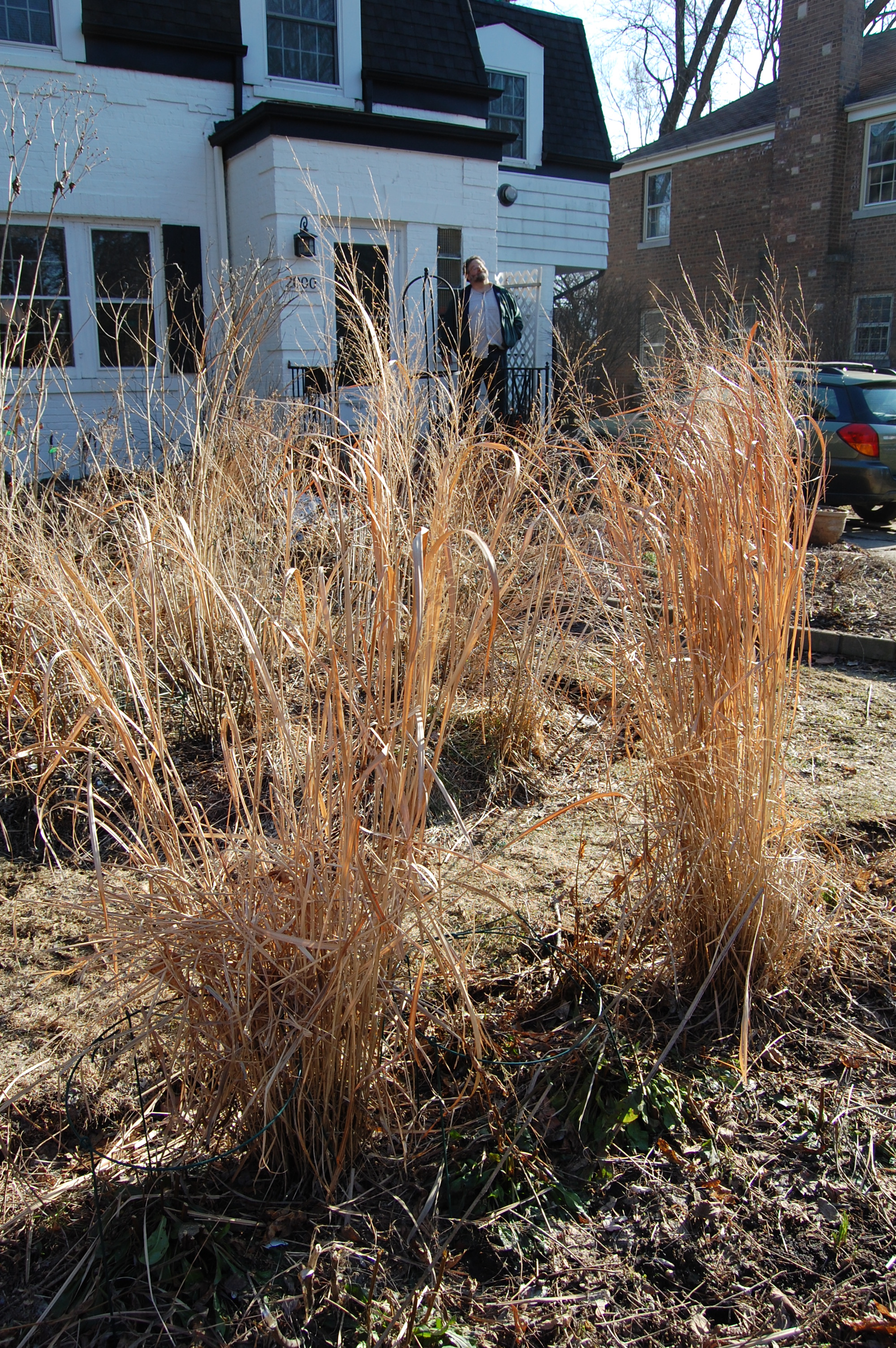
'Northwind' switchgrass, still standing.
‘Northwind’ switchgrass, still standing.

The ‘Northwind’ switchgrass (Panicum virgatum) managed to stay mostly upright through this horrible winter. It looks so good now, burnished with tones of red, that I had to leave it up for another week or two. Please ignore the sight of me standing on the porch with my shirttail out. Judy says that was an accident. Uh huh.

Did you get to spend some quality time with your garden this weekend?

Now’s the Time to Put Up Birdhouses for Black Capped Chickadees

The guy at the Wild Birds Unlimited store says that, despite the cold, black capped chickadees in the Chicago area are nesting right now. If I were a chickadee I’d think about a postponement, but the folks at WBU generally know their birds.

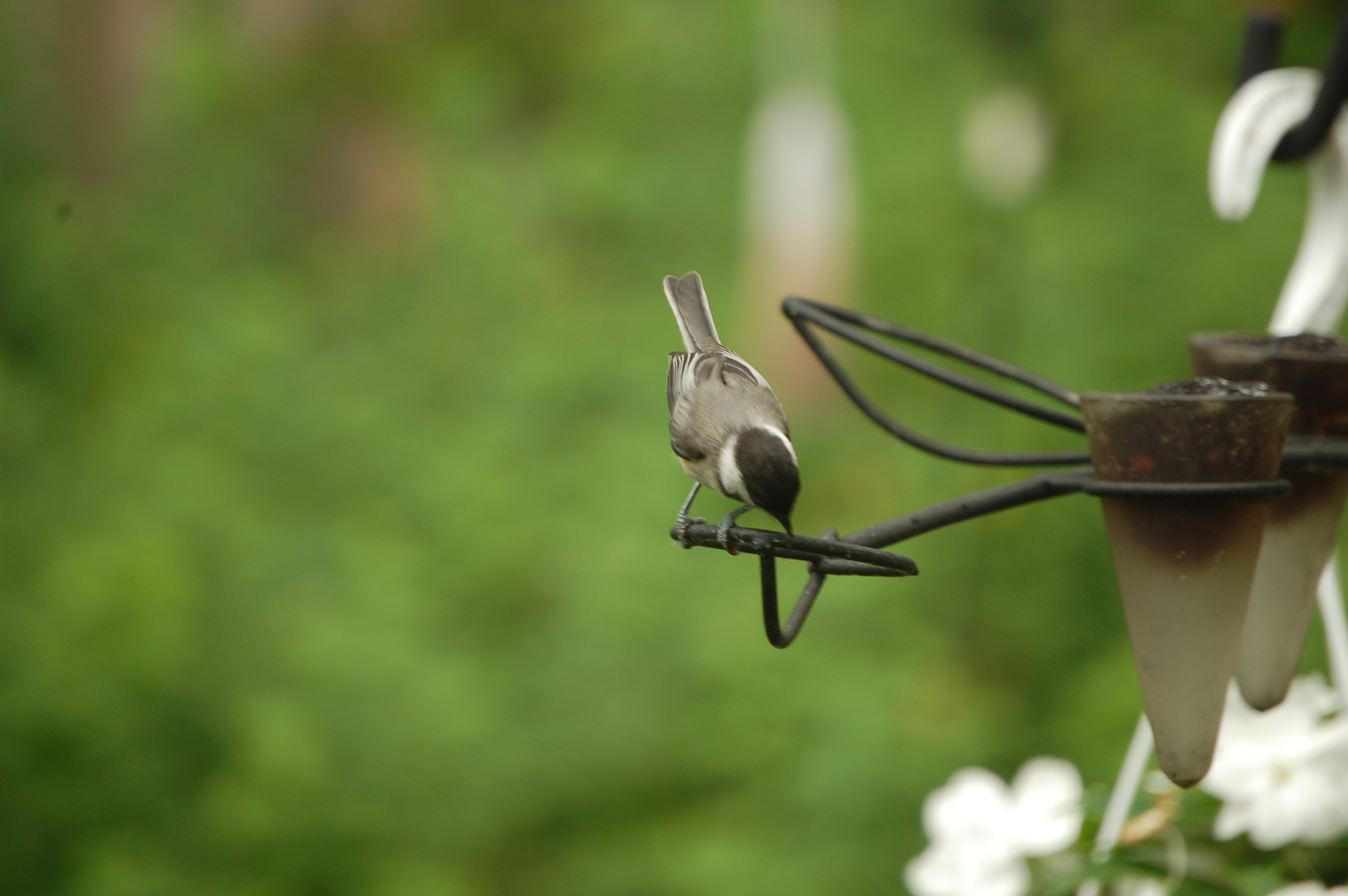
Chickadee
Black Capped Chickadee

Chickadees are such endearing birds, how can you not want to provide them with a home? Admittedly, their plumage is not the most colorful. However,  they have great personalities: cheeky, energetic, and friendly. They don’t fly off when a person approaches them, and sometimes will even eat out of your hand.

Plus they have a very distinctive call that is sometimes lyrical and at other times sounds like someone saying “Dee-Dee-Dee” through a PA system. Click on the link below to see what I mean.

Black capped chickadees live year-long  in a wide swath from Newfoundland down to Viriginia, then west to Alaska as far south as Oregon.

I’ve got a birdhouse for chickadees, but it doesn’t have a very happy history. Two years ago it was hung from the branch of a Japanese yew and was almost immediately occupied by a nesting pair. It then fell to the ground and was abandoned. Last year I hung it again but there were no takers, and over the winter it again fell to the ground.

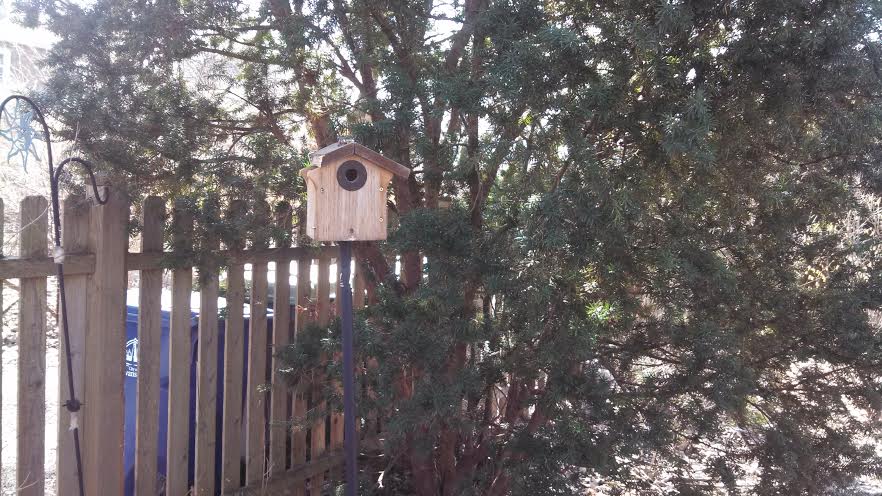
My chickadee house, now on a pole. Oh, and I did fix the roof.

Today there was a half price pole for mounting birdhouses on sale at WBU. I bought the pole and set it up with the birdhouse when I got home, which wasn’t easy because the ground was frozen (I had to pour a pot of hot water to soften it up).

Please note that if you do set up a birdhouse for chickadees, you need to buy a metal plate to keep predatory birds from enlarging the hole in order to get at the nest.

Do you have any birdhouses in your garden?

Flop! (in the name of love)

There is an article in the April issue of Fine Gardening entitled “Big Blooms That Don’t Flop”. Actually on the cover it says “36 Big Blooms That Don’t Flop”, but the article only lists eight plants. The editors at Fine Gardening shouldn’t feel bad about this mistake, I’ve done the same thing several times. You start writing a post about the top 1o flowers for compacted soil in total darkness and as you write you realize there are no flowers that grow in compacted soil in total darkness, but by then you’ve already written the post title and you forget to go back and change it.

Joe Pye weed 'Gateway' and cup plant, two big floppers. These are the ones that need the 10' rebar.
Joe Pye weed ‘Gateway’ and cup plant, two big floppers. These are the ones that need the 10′ rebar.


Anyhow, I am keenly interested in the subject of flopping plants. On the one hand, I like plants that are very tall and plants with big blooms (or masses of smaller blooms). These plants tend to flop, or at least lean at an acute angle. And when I see plants flopping or leaning, I have an uncontrollable desire to get them to straighten up. This is one area where my generally informal, relaxed style of gardening is not so relaxed.

As a result, I spend a lot of time staking, propping up, and cutting back. There is an arsenal of stakes and hoops – up to and including 10′ lengths of rebar – hanging out in my garage right at this moment, which will be deployed as the season progresses.

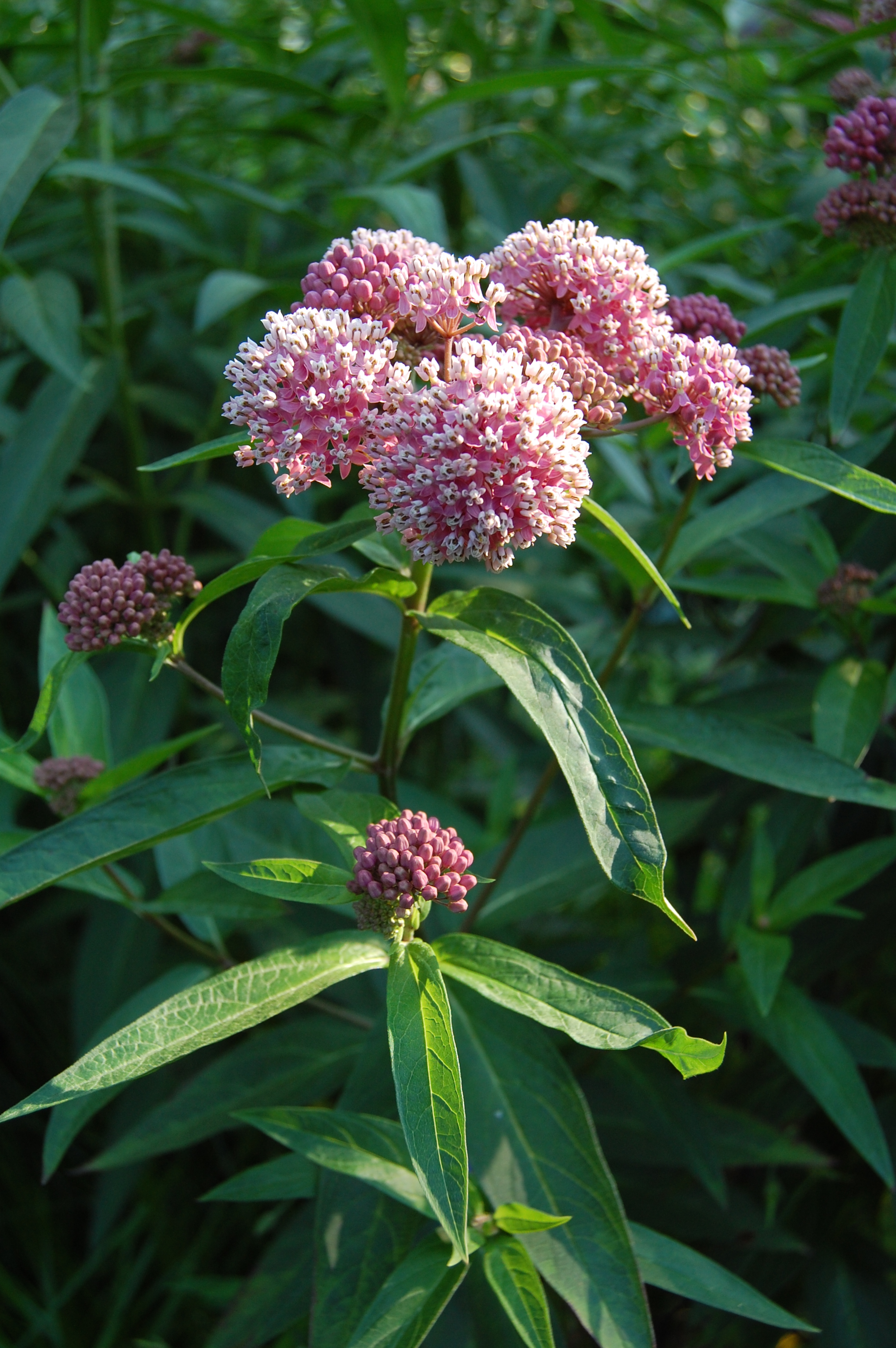
Swamp milkweed grows to about 5' and needs staking.
Swamp milkweed grows to about 5′ and needs staking.

In my experience, almost all big plants flop, and I have just accepted this as a fact of life. Naturally, the tendency to flop varies with conditions. I get a lot more flopping because the soil in my front garden is fertile with an a very high organic matter content. This makes plants accustomed to a leaner soil particularly prone to flopping.

Asclepias incarnata 'Ice Ballet'
Swamp milkweed ‘Ice Ballet’ grows to 3-4′ and also needs staking.

You can try more compact cultivars but often these will still need staking. For example, the straight species swamp milkweed (Asclepias incarnata) grows to about 5′ in my garden and needs staking. The cultivar ‘Ice Ballet’ grows to 3-4′, and also needs staking, though it can make do with a shorter stake.

To some degree you can control flopping by cutting back, and as I mentioned this is something that I do. However, to really keep plants upright over the long haul you often have to cut back more than once, and I am reluctant to do this as it can delay blooming more than I would like.

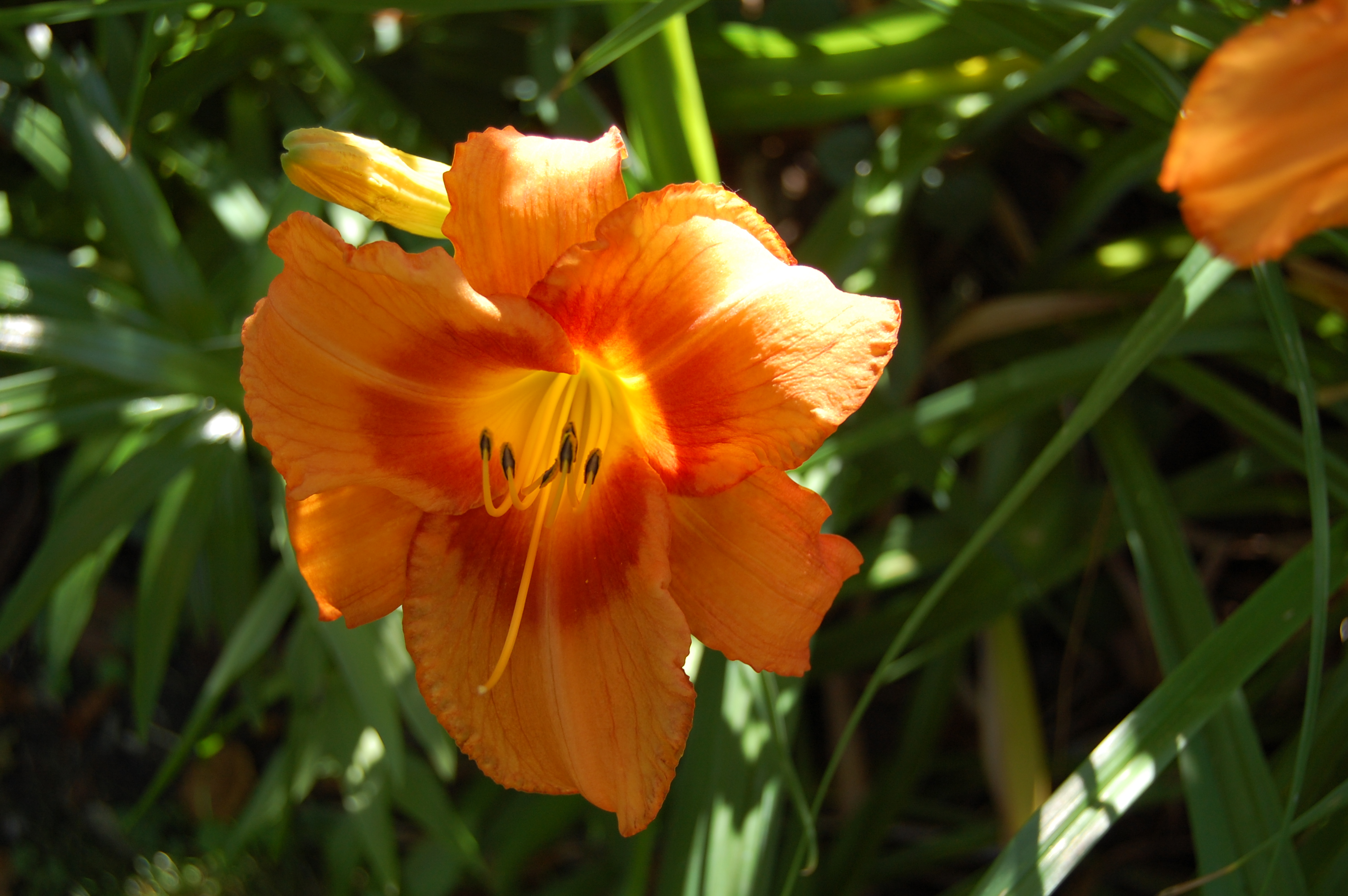
Daylily 'Aye-yi-yi', one of the few who are truly upright.
Daylily ‘Eye-yi-yi’, one of the few who are truly upright.

There are very few medium to tall perennial plants in my garden that are consistent non-floppers. There are the daylilies (Hemerocallis), such as the cultivar ‘Eye-yi-yi’. And there is ‘Northwind’ switchgrass (Panicum virgatum).

I have little to no experience with the non-floppers listed in the Fine Gardening article. These are goatsbeard (Aruncus dioicus), ‘Cleopatra’ foxtail lily (Eremerus x isabellinus), ‘African Queen’ trumpet lily, ‘Hillside Black Beauty’ bugbane (Actaea simplex), ‘Turkenlouis’ oriental poppy (Papaver orientale), ‘Arizona Sun’ blanket flower (Gaillardia), ‘Luna White’ Hibiscus (Hibiscus moscheutos), and sedum ‘Beach Party’.

The only one of these I have grown is bugbane (though I think a different cultivar). Unfortunately I put it where it did not get enough moisture and it died during a dry summer. As to these others, there are several I’d be interested in trying out if the opportunity arose. Also, my neighbor has goatsbeard and it is indeed a handsome plant of upright character.

Do you have a permissive attitude towards flopping plants? Are there any in particular that you admire for flop-resistance?

Getting to the Tuberous Root of the Matter

Botanists like to make things complicated. Because of this, an almond is not really a nut but a drupe, and watermelons are actually berries. (Look it up if you don’t believe me.) Similarly, not all things we think of as bulbs are really bulbs. They may be corms, rhizomes, tubers, or tuberous roots.

Tulipa praestans 'Fusilier'
Species Tulip ‘Fusilier’. Tulips are true bulbs.

This wouldn’t matter except for the risk of botanical humiliation. Say you are at a dinner party and you boast about the hundreds of crocus bulbs you planted. “They’re actually corms, not bulbs,” someone says, a patronizing smile playing upon their lips.

At this point you have several choices. You can pretend you meant to say corms all along. You can try to create a diversion by knocking over someone’s glass of wine. Or you can demand satisfaction for this insult: weed whackers at dawn.

Crocus vernus 'Twilight'
Crocus vernus ‘Twighlight’, Crocus are corms.

Better you should minimize the risk of violence and emotional trauma by getting clear on your bulbous structures.

This topic is on my mind because I just started a class at the Chicago Botanic Garden on hardy bulbs (and corms, etc.). The other night this subject was explained and I feel inspired to share my enlightenment with you. You’re welcome.

But before we get started I also want to share an amazing bulb fact. Did you know that if you plant bulbs at a less than ideal depth, the bulbs themselves will move to the spot they like best? They do this with contractile roots, which pull the bulbs through the soil. Don’t know about you, but that makes me feel so much better.

And now for the bulbous structures.

A true bulb.
A true bulb.

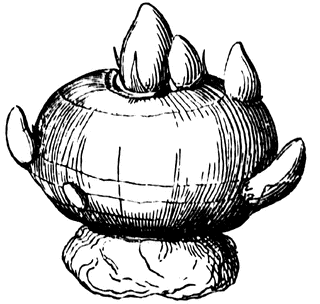
True bulbs. True bulbs are like miniature plants – if you cut them open, you’ll see a bud, stem, and foliage at the center. The bud is surrounded by scales that hold stored energy, and sometimes a papery tunic. The scales are held together by a basal plate. Tulips, daffodils, hyacinths, scillas, snowdrops, lilies, and alliums are all true bulbs.

Corm
Corm

Corms. Corms are hunks of stem tissue connected to a basal plate. The tissue is just tissue – a cross section will show no rings or parts. Roots grow from the basal plate. Corms live for only one year, but they replace themselves energetically.  Crocus, crocosmia, gladiolus, colchicums, and erythroniums are corms.

Dahlia tubers.
Dahlia tubers.

Tubers. Like corms, tubers are hunks of  stem tissue. Unlike corms, tubers are perennial. The stem portions sprout eyes and roots. Potatoes are tubers, of course, as are anemones and corydalis.

Tuberous roots.
Tuberous roots.

Tuberous roots. Like tubers except the mass is made of root tissue instead of stem tissue. How do we know? Stem cells have little bundles of vascular tissues around the periphery, root cells have vascular tissues in a central core. Got that? Me neither, but just say it with confidence while looking people straight in the eye. Dahlias, sweet potatoes, and eremerus have tuberous roots.

Rhizome
Rhizome

Rhizomes. Rhizomes are horizontal stems growing on or just below the surface. Important note: “horizontal” means you don’t plant rhizomes pointing down, which is something I did for years. Rhizomes include bearded iris, trillium, Solomon’s seal, hardy geranium, and canna lily.

So. Now you can amaze your friends at parties with your knowledge of bulbs and bulb-like plants. They may be edging away from you, but they will be amazed.

Weekend Garden Notes


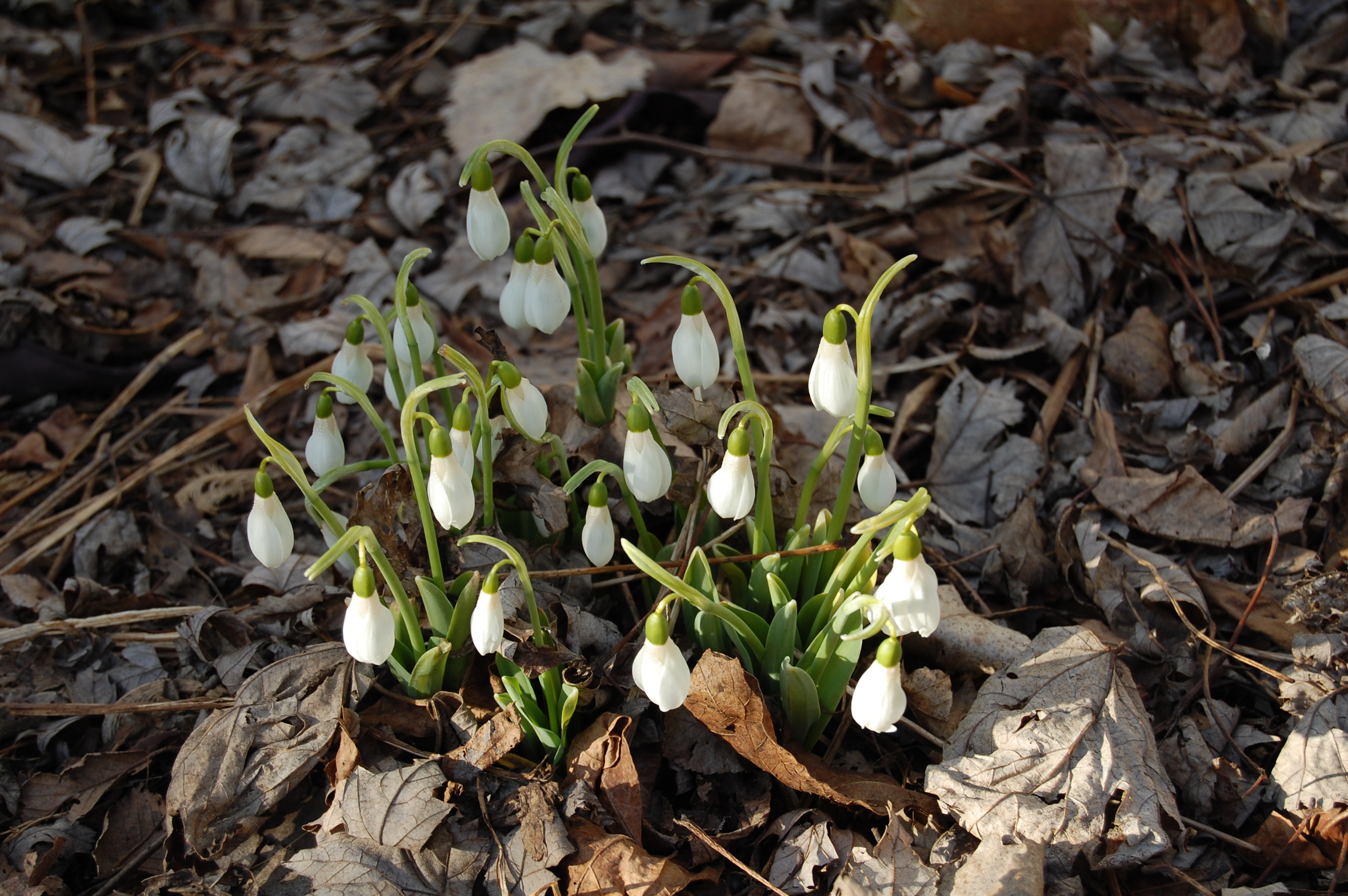
Snowdrops are blooming. It’s a relief to finally see the first snowdrops (Galanthus) in bloom. In 2012 they bloomed in February and were done by mid-March. This year they are just getting started.

Snowdrops in bloom.
Snowdrops in bloom.

I really should have kept track of the varieties I planted, but I didn’t so I can’t know which kinds are early and which are later.

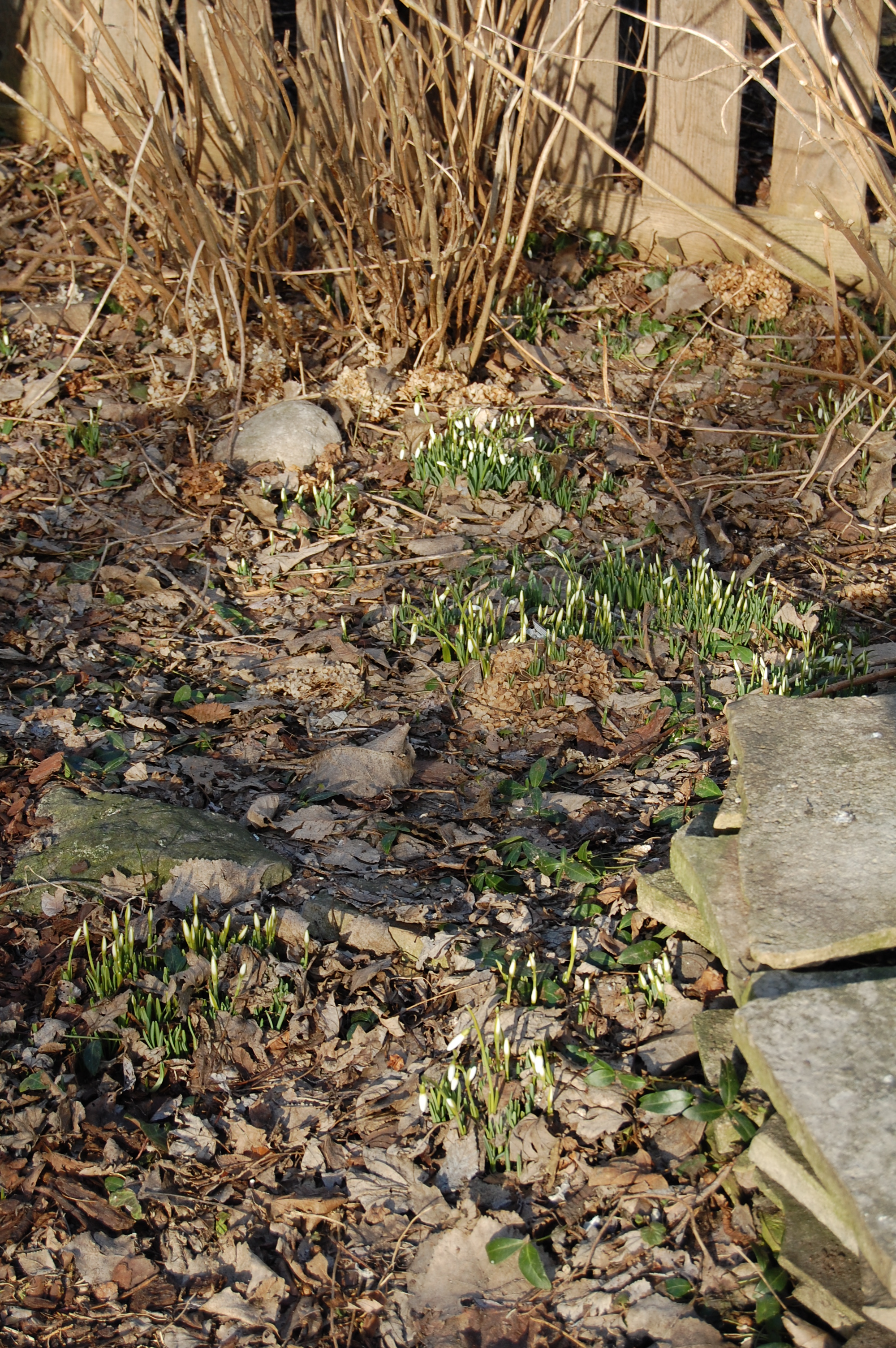
There are patches of snowdrops around the old silver maple stump - not yet ready to bloom.
There are patches of snowdrops around the old silver maple stump – not yet ready to bloom.

Right now there are a few clumps in bloom. There are larger clumps that are getting close to blooming. And there are others that are just now poking up out of the ground.

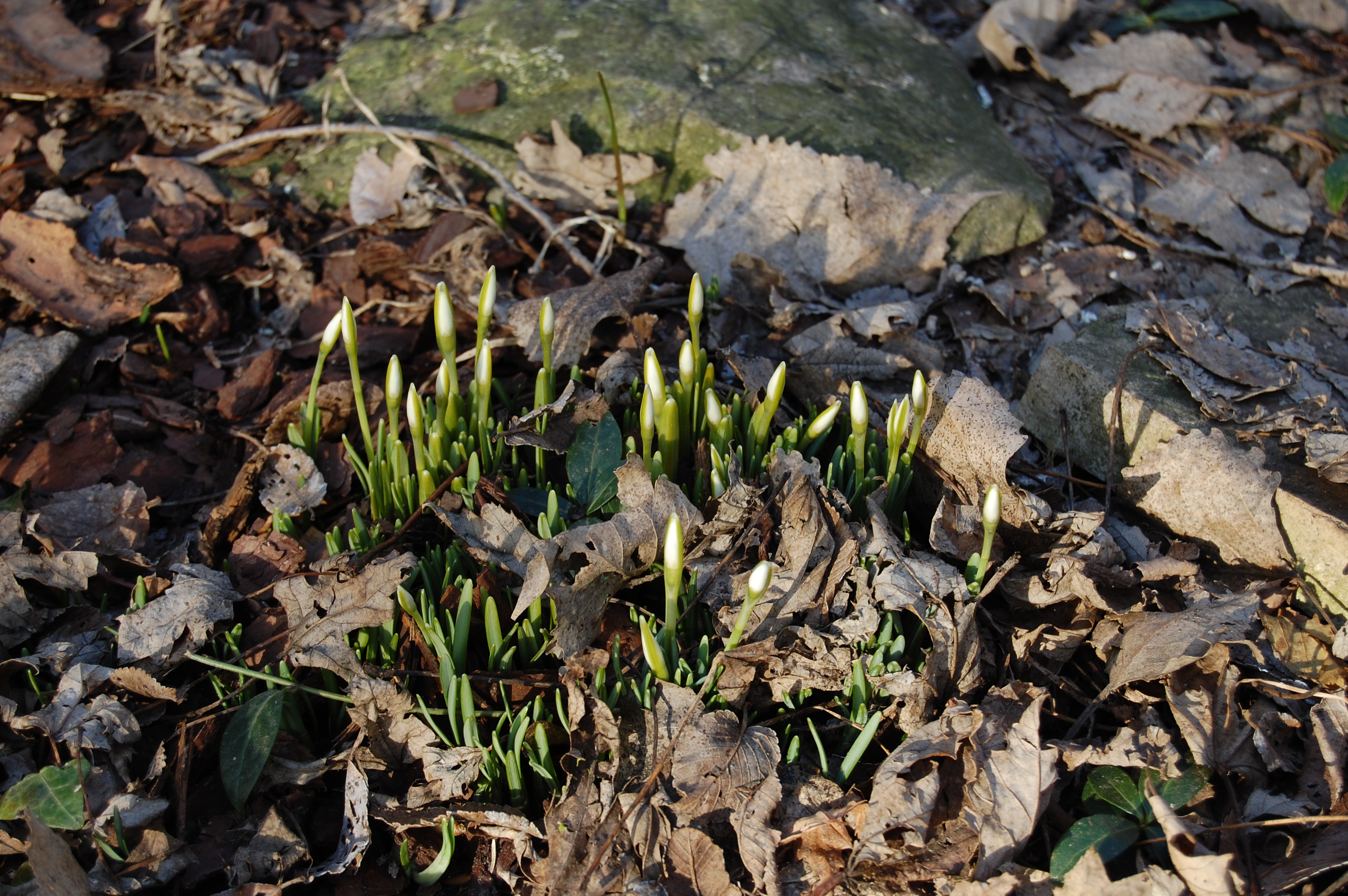
You can see the beginnings of the flowers, but these are not quite ready to bloom.
You can see the beginnings of the flowers here.

Regardless, it is a pleasure to see them, as they are the only blooms to be found at the moment.

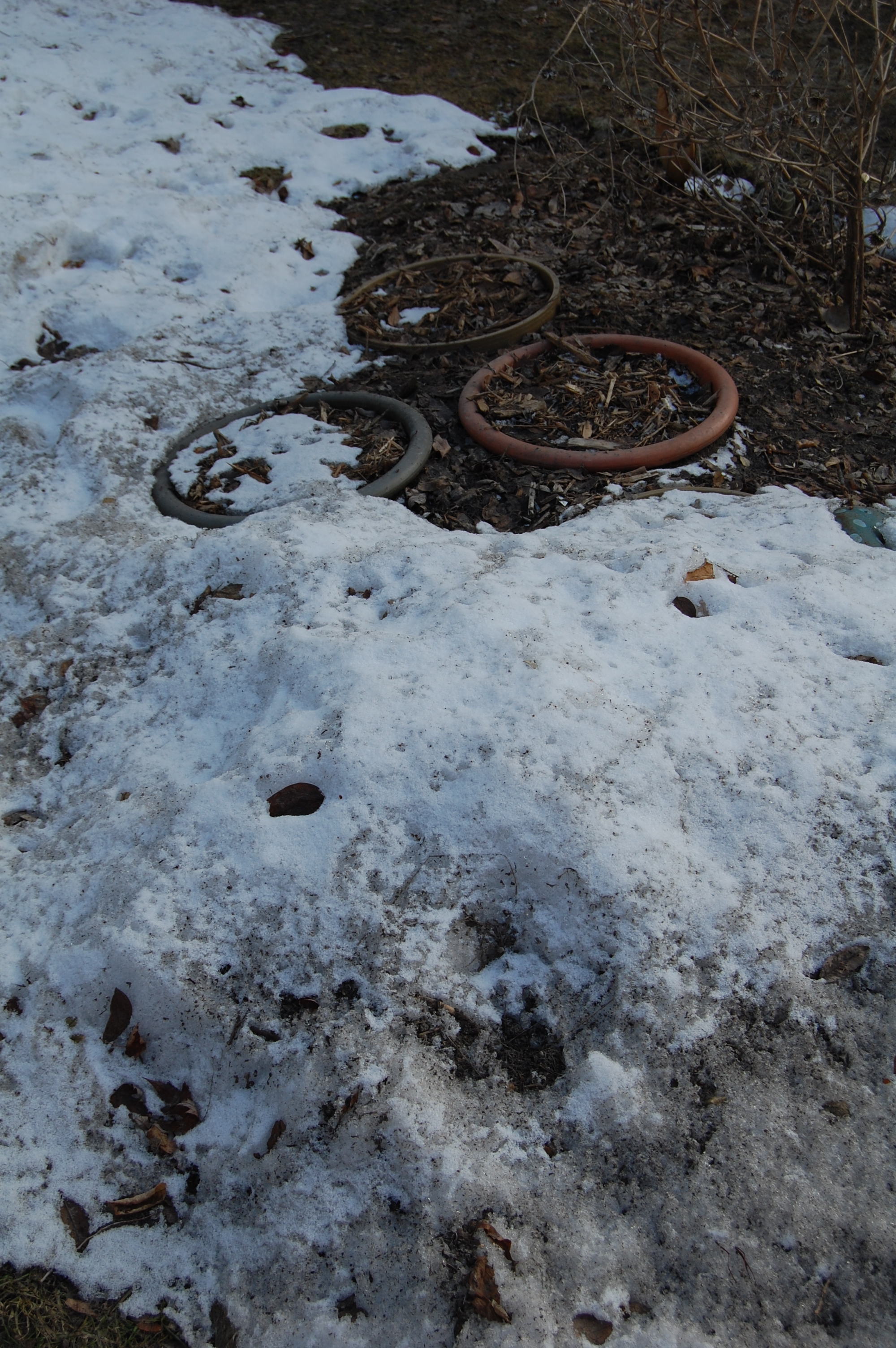
Reports of winter’s demise were a little premature. I may have jumped the gun in a recent post when I declared Victory over Snow. There are still patches of snow here in the front garden (north of the house). We even had a dusting of snow over Saturday night. However, based on the current weather report I am confident the snow will be gone by next weekend.

These are the containers planted with tulips that I buried last fall. Some are still covered by a couple of inches of snow.

The back garden is already snow-free, I’m glad to say.

The back garden, snow free.

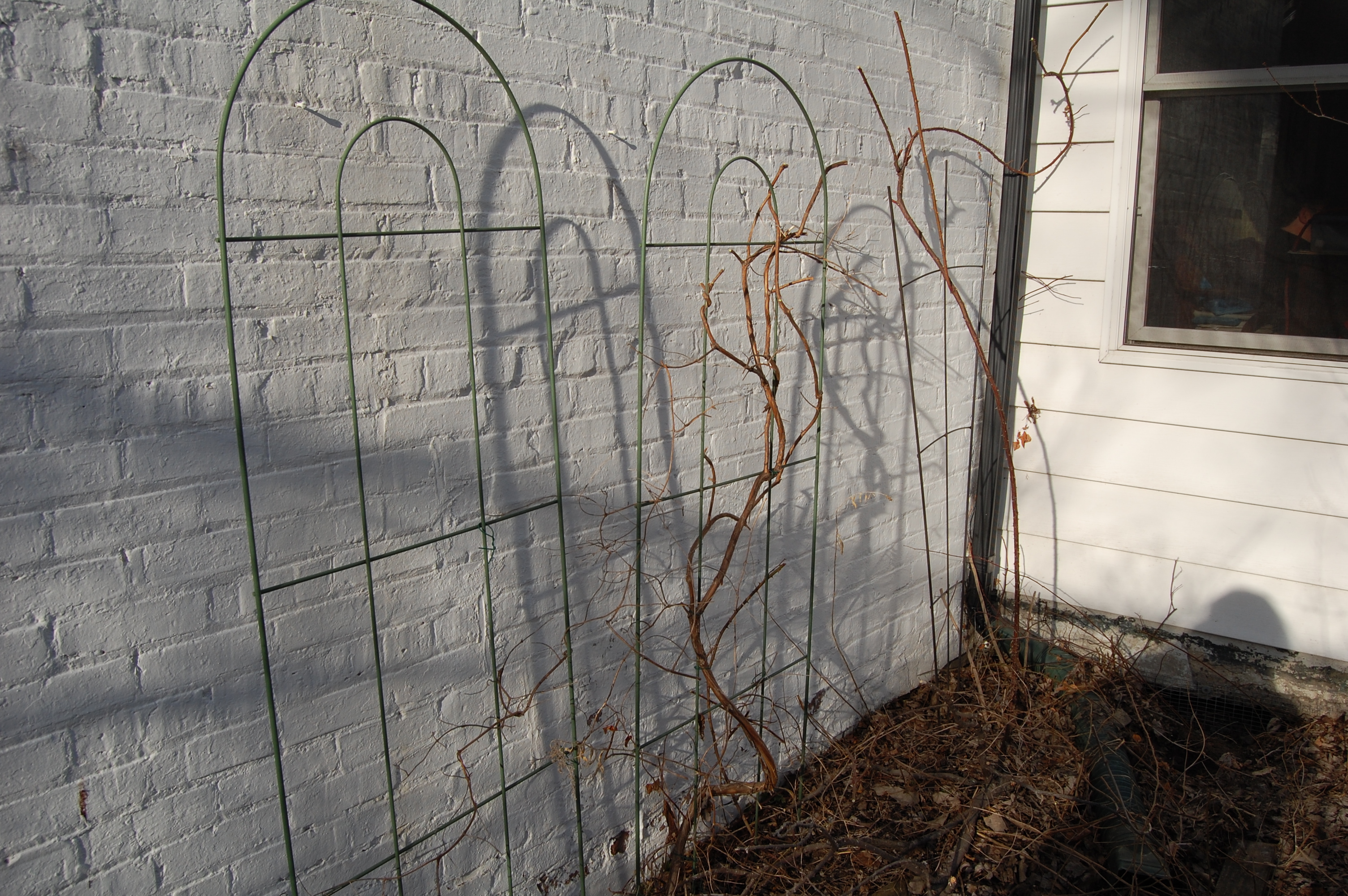
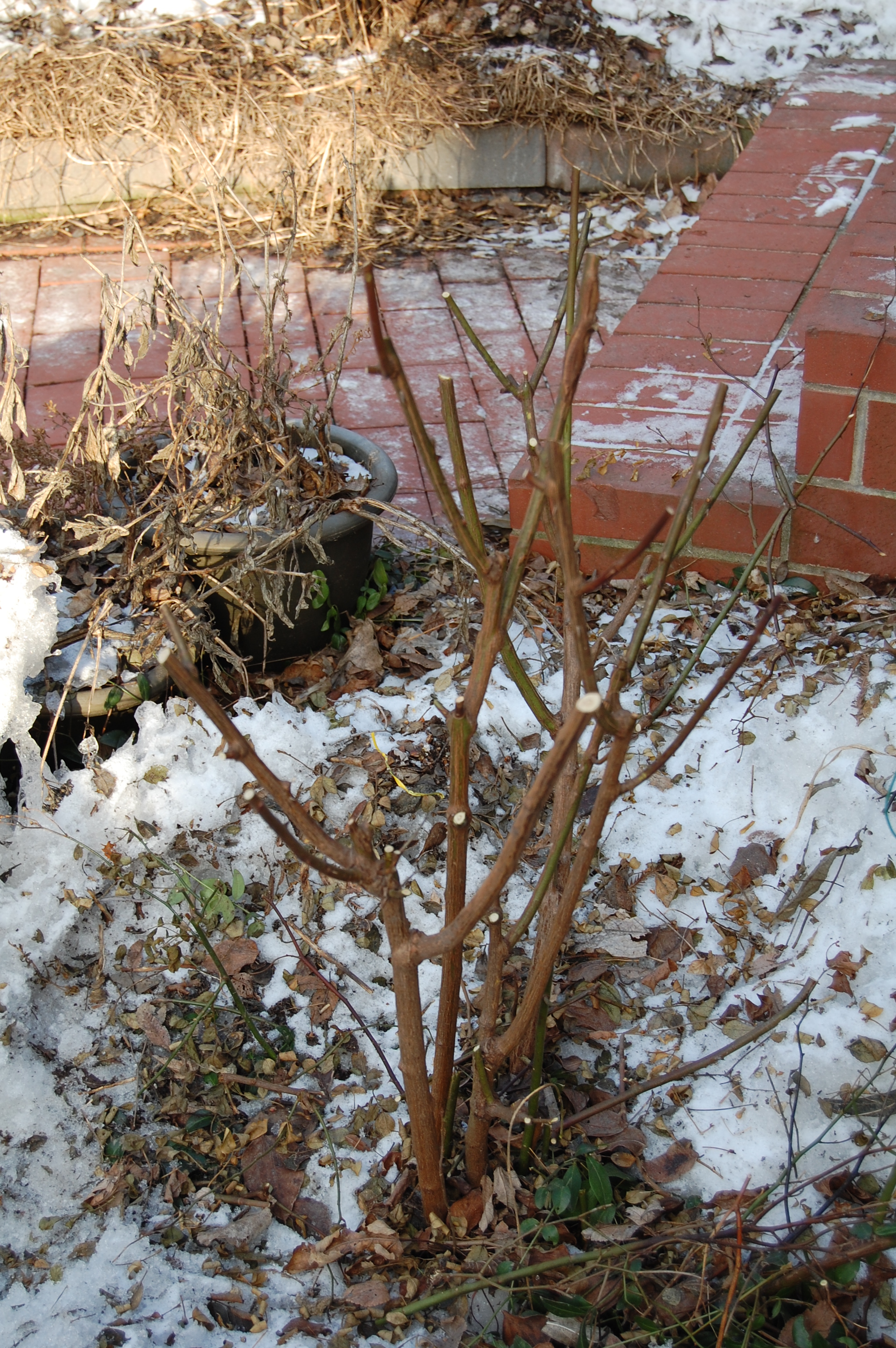
Fun with pruning. Today was on the cold side, but pleasant when the sun wasn’t hiding behind clouds. I took advantage of some free time to get started with spring clean up. I pruned the Clematis jackamanii, the cranberrybush Viburnum (Viburnum trilobum), and the trumpet honeysuckle (Lonicera sempervirens).

Trumpet honeysuckle after pruning. I know some people just cut it to the ground, but I'd hate to do that. Judy's shadow is in the lower right corner.
Trumpet honeysuckle after pruning. I know some people just cut it to the ground, but I’d hate to do that. Judy’s shadow is in the lower right corner.

Oh, and I cut back our various roses. We have shrub roses that are pretty hardy (‘Cassie’, ‘Sallie Holmes’), plus the rambler ‘Darlow’s Enigma’ and the wild prairie rose (Rosa setigera).  I’m not expert at rose pruning, but tough plants like these are pretty forgiving – they remind us that roses are basically descended from brambles.

'Cassie' after pruning.
‘Cassie’ after pruning.

I also got started on the red and black elderberries (Sambucus racemosa and canadensis). Elderberries benefit from cutting back pretty hard, in my experience.

There is something very satisfying about pruning, especially at this time of year. When you are done the plants look clean, streamlined, and ready to jump into spring. Also, it just felt good to get started on getting the garden ready for spring.

A dead rose and missing hellebores. It looks like my new rose, ‘Strike It Rich’, did not survive the winter. This is a sad loss, but I’m not surprised that a rose planted in late summer did not survive this frigid winter. I have never had to cover my roses with mulch in the past, and even this year my established roses didn’t need it. But perhaps it would have saved ‘Strike It Rich’.

Any thoughts on a replacement? I want something fragrant and either yellow or orange.

Also, the rabbits seem to have eaten all the hellebore (Helleborus orientalis) foliage. The hellebores were all planted last fall – my first venture with this plant. Can I expect them to come back? I surely hope so.

How was your weekend? Were you able to get out and work in your garden?
 

Why do we Garden?

Hey, guess what? I got an old post (from June, 2012) published by the website of the Guardian newspaper. Here it is. Or, if you prefer to read it over at the Guardian, here is the link: http://www.theguardian.com/lifeandstyle/2014/mar/21/garden-city-why

gardeninacity's avatargardeninacity

Returning from another work trip on late Friday afternoon, the first thing I did was to inspect the garden. Then I spent a couple of hours staking, clipping, weeding and generally puttering around. At one point, I asked myself: why am I doing this after being absent from home all week? More generally, why do I spend so much time as well as physical and mental effort on the garden?
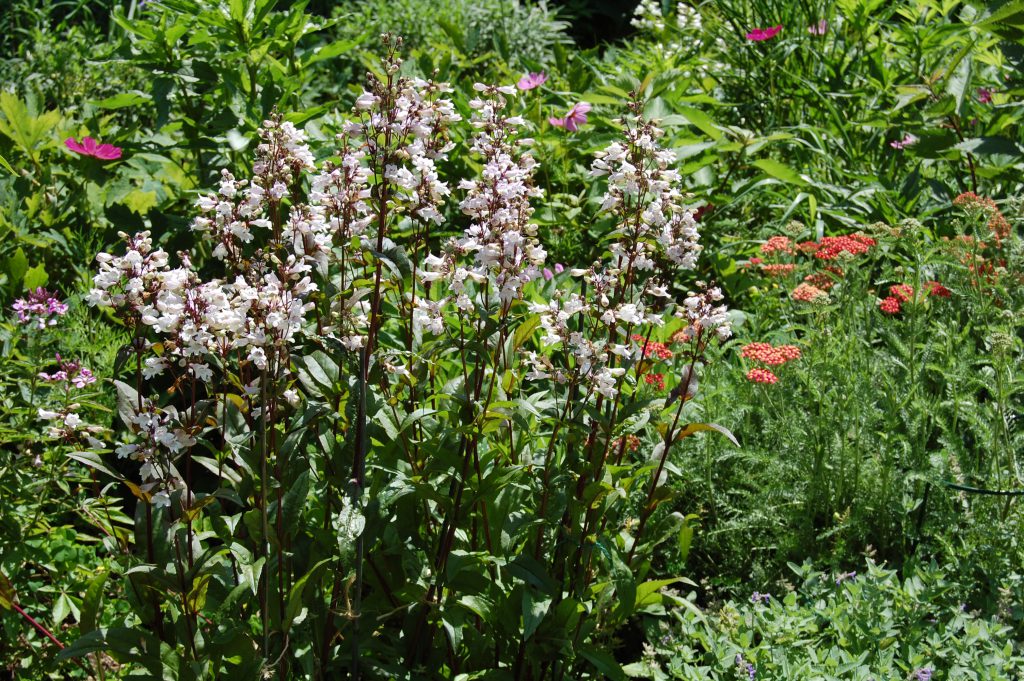
I can think of a few reasons. There is a sense of contentment and tranquility that comes from observing either a single flower – or patchworks of color and texture that seem just right. The same feeling comes from watching a bumblebee climb in and out of the tubular flowers of smooth penstemon, or a monarch butterfly nectaring on purple coneflower, or goldfinches feeding on the ripe seeds of an anise hyssop.

The Penstemon digitalis ‘Husker Red’ is doing well this year.

Gardening is…

View original post 428 more words

VS Day (Victory over Snow)

I am pleased to announce that today is officially VS Day (Victory over Snow). The white stuff seems to be melting irreversibly now, and while spring is not yet fully established, winter’s day is done.

dig on for victory

On Wednesday I had to drive down to Springfield, 200 miles south of Chicago, and I won’t be back until Friday. When I left Chicago it was actually raining, which should speed the snow melt along. Here in Springfield (and no, this is not where the Simpsons live) there is no snow at all. I’m going  back to Chicago tomorrow, and hope to find little to no cold white stuff on the ground.

stewart victory

In fact, I am already excited about actually getting out and working in the garden this weekend. The ground will be frozen, sure, but there is plenty to do. I have to prune the roses, clematis, and honeysuckle.  Oh, and I have to start on clearing plant debris, which in my garden is an enormous job. I am giddy with excitement.

Plus, when I left I noticed little crocus leaves poking up through the ground, and I am keenly anticipating the sight of the first crocus flowers.

uncle-sam-victory-garden

I do worry about a cold spring. On this point, the Illinois State Climatologist has a mixed message. On the one hand, severe winters in the past have generally been followed by fairly normal growing seasons. On the other hand, for 2014 they are reporting an increased likelihood of cooler than normal temperatures for April through June. In other words, it’s too soon to tell.

Kiss Photo 2

But there will be plenty of time to fret over the possibility of a cold spring. For now, let us savour the victory.