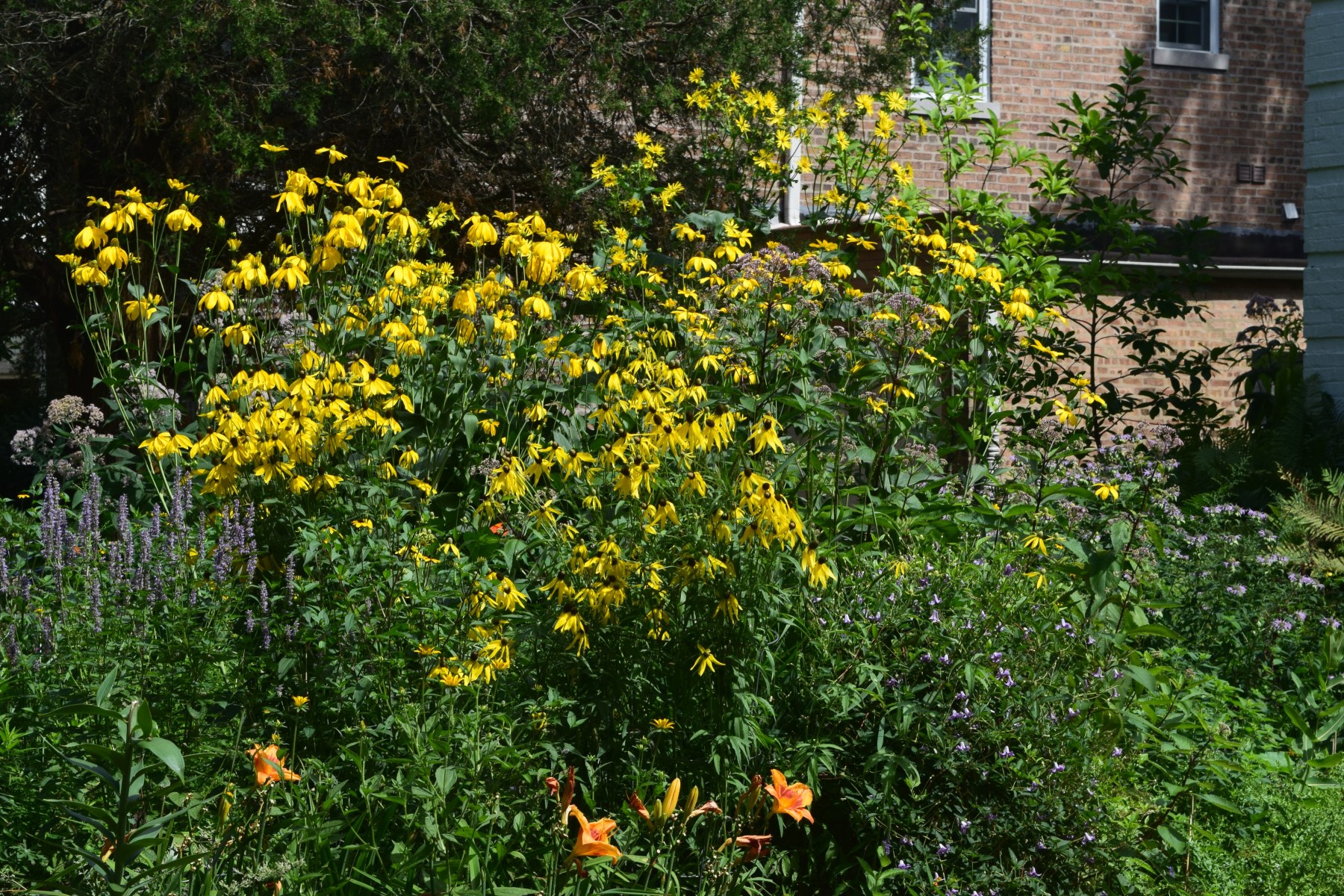
Just as Picasso had his blue period, our garden has its Yellow Period. Actually, there’s an Early and a Late Yellow Period. The Early Yellow Period starts in late July and is defined by 3 plants I refer to as the Jolly Yellow Giants.
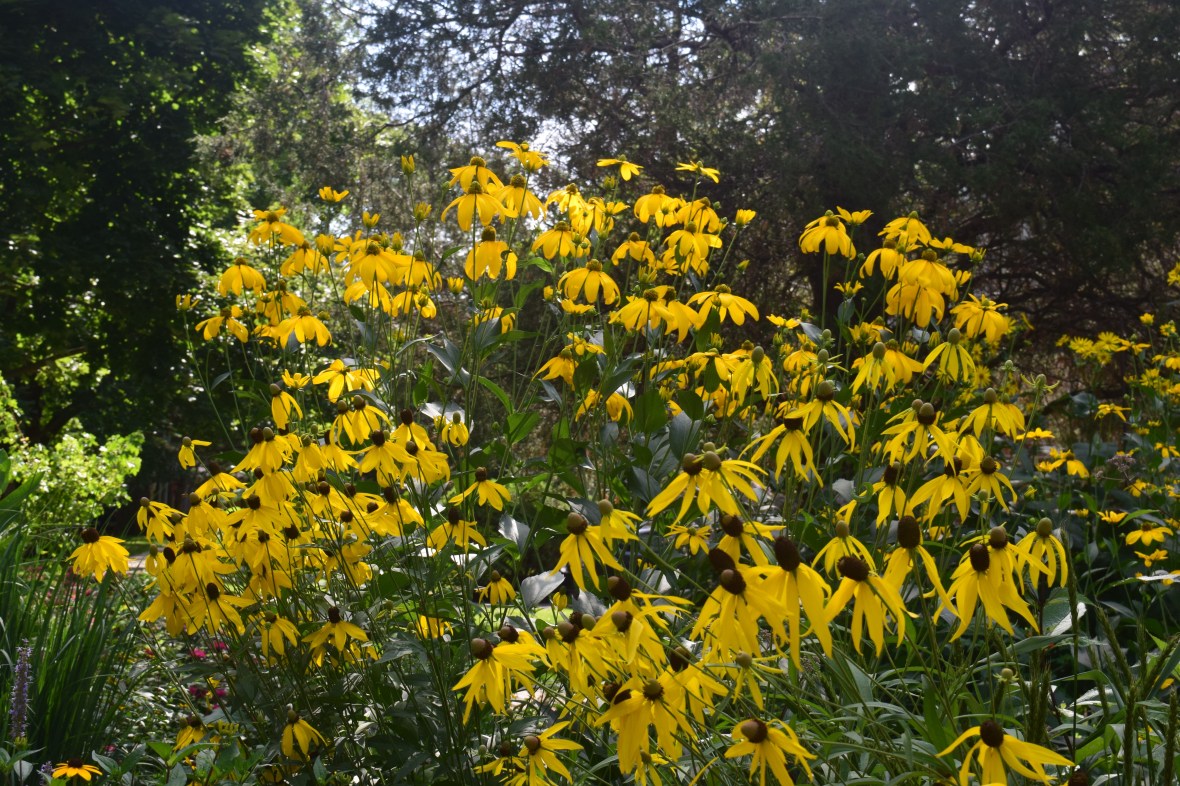
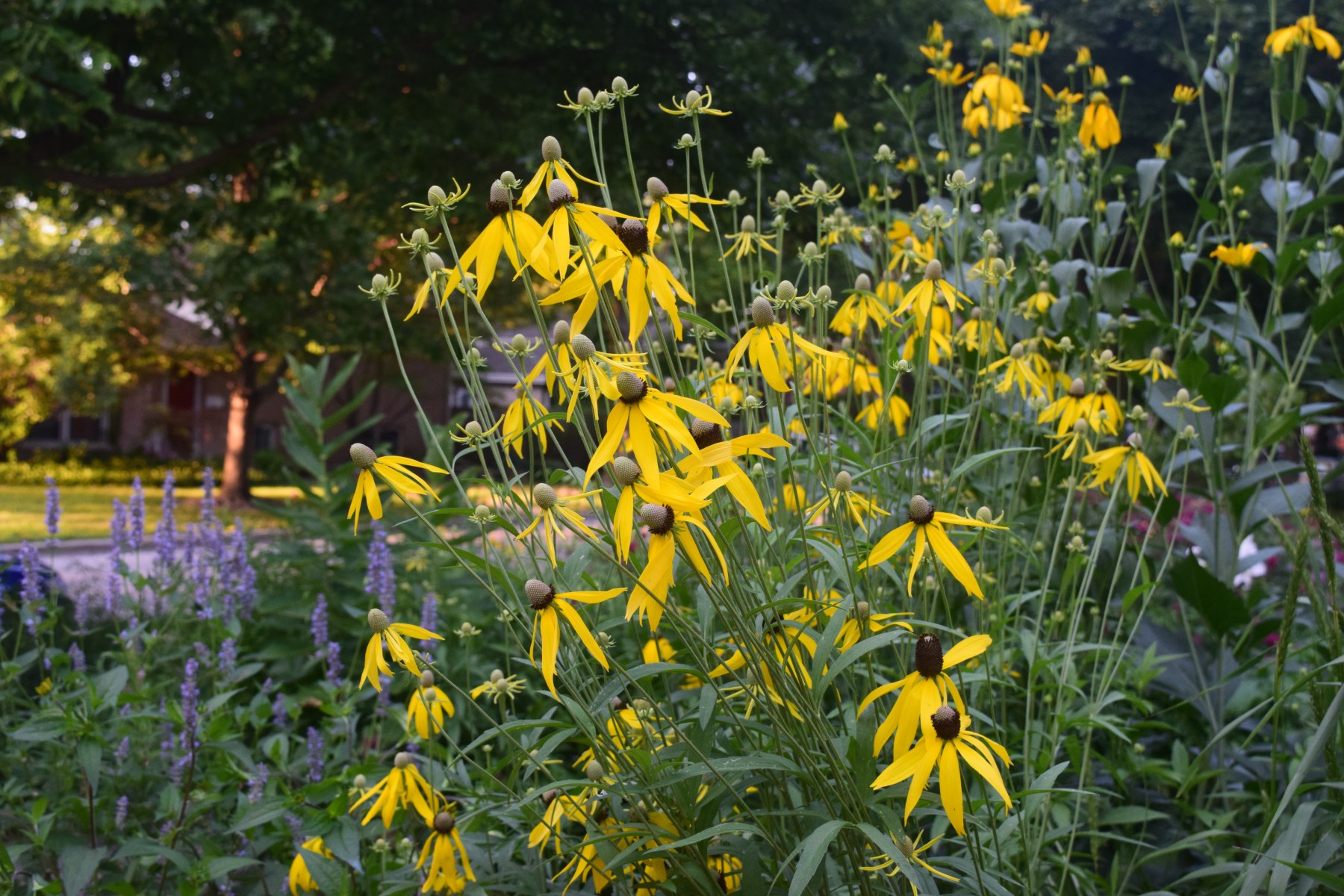
I’ve written recently about Yellow Coneflower (Ratibida pinnata), the shortest of the Jolly Giants at about 5′ tall. The middle-sized Giant grows 7-8′ in our garden and is known as Golden Glow or Cutleaf Coneflower (Rudbeckia laciniata).
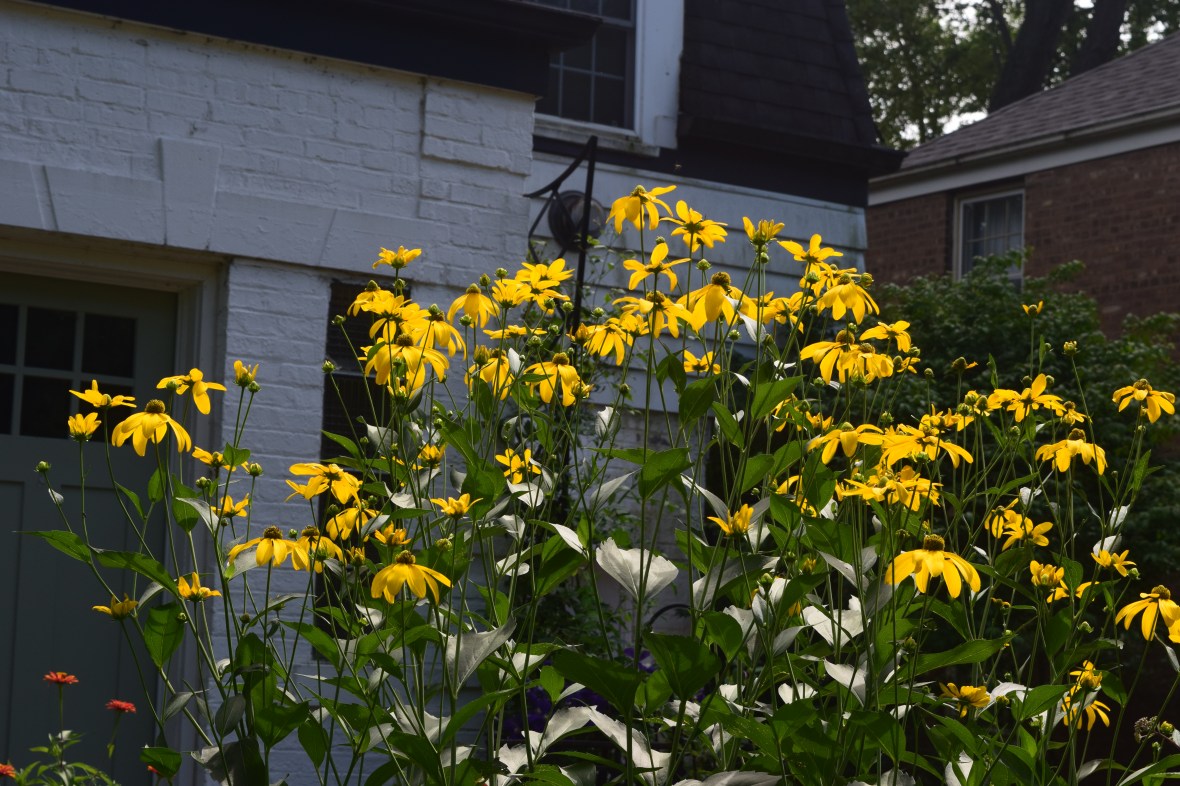
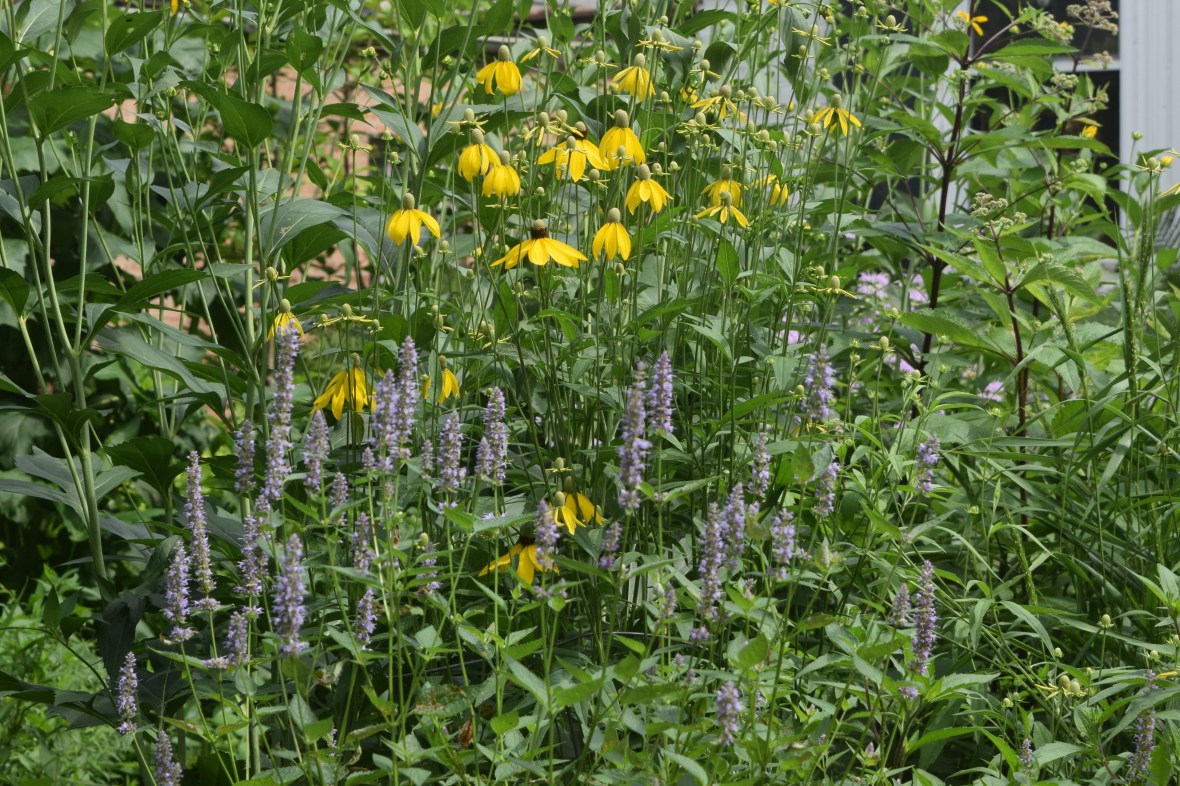
You can see how R. laciniata got the common name Golden Glow.
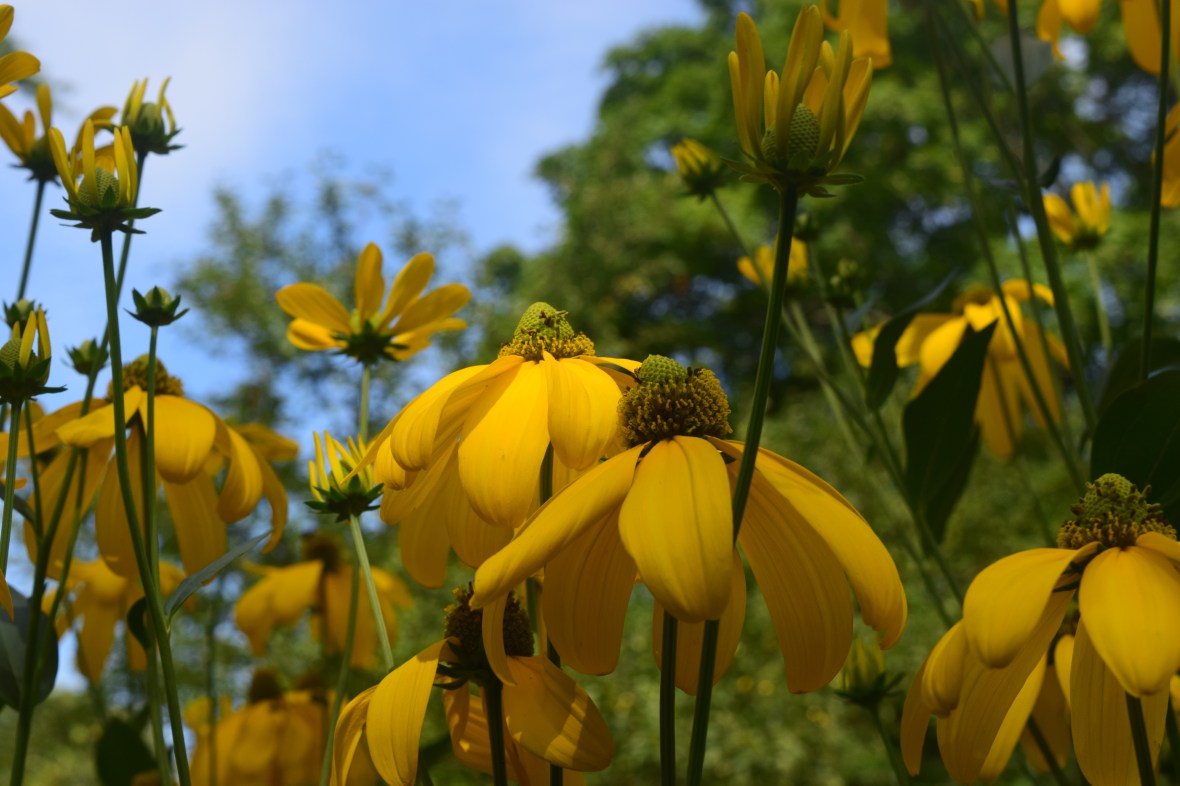
Aside from being taller than Yellow Coneflower, Cutleaf Coneflower has wider rays colored a deeper hue. Instead of flopping down, these rays are held away from the stem. Plus, the disc flowers of the central cone ripen to yellow rather than brown (remember the Russian fur hats?).
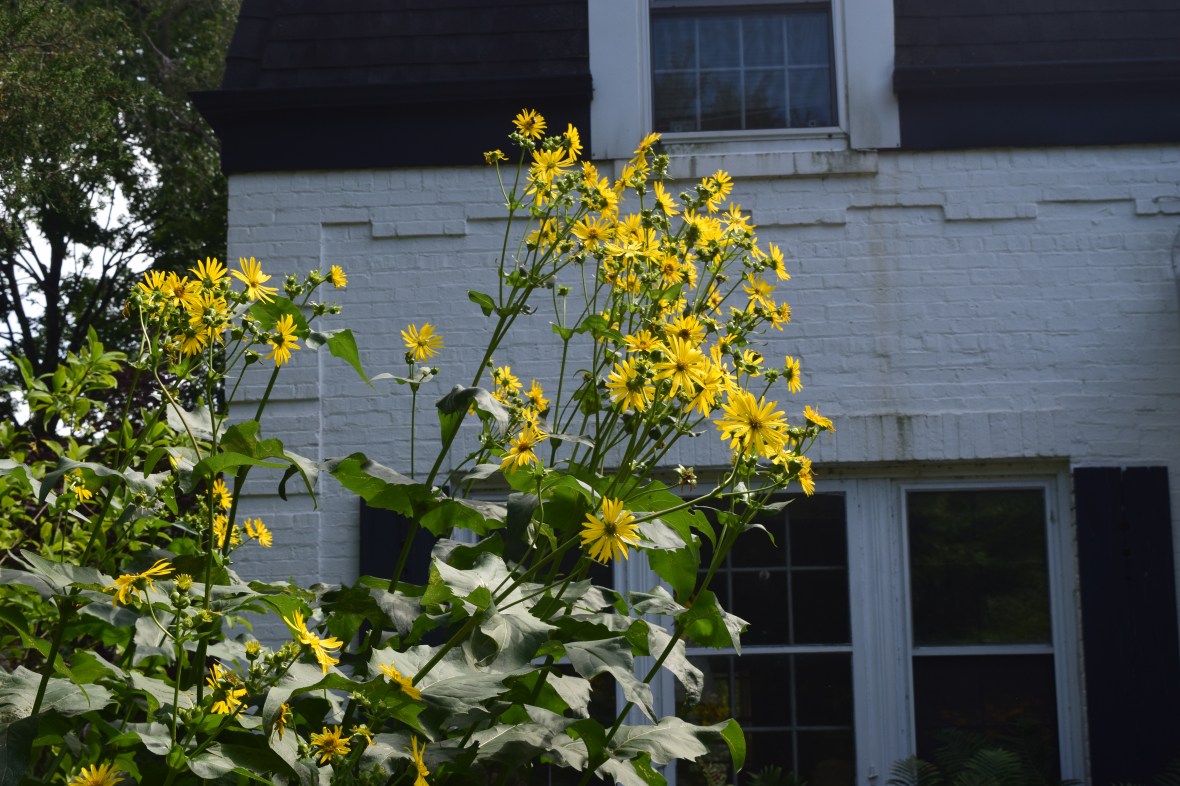
The tallest of the three giants is Cup Plant (Silphium perfoliatum), which grows to about 10′ in our garden.
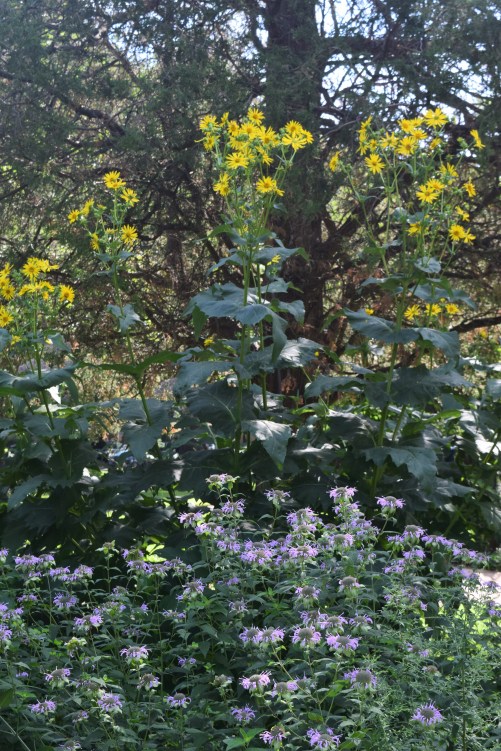
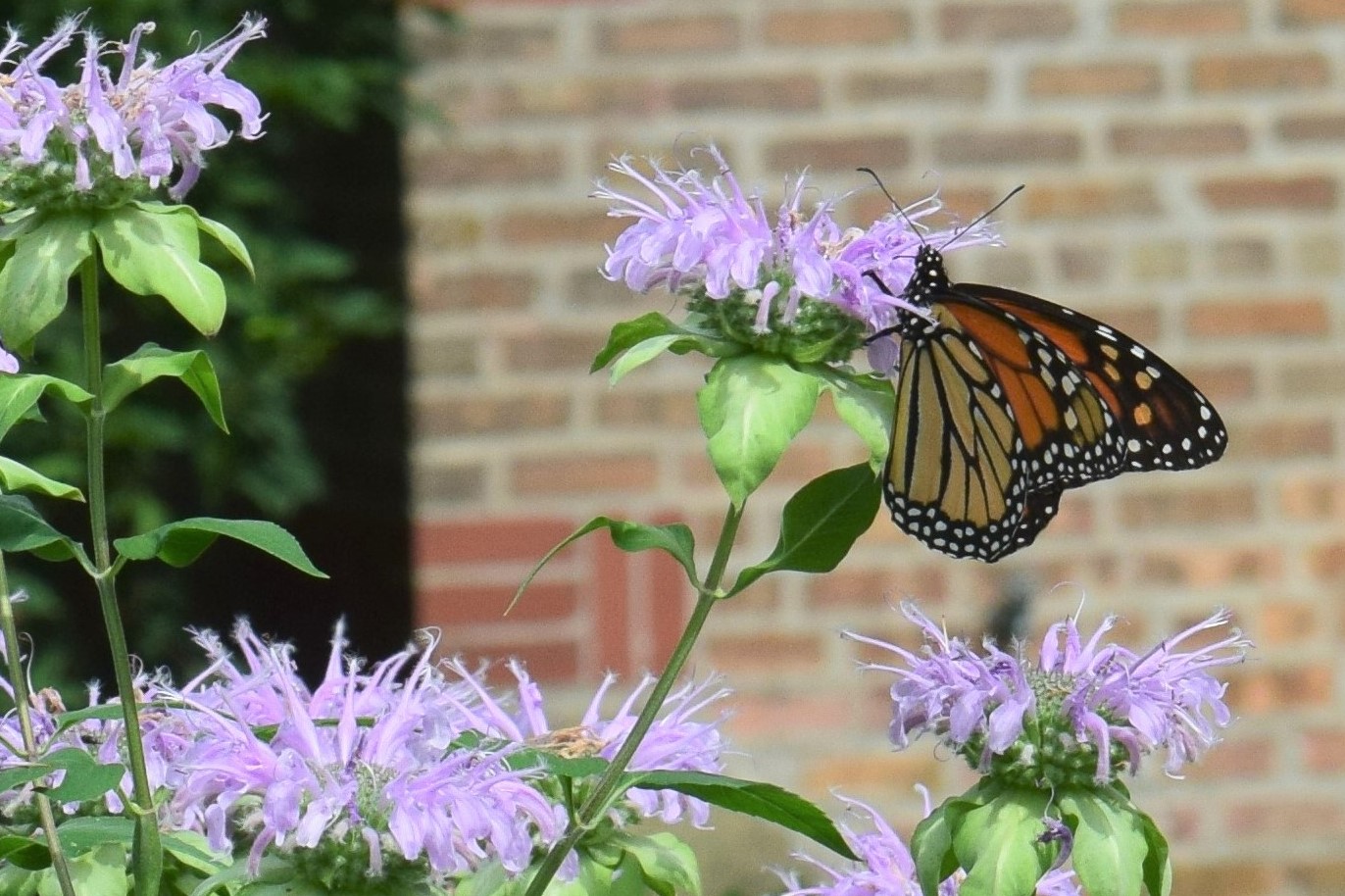
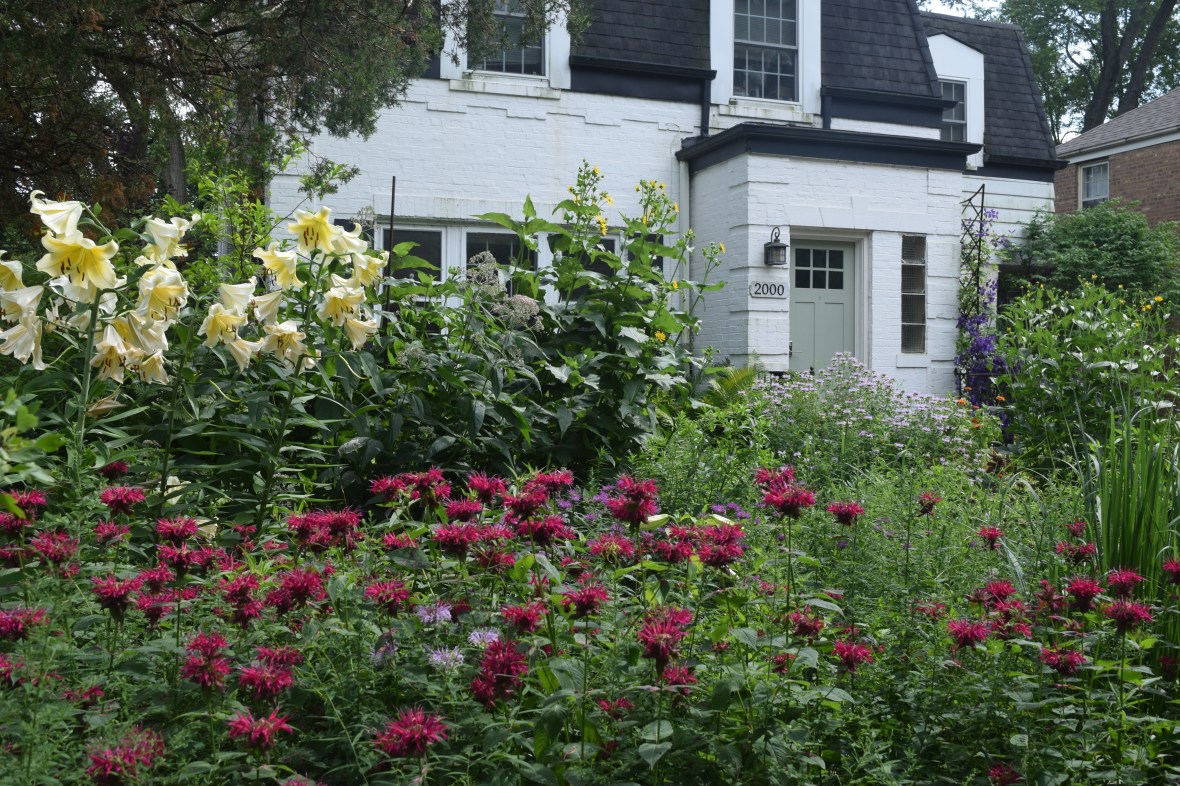
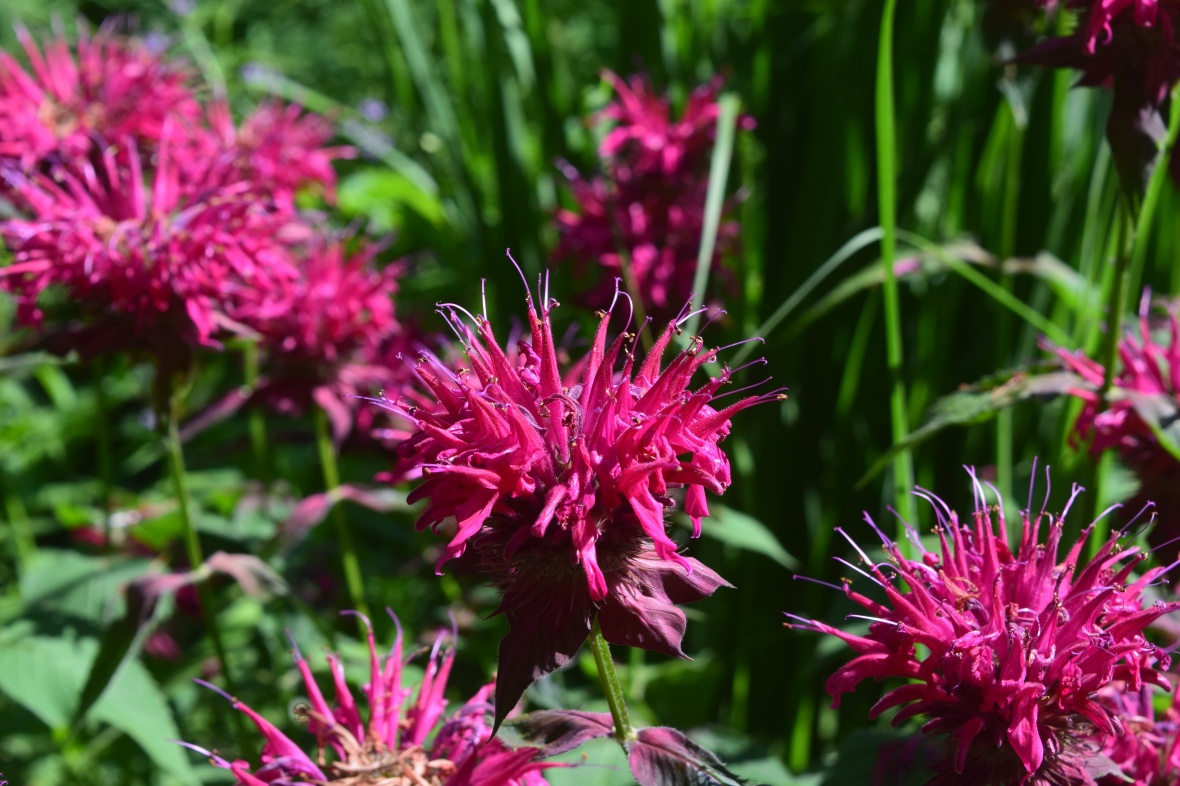
Both Cutleaf Coneflower and Cup Plant go nicely with Wild Bergamot. They bloom together and have nicely contrasting colors and habits.
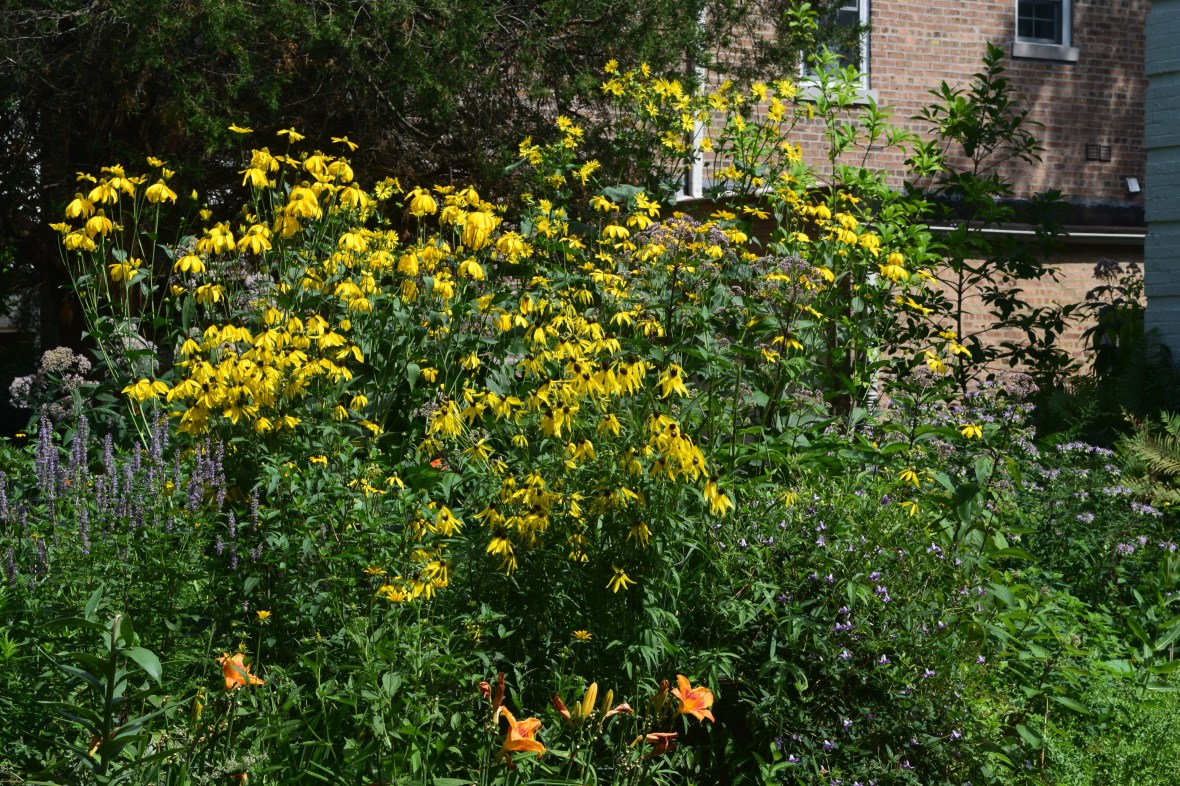
Here’s a picture taken from the driveway will all 3 of the Jolly Yellow Giants blooming together.
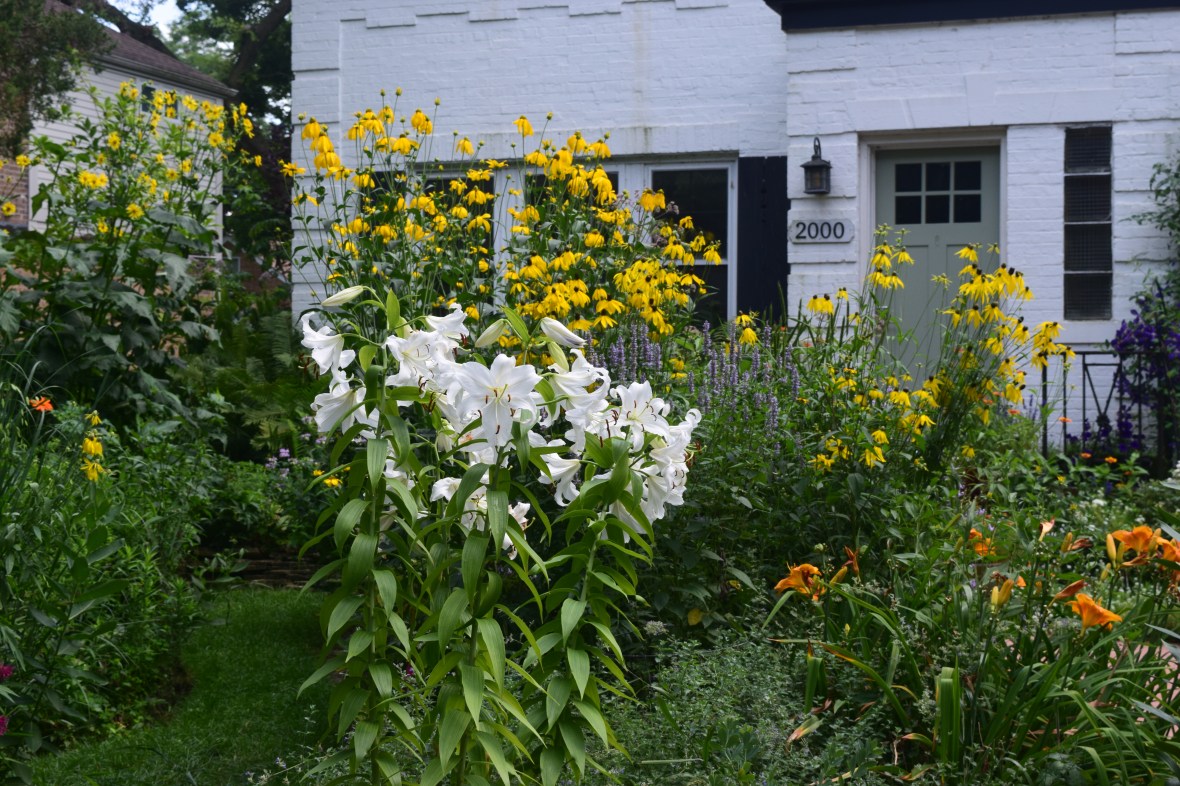
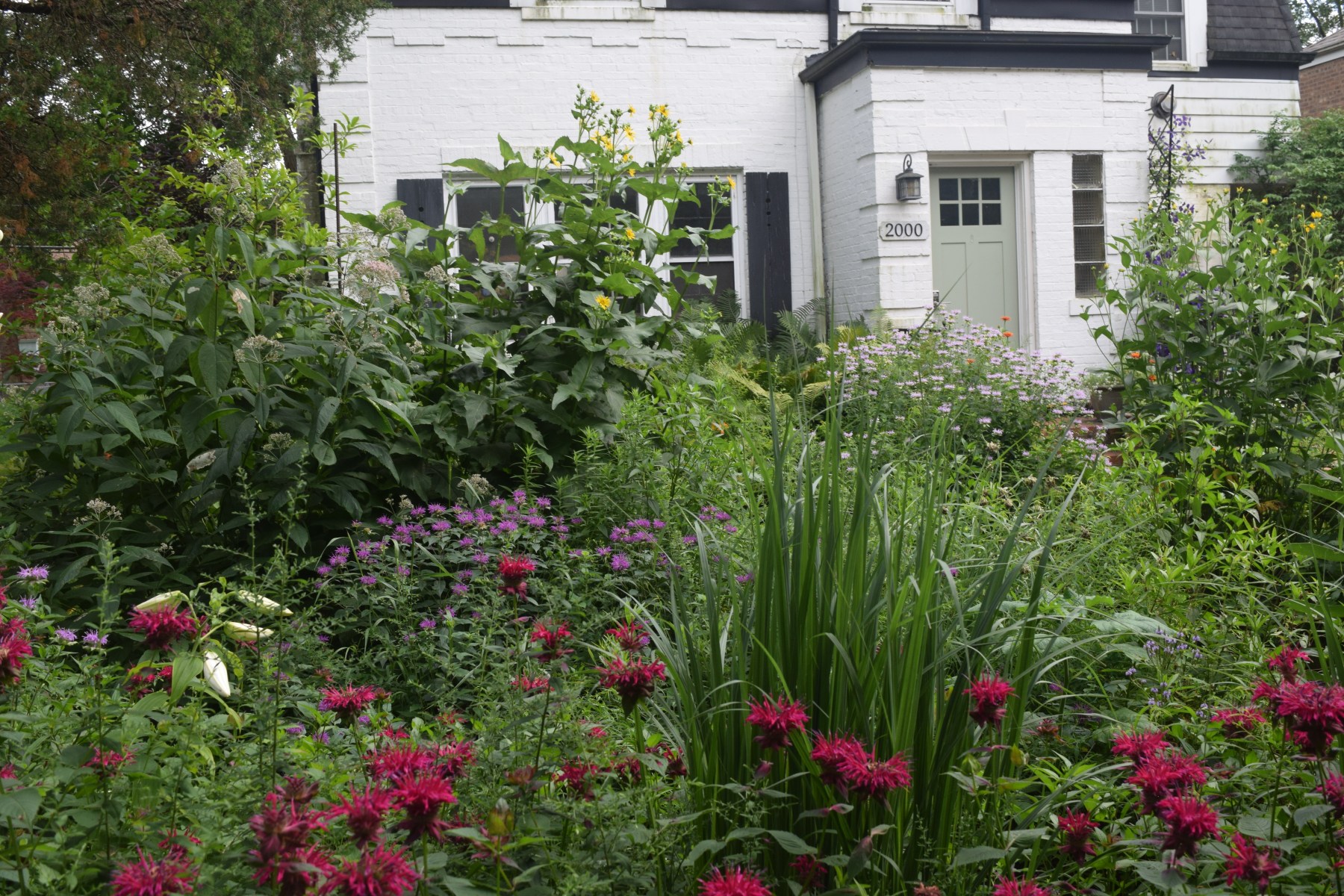
And here’s a picture taken from the sidewalk. This makes it more clear that the Yellow Coneflower and Cutleaf Coneflower are in the Driveway Border, while the Cup Plant stands at the back of the Front Island Bed.
The Late Yellow Period starts in August and features the blooms of Orange Coneflower (Rudbeckia fulgida) and Brown Eyed Susan (R. triloba).
I sometimes wonder if I’ve got too much yellow in July and August. However, the yellow is really concentrated in the Driveway Border and (during the Late Yellow Period) the Parkway Bed. . If you look at the Front Garden as a whole, the other beds and borders provide sufficient contrasting colors in summer. At least, that’s what I think at the moment.
















 gardeninacity