Now for something totally different! Here’s what else I’ve been doing these last couple of years — I taught myself to embroider. And of course, my number one subject is plants and flowers.
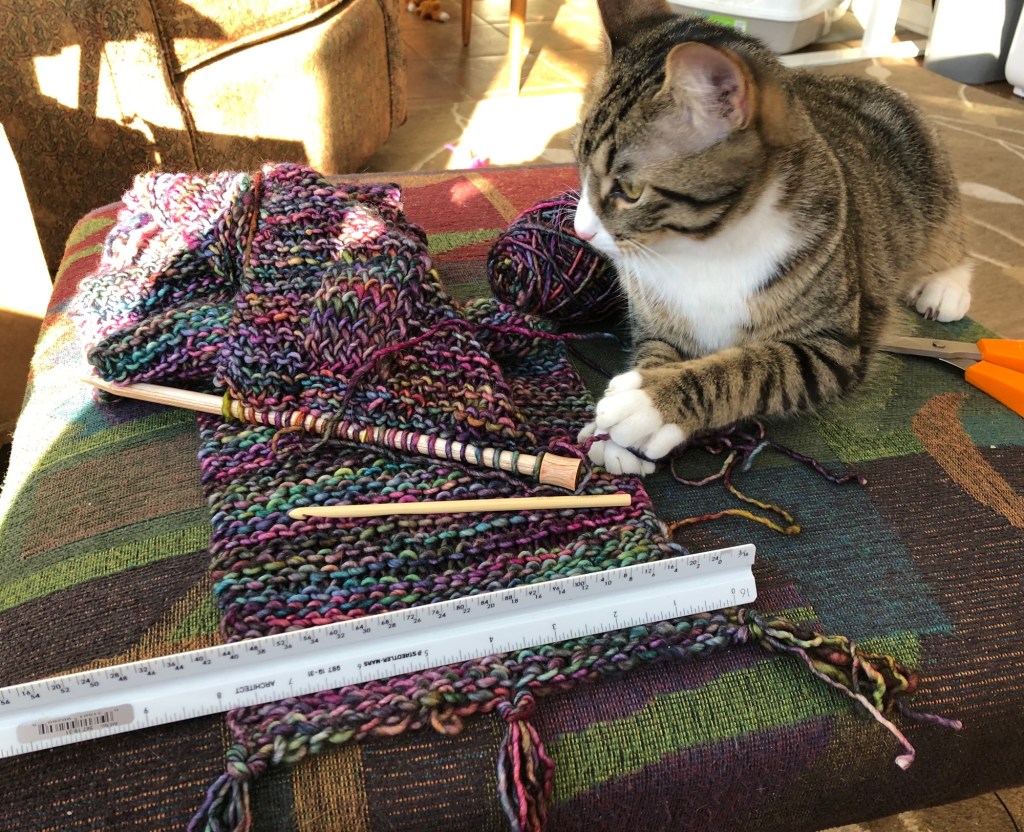
All of my female relatives on both sides did needlework. As a child, I never laid my head on a pillowcase that wasn’t crocheted or appliquéd. I slept under a handmade quilt — little girls with sunbonnets — made just for me by my paternal grandmother and great-aunt, Grossmutter and Tante Olga, who had long cold winters to while away in rural South Dakota. They taught me to crochet and also to tat (a method of making lace with a handheld shuttle). I haven’t had the patience for either craft in a long time, and have probably forgotten how. I have knitted a few scarfs and the occasional vest, with more enthusiasm than skill.
My mother could knit and quilt, and she did crewel work — which is embroidery, but with yarn instead of thread. I have a quilt wall-hanging and several pieces of her crewel work hanging on my walls. I also have a full-sized quilt hanging on my living room wall, handmade by Maude, one of my maternal grandmother’s close friends. Imagine having enough time on your hands that you could make quilts for your friends!
In solidarity with my female ancestors, I have always been interested in fabric art, and assumed that I would do some kind of needlework in my retirement.
Not too long before covid, I took up needlepoint, hoping it would provide both a creative outlet and the kind of gentle, repetitive work that can be very soothing. I think I did three pieces before I couldn’t be constrained by the rigidity of the patterns any more. I decided I wanted to make a needlepoint of one of my favorite garden photos. The woman at the needlepoint store was SCANDALIZED! Clearly I did not have the expertise in her eyes to do anything but fill in holes with yarn! What was I thinking!!
In any case, after fiddling around with trying to stitch alliums with needlepoint (not impossible) and ferns (much more difficult), I realized that I should be trying embroidery. Here’s my first piece.
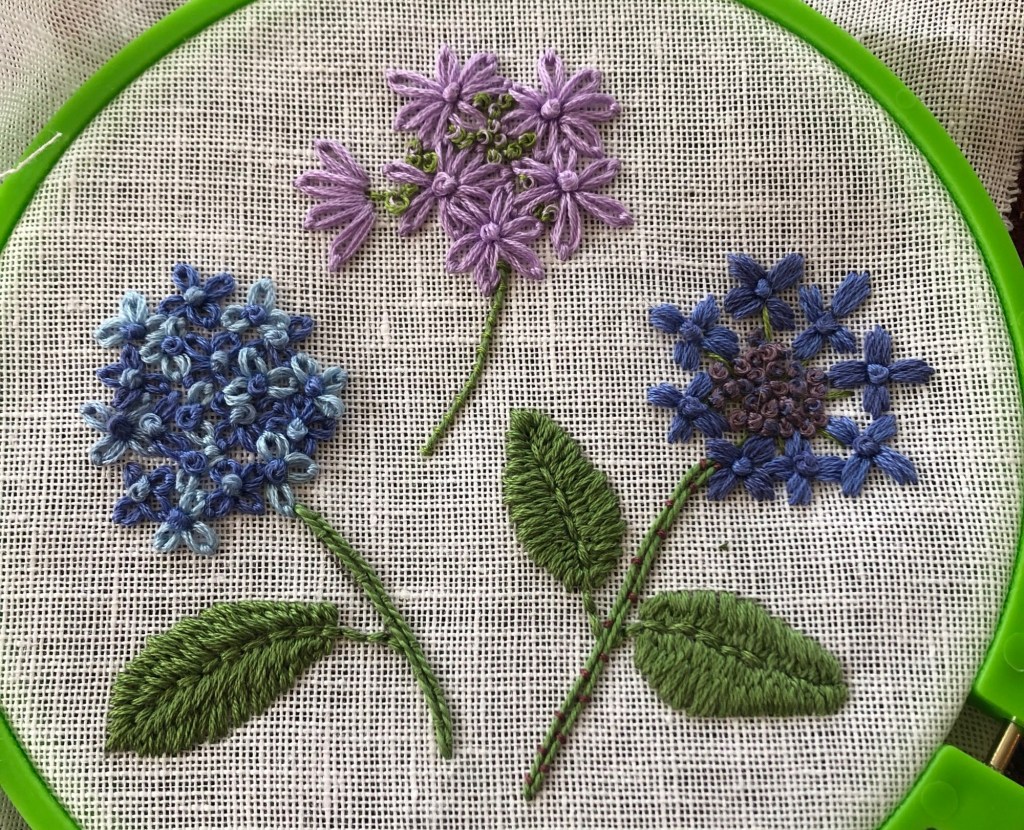
In order to learn, I googled for books and I had the extraordinary luck to find the works of Kazuko Aoki, which I cannot recommend highly enough. First, she assumes no background in embroidery, shows all the stitches that you will need, and talks about how many threads to use, and what kind of needle, etc. Second, she has studied plants and flowers with the eye of a horticulturalist, and provides patterns for real flowers and grasses and wildlife.
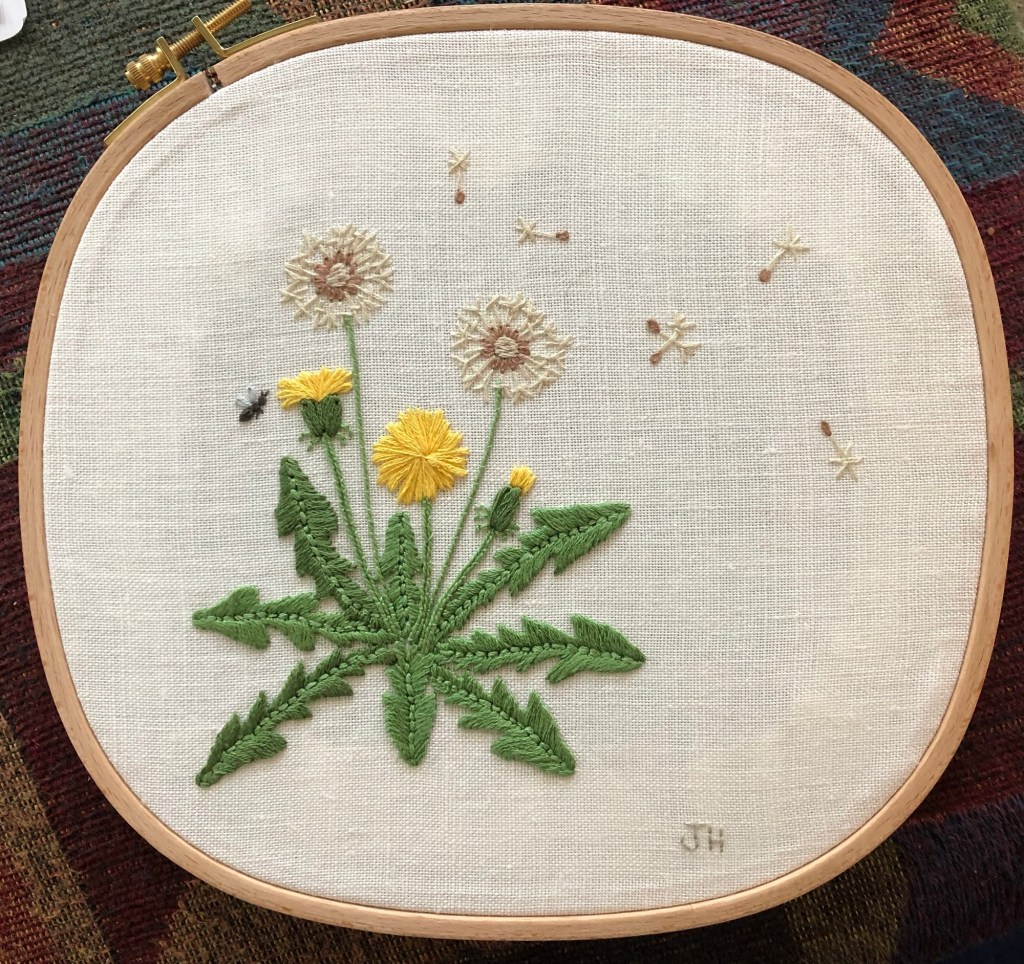
This is one of my favorite pieces. One of my goals is to be able to stitch the actual texture of leaves, so that you could look at a piece and tell a dandelion leaf from a coneflower leaf. I’m not there yet.
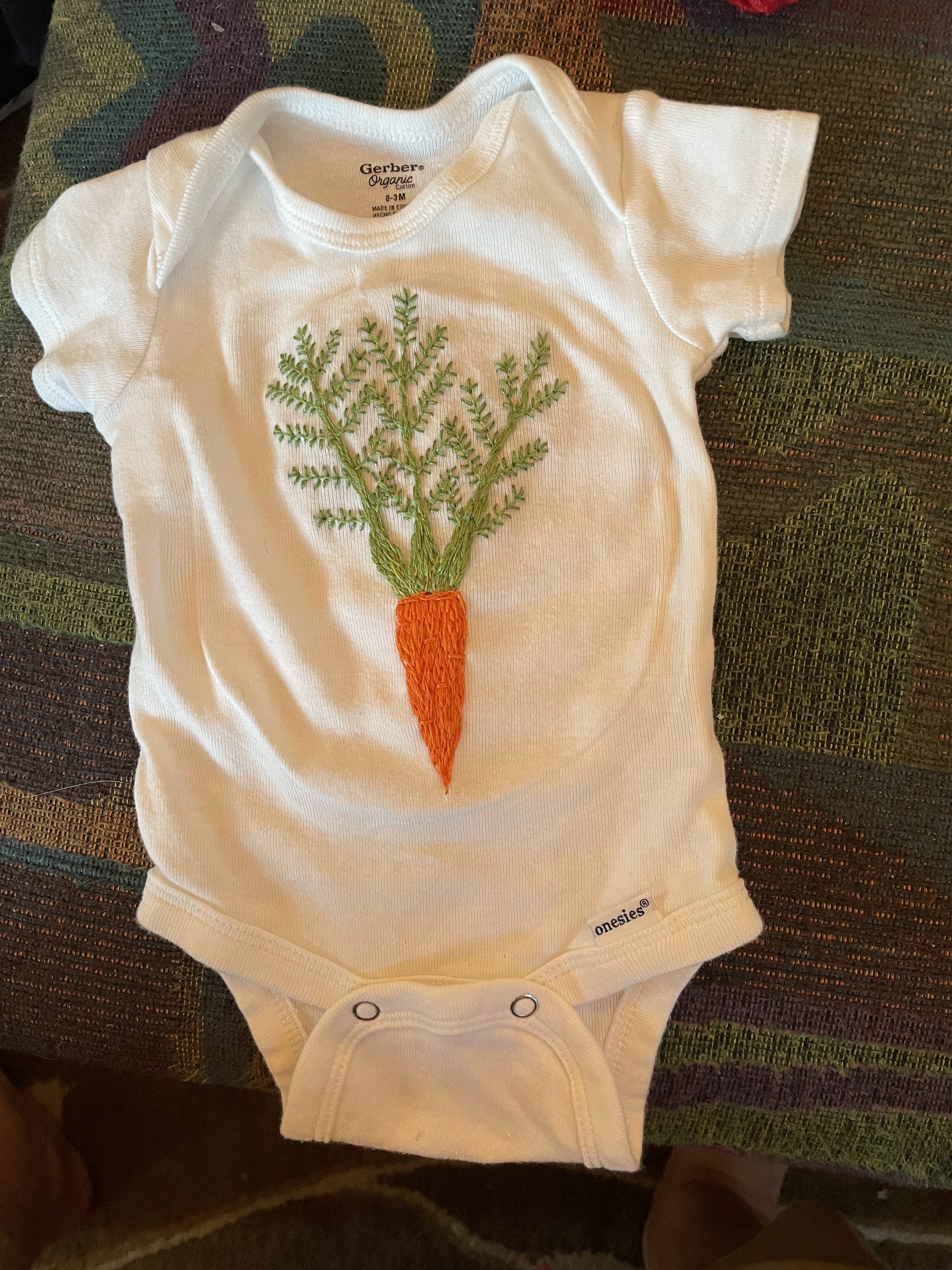
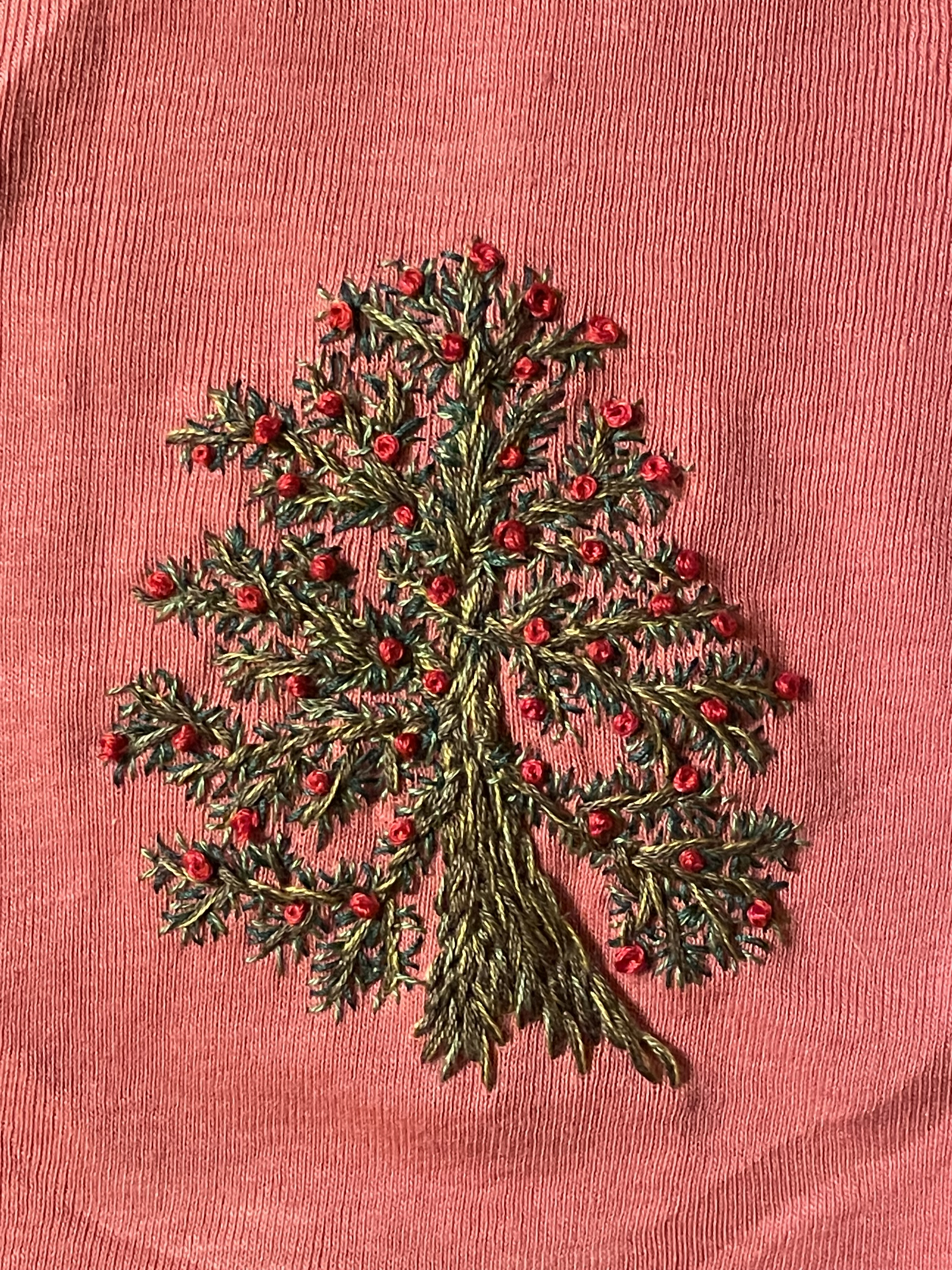
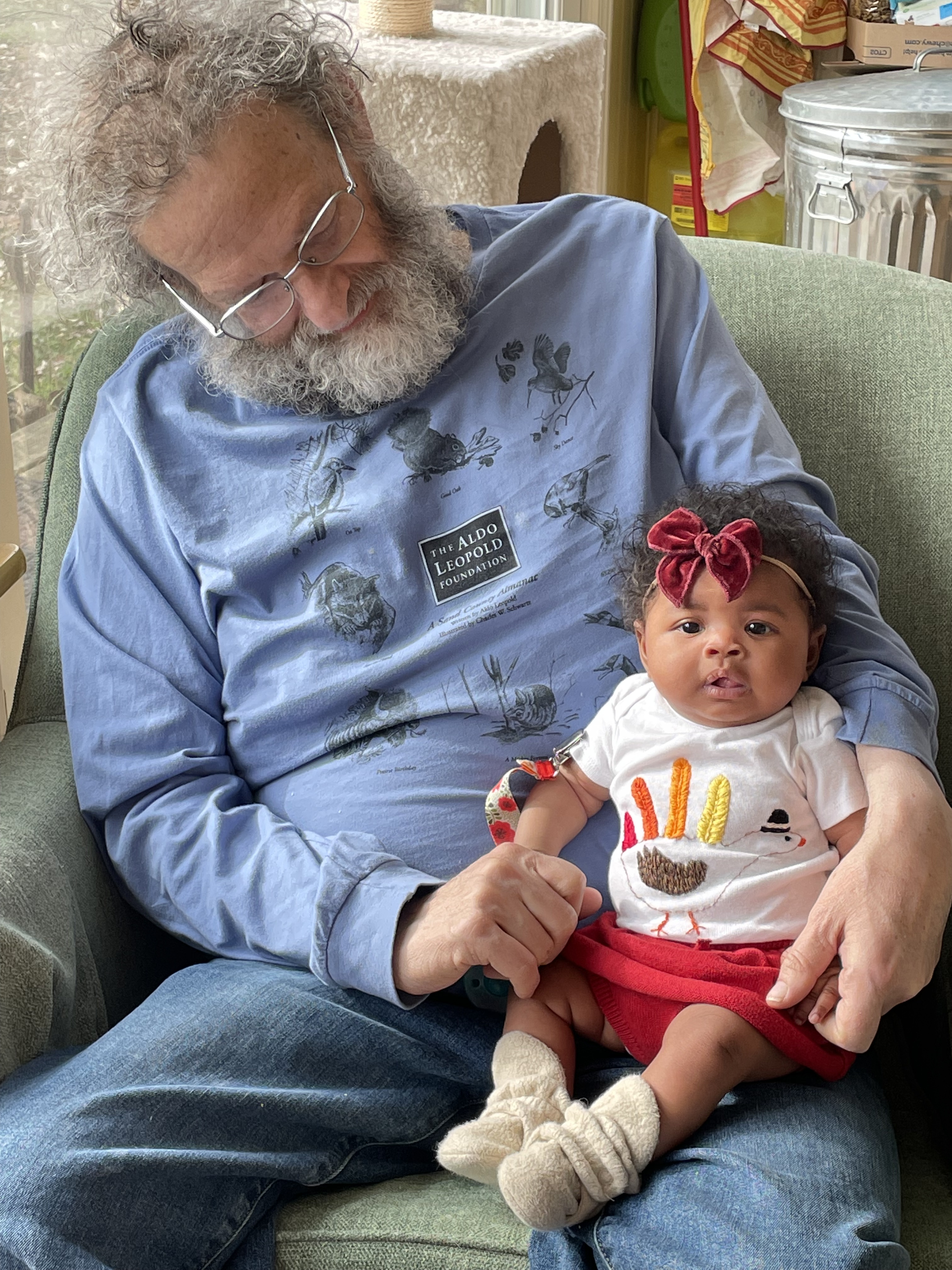
I also embroidered a number of onesies for Addie. That middle one is supposed to be a Christmas tree, but it looks more like the kind of tree that would keep you from reaching Beauty’s castle. On the right, a turkey, made without a pattern, just drawing around my hand the way kindergarteners do. The carrot is from an Aoki pattern.
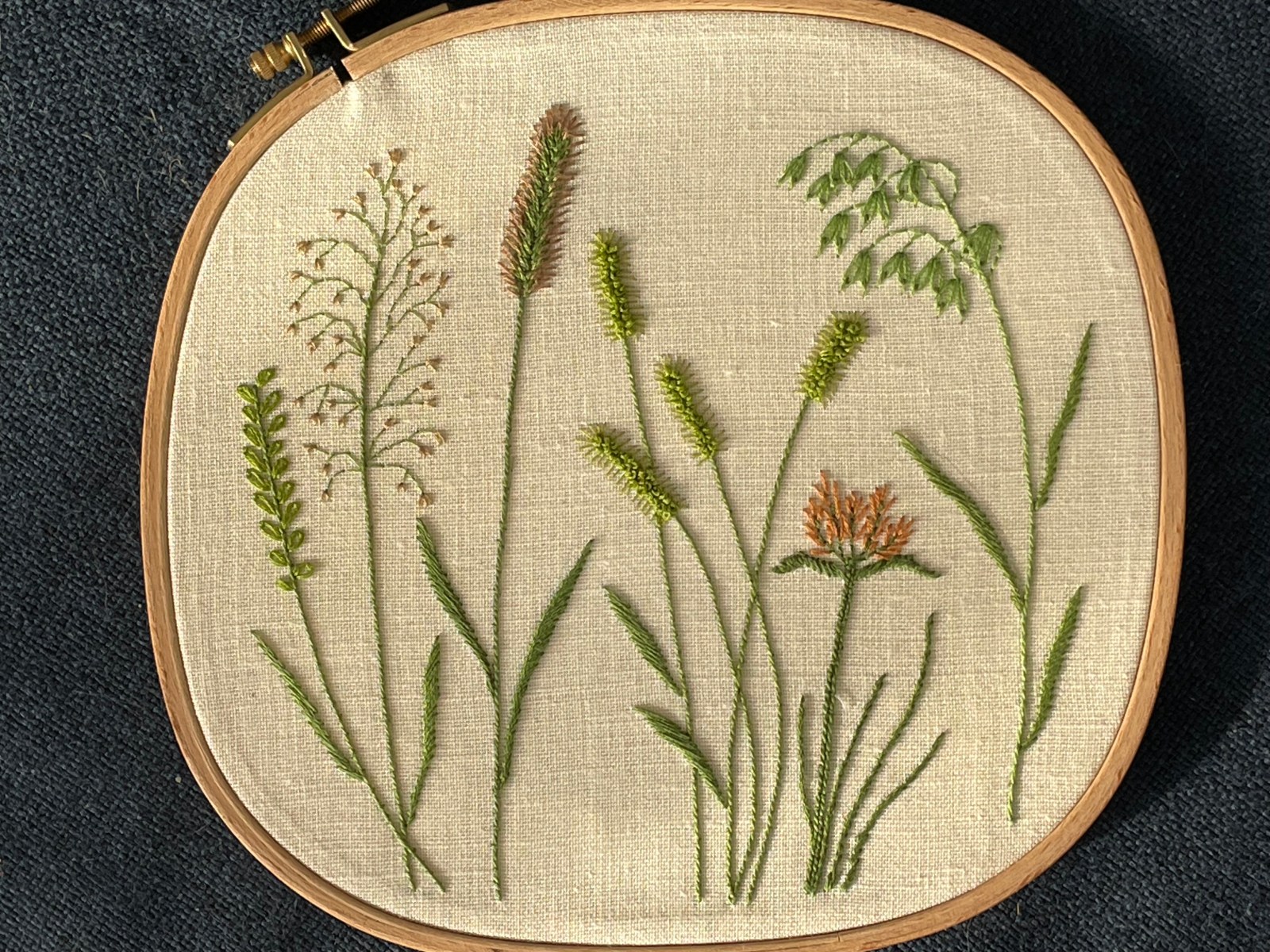
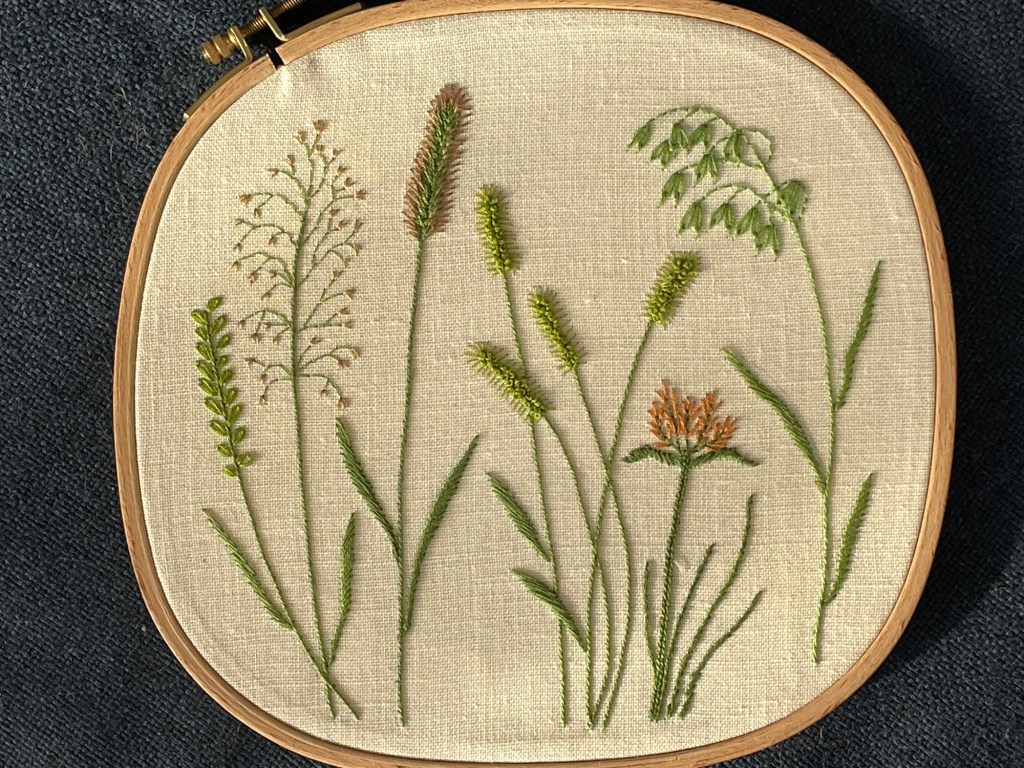
This is probably my all-time favorite. Look at those grasses!
Hunting for new patterns, and something a bit different, I came across a spiral of tiny flowers on Etsy. The original pattern that I saw was not real flowers, and certainly not native perennials and grasses. And we’ve already established that I can’t color inside the lines. So I fairly quickly decided that I could do better, and in fact, I could make a spiral of all of the actual flowers in my own garden, roughly in the order in which they bloom.
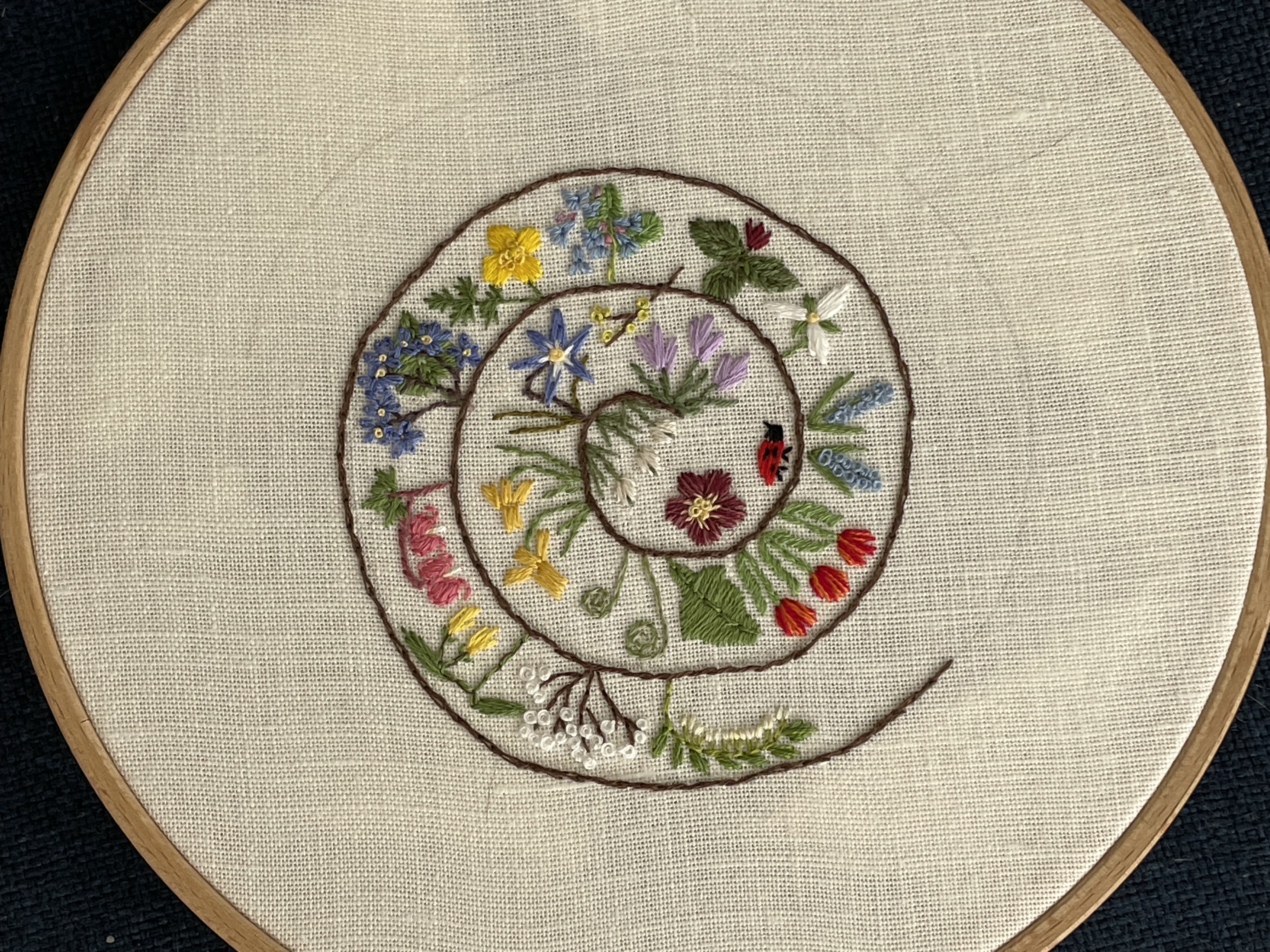
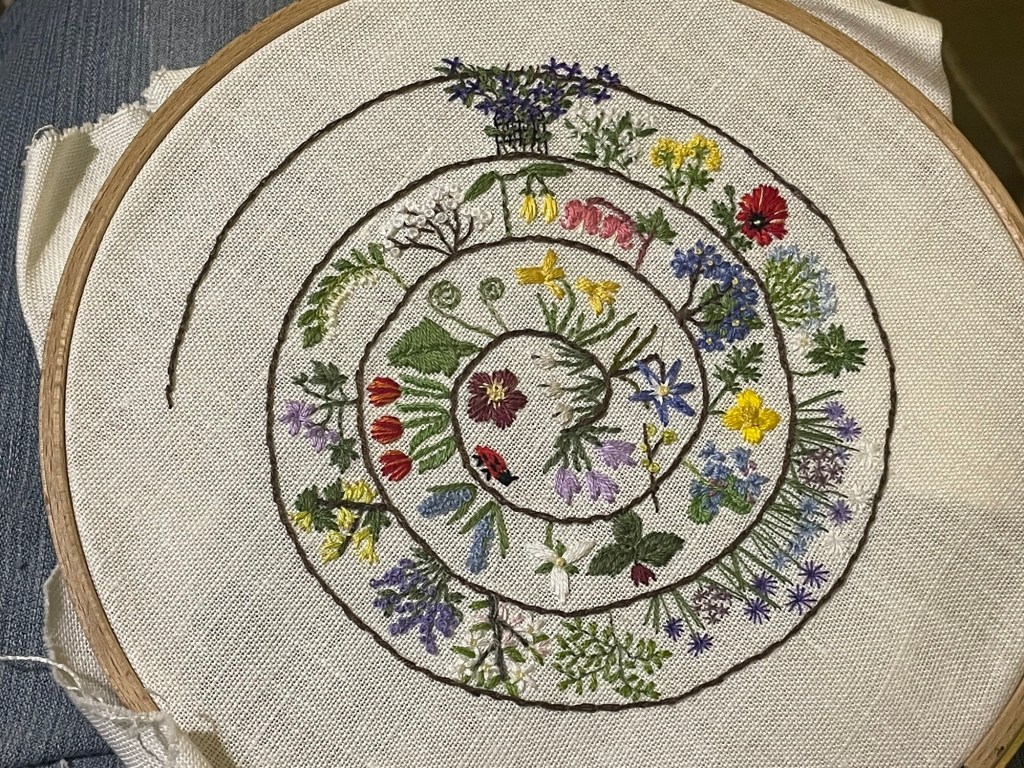
I’ve been working at this off and on for awhile. It takes me two or three hours for each flower, including the research I need to get the plant structure right (alternate leaves? correct number of petals?) and selecting the colors. Nothing is to scale, of course! How could it be — the last two are Serviceberry bush and Solomon’s Seal. I remind myself regularly that it doesn’t need to be museum quality. I’m having fun doing it, and also learning the details of the structure of my plants.
Do you do any kind of needlework? Or did you take up any other unanticipated hobbies during covid (or your retirement, whichever came first)?
And can you tell what the individual flowers are in my spiral?


 gardeninacity
Judy, I am so impressed! I love your flowers and recognize most – those I don’t immediately recognize is certainly not due to your embroidery work, but rather my lack of knowledge of the plants you grow! I have dabbled at using yarn for decorating crochet work with flowers etc, but one day I’d love to try embroidery. Crochet is my thing – working with colour is what I love about it most, like in the garden. And I love crocheting flowers to stick on things I make too! LOL! I am so happy you shared this. It has given me some new inspiration. 😁
Delightful embroidered flowers, I especially like the dandelion, it’s perfect! Haven’t done any needlework in decades, but as a flower child of the 1960s I embroidered many pairs of jeans 🙂
So beautiful, Judy! For many of the flowers in the spiral, I’d totally be guessing, but can certainly see the false Solomon’s Seal and the tulips. And the bleeding hearts. The last one is baffling — be sure to tell us?.
I love your embroidery! When my only grandchild (Hunter Rose) was born,, I ordered a darling cross-stitch kit to make a birth record wall hanging for her. I forgot about it, and now she is 5 years old, but I found it , and hope to start (and finish!) it before she is 6! Thanks for the inspiration!
I love that you are marching to the beat of your own drummer, a true creative. Your flowers and grasses are delightful, splendid work! 👏🏼👏🏼👏🏼
Your work is beautiful, Judy, and is an inspiration! I have done knitting long ago, but never learned to do embroidery and crocheting. Perhaps I will pick it up someday.
I love your work! I started practicing recently, and it will take me years and years to make a tree as lovely as the Beauty’s castle Christmas tree! I love all the flowers you made, my favourite subjects too!
I am impressed, especially with all the different textures you have achieved, they are so realistic. From a very early age my mother taught me to knit, sew and embroider and this has carried on through the years . These days though it is painting and woodcarving that fill my creative urges! I have taught my daughter the same so it is carrying on through the ages!
These are beautiful! I can identify many of the flowers in your spirals. I especially love the grasses – you captured the different textures so well. I make quilts, and donate most of them to Project Linus.
Great work! Creating beauty is a much more useful activity than writing a book.
>
Wow, simply magical Judy! They are definitely works of art. I haven’t embroidered or cross-stitched in years, but I enjoyed doing both. I’ve been keeping myself busy this winter with a few simple crochet projects–they come together so fast. But your projects are amazing! Love them all!
this is so pretty, well done!