Wildflower Wednesday: Virginia Bluebells
As we all have spring on our minds, I’d like to write about a lovely spring wildflower, Virginia Bluebells (Mertensia virginica). The flower buds of Virginia Bluebells tend to start out pink, and the flowers are tinged with pink before they turn blue.
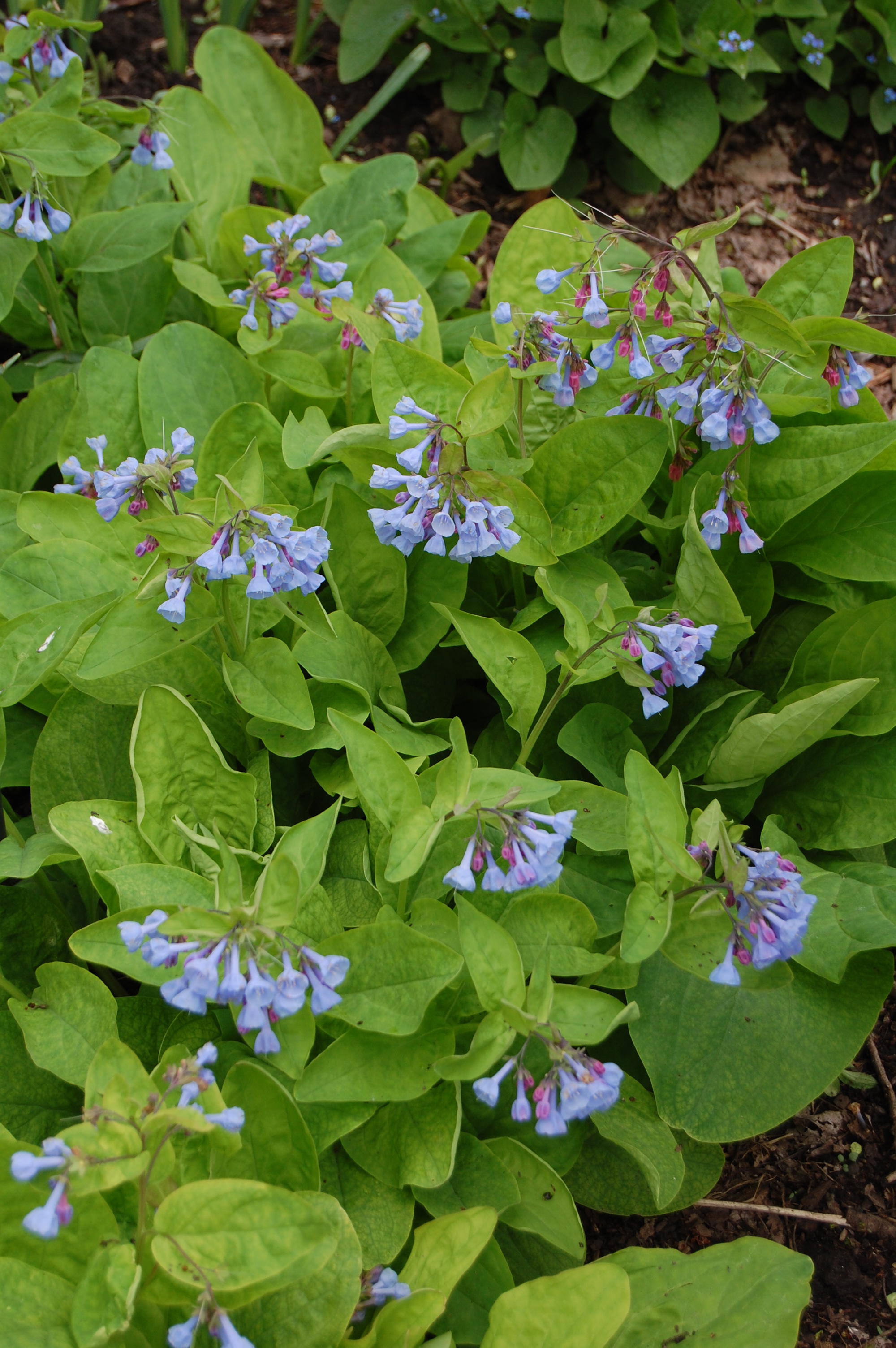
Virginia Bluebells are native throughout much of eastern and midwestern North America. It likes fertile, moist soil in deciduous woodlands. In the right spot, they are an easy care perennial. It is hardy from zone 8 all the way up to zone 3.
This spring ephemeral blooms usually in April here in Chicago. The foliage is oval, smooth, and blue-green, but becomes unsightly as it dies back. Virginia Bluebells are best planted with ferns or other companions that can obscure the dying foliage. Bleeding Heart (Lamprocapnos spectabilis) (that’s right, Lamprocapnos, not Dicentra, the taxonomists strike again) is another classic companion for Virginia Bluebells.
Virginia Bluebells will expand to form substantial clumps, but will also self-sow energetically, so that you will always have little seedlings to give away or move. I tend to let it grow where it sprouts if at all possible.
Thanks to Gail at Clay and Limestone for hosting Wildflower Wednesday on the fourth Wednesday of every month.



 gardeninacity
I think I have a sort of verigated version of these and I like them a lot!
Interesting, I never knew there were variegated forms.
I ordered some this afternoon. Have wanted them for a long time and decided today was the day. How apropos that you post about them tonight.
You can’t go wrong with Virginia Bluebells.
Virginia Bluebells are such a sweet spring ephemeral! I had no idea that Dicentra had a name change – REALLY? Lamprocapnos spectabilis? Does that mean put a hat on that spectacular lamp post? Put a lampshade on your head and make a spectacle of yourself? Some sort of overhead spectacular show like a rainbow or the aurora borealis?
I believe it is Latin for, Lamps are respectable, but not caps.
They’re gorgeous, aren’t they? I’m especially a fan of the color–of the blooms and the foliage. Nice plant to highlight!
Yes, I really like blue flowers.
Taxonomist will drive me crazy over the next couple years I think…
I think gardensunshine must be thinking of brunnera.
Right, that makes sense. Or Pulmonaria?
I love the color and the shape of the leaves! And I like that they self-sow….don’t have any but I have some lovely ferns that need some color next to them!
Could be worth trying. Not sure how they do in California.
Oh how lovely, starting as pink and eventually turning blue! Did you really posted 3 links to WW?
Yes, by mistake.
Beautiful coloring. What an entertaining plant changing colors like that!
It is a favorite of mine.
Very interesting post – thanks for highlighting them, as I’ve already got these on my list for this year, but have never seen them in neighbouring gardens, so it will be interesting to see if they settle in. The flowers remind me of Pulmonaria, which does very well in my garden. (Oh, and for me Bleeding Hearts will always be Dicentras I’m afraid – can’t remember the new name how ever hard I try!)
You’re right, the flowers are similar to Pulmonaria.
One of my fav wildflowers I also featured about a month ago. Like minds 🙂
Who couldn’t love these great wildflowers
They are an underused plant and such an old fashioned favorite. I just love anything blue in the garden.
I agree!
I have always read, and you also suggest in your post, that Virginia Blue Bells can “self-sow energetically”. I have one small clump and it has never re-seeded itself- ever. I wish it would because I am a huge fan of these blue flowers. I wonder if the mulch I lay deters seedlings? I would definitely like to add more bluebells.
The mulch could do it. Is it in a spot that is shady and moist? If not, it may not have the right conditions.
Virginia Bluebells is very beautiful.
It has wonderful flowers and great big, green leaves.
She will delight everyone.
I send greetings.
Lucia
Love this plant and am hoping I will get enough shade either this year or next to be able to plant them. They not only survived but thrived under black walnut trees I had at my previous house. And I totally agree that Bleeding Heart will always be bleeding heart.
Didn’t know it was resistant to juglone. Hope you get sufficient shade soon.
Love them, simple and charming 🙂
Exactly!
In my former west coast garden I tried growing these several times with no results. Looking at your photo I’m thinking, maybe just try once more… I can’t resist pretty blue flowers.
I would expect them to do fine in PEI.
No more dicentra?! Thanks for the tip about the unsightly dieback. I have ordered Virginia bluebells, and bleeding hearts, too, so now i know to plant them together. I hope they like it here, they look lovely.
I hope so, too.
Beautiful! And it’s nice to know that they might just survive in my zone!
Jason, I thought name of Dicentra is correct. It’s strange!
I love Blue bells, their shape and color. Many of wild flowers are self seeding, a cornflower, for example.
Happy weekend!
These are lovely, and I hope to get some established. The rabbits seem to love them as much as I do. A great feature post. 🙂
Ah, I love bluebells when they spread out. I’ve seen stream valleys covered with them. So pretty!
Bluebells are absolutely gorgeous. There’s something really amazing about finding a ton of bluebells growing in the woods. The Lake District, where I’m from, has a lot of bluebell woods. We have a lovely native variety here but also an invasive Spanish variety. They still look lovely but it is a joy to see the British ones. So nice to hear you like bluebells too : )