Great Gardens Make Good Neighbors, Part 2

Change of plans: this post will not be about Brent and Becky’s Bulbs catalog, but I will get to them in the near future. Instead I want to write about the garden of Linda Ernst, who has developed an inspiring garden that is linked, front and back, with that of her close friend and neighbor Joanne Fuller.

2014-07-13 11.13.18

Actually, the title for this post should really be Good Friends Make Great Gardens, because these two were friends before one moved in next to the other and the gardens took their present form.

2014-07-13 11.13.46

Linda has a city lot and a half to work with, and she takes advantage of the extra space to create distinct garden rooms. Though to perfectly honest, looking at these pictures now I’m having a hard time remembering which garden room was where. So this post will be a little jumbled on that point.

Linda’s garden has more straight lines than Joanne’s and a more modern feel. However, it still has voluptuous masses of plants, and more bright color than you will find next door.

2014-07-13 11.16.53

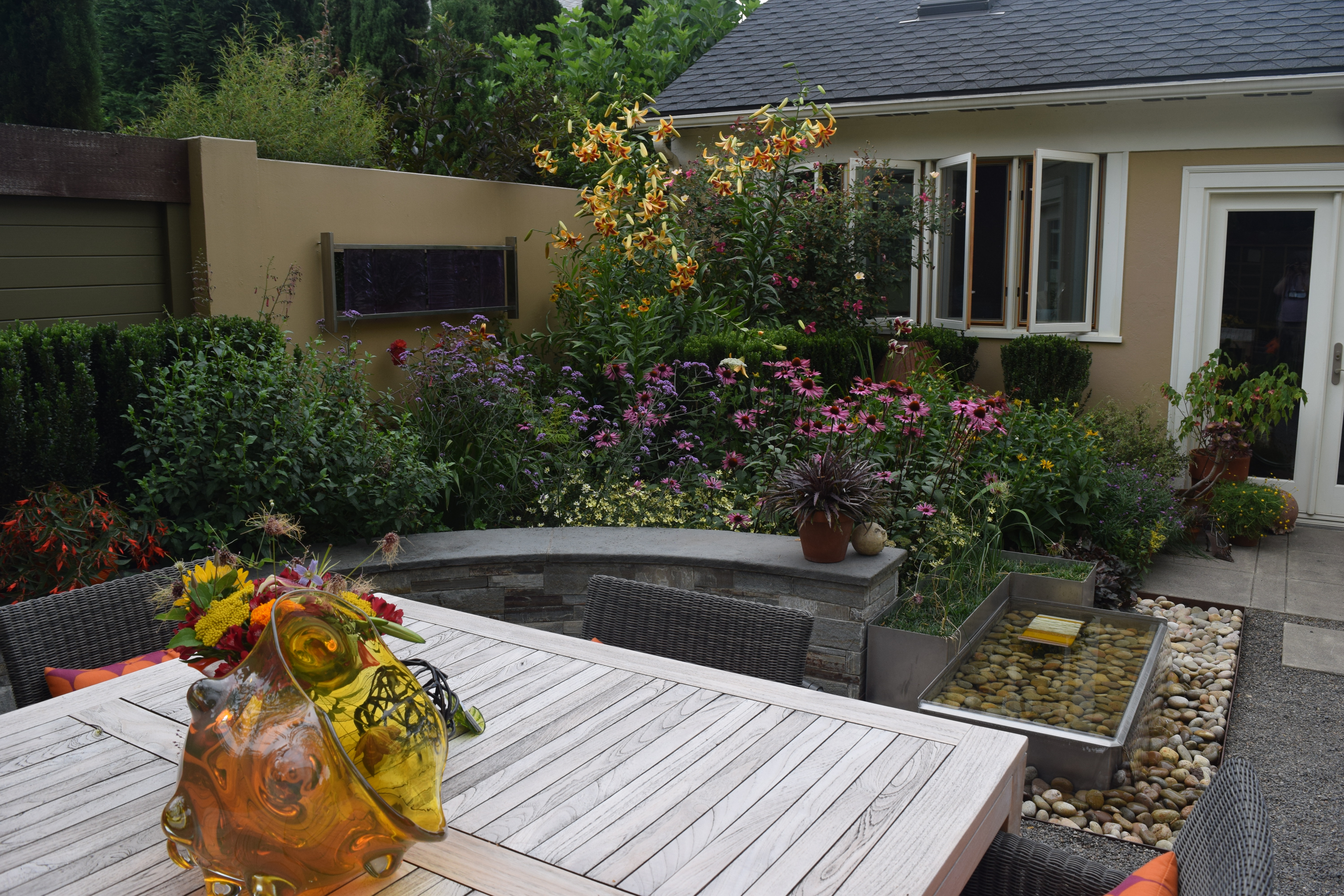
I love this combination of tall lilies (Orienpet hybrids, I think) and Purple Coneflower (Echinacea purpurea). The rectangular steel fountain is interesting. Not as bird friendly, but there are birdbaths elsewhere in the garden.

2014-07-13 11.22.40

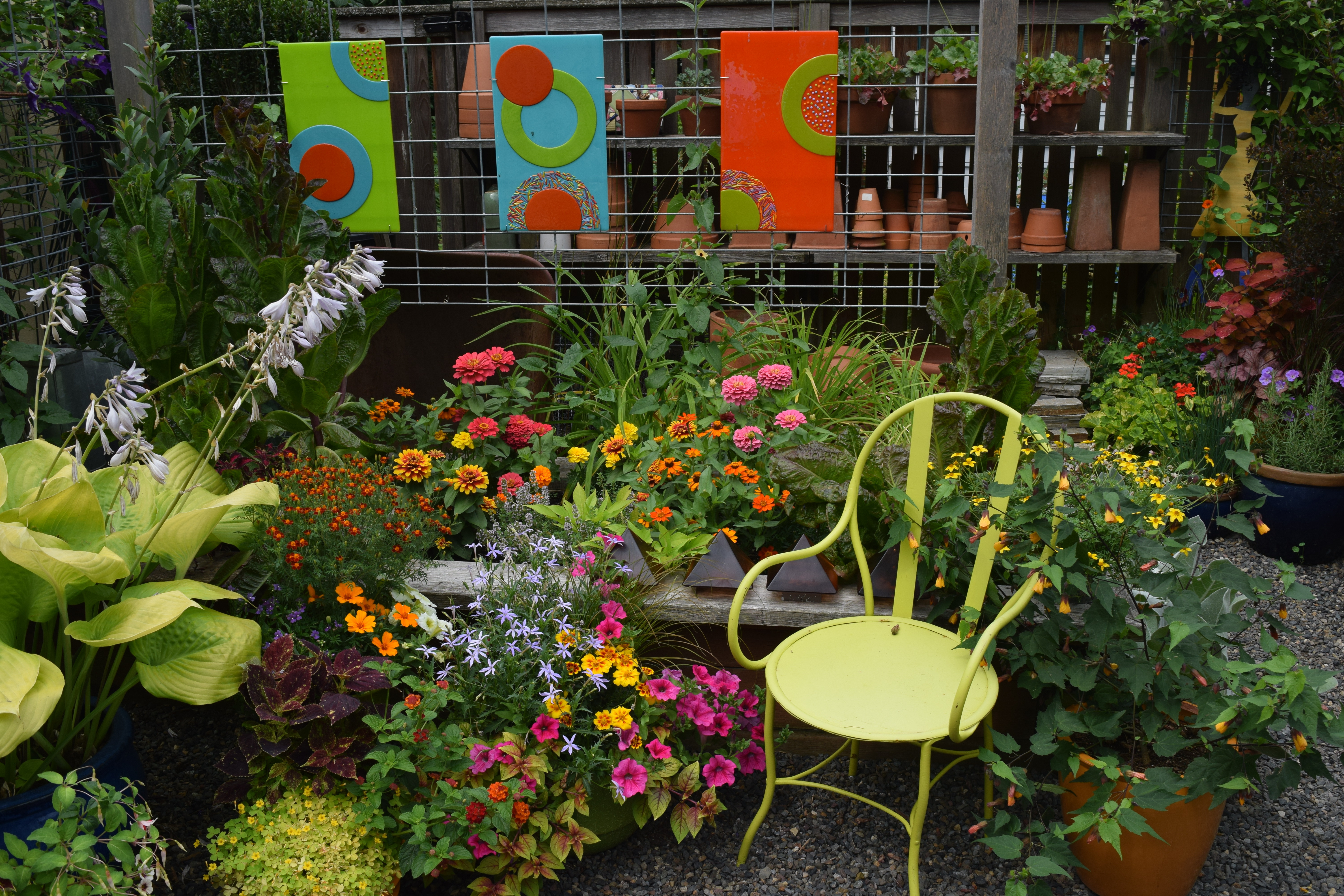
A sunny corner with brightly colored annuals and (if I remember right) a potting bench.

2014-07-13 11.21.40

A sample of the metal sculpture found throughout the garden. The Nasturtiums (Tropaeolum majus) climbing up a wire trellis make me happy.

DSC_0040

Linda basically blockaded her garage in order to create a container garden and patio. This by itself makes her my hero.

2014-07-13 11.19.00

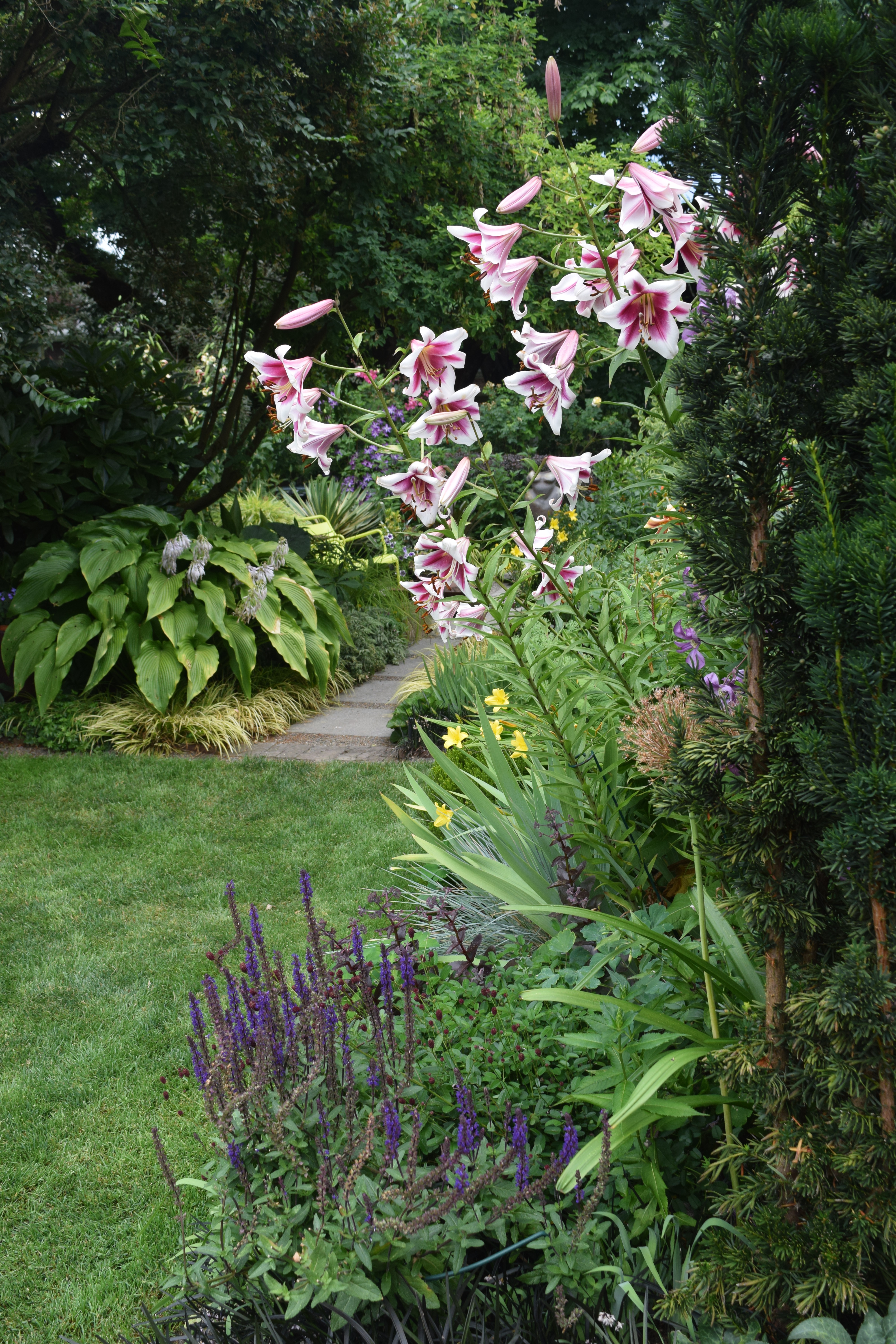
More Luscious lilies scent the only bit of lawn in the whole garden.

2014-07-13 11.20.51

A shady corner with more sculpture. This one reminds me a bit of overalls hanging out to dry. It seems to insert a sober note between the purple Clematis and bright orange Daylilies, a combination I love.

2014-07-13 11.19.33

Linda Ernst makes fused glass objects and some of her work is on display in the garden.

2014-07-13 11.25.22

Every garden needs a wire cat. I considered walking off with this one.

2014-07-13 11.51.30

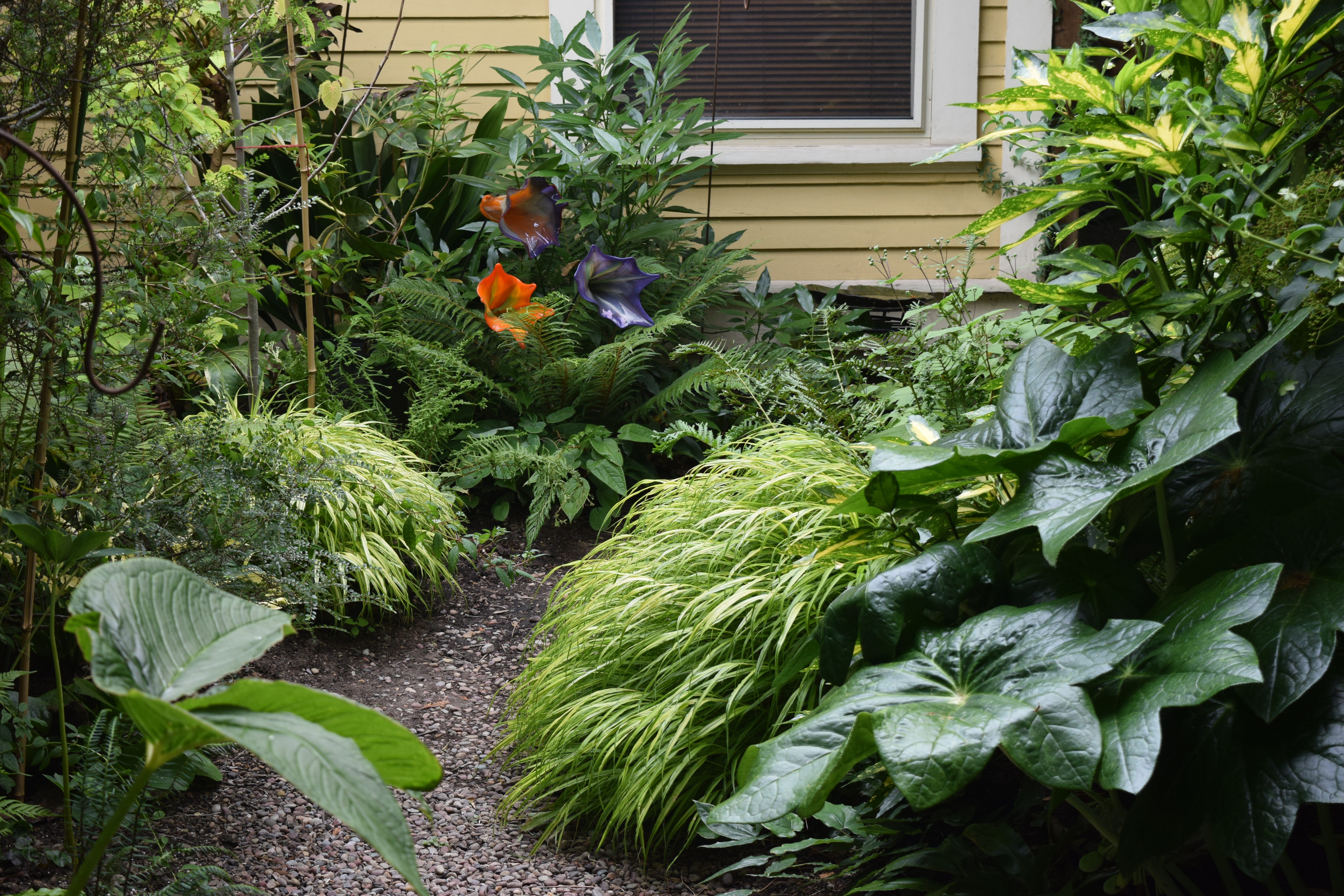
A shady spot with fine and bold textured plants.

In so many ways this was a garden to envy and emulate.

Great Gardens Make Good Neighbors

On the last day of the Garden Bloggers Fling we visited adjoining gardens planted by two close friends and neighbors, Joni Ernst and Linda Fuller. This was back in July, you may recall, in Portland OR. I like my own neighbors, but it would be a special kind of heaven to have the next lot over be occupied by someone with a garden fixation similar to mine.

The two Ernst and Fuller gardens are linked by a path out front and an open gate in the back. We wandered back and forth between the two, so that now I’m not always positive which picture went where. However, there was so much to see that a single post would not do them justice.

2014-07-13 10.41.12

So let’s start with the garden of Joanne Fuller. The modest front garden is leafy, shady, and soothing.

2014-07-13 10.42.51

Steps lead to a comfortable front porch.

2014-07-13 10.44.14

Shade plants grow in containers.

2014-07-13 10.47.16

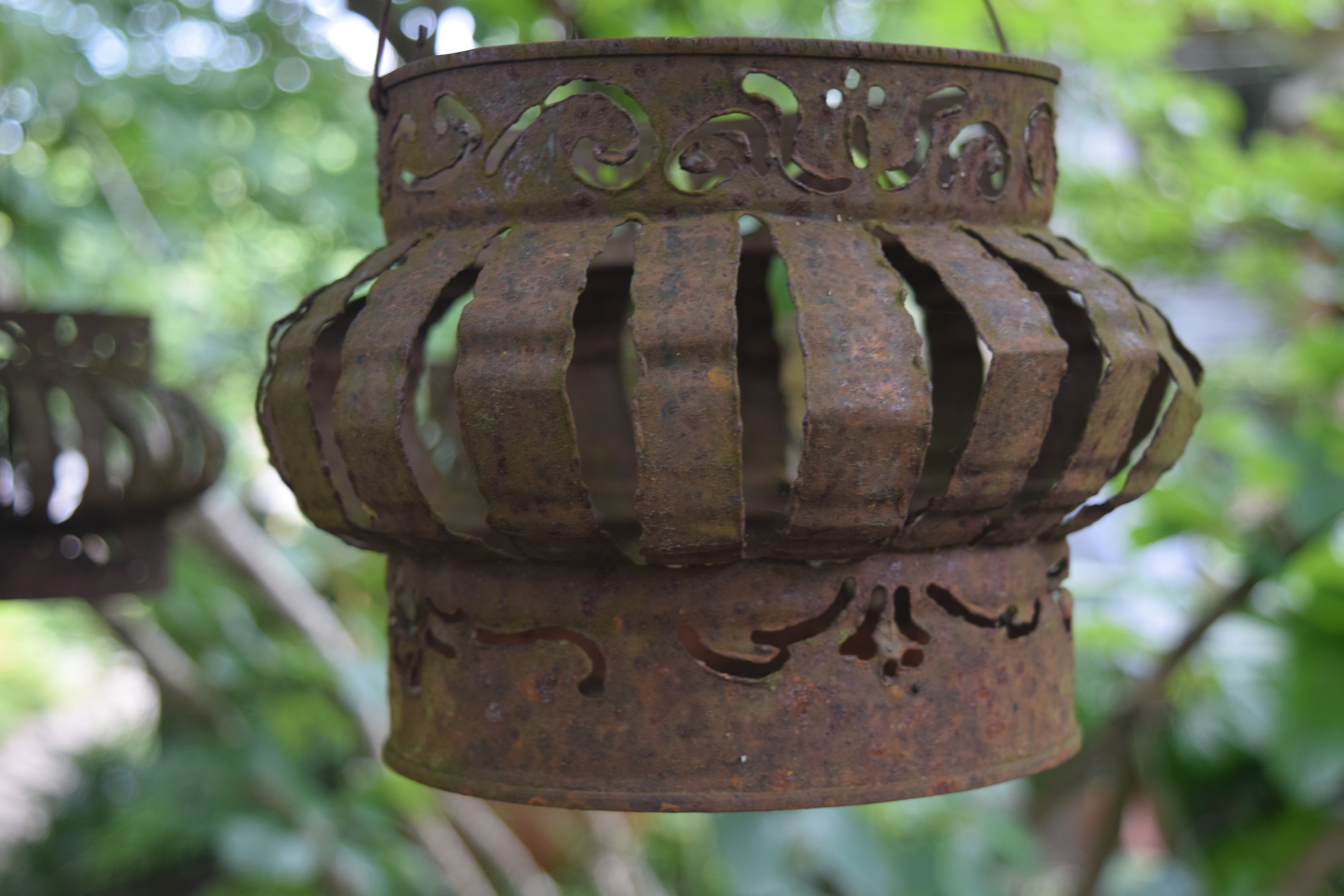
Not sure if this is a lantern or purely decorative, but I like it.

2014-07-13 10.49.08

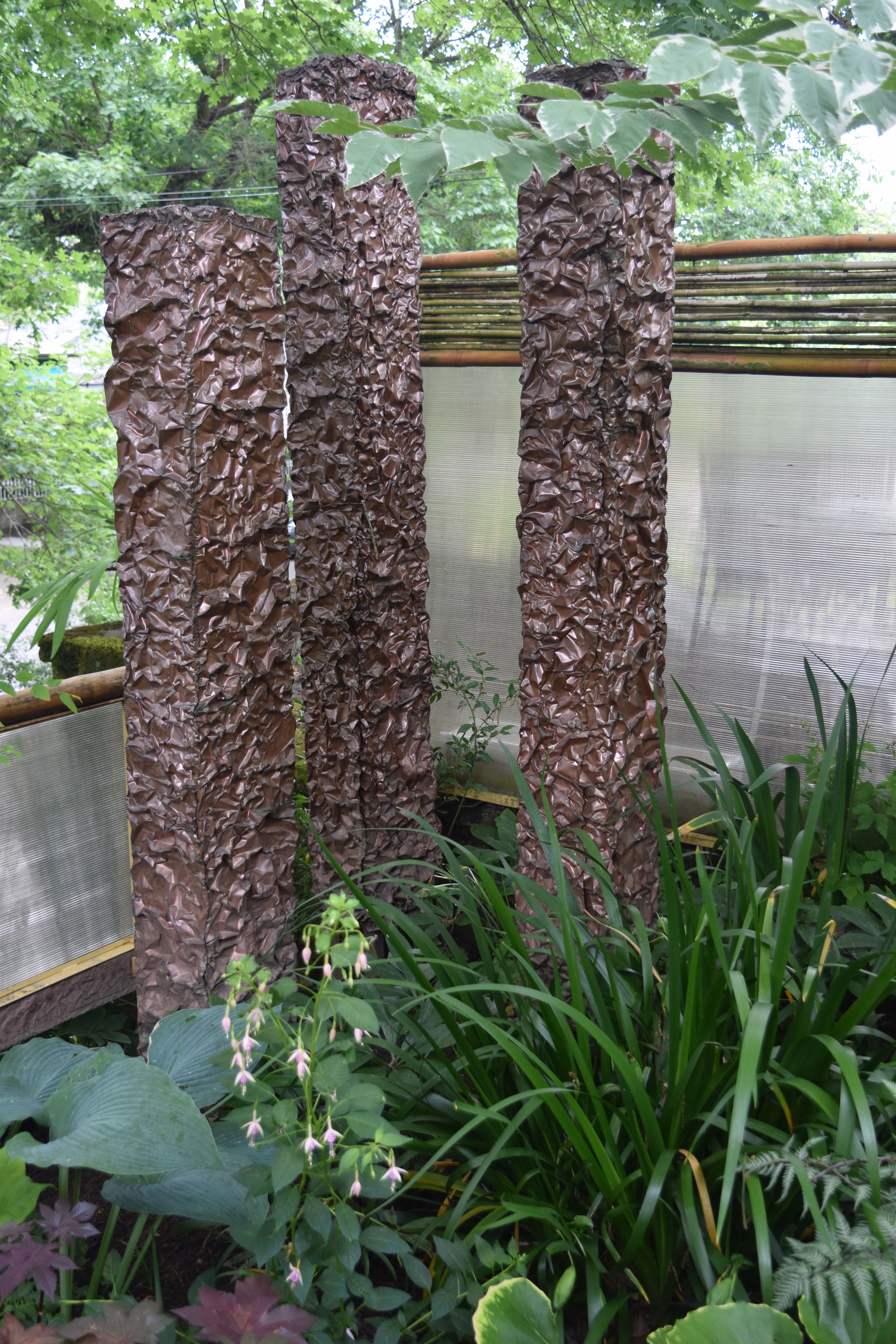
Lots of garden art to be seen, front and back. These textured metal columns are less my style, but to each his own.

2014-07-13 10.49.29

These variegated Brunnera macrophylla look good here.

2014-07-13 10.50.26

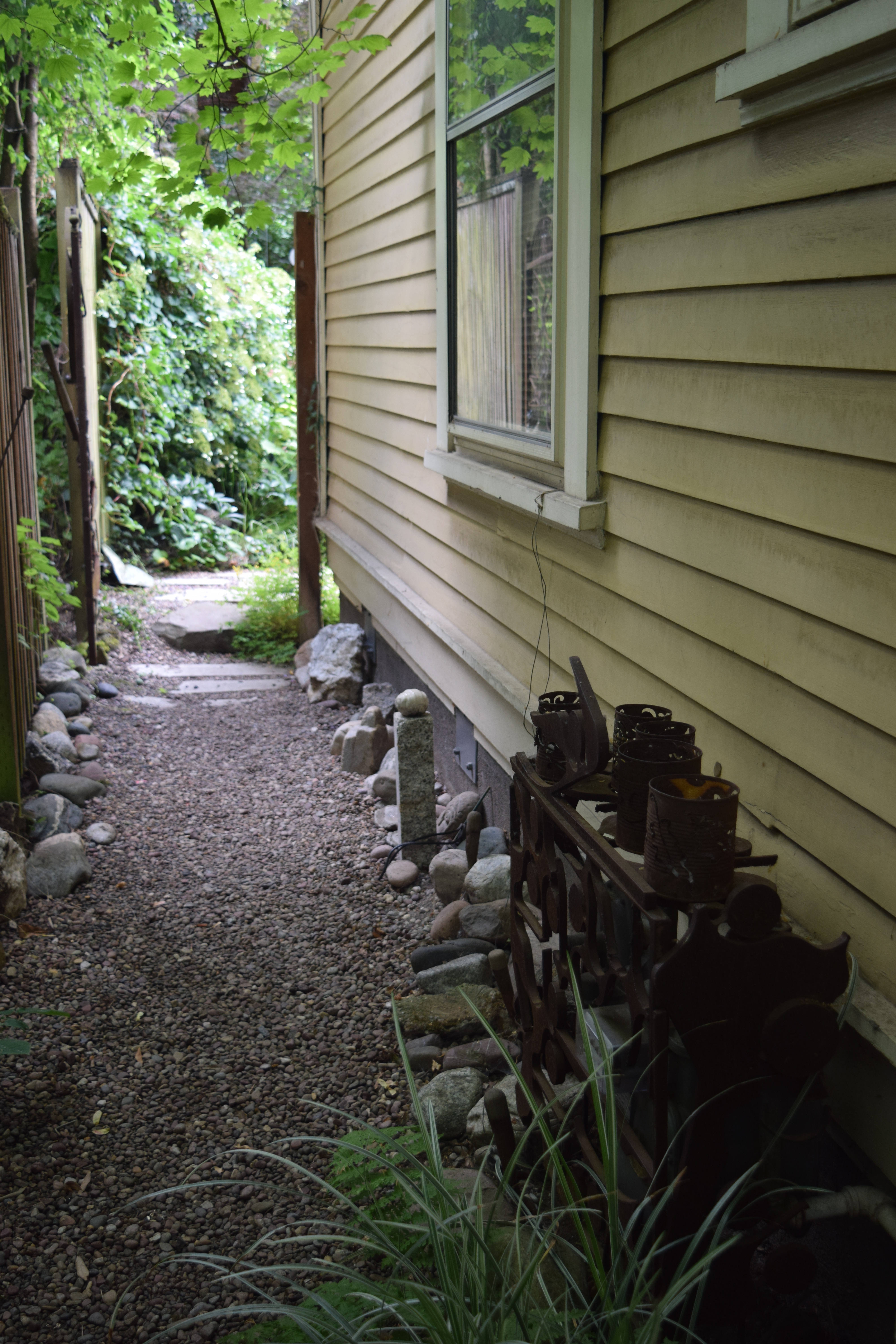
The path to the back garden, where most of the action is.

2014-07-13 10.54.57

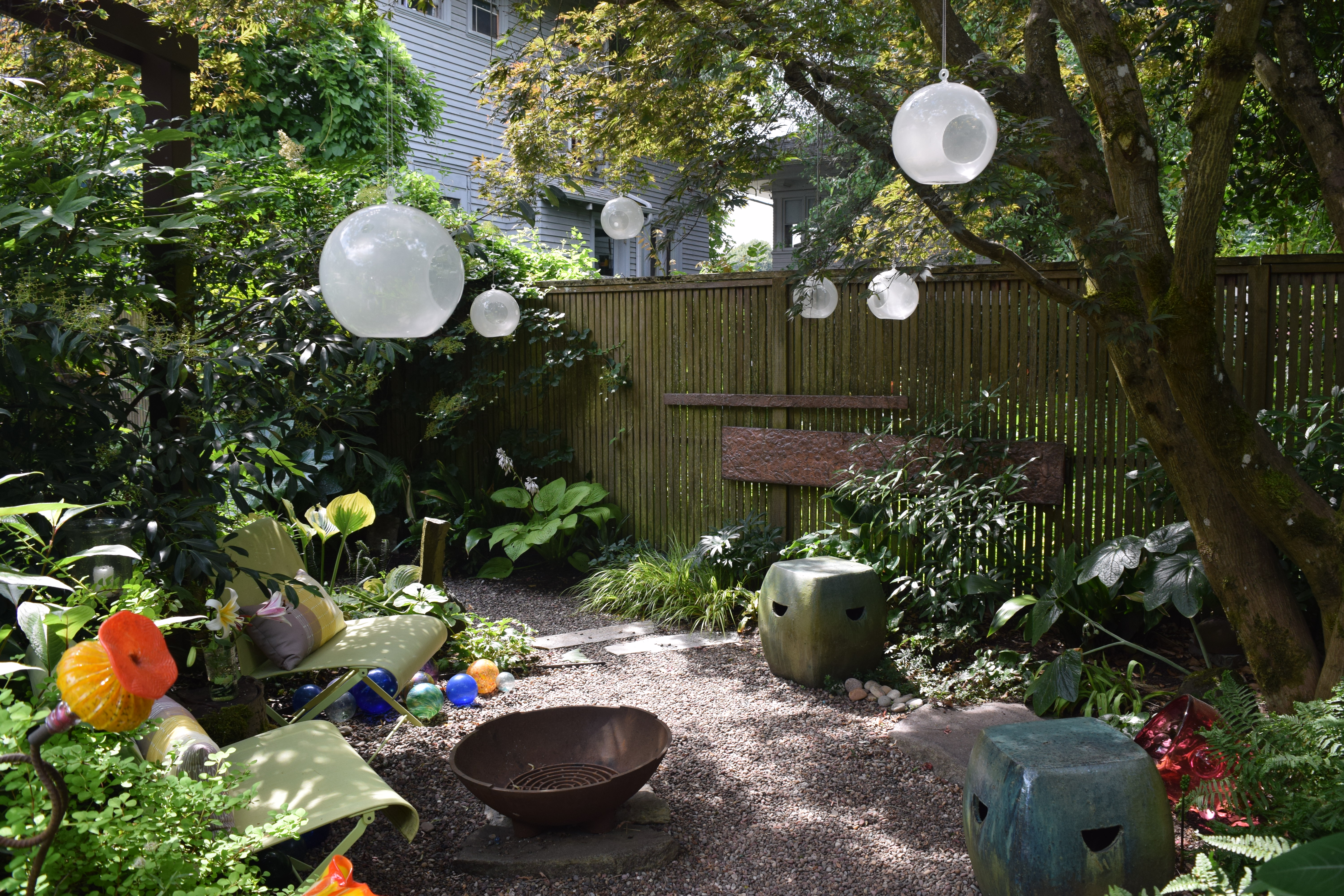
These hanging spheres are cool, though I don’t think they would be a good fit for my own garden.

2014-07-13 10.56.25

Joanne’s neighbor makes fused glass objects – perhaps that’s where this came from.

2014-07-13 10.59.57

This little patio made of a mosaic of small stones is really wonderful.

2014-07-13 11.01.10

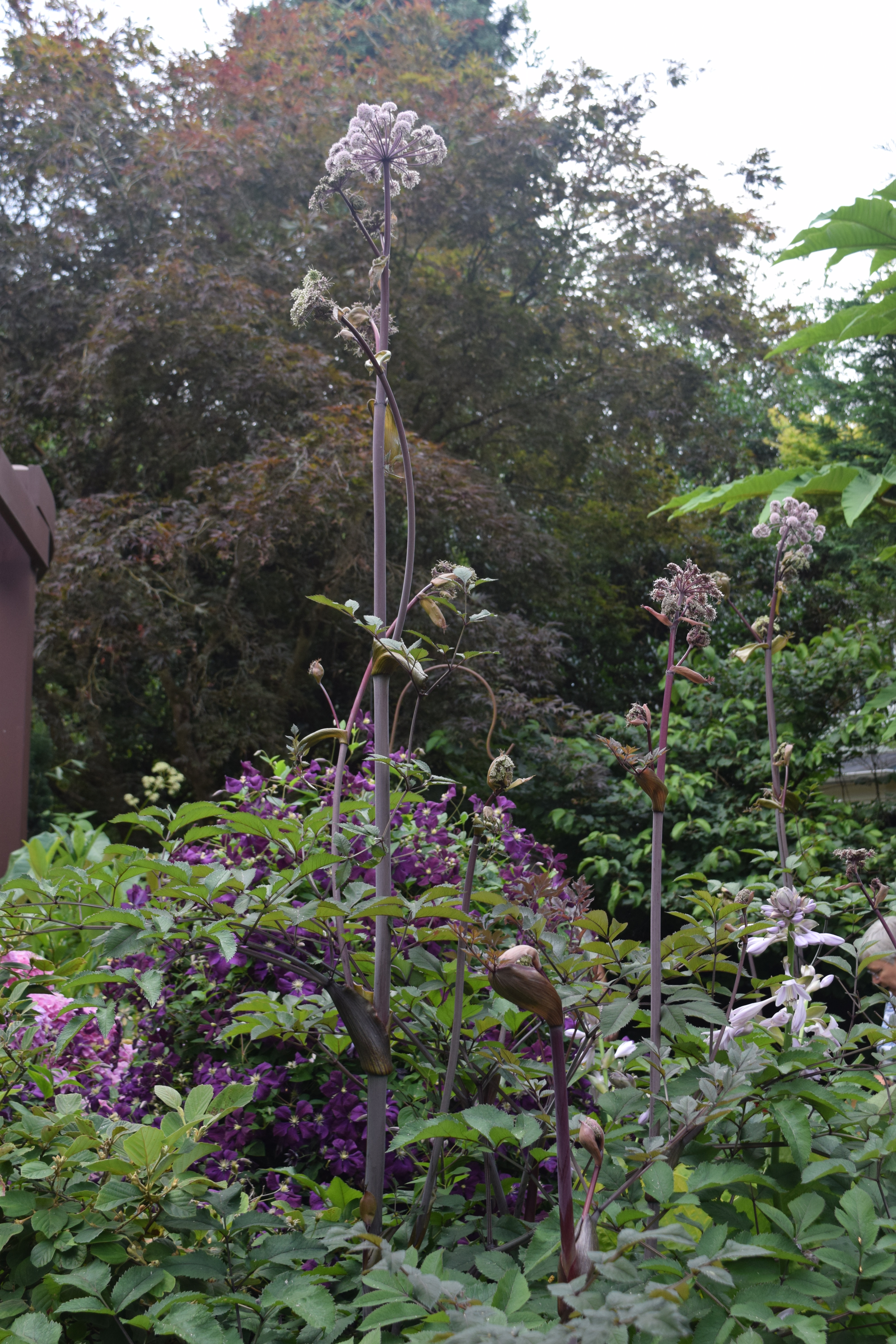
A fellow lover of tall plants! I don’t grow this one, but I think it is some kind of Angelica. Nice Clematis blooming in the background.

2014-07-13 11.04.57

I like how these Allium seedheads look next to the tall purple stems.

2014-07-13 11.12.12

2014-07-13 10.57.21

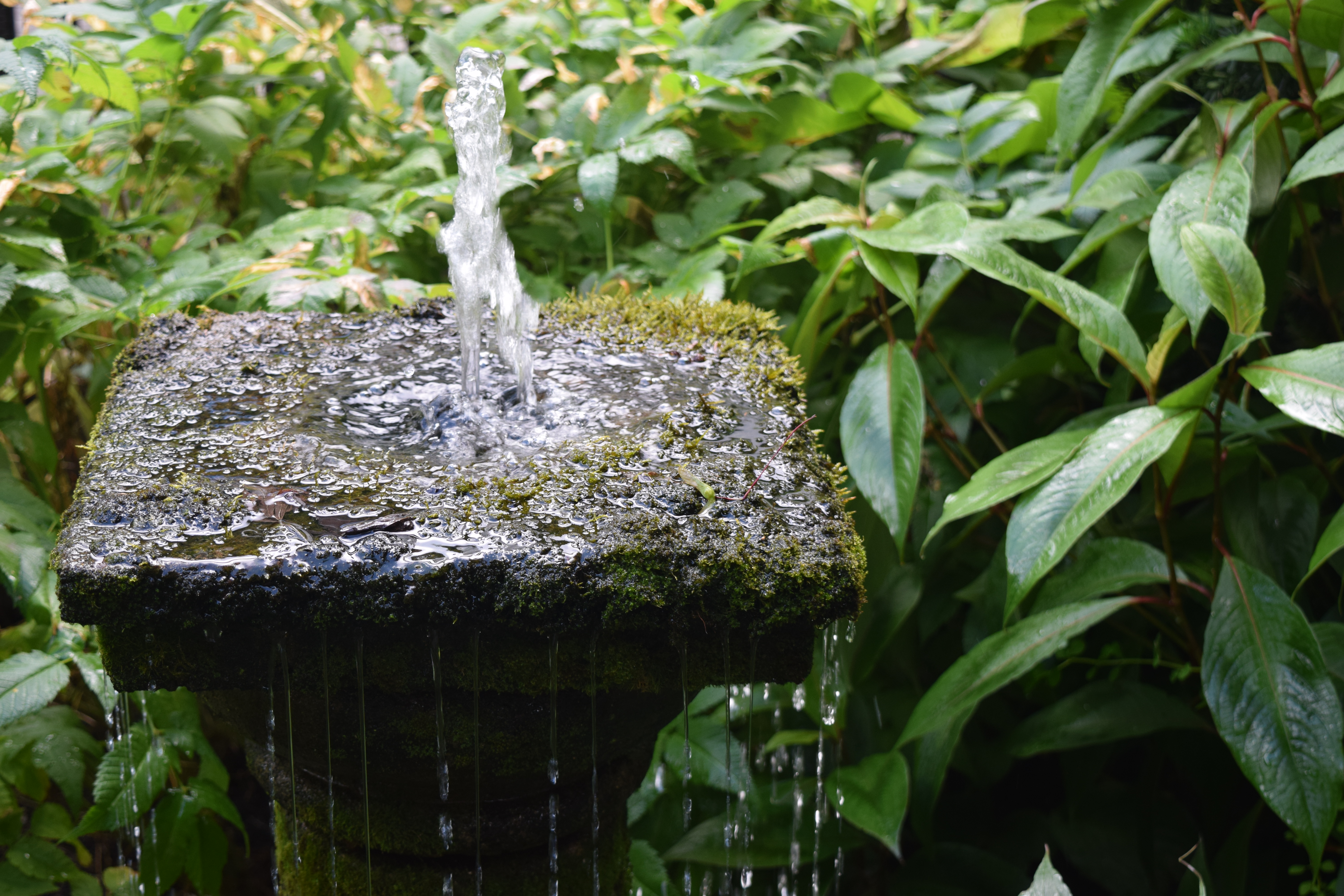
Great fountain. I like the mossy look, plus this is should be an excellent spot for birds, with both splashing and shallow running water..

2014-07-13 11.51.15

A wider view of the garden with the fountain. This garden has a decidedly tropical feel to it.

2014-07-13 11.44.11

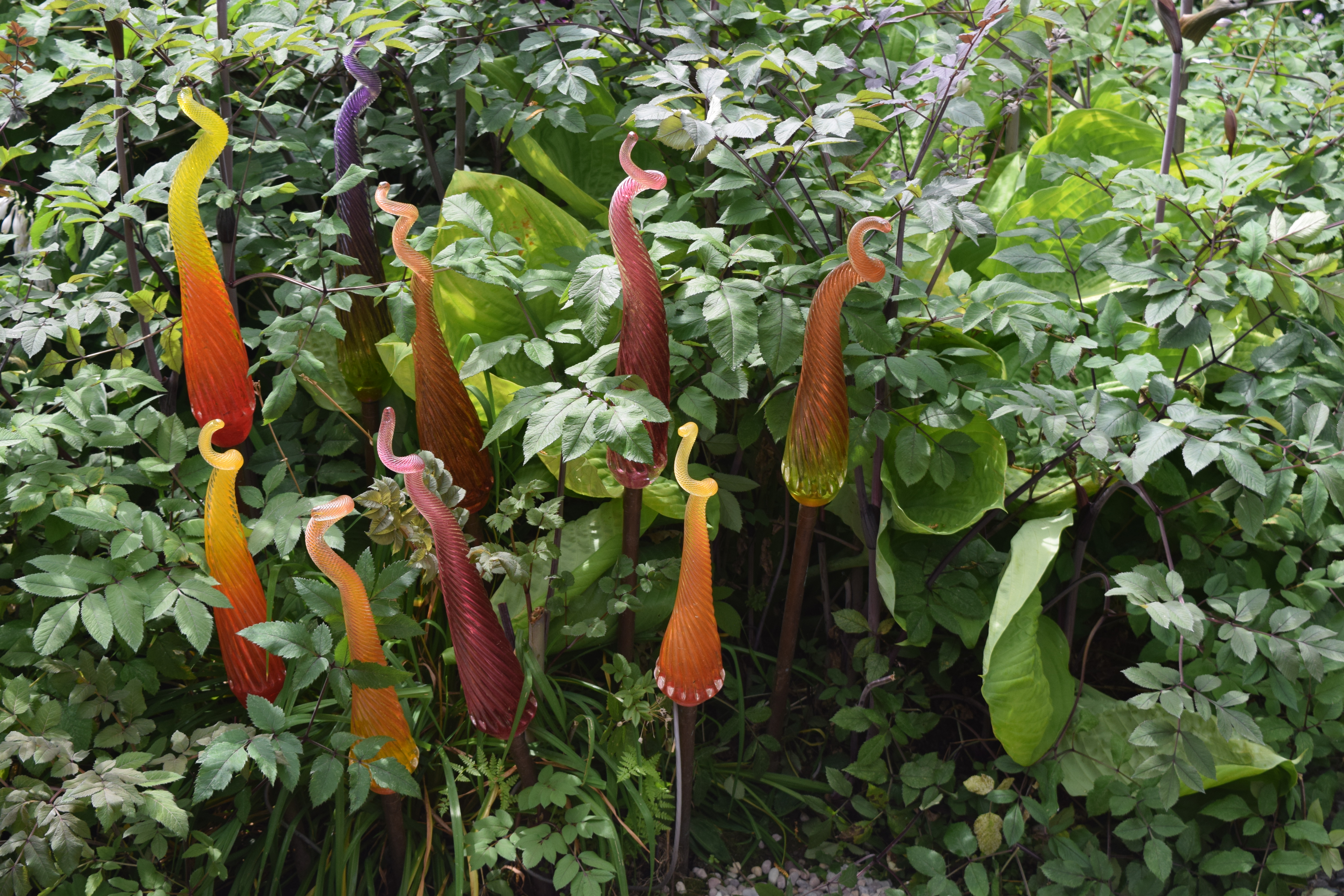
More glass garden art.

2014-07-13 11.12.40

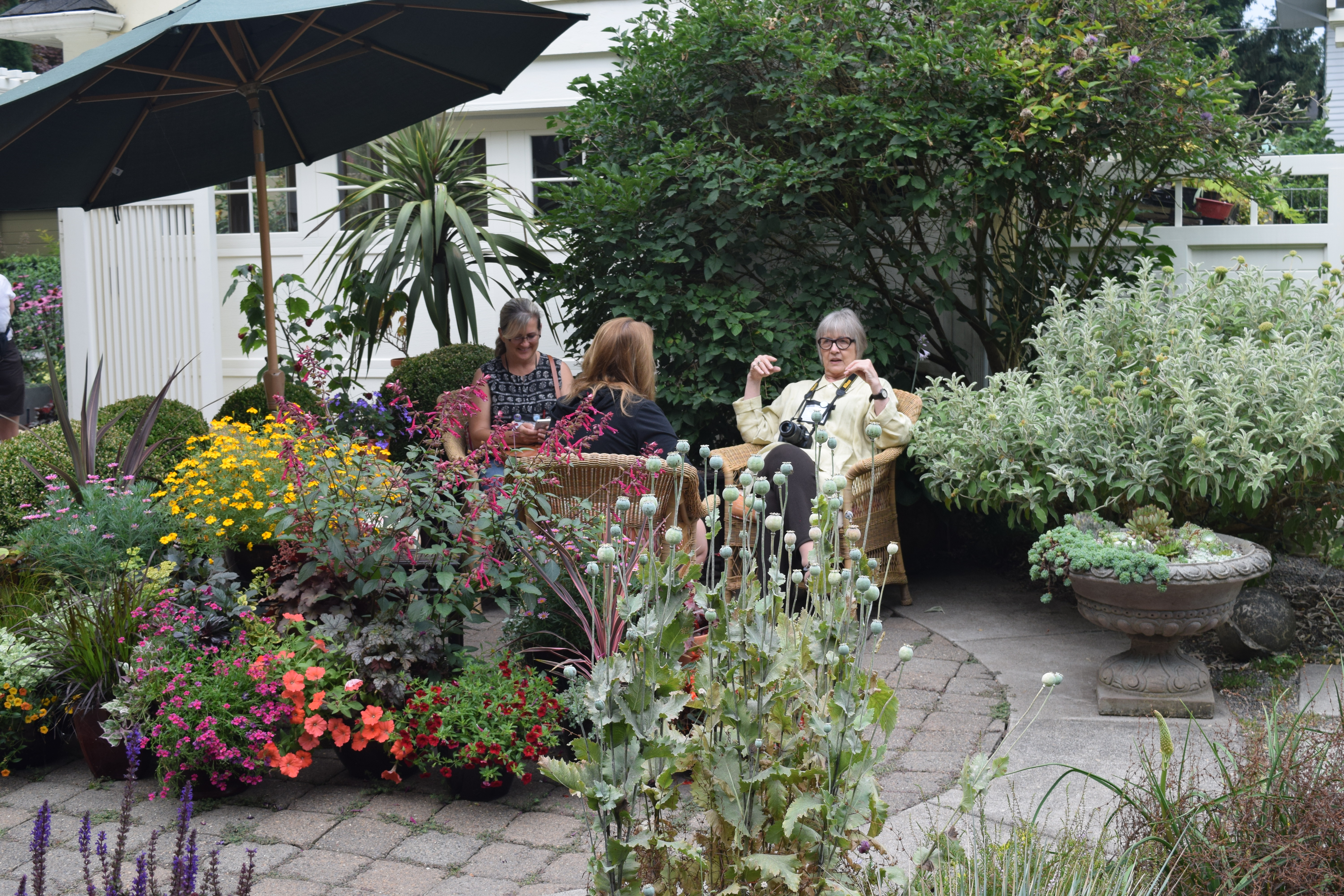
And a pleasant outdoor table within view of the fountain.

2014-07-13 11.54.26

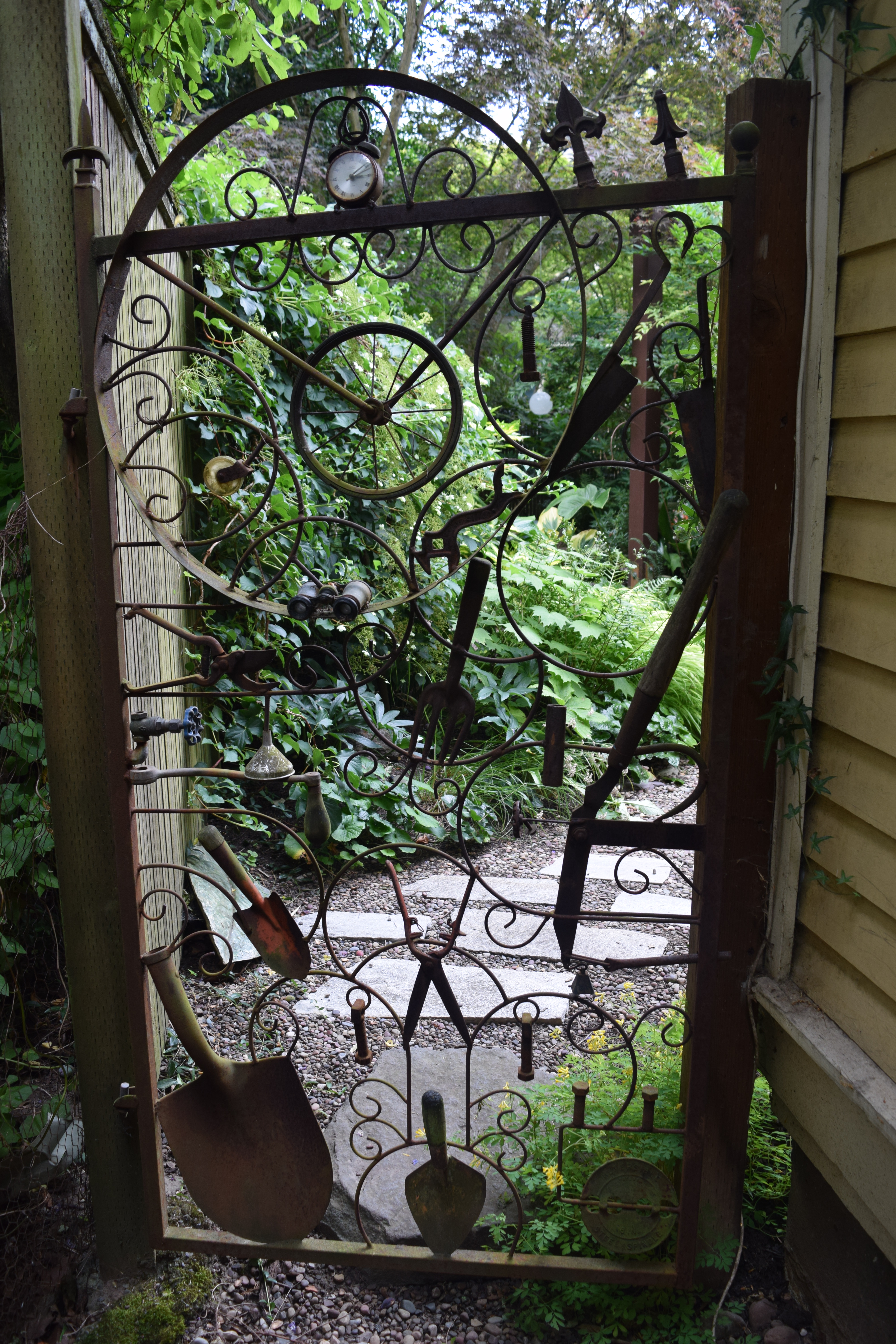
I loved this garden gate made with old tools.

2014-07-13 11.53.49

A closer look at the gate.

This is the sort of place that makes me feel like I really should have more garden art at home. Do you ever get that feeling?
In a few days there’ll be a post on the other half of this garden duo. But my next post will be a review of the Brent and Becky’s catalog. See you then.

Garden Catalog Review: Klehm’s Song Sparrow Farm and Nursery

Klehm’s Song Sparrow Farm began in 1852 as a nursery for fruit trees, and has been in the same family ever since. Charles Klehm, a lover of peonies and charter member of the American Peony Society (founded 1903), shifted the emphasis to ornamental plants. Their website is here.

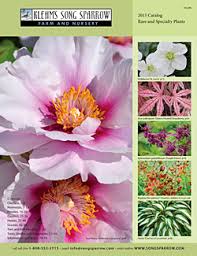
klehm catalog

Klehm’s, currently located in southern Wisconsin, offers a wide variety of perennial and woody plants, They specialize, however, in Peonies, Clematis, Daylilies, and Hosta. The Klehms have been skilled hybridizers of Peonies and Daylilies for multiple generations.

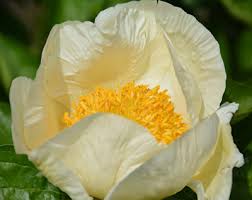
'Pearled Lemon Cream'. Photo from Songsparrow.com.
‘Pearled Lemon Cream’. Photo from Songsparrow.com.

At first I was not a big Peony enthusiast, I planted them mainly to please Judy. They have grown on me, however. All of my Peonies come from Klehm’s. In the 2015 catalog I was captivated by a new Klehm’s introduciton, ‘Pearled Lemon Cream’, a single early hybrid. In all, Klehm’s offers about 125 varieties of Peonies and Tree Peonies.

'Priceless Gold Strike' Daylily. Photo from Songsparrow.com.
‘Priceless Gold Strike’ Daylily. Photo from Songsparrow.com.

Among the new Daylilies, I was attracted to another Klehm hybrid, ‘Priceless Gold Strike’, an early to mid-season bloomer that grows about 3′ tall.

Helenium 'Short'n'Sassy'. Photo from songsparrow.com.
Helenium ‘Short’n’Sassy’. Photo from songsparrow.com.

Another plant that caught my eye was a new compact variety of Helenium autumnale, ‘Short’n’Sassy’ – just 18-22″ tall.  Don’t think I have seen this one before.

Klehm’s is not cheap, but I can attest to the fact that their plants are healthy and substantial – generally two to four years old. Plus their catalog is very satisfying, with luscious photos and understated but engaging text. I confess that I do not know their policy on the use of neonicotinoids and other pesticides.

And now to change the subject for a moment. I am told by WordPress that I have published 500 posts since I started Garden In A City three years ago. This does seem like a significant milestone. I hope the next 500 are just as much fun, and I am grateful to all of you who read and comment on what is written here..

Do you have a favorite source for Peonies?

More Garden Space for Me!

So I have some exciting news! You may remember last October I wrote about how the city forestry crew had taken down a dying maple on the parkway west of the driveway. It turns out the city will NOT be replacing that tree (something about too close to the driveway).

Hate to see a tree die, but this was an invasive Norway Maple.

This creates a new space roughly 6’x12′ that is available for a new garden bed! Granted, the soil is somewhat compacted and is full of tree roots. But still, this new space is in almost full sun and will allow me to further my Prime Gardening Directive, namely:

more

Of course I’ve been fantasizing for months about what to plant there. I’d like this planting to complement the Left Bank Bed on the other side of the sidewalk, with mostly lower-growing, native plants. They should also be able to tolerate dryer conditions.

Right now I’m thinking of the following:

Prairie Smoke and Starry Solomon's Plume
Prairie Smoke and Starry Solomon’s Plume

Prairie Smoke (Geum triflorum). Feathery pink seed heads, low native groundcover for planting along the sidewalk.

Photo from www.prairienursery.com.
Photo from http://www.prairienursery.com.

Prairie Dropseed (Sporobolus heterolepsis). A fine textured grass about 2′ tall. I would use it to mark the east and west borders of the bed.

Downy Wood Mint (Blephilia ciliata).

Prairie Onion (Allium stellatum). Nodding lavender florets in summer.

Butterflyweed
Butterflyweed

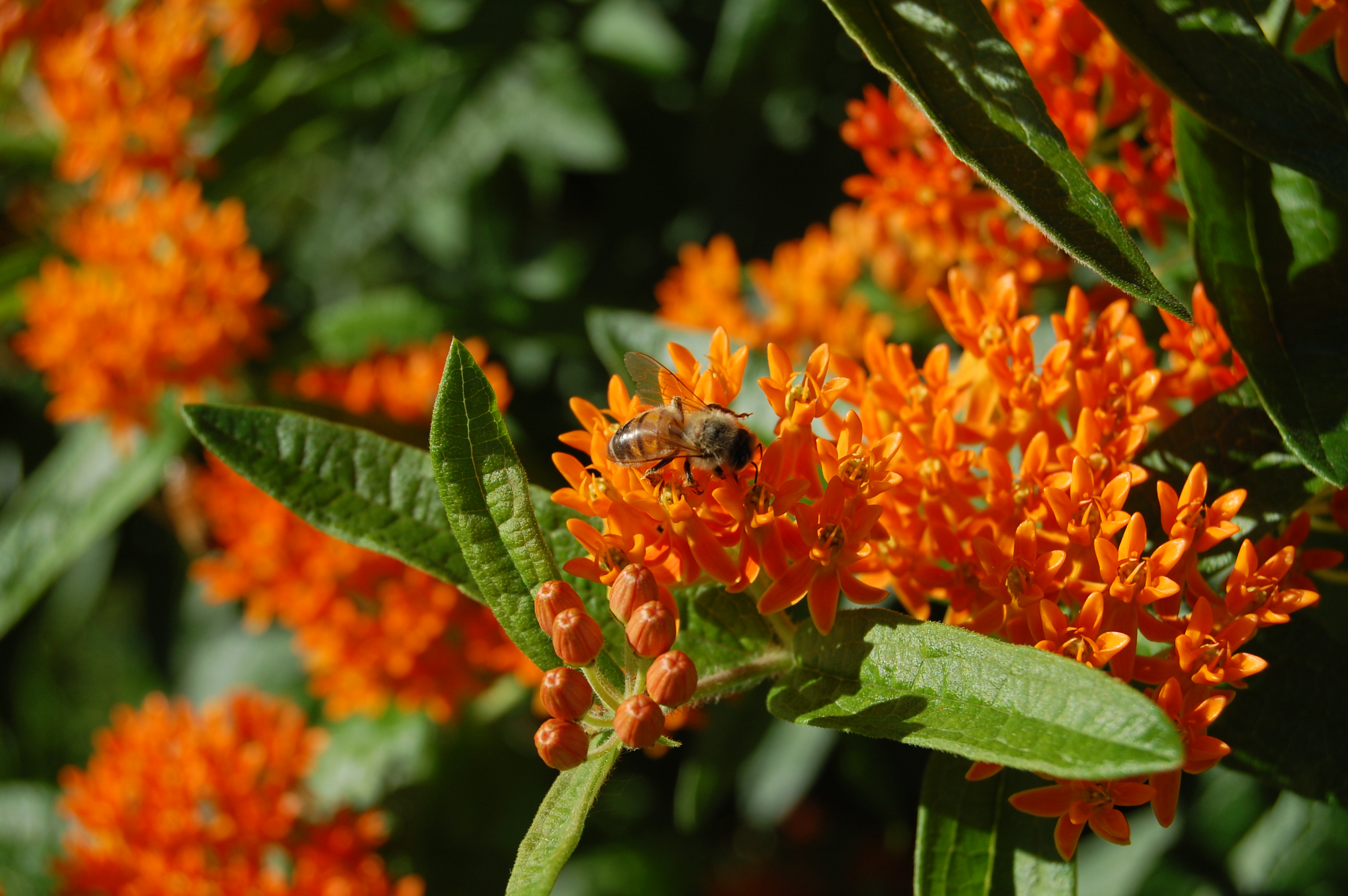
Butterflyweed (Asclepias tuberosa). A short milkweed with orange flowers.

Prairie Baby's Breath
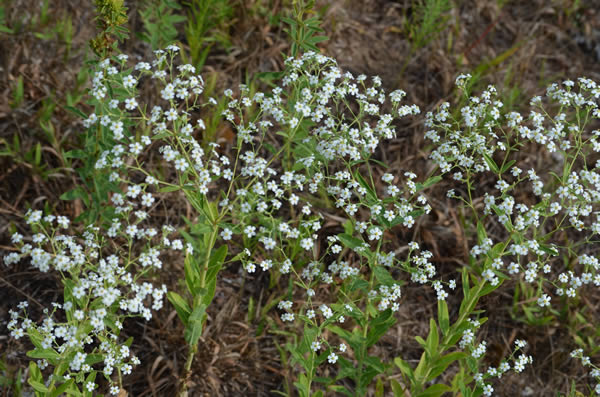
Prairie Baby’s Breath

Prairie Baby’s Breath (Euphorbia corollata). Small white flowers and good fall foliage color. About 3′.

Little Bluestem (Schizachyrium scoparium). This upright grass and the Prairie Baby’s Breath would be the tallest plants for this bed.

Bluestem Goldenrod
Bluestem Goldenrod

Finally, for the streetside edge, a mix of Bluestem Goldenrod (Solidago caesia) and Aromatic Aster (Symphyotrichum oblongifolius), for a nice blue/yellow combination in late summer and fall.

All of the above are natives, though in the fall I will probably plant some species tulips for spring color.

Also, I wonder how the city would feel if I grew a vine up the lamppost?

So what do you think? If you suddenly had a stretch of parkway (or hellstrip, as it is also called) available, what would you plant?

Garden Catalog Review: Prairie Moon Nursery

This is the time of year when I end every day leafing through garden catalogs before going to sleep. The promise of new blooms and greenery help me get through the short bleak days of winter.

Fortunately I get lots of catalogs, and over the next few weeks I’m going to write about some of my favorites.

2015 Prairie Moon Nursery catalog

Prairie Moon really stands out in a number of ways. Their website is here. They carry plants native to the American Midwest almost exclusively, and they have a vast selection – well over 500 wildflowers, grasses, sedges, ferns, shrubs, trees, and vines.

Partly because the variety is almost overwhelming, Prairie Moon actually puts out two catalogs. The Catalog and Cultural Guide is for hard core native plant enthusiasts. All plants are listed, and most of the information is in tables with limited descriptive text.

The Native Gardener’s Companion is limited to the most garden-worthy plants and has more narrative text. Both catalogs have really nice photographs, and neither engages in the kind of plant hype you find in some catalogs. Both are on my bedside table.

Yellow Wild Indigo. Photo from Prairie Moon Nursery.

Prairie Moon sells seeds, bare root plants, and trays of 2×5 inch pots. It is generally simplest and cheapest to buy bare root. They tend to look like dried squid, but are easy to plant and establish.

Over 70 plants are available in pots. Pots are only sold in trays of 38. A tray of just one species costs $92 ($2.42 per plant – pretty good!). You can fill the tray with up to six species of your choosing for $129 ($3.40 per plant, still pretty good).

This year Prairie Moon has quite a few new plants on offer, most of which I haven’t seen before. Right now I am on the lookout for shorter plants that don’t need a lot of moisture, so the following grabbed my attention:

Downy Wood Mint. Photo from Prairie Moon Nursery.

Small Yellow Wild Indigo (Baptisia tinctora). A wild indigo with yellow flowers, growing just 2′ high.

Downy Wood Mint (Blephilia ciliata). About 1′ tall, with pink-purple flower spikes. Actually, they have carried this one for a while.

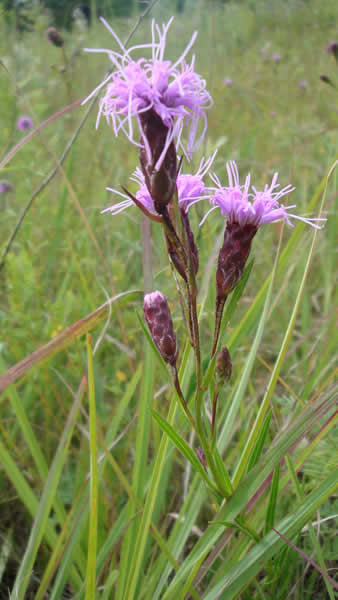
Dwarf Blazing Star (Liatris cylandracea). Just 1′ tall and blooming July into autumn.

Dwarf Blazing Star. Photo from Prairie Moon Nursery.

I’m also thinking about Smallspike False Nettle (Boehmeria cylindrica), which is sold only as seed. Like Stinging Nettle (Urtica dioica), it is a host plant for Red Admiral butterflies, but without the nasty stinging hairs. Not terribly attractive, I could sow it in a few out-of-the way spots.

Prairie Moon emphasizes plants that benefit pollinators, and does all their growing without neonicotinoid insecticides.

Do you usually order plants as seed, bareroot, or in pots?

Book Review: Is There Such a Thing as an “American” Garden?

Recently I finished reading Great Gardens of America by the English garden writer Tim Richardson. The book has much to commend it, but I would have liked it a lot more if I had skipped the introduction.

great gardens of america

In this book, Richardson describes 25 American gardens that he considers superlative (two are actually Canadian, but let’s not quibble).

Unfortunately, in the introduction the author feels called upon to define the quality that makes a garden “American”. And what is that quality? Well, it is “the embrace of the wilderness ideal”, and “the frontier mentality of making do with what is available and living within nature rather than in opposition to it …”

Tim-Richardson_1433935i
Tim Richardson. Photograph from Daily Telegraph.


Sweeping generalizations are appealing, but also an easy way to get tripped up. First off, the settling of the North American continent was not done by people who believed in “living with nature rather than in opposition to it.” It was done by people who believed that wilderness should be tamed and subdued with an eye to extracting a maximum of wealth.

Yes, there have always been important voices arguing for preserving the natural heritage, but these have been a distinct minority.

Also, there is little that evokes a wilderness ideal among many of the gardens that Richardson profiles – such as Vizcaya in Florida or Stan Hywett in Indiana.

Filoli: a "wilderness ideal"?
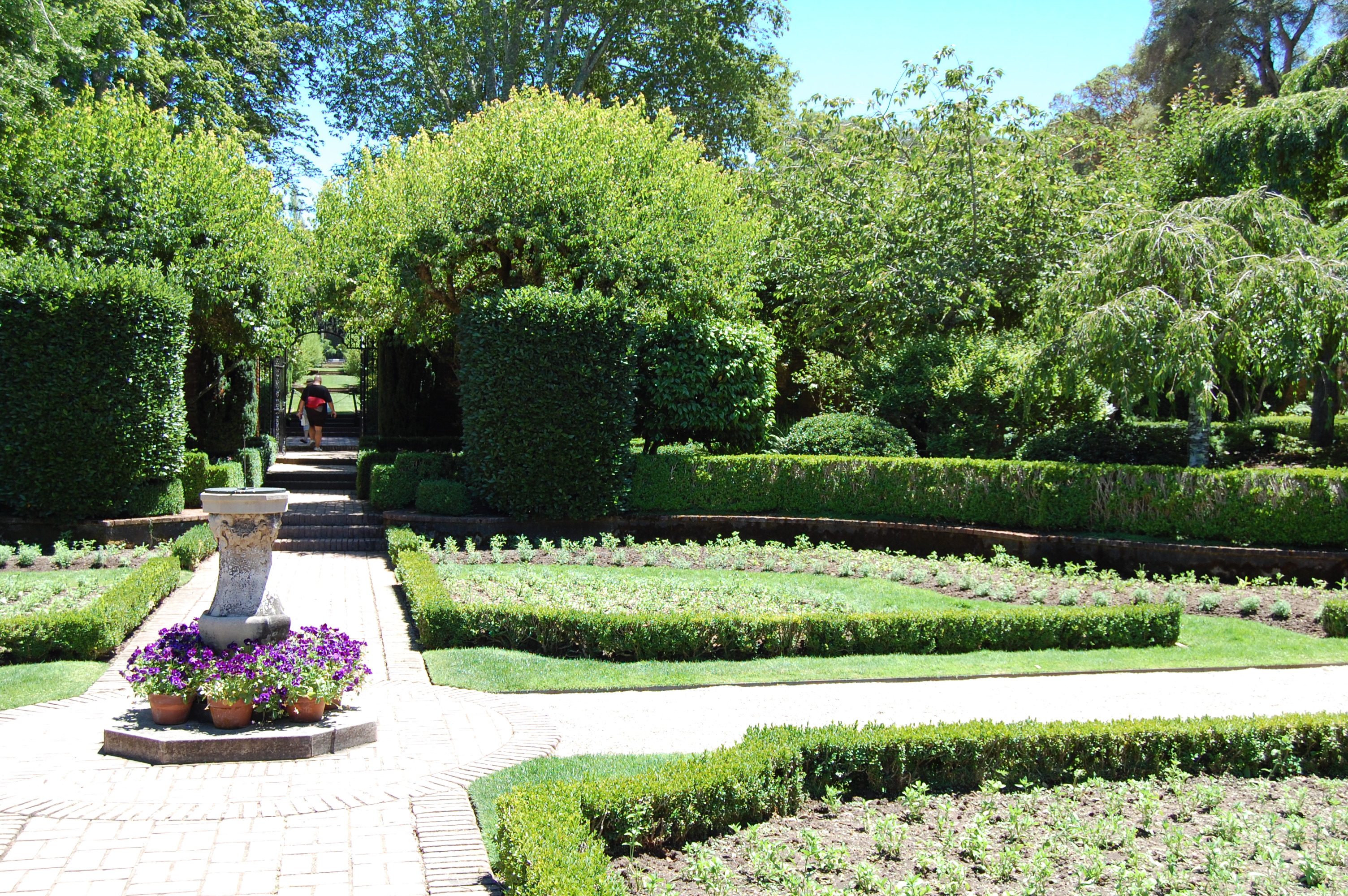
Filoli: a “wilderness ideal”?

And Richardson himself shows how many of these gardens are intended to replicate various European design styles – Vizcaya is modeled after an Italian Renaissance garden, Filoli is an attempt to create an English estate in California, etc.

As long as I’m grousing, I have to mention that Richardson describes Jens Jensen, founder of the Prairie Style of garden design, as “a Dane who settled in Chicago in the 1930s”. Actually, Jensen arrived here in 1884. By the 1930s he was in his 70s and had already had a long and distinguished career in the USA.

Has fact checking become a lost art?

Personally, I don’t think there is anything that defines a quintessentially “American garden”, other than geographic location. American gardens derive from many design traditions originating in several nations. Sometimes those traditions have evolved on our shores and become more or less distinctive.

Pale Purple Coneflower at Lurie Garden

It’s interesting to me that the Lurie Garden, which I think reflects Richardson’s “wilderness ideal” more than most, is to a great extent the product of a Dutch designer.

I admit I am overemphasizing the introduction, which is a small part of the book. The garden descriptions that make up the bulk of the book are worth reading. I especially enjoyed the visit to Dan Hinkley’s garden in Seattle, and the history of some of the gardens such as Dumbarton Oaks and Lotusland.

And I loved the photographs by Andrea Jones.

Great Gardens of America has famous gardens and others that are more obscure. Not all are open to the public, but I definitely learned of some that I have added to my bucket list.

Do you believe that you can define what makes a garden American, English, Italian, etc?


The Getty Center

On the day after Christmas we visited the Getty Center, which includes an art museum, research institute, and conservation institute. However, we went primarily to see what was going on outside the buildings, not inside.

You have to  take a tram from the parking garage to the campus. This is the scene that greets you when you get off the tram.
You have to take a tram from the parking garage to the campus. This is the scene that greets you when you get off the tram.

The Getty Center is a popular destination in LA, which means that it draws massive hordes of people and long lines of cars. In fact, when we first arrived they had just blocked the entrance as the parking garage had filled. We drove on for a few minutes, then returned. Fortunately the second time was the charm and we were able to get in.

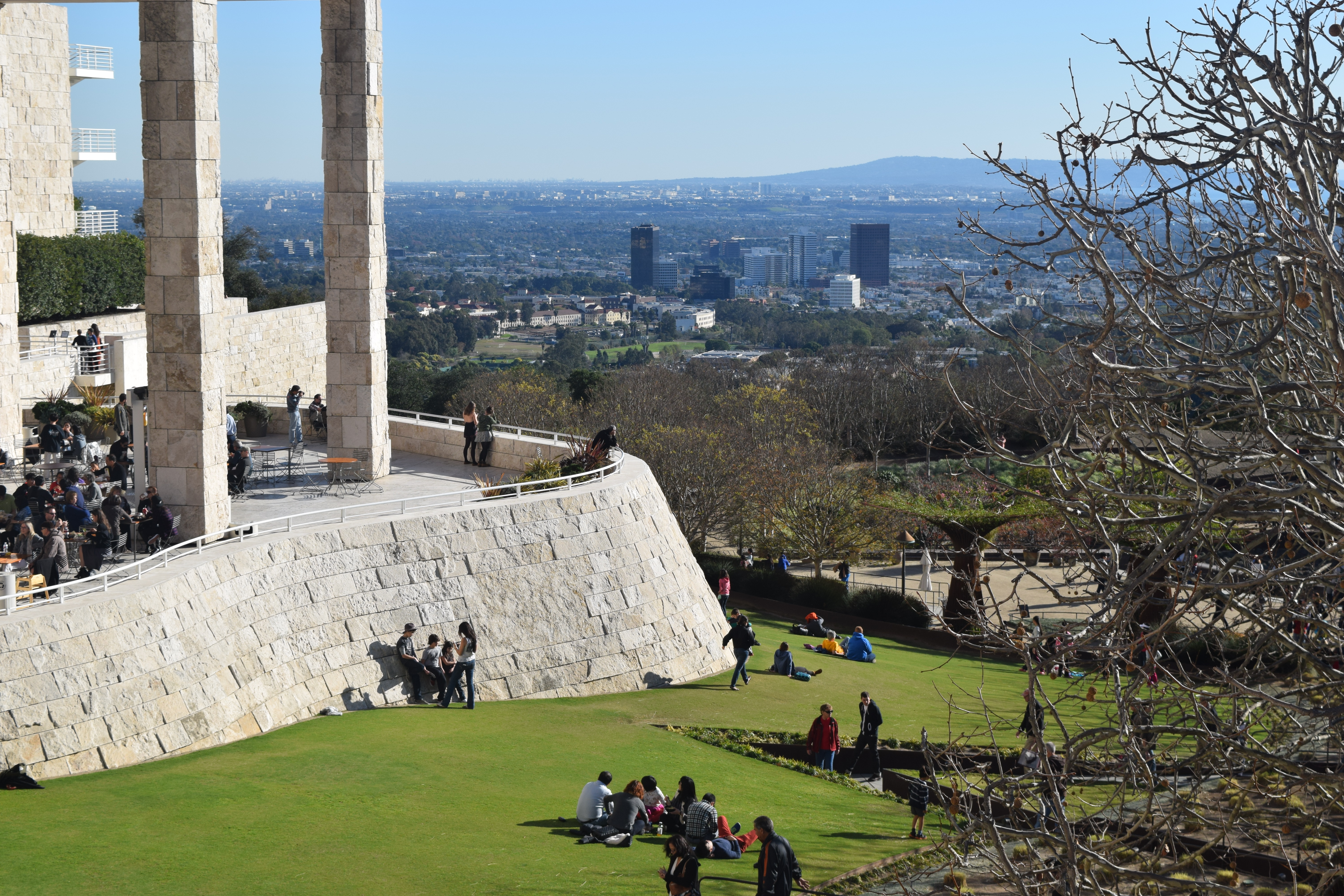
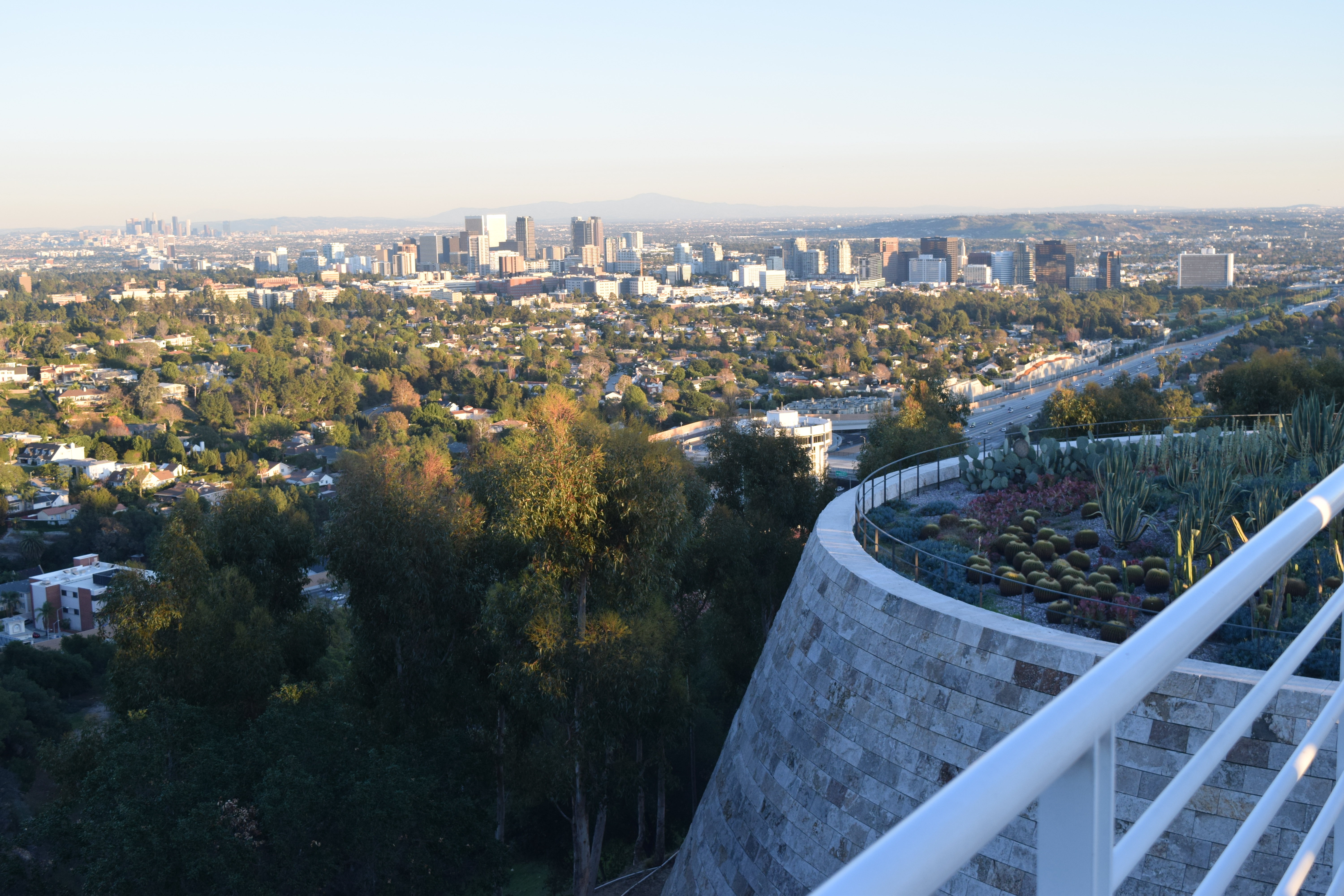
Looking towards Los Angeles from the Getty Center.

Surprisingly, the campus does not feel crowded. It includes 110 acres on a hilltop in the Santa Monica Mountains. The site faces southwest towards the ocean and the City of Los Angeles. The views are spectacular.

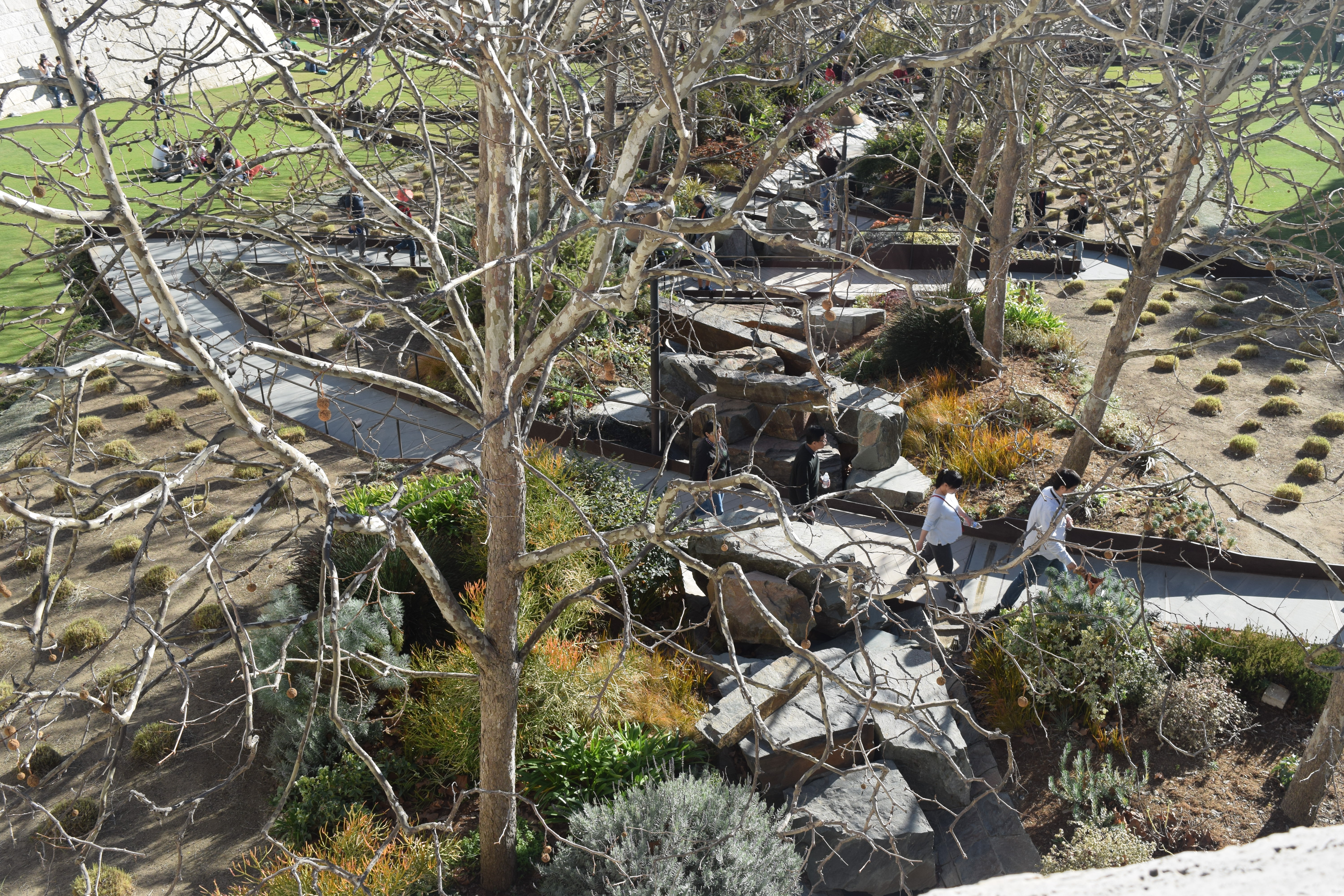
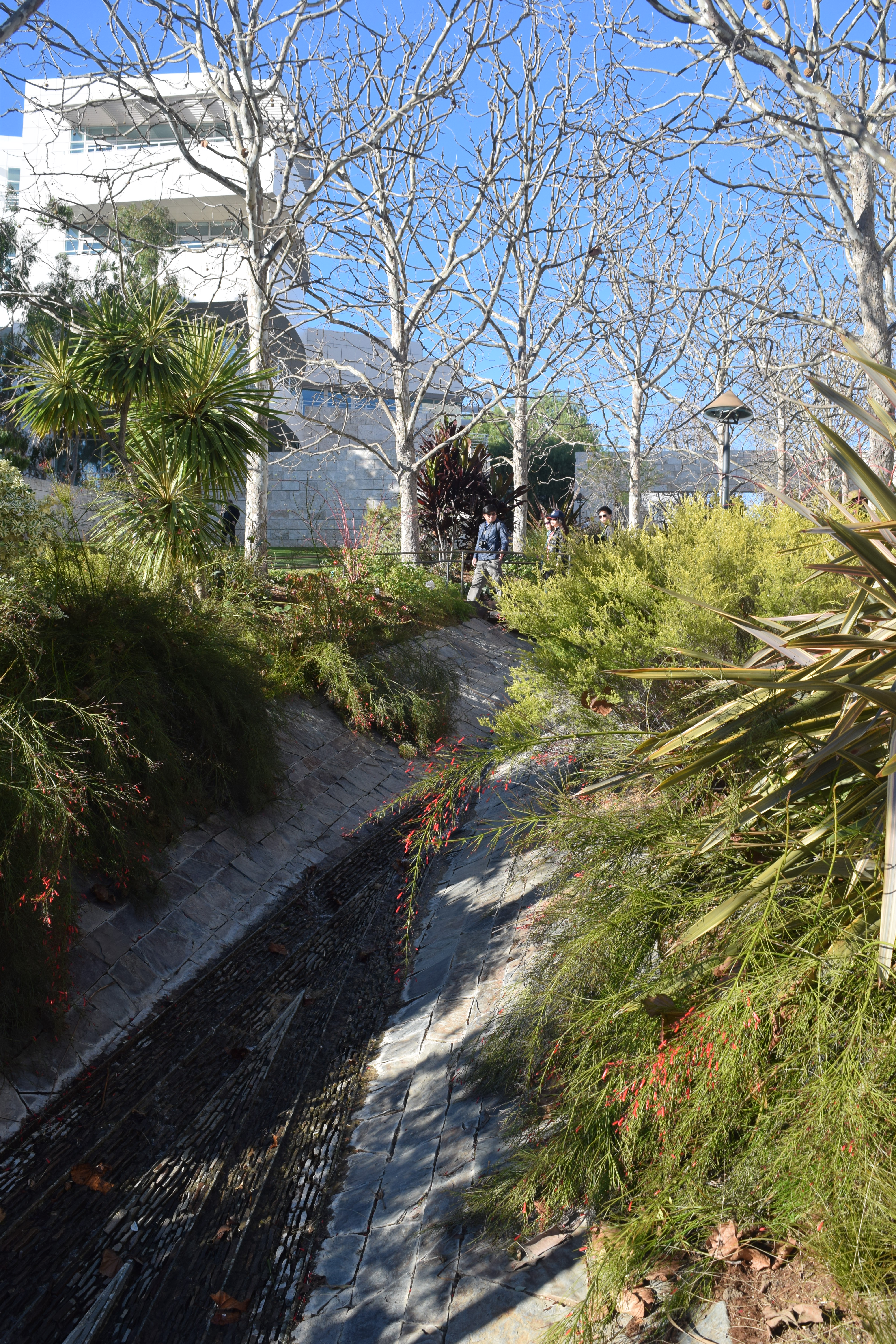
Artificial garden stream.
The stream seen from the bottom.

To reach the main garden you follow the bed of an artificial stream. The path includes switchbacks and bridges across the water.

2014-12-26 17.43.05

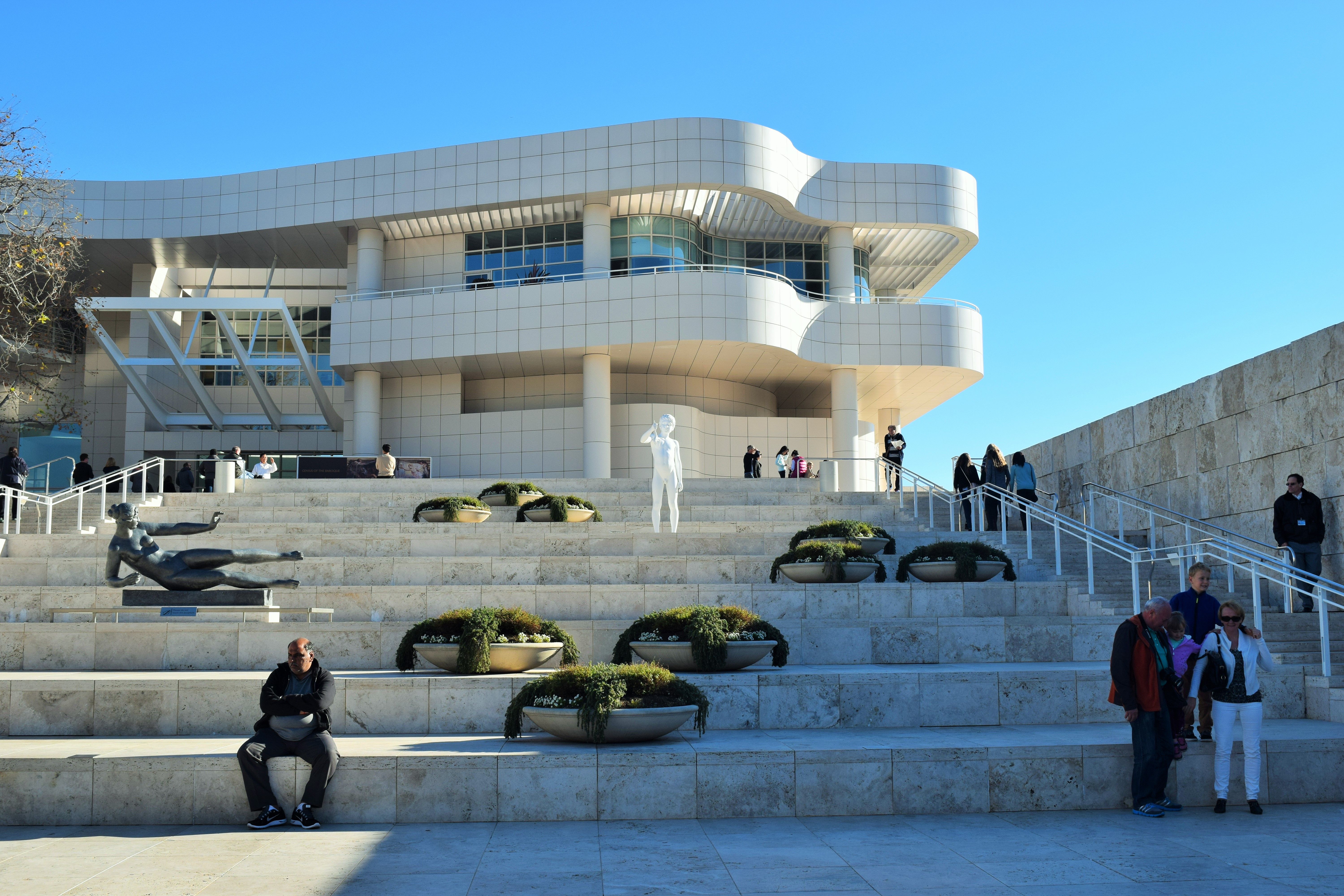
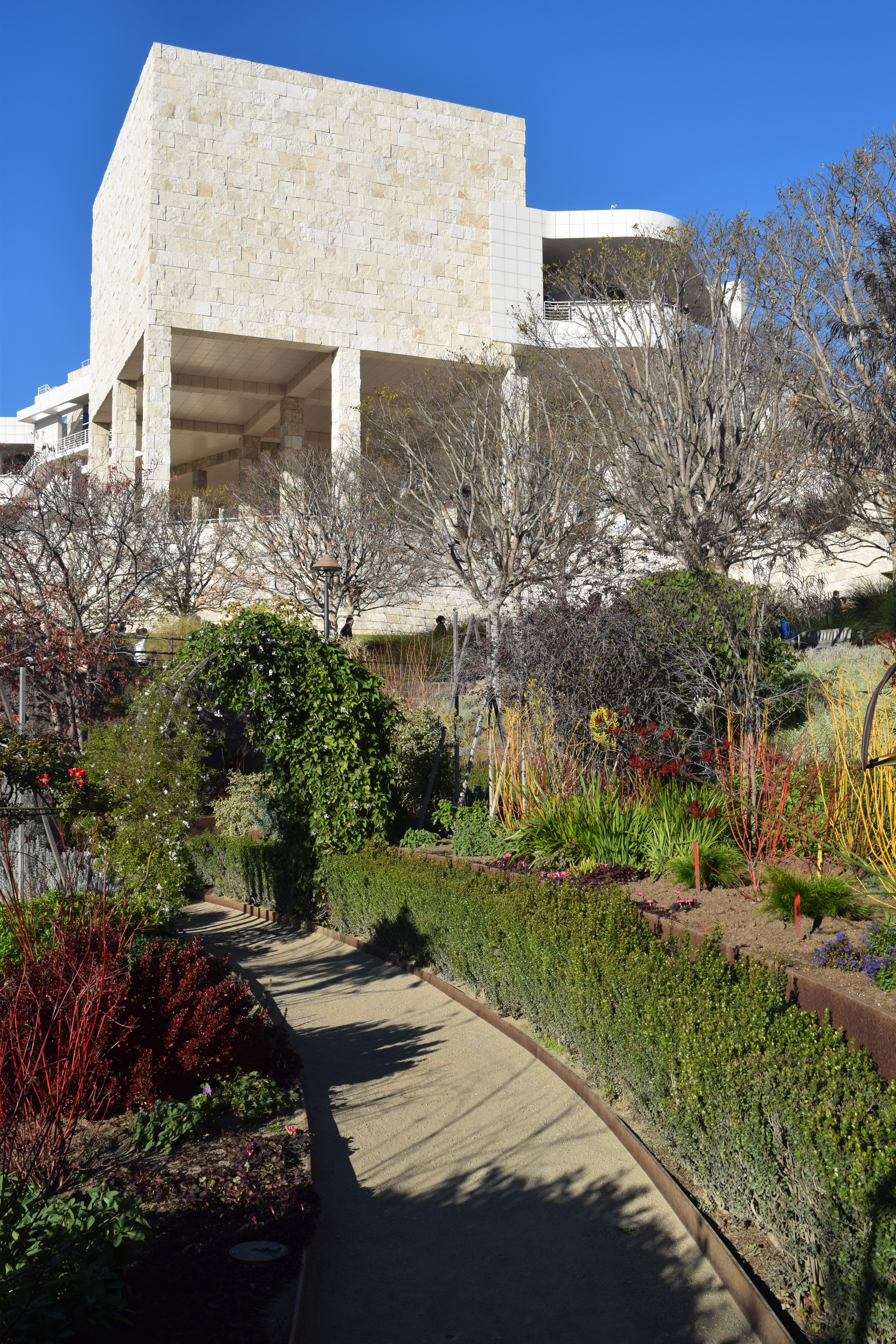
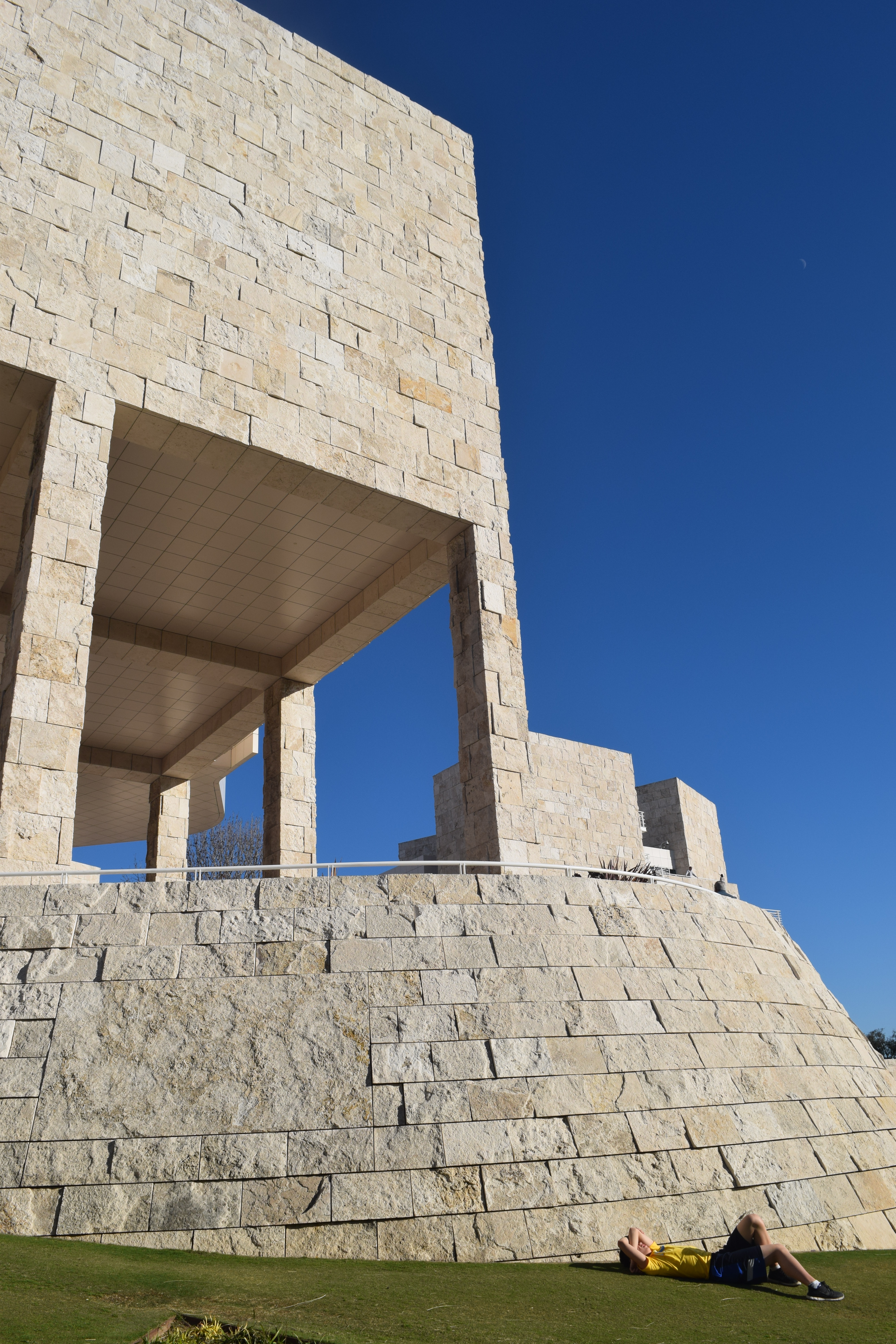
I have to say that I was more impressed by the architecture and the overall site than I was by the gardens themselves. The way the stone catches the light and contrasts with the bright blue sky is almost mesmerizing. The buildings seem to be solid and at the same time floating like clouds.

2014-12-26 17.27.49

The stone used here is called travertine. In left rough in some places but smooth in others. Or maybe the smooth surfaces were a different material? Not sure why but this variation in textures kept grabbing my attention.

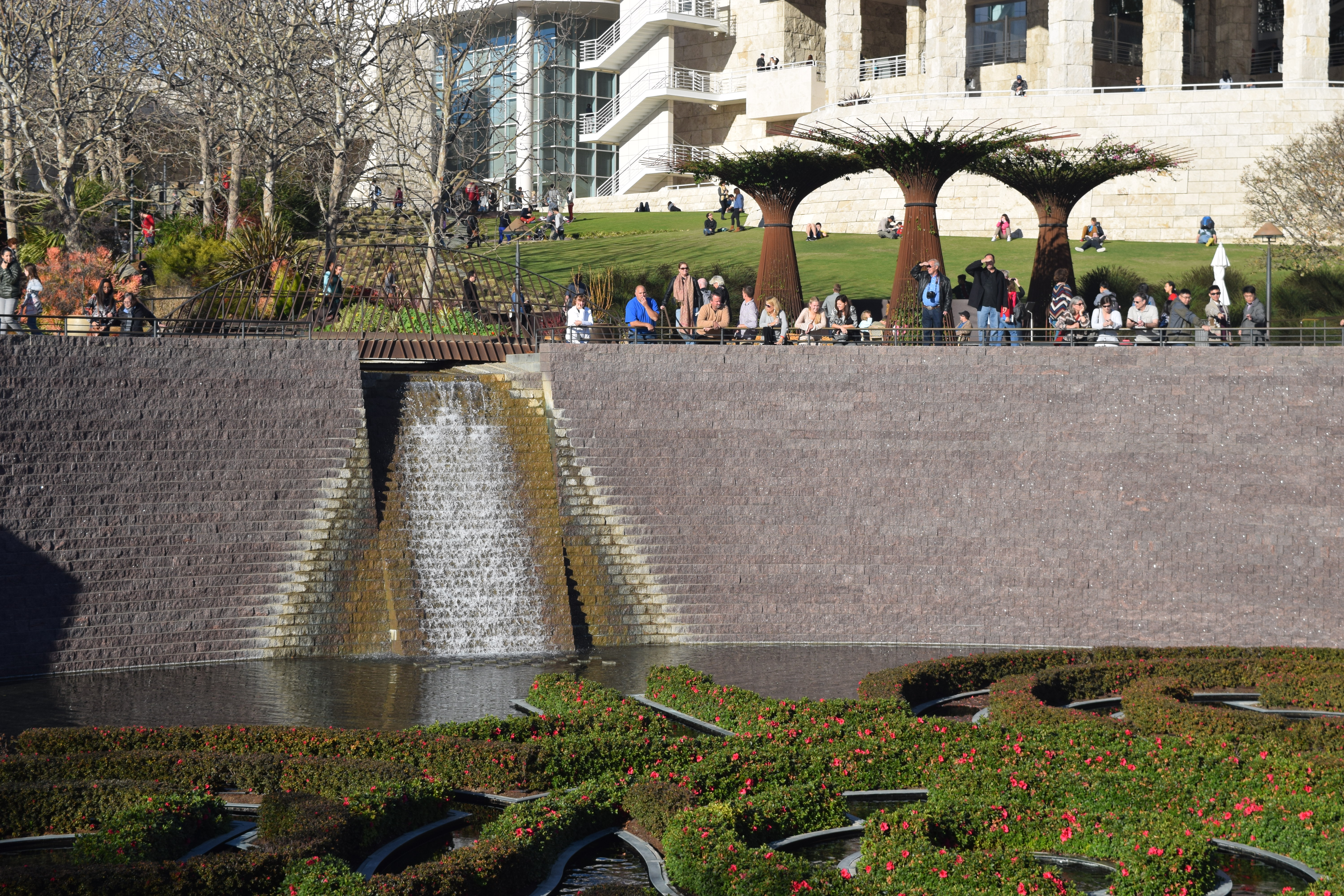
Back to the garden. Eventually you come to a path that spirals down to a circular pond.

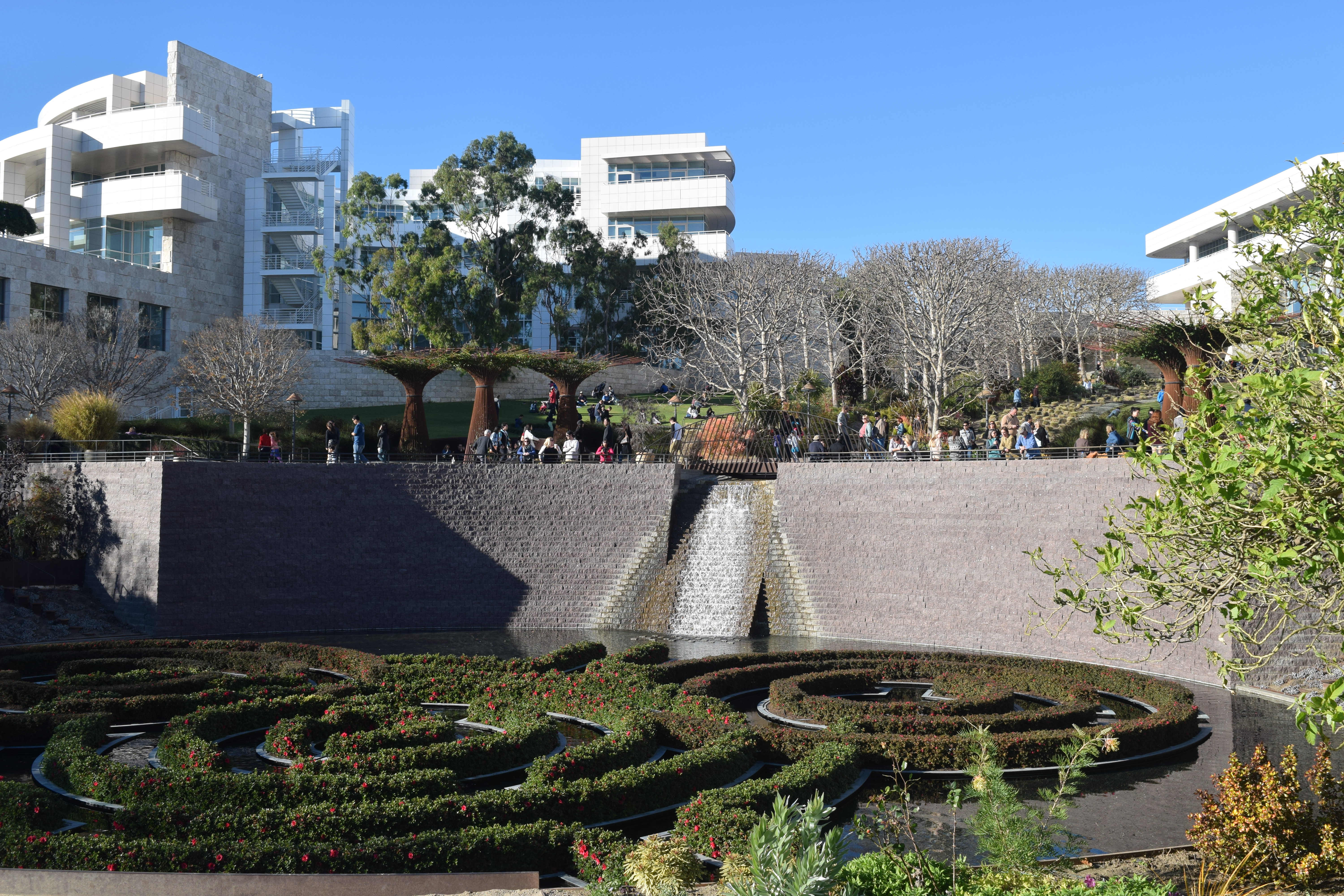
Central Garden
Central Garden

2014-12-26 17.40.02

The pond contains short flowering hedges that seem to float on the water.

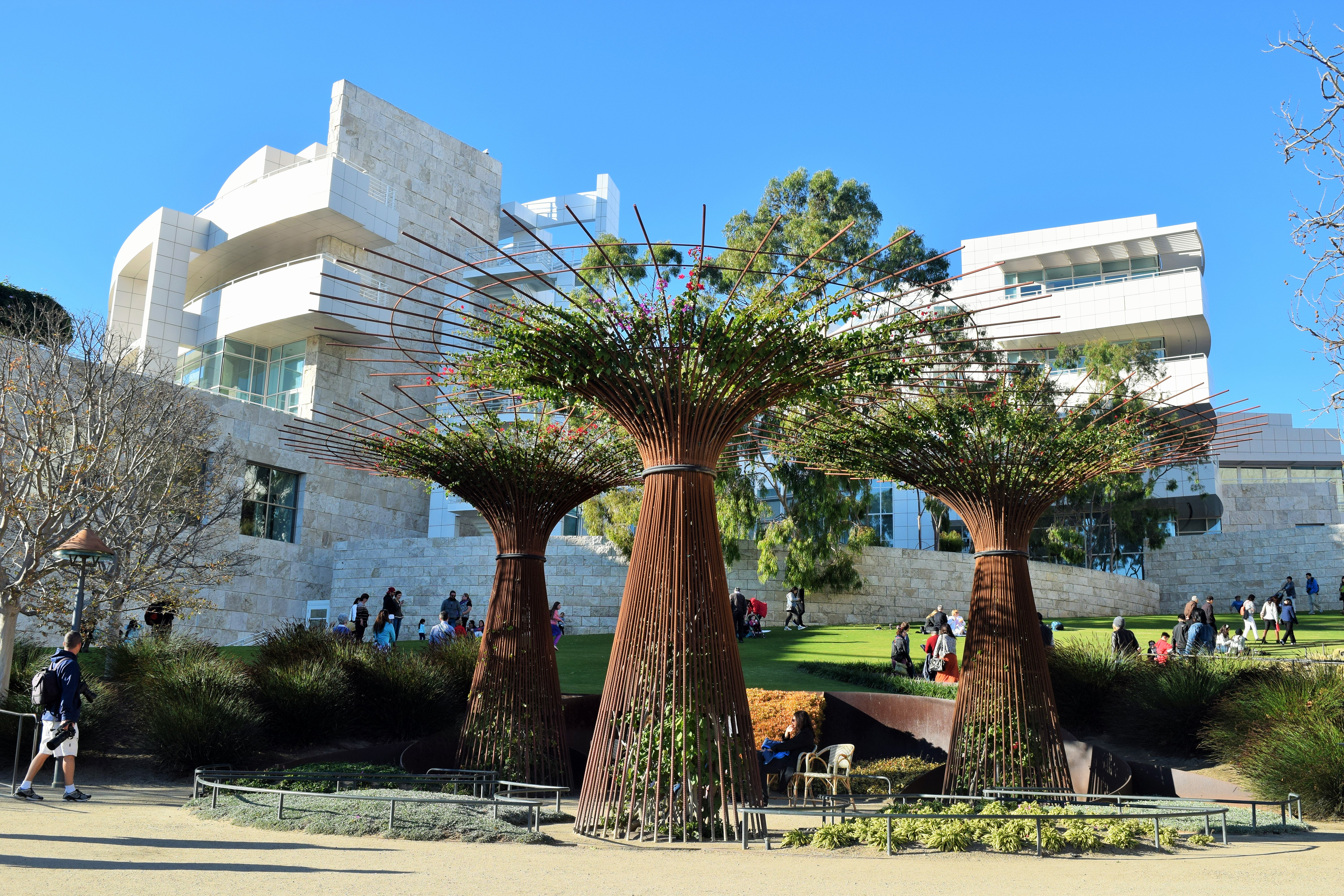
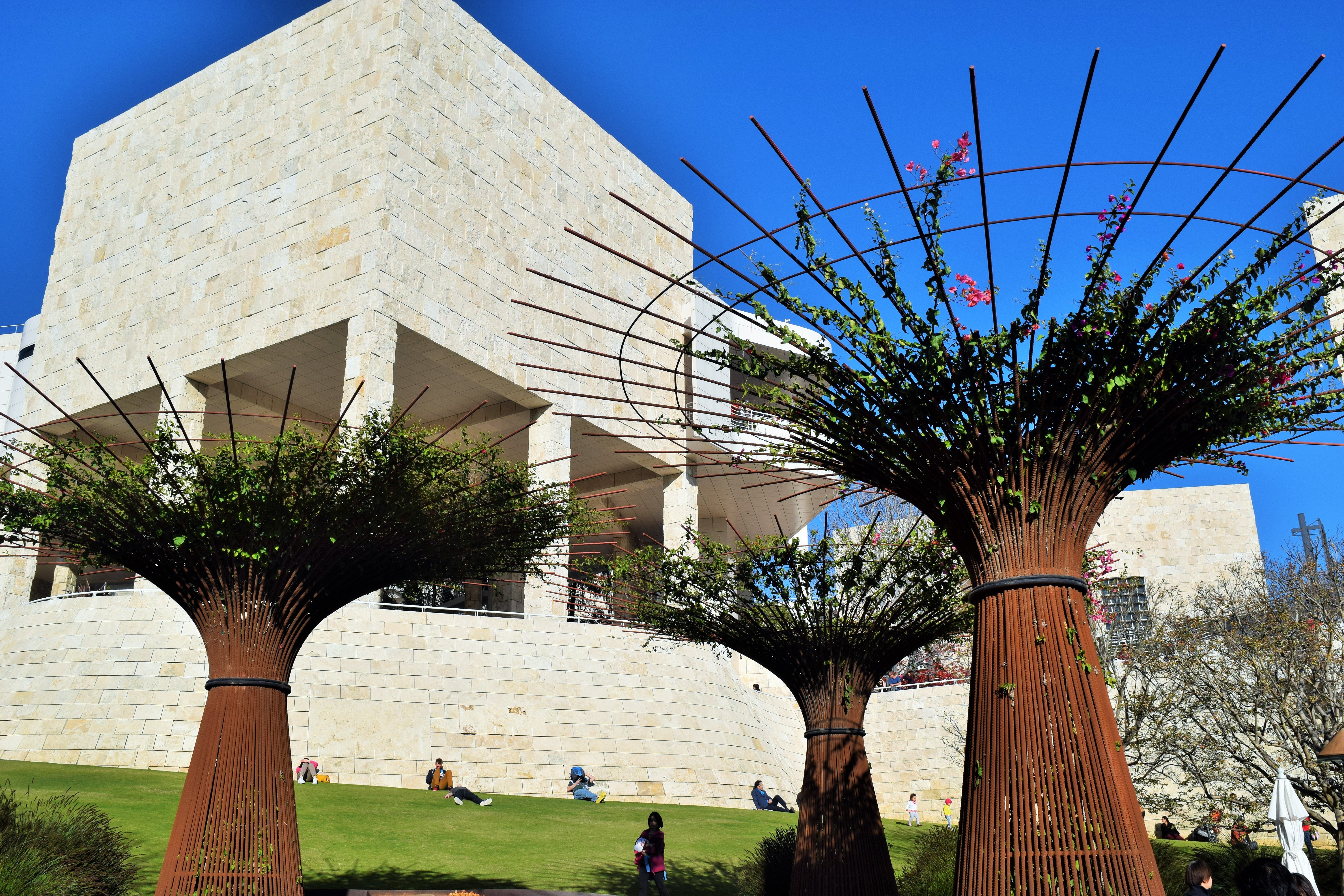
Arbors with bougainvillea in the plaza of the central garden.
2014-12-26 17.34.05
A closer view of the bougainvillea arbors.

The central garden includes a plaza which contains some really striking and unique arbors though which bougainvillea grows.

2014-12-26 17.55.25
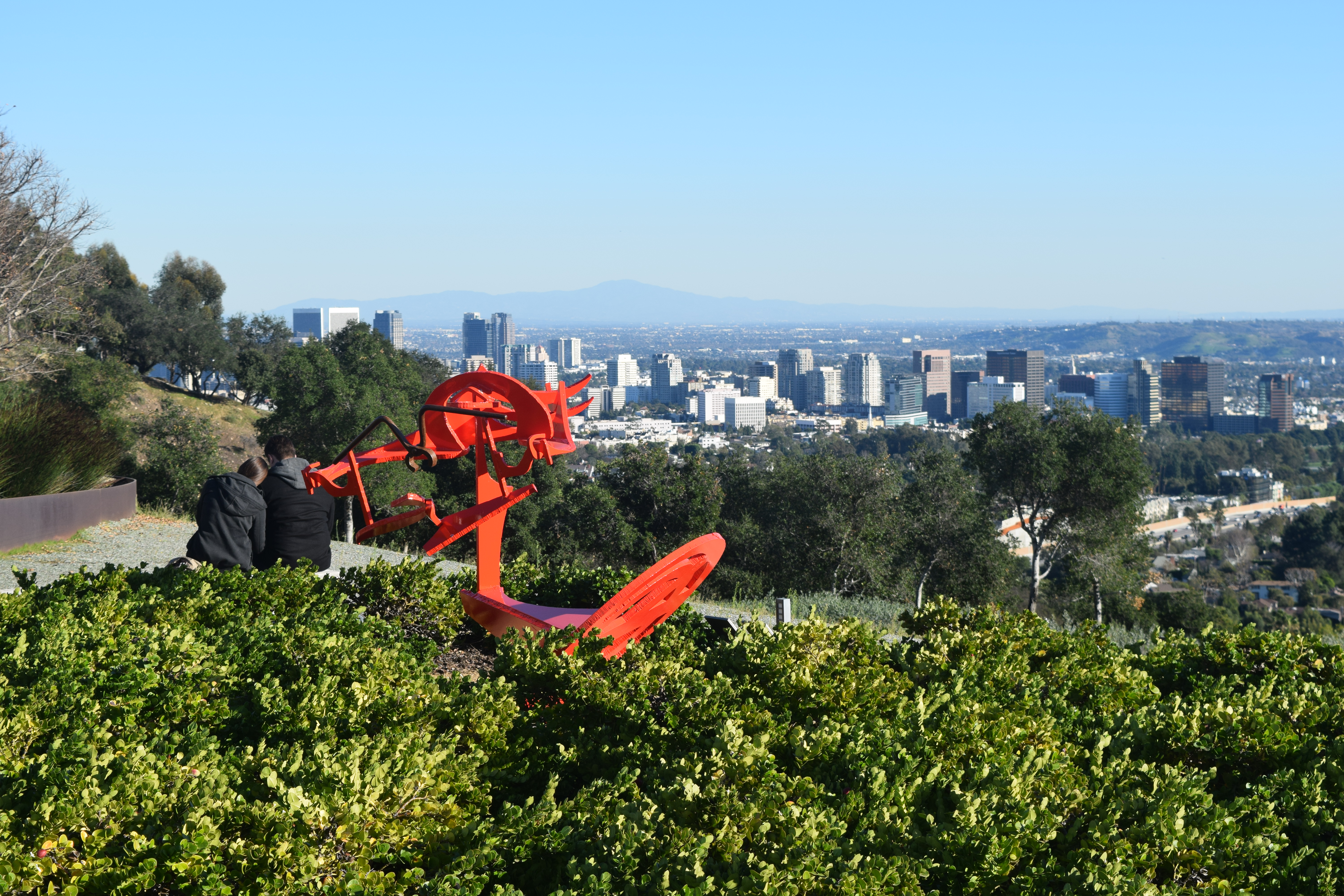
This looks like a meditation on the deeper meaning of agricultural implements.

There is also a sculpture garden nearby. I liked the views better than the sculptures.

Los Angeles from the Getty Center.

Did I mention the views? It was a clear day (for LA) and the sky was incredibly blue.

We did go inside to see a couple of exhibits. One was an exhibit of work by the photographer Joseph Koudelka, and the other was an exhibit of art inspired by World War I (interesting but grim).

We headed home just as the sun was setting. This was our last full day in Los Angeles. I had begun to wish that we had made it a longer vacation – there were still a bunch of things I wanted to see. However, I was glad that the Getty Center was included on the list of places we were able to experience.

Christmas Eve on Venice Beach

On Christmas Eve we were tuckered out from all that strenuous tourism of the day before. We spent most of the day sitting around our rented house, reading the used paperbacks we had bought at The Last Bookstore.

Finally we decided we couldn’t be slugs for the entire day, and settled on Venice Beach for our one outing.

Venice Beach is on the north end of LA’s oceanfront, right on the border with Santa Monica. The boardwalk is lined with some extraordinarily tacky shops, along with a great number of medical marijuana outlets. Every day, apparently, they are discovering new maladies that can be treated with this miracle cure.

In addition there are bicyclists, skateboarders, street musicians, bodybuilders, and odd characters of all kinds.

A seagull looks considers the Pacific Ocean at Venice Beach.

However, if you walk towards the water you quickly leave the carnival behind. By the time we got there it was late afternoon and the sun was setting. The weather was cool and a bit overcast but the mood peaceful. It was just warm enough for Judy to take off her shoes and socks and walk barefoot in the sand.

DSC_0019

There were only a handful of people in the water, including a few surfers in wet suits.

Looking north from Venice Beach
View of Santa Monica from Venice Beach

If you looked north you could see Santa Monica and the nearby mountains.

2014-12-24 17.46.49 venice beach
Despite the cool weather, this boy seems energized by the beach.

Or you could look south towards Los Angeles.

2014-12-24 17.37.12

However, we spent most of our time watching these comical little shorebirds. Maybe someone can tell me what they are. Something about the way they skittered along on their little legs was funny.

These birds would go chasing after the waves as they pulled back from shore, revealing little bits of edibles. Then when the waves came in the birds would go running back towards the beach. Judy tried to capture their doings with her camera’s video recorder, which she’s still trying to get used to.

We got so engrossed watching the birds that we failed to notice a wave as it came upon us, soaking our shoes and socks (Judy was the only one who went barefoot).

After that we went back to the rental house and had our traditional Christmas Eve dinner, which is pizza.

LA’s Historic Downtown

We spent the Tuesday before Christmas in historic downtown Los Angeles. It wasn’t what I expected. In downtown LA I expected tall gleaming modern buildings, like in the opening scenes from “LA Law” (remember that show?).

Actually, downtown LA feels more retro than futuristic. Daniel explained to me that Los Angeles is “polycentric” – practically speaking it has multiple downtowns. (Danny goes to graduate school and is into urban policy stuff.) Those gleaming modern skyscrapers can be found, but mostly elsewhere.

North Hollywood station

We decided to take the subway, partly because Daniel is a big transit nerd. Yes, Los Angeles has a subway. It’s fairly new and has a futuristic feel.

Mural in the subway on LA history

I liked the murals they had at the North Hollywood station (UPDATE: actually, this was the Universal City station).

2014-12-23 16.06.27

For our first stop we visited Keith, an old High School friend who now lives in Los Angeles. We met him at his office, which is located in the old Bradbury Building.

Inside the Bradbury
Inside the Bradbury

The Bradbury is LA’s oldest commercial building still standing. It was the setting for the movie Blade Runner.

Grand Central Market in Los Angeles

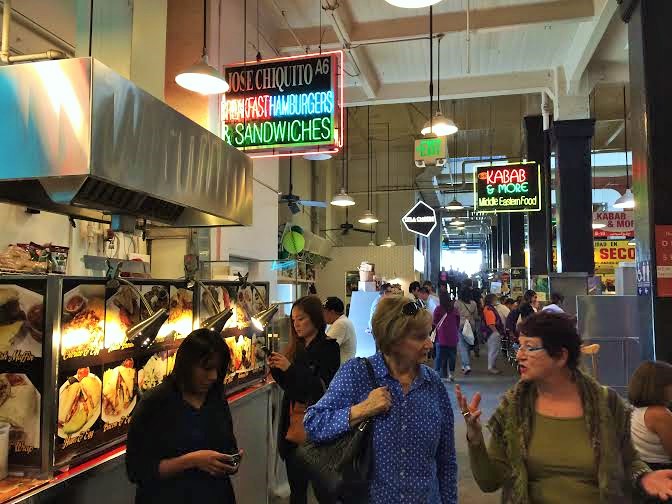
Keith took us all to the Grand Central Market for lunch. The Market, which has been operating since 1917, is a lively and bustling collection of vendors selling all kinds of produce and prepared food.

Tomas x, where we got lunch.
We got lunch at Tacos a Tomas, a popular place with a long line.

We went to a popular taco place where the lines were long, the service fast, and the tacos piled high with toppings.

Danny choosing mole.

After lunch we wandered around the Market. Before leaving Daniel bought some mole paste to take back to Chicago, though he cooked some for our Christmas dinner.

Another historic building in downtown LA.

After saying goodbye to Keith, we walked towards Los Angeles City Hall, mainly because we were told there were stupendous views from the top.

Los Angeles City Hall

The City Hall tower was modeled after a mausoleum designed by the ancient Greeks. The building is supposed to be able to withstand a magnitude 8.2 earthquake, which I suppose is comforting.

2014-12-23 16.22.10

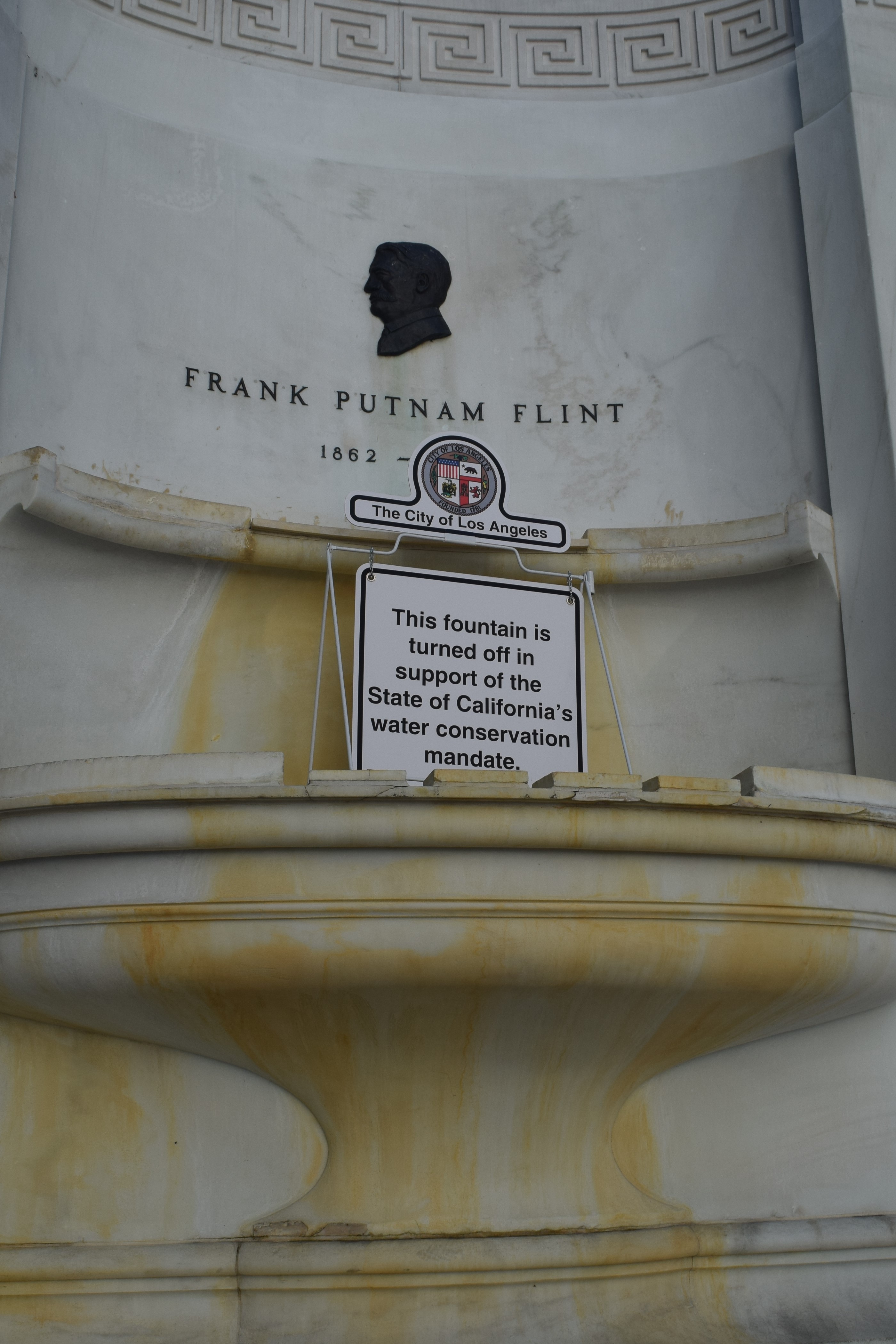
On the way in we passed a memorial to Frank Putnam Flint. Flint was a politician and banker who was pivotal in creating LA’s aqueduct system. The new water made LA’s explosive growth possible. Flint’s memorial had a fountain, which had been turned off due to a water shortage. Ironic, eh?

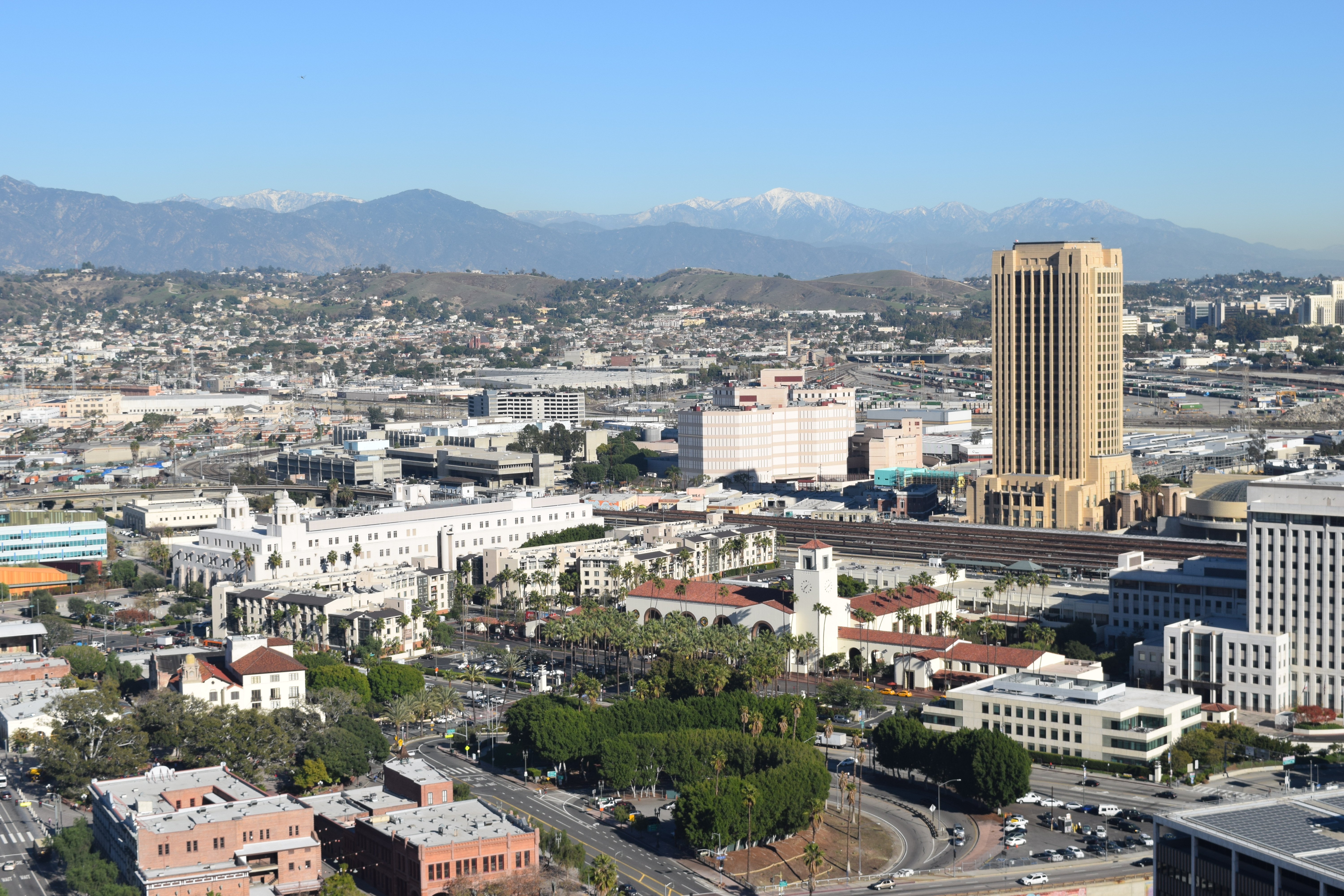
A view of the mountains that encircle LA.

We found our way to the top of City Hall after getting some directions from some very friendly and obliging city employees.

2014-12-23 16.37.56

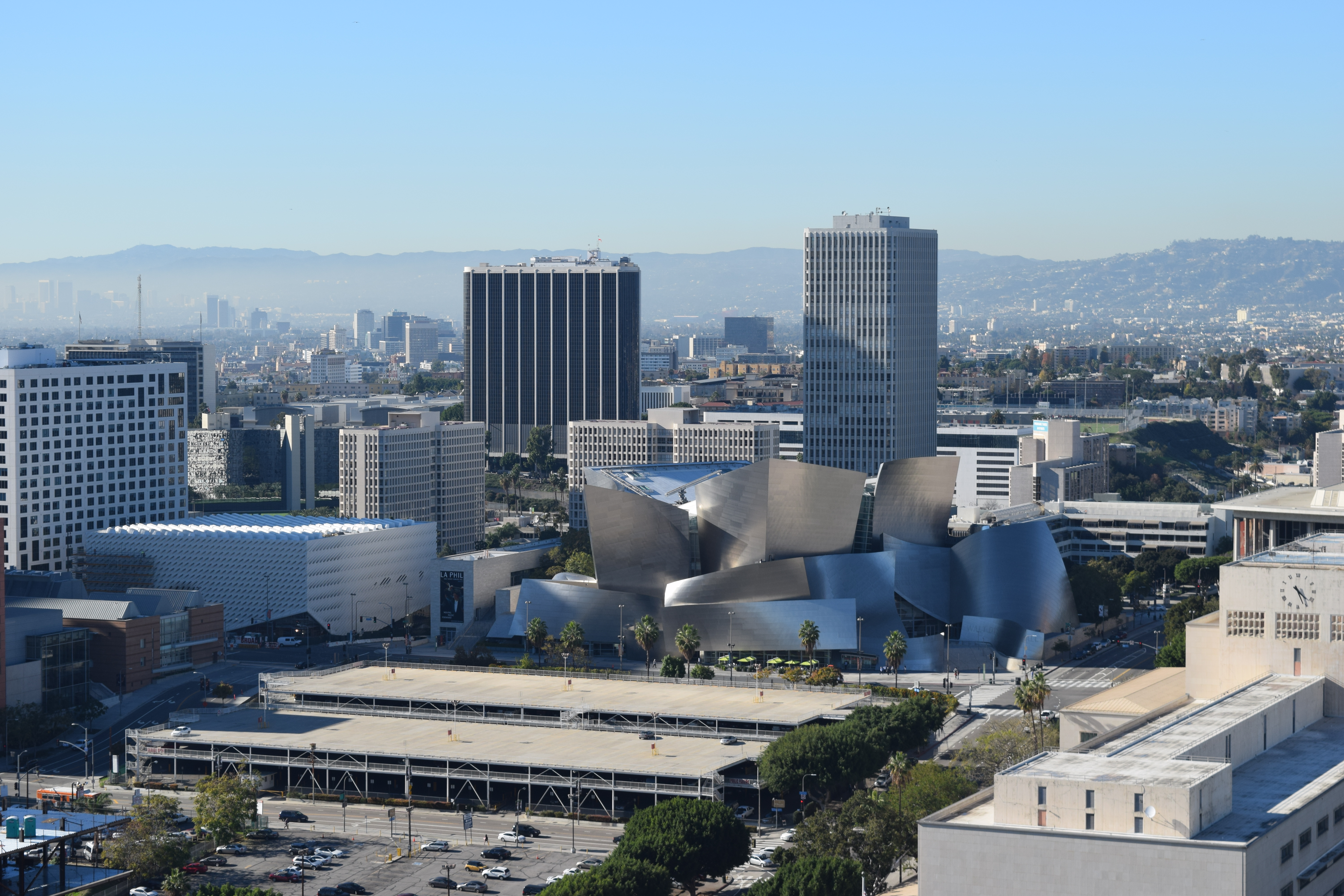
Another view, this one including the concert hall designed by Frank Gehry.

2014-12-23 16.39.24

And here are some of those sleek modern skyscrapers I mentioned earlier.

2014-12-23 16.57.59

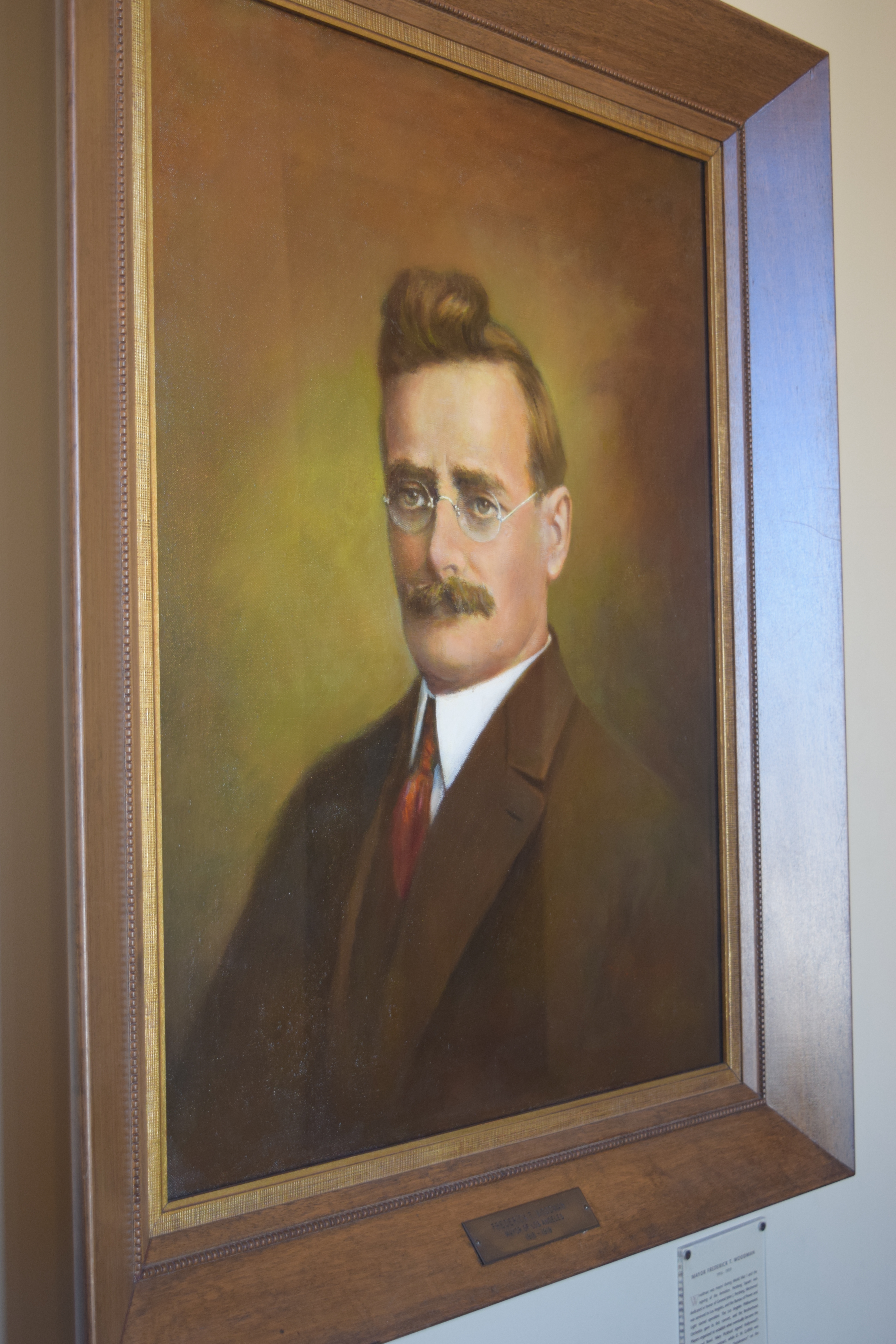
On the way to see the views we passed a gallery of mayoral portraits. Not sure who this guy was, but I like his style.

Mosaic in LA City Hall.

Before leaving we checked out the third floor where the City Council chambers are found. There were nice mosaics on the walls and ceiling.

After we left City Hall we walked to Little Tokyo, which is fairly close by. We visited the Japanese American National Museum, which is definitely worth seeing. Then we headed over to Union Station, which was built in 1939 and is considered the last of the great train stations in the USA.

The Last Bookstore
The Last Bookstore

Last stop of the day was The Last Bookstore, which has a massive selection of mostly used books. This is a must for book lovers visiting LA.

Arches of books at The Last Bookstore

Despite its size, The Last Bookstore has an informal, even playful atmosphere. Books are stacked in arches.

LA last bk st2

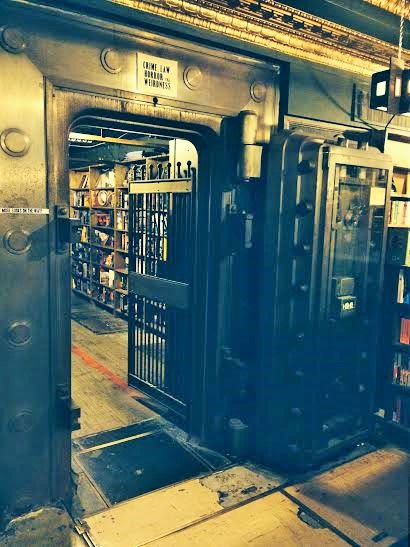
Also, the crime section is in an actual bank vault.

We all bought at least two paperbacks each – it was hard to resist as most were priced at $5.

At this point it was getting late. This was an unusually intensive day of sightseeing by our standards. We headed back to the Pershing Square subway station, and then home.

Gardener Question Time

I’m very flattered that John at A Walk in the Garden and Snow Bird at Gardens and Wildlife nominated me for the Leibster Award. This is one of a number of awards that garden bloggers give to each other as gestures of appreciation.

sally field

If you enjoy my blog, I heartily recommend that you also check out A Walk in the Garden as well as Gardens and Wildlife. Two very informative and entertaining blogs with different geographic perspectives – one from the American Southeast and the other from the North of England.

In any case, part of being a nominee for this award is answering questions from the nominators. So that will be the focus of this post. First, for John’s questions.

1. How would you describe your gardening style?

Obsessive, impulsive, impatient, colorful, informal bordering on chaotic.

front garden, anise hyssop, purple coneflower, brown eyed susan
Grass path through the front garden: bordering on chaos.

2. What new plant have you been dreaming about planting this year?

A bunch of plants I probably have no space for, mostly shrubs and small trees: Hawthorne, Witchhazel, Red Buckeye. In terms of perennials, I think I will be planting things mostly that I already have. Oh, I would like to squeeze in some Camassia somewhere – I should have space for those.

3. What is the most important lesson you learned last year?

Taller plants that are late to emerge can be shaded out by shorter plants that come up earlier. Sounds obvious, right?

4. Flowers or foliage?

Flowers, flowers, flowers.

Anise Hyssop
Flowers, flowers, flowers.

5. What characterizes the ideal nursery/garden center/etc. as the best place to obtain plants?

Good selection, knows how to take care of the stock, avoids pesticides especially neonicotinoids.

6. Potting soil: buy or mix your own.

Buy. I’m lazy about this kind of thing.

7. How did your love of gardening begin?

My father, who grew up in an apartment in Brooklyn, loved to putter around in our suburban yard.

8. What training/classes have you attended to improve your gardening knowledge?

I had been taking classes at the school of the Chicago Botanic Garden with the intent of eventually earning a certificate in garden design. Unfortunately, my work schedule has made it impossible to take any classes since early last year.

Anise hyssop and Mexican sunflower

9. What plants together produce your favorite color combinations?

Anise Hyssop (Agastache foeniculum) and Mexican Sunflower (Tithonia rotundifolia) or Butterflyweed (Asclepias tuberosa). Or Grape Hyacinth (Muscari armeniacum) and Celandine Poppy (Stylophorum diphyllum).

Celandine poppy, grape hyacinth
Celandine poppy with grape hyacinth. I just like blue and yellow.

10. What gardens are on your bucket list?

The Alhambra (Grenada, Spain), Longwood Gardens (Philadelphia, USA), Hummelo (Netherlands).

11. What is your favorite winter plant?

Plants with red berries – Winterberry (Ilex verticillata), Hawthorns (Crataeges sp.), Cranberrybush Viburnum (Viburnum trilobum).

And now for the questions from Gardens and Wildlife.

1. What is the worst injury you ever sustained while gardening?
Breaking a front tooth by hitting myself in the face with a plyers. Don’t ask.

missing-teeth

2. How would you deal with wet, slushy, soggy leaves that refuse to be raked?

Leave them until spring.

3. Have you ever had an invasion of bamboo trying to colonize your garden?

No, but in her book Mrs. Greenthumbs, the late Cassandra Danz wrote that the only approach that works is to persistently cut the bamboo stalks off at ground level over a long period. Eventually the roots starve. Trying to dig them up is completely futile.

mrs. greenthumbs2

4. Do you have any irrational fears regarding an animal or insect?

I’m generally OK with animals and insects. My irrational fears are usually about people, and I’m not sure that they’re irrational.

5. Have you ever danced barefoot in the rain or hugged a tree?

Not really … is there something in your past you’d like to tell us about?

singin-in-the-rain-original1
Not me.

6. Do you believe that the moon can influence the growth of plants?

Never heard that before; I suppose anything is possible.

7. Do you have a favorite flower legend or superstition?

The one about how King Clovis of the Franks escaped an attack by following blooming irises across a river. This was why the iris fleur-de-lis became an emblem of France.

King Clovis of the Franks: saved by irises?

8. Have you ever used a plant medicinally?

Not that I can recall.

9. Which is more important to you, house or garden?

Garden, of course. Houses are a place to go when you can’t work in the garden.

10. Do you constantly talk/complain about the weather?

Probably. That reminds me of a joke regarding farmers who complain about the weather all the time. I heard it when I had a job that required me to travel extensively in Nebraska and the Dakotas. Anyway, here it is. Question: What do you call a basement full of farmers? Answer: A whine cellar.

11. What is the most you have spent on a plant last year?

I invoke my right not to incriminate myself.

testimony

So there you have it. In the next post we will return to Los Angeles.