Naming My New Border … We Have A Winner!

Back in early May I launched a contest to name the new border I have planted in the parkway where a maple recently died, creating a new sunny spot. Well, I am pleased to announce that we have a winner … the Lamppost Border, submitted by Sunil of Sunil’s Garden.

The newly planted Lamppost Border, back on May 2.

Congratulations, Sunil! As promised, you will receive the thanks of a grateful nation. Details are still being worked out as to which nation exactly it will be, but early indications point to either Lichtenstein or Krgyzstan.

Honorable mention goes to Prairie Parkway, submitted by Jackie Totsch, and Stumpy (because there’s a stump), submitted by Jeff Park Mom. They will receive the thanks of a grateful township or municipality, to be selected in a reasonably timely manner. I should also mention that Karen Boutall got very close with Lamppost Garden.

So, why the Lamppost Border? Well, I like names that are distinct and easy to remember, and this is the only border planted around a lamppost.

The Parkway Border on June 20th.

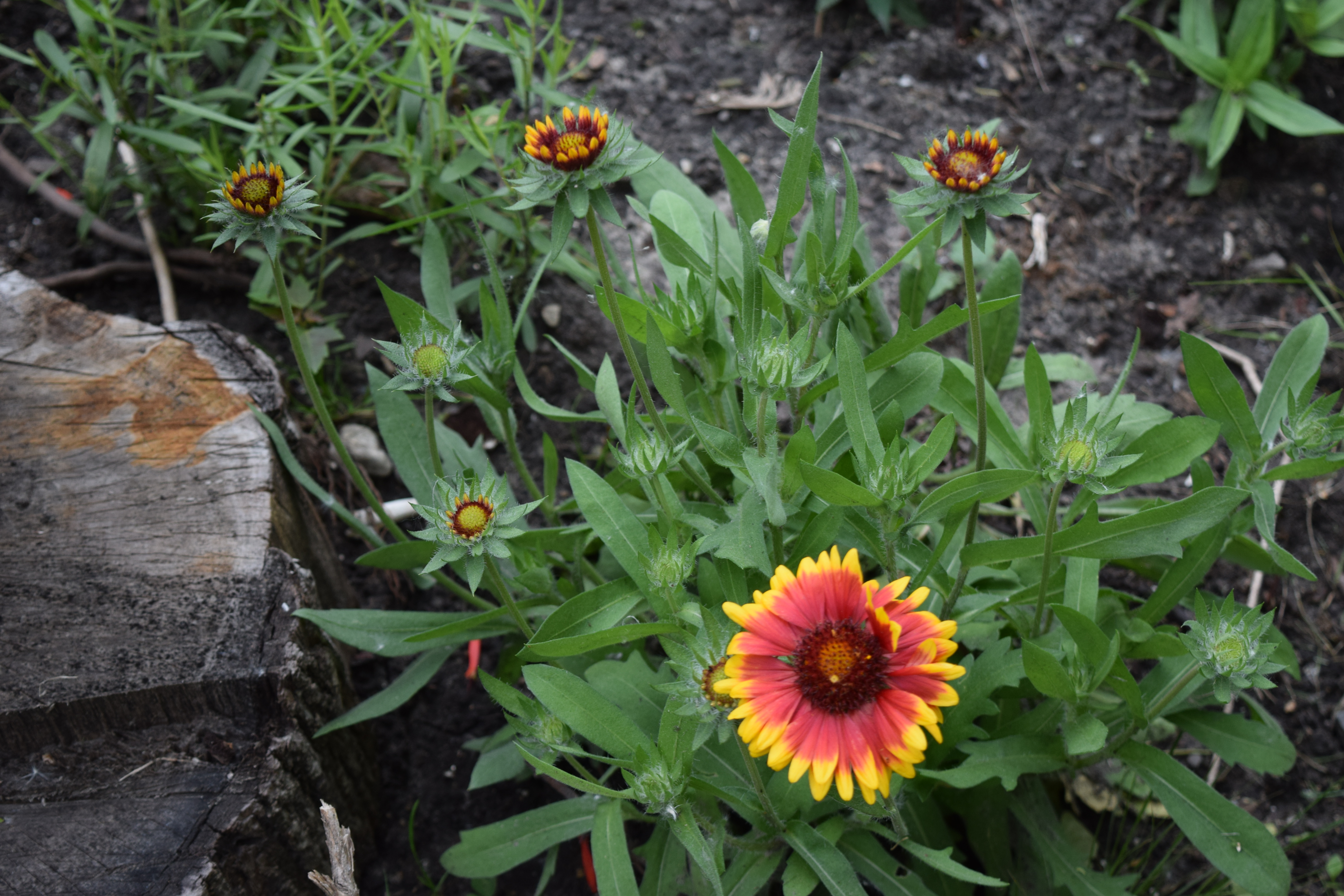
As to the border itself, here’s how it was looking in mid-June. Almost all the plants  are settling in nicely. Though all the perennials were planted this spring, I have hopes that many will bloom their first year. In fact, the Blanket Flower ‘Arizona Sun’ (Gaillardia aristata) is already blooming.

Blanket Flower
Blanket Flower ‘Arizona Sun’

What, you say? Blanket Flower wasn’t on my original plant list? Well, they were left on my doorstep wrapped in a blanket (get it?) and what was I to do? I had to give them a home.

The one disappointment has been the Prairie Baby’s Breath (Euphorbia corollata). I waited a long time for it to emerge, and then suddenly – it was gone. The Demon Bunnies of Mordor are suspected.

‘Disco Red’ Marigolds (Tagetes patula) and ‘Profusion Fire’ Zinnias are filling in the space between the new perennials.

The stump makes a nice pedestal for a flowering container.

A flowering container deals with the stump issue, I feel, satisfactorily.

I have started to remove the strip of grass that ran down the middle of the border, following advice from Donna of Garden Walk, Garden Talk and Christina of My Hesperides Garden. I am, however, leaving a square of grass around the gas main cover and the strip along the street.

Another view
Another view

Now it so happens that I have come into possession of a couple of Little Bluestem ‘Carousel’ and ‘Jazz’ (Schizachyrium scoparium). (I really have to stop these strangers from leaving plants on my doorstep.) These I intend to plant in a little drift in the newly opened up space, because I really have no other place to put them. Will that look weird? I hope not.

Because this is a vignette of sorts, I am linking to the Wednesday Vignette meme at Flutter and Hum. Take a look, as this is a blog that always has something interesting to say.

Foliage and Fruits of June

Recently a friend told me I needed more color and variegation among the foliage in my garden. I admit that when I think about  plants, the foliage is often an afterthought. That’s one reason I like to participate in Garden Bloggers Foliage Day, sponsored monthly by Christine at My Hesperides Garden, which nudges me to go beyond the flowers.

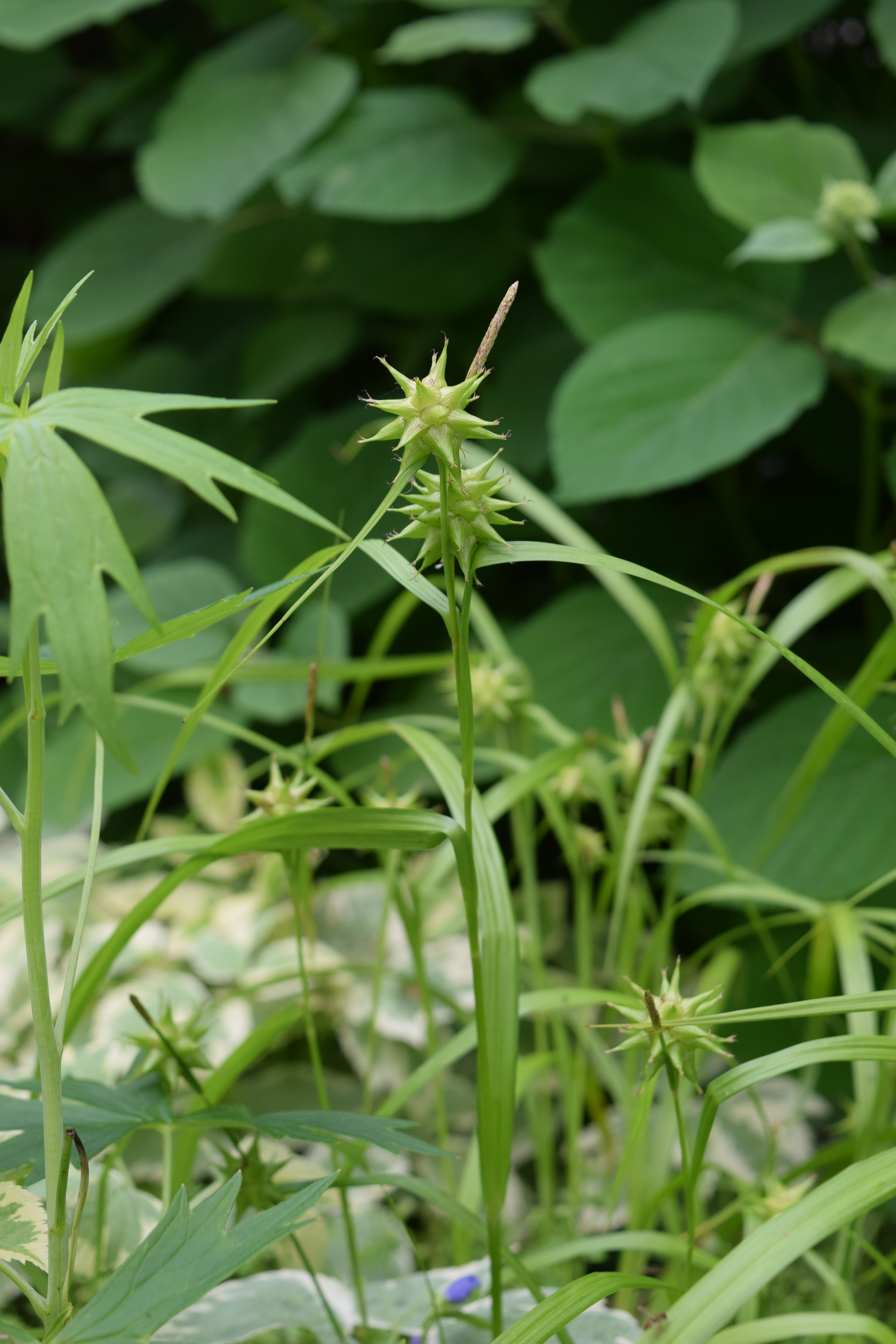
Gray's Sedge
Gray’s Sedge

There is some interesting foliage in the garden this June, as well as the first fruits and seedheads of the season. Gray’s Sedge (Carex grayi) has very interesting seedheads, perfect for small boys to throw at each other.

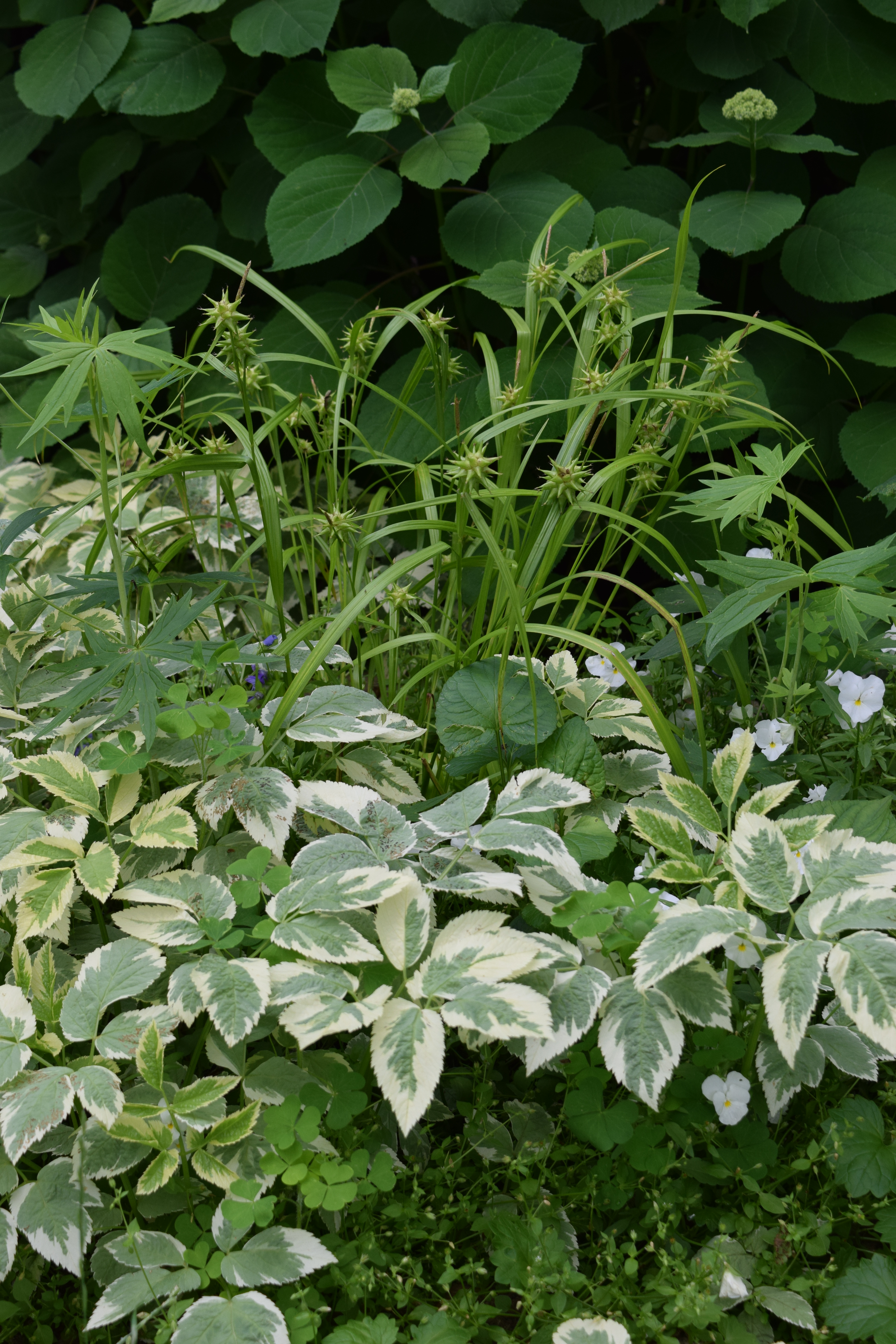
Near the Gray’s Sedge is a patch of Bishop’s Weed (Aegopodium podagraria ‘Variegata’). We inherited this plant, which I know can be a nasty invasive.

Variegated Bishop's Weed, with Gray's Sedge in the background.
Variegated Bishop’s Weed, with Gray’s Sedge in the background.

However, in my garden it has been kept under control. I always pull all the flowers before they bloom, and the plant is limited to a small area. It is surrounded by natives that can more than hold their own – Great Merrybells (Uvularia grandiflora) and Zigzag Goldenrod (Solidago flexicaulis).

Having said that, I must risk outraging some by saying that in my view this plant is an attractive groundcover in shade, though I wouldn’t plant more or recommend that anyone else do so.

Our fountain surrounded by Cinnamon Ferns.

There are lots of ferns in the shady parts of our garden. A patch of Cinnamon Fern (Osmandustrum cinnamomeum) around our little fountain takes over after the Virginia Bluebells (Mertensia virginica) die back.

Lady Ferns
Lady Ferns mix with Great Merrybells, Wild Ginger, and ‘Annabelle’ Hydrangea. 

Lady Ferns (Athyrium filix-femina) are perhaps named for their rather demure behavior, at least compared to many other ferns. They grow along the west side of the house.

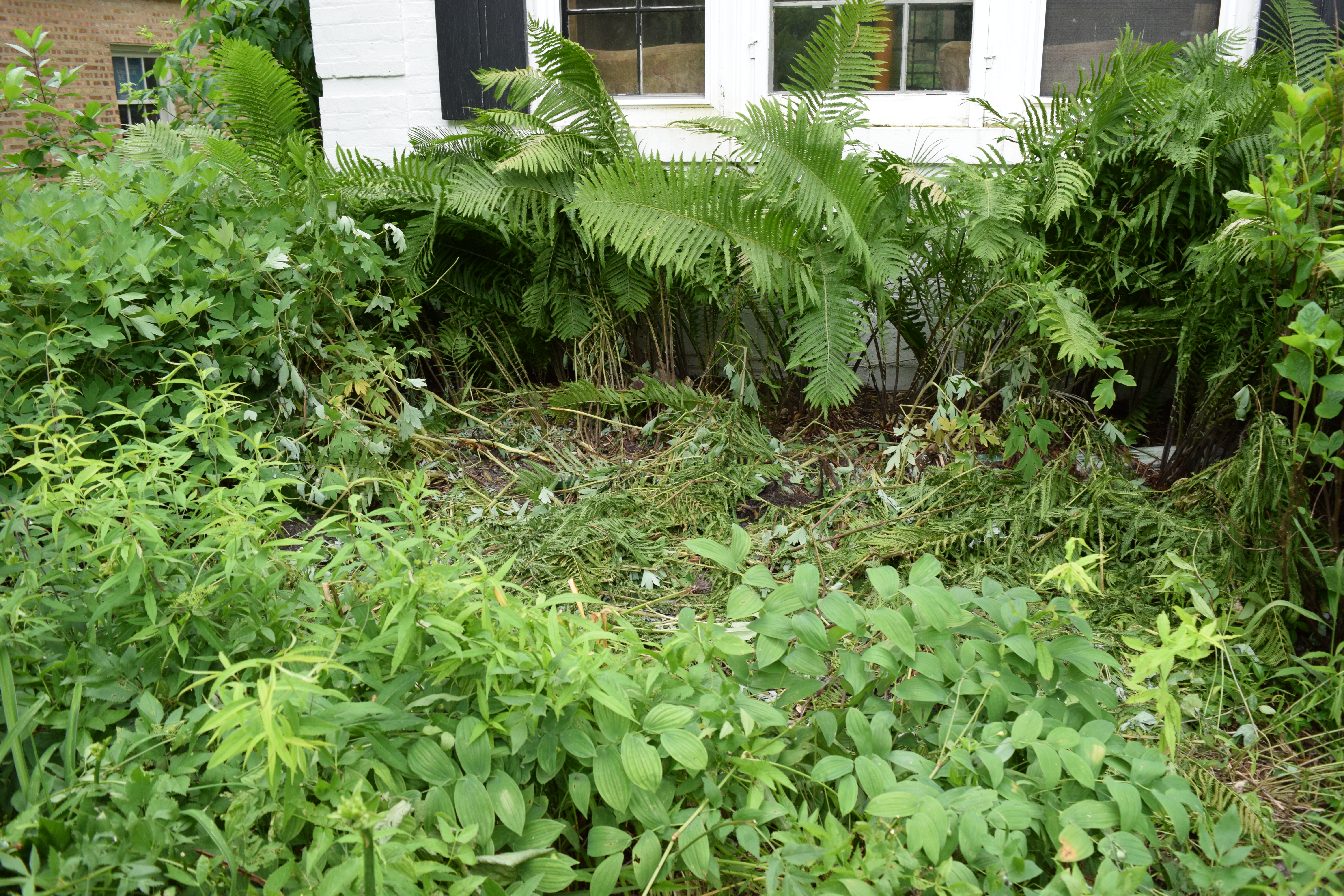
The remaining Ostrich Ferns in the foundation bed.

Majestic, beautiful and rambunctious rather than demure are the Ostrich Ferns (Matteuccia struthiopteris) in the front foundation bed. In fact I just dug out a small mountain of Ostrich Ferns to prevent a total takeover.

An alarmingly large hole is the result, as I trampled the Bleeding Heart (Lamprocapnos spectabilis) that grew among the ferns. There was no way to remove these ferns delicately. That’s my story and I’m sticking to it.

Paeonia anomala
Paeonia anomala

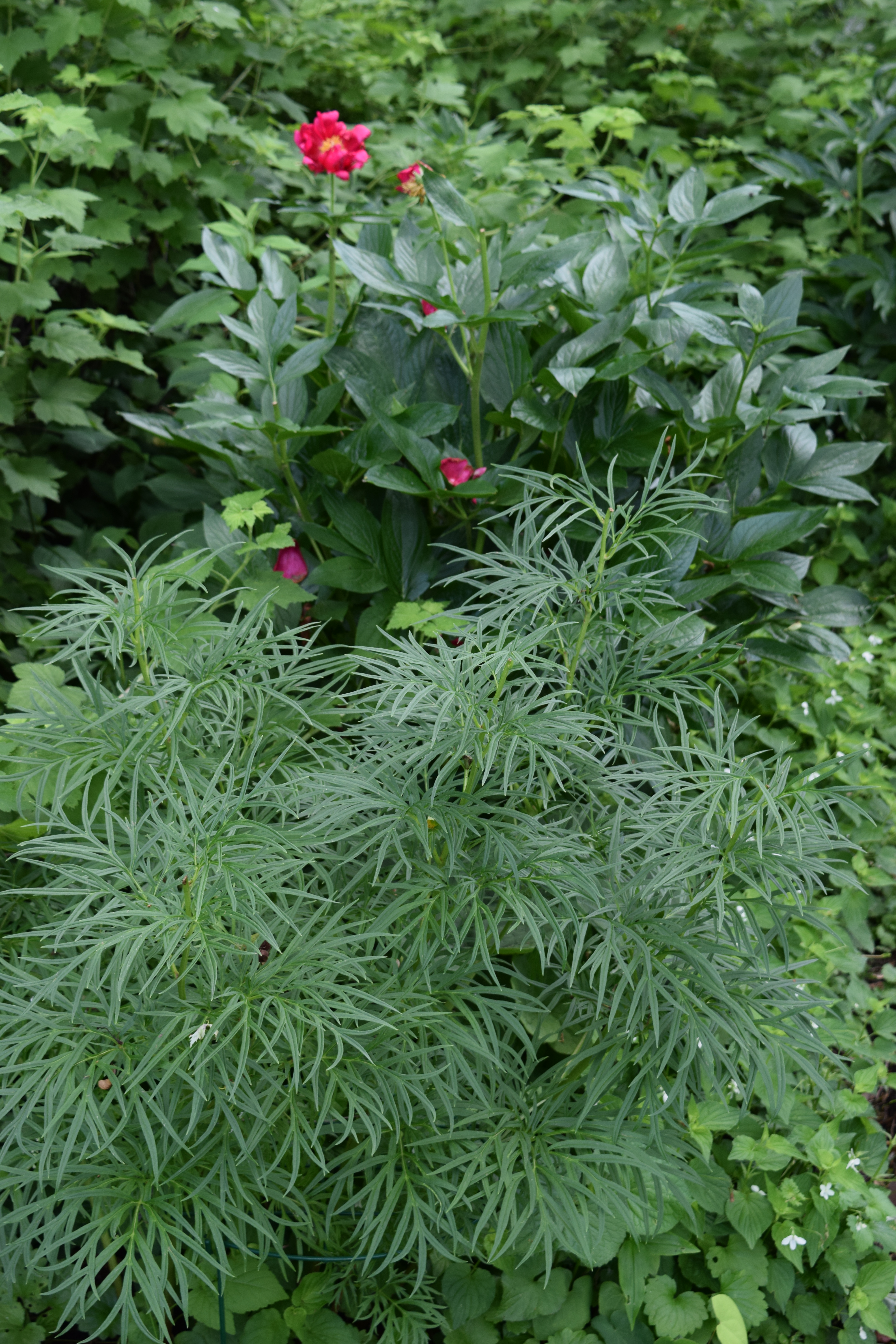
The Peonies are done blooming, but their foliage is still looking good, particularly that of Paeonia anomala.

Berries of Starry Solomon's Plume.
Berries of Starry Solomon’s Plume.

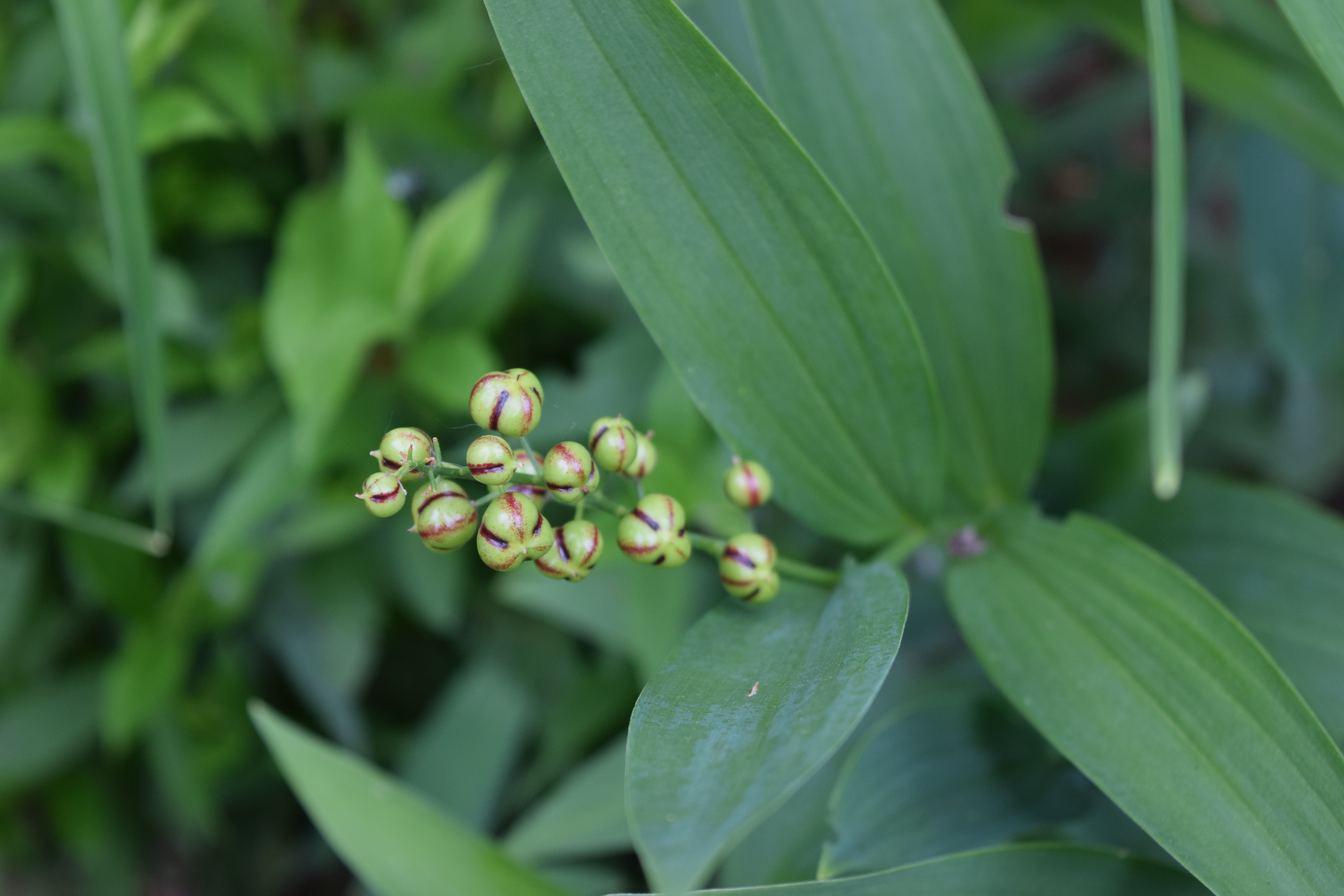
I really love the berries of Starry Solomon’s Plume (Smilacina stellata) when they are at their striped stage (eventually they turn red).

2013-07-04 11.56.41 red elderberry
Red Elderberry

June is a time for other fruits as well: Serviceberry (Amelanchier x grandiflora), Wild Strawberry (Fragaria virginica), and Red Elderberry (Sambucus racemosa). The Red Elderberry is supposed to be very popular with birds, but they seem to leave the fruit on my shrubs alone.

Bluestar
Bluestar

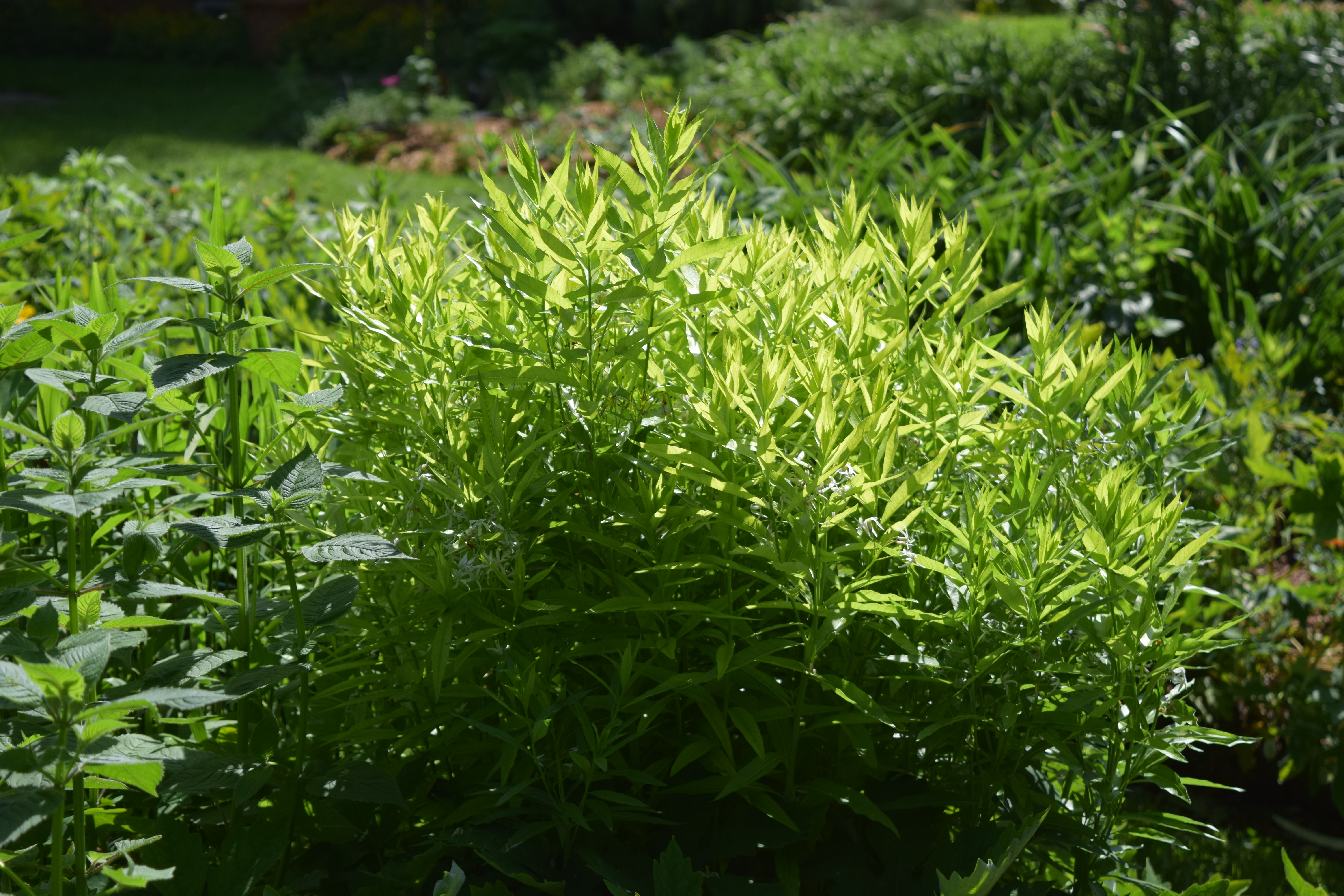
The big Bluestar (Amsonia tabernaemontana) in the Sidewalk Border did not bloom much this year, and the new foliage looks almost chartreuse. Nice, but a sign of decline?

For more intriguing foliage, visit My Hesperides Garden.

A Gardener Grew in Brooklyn

I originally posted this in June, 2012. This year Father’s Day and Judy’s birthday coincide, and the following day is our anniversary. With all this going on, it seemed like a good time to repost these thoughts on my father, gardening, and fatherhood.

gardeninacity's avatargardeninacity

I had a very nice Father’s Day. In the morning, Judy and I went to the Skokie Farmer’s Market for the first time this year. When we returned, we found our oldest son Daniel at our doorstep, bearing bagels. We sat on the porch through the late morning and into the afternoon, drinking coffee and eating bagels, talking about things serious and silly. During that time, our younger son David called from his apartment in St. Paul, Minnesota, and we had an excellent talk.

I count myself very lucky to have such good kids. Thinking about them on this day makes me think about my own father. Our relationship did not always go smoothly, but of course he influenced what I became as a person through ways intentional and not. He was the one who started me on the path to becoming a gardener.

Dad and Daniel at the Museum of Natural History. This picture is from around 1995. Dad and Daniel at the Museum of…

View original post 561 more words

Use That Overripe Fruit to Attract Butterflies

Did you forget about that slice of watermelon sitting in the back of the fridge? You’ve been ignoring it because throwing away food makes you feel guilty, and you’re hoping that the refrigerator fairies will carry it away.

However, that dumpsterish odor is making this approach more and more difficult.

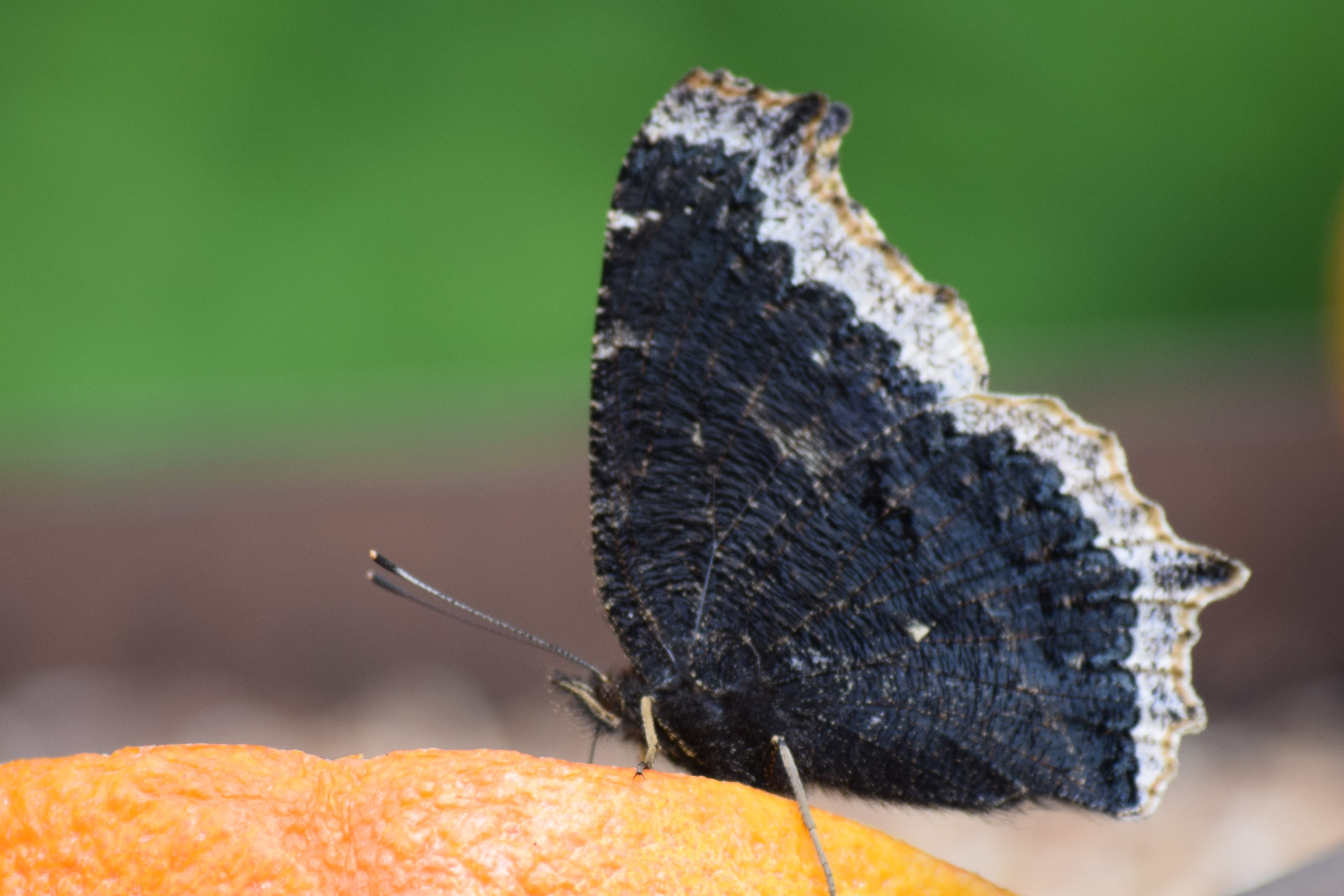
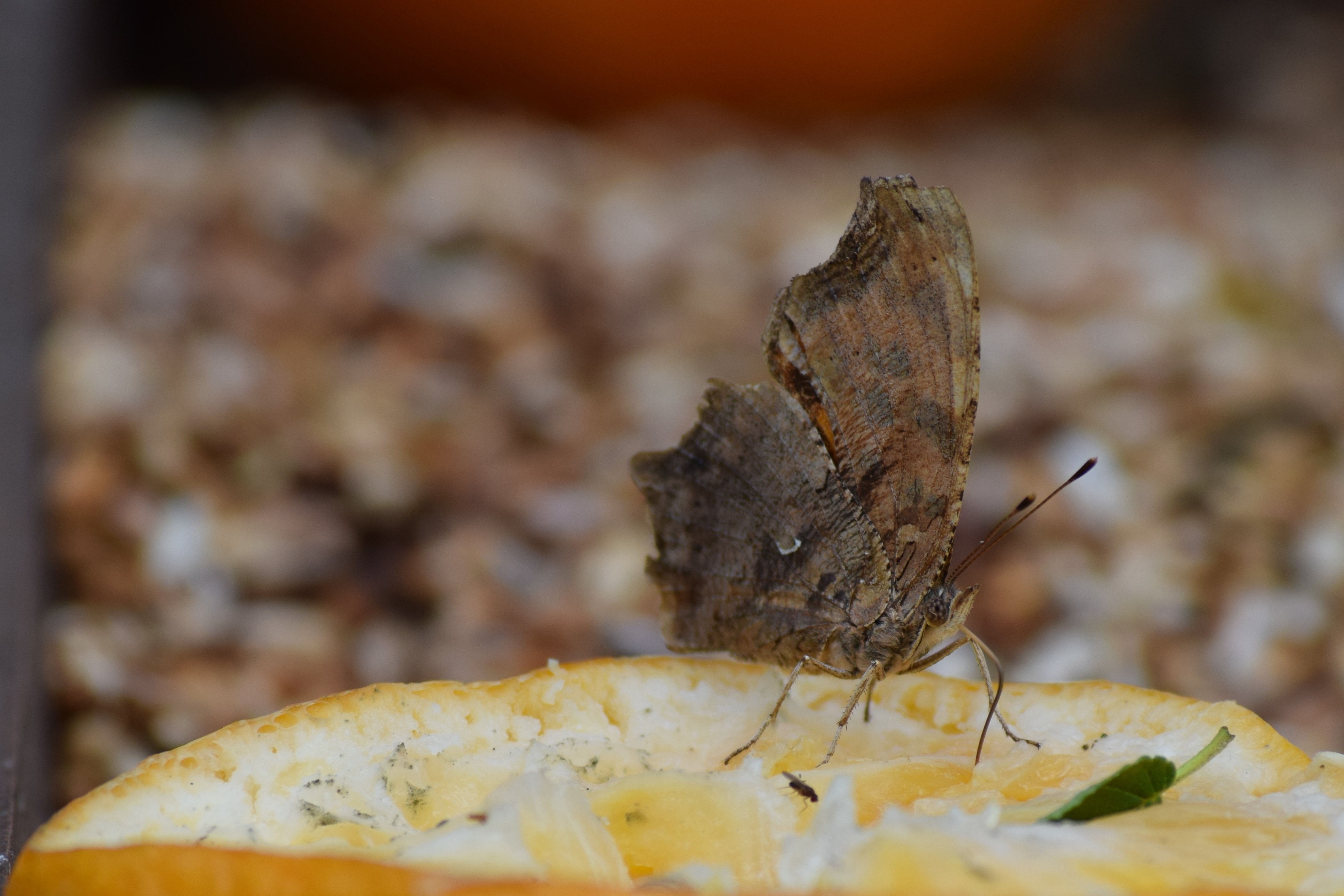
Mourning Cloak feeding on overripe orange.

Good news! You can take your overripe fruit and put it to an environmentally beneficial use. That’s because many species of butterflies, including Monarchs, will feed on fruit that is past its prime.

We discovered this recently when we found butterflies feeding on oranges that had been left out for the Baltimore Orioles for a few too many days. Orioles do like oranges, but they prefer fresh.

The butterflies we saw were Mourning Cloaks and Commas. Neither are rare or among the more beautiful of the Lepidoptera, but nor are they often seen in our garden. These days I am pleased to see any butterfly.

Comma butterfly. It gets the name from the little white mark on the lower left part of the wing, which arguably look like a comma.

The host plants for Comma caterpillars are all members of the elm and nettle families, according to Butterflies and Moths of North America (BAMONA).

There are many Elm trees in the neighborhood, though they are mostly either Siberian Elm (Ulmus pumila) or hybrids – the American Elm (Ulmus americana) having become very rare. Apparently the non-native Elms can still serve as hosts for the Mourning Cloaks.

Hosts for the Comma include Willows, Cottonwoods, and Hackberries. There’s a huge Cottonwood (Populus deltoides) across the alley from us, a Western Hackberry (Celtis occidentalus)  in the front parkway, and a huge Weeping Willow (Salix babylonica) across the street.

Commas are found only in North America, while the range of Mourning Cloaks extends into the temperate parts of Eurasia.

If you are stumped by a butterfly, moth, or caterpillar ID in North America, you can submit a snapshot to BAMONA and they will get back to you with a positive identification. You do need to set up a free account, but all the IDs go into a database that helps to monitor population trends. Is that a great resource or what?

In addition to oranges, butterflies are fond of apples, cantaloupe, and watermelon. The fruit needs to be sliced open so that there is easy access to the juices. For more information on attracting butterflies with fruit, click on this link.

Seen many butterflies in your garden so far this year?

The Four-Lined Plant Bugs of the Apocalypse

In a recent post I speculated about a possible fungal disease disfiguring some of my plants. Alert readers Brenda Coulter and Julia V correctly identified the problem as four-lined plant bug.

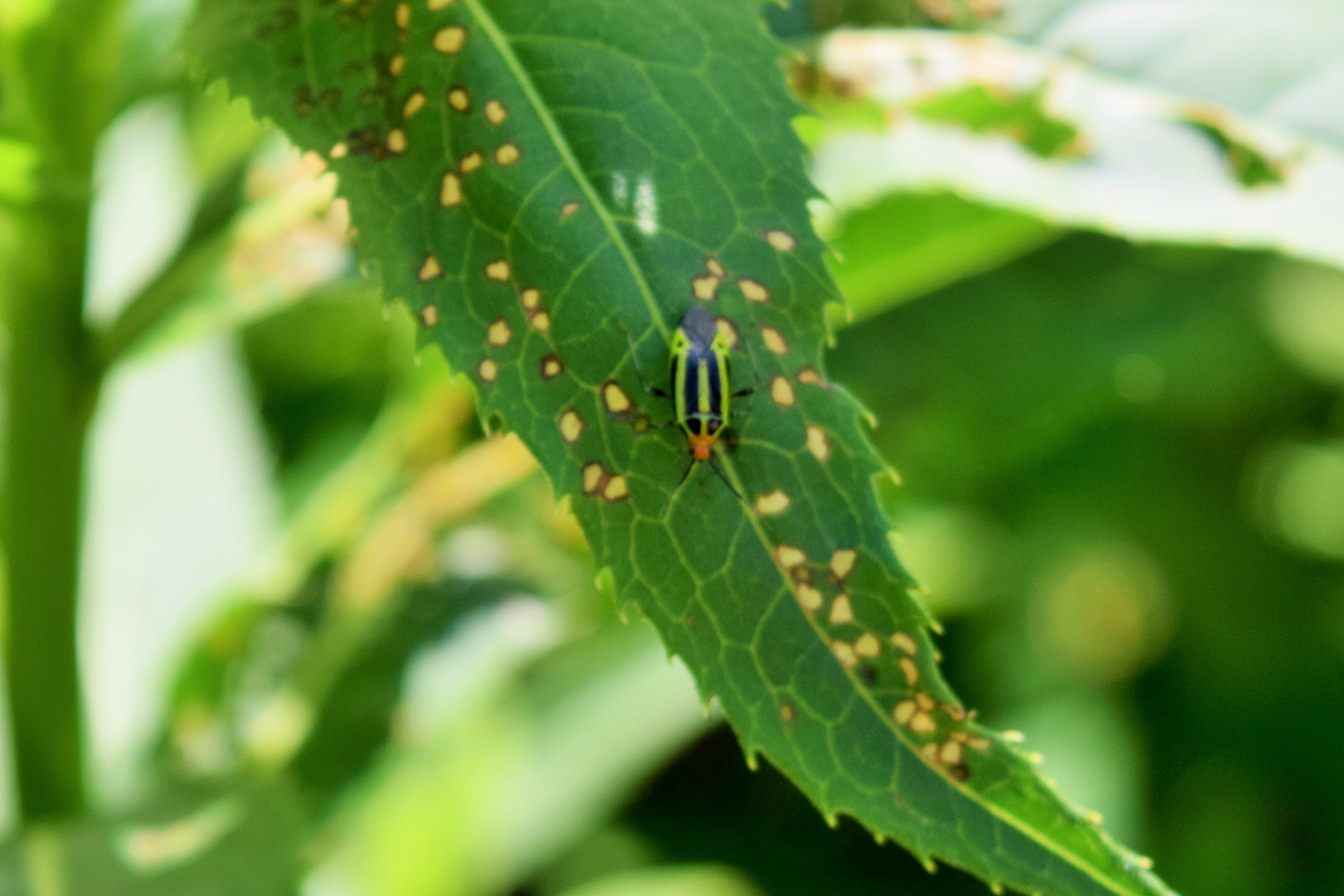
Four-lined plant bug


It’s odd how after they mentioned this bug, I started seeing it everywhere. This either says something about my limited powers of observation, or suddenly my four-lined plant bugs stopped using their invisibility cloaks.

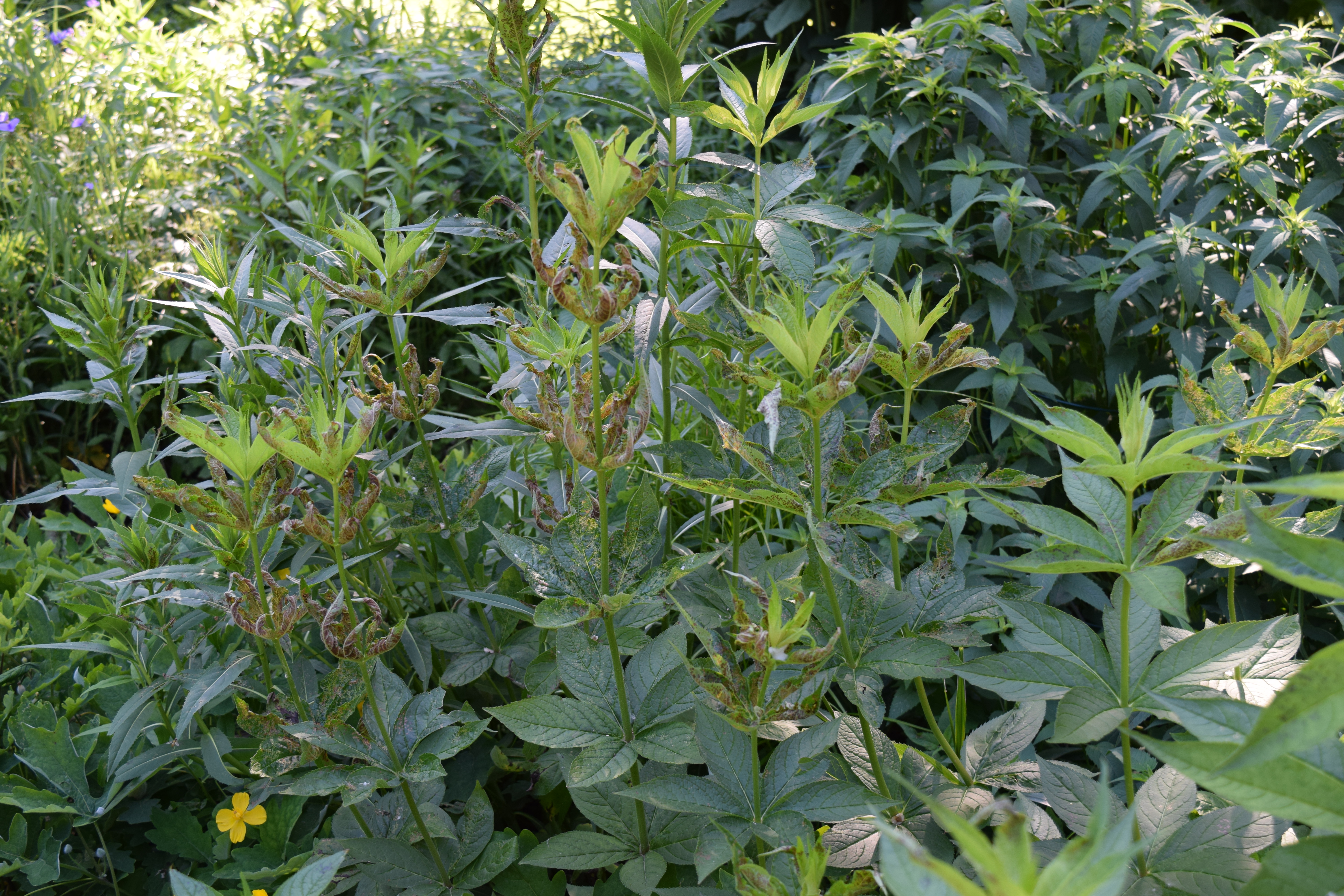
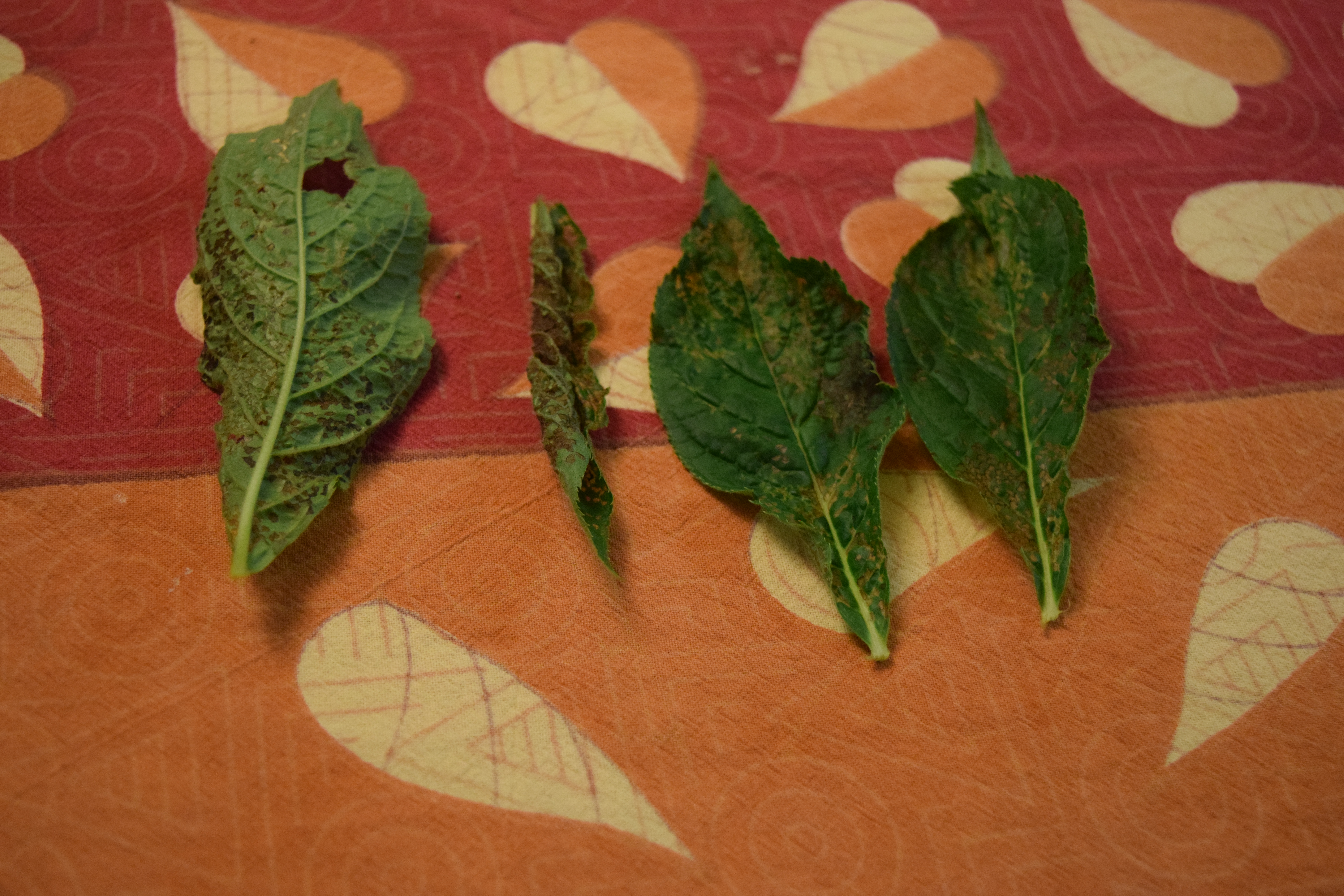
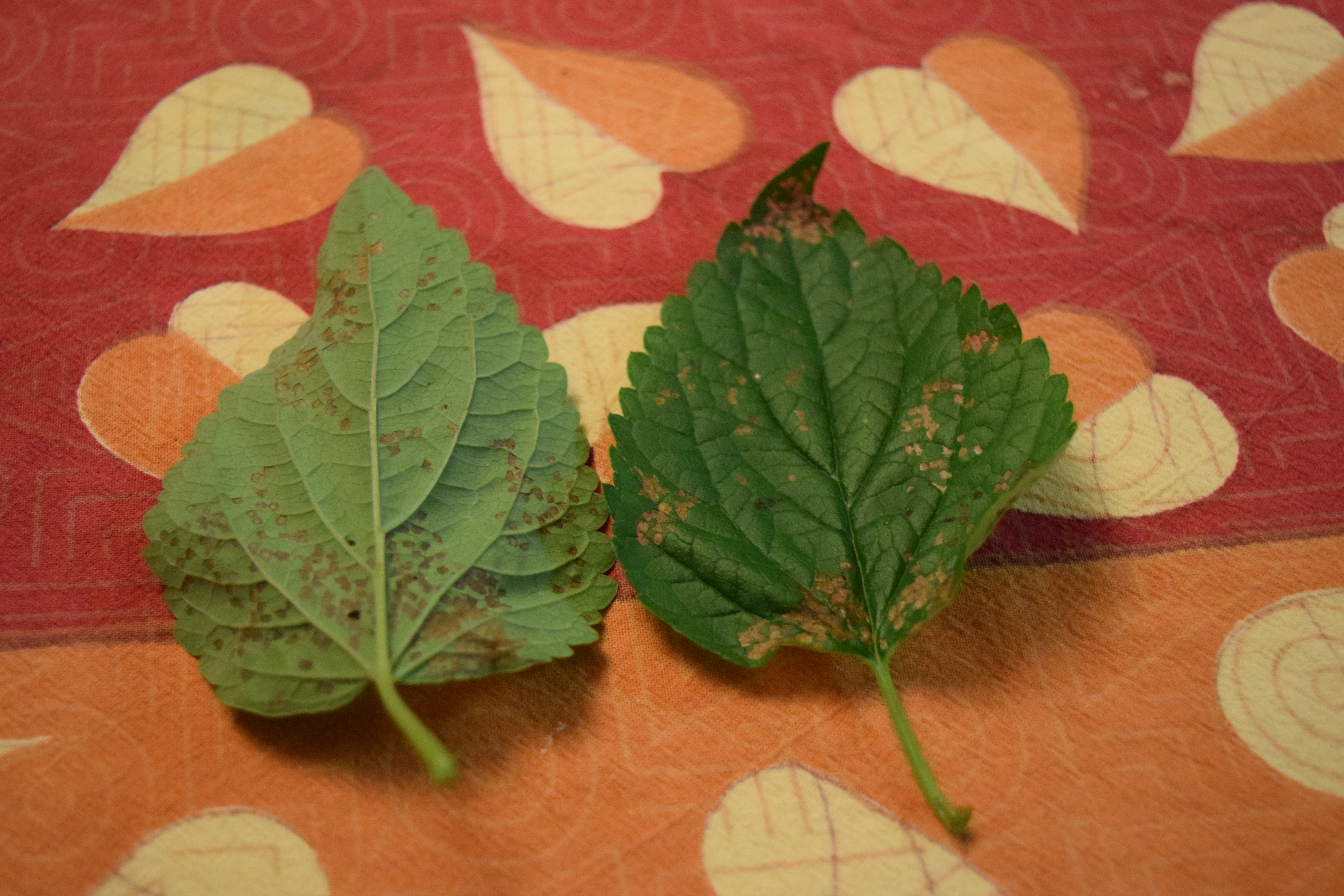
Four-lined plant bugs have piercing mouth parts. They suck the chlorophyll out of the leaf cells, which sounds rather sinister. After that the cells turn brown or black and may fall from the leaf, leaving little holes. If there is enough damage the leaves may shrivel up.

Culver's Root damaged by four-lined plant bug.
Culver’s Root damaged by four-lined plant bug.

There is one good thing about four-lined plant bugs: they don’t stick around for very long. They hatch in May or June and mature over about six weeks. Then they feed for another month or so, mate, and die, leaving their eggs to overwinter. They have only one generation per year.

Healthy plants should recover from the vampire-like attentions of the four-lined plant bug. The damage is cosmetic, though it can look darn ugly.

In my garden it looks like these bugs have matured, so they should be around for another month or less. When they are gone I may cut back the damaged plants – primarily Culver’s Root (Veronicastrum virginicum) and Anise Hyssop (Agastache foeniculum). It doesn’t make sense to me to cut the plants back while the bugs a still feeding.

How the four-lined plant bug looks to your garden plants.

My hope is that everything will recover by August 1, when our garden will be part of the Wild Ones garden tour. If not, I’ll survive.

I considered using an organic insecticidal soap, but decided against it. My understanding is the soap can kill non-target insects, including beneficial predators. My garden has been remarkably free of insect pests for some years, which I attribute to a diverse and balanced insect population. In order to maintain that balance, I will tolerate some cosmetic damage, even some delayed or lost flowering.

Do you ever use insecticidal soaps? If so, at what point do you think it is warranted?

A Transitional Lull Between Spring and Summer

Tomorrow is Garden Bloggers’ Bloom Day, when bloggers around the world share pictures of the flowers in their gardens. In our garden things are a bit on the quiet side. The excitement of the spring blooms has passed, and the hot yellows and oranges of summer are yet to be. But there are still flowers to be seen, mostly of quieter white and blue.

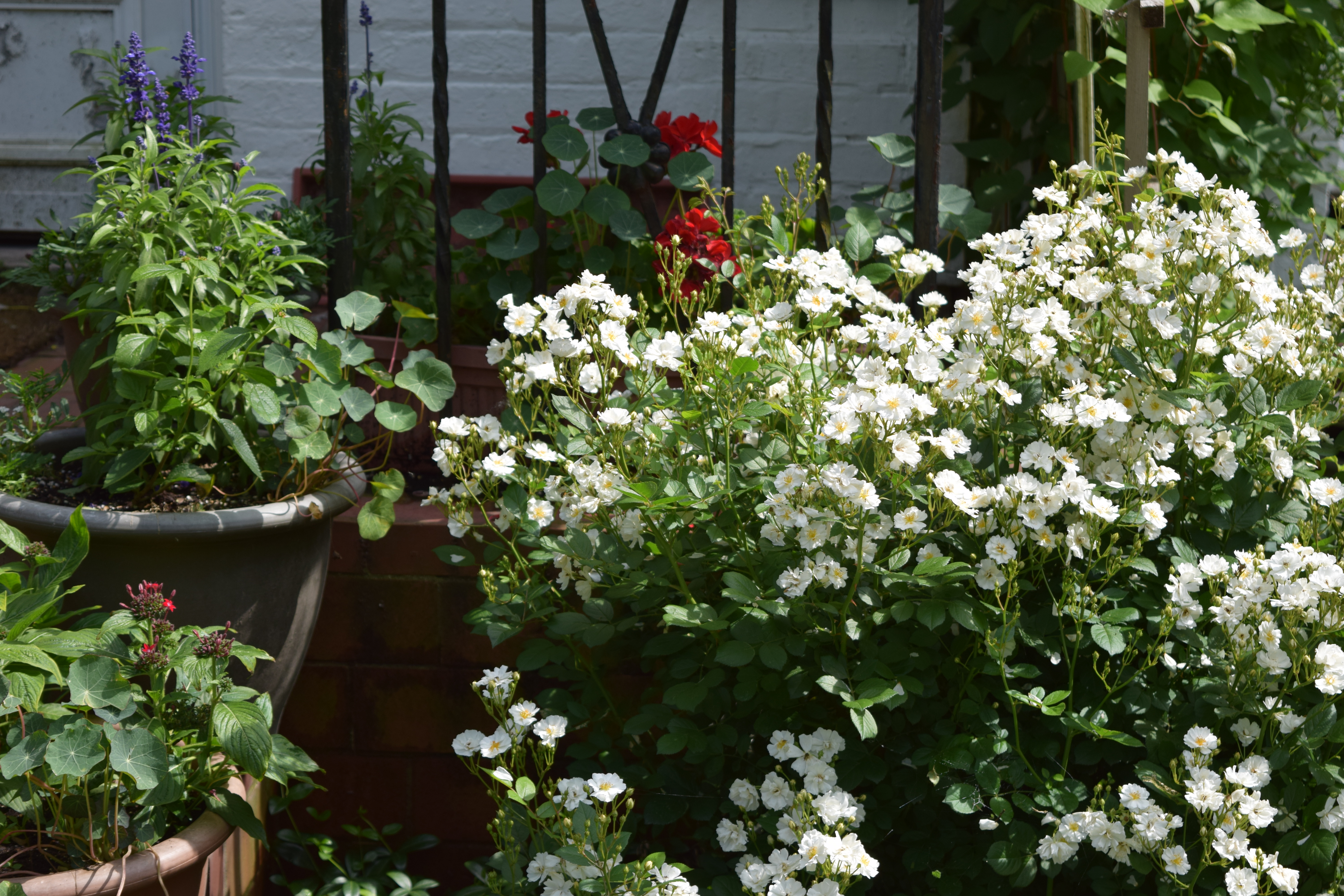
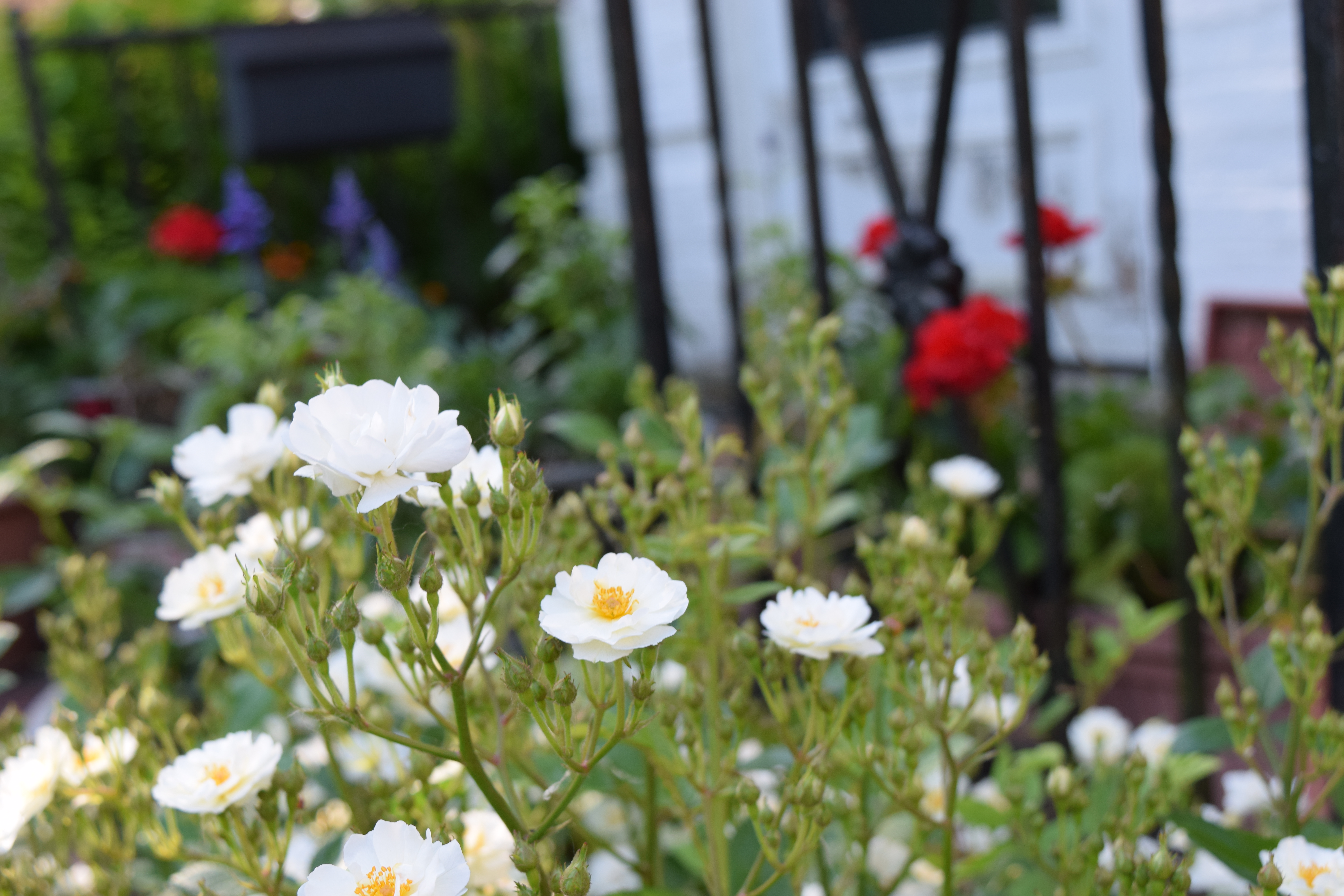
Shrub Rose 'Cassie'.
Shrub Rose ‘Cassie’.

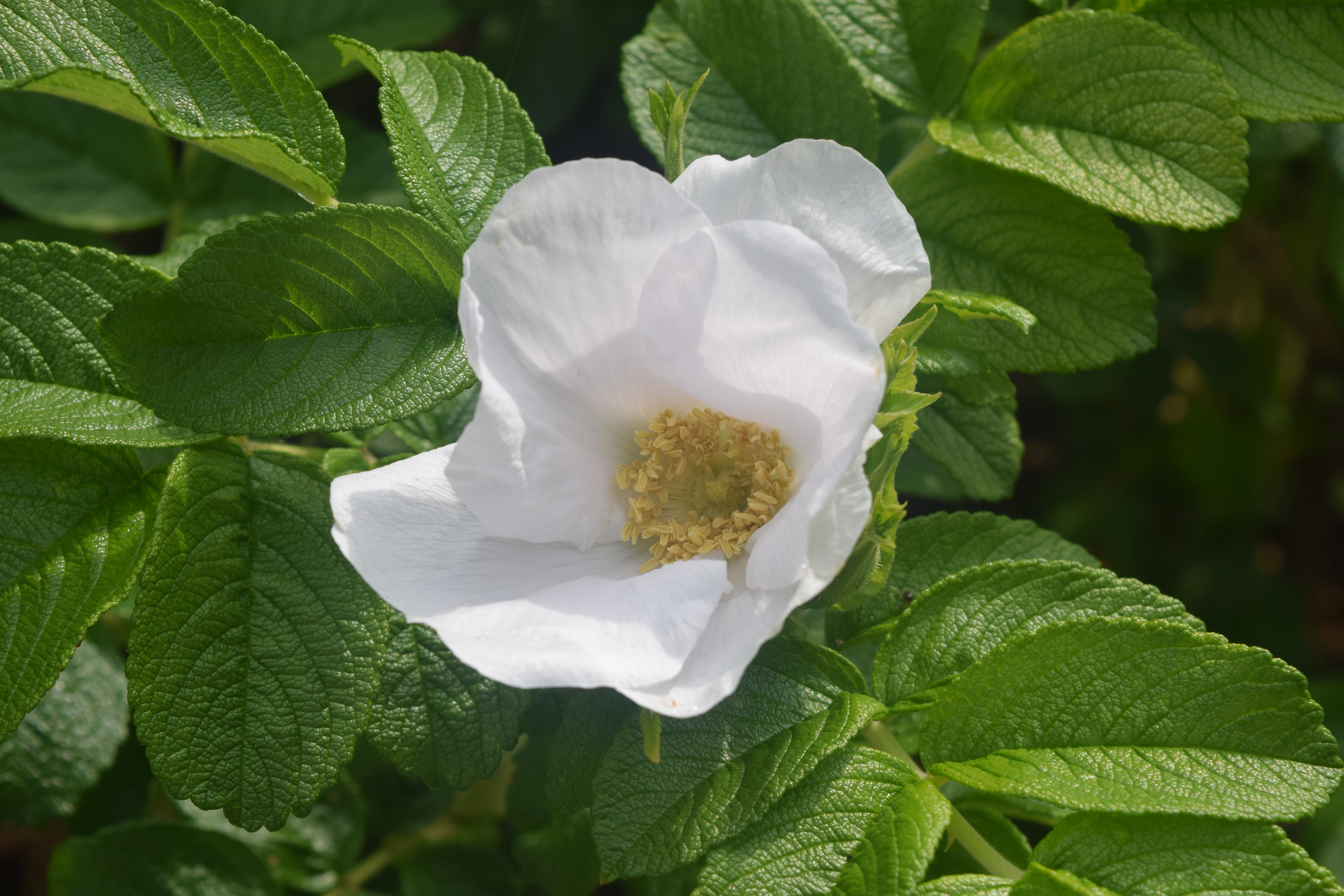
In the front garden our shrub rose ‘Cassie’ is having an outstanding year. She is in fact just covered with blooms. In this case the blooms are small, white, semi-double and slightly fragrant. I’ve written about ‘Cassie’ before, but for now I’ll say again that this is a compact, trouble-free shrub rose that really delivers the goods.

Wild Indigo not very flowery this year.

On the other hand, in the Driveway Border my Wild Indigo (Baptisia australis) has flowered very sparsely this June, a big change from prior years. Maybe it needs a shovelful of compost.

California Poppies
California Poppies

Also in the Driveway Border, I am tentatively satisfied with the results of my experiment with California Poppies (Eschscholzia californica). If you remember, I direct sowed them back in March. They have germinated and covered the areas that would have otherwise been bare and have just started to bloom, so far rather sparsely. I hope that they gain enthusiasm as we head into the second half of June.

Salvia growing in front of 'Husker Red' Penstemon.
Salvia growing in front of ‘Husker Red’ Penstemon.

In the Sidewalk Border the ‘Husker Red’ Smooth Penstemon (Penstemon digitalis) is blooming in combination with several varieties of Salvia: ‘May Night’, ‘Blue Hill’, and ‘Caradonna’.

'Husker Red' with Switchgrass.
‘Husker Red’ with Switchgrass.

I planted the Salvias in an area along the sidewalk that had been full of Wild Geranium (Geranium maculatum).

2015-06-14 15.34.25 penstemon and salvia

This year the Salvia is being smothered a bit by lusty Geraniums growing back from seed and bits of rhizome. I may have to dig up everything in the fall if I want to keep a drift of Salvia here.

2015-06-14 15.35.26  front island bed and penstemon

Behind the sidewalk border things are quiet in the Island Bed, but the Giants of the garden – Cup Plant (Silphium perfoliatum) and Sweet Joe Pye Weed (Eupatorium purpureum) – are preparing to make a statement.

Ohio Spiderwort
Ohio Spiderwort

In the meantime, there are the blue flowers of the Ohio Spiderwort (Tradescantia ohioensis). This Spiderwort does not run like its Virginia cousin (Tradescantia virginiana).

Geranium 'Biokova'
Geranium ‘Biokovo’

In the East Side Bed, the Geranium ‘Biokovo’ are past their peak but still blooming.

Solomon's Seal
Solomon’s Seal

And the Solomon’s Seal (Polygonatum biflorum), now in their third year, have really come into their own.

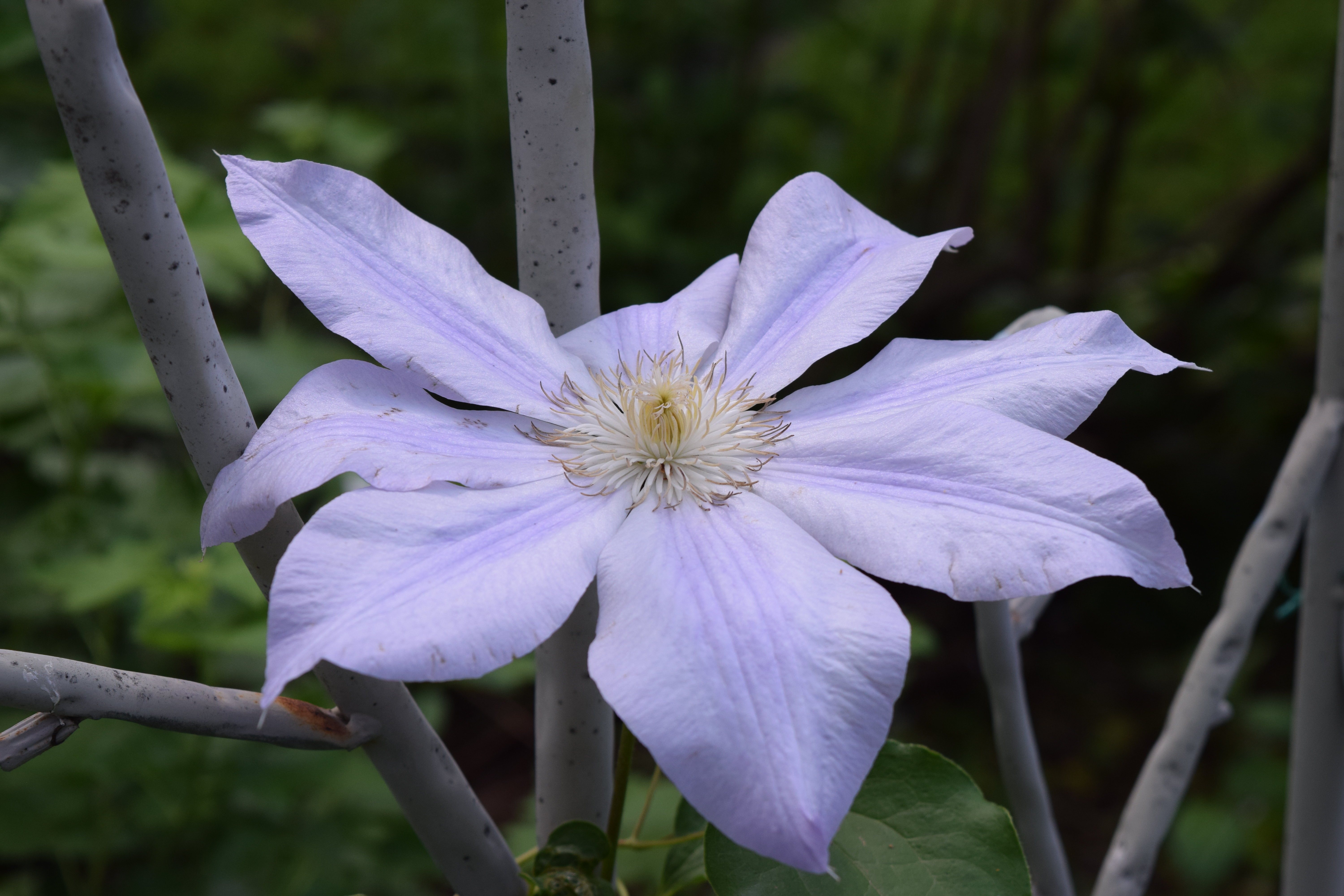
Clematis 'Ice Blue'
Clematis ‘Ice Blue’

In the back garden, probably the most exciting blooms belong to Clematis ‘Ice Blue’.

Clematis 'Ice Blue' on our back arbor.
Clematis ‘Ice Blue’ on our back arbor.

This is still a young plant (planted in the fall of 2013), but it has enormous blooms at least 6″ wide. It’s supposed to bloom over a long season. We’ll see.

Goatsbeard
Goatsbeard

What else? The Goatsbeard (Aruncus dioicus) is flowering, though also flopping a bit. In this case I have restrained myself from staking it because I think it looks good this way.

Jacob's Ladder with Yellow Corydalis
Jacob’s Ladder with Yellow Corydalis
White Corydalis
White Corydalis

Also there’s some European Jacob’s Ladder (Polemonium caeruleum), along with Yellow and White Corydalis (Corydalis lutea and C. ochroleuca).

I’ve left out some things, especially the containers which have mostly been switched from spring to summer annuals. We can cover those in future posts.

In the meantime, check out the June blooms in other gardeners’ posts at May Dreams Gardens.

Raising People as Well as Flowers

Judy and I haven’t spent all our time in the garden. We have also been lucky enough to raise two good kids we are very proud of, both of them now adults in their twenties.

Danny after the graduation.

Today we got to watch our older son Daniel receive his Masters in Public Policy from the University of Chicago. We didn’t go to the general convocation, a massive gathering of the undergraduate college and all the graduate programs held in U of C’s main quadrangle.

Walking on stage.
Walking on stage.

However, we did attend the ceremony for Danny’s program, the Harris School of Public Policy, which was held in the more intimate Mandel Hall. This is where the graduates actually received their diplomas.

Danny bending at the knee.

Some of the taller students bent their knees to make it easier for the faculty to bestow upon them the hoods that signify their new degree. Daniel, who is 6′ 2″, was one of these, and he couldn’t keep himself from grinning despite the solemnity of the occasion.

Daniel holding his diploma.

Afterwards we all went outside for the Harris School reception in the courtyard. Daniel was tired from his job and from finishing coursework, but he shared the excitement of the other graduates.

2015-06-13 13.34.43

He also got a little silly. This he gets from Judy’s side of the family.

2015-06-13 14.33.06

His friend Kaitlin was there to cheer him on.

img004 danny and snowman

For a little perspective, here’s a picture of me and Danny from about 25 years ago.

2015-06-13 14.33.42

For Judy and I it was a deeply satisfying day. We can’t wait to see what our two boys will do next.

Out, damn’d leaf spot! out I say!

So here’s a vignette that isn’t so pleasant.

Culver's Root infected with leaf spot (I think). You have to click on the photo to see the damage clearly.
Culver’s Root infected with leaf spot (I think).

Right now my garden has the worst leaf spot infection I’ve ever seen. It may have something to do with the cool, wet spring we’ve had.

At least I hope it’s leaf spot, a fungal disease, as opposed to some viral plant malady like aster yellows. I’ve had Purple Coneflowers (Echinacea purpurea) with aster yellows, and I had to pull them all out. There is no cure.

Infected Culver's Root leaves.
Infected Culver’s Root leaves.

Several species have been impacted by the leaf spot, but the worst damage seems to be with the Culver’s Root (Veronicastrum virginicum) and Anise Hyssop (Agastache foeniculum), normally problem-free plants.

Infected Anise Hyssop leaves.

In all my years of gardening, I have never once used a fungicide. Honest. However, I am considering using some kind of fungicidal or other spray as soon as I get the time.

fungicide

Advice is most welcome. Do you think I am right that this is leaf spot? And how would you treat a serious case of that disease?

'Cassie' in bloom.
‘Cassie’ in bloom.

So that this will not be an entirely dismal post, let me close with a picture of our shrub rose ‘Cassie’, which is now coming into bloom. With white roses, the red Zonal Geranium (Pelargonium x hortorum) ‘Americana Dark Red’, and blue Salvia farinacea ‘Rhea’, I am all set for the 4th of July. Though I didn’t set out to create a patriotic floral display.

For more vignettes check out annamadeit’s blog, Flutter and Hum.

Peony Frustration

Until I got home on Monday, peonies had been growing on me. Not literally, but over the last couple of years my enthusiasm for peonies had been slowly increasing. ,

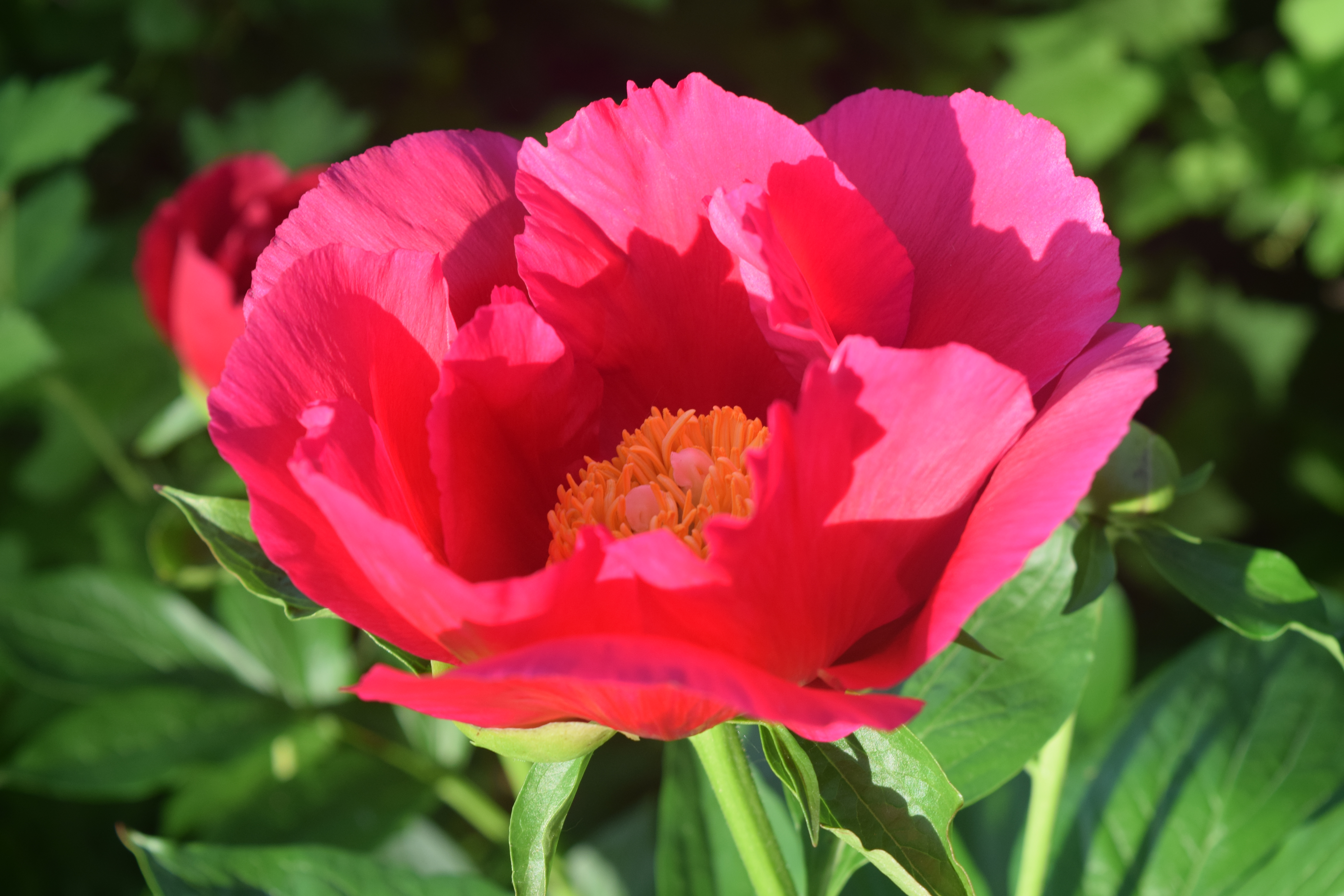
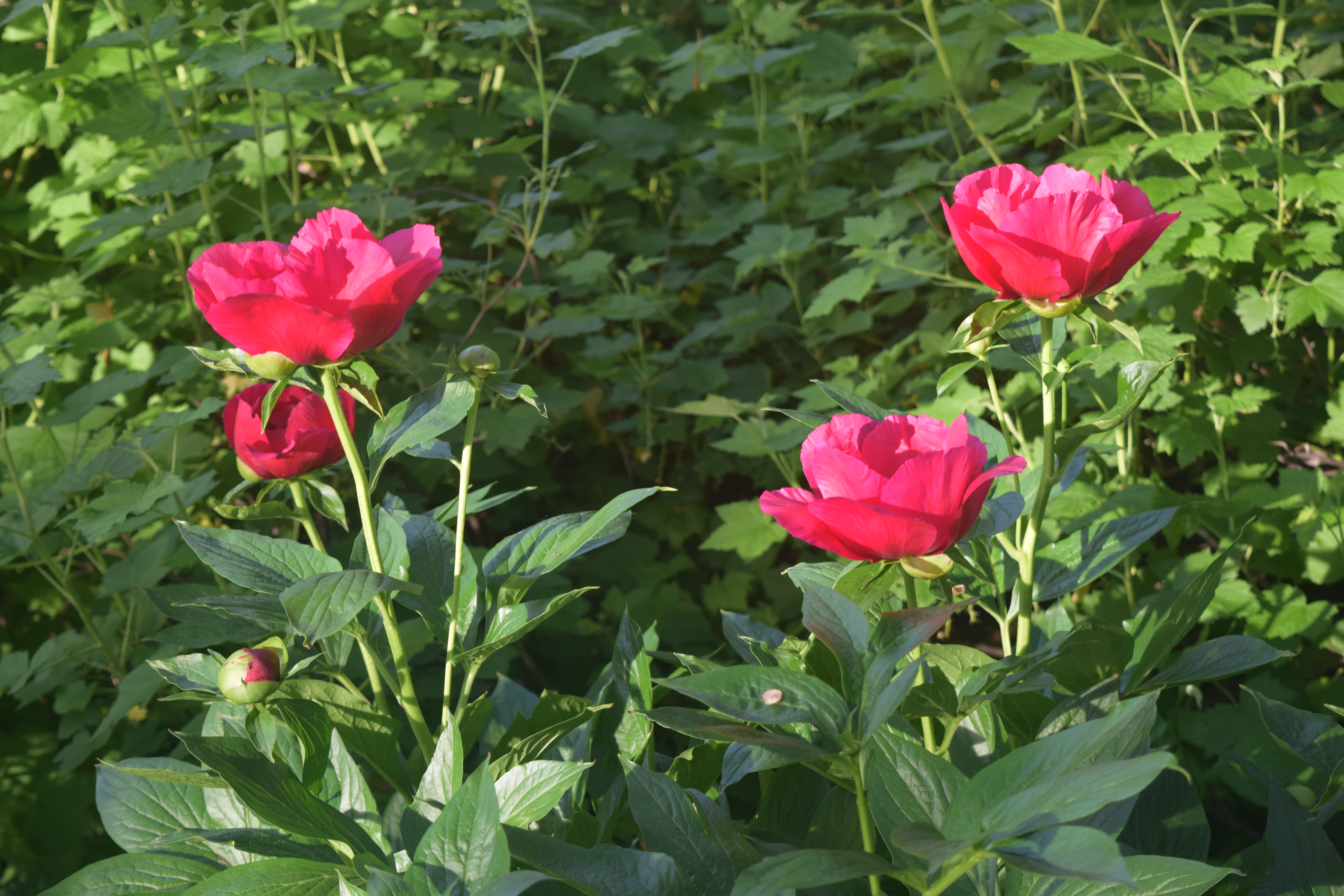
Peony 'America' performed very well in our garden this year.
Peony ‘America’ performed very well in our garden this year.

Initially, that level of enthusiasm was quite low. In fact, it was only the steady barrage of wistful sighs from Judy that persuaded me to plant any peonies at all. My reluctance came from the fact that individual peony blooms are so short lived and vulnerable to rain, wind, and people walking by without first removing their shoes.

Another view of Peony 'America'.
Another view of Peony ‘America’. I guess you could say this one is my favorite.
Also, peonies have limited value to wildlife, so their place in a habitat garden is open to question. Although ants do like to eat the nectar that can be found on Peony buds and actually help the Peony flower to open.

Peony 'America' with Wild Currant and Cranberrybush Viburnum in the background.
Peony ‘America’ with Wild Currant and Cranberrybush Viburnum in the background.

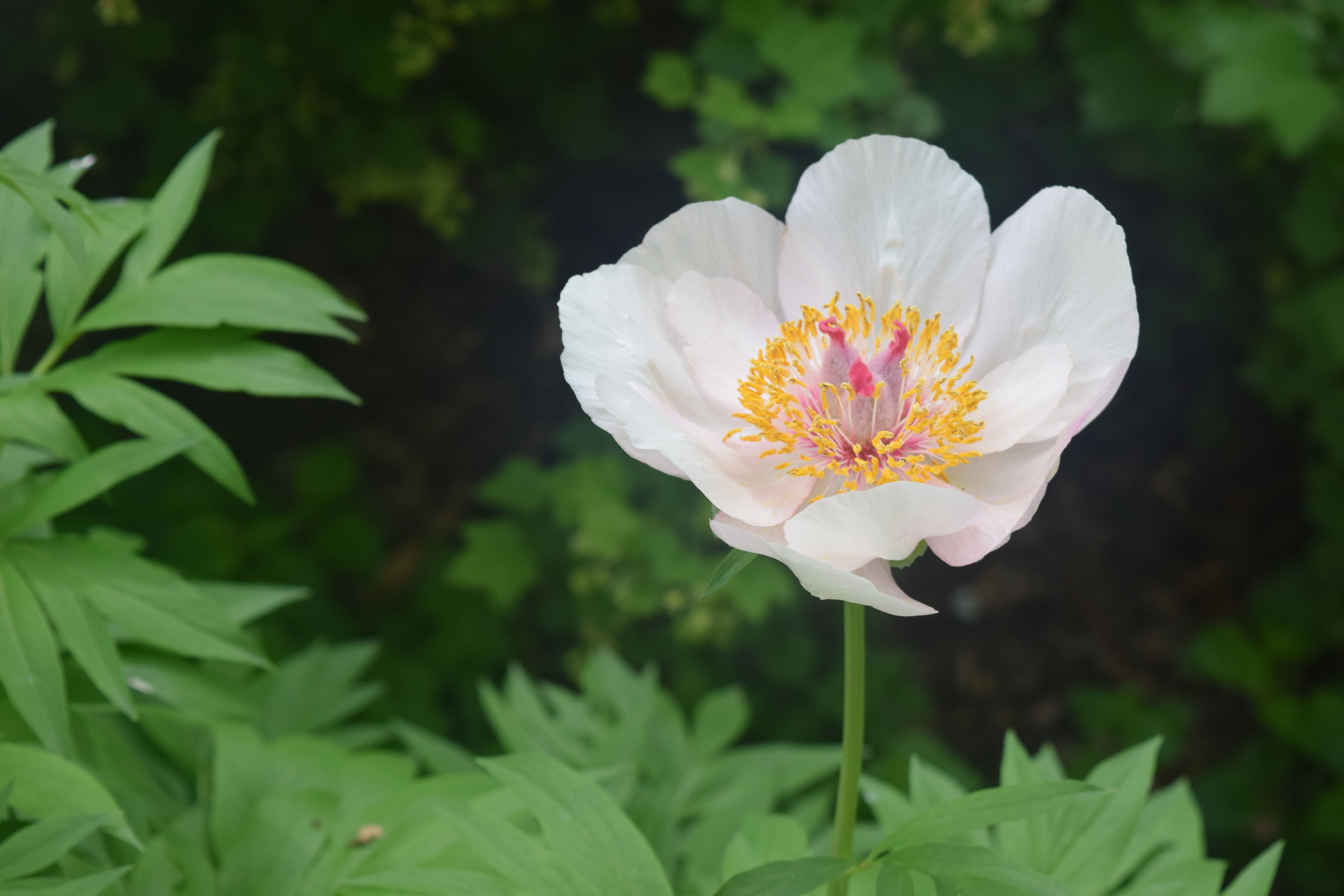
Even so, four years ago I planted four peonies, all singles: ‘America’, P. anomala, ‘Abalone Pearl’, and another one whose name I’ve lost. These plants charmed me as they expanded and bloomed each season. The opening of each luxurious flower became a much anticipated event.

Peony 'Abalone Pearl'
Peony ‘Abalone Pearl’

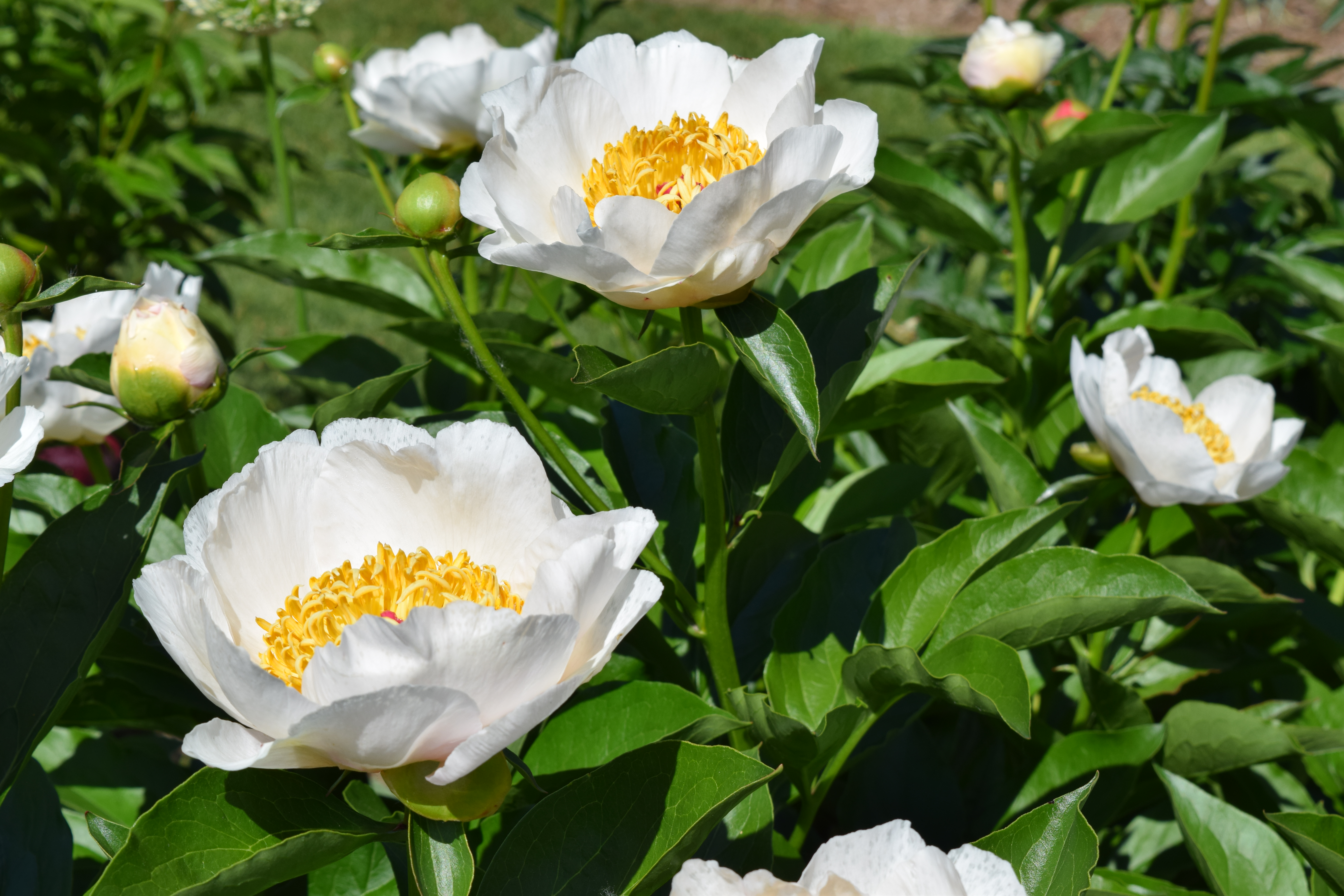
I was also inspired by the interplanting of Peonies and Alliums at the Chicago Botanic Garden, to the point where last year I ordered three ‘Snow Swan’ Peonies to plant among my own ‘Purple Sensation’ Alliums.

Canadian Peonies, which have clearly been enhanced through the use of the dark arts.
Canadian Peonies, which have clearly been enhanced through the use of the dark arts, seen during the Garden Bloggers Fling in Toronto.

And at the recently concluded Garden Bloggers Fling in Toronto it was impossible not to stare goggle-eyed at all the gigantic and glorious Peonies. Surely those Canadians are engaging in some kind of Satanic magic in order to grow all those impossibly beautiful specimens.

Paeonia anomala
Paeonia anomala

Anyhow, imagine my dismay when I returned home from Toronto on Monday only to find that the flowers on both ‘Snow Swan’ and the nameless Peony had come and gone during the five days trip. This was probably the result of a major thunderstorm on Monday, which provides absolutely no comfort at all.

Only the ants got to enjoy Peony 'Wh
Only the ants got to enjoy Peony ‘Snow Swan’.

It must be admitted that Peony ‘America’ did very well this year. It had more large, single red blooms than ever before. What’s more, it has a second round of buds that should be opening in a week or so. And all this despite that fact that it gets more shade and root competition than is ideal.

So I won’t be digging up the Peonies I already have, but I won’t be planting any more for the foreseeable future.

How did the Peonies in your garden do this year?

Snapshot from the Toronto Garden Bloggers Fling

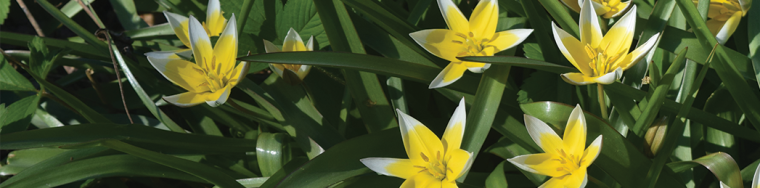
June tulips on Ward Island, just a short ferry ride from downtown Toronto.

2015-06-05 13.23.12 toronto skyline from wards island

More to come.