Be The First On Your Block to Grow American Spikenard!

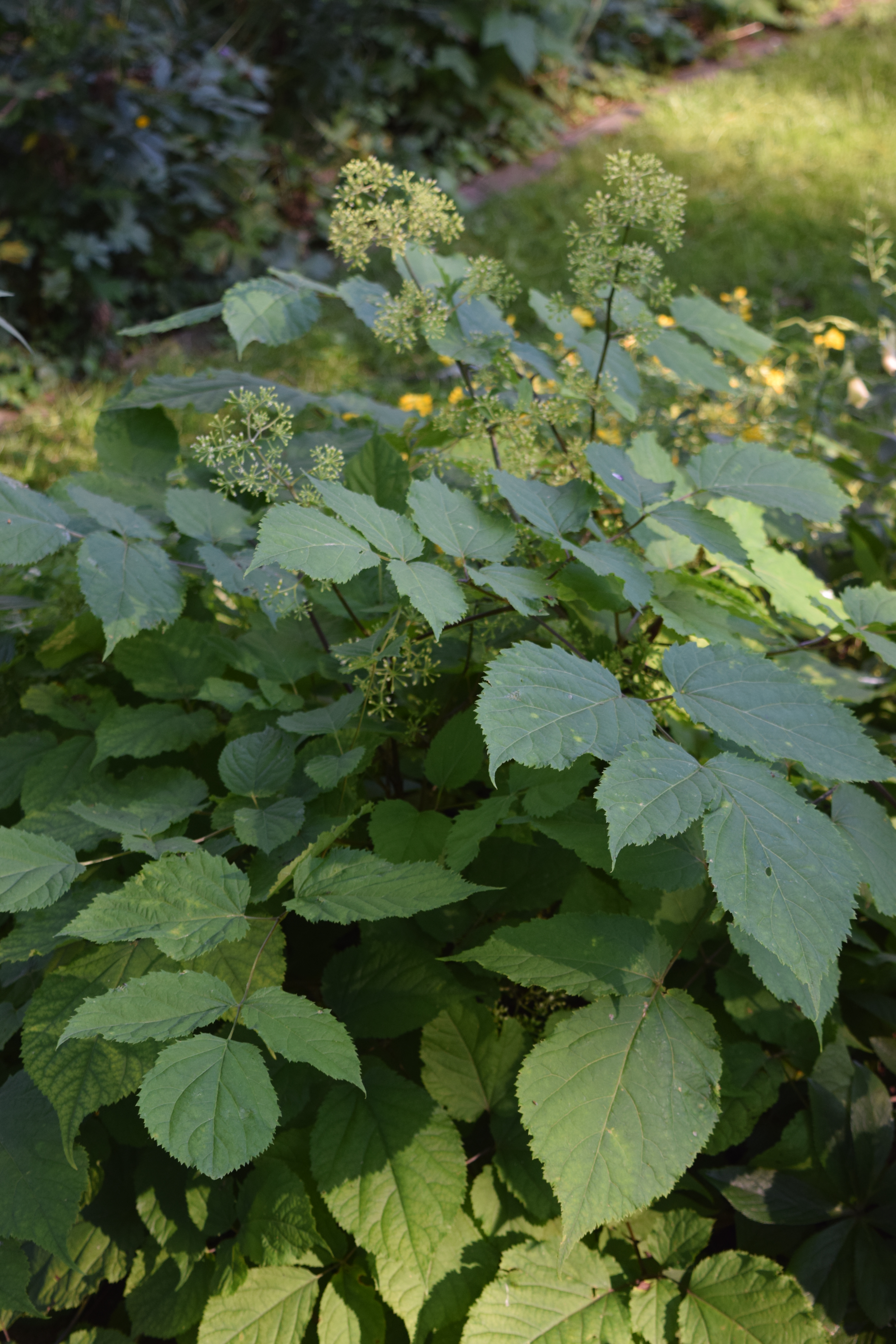
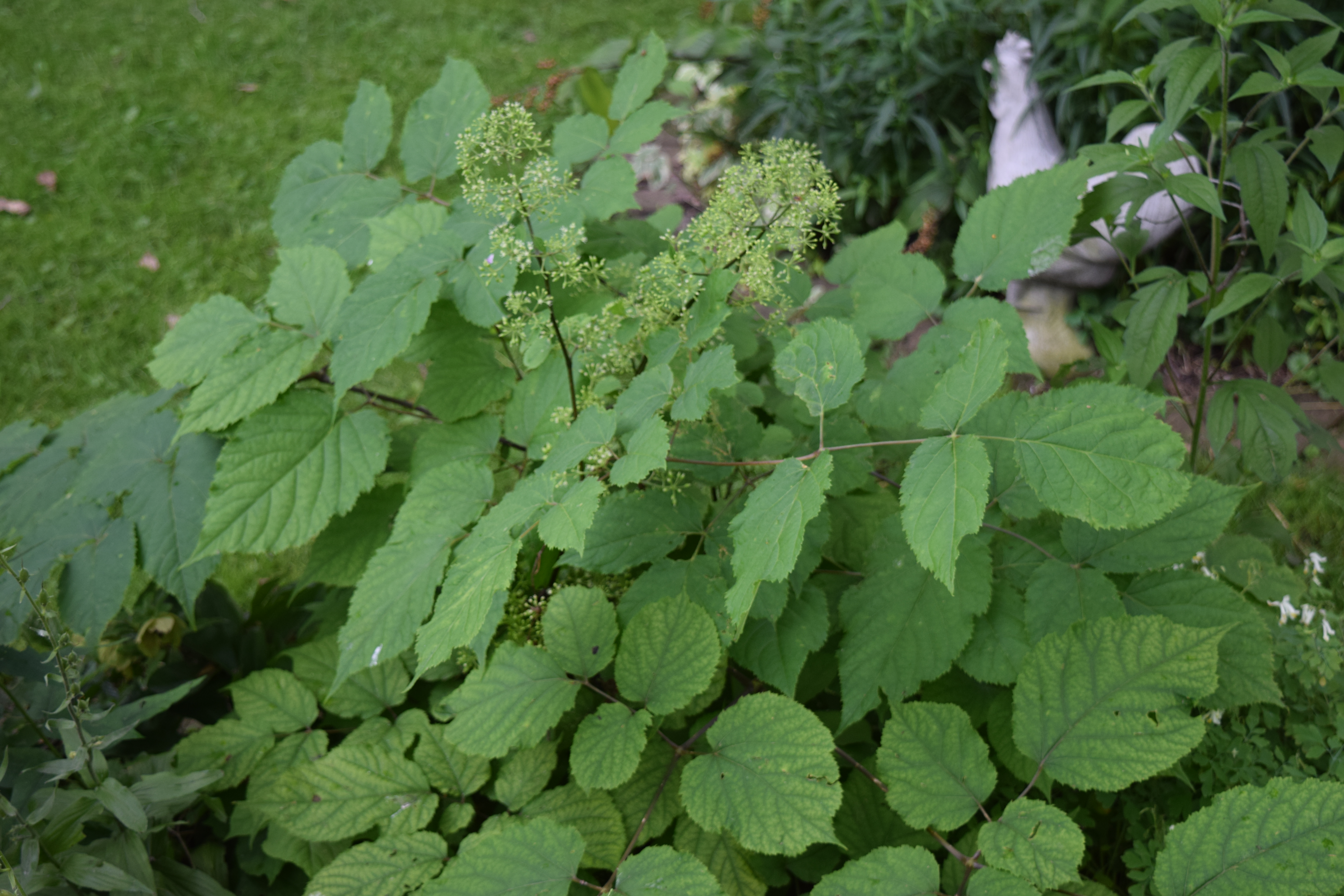
Here’s something new for your shady garden: American Spikenard (Aralia racemosa).

DSC_0330 american spikenard

This is a big woodland perennial native to a large swath of Eastern and Central North America, from Quebec to Manitoba and from Georgia to Texas.

DSC_0254 american spikenard

American Spikenard has been growing in my garden for two summers and so far I am pleased with it. It is a big plant growing up to 5′ tall, though mine is under 3′ this year. It has dark stems and bold, heart-shaped leaflets.

A closer look at American Spikenard flowers.

In mid-summer it has interesting-looking racemes of tiny greenish white flowers. While the individual flowers may not look like much to most people, they do attract a variety of native bees, including some really tiny ones.

American Spikenard berries

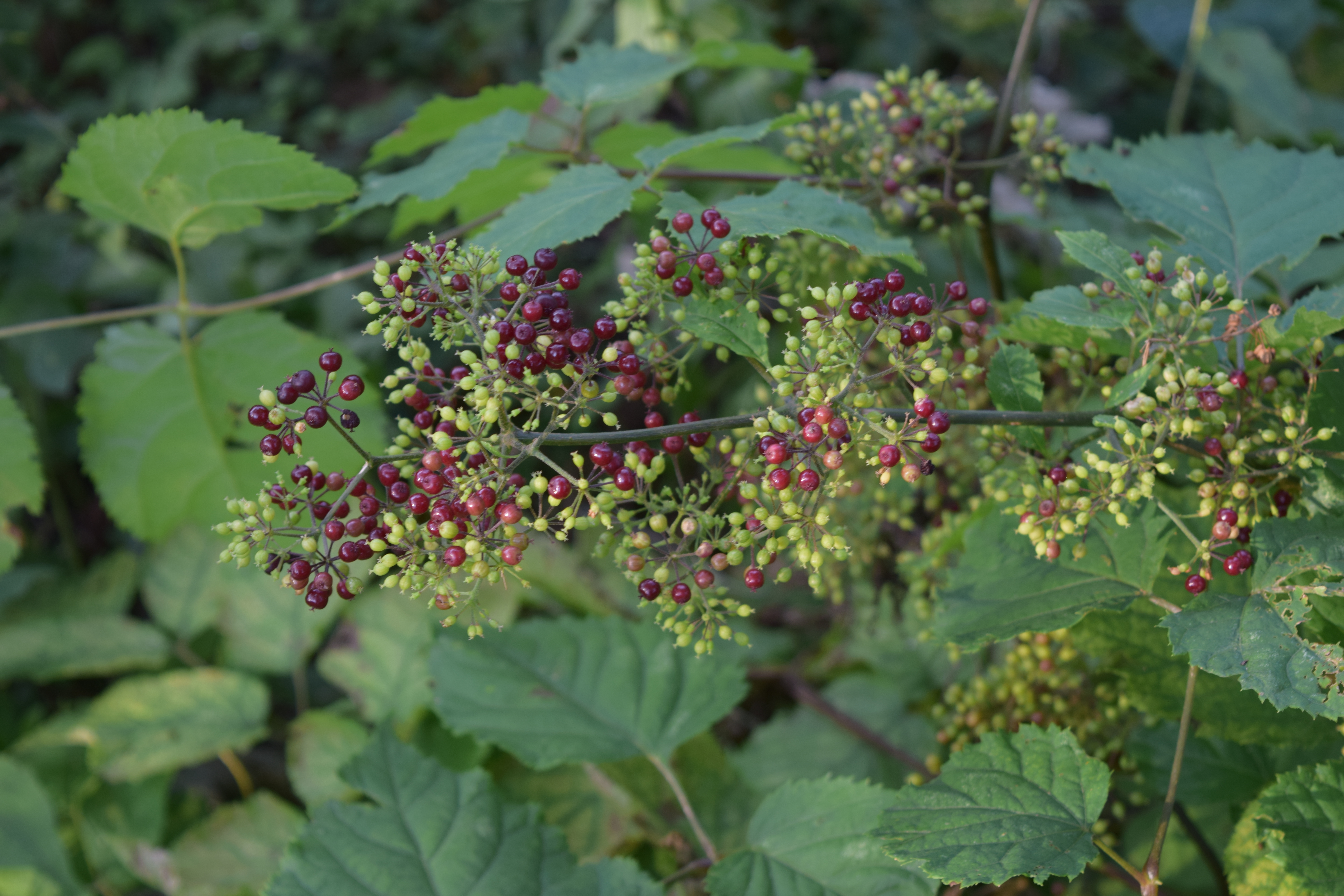
Later in the summer there are berries that I think are extremely ornamental as they turn from green to purple. The berries are attractive to birds.

A closer look
A closer look

A virtue of American Spikenard is that it can take over after ephemeral spring flowers have faded away. Also, it is supposed to be quite adaptable as to soil. It likes moist, fertile woodlands best, but a variety of sources say it will grow (less imposingly) in dryer and leaner locations.

DSC_0954 american spikenard

I grow pots and pots of Marigolds (Tagetes patula) and Impatiens (Impatiens walleriana), so I am not a plant snob. However, this plant is really underused, and there is an innocent pleasure in growing an unfamiliar plant that will excite questions from your gardening friends and neighbors – as happened with American Spikenard when my garden was on the Wild Ones tour.

This provides one last reason, if you need one, to give this woodland wildling a try.

Another Garden Gem in Rockford, Illinois

This is my second post about the recent gathering of nine Midwest garden bloggers to see the horticultural sites of Rockford, Illinois.

First, let me respond to some grumbling in reaction to my defining Rockford as a “small city”. If this seemed like big city elitism to you, I apologize. I grew up in the metro NY area and spent most of my adult life in and around Chicago, so my idea of “small” may be a bit skewed. For the record, Rockford has about 150,000 people and is the third largest city in the great state of Illinois, the Land of Lincoln.

Another view.

OK, then, moving on. We spent the morning at the Klehm Arboretum, then proceeded to have lunch at a bustling place in downtown Rockford called Octane, where the food was creative and good.

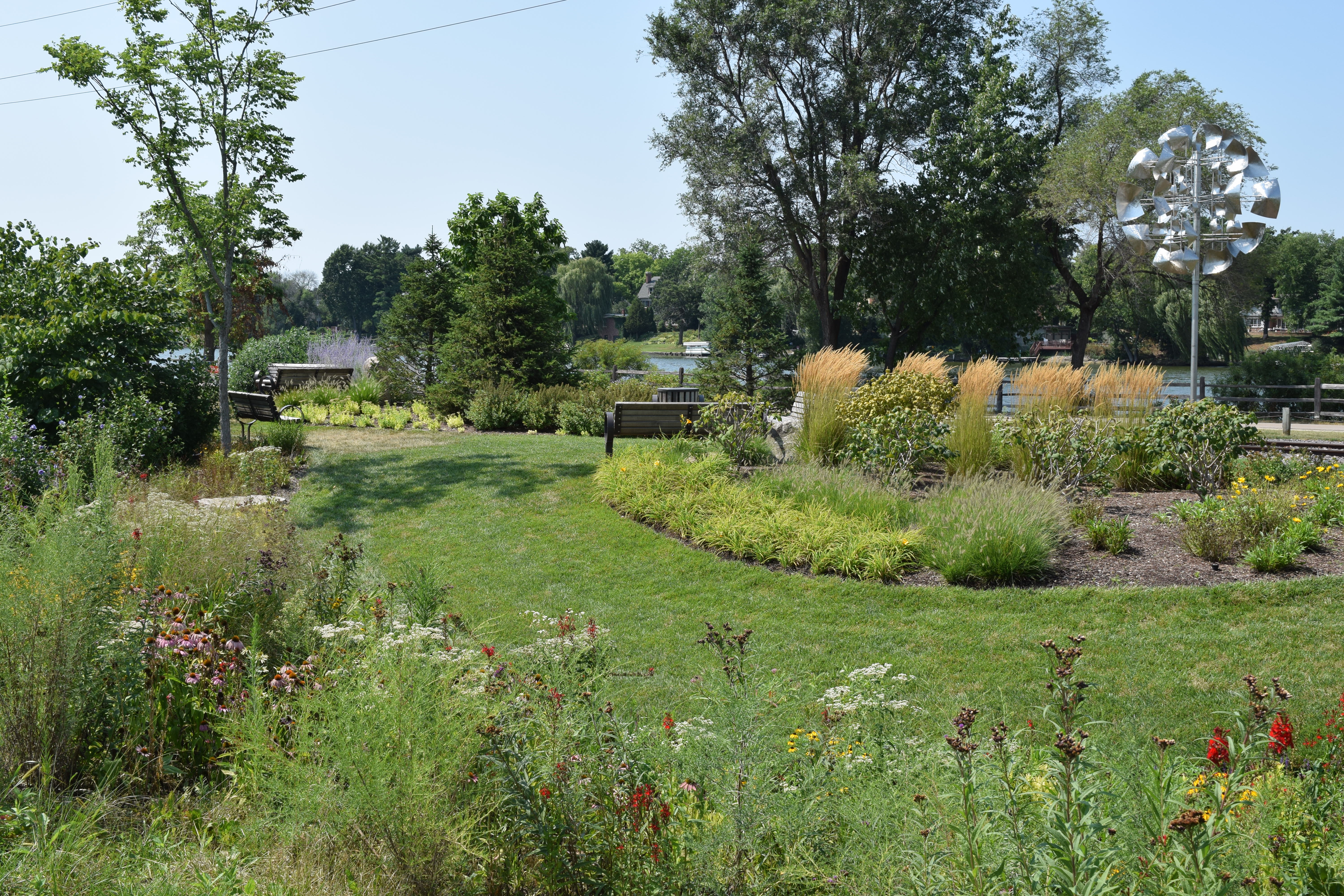
A Monarch Waystation is planted between the parking lot and the Rock River.

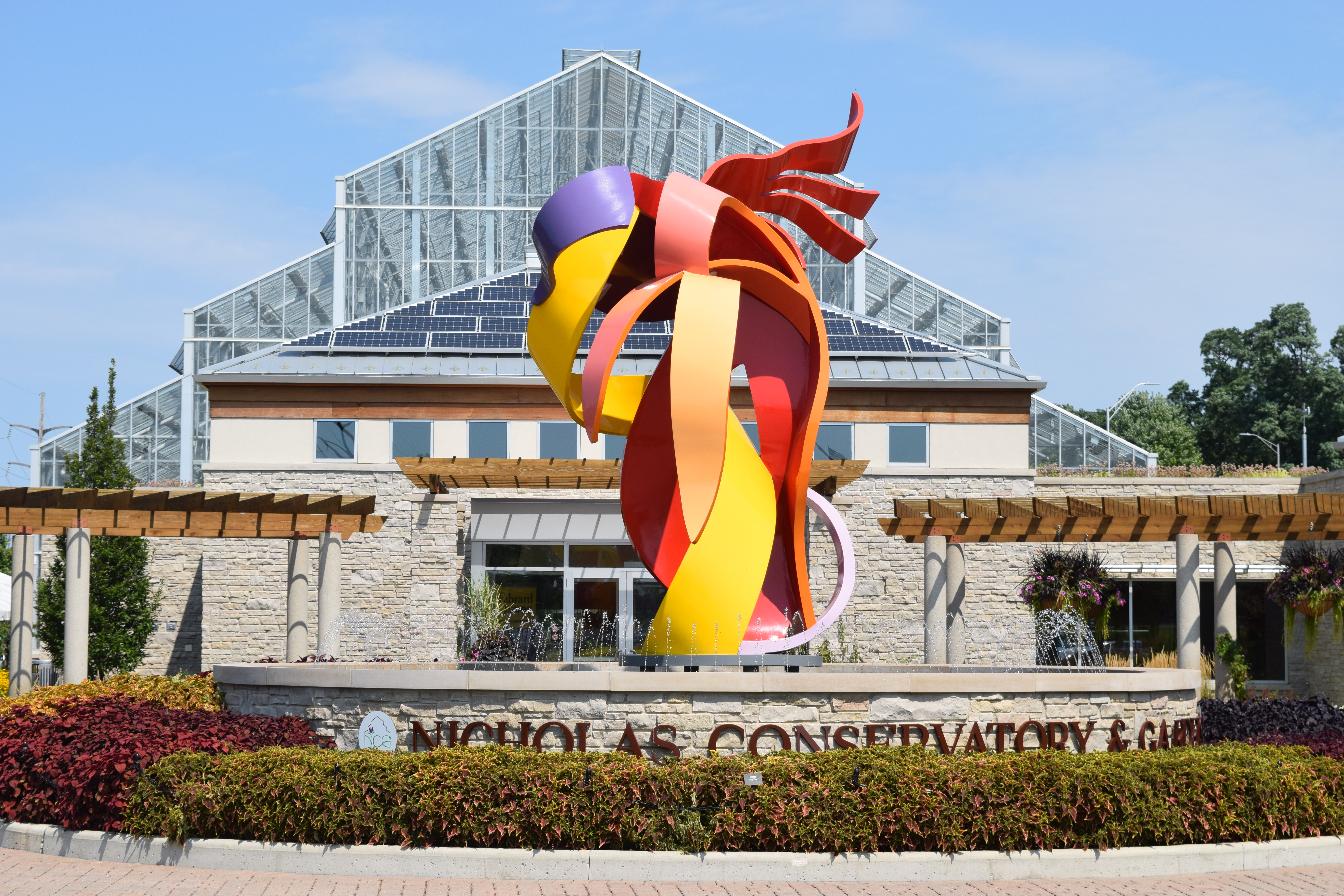
Next stop was the Nicholas Conservatory and Greenhouse, located along the Rock River. A Monarch Waystation and bioswale is laid out between the parking lot and the water.

2015-08-14 14.37.52 nicholas

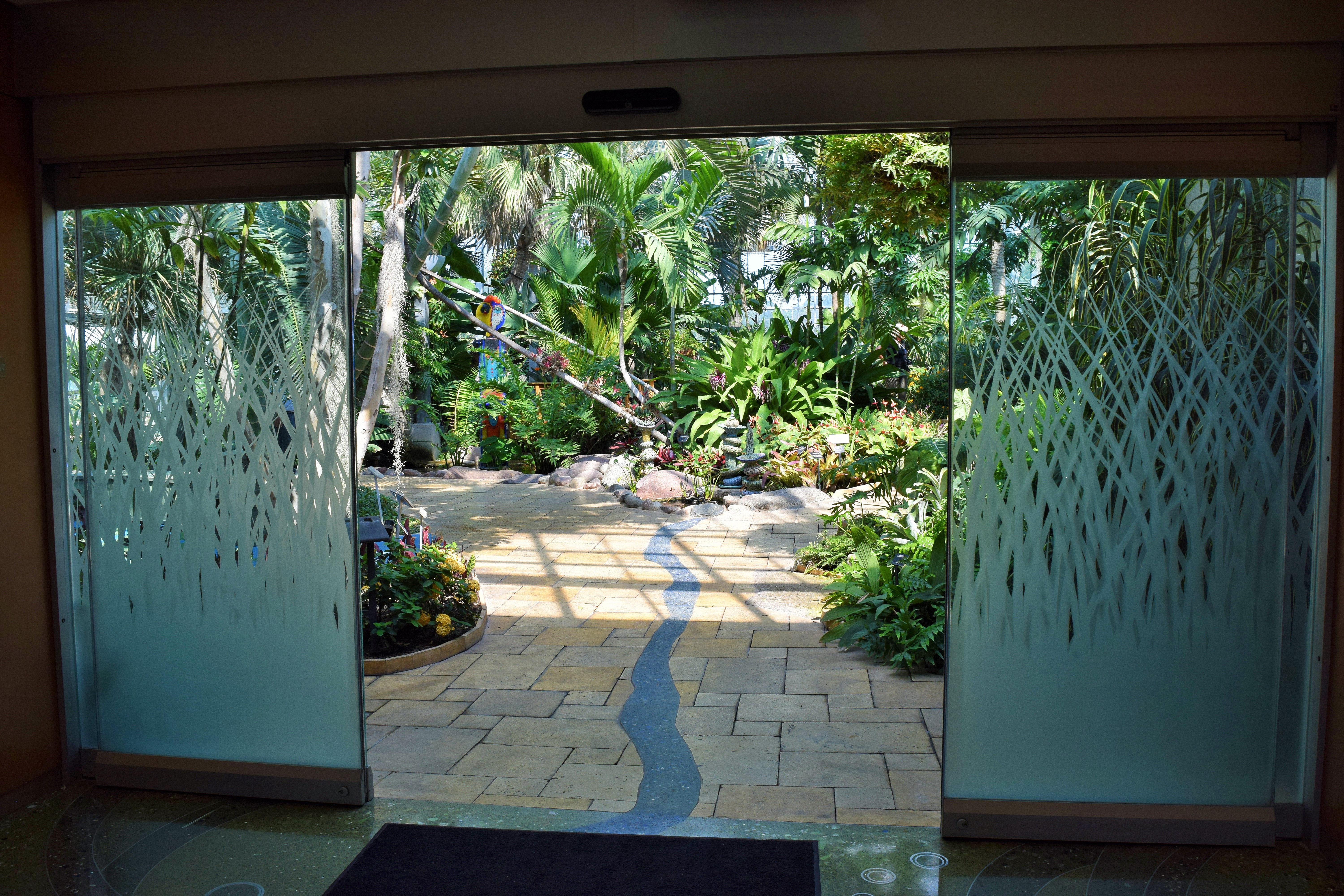
Inside, there is a mosaic floor representing the Rock River and its tributaries.

2015-08-14 14.38.22 nicholas

Which leads the way into the greenhouse.

2015-08-14 14.47.44 nicholas

A water feature with fountains winds its way through the greenhouse.

2015-08-14 14.44.42 nicholas

Which features a good deal of garden art along with the plants.

2015-08-14 14.39.23 nicholas

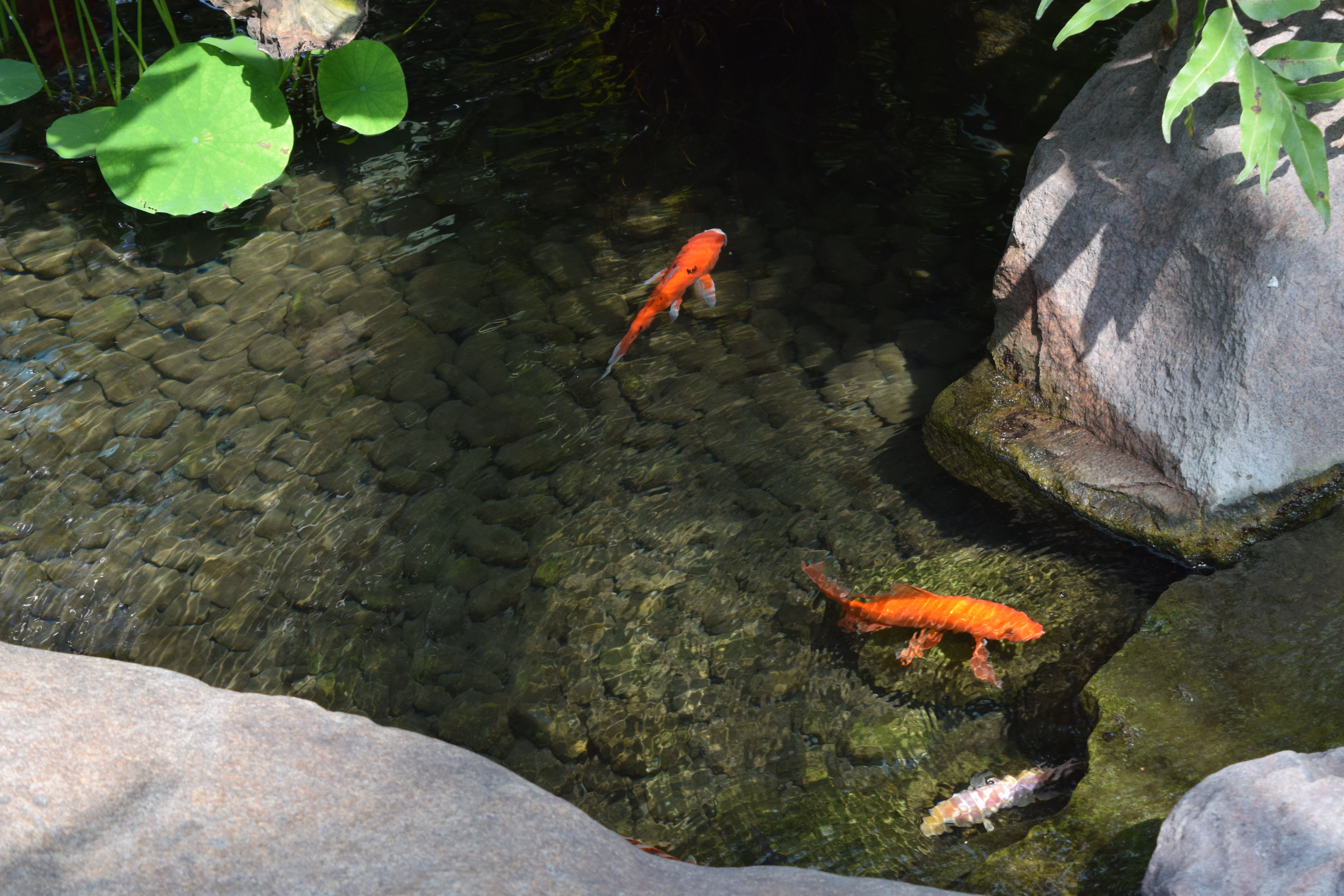
The fish in the indoor koi pond add to the sense of movement.

2015-08-14 14.43.21 nicholas

Lots of Epiphytes and orchids to examine.

2015-08-14 14.40.43 bird of paradise nicholas

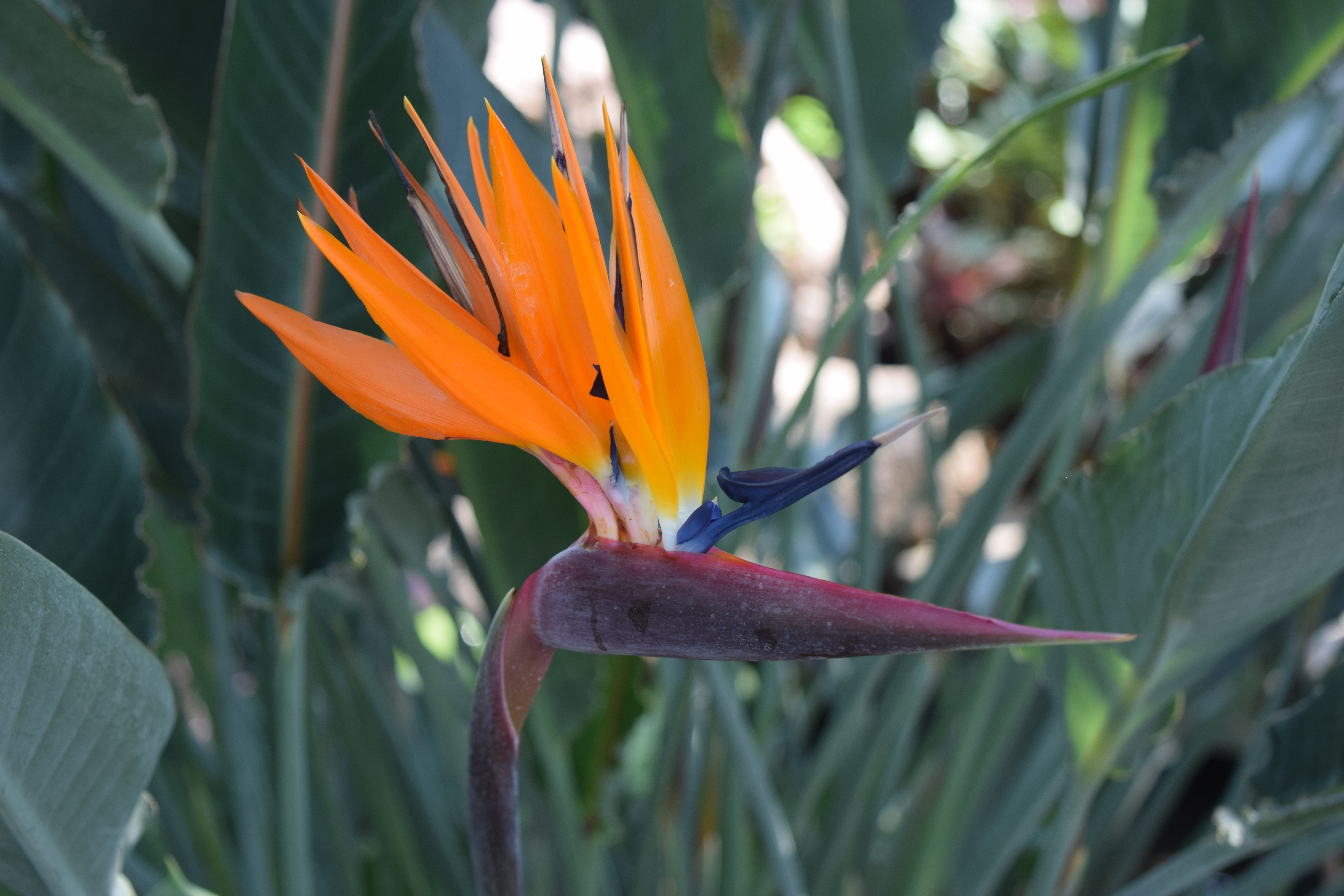
I love Bird of Paradise Flowers (Strelitzia reginae).

2015-08-14 14.45.37 nicholson

There were also some interesting food plants. Do you know what jack fruit looks like? Well, here you go.

2015-08-14 14.47.06 nicholas

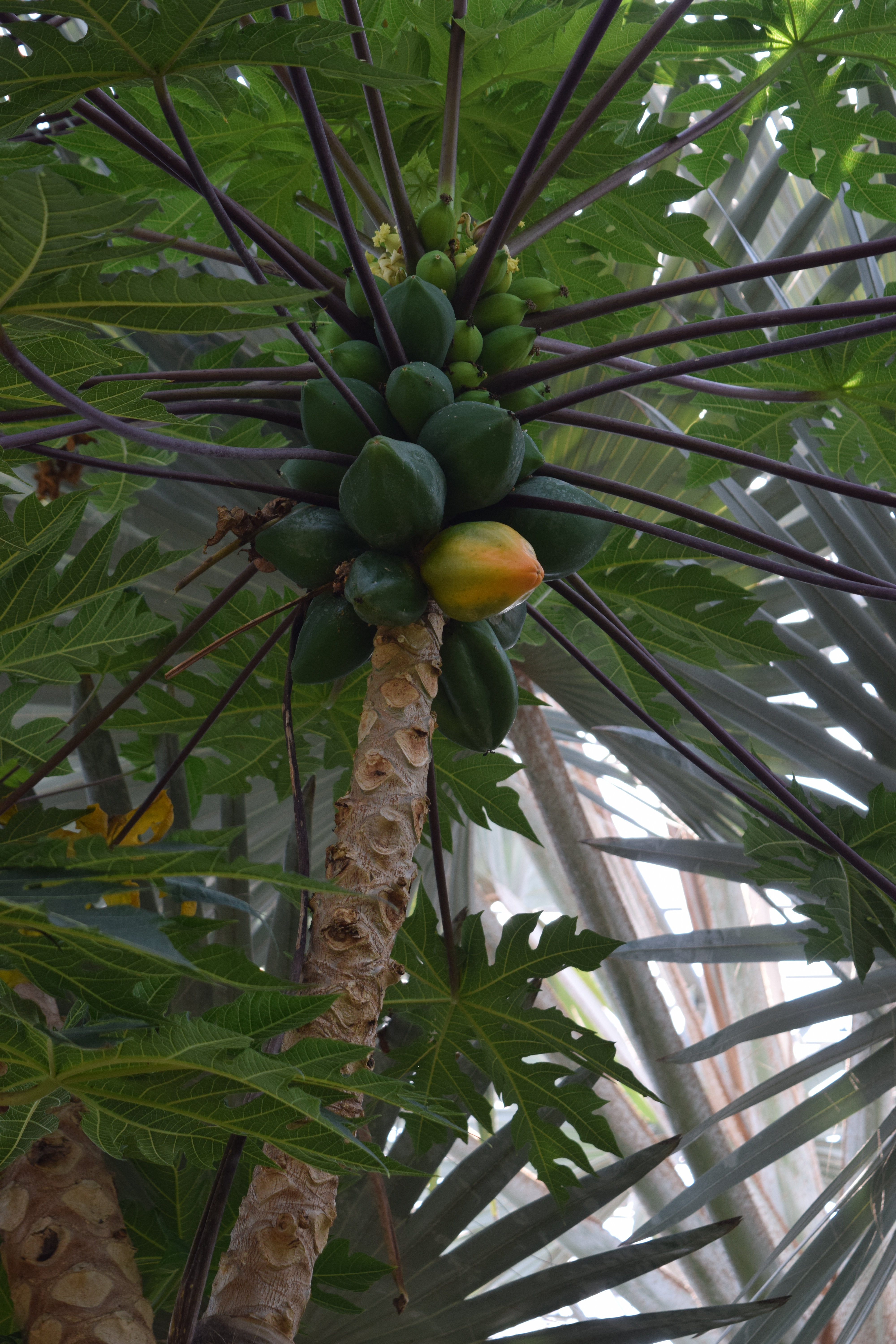
And here’s a papaya tree. No picking allowed.

2015-08-14 14.55.50 nicholson

When you’ve walked all the way through the conservatory, you come out the other end at the Eclipse Lagoon.

2015-08-14 14.50.53

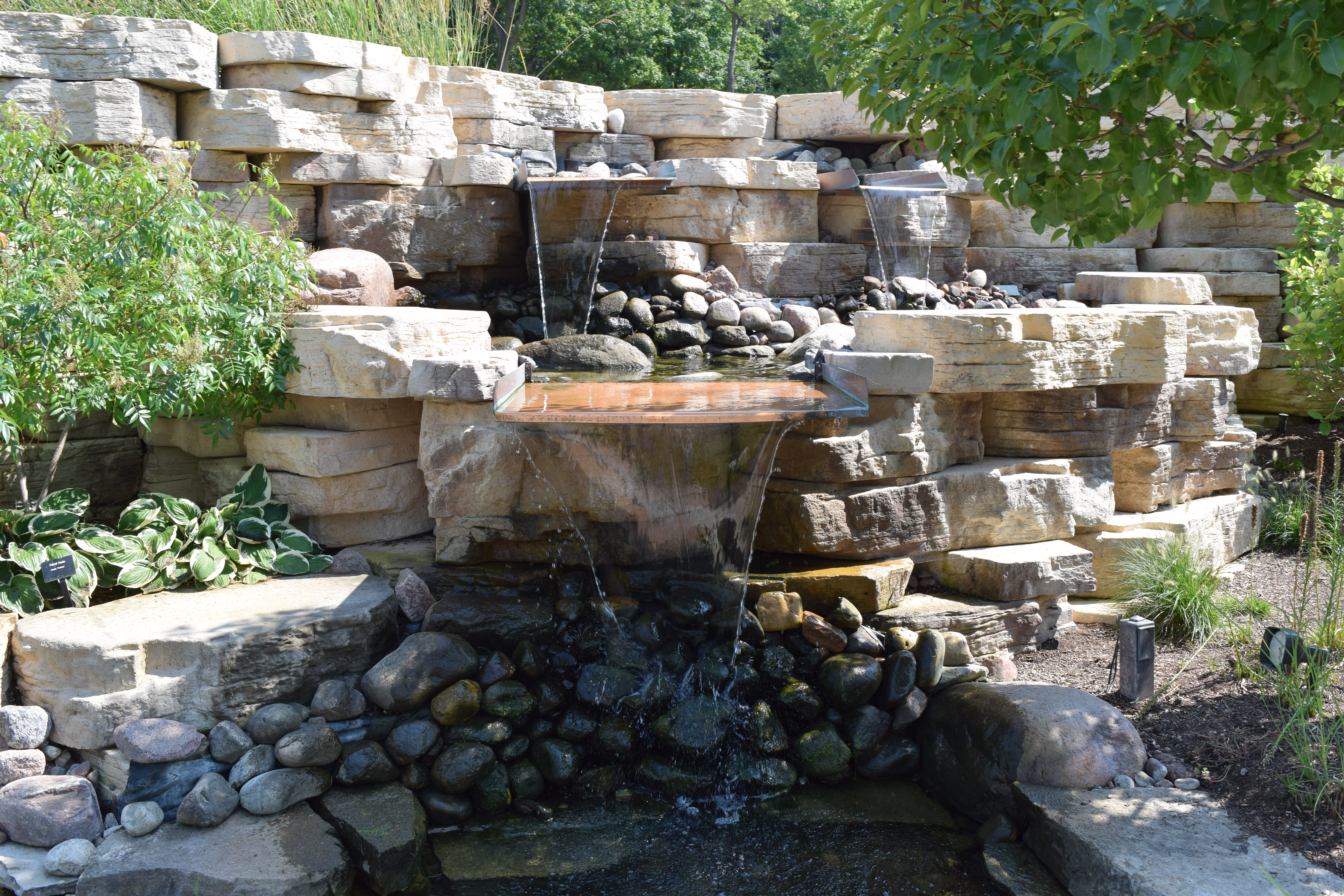
Turning away from the river, the boundary of this garden is marked by a long limestone wall and waterfalls.

2015-08-14 14.53.27 nicholson

The garden is full of both xeric and water-loving plants, native and exotic.

2015-08-14 14.55.11

Lots of ducks. Supposedly this is how they feed, but I suspect they are mooning the tourists.

We decided to skip the rose garden because we were running out of time but also because we suspected the roses would not be at their best in August (though there were some in bloom).

Next stop: the Anderson Japanese Gardens.

A Visit To The Klehm Arboretum

Rockford, Illinois, is a small city on I-90 just a few miles from the Wisconsin border. I’ve been there many times for my job, and driven past it many more times on the way to Madison (where we once lived) or Minnesota (where my younger son and brother live).

2015-08-14 10.35.07 Klehm

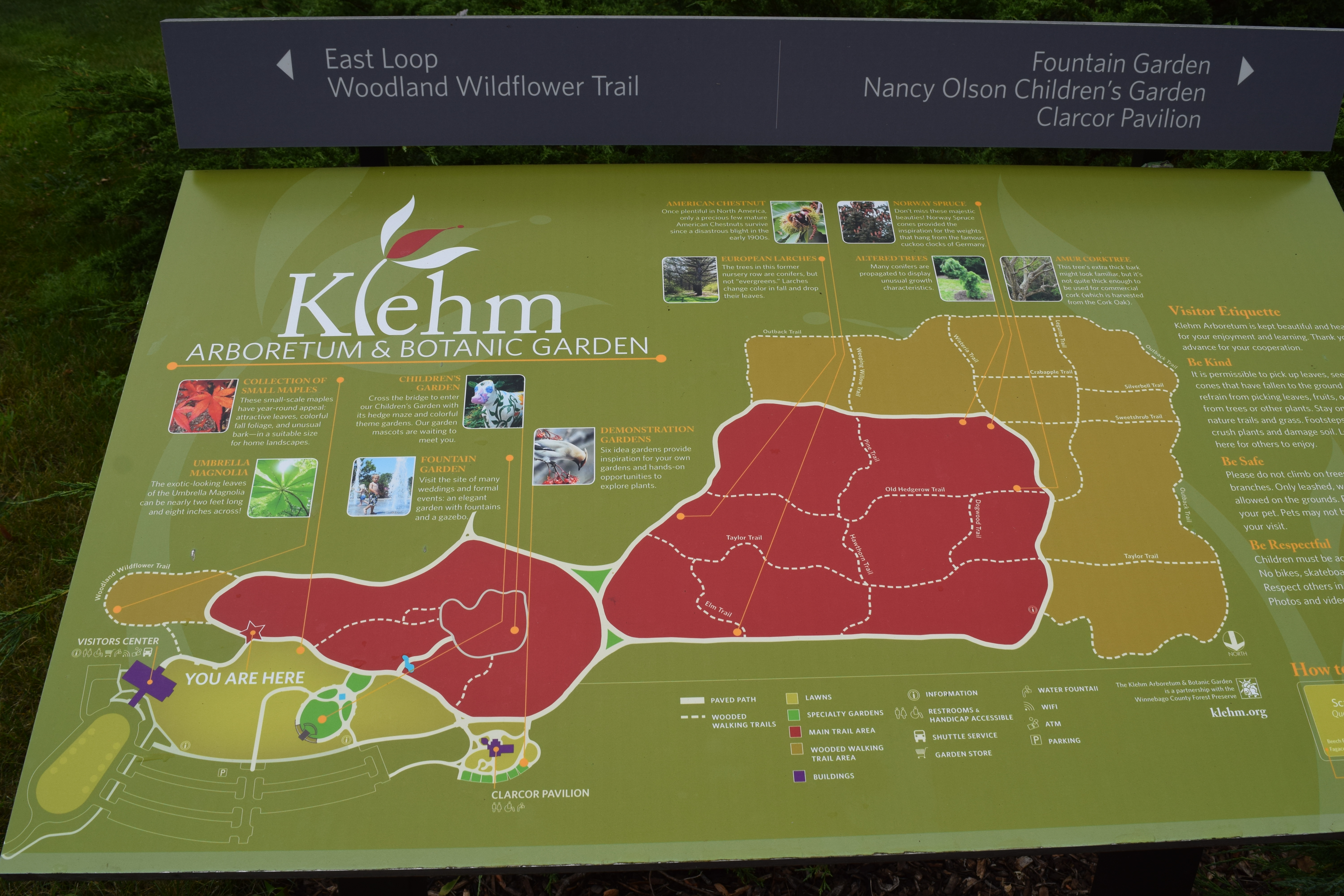
And yet, until Friday I had never been to the Klehm Arboretum. Klehm has 155 acres of woods and gardens, and is really worth seeing.

It started out in the early 1900s as a nursery run by a local landscape architect. In 1968 the Klehm family bought the land and moved their nursery operation to the site. About twenty years later the Klehms moved their nursery to Wisconsin.

Lots of Nicotiana 'Woodland' and Cleome in the mixed beds.
Lots of Nicotiana ‘Woodland’ and Cleome in the mixed beds.

However, they donated the land left behind to the Winnebago County Forest Preserve District. This donation made possible creation of the Arboretum.

Thanks to Beth of Plant Postings, nine garden bloggers from Illinois, Indiana, and Wisconsin spent a day together visiting Klehm and two other Rockford gardens.

2015-08-14 10.39.41
Several of the group recognized those Hydrangeas as ‘Limelight’.

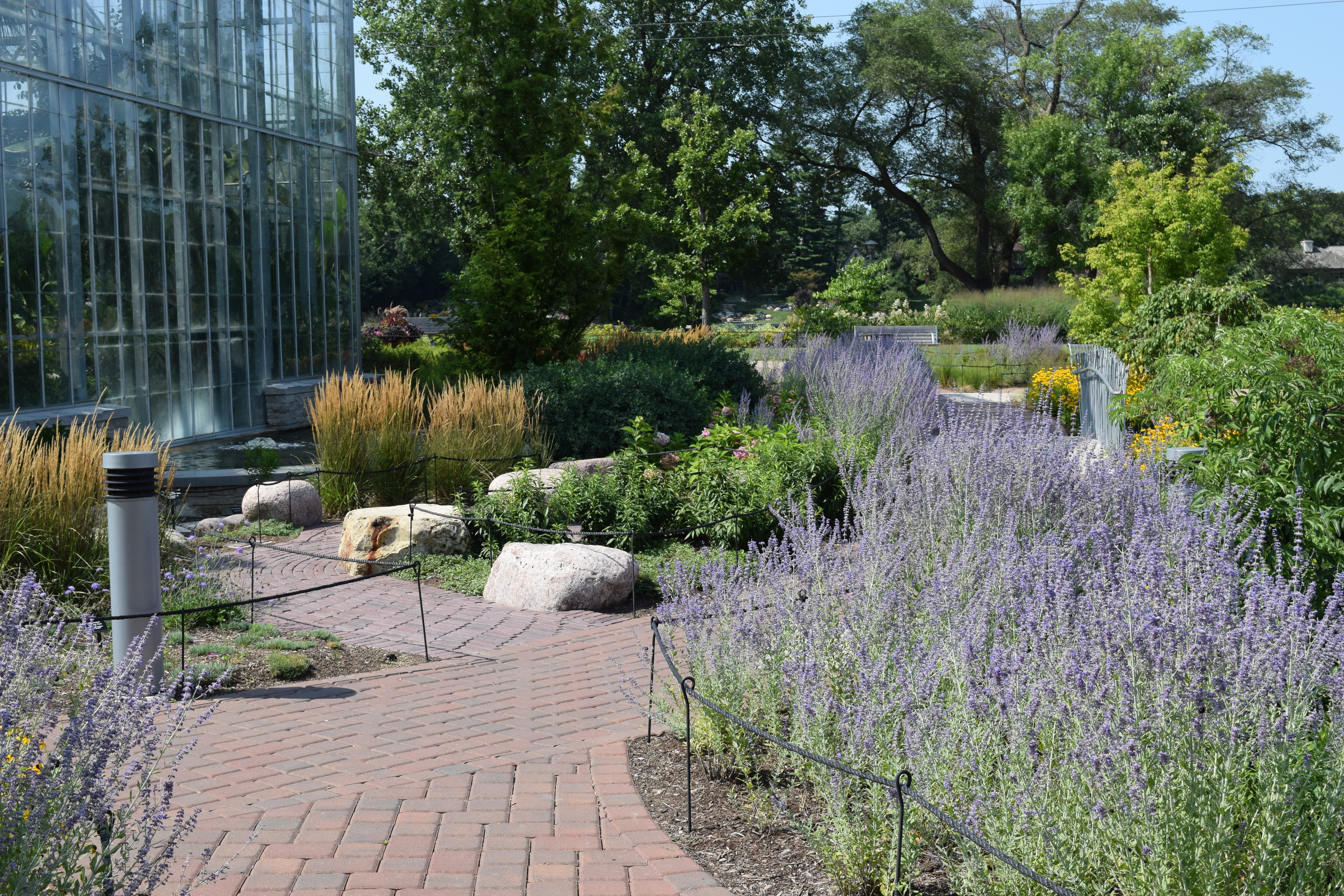
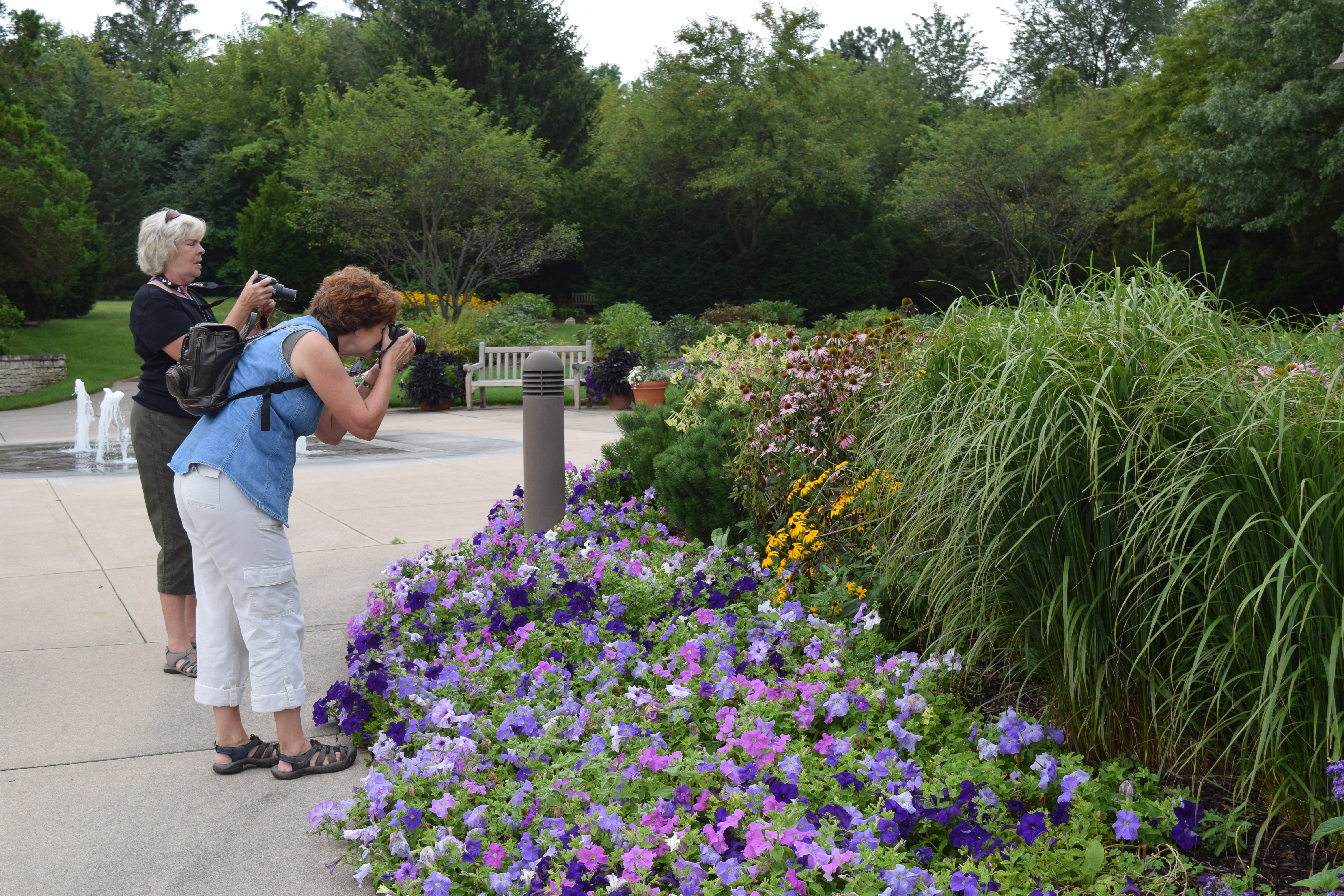
We first walked to the Fountain Garden, which featured mixed beds of annuals, perennials, and shrubs.

2015-08-14 10.46.29

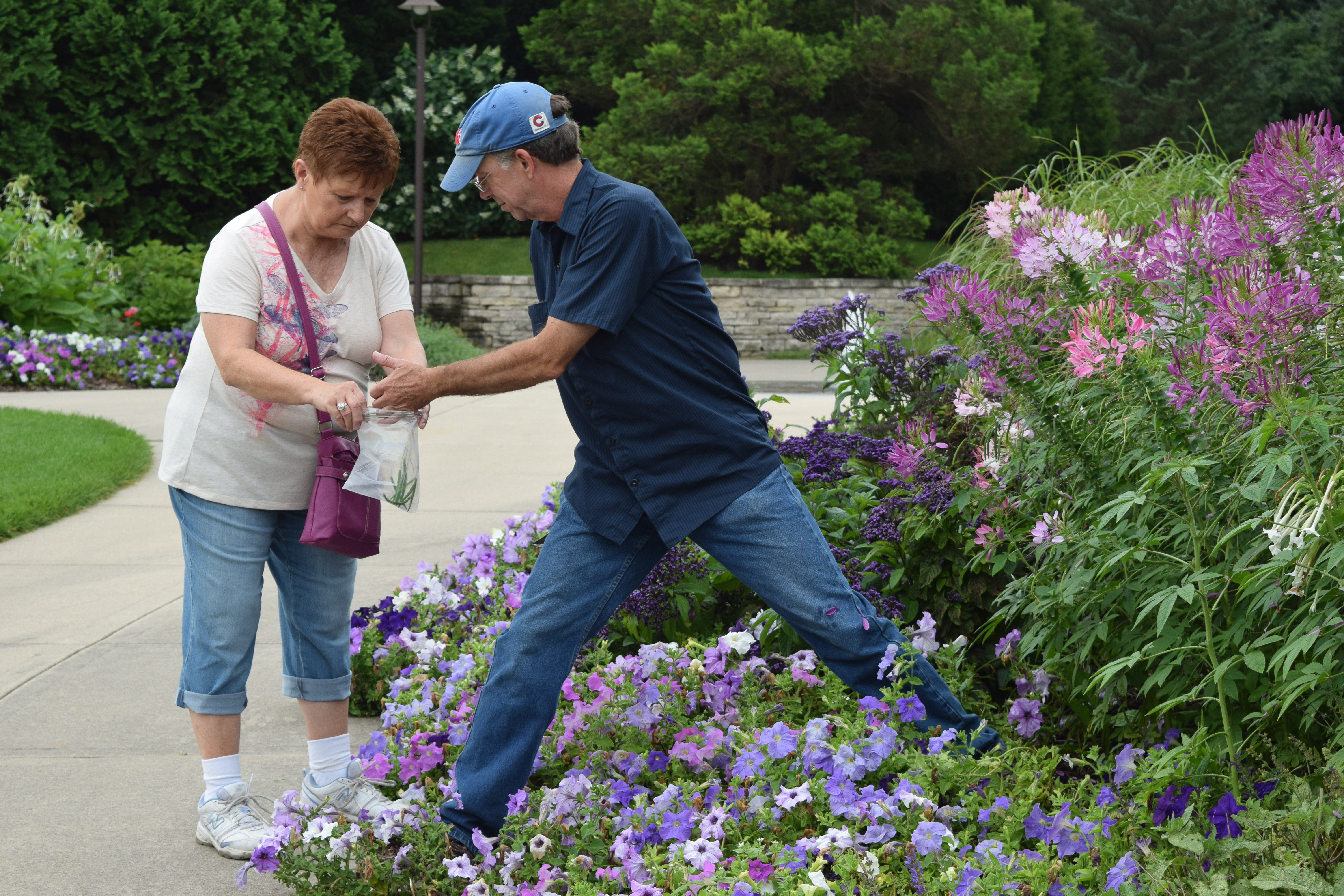
Luckily we ran into one of the horticulturists (in the blue cap), who was happy to engage in plant talk with us.

2015-08-14 10.51.06

He even shared with us some Cleome and Nicotiana seeds.

2015-08-14 10.39.24

The fountain garden has a pavilion which is a popular wedding venue.

2015-08-14 10.38.52

Almost forgot to show the fountain at the Fountain Garden.

2015-08-14 10.44.04

As always with garden bloggers, lots of picture taken.

2015-08-14 10.58.01

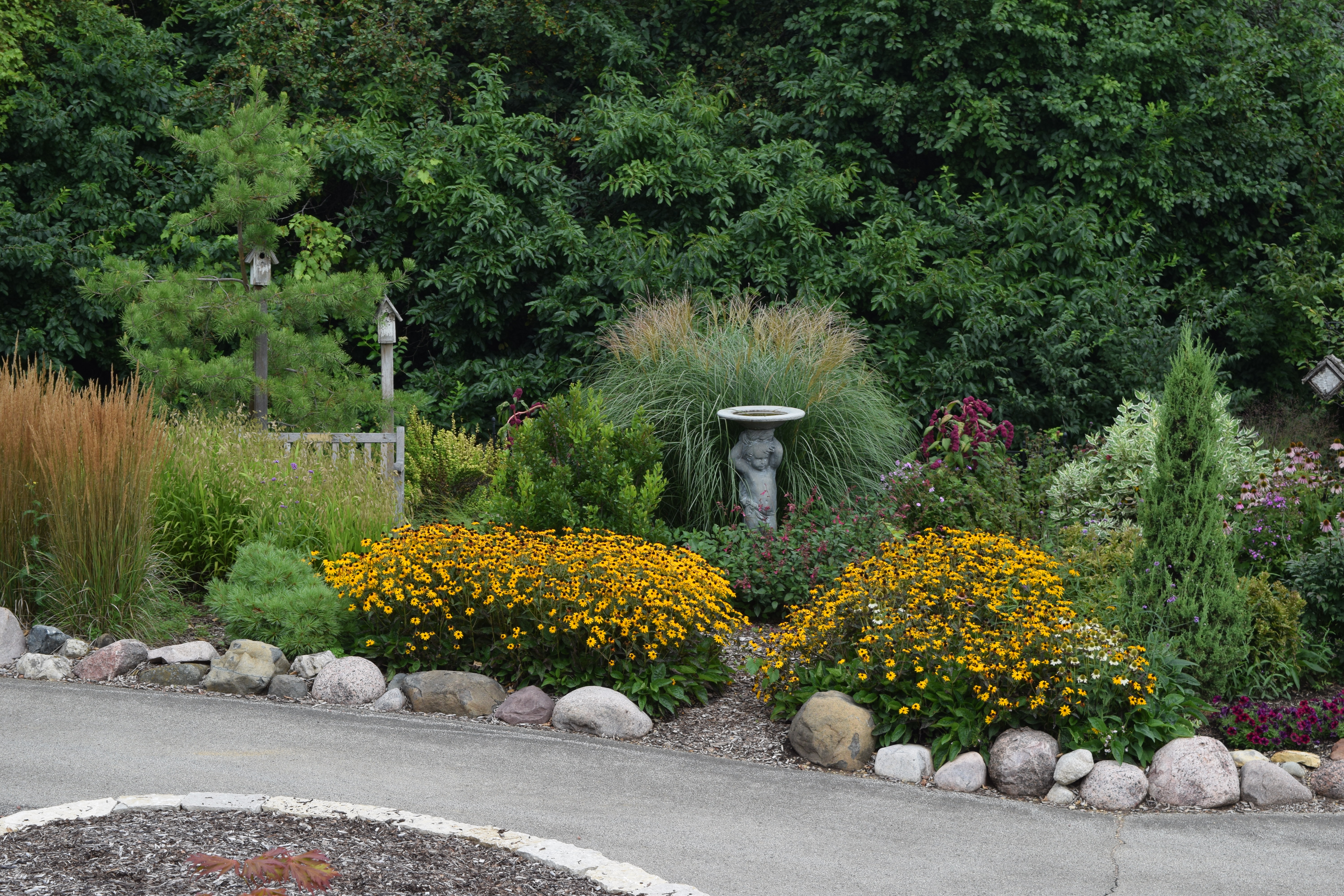
From the Fountain Garden we wandered further out to the Clarkor Pavilion and demonstration gardens.

2015-08-14 11.01.33

Entering this part of the Arboretum there was a big patch of a very handsome Pennsetum.

2015-08-14 11.12.20

Some dramatic plantings were there to be seen. I was glad to see they weren’t afraid of tall plants.

2015-08-14 11.03.35

Lots of grasses, too.

2015-08-14 11.14.23

Trees were underplanted with Hostas and Solomon’s Seal.

2015-08-14 11.09.04 klehm nicotiana

More Nicotiana. The horticulturist said it seeded all over and they let some of the volunteers grow where they had planted themselves. Same for the Cleome.

2015-08-14 11.16.25

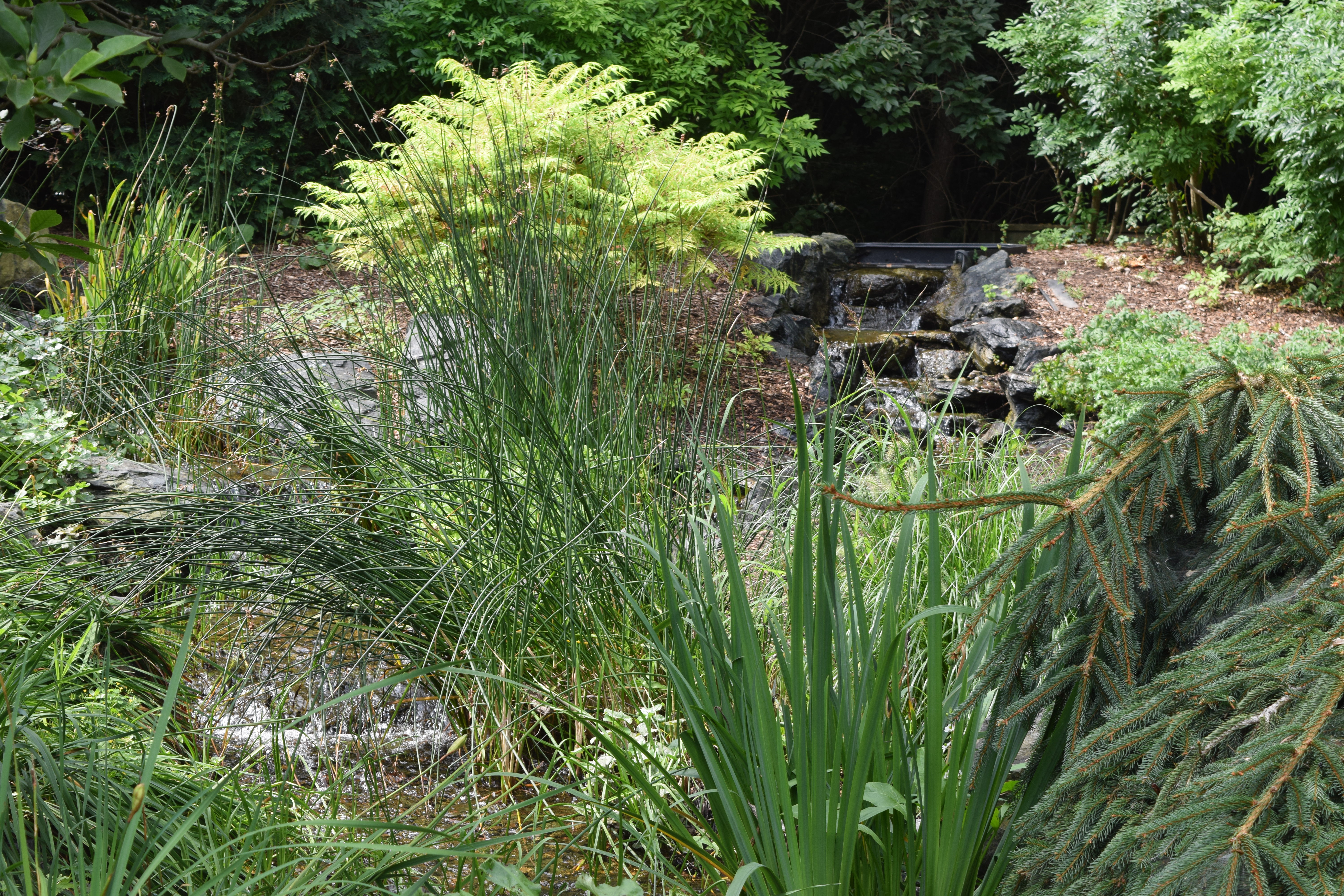
From the demonstration gardens we followed a water garden with its own pond and stream.

2015-08-14 11.20.03 klehm

The stream led towards the Children’s Garden.

2015-08-14 11.23.24 klehm

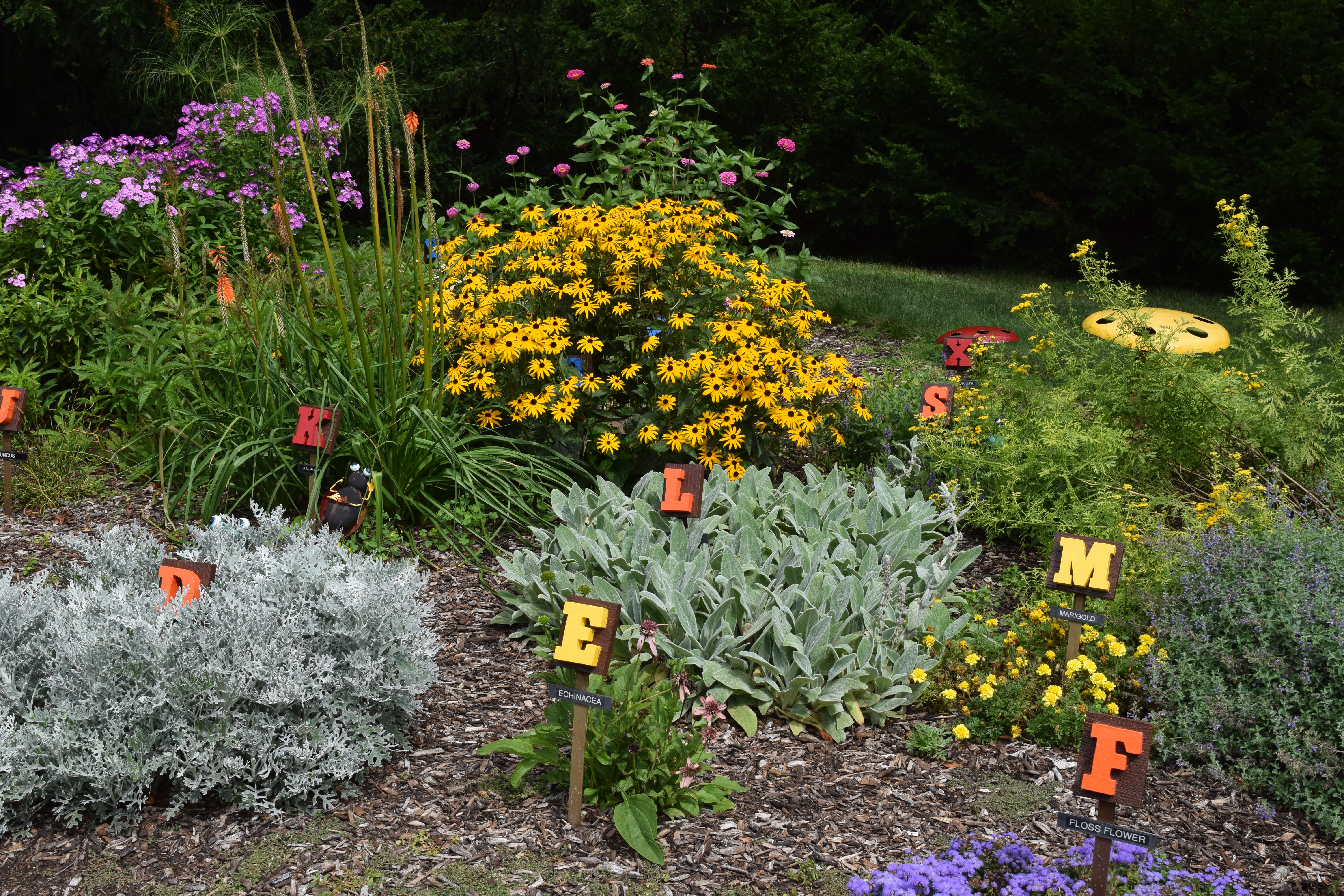
An Alphabet Garden was among the attractions at the Children’s Garden.

At this point we had only seen a small part of the Klehm Arboretum, but it was time to move on to lunch and the other two gardens we wanted to see before heading home. More posts on the Midwest garden bloggers Rockford gathering to come in the near future.

Robin Takes A Bath

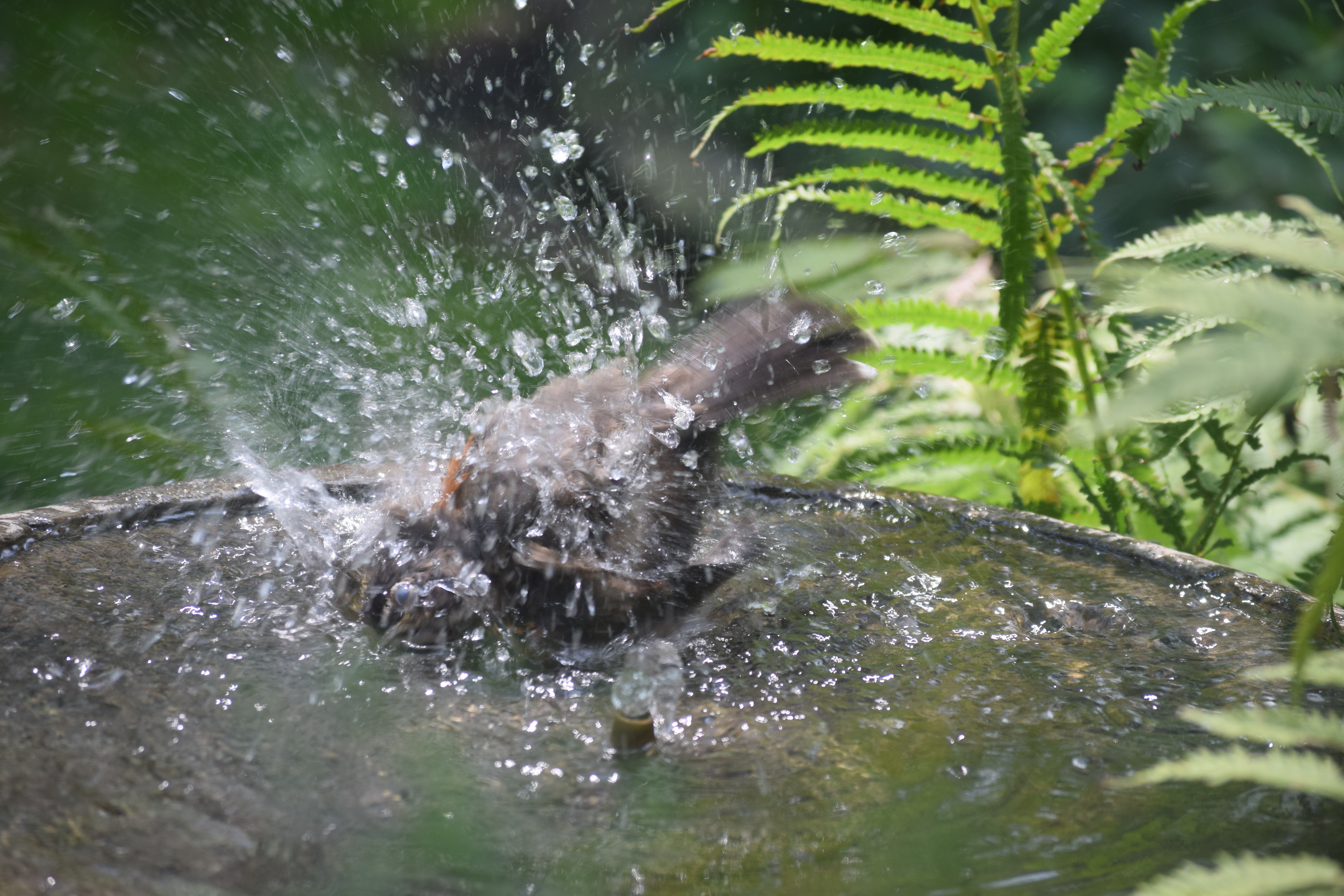
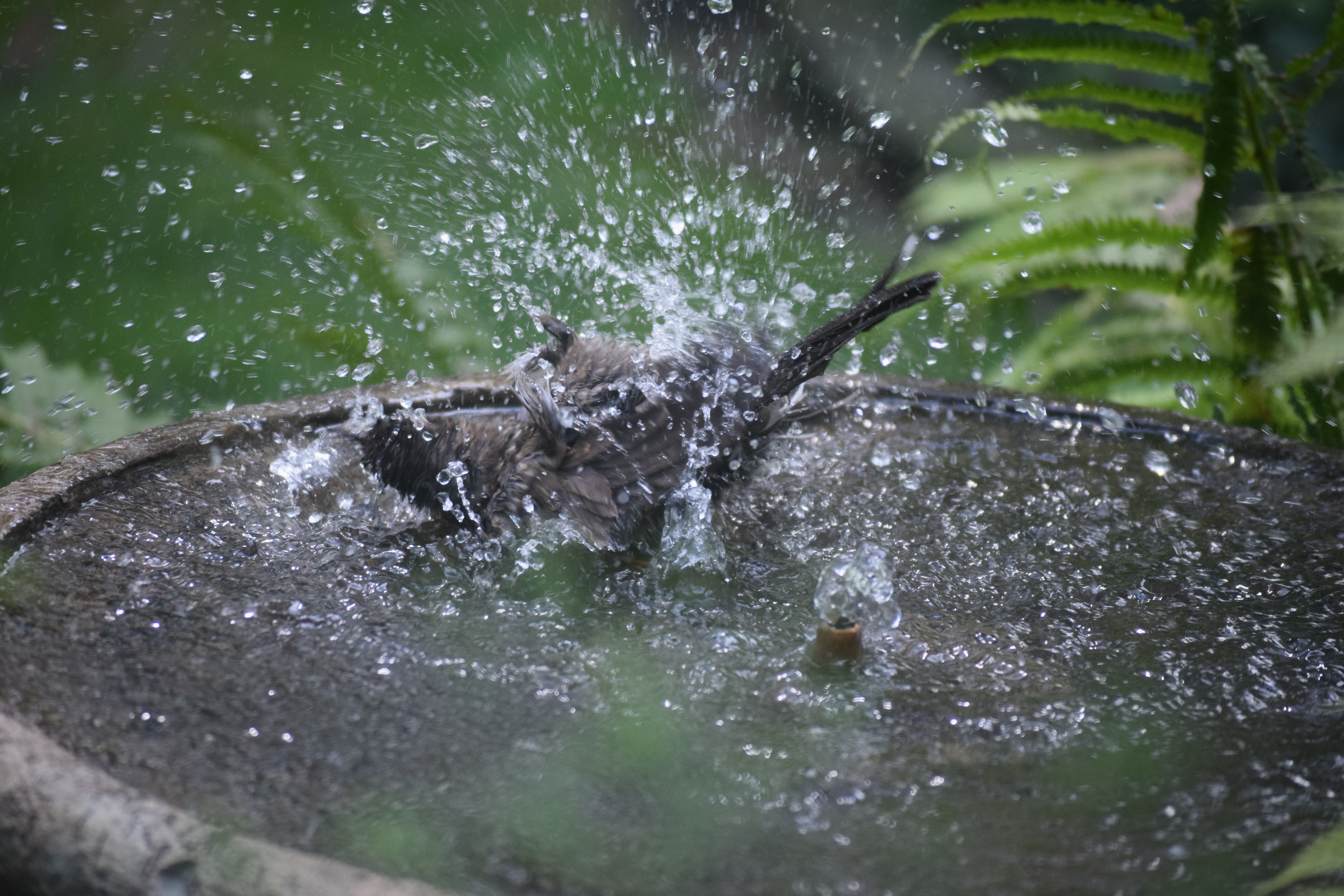
Robins go in for a very aerobic style of bathing. We have a bird bath set up so that we can watch it from the back porch. Provides a lot of entertainment.

Hmm, time for a bath.

A young robin contemplates taking a dip.

2015-08-15 13.29.44 Robin

And SPLASH!

2015-08-15 13.29.48 robin

And rest.

2015-08-15 13.30.19-1 robin

And SPLASH!

2015-08-15 13.30.33 robin

And a little grooming.

2015-08-15 13.30.32 robin

OK, where’s the hair dryer?

My Summer Containers for Sun: Meh.

The good news is that I continue to gain useful experience on how to put together summer containers for sun. The not-so -good news is that this year’s containers are pretty unsatisfying.

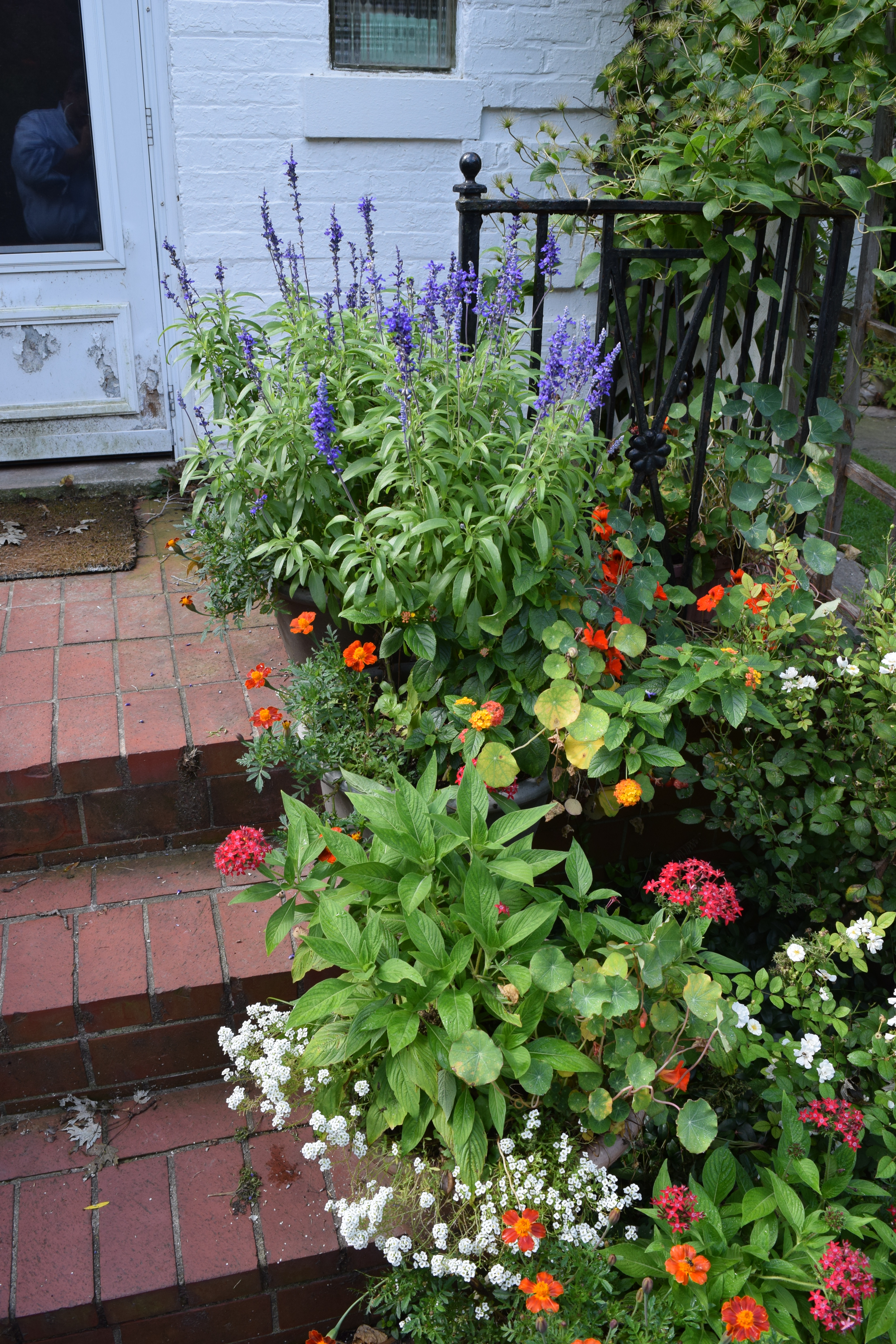
Containers on the steps to the front door, with Salvia 'Evolution' at the top.
Containers on the steps to the front door, with Salvia ‘Evolution’ at the top.

One lesson from last year that I tried to remember in 2015 is that when you have a whole bunch of containers, not every one of them needs a tall, attention-grabbing plant (the thriller of the thriller-filler-spiller formula).

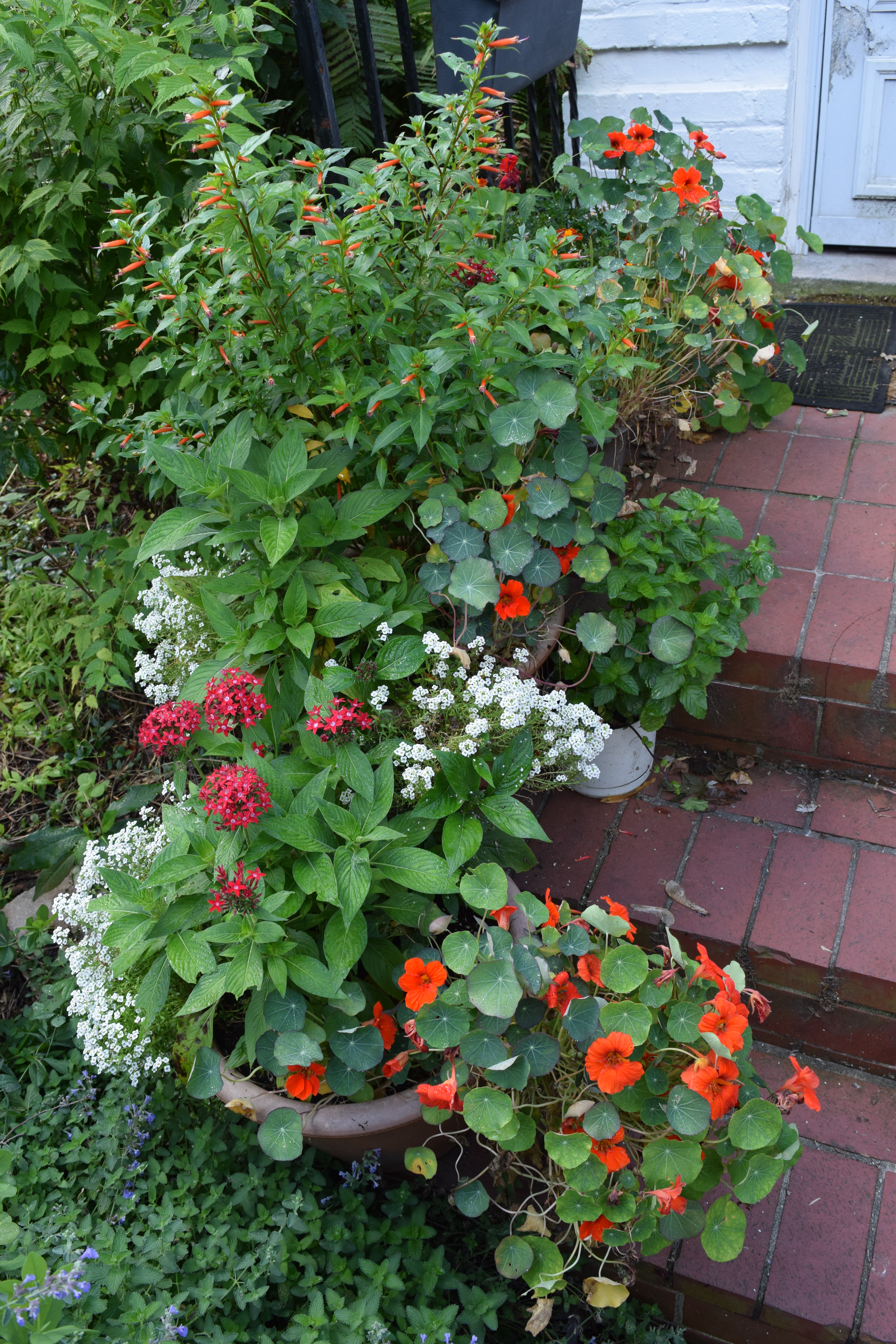
Cigar Plant at the top of the steps on the other side.

There are about a dozen containers lined up on the walk to the front door. Initially I put some tallish ‘Evolution’ Mealycup Sage (Salvia farinacea) in a couple of containers at the top of the steps on the right, then one Cigar Plant (Cuphea ignea) on the left.

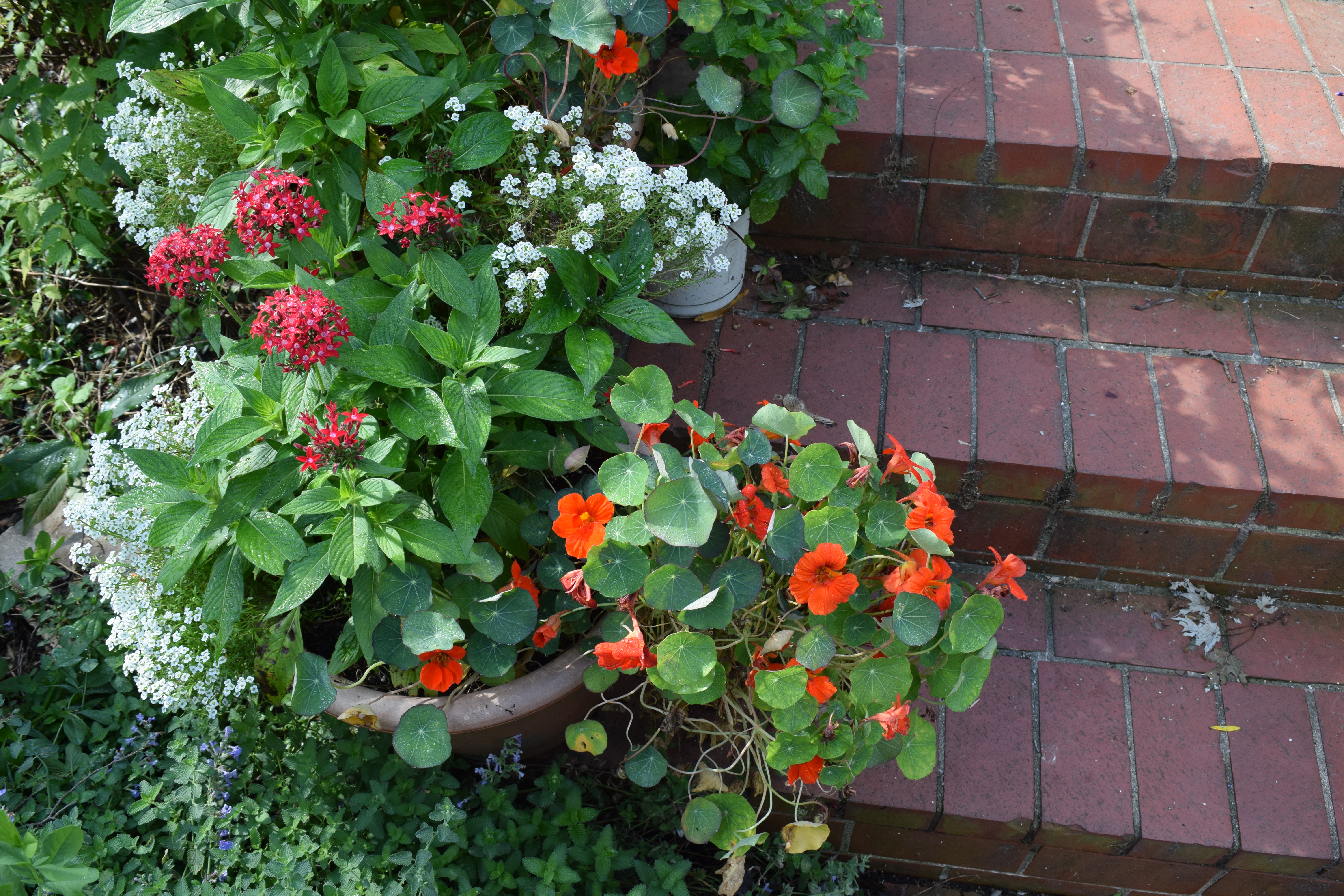
Pentas, Nasturtium, and Sweet Alyssum.

The other plants I used were mounding (with one exception): Sweet Alyssum (Lobularia maritima), Pentas ‘Butterfly Red’ (Pentas lanceolata), and French Marigold ‘Disco Red’ (Tagetes patula).

Nasturtium 'Empress of India'
Nasturtium ‘Empress of India’

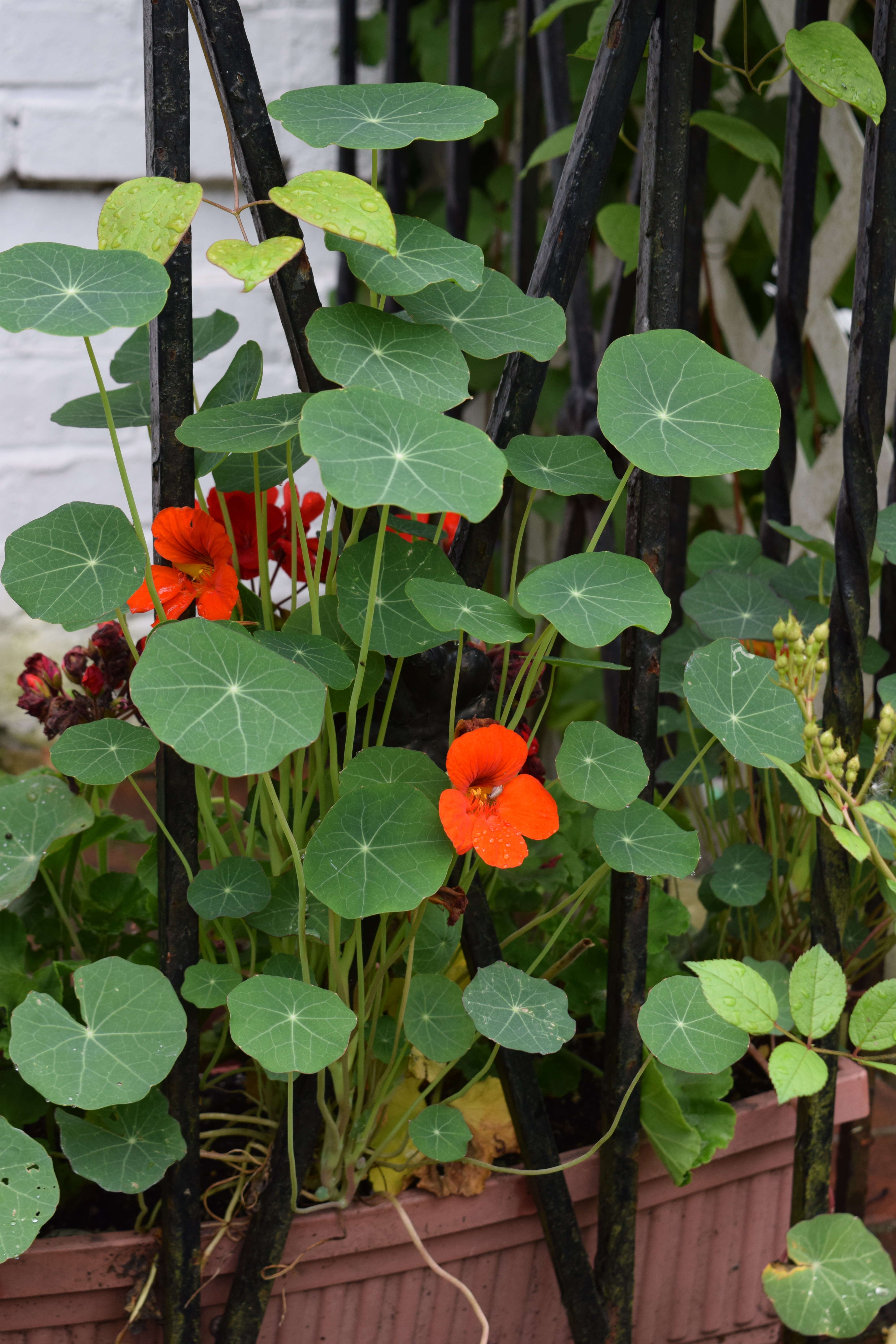
The one exception was a compact Nasturtium, ‘Empress of India’ (Tropaeolum majus), which I think of as having more of a weeping habit.

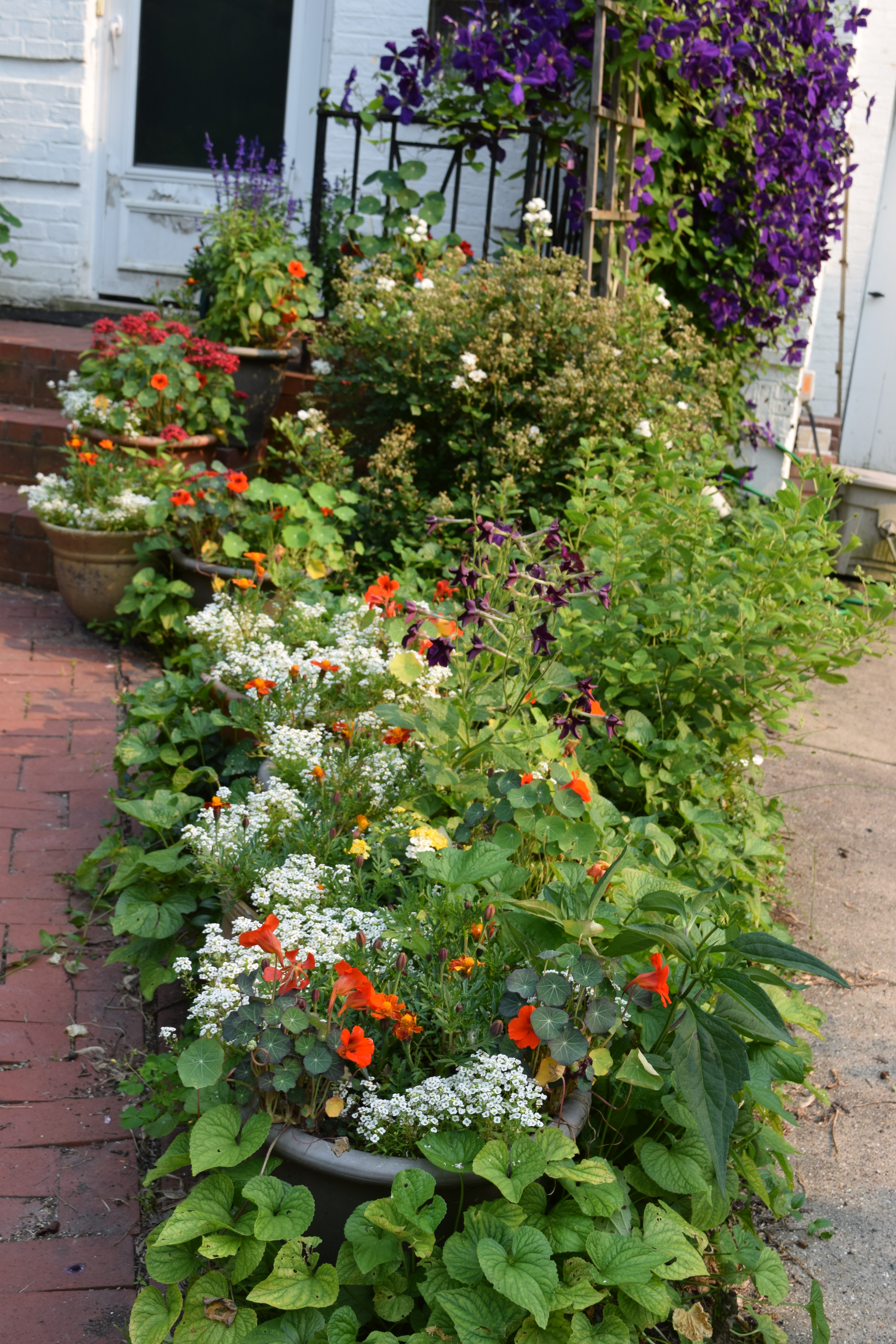
I allowed Violets to grow around the pots in the little triangle of soil between walk and the driveway.
I allowed Violets to grow around the pots in the little triangle of soil between walk and the driveway. This picture was taken back in July. I’m afraid you can barely make out the ‘Perfume Deep Purple’ in the middle pot. 

So it turns out that a row of mounding plants in containers does not always make much of a visual impact, so I added two ‘Perfume Deep Purple’ Flowering Tobacco (Nicotania x sanderae). At first I was really pleased with the results, but this plant just would not keep blooming once the weather turned really hot. Next year I will go with more annual Salvia, but something taller than ‘Evolution’ – maybe ‘Mystic Spires’.

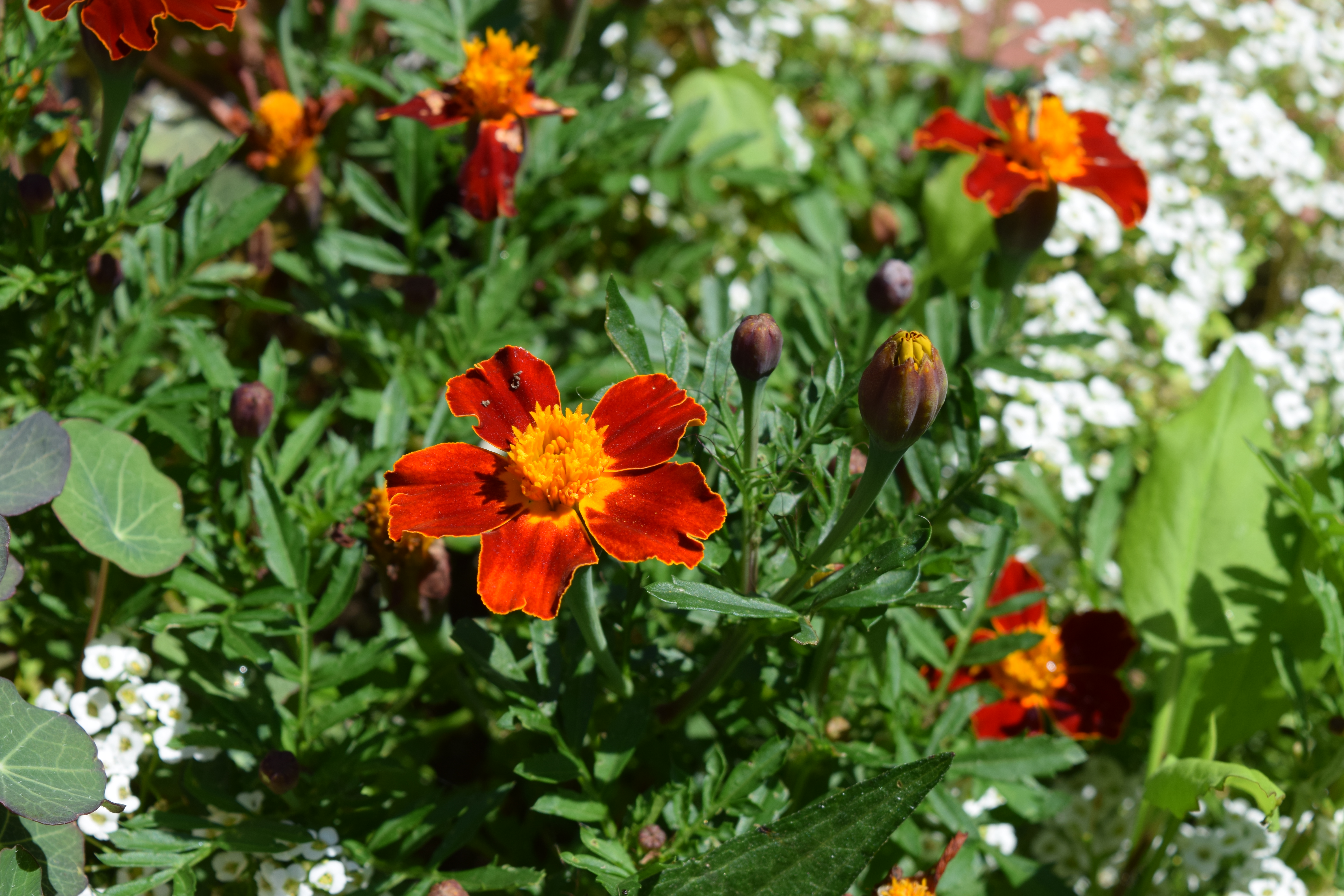
Marigold 'Disco Red'
Marigold ‘Disco Red’

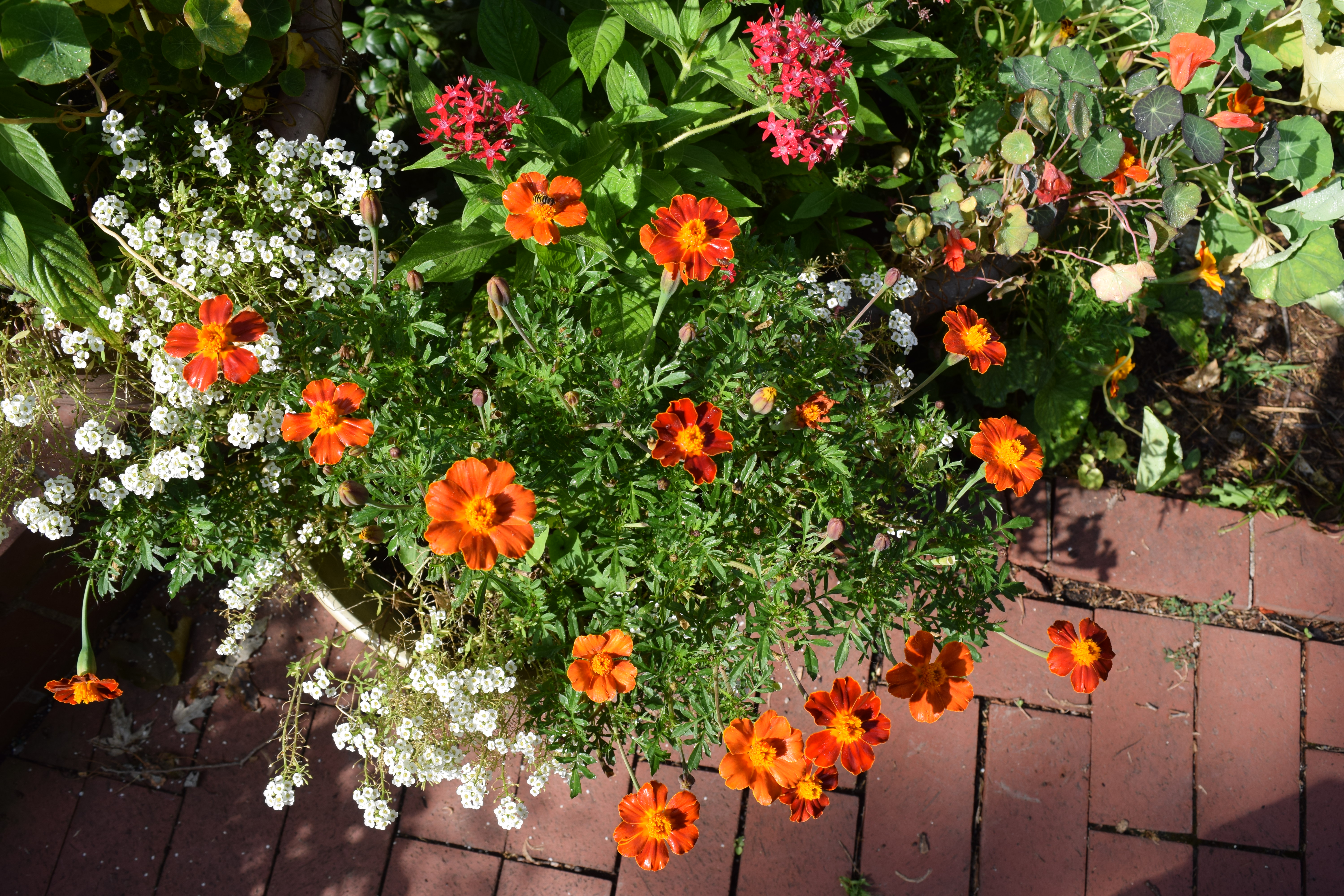
I’m fairly happy with the ‘Disco Red’ Marigolds, though they were a little slow to fill in and bloom vigorously. They have single flowers, opening red and fading to orange.

DSC_0657

It’s odd that many “serious” gardeners avoid Marigolds. They are too easy, too common, too much associated with free little seed packets given to children. I think this attitude is silly.

I do wonder, though, about the cultivar name ‘Disco Red’. Was it inspired by some ginger-haired dancing queen? Or by some revolutionary agitator with a weakness for the BeeGees? We may never know.

Also, why are the tall Marigolds called African Marigolds (Tagetes erecta) and the short ones French Marigolds? They all come from Mexico, not France or Africa. Another mystery.

These Nasturtiums chose to climb rather than spill.

The results with the ‘Empress of India’ Nasturtiums were very uneven. The ones in pots at the top of the steps, partly shaded by the house, grew nice and full and flowered adequately. Those in pots in full sun along the walk sulked. I would have expected the opposite.

The Sweet Alyssum, though, have really been outstanding this year. No matter what the weather, they refuse to stop flowering and perfuming the air. It was the Sweet Alyssum in shade, and not in sun, that had to take a breather and was in need of a shearing – the opposite of what I would expect.

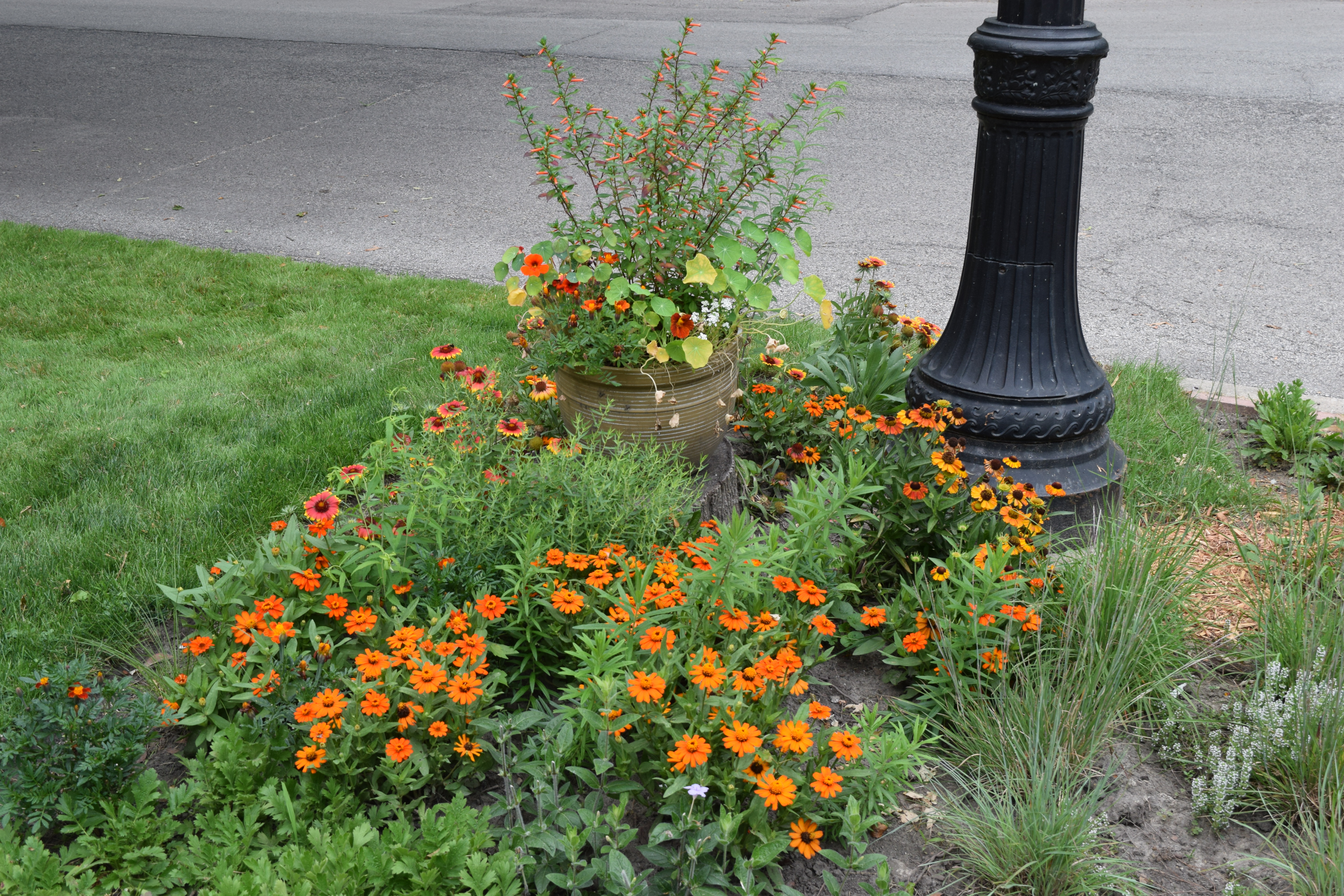
The pot on the stump.

The Cigar Plant in the pot on the stump in the Lamppost Bed has done pretty well, though it’s companions may need more regular watering than I’ve been giving them.

Are you happy with your containers in sun this year?

Curb Appeal

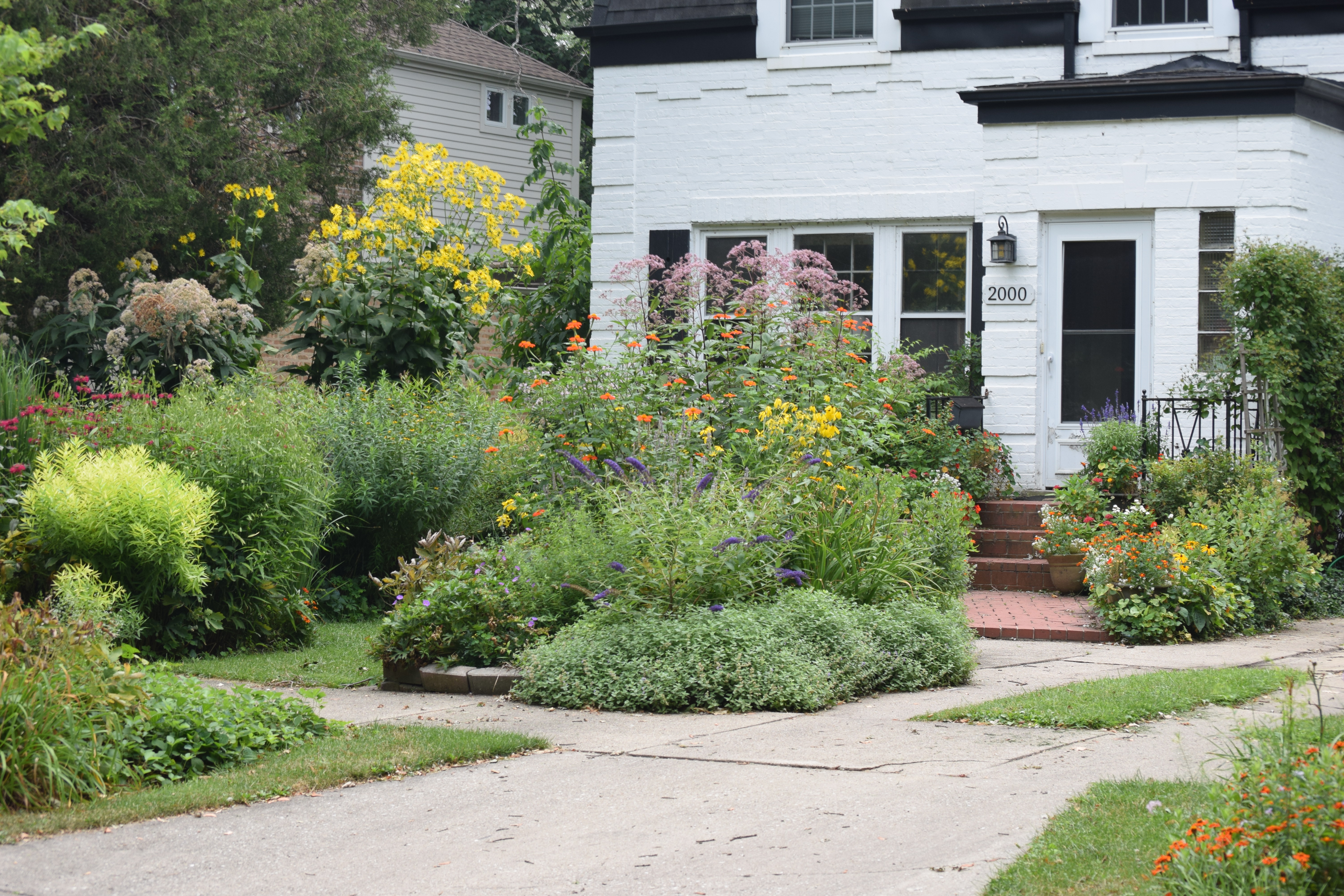
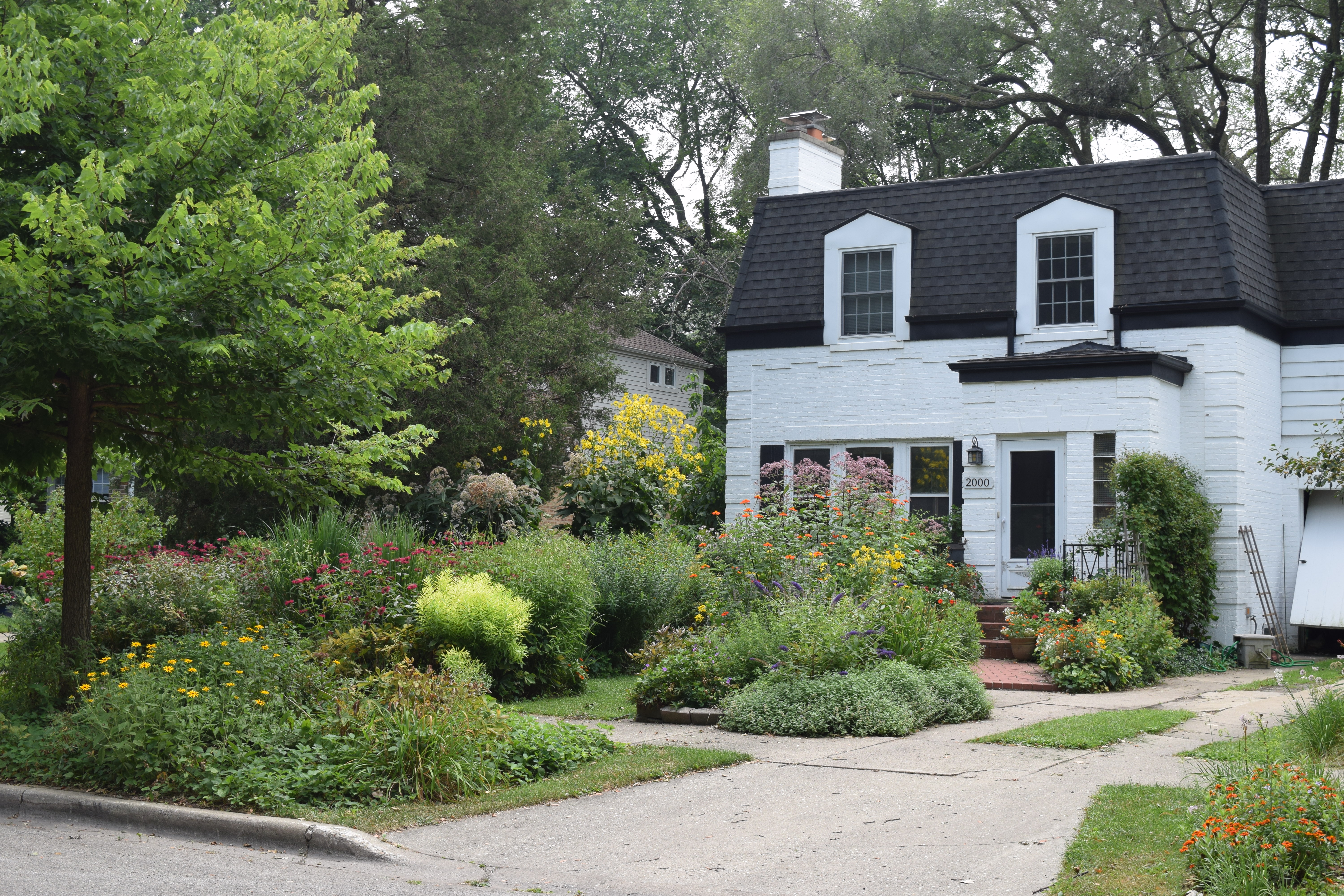
The front garden is the one thing that really brings out my exhibitionist tendencies. I want it to grab the attention of people walking or driving by.

Front garden seen from the street.

Late summer is one of the times when the front garden has its greatest visual impact. Some of the blooms of mid-summer become even showier and more prolific.

A closer look at the Driveway Border.

Most of the excitement is generated by the Driveway and Sidewalk Borders, as well as the Front Island Bed.

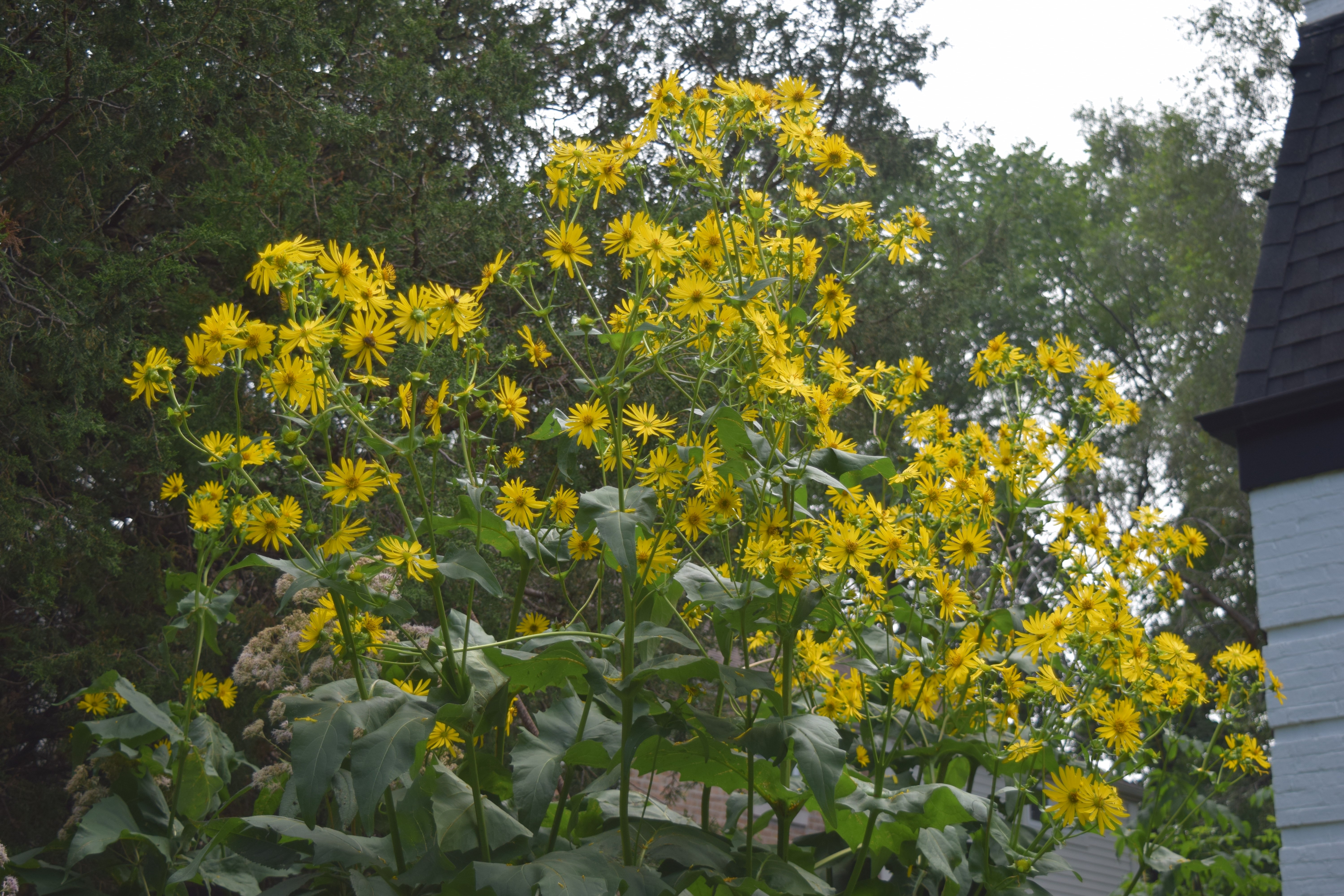
Cup Plant
Cup Plant

Cup Plant (Silphium perfoliatum), at the back of the Front Island Bed, flowers even more profusely.

Mexican Sunflower
Mexican Sunflower

The same is true for the Mexican Sunflower (Tithonia rotundifolia).

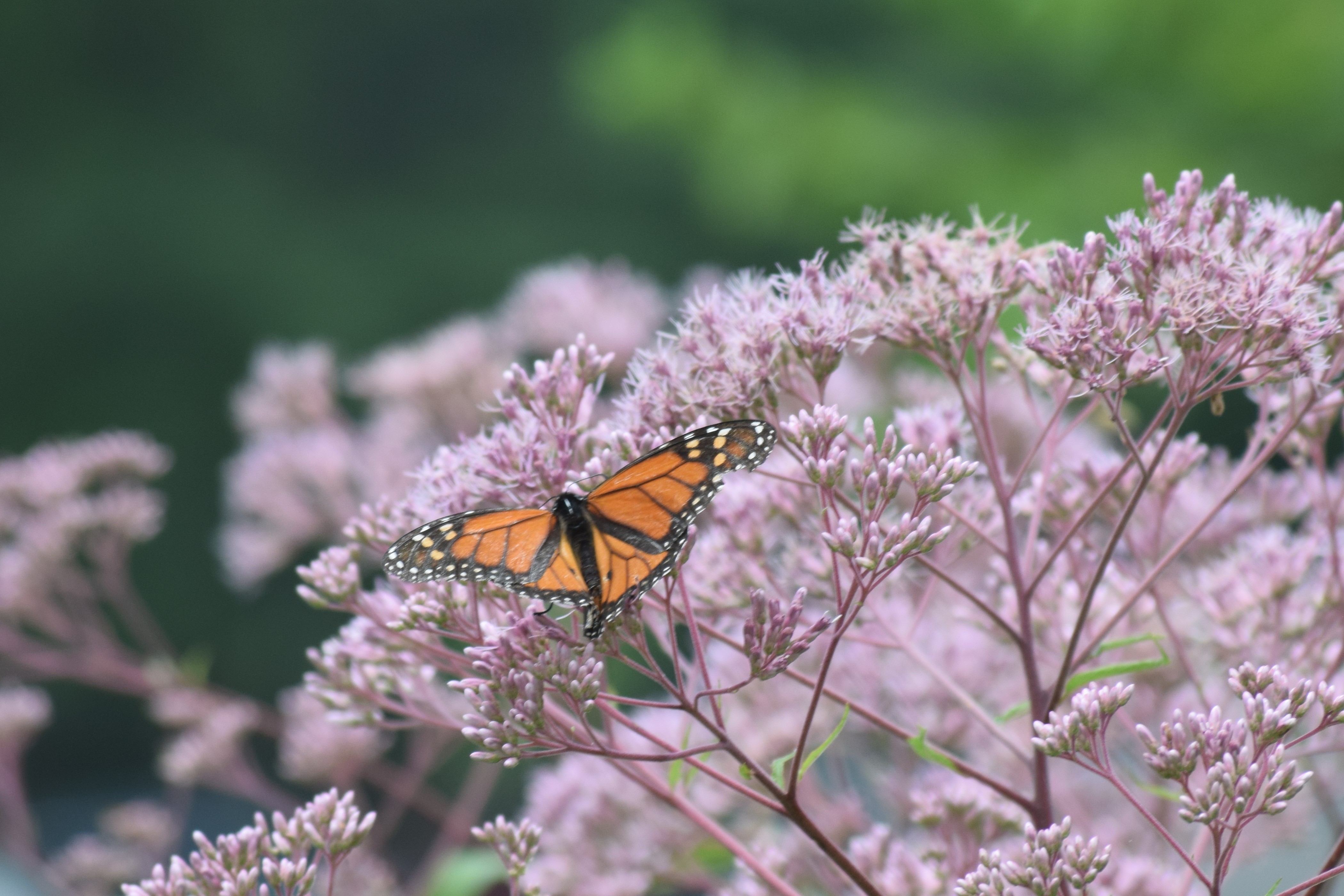
Monarch Butterflyweed on 'Gateway' Joe Pye Weed.
Monarch Butterflyweed on ‘Gateway’ Joe Pye Weed.

While the flowers of Sweet Joe Pye Weed (Eutrochium purpureum) fade to a fluffy brown, the Spotted Joe Pye Weed ‘Gateway’ (Eutrochium maculatum) show off their richer pink-purple blooms. I’ve been giving ‘Gateway’ some extra drinks of water since our wet spring turned into a dry July and August. This is a plant that loves moisture, but it seems to be doing fine even though it is in a raised bed.

Yellow Coneflower
Yellow Coneflower

The Yellow Coneflowers (Ratibida pinnata) are also reaching their peak, and they are in a sufficient mass to be noticed from a distance. It is a struggle to keep them from flopping excessively, though.

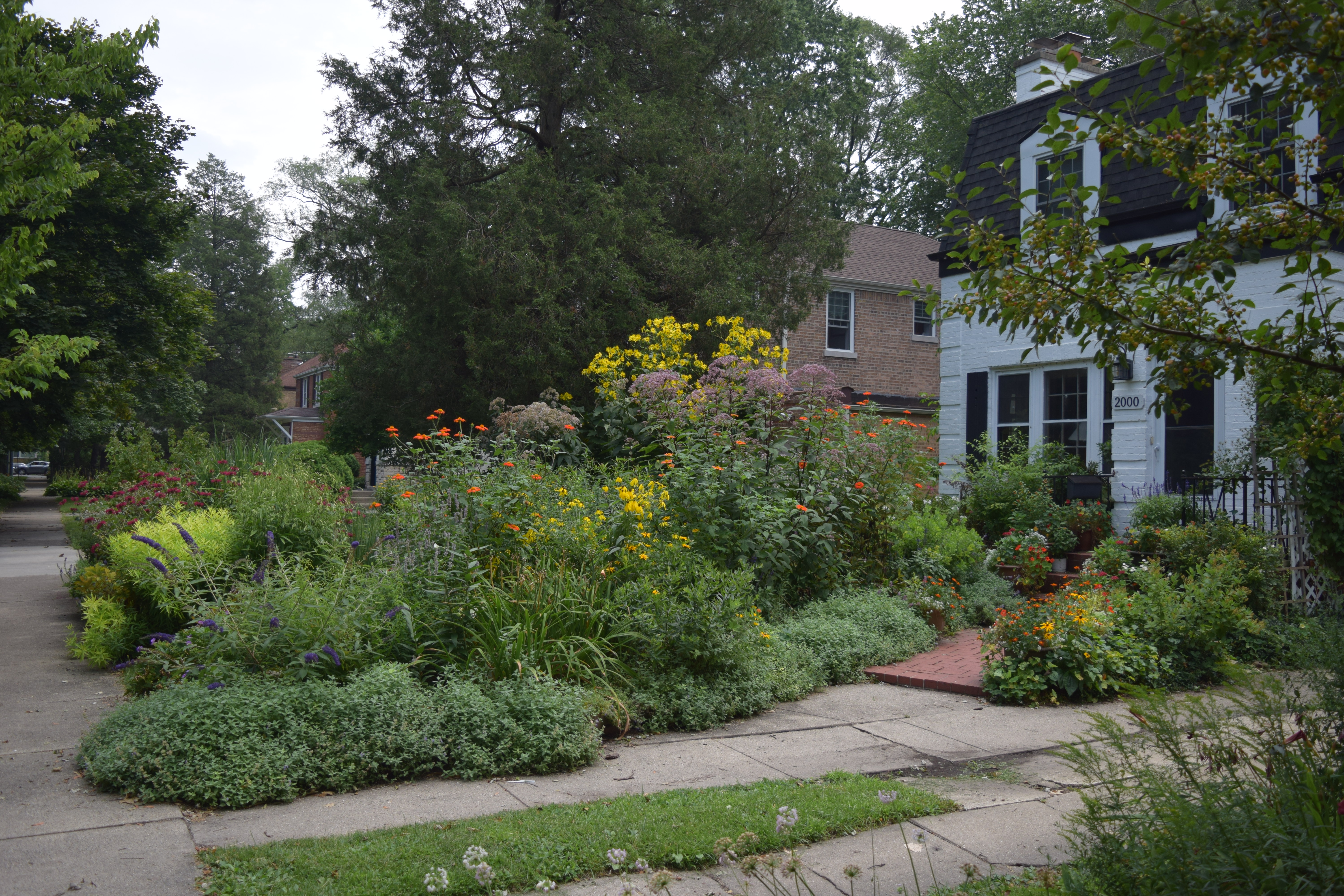
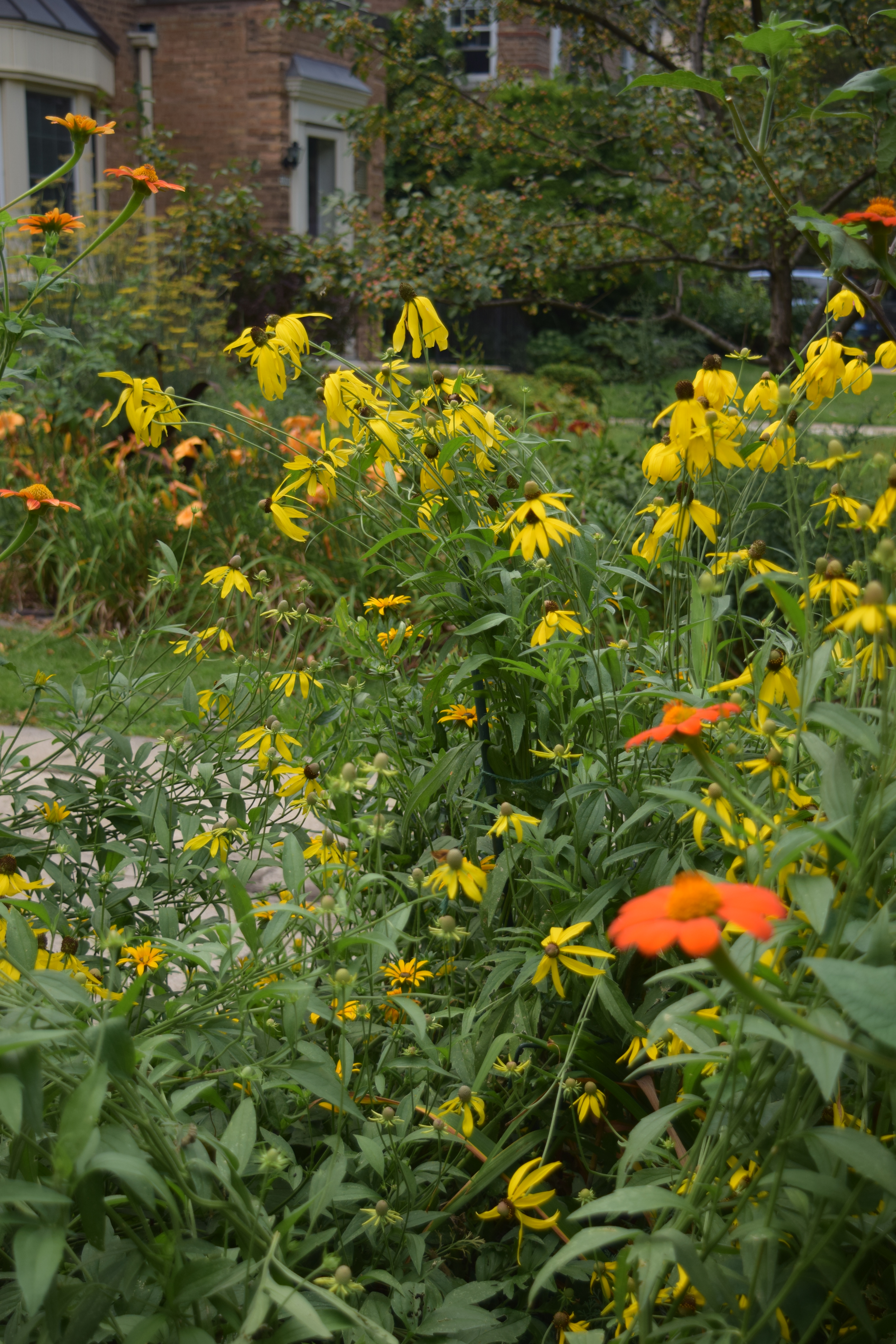
A view from further back in the street shows the Orange Coneflowers blooming in the Parkway.

Also at this time of year, drive-by garden observers may notice the Orange Coneflowers blooming in the East Parkway Bed. That’s a Western Hackberry (Celtis occidentalis) growing in the parkway, incidentally.

DSC_0599 Monarda Bluestar

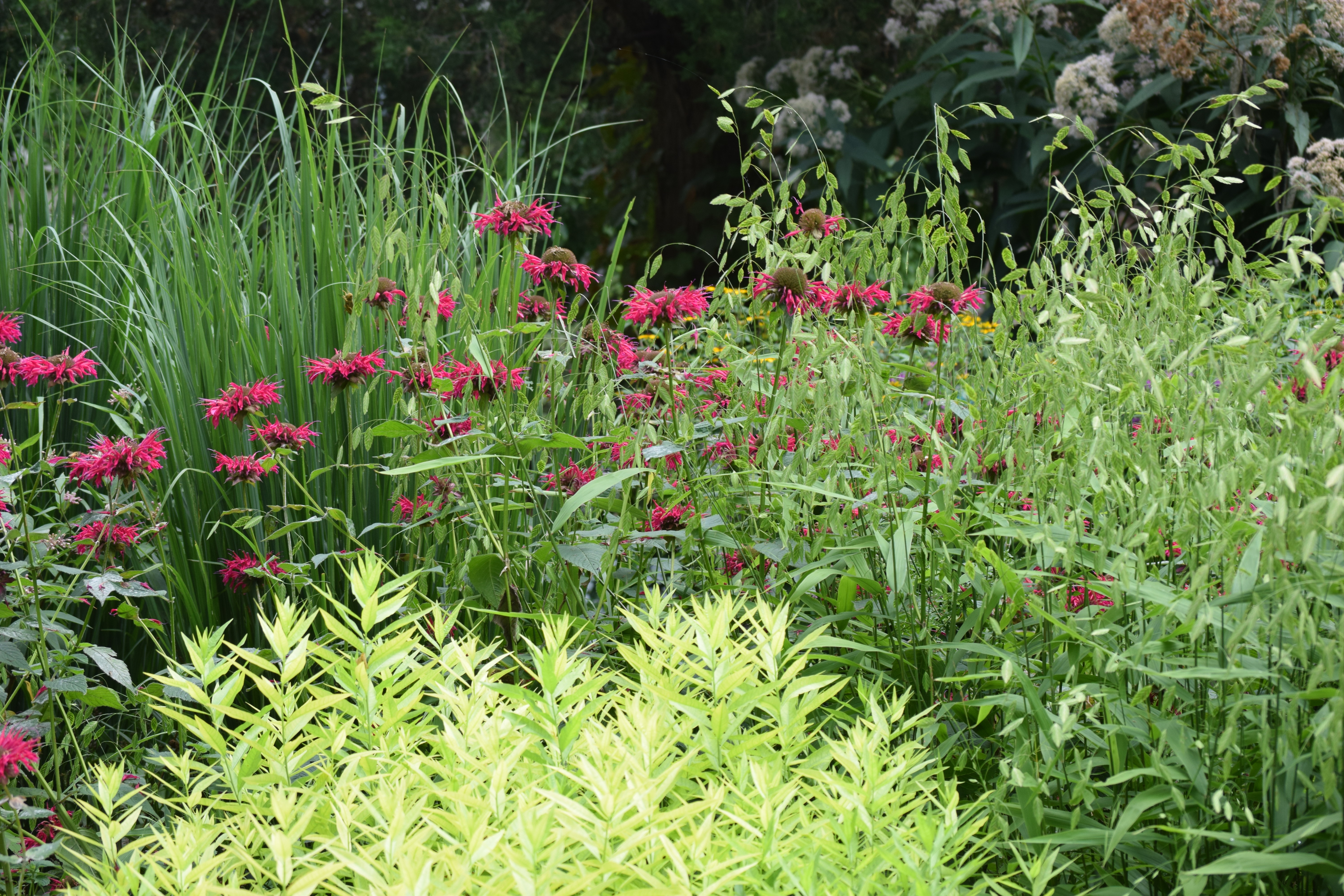
In the Sidewalk Border, the ‘Raspberry Wine’ Bee Balm (Monarda didyma) are fading but still have visual impact. It combines well with the Bluestar (Amsonia tabernaemontana) at the bottom of the photo, which takes on a bright Chartreuse color by late summer. I cut it back by at least half when it is done blooming in June.

Northern Sea Oats with 'Raspberry Wine' Monarda.
Northern Sea Oats with ‘Raspberry Wine’ Monarda.

Another foliage plant making a significant contribution is the Northern Sea Oats (Chasmanthium latifolium), whose dangling seed heads will soon turn from green to tan. This year, though, I plan to remove the seeds not too long after they ripen to prevent excessive self-sowing.

'Blue Adonis' Butterfly Bush grows to only 3-4'.
‘Blue Adonis’ Butterfly Bush grows to only 3-4′.

Normally I get a nice dose of blue color from Anise Hyssop (Agastache foeniculum). However, the damage from four-lined plant bugs caused this wonderful plant to bloom rather feebly this year. There is some compensation from my compact ‘Blue Adonis’ Butterfly Bush (Buddleia davidii). ‘Blue Adonis’ also takes up where the Orienpet hybrid lilies left off in terms of providing a sweet fragrance for sidewalk passersby to enjoy.

For next year I am thinking of planting some short, late-blooming Clematis (possibly C. integrifolia ‘Mississippi River’) to provide a backup source of blue.

There was some historic giant of landscape architecture (I forget his name – Daniel Burnham?) who dreamed of how all suburban front lawns should flow together in a sort of common sward. That vision has been mostly realized in the typical American suburb. My dream is a little different. Rather than a never-ending green carpet, wouldn’t it be wonderful if those front lawns were replaced by billowing grasses and bright flowers? That would make for a commons of much greater richness, I think.

A Wild American Larkspur for Shade

I was surprised to learn that ther are over 30 species of wild North American Larkspurs. However, the only one I know of that is considered a good garden plant for the Midwest is Delphinium exaltatum, Tall Blue Larkspur.

Tall Blue Larkspur
Tall Blue Larkspur

Here is one of the Tall Blue Larkspurs I planted last fall in our back garden. I’m cheating a bit, as this picture was taken on July 26. There will be more flowering stalks as this plant matures.

As you can see, the flowers are a modest size, so this Larkspur is best planted in groups. Tall Blue Larkspur blooms later than most Larkspurs, late July into August. It likes part shade and limestone soils. Reportedly it can grow up to 6′, but mine has only reached half that height this year.

Though it can grow well in Illinois and the Upper Midwest, it is native in Ohio, Pennsylvania, the Ozarks region of Missouri, and points further east and south. Not too far south, though – it does not like very hot, humid summers.

Of course I love blue flowers, so I’m thinking of a few more spots in our garden where this handsome fellow may find a home.

Do you grow any wild Larkspurs?

Summer Containers For Shade: My Year Of Living Dangerously, But In A Boring Way

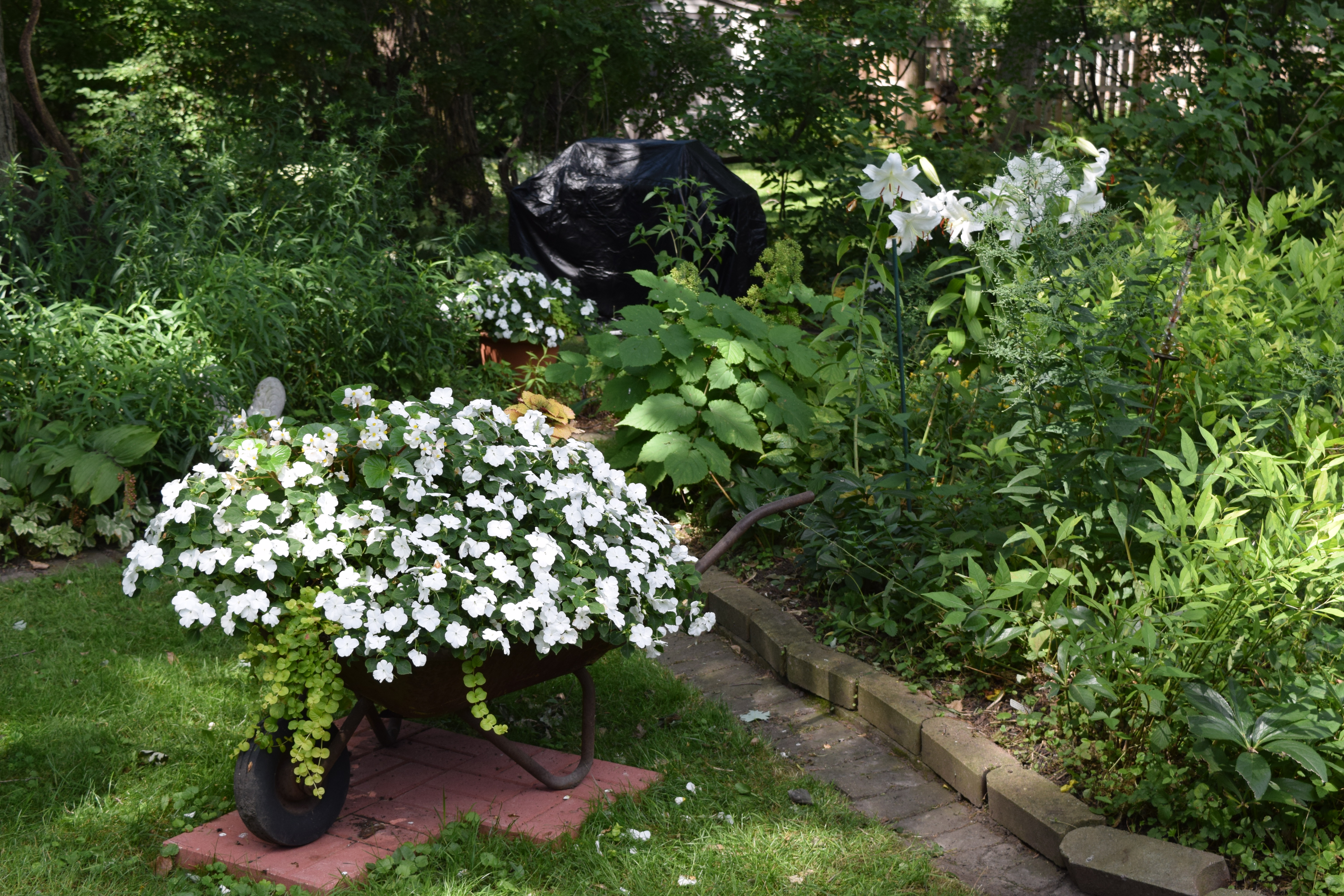
This summer I defied Impatiens downy mildew and lived to tell the tale. For two years I have avoided Impatiens (Impatiens walleriana) because of a widespread and devastating blight that has received extensive publicity.

My wheelbarrow container full of Impatiens.

Despite the tidings of doom, my neighbor John planted Impatiens for both of those years with no problems.

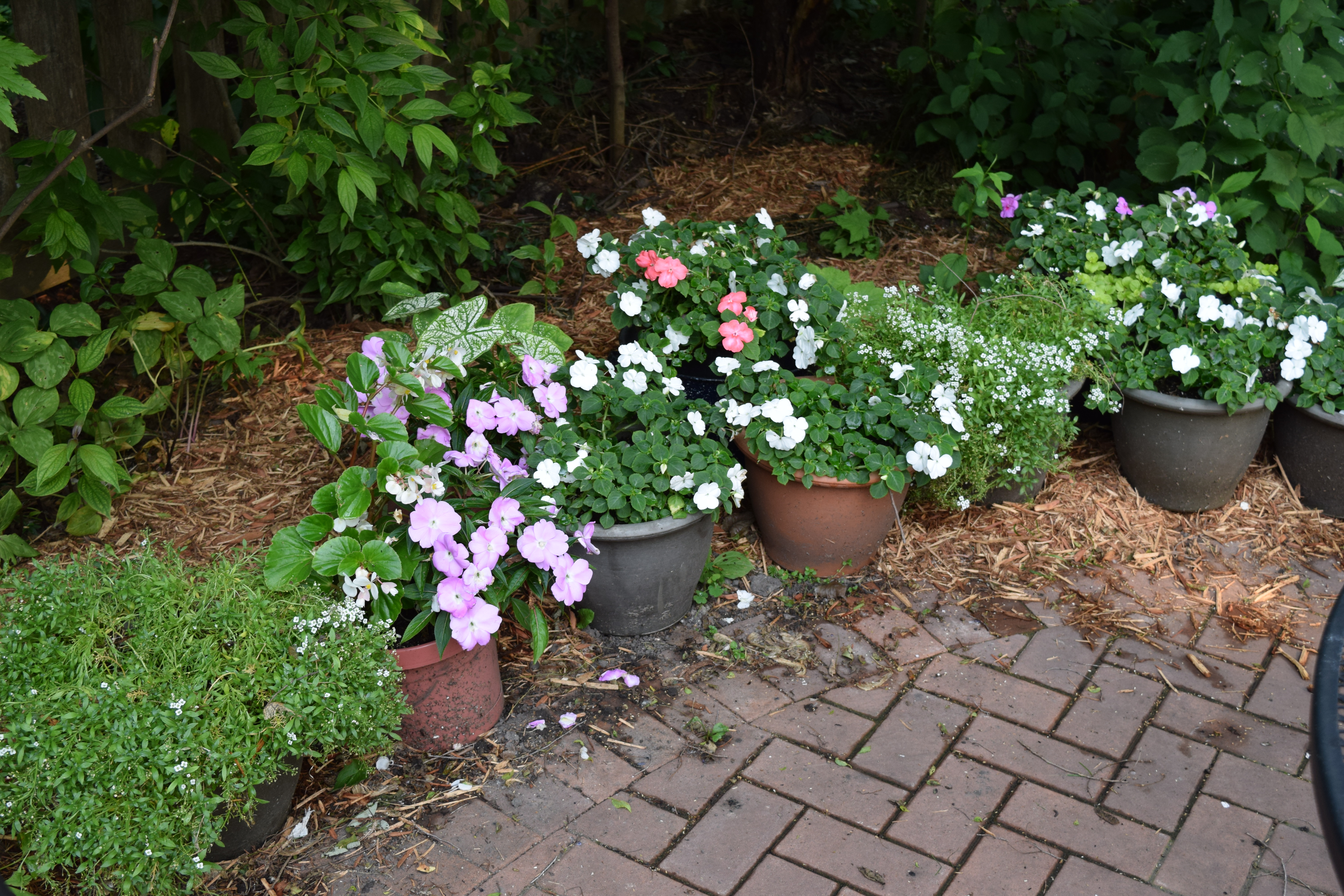
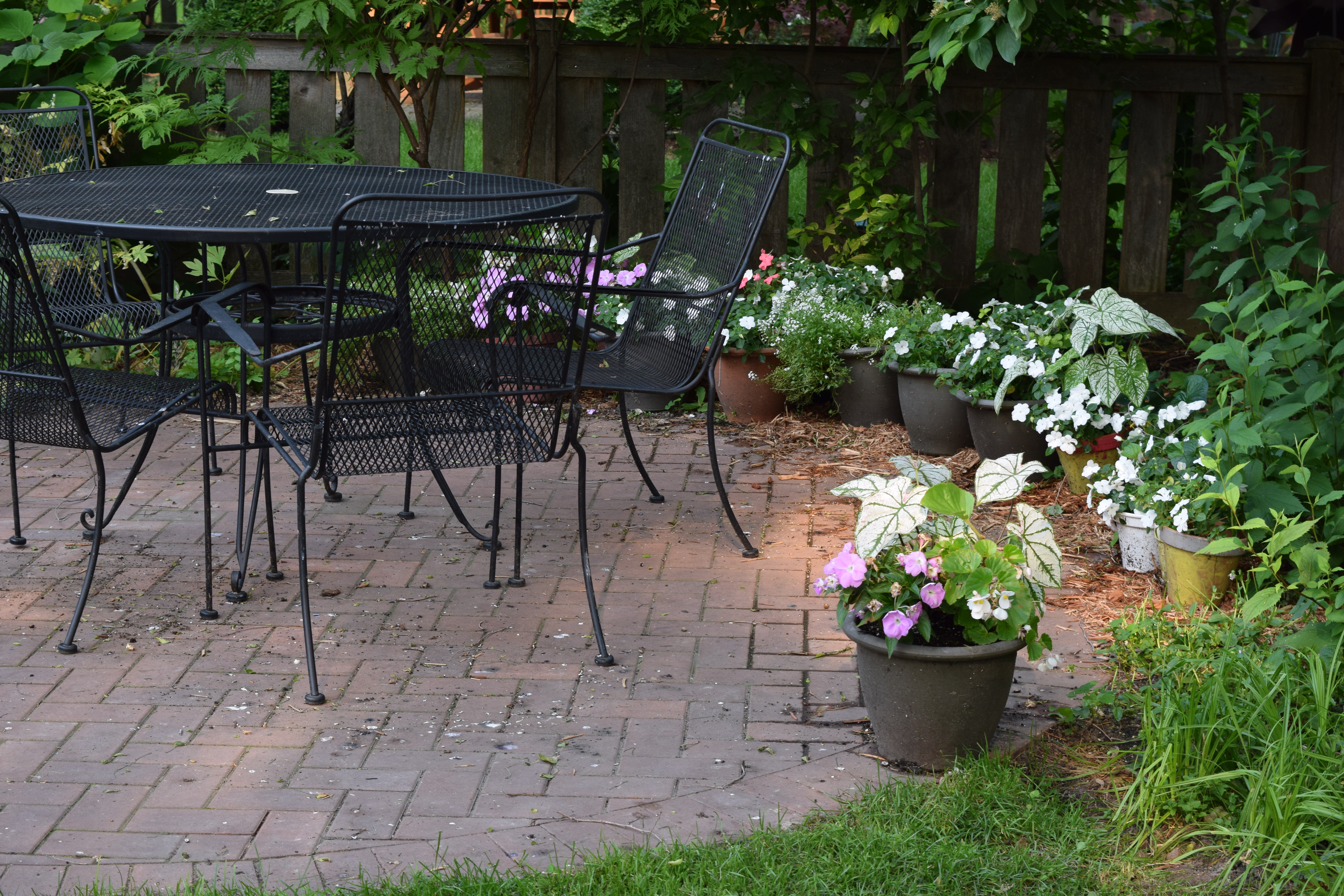
 I spread mulch and lined up containers along the edge where our new circle patio is bordered by mainly spring ephemerals.
I spread mulch and lined up containers along the edge where our new circle patio is bordered by mainly spring ephemerals.

You can accuse me of mad recklessness – but I don’t care! Which is not to say I’m encouraging you to do the same.

The flowers here are almost all from regular impatiens, the New Guinea Impatiens are not contributing much beyond foliage.
The flowers here are almost all from regular Impatiens, the New Guinea Impatiens are not contributing much beyond foliage.

The nice thing about Impatiens is that they make nice flowery mounds in the shade, and they are comparatively cheap if you need to buy them as plants. They are pretty undemanding, requiring little more than a little moisture. To play it safe, I mixed New Guinea Impatiens (I. hawkeri – which are blight resistant) in the containers with the regular Impatiens, but I. walleriana was far more floriferous.

Some consider impatiens overused, but who cares? Just because a flower is common doesn’t make it a bad plant.

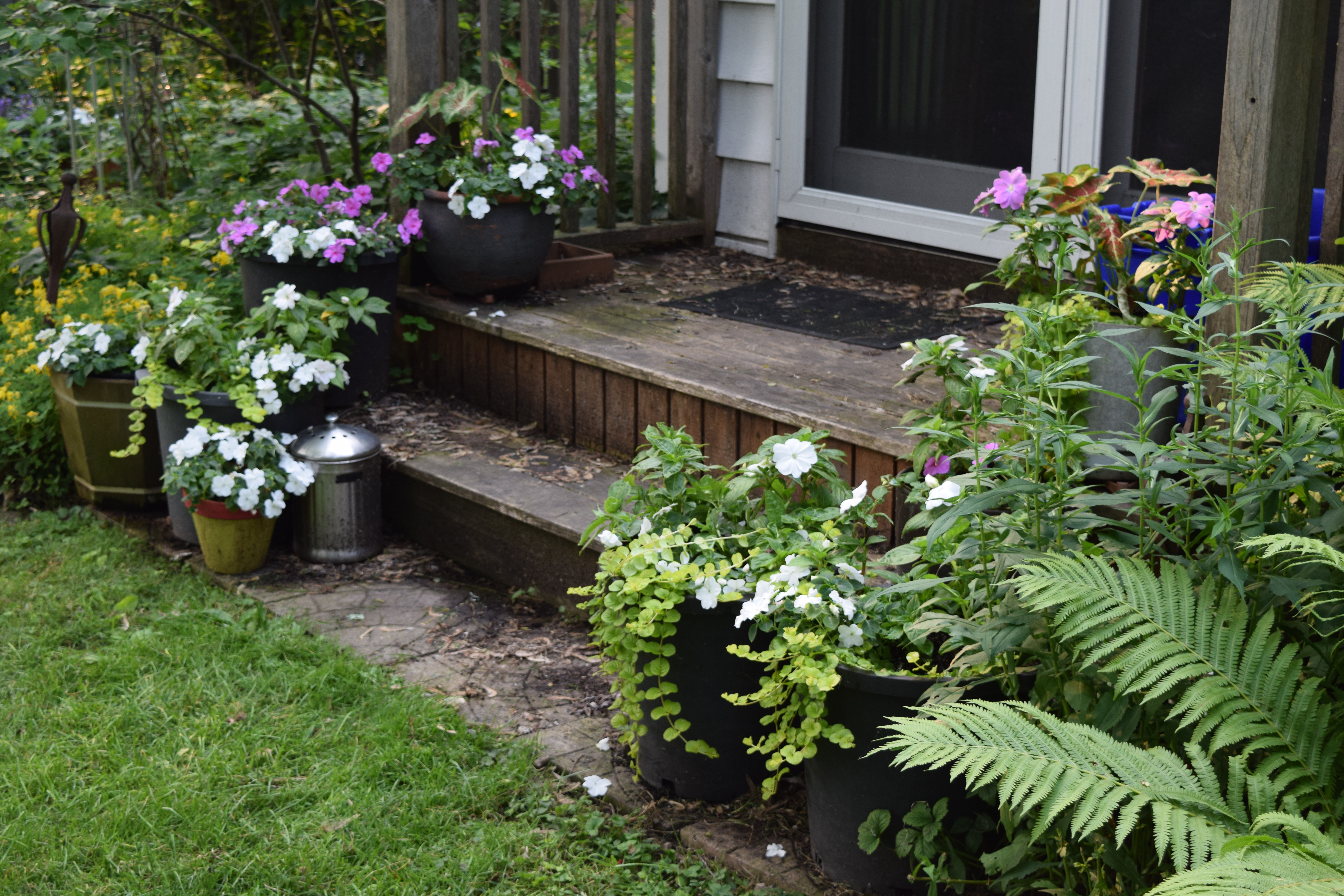
Another view of the patio with containers along the far edge.
Another view of the patio with containers along the far edge. I kept white as the dominant color, with occasional splashes of lavender or salmon. 

On the other hand, containers cannot get by on Impatiens alone. They need some companions for at least a bit of contrast. New Guinea Impatiens and ‘Babywing White’ begonias failed to stand out at all. Green and white Caladiums were a little better, but still not satisfying.

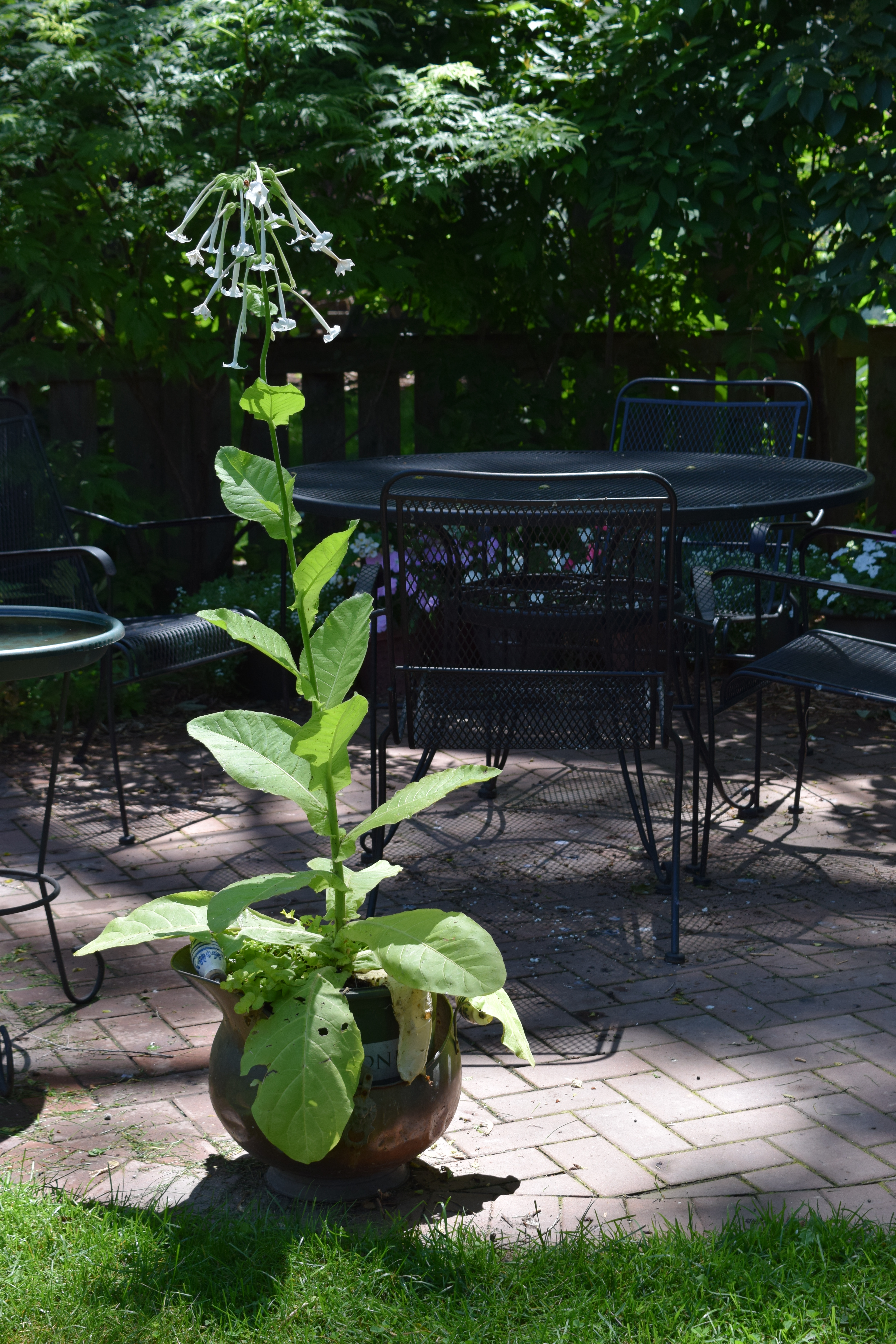
Flowering Tobacco 'Only the Lonely'
Flowering Tobacco ‘Only the Lonely’

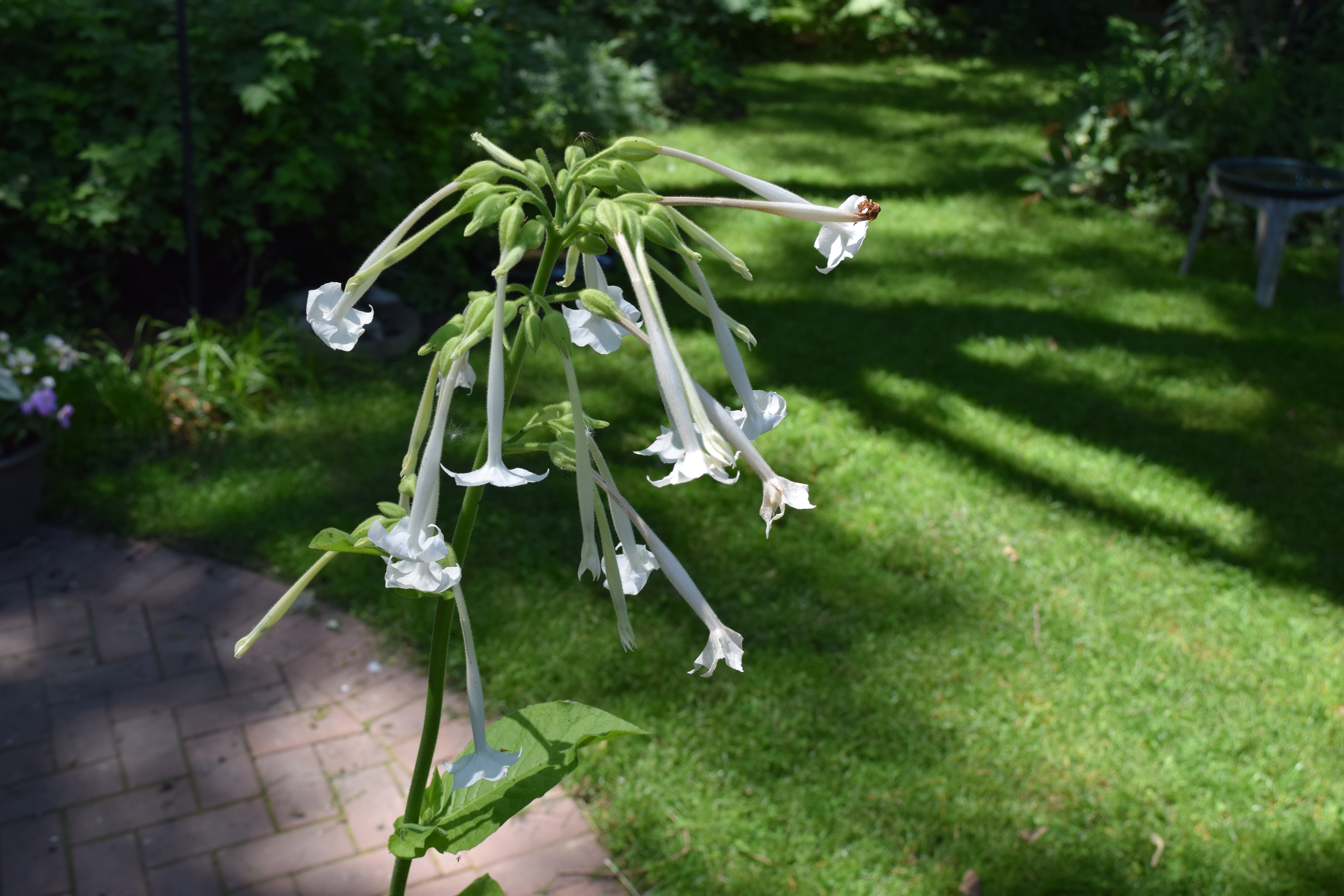
For a while I was excited about Flowering Tobacco ‘Only the Lonely’ (Nicotiana sylvestris). I liked the height, the big leaves,  and the unique flowers.

DSC_0864 flowering tobacco

The excitement died when the blooms sputtered out in late July, however.

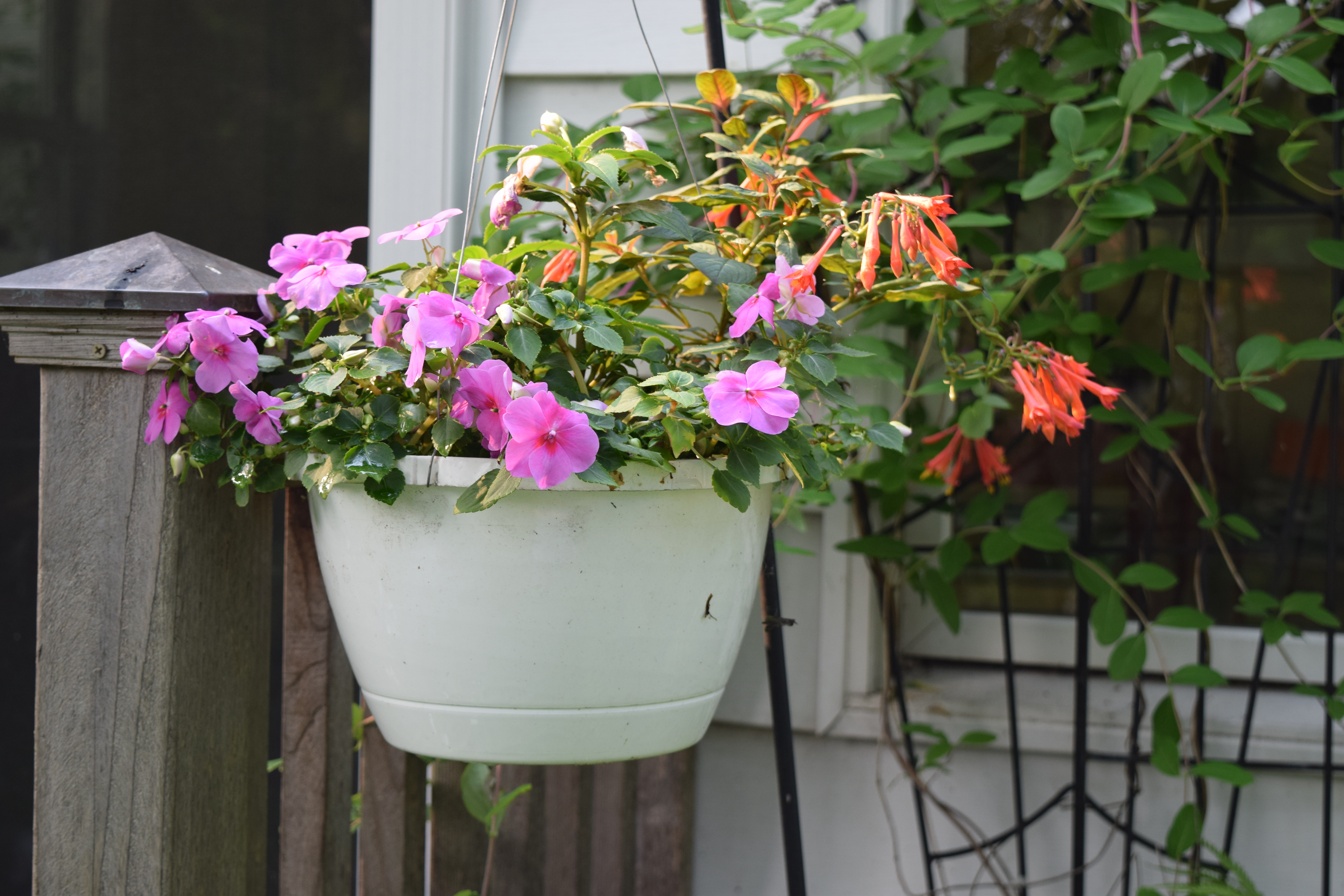
Hanging basket with Impatiens and Fuchsia.

Fuchsia ‘Gartenmeister’ did better, and was attractive to hummingirds. I may use more of these next year.

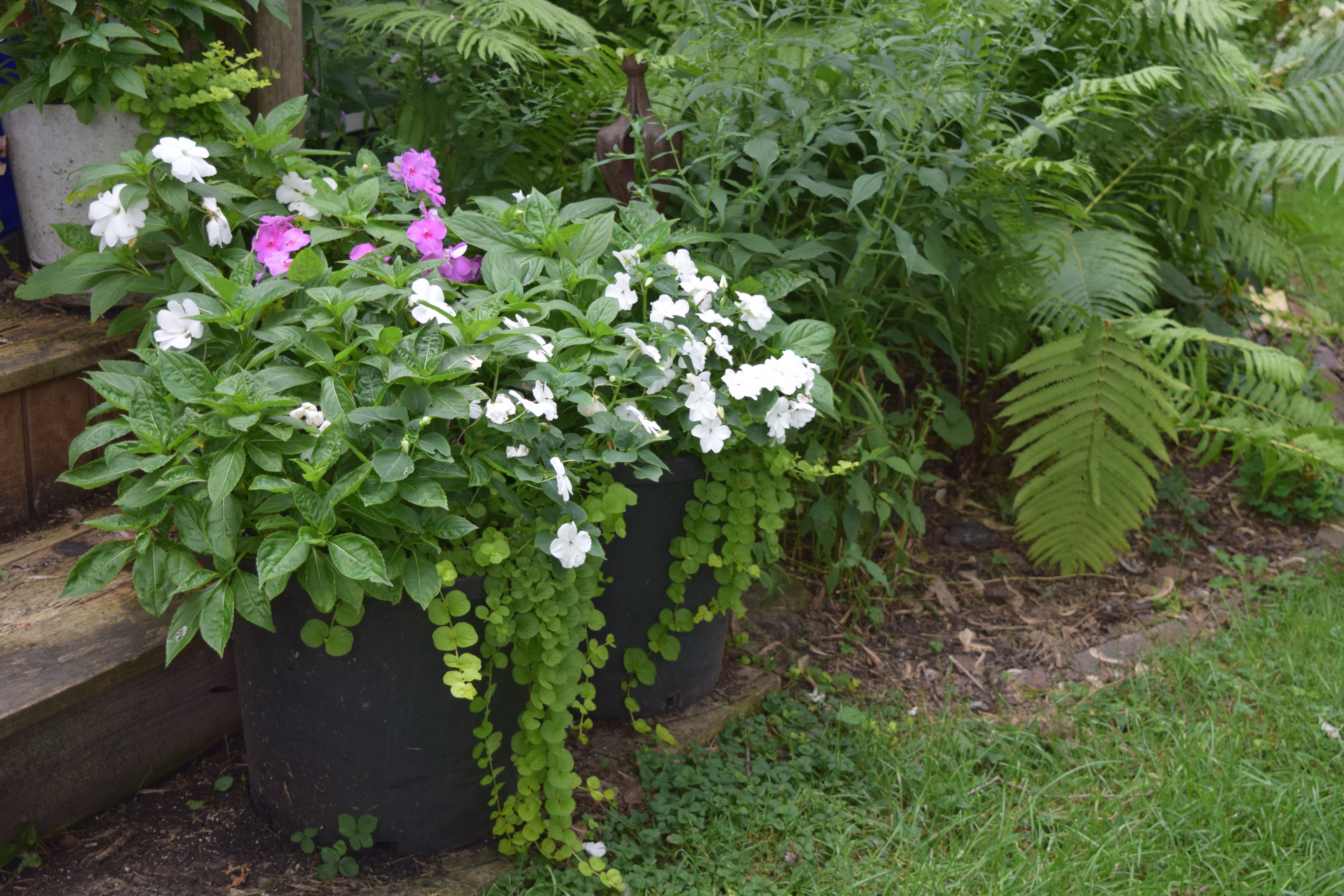
Flowering containers on the back steps.

A happy discovery was that Sweet Alyssum (Lobularia maritima) will bloom in the back garden from May through mid-July, at least in a milder year. I am hoping they will flower again by September now that I have given them a good shearing.

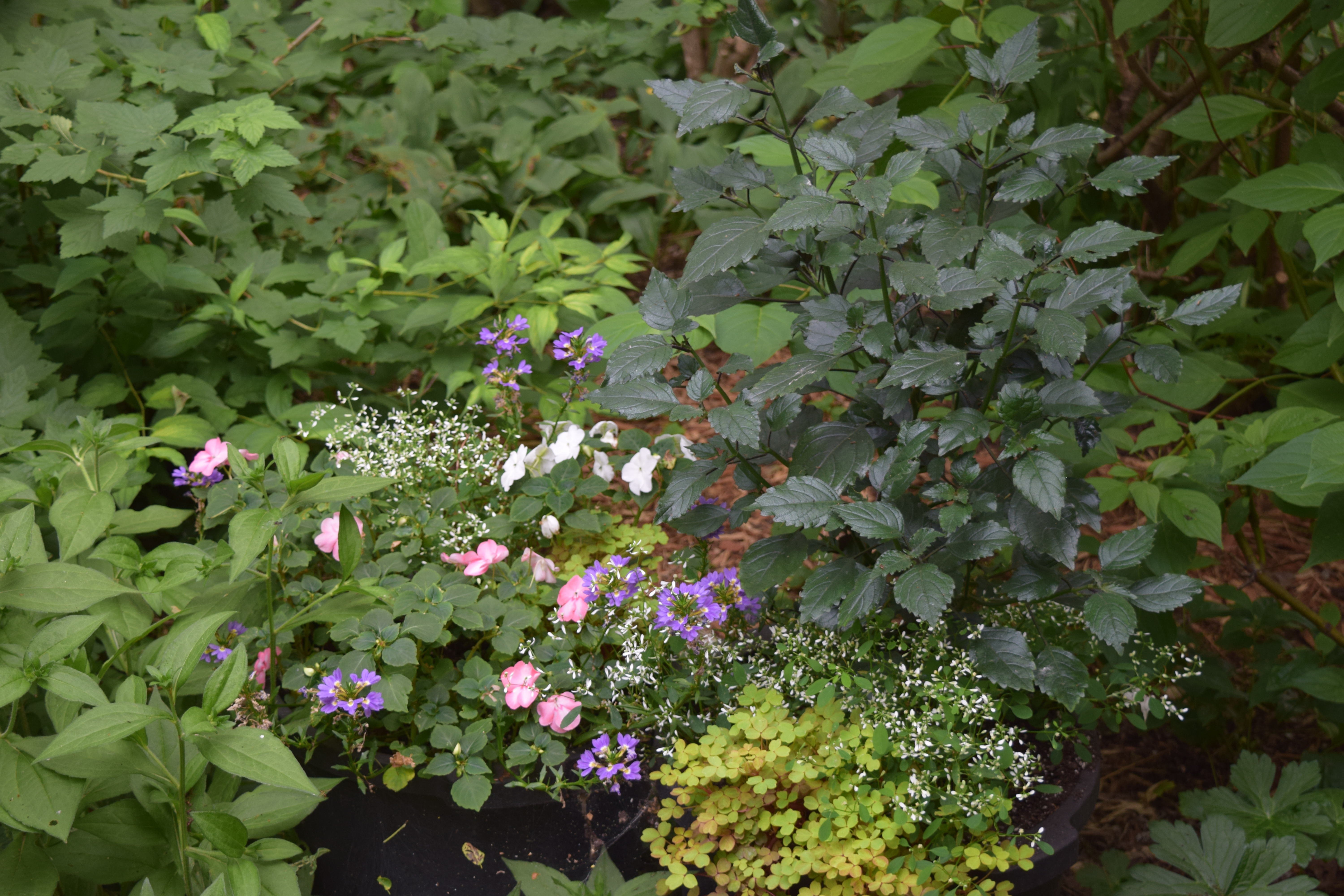
Fan Flower 'Whirlwind Blue' with a variety of other shade plants.
Fan Flower ‘Whirlwind Blue’ with poking through Impatiens and other shade plants. Oxalis ‘Molten Lava’ is the chartreuse one spilling over in the front. 

In a corner of the back garden I have three containers in deep shade. There I have one plant of Fan Flower ‘Whirlwind Blue’ (Scaevola hybrid). I really like it,and I would plant more of it if I didn’t remember the Great Fan Flower Massacre of 2013. Rabbits, I thought, were the perpetrators, but now I am told it was likely Goldfinches. Either way, a large number of Fan Flowers planted in the wheelbarrow and other containers were absolutely torn to shreds. I am reluctant to go through that horrifying experience again.

On the other hand, Oxalis ‘Molten Lava’, if placed on the edge of a tightly packed container, will spill nicely. That’s another one I may try more of next summer.

What are your favorite plants for containers in shade?

Last Daylilies of the Summer

One pernicious thing about August is that it is the gateway month for autumn. Not that I don’t enjoy autumn, I do. It’s just that summer never seems quite long enough.

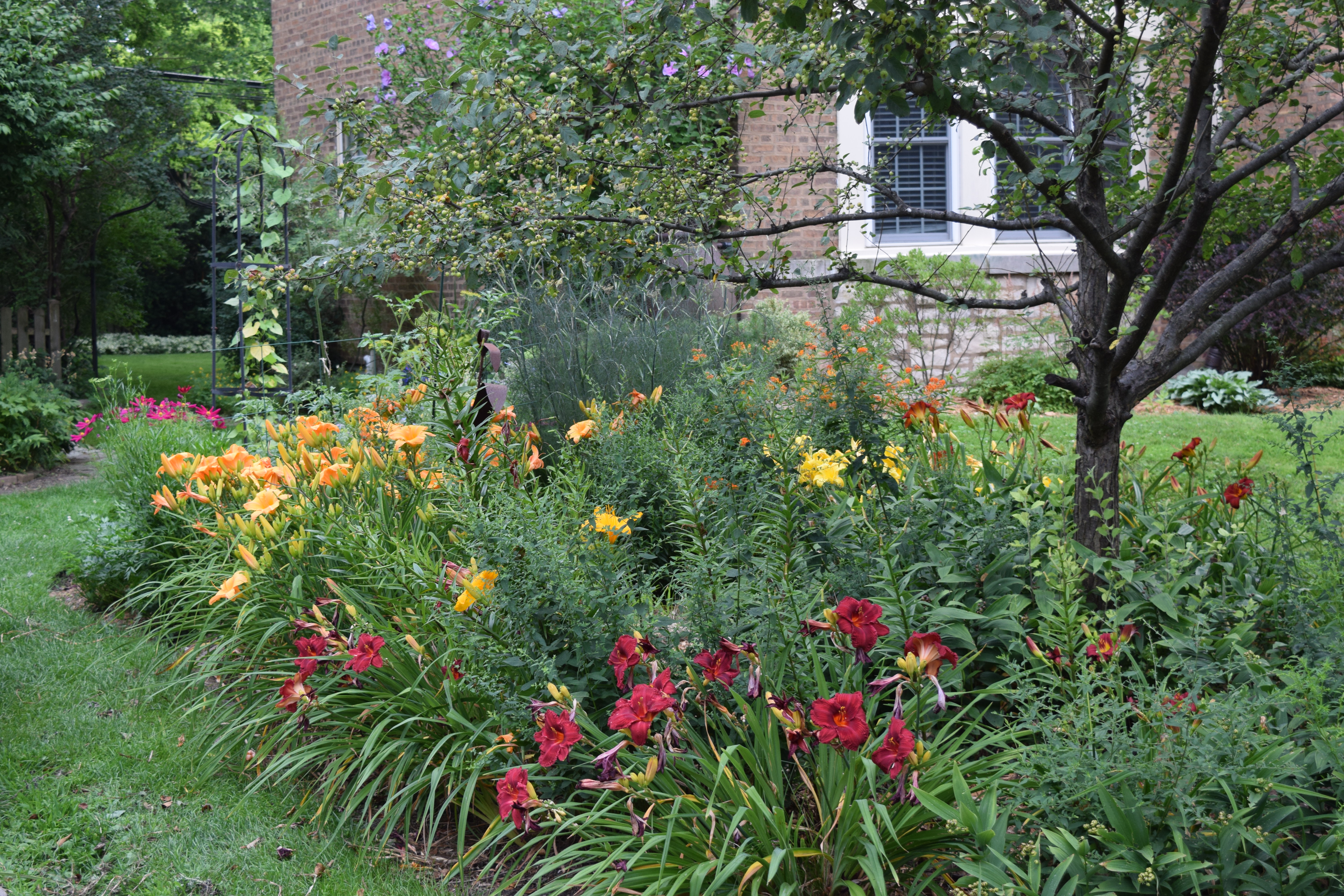
In August the flowers of mid-summer come sputtering to a halt. Daylilies (Hemerocallis), for example. Right now, just two of my Dayliies are still putting on a good show: ‘Egyptian Spice’ and ‘Chicago Apache’.

Daylilies 'Chicago Apache' and 'Egyptian Spice'.
Daylilies ‘Chicago Apache’ and ‘Egyptian Spice’.

You can see them above, lining the Left Bank Bed where our ‘Donald Wyman’ crabapple stands sentinel. ‘Egyptian Spice’ is apricot-colored and a mid- to late-season bloomer, ‘Chicago Apache’ is red and considered to be a mid-season Daylily.

'Chicago Apache'
‘Chicago Apache’

I’m not sure how the Apaches feel about having a namesake Daylily, especially since they never lived in the Chicago area. Whether or not the name is problematic,though, this is a fine Daylily that blooms vigorously without pampering.

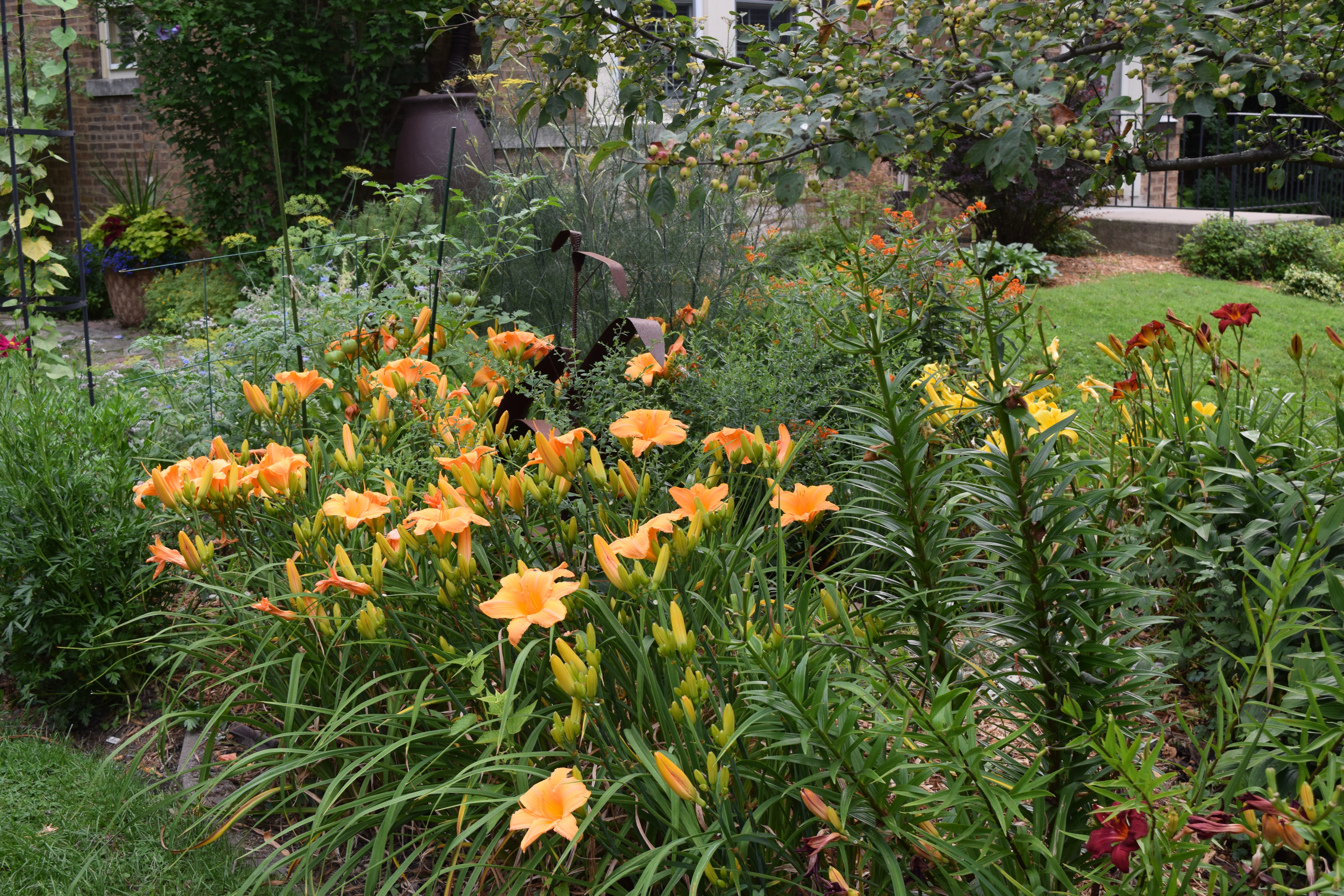
A closer look at 'Egyptian Spice'.
A closer look at ‘Egyptian Spice’.

Just past ‘Egyptian Spice’ you can see the beginnings of the Herbs, Tomatoes, and Cutting Bed.

For more early August vignettes, check out the blog Flutter and Hum.

Do you still have lots of Daylily blooms as we head into August?

These are the Gardens in Your Neighborhood (Veronica’s Garden)

Judy and I have done a lot of traveling to visit gardens in other states and even other countries. But it is worth remembering that there are unique and remarkable gardens literally right around the corner. One such surrounds a small, single-story brick bungalow on a busy street about three blocks from our house.

Veronica's garden, see from the sidewalk.
Veronica’s garden, see from the sidewalk.

I have driven past this garden hundreds of times, and it always tempted me to take a closer look. However, until about a week ago I never did because I didn’t know who lived there.

Path between front and back gardens.

That changed, however, when the gardener in question was walking her dog past our house as Judy and I were heading out to work. Veronica, as her name turned out to be, told us that she had admired our garden for some time. She also sheepishly admitted that she had picked one of the currants off our Clove Currant bush (Ribes odoratum) in order to see if she could grow one from seed. I told her that I had no intention of calling the authorities.

Further discussion revealed that the garden admiration was mutual. Veronica gave permission for me to drop by her place with a camera, which I did a few days later. (Judy was tied up so I look these pictures.)

A border full of lilies, seen from the front of the house.
A border full of lilies lies along a path to the sidewalk.

One of the first things I noticed about Veronica’s garden is that we share a love of big, colorful flowers. She has attention-grabbing blooms every season of the year. At the end of July, it was big, luscious, fragrant lilies.

DSC_0339

This one seemed to be a favorite of hers.

DSC_0340

And here’s one with an unusual color, I think.

The central bed of the front garden.

While I have cut back the amount of lawn in our garden, Veronica has done away with it completely. Her front garden consists of a central bed with a dry fountain, filled with stones instead of water. Daylilies, Amsonia and ferns fill this bed.

DSC_0456

There is a narrow border along all four sides of the front garden, with a concrete bench at each corner. Pavers fill in the area between the beds.

In the back garden.
In the back garden, a table and a fence along the alley.
A small table with a variety of decorative pots.
Another table with a variety of decorative pots.

In the back garden there are two tables instead of the central bed, otherwise the design is the same.

A clamshell chair
A clamshell chair

Found objects make for some interesting outdoor furniture and garden art.

DSC_0372

I like this Coreopsis with the concrete cactus.

DSC_0399

Here is a shepherdess with attitude.

Common Milkweed
Common Milkweed

Another aspect of Veronica’s garden that I could relate to was the mix of exotics and native wildflowers. For instance, there were both Common (Asclepias syriaca) and Swamp Milkweed (A. incarnata), and sure enough, Monarch butterflies were making themselves at home. Purple Coneflowers (Echinacea purpurea) are also plentiful.

DSC_0394

Veronica’s beds are a mix of perennials, annuals, evergreens, and small deciduous trees. She is also one of those people who likes to paint the trunks of her trees, which is something I don’t really understand – but to each his or her own.

Another view of the back garden.

I should say here that Veronica is a hands-on gardener, no one helps her with design, planting, or maintenance. It is entirely a DIY effort.

Veronica has also planted her very narrow parkway along the street.

Now that I’ve seen Veronica’s garden, I am determined to get a closer look at some of the other unique and beautiful gardens in our area. Stay tuned.