I like daylilies, but I am not a fanatic, like some people I know of. I don’t belong to the American Hemorocallis Society. I don’t use up my garden budget buying the latest cultivars. My enthusiasm for daylilies is more episodic. Every few years I think to myself: what this border really needs is some daylilies! Then I get engrossed in the Oakes Daylilies website, and the next thing I know a box full of bareroot plants has arrived from Tennessee.
‘Egyptian Spice’
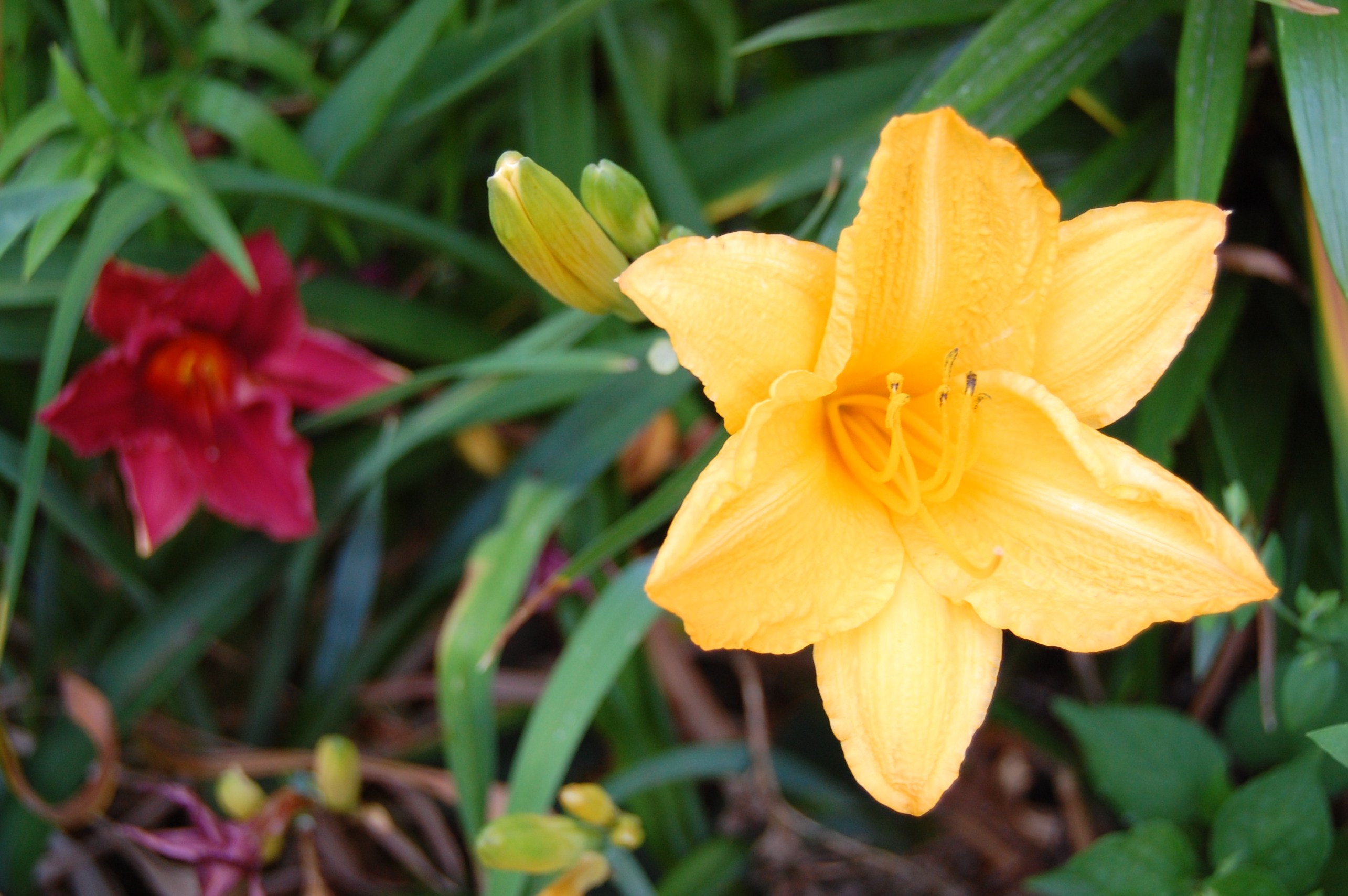
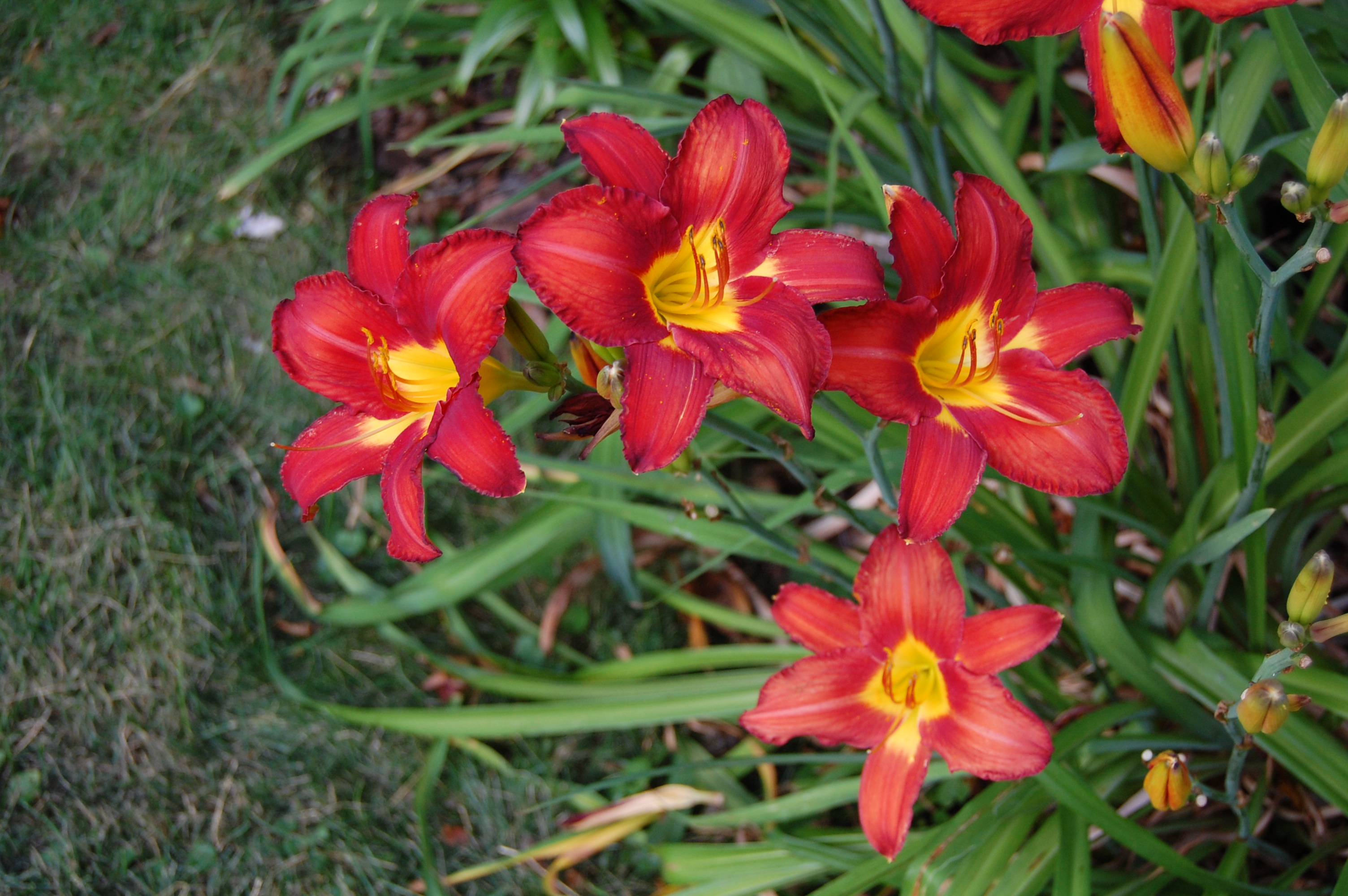
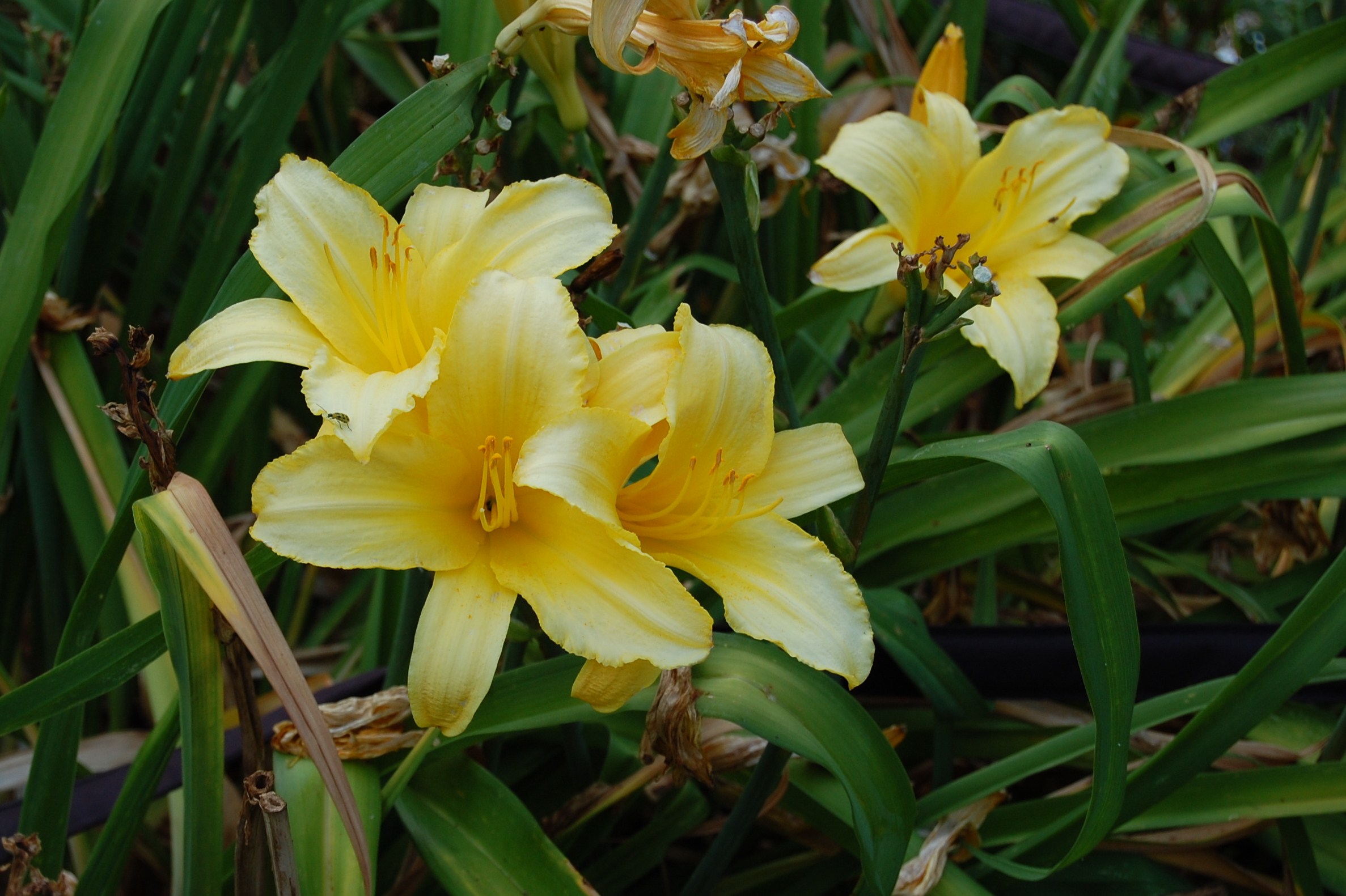
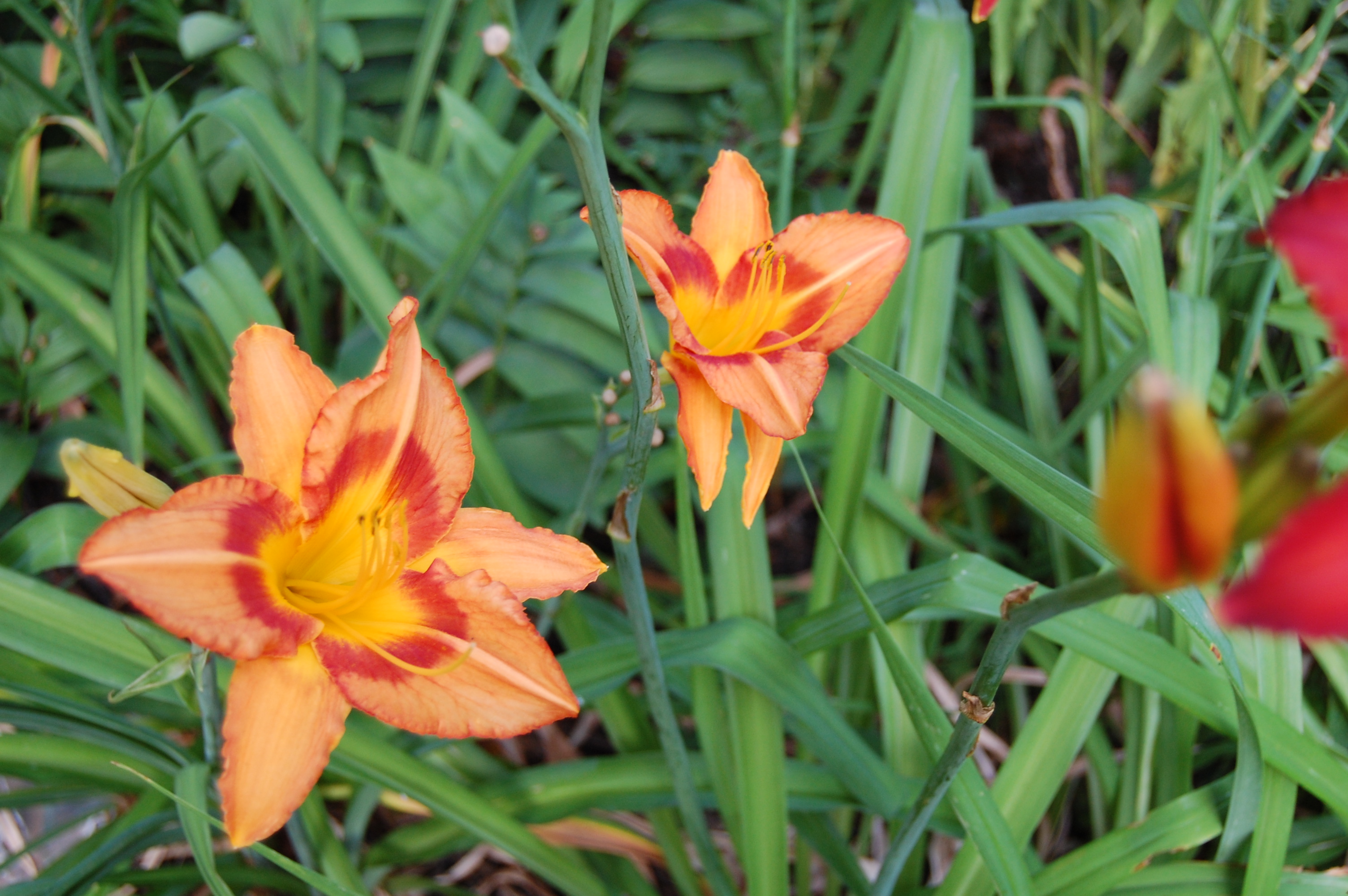
At this time of year, you have to appreciate what daylilies have to offer . They are tough, reliable, and adaptable plants. Moreover, the thousands of varieties offer an amazing selection of colors and even shapes. Actually, the vast number of cultivars makes it a challenge to make a final selection. I solve this problem in part by going with varieties with ‘Chicago’ in the name. The ubiquity of certain daylilies, like ‘Stella D’Oro’, reduces daylily appeal to many. But when I look at the varieties at bloom now in my garden, it reminds me that this can be an exciting plant.
Not sure about this one.‘Chicago Apache’‘Chicago Star’‘Eye-yi-yi’
The milkweeds in my garden are blooming their hearts out right now. Some of these are fragrant, and they give the air around them a honey/vanilla scent. I love these plants for the colors, the scent, the unusual shape of the flowers, and the (mostly) easy cultivation.
Swamp milkweed, species (pink) and ‘Ice Ballet’ (white).
Right now I have three kinds of milkweed in bloom:
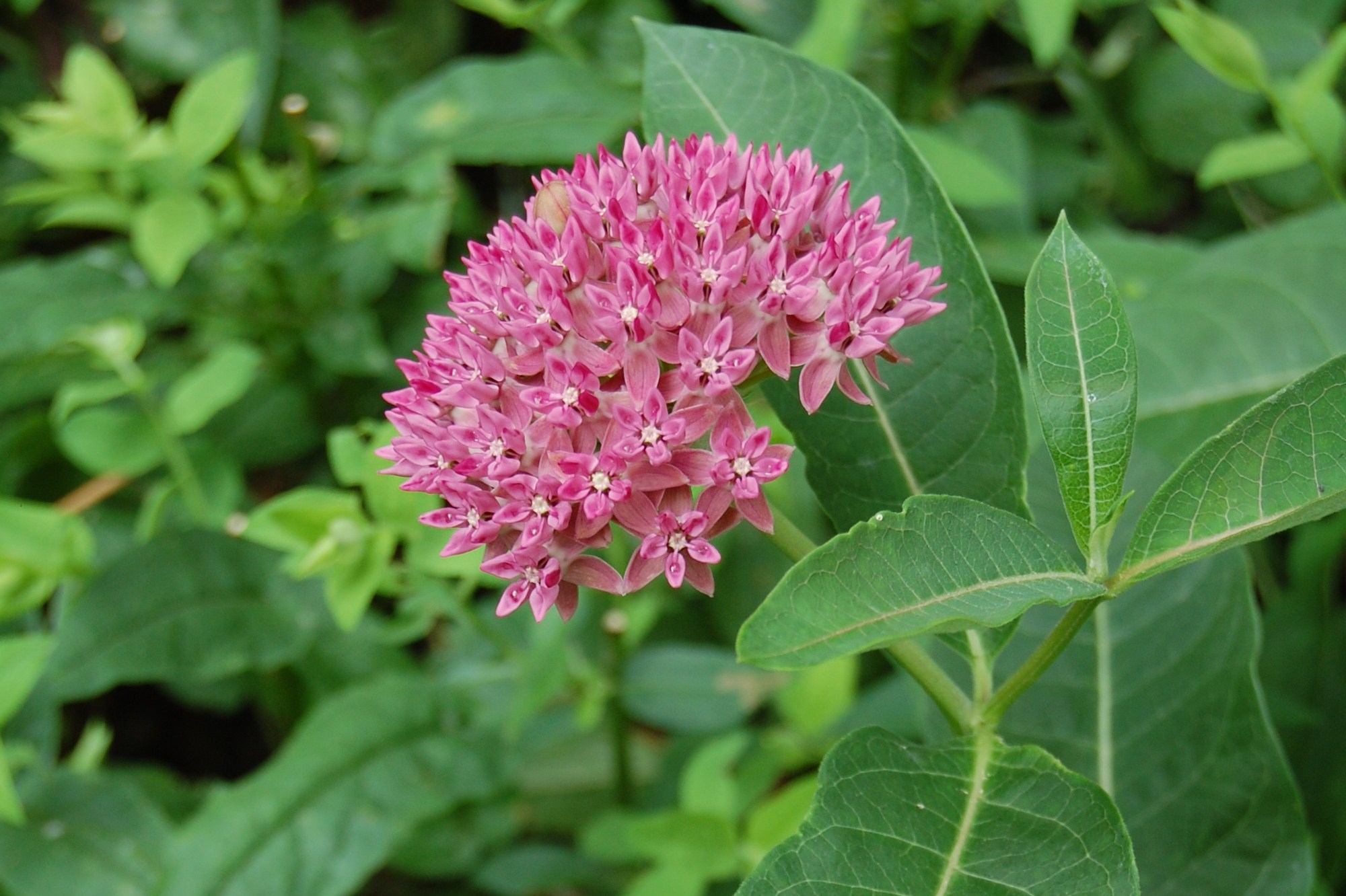
Swamp milkweed (Asclepias incarnata). This is a fairly tall (about 4′ in my garden) perennial with pink/red flowers. Likes moisture, but will do ok in medium soil. Forms clumps and will self-sow moderately. Fragrant.
Swamp Milkweed ‘Ice Ballet’ (A. incarnata ‘Ice Ballet’). Like the species, but shorter (about 3′) and with white flowers. Makes a nice combination with the species.
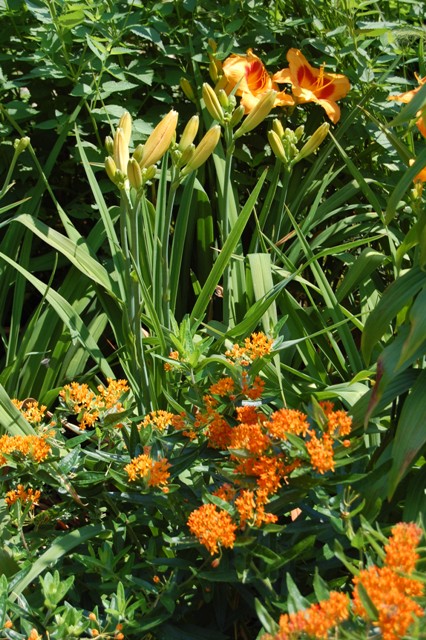
Butterflyweed (Asclepias tuberosa). About 2′ tall with bright orange flowers. Likes well-drained soil. I’ve had some trouble getting this plant established, but once it settles in it forms big clumps and the seedlings start popping up here and there.
Purple Milkweed (Asclepias purpurascens) grows in my backyard, but it finished blooming in late June. The flowers are purple with no fragrance. Unlike most milkweeds, Purple Milkweed will tolerate part shade and is very demure in its behavior.
Purple Milkweed
I’d like to grow the Common Milkweed (Asclepias syriaca), which has beautiful pink flowers and a wonderfully strong fragrance. In fact, I’ve noticed it growing in the Lurie Garden in downtown Chicago. However, I’m just scared off by its generally rampant behavior. Too bad.
Milkweeds are the only food of Monarch caterpillars, which reminds me. Are others noticing a decline in the number of Monarch butterflies and butterflies generally this summer? It’s definitely the case in my garden, and I wonder if it might be an effect of the drought.
Thanks for the rain, but could you turn up the AC? Friday we finally got a decent amount of rain, and I’m giving the soaker hoses a rest. However, it’s brutally hot and humid, and temperatures are supposed to stay in the 90s all week. I try to take a lot of breaks and drink a lot of water while gardening, and I’ll try to do more earlier in the morning and later in the day.
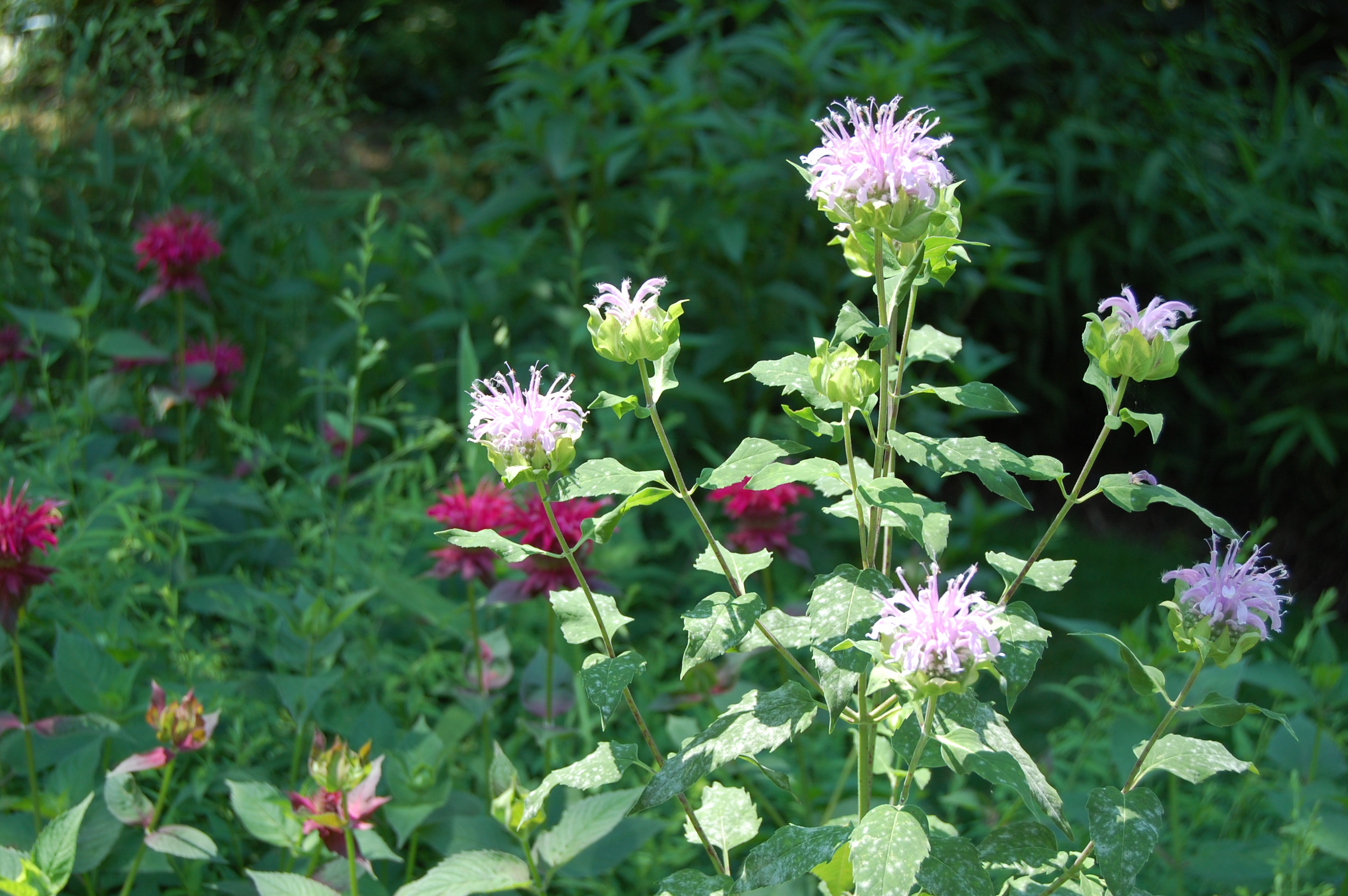
Wild Bergamot (Monarda fistulosa) with Monarda ‘Raspberry Wine in background.
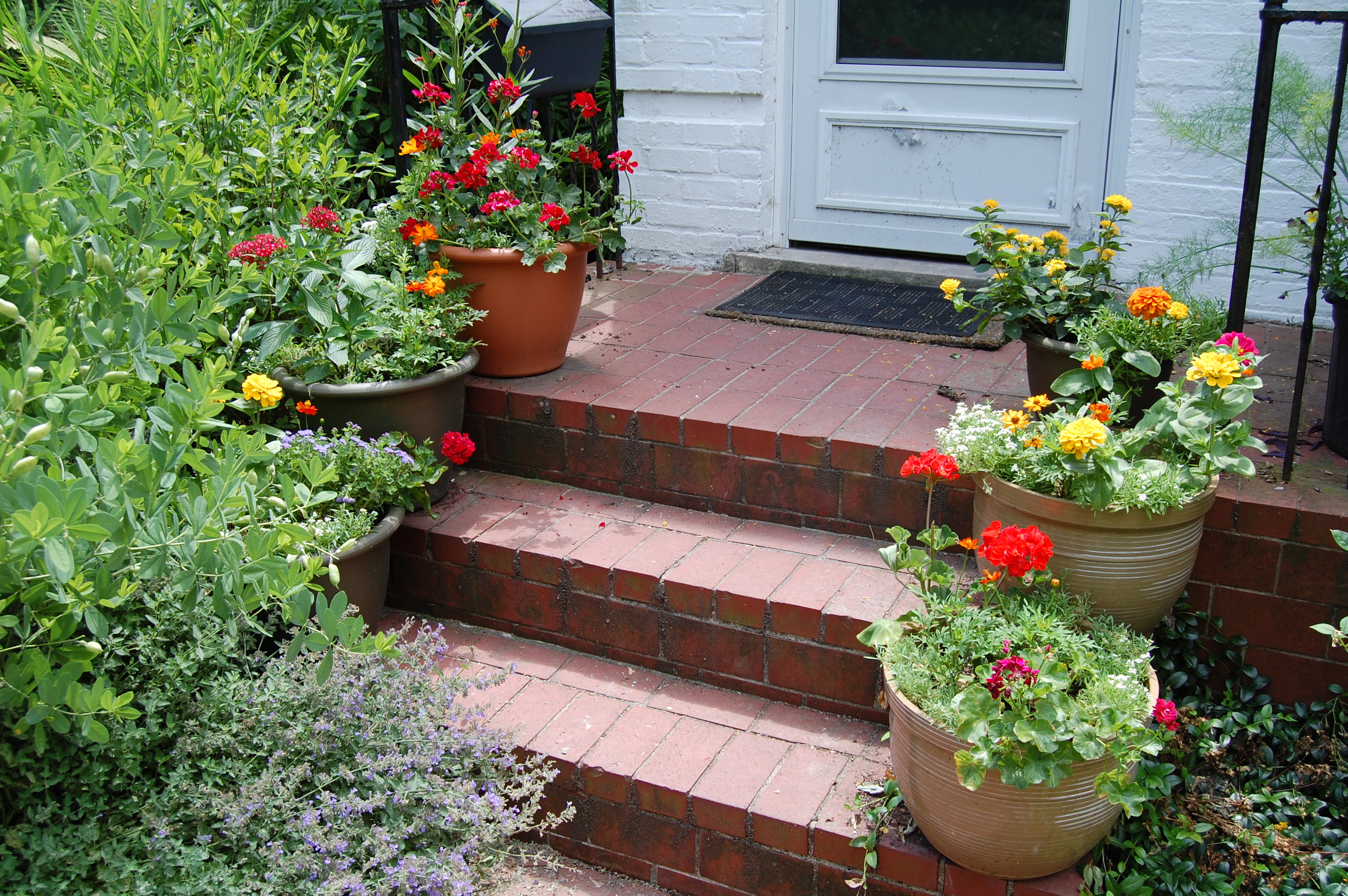
Containers Full of Summer Annuals. So I’ve chosen the summer annuals, and now it’s just a question of watering and watching how they do. The containers in the front are mostly hot colors: red, orange, and yellow; with some blue and white for counterpoint. In the shadier back, the colors are cooler: mostly shades of white and blue. Most of the pansies ended up on the compost pile, but I’ve kept some of them and will cut them back later in the summer.
Containers newly planted with Summer annuals.
Vertical plants: Tropical Milkweed (Asclepias currasavica), Star Flower (Penta lanceolata), Zonal Geranium (Pelargoniumhortorum), Zinnias (Zinnia ‘Zahara’), Canna Lilies. Actually, we’ll see how vertical the pentas and geranium end up. They’re really more mounding than vertical, but they should be taller than all their neighbors.
Filler plants: Red and Orange Cosmos (Cosmos sulphureus), Lantana, Petunias, Million Bells (Calibrachoa) , Ageratum (Ageratum hustonianum).
Trailing plants: Sweet Alyssum (Lobularia maritima) , Blue Lobelia (Lobelia erinus), Bacopa (Sutera cordata), Ivy Geranium (Pelargonium peltatum). The Sweet Alyssum was planted in mid-Spring. Though it tends to stop blooming in very hot weather, I’m going to keep it through the Summer and cut it back in August. I love the scent, and when you crowd it against the edge of the container it spills nicely over the side. It will rebloom in the Fall.
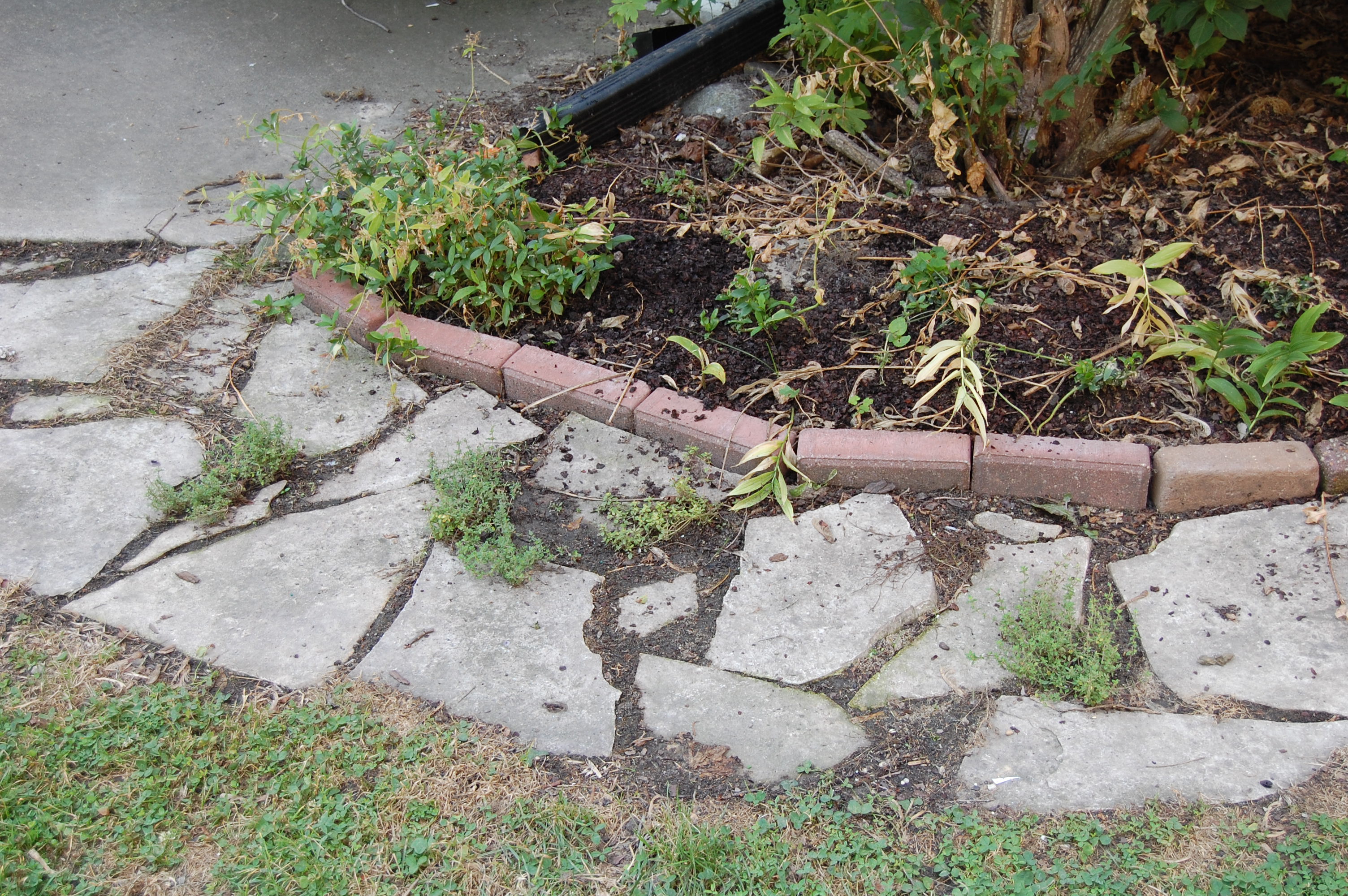
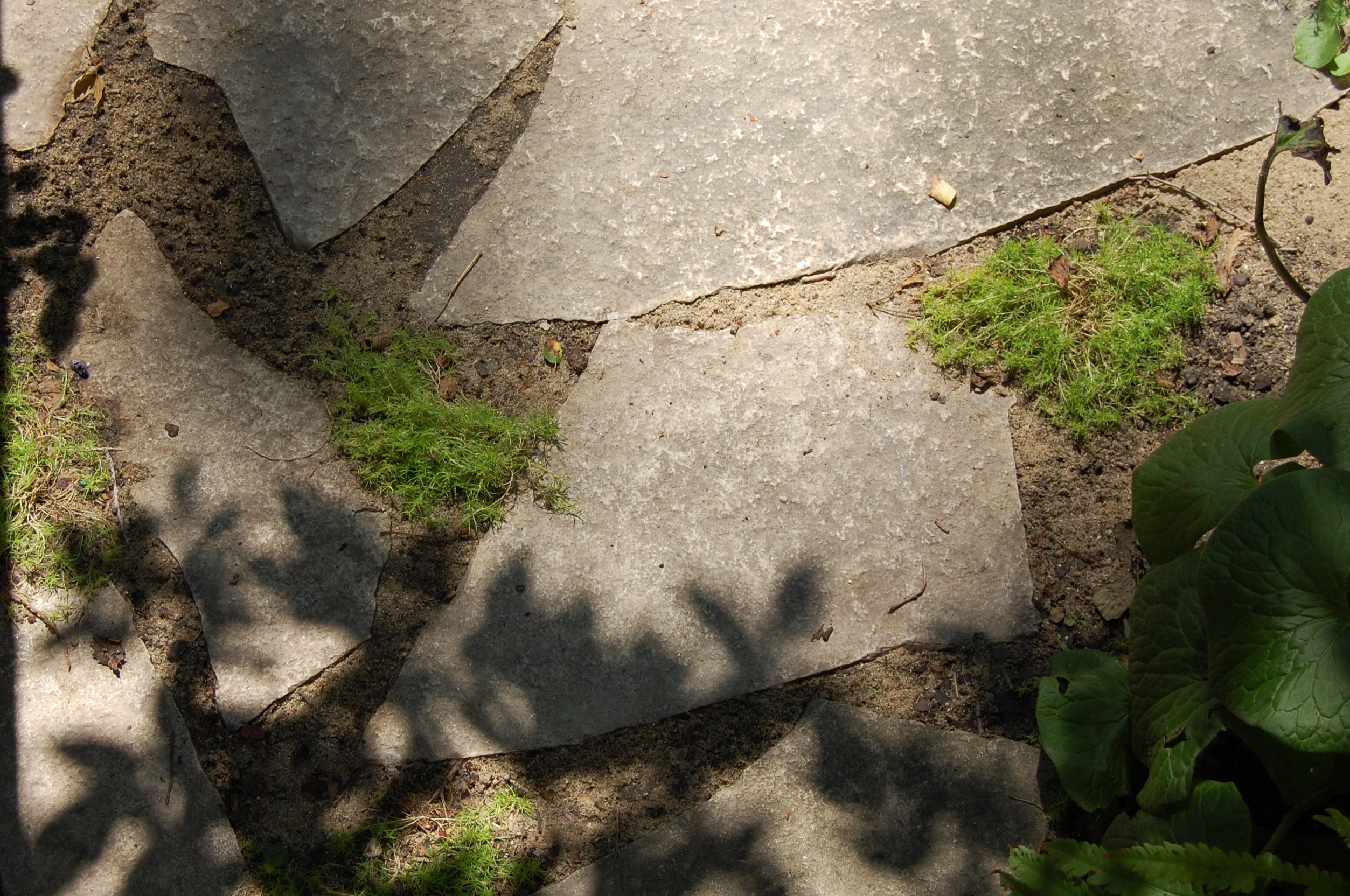
Stone Path Update. Since resetting the stone path, I’ve been trying to establish plants to take over the spaces between the stepping stones. This has been made more challenging by the intense heat, which is magnified by the stones. Here’s a report card for the plants I’ve tried.
Stone path with thyme.
Nutmeg Thyme (Thymus praecox). Grade: D-. I found an eight pack of this thyme at Home Depot for about $10. Such a deal! Planted in the sunny part of the path, only two remain alive. The others were quickly fried by the heat.
Garden Thyme (Thymus vulgaris). Grade: A. I replaced most of the dead Nutmeg Thyme with Garden Thyme. More expensive in individual pots, but they shrugged off the heat. While this thyme grows taller than ideal for planting between flagstones, I find I can cut it with my push mower.
Stepping stones with Schotch Moss and shadows.
Scotch Moss (Sagina subulata ‘Aurea’). Grade: A. This plant has settled in without any fatalities. It already seems to be spreading and even blooming a little.
Irish Moss (Sagina subulata ‘Irish Moss’). Grade: A-. This has been slightly less successful than the Scotch Moss, one of the plants looks almost dead. Also seems more mounded, less spreading, and not quite as low-growing as the Scotch Moss.
So where do you come down on the issue of native versus exotic plants?
Seems to me there are three camps one can belong to. The first argues for gardening exclusively with natives. The second says that it makes sense to include natives in the garden, but it would be a mistake to exclude all the wonderful exotic plants that are available. And the third argues that it is irrelevant, if not downright pernicious, to consider the geographic origin of plants.
I belong to the second camp.
My front walkway bed combines natives and exotics.
In my amateur view, there are two convincing reasons to make a point of including natives. First, they give gardens a distinctive regional feel. Second, I buy into Douglas Tallamy’s argument that natives do the best job of supporting an insect population that the birds and other critters depend upon.
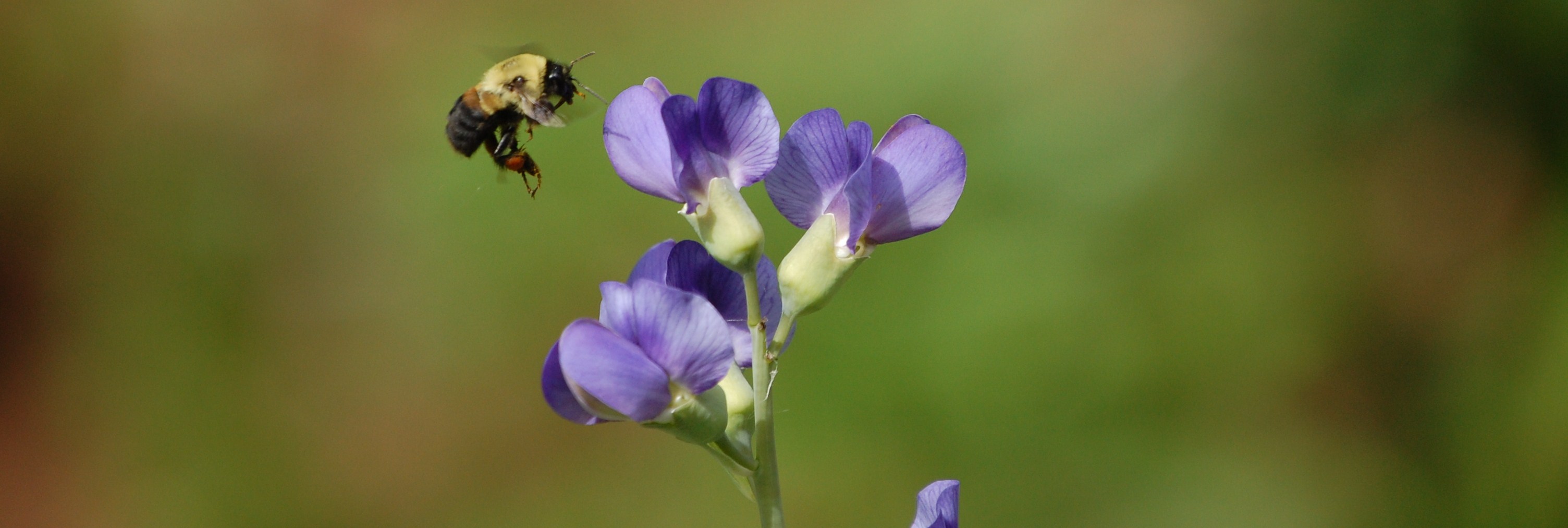
Native wild indigo, a great plant.
There are also some unconvincing arguments. Some say natives are uniquely adapted to local conditions and so require a minimum of watering, etc. Here in the Midwest, it’s true that there are many natives that are carefree plants, and I love just about all of them. But it’s also true that there are exotic plants that are carefree, and that some natives need considerable coddling to make it in the home landscape.
Peony ‘America’, an exotic and also a great plant.
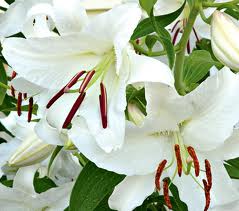
I also think for most people gardening is an expression of creativity, and it is just too confining to use natives exclusively. I don’t want to go without tulips. daylilies, ‘Casa Blanca’ oriental lilies, peonies, etc.
I was reminded of this argument the other day at my Modern Garden History class. We learned about Jens Jensen, a pioneer of the movement for naturalistic gardens with a strong preference for native plants. Jensen, a Dane by birth who emigrated to the US after being forced in the Kaiser’s army, had a strong dislike of regimentation (he hated straight lines). For him, naturalistic gardens were expressions of democracy, connecting people to the landscape and to each other.
Ironically, the native plant idea was also seized upon by Willy Lange and other German fascists who strangely based an approach to plants in their philosophy of racial superiority. Michael Pollan and others have used this history to attack native plant advocates, an attack I find to be offensive and absurd. (What conclusions should we draw from the fact that the Nazis promoted organic gardening and professed to love nature, plus Hitler was a vegetarian?) Any idea in the realm of politics, religion, or anything else can be twisted until it becomes grotesque and hateful.
My attitude towards those who advocate landscapes made up exclusively of natives is a lot like my attitude toward vegetarians. I think it is a good thing to plant more natives, just as I think most of us could stand to eat more vegetables. However, I am not willing to give up my lamb chops. I view those who voluntarily give up lamb chops with respect, as long as they keep their promotional efforts educational and not coercive.
My lamb chops.
So, which camp do you belong to? Do you believe in natives only, an eclectic approach, or would you insist we remain blind to issues of botanical origin? And are there exotic plants you just can’t live without?
So I had what I thought was a brilliant, original idea. Grow Cup Plant (Silphium perfoliatum) in front of ‘Jackman’ Clematis (Clematis jackmanii).
I love both plants. Jackman Clematis are widely esteemed for being smothered with rich purple flowers. Cup Plant, on the other hand, is not too common as a garden plant. Mainly it is grown by wildflower enthusiasts and prairie restorationists.
Almost everything about Cup Plant is big: the plant itself (up to 10′), the leaves, the enormous clumps it will form if not kept in check. The sunflower-like yellow flowers are on the small side, but they are produced in quantity. For those of you who are not part of the Big is Beautiful School of Gardening (I am a charter member), Cup Plant has other virtues. The perfoliate leaves clasp the stem to form a cup that holds rainwater, which attracts birds and insects. In addition, the seeds are addictive to goldfinches.
Cup Plant not blooming as ordered and blocking view of Clematis.
My Clematis grow on the west-facing wall near the garage, and they do very well if I say so myself. My idea was that they would grow through the Cup Plants. Then they would bloom at the same time, the yellow Cup Plant and purple Clematis contrasting nicely.
Sounds nice, doesn’t it? Never happened. Not gonna happen. Basically, they never bloom together. While they could in theory, they seem to react differently to variations in the weather so that any overlap in bloom time is minimal at best. In addition, the Clematis don’t seem to like climbing on the Cup Plant. All the Cup Plant does in practice is hide the blooming Clematis. In fact I get complaints from neighbors who enjoy looking at the Clematis and don’t like having their view obstructed.
I’ve thought of getting rid of the Cup Plant at this location – I have them growing in two other spots in the garden. Judy doesn’t want me to, though she also complains of the Clematis not being shown to their full glory. I’ve thinned the Cup Plant stalks, but I’m not that solves the problem.
Plants just refuse to follow directions if they don’t feel like it.
Succession of Blooms. In case you were in any doubt, the flowers in my garden as well as the calendar will tell you that we have crossed the line from Spring into Summer. The Columbine, Penstemon, and even the Salvia are done. Now the Swamp Milkweed (the white Asclepias incarnata ‘Ice Ballet’ the red/pink straight species) have begun blooming, along with the daylilies (Hemerocallis ‘Chicago Star’ and ‘Eye-Yi-Yi’) and Coreopsis (Coreopsis lanceolata and grandiflora ‘Sunfire’), and the Purple Coneflower (Echinacea purpurea). The flower heads are forming on the Joe Pye Weeds and the Sunflowers. The Monardas should start blooming within a week or so. Yup, Summer has started.
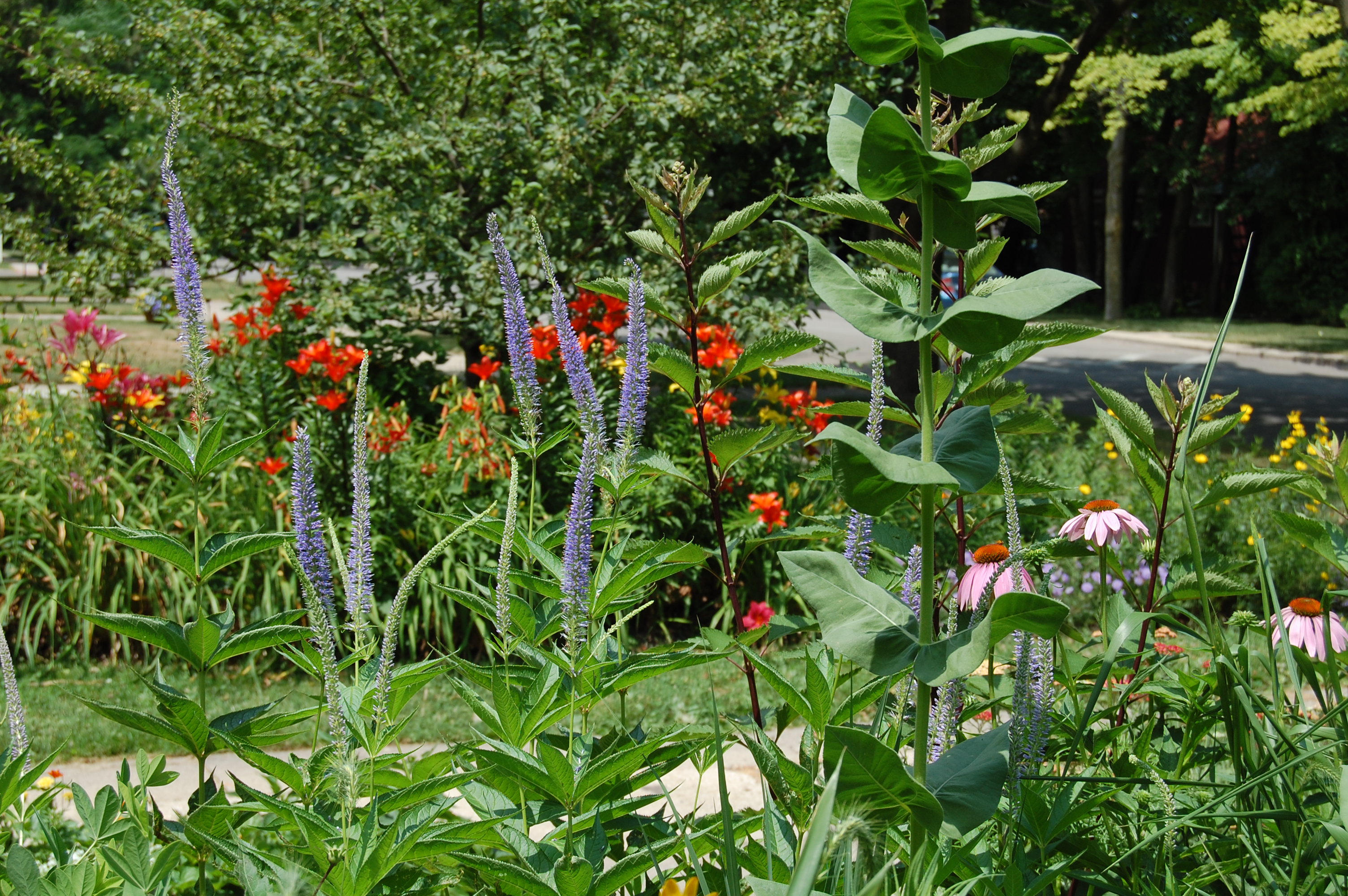
Culver’s Root ‘Temptation’ with Asiatic Lilies in background.
Swamp Milkweed. Kind of an ugly name for a beautiful plant.
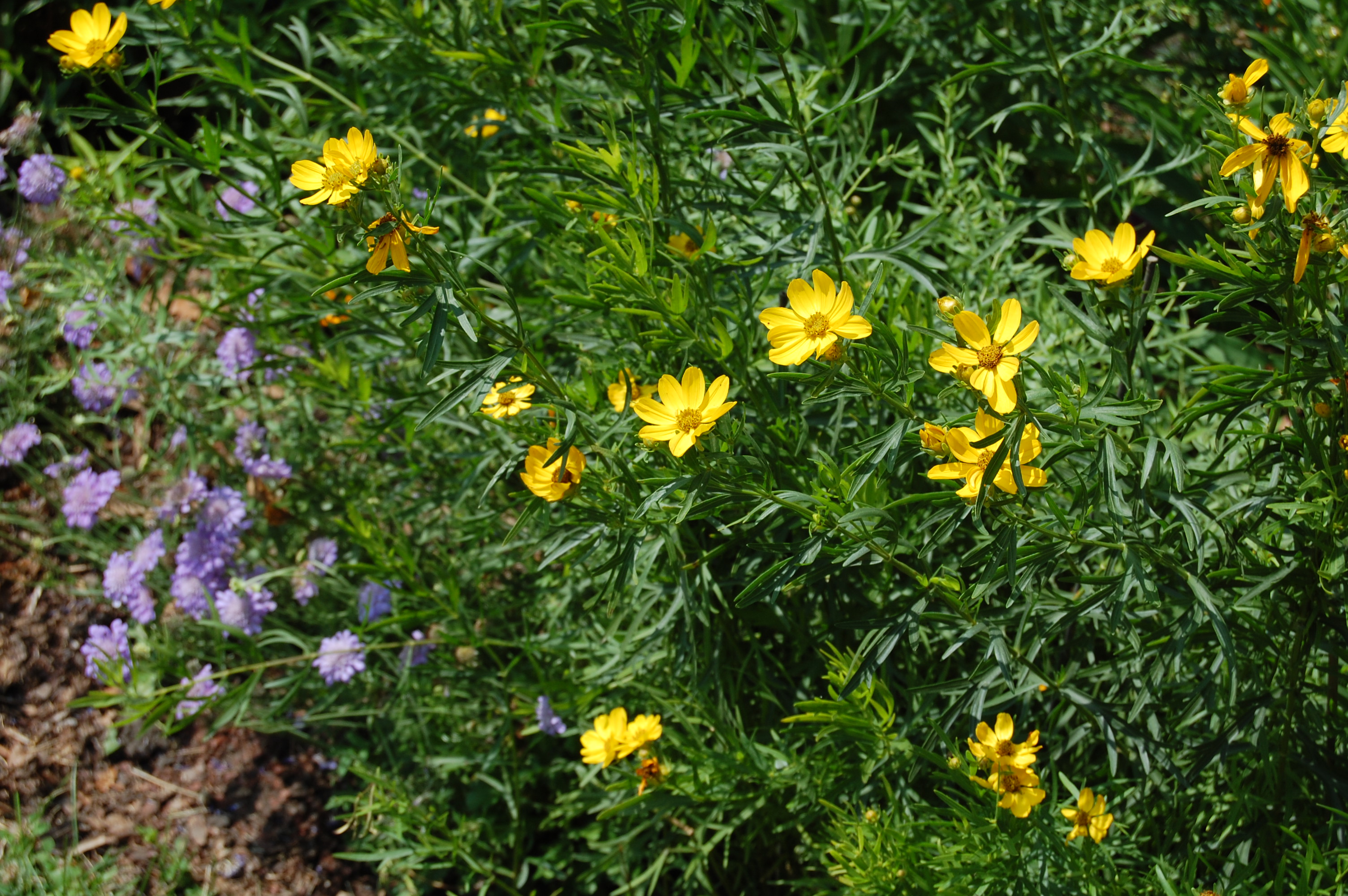
Lanceleaf Coreopsis with Scabiosa in background.
Daylily ‘Chicago Star’ with Butterflyweed.
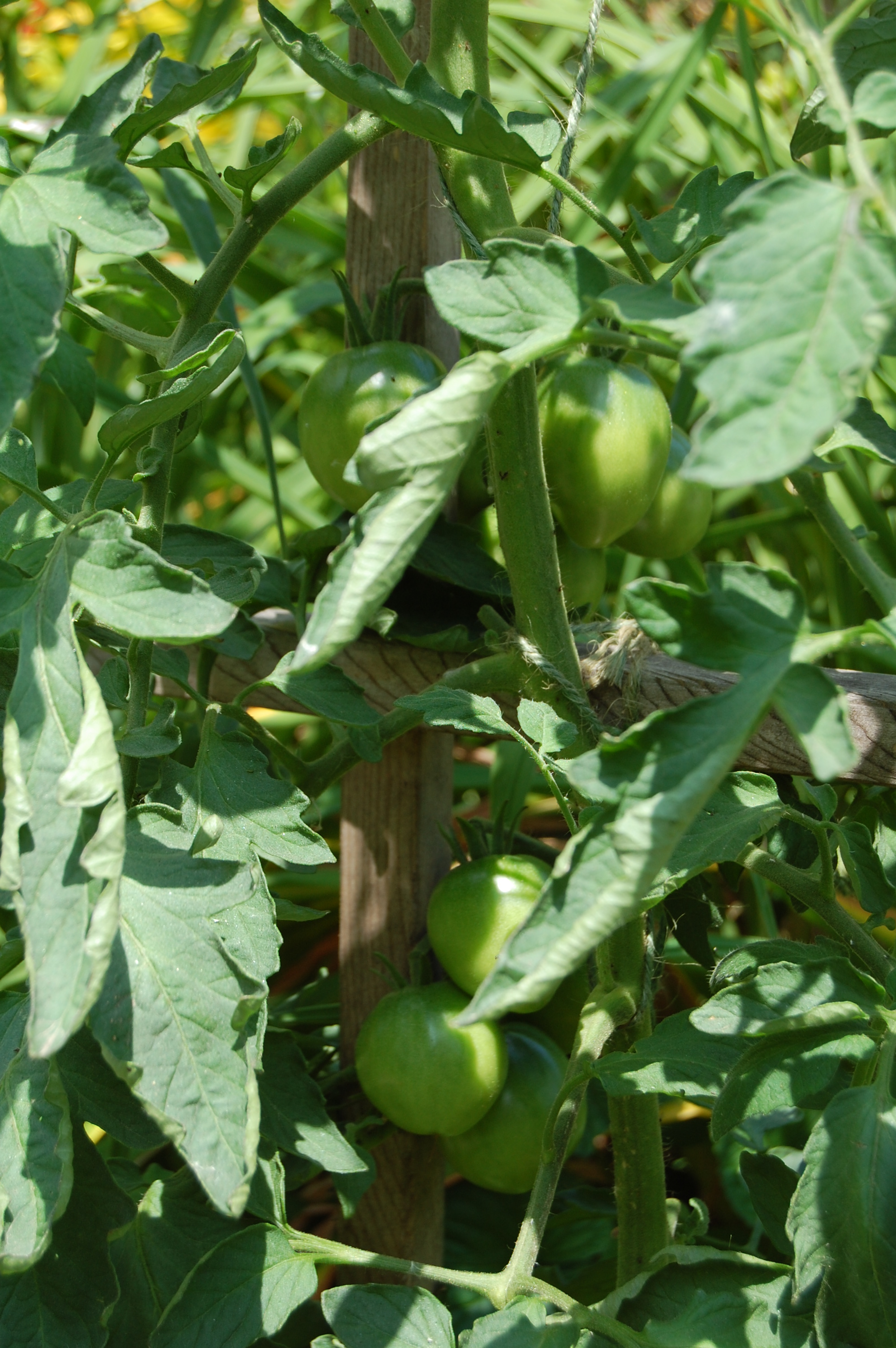
Tomato Report. This looks like it will be a good year for tomatoes, as long as I remember to water. All four of my vines have got lots of flowers and green fruit, the largest the size of plums. If my luck holds they will be plentiful and early. “Black Cherry’ is already 6′ high, and ‘Black Prince’ is just one foot behind. It is received wisdom that you are supposed to cut off the tomato suckers, but what are you supposed to do when the vines reach the top of the trellis? Let them grow back down to the ground? I am always baffled by this.
Could be a bumper tomato harvest this year. Could be ripe a couple weeks early, too.
Still No Rain to Speak of. Illinois is dry – 70% officially has drought conditions – and there’s no sign of any improvement soon. We’ve had less than half an inch of rain so far this June; normal would be about three and a half inches. The clouds teased us with a few drizzles on Thursday, but this barely moistened the surface. I continue to water with my soaker hoses. On the plus side, looks like the weather will be sunny for the gathering we are having in the backyard for Judy’s birthday.
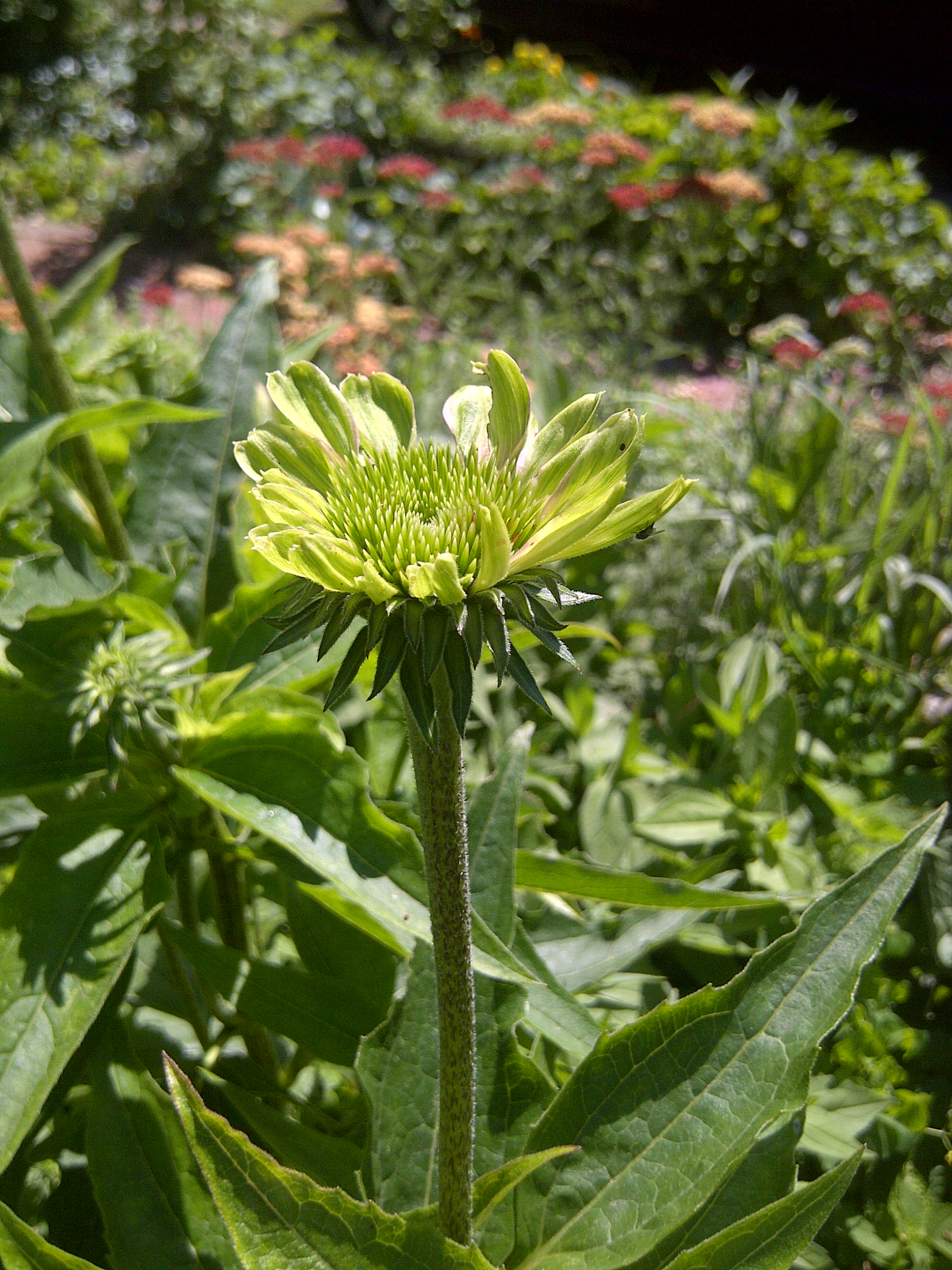
If your purple coneflowers look like this, go get your shovel.
The first Purple Coneflowers just started to bloom a few days ago. I saw that on one plant the flowers were discolored and the ray flowers were undersized. I have lost a number of Purple Coneflowers to the viral disease Aster Yellows in the past. However, the symptoms were misshapen disk flowers and seed heads, so I hoped this time it was something less deadly. The thing about Aster Yellows is that it can’t be cured, and it will spread by sucking insects to other plants in the Aster family (though in my experience, Purple Coneflowers are particularly vulnerable).
However, a check on Google Images confirmed that this was indeed Aster Yellows. So out went a particularly large clump of Purple Coneflowers. So far it doesn’t look like any other Echinaceas are infected, but I’ll keep a close eye on them.
There are two silver linings in this situation. The first is that I will never run out of Purple Coneflowers. Even if I had to pull out every single mature plant in this border, new seedlings would come along and in a year or two I’d have just as many as ever. Also, this was of course an opportunity to buy replacements! In fact this very day I stopped at Gethsemane nursery and bought two plants I’ve wanted for a while, Yellow Coneflower (Ratibida pinnata – not an Echinacea) and Coreopsis ‘Star Cluster’, a tall, cream-colored Tickseed.
Yellow Coneflower – Ratibida pinnata
So I suppose I have emerged from the latest Aster Yellows crisis without being completely crushed.
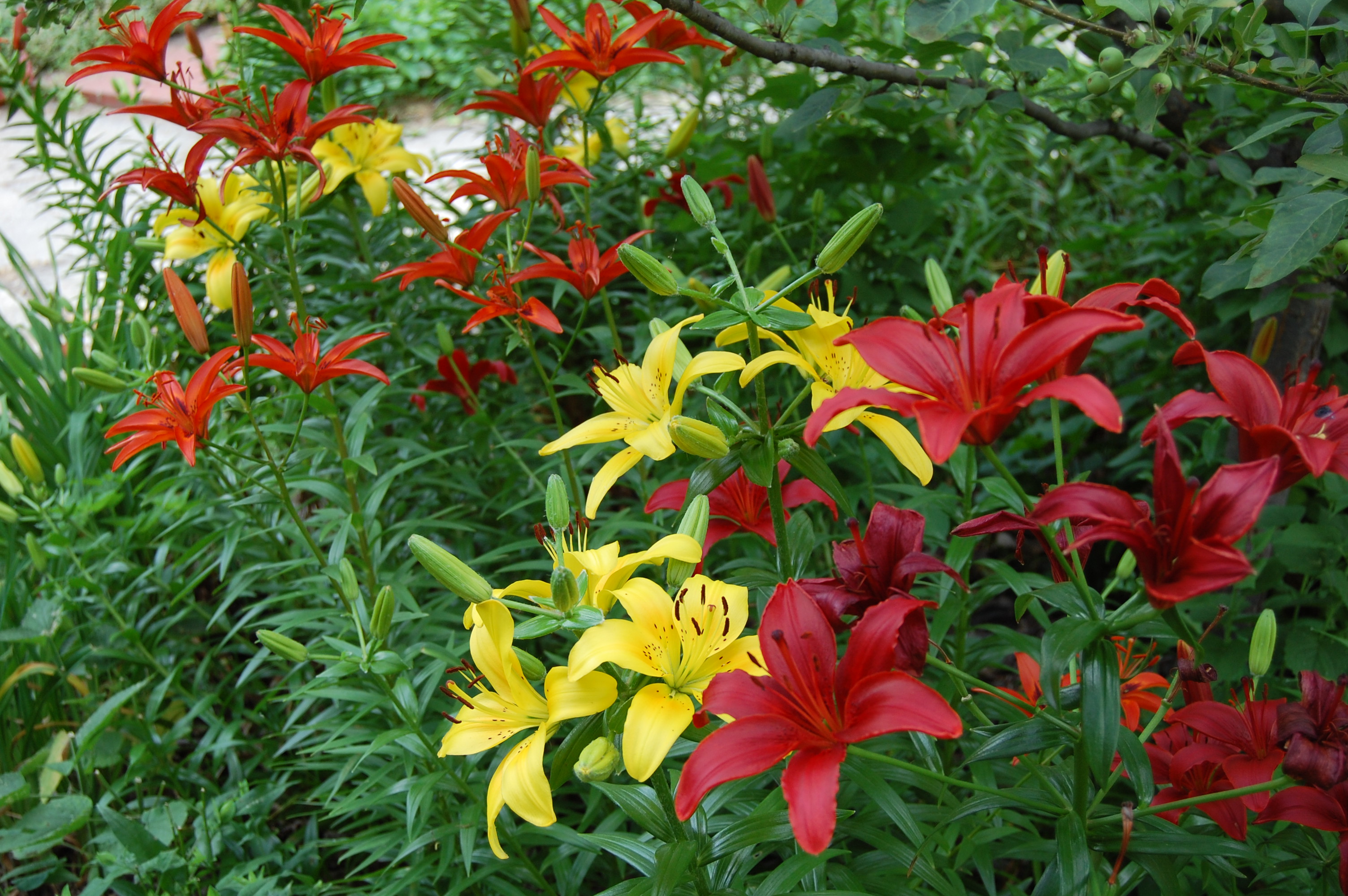
My Asiatic lilies are approaching their peak. I ordered 50 lily bulbs eight years ago and planted them around the dripline of an old eastern red cedar that I had limbed up. This was a silly thing to do, I later realized, as the lilies struggled with the competition from the cedar. Eventually I removed the cedar and replaced it with a much smaller crabapple tree. Subsequently, the lilies started naturalizing and looking much better.
So, without further ado, Gardeninacity’s 2012 Asiatic lilies:
For the last year or so I’ve been taking classes at the Chicago Botanic Garden (CBG). I skipped the April/May classes because that is our busiest time at work. My goal is to get a Certificate in Garden Design, though I’ve got a very long way to go.
Linnaeus statue at the CBG’s Discovery Garden.
Monday night I started on my new course. I was supposed to start the Monday before last. In fact, I had taken the day off so that nothing would interfere with getting to the first class on time.
Only thing was, I got so caught up in working on the garden that I forgot I had a gardening class that evening. How’s that for irony?
Anyhow, the class is on Modern Garden History. It’s taught by Barbara Geiger, who also teaches at the Illinois Institute of Technology. She’s a very knowlegable and entertaing lecturer (I’ve already taken the Early Garden History class with her). There are about 10 people in the class, a diverse and interesting group.
Most of the CBG classes are held here at the Regenstein Center.
I’ve got to tell you, any gardener who visits Chicago must go to the Chicago Botanic Garden. I love that place. Just take a look at the website. And for those of you who live in the area, I highly recommend the adult education programs.























 gardeninacity