On Top Of The World: The Dudan Garden In Walnut Creek

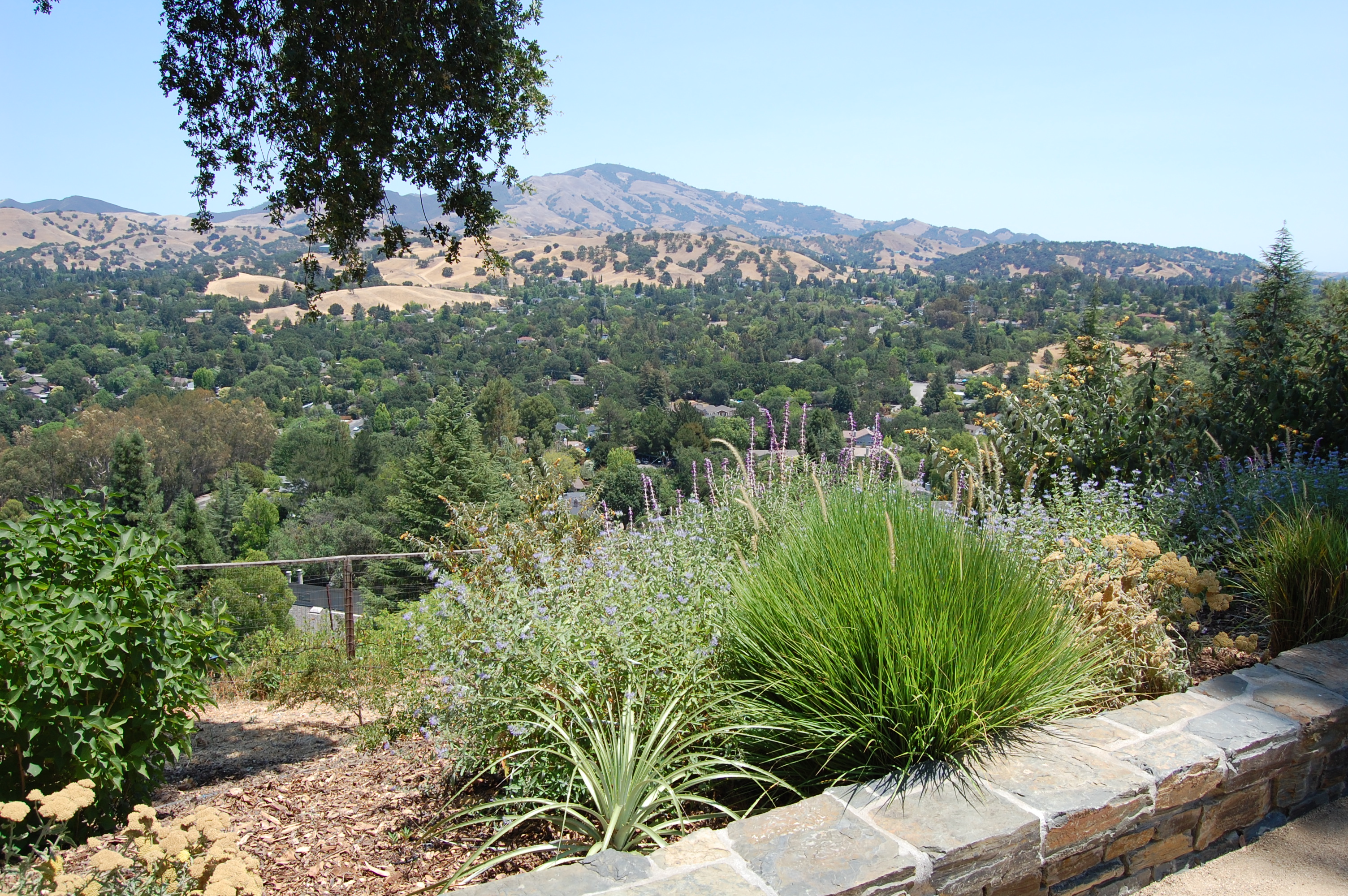
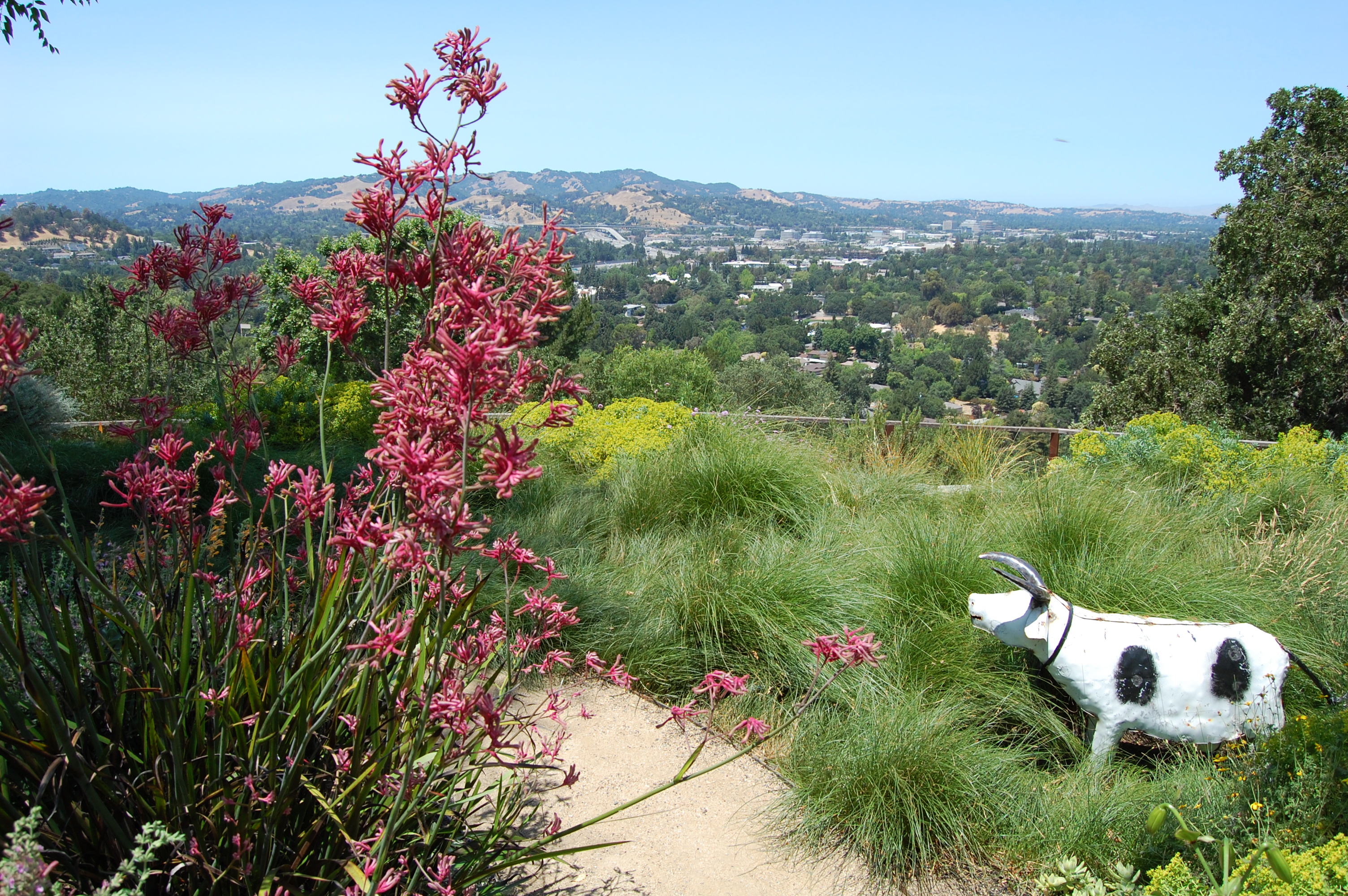
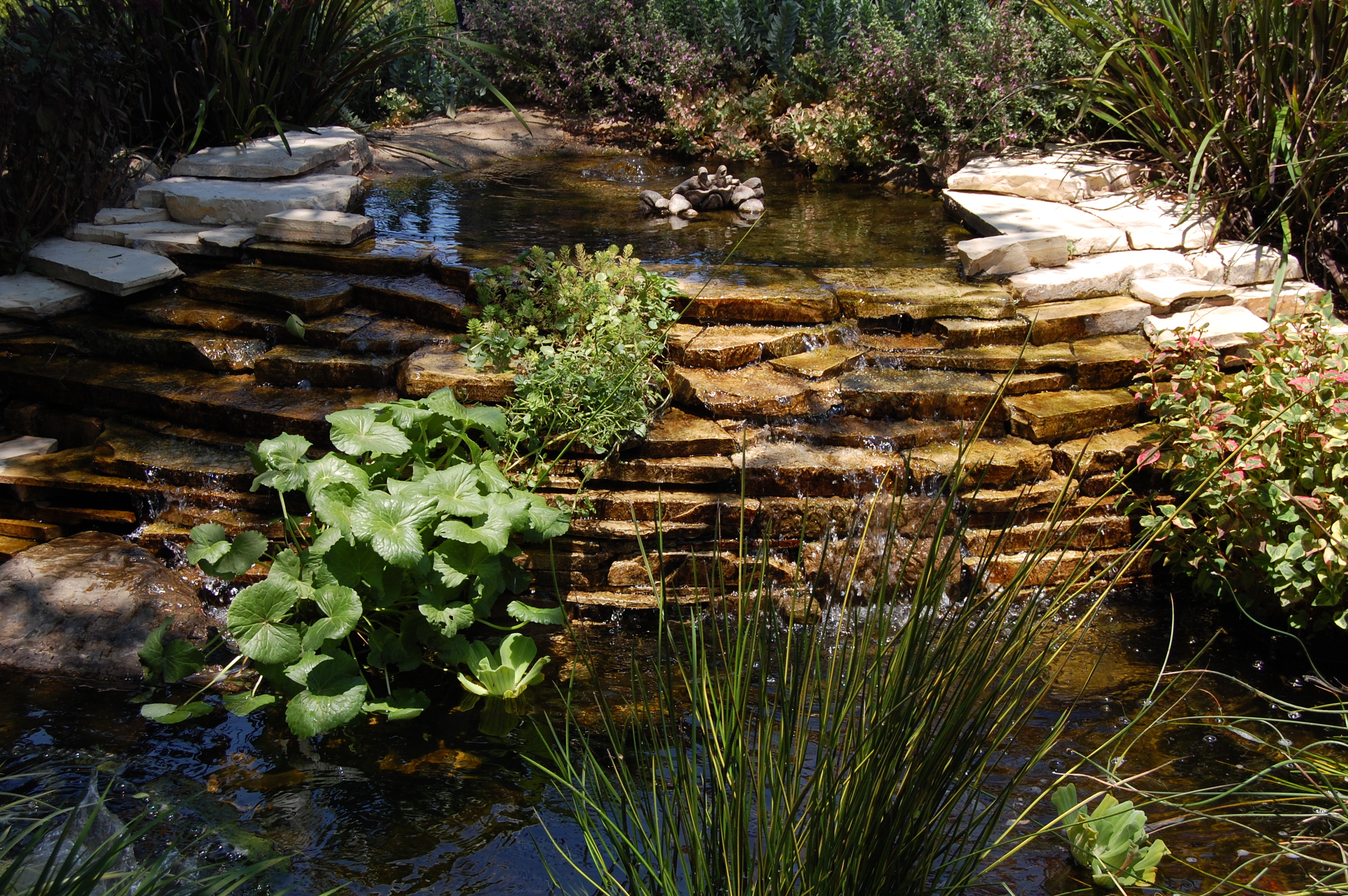
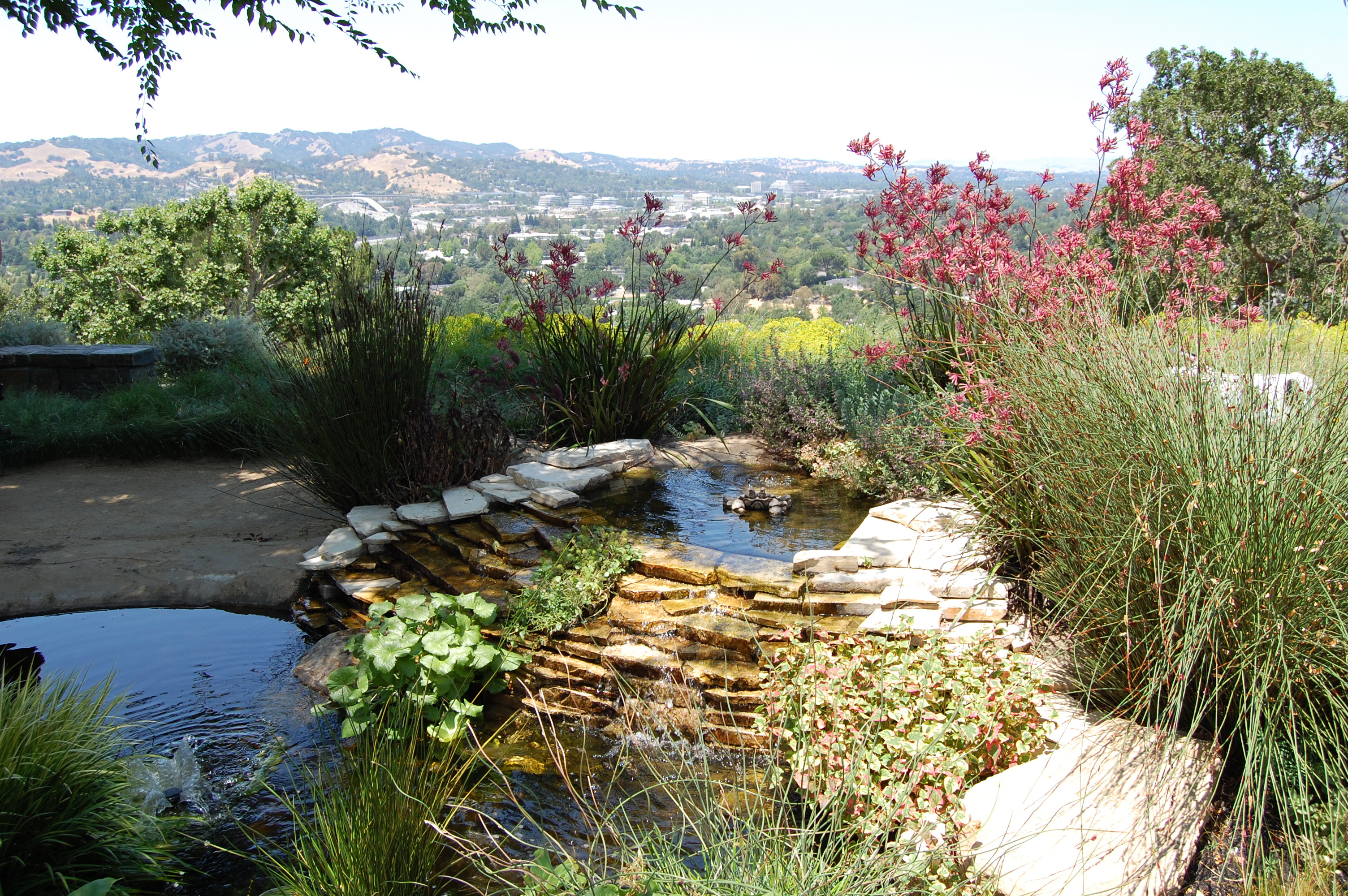
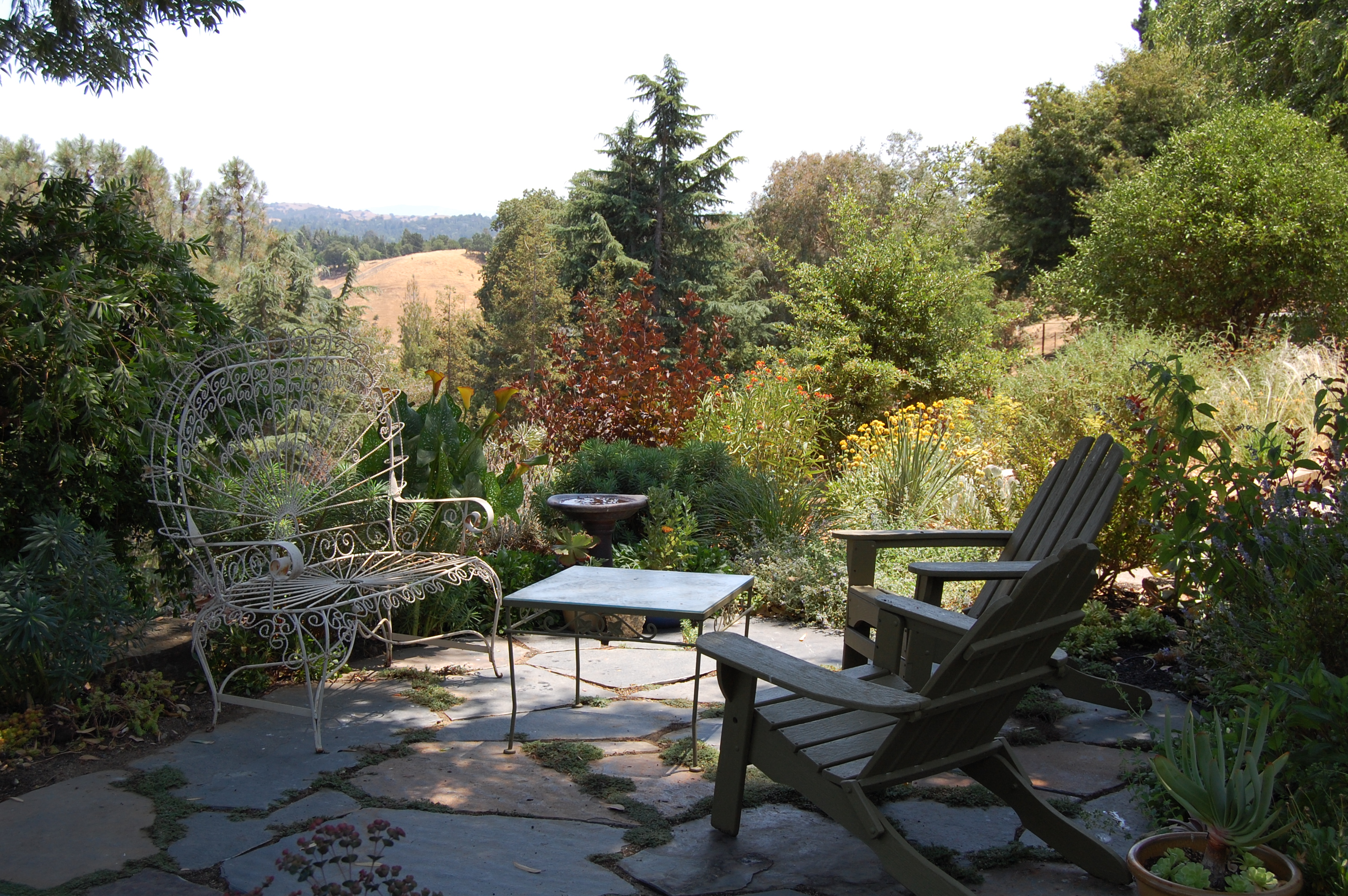
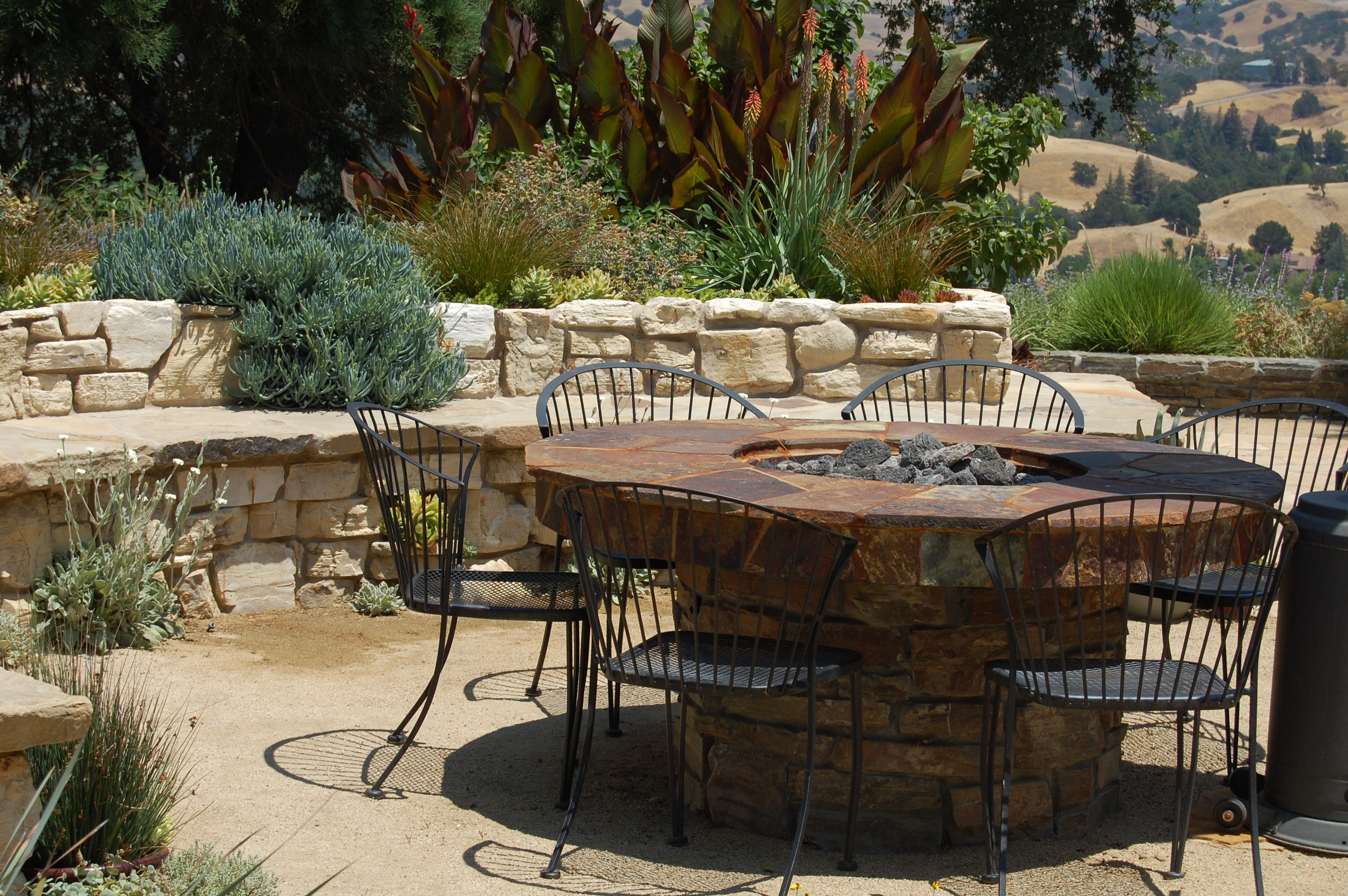
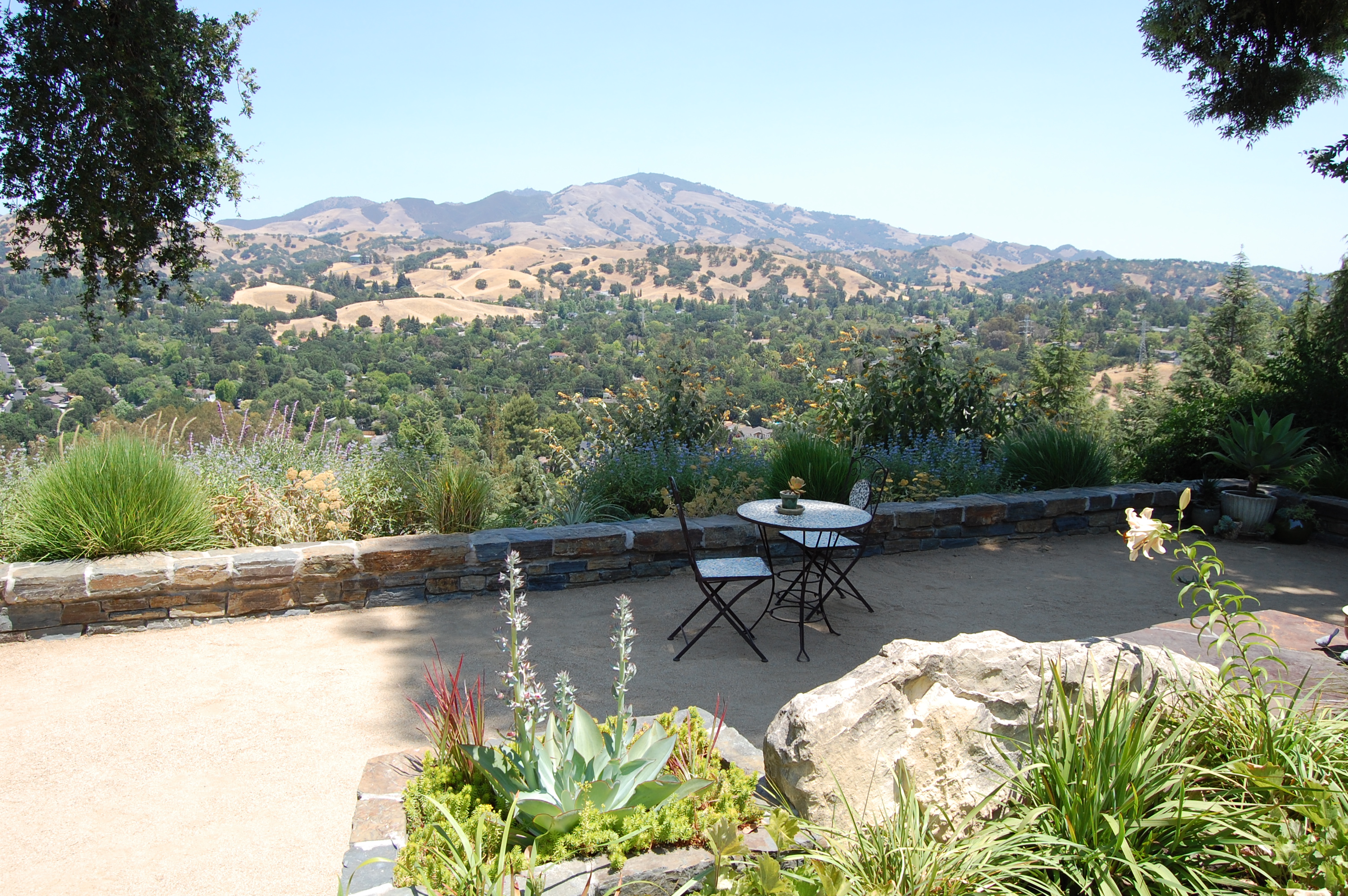
In the flatlands where I live, gardens with dramatic views are something of a rarity. I was left pretty much speechless, as a result, by the Dudan garden in Walnut Creek. For me, the dominant features of this garden were the far off hills, stone, and water.

California Garden

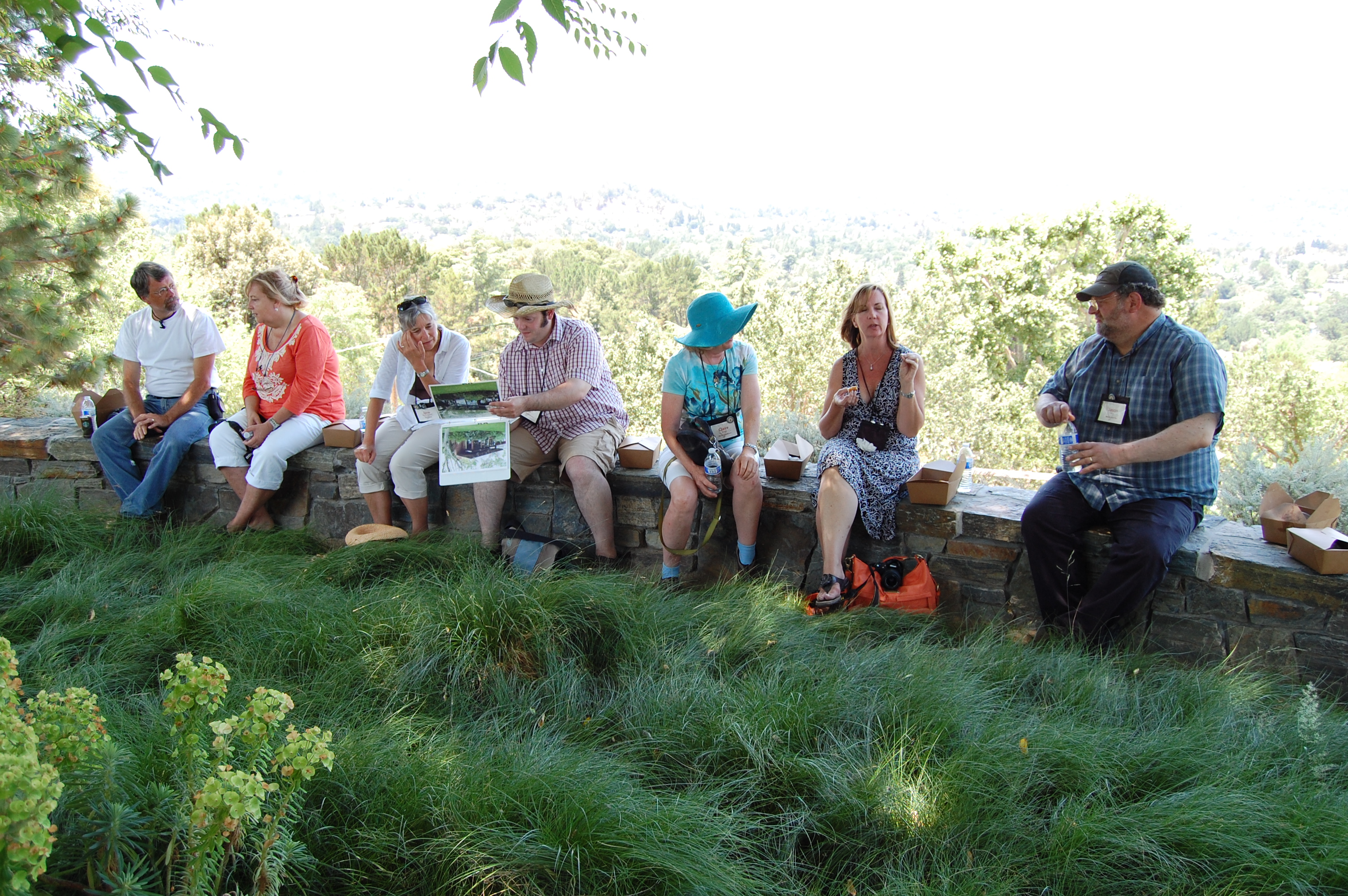
It was a very hot day – this was just after we had seen the Ruth Bancroft Garden. There was perhaps a touch of grumpiness among the Flingers when we arrived. We needed to sit in the shade, drink some cold water, and eat lunch. Thanks to the excellent work of the Fling organizers, all these needs were met.

2013-06-30 15.42.38

Ahh, that’s better. Now, back to the views.

California gardens

California Gardens

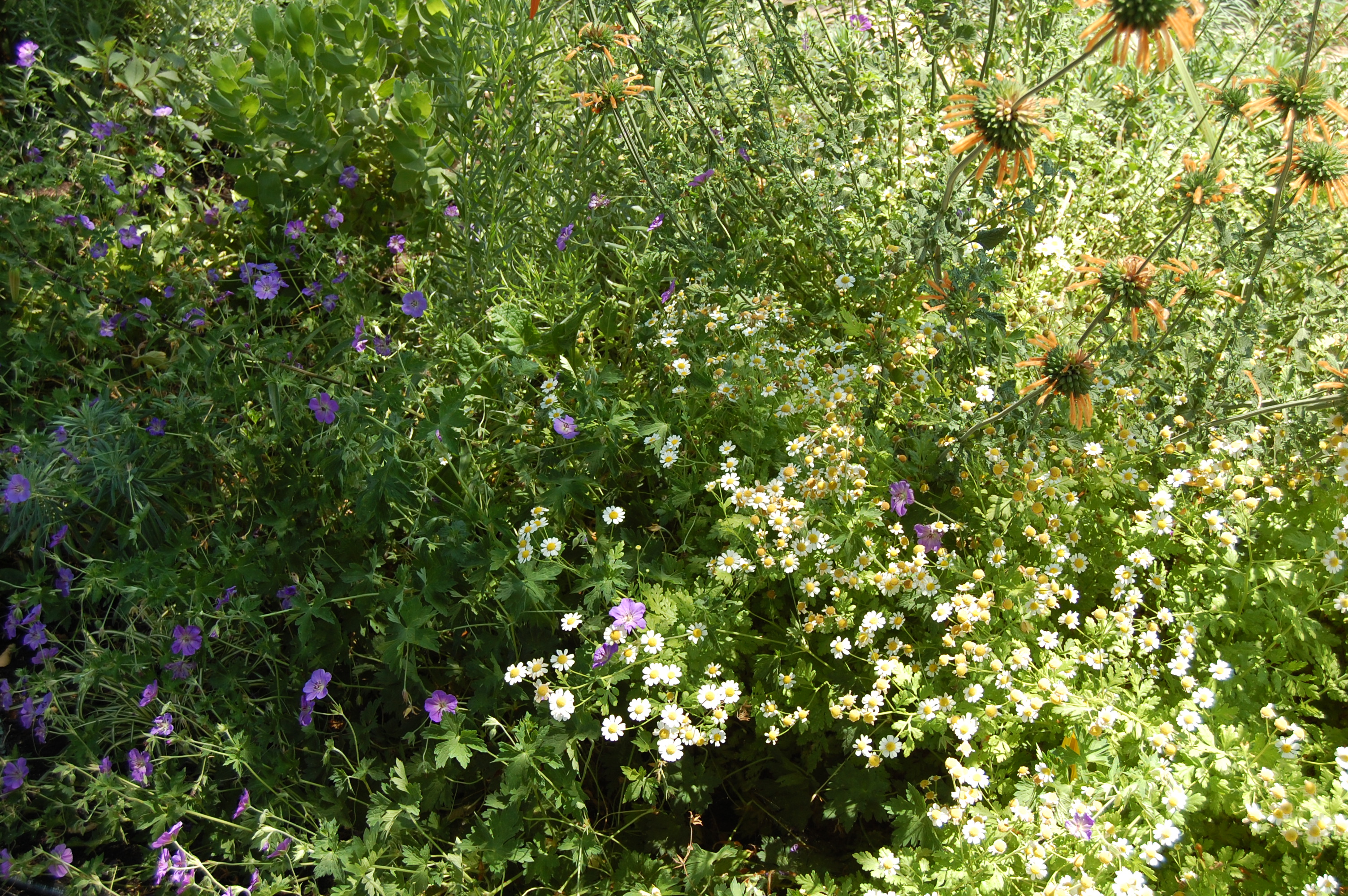
In this setting, the plants had to play more of a supporting role, providing shade and softening the stone and the tan hills that surrounded us. There were low bunch grasses and flowers in meadow-like arrangements.

California gardens

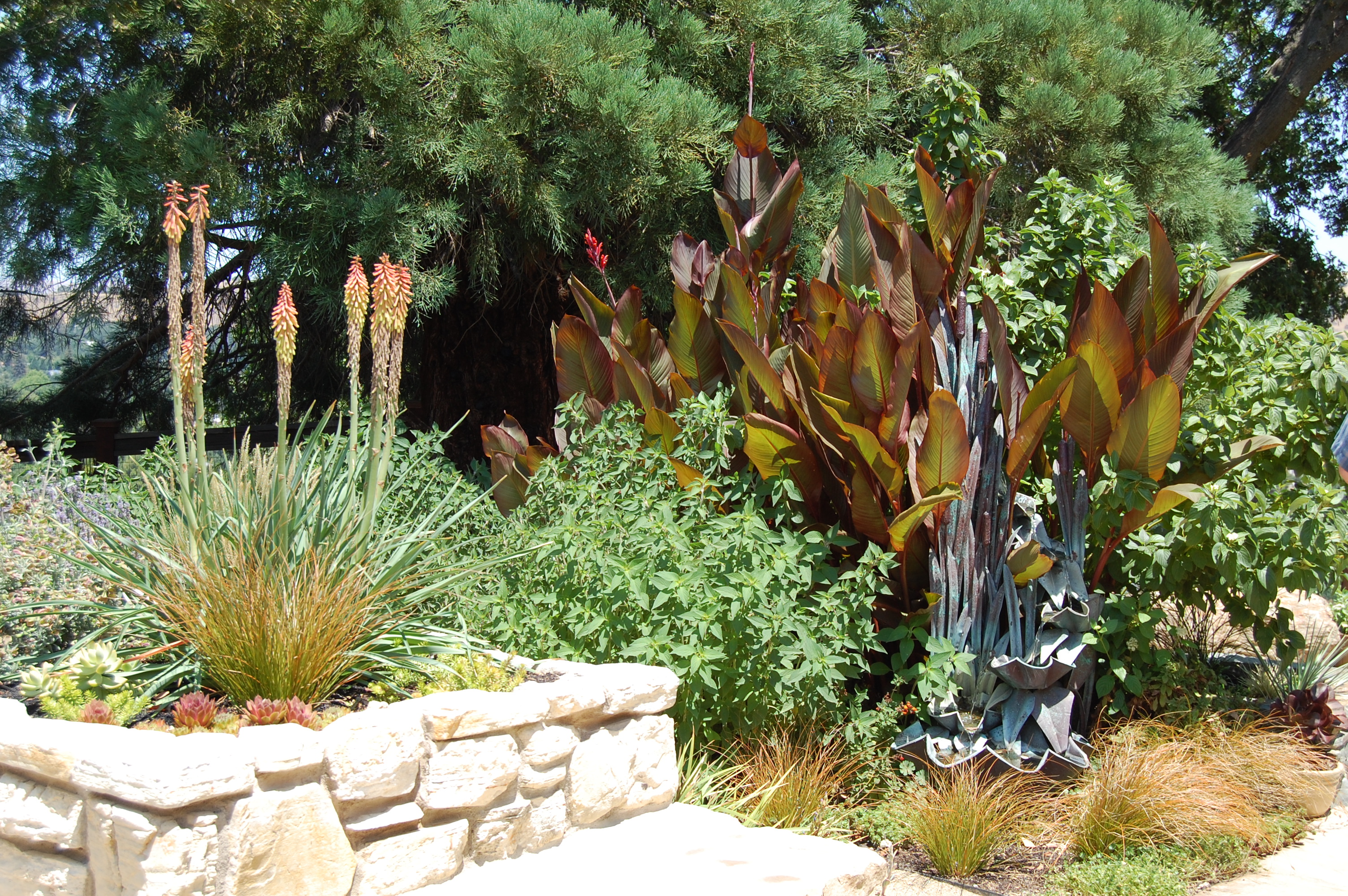
Even the more dramatic plants seemed subdued, somehow.

2013-06-30 15.48.43

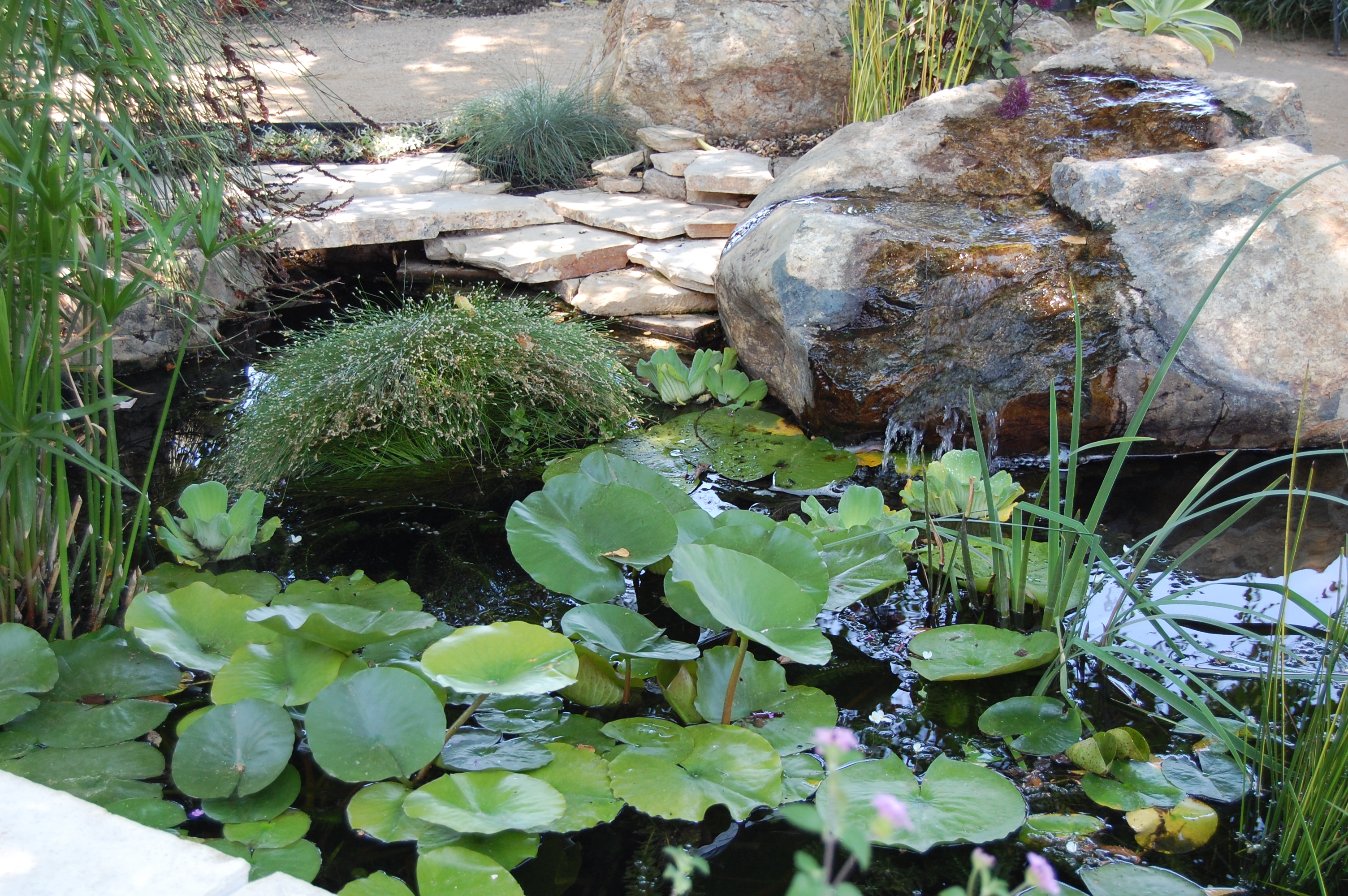
For me, the only thing that could really demand attention in those surroundings was water. This garden had plenty of water – water flowing down stone steps. bubbling over boulders, and forming tranquil pools. In a dry landscape, water stood out. It is just as elemental as the hills and stone.

California Gardens

California Gardens


California Gardens

california gardens

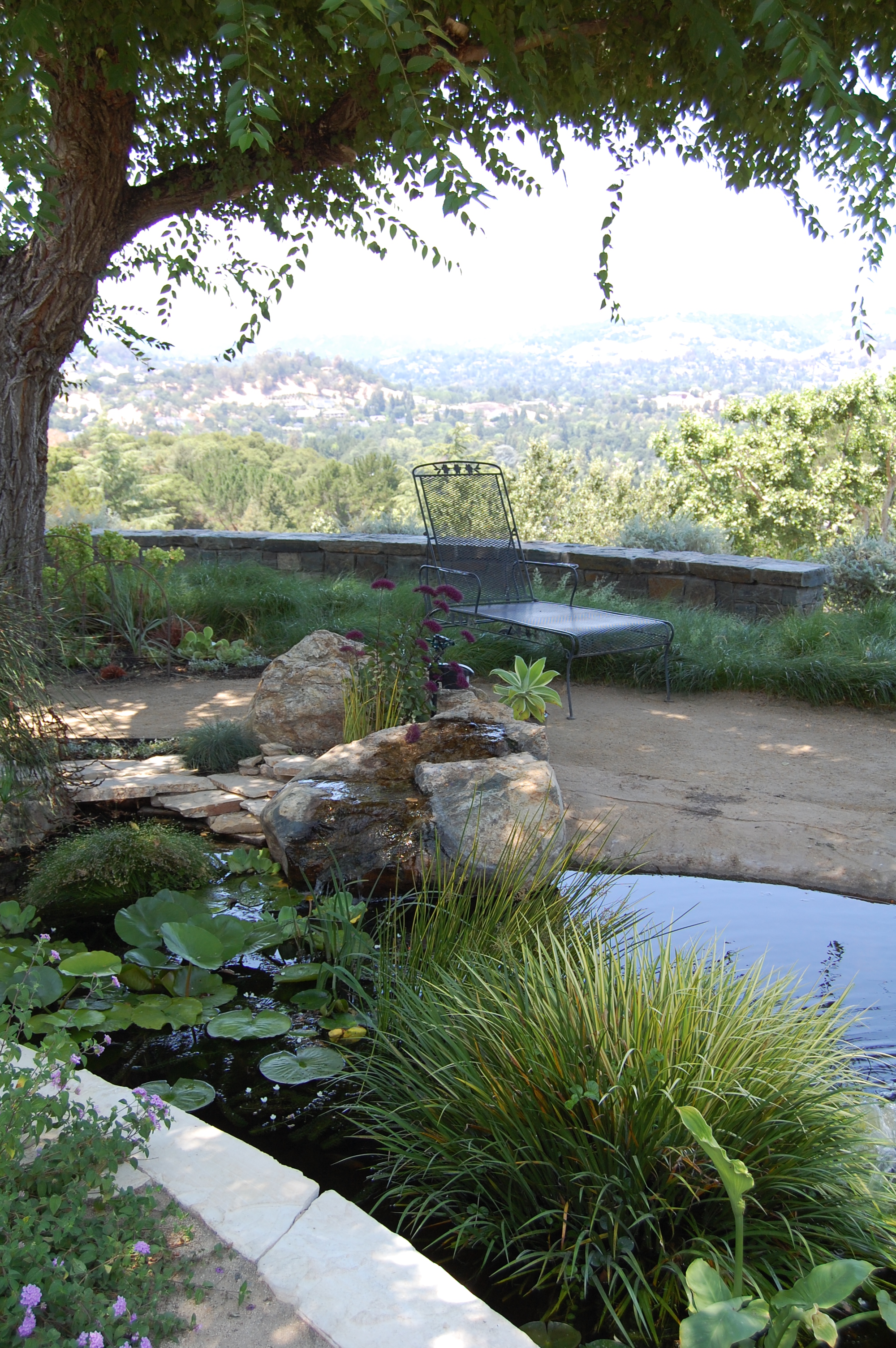
I was also struck by how much this garden was built to be a space for people to live in, not just walk through. There was space to relax and read.

California Gardens

To talk things over and consider the state of the world or our loved ones.

California Gardens

And, of course, to sit down to a meal.

California gardens

I could see having my breakfast and morning coffee out here.

California Gardens

This garden was designed and installed by BuenoLuna Landscape Design and Floradora Gardens, working with the home owners. Though it is a fundamentally different sort of garden from what I am used to, I covet it fiercely. Not perhaps my absolute favorite among the gardens I saw at the Fling, but definitely among the top three.

Foliage Follow-Up: July 2013 (Now With Elderberries!)

Foliage Follow-Up is a meme sponsored by Pam at Digging which highlights the importance of foliage, and also helps us avoid putting all our mid-month photos in the GBBD post.

So, I got some real nice foliage for ya! First of all, you may remember how I cut back my Blue Star (Amsonia tabernaemontana) and Blue Wild Indigo (Baptisia australis) by about 1/3 after they were finished blooming. At first they didn’t look too good, but I am here to tell you they have recovered nicely. First, the Blue Star.

Amsonia
Blue Star is in the lower right corner.

And now the Blue Wild Indigo, on the left hand side of the photo.

Blue Wild Indigo
Blue Wild Indigo is left of the front steps.

I would say Tracy DiSabato-Aust’s advice to cut these guys back was right on the money. Not only are they less floppy, but they don’t obscure their neighbors who may be entering their own season of greatest interest. On the other hand, you do lose the seed heads, but life is full of tough choices.

The ‘Northwind’ Switchgrass (Panicum virgatum) has reached a good height. Here are two nice clumps in the sidewalk border. No panicles yet, though.

Switchgrass 'Northwind'
Switchgrass ‘Northwind’ in the front sidewalk border.

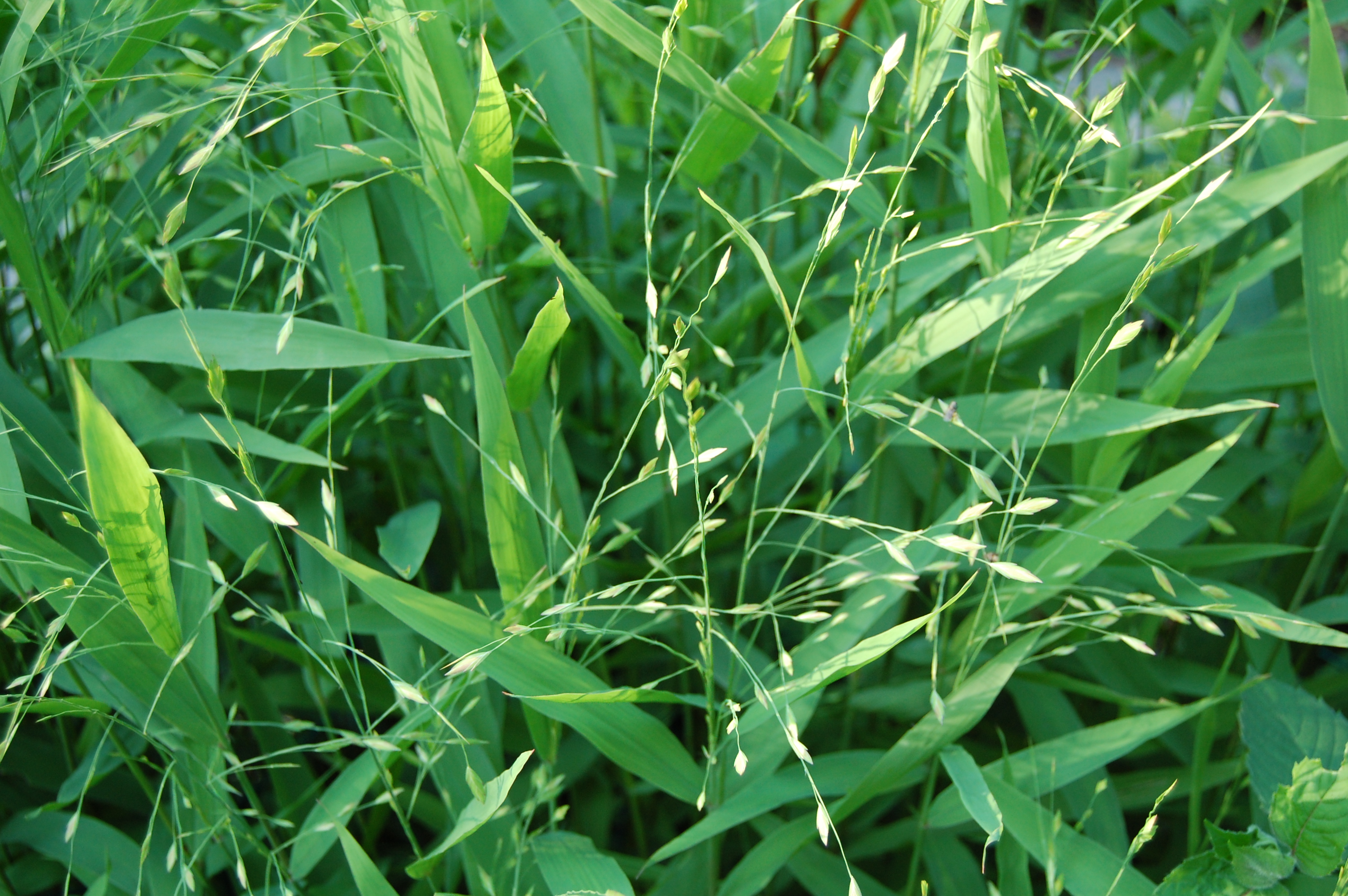
Seedheads are forming on the Northern Sea Oats (Chasmanthium latifolium).

Northern Sea Oats

On the east side of the house, the Red Elderberry (Sambucus racemosa L.) is very happy. Its covered with bright red berries, and the foliage has a vaguely tropical feel.

2013-07-04 11.56.41 red elderberry


Red Elderberry

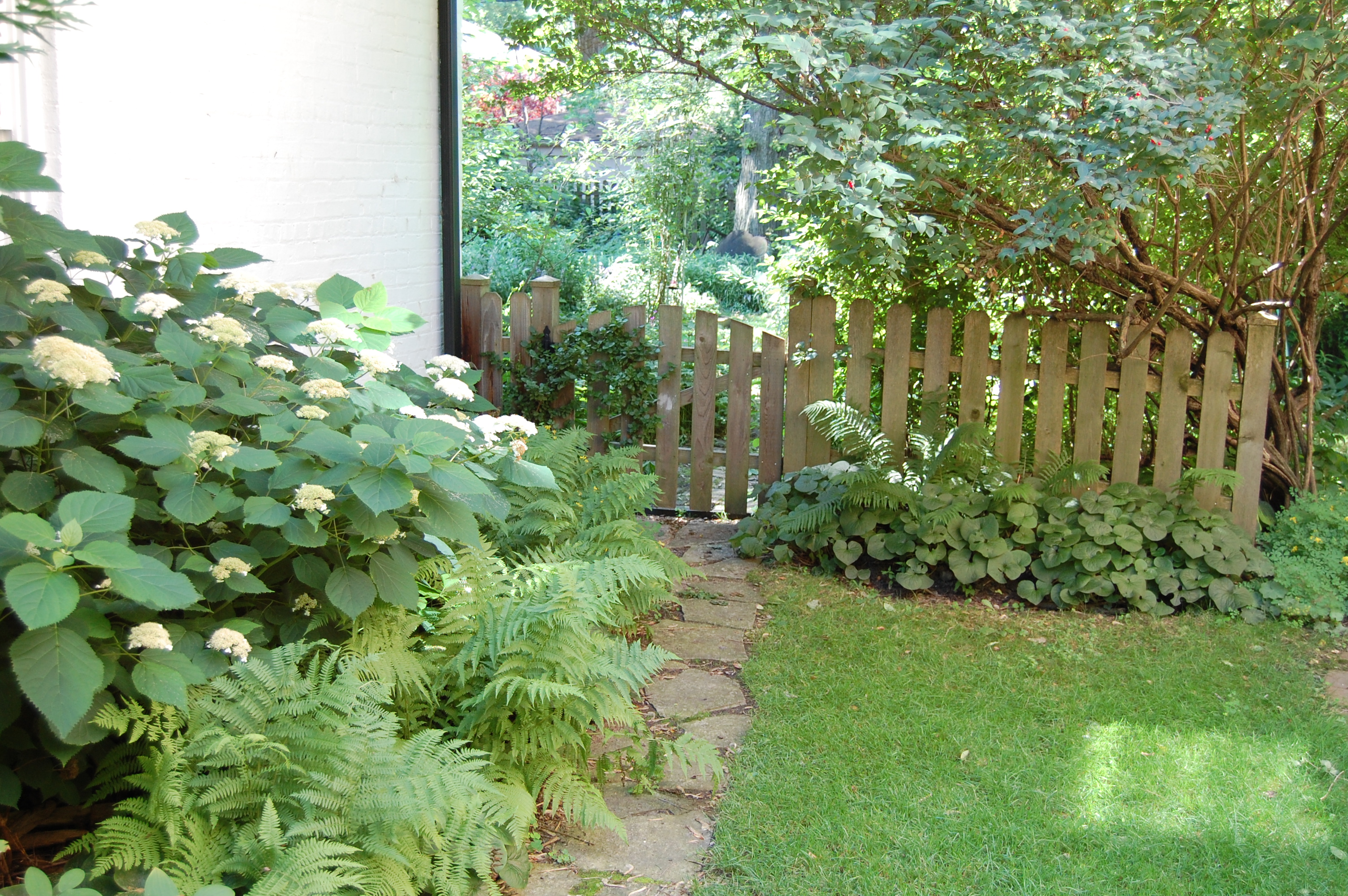
The path to the back garden is over on the west side of the garage. Lady Ferns (Athyrium felix-femina) and Wild Ginger (Asarum canadense) crowd the stone path. I really need to widen this path.

Lady Ferns, Wild Ginger,

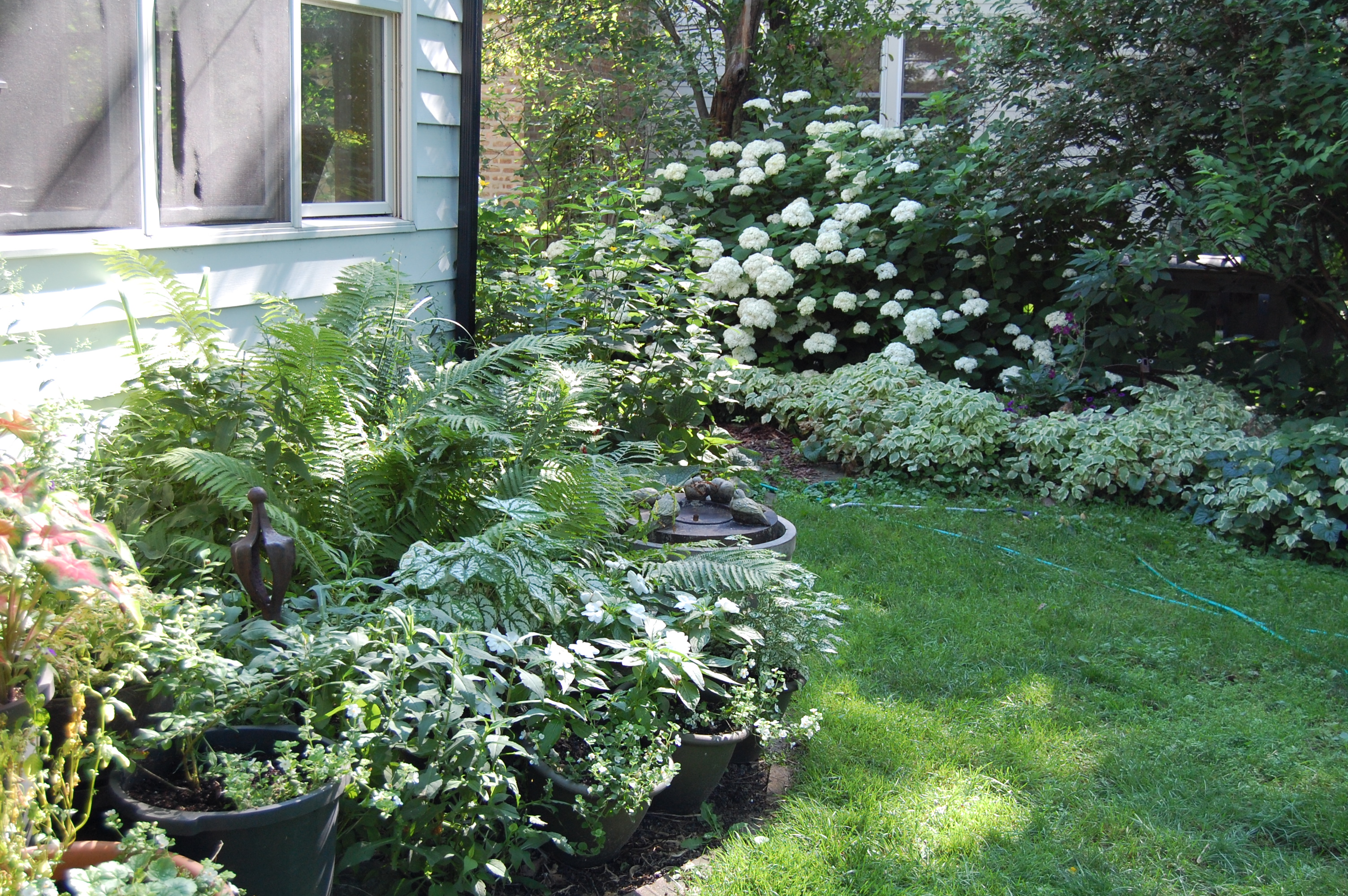
There’s nice ferns in the back, including this unknown species growing against the back porch.

Ferns

I also have – please don’t report me to the authorities – Variegated Bishops Weed (Aegopodium podagraria ‘Variegatum’). Honestly it hasn’t been too hard to control, and I always pull off any seed heads that appear.

Bishops Weed at the base of the Hydrangea.

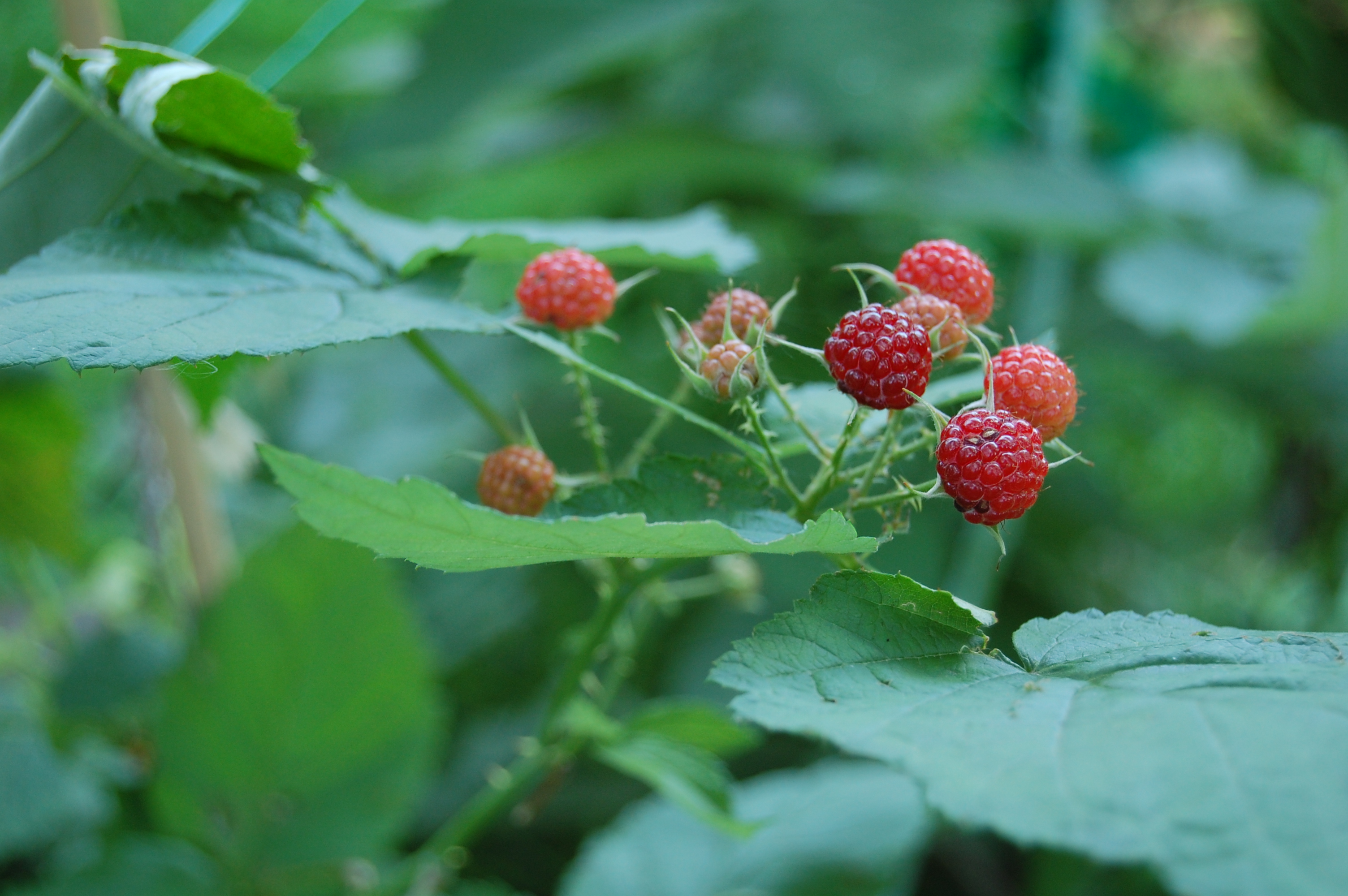
On, and there are some wild black raspberries (Rubus occidentalus) ripening in the little wild patch I have underneath the Silver Maple tree (Acer saccharinum).

Black Raspberries Unripe

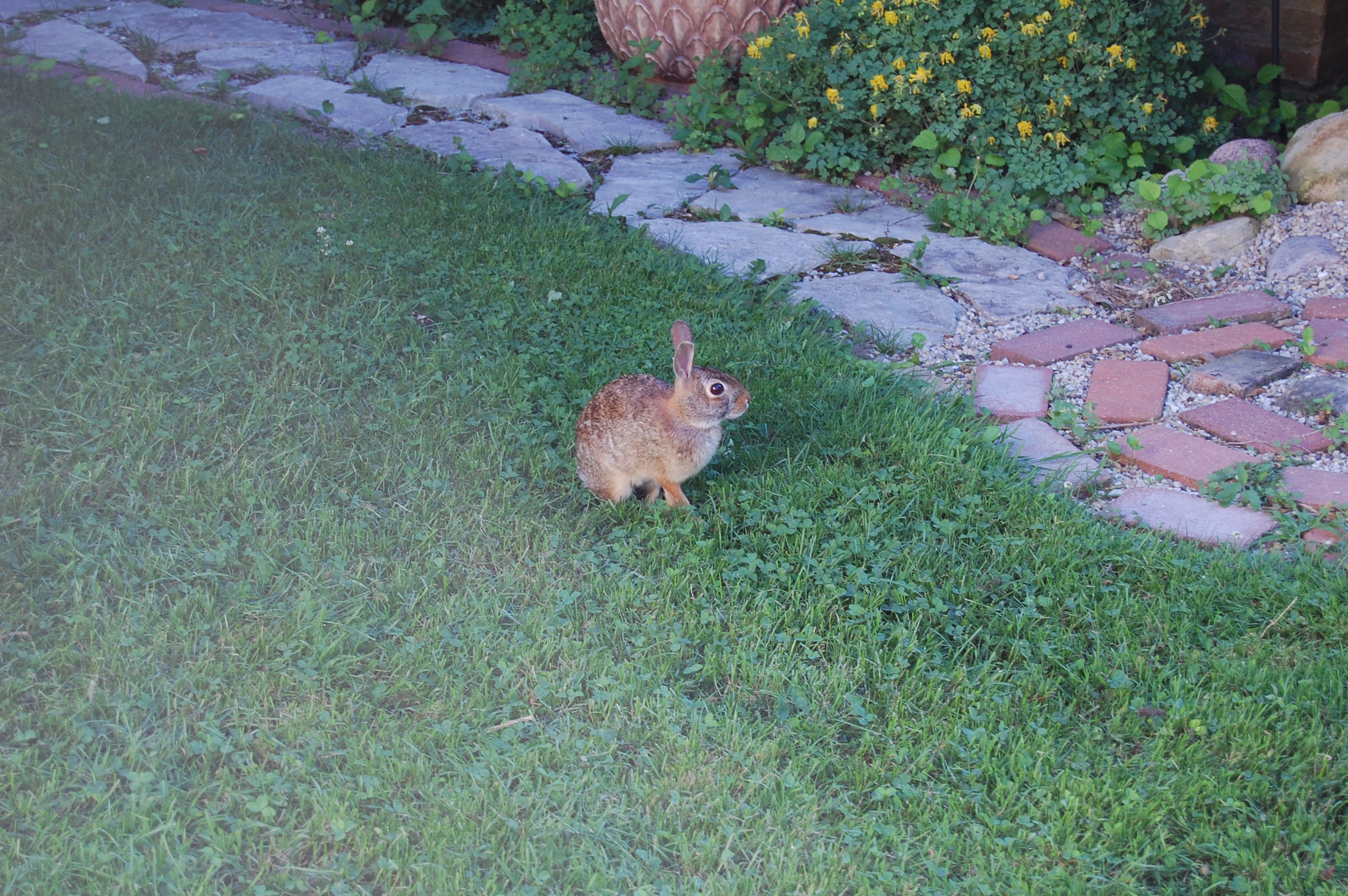
All in all, things are progressing nicely on the foliage front at Garden In A City. No thanks to this guy and his far too numerous co-conspirators.

2013-07-13 18.39.08

Hope that the foliage in your garden is making you happy these days.


Garden Bloggers’ Bloom Day: July 2013

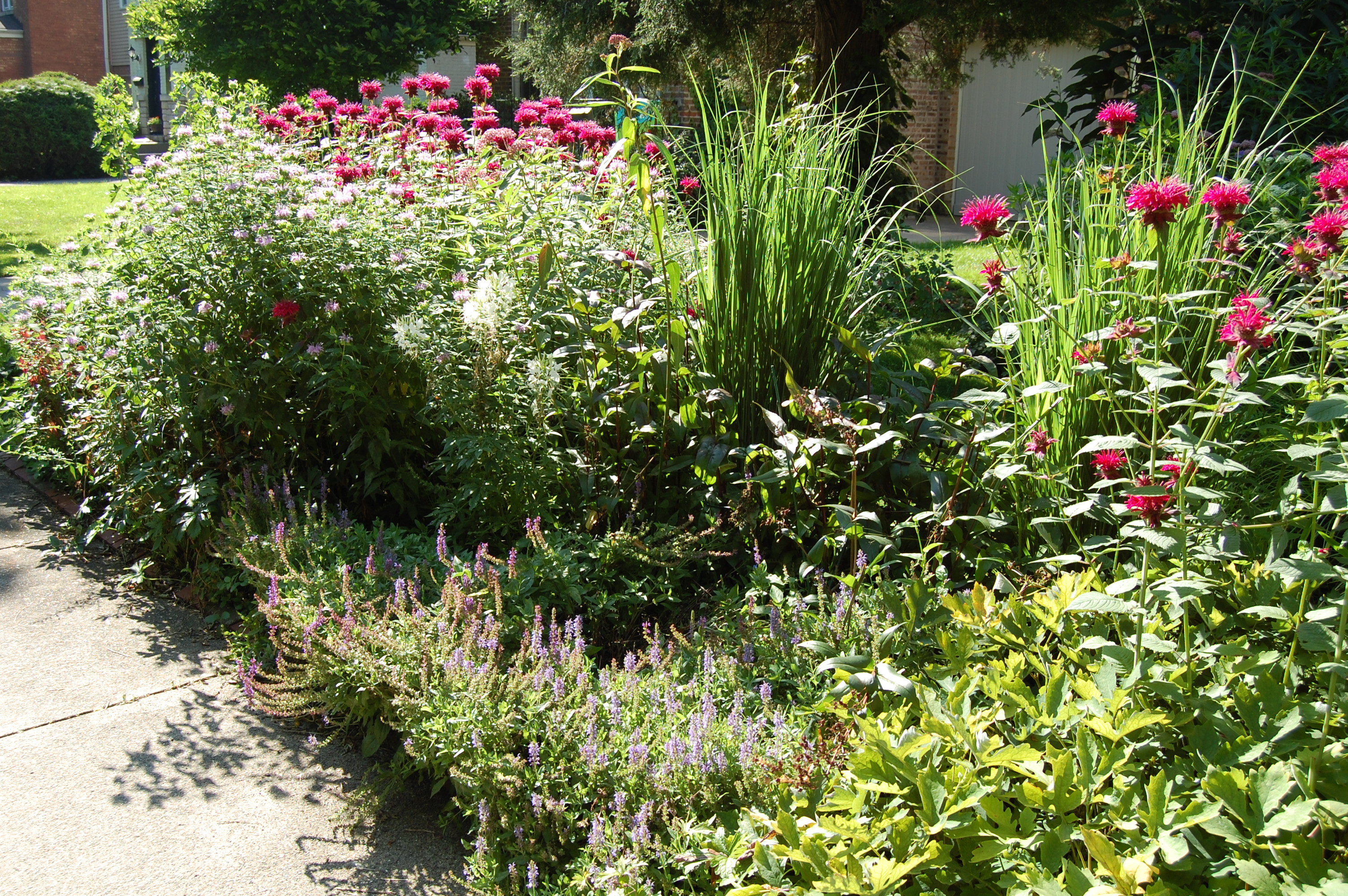
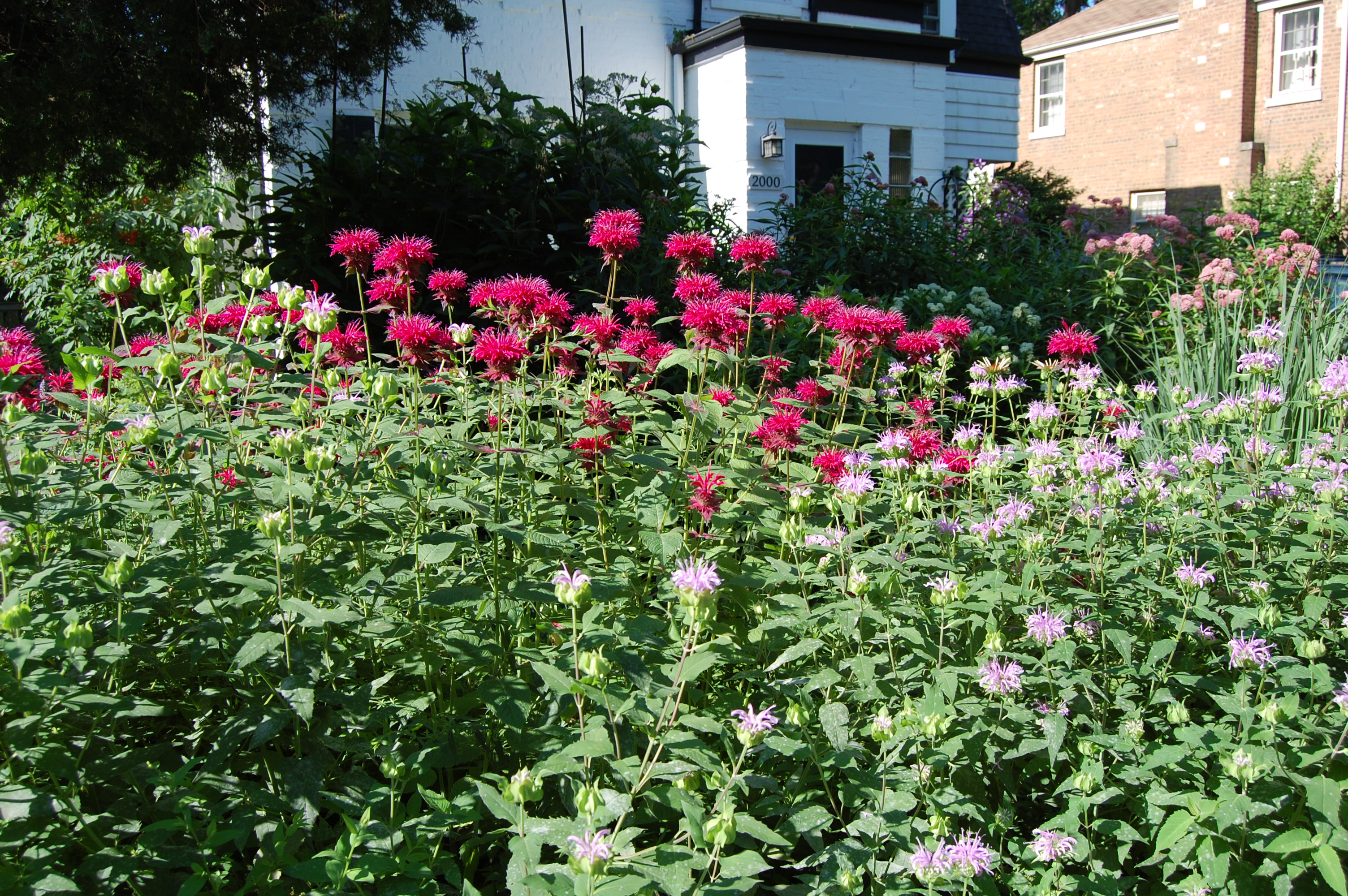
Is it already the middle of July? Hard to believe, and yet it must be, because the mid-summer flowers are blooming their hearts out. I’m actually pretty happy with how the garden looks right now. Let’s cover the highlights, starting at the sidewalk border. The Monarda didyma ‘Raspberry Wine’ is at its peak, and I’d say it pairs well with the smaller lavender flowers of its cousin M.  fistulosa.

Bee Balm Raspberry Wine Wild Bergamot
The common names are Bee Balm for the luscious red flowers, Bergamot for the more demure lavender.

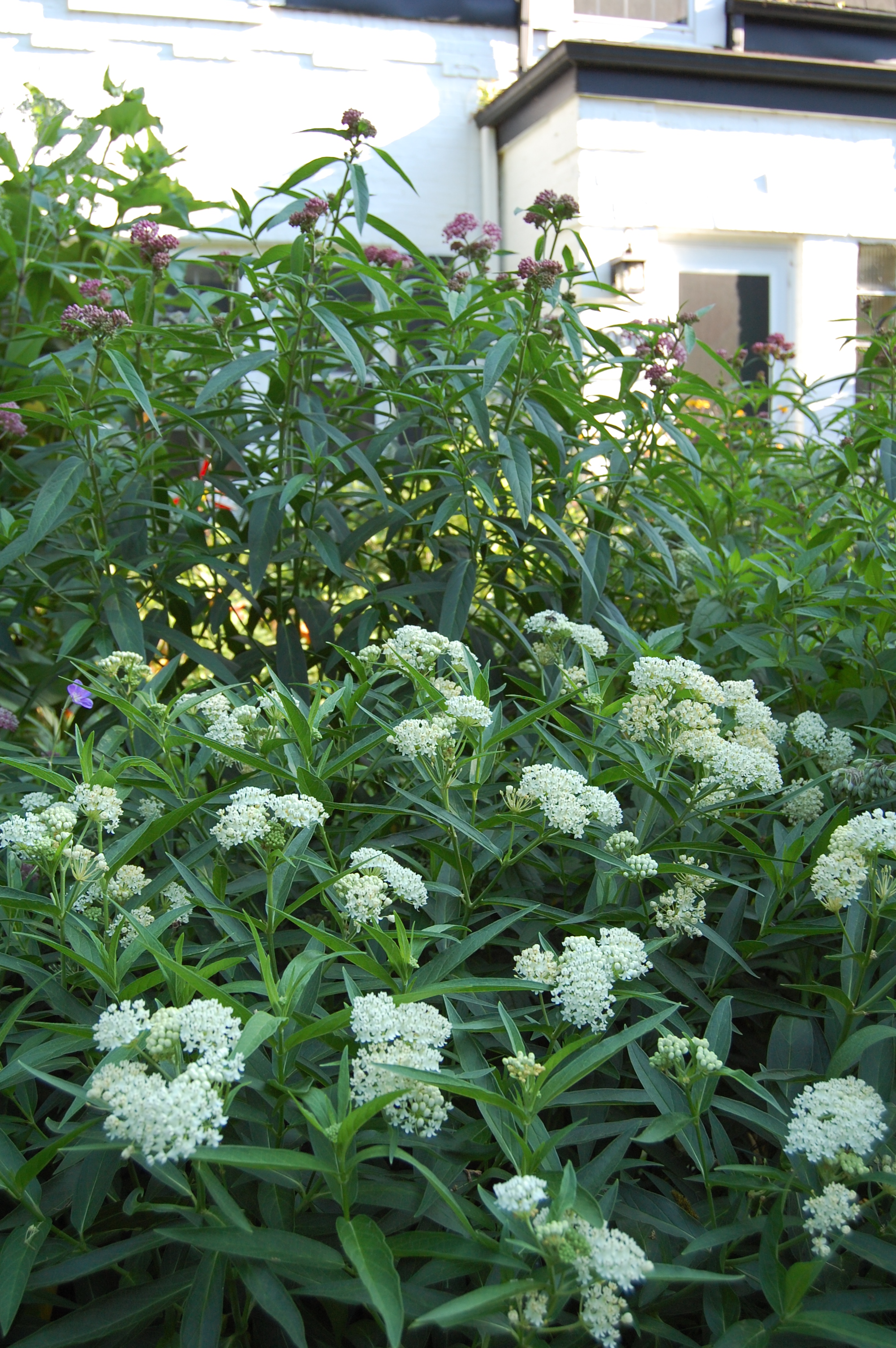
Swamp Milkweed (Asclepias incarnata) is providing most of the color in the front island bed, both the straight species and the cultivar ‘Ice Ballet’. I really should have cut back the straight species this year, with all the rain it has grown to 5-6′.  ‘Ice Ballet’ stays one to two feet shorter.

Swamp Milkweed
Swamp Milkweed
Red Milkweed Swamp Milkweed Ice Ballet
‘Ice Ballet’ with the straight species standing tall to the rear.

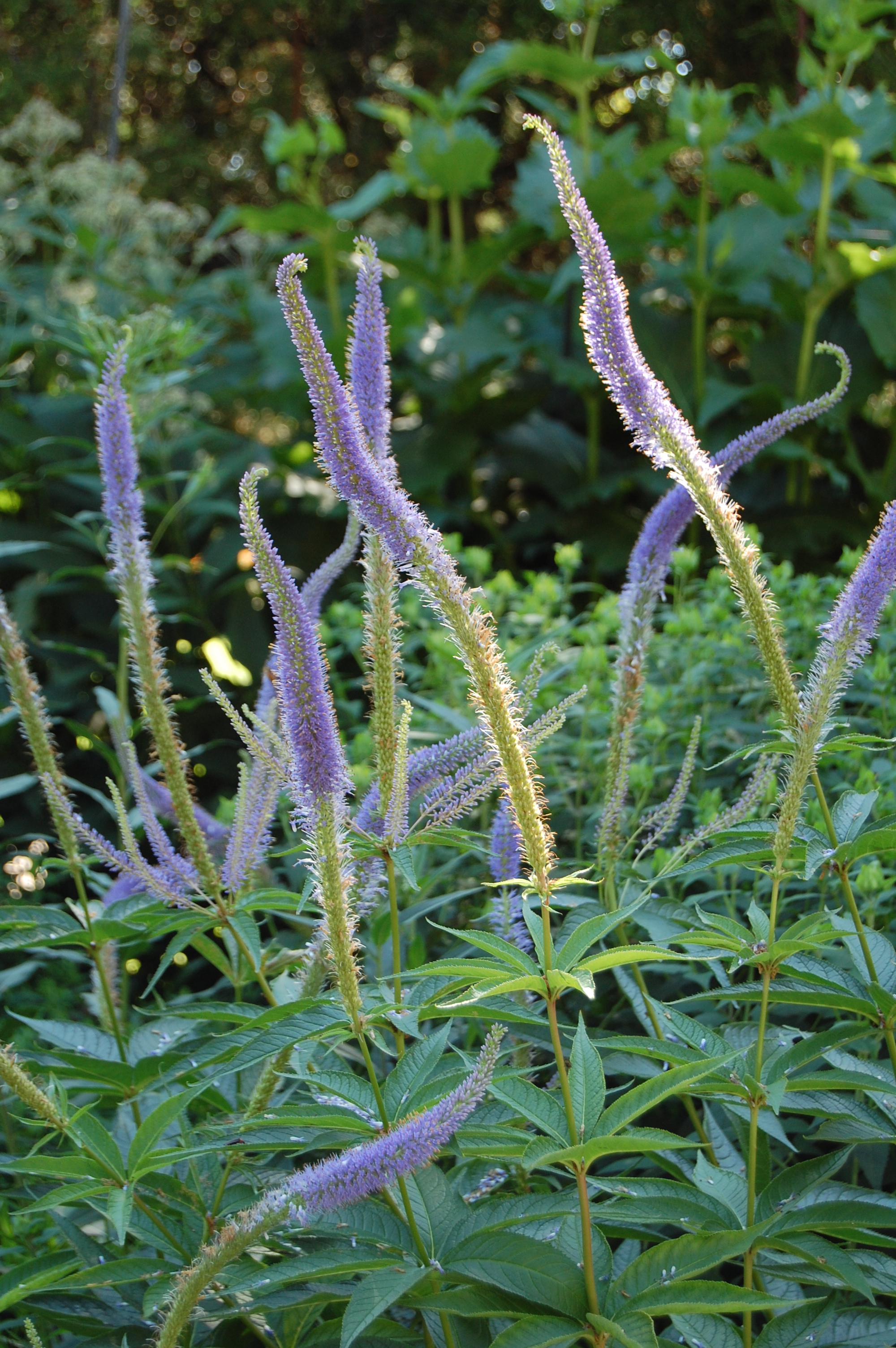
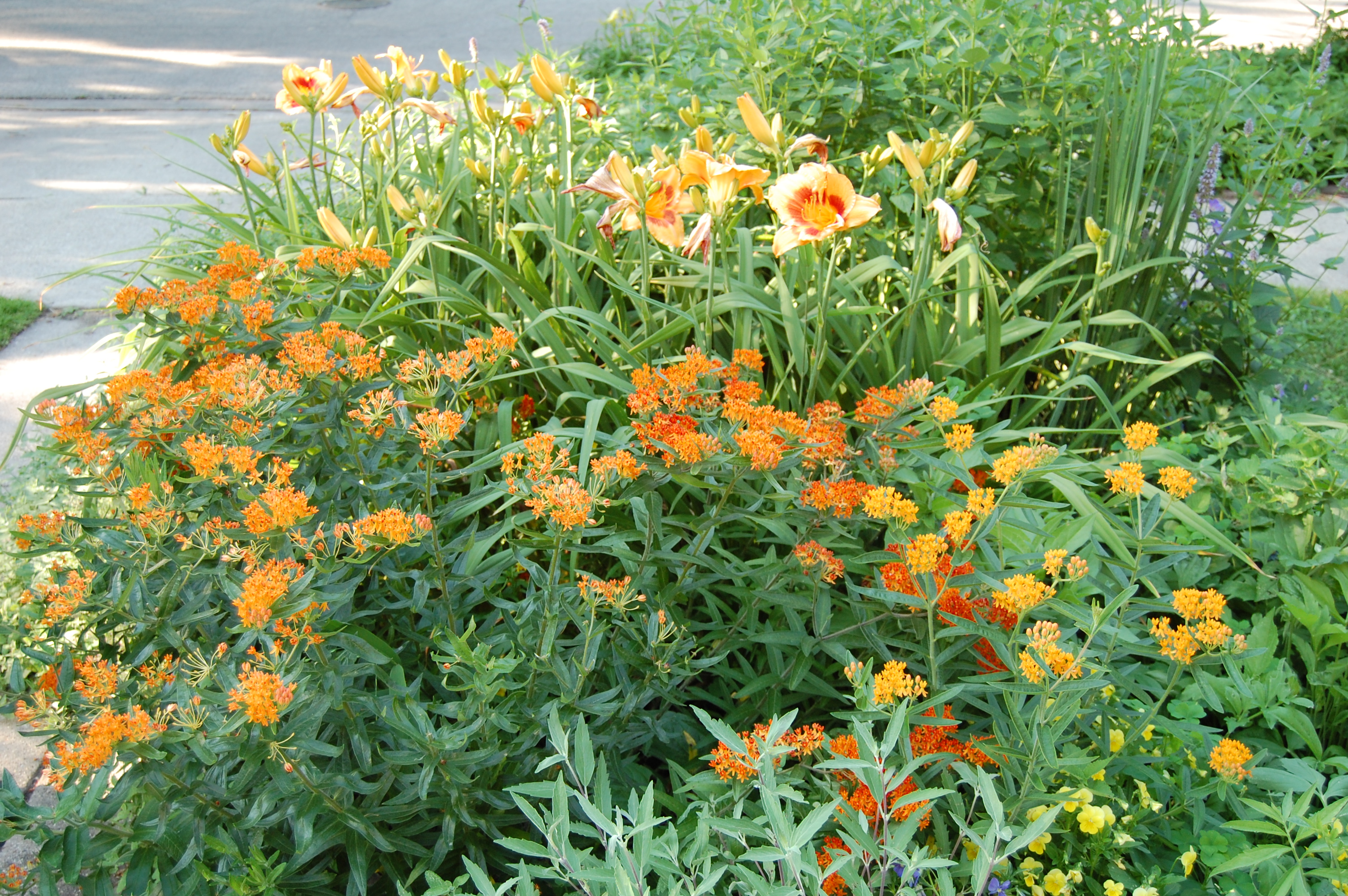
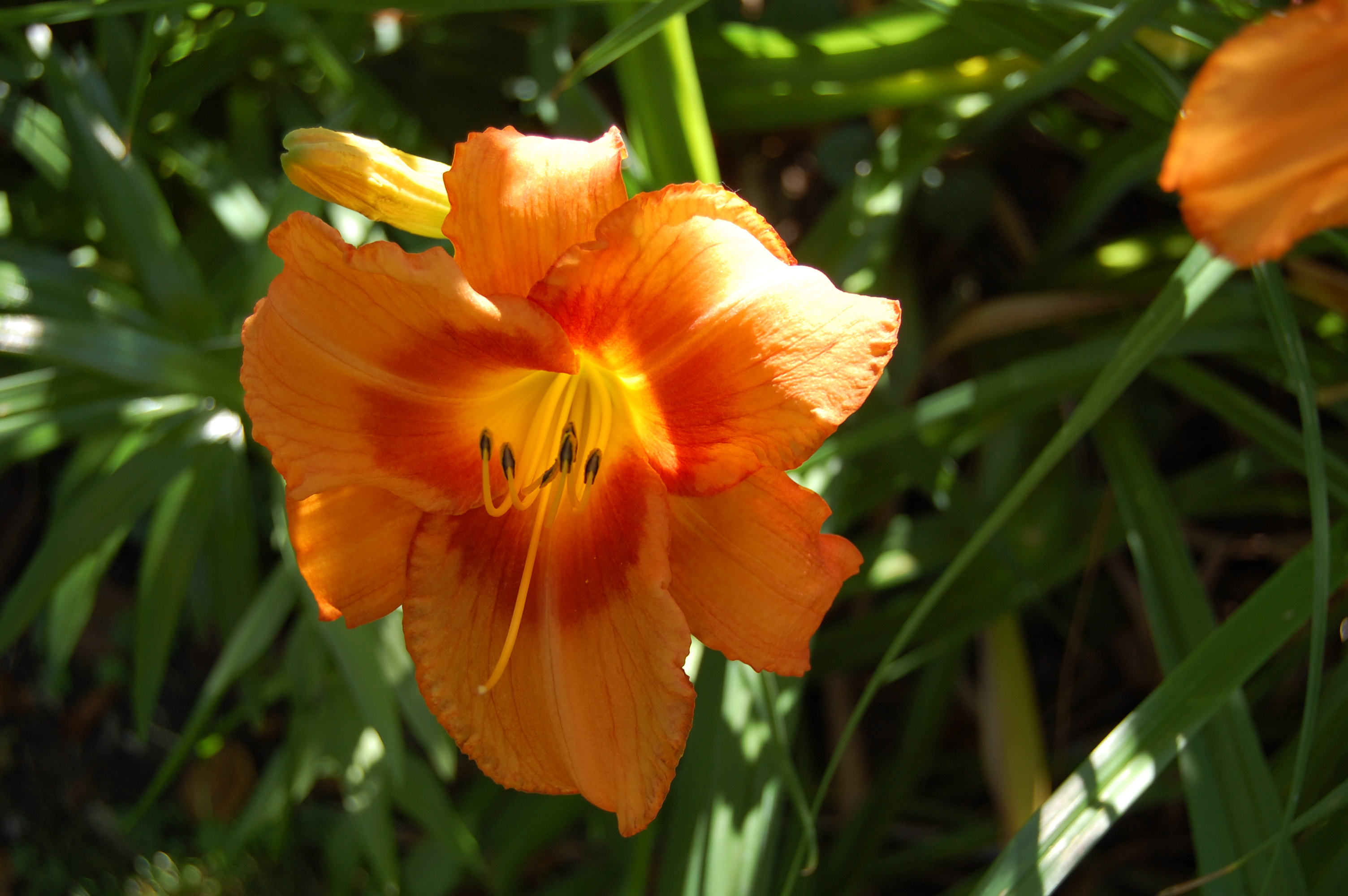
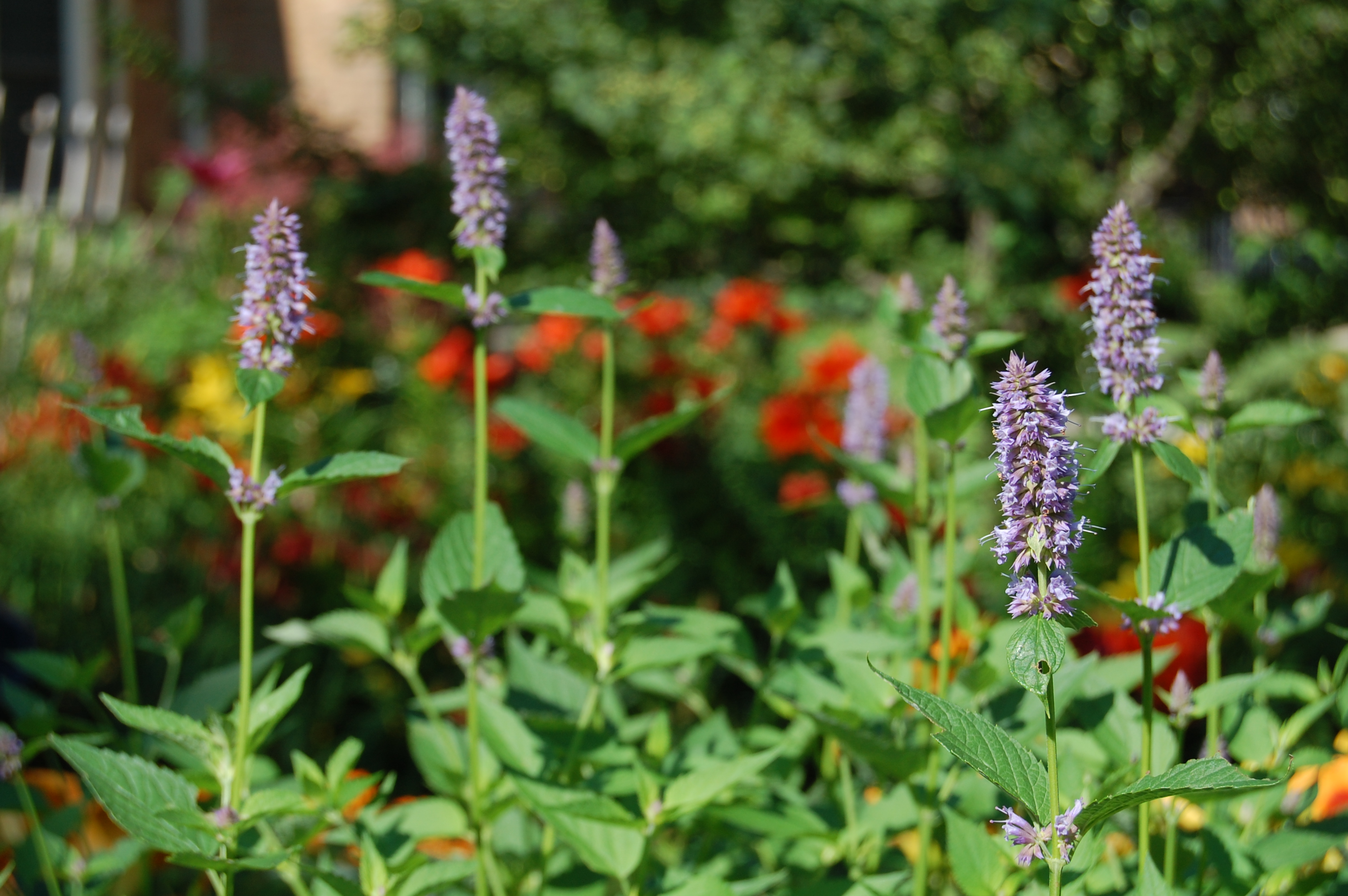
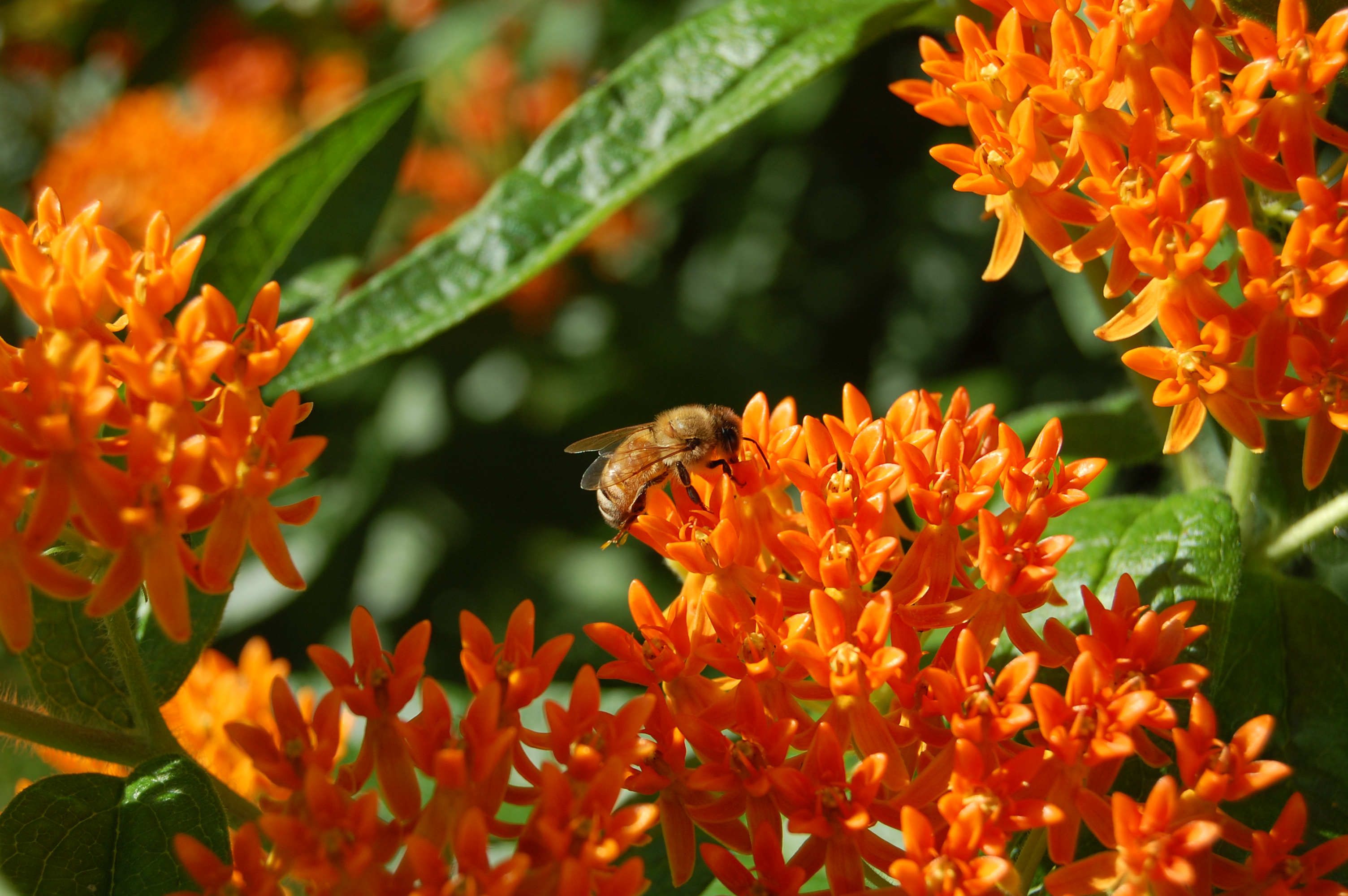
In the driveway border, Culver’s Root ‘Inspiration’ (Veronicastrum virginicum) is filling in nicely, with far more blue flower spikes than last year. They have a somewhat otherworldly look, but are still very popular with the bees. The Butterflyweed (Asclepias tuberosa) is just a bit past its prime, but is blooming together nicely with the Daylily ‘Eye-yi-yi’.  Anise Hyssop (Agastache foeniculum) is just starting to add some blue to all the orange here.

Culver's Root 'Inspiration'
Culver’s Root ‘Inspiration’
Butterflyweed Eye-yi-yi
Butterflyweed with ‘Eye-yi-yi’
Daylily Eye'yi-yi'
Daylily ‘Eye-yi-yi’
Anise Hyssop
Anise Hyssop with Asiatic Lilies in the background. The flower spikes get about twice as long.

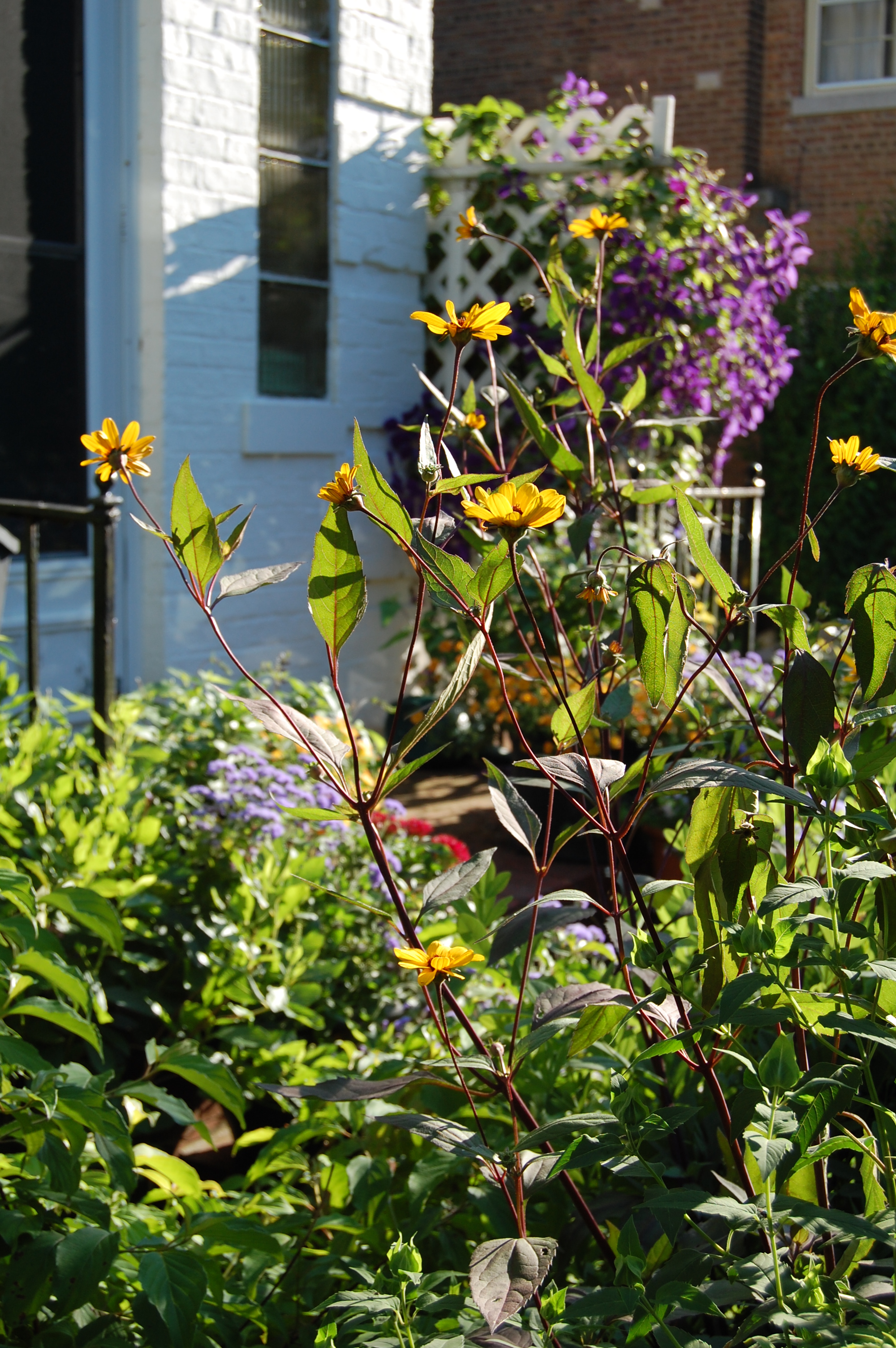
Oh, and I shouldn’t forget the Early Sunflower (Heliopsis helianthoides) ‘Prairie Sunset’ at the south end of the border near the house.

Early Sunflower 'Prairie Sunset'
Early Sunflower ‘Prairie Sunset’
'Prairie Sunset'
‘Prairie Sunset’

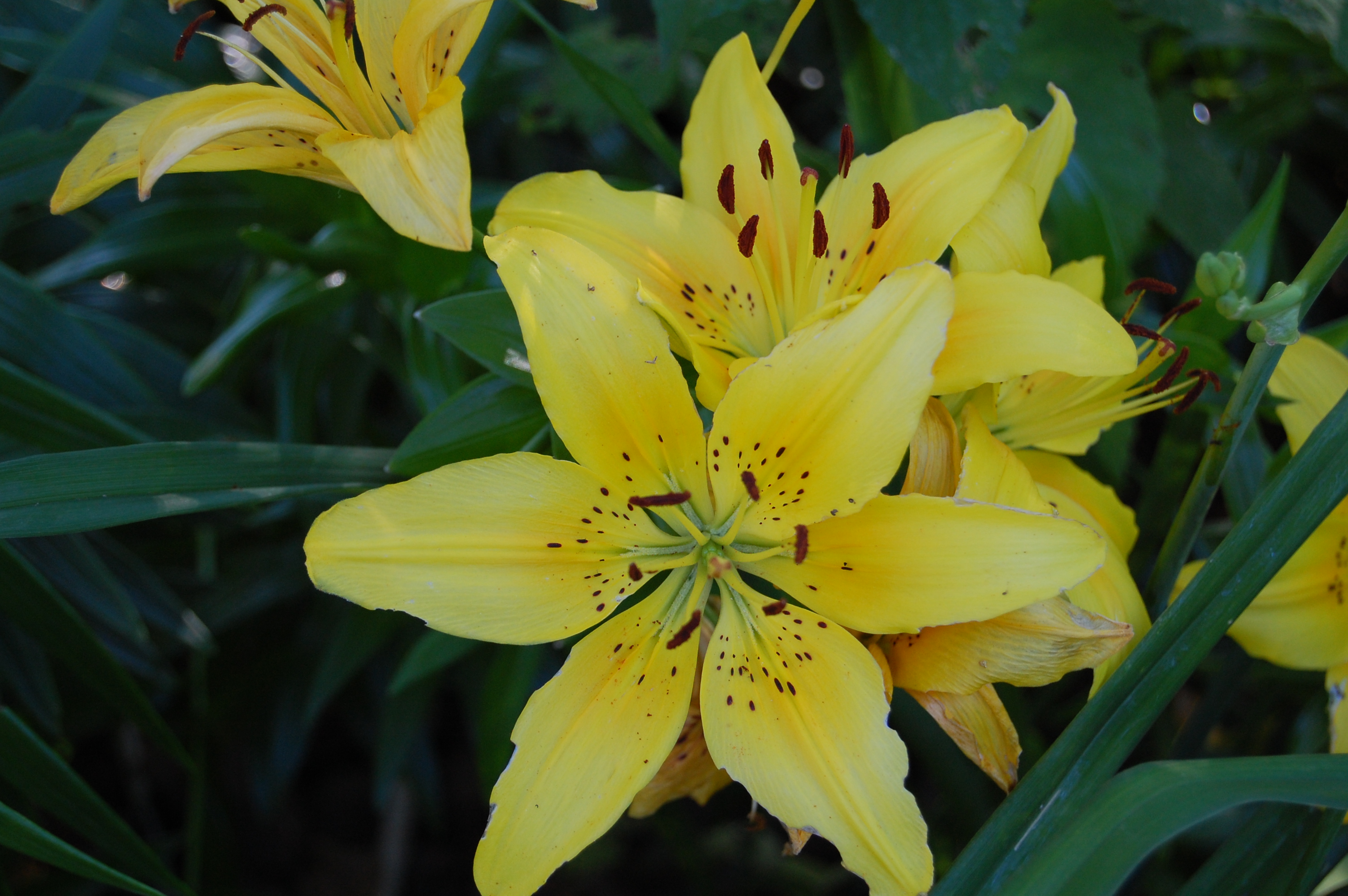
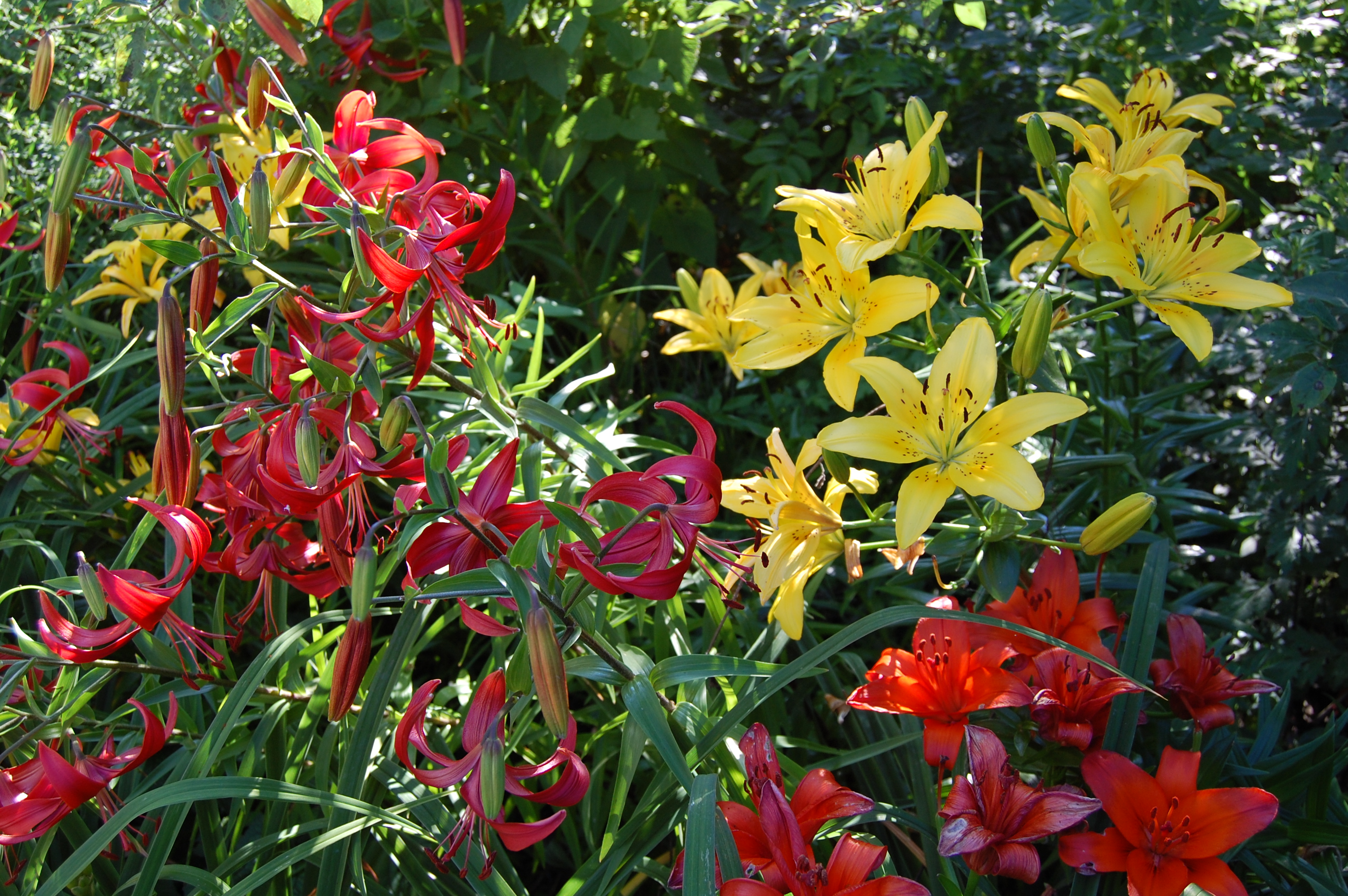
In the lands west of the driveway. the Asiatic lilies are the undisputed stars right now. As noted in a previous post, these come from a naturalizing mix and I’ve forgotten the variety names.

Asiatic Lilies

2013-07-13 18.38.09

2013-07-13 18.37.05

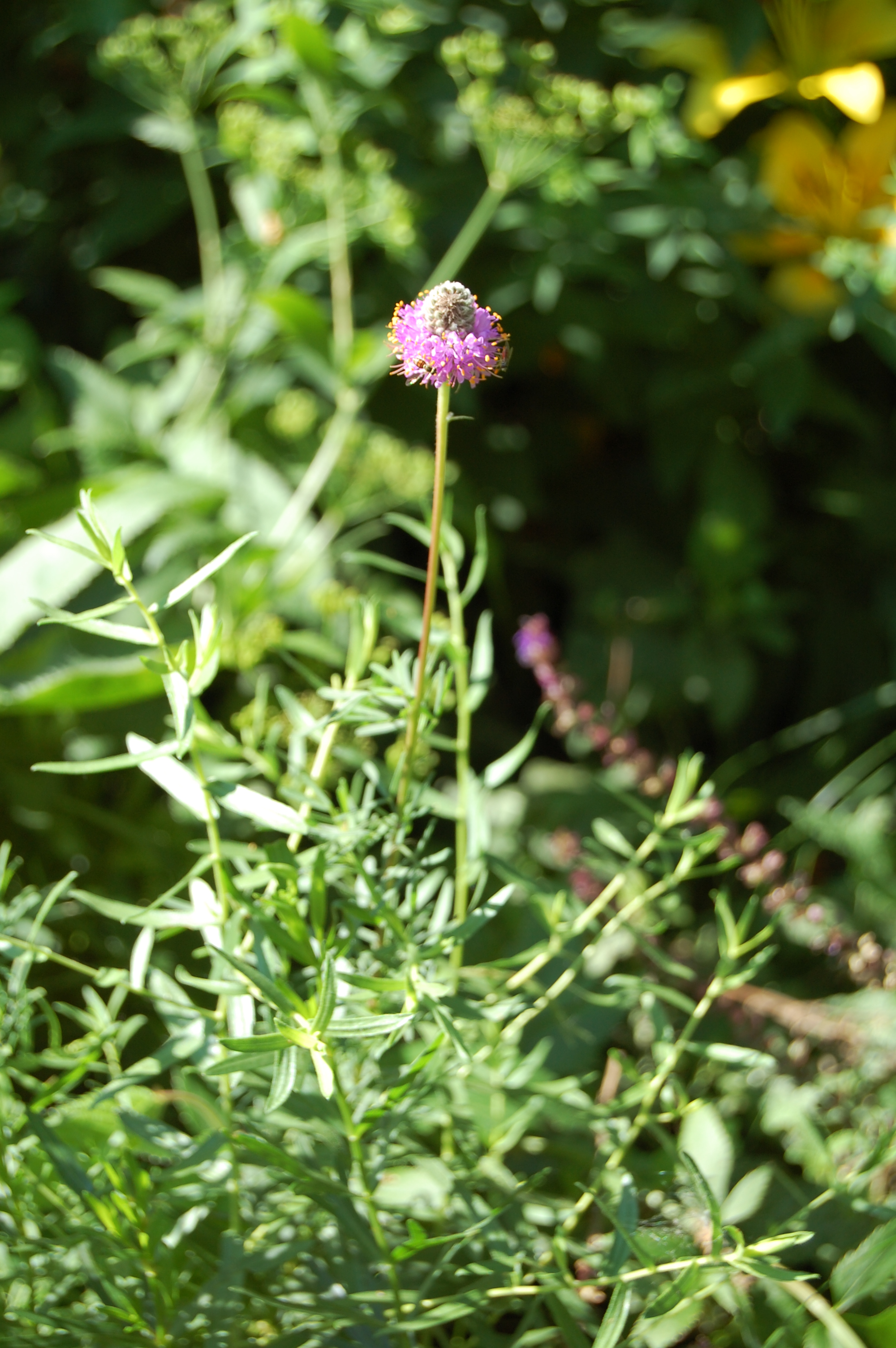
And guess what? I planted three purple prairie clover (Dalea purpurea) north of the crab three years ago. I thought all were goners, but one has popped up, looking reasonably vigorous, and is just starting to bloom.

Doesn't look so exciting now, but when you have a clump it does look nice. Also a great pollinator plant.
Doesn’t look so exciting now, but when you have a clump it does look nice. Also a great pollinator plant.

We also have some more butterflyweed over in this area, making the bees happy as it always does.

Butterflyweed and bee

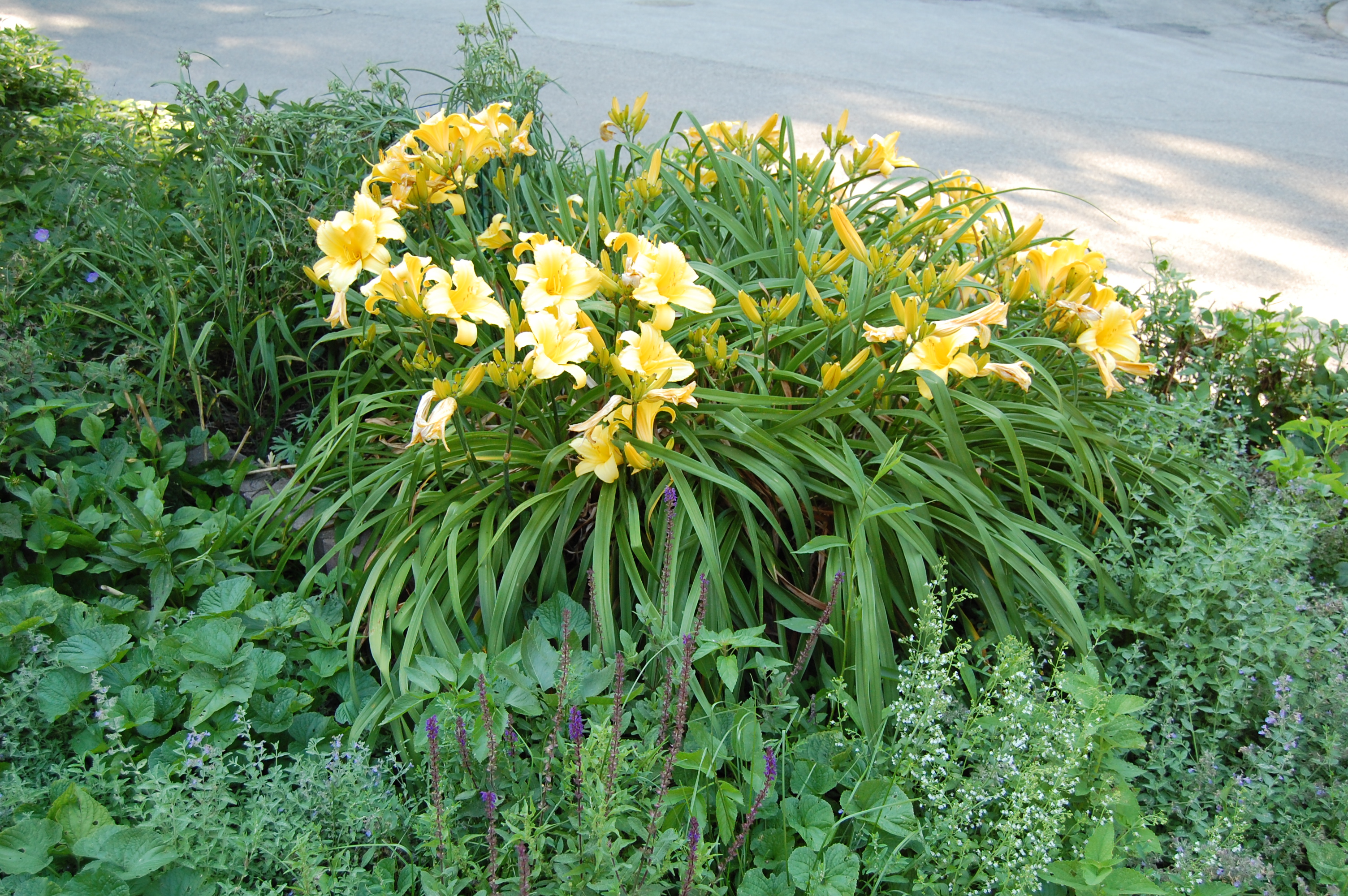
The Ohio Spiderwort is still blooming in the parkway, next to some daylilies (name unknown) that came free with an order from Oakes Daylilies in Tennessee. Theses gratis daylilies are quite happy with their move to Chicago, and have become rather enormous. They always make me think of bananas.
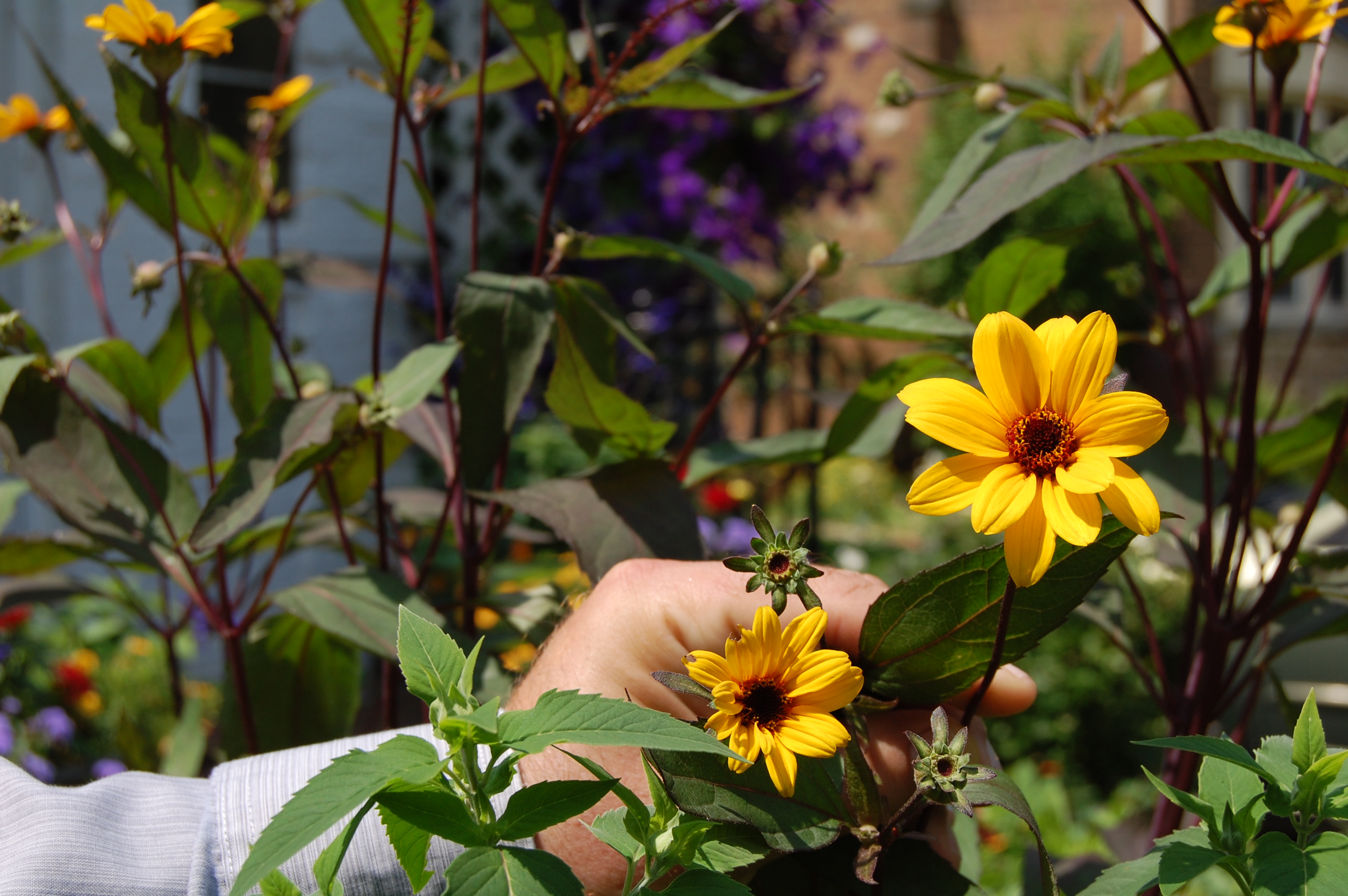
Daylily that makes me think of bananas.
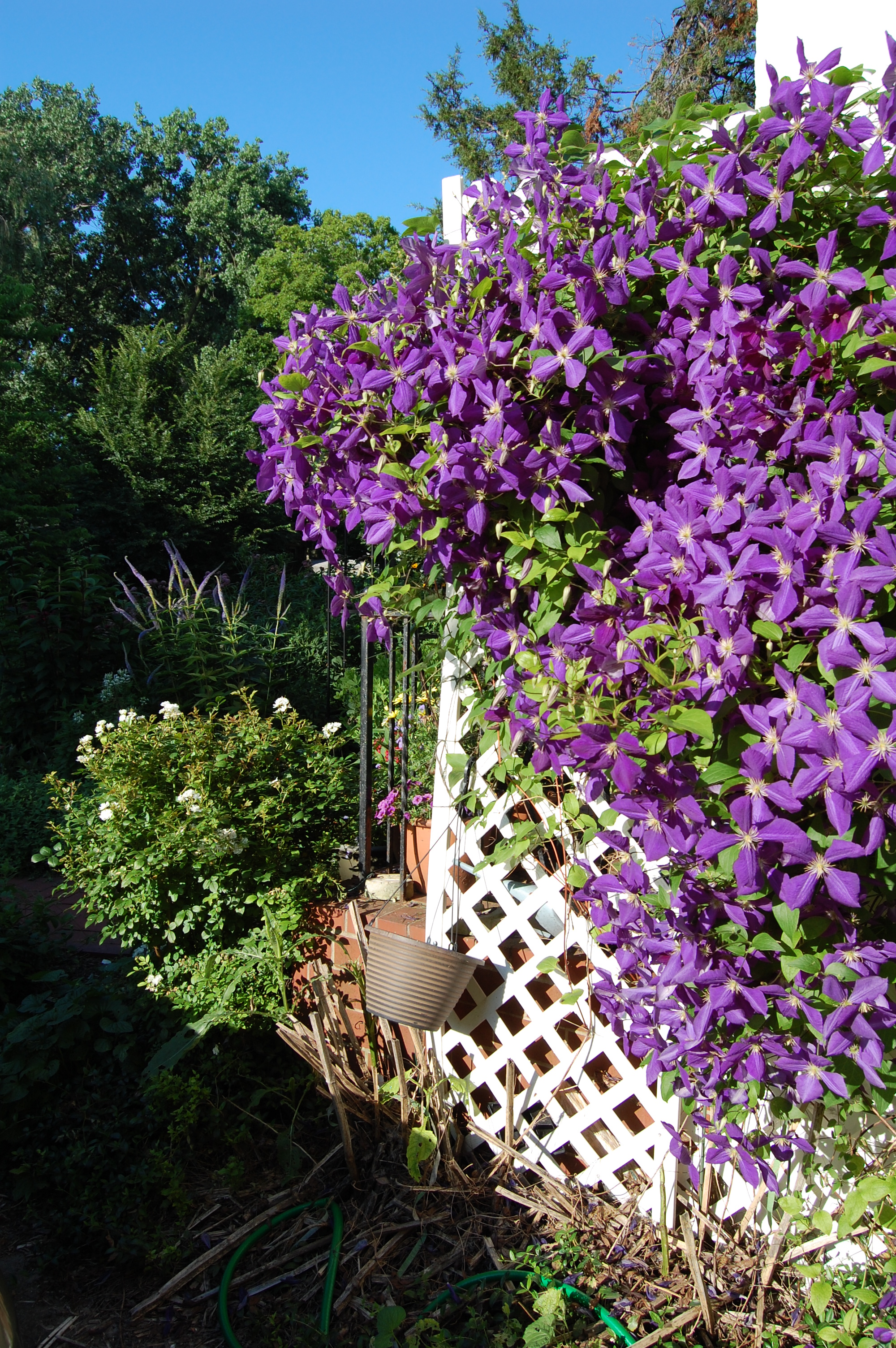
So let’s head towards the back. We’ll pass the containers on the front steps and the vegetable plot. I’ll do separate posts on them later. But we should stop to see the Clematis jackmanii, which is still going strong.

Jackman clematis

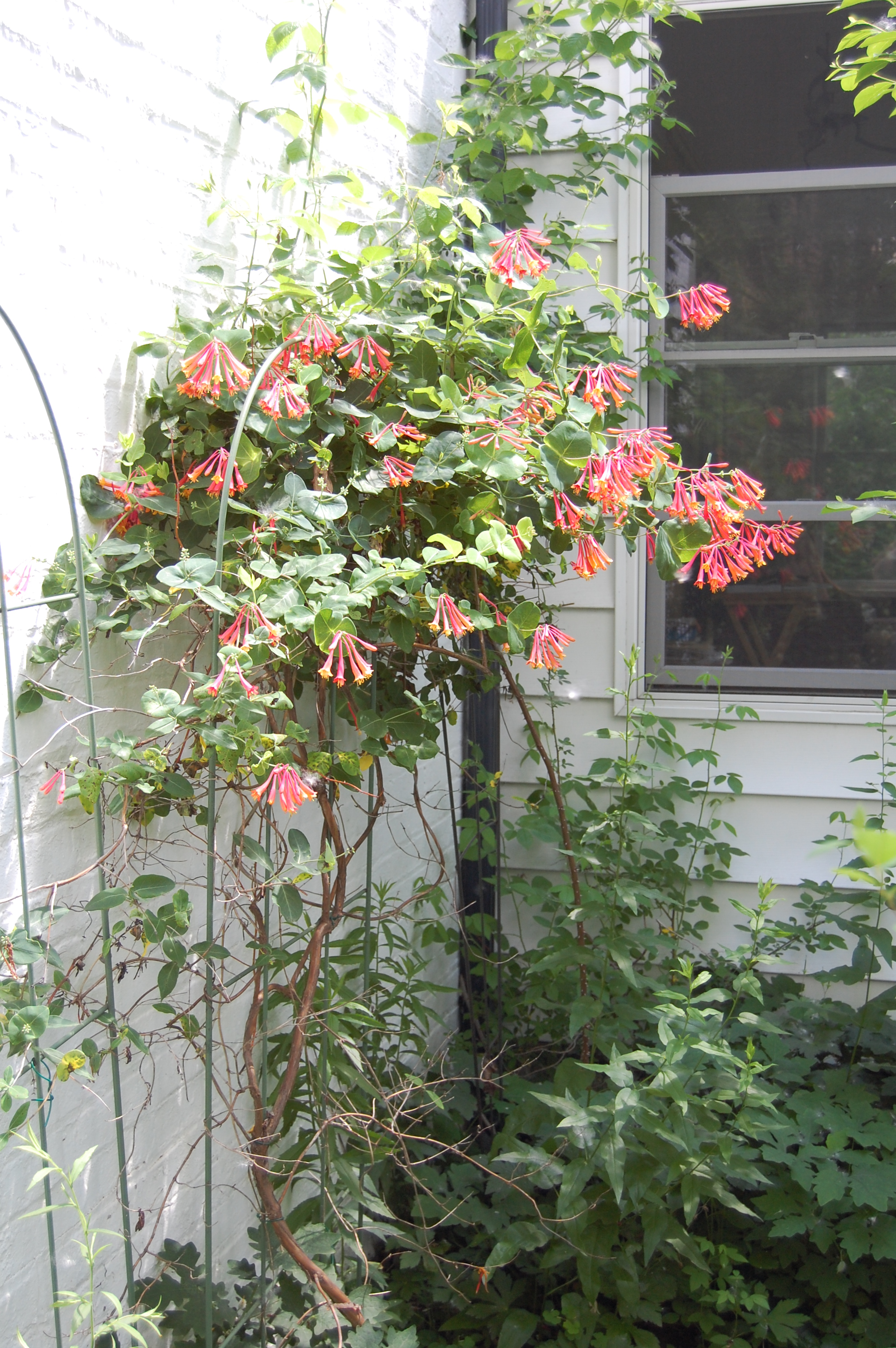
Not a lot of blooms in the back garden right now, unless you count the containers, which I’ll post about later. The Trumpet Honeysuckle (Lonicera sempervirens) continues blooming, as it has since May. What a great vine!

2013-07-13 18.31.31 clematis

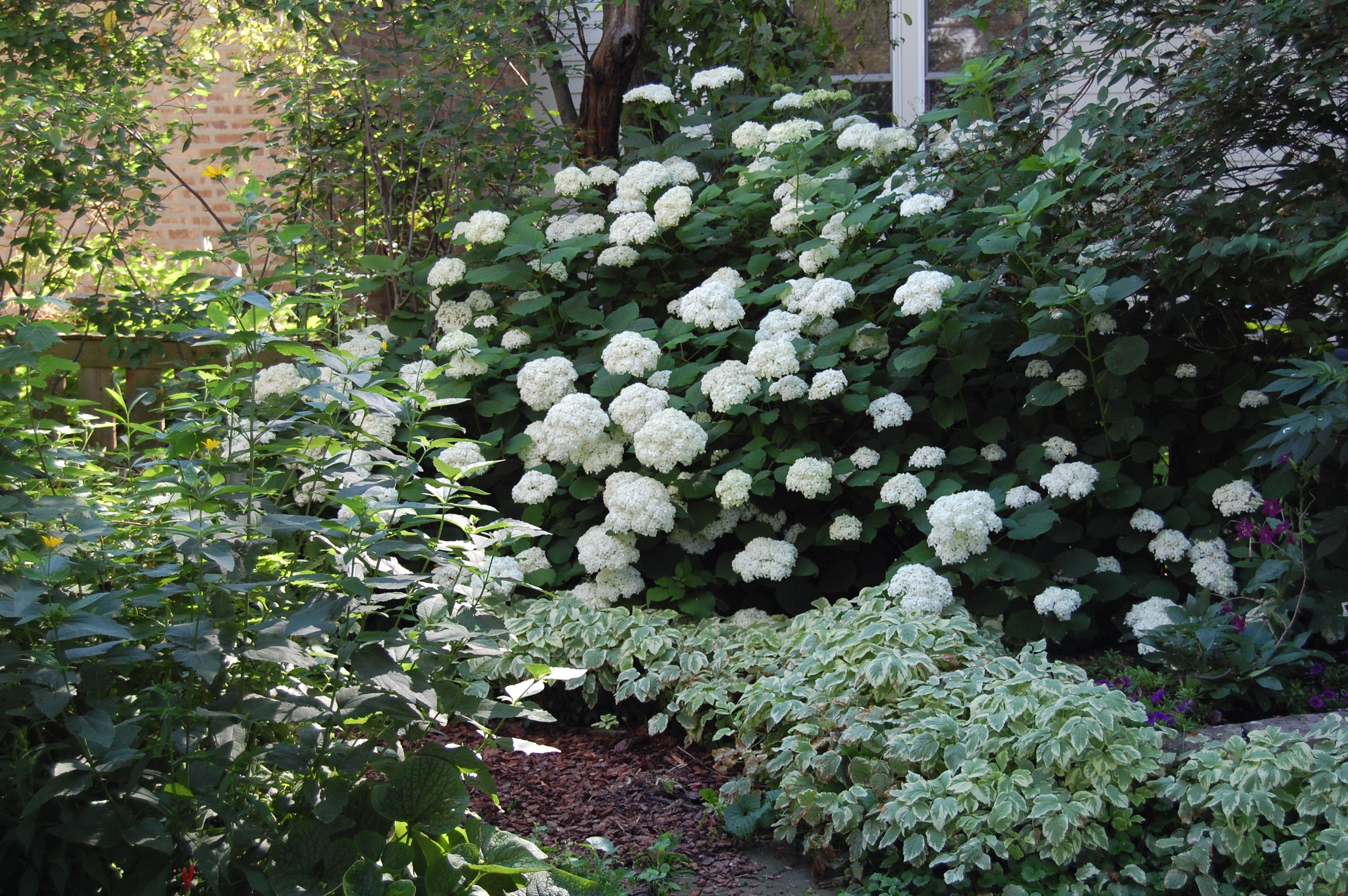
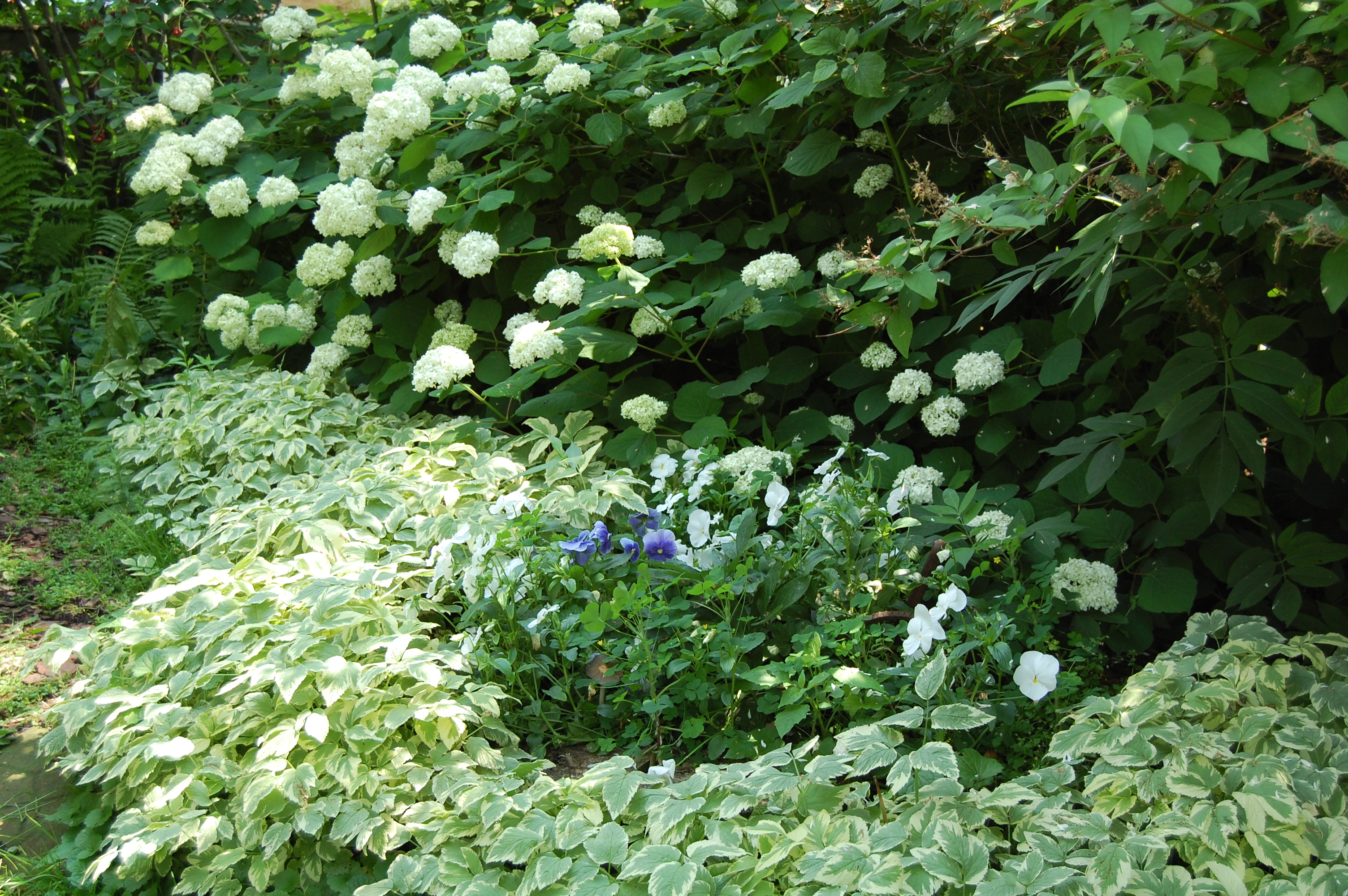
There’s the Elderberry (Sambucus canadensis) with dinner plate-sized clusters of little white blooms. Plus some ‘Annabelle’ Hydrangeas. (I think they’re ‘Annabelles”, they were there when we moved in.) There’s also the Purple Milkweed (Asclepias purpurescens), which has been very accident prone this year, with several broken stems. This plant has been limping along, but not really thriving. To help it I have removed some asters and replaced them with a lower growing plant, Indian Pink (Spigelia marilandica). I’m looking forward to their blooms next year.

Annabelle Hydrangeas
‘Annabelle’ Hydrangeas

How are the flowers blooming in your garden? Very well, I hope.

Garden Bloggers’ Bloom Day is sponsored by Carol at May Dreams Gardens. Check out her blog for links to blooms in other gardens.

The Ruth Bancroft Garden

The Ruth Bancroft Garden in Walnut Creek was the first garden we visited on the third day of the Fling. I found it exciting, surprising, and sometimes entertaining (largely due to the sculptures). I don’t see gardens built around succulents as beautiful, though, and this was not an exception to that rule. I realize there are others who feel strongly otherwise.

agave spike
Agave flower spike.

For me, a beautiful garden is lush, warm, exuberant, colorful. I find succulent gardens to be rather cold, ironically enough. And succulent gardens in arid, forbidding settings even more so. It’s kind of like the difference between a pet cat and a pet lizard. I find cats far more appealing and cuddly. However, I would fight to the death for your right to have a pet lizard.

big aloes

Even so, I enjoyed our visit to this garden, and I’m very glad I got to see it.

The visit was enhanced because it occurred during their annual sculpture exhibit and sale. And speaking of cats, we were tempted to take these home with us, but they were out of our price range.

cat sculpture

At this point I had pretty much given up on trying to remember plant names. I do know that’s a barrel cactus below. If they had given all the plants names this obvious, I might have had a better chance to remember them.

Barrel cactus.

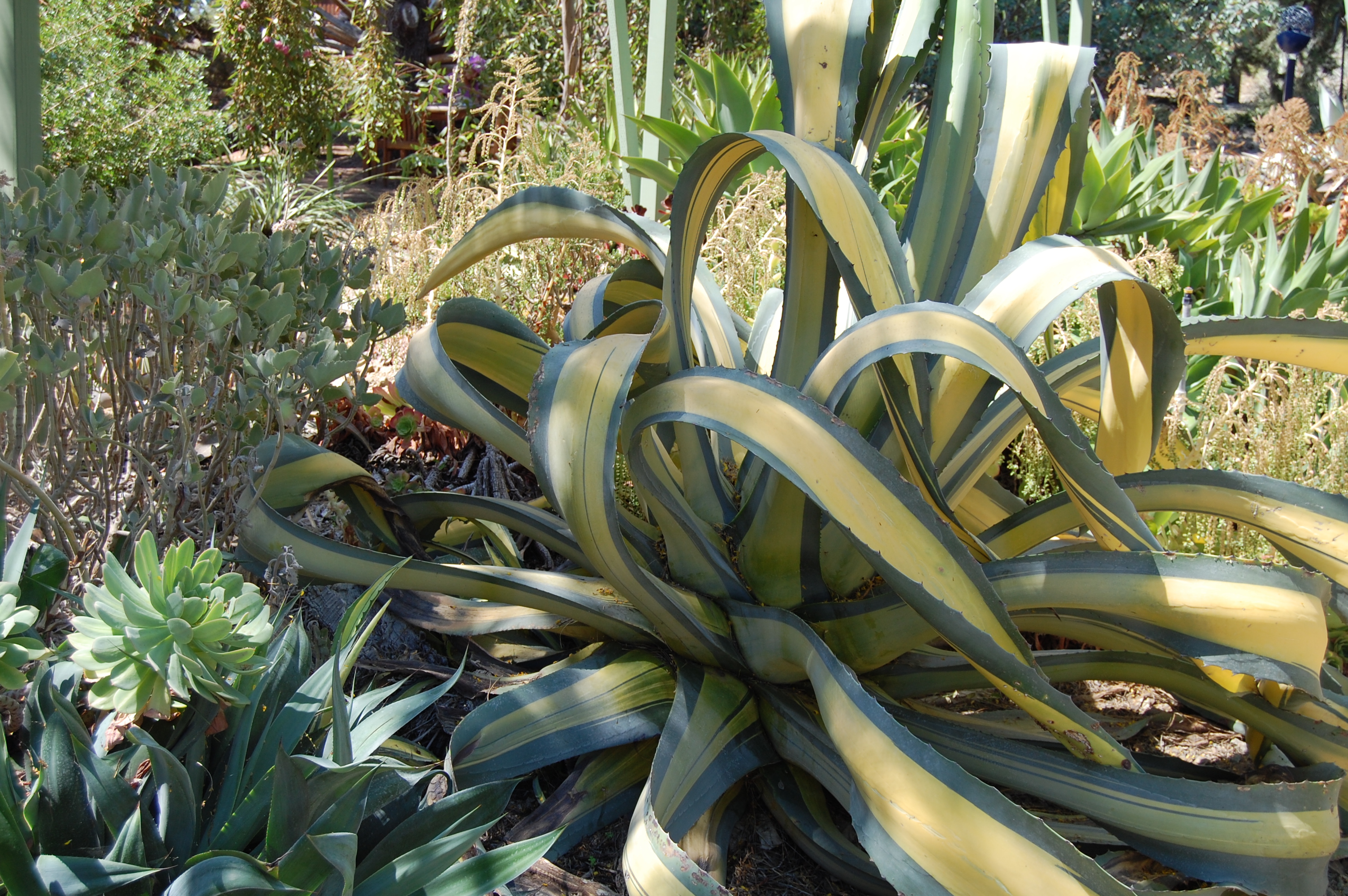
I appreciated the many big, dramatic plants. I’m a sucker for big plants.

weird barrel trees


2013-06-30 13.29.24

The mix of plant textures we found was very intriguing.

russian sage aloe

cactus and tree


2013-06-30 14.28.49

There were some things that were just a bit odd looking.

weird red flower


2013-06-30 14.14.35

You can see we weren’t the only ones taken aback.

2013-06-30 13.39.14

It’s a good thing we did the Ruth Bancroft garden first thing in the morning – it was already hot when we got there. An odd thing about the Bay Area is the vast differences in climate in such a small area. That day it was 105F in Walnut Creek. In San Francisco, less than an hour’s drive away, it was 75F.

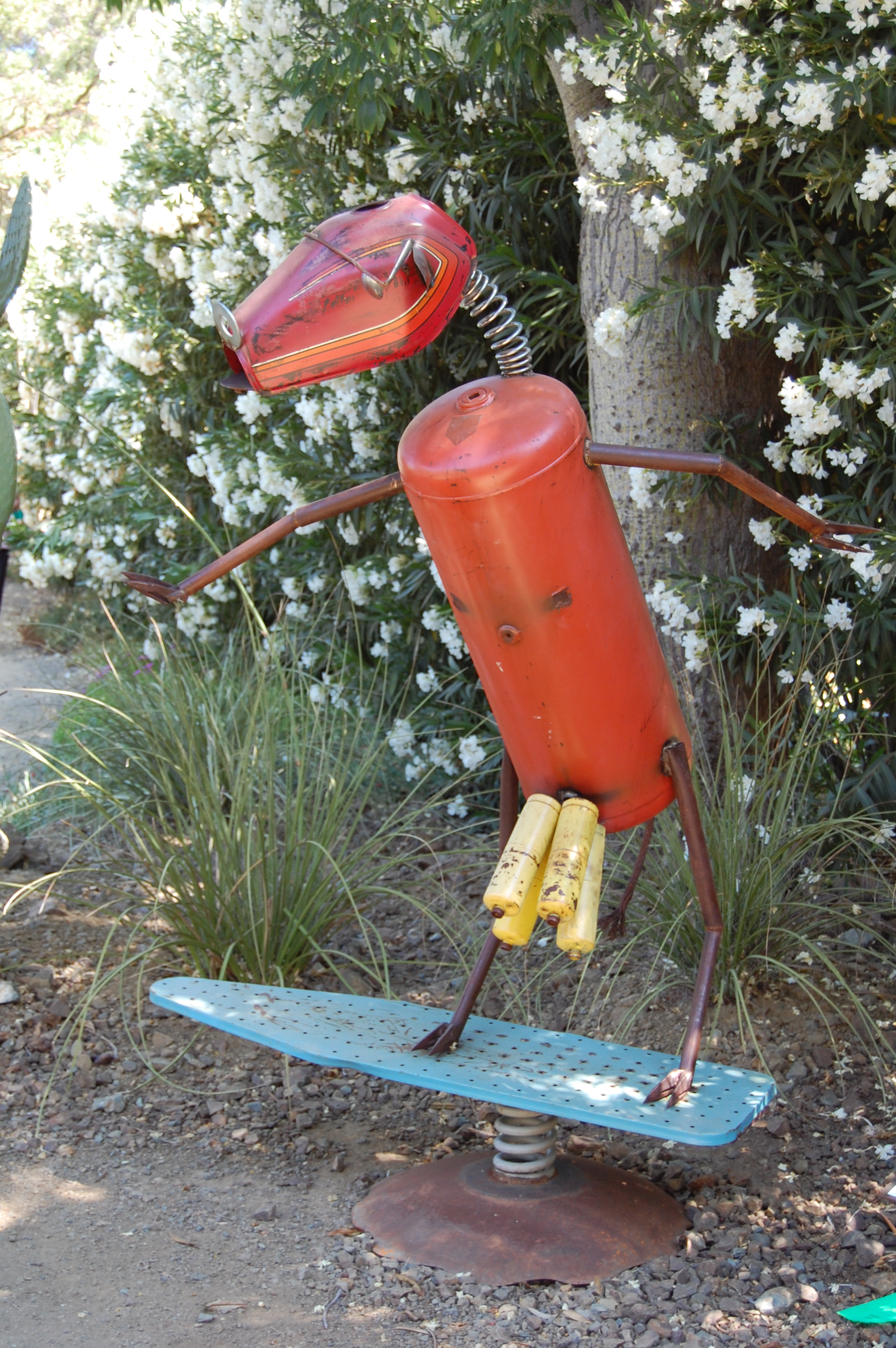
Fortunately, this cow was able to stay cool by hitting the surf. Springs made her look like she was rolling with the waves.

surfing cow

The Ruth Bancroft Garden was once farmland where the owners grew apples and walnuts. Ms. Bancroft took a part of the land for her very extensive collection of succulent plants. The farm was eventually rezoned for residential development, but a non-profit organization was given the garden to be maintained and kept open to the public.

weird leaves plant

This is not a native plant garden. Ms. Bancroft travelled far and wide to arid and desert regions in order to obtain specimen plants. A number of plants require protection from the occasional frosts that occur in Walnut Creek.

Delusions of Grandeur?

What’s your reaction when you see fake plantation-style columns in front of a fairly modest home, or a circular driveway in front of a house on a quarter acre lot? Do a bit of eye-rolling, perhaps? Then I must tell you that when I saw the grand sweep of Salvia (known as the River of Salvia) at Chicago’s Lurie garden, I was seized by the absurd desire to imitate this vision.

Lurie Garden Salvia
Lurie Garden’s River of Salvia.

Absurd because I garden on a slightly larger than average city lot. What I did was pull out the Wild Geranium (G. maculatum) that grew in a roughly 3’x8′ sweep along my sidewalk border, and replace it with a mix of Salvia xsylvestris ‘Blue Hill’ and ‘May Night’. This was last spring, and the first summer it looked like this. I like to refer to it as my Puddle of Salvia.

Salvia
My Puddle of Salvia, 2012.

I knew I needed some perennials planted behind the Salvias, and settled on Penstemon digitalis ‘Husker Red’. These really came into their own this year, making this part of the border look like this.

Puddle of Salvia with Penstemon.
Puddle of Salvia with Penstemon, 2013

This makes for a nice contrast I think, in habit and foliage color, as well as flower shape and color. However, no one would mistake it for Lurie’s River of Salvia.

So is this the horticultural equivalent of fake plantation columns on a Chicago bungalow? I don’t think so. We can be inspired by an element of a garden far grander than our own, then translate that inspiration into something beautiful, genuine, and appropriate to place. In this case, a much smaller mass of Salvia is still beautiful in a city lot garden, especially if it is integrated into the whole and the scale is proportional.

Salvia

One practical matter I should mention, though. I’ve been bothered the tendency ‘May Night’ has (and ‘Blue Hill’ as well, to a lesser extent) to sprawl and open up in the middle. It happened last year and as a result I cut back both Salvias in early May – but they sprawled again anyway. I’ve resorted to placing 9″ sticks in an X formation along the sidewalk to prop the plants up. This has worked OK without being visible.

Salvia 'Caradonna'
Salvia ‘Caradonna’

To echo the Puddle of Salvia, I’ve put clumps of Salvia in some other beds near the sidewalk. However, I am using mostly Salvia nemerosa ‘Caradonna’, which is purple but also seems more upright.

Have you ever tried to translate something you saw at a famous garden in your own, successfully or not?

CARDINAL EGGS!

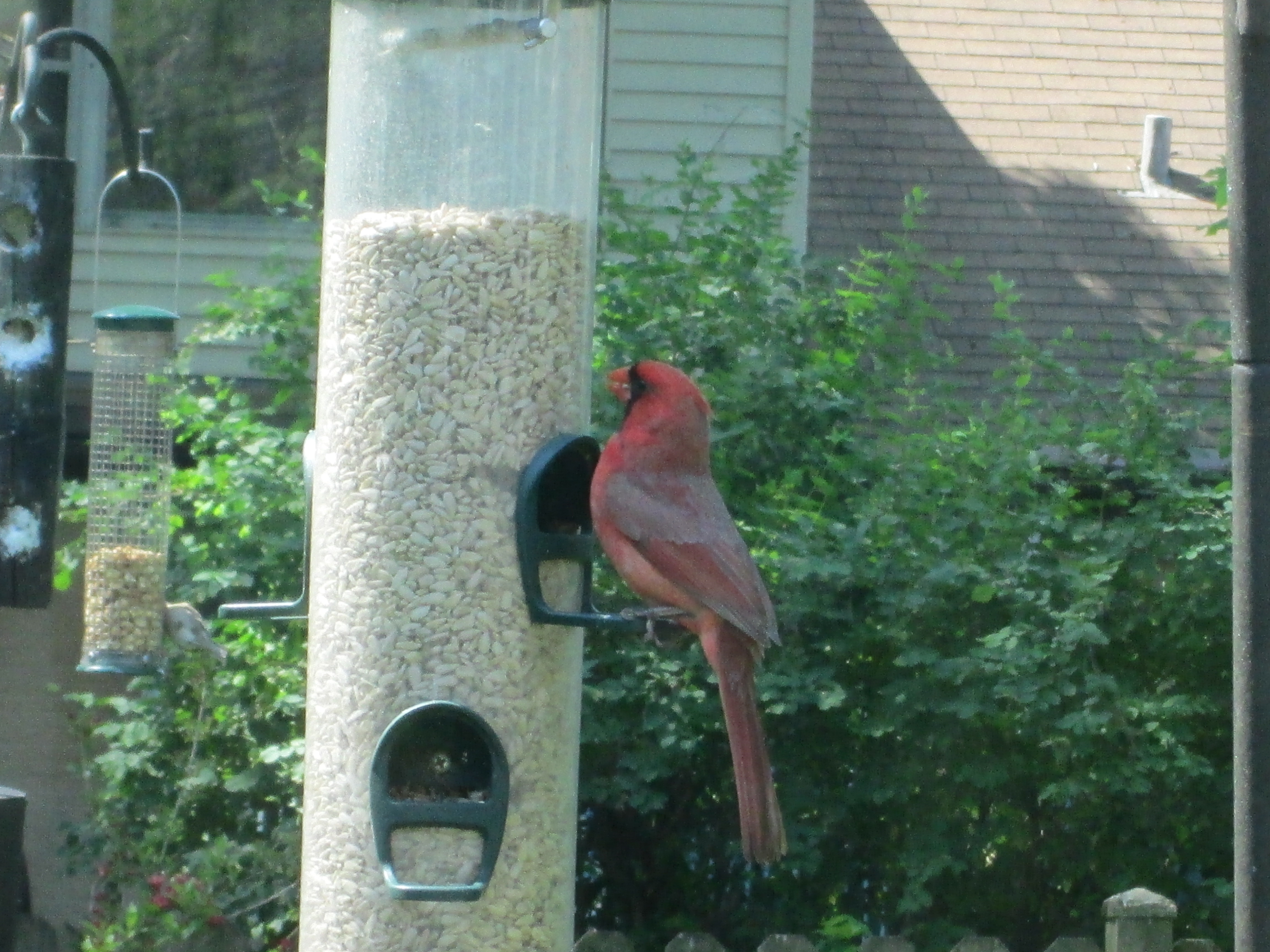
So when I got home from work today, I decided I would check on the Cardinal’s nest I wrote about in my last post. As I walked up to the nest, I inadvertently flushed out a female cardinal who exploded out of the tangle of vines. In her absence, I tried to get a look at the nest. Could it be?

Northern Cardinal Eggs

I think so …

Northern Cardinal Eggs

Yes, definitely! At least two cardinal eggs, sky blue with speckles.

Northern Cardinal Eggs

I’m excited! Are you excited? Of course you are!

Here are a few interesting facts about cardinal nests and eggs that I gleaned off of allaboutbirds.org and other sites. First off, it is common for Cardinals to leave the nest for up to six days after it is completed, which explains the “abandonment” I wrote about.

According to allaboutbirds.org: “A week or two before the female starts building, she starts to visit possible nest sites with the male following along.” This sounds a lot like what happens when our family moves into a new house. I wonder if they use a realtor.

The female chews on twigs to make them pliable, then bends them around herself to make a cup-shaped nest. The nest has four layers: coarse twigs, a leafy mat, grape-vine bark, and finally grasses and other fine materials. The eggs incubate for one to two weeks, with the female egg-sitting and the male bringing her food.

As for the chipmunk, after discovering the eggs I immediately found my container of rodent repellent and sprayed it liberally on the ground and on the lower parts of the vines. The whole area smells like bear piss right now, but I’m sure that will fade. I also have to hope that the mama cardinal will repel Alvin the Terrible if he is not deterred by the smell. I think I’ll look into chipmunk traps.

In any case, congratulate me! If all goes well, we’re going to have baby birds!

Have you discovered any nests or baby critters in your garden?

The Cardinal’s Nest And The Evil Chipmunk

The prairie rose (Rosa setigera) and the trumpet honeysuckle (Lonicera sempervirens) are collaborating nicely to create a viney (not really a word, so sue me) tangle against the back brick wall of our attached garage. The kind of tangle, I hope, that will tempt birds to build nests.

Trumpet Honeysuckles
A tangle of rose canes and trumpet honeysuckle vines.

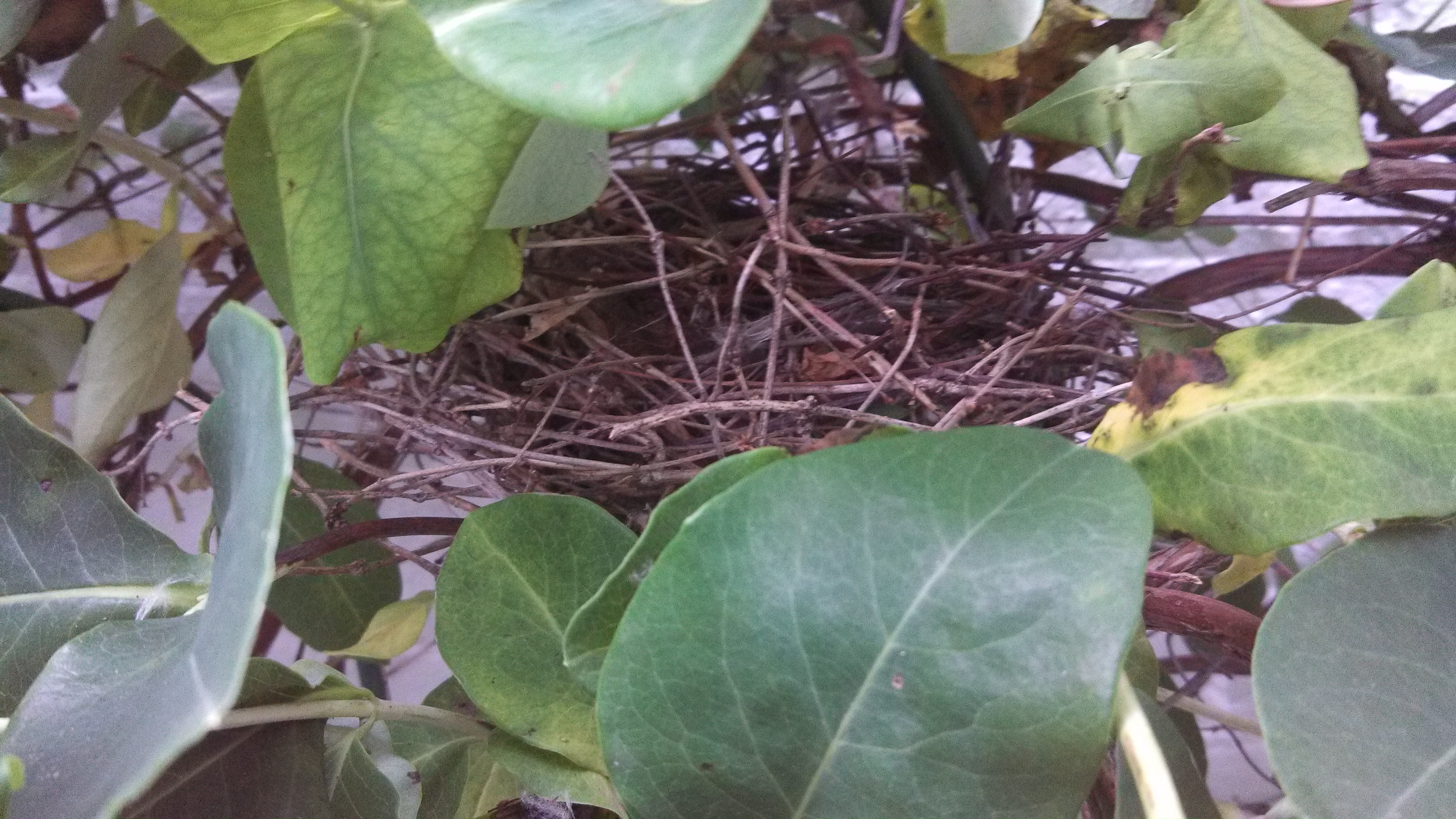
So we were very happy when we noticed a cardinal flying back and forth to where the tangle was thickest. When I looked there, lo and behold, I did find a nest – no sign of any eggs, though.

Northern Cardinal nest
Cardinal nest nestled among the vines.

A day or two after this discovery, I noticed leaves shaking and wiggling in that spot. Could there already be a juvenile bird?

Sadly,  no. It was a chipmunk. I scared him off by shaking a vine, causing him to leap to the ground right in front of me from a height of about 5′. Kind of impressive, for a chipmunk.

Chipmunk
Chipmunk

Subsequent checking online revealed a disturbing fact: chipmunks eat eggs. They even eat baby songbirds. That’s what the little creep was looking for.

I always thought there was something sinister under that too cute “Oh, look at me, aren’t I adorable” chipmunk act. Under all that saccharine posing, Alvin and his friends engage in the devouring of helpless baby songbirds.

Alvin the Terrible
Alvin the Terrible. What’s behind that smile?

They are also much better at climbing than I would have ever thought. Apparently the tangles in my garden need to get bigger and thornier before they can be considered safe.

One other thing, though. It seems the Cardinal nest has been abandoned. There is no traffic back and forth. And there are no broken egg shells or anything of the kind.

Available: One nest, never used.
Available: one nest, never used.
Where is your nest now, Mr. Cardinal?

Has the nest really been abandoned? It seems a shame, and yet perhaps it is for the best, given the presence of Alvin the Terrible.

Have you ever seen nests abandoned before being used – or chipmunk atrocities – in your garden?

Is There A Rosarian In The House?

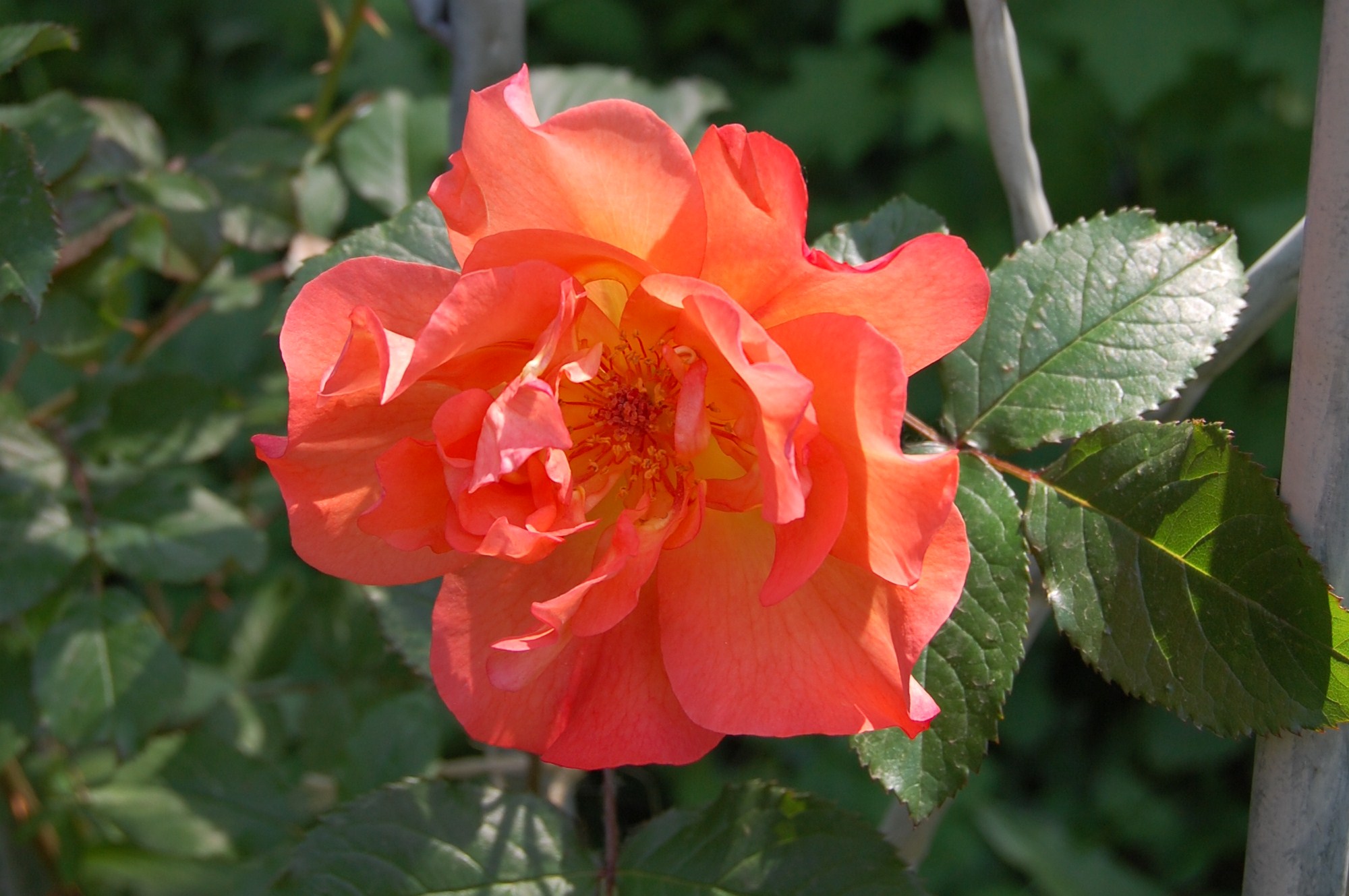
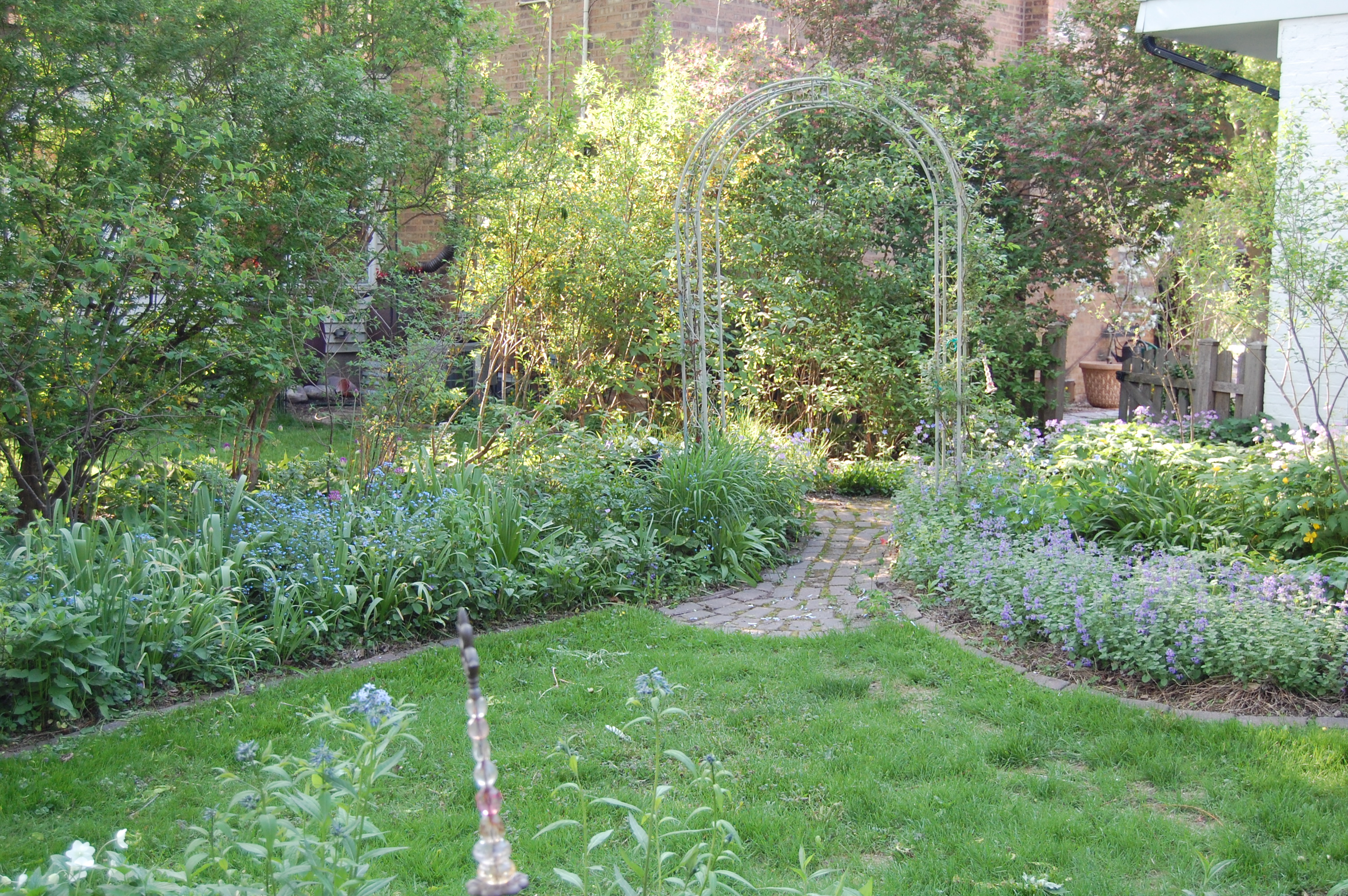
My ‘Westerland’ rose is not well. This rose grows up one side of the arbor leading into our back garden. I’ve read you can train it as a climber, even though it is not normally considered one.

'Westerland' Rose
‘Westerland’ Rose
nepeta allium arbor back garden may 19 2013
Rose arbor on May 19th.

I ordered this rose from Heirloom Roses in Oregon because I loved the apricot color of the blooms.

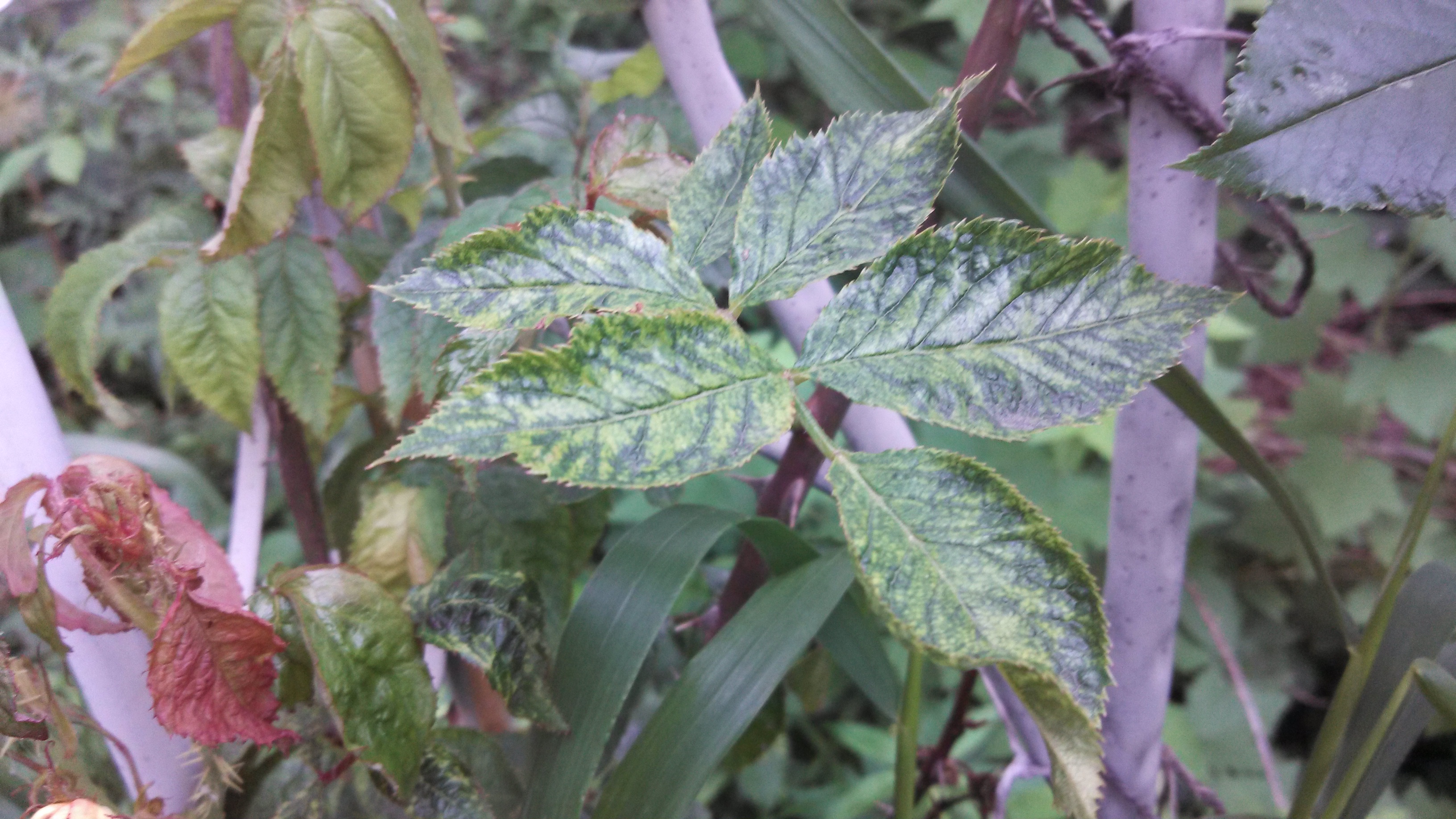
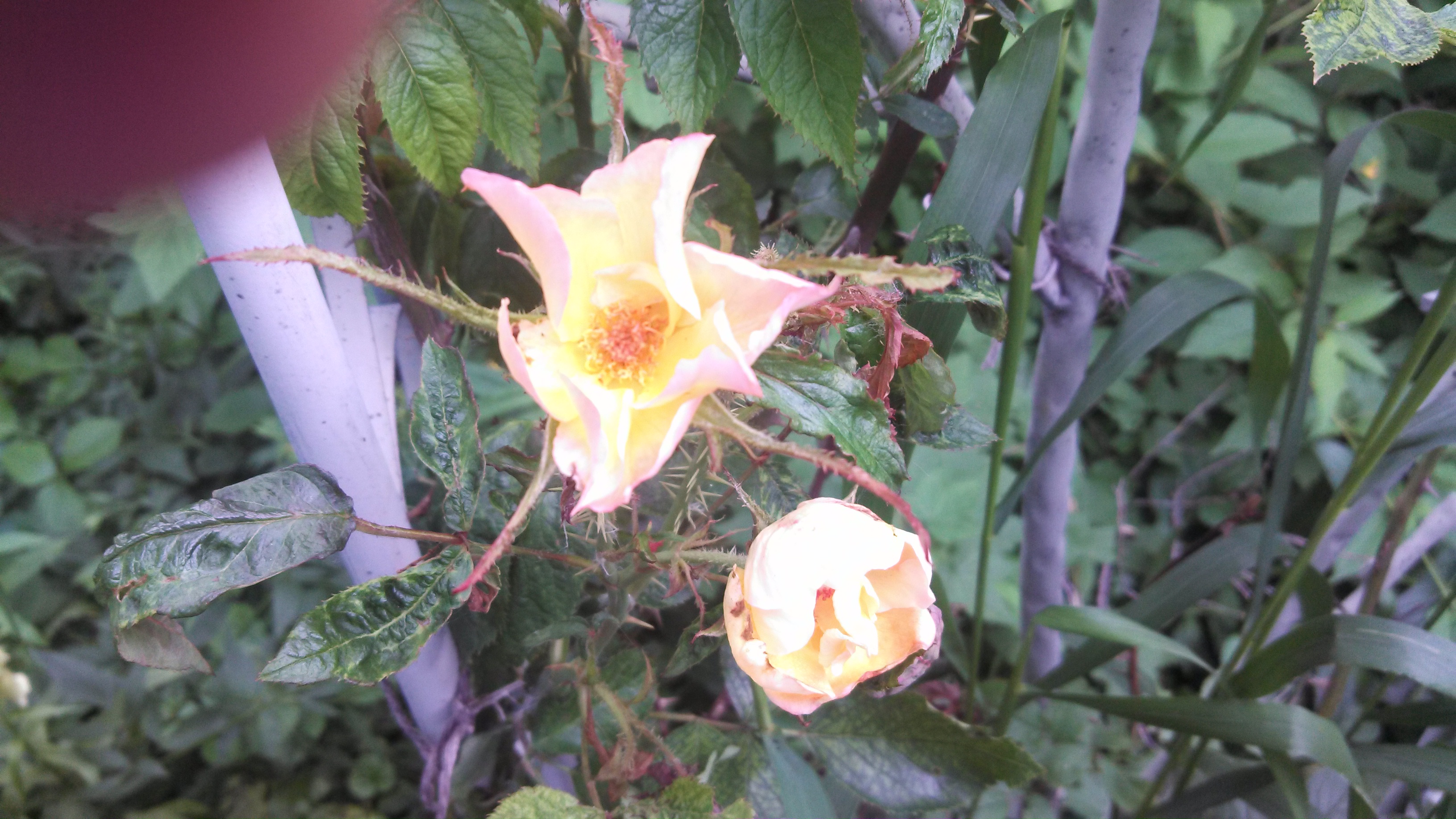
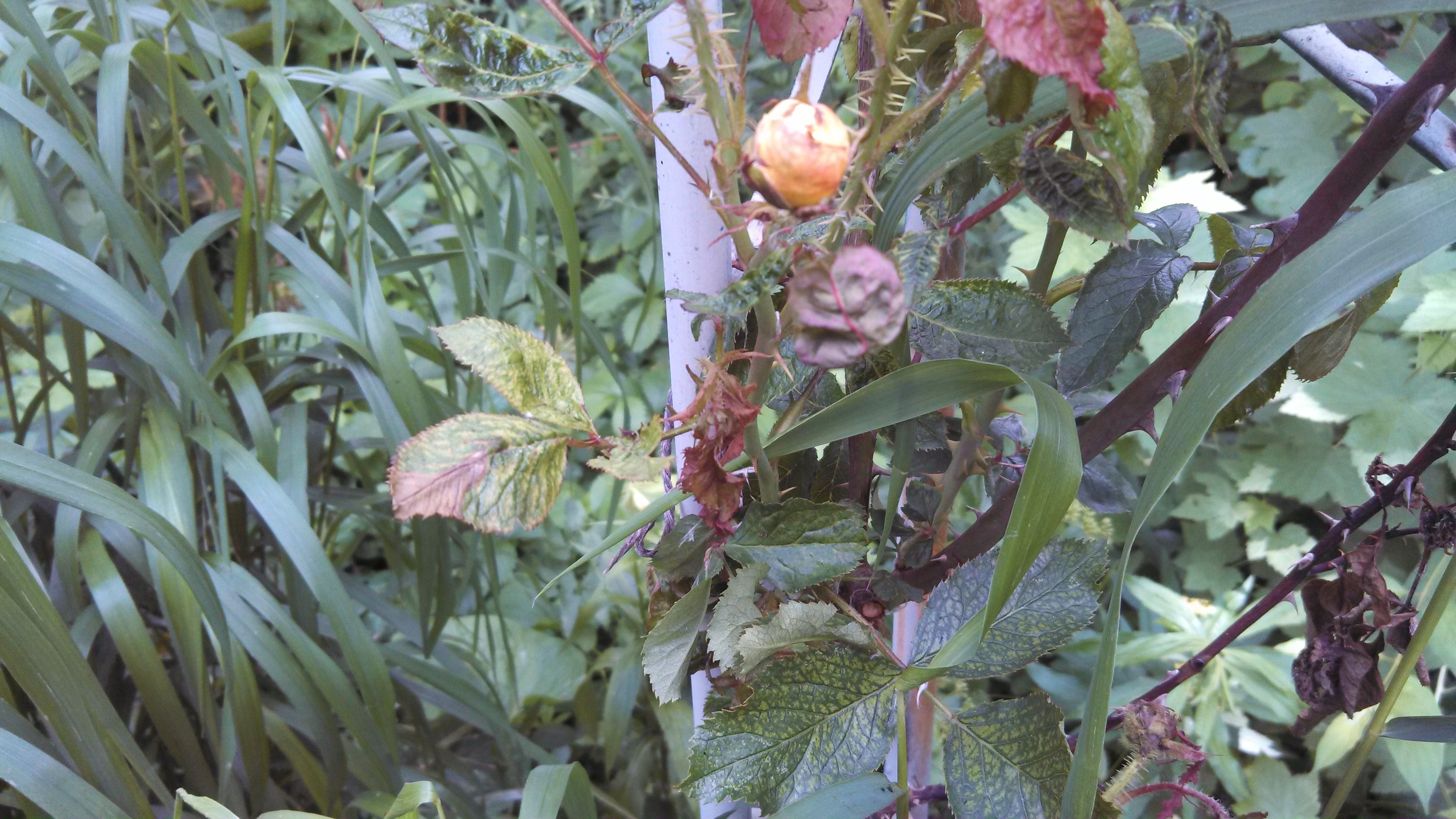
However, many of the leaves are discolored  between the veins. Gradually the leaves curl and die from the edges inwards.

'Westerland' rose disease

Also, while some of the flowers and buds look healthy, others seem stunted.

stunted Westerland flower rose diseases

Even the stems seem abnormal in places, with narrow, elongated thorns.

westerland rose diseases

I tried using What’s Wrong With My Plant, by David Deardorff and Kathryn Wadsworth to make a diagnosis. I’ve found this book helpful in some other situations, but it didn’t really clarify things regarding ‘Westerland’.

I am particularly concerned because I have a healthy ‘Darlow’s Enigma’ growing on the other side of this arbor. I do not want ‘Westerland’s’ illness to infect DE.

Can any rose experts out there tell me if this ‘Westerland’ can be saved?  I would be very appreciative.

A Sweet Garden

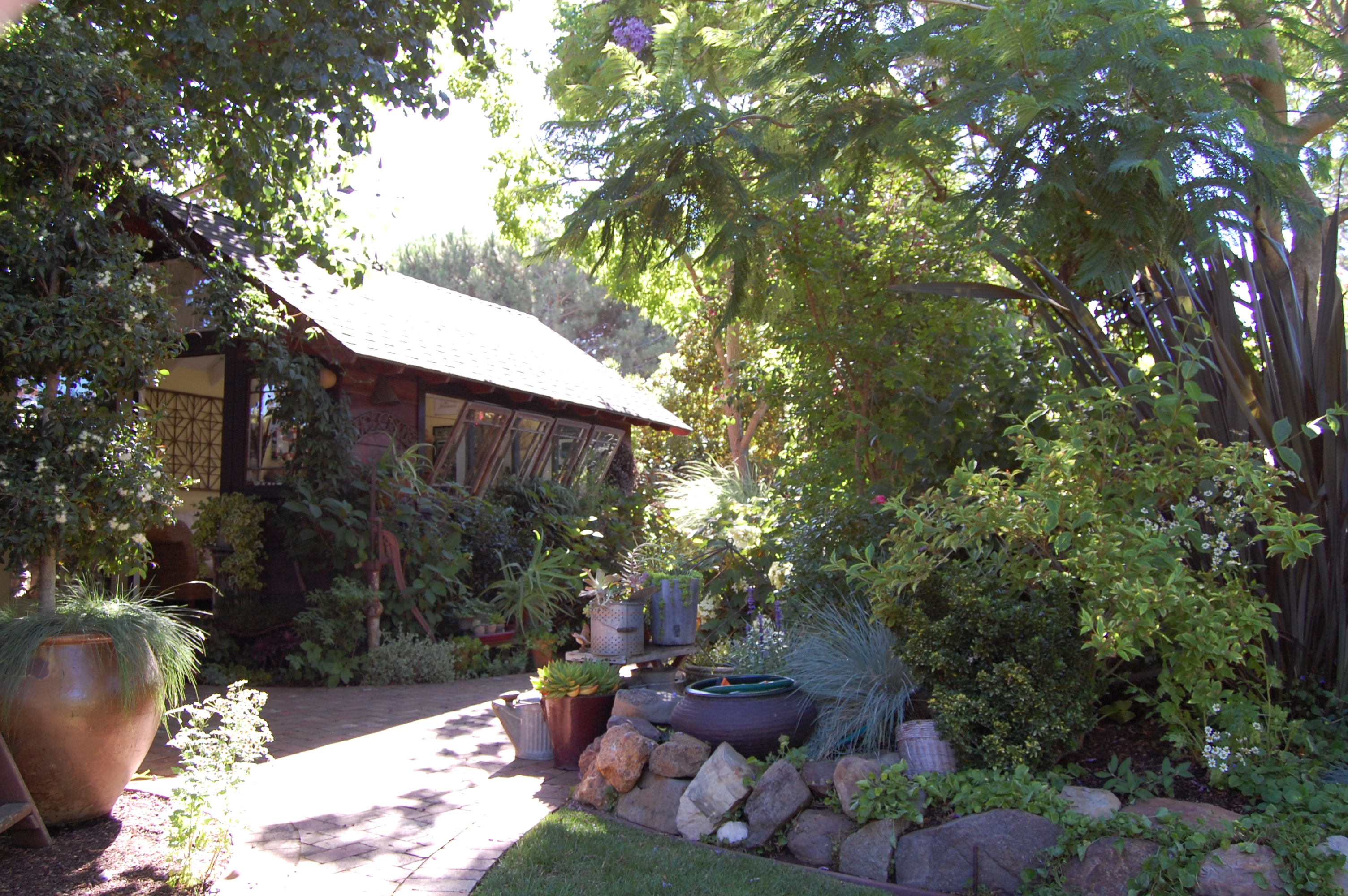
So here’s another garden we saw in the Bay Area during the Fling. This one belonged to garden designer Rebecca Sweet of the blog Gossip In The Garden. This was a garden that conveyed comfort and a green coziness, especially compared to some of the starker California gardens.

2013-06-29 20.26.24

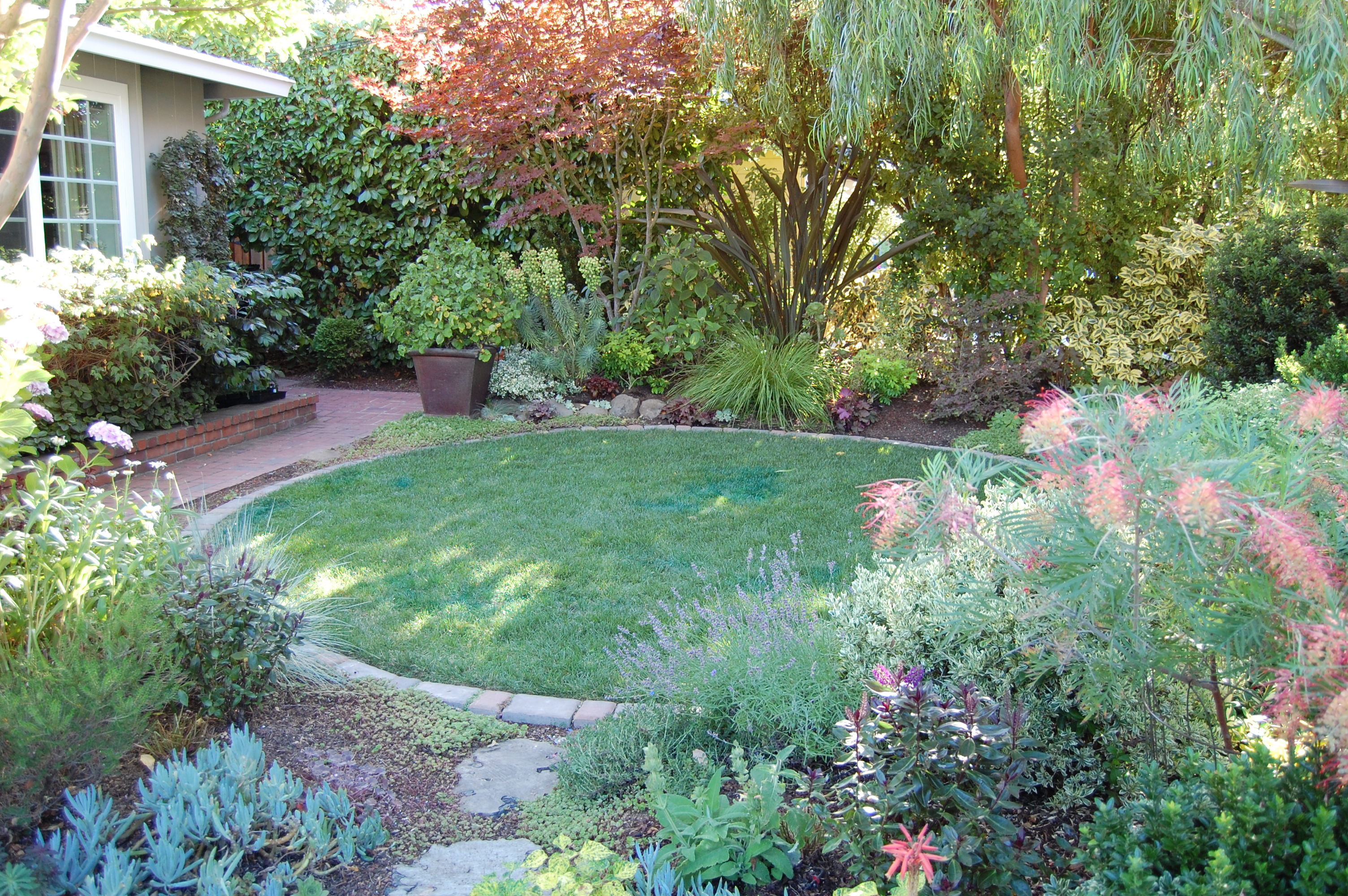
First, the front yard. I loved this front yard. Particularly how the plantings and brick hardscape were used to define the small, round lawn. This turns upside down the usual practice of using brick or pavers to define walks or flower beds. At the same time, I found the use of soft plantings to create a sense of enclosure in the front yard (again, a departure from the usual) very appealing.

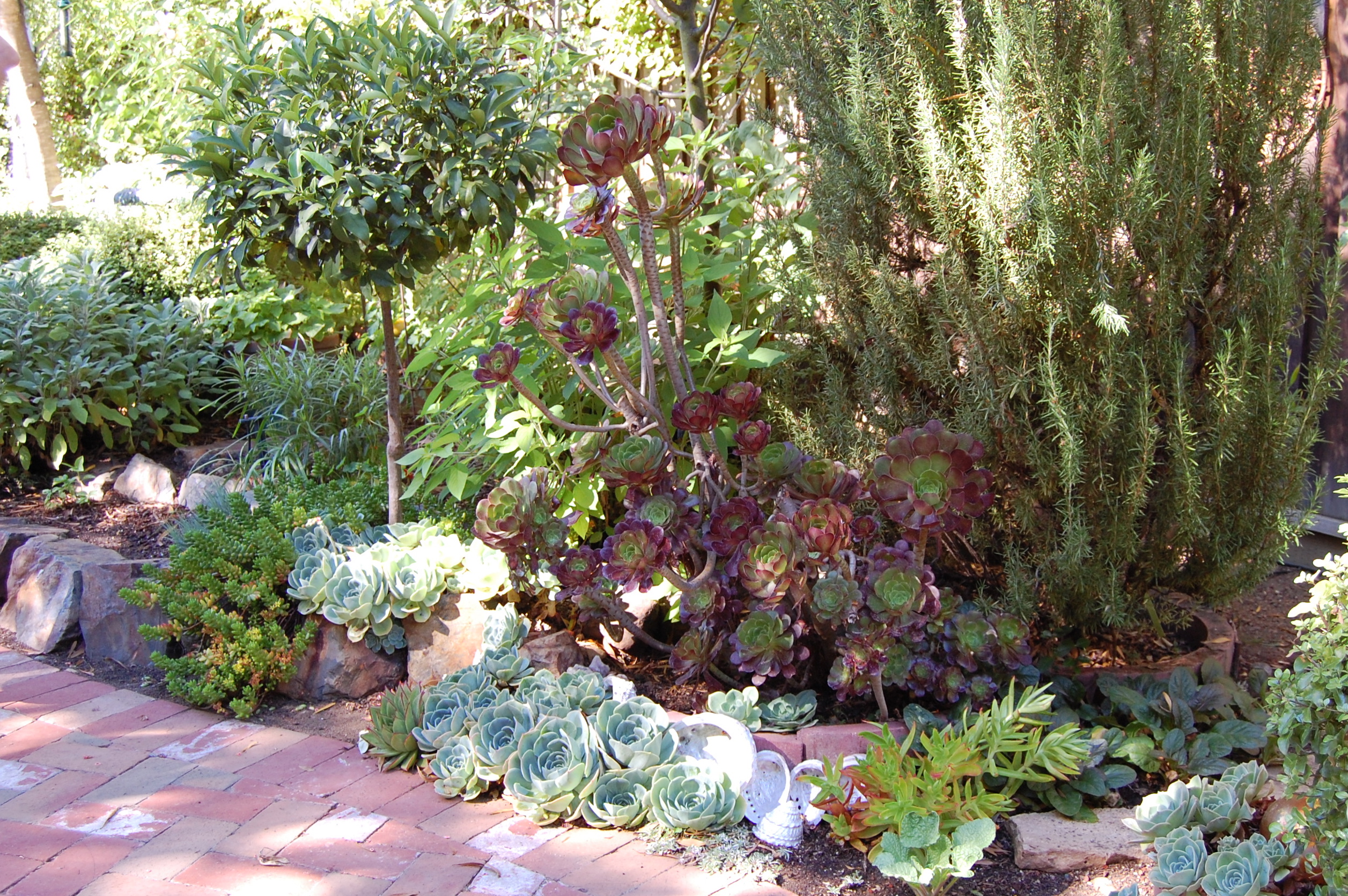
Most of the garden was in the back yard. We were still in California, so there have to be succulents. However, the succulents were massed and combined with other types of plants to create more of a sense of abundance.

DSC_0947

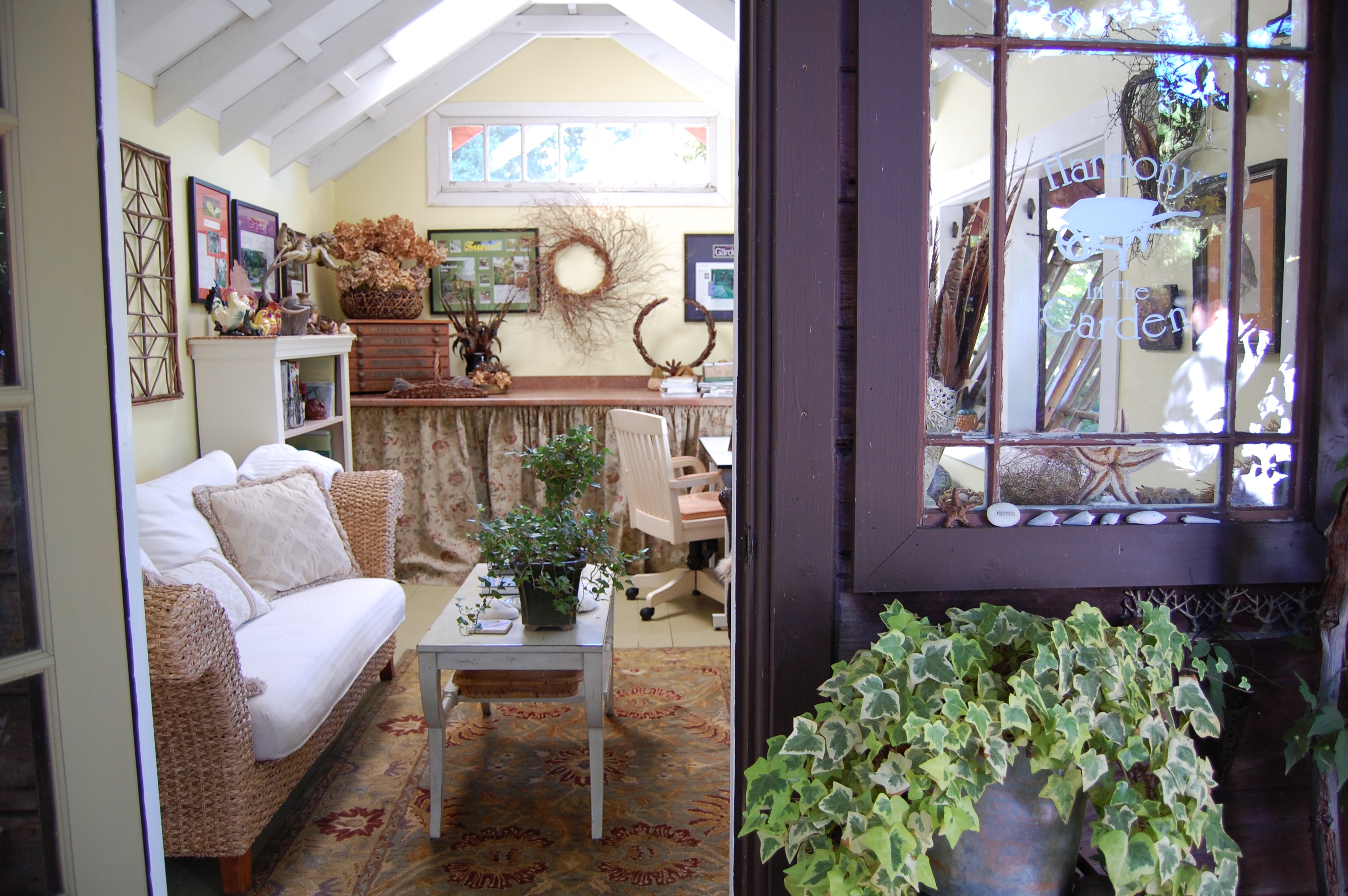
Toward the back of the garden, there is a sort of one room garden cottage.

2013-06-29 19.49.23

A look inside reveals a one room space that is far more orderly and tasteful than my own house has ever been.

DSC_0943

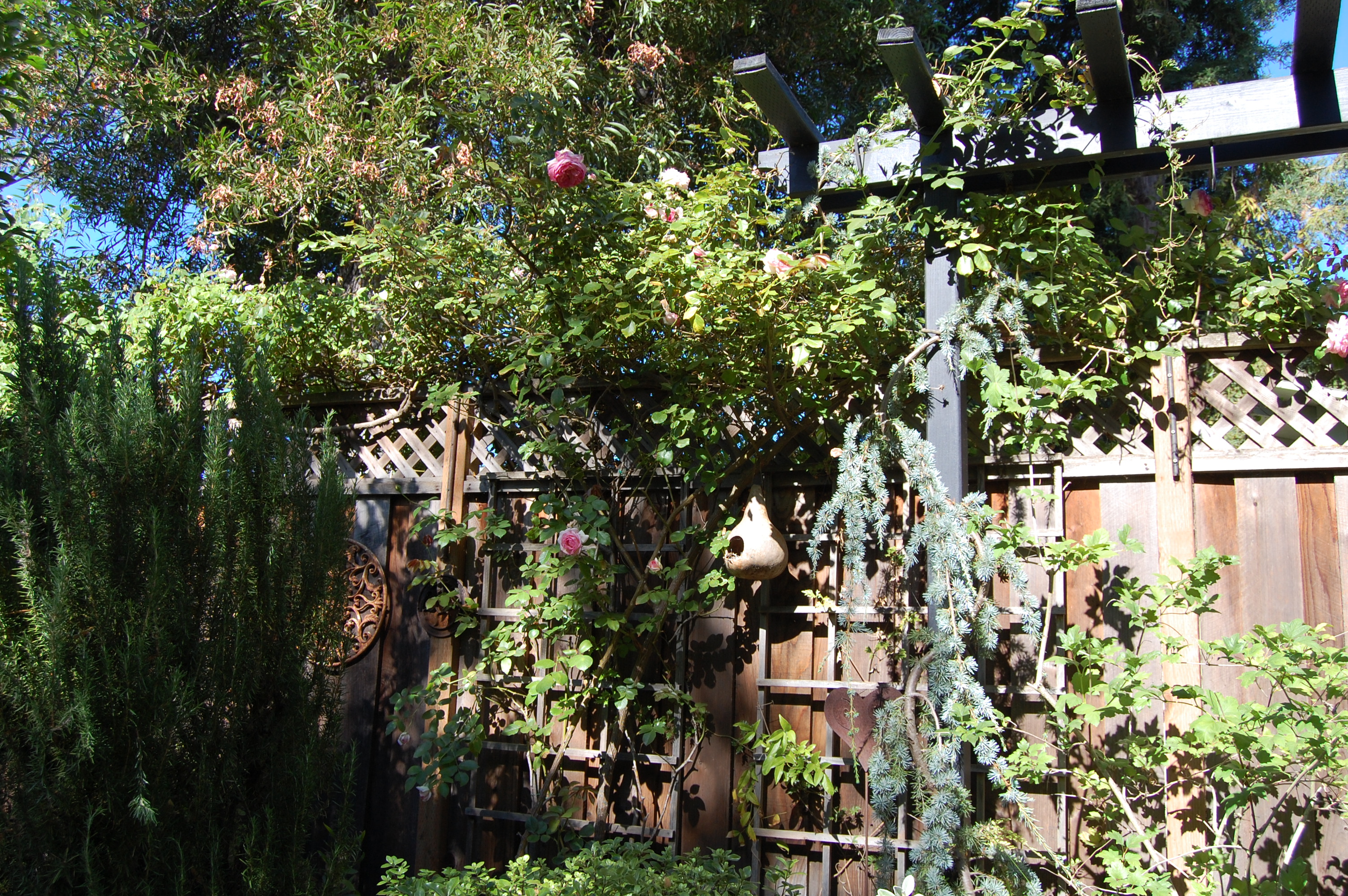
The fences are used to grow various vertical and climbing plants, including roses and oleander.

2013-06-29 19.48.37

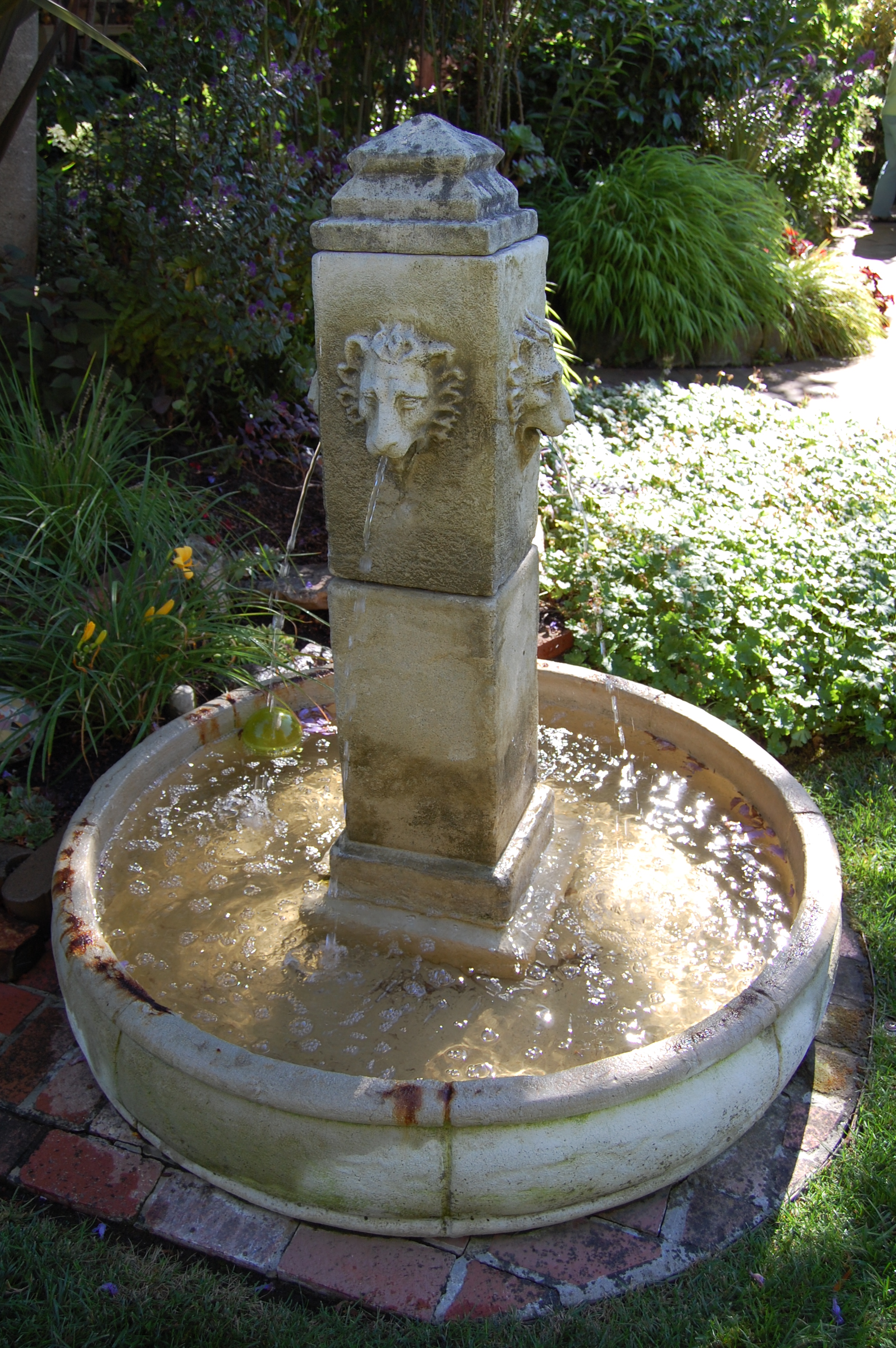
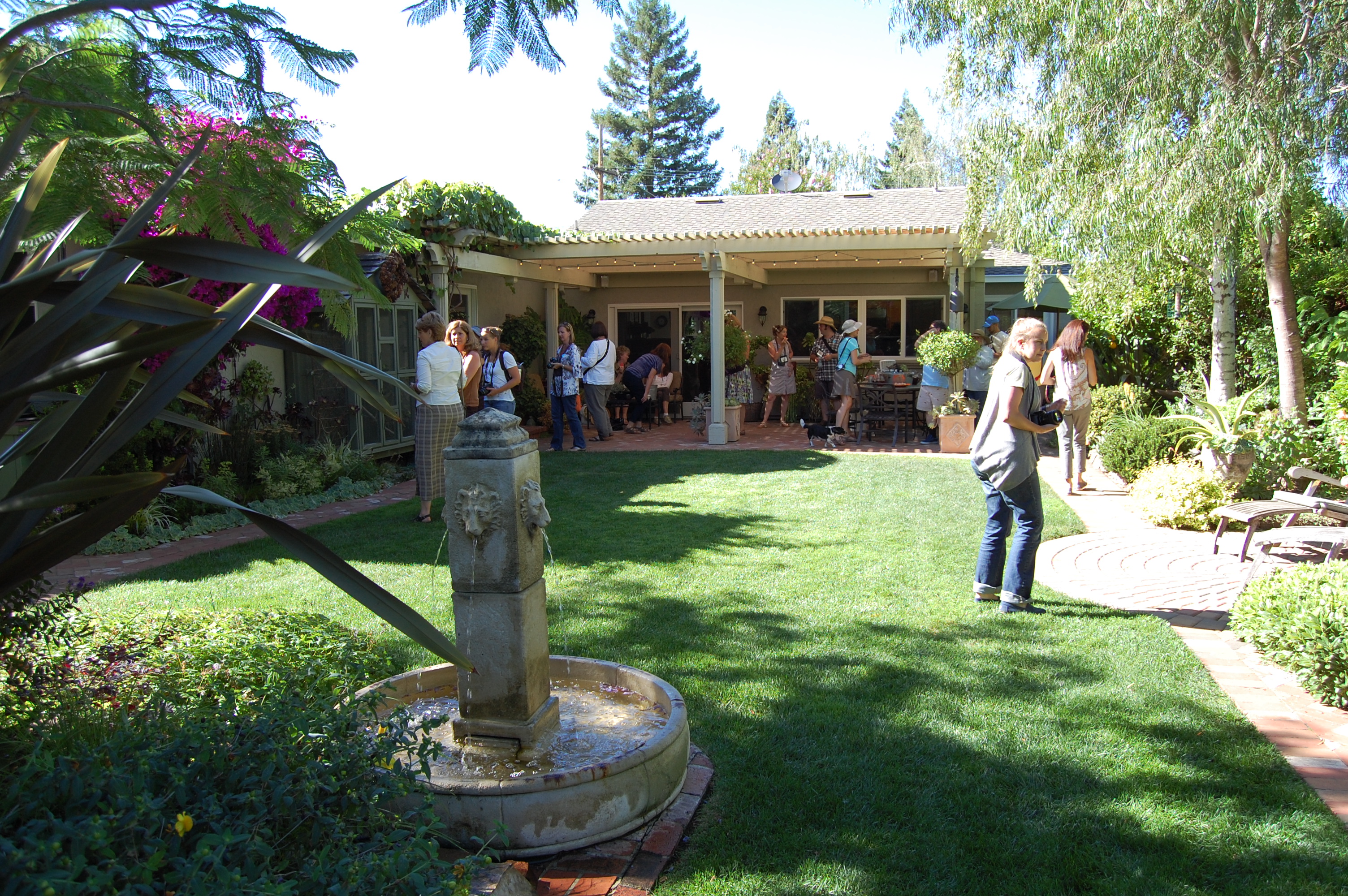
There was a very fine fountain.

2013-06-29 19.51.47

The overall backyard is organized around a rectangular lawn, which is surrounded by mixed borders and spaces for family and friends.

2013-06-29 19.47.36

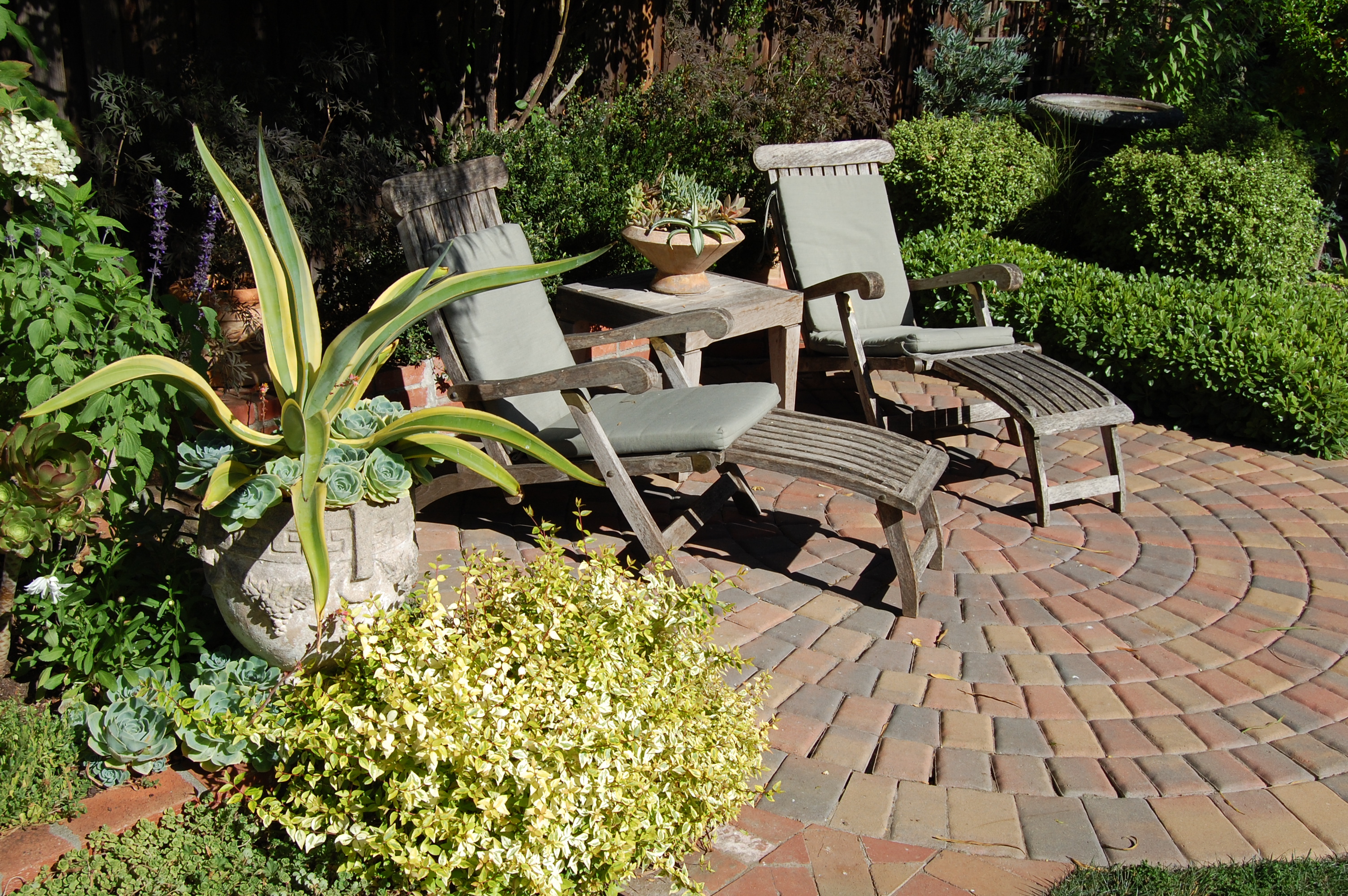
There are nooks where one or two people can relax.

2013-06-29 19.52.54

DSC_0966

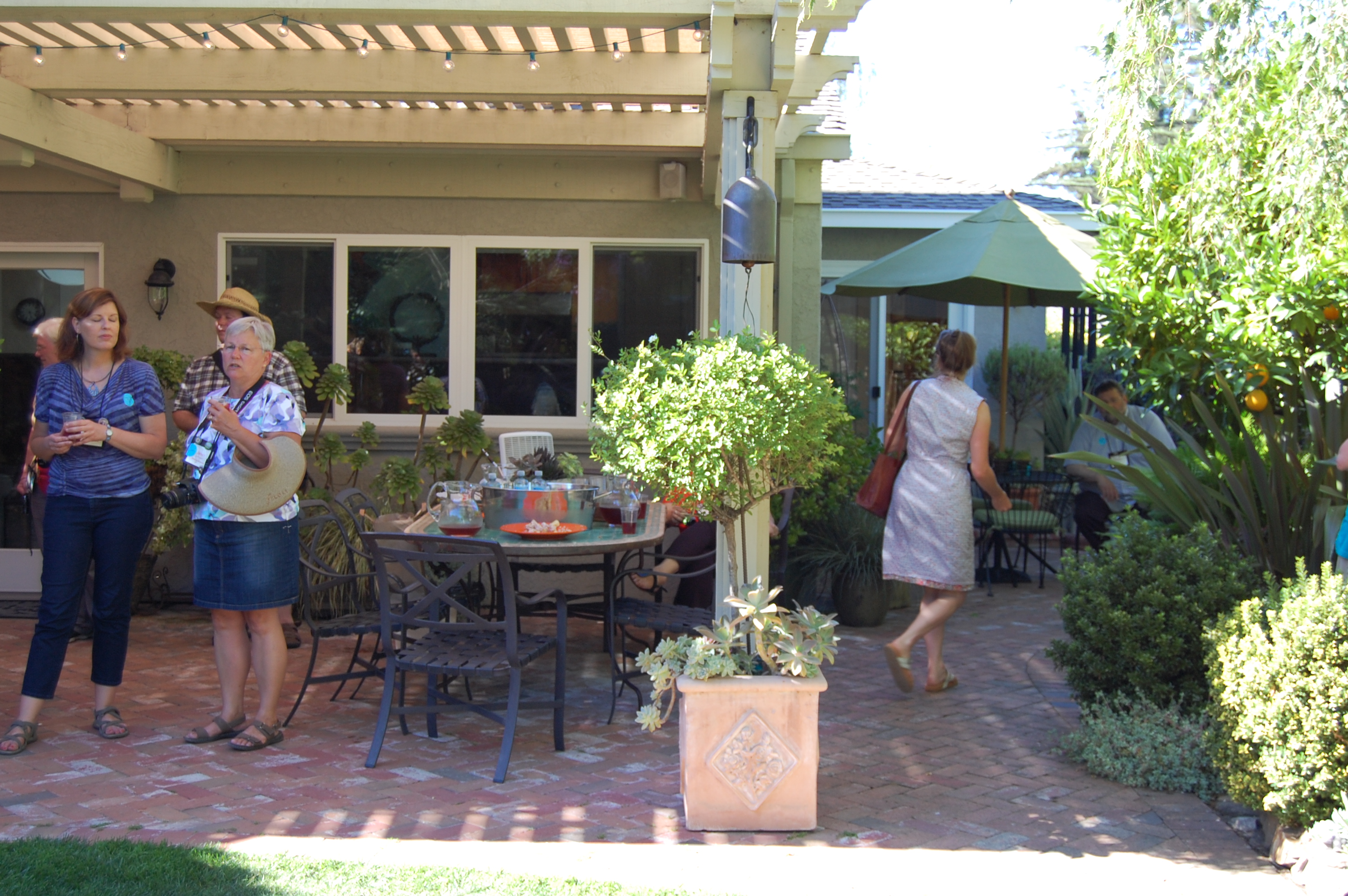
And a really nice pergola-covered patio adjoining the house. A perfect place for family meals.

2013-06-29 19.56.05

This was a garden I could really feel at home in. However, we all had to return to the coach for the drive back to San Francisco.

My next post: a cry for help from my ‘Westerland’ rose.

Nice Lilies, Dumb Location

My Asiatic Lilies are blooming. Mostly bright orange, some yellow, and a couple of magenta. These are the descendants of a naturalizing lily mix I bought from White Flower Farm about eight years ago.

Asiatic Lilies

The hybrid and variety names are long forgotten.

Asiatic Lilies
I privately refer to this one as “Mr. Magenta”.

I like these lilies. The exciting colors grab my attention. Plus orange is one of my favorites. Their height gives them a certain dignity.

asiatic lily july 13

The only thing is, I planted these lilies in a really dumb place. Specifically, around the drip line of my ‘Donald Wyman’ crabapple. When I planted them, the crabapple had not yet replaced the eastern red cedar (Juniperus virginiana) we used to have. Originally, the lilies were planted inside the drip line of the eastern red cedar, which is an even dumber place.

Asiatic Lilies
Asiatic lilies with crabapple, seen from sidewalk.

You don’t need to be told why this is dumb, right? Of course you don’t, but I’ll do it anyway. The biggest reason is that the lilies make it much harder to access the tree for pruning, etc. Lilies are unforgiving if you step on them before they bloom.

Also, it makes the ground under the tree a sort of wasted space, at least for part of the year. Finally, the tops of the lilies tend to get mixed up with the branches of the crab.

Why did I do it? Clearly I was suffering from ADHD (Absolutely Demented Horticultural Design) syndrome, but that condition is now controlled with medication.

I would move these lilies, but a) I don’t think I have available space , and b) as a general policy Judy doesn’t like it when I move things, and this is not the sort of thing I can move without her noticing.

Have you ever been unable to fix your mistake after planting something in a laughably inappropriate spot?