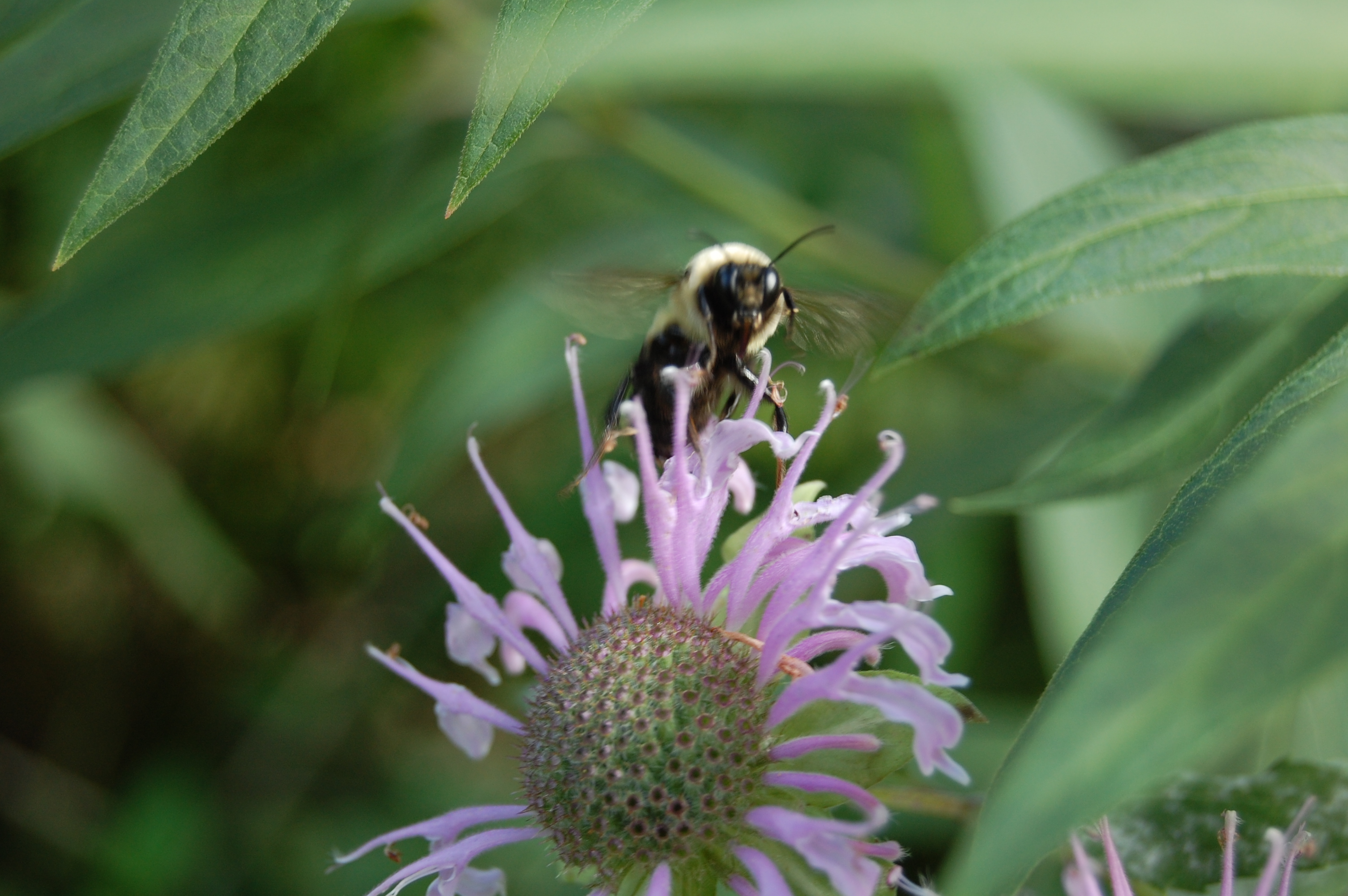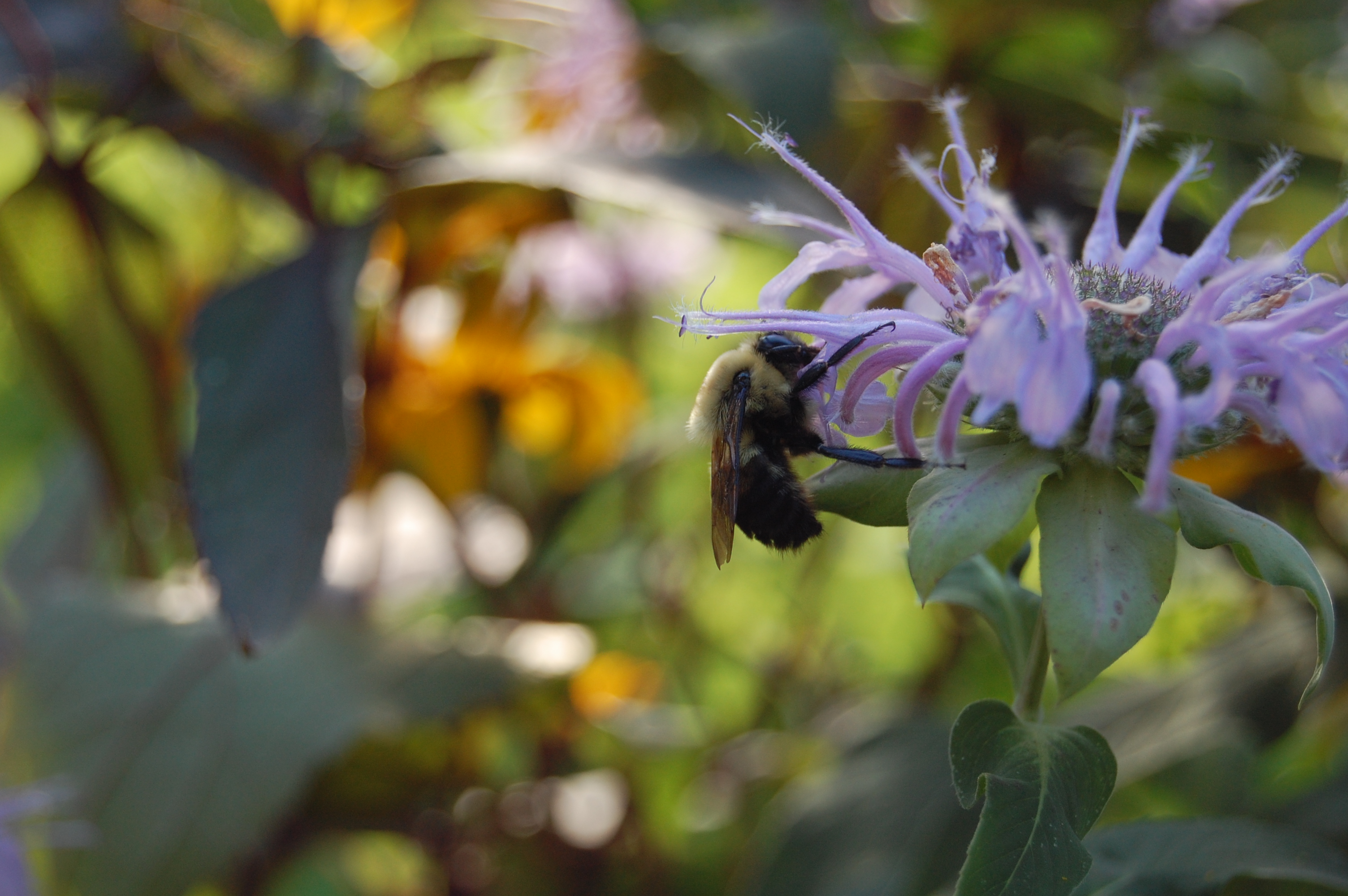
Until recently there seemed to be far fewer bees than normal in the garden, which is ordinarily a place humming with insect activity. The bees seem to have returned in quantity over the last couple of weeks, though still in smaller numbers than last year. Butterflies are still pretty scarce. Here are some bee and pollinator pictures Judy took this past Sunday.
Bumblebee coming in for a landing
Bee on Anise HyssopBee on Swamp MilkweedBee on Wild Bergamot
Are you seeing fewer bees and butterflies than ususal in your garden
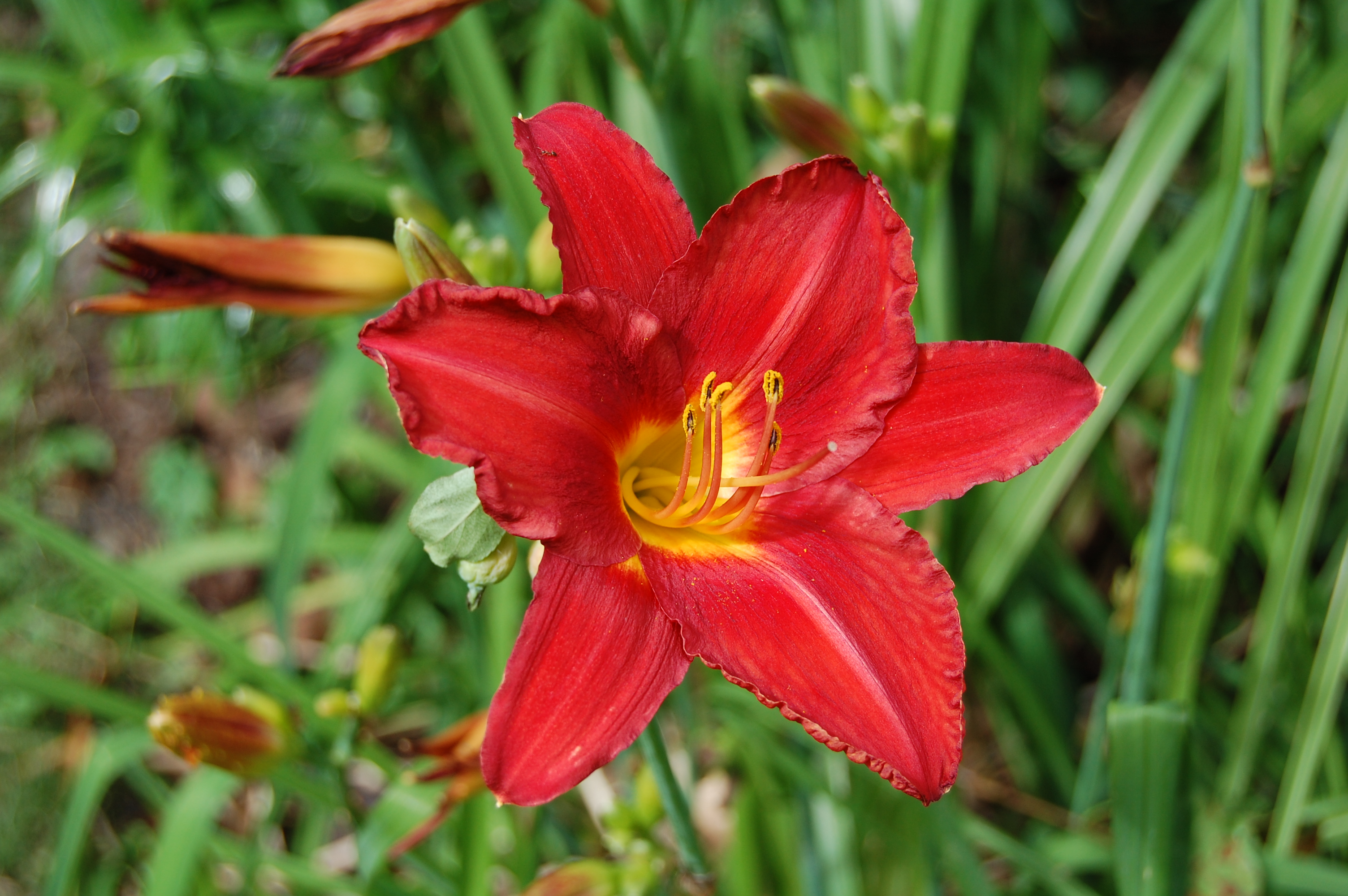
At this point in the summer, I am reminded that I like daylilies. They are not my favorite perennials, but I do like them. They are useful and undemanding. Also, they often have bold, striking flowers. Finally, they have an astounding variety of color, form, and other qualities.
‘Chicago Apache’
‘Eye-yi-yi’, my earlierst daylily, has passed its peak, but is still blooming. Others are just now coming into their own.
‘Eye-yi-yi’
My favorite daylily varieties are ‘Eye-yi-yi’, ‘Egyptian Spice’, and ‘Chicago Apache’. All of my daylilies I’ve purchased online from Oakes Daylilies in Tennessee, which I’ve found to provide very good quality.
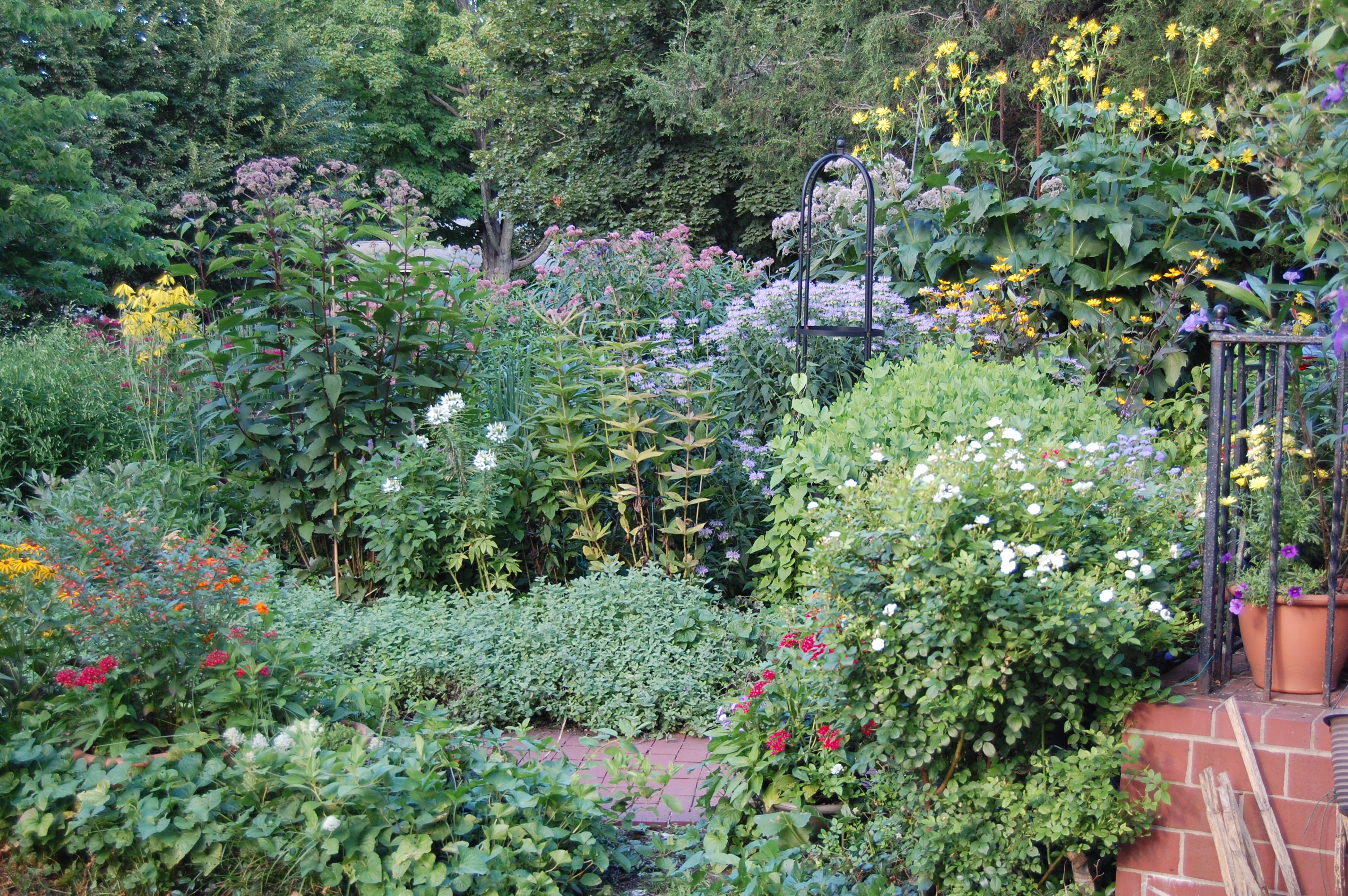
Helen at The Patient Gardener’s Weblog hosts End of Month View, which is an opportunity to focus on long views of our beds, borders, and gardens. A very useful idea, I must say. And I must also say that the views in the garden are pretty good right now.
Here’s a view of the front garden and house from the sidewalk. Those two clumps of ‘Northwind’ Switchgrass (Panicum virgatum) are in the center of the sidewalk border.
Here’s another view of the grass path between the driveway border and island bed.
I am just loving the Wild Bergamot (Monarda fistulosa) this year. I can’t remember it ever looking so good before.
The Crabapple bed from viewed from the sidewalk. The spring and early summer blooms are mostly gone. In a month or so the Anise Scented Goldenrod (Solidago odora) and Aromatic Aster (Symphyotrichum oblongifolius) will fill this space with blue and yellow. The tomatoes and herbs are semi-hidden on the south side of the crab.
A view of the house over a mass of Bee Balm ‘Raspberry Wine’ (Monarda didyma).
The Driveway Border seen from the other side of the driveway. You can see I’ve cut back the Culver’s Root (Veronicastrum virginicum). The Cup Plant (Silphium perfoliatum) in the rear is growing in the Island Bed.
Here’s the front garden seen from the street. The Orange Coneflower (Rudbeckia fulgida) planted along the curb is getting ready to bloom. The rounded shrubby plant in the center is the Blue Star (Amsonia tabernaemontana), which has responded very nicely to being cut back after the blooming.
The front walk, lined with flowering containers.
There isn’t too much going on in the back garden right now, so there aren’t too many pictures from there. ‘Darlow’s Enigma’ is blooming sporadically on the arbor.
Here’s a view of the back garden Island Bed from the roof of the back porch. That’s the lower trunk of our silver maple at the center there. And notice the handsome concrete chicken.
Another part of the back garden. We’re thinking of putting down pavers in the area around the table so as to make a little patio.
If you go to Chicago, you can visit the Art Institute, or attend one of the music festivals in Grant Park. However, this will introduce you only to the Chicago of the beautiful downtown lakefront. That’s fine, as far as it goes. But to really know the city, you have to get away from downtown and see some of its other faces.
One of the many fine vendors at Pierogi Fest.
One of those faces can be found at Pierogi Fest, an annual celebration of the pierogi, a fried dumpling from Eastern Europe filled with meat, sauerkraut, potato, or other stuffings – along with other heavy, starchy, and delicious foods best eaten with a lot of sour cream.
The Chicago area actually has more ethnic Poles than Warsaw. Combined with the area’s Ukrainians, Serbs, Czechs, and Slovaks, they make a mighty host. Pierogi Fest draws about 200,000 people over three days to Whiting, Indiana, a town just over the Chicago city boundary.
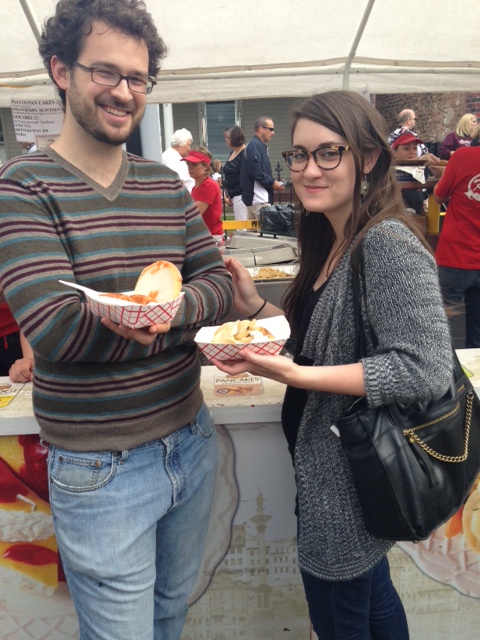
Judy, our son Daniel, and his girlfriend Kaitlin went out to Pierogi Fest on Saturday. Sadly, other duties prevented me from attending. However, Judy brought back a full report, along with some pictures taken on her cell phone.
Daniel and Kaitlin enjoying Pierogi Fest’s offerings.
Pierogi wasn’t all that was on the menu. There were cabbage rolls stuffed with meat and rice. There were potato pancakes. There were grilled meats, and sweets of various kinds.
In case you were unclear on the concept, there were a number of costumed people walking around as giant cabbage rolls, pierogi, and panczki (jelly doughnuts).
Man in a Stuffed Cabbage Roll costume.
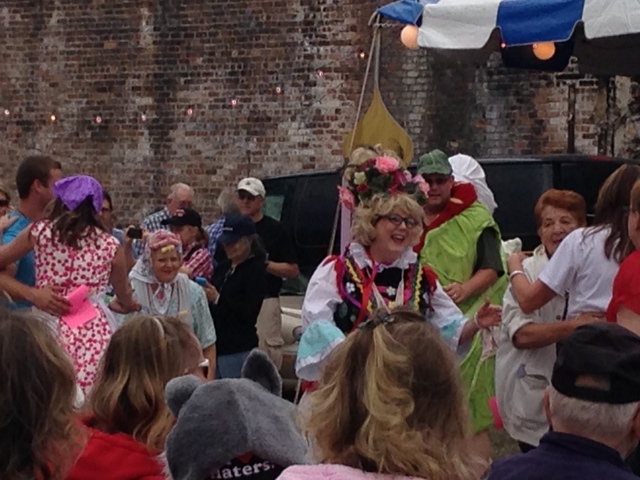
But Pierogi Fest is about more than stuffing yourself into a carbohydrate stupor. There is also culture, in the form of a polka dancing contest. The contest was overseen by three ladies known as the Polka-hontuses. At the conclusion of the contest, they perform a spirited rendition of the Slovak national anthem.
One of the Polka-hontuses
Another form of culture is the Dunk-A-Nun booth. This booth enables someone with a good arm and good aim to cause a uniformed nun to be dropped into a pool of water. The booth’s boosters worked the crowd with the following spiel: “These are real nuns here! Come on, you went to Catholic school! You know you want to do this!” All proceeds go to a local parochial school.
The Dunk-A-Nun Booth
Sure, the Art Institute can boast about the new wing for their modern art collection, but can you dunk a nun there? I don’t think so.
Judy was kind enough to return home with a dozen pierogi and a couple of cabbage rolls, so I didn’t miss out on all the fun.
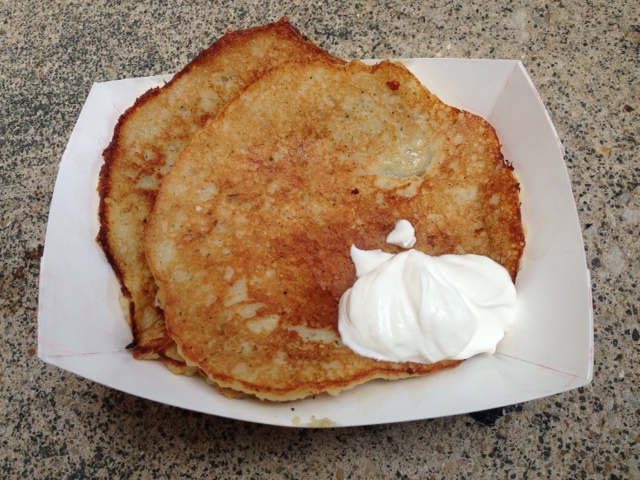
A generous serving of potato pancake with sour cream.
The 2014 Pierogi Fest is July 25-27, in case you don’t want to deny yourself for another year.
What is your favorite food-centered street festival?
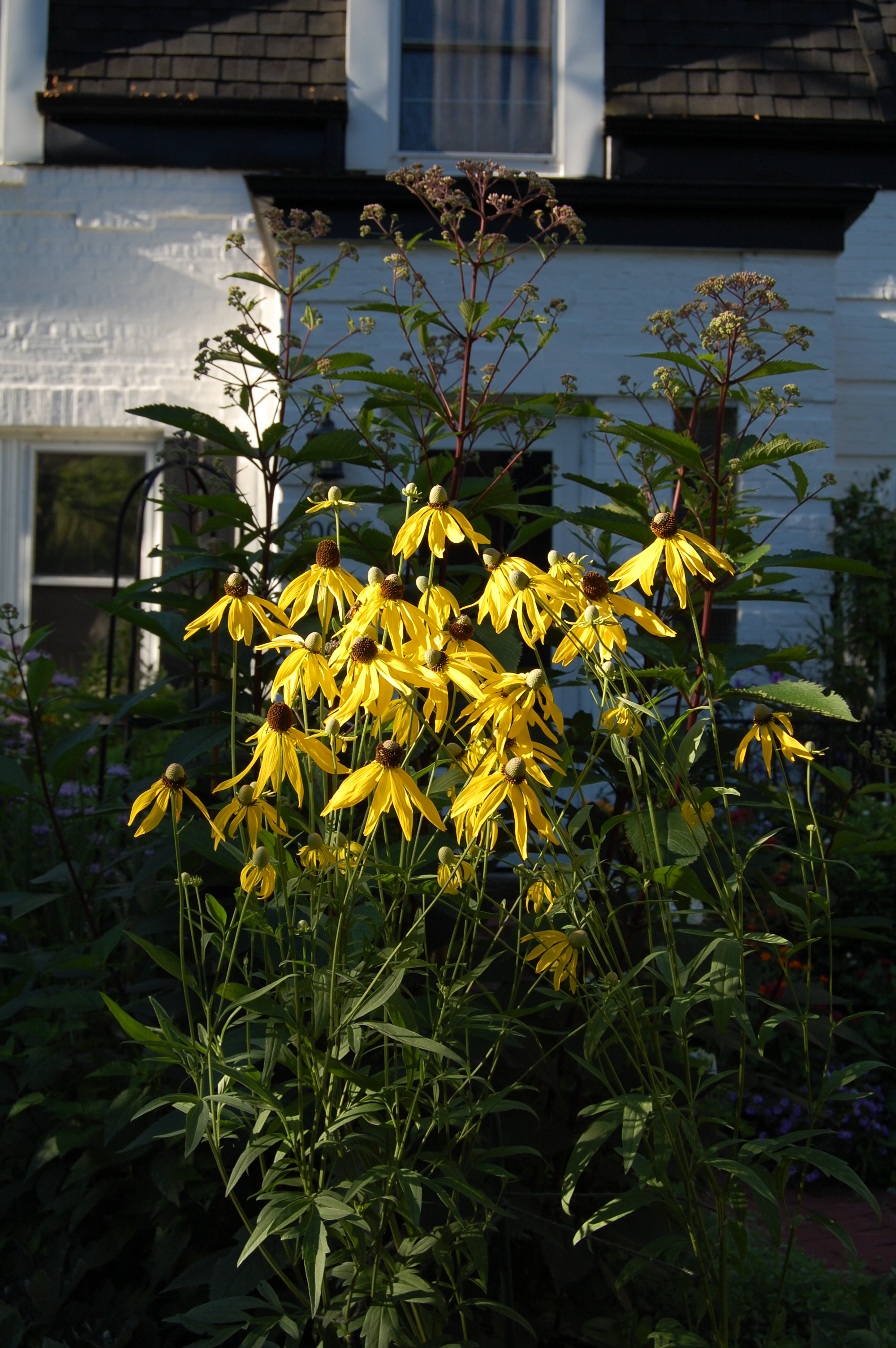
The light was so perfect Thursday morning that Judy was inspired to grab her camera on her way out the door and take a few pictures. I know I just did a post on Yellow Coneflower (Ratibida pinnata), but look how the yellow flowers are luminous in the sun.
Yellow Coneflower in the sunlight with Joe Pye Weed in the background.
Here’s the grassy path that separates the driveway border from the island bed in the front yard.
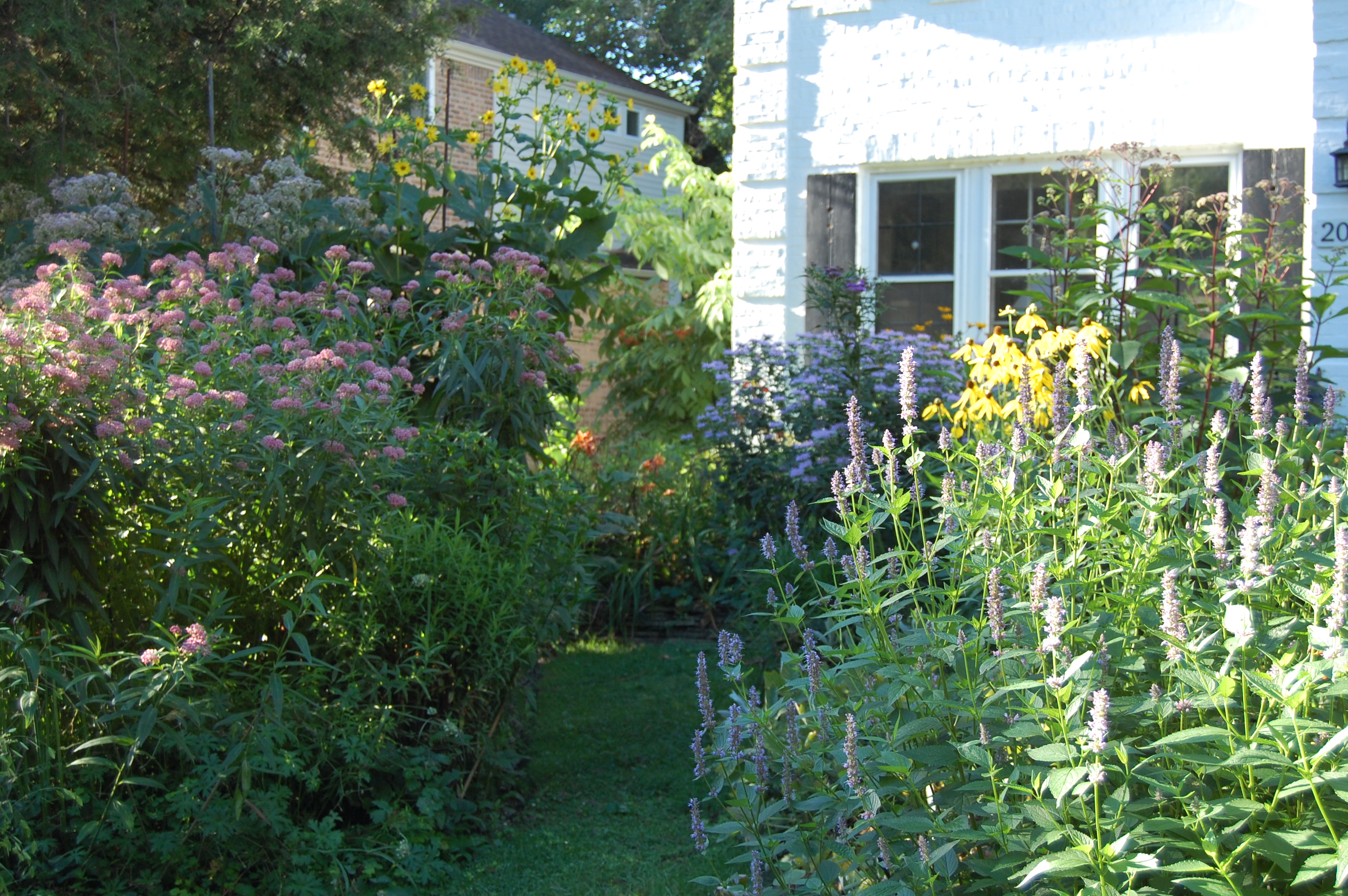
Anise Hyssop and Swamp Milkweed on either side of a grassy path.
Viewing the front island bed from the sidewalk, over the heads of the Bee Balm (Monarda didyma) and Wild Bergamot (M. fistulosa). The Swamp Milkweed (Asclepias incarnata) grew really tall this year, next year I should remember to cut it back.
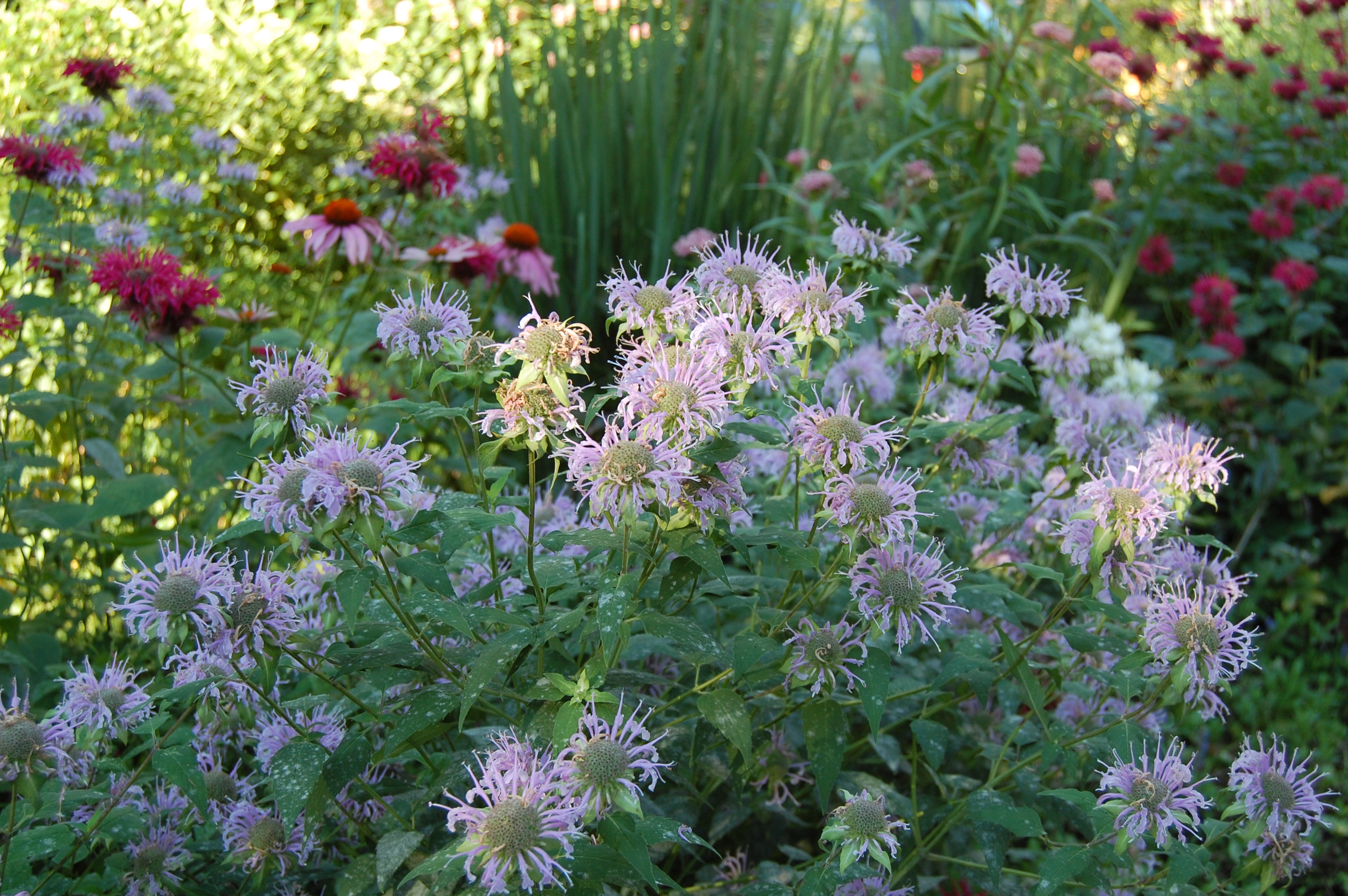
Swamp Milkweed in the back, Bee Balm and Wild Bergamot in the foreground.
Wild Bergamot is so often unfairly ignored in favor of its flashier cousin, Bee Balm.
Wild Bergamot
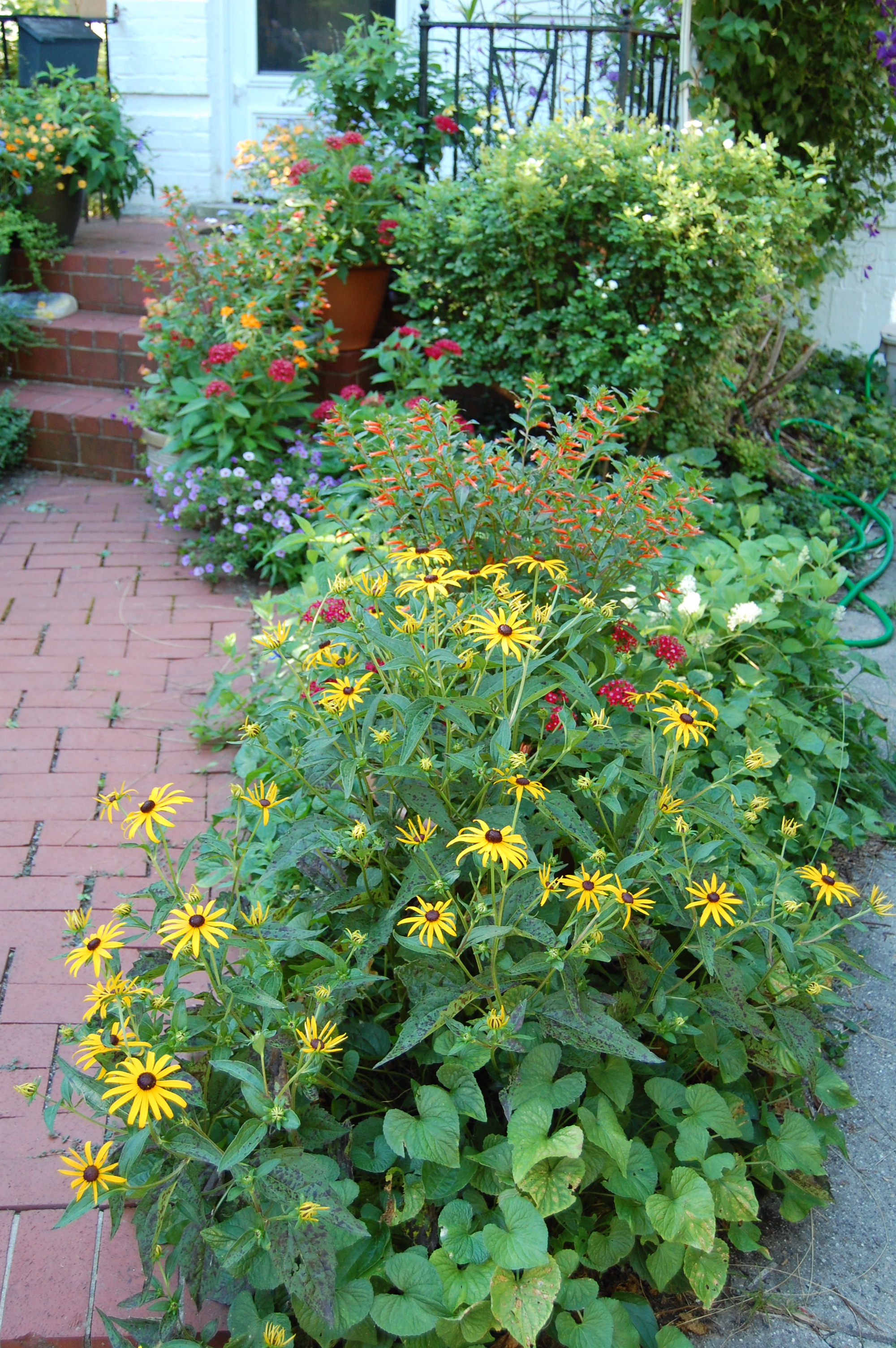
The first Orange Coneflowers (Rudbeckia fulgida) to bloom are by the driveway. That’s Cigar Flower (Cuphea ignea) behind the Rudbeckia. It’s hard to tell that the Cigar Flower is in a container.
Orange Coneflower with Cigar Flower to the rear.
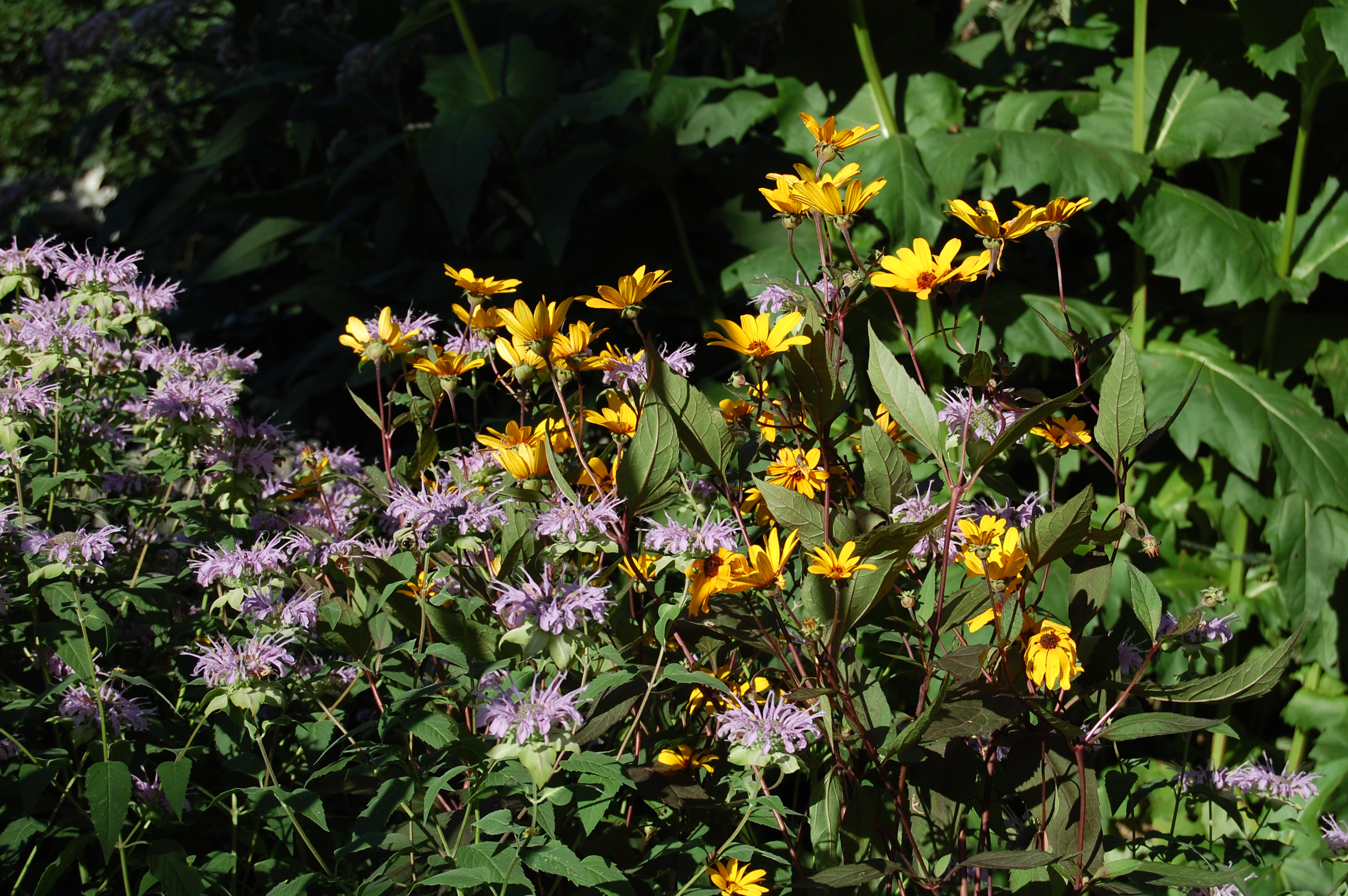
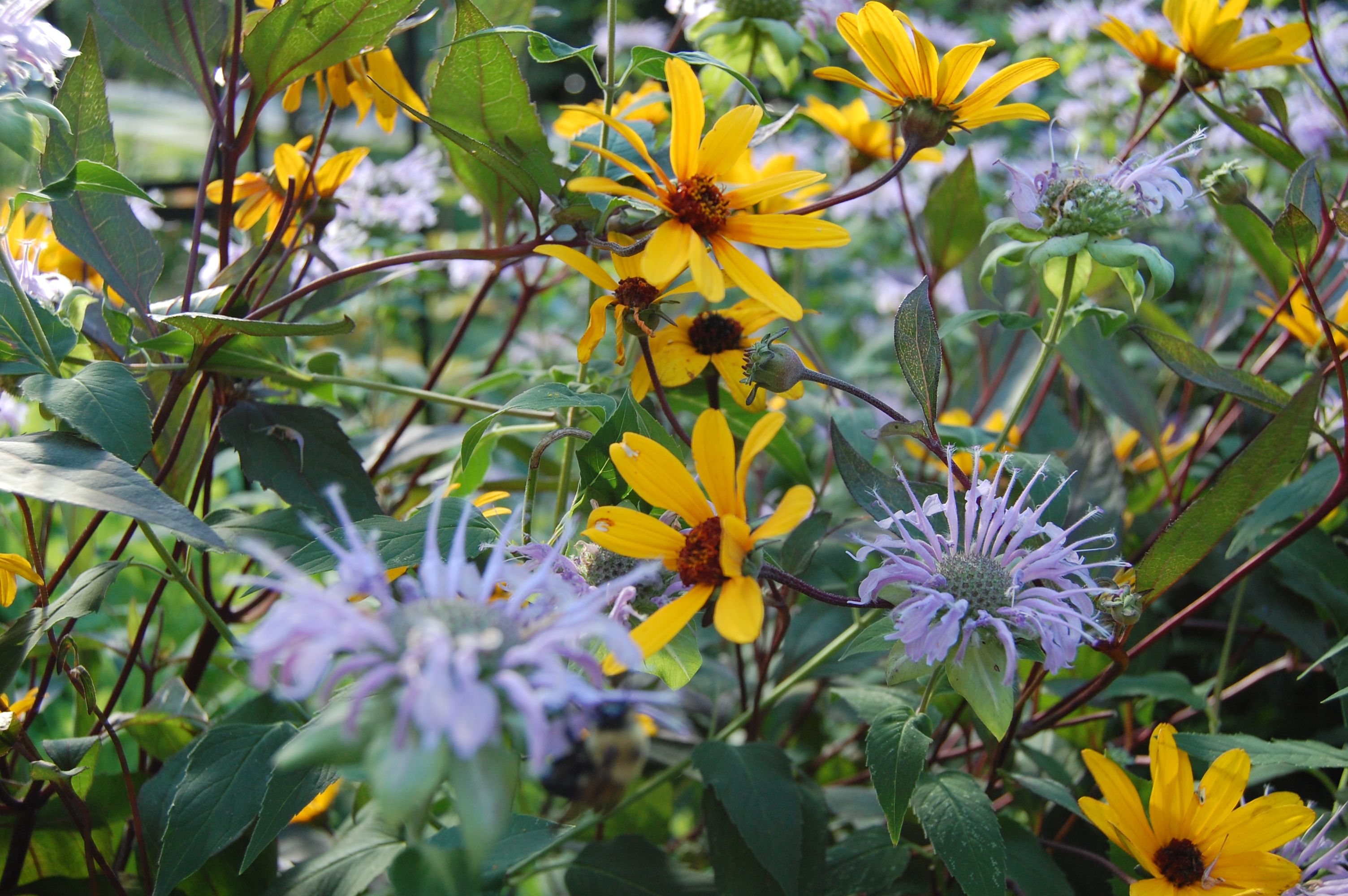
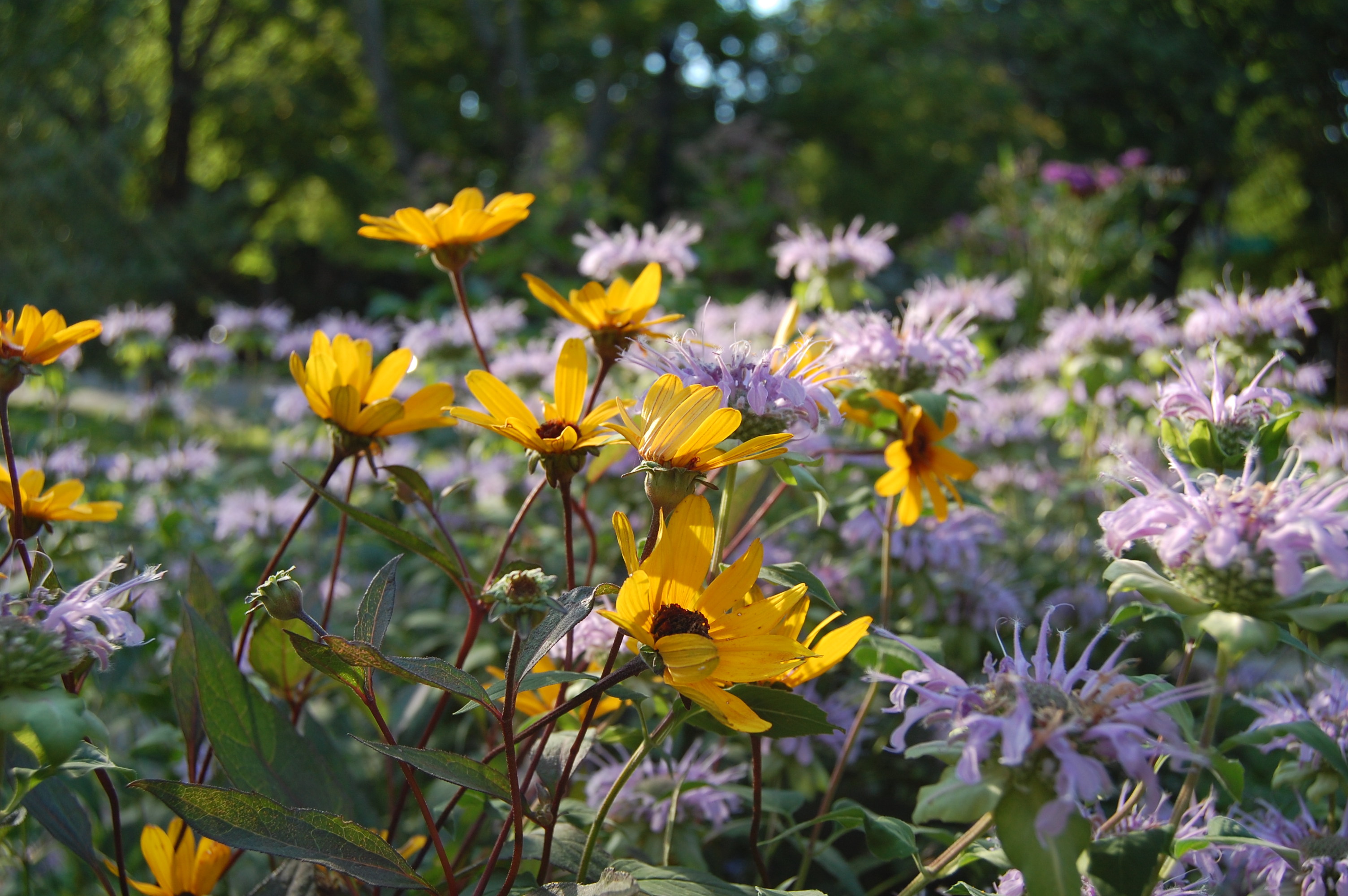
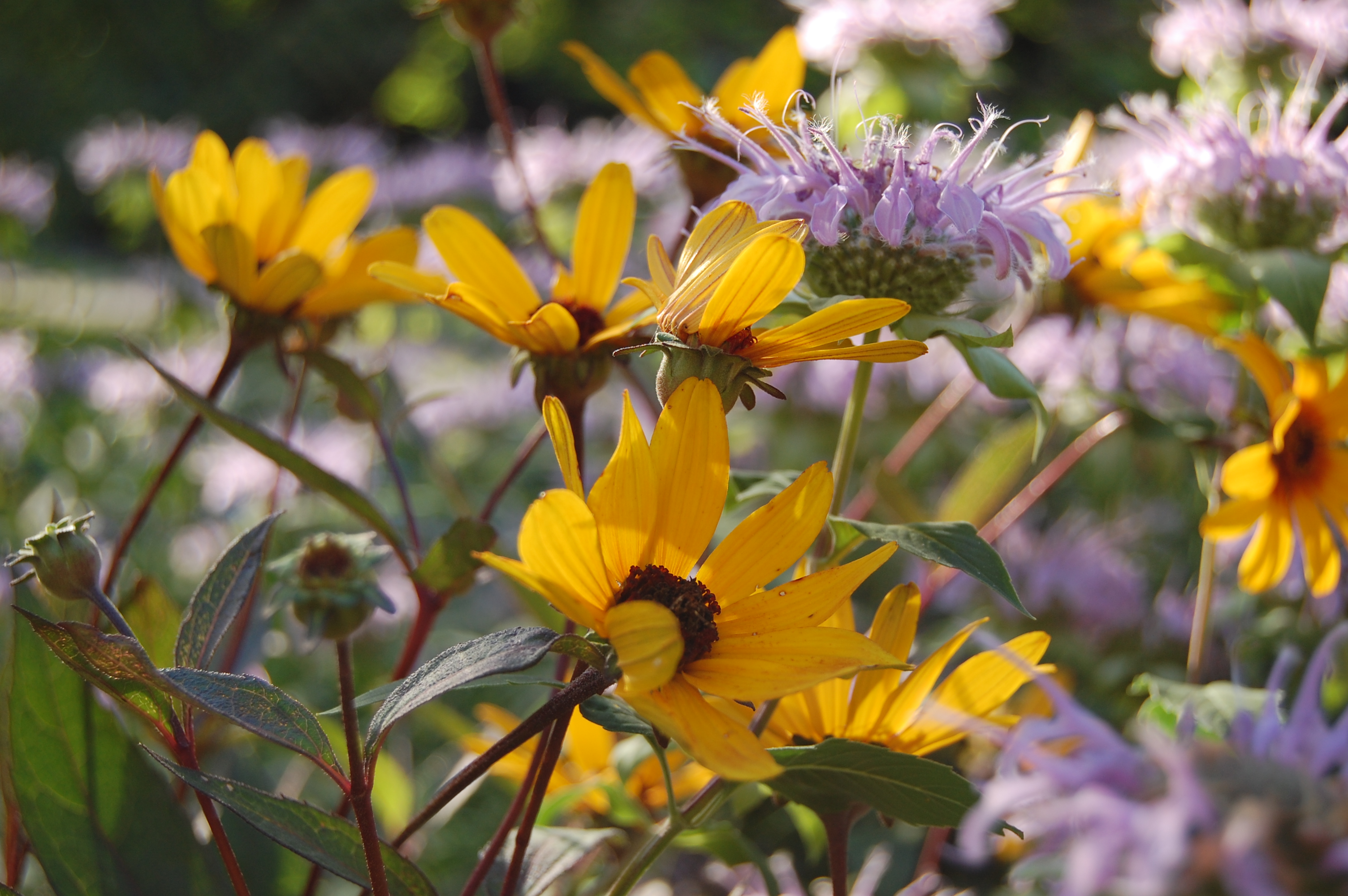
I like the combination of Wild Bergamot and Early Sunflower ‘Prairie Sunset (Heliopsis helianthoides). This picture also shows how nicely the foliage has returned on the Blue False Indigo (Baptisia australis) after I cut it back.
Wild Bergamot with Heliopsis ‘Prairie Sunset’
Oh and by the way, the Morning Glories (Ipomoea tricolor) have FINALLY taken and are climbing up the tutuer. I suppose we should get actual flowers in August. Better late than never.
Morning Glory Vine climbing tutuer.
Have you been challenged by the harsh summer light in your garden?
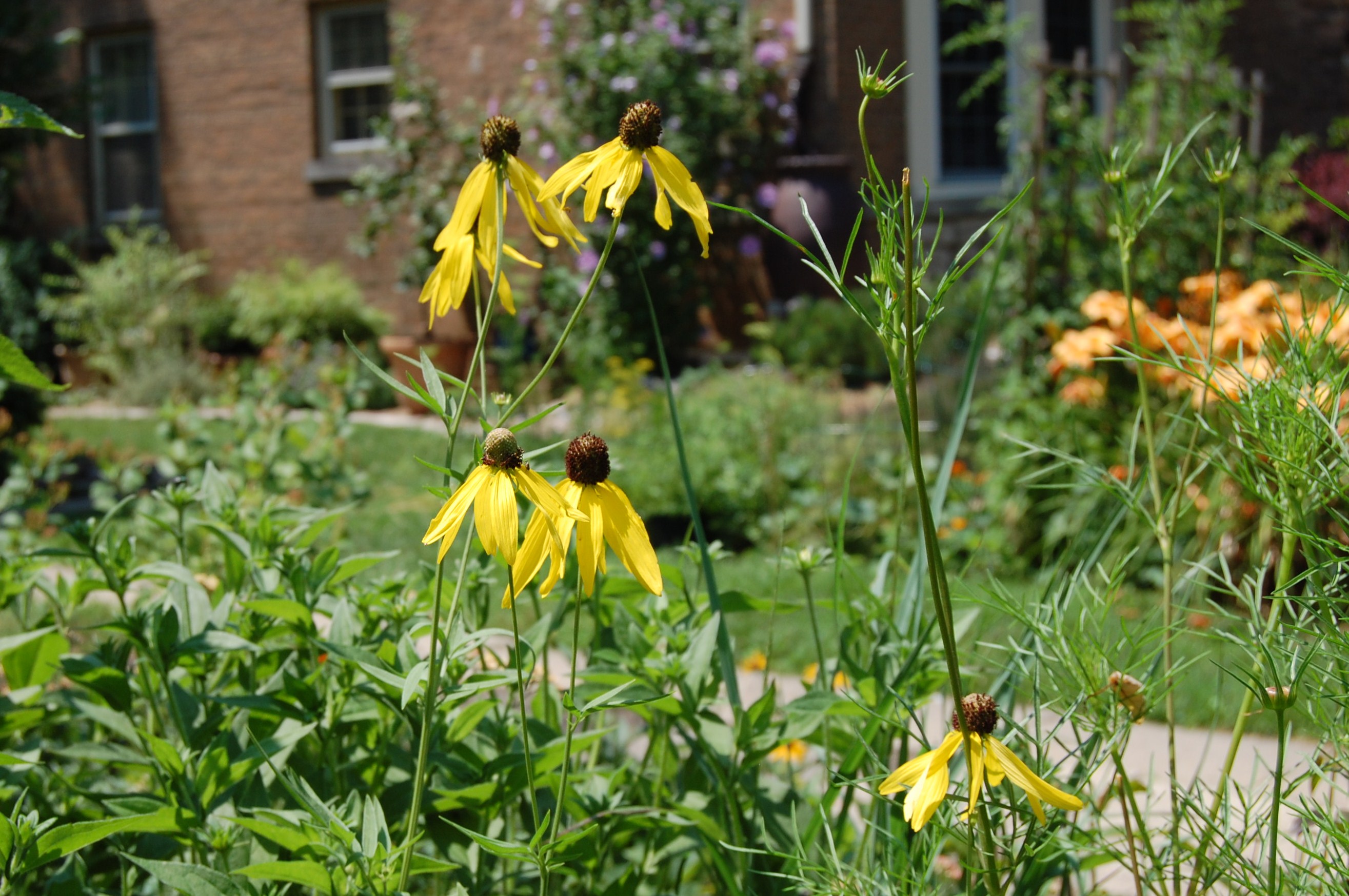
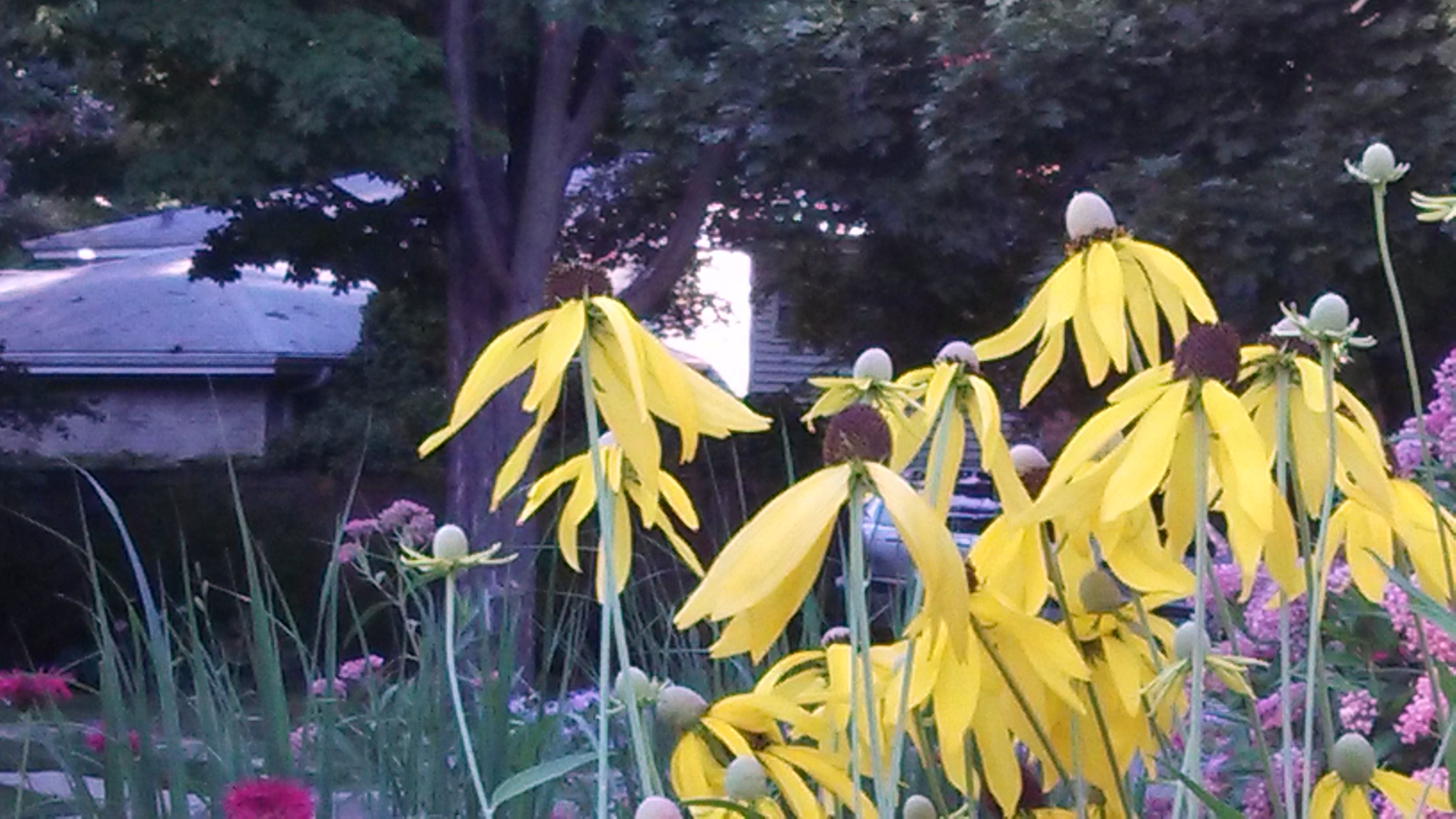
It’s not an Echinacea. It’s not a Rudbeckia. It’s Ratibida pinnata, known by the common names Yellow Coneflower or Grey-Headed Coneflower.
Yellow Coneflower. Picture: Judy
There’s a lot to like about this plant. The flowers are nice, especially in a mass. The droopy yellow ray flowers are bright yellow. The prominent cone starts out grey and turns brown as the seeds mature. It’s an informal, friendly sort of flower.
This is a tough, low maintenance plant. It likes full sun and prefers soil that leans alkaline but otherwise needs little care. In my garden Purple Coneflower (Echinacea purpurea) have succumbed to aster yellows, but non of the Yellow Coneflowers have had any problems with disease or insects.
Picture: Jason
It can be a bit slow to establish. The plants I put in this spring and last fall are not blooming this summer, but I anticipate lots of blooms last year. In the fertile soil of my driveway border it grows 4-5′ and needs some staking.
Picture: Jason
Wildflower Wednesday is a meme hosted on the fourth Wednesday of every month by Gail at Clay and Limestone. Take a look at her site and see what other wildflowers are being highlighted.
I have to admit I don’t do much with edible gardening. Actually, I’m far more interested in growing food for the birds than for people. Generally, I find ornamental perennials, grasses, and shrubs far more satisfying than vegetables. Also, vegetables want space in full sun, which is in limited supply. (Note: all pictures are Judy’s unless otherwise noted.)
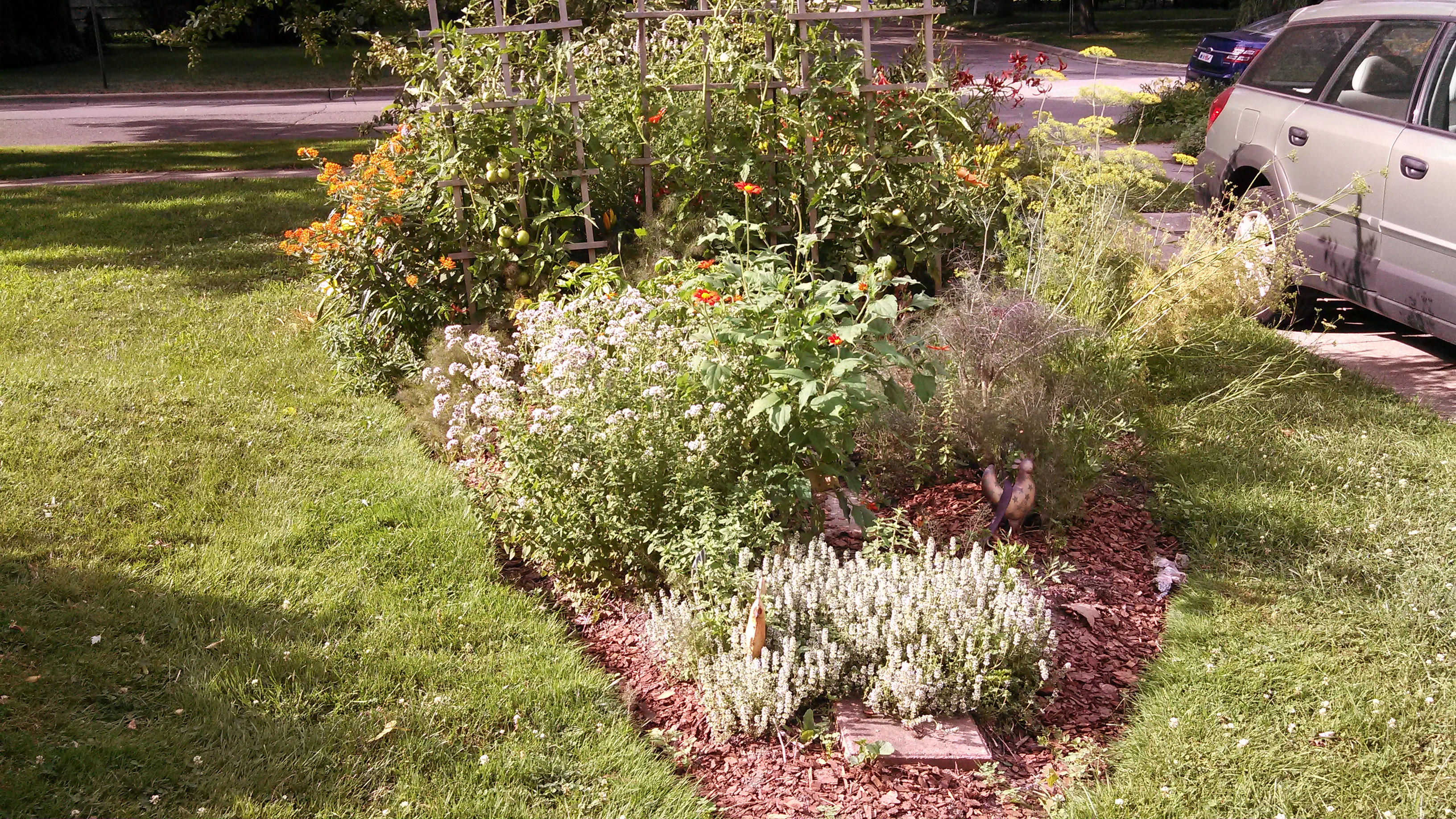
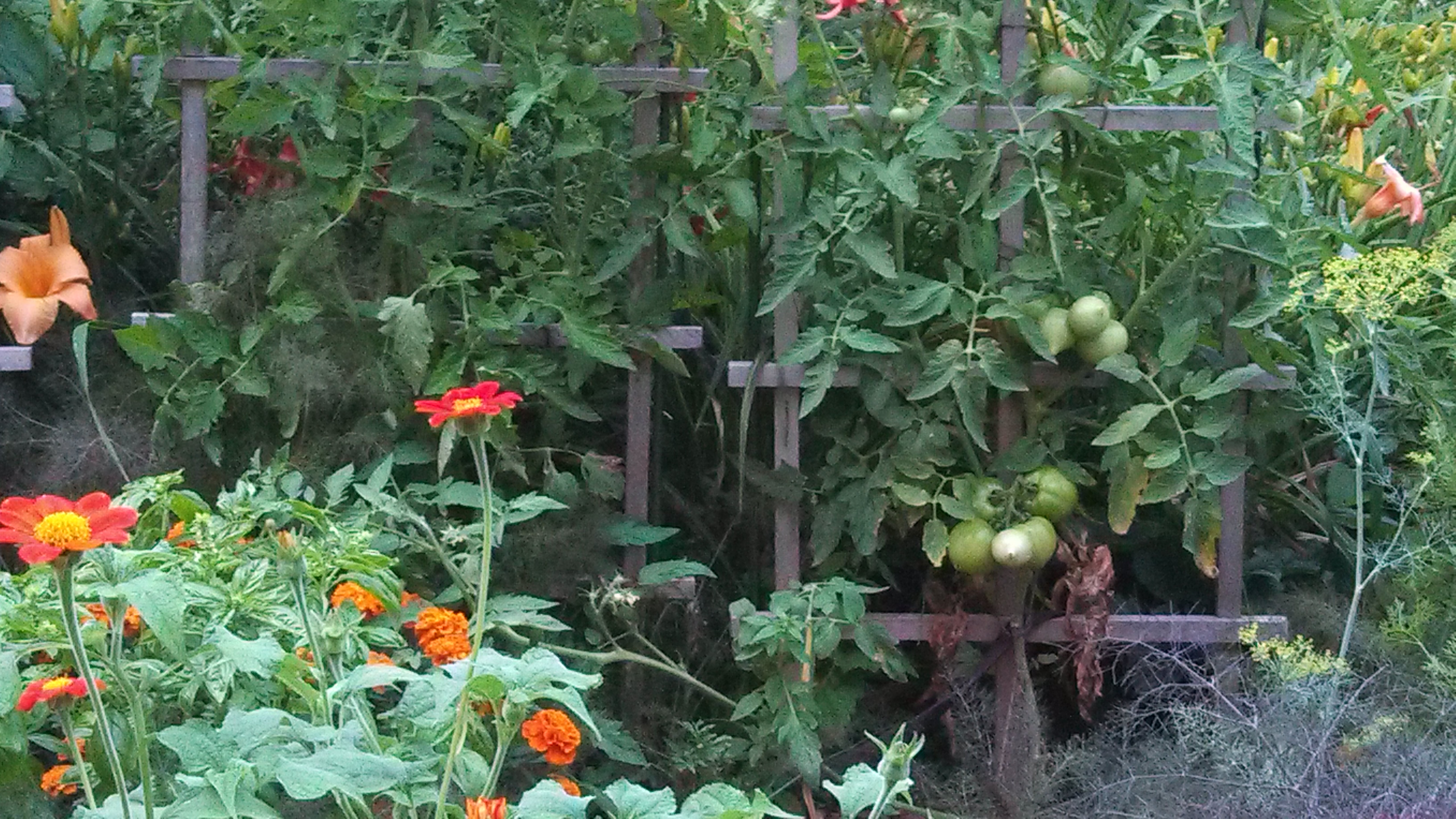
Our vegetable and herb plot. Jason picture.
To the extent that we do grow edibles, it’s because Judy believes firmly that you can’t have a proper home without some kind of vegetable garden. Also, we like to have fresh herbs for cooking.
And so we have an irregularly triangular plot pointing south, with a south facing trellis for tomato vines at the base. This is in the front yard, behind the bed with the crabapple tree and the Asiatic lilies, which partially blocks the view from the street.
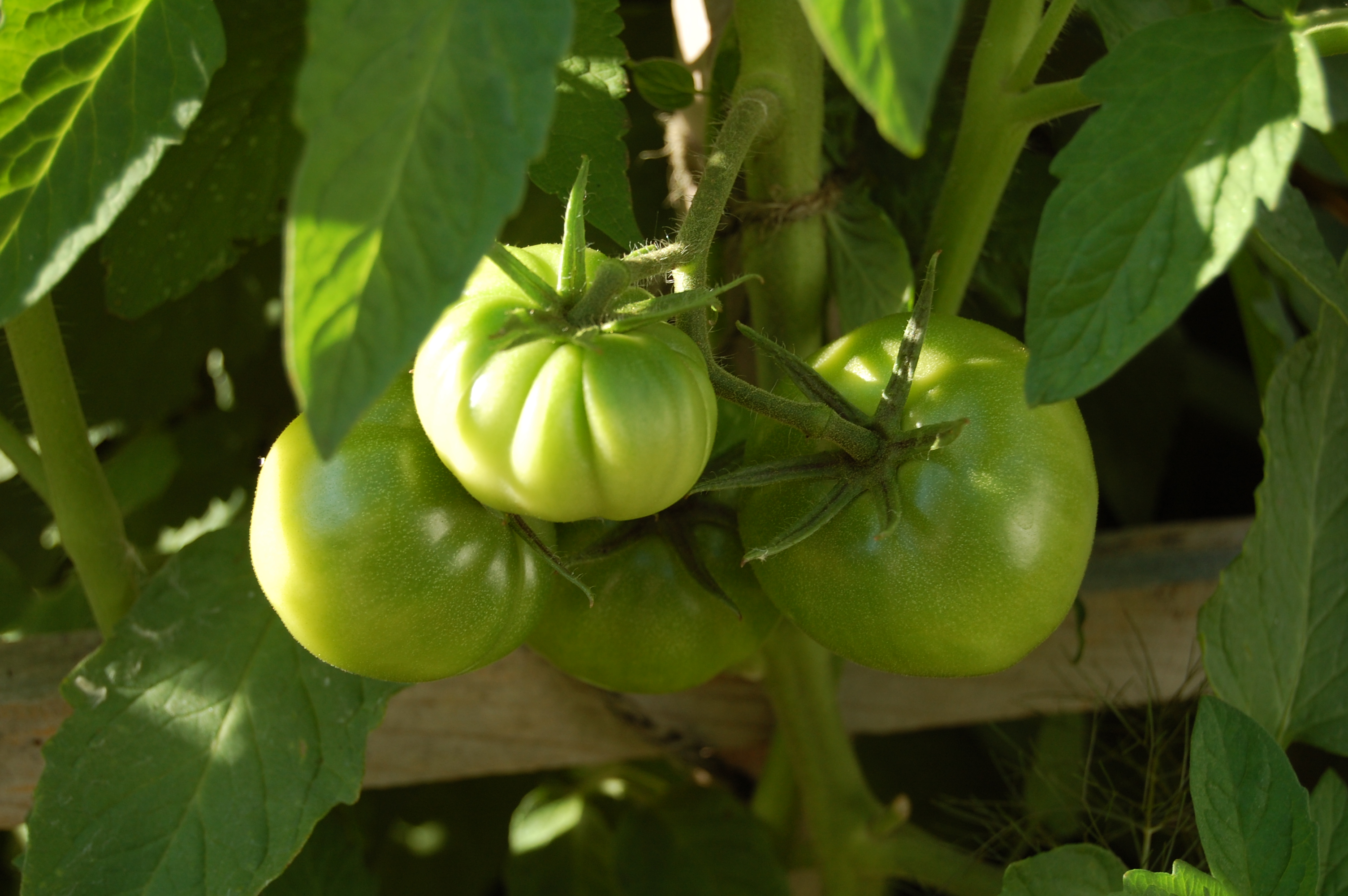
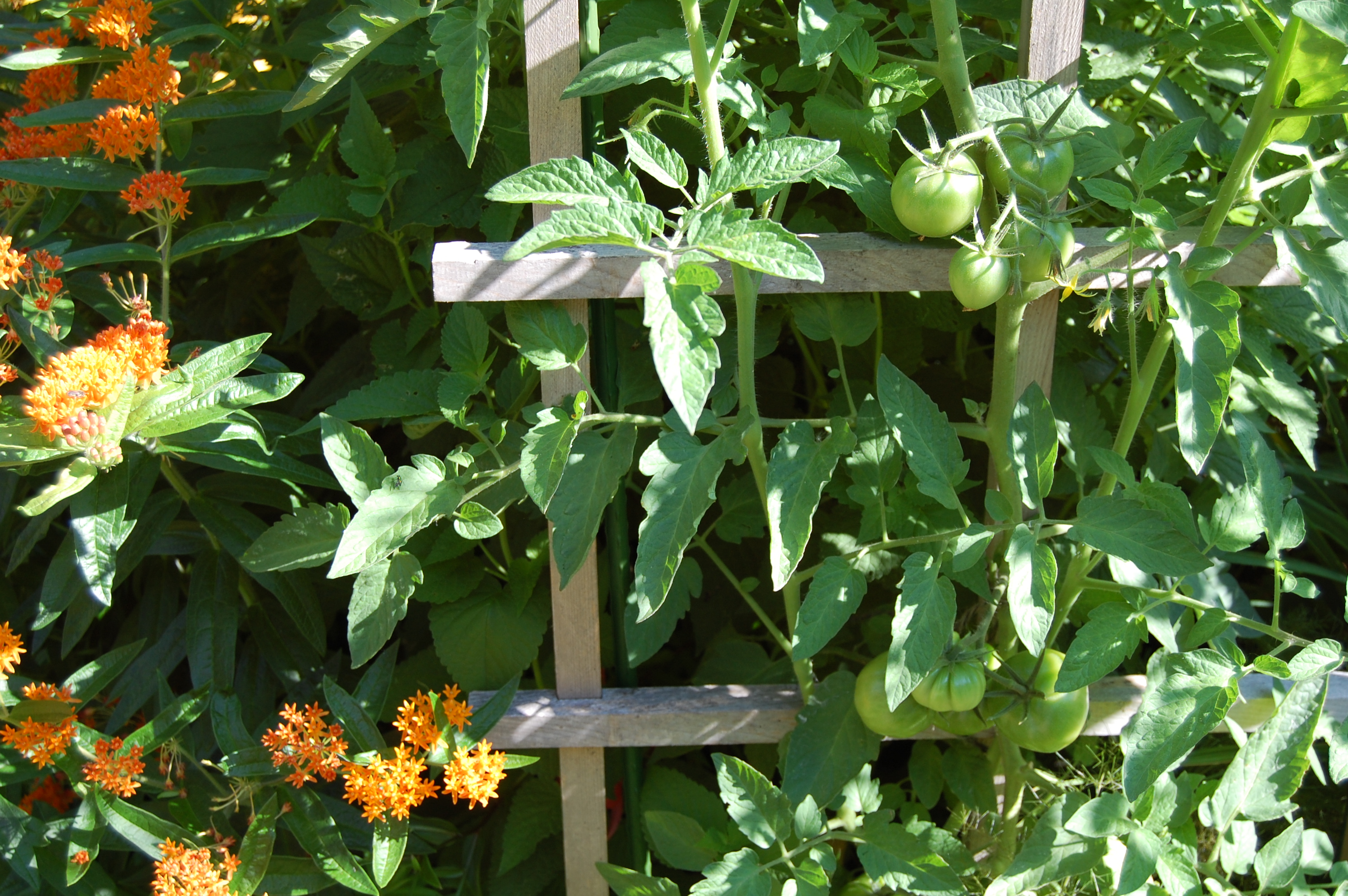
The tomatoes are pretty happy so far. I’m growing just three plants, each a different variety: Celebrity, Early Girl, and Black Cherry (an heirloom cherry tomato). Celebrity is a determinate tomato, meaning that a certain point the vines stop growing. We’ll see.
Because of the cold spring, I waited until May 22, a week after our average frost-free date, to plant the tomatoes. I might have waited longer, as the transplants sulked in the continuing cool weather. Eventually, though, they started to thrive in the plentiful rain and gradually increasing warmth. Right now there are lots of unripe tomatoes, and I don’t think any will be ready to pick for 10-14 days.
Tomatoes are the only actual vegetables that we grow. The remainder of this patch is taken by herbs and a few flowers.
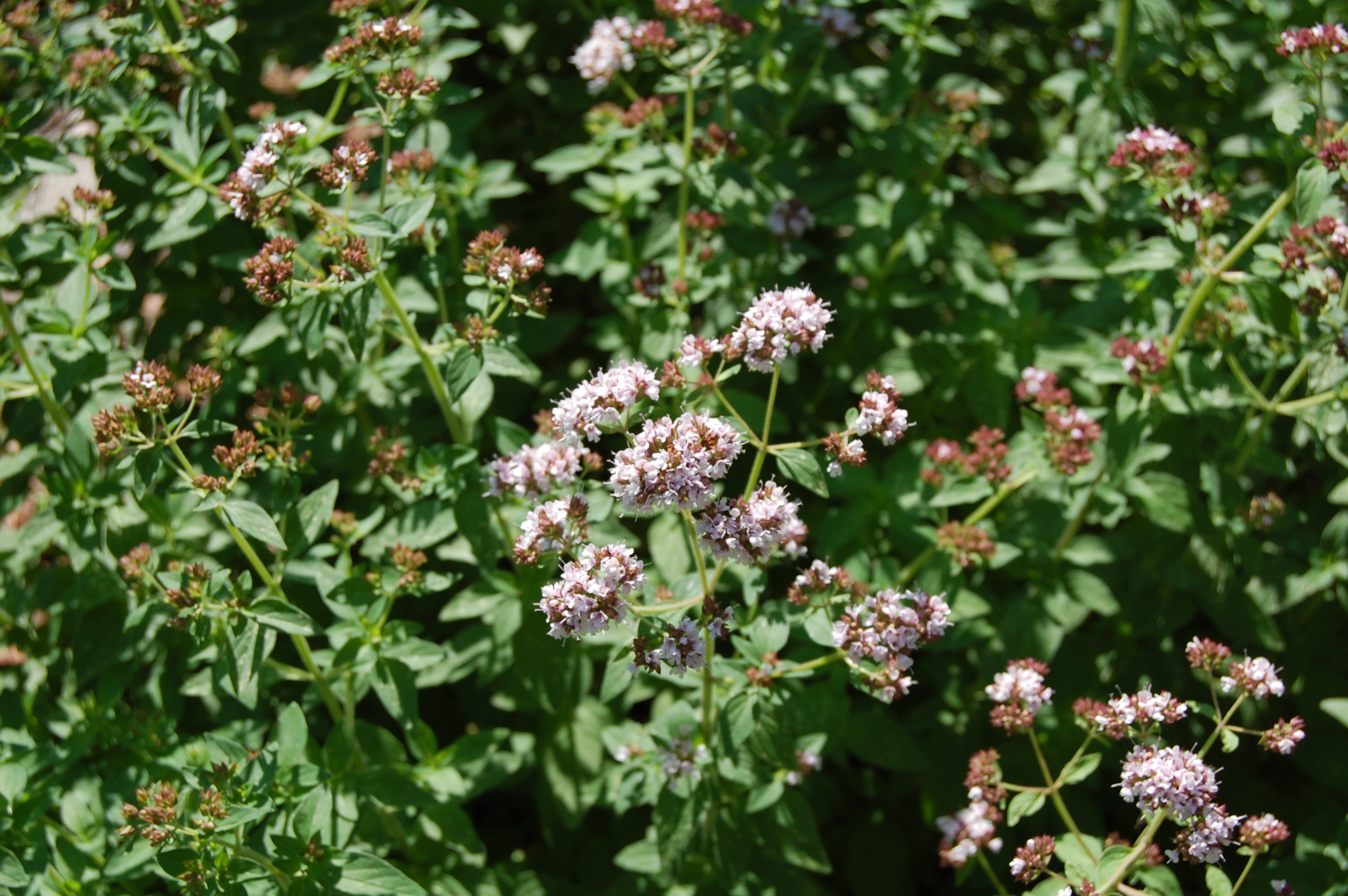
There’s a patch or oregano (Origanum officinalis). In a struggle reminiscent of the Roman legions trying to keep the Germanic tribes from crossing the Rhine, I am constantly whacking the oregano back to prevent it from overrunning the garden and then the entire neighborhood, seizing all our gold and livestock. It does have flowers much loved by pollinators, though (the oregano, not the Germanic tribes).
Oregano
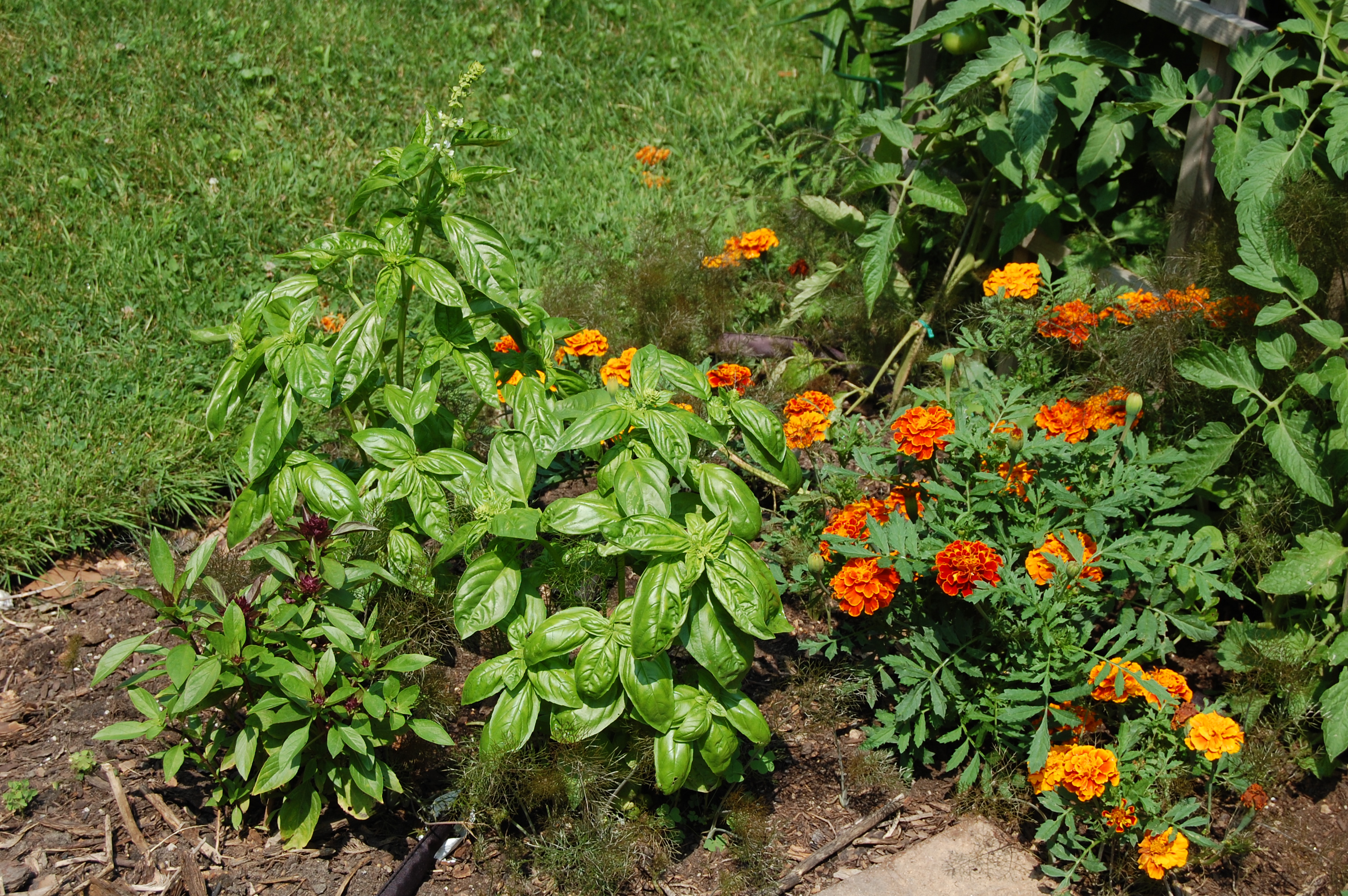
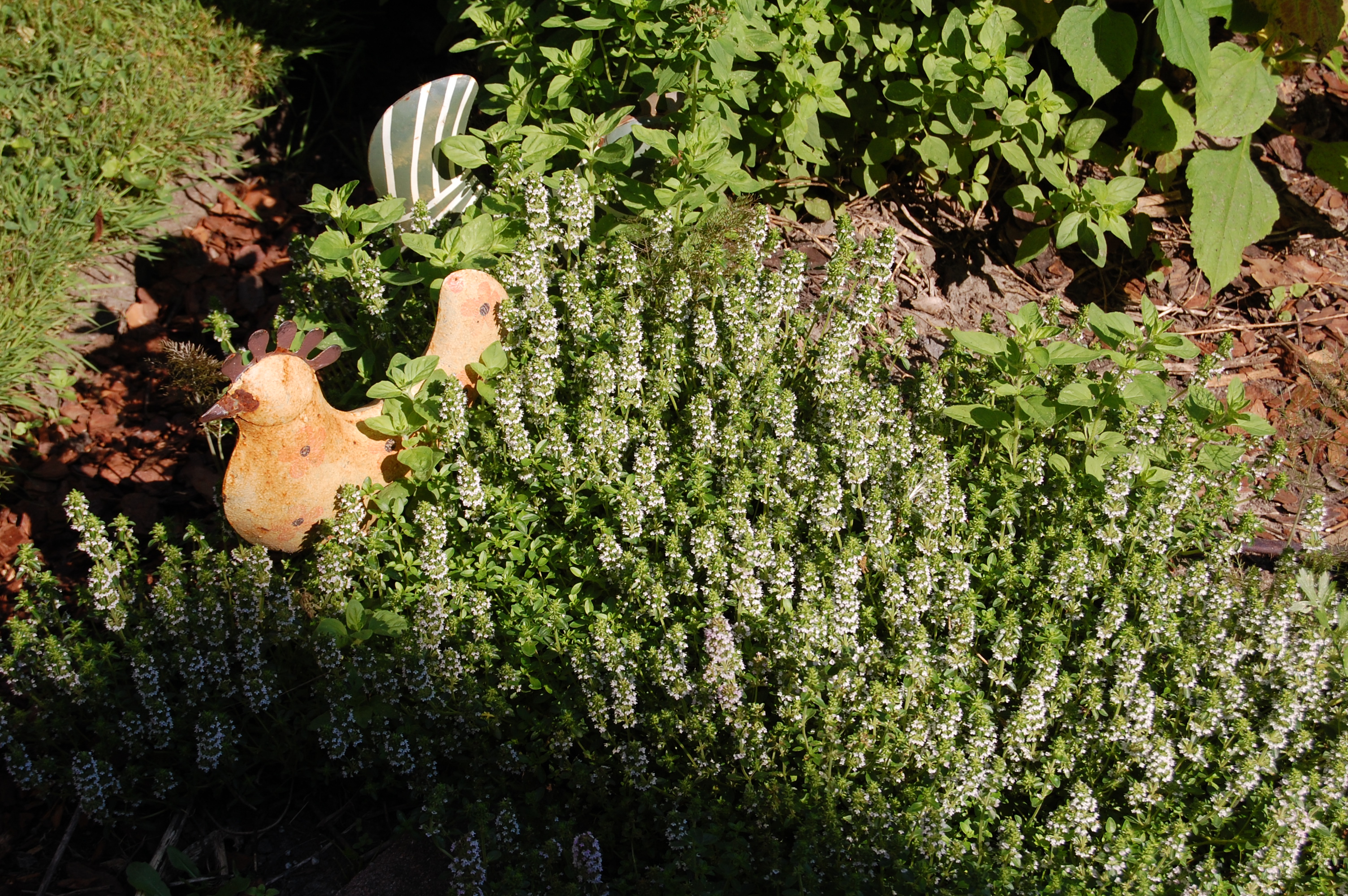
There’s some sweet basil (Ocimum basilicum) and some Thai basil (Ocimum basilicum var. thyrsiflora) . These are the herbs we actually use most frequently. And there are a couple of patches of thyme (Thymus vulgaris) that we don’t use but that provide more food for beneficial insects.
Basil
Thyme in flower
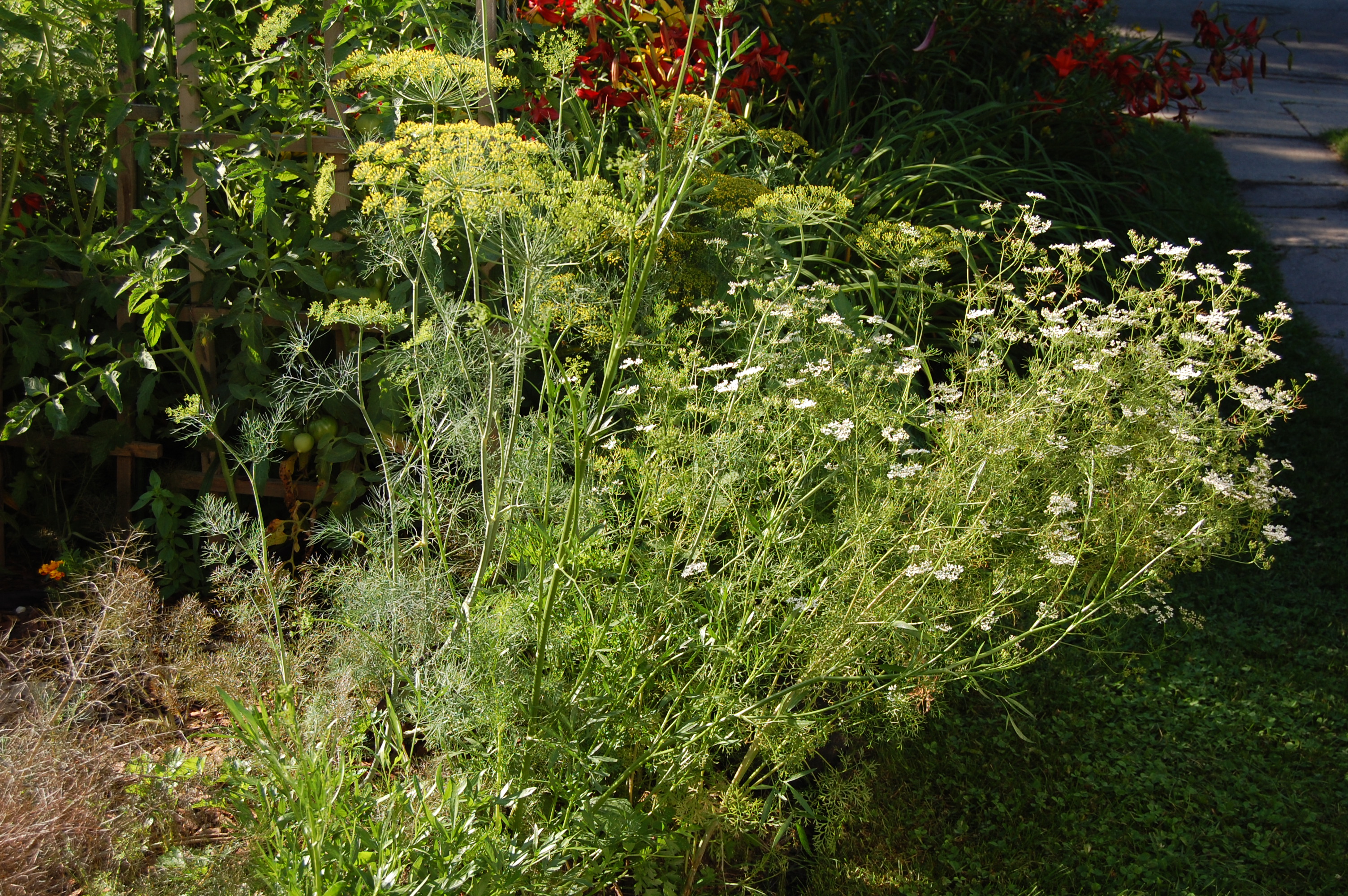
Then there’s the Swallowtail Buffet – Parsley (Petroselinum crispum) , Fennel (Foeniculum vulgare) , and Dill (Anethum graveolens). All three are host plants for Swallowtail butterflies, but I have yet to see a single Swallowtail caterpillar. Very thoughtless of them, I say!
Parsley and Dill in bloom
Self-sown fennel.
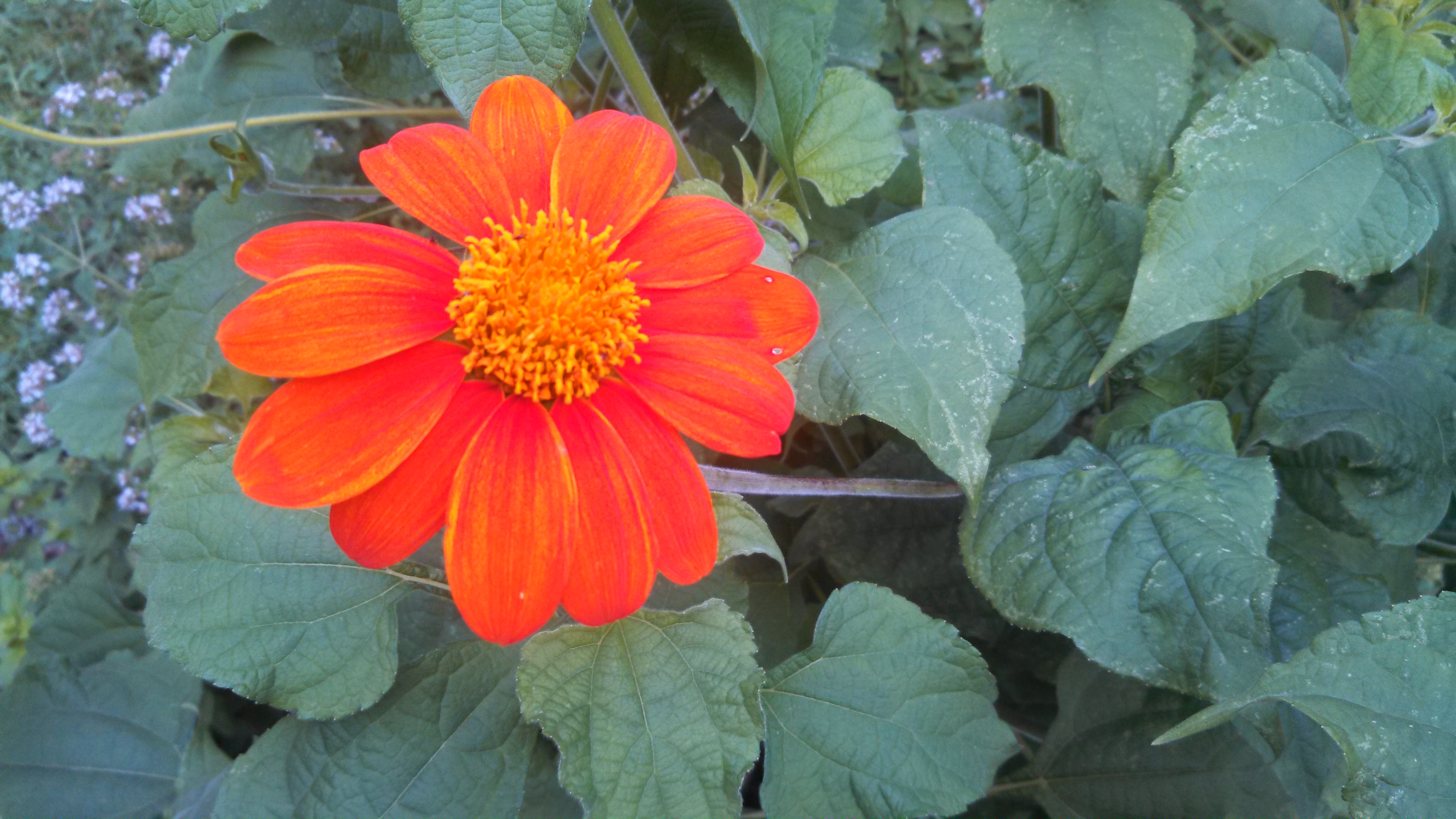
There are some flowers, too. Marigolds (Tagetes patula) around the tomatoes, on the theory that they repel harmful nematodes. Also, this year I planted a Mexican sunflower (Tithonia rotundifolia) amongst the herbs. I love the bright orange flowers of this plant!
Mexican Sunflower. jason picture.
Are you more of an edibles gardener or an ornamentals/wildlife gardener?
Our one garden Open Garden Day will happen next Sunday, July 28th, from 2-5 pm (we’ve adjusted the time slightly). Friends, neighbors, and anyone interested in gardening is invited to stop by.
The Sidewalk Border
It’s always hard to pick the right day for this sort of thing, and you’re always fretting about which flowers are not blooming yet or have passed their peak. However, there should be plenty to look at: Cup Plant, different kinds of Joe Pye Weed, Agastache, lots of Daylilies, Heliopsis, Bee Balm, Wild Bergamot, and more. Plus there are many bird-friendly berrying shrubs for the birders.
The Back Garden
We’ll have a handout on the plants in the garden with some related information.
It’s supposed to be a nice day – high of 75 and mostly sunny, so the gardening gods must approve.
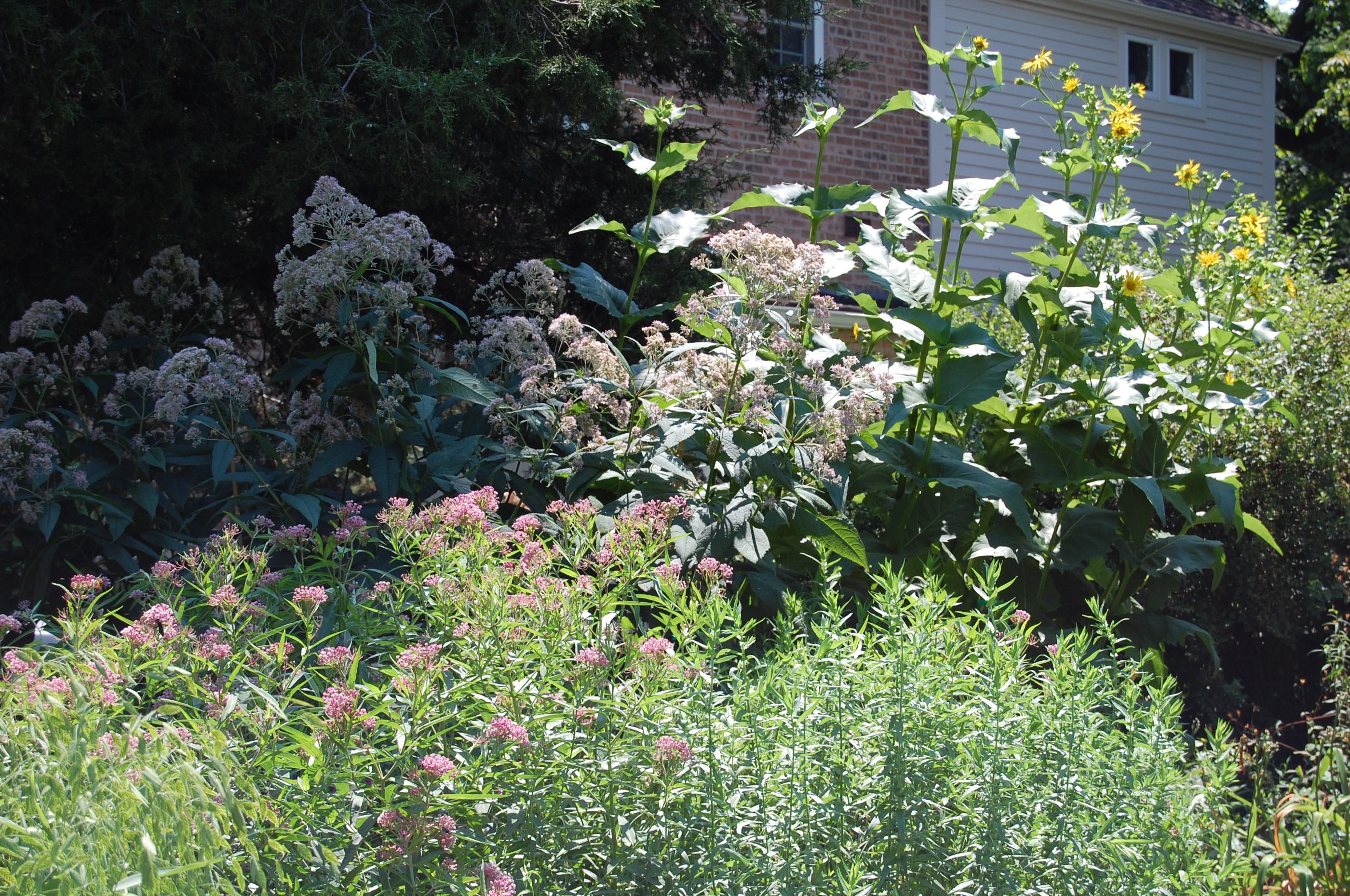
Sweet Joe Pye Weed and Cup Plant.
If you have any questions, write to me at jasonbertkay@gmail.com
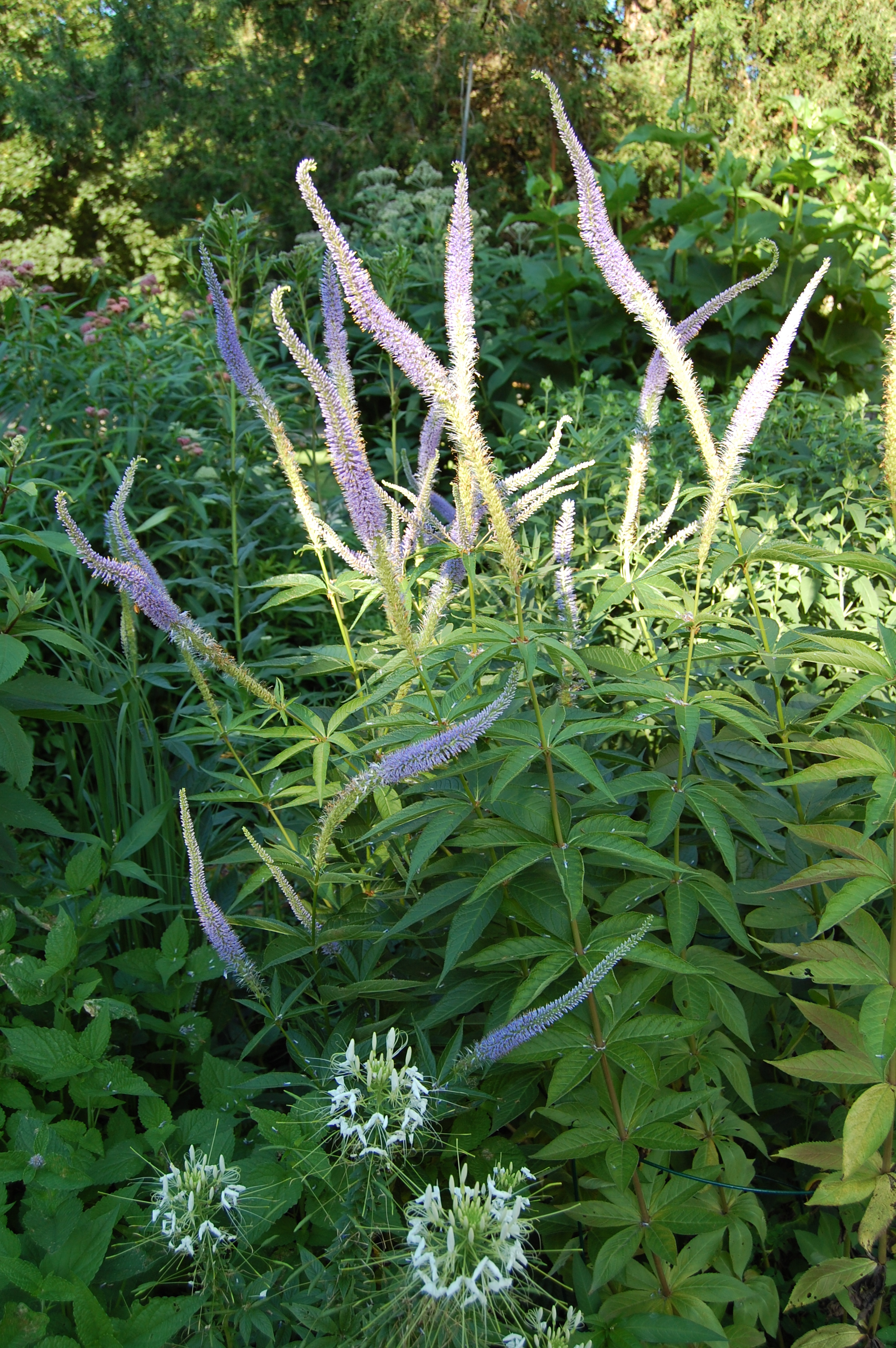
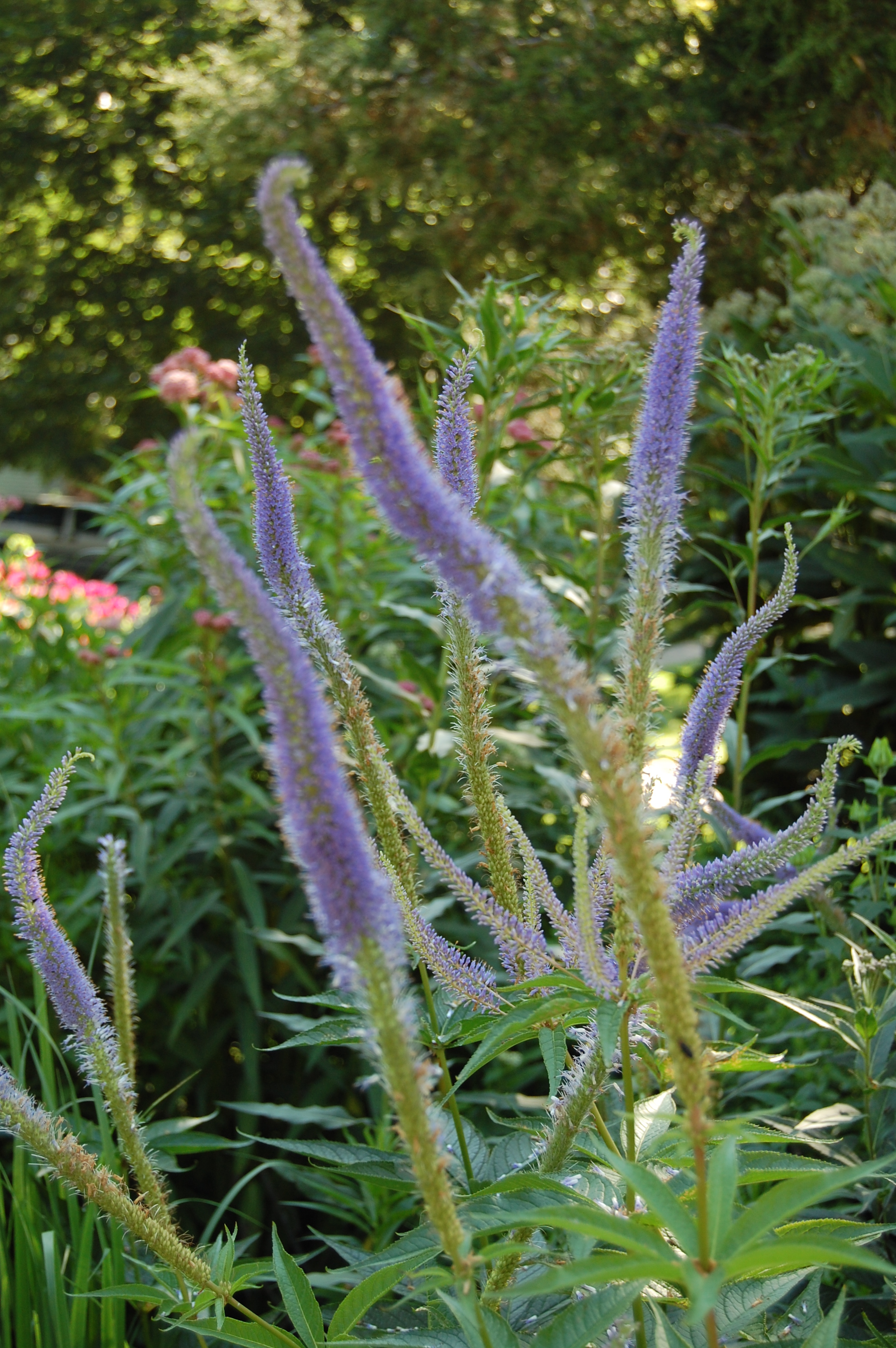
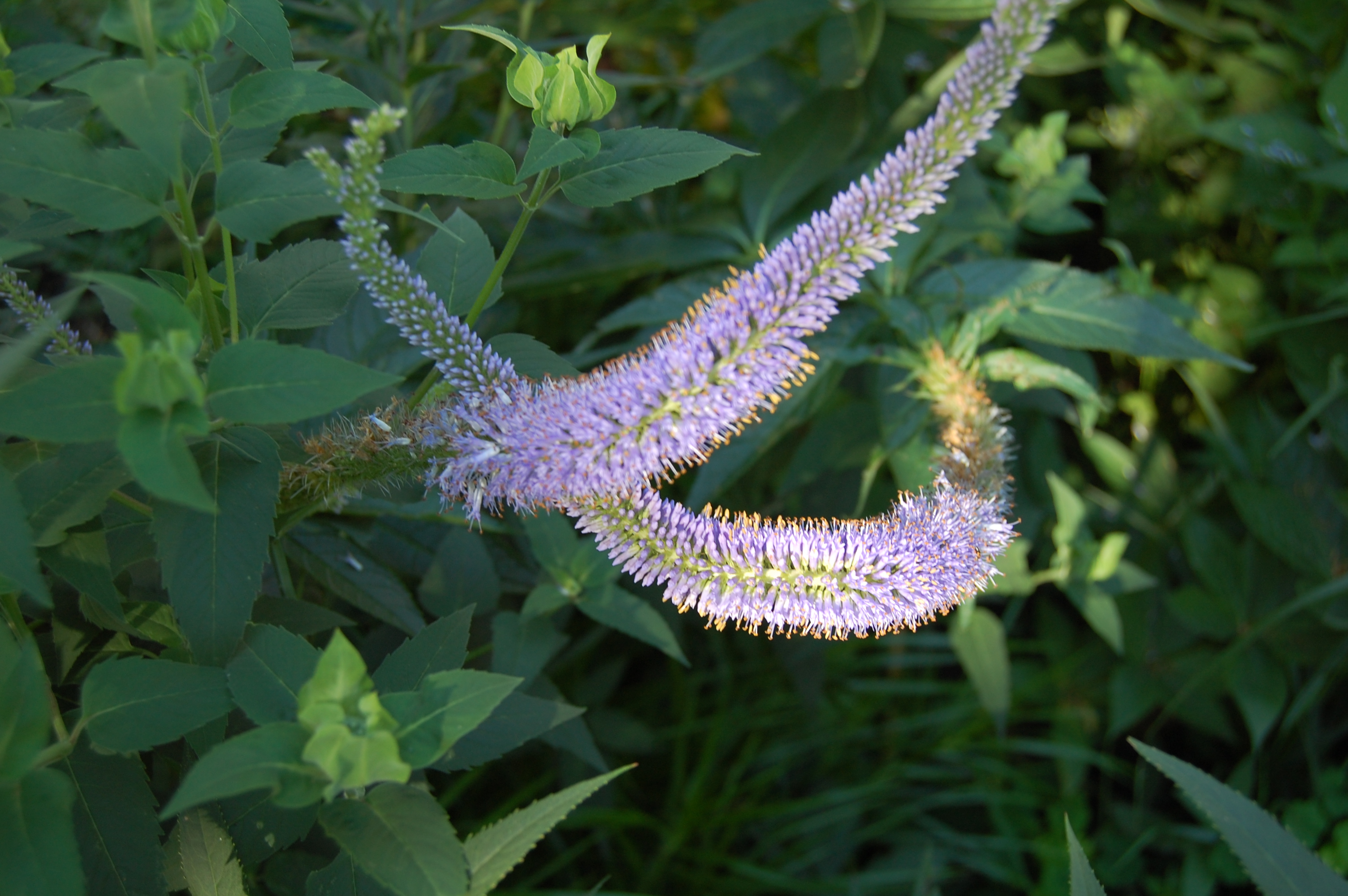
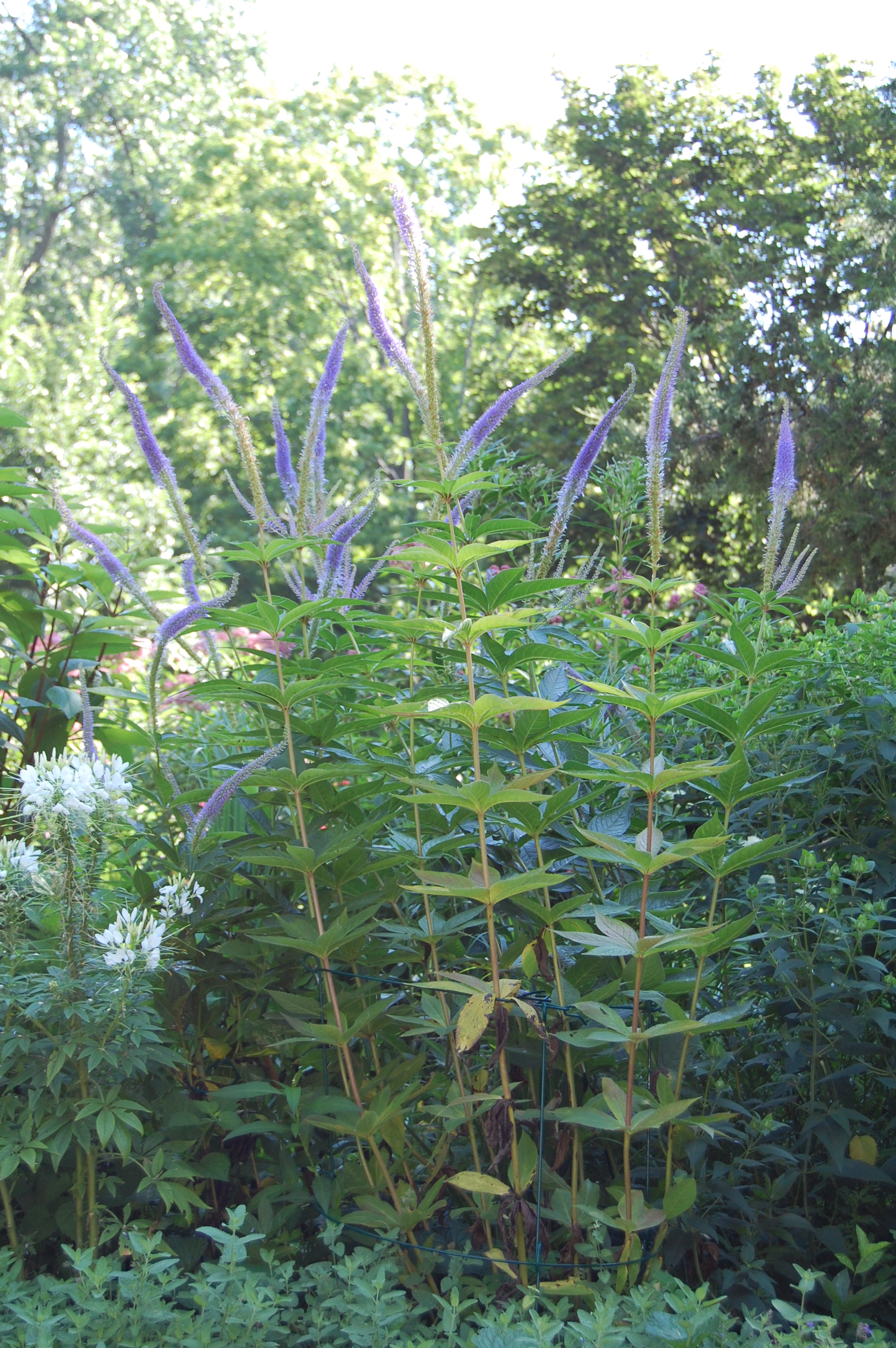
This is the third summer that Culver’s Root ‘Inspiration’ (Veronicastrum virginicum) is growing in the sunny driveway border. In my experience it is an excellent plant if you want something vertical with blue color in early to mid-summer. Even my son’s girlfriend, who fervently hopes that my garden obsession is not hereditary, is enthusiastic about this plant.
I first saw the blue spires of ‘Inspiration’ during a June walk at the Lurie Garden. I was surprised to learn from one of the volunteers that it was Culver’s Root. Culver’s Root is supposed to be white and bloom later in the summer. That Culver’s Root had cultivars was news to me.
Culver’s Root is native to a wide swath of eastern and central North America. Because ‘Inspiration’ is a cultivar, purists would not consider it a “true” native. In Bringing Nature Home, though, Douglas Talamy comes down in favor of planting cultivars of native plants. For him, the key is that they still have the leaf chemistry to which native insects are adapted.
In any case, I have seen myself that ‘Inspiration’ is very popular with pollinators.
Culver’s Root is an easy care plant, not susceptible to bugs or diseases. It wants full sun and moist, moderately fertile soil.
In my garden it has not required supplemental watering once established – except for during extreme drought. The blue spires have been wavy rather than straight, perhaps because the soil is more fertile than is ideal for this plant.
This plant adds a definite vertical element, growing to 5′ or more. I like the whorled leaves very much, and not just because I like the word “whorled”.
According to Alan Armitage, this plant was used as an emetic by Native Americans, so keep that in mind if you feel like chewing on it.
Do you grow ‘Inspiration’ or some other form of Culver’s Root in your garden?
I wasn’t going to be discouraged by the prospect of doing without impatiens (Impatiens walleriana) due to the devastating blight that has swept the country. Impatiens are a staple for shade containers and beds for myself and many other gardeners. However, I was eager to try out some new plants I had just learned about in a class on annuals. Now that we are in high summer, I can confidently say that the performance of the replacements has been: mixed.
Caladium and Bacopa (trailing). I put these containers in an area where Virginia Bluebells bloom in Spring, then fade away. Judy picture.
Amethyst Flower (Browalia speciosa). At first I loved this plant, especially the blue flowers. However, within a month all but one had succumbed to a mysterious wilt and had to be replaced.
The only remaining Amethyst Flower. All the others shrivelled away mysteriously. This is one of my cell phone pictures.
Fan Flower (Scaveola aemula). I was excited about this annual that has a trailing habit and blooms in blue or white. The flowers have a unique fan shape (hence the common name), and can take shade or sun. They looked great in my wheelbarrow planter, others settled into the window box that hangs on the rail of the back porch landing.
Fan Flower on the back porch rail. Safe so far. Jason cell phone picture.
I’m very aggravated that I never got a picture of the wheelbarrow with Fan Flowers draped over the side and filling in nicely. In fact, I was headed into the backyard to take just such a picture with my phone when I saw the aftermath of the Great Fan Flower Massacre.
The Fan Flower Massacre. Jason cell phone picture.
Not sure who did this, Chipmunk? Rabbit? Don’t think it was squirrels. Whoever it was left shredded Fan Flower all over the ground.
Jason cell phone picture
Fortunately, the Evildoer was unwilling or unable to jump up onto the rail on the back porch landing, so the Fan Flowers there are still doing just fine. However, emergency reinforcements had to be purchased for the wheelbarrow.
New Guinea Impatiens (Impatiens hawkeri). Can’t say I’m excited about these, but they’ve done fine. Larger but fewer flowers than the more common Impatiens, and less of a spreading habit. I’ve used plants with white and lilac flowers, but these have all the colors of the I. walleriana.
New Guinea Impatiens with Caladium, Bacopa, and Million Bells (post massacre). Jason cell phone picture, not a very good one.
In terms of other plants for my shade containers, I have pretty much stuck with my usual favorites: Caladium and Bacopa (Suteracordata). These have done well, as they always do in our garden. I’m also experimenting with Million Bells (Calibrachoa cultivars) to see how they do in the light shade of our back garden.
I haven’t used Coleus (Solenostemon scutellarioides) much or Begonias (Begonia semperflorens) at all. These both have the virtue of being available for purchase in relatively affordable flats. This is not the case for any of the plants discussed above. However, Coleus tend to come in colors much warmer than I want in the back garden. And Judy just doesn’t like Begonias.