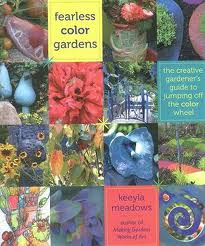
Book Review: Fearless Color Gardens, by Keeyla Meadows

Keeyla Meadows is an artist and garden designer living in the San Francisco Bay Area. Her garden is indeed fearless, as Judy and I can attest after seeing it during the 2013 Garden Bloggers’ Fling.

Keeyla Meadows
Keeyla Meadows

When we got back I wanted to read Fearless Color Gardens, her book about color and garden design. She has another book, Making Gardens Works of Art, which I have not yet read.

What Keeyla says about color in the garden isn’t necessarily so different from what you would find in other books. However, I found it helpful for getting my mind around this aspect of garden design. For me, this is the sort of subject where I need both repeated and differing perspectives from several authors in order to feel I have some real understanding.

The more fanciful aspects of Keeyla’s prose, such as her conversations with her muse and other imaginary characters, will be enjoyed by some people more than others. On the other hand, she writes clearly and provides just enough repetition and summarizing to let her points sink in.

One thing she stressed that really resonated with me is that the garden’s color scheme should include everything that can be seen, not just plants: containers, artwork, hardscape, outdoor furniture, and the house itself. This seems obvious but it had never really hit me before.

If it had, I never would have chosen white when our house was repainted. White really doesn’t go well with our garden, it was just the house’s color when we moved in. If I had thought about it, I might have chosen a cream yellow. (Keeyla is leery of white in general, she feels it doesn’t blend well with other colors).

fearless color gardens

Similarly, our sombre-colored pots don’t go with our flowers at all. After reading this book I went out and bought some blue and yellow spray paints.

I like the way Keeyla presents designing for harmony and contrast. Despite her bona fide fearlessness, the approach she urges seems fairly restrained. She advises picking one color, then choosing variations that are close neighbors on her color triangle. (She has a color triangle rather than a wheel, with three primary colors – red, yellow, blue – each taking one corner.)

Keeyla Meadows
Keeyla Meadows’ garden: giant blue pears and furniture are just as much a part of the color scheme as plants. I would like a giant blue pear.

For example, lets say you pick blue. You could mix a variety of dark and light blues, perhaps with purple and violet. If you want contrast, then pick a second color as a counterpoint to the range of related dominant colors. You can have variations on the secondary color just as you do with the dominant color.

The author talks about the need to think of each section of the garden as a picture in a frame, with each frame needing a focus. This is fairly standard. However, it is also curious because a striking aspect of the author’s garden is that almost every part of it is crammed with visual stimulation – which for at least some visitors detracts from any sense of focus. So what really constitutes a focal point could be an interesting topic for further discussion.

In any case, I found Fearless Color Gardens to be a fun and useful book, beautifully illustrated, and I would recommend it to any gardener who is still trying to get a handle on this subject.


A Difficult Transmission

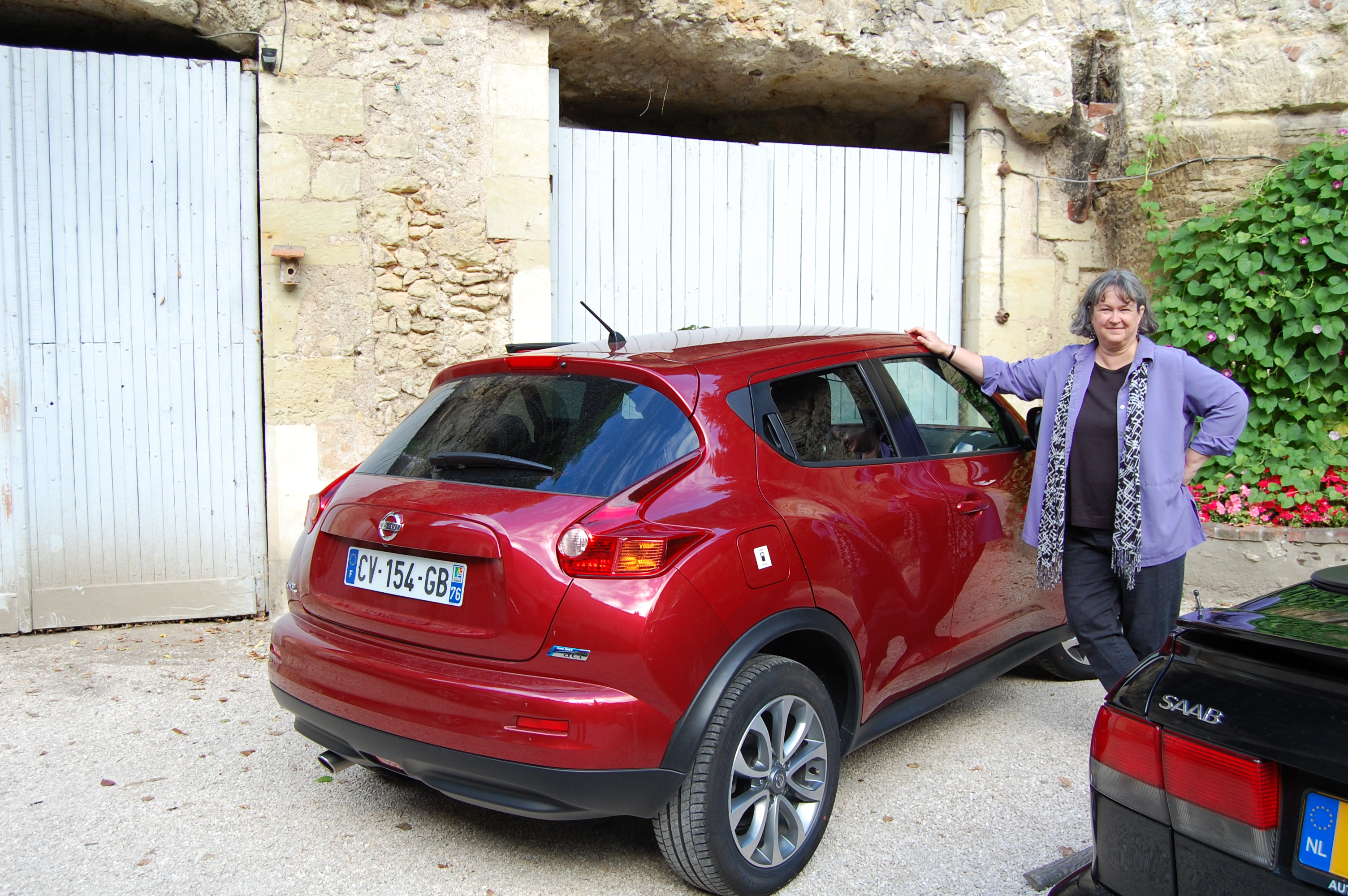
We travelled mostly by train during our September trip in France. And in general, we found travelling by  train to be a pleasure. However, in Chartres we discovered that there was no practical way to take the train to our next stop: Amboise, in the Loire Valley. So we rented a car.

Turns out that it can be difficult or even impossible to find a rental car in Europe with automatic transmission. In Paris perhaps, but in Chartres it was not an option.

Problem is: I have never driven a car with manual transmission. Judy has, so she became the designated driver. Of course, the last time she drove a stick shift was about thirty years ago, but we figured hey, it’s like riding a bicycle. Once you learn, you don’t forget.

So off we went. Unfortunately, by the time we had found the rental car agency and taken care of all the paperwork, it was rush hour. You wouldn’t think that a cathedral town would have a heavy rush hour, but Chartres is bordered by a number of industrial communities that generate considerable traffic.

So there was a lot of stop and go. And driving a manual transmission for the first time in three decades requires some re-orientation. Stop and go is not the best sort of traffic in which to get re-oriented to a stick shift.

The car stalled a lot. And when It wasn’t in the proper gear, it tended to make alarming noises that put me in mind of a cow in labor.

But the traffic wasn’t the only challenge. French roads are full of roundabouts. Because of this, you feel as if you are spending most of your time driving in circles.

This requires even more slowing down and speeding up, more stalling, more bellows from the bovine maternity ward. Plus it requires more decisions about which way to turn. Which is more difficult because you are dizzy from driving in circles.

I was doing my best to serve as navigator, but I couldn’t make sense of the map. And neither Judy nor I have the kind of composure behind the wheel required of, say, race car drivers. So we had a lot of panicky exchanges like this:

Judy: WHICH WAY DO I GO?!?

Me: I HAVE NO #@!%$ CLUE!

We revolved multiple times around several roundabouts, stalling and starting up again, like a little moon with unstable gravity. Finally, though, we got within sight of the A10, the highway that heads south towards our destination. At this point we noticed a burning smell. A burning smell that perhaps was related to the smoke billowing out from under the hood of our car.

So we pulled over to the side of the road and turned off the engine. We decided that we would stay there for a while, let the car cool down, and let our pulses return to normal. If the car was still smoking when we got back on the road, we would head back to the car rental office.

car rental in France
Judy with our rental car in Amboise.

Fortunately, that turned out not to be necessary. After about 45 minutes we started up the car and got on to the A10. Judy was more comfortable changing gears, and we made it the rest of the way without smoke, flames, or explosions.

While on the road we did discover some important common ground between French and American cultures. In both countries, highways are a good place to find bad to mediocre food, something not easy to do in France.

In this case, the source of the food was a French chain called The Buffalo Grill. The Buffalo Grill is clearly aimed at harassed French parents who have been stuck in the car with their kids for too many hours. It has a Wild West theme that would probably inspire protest rallies in some parts of the USA. For a little taste, here’s a picture of the plastic teepee/playhouse adjoining the restaurant.

Buffalo Grill France

The remainder of our driving experiences in France were uneventful. Fortunately we were able to leave the car in Amboise and take the train back to Paris.

For those of you who are American, have you ever tried driving in Europe? And for the Europeans, have you ever rented a car in the USA? Was it a challenging experience?


Will Work for Peanuts

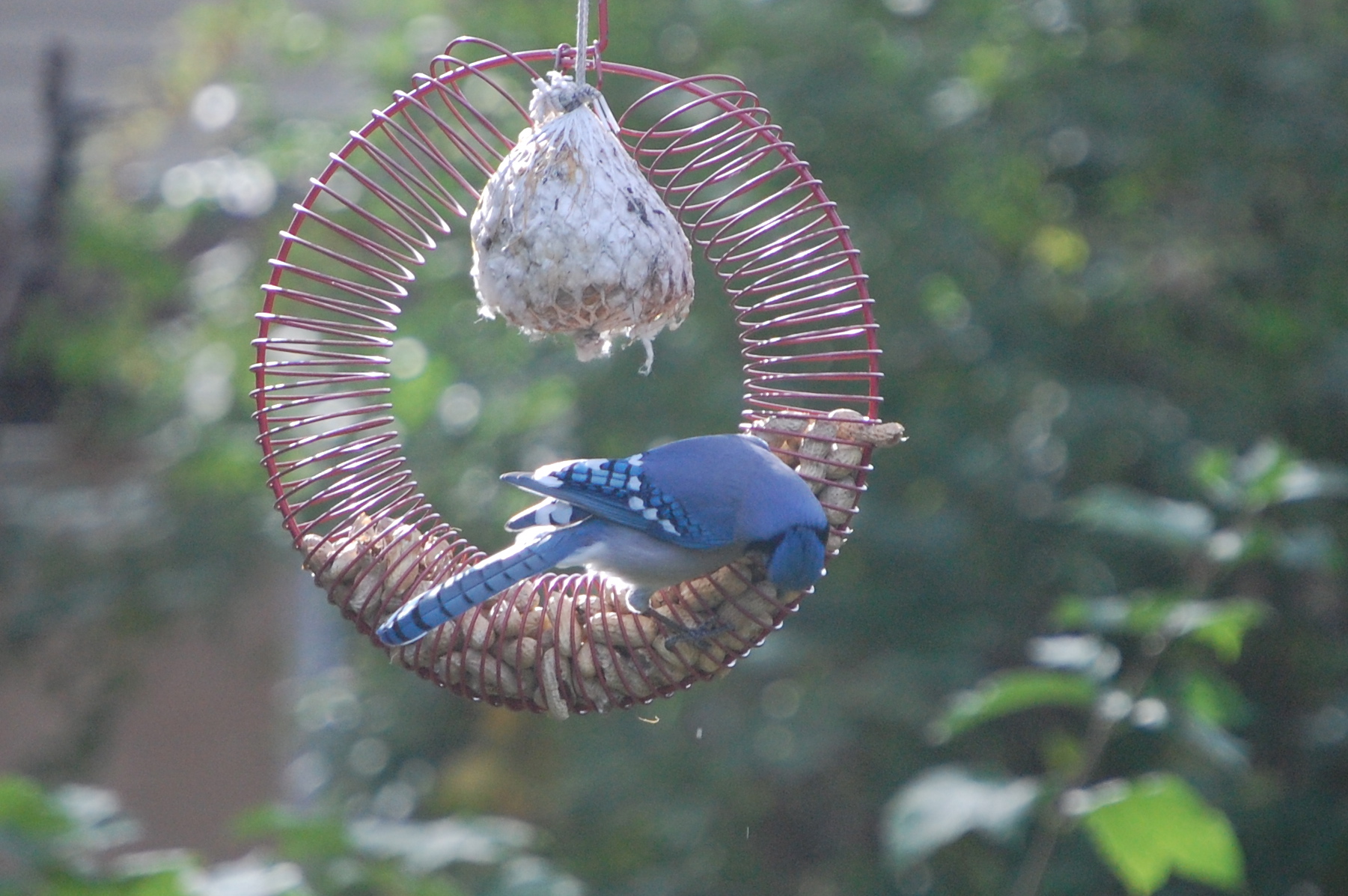
This time of year I start putting peanuts out for the birds, both shelled and in the shell. Peanuts attract woodpeckers, nuthatches, and Bluejays. The Bluejays are the only ones that actually prefer peanuts in the shell.

Bluejay
Must be a way to get at those peanuts …

Peanuts also attract grackles, starlings, and house sparrows.  These birds gorge so ferociously that the feeders seem to be empty  within minutes, though the peanuts in the shell last a bit longer.  So I do not put out peanuts until some time in October, after the grackles are gone and the starlings are busy inhaling every kind of fruit they can find. The house sparrows we shall always have with us.

It's really hard to keep your balance while yanking out a peanut.
It’s really hard to keep your balance and pull at the same time.

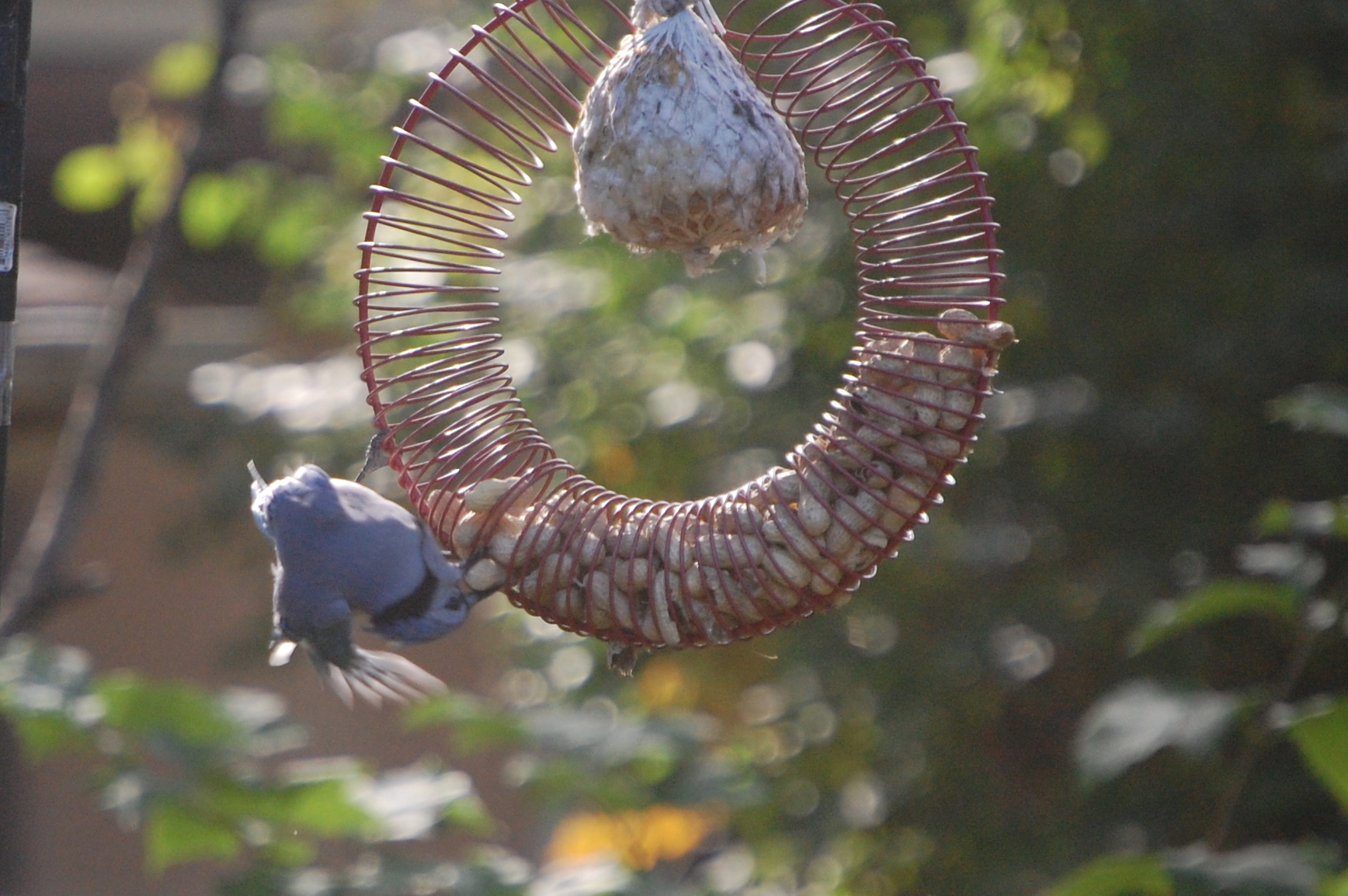
We spent some time today being entertained by the bluejays as they wrestled peanuts in the shell out of the feeder, which was pretty much emptied out during the course of the day.

Almost got it ...
Almost got it …

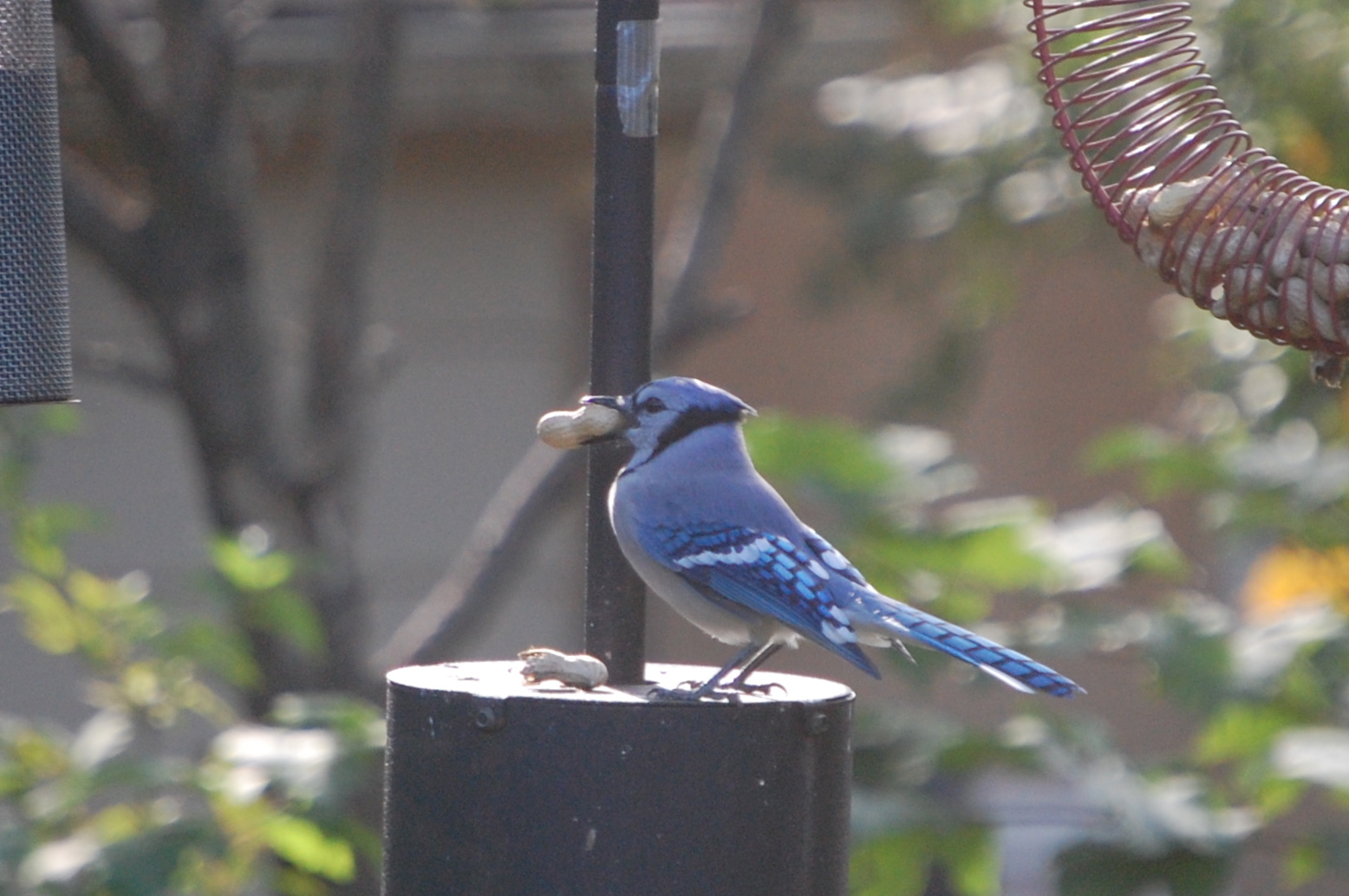
They weren’t actually eating all those peanuts. Most they took for their secret peanut stash, to be consumed during  the hungry days of winter. This explains why they like peanuts in the shell.

bluejay
Mine, all mine!

For a long time we almost never saw Bluejays. I believe they were decimated in this area due to West Nile virus. But once I started putting out peanuts this month, a pair of Bluejays have been making themselves very much at home in the back garden.

bluejay
What are you looking at? Get your own damn peanut!

I like Bluejays. I like their color. If they were a dull brown would I still like them? Probably not. Bluejays are closely related to Grackles, and I consider those birds to be pests.

Bluejays are greedy and have terrible table manners. They also have a loud, raucous cry that some people find unpleasant, especially early in the morning.  Here’s a little sample from Youtube. For the sake of authenticity, turn your volume all the way up. Also please excuse any ads that appear, that would be from Youtube, not me.

Despite all this, I am always happy when I see these big blue birds. Like the Cardinals, they keep us company for the winter.

Do you have Bluejays where you live? Are you happy or dismayed to have them around?

Chicago’s Lurie Garden in Late October

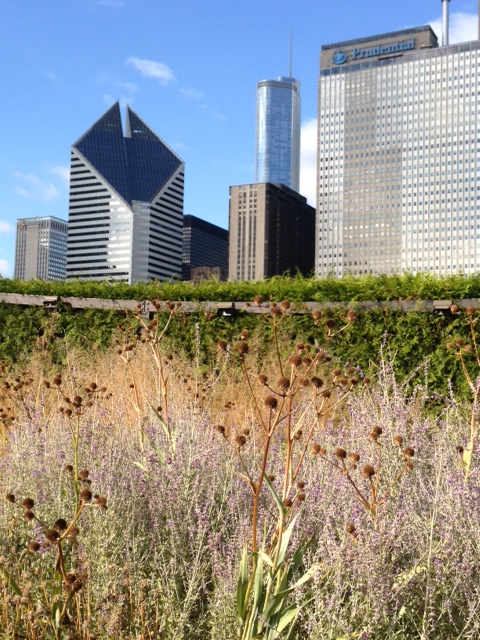
The Lurie Garden is dramatically beautiful right now, and an excellent vantage spot from which to view the lakefront skyline.

Lurie Garden
The Chicago skyline viewed from across the Lurie Garden.

Judy took a walk this afternoon during a break from the work day, and snapped these pictures with her cell phone. 

Lurie Garden

Grasses and foliage provide a tapestry of gold, tan, green, brown, red, and yellow. The contrast with the skyline is exciting, almost startling.

Lurie Garden

This is also one of the few spots where you can see some dramatic fall foliage in downtown Chicago. Those red leaves belong to sugar maples, I believe.

Lurie Garden

The flowers are no longer, but Lurie Garden is still a wonderful place to walk. People who work or live in downtown Chicago should go see it at least once more before everything is frozen, then covered with white.

Lurie Garden
Rattlesnake Master seedheads and Russian Sage in the Lurie Garden.

What gardens if any do you enjoy in October?

GBFD October 2013: Grasses In Their Autumn Glory

So a few days ago the weather turned genuinely cold. I hope that means we will soon see some fall color. However, these pictures were taken just prior to the shift. At that point there wasn’t much foliage of interest in our garden except for the grasses.


Northwind Switchgrass
‘Northwind’ Switchgrass
Northwind Switchgrass
Switchgrass ‘flowers’ and Monarda seed head.

The most impressive grass at the moment is the ‘Northwind’ Switchgrass (Panicum virgatum). The two oldest clumps have gotten quite substantial, about 6′ tall and 3-4′ wide. Actually, I’m a little worried they are going to start shading out the Salvias. Regardless, they are a lovely sight at the moment, strong yet delicate.

Northern Sea Oats
Northern Sea Oats


Northern Sea Oats

And of course, Northern Sea Oats (Chasmanthium latifolium) shines at this time of year.

Little Bluestem Carousel
Little Bluestem ‘Carousel’ with Calamint


Little Bluestem Carousel

I’m very happy with my new ‘Carousel’ Little Bluestem’ (Schizachyrium scoparium). See how the stems seem to be striped like a green candy cane? The Chicago Botanic Garden evaluation garden gave this variety their top rating.

After this weekend I hope to have some leaf color from the trees, shrubs, and perennials. Until then, what’s your favorite ornamental grass at this time of year?

Garden Bloggers’ Foliage Day is sponsored by Christina at Creating My Own Garden Of The Hesperides. Check out her site for more beautiful foliage.


Planting Container Tulips

Today I planted my new tulip bulbs in containers. This is my second year doing this. I started growing hybrid tulips in containers because I found that they did not mix well in perennial borders. In borders I prefer smaller bulbs – including species tulips, grape hyacinths, etc.

Container tulips
Container tulips blooming last May.

Anyhow, I had ordered 110 hybrid tulips from John Scheeper’s, seven different varieties chosen by Judy. Here’s how I planted them.

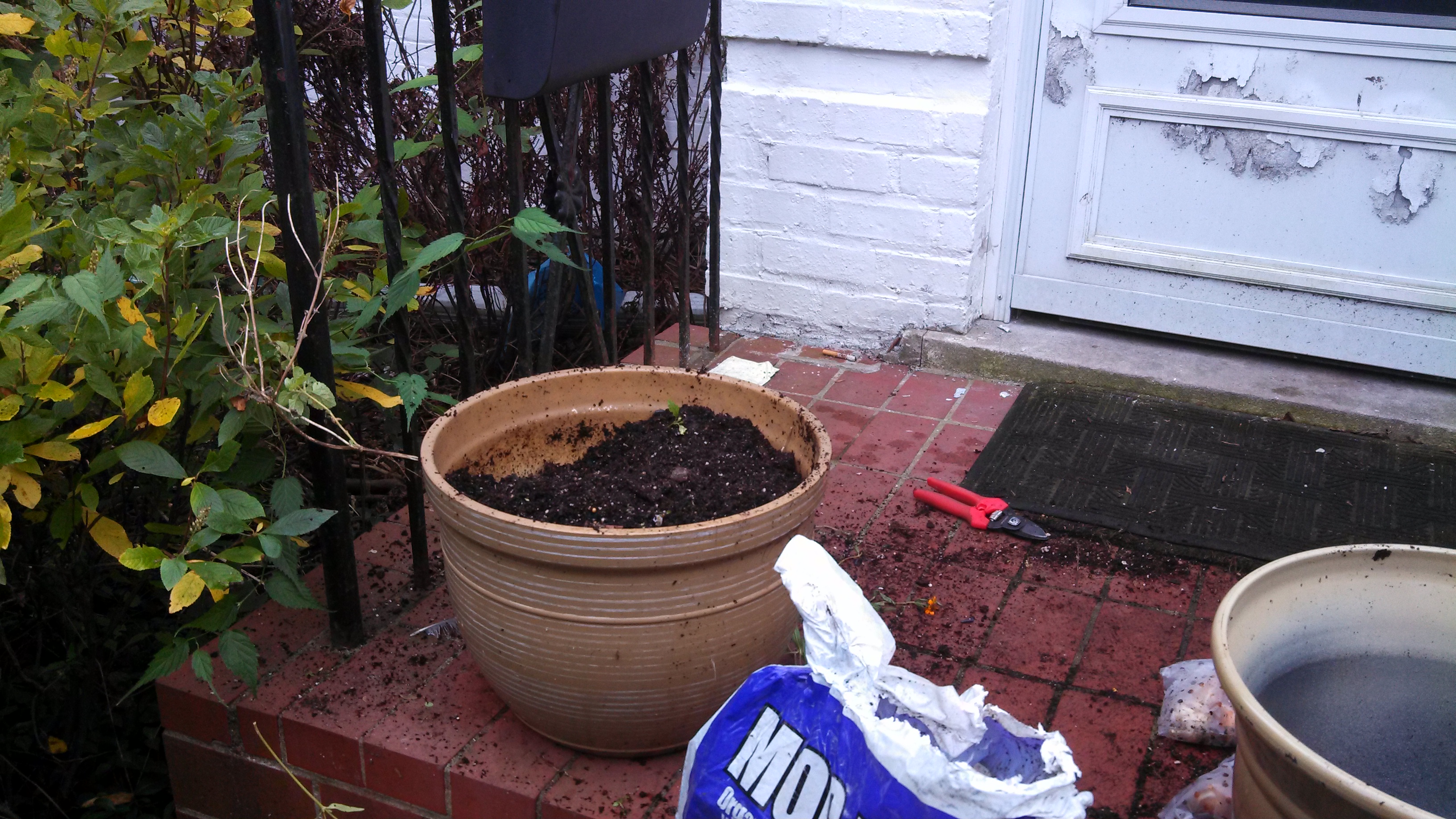
After pulling out this year’s plants, I refreshed the remaining potting mix with a few handfuls of compost. (One of the horticulturists at the Chicago Botanic Garden recommended this approach.)

planting container tulips

I poured some of the mix into a bucket. The mix left in the container should be at the level where you want to plant the tulips. This should be deep enough so that the tips of the tulip bulbs are at least 6″ below the surface. Deeper is better, because it discourages squirrels and also provides more protection against freezing.

Along with the compost, you can also add some bone meal or bulb food in with the mix. I’ve done both, and haven’t found that it makes a big difference, though I’m sure others would disagree.

In terms of which tulip varieties go with which, we like to mix different bloom times and heights in the same container.

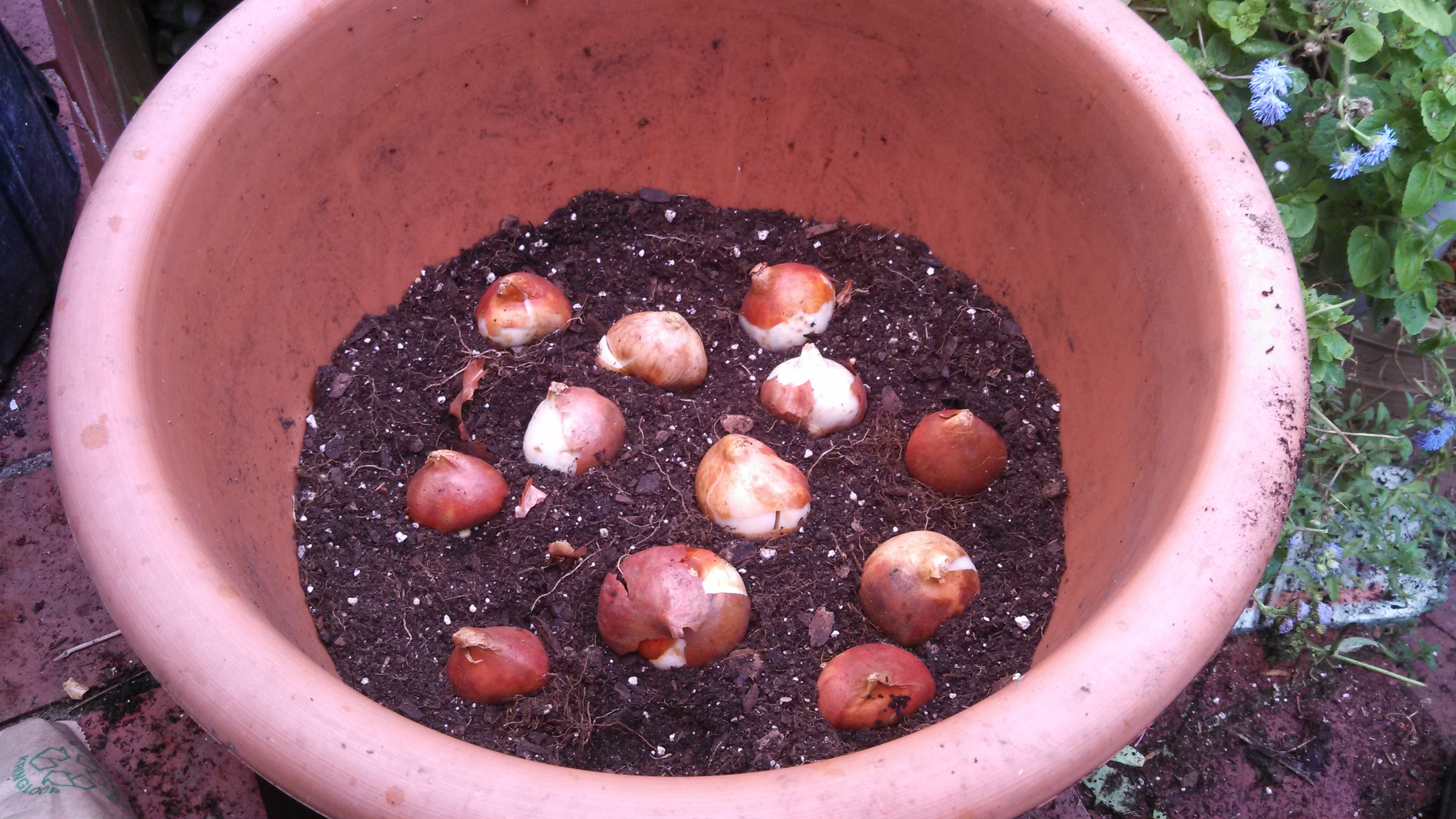
Larger containers are better. The ones I used had an inside diameter of 13″. The bulbs can be packed in much tighter than you would in the ground, about 1″ apart. I put about twelve bulbs in each container. Once the bulbs were planted, you can fill the rest of the container with the refreshed mix.

planting container tulips

Last year I kept the containers in our unheated garage. Tulips cannot survive being frozen, but most of the tulips made it through the winter. The ones in the smaller containers, with a 10″ inside diameter, were the most likely to not survive. A space that stays about 40-50 degrees farenheit would have been better than an unheated garage, but I don’t have such a space.

planting container tulips
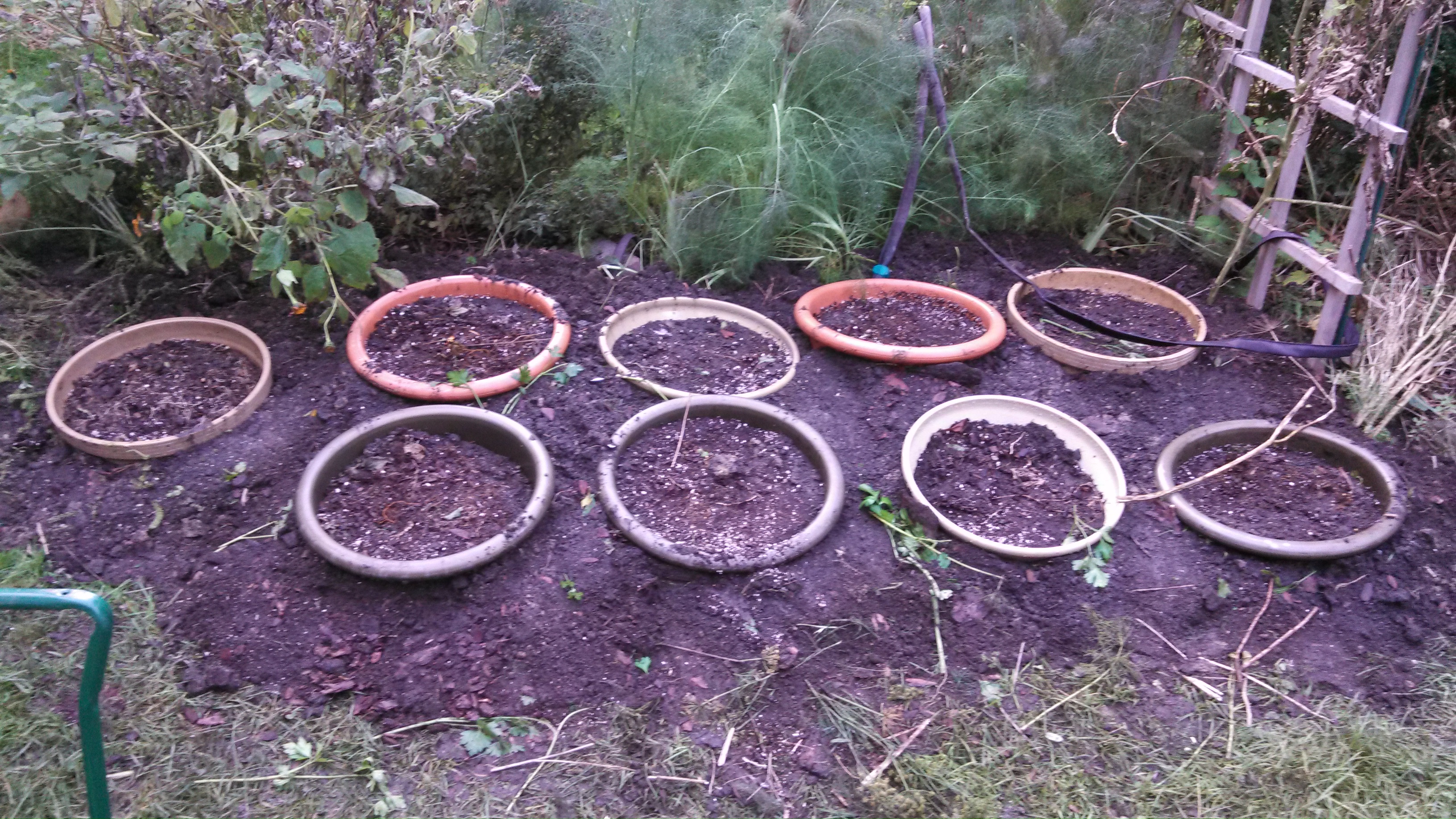
Nine containers with tulips bulbs ready to go in the ground.

This year I tried something different: planting the containers in the fallow ground of our vegetable bed. Bulbs in the ground will normally not freeze because they are insulated by the soil. These container tulips will have that same advantage, and I will dig the containers out of the ground in the spring. Once the containers were in the ground, I gave them a soaking.

planting container tulips

Now I can start looking forward to tulips in the spring! Although first I have to get all the bulbs planted.

Have you planted tulip bulbs this fall? Have you ever tried planting tulips in containers?

Stained Glass At Chartres Cathedral

Back to our trip. The thing that really grabs your attention inside Chartres Cathedral is the stained glass. Most of the windows date to the 12th and 13th Centuries and have been scrupulously preserved.

rose window at chartres
Rose window at Chartres.


rose window at chartres

These are called rose windows, for obvious reasons. They are so high up it is difficult to see the detail, but I found it hard to tear my eyes away just from the shapes and colors.

stained glass, chartres
Telling a story with stained glass.


stained glass, chartres
The three kings.

Even more than the sculptures, the windows are like picture books telling the stories of the bible: the infancy of Christ, the passion and resurrection, etc. The amount of detail is incredible. As I’ve said, I am not a religious person, but you don’t have to be a believer to see the artistry here.

Medieval craftsmen:
Medieval craftsmen at work, I think I see carpenters and smiths, hard to tell what the others are.


chartres stained glass
Stone cutters at work.

I think the windows I loved best showed the medieval trades at work, including stone cutters and masons working on the cathedral. One theory is that these windows recognize the contributions of the guilds to the construction of Chartres cathedral, but many historians discount this.

chartres cathedral
The ceiling is 121′ high, so plenty of head room.

The vaulted ceilings, 121 feet high (37 meters), are effective at making me feel very small, something I don’t often feel. A cleaning project has been partially completed. There is a dramatic difference between the gleaming stone that has been cleaned and the grimy ones that have not.

chartres cathedral

I have to say I really like stained glass, religious or not. My favorite piece of garden art is a metal sunflower that has been fitted with pieces of stained glass. Sadly this piece has taken some knocks over the years and is missing some parts. Also the store where we bought it is closed.  What about you – are you fond of stained glass?

Upcoming posts: planting tulips in containers, plus our death-defying drive from Chartres to Amboise.


Don’t Sigh, Eat Pie

Calvin Trillin, one of my favorite writers, credited his father with this excellent four word poem. And I agree with the sentiment, especially as it is applied to apple pie. 

apple pie
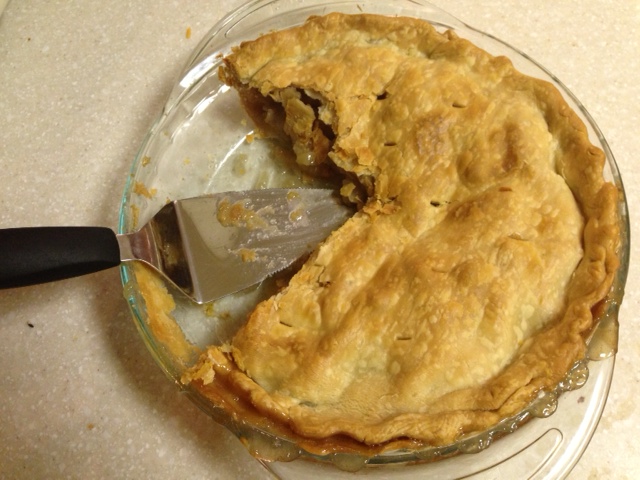
Judy’s apple pie

Apple pie has been, since childhood, my favorite desert. So much so that I have always wanted a birthday apple pie, rather than a birthday cake. (My birthday is in October, after all, so it seems appropriately seasonal.)

This year my birthday fell during a week of great busyness and distraction, so we just went out to eat with our son Danny and his girlfriend. However, this past Sunday, while I was busy widening the path on the side of the garage, Judy was making a surprise apple pie. 

And it was an excellent pie. The apples were tender but not mushy, not too sweet and with just a bit of zing. The crust was flaky and crisp – even the bottom crust, which often gets soggy from excess liquid.

How did she do it? She took a classic apple pie recipe from a very conventional source, and then put her own spin on it: 

  • She used Granny Smith apples instead of Jonathans.
  • She put in a full teaspoon of cinnamon (instead of 3/4), and added 1/4 teaspoon of salt, 1/4 teaspoon of ginger, and a generous pinch of freshly grated nutmeg.
  • Finally, she mixed in 2 tablespoons of flour to absorb excess liquid.

What desert do you always want for your birthday?

A Quiet Autumn: GBBD, October 2013

Autumn seems to be pretty subdued in these parts. Very little foliage color, and fewer flowers than normal. My theory is that many of the flowers threw in the towel early because it has been pretty dry since the beginning of August. And the warm fall has kept the leaves green late into the season.

Blue Stem Goldenrod
Blue Stem Goldenrod

Nevertheless, there are a few blooms to be enjoyed in my garden. The Blue Stem Goldenrod (Solidago caesia) still have flowers, though many have gone to seed.

Short's Aster
Short’s Aster

You cannot have Goldenrod without Asters. This year the flowers of Short’s Aster (Symphyotrichum shortii) have bloomed for a very long season, as has Aromatic Aster (Symphyotrichum oblongifolius).

Purple Dome
‘Purple Dome’

‘Purple Dome’ is a late-blooming dwarf New England Aster (Symphyotrichum novae-angliae) that is just starting to show its purple and gold flowers. I have it in the back garden, where it is not thriving, perhaps because of too little sun.

Aster seed heads

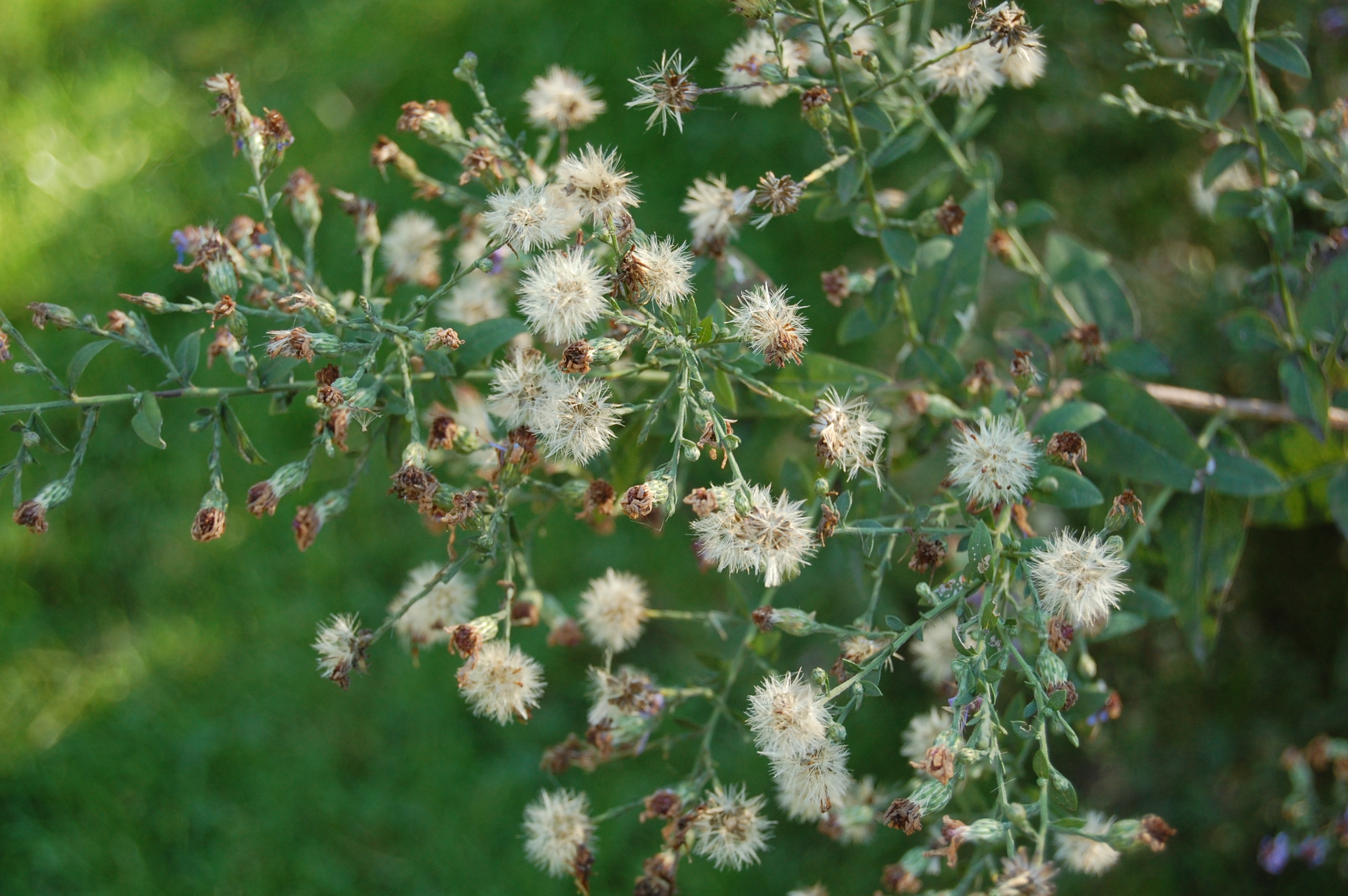
Most of the Asters, however, have gone to seed.

Brown Eyed Susan
Brown Eyed Susan

There are still some Rudbeckia flowers, like this Brown Eyed Susan (R. triloba). As you can see, though, most of the flower heads have only the ripened seed, which makes the goldfinches very happy.

Caryopteris Longwood Blue
Caryopteris ‘Longwood Blue’

The Caryopteris x clandonensis ‘Longwood Blue’ is doing well for its first autumn. I’m looking forward to ‘Longwood Blue’ getting bigger and better in the future.

Plumbago
Plumbago

I have a little patch of Plumbago (Ceratostigma plumbaginoides), an excellent groundcover. I’m a sucker for blue flowers.

Heavenly Blue Morning Glory
‘Heavenly Blue’ Morning Glory

Speaking of blue, the ‘Heavenly Blue’ Morning Glory (Ipomoea tricolor) continues to bloom modestly even as the weather cools. It was very slow to get going this year, so at least it is hanging on late into the season.  At this point in the year, the flowers can last until late in the day.

Pentas, Cigar Plant
Pentas, with Cigar Plant in the foreground.

Other heat loving annuals, like the Cigar Plant (Cuphea ignea) are also holding their own. Pentas (Pentas lanceolata) still crowns my containers with bright red blooms.

Cleome
Cleome – that’s the neighbors’ house in the background.

And this one self-sown Spider Flower (Cleome hassleriana), glowing here in the afternoon sun, keeps blooming without a thought to the coming winter. I wouldn’t mind having a bunch of these next year, and have been throwing the seeds around with that in mind.

Rose cassie
‘Cassie’

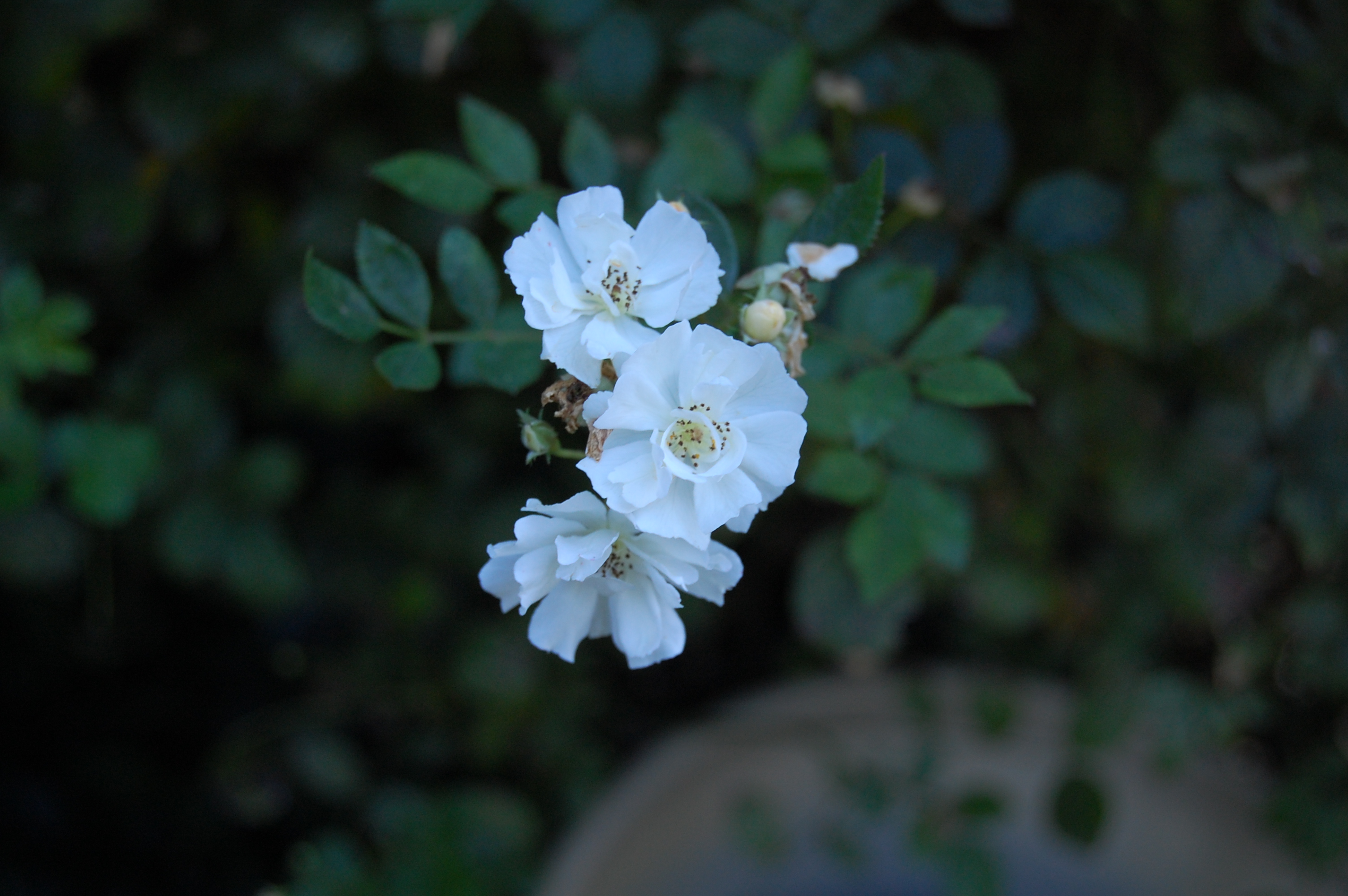
Finally, the shrub rose ‘Cassie’ still has semi-double white flowers. not as many as in June but enough to brighten the front entrance.

Garden Bloggers Bloom Day is sponsored by Carol at May Dream Gardens. Follow the link and see what other gardeners have in bloom.

I Am A Bad Person

For a couple of hours this morning, I was spot spraying my back garden with 2,4-D. 2,4-D is a potent herbicide that is sold under the brand name Weed–B-Gone.  I used about four tablespoons of the stuff, which kills everything that isn’t grass, mixed with water.

herbicide stuff


And as I sprayed, I felt guilt. I think of my garden as a sort of benevolent kingdom where critters are welcome, a tiny refuge where birds and insects will find water to drink, berries and foliage (and other critters) to eat, and a healthy environment at least relatively free of toxins. Spraying 2,4-D violates that vision of my garden.

What’s more, 2-4 D, can be toxic to mammals, birds, and fish. But from what I’ve read there is unlikely to be much toxicity from very limited use (spot-spraying twice a year). We don’t have pets, don’t roll around in the grass, and don’t live near a body of water or natural area. And of course I am following directions to minimize my own contact.


And here’s the thing. The lawn behind the house is a mess. And I don’t mean a few dandelions here and there. In fact, there are some weeds I like to have mixed in with or even taking over from the grass: violets, white clover, and barren strawberry, for example. There are weeds I don’t like, but can live with. Plantain, chickweed, and dandelions come to mind. I just pull some out when I have the time.

But there is one weed whose aggressiveness precludes me from having a live and let live approach. I’m talking about creeping charlie (Glechoma hederacea).  You may tolerate creeping charlie, but it wants nothing less than total domination. It spreads rapidly by seed and stolons, smothering the competition, invading lawns and flower beds alike.

Creeping charlie is almost impossible to pull (I have spent much time trying), as the stolons put down roots every couple of inches.

I do plan on replacing some lawn with pavers.  However, I have been forbidden to replace any more lawn with flowering beds or borders, as there needs to be room in the back garden for people (this last pointed out to me by members of my family at a louder volume than was strictly necessary).

Planting alternatives to grasses isn’t much of a solution, as these alternatives would likely have the same struggle with creeping charlie et. al.

So I have resolved to spot spray twice a year, in spring and fall. This will not eliminate weeds, but I hope it will push them back a bit. And when I am done with spraying, I will spread some compost and organic fertilizer to give the grasses a helping hand. To date I have treated my turf grasses with total indifference (I’m just not into lawns), but I think that must change a bit.

I tell myself that what I’m doing isn’t so bad. But it doesn’t sit right.

On the other hand, perhaps my vision of the garden as a miniature refuge is quixotic. Can we have an island of ecological purity the size of an urban lot? Perhaps not, but I hate to give up trying.

Do you think I’m making a mistake, or fretting over nothing? Do you ever use herbicides in your garden?