First of the Spring 2014 Garden Catalogs!

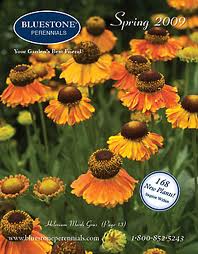
Mail order garden catalogs are one of the things that keep me sane in winter. Normally they don’t start to arrive until after the New Year, but when I got home today I was delighted to find the new catalog from Bluestone Perennials.

bluestone perennials
Bluestone Perennials Catalog

Bluestone Perennials is my go-to mail order source for non-natives and cultivars of native perennials. I tend to use more specialized sources when buying native straight species.

Plant catalogs are a mainstay of my winter reading. Bluestone meets the three criteria for being included in the stack of catalogs by my side of the bed. First, the text is clear, credible, and not an insult to my intelligence. Second, lots of pictures. Third, adequate information on the cultural needs of a big selection of plants.

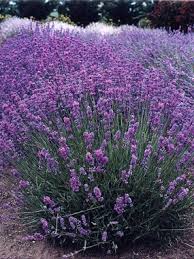
Lavender 'Violet Intrigue'
Lavender ‘Violet Intrigue’. Photo: Bluestone Perennials

It’s worth noting that, unlike many retailers, Bluestone grows their own plants. Personally, I find this reassuring.

Plant retailers have been under pressure to reduce the cost of their catalogs, and Bluestone has downsized theirs by leaving out many plants that are now described only on the website. However, the catalog remains an absorbing read, or more accurately, an absorbing peruse.

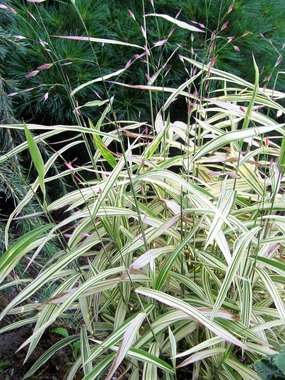
Northern Sea Oats
Northern Sea Oats ‘River Mist. Photo: Bluestone Perennials

I’ve had positive experiences with the plants from Bluestone. They arrive in 3.5″ biodegradable pots that can go right in the ground. They used to ship smaller plants in plastic three packs. The change was a good one, I think, though I believe the smaller plants were cheaper.

As always, checking out the new plants is part of the pleasure of reading a garden catalog. There are three in Buestone’s that particularly aroused my interest.

  • English Lavender ‘Violet Intrigue’ (Lavandula angustifolia). I have no lavender in my garden, but I’m thinking about putting it in a couple of spots. I like the rich purple color, and how can you resist that name?
  • Northern Sea Oats ‘River Mist’ (Chasmanthium latifolium). A variegated cultivar of this shade tolerant grass with pretty seedheads. Not usually a big fan of variegated plants, but I can imagine this doing very nicely in my shady back garden.
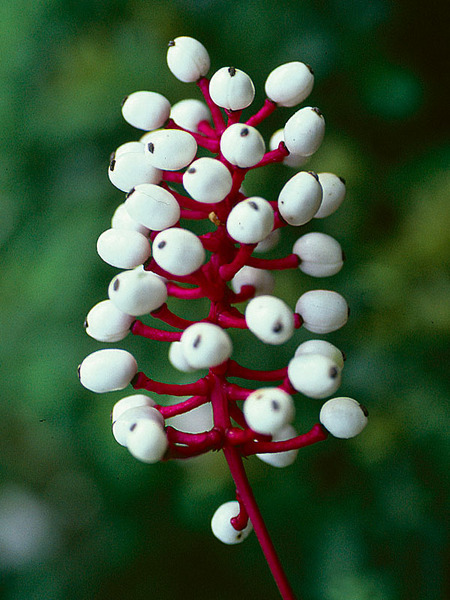
  • Doll’s Eyes (Cimicifuga pachypoda). Prior to this I have only seen this plant carried by native plant specialists. Mid-size plants with striking white berries. Berries are poisonous, though, so be careful with small children.
Doll's Eyes
Doll’s Eyes Berries. Photo: Bluestone Perennials

Have your favorite catalogs started arriving in the mail yet?

Ignoring ‘No Entry’ Signs at Chateau de Chaumont

The last castle Judy and I visited on our September trip was Chateau de Chaumont. To me this Chateau looks suspiciously like the Walt Disney castle. However, the brochure claims that it dates to the 10th Century and the person in the gift shop insisted that Walt Disney never lived there.

Chateau de Chaumont
Chateau de Chaumont

Many people go to Chateau Chaumont for the International Garden Festival, but the Chateau itself is worth seeing.

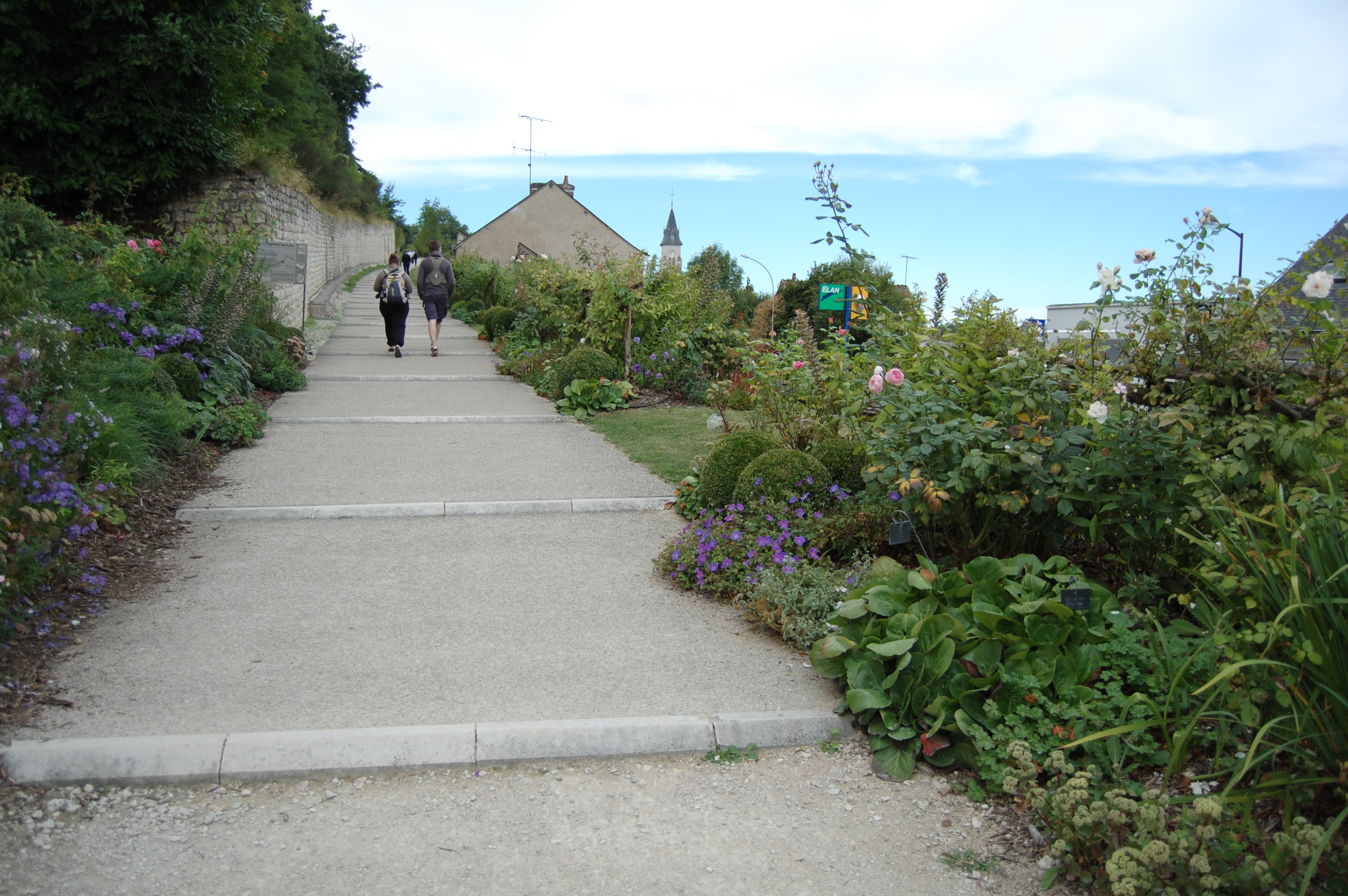
A pleasant hike up the hill to the Chateau

To get there you need to climb a wide path. Takes 20 minutes or so, but there are flowers to look at along the way.

Chateau de Chaumont
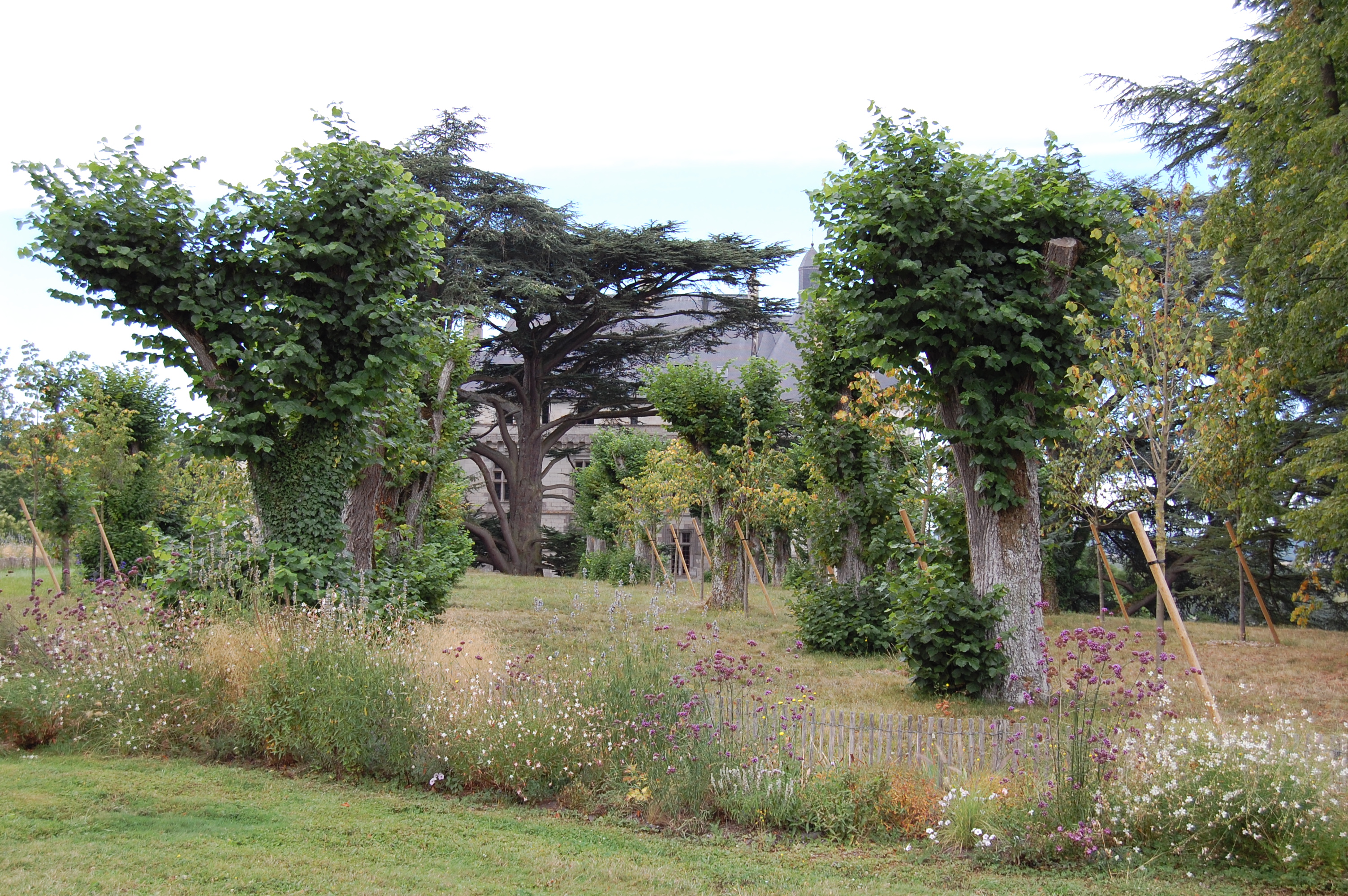
I can understand not wanting to take down some really old trees, but this does not work.

Once you get to the top of the hill you see the remains of an allee of trees. Sorry but I can’t remember the kind of trees, but trust me when I tell you they were hundreds of years old. Sadly they had become diseased and the decision was made to top them rather than remove them entirely. Personally, I don’t think this works – sad as it is, they should have removed the old trees entirely and put in something new.

Chateau de Chaumont

As you approach the castle, you pass flower beds full of Salvia, Gaura lindheimeri, Verbena bonariensis, ‘Karl Foerster’ Calamagrostis, and white petunias. UPDATE: Scott from Rhone Street Gardens points out that the grasses are actually Pennisetum macrourum, not ‘Karl Foerster’.

Chateau de Chaumont

There’s a drawbridge and a moat surrounding the castle. Alligators or piranha  in the moat would have been cool but actually it’s dry. Can’t have everything I guess.

Chateau de Chaumont

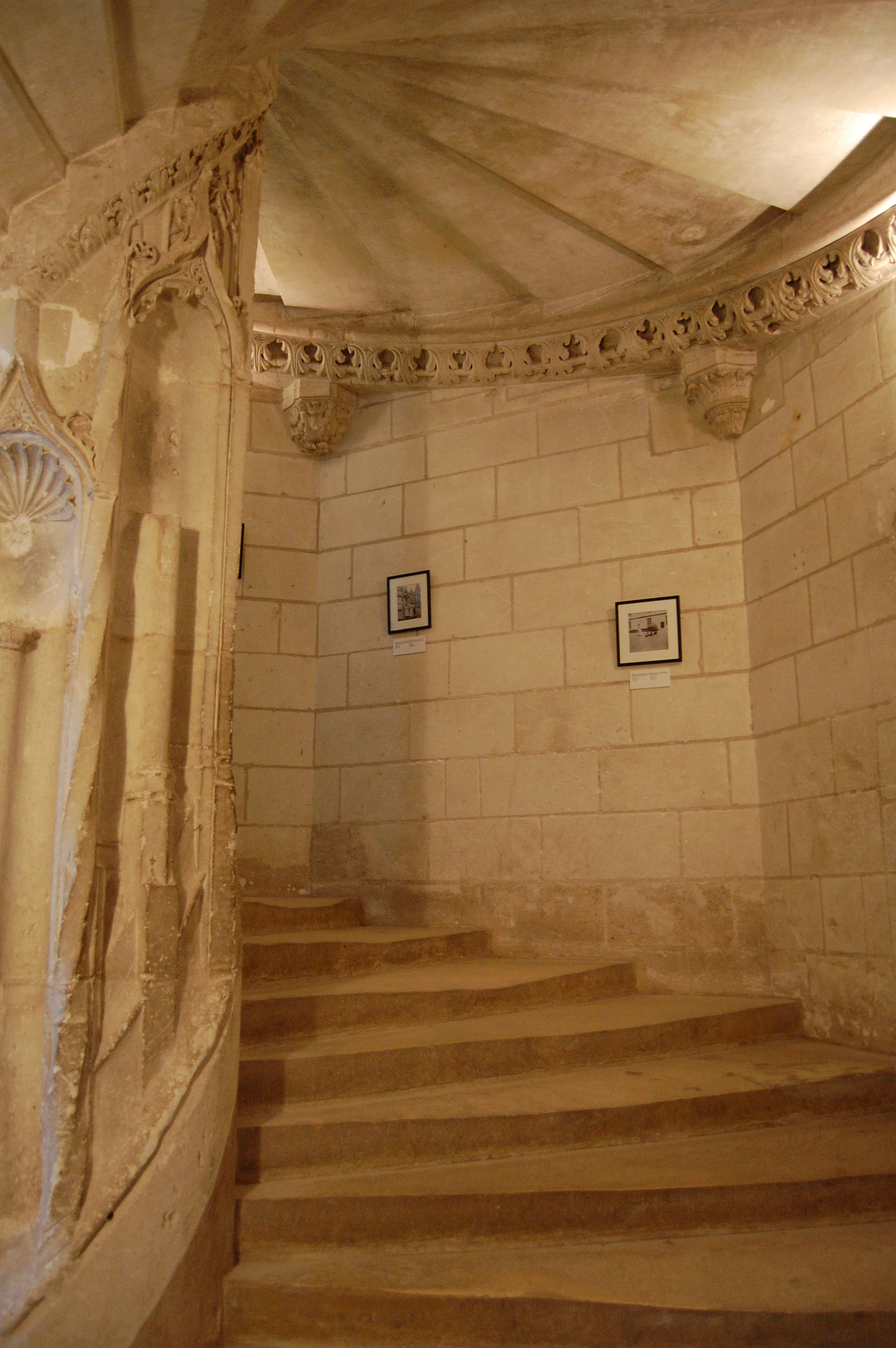
Once inside, there were lots of winding stairs.

Chateau de Chaumont
This was probably not an area for visitors.

It seems Judy and I don’t pay enough attention to signs. How do you say ‘No Entry” or ‘Personnel Only’ in French? Anyhow, we wandered around and found ourselves in this hallway.

Chateau de Chaumont
“Honey, did you see where I put my new helmet?”

Chateau de Chaumont

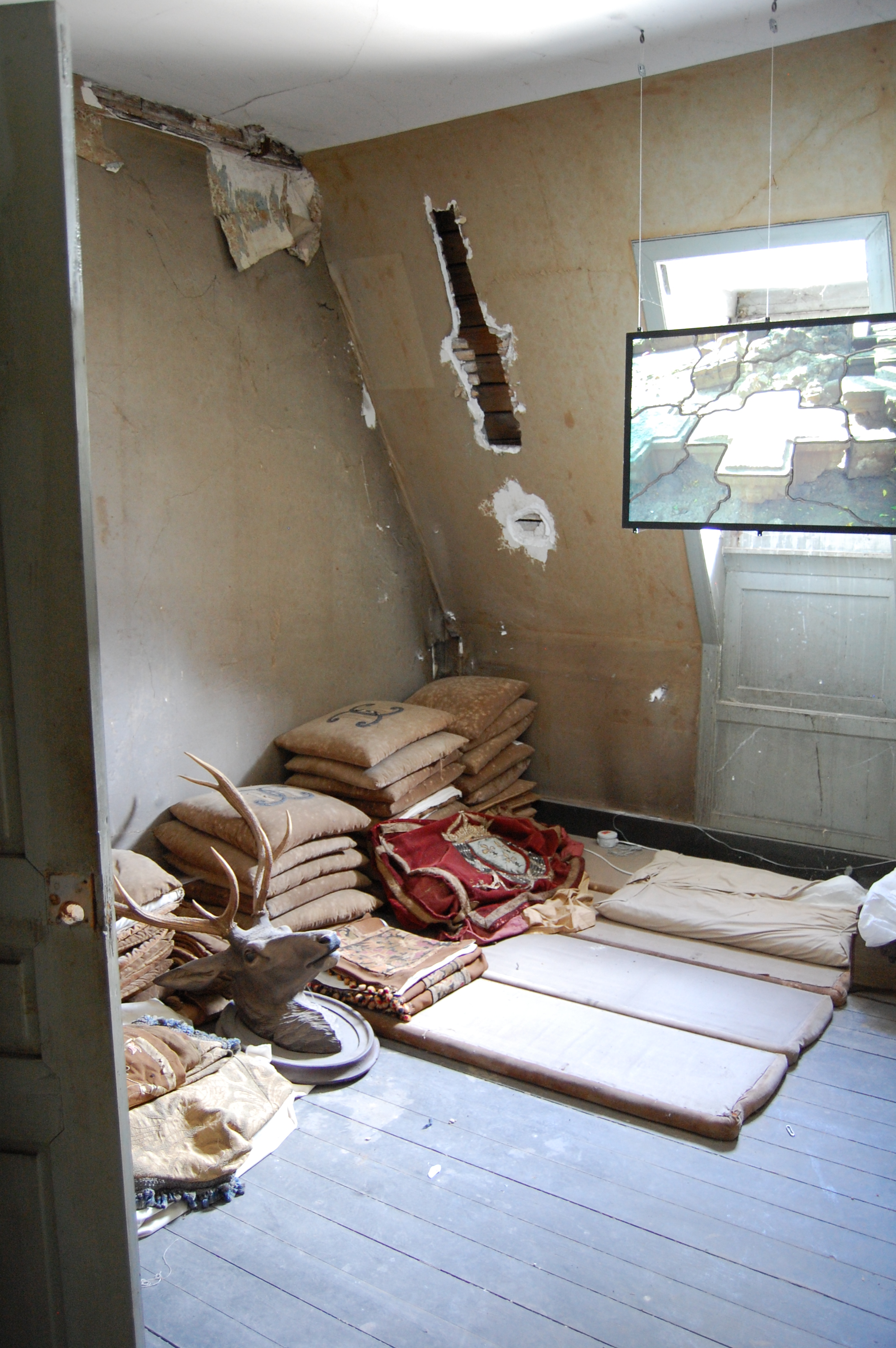
We passed by rooms where a wide variety of stuff was stacked on the floor or laid out on shelves. Wonder if they could shoot an episode of Hoarders here? I was really tempted to take one of those helmets. I mean they have so many, I can’t imagine they would miss just one.

View of Loire from Chateau de Chaumont

Nice views of the Loire from the window, though.

Chateau de Chaumont
Flower beds by the old stables.

After leaving the Chateau we walked by the old stables.

Chateau de Chaumont
Can anybody ID this tree?

2013-09-08 07.10.22

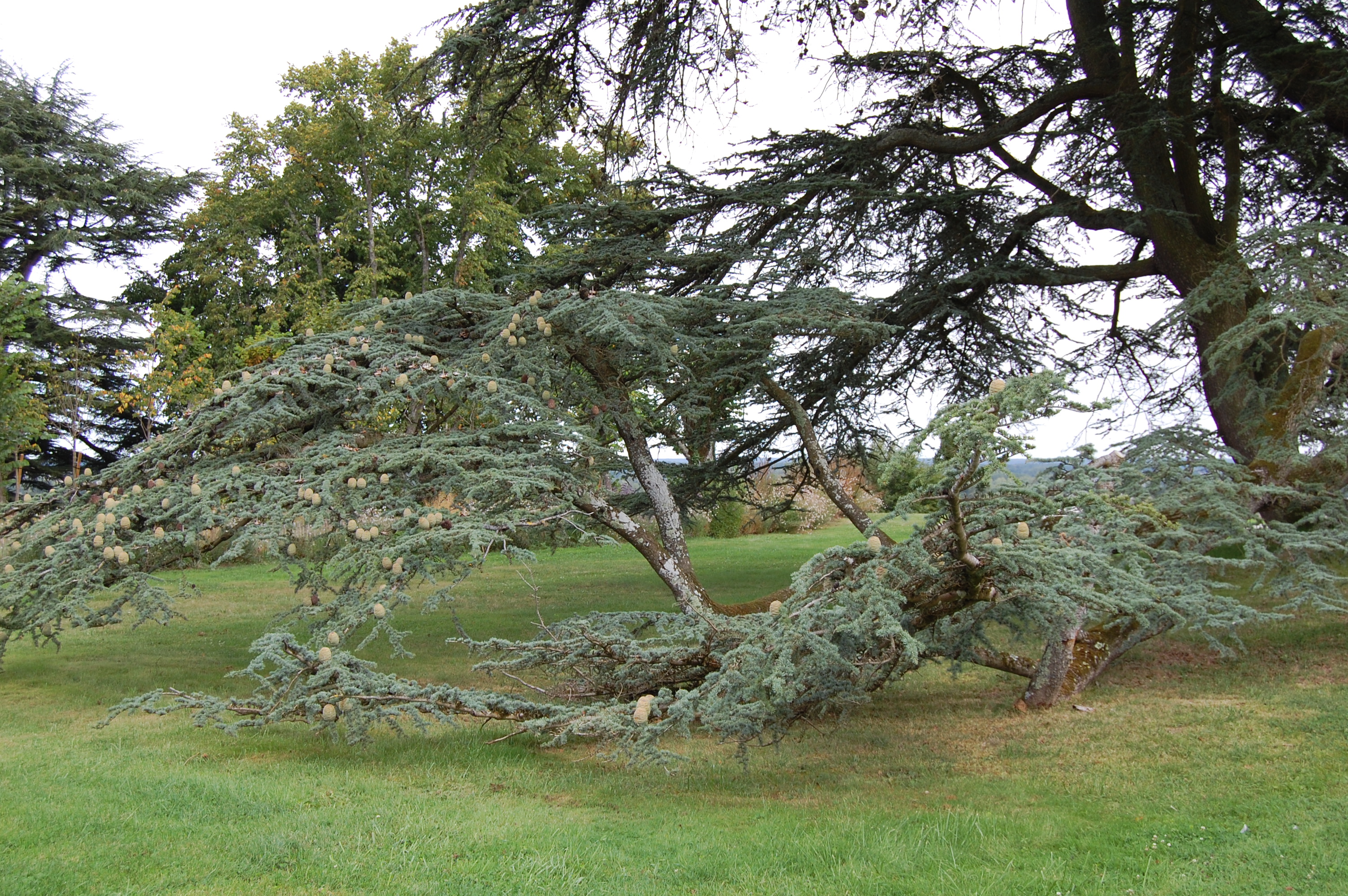
There were some really interesting and twisted old evergreen trees. Sorry, once again I don’t know what kind. Cedars? I am really a perennials person, not a tree person. Anyhow, these had very interesting upright cones, something I haven’t seen before.

Another day, another Chateau. Actually, this is the last Chateau we saw in France. We did get to see some castles in England, but that’s for another post.

2013: Birds of the Garden in Review

Well, it’s that time of year when people review various aspects of the year in the garden. As an avid backyard bird feeder, one thing I like to look back on is which birds showed up, which didn’t, and anything else that stands out in the avian department. So let’s get going, shall we?

Varied Thrush
Varied Thrush

Winter Into Spring

Varied Thrush. Perhaps I should have called this post The Year of the Varied Thrush. Because this bird, which looks like a big orange and black robin, would certainly be my avian MVP for 2013, if there were such a thing as an avian MVP.

The Varied Thrush is not a rare bird at home in the Pacific Northwest, but only one or two are seen in the Chicago area very year. Depending on who you ask, these individuals have either lost their way due to poor health or they simply fly to the beat of a different drummer, preferring their own exclusive winter destinations. (“Dear, simply everyone is wintering in Baja! Let’s beat the crowds and go to Chicago instead!”)

Varied Thrush
Varied Thrush

If the latter applies to my VT, then I have reason to hope I will see it in 2014. This year we first noticed him in late January, and he made itself at home in my back garden until the middle of April. I’ll be keeping my eyes open.

birders
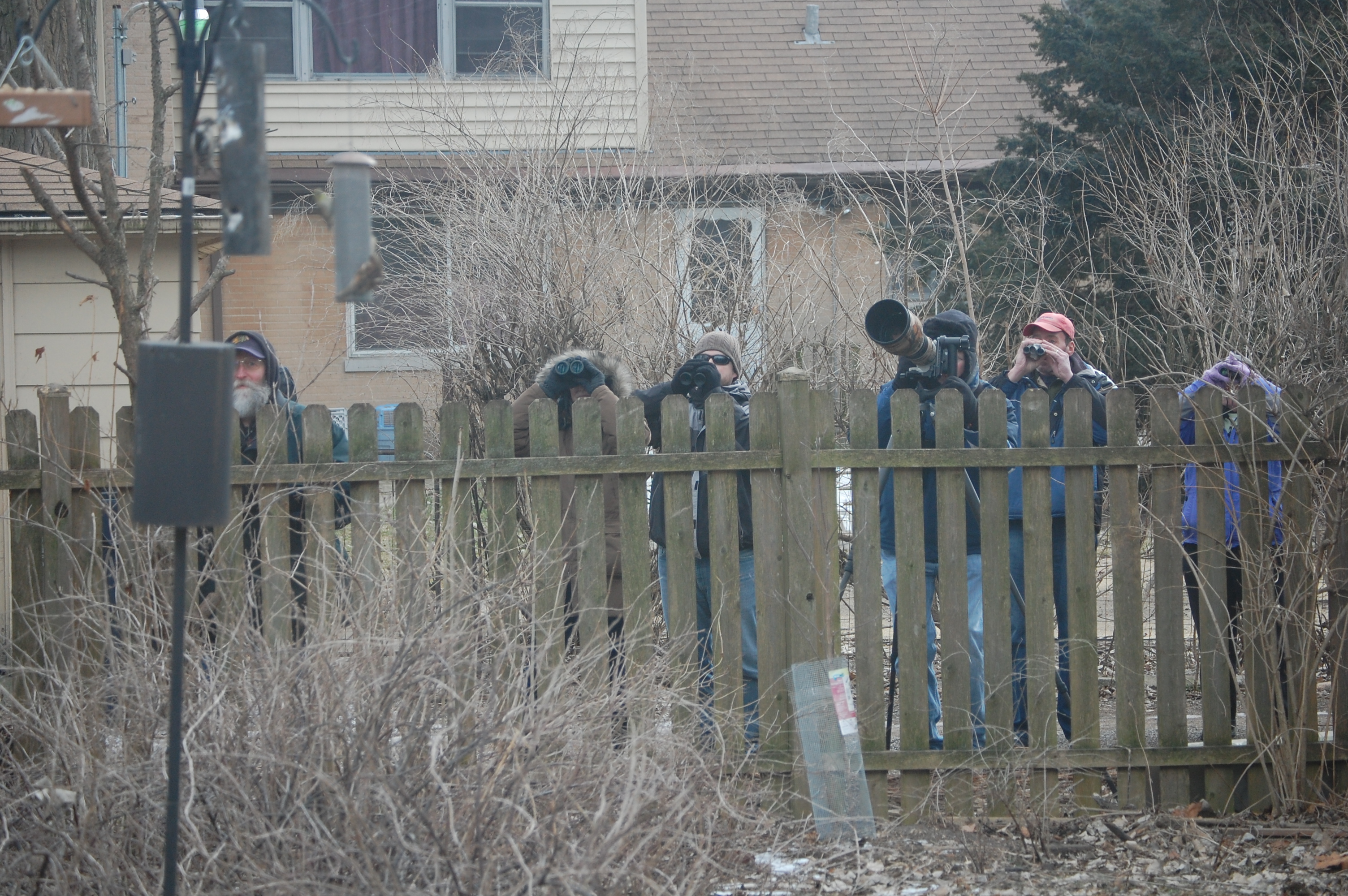
Birders at the back fence.

The VT brought bird watchers who were eager for a sight that usually required a plane ticket to Seattle. Judy and I had to remember to get fully dressed before coming down in the morning, as for several months we were likely to find bird enthusiasts, equipped with some monster lenses, lined up in the alley along our fence.

Northern Flicker
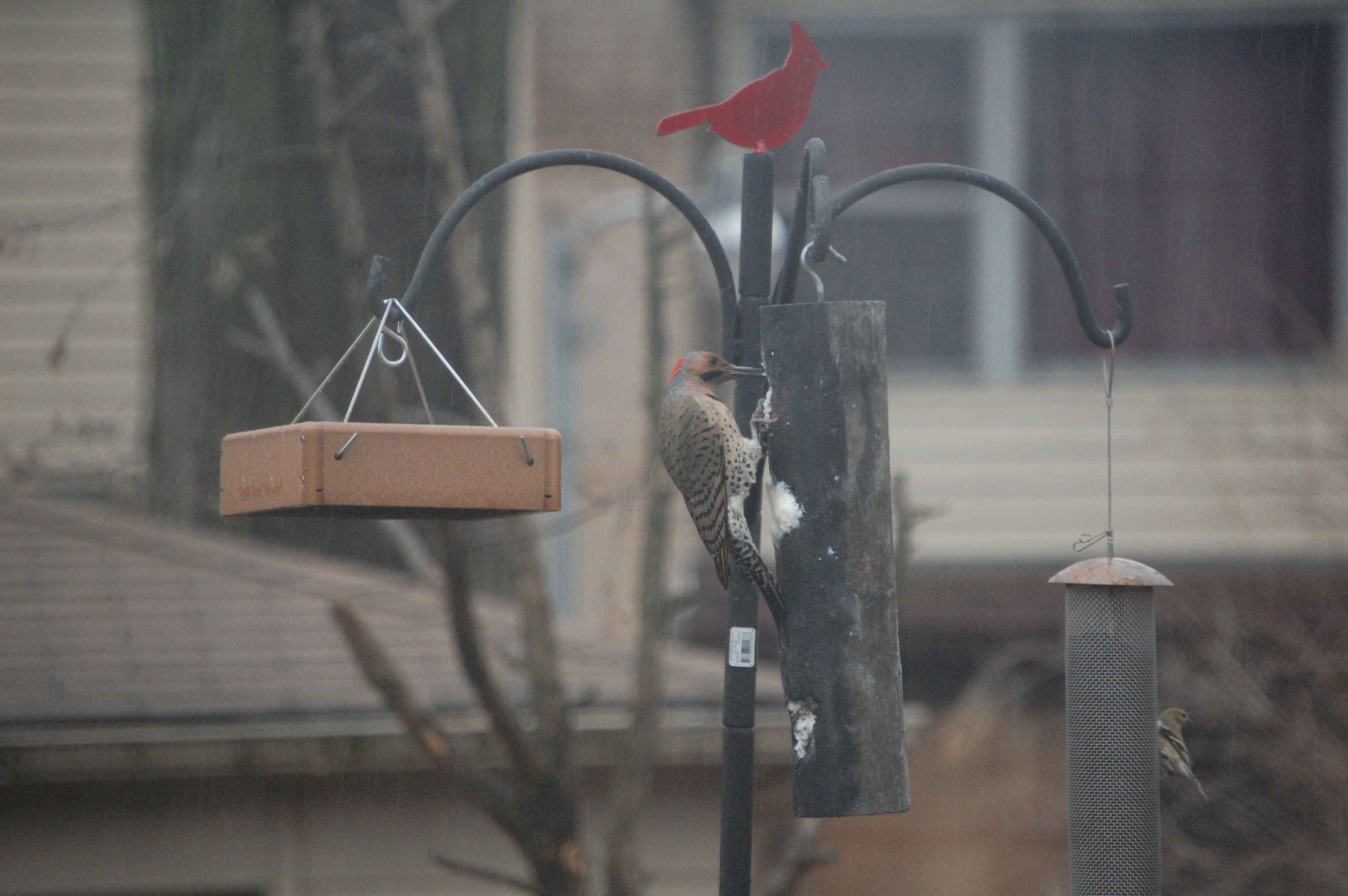
Northern Flicker at the suet feeder

Woodpeckers. It was also a good winter for Northern Flickers, who seemed to overcome their usual shyness and would feed very close to the house. We also saw them feeding on the ground, which I have never noticed before.

Hairy Woodpecker
Hairy Woodpecker

Downy Woodpeckers were plentiful, and Hairy Woodpeckers made occasional appearances. We didn’t see any Red Bellied Woodpeckers in 2013, though they had been common in prior years.

red breasted nuthatch

There were a huge number of red breasted nuthatches, which are normally pretty rare around here. The larger and more common white breasted could also be seen frequently walking up tree trunks or noshing at the peanut feeders.

White breasted nuthatch

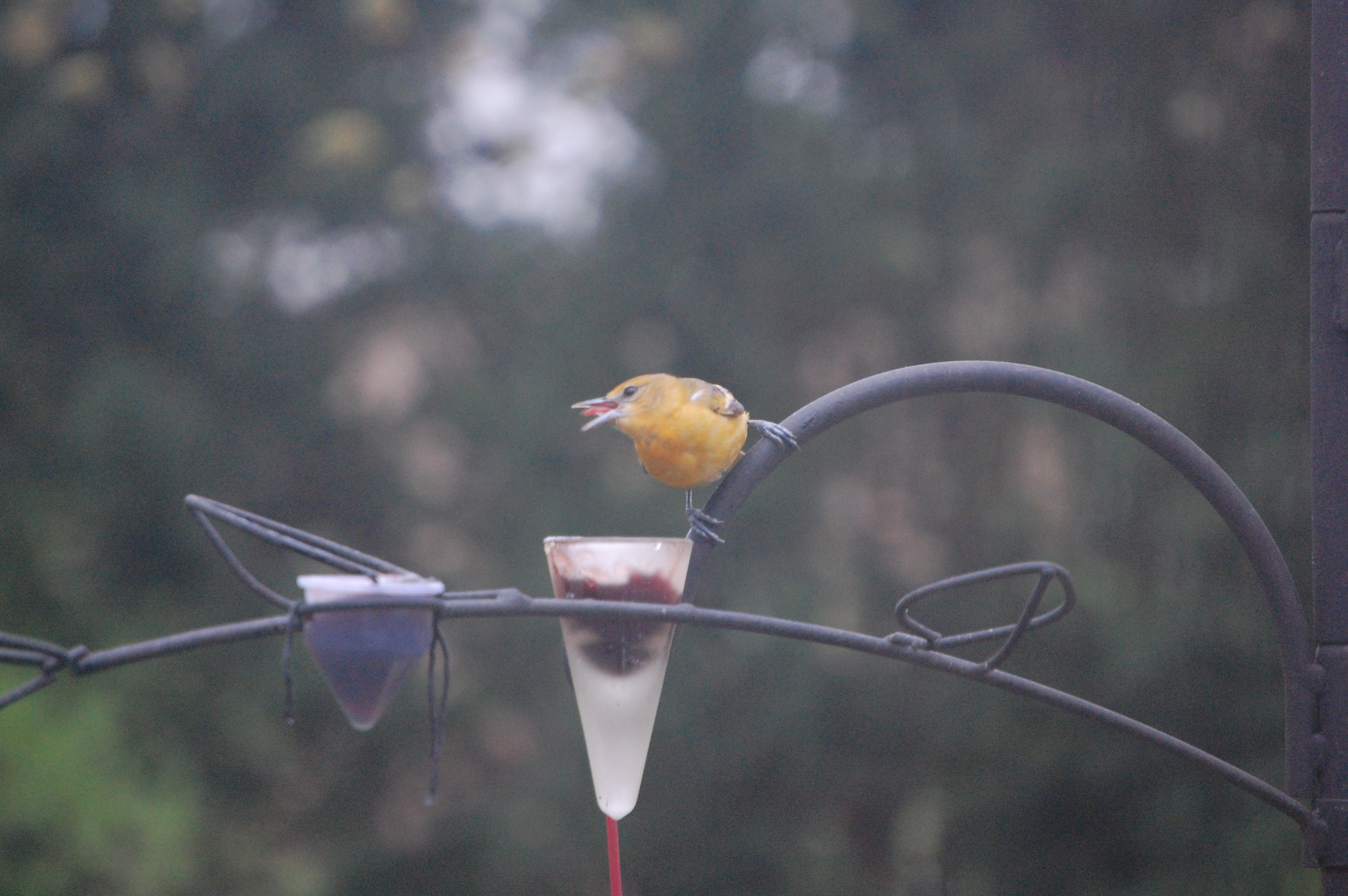
Spring Migrants. I have never seen as many Baltimore Orioles as I did this last spring, which is good because they are one of my favorite birds. They made themselves very much at home in my back garden, compelling me to buy about three jars of grape jelly every week. It was nice to see lots of juveniles with the adults.

Male Baltimore Oriole
Juvenile Baltimore Oriole

White Crowned and White Throated Sparrows made frequent appearances.

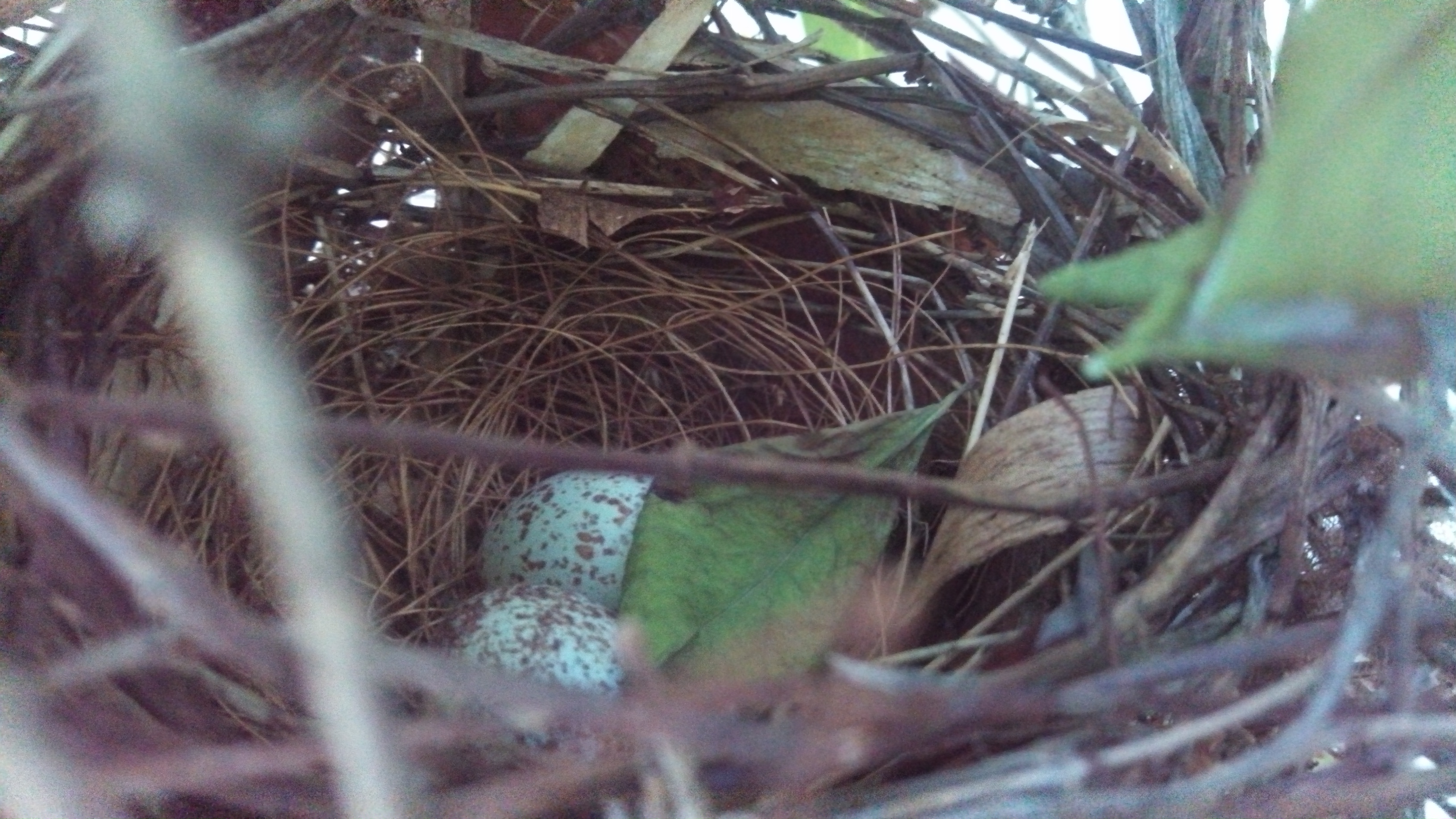
Cardinal eggs
My very own Cardinal eggs which probably did not come to a good end.

Oh, and I got very excited when I found a Cardinal nest in the tangle of Trumpet Honeysuckle and Prairie Rose against the back wall. Something bad must have happened to the eggs, though, as the juveniles never made their appearance.

Rose Breasted Grosbeak
Rose Breasted Grosbeak.

And there were fewer Rose Breasted Grosbeaks than usual.

Summer

If winter and spring were a birding feast, summer was a quick descent into famine. The pickings seemed to be limited almost entirely to nuisance birds: grackles, starlings, house sparrows. Normally we see Baltimore Orioles all through the summer, but this year they stayed in the tree tops after early July.

There were Mourning Doves, who are fine but not very exciting. Also goldfinches, in modest numbers.

An odd thing was the absence of Chickadees, who are normally plentiful throughout the year.

Fall and into Winter Again

Northern flicker
Northern Flicker feeding on the ground.

Things picked up when the weather cooled, then turned frigid. Our usual woodpeckers and nuthatches became a common sight again. Cardinals became quite plentiful, more so as the transition into another winter began.

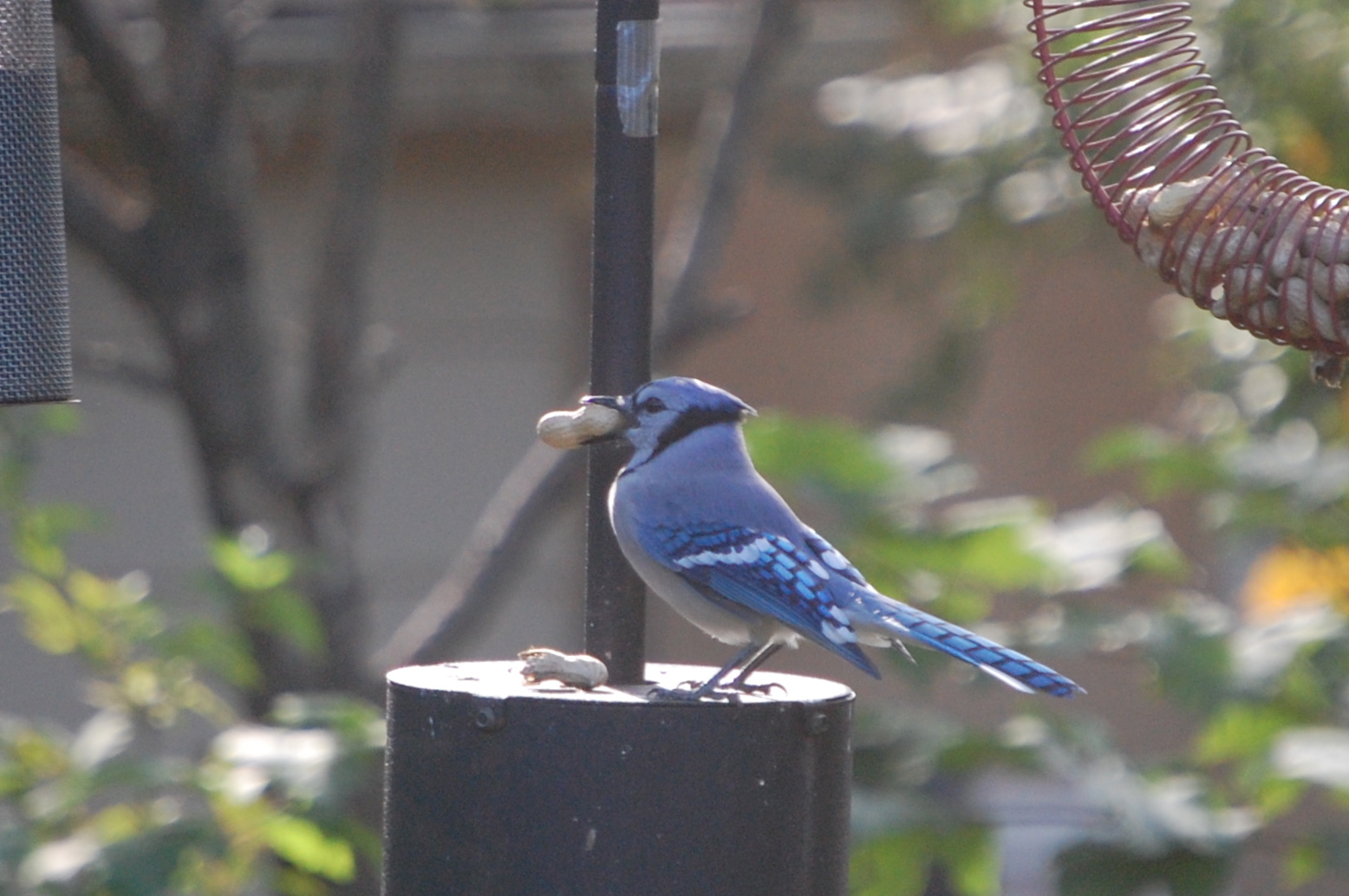
bluejay
Bluejay with peanut.

One new development was the arrival of Bluejays, once a common bird but not seen in our garden since we moved here. Not everyone loves bluejays, as they are rude, loud, and greedy. Even so, I was glad to see them, even as they emptied out my peanut feeder.

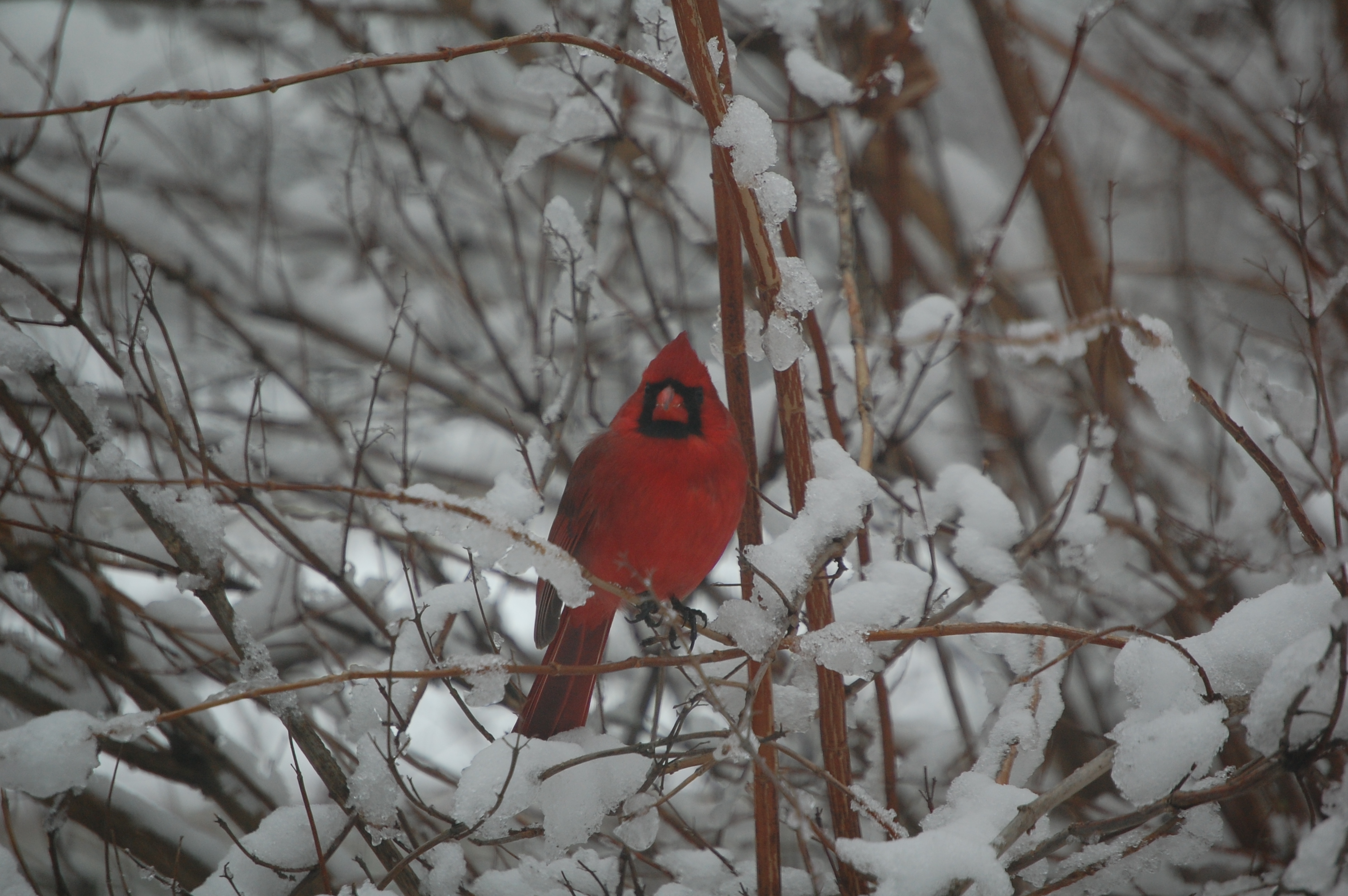
Cardinal, Deutzia
Cardinal perching in a Deutzia bush.

***

So those are the highlights. I should mention that we saw a number of raptors: Red Tailed Hawks, Coopers Hawks, and Kestrels. In fact we saw a red tailed hawk on the back fence today. But Judy wasn’t able to get any good pictures, either today or the rest of the year.

Have there been any exciting bird developments in your garden?

Maximize Your Optimization!

Dear Spam Author,

First of all, let me say how flattered I am by the many kind comments you have written on my website. I’m so pleased that you advise all your “facebook buddies” to read my site!

Also, I cannot thank you enough for your generous offers of assistance. Although I was a little confused by your willingness to help me with maximizing my Search Engine Optimization. Wouldn’t that be the same thing as optimizing my optimization?

spam

What’s more, thanks to you I now understand that I can use my website to generate a very comfortable income. It seems only reasonable that I should provide you with a nominal fee, which would be just a tiny slice of the massive wealth I will soon be accumulating.

And I in turn would be more than willing to help others in the same way. What a cycle of wealth creation we will unleash together! I think this is what economists call the multiplier effect.

However, I have noticed that your wonderfully informative spam emails – which I encourage all my friends to read – lack certain elements that would contribute to greater SIO (Spam Impact Optimization).

Please allow me to help you send spam that really lives up to its full potential! Your excellent spam really deserves nothing less. Plus, the cost is hardly worth mentioning.

In closing, let me say it’s so nice of you to offer those genuine Hermes scarves and prescription medicines at laughably low prices. Unfortunately, scarves are just not my look, and my neighborhood Walgreen’s is so convenient. But thanks for keeping me in mind!

Hearing from you so often really makes my day! I’m sorry I can’t reciprocate just as frequently. Even so, I already feel like we have become really good friends.

Until next time, my best wishes!

Jason

The Ministry of Silly Gardens

Does anybody remember the old Monty Python sketch about the Ministry of Silly Walks? This diverting bit of absurdity came to mind when Judy and I visited the International Garden Festival at Chateau Chaumont back in September. The Festival contained a number of gardens which, like the Ministry, took themselves very seriously but were in fact rather silly.

ministry of silly walks

Every year the International Garden Festival gets prominent or aspiring designers to install gardens which, according to the brochure, are “the gardens of tomorrow.” In 2013 there were 24 gardens, which are maintained from spring through fall. We only got to see about half, because we had also spent a lot of time visiting the Chateau and it was a very hot day.

Each of the gardens had plaques explaining their significance. Unfortunately they were in French only. Judy speaks some French but the translating was a bit arduous. I wish now that I had taken notes, but oh well.

festival des jardins

Certainly the silliest garden, and the most annoying, was about Death. Or Death and Life, or the Great Circle of Life, also depicted in Walt Disney’s The Lion King. This garden had a pomegranate tree, symbolizing Life (see legend of Persephone), and a big dead branch lying on the ground, symbolizing Death. Only thing is, someone had not been taking good care of the tree, because it was pretty much half dead. Or maybe that was intentional, I don’t know.

In case anybody missed the symbolism, there was a wall featuring a quote about life and death by the Russian abstract painter Kazimir Malevich, who is himself dead. Personally I don’t really approve of driving home the theme or message of a garden with a big sign. I mean, would Da Vinci have put a banner on the Mona Lisa reading: “Hey, is this lady’s smile mysterious or what?”

festival des jardins

Another silly garden featured what looks like an abandoned suburban backyard with a pool and patio. Perhaps it’s title was “Subprime Home Mortgage”, by Bank of America. This is not a garden of tomorrow, as you can already go to quite a few places where it is the garden of today.

festival des jardins
Garden about hearing or sound or something.
festival des jardins
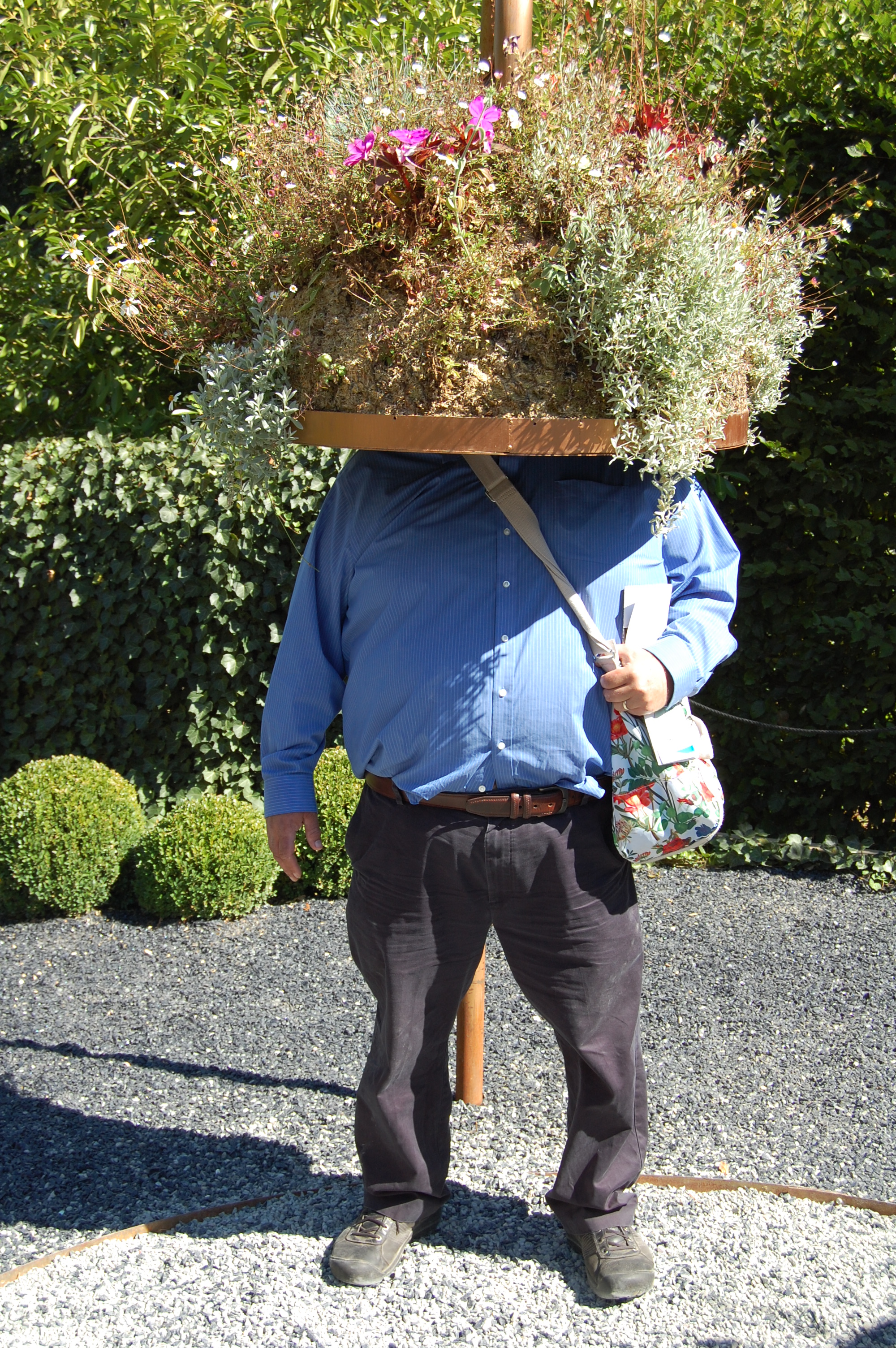
Me under the Cone of Silence not hearing anything. By the way, that is Judy’s purse I am carrying because it was heavy and I am a nice person. Not that there is anything wrong with a man carrying a flowered purse.

Then there was a garden that was about sound, I think. It had mini lamp posts from which hung a sort of botanical version of the Cone of Silence from the old TV comedy Get Smart. (I’m just full of pop culture references today, generally about 30 years out of date.) You were supposed to stand under them so you could hear … something. I tried  but didn’t really hear anything. Kids found it entertaining, though.

Festival des jardin mesh

Another garden was about wind. It had pieces of aluminum mesh hanging from clotheslines. Reminded me that I had not fixed the screen door before leaving on this trip.

2013-09-08 09.17.15

Ah, if this is a garden of tomorrow, I really need to find a new hobby.

festival des jardins

So not everything was silly, or at least not in a bad way. I really loved this garden with disco balls appearing to float on a pond. Not what I would put in my own garden, but undeniably cool.

festival des jardins

And I liked this children’s garden, which you entered by stepping through a wardrobe. No lion or witch, unfortunately.

shoe planter

I forget where we saw these shoes turned into planters, but I have real difficulty throwing away my old shoes and you better believe that next spring they are all gonna be stuffed with potting mix and have plants growing out of them.

festival des jardins rice patty

This garden created around a rice patty was intriguing, I thought.

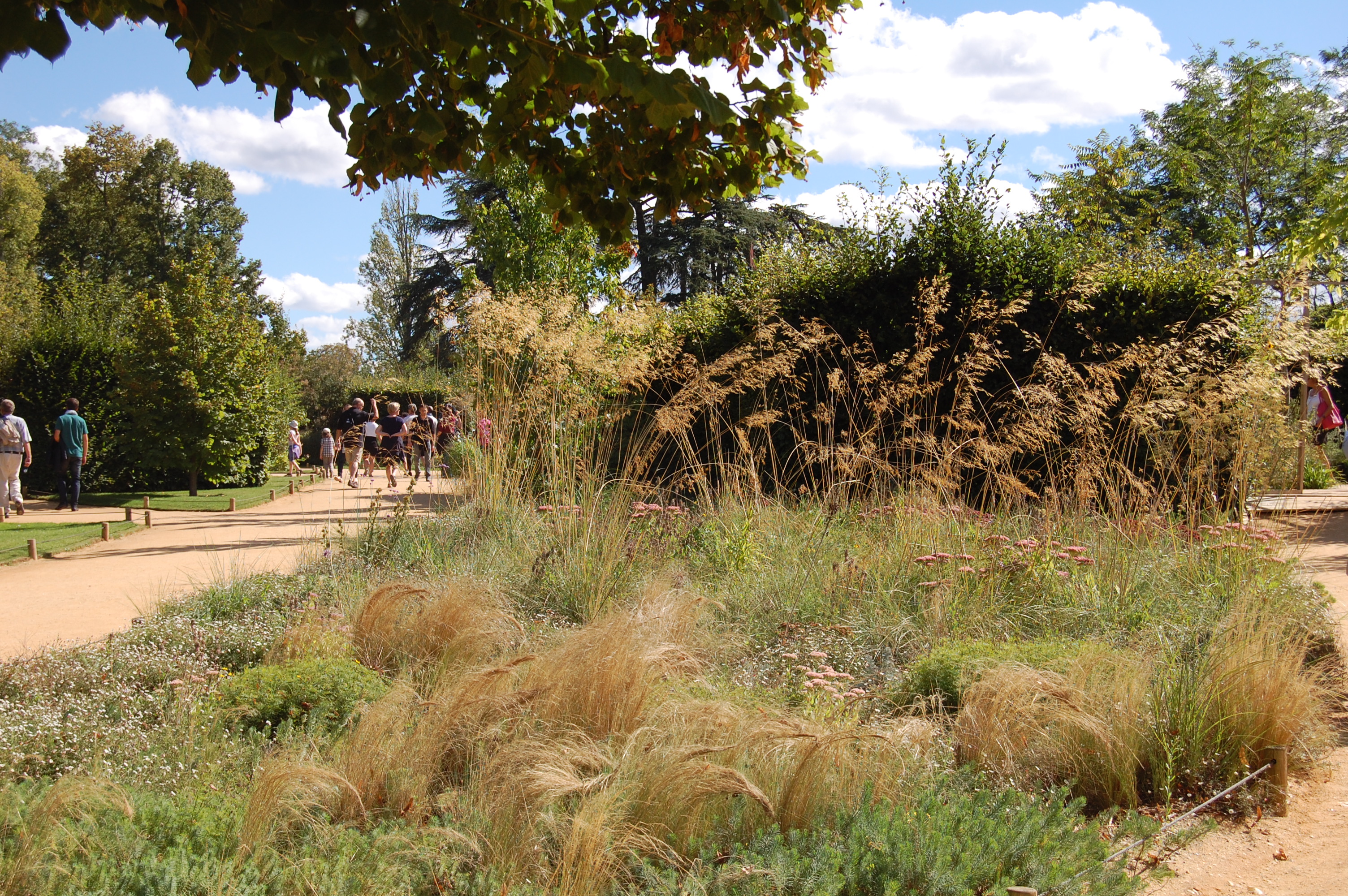
Landscaping between the display gardens.

2013-09-08 09.25.31

Also, I may have liked the landscaping between the display gardens better than the display gardens themselves. Judy remarked that I repeated this observation more than necessary.

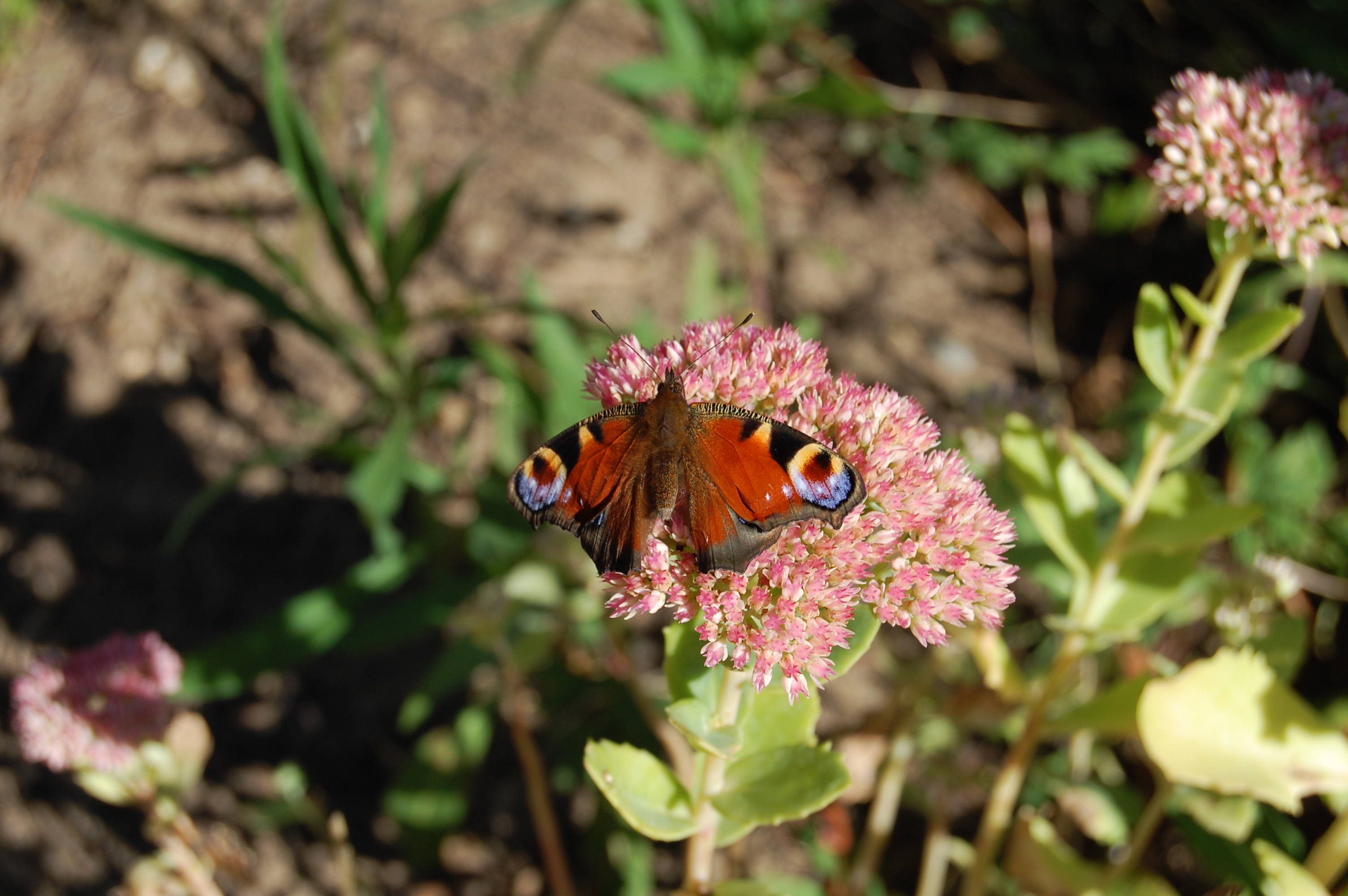
Anybody know what kind of butterfly this is? Not one I have seen in North America.

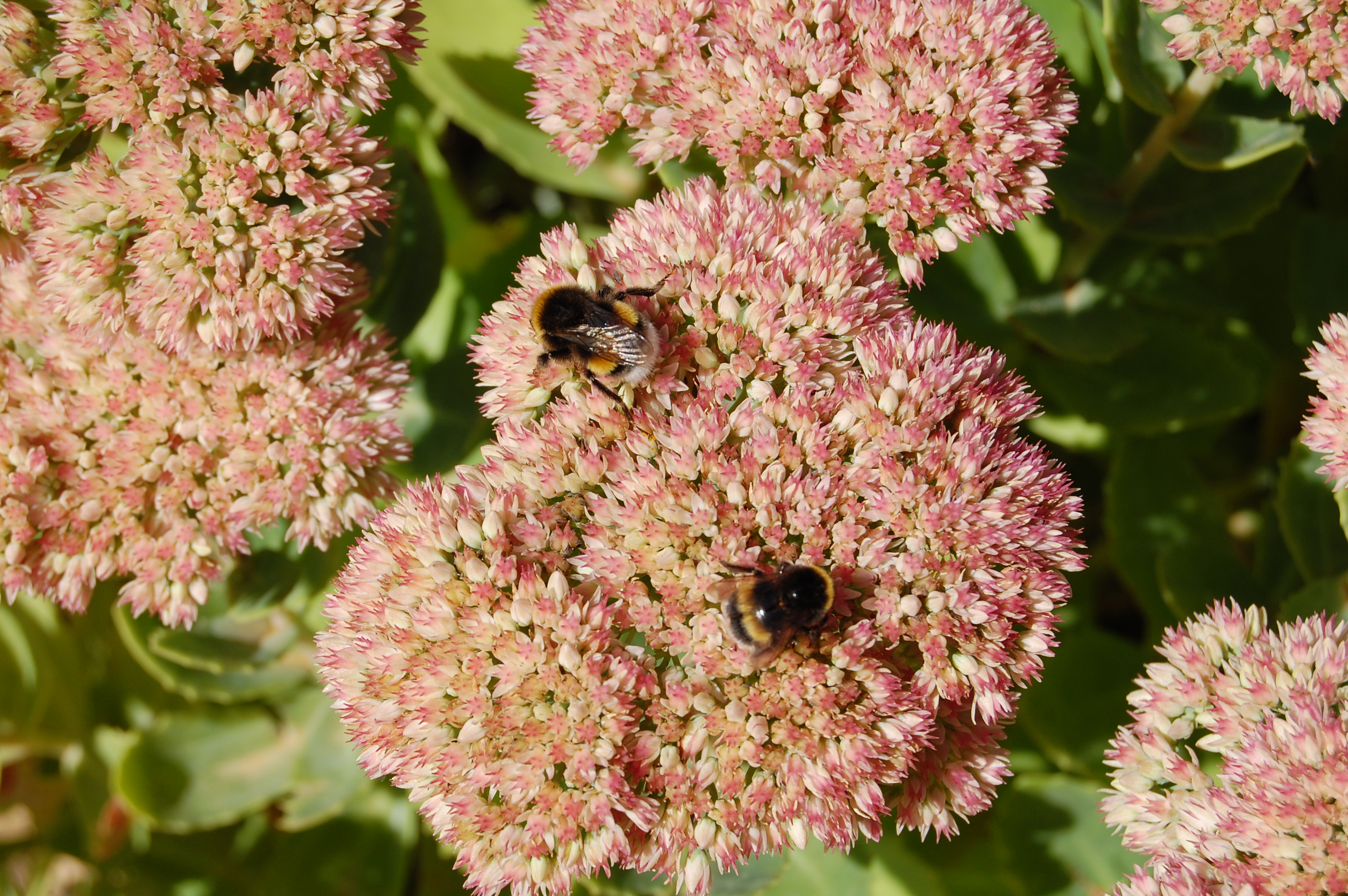
Sedum and bumblebee

Especially as there were plenty of bees and butterflies. Anybody know what kind of butterfly that is?

What’s the silliest garden you’ve ever seen? Or do you think I’m just being juvenile and narrow minded?

Pausing For Breath

Gardening is something you do inside your head as much as out in your garden. Sometimes you need to look at an established bed and mentally rearrange the plants. You need to decide to pull the plug on an unsatisfactory performer. And you need to imagine potential replacements, newly planted and in a few seasons.

Garden in November
By late fall the garden is down to the bare bones.

Late fall and winter provide the perfect time to engage in this mental gardening. Spring is a frenzy of planting and clean-up, a time to execute what you’ve been pondering. Summer is when I am mesmerized by the sheer mass of flowers and grasses, and it’s too damn hot anyway. Summer is when you forget the existence of that 3′ perennial with the gorgeous flowers because it is surrounded by the 5′ perennials.

In fall things slow down and cool down. You can start to prep for the following year. And gradually, as fall transitions to winter, the garden is laid bare again, revealing things you forgot or never noticed. As this process unfolds once again, here are some thoughts that occur to me.

Short's Aster
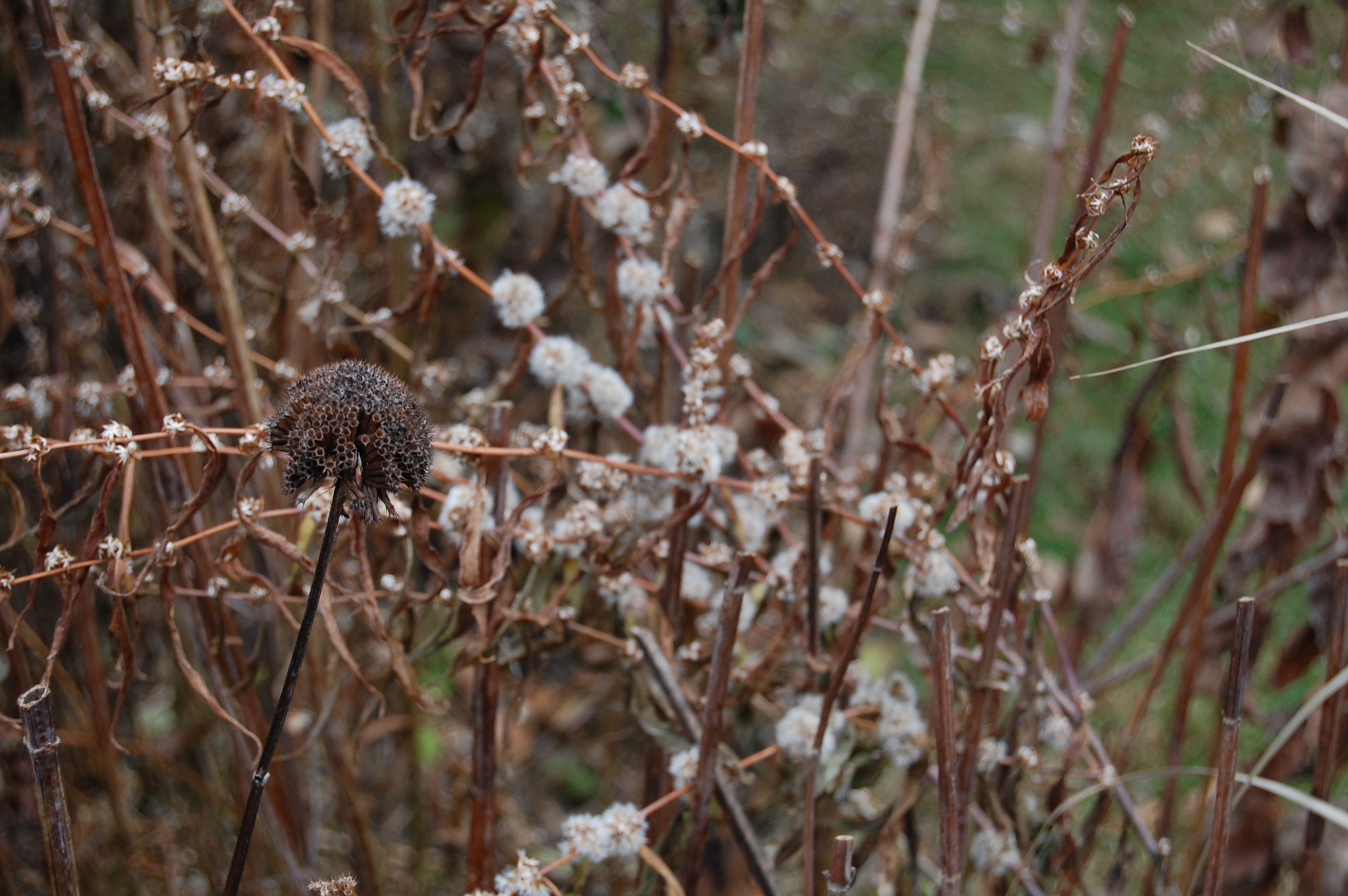
Seed puffs on Short’s Aster.

Ease out the Woodland Phlox (Phlox divaritica). Woodland Phlox is guilty of false advertising as far as I’m concerned. Yes, the blue spring flowers are awfully nice. But the leaves poop out by mid-summer, leaving patches of bare ground. Basically this plant might as well be a spring ephemeral. Plus it’s been awarded the prestigious Most Delicious Perennial Award by Rabbit Gourmet magazine.

And yes, I’ve got it growing in the right conditions: part shade with good moisture.

I’m not going to pull out the Woodland Phlox, but I am going to set it up in competition with others that have a better record of maintaining their foliage through the season. If the Phlox manages to hang on, fine. If it gets shaded out, too bad.

Merrybells, Uvularia grandiflora, Bleeding Heart, Dicentra spectabilis var. alba
Merrybells with white Bleeding Heart in the merry month of May.

I’ve already planted a white Bleeding Heart (Lamprocapnos spectabilis ‘alba’) in one spot. Elsewhere I’m thinking of hardy Geraniums, maybe ‘Biokovo’ or ‘Tschelda’. And in another spot I may just let the Great Merrybells (Uvularia grandiflora) patch gradually take over the Phlox territory, filling in with Violas as the Uvularia make their slow but steady advance.

Move ‘David’ and ‘Northwind’ into the light. I’ve got two Phlox paniculata ‘David’ whose gleaming white flowers are pretty much hidden, mostly by Swamp Milkweed (Asclepias incarnata). These should be moved to the sidewalk bed.

Swamp Milkweed
Swamp Milkweed in July. I love this plant, but it’s hiding my Phlox paniculata.

Also, there’s a young clump of ‘Northwind’ Switchgrass (Panicum virgatum) which is located behind several tall plants and is not getting quite its share of the light. I’m going to move it to the west side of the ‘Gateway’ Joe Pye Weed (Eupatorium purpureum subsp. maculatum).

Replace Some of the New England Aster With Big Bluestem? Not completely sure about this, but I am hankering after ‘Red October’, a new variety of Big Bluestem (Andropogon gerardii). The name alone makes it almost irresistable.

New England Aster
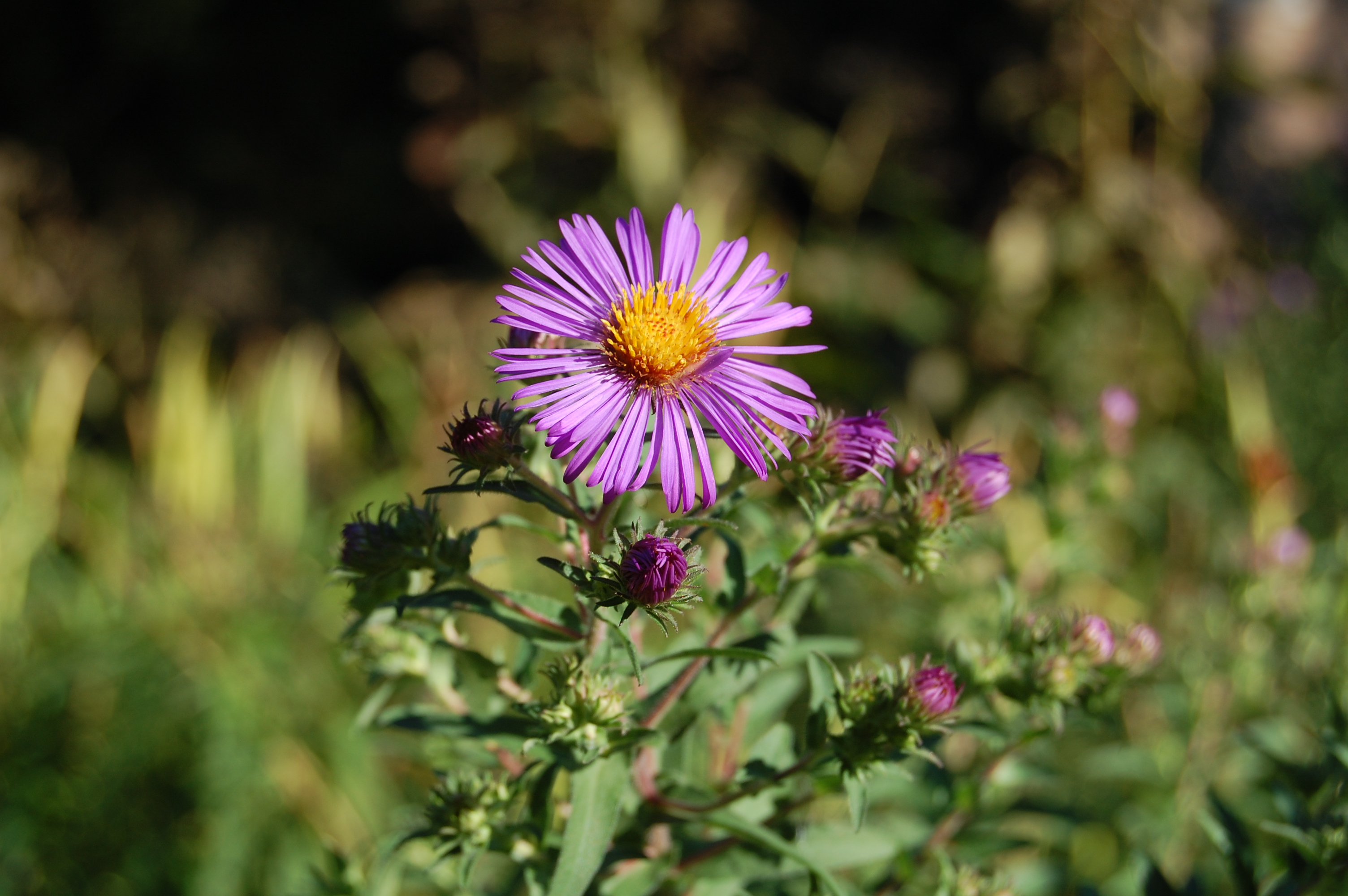
New England Aster

And I’ve got to say, New England Aster (Symphoricarpos novae-angliae) has been one of my least satisfactory asters. It’s nice but so tall and lanky, and the floral display does not seem commensurate with the space taken. Plus I have two big clumps, do I really need both?

When does your mental gardening kick into high gear? Are you, like me, already obsessed with plans for spring?

This post is written in cooperation with Beth’s ‘Lessons Learned’ meme at Plant Postings, as well Donna’s Seasonal Celebrations on Garden’s Eye View. Both are delightful sites, go ahead and take a peek.

I Am Thankful For Sweet Potato Pancakes

So, how was your Thanksgiving? Mine was very enjoyable. Both boys were there, plus my brother-in-law and his wife. They were in charge of the wine, and brought an excellent and generous selection.

Thanksgiving turkey
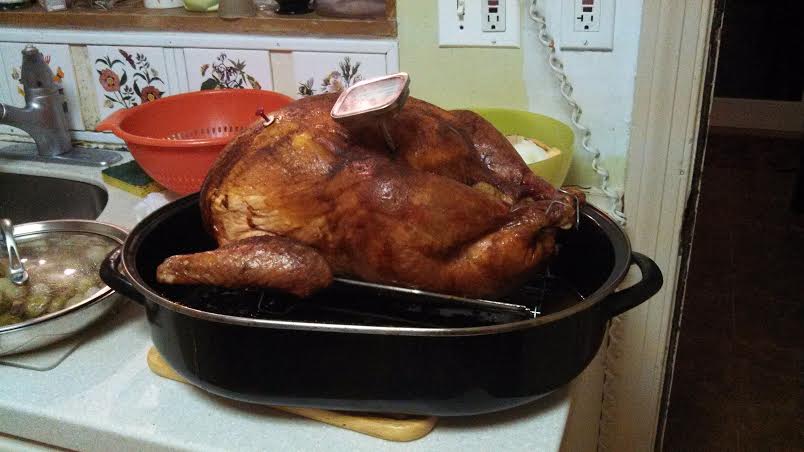
Last night’s turkey, just out of the oven.

Judy is very good at preparing all the traditional Thanksgiving dishes – turkey, stuffing, cranberries. She also has a powerful need to produce them herself every year. On those years when we are guests on Thanksgiving, she feels the need to cook her own small turkey, stuffing, etc, the next day. And you better be JUST AS APPRECIATIVE the second time around. 

This year we hosted. But because Thanksgiving overlapped with Hannukah, we felt the need to change the menu a bit to recognize both holidays. We considered several possibilities. Judy suggested turkey stuffed with beef brisket, and I advocated for turkey stuffed with matzah meal. These and other ideas were rejected.

What we settled on was sweet potato pancakes. As you may know, potato pancakes (latkes) are the traditional Hannukah dish for East European Jews, and it is something our family makes once a year. Not because they are difficult to make, but because they are so dangerously delicious.

Sweet potato pancakes with home made applesauce.

Anyhow, Danny found a recipe for sweet potato latkes and we all liked the idea. We ate them with sour cream and home-made applesauce. They were very good. Not good enough to replace regular latkes, perhaps, but definitely worth trying.

The recipe called for green onions but we used ordinary white onions, which was fine. One advantage of making latkes from sweet potatoes is that they have a lot less water in them than white potatoes, so you don’t have to squeeze the shredded bits.

If you try making this recipe and are new to the ways of the latkes, let me share my secret for good potato pancakes: DON’T FUSS. That is, once you put the potato pancake in the pan, don’t keep nudging it or constantly turning it over. Just let it sit there and get nice and crispy, which is the main point. Also, make sure the oil in the pan is good and hot.

Did you try anything new for your Thanksgiving dinner?


A Spiderwort By Any Other Name …

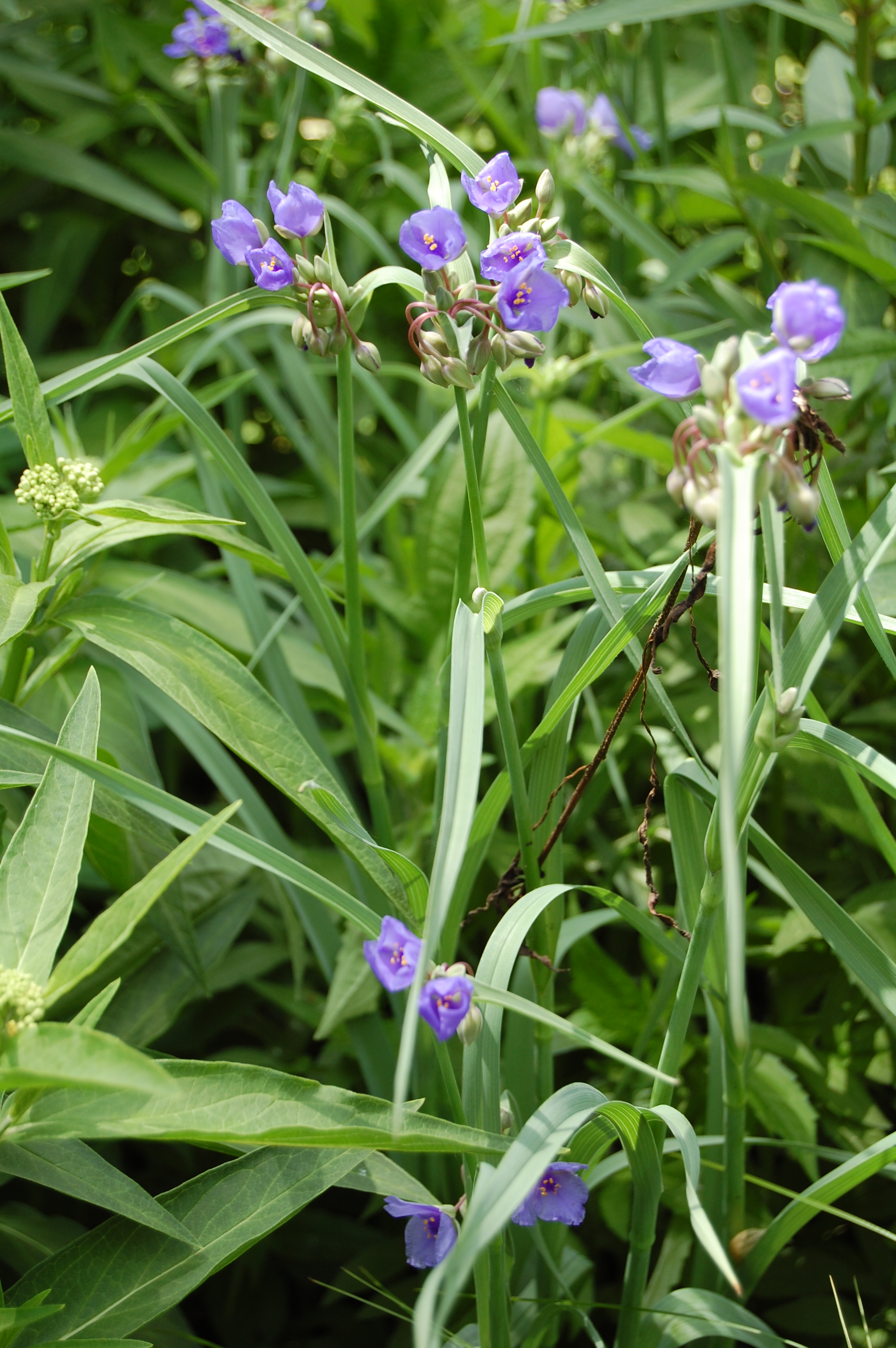
Yes, it has an ugly name, but Ohio Spiderwort (Tradescantia ohiensis) has much to offer in a cottage-style garden, especially if the gardener likes blue flowers, as I do. This plant is native to the eastern half of the USA as well as southern Ontario.

Ohio Spiderwort
Ohio Spiderwort

Ohio Spiderwort is much better behaved than the more commonly grown Virginia Spiderwort (Tradescantia virginiana). It forms large clumps, but does not spread by runners. It is also a much taller plant, growing to three or even four feet. Some people say it self-sows aggressively, but that hasn’t been my experience.

Spiderwort and Bumblebee

The clusters of three-petaled flowers bloom from May into July. Each flower blooms for just one day and usually closes in the afternoon, though they may stay open all day if it’s cloudy. The flowers are a favorite of bumblebees and other pollinators.

The grass-like leaves are a dark bluish green. T. ohiensis likes full sun best, but tolerates part shade, and is adaptable as to soils. It is pretty much disease free, definitely a lower maintenance plant.

Ohio Spiderwort

I have a large clump of Ohio Spiderwort growing in my parkway garden. I enjoy it, but it is having a floppiness problem. I tried one of those hoops that are used with peonies. Unfortunately the stems were too tall and flopped after the rain, then stayed at about a 30 degree angle.

So I’m trying to think of some new companion plants that will help hold up the Spiderwort. Since this is a raised bed with well drained soil, I’m considering Perovskia atriplicifolia ‘Blue Spire’, a medium height cultivar of Russian Sage.

As for the common name, there doesn’t seem to be a generally accepted explanation. Some say that it was once used to treat spider bites, others that the flowers themselves look like spiders, though I don’t see the resemblance. Also it should be remembered that wort is a Middle English word for plant, and has nothing to do with warts.

This post is written as part of Wildflower Wednesday hosted by Gail at Clay and Limestone. This month Wildflower Wednesday actually falls on a Monday on account of Thanksgiving. Anyway, check out her blog for more wonderful wildflowers.

Do you grow any Spiderworts? Any good companion plants to recommend?

More On Chenonceau

You may remember from the last post that after Henry II died, his widow Catherine de Medici moved into Chenonceau, forcing out the King’s mistress. (There is a soap opera aspect to these dynastic histories.)

Catherine's garden at Chenonceau
Catherine’s garden at Chenonceau

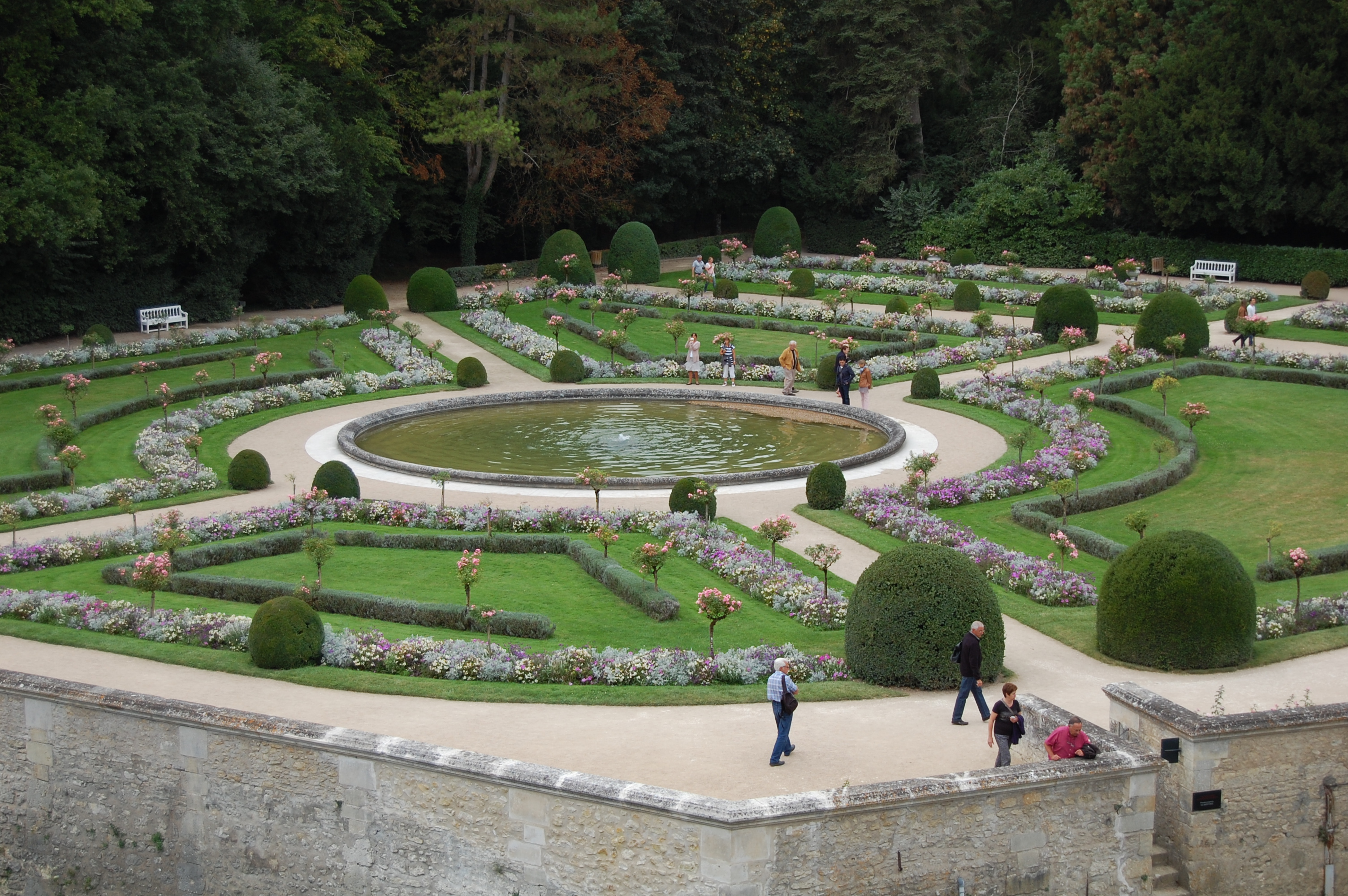
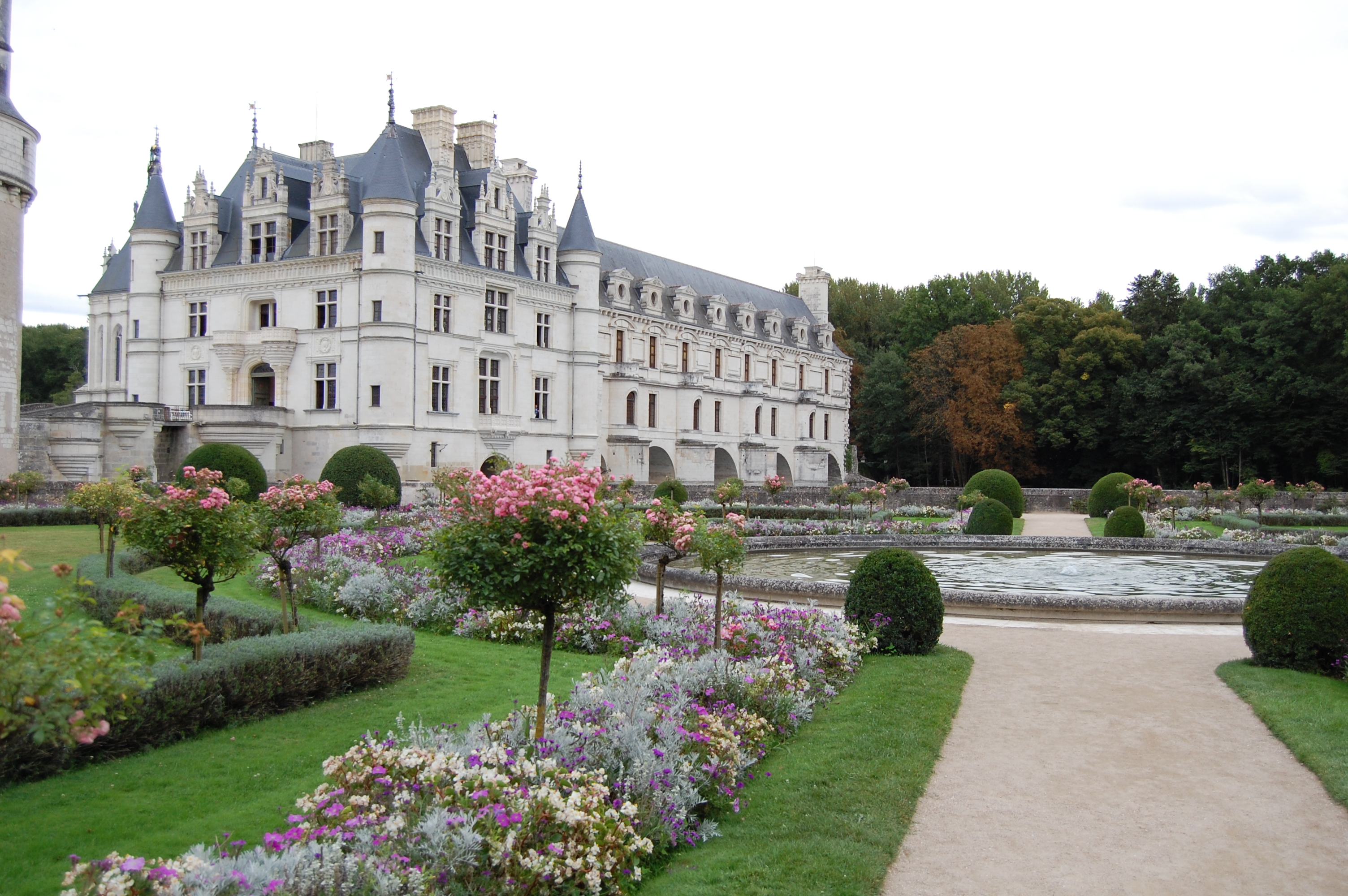
Catherine made her own garden, also with a view of the Cher River (not the Loire, as I previously wrote). It is another formal garden, though less symmetrical, and with a pool at the center rather than a fountain.

Rose standards at Chenonceau
Rose standards in Catherine’s garden


Chenonceau

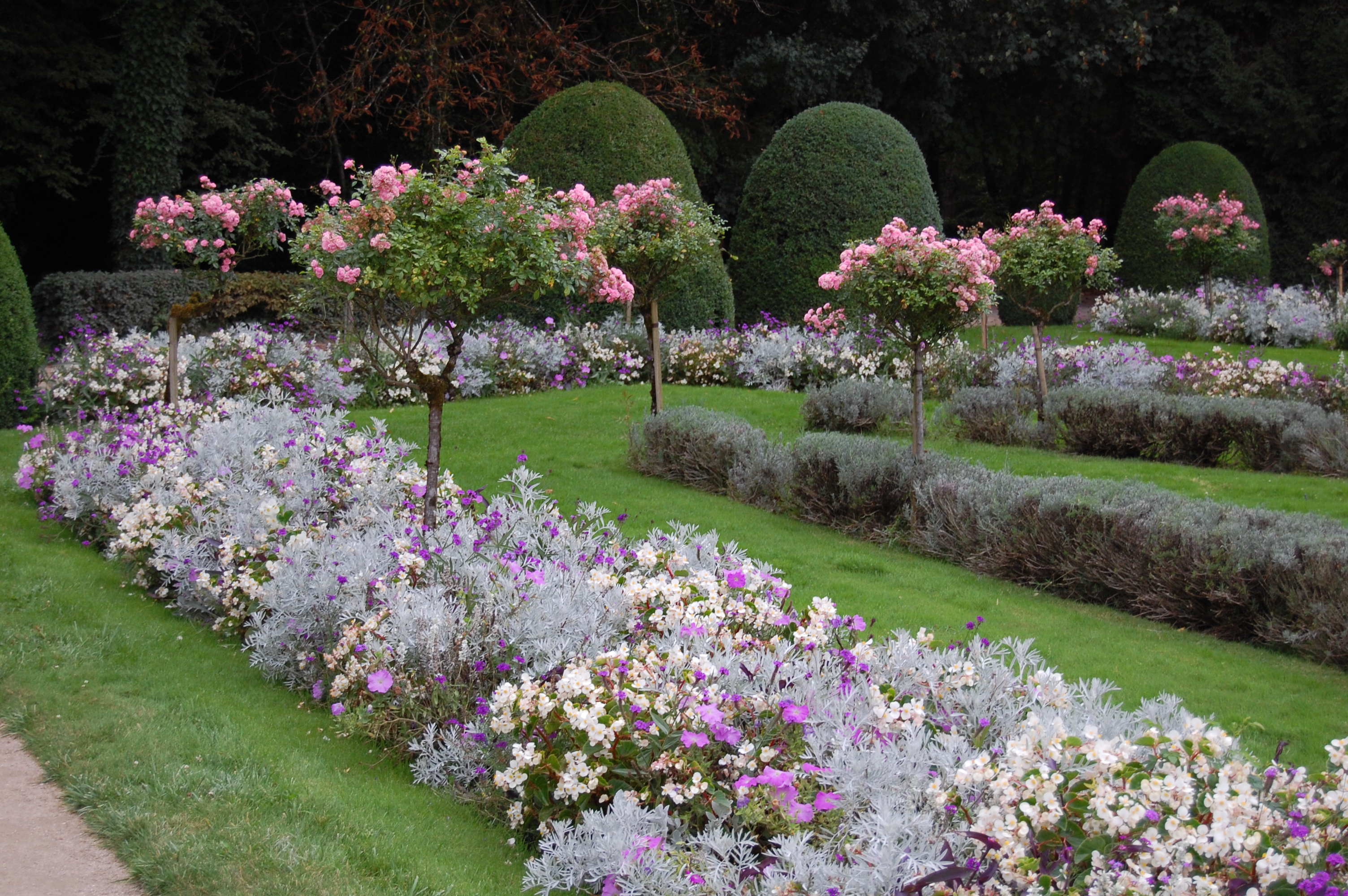
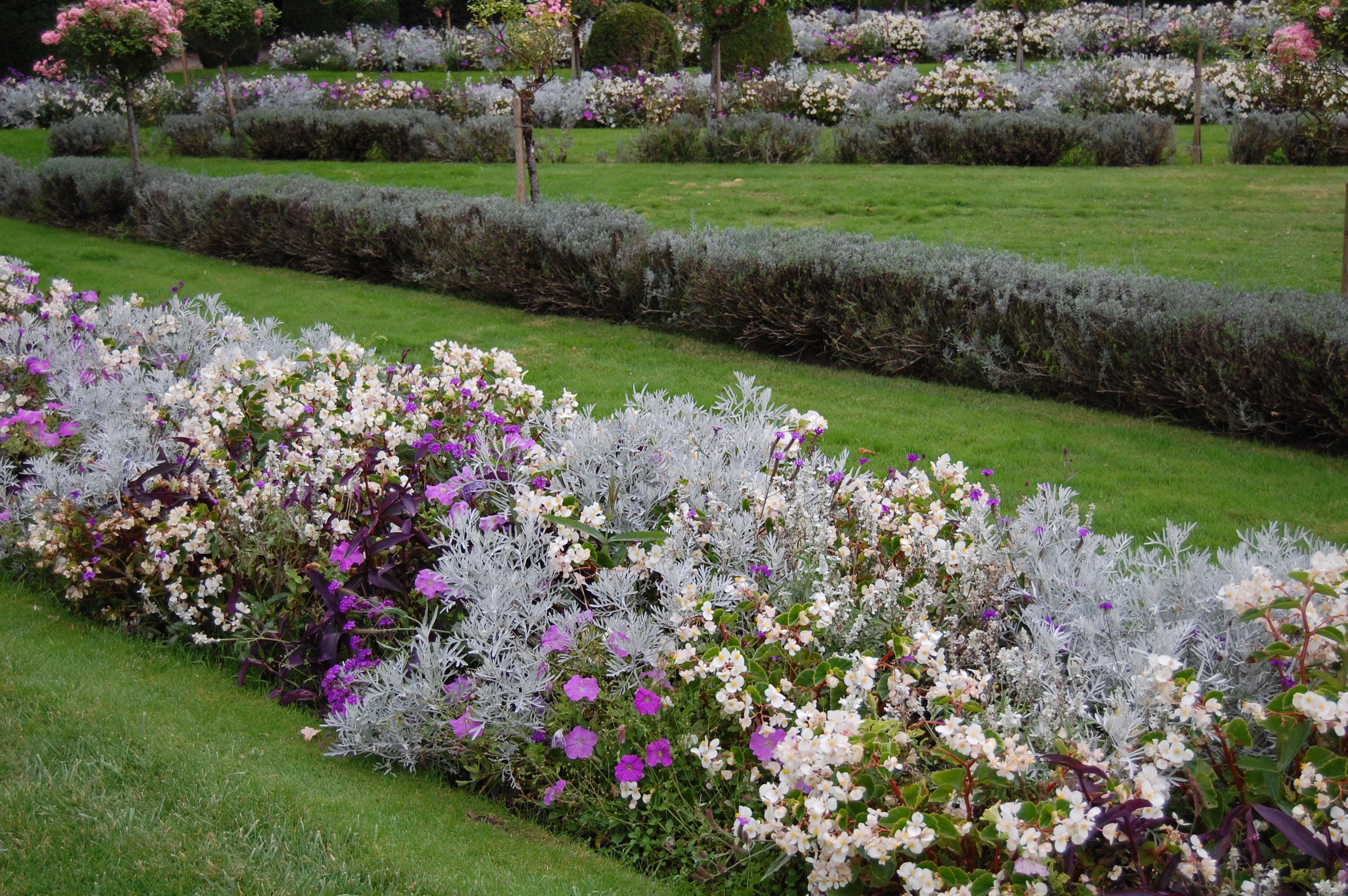
The most notable flowers in Catherine’s garden were the many roses, both standards and climbers. (At this point in the day the light was beginning to fade, and that affected the pictures.)  Beds are filled with lilac Petunias, white Begonias, and silver Artemesia.

Chenonceau Medici gallery
The grand gallery spanning the river Cher.
Medici gallery Chenonceau
What the gallery looks like inside (we did go inside the Chateau).


2013-09-07 12.46.27

Catherine’s garden provides good vantage points for viewing the Chateau, including the gallery she built over the length of the river. Her garden seems more linked to the Chateau than Diane’s.

Vegetable garden at Chenonceau


2013-09-07 13.03.02


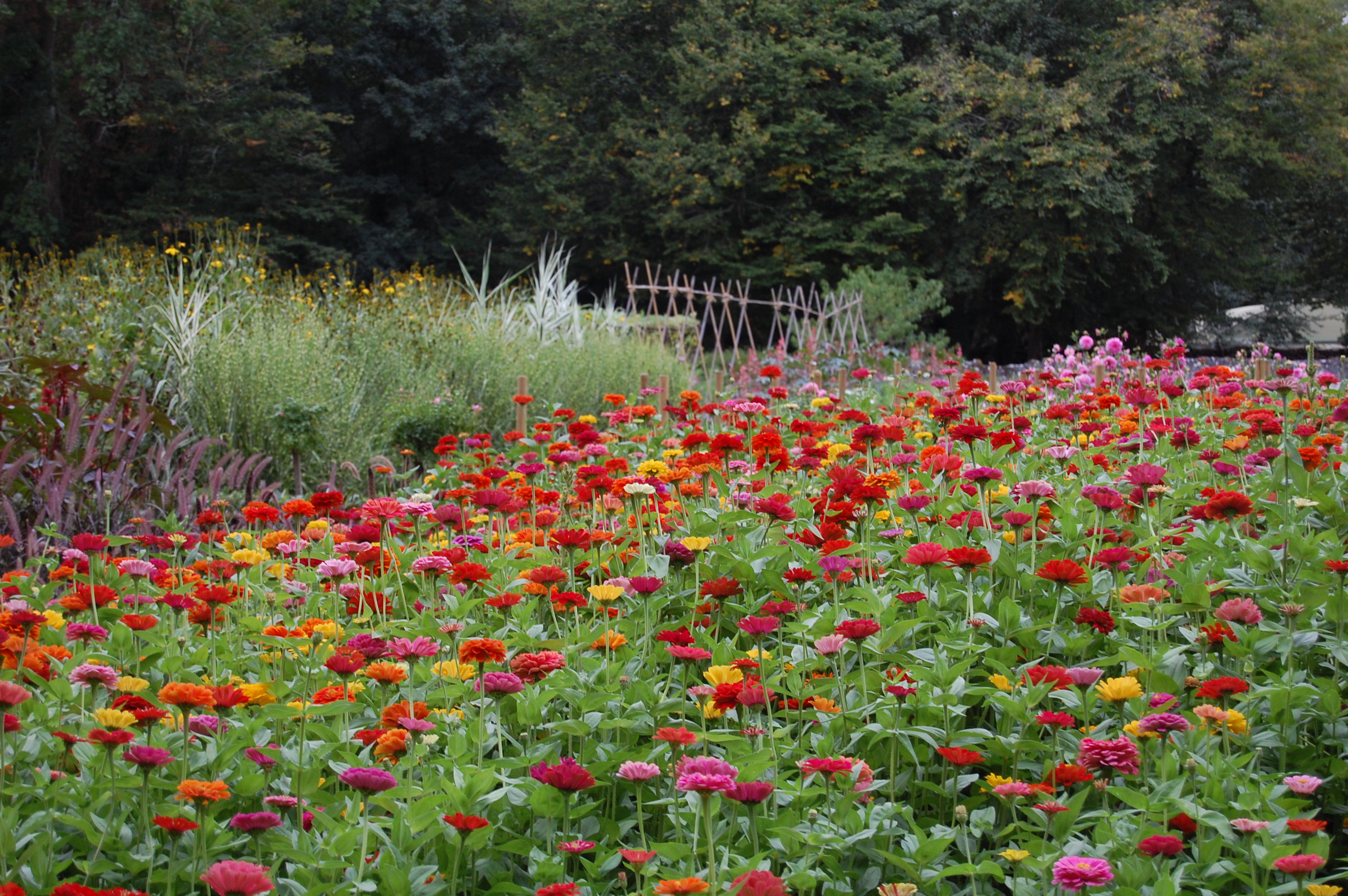
Zinnias in the cutting garden

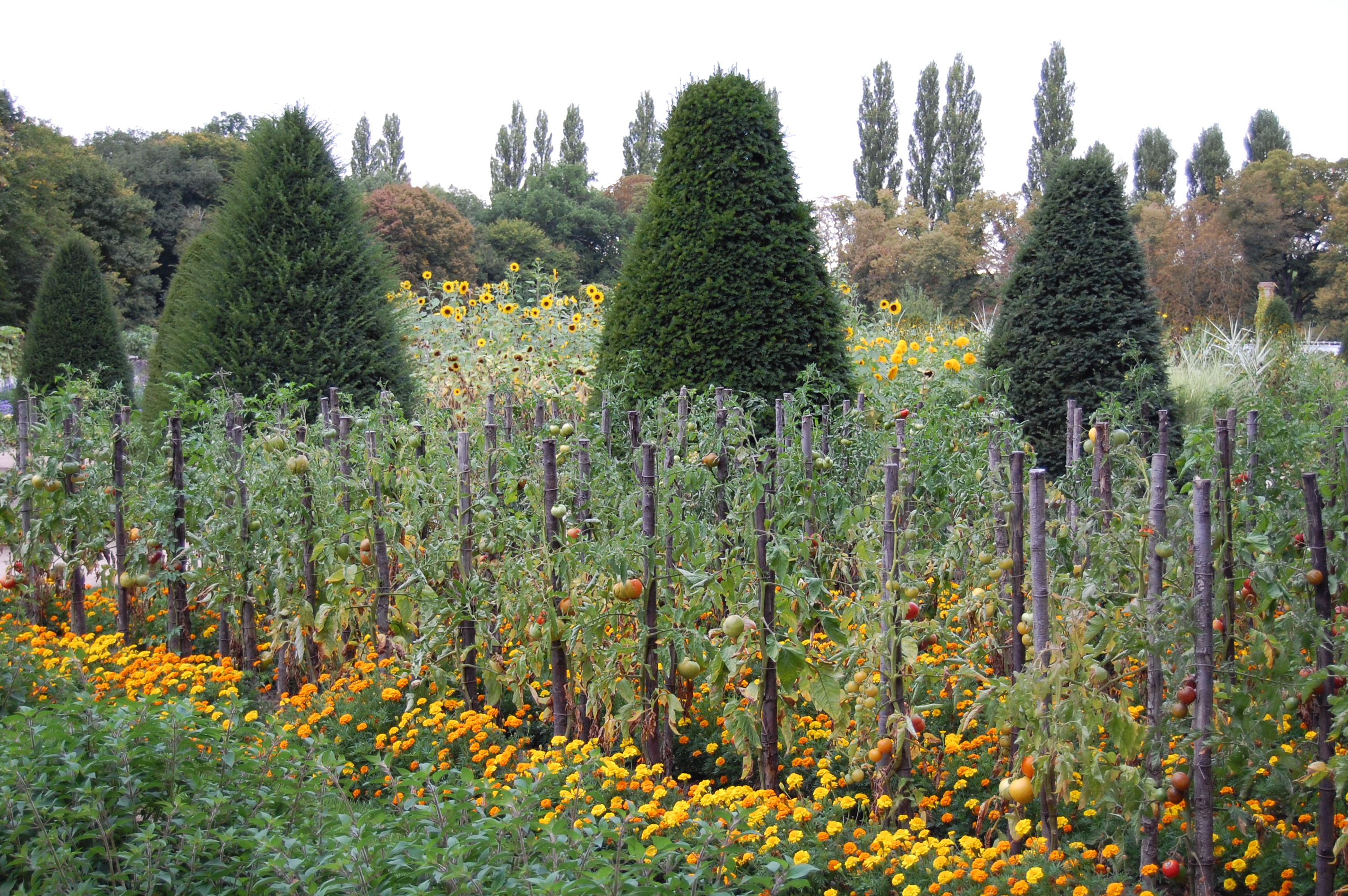
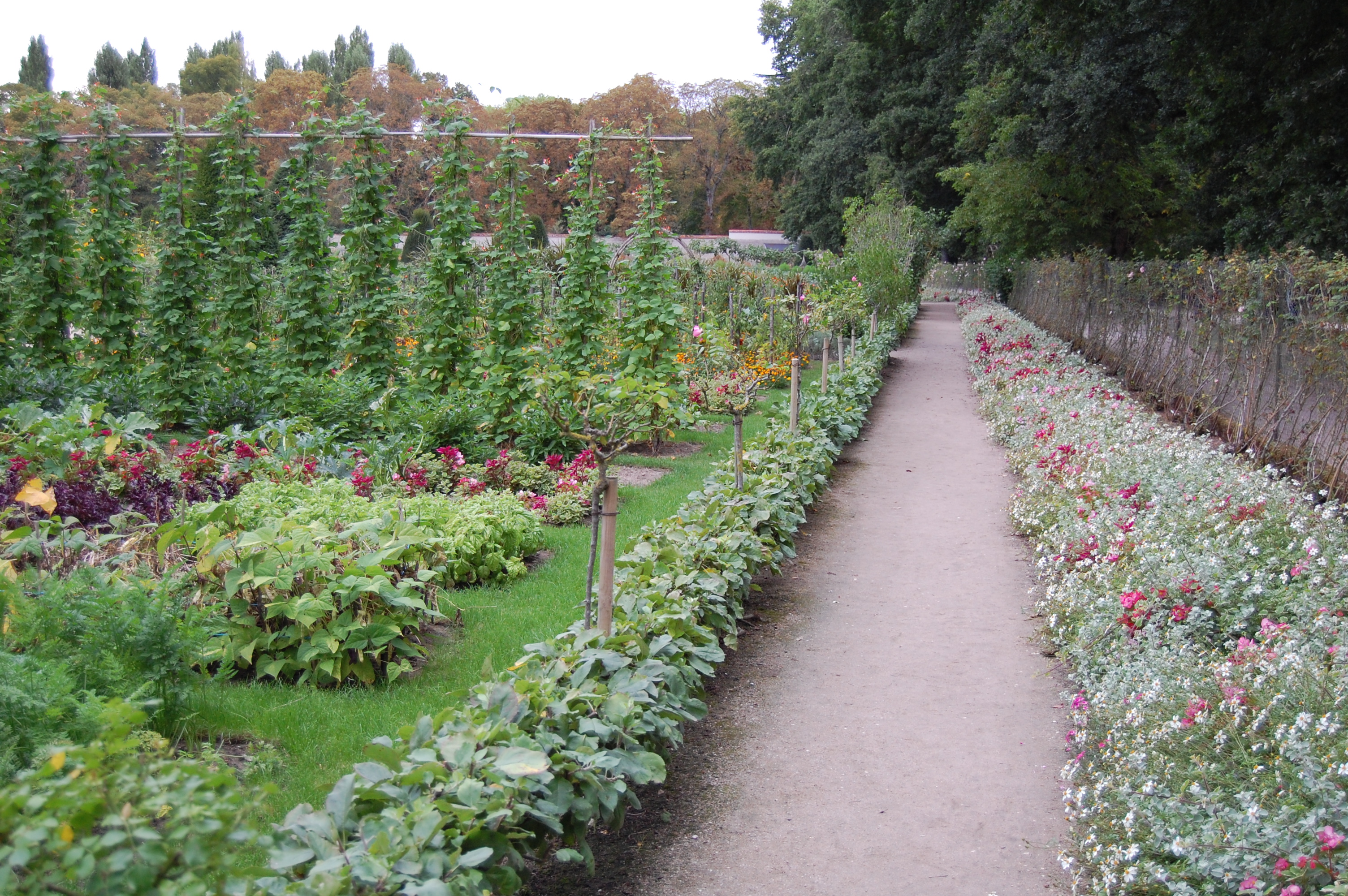
We also visited the vegetable and cutting gardens, which provide the Chateau with the flowers they use for indoor displays.  The vegetable garden was full of roses and annual flowers. And I loved the bright, multi-colored field of Zinnias!

2013-09-07 12.54.57


2013-09-07 12.50.55

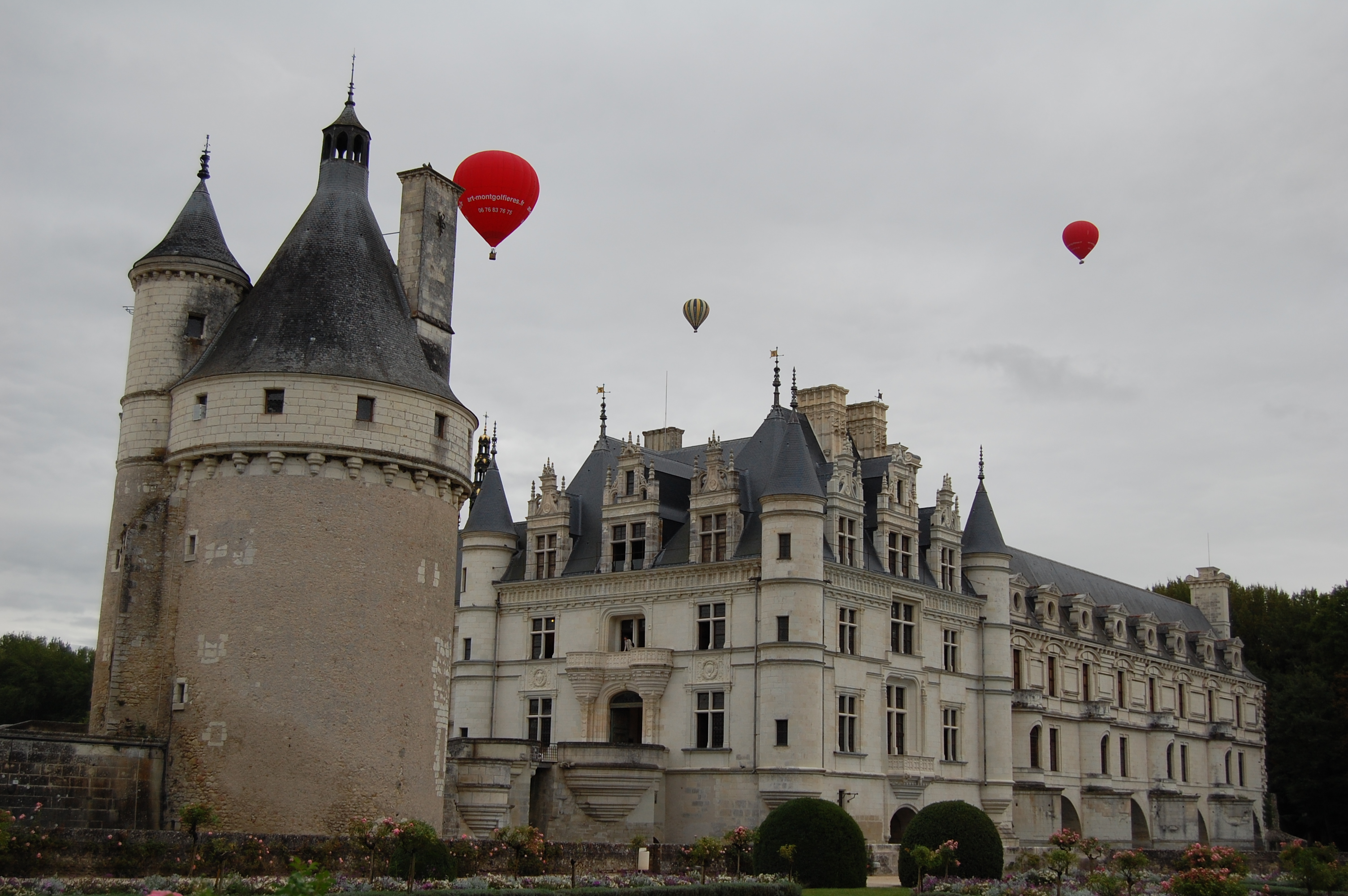
When we were ready to leave, we were startled to see a whole flotilla of hot air balloons approaching the chateau. One by one they sailed right up to the castle for a close look, then floated away. It was time for us to leave as well.


Diane’s Garden at Chenonceau

While staying near Amboise we drove to the castle at Chenonceau, about 10 miles. We got there late in the afternoon, as we were warned the place would be very crowded earlier in the day.

Chateau de Chenonceau

In the 16th Century King Henry II gave Chenonceau to his long-time mistress, Diane de Poitiers. Reversing the usual pattern, she was 20 years older than the king. Dr. Freud has never analyzed the relationship.

Garden of Diane de Poitiers

Anyhow, Diane built a garden within walls the shape of a square. It was the kind of formal garden I generally don’t like, but I found myself appreciating it anyway.

Chenonceau

2013-09-07 10.56.54

It was built with a fountain at the center, surrounded by a circular path. Straight walkways at regular intervals led from the fountain to paths parallel to the walls, creating grassy triangles.

An odd aspect of this garden was that it lay completely open, with nothing hidden. There were no trees, no shade, no little private nooks of any kind. Perhaps Diane sought to discourage intrigues against her.

Chenonceau
Green meatballs

Also, the garden’s large size diminished any sense of enclosure that might be gained from the walls. Then there were the meatballs made of yew and boxwood that tend to set my teeth on edge.

Chenonceau


Chenonceau
View of the chateau and the Loire from Diane’s garden.

So what did I like about this garden? Well, I liked the surrounding walls, which provide an elevated promenade as well as views of the chateau.

chenonceau geranium

I liked the giant planters full of tender geraniums. I also surprised myself by liking the curly cue miniature gray hedges of Santolina.

Hibiscus standards at Chenonceau
Hibiscus standards at Chenoceau


Chenonceau
Hibiscus standard with a thick, gnarled trunk.

And I liked the selection of flowering plants. I was especially taken with the venerable Hibiscus plants, grown as standards with thick trunks that made me think of olive trees.

2013-09-07 11.07.34


Also beds full of Gaura, English Daisies, Begonias, Artemesia, etc.

Well, back to Diane and Henry. Henry eventually was killed in a tournament. His long-suffering wife, Catherine de Medici, took the opportunity to kick Diane out of Chenonceau and move into it herself. She then built her own garden up river from the castle, which I’ll write about in another post.

Do you enjoy formal gardens with everything laid out in one open space? It’s not something I would want for myself, but somehow I liked Diane’s garden at Chenonceau.