It’s a grey day, and the snow has been coming down hard since last night. And when it snows, there are lots of hungry customers for the bird feeders in the back garden.
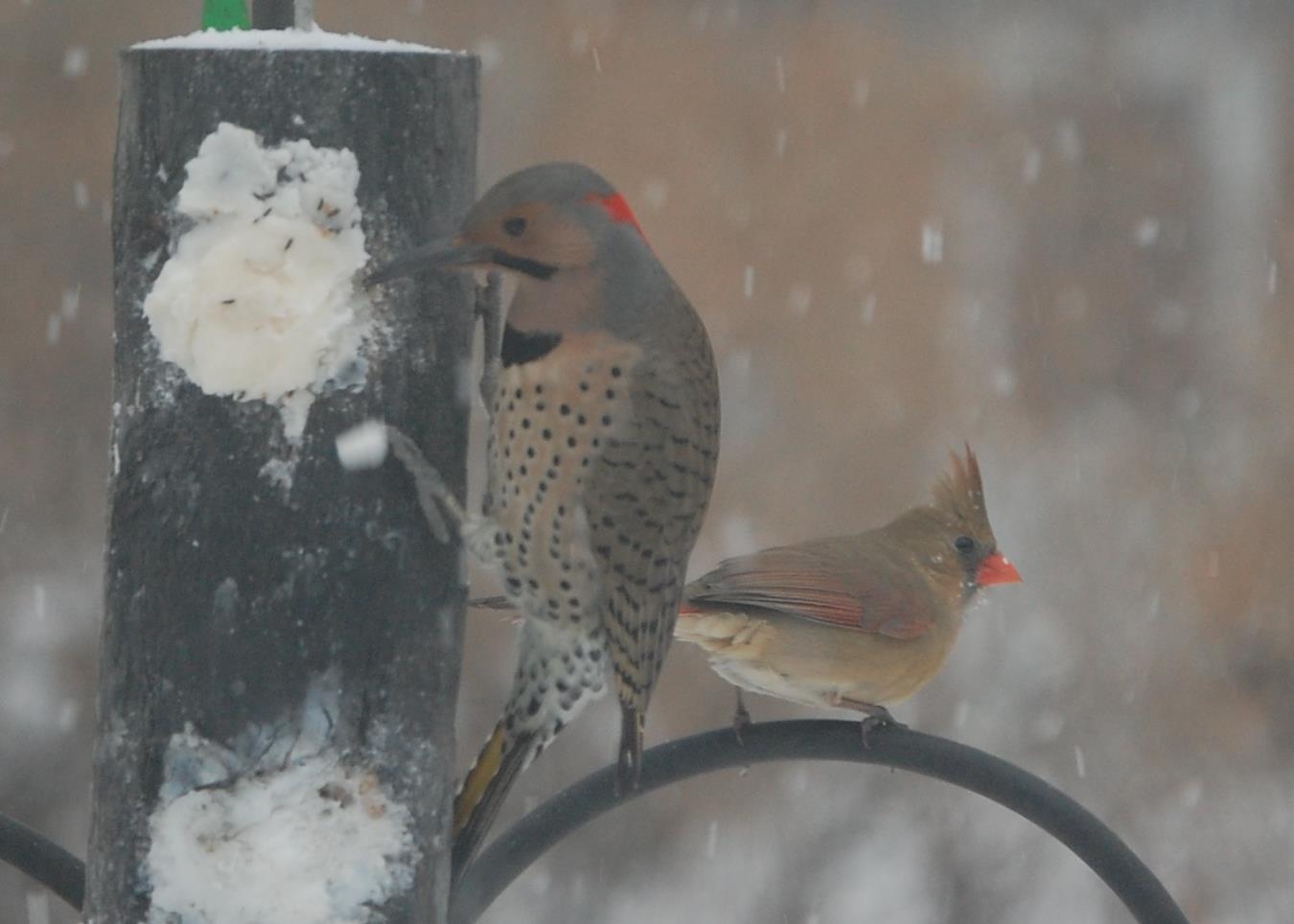
Northern flicker and female cardinal.
Cardinals, goldfinches, house finches, and chickadees crowd around the platform feeder for sunflower seeds, with occasional forays to the peanut feeders. Woodpeckers drop in frequently for a bite or two of suet, or maybe a peanut.
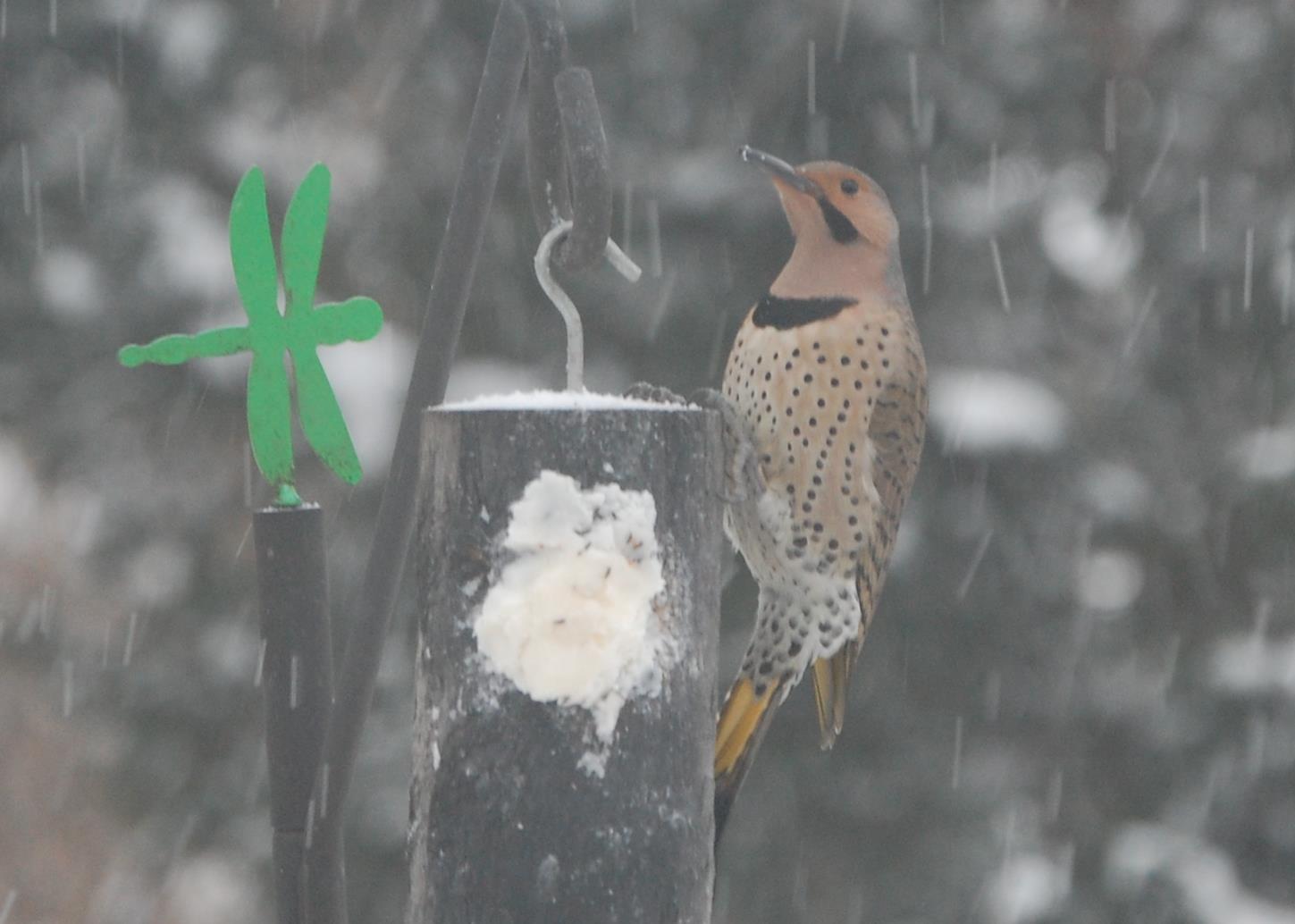
Northern flicker wonders if the snow will ever stop.
Today’s guest of honor, though, is the northern flicker. Normally a fairly shy bird, he is now quite comfortable feeding right in front of our porch window. Handsome fellow, isn’t he?
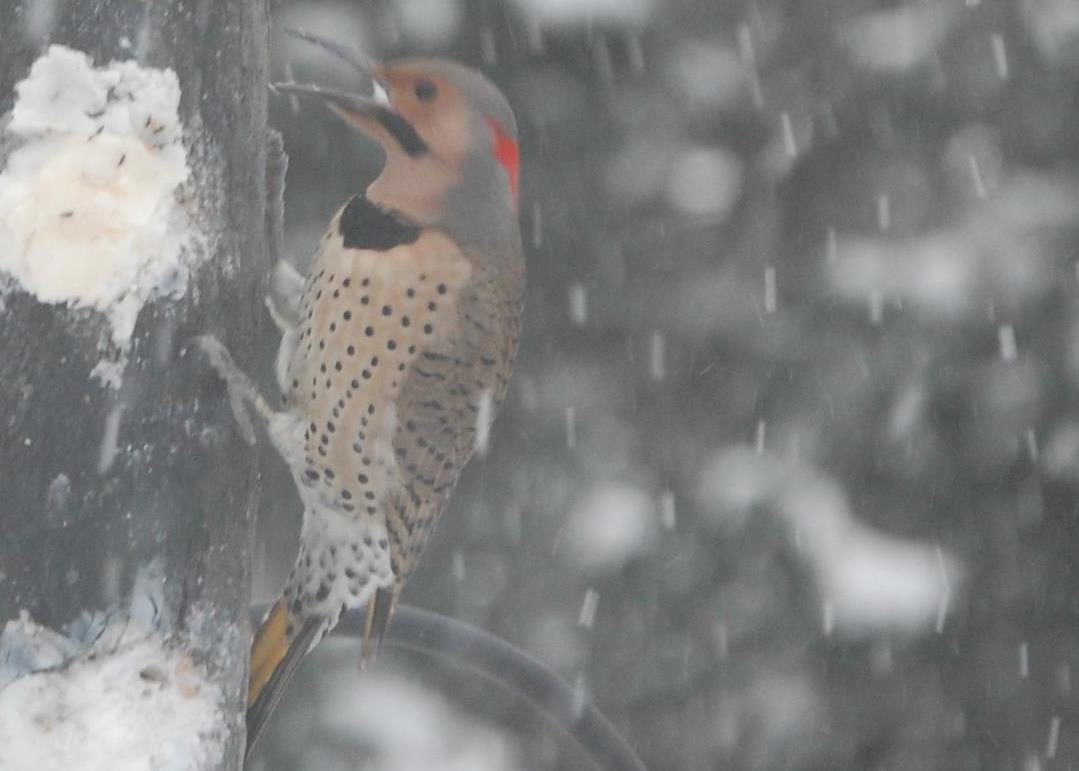
Northern flicker swallows a big bite of suet. Yum!
Yesterday I poured a generous serving of sunflowers onto the platform feeder. Today, however, I found that the platform was covered with several inches of snow. So I dumped the snow and the seeds onto the ground, and added more sunflower. Even so, the snow keeps falling, seemingly determined to cover up everything.
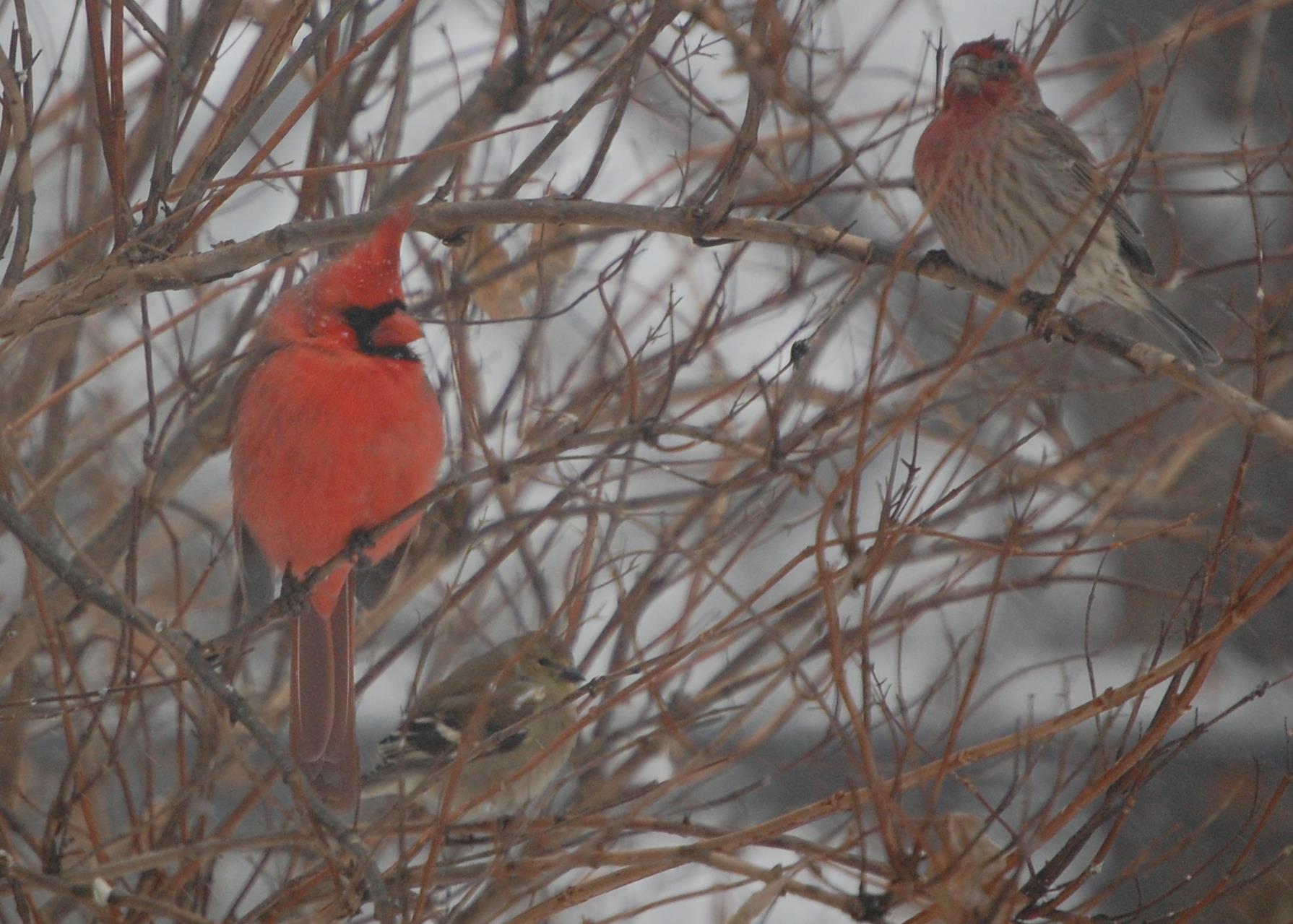
Cardinal, house finch (or is it a purple finch?), and goldfinch in the Deutzia bush. Can you see all three?
Every 15 minutes or so a bird alarm goes off, and everybody scrambles for cover. They particularly like to hang out in a dense nearby Deutzia bush until the coast is clear.
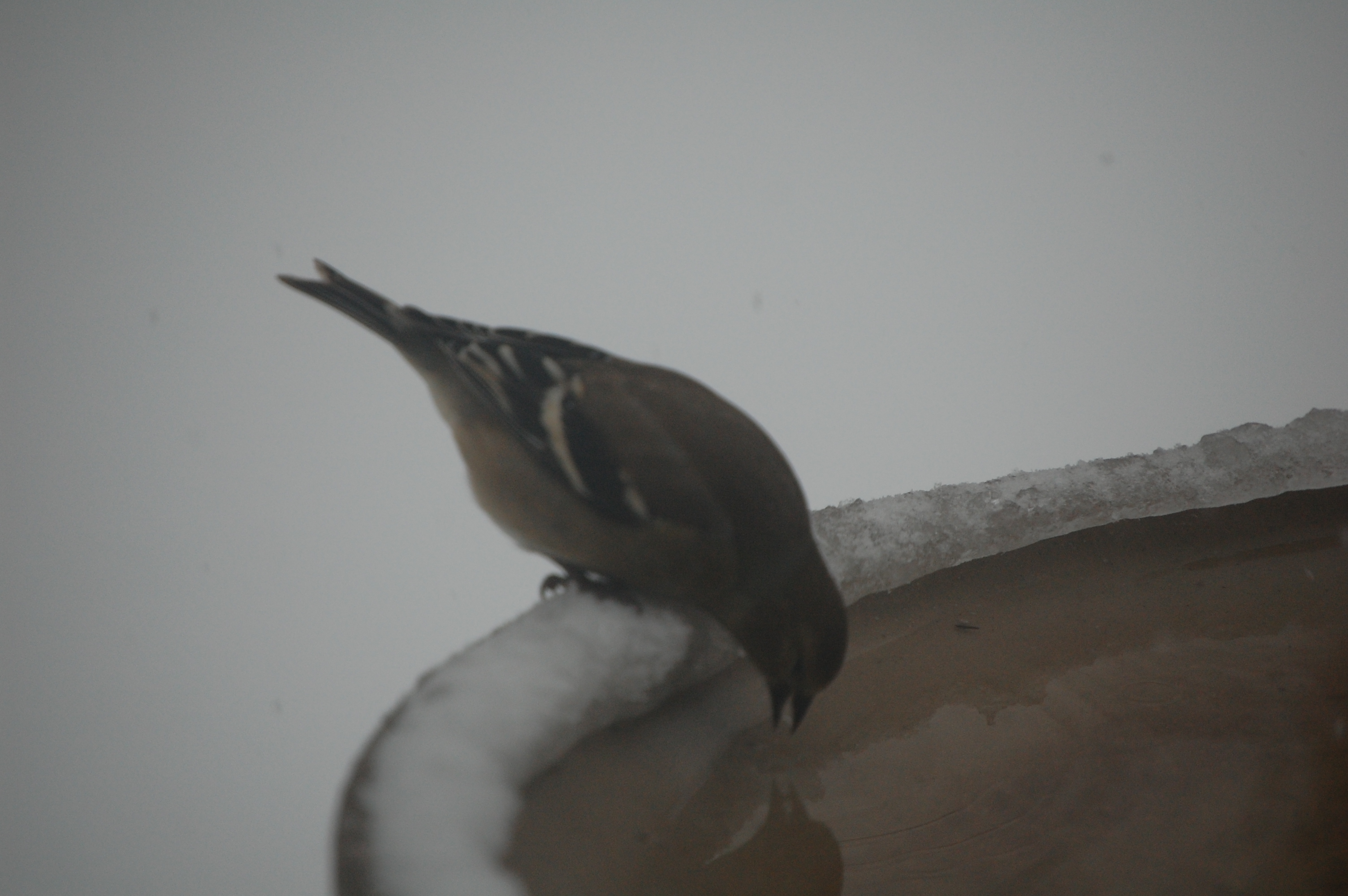
Goldfinch drinks at the bird jaccuzzi.
The heated bird bath (AKA the bird jaccuzzi) is also busy. It requires less energy to drink water than to eat snow to stay hydrated.
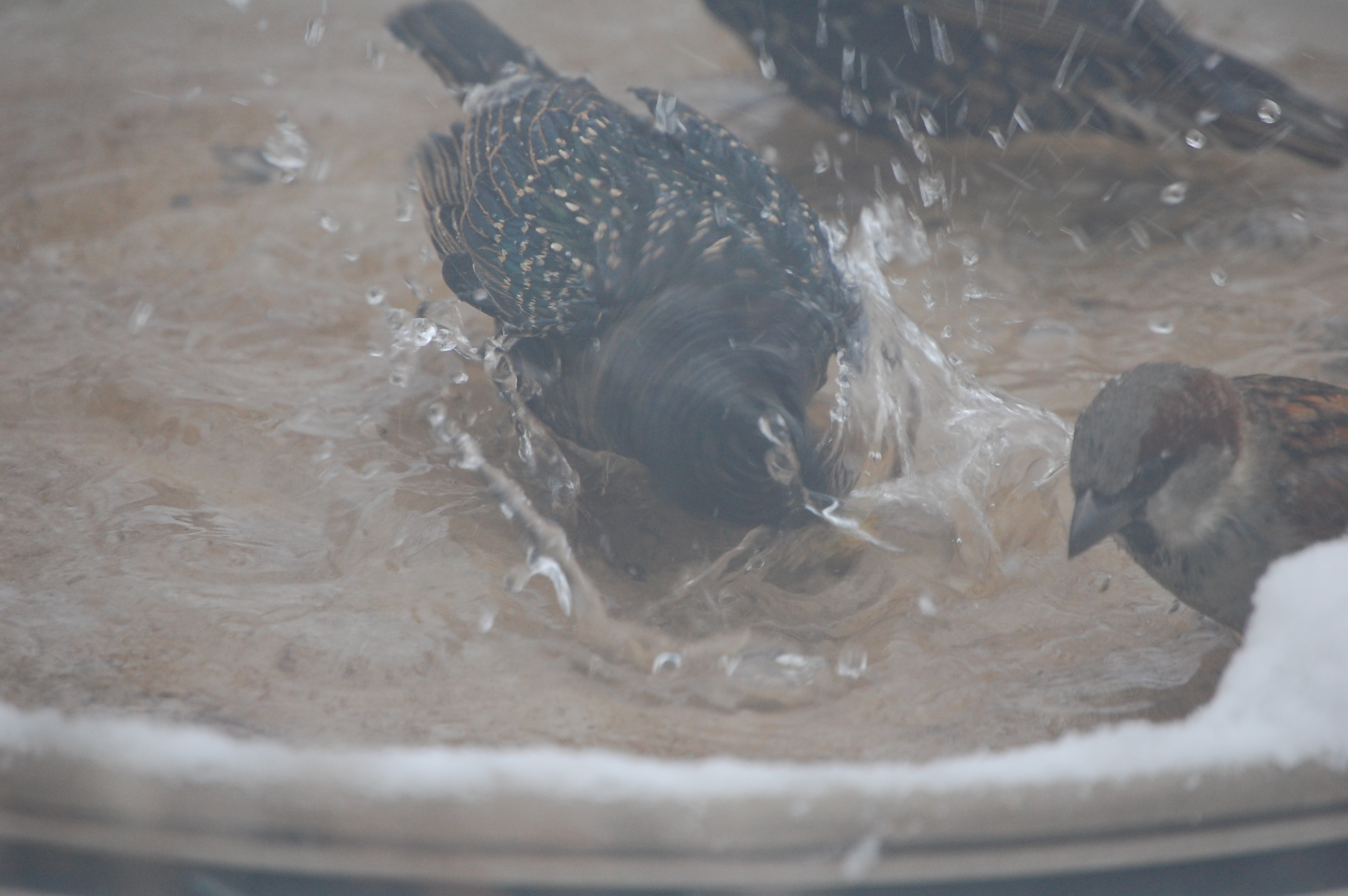
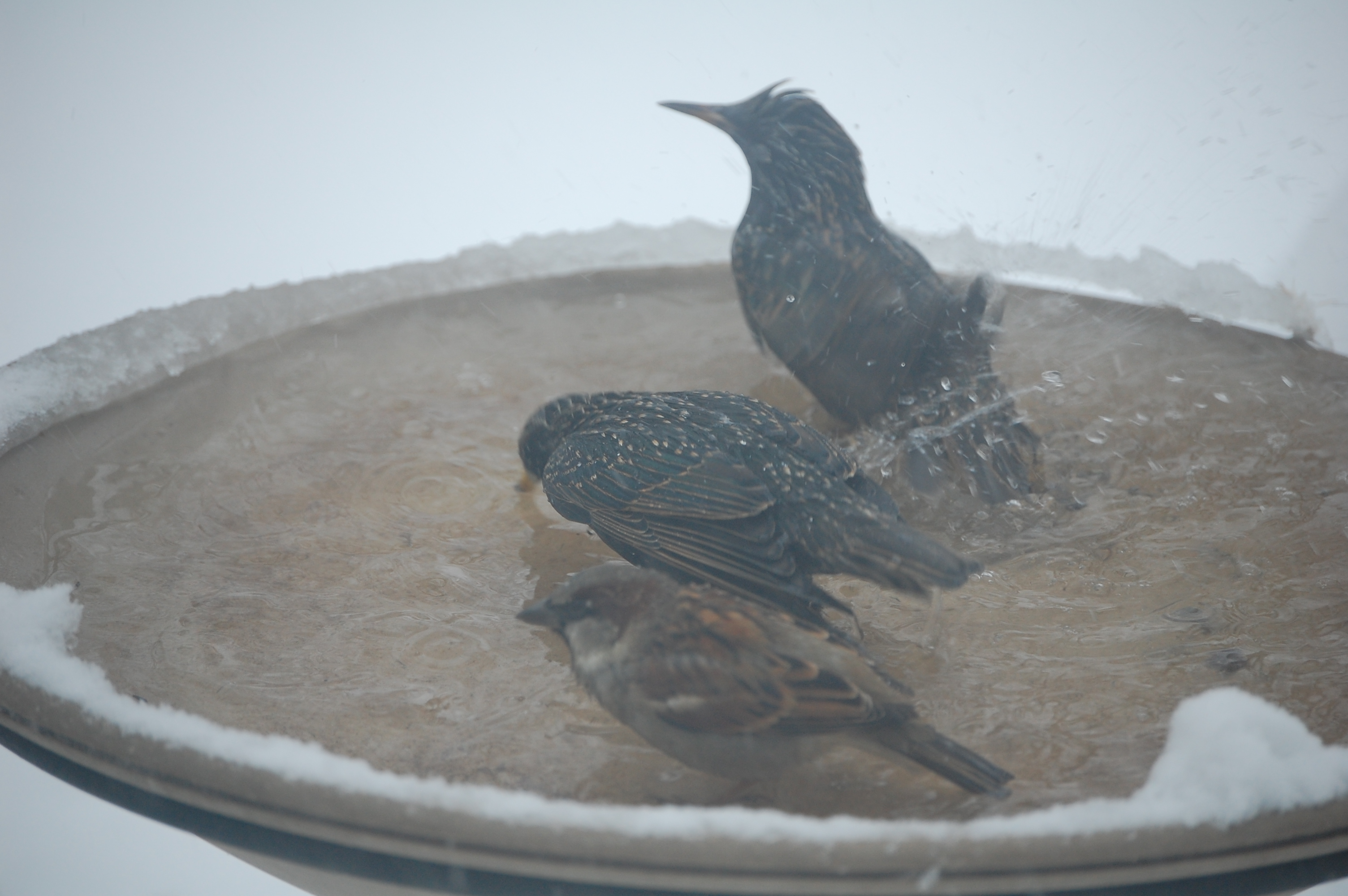
Starlings taking a bath
A group of starlings decided it was a good day for bathing.
We devoted one afternoon in Austin to exploring the Zilker Botanic Garden. There were very few blooms, but even in December it’s worth seeing. I especially like the way it is designed around the topography of a hillside overlooking downtown Austin.
Prickly Pear Cactus
We enjoyed the Prehistoric Garden, which showcased ancient plants and a few dinosaurs.
Hortosaurus
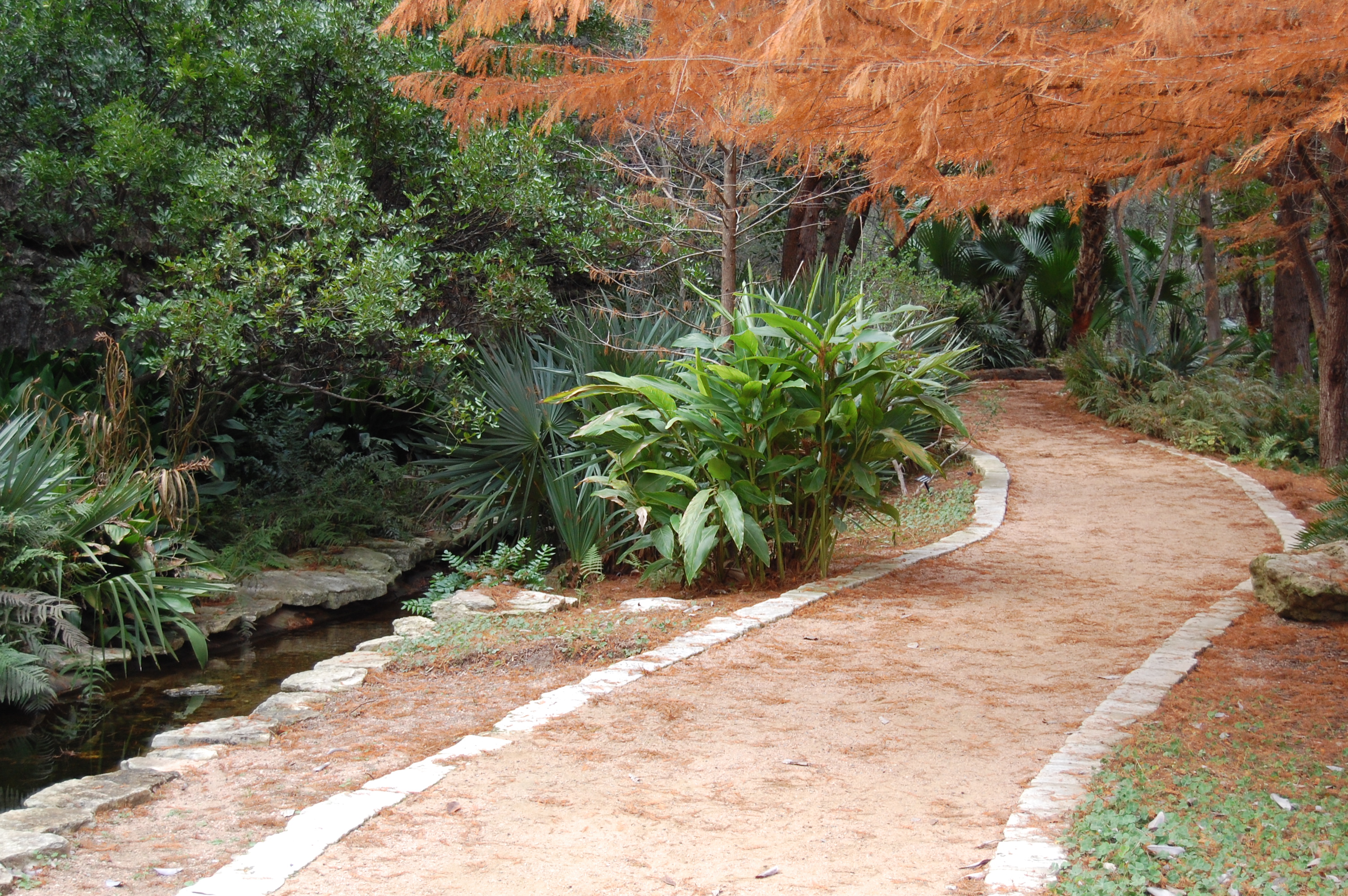
Branches of Montezuma Cypress overhanging path.
There were several specimens of the deciduous conifer, Montezuma Cypress. At this time of year the normally green needles were a sort of tan orange color, but still attached. I thought it was quite attractive.
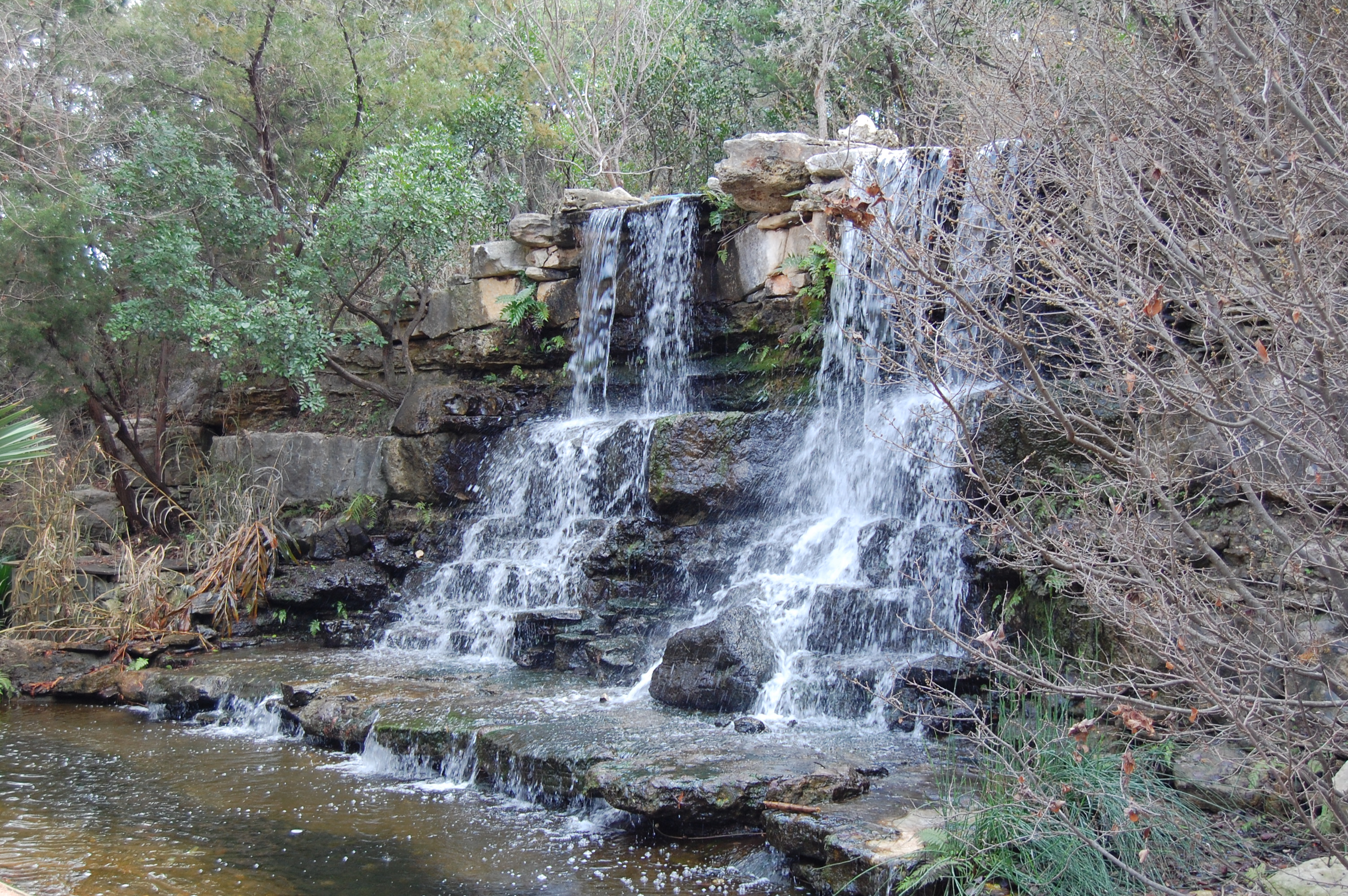
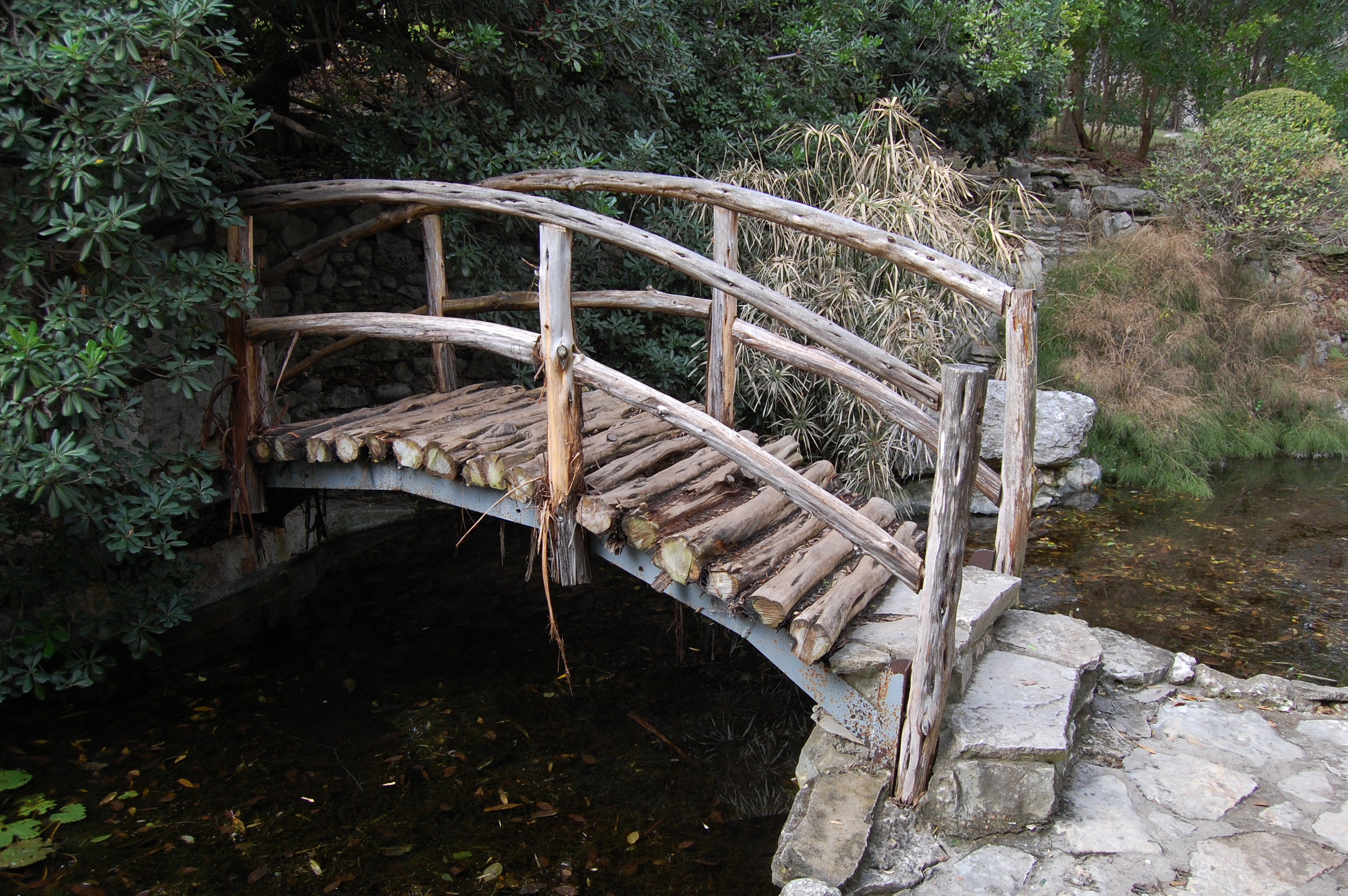
Flowing water and waterfalls could be found throughout the garden.
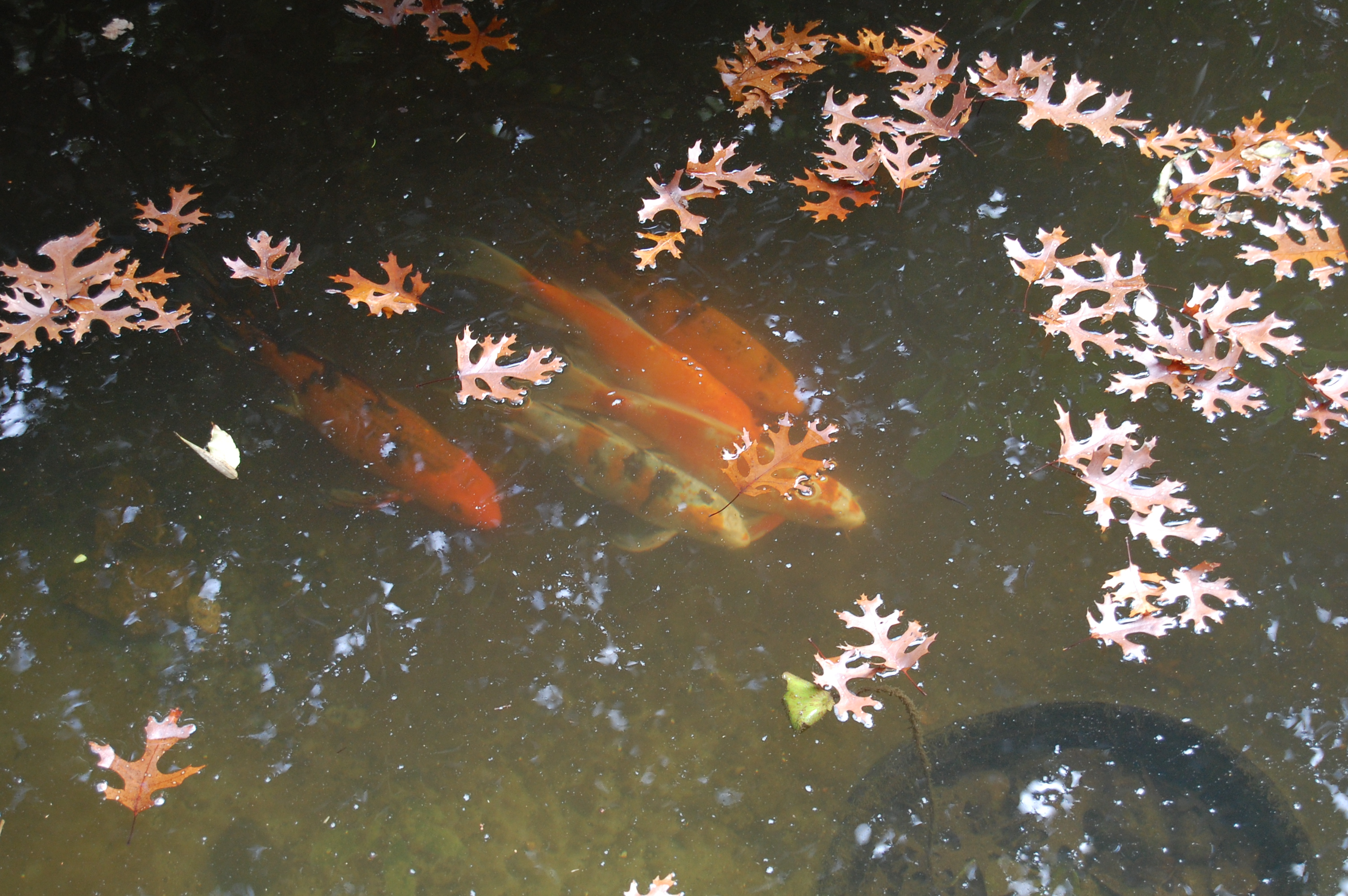
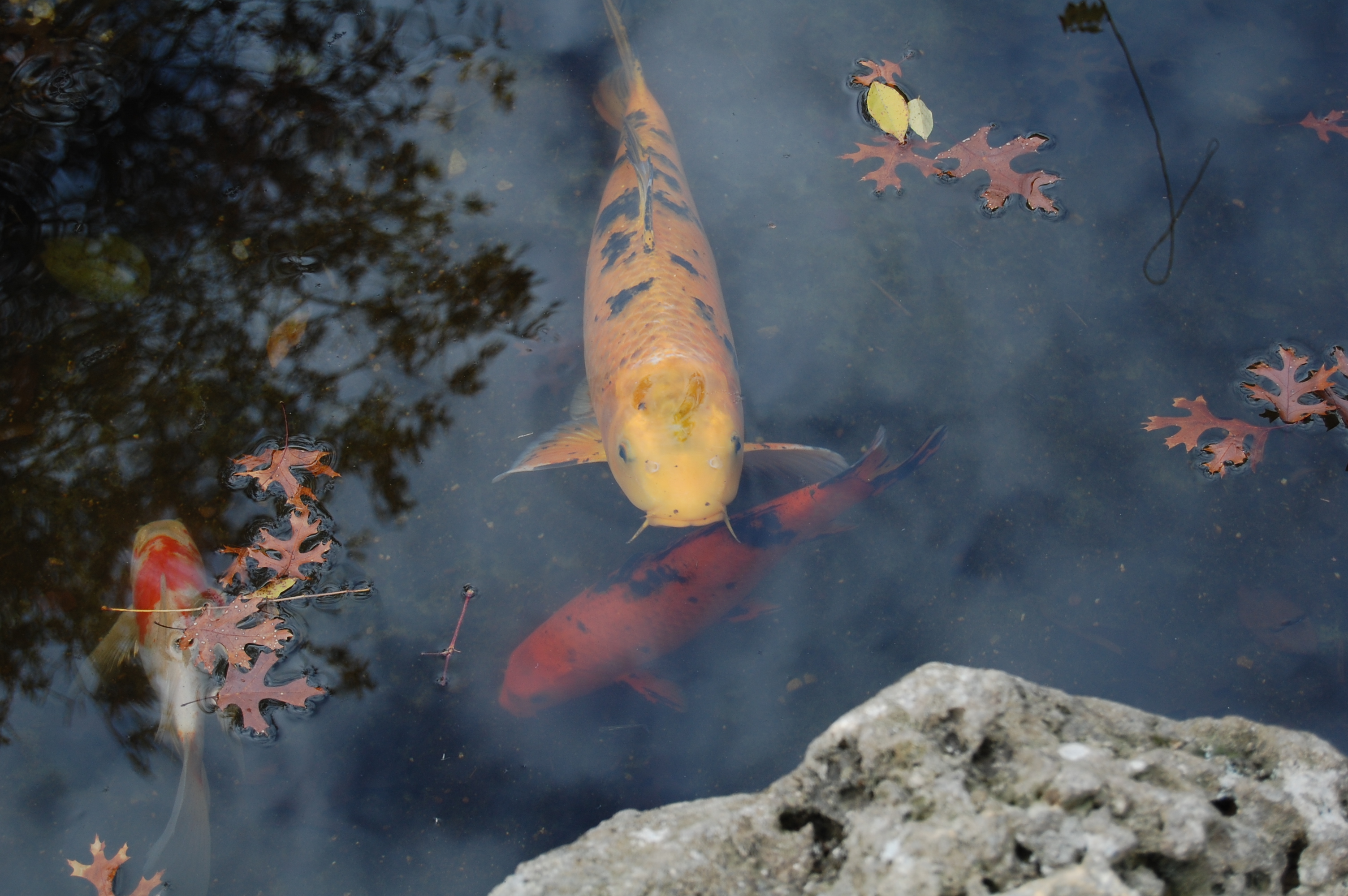
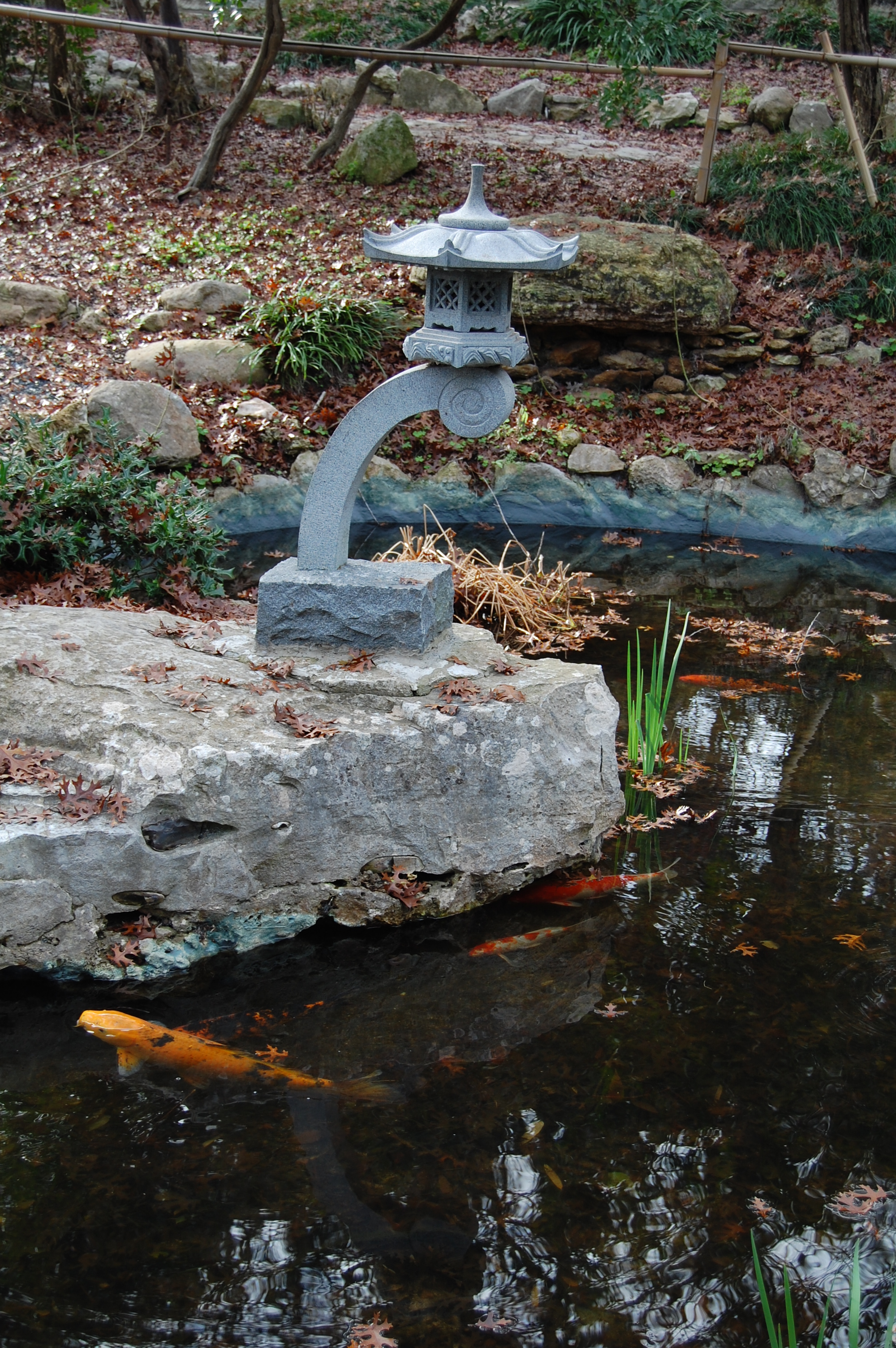
We moved on to the Japanese Garden, which had a large koi pond, full of large koi.
Some people find koi to be beautiful, I know. But for some reason I just think they’re funny. The big ones seem to have this galumphing, ponderous aspect. Maybe the colder water was making them more sluggish.
Anyhow, my kids have the same reaction to koi that I do. So we were standing around the koi pond, making fun of the fish and mistifying other visitors, for a good length of time. It was especially amusing when one of the big koi would come up to the surface and open its round, toothless mouth to swallow something. It just seemed to be saying: “Hello, I am an orange catfish.”
I guess you had to be there. Anyhow, it was a very well done Japanese Garden.
The hidden waterfall grotto was especially nice.
Another worthwhile thing at Zilker is the Green Garden, which showcases ways for people to utilize Texas natives and make their home gardens more environmentally responsible.
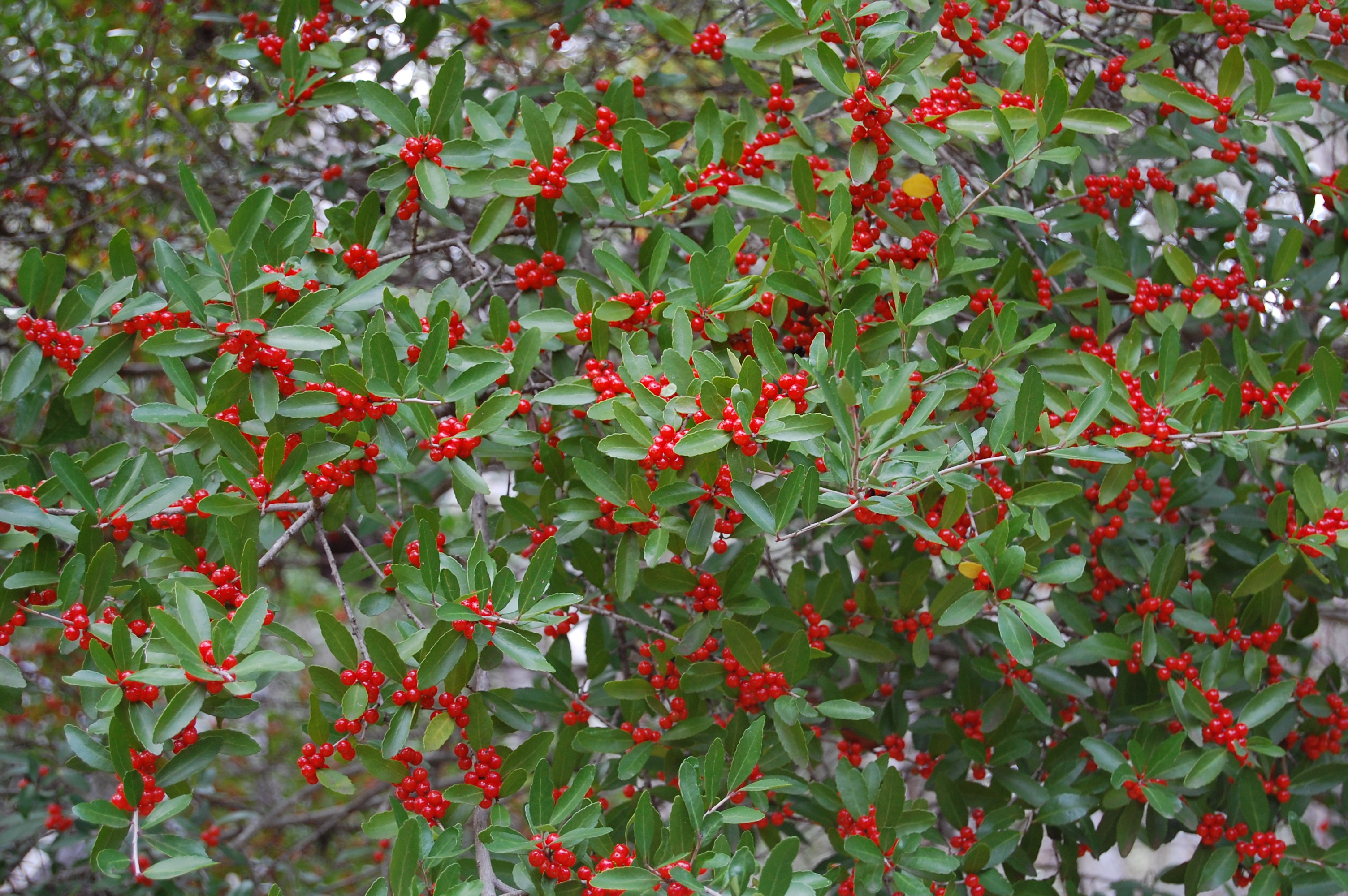
Yaupon Holly
So how do you feel about koi? Do you think they are beautiful, or funny, or just a very expensive way to feed the raccoons?
So here are some things we’ve been doing since visiting Hamilton Pool Preserve.
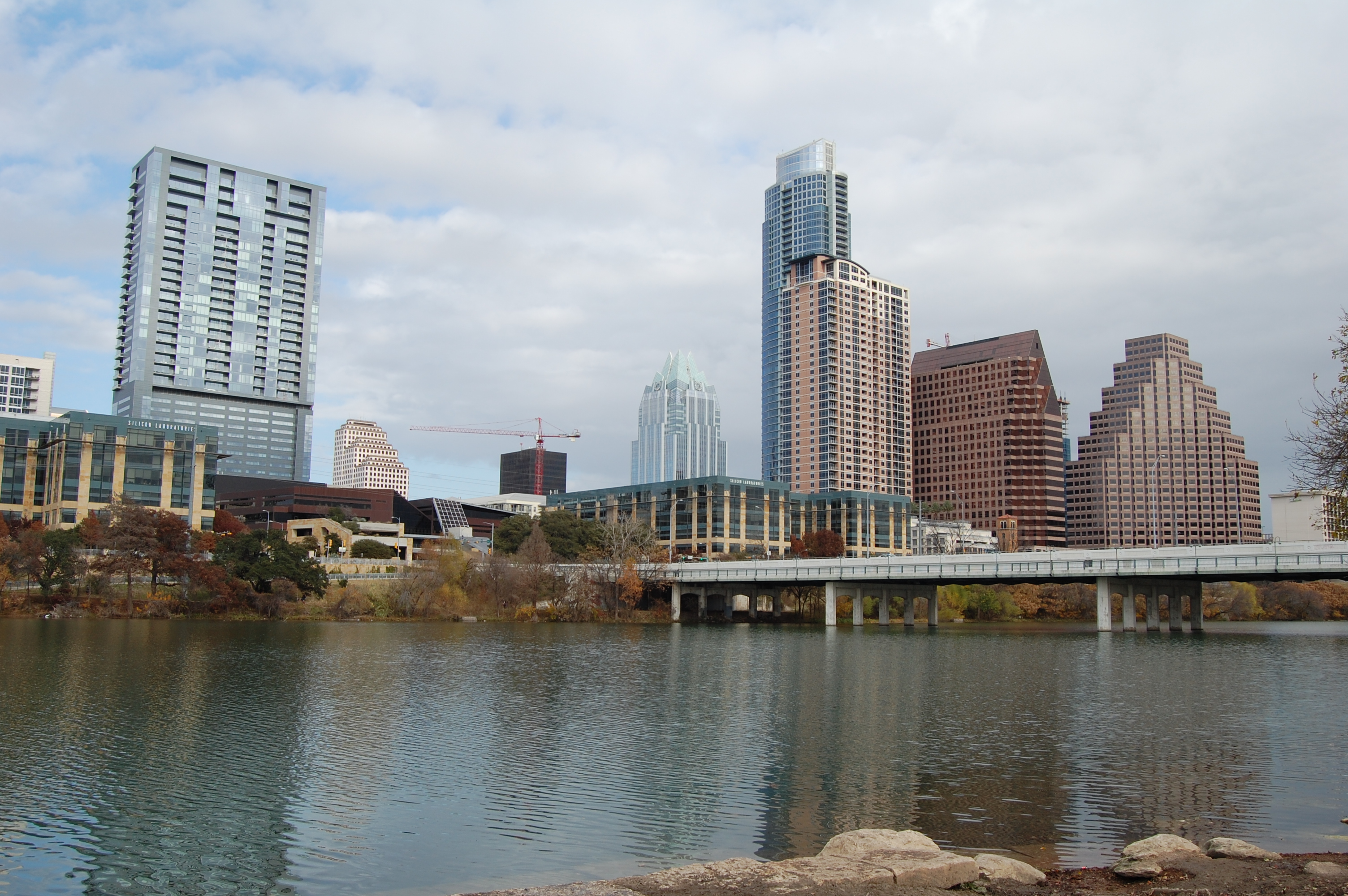
Downtown Austin seen from Ladybird Hike
Walking
Ladybird Hike. We enjoyed this walk along Ladybird Lake with good views of downtown. There is also a pedestrian bridge which is good for lounging and people watching.
Pedestrian Bridge
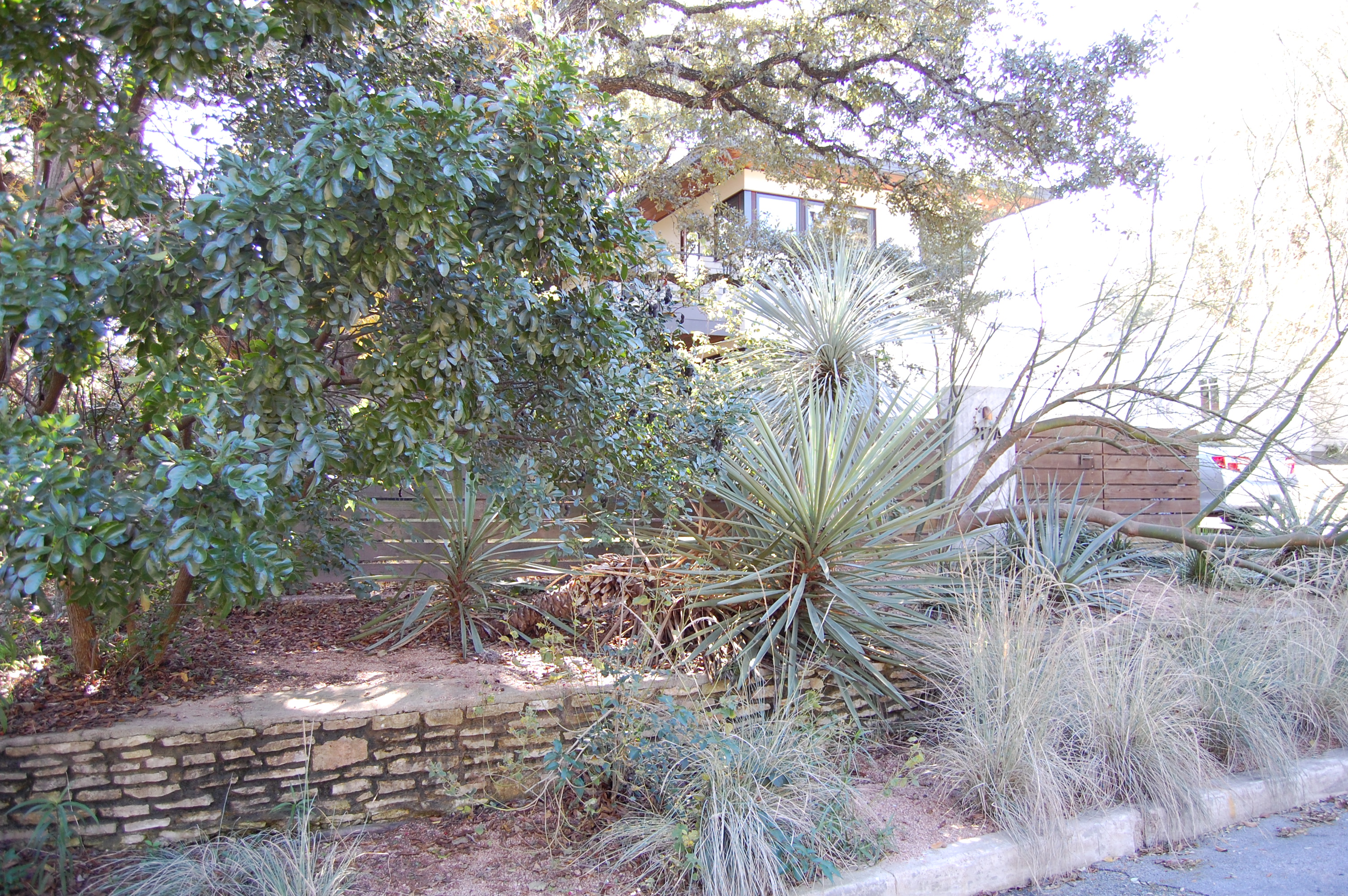
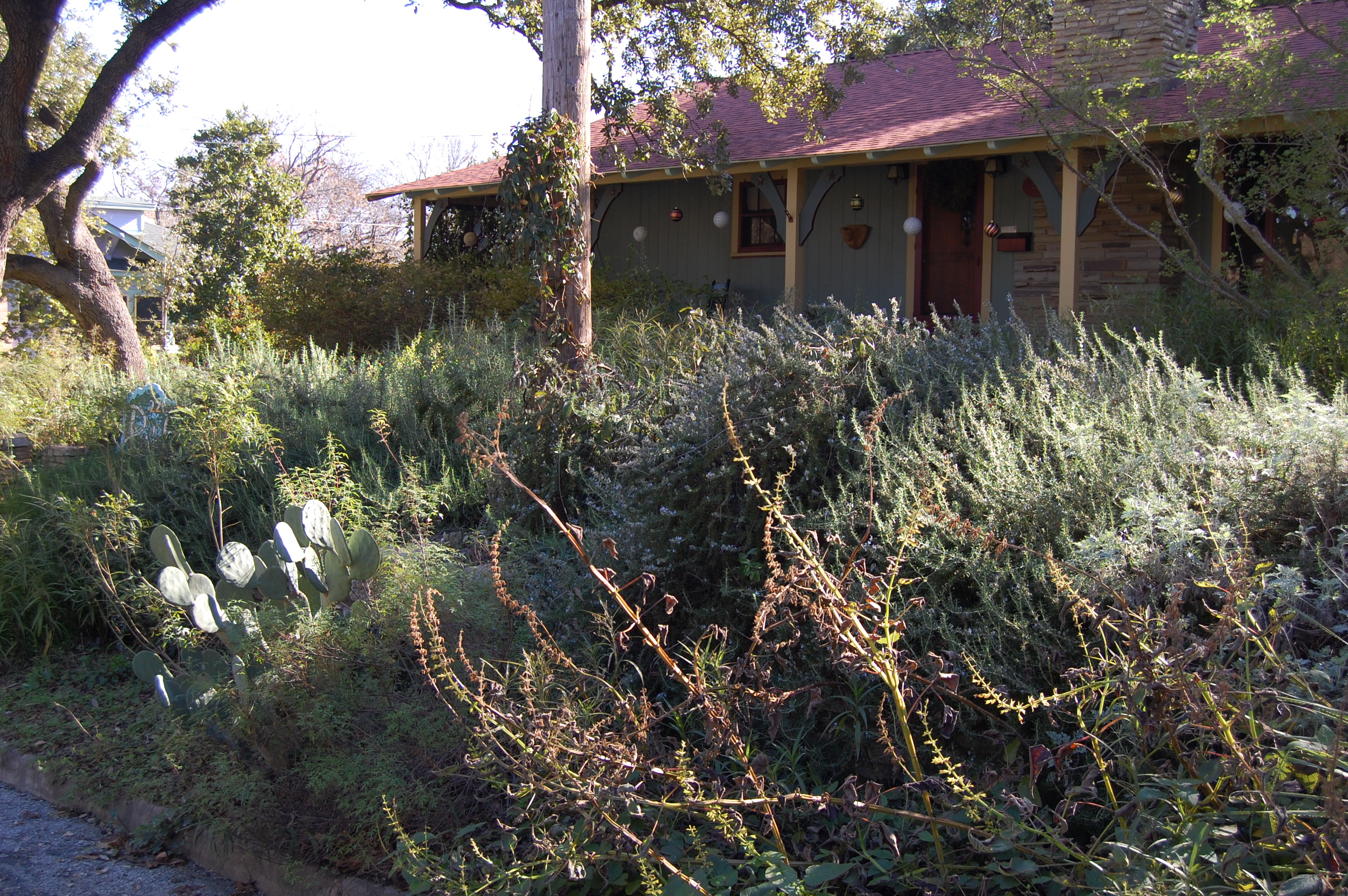
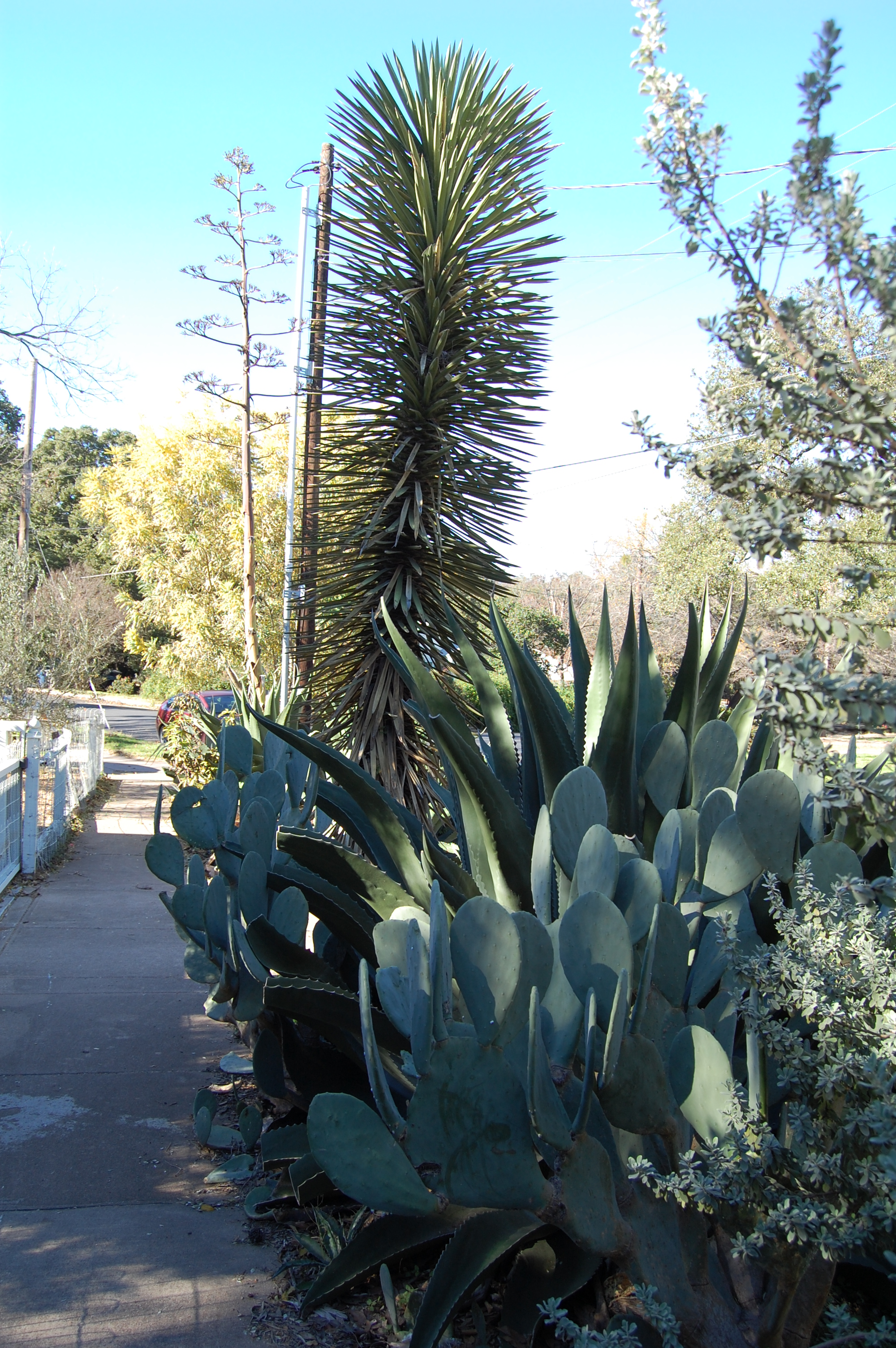
Wandering around looking at people’s front yards. We did this mostly in the South Lamar (where we are staying) and Travis Heights neighborhoods. There were a number of yards where people had done something interesting with native and other xeric plants, though Austin does still have plenty of lawns despite the arid climate. We also spent some time checking out the Green Belt and the unusual shops on Congress Avenue.
Curb appeal: An Austin front yard
Another Austin front yard
Gawking
LBJ Library and Museum. We found this to be a great place for anyone interested in LBJ and American politics from the Depression through 1968. I especially loved listening to the recordings of LBJ’s phone conversations with people like J. Edgar Hoover, Katherine Graham, and Congressional leaders of the day.
Texas State Capitol
Texas State Capitol. If you like State Capitols, and I do, this one is an unusually large eyeful. Made of limestone and pink granite that gleams at nigh.
Texas Capitol Dome from the Rodunda
Bullock Texas History Museum. All you probably ever want to know about Texas and the secession from Mexico, the Civil War, and the glorious oil industry. Worth seeing, though I was not overwhelmed with admiration for the early settlers who created the Republic of Texas, primarily for the right to own slaves.
At the center of the rotunda there is a commemoration of the “Republic of Texas”. You can’t see it, but all the countries Texas has been part of are listed around the periphery.
Eating, Drinking, and Listening
Live Oak Barbecue. Good barbecue without frills on 2nd Street. This set the stage for the truly spectacular barbecue we had later during the trip, to be covered in another post. Oh, and don’t bother with County Line, a local barbecue chain that serves enormous mounds of really mediocre food.
Veracruz Tacos. We had some excellent tacos served out of a trailer (lots of excellent food here is served out of trailers) on a vacant lot on Cesar Chavez Street. We tried fish, steak, and carnitas – but there were vegetarian options, too. All served on freshly made corn tortillas.
The White Horse. There are probably hundreds of bars featuring live music in Austin. We went to this one solely because it was recommended by a friend of Danny’s who lives here. We enjoyed the band, a good selection of beers, and the relaxed atmosphere.
More Texas curb appeal
Unfortunately, Danny came down with an impacted wisdom tooth the second night we were here. He got enough antibiotics and pain medicine to keep him going until our return to Chicago, though.
Tomorrow we are flying back to Chicago. A high of 14 degrees is predicted at O’Hare. Fortunately, I still have one or two posts on Austin to write to keep me warm.
So yesterday we did a little hiking in Austin. A place called Hamilton Pool Preserve, part of the Travis County Park system, was recommended to us by Pam at Digging as a good place. The Preserve is located about half an hour from where we are staying.
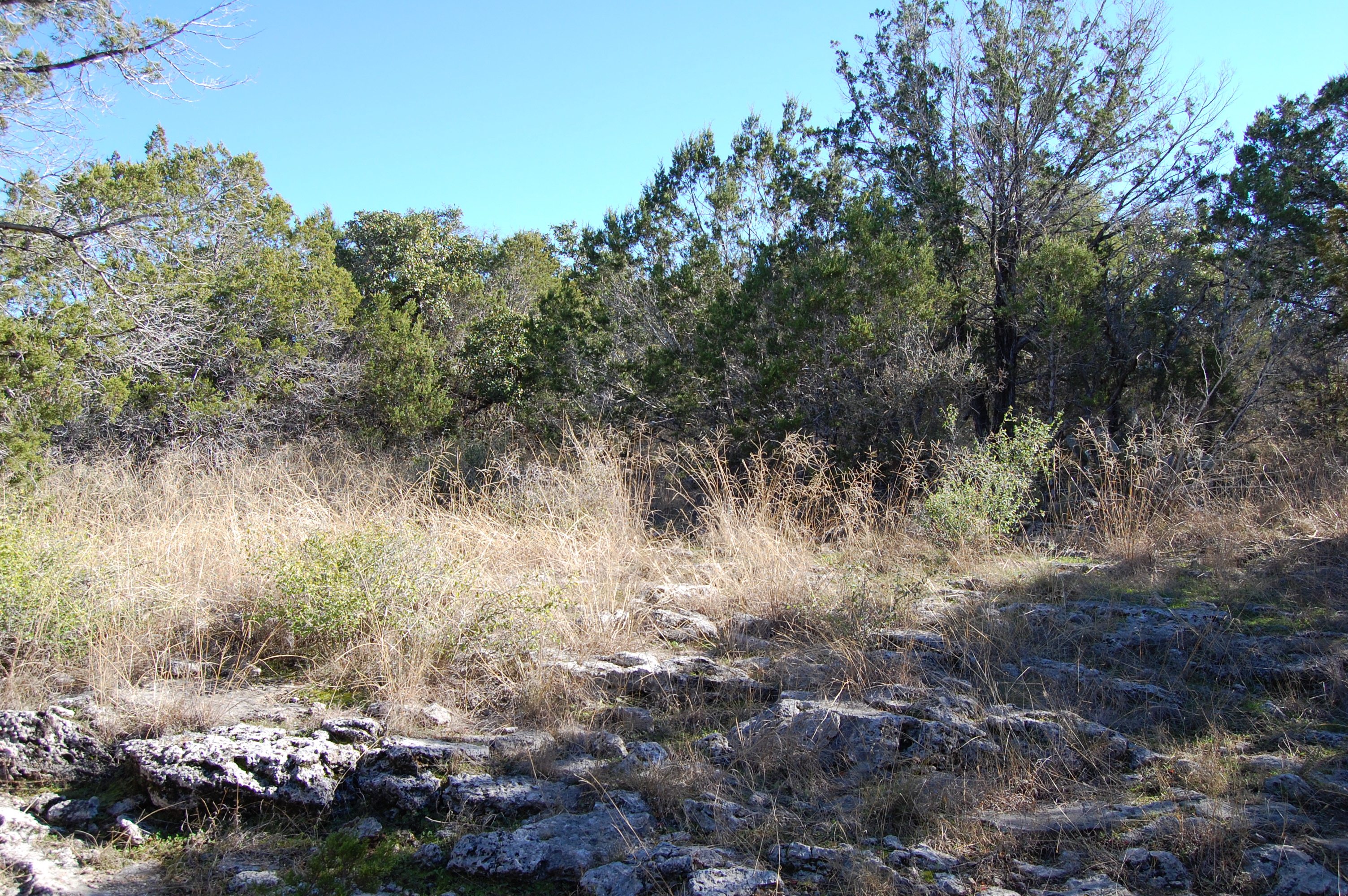
Texas hill country savannah
The landscape along the way consisted of a stony and hilly savannah, covered mostly with short grasses, juniper, and oak. As Austin is also something of a boom town, there are also housing developments in varying stages of completion.
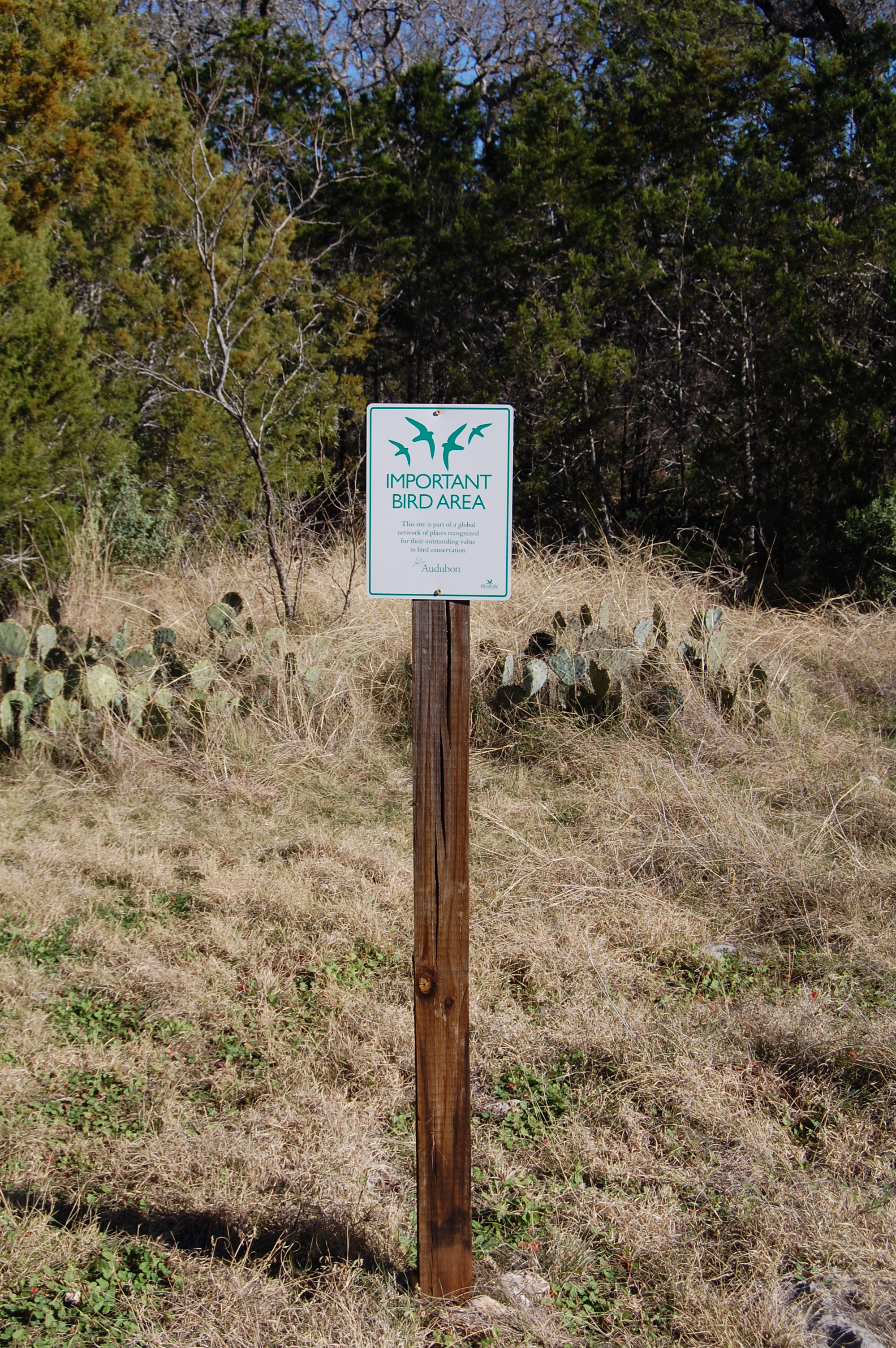
Where do the unimportant birds go?
We did not get to meet any of the important birds, but I hear you cannot see them without an appointment.
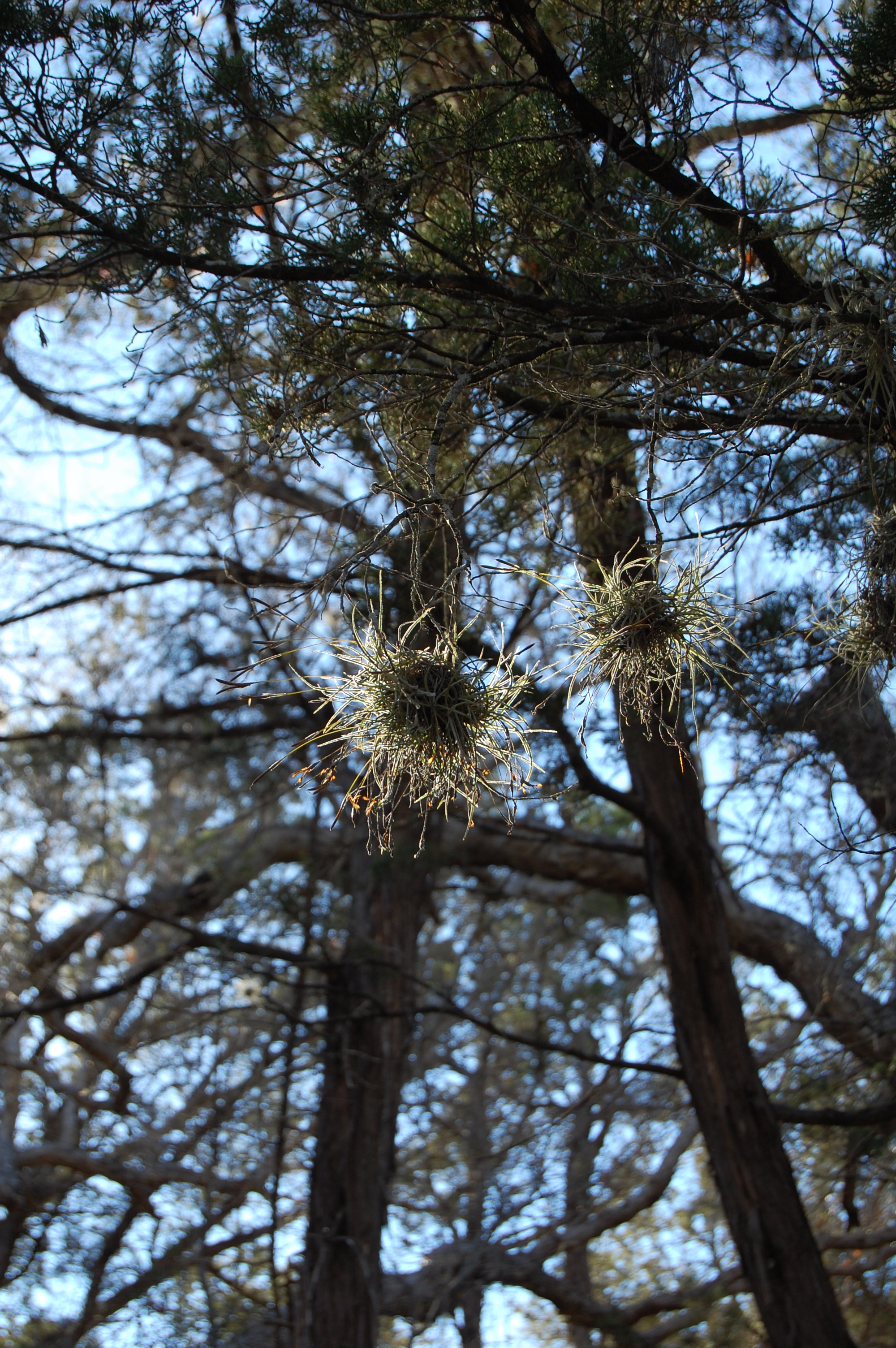
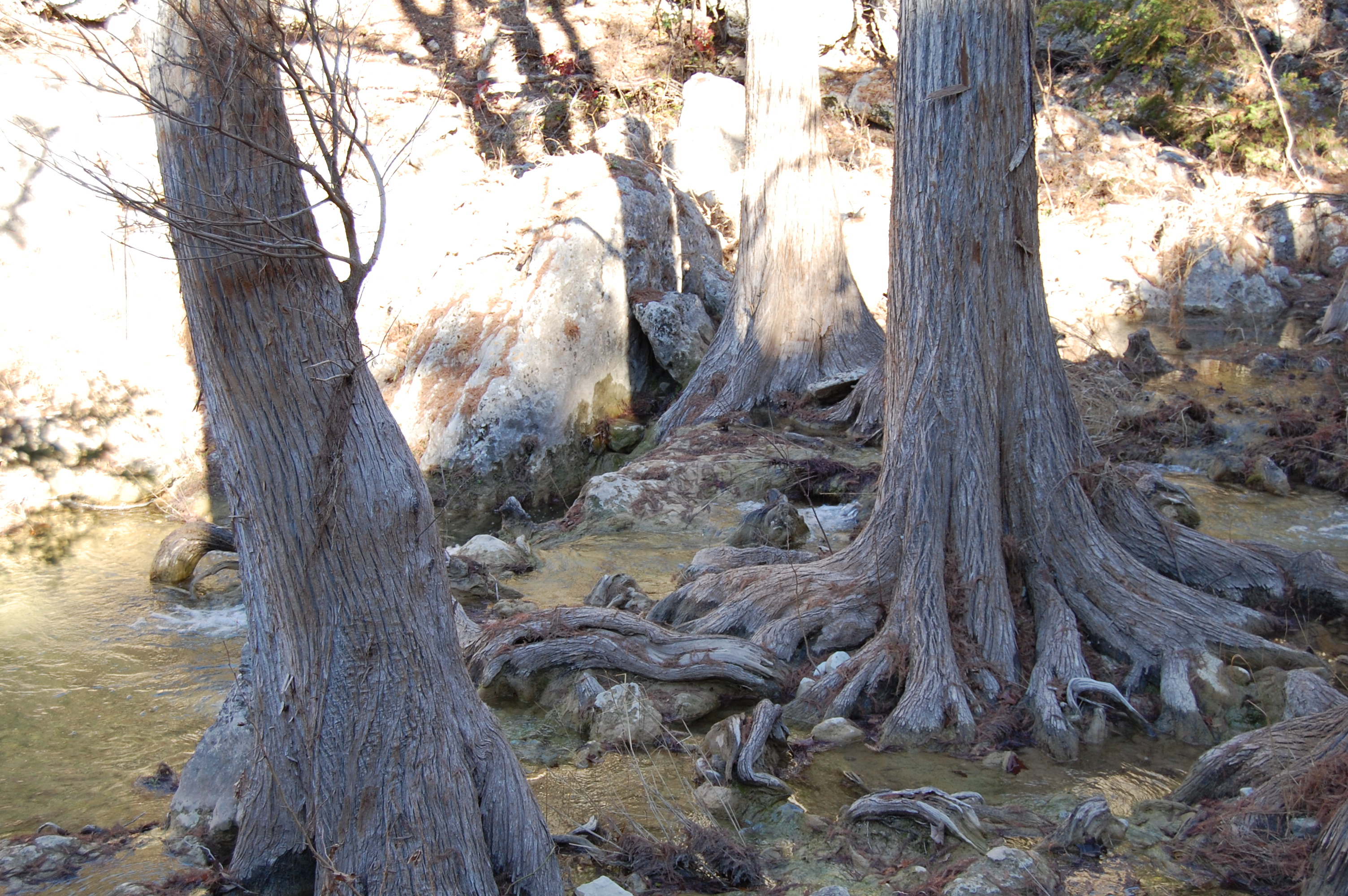
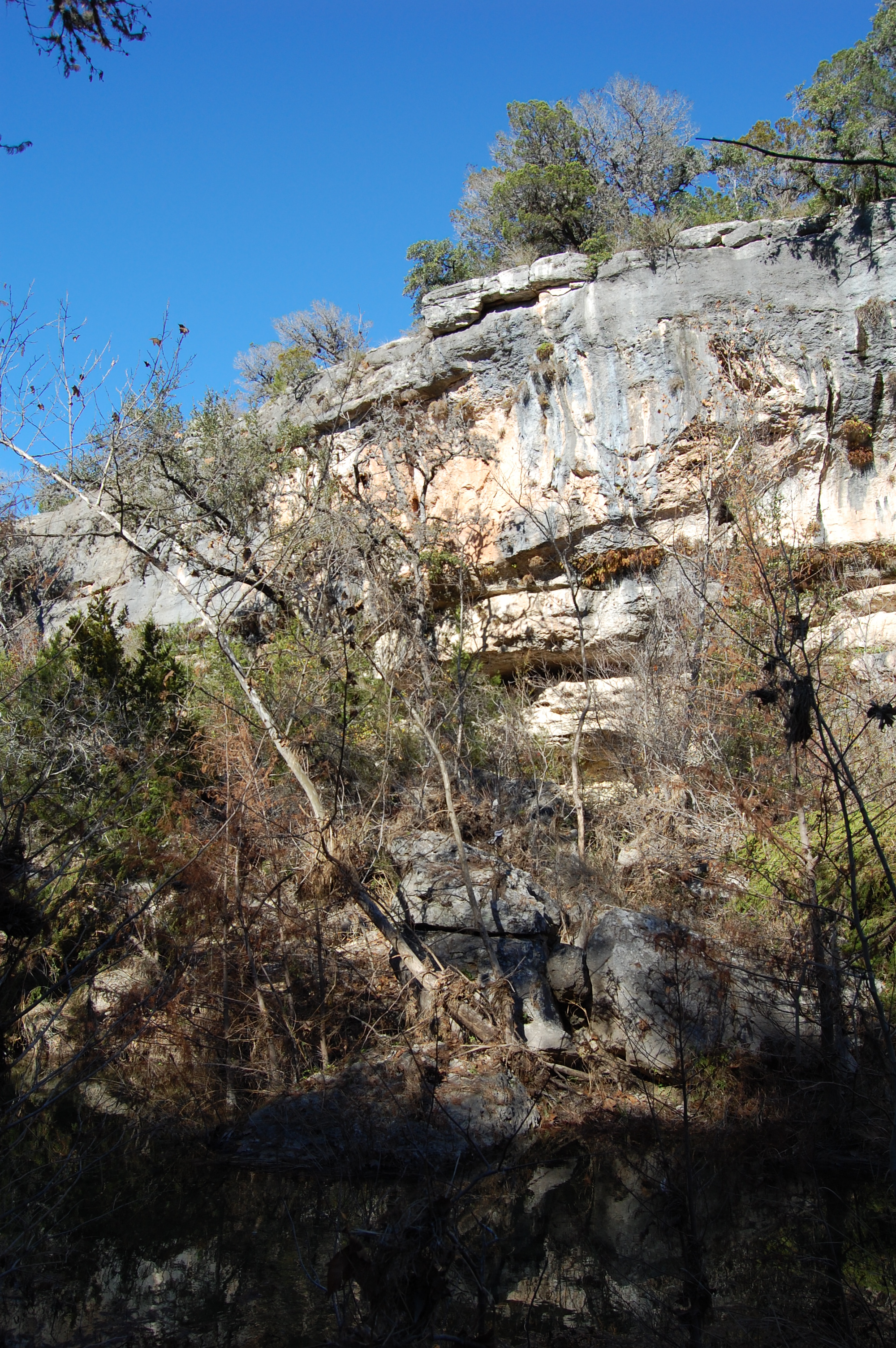
This lichen, which we dubbed Grey Spaghetti Lichen, was very common. At least I think it’s a lichen.Snags in Hamilton CreekCanyon Wall
Hamilton Pool has been a popular swimming hole for many years, and swimming is still allowed (though not on the day we were there). To get there, you hike down into a canyon, then along Hamilton Creek for about half a mile. I should mention the light was tricky, with a bright sun low in the sky.
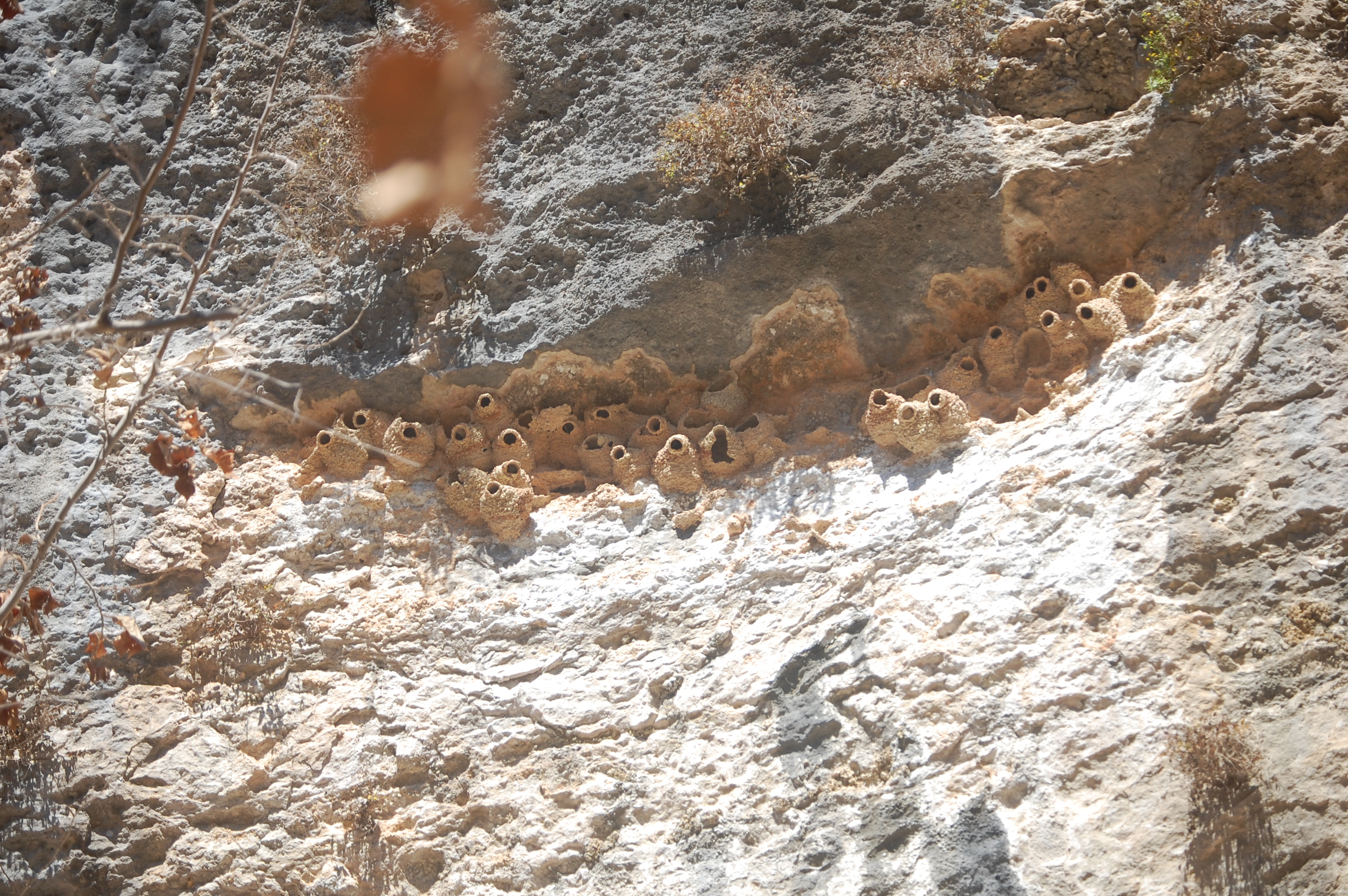
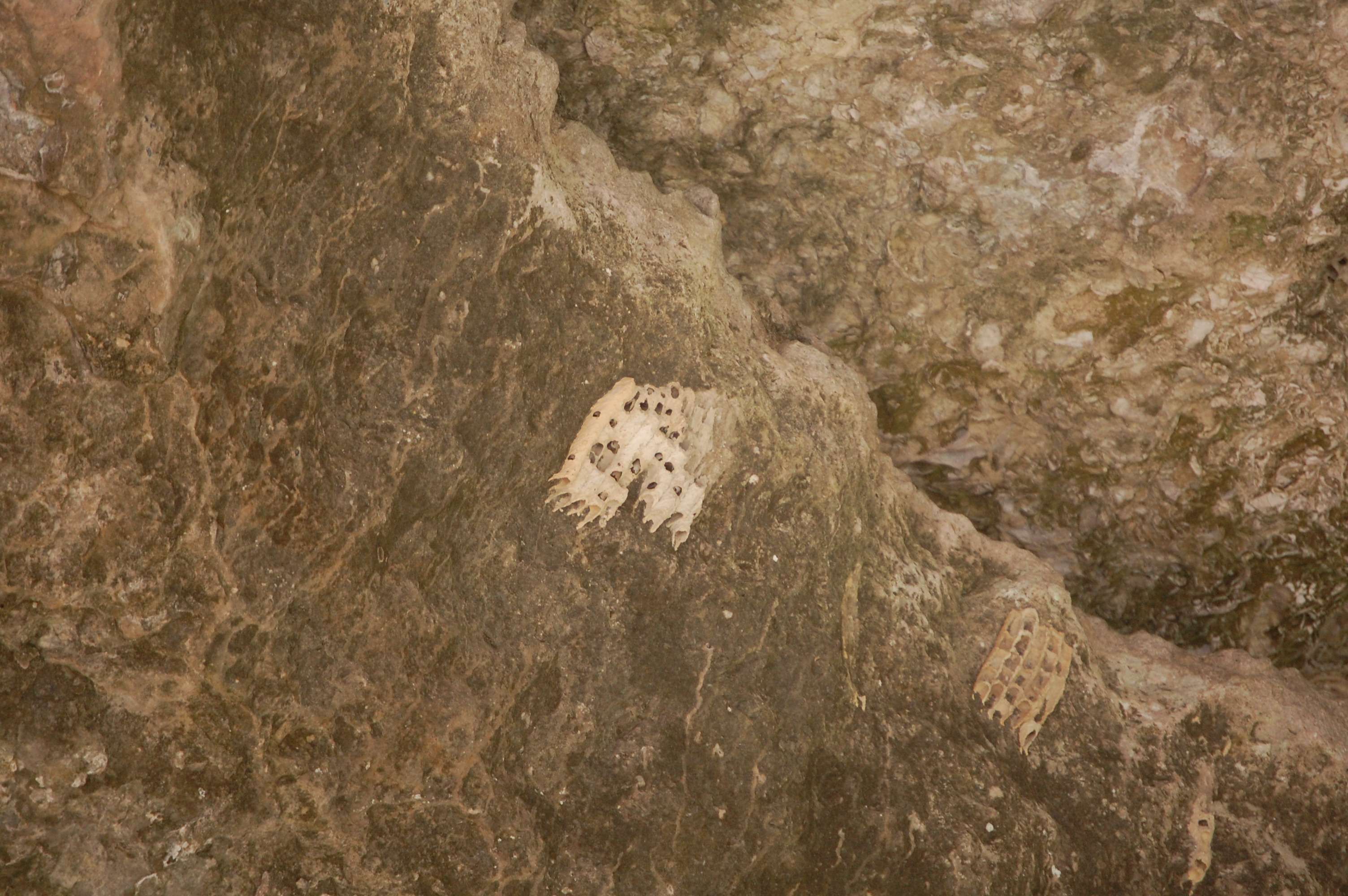
Mystery nestsMore mystery nests
Nests were built into the canyon walls. Anybody know who would have built these?
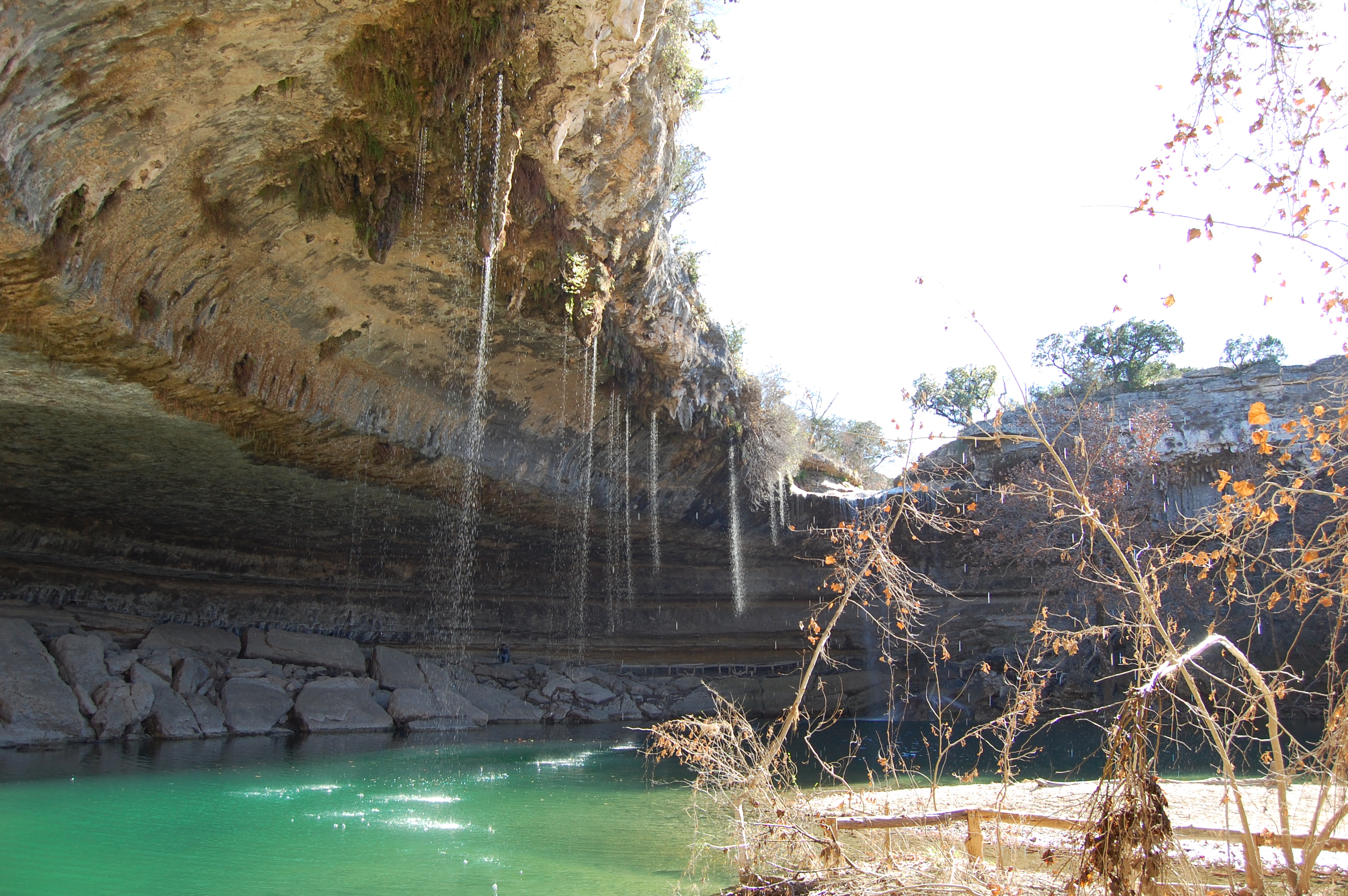
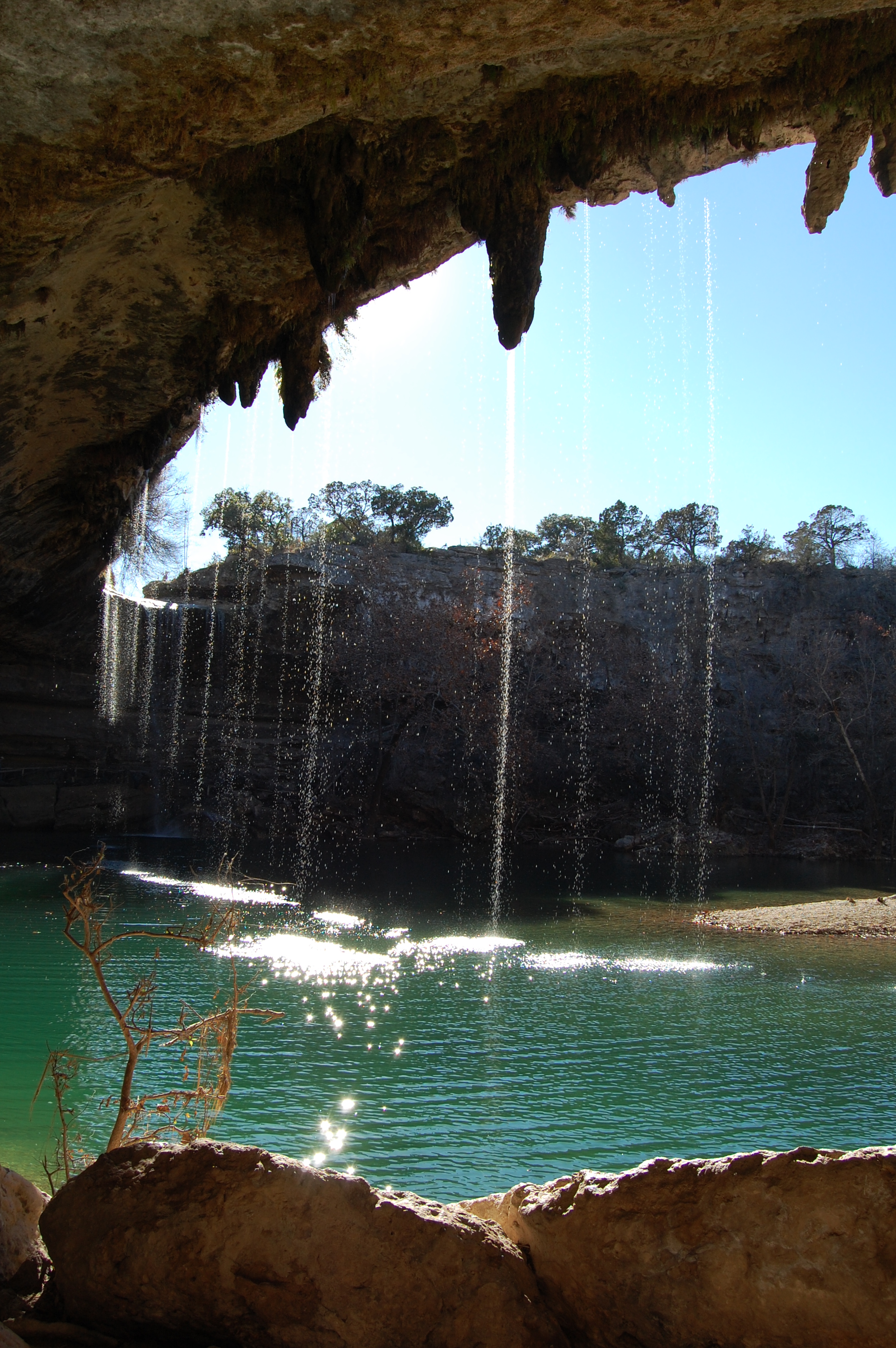
Hamilton Pool waterfall
At the end of the trail there is a waterfall and grotto. Ferns and mosses grow on some of the rocks.
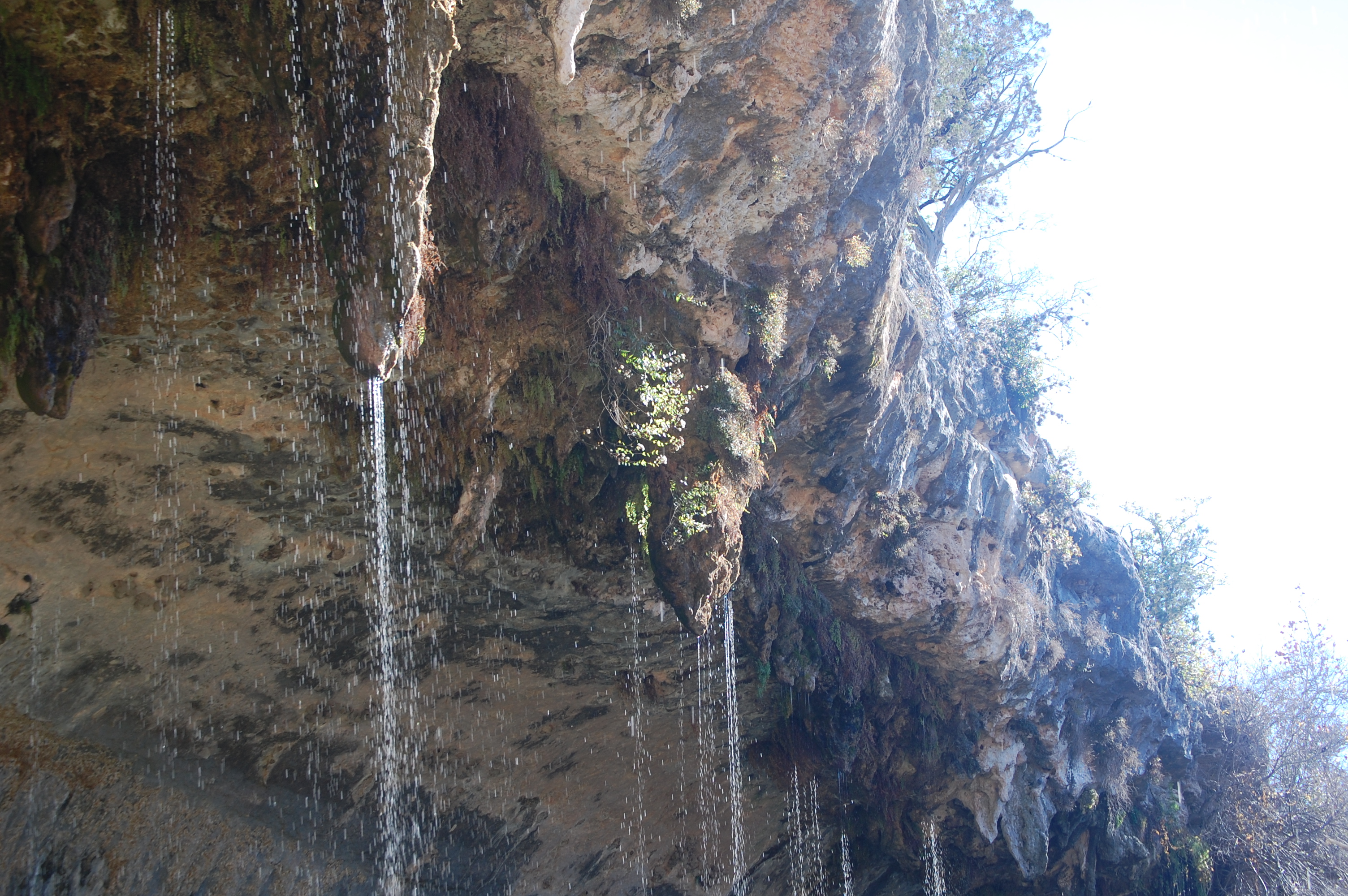
Stalactites hang from the ceiling, some of them covered in moss.
From behind the falls, the view is slightly other-worldly.
Well, enough of that! Time to go back to Austin and eat some barbecue.
I don’t want to put a damper on anybody’s holiday. The New York Times didn’t ask me if now would be the best time to run another article on efforts to halt the rapid decline of Monarch Butterflies. But they did run it today, and people should read it.
Actually, the issue was presented in the context of efforts to get more milkweed planted – in gardens and in open spaces of all kinds – in order to prevent Monarch extinction.
Monarch Butterfly
However they present it, though, the situation is pretty dire. For instance, there is a monarch count conducted every year by the University of Northern Iowa on 100 acres of prairie. In 2010, 176 monarchs were found. In 2013 it was down to 11.
The problem is that the high demand for corn is bringing lots of marginal land into production, land that used to be full of milkweed. As I’m sure you know, monarch caterpillars eat only milkweed – so no milkweed, no monarchs. The growing market for corn is caused in part by ethanol subsidies, subsidies brought to us by agribusiness and their friends in Congress.
Monarch among Swamp Milkweed.
Also, there isn’t nearly as much milkweed growing wild among the crops, thanks to the use of herbicide-resistant corn and soybeans.
So growing milkweed in gardens, roadsides, utility rights of way and other open spaces is critical. This is especially true in the Midwest and Central Plains. Conservationists are doing as much as they can.
Butterflyweed
In my garden, Milkweed is plentiful. There’s Butterflyweed (Asclepias tuberosa) for dry, sunny areas.
Swamp Milkweed
There’s Swamp Milkweed (A. incarnata) for sunny, moist areas.
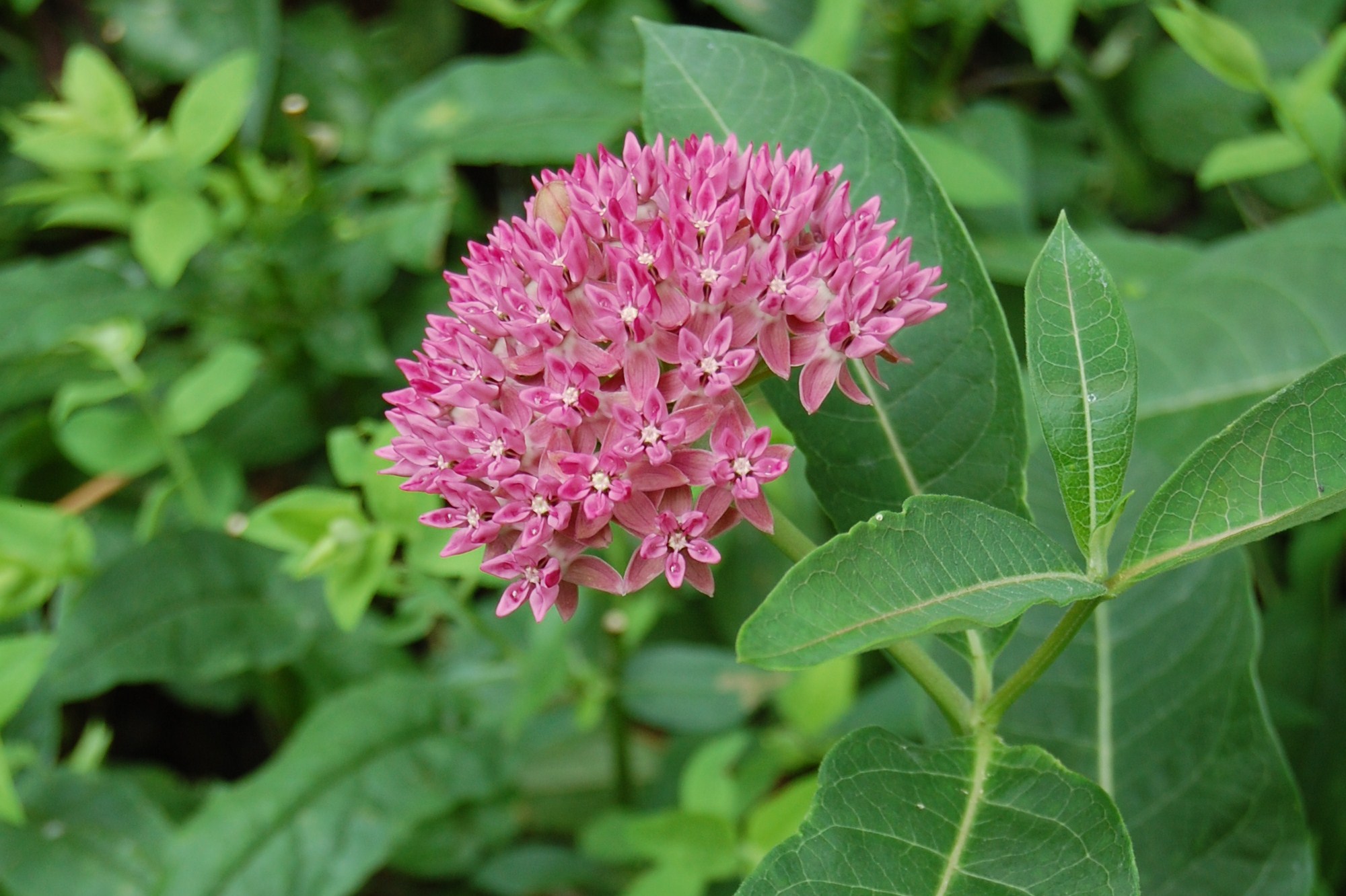
And Purple Milkweed (A. purpurescens) that tolerates part shade.
Purple Milkweed
You can also grow Common Milkweed (A. syriaca), though it tends to be very aggressive. Sullivant’s Milkweed (A. sullivantii) is similar to the Common Milkweed, but reportedly better behaved.
This year I saw hardly any monarchs, and I wondered if the monarch’s decline had gone past the tipping point. However, I’m not willing to throw in the towel. Plus, the Milkweeds I grow are very garden-worthy plants.
Are you growing Milkweeds in your garden? Do you have plans to plant any?
We are minimalists when it comes to Christmas decorations. Not because we don’t like the holiday, far from it. Not because we are of mixed religious backgrounds. (Judy’s dad was a Lutheran minister, while I’m Jewish. Which, in the memorable phrase coined by Walter Matthau in Pete’n’Tillie, would make us Jewtherans.) Actually, neither of us is religious, but that’s not it either.
Now this sort of reminds me of a Dahlek from Dr. Who. Our house is the white brick.
The biggest thing is that the kids are no longer small, and no longer live at home. Though even when they did live at home we were pretty restrained with the holiday decorations. Our one big splurge would be a big live Christmas tree, which the kids would help to choose and decorate.
But now we have adopted this tradition of travelling together for the holidays, so it’s been a while since we were actually home on Christmas.
But today Judy did return from running errands with a couple of bagfuls of holiday decorations, so at least we are putting forth some effort. Plus at this late date the decorations are 50% off.
So we have some colorful glass-like baubles. I hung them on the old morning glory vines on our tuteur. Judy was a little dubious about it.
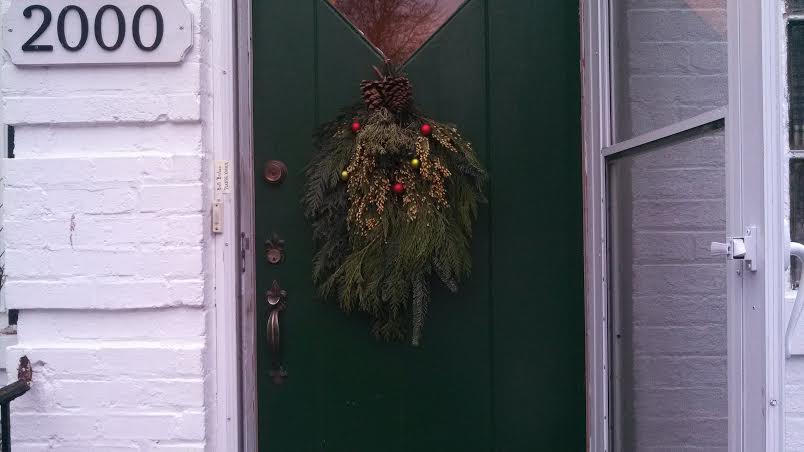
Swag on the front door.
There was also a swag for the front door. Judy tells me a swag is a wreath that hangs straight down. I thought it was free stuff that’s given away at conferences.
Garland on the mantel.
And finally, a garland to lay along the mantel, providing a nice accompaniment to Judy’s poultry collection.
Plus, she did bring home a white Amaryllis bulb and some paperwhite narcissus. Those should brighten up the dreary days of late winter when the bloom.
So how are your holiday decorations this year? Are you minimalists, like us, or do you go all out with lots of lights, Santa, a creche, etc?
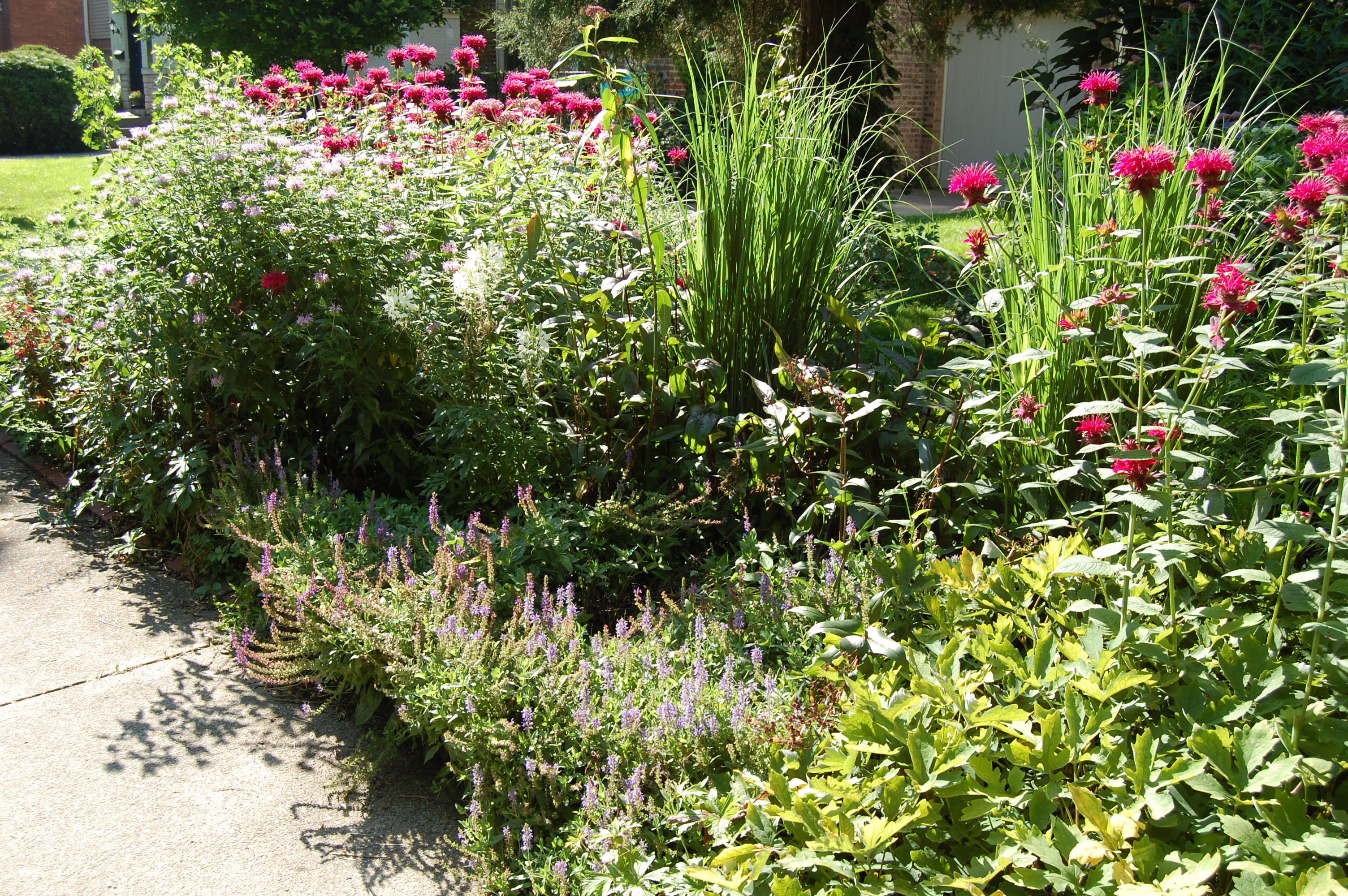
There’s a flower border along my front sidewalk. I’m not satisfied with it.
Sidewalk border
The issue is what to plant up against the sidewalk, between the Bluestar (Amsonia tabernaemontana) at one end and the Monarda, Short’s Aster (Aster shortii), and Golden Alexander (Zizia aurea) at the other.
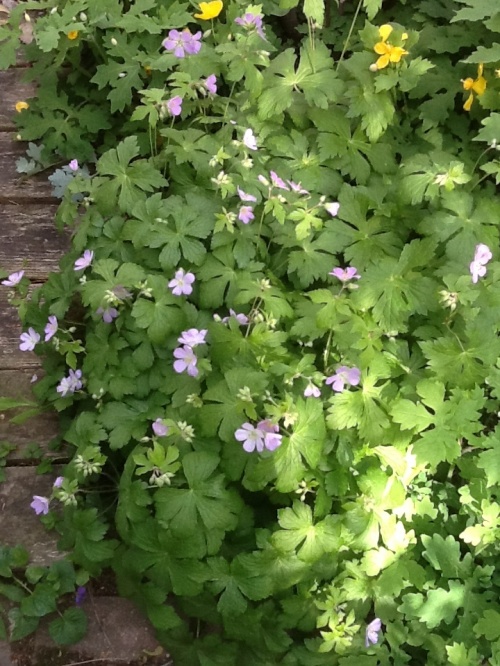
It needs to be something relatively low-growing. When I first put in the border, I filled the spot with Wild Geranium (Geranium maculatum).
Wild Geranium
But then I saw the River of Salvia at the Lurie Garden in Downtown Chicago, which looked like this.
Lurie Garden’s River of Salvia.
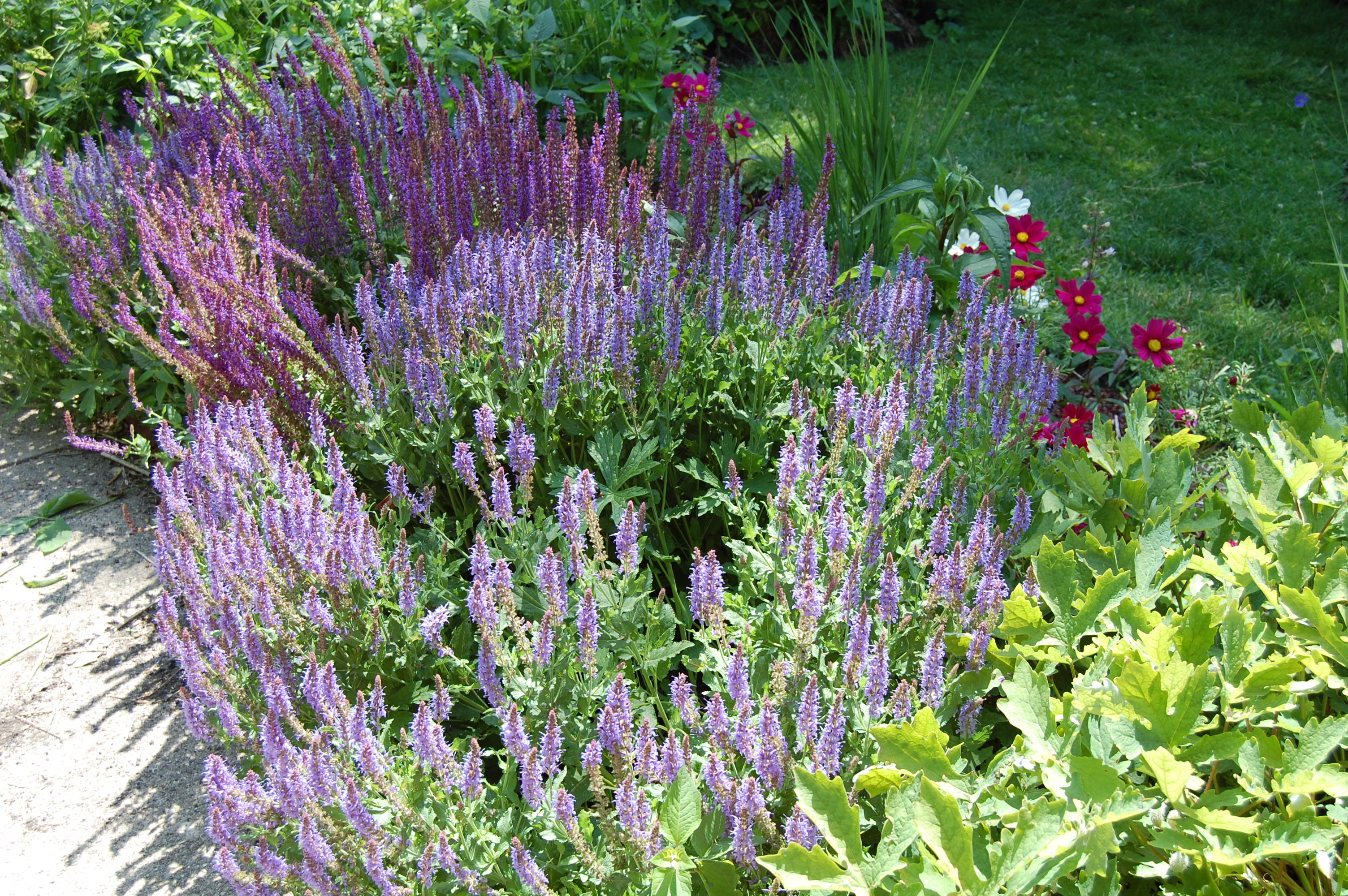
I wanted my own River of Salvia, so I pulled out the Wild Geranium and put in various Salvias. What I got looked like this, more of a stream or sanitary canal of Salvia.
Not bad, but not the same. Now I’m feeling dissatisfied with the Salvia. It gets kind of floppy and untidy looking. I like informal gardens which involve a fair amount of untidiness. However, there’s the right kind of untidiness and the wrong kind. How can I tell the difference? I just can.
Also, the Salvias don’t have a very long bloom period.
So I’m thinking I would move the Salvias to the parkway across the sidewalk. They should grow happily among the Wild Strawberry (Fragaria virginiana) and other low groundcovers there.
For the Salvia replacement, I have three main criteria: blue (or close) flowers, low-growing, and a reasonably long bloom time. I should mention that behind this spot (to the north) there are Penstemon digitalis ‘Husker Red’ and ‘Northwind’ Switchgrass (Panicum virgatum). Also, I’m going to be transplanting two Phlox paniculata ‘David’ from another location where they are obscured.
So right now I’m considering the following replacements.
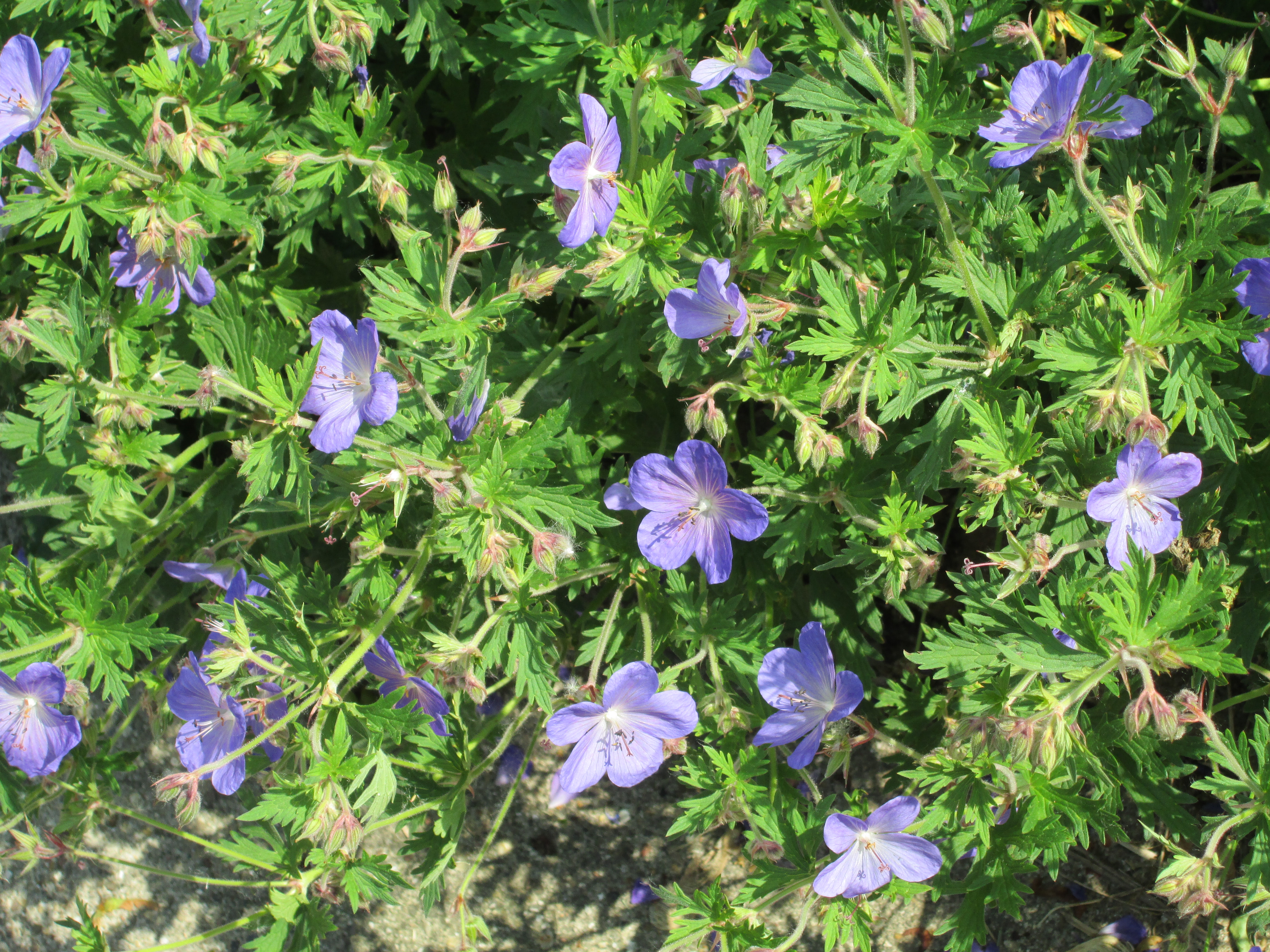
Geranium ‘Johnson’s Blue’
Geranium ‘Brookside’ or ‘Johnson’s Blue’. One advantage of this choice is that I already have a big clump of ‘Johnson’s Blue’ in a nearby spot, so this could provide some good repetition.
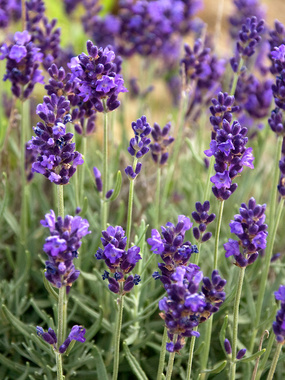
‘Lavance Purple’ Lavender. Photo from Bluestone Perennials.
Lavender ‘Lavance Purple’ (Lavandula angustifolia). This is supposed to be a low-growing lavender, just 12″. However, I wonder if the soil here is too moist and rich – I’d like to plant some lavender, but it may be happier in the parkway, where conditions are more challenging.
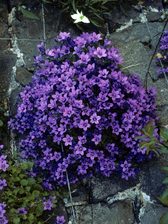
Dalmatian Bellflower. Photo from Bluestone Perennials
Dalmatian Bellflower (Campanula portenschlagiana). Low-growing, long blooming. Can’t think of a downside.
Scabiosa ‘Butterfly Blue’ and Lanceleaf Coreopsis, displaying my favorite blue/yellow combination.
Scabiosa ‘Butterfly Blue’ (Scabiosa columbaria). Love the pincushion flowers. Only thing is, I wonder if the Switchgrass will throw too much shadow. Hmm … that could be an issue for the lavender, too.
So what do you think? Please take the poll (my very first poll!), then explain your answer with a comment.
Back to our September trip. So Judy and I took a train from the Loire to Paris, and then another from Paris to London, passing under the English Channel. For people in that part of the world this is not a big deal but it made us feel so very sophisticated.
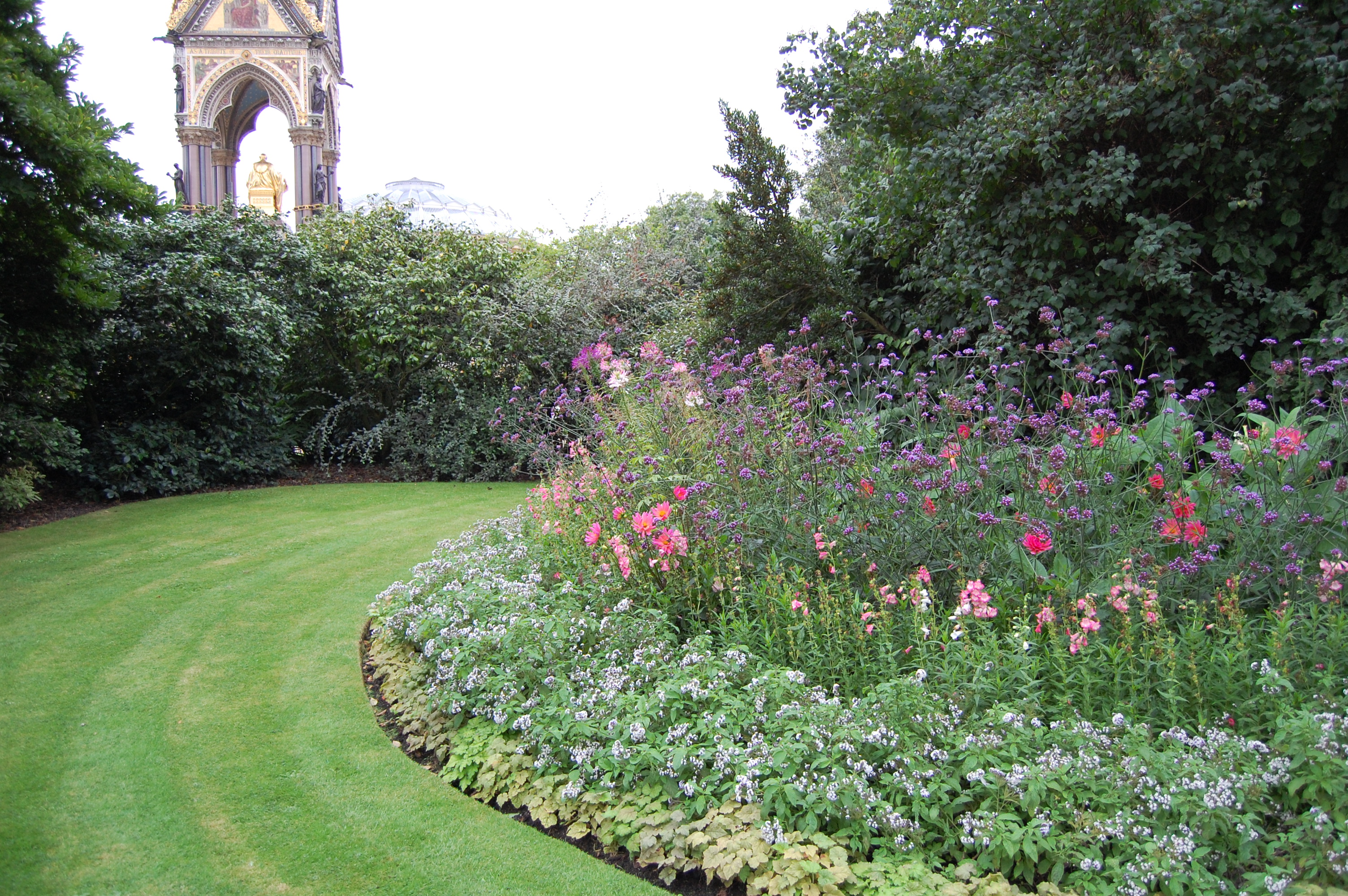
Kensington Garden flower walk with Albert Memorial in the background.
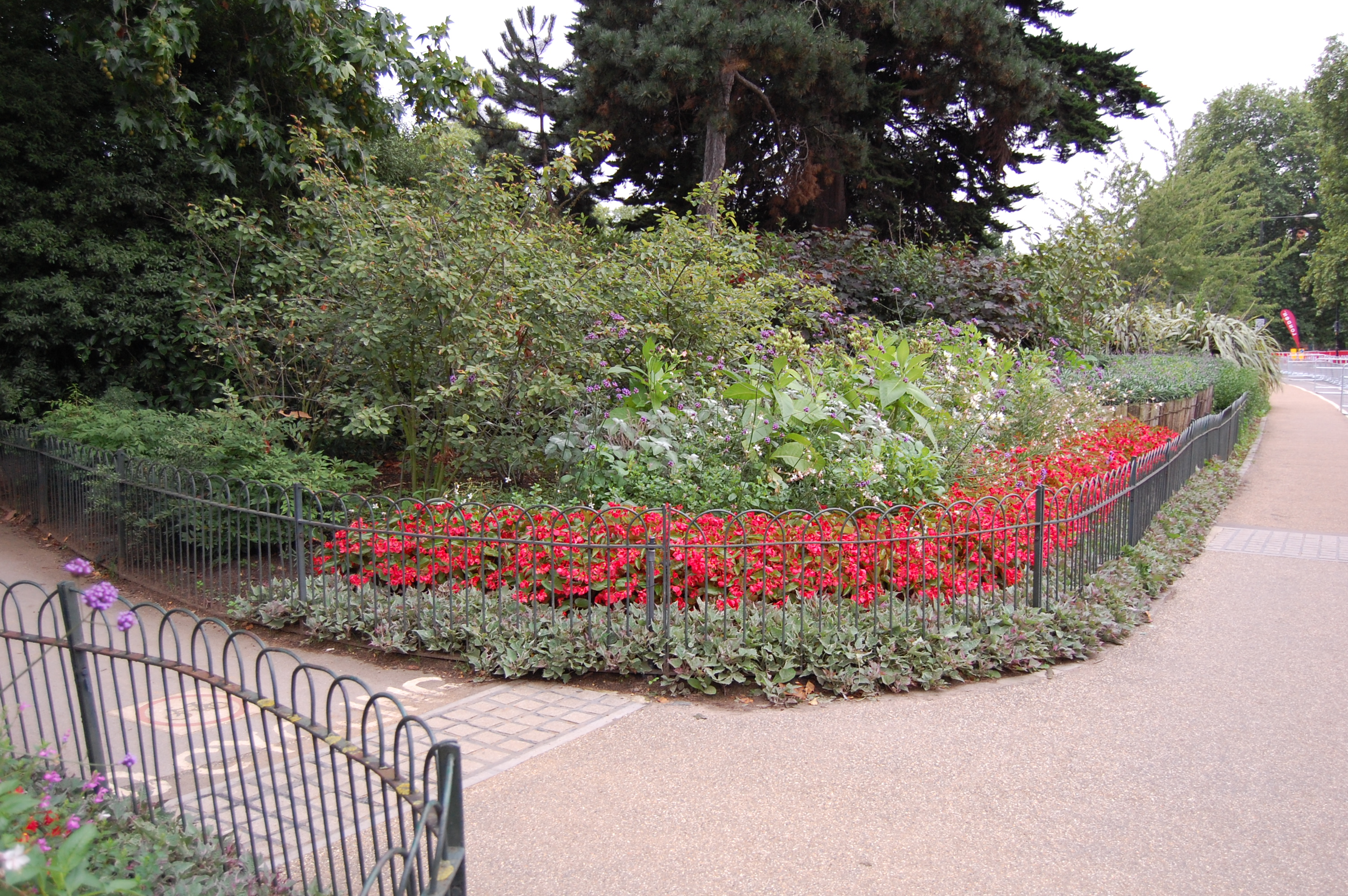
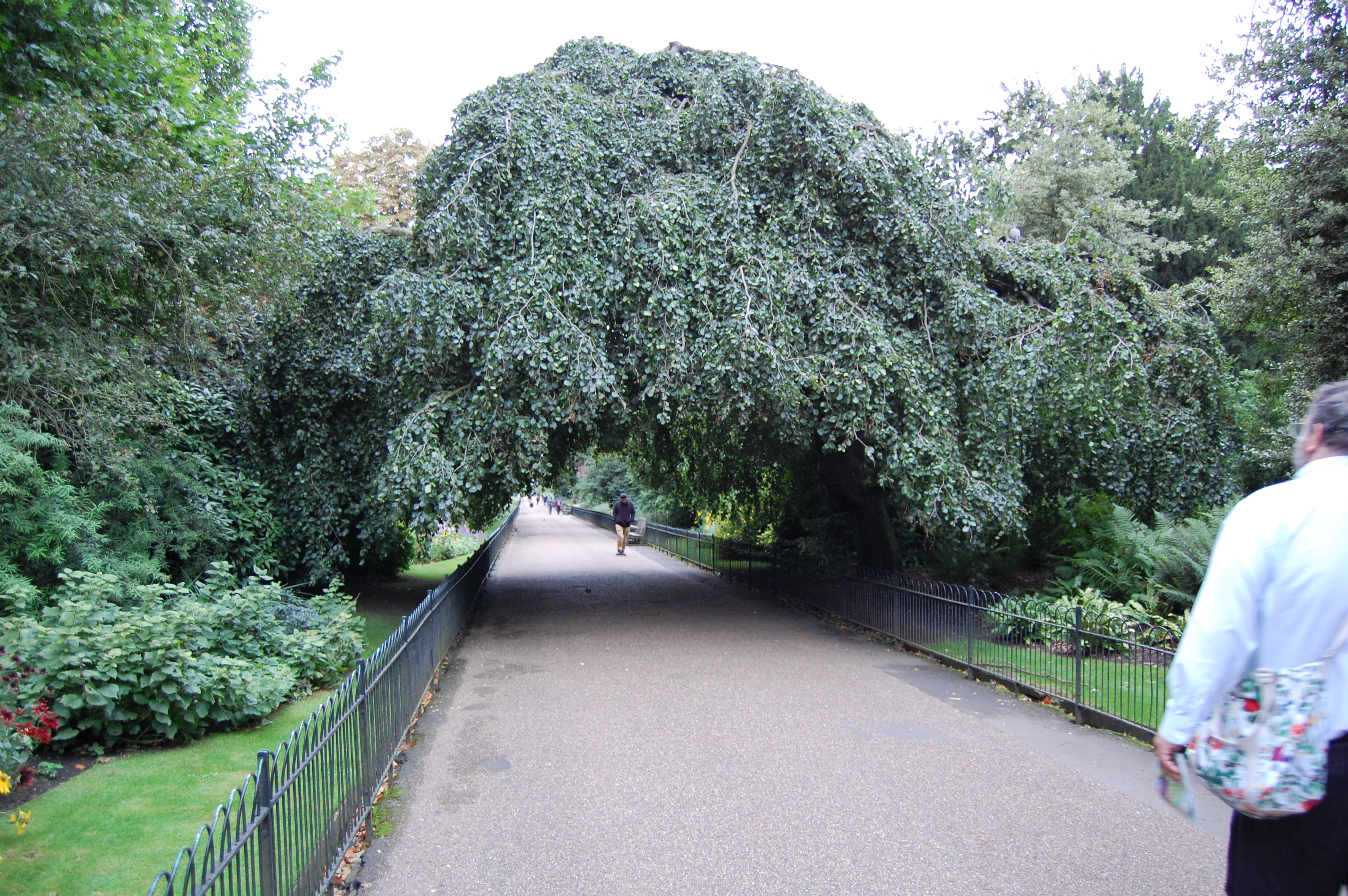
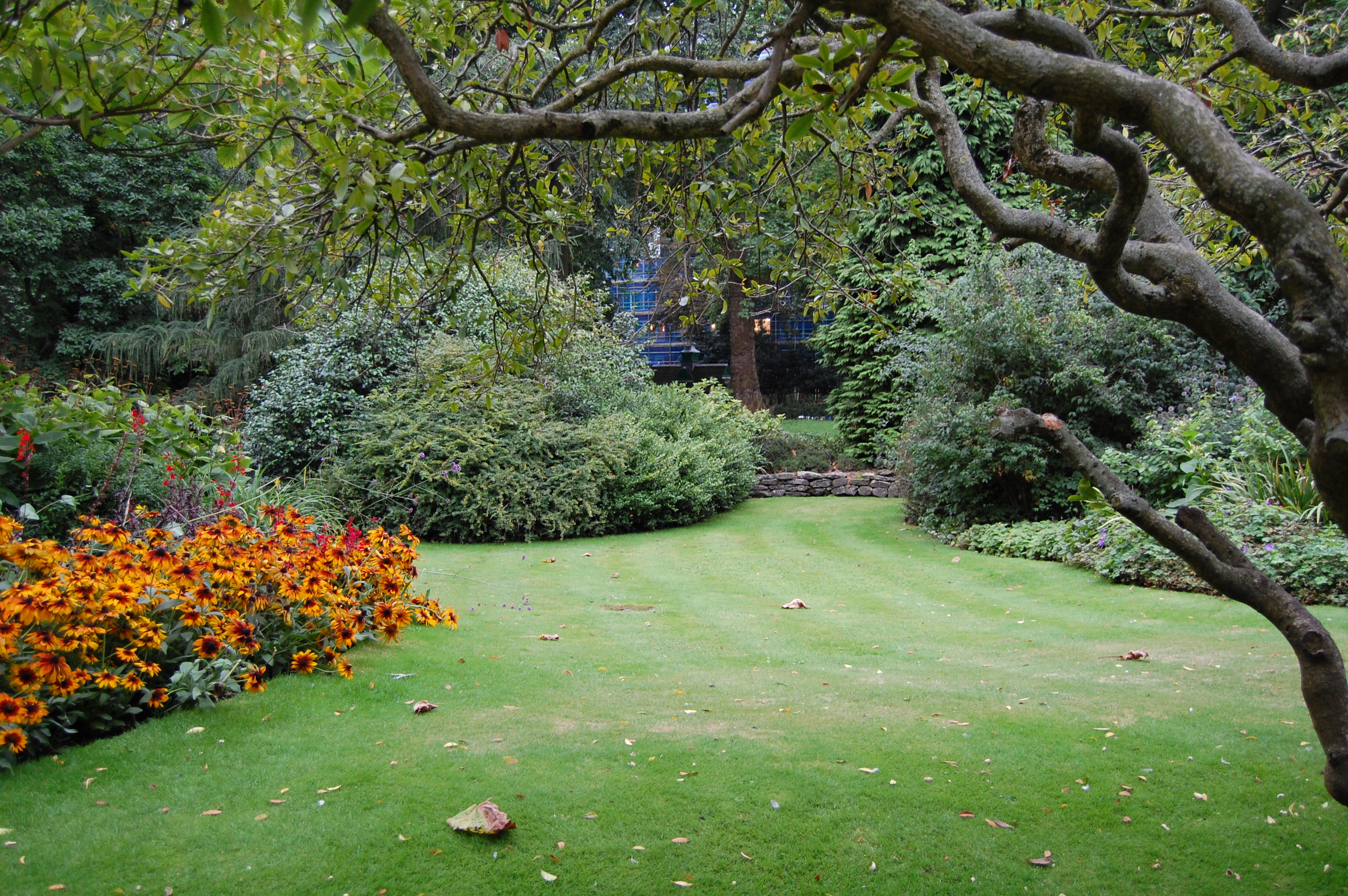
One of the first things we did in London was visit Hyde Park and Kensington Gardens. We saw only a fraction of these enormous public spaces. Also, I have only a vague idea of what most of the plants were. But frankly I’m tired tonight, so this post will be more pics and less narrative.
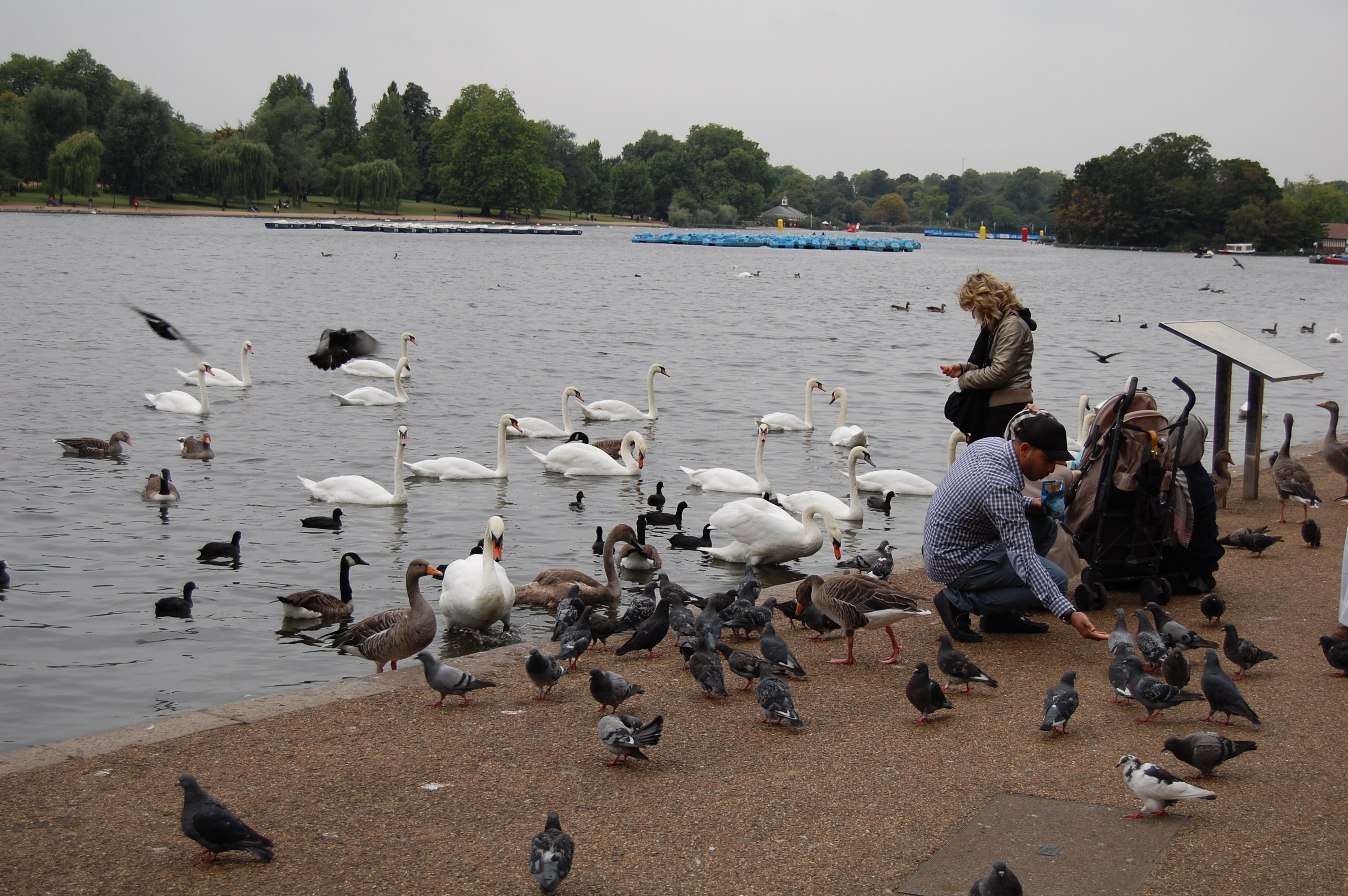
Hyde Park has a big lagoon called the serpentine. Lots of birds to feed.
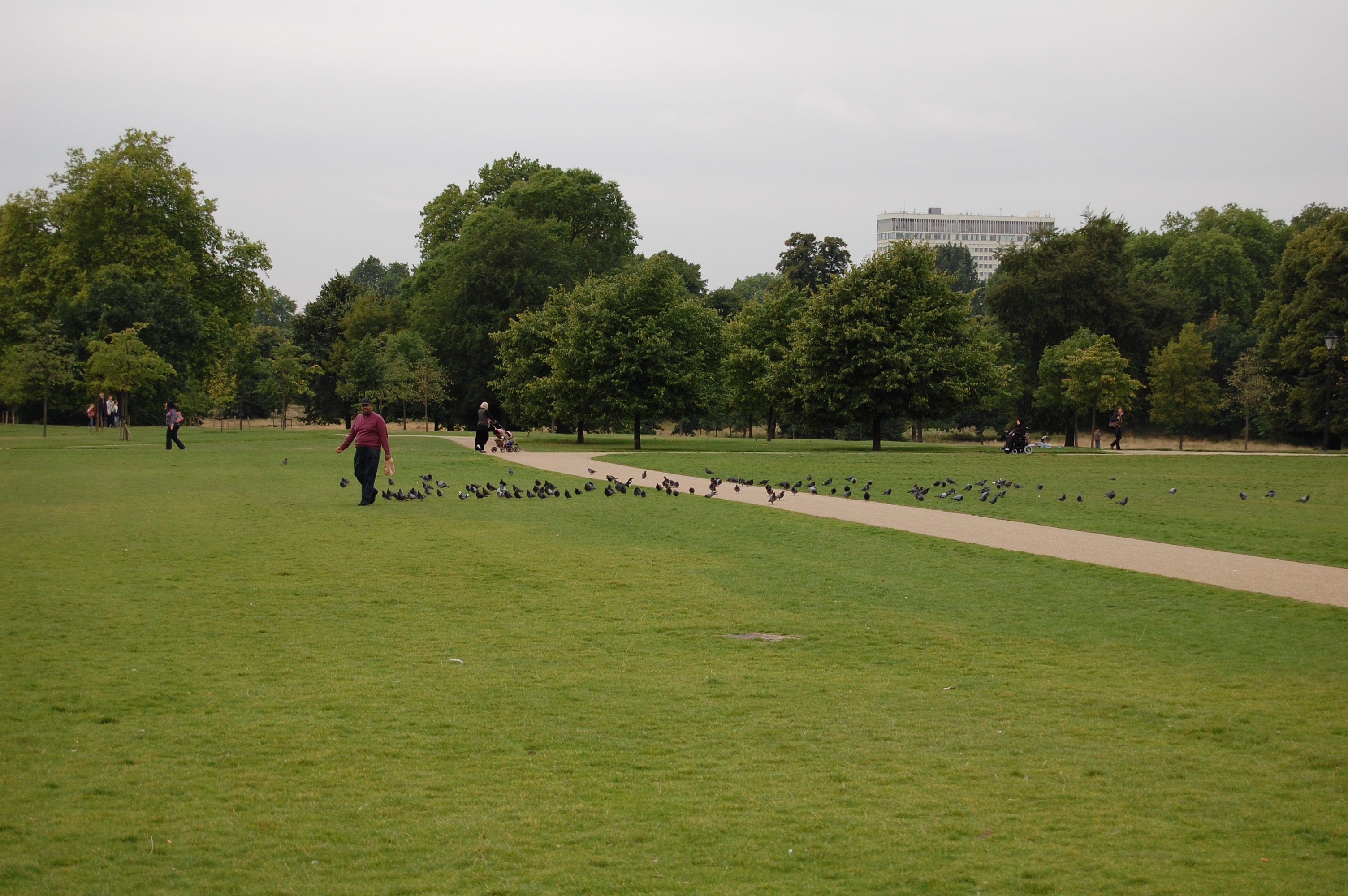
Speaking of birds to feed, this guy has his own personal tribe of pigeons. Lots of Hyde Park is just open turf.
We started out by walking through Hyde Park.
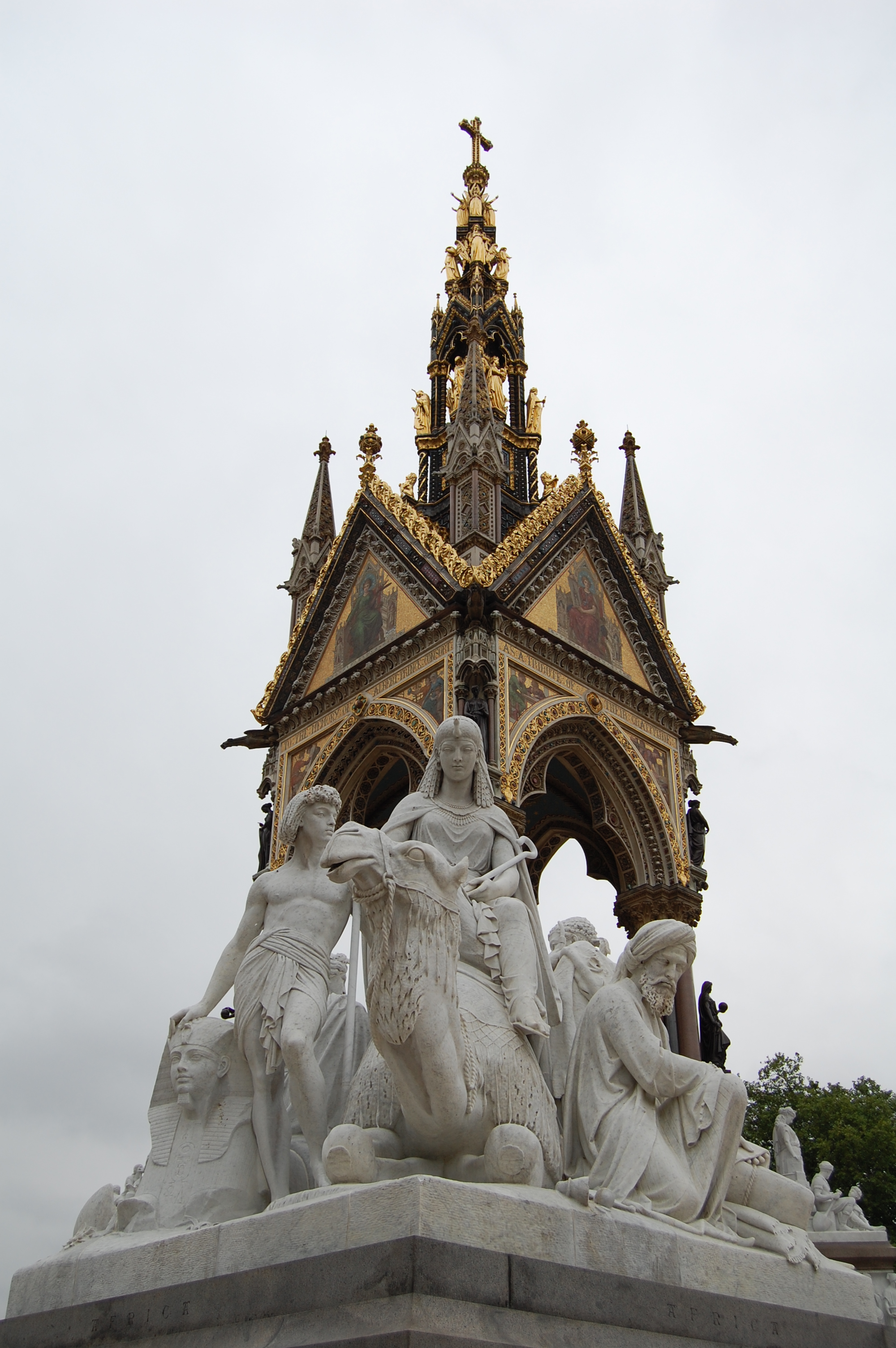
Albert Memorial
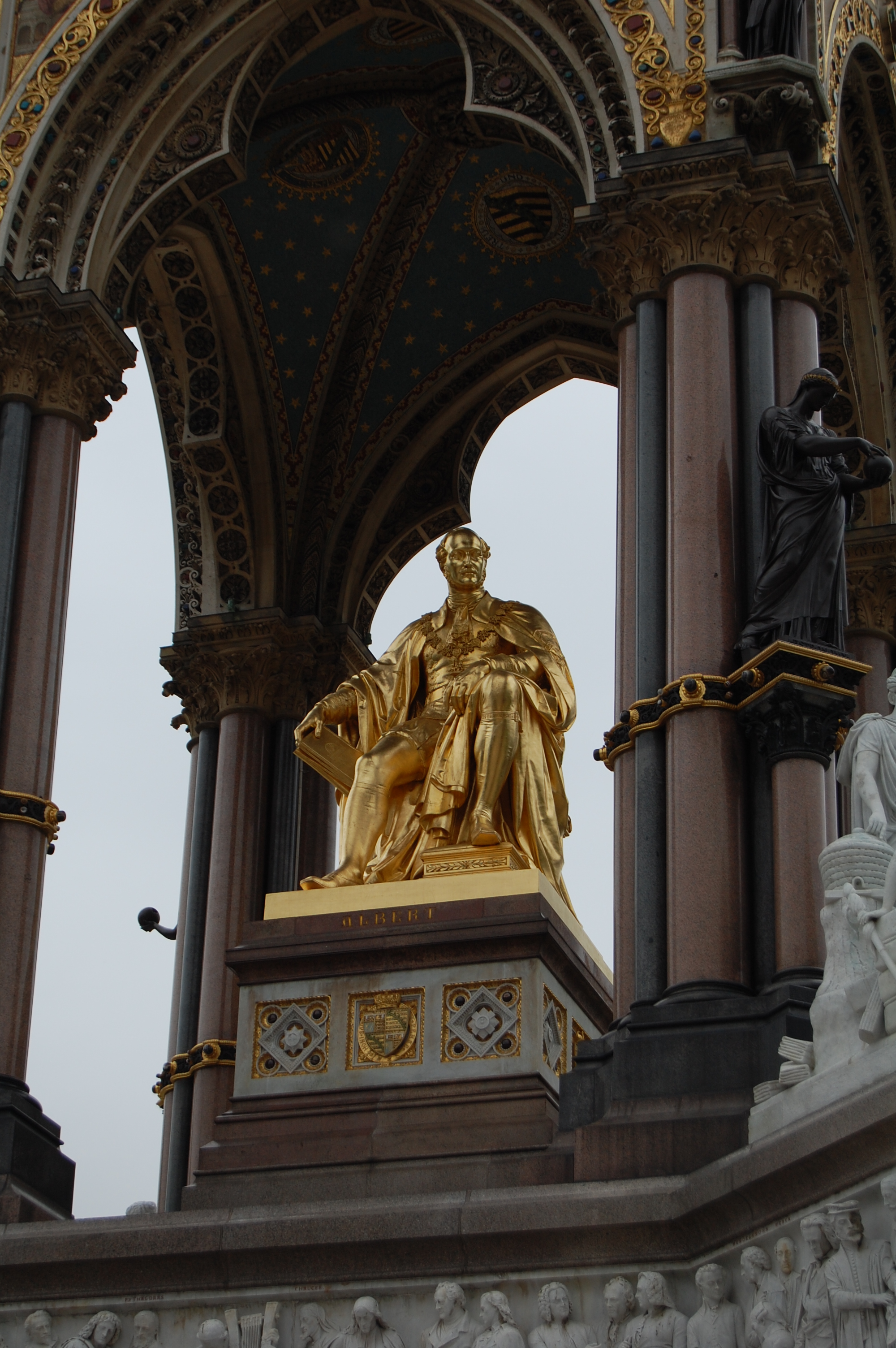
Shine on, Albert.
We discovered the Albert Memorial after passing into Kensington Garden. Judging from this monument, there was nothing reserved about Queen Victoria’s feelings for her late husband. The memorial is a bit over the top with heaps of statuary. At the four corners of the monument are figures representing the devastation felt at Albert’s death in all four corners of the globe. That’s what it seemed like anyway. I think the statuary above represents the Near East.
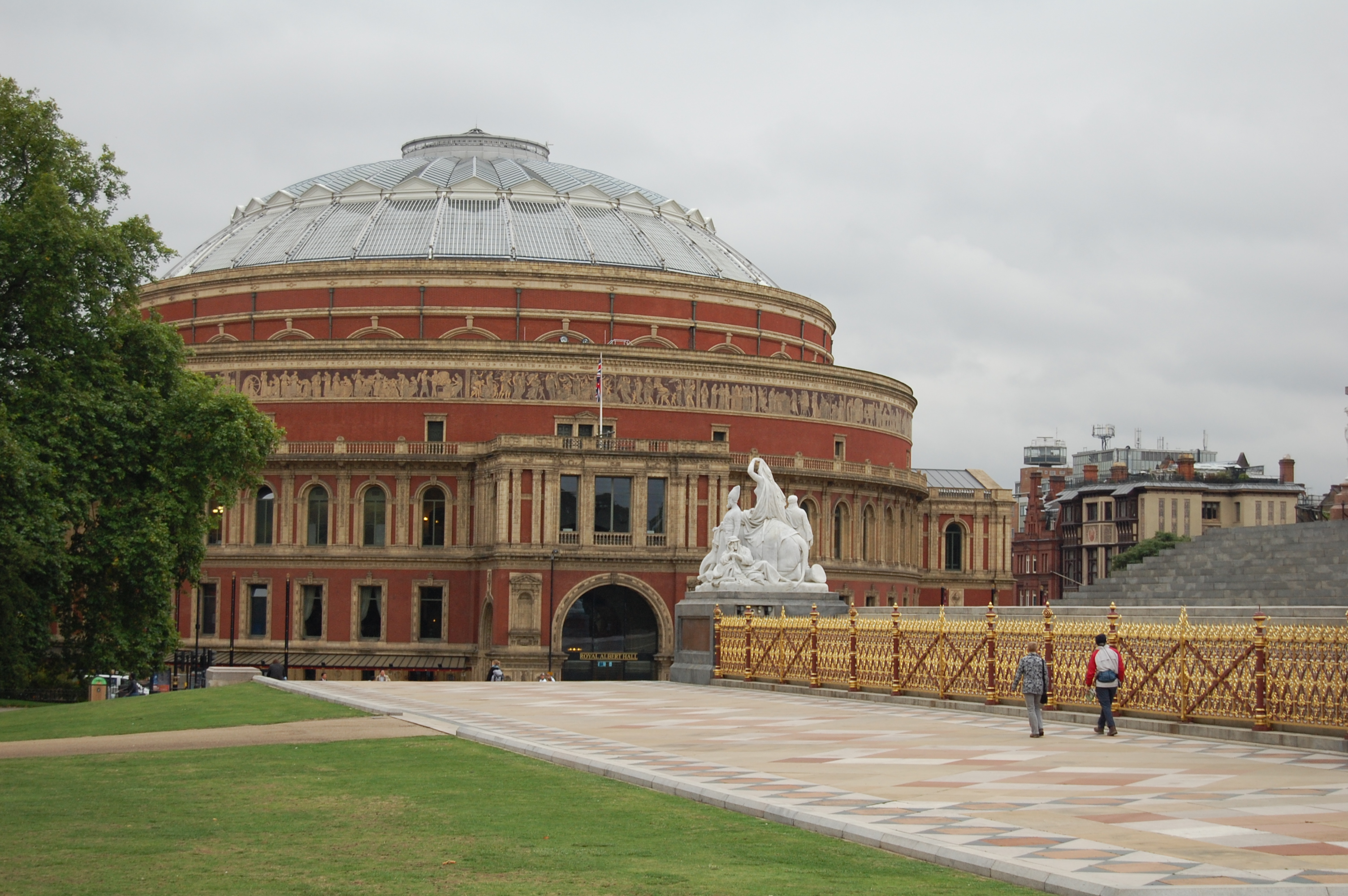
And the Albert Memorial Hall was also close at hand.
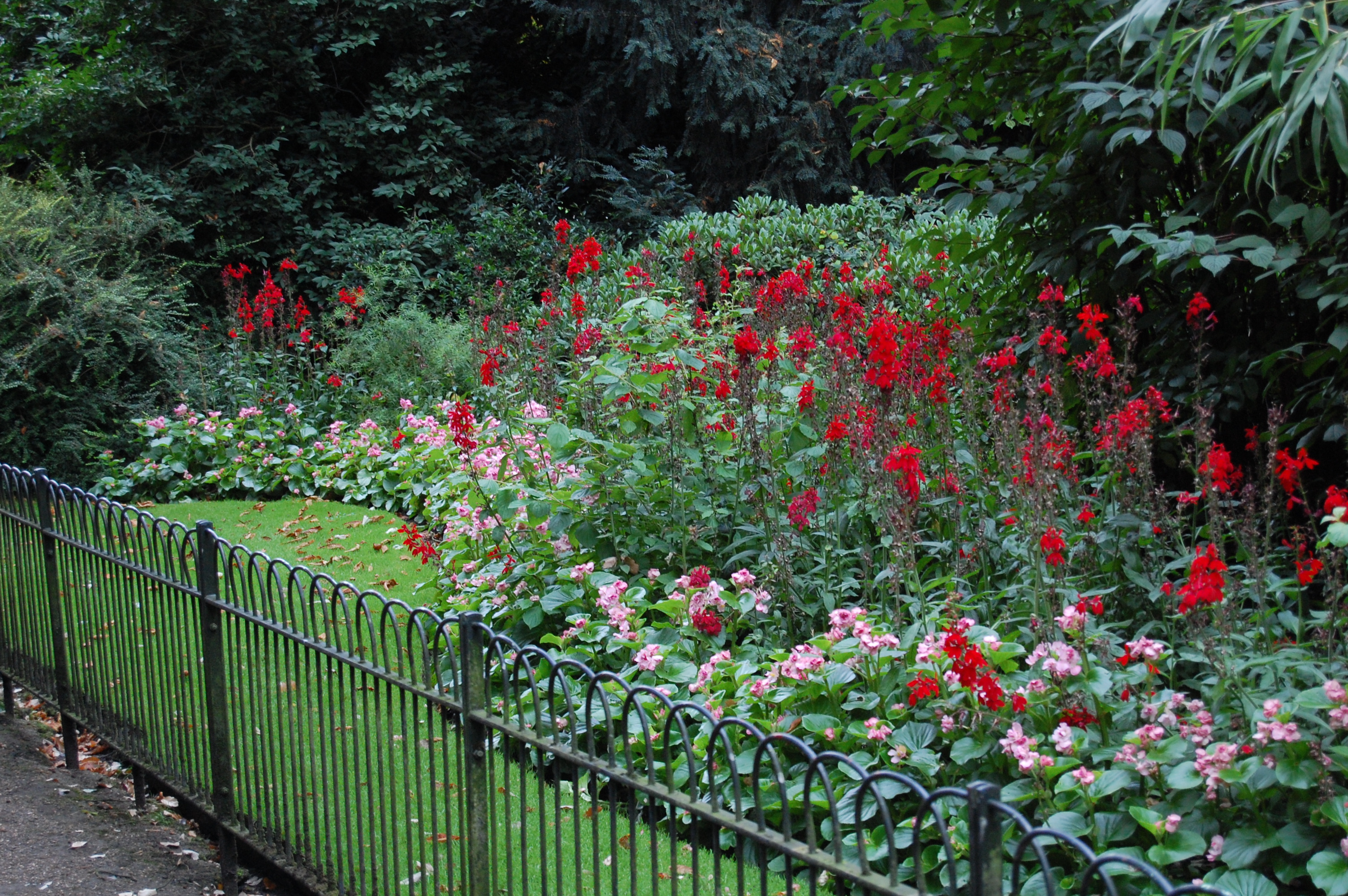
Once we were done paying our respects to Albert, we enjoyed the Kensington Garden Flower Walk.
A living arbor.
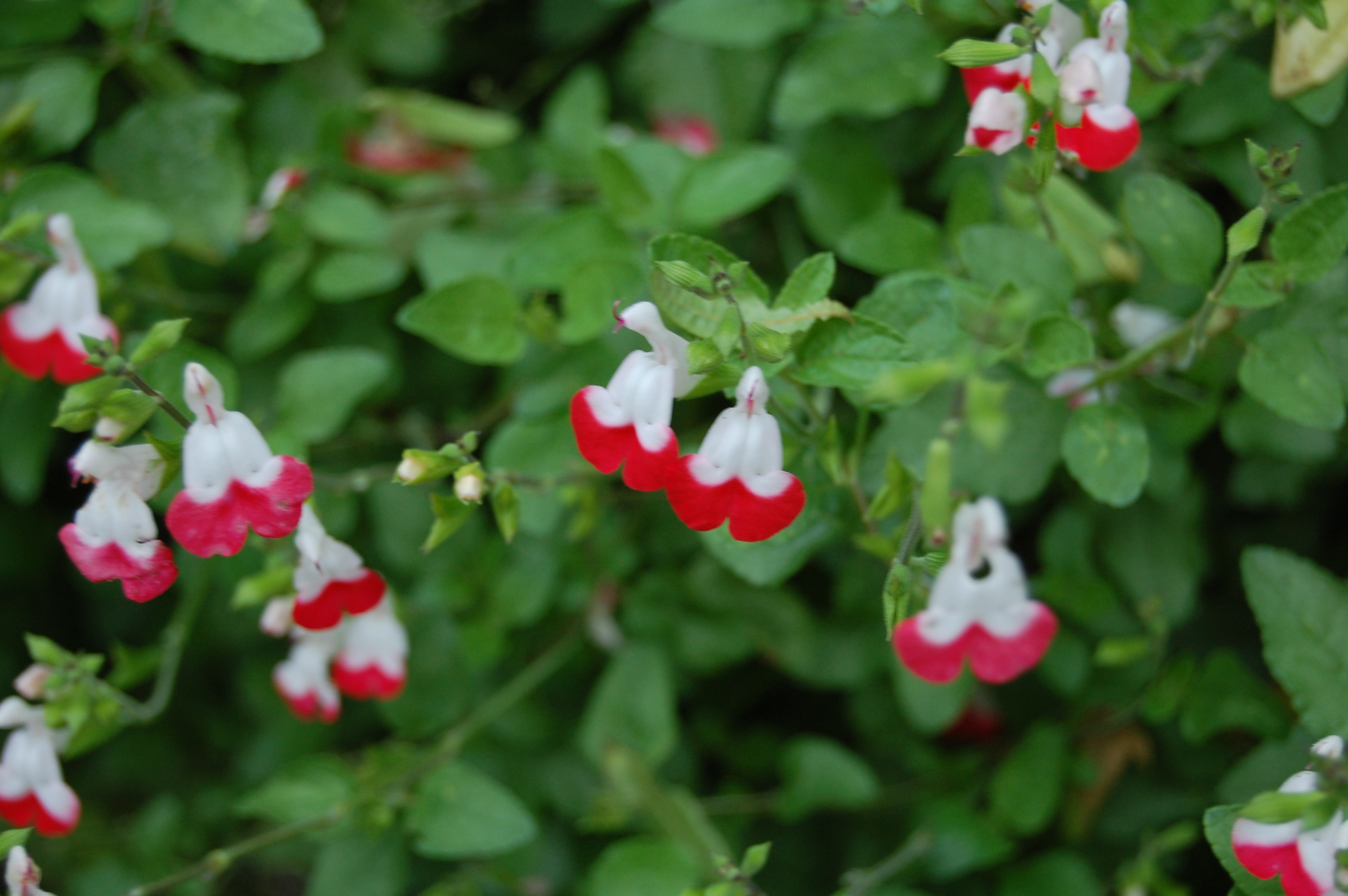
Some kind of Fuschia, I think.
Lobelia
No idea what this is. Some kind of Impatiens, maybe?
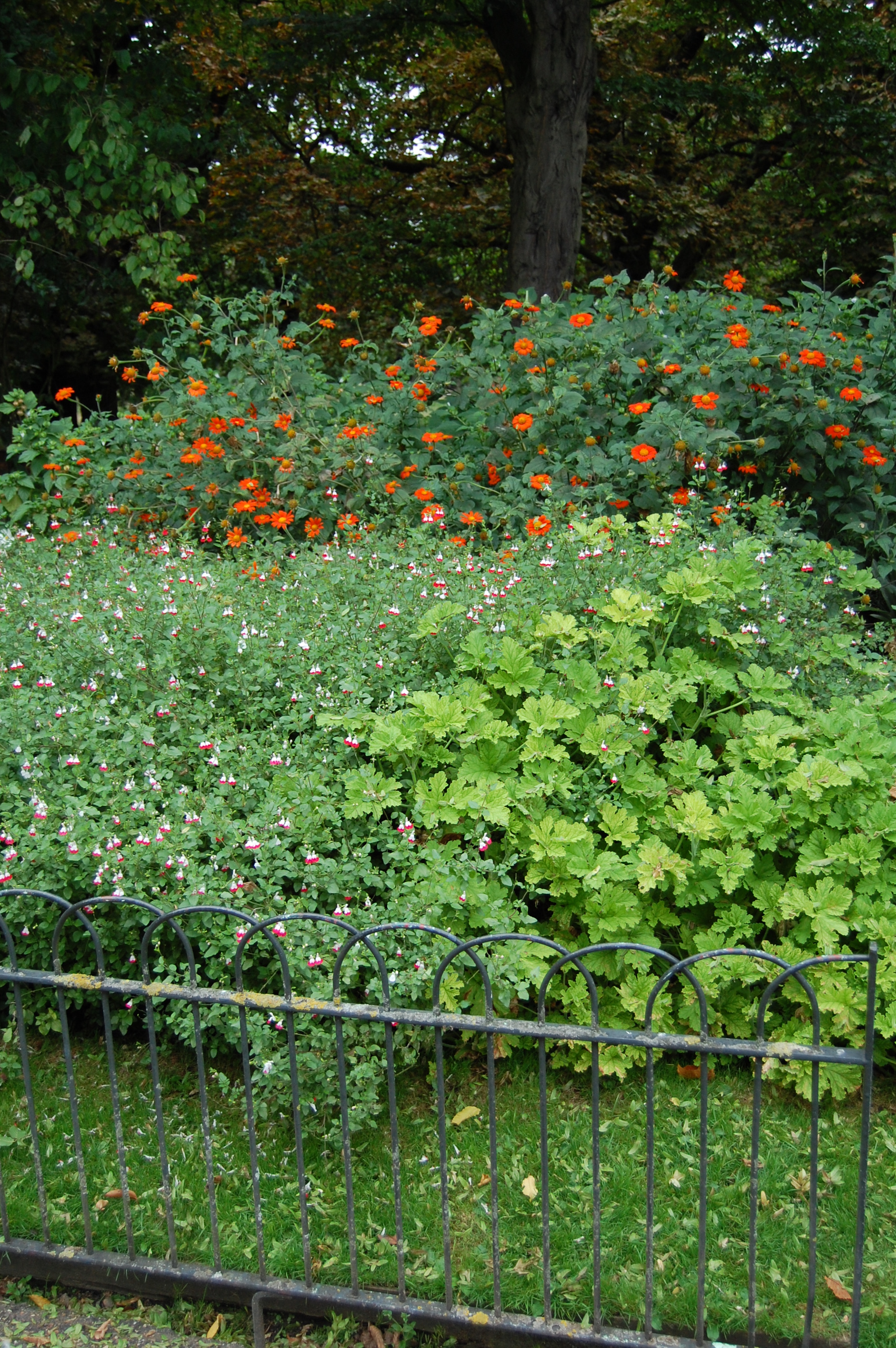
Tithonia and Hardy Geranium.
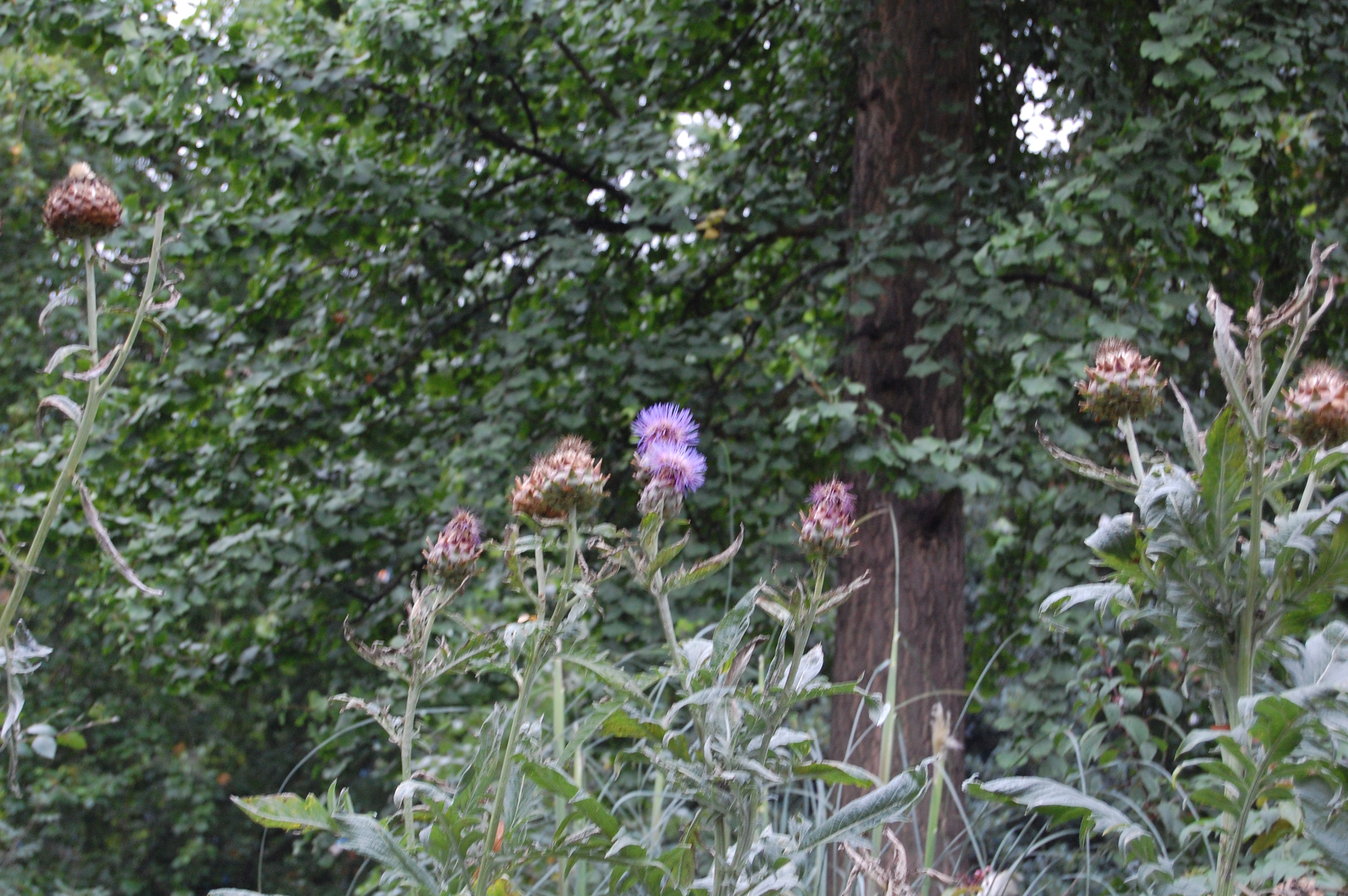
Some kind of thistle? Help me out here.
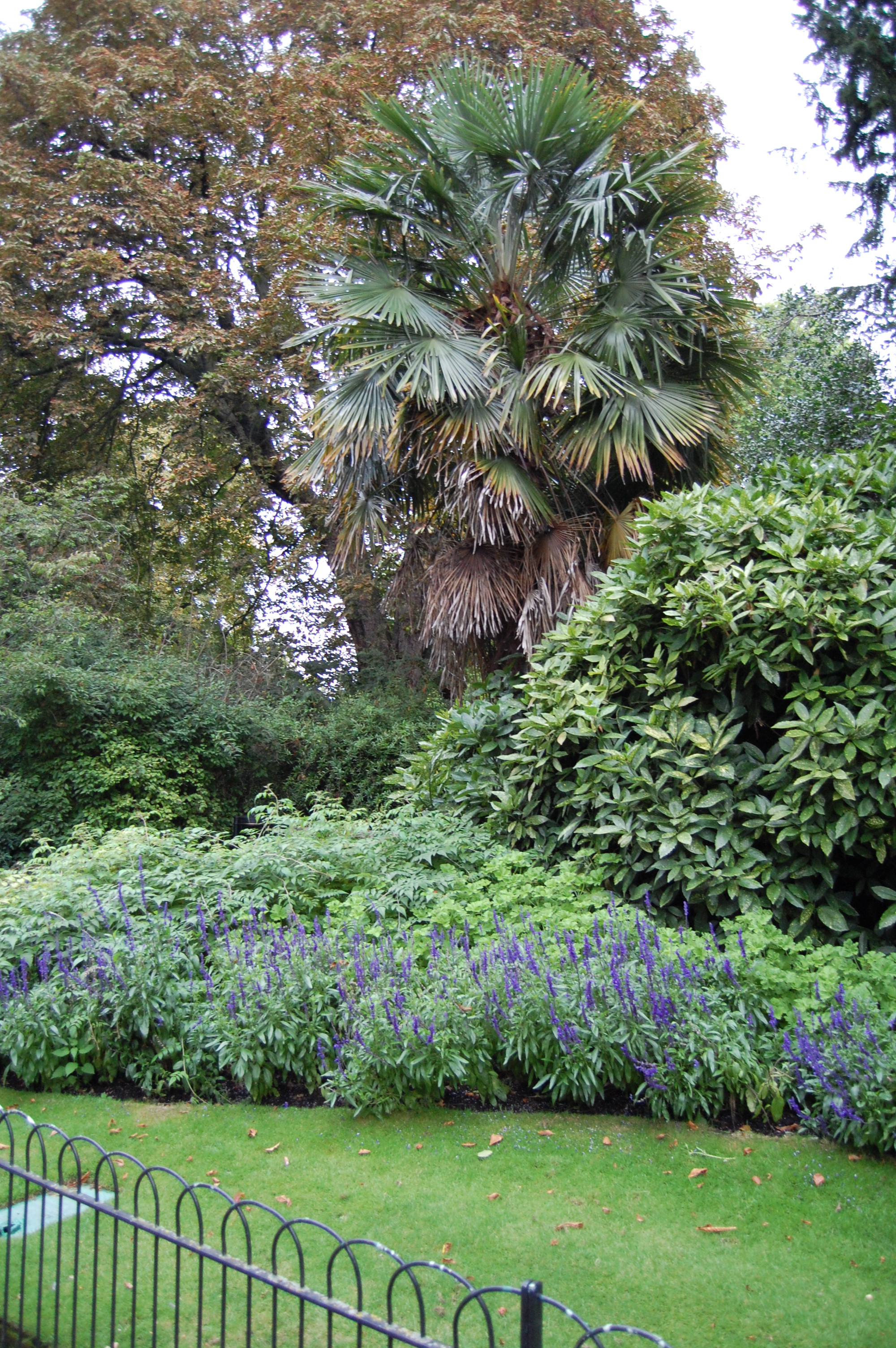
Palm trees in London? Don’t tell me they take these inside for the winter.
The last few years our immediate family has followed a new holiday tradition. Instead of buying each other gifts, the four of us take a trip together. Past trips have been to New Orleans, South Carolina, and Washington DC.
Ladybird Johnson Wildflower Center
This tradition has several advantages. For one thing, it allows me to greatly cut down on Christmas shopping, an activity I find almost as enjoyable as multiple wasp stings. Also, it’s much easier to achieve quality AND quantity time with our twenty-something sons, who otherwise insist on spending time with people of their own age. And Lord knows how much longer they’ll be willing to do this with us.
This year we’re going to Austin, Texas, where we’ll be staying at a rented house. We’ll be there for about a week.
We haven’t worked out a detailed itinerary, but already on the list are the following:
Ladybird Johnson Wildflower Center. Hope there is a decent amount of stuff in bloom.
Zilker Botanic Garden.
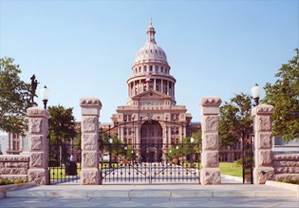
Texas State Capitol. I am a bit of a connoisseur of state and provincial capitol buildings.
State History Museum.
Barbecue. We have many, many suggestions of places to go, so this one will keep us busy.
Texas State Capitol
Judy may want to do some stuff related to art, music, or shopping, but we’ll see. Can’t do everything, you know.
We’re hoping the weather will cooperate. Austin is normally about 60 degrees (F) in December, but weather has been unusually frigid across the country in recent days.
Anyhow, for those of you who know Austin, we’d like to hear your suggestions. If you had a week, what would you do?

























 gardeninacity