Back Garden Notes
Time to Dig the Alliums
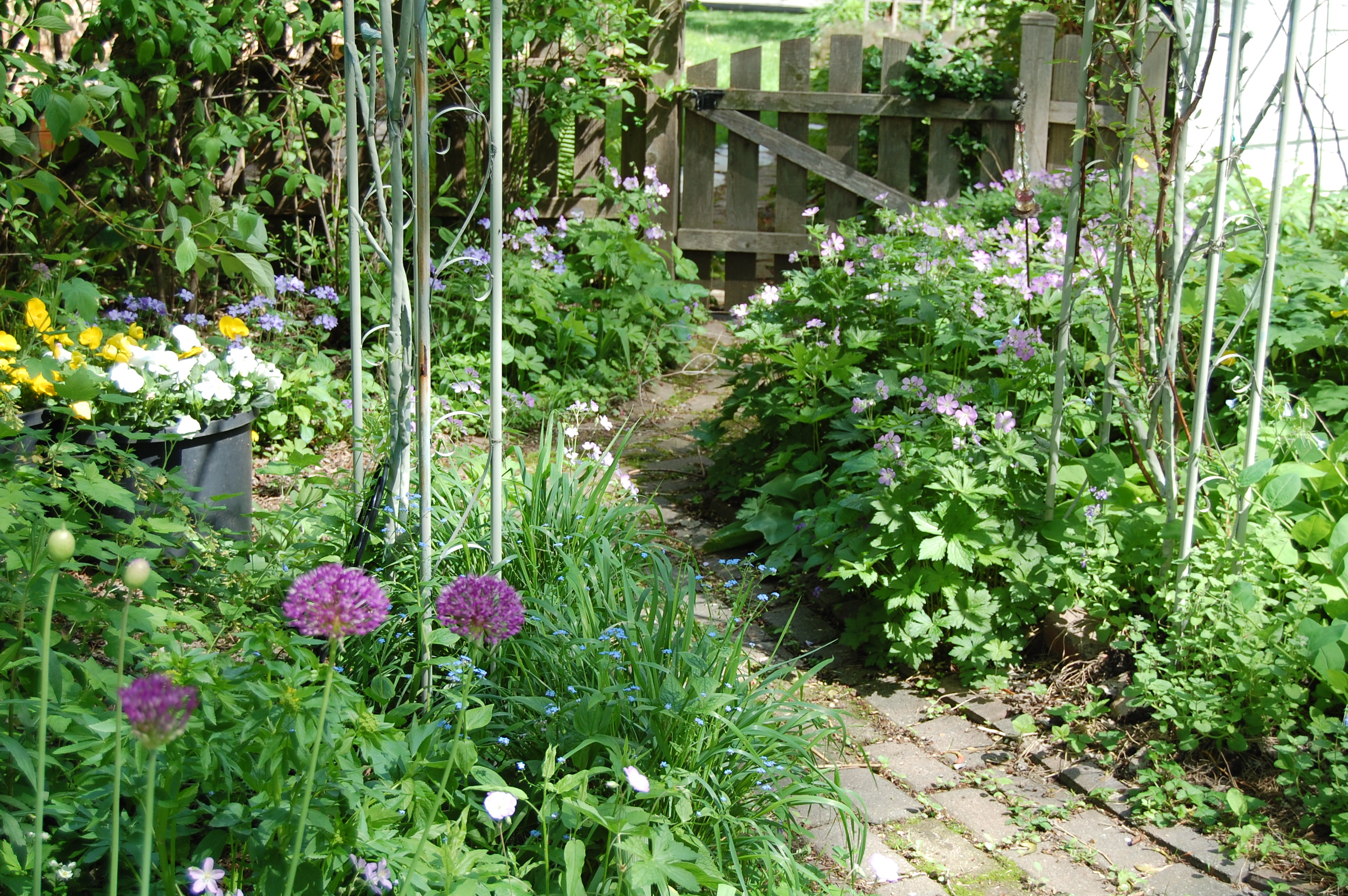
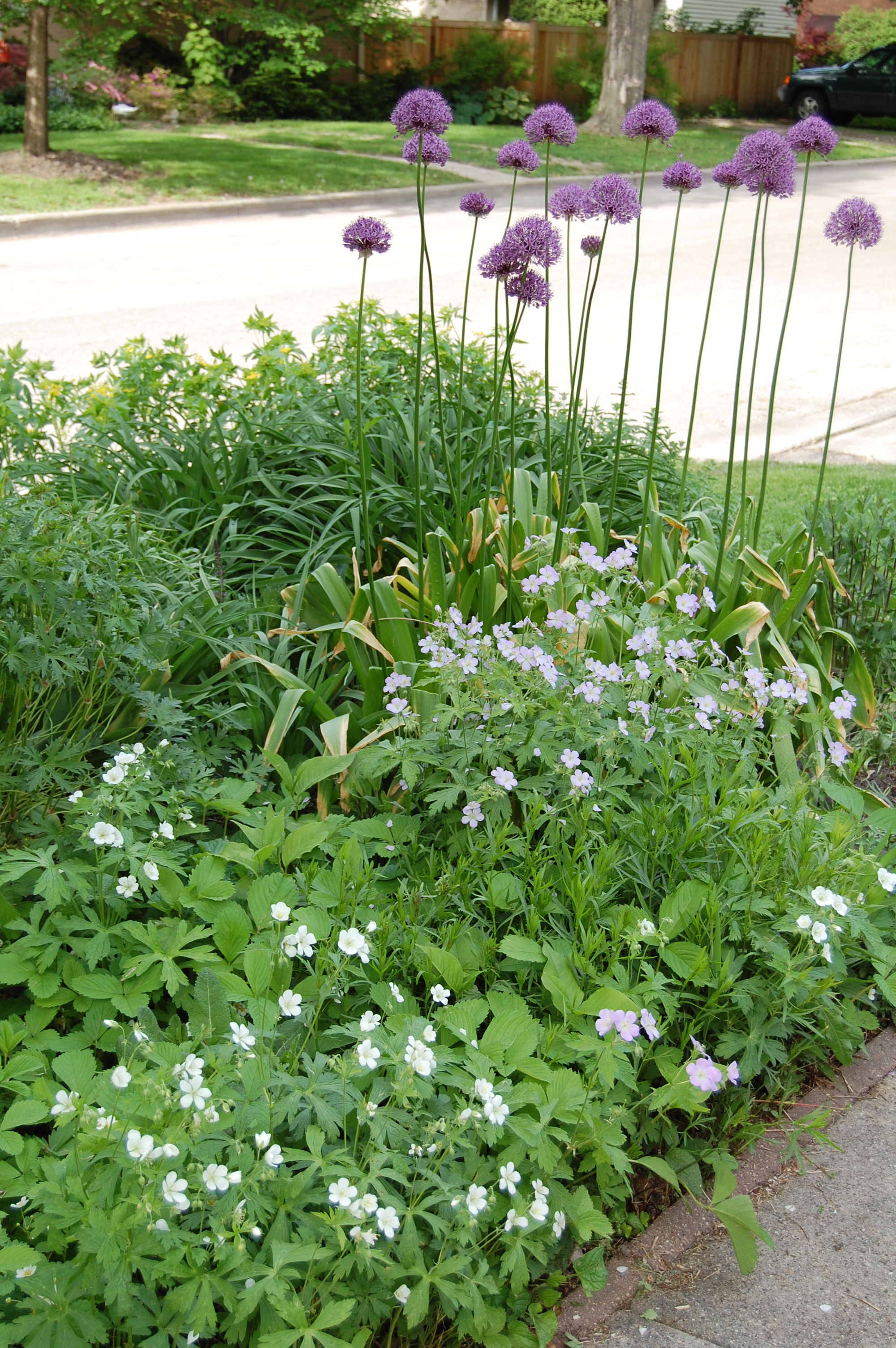
In the back garden there is a patch of Allium ‘Purple Sensation’ (Allium aflatunense) that has expanded substantially over time but that is also getting rather too congested. A sign of this is the thick growth of Allium foliage but fewer actual flowers than we saw last year. When they are done flowering I will have to dig them up and then replant a portion. The remainder will need new homes, in our garden or in the gardens of friends.

The other thing these Allium need is companion plants. Right now when they die down they leave kind of a big empty space. The companion needs to bloom early summer or later and be big enough to avoid smothering by the Allium foliage. At the Chicago Botanic Garden they use a lot of daylilies (Hemerocallis sp.) for this purpose, but I’m not sure this spot has enough sun to make daylilies really happy. On the other hand, there seems to be enough sun for ‘Purple Sensation’ … Any suggestions?

Here’s a fun horticultural fact: Alliums reproduce by both bulblets and bulbils. Bulbils are bulblets that are produced between the leaf and the stem, rather than as offsets of the bulb. “Bulbil” is a fine word, and sounds like one of the hobbit characters from JRR Tolkien.
Amsonia is a Star of the Raised Island Bed
Years ago I created a raised bed in the back as a way of protecting my perennials from root competition, particularly from the silver maple (Acer saccharinum) that stands near the middle of the garden. Silly me. That raised bed is now full of silver maple feeder roots, and as a result it has been difficult to find plants that will do really well there. What’s more, some of the plants that can tolerate the greedy maple roots fall prey to voracious rabbits.

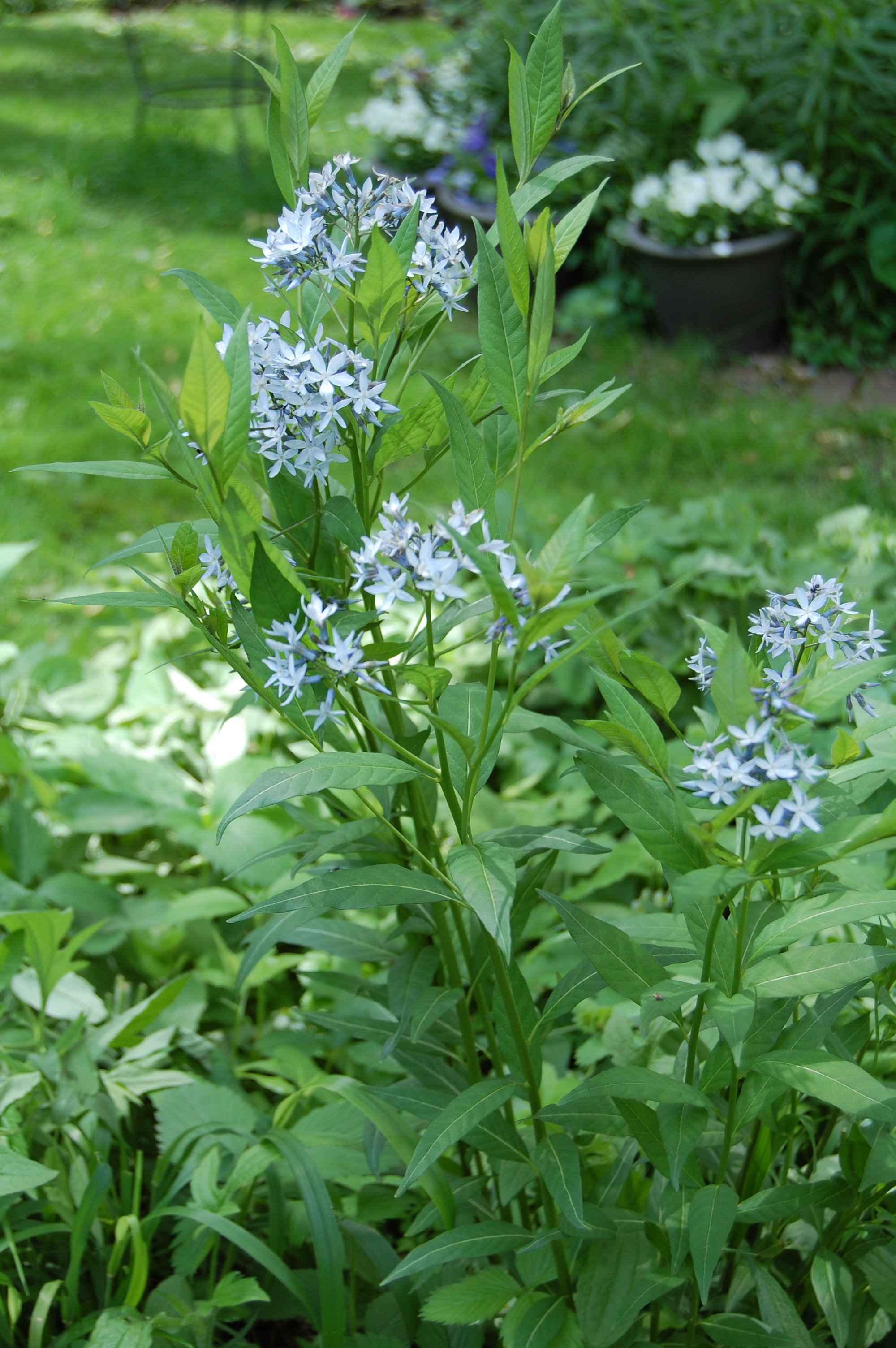
Amsonia ‘Blue Ice’ (Amsonia tabernaemontana) is one of the few success stories I have had in this bed. It’s tough enough to muscle through competing roots, takes some shade, and rabbits find it unpalatable. As a result I just planted two more ‘Blue Ice’ in the island bed, plus I’m trying an Arkansas blue star (Amsonia hubrichtii).
Consider the Lilies of the Valley
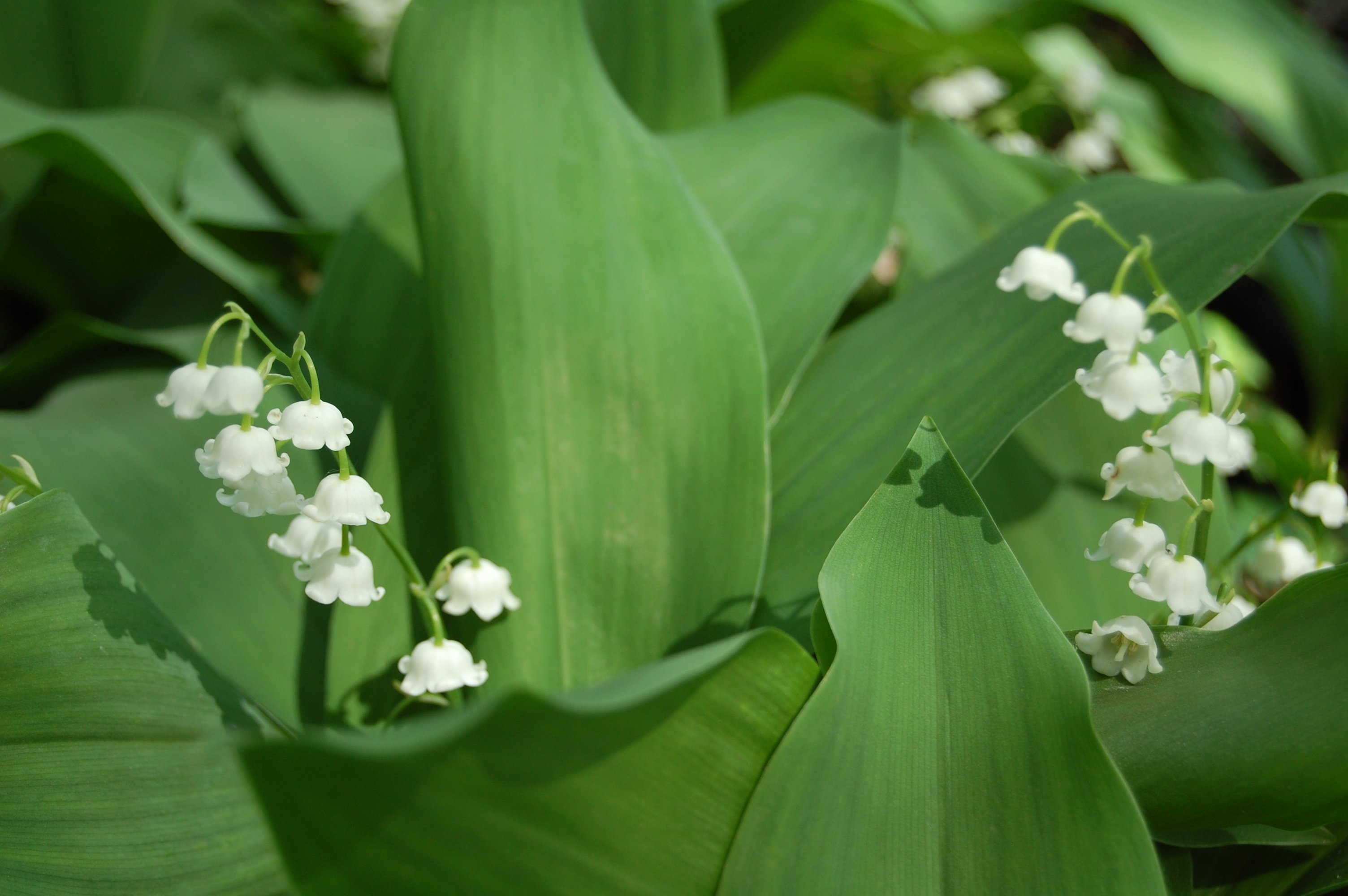
The border along the hedge on the west side of the back garden is being invaded by lilies of the valley (Convallaria majalis), and I’m perfectly happy about it. They are creeping over from the neighbor’s yard, and actually I’d like to find them some reinforcements so they can take over an area now dominated by weeds. Only thing is, I can’t find any at the local nurseries. Isn’t that strange?
Arch of Anticipated Triumph

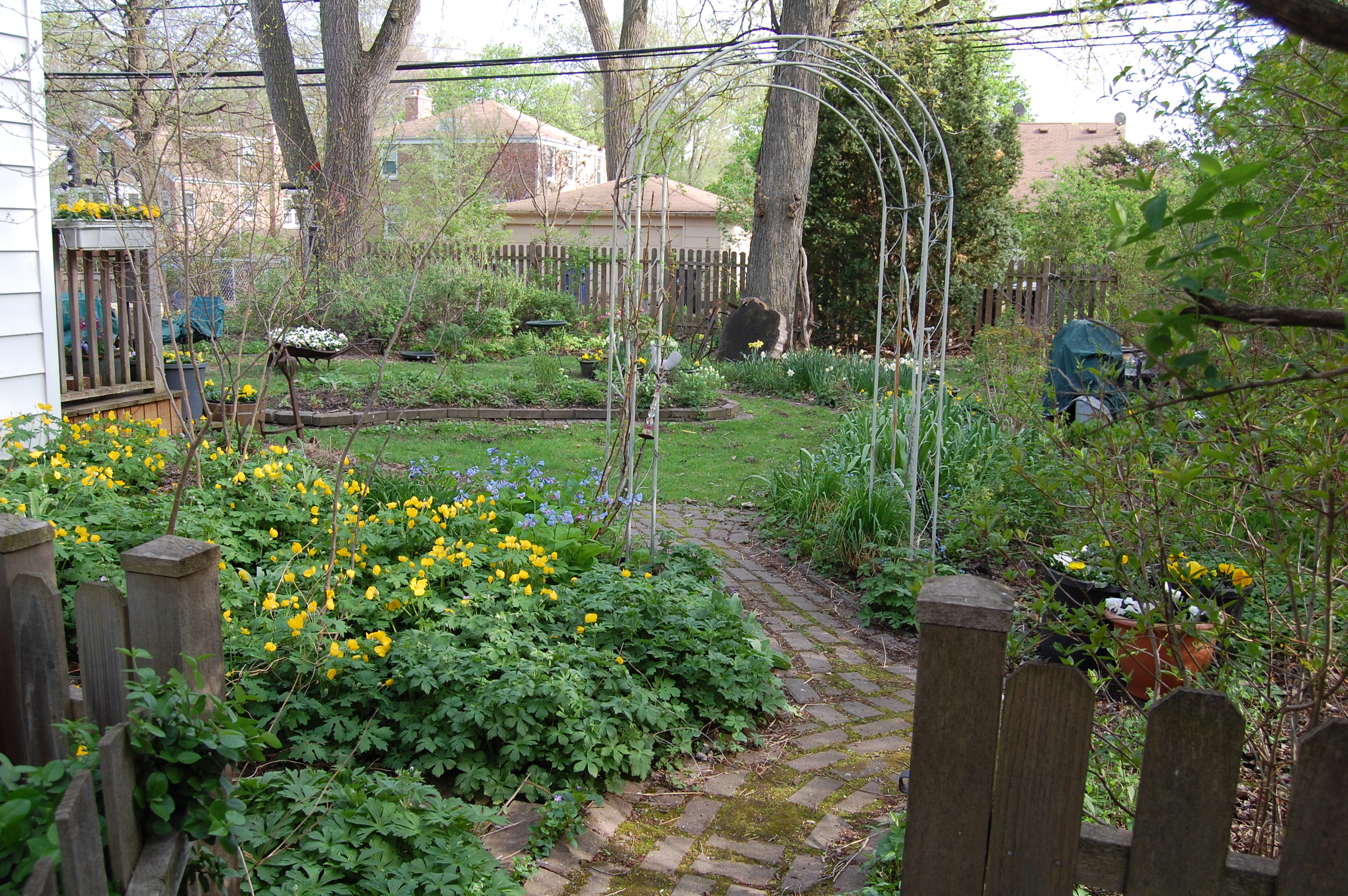
When I put up the arch over the path leading into the garden I imagined it covered with fragrant roses. I planted ‘Darlow’s Enigma’ on one side and ‘Westerland’ on the other. Subsequently ‘Westerland’ developed rose rosette disease and had to be removed. ‘Darlow’s Enigma’ climbed to the top of its side of the arch, but most of its canes died back over the winter. Still, the overall appearance of the entrance to the back garden looks pretty good I think. This is mostly because of what is growing around the arch, though, not on it.
Can this Deutzia be Saved?
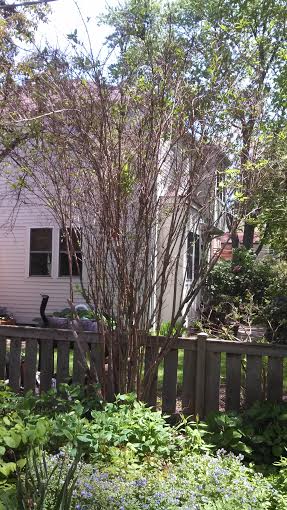
Another casualty of winter seems to be the big old Deutzia that we inherited from the former owners. It has leafed out very sparsely, mostly near the top. It’s really a shame because this shrub is a significant presence in the back garden, and the birds like to use it for shelter. I intend to cut out the dead stems and see what happens. Anyone care to make a prediction or offer advice?
That’s it for now. I think my next post will be a hybrid tulip retrospective, but we’ll see. Thanks for visiting.






























 gardeninacity