Sissinghurst in September, Part 1
A day after seeing RHS Wisley, John and Pauline drove us to see Sissinghurst, the garden created in the 1930s by Vita Sackville-West. I’m embarrassed to admit that I have never read a single one of Sackville-West’s gardening books (or her novels, poems, or other writings for that matter). This, combined with the thousands of words that have already been written about her garden, makes me a little reluctant to comment on what I saw. However, I will just share with you my own reactions, as ill-informed as they may be.
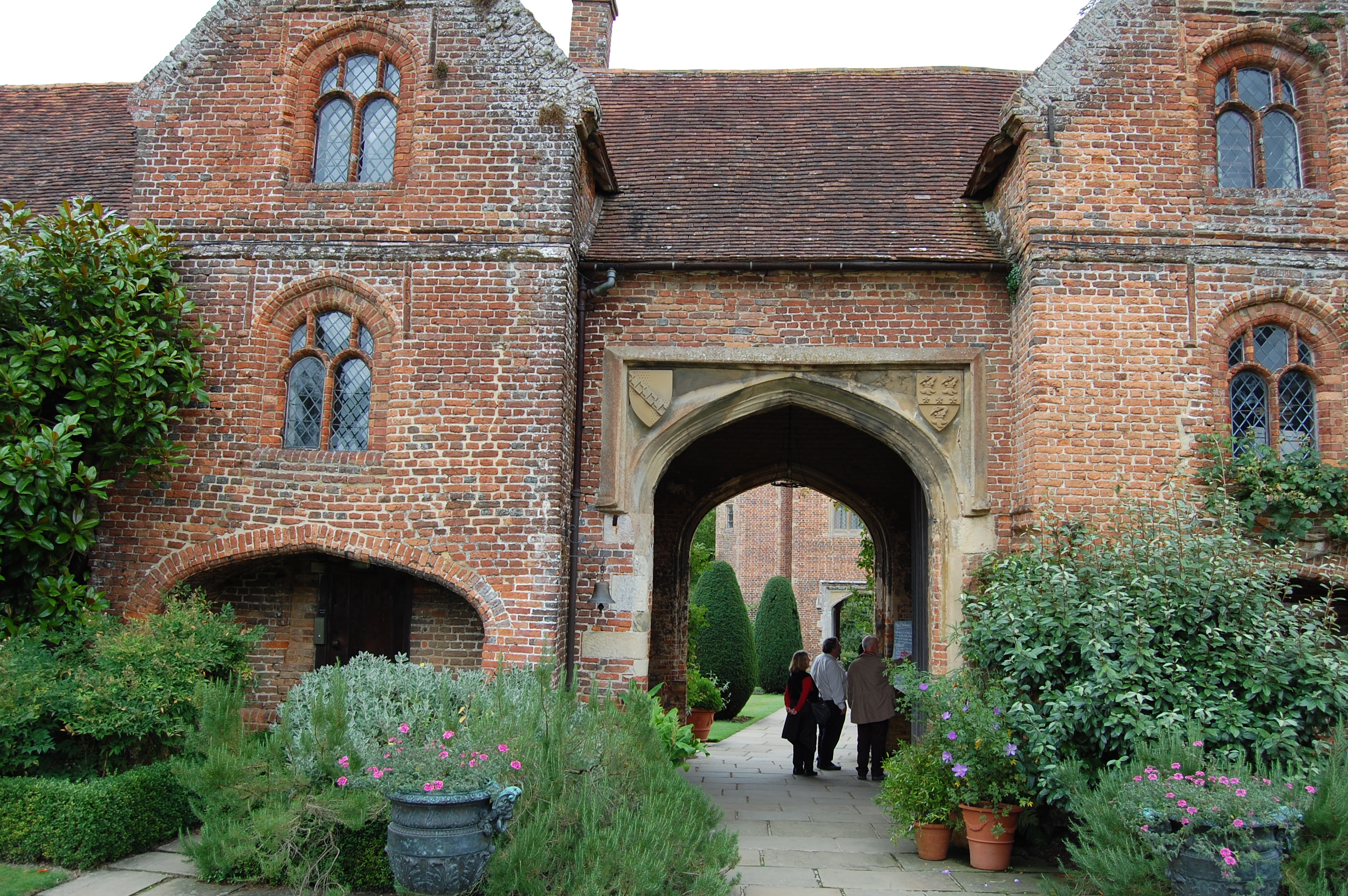
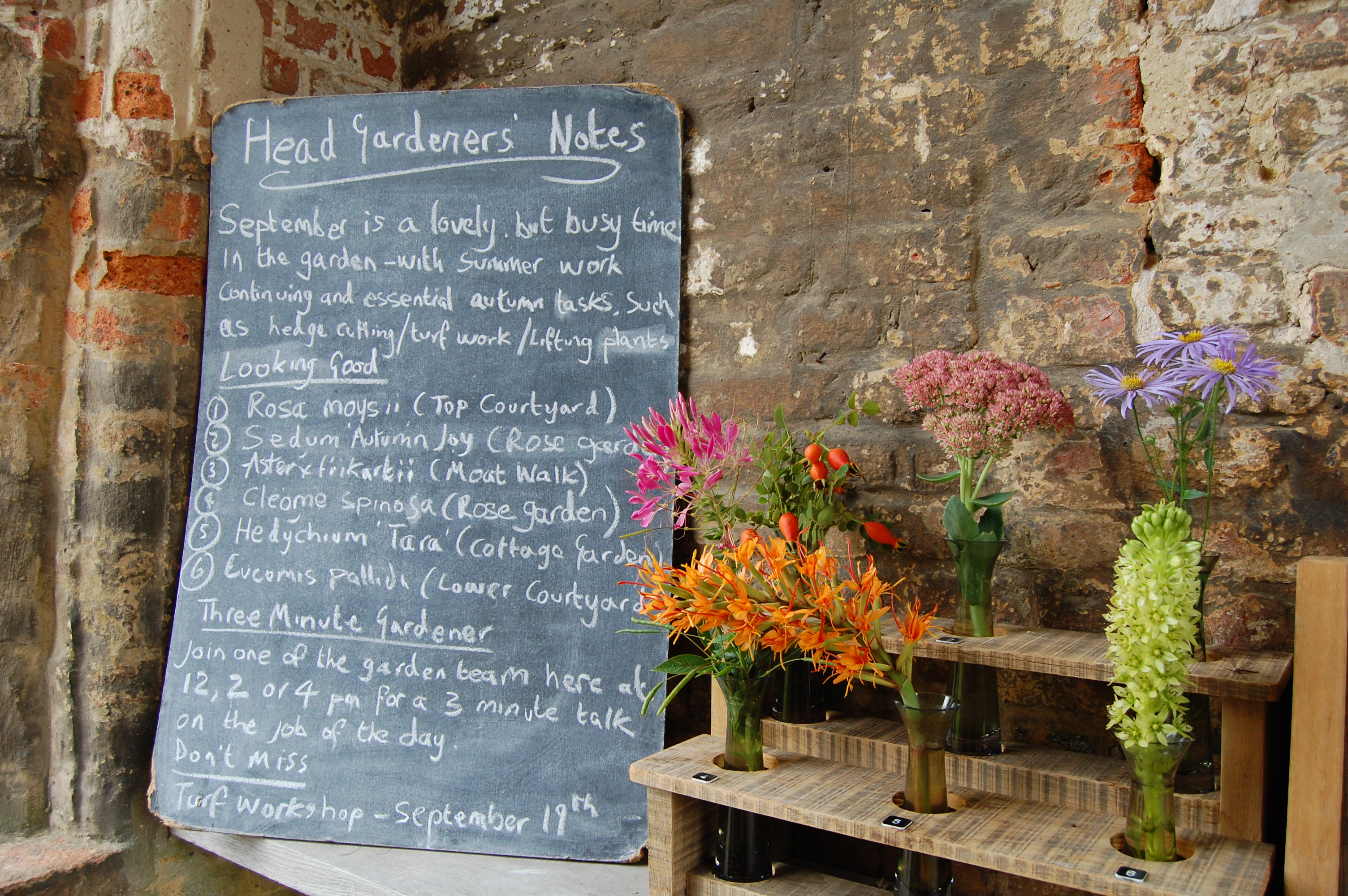
You approach the garden by walking through an arched gateway that passes through the main house. An engaging touch is the “Head Gardener’s Notes”, written daily on a chalkboard located near the outer edge of the arches.
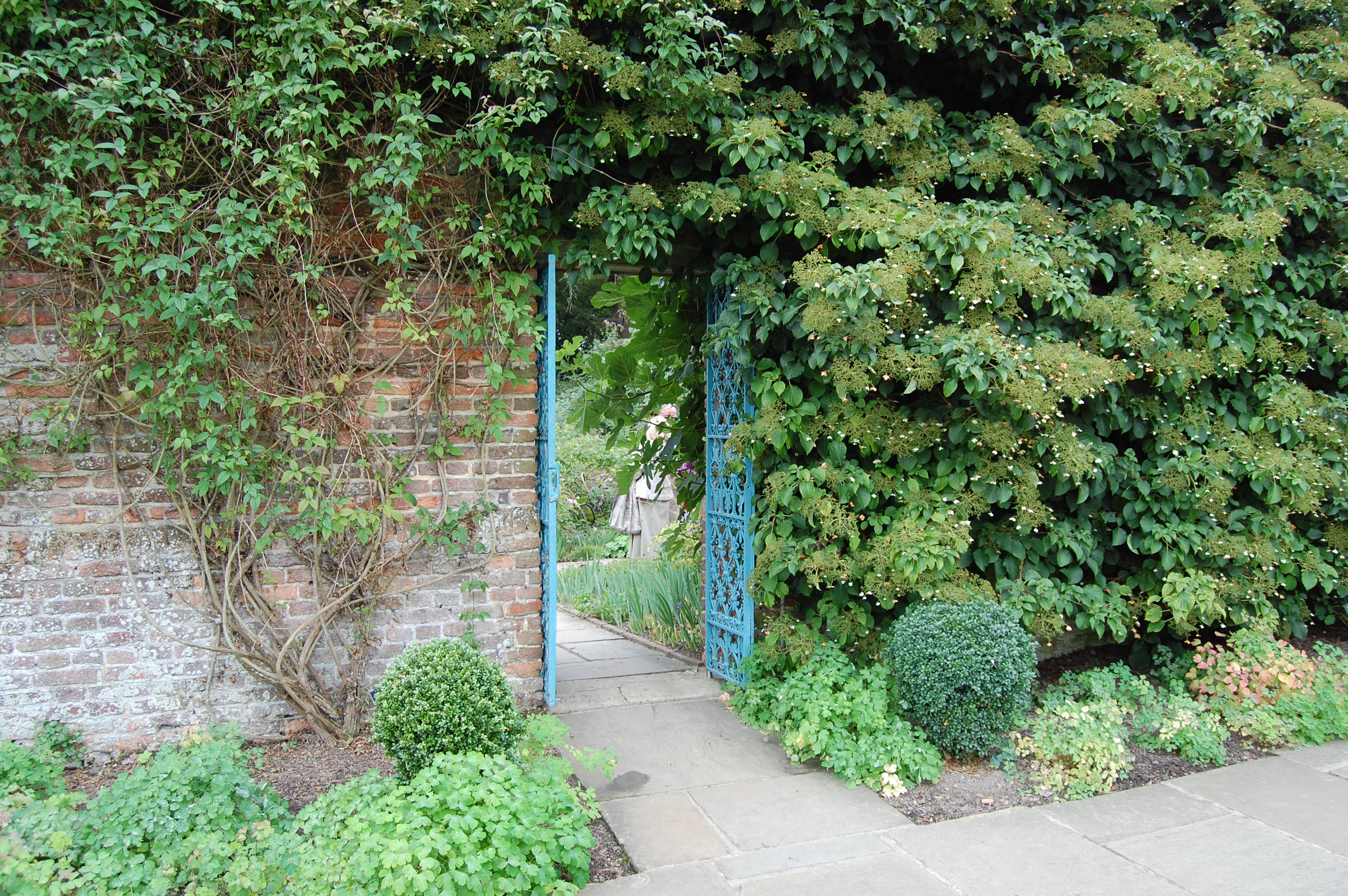
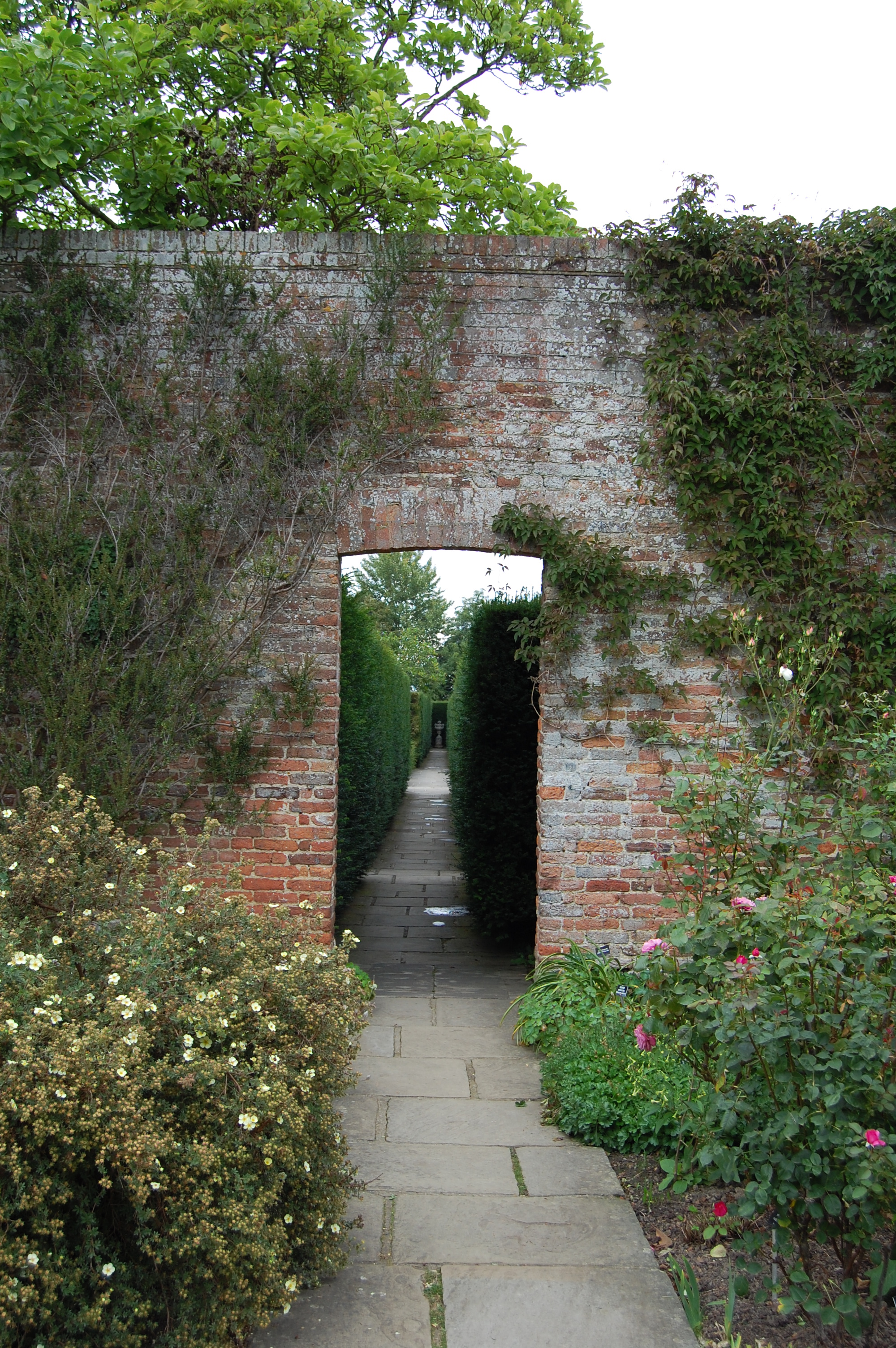
As many gardening books will tell you, Sackville-West promoted the concept of gardening rooms, and this idea is certainly put into practice here. The garden is divided by numerous walls and tall hedges, with gates and gaps tempting visitors with a peek of whatever garden lies beyond.
I knew of Vita Sackville-West as essentially a gardener and garden writer. Turns out that beyond the gardening world she was much better known as a prolific and successful author (mostly novels and poetry). She was also an aristocrat whose very active social life (which included affairs with Virginia Woolf and a bunch of other people) did not get in the way of her very amiable marriage to a prominent British diplomat. Who says gardeners are dull?
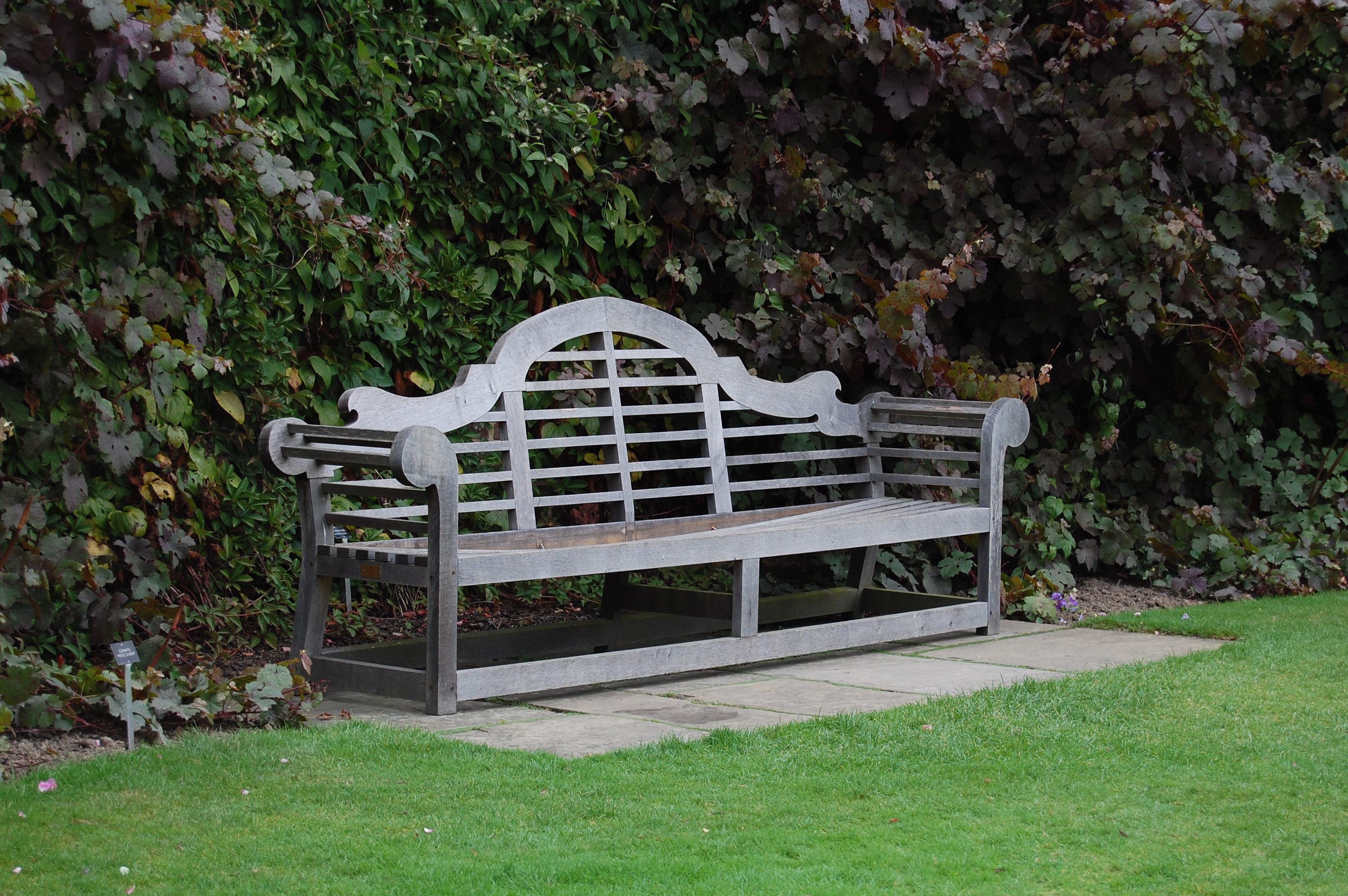
Some of the first benches designed by the British architect Edwin Lutyens were purchased for the garden at Sissinghurst.
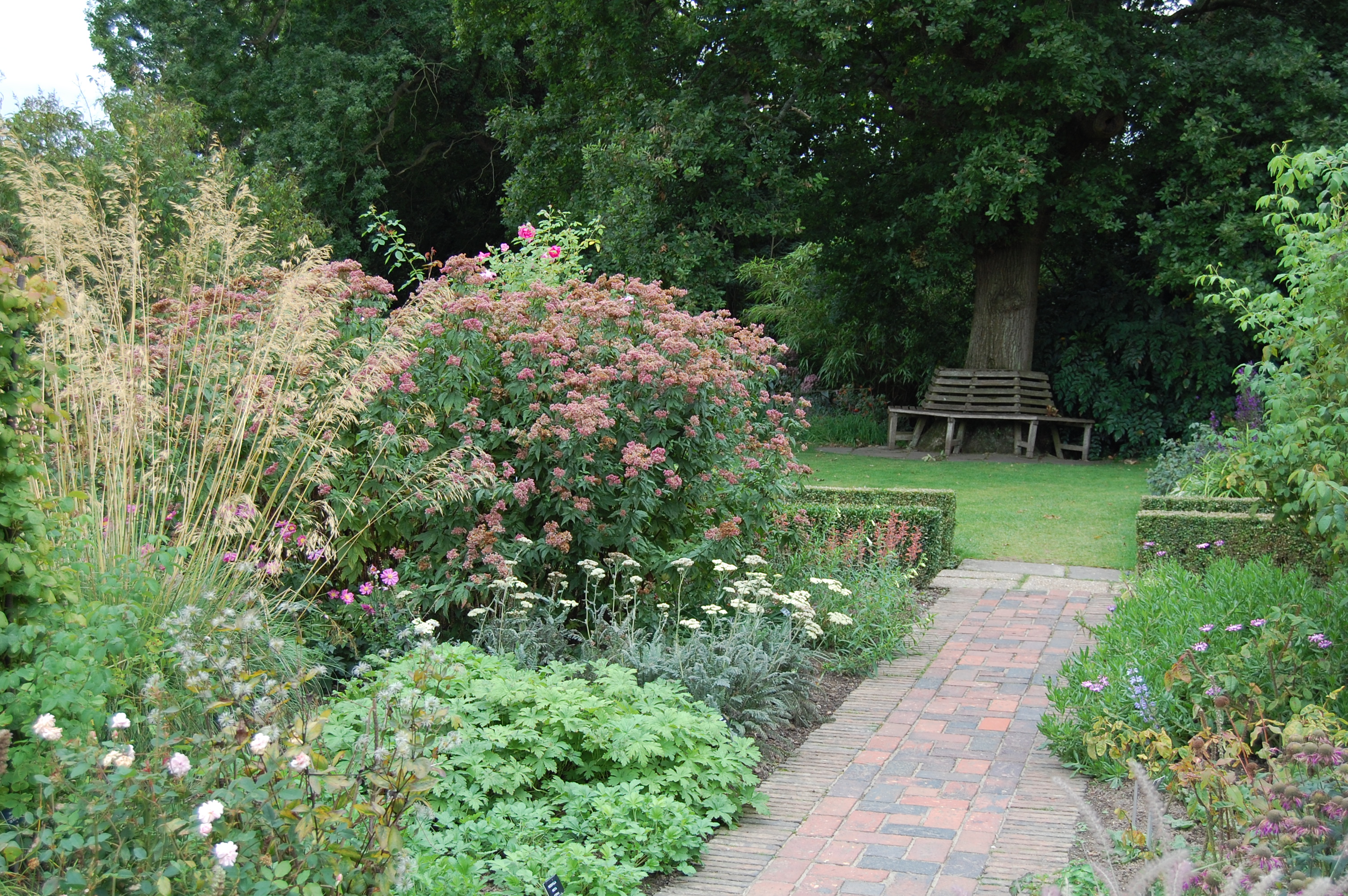
Nice to see Joe Pye Weed at home in such an aristocratic setting.
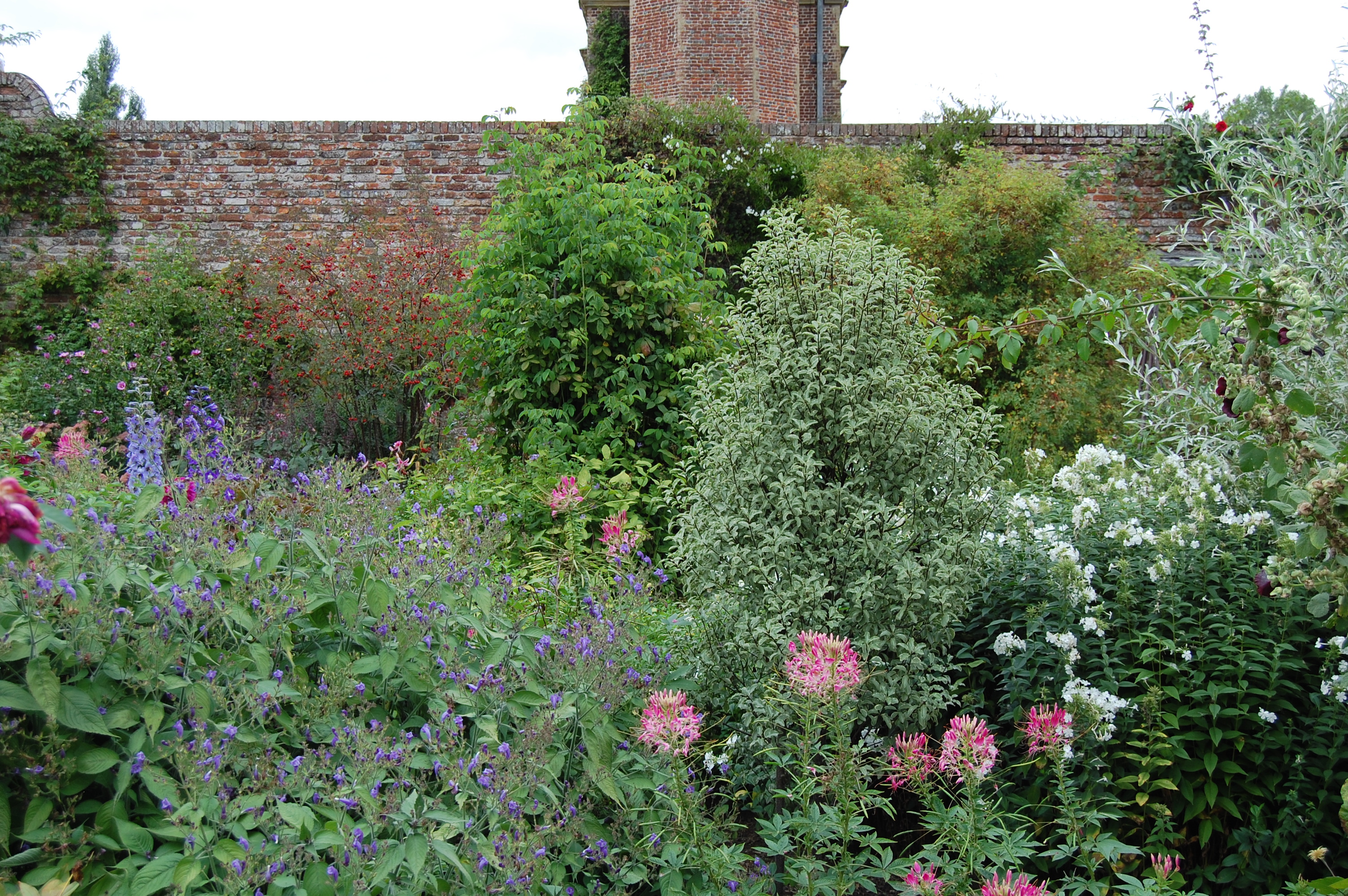
The rose garden has a great deal more than roses. It seemed more like a garden of mixed borders with a generous dollop of roses mixed in.
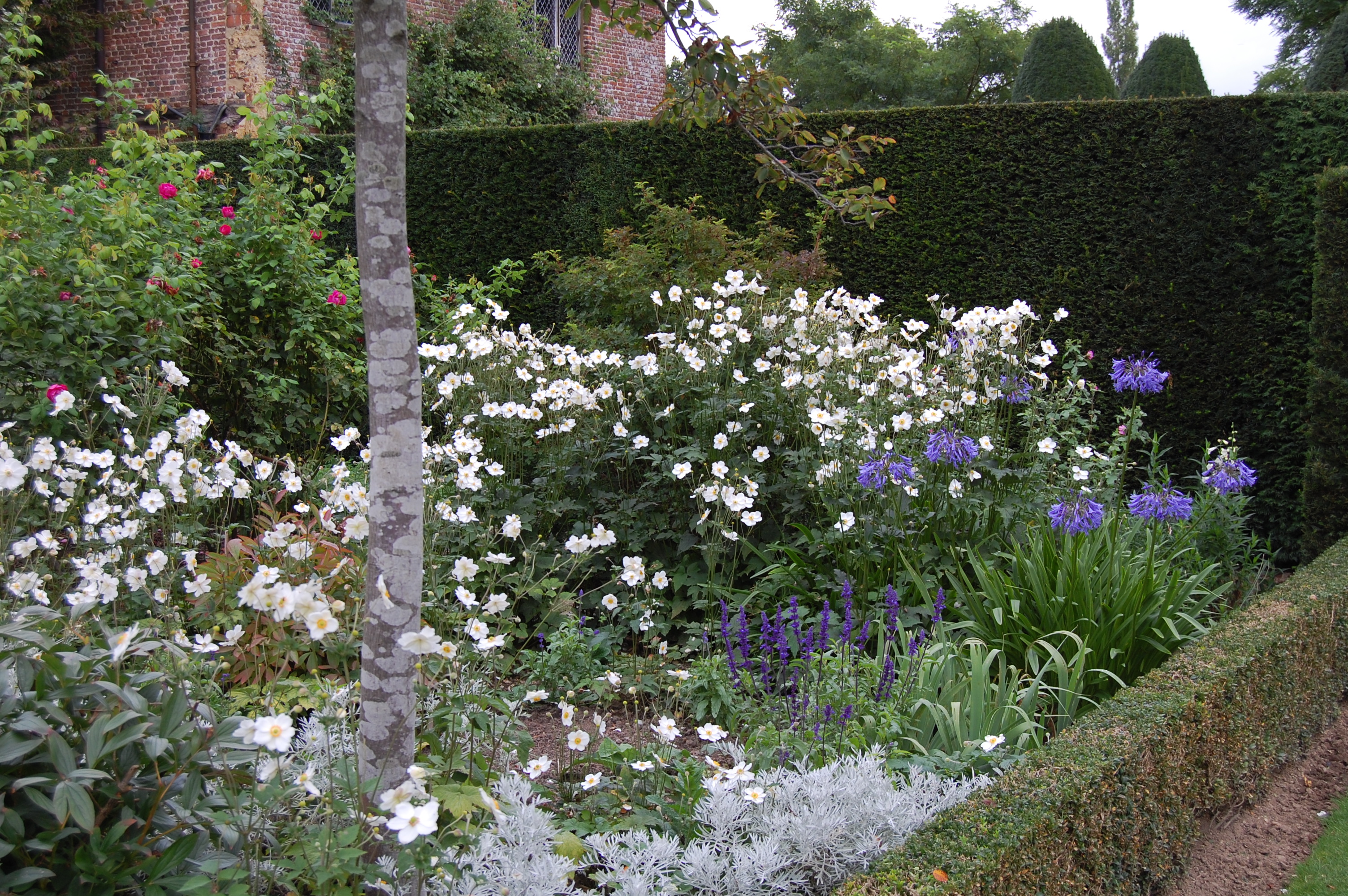
Red roses, white Japanese Anemone, and blue Agapanthus.
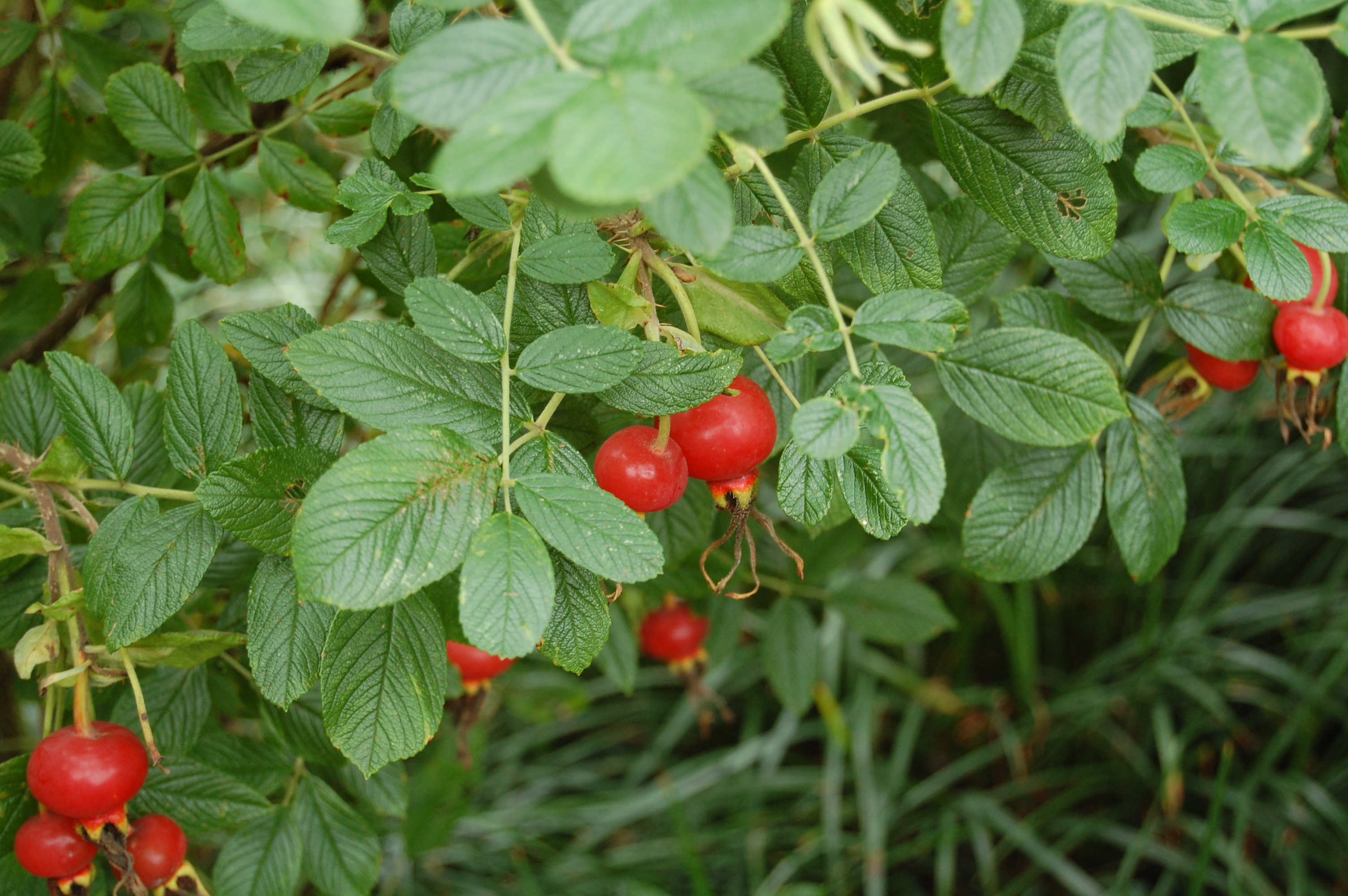
At this point in the season the bountiful Rugosa and other rose hips were as decorative as the roses themselves.
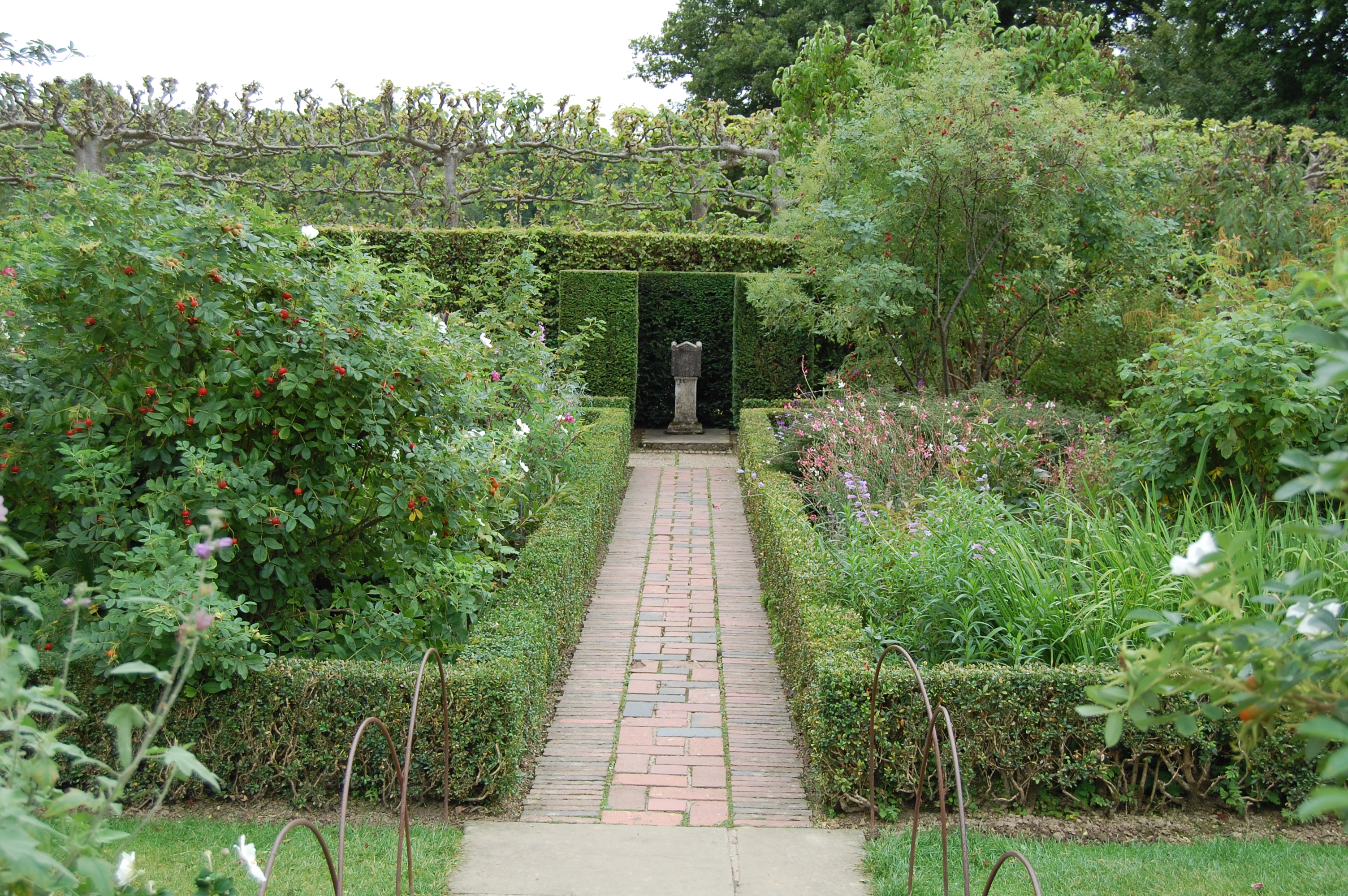
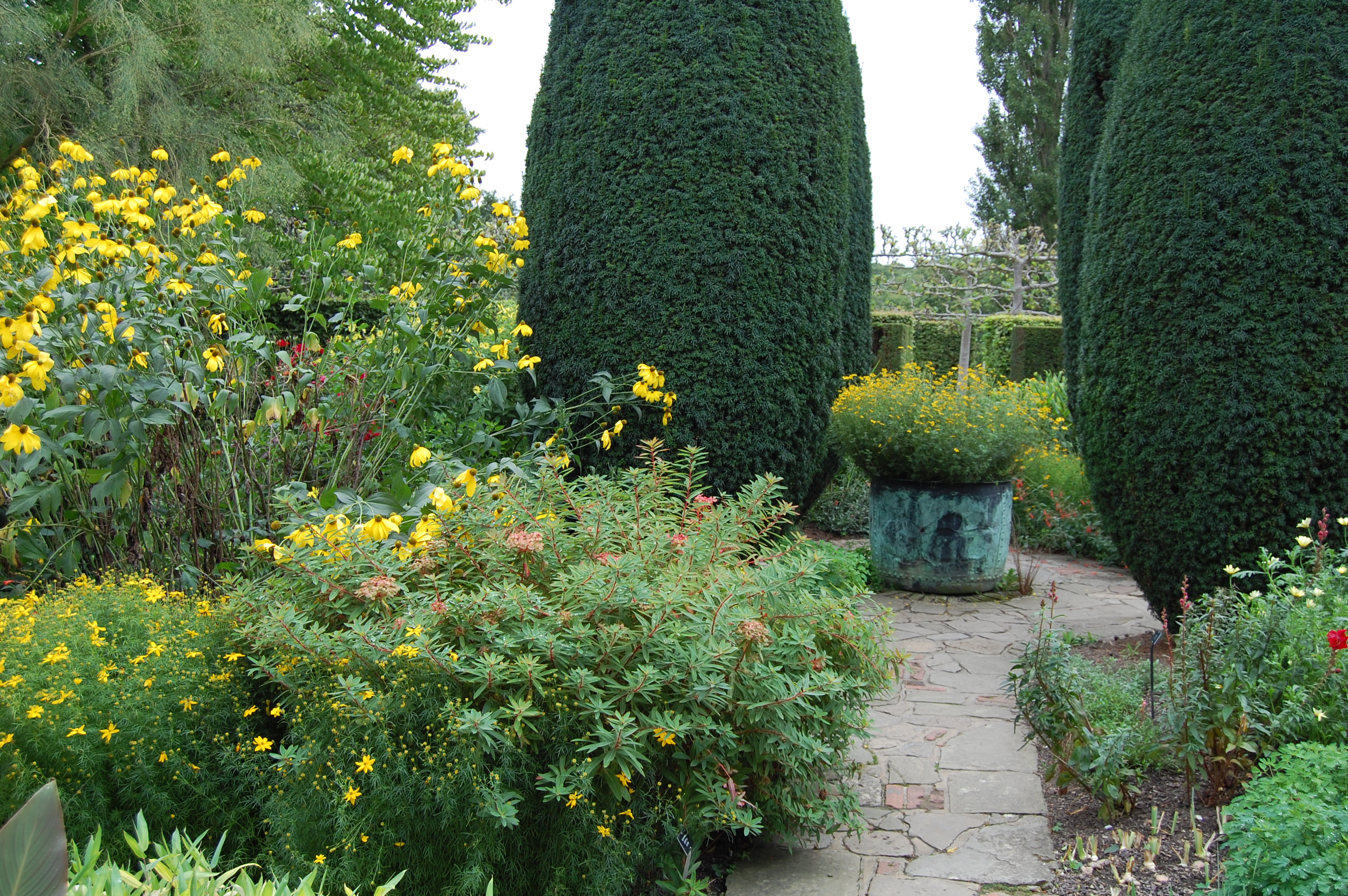
In the “Cottage Garden”. I suspect Vita Sackville-West’s idea of a cottage may differ a bit from many of us. There was lots of this tall Rudbeckia – R. laciniata, I think.
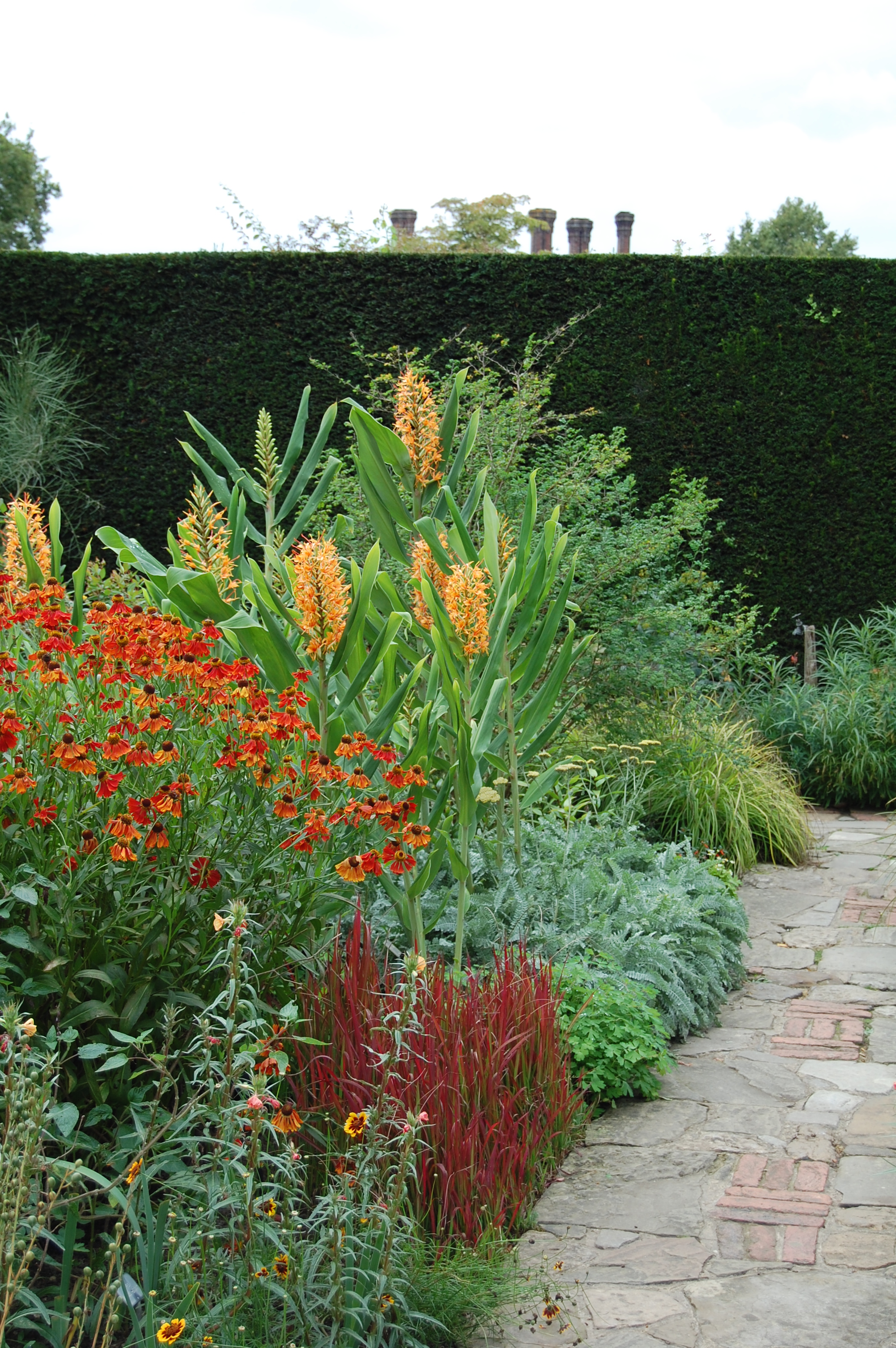
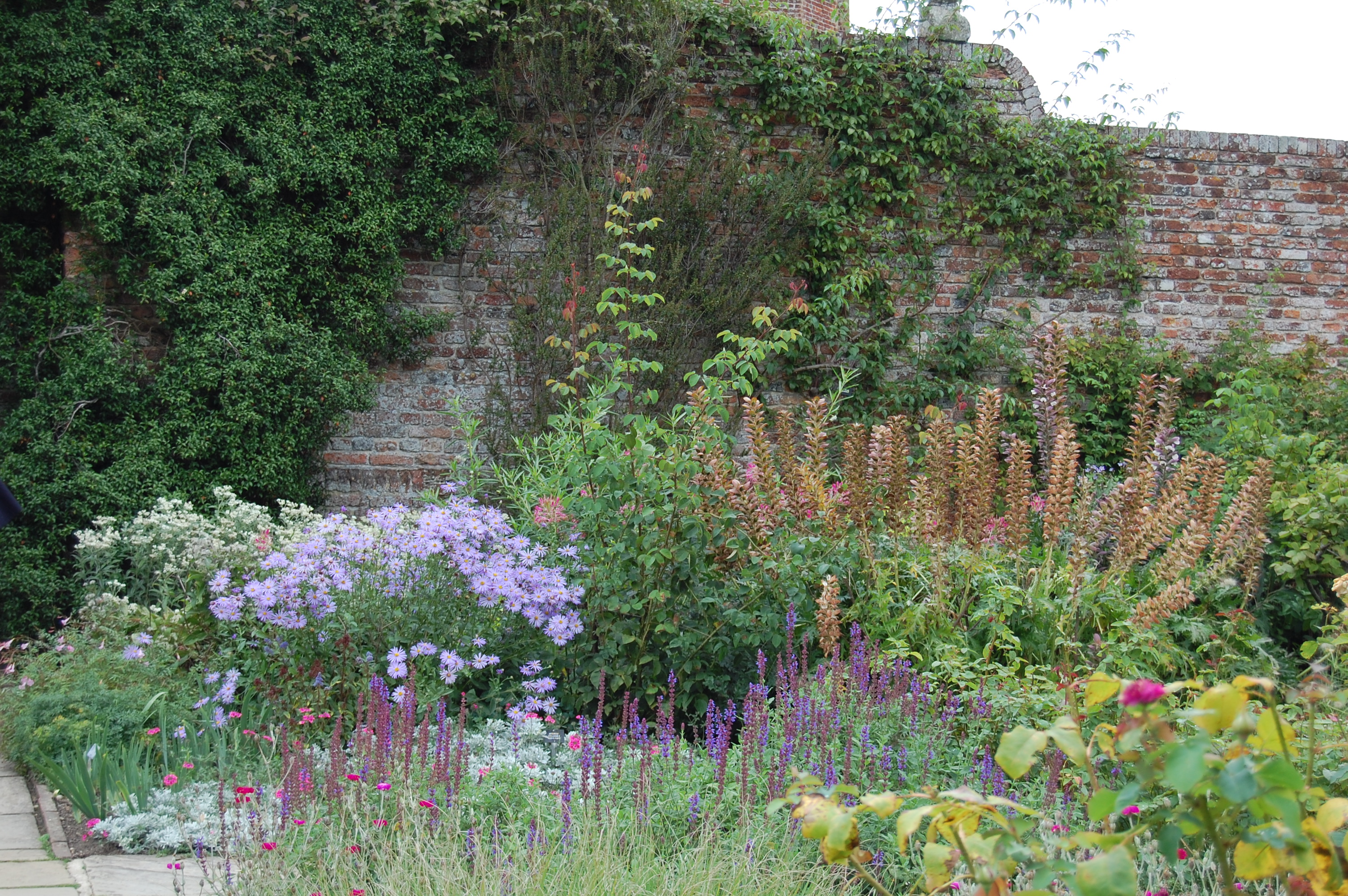
What is that bright orange flower behind the Helenium?
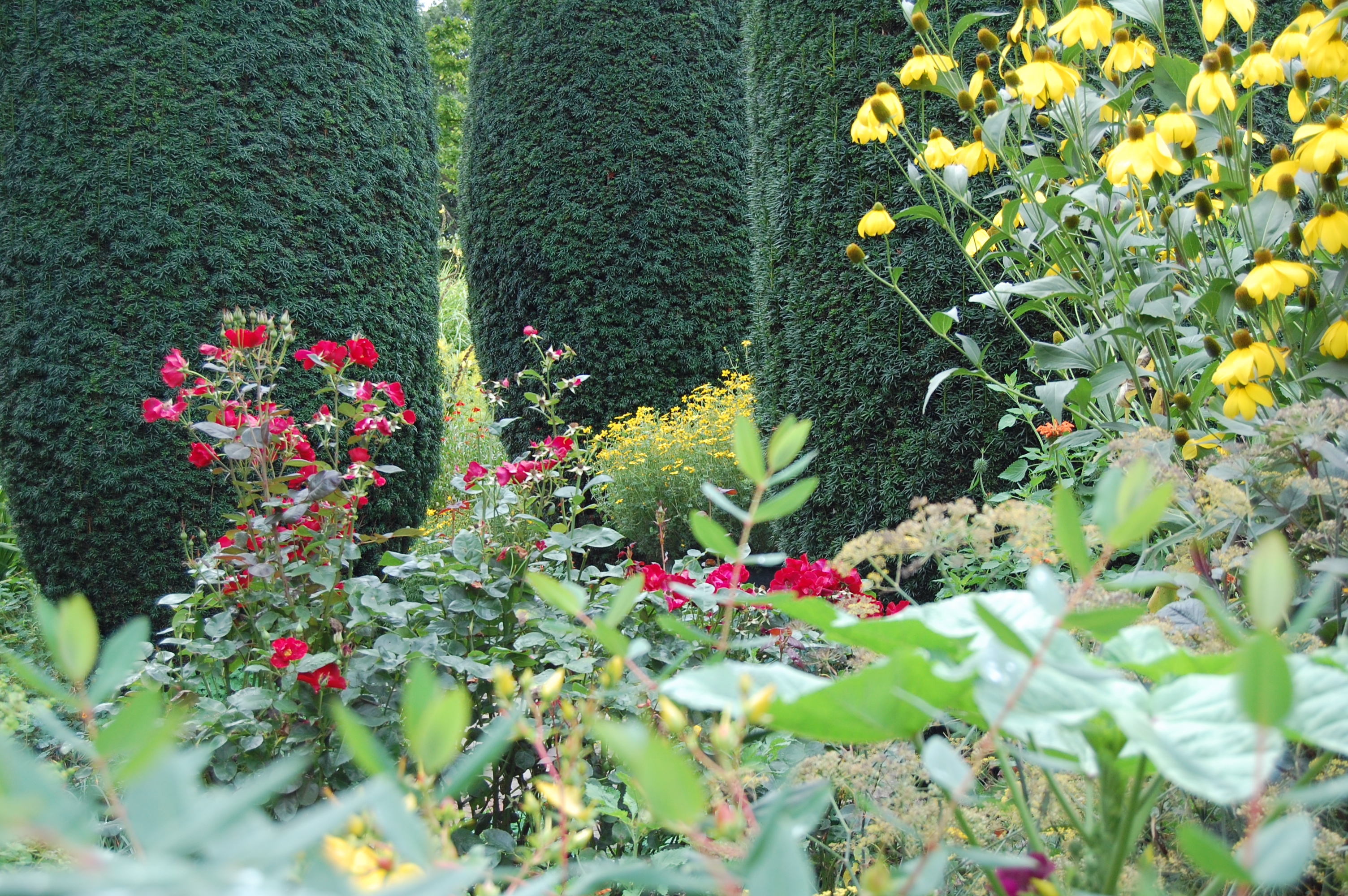
I generally don’t like Yew, but the dark Yew hedges make a nice backdrop for brighter colors, as with these red roses.
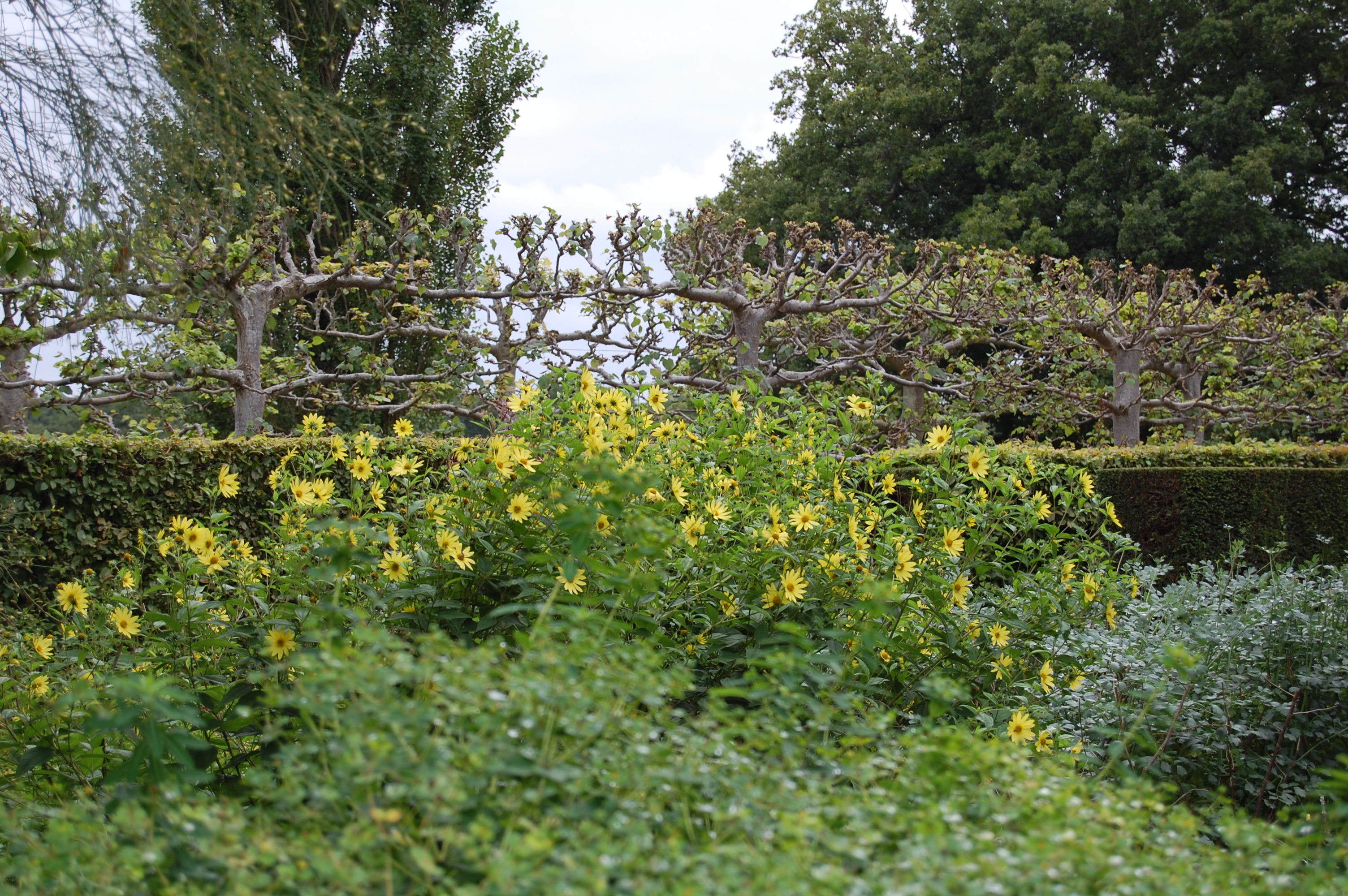
Sunflowers in the Cottage Garden. The tops of the trees of the Lime Walk are visible above the hedge.
My overall impression was of a mix of exuberance and orderliness: great mounds of color and billowing foliage contrast with neatly clipped hedges, straight paths, and rectangular beds. The combination is certainly striking. However, as much as I liked the garden rooms, for myself I would have preferred a more informal means of separation than all those clipped hedges.
That’s it for now. I will try to summarize the remainder of what we saw of this garden in Part 2. Have you read any of Vita Sackville-West’s garden books? Do you think I should? Which one would you recommend?



 gardeninacity
Another well-presented post and a beautiful garden. I haven’t read any Vita Sackville-West.
Glad I’m not the only one.
Very impressive indeed! I like the idea of things outlined on the chalkboard as you enter the garden. And yes there are a lot of hedges which I am not sure all of those spaces need when considering the fact that the paths do a great job dividing the different areas. I do love that shot with the orange flowers because the plants are not contained…So beautiful! She sounds like a very interesting lady! Will have to read up further on her…thanks for inspiring on these cold cold days! Nicole
I really liked that chalkboard too, it was a very nice personal touch.
Nice post! Were you actually asking about the orange flower? I think it is a Hedychium.
OK, thanks for the ID.
Lovely! That orange flower was on the Gardener’s Notes: Hedychium (coccineum) ‘Tara’. I have heard so much about the gardens, but am also unsure of those tall hedges… I prefer open expanses.
Missed that the Hedychium was listed on the Gardener’s Notes! I need to be more observant!
I love this garden, Jason! The photo #4 is sunning, wonderful perspective.
Have a nice day!
Thanks, Nadezda! I liked that one too!
This is one of my favourite gardens, which looks good all year round. The ginger lilies: Hedychium are great for late summer colour. Any of Vita’s gardening books are good, you might also be interested to read:Portrait of A Marriage by their son, Nigel Nicholson.
I bet that would be interesting. I don’t think Hedychium are hardy where I live, sadly.
I’m fascinated at what you saw and your impressions. Im not a fan of the gardens there something about their ordiliness, they left me cold. All except the cottage garden. Sad to say.
I did like the ponds and woods around the farm/house though.
I didn’t think the rose garden was overly orderly, but some parts I can see having that reaction. The garden is in a beautiful rural setting, as you say.
Yes, it’s a hedychium and yes, I think you should read her books. I love her writing – it’s beautiful aand spirited. Many things to love in her garden but I like the wild bits.
I like the wild bits best as well. She’s written so many gardening books it may be an effort to choose one to start with.
I Love Sissinghurt, its a wonderful place to visit, there is something thats almost indulgent about its planting and structure that thrilling. Its a place that needs visiting more than once and early to avoid the crowds if possible. Looking forward to part two!
I agree that Sissinghurst needs more than one visit. I would love to go in Spring.
This has always been my all time favourite garden. I feel Vita’s presence here especially under the loggia in the white garden. She died in the bedroom above this seating area, of cancer. I found that reading about her childhood at Knole was fascinating. Try Victoria Glendinning’s book ‘Vita’.
OK, I’ll put that on my list!
It was at Sissinghurst that I actually first liked roses, my father had always grown hybid tea, which I hate and seeing all the wonderful perfumed roses inspired me. The hedges were constructed where the original walls of the castle were. I love the yew hedges and the ‘rooms’ but I find the planting has become a bit boring. The reason being that it is the most visited garden of the National Trust so they think that every bit has to be interesting all the time, when Vita was there this wasn’t the case with very distinct areas in the different seasons. The best time to visit is spring for the spring walk – the best I’ve ever seen and when the old roses are blooming in June.
I guess I didn’t think anything was boring, though I would really like to see this garden in spring.
I find Vita’s garden writing laborious, but some of her poetry is interesting. I am, however, looking forward to reading Sarah Raven’s new book on Sissinghurst which is to be published in March, namely, Vita Sackville-West’s Sissinghurst: The Creation of a Garden. (Sarah is married to Vita’s grandson, Adam, and a garden celebrity in her own right)
Hmm, that sounds like another good book.
How are you surviving there? I heard it’s minus 45 there in Chicago today? Do you think most of your plants/trees will survive? Yes, please do a second part though watching all these gardens make me sad as I don’t know when my garden will transform into that.
The actual low is -19, but the wind chill pushes it lower. We are just bundling up as best we can.
I have V. Sackville-West The Illustrated Garden Book, A New Anthology by Robin Lane Fox, published in 1986, and absolutely love it. I recommend it highly. It inspired me to begin writing about my gardens. It’s illustrated mostly with colored drawings, although there are a few photographs. It’s arranged month by month, which was the way I had originally arranged my book, but the editor changed it. I absolutely love her charming writing and at times I imitate her way of writing. I’m surprised at your lists of the flowers in the gardens because those weren’t mentioned in this book. BTW, there is a photo of the orange spiky flowers you mentioned and they are identified as Eremurus bungei.
Thanks for the recommendation, Pat!
Very interesting to read this review, the last two I’ve read have been unimpressed, saying that it was in need of some TLC, as a result I’d crossed it off my list of places to visit this year. In light of your lovely photographs I might need to reconsider.
Boy, I didn’t get the sense that the gardens there were neglected. There were gardeners working on trimming the hedges while we were walking around. I suppose a few of the hedges had gotten a little fuzzy, but that doesn’t bother me.
I’ve never read any of her books, nor have I ever read any books about her garden. I’ve heard of it, of course. I’m not sure I like the clipped hedges used for separation either. Isn’t that orange Hedychium stunning?
Yes, it’s really an exciting plant.
Ahh, I’m so jealous of all your garden travels! I’m not much of a hedge person myself…and generally also prefer less formal divisions. Still…I wouldn’t turn down the chance to see this garden 😉
And I wouldn’t turn down an offer for me to go back.
Always nice to see pictures of Sissinghurst. Vita’s husband, Harold Nicholson, played as great a role in creating the garden as she did. She selected the plants, he designed the garden. The planting has changed a great deal over the decades but not the design. Reading of how they worked together to create the garden is fascinating.
I didn’t realize he should get equal credit. I guess she did all the writing about it, so her role is better known.
Yews are out of favor now. I still like them. That deep dark green is a great backdrop for anything. I have always wanted that backdrop with a few light colored roses in front for some reason. I don’t grow roses but I think they are beautiful. I am so enjoying all of your garden travels. It sure takes the edge off of this horrid winter we are having.
I have a big Japanese Yew that has never been pruned – it’s a good 20′ tall. I’m not crazy about it but it’s the only evergreen I have.
Oh I’m very jealous! I must get there one day.
I feel very lucky that I finally got to see it.
Gorgeous! Bring on part 2!
I should post it tonight.
Goodness….I don’t know a single boring gardener!!! I loved this post, it’s wonderful to see a little colour on a grey day and this was a treat. I really enjoyed the different gardening rooms and loved the head gardeners noters, what a lovely personal touch. xxx
Not a single boring gardener? I guess I don’t know any either, but we do not have the reputation of being an exciting bunch.
Beautiful to see but I’m so glad that I’m not the one who has to trim those hedges. That is a lot of work!
We actually saw some gardeners working at it. It seemed like a task that could keep a couple of people busy practically fulll time.
Yews are slow-growing. They only have to be trimmed once a year.
Very nice images, my hat is off to Judy! I have Vita Sackville-West’s books. Any one would keep your interest. Her writing is a little odd, but I do like her work.
Judy says thanks! I don’t mind odd. I think I have had resistance to reading English garden books, though, because they have been celebrated as such a model for us even though their climate is so different.
Lovely and I really like the archway in the wall.
Yes, me too!
How enchanting…all the way through! I can see I’m going to have to get back to the UK, and see more of the sites (including gardens) outside of London. What a way to start–with “head gardener’s notes” and lovely flowers in vases!
I already want to go back myself.
I havent been to Sissinghurst, its on the list but I have dithered due to the rumoured crowds although your photos imply this is not the case if you choose your timing.
I havent read Vita yet either another one on the list although her books are hard to find
I think our public library has a few of her garden books.
How lucky you were to see this garden! It is beautiful. I love the cluster of ostrich ferns and the grey foliage in the white garden.