Hamilton Pool
So yesterday we did a little hiking in Austin. A place called Hamilton Pool Preserve, part of the Travis County Park system, was recommended to us by Pam at Digging as a good place. The Preserve is located about half an hour from where we are staying.
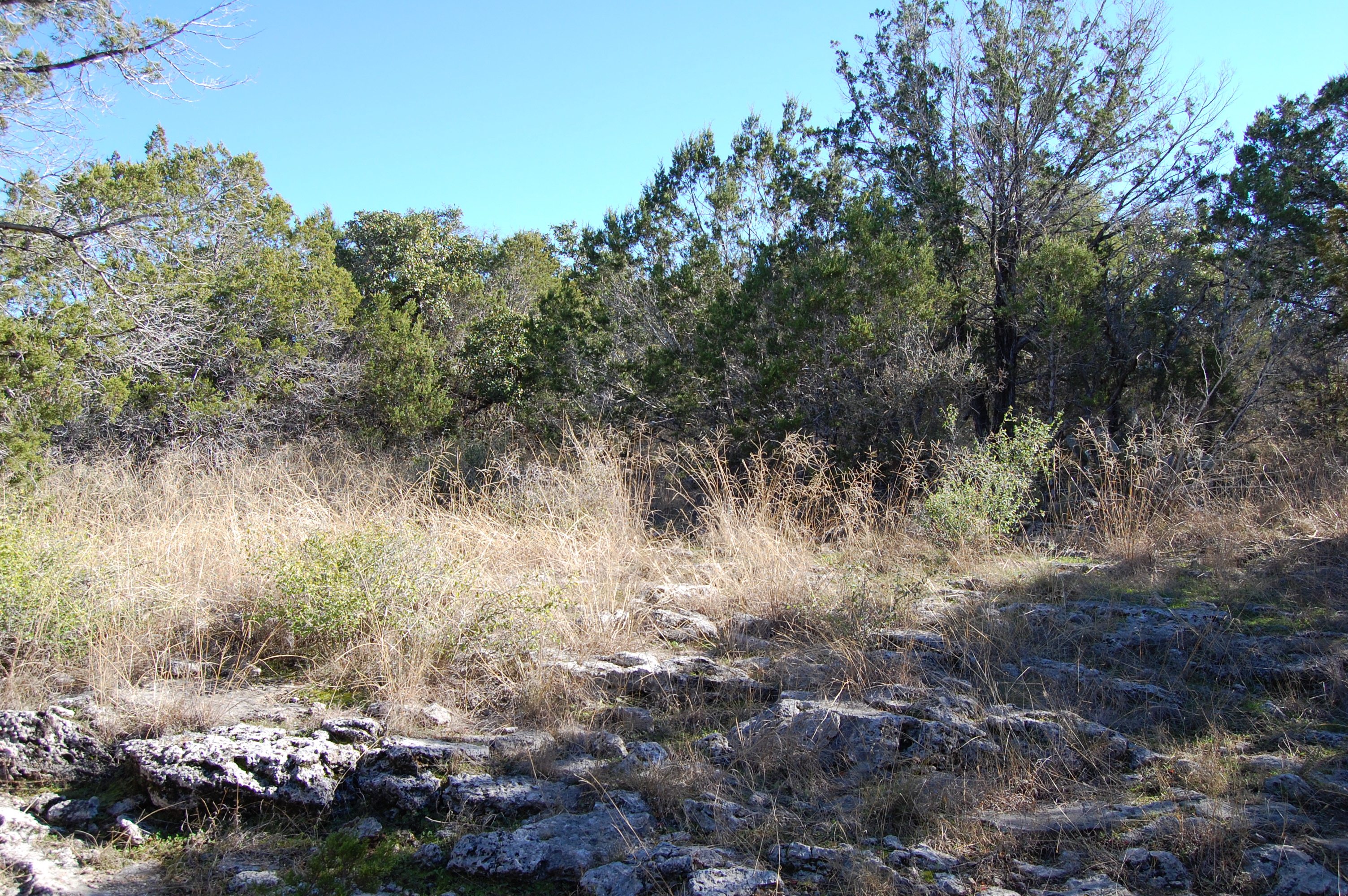
The landscape along the way consisted of a stony and hilly savannah, covered mostly with short grasses, juniper, and oak. As Austin is also something of a boom town, there are also housing developments in varying stages of completion.
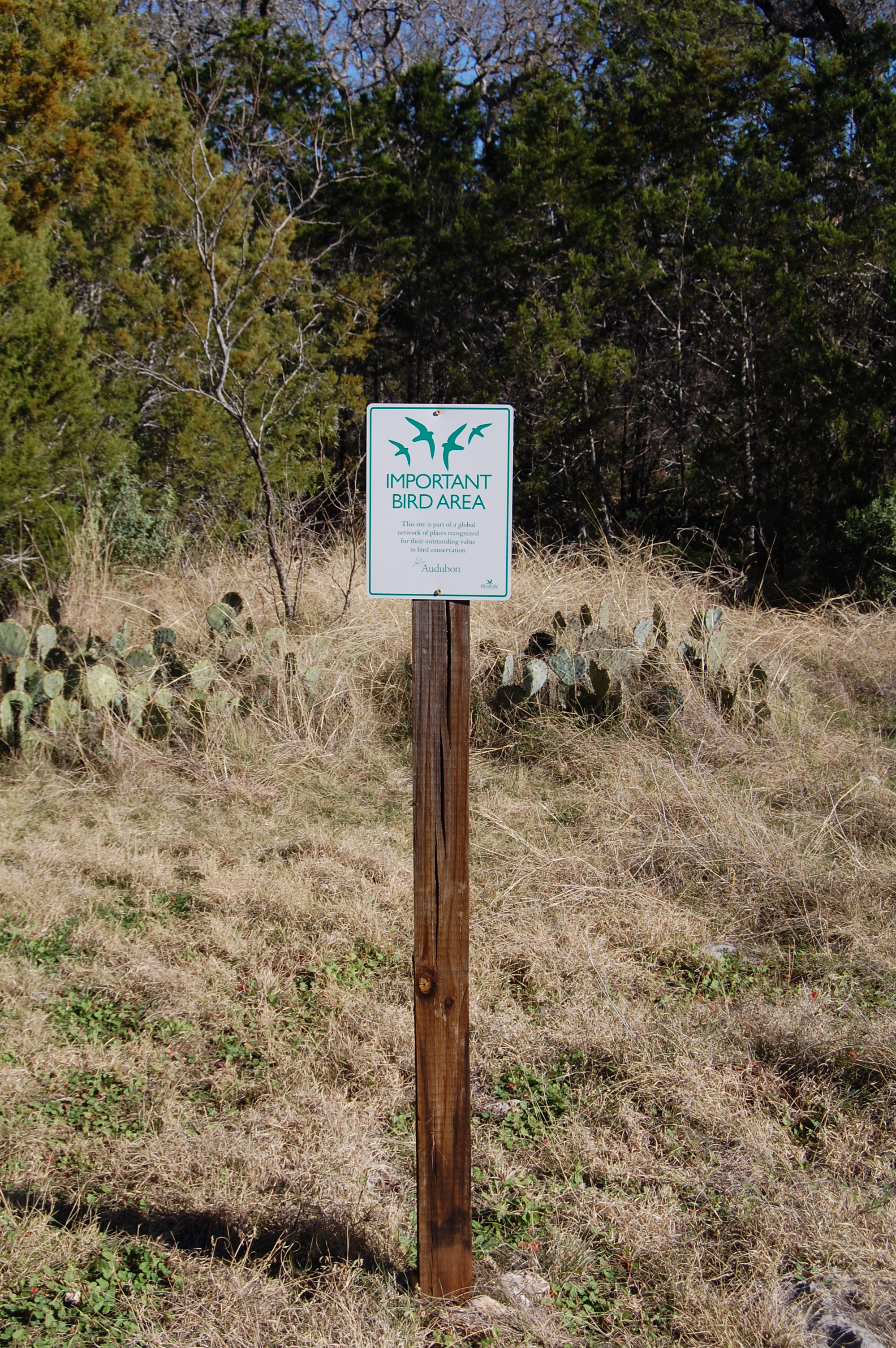
We did not get to meet any of the important birds, but I hear you cannot see them without an appointment.
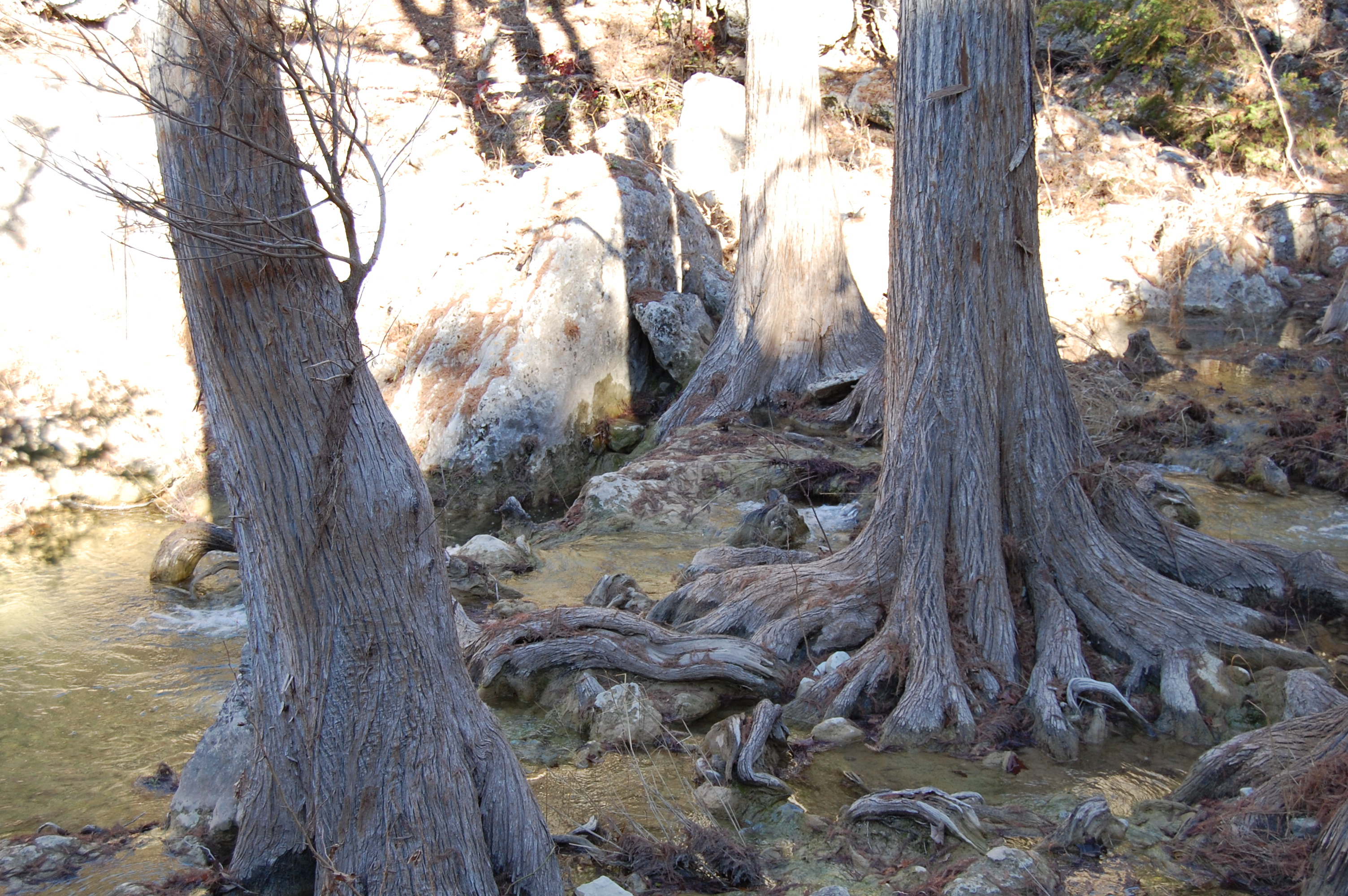
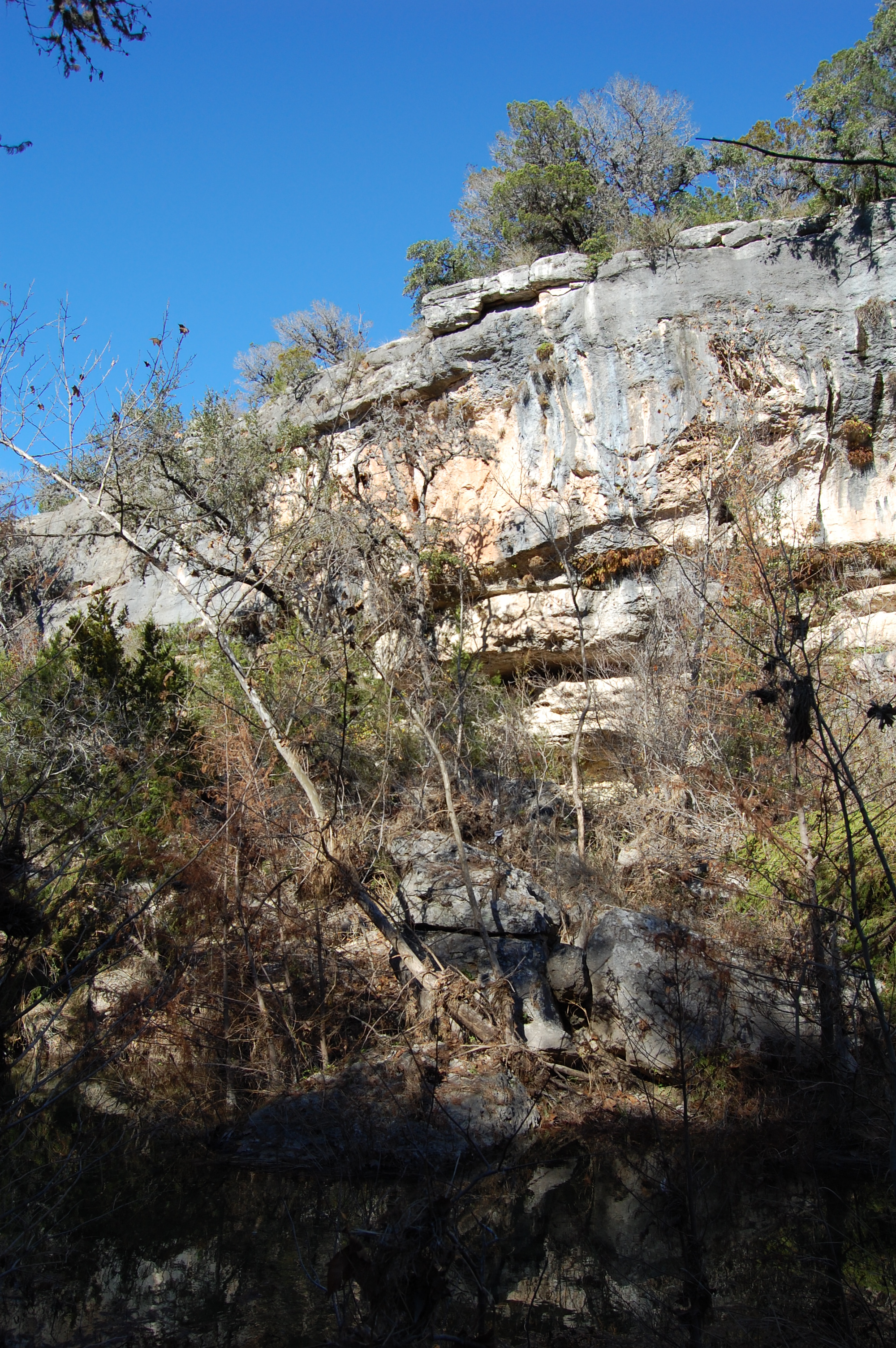
Hamilton Pool has been a popular swimming hole for many years, and swimming is still allowed (though not on the day we were there). To get there, you hike down into a canyon, then along Hamilton Creek for about half a mile. I should mention the light was tricky, with a bright sun low in the sky.
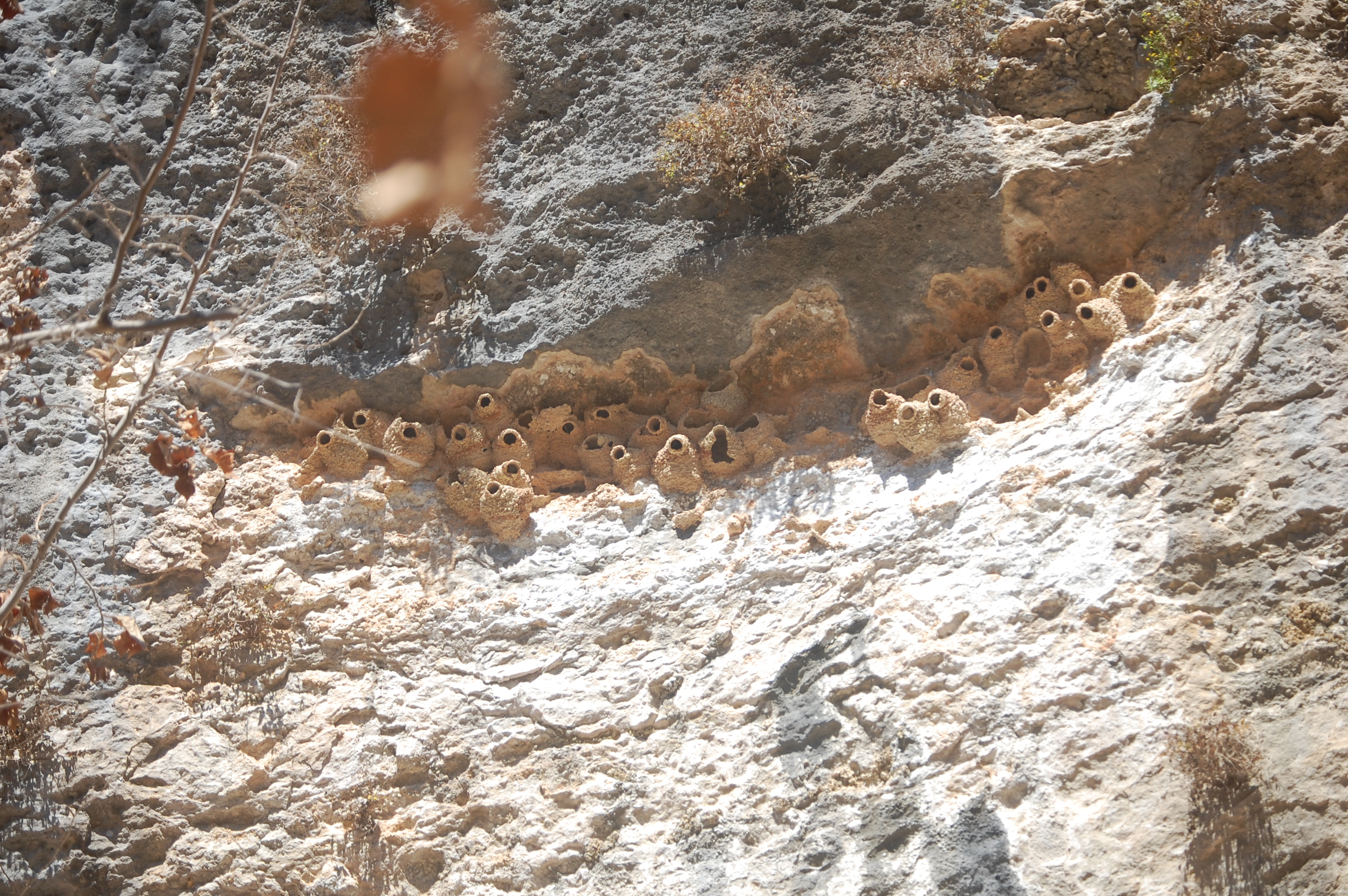
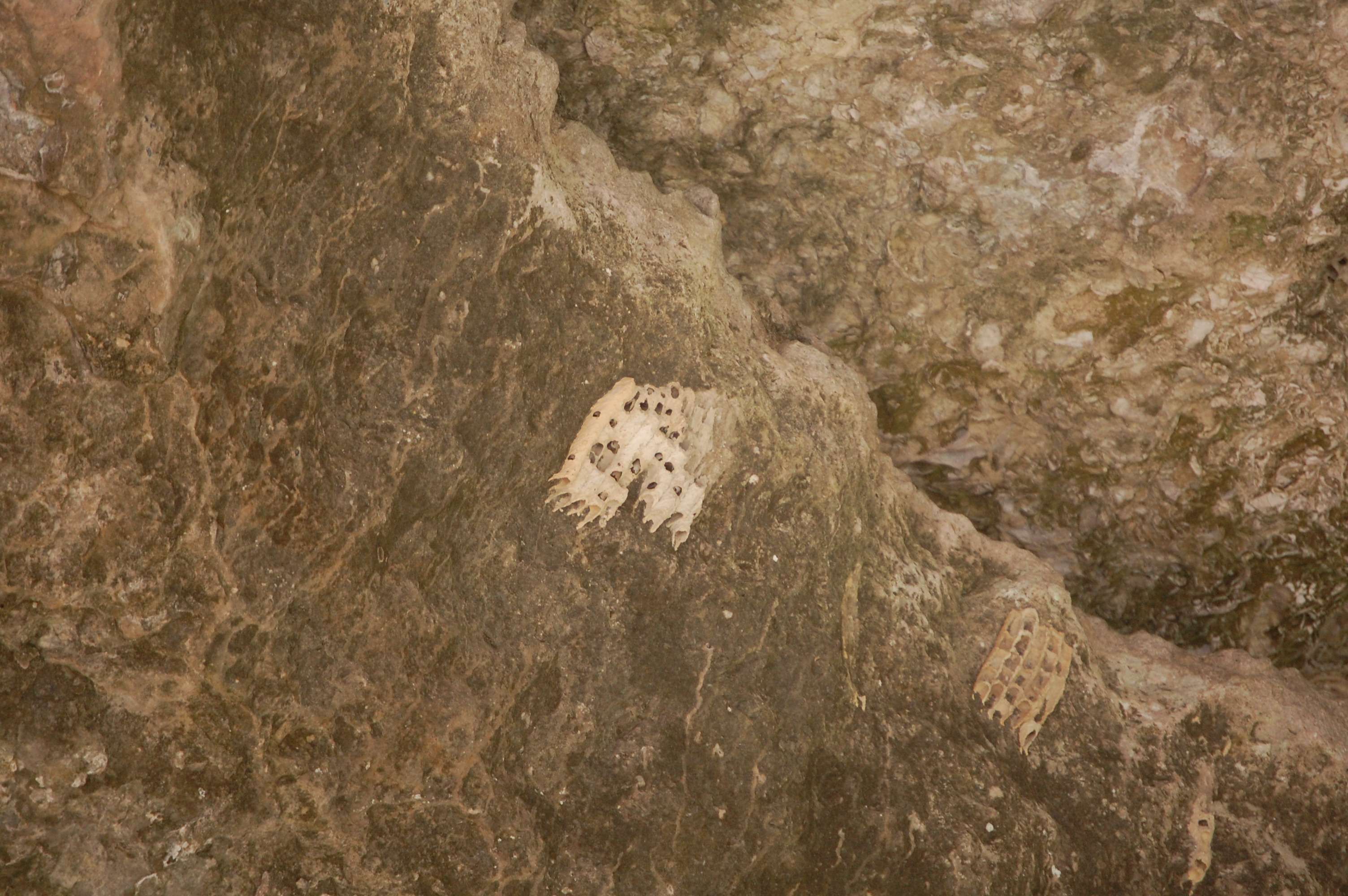
Nests were built into the canyon walls. Anybody know who would have built these?
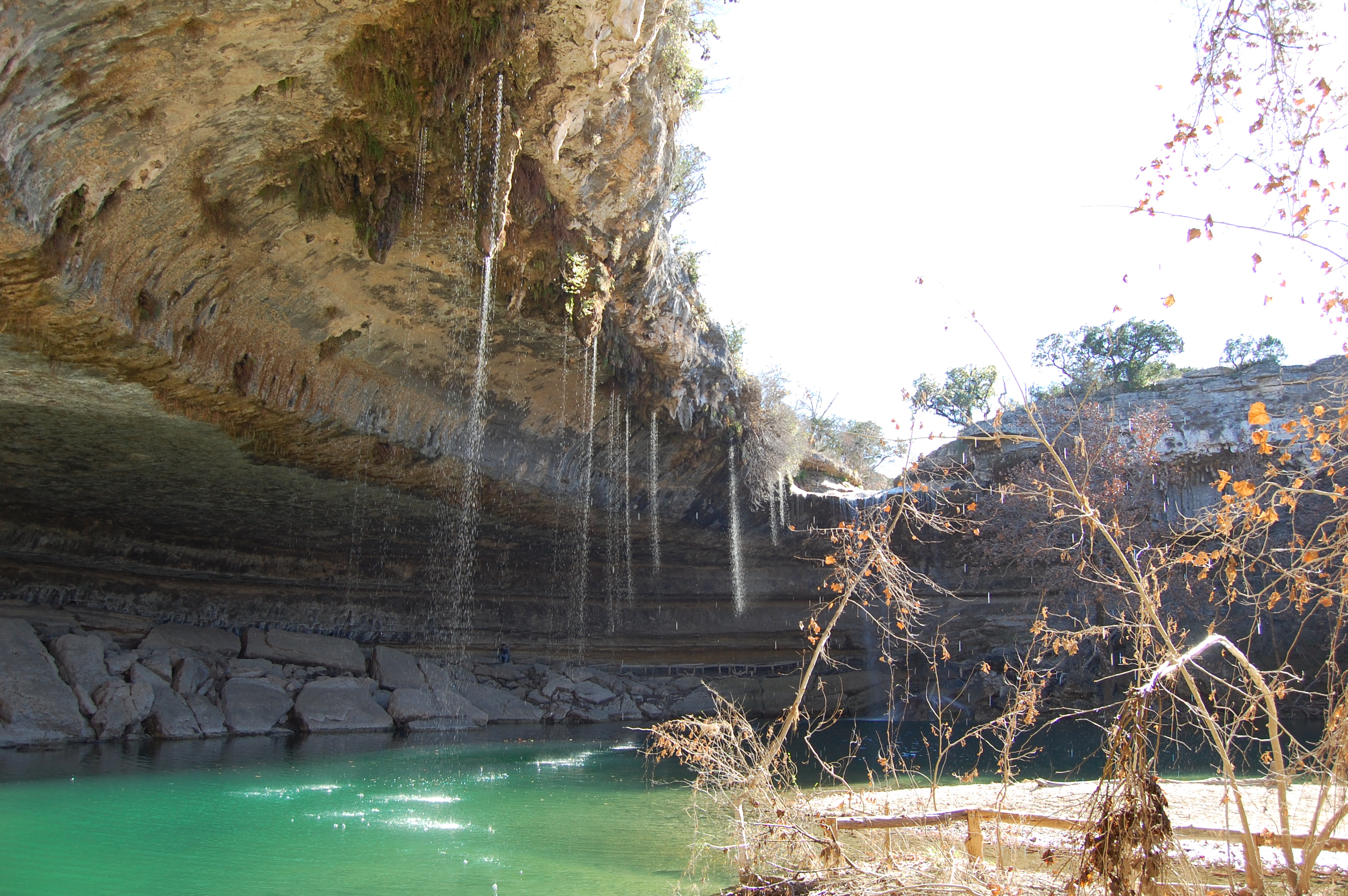
At the end of the trail there is a waterfall and grotto. Ferns and mosses grow on some of the rocks.
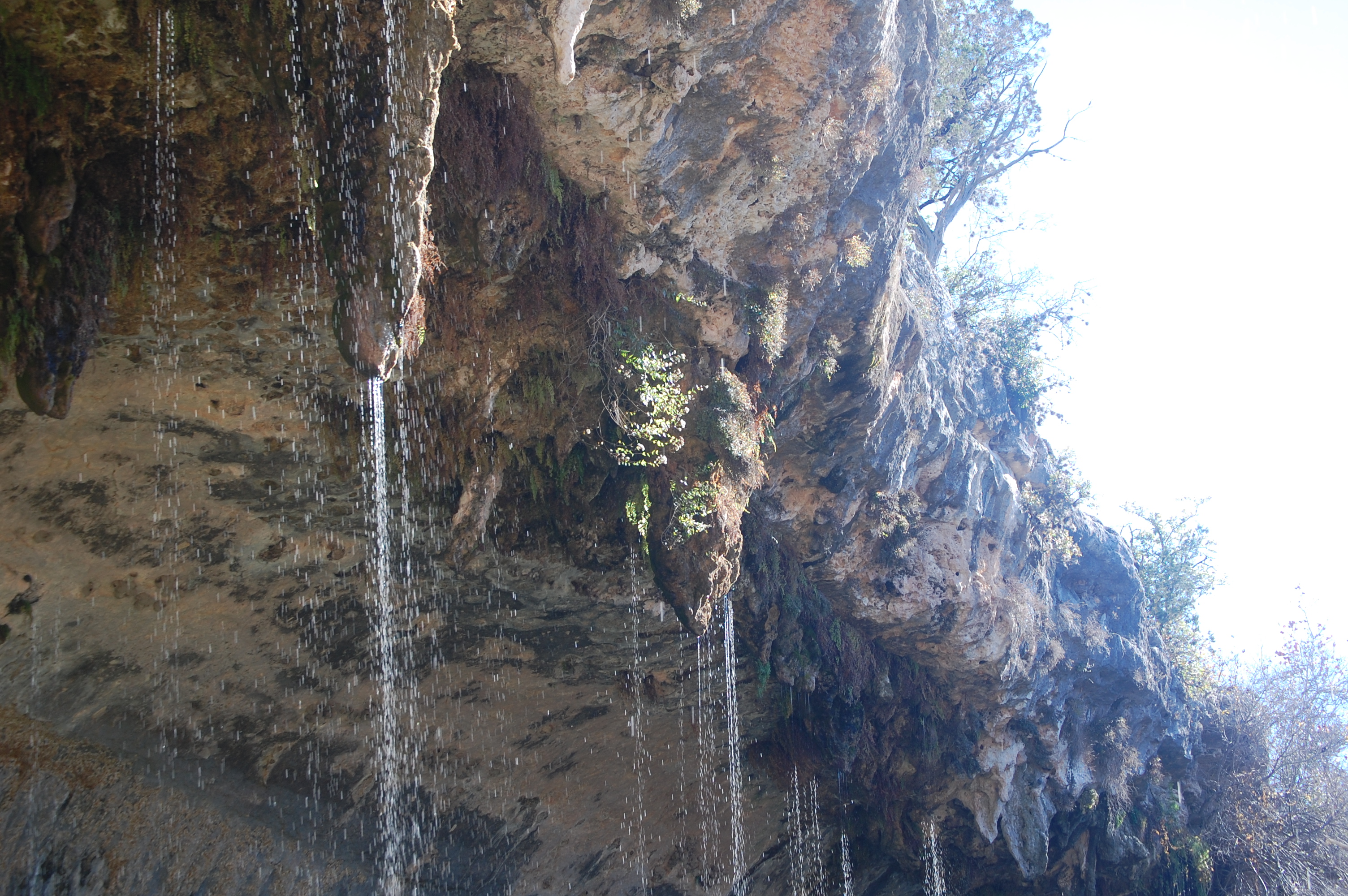
Stalactites hang from the ceiling, some of them covered in moss.
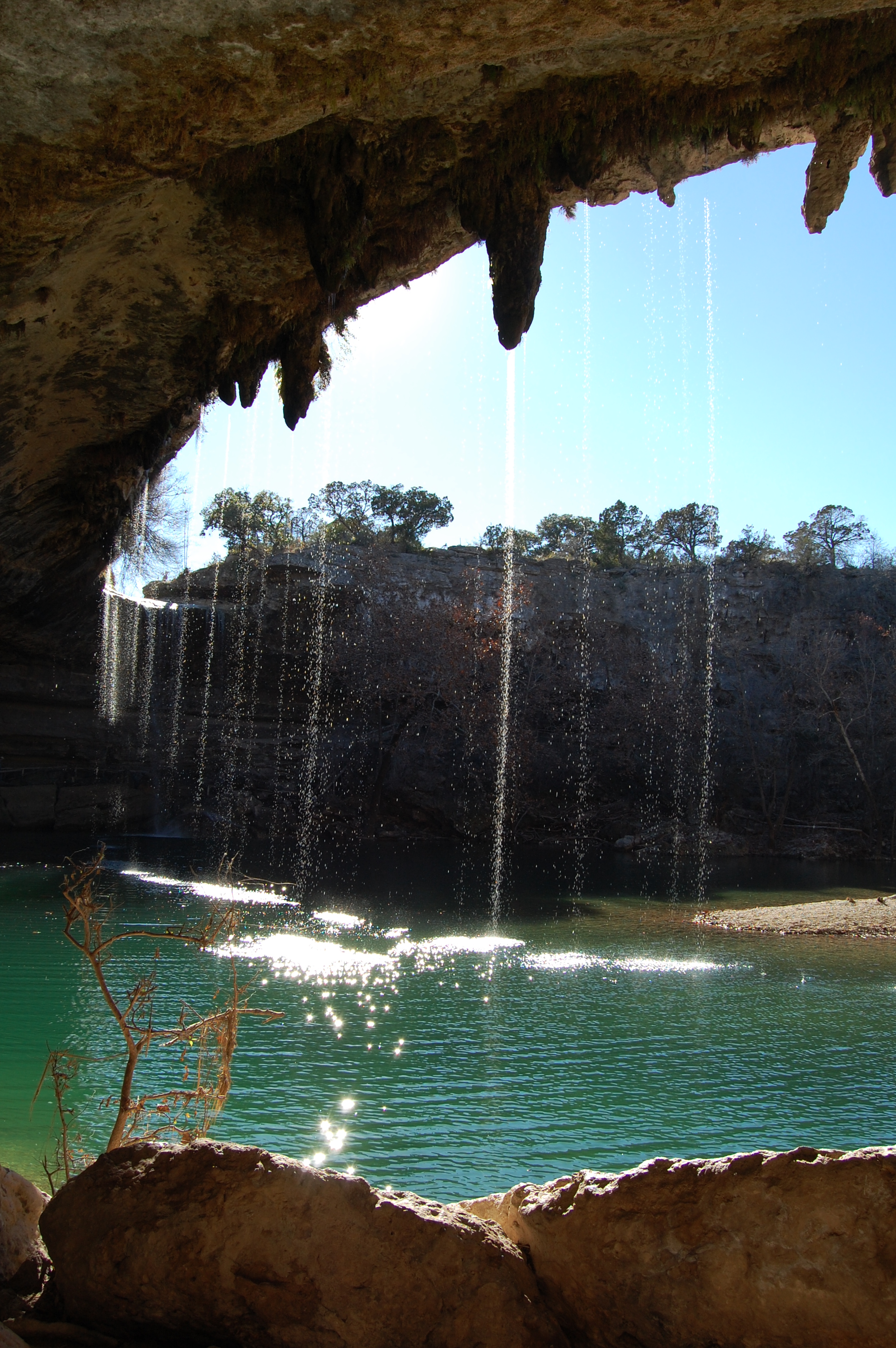
From behind the falls, the view is slightly other-worldly.
Well, enough of that! Time to go back to Austin and eat some barbecue.



 gardeninacity
Cliff swallow nests – weird looking aren’t they? Lovely spot you went to!
They are odd looking. Thanks for the ID!
Spent a summer in the Texas Hill country teaching tennis at Newk’s Ranch outside of New Braufels. Was owned by the Aussie Wimbledon and US Open champ John Newcombe. Always felt he chose that location because it reminded him of my beloved Outback, Had a blast tubing down the Comai River with an extra tube for a pony keg on our one day off per week. Thanks for the memory rush, Jason.
Sounds like a great summer, Patrick. Glad to provide the memory jog.
I agree on the cliff swallows. Usually quite an odd sight to see. Looks like a wonderful place to visit. Austin is on my list of places to go, so following your trip for ideas.
It was definitely a good destination. I was very disappointed at first when I learned the longer trail was closed, but even with that I was glad we went.
That last picture is so evocative. I want to be there right now! The nests must be swallows, but I don’t know which ones well enough to say… Looks like you’re all having a wonderful holiday!!
Cliff swallows seems to be the emerging consensus.
That grotto looks like an amazing place. I just love those last few shots with the water flowing down and dripping.
Yes, we were really impressed when we saw that.
a magical place to blow away the Christmas cobwebs…
Exactly.
The first photo of nests was the only one clear enough for this old(78) blind lady but really showed the Cliff Swallow nests well.. We have this species here in Illinois too. Our Audubon group always enjoyed canoeing down the Fox River where they nested on the sandstone uplift along the river. Maryann G. Montgomery, IL
We’ve always wanted to go kayaking on the Fox River. Thanks for the ID!
Sounds as if you’re having a lovely time, Jason! The ‘grey spaghetti’ appears to be the Spanish moss (full of red bugs & chiggers) of my childhood in Florida.
Thanks for the warning on the Spanish moss, Ginny! I thought, though, that it grew in much longer strands.
such a lovely day you must’ve had! All the pics are so interesting…esp the grotto! And I learned something new: cliff swallow nests!
Austin IS quite the boomtown…half my son’s engineering class seems to have moved down there (from MA) for first jobs after graduation..They’ve been there a few years now and enjoy the area immensely! After seeing your pics i understand why!
It’s an extremely interesting city … but I couldn’t see living here myself. Too hot for most of the year!
What a day you had – family, important birds, gorgeous waterfall, AND barbecue. You’re living large! 🙂
With all this barbecue, we may be getting a little too large!
Looks like a great hike! I have never seen those types of nests before or the cliff swallow for that matter. Looks like a great place to spend the day.
I had not seen those nests before either.
What a wonderful place Jason – I was going to suggest Swallows but as it appears to be agreed, no point 😉 I do hope the unimportant birds don’t suffer from inferiority complex!
It’s blowing a gale and chucking it down here – your blog really helped warm me up!
Hope your weather improves soon, Angie. We’ll be back in frigid Chicago in a few days so I can relate.
It looks like you are having a good time. Thank you for all these interesting pictures. While you were there, did you think of making an appointment with the important birds?
Unfortunately they were booked solid.
What a wonderful post, I did enjoy this. The lichens are wonderful and I loved the weird nests and tree roots. The last couple of pics are fab too. Lol….shame about missing the important birds though!!!xxx
Well, the important birds are very busy. Glad you enjoyed the post!
I love this grotto and water fall, Jason! About the nests in a wall I think the swallows might, am I right? It’s interesting to see the roots of the trunks in Hamilton Creek.
Have a nice weekend!
I thought the dead tree roots looked very interesting, also. Happy New Year, Nadezda!
That is a really interesting waterfall and I like the photo views too. That would be a cool place to visit.
It was really worth the drive. Glad you liked the photos, like I said Judy found the light really challenging.
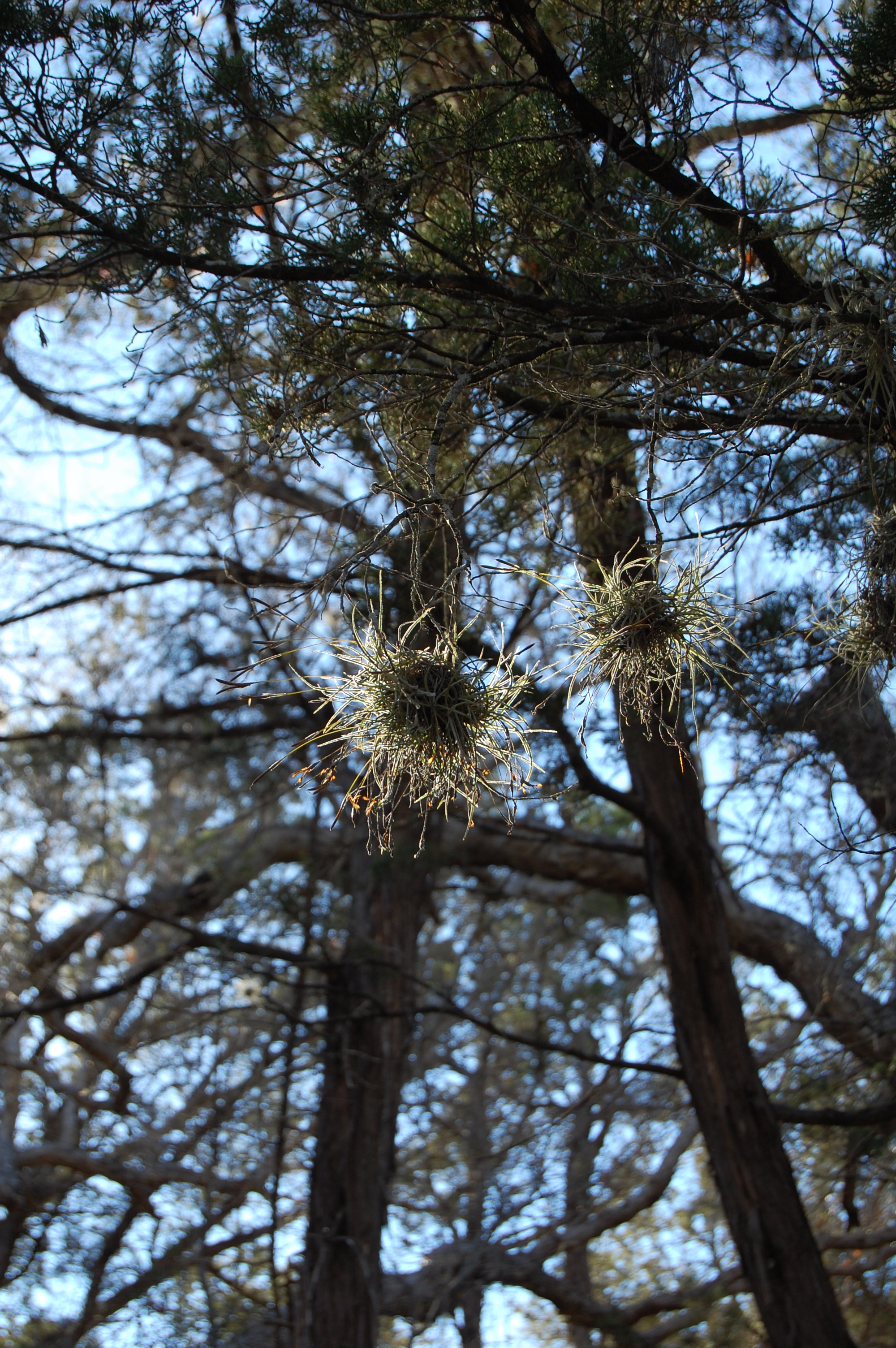
Beautiful place. The “lichen” is actually Ball Moss or Tillandsia recurvata. Slightly different from Spanish moss it is very common in Central and South Texas.
Thank you for the ID! I guess I assume that mosses are always green, but of course that isn’t true.
Eerily beautiful.
I think so, too.
Jason!!! That is just gorgeous! I would hike to see that any day! So surreal! And I am sorry that you didn’t have an appointment to meet those important birds! Ha! Wishing you a very Happy New Year!!!
Same to you, Nicole!
What a lovely spot! Sounds like you’re having a great time. I especially enjoyed the views of the waterfalls and the caves.
So did we!
I had not heard the term ‘snags’ before, the trees are quite other worldly and the toothpaste splurged roots look fascinating. Sounds like a great trip and the pool looks a lovely reward at the finish.
I was going to say Spanish moss too, but Shirley seems to have hit the nail on the head with ball moss, which I’ve never heard of. Neither is a true moss, but a flowering epiphyte. Spanish moss resembles beard lichens in a way, but lichens don’t flower.
This looks like a great place to spend a day exploring.
I enjoyed your lovely photos and witty dialog. What a fun trip!
Thanks!
Looks like a cool place. The cypress roots always impress me and I love the color of the water. For a spot that gets so hot and dry a watering hole is always filled with interesting things!
What a warm respite from cold Chicago! The Important Bird sign is a laugh. I wonder if the birds agree with the humans about which birds are important?
They probably have a Credentials Committee to figure out who makes the cut.
The falls and pool are fabulous! I would have been tempted to at least put my feet in that gorgeous water! The nests are very interesting. Perhaps the important birds made them? I enjoyed your photos from years past in your previous post! I hope you and your family had a wonderful Christmas, and I wish you the very best in 2014!
Same to you, Deb!
Seems a beautiful place with lots of intriguing things to see. I love the lichen and probably would have jumped straight into the pool – it looks so inviting!
What a beautiful place. Thanks for posting this. We’re going to the Texas Hill Country in April…maybe we can squeeze this in. I’d love to see the Cliff Swallow nests, and the swallows themselves. I hope we can get the birds to keep some appointments (!).
I’m so glad you got to see this special place, Jason. Shirley is right that the “lichen” is what we call ball moss, which is not really a moss at all but a tillandsia, a native bromeliad (air plant) that grows on trees here in central Texas. A lot of people dislike it and think it harms the trees, but most arborists agree it doesn’t and is simply an aesthetic issue.
The bald cypress trees that you photographed growing in Hamilton Creek are very common here also. The protuberances that poke up out of the water are known as cypress knees — which seems perfectly apt.
If you’re curious to see pics of this place in another season, I wrote a post on it once too: http://www.penick.net/digging/?p=2796
Beautiful place – really enjoyed your photos. Great way to spend your holidays!