Wildflower Wednesday: Golden Alexander, It’s Freakin’ Golden
To paraphrase a former Illinois Governor, “It’s freakin’ golden, and I’m not gonna give it away for nothing.” If only he had been referring to the native wildflower Golden Alexander (Zizia aurea), he would never have gotten into so much trouble with federal prosecutors. And he would have been fully justified in placing a high value on this useful perennial. Golden Alexander is not a dramatic plant, but it does have many virtues: attractive, easy to grow, and extremely adaptable.
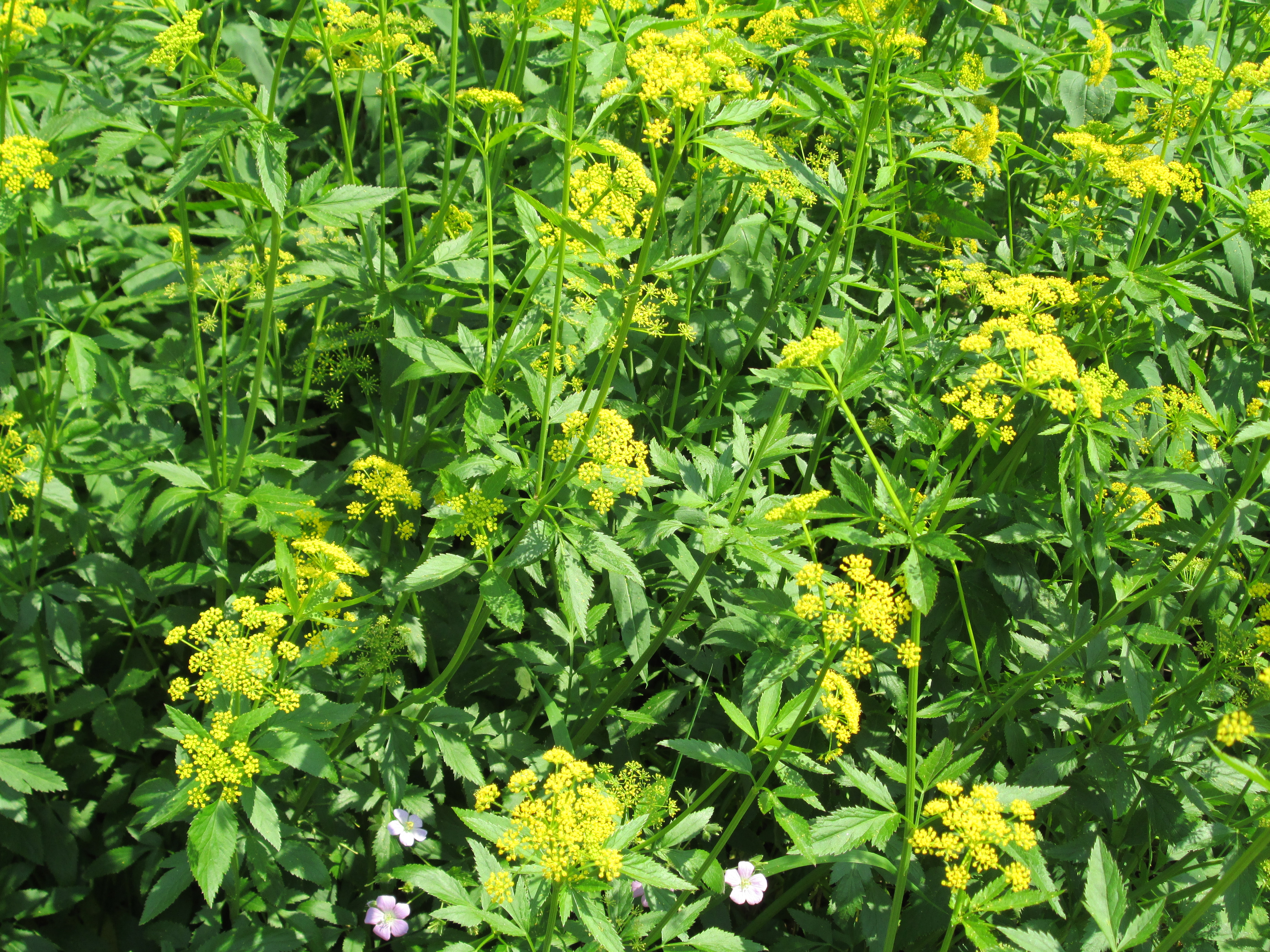
A member of the carrot family, Golden Alexander has flat umbels made up of tiny yellow flowers. In a mass, these umbels can have impact, even at a distance. Bloom time is generally late spring and early summer.
The foliage is deep green, lance or oval-shaped.

Golden Alexander is native to large areas of eastern and central USA and Canada. It’s natural habitats are moist prairies and open woods. In the garden, I’ve found that it will grow in part shade or sun, moist or slightly dry soils. It requires no special attention. In fact, in rich soils it can grow far larger than its normal height of 1-3′, so that I often find myself cutting it back.
Golden Alexander’s foliage provides a restful green backdrop for summer and fall blooming flowers. The flowers form interesting seed heads during this period. You can cut down the seed heads to avoid self-sowing. On the other hand, Golden Alexander doesn’t get obnoxious about spreading by seed, and the seedlings are easily pulled.
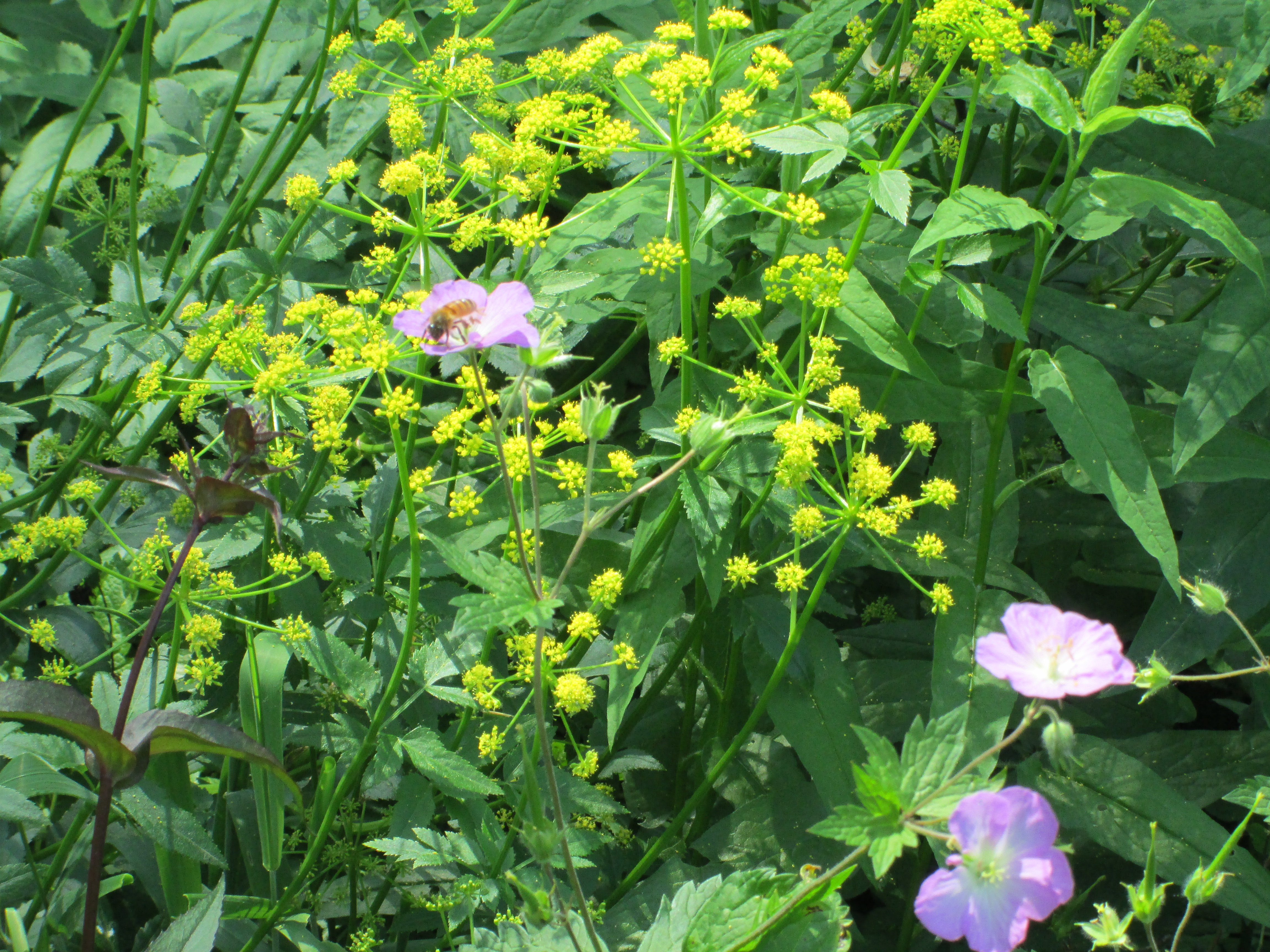
In terms of wildlife value, Golden Alexander is a host plant for the Black Swallowtail butterfly, and the flowers are attractive to bees and other pollinators.
Thanks to Gail at Clay and Limestone for hosting Wildflower Wednesday.



 gardeninacity
Pretty. I love yellow in a garden.
Yup, especially with blue. A like to mix different tints and shades of yellow as well.
Don’t know this one – lovely splash of yellow, and if the bees like it, it’s a winner I’m sure.
It’s usually planted in wildlife gardens. Perhaps some European breeders will start working with it and come up with some good cultivars, as has happened to so many American wildflowers.
Our woods are full of this plant. It will grow and bloom in quite deep shade.
I haven’t tried it in really deep shade, so that’s good to know.
Jason, I see this plant at first time and it reminded me solidago. I’ve read that Zizia Aurea is used as medicine.
Color is similar. I never heard that it has medicinal use.
That is so pretty!
Have a wonderful day!
Lea
Lea’s Menagerie
Thank you!
With the way you described it, i fully agree that it is something to be kept and planted repeatedly, and must not be lost. I love flowers that are wildlife friendly but easy to extinguish.
It’s a pretty tough plant, very easy to grow.
Thanks for the nice read. I can’t seem to find my Zizia aurea this year. I might have planted a bush over it (oops!) but was hoping to see signs of it again. It’s one of the very first perennials I ever planted in my garden.
I hope you find it! Maybe you will see some volunteers if you really did plant a bush over it.
Gorgeous! It’s quite dry here so I don’t know if they would perform well…it would be interesting to try, however. I love those flowers, and the foliage is really pretty, too. Thanks for the write-up!
You’re welcome. It’s not native to the Canadian Rockies, but it is an adaptable plant. You could try getting some seed and see what happens. Would work well in a meadow-type garden.
Lovely!
That is a great backdrop to a lovely garden.
Jen
I don’t know this plant, but I do love yellow! And as a host plant for the Black Swallowtail, it really is worth its weight in gold!
It is hardy to zone 9 … maybe you should give it a try.
Pretty looking perennial, nice yellow flowerheads. It looks really great in your garden.
Thank you.
Hello there, Jason. I’m not familiar with this plant but I was instantly thinking it would be one for a nectar bar and bees would love it. I love your planting with wild geranium – I’m guessing that’s cranesbill? I enjoy that in my garden too 🙂
Yes, the wild Geranium is a native North American cranesbill, Geranium maculatum.
I never used this plant, but it is nice to see it in a garden.
It’s something that is carried only by places that specialize in natives, I think.
This plant looks so familiar, I think I may have it on my property and mistaken it for a form of goldenrod! Thanks to this post I’ll be looking a little more closely this summer.
It is native in the Canadian maritime region, so you may well have some.
I think these flowers are also eaten by birds because I am finding many such flowerheads sreap around in my backyard; I don’t have it; neither of my neighbors have them. So, those must be brought by birds. Again a beautiful shot of your garden.
I’ll have to look into the bird connection!
I have a big patch and I love it! I’ve never seen caterpillars on mine but will look closer this year. Alexanders are one of the easiest plants I grow.
Definitely a very easy plant. I have been frustrated by never seeing any caterpillars either.
You had me laughing with your opening paragraph! Ha! Soooo true! On to the Golden Alexander…what an awesome plant!!! You sold me on it! What a lovely backdrop in the garden and with it being low maintenance that is a double score!!! Thanks for sharing this one!
I’m glad somebody got the reference. Maybe Rod Blagojevich is not as famous outside Illinois as we Illinoisans expect.
Nice plant, Jason, you are reminding me that I’m in desperate need of more umbels for my garden, somehow it’s kind of uneasy to have plants with long tap roots established on my heavy clay. I must get around this issue this year because umbels are so nice when they form a bushy cloud like your Golden Alexander…
I agree that you need flowers with umbels for contrasting texture in a garden. I think Piet Oudolf is big into umbels.
Hello Jason!
I love the yellow flowers. They are very beautiful and have a lot of green leaves.
It is interesting to your post.
I wish you a nice, sunny weekend.
Regards:)
Lucia
Hmm, I like the name of the plant, my son’s name is Alexander, but I can’t say this is a plant for my garden, looks too much of a weed for me!
I love this plant and it has a great spot in my meadow and planted under some trees….it does seed easily and makes a wonderful stand of cheery blooms.
Hi Jason, that’s pretty plant, I can see why you would need a reasonable-sized planting of it though, to make an impact. It looks like a cousin of Orlaya when looking at the form of the flowers
I think I might have to go to Golden Alexanders instead of Alexander the Great for my family garden….plants with names of family members– have a new son in law- Alexander. Can’t find the daylily ‘Alexander the Great’. 😦 Did you start with seeds or plants of Golden Alexander?
Fantastic wildflower and I wish it were more commercially available. I love it’s sweet honey fragrance on warm days. gail
I have a plant growing in my native shade garden that I’ve long thought was wild parsnip. I take pains to keep it weeded, but it sends out runners among the wild ginger, wild geraniums and woodland poppies. I haven’t been to the point where I’ve let it bloom, but now I’m wondering if it is golden alexander? The stems are triangular or square. judy
thank you for all this info! I need to grow some in my garden this year for it is a “swallowtail” hostplant. It looks beautiful in your garden-great post!
It’s a very easy plant, pretty but tough.