Good News on Invasive Plants?
A recent post by Julianne Beck on the blog of the Chicago Botanic Garden (CBG) reports on an interesting new strategy for combating invasive plants. Specifically, CBG research scientist Andrea Kramer is testing a new approach to stopping the spread of cheatgrass (Bromus tectorum) on the Colorado Plateau, which covers parts of Colorado, Utah, Arizona, and New Mexico.

Photo: US Forest Service
Cheatgrass is a Eurasian native and thrives in disturbed areas. It is highly flammable, poses a fire danger to homeowners, and has contributed to widespread wildfires on the Plateau. The wildfires in turn create conditions that promote further spread of this invasive plant. The spread of cheatgrass has been accompanied by a decline in native plants and wildlife, including the vulnerable sage grouse.
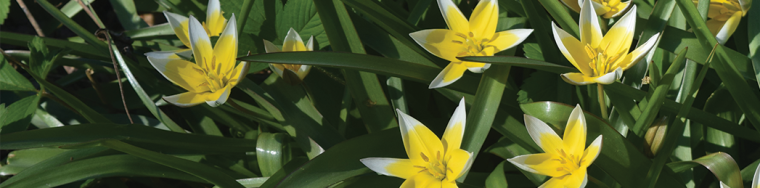
The strategy that Kramer is testing involves strains of native plants, such as wildflowers, that have adapted to areas infested with cheatgrass. Kramer calls these plants, simply, “winners”. The adaptations, such as growing roots deeper or faster, provide a competitive advantage against the invader.
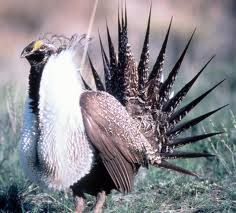
Photo: Wikimedia
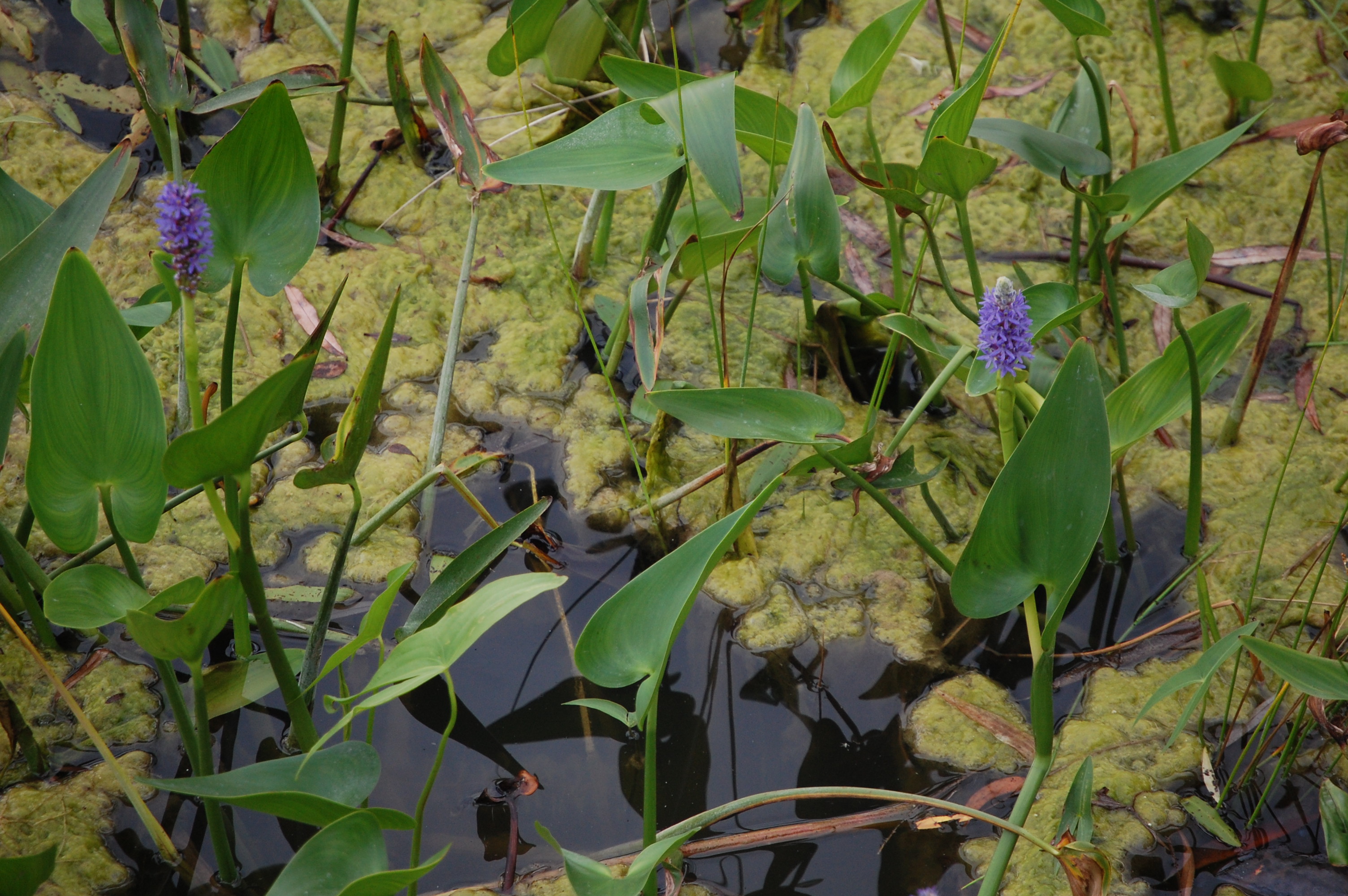
If these native plants test well, then they will eventually be used in restoration work. The concept of using native plant winners is being applied to other environments, including wetlands here in Illinois.
It’s interesting to think of plants adapting so quickly to a changed environment. However, I’ve read that quick evolutionary changes have been documented in wolves and dogs in response to contact with humans. Why not the same with some plants, who (except for biennials) produce a new generation every year?
It’s nice to think that native plants are not just wimpy victims but can develop new strengths enabling them to beat back invasive species. Kind of like the young hero in the movie Karate Kid.

Is there an invasive plant you’d like to see foiled by a pumped up native?





How awesome is this! It is wonderful to hear that they are coming up with a solution to the spread of this invasive species. And I love the Karate Kid! Go get em natives!
It is really nice to see some positive news on the environment.
Mint always comes to mind when anyone says invasive. I hope this is not too off topic since mint may not be the kind of invasive plant you are talking about. But once on a walk in my old neighborhood I saw a hillside full of mint and while it smelled nice, I worried for neighboring homeowners because it seriously took up the whole hillside which was a good 200 feet wide. Out of curiosity, years later I drove by that neighborhood to see the mint and it was gone. It looked as if it was burned out somehow..It is always so interesting for me to hear how to combat invasive plants. Thanks for this post. Its always good to know.
Yes, I ONLY plant mint in containers. And even then I find that the mint roots grow through the drainage holes and start spreading through the soil.
Great news indeed. I worry that the Canadian Golden Rod (Solidago canadensis) will eventually completely override our native variety Solidago virgaurea. The invader is all over the countryside, and although beautiful it suppresses smaller native plants by restricting light. It is certainly changing the landscape here…
Canadian Goldenrod is one of those plants that is invasive even where it is native. It will take over open fields that have been disturbed.
Japanese knotweed needs a good old native to foil it. Along the canal from my house into town there are literally whole massive sections that have been taken over by the stuff. It’s even been know to destroy buildings! It simply has to go!!!
Yup, that is one of the plants that would drive me to chemical herbicides. Japanese Knotweed is a huge problem in the American northeast. Have you ever heard of kudzu? That is another killer vine that is overrunning our south, and creeping north.
Hello!
Mint in my garden would like to prevail everywhere.
I limit it. We love to drink throughout the year.
Juice is excellent in the heat of summer.
I send greetings.
Lucia
I agree, Lucia, I love fresh mint but would only grow it in containers.
wintercreeper ;p~
Right, and some people still plant that one deliberately!
After 7′ of snow this past winter, I’m planning to look fondly at all of my weeds because they will be green and not white. 🙂
OK, I really can’t blame you.
This is really good news :-).
I don’t often refer to articles in this blog, but I thought this one was different because it is positive.
Wouldn’t it be something if competing native plants could be the solution for all invasives? Around here the enemies are oriental bittersweet (Celastrus orbiculatus), Rosa multiflora, and garlic mustard (Alliaria petiolata). In my garden I hand pull them but they have over run much of the open space property around my house.
Garlic mustard is a real pest around here. I saw some growing in the alley by my fence – I think I got it all.
We have a version of morning glory or bindweed(?) that is impossible to eradicate. When you pull it the root is so long and breaks, leaving a bit behind to regenerate. We’ve managed to keep it at bay, but just barely.
Yup, we have that here as well. I find the only solution is to keep detaching the vines from the ground. You just have to keep doing it until the roots are exhausted. Don’t even try to dig up the roots.
This is a recipe for war. Between human factions – those like me who like some invasive plants, such as bamboo vs. those who cringe at the sight of those persistent canes and try using native defenders (though bamboo is practically invincible). I can see it now: neighbor against neighbor, lines drawn at the property borders.
I will meet you on the field of battle, sir.
Too many to list – but it makes sense to ‘outsmart’ the invasive plants with a little of their own medicine.
Interesting information. Thanks for taking the time to research and write about this.
Anyone who thinks native plants are wimpy has obviously never met hay scented fern!
Kudzu!! It has to go! It’s eaten sections of the South. Worst plant ever!!
oh man, if there was a way to get rid of bindweed. That stuff makes me batty, every year pulling and pulling.
There are so many invasive plants in the southeast: Japanese honeysuckle,Japanese Wisteria, Privet, Kudzu to name a few. Native plants are genetically structured to adapt much faster than exotics. I hope this is successful and will be adopted as a strategy!
Yes, I noticed a couple plants in the comments that need native combatants–Japanese Knotweed and Garlic Mustard. The former has taken over the foliage along many Midwest interstate highways. And the latter would take over our garden, if we didn’t pull it up by the roots every year. Encouraging information in this post, though.
“It is really nice to see some positive news on the environment.”
Couldn’t agree more. Glad that there are still positive news on the environment despite the changes.
Jason, here we can see many Heracleum mantegazzianumgrowing (Giant hogweed). It’s very poisonous, and many people have allergy contacting with it.
We too are encouraging native plants over ‘invaders’. A long time ago, some botanist or plant finder imported the new plant and hey presto! they’ve taken over.
I like the idea of native plants acting as predators.
Hooray for the good guys! Sort of like fighting weeds with weeds. I hope it works!
I have a long list of invasives especially teasel. I am hoping to plant more natives that can withstand the teasel but as of yet, the teasel is too strong.
Hi Jason, it’s a good idea to combat invasive plants with natives, though here, that would probably mean trying plants like bramble/briars, ivy, rugosa roses, “weeds” and such-like, which come with their own set of problems.