Book Review: 100 Flowers and How They Got Their Names, by Diana Wells

100 Flowers and How They Got Their Names will not make you a better gardener, but it should make you a more amused and informed gardener. And it may provide you with the material for some witty or scholarly remarks you could mention casually at next summer’s garden walks.

diana wells
Diana Wells

Diana Wells provides brief, entertaining, and erudite background on the names of 100 popular garden plants. Often she adds tidbits about people with whom said plants are associated.

Here are a few samples:

Do Nasturtiums make your nose wrinkle?
  • The name Nasturtium (Tropaeolum) comes from the Latin for “twisted nose”. This is because the pungent smell makes some people wrinkle their noses.
  • For centuries Yarrow was used medicinally, for example to slow bleeding. The botanical name, Achillea, derives from Achilles using the plant to treat his soldiers’ wounds. The common name comes from the Anglo-Saxon gaerwe, meaning to prepare, as people thought Yarrow could prevent illness.
Hyacinth 'Blue Jacket': grew from a bloody head wound? I wonder if wild Hyacinths were mostly red.
Hyacinth ‘Blue Jacket’ doesn’t look like it grew from a bloody head wound. I wonder if wild Hyacinths were mostly red.
  • The subject of bleeding leads me to Hyacinth (Hyacinthus), a beautiful youth loved by Apollo. Unfortunately, the young man received an accidental but fatal head wound. While dying in Apollo’s arms, a flower grew from Hyacinth’s bloody forehead. Apollo’s lovers had a habit of turning into plants. Maybe he should have tried to get them covered under his insurance.
King Clovis of the Franks: saved by irises?
  • Iris are named after a messenger of the gods in Greek mythology. The fleur-de-lis is actually an iris (I always thought it was a Lily). Irises growing in the water enabled King Clovis of the Franks to identify a shallow river crossing he used to escape hostile Goths. After that it was the symbol of the Kings of France. Louis VII had irises on his banners during the Crusades. They were called fleur de luis, which then became fleur-de-lis.

If this is the kind of thing you appreciate, then read 100 Flowers and How They Got Their Names. If it isn’t, then I have nothing for you at the moment.

Now here’s a totally unrelated question. Has anyone else discovered that WordPress no longer allows you to word searches of your photo gallery? All of a sudden all I can do is call them up by month of posting.

Cistus Nusery: Another Reason to be Jealous of Portland Gardeners

Cistus Nursery is a “retail micro-nursery” located 15 miles from Portland, Oregon.

2014-07-11 14.29.30

It was another nursery that we visited as part of this year’s Garden Bloggers Fling.

2014-07-11 14.37.39

Cistus emphasizes plants for a Mediterranean climate and hardy tropical plants, so it has fewer plants that would fit into my own garden than you might find at Joy Creek Nursery.

2014-07-11 15.05.51

Cistus has a fine selection of plants for sale, but I spent almost all my time wandering the display garden.

2014-07-11 14.38.14

2014-07-11 15.12.54

Lots of drought tolerant plants, like these ones here that could be Yuccas or Aloes, I never learned to tell the difference. I just have a mental block when it comes to succulents. I’m not proud of it, but there you are.

2014-07-11 14.54.16

2014-07-11 15.07.28

I was very impressed by the Plume Poppies (Macleaya cordata), which appeal to my preference for tall plants.

2014-07-11 14.59.12

The staff was laid back and friendly.

2014-07-11 14.55.20

2014-07-11 14.56.25

Lots of fun elements to be found in the display gardens.

2014-07-11 15.06.33

We visited Cistus on the first day of the Fling and Judy did not arrive until that evening, so I had to take these pictures.

Do you like to visit retail nurseries when you’re in new places?

Light in October

In September, Autumn feels like a vacation from Summer. The cooler weather and softer light are both refreshing.

DSC_0489

At a certain point in October, though, it starts to feel as if you are preparing to leave a beloved place.

DSC_0490

The sun is so low in the sky that even the middle of the day feels like just before dusk.

The last of the sunflowers.

Still, it is unwise to give in to seasonal melancholy. (I wonder if it is true that northern peoples are more given to depression.)

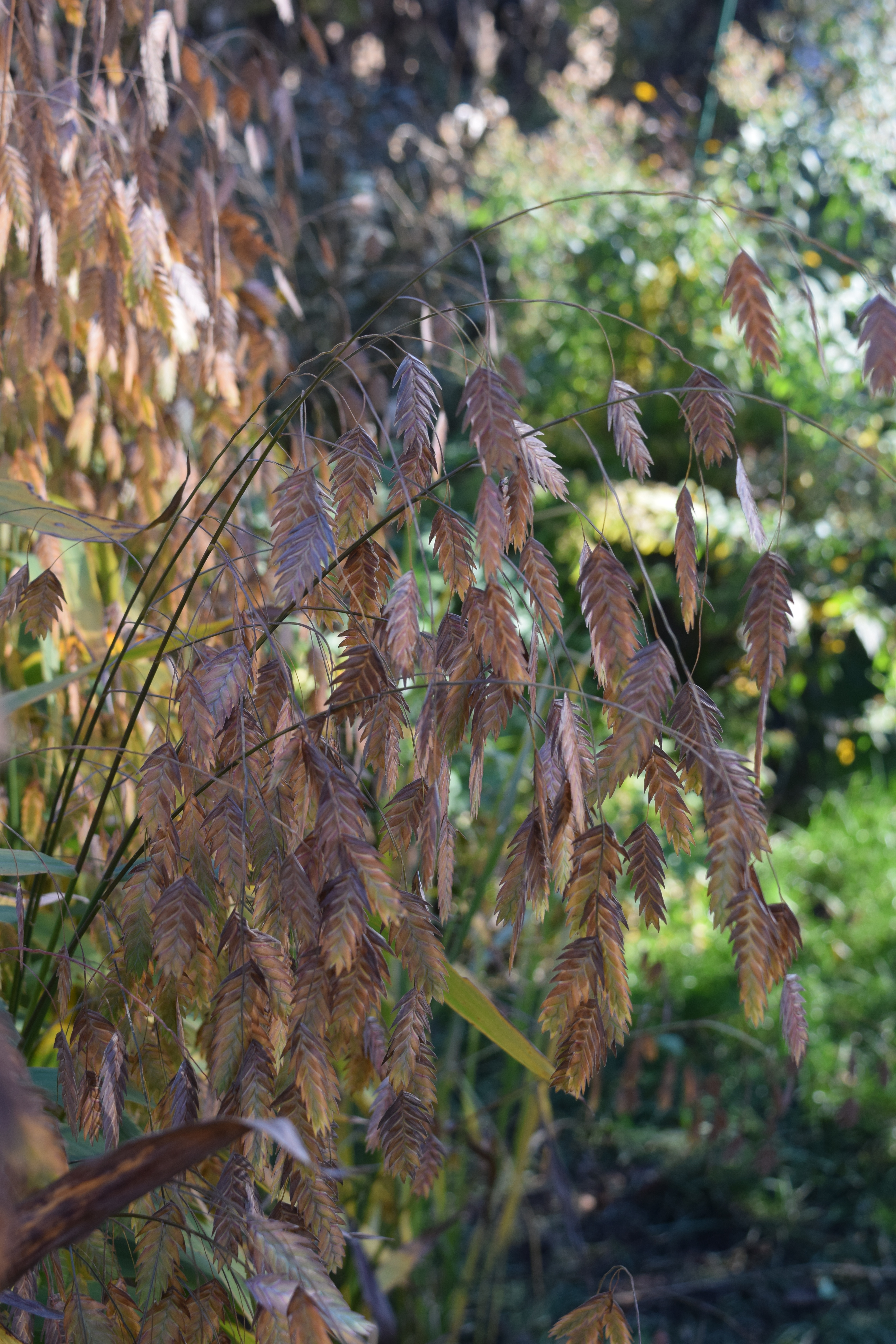
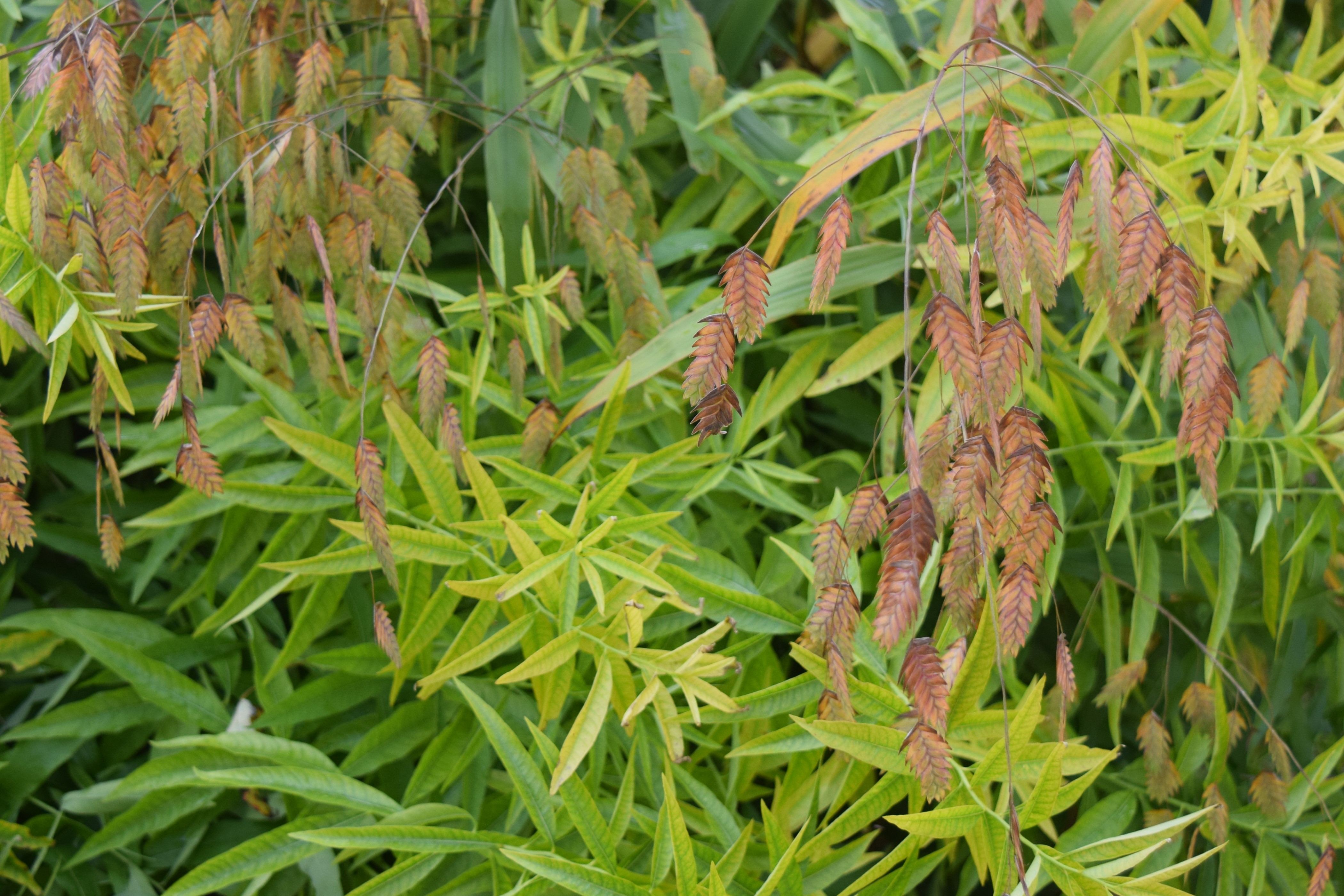
The Northern Sea Oats just gets better and better. The seeds turn from green to tan to golden brown.

The soft light makes the fall colors shine. This year there is more fall color than usual at the end of October.

DSC_0545
Starry Solomon’s Plume has nice fall color, doesn’t it?

We are also sustained by the many holidays and festivals that occur during the shortest days of the year.

Some asters are still blooming, like these Short's Aster.
Some asters are still blooming, like these Short’s Aster.

A few days in California or Mexico, if you can afford it, wouldn’t hurt either.

But the flowers of most have matured to small fluffy seedheads.

We cannot begrudge the earth its rest. Gardeners also need time off from the garden. I cannot imagine the life of a gardener where there is no winter. Sounds exhausting.

Zigzag Goldenrod, a Lovable Thug

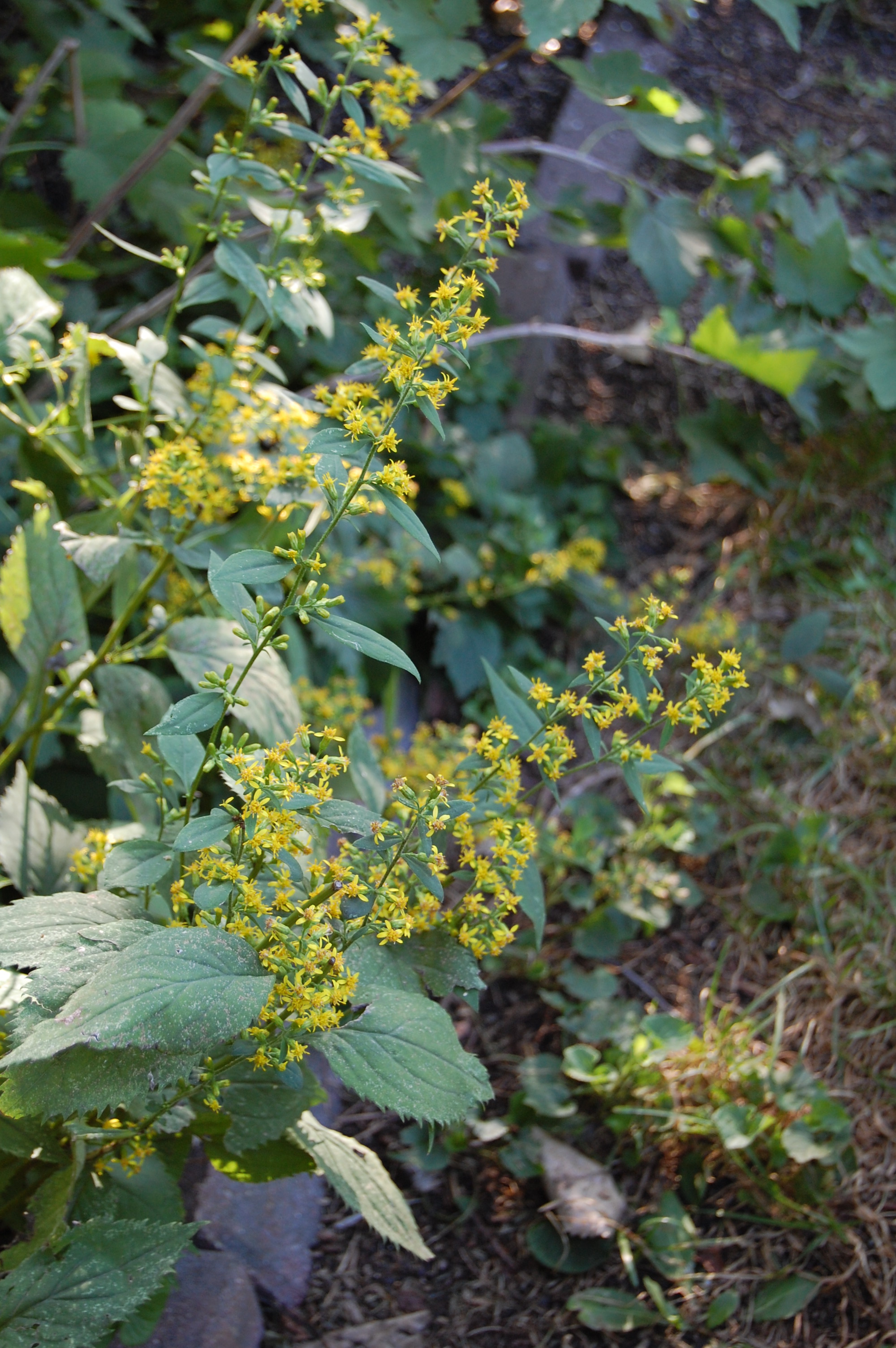
If you have a shady garden but would like to grow an ornamental goldenrod, do not despair. Zigzag Goldenrod (Solidago flexicaulis) is quite happy in shade, though I think it likes part shade best. Actually, I suspect that Zigzag Goldenrod would be happy growing in concrete under a quonset hut.

Solidago flexicaulis, Zigzag Goldenrod

As the Missouri Botanic Garden website puts it diplomatically, this plant “may spread by rhizomes.” Which is like saying that a tropical storm may get windy.

To speak plainly, Zigzag Goldenrod is a thug. But it’s a lovable thug, like Nathan Detroit from Guys and Dolls.

In addition to being at home in shade, Zigzag Goldenrod is a plant that takes care of itself, tolerating dry conditions once established. It’s also a fairly compact, rarely growing taller than 3′. Doesn’t mind clay soil, either.

Zigzag Goldenrod
Zigzag Goldenrod

The small yellow flowers are attractive and appear in clusters along the stem. Sometimes the stems do zigzag, but sometimes they don’t.

According to the Xerces Society, Zigzag Goldenrod is of special value to native bees and honeybees.

The only thing is, this is one of those plants that does best for the gardener in the wilder parts of the shade garden. You don’t want it running rampant amongst your dainty beauties.

This post is my contribution to the meme “Wildflower Wednesday”, hosted by Gail of Clay and Limestone on the fourth Wednesday of every month. Pay a visit to see some more wildflowers.

Do you grow Zigzag Goldenrod?

Switchgrass Switching Places, Again

And now for the saga of the nomadic Switchgrass (Panicum virgatum). Today I dug out a slice of turf along a corner of the Sidewalk Border in order to create a sunny spot for said switchgrass, which had already been moved once.

Newly transplanted Switchgrass.

Digging up grass is one of my favorite garden chores. I use an edger to cut small slices of turf, then pick up each slice and shake out the soil, throwing the grass itself onto a pile which ultimately ends up buried in the compost. This process is extremely satisfying, especially crumbling the clods of earth as they fall away from the turf roots.

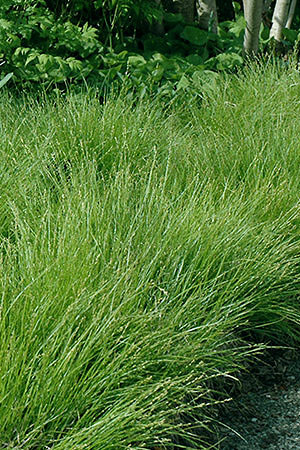
Anyhow, the Switchgrass had to be moved both times because it was being shaded by neighboring perennials. This may sound unlikely given that Switchgrass grows four to six feet tall.

The two long-established Switchgrass clumps in the Sidewalk border.
The two long-established Switchgrass clumps at the back of the Sidewalk border.

The problem is that Switchgrass is a warm season grass, staying dormant until around the end of May. Many other perennials have already achieved substantial height by then. The result is that in the back of even a sunny border the Switchgrass never catches up with its neighbors to get the full sun it wants. And so it goes into a slow decline.

There were no good existing spots for transplanting this substantial grass, and I hated the idea of throwing them on the compost – so expanding one of the borders seemed like the natural solution.

Like other gardening rules, the rule of thumb that tall plants go in the back of the border doesn’t always work. Tall plants that emerge late (like Switchgrass) may languish at the back of the border, depending on what’s growing around it.

Northern Sea Oats, beautiful but floppy. My hope is that it will eventually lean on the transplanted Switchgrass.

I’m fairly confident that these two Switchgrass plants will like their new home. They are still at the back of a border, yes, but the back of this border faces south along a grassy path. Northern Sea Oats (Chasmanthium latifolium) and Bluestar (Amsonia tabernaemontana) grow between the new Switchgrass and the sidewalk.

My hope is that as it expands the upright Switchgrass will hold up the floppier Northern Sea Oats.

Do you always put tall plants at the back of the border?

New Plants for the Shade Garden

As you may know, our new patio has created some new shady space for garden plants. Most of those I’ve put in so far are familiar to me – Wild Ginger (Asarum canadense), White Trillium (Trillium grandiflorum), Indian Pink (Spigelia marilandica). But I’m also trying a couple that are new to my garden: Bush Honeysuckle (Diervilla lonicera) and Eastern Star Sedge (Carex radiata).

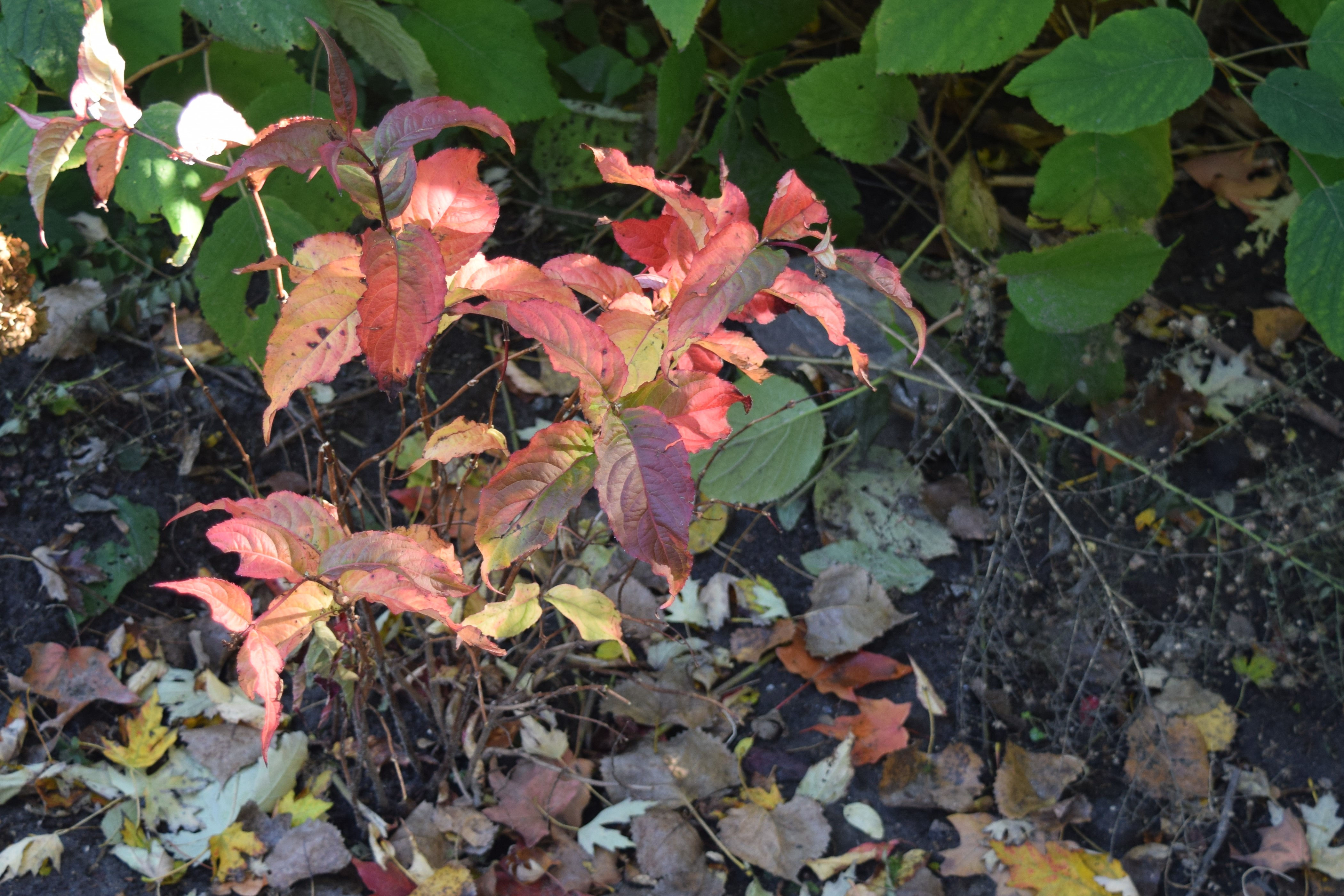
Newly planted Bush Honeysuckle in my garden, showing some fall color.

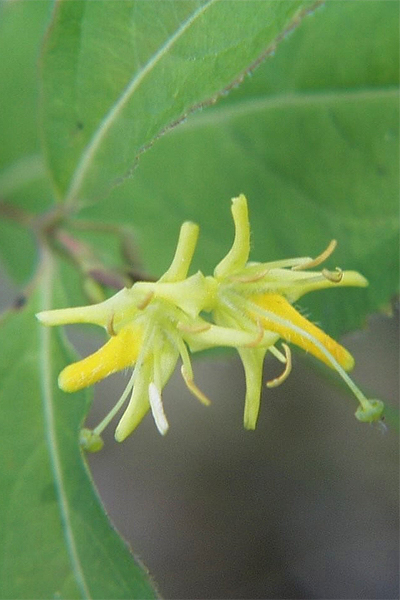
Bush honeysuckle is a small Midwestern native shrub with yellow honeysuckle-like flowers and good fall color. It’s supposed to grow to only 3′, though Judy skeptically observed that ours had arrived already 2′ tall in its container.

Bush Honeysuckle flowers. Photo from prairienursery.com.

Its early to mid-summer flowers attract bees, butterflies and hummingbirds, while the seeds are eaten by some songbirds.

Eastern Star Sedge. Photo from Prairenursery.com.

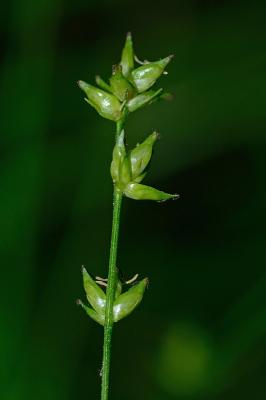
Eastern Star Sedge is a finely textured sedge that likes moist shade. It grows only 1-2′ tall. Star-like flower clusters emerge in spring.

Eastern Star Sedge, newly planted along the edge of the patio.

This plant is another source of seeds eaten by songbirds.

Eastern Star Sedge. Photo from Prairienursery.com.

Have you had any experience with either of these plants?

More Fall Color in the Garden

As we near the end of October, fall seems to be ambling rather than marching on. We have yet to see a frost, and the warm weather means colors have shifted only slowly.

Northern Sea Oats and Bluestar

Seedheads of Northern Sea Oats (Chasmanthium latifolium) are no longer green, but seem to shimmer like hundreds of tiny goldfish. They look good with the yellowing foliage of Bluestar (Amsonia tabernaemontana).

2014-10-20 09.22.36 northern sea oats and bluestar

A closer look.

2014-10-20 09.23.29

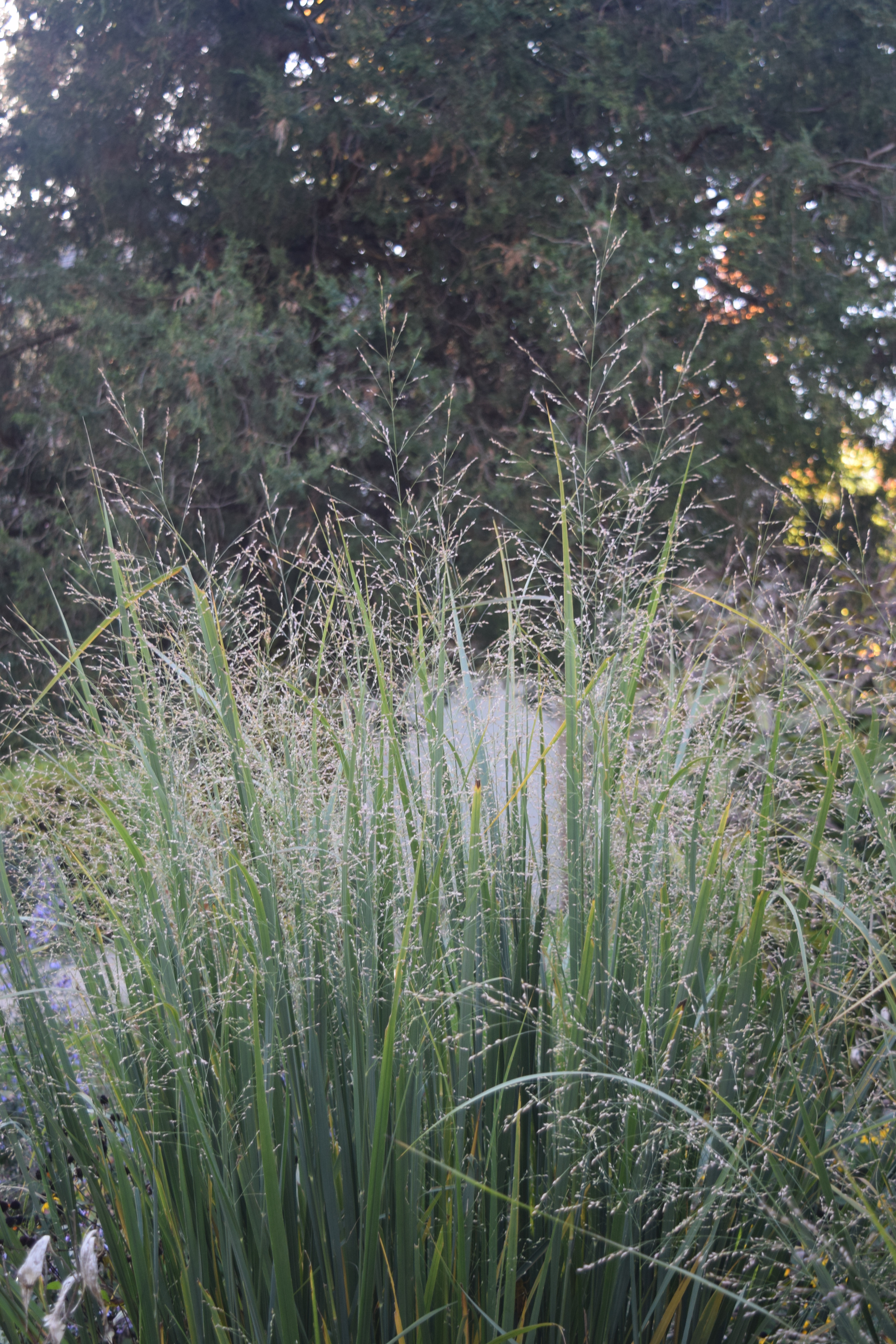
The ‘Northwind’ Switchgrass (Panicum virgatum) is still almost entirely green, though the seed panicles are turning tan.

2014-10-20 09.25.03 sunflower and Joe Pye weed

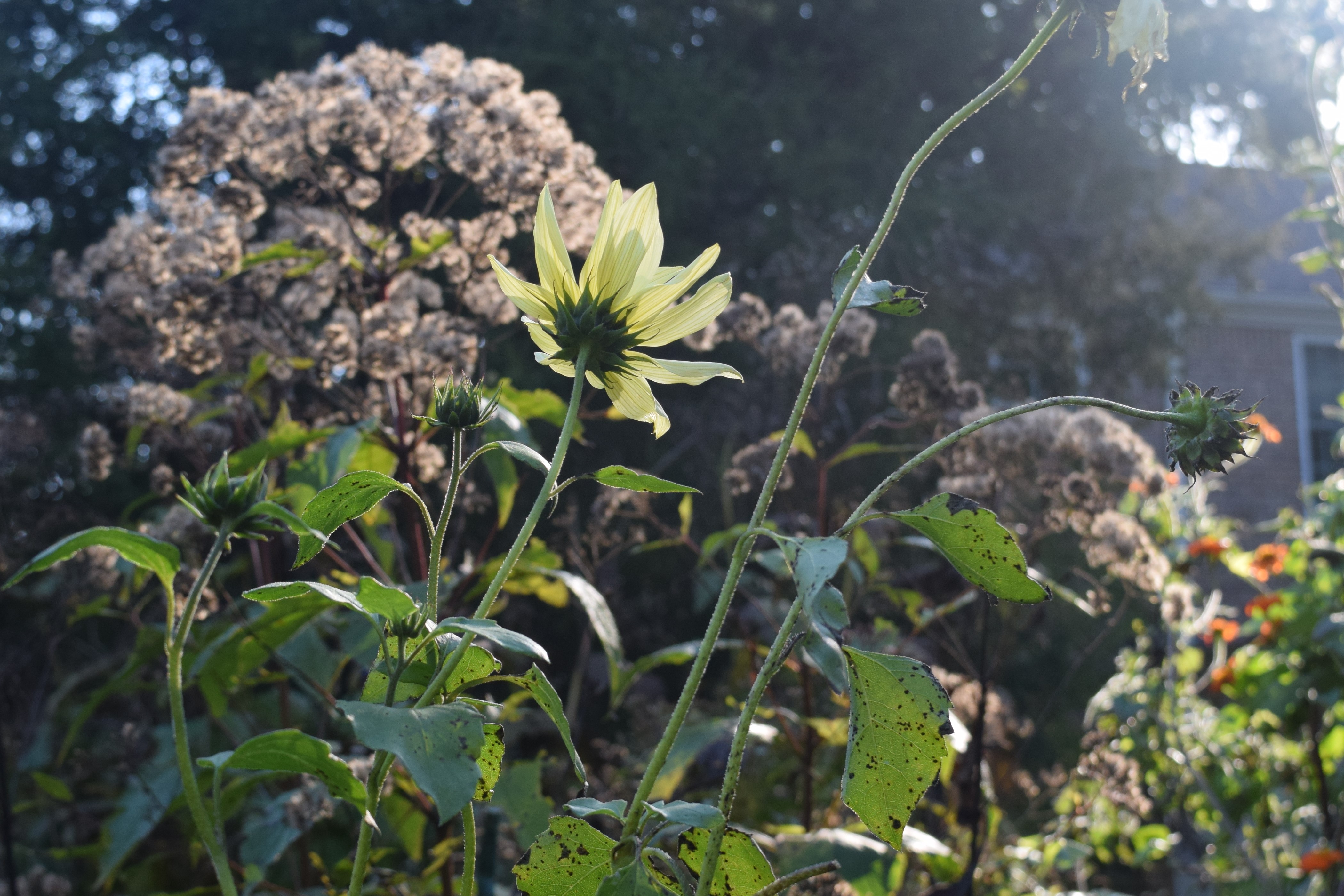
‘Italian White’ sunflowers (Helianthus annuus) are making a last stand, set off by the fluffy seedheads of ‘Gateway’ Joe Pye Weed (Eupatorium purpureum ssp. maculatum).

2014-10-20 09.26.15 spicebush fall foliage

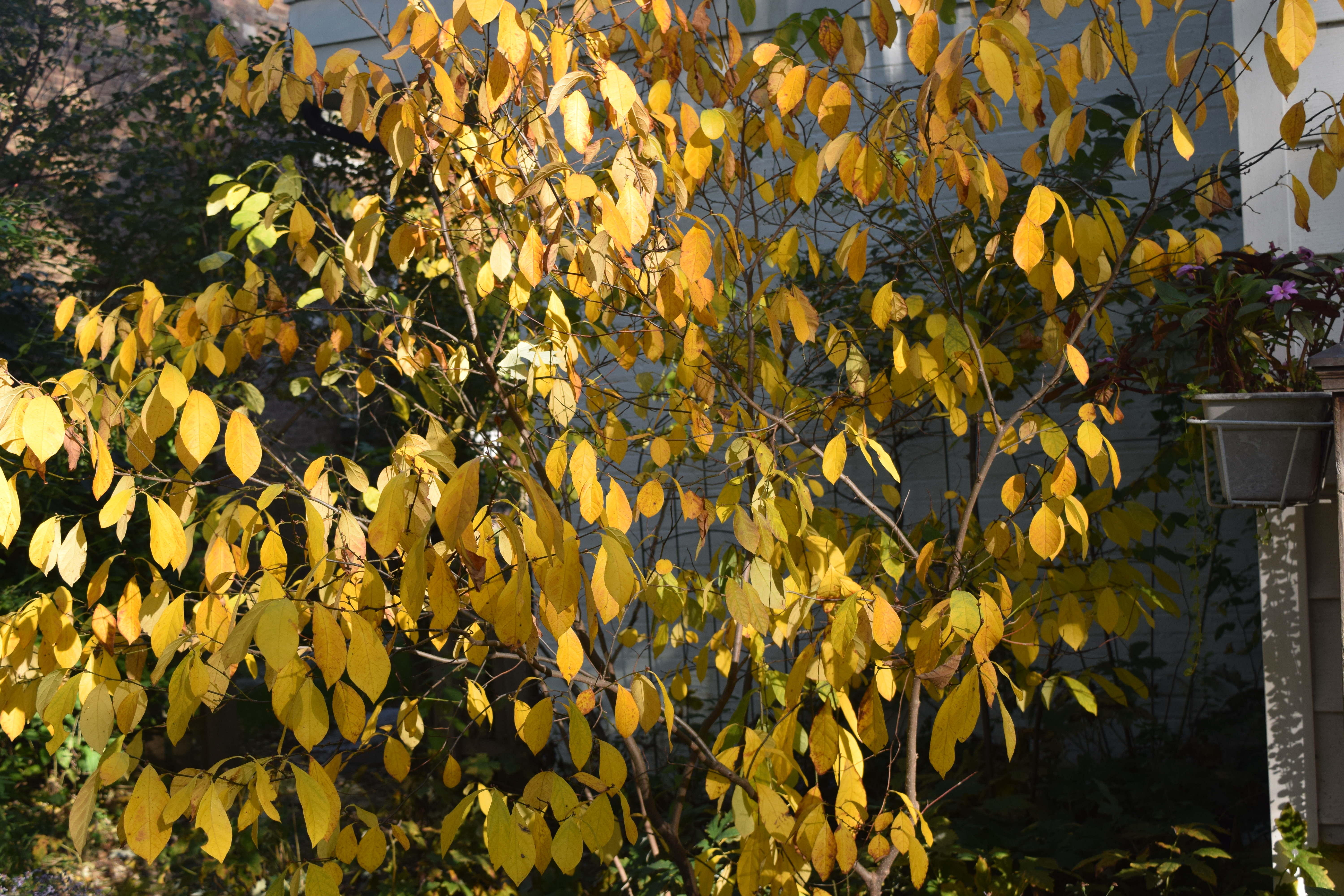
In the back garden, Spicebush (Lindera benzoin) has turned a bright orange-yellow.

2014-10-20 09.26.54 purple dome new england aster

The only flower still newly opened is the dwarf New England Aster (Symphyotrichum novae-angliae) ‘Purple Dome’. I admit to being a bit disappointed in ‘Purple Dome’. It’s not as floriferous as I had hoped, and is a bit too scraggly to be considered a dome.

2014-10-20 09.29.28 beautyberry

Last year I planted a small Asian Beautyberry (Callicarpa dichotoma), ‘Early Amethyst’. It has a modest display of berries this year, though they look nice close up.

2014-10-20 09.34.07 darlow's enigma hips

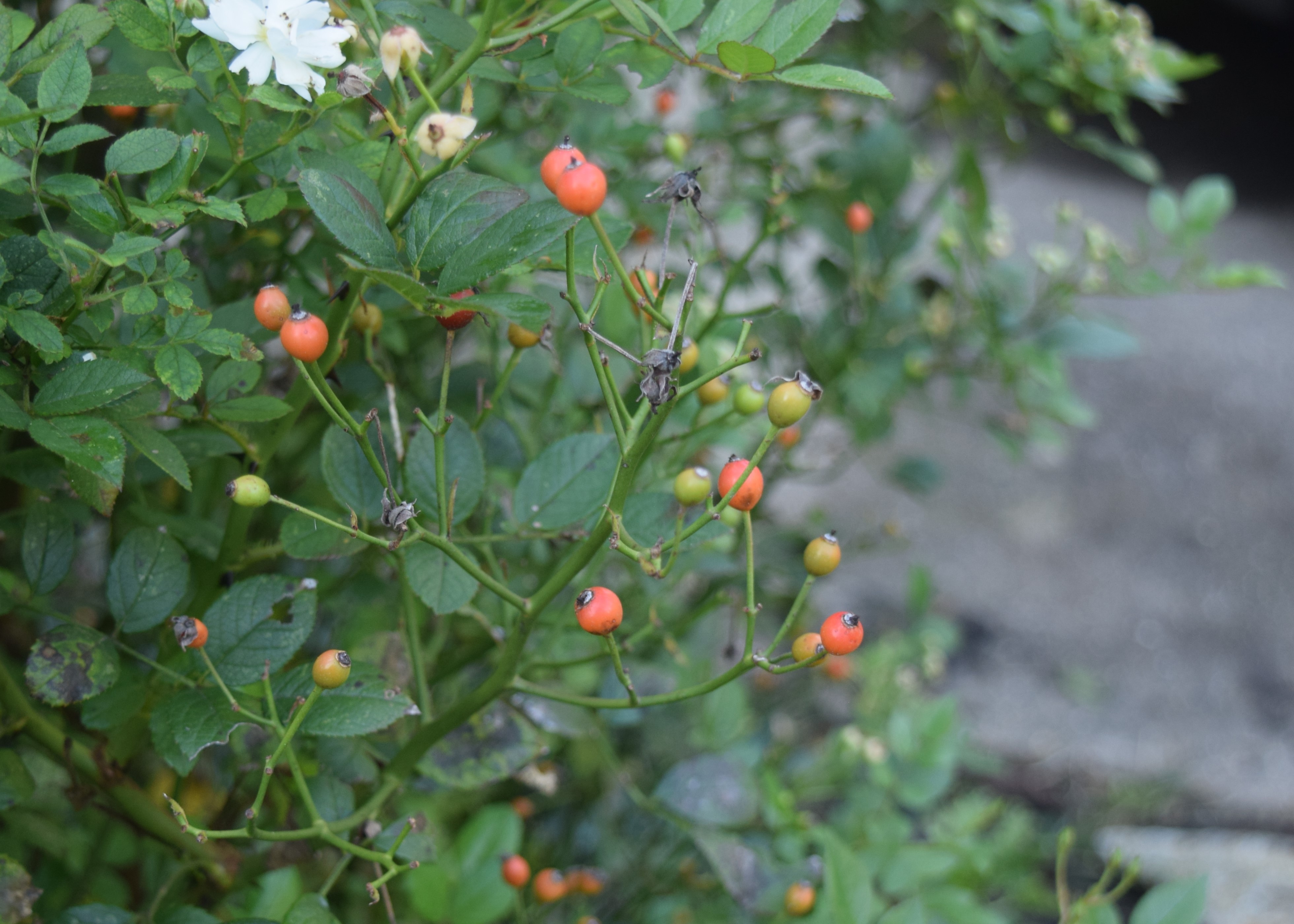
Speaking of fruits, I showed some ‘Cassie’ rose hips in my last post. Here are some ‘Darlow’s Enigma’ hips, more red and than ‘Cassie’, and more oval-shaped.

2014-10-20 09.29.53 virginia creeper

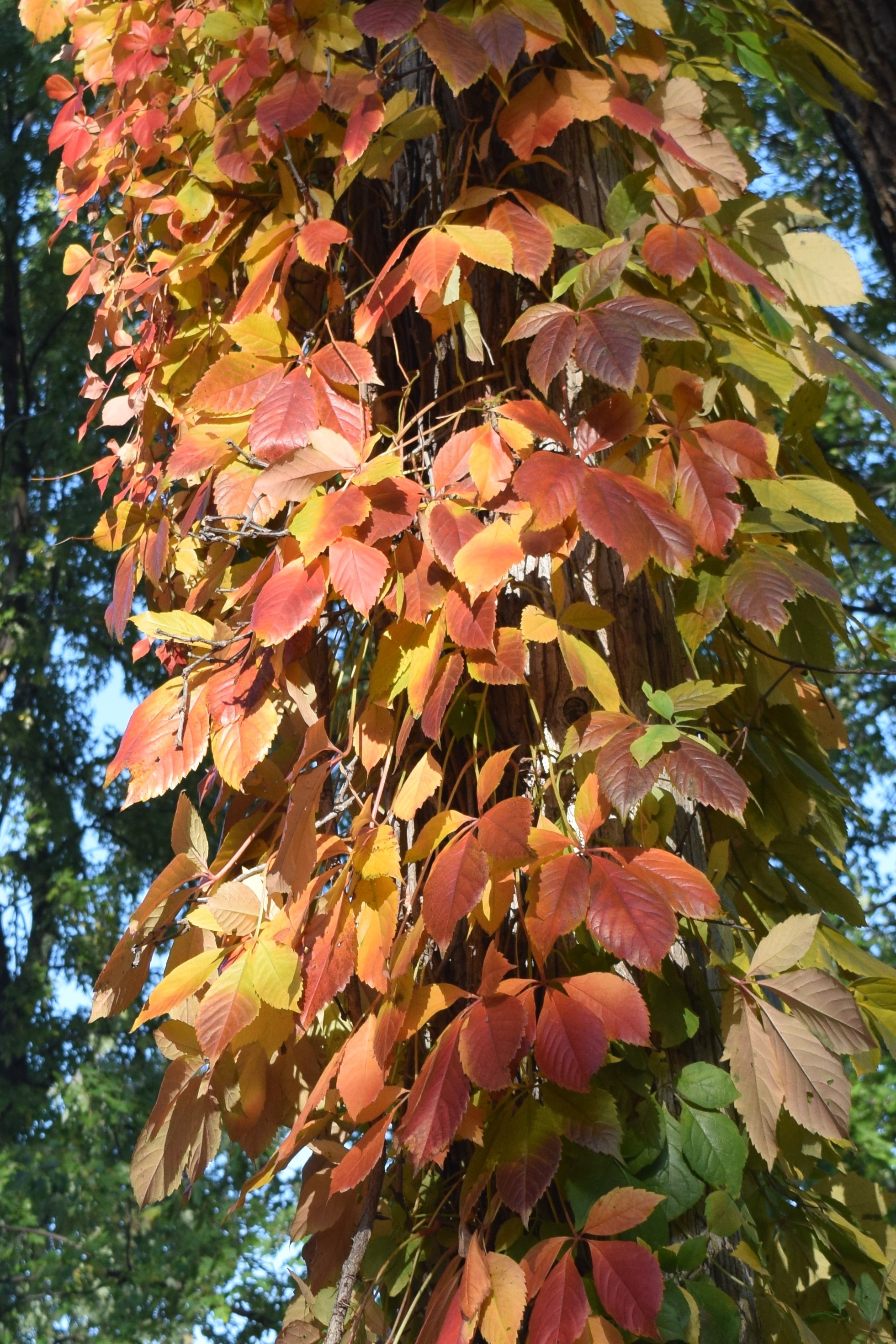
Virginia Creeper (Parthenocissus quinquefolia) smothers the telephone pole in the alley, providing a colorful seasonal display.

2014-10-20 09.38.54 serviceberry

And ‘Autumn Brilliance’ Serviceberry (Amelanchier xgrandiflora) leaves shimmer like jewels.

I am posting this as part of Garden Bloggers Foliage Day, sponsored by Christina at My Hesperides Garden. How is the fall color in your garden?

Shrub Rose ‘Cassie’ is a Flower Powerhouse

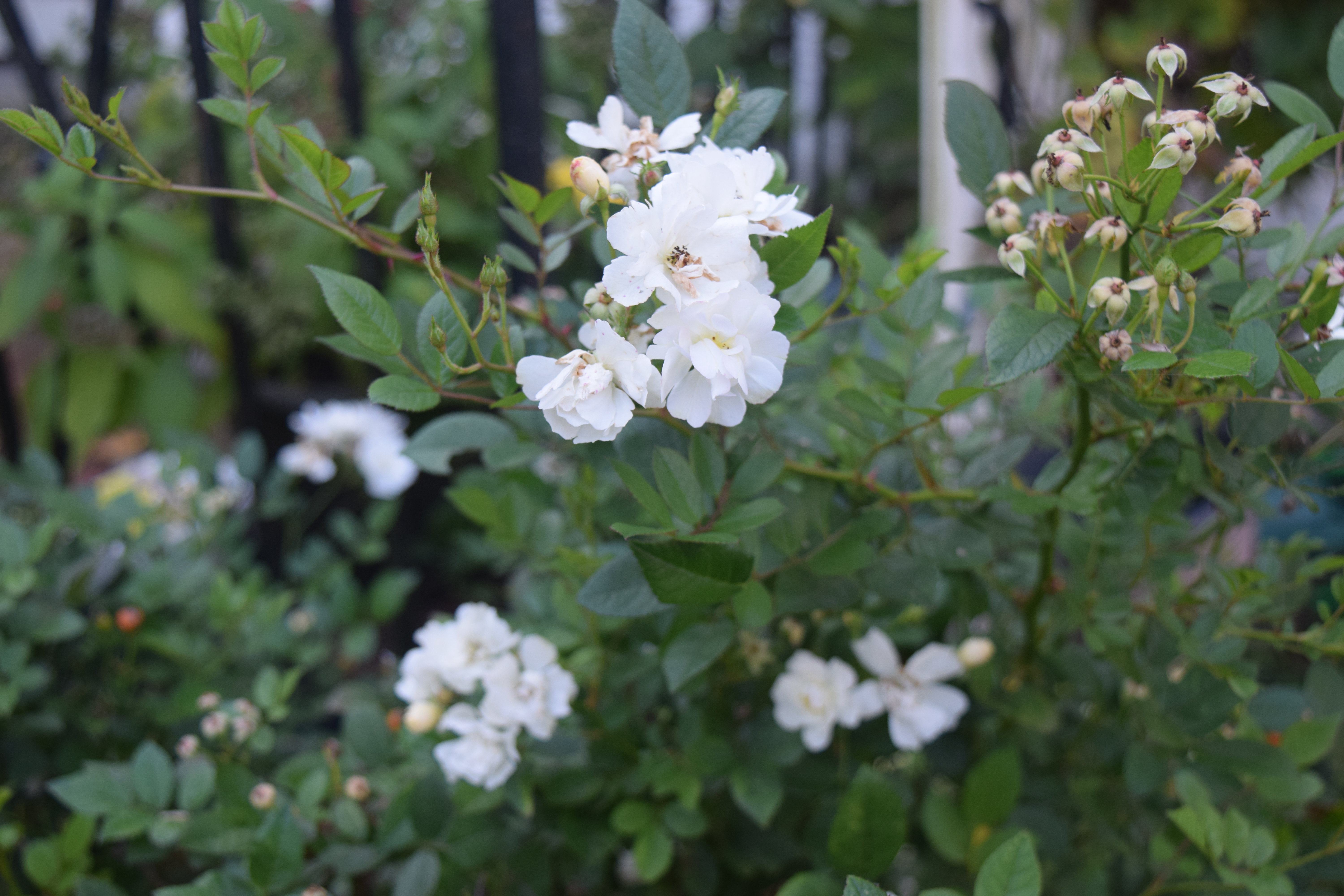
It’s October 20th, and everybody in the garden is winding down. Everybody but ‘Cassie’, that is.

'Cassie' blooming in late October.
‘Cassie’ blooming in late October.

‘Cassie’ is a medium-sized shrub rose that refuses to acknowledge the change of seasons. She just keeps pumping out small, semi-double white flowers.

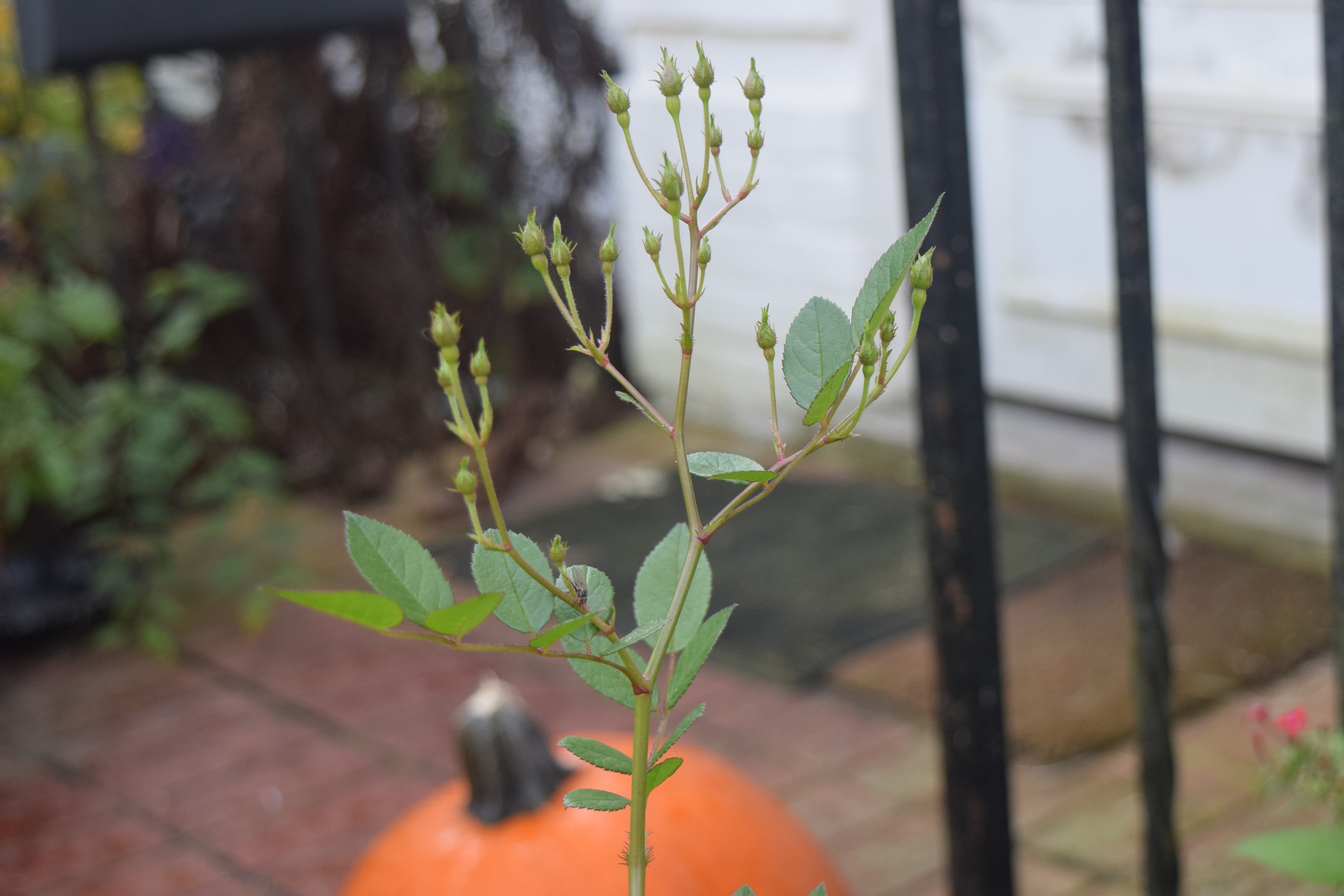
2014-10-20 09.21.52

She even keeps the flower buds coming.

'Cassie' hips.
‘Cassie’ hips.

All this while her canes fill with small orange hips that gradually disappear down the gullets of birds.

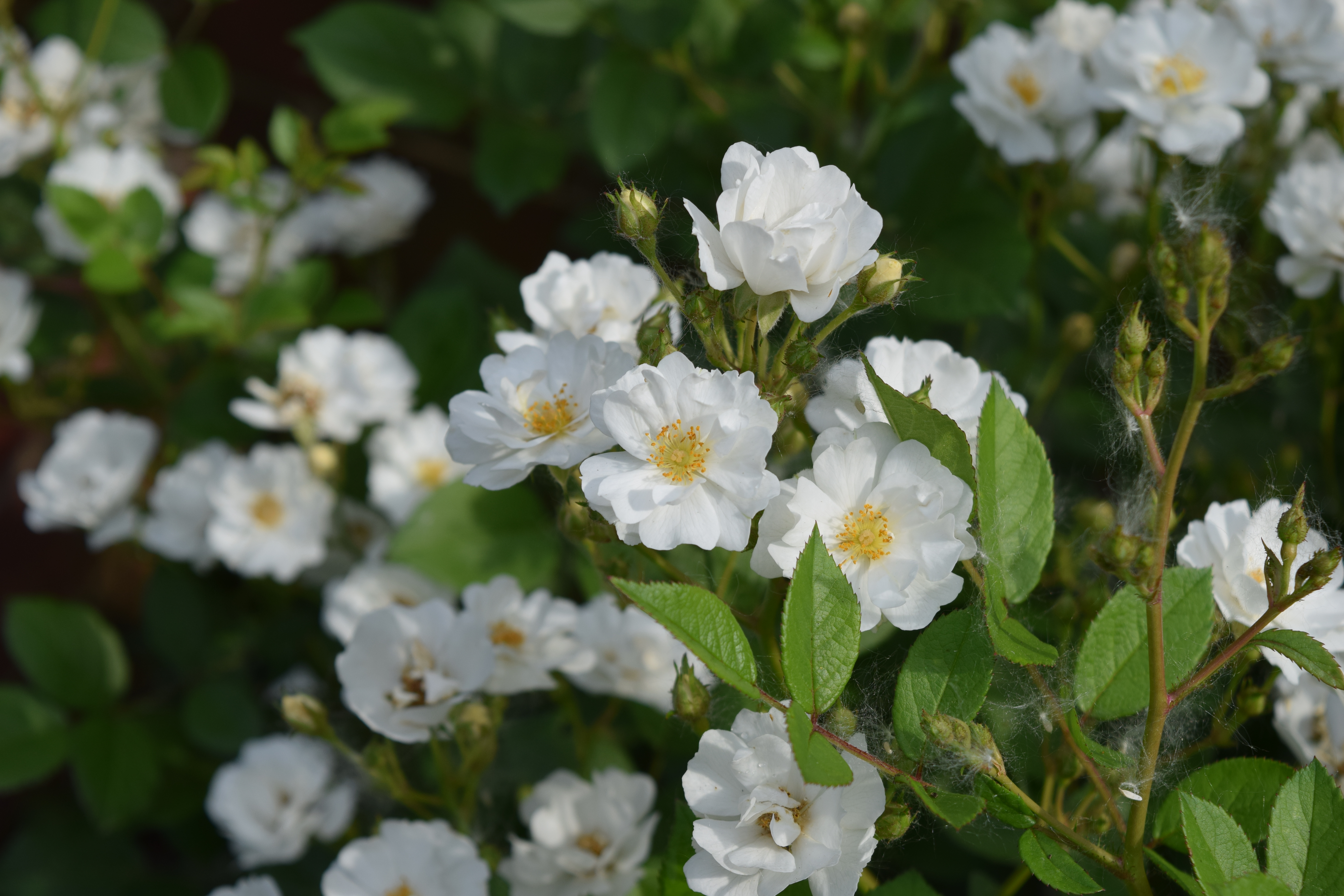
'Cassie' overflows with small white flowers in June and July.
‘Cassie’ overflows with small white flowers in June and July.

Of course, ‘Cassie’ is at her peak in June and July, when she is covered with mildly fragrant blooms.

‘Cassie’ is about as close to trouble-free as a rose can get. I give her absolutely no coddling, and every year she comes back with vigor and clean foliage. Cut back in early spring, she grows to about four feet high.

Do you have any roses or other plants that don’t know when to quit?

The Joy of Plants at Joy Creek Nursery

Portland gardeners are lucky ducks. They seem to have an unusual concentration of high quality nurseries in their area, nurseries whose display gardens would make them worthwhile destinations even if they had nothing for sale.

Blue Hydrangea and grasses at the Joy Creek display garden.

We don’t have that in Chicago, where land is at too much of a premium to be used that way by a retail nursery. By the way, I took these pictures as Judy missed the first day of the Fling. So they may not be up to the usual quality.

Rudbeckia hirta
Rudbeckia hirta

We visited two such nurseries during the Fling: Joy Creek and Cistus. One of the Portlanders told me that these two nurseries define two local styles of gardening. “You’re either a Joy Creek gardener or a Cistus gardener,” she told me.

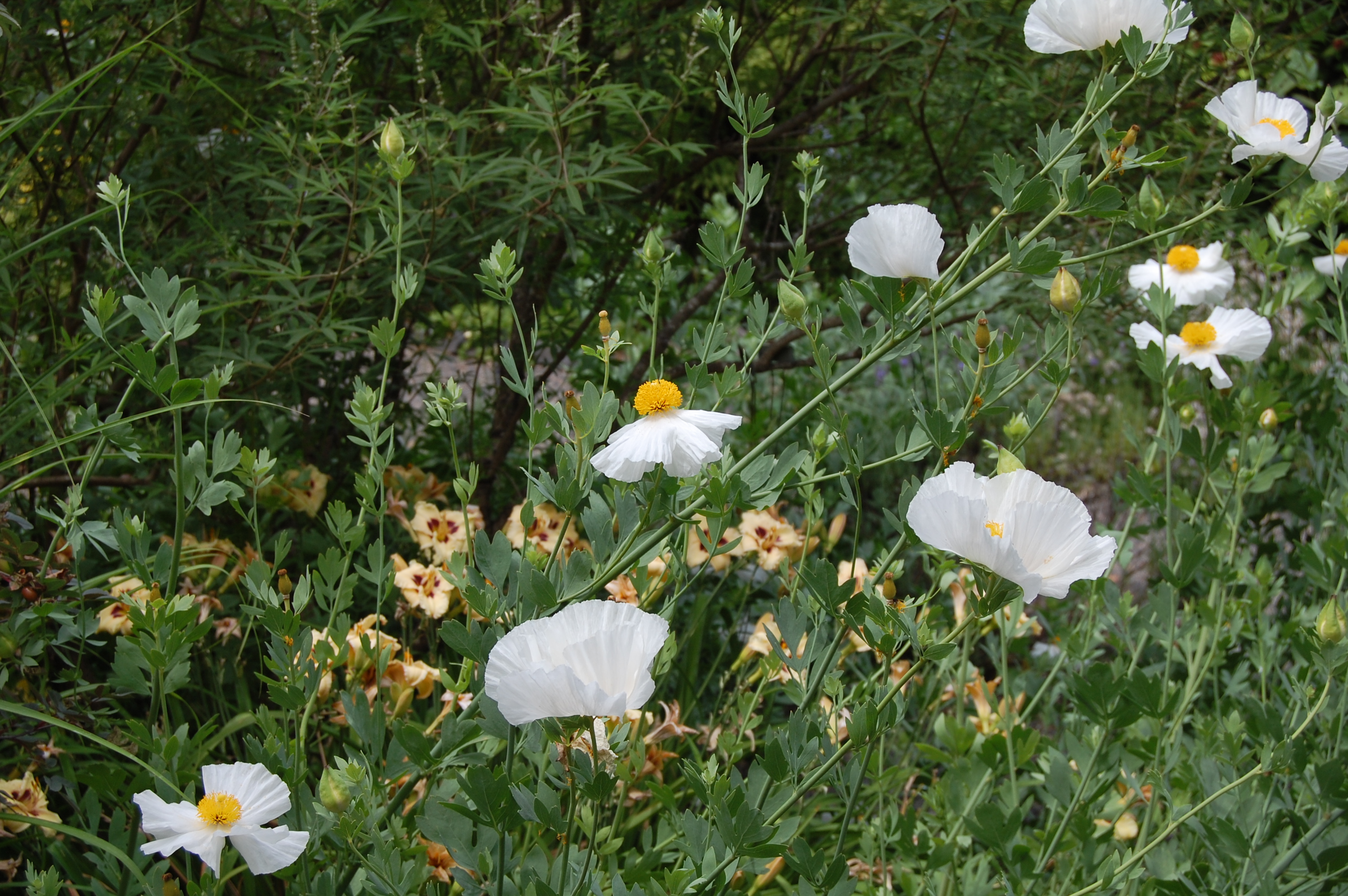
Matilija Poppy. Wish we could grow these in Chicago.

If I lived in Portland, I would definitely be a Joy Creek gardener.

2014-07-11 15.55.43 joy creek

Joy Creek has over four acres of display and stock gardens.

2014-07-11 16.09.46 joy creek

And by the way, they also do mail order. Here’s the Joy Creek website.

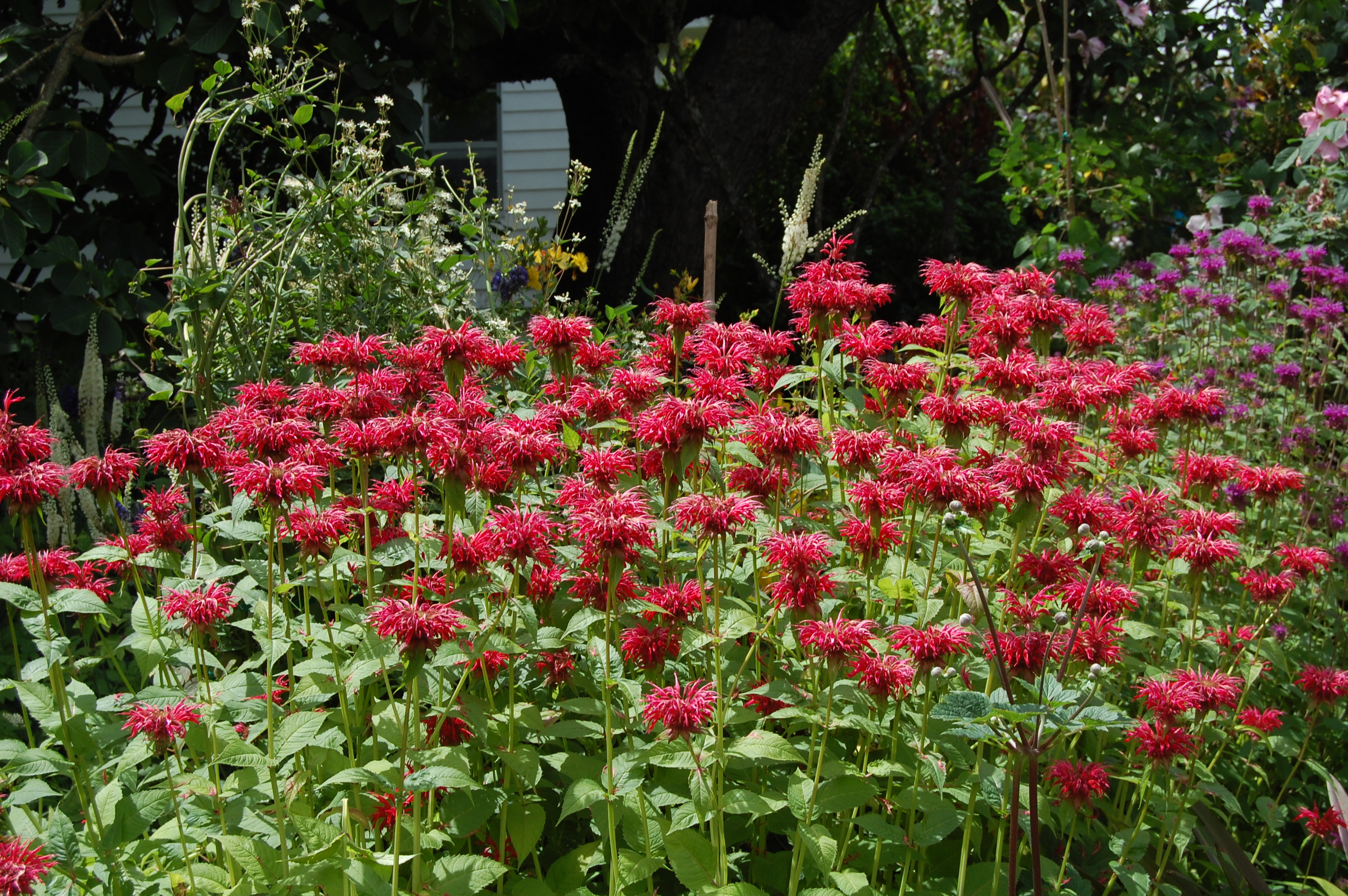
Bee Balm, I think it's 'Jacob Cline'.
Bee Balm, I think it’s ‘Jacob Cline’.

Joy Creek specializes in Clematis, and their garden has an amazing selection.

2014-07-11 16.36.05 joy creek clematis

2014-07-11 16.30.35 joy creek clematis

2014-07-11 16.31.37 joy creek clematis

2014-07-11 16.29.16 joy creek clematis

2014-07-11 16.30.18joy creek clematis

This one reminds me of Little Shop of Horrors. Feed me!

2014-07-11 16.24.58 joy creek clematis

Now if only I could get them to open a branch in the Chicago area.

Again with the Tulips in Containers

Monday was a holiday, and I spent it planting 160 Tulips into 11 containers. Plus a 12th container I planted with ‘City of Haarlem’ Hyacinths (Hyacinthus orientalis).

12 containers full of tulip and other bulbs.

There seems to be a fair amount of interest in planting Tulips in containers, so I’m doing this post even though I did a very similar one last  year.

So why would anybody want to do this? For me, there are three main reasons.

First, I find it easier to work with hybrid tulips in containers rather than in beds and borders. The bulbs are relatively large and sometimes short-lived and the post-bloom foliage gets in the way. For beds and borders I prefer smaller bulbs like Grape Hyacinth (Muscari), Snowdrops (Galanthus), and Species Tulips.

Tulips in Containers on the front steps.
Tulips blooming on the front steps.

Second, you can move your tulips in containers to wherever your heart desires – for example, to create a welcoming splash of color for your front door.

And last, this approach allows me to indulge my Tulip lust. There are 3,000 varieties of tulips out there, how can I be happy stuck forever with the same measly 10 or 12? I treat my container tulips as annuals, they go on the compost pile after blooming. Then I can order whatever I fancy for next year.

Plants waiting to be dislodged. The Mexican Petunia put up massive resistance. I took most of these pics with my phone.

Planting tulips in containers is not complicated, but it is a bit of work. Of course, I had to start with pulling out all the summer annuals. And let me say, if you want to plant Mexican Petunia (Ruellia brittonniana) in containers, be aware that they are way easier to plant than they are to pull out. You’ve been warned. Then there are the following steps:

  • Dump most of the planting mix into a bucket. You leave the container mix at the level where you want to plant your tulips. I generally plant the bulbs at least 8″ deep. But before planting I refresh the mix with a couple of handfuls of compost.

uncovered bulbs in containers

  • Set the Tulip bulbs into the container. I plant them pretty close together – just an inch or two apart. Actually, they get closer together as the number of remaining containers dwindles.
  • Fill the remainder of the container with the planting mix. I like to mix in another handful of compost at this point.

Now the question is where to leave the planted containers for the winter. You need a place that gets cold but not brutally cold. Year before last I left them in the garage, then last year I buried them in the Cuttings and Edibles Bed. You just have to bury them so that their tops are level with the ground. I’m going with burying again this year, though I didn’t get around to it on Monday.

Ad hoc critter defense

Either way, it’s smart to put something on the containers to deter critters. I had leftover bits of hardware cloth and chicken wire that I secured with bricks.

In past years I’ve put a mix of early, mid-season, and late tulips in each container. This year the containers were a mix of either only early, early and mid, mid and late, or only late season bulbs.

Want to know what kind of tulips I planted? Sure you do!

  • ‘Annie Schilder’: fragrant, orange, mid-season.
  • ‘Ballerina’: lily-flowering, orange-scarlet, late.
  • ‘Blushing Lady’: yellow-rose, late.
  • ‘Couleur Cardinal’: fragrant, red-plum, early.
  • ‘Early Harvest’: orange-scarlet, very early.
  • ‘Elegant Lady’: lily-flowering, yellow-rose, late.
  • ‘Keizerskroon’: fragrant, red-yellow, early.
  • ‘Kingsblood’: deep red, late.
  • ‘King’s Orange’: red-orange, mid.
  • ‘Princess Irene’: fragrant, orange-purple, early.
  • ‘Salmon Pearl’: fragrant, pink-yellow, mid.
'Couleur Cardinal'. This is a Jason picture, please excuse the hubcap.
‘Couleur Cardinal’. This is a Jason picture, please excuse the hubcap.

You could say I’m not putting a big emphasis on subtle colors here. These will be tulips to wake you up in the morning. I am emphasizing fragrant tulips for the first time, something I’ve ignored in the past.

Of the 11 varieties here, eight are new to my garden.

You could make a pretty good case that this approach is expensive and wasteful. I think of it as my version of doing an elaborate Christmas lights display or Fourth of July Fireworks.

Already I can’t wait until Spring.