I just didn’t get to spend enough time at the Huntington Library. We were probably there for only three to four hours total. The place is HUGE.
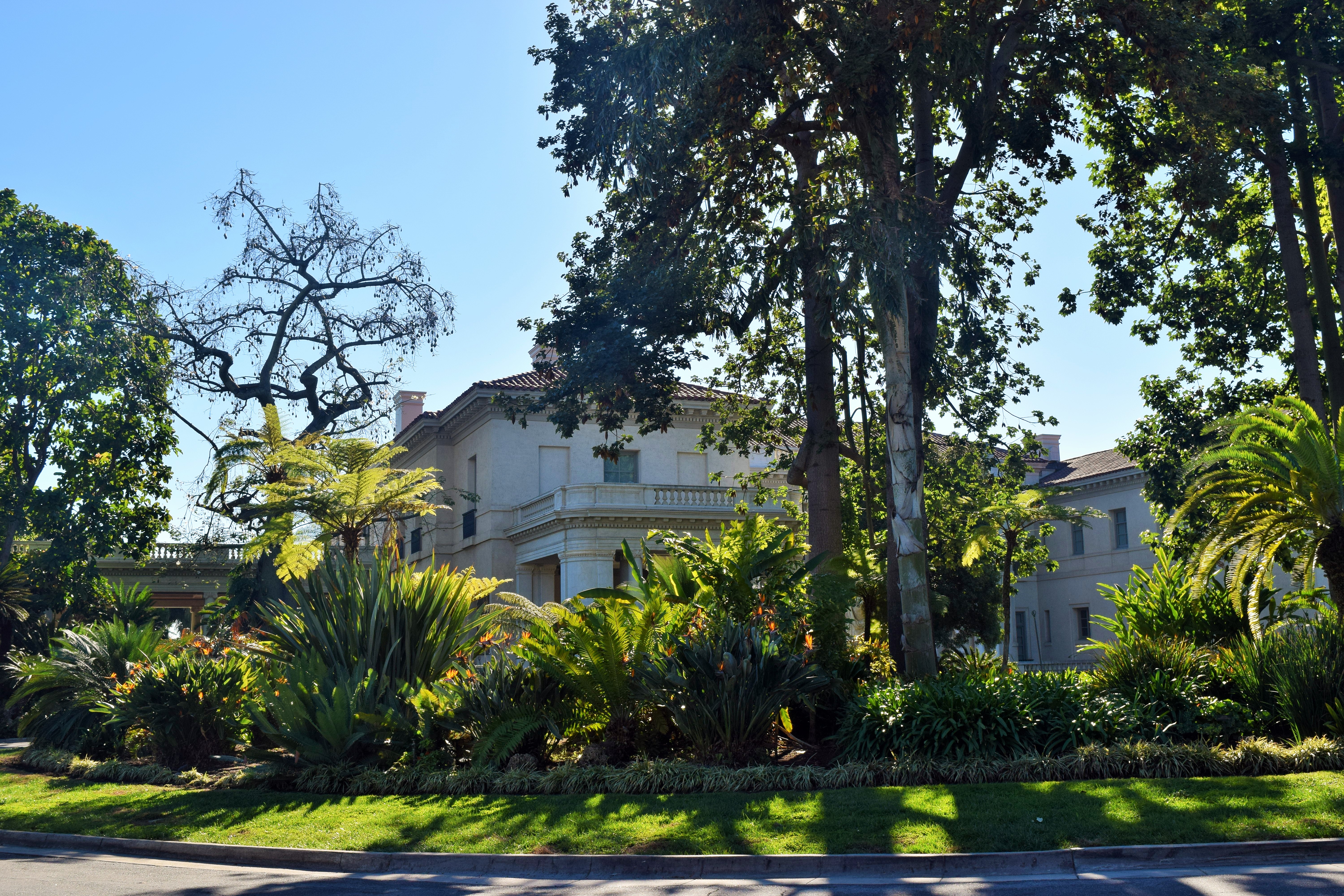
One of the massive buildings on the grounds of the Huntington Library.
Most of our time we spent at the Desert Garden. However, the grounds have 12 distinct gardens spread over 120 acres.
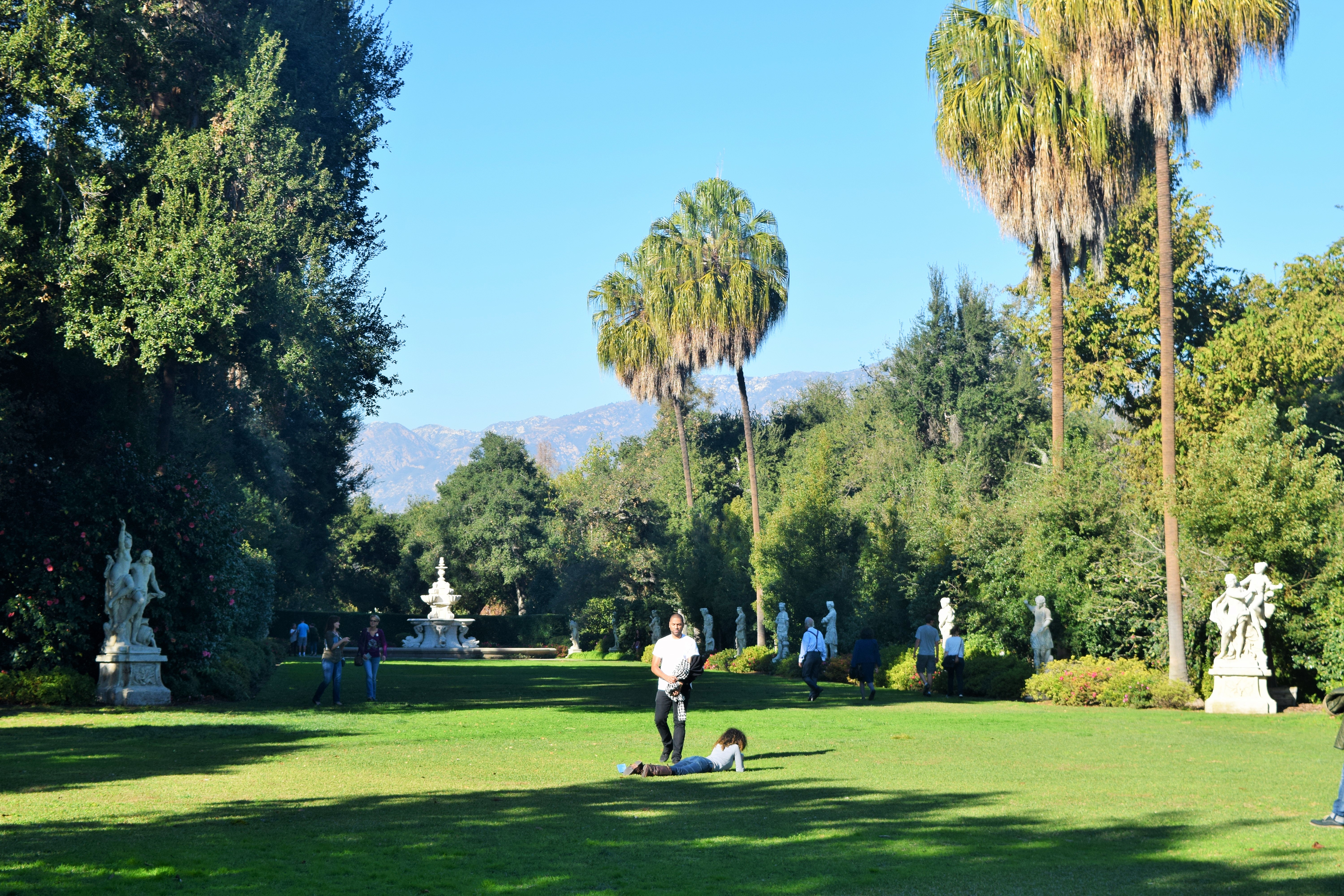
Versailles comes to Pasadena.
Not everything was fabulous. This scene with the grassy sward and the statues seems very out of place, like an imitation Versailles. Plus, how much water does it take to keep this lawn so green, and isn’t there a drought in California? I do like the distant view of the mountains, though.
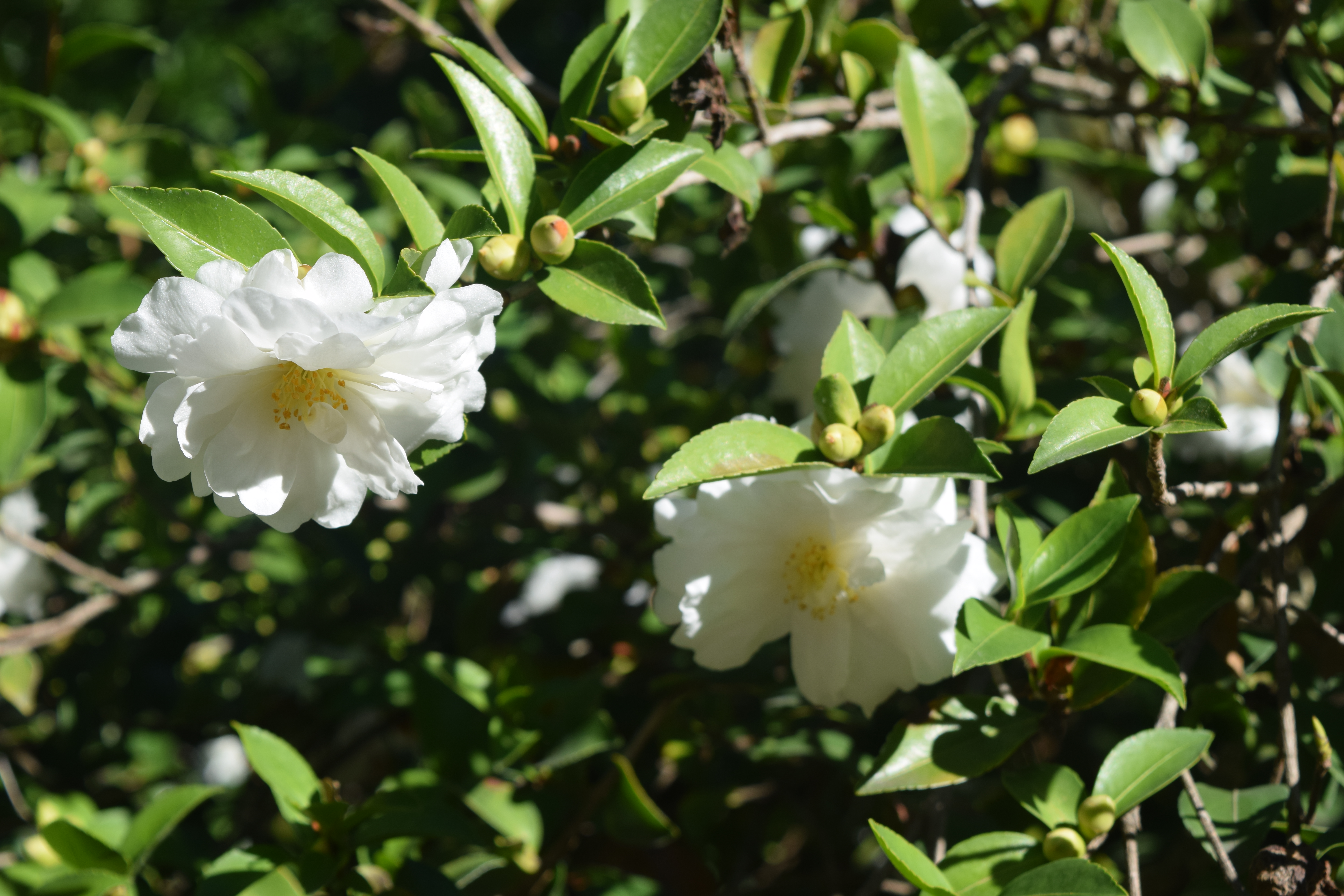
Sasanqua Camellias
There were a few nice Sasanqua Camellias in bloom. However, I had been hoping for masses of blooming Camellias. And aren’t some Camellias supposed to be fragrant? None of these were.
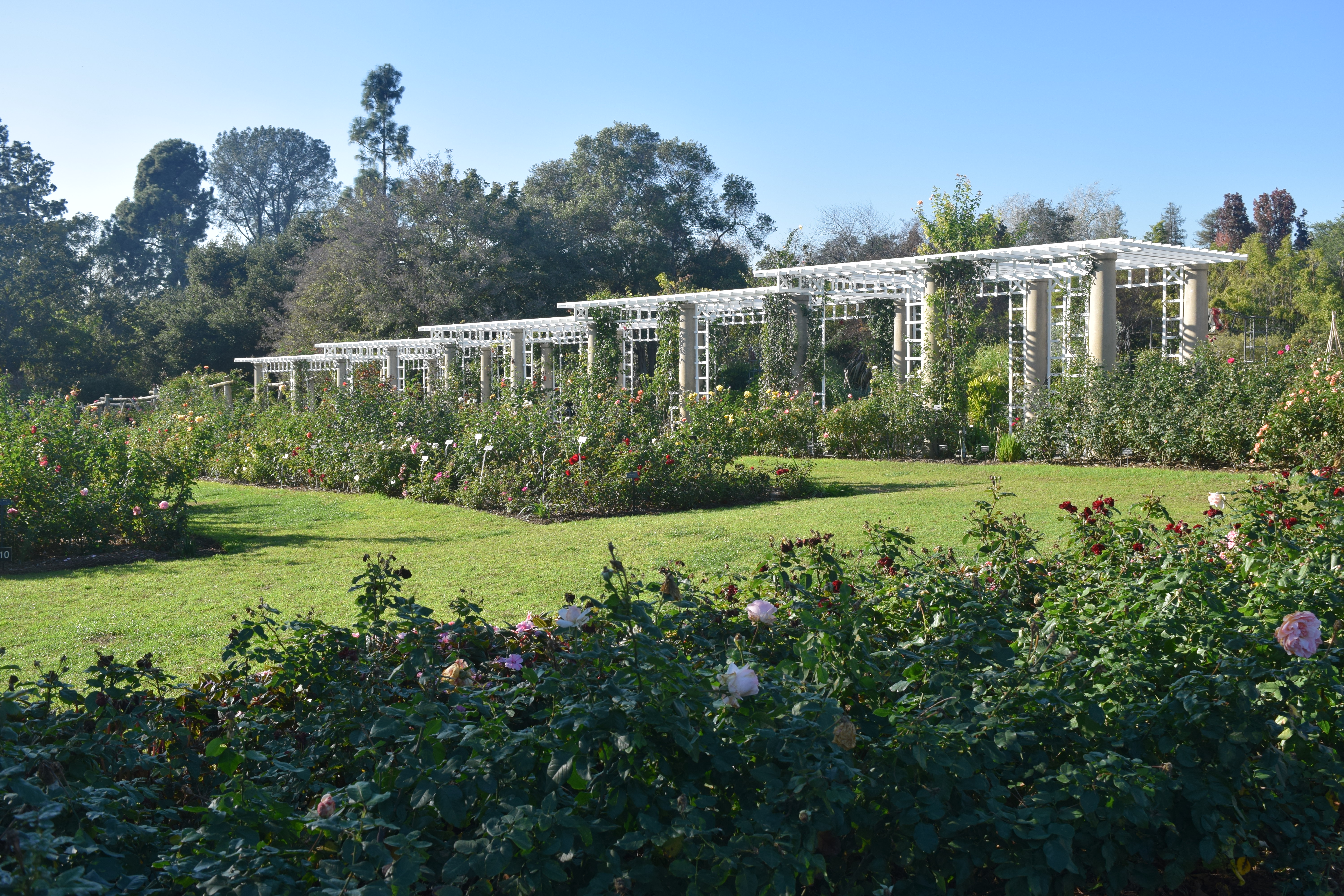
Rose Garden
We spent some time in the Rose Garden, which I enjoyed.
Roses blooming in December
It was a pleasure to see so many roses blooming in December.
Covered steps lead to the Japanese Garden.
We then headed to the Japanese Garden, though we just walked alongside without going in.
Chinese garden designers like faux barges like this one.
Finally we went to see the Chinese Garden, which was extremely crowded.
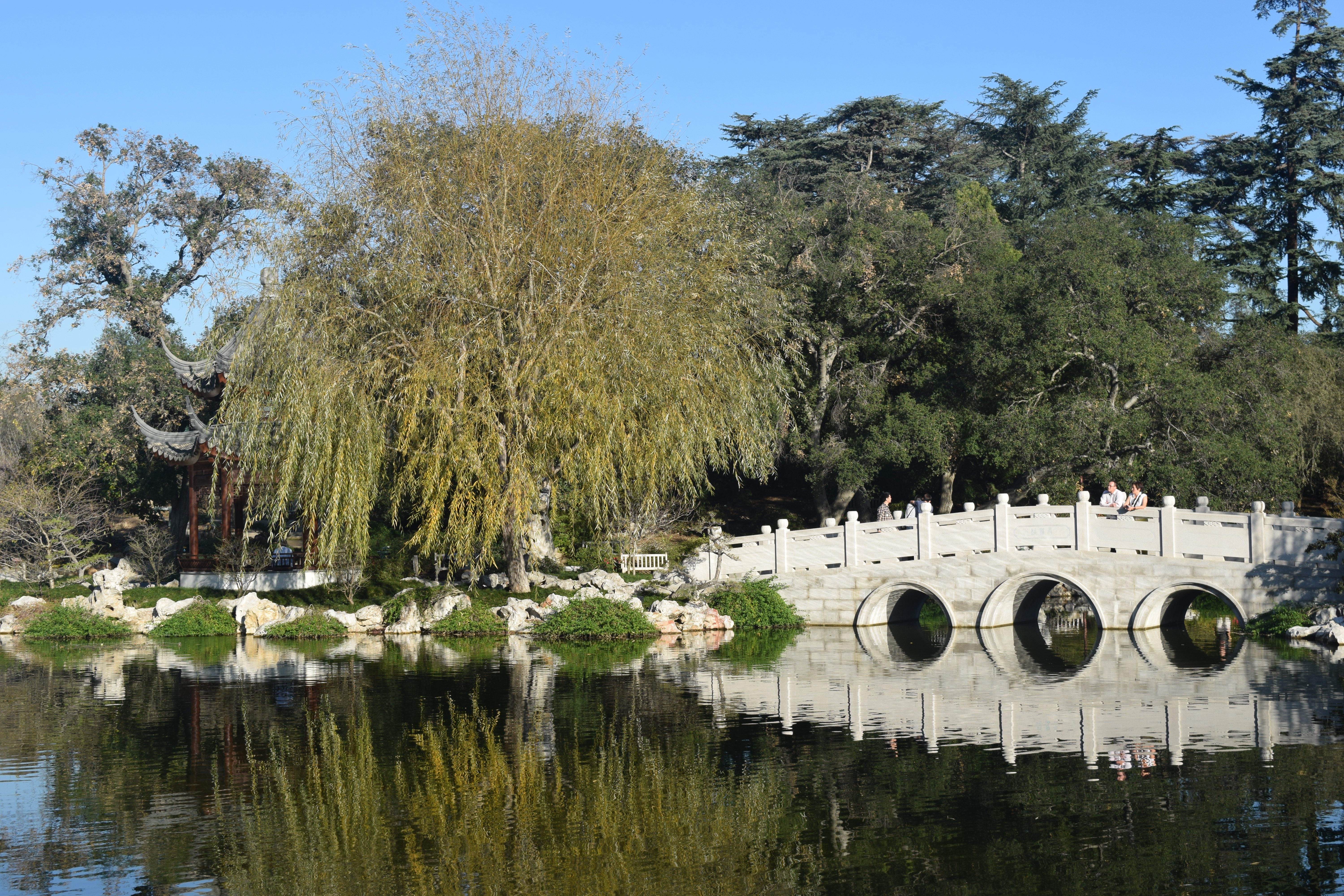
I like how the arches create circles when combined with their reflections in the water.
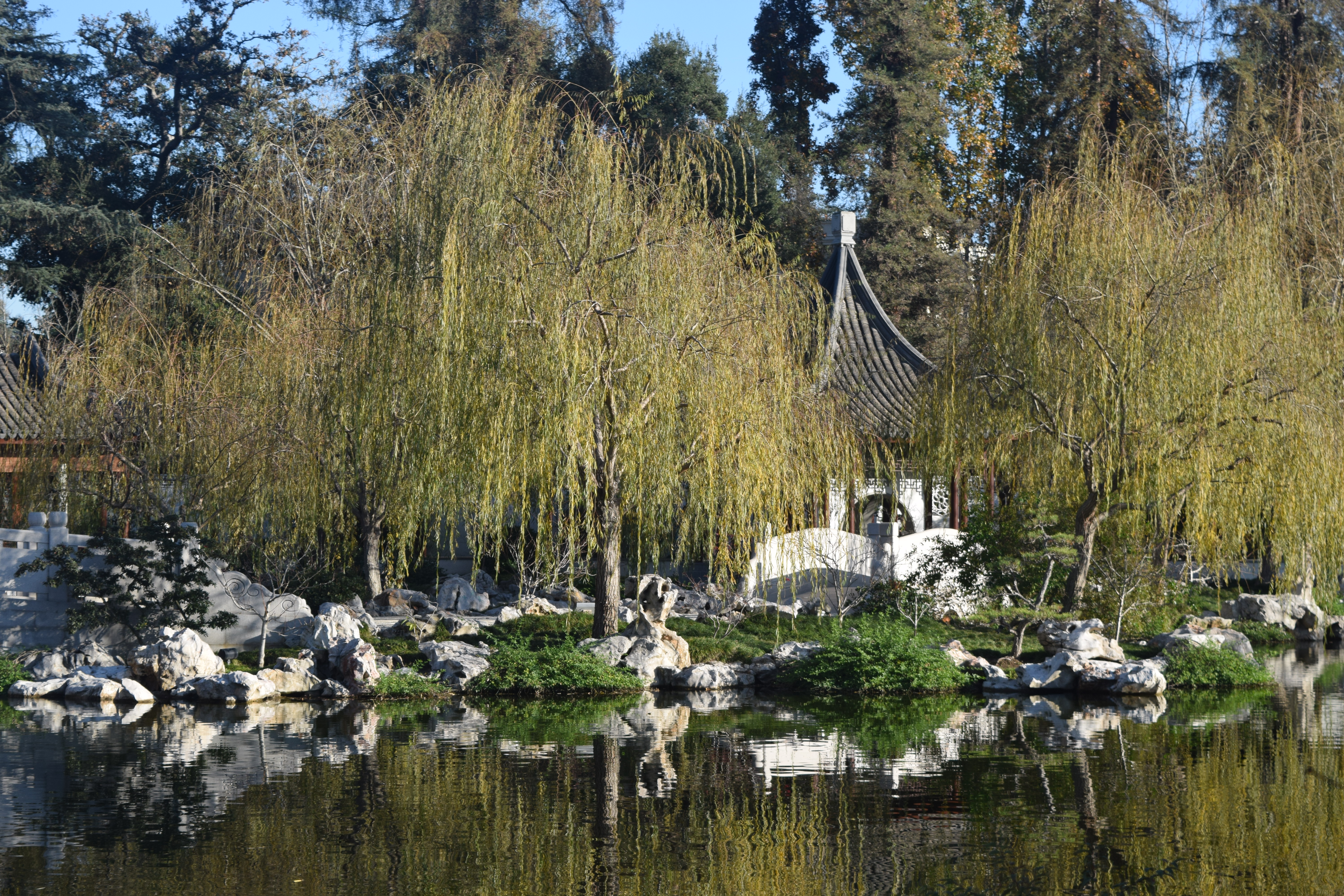
The Chinese Garden is all about rocks and water, paths and structures.
Willows and water
At this point certain members of our party started agitating for departure. I was disappointed not to see the Subtropical Garden, the Palm Garden, and the Jungle Garden. If we’d had a few more days in LA I would have argued for a second visit.
I realize that this is turning into a grumpy post. Possibly that is because I spent an hour yesterday morning trying to open my car doors that had become frozen shut. Or because the low temperature tomorrow is predicted to be -9F (-23C), with a wind chill of -30 (-34C). Schools will be closed because of the bitter cold. Take me back, California!
Some time ago I wrote a post about why I don’t plant succulents in my own garden. Ever since then, I have felt the presence of an invisible host waiting to pounce and shout, “Aha! Now you admit the error of your ways!”
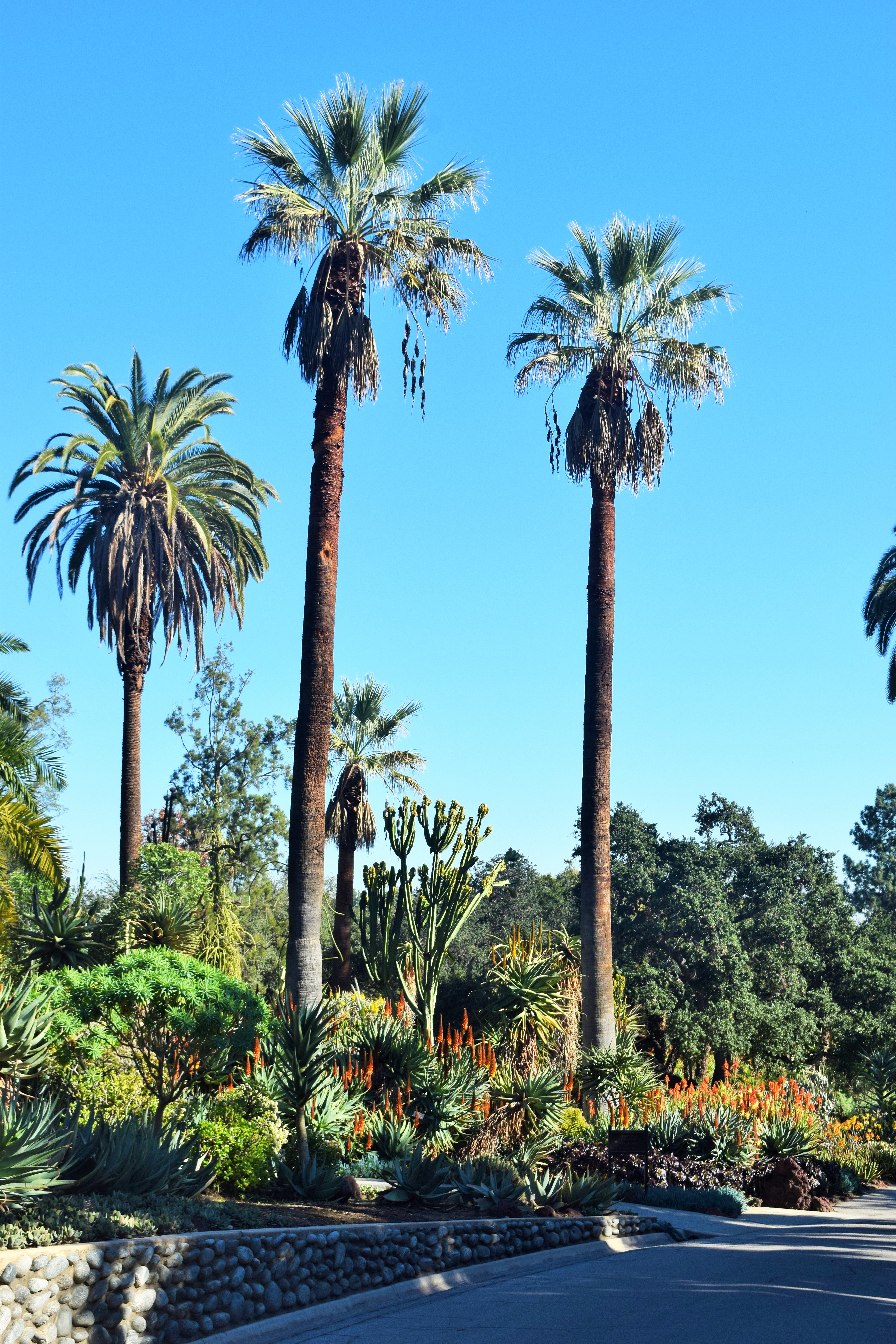
Approaching the Huntinton Library’s Desert Garden.
We saw the Desert Garden at the Huntington Library on the Monday before Christmas. This garden is fun, exciting, fascinating, and visually powerful. But did it make me change my mind? Read on to find out.
Once the estate of a California plutocrat, the Huntington Library is now a privately run institution featuring extensive gardens, art displays, and libraries, all open to the public. The Desert Garden, covering 12 acres, was the inspiration of William Hertrich, the estate’s chief gardener in the earlier part of the 20th Century.
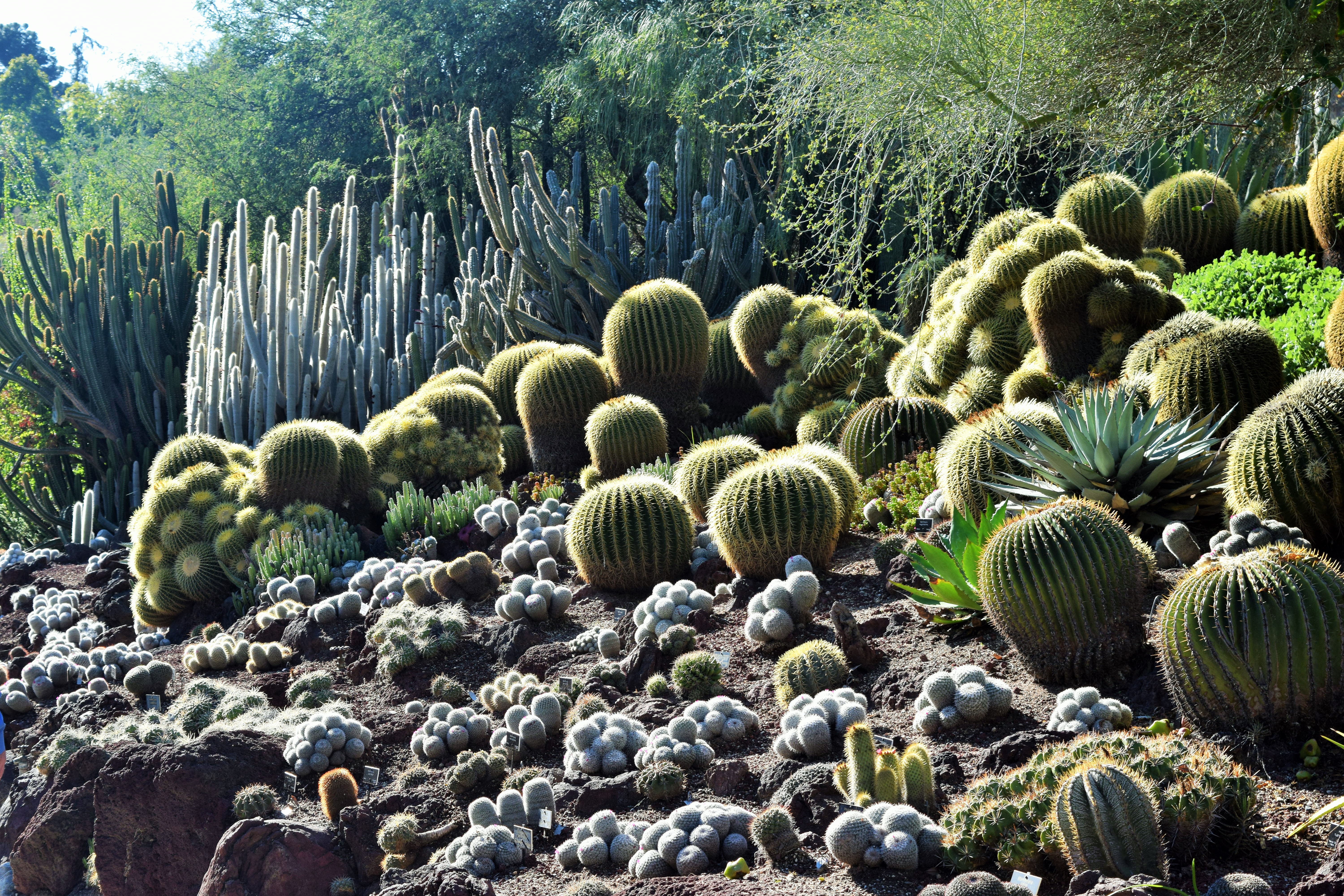
Smooth and spiky: Golden Barrel Cactus (Echinocactus grusonii) and Agave parryi. I know I posted this picture earlier, but I had to put it up a second time.The cacti present an intriguing mix of rounded and columnar shapes.
During our visit there two qualities to this garden that really stood out. The first was the complementary and contrasting shapes and textures of the plants.
The other was the way the spines (which are considered leaves by botanists, if you want to get technical) caught the light.
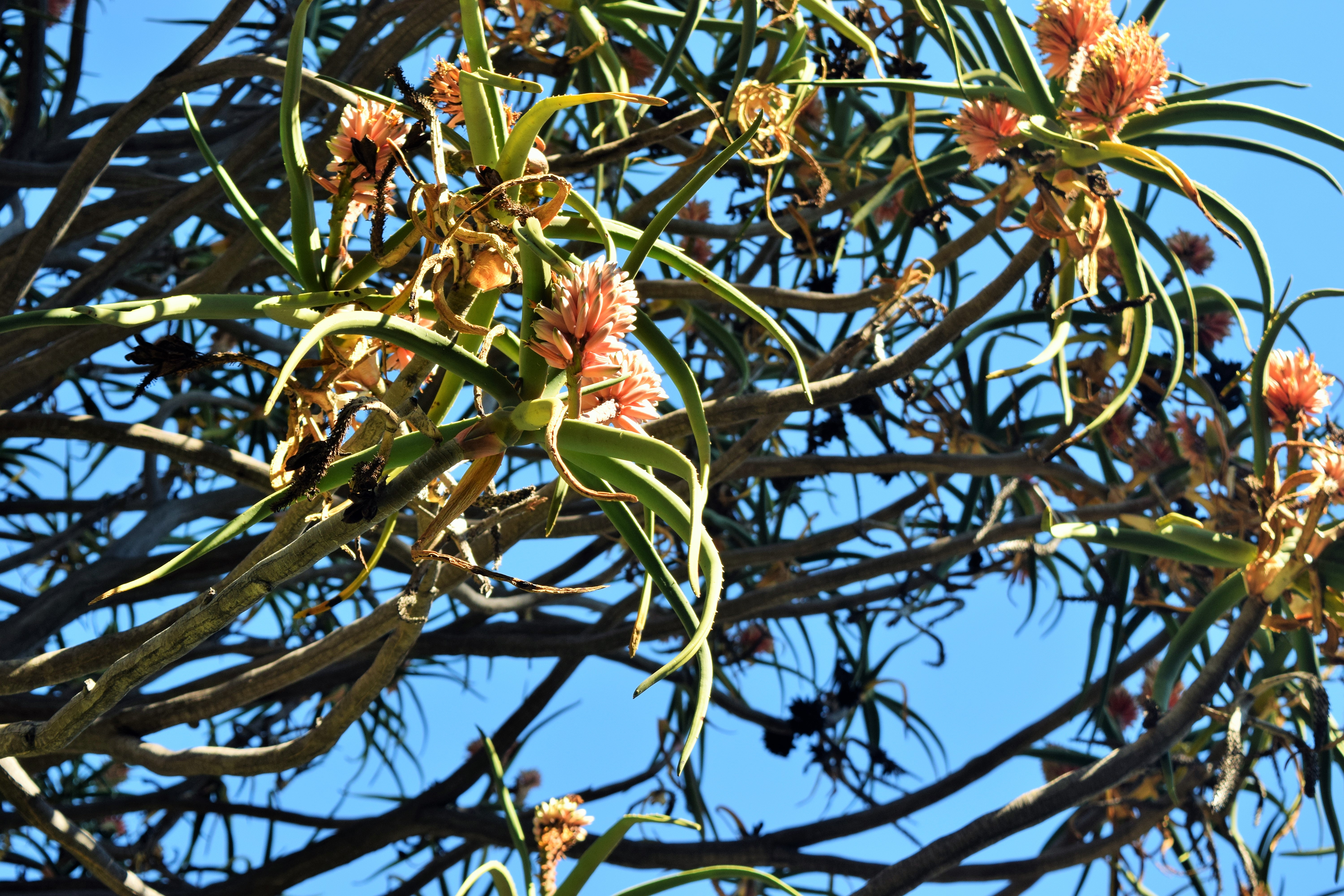
Anybody know the name of this tree?Flowering Aloe behind a stand of Aeonium.
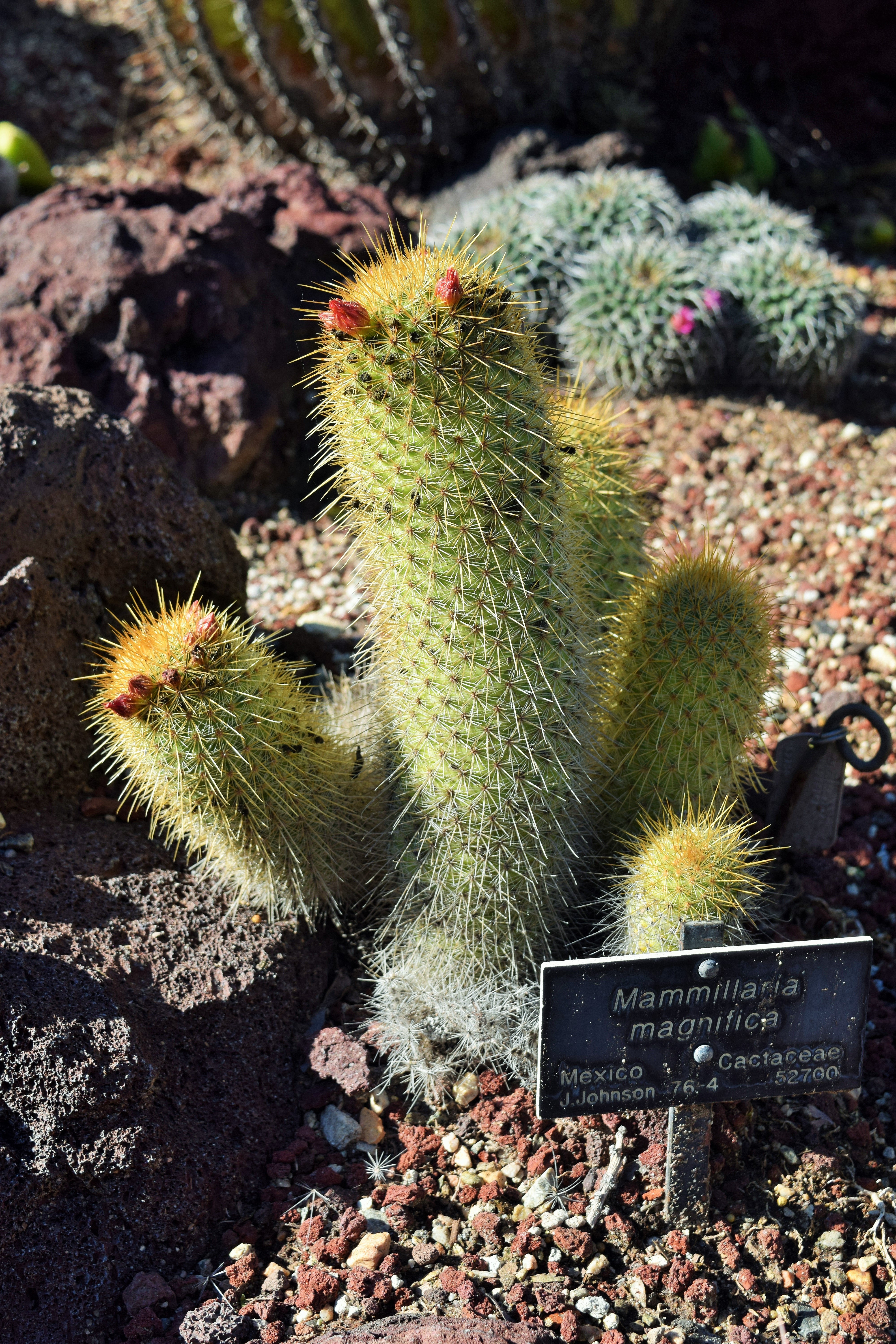
Flowers are a relatively minor aspect of this garden, but there were a few that caught our admiration. They stand out that much more since they are relatively scarce.
Sometimes the colors of the cacti themselves could be arresting.
The way these flowers are stuck on the stem makes me think of Mr. Potato Head.These guys look like they could be new Muppet characters.
On the other hand, some of the cactus flowers struck me as awkward or even comical.
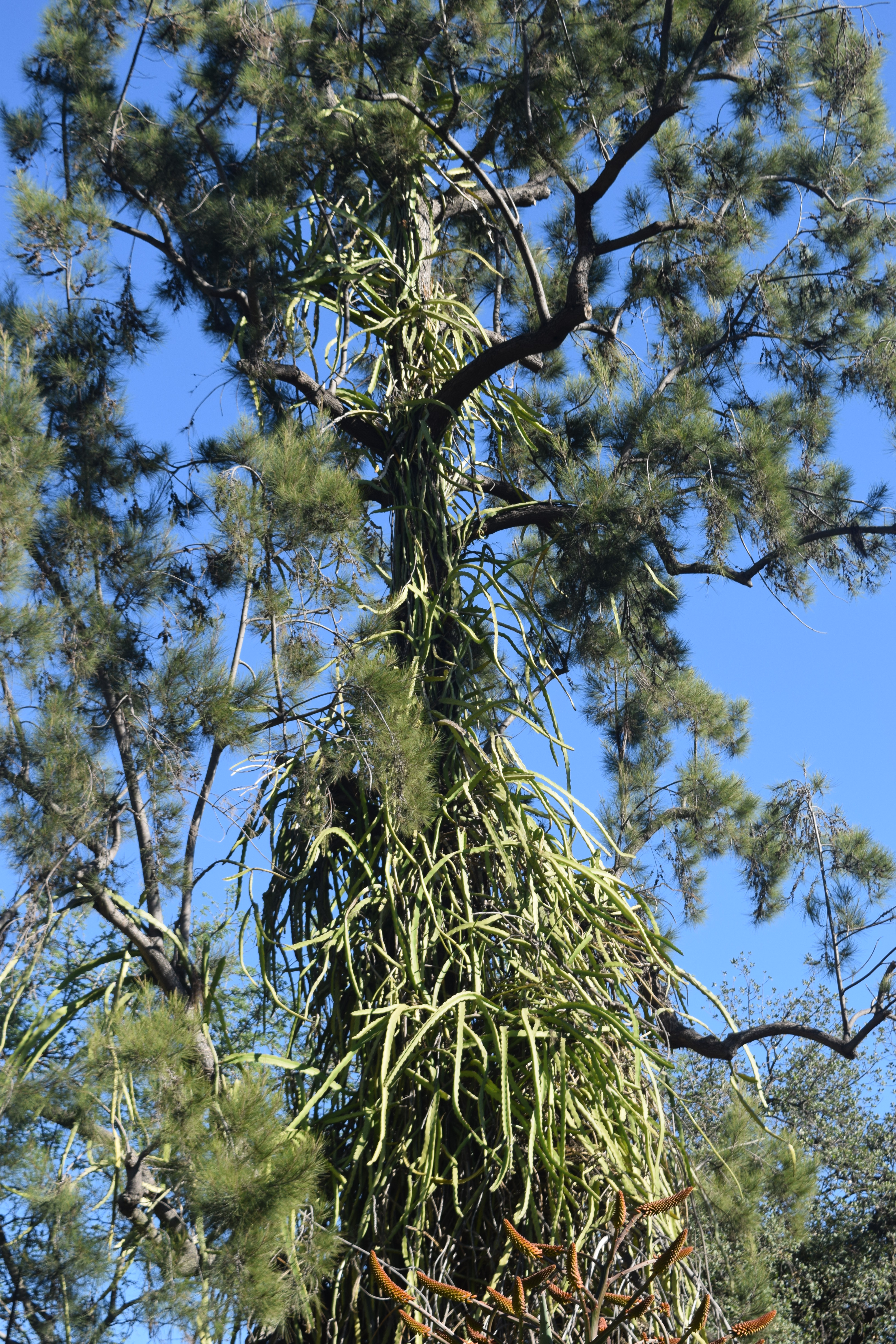
Did you know there were cacti that could climb?Here’s another one.
There were a number of plants that seemed particularly strange.
The plants in this garden were collected from all over the world. However, they were grouped by aesthetic criteria only, not geographically. Even so, I have to say the garden was lively with birds, though we didn’t get any pictures.
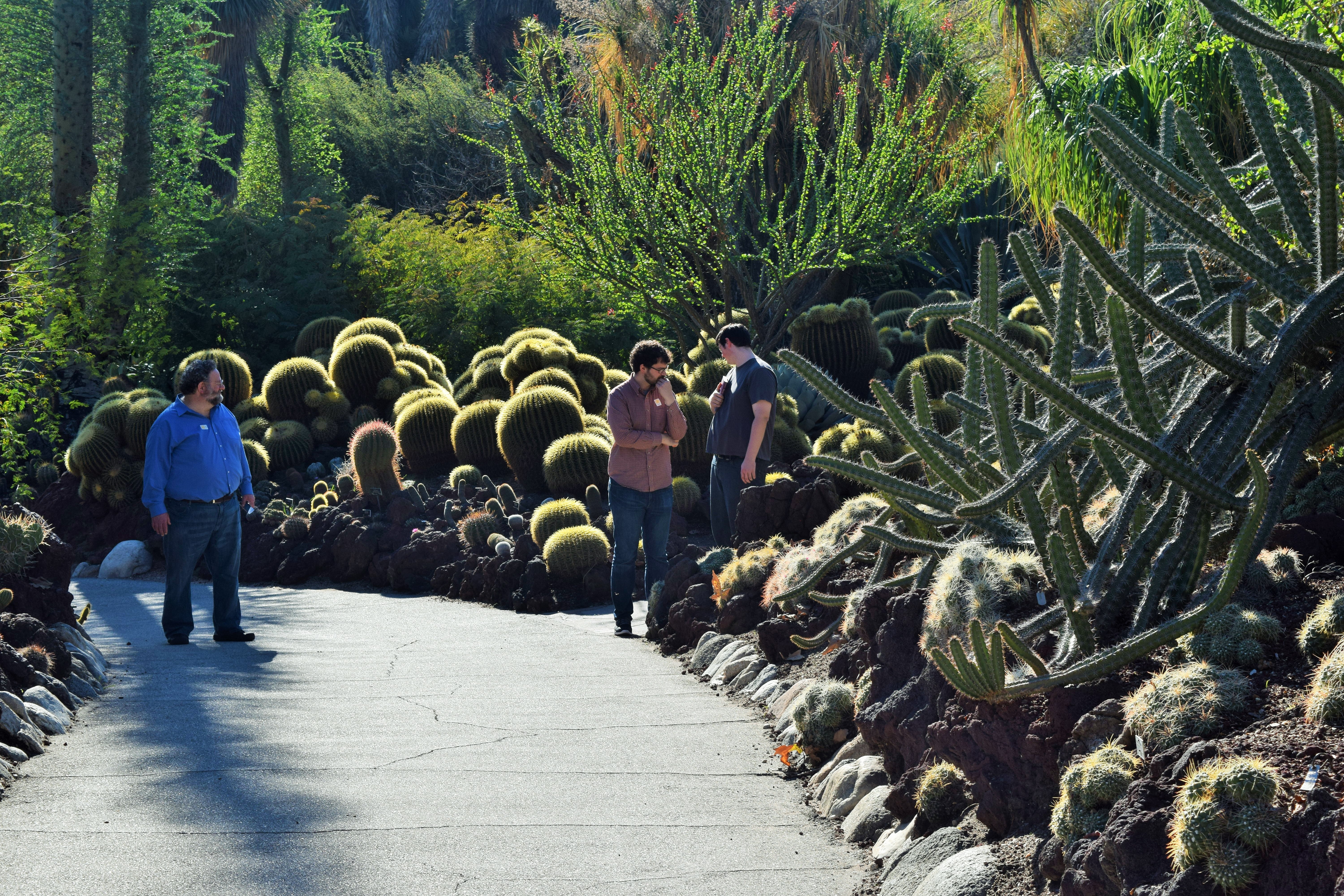
This will give you some idea of scale (of me versus Danny and David, that is).
Farewell to the Desert Garden.
So do I recant my succulent heresy? Not really. I am thrilled to have visited the Huntington’s Desert Garden, it is a wonderful place, and yet I could never forget its essential strangeness. Strange to me, in any case. I have visited great gardens such as Giverny and Great Dixter and thought: if only this were home. Or at least, if only I could make my home more like this. I did not have that reaction to the Desert Garden, as marvelous as it is.
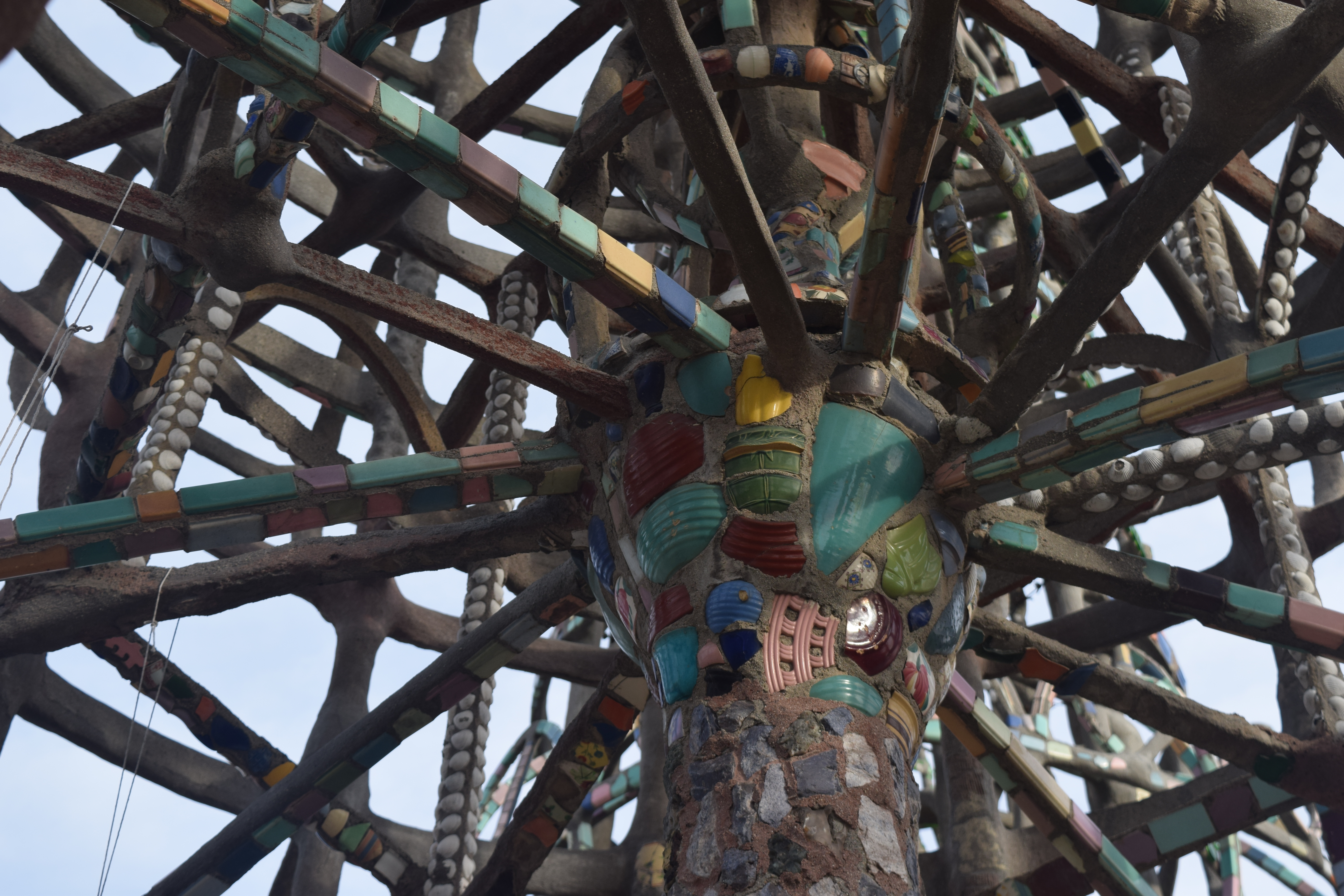
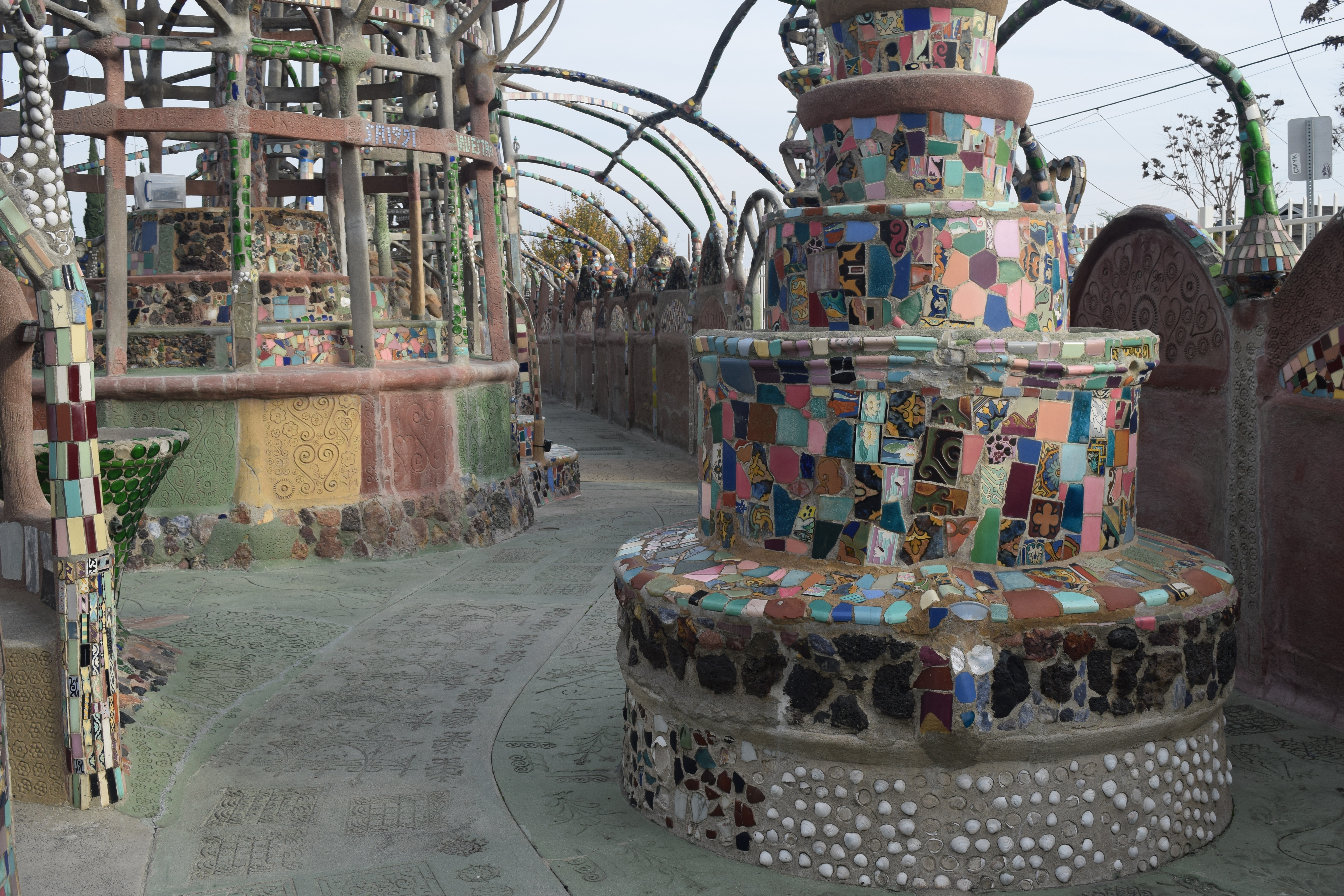
We visited the Watts Towers on the Sunday before Christmas. Watts Towers are the remarkable creation of an immigrant tile setter named Simon Rodia, who worked on them from 1921 to about 1954.
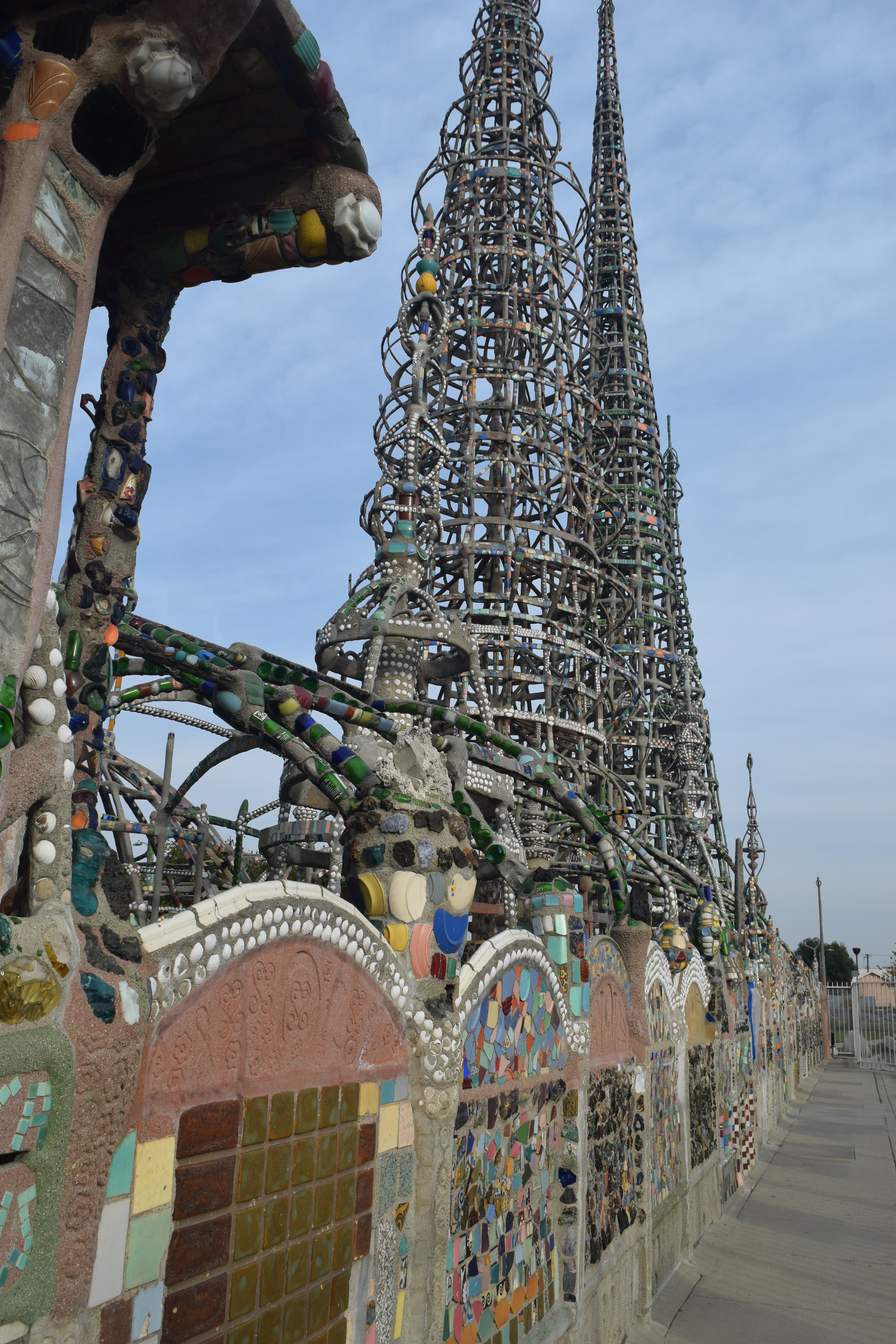
Watts Towers from outside south wall.
There are seventeen towers and other structures on the property, the largest being about 90′ tall.
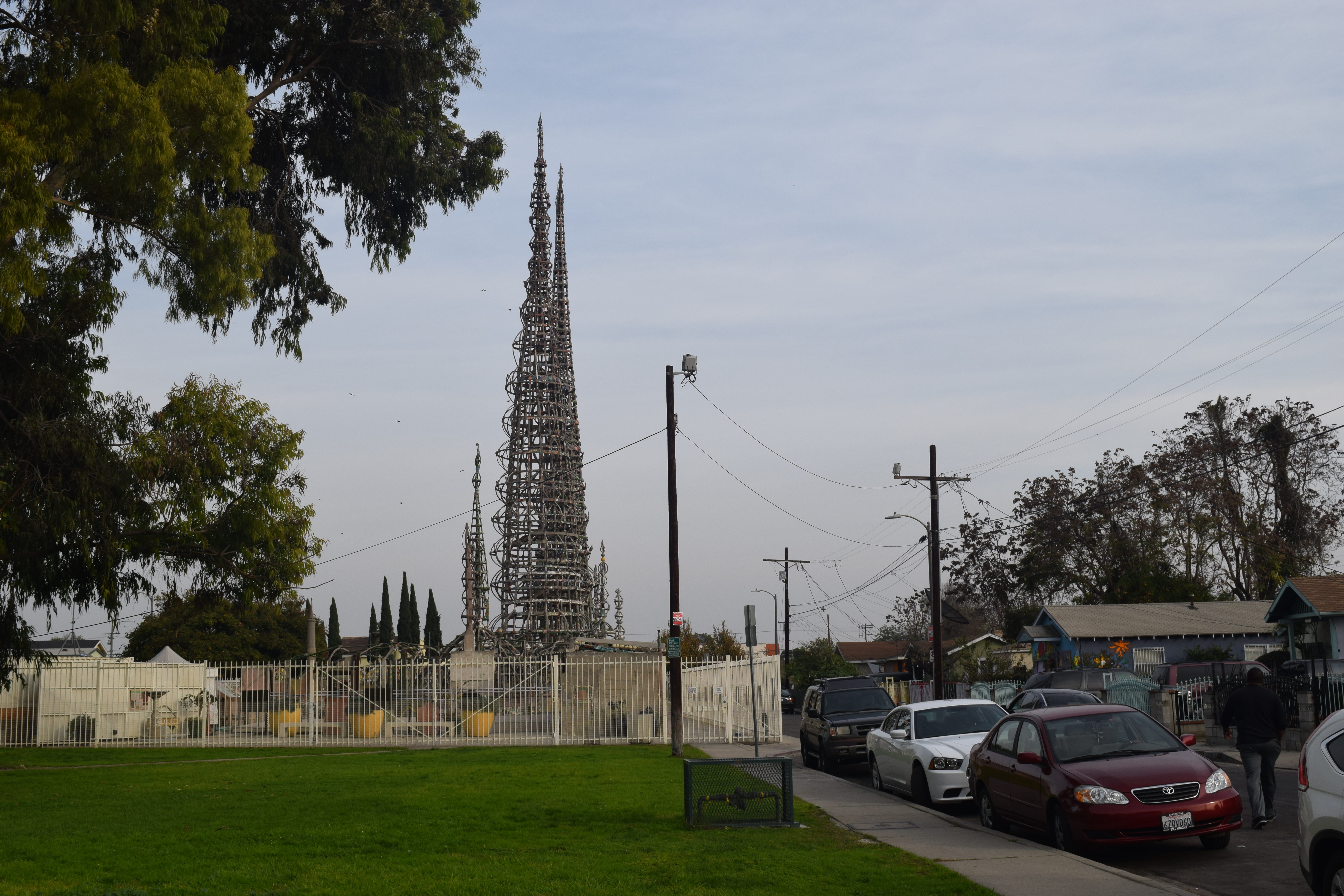
Watts Towers seen from the adjoining park.
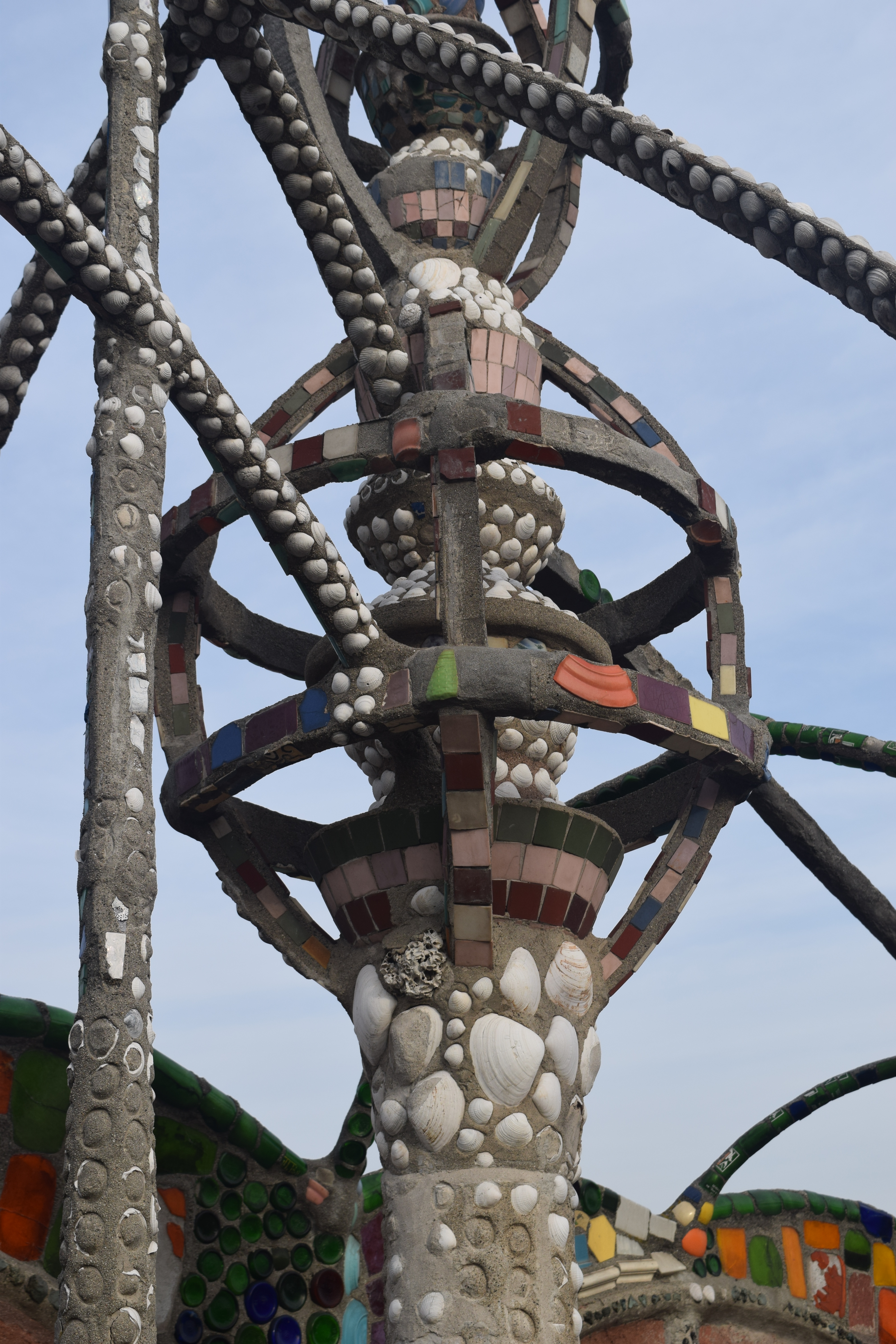
The towers were created entirely by Rodia using hand tools only. He fashioned them from rebar wrapped in chicken wire and packed with mortar. The rebar he bent by hand, sliding the rods under railroad tracks to hold them steady.
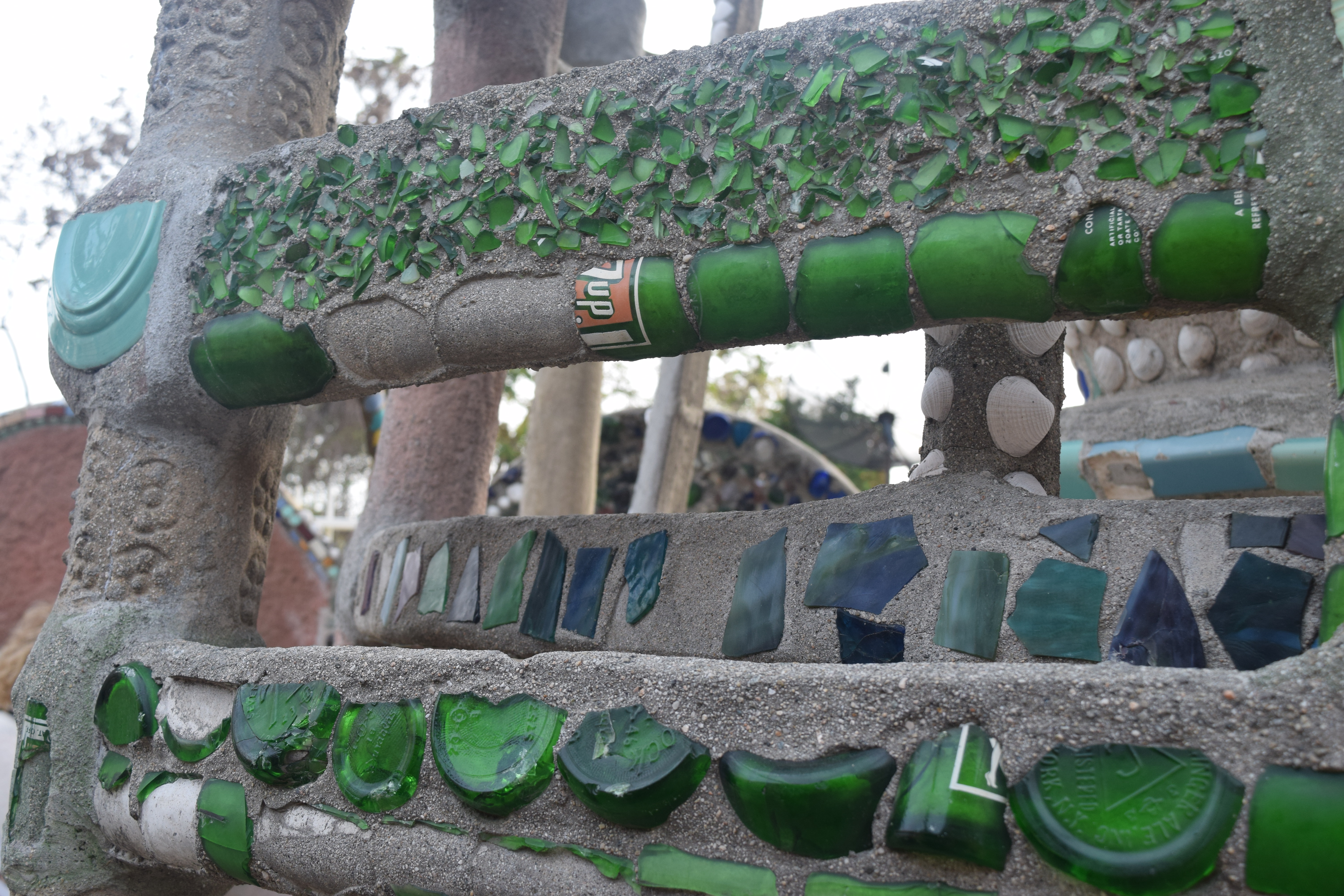
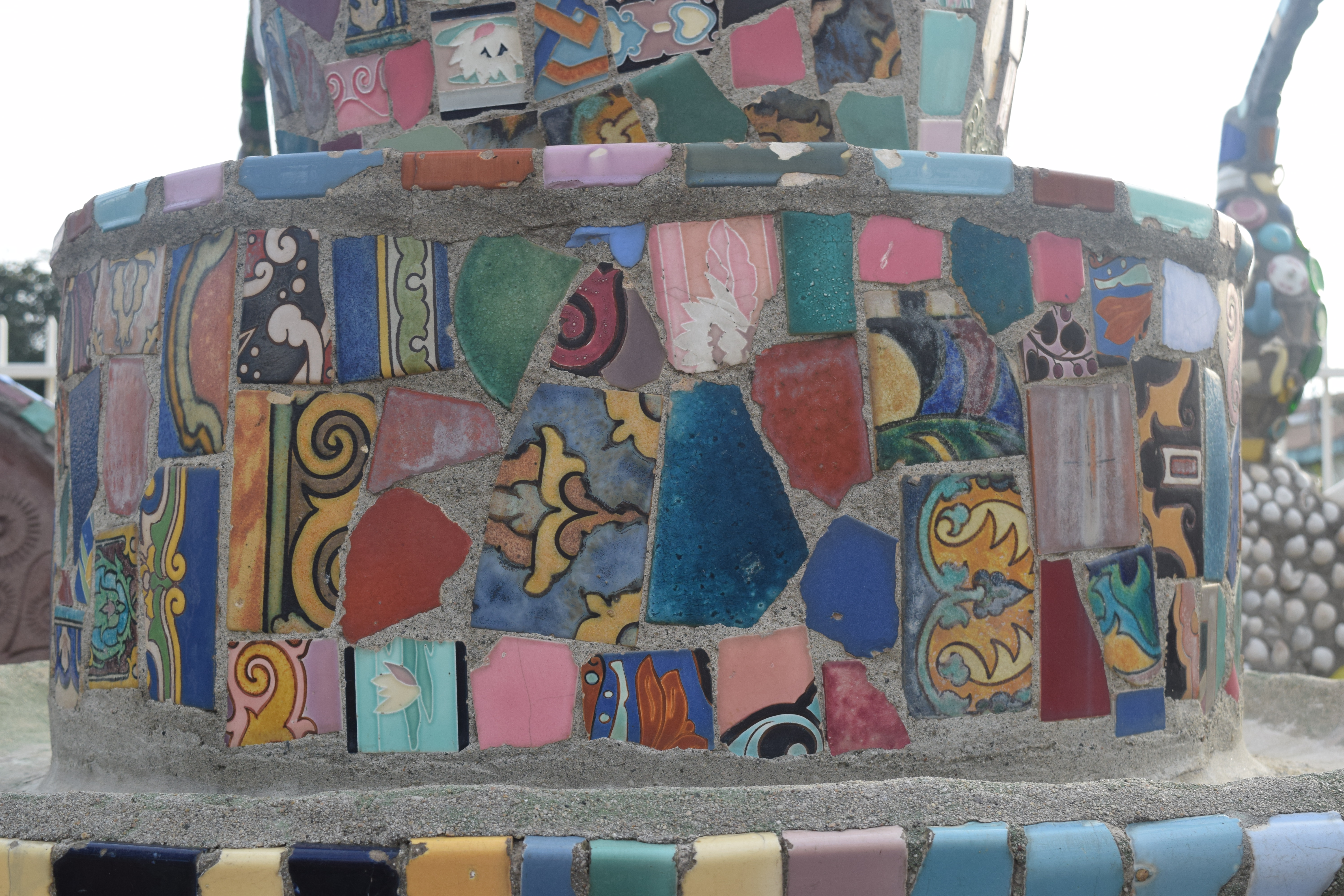
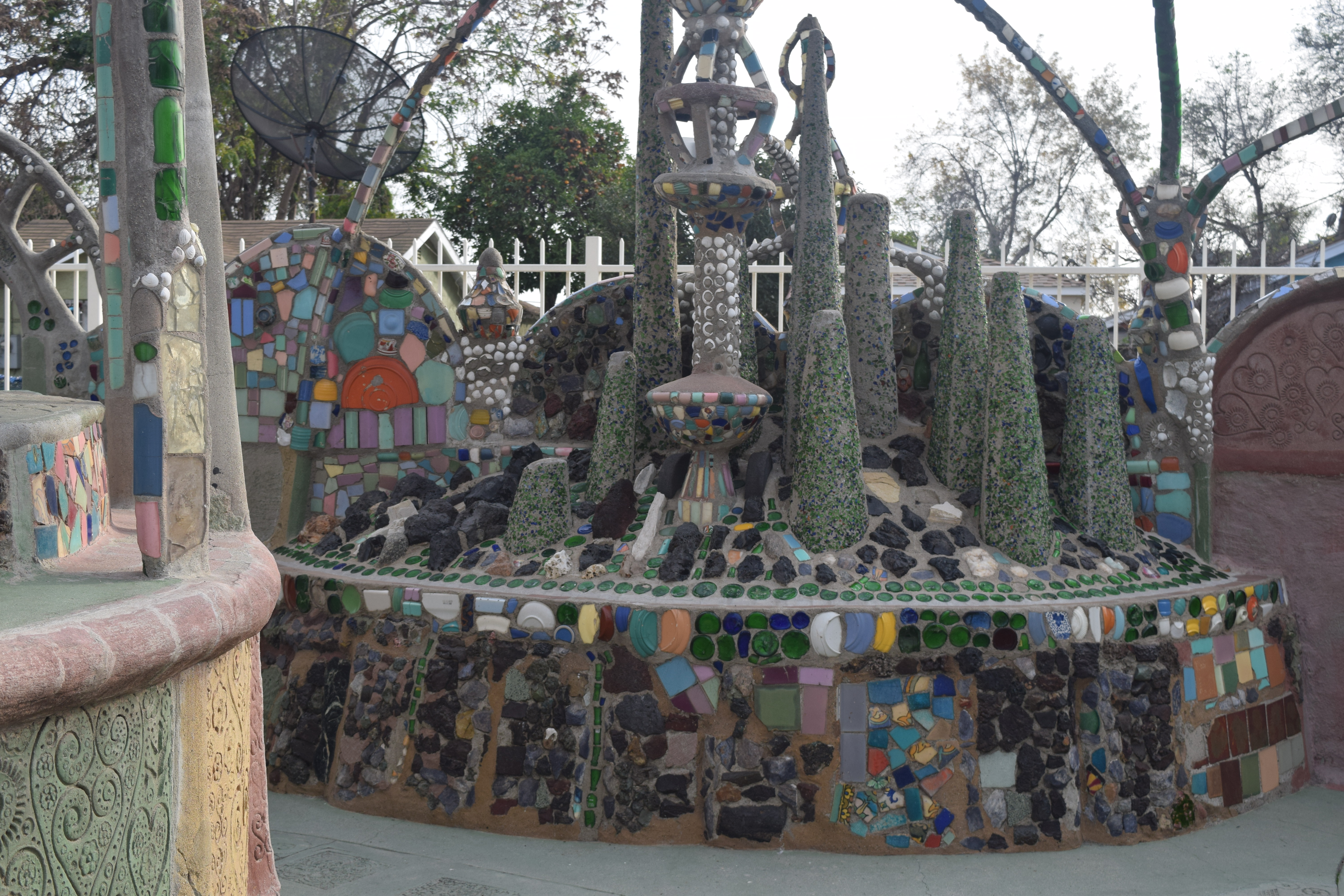
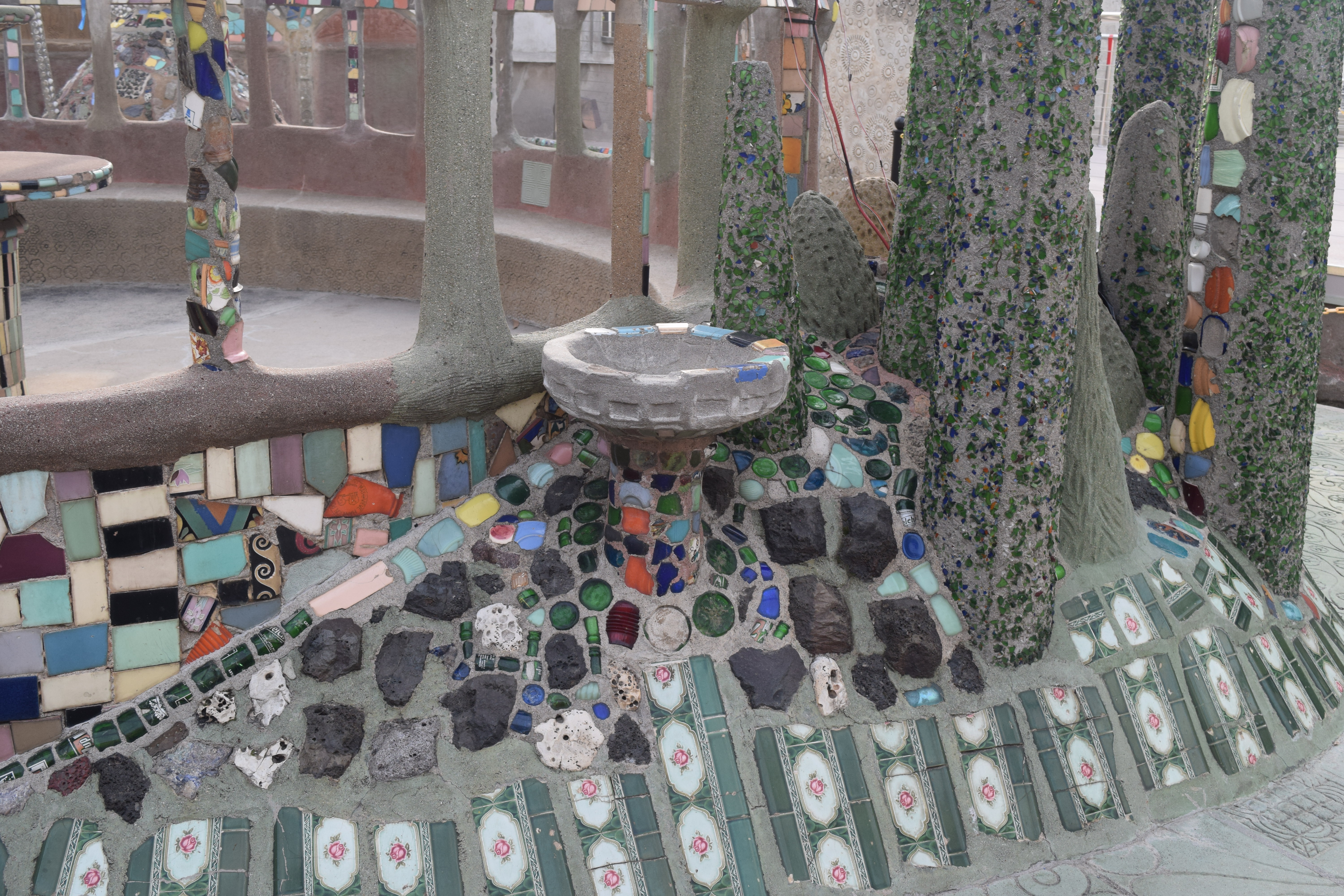
He then covered his creations with a mosaic made from all manner of common items – sea shells, broken bottles, odd bits of tiles and ceramics.
Mosaic with glass bottles.
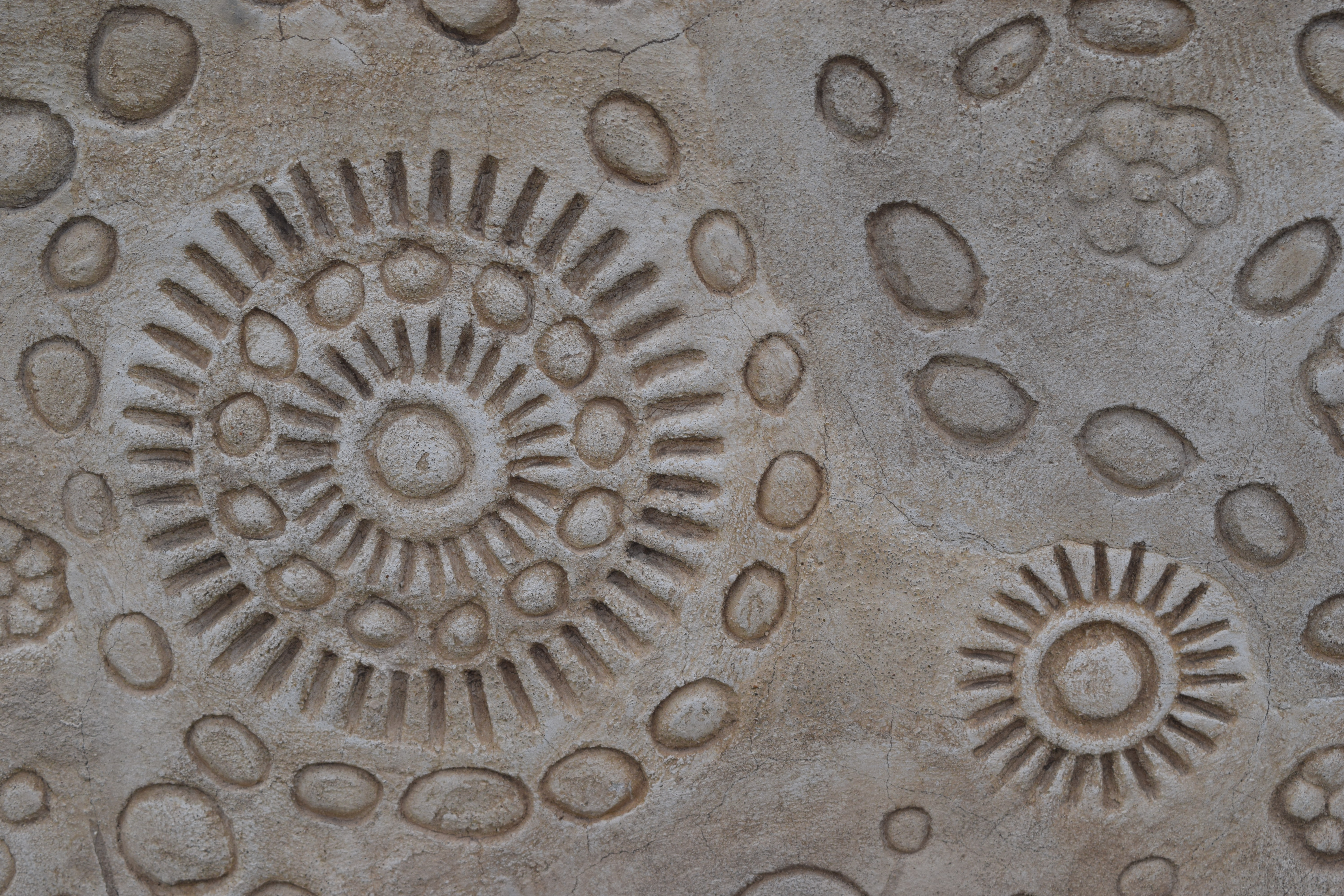
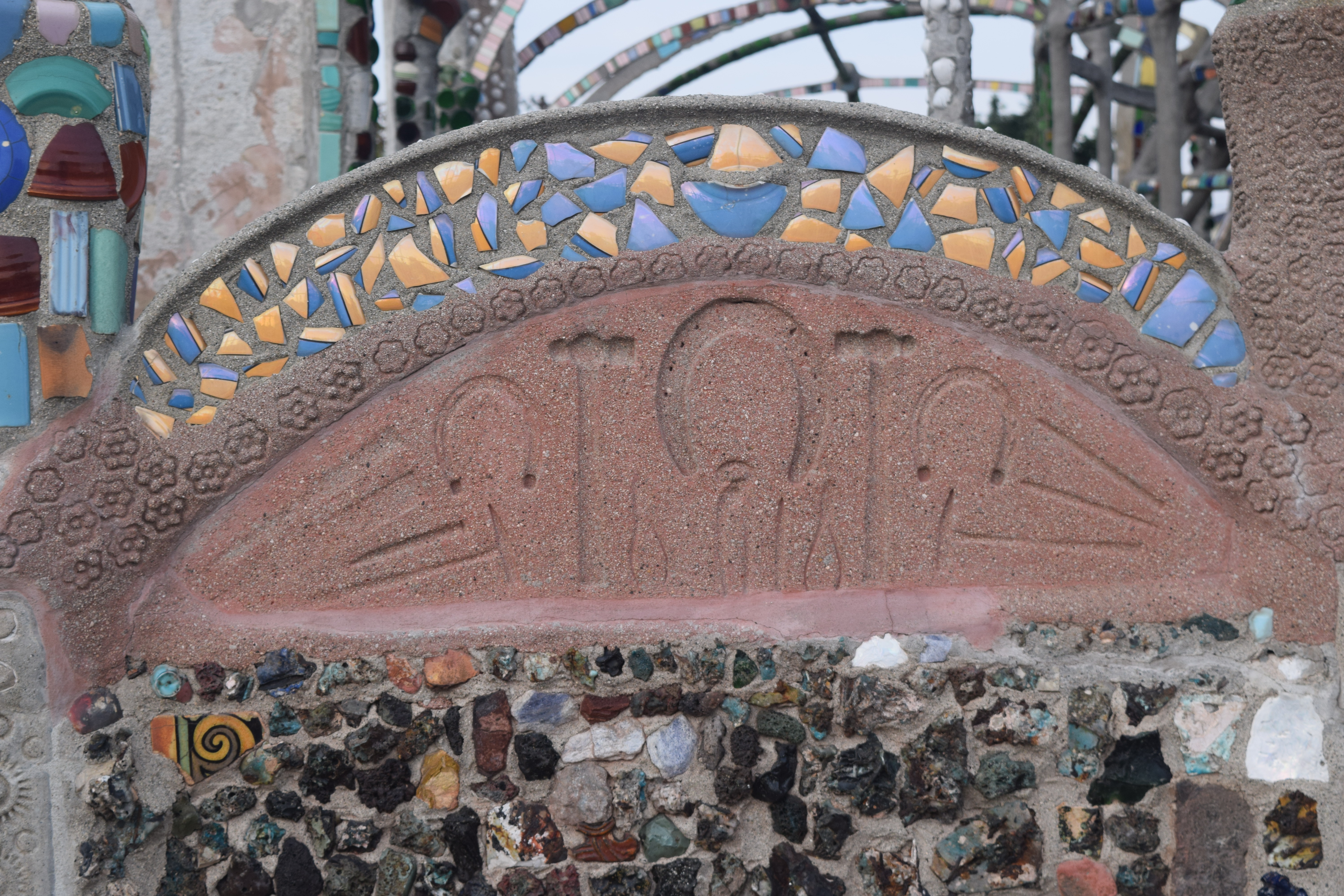
Rodia also used all kinds of objects to create patterns in the mortar.Including his tile setter’s tools.
What I found so moving about Watts Towers is that it came entirely from a private vision, and was done with no audience in mind. Rodia did not consider himself an artist, he simply had an overpowering need to create something that would make this inner vision real. He worked on his own property in a poor neighborhood where he had a tiny bungalow (the home burned down but the towers remain) and received no notice from the outside world before his creation was essentially complete.
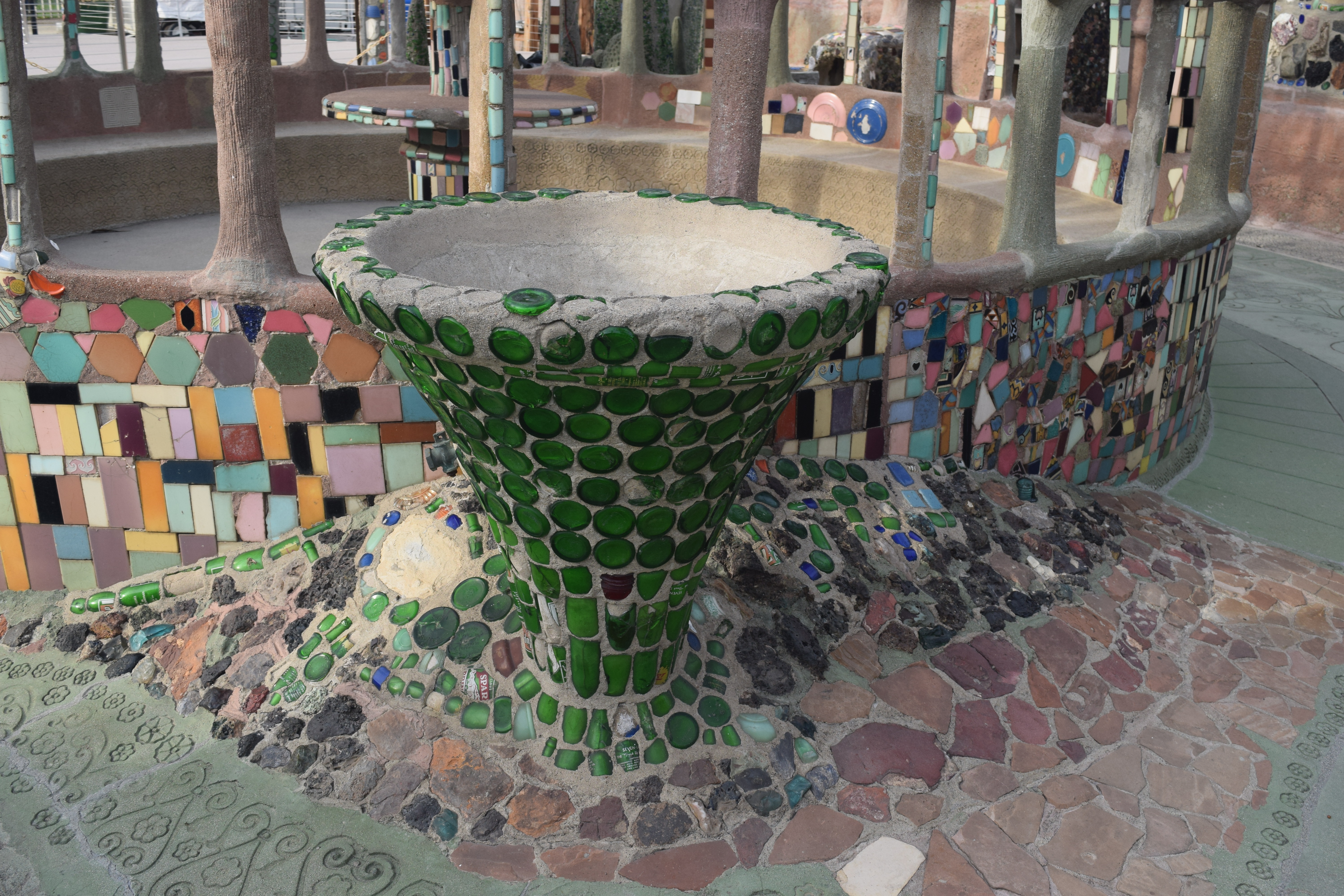
A baptismal font decorated with broken bottles. Rodia eventually became a Pentecostal minister.
Why Rodia needed to create his towers is something of a mystery. When asked he said, “I wanted to do something big and I did it.” He came to the US from Italy as a young man in 1895. Gradually he moved west, working in coal mines. rock quarries, and lumber camps along the way. In California he worked in construction as a tile setter.
He had a family, which he abandoned after the death of a child.
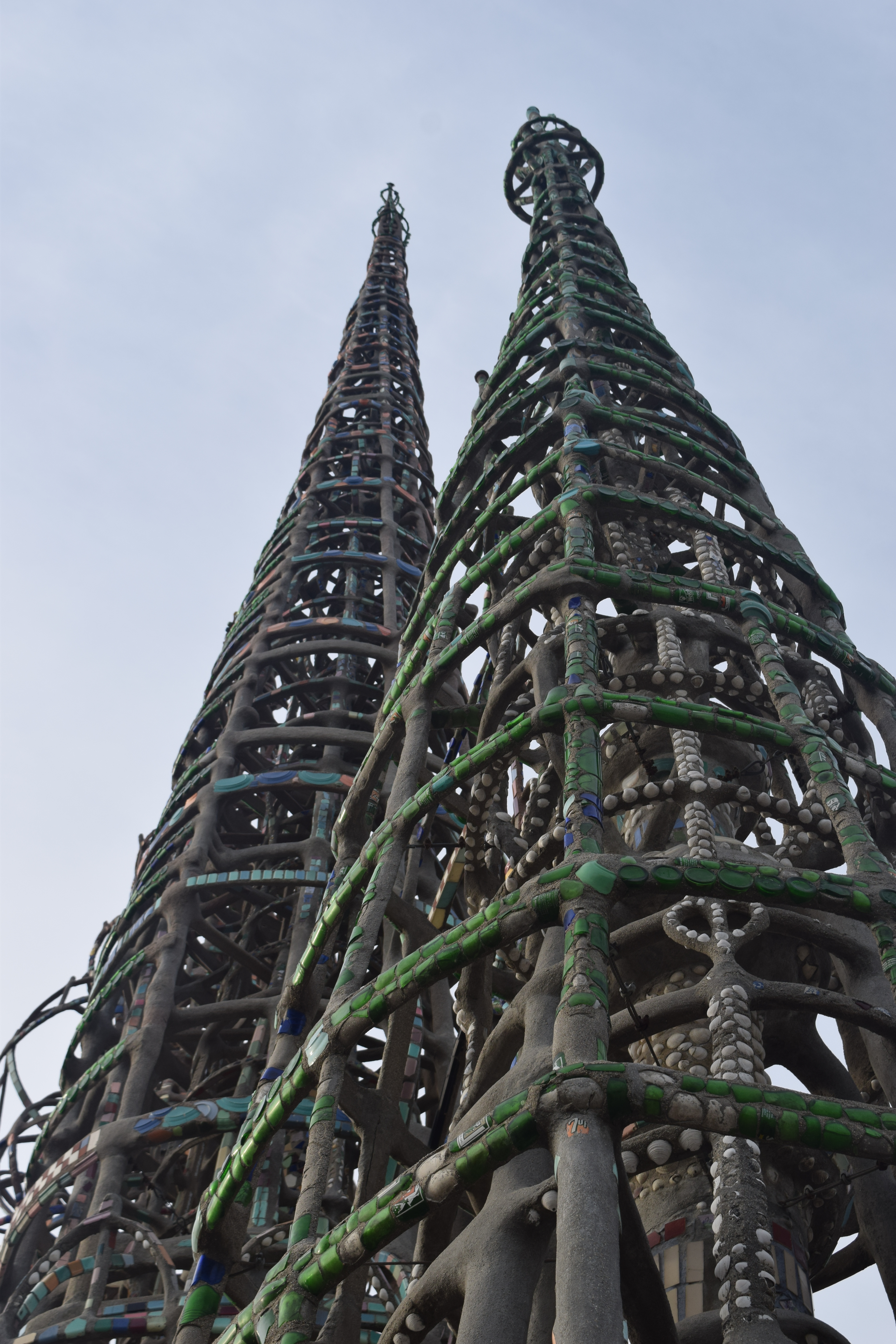
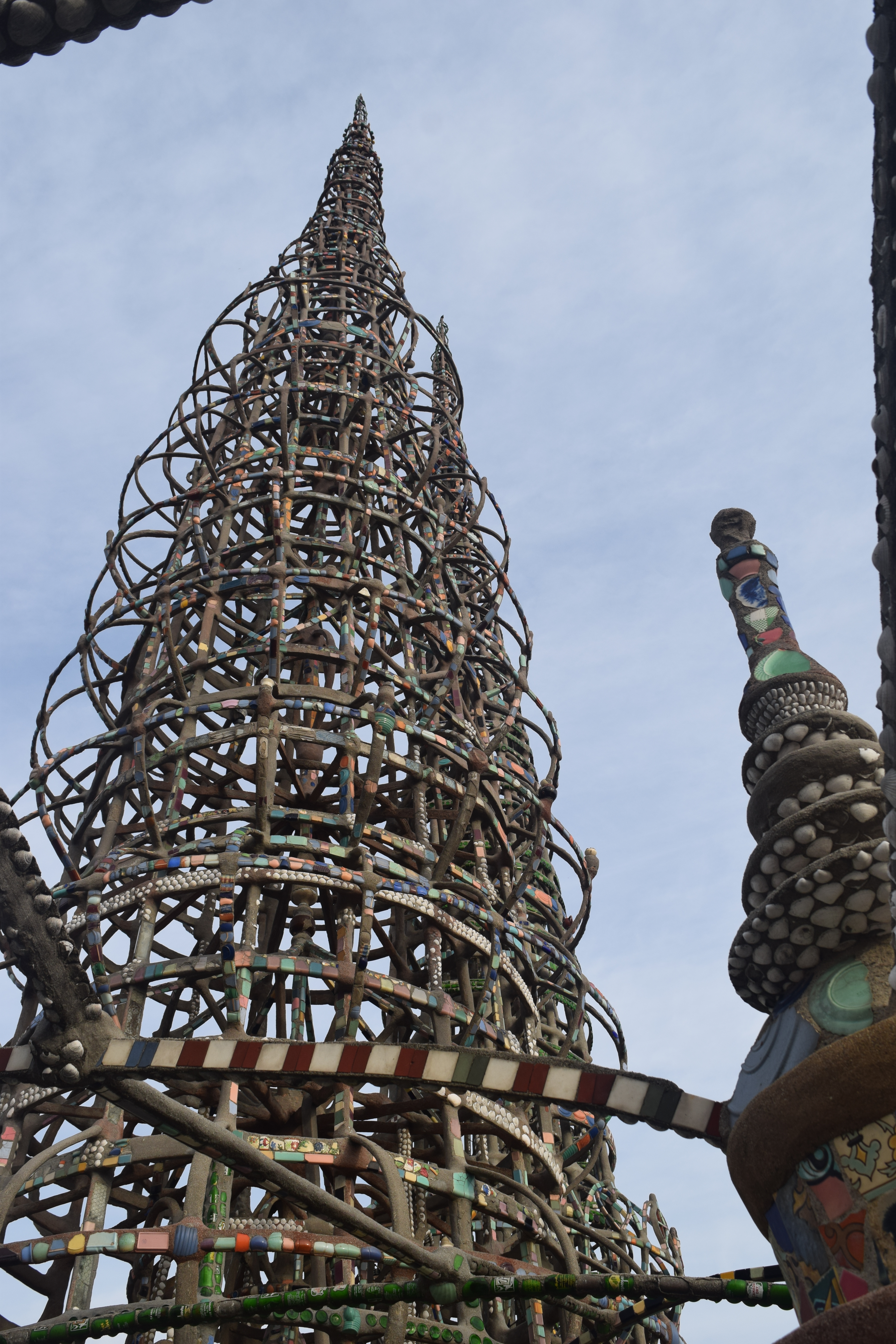
View from the bottom of a tower.
Rodia likely had his vision in mind when he bought the property in Watts. He specifically wanted a triangular-shaped plot of land. To him the towers were the masts of a ship, though to me (and many others) they suggest cathedral spires.
Ship masts or cathedral spires?
In the 1950s the city government wanted to demolish Watts Towers as a hazard, but community leaders were able to prove that the Towers were structurally sound (tow trucks equipped with cables could not pull them down). And so Watts Towers remains, next to a small park and community arts center.
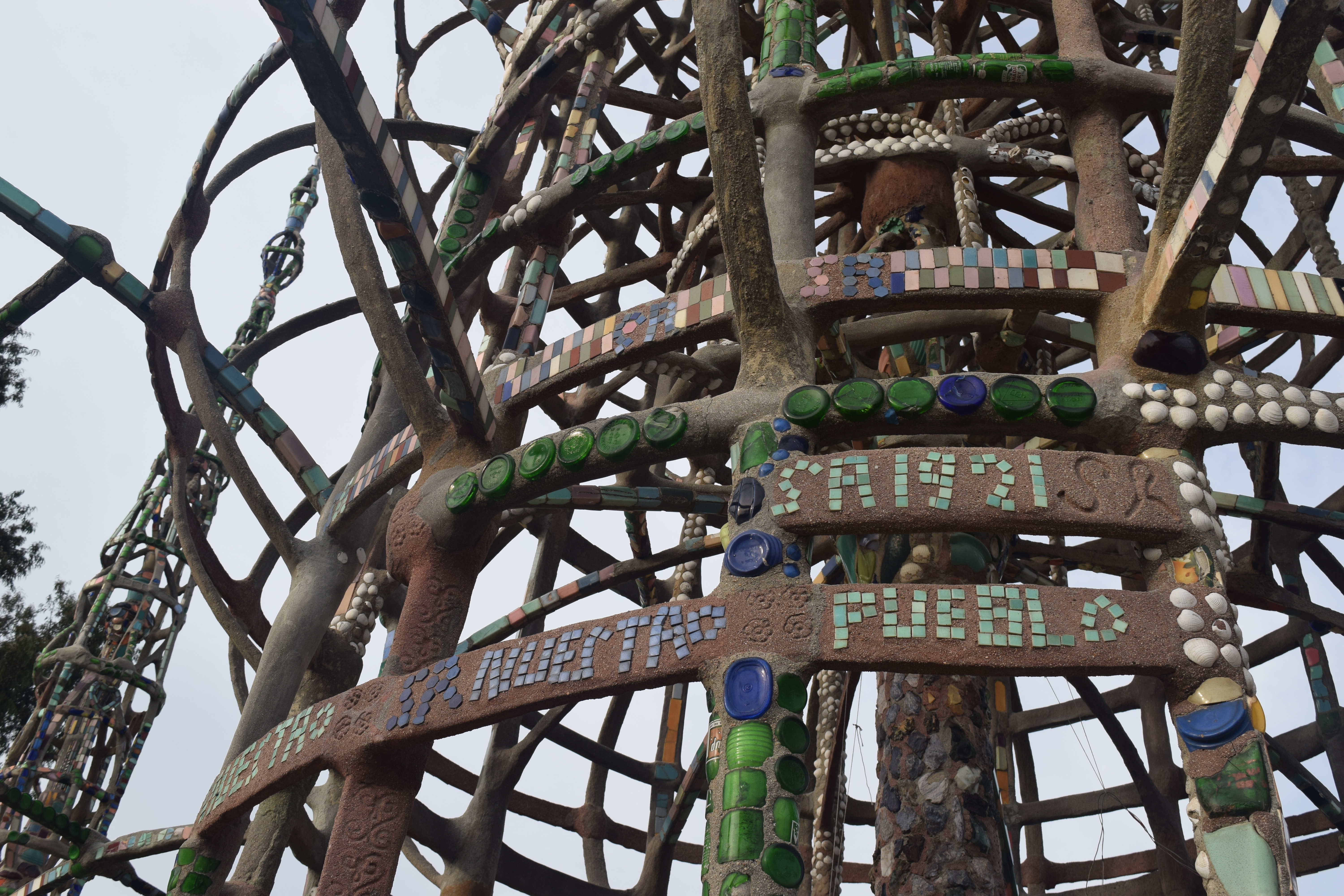
Rodia wrote his initials, “SR” on several places around the towers. If you look carefully you can see it in five places in this picture. There is also the date 1921, when he started work on the Towers. Below are the words “Nuestro Pueblo”, which was Rodia’s name for his creation. It means “our town”.
What surprised us was how few people were there. You can see the towers only through tours led by volunteers. On our tour there were seven people, four of whom were Judy and I and our boys.
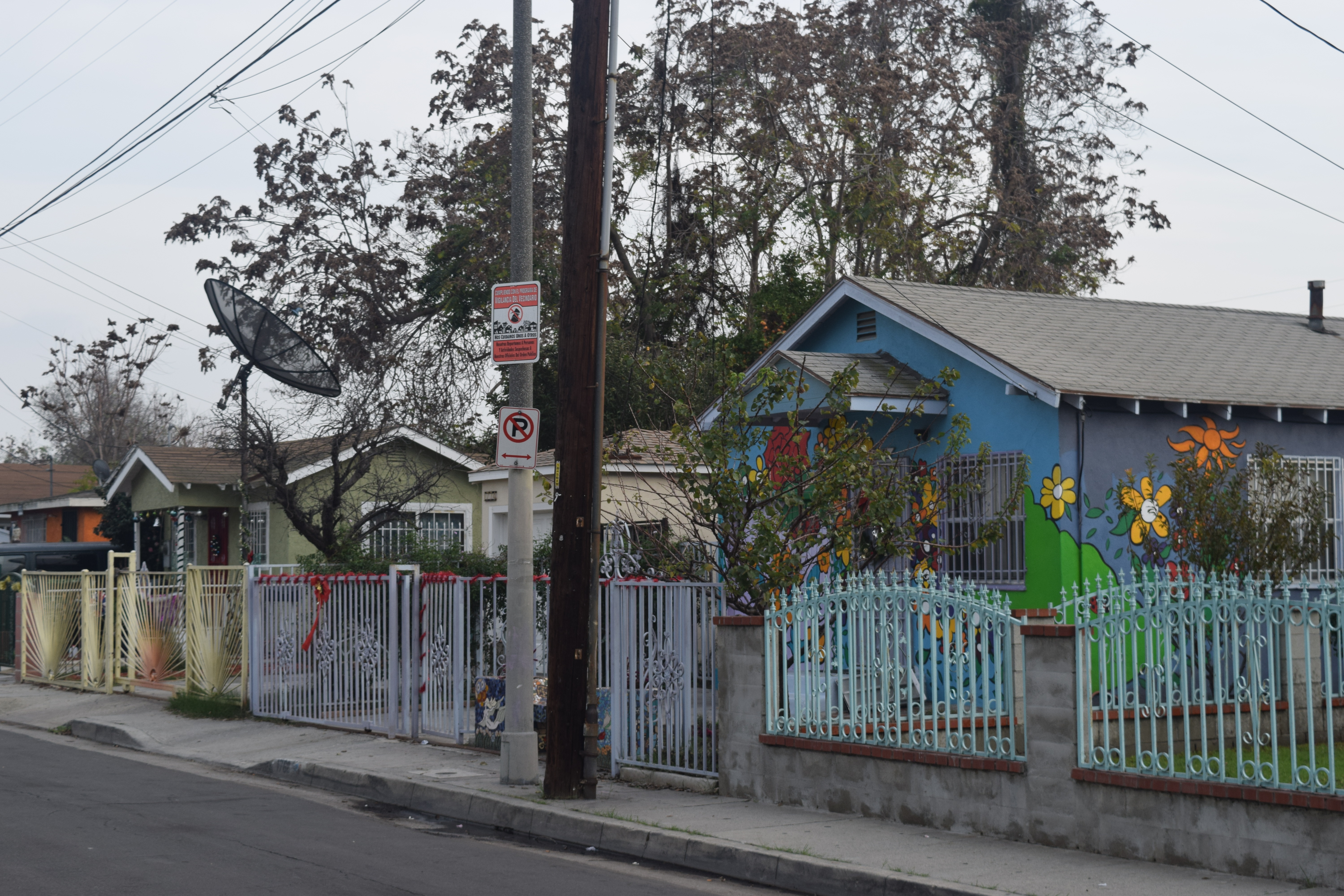
Houses across the street from the Towers.
Staff at the arts center told us that many LA residents are reluctant to go to Watts, which is thought of as a high crime neighborhood. This is very unfortunate, because the area immediately around the Towers seemed perfectly safe, and our family never felt uncomfortable.
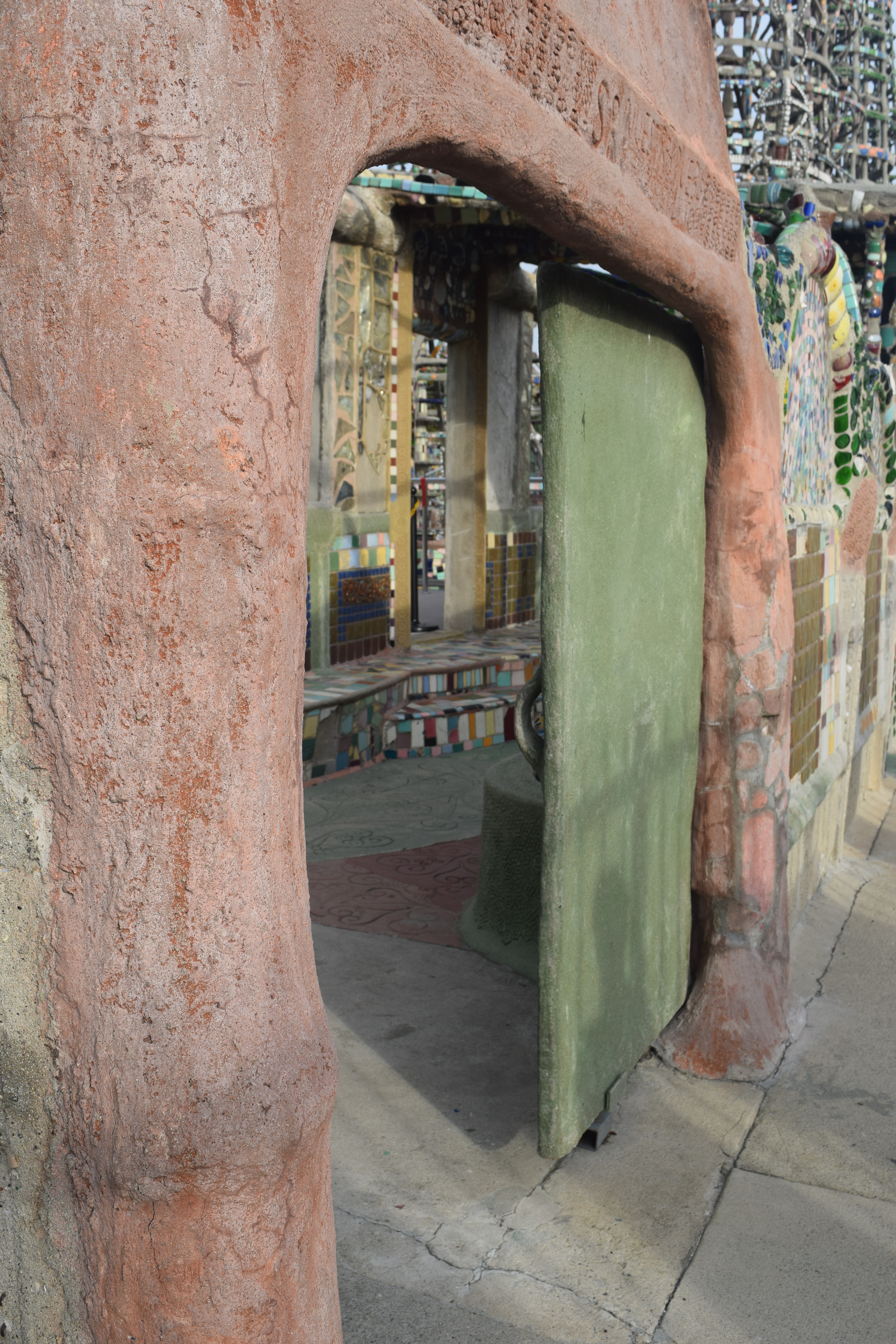
Rodia’s bungalow burnt down, but the entrance remains.
I did feel something of a bond with Simon Rodia. Though my garden will not outlast me as his creation outlasted him, it is also a realization, considered extravagant by some, of a personal vision. I probably do care more than he did about gaining the appreciation of others, but it is first and foremost something I do for myself.
When we take our family Christmas trips, we try to cook a Christmas dinner that reflects to some degree the region we are visiting. Since we rent a house, it’s no problem to cook for ourselves.
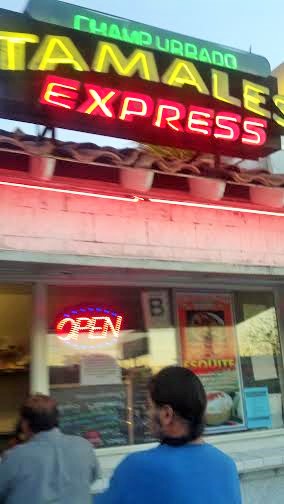
At Me Gusta Gourmet Tamales, you can buy your tamales warm or cold through a window that opens on to the sidewalk.
We do a little research to figure out the menu. In the case of Los Angeles, we decided on tamales as our main dish. We did not try to make our own tamales, though. Instead, we bought them cold at Me Gusta Gourmet Tamales in a part of Los Angeles called Pacoima. We drove over there after visiting the Huntington Library in Pasadena (there will be a separate post on that visit soon).
For some reason, we thought these two places were close to each other, maybe because they both begin with “P”. (We are not very strong on LA geography.) They are not at all close, nor does Pacoima bear any resemblance to Pasadena. But Me Gusta was a good place to get tamales.
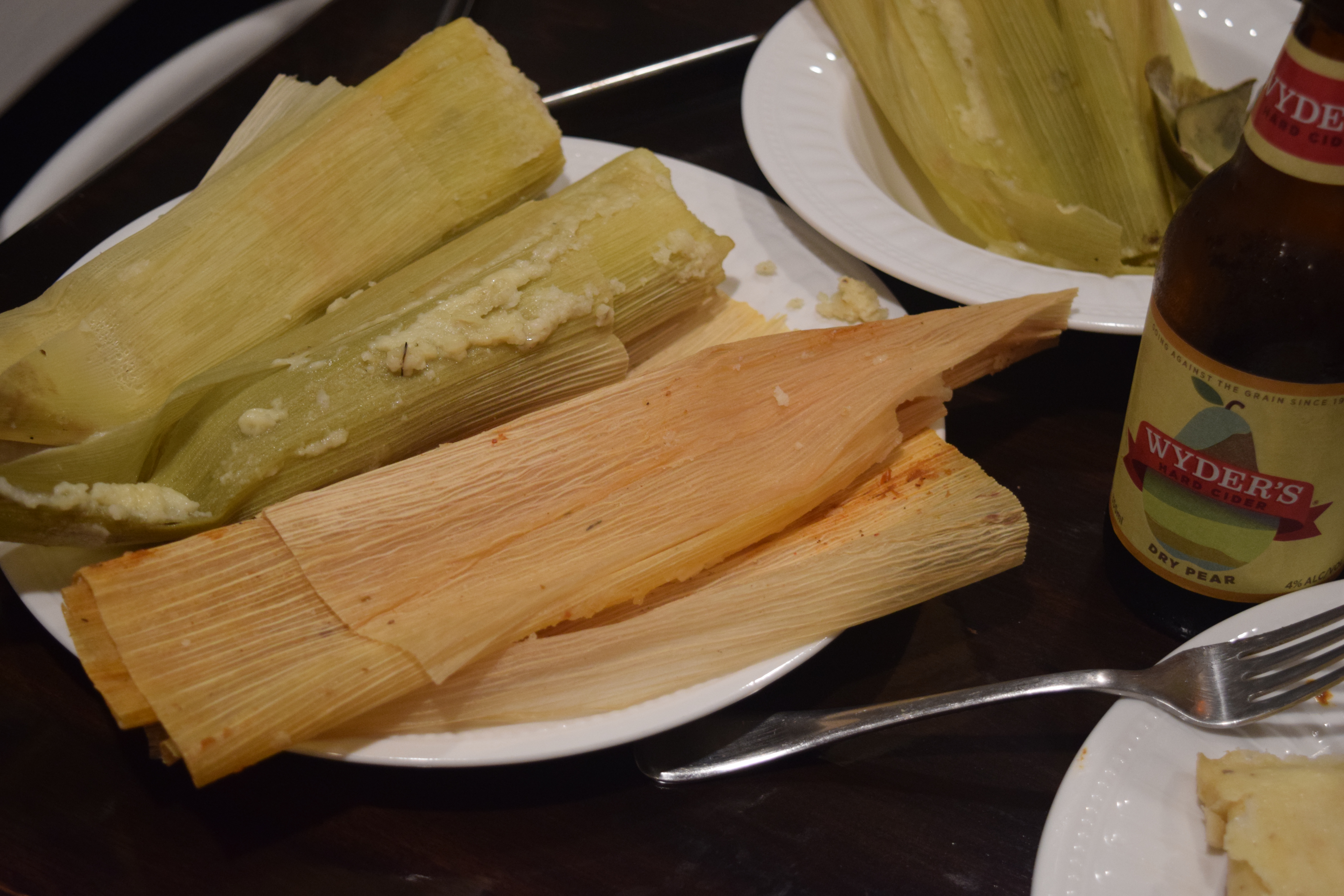
We got a dozen tamales: red pork, green pork, peppers and cheese, and corn. They were all very good, though the corn tamale is basically corn meal stuffed with sweet corn kernels. My favorite was peppers and cheese. The tamales come wrapped in corn husks and should be steamed to reheat. They kept just fine in the fridge for a couple of days.
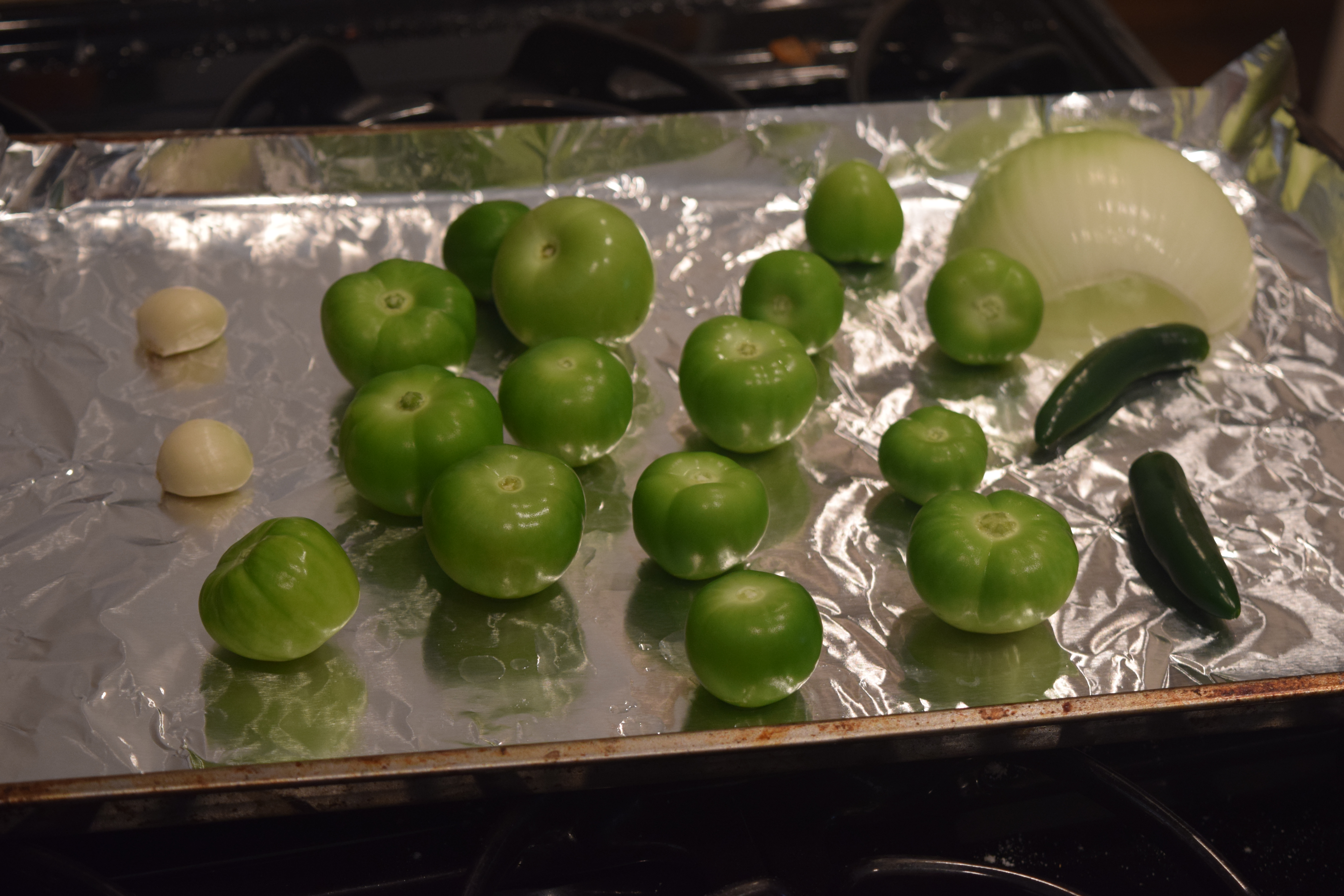
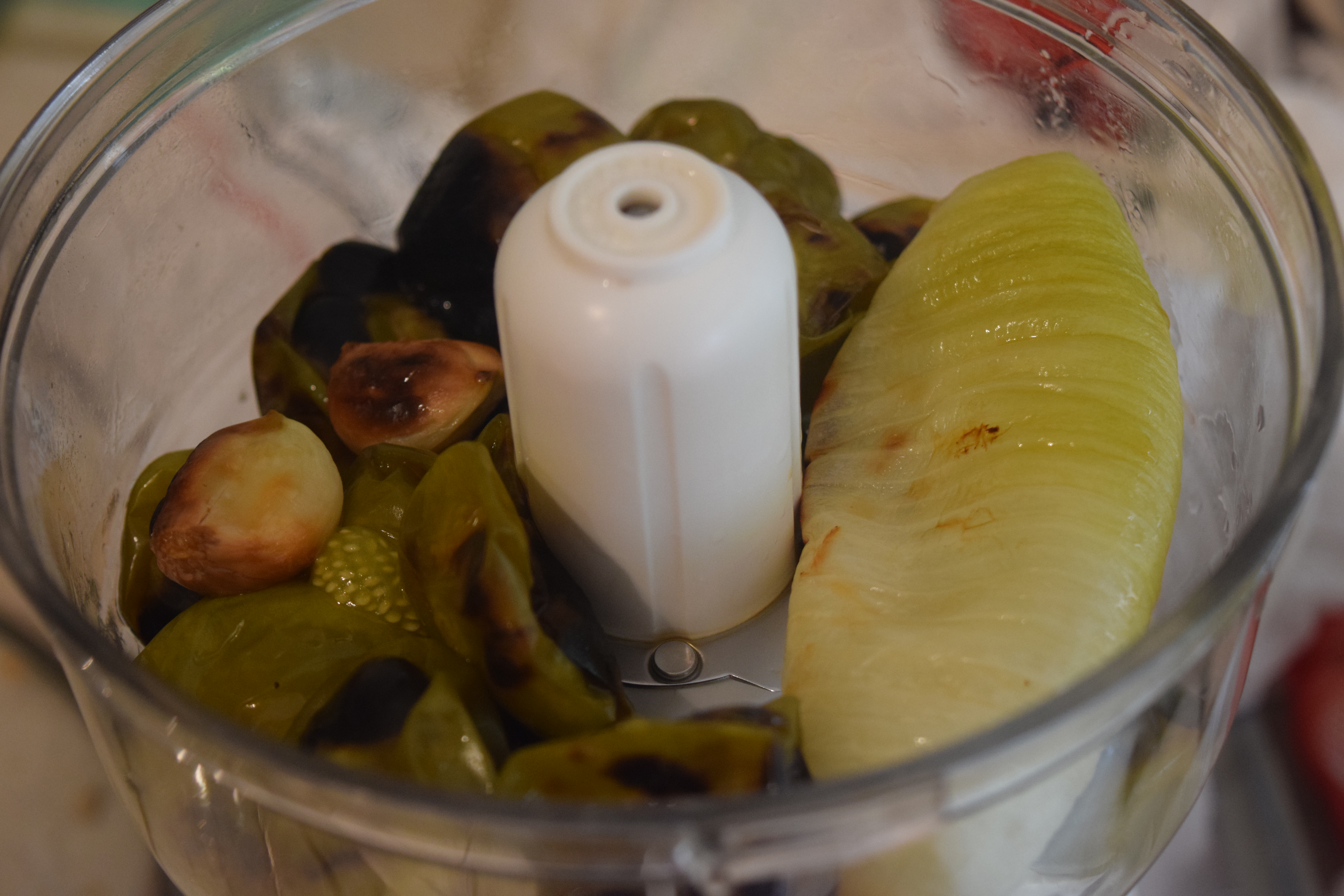
Ingredients for green salsa before going into the oven.
Though the tamales came from a store, other foods we prepared ourselves. Danny made a green tomatillo salsa. This required roasting tomatillos, onion, hot peppers, and garlic in the oven. Tomatillos look like green tomatoes when you remove the outer husk.
In the blender
Then you mash them up together in a food processor, adding some cilantro and fresh lime juice. Delicious, but be careful how much hot pepper you put in there. In our case, two peppers was too many.
Brown mole and green salsa (on the right). The salsas in the styrofoam containers came from Me Gusta, they were ok, but not as good as what we made.
Danny also made a brown chile-chocolate mole from paste bought at the Grand Central Market downtown.
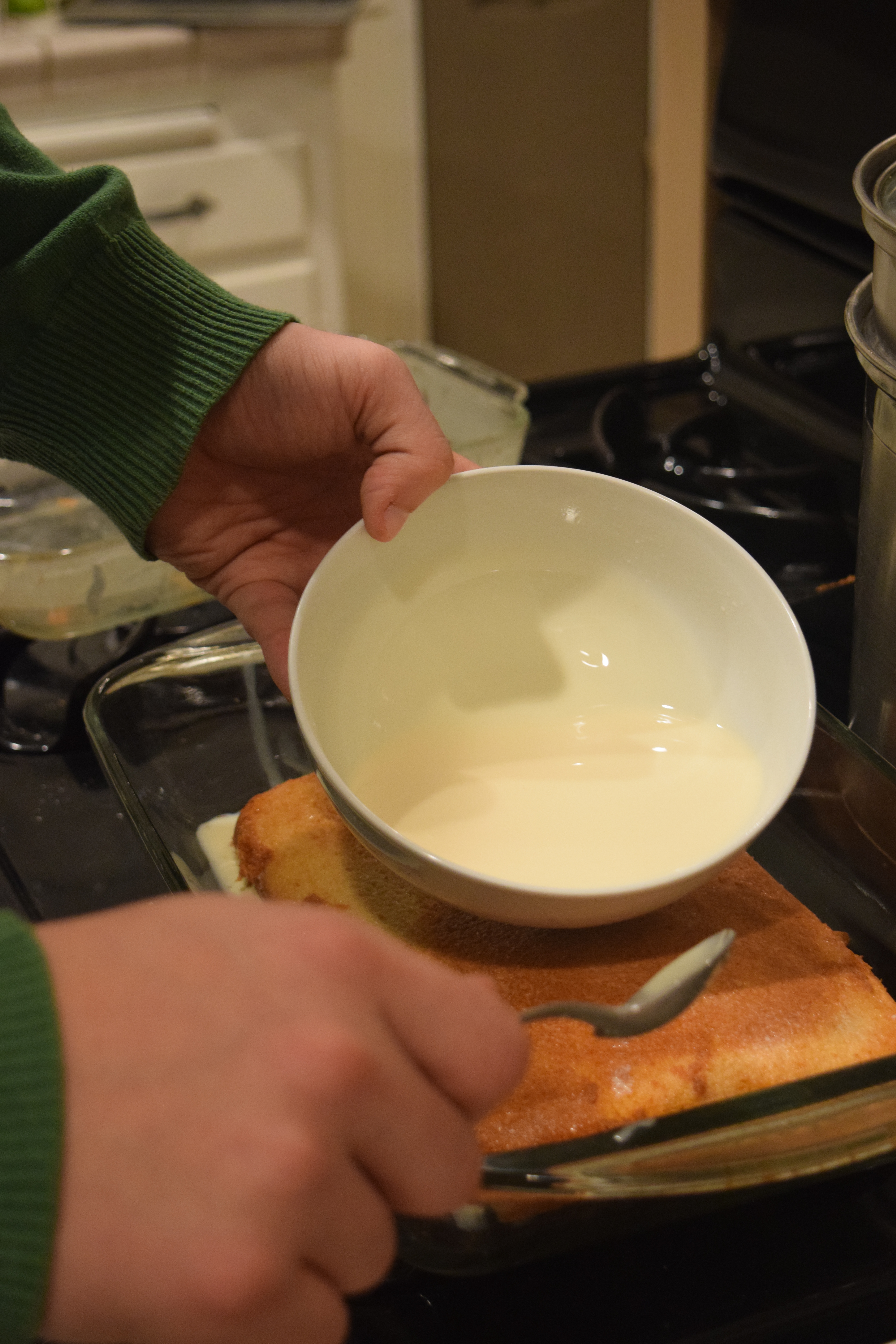
Finally, we made a tres leches cake for desert. This is just a regular white cake, with a mixture of whole milk, condensed milk, and evaporated milk poured on top. UPDATE:Judy tells me it’s NOT a regular white cake, so just look at the recipe.Here’s the recipe we used.
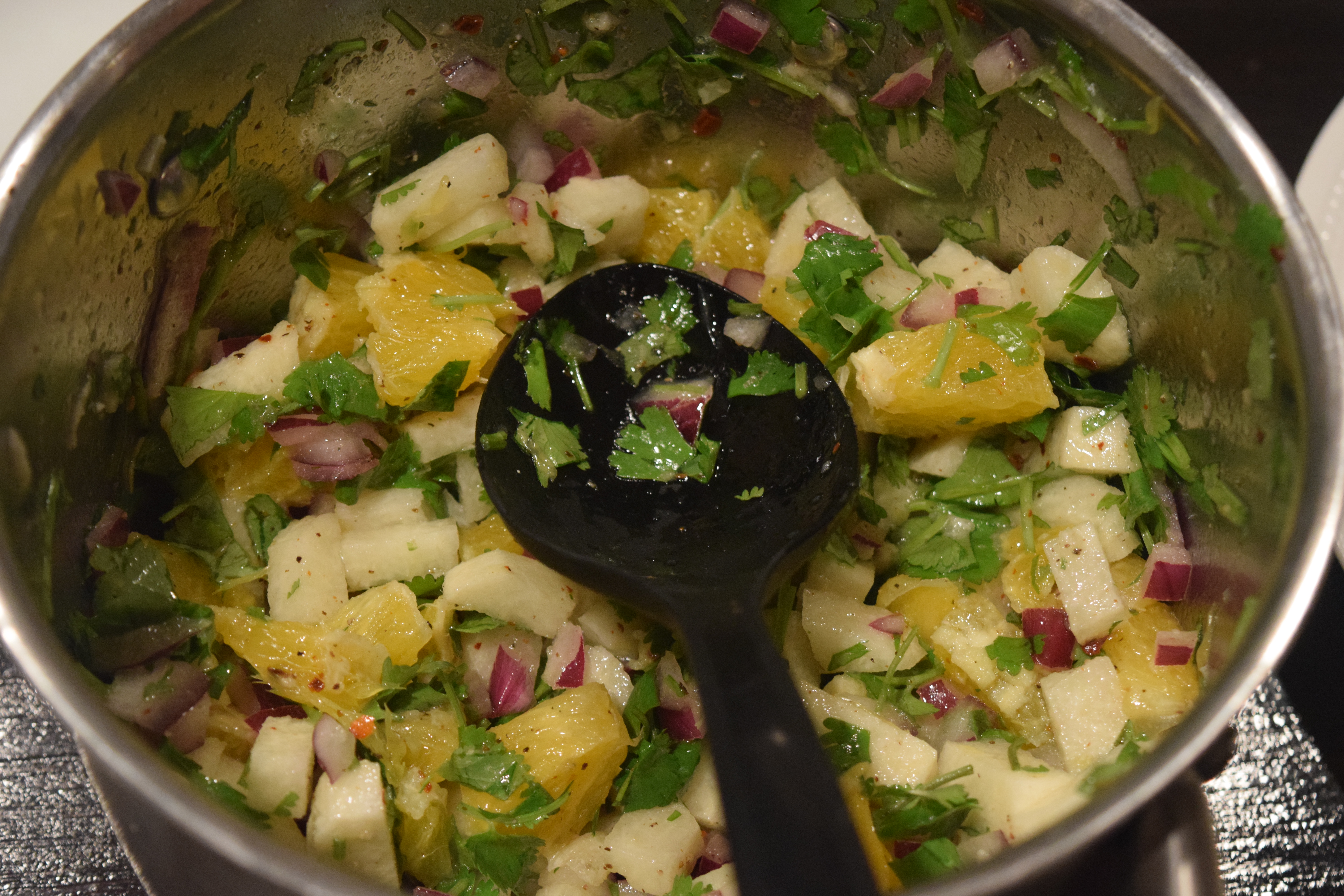
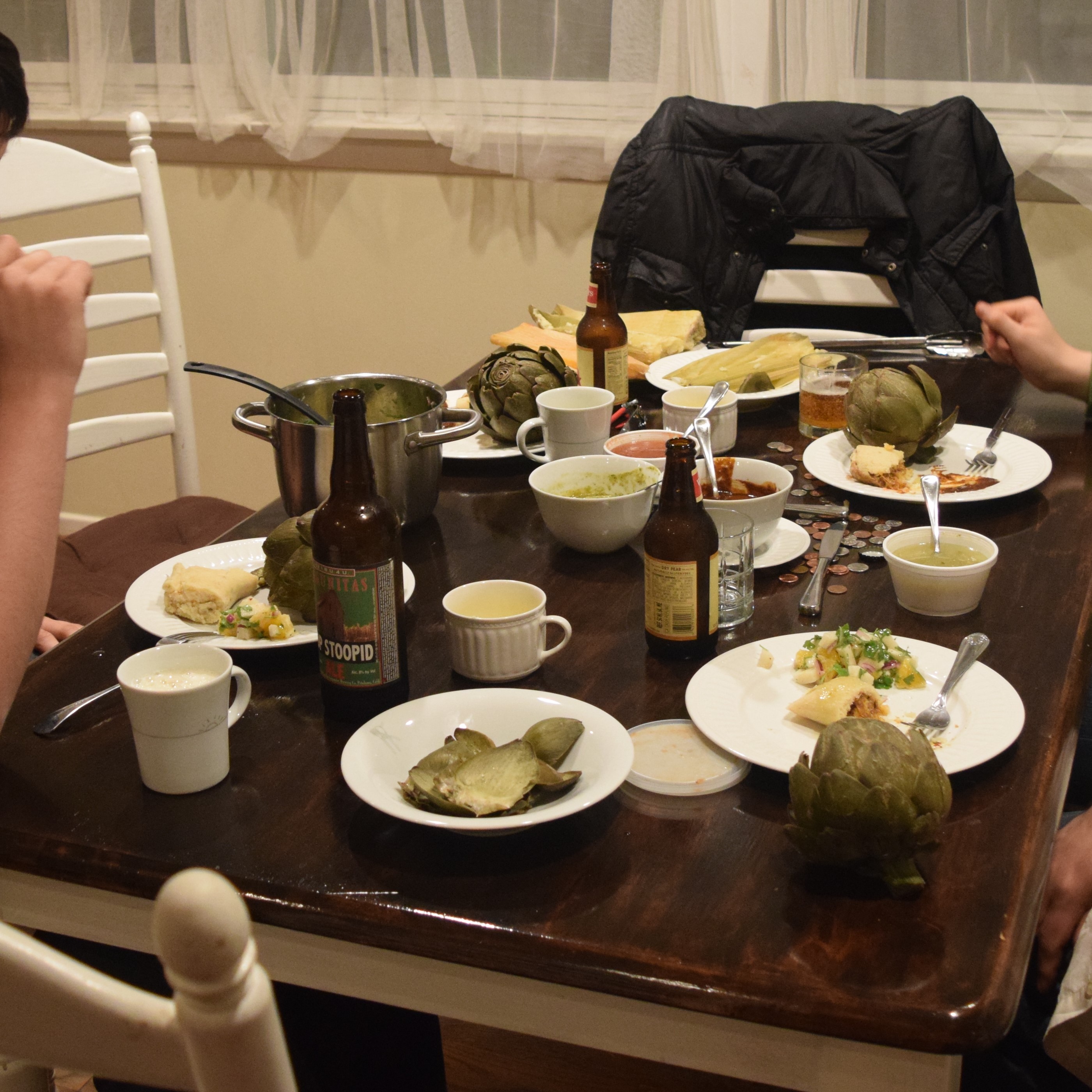
So here’s our dinner table about mid-way through our meal. We are pretty informal about these holiday dinners. Did I mention the huge steamed artichokes? We bought those at the farmers’ market. We ended up having tamales for breakfast and afternoon snacks the following day.
So on our first day in Los Angeles we went to the Hollywood Farmers’ Market. I’ve been told that farmers’ markets are part of the LA lifestyle, and this was the closest to where we were staying. I admit to being a little jealous of people who can go to to outdoor farmers’ markets throughout the year.
We parked a few blocks away on Hollywood Boulevard, which was not what I expected, not glamorous at all. It’s a bustling commercial street, a little run down, with a lot of tacky gift shops in the mix.
In the sidewalk were the stars of the Hollywood Walk of Fame. I found these to be underwhelming, though we did have to take a picture of the star for Mr. Rogers.
The Hollywood Farmers’ Market, on the other hand, is most impressive, packed with vendors selling fresh local produce in late December.
Danny buying oranges
The oranges really were far more delicious than what we buy at the supermarket at home.
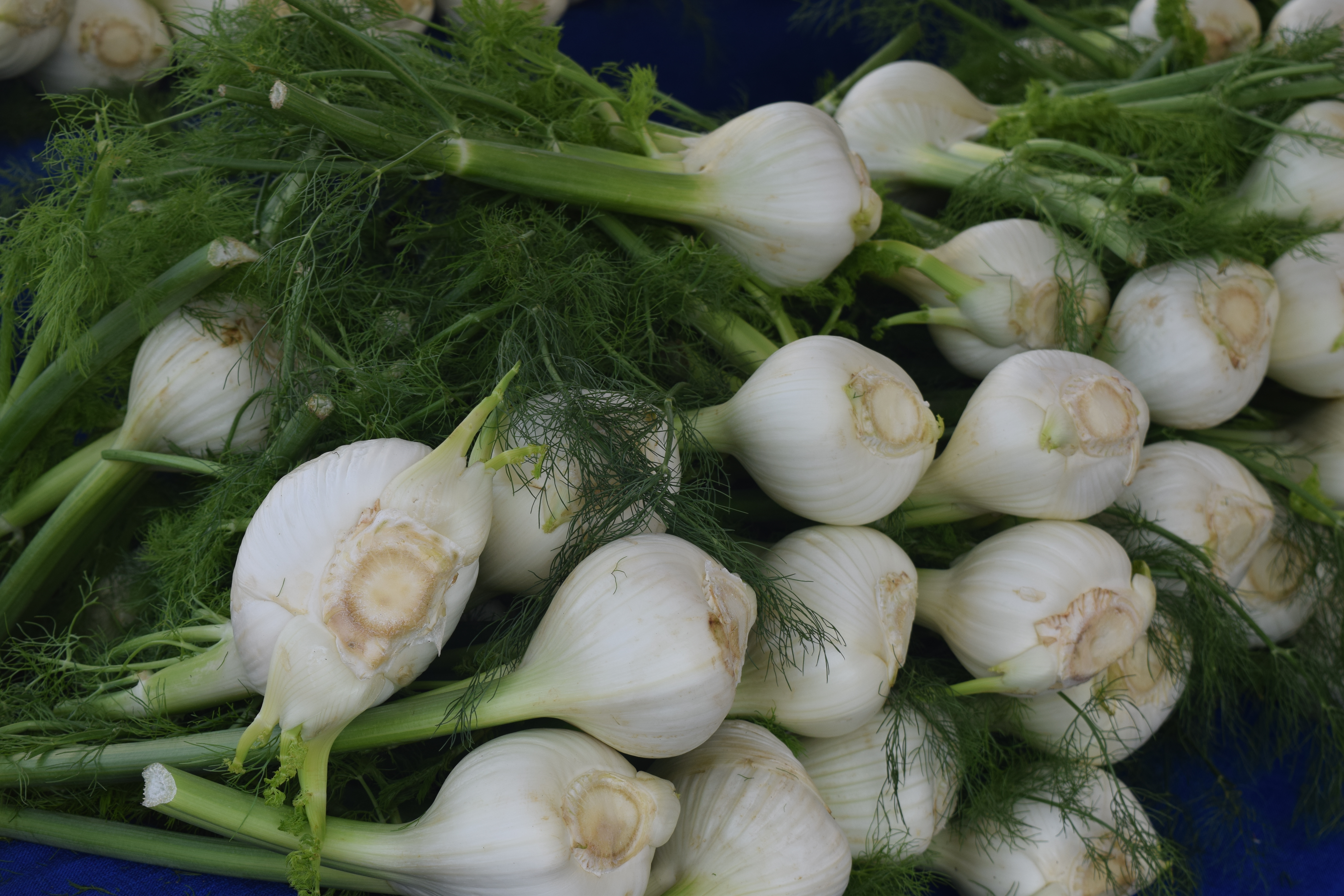
There were some artistically arranged lettuces and other attractive vegetables. We bought some fresh artichokes for our Christmas dinner.
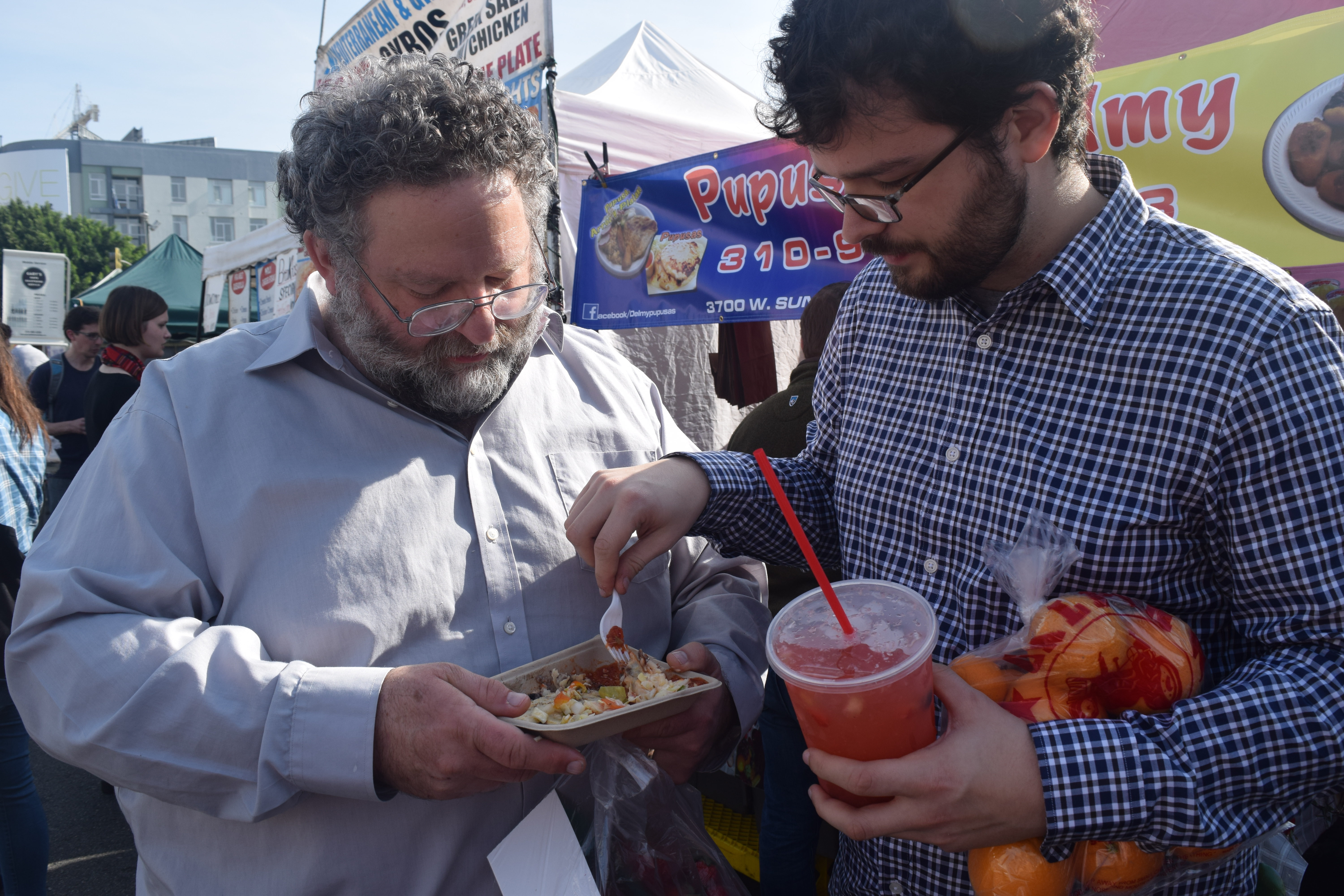
In addition to produce, there was a wide range of vendors selling street food for noshing. Danny and I shared a plate of Salvadoran pupusas, which are like cornmeal pancakes with various toppings. Danny is drinking watermelon lemonade.
After the Farmers’ Market we headed up to Griffith Observatory, which was not too far away. Griffith Observatory turns out to be a popular spot in LA, which means on a Saturday there are throngs of people.
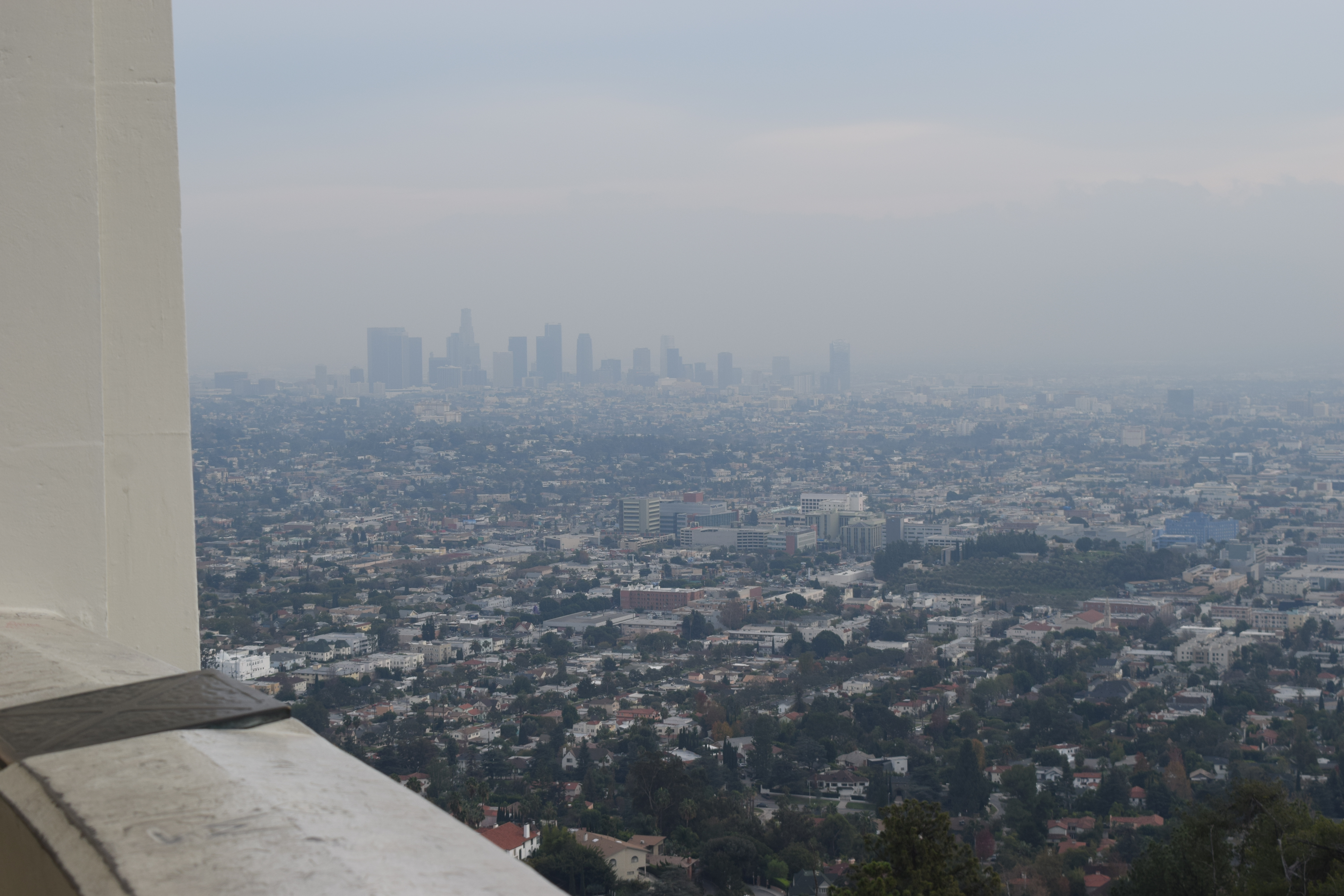
The views from the observatory are fabulous, or would have been if the day had not been so hazy and foggy.
Interesting that the observatory was built in 1935 as part of Roosevelt’s New Deal. If it were proposed today I doubt it would be built. Personally I think it is unfortunate that public works in general seem to have become so controversial.
We’re heading back to Chicago tomorrow, today we’re going to the Getty Center. The Huntington Library gardens were a highlight of the trip. More after we return, of course.
Yesterday we visited Watts Towers, the creation of an immigrant tile setter working by himself without much notice beyond his immediate neighbors. More after we return to Chicago.
All four of us arrived here on Friday. Among other things today we visited the Griffith observatory. Here’s a picture (it was kind of a cloudy and misty day).
Griffith Observatory
I’ll post a few more pictures while we’re here, with details to follow after we get back home.
Let’s say you’ve decided you want to plant Bee Balm (Monarda didyma). You go to an online catalog, and there could be dozens of varieties to choose from. How do you know which is best? You can go by the description in the catalog, which may be more or less accurate. This may purport to tell you the size or color of a variety, but won’t tell you much about how a specific variety performs in your region.
‘Raspberry Wine’ bee balm
That’s where the Chicago Botanic Garden’s Plant Evaluation Program comes in. CBG tests the garden performance of large numbers of varieties and species for selected genera. So far they have produced 37 reports, all of which can be downloaded for free from their website. To visit their website, click here.
Many more are in the pipeline. Before evaluations are completed, however, perennials are tested for four years, shrubs and vines for six, and trees for seven to ten.
Of course, performance depends in part on local conditions, and different varieties of the same species may be best suited to different environments. These evaluations, then, are most relevant to gardeners in the upper midwest. Still, gardeners elsewhere may want to take note.
This is especially true because these reports are a delight for obsessive plant nerds.
‘Raspberry Wine’ with Wild Bergamot.
For example, the report on Monarda and mildew resistance evaluated 39 Monarda varieties. And the folks at CBG Plant Evaluation are tough judges. Plants are rated on a one to five star scale, and none of the varieties got all five stars. Only two – ‘Raspberry Wine’ and ‘Marshall’s Delight’ – got 4.5 stars (I have lots of ‘Raspberry Wine’.).
I was especially interested in the report on Hardy Geraniums. The report evaluated 97 varieties derived from 17 species. Again, none of the varieties earned a perfect five star rating. Only six varieties got 4.5 stars. The only one of those six I was familiar with was ‘Brookside’.
Geranium ‘Johnson’s Blue’, only fair to good, says CBG.
And 14 of the varieties flunked out completely, including ‘Bressingham Pink’.
I was interested to see how the Hardy Geraniums in my garden fared in the report. ‘Johnson’s Blue’ got 3.5 stars, just fair to good. I was a little offended on JB’s behalf, as I had always found him to be a strong perfomer. ‘Biokovo’ got four stars (good), which is consistent with my experience. And ‘Tschelda’ (Geranium renardii) got just two stars (poor). This sadly confirms my own observations, mainly due to ‘Tschelda’s’ scarcity of flowers.
I have lots of the wild Geranium maculatum, but unfortunately the straight species was not evaluated.
Geranium Biokovo. I took this with my phone.
Before you know it the holidays will be over and it will be time to start pouring over plant catalogs. When you do, you might want to peruse the Chicago Botanic Garden’s Plant Evaluation website for backup.