Can Naturalistic Landscapes Make Us Happy?

My son sent me a link to an interesting post by Chicago Magazine’s Whet Moser. The post deals with some current research on identifying the elements that make a park look more “natural” to most people.

Lurie Garden
Chicago’s Lurie Garden: can naturalistic landscapes make us happier?

It was more the purpose than the results of this particular research that interested me. I’m not sure that anyone would be surprised by the qualities found to be more natural-looking – curved rather than straight edges, for example.

Marc Berman, a professor of psychology at the University of Chicago, has stated that his research could help in designing “new environments in ways that may improve psychological functioning.”

In other words, this is a new spin on the idea that exposure to nature (or something we think looks like nature) provides uplift to those who live in man-made environments.

Berman has done some research in the use of nature walks as part of a course of treatments for clinical depression. He theorizes that natural environments provide a tranquil counterpoint to the overstimulation of man-made environments, and that this can create a sense of calm and well-being.

Or, as Berman puts it:”… interacting with natural environments can have a salubrious effect on cognitive and affective processing compared to interacting with more urban/man-made environments.”

Transcendental bumblebee meditation.

My own experience in the garden tells me there is something real behind this. Contemplating a single plant, a border, or a garden overall provides a tranquil focus for the mind and quiets worrying or distressing thoughts. Watching bees on flowers has for me the sort of hypnotic effect that some who practice meditation get from concentrating on their own breathing.

There was also a study by Frances Kuo at the University of Illinois which found that green spaces in the inner city tend to reduce crime. This runs counter to the conventional view that bushes and trees provide hiding spaces for criminals and criminal acts.

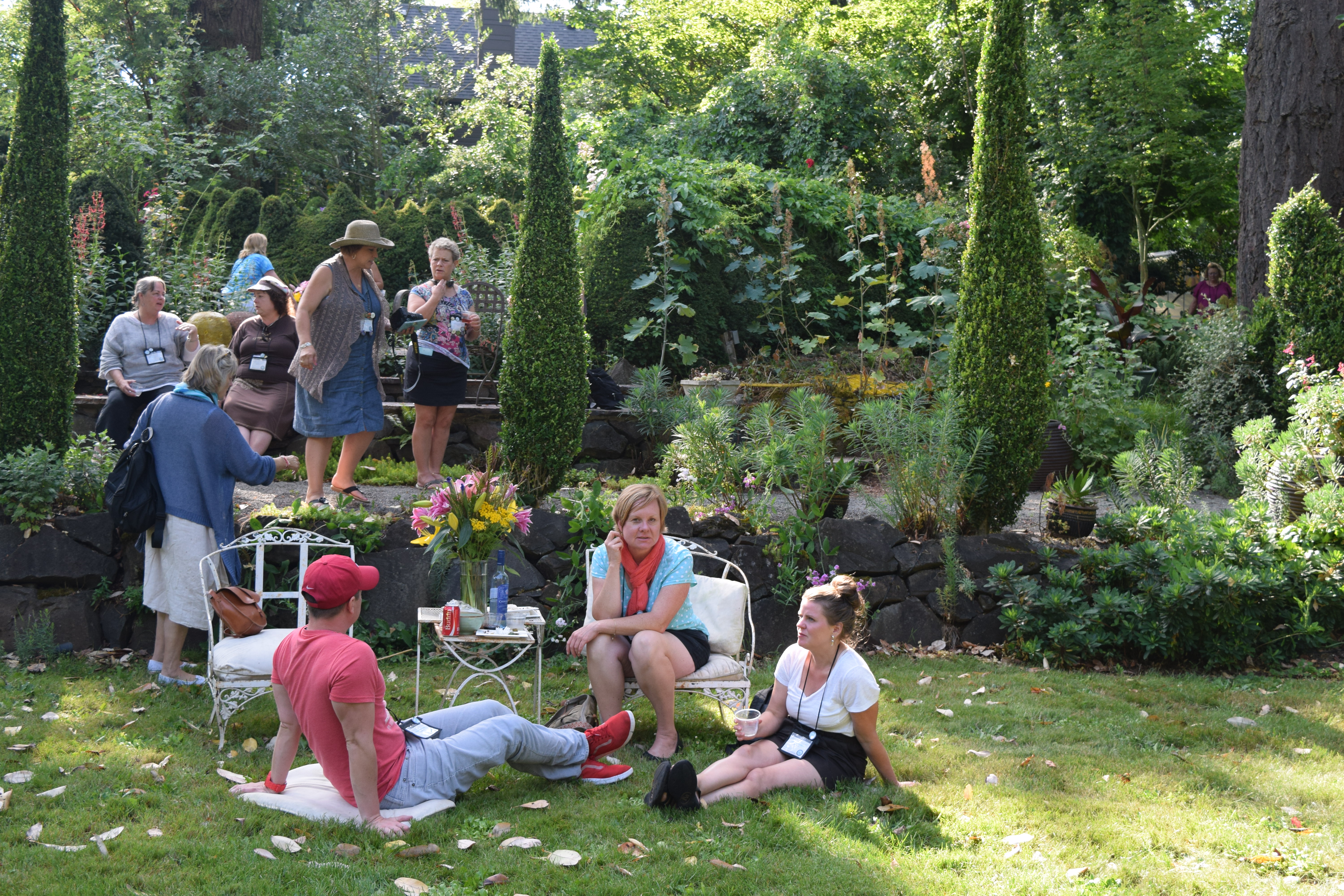
Do naturalistic gardens have this effect more than formal gardens? Perhaps. As Jens Jensen, founder of the Prairie Style of design, once said: “Straight lines spell autocracy …”. Both formal and informal gardens are designed landscapes, but the formal garden suggests control, tension, discipline. The informal garden, by definition, is more relaxed.

Lurie Garden
Lurie Garden in October.

Jens Jensen may not have been familiar with “affective processing”, but he did say of naturalistic landscapes: “They appeal to the finer feelings of mankind and elevate the depressed in soul and mind to a higher place in the human family.”

Do you agree? Do natural-seeming landscapes in urban environments make us happier?

Tomorrow is the Last Day of the Great Backyard Bird Count

Yesterday and today Judy and I sat for an hour on the back porch, watching birds. This was not an example of us wasting time. No, it was an example of us carrying out our responsibilities as Citizen Scientists.

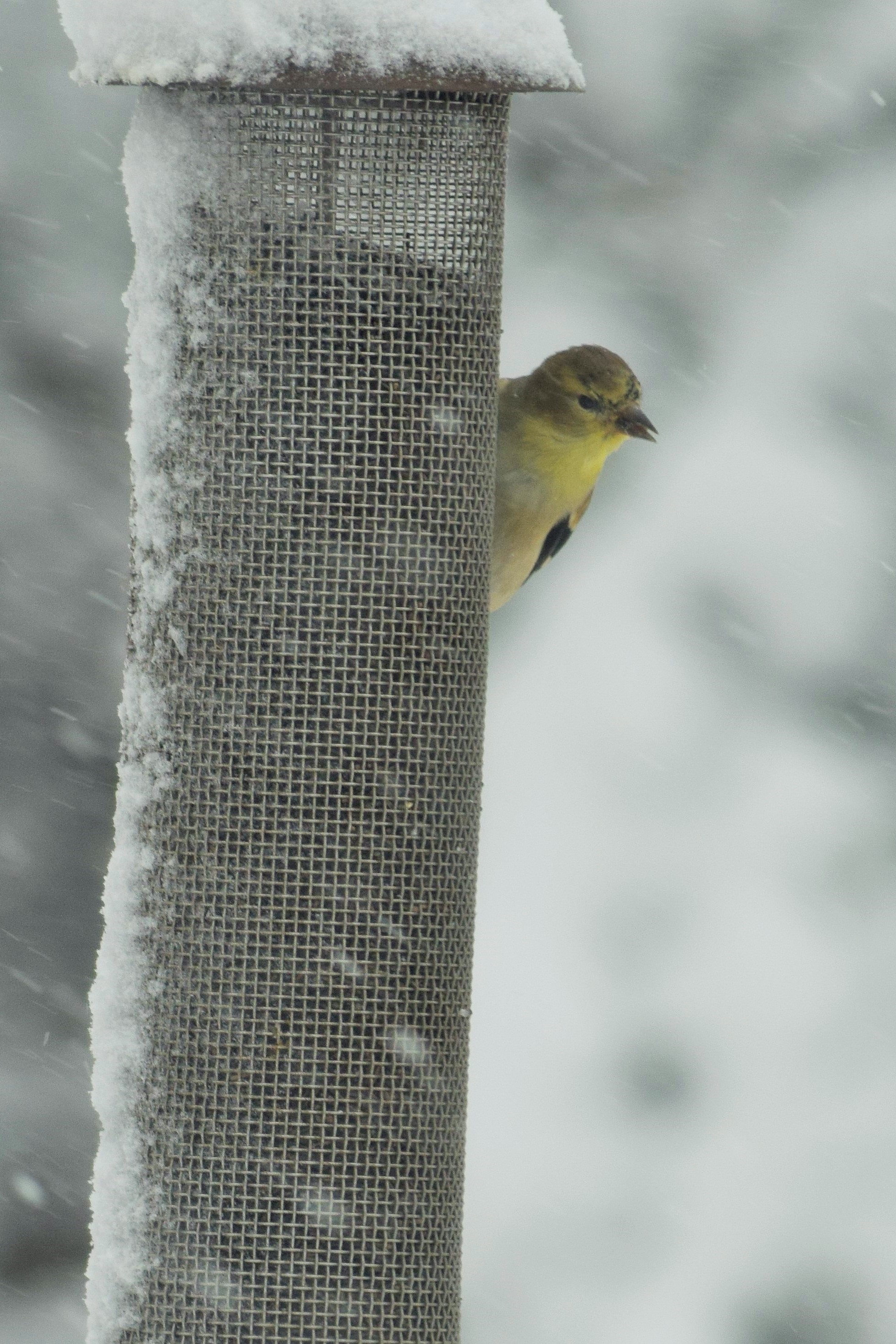
American Goldfinch at the nyjer seed feeder: is the coast clear?

Specifically, we were taking part in the Great Backyard Bird Count (GBBC). Launched in 1998 and led by the Cornell Lab of Ornithology and the National Audubon Society, the GBBC enlists amateur birdwatchers to measure bird population trends.

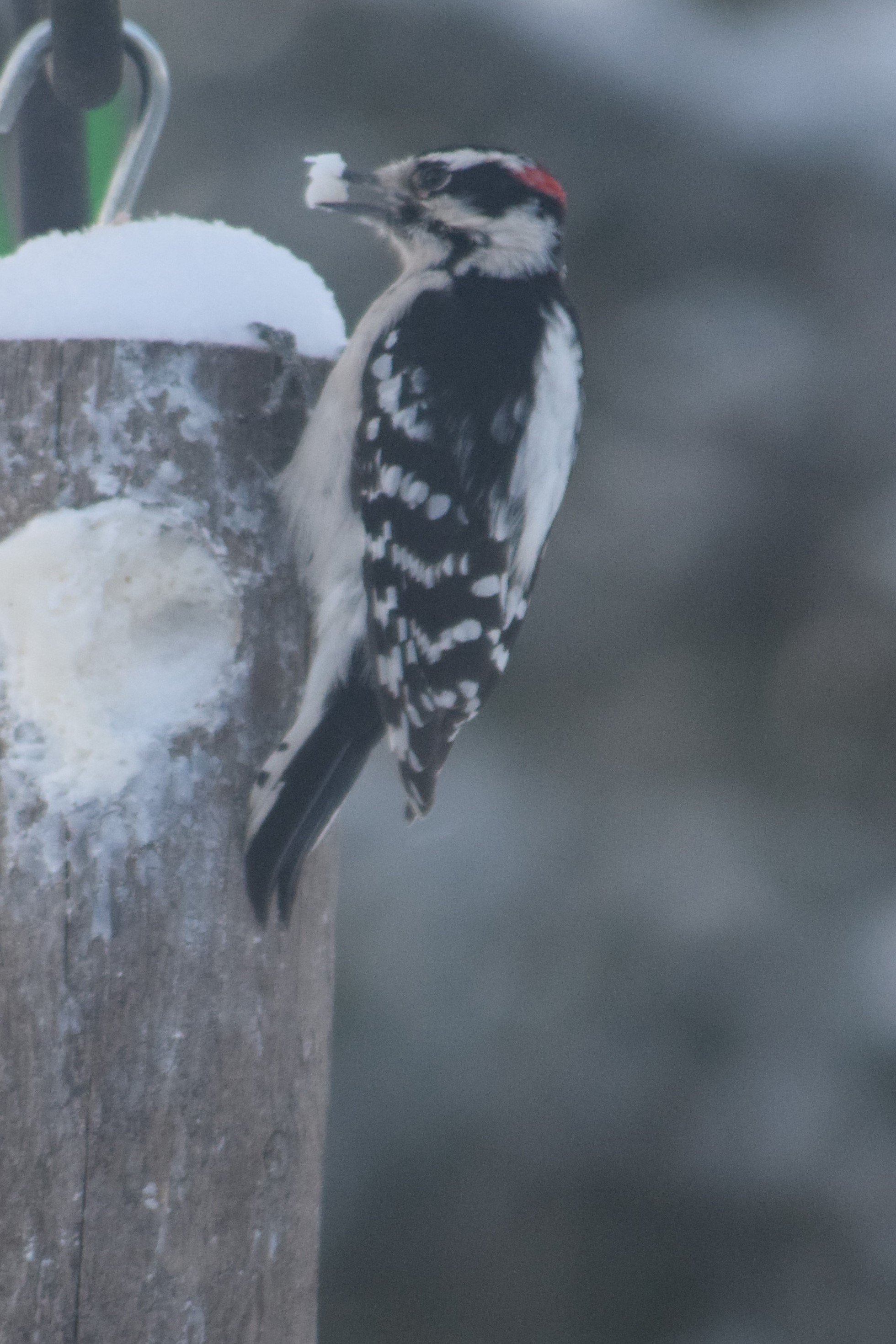
Male Downy Woodpecker with a beak full of suet.

One thing I really like about the GBBC is that you can do it from the comfort of a chair by the window. That’s the kind of birdwatching I can really appreciate. Particularly since yesterday got down to 5 degrees F (-15 C). Today it was snowing and a bit warmer, but I still preferred to count my birds from inside.

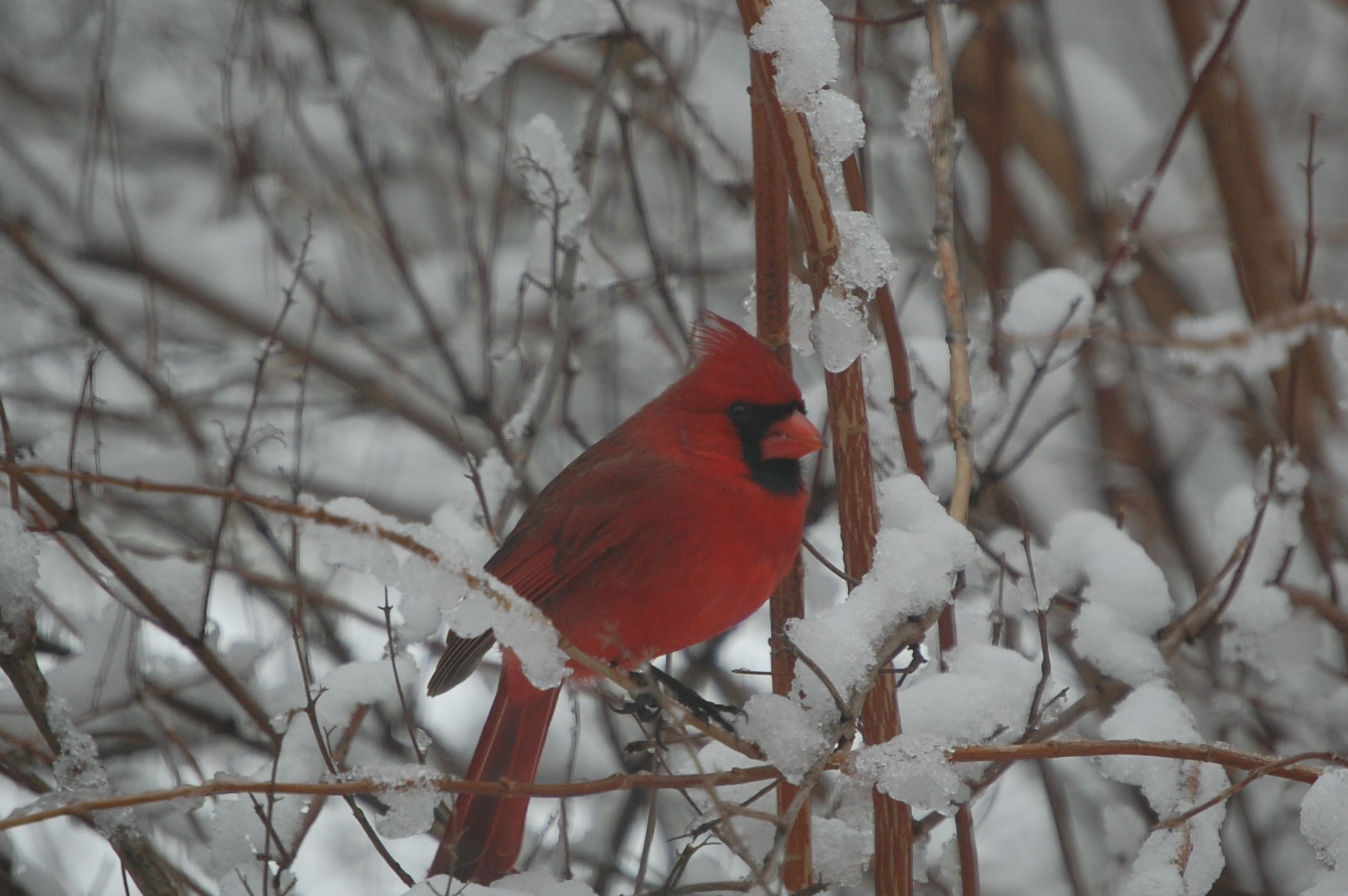
Male Northern Cardinal.

Hardier birders head out to parks, beaches, nature preserves, and other likely outdoor locations.

Dark-Eyed Junco.
Dark-Eyed Junco.

Over both days Judy and I saw nine bird species, including Juncos, Goldfinches, Cardinals, Chickadees, House Sparrows, Tree Sparrows (I think), Downy Woodpeckers, and Hairy Woodpeckers. The greatest excitement, however, came when a Red-Tailed Hawk twice swooped through the backyard. This caused all the other birds to scatter and not return for another fifteen minutes or so.

2015-02-15 15.21.41
He looks cold, doesn’t he?

I was a little disappointed that the Red-Bellied Woodpeckers and White-Breasted Nuthatches did not make appearances, because they have been fairly frequent visitors to our back garden this winter. I even thought of cheating and putting them on my checklist (because they might have shown up, after all).

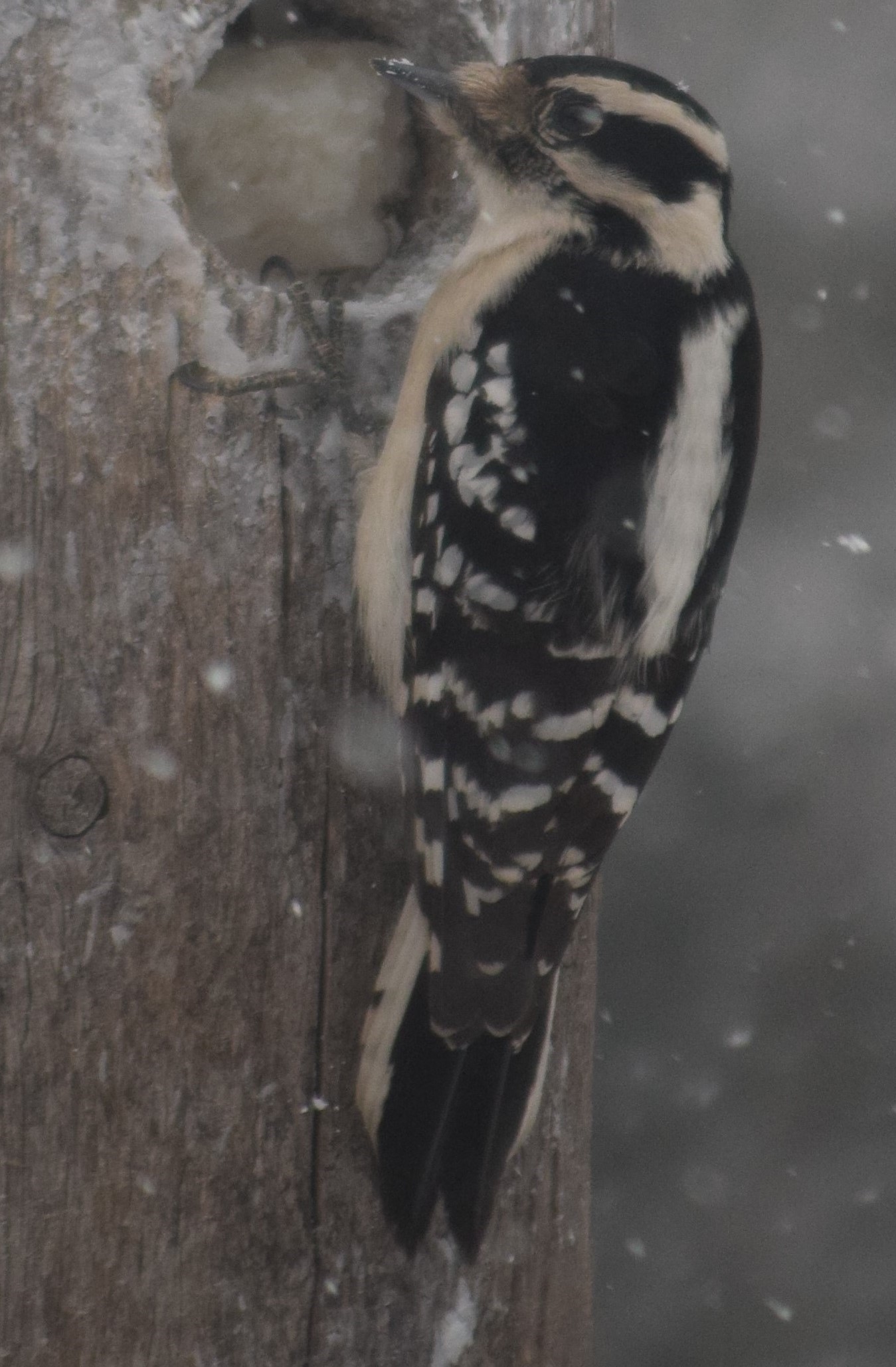
Female Downy Woodpecker.

But then I thought, would Jonas Salk or Albert Einstein have falsely recorded a Red-Bellied Woodpecker on their checklists? I don’t think so. And so I stayed true to my oath as a Citizen Scientist. Not that there is an actual oath, but you know what I mean.

Another Dark-Eyed Junco.

A nice thing about the GBBC is that you can enter your data online and see the data develop in real time. For example, as of this afternoon there were almost 43,000 checklists submitted from the USA, plus thousands more from 115 other countries. Closer to home, there were 223 checklists submitted from Cook County, Illinois, where I live.
2015-02-02 08.21.52 (2)

Monday, February 16, is the last day of the GBBC. I have the day off, and I’m thinking I’ll spend one more hour doing another checklist. Maybe the Red-Bellied Woodpecker will show up.

If you’d like to participate, check out the GBBC website here. You can spend as little as 15 minutes watching from the comfort of your own home, and there are guides to help with bird identification.

Have you taken part in the Great Backyard Bird Count, and if so what birds did you see?

A Grand Finale for the Portland Fling

So this is the last post I’m going to do about the Garden Bloggers’ Fling held in Portland last summer. Fittingly, it is about the garden that hosted the event’s closing reception.

Entering Bella Madrona.

This was held at Bella Madrona, a five acre garden on the outskirts of Portland. The garden has been lovingly created over more than three decades by two retired physicians, Jim Sampson and Geoff Beasley.

2014-07-13 16.12.12
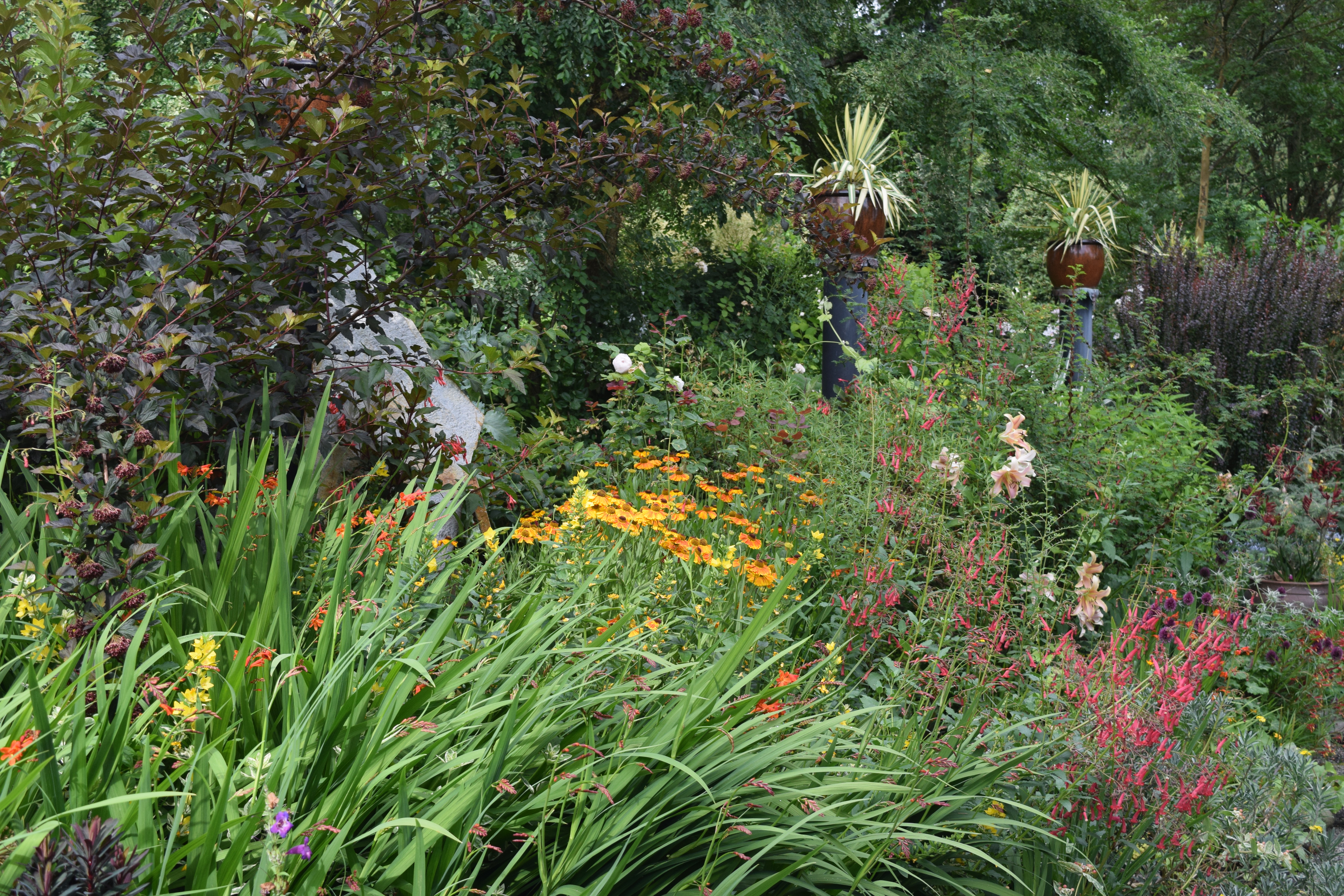
Lots of delicious reds in the border that starts at the entrance gate.
2014-07-13 16.14.17
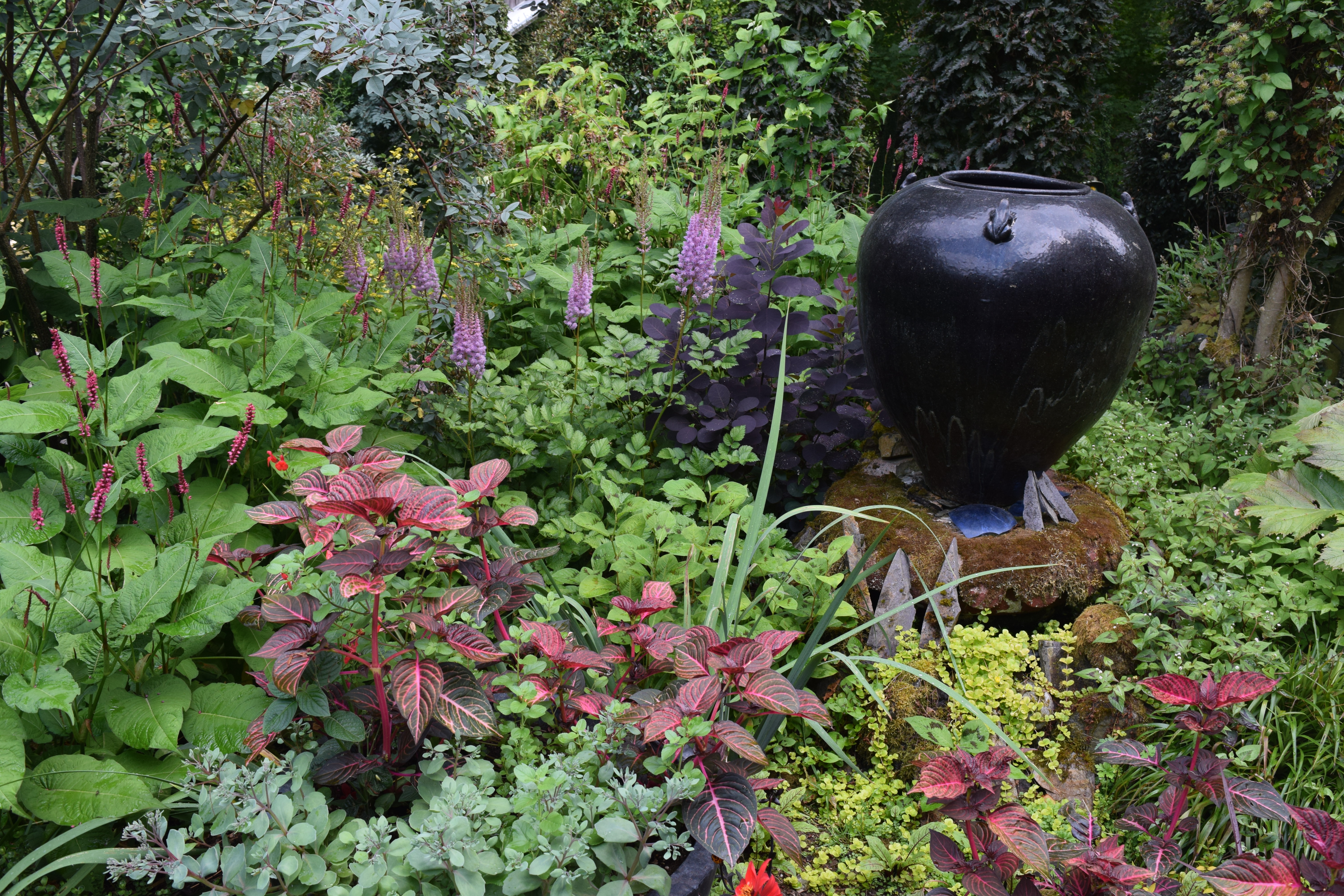
Nice urn.
lk
Another border featuring swaths of Helenium and Yuccas in containers lifted high on columns.

2014-07-13 16.34.05

Bella Madrona is a garden of many faces. It has borders mixing annuals and perennials, all exhibiting bold colors.

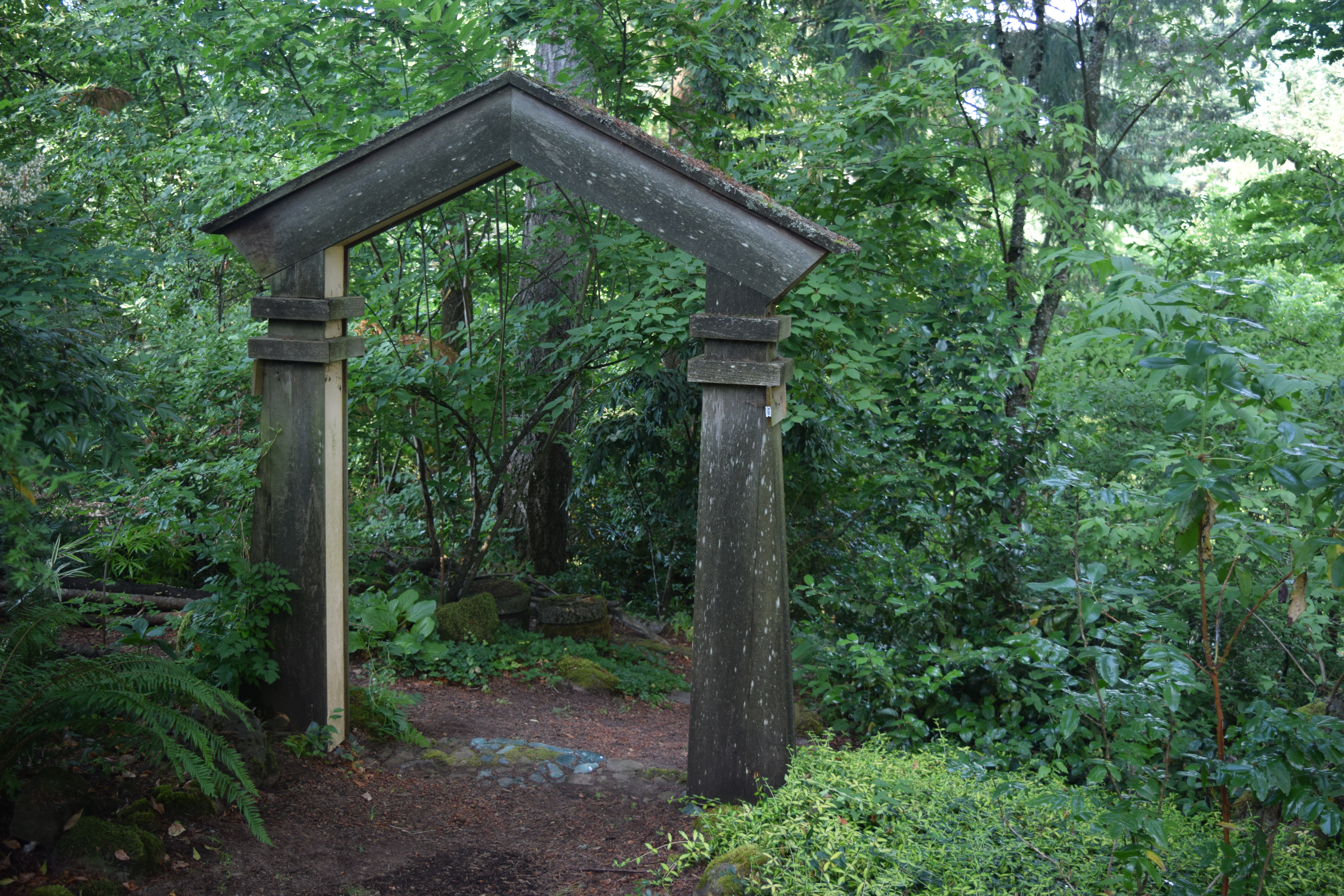
This arch looks like a good fit for a CS Lewis story.
Another arch, another path.

2014-07-13 17.21.28

2014-07-13 18.21.08

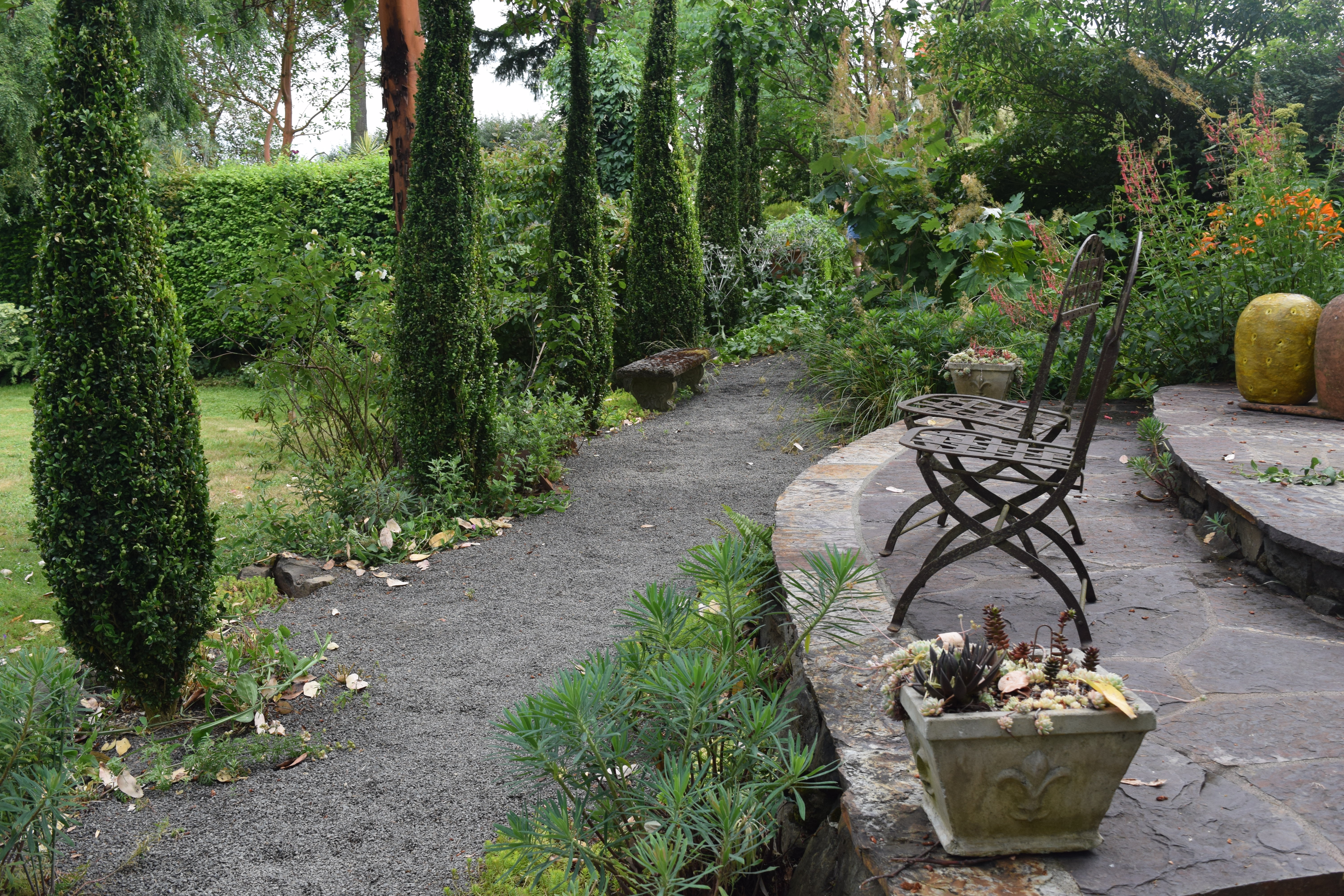
It’s also a garden of paths, mostly gravel, cunningly designed so as to almost always disappear around mysterious bends.

2014-07-13 16.18.47

This looks like a good bench for Rip Van Winkle to snooze on.

2014-07-13 16.21.08

2014-07-13 16.23.12

I like the window cut into the hedge.

2014-07-13 16.35.10

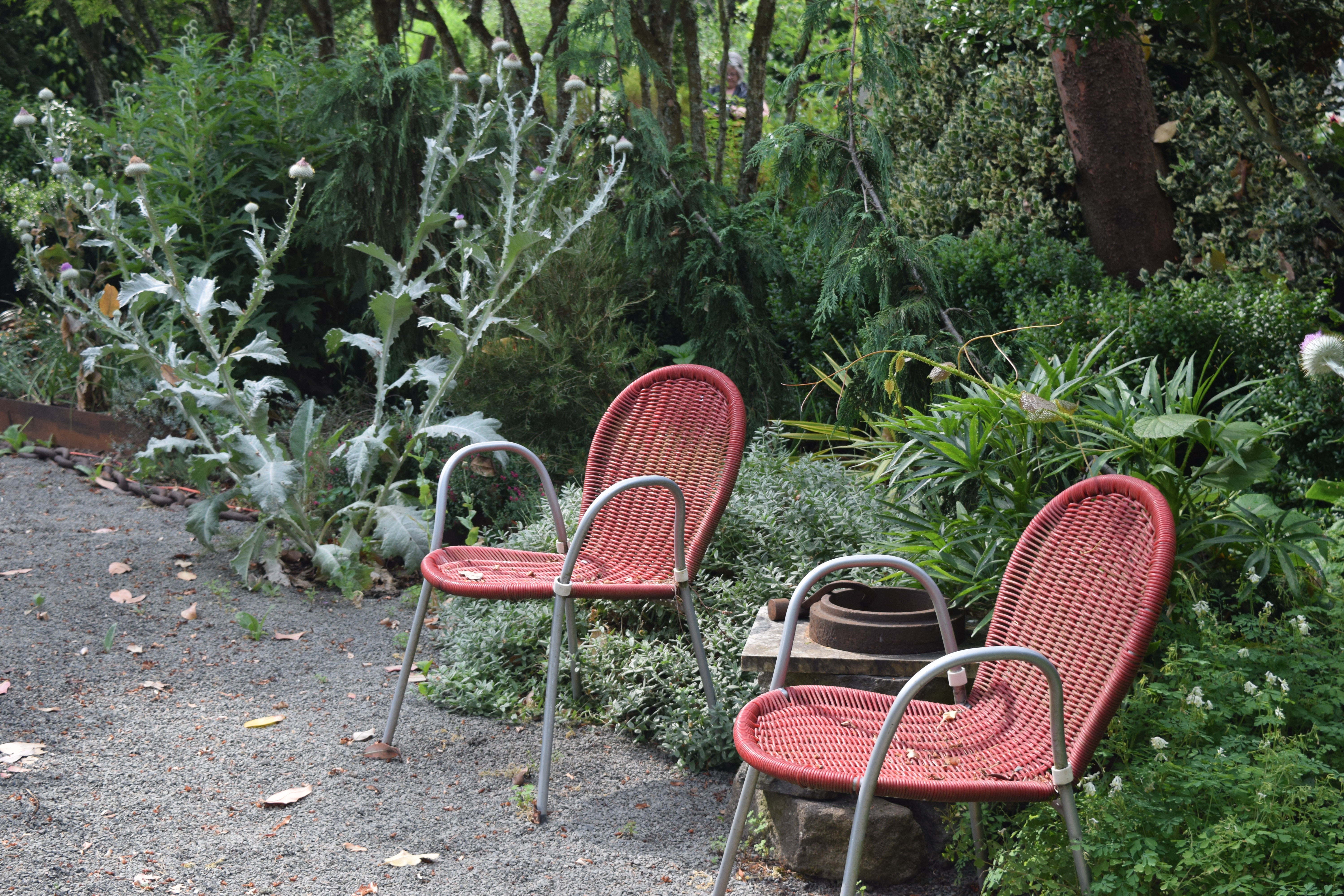
And all those paths lead to many niches and nooks, areas to sit and chat or just contemplate the view.

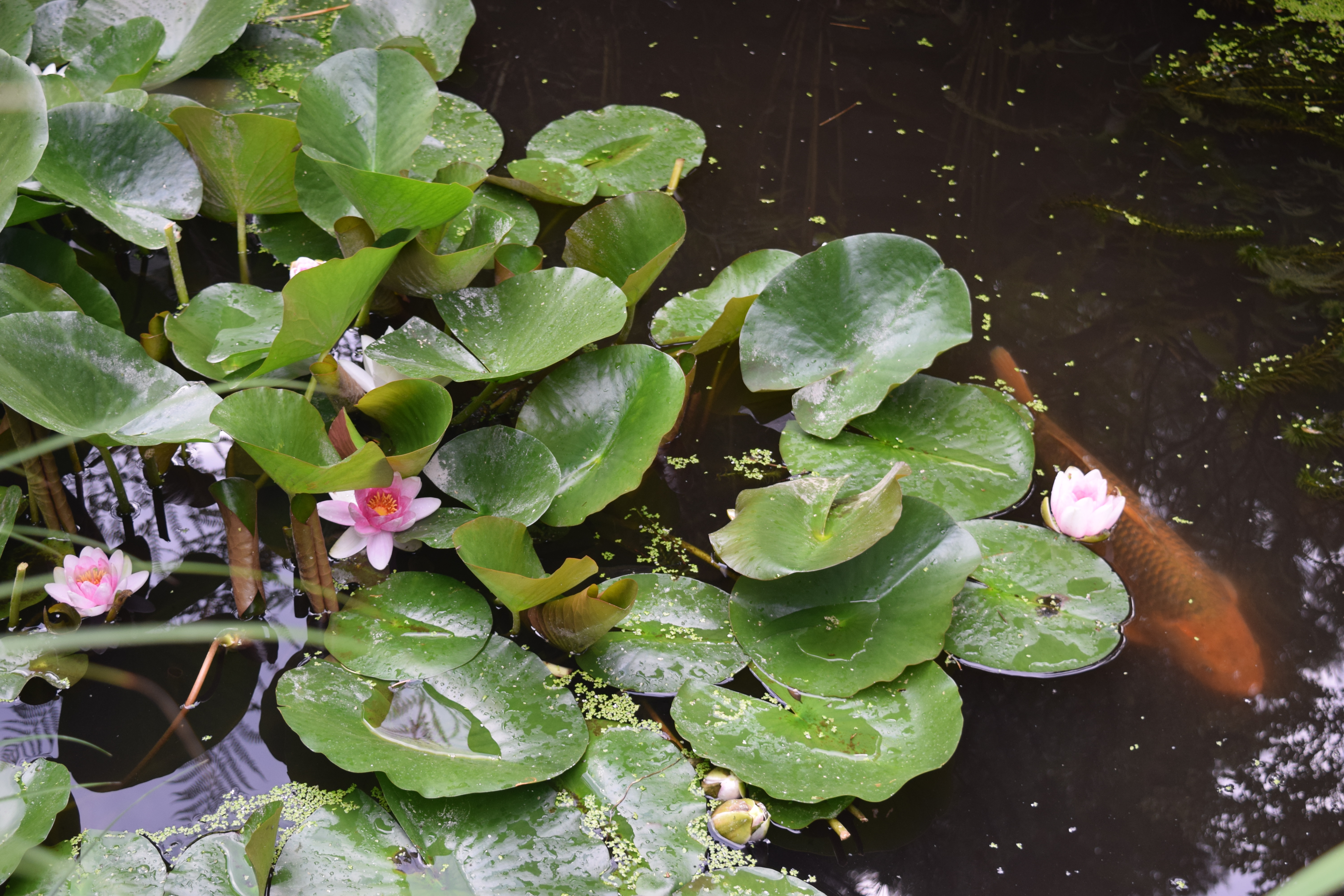
Nice little pond with waterlilies and koi.
A babbling brook.
A babbling brook. I like that grass.
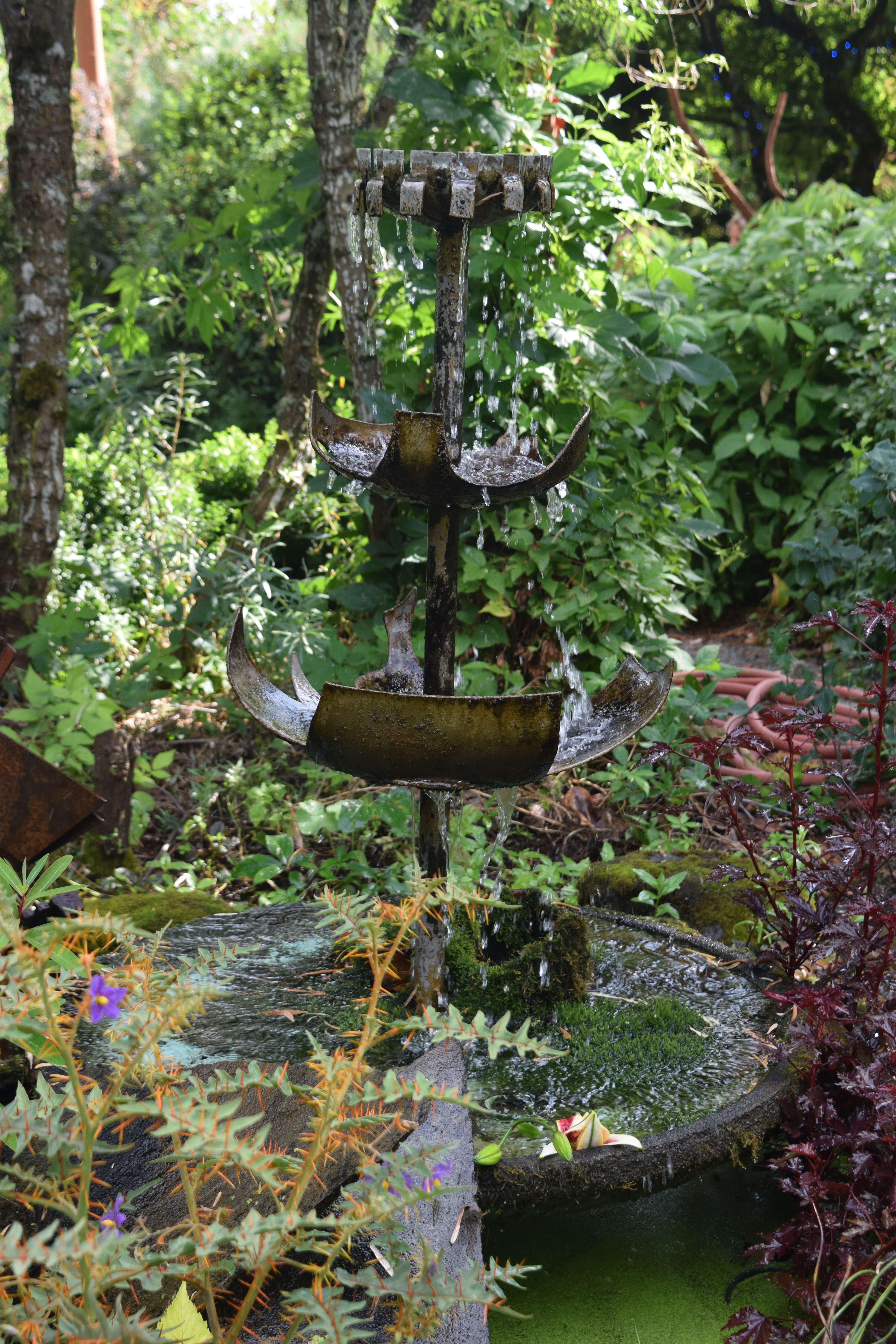
Interesting fountain.

There were water features, of course.

I really like this snake made from a bicycle chain.
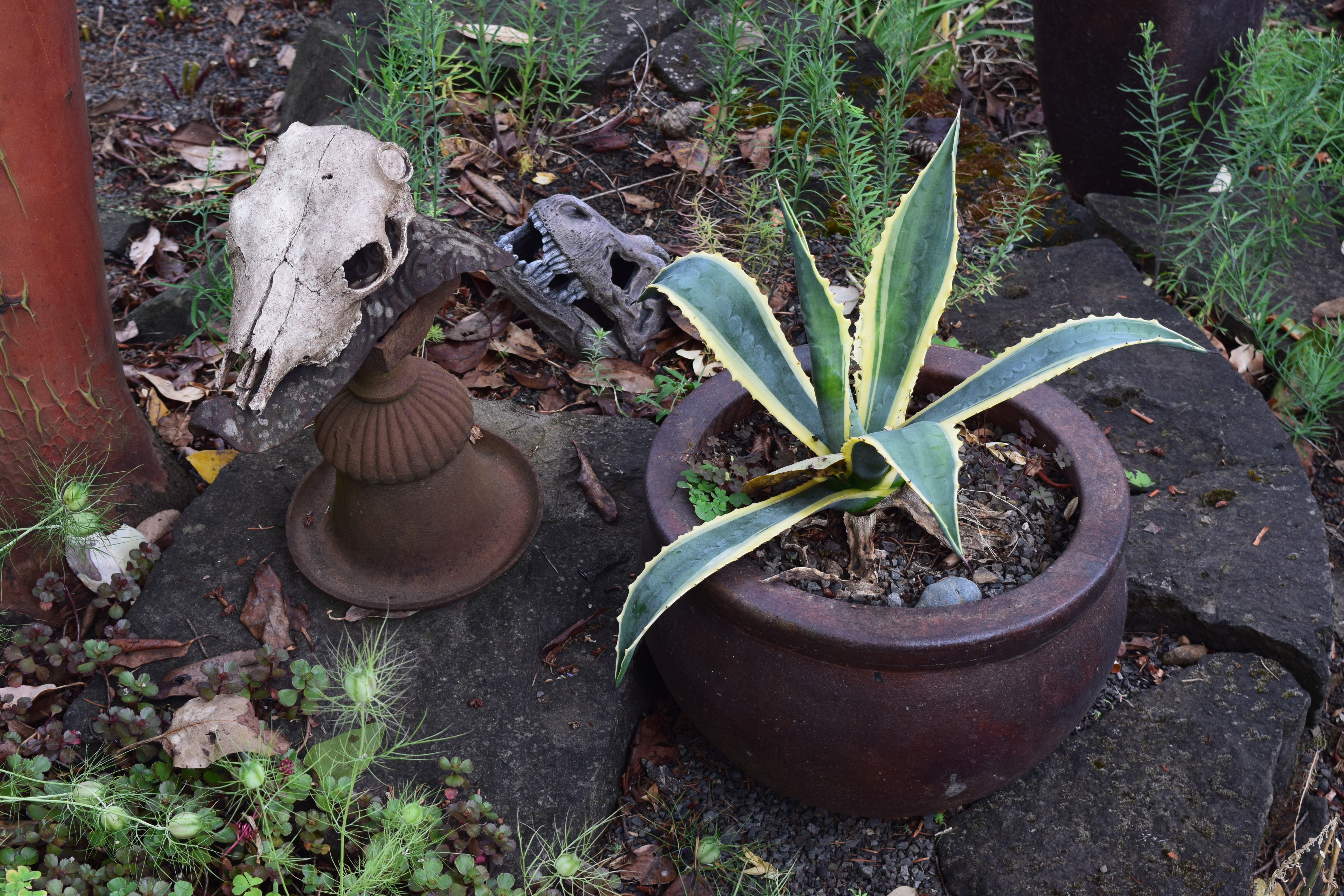
Some skulls for a touch of the macabre.
Not sure what this is supposed to be - cattails? But I do like stuff made from old metal.
Not sure what this is supposed to be – cattails? But I do like stuff made from old metal.
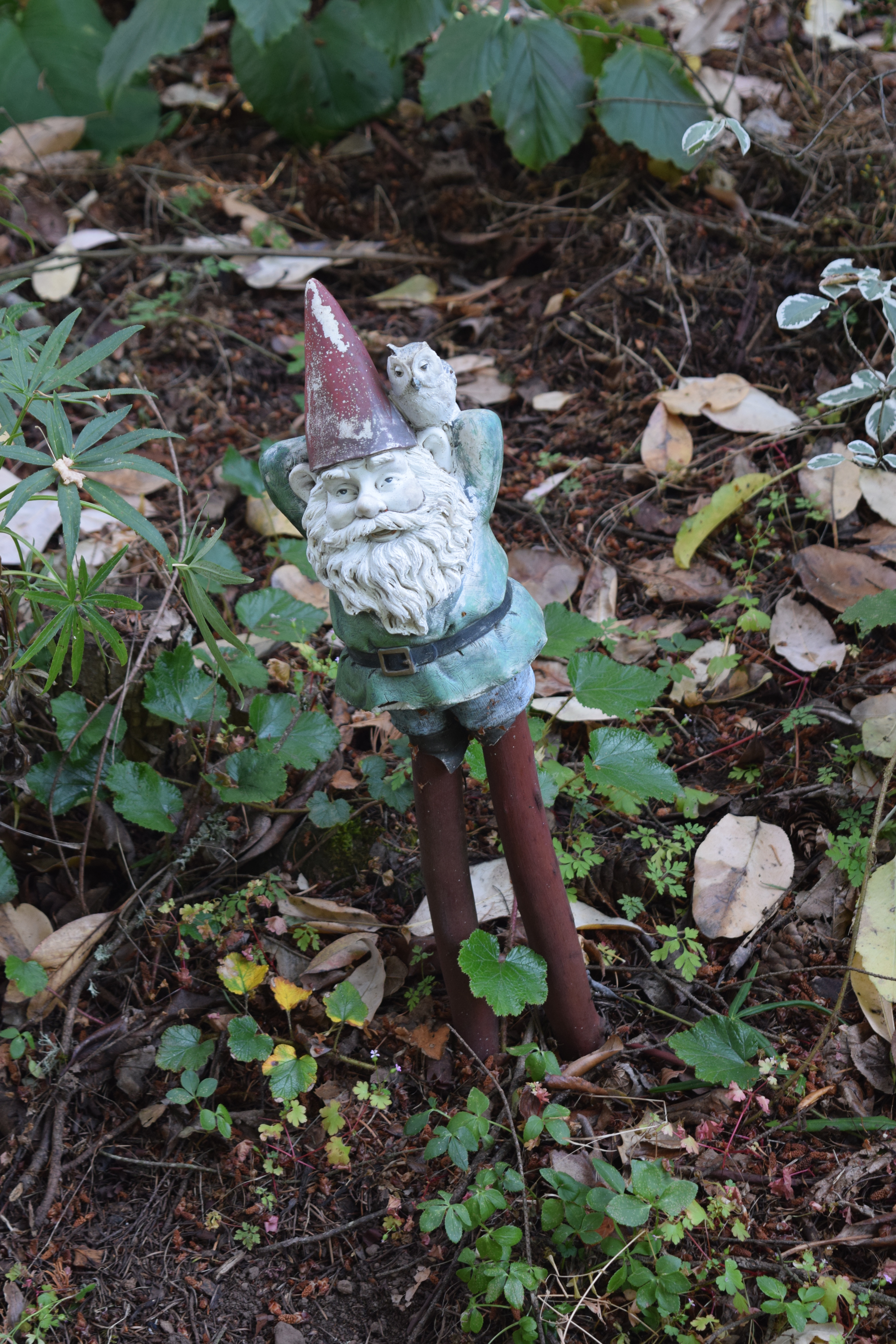
There was a whole little garden devoted to gnomes, but Judy didn't get a chance to take many pictures in there.
There was a whole little garden devoted to gnomes, but Judy didn’t get a chance to take many pictures in there.

And lots of garden art – some macabre, some playful.

2014-07-13 16.20.13

And I can’t forget the ducks. Why is it that urban chickens have become kind of fashionable, but not ducks? All in all, I’d say ducks are cuter. Much harder to cook, though.

2014-07-13 17.07.16

Bella Madrona is frequently made available for fundraising events and weddings. It certainly provided a marvelous setting for the Fling’s closing reception. In fact, people stayed far longer than the allotted time.

It’s a bit sad to write this last post about the Portland Fling. On the other hand, I’m glad to have finished before my memory of these gardens fades any further. And now I can look forward to the 2015 Fling in Toronto.

Catalog Review: Forestfarm

Until this year, the Forestfarm catalog looked a lot like the phone book for a small city. This was a testament to the Oregon nursery’s incredibly vast selection of plants, especially woody plants. For me, Forestfarm has been the place to go when I had to buy a tree or shrub that could not be found at any local garden center.

forestfarm

This year, however, the catalog has been radically downsized. In terms of printing and mailing costs, I’m sure this move made sense.

However, the smaller catalog does not mean a more limited inventory. While the catalog contains only the more popular items, the full selection can still be found online. The Forestfarm website is here.

I will miss the old catalog, though. It was sort of the horticultural equivalent of War and Peace.

Forest Farm Nursery
Newly arrived Fringe Trees from Forestfarm, April 2013.

Neither the old nor the current catalog are glossy or gorgeous. Printed mostly in black and white on newsprint, this is not a catalog that seeks to seduce the gardener into making purchases. Though I should say that there are several pages of attractive color photos.

I appreciate the brief narrative descriptions of the plants, which often contain quotes from well-known plantspersons.

Over the years I have purchased a number of plants from Forestfarm, including American Fringe Tree (Chionanthus virginicus), Clove Currant (Ribes odoratum), and Flowering Dogwood (Cornus florida). All arrived healthy and were packaged with extreme care. All are doing well, except for the Flowering Dogwood, which perished in last year’s extreme winter (and I realize I was playing zonal roulette with that purchase).

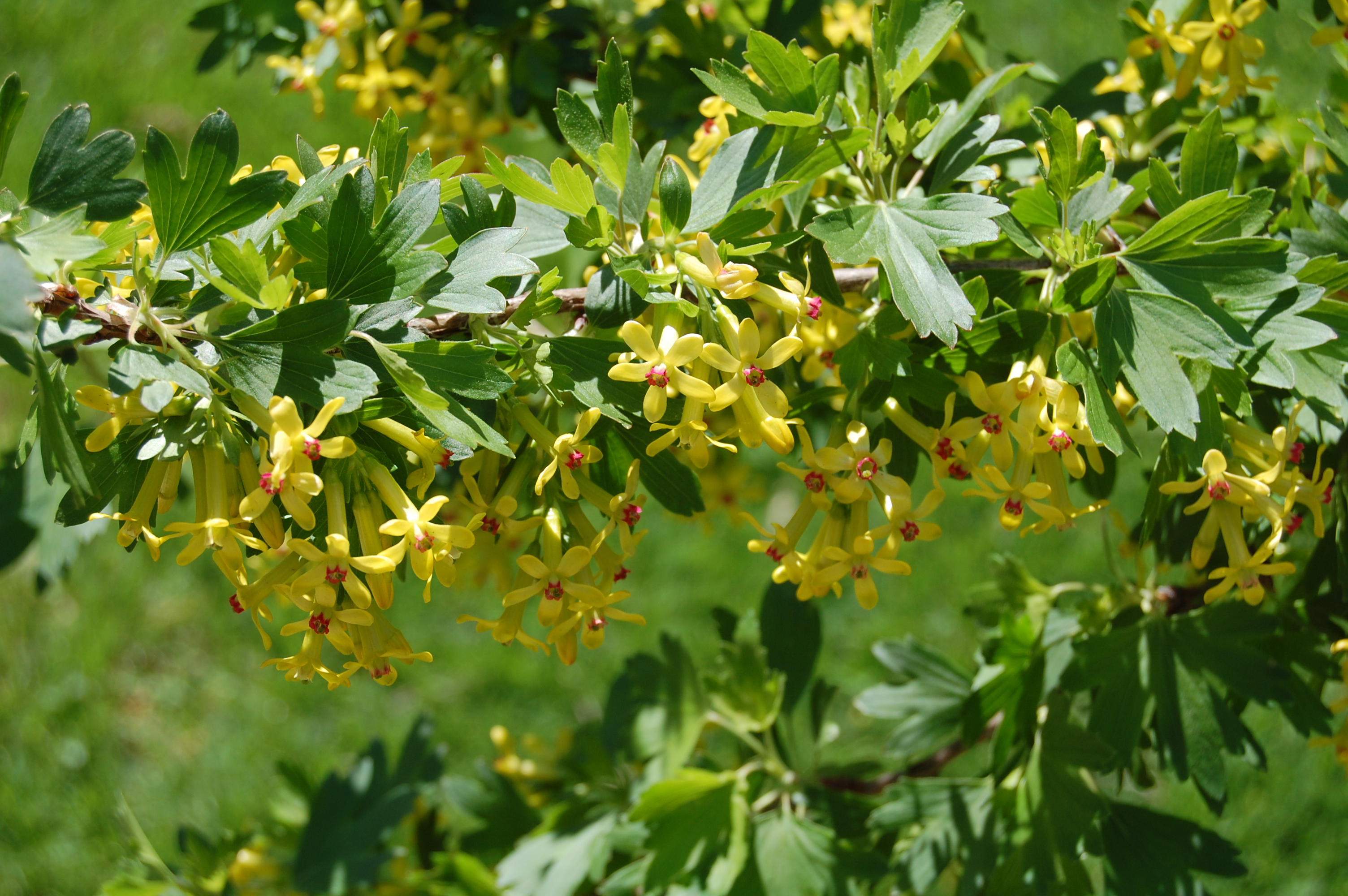
Clove Currant
Clove Currant in flower

One thing to keep in mind, though, is that you will not be able to get the same size tree or shrub as you would buy in a nursery. Many are available only as 1-2′ striplings; the largest size available is generally 4-5′. So you have to be willing to exercise greater patience until the time when your new woody plant becomes an impressive specimen.

Judy sometimes complains that I’ve only inserted a stick into the ground when I tell her I’ve planted a tree or shrub..

What’s your favorite source for woody plants? Do you have the patience to plant very young shrubs and trees?

A Carpet of Spring Flowers

Gardens should not show bare earth. This is a core belief of my gardening faith. A belief not quite as central as “You shall not murder” (Exodus 20:13), but a lot more important than “Do not plow with an ox and a donkey yoked together” (Deuteronomy 22:10).

Pink tulips underplanted with forget-me-nots at Giverny.

By mid-June all my beds and borders reflect this belief pretty well – everything is covered in foliage and flowers and there is little to no bare earth to be seen. But because I have many late-emerging perennials, and because I have not yet filled all available space with Spring bulbs, there is a lot more bare earth than I would like in April and May.

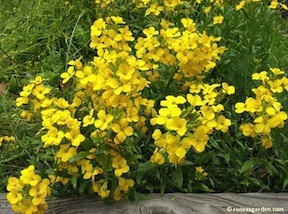
'Scented Gold' Wallflower. Photo from Reneesgarden.com.
‘Scented Gold’ Wallflower. Photo from Reneesgarden.com.

This brings to mind the time when Judy and I visited Giverny in April, 2012. Tulips were everywhere, but there were also annuals blooming wherever the spring bulbs did not cover the ground. Wallflowers (Erysimum), forget-me-nots (Myosotis sylvatica), and pansies (Viola x wittrockiana) bloomed everywhere, between and among the tulips.

Since buying enough plugs to fill in all my beds and borders seems extravagant even to me, I have just ordered a bunch of spring-blooming annual seed packets from Renee’s Garden Seeds. Specifically, I’ve ordered:

'Copper Pot' California Poppies. Photo from Reneesgarden.com.
‘Copper Pot’ California Poppies. Photo from Reneesgarden.com.
  • California poppies (Eschcholzia californica) ‘Native Orange’ and ‘Copper Pot’.
  • Wallflowers (Erysimum perovskianum) ‘Scented Gold’.
  • Johnny Jump-Ups (Viola tricolor).
  • Forget-me-not ‘Azure Bluebirds’.

We’ll see how these perform. I know in some areas Forget-Me-Not can be invasive but that really doesn’t seem to be a problem around here.

Do you sow spring-blooming annuals to assure sufficient early color?

Orange Makes a Lasting Impression

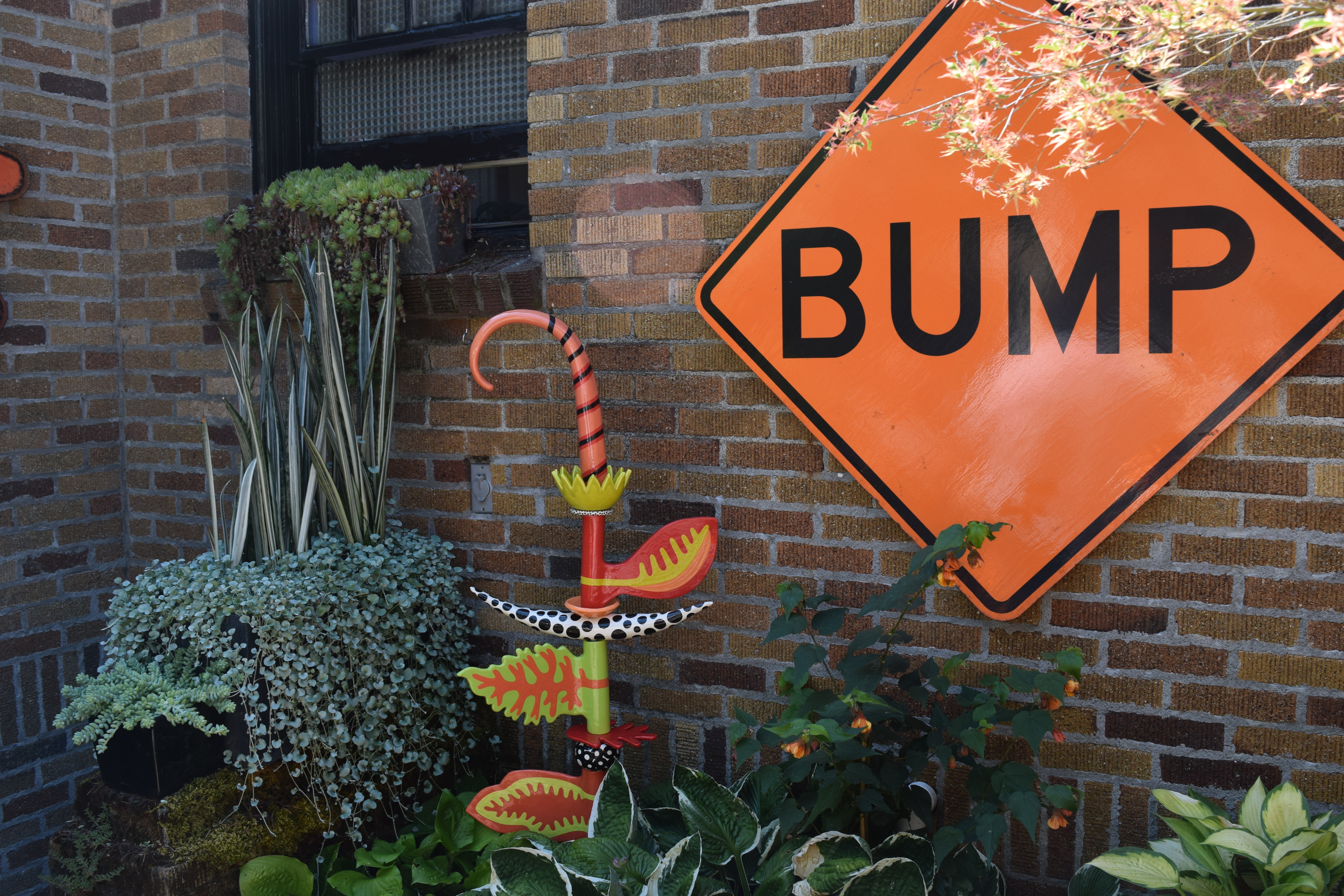
If you’ve been reading my blog for a while, you may know that I like orange flowers. Butterflyweed (Asclepias tuberosa), Mexican Sunflowers (Tithonia rotundifolia), orange roses (‘Westerland’, for example), orange Zinnias, orange Asiatic Lilies, etc.

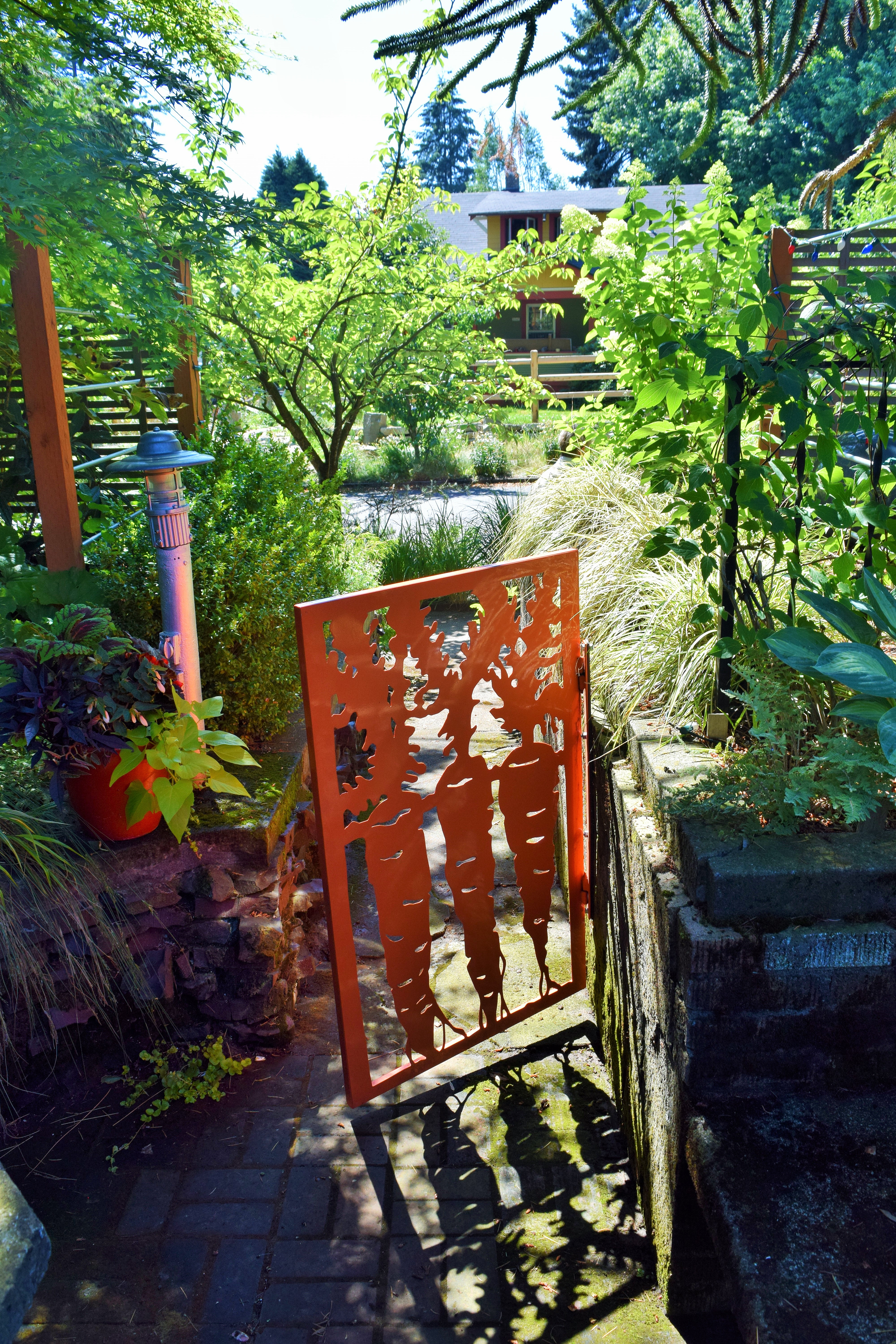
Orange carrot gate leading in to the front garden.

One of the gardens we visited as part of the Portland Garden Bloggers’ Fling last July was that of JJ De Sousa. All these months later, my memories of this garden have faded some.

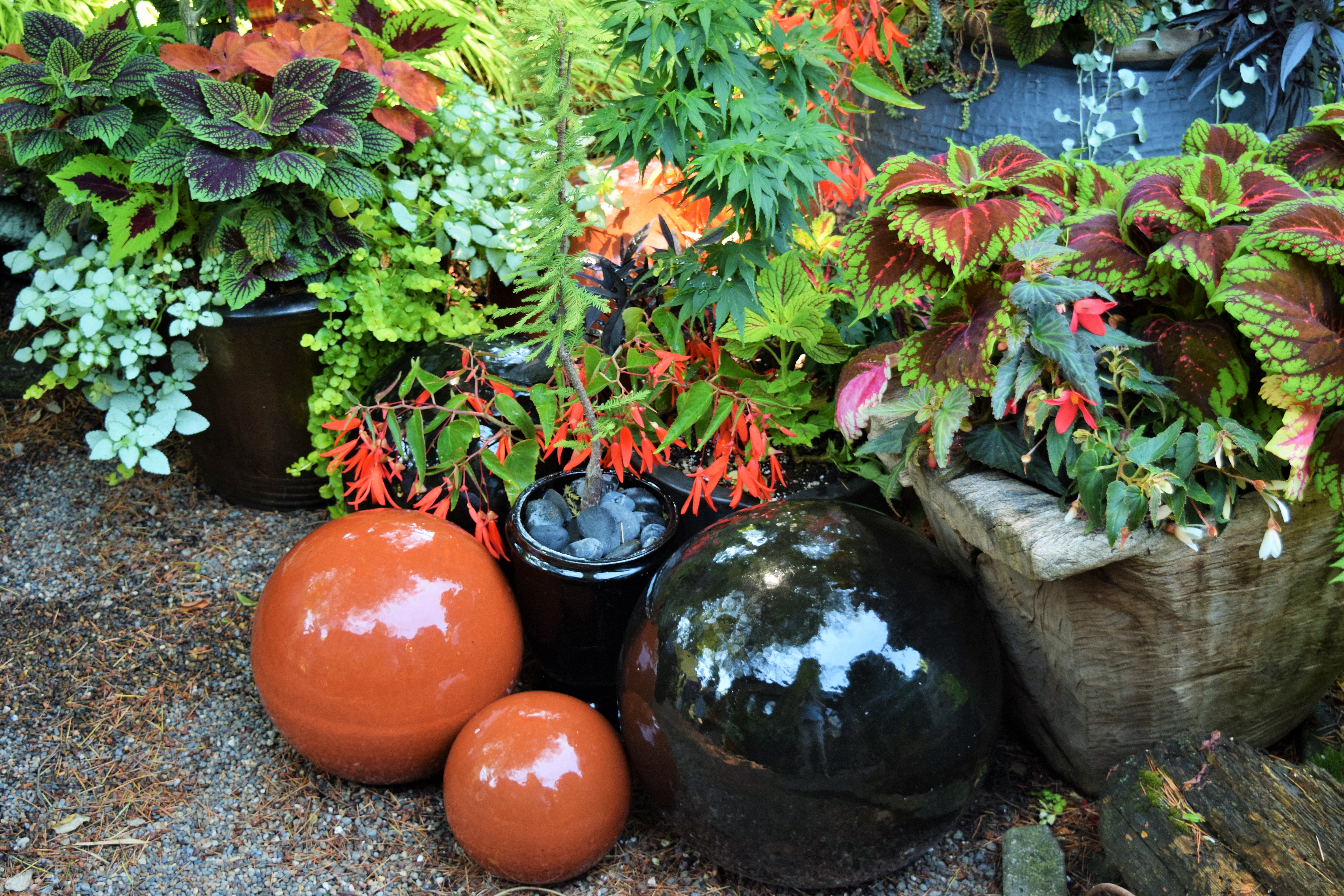
This tableau makes me consider the possibilities of bowling balls as garden art.
This tableau makes me consider the possibilities of bowling balls as garden art. I like the fuchsias and Coleus, too.

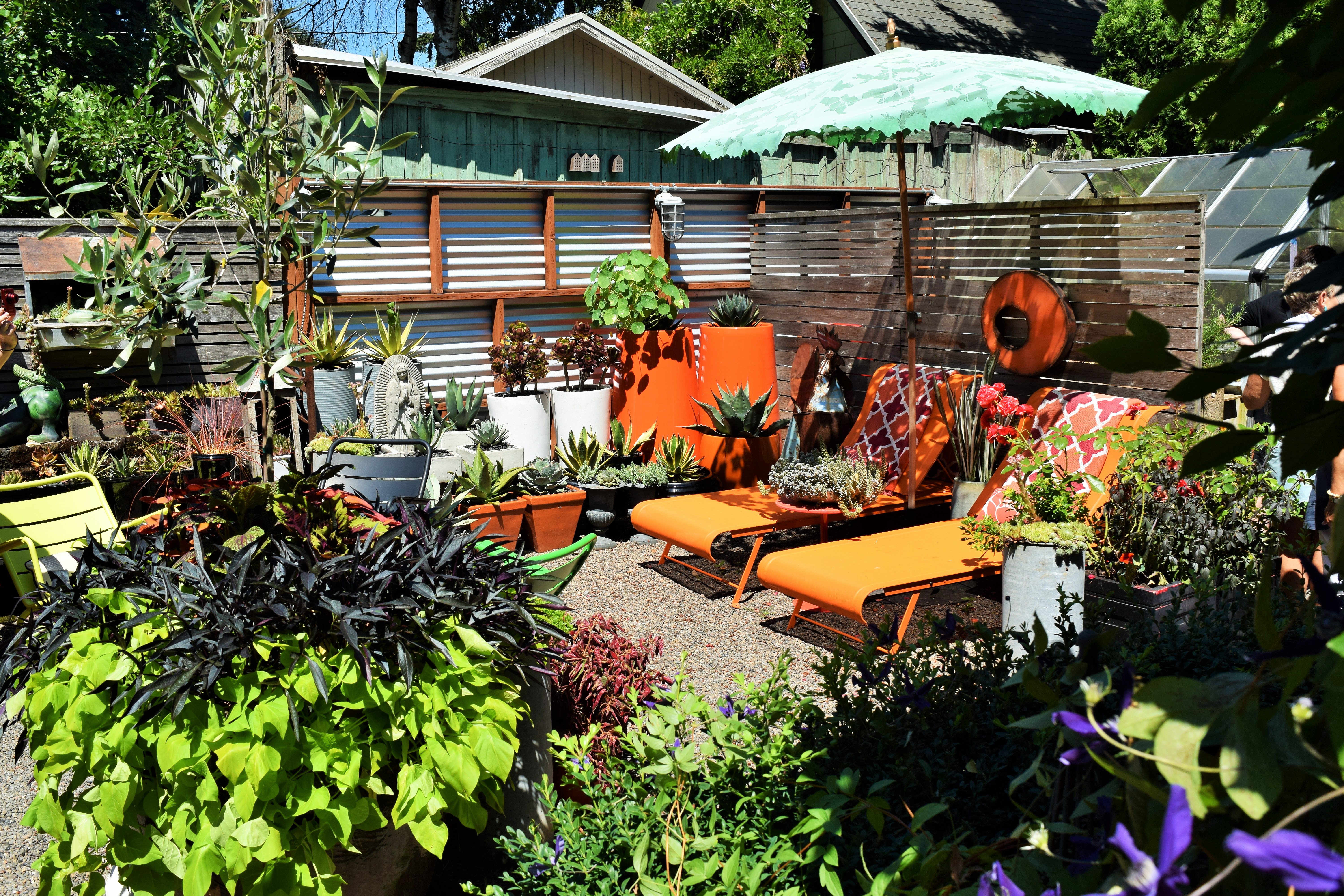
So I can only vaguely describe the structure or layout of this garden, but what does stand out in my mind was all the orange stuff.

2014-07-12 16.25.25

Some orange flowers, but mostly orange stuff.

2014-07-12 17.23.47

There is a shade garden in the front of the house. You don’t usually think of orange as a color you mix into calm and shady scenes, but it seems to work here. Keeps the calm from being a little too relaxing.

2014-07-12 16.15.24

Though there wasn’t orange absolutely everywhere.

2014-07-12 16.20.47

Path to the back garden.

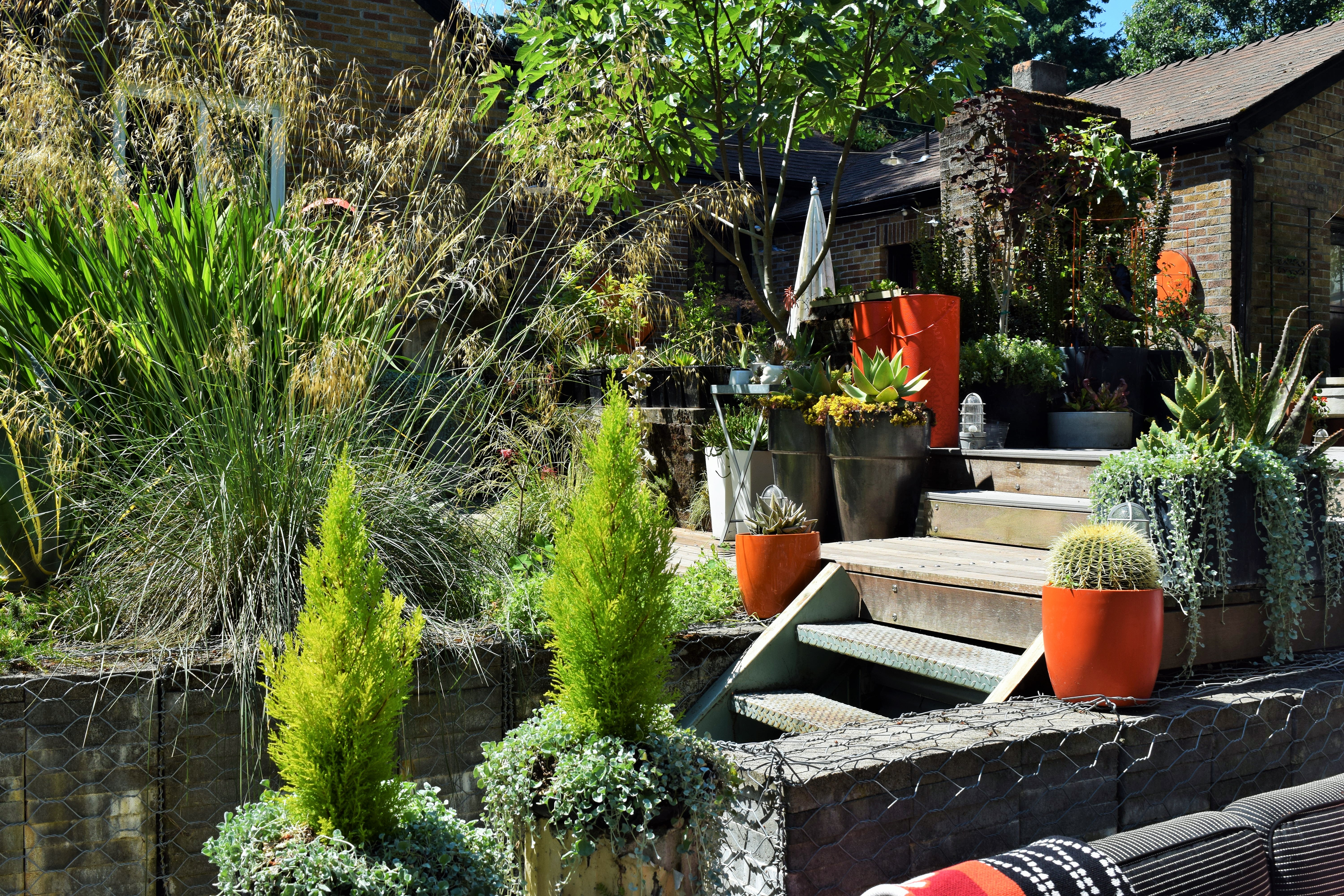
2014-07-12 16.23.50While the front is shady, the back is a sunny spot. I’m a little jealous of this, because it’s the opposite of my garden.

But then we always want what we don’t have.

2014-07-12 16.27.34

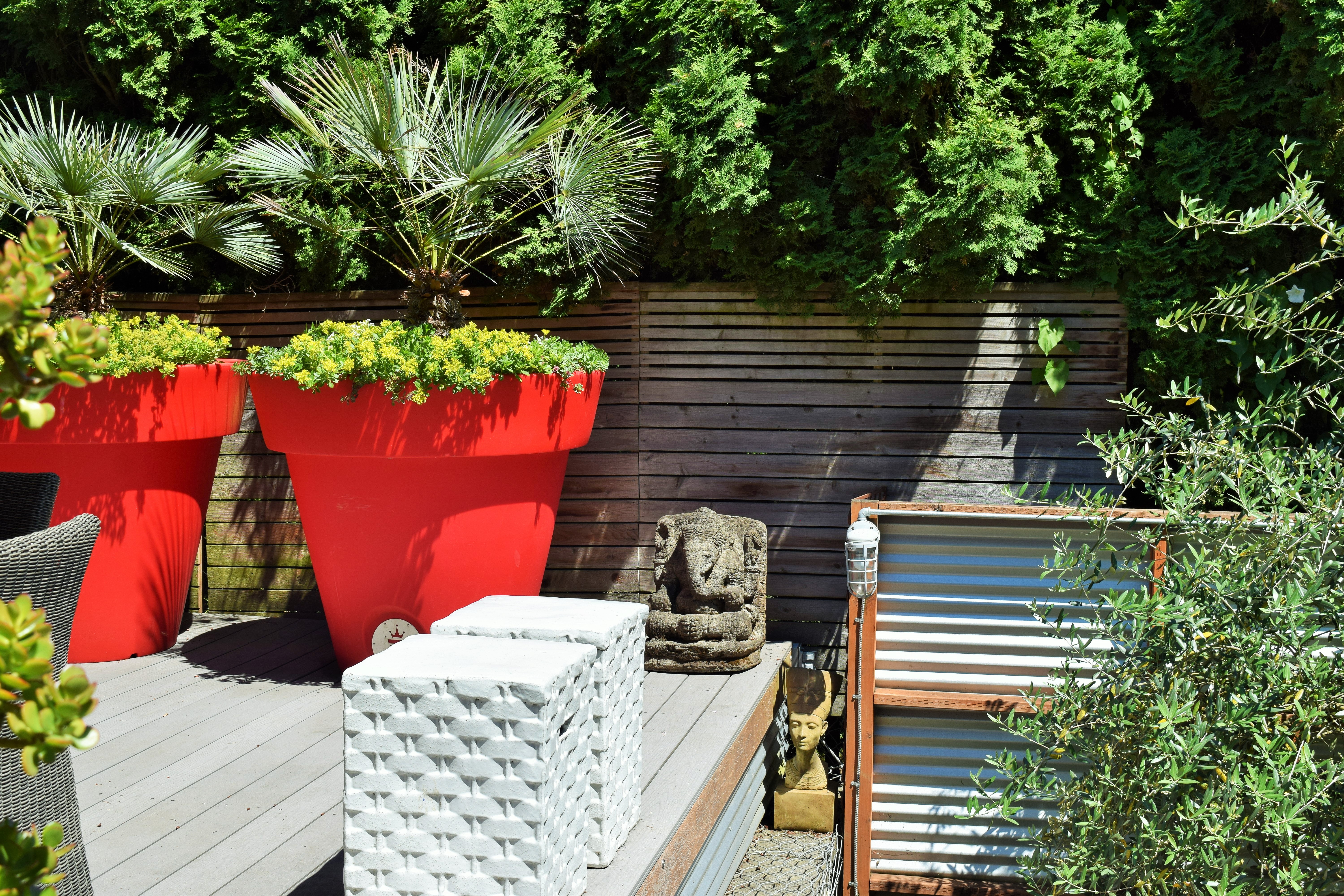
Those are some dang big orange containers.

2014-07-12 16.54.53

Back of the house.
2014-07-12 16.26.54

Why giant flying orange shrimp? Why not?

2014-07-12 16.59.42

The orange octopus planters (they look like that to me, anyway) go well with the giant flying shrimp.

This was a very fun garden, but I think I’ll keep getting my doses of garden orange from flowers. Do you like orange in the garden? Do you prefer to get it from blooms or objects, or does it make no difference?

Book Review: In and Out of Paris: Gardens of Secret Delight

For gardeners and lovers of gardens, this coffee table book is like a great big scrumptious hot fudge sundae. Or, if you want to switch the metaphor from food to sex, this book is garden porn at its absolute finest.

In and Out of Paris: Gardens of Secret Delight is mainly about private gardens and lesser known but notable public parks.

Sardar

For reasons that are not completely clear, there is also a section that includes some of the most famous Paris gardens. But who is complaining? A few more gorgeous pictures of Giverney and Versailles never hurt anyone. Plus I did learn from this section that I really do want to visit the Rodin Sculpture Garden, despite the likelihood that it is full of sculpture.

The author is Zahid Sardar, who writes on design, gardens, and architecture. Photographs are by Marion Brenner, and what magnificent photographs they are! In fact, In and Out of Paris is mostly photographs, and they are so glorious that one sometimes forgets that there’s text going along with them.

Sardar
Zahid Sardar

But I recommend that you do read the text, it contains a lot of fascinating nuggets.

Almost all the private gardens are located on terraces and rooftops, often terraces and rooftops with views of things like Sacre-Couer or the Eiffel Tower. The profusion of plant life stuffed into these spaces, in containers and raised beds, is astounding: roses and vines, fruit trees, shrubs, and grasses.

Marion Brenner. Photo from botanicalgarden.berkeley.edu.

Public gardens covered include the Promenade Plantee, which came years before New York City’s High Line. There is also the eccentric Parc Monceau, a 20 acre plaything of a garden filled with grottoes, Corinthian columns, a Venetian bridge, and a miniature pyramid.

Full disclosure: I did receive a copy of this book for free, and it is undoubtedly the best freebie I have yet received as a result of my blog. Keep’em coming!

The Northern Cardinal, the Blizzard, and the Peanut

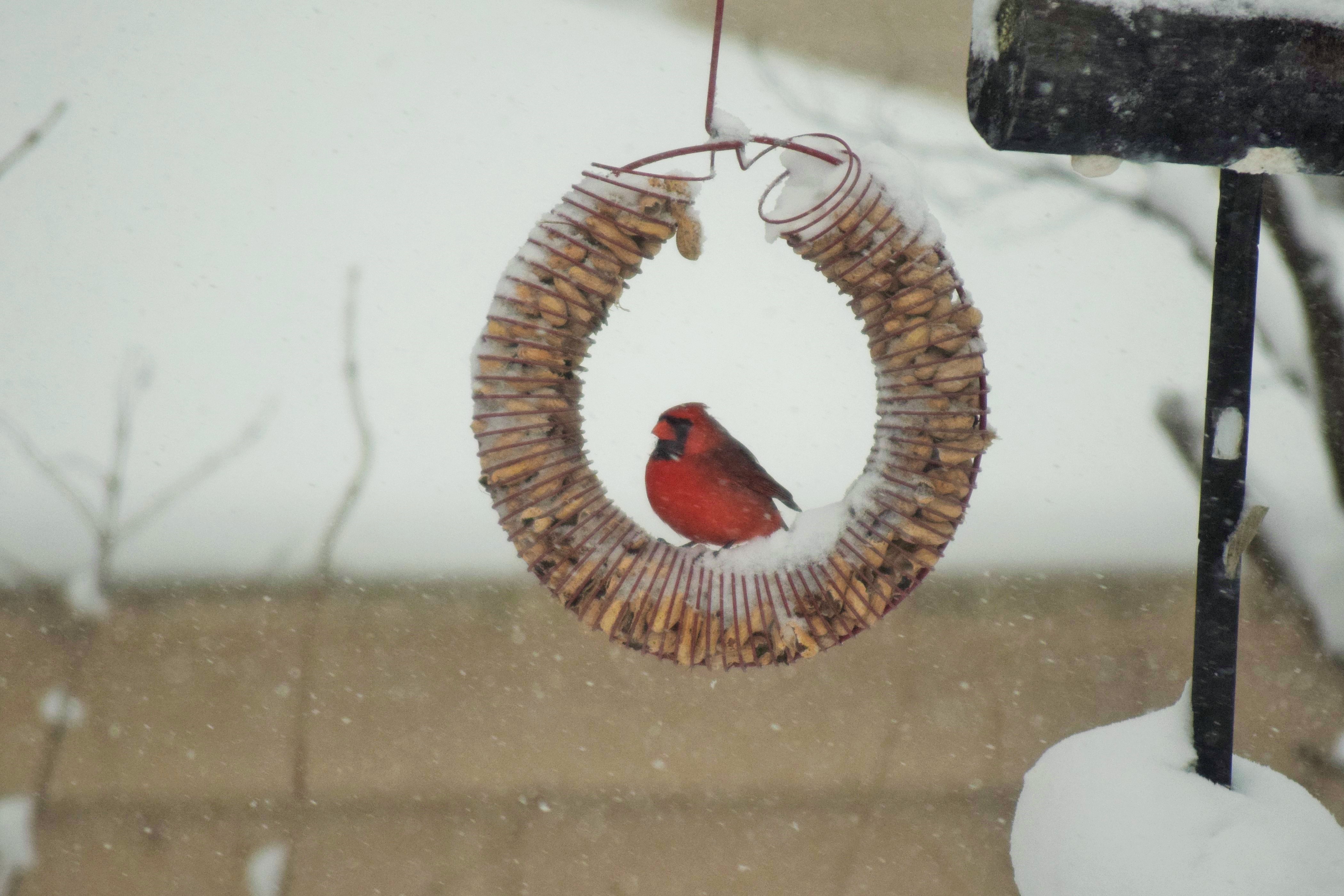
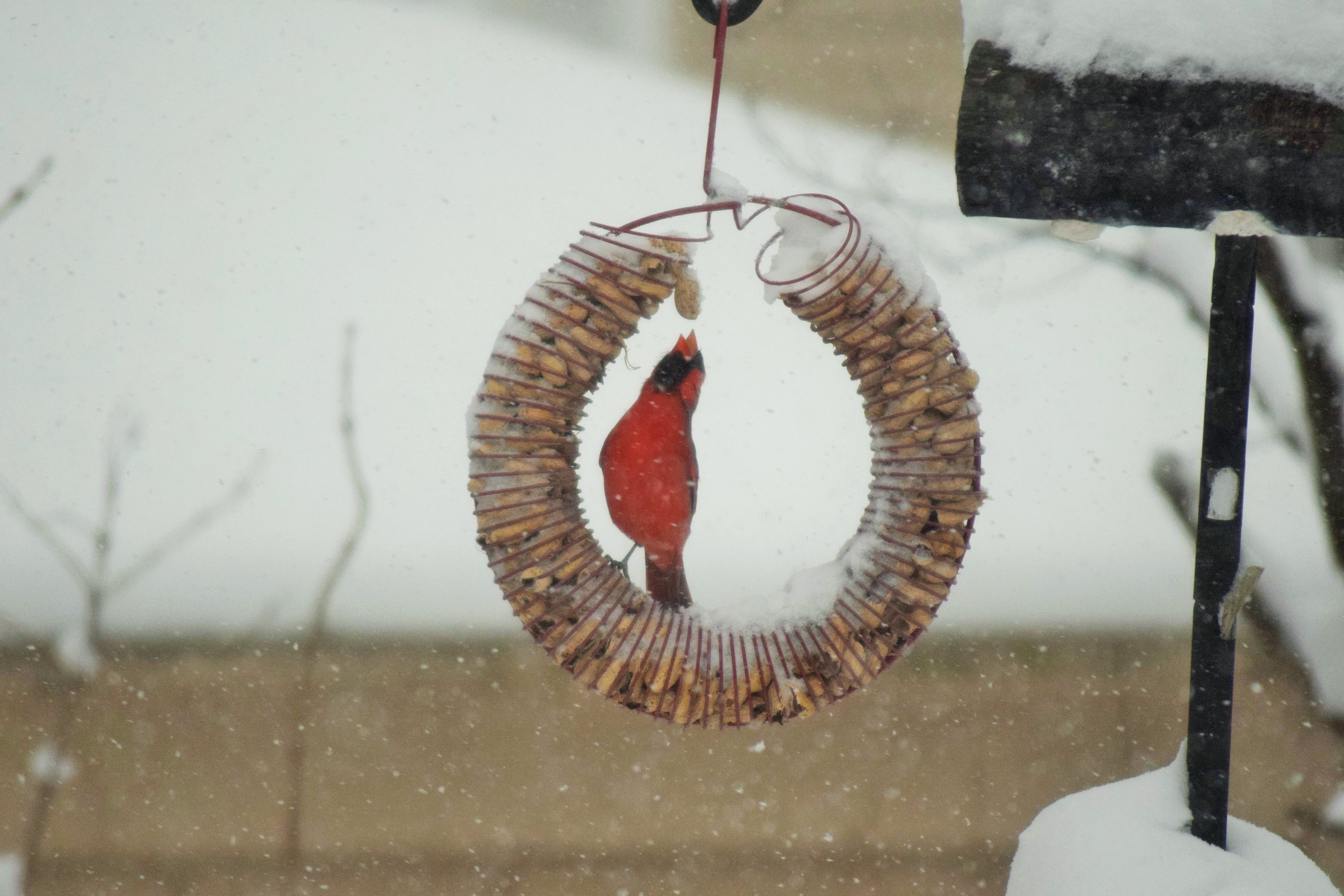
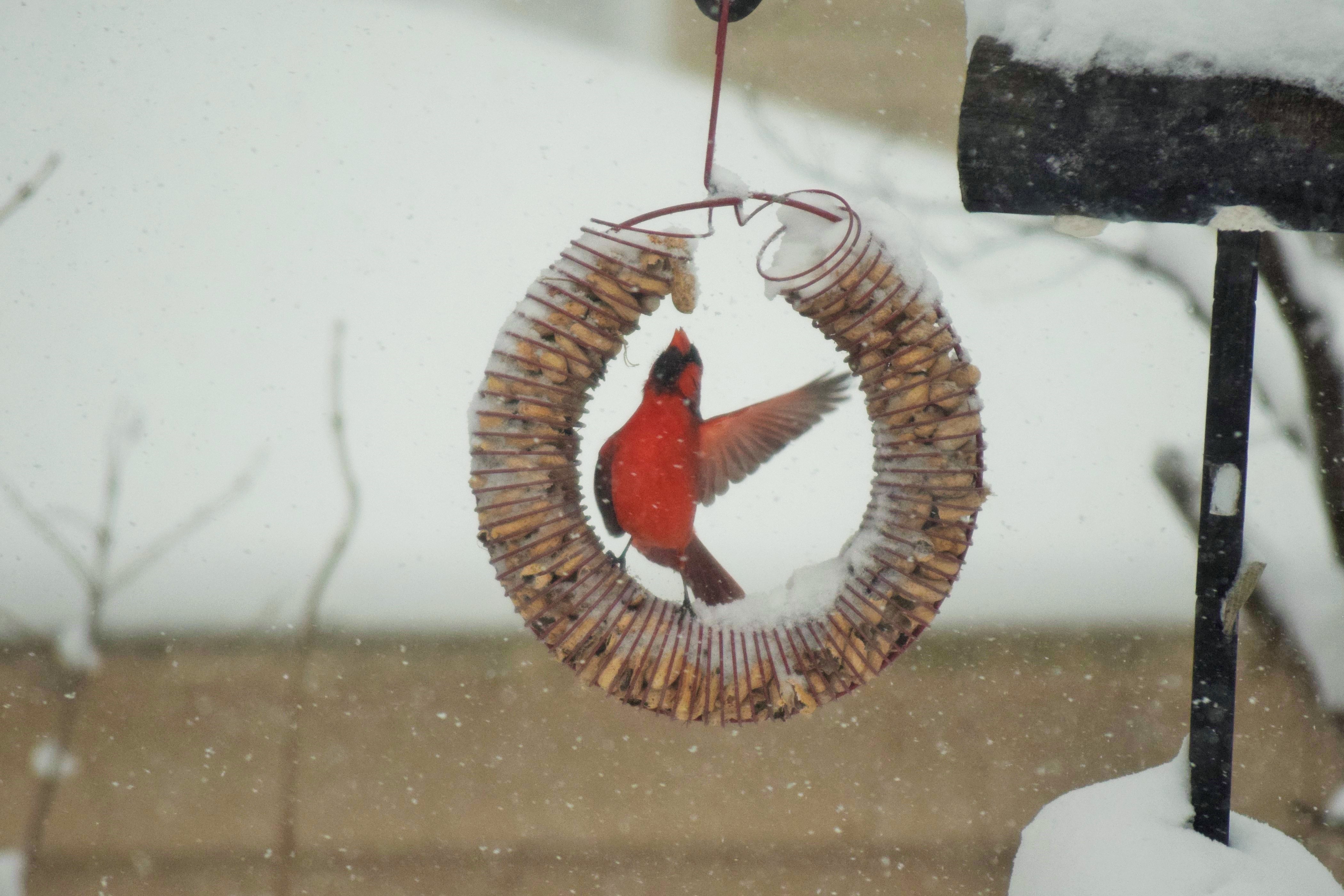
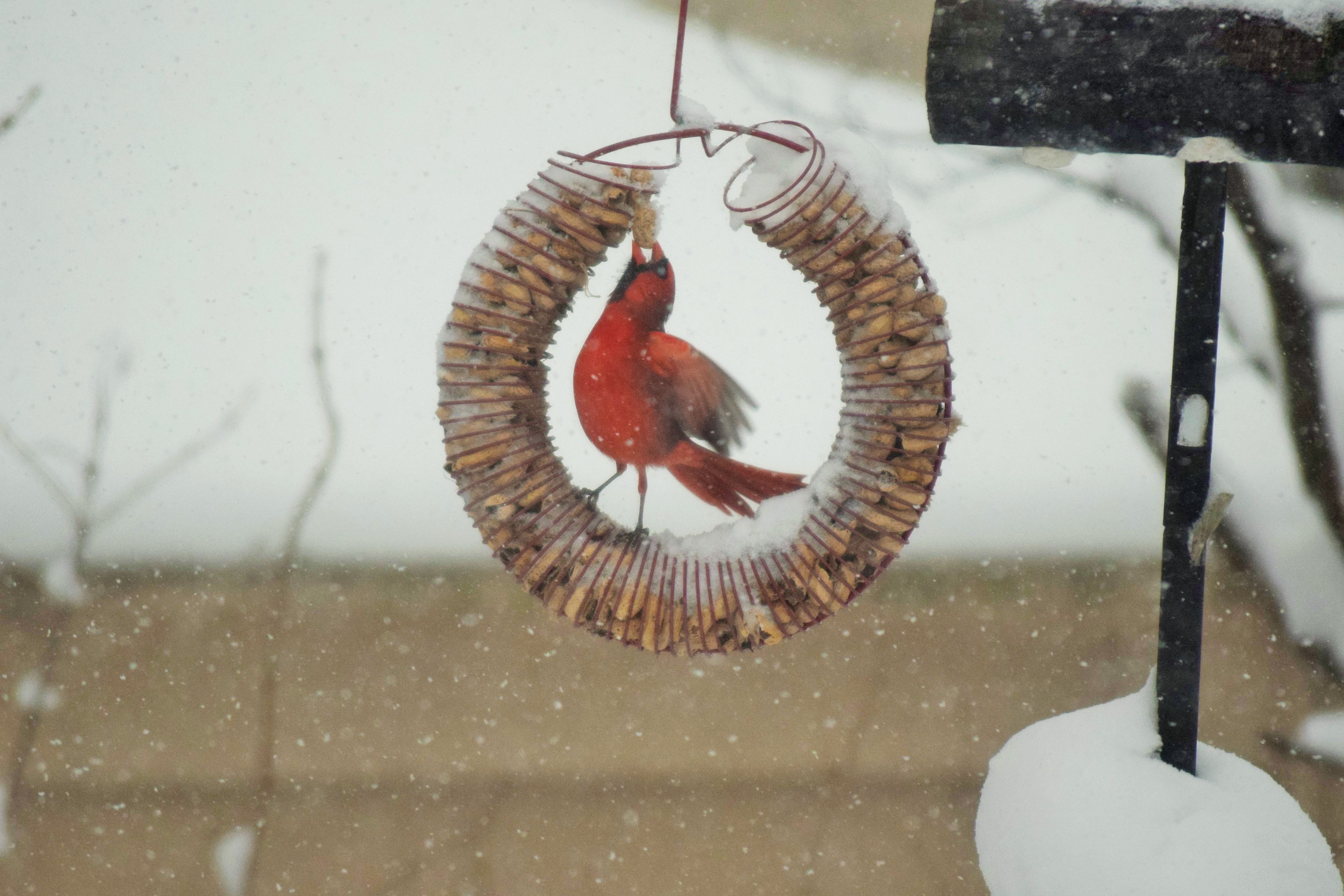
We’re having a blizzard today, possibly a foot of snow or more by tomorrow morning. I’m not complaining, though. I get to spend the day on the porch watching the birds at the feeders. This is the kind of weather that keeps the feeders busy.

2015-02-01 11.31.43

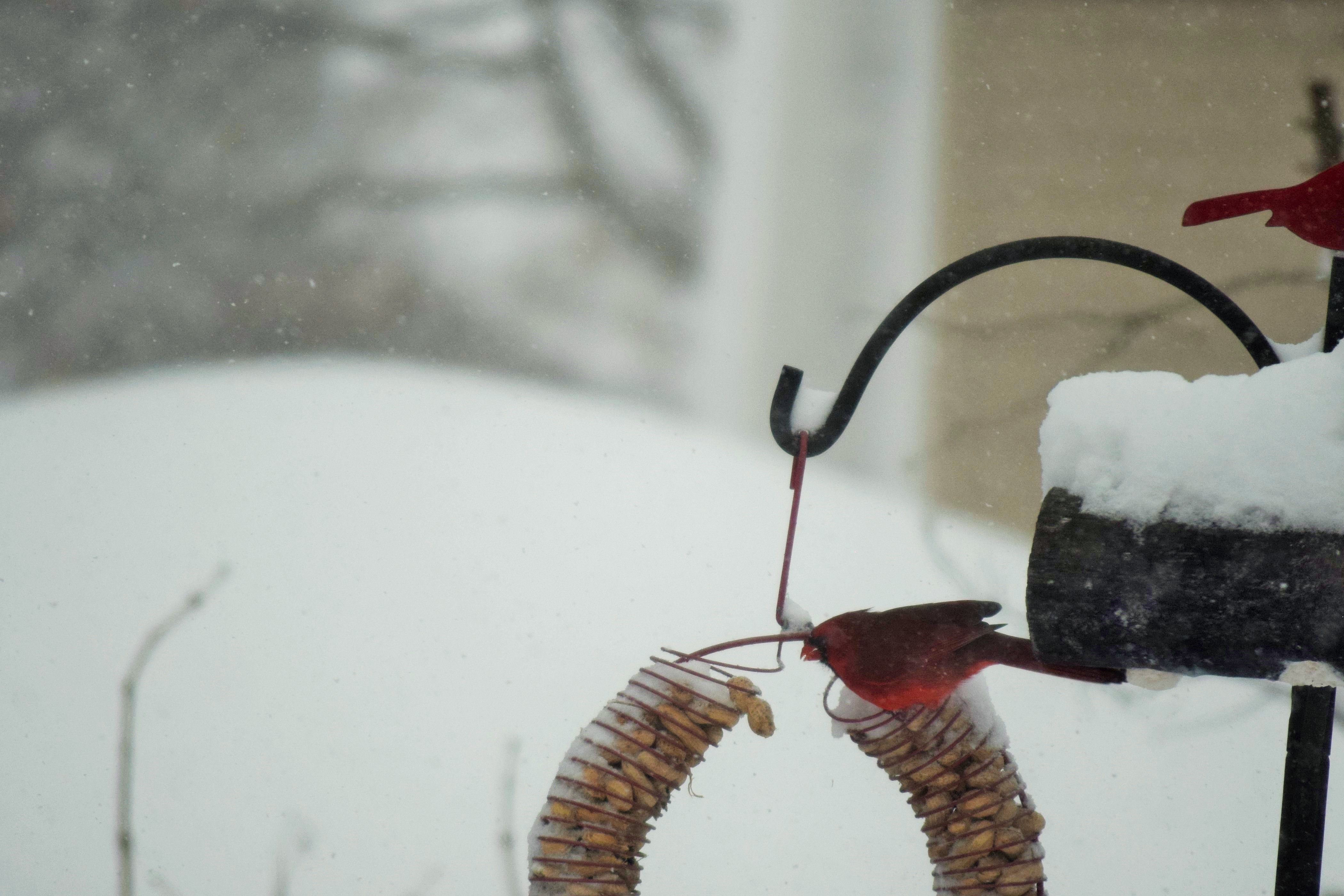
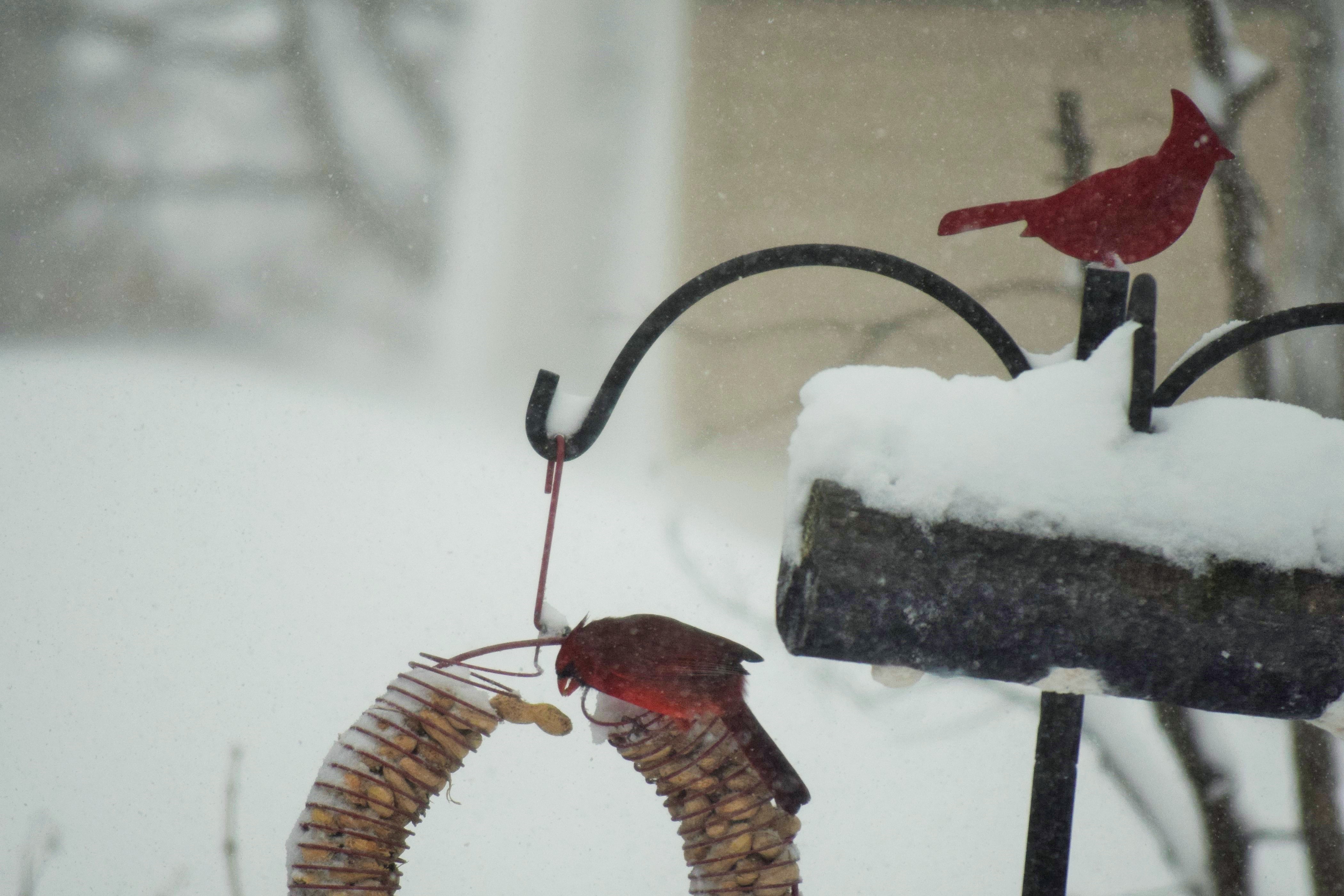
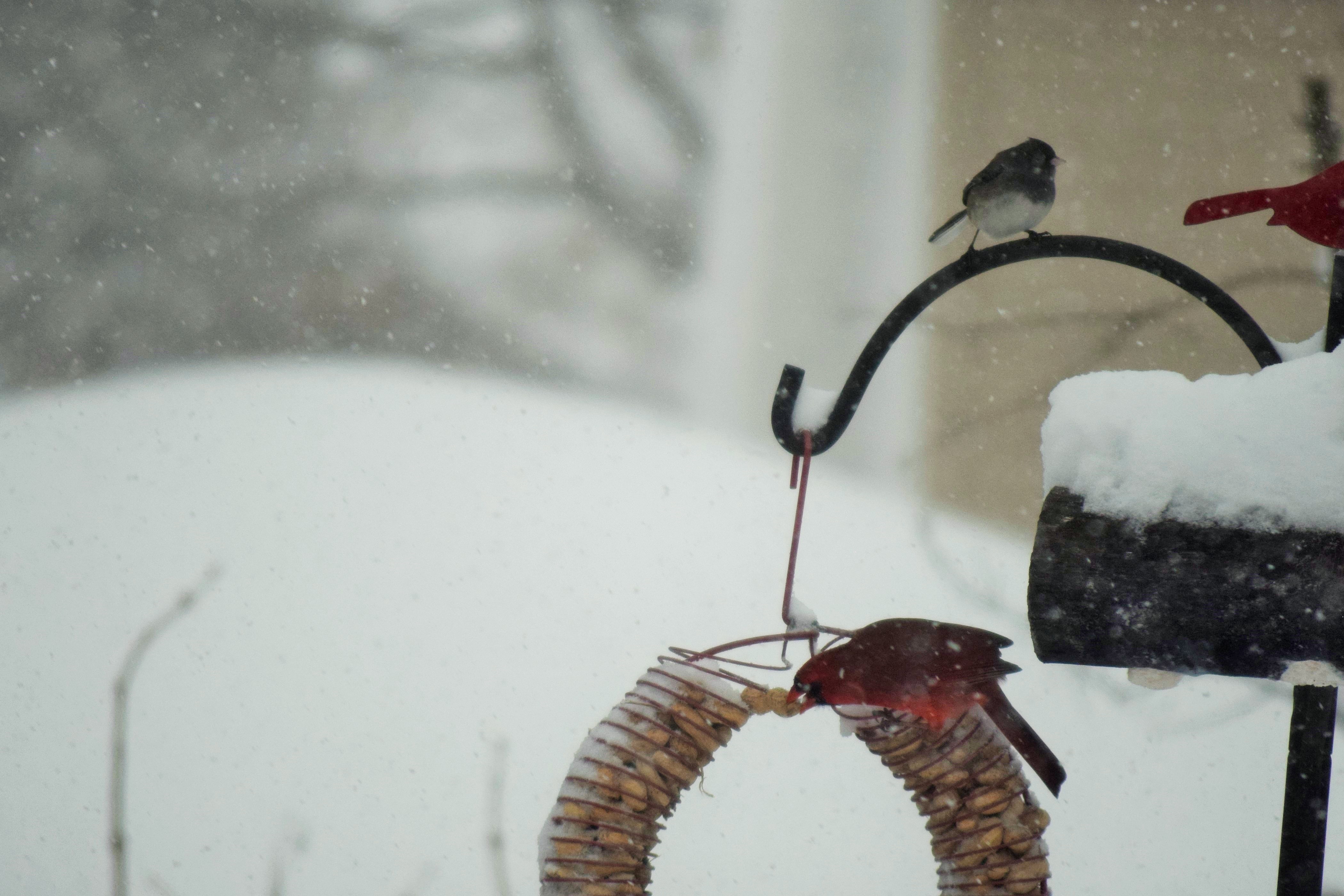
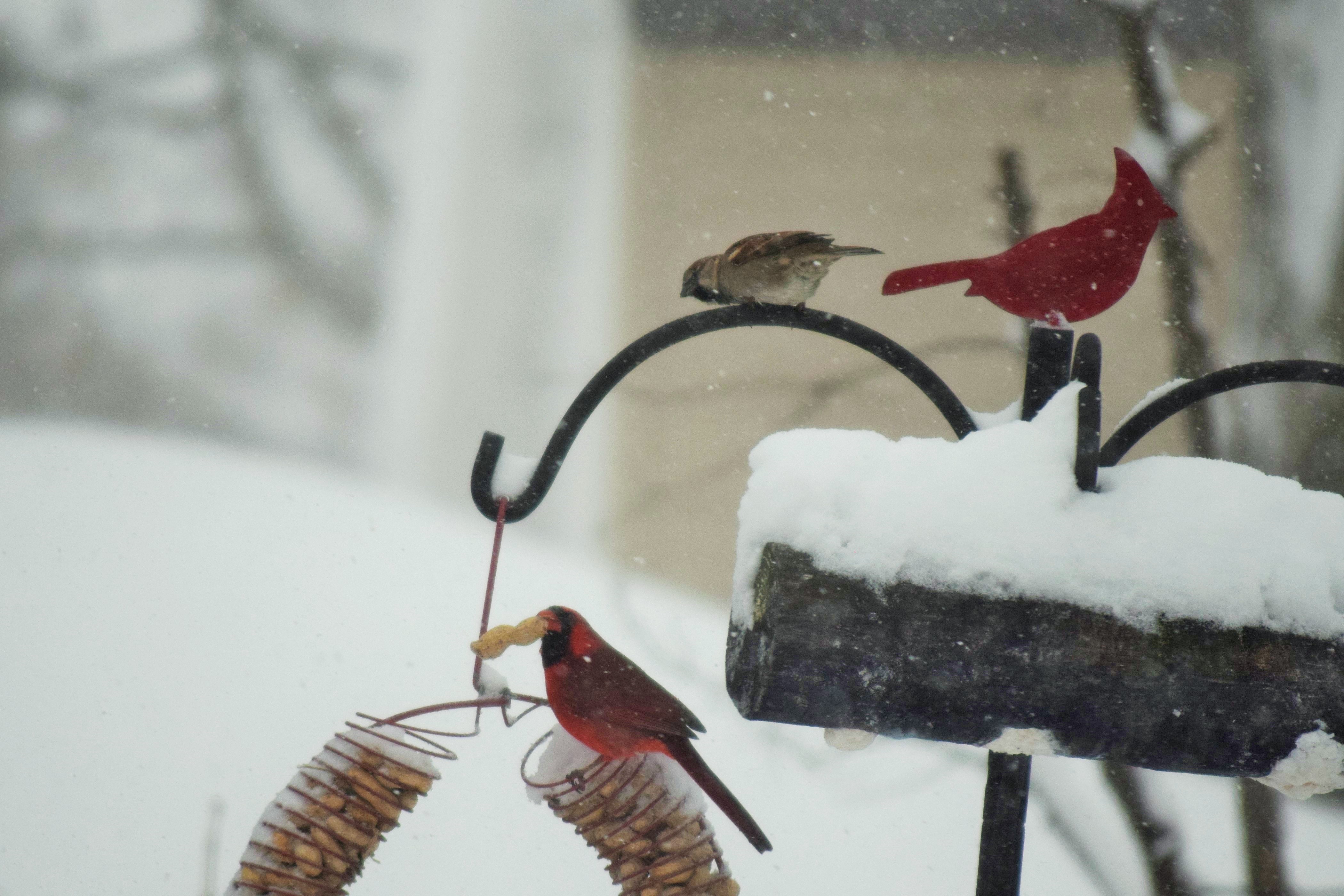
There are lots of Woodpeckers, Chickadees, and Goldfinches – but it’s the Northern Cardinals who keep drawing my attention. They go to great lengths to extract peanuts in the shell from my feeder.

2015-02-01 11.31.52-1

This makes me happy, as I had worried that the Cardinals would go missing once I stopped putting out sunflower and safflower seed. I stopped because sunflower and safflower attracted great voracious hordes of English sparrows who would eat everything in their path. English Sparrows love peanuts, but they can’t handle peanuts in the shell. Fortunately, the Northern Cardinals are not so easily deterred, and I am glad to reward their perseverance.

2015-02-01 11.31.52-2

Doesn’t it look like he is balancing himself with one wing? These feeders are not really made with Cardinals in mind. They are moire accommodating for bigger birds like Bluejays or pecking birds like Woodpeckers or Nuthatches.

2015-02-01 11.31.59-1

He can’t quite pull it loose – dang!

2015-02-01 11.35.22

Fortunately, there’s more than one way to skin a peanut.

2015-02-01 11.35.57-3

Resistance is futile, peanut!

2015-02-01 11.35.27

So close!

2015-02-01 11.36.09

Hurrah! The peanut is mine! And the English Sparrow looks on enviously from above.

2015-02-01 11.26.19

The Goldfinch is not impressed, however. He’s just really cold.

Seen any good bird antics lately?

Garden Catalog Review: Prairie Nursery

Prairie Nursery is a pioneer in the field of native plant gardening and habitat restoration. For 42 years this central Wisconsin nursery has been selling wildflowers, grasses, sedges, ferns and shrubs native to the Midwest region. Their website is here.

prairie-nursery-catalog

Prairie Nursery’s is another one of my favorite catalogs. (Are there catalogs that are not favorites? Yes there are, and don’t be a smartass.)

Plants are helpfully organized by type of habitat: clay soil, medium soil, dry soil, shade, etc. They can also be found through the index. There is a wide variety of plants for both prairie and woodland gardens.

Unlike Prairie Moon, Prairie Nursery sells plants primarily in pots and as seed – not bareroot. They have seed mixes and pre-planned gardens, with a great deal of emphasis on planting for pollinators and songbirds.

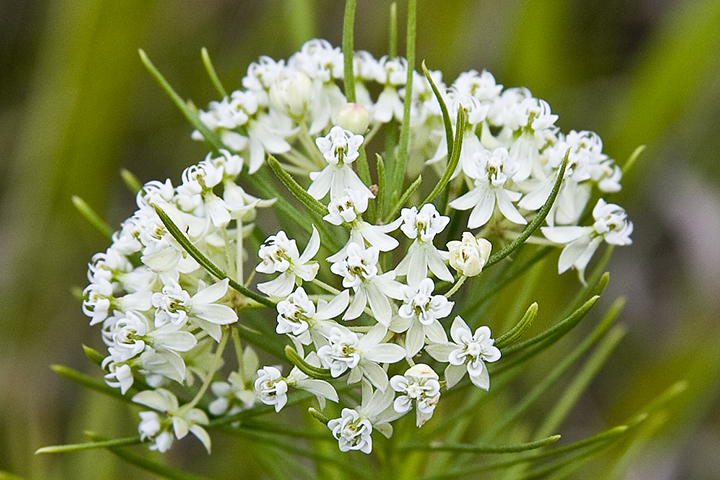
Whorled Milkweed. Photo from Prairienursery.com

They have a Butterflyweed for Clay (Asclepias tuberosa var. clay) that is very hard to find elsewhere. As the name implies, this Butterflyweed is adapted to clay soil – most require soil that is well-drained. I have tried it and it has grown well for me.

Among their new offerings for 2015 I was interested in the Whorled Milkweed (Asclepias verticillata). This Milkweed species is supposed to stay short (1-2′) and well-behaved, with the added benefit of fall foliage color. The white flowers have a calm beauty in contrast to their wild and crazy pink and orange cousins.

Red Trillium. Photo from Prairienursery.com.

The Red Trillium (Trillium erectum) was also calling to me. This spring ephemeral for shade has a striking red flower. Not sure if I’ll buy any, but I am sorely tempted. Prairie Nursery also has a new pre-planned Monarch Habitat Garden and seed mix.

I’ve been ordering plants from Prairie Nursery for about ten years and have had good experiences with their products.

Situation Grim But Not Hopeless for Monarch Butterflies

Scientists have just released this year’s report on the number of Monarch butterflies overwintering in Mexico. Those numbers, measured in the amount of land occupied by Monarch colonies, vary from year to year. The last three years, however, have all been at historic lows.

monarch-population-figure-monarchwatch-2015

There was an increase over last winter, from 0.67 to 1.13 hectares – compared to an average of 9.2 hectares from 1994 to 2004. (A hectare is about 2.5 acres.)

Monarch Butterfly on Mexican Sunflower.

From this we can take heart that Monarchs are not yet doomed, but we should not kid ourselves. Scientists tell us that a Monarch population this small is extremely fragile and vulnerable to extinction.

Monarch butterflies
Monarch on Swamp Milkweed.

It’s frightening to think that the Monarch migration could be wiped out through the destruction of less than three acres of Mexican forest. Hard to believe as these were such a common butterfly when I was a kid.

2014-08-01 08.57.13 Monarch butterfly

Leading scientists and conservationists have petitioned the US Fish and Wildlife Service to declare the Monarchs a threatened species under the Endangered Species Act, triggering a process that will last a year. If they are found to be threatened, the door would be opened to government action (and also, no doubt, prolonged and bitter political battles).

Monarch on anise hyssop.

In the meantime, North American gardeners can and should plant milkweed (Asclepias), the only genus of plants that are hosts to Monarch caterpillars. The biggest single cause of the Monarch decline has been the use of herbicides on fields of genetically modified crops. This has caused Milkweeds, once common, to virtually disappear from Midwestern farm fields.

Butterflyweed
Butterflyweed. Gorgeous and easy, needs only sun and well-drained soil. Bees love it too.

In my home state of Illinois, there are 1.4 million acres of lawn. There is no good reason why Butterflyweed (Asclepias tuberosa) shouldn’t be as common here as Marigolds on home, public, and commercial landscapes. If that were to happen, it could substantially increase the number of way stations for the Monarch migration. Of course, there are many other garden-worthy Milkweeds that could also be used.

For more information on planting Monarch habitat, see here.

Butterflyweed with Daylilies.

This is not to say that agribusiness should be let off the hook. All that Illinois lawn is dwarfed by our 22 million acres of cropland, mostly corn and soybeans. Even so, the crisis is now, and we should do what we can in the present.

Red or Swamp Milkweed prefers sun and moist soil.
Red or Swamp Milkweed prefers sun and moist soil, but does ok in medium soils and a bit of shade.

The new Monarch numbers have prodded me to increase the number of Milkweeds I was planning to put in this Spring. I already have quite a few Swamp Milkweeds (Asclepias incarnata) and Butterflyweeds, as well as a couple of Purple Milkweeds (Asclepias purpureum). In April or May I’ll be putting in more Butterflyweed, and I may even try some Whorled Milkweed (Asclepias verticillata), which is supposed to be short and well behaved.

Monarch Butterflies on Zinnia
These Monarchs are asking you to plant Milkweed.

Do you already have Milkweeds in your garden? If not, will you plant some this spring?