Wild Times at Garden in a City

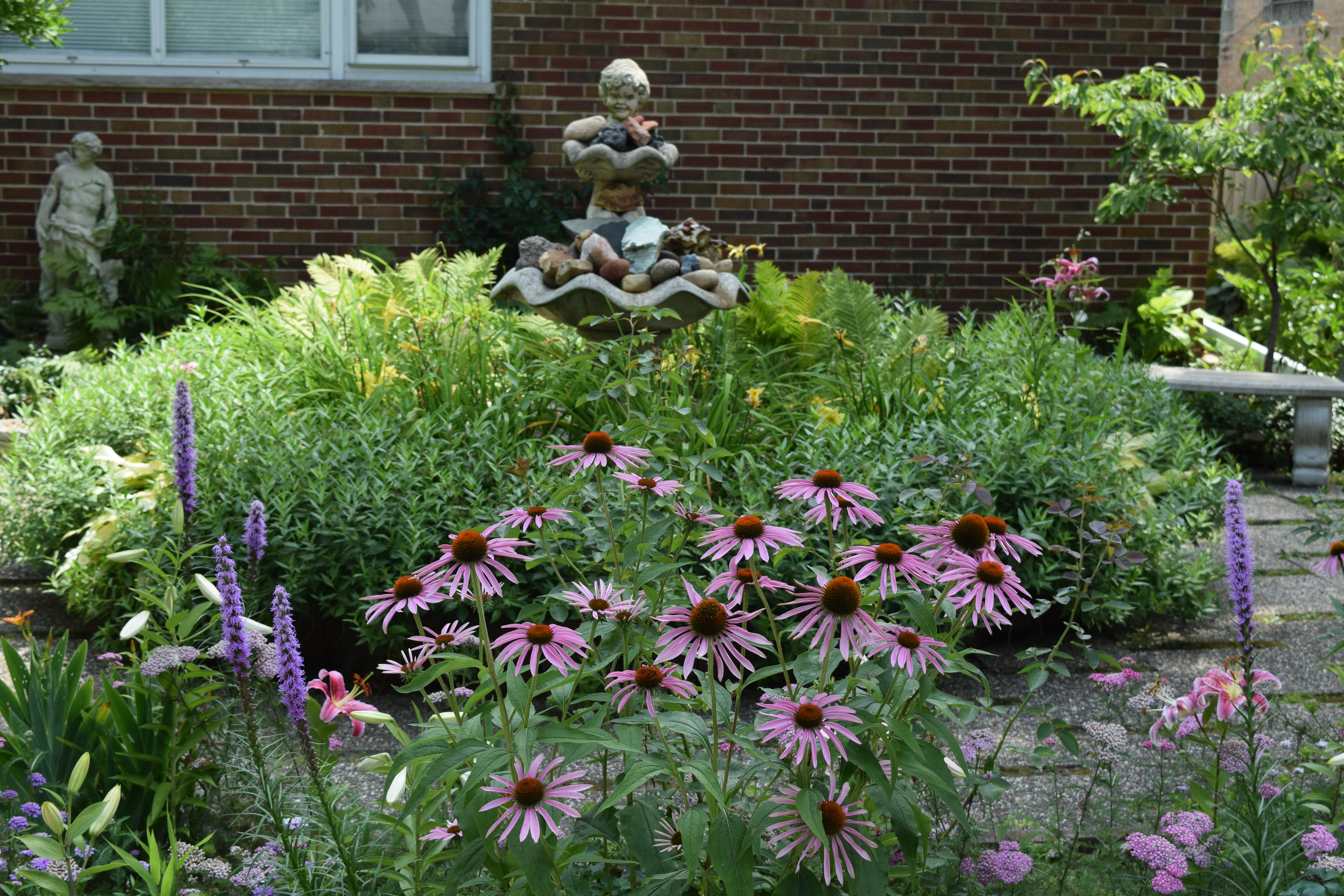
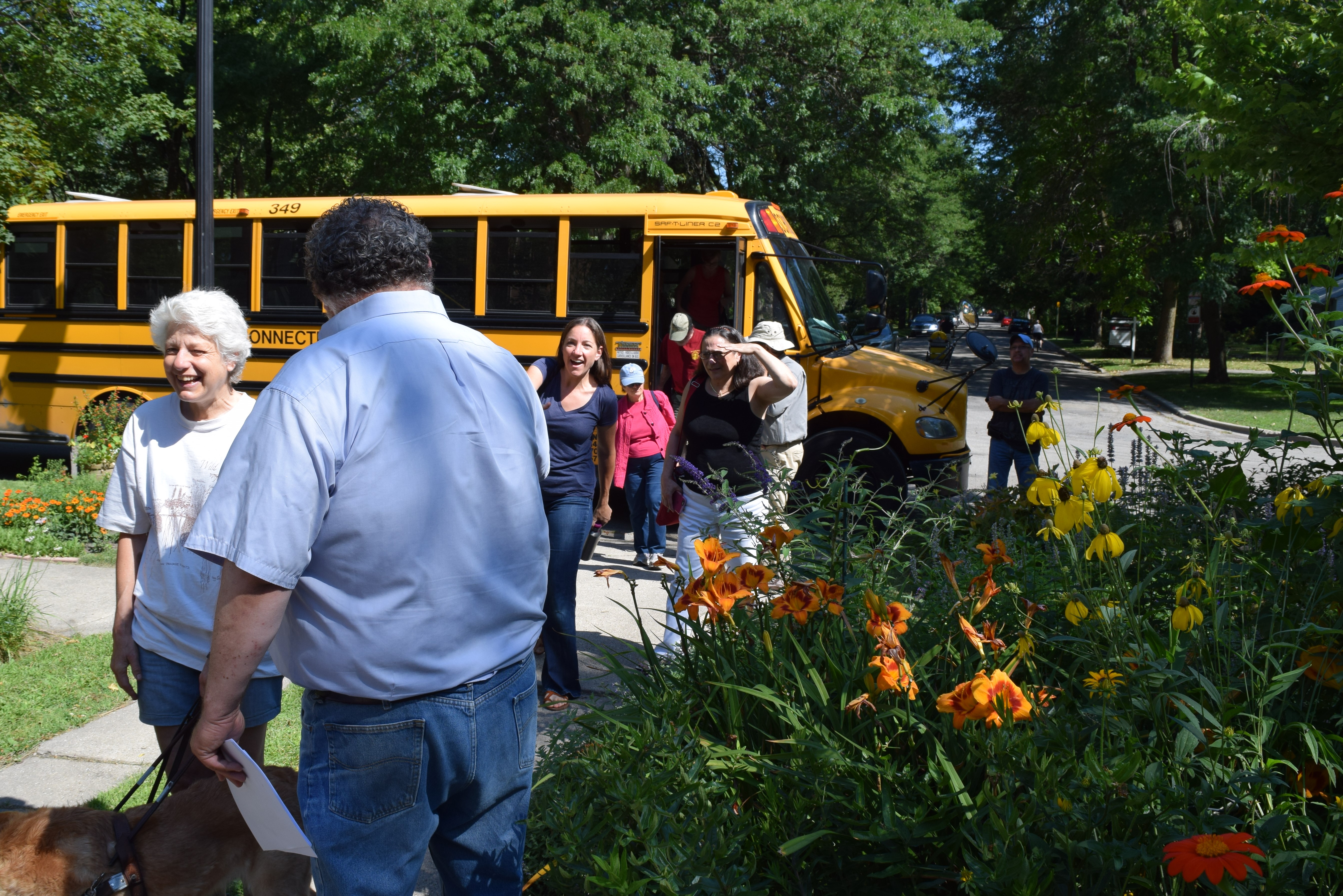
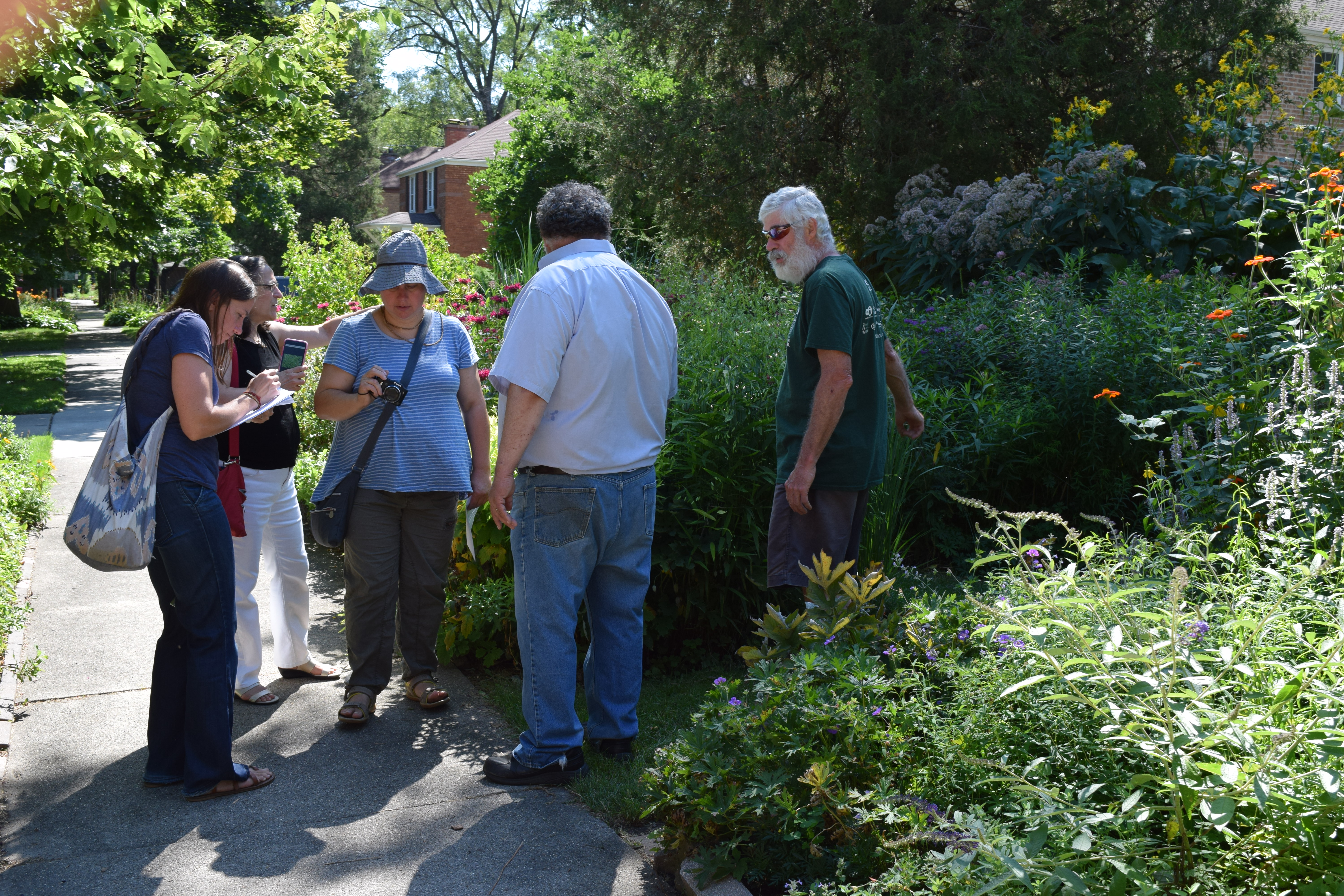
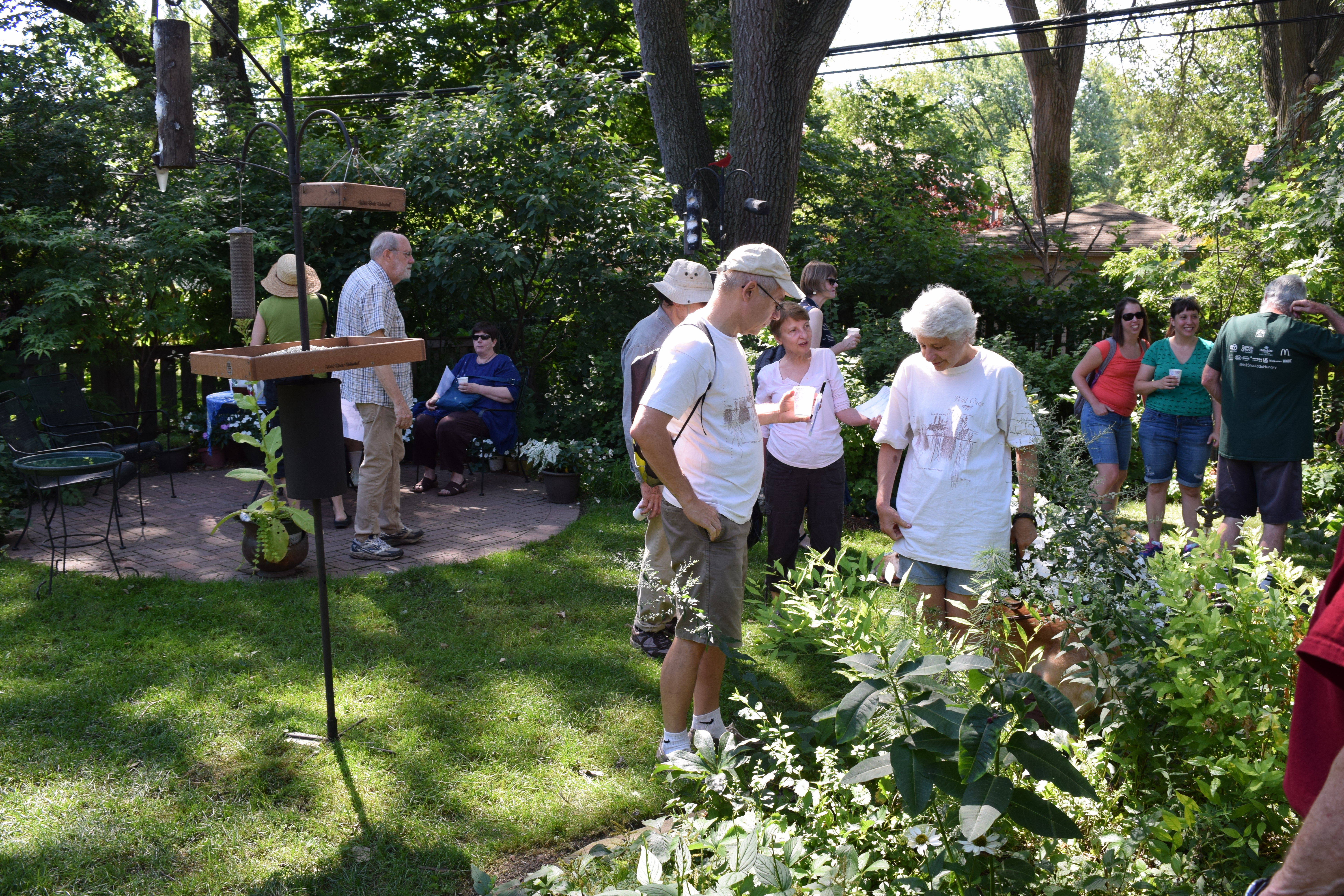
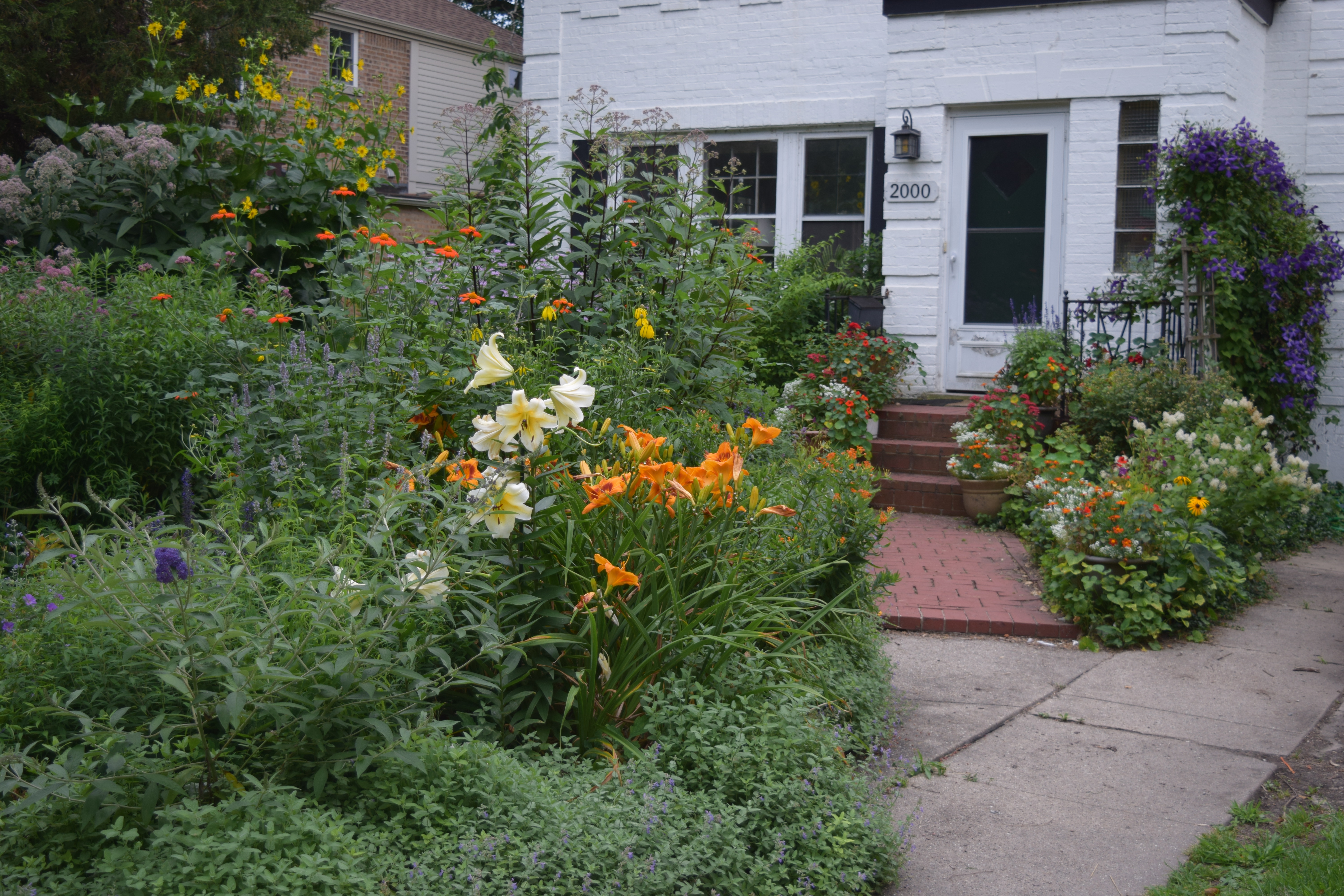
The north side Chicago chapter of Wild Ones, an organization of native plant enthusiasts, came to our garden today. They were on their triennial garden tour. As I wrote in my last post, I was working hard to prepare for this visit, partly by spiffing up the garden and partly by obsessing over all its fatal imperfections.

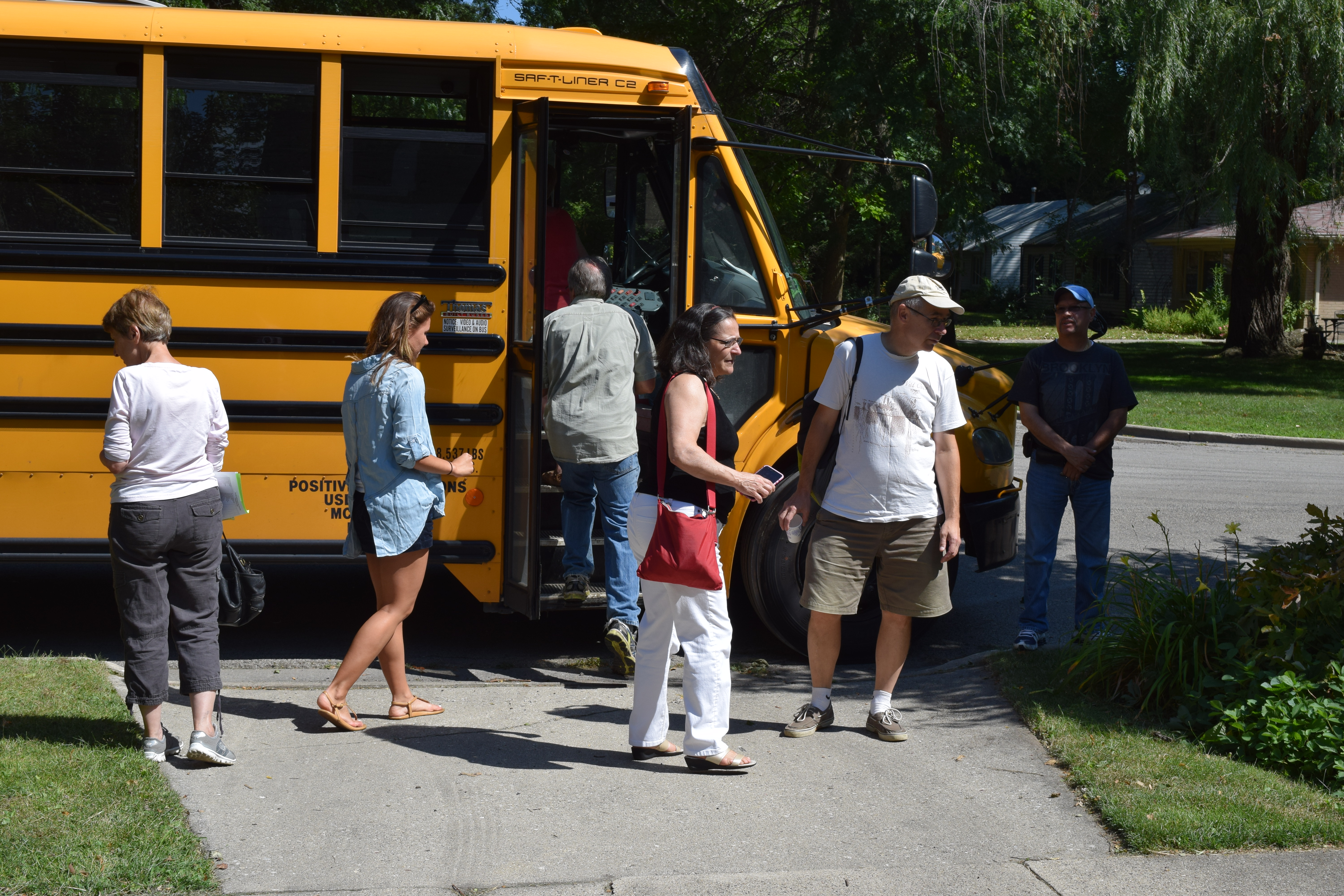
The Wild Ones arrive.

The latter activity, as I knew well in the rational part of my brain, was a completely pointless exercise. The Wild Ones are a good natured bunch, and highly appreciative. They were full of questions and positive comments, and it was a pleasure to talk plants with them.

An added bonus was that I got to meet two blogger friends face-to-face for the first time: Nicole of My Garden Diaries and Abby from Woodchuck Acres. Neither live in the area and drove some distance to take part in the tour. (Both blogs are really worth reading.)

Closer to home, I also got to meet two like-minded Evanston gardeners, Bill and Geri. I hope to see their gardens soon for myself.

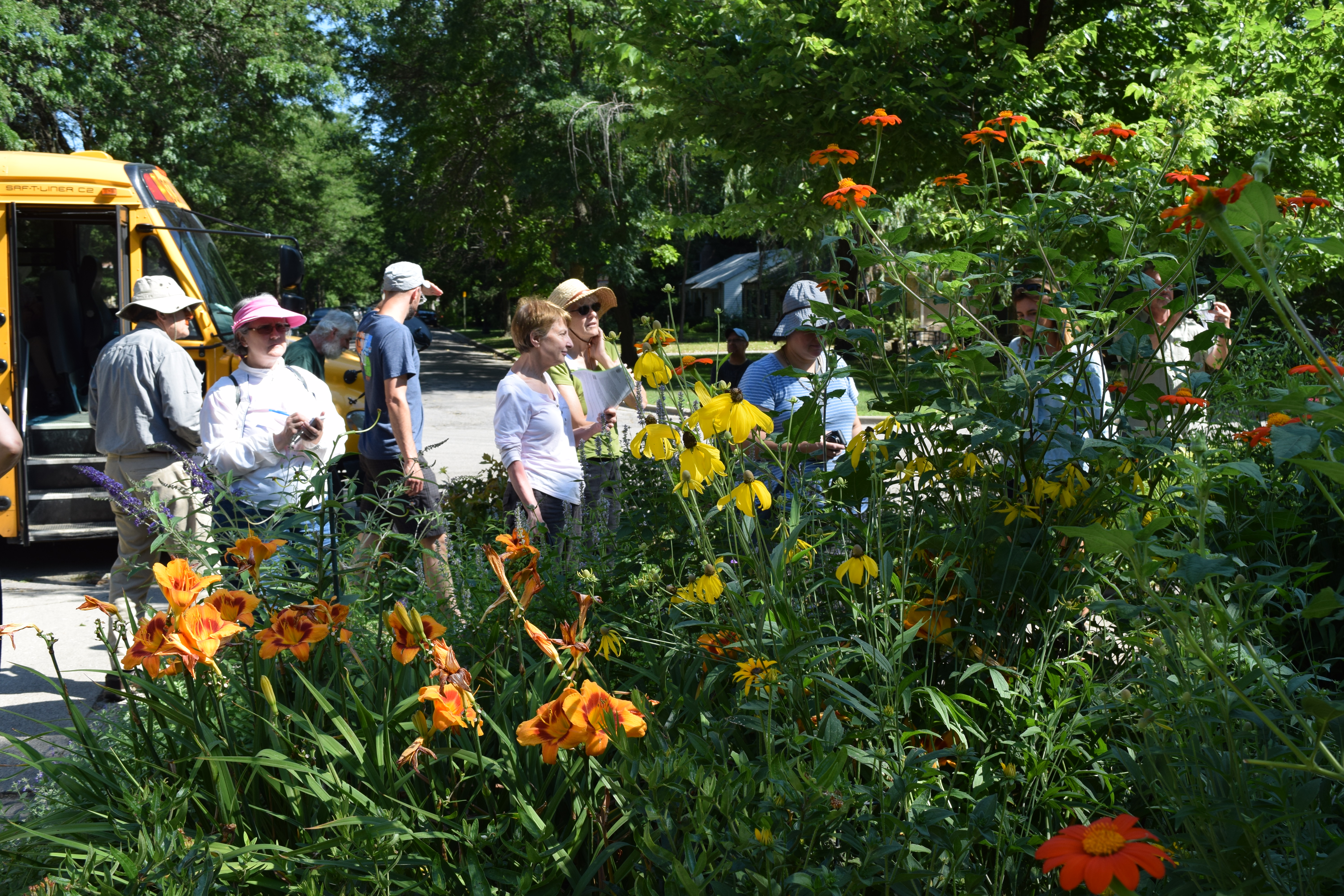
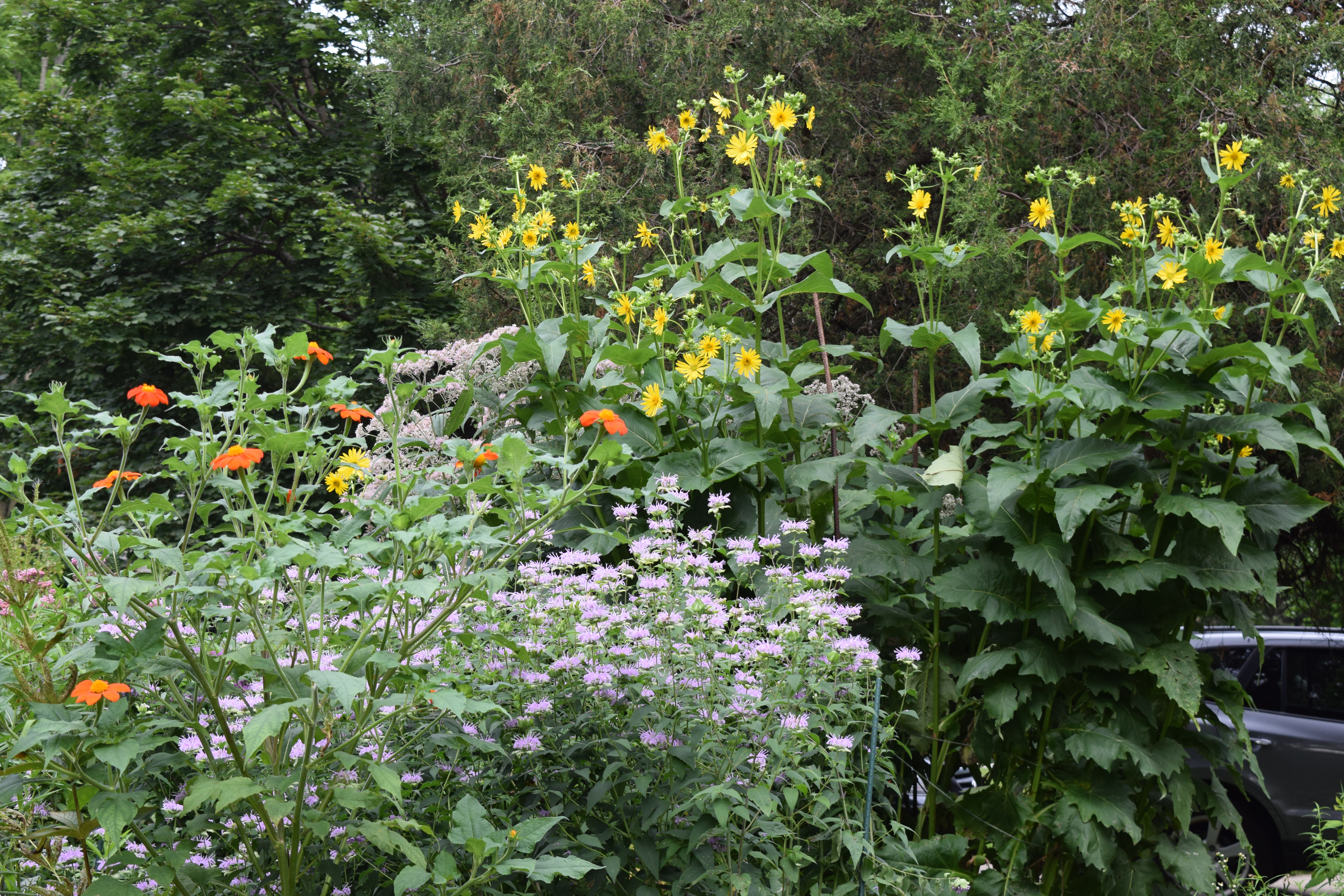
Mexican Sunflower (right) and Yellow Coneflower (left) generated a lot of interest.
Mexican Sunflower (right) and Yellow Coneflower (center) generated a lot of interest.

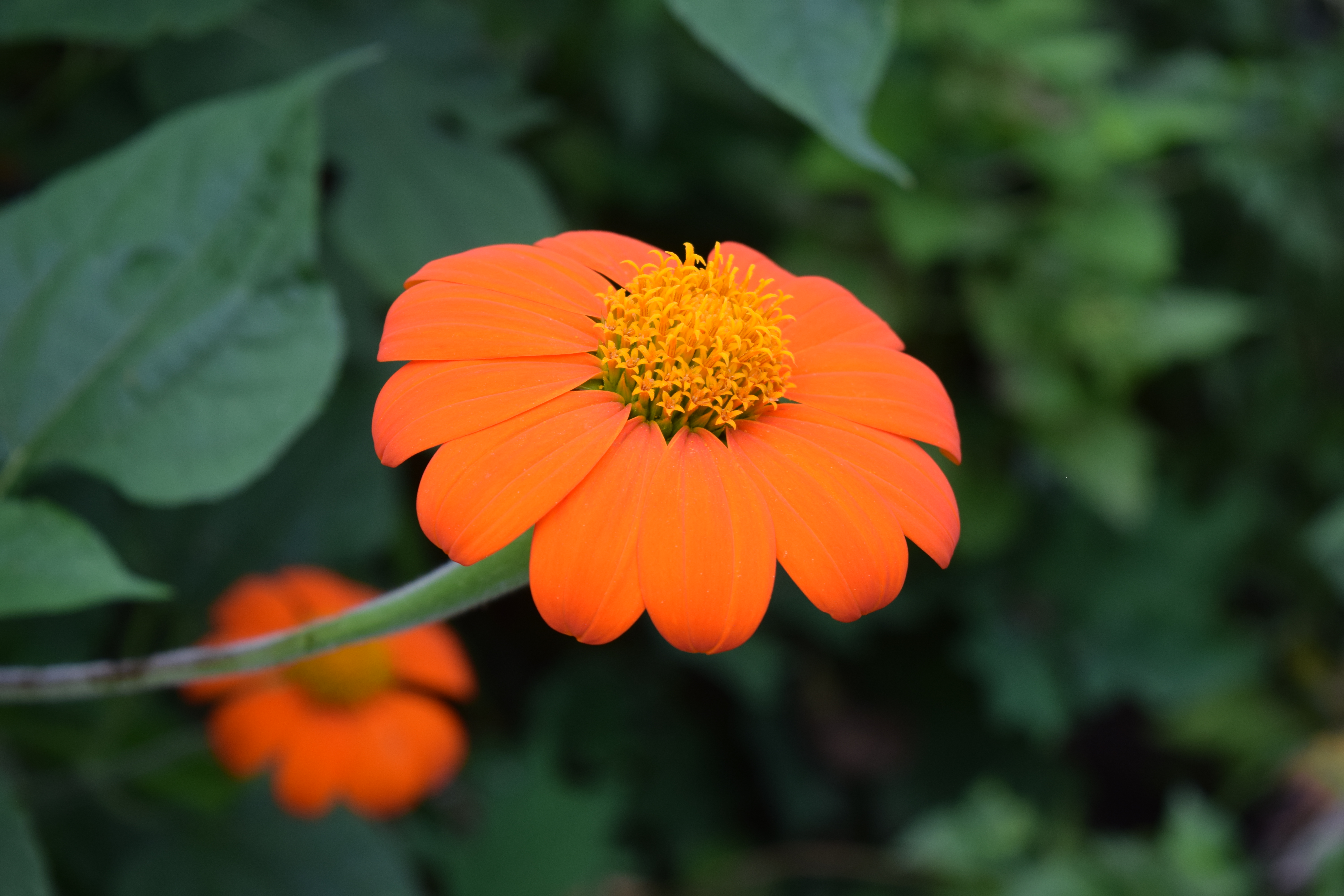
I’d say the plant that generated the most comments and excitement was the Mexican Sunflower (Tithonia rotundifolia). This is not native to our region (it’s originally from Mexico and Central America), but it is truly fantastic for pollinators.

Mexican Sunflower
Mexican Sunflower

I’m beginning to feel I should be get a commendation from the American Tithonia Society for promoting this plant. Unfortunately, there is no such organization, but I may get it started in order to receive the recognition I deserve.

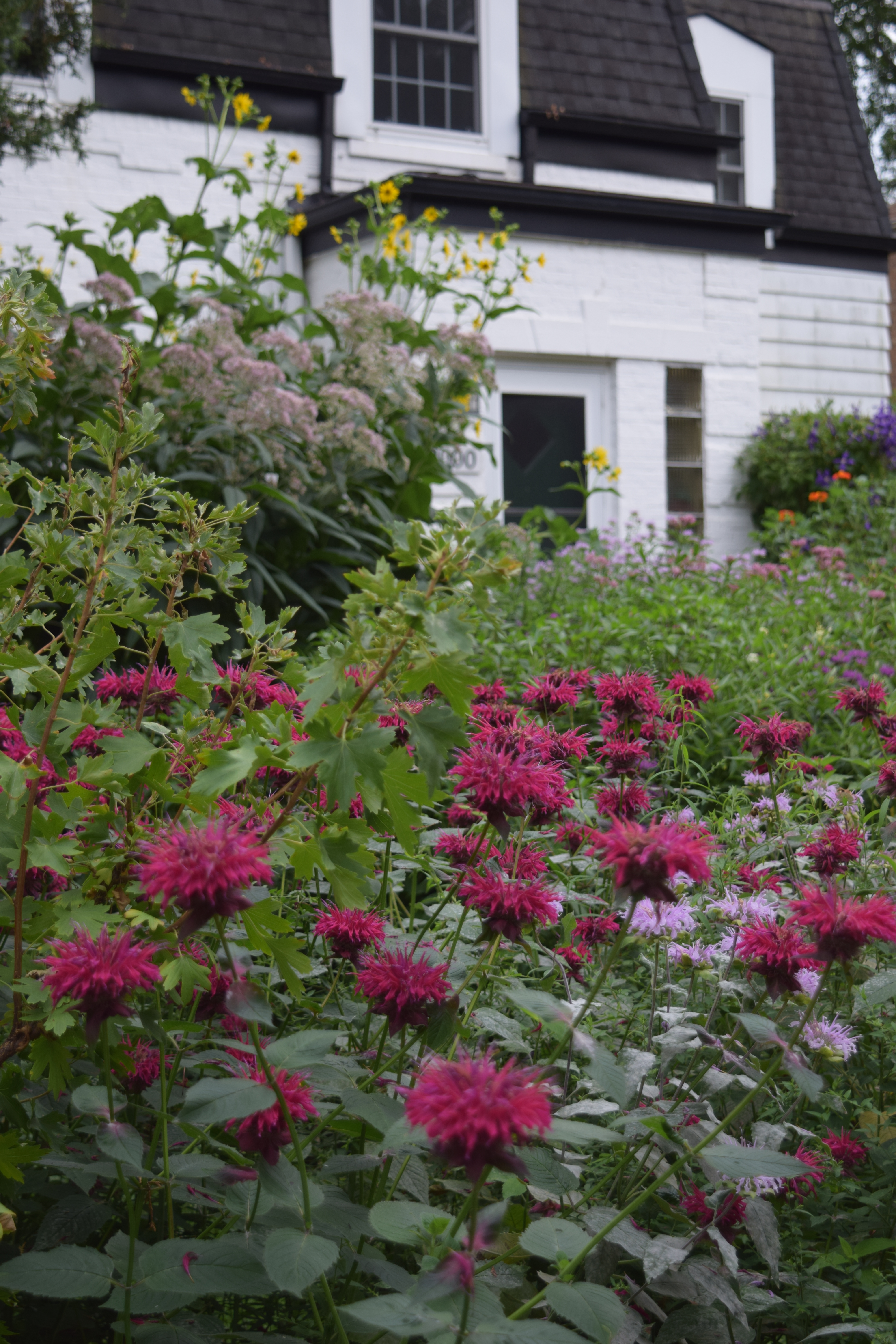
Monarda 'Raspberry Wine' and Wild Bergamot.
Monarda ‘Raspberry Wine’ and Wild Bergamot.

Other plants that generated interest in the sunny front garden were the Yellow Coneflower (Ratbida pinnata), Northern Sea Oats (Chasmanthium latifolium), the Joe Pye Weeds (Eutrochium purpureum and E. maculatum), and the various Monardas.

DSC_0495 wild ones tour

Overall, the garden was as well-tended as it has ever been (or at least as it has been since it was last on a garden tour). Unfortunately the Monarch Butterflies did not make an appearance but there was a hummingbird dashing about. Also, the Sweet Alyssum (Lobularia maritima) in the front containers was satisfyingly fragrant.

DSC_0484 wild ones tour

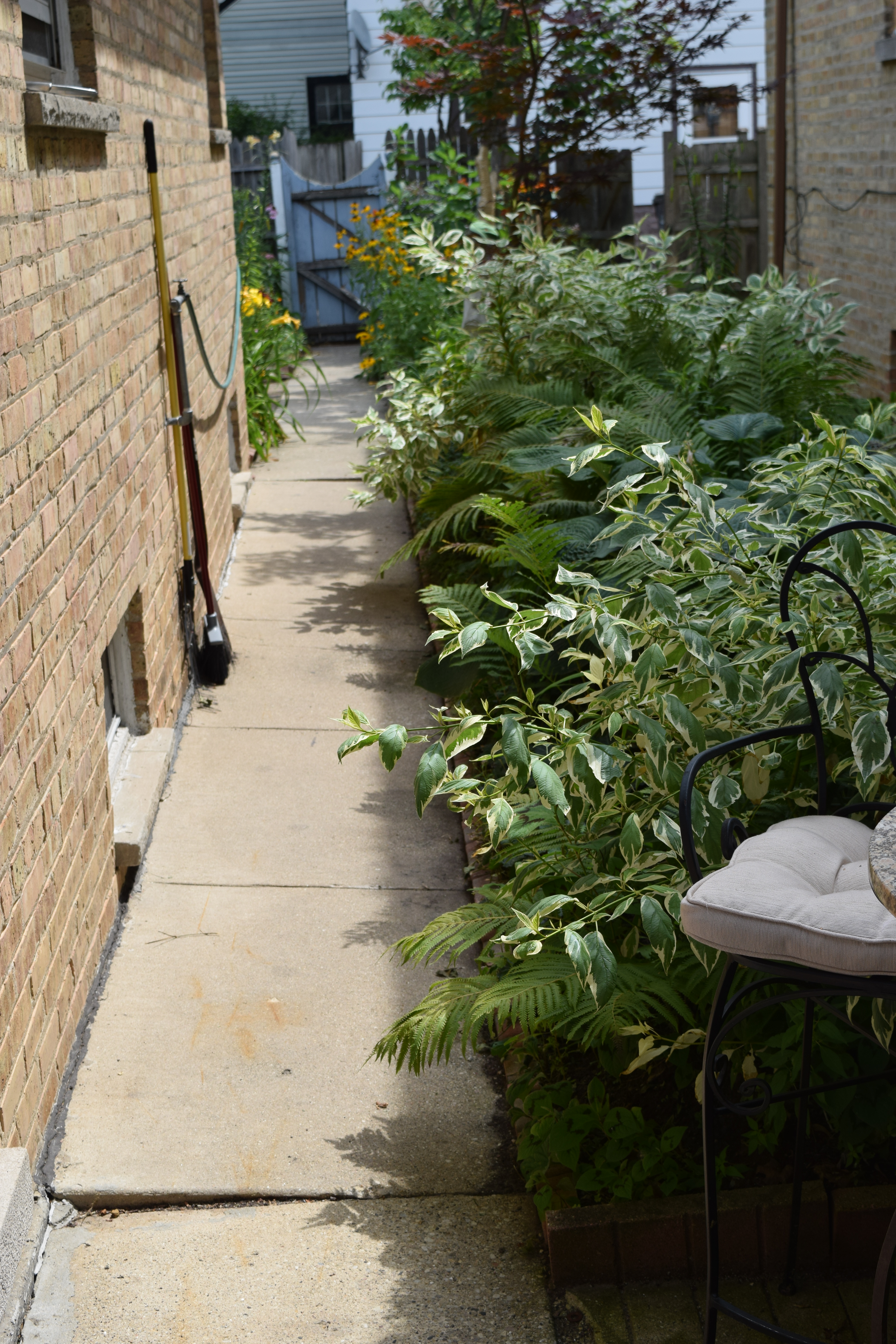
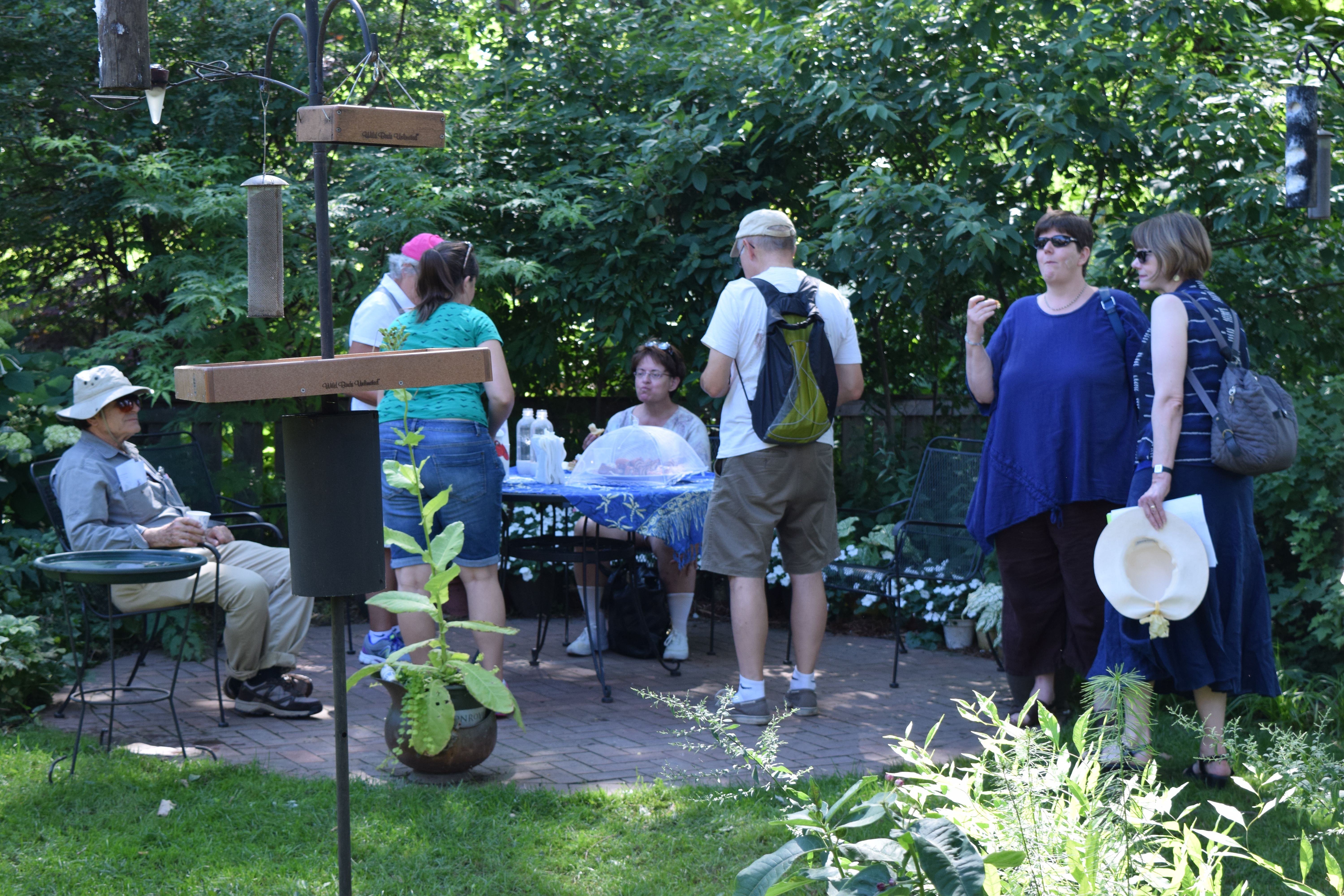
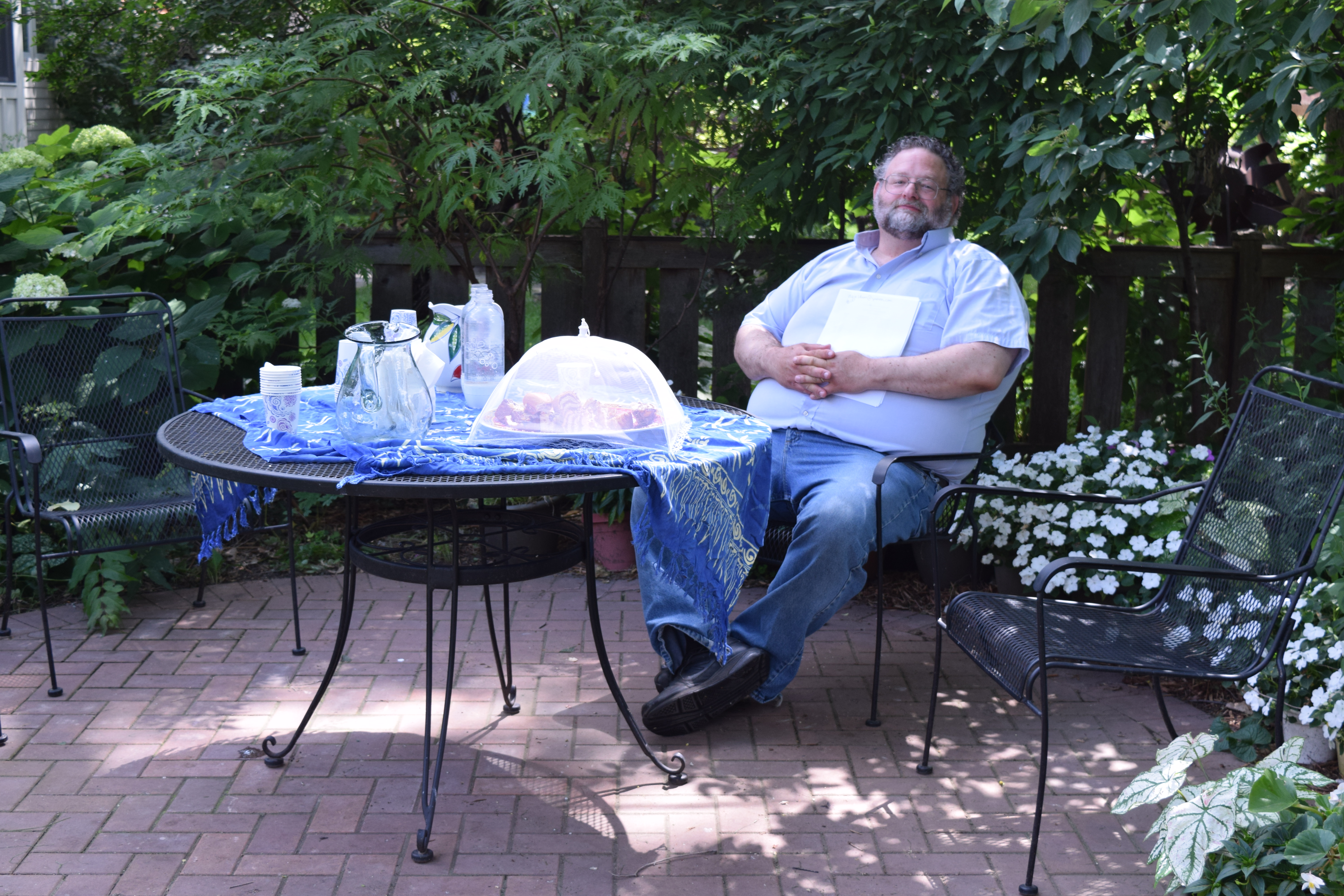
In the back Judy had set out ice tea, water and coffee cake cut in little pieces. Happily people were not too shy to help themselves.

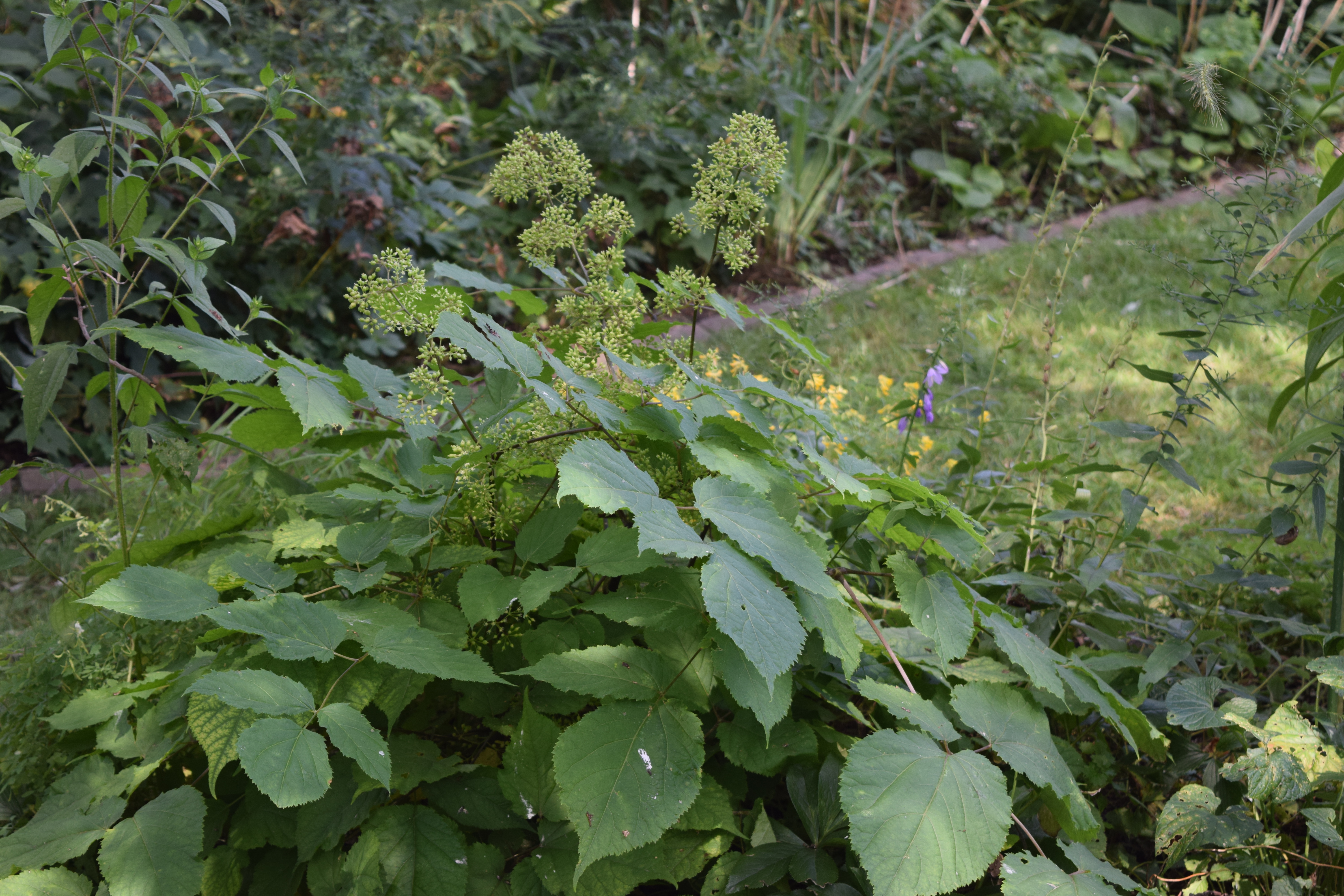
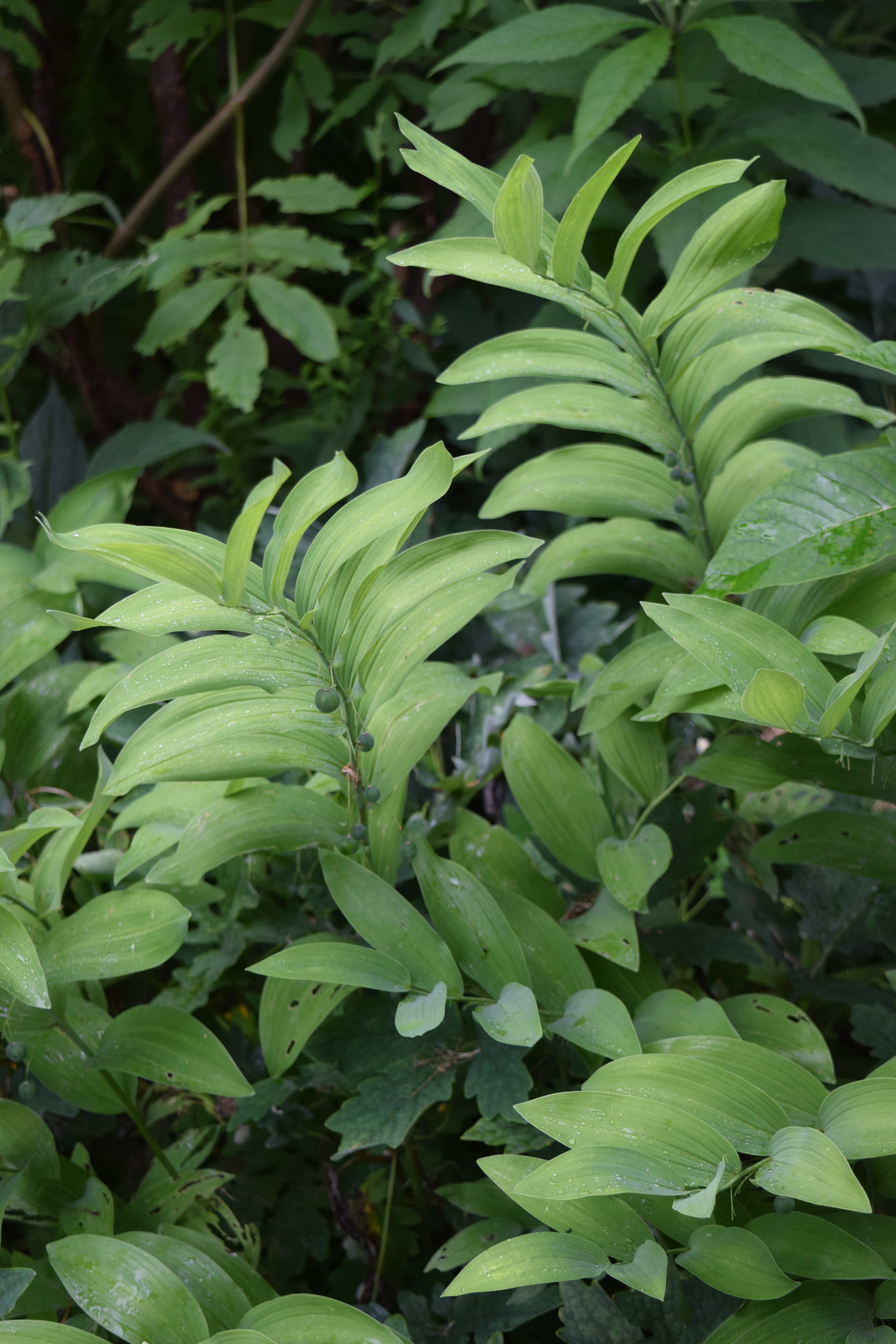
American Spikenard, with unripe berries.

There was a lot of interest in the American Spikenard (Aralia racemosa) – I  need to write a post on this plant in the near future.

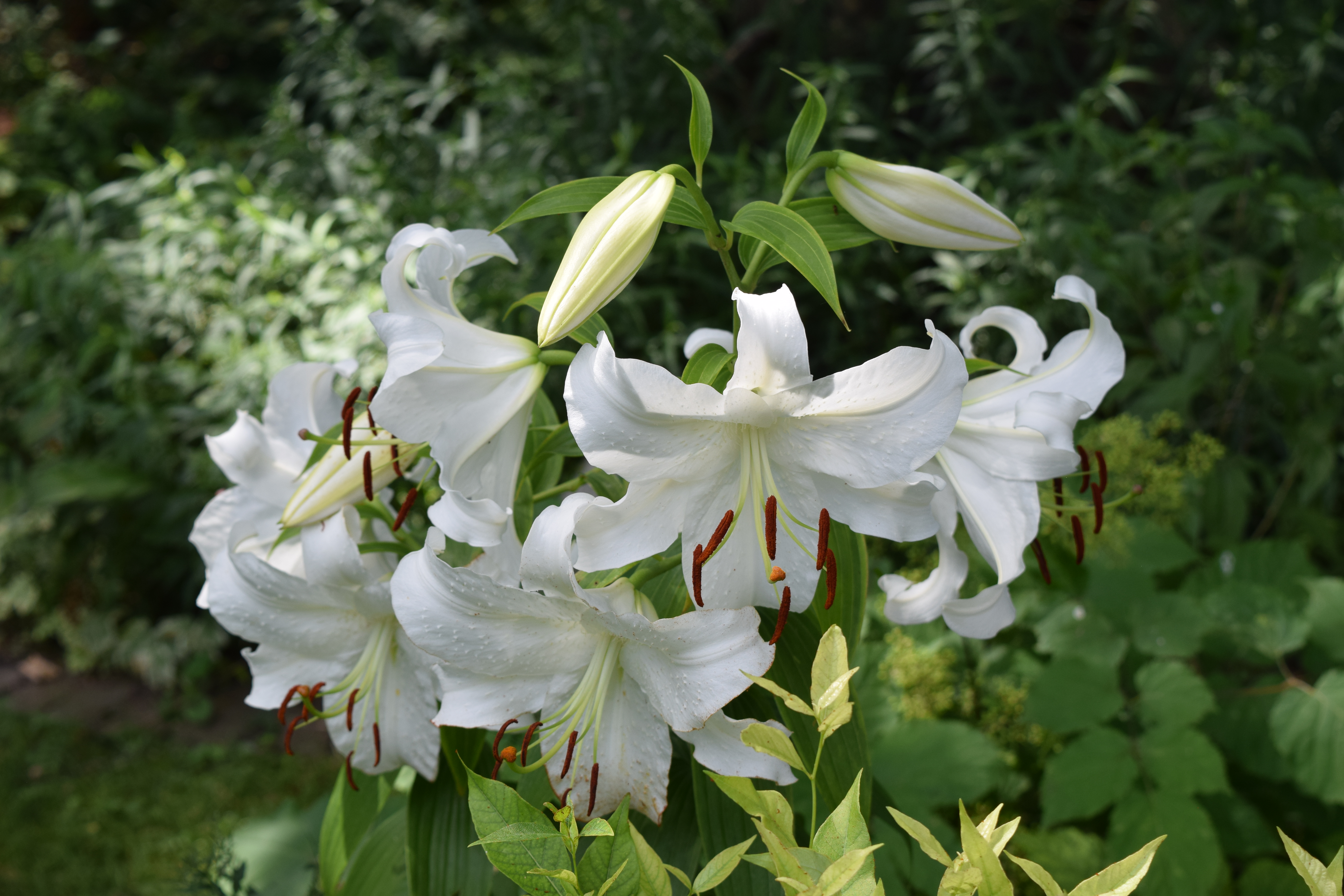
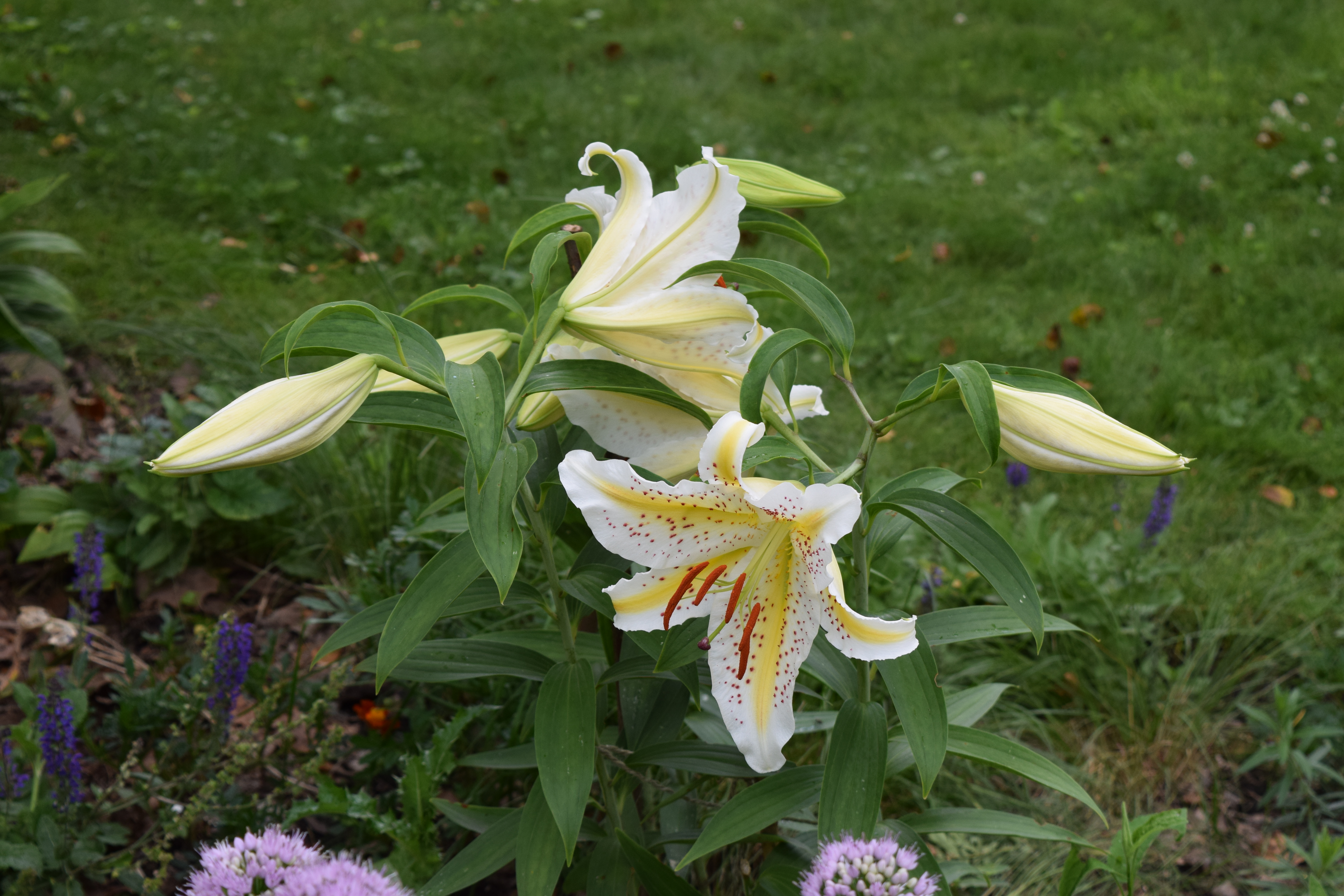
'Casa Blanca' Oriental Lilies
‘Casa Blanca’ Oriental Lilies

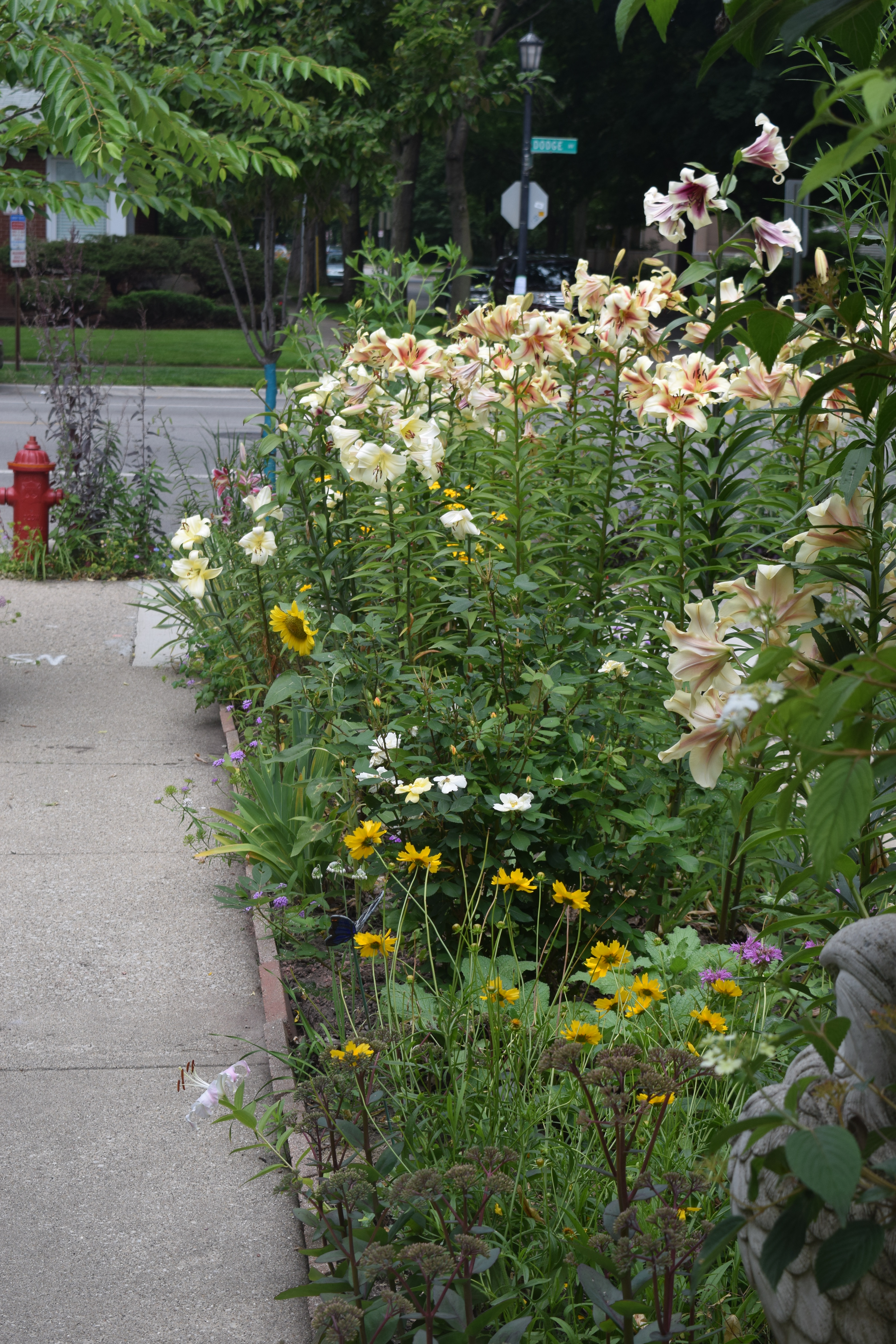
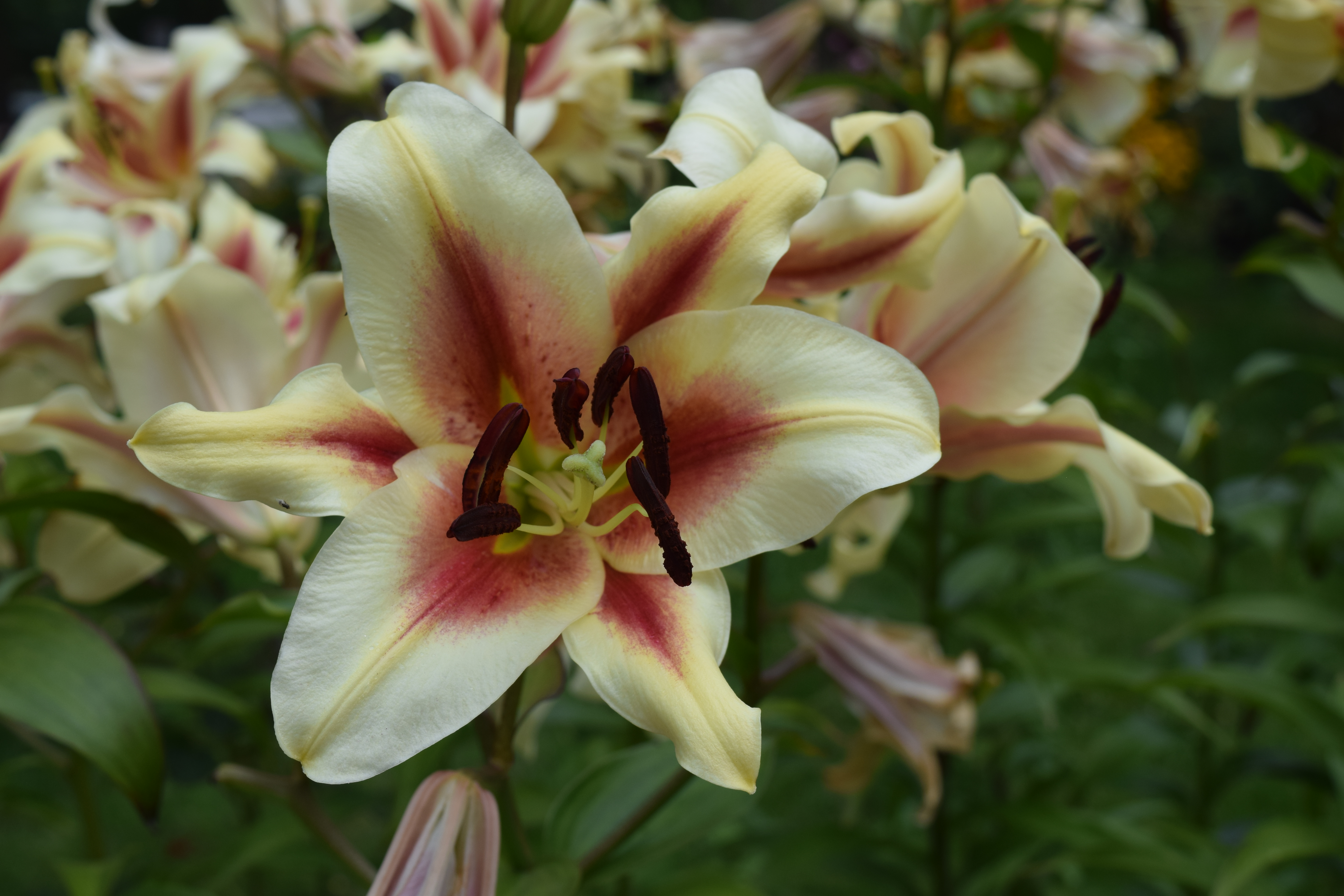
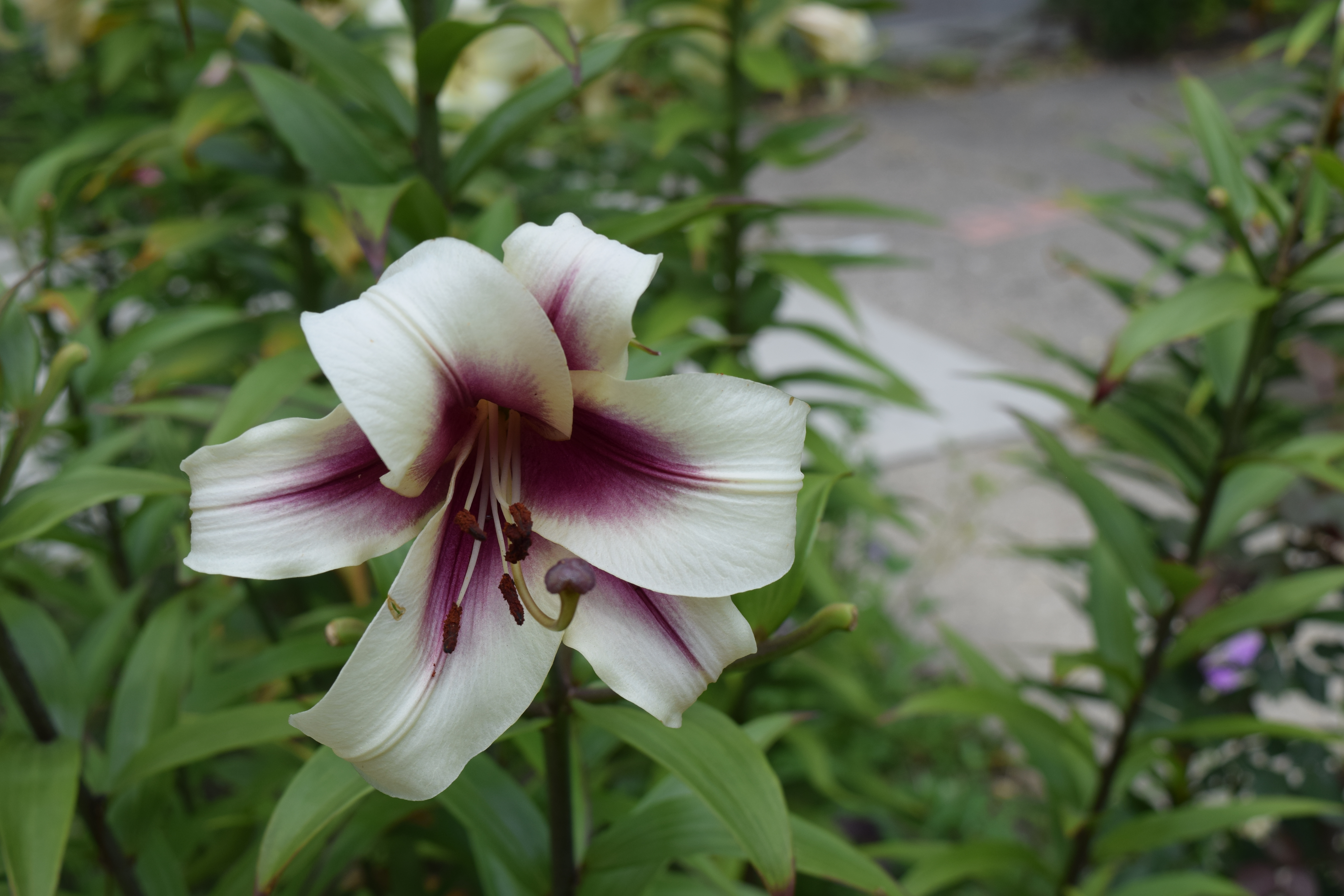
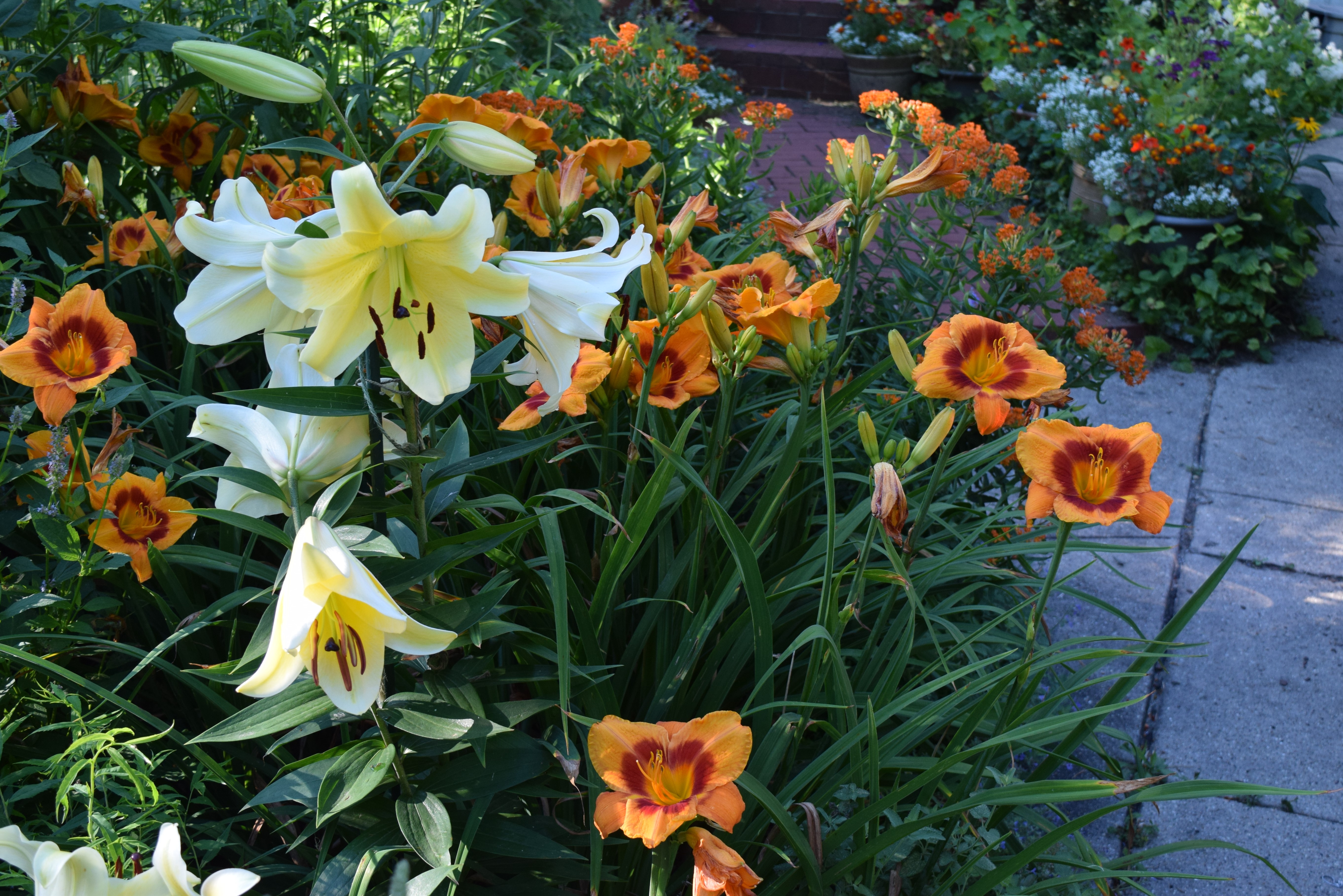
And in a happy bit of good timing, the ‘Casa Blanca’ Oriental Lilies had just begun to bloom, so that the whole back area was filled with sweet scent.

DSC_0489

In under 40 minutes the Wild Ones had to get back on the bus. I had wanted to join them for the rest of the tour, but resisted because 1) I was pooped; and 2) I had some stuff I had to work on for my job.

Taking notes.
Taking notes.

Normally on weekends I spend the days doing garden chores. However, this Saturday all the chores had already been done. It was a nice day, warm but not humid, and the mosquitoes were mostly on vacation.

Farewell, Wild Ones.

So Judy and I spent a couple of hours sitting and reading in the back garden, enjoying what we are often too busy working on or photographing to really experience. And then I took a nap.

DSC_0519

Gardening is a funny mix of solitary and social. Even if no one else ever saw our garden, I would take great pleasure in it. But the pleasure is deeper when you can share it with others, whether they be sidewalk passersby or touring Wild Ones.

Garden Variety Anxiety

On Saturday a busload of native plant enthusiasts will visit my garden. I’ve participated in this garden tour twice before, enjoying it both times. And yet, I can’t stop myself from worrying about it.

This is no doubt because I am a compulsive worrier and an instinctive pessimist. It’s not just that the glass is half empty, it’s that whatever is in the glass will probably give me food poisoning.

Let’s get specific. My brain has been busy concocting possible causes of mortification during Saturday’s garden tour. Here’s a sample.

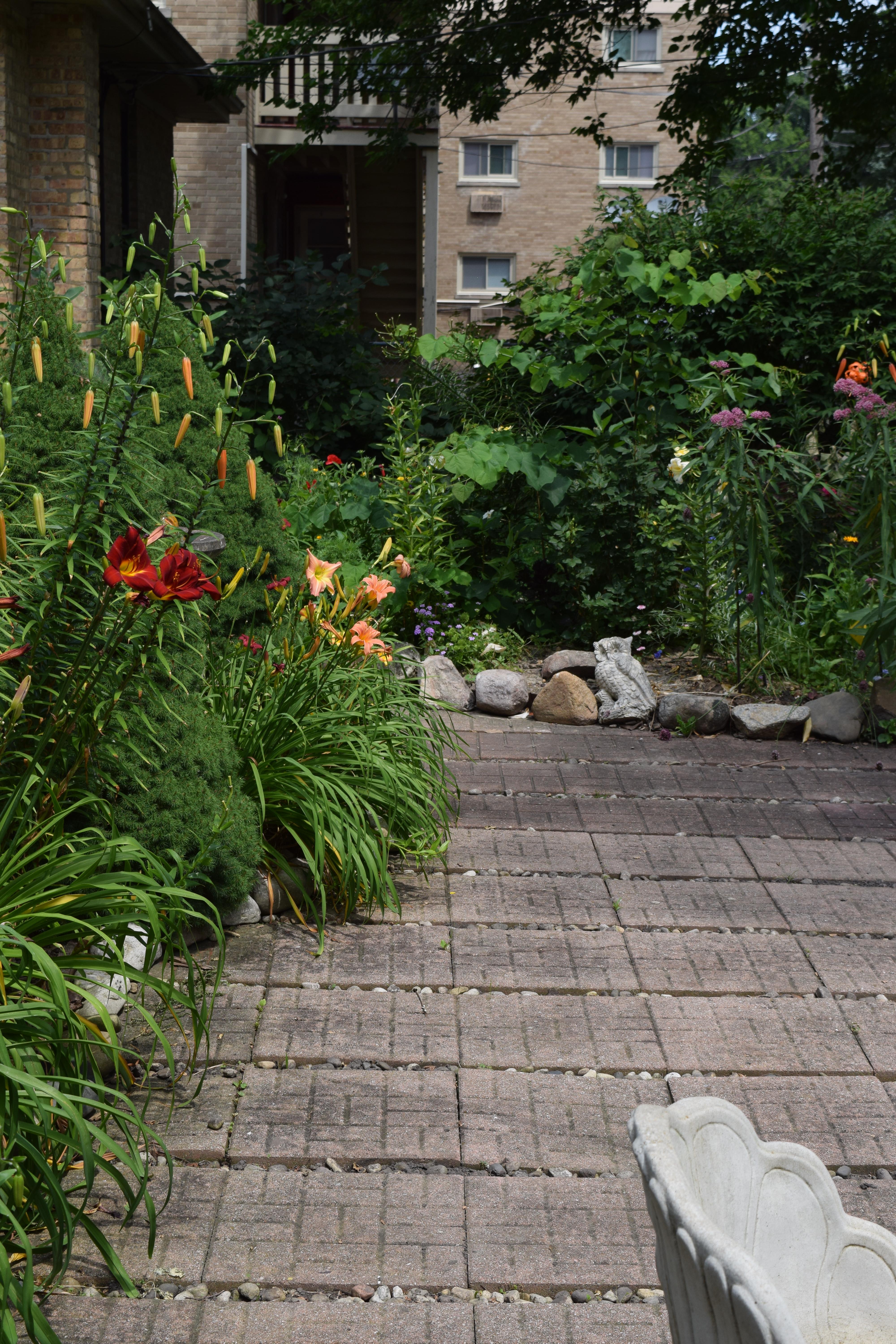
The hardscaping needs a little work.
  • Shoddy hardscaping. Most of the paths and raised beds are amateur efforts, and it shows. Stones and pavers are set so unevenly that they can cause loss of balance or even seasickness.
  • Tacky containers. The flowers in the containers are pretty nice, generally, but the containers themselves are ugly. Mostly I use cheap plastic jobbies from Home Depot, plus a few grower’s pots which at the time I thought would be wasteful to throw away. Eyes will roll.
Creeping Charlie: resistance is futile. Photo from University of Illinois Extension.
  • Too many weeds. I have pulled about a bushel of weeds from my beds and borders, mostly Violets and Creeping Charlie. But what about the ones I missed? Creeping Charlie will hide under the foliage of ornamentals, then rush out to cover any bare space while your back is turned. It only takes a moment.
  • Too much bare earth. Now that I pulled out all those weeds, there are many more spots where you can see bare earth. I like everything to be covered with plants, but now there will have to be an archipelago of mulch islands amongst the foliage, though I am filling in a few spots with emergency annuals.

elijah

  • Not enough “real” natives. I can see some native plant fundamentalist saying: “What’s this? Cultivars? DAYLILIES!? You call this a native plant garden? Why, this garden is nothing but a FRAUD!”

Fortunately, I know from experience that once the garden tour group arrives, all these fears will melt away. In the meantime, wasn’t that some Creeping Charlie over there?

Now Comes High Summer

In our garden high summer comes in a very literal way, with the first blooms of some very tall plants. My favorite among these are the Cup Plants (Silphium perfoliatum), which grows eight to ten feet tall.

Cup Plant
Cup Plant

Their height gives Cup Plant a certain majesty combined with a gangly, awkward beauty. They are the Abraham Lincoln of August prairie flowers.

Cup Plant and Wild Bergamot

They also combine wonderfully with other August blooms, for example this patch of Wild Bergamot (Monarda fistulosa).

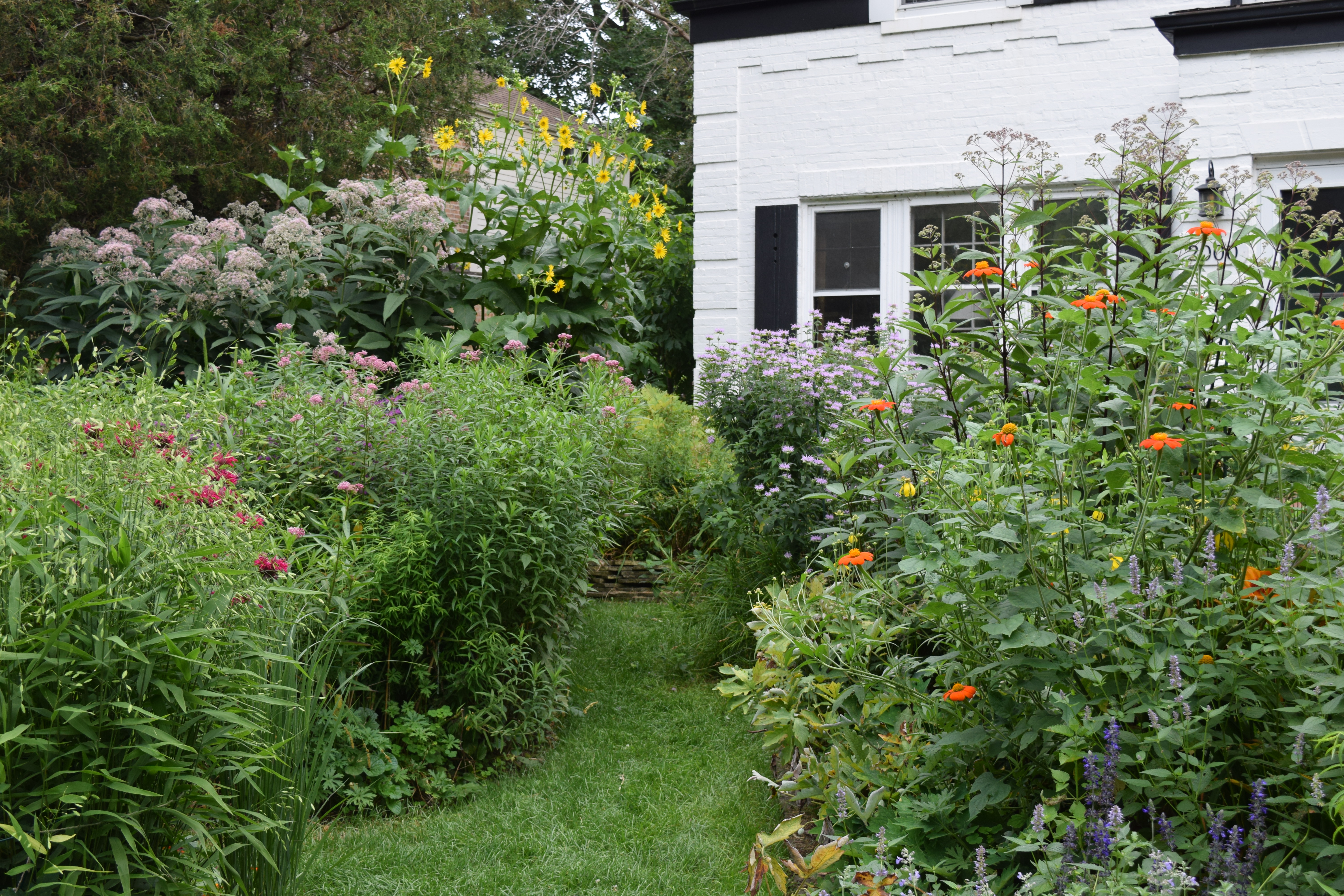
Here you can see the Mexican Sunflower growing tall among its perennial partners.

This Wild Bergamot is growing in the Driveway Border, and bloomed later than the plants of the same species in the Sidewalk Border – and has far less powdery mildew. I wonder why.

The path between the Front Island Bed and the Driveway Border

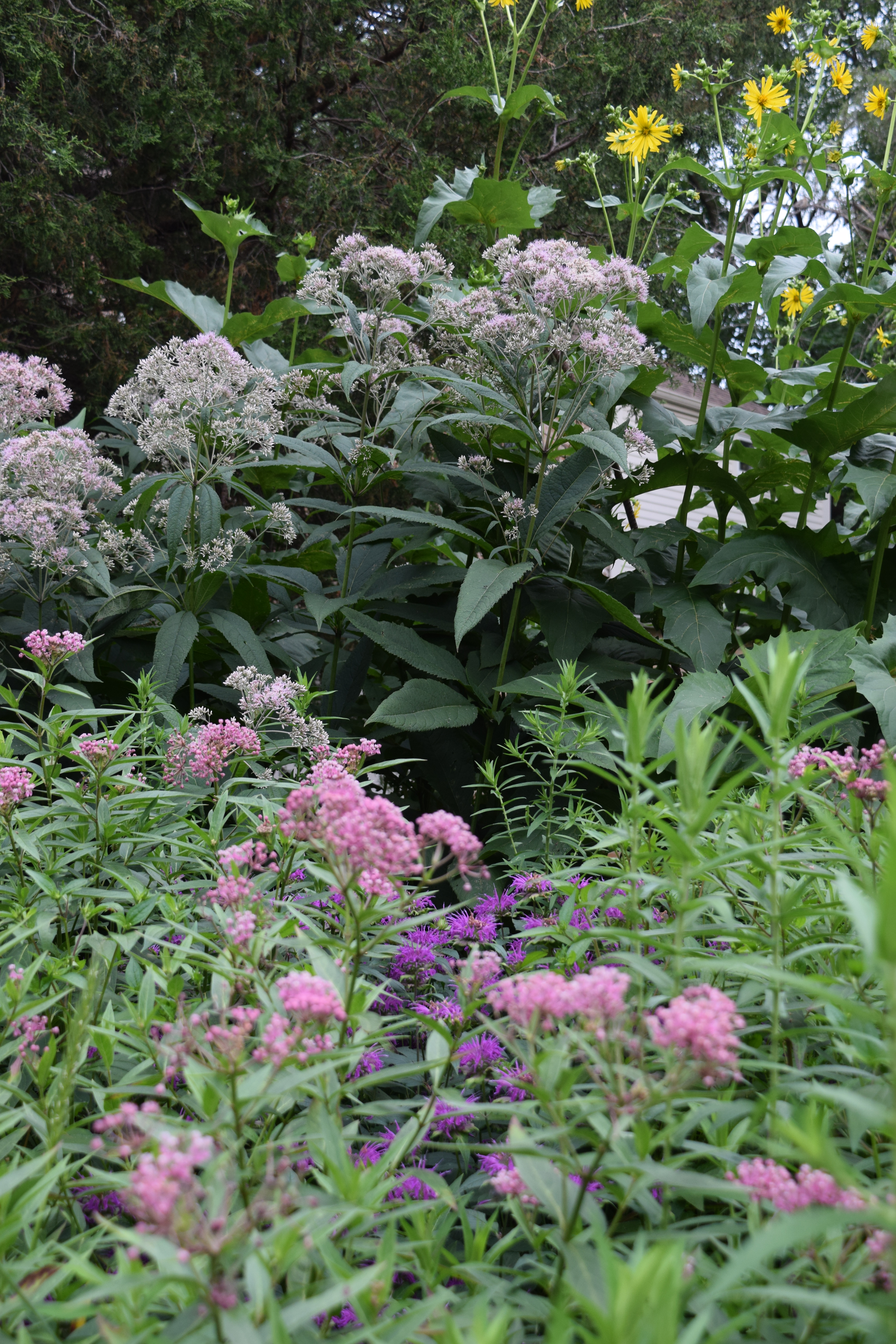
The Cup Plant is growing in the Front Island Bed, where it is joined by Sweet Joe Pye weed (Eutrochium purpureum), another flower that puts the height in high summer.

Joe Pye Weed, Swamp Milkweed, Monarda 'Purple Rooster'
Sweet Joe Pye Weed, Swamp Milkweed, Monarda ‘Purple Rooster’

The blooms of Sweet Joe Pye Weed create domes of dusty pink.  You can also see Swamp Milkweed (Asclepias incarnata) and Monarda ‘Purple Rooster’ flowering in the Front Island Bed. ‘Purple Rooster’ is straining to be seen, I really should have planted it in front of the milkweed. The Swamp Milkweed blooms outlast the Butterflyweed (Asclepias tuberosa), which has begun shifting from flowers to seed pods.
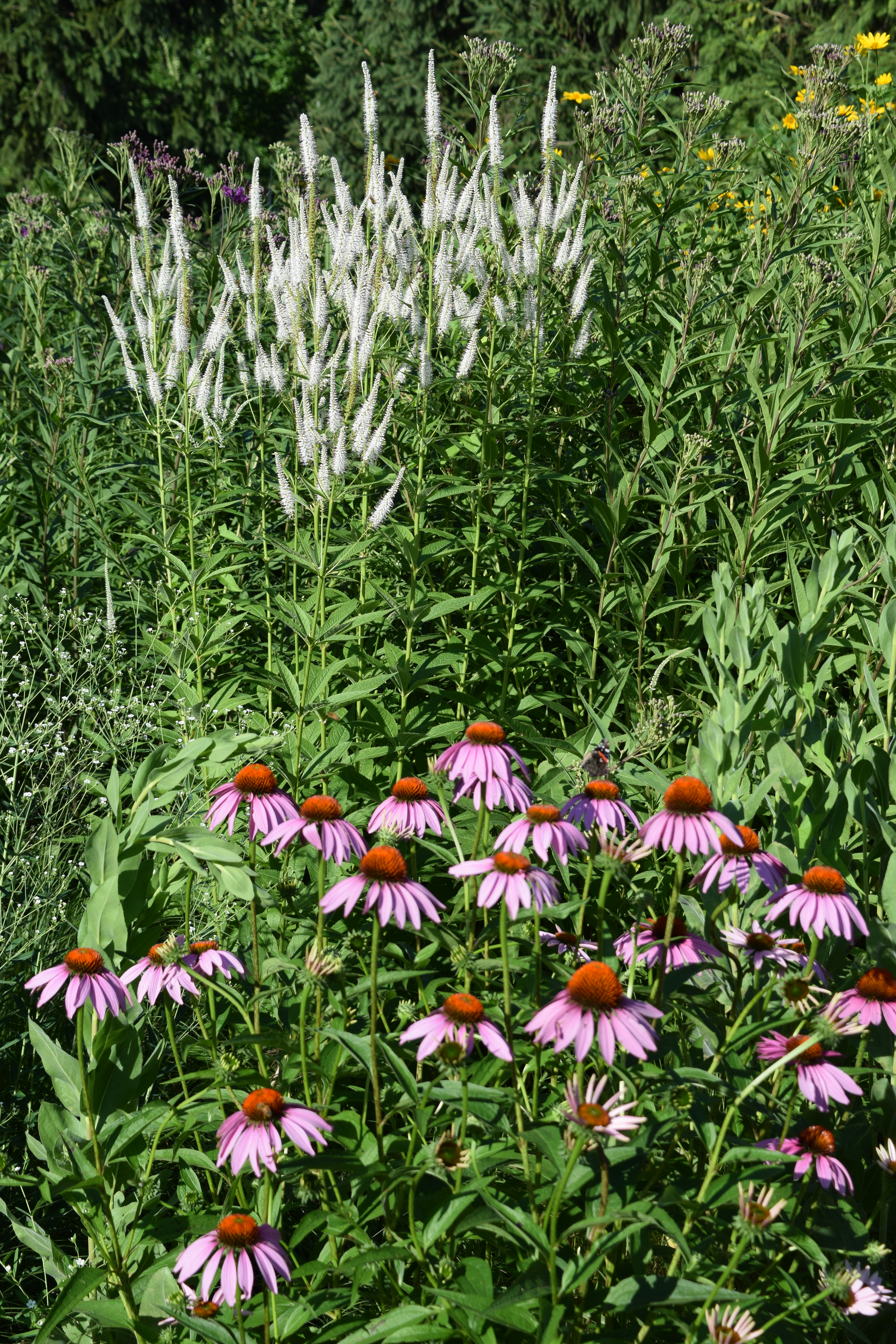
Yellow Coneflower
Yellow Coneflower

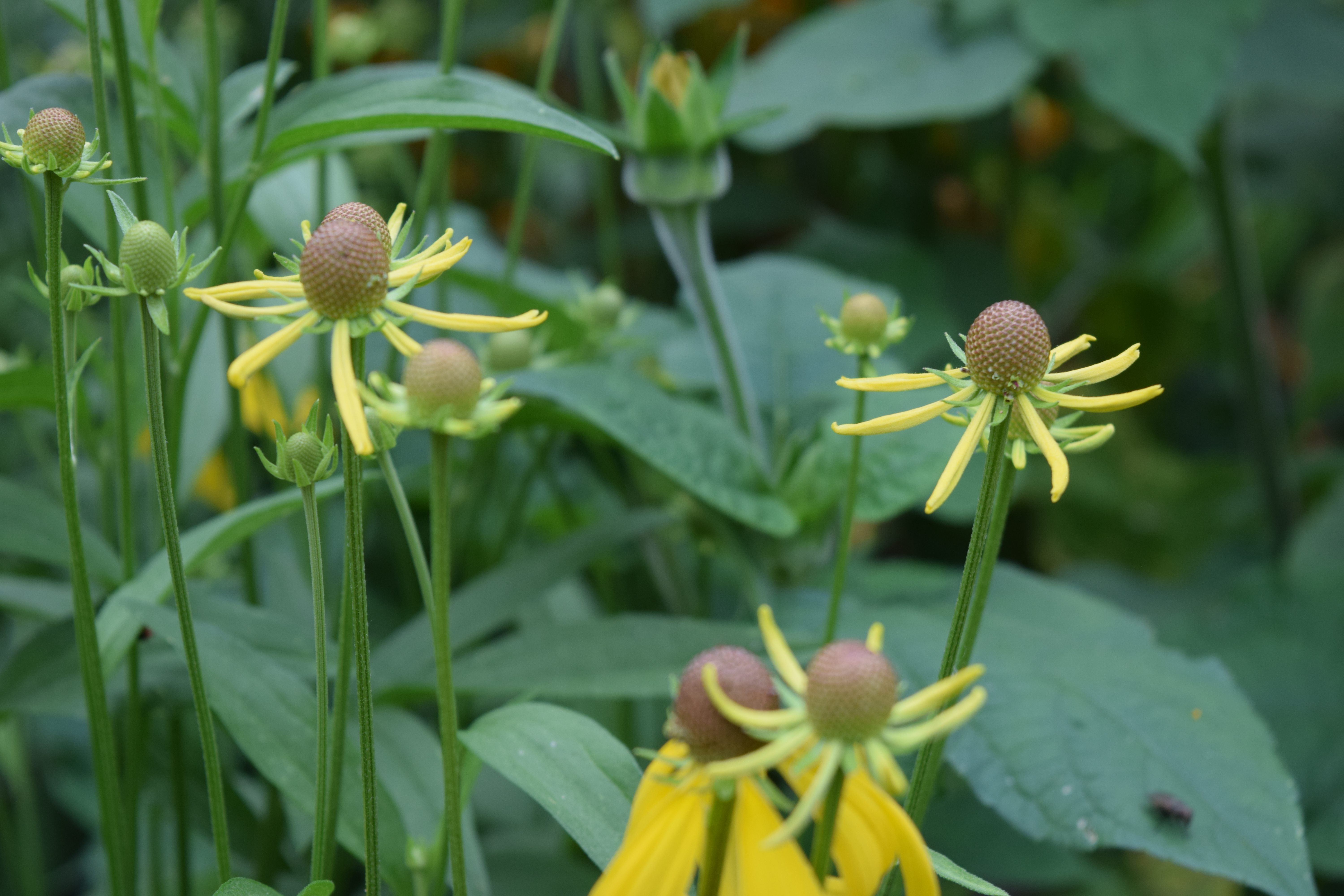
Going back to the Driveway Border, we can find another of my favorite August flowers – Yellow or Grey Headed Coneflower (Ratibida pinnata). These yellow ray flowers are just starting to poke out from around the central disks.

Yellow Coneflower with Mexican Sunflower

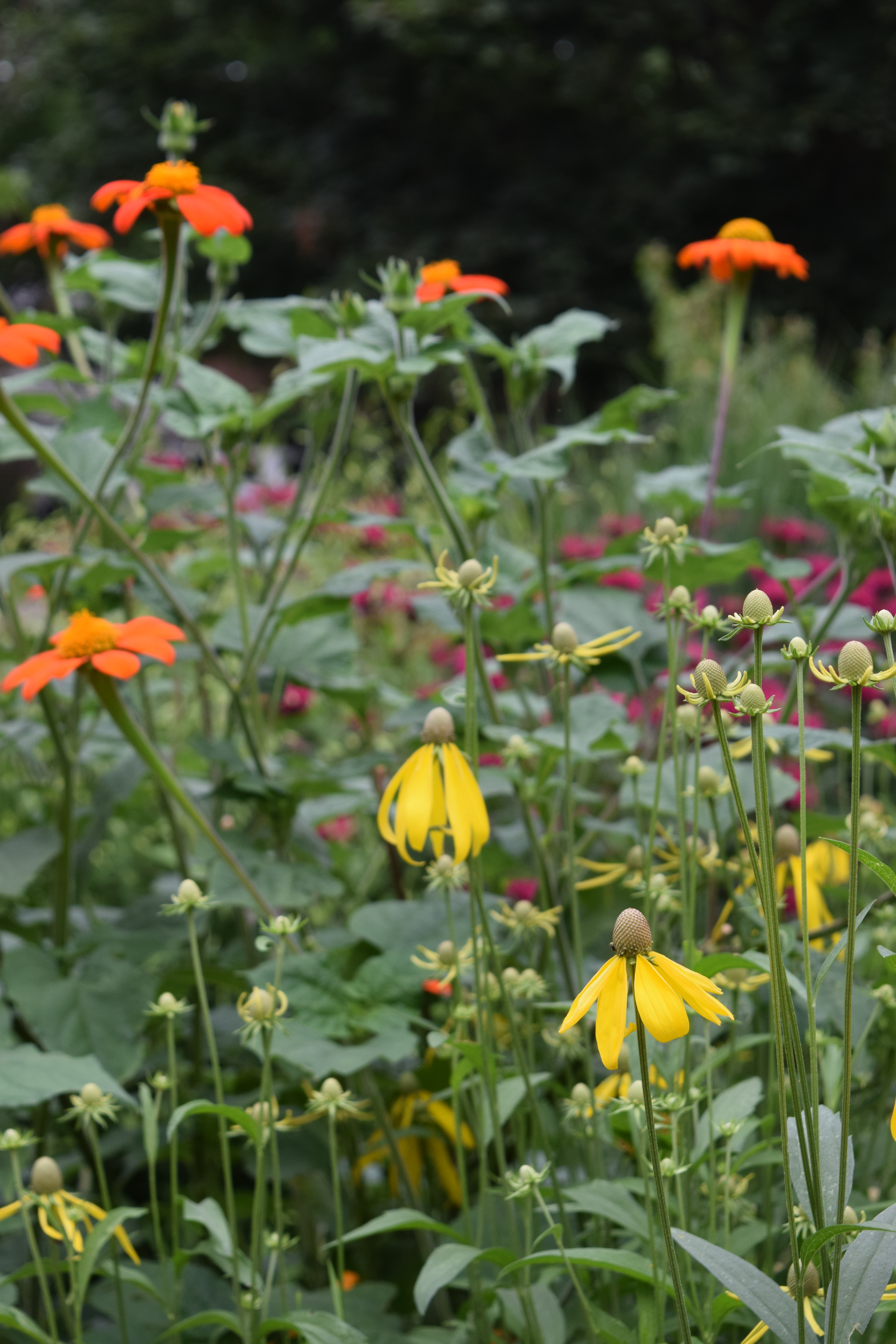
Yellow Coneflower makes a pleasing combination with Mexican Sunflower (Tithonia rotundifolia). Mexican Sunflower has been blooming for a good month or so, but as it blooms its stature and presence grows – until it literally starts coming apart. Staking will delay but not prevent this from happening.

Long view of the Driveway Border.

Here’s a long view of the Driveway Border. As late summer perennials take center stage, the earlier summer blooms are fading. You can’t tell from this picture, but the ‘Conca d’Or’ lilies are turning brown and soon they will be gone. The petals of Clematis ‘Jackmanii Superba’ are falling fast, making purple splashes far and wide.

DSC_0488 bumblebee butterflyweed

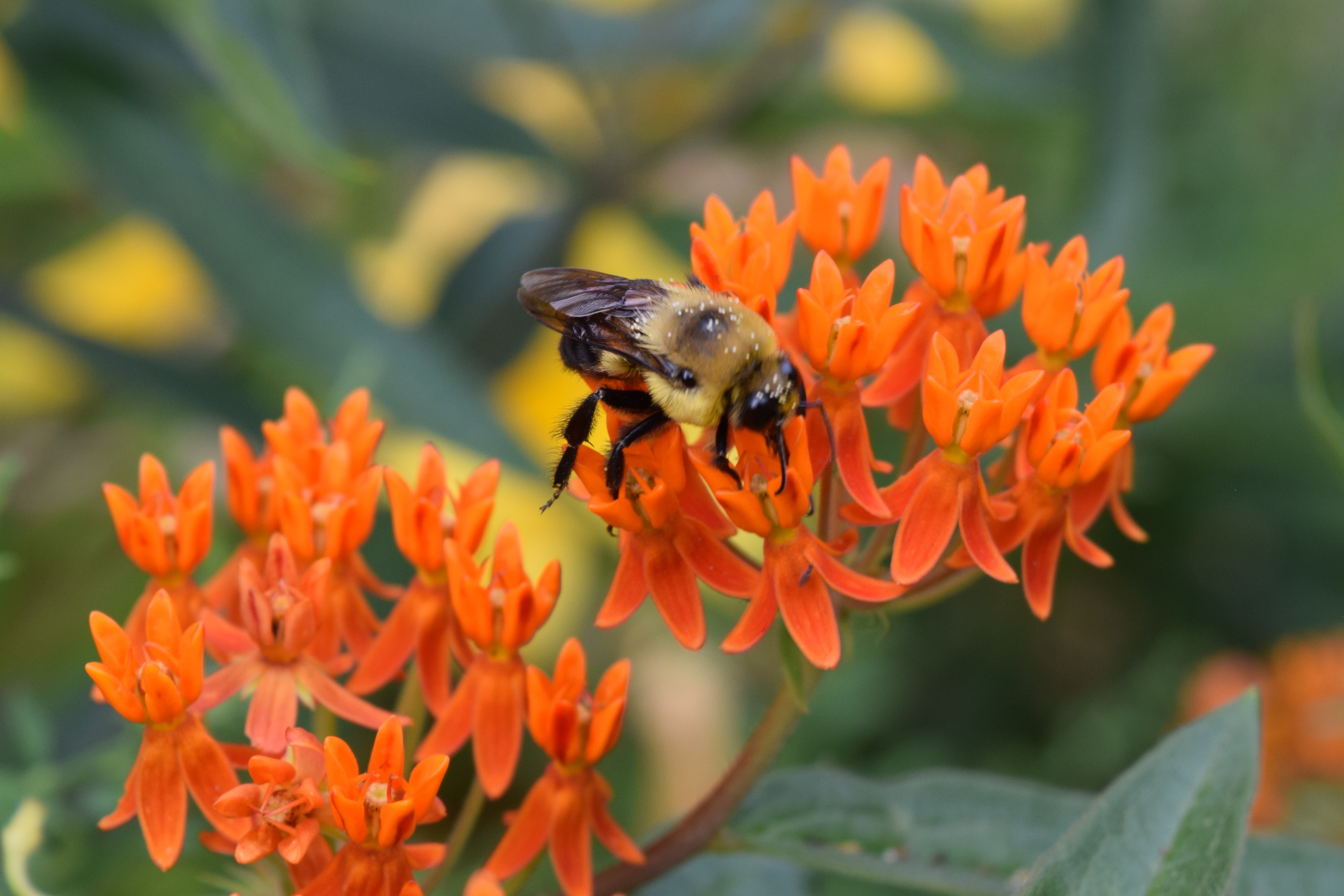
The bumblebees find the nectar of the last Butterflyweed flowers exceedingly sweet, even as they also partake of newly available blooms. And so the garden shifts with the seasons, like a parade with new colorful cohorts stepping forward as others retire to the rear.

What are your favorite August flowers?

Book Review: Hummelo, by Piet Oudolf and Noel Kingsbury

Chicago’s Lurie Garden and New York City’s High Line are two of the most popular gardens in North America, yet they would be barely recognizable as “gardens” just three decades ago.

hummelo

Piet Oudolf, a designer for both those gardens, is one of the pivotal figures in this shift.

He is not a landscape architect but a Dutch plant breeder and garden designer who brought a fresh eye to what makes a plant garden-worthy. This book is named after the plant nursery and home where he grew many of the perennials he introduced or promoted.

Piet Oudolf
Piet Oudolf

Hummelo follows his career from small scale garden designer to international acclaim.

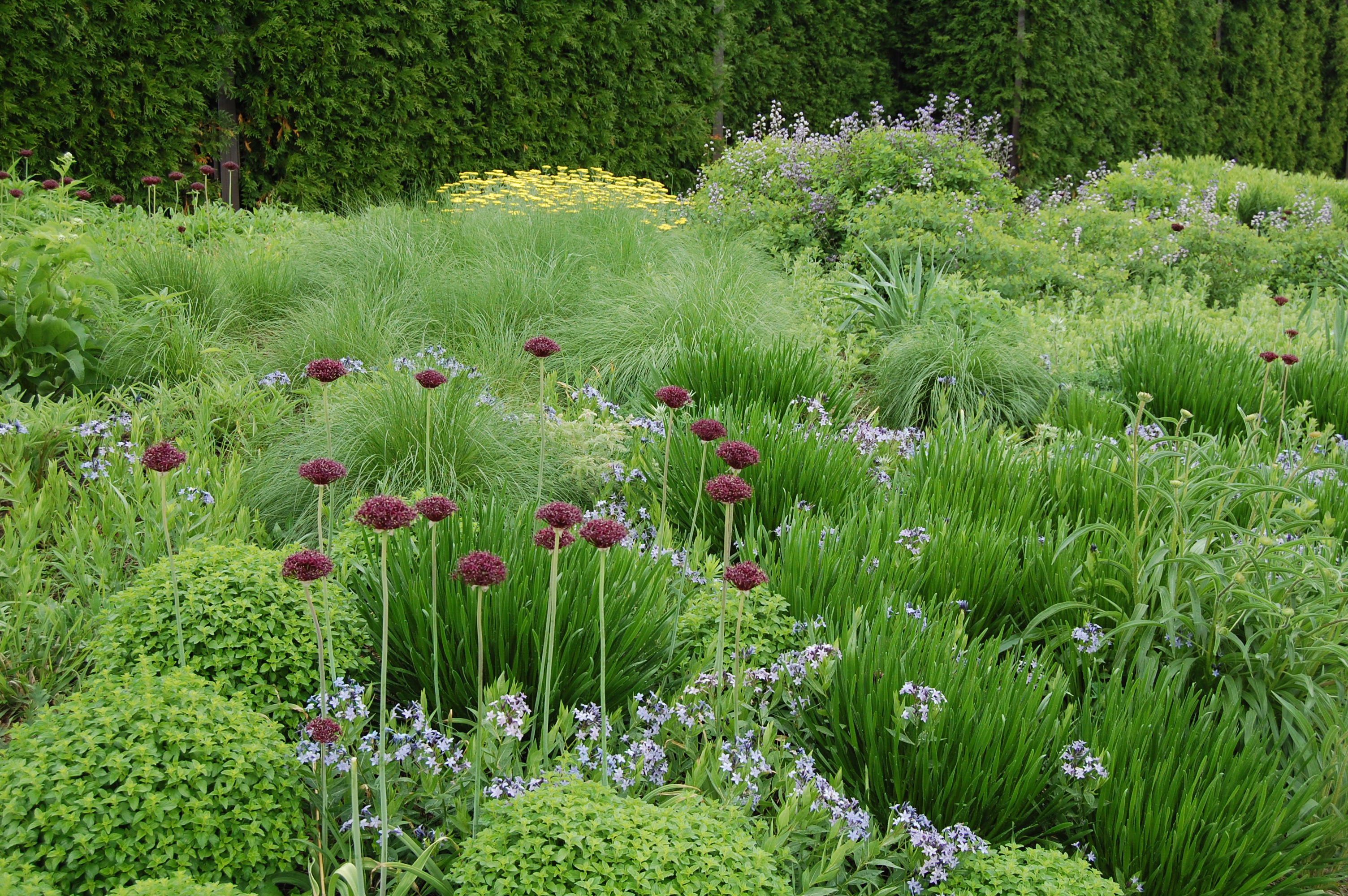
The style that Oudolf is associated with is difficult to define or even name. Many call it the New Perennial Style, which Kingsbury describes as “looser, more romantic, and above all more natural”. It is a style that has “ecological considerations at its base.”

Noel Kingsbury
Noel Kingsbury

(A side note: despite the book’s cover, Hummelo is clearly about Oudolf but by Kingsbury. The two have collaborated with each other for many years. If Kingsbury has no problem with this then I don’t either, as Kingsbury is a good writer and Oudolf reportedly is not.)

Oudolf is the first to acknowledge that while his gardens look natural they are in fact man-made artifices – what he calls “enhanced nature”. He emphasizes the use of plants that show “resilience and longevity” – plants that are able to thrive with less labor and water and little to nothing in the way of fertilizer and pesticides.

Lurie Garden
The Lurie Garden in Chicago

His designs emphasize more about plant shapes – “spires, buttons, globes, plumes, structure and filler plants”, as well as “the play of light, movement, harmony, and control” – and less about color.

This is in contrast to traditional perennial gardening, which Kingsbury  says “has largely been about growing a relatively small number of high-intensity ‘flower-power’ plants”.

Lurie Garden Salvia
Lurie Garden’s River of Salvia.

While Oudolf may deprecate color, his designs are not above giving the people what the want, as with the “River of Salvia”. These are gorgeous drifts of Salvia first tried in a Swedish public park and then replicated in Chicago’s Lurie Garden.

I enjoyed Kingsbury’s account of Oudolf’s early professional life, how his ideas were shaped by Dutch wildflower parks, the landscape architect Mien Ruys, and the German plant breeder Karl Foerster. Oudolf’s ideas also developed in the context of “back-to-the-land” and environmental movements – though Oudolf himself is decidedly not a hippie.

High Line
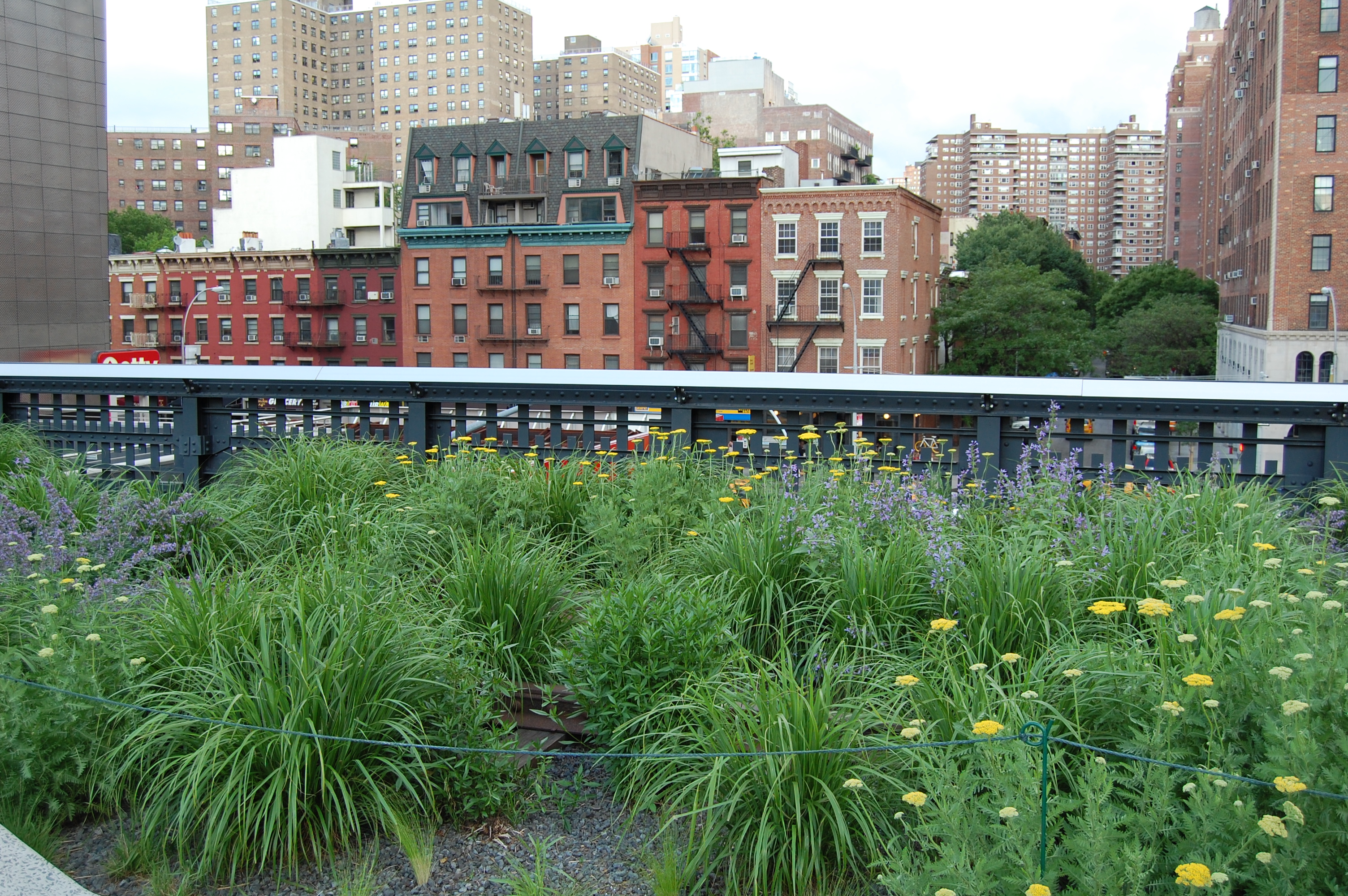
The High Line in New York City

Also interesting and helpful are discussions of the evolution of Oudolf’s planting style, which is both eclectic and continually evolving. This has included planting in blocks, intermingling, and “matrix planting” in which ornamental perennials emerge from matrices of low-growing grasses such as Prairie Dropseed (Sporobulus heterolepis).

It is a mark of his influence that Oudolf recently closed his nursery in part because so many others had started to grow plants that he had grown at Hummelo because they were so hard to obtain.

Throughout all of this, a portrait emerges of Oudolf as someone who is blunt and unpretentious, happy to exchange ideas, experimental and highly creative. These qualities shaped his success but also make his work difficult to define. As one of his assistants says: “His style is intuitive … as soon as you think you understand something he comes up with something new.”

A Visit to the Chicago Botanic Garden

Last Sunday Judy and I made our first visit of the year to the Chicago Botanic Garden. Usually we go about once a month starting in May, and try to make certain highlights like when the crabapples are in bloom – but this year there’s been too much going on.

CBG is one of the great American public gardens, and I don’t just say that out of local boosterism. The variety and quality of the individual display gardens and natural areas is really outstanding. All this is combined in a landscape of man-made islands (on about 400 acres) in a way that creates one breathtaking vista after another. There is always far more to see than can be taken in during a single visit.

Michigan Lily
Michigan Lily

OK, the commercial is over. On this visit to CGB, we headed first to the native plant garden, which has both woodland and prairie areas. In the woodland garden we admired the Michigan Lilies (Lilium michiganense).

Fairy Candles
Fairy Candles

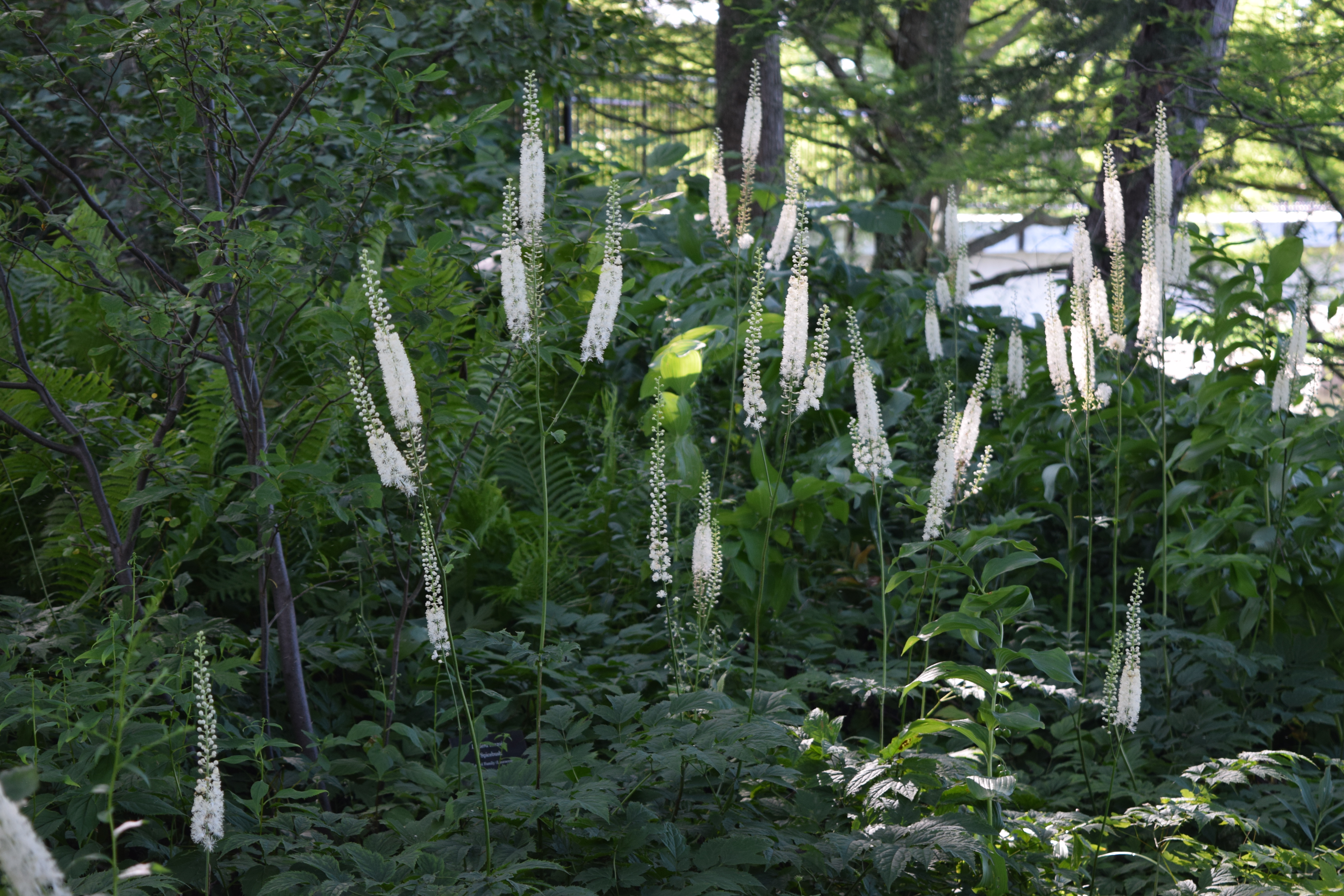
We also admired the Fairy Candles (Actaea racemosa), cunningly placed to catch the late afternoon sun.

Royal Catchfly
Royal Catchfly

In the prairie section of the Native Plant Garden, Royal Catchfly (Silene regia) stands out against a background of Early Sunflower (Heliopsis helianthoides) and Culver’s Root (Veronicastrum virginicum). We stood and watched a hummingbird feeding on the red tubular flowers, but Judy couldn’t get a clear shot of it.

DSC_0137 cbg culver's root purple coneflower

Another native plant combination that worked nicely was the Culver’s Root with Purple Coneflower (Echinacea purpurea).

C

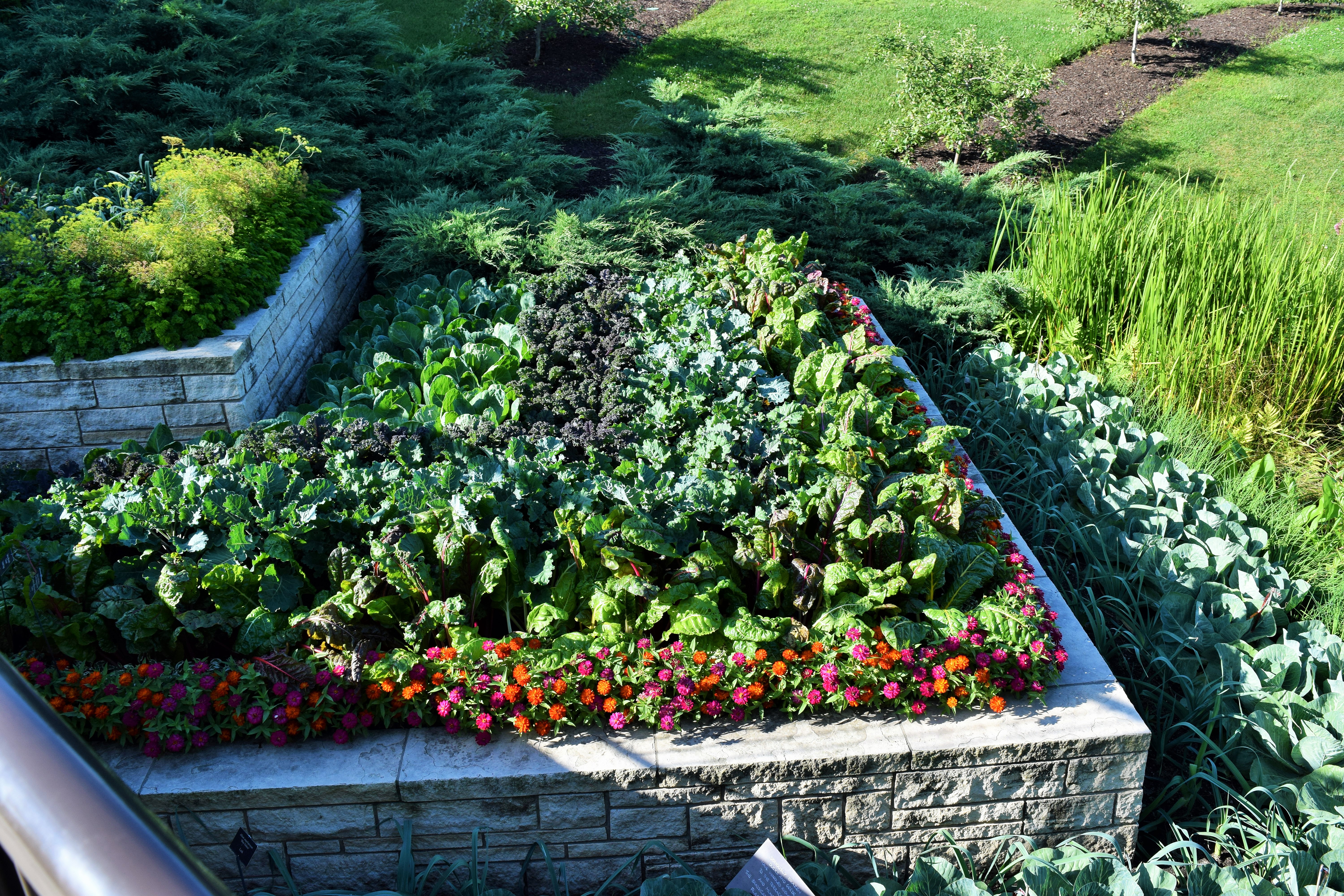
We then walked over to the Fruit and Vegetable Garden. To get there you cross a short bridge that looks out over terraces planted with cabbages, greens, and onions – and edged with Zinnias.

DSC_0150 cbg fruit and vegetable

Everything looks perfect and healthy. I like those blue tuteurs.

DSC_0160 cbg tithonia and amaranth

Here’s an unusual combination: Mexican Sunflower (Tithonia rotundifolia) and Amaranth.

DSC_0158 variegated zucchini

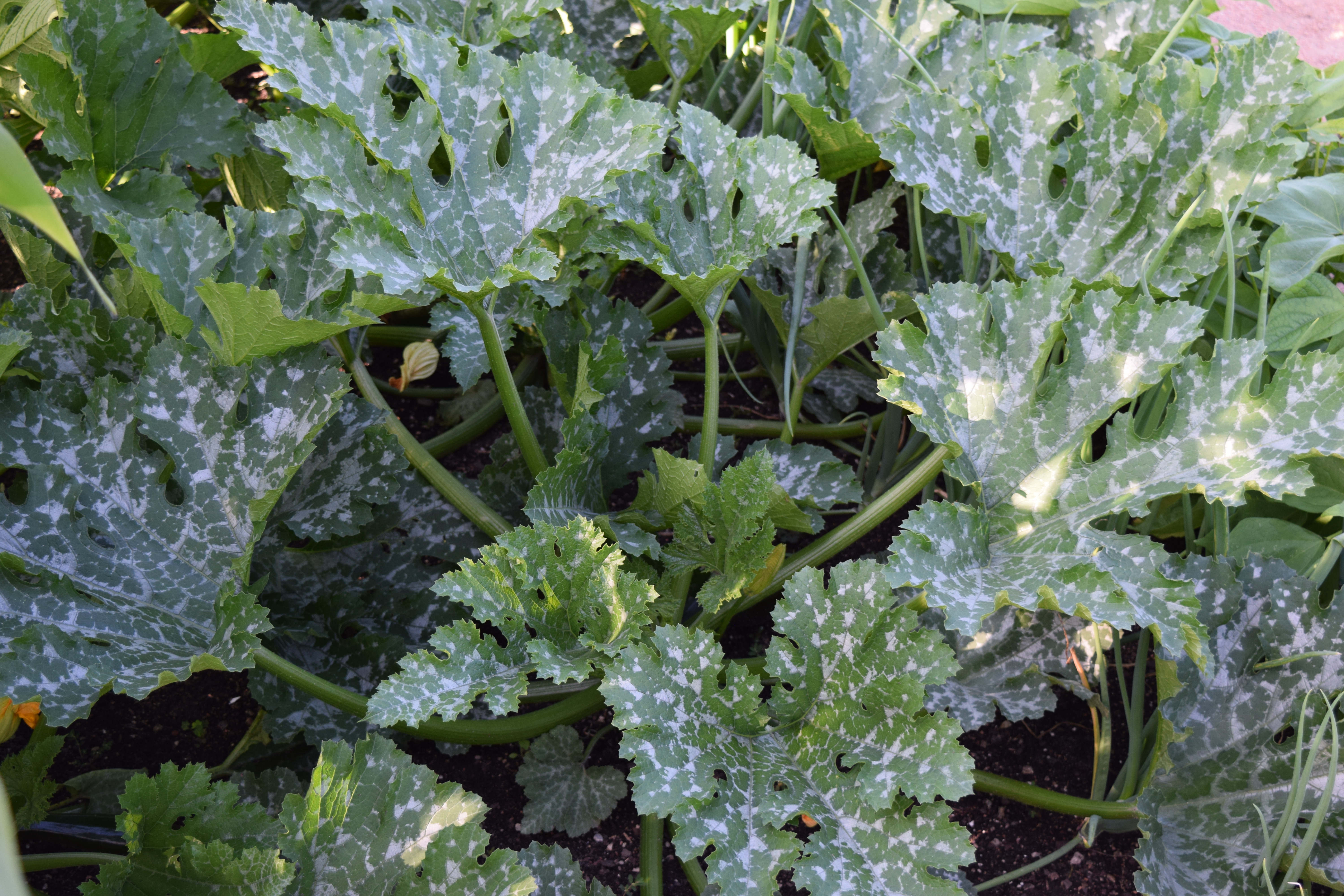
Did you know there was such a thing as variegated zucchini?

DSC_0153 cbg

The Fruit and Vegetable Garden constitutes one of CBG’s islands, surrounded by a man-made lake.

DSC_0178 English Walled Garden cbg
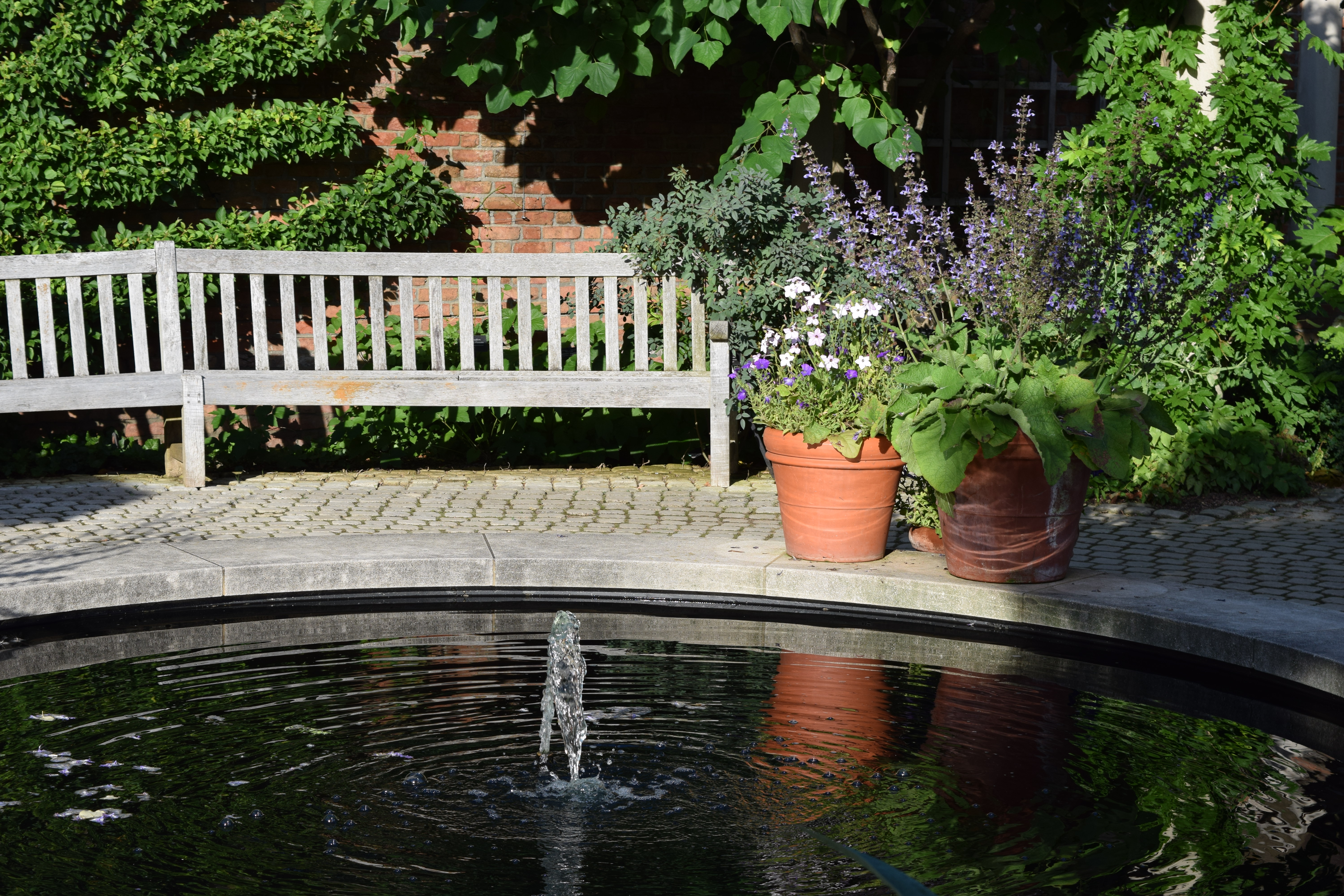
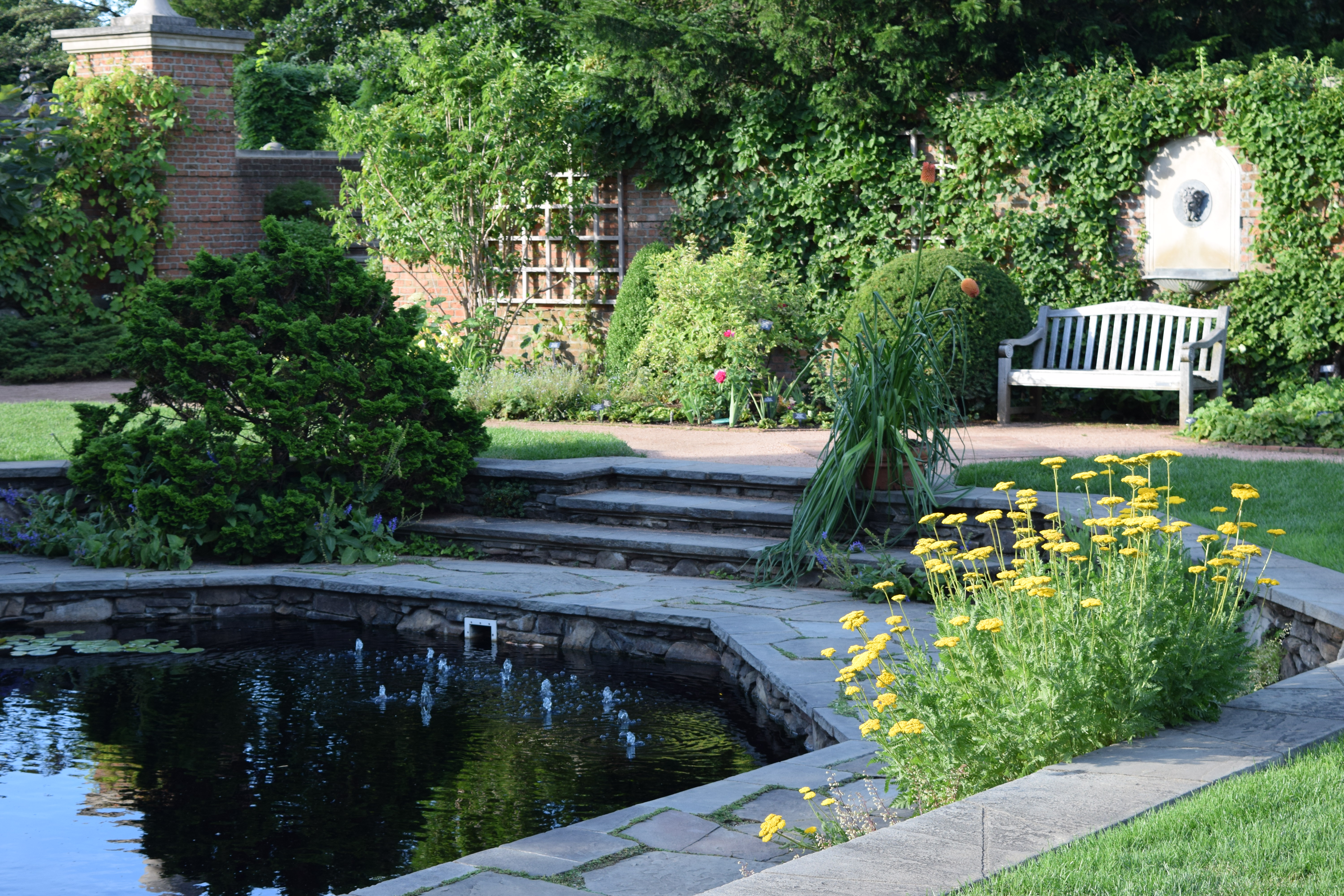
Water feature in the English Walled Garden.

From the Fruit and Vegetable Garden we headed back to the Main Island and the English Walled Garden.

DSC_0181 cbg

While it is surrounded by a wall, I have always wondered what specifically was English about this garden. Maybe readers from the UK can chime in here.

DSC_0183 cbg

Whether they are English or not, I like these two containers and the shaded bench.

DSC_0185 cbg

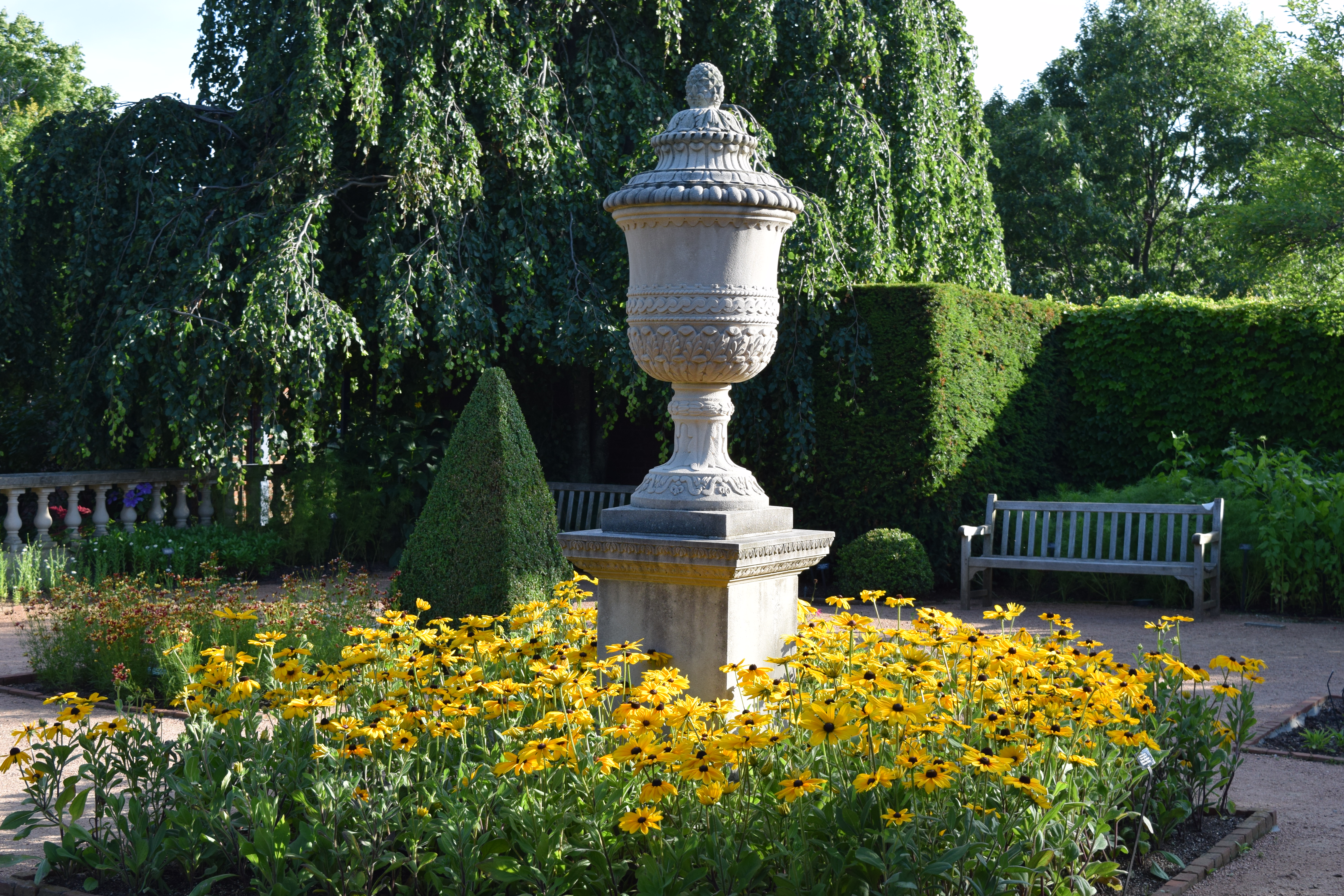
What do you call this concrete thing on the pedestal? Whatever it is, it looks quite grand though surrounded by humble Rudbeckia hirta.

DSC_0200 cbg

Here is a second water feature. I’d be reluctant to sit in that bench, though, there would be a grinning satyr looking over your shoulder.

DSC_0192

Another view. This part of the garden looks out over the lake.

DSC_0172 cbg

At this point we’d spent almost three hours visiting three of CBG’s 26 display gardens. We were getting tired, and so was the lion.

DSC_0208 Carl Linnaeus cbg

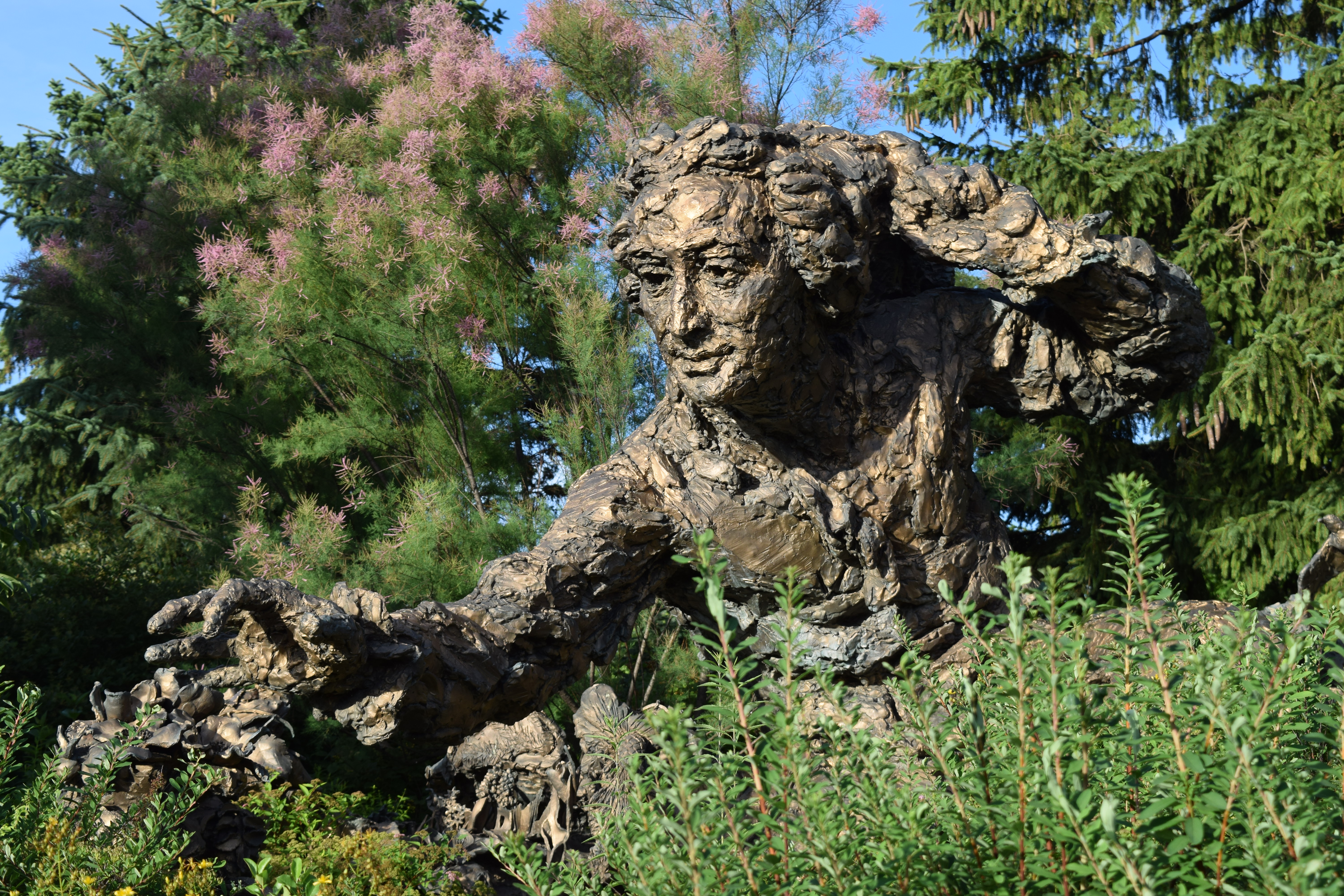
However, before leaving we had to pay a visit to Carl Linnaeus, as he happily reaches down to pluck a flower for his specimen sack. And why wouldn’t he be happy, surrounded by this garden and its vast botanical diversity gathered from around the world?

Foliage Day: July, 2015

I am a flower-centric gardener, and so it is useful to be reminded that a garden is about more than blooms. Which is exactly the service performed by Garden Bloggers’ Foliage Day, sponsored by Christina at My Hesperides Garden. 

'Northwind' Switchgrass
‘Northwind’ Switchgrass

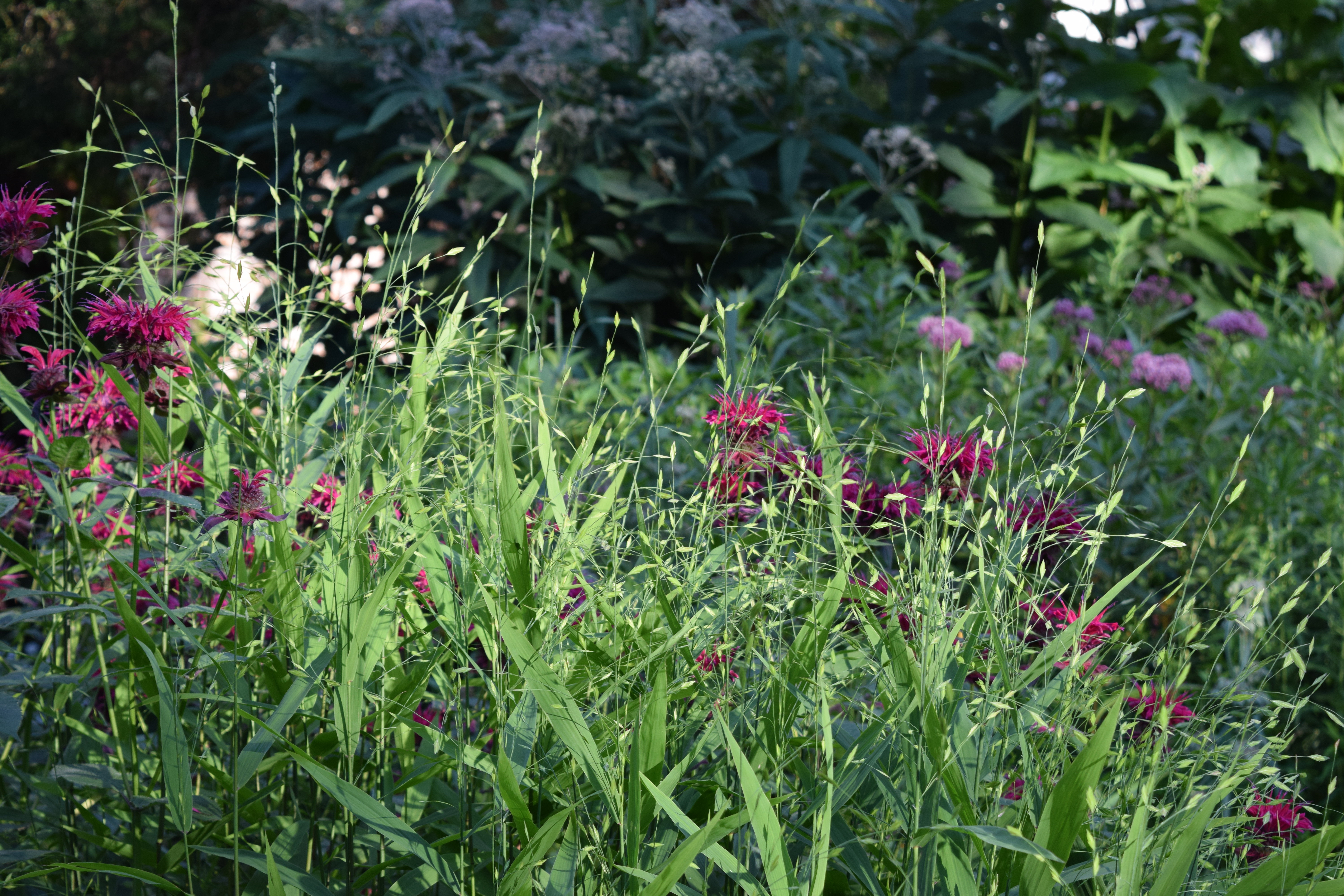
At this point in the summer the warm-season grasses start to assert their presence, especially the ‘Northwind’ Switchgrass (Panicum virgatum).

Switchgrass
Switchgrass

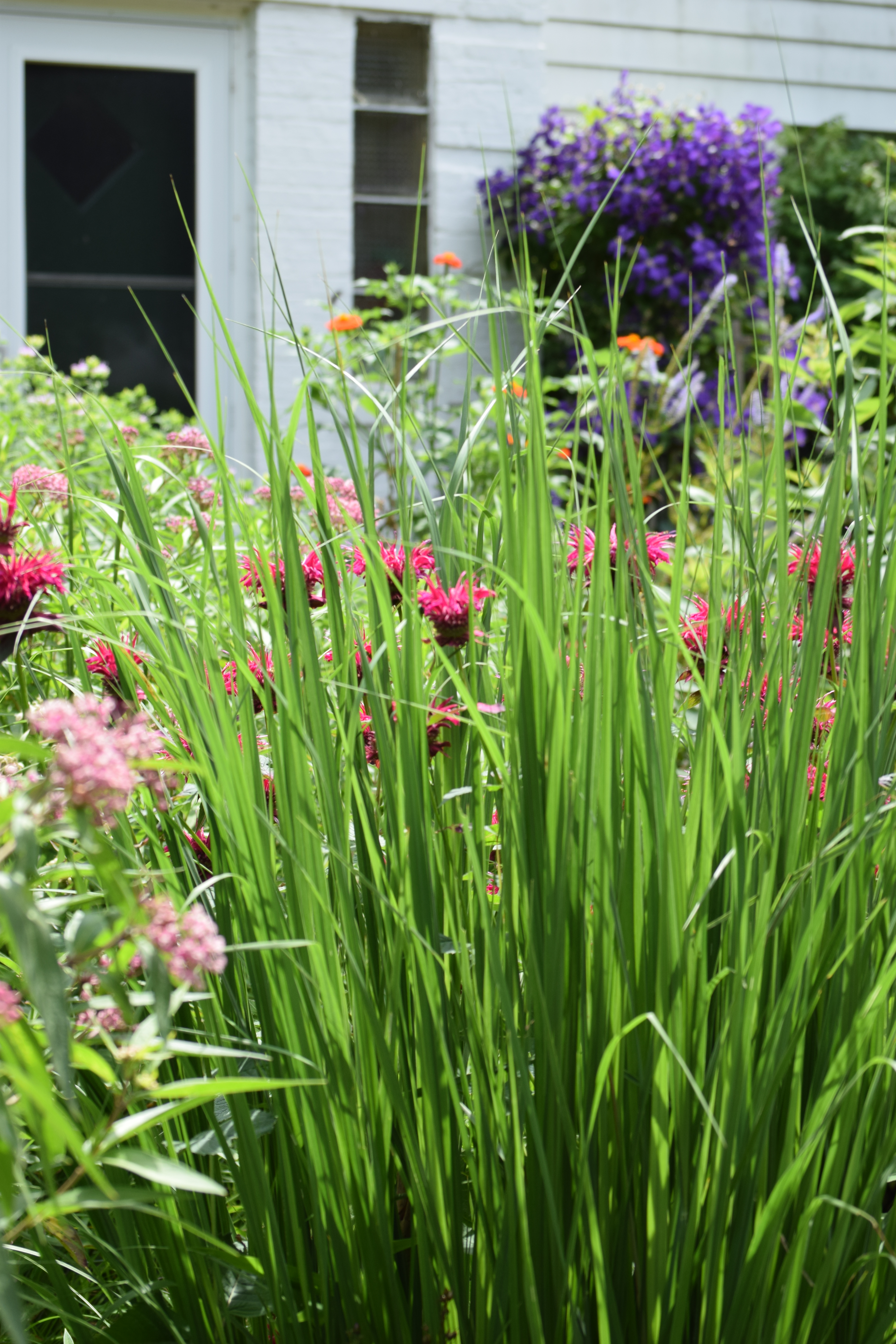
It makes a nice backdrop for the ‘Raspberry Wine’ Monarda.

Northern Sea Oats and  'Raspberry Wine'
Northern Sea Oats and ‘Raspberry Wine’

So does the Nothern Sea Oats (Chasmanthium latifolium).

DSC_0993 Northern Sea Oats

The seed heads on the Chasmanthium have started to form, creating a sort of pointilist effect.

DSC_0318 Little Bluestem
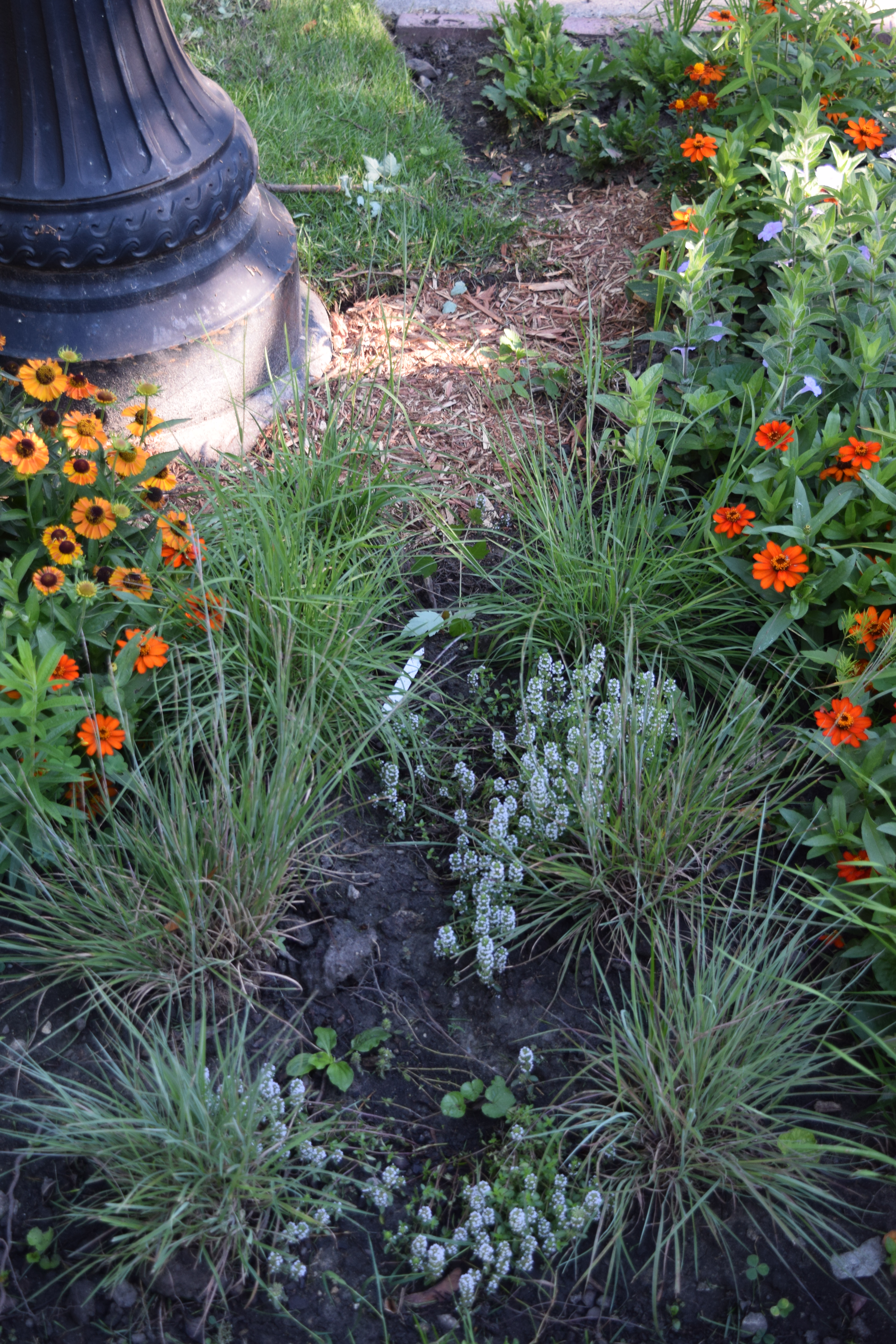
I transplanted some clumps of thyme to fill in while the Little Bluestem matures.

And while I’m on the subject of grasses, let me show you this clump of Little Bluestem (Schizacyrium scoparium) I planted in the Lamppost Bed. There’s two ‘Jazz’, two ‘Carousel’, and two straight species. Why did I do it like this? Pure whimsy. Also behind them there’s a ‘Shenandoah’ Switchgrass that was almost shaded to death in another location. It is slowly coming back to life.

DSC_0249 Lady ferns
Lady Ferns

In addition to grasses, there are ferns that are holding up well so far this summer. Lady Ferns (Athyrium filix-femina) look pale green and delicate but they are pretty tough..

DSC_0253 wild ginger

This mystery fern makes a nice contrast to the Wild Ginger (Asarum canadense).

DSC_0260 ferns and fountain

And these ferns are happy to be located next to a small water fountain.

Ostrich Ferns
Ostrich Ferns

I committed mayhem among the Ostrich Ferns (Matteuccia struthiopteris) in order to keep them from taking over the Front Foundation Bed. The remnant seems to be getting over the shock.

DSC_0229 starry solomon's plume
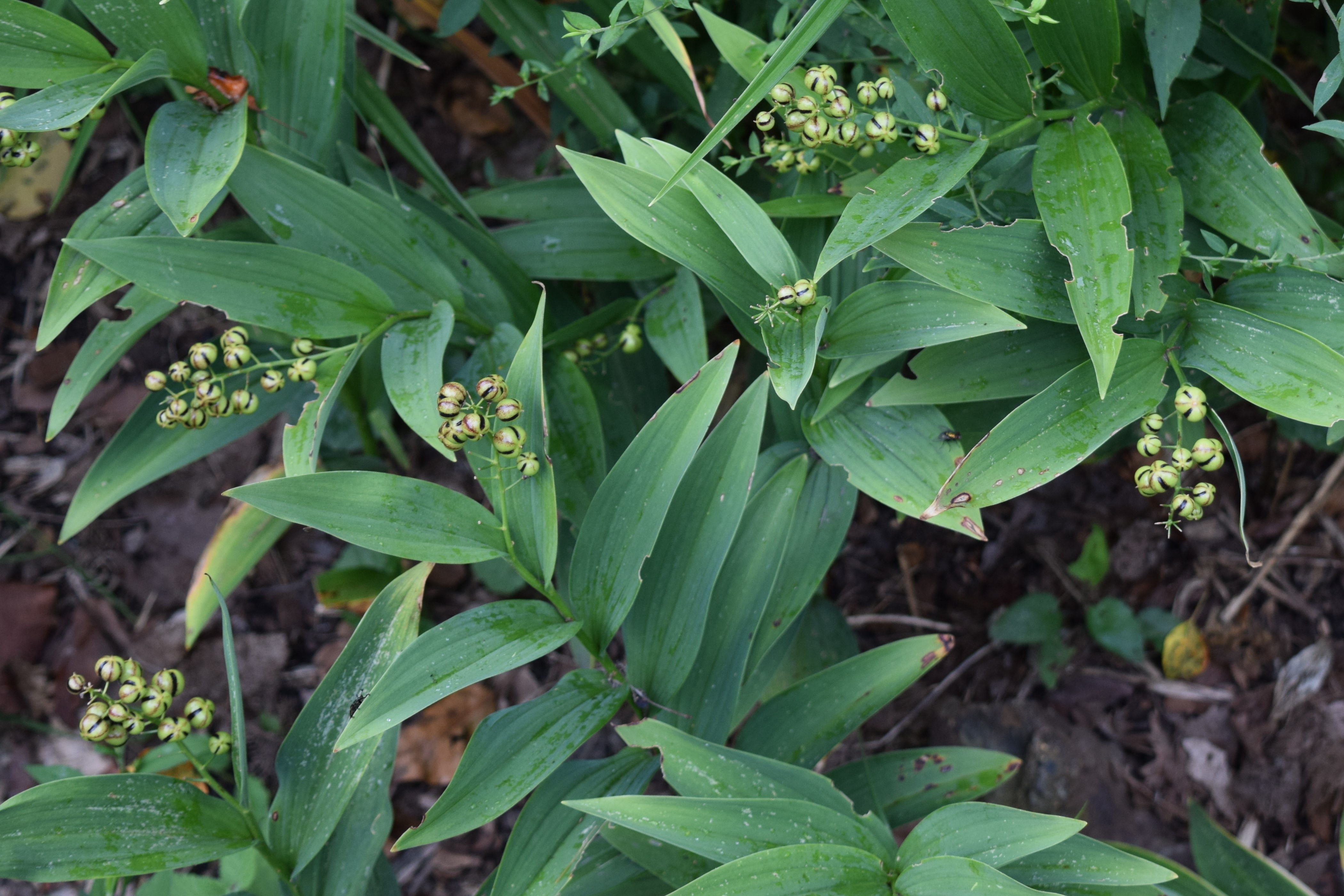
Starry Solomon’s Plume

Berries are not the same as foliage, but they’re not flowers either, so I say they count. The berries on the Starry Solomon’s Plume (Smilacina stellata) are still ripening.

DSC_0266 Solomon's plume
Solomon’s Plume

Same thing with the Solomon’s Plume (Smilacina racemosa). They are a sort of copper color now, but will be bright red when ripe.

DSC_0276 Cranberrybush Viburnum

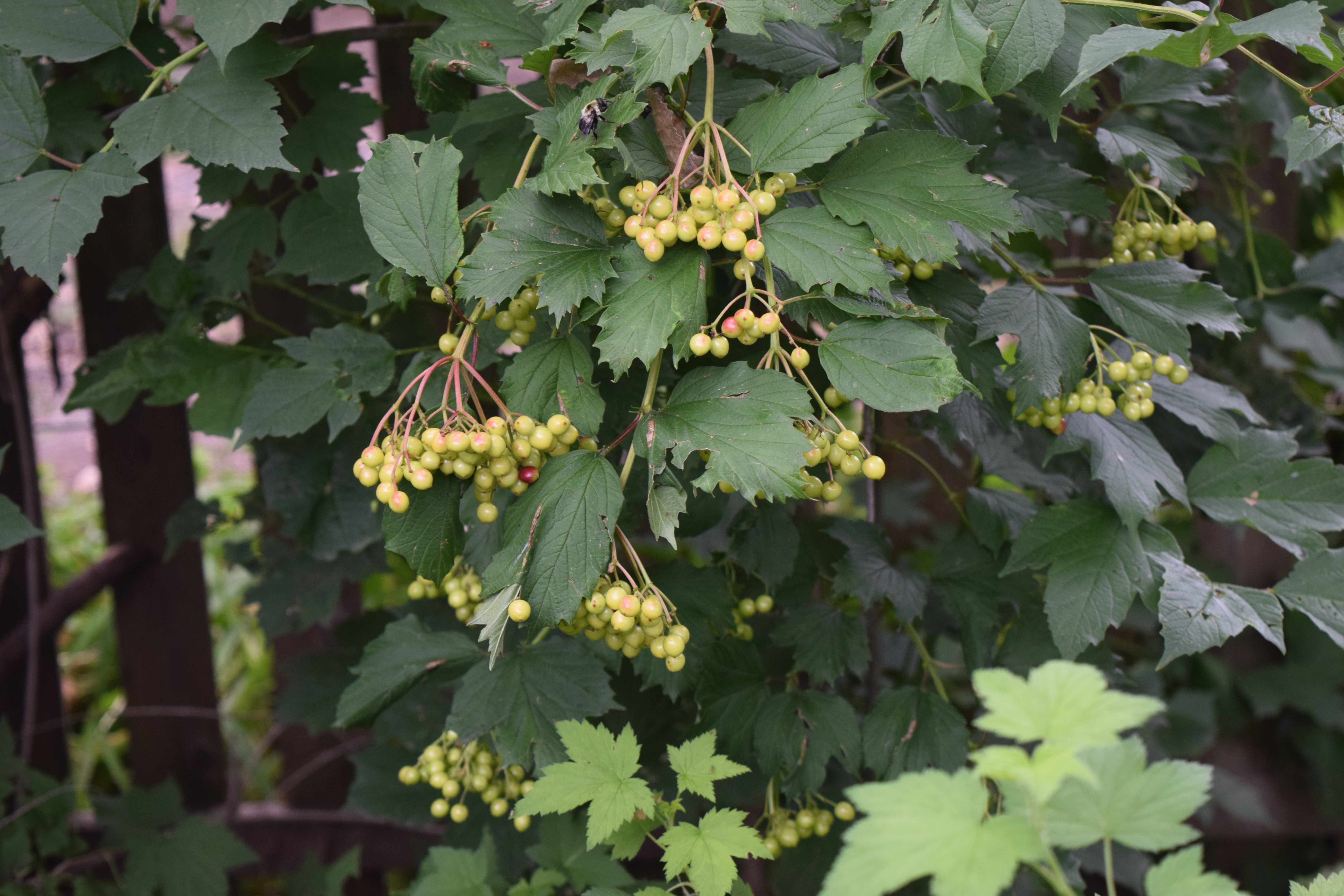
The Cranberrybush Viburnum (Viburnum opulus var. americanum) berries are plentiful this year, and just starting to ripen.

DSC_0233 Solomon's Seal

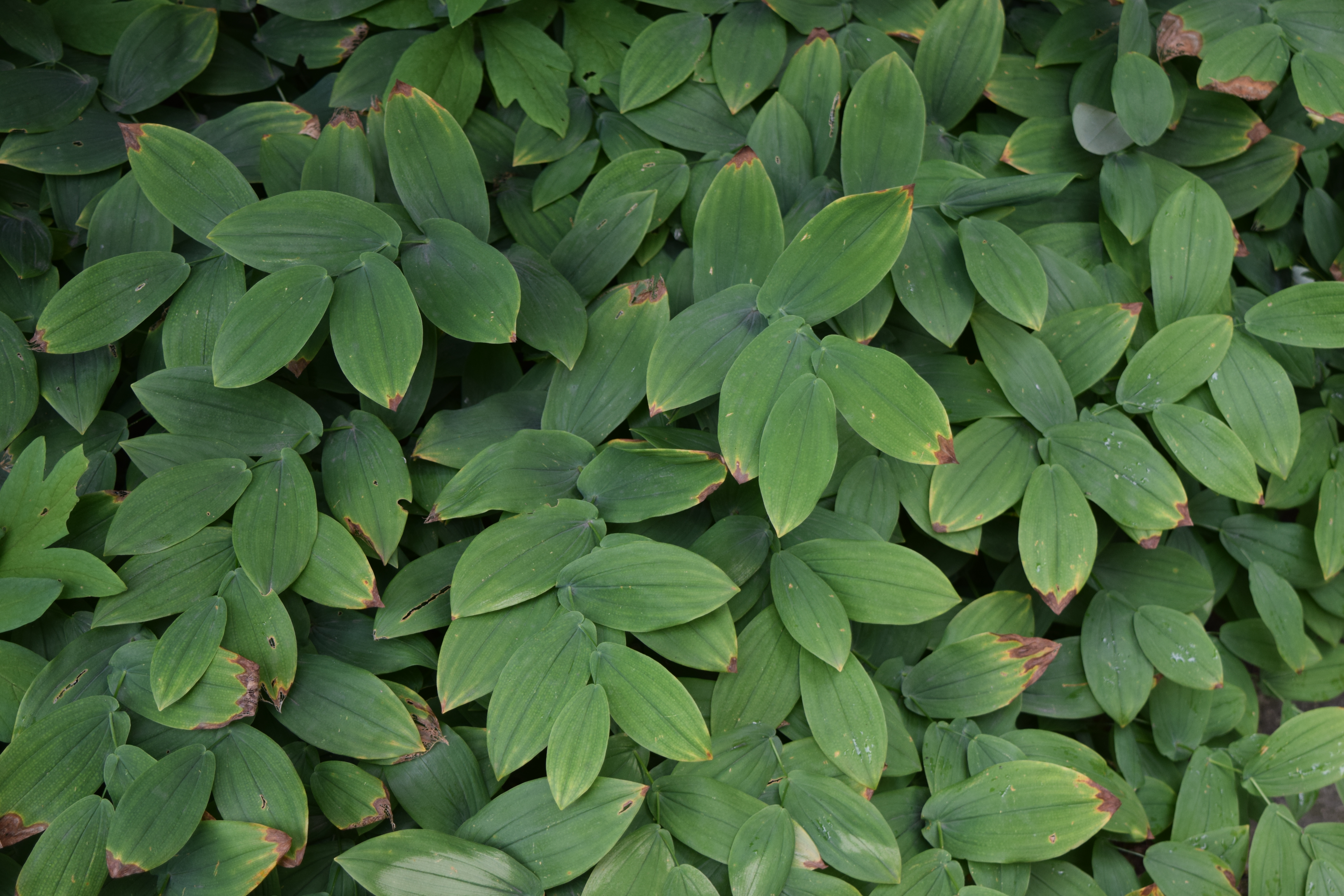
But the Solomon’s Seal (Polygonatum biflorum) aren’t very fruitful, but their arching stems are appealing even so.

Great Merrybells
Great Merrybells

One last thing. Great Merrybells (Uvularia grandiflora) is generally grown for its spring flowers, but in moist soil it makes a nice ground cover.

For more foliage and garden vignettes, visit My Hesperides Garden and Annamadeit at Flutter and Hum.

Lilies, Freckles, Trumpets, and Chia Pets

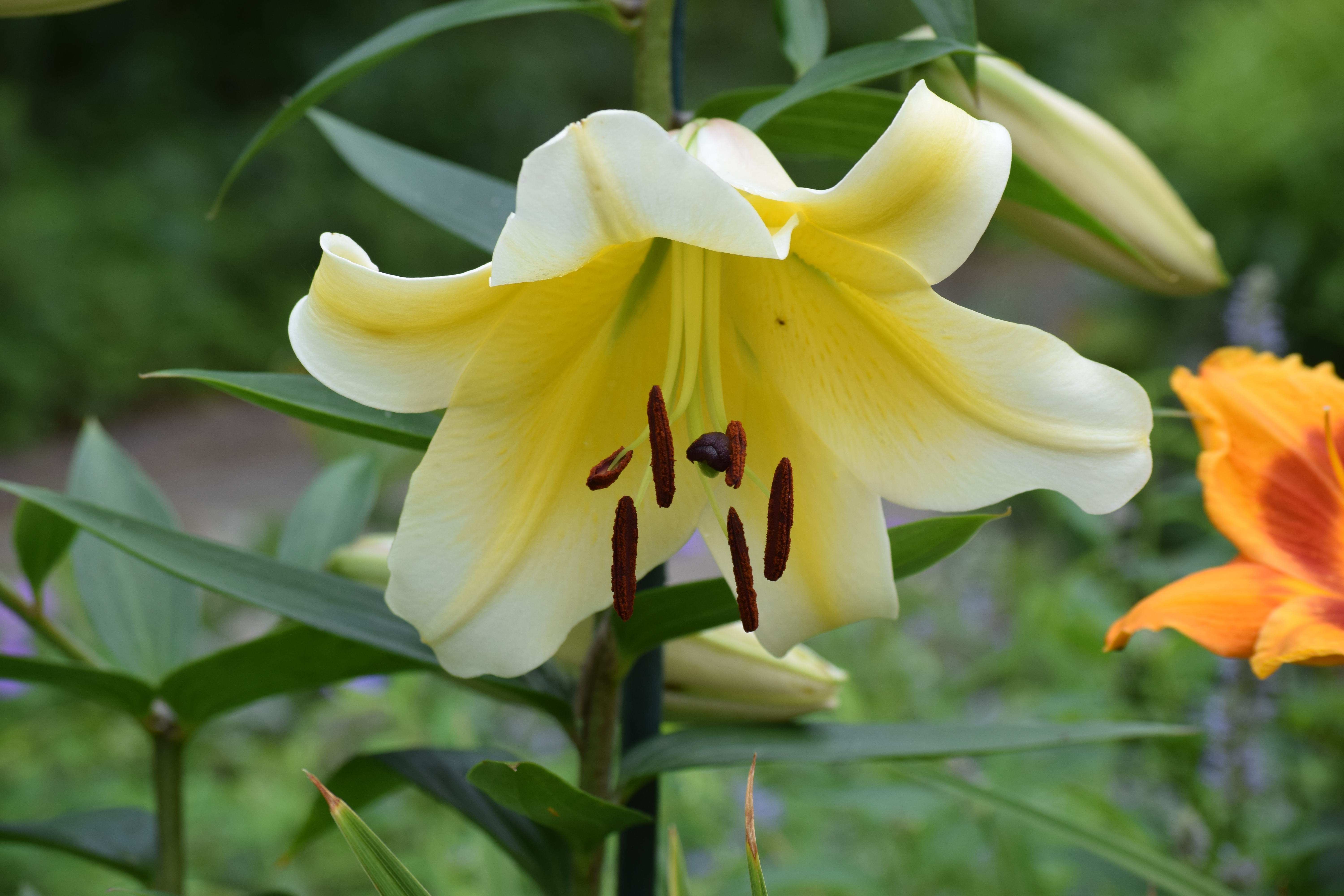
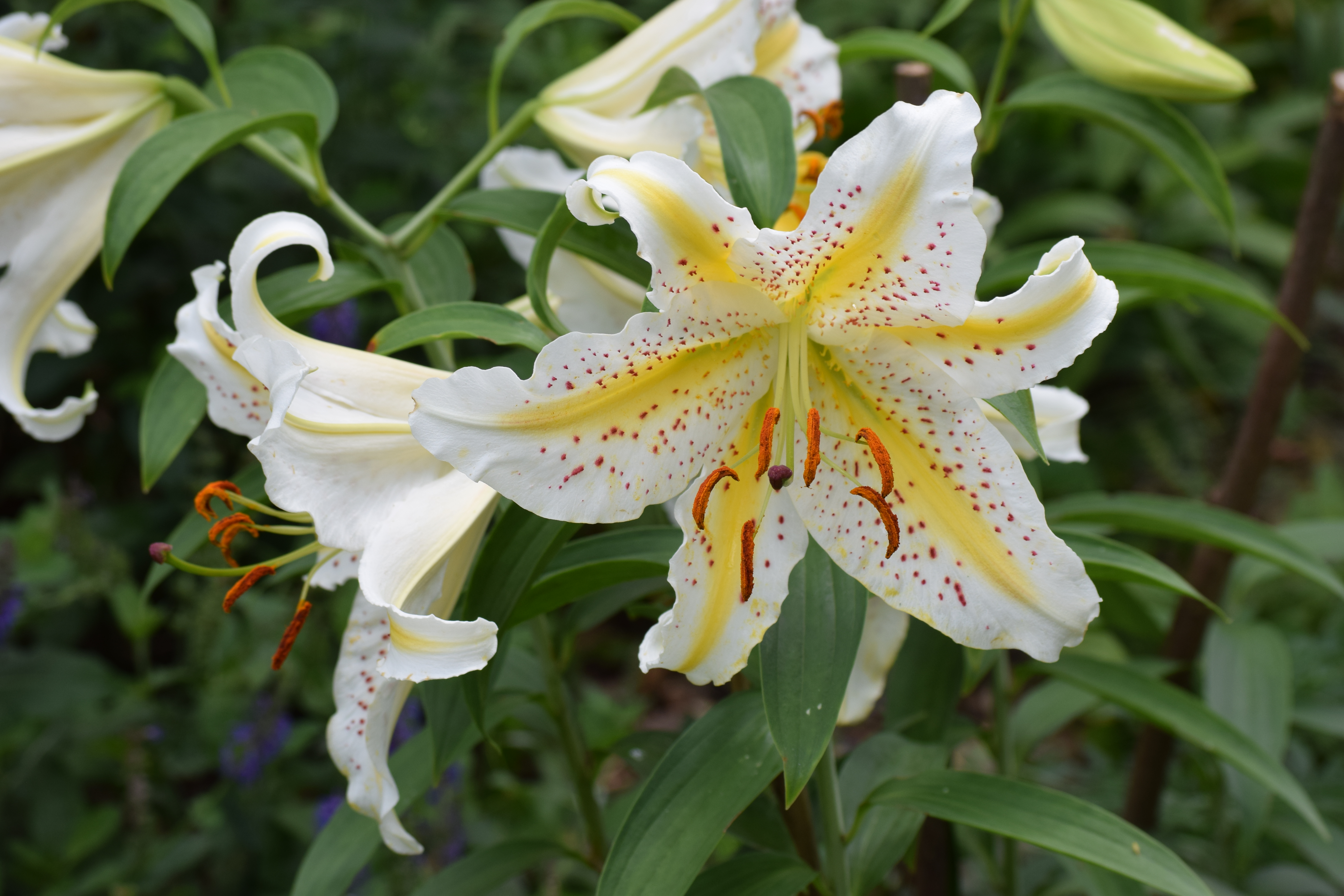
My ‘Conca d’Or’ Orienpet Lilies are in bloom, creating a deeply luxurious sensory overload.

'Conca d'Or'
‘Conca d’Or’

The fragrance, which can be detected from about six feet away, is deliciously sweet but not heavy. I planted these lilies near the sidewalk, and passersby close their eyes as they are momentarily enveloped by the scent.

DSC_0300 orienpet lilies

The flowers themselves are a glowing mix of cream and golden yellow, although here’s an odd thing: the clump I planted last year has freckles, while the clump I planted two years ago does not. Photographs generally show this variety without freckles.

'Conca d'Or' with freckles.
‘Conca d’Or’ with freckles.

Possibly the freckled lilies are really a different variety. On the other hand, The Lily Garden website says that Orienpet Lilies have color variations due to a “complex ancestry and the interaction of many pigments.”

With or without freckles, the flowers look so delicate but when you touch them they feel stiff, waxy, and thick.

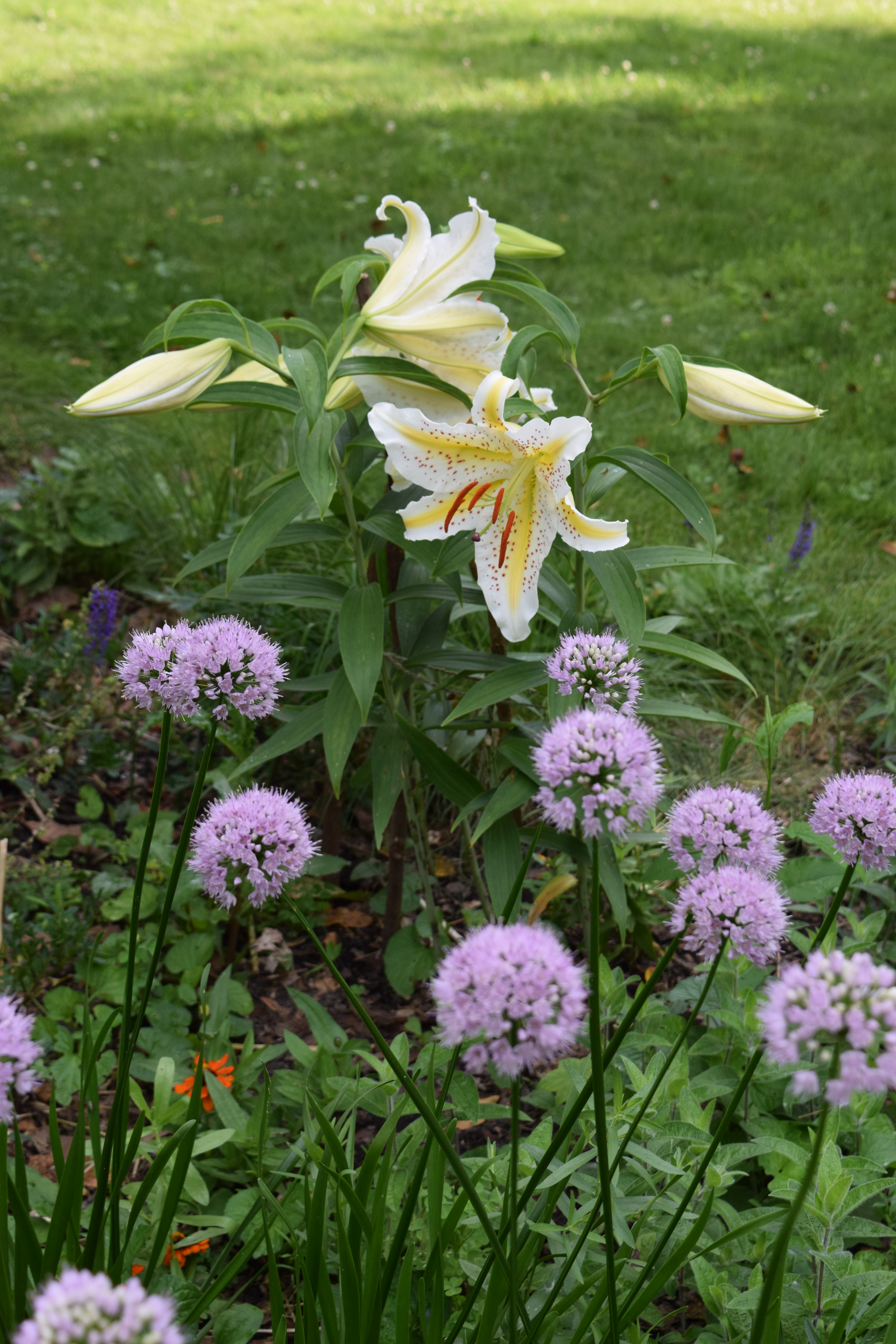
'Conca d'O' with 'Summer Beauty' Allium
‘Conca d’O’ with ‘Summer Beauty’ Allium

Orienpet Lilies are relative newcomers to the hybrid Lily scene. They are a cross between Oriental, Trumpet, and Aurelian varieties. To the Lily breeders I say: well done!

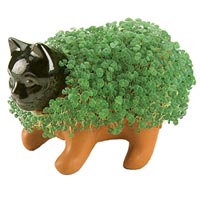
Unrelated to Lilies
Unrelated to Lilies

However, I think the people responsible for naming lilies could have done a better job. “Orienpet” is a singularly clumsy word. Also it sounds too much like Chia Pet. And I’m not sure that the average person would understand that the “pet” part comes from Trumpet. My suggestion: call them “Eastern Trumpet” Lilies. Same number of syllables as “Orienpet”, but rolls off the tongue much more easily.

DSC_0227 orienpet lilies

As for ‘Conca d’Or’ I was trying to figure out where the name came from but got tired of googling. ‘Golden Conca’ is as far as I got. Not sure what a Conca is, though there are towns in Italy, Corsica, and Catalonia with ‘Conca’ in the name.

DSC_0969 orienpet lilies

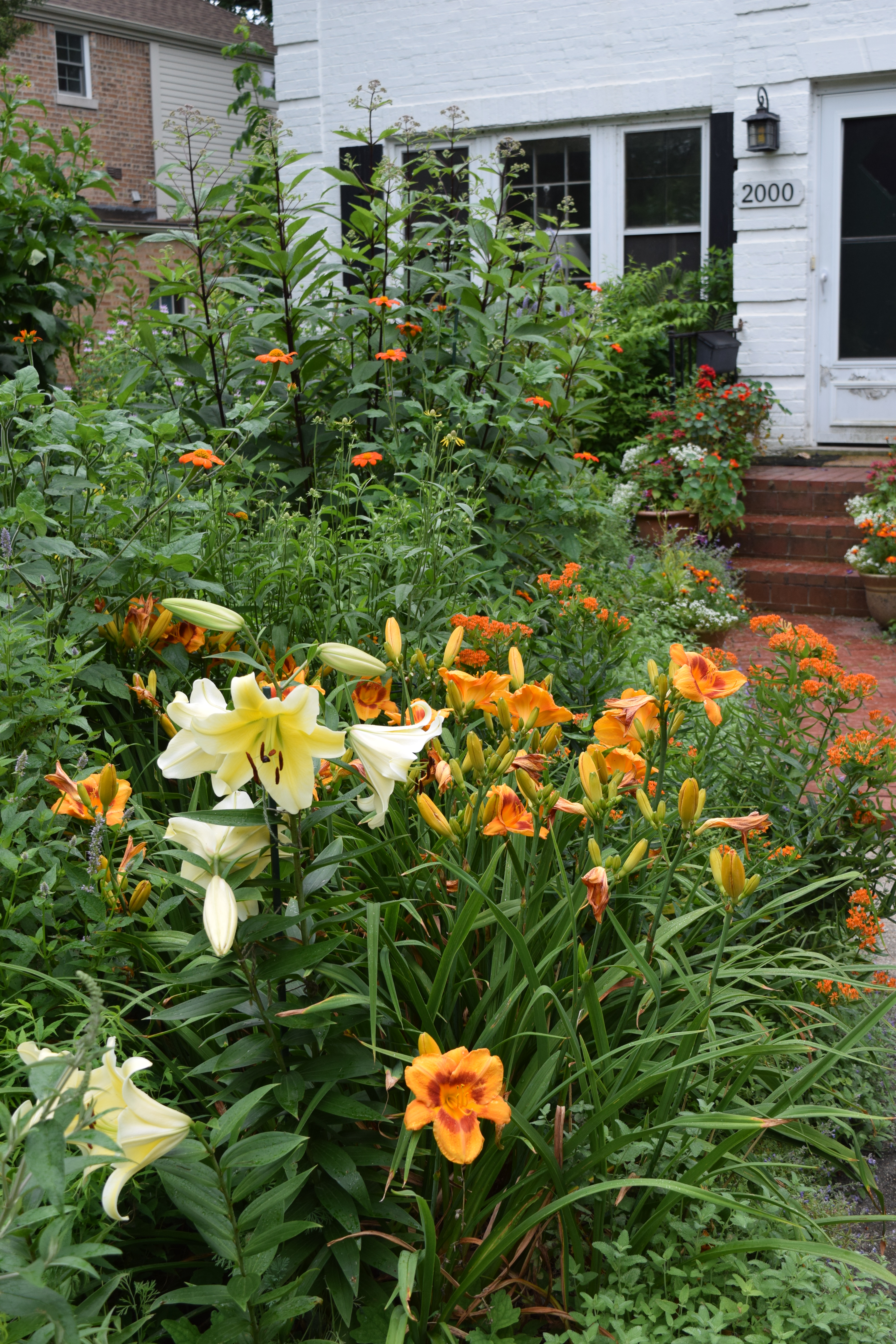
Anyhow, ‘Conca d’Or’ plays very nicely with both the lavender ‘Summer Beauty’ Allium and the orange ‘Eye-yi-yi’ Daylily.

As these Lilies mature, they should get much larger. I can’t wait.

What’s the favorite Lily in your garden?

A Pretty Good Weekend for Butterflies (ID Needed)

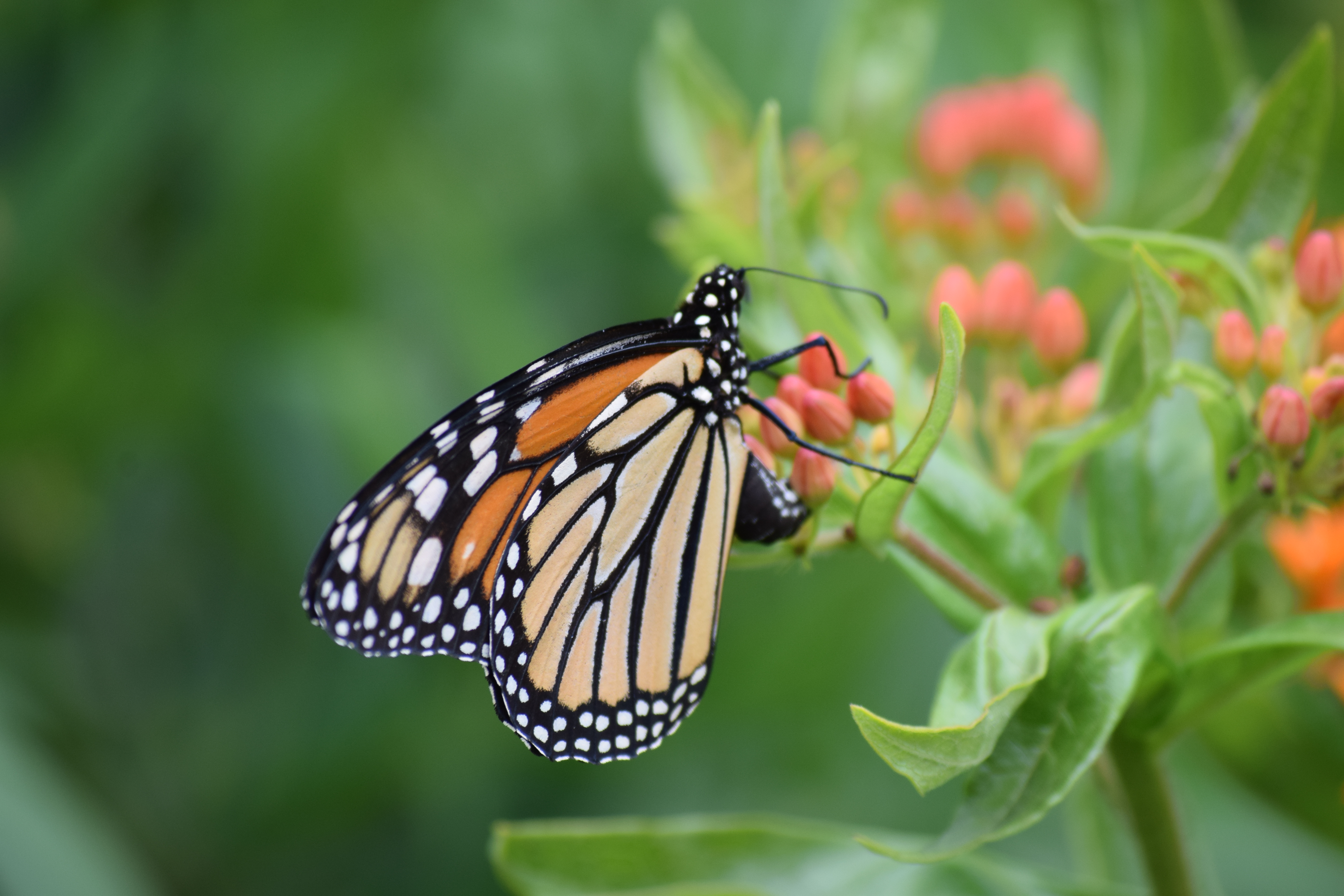
First of all, we now have not one, but two Monarch butterflies making multiple daily appearances.

Monarch on Swamp Milkweed.

I’ve seen them flying close together, though perhaps one is pursuing the other. I’ve tried to advise them that they’re not getting any younger and they should get busy and lay some eggs. Not sure if they listened, though.

Monarch on Butterflyweed.

Judy got some more pictures of one of the Monarchs feeding on the Swamp Milkweed (Asclepias incarnata) and Butterflyweed (Asclepias tuberosa).

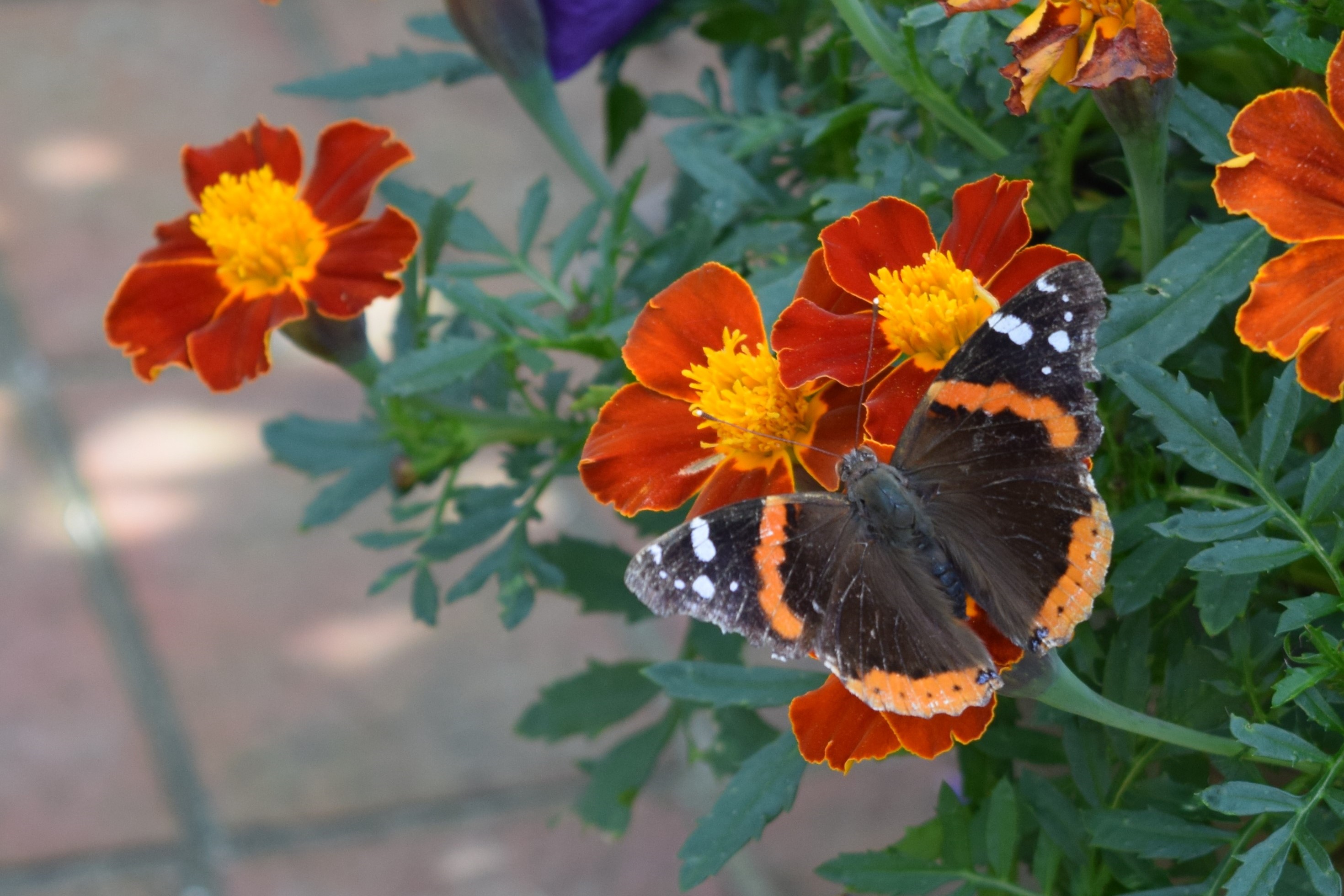
Red Admiral on Marigolds.

Lots of Red Admirals around. They seem to like Marigolds (Tagetes patula), which I didn’t know.

Red Admiral on'Summer Beauty' Allium.
Red Admiral on’Summer Beauty’ Allium.

Also, they LOVE ‘Summer Beauty’ Alliums.

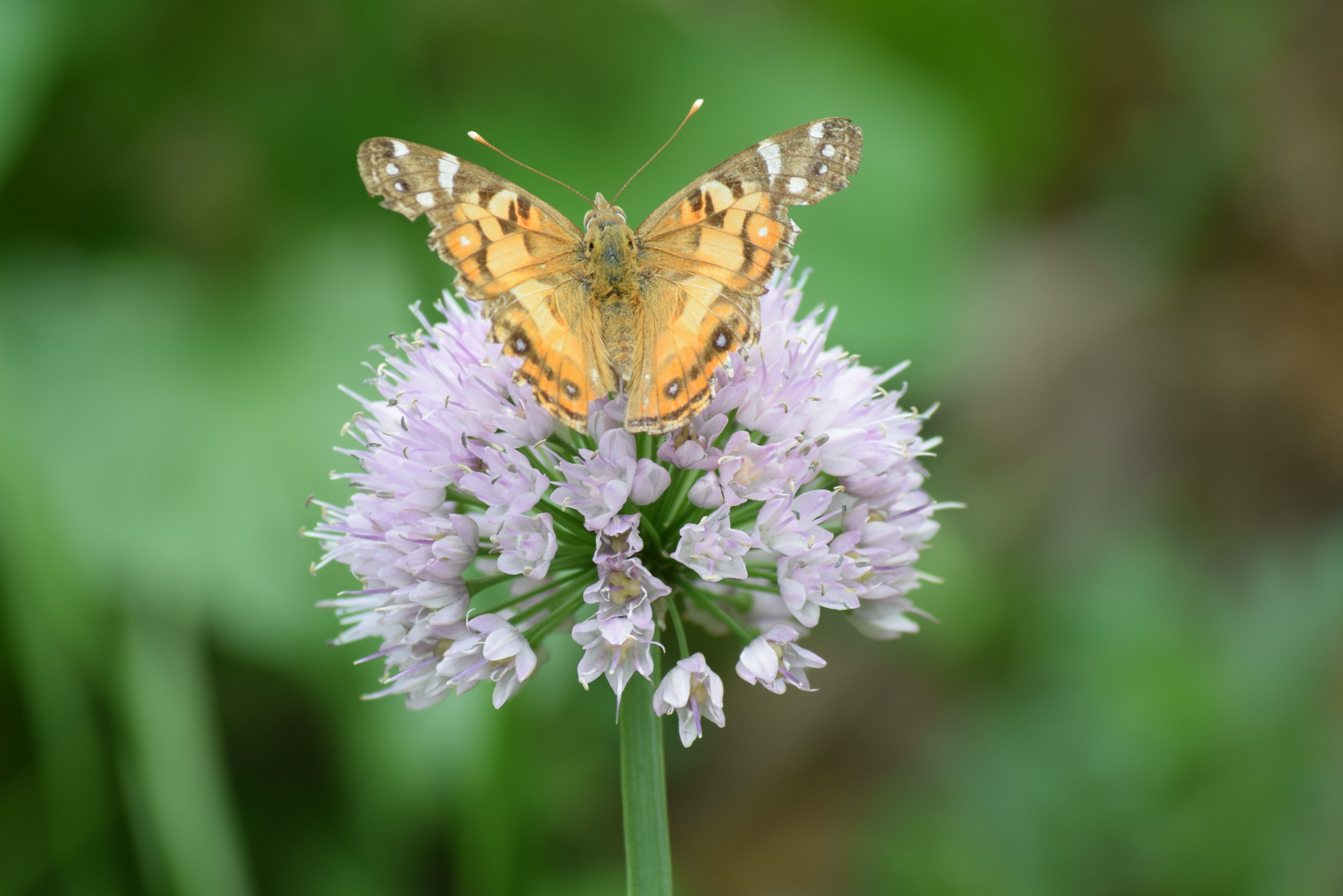
Unknown butterfly on 'Summer Beauty'.
Unknown butterfly on ‘Summer Beauty’.

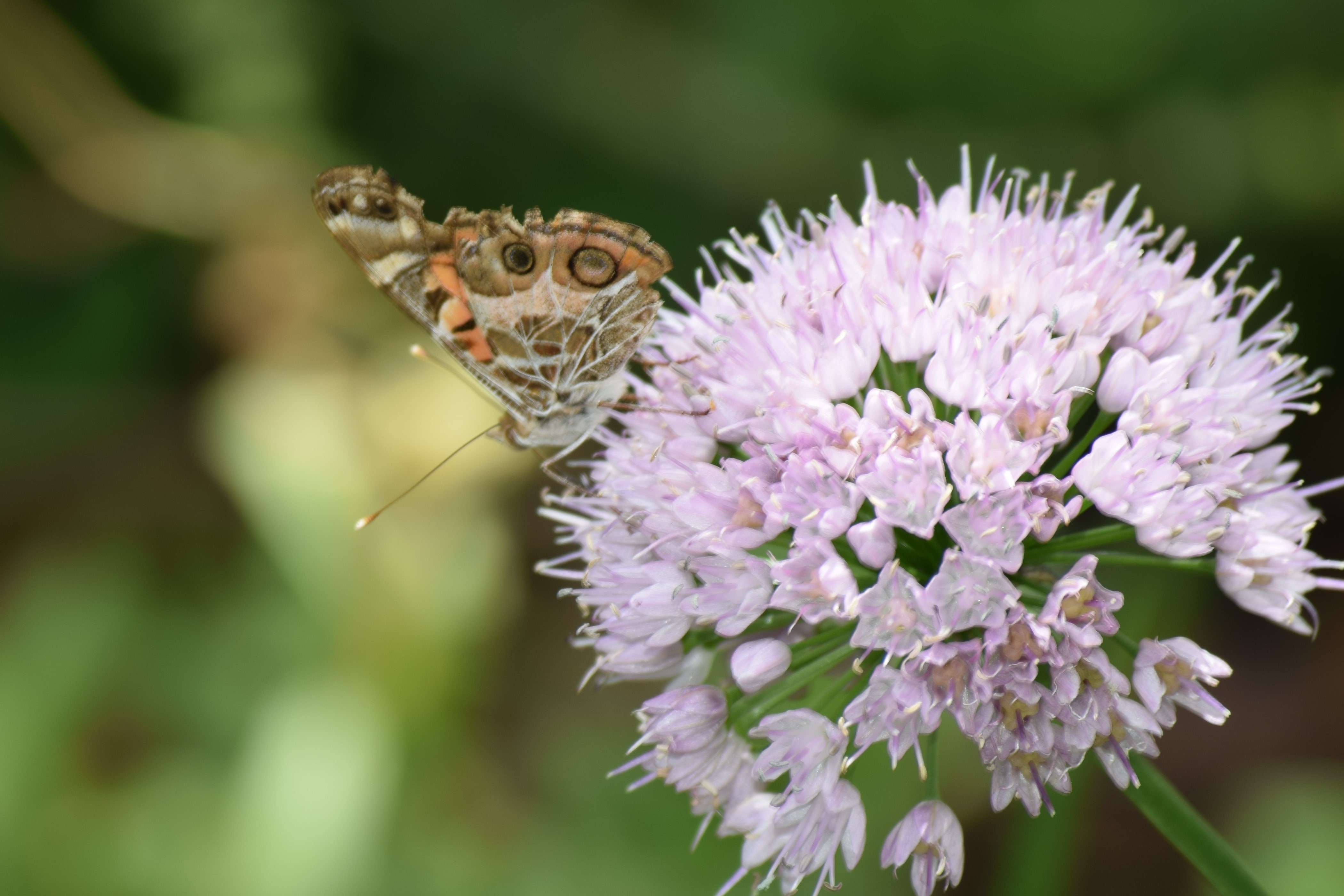
Like other Alliums, ‘Summer Beauty’ is adored by lots of pollinators. Here’s a butterfly that was practically glued to the lavender blue flowers. Does anybody know who this guy is?

DSC_0019 butterfly

Here’s another view of the same butterfly. Maybe some kind of Fritillary?

There was another butterfly I didn’t recognize flying around the garden, but it was so hyperactive Judy could get only the blurriest of photos.

Seen any new butterflies around your garden?

Bees Love Borage

In the Herb/Cutting Bed, we’re growing Borage (Borago officinalis) for the first time. I decided to give it a try for the little blue flowers (I love blue flowers), but also because I’ve heard that it’s a great plant for bees.

DSC_0777 Borage

This is one of those plants that is covered in little hairs. The hairs catch the late afternoon light in an appealing way.

DSC_0782 borage

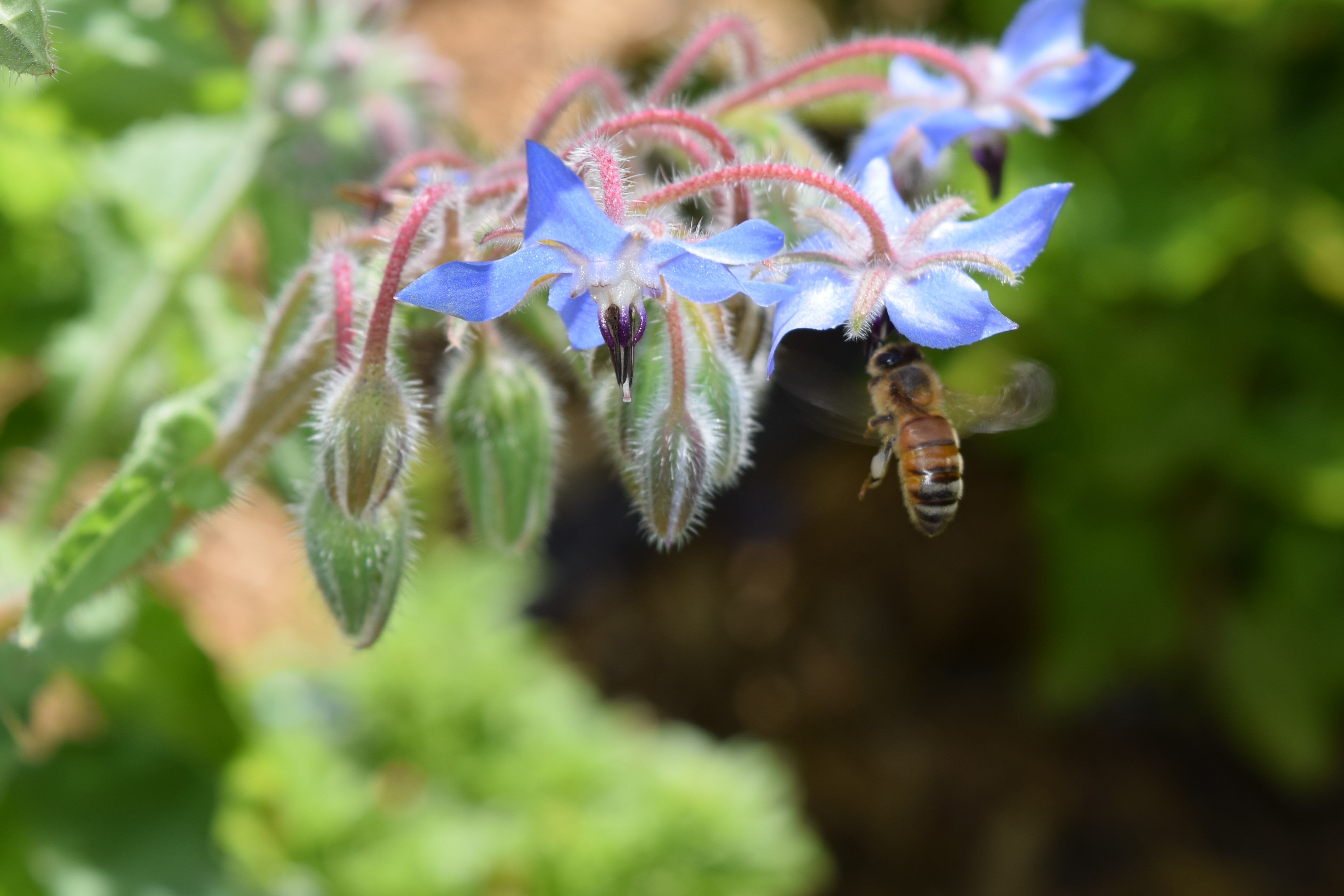
The bees in the front garden have confirmed the rumors about bees liking Borage. They are always hanging around the flowers.

DSC_0783 borage

Borage leaves are eaten cooked or raw in parts of Spain, Italy, and Germany. The flowers can also be eaten. Judy and I haven’t tried it yet, though.

DSC_0785 borage and bee

It’s also been used medicinally to treat a variety of ailments. People make it into a tea or take it as Borage seed oil. I’m not sure if its efficacy has ever been scientifically documented.

All I know is that I like the flowers, and the bees like the flowers, and I like that the bees like the flowers.

My understanding also is that Borage self-sows freely, so that once you have Borage you will always have Borage. But I’m fine with that.

DSC_0780 borage

Do you grow Borage, and have you tried eating it?

Bloom Day Supplement: Roses In Shade And Other July Blooms

So on Tuesday night my Bloom Day post was getting long, and I was getting tired, so I decided to cover the back garden in a second post. Which is what I’m doing now.

Prairie Rose
Prairie Rose

I refer to the back garden as my shady garden, but it is a light, dappled shade mostly from tall Silver Maples (Acer saccharinum) and Siberian Elms (Ulmus pumila – yes, I know Siberian Elms are a terrible tree, but they were planted long before we moved here).

More flowers than you might expect are fairly happy with this level of light. No blackspot or other diseases – though I did have one rose I had to remove because of rose rosette.

Currently I have three different roses growing in the back garden, all in bloom.

DSC_0853 darlows enigma rose

The rambler ‘Darlow’s Enigma’ grows on the arbor. This rose has clusters of small, single white flowers that bloom throughout the summer.

8b Darlow rose
‘Darlow’s Enigma’

They are not powerfully fragrant, but when you walk under the arbor you do catch a whiff of their sweet scent.

Prairie Rose
Prairie Rose

Growing against the white brick garage wall there is the wild Prairie Rose (Rosa setigera), with single pink blooms that fade to cream.

DSC_0599 sally holmes rose

Finally, ‘Sally Holmes’ blooms near the east fence, positioned where it can get the most late afternoon sun. While the roses mentioned above started to bloom only this month, Sally has been flowering since early June. The flowers come in trusses that at that this point are showing some age.

'Sallie Holmes'
‘Sallie Holmes’

Every winter for the past three years, the rabbits keep eating Sally’s canes almost down to the ground. She rebounds, though, and still blooms. This fall, however, I will not forget to surround her with chicken wire.

Indian Pink
Indian Pink

You may have noticed that in the back garden I favor white flowers specifically and softer colors generally. Indian Pink (Spigelia marylandica) is an exception to this. Judy thinks this flower has an extra-terrestrial look to it, but it is in fact a North American native, as the name suggests.

Smooth Hydrangea
Smooth Hydrangea

Going back to the theme of white flowers, there are some big old Smooth Hydrangea (Hydrangea arborescens) that bloom enthusiastically through the heat of summer.

DSC_0944 Elderberry
Black Elderberry

Also, the Black Elderberry (Sambucus canadensis) is flowering now, with huge clusters of tiny cream-colored blooms.  There is one Elderberry growing in my Thicket Corner, which also surrounds the Siberian Elm with Wild Currant (Ribes americanum), Gray Dogwood (Cornus racemosa) and Cranberrybush Viburnum (Viburnum opulus var. americanum).

DSC_0591
Black Elderberry in the corner of the Corner Thicket.

This Elderberry is the straight species, with tiny berries are edible but don’t taste like much. When ripe, they are quickly eaten by the birds.

Let’s leave the flowering containers for another day, shall we?

Have you ever tried growing roses in shade?