Winter Kill
This might seem a little late for a post on plants lost to our last winter (an extraordinarily severe one). But sometimes you need more time to be really sure of your losses.
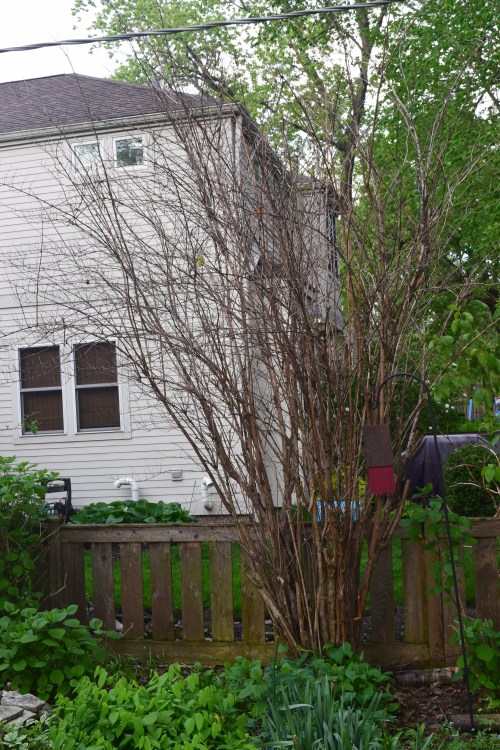
This might seem a little late for a post on plants lost to our last winter (an extraordinarily severe one). But sometimes you need more time to be really sure of your losses.

This is not one of those times when the garden is a riot of color. It is bursting with lushness and growth, true, but tranquil greens predominate. There are some blooms, but mainly in cool whites and lavenders.


Did I mention that a giant branch broke off our Siberian Elm (Ulmus pumila) the day before I got home? I think I did. Judy was in the back garden at the time, inspecting our new grill, so it’s lucky she wasn’t hurt. She said it happened so fast there wouldn’t have been time to step aside if the branch were falling on top of her.


The last week of May is generally the busiest week of the year in my job. This year the last week of May effectively lasted until June 2nd, which is why I didn’t get home until this afternoon (after being away since last Sunday).
I’m rather overwhelmed by all that’s going on in the garden, and by all I need to do to catch up. The giant branch of the Siberian Elm (Ulmus pumila) that came crashing down to earth yesterday isn’t helping, but I won’t talk about that now.

‘Purple Sensation’ (Allium aflatunense) is the earliest of our ornamental Alliums to bloom. This year, they burst into flower just over the past week.


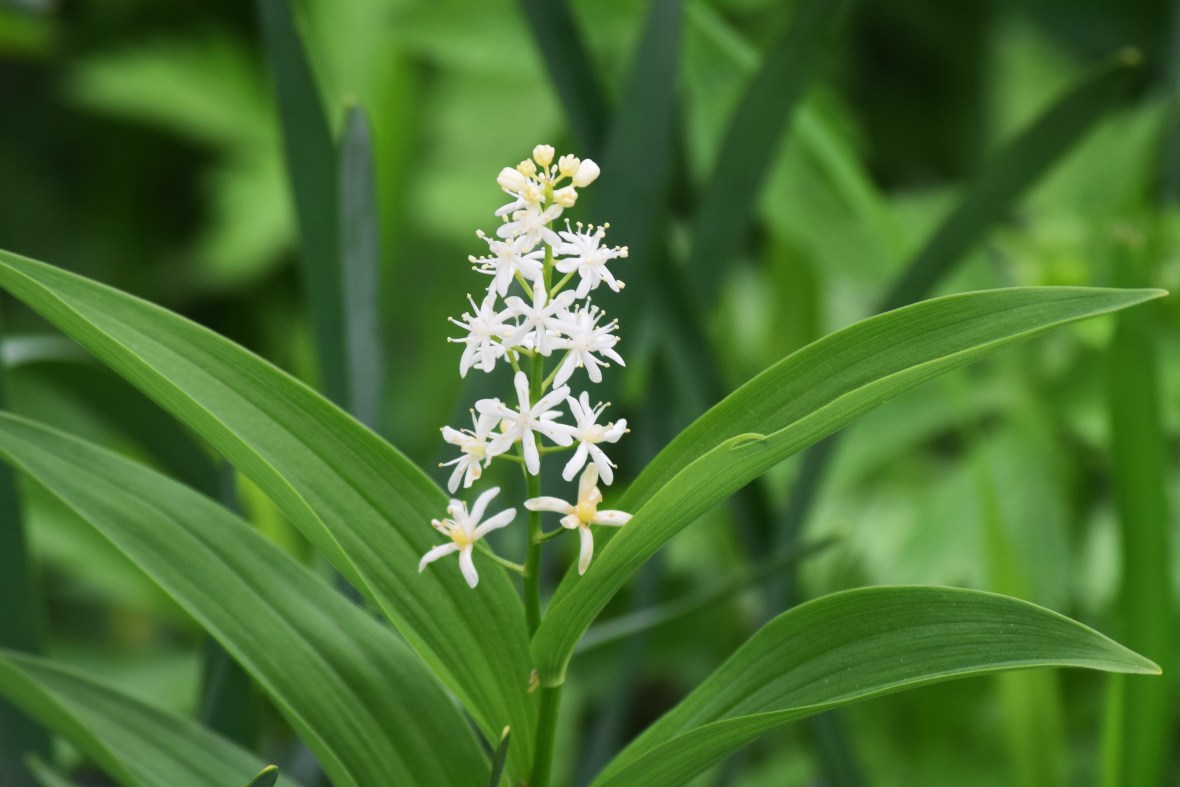
Starry Solomon’s Plume (Maianthemum stellatum) and Wild Currant (Ribes americanum) are both useful plants for the native shade garden, or any shade garden for that matter. They are blooming now in our own place. They are not spectacular, but they are beautiful in their own quiet way. Adaptable to a variety of light and soil conditions, they can help provide a sense of fullness and green abundance even in areas of dry shade.

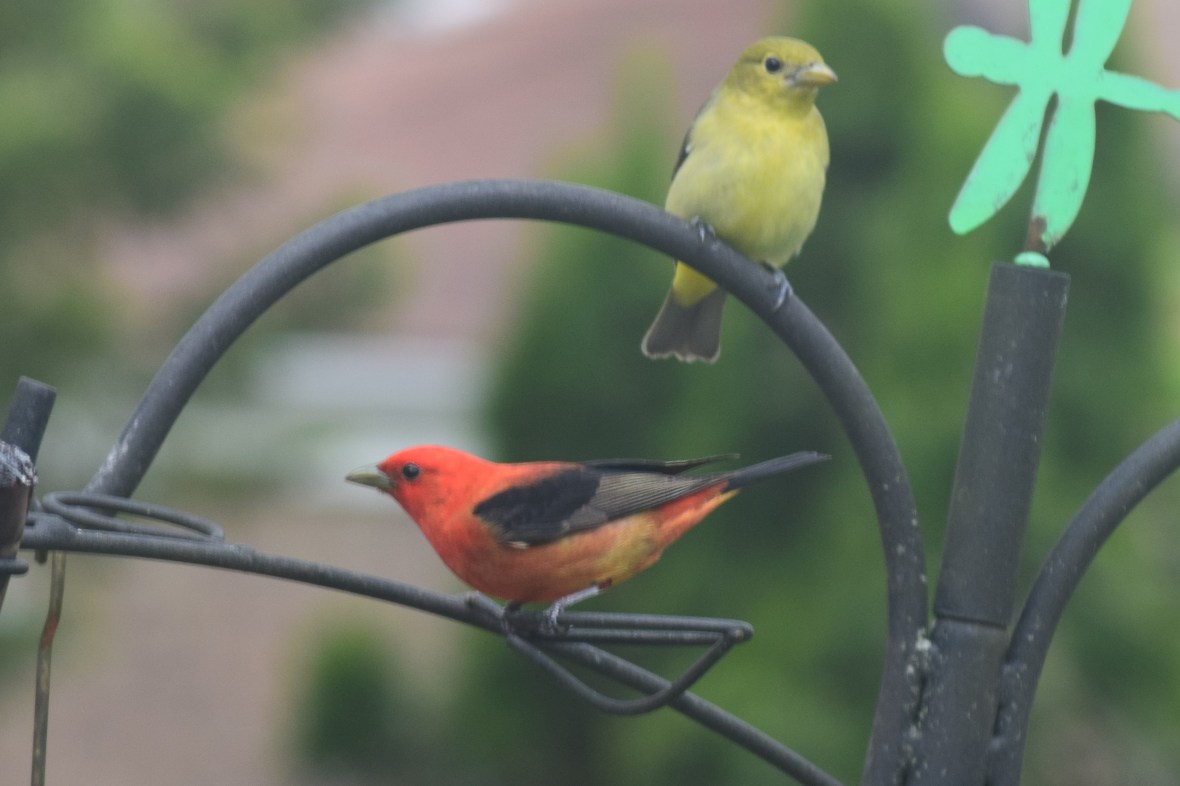
This past weekend a pair of Scarlet Tanagers visited the back garden. Like the Indigo Bunting, this is a bird that we see only once every year or so.

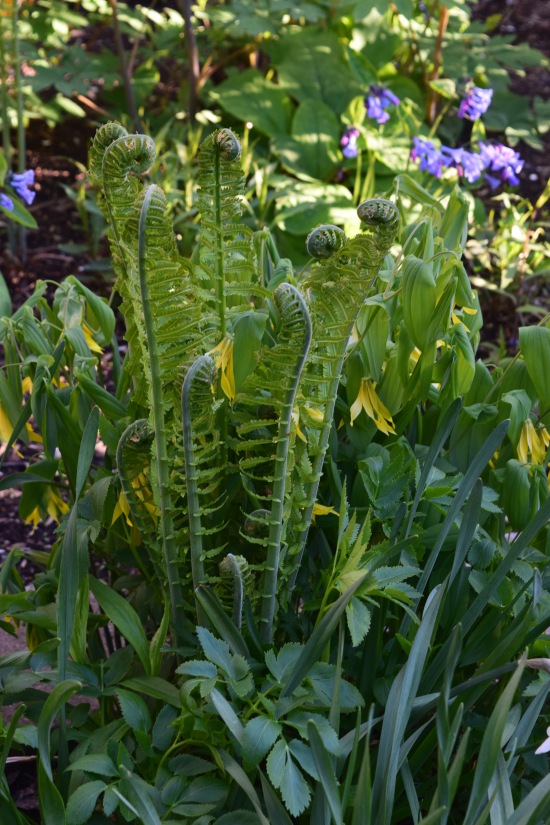
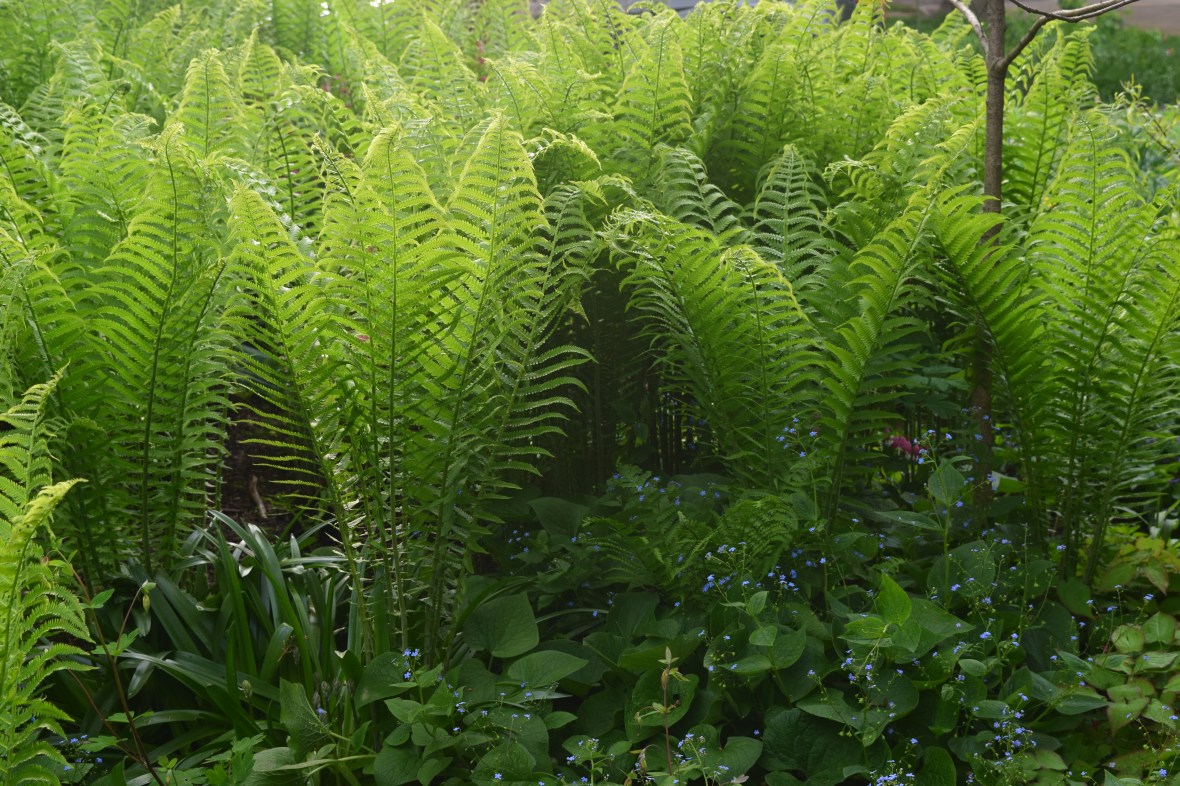
Somewhere it is written that foundation plantings must be evergreen shrubs (Yews, Boxwood, and the like). and that these shrubs must be clipped into geometric shapes. Judy and I, however, have defied this commandment and have come up with a different sort of foundation planting: Ostrich Ferns (Matteuccia struthiopteris) and allied perennials. I would also consider grasses, but the front of our house faces north and is in quite a lot of shade.

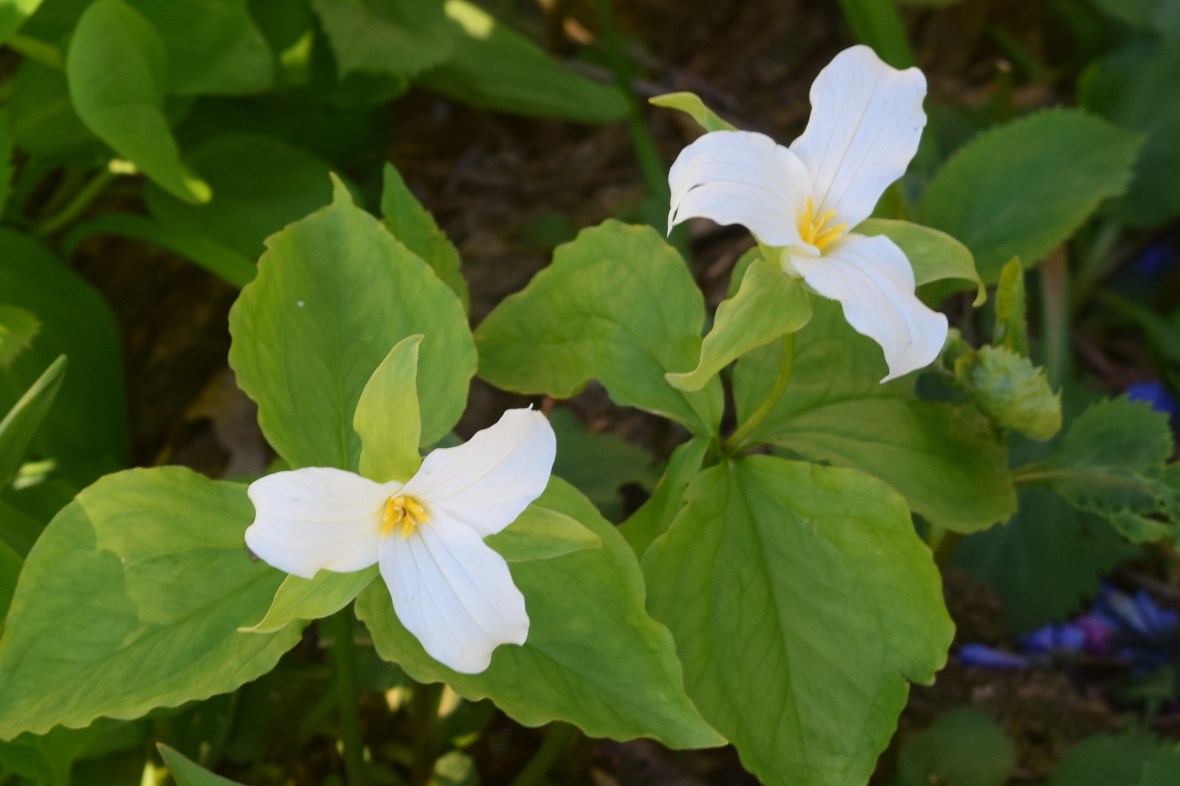
The Large-Flowered Trilliums (Trillium grandiflorum) I planted a few years ago are slowly settling in and bulking up. It’s an elegant flower with its three gleaming-white petals.




 gardeninacity