One of the unfortunate things about my job is that I have to be out of town a great deal during May, a crucial gardening month. This past week I left on Tuesday morning and returned Saturday afternoon, just a few hours ago. I have to leave again on Monday morning (yes, Memorial Day), and won’t return until Friday.
During these periods I long for my garden. Judy helps by emailing me photos occasionally, but I still do a great deal of worrying. (Oh, and I miss Judy, too.) Is anything drying out? Are there plants flopping over and in need of staking? Am I missing the fleeting blooms of some particularly choice flower? My plants are used to fairly constant attention while I’m at home, will they be resentful or alienated by my long absences?
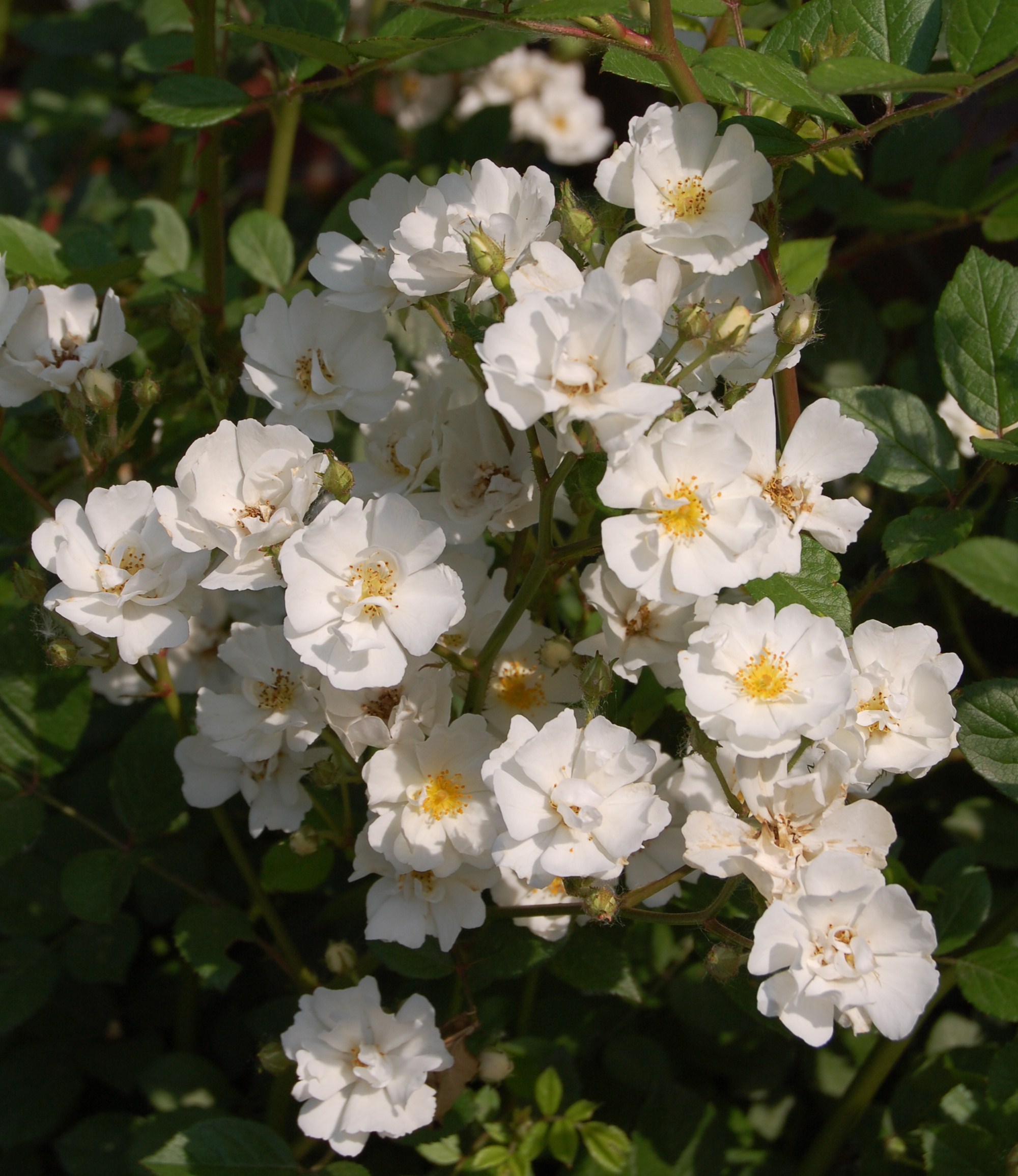
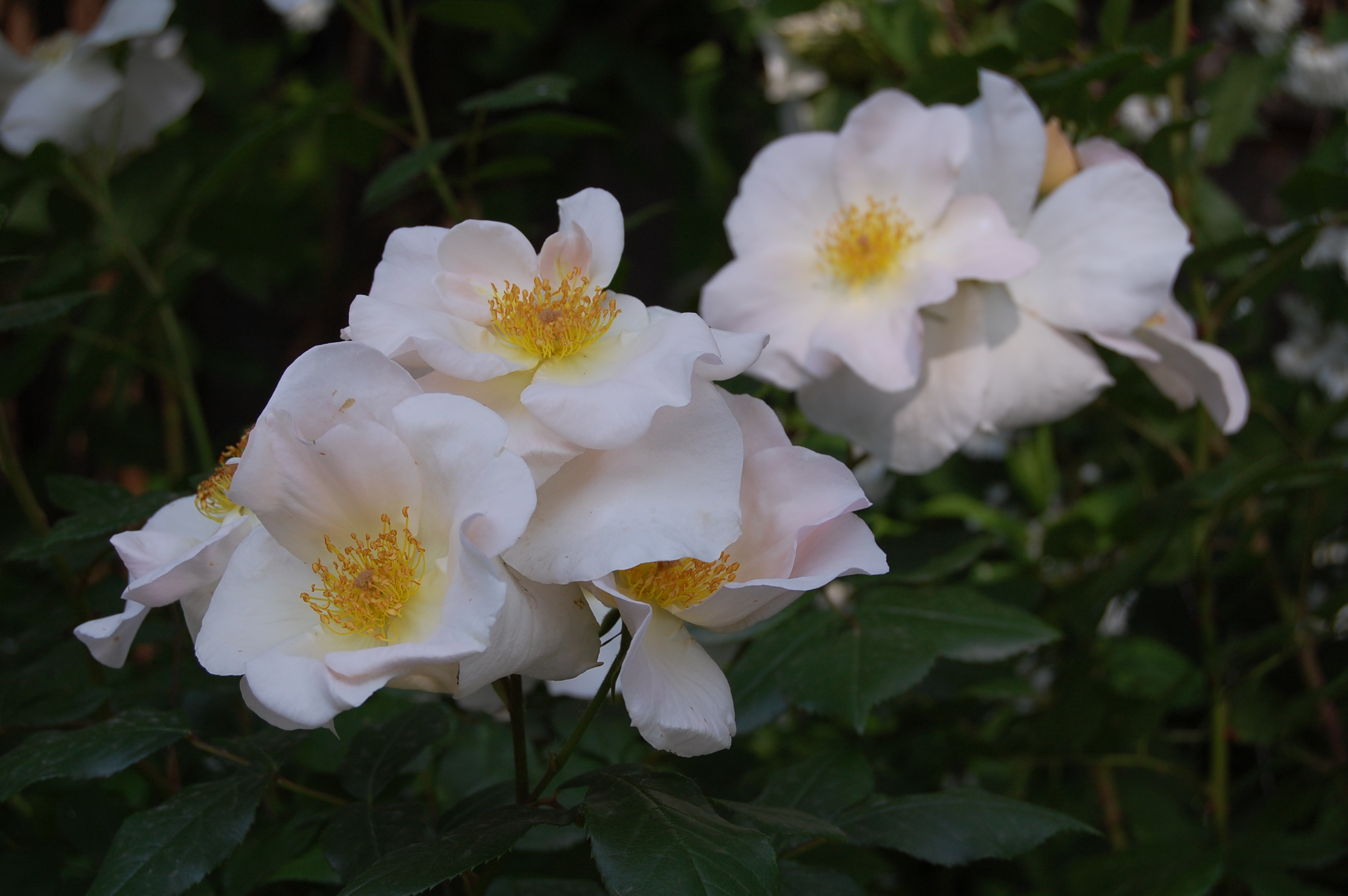
The upside of being away from home is that when I return, seeing the new blooms has a greater emotional impact. For instance, my rose ‘Cassie’ was covered with unopened buds when I left, but with lovely semi-double white flowers when I returned.

Actually, many of my roses took great leaps forward during my absence. ‘Sally Holmes’, now entering its third summer in my backyard, is just starting to hit its stride.

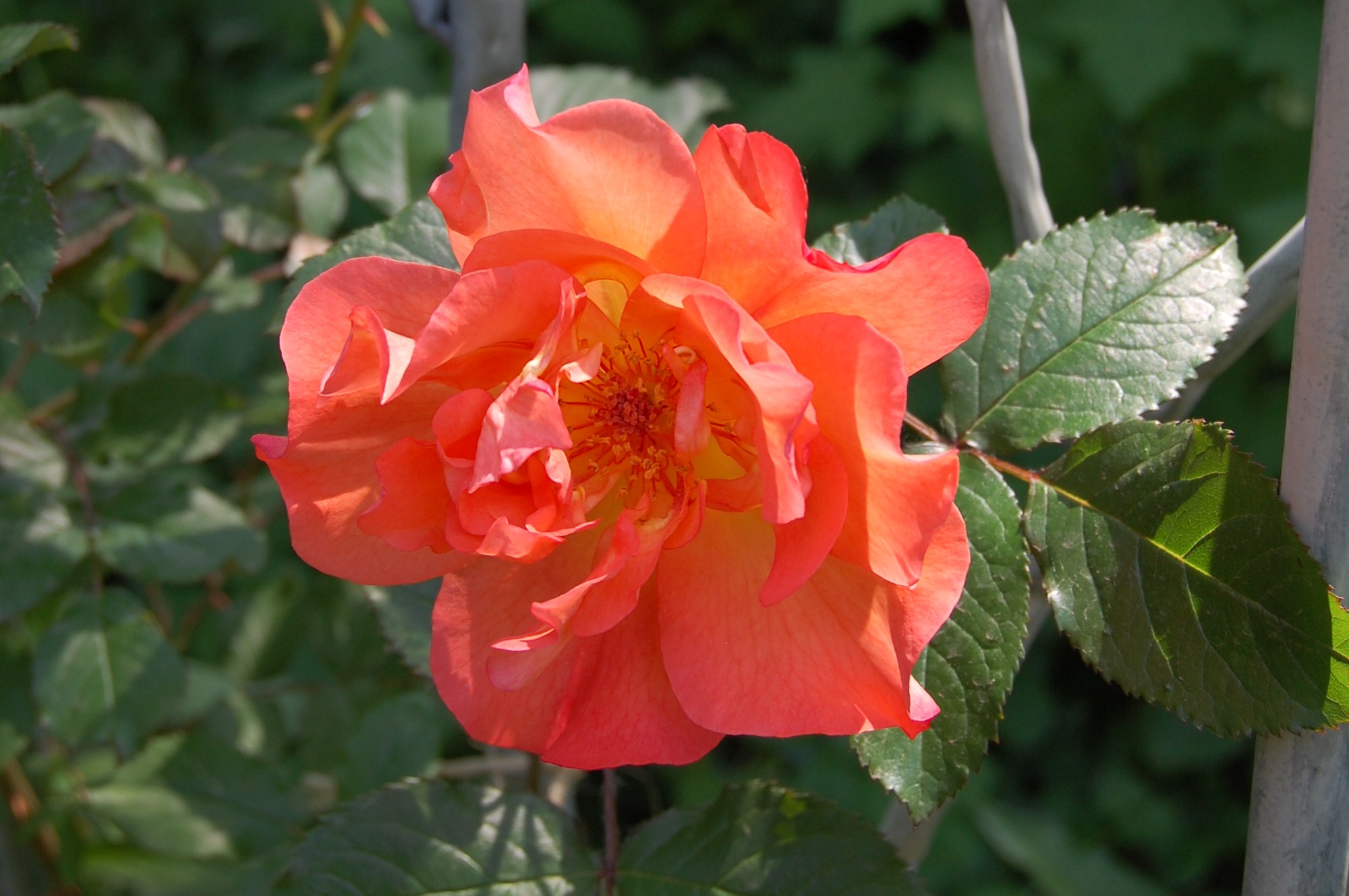
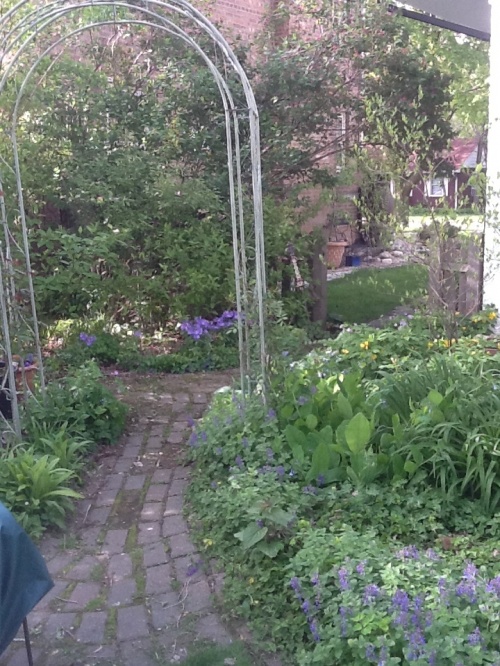
And the roses I planted on the backyard arbor are doing well. ‘Westerland’ has bloomed for the first time (this is its second summer), and ‘Darlow’s Enigma’ is coming into its own.

I also grow two wild roses, Carolina Rose (Rosa carolina) and Illinois Rose (Rosa setigira). These bloom later in the summer. All the roses I grow are tough shrub roses or ramblers and require little pampering.
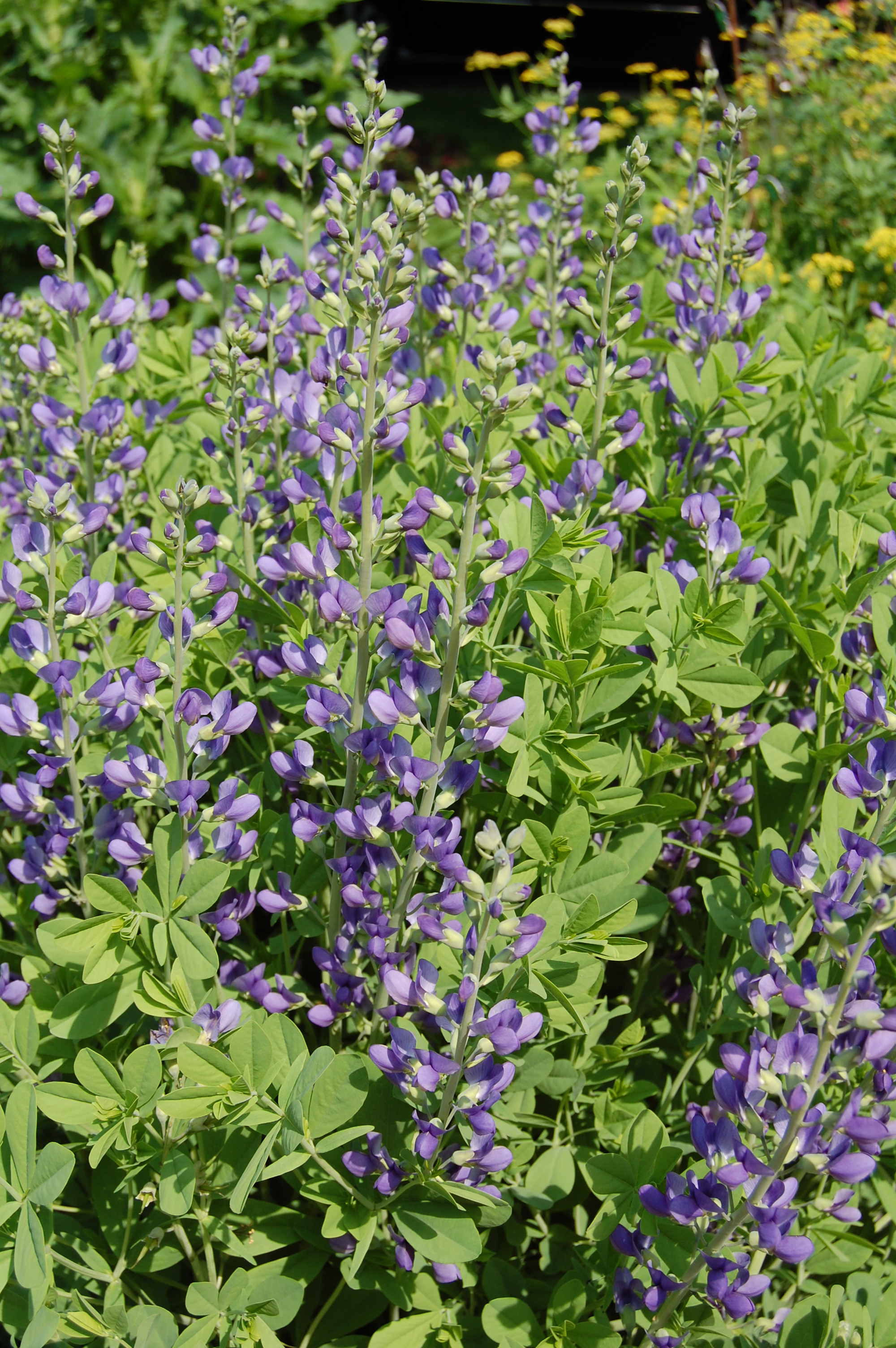
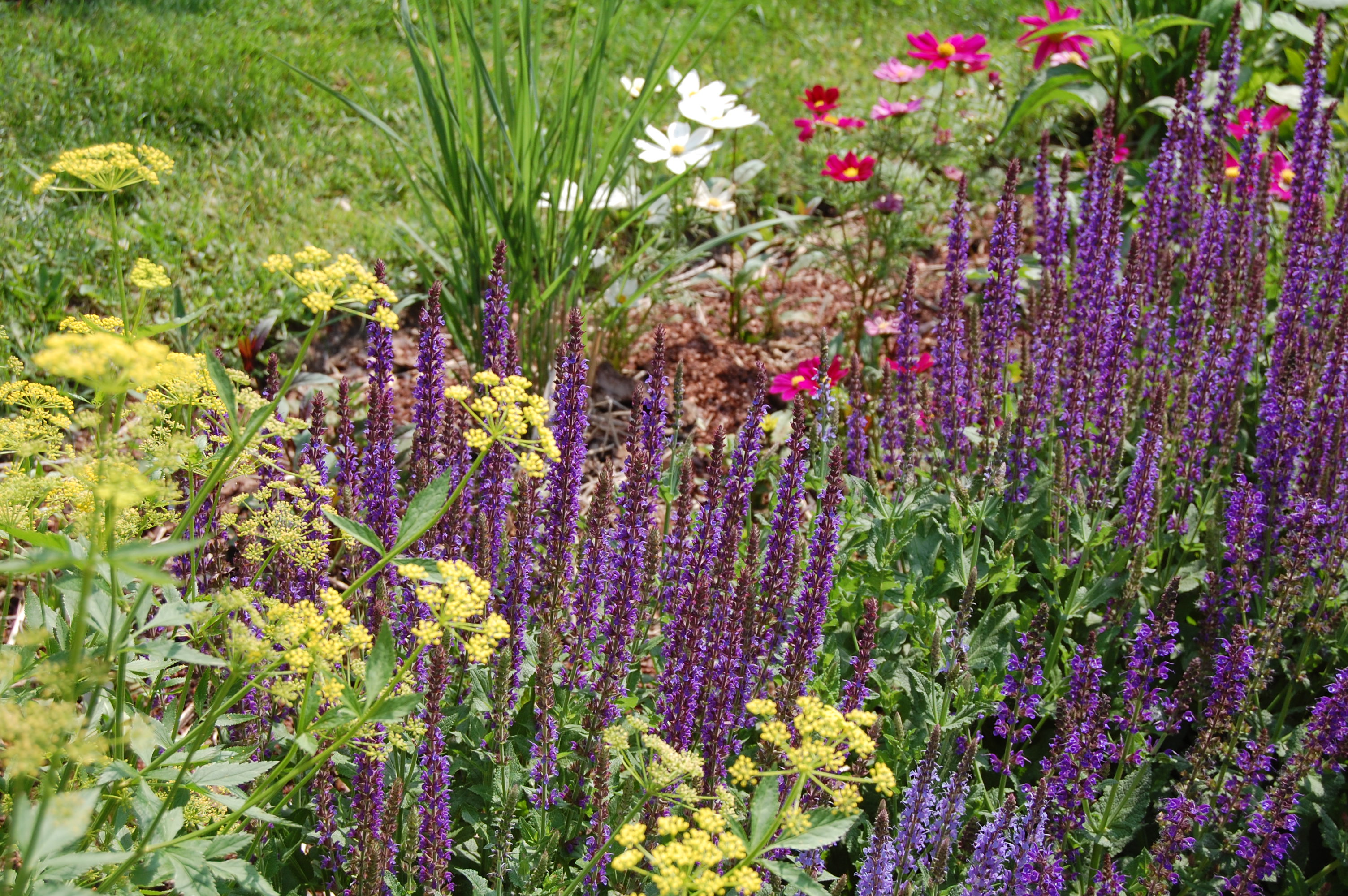
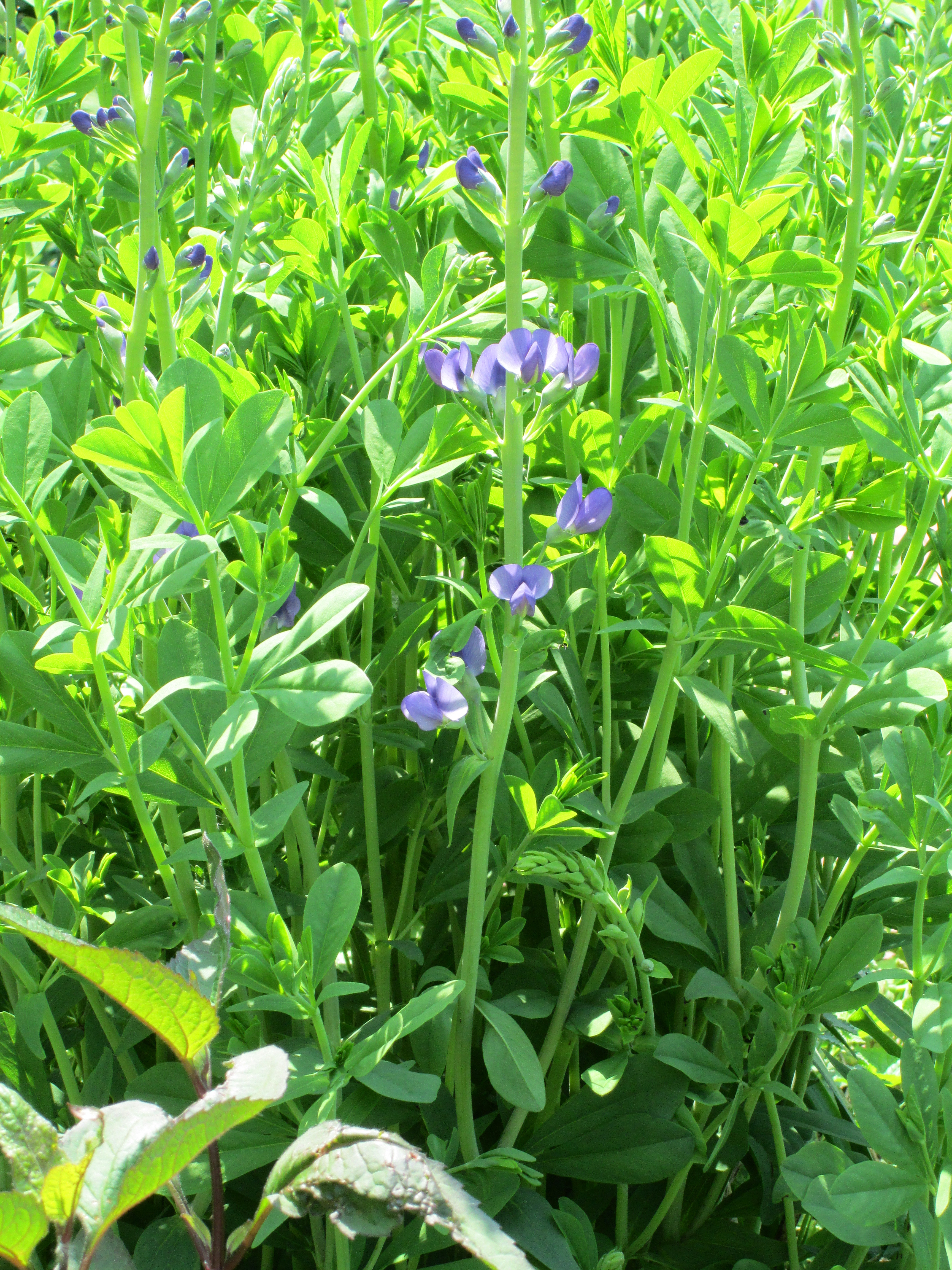
Aside from the roses, I was very glad to see that the baptisia and salvia were now in full bloom.


By the end of this coming week I’ll get to be a homebody again and spend more time in the garden, at least for a while. I can’t wait.


I was out of town on the 15th on a business trip. (Work was absolutely brutal, but that’s another subject.) Therefore, I am granting myself a four day extension on the bloom day due date. Here goes, in no particular order:
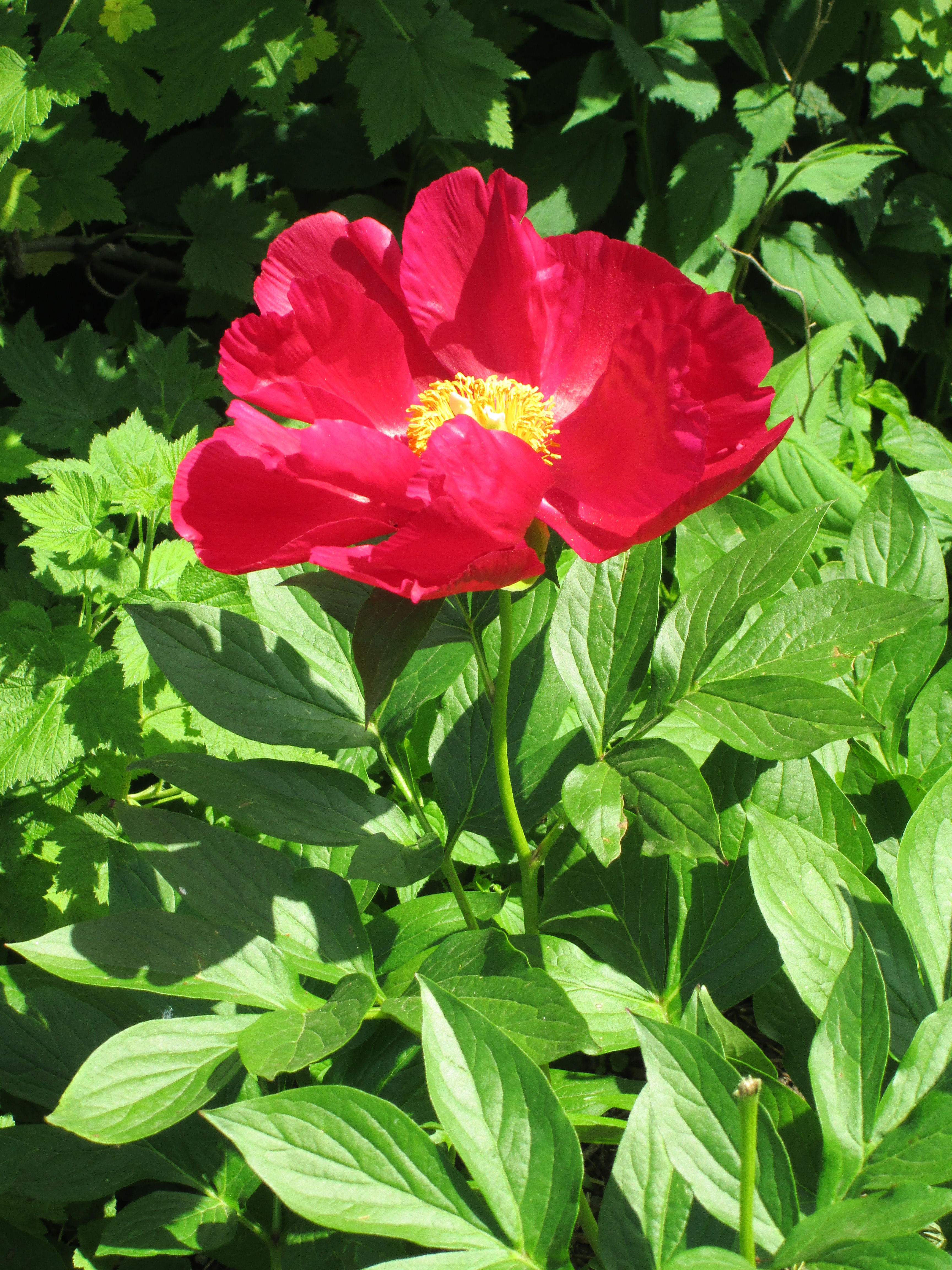
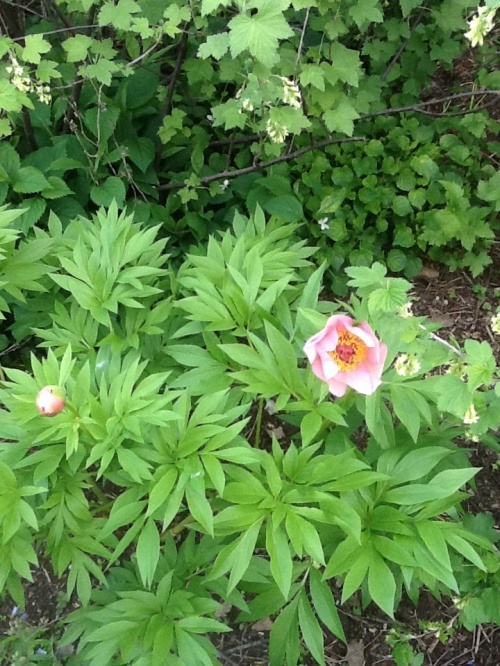
Peony ‘America’

Brunnera macrophyla
Heuchera
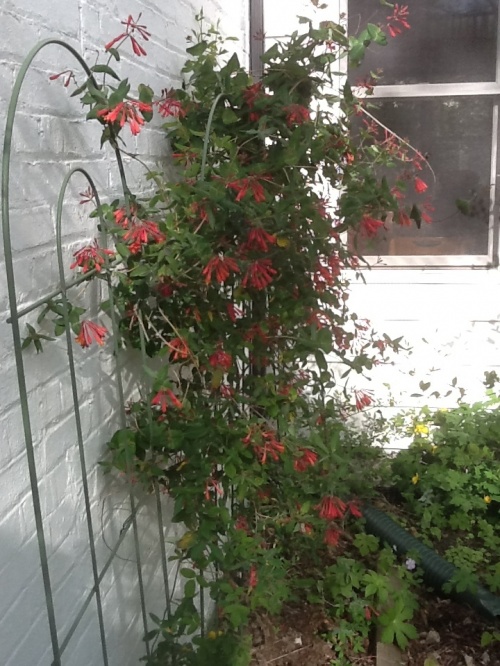
Lonicera sempervivens
Lonicera ‘John Clayton’
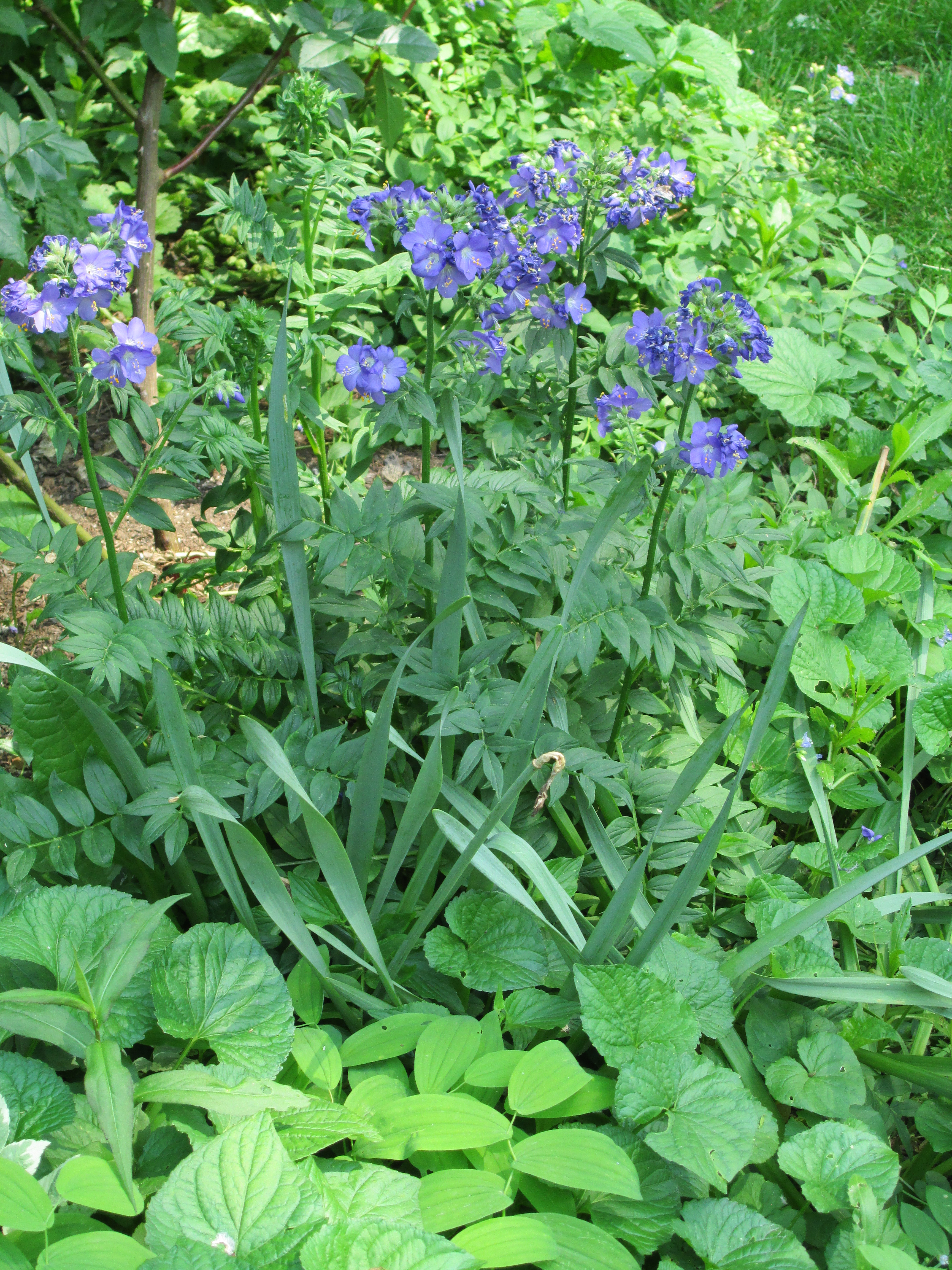
Polemonium carneum
Polemonium reptans
Geranium ‘Johnson’s Blue’
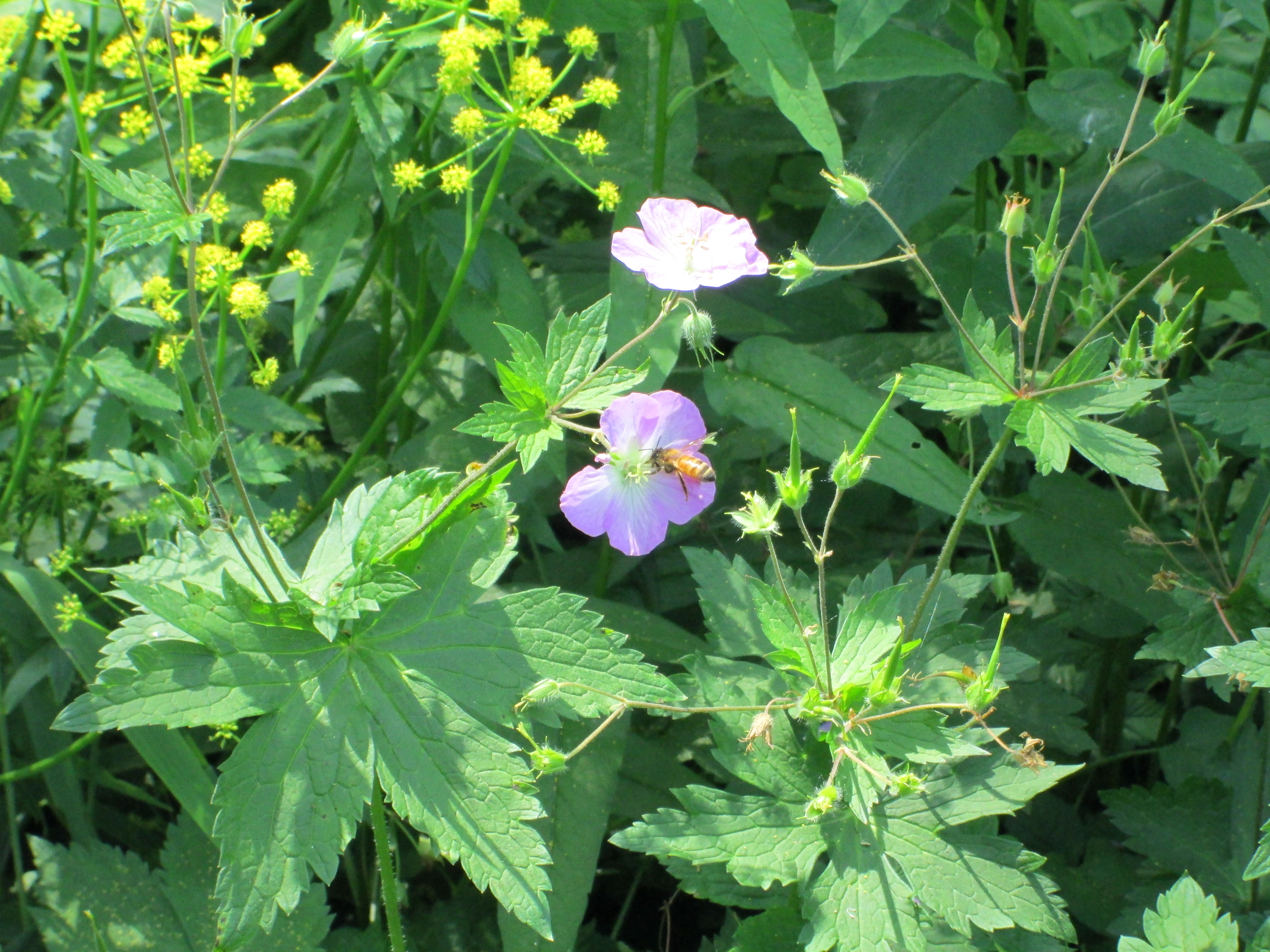
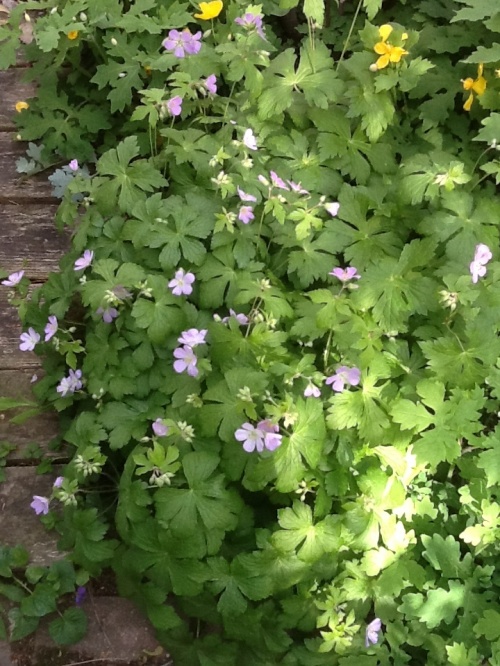
Geranium maculatum


Rosa ‘Sally Holmes’, many buds almost ready to open
Rosa ‘Cassie’
Rosa ‘Darlow’s Enigma’
A rambler, we are training Darlow’s Enigma on an arbor. This should be a good year for roses, all of ours are covered in buds.

Allium ‘Globemaster’
Allium ‘Purple Sensation;


Corydalis lutea grows well in dry shade. The funny little tubular flowers bloom for months.
Achillea millefoliumm ‘paprika’
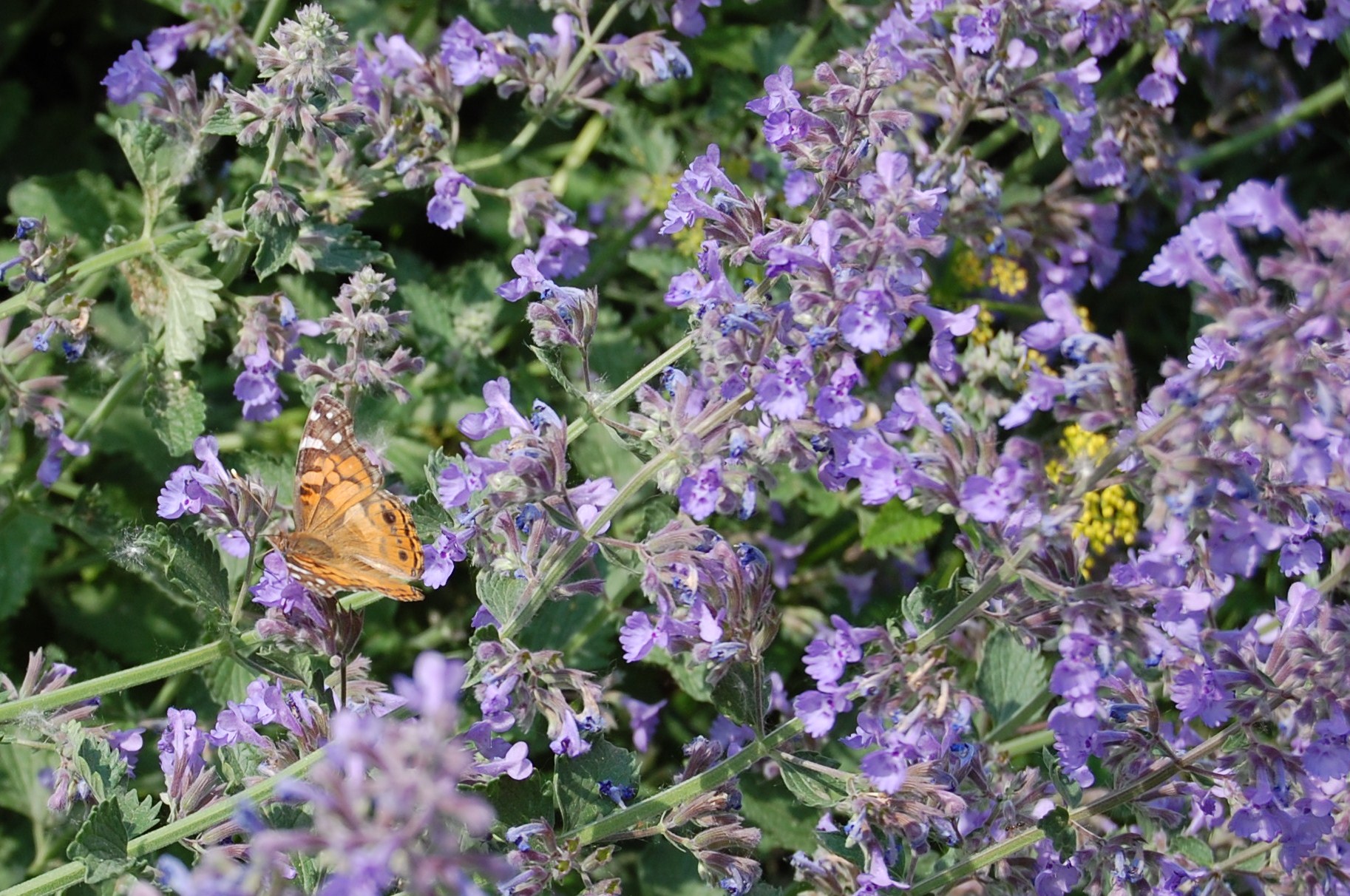
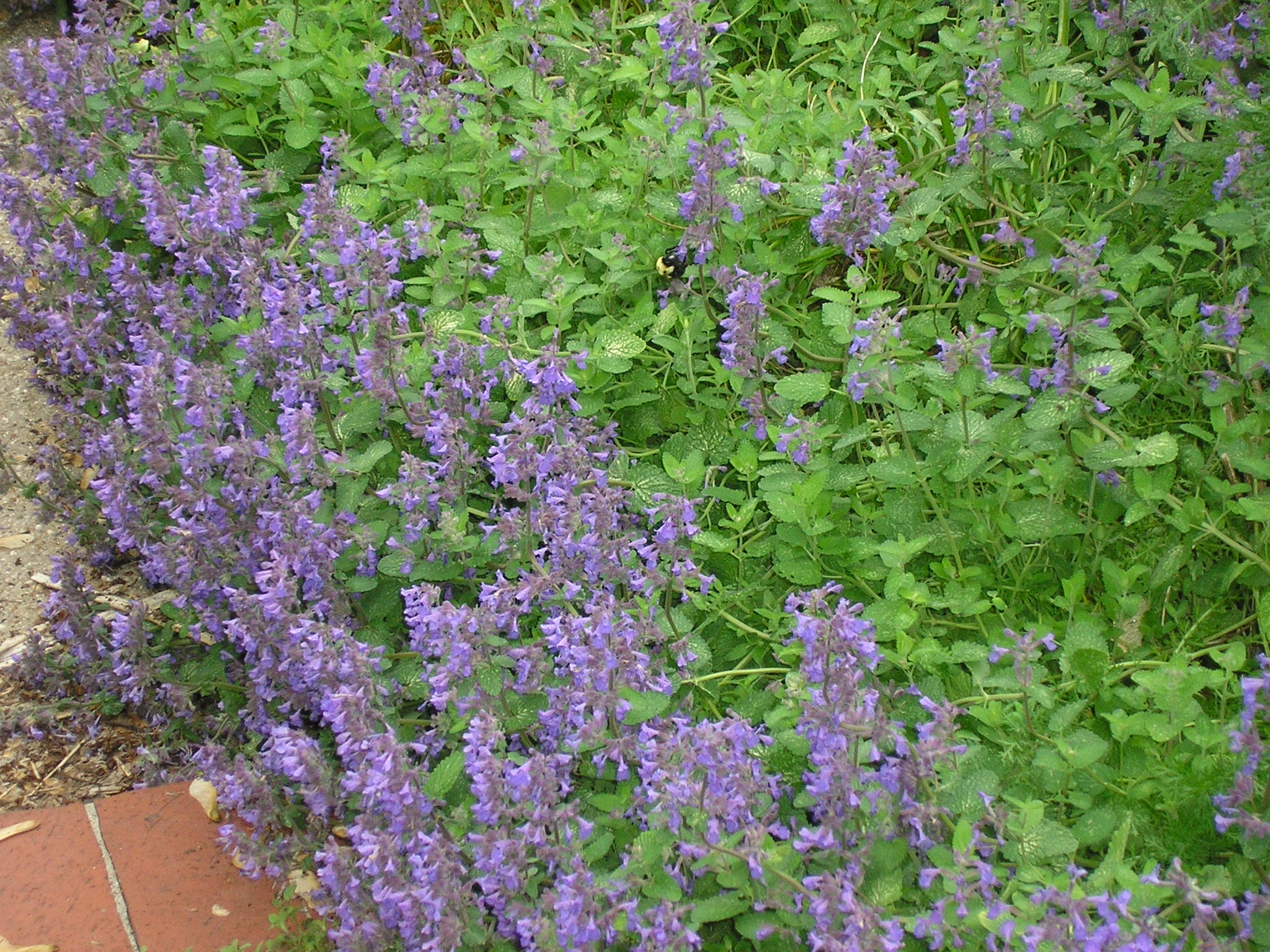
Nepeta ‘kitkat’

Geum triflorum

Amsonia tabernamontana
Various annuals – cleome, cosmos, pansies, sweet alyssum, lobelia …
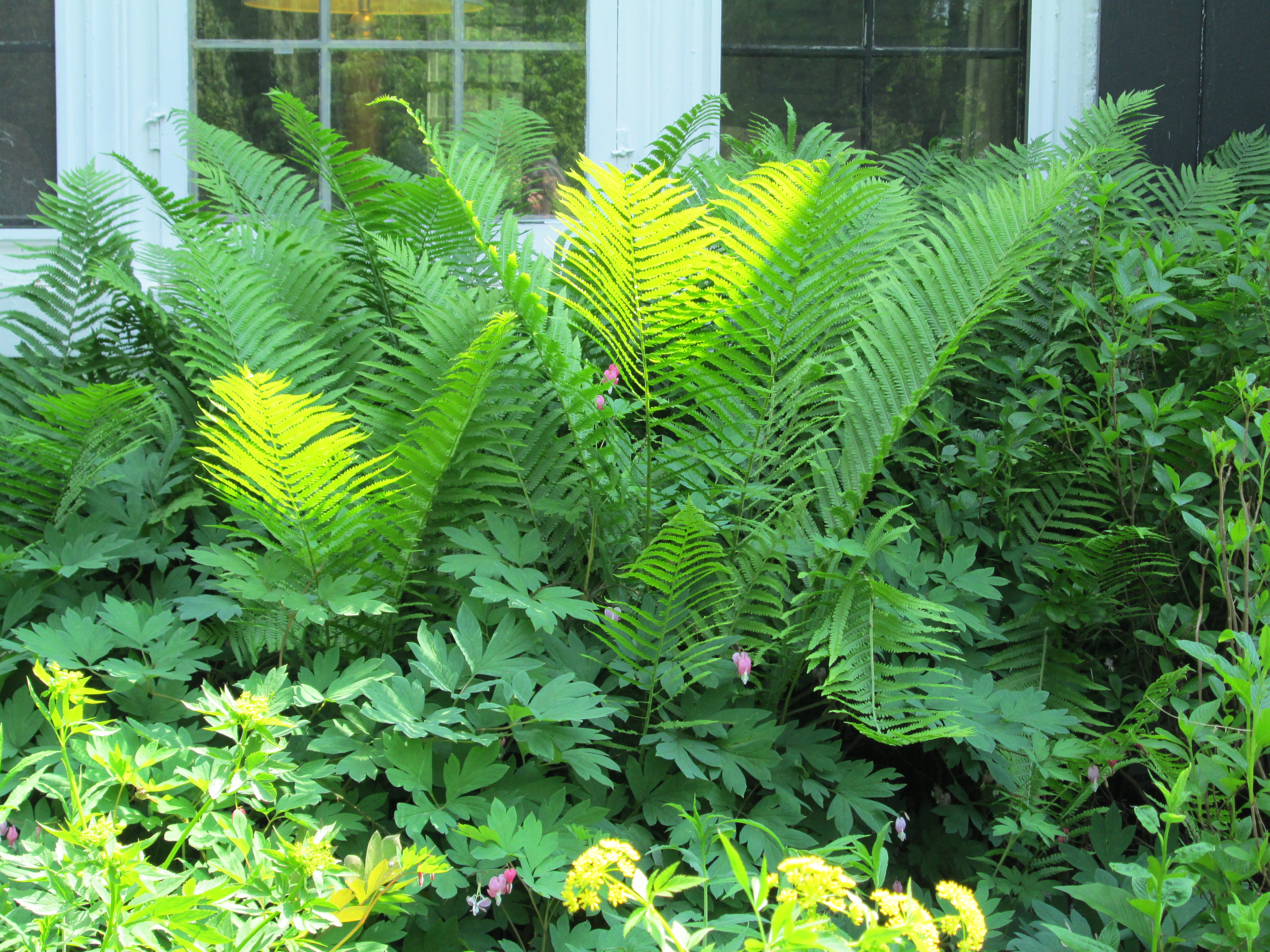
Though it’s not blooming, an honorable mention for my ostrich ferns, Matteuccia struthiopteris. I’ve told the neighbor kids that when the ferns get big enough they will attract dinosaurs.


To celebrate her birthday and our anniversary, Judy and I went to Paris for the second week in April. It was great! Neither of us had been there before. The food,the architecture, the street life, the parks, the museums … just a wonderful experience.
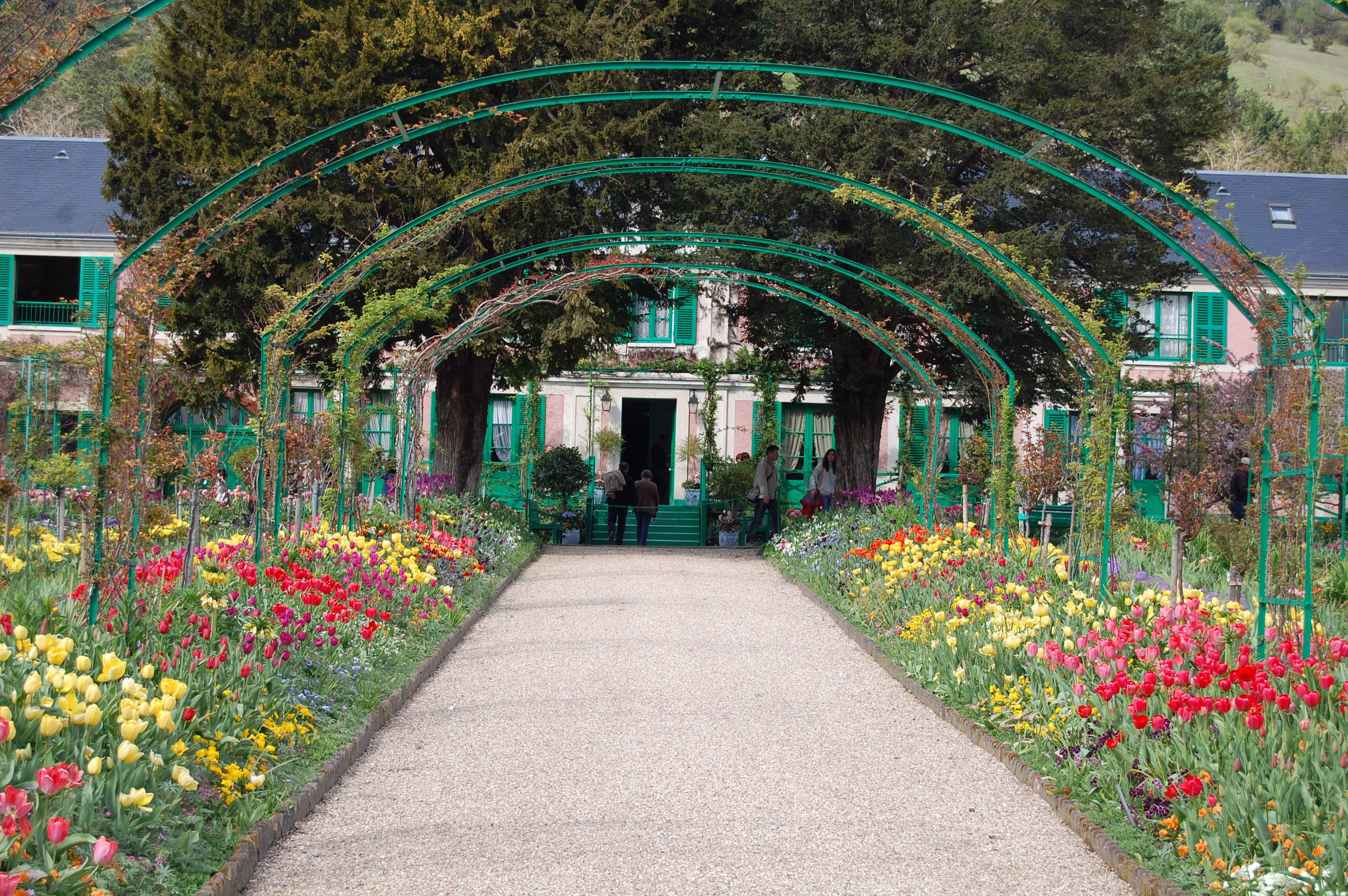
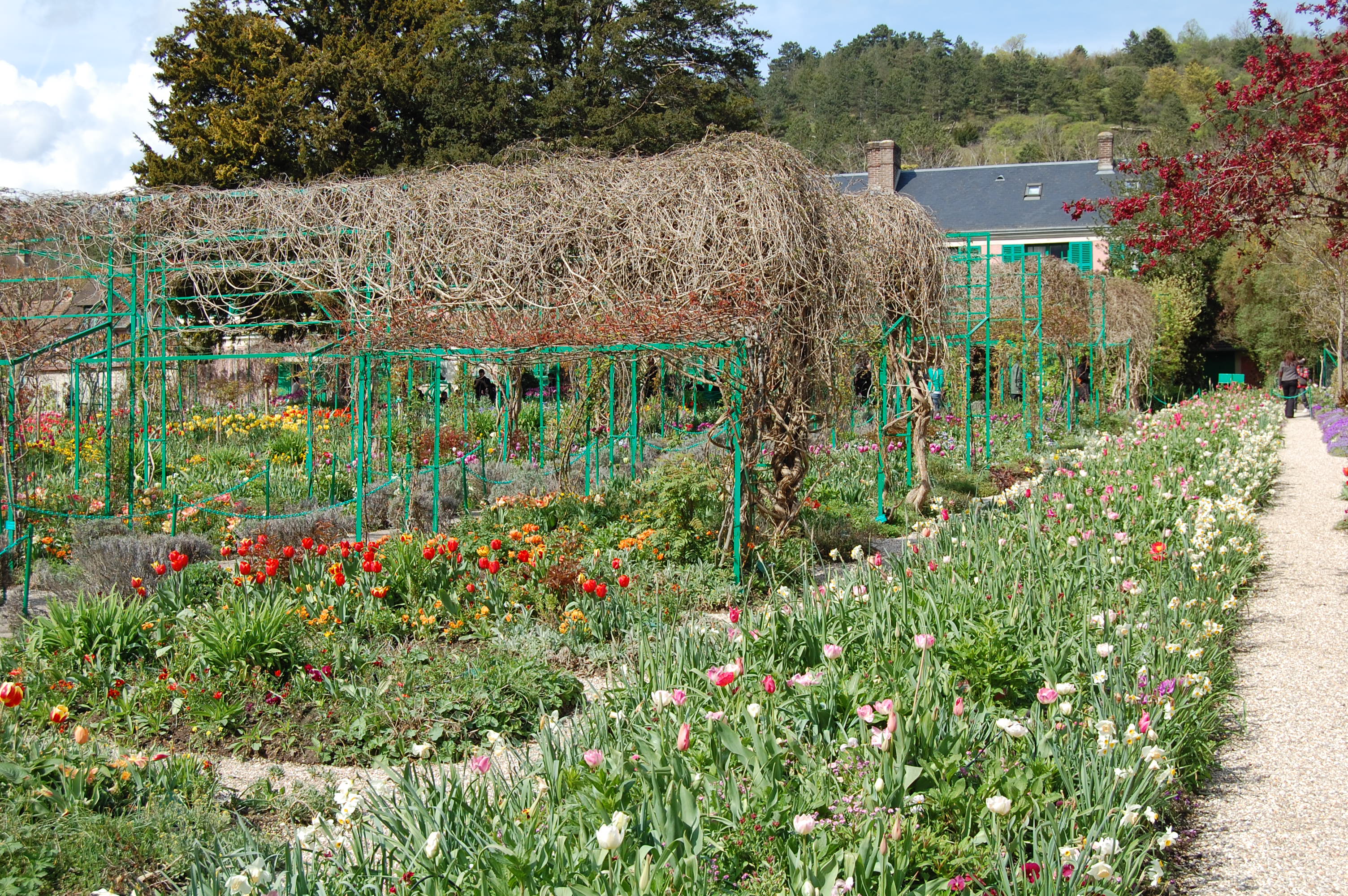
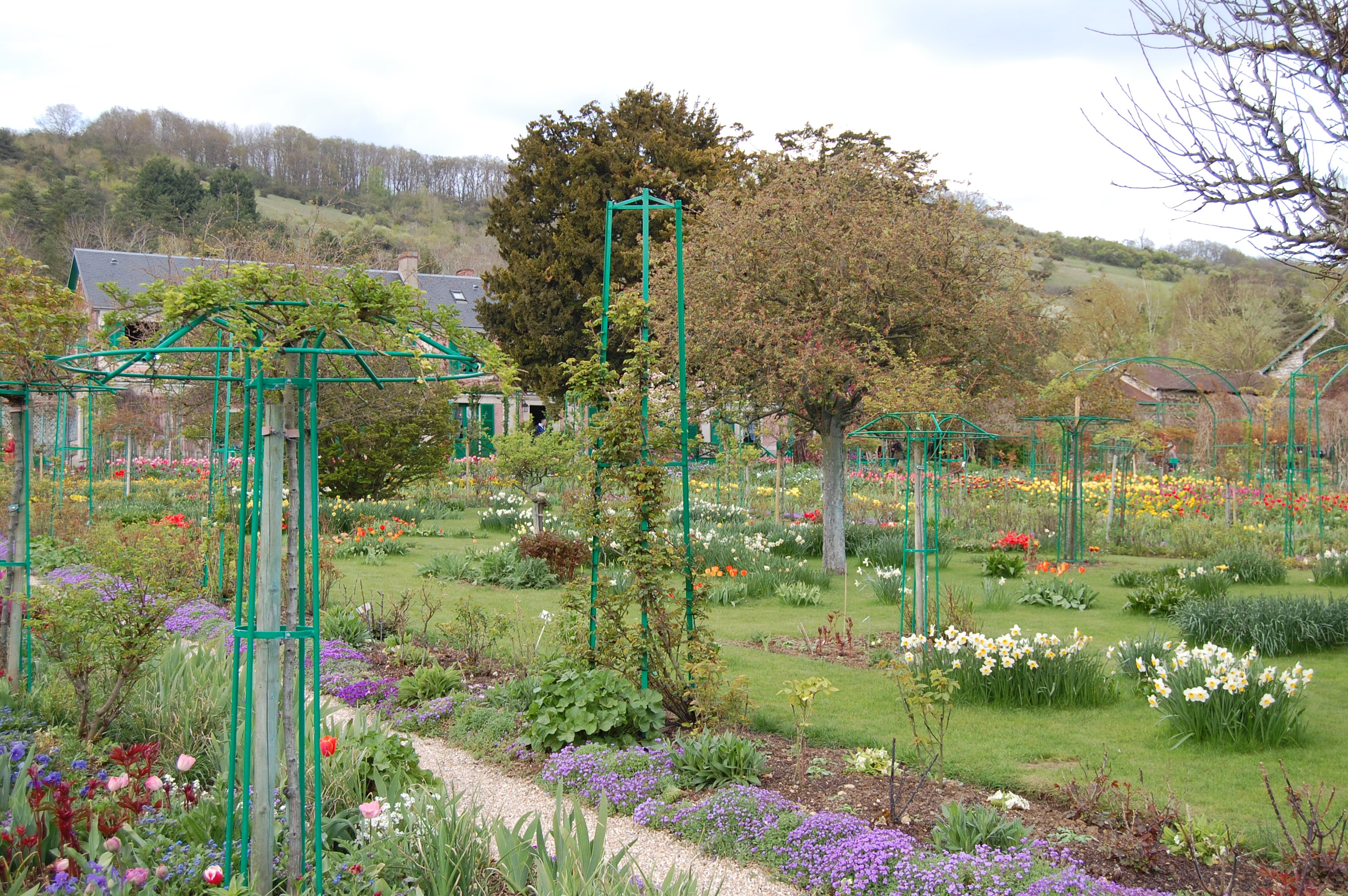
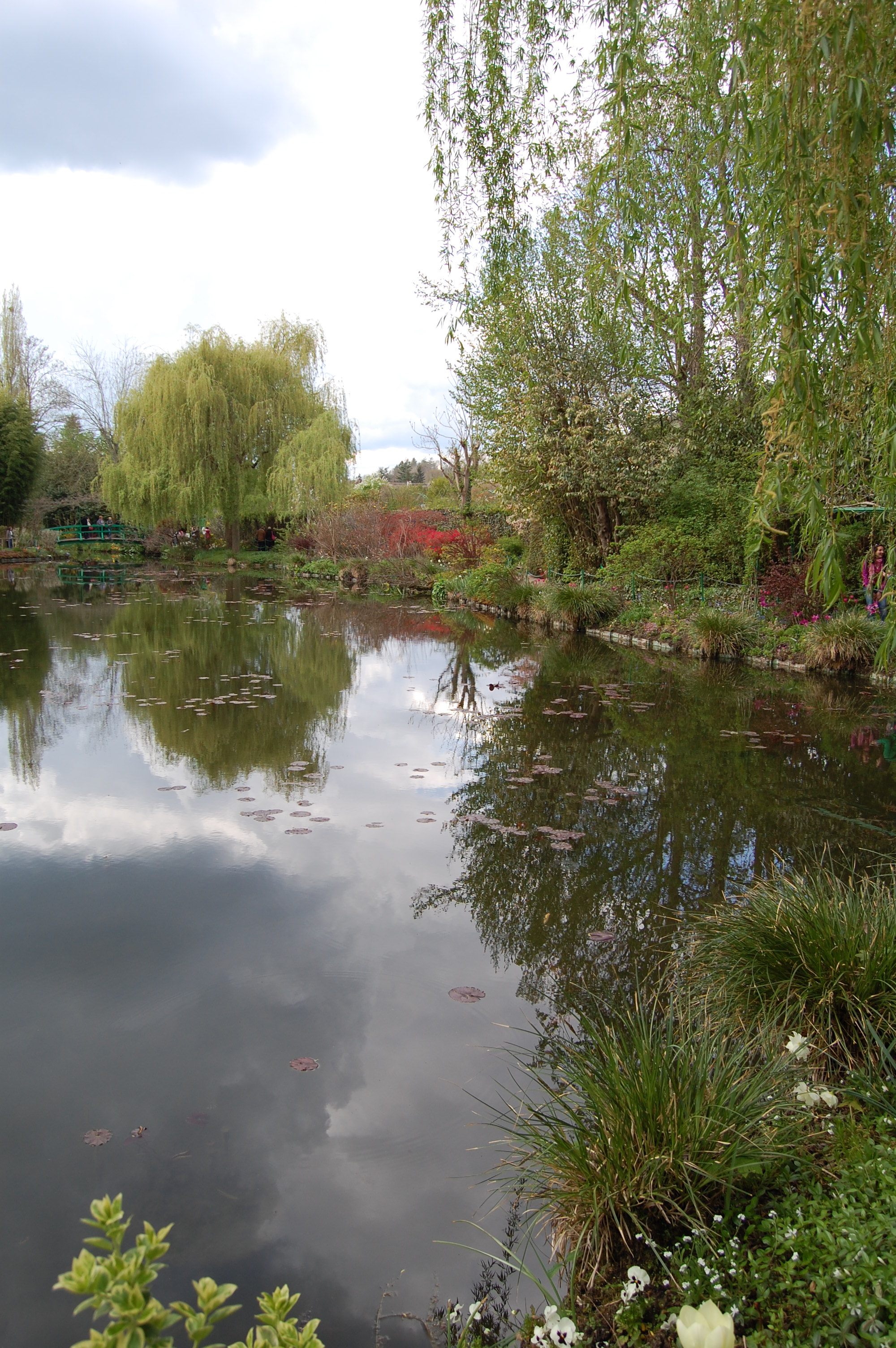
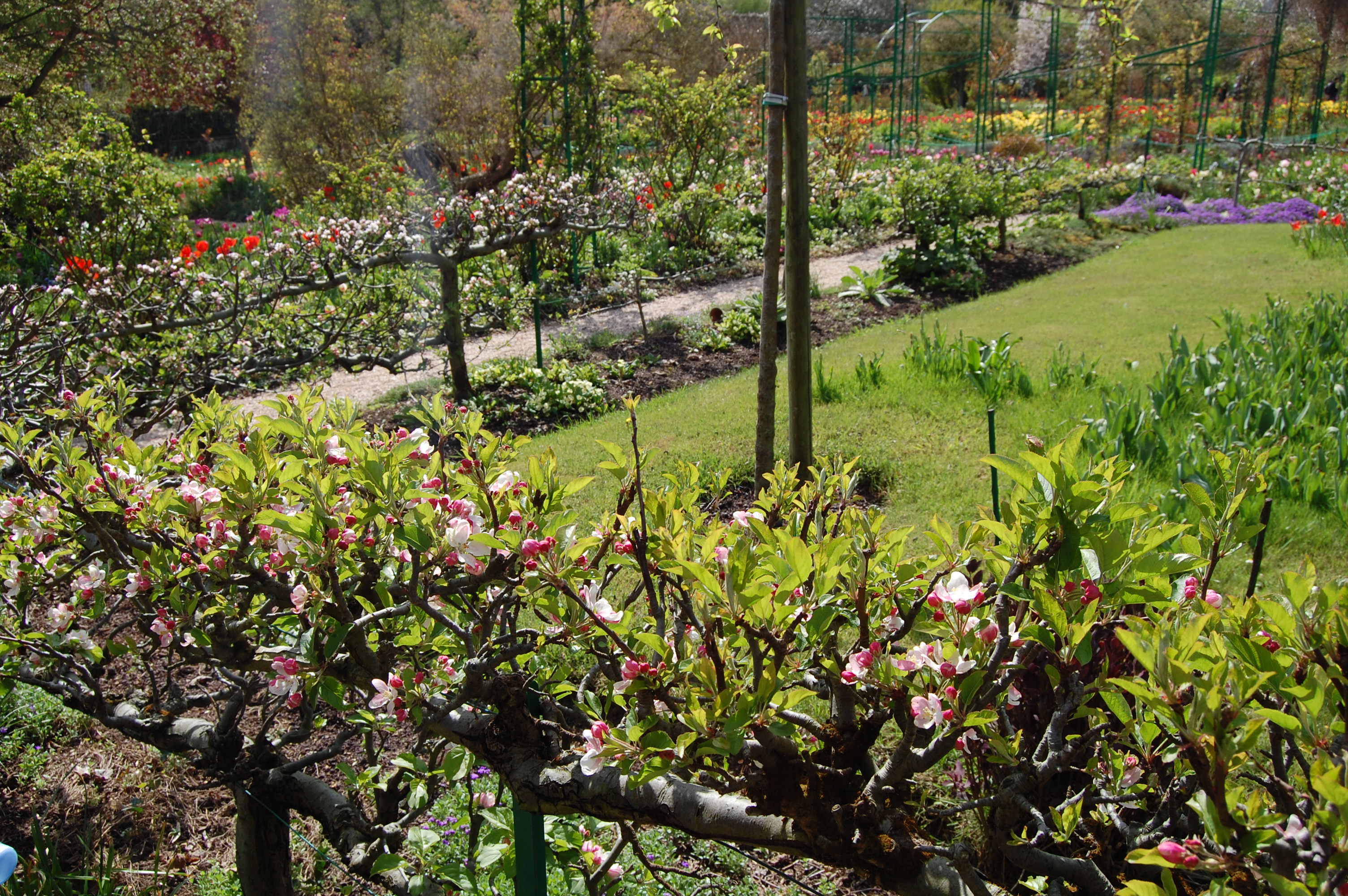
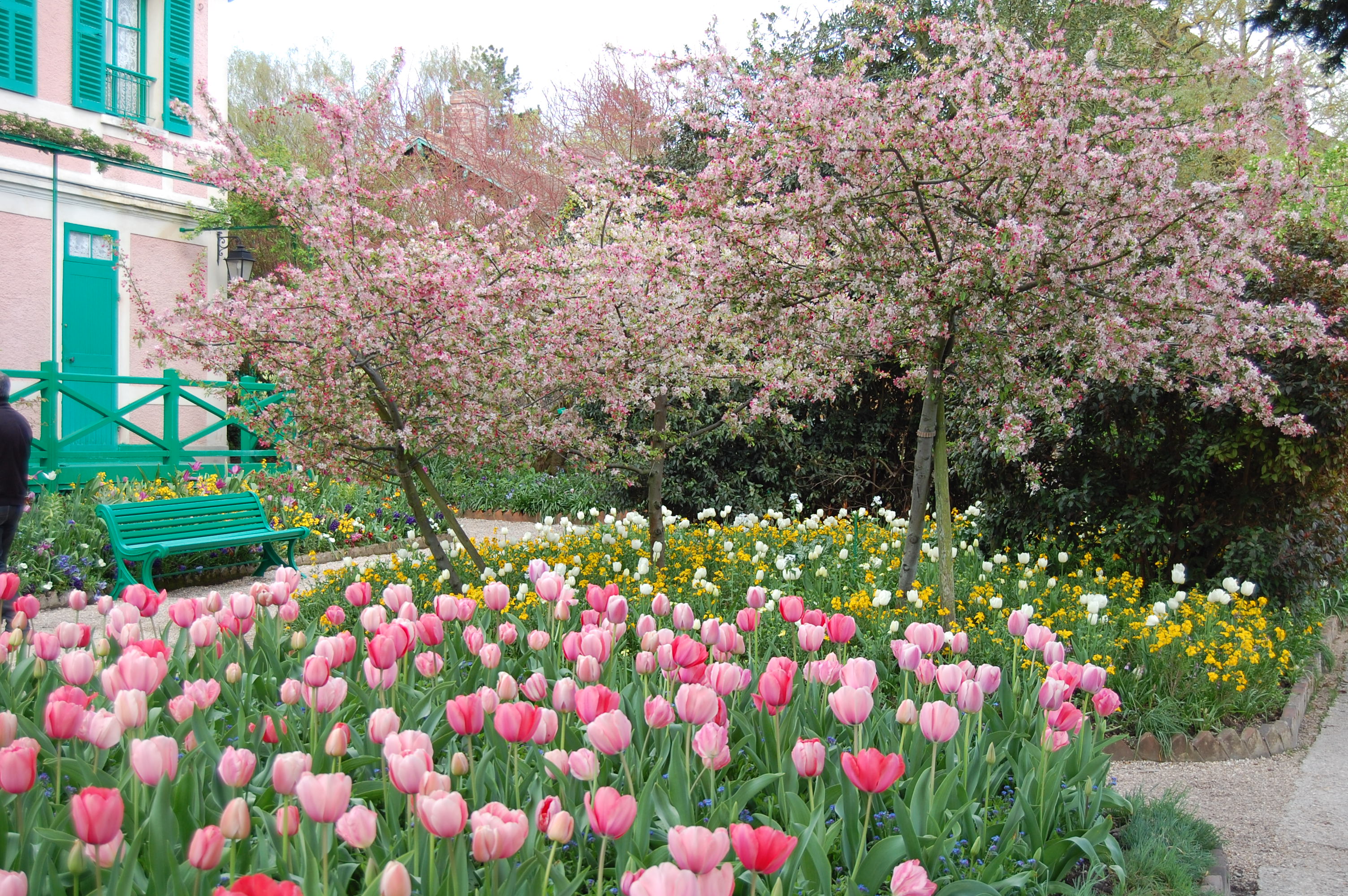
I’m planning three posts about the gardens. Judy took over 1,500 pictures, and I’ll write my posts as she sorts through her photos. First, I want to write about one of the most beautiful gardens we’ve ever seen anywhere: Claude Monet’s garden in Giverney, about 50 miles from Paris.

What struck me about the main garden was the combination of relaxed exuberance and the formality of straight-lined rectangular beds. Like a combination of cottage garden and parterre. I was also inspired by the mixing of perennials and annuals, and am determined to do the same in my own garden this year. There is just a richness and abundance of color that is hard to describe.


The second part of the garden is built around a pond that Monet created by damming a small tributary of the Seine.


Anyone who loves gardens should see this place if they get the chance. It is a joy.
All in all, a fairly satisfying weekend.
Judy’s camera isn’t working, so we’ve got to take it to the shop. In the meantime, we’ll have to make due with our iPad. We both took these pictures, mine are distinguished by their fuzzy quality.


The bed along the east side of our house has always been a problem . It’s separated from the neighbor’s old brick garage by a stretch of grass about 8′ wide. These are nice neighbors, and I want my side of this side yard to look presentable but also consistent with my style of gardening. Unfortunately, I’ve mostly fallen short of this goal.
When we moved in almost 10 years ago, this side of the house was bordered by overgrown forsythia and a big dying yew. We had to take these out to fix a leak in the basement. I planted summersweet and a flower bed edged with woodland phlox, celandine poppy, and wild geranium.
There were two problems, however. First, the summersweet just weren’t happy, and they failed to live to to their reputation as fast growers. That meant there was even more open space between the edging plants and the wall of the house.

My solution was inspired by frugality:I would just fill the empty space with volunteers from among those wildflowers most enthusiastic about reproduction: Short’s and calico asters, anise hyssop, sweet joe pye weed.
The result was less than ideal. The sickly shrubs combined with the big rangy wildflowers to create a distinctly weedy look. So I came up with a two part solution.
First, I removed the summersweet and replaced them with some red elderberry (now in their second season) and a common lilac at the far end (planted this spring). The elderberry are starting to fill in and should make a solid hedge in a couple of years. I was pleased to see that they have already flowered and set fruit this spring.

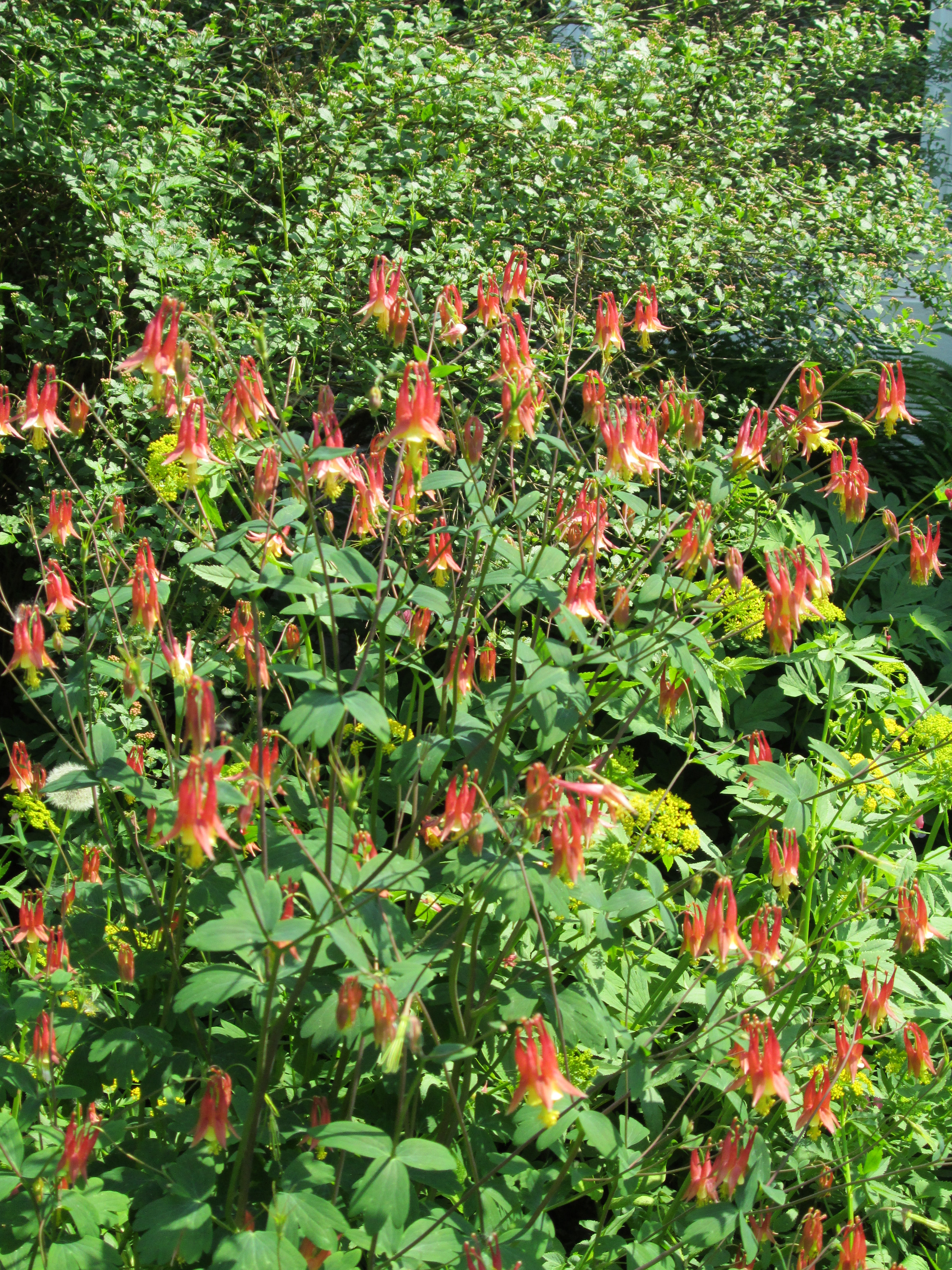
The second part was just implemented yesterday and today. I dug out all the big wildflowers, except for the sweet joe pye weed standing right against the house. Then I planted a host of tidier, spreading wildflowers that should fill in around the open parts of the bed: wild columbine, lady ferns, and Solomon seal.
I’m keeping my fingers crossed that I’ve found the right formula at last.
Just got back from a week’s vacation with Judy (more on the trip once Judy has sorted the 1,500+ photos she took – thank God she has a digital camera). Pulled up to the house and first thing I noticed was the celandine poppies (Stylophorum diphyllum) blooming their hearts out.
This is another midwest native wildflower I’m very fond of, but don’t see very often in gardens around here. Its flowers have four petals and are a clear, golden yellow. The seed pods are evocative of poppies, and the foliage is deeply lobed and a dusty blue-green. Celandine poppies like shade and will tolerate drier soils, though they may go dormant if they dry out.

These are tough plants. Some garden writers claim they are too aggressive, but that hasn’t been my experience. They will self-sow, but not excessively.
I’ve got them planted on the east side of the bed that runs from the sidewalk up to my front door. The taller plants in the middle will shade the celandine poppies when the weather gets hot. Right now, there’s a nice contrast between the blue grape hyacinths and nepeta (just beginning to bloom), and they yellow celandine poppies. The nepeta “kit kat” is planted along the west edge of the bed, where they get the hot afternoon sun they appreciate.

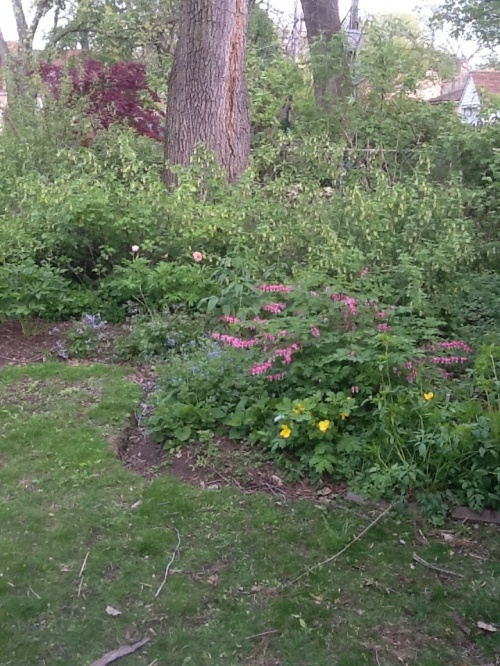
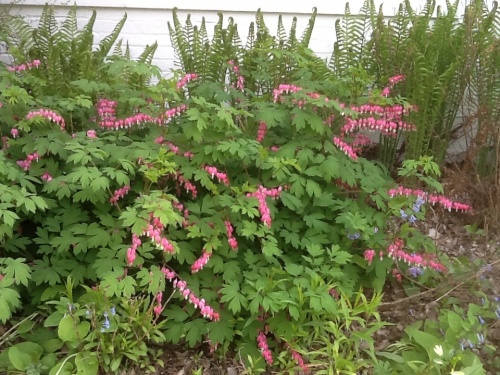
On other fronts, the bleeding heart is looking especially fetching this spring. And the ostrich ferns, which are starting their second season, are off to a promising start.