Fall in the garden means seedheads, pods, and fruit join flowers and foliage as features of the garden. So here are some non-floral highlights for mid-September:
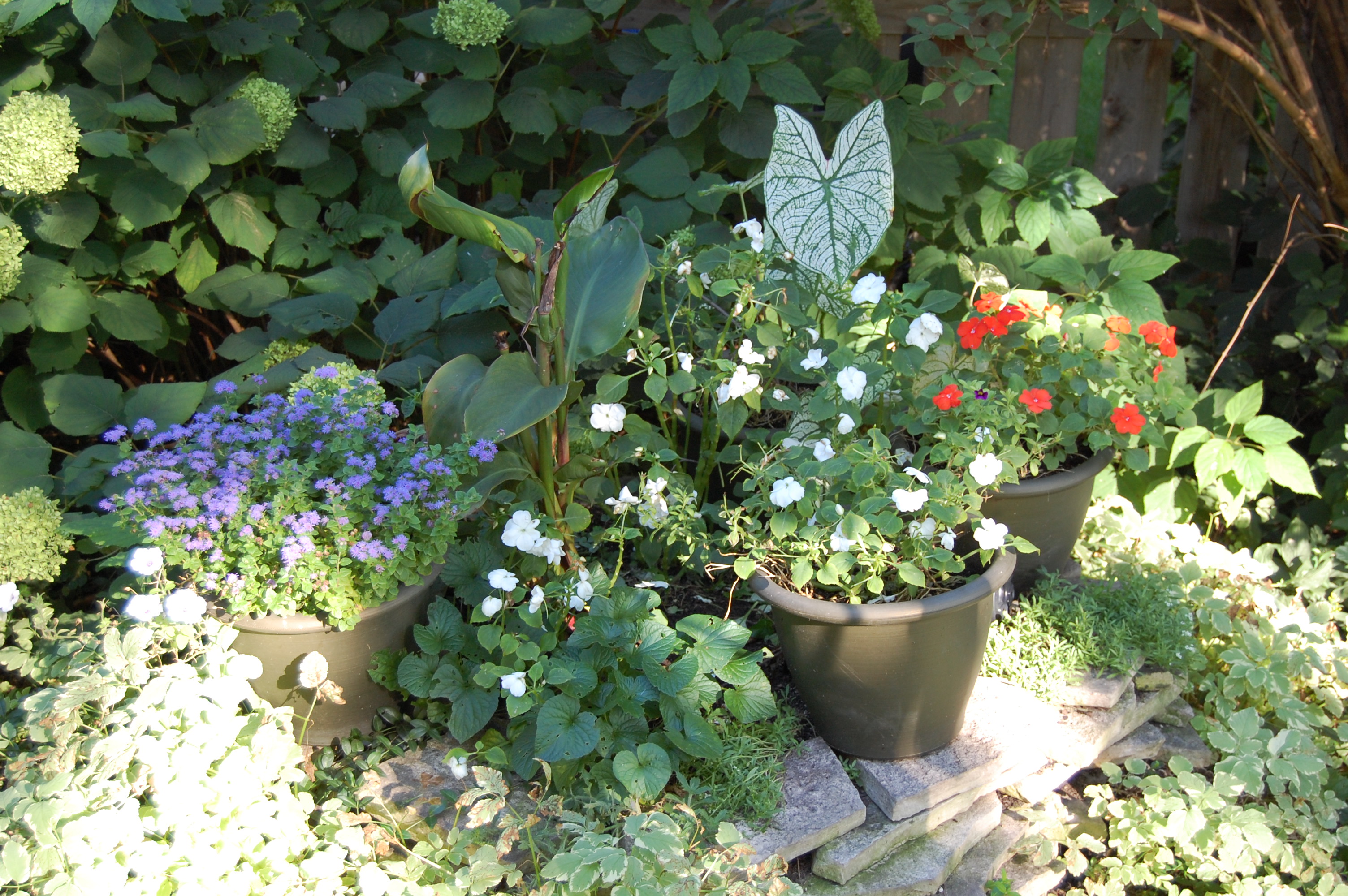
Caladium, Impatiens, ageratum.
I forget what this variety is called, but I think I’ve decided I like these plain green and white Caladiums (Caladium bicolor) best. I built this raised bed on the stump of a tree we had to remove.
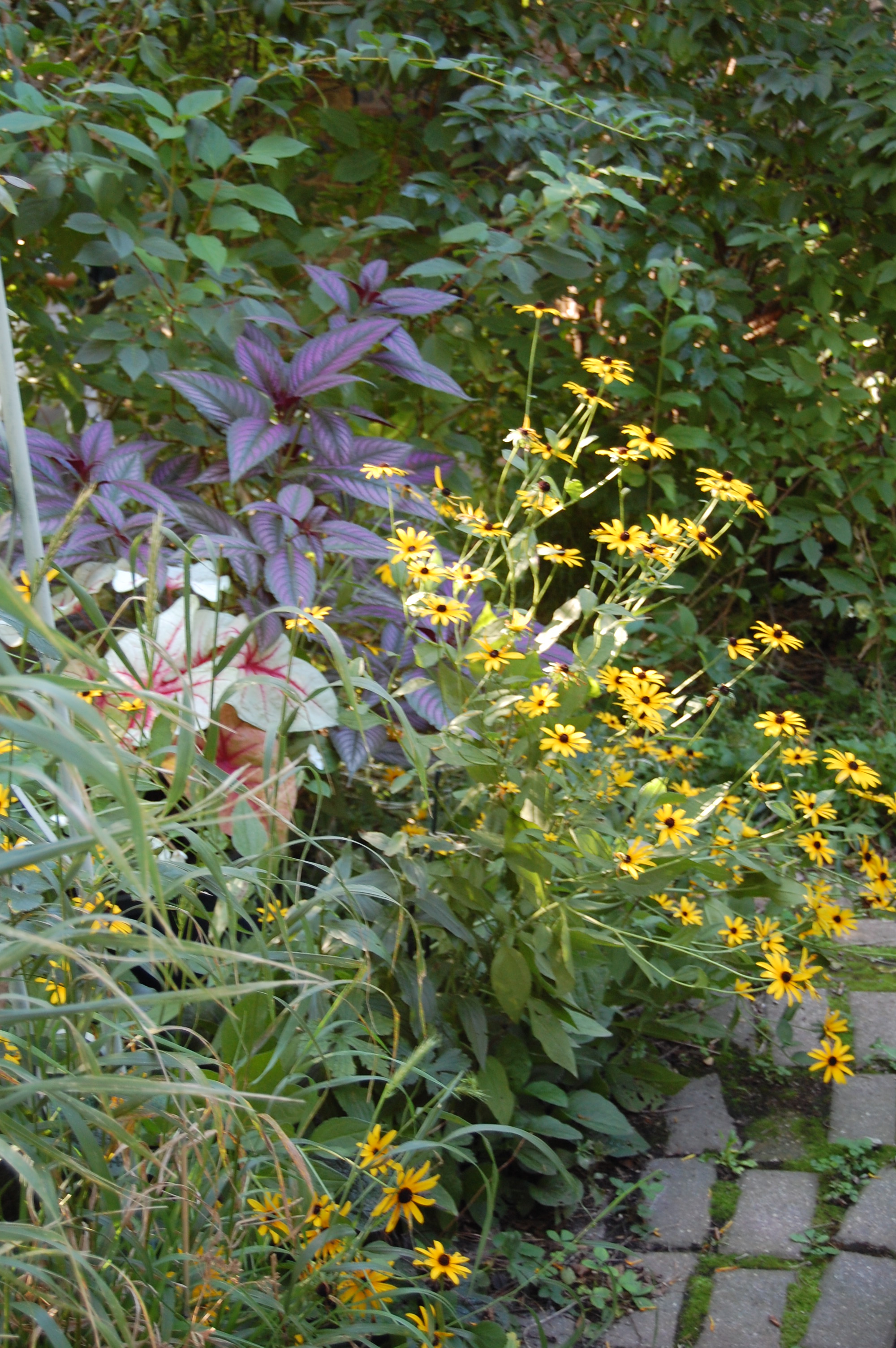
Persian Shield and Caladium
Persian Shield (Strobianthes dyerianus) is nice, but I don’t think I’ll grow it next year. Too dark for a shady yard.
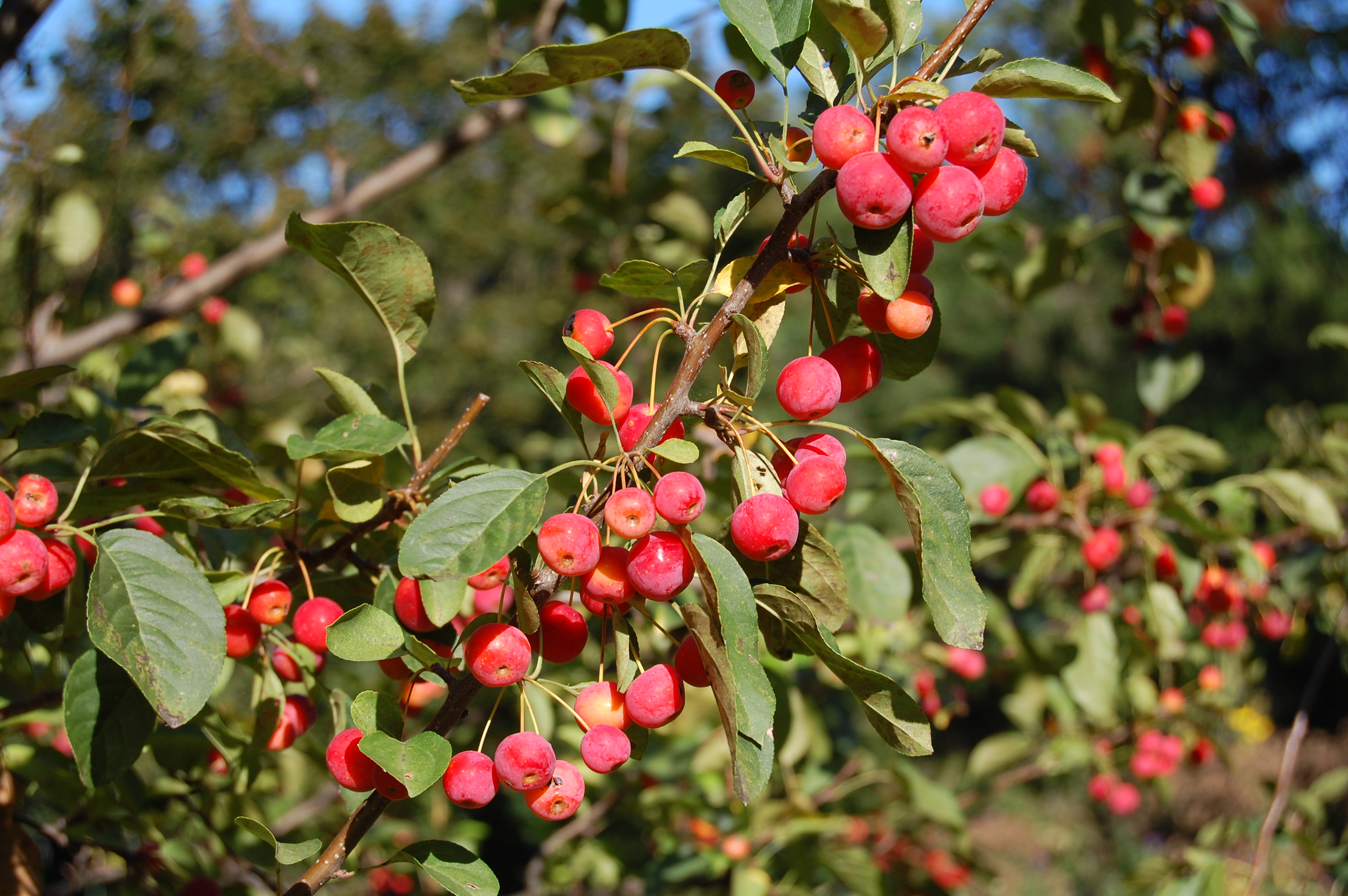
The crabapples are like clusters of round rubies this year.
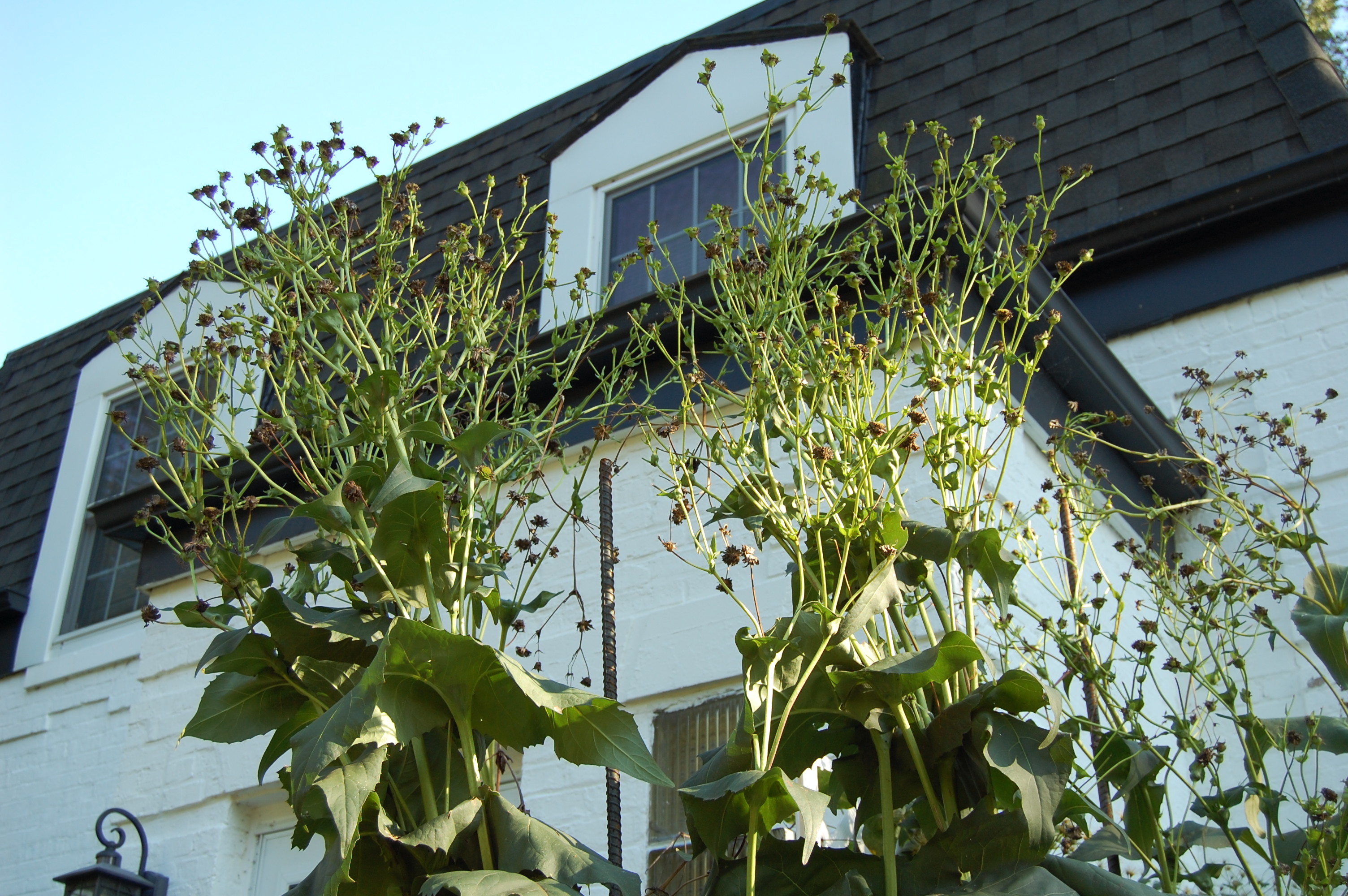
Cup Plant
The Cup Plant (Silphium perfoliatum) has a long bloom period, but now the seeds are ripe, being eaten by goldfinches or dropping to the ground.
Downy Sunflowers and Joe Pye Weed
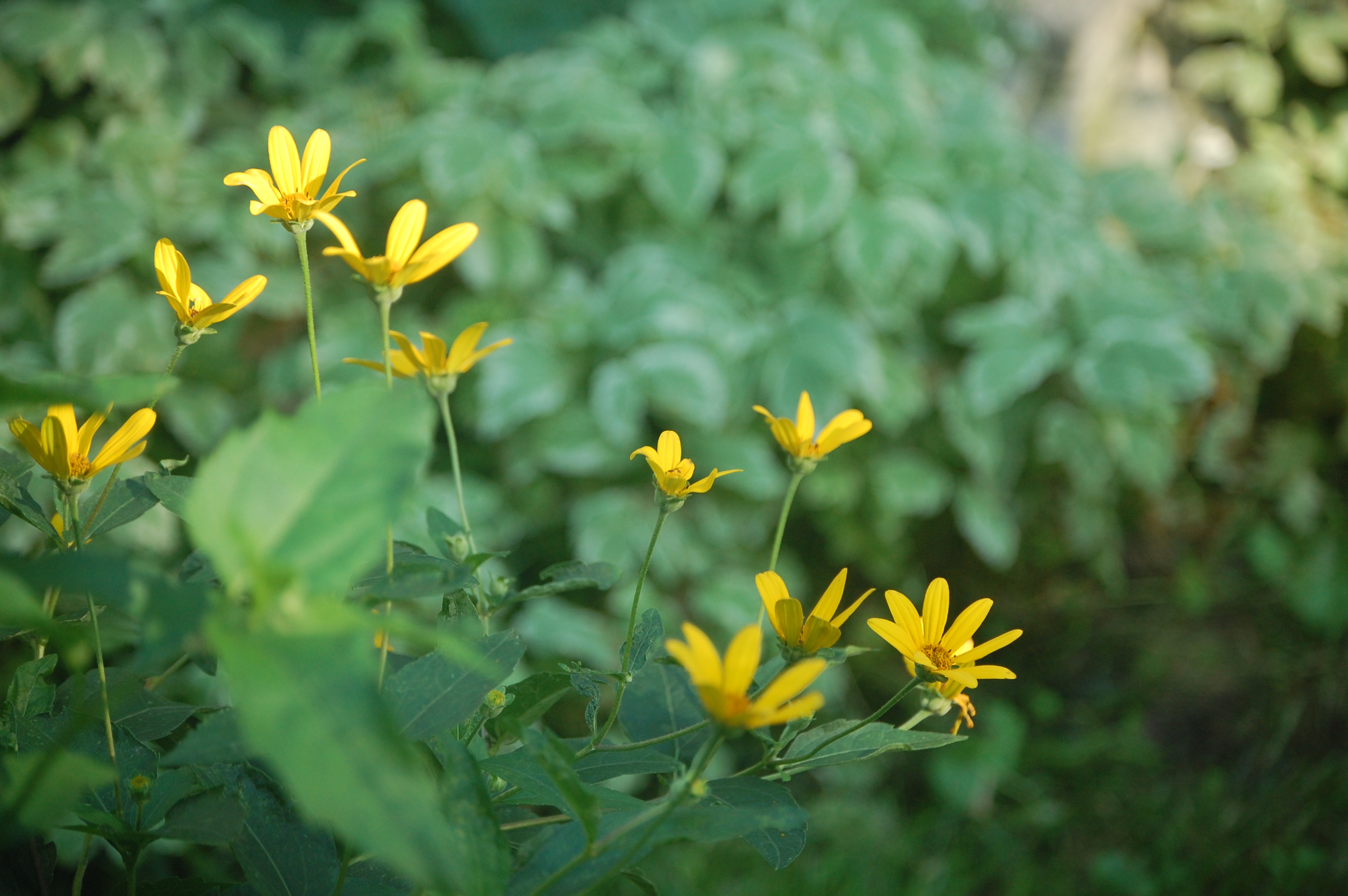
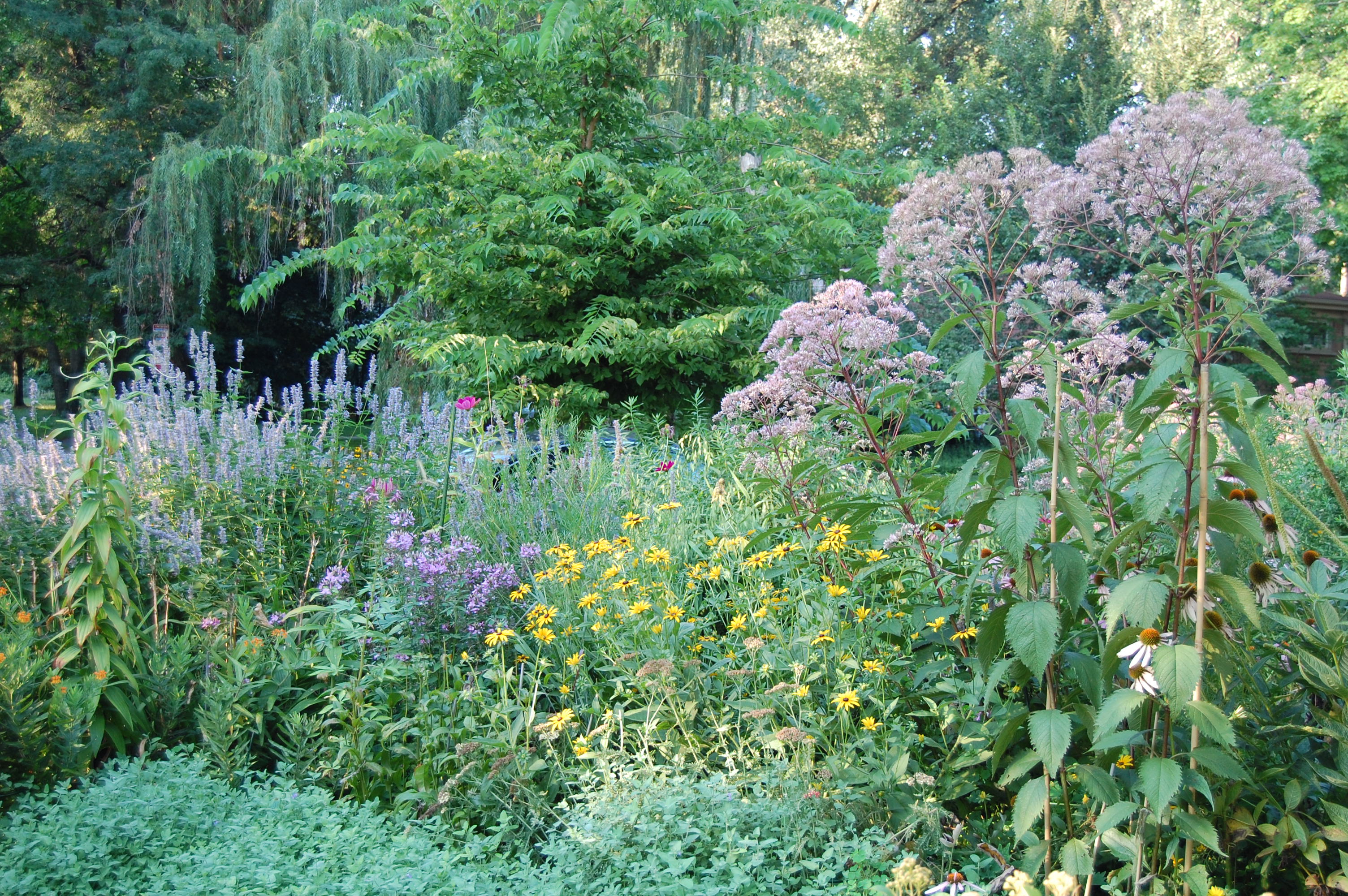
The Downy Sunflower (Helianthus mollis) had a disappointingly brief bloom period. They are joined by Joe Pye Weed ‘Gateway’ (Eupatorium maculatum).
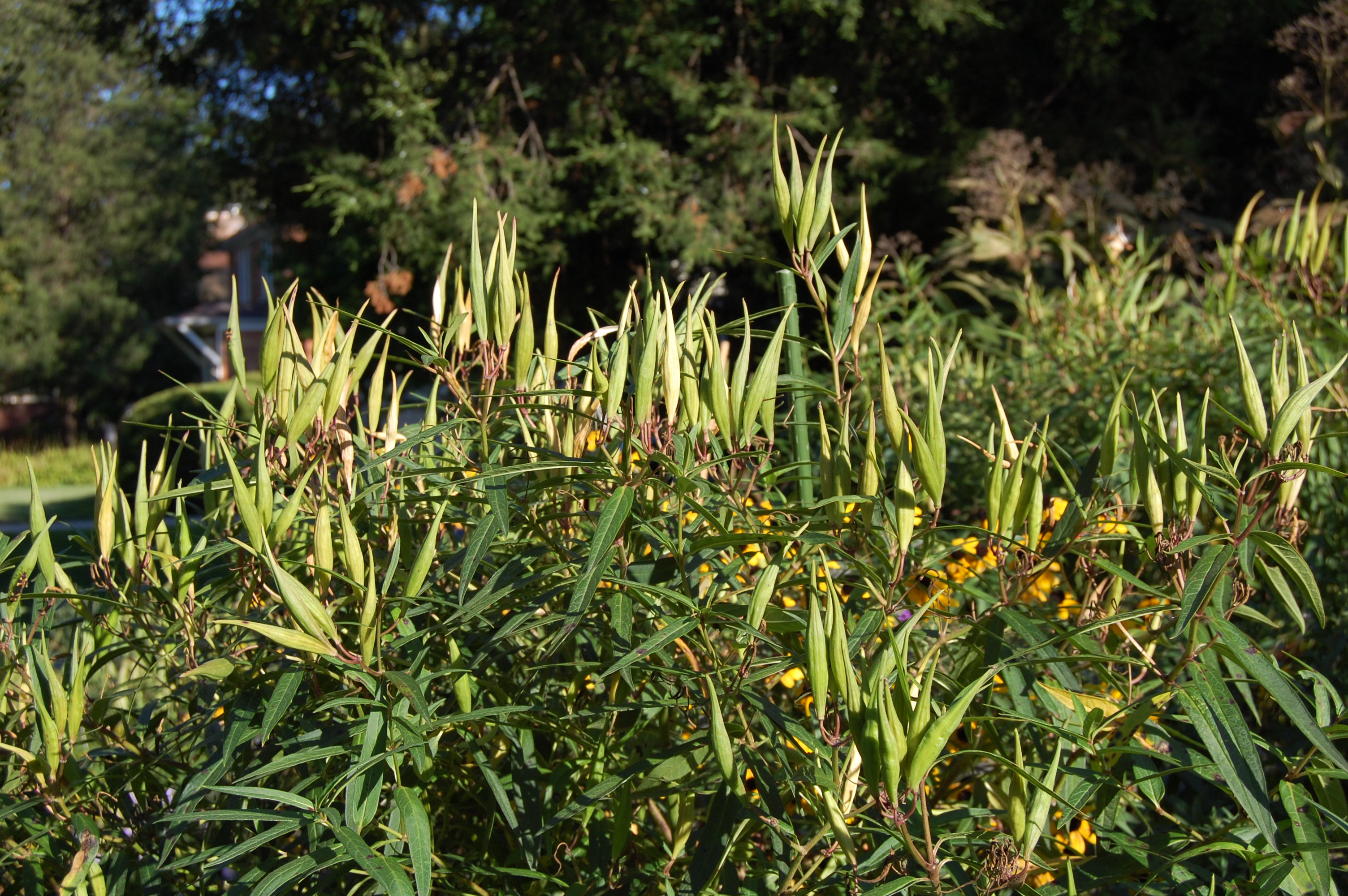
Swamp Milkweed
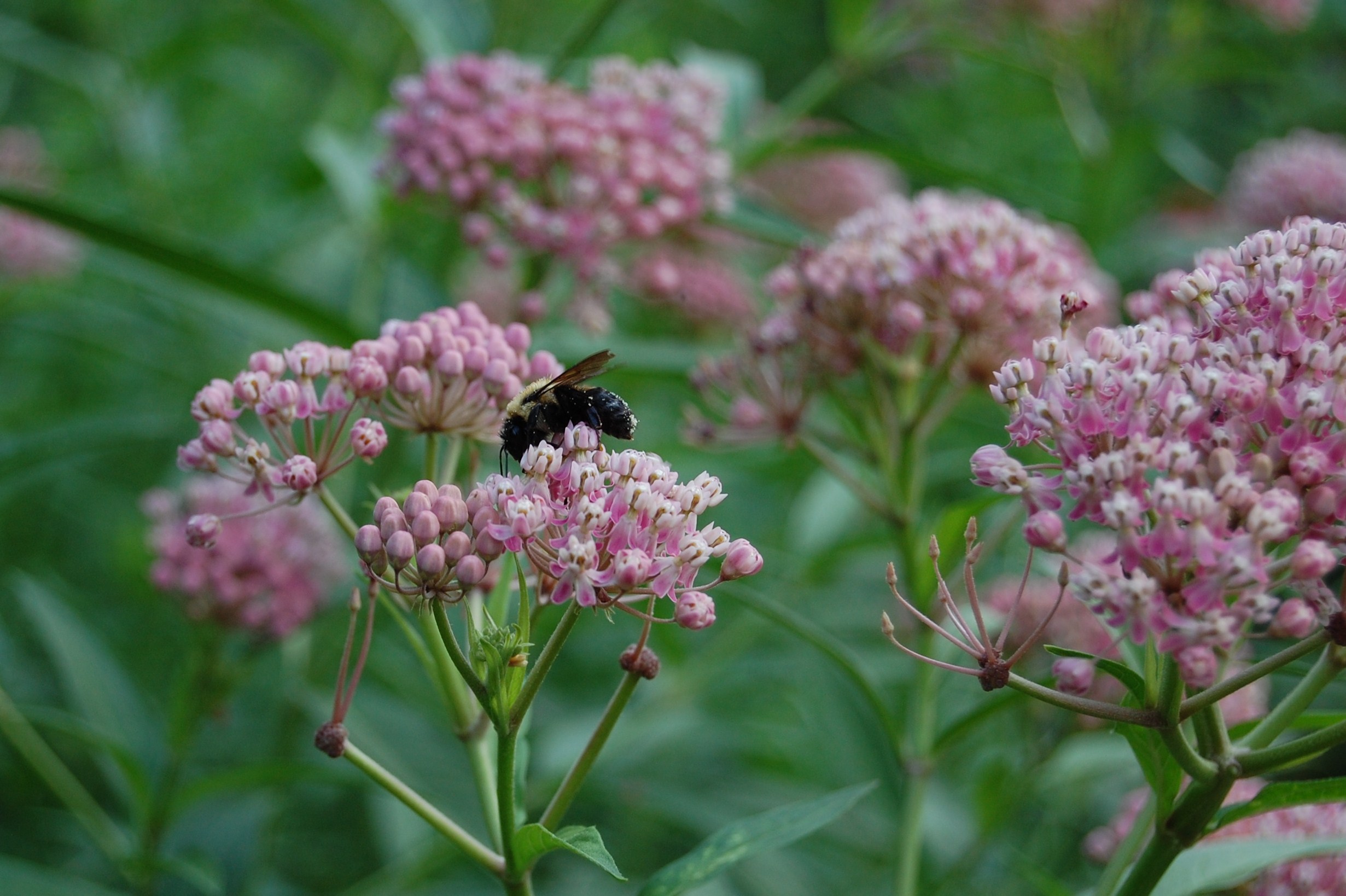
I like how the seed pods of Swamp Milkweed (Asclepias incarnata) point skywards.
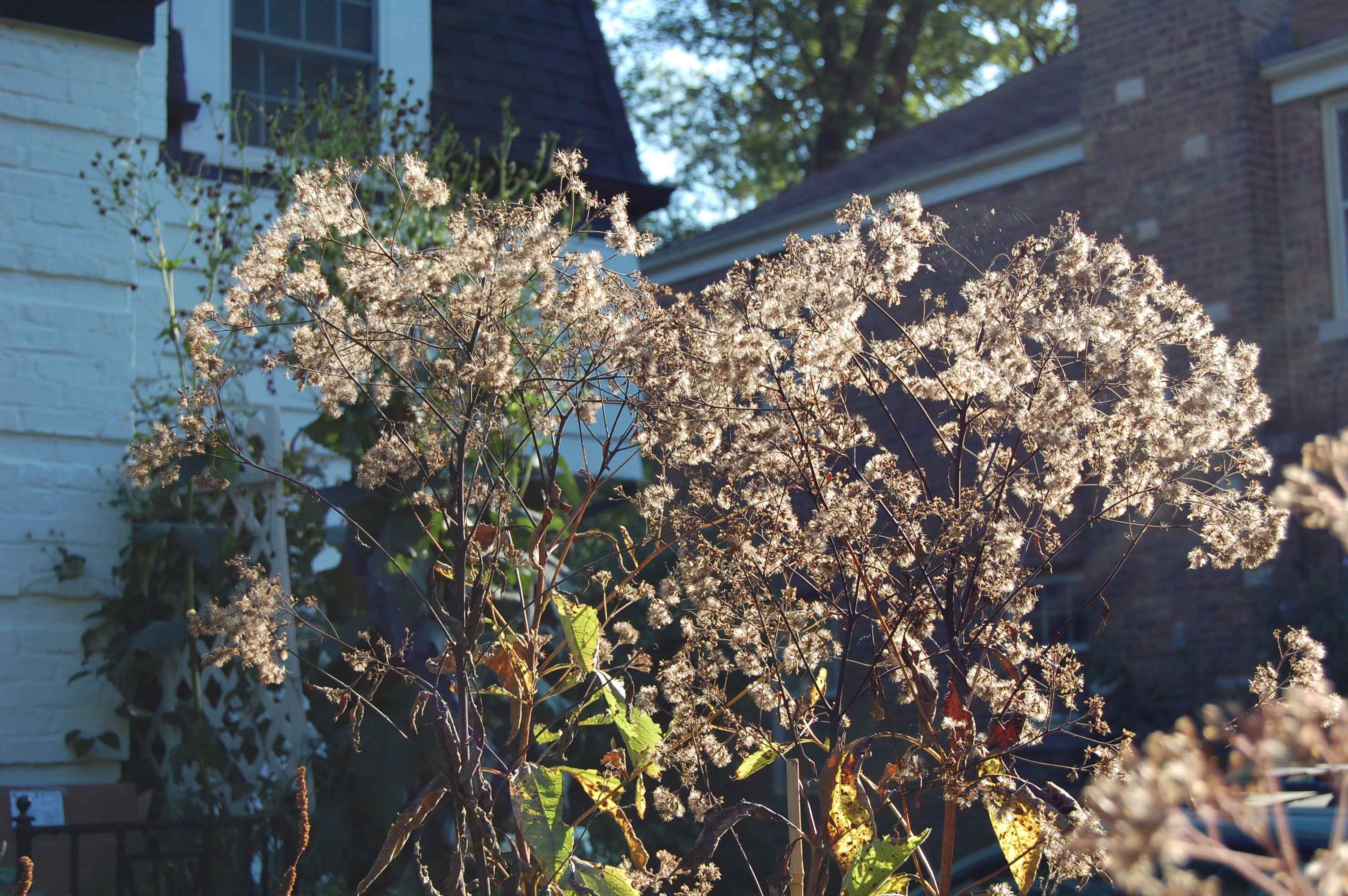
Sweet Joe Pye Weed
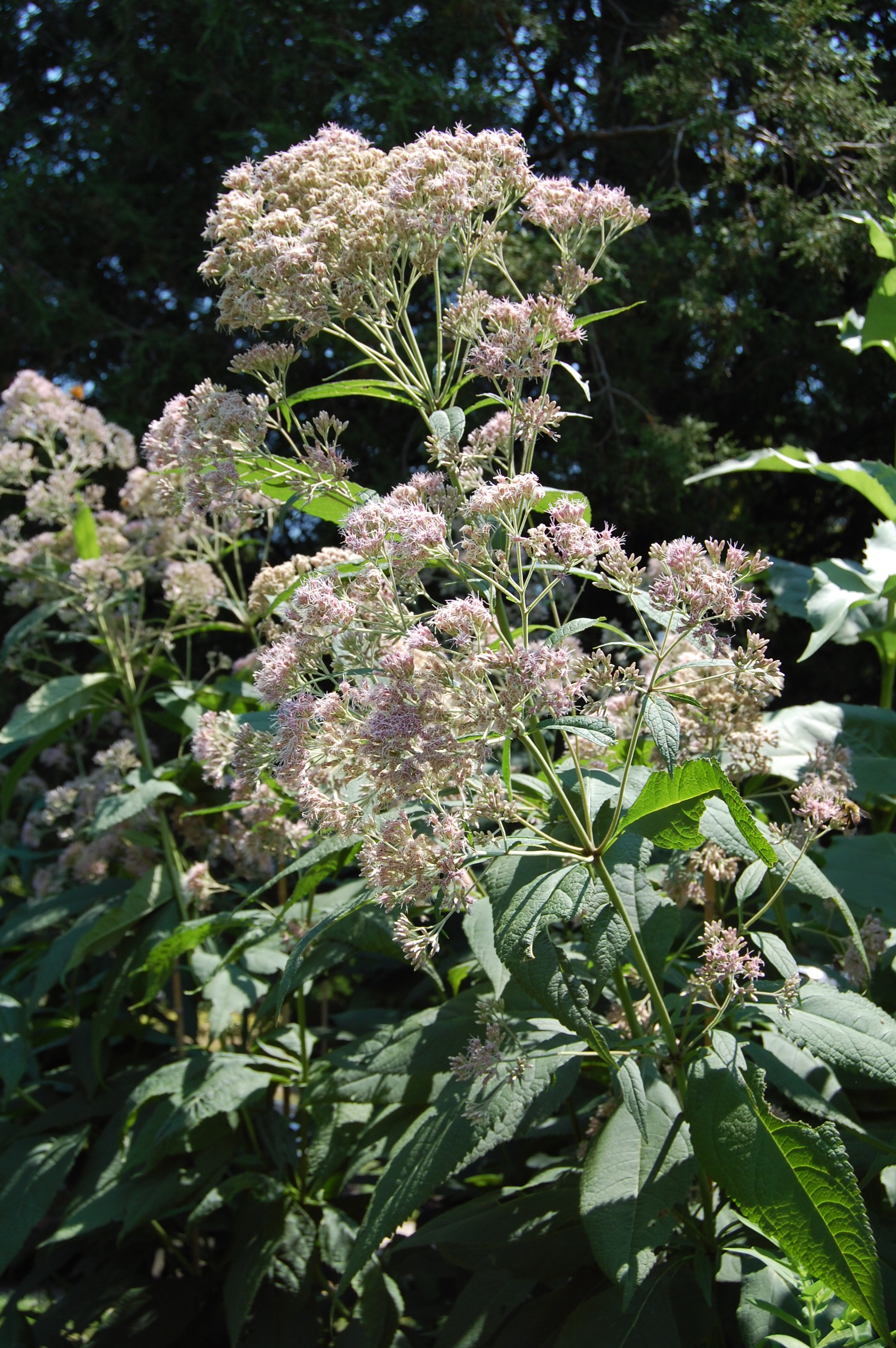
Sweet Joe Pye Weed (Eupatorium purpureum) has nice, fluffy seedheads.
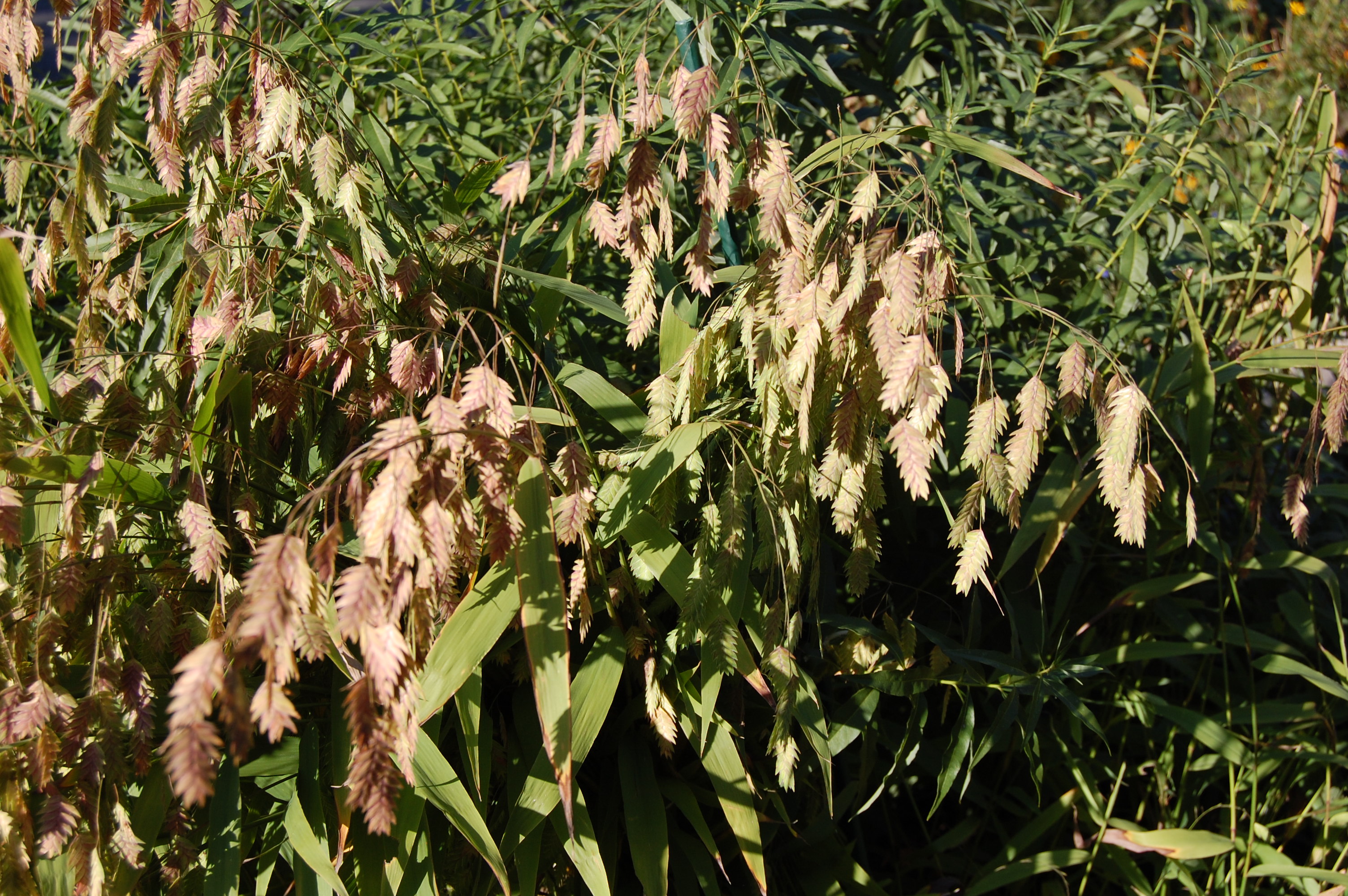
Northern Sea Oats
Northern Sea Oats (Chasmanthium latifolium) have some of the most beautiful seedheads.
Switchgrass
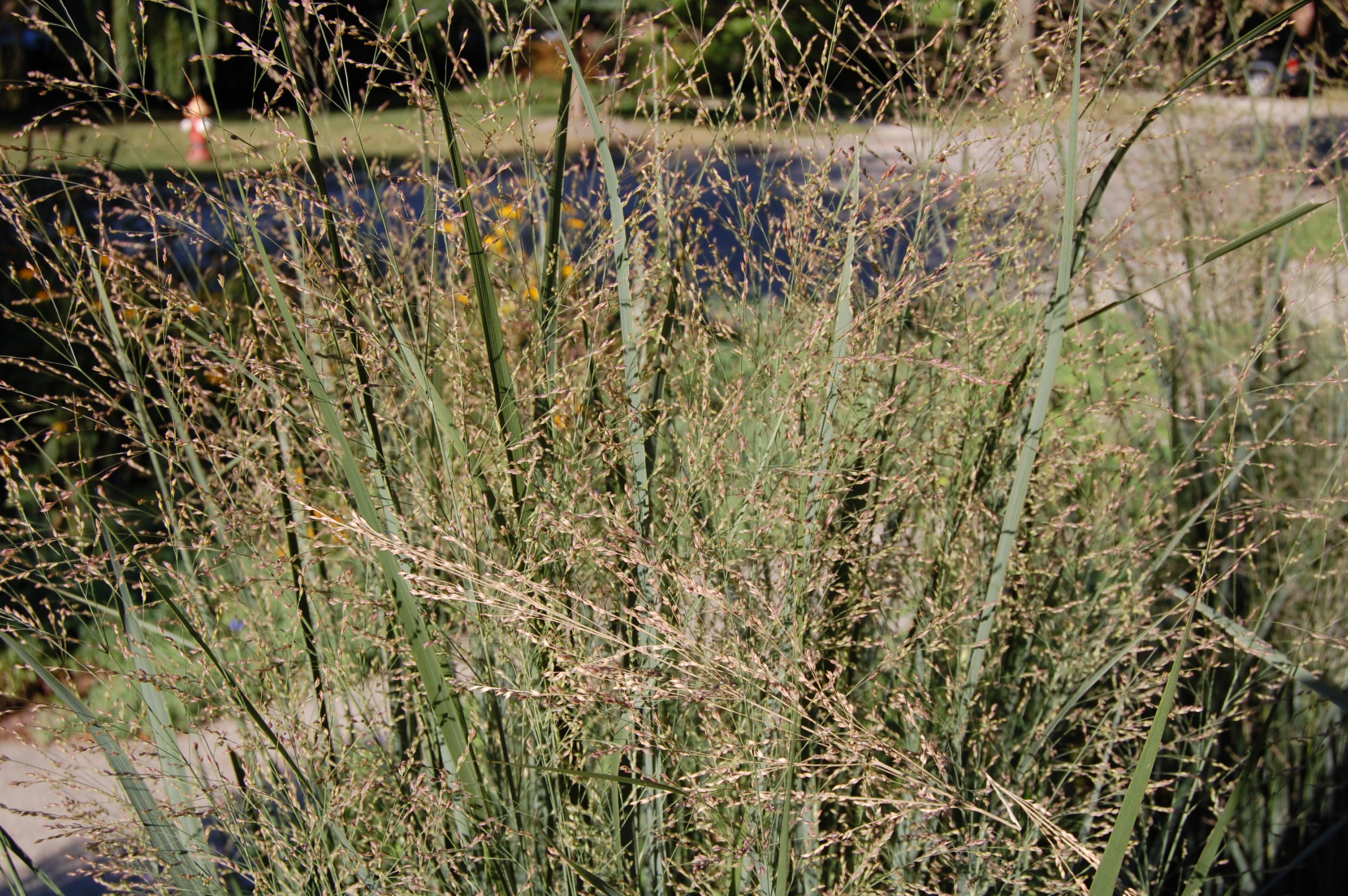
Switchgrass ‘Northwind’ (Panicum virgatum) seedheads have a different look, but in my opinion are even more beautiful. It also doesn’t flop.
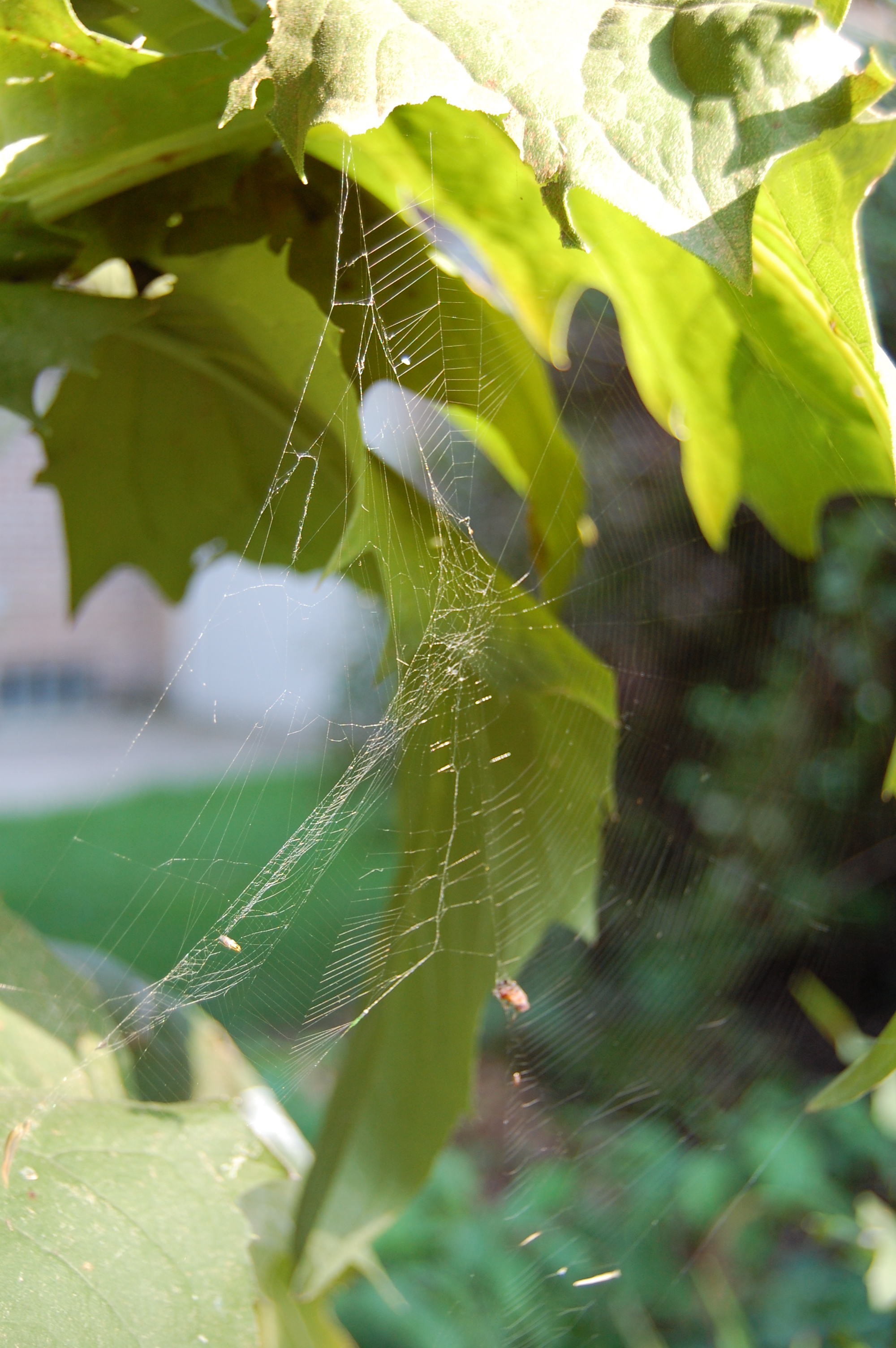
And finally, another sign of fall: spiderweb in the Cup Plant.
My garden is an a sort of transition period between summer and fall. Many of the perennial summer flowers now have seedheads instead of blooms, while the fall flowers have either just begun to flower or are on the verge. Most of the asters, in particular, are dotted with blue and purple, a prelude to the mass of color that will come later in the season. Every morning I inspect these late bloomers, pardon the pun, with impatience (if not Impatiens). I want to address them sternly: “Hey, you! Don’t just stand around gawking – think you’ll get around to blooming before the holidays?” But I remain quiet for the most part, because I don’t want to give the neighbors any funny ideas.
But back to the September Bloom Day. Let’s start by walking out through the back porch.
Flowering Tobacco
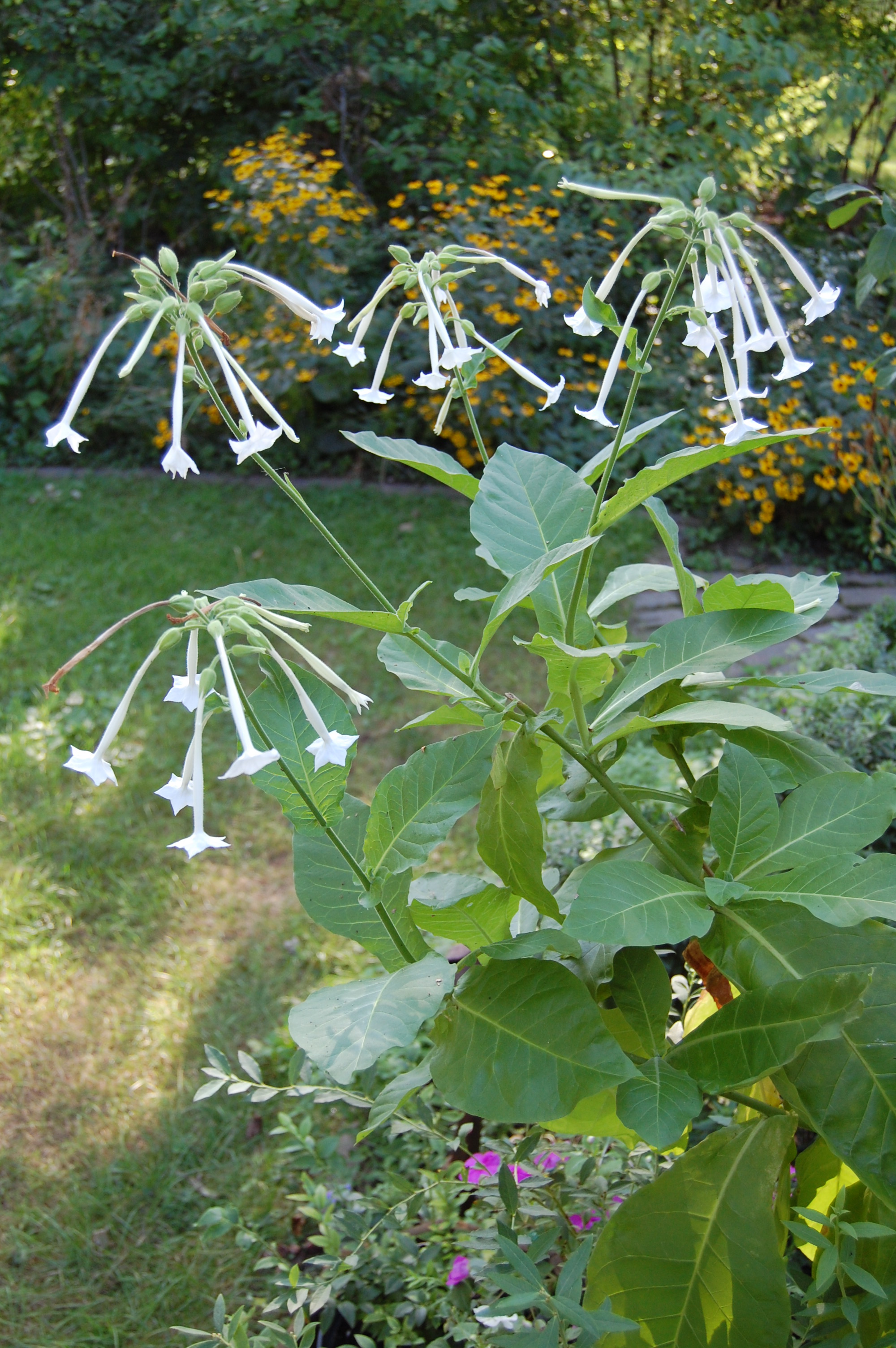
The Flowering Tobacco (Nicotiana alata) is looking very nice. Very important with this one to deadhead promptly.
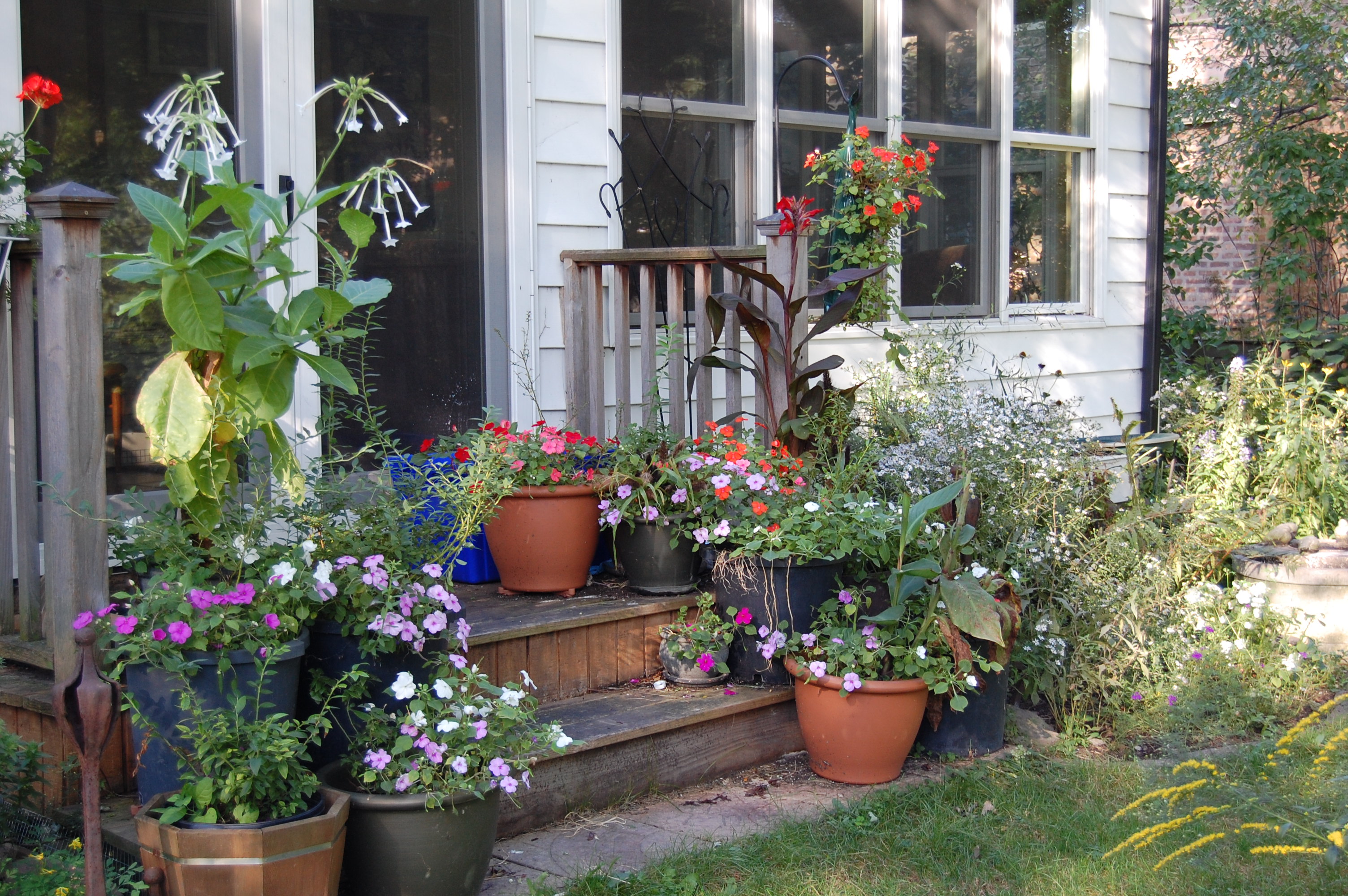
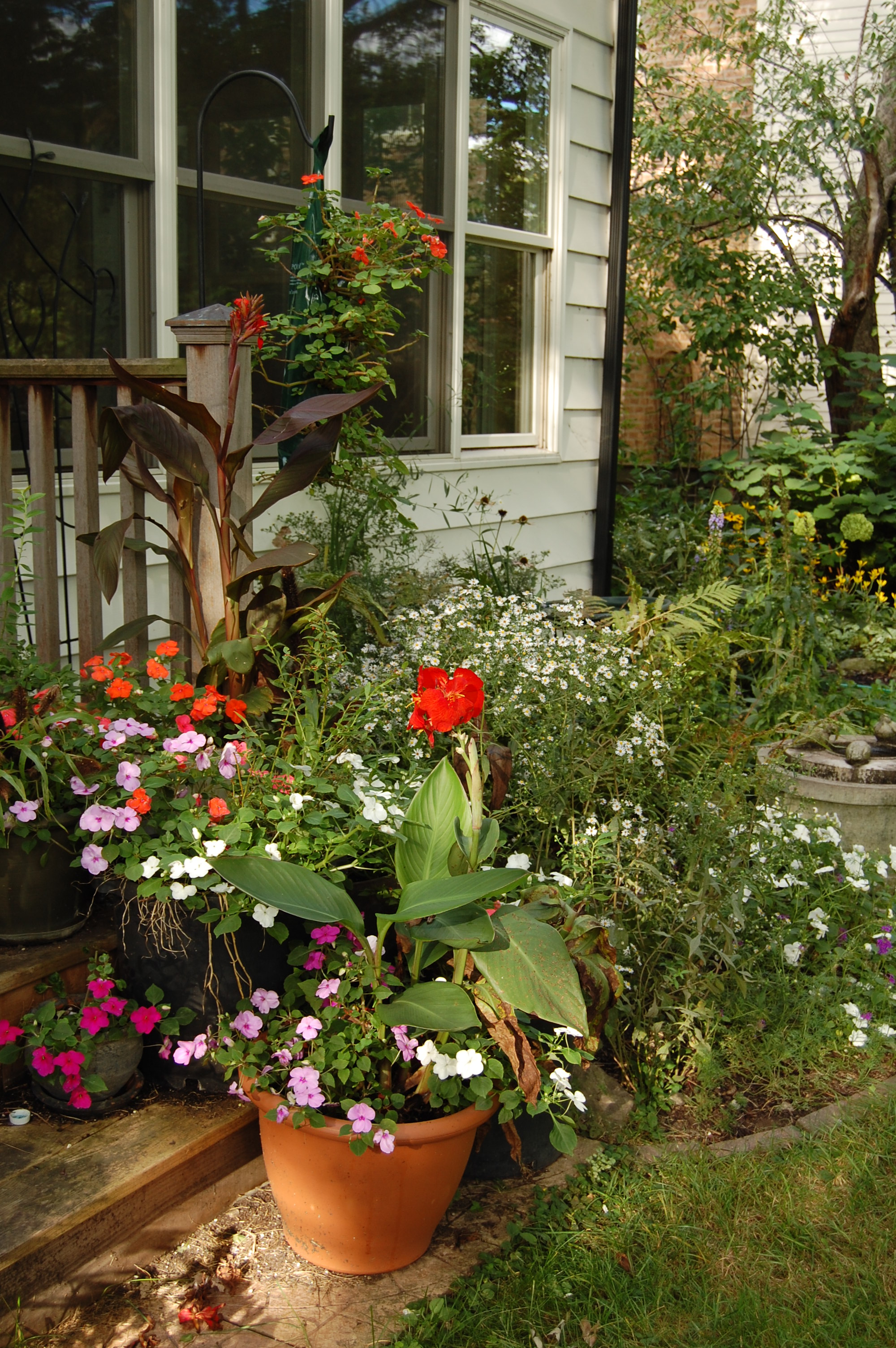
Overall, I’m pleased with the look of the containers on the back porch landing.
The Japanese Anemones (Anemone x hybrida) are among the late bloomers. This is ‘Honorine Jobert’. I find the flower buds attractive in their own right. I like how you can see the white between the bracts as they are just about to open.
Great Blue Lobelia (Lobelia syphilitica)
The Great Blue Lobelia (Lobelia syphilitica) seemed to bloom only briefly this season. Whenever I look at this plant I think that whoever came up with the botanical name is definitely guilty of false advertising, or maybe wishful thinking. The name is derived from the incorrect but once common belief that this plant cures syphilis. Couldn’t the taxonomists take time out from messing up perfectly adequate botanical names and think up something a little less unseemly for this poor flower?
Crooked Stem Aster (Aster prenanthoides)
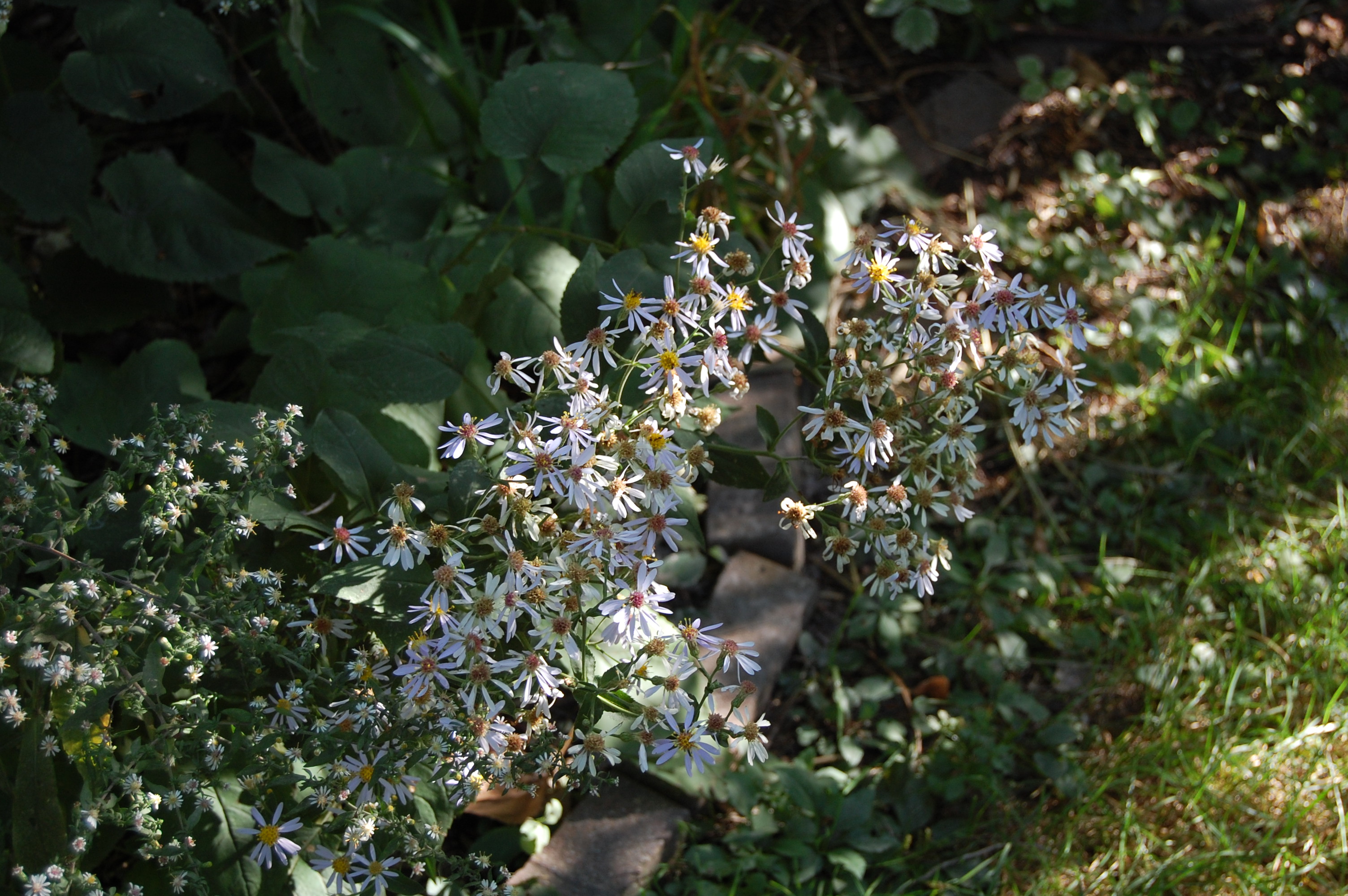
Crooked Stem Aster (Aster prenanthoides) starts blooming in late summer and does well in shade and moist soil.
Big Leaf Aster (Aster macrophyllum)
My kids refer to Big Leaf Aster (Aster macrophyllum) as Big Ass Leafter. This is a good plant for difficult sites.
Solidago flexicaulis
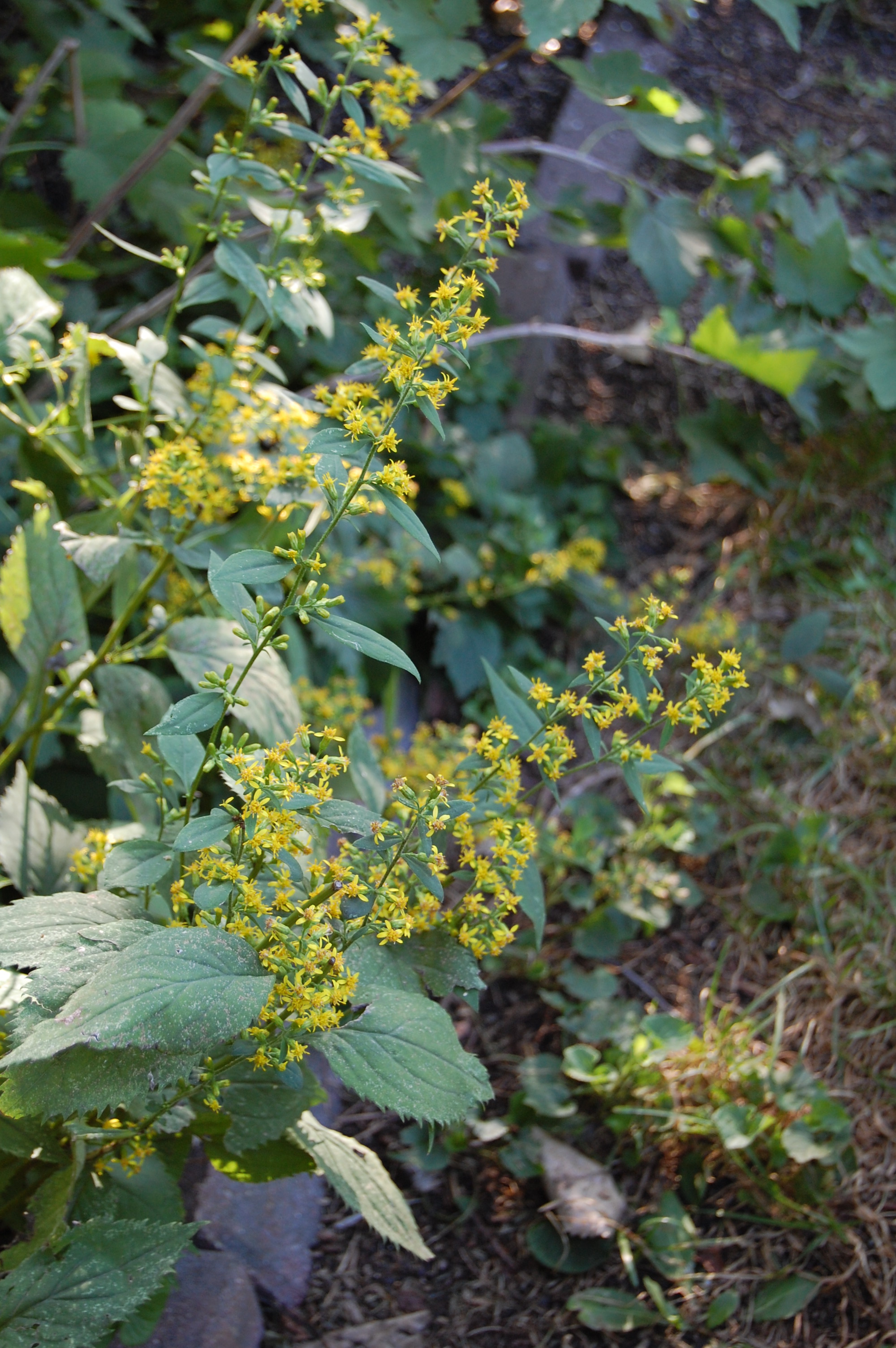
Zigzag goldenrod (Solidago flexicaulus) does well in shade and is an attractive plant, but it should ONLY be planted in difficult sites with plenty of tough competition. Otherwise, it becomes a rapacious thug.
Zinnia ‘Profusion Orange’ and Prairie Dropseed (Sporobulus heterolepsis)
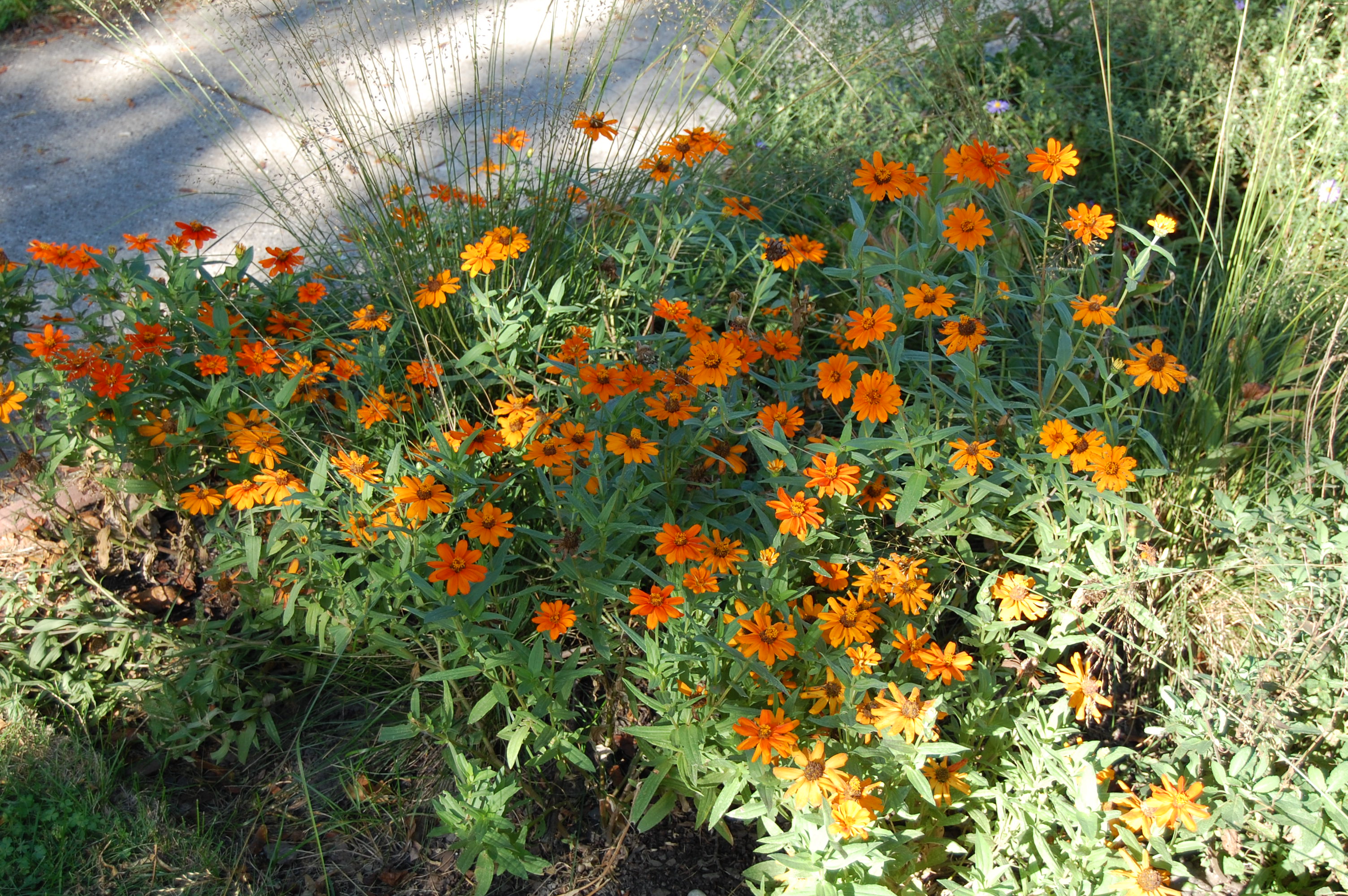
Now let’s amble around to the front yard, past the vegetable and herb bed. First we see the orange ‘Profusion’ Zinnias interplanted with Prairie Dropseed (Sporobolus heterolepsus).
Then there’s the Anise Scented Goldenrod (Solidago odora) and Aromatic Aster (Aster oblongifolius).
Cleome ‘Senorita Rosalita’ and Black Eyed Susan (Rudbeckia fulgida)
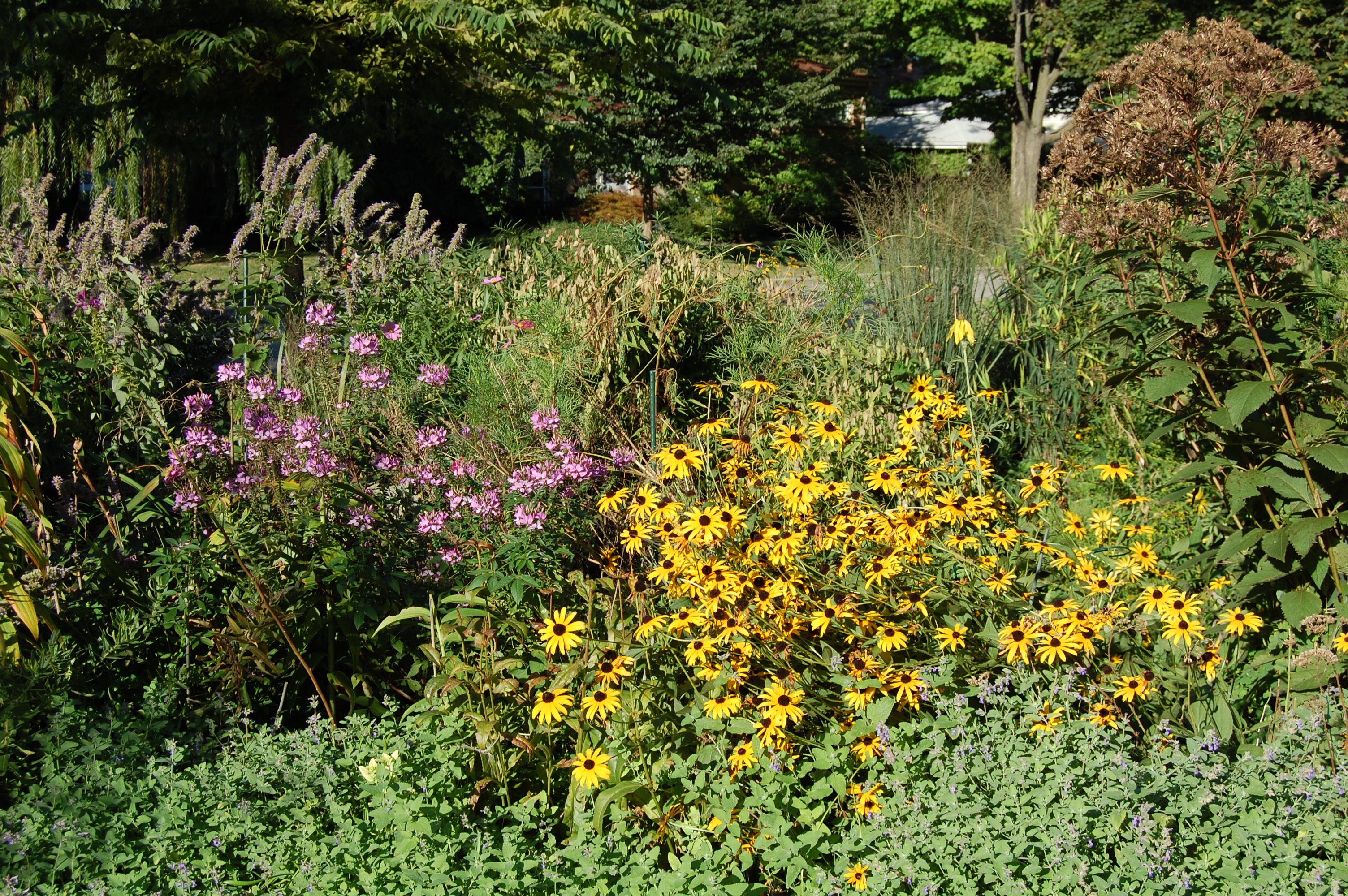
Most of the color coming from the raised bed along the walk to the front door comes from Black Eyed Susan (Rudbeckia fulgida) and Spider flower (Cleome ‘Senorita Rosalita’).
Brown Eyed Susan (Rudbeckia triloba) and Anise Hyssop (Agastache foeniculum)
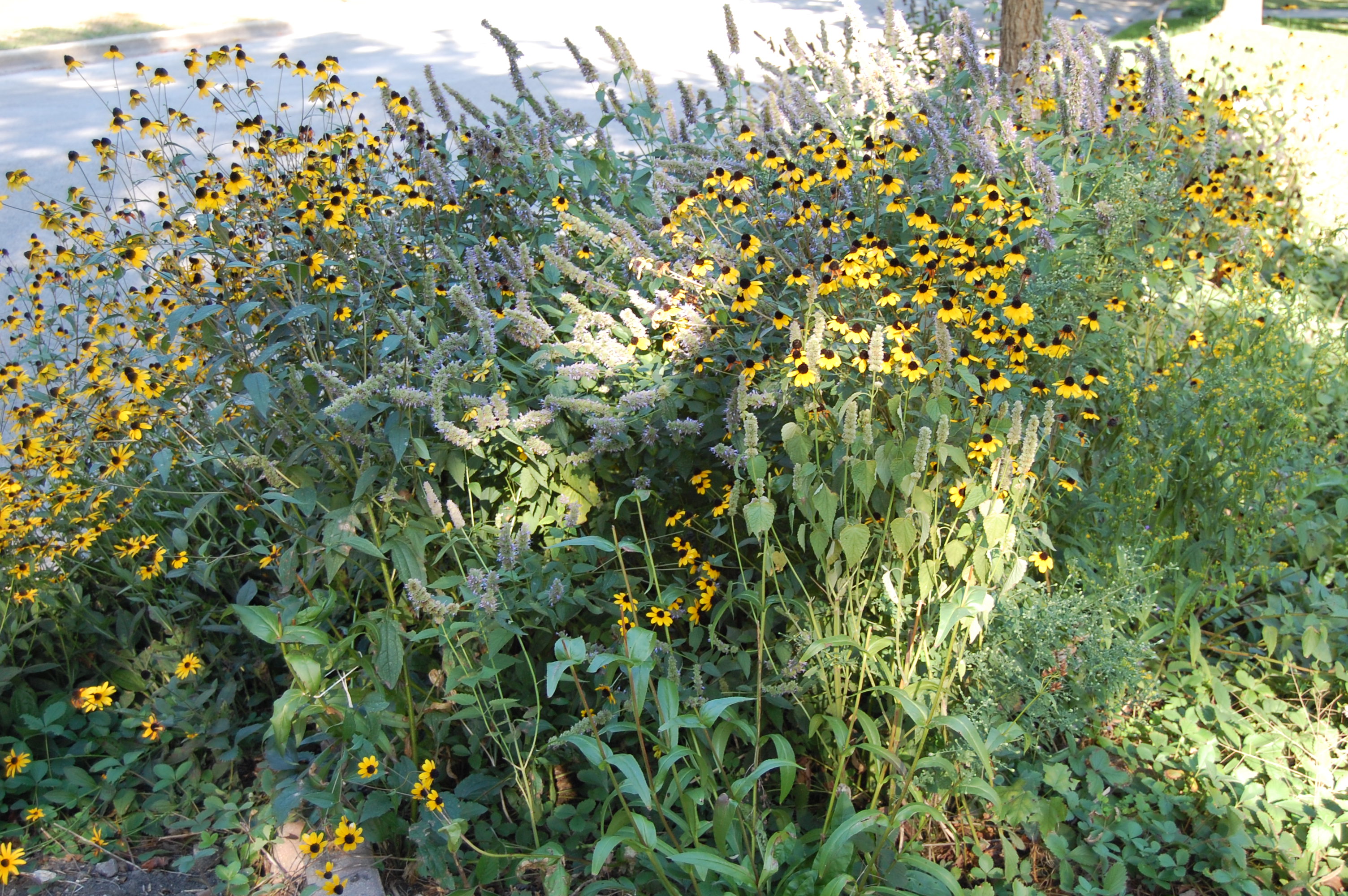
There’s also Brown Eyed Susan (Rudbeckia triloba) and Anise Hyssop (Agastache foeniculum) in the parkway.
Aster novae angliae
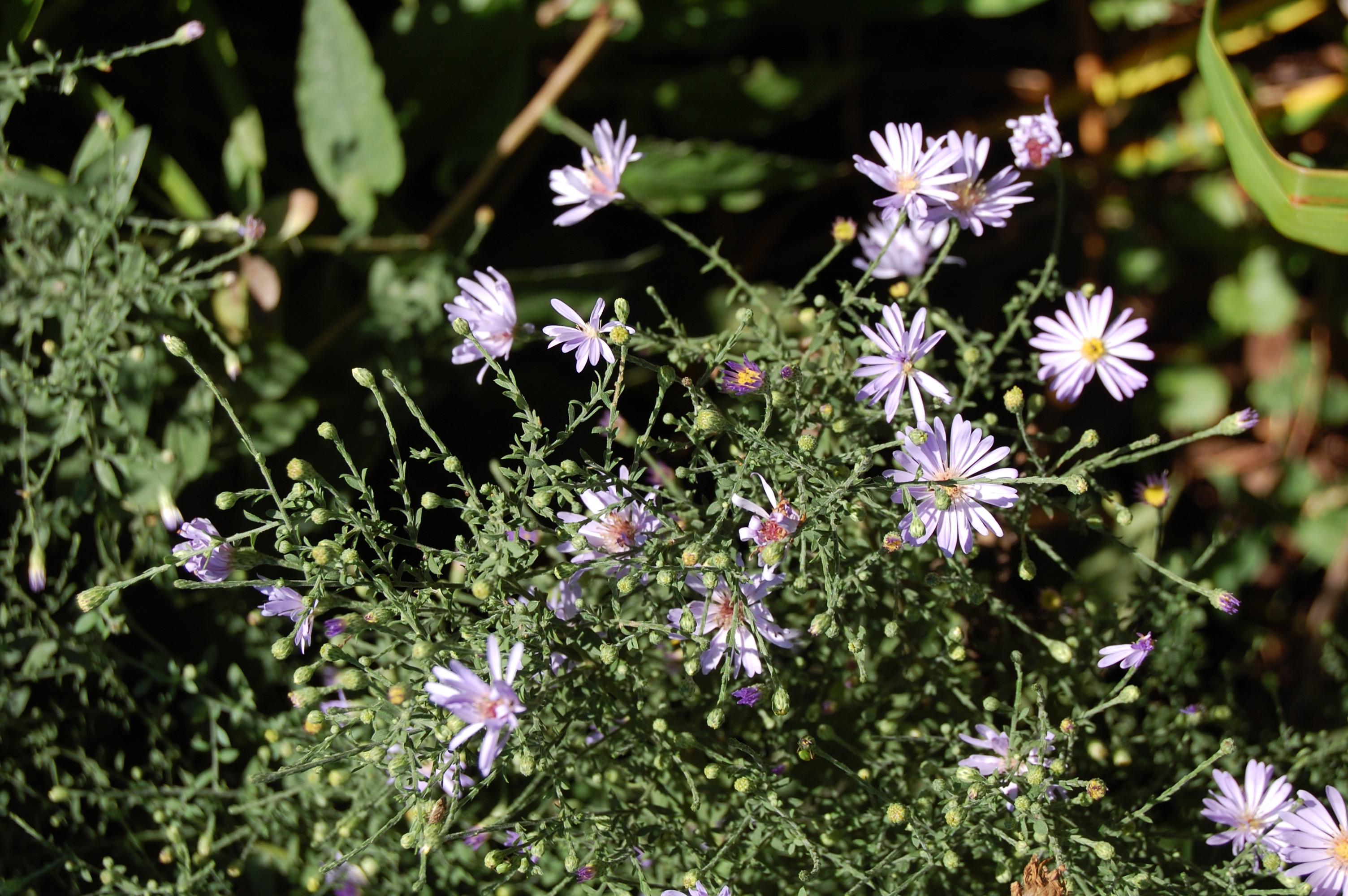
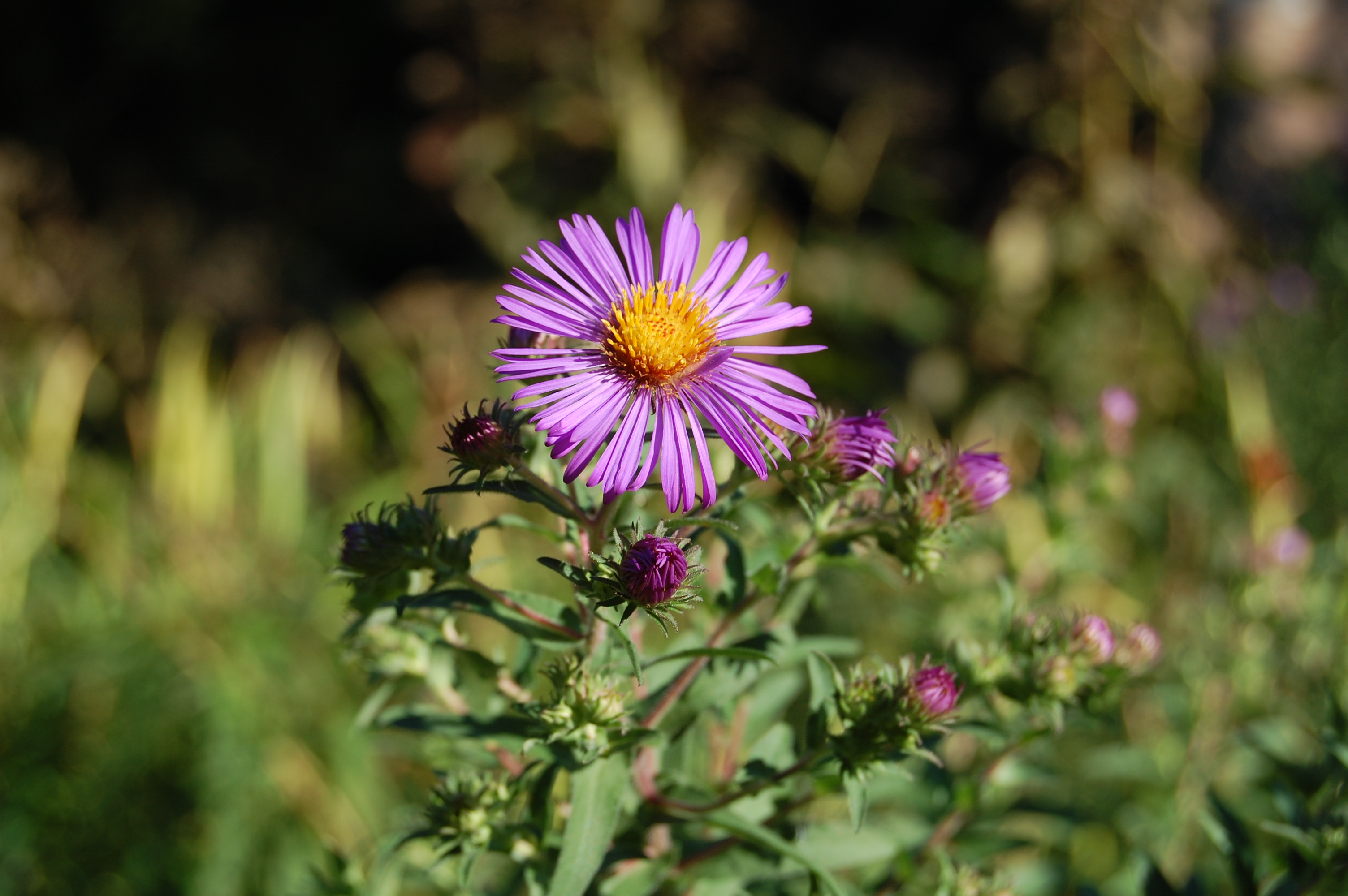
New England Aster (Asternovae-angliae) is just beginning to bloom in the front island bed. I grow the straight species, and it’s interesting to see how variable the flower colors are: blue, purple, pink …
Blue Stem Goldenrod (Solidago caesia)
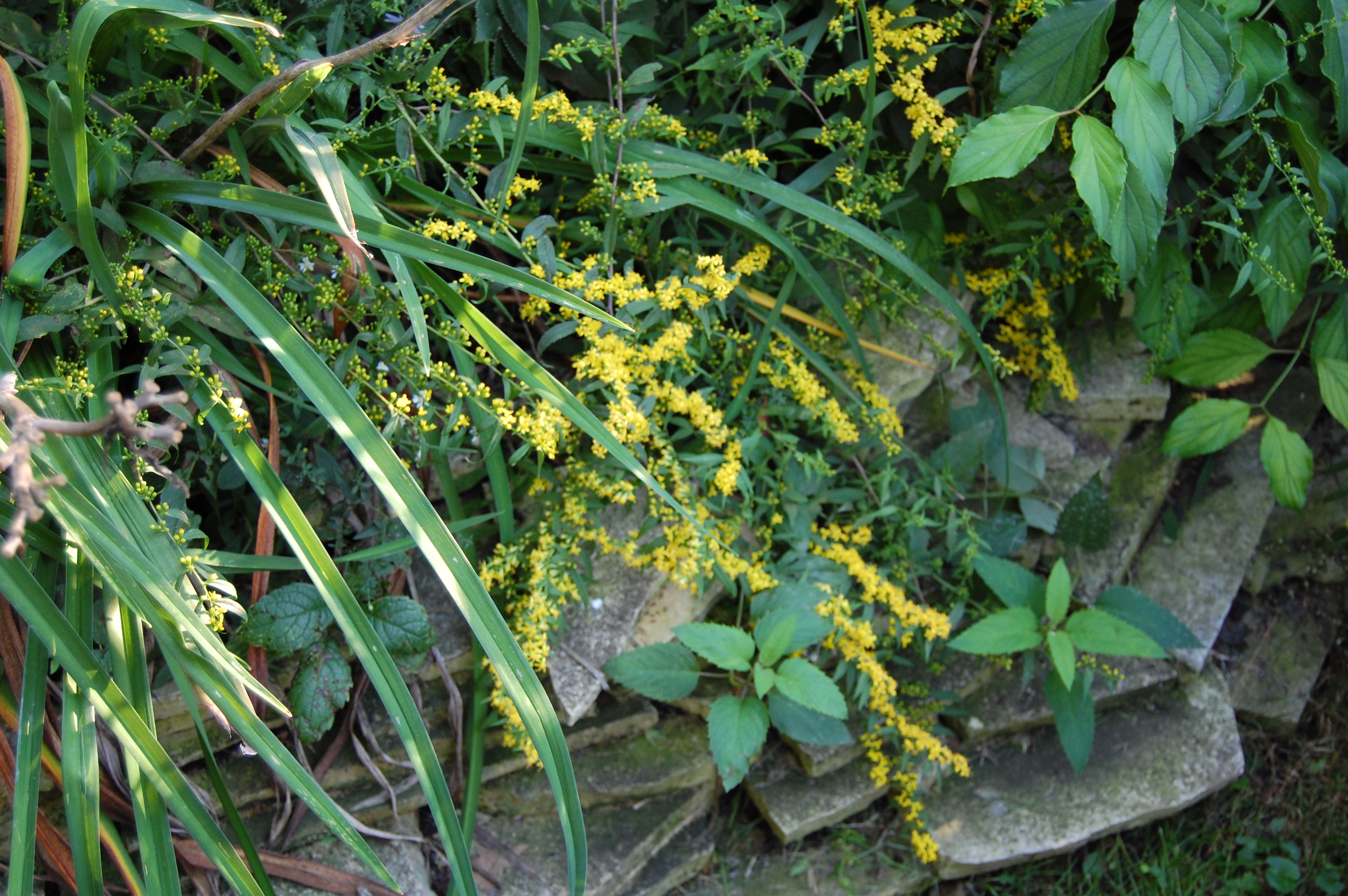
Bluestem Goldenrod (Solidago caesia) is a nice low goldenrod for the garden, just be prepared to pull up lots of seedlings.
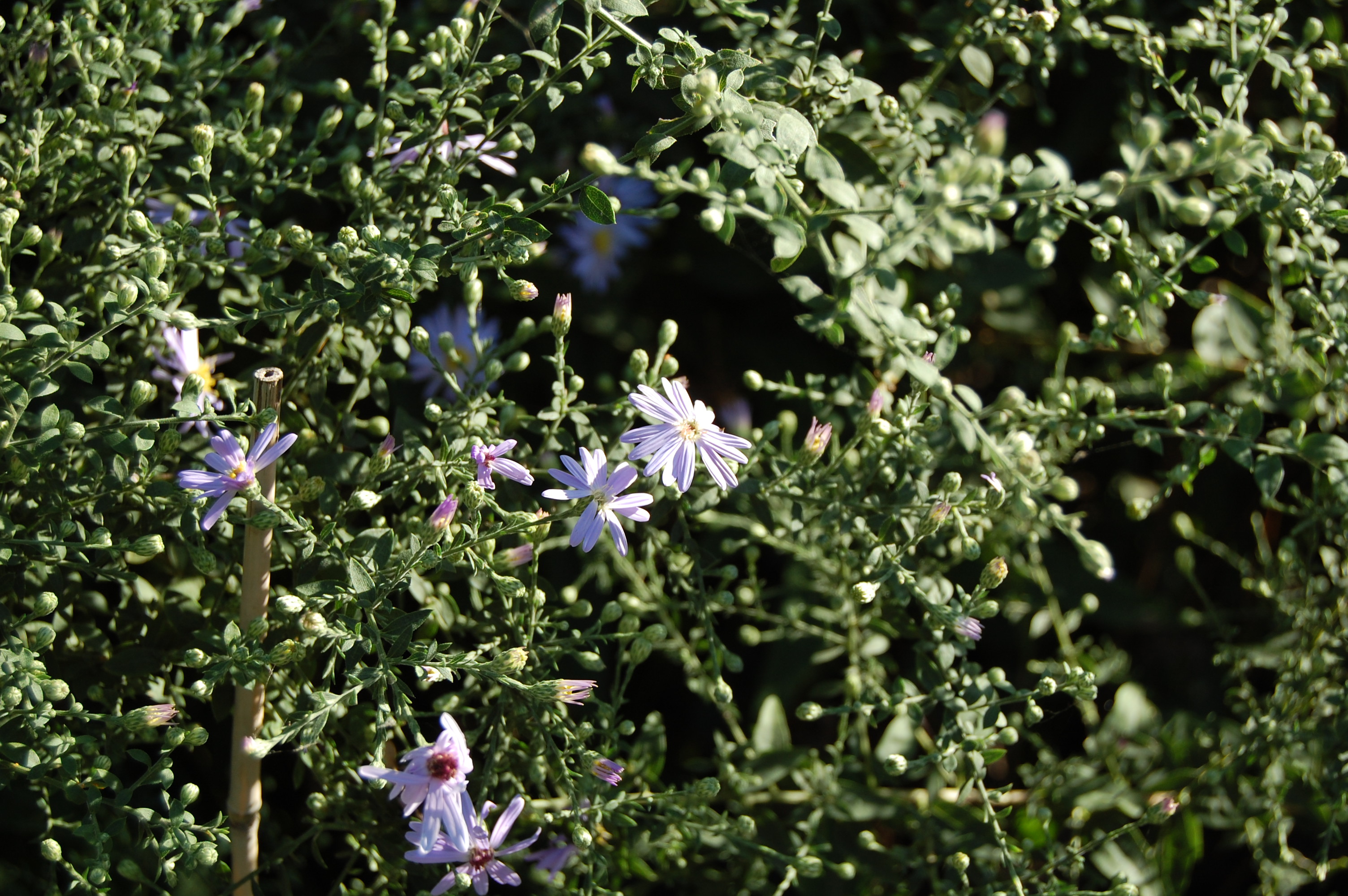
Short’s Aster (Aster shortii)
Short’s Aster (Aster shortii) is, as you can see, completely covered with buds. The first few have just popped.
Verbena peruviana
And on the east side of the house, the Impatiens seem to have called it quits for the season. The Verbena, however, are still going strong.
Well, that’s it. I’m thinking I may follow-up with posts with more information on the different kinds of goldenrod and aster in the garden. They’re my fall favorites – I’d take them over chrysanthemums any day. Would you agree, or are you a chrysanthemum fan?
My good friends Jean and Jim have asked for my help figuring out what to do with the side yard to the south of their home. Right now this area has a U-shaped flower bed. The northern arm of the U lies along the house, and receives lots of sun. It is mostly empty, though it has some peonies, a rose bush, Calico Asters (Aster lateriflorus), and Cream False Indigo (Baptisia bracteata).
The northern arm of the U. Please note that while Judy’s camera is fixed, Judy herself has gone to New Orleans on a work trip, poor thing. Or so she claims. Anyhow, that’s why I took this picture and the next one. I am not much of a photographer. Fortunately, the remainder are hers.
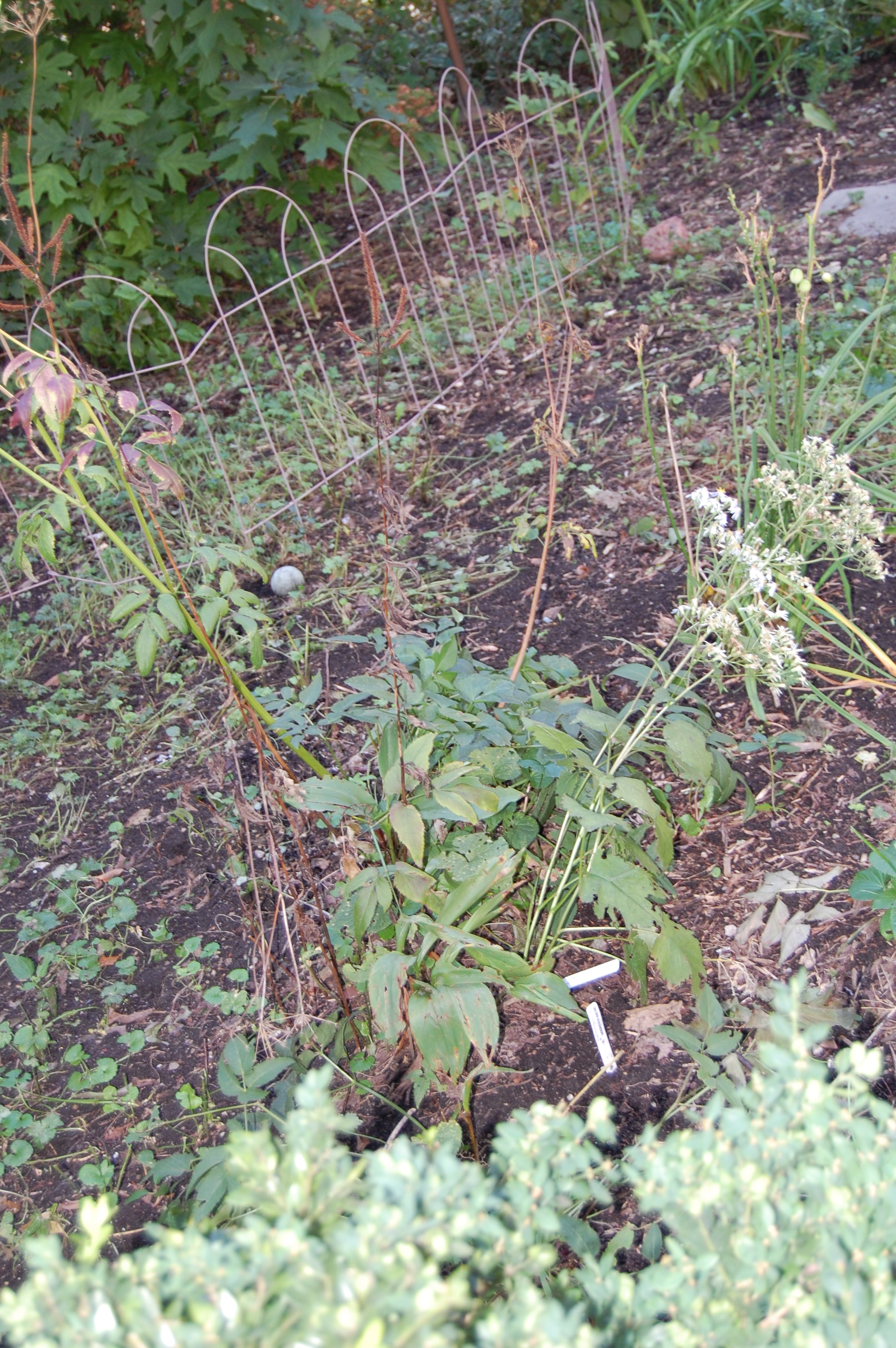
The southern arm lies along a chain link fence (marking the border with the neighbors). It gets some morning sun but is mostly shady and the soil is moist. There’s a golden alexander (Zizia aurea) and an oak leaf hydrangea in the southwest corner. Otherwise this area is pretty much overrun by Creeping Buttercup (Ranuculus repens).
The southern arm of the U. Jean had pulled out the Buttercup foliate, you can see it stealthily growing back.
The far end of the U faces west and backs against the chain link fence. Some conifers about 30′ tall stand on the other side of the fence. Down the middle of this side yard is a peninsula of lawn with large square pavers for stepping stones. The whole property had been professionally landscaped by the prior owner and the garden designer had surrounded the stepping stones with Buttercups, which went on to rampage through the moist part of the yard. Oops.
So there are two challenges. First, fill the empty spaces on the northern arm with perennials adapted to a dryish sunny spot, particularly ones which will shine after the peonies are done blooming. Second, come up with some tough plants that like moisture and shade – and that can compete with and even shade out the Creeping Buttercups. (My feeling is that trying to remove the Buttercups is a fool’s errand, unless Jean wants to use some very heavy duty herbicides, which she doesn’t.)
Preference is for plants that are mat-forming or otherwise dense enough to inhibit weeds. Filling in quickly would also be a good thing.
I’m trying to come up with a list of plants for this project. Some initial thoughts …
For the north/sunny arm:
Smooth Penstemon (Penstemon digitalis)
Smooth Penstemon (Penstemon digitalis)
Brown Eyed Susan (Rudbeckia triloba)
Black Eyed Susan (Rudbeckia fulgida)
The above have the advantage of being free, as I have to remove some from my beds.
Obviously, this list will have to be narrowed down, but I’m thinking of a basically blue/yellow border with something tall to stand in front of the gas meter.
For the south/moist/shady arm:
Variegated sedge (Carex morrowii) ‘Ice Dance’
Palm Sedge (Carex muskingumensis)
Bee Balm (Monarda didyma) ‘Raspberry Wine’
Monarda didyma ‘Raspberry Wine’
Ostrich fern (Matteuccia struthiopteris)
Wall Iris (Iris tectorum)
Dwarf Goatsbeard (Aruncus aethusifolius)
Chinese astilbe (Astilbe chinensis var. pumila)
Variegated Solomon’s Seal (Polygonatum odoratum) ‘Variegatum’
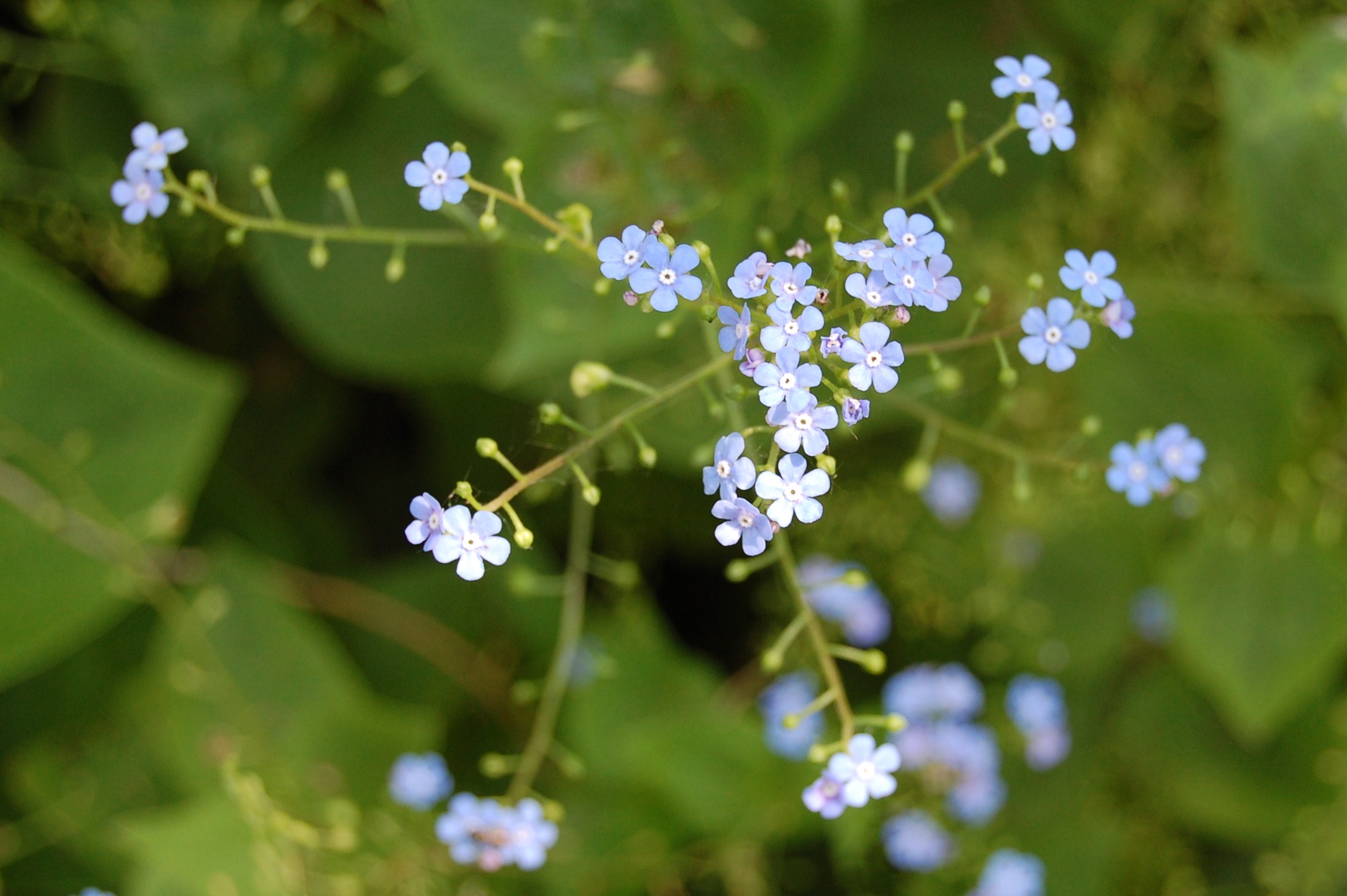
Siberian bugloss (Brunnera macrophyllum)
Siberian Bugloss (Brunnera macrophylla)
OK, once again, this list needs to be narrowed down.
So which would you choose? Which would you reject? What suggestions do you have that aren’t listed?
All ideas are welcome. I’m waiting. My friends Jean and Jim are waiting. Help!
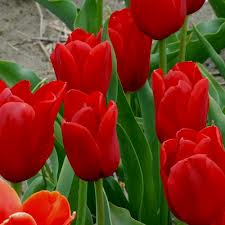
So we have ordered our fall bulbs from Scheeper’s. We ordered 90 tulips for planting in containers. Judy has been pining for luxurious hybrid tulips. I stopped planting the hybrids in the flower beds because their size got in the way of caring for the perennials. I’ve switched mostly to species tulips and grape hyacinth in the perennial beds, but suggested we try growing the hybrids in containers.
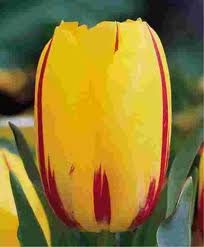
Judy picked several varieties of hybrid tulip with a red/yellow color scheme.
Tulip ‘Kingsblood’, one of our choices. Photo: Tulip Gallery.Tulip ‘West Point’, a second choice. Photo: John Scheeper’sA third choice: ‘La Courtine’.
I’ve never grown tulips in containers before, but I’ve read it can be done. I’ll store the containers in the garage for most of the winter, and I’ll have to throw the tulip bulbs on the compost pile when they are finished blooming.
I also ordered some 200 crocuses. I love crocuses, but I hate how they are vandalized by squirrels. What is most maddening is how the squirrels sometimes just bite off the flowers. This strikes me as pure rodent malice. I’m told that Crocus tommasinanus is less appealing to squirrels, so I got Crocus tommasinianus ‘Lilac Beauty’.
Crocus tommasinianus ‘Lilac Beauty’. Photo: John Scheeper’s
Now that we’re heading into the fall season I’m rethinking my preferred plants for next year’s containers. A few conclusions I’ve drawn:
Big Thumbs Up for Pentas. I was very happy with the Star Flowers (Pentas lanceolata) in my containers for sun. They bloom enthusiastically and can take the heat. Plus, they are great for hummingbirds. In August I regularly came to the front door on my way out and saw hummingbirds on the porch nectaring at the Pentas – they had never appeared on the front porch before this. While the red clusters of small star-shaped flowers are unique when viewed up close, from a distance they look like zonal geranium flowers.
Pentas (left) with Canna.
Orange Cosmos v. Orange ‘Profusion’ Zinnias. Earlier this year I was enthusiastic about my orange cosmos (Cosmos sulphureus), which I used as a filler in containers. However, in late summer the cosmos tended to get ragged and bloom sparsely, no matter how conscientiously I deadheaded. I think next year I would use orange ‘Profusion’ Zinnias instead. I used them in one of my sunny beds, and they are more reliable for flowering throughout the growing season. Even when I don’t deadhead them, they bloom, well, profusely.
Cannas are Really a Foliage Plant. This is the first year I had more than one Canna, and I realized that this should really be grown as a foliage plant. I wouldn’t go as far as Garden Walk Garden Talk, who removes the flower buds before they bloom. I like Canna flowers, but they are too few and far between to be the main selling point of this plant. The foliage is really something, though, and in the future I will make interesting foliage my first criteria when picking Canna varieties. I’ve found that they do make good container plants, though I haven’t tried the really gigantic ones.
Cannas with flowers on the back porch – green and purple foliage
Prune those Lantanas. My ‘New Gold’ Lantanas did not bloom as freely as I expected this summer. Only after I pruned them back did they start flowering as I had hoped. I conclude that deadheading is not enough, these plants really need to be cut back at least a couple times over the summer.
Bacopa Has Staying Power. I expected the annual lobelia (Lobelia erinus) to sulk during the summer months and then bounce back in fall. However, this summer’s extreme heat just wiped these guys out. In the future, I’ll be inclined to use Bacopa (Supera cordata) as a trailing plant with blue flowers. It’s not as eye-catching as annual lobelia, but it does have staying power.
We inherited this old wheelbarrow from the former owners. It was already rusting, so I turned it into a planter for the remainder of its days.
Not go as in to the compost pile, but rather to another spot in an nearby flower bed.
Joe Pye Weed ‘Gateway’ (right) in the front raised bed in early August.
Some two seasons ago I had to fill a hole in the raised bed along the front walk created by my removal of some diseased purple coneflowers (Echinacea purpurea). I filled it with two Joe Pye Weed (Eupatorium maculatum) ‘Gateway’, basically because I had been lusting after this plant. I already had Sweet Joe Pye Weed (Eupatorium purpureum). I like Sweet Joe Pye, but its flowers are a dusty pale pink and I wanted the richer flower color and deep purple stems of ‘Gateway’.
Sweet Joe Pye Weed in the front island bed.
Thing is, it wasn’t really a very good spot for ‘Gateway‘. Eupatorium maculatum loves moisture, but I planted ‘Gateway’ in a raised bed with soil more well-drained that moist. But I didn’t care, I just wanted this plant. Plus, I figured moisture-loving plants sometimes adapt reasonably well to drier soils. So it was something of an experiment.
The ‘Gateway’ I planted closer to the middle of the bed has done just fine. However, the one planted closer to the west edge of the bed has clearly had moments of stress in this year’s drought, despite my frequent waterings. Leaves drooped regularly and by late August one of this plant’s four stems had completely died back.
More ‘Gateway’.
So I’m thinking of moving both ‘Gateway’ to the island bed in the center of the front yard, which has fairly moist soil. This bed is mostly full of big plants that like moisture – Sweet Joe Pye Weed, New England Aster (Aster Novae-angliae), Swamp Milkweed (Asclepias incarnata), and Cup Plant (Silphium perfoliatum).
Swamp Milkweed
To make room for ‘Gateway’, I would take out some of the New England Aster, whose performance has been somewhat disappointing to me.
And I’ve already ordered the plants to fill the hole created by moving ‘Gateway’: Yellow Coneflower (Ratibida pinnata) and white Carolina Phlox ‘Miss Lingard’ (Phlox maculata).
Yellow Coneflower
Only problem is that Judy doesn’t want me to move ‘Gateway’. In the continuum of gardening mentalities from compulsive revisionist to defender of the status quo, I lean more toward revisionism and Judy is the hidebound conservative. She likes the ‘Gateway’ where they are.
There is a compromise position: just move one of the ‘Gateway’ plants. However, that would sacrifice the massing effect you get with two (yes, two are a mass, this is a big plant).
Another thing. If I don’t move ‘Gateway’, I set off a game of musical plants as I try to figure out where to put the Phlox and Yellow Coneflower currently en route. I can usually shoehorn things in if I need to, I suppose.
As usual, I am racked with indecision. So, what do you think? Move one or both ‘Gateway’ plants or leave them where they are?
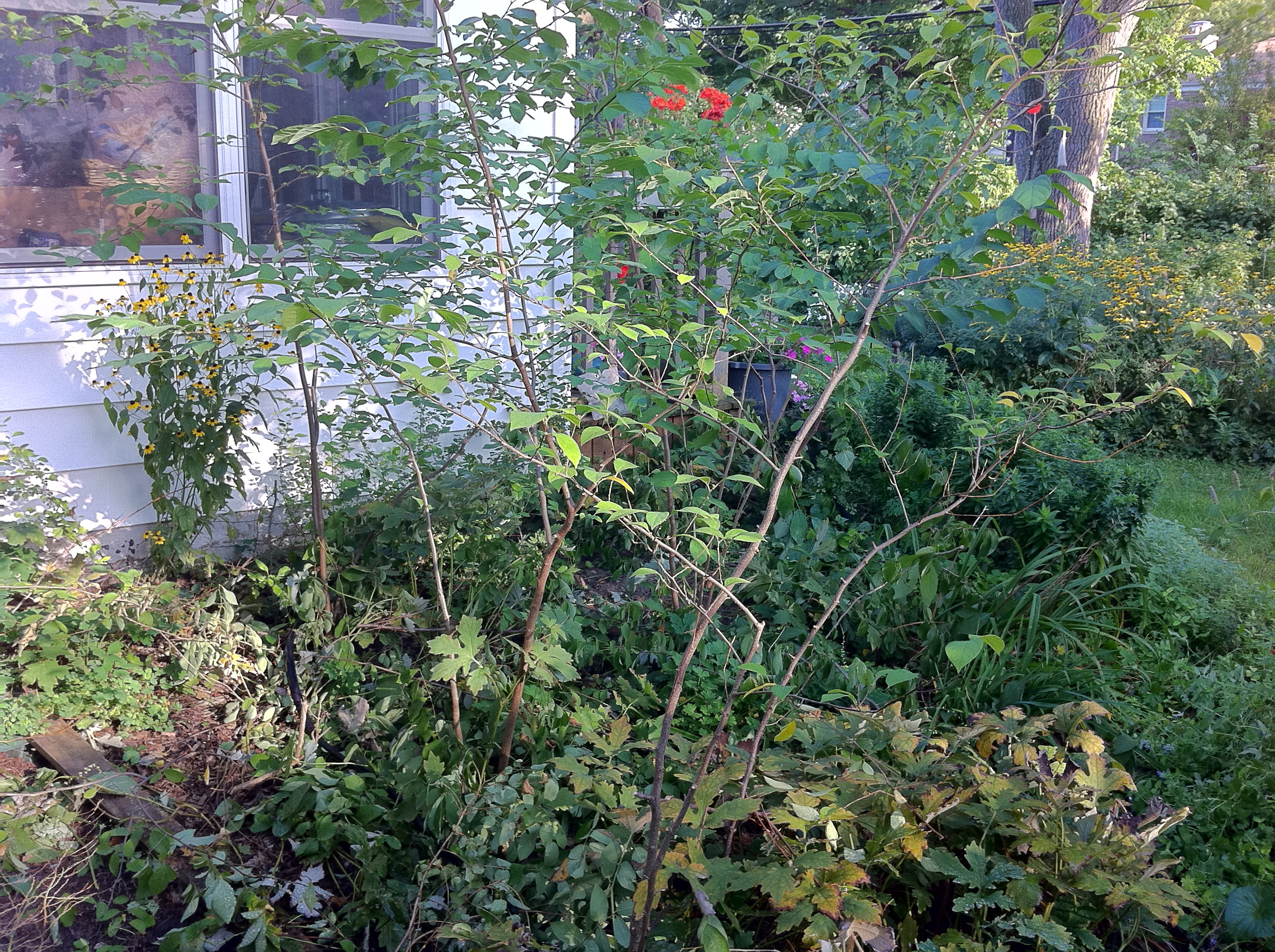
Shrubz 2 Treez.I may have mentioned this before, but Judy really dislikes shrubs. She’s fine with small trees, but despises shrubiness. Me, I like shrubs. But I was very taken with a photo I found from the website of the Ladybird Johnson Wildflower Center in which Spicebush (Lindera benzoin) had been pruned into small trees. This allows for more vigorous growth by the perennials at the base of the shrubs. The birds had just stripped my Spicebush of berries – within days of their ripening. So I took my trusty Fiskars bypass pruner and went to work. Then I read from Donna at GWGT how you weren’t supposed to do heavy pruning until late fall or winter – earlier pruning encourages tender growth that will be killed by frost. Now I’ll just have to wait and see if my eager improvements will cause any damage. This is my problem as a gardener: I lack patience, when I am seized by an idea I have to act RIGHT NOW.
By the way, Judy’s having camera problems so today’s pictures were taken with her cell phone. Not up to her ordinary standards…
Spicebush after first attempt at pruning.
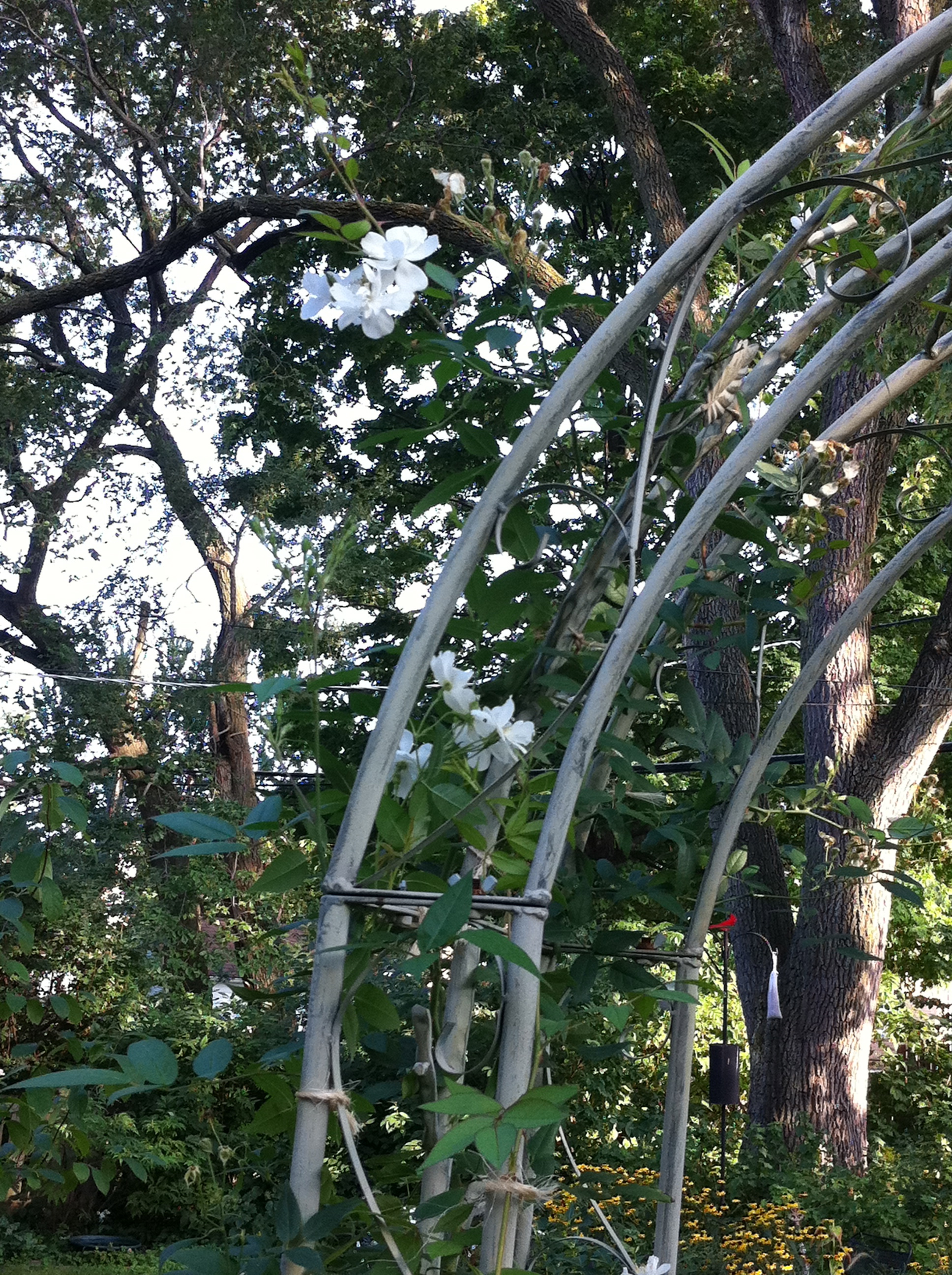
Rose Resurgence. With the cooler weather, my roses have started blooming more enthusiastically, especially the small white single flowers of ‘Cassie’ and the pink buds and cream-colored flowers of ‘Sally Holmes’. ‘Darlow’s Enigma’ has bloomed more modestly, on the other hand I’m growing it on an arbor and it has almost reached the top. I’m a little worried about ‘Westerland’, which is not blooming and seems less than robust.
‘Darlow’s Enigma’ on arbor.‘Sally Holmes’
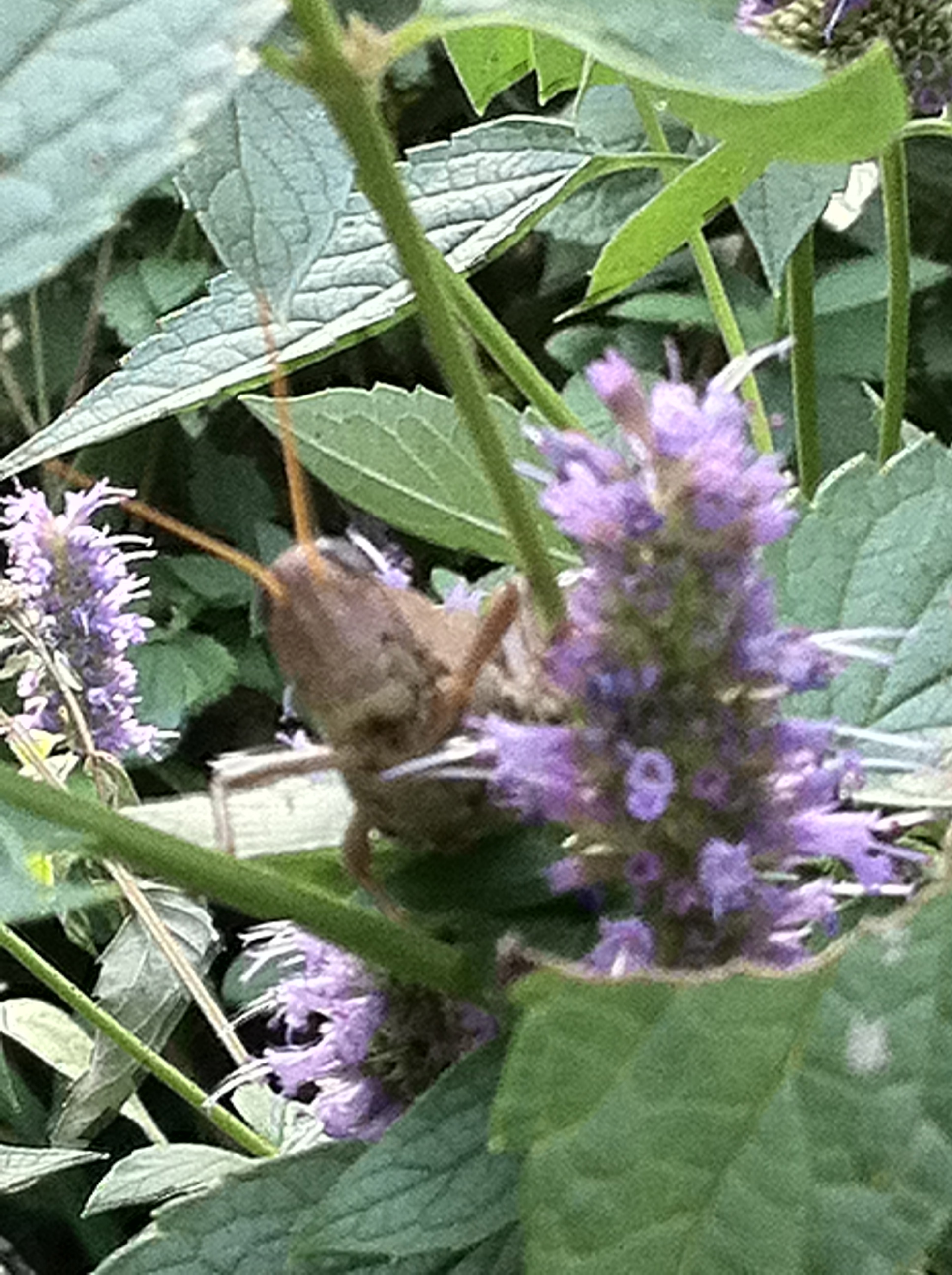
Grasshoppers.There are grasshoppers hopping about my flower beds. Not many, just one or two at a time that I can see. For some of you that might sound commonplace, but in my inner ring suburban town they are an unusual presence in the garden. My first reaction was one of quiet pride: another sign that I have created a wildlife friendly habitat garden. Then I read that grasshoppers are in fact the same as locusts: we just call them locusts when there are a lot of them. They are hungry herbivores with broad tastes. However, I will not panic. There are plenty of birds in our garden, and perhaps other predators. I’ll assume that the other critters will prevent things from getting seriously out of whack.
Grasshopper playing hide and seek in the Anise Hyssop.
Speaking for myself, I’ve always found that having to choose plants for a garden project causes acute agony. The moment I pick one plant, a sneaking suspicion that another option would be far better begins to grow in my mind. I obsessively review the plant descriptions, searching for hidden meanings. Then I decide to switch to another plant, and the process starts all over again.
That’s why I wrote a post about a week ago regarding an oval 4’x6′ raised bed on our parkway that I wanted to make over. The goal was something shorter and tidier-looking. Well, I got quite a bit of useful advice, and thanks to all the input I am now able to make my final choices. Some people suggested specific plants, and others helped me clarify what I wanted from this bed. So here’s the final plan:
Geranium renardii ‘Tschelda’, to spill over the bed’s edge facing the sidewalk. This one I came up with myself, and I decided to stick with it because it is supposed to be shorter (10″), and the foliage should be able to withstand a lot of hot sun through the summer. Jean of Jean’s garden helped me realize it was really Geraniums I wanted here.
Panicum virgatum ‘Shenandoah’, to stand at the west end of the bed as a specimen, providing late season interest. This was a suggestion of Scott at Rhone Street Gardens.
Pennisetum ‘Little Bunny’, along the east end of the bed. I was worried that ‘Hameln’ might grow taller than I want, and this cultivar is supposed to grow only to 12″. Gardensunshine and Plantpostings‘ comments were helpful with this decision.
Calamintha nepetoides. Photo: mgohio
Calamintha nepetoides in the middle of the bed behind the Geranium ‘Tschelda’. This is a long-blooming mound of tiny white flowers and a favorite of pollinators. Calamintha was suggested by Rachelle from Talking to Plants.
Salvia nemorosa ‘Carradonna’ towards the back of the bed. ‘Carradonna’, also a suggestion of Rachelle, has purple spikes that should provide a nice contrast to the Calamintha.
Sedum spectabile ‘Matrona’ will join ‘Carradonna’ in the back. ‘Matrona’, and suggestion of Scott’s, will provide fall color and a contrast with the orange-yellow of the Rudbeckia fulgidas between the raised bed and the curb. I worried this color combination might be too garish, but I think ‘Matrona’ has such a soft pink I think it will work.
Sidalcea ‘Party Girl’ – just a couple – will stand next to the Panicum at the west end of the bed. A 3′ mini hollyhock that will provide summer color.
I planted Spicebush (Lindera benzoin) four years ago and this is really the first year I’ve gotten berries in any serious quantity. Spicebush berries are a highly valuable fall food for songbirds, particularly those in the thrush family. The berries are also ornamental, and have a citrus fragrance when crushed – as do Spicebush leaves. And the leaves are the larval food of the spicebush swallowtail butterfly – not that I’ve seen any yet. (If any spicebush swallowtail butterflies are reading this, they can take that as a hint.)
Spicebush berries in our backyard.
Since Spicebush are dioecious, you’ll need male and female plants if you want berries. There’s no way to tell the sex of a Spicebush (this suggests a botanical joke in search of a punchline), so you just have to play the odds and plant several. I have five, which seems to have done the trick, although I wasn’t completely sure until this year.
Spicebush are happiest in part shade and moist soil. I have mine in the backyard in a spot that is usually moist, but they’ve suffered in drought and on very hot days. I’ve given them a fair amount of supplemental water this summer.
In spring Spicebush have small fuzzy yellow flowers that make it look like a very understated forsythia. I thought I had a picture of them blooming in my garden but I couldn’t find it, so here’s one from the Ladybird Johnson Wildflower Center:
Spicebush (Lindera benzoin). Photo: Ladybird Johnson Wildflower Center
Looking at this picture makes me realize I need to pay more attention to pruning and shaping my Spicebush. Notice the graceful habit, almost like a small multi-stem tree? Mine aren’t anything like that, they’re more of a shrubby mess. In any case, this is one very nice shrub, worth considering for any shady garden in the eastern, midwestern, and most of the southern US.
The bees surely do love Anise Hyssop (Agastache foeniculum). They are practically swarming around the spiky blue flowers. Judy took this video with her cell phone the other day. Please forgive the quality, this is a first effort.























 gardeninacity