Blooms of Late September

When we returned from vacation a week ago the garden was looking a bit neglected. The grass was overgrown, perennials were flopping and needed rectification. This past weekend I started getting things back into proper order, but also took stock of our autumn blooms.

Aromatic Aster
Aromatic Aster

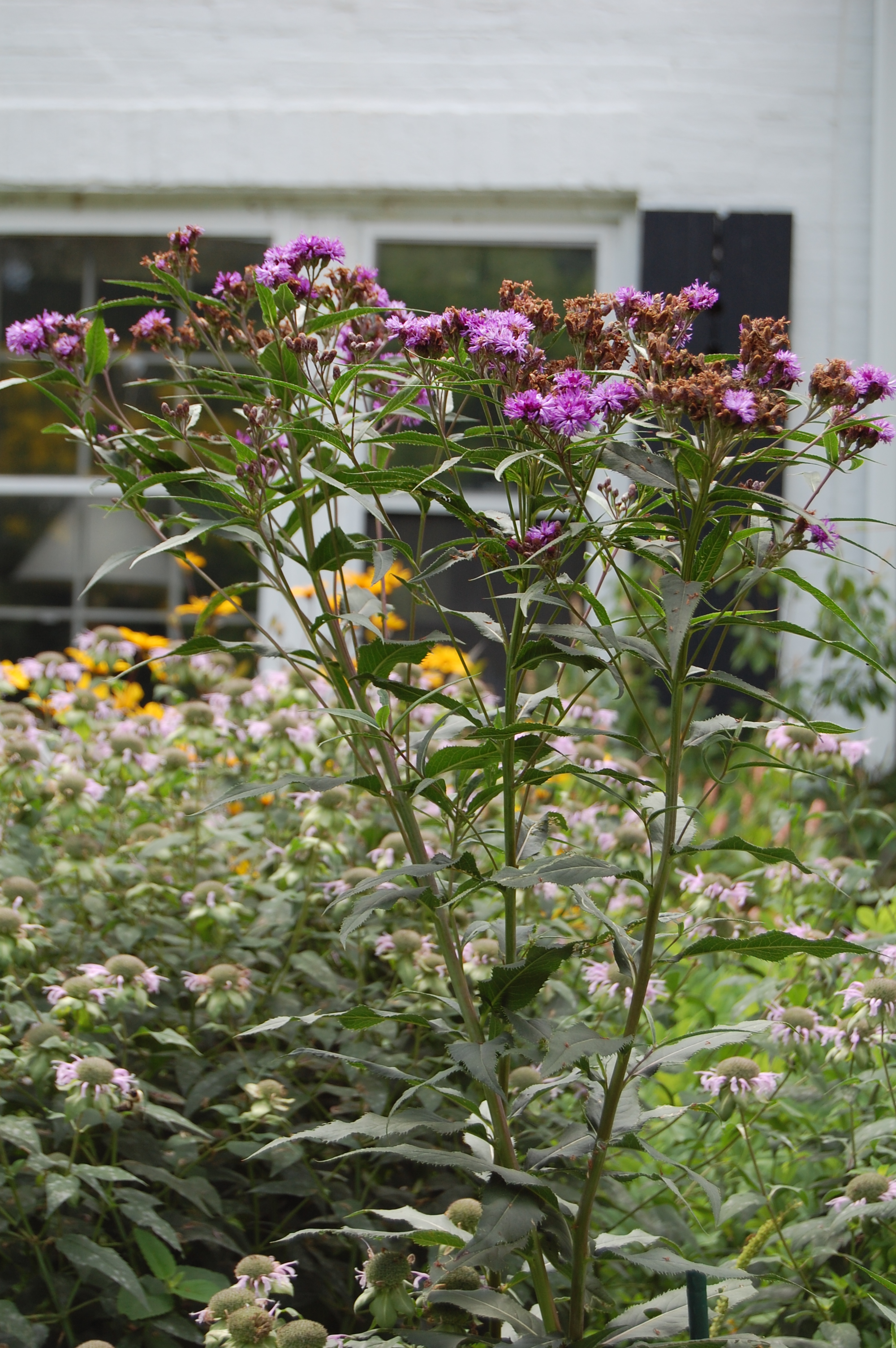
Of course, autumn is about asters, and I have many species of wild asters blooming. Without a doubt my favorite is Aromatic Aster (Symphyotrichum oblongifolius), which is both floriferous and nicely compact. This is a pleasant change from the many asters that tend to be rather rangy.

Short's Aster
Short’s Aster. It’s more of a sky blue compared to Aromatic Aster’s violet blue.

Then there is Short’s Aster (Symphyotrichum shortii), also with abundant blue flowers though tending to need cutting back to keep it in bounds.

Brown Eyed Susan, New England Aster
Brown Eyed Susan with New England Aster in the foreground.

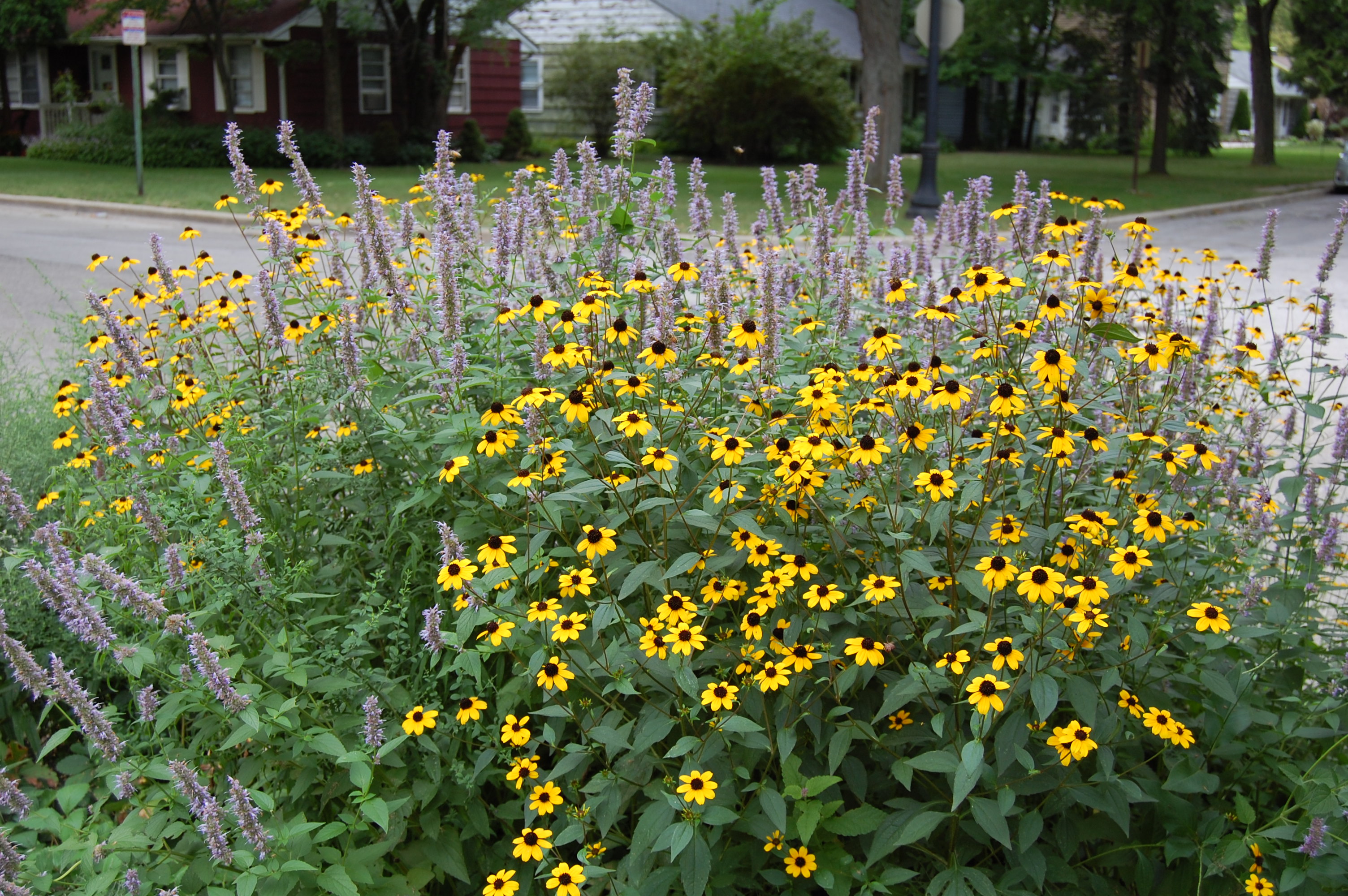
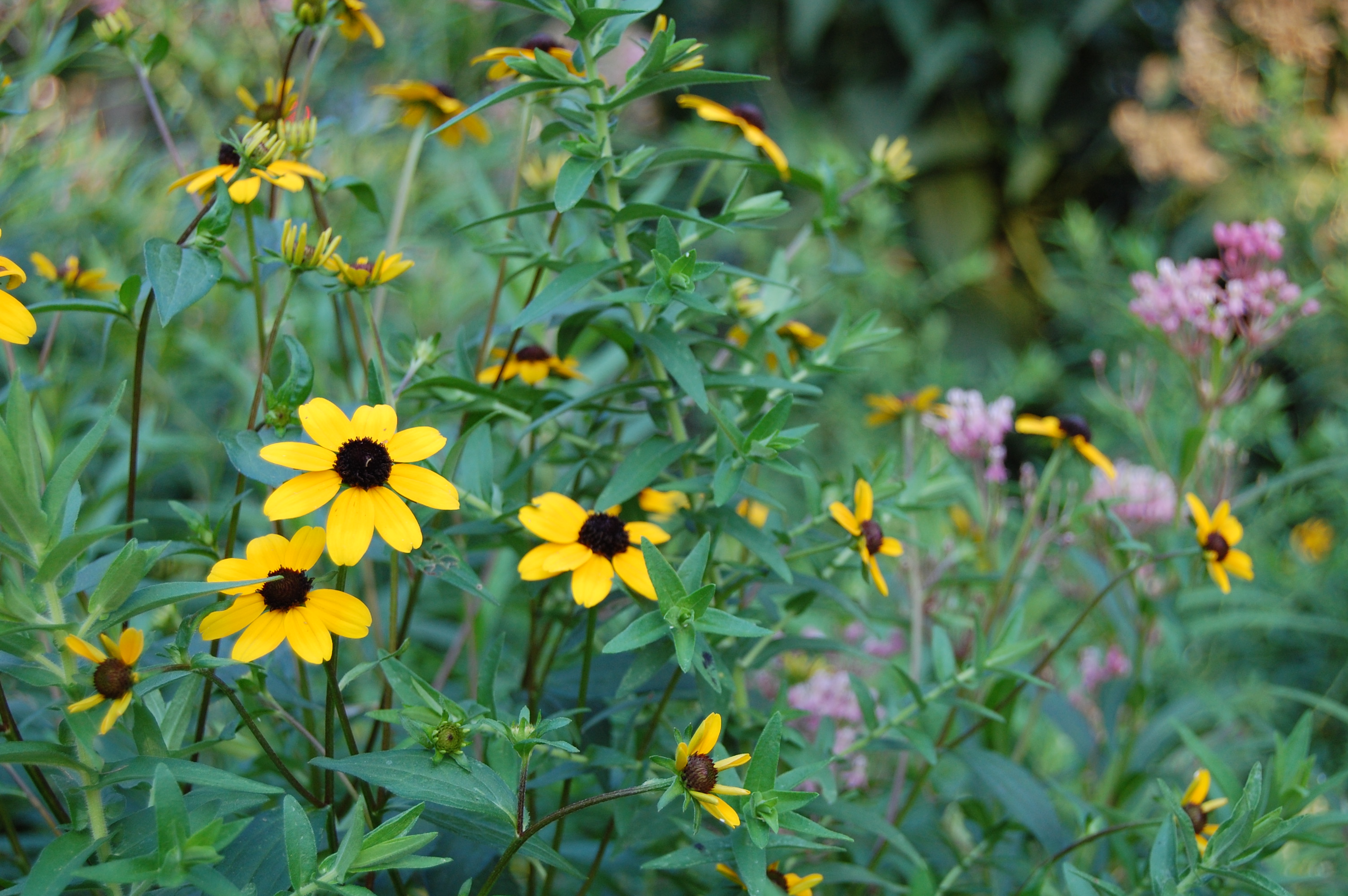
Everybody knows New England Aster (Symphyotrichum novae-angliae). Here it is blooming in the foreground with Brown Eyed Susan (Rudbeckia triloba).  I love R. triloba for its adaptable nature, ease of care, long period of bloom, and clouds of small, orange-yellow flowers .

Big Leaf Aster
Big Leaf Aster. Grows in dry shade and can make a nice groundcover.

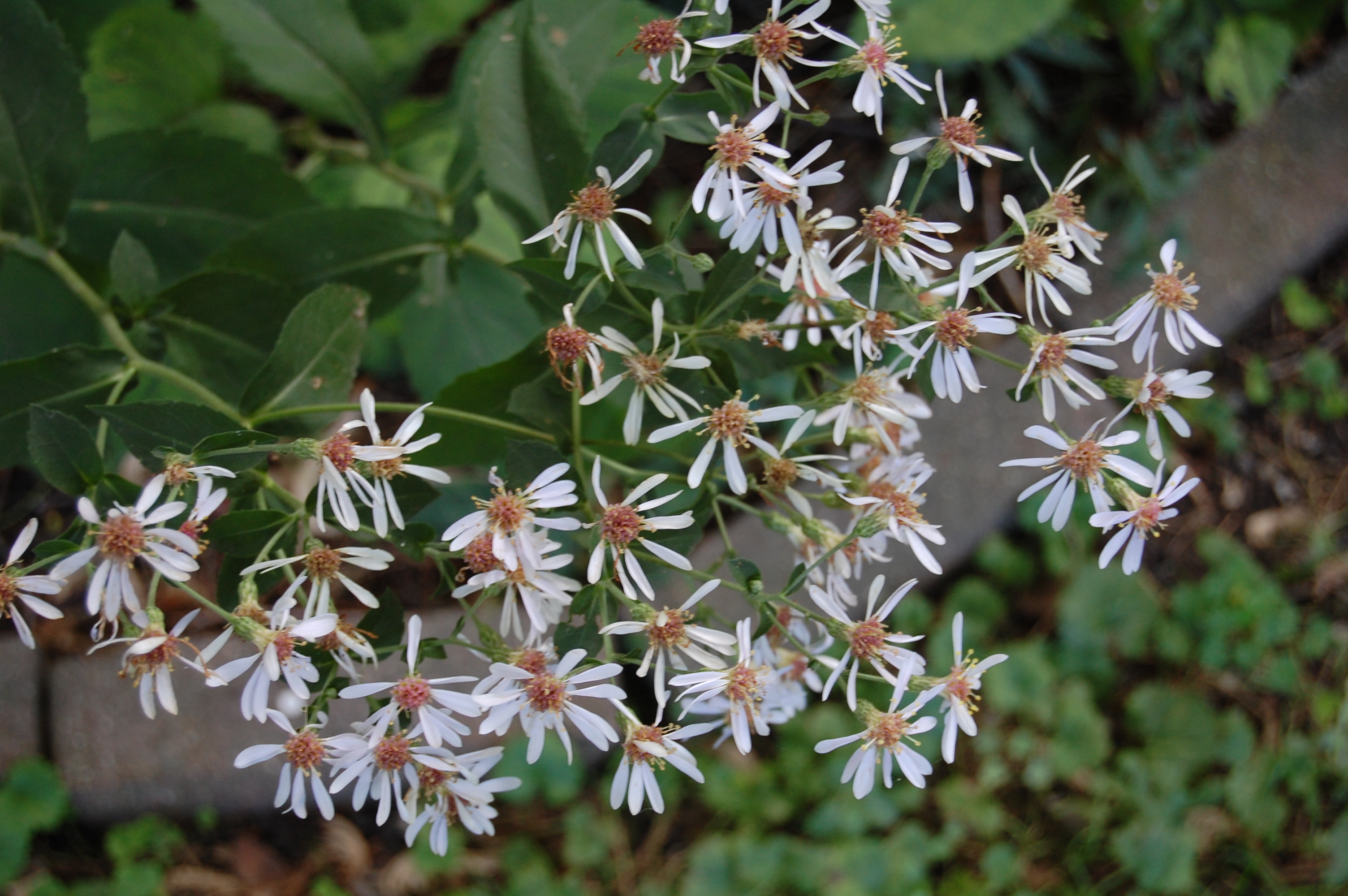
Then there are a whole bunch of asters that are loved by aster fanatics but look rather weedy to most people who are immune to the charms of their subtle but fascinating distinctions: Big Leaf Aster (Symphiotrichum macrophyllum), Crooked Stem Aster (Symphyotrichum prenanthoides), Calico Aster (Symphyotrichum lateriflorum) etc., etc.. I have many of these.

Blue Stem Goldenrod
Blue Stem Goldenrod

The Goldenrods (Solidago) are another seasonal stalwart. (And please remember that it is ragweed, not Goldenrods, that causes hay fever.) The best goldenrod in my garden is Blue Stem Goldenrod (Solidago caesia), with 2-3 foot arching wands of tiny golden flowers on (as you might expect) blue stems.

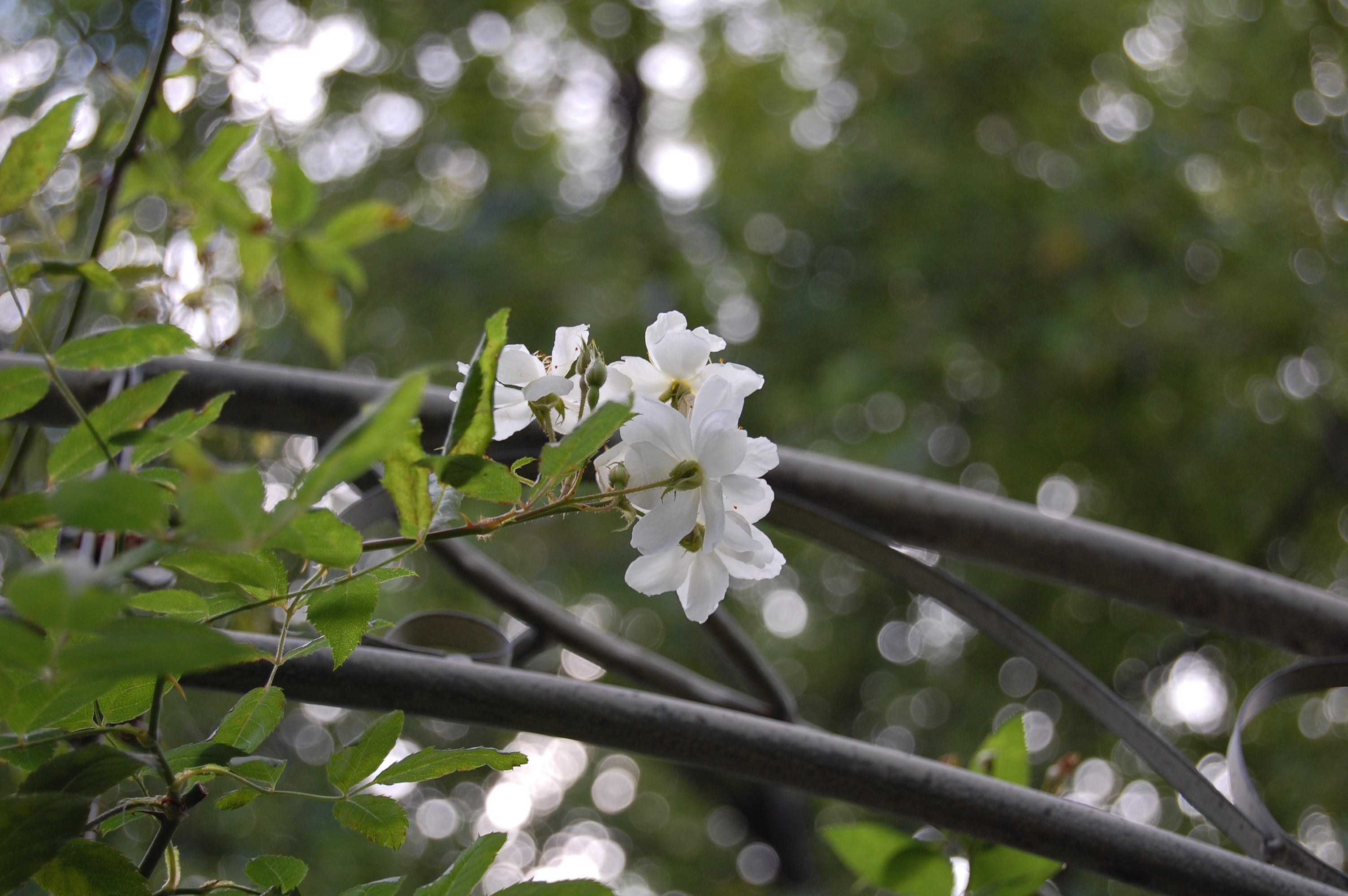
'Darlow's Enigma' rose
‘Darlow’s Enigma’ blooming on our back arbor.

The ‘Cassie’ and ‘Darlow’s Enigma’ roses are having a final flush of blooms.

Plumbago
Plumbago

A really terrific ground cover that comes into its glory at this time of year is plumbago (Ceratostigma plumbaginoides).  Are those blue flowers gorgeous or what? This plant was considered only marginally hardy in the Chicago area, but now with the warming weather it Broseems to have no trouble making it through our winters.

Caryopteris 'Longwood Blue'
Caryopteris ‘Longwood Blue’ with Orange Coneflower in the background.

All these are old standbys in my garden. There are some newcomers as well. Caryopteris ‘Longwood Blue’ is blooming for the first time, and I definitely like the clusters of delicate blue flowers.

Sedum 'Matronna'
Sedum ”Matrona’

I’m also pleased with Sedum spectabile ‘Matrona’.

Morning Glory 'Heavenly Blue'
Morning Glory ‘Heavenly Blue’

2013-09-22 12.46.03

This year I grew Morning Glory (Ipomoea tricolor) ‘Heavenly Blue’ up my new tuteur, It covered the tuteur well enough with its heart-shaped leaves. The flowers, however, were rather sparse.

Fennel and Mexican Sunflower

I like this bronze fennel (Foeniculum vulgare), and it combines well with the Mexican Sunflower (Tithonia rotundifolia), which is still pumping out blooms.
What are your favorite autumn flowers?

The Lower Garden At Giverny

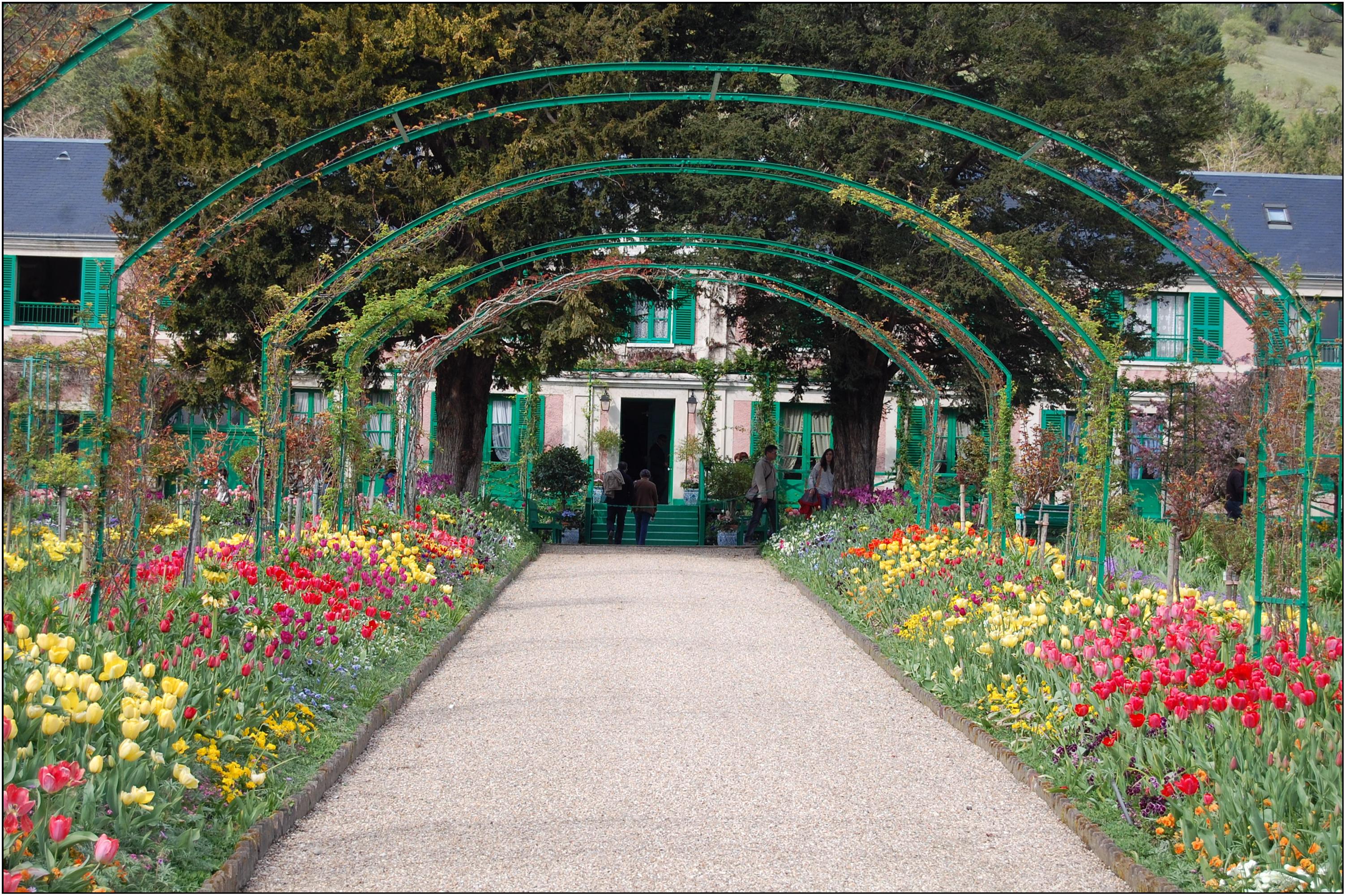
After Paris, we took the train to Vernon, then got a ride to the village of Giverny, where we stayed overnight. The next morning, we visited Claude Monet’s garden.

Giverny, Claude Monet

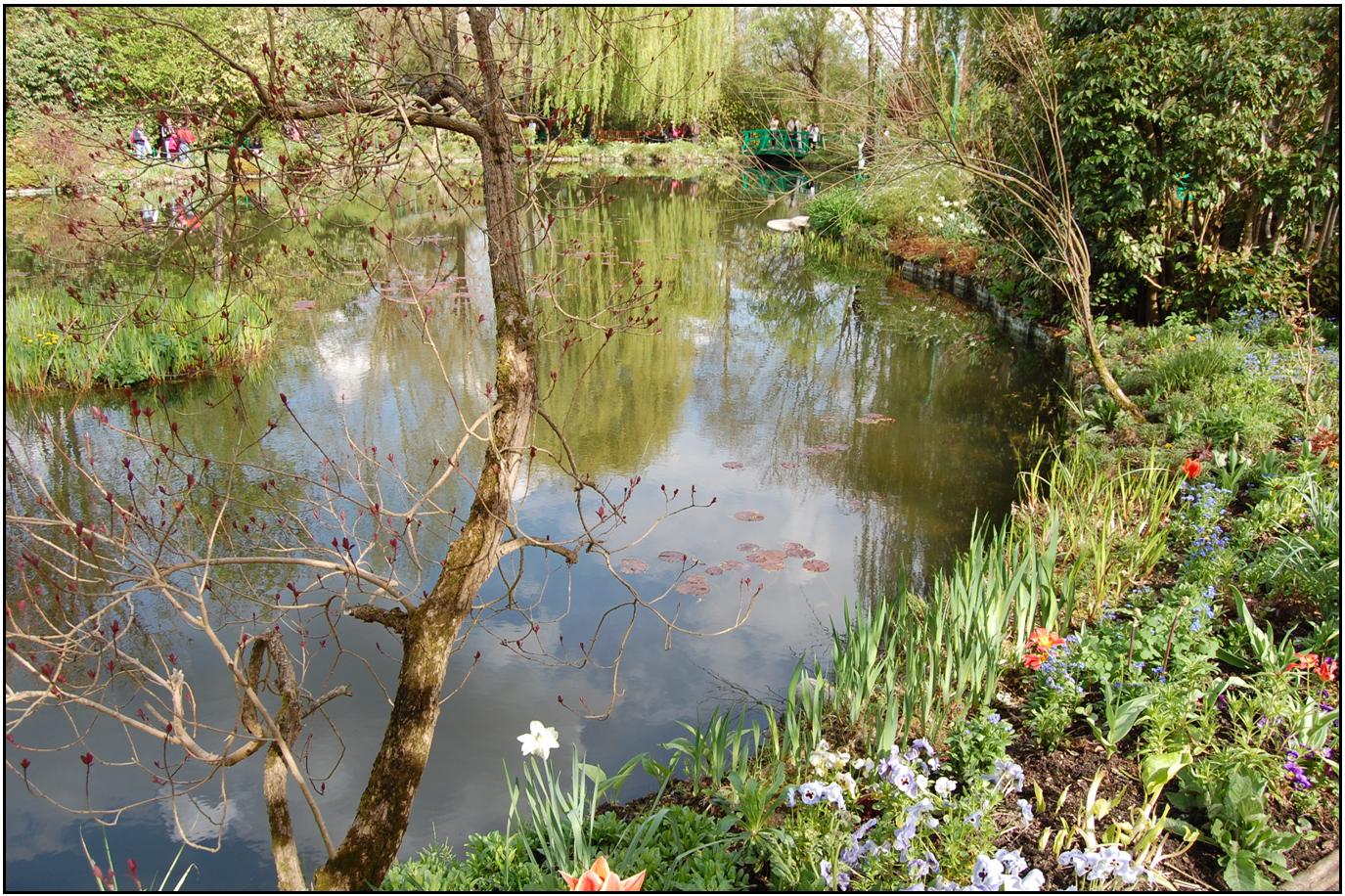
Monet really created two gardens. There is the upper garden, which has vibrant masses of color emerging from rectangular beds – sometimes called the paintbox garden. Then there is the lower garden, which is created around an oval pond. Where the upper garden is exciting, the lower is tranquil. Instead of explosions of color emerging from geometric beds, the lower garden is mostly curves, shades of green, and leafy textures.

2013-09-05 05.33.28

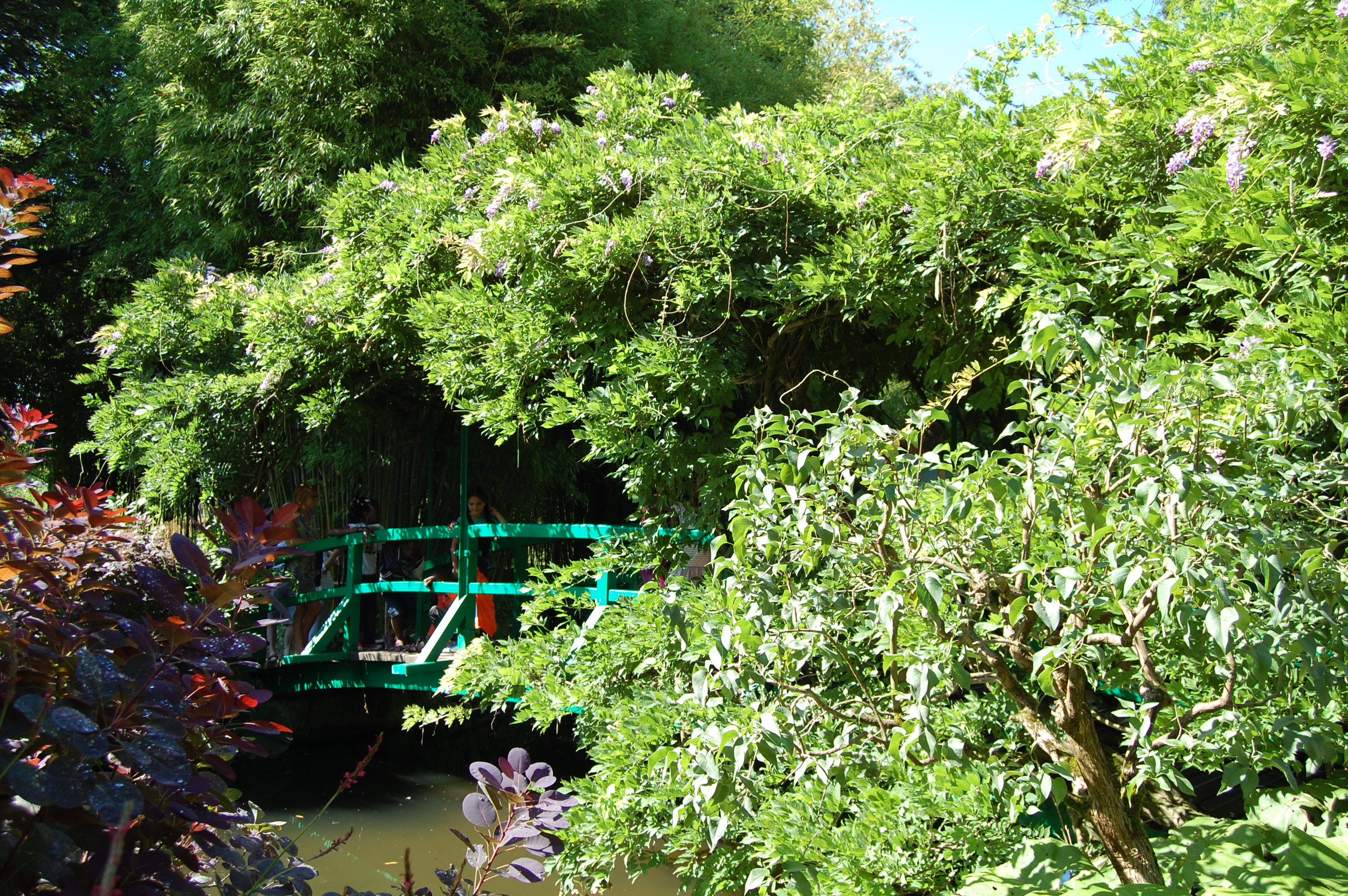
Monet loved Japanese art, and this influence shows in the lower garden. A print Monet owned is thought to be the inspiration for this bridge. I really like that shade of blue.

2013-09-05 05.42.26

The bridge is also famous for the wisteria that engulfs it.  We missed the glorious masses of blue that occurs in in late spring, but there was some modest rebloom that was still lovely.

Wisteria, Giverny, Claude Money, Bridge

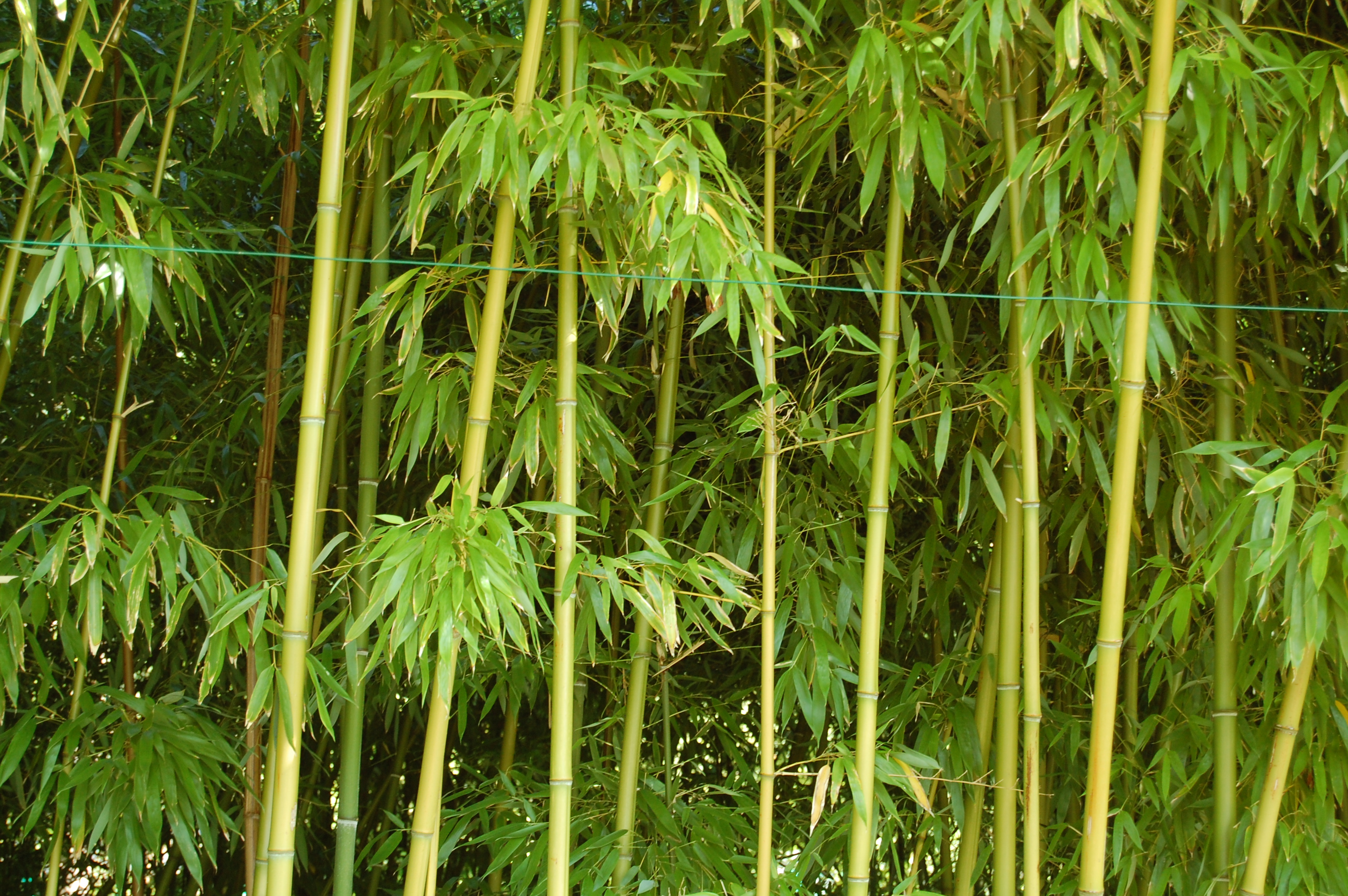
The Japanese influence is also seen in the bamboo growing on either side of a stretch of path. When we were there the bamboo had grown so tall it required staking – see the wire stretched across the photo? I will return to the issue of staking when I write about the upper garden.

Giverny, Claude Monet, Bamboo

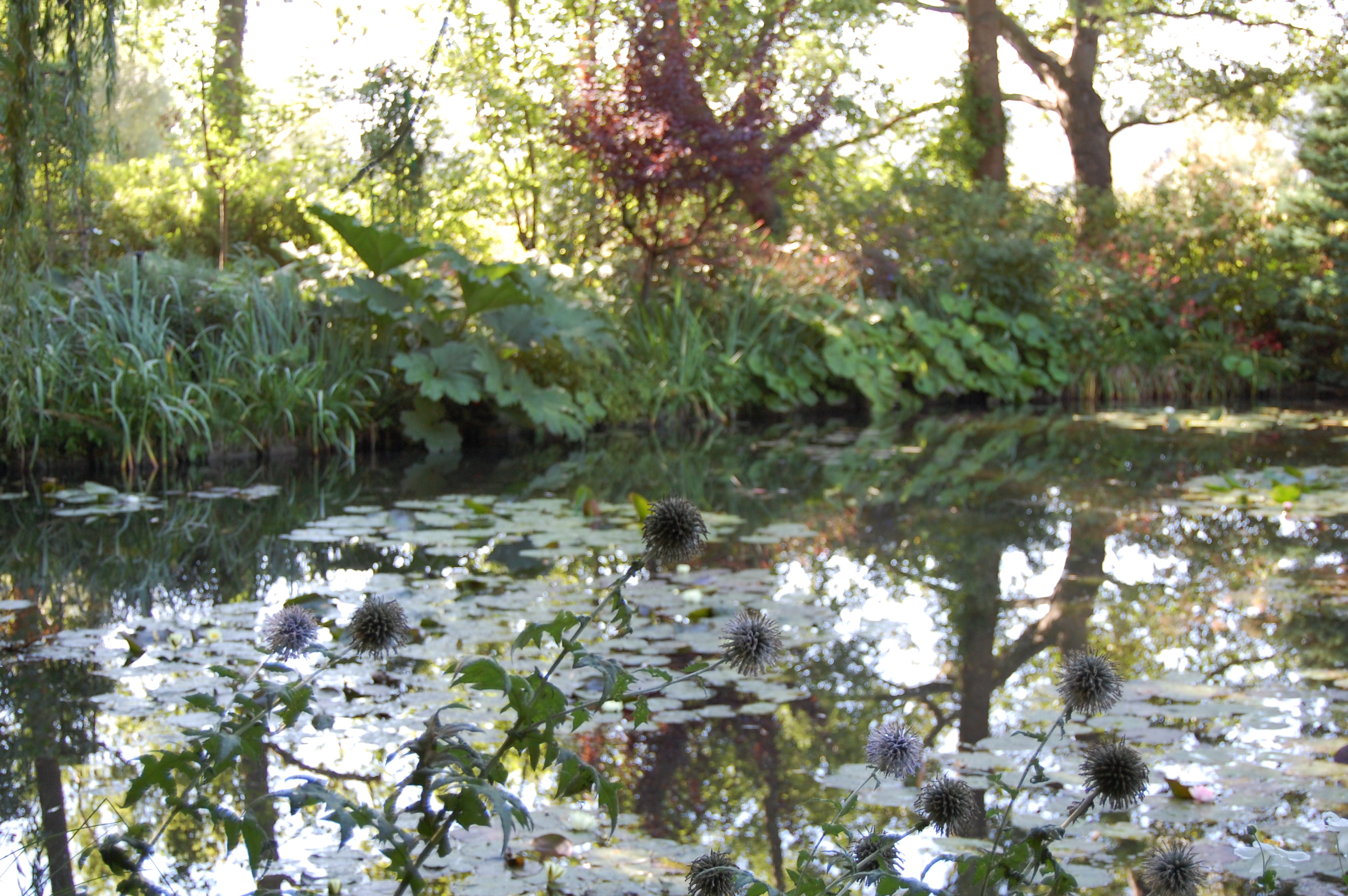
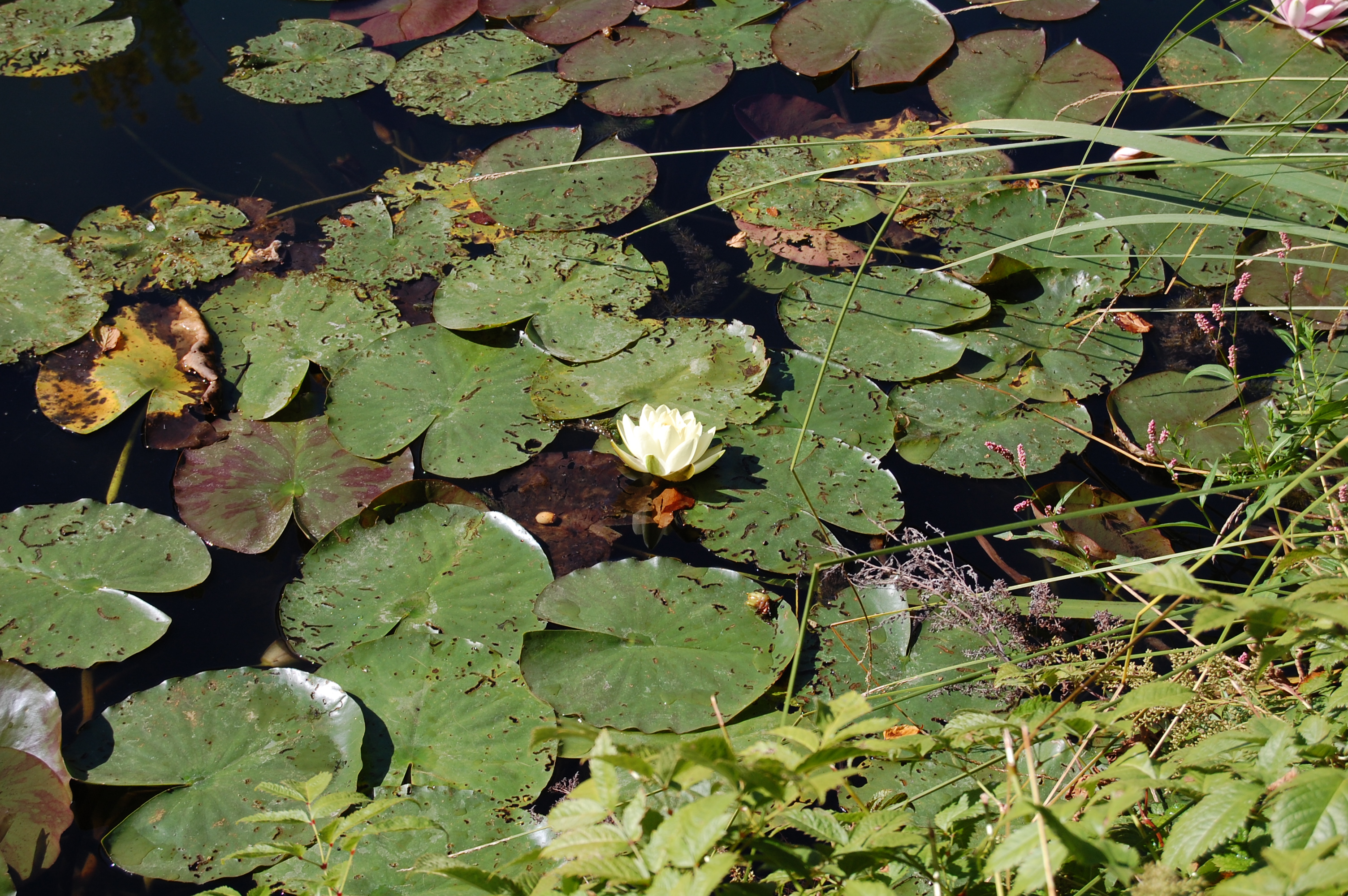
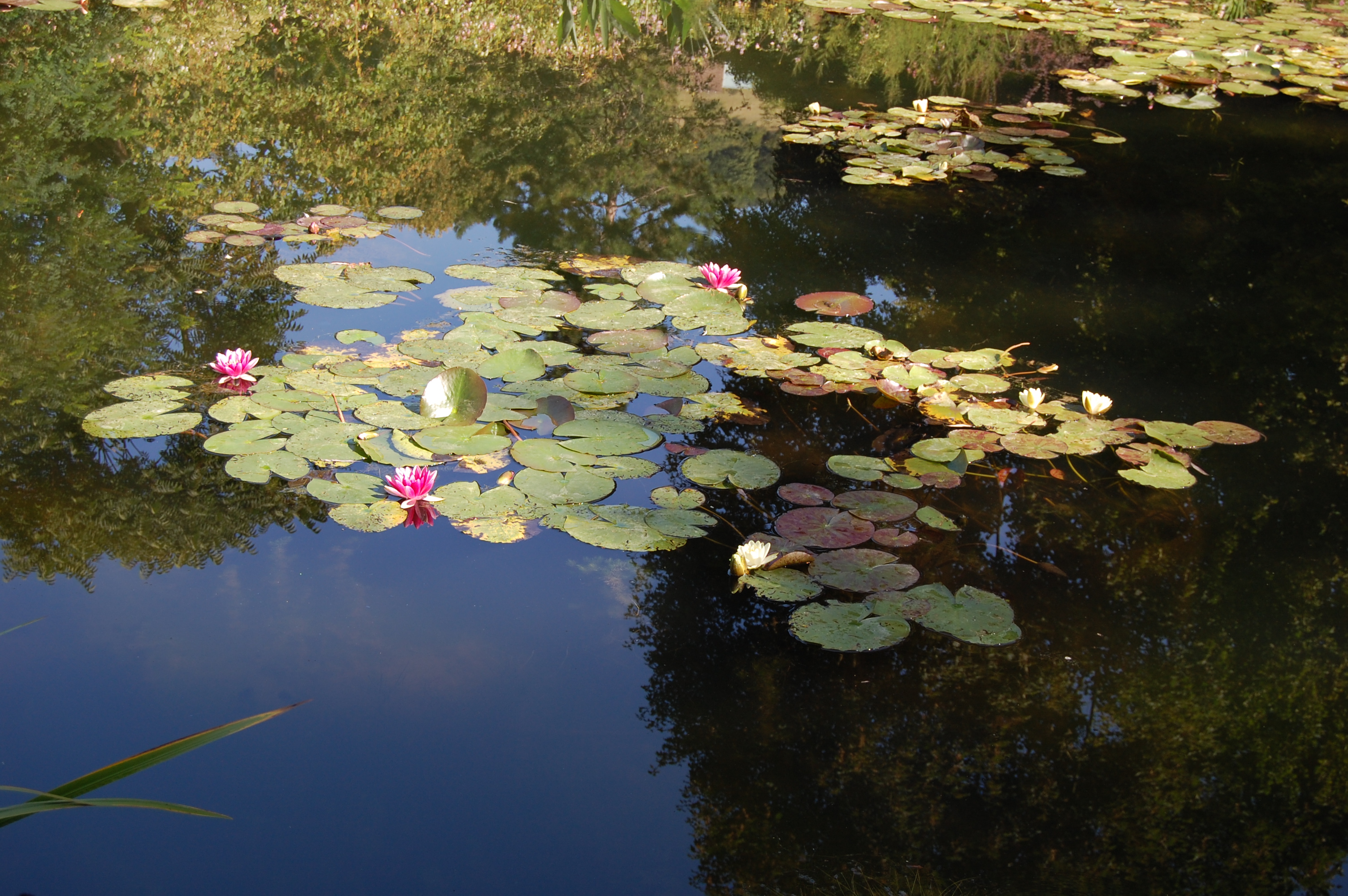
This pond is famous in part because of the series of paintings that Monet did of the water lilies growing there. The water lilies were blooming during our visit, though they were not yet at their height. For me, the pastel colored lilies and round lily pads added to the sense of tranquility.

Monet, Giverny, water lilies

2013-09-05 05.19.10

Watery reflections are another essential aspect of this garden. The reflections of the willow trees are especially entrancing, as the trees seem to exist in two adjoining worlds.

2013-09-05 05.28.15

2013-09-05 05.18.53

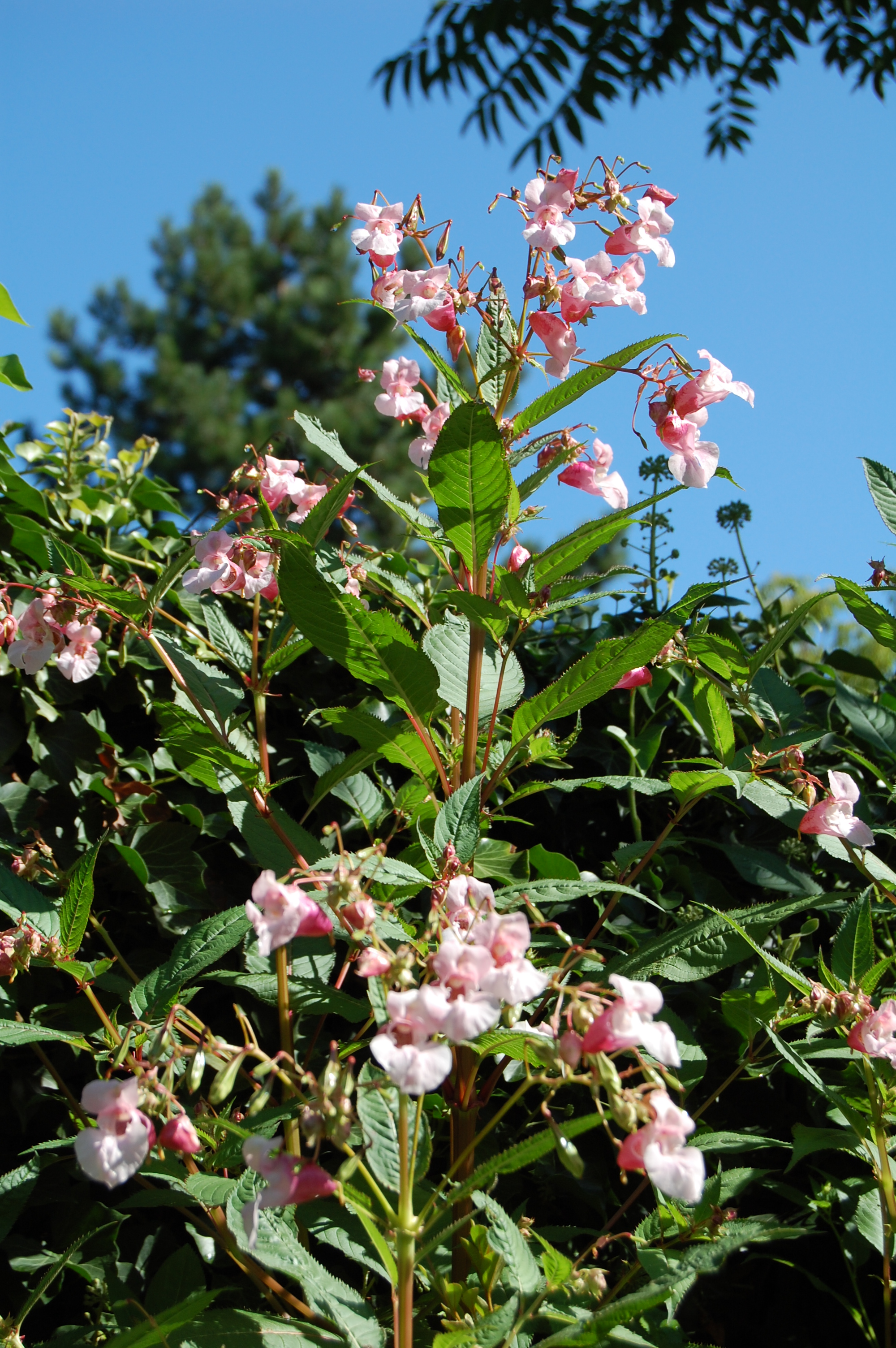
I should mention that the lower garden is not entirely without bright colors. There is a bit of Rudbeckia, Phlox, some kind of Impatiens, Rose of Sharon, Japanese Anemone, and of course the water lilies.

2013-09-05 05.25.50

2013-09-05 05.37.27

Plus the berries on the Viburnum opulus.

2013-09-05 05.22.59

My next post or two will be on my own poor neglected garden, then I’ll get back to Giverny.

What are your favorite gardens for tranquility?

A Picnic In Paris

Paris has many sights of all kinds that are justifiably famous. But it is also a great city for just for walking. And in Paris, walking seems to be inextricably tied to eating.

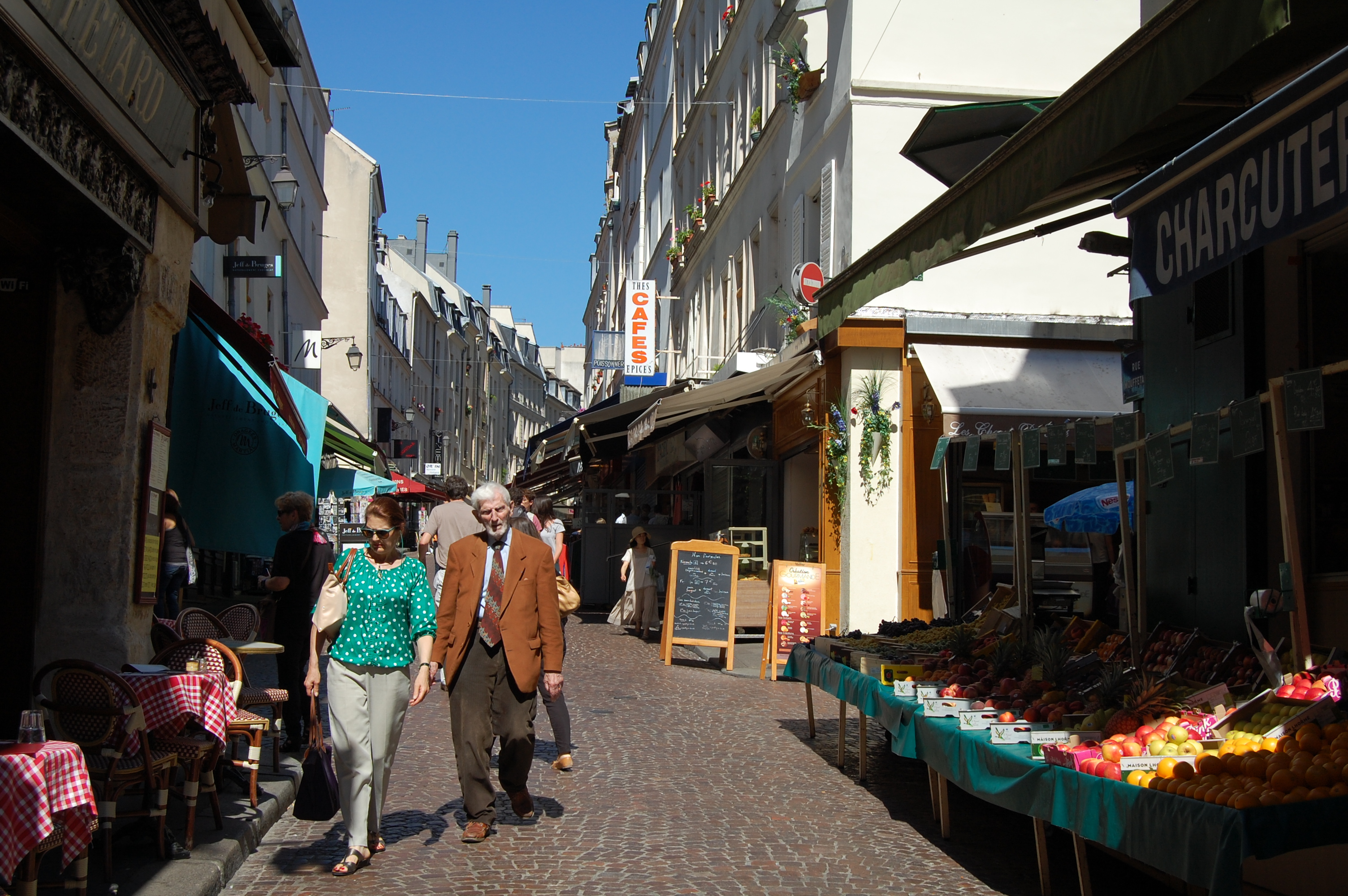
Paris Rue Mouffetard
Rue Mouffetard, Paris

Judy and I spent a lot of time walking in the general vicinity of our hotel, which was located on the Left Bank near the Jardin du Plantes. We especially enjoyed heading up toward the Place de la Contrescarpe, which is near the University of Paris-Sorbonne.

Paris, Paris bakeries

Paris bakeries
Inside the bakery across the street

Heading out in the morning, we had to pass the bakery across the street. This bakery made it very easy for us to have breakfast in our room every day. I would bring back a fresh baguette and Judy would bring up a pot of coffee from the hotel dining room. We might combine these with fruit or cheese purchased the day before.

It’s astonishing how many really good bakeries there are in Paris, with several within a few blocks of where we stayed.

Vertical gardens in Paris

Of course, while walking we would always pay special attention to any plantings we found. Here are some interesting vertical plantings.

Paris balconies

And the residents of some buildings were fairly ambitious about their balcony plants.

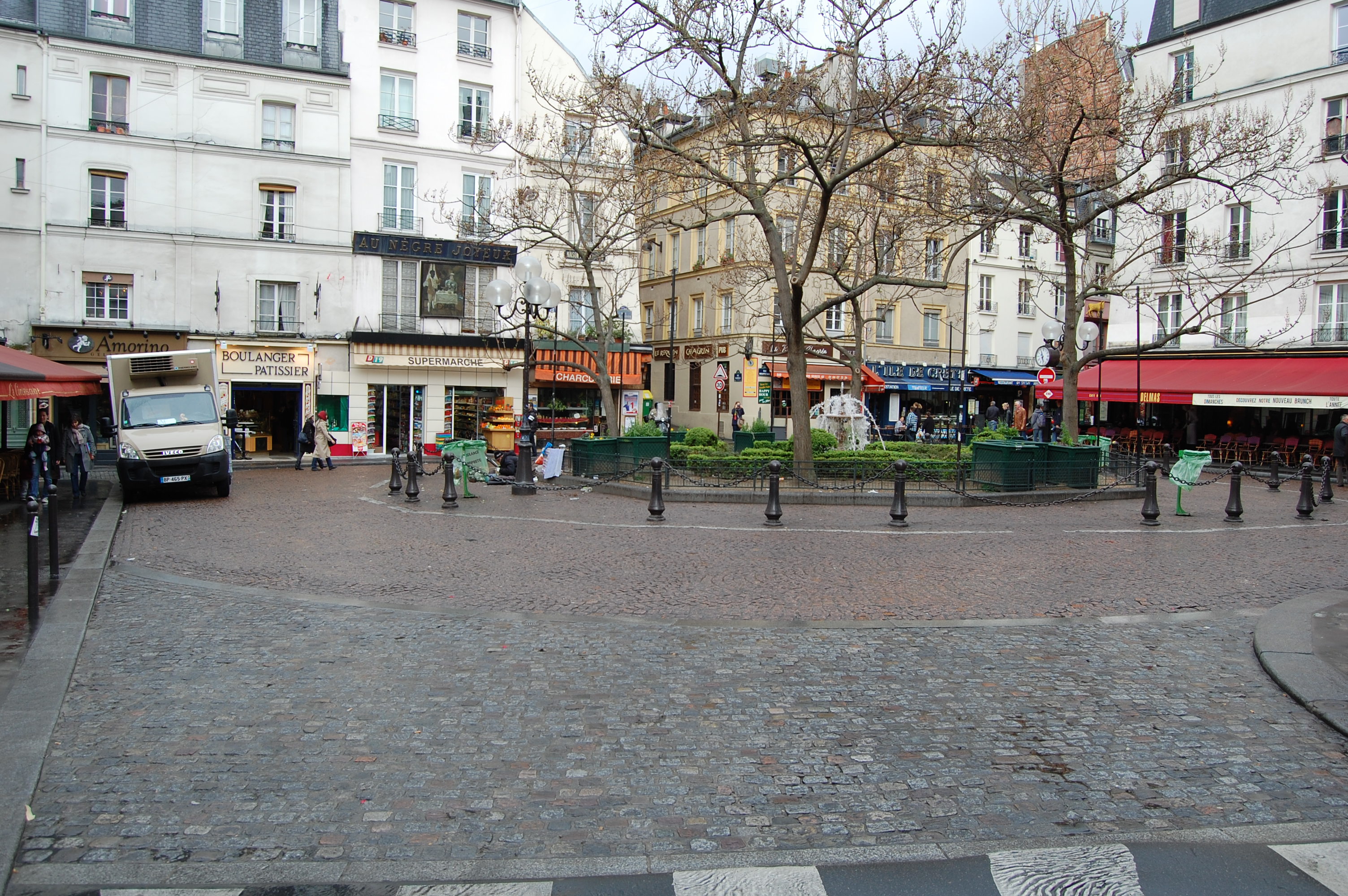
Place de la Contrescarpe
Place de la Contrescarpe. I should mention that this picture was actually taken during our visit in April, 2012. We neglected to get a good picture of Contrescarpe on this last trip.

The Place de la Contrescarpe and the surrounding area was once considered to be more or less a slum. Now it is full of students, middle class Parisians, and tourists. You can have a fine time sitting at a sidewalk cafe, watching the scene and drinking a leisurely cup of coffee.

The coffee is good, but expensive. There are no free refills. On the other hand, they seem to think it is perfectly fine for customers to sit for hours, reading or people watching. Which we did on a few occasions.

Ernest Hemingway in Paris
Hemingway (and Hadley Richardson) lived here.

Ernest Hemingway lived in an apartment just off of the square during the 1920s. During our trip Judy and I both read the novel The Paris Wife, which is a fictionalized memoir of Hadley Richardson, Hemingway’s first spouse. The book helped us get into a more Parisian frame of mind.

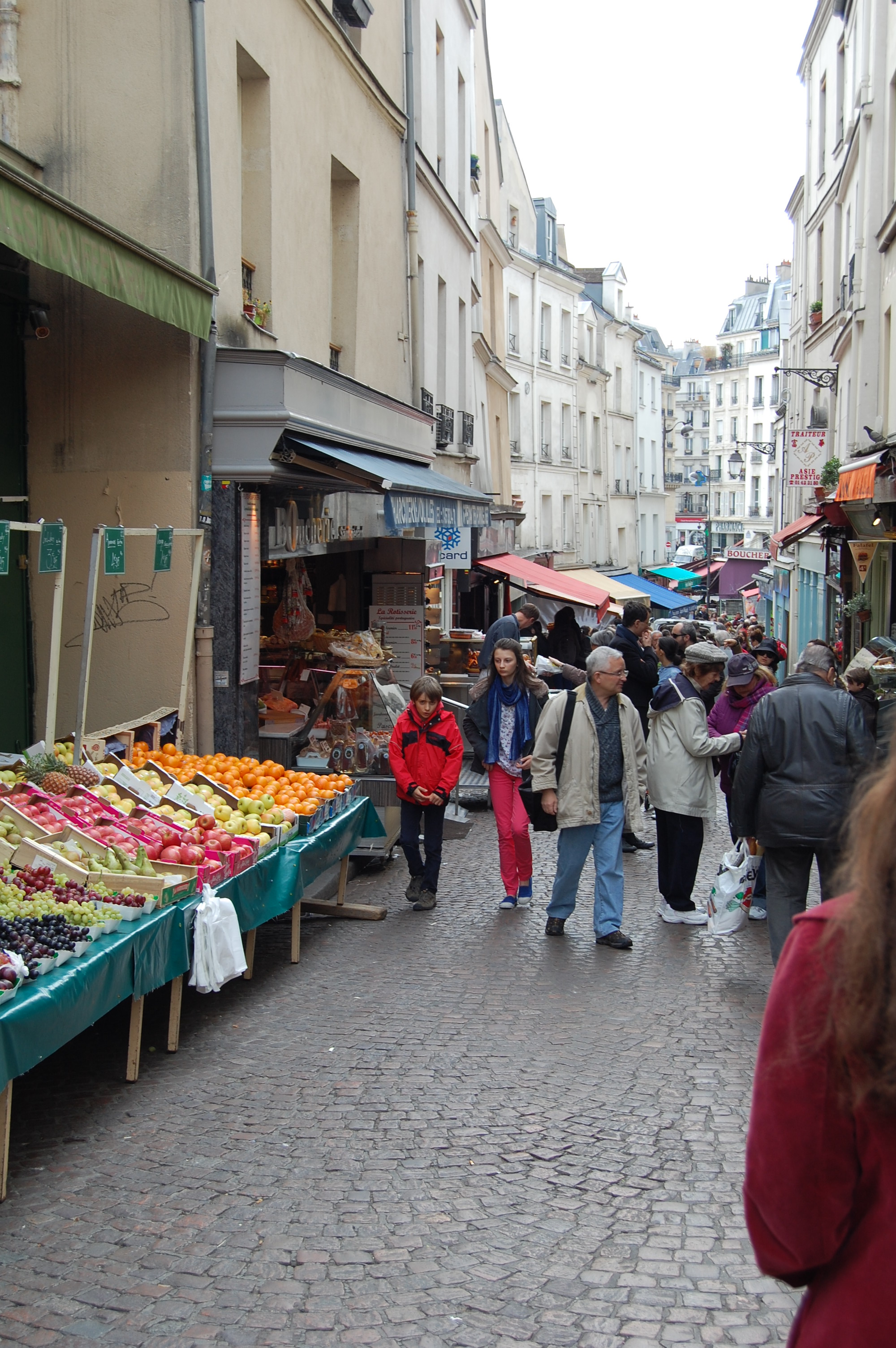
Rue Mouffetard
Rue Mouffetard. Another picture taken during our 2012 visit.

Just off of the Place de la Contrescarpe is the Rue Mouffetard. At first as you leave Contrescarpe, Mouffetard seems dominated by tourist traps of various kinds. However, the further you walk, the more the balance tilts to Parisians doing every day shopping.

2013-09-04 07.11.18

I’m not sure why, but we really enjoy fresh produce stores, even if we don’t buy anything. We noticed that here stores were selling a kind of sour plum called a mirabelle, which we have never seen in the US. Later in the week we shared a delicious desert of stewed mirabelles and caramel sauce.

Mirabelle plums are the yellow ones on the upper left.

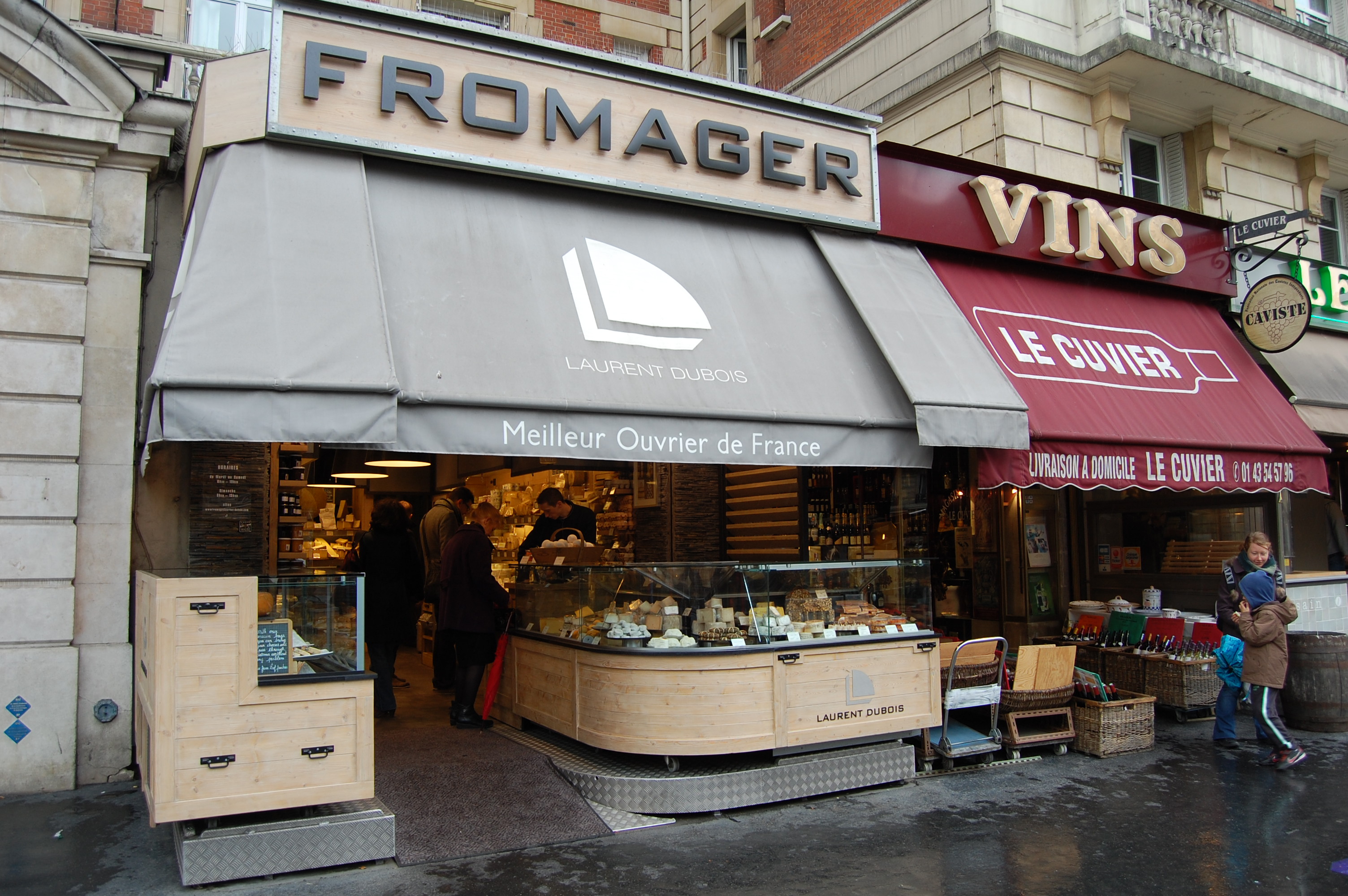
We noticed that the French are very serious about cheese. The quality and variety of cheeses, both in supermarkets and fromagers, was very impressive.

Paris cheese shop
Cheese shop on the Rue Mouffetard.
Unexpectedly, they were out of Cheez Whiz.

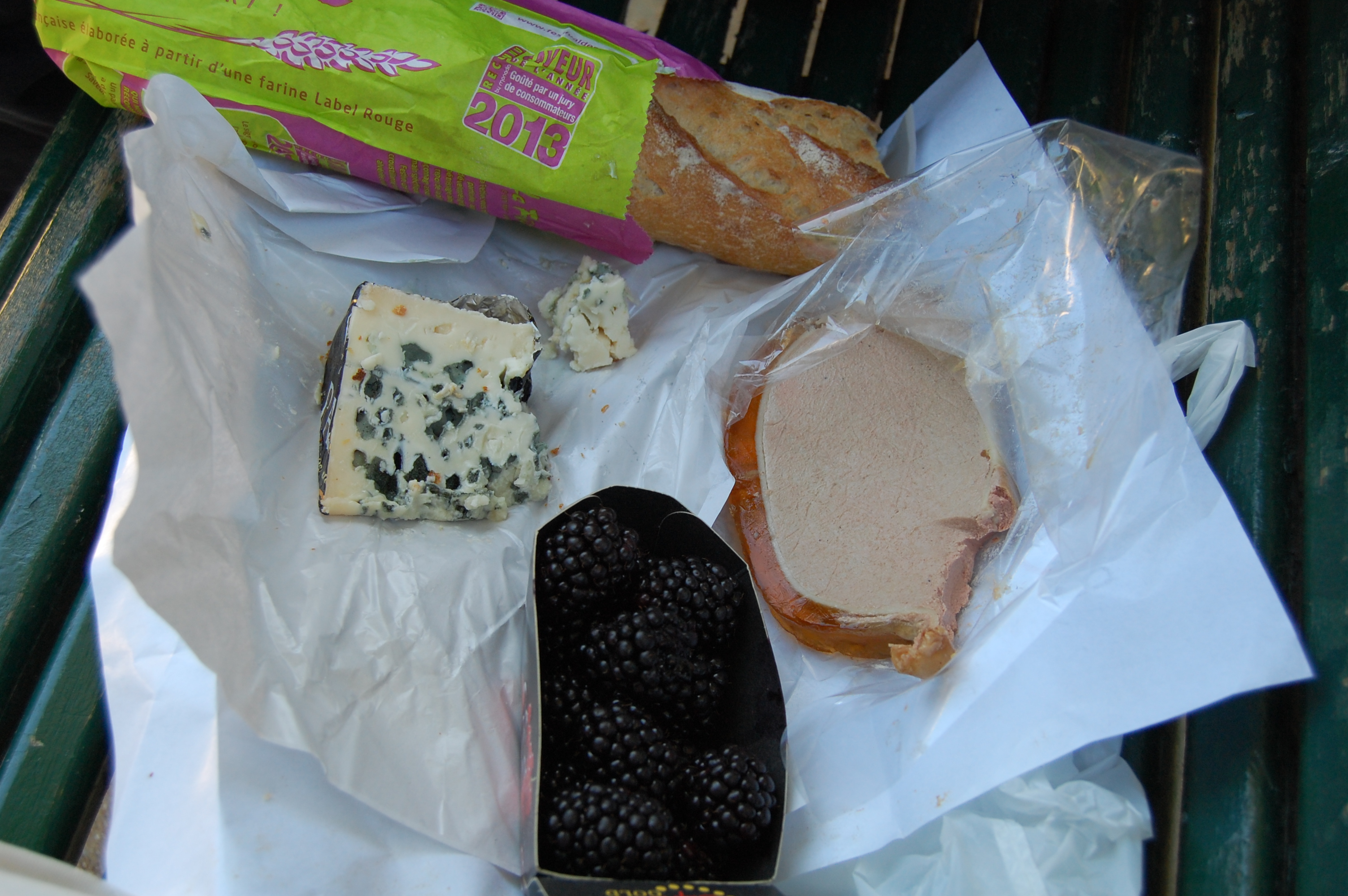
One day we picked up a baguette, some cheese, and some fruit along Rue Mouffetard. We then walked on to a small park on the Rue Monge and proceeded to have a picnic.

A picnic lunch in Paris.
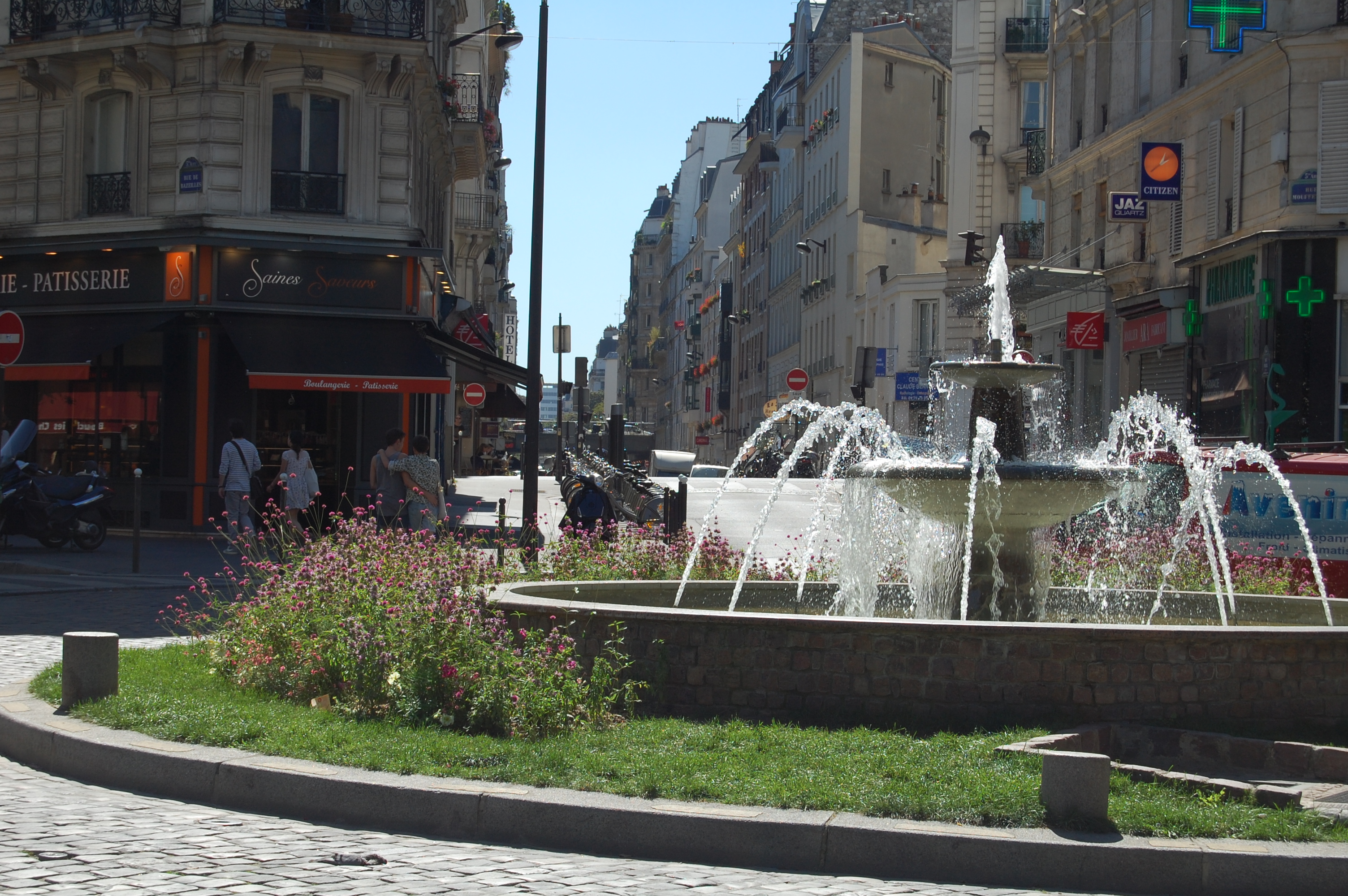
Park on the Rue Monge, a good place for a picnic.

As we ate kids played, others ate their own lunches, and the nearby fountain splashed for our appreciation.

2013-09-04 08.12.26

Do you have a favorite city for walking?

For The Love Of Gargoyles

We’re back! Back from two amazing weeks in France and England, visiting gardens and doing other stuff. And what better way to jump back into blogging with both feet than with gargoyles?

Notre Dame, Gargoyles
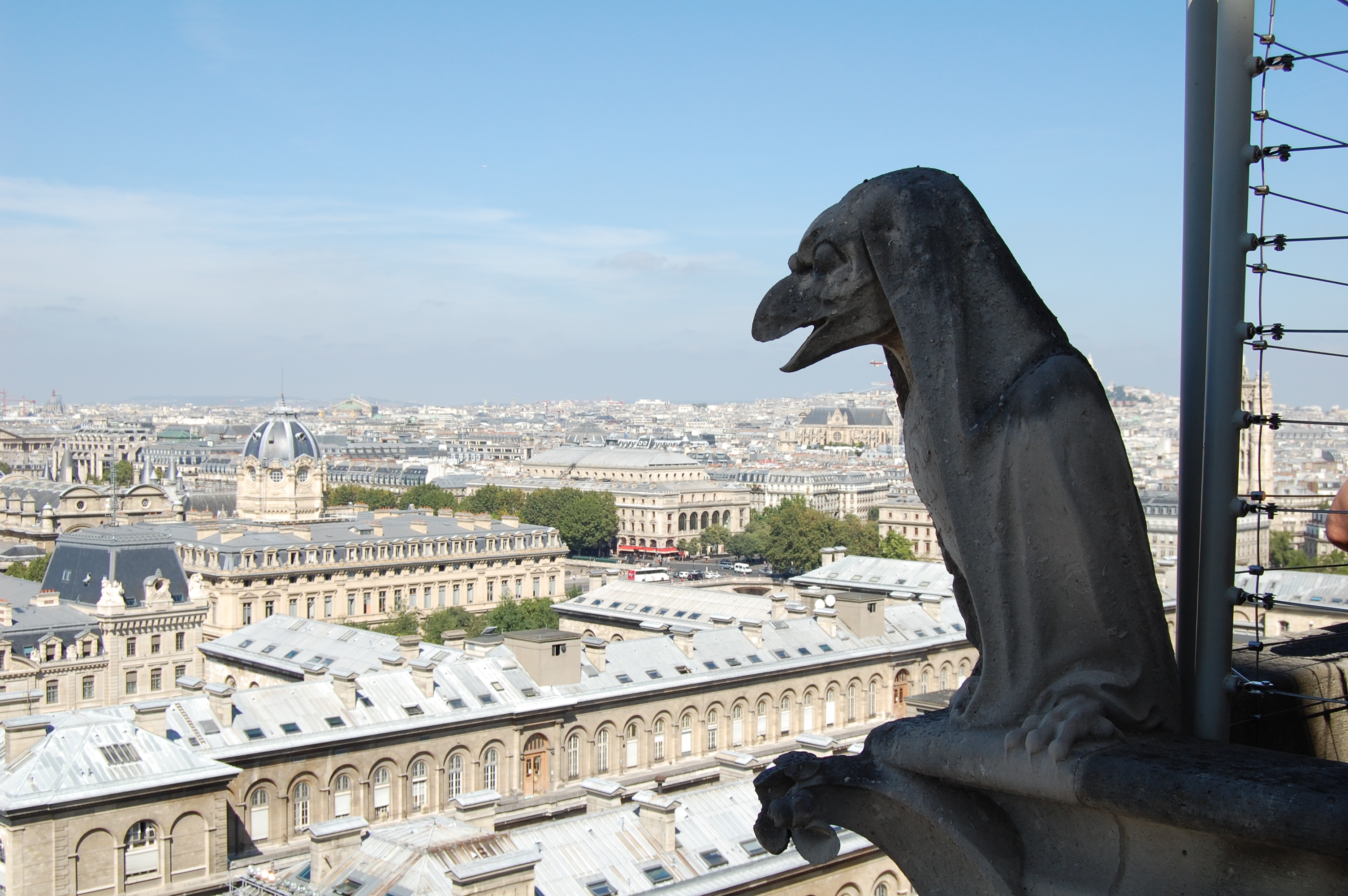
A gargoyle overlooks Paris from near the top of Notre Dame cathedral.

Judy has a thing about gargoyles. Not sure I understand it. I asked if her affection for gargoyles had any bearing on her choice of spouse. Her response: “No comment.”

On our only other trip to Paris, we did visit the Notre Dame cathedral, but we didn’t have time for her to climb to the top of one of the bell towers for some close-up face time with the gargoyles. She was intensely disappointed.

On this trip we did not make the same mistake, and Judy did make the climb – all 400 steps. I stayed on the ground in the square in front of the cathedral. Gargoyles are OK by me, but heights make me nervous.

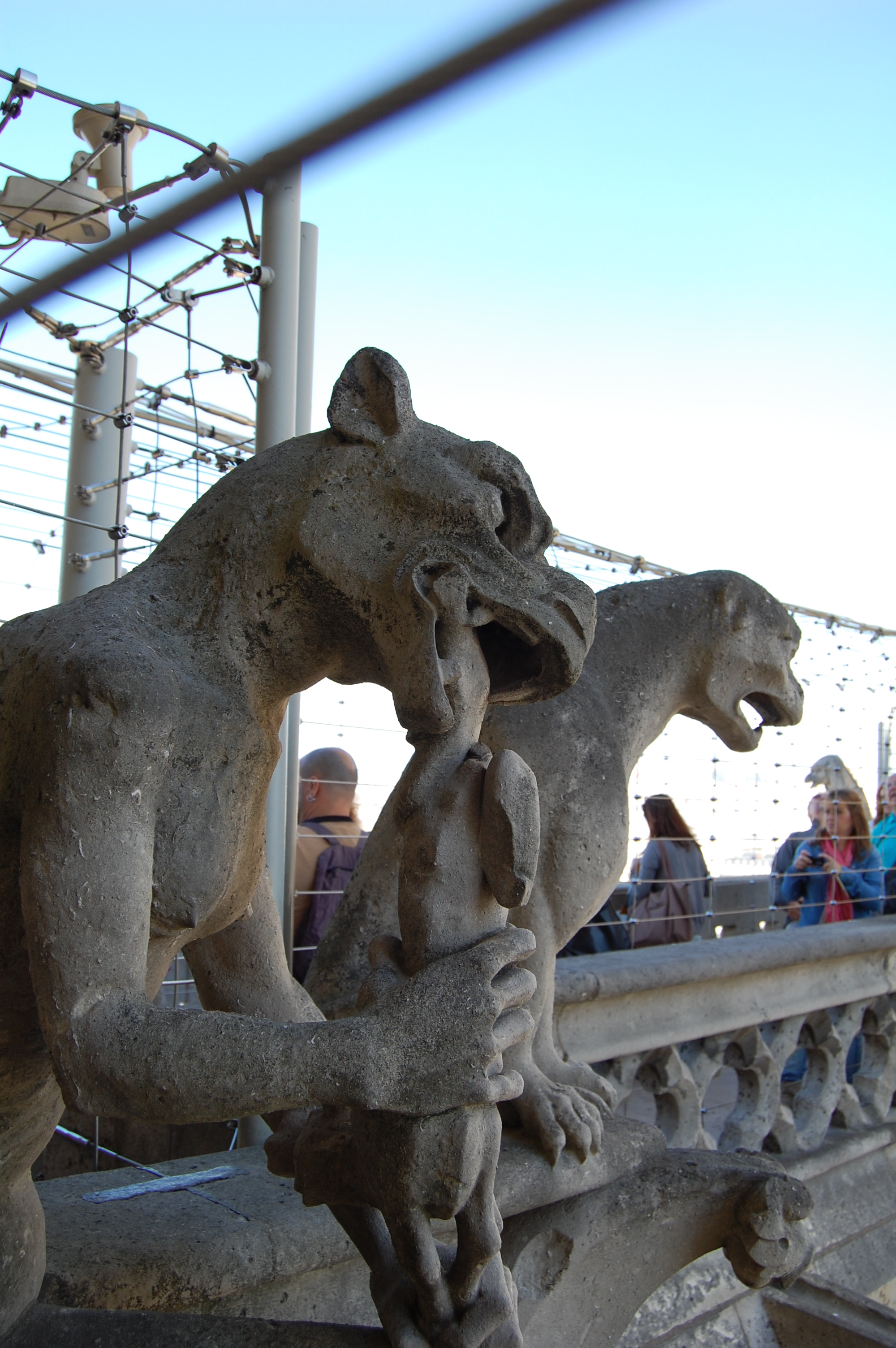
So here are a few of her favorite gargoyles.

Notre Dame, Gargoyle


2013-09-02 06.33.25

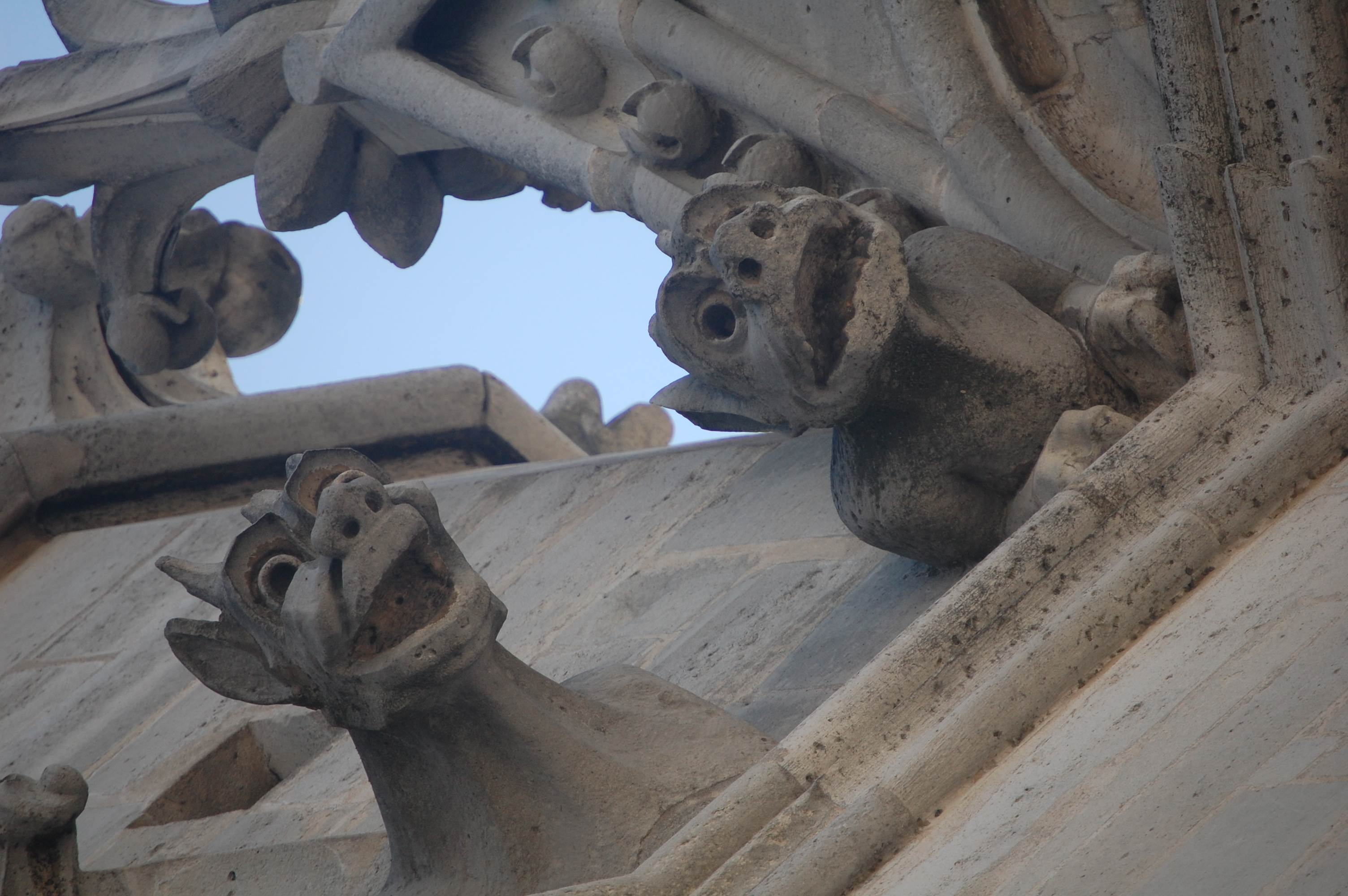
Some gargoyles do serve a practical purpose in diverting rain water away from the cathedral.

2013-09-02 05.23.47

Little known fact: the gargoyles on the Notre Dame cathedral were not actually added until the 19th Century. Some critics consider them a kind of neo-Medieval kitsch. No one has asked the gargoyles what they think about it.

2013-09-02 06.19.58

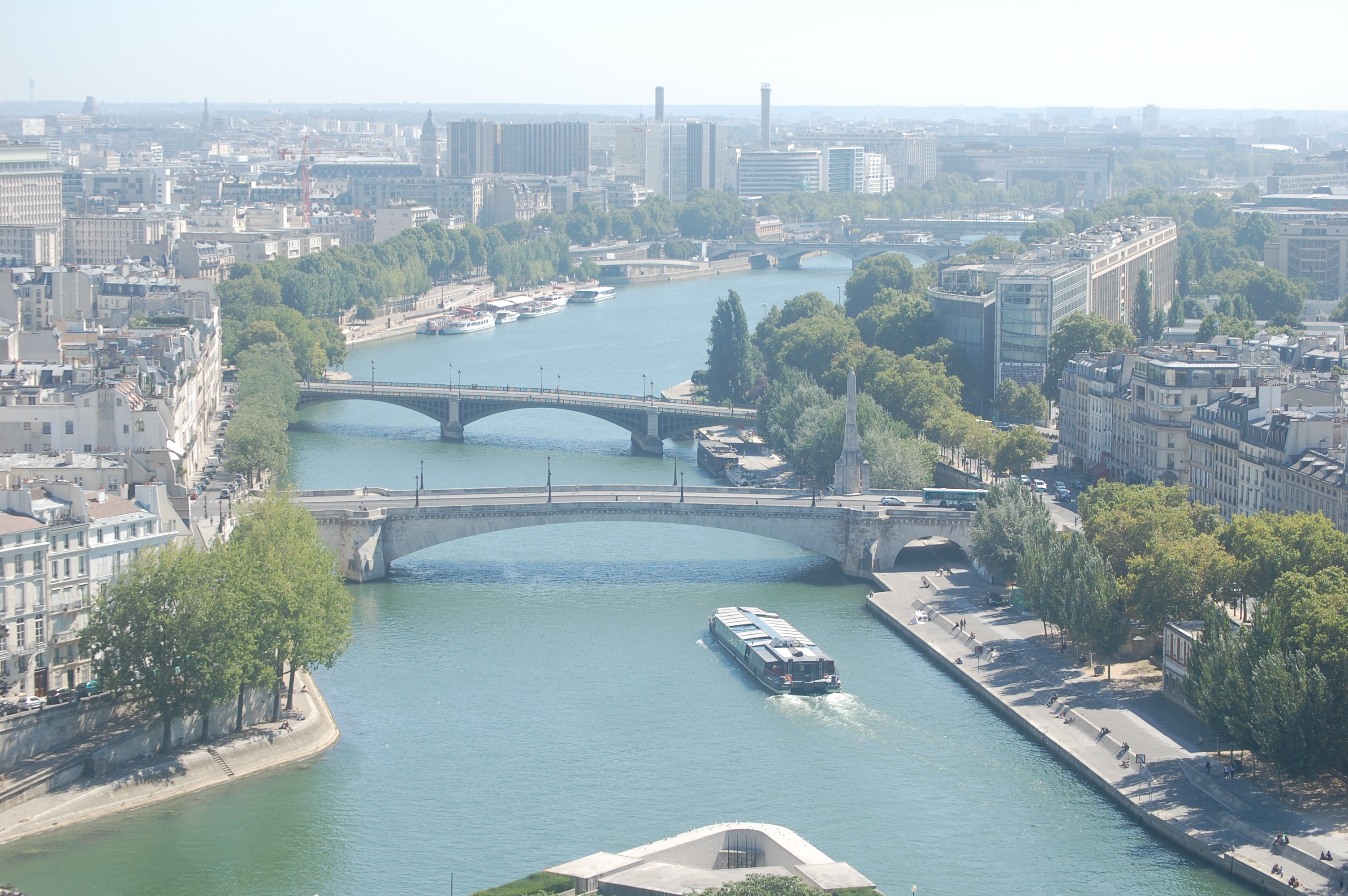
In addition to gargoyles, there were some very nice views of Paris from the top of the bell tower.

Notre Dame Gargoyle

Paris

Paris

In addition to the creepy gargoyles, there are angels up there.

Notre Dame

Also some saints.

2013-09-02 07.02.08

When Judy got back down from her climb, she was looking weary and wobbly. Nevertheless she was very content at having made the effort. I helped her hobble to a nearby cafe where she could recover with the aid of food and good coffee.

Looking at all these pictures gives me an idea. Garden gnomes are so overdone, how about Garden Gargoyles? I could start a line of gargoyle replicas from different famous cathedrals as garden ornaments! What do you think?

Notre Dame, Gargoyles
“Gargoyles as garden ornaments? What a great idea!”

Next post: picnicking in Paris.

Urban Greenery on the Promenade Plantee

So Judy and I are at a B&B in Nazelles-Negron, a small town in the Loire Valley. Tomorrow we take the train to Paris, then switch to another train that takes us under the English Channel and on to London. I feel like I have already seen so much that I will never have to post about my own garden again. For now, I’m going to squeeze out some time to write about the promenade plantee.

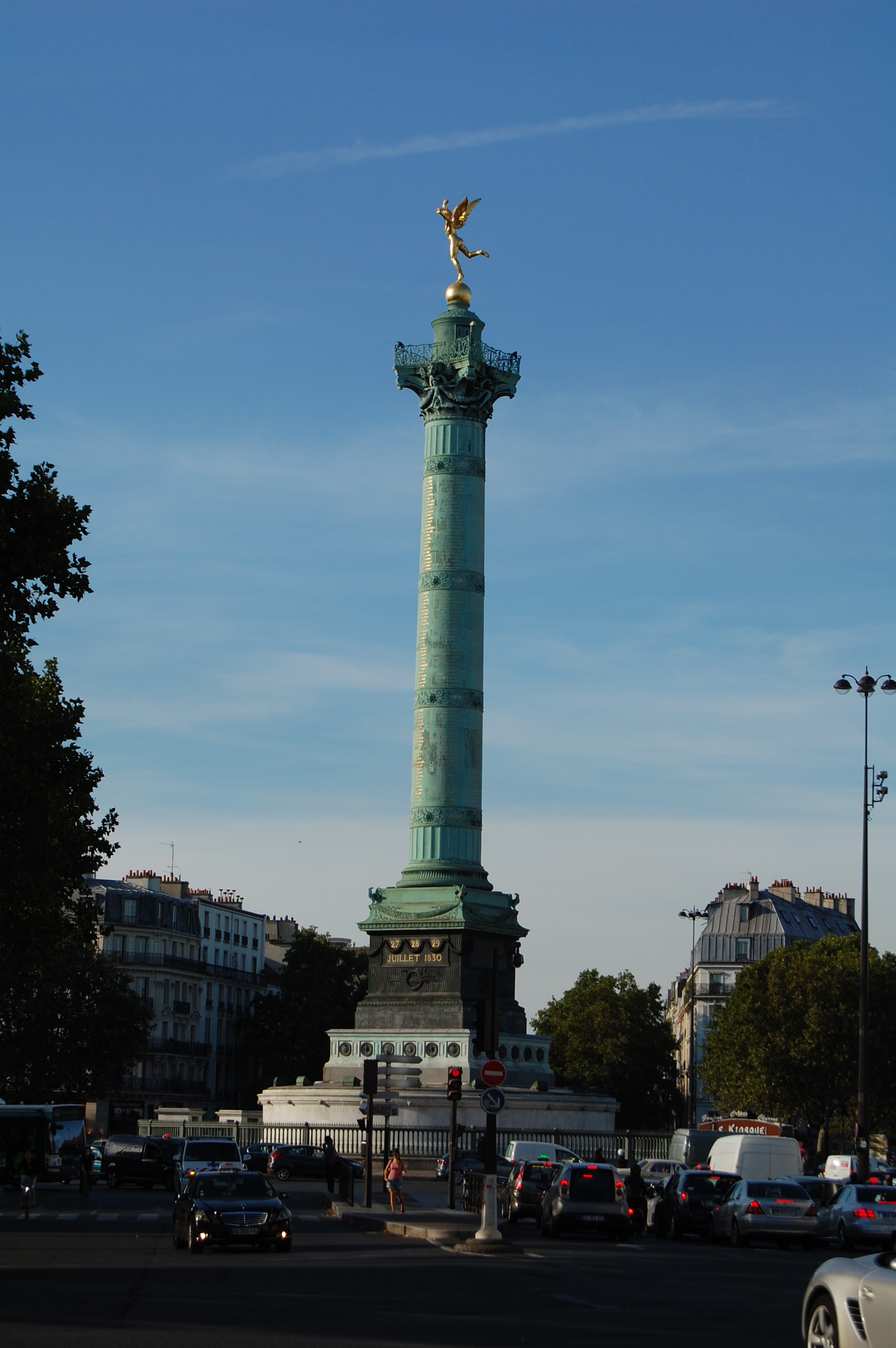
Place de la Bastille.
Monument to the 1830 Revolution at the Place de la Bastille.

Before the High Line in New York City, there was the promenade plantee in Paris. Opened in 1990, the promenade is built along almost three miles of abandoned railroad track in the heart of the right bank, starting near the Place de la Bastille. There is no Bastille at the Place de la Bastille, by the way, because it was torn down during the Revolution of 1789. There is, however, a nice monument to the Revolution of 1830.

Homeless in Paris
Encampment of the homeless near the promenade plantee. I wonder where they got the tents.

Walking to the entrance of the promenade, Judy and I passed what seemed to be a small tent encampment of homeless people. The homeless are much in evidence in Paris (no more so than in Chicago, though). I am not sure if this reflects a libertarian attitude towards the mentally ill, a failure of French housing policy, or some of each. In Chicago, police try to minimize the presence of the homeless in the showcase areas, and a scene like the one above would not be tolerated.

Around the corner here, under the old train viaduct, are the stairs to the promenade.

2013-09-02 11.58.24

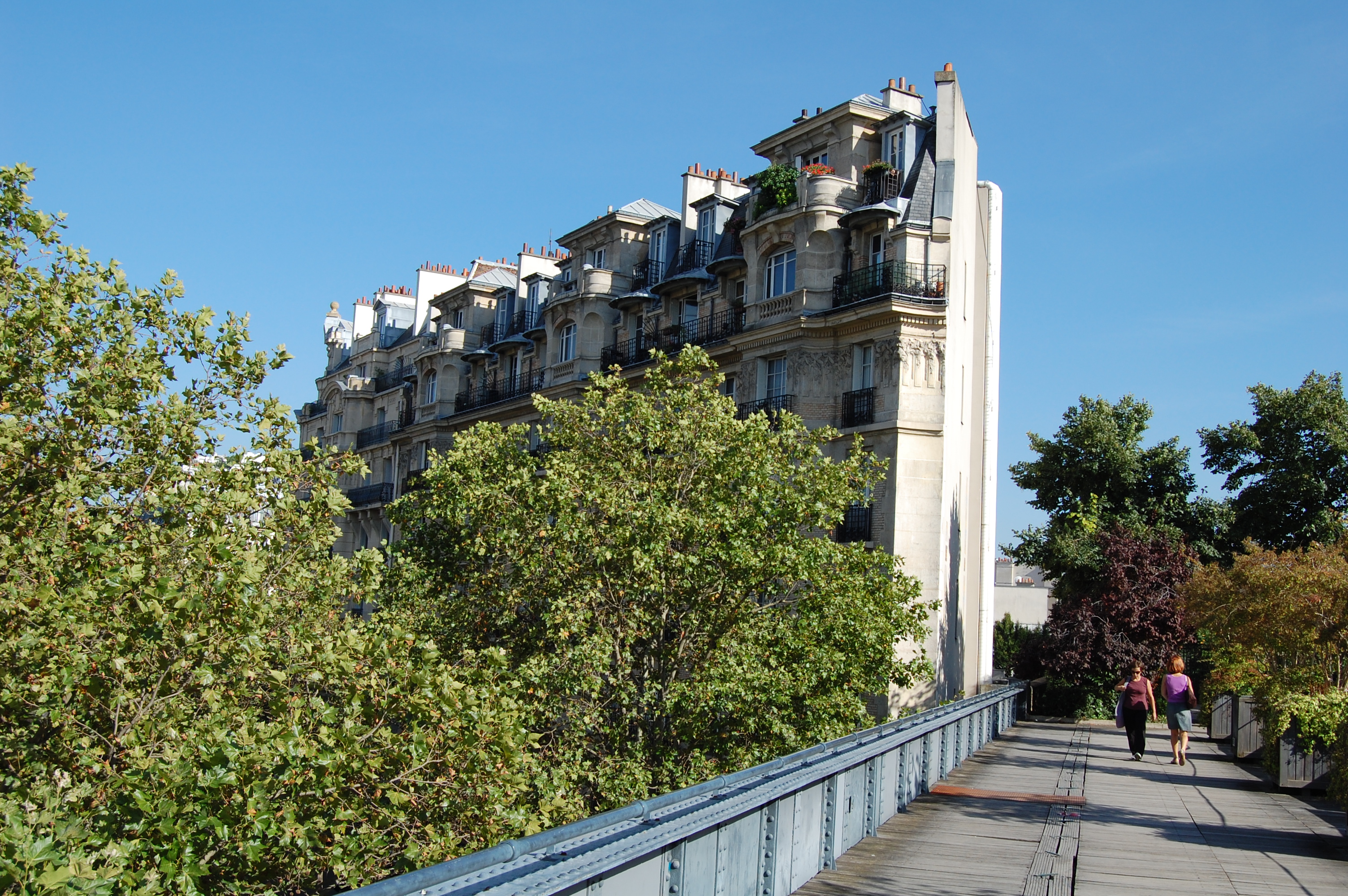
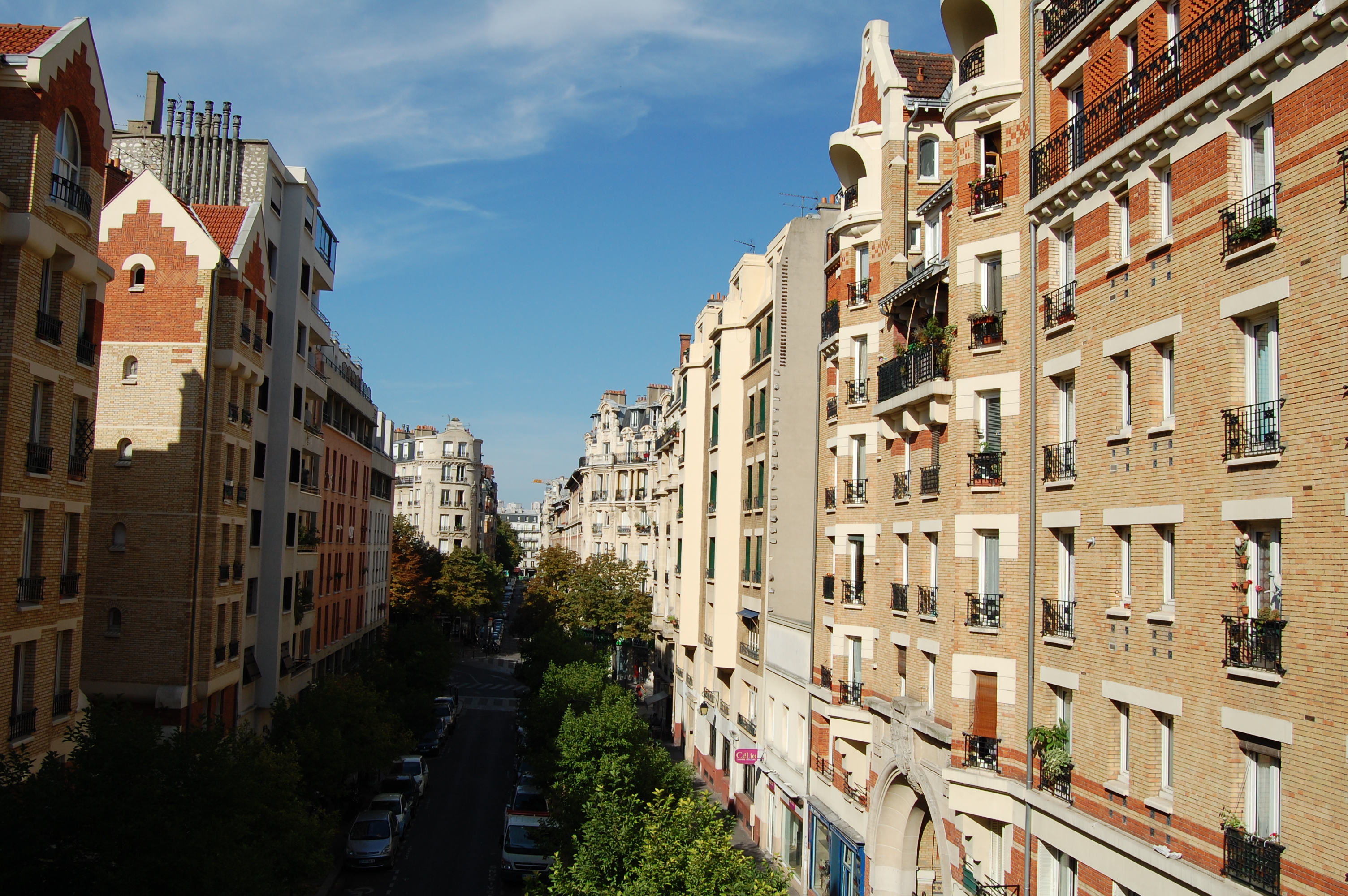
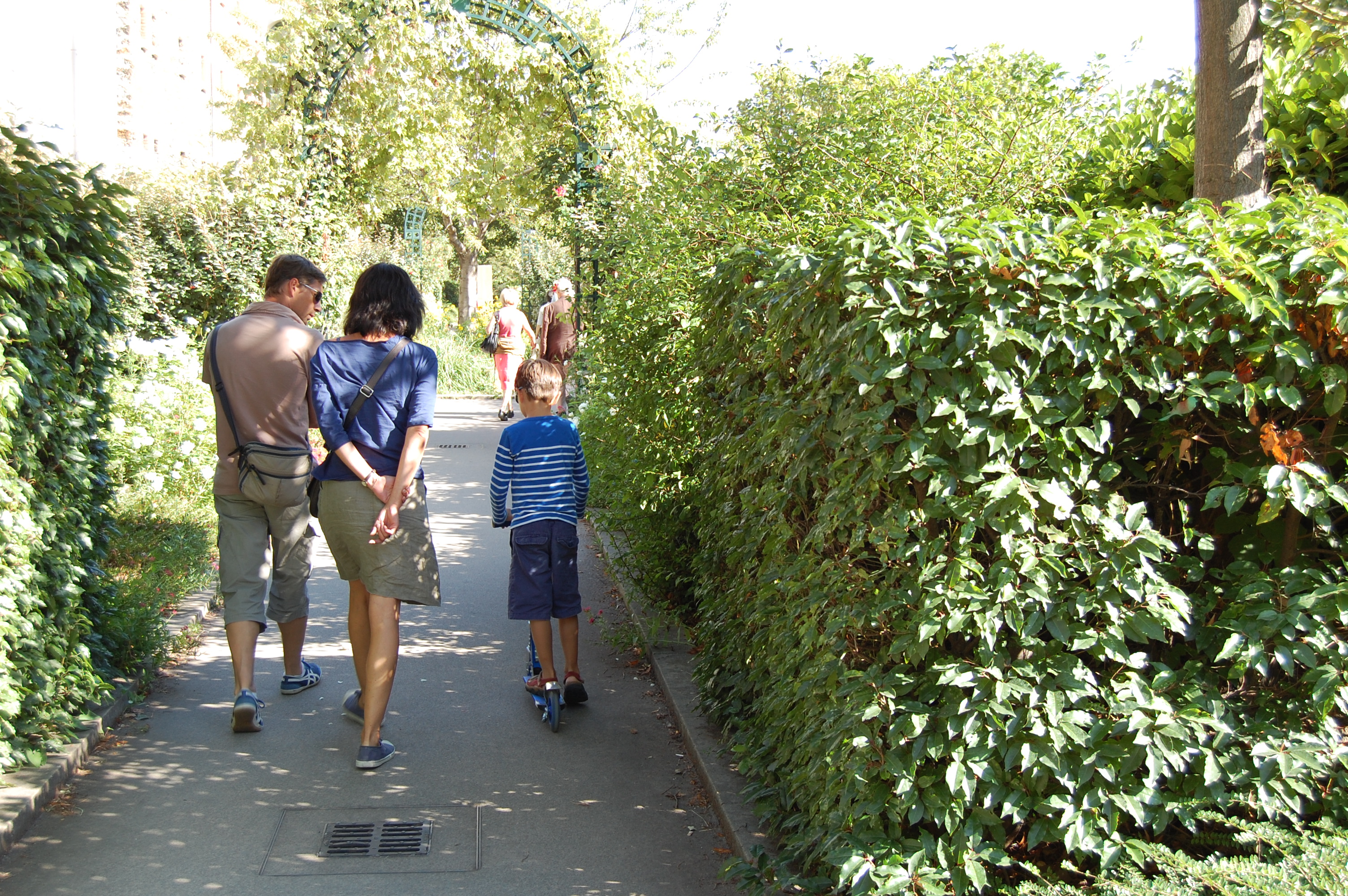
So, a few observations on the promenade plantee, though I should note that Judy and I only walked about half its length, then back again. Like the High Line, the promenade plantee is part of the urban scene rather than a refuge from it. It is a fine platform for up close observation of the streets and buildings of the Right Bank.

2013-09-02 10.47.14

Promenade Plantee
View from the promenade.
Promenade Plantee
The windows of upper story apartments look right onto the promenade.

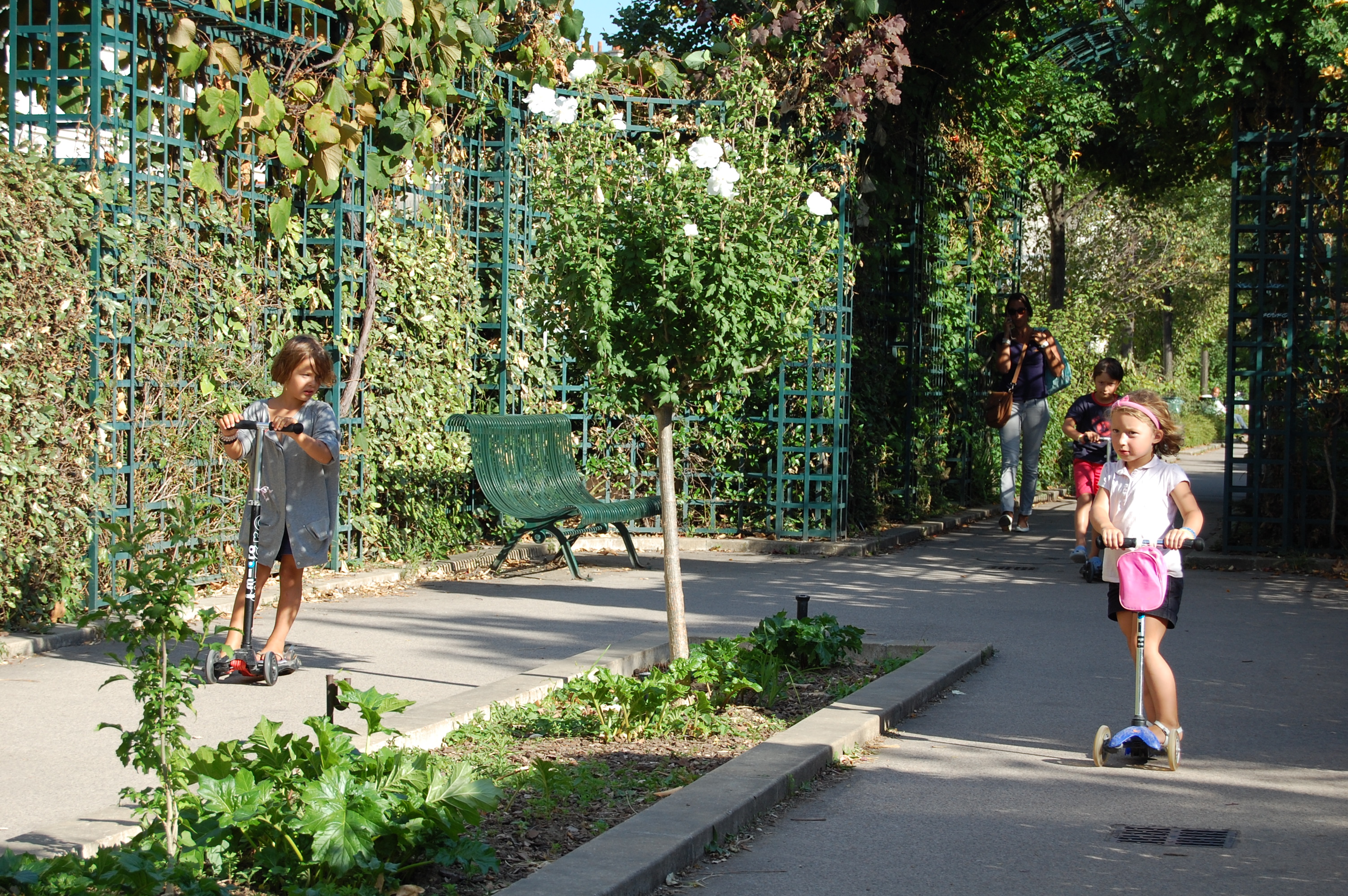
Also, this does seem to be a successful urban green space that attracts people of all ages for exercise, relaxation, reading, eating lunch, or canoodling.

2013-09-02 10.27.48

2013-09-02 11.02.08

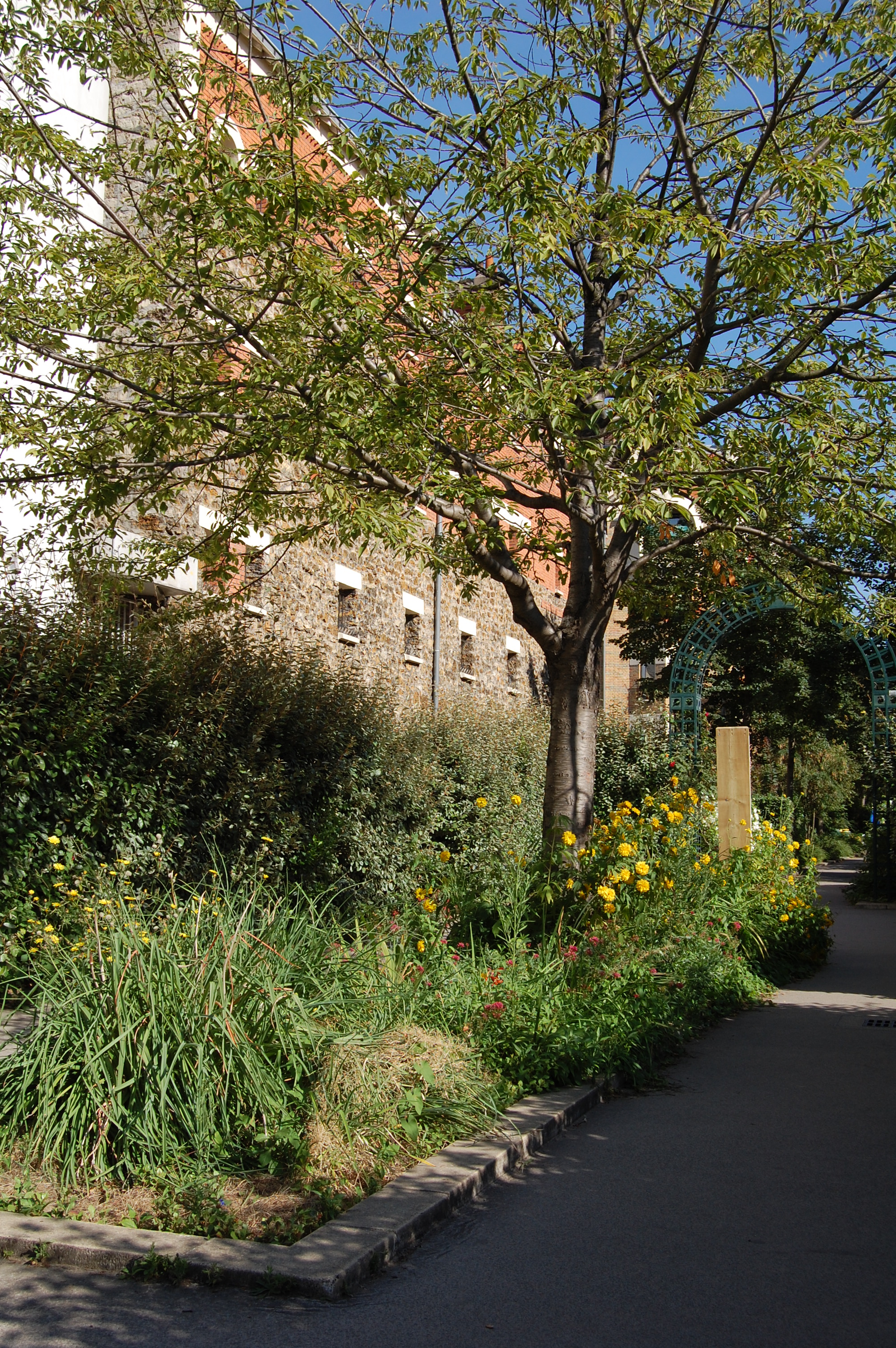
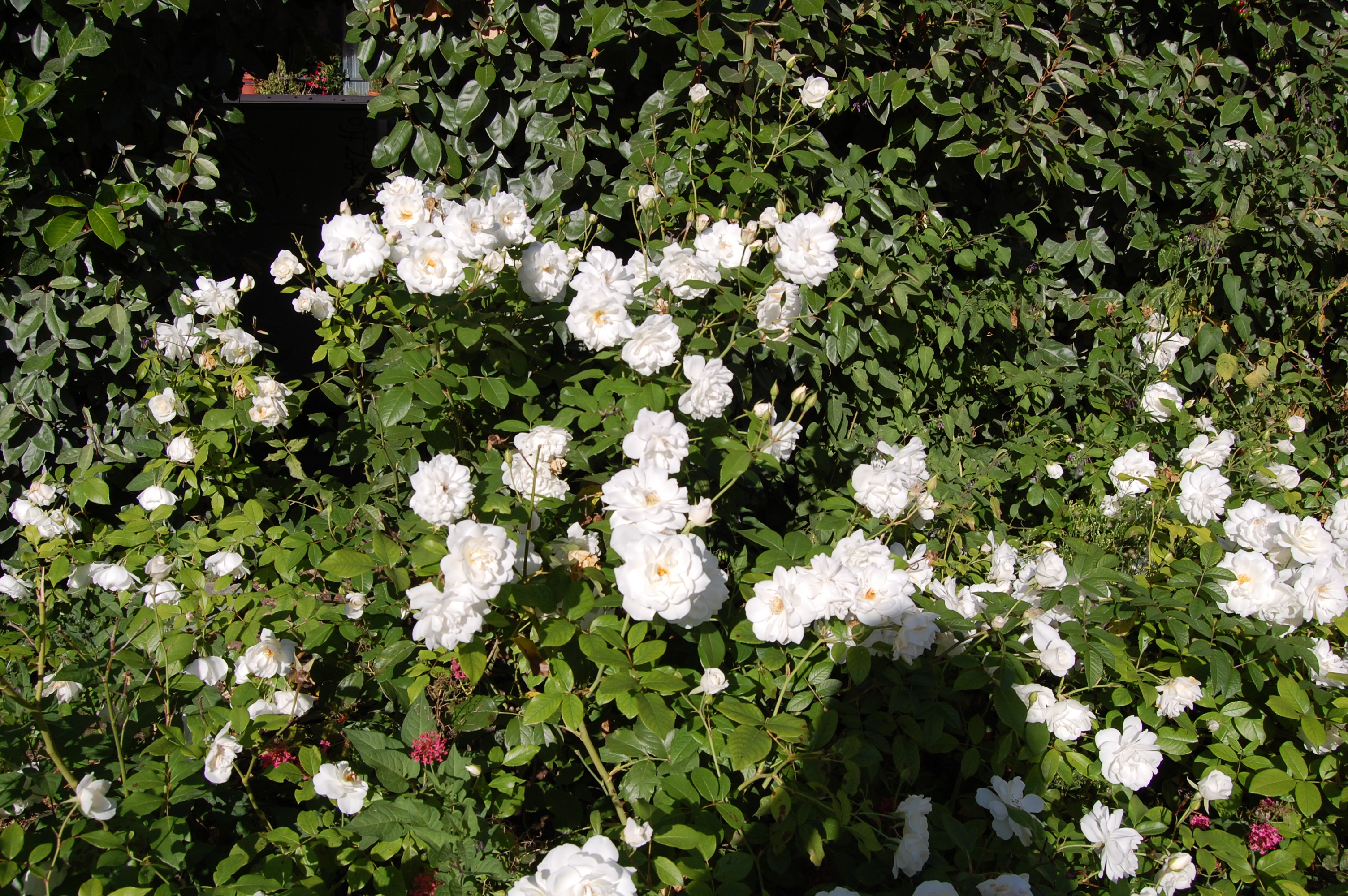
There are lovely scented roses planted at fairly regular intervals.

Promenade Plantee

Promenade Plantee

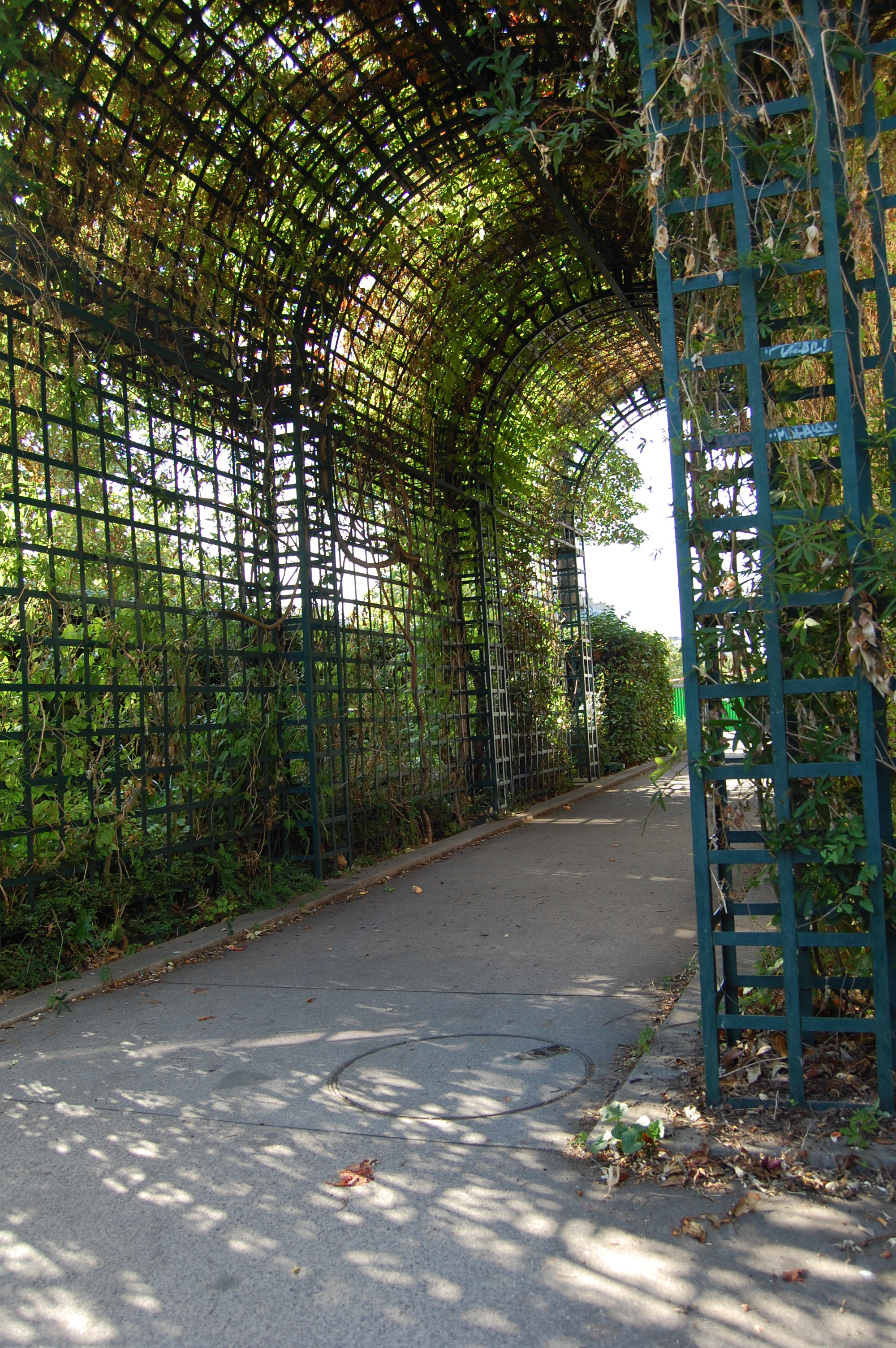
Arches planted with hardy kiwi (Actinidia quinquefolia) and other vines are also a regular feature.

Promenade Plantee

Also some nice stands of bamboo.

Promenade Plantee

On the less positive side of the ledger, I would say that the promenade plantee uses a less diverse plant palette than the High Line in New York. The High Line has far more perennial flowers and grasses, whereas the Promenade is dominated by shrubs and small trees.

Promenade Plantee

Also, the plantings on the promenade are not as well maintained as those of other parks we’ve seen in Paris. A fair amount of weeding and pruning of vines was left undone. Not sure why that would be.

Promenade plantee
Is somebody going to pull out all this Deadly Nightshade? I would have, but Judy restrained me.

When we finished our walk on the promenade, Judy and I had dinner at a restaurant serving regional cuisine from southwestern France. (The best thing we had: home made prune ice cream with Armagnac.) Afterwards, we strolled back across the Seine to our hotel on the Left Bank.

Paris
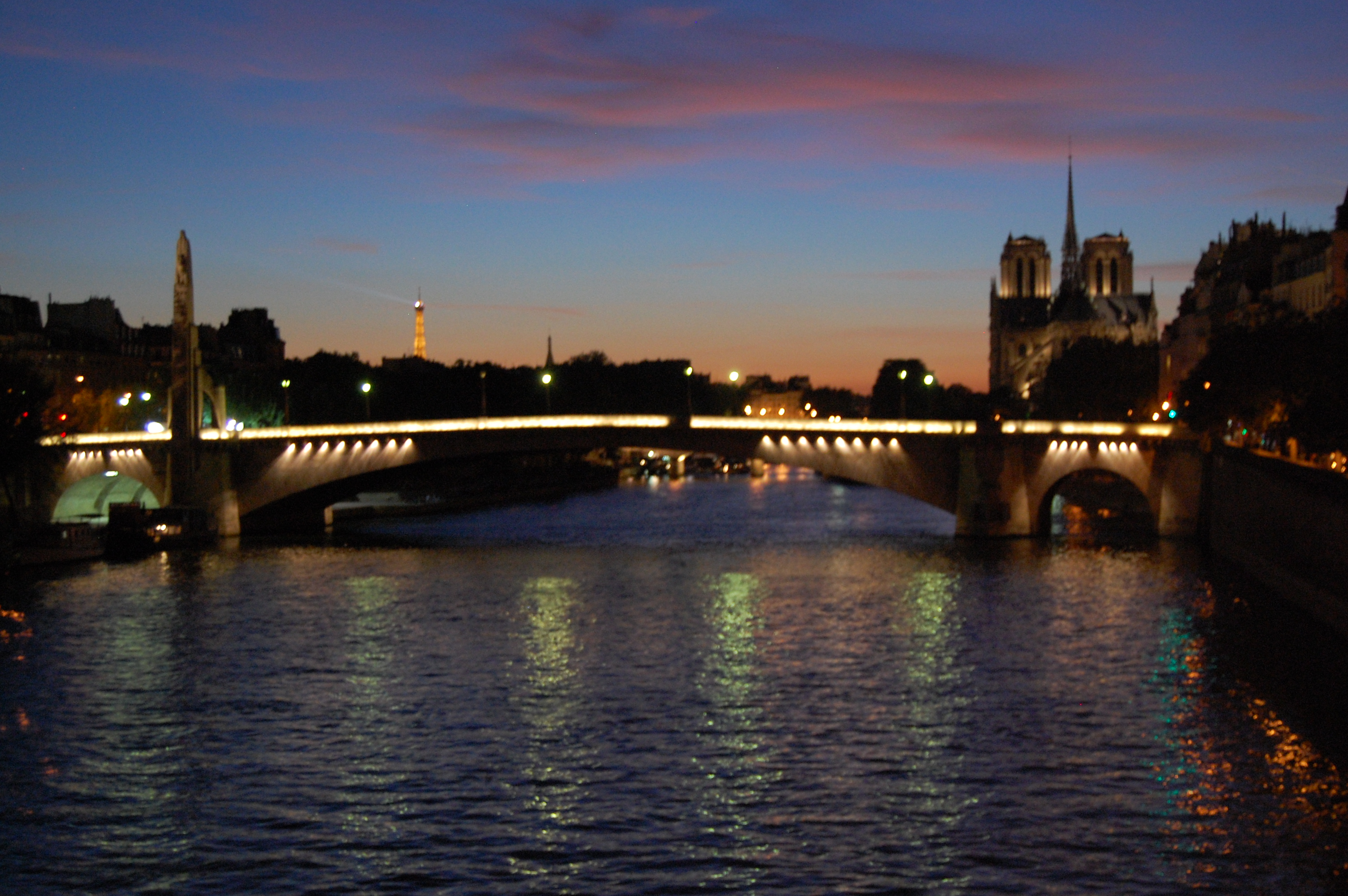
View of the Seine shortly after sunset.

I’ll try to do another post while I’m on vacation, but I won’t be able to respond to comments or comment on other blogs until I return. In the meantime, keep well.

We’re Leaving, On A Jet Plane

At this moment I am taking a brake from madly running around the house preparing to head out to the airport.  Thanks in part to her bountiful frequent flyer miles, Judy and I are flying to Paris tonight. We will be in France and England for two weeks: in and around Paris, in Amboise in the Loire Valley, then London and environs.

Giverny grand allee.
Judy’s picture of Monet’s Grand Allee in April. Can’t wait to see it in September!

We will see some famous gardens, including Giverny, Sissinghurst, and Great Dixter. We will see some other stuff, too. We will be visiting a high school pal of Judy’s now living outside London. This is our first trip to England, but we did fall in love with Giverny in April a couple of years ago. Now we are eager to see it in September.

Giverny
The lower garden at Giverny, another of Judy’s pictures from 2011.

I’m thinking I will write a couple of posts while on vacation – mostly photographs of what we’ve been seeing. However, I won’t be posting comments on other blogs or responding to comments on my own. I will try to catch up with you all when I return.

Take care.

Undaunted Color In The Garden of Keeyla Meadows

One of the most exciting gardens we visited during the 2013 Garden Bloggers’ Fling was that of Berkeley artist and garden designer Keeyla Meadows. Keeyla is also the author of the book Fearless Color Gardens, in which she advocates “Jumping off the color wheel.” I’ve just started reading Keeyla’s inspiring book, but having seen her garden I can assure you that she puts into practice what she preaches.

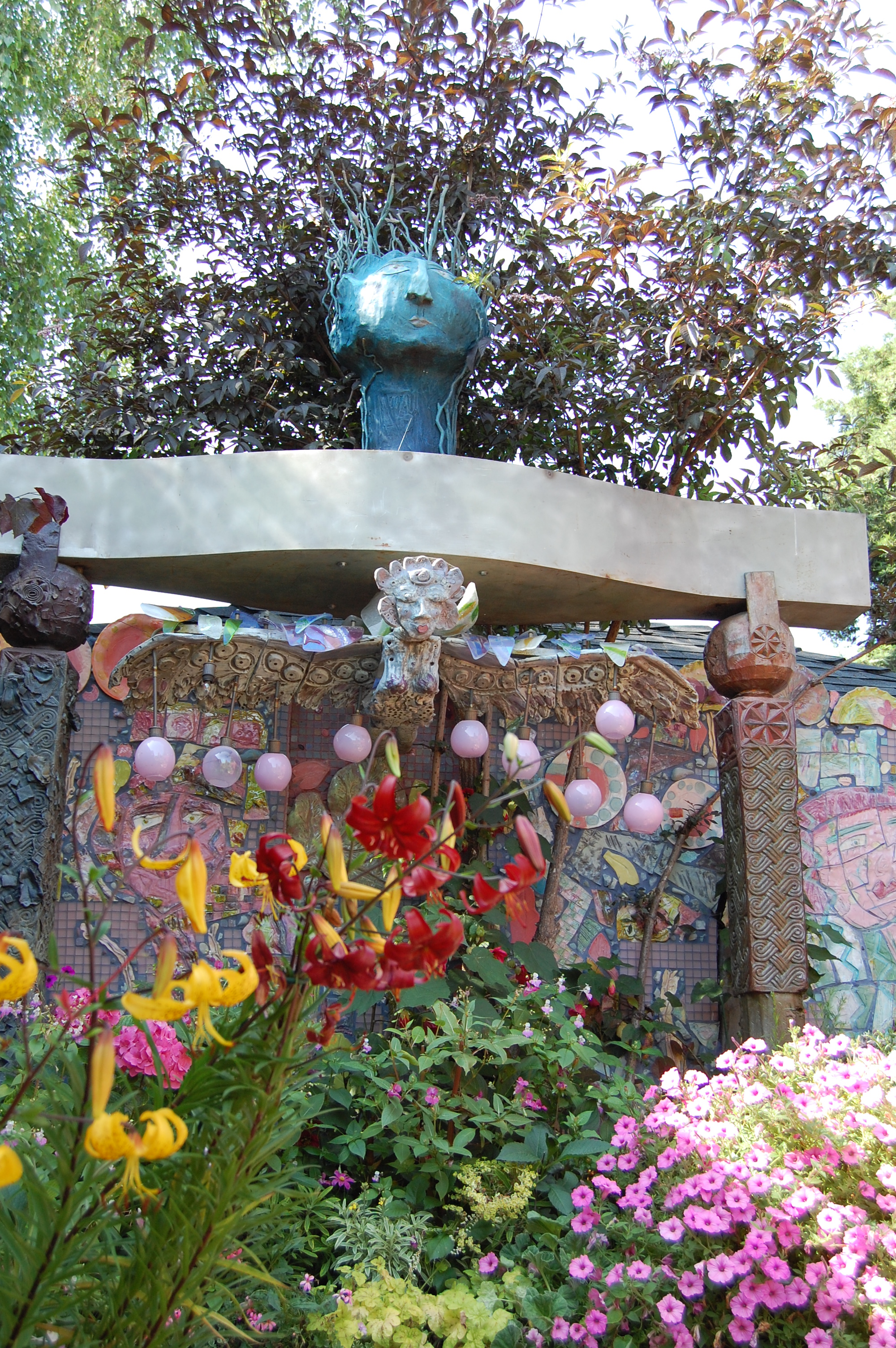
Keeyla’s garden is stuffed full of color, art, flowers, foliage, and grasses – all flowing together so that the line between the artistic and the botanical becomes blurred.

Keeyla Meadows

I love how the flowers flow around the sculpture so that it seems this woman is bathing in nasturtiums.

2013-06-30 18.49.08

Brugmansia, bursting with life and immortalized through sculpture.

2013-06-30 18.11.51

The cool blue of this giant pear provides a cooling presence amidst the many hot colors.

2013-06-30 18.46.56

There is something stimulating even if you look straight down – watch out for snakes!

2013-06-30 18.11.05

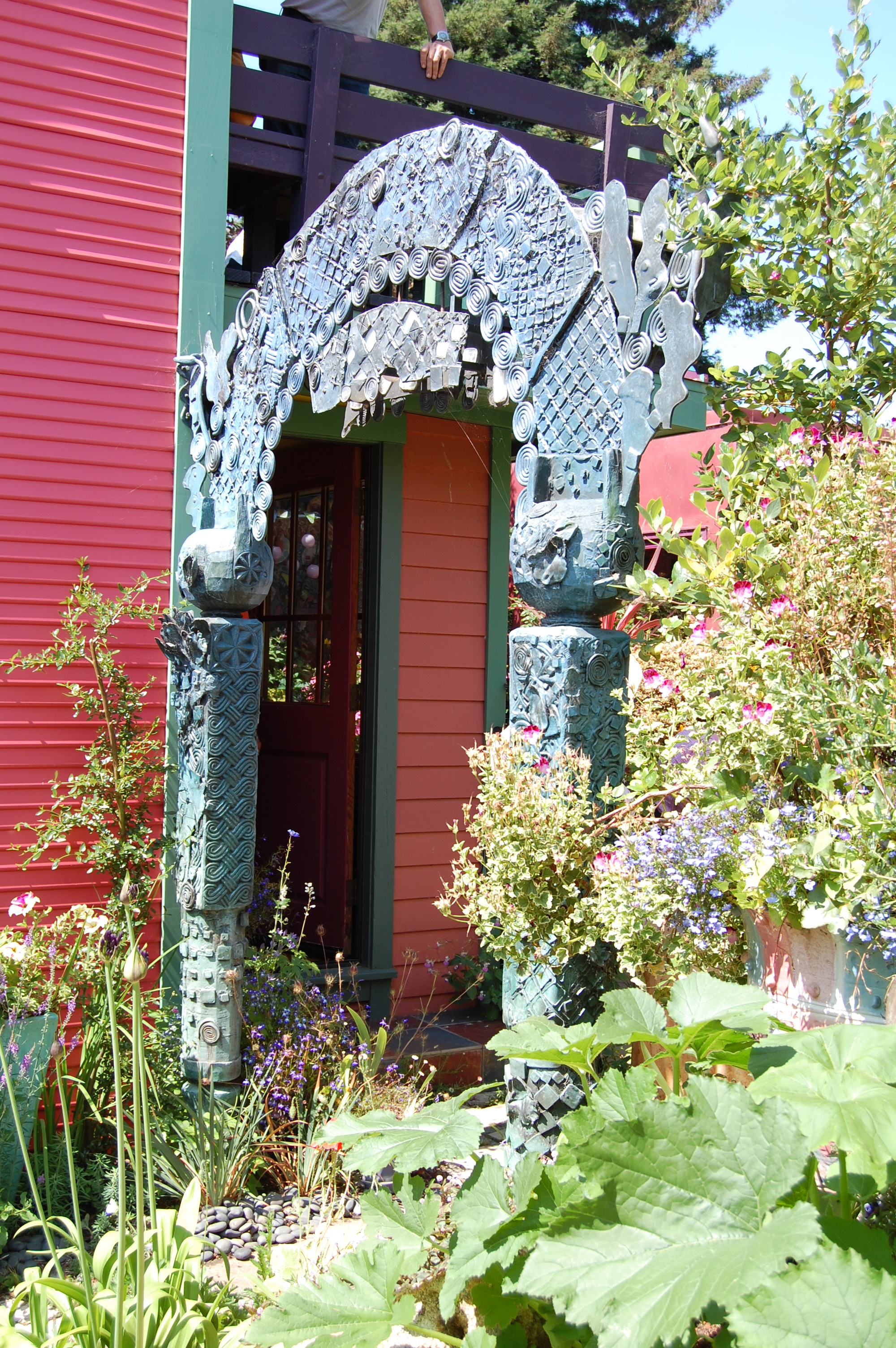
A magnificent metal arch provides a transition between garden rooms.

2013-06-30 19.03.21

A very diverse palette of plants.

2013-06-30 18.21.40

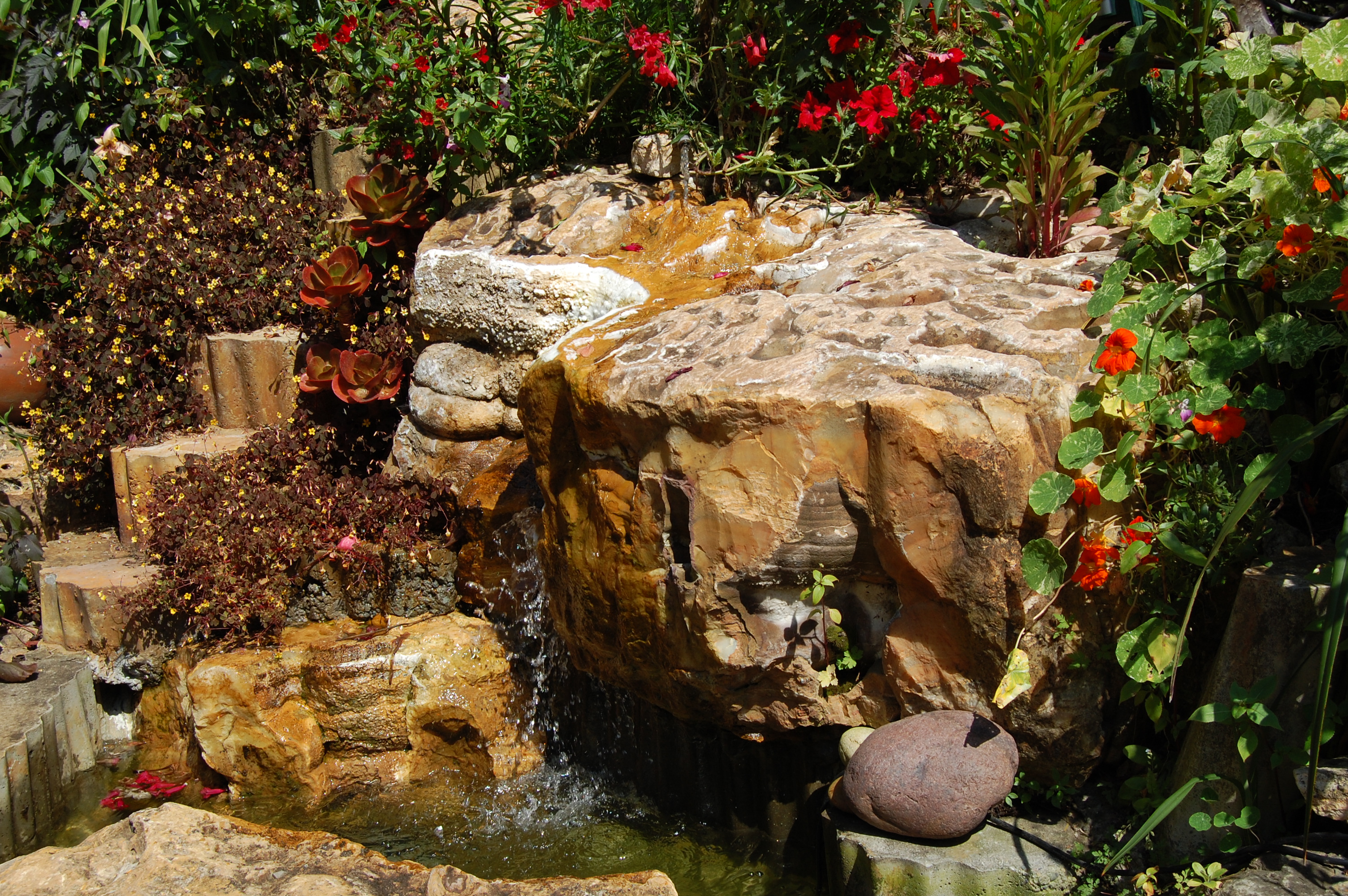
I like how the water feature is built around enormous boulders.

2013-06-30 18.48.47

The Lychnis goes great with this grass, I think.

2013-06-30 18.09.12

No need to set the table, thanks to garden art!

2013-06-30 19.00.57

The colors of structures and flowers went together so well in this garden.

2013-06-30 18.32.11

A wide view of part of the garden taken from the roof of Keeyla’s house.

2013-06-30 18.51.14

Before leaving, we had to pay our respects at the shrine to the god of garden art – or perhaps static electricity.

For my own garden, I don’t think I could or would replicate the overall level of stimulation to be found here. However, Keeyla’s garden is certainly an inspiring one, suggesting many ways to build on intensity and excitement.

Wildflower Wednesday: How Ironic

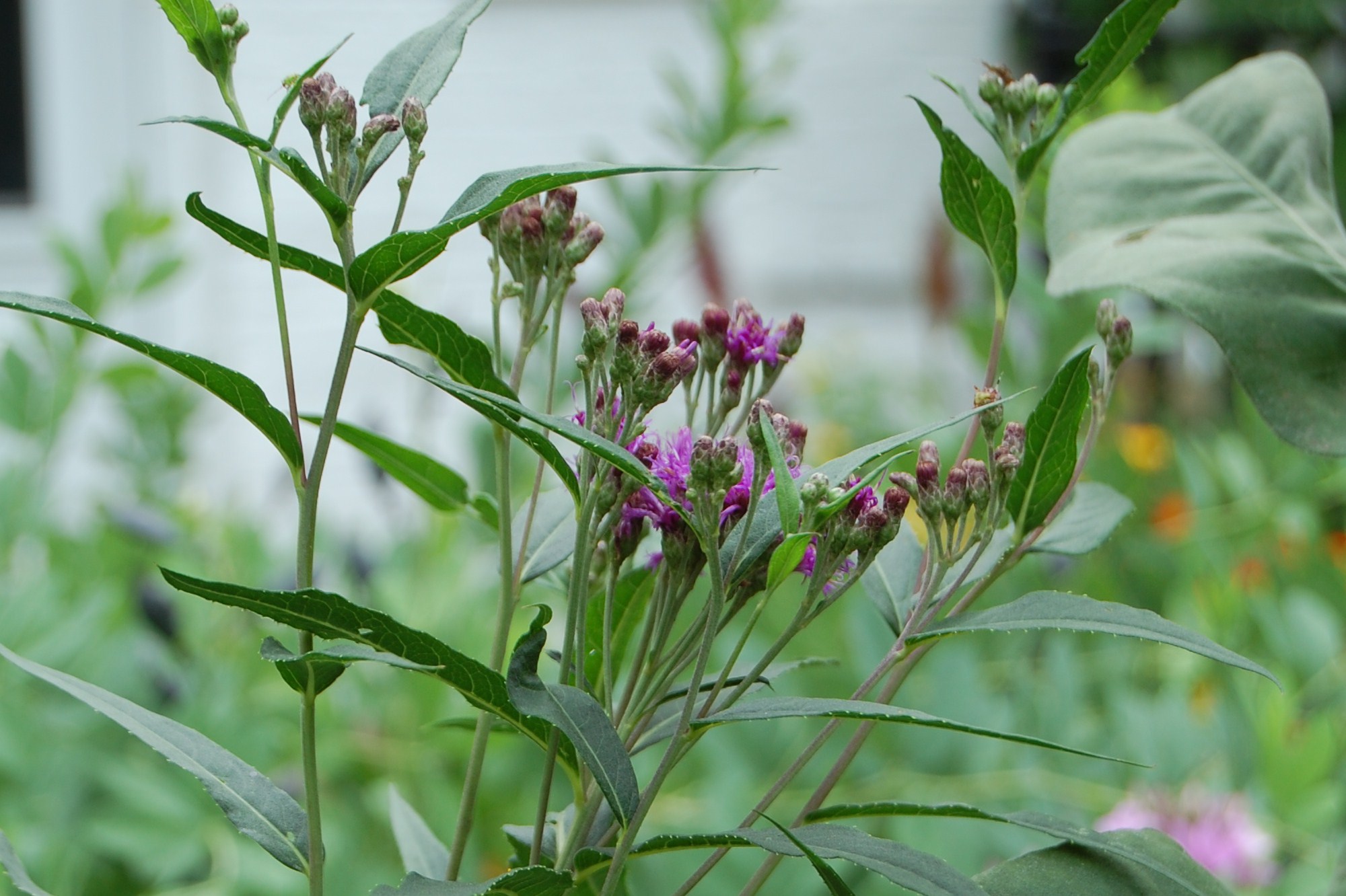
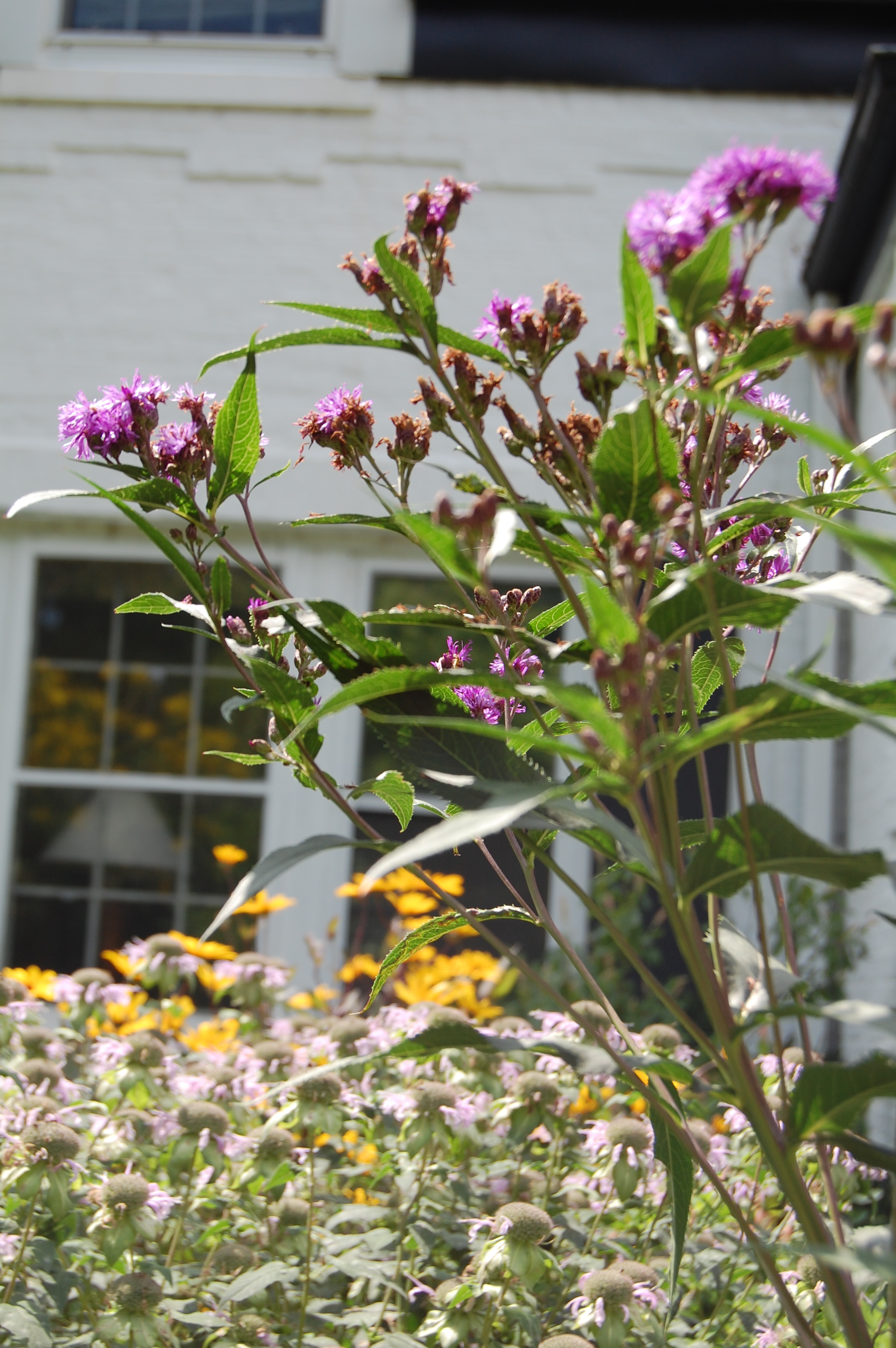
Tall Ironweed (Vernonia altissima), like the other Ironweed species, has many virtues and is a good plant for the true native plant enthusiast.  Which is to say, if you are looking for a plant that delivers a major ornamental punch proportionate to the space it takes up, Ironweed may not be for you.

2013-08-11 11.44.26 ironweed

Tall Ironweed grows 5-8′ and will form large clumps, especially if you let it self-sow. Some related species will not grow quite so tall.

The red-pink flowers are showy, but not very long-lasting. My own Tall Ironweed is blooming for the first time this year and has not yet formed a large clump. Flowers began opening in late July and were pretty well done by the last week in August. The Missouri Botanic Garden website sniffs that other than the flowers, ironweeds are “somewhat unexceptional” as ornamentals.

7-22 Ironweed

Tall Ironweed is a very good plant to have if you are into wildlife gardening and want a diversity of native species that are beneficial to pollinators. Ecologists have recognized the species as being particularly attractive to native bees, and butterflies are drawn to the flowers as well.

It is possible that Ironweeds will emerge from their “somewhat unexceptional” ornamental status. The Chicago Botanic Garden is testing a number of Vernonia varieties for home garden use.

Ironweed

Also, Tall Ironweed is a pretty easy care plant without serious insect or disease problems. It likes moisture, but is adapts well to ordinary garden soil. Despite the name, I find that it does require staking. Most Ironweeds want full sun, Tall Ironweed can tolerate part shade.

Actually, there is some confusion about the origin of the common name. Some people thinks it refers to the sturdiness of the stems, others to rusty colored flowers or seeds. The genus is named after a 17th Century English botanist, William Vernon.

I had a funny experience with my Ironweed. I planted it in the fall of 2011 but it seemed invisible in 2012. Suddenly this year it is popping up 8′ tall and blooming.

Have you tried growing Ironweed?

Wildflower Wednesday is hosted by Gail at Clay and Limestone. For more wildflowers, check out her site.

My Favorite Susan

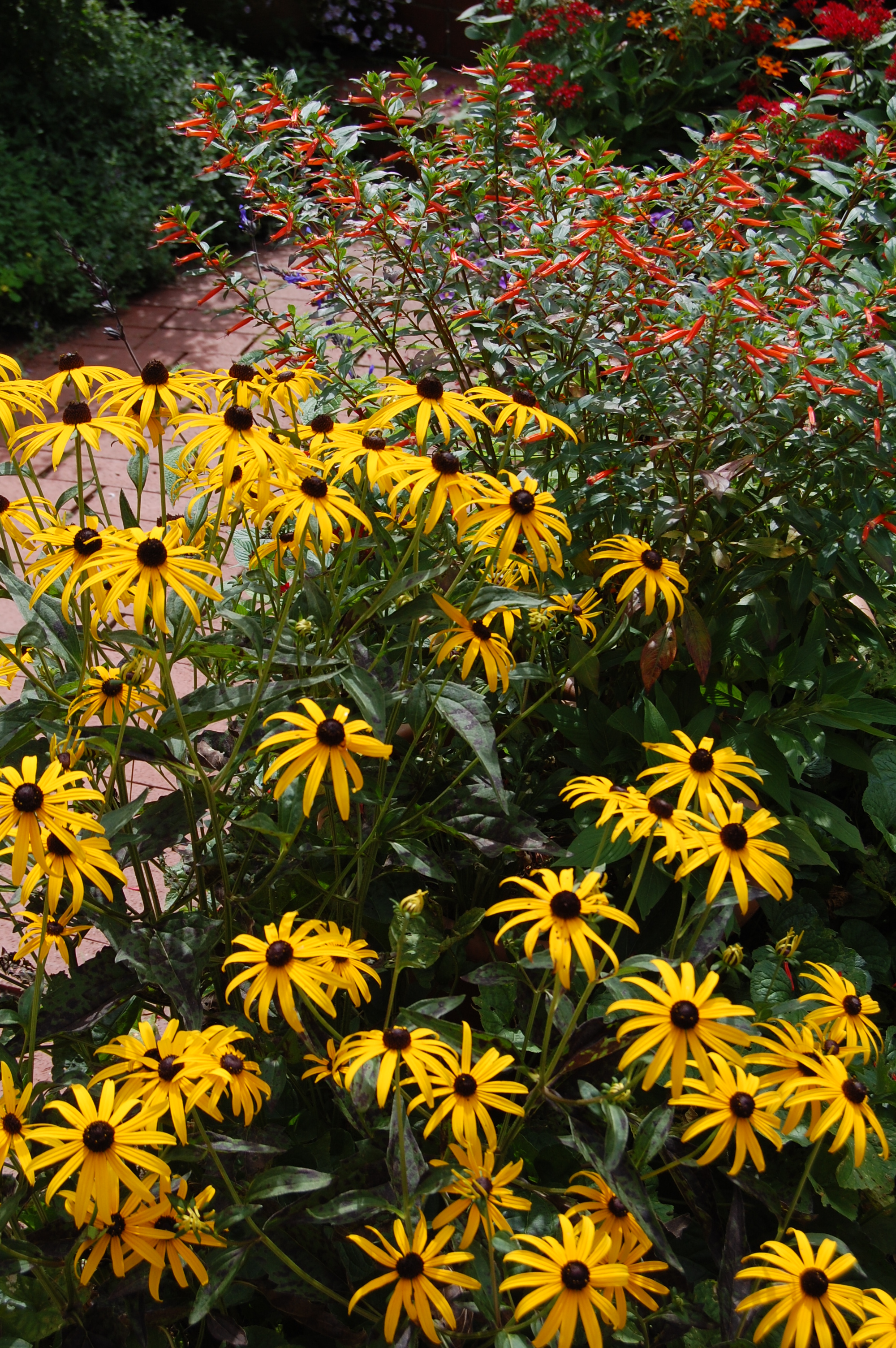
These are the days of the blooming Susans, members of the genus Rudbeckia. There’s the Black Eyed Susan generally grown as an annual or biennial (Rudbeckia hirta). Then there’s another Black Eyed Susan, a perennial that also goes by the common name Orange Coneflower (R. fulgida) and which has produced the ever popular variety ‘Goldsturm’.

Black Eyed Susan, aka Orange Coneflower (R. fulgida)

All the Susans have daisy-like flowers with black centers and “petals” that are generally god/orange/yellow (R. hirta has a greater variety of colors). The centers are actually made up of tiny, tightly packed disc flowers, while each one of the petals is a sterile ray flower.

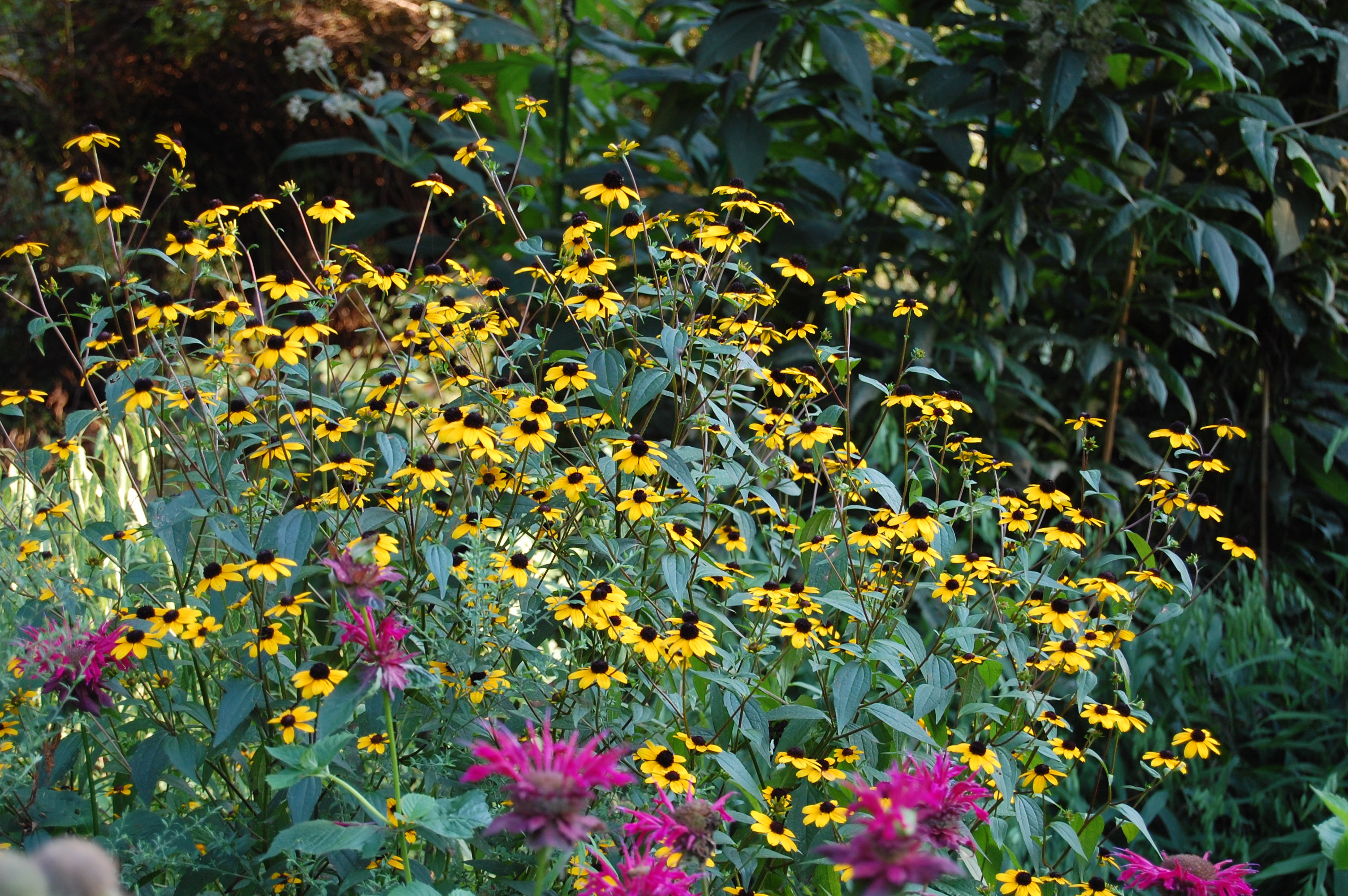
Brown Eyed Susan
Brown Eyed Susan with Cup Plant and Sweet Joe Pye Weed

My favorite Susan, however, is Brown Eyed Susan (R. triloba). This Susan is taller (usually 4-5′) and sometimes benefits from cutting back around late May to keep it more compact. What’s striking about Brown Eyed Susan are the flowers, which are smaller with oval petals. However, they are produced in far greater profusion than those of the other Susans, creating a cloud-like effect.

She is also a long-blooming plant, generally starting for me in August and lasting into October.

Brown Eyed Susans with Bee Balm
Brown Eyed Susan with Bee Balm

But the other thing about Brown Eyed Susan is that it seems to grow almost anywhere. It does well in sun or shade, in moist soil or dry (though much shorter in dry). One year I had a self-sown R. triloba that grew and bloomed enthusiastically at the base of a large Siberian Elm (Ulmus pumila).

Brown Eyed Susan
Brown Eyed Susan with Anise Hyssop

This Susan tends not to be long-lived, but she self-sows, as they say, freely. This doesn’t really create a problem, as the seedlings are easy to pull or transplant.

In addition to pleasing people, this Susan (like the others) will attract butterflies and goldfinches. She is native to a wide swath of the eastern and central USA.

Brown Eyed Susan

What is your favorite Susan?

Fools Rush In

In my last post I wrote about the impulse purchase of my new rose, ‘Strike It Rich’. What I didn’t mention is that I went back to that garden center sale twice more that weekend. Surely it would have been wiser to wait until the milder days of September to plant more perennials, but who wants to be wise when immediate gratification is a possibility?

Dwarf fountain grass Piglet
Dwarf fountain grass ‘Piglet’ with Calamint. I’m thinking I may move the Little Bluestem over to this end to stand next to ‘Piglet’.

For one thing, I wanted to replace the grasses that had failed in the west parkway bed. For the spot where the dwarf fountain grass Pennisetum alopecuroides ‘Little Bunny’ had been unable to establish, I purchased P. alopecuroides ‘Piglet’.  Though I had been looking for a somewhat larger grass, the mature ‘Piglet’ is exactly the same size as ‘Little Bunny’ – I just bought bigger plants of ‘Piglet’. This is the kind of thing that happens when I am allowed to wander garden centers unaccompanied by an adult.

At the other end of this raised bed I was going to buy another Switchgrass (Panicum virgatum) ‘Shenandoah’ to replace the one that was smothered. However, a sweet talking Little Bluestem ‘Carousel’ (Schizachyrium scoparium) persuaded me to take it home instead. A shorter plant at 30″, it is reported to turn pink, tan, and orange-red in fall.

The remainder of my purchases were for the shady back garden. The majority of these were for the raised island bed. Many plants have failed to thrive in this bed, including Anemone sylvestris, Yellow Foxglove (Digitalis ambigua), and Peach Leaf Bellflower (Campanula persicifolia). Plants that are well established include Bluestar ‘Blue Ice’ (Amsonia tabernaemontana), Short’s Aster (Symphyotrichum shortii), and Brown Eyed Susan (Rudbeckia triloba).

Japanese Anemone
Japanese Anemone ‘Honorine Jobert’

For this bed I made the following buys:

Japanese Anemone ‘Honorine Jobert’ (Anemone x hybrida). A robust plant once established and an old favorite of mine, it has white autumn flowers with golden centers. Grows 3-4′ tall.

Dwarf Goatsbeard ‘Noble Spirits’ (Aruncus aethusifolius).  I’m using this plant to form a stretch of edging along the west side of the bed. This is a compact (about 12’x12″) plant that tolerates dryer soil and shade. Ferny foliage with autumn color and white flower spikes in June and July.

Lenten Rose (Helleborus orientalis). I bought a bunch of these to create an edging along the east side of the raised bed. For reasons I can’t explain, I have been resistant to planting Hellebores. It may be because I read an off-hand comment by Christopher Lloyd referring to “Hellebore bores”. I have no idea why he said this, but I certainly didn’t want Christopher Lloyd to think I was a bore. Then I realized that Christopher Lloyd has no idea who I am, so what the hell. Plus, they were going for a really good price!

Hakonechloa, dwarf goatsbeard, japanese anemone
Back Raised Island Bed with newly planted Hakonechloa, dwarf goatsbeard, and Japanese anemone. I took this with my phone, the light is really flat. Carl the Concrete Chicken stands watch.

Japanese Forest Grass ‘All Gold’ (Hakonechloa macra).  A last edging plant for the back island bed. The center had vast quantities of this plant in pots, which made me wonder if it was in danger of being overdone. However, it’s hard to resist the arching, gold-green leaves.

Hakonechloa 'All Gold'
Japanese Forest Grass ‘All Gold’

All these new plants – and it’s still August. Needless to say, I have been busy keeping these guys from drying out. The biggest problem is with the dwarf fountain grass, which has the greatest exposure to direct sun. I got home on Wednesday to find that ‘Piglet’ had been more than halfway to becoming a pig roast. And the temperatures are supposed to hit the 90s (F) starting Sunday.

The plants in back are shaded, but will still need close watching.

Do you ever buy new plants in August, or do you have more sense than I do?