The Flowers of Mid-June

It’s Garden Bloggers’ Bloom Day again, so let’s see which flowers are strutting their stuff at the Garden in a City.

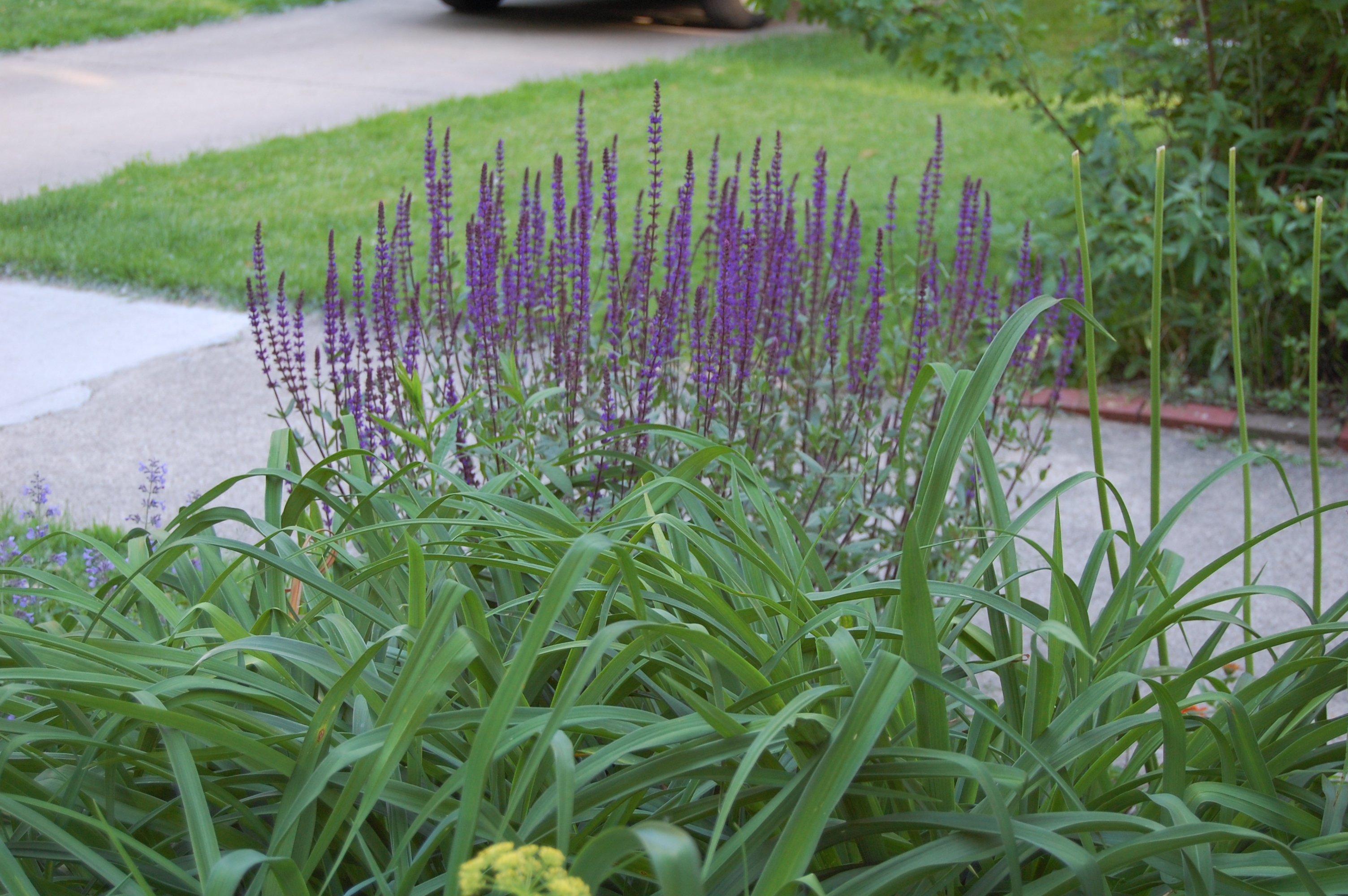
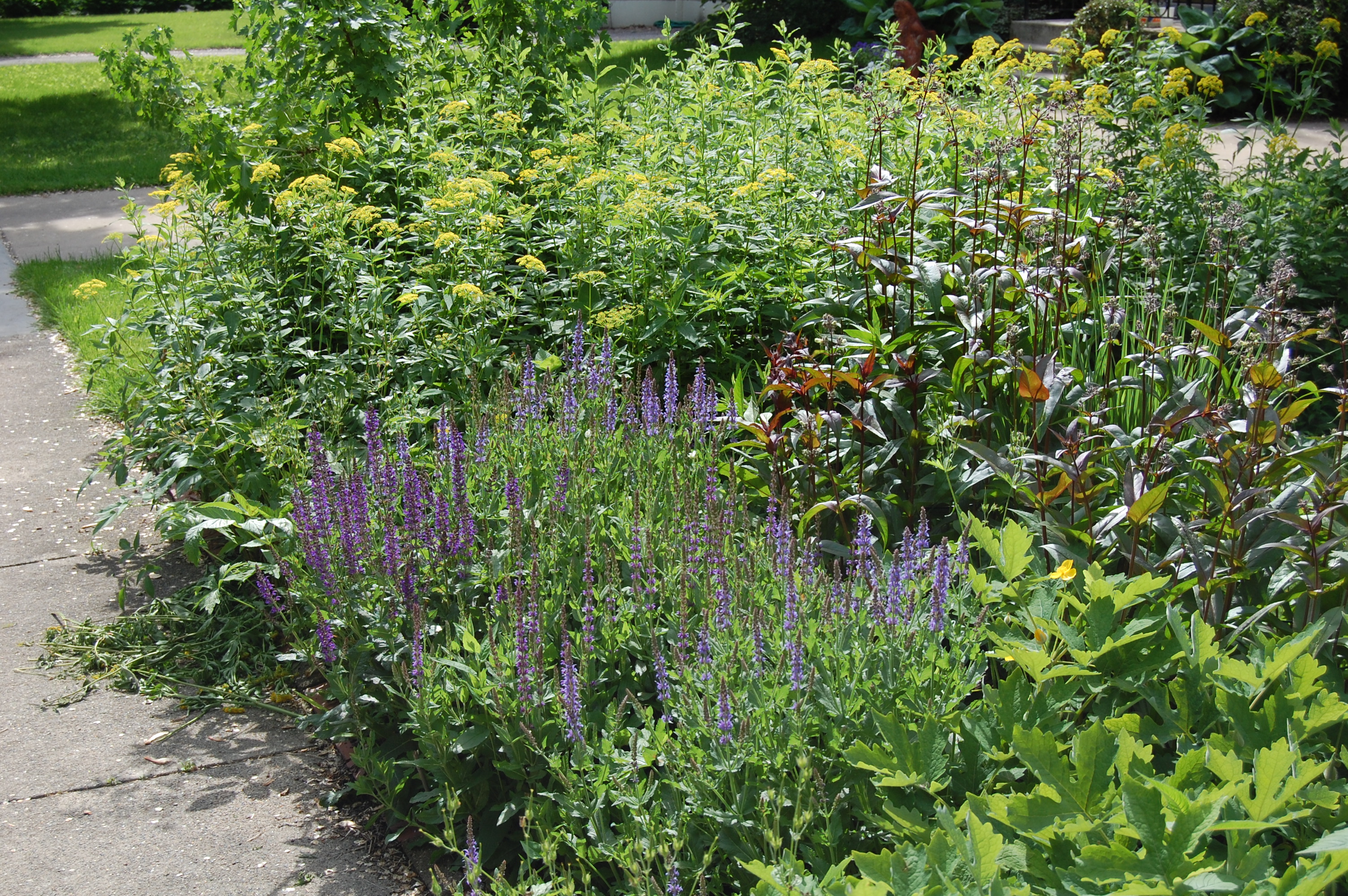
Salvias 'May Night', 'Blue Hill', and 'East Friesland' in the Sidewalk Border.
Salvias ‘May Night’, ‘Blue Hill’, and ‘East Friesland’ in the Sidewalk Border.

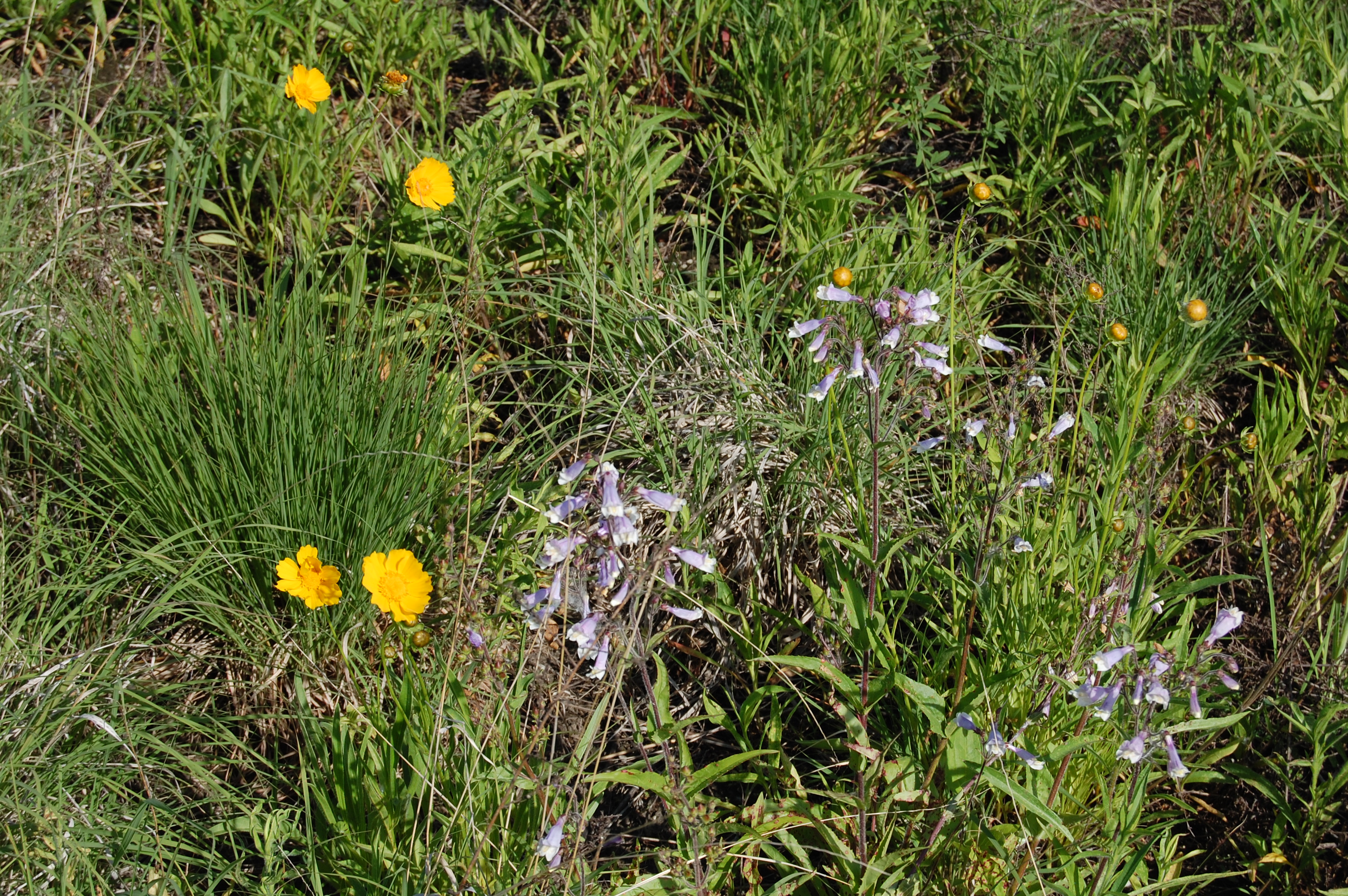
This is a great year for Salvia in our garden. Salvia nemerosa ‘May Night’ and ‘East Friesland’, along with S. x sylvestris ‘Blue Hill’ are making a long patch of mixed deep and light blue – with no flopping. The lack of flopping could be due to a more compact growth habit, or one of those cheap 18″ high edging fences I bought at Home Depot.

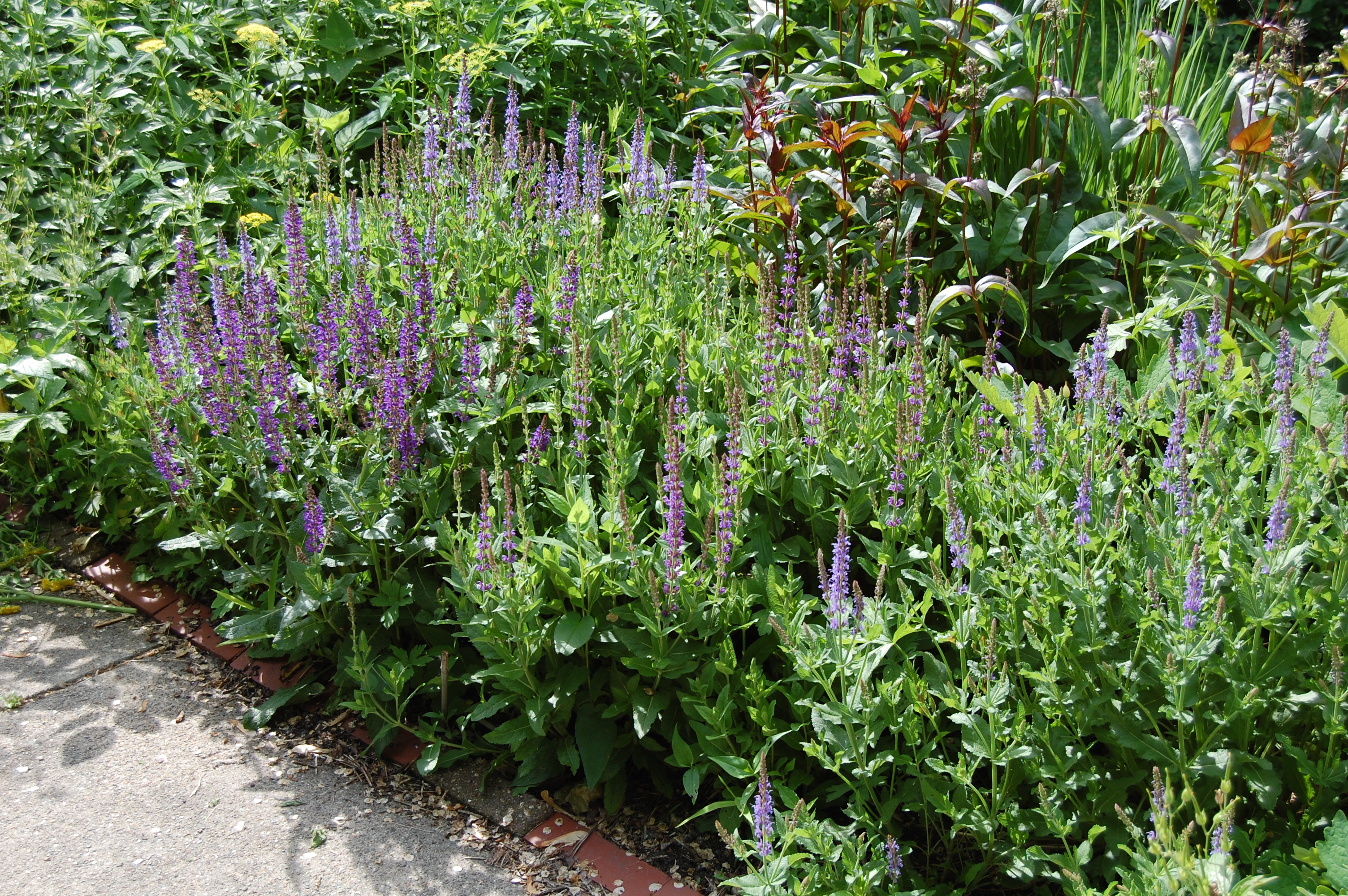
Salvia close up. I think this is 'Blue Hill'.
Salvia close up. I think this is ‘Blue Hill’.


Either way, I can’t believe I was contemplating pulling the salvias out of this bed last fall. Thankfully, Judy and my blogging friends made me reconsider.

Salvia 'Caradonna' in the Parkway Bed
Salvia ‘Caradonna’ in the Parkway Bed

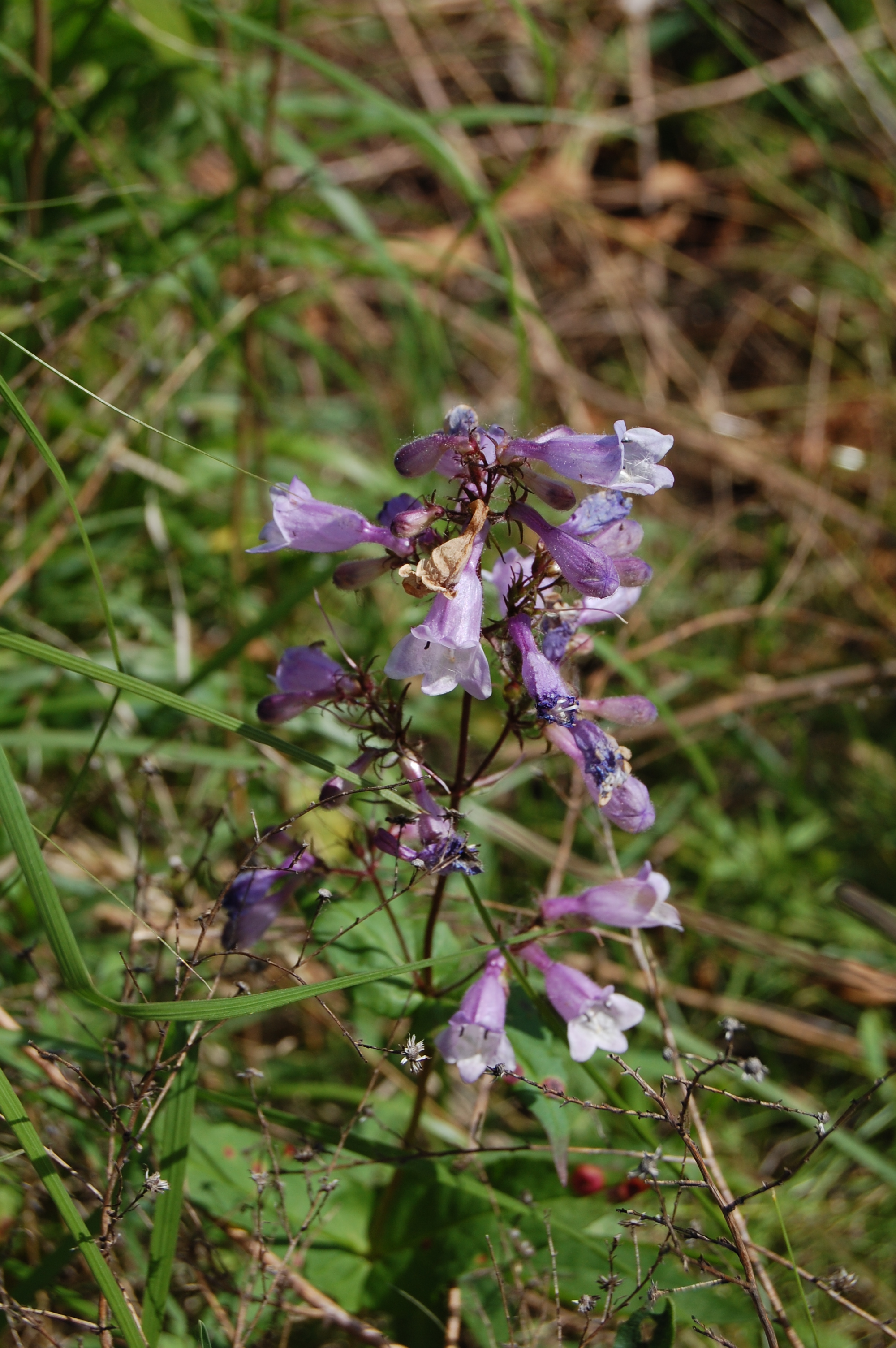
There are also several patches of Salvia nemerosa ‘Caradonna’, which is taller than the ones shown earlier but very upright and more purple than blue.

Salvia 'Black and Blue'
Salvia ‘Black and Blue’

This year I’ve also put some annual Salvia guaranitica ‘Black and Blue’ in the Driveway Border to keep things full and reinforce the other blue flowers. At this point they are blooming only modestly while still settling in. Last year I tried ‘Black and Blue’ in containers and was disappointed by the lack of flowers. But the flowers and gold-green leaves are so nice I’m going to see if it performs better in the border.

Penstemon 'Husker Red' stands behind the salvia.
Penstemon ‘Husker Red’ stands behind the salvia.


View of 'Husker Red' from inside the front garden.
View of ‘Husker Red’ from inside the front garden.

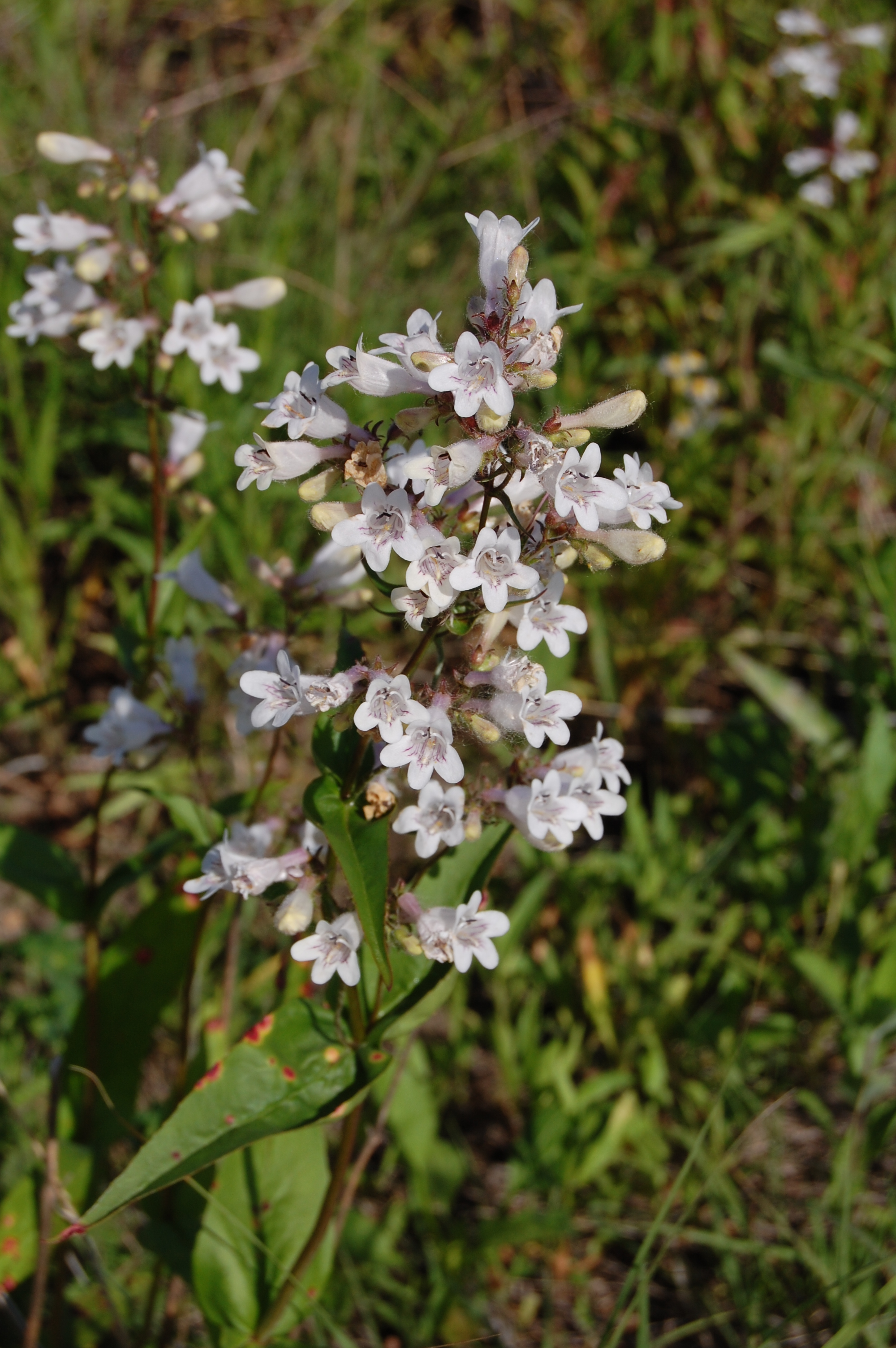
Penstemon digitalis has just started blooming and is full of flowers. ‘Hustker Red’ stands behind the salvias in the Sidewalk Border.

Smooth Penstemon straight species.
Penstemon digitalis straight species.

There is also some of the straight species here and there.

Amsonia
Amsonia

While the Amsonia in the back garden has finished blooming, the Amsonia tabernaemontana still has plenty of flowers. Here is a close up of the light blue, star-shaped flowers.

'Cassie'
‘Cassie’

My other roses definitely took a beating during our harsh winter. ‘Cassie’, however, seems to have woken refreshed from her winter slumber, energized and ready to cover herself with blooms.

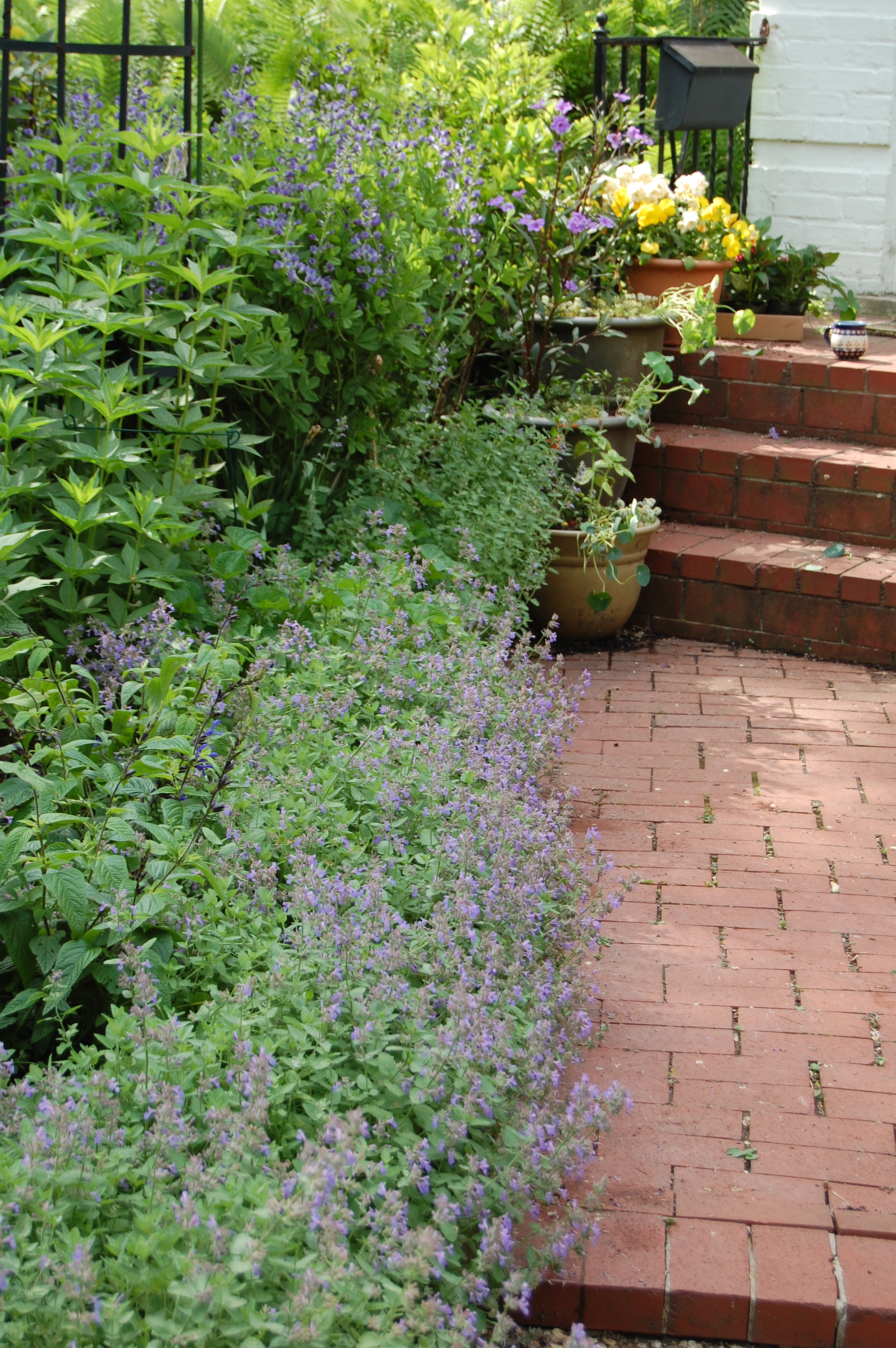
Nepeta 'Kit Kat' makes a nice edging for a sunny bed.
Nepeta ‘Kit Kat’ makes a nice edging for a sunny bed.

Nepeta keeps blooming, both the smaller Napeta x faassenii ‘Kit Kat’ and Napeta ‘Walker’s Low’, which is actually 2-3′ tall.

Gray Dogwood
Gray Dogwood

There are lots of gray dogwood (Cornus racemosa) in our back garden, and their flower clusters are just starting to open. Come fall there will be white berries that will be quickly eaten by migrating birds.

Mystery Shrub
Mystery Shrub

There is also this mystery shrub that I keep forgetting to identify. It is not fragrant but the flowers are lovely. Anybody know what this is?

Weigela, unknown variety

There’s also this Weigela I inherited that continues to bloom pretty nicely even though I don’t do much for it and I would think it is in too much shade.

Getting tired of looking at flowers? Let’s break it up with a little real life humor. At least, I think it’s humorous. My younger son is something of a beer snob. One day he said to me, “Dad, have you ever even tasted a craft beer?” With my lighting-quick wit I responded, “No, but I’ve tried their macaroni and cheese and it’s excellent.”

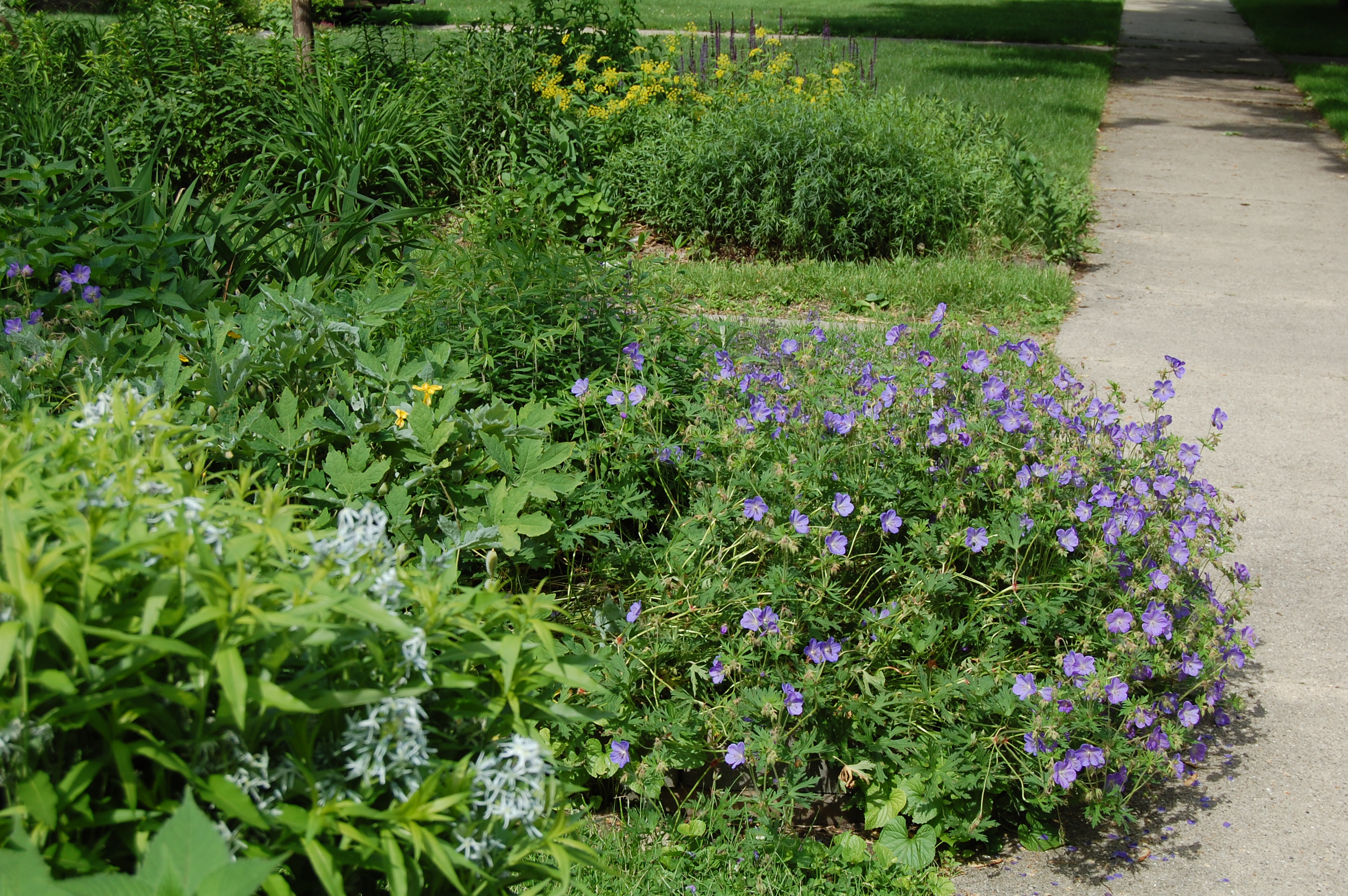
Geranium 'Johnson's Blue'
Geranium ‘Johnson’s Blue’

OK, back to the flowers. At the risk of repeating an earlier post, here’s a picture of Geranium ‘Johnson’s Blue’. This is a very floriferous variety, in my opinion flowering more profusely than ‘Rozanne’, though ‘Rozanne’ certainly does flower for a longer period.

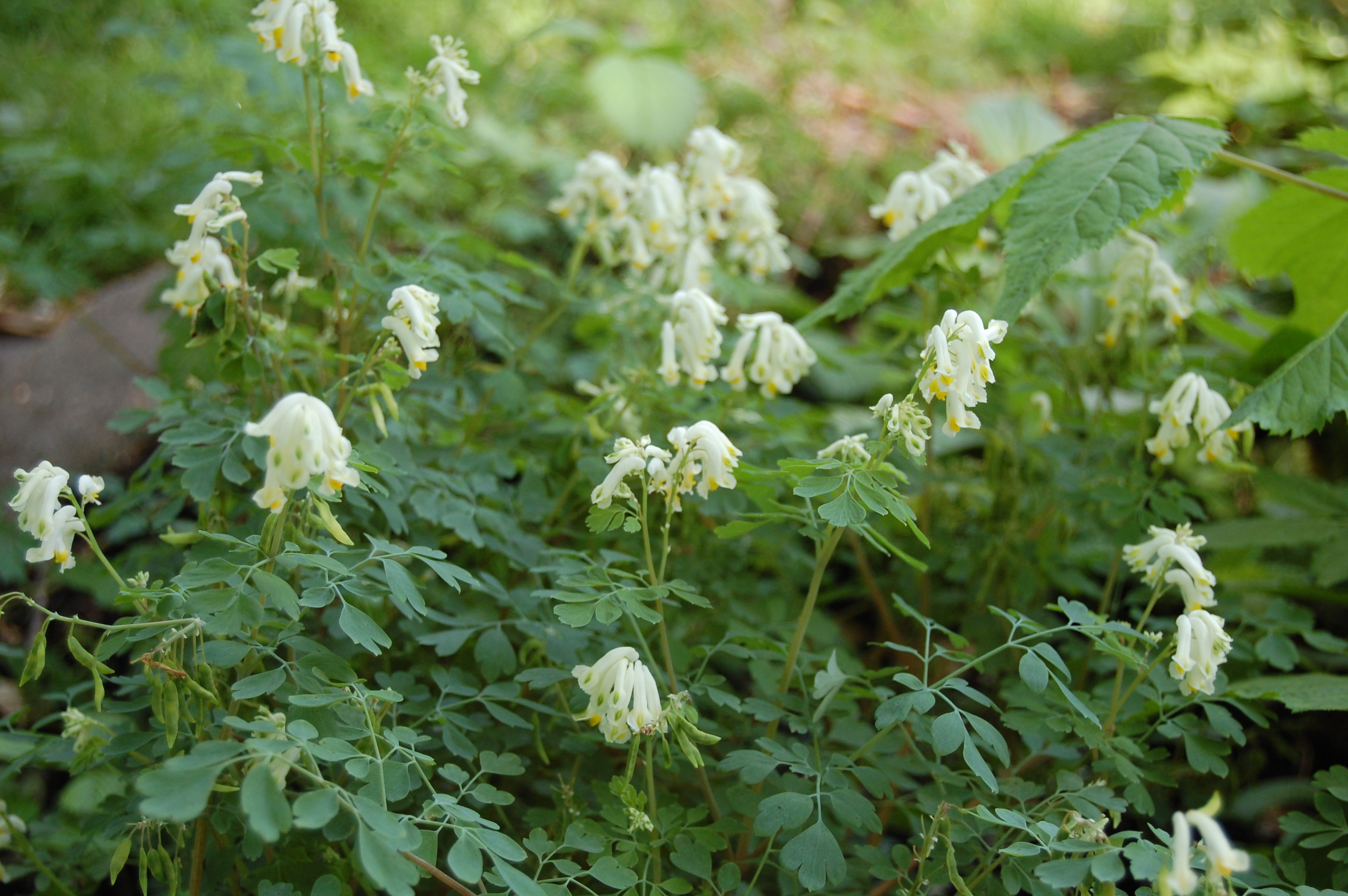
White Corydalis
White Corydalis


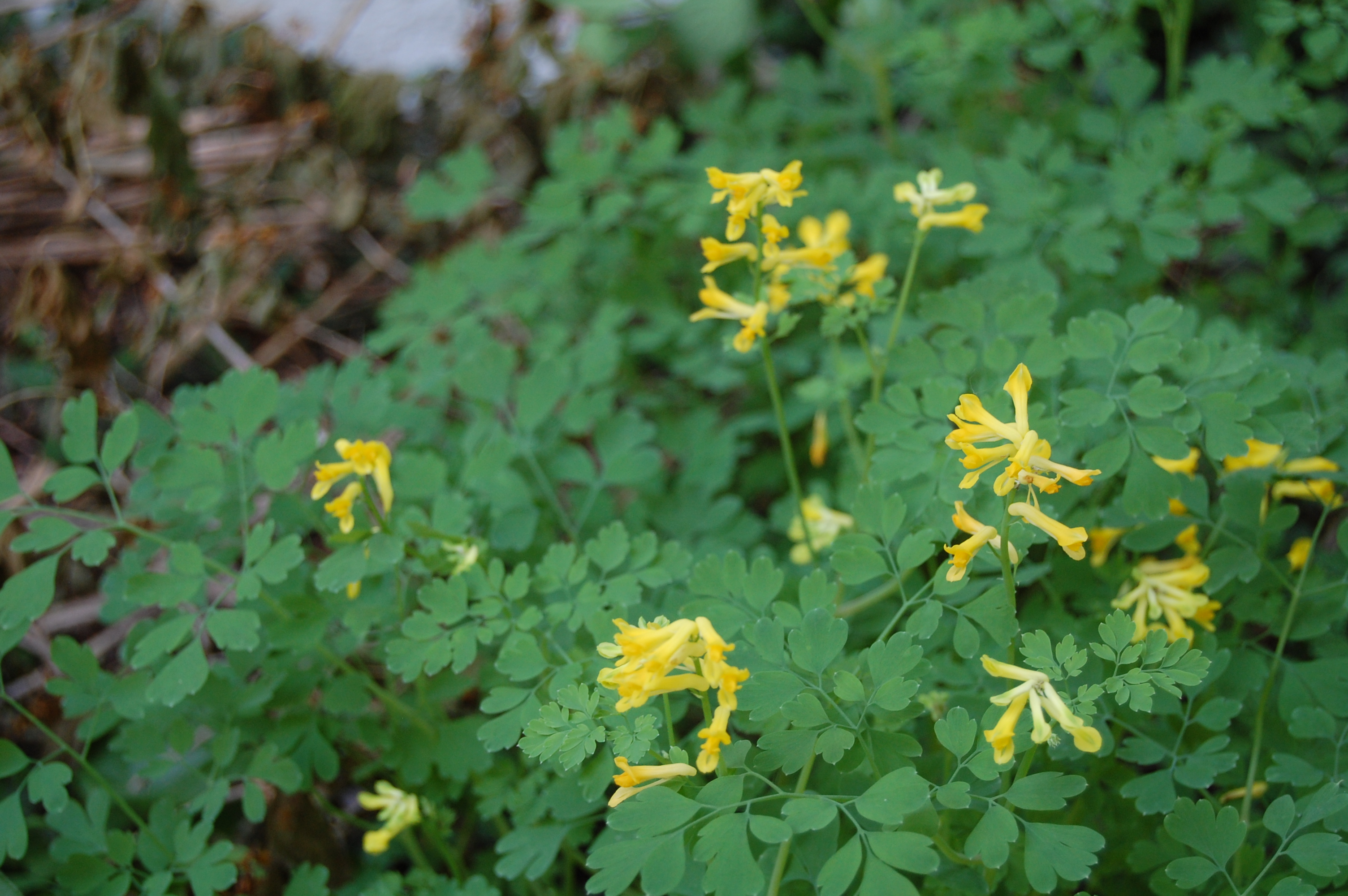
Yellow Corydalis
Yellow Corydalis

This spring I got some white-flowered Corydalis ochroleuca. Of the three I planted, one is doing fine and the others seem to be wasting away. This is surprising because I also have the yellow Corydalis lutea and it seem to be indestructible as long as it is given shade.

Zizia aurea - Golden Alexander
Zizia aurea – Golden Alexander

The Zizia aurea is still blooming, but seed heads are starting to form so I am beginning to cut it back. This guy self-sows a little too freely.

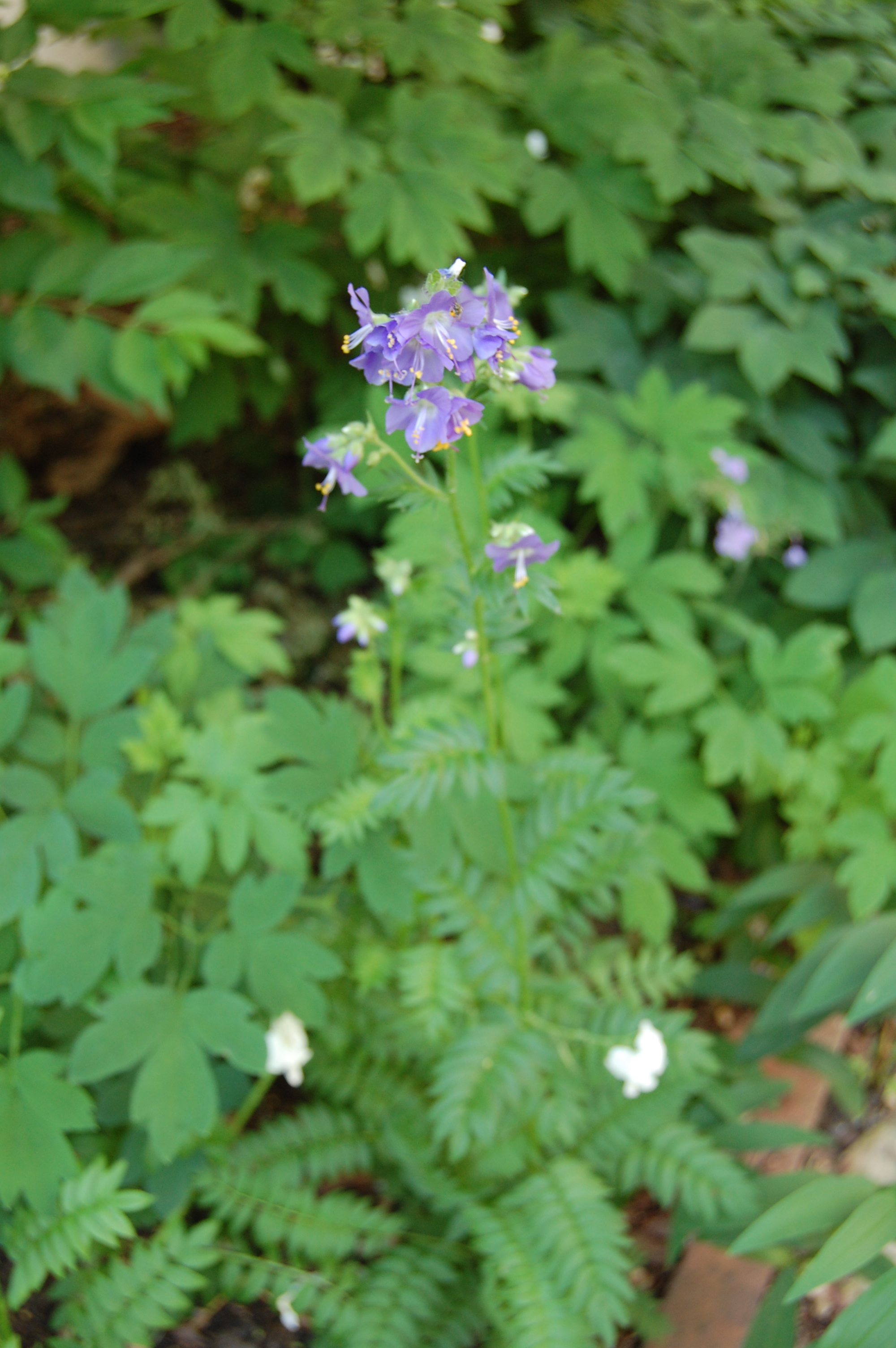
Polemoneum caerulea - Jacob's ladder
Polemoneum caerulea – Jacob’s ladder

I know that Polemoneum reptans is the native Jacobs ladder, but the European Polemoneum caeruleum blooms for a much longer period. The American species is more compact, though, if that’s important to you.

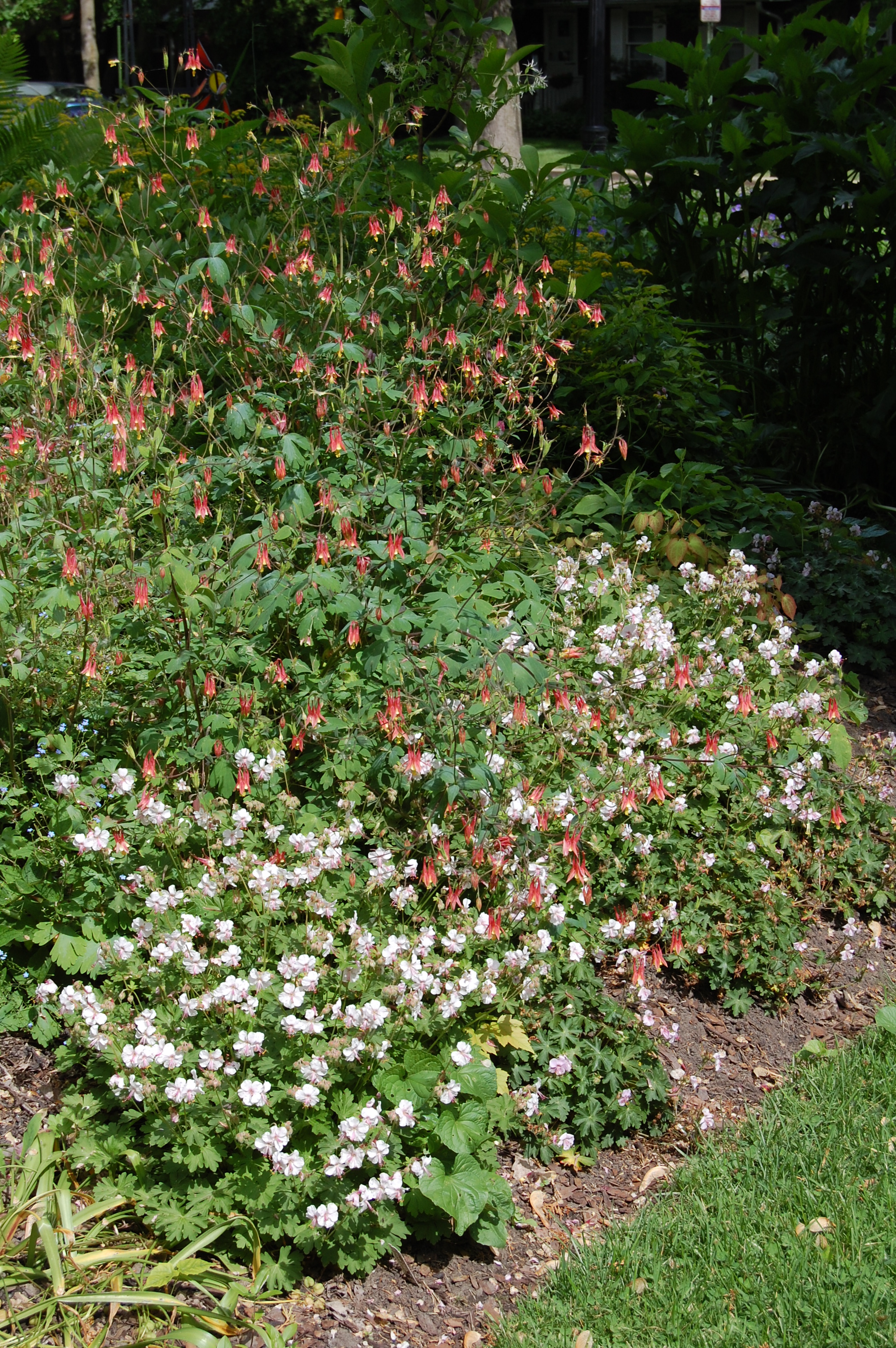
Aquilegia canadensis - wild columbine - with Geranium 'Biokovo'
Aquilegia canadensis – wild columbine – with Geranium ‘Biokovo’

The cool spring is extending the bloom time of lots of plants, including Aquilegia canadensis, here with Geranium ‘Biokovo’. ‘Biokovo’ is turning out to be an intrepid ground cover, with profuse pinkish white flowers.

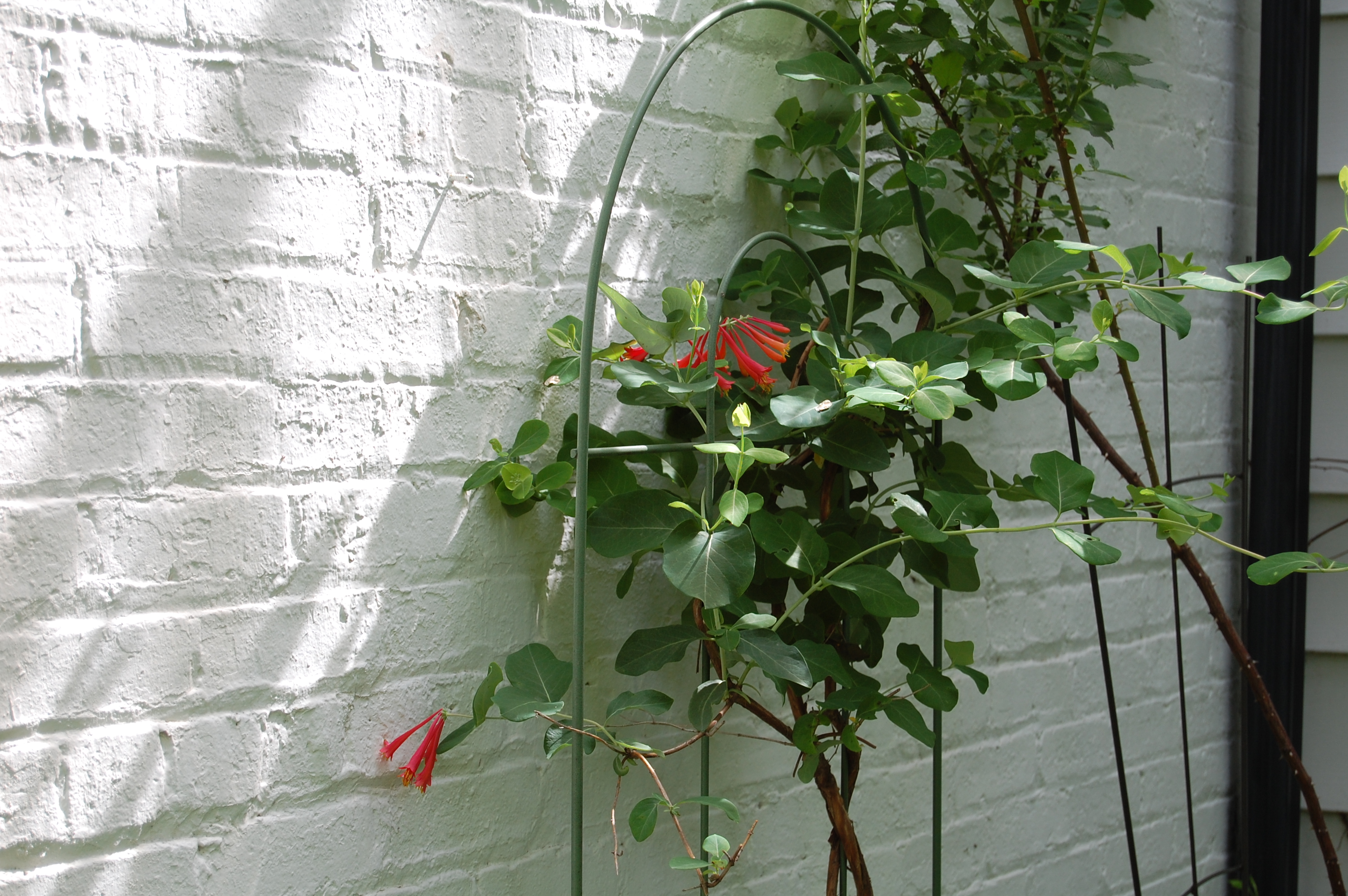
Lonicera sempervirens - trumpet honeysuckle
Lonicera sempervirens – trumpet honeysuckle

Lonicera sempervirens has had a lot of winter dieback. This year it is showing only a very sparse flush of blooms, compared to prior years.

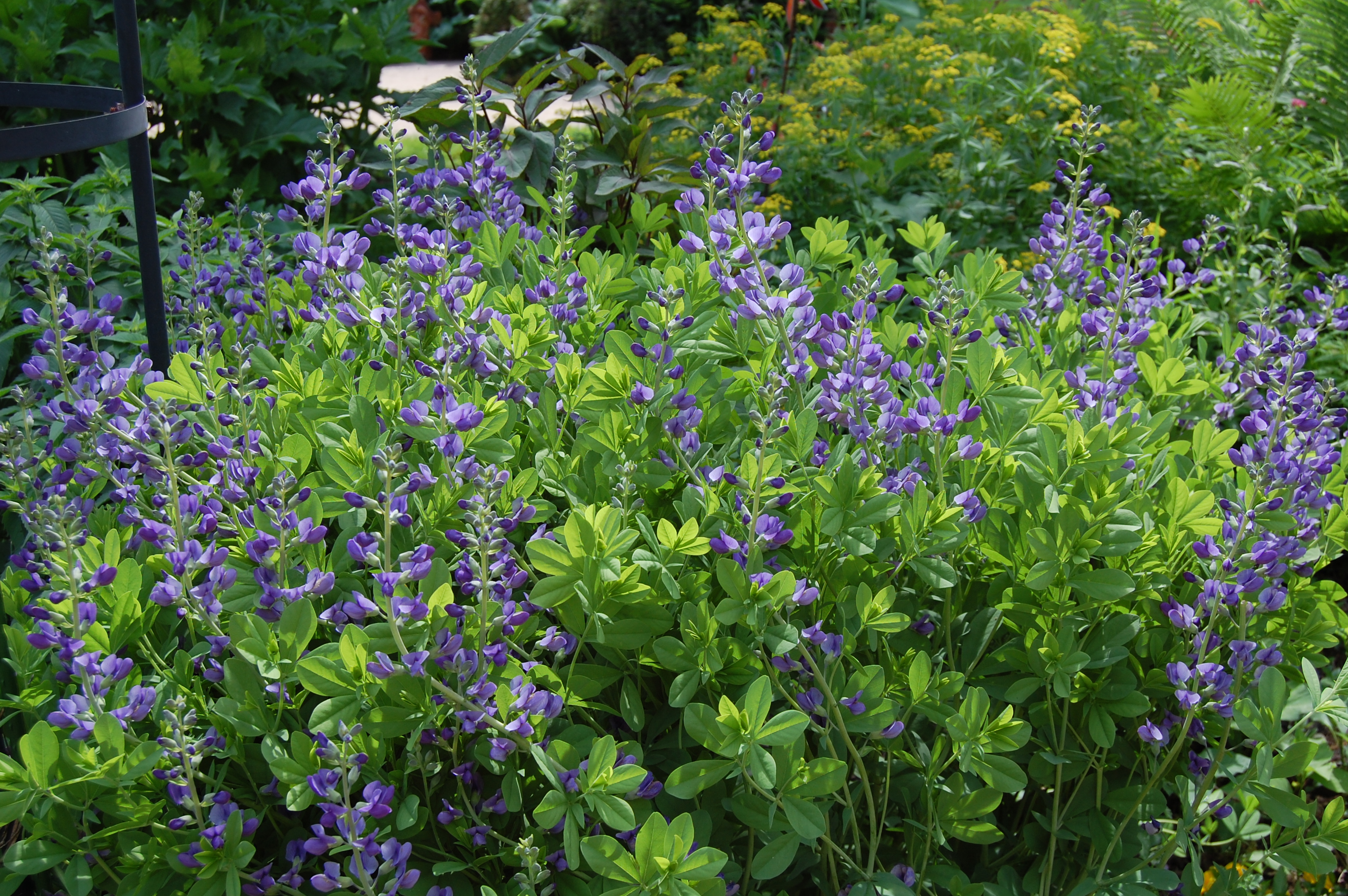
Close up of Baptisia australis - wild indigo.
Close up of Baptisia australis – wild indigo.

And I will conclude with a close up of Baptisia australis flowers, which are still going strong.

If you want to see even more flowers, head over to Carol’s May Dreams Gardens and see what other garden bloggers have got going.


The Best Food in New York City

Sure, you can talk about Delmonico’s and Le Cirque, but the best food in New York is at Katz’s Delicatessen on Houston Street.

Katz's Deli, home of the best food in New York City.
Katz’s Delicatessen, home of the best food in New York City.

Judy just got back from a trip to New York. For her job she gets to travel to places like New York and Los Angeles, while I get to travel to places like Springfield or Rockford, Illinois. Not that I’m complaining.

Waiting for a table.

While she was there she visited Katz’s for a meal. Katz’s is not trendy, in fact it seems to be in a time warp where it is forever 1947. It serves Jewish comfort food, food that resonates powerfully with people whose grandmothers served them home made blintzes and kugel (as mine did). Judy’s background is actually German Lutheran, but the fare at Katz’s can strike a chord with anyone whose grandmother came from central or eastern Europe.  Both of us have a soft spot (so to speak) for this type of food.

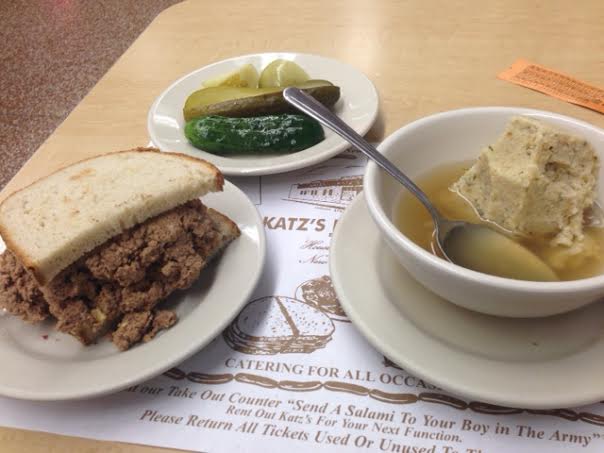
Matzoh Ball soup. Yum!

So a meal at Katz’s was mandatory. And what harm could there be in a bowl of matzoh ball soup, especially when it’s just one matzoh ball? Sure, it’s as big as a softball, but so fluffy!

Just a little nosh.
Just a little nosh.

Actually, I think Judy showed admirable restraint, limiting herself to the soup and half of a chopped chicken liver on rye. And some dill pickles, of course. And me? Well, she brought me a t-shirt.

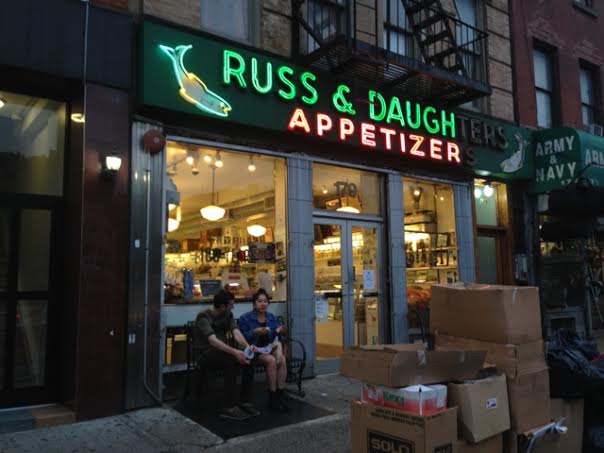
Russ and Daughters. Motto: "Appetizing Since 1914".
Russ and Daughters. Motto: “Appetizing Since 1914”.

As long as she was on Houston Street, it made sense to visit Russ and Daughter’s, or as I call it, the Fort Knox of Lox. By the way, both of these establishments are covered in Calvin Trillin’s classic book, American Fried, one of the most entertaining books about food ever written.

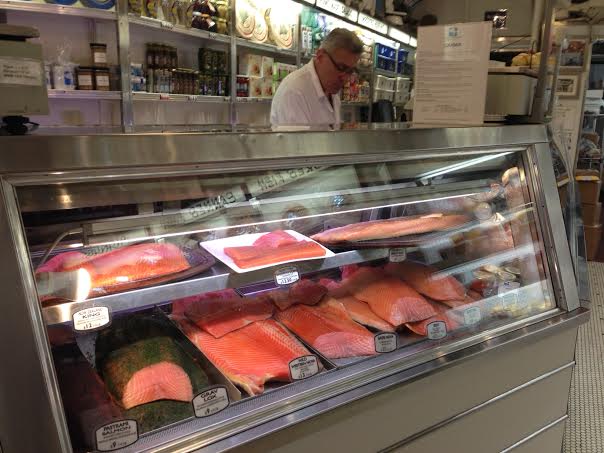
Russ and Daughters: now, that's a fish counter!
Russ and Daughters: now, that’s a fish counter!


The Fort Knox of Lox

Russ and Daughters is a Mecca for people who grew up associating smoked fish with special occasions.

Cream cheese that's better than ice cream.
Cream cheese that’s better than ice cream.

Russ and Daughters makes their own cream cheese. It is laid out in its many variations, looking as luscious as gelatto. Judy had to have a taste to affirm that it is still miles beyond the cream cheese we buy in the supermarket. It still is. Oh, and she brought me a coffee mug.

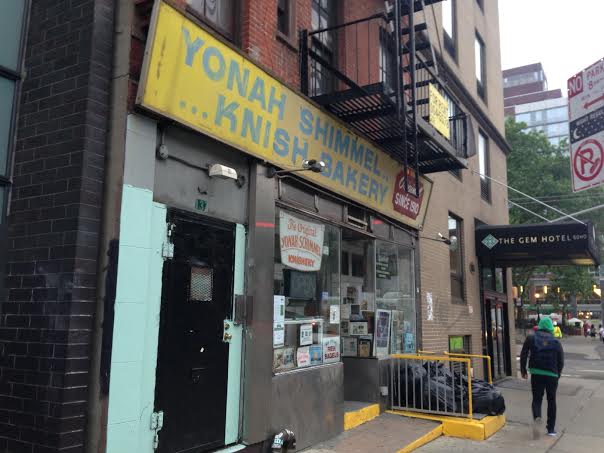
Yonah Shimmel's Knish Bakery.
Yonah Shimmel Knish Bakery.

Sadly, Yonah Shimmel’s Knish Bakery, another Houston Street institution, was closed when Judy came by. What is a knish, you ask? A knish is kind of like a Jewish samosa. Tragically, knishes are becoming increasingly hard to find so Yonah Shimmel’s serves as an important bulwark against knish oblivion.

What is your favorite childhood comfort food?

Mostly Edible Garden Report

It’s really a tomato/herbs/cutting garden, but that is kind of an awkward name, so I’m calling it the Mostly Edible Garden.

I was a reluctant vegetable gardener, but Judy wanted to be able to eat our own tomatoes. Farmers’ market tomatoes would have been good enough for me, but marriage is about compromise, so I dug a bed in a sunny spot behind the crabapple tree. The spot is in the front yard, but the crabapple shields passersby from the tawdry sight of my tomato vines.

The tomatoes of 2014 settling in.

At first I planted five tomato plants, then realized that three were more than enough for the two of us. Every year I like to try one or two new varieties. This year I planted ‘Brandywine’, ‘Black Cherry’ (my favorite cherry tomato), and ‘Cherokee Purple’. I know nothing about ‘Cherokee Purple’, but the name intrigued me. All three tomatoes are growing vigorously despite the cool spring. I train them up wooden trellises that always keel over by the end of the season.


Tithonia seen through a screen of fennel, 2013

Then there are the herbs. I divide the herbs into three categories: herbs we actually use a lot, herbs we use occasionally but that are mostly for the butterflies, and herbs that we rarely use but that make the pollinators happy. The herb we use most is basil (Ocimum basilicum). This year, however, I tucked the basil – regular sweet basil, purple basil (O. basilicum purpurescens), Thai basil (O. basilicum ‘Horapha”) – into the containers on the front steps, which makes them even more convenient for picking before dinner. I’ll write about the front containers in another post.

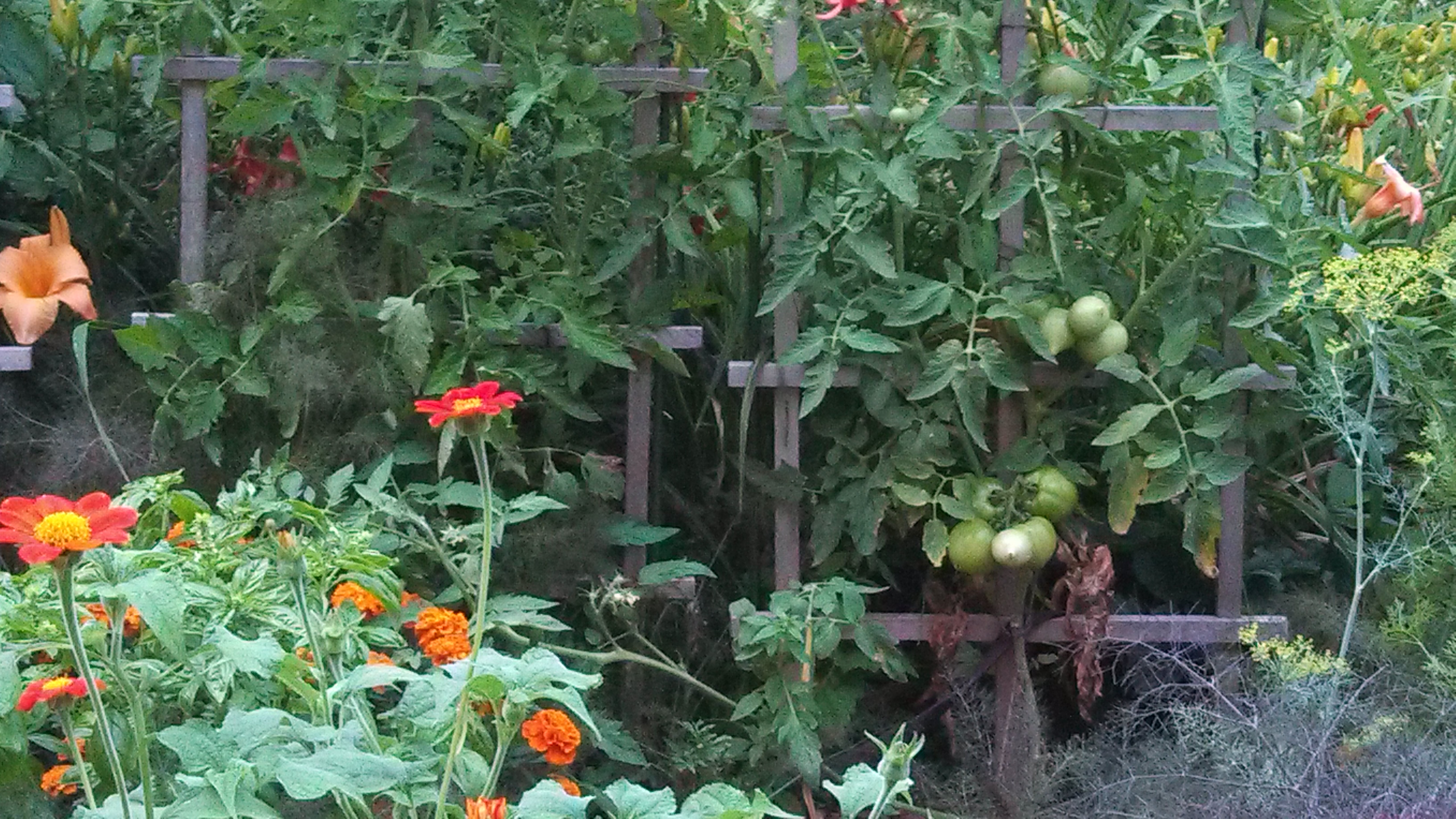
Mexican sunflower growing with tomatoes in last year's garden.
Mexican sunflower growing with tomatoes in last year’s garden. Those are ‘Egyptian Spice’ daylilies growing behind and poking through the trellises.


The herbs we use less frequently are the parsley (Petroselinum crispum), dill (Anethum graveolens), and bronze fennel (Foeniculum vulgare purpureum). (Why am I bothering to list the Latin names for plants that everybody knows? Because I am a serious garden writer, damn it.) For the dill and fennel, it’s a question of how many of the self-sown plants should I leave. There is no need to plant more.

Flowering dill, 2013.
Flowering dill and fennel, 2013.

Mostly, these plants are there for black swallowtail butterflies (except for the dill). To date the swallowtails have completely ignored my attempts to lure them, the ungrateful wretches.

Thyme in bloom, 2013.


The herbs we hardly ever use are the oregano (Origanum vulgare) and thyme (Thymus vulgaris). Both of these herbs are hardy perennials here, so they require little work, though I do occasionally have to take a pick ax to the oregano to keep it from taking over the entire metropolitan area. I let these herbs take up space mostly because pollinators go wild for the flowers. (The dill and fennel flowers are also good for attracting beneficial insects.)

Tithonia with oregano flowers, 2013.

Last year I planted a Mexican sunflower (Tithonia rotundifolia) in the tomato/herb bed. I liked it so much that I’m adding some annual sunflowers (Helianthus annuus ‘Italian White’ and ‘Soraya’), and also some tall Zinnias (Zinnia elegans ‘Cut and Cut Again’) making this a tomato/herb/cutting flower bed. I’m excited to see how they all turn out.

But I made an unfortunate discovery: rabbits like sunflower leaves – though they don’t like Tithonia. The rabbits reduced several of my sunflower plants to leafless stems. Since then I’ve been spraying the sunflowers with this repellent that smells like bear piss, and that seems to be working. Also, some of the leafless stems are growing new leaves, so that’s a relief.

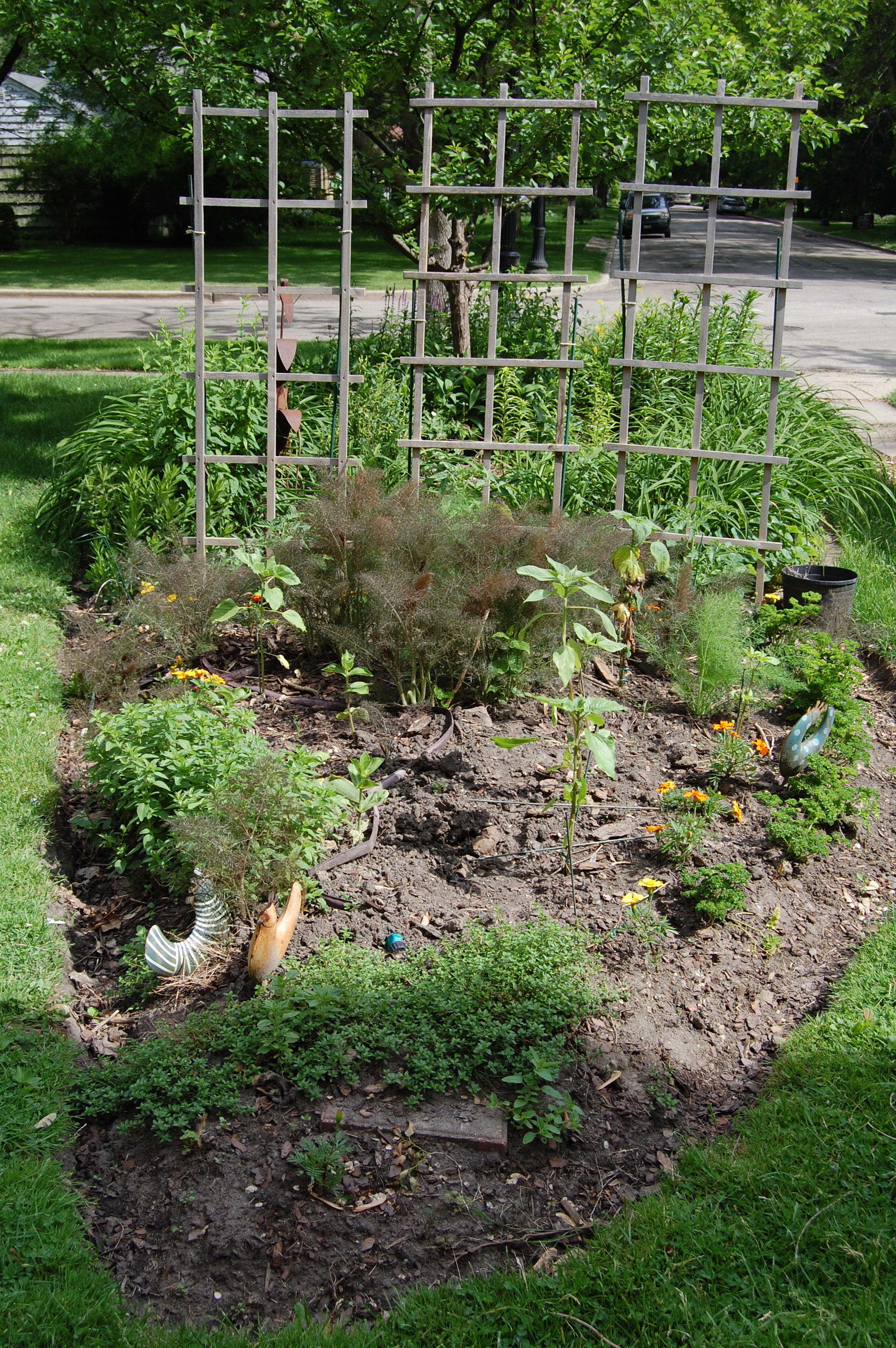
An overview of the Mostly Edible Garden.
An overview of the Mostly Edible Garden as of last Saturday.

As of right now this bed doesn’t look like much. The plants haven’t filled in, for one thing, but also I haven’t had time to add mulch. Hope to get to that this weekend.

What are the favorite herbs and cut flowers in your garden?

Blue Blooms Smiling At Me

We are now in that transitional stage between the spring and summer flowers. Lots and lots of foliage and buds, and lots of green. Beyond green, it seems that the dominant color right now is blue. This is not due to any planning on my part, it just worked out that way.

Wild Indigo (Baptisia australis).

The King of Blue right now in my garden is wild indigo (Baptisia australis). This native member of the pea family is long-lived and gets quite substantial. It’s another plant that seems to be smaller this year than normal, and I’ve only had to do very light staking to keep it from flopping.

Bumblebees at the Baptisia: pollen - yum!
Bumblebees at the Baptisia: pollen – yum!

It’s also a huge favorite of the bumble bees. There are definitely more bees this year than last, and sometimes I think they are all hanging around the wild indigo.

Off to the next flower

As always, they are lots of fun to watch. I’m always fascinated by the yellow clumps of pollen in the pollen baskets.

Blue Star.
Blue Star.

The blue star in the back garden is just about done blooming, but the blue star in the front (Amsonia tabernaemontana) is still going. The blue star has also been more compact than usual this year and has not needed any staking.

Geranium 'Johnson's Blue' billowing out onto the sidewalk.
Geranium ‘Johnson’s Blue’ billowing out onto the sidewalk.

Geranium ‘Johnson’s Blue’ is floriferous as usual in June. I’ve got it repeated in several spots around the front garden. You can have your fancy ‘Rozanne’, I say, just give me good old ‘Johnson’s Blue’, even if it does get a bit sprawly.

'Johnson's Blue' with columbine
‘Johnson’s Blue’ with columbine

Here’s JB in the front Island Bed with some wild columbine (Aquilegia canadensis).

'Johnson's Blue' close up.
‘Johnson’s Blue’ close up.

And here’s a close up of the flowers.

Geranium 'Tschelda'
Geranium ‘Tschelda’

Geranium renardii ‘Tschelda’ is another blue hardy geranium in my front garden. This year it is looking healthy enough (I love the felty foliage), but there is only one cluster of flowers. They’re nice flowers, but even so.

Salvia along sidewalk.

Salvias are also adding a lot of blue to the garden. Along the sidewalk border there are a mix of Salvias – ‘May Night’, ‘Blue Hill’, and ‘East Friesland’. The Golden Alexander (Zizia aurea) is still blooming at the far end, providing a nice contrast.

2014-06-07 10.28.11Salvia


Salvia 'Caradonna'
Salvia ‘Caradonna’

In the parkway bed there are clumps of Salvia nemorosa ‘Caradonna’, which is maybe more purple than blue but still a very good Salvia that stays upright.

Mexican petunia in the driveway border with Tithonia.

Finally, I should mention the Mexican petunia (Ruellia simplex), which I am growing this year in both borders and containers. If Florida and such places this is a terrible invasive, but in Chicago it can only survive as an annual. I like thd blue/purple petunia-like flowers combined with the upright habit (this plant is not actually related to petunias).

Close up of Mexican sunflower.

Thanks to all these plants, the front garden is full of blue dots and dashes. (Oh, and I forgot to mention the Nepeta!)

Blue dots and dashes in the front garden.

Do you have blue flowers blooming in your garden right now?

Peony’s Progress

This is the fourth spring since I planted peonies in our garden. I didn’t really want to plant peonies, they didn’t fit in with my native/wildlife-friendly gardening ethos. Plus, let’s face it, they are the ultimate horticultural flash in the pan: blooming one day, gone the next.

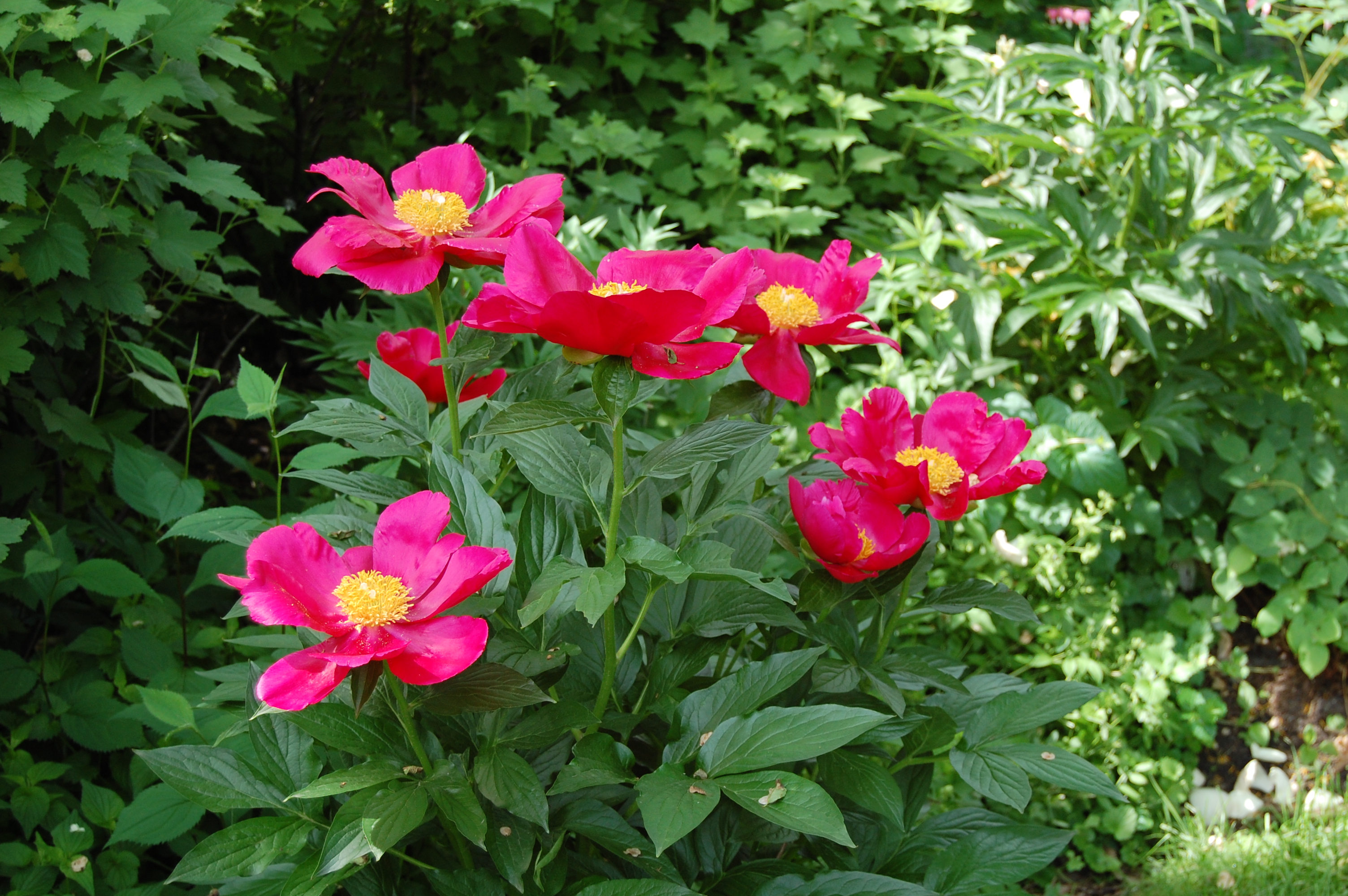
Peony 'America'
Peony ‘America’

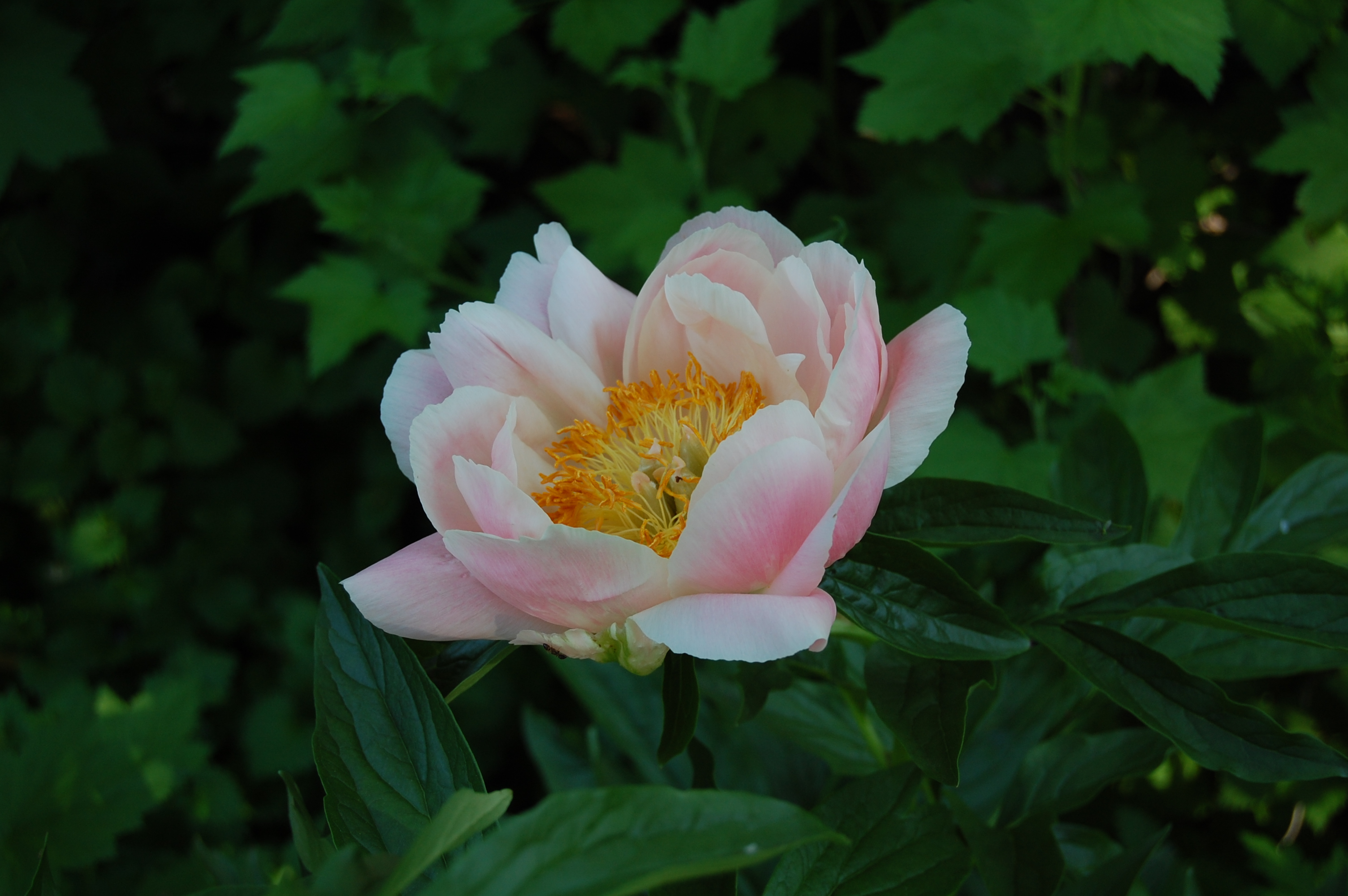
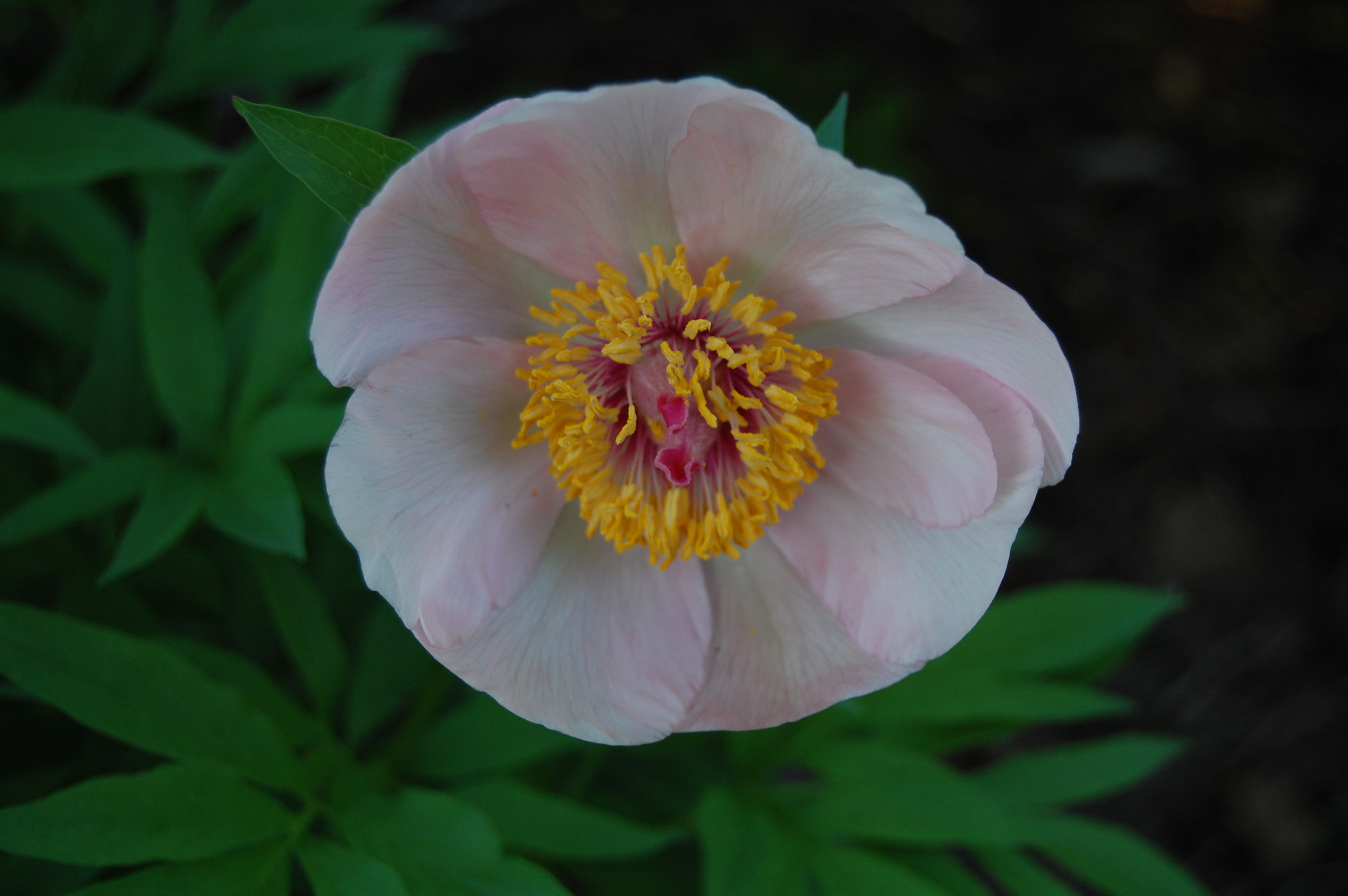
But Judy yearned for peonies, and I gave in. The four I planted were an early red single Paeonia anomala (can’t remember the variety name), the early pink ‘Abalone Pearl’, the late red single ‘America’, and a late pink peony whose name has been lost in the mists of time. All were from Klehm’s, right here in the great state of Illinois.

I put them in the back, where the high dappled shade falls short of the full sun that is ideal. The soil was hard and full of roots, but I’ve been laying on plenty of compost.

Peony 'America' with the flowers just starting to get blowsy.
Peony ‘America’ with the flowers just starting to get blowsy.

And over time, the peonies have been growing on me. In fact, I have gotten into the habit of counting the number of flowers they produce each season, sort of like baseball fans tracking the number of home runs hit by their favorite sluggers.

Late pink peony in the back garden, no ID.
Late pink peony in the back garden, no ID.  At first I thought it was ‘Abalone Pearl’, but it is a late bloomer.

By and large, my peonies are slowly getting bushier and more floriferous, though I suspect they would be much more so if they were in a more favorable location. For example, last year ‘America’ had five flowers, this year it was seven. During this same time P. anomala went from five to eight, and ‘Abalone Pearl’ went from four to six. The unknown late pink peony is the stingiest with the flowers: last year it had just one , this year three – though the foliage certainly looks robust.

Peony anomala. Looks a lot like 'America' except for the foliage and the fact that it's an early bloomer.
Peony anomala. Looks a lot like ‘America’ except for the foliage and the fact that it’s an early bloomer.

This year I remembered to cut off the flower heads after the petals had dropped – I’m hoping this will help the peonies bulk up. I was also very proud of myself for heading off any flopping. I did have two of those grid-style peony hoops, but for the other two I just used four short stakes and twine. It was easy to place the stakes in the foliage so that they did not show. I ran the twine around the perimeter of the stakes, but then also tied it so as to make an X inside the perimeter. This prevented all the peony stems from leaning in one direction, like a cluster of drunks holding themselves up against the same fence.

'Abalone Pearl'
‘Abalone Pearl’

Today I was at the Chicago Botanical Garden for a tree identification walk. (And for the record, once Magnolias have bloomed there is no reasonable way to tell the different varieties apart. Don’t try to be helpful, OK, there just isn’t.) What I wanted to mention, though, is that at one point we came across a part of the garden where tall purple alliums were combined with single white peonies, both blooming at the same time, in a way that was just magical. Very sad that I didn’t have any kind of camera with me.

You may remember that I need to divide my Allium ‘Purple Sensation’ bulbs and interplant them with companions that can assert themselves amongst all that oniony foliage. So I said to Judy that maybe we should get some single white peonies to plant with ‘Purple Sensation’.

'Abalone Pearl' - the whole plant.
‘Abalone Pearl’ – the whole plant.

(Though I would want some other plants as well – I’m thinking great blue lobelia (Lobelia siphylitica) and some gray’s sedge (Carex grayi). If it’s just alliums and peonies, it’s going to be a spring-only show.)

So I mentioned this idea to Judy, thinking she would be pleased, and you know what she said? She shrugged and said, “OK, if that’s what you want.”

Anyhow, any thoughts on how I can help my peonies along, and whether the peony/’Purple Sensation’ combo is a good idea?

Swallowtail Butterfly ID: Help Needed

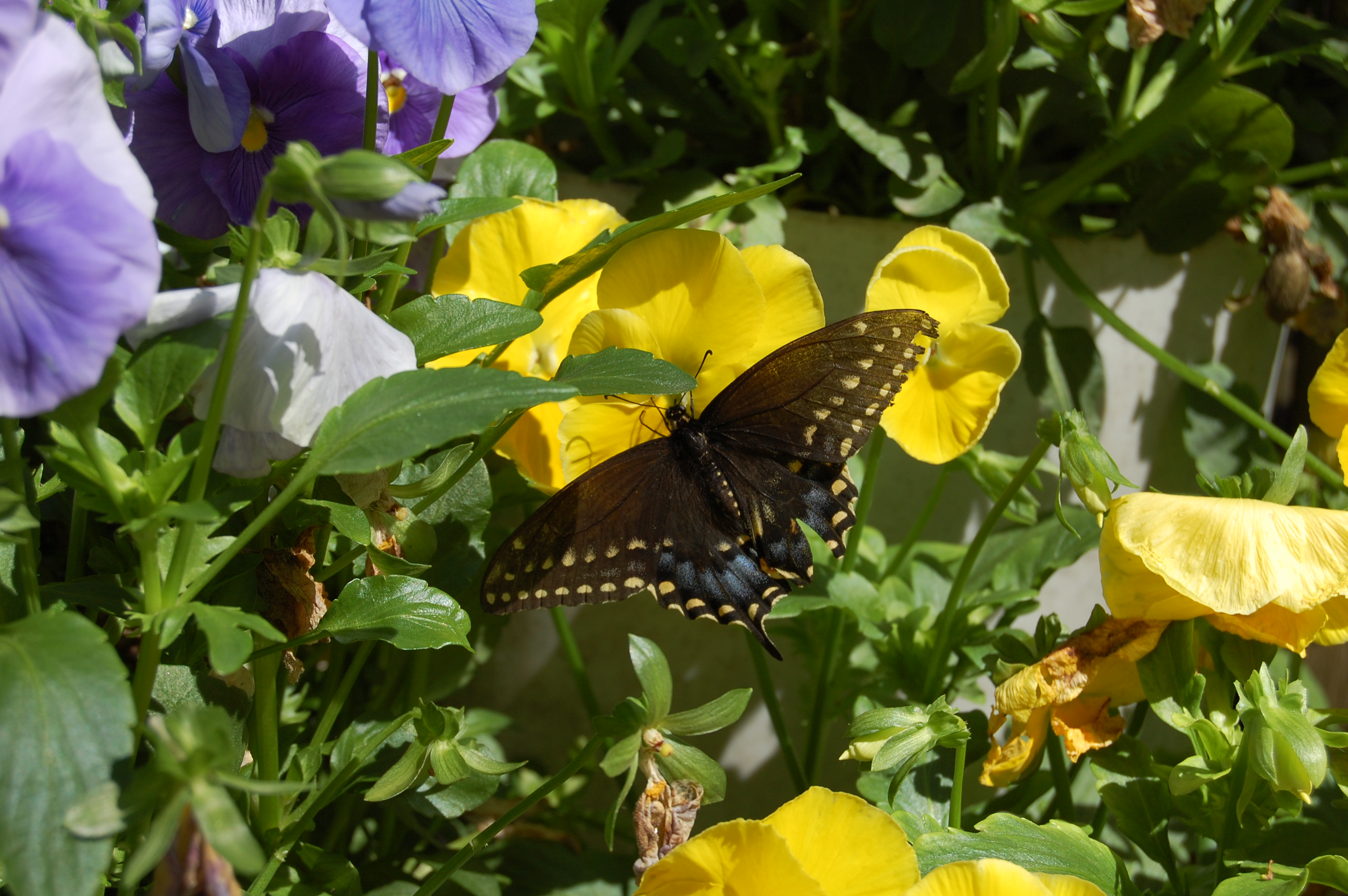
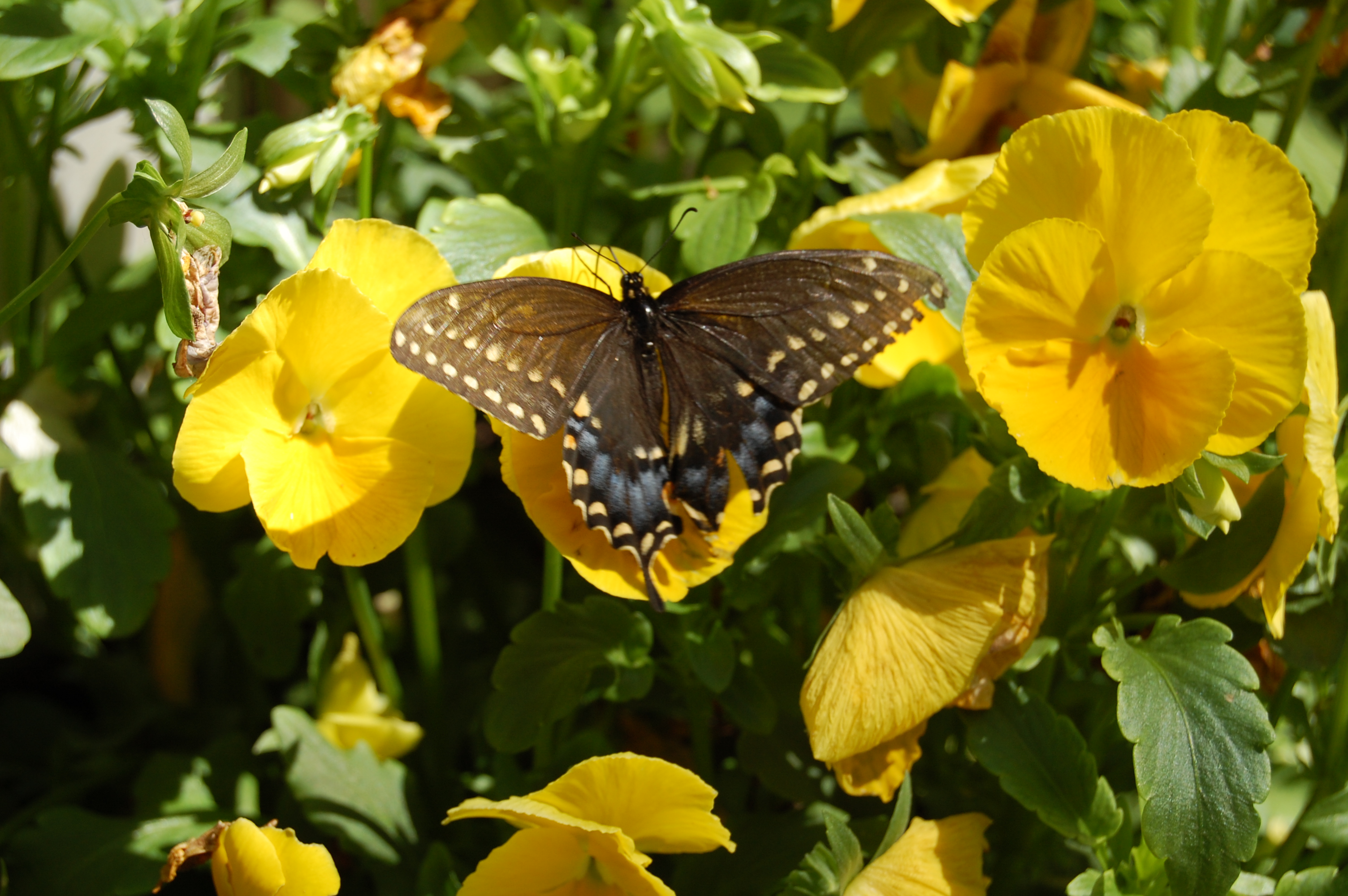
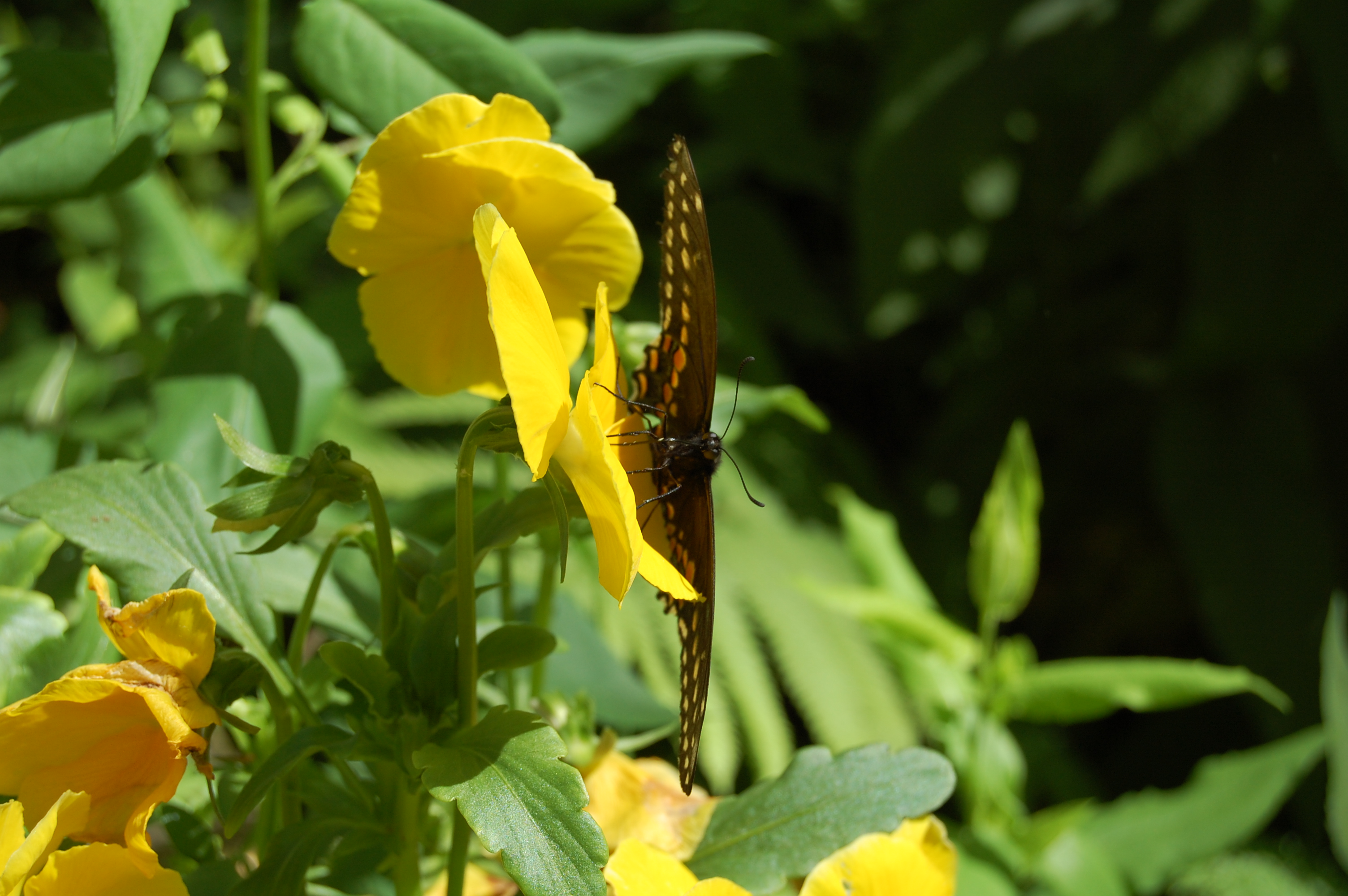
This morning Judy was taking pictures in the garden and she saw a female swallowtail butterfly nectaring on the pansies. No, I haven’t yet replaced the pansies.

Female swallowtail butterfly nectaring on pansy.

It’s hard to tell the difference between a female eastern tiger swallowtail and a female spicebush swallowtail. Can anyone help with this?

2014-06-05 11.04.18 swallowtail butterfly

The eastern tiger swallowtails are far more common, but I would dearly love to believe that this is a spicebush swallowtail. That’s because I planted several spicebush (Lindera benzoin) years ago. Spicebush are a host plant for spicebush swallowtails, and I very much wanted to attract these butterflies to the garden.

This gives you a little bit of a view of the underwing.

Actually, this critter looks like someone has taken a bite or two out of its wing. Carry on, Mrs. Swallowtail! I hope to see your caterpillars in the not too distant future.

How can I miss you if you won’t go away?

About three years ago I removed the white wild geranium (Geranium maculatum var. alba) from the front of my sidewalk border. It’s not that I didn’t like the geranium, it’s just that I wanted to try a mix of salvias in its place. Removing the clumps seemed pretty easy – just dig up the horizontal rhizomes.

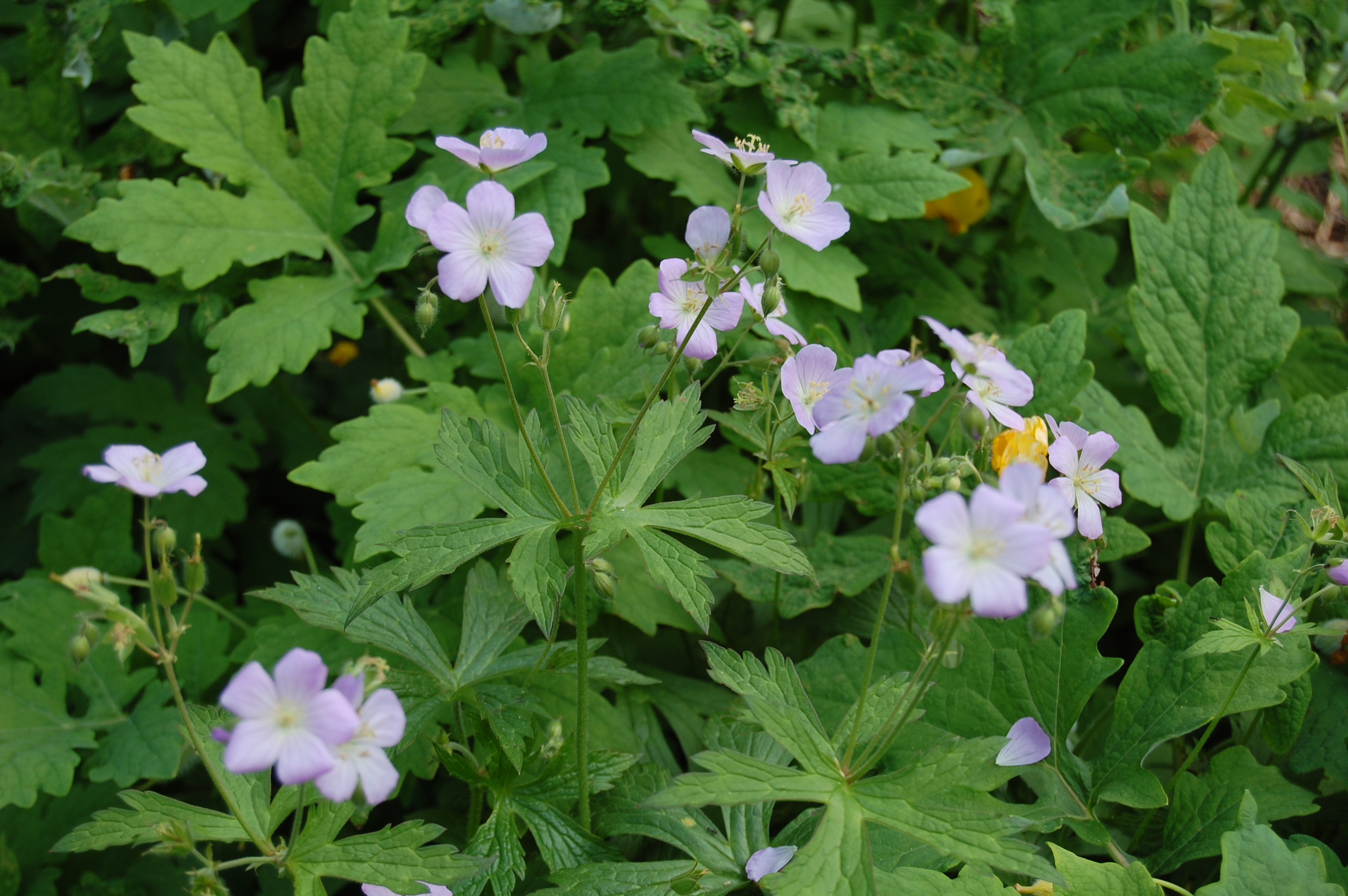
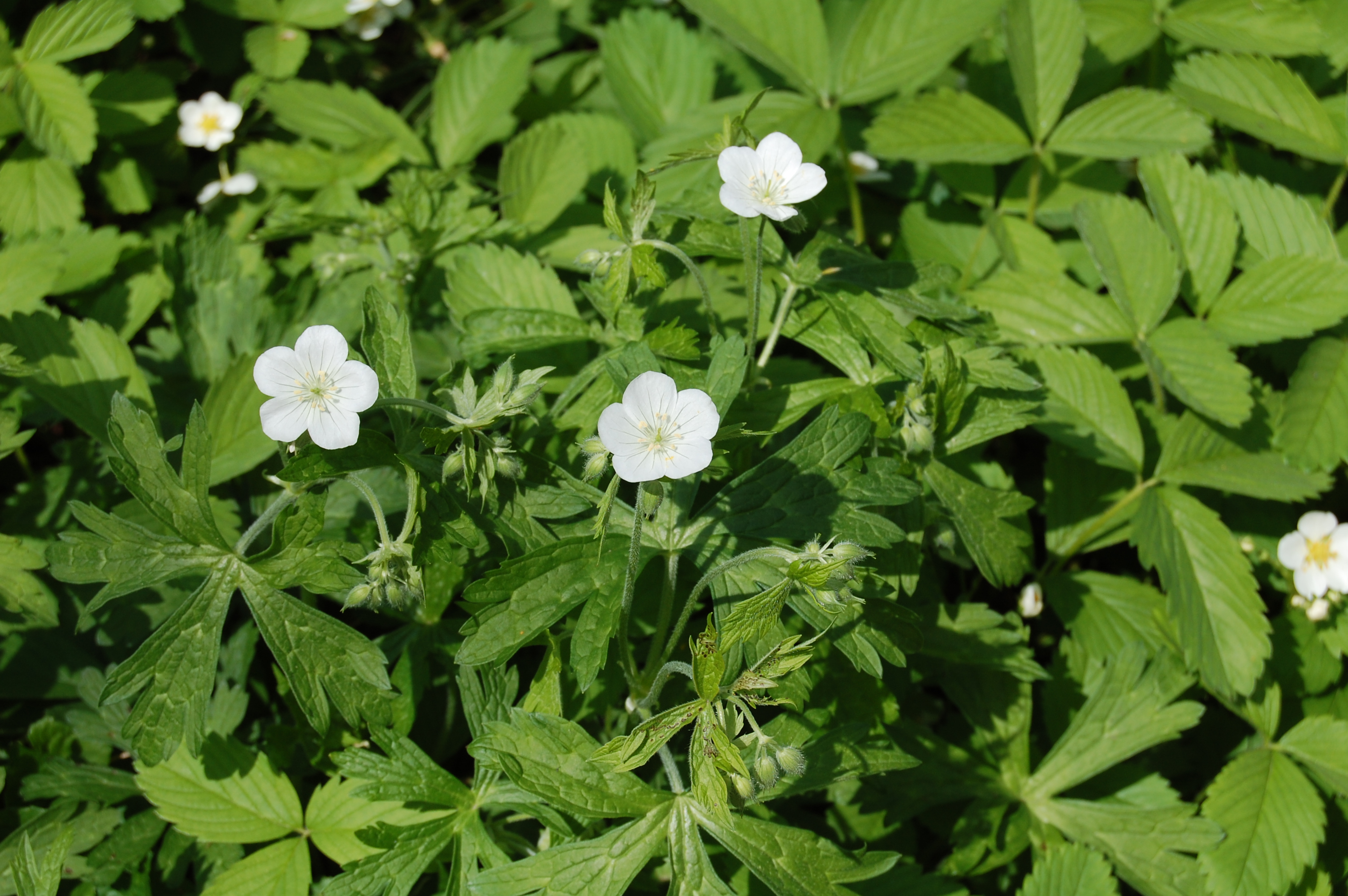
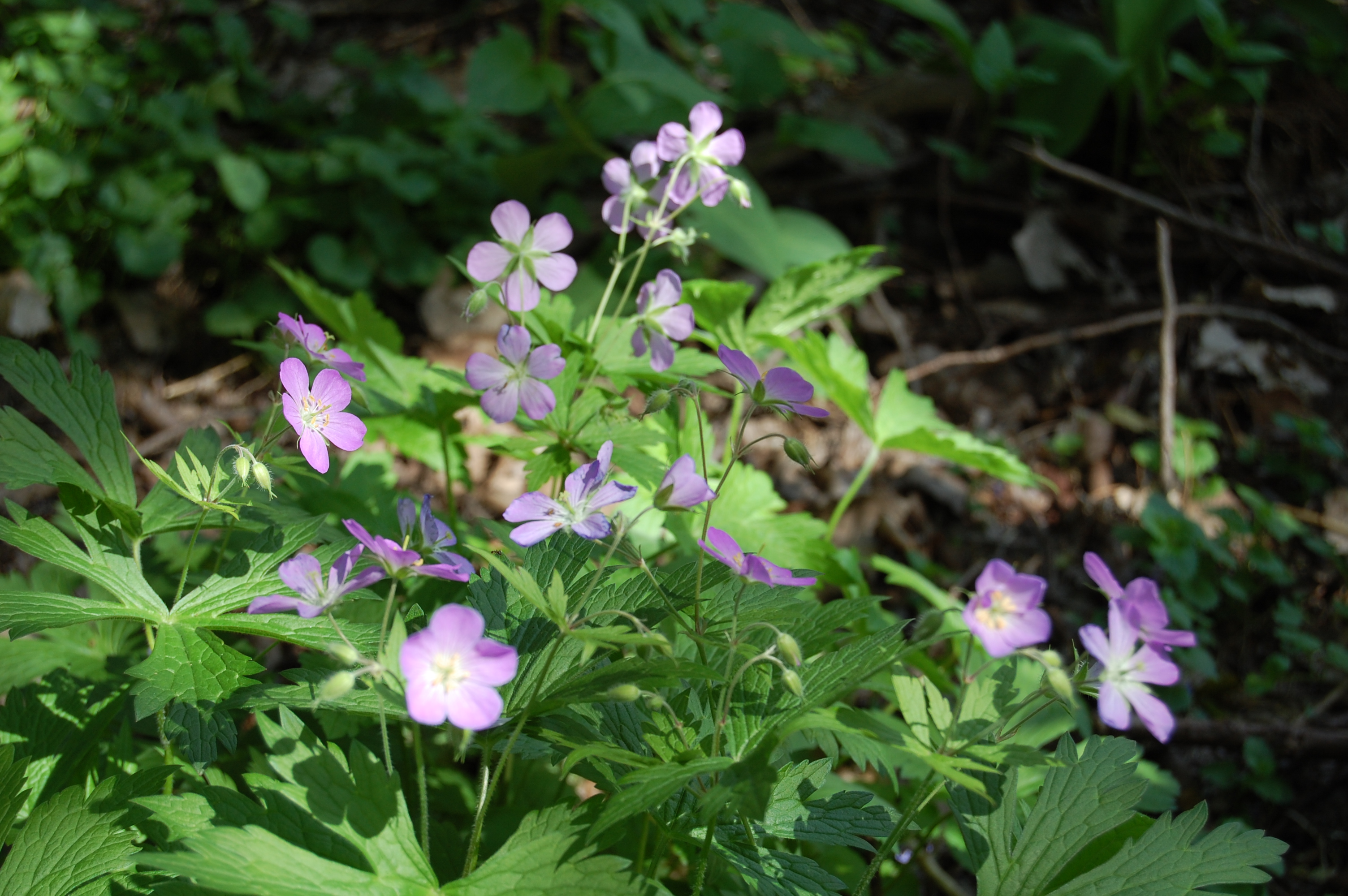
Wild Geranium
Wild Geranium


Some of the geranium was transplanted, some given to friends, some went on the compost heap. I confess that I felt a little guilty about removing all these perfectly good plants.

Turns out the guilt was entirely uncalled for, because the wild geranium had no intention of going softly into the botanical night. Not so slowly, from seeds and bits of rhizome I had missed, it started to reassert itself. In fact, it seemed to grow with great vigor, intending perhaps to teach me a lesson in humility.

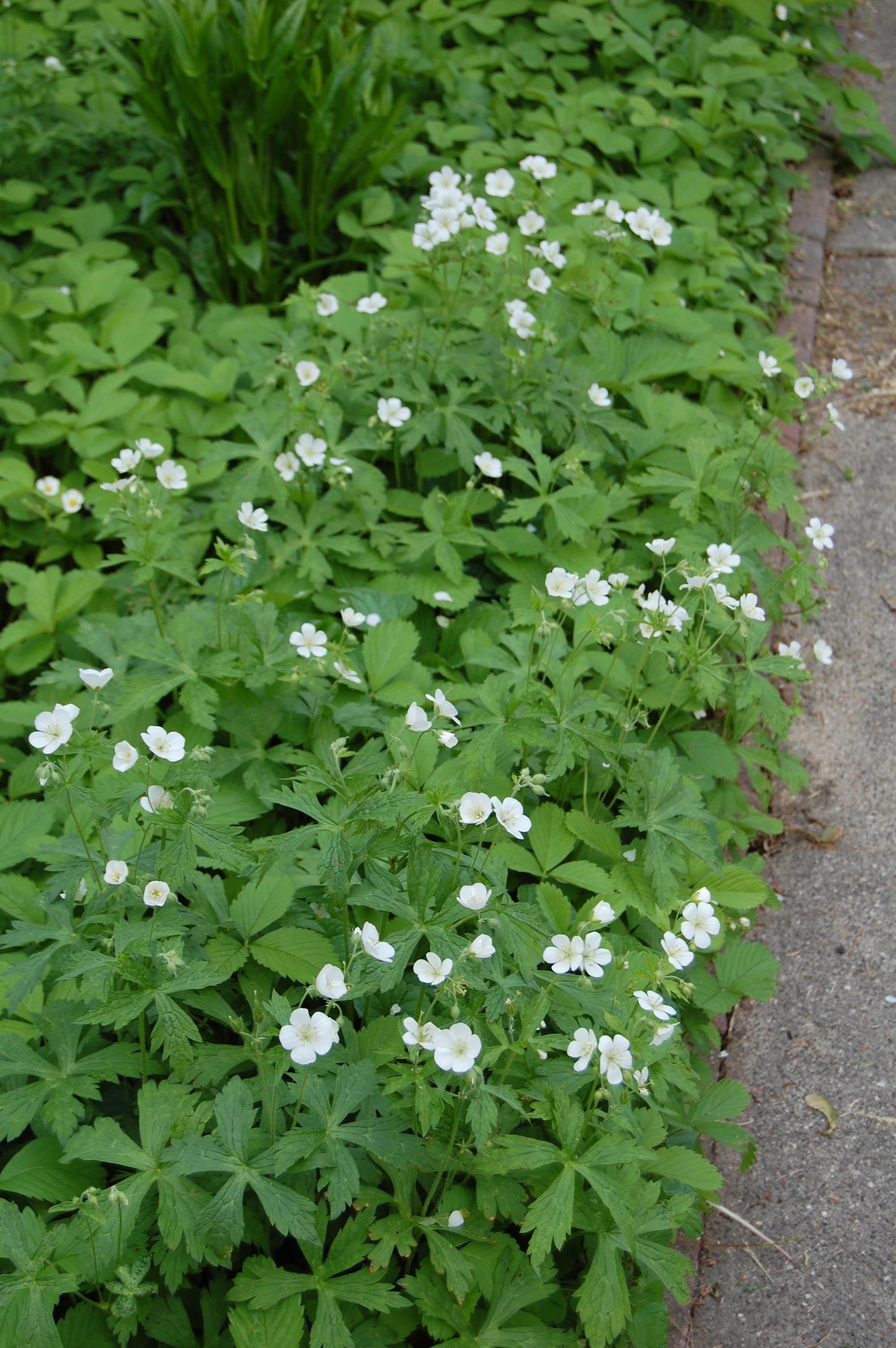
Wild Geranium growing with wild strawberry in the parkway bed.

Right now there are wild geraniums popping up and blooming between the Salvias. There are also substantial clumps of wild geraniums across the sidewalk in the parkway bed, gradually coming to dominate the wild strawberry (Fragaria virginiana) I use as a groundcover there. I never even planted geraniums in the parkway bed, they moved in on their own. I did think that the contrast in leaf shapes was interesting.

Wild geraniums with wild strawberry.

Actually, I don’t mind. Wild geranium is the North American native hardy geranium, a fine plant for the front or middle of the border. It has white or lavender flowers, blooming earlier than most other hardy geraniums. It has attractive, deeply cut, dark green leaves. The leaves may whither some in a sunny spot, but they will come back.

Wild geranium with lavender flowers.

If the geranium were to squeeze out the salvia  (‘May Night’, ‘Blue Hill’, and ‘East Friesland’), that would be another matter, but I think the salvias can hold their ground. Similarly, the wild strawberry will keep itself going around and through the geraniums.

Have you ever “removed” a plant only to have it come galloping back? And did you mind?


Real Men Plant Pansies

It is right and proper at this time to pay our respects to the pansy (Viola x wittrochiana). Actually, I am about to pull all the pansies out of my containers and replace them with summer annuals, but I will throw them onto the compost pile with only the sincerest regard.

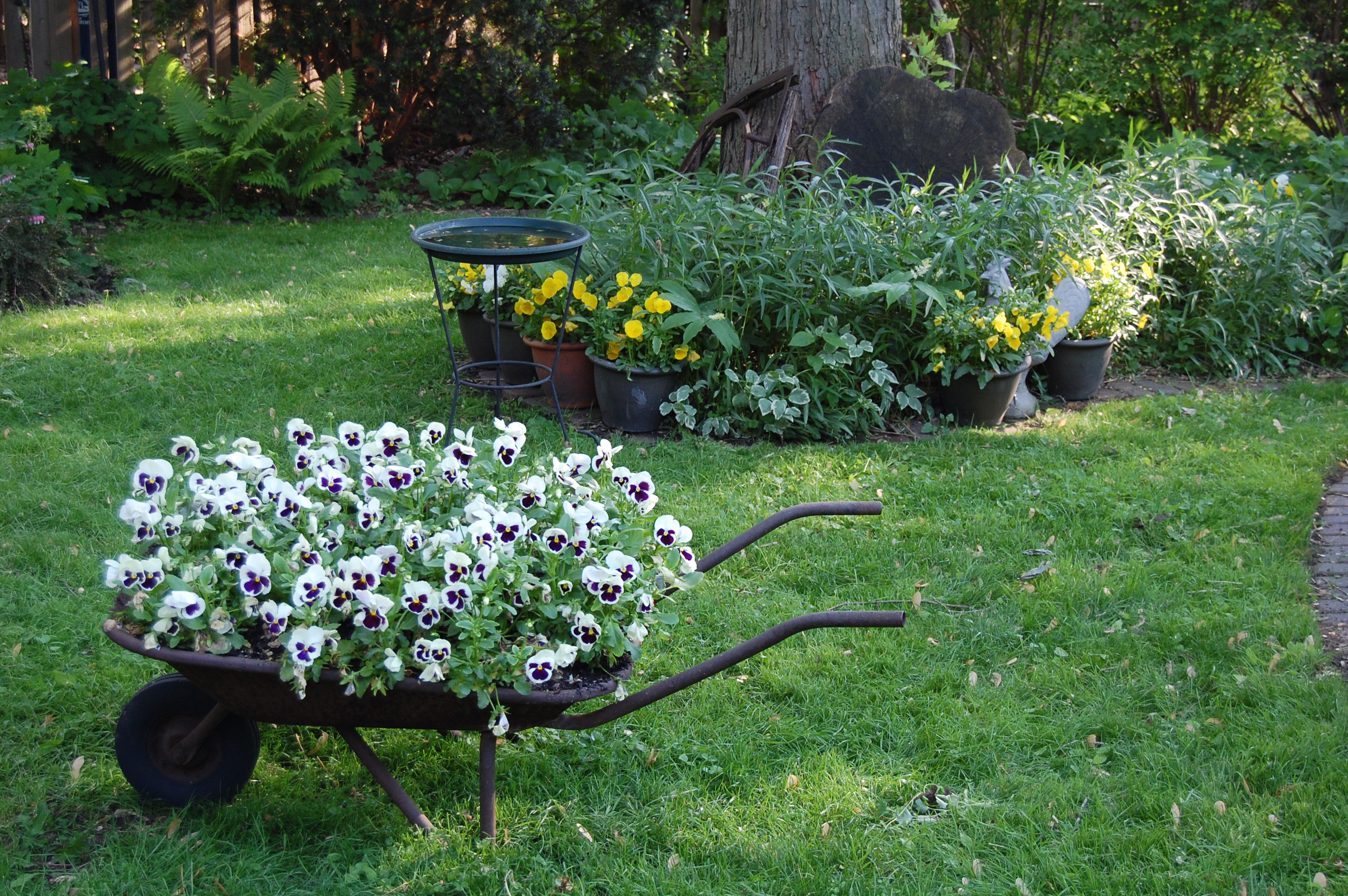
White pansies with purple faces in our old wheelbarrow planter.

Any annual that can be bought cheaply in flats is subject to a certain amount of sneering, but not from me. (I like annuals that can be bought cheaply in flats. In fact, if it can be bought in flats I make it a point not to buy it in any smaller quantity.) Moreover, “pansy” has been used as a term of contempt, but I think that usage has become obsolete.

The fact is, pansies have many admirable virtues:

  • Pansies are rugged. They stand up to cold, even hard frosts.
  • Pansies are self-reliant. They require no special coddling.
  • Pansies are adaptable. They grow in sun or shade.
  • Pansies contribute to the greater good. From early spring on, few flowers can do more to animate the garden with long-lasting splashes of color, either exciting or soothing.
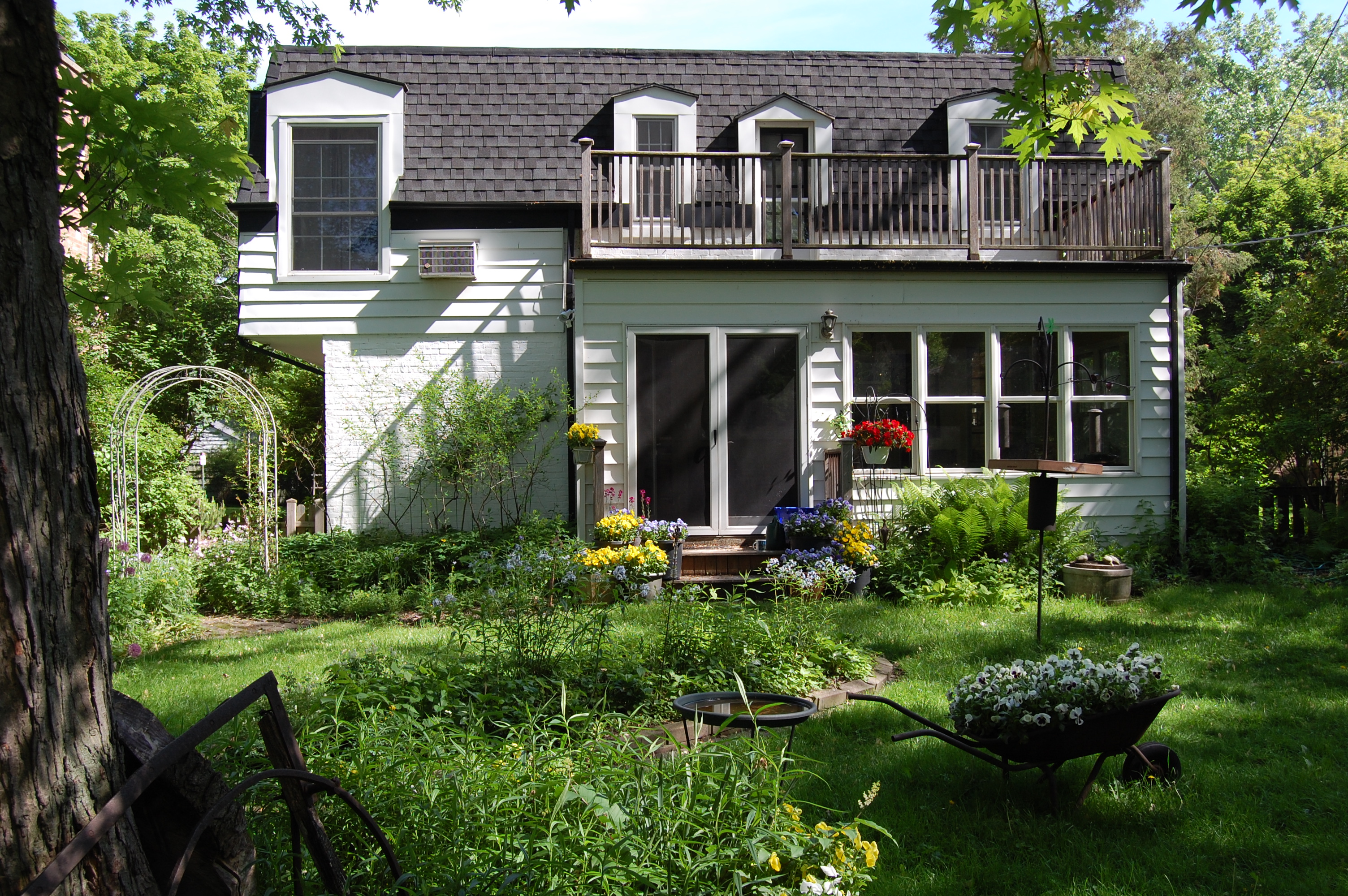
Pansies add spring color to the back of the house. The red flowers are New Guinea impatiens.
Pansies add spring color to the back of the house. The red flowers in the hanging basket are New Guinea impatiens.

Pansies have only one serious weakness, and that is heat. Perhaps this is where the expression “shrinking violet” comes from.  They cannot stand up to heat, but no annual can thrive in all conditions.

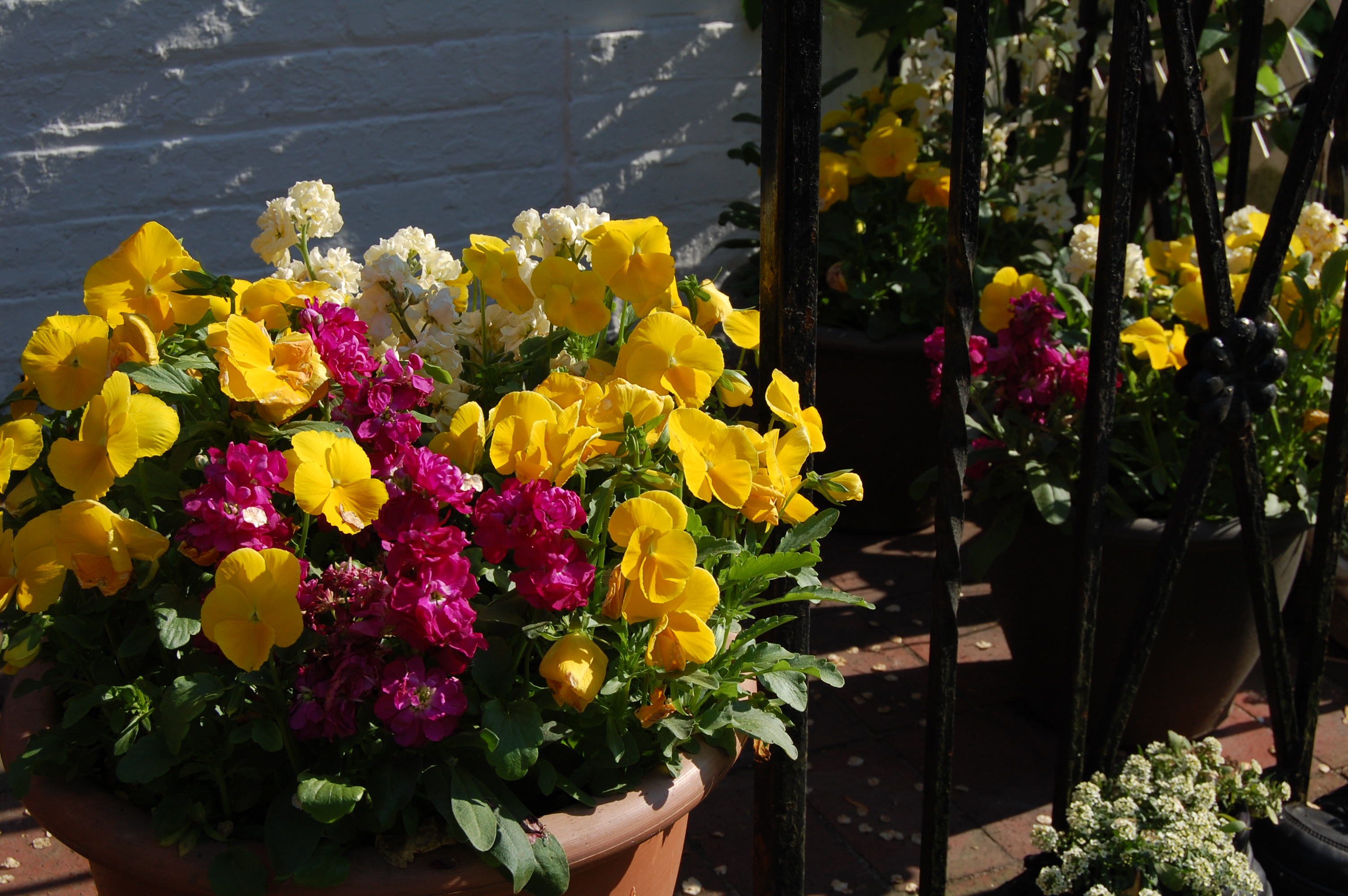
Some people prefer the pansy “faces”, but I think overall I like the solid color ones best. I like to plant lots of white and yellow pansies in spring containers, to echo the Narcissi. In containers near the front door I like to mix pansies with stock (Matthiola incana), which has a wonderful fragrance.

Pansies mixed with stock for fragrance.

Pansies are hybrids derived from wild violet species (Viola sp.). The name pansy comes from the French pensee, or thought. At one time it was considered a symbol of remembrance. Actually, this is a flower that has collected a large number of common names around the world, including:

  • England: Heart’s ease, love in idleness.
  • Germany: Stepmother
  • Italy: Little flame.
  • Hungary: Small orphan.
  • Israel: Amnon and Tamar. This is possibly the strangest of the common names, as Amnon and Tamar are characters from a very violent Old Testament story.
Pansies brighten up my Wild Bed at the base of the silver maple.

Do you plant pansies in the spring? How do you use them?


The Best Tulips in the Universe

Actually, in my mind the best tulips in the universe are whatever tulips I have blooming at that particular moment. One of the advantages of growing tulips in containers is you can try different varieties every year. But I will say that this seemed to be a particularly good year for tulips – maybe because of the cool spring.

Container tulips on the front steps.

For anyone interested in finding some new tulip varieties to try, here is a rundown of the varieties I had in containers this year – I would recommend any of them.

Because I am in a pedantic mood, I want to mention that for horticultural purposes tulips are divided into groups or divisions. Depending on who you ask, there are 13, 14, or 15 divisions. These groups do help clarify the characteristics of the thousands of varieties out there. I know this only because of a class I took at CBG this spring.

'Couleur Cardinal' with 'Flair'
‘Couleur Cardinal’ with ‘Flair’

Species tulips make up one group, and I grow them in my beds and borders. Most of the varieties I use for containers do not perennialize well. I do have some hybrids in the beds and borders, mostly Darwin hybrids, which perennialize fairly well. Kaufmanianna and Fosteriana (also called Emperor) tulips are also relatively long-lived.

'Flair'
‘Flair’

Single Early Tulips. These tulips are generally compact and bloom mid-April.

'Sunny Prince'
‘Sunny Prince’
  • ‘Couleur Cardinal’. This is considered one of the best tulips for containers. The flowers are a deep scarlet flushed with plum purple – definitely commands attention. This is a tulip with a venerable lineage, going back to 1845, according to garden writer Anna Pavord.
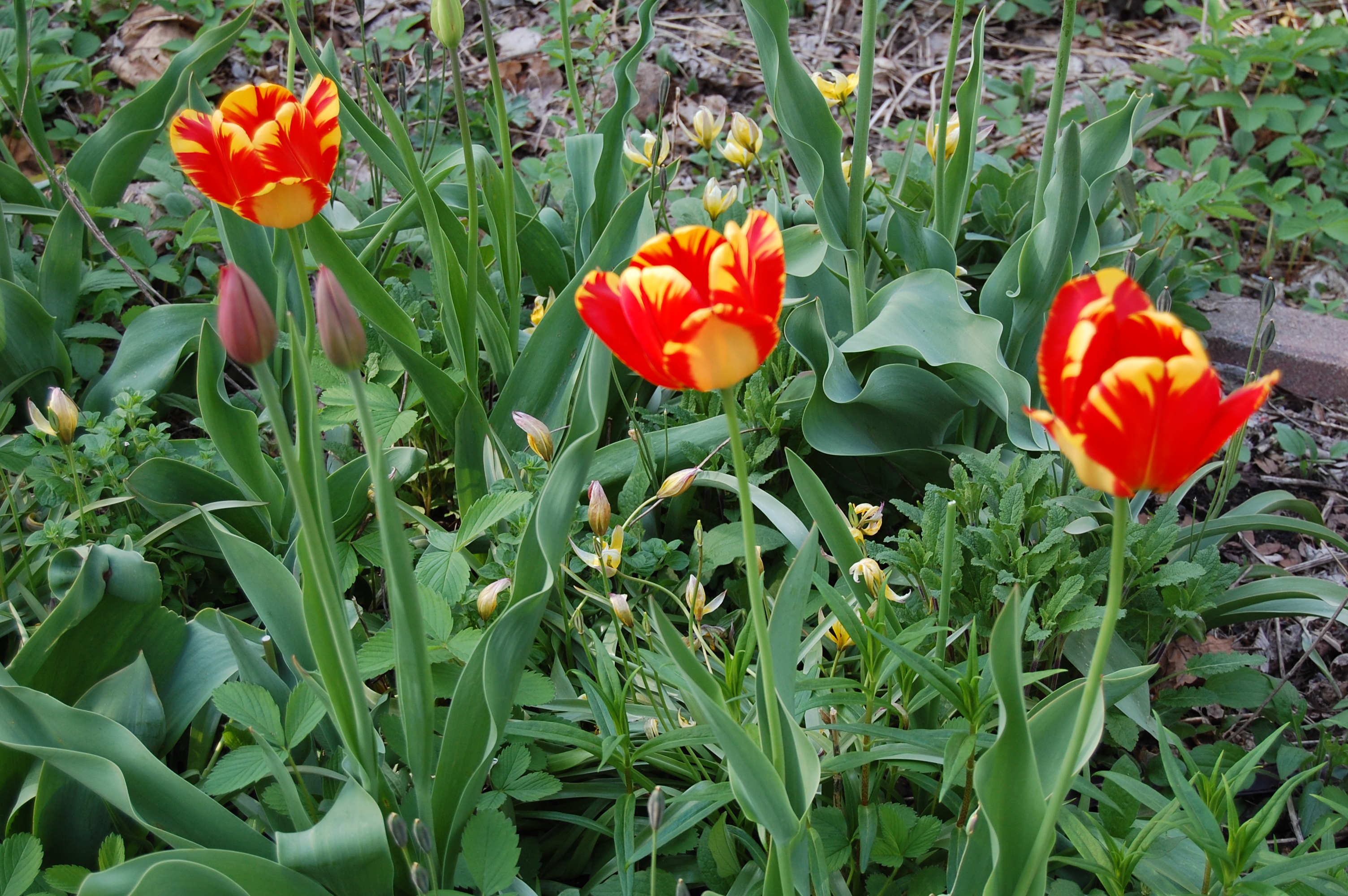
  • ‘Flair’.  Yellow dramatically feathered with red. Though sometimes it seems to be more red feathered with yellow.
  • ‘Sunny Prince’. This is a pale yellow tulip that contrasts well with its more dramatic companions. The foliage has a subtle variegation.
Tulip 'West Point' with 'Kingsblood' in the background.
Tulip ‘West Point’ with ‘Kingsblood’ in the background.

Single Late Tulips. These are much taller tulips that bloom in May.

  • ‘Kingsblood’. Dark red and about 24″ tall.
  • ‘World Expression’. One of the most dramatic tulips, with red flames on gleaming ivory.
Tulip 'World Expression'
Tulip ‘World Expression’

Other Tulip Groups.

  • ‘Rainbow Warrior’ (Darwin hybrid group). This tulip is a deeper yellow than ‘Sunny Prince’, and has a faint scarlet stripe down the center of the tepals. The Darwin hybrids are descended from bulbs considered not garden-worthy because they had only a single color. Grows about 2′ tall and blooms in May.
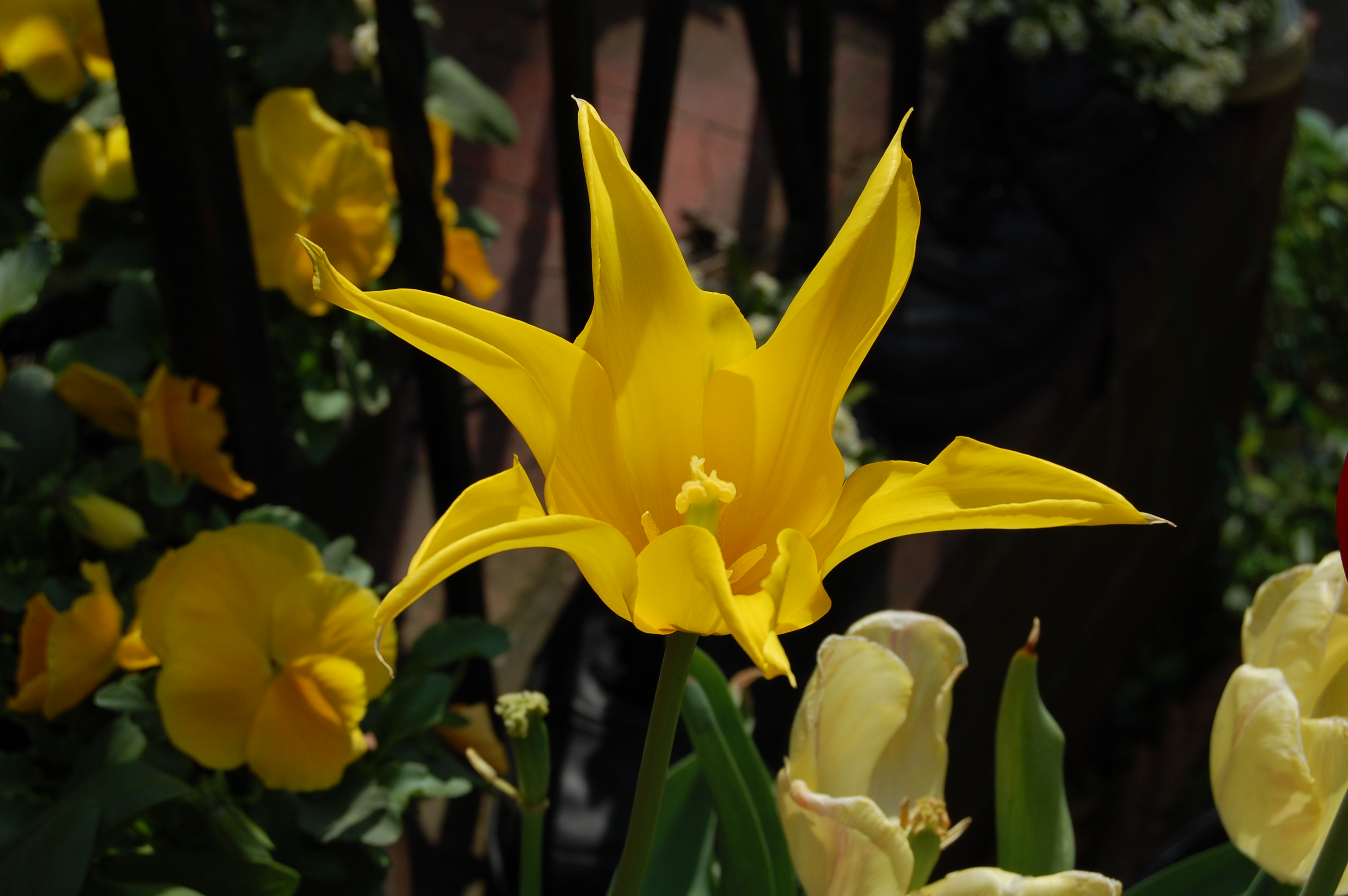
  • ‘West Point’ (Lily flowering group). An elegant slim-waisted tulip of bright, clear yellow and pointed tepals. It is supposed to be fragrant, but I have never noticed a scent. Grows to about 20″ and blooms in May.
Tulip 'West Point'
Tulip ‘West Point’

As to the Darwin hybrids I have growing in the beds and borders, I’m sorry to say I have lost track of the varieties.

What are your favorite tulips?

Back Garden Notes

Time to Dig the Alliums

In the back garden there is a patch of Allium ‘Purple Sensation’ (Allium aflatunense) that has expanded substantially over time but that is also getting rather too congested. A sign of this is the thick growth of Allium foliage but fewer actual flowers than we saw last year. When they are done flowering I will have to dig them up and then replant a portion. The remainder will need new homes, in our garden or in the gardens of friends.


Allium 'Purple Sensation'
Allium ‘Purple Sensation’. Looks like ‘Globemaster’, but about half as tall.

The other thing these Allium need is companion plants. Right now when they die down they leave kind of a big empty space. The companion needs to bloom early summer or later and be big enough to avoid smothering by the Allium foliage. At the Chicago Botanic Garden they use a lot of daylilies (Hemerocallis sp.) for this purpose, but I’m not sure this spot has enough sun to make daylilies really happy. On the other hand, there seems to be enough sun for ‘Purple Sensation’ … Any suggestions?

Allium 'Purple Sensation', with false forget-me-not in the background.
Allium ‘Purple Sensation’, with false forget-me-not in the background.

Here’s a fun horticultural fact: Alliums reproduce by both bulblets and bulbils. Bulbils are bulblets that are produced between the leaf and the stem, rather than as offsets of the bulb. “Bulbil” is a fine word, and sounds like one of the hobbit characters from JRR Tolkien.

Amsonia is a Star of the Raised Island Bed

Years ago I created a raised bed in the back as a way of protecting my perennials from root competition, particularly from the silver maple (Acer saccharinum) that stands near the middle of the garden. Silly me. That raised bed is now full of silver maple feeder roots, and as a result it has been difficult to find plants that will do really well there. What’s more, some of the plants that can tolerate the greedy maple roots fall prey to voracious rabbits.

Amsonia 'Blue Ice'
Amsonia ‘Blue Ice’

Amsonia ‘Blue Ice’ (Amsonia tabernaemontana) is one of the few success stories I have had in this bed. It’s tough enough to muscle through competing roots, takes some shade, and rabbits find it unpalatable. As a result I just planted two more ‘Blue Ice’ in the island bed, plus I’m trying an Arkansas blue star (Amsonia hubrichtii).

Blue Star 'Blue Ice'
More blue star.

Consider the Lilies of the Valley

Lily of the valley
Lily of the valley

The border along the hedge on the west side of the back garden is being invaded by lilies of the valley (Convallaria majalis), and I’m perfectly happy about it. They are creeping over from the neighbor’s yard, and actually I’d like to find them some reinforcements so they can take over an area now dominated by weeds. Only thing is, I can’t find any at the local nurseries. Isn’t that strange?

Arch of Anticipated Triumph

Arch over the path from the gate.

When I put up the arch over the path leading into the garden I imagined it covered with fragrant roses. I planted ‘Darlow’s Enigma’ on one side and ‘Westerland’ on the other. Subsequently ‘Westerland’ developed rose rosette disease and had to be removed. ‘Darlow’s Enigma’ climbed to the top of its side of the arch, but most of its canes died back over the winter. Still, the overall appearance of the entrance to the back garden looks pretty good I think. This is mostly because of what is growing around the arch, though, not on it.

A closer look.
A closer look.

Can this Deutzia be Saved?

Our poor sickly Deutzia.

Another casualty of winter seems to be the big old Deutzia that we inherited from the former owners. It has leafed out very sparsely, mostly near the top. It’s really a shame because this shrub is a significant presence in the back garden, and the birds like to use it for shelter. I intend to cut out the dead stems and see what happens. Anyone care to make a prediction or offer advice?

That’s it for now. I think my next post will be a hybrid tulip retrospective, but we’ll see. Thanks for visiting.