A Monarda Moment

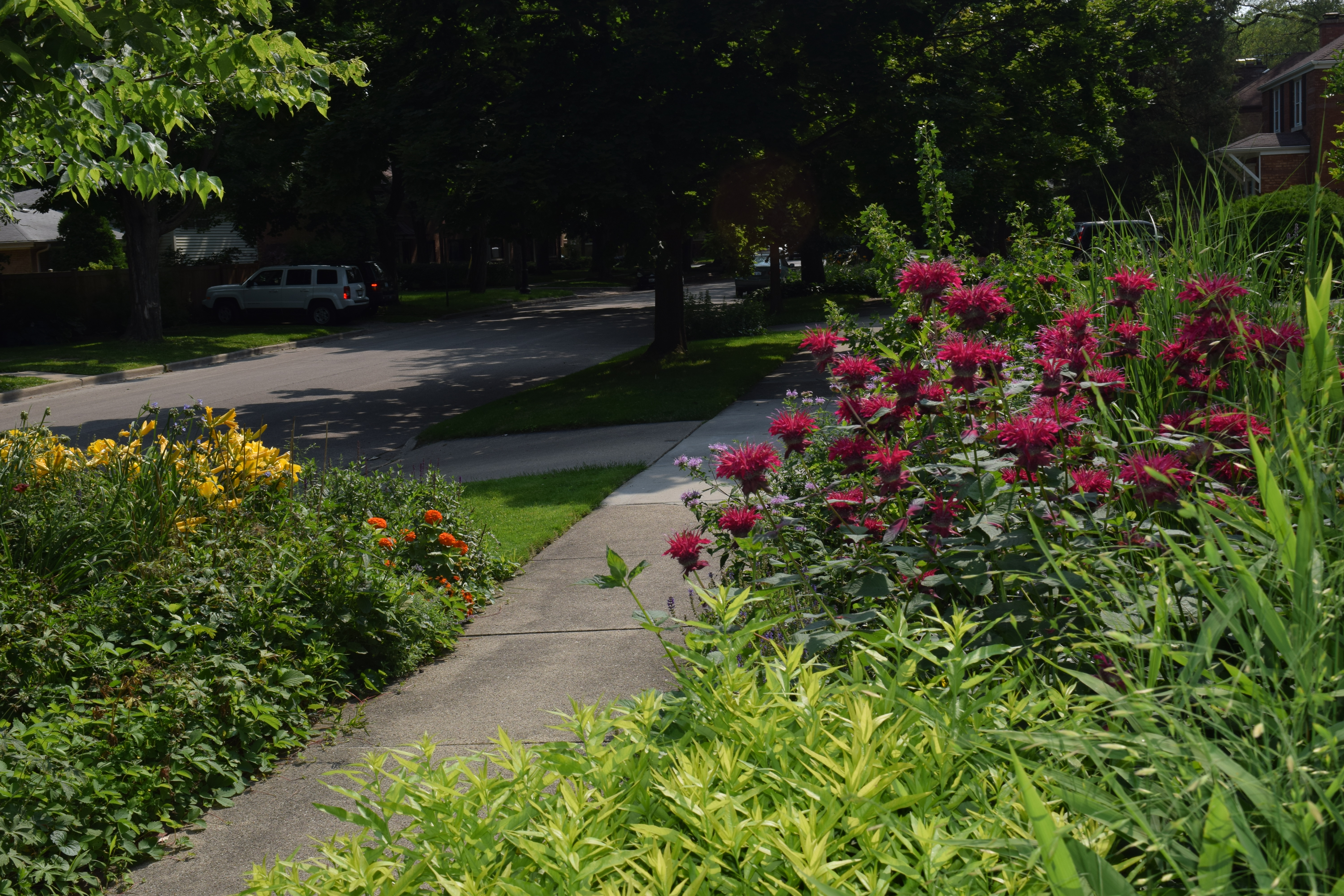
In mid-summer the Monardas take center stage in the Sidewalk Border. The blue and purple salvias retain a bit of color, but are mostly done. The ‘Husker Red’ Penstemon (Penstemon digitalis) and golden Alexander (Zizia aurea) have been cut back. Now come the Monardas in red, lavender, and purple (yes, purple).

'Raspberry Wine' bee balm
‘Raspberry Wine’ bee balm

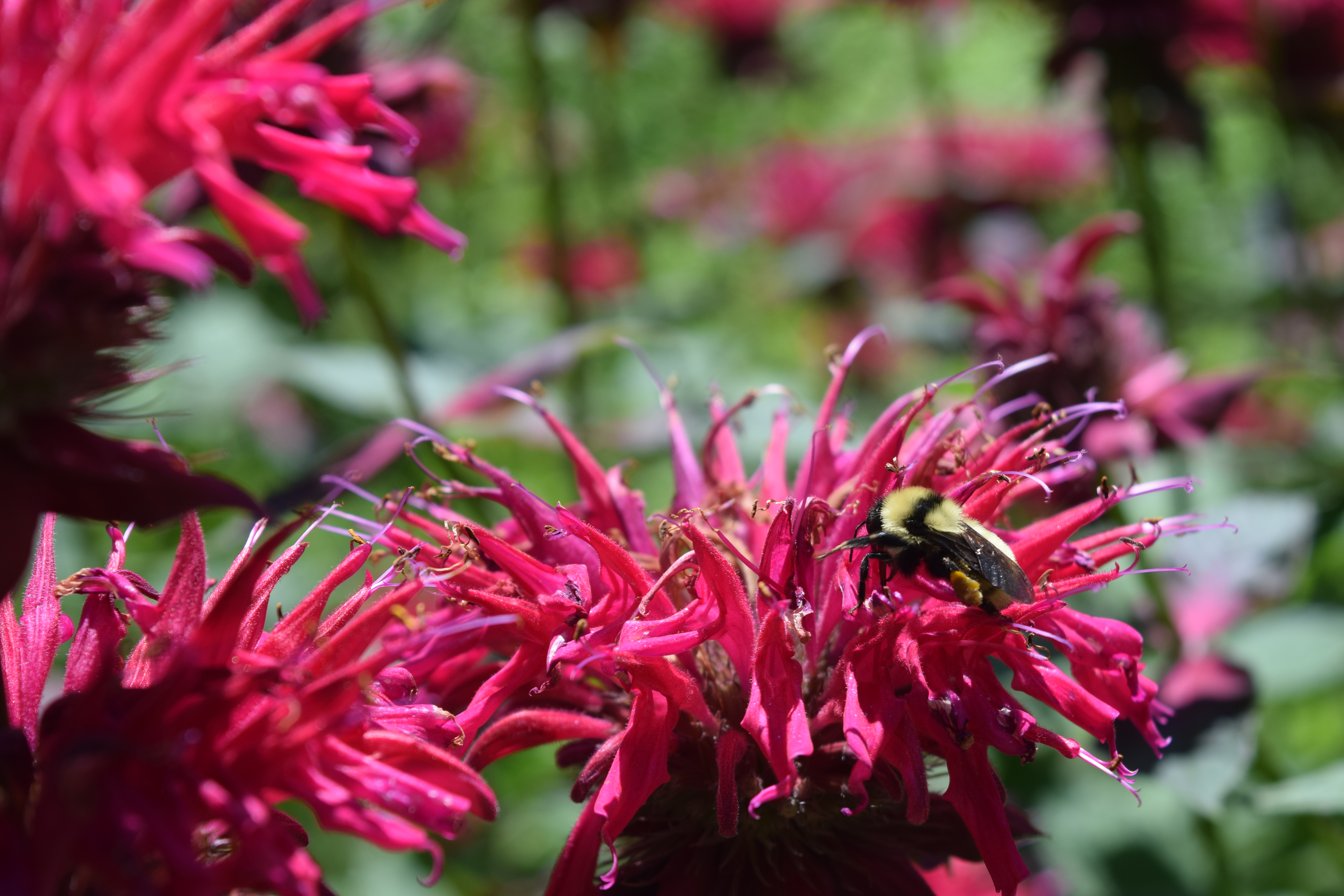
The Monarda that demands your attention first is ‘Raspberry Wine’ (Monarda didyma), with its enormous red flowers. This Monarda reminds me of certain  relatives whose normal speaking voice is a shout – but they are so entertaining you love them anyway.

Bumblebees like Monardas.

Monardas are members of the mint family, and ‘Raspberry Wine’ is a particularly vigorous grower. However, I just pull out the stems if it pokes up where it is not wanted. Like other Monardas, it is beloved by bees and butterflies.

Wild Bergamot
Wild Bergamot

If  ‘Raspberry Wine’ is a happy shout, wild bergamot (Monarda fistulosa) is a soothing murmur. This is a wild species Monarda with much smaller flowers that come in a calm lavender-blue.

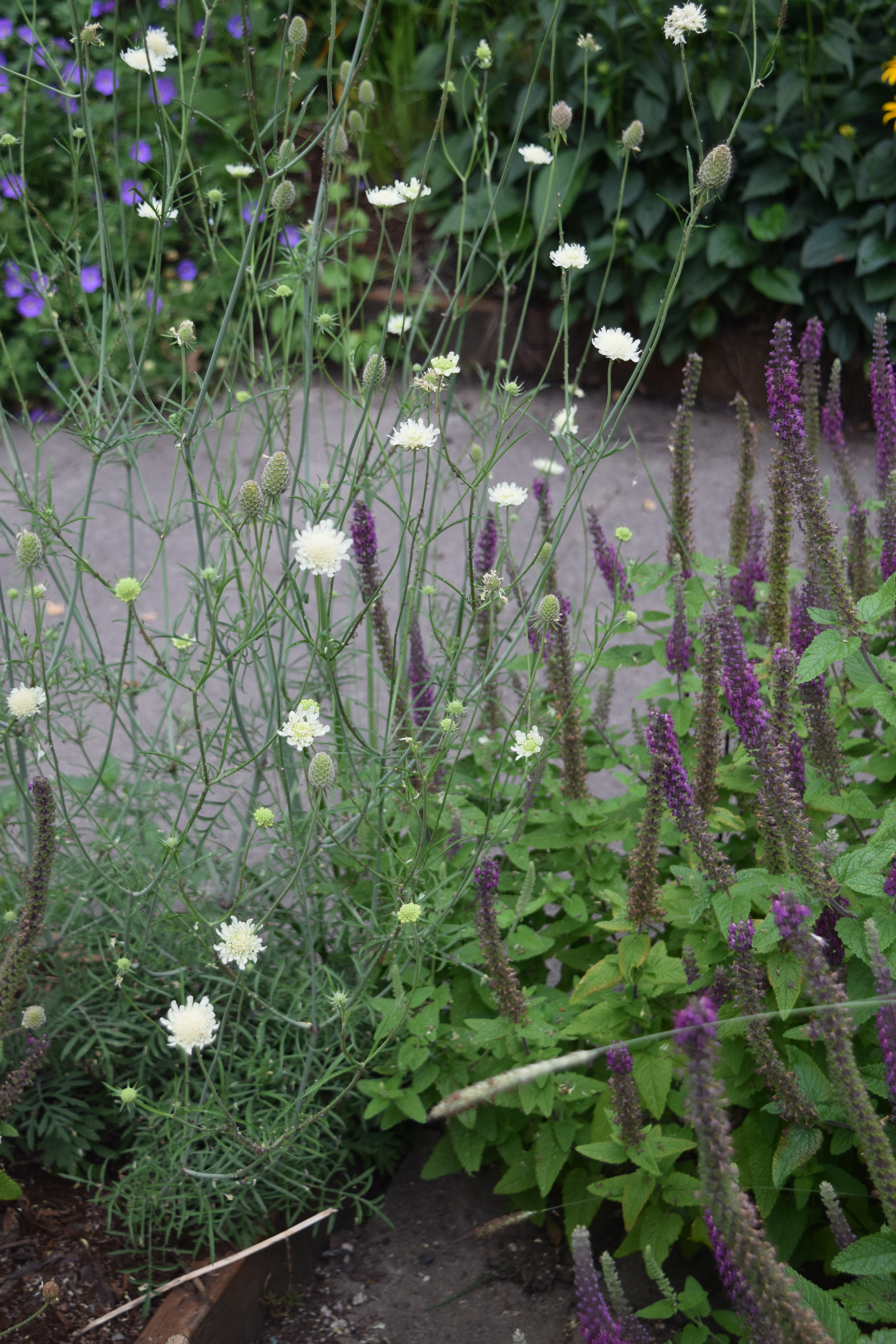
Good companions.
Good companions.

Wild bergamot (an ingredient in Earl Gray tea) does not compete as energetically as ‘Raspberry Wine’ and other varieties of M. didyma (bee balm).

A view of the Sidewalk Border.
A view of the Sidewalk Border. Oh, and the neighbors just put their house up for sale. Any garden bloggers in the market?

Even so, I think the two are good companions – both the contrasting colors and heights look good to me.

'Purple Rooster' bee balm
‘Purple Rooster’ bee balm

I have another Monarda growing in the Island Bed, behind the Sidewalk Border. This is ‘Purple Rooster’, a more compact variety (though by no means a dwarf, mine grows 3-4′) of M. Didyma.

Looking the other way.

Powdery mildew is the biggest complaint most people have about Monardas. ‘Raspberry Wine’ is supposed to be resistant. However, by late August the leaves of all my Monardas are infected. I’ve decided to just ignore it, and switch my attention to the asters and goldenrods that are coming into bloom.

Monardas like moist soil, but I’ve found wild bergamot to be more adaptable.

Swamp Milkweed
Swamp Milkweed

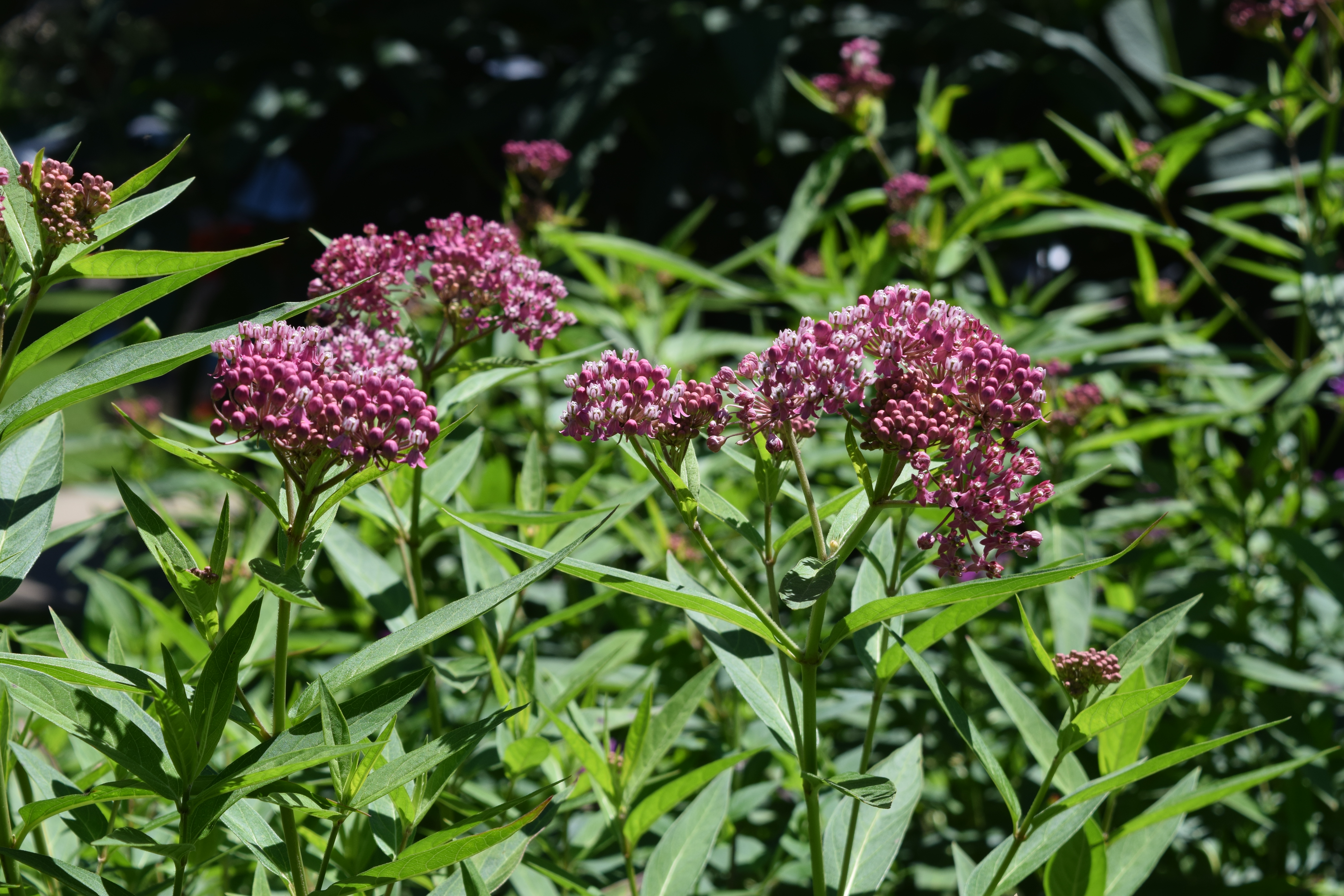
In this part of the garden the Monardas share the stage with swamp milkweed (Asclepias incarnata). The pink-red of the species are still opening, and you can sometimes catch a whiff of the vanilla scent.

Switchgrass and Monardas

The big grasses also are coming into their own now. Switchgrass ‘Northwind’ (Panicum virgatum) is not yet blooming, but its tall upright leaves and stems add some dignity to the proceedings.

Northern sea oats.
Northern sea oats.

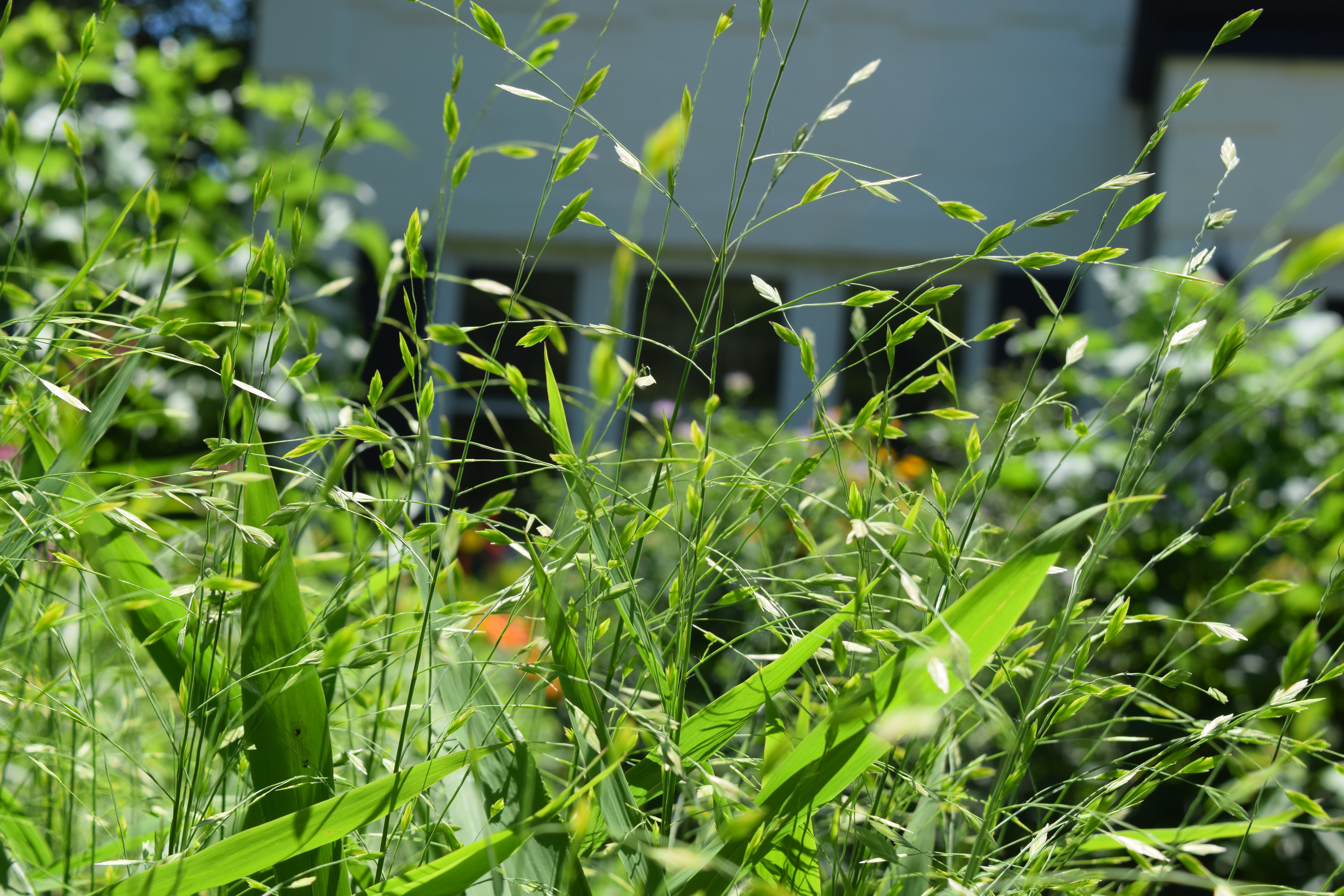
Also, the seedheads of northern sea oats (Chasmanthium latifolium) is starting to form. At this stage they seem like bits of green confetti dangling from fishing lines.

'Mr. Banana'
‘Mr. Banana’

On the other side of the sidewalk, the daylilies are what you notice right now in the parkway plantings. In particular, there is an enormous banana yellow daylily whose name I cannot remember. It was actually a freebie that came with a shipment I ordered from Oakes Daylilies. Since I can’t be sure of the cultivar name, I have come up with my own private name for the big fella: ‘Mr. Banana’.

Are the Monardas blooming in your garden?


Rose Report

This year got off to an inauspicious start for my roses. All in all, though, it wasn’t a bad year. I am a relative newcomer to roses, and there is only a modest selection in my garden. Even so, I’m very fond of the ones I have.

'Strike It Rich' rose
‘Strike it Rich’.
Photo: Heirloomroses.com

The saddest development was the death of ‘Strike it Rich’, which I had planted the previous August. This was a gorgeous orange rose, sometimes shifting to red along the petal edges. Perhaps if I had waited until spring it could have survived a harsh winter, but I’ll never know.

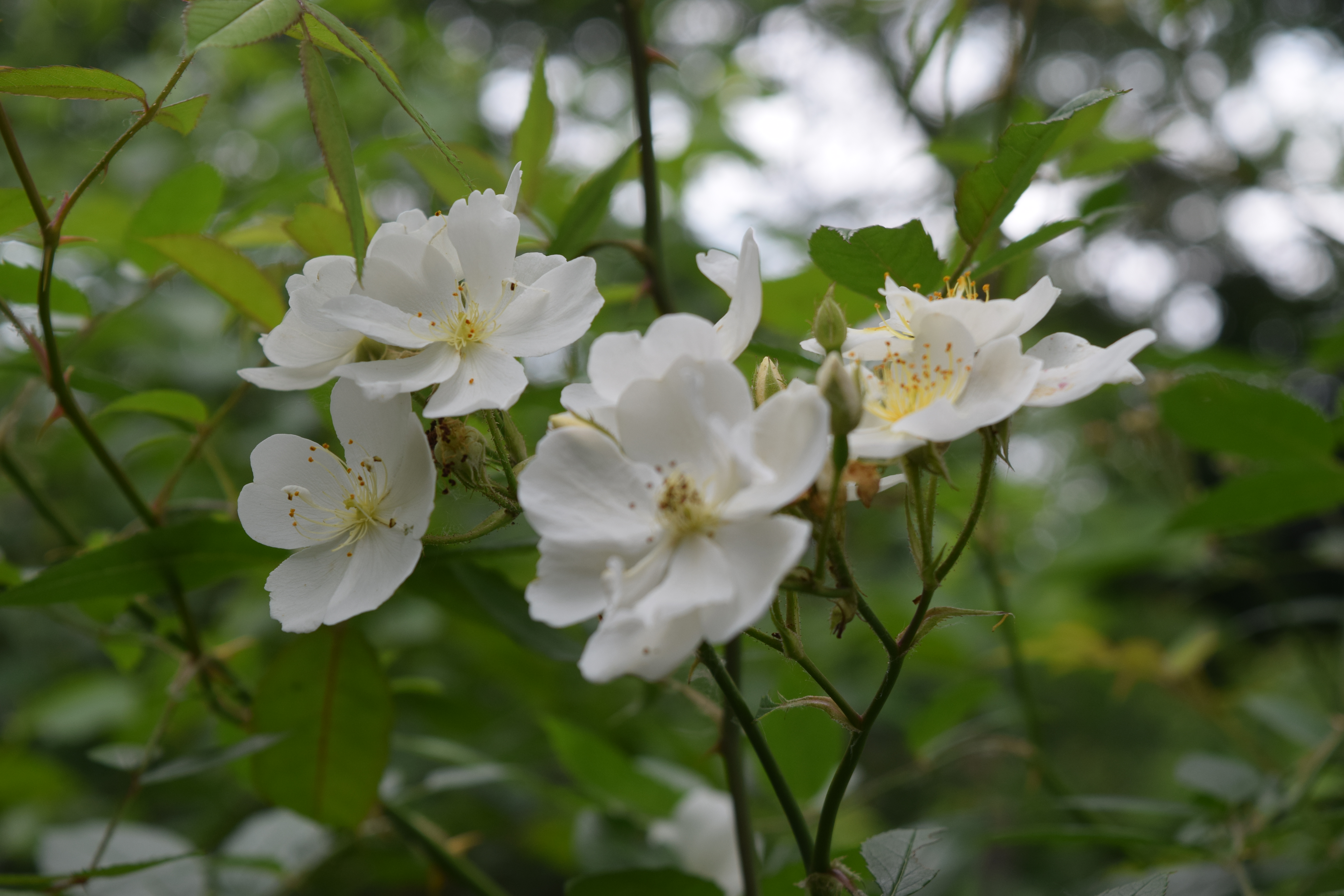
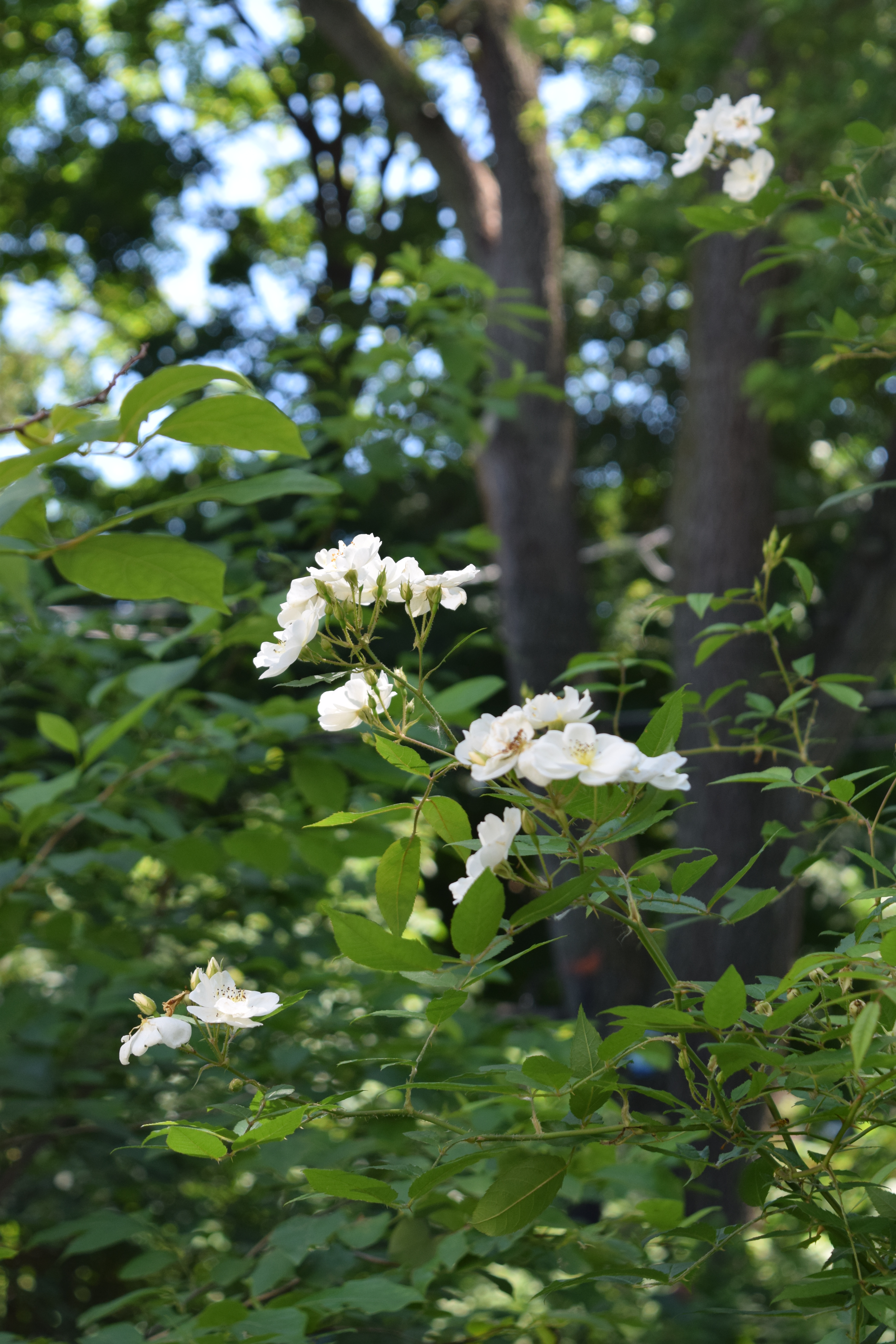
'Cassie' has small semi-double white flowers in abundance.
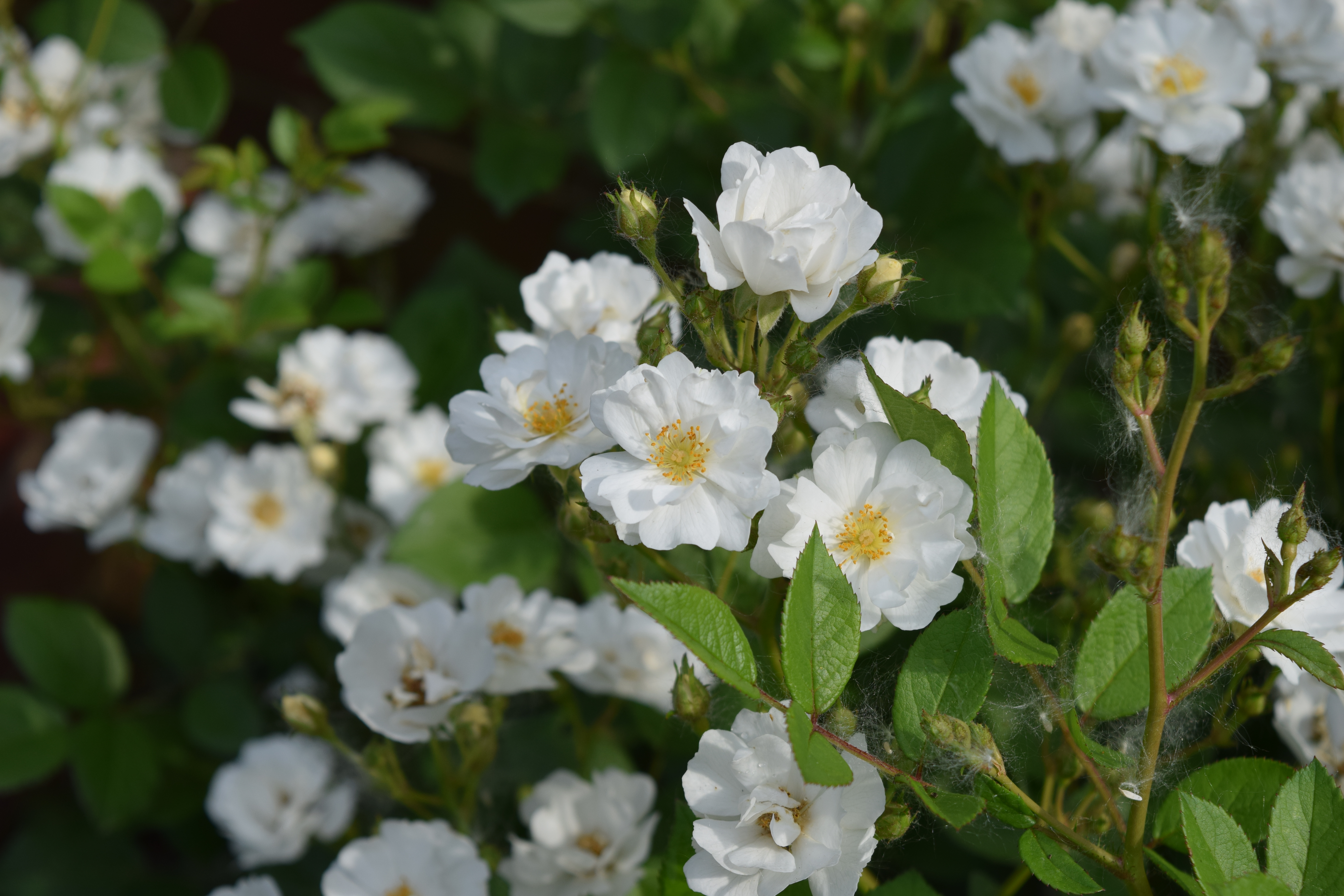
‘Cassie’ has small semi-double white flowers in abundance.

On the other hand, ‘Cassie’ behaved as if a brutal winter was just what she needed to really rise and shine come spring.  This is the first rose to bloom in my garden.

It quickly became clear that 'Cassie' had shrugged off the freezing cold.
It quickly became clear that ‘Cassie’ had shrugged off the freezing cold. This picture was taken on June 7.

‘Cassie’ bounced back vigorously from her March trimming with masses of flowers. Normally a floriferous rose, this year she really outdid herself. I had gotten the impression that ‘Cassie’ tends to be ignored by most gardeners, so I was glad to discover a robust specimen at the Chicago Botanic Garden this year.

'Sally Holmes' blooms in trusses of flowers that fade from pale pink to creamy white.
‘Sally Holmes’ blooms in trusses of flowers that fade from pale pink to creamy white.

At first I feared for ‘Sally Holmes’, whose canes had all been killed to the ground. However, not only did ‘Sally’ send up new canes in the spring, but she bloomed with big trusses of pink buds that turn into creamy white flowers.

The brand new canes of 'Sally Holmes' were weighed down by blooms.
‘Sally’ reborn. The brand new canes of ‘Sally Holmes’ were weighed down by blooms.

Actually, I think ‘Sally’s’ habit has been improved by having her old canes die back.

'Darlow's Enigma' is sweetly but not powerfully fragrant.
‘Darlow’s Enigma’ is sweetly but not powerfully fragrant.

‘Darlow’s Enigma’ is a rambler that blooms from June through September. I am trying to train it up an arbor in the back garden. ‘Darlow’ lost about 2/3 of its canes to winter kill.

'Darlow' is a rambler. I'm working on getting it to ramble up the arbor in the back garden.
‘Darlow’ is a rambler. I’m working on getting it to ramble up the arbor in the back garden.

It recovered, however, sending up new growth and blooming about as much as it did last year.

Prairie Rose. I took this with my phone, sorry it's a little fuzzy.
Prairie Rose. I took this with my phone, sorry it’s a little fuzzy.

The last rose to bloom in my garden is the wild prairie rose (Rosa setigera). Prairie rose is a climber, and I am training her against the south wall of our garage. Like ‘Darlow’s Enigma’, she suffered lots of winter kill but then recovered.

Prairie rose.
Prairie rose.

Prairie rose has rosy pink single flowers that are supposed to be fragrant, though I have never noticed much scent. Like ‘Sally Holmes’, they fade to white – but much more slowly. A nice thing this year is that the trumpet honeysuckle (Lonicera sempervirens) has started twining itself around the canes of R. setigera. Unfortunately, the Lonicera‘s peak bloom is well before that of the wild rose.

As you can see, I have a weakness for white flowers that are single or semi-double. I also like fragrant flowers. ‘Sally Holmes’ and ‘Darlow’s Enigma’ are sweetly but mildly fragrant. Sometimes you can smell the scent on the air, but at others you have to put your nose up against the flower. Prairie rose is supposed to be fragrant, but I haven’t detected it.

How have the roses done in your garden this year?


Wise Words on Bee Decline

I hope a lot of people pay attention to the opinion piece by Mark Winston in today’s New York Times.

Wild Bergamot
Bumblebee on Wild Bergamot

Winston, a biologist at Simon Fraser University, argues that we should be looking at the destructive synergy created by all the factors contributing to bee decline – pesticides, intensive agriculture, disease, etc.

He warns that what’s true for bees may also become true for people – that we could be at risk not from a single environmental factor, but from all of them interacting cumulatively. We need to evaluate the impact of pesticides and other chemicals in combination, which is disturbing because most chemicals introduced into the environment are not tested at all.

There is some hopeful information in this piece: Winston’s research indicates that leaving some land fallow helps the wild bee population which in turn leads to greater yield and profit than would be achieved by planting every inch.

Go read it yourself: Bees and Colony Collapse. Update: I’m not sure what the problem is with the link, but if you scroll down on the page you will see a second link to the article itself under “Our Bees, Ourselves”.


Red Admirals

When we arrived home from the airport today there were two Red Admirals fluttering around the front garden. I chose to view them as our welcoming committee.

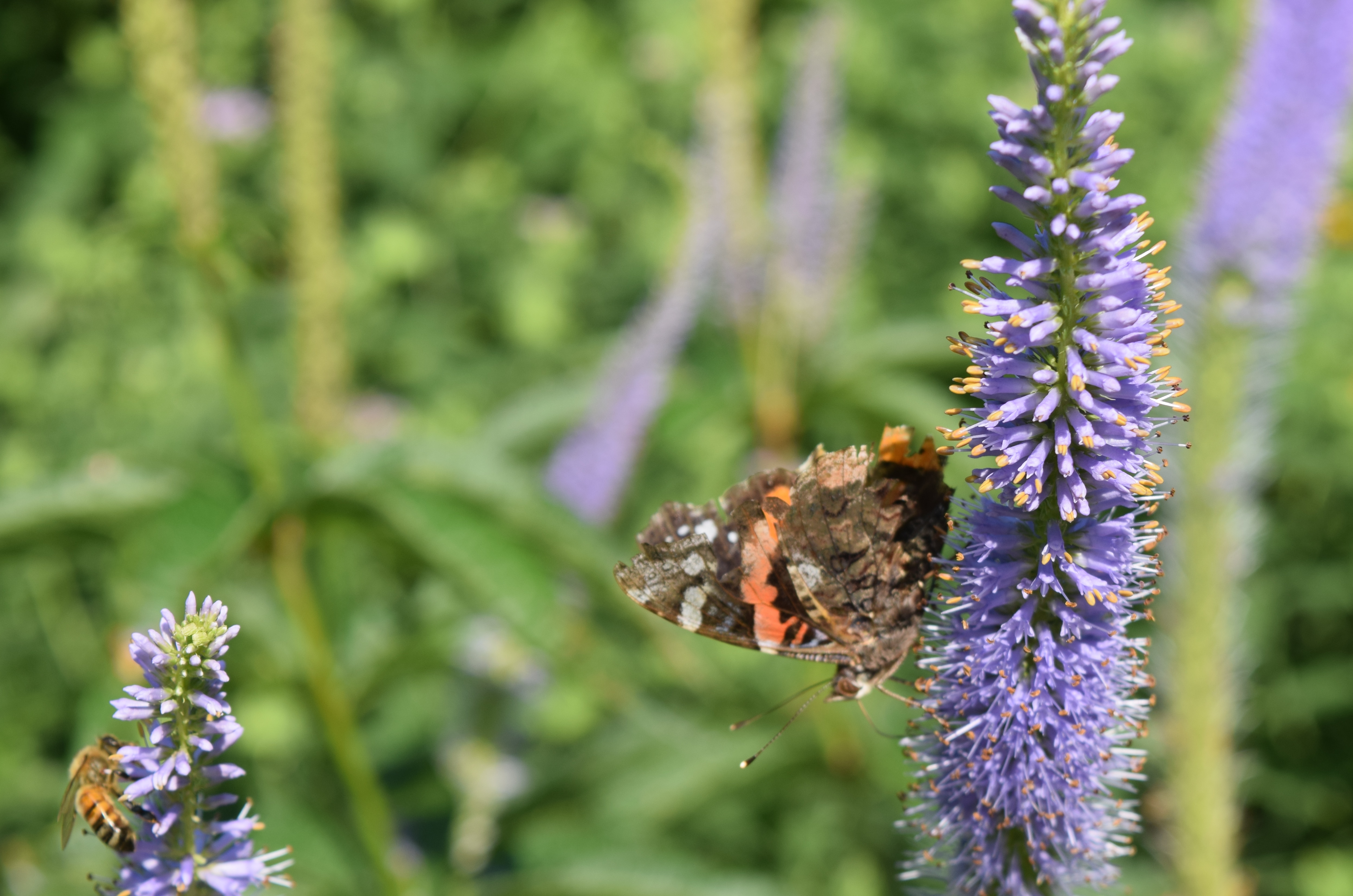
Red Admiral butterfly on 'Fascination' Culver's Root.
Red Admiral butterfly on ‘Fascination’ Culver’s Root.

A Red Admiral is not a Soviet naval officer but a butterfly. They’ve been present this year in limited numbers. We haven’t gotten any photographs, though, because they were always excessively jumpy and would never stay still. According to the Butterflies and Moths of North America website, Red Admirals have a “very erratic and rapid flight”.

Today was different, though. The Red Admirals were loving the ‘Fascination’ Culver’s root (Veronicastrum virginicum) so much that Judy got a bunch of pictures while they were happily nectaring.

Red Admiral butterfly
Red Admiral butterfly and friend.

Actually, Red Admirals feed at flowers only when their favorite foods are unavailable. Their top choices for fine dining are tree sap, fermented fruit, and bird droppings. Yum! (Actually, fermented fruit might be OK.) So while the Culver’s root may not have been a match for bird droppings, it was certainly keeping these butterflies occupied.

An odd thing is that Red Admirals will take in salt from human sweat. They will land on your shirt and just stay there (they’ve done this to me), provided you’ve worked up enough perspiration.

2014-07-14 14.53.33 red admiral purple butterfly

Plants of the nettle family (Urticaceae) are the hosts for Red Admiral butterflies. I’ve considered planting false nettle (Boehmeria cylindrica) in the garden, but nothing could induce me to plant stinging nettle (Urtica dioica).

These butterflies are fairly common. They can be found in most of North America as well as in Europe and North Africa.

Do you have Red Admirals in your garden?


A Few More Pictures From the Portland Fling

Rhone Street Gardens

2014-07-13 11.38.30 Rhone Street Gardens


2014-07-13 11.35.43 rhone street gardens cat


The adjoining gardens of Joanne Fuller and Linda Ernst

2014-07-13 11.16.43 fling 2014


Floramagoria

2014-07-13 12.35.18 fling


2014-07-13 13.19.13 fling

Just today, Judy took 750 photographs.  Heading home to Chicago early tomorrow morning. More to come.

Just A Few Pictures from the Garden Bloggers’ Fling in Portland

Joy Creek Nursery

2014-07-11_13-54-02_860 Rudbeckia, Joy Creek Nursery

Potland Japanese Garden

2014-07-12 12.26.33 Portland Japanese Garden

American Rose Garden Selections Test Garden

2014-07-12 14.35.11 rose strike it rich


The gnome was surprised to see us.

2014-07-12 16.56.14 garden gnome

More to come.

Up and Away

Judy took this series of photos of bees on the Tithonia. Here are three I particularly like.

2014-07-04 16.28.06 bee on Tithonia


One thing about this picture is that it shows very clearly what a composite flower is. What looks like one flower is really a bundle of flowers – you can even see the tiny pistils in each.

Commencing takeoff!
Commencing takeoff!


And away we go!
And away we go!

So today I arrived in Portland, Oregon, to attend the Garden Bloggers’ Fling. Looks like the organizers have done an outstanding job with the itinerary they’ve put together, which includes public gardens as well as some private gardens I’ve wanted to see in person for a long time. I may post a picture or two but I don’t think I’ll be doing any full posts until next week. I’m going to try to hoard my photos until there isn’t much happening in the garden.

Unfortunately, Judy doesn’t arrive until Friday night so I will have to take all the pictures until then, so there will be a temporary decline in the quality of photographs.

Enjoy your weekend!


A Prairie-Style Shakespeare Garden

Tucked away in a corner of the Northwestern University campus is a beautiful garden with an unusual history. That history began in 1915, when the Garden Club of Evanston joined in a nation-wide effort to create gardens memorializing the 300th anniversary of William Shakespeare’s death.

This way to the Shakespeare Garden.


Surprisingly, the designer was Jens Jensen, advocate of naturalistic and prairie-style gardens. This was one of only two formal gardens designed by Jensen during his career, the other being a rose garden he created for Henry Ford. This garden was intended to showcase plants mentioned in Shakespeare’s plays, but it is also full of prairie natives.

Path between the hawthorn hedges.


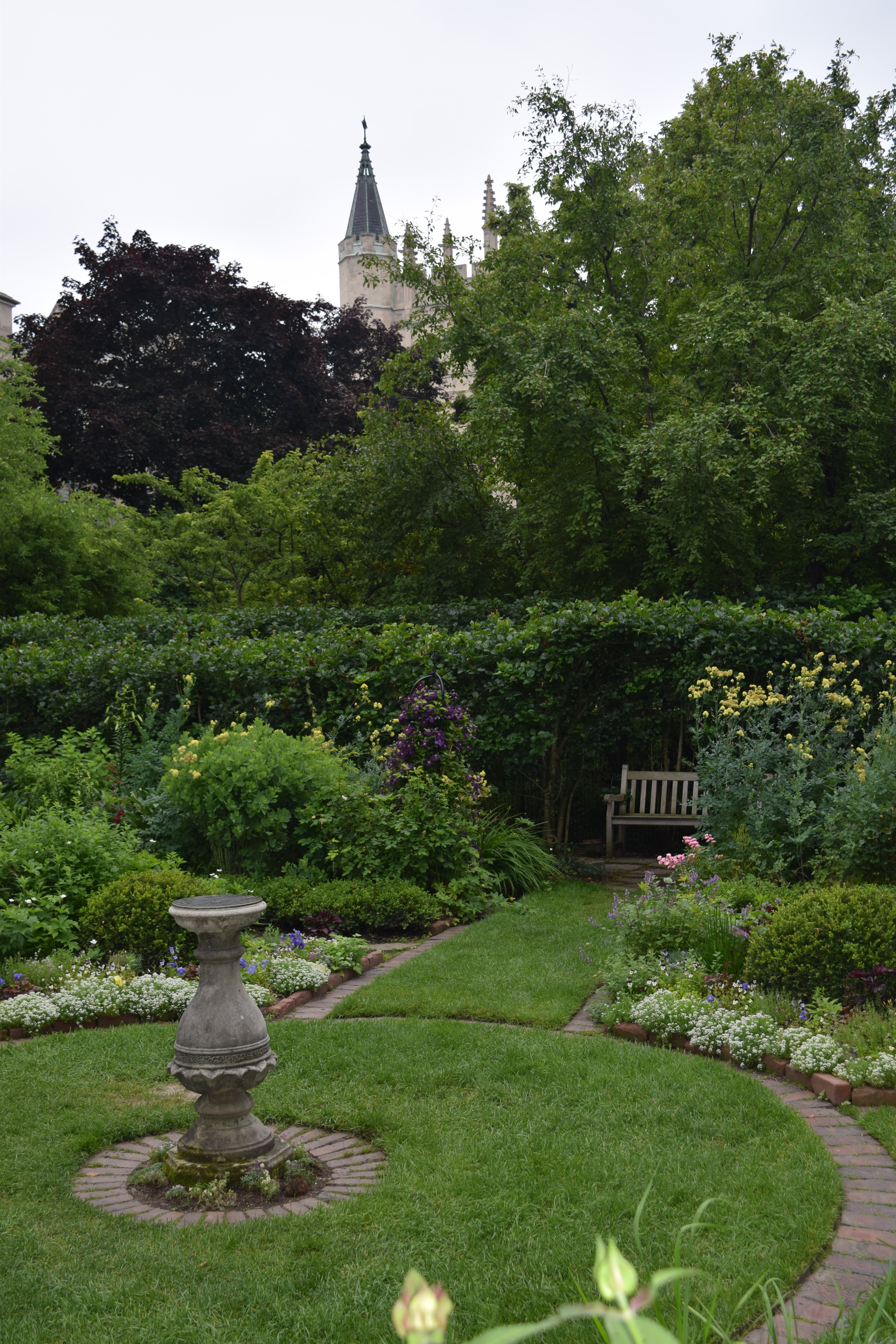
An intimate garden, just 70 x 100′, it  is surrounded by a double row of hawthorne hedges.

A private nook in the hawthorne hedge.

Openings in the hedges reveal secluded benches, which look perfect for both contemplation and assignation.

A curved concrete bench at one end.

At one end there is a curved concrete bench overhung with serviceberry (Amelanchier). Both the serviceberry and hawthorn are Midwest natives. We watched the robins plucking ripe berries from the branches.

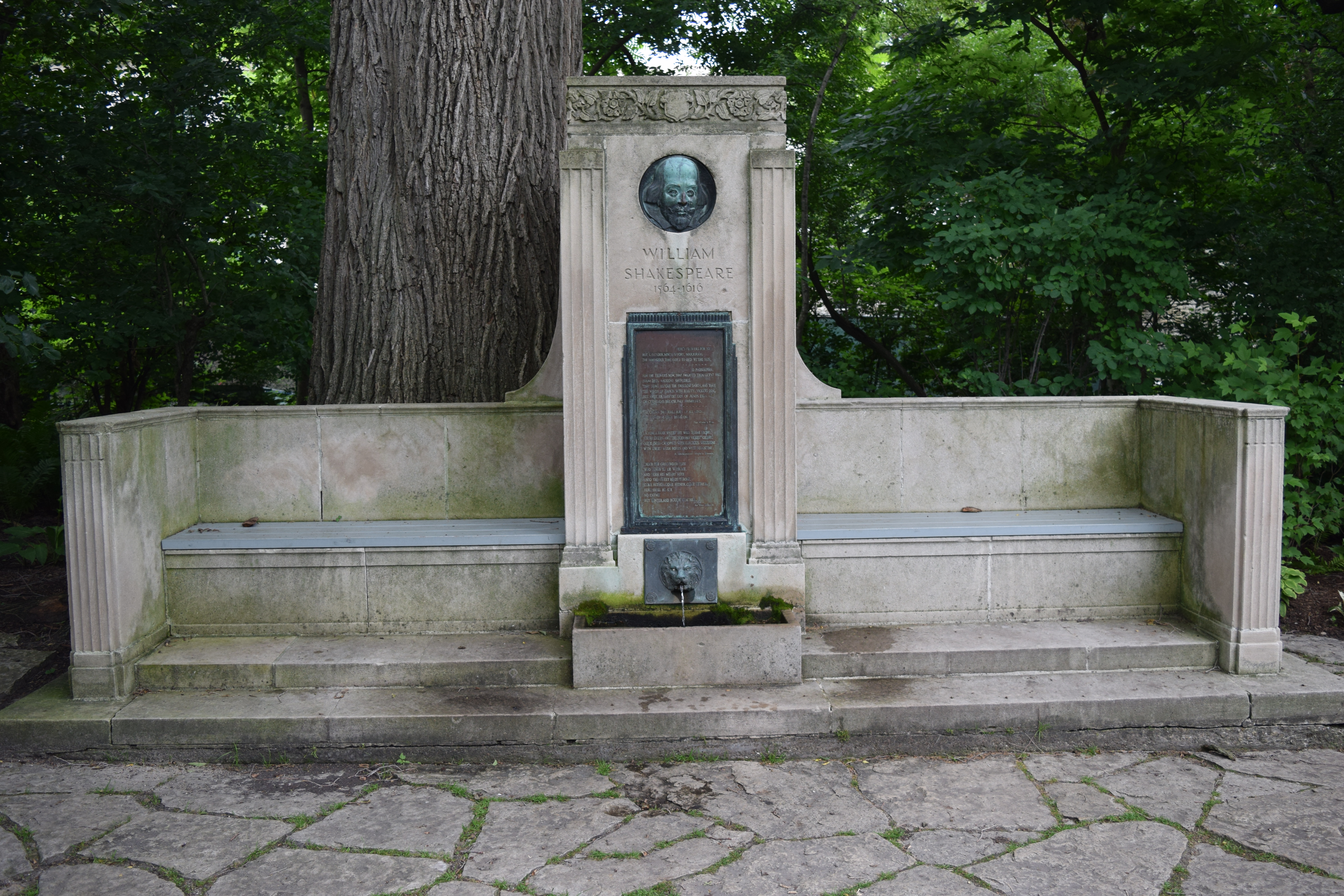
The Shakespeare monument. Personally I didn't think the monument should win any prizes.
The Shakespeare monument. Personally I didn’t think the monument should win any prizes.


I liked the plaque with Shakespearean verses, though.

At the opposite end there is the Shakespeare monument, which includes a plaque of botanically-themed verses.

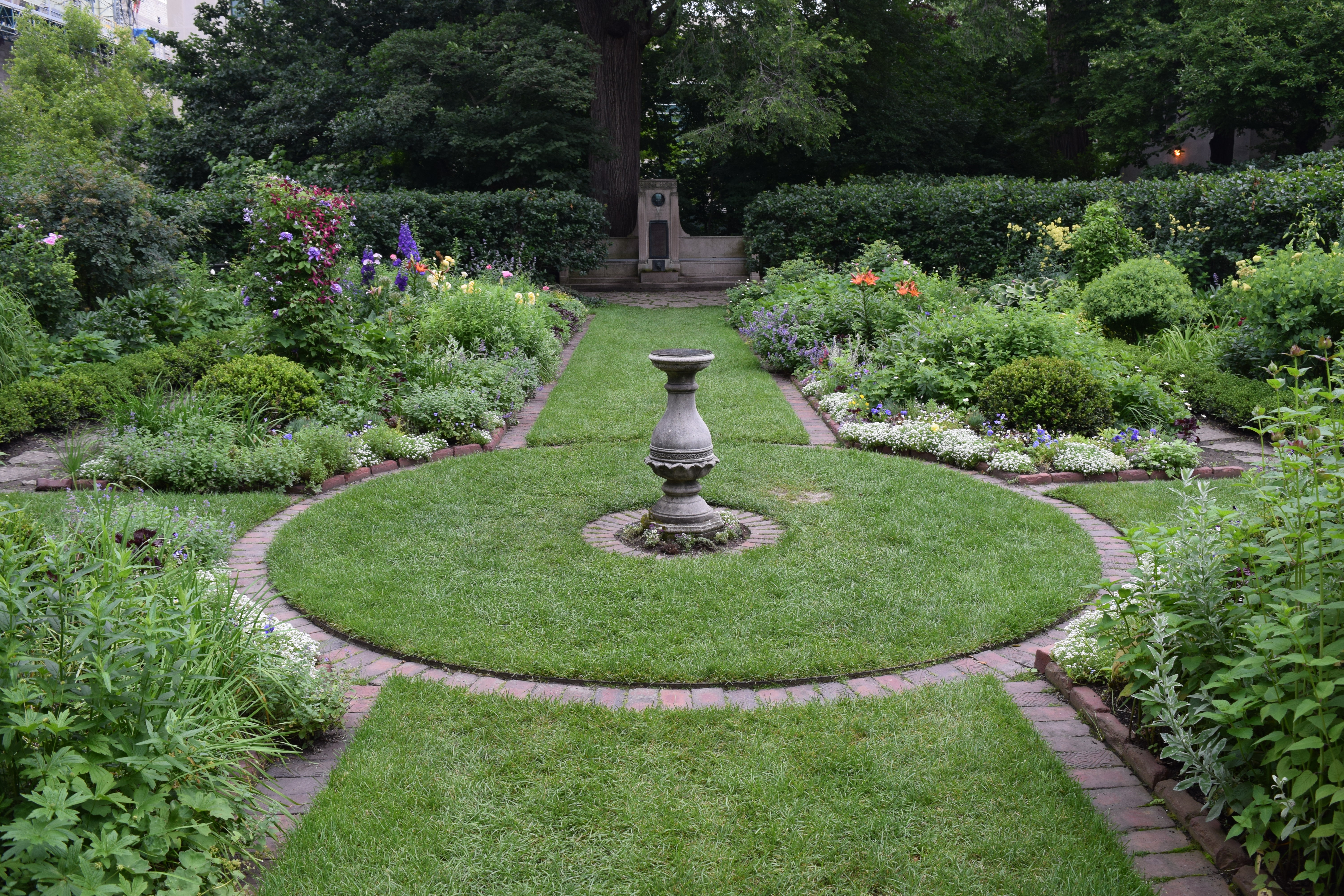
Sundial at the center of the four rectangular beds

In between there are four symmetrical  rectangular beds with a sun dial in the center.

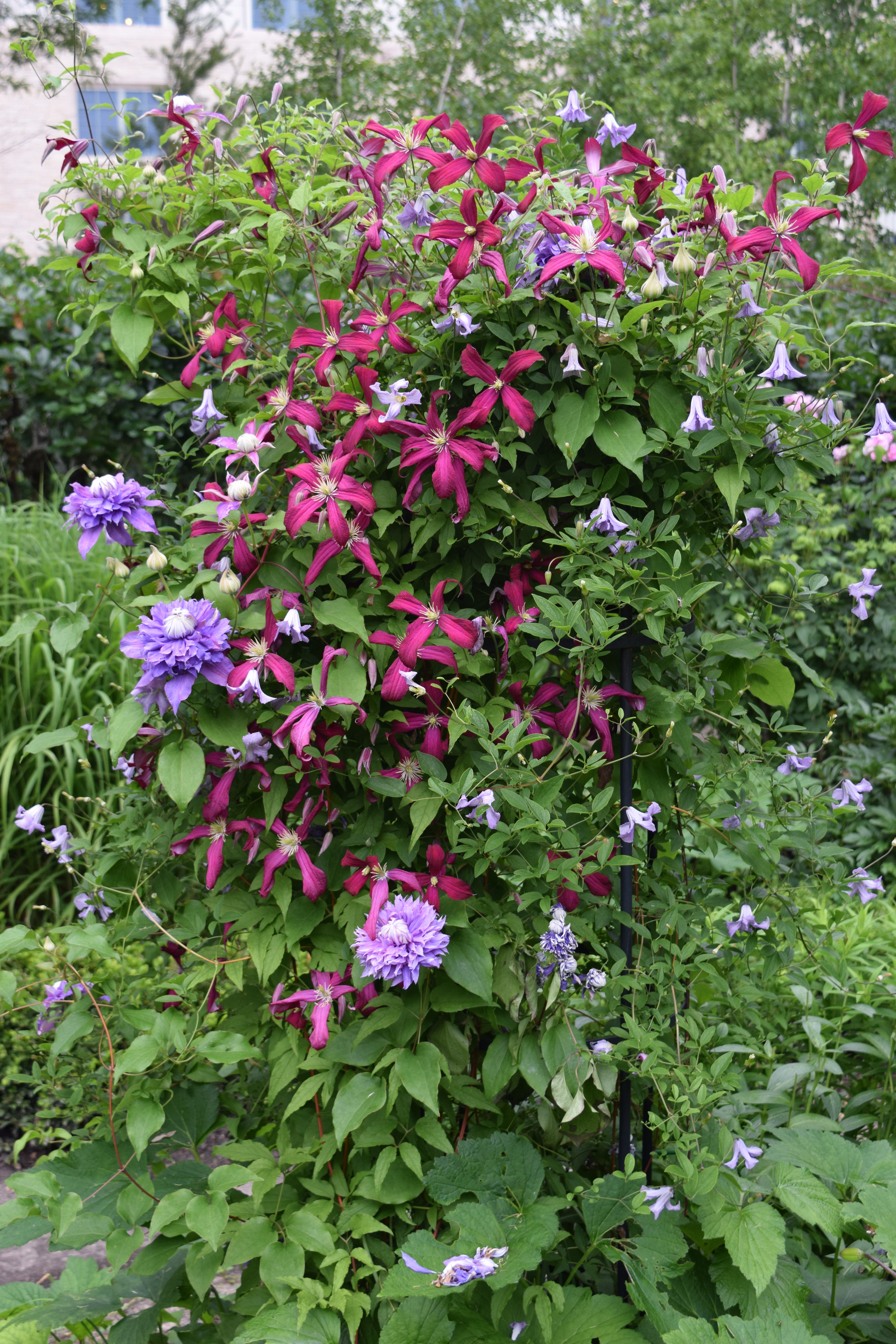
The garden had three tuteurs placed asymmetrically, each with different varieties of clematis.


I don't think Delphiniums are mentioned in Shakespeare, but who cares.
I don’t think Delphiniums are mentioned in Shakespeare, but who cares.

The garden today is much less formal than the one originally designed by Jensen, in part the result of changes made in 1990 by the English garden designer John Brookes. Most of the boxwood was removed, and more perennial flowers were added. While the structure is still symmetrical, the plantings are not – though there is a good deal of rhythmic repetition.

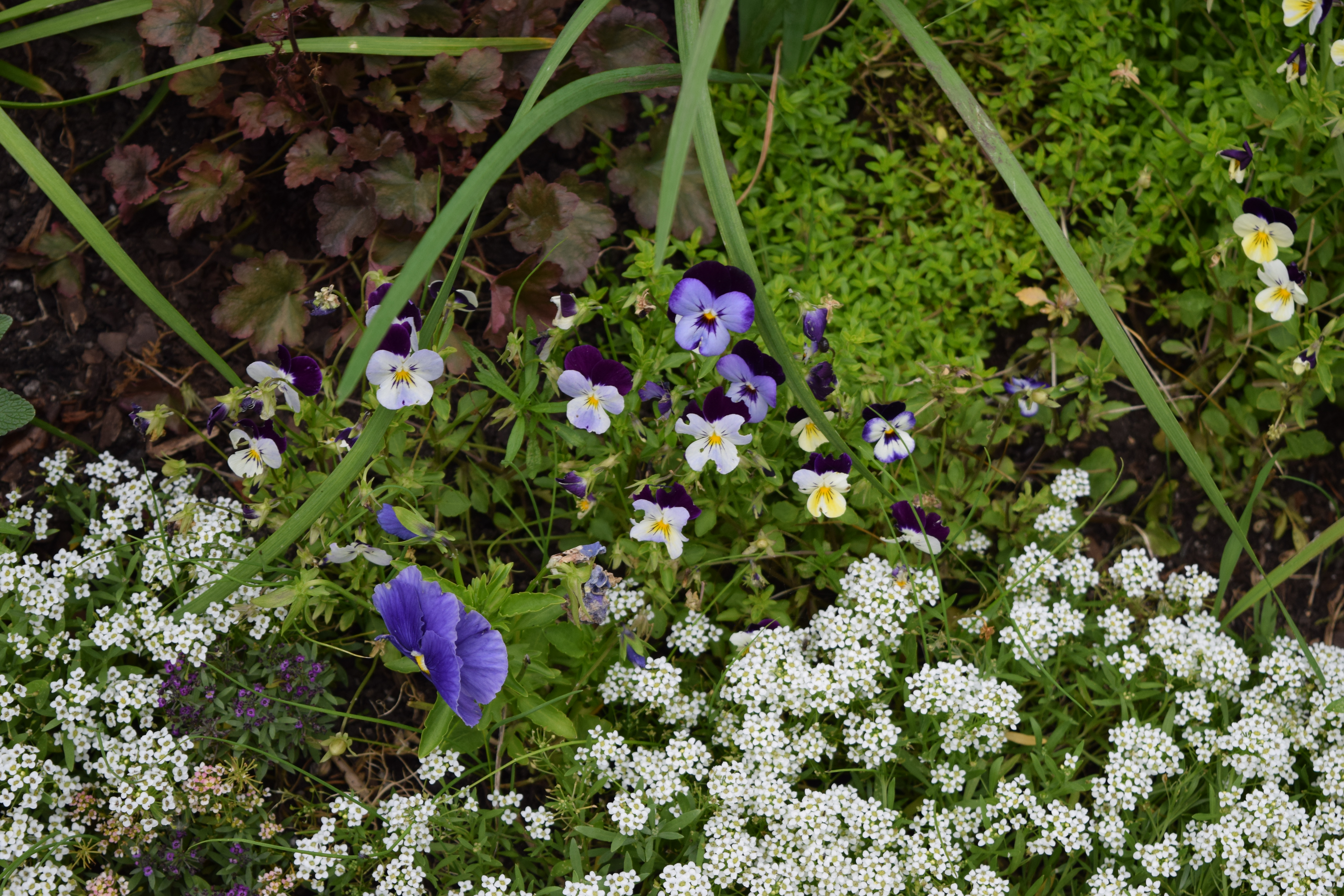
Violets are Shakespearean.


So are roses.
So are roses.

There are supposed to be 5o plants mentioned by Shakespeare, but I only recognized a few, including daisies and roses, poppies and pansies.

Meadow Rue
Meadow Rue

Several large and robust meadow rue were scattered about, and I wondered if they were intended to be a reference to the rue that is mentioned in Shakespeare. Completely different genus, but I suppose this could be the garden design equivalent of artistic license.

Praire perennials like wild indigo were also repeated throughout the garden.

The towers of the Garrett Theological Seminary provide an atmospheric backdrop for the garden.

Looking to the south you could see the towers of Garrett Theological Seminary, adding to the late Renaissance atmosphere (though I think Garrett is Methodist, so it probably belongs more in a Reformation garden).

While the Evanston Shakespeare Garden is by no means a replica of a Shakespeare-era garden, it is a tranquil and beautiful spot, perfect for reading poetry – to oneself or someone else.


How to Get Bountiful Clematis Blooms

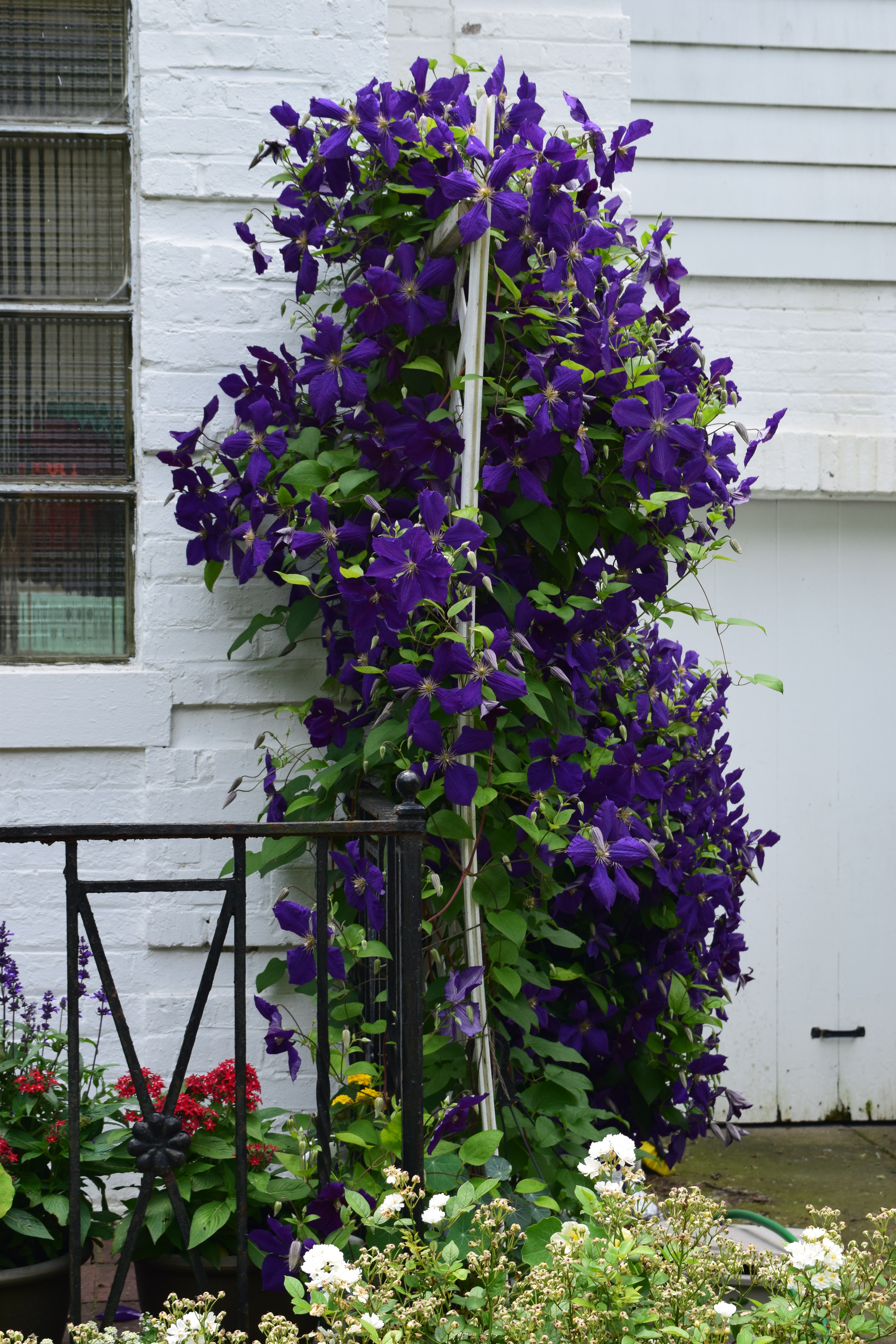
If you press me, I will admit that people admire my Clematis jackmanii. This admiration has led several, including neighbors and friends, to ask me how to get more plentiful Clematis flowers. Sparsely blooming Clematis, apparently, is a not uncommon problem.

Clematis jackmanii
Clematis jackmanii

The thing is, I really don’t know why my Clematis jackmanii blooms so happily. I mean, I don’t know anything beyond what you could find from a cursory Google search. For example: head in the sun, roots in the shade (in my case, the shade is provided by a thick layer of periwinkle).

Also, I have a vague memory of reading that Clematis are heavy feeders, so every year they get an extra generous helping of compost. Plus, some years I also give it a dash of organic 3-4-5 slow release fertilizer.

2014-07-04 16.20.35 clematis jackmanii

I have wondered if this Clematis likes alkaline soil. Our soil is normally alkaline, and it is growing in a spot that should be extra limey because it sits between the driveway and the west-facing brick wall of the house. But the sources I’ve looked at say that Clematis are adaptable as to soil pH.

I suppose the extra warmth from that wall, which is painted white, could also be a factor.

Bottom line, though, is this: I’m lucky. Because I know people who have done all the things I have done and still have been left with a poor excuse for a Clematis.

Blooming on both sides of the trellis.


Luck plays a big part in gardening, I think. We can follow all the right practices and fail, or we can ignore them and succeed. Perhaps it isn’t luck, but a mix of factors that are just too complicated to untangle or understand.  Because a garden is a living thing, not an internal combustion engine.

As Koheleth (Ecclesiastes), a founding member of the Garden Writers Association, wrote many centuries ago:

“… the race is not to the swift, nor the battle to the strong … nor yet disease-free roses to men of understanding, nor yet the tastiest tomatoes to men of skill, but time and chance happeneth to them all.”  – Ecclesiastes 9:11, New Rodale Translation.

Have you ever had inexplicable success or failure in the garden?


If Orange is the New Black …

If orange is the new black, then at this moment my front garden is very fashionable. For now the blues of early June have given way to an orange July.

Butterflyweed
Butterflyweed

Orange is supposed to be a difficult color – too bright, too strong, so you’re not supposed to have too much of it. But I like it.  It’s a warm, exciting color.

More butterflyweed. If you look closely you can see the Mexican petunia at the far end.

The most notable source of orange in my driveway border is the butterfly weed (Asclepias tuberosa). I love this plant. Not just the color, but the unusual shape of the individual flowers. It’s a host plant for monarch butterflies, of course, but also for queen butterflies and gray hairstreaks. And it’s a nectaring favorite for all kinds of pollinators.

A longer view of the Driveway Border.

Butterflyweed is an easy plant that forms big clumps. All the flower power in these pictures is from just two plants. You might notice one of them is a straight orange and the other is a brighter yellowish orange. The bloom period is very long, especially if you deadhead the umbels before the seed pods form.

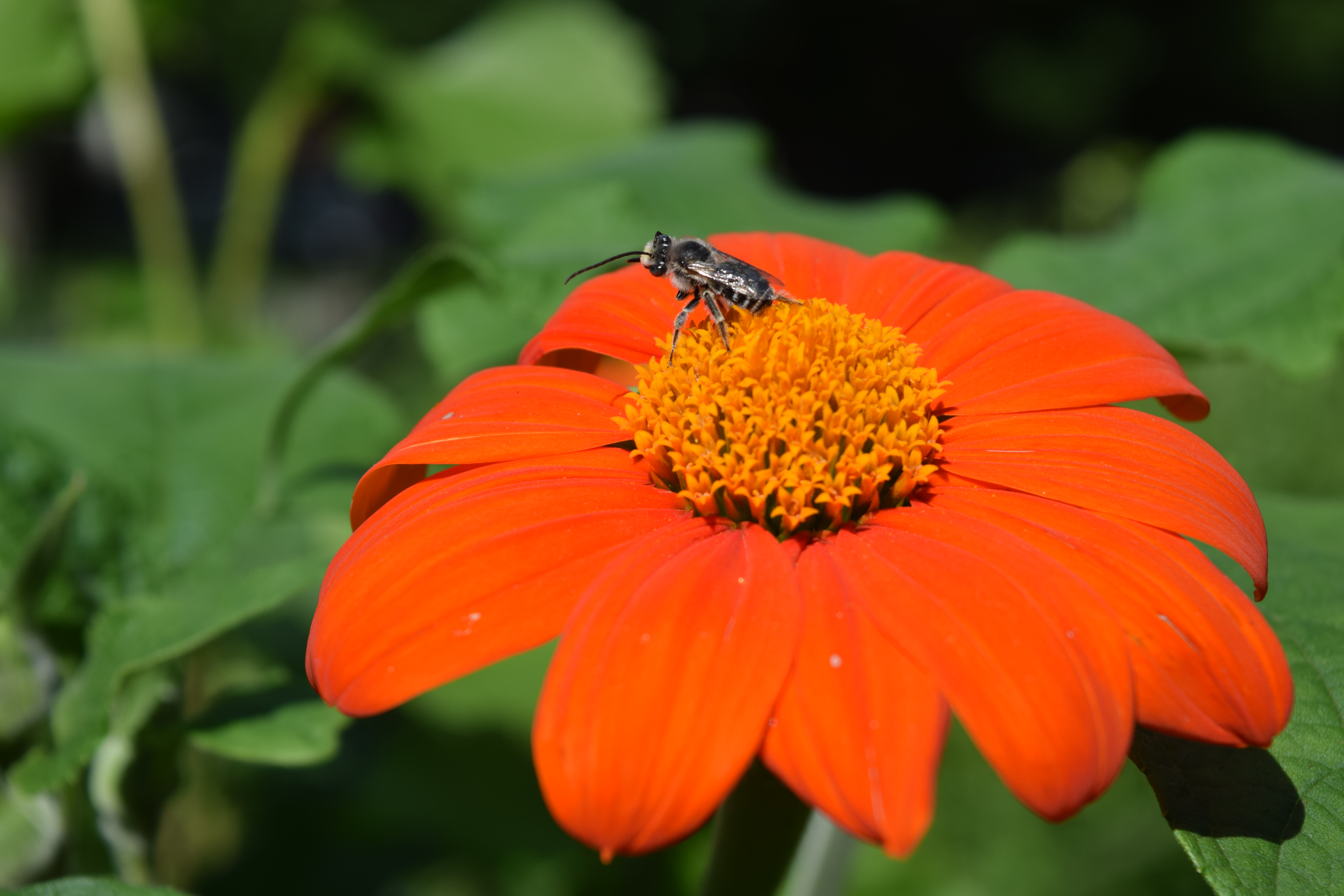
Mexican sunflower with bee. Anybody know what kind of bee that is?

Mexican sunflower (Tithonia rotundifolia) is the other source of orange in this border right now. Only the first few blooms are open at this moment, but many more are coming and they will last until frost. Tithonia has a deeper orange with more red mixed in.

Culver's Root 'Fascination'
Culver’s Root ‘Fascination’

Mexican sunflower is an annual that likes heat and sun. This year I mixed a lot more annuals into the Driveway Border and I’m happy that I did. They offer lasting color, of course. But more than that, many annuals like Tithonia and annual sunflowers (Helianthus annuus) have strong, upright stems that help the floppier perennials stand up straight (or straighter, anyway).

Another view of Culver's root 'Fascination'
Another view of Culver’s root ‘Fascination’, with Tithonia in the background.

Not everything in the Driveway Border are orange right now. That could be a bit too intense. Fortunately there are the soft, curvy blue spikes of Culver’s Root ‘Fascination’ (Veronicastrum virginicum). Judy says they look weird, but she likes them. The soft blue is good for balancing all that orange.

There’s also ‘Prairie Sunset’ early sunflower (Heliopsis helianthoides), with it’s yellow flowers and purple stems and leaves. I like this plant, but it seems just a bit sickly this year.

'Italian White' sunflower
‘Italian White’ annual sunflower – as well as a the yellow and maroon rings of another annual sunflower whose name I have forgotten.

And I shouldn’t forget the soft yellow of ‘Italian White’ annual sunflower, as well as the yellow and maroon rings of another sunflower whose name I can’t remember.

Unknown sunflower
Unknown sunflower

The other annuals were not as successful. The Salvia guaranitica ‘Black and Blue’ just hasn’t put out many flowers. This is my second try with ‘Black and Blue’, and I’m not giving it a third chance. There is also Mexican petunia (Ruellia britoniana), which has done well but tends to get swallowed up by bigger plants. It’s more successful in containers. Both of these annuals were supposed to provide more balancing blue in this border.

Asiatic lilies
Asiatic lilies

Across the driveway, in the Crabapple bed, there are lots of orange Asiatic lilies. About ten years ago I planted an Asiatic lily “naturalizing bulb mix”. Most of the descendents of those bulbs are orange, though there are some yellow, red, and one magenta. At the suggestion of some readers, last year I limbed up the ‘Donald Wyman’ crabapple at the center of this bed.

More Asiatic lilies.

All the plants beneath (including the lilies) seem much happier now. Duh. This was one of those things that requires someone else to suggest but that seem obvious after you do it.

Nasturtium 'Empress of India'
Nasturtium ‘Empress of India’

Oh, also adding to the orangefest are the ‘Empress of India’ nasturtiums (Tropaeolum majus). I’m growing them in containers this year. They’re supposed to be red, but they look orange to me. I’ll write a post on the front garden containers soon.

That’s all for now. Do you like orange flowers? If so, what are your favorites?